Beyond Purpose: Designing Non-Teleological Natural Selection Lessons for Biomedical Research Professionals
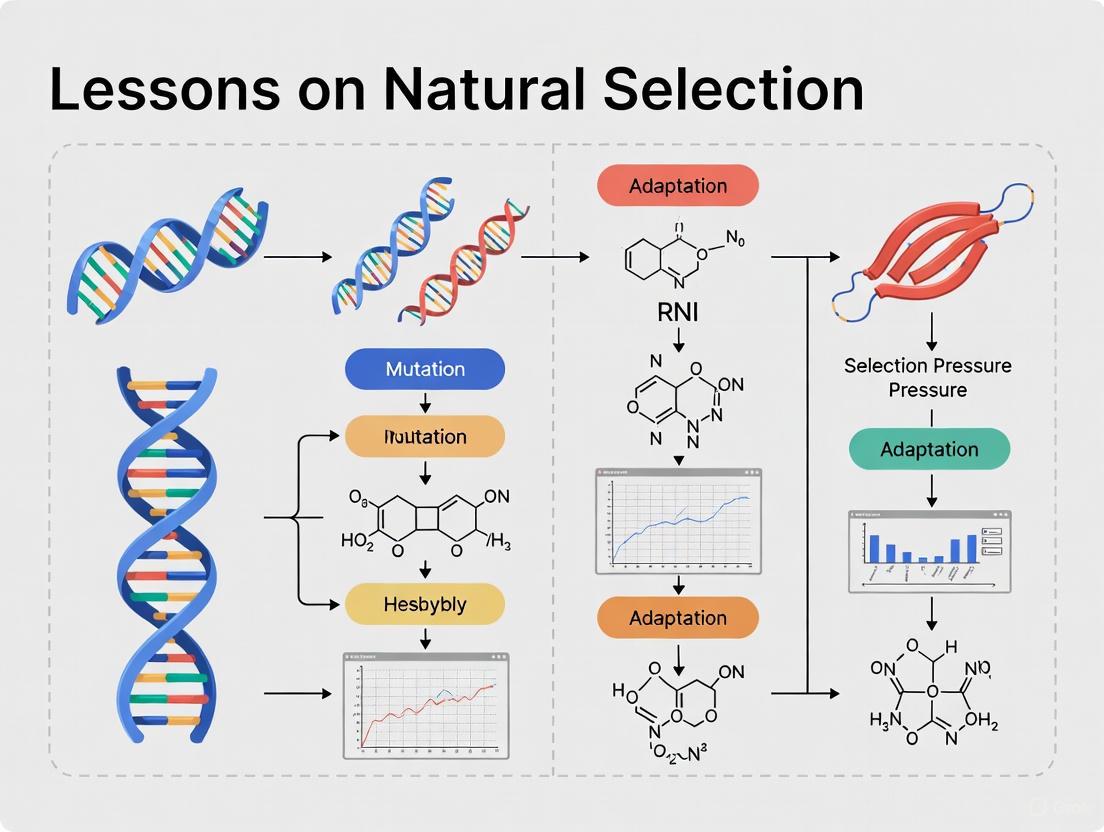
This article provides a comprehensive framework for researchers, scientists, and drug development professionals to design and implement effective lessons on natural selection that explicitly avoid teleological reasoning.
Beyond Purpose: Designing Non-Teleological Natural Selection Lessons for Biomedical Research Professionals
Abstract
This article provides a comprehensive framework for researchers, scientists, and drug development professionals to design and implement effective lessons on natural selection that explicitly avoid teleological reasoning. It explores the philosophical foundation that separates natural selection from goal-directed processes, offers practical, hands-on teaching methodologies, identifies and troubleshoots common conceptual hurdles like design-based teleology, and presents validation strategies for assessing conceptual change. By addressing the critical need for accurate evolutionary understanding in biomedical fields, this guide aims to enhance research rigor and innovation by grounding scientific education in a mechanistically correct model of evolution.
Deconstructing Teleology: The Philosophical and Scientific Bedrock of Non-Guided Evolution
A significant challenge in evolution education is overcoming persistent cognitive biases that conflict with a scientific understanding of evolutionary processes. Foremost among these is teleological reasoning, the intuitive tendency to explain biological phenomena by reference to purposes, ends, or goals [1] [2]. This application note delineates the nature of teleological reasoning, articulates its fundamental incompatibility with the mechanism of natural selection, and provides structured protocols for researching and designing teleology-free lessons on natural selection. For researchers, scientists, and drug development professionals, grasping this distinction is not merely academic; it is essential for fostering a rigorous, mechanistic understanding of evolution that is critical in fields such as microbial resistance, cancer evolution, and drug development.
Defining Teleological Reasoning: A Typology
Teleology, from the Greek telos (end, purpose) and logos (reason, explanation), is a mode of thinking that explains the existence or nature of a thing by its function or purpose [2] [3]. In biological contexts, it manifests in several distinct forms, which must be precisely distinguished for effective research and instruction.
Table 1: A Typology of Teleological Reasoning in Biological Contexts
| Type of Teleology | Definition | Example | Scientific Status |
|---|---|---|---|
| External Design Teleology | Explains traits as the result of an intelligent designer's intentions [4] [5]. | "God gave giraffes long necks to reach high leaves." | Scientifically unacceptable [4] [5]. |
| Internal Design Teleology | Explains traits as arising from an organism's own needs or intentions [4]. | "Giraffes grew long necks because they needed to reach high leaves." | Scientifically unacceptable [1] [4]. |
| Orthogenetic Teleology | Explains evolution as a directed, goal-oriented process following a predetermined path [6] [5]. | "Primates were always destined to evolve into humans." | Scientifically unacceptable [6] [5]. |
| Selection Teleology (Function-Based Teleology) | Explains a trait's current existence by the functional benefit that caused it to be favored by natural selection [4]. | "The heart exists because it pumps blood." (This is a shorthand for a historical causal process.) | Scientifically acceptable as a shorthand, but can be misleading if the underlying mechanism is not understood [4] [5]. |
The core problem lies in the conflation of function with cause. While a trait's function (e.g., the heart pumping blood) explains its maintenance by natural selection, it does not explain its initial origin [4]. Illegitimate teleological reasoning commits this error, appealing to a future goal as the cause of a past or present event, which implies backward causation [1] [5].
The Fundamental Incompatibility with Natural Selection
Natural selection, as formulated by Darwin and Wallace, is a mechanistic, non-random, but entirely unintentional process [7] [8]. It is defined as the differential survival and reproduction of individuals due to differences in heritable traits that affect their fitness in a given environment [8]. The incompatibility with teleology is foundational and can be broken down into three core principles.
The "No Teleology" Condition of Natural Selection
A robust philosophical formulation of natural selection requires adding a "no teleology" condition to the standard principles of variation, heritability, and differential fitness [6]. This condition specifies that:
- The evolutionary process is not guided toward a predetermined endpoint.
- Variation is produced randomly with respect to adaptation (i.e., mutations are not caused by the needs of the organism).
- Selection pressures are not forward-looking; they act on present traits in current environments [6].
This condition is what definitively separates natural selection from artificial selection, intelligent design, and Lamarckian evolution [6]. The following diagram contrasts the causal structure of teleological reasoning with the correct logic of natural selection.
Contrasting Causal Models: Giraffe Necks
The classic example of giraffe neck evolution illustrates this conflict. Teleological reasoning, often Lamarckian in flavor, posits that giraffes' ancestors stretched their necks, and this acquired characteristic was passed on [7]. In contrast, natural selection posits that among ancestral giraffes, there was random variation in neck length. Those with longer necks had better access to food, survived longer, and produced more offspring, passing on their long-neck genes. Over generations, this process led to the long-necked giraffe [7].
Research and Assessment Protocols
To design effective lessons, one must first be able to identify and measure teleological reasoning. The following protocols provide methodologies for assessing this cognitive bias in learners.
Protocol: Assessing Teleological Tendencies Using Open-Ended Prompts
This qualitative protocol is designed to uncover the underlying reasoning patterns students use to explain evolutionary phenomena [1] [4].
Research Question: What types of teleological reasoning do students employ when explaining the origin of adaptive traits?
Materials:
- Interview script or written questionnaire.
- Audio recorder (for interviews) or text responses.
- Coding rubric based on the typology in Table 1.
Procedure:
- Stimulus Presentation: Present participants with a biological scenario. Example: "The modern giraffe has a very long neck. Please explain how you think the giraffe evolved to have a long neck."
- Data Collection: Collect explanations through one-on-one semi-structured interviews or written open-ended responses. Encourage participants to elaborate on their thinking.
- Data Analysis - Coding:
- Code for External Design: Look for key phrases like "God designed...," "An intelligence made...," or "was created to..."
- Code for Internal Design: Look for key phrases like "needed to...," "wanted to...," "had to...," "so that it could..." (implying the need causes the change).
- Code for Orthogenesis: Look for phrases like "was meant to...," "destined to become...," "trying to become..."
- Code for Selection Teleology: Look for explanations that reference a trait's benefit and its role in survival/reproduction, even if the language is goal-directed (e.g., "long necks evolved for reaching high leaves").
- Interpretation: Quantify the frequency of each teleology type. This profile allows for targeted instruction that specifically addresses the most prevalent misconceptions in a given population.
Protocol: Quantifying Teleology with Validated Inventories
This quantitative protocol uses standardized instruments to measure teleological reasoning and learning gains before and after an instructional intervention [1].
Research Question: Does a specific instructional module on natural selection reduce the strength of teleological reasoning and improve understanding of the mechanism?
Materials:
- Pre-test and post-test comprising:
- Statistical analysis software (e.g., R, SPSS).
Procedure:
- Pre-Test Administration: Administer the pre-test to participants before the instructional intervention.
- Intervention: Implement the designed lesson on natural selection, explicitly addressing and contrasting teleological and mechanistic explanations.
- Post-Test Administration: Administer the identical test immediately after the intervention and, if possible, in a delayed post-test to measure retention.
- Data Analysis:
- Calculate descriptive statistics (mean, standard deviation) for pre- and post-test scores on both the teleology scale and the conceptual inventory.
- Perform paired-sample t-tests (or non-parametric equivalents) to determine if the observed changes in scores from pre-test to post-test are statistically significant.
- Conduct a regression analysis to determine if pre-existing levels of teleological reasoning predict post-intervention understanding of natural selection, controlling for other factors like prior knowledge [1].
Table 2: Key Research Reagents for Teleology and Natural Selection Research
| Reagent / Instrument | Function in Research | Key Characteristics & Use-Cases |
|---|---|---|
| Open-Ended Explanatory Prompts | To elicit rich, qualitative data on students' causal reasoning patterns [4]. | Flexible; allows for discovery of unanticipated reasoning. Requires qualitative coding. Ideal for initial, exploratory research. |
| Teleological Reasoning Scale | To quantitatively measure the strength of an individual's tendency towards goal-based explanations [1]. | Provides a numerical score for statistical comparison. Used in pre-posttest designs to measure intervention efficacy. |
| Conceptual Inventory of Natural Selection (CINS) | To quantitatively assess understanding of key natural selection concepts [1]. | Validated, multiple-choice instrument. Measures learning gains and can be correlated with teleology scores. |
| Semi-Structured Interview Protocol | To probe deeply into a participant's reasoning, clarifying ambiguous statements from written responses. | Generates the highest quality data for understanding cognitive mechanisms. Labor-intensive and not easily scalable. |
Visualization of Conceptual Change
Overcoming deep-seated teleological reasoning requires a deliberate conceptual shift. The following diagram models this process as a pathway from initial misconception to scientifically sound understanding, highlighting key instructional actions that facilitate the change.
The Scientist's Toolkit: Essential Research Reagents
Table 3: Research Reagent Solutions for Evolution Education Research
| Reagent / Tool Category | Specific Example | Function & Application |
|---|---|---|
| Validated Assessment Instruments | Conceptual Inventory of Natural Selection (CINS) [1] | Measures understanding of core evolutionary principles; essential for pre-post testing of learning gains. |
| Teleology-Specific Metrics | Teleological Reasoning Scale [1] | Quantifies the prevalence and strength of goal-oriented reasoning in biological contexts. |
| Qualitative Data Analysis Tools | NVivo, Dedoose | Software for organizing, coding, and analyzing qualitative data from interviews and open-ended responses. |
| Statistical Analysis Software | R, SPSS, Python (Pandas, SciPy) | For performing statistical tests (t-tests, ANOVA, regression) to validate the significance of research findings. |
| Cognitive Conflict Stimuli | Case studies of non-adaptive traits (e.g., vestigial structures) | Instructional materials used to disrupt teleological reasoning by presenting evidence it cannot explain. |
Application Note: Deconstructing the Standard Formulation for Effective Research and Pedagogy
This application note provides a structured analysis of the standard formulation of natural selection, a cornerstone concept in evolutionary biology with significant implications for biomedical research. The "standard formulation," often summarized as the requirement for heritable variation in fitness, is a foundational principle for understanding pathogen evolution, cancer dynamics, and antibiotic resistance. However, a growing body of philosophical and scientific critique indicates that this formulation is necessary but not sufficient for a complete understanding of evolutionary processes, primarily because it fails to exclude teleological mechanisms. For researchers and drug development professionals, accurately distinguishing natural selection from other evolutionary forces is critical for building predictive models of evolution in pathogens, tumor cells, and other disease systems. This document outlines the core conceptual framework, presents quantitative data on genetic architecture, and provides protocols for applying these distinctions in both experimental and educational settings.
Theoretical Framework and Core Concepts
The Standard Formulation and the "No Teleology" Condition
The standard formulation of evolution by natural selection (ENS), originating from Lewontin's seminal work, posits three necessary and sufficient conditions:
- Phenotypic Variation: Individuals in a population vary in their morphological, physiological, and behavioral traits.
- Differential Fitness: This variation correlates with differences in survival and reproductive success (fitness).
- Heritability: Fitness-related traits are heritable from parents to offspring [9] [6].
While this framework is powerful, it is inadequate because it fails to distinguish natural selection from other processes that also satisfy these three conditions, such as artificial selection or hypothetical forward-looking orthogenetic selection. The key missing element is a "no teleology" condition [6]. This condition specifies that for a process to be natural selection:
- The evolutionary process is not guided toward a predetermined endpoint represented in the mind of an agent (e.g., a breeder or a deity).
- Variation is produced randomly with respect to adaptation (i.e., mutations are not directed toward solving environmental challenges).
- Selection pressures are not forward-looking (i.e., they do not favor traits based on their contribution to future evolutionary outcomes) [6].
Confounding these processes can lead to fundamental misunderstandings, such as the teleological notion that "bacteria mutate in order to become resistant," a concept that is both scientifically inaccurate and a known epistemological obstacle for learners [10].
The Problem of Teleology in Biology and Research
Teleological thinking—the explanation of phenomena by reference to a goal or purpose—persists in biology. From an epistemological standpoint, the language of function and adaptation in biology often carries a teleological flavor, even though the underlying mechanism of natural selection is non-teleological [10]. For the research scientist, this is not merely a philosophical issue; it can bias experimental design and data interpretation. For instance, assuming evolution is goal-directed could lead to underestimating the stochastic nature of viral escape mutants or the role of genetic drift in cancer cell populations.
Table 1: Distinguishing Natural Selection from Other Evolutionary Processes
| Process | Heritable Variation in Fitness? | Guided by an Agent? | Variation Random w.r.t. Adaptation? | Forward-Looking Selection? |
|---|---|---|---|---|
| Natural Selection | Yes | No | Yes | No |
| Artificial Selection | Yes | Yes (Human) | No (Directed breeding) | Yes |
| Intelligent Design | Yes | Yes (Supernatural) | No | Yes |
| Lamarckian Inheritance | Yes (of acquired traits) | No | No (Use/disuse) | No (But need-based) |
| Orthogenetic Selection | Yes | No | No or Yes | Yes |
Quantitative Data on Genetic Architecture
The genetic underpinnings of fitness present an empirical paradox that highlights the complexity beyond the standard formulation. A key distinction is made between fitness traits (e.g., fecundity, lifespan) and nonfitness traits (e.g., many morphological traits).
Table 2: Comparative Genetic Architecture of Fitness and Nonfitness Traits
| Metric | Fitness Traits (e.g., Life History) | Nonfitness Traits (e.g., Morphological) | Biological Implication |
|---|---|---|---|
| Heritability (h²) | Lower | Higher | Low heritability of fitness does not imply a lack of genetic variation. |
| Additive Genetic Variance (VA) | Higher (when mean-standardized) | Lower | Fitness traits are a larger "mutational target," with more loci influencing them [11]. |
| Environmental/Residual Variance (VE) | Higher | Lower | Fitness traits are complex and influenced by numerous environmental factors, increasing their residual variance [11]. |
| Mutational Variability | Higher (~6x) | Lower | High input of new mutations contributes to maintaining high VA despite strong selection [11]. |
This data reveals that the lower heritability of fitness traits is not due to a lack of genetic variance but rather their higher environmental variance [11]. This has direct implications for research in drug development, for instance, when forecasting the evolution of resistance, one must account for the high levels of "cryptic" genetic variation in pathogen populations that can be revealed under new selective pressures like drug exposure.
Experimental Protocols
Protocol: Quantifying Heritable Variation in Fitness in a Microbial System
Application: Measuring the potential for natural selection in bacterial populations under antibiotic stress. Principle: This protocol assesses the three core components of the standard formulation (variation, differential fitness, heritability) in a controlled lab setting, providing a basis for more complex studies on evolutionary dynamics.
Research Reagent Solutions: Table 3: Essential Research Reagents for Microbial Evolution Experiments
| Reagent/Solution | Function | Example/Composition |
|---|---|---|
| Muller-Hinton Broth | Standardized growth medium for antimicrobial susceptibility testing. | Commercially available, prepared according to CLSI guidelines. |
| Agar | Solidifying agent for creating solid growth medium for colony counting. | Typically used at 1-1.5% w/v in Muller-Hinton Broth. |
| Antibiotic Stock Solution | Selective pressure to induce differential fitness. | e.g., Ciprofloxacin dissolved in sterile water or DMSO; filter-sterilized. |
| Phosphate Buffered Saline (PBS) | Dilution and washing buffer to maintain osmotic balance for bacterial cells. | 137 mM NaCl, 2.7 mM KCl, 10 mM Na₂HPO₄, 1.8 mM KH₂PO₄; pH 7.4. |
| Cryopreservation Medium | Long-term storage of ancestral and evolved lineages for later heritability tests. | Tryptic Soy Broth with 20-50% Glycerol. |
Methodology:
- Generate Variation: Start with a clonal population of a model bacterium (e.g., E. coli). Passage an aliquot of this population for ~500 generations in a non-stressful environment (e.g., LB broth) to allow for the accumulation of spontaneous mutations.
- Measure Phenotypic Variation (Colony Growth Rate): a. Serially dilute the evolved population and plate on non-selective agar to obtain isolated colonies. b. Randomly pick 100 individual colonies to found separate cultures. c. Using a microplate reader, grow each isolate in a non-stress medium and measure the optical density (OD600) over time. d. For each growth curve, calculate the maximum growth rate (μmax). The variance in μmax across the 100 isolates represents the phenotypic variation in a fitness component.
- Measure Differential Fitness (Under Selection): a. Take the same 100 isolates and measure their μmax in medium containing a sub-inhibitory concentration of an antibiotic (e.g., Ciprofloxacin). b. Calculate the fitness of each isolate as Wi = μmaxi, antibiotic / μmaxancestor, antibiotic. c. The variance in Wi indicates the presence of differential fitness.
- Quantify Heritability: a. For a subset of isolates showing a range of fitness values (e.g., 10 high-fitness and 10 low-fitness), establish new cultures from a single colony. b. Measure the fitness (Woffspring) of these new cultures under the same antibiotic condition as in step 3. c. Perform a parent-offspring regression: regress the mean offspring fitness against the parental fitness. d. The slope of this regression is an estimate of the narrow-sense heritability (h²) of fitness under antibiotic stress.
Protocol: Testing the "No Teleology" Condition via Directed Mutation Assays
Application: Empirically distinguishing natural selection from hypothetical teleological mechanisms like directed mutation. Principle: The "no teleology" condition requires that variation is random with respect to adaptation. This protocol tests whether mutations conferring resistance occur randomly or are directed by the selective agent.
Methodology:
- The Luria-Delbrück Fluctuation Test: a. Take many (e.g., 20) small, independent cultures of a naive bacterial population and grow each to a high cell density. b. Plate the entire contents of each culture onto agar containing a lethal dose of an antibiotic (e.g., Streptomycin). c. Simultaneously, plate a series of dilutions of each culture onto non-selective agar to determine the total number of cells plated. d. Count the number of resistant colonies on the selective plates for each culture.
- Predicted Outcomes and Interpretation: a. If mutations are directed (Teleological): The antibiotic causes resistant mutations to occur. The number of resistant colonies per culture will follow a Poisson distribution, with variance ≈ mean. b. If mutations are random (Natural Selection): Resistant mutations occur randomly during growth in non-selective media. The number of resistant colonies per culture will show a highly skewed distribution, with variance >> mean. This is the classic result supporting the non-teleological nature of mutation.
Educational and Research Implications
Designing Teleology-Aware Learning Modules
For the effective communication of evolutionary concepts to research teams and the broader public, lessons must be designed to explicitly counter teleological biases. This involves:
- Metacognitive Vigilance: Teaching learners to recognize and regulate the use of teleological reasoning. This includes developing:
- Declarative knowledge: Knowing what teleology is and its various forms.
- Procedural knowledge: Knowing how to construct non-teleological explanations.
- Conditional knowledge: Knowing why and when teleological language is problematic or, in limited contexts (e.g., describing engineered systems), acceptable [10].
- Active Replacement: Provide clear, causal-mechanical explanations for evolutionary events. For example, replace "The bacteria mutated to become resistant" with "A random mutation occurred that conferred resistance. When the antibiotic was applied, bacteria with this mutation survived and reproduced more than those without it."
- Historical Context: Explain how Darwin's theory provided a non-teleological alternative to divine design, while also acknowledging that the language of purpose and design persists as a powerful metaphor in biology [6] [10].
Implications for Drug Development and Resistance Management
Understanding the non-teleological, non-forward-looking nature of natural selection directly impacts therapeutic strategy:
- Combinatorial Therapy: Using multiple drugs with different mechanisms of action effectively increases the number of simultaneous mutations required for resistance, a highly improbable event under a model of random mutation. This strategy is robust precisely because evolution is not forward-looking and cannot "plan" for multi-drug resistance.
- Cycling Therapies: The success of drug cycling depends on the fitness costs of resistance in the absence of the drug. If resistance mutations are random and not "optimized," they often carry costs in other environments. Monitoring these fitness landscapes is essential for predicting evolutionary trajectories.
- Anti-Evolvability Drugs: Research into compounds that slow the rate of evolution (e.g., by reducing mutation rates) targets the variation component of the standard formulation. This approach is grounded in the understanding that variation is random and not directed, making the suppression of variation a viable strategy to slow adaptation.
The standard formulation of natural selection, which requires heritable variation, differential fitness, and heritability, is widely regarded as sufficient to explain evolutionary change [6]. However, this formulation is fundamentally inadequate because it fails to distinguish natural selection from several other evolutionary processes, including artificial selection by humans, intelligent design by a supernatural agent, forward-looking orthogenetic selection, and adaptation via the selection of nonrandom variation [6]. All these processes involve heritable variation in fitness, yet they should not be classified under Darwin's concept of natural selection. This paper argues that adding a "no teleology" condition is essential to properly delineate natural selection from these other processes [6].
The historical significance of this distinction cannot be overstated. Darwin's revolutionary insight was precisely that something analogous to human breeding occurs in nature without a guiding intelligence [6]. His argument for natural selection was built largely on an analogy with artificial selection, yet he took pains to distinguish the natural, undirected process from its artificial, directed counterpart [6]. Modern evolutionary theorists continue to describe natural selection as acting on "random variation" or variation that arises "in a haphazard and undirected way" [6]. The separation between natural selection and teleological means of adaptation represents a momentous breakthrough in the history of biology that is obscured by the standard formulation [6].
Theoretical Foundation: Defining the No Teleology Condition
What Constitutes Teleology in Evolution
Teleology, in the context of evolutionary biology, refers to explanations that account for the existence of a feature based on what it does, typically employing phrases such as "in order to" or "for the sake of" [12]. This forward-looking explanatory structure implies that evolution is guided toward predetermined endpoints, which contradicts the mechanistic, non-directional nature of natural selection [6]. The no teleology condition specifies that a process qualifies as natural selection only when:
- The evolutionary process is not guided toward an endpoint represented in the mind of an agent
- Variation is produced randomly with respect to adaptation
- Selection pressures are not forward-looking [6]
This condition excludes several classes of evolutionary processes from qualifying as natural selection. In artificial selection and intelligent design, natural or supernatural agents intervene in mutation and/or selection processes to drive evolution in predetermined directions [6]. Orthogenesis posits that evolution follows a predetermined path guided by a natural teleological force. In adaptation via nonrandom variation, heritable variation arises specifically because it will be favored by selection, representing a form of forward-looking evolution [6].
Types of Teleological Reasoning
Teleological explanations can be categorized based on their underlying assumptions about causality:
Table: Types of Teleological Explanations in Biology
| Type of Explanation | Basis of Explanation | Scientific Legitimacy | Example |
|---|---|---|---|
| Design-Based Teleology | Intentional creation by a conscious agent (divine or human) | Illegitimate for natural phenomena | "The eye was designed for seeing" [12] |
| Function-Based Teleology | Contribution to current survival and reproduction | Legitimate when referring to selected effects | "The heart exists to pump blood" [12] |
| Need-Based Teleology | Organisms develop traits because they need them | Illegitimate | "Giraffes got long necks because they needed to reach high leaves" [10] |
The design stance—the intuitive perception of design in nature—represents a fundamental challenge in evolution education [12]. This stance is prevalent and largely independent of religiosity in young learners, making it a particularly persistent epistemological obstacle [10]. What matters for scientific legitimacy is not whether an explanation is teleological per se, but rather the underlying consequence etiology: whether a trait exists because of its selection for positive consequences for its bearers, or because it was intentionally designed or simply needed for a purpose [12].
Experimental Protocols and Research Methodologies
Protocol 1: Discriminating Between Selection Types in Laboratory Populations
Objective: To experimentally distinguish natural selection from artificial selection using microbial populations.
Background: Microorganisms with rapid generation times permit direct observation of evolutionary processes under controlled conditions. This protocol uses wild-type and fluorescently tagged E. coli strains to visualize selection dynamics.
Materials:
- E. coli strains (wild-type and fluorescently tagged variants)
- Antibiotics (ampicillin, tetracycline)
- Minimal media with varying carbon sources
- Flow cytometer with cell sorting capability
- 96-well plates and shaking incubator
Procedure:
- Inoculate 10 mL LB medium with both tagged and wild-type E. coli at 1:100 dilution from overnight cultures. Grow for 6 hours at 37°C with shaking.
- Divide culture into three treatment conditions:
- Condition A (Natural selection): Transfer 1 mL to 9 mL minimal media with limiting glucose
- Condition B (Artificial selection): Use flow cytometry to select and collect only the top 10% of cells by size
- Condition C (Natural selection with environmental challenge): Transfer 1 mL to 9 mL minimal media with sub-inhibitory antibiotic concentration
- For each condition, passage cultures every 24 hours by transferring 1 mL to 9 mL fresh media of the same composition.
- Every 5 generations, sample populations to measure:
- Frequency of fluorescent variants using flow cytometry
- Growth rates in different media
- Genetic changes through whole-genome sequencing of population samples
- Continue experiment for 100 generations total.
Expected Outcomes: Conditions A and C should show fluctuations in variant frequencies driven by environmental factors, while Condition B will show directed change according to the human-selected trait (size). Genome sequencing will reveal different patterns of mutation accumulation across conditions.
Protocol 2: Assessing Teleological Reasoning in Learning Outcomes
Objective: To quantify the prevalence and persistence of teleological reasoning in students learning natural selection.
Background: Teleological thinking represents a significant epistemological obstacle in evolution education [10]. This protocol provides a standardized approach for assessing teleological reasoning before and after instructional interventions.
Materials:
- Pre-test and post-test assessment instruments
- Interview protocols with standardized prompts
- Recording equipment for interviews
- Qualitative data analysis software (e.g., NVivo)
- Scoring rubrics for teleological reasoning
Procedure:
- Pre-assessment: Administer a validated conceptual inventory (e.g., Concept Inventory of Natural Selection) before instruction begins.
- Instructional Intervention: Implement a curriculum specifically designed to address teleological reasoning, including:
- Explicit comparison of natural vs. artificial selection
- Historical context of Darwin's reasoning
- Metacognitive exercises where students identify teleological statements
- Case studies of evolutionary change without goal-direction
- Formative Assessment: During instruction, use clicker questions or short writing prompts to identify persistent teleological reasoning.
- Post-assessment: Administer the same conceptual inventory after instruction completion.
- Semi-structured Interviews: Select a subset of students (n=15-20) for in-depth interviews using standardized prompts such as:
- "Why do giraffes have long necks?"
- "How did polar bears come to have white fur?"
- "Explain how antibiotic resistance develops in bacteria."
- Data Analysis:
- Quantify conceptual inventory scores using pre-post comparisons
- Code interview transcripts for categories of teleological reasoning
- Identify specific patterns of design-stance reasoning
Table: Scoring Rubric for Teleological Reasoning
| Category | Level 1 (Naive Teleology) | Level 2 (Intermediate) | Level 3 (Scientific) |
|---|---|---|---|
| Explanatory Focus | Needs, purposes, intentions | Mixed teleological and mechanistic | Variation, selection, inheritance |
| Agency | Explicit or implicit designer | Natural forces with goal-direction | Impersonal natural processes |
| Time Orientation | Forward-looking ("in order to") | Combination of forward and backward-looking | Backward-looking (historical causes) |
| Adaptation Mechanism | Acquired characteristics or intentional design | Natural selection with teleological language | Natural selection without teleology |
Data Presentation and Analysis
Quantitative Comparison of Selection Types
Table: Critical Distinctions Between Natural Selection and Teleological Processes
| Characteristic | Natural Selection | Artificial Selection | Intelligent Design | Orthogenetic Selection |
|---|---|---|---|---|
| Source of Variation | Random with respect to adaptation [6] | Directed or random with artificial preservation | Deliberate design or creation | Directed toward predetermined ends |
| Selection Mechanism | Environmental factors affecting survival and reproduction | Human choice of breeding pairs | Supernatural agency | Natural teleological force |
| Directionality | Contingent and non-progressive | Goal-directed toward human desires | Purposeful toward divine plan | Linear and predetermined |
| Teleological Component | None | Agential teleology [6] | Agential teleology [6] | Natural teleology [6] |
| Outcome Predictability | Statistical, not predetermined | Highly predictable for selected traits | Perfectly aligned with design | Following predetermined path |
| Role of Chance | Fundamental at variation stage | Limited through human control | Absent or minimal | Subordinate to directional trends |
Analysis of Common Teleological Misconceptions
Research in evolution education has identified several persistent patterns of teleological reasoning that interfere with understanding natural selection:
- Need-Based Reasoning: The belief that organisms develop traits because they need them (e.g., "giraffes got long necks because they needed to reach high leaves") [10]
- Intentionality Attribution: The assumption that evolution involves conscious purpose or intentionality (e.g., "bacteria decided to become resistant")
- Anthropomorphism: The attribution of human characteristics to natural processes (e.g., "nature gave polar bears white fur so they could hide in the snow")
- Design Reasoning: The intuition that complex structures imply a designer, independent of religious beliefs [12]
These misconceptions are remarkably resilient to traditional instruction. One study found that after standard biology instruction, 78% of high school students still provided teleological explanations for evolutionary change [10]. This persistence suggests that teleological reasoning represents not merely a lack of information, but a deeply embedded epistemological obstacle that requires targeted intervention [10].
Visualization of Conceptual Relationships
Conceptual Structure of Natural Selection with No Teleology Condition
The Scientist's Toolkit: Research Reagent Solutions
Table: Essential Materials for Evolution Education Research
| Research Tool | Specification/Example | Primary Function | Application Notes |
|---|---|---|---|
| Conceptual Assessment Inventories | ACORNS (Assessing Contextual Reasoning about Natural Selection) | Quantifies understanding of natural selection principles | Pre-post implementation; validated for undergraduate populations |
| Teleology Coding Framework | Categorization of need-based, intentional, design-based reasoning [12] | Qualitative analysis of student explanations | Requires inter-rater reliability calibration (>85% agreement) |
| Metacognitive Prompt Library | "What assumptions about purpose are you making?" "Is this forward-looking or backward-looking causation?" | Prompts students to regulate teleological reasoning | Most effective when integrated throughout curriculum |
| Experimental Evolution Kits | Microbial cultures (E. coli, S. cerevisiae) with neutral markers | Demonstration of selection in real-time | Requires BSL-1 laboratory facilities |
| Phylogenetic Analysis Software | Mesquite, PHYLIP, or web-based alternatives | Reconstruction of evolutionary relationships | Illustrates non-directional, branching nature of evolution |
| Historical Case Studies | Darwin's finches, pepper moth evolution, antibiotic resistance | Contextualized examples of natural selection | Avoid anthropomorphic language in descriptions |
The addition of a explicit "no teleology" condition to the standard formulation of natural selection provides critical conceptual clarity that distinguishes Darwin's revolutionary insight from other evolutionary processes [6]. This distinction has profound implications for evolution education, where teleological reasoning represents a persistent epistemological obstacle [10]. Rather than attempting to eliminate teleological thinking entirely—an approach that has proven largely ineffective—educators should focus on developing students' metacognitive vigilance, enabling them to recognize and regulate their use of teleological reasoning [10].
Effective educational approaches should include:
- Explicit comparison of natural selection with artificial selection and intelligent design
- Historical context highlighting Darwin's distinction between natural and guided processes
- Metacognitive training to help students identify teleological language in their own thinking
- Case studies that illustrate the non-directional, contingent nature of evolutionary change
By implementing these strategies with the protocols and frameworks provided herein, educators and researchers can better address the fundamental challenge of teaching natural selection as a non-teleological process, ultimately leading to more scientifically accurate understandings of evolution among students and professionals alike.
Application Notes: Core Conceptual Principles
The development of the Modern Synthesis required reconciling Darwin's theory of natural selection with Mendelian genetics, a process that involved rigorous experimentation and theoretical refinement. Central to this was a fundamental shift from teleological thinking to a mechanistic, population-based understanding of evolution.
Foundational Analogies and Their Experimental Validation
Darwin's Architect Analogy: Darwin compared natural selection to an architect who builds structures with "uncut stones, fallen from a precipice," noting that "the shape of each fragment may be called accidental" with "no relation between these laws and the purpose for which each fragment is used by the builder" [6]. This emphasized that variation is random with respect to adaptation, a core principle distinguishing natural selection from artificial selection or intelligent design.
Experimental Validation Through Long-Term Studies:
- Barley Composite Cross II (CCII): This century-long competition experiment, initiated in 1929, demonstrated rapid allele frequency shifts in response to local environmental conditions in Davis, California [13]. Researchers tracked evolutionary changes across generations (F18, F28, F58), identifying key genetic loci (Vrs1, HvCEN, Ppd-H1) associated with reproductive development as selection hotspots.
- E. coli Long-Term Evolution Experiment: Tracking over 70,000 bacterial generations since 1988 has provided real-time observation of evolutionary dynamics, including mutation rates, genetic stability, and development of new metabolic capabilities [13].
The "No Teleology" Condition in Evolutionary Theory
The standard formulation of natural selection requiring variation, differential fitness, and heritability is insufficient because it fails to distinguish natural selection from artificial selection, intelligent design, or orthogenetic selection [6]. A "no teleology" condition must be added, specifying that:
- The evolutionary process is not guided toward an endpoint
- Variation is produced randomly with respect to adaptation
- Selection pressures are not forward-looking [6]
Table 1: Key Transitions in Evolutionary Thought Leading to the Modern Synthesis
| Historical Period | Primary Understanding of Variation | Mechanism of Inheritance | Teleological Framework |
|---|---|---|---|
| Darwinian (1859) | Undirected, "accidental" (Architect Analogy) [6] | Blending (Pangenesis) [14] | Non-teleological [6] |
| Eclipse of Darwinism (1880s-1900) | Directed/saltational [14] | Neo-Lamarckism/Orthogenesis [14] | Often teleological [14] |
| Early Mendelian (1900-1918) | Mutation-driven, discontinuous [14] | Particulate (Mendelian factors) [14] | Mixed (Mutationism) [14] |
| Modern Synthesis (1918-1950) | Undirected, continuous (polygenic) [14] | Population genetics [14] | Strictly non-teleological [6] |
Experimental Protocols & Methodologies
Protocol: Measuring Natural Selection in Plant Populations
Objective: Quantify patterns of natural selection and environmental adaptation in a self-fertilizing annual crop using the "pattern-process-mechanism" framework [13].
Materials:
- Composite Cross II (CCII) barley population or similar experimental evolving population
- Field plots with controlled environmental conditions
- Equipment for high-throughput phenotyping
- Genotyping-by-sequencing capabilities
- Climate and soil monitoring equipment
Procedure:
- Establish Founding Population: Create genetically diverse founding population through controlled crosses (for CCII: 28 barley varieties from 10 global locations) [13].
- Generational Advancement: Plant successive generations in target environment with standardized agronomic practices.
- Pattern Phase - Data Collection (What):
- Sample populations at multiple generational time points (e.g., F18, F28, F58)
- Conduct high-throughput phenotyping for fitness-associated traits (e.g., flowering time, plant architecture)
- Perform whole-genome sequencing to track allele frequency changes [13]
- Process Phase - Analysis (How):
- Identify genomic loci showing significant allele frequency shifts using statistical genetics approaches
- Calculate selection coefficients for specific haplotypes
- Analyze population structure and diversity metrics over time [13]
- Mechanism Phase - Functional Validation (Why):
- Conduct genome-wide association studies linking genotypes to phenotypic variations
- Perform functional analysis of candidate genes in selected loci
- Validate adaptive significance through reciprocal transplant experiments [13]
Expected Outcomes: The CCII experiment revealed rapid directional selection followed by stabilizing selection, with certain advantageous haplotypes becoming nearly fixed within decades and flowering time traits showing strong selection pressure [13].
Protocol: Testing Teleological Reasoning in Educational Settings
Objective: Evaluate and counteract teleological misunderstandings of natural selection in learning environments [15].
Materials:
- Pre- and post-assessment instruments
- Intervention materials (e.g., "How the Piloses Evolved Skinny Noses" storybook)
- Classroom simulation activity materials
- Standardized scoring rubrics
Procedure:
- Pre-Assessment: Administer written assessments probing explanations for biological adaptations.
- Categorize Misunderstandings:
- Basic Teleological (TE): "Giraffes evolved long necks so that they can feed from treetops" [15]
- Elaborated Teleological: Includes explicit goal-directed mechanisms (effort-based, need-based, or intentional) [15]
- Non-Teleological Misunderstandings: Mechanistically inaccurate but without explicit teleology [15]
- Intervention Implementation:
- Post-Assessment: Administer parallel assessments evaluating:
- Understanding of population-based mechanism
- Recognition of random variation
- Explanation of adaptation without teleological reasoning [15]
Expected Outcomes: Research shows early elementary students can substantially improve natural selection understanding through targeted intervention, though teleological preconceptions remain challenging [15].
Visualization Framework
Historical Development of the Modern Synthesis
Natural Selection Conceptual Framework
Experimental Workflow for Evolutionary Studies
Research Reagent Solutions & Essential Materials
Table 2: Essential Research Materials for Evolutionary Experiments
| Material/Reagent | Specification/Type | Primary Function in Evolutionary Research |
|---|---|---|
| Composite Cross Populations | CCII barley or similar | Long-term experimental evolution; tracking allele frequency changes across generations [13] |
| High-Throughput Genotyping | Whole-genome sequencing platforms | Identifying genomic loci under selection; monitoring genetic diversity [13] |
| Phenotyping Systems | Automated image-based phenotyping | Quantitative measurement of fitness-associated traits (flowering time, architecture) [13] |
| Environmental Monitoring | Climate/soil sensors | Correlating environmental parameters with selection pressures [13] |
| Statistical Genetics Software | R/Bioconductor packages, PLINK | Analyzing selection coefficients, population structure, GWAS [13] |
| Educational Intervention Materials | "How the Piloses Evolved Skinny Noses" storybook | Counteracting teleological reasoning in natural selection education [15] |
| Simulation Kits | Peppered moth ("Sooty Selection") materials | Hands-on demonstration of natural selection mechanisms [16] |
Quantitative Analysis of Evolutionary Dynamics
Table 3: Quantitative Findings from Long-Term Evolutionary Experiments
| Experimental System | Generations Tracked | Key Quantitative Findings | Implications for Modern Synthesis |
|---|---|---|---|
| Barley CCII [13] | 58+ generations over 90+ years | - Rapid loss of genetic diversity- Selection favoring North African haplotypes in Mediterranean climate- Stabilizing selection on flowering time after initial directional selection | Challenges assumption that high initial diversity ensures long-term variability; shows rapid adaptation possible |
| E. coli LTEE [13] | 70,000+ generations over 30+ years | - Predictable mutation rates- Emergence of new metabolic capabilities (citrate utilization)- Changes in genetic network robustness | Demonstrates real-time observation of evolutionary dynamics; confirms power of natural selection with random variation |
| Educational Interventions [15] | Pre/post assessment | - Significant improvement in natural selection understanding after intervention- Teleological preconceptions persist but can be mitigated- Early intervention effective before misconceptions solidify | Supports teachability of non-teleological mechanisms when explicitly addressed |
Protocol: Implementing Non-Teleological Lesson Design
Objective: Design and implement lessons on natural selection that explicitly avoid and counteract teleological reasoning [15].
Materials:
- Curricular materials emphasizing population thinking
- Activities contrasting Darwinian vs. Lamarckian mechanisms
- Assessment tools detecting teleological reasoning
- Visual representations with clear, consistent symbolism [17]
Procedure:
- Pre-Assessment: Identify existing teleological misconceptions using validated assessment questions.
- Explicit Contrast:
- Present side-by-side comparisons of Darwinian population mechanisms vs. Lamarckian transformational mechanisms
- Use historical context (Darwin's architect analogy) to illustrate non-directed nature of variation [6]
- Population Thinking Emphasis:
- Implement activities showing variation within populations
- Use quantitative examples of allele frequency change
- Avoid language suggesting intentionality in evolution
- Visual Representation Standards:
- Formative Assessment: Continuously monitor for teleological reasoning through student explanations.
- Summative Evaluation: Assess mastery of non-teleological mechanism through multi-component explanations.
Expected Outcomes: Students should be able to explain adaptations with reference to population-based mechanisms, random variation, and differential survival/reproduction without invoking need, goal-direction, or intentionality [15].
Theoretical Foundation: Core Principles of Non-Teleological Natural Selection
A non-teleological framework for understanding natural selection is defined by three core principles that systematically exclude any form of goal-direction or foresight. This framework is essential for conducting research free from the bias of predetermined outcomes.
- Random Variation: The generation of genetic variation is random with respect to the adaptive needs of the organism. Mutations occur indiscriminately; they are not elicited by environmental challenges nor do they arise because they might be beneficial in the future [6]. This random variation provides the raw, undirected material upon which selection can act.
- Non-Random Selection: While variation is random, the process of natural selection is non-random. Individuals with heritable traits that confer a survival or reproductive advantage in a specific environment are more likely to pass those traits to the next generation [20]. This differential reproduction is a causal, mechanistic process shaped by immediate environmental pressures, not future goals.
- Absence of Foresight: The evolutionary process is not guided toward a predetermined endpoint. It lacks any representation of a future state in a mind or a natural force [6]. Natural selection is a "blind, unconscious, automatic process" that solves problems only in retrospect, by favoring traits that worked in the immediate past, without any plan for the future [6].
This framework deliberately distinguishes natural selection from teleological processes like intelligent design or artificial selection, where an agent guides the process toward a desired goal [6].
Quantitative Data in Evolutionary Analysis
The following table summarizes key types of quantitative data used to measure and analyze the core principles of natural selection in research settings.
Table 1: Key Quantitative Data for Analyzing Natural Selection Principles
| Data Category | Specific Metrics | Application in a Non-Teleological Framework | Common Analysis Methods |
|---|---|---|---|
| Genetic Variation | Allele frequency, Heterozygosity, Mutation rate | Quantifies the raw, undirected variation available for selection. High diversity indicates a large pool of random variants. | Descriptive Statistics (Mean, Variance) [21], DNA sequencing, Population Genetics analysis |
| Selection & Fitness | Relative fitness, Selection differential, Heritability | Measures the non-random differential survival and reproduction of genotypes. Demonstrates the causal relationship between trait and reproductive success [22]. | Inferential Statistics (T-Tests, ANOVA, Regression Analysis) [21], Common garden experiments [22] |
| Population Dynamics | Population size, Growth rate, Generation time | Provides context for the strength of selection and the impact of random events like genetic drift. | Time-series analysis, Demographic modeling |
Experimental Protocols for Key Investigations
Protocol 1: Measuring the Randomness of Mutation Using Fluctuation Tests
- Objective: To demonstrate that mutations arise randomly and independently of selection, rather than being induced by a selective pressure.
- Background: This classic protocol, adapted from Luria and Delbrück, distinguishes between random, pre-existing mutations and adaptive mutation by analyzing the variance in mutant counts across independent cultures.
- Materials:
- Liquid and solid bacterial growth media.
- A clonal population of bacteria (e.g., E. coli).
- Selective agent (e.g., an antibiotic like streptomycin).
- Non-selective control medium.
- Sterile culture tubes and plates.
- Methodology:
- Step 1: Inoculate a large number of independent culture tubes (e.g., 50-100) with a small, identical number of bacteria from a single clone.
- Step 2: Allow all cultures to grow for the same number of generations to a high cell density.
- Step 3: Plate the entire contents of each independent culture onto selective agar containing the antibiotic. Also, plate a diluted sample from each culture onto non-selective agar to determine the total viable cell count.
- Step 4: Incubate and count the number of resistant colonies on each selective plate.
- Data Analysis:
- Calculate the mean and variance of the number of resistant mutants across all independent cultures.
- A high variance (significantly greater than the mean) indicates that mutations occurred at random times during the growth of the independent cultures, supporting the principle of random variation. A low variance would be expected if the selective agent induced mutations simultaneously in all cultures.
Protocol 2: Quantifying Non-Random Selection through Common Garden Experiments
- Objective: To isolate the effect of genetic variation on fitness by controlling for environmental variables, thereby demonstrating non-random selection.
- Background: This experiment establishes a "common selective environment" to ensure that differential reproduction is causally due to heritable genetic differences between organisms, not external environmental factors [22].
- Materials:
- Seeds or propagules from different genotypes (e.g., G1, G2) of a model plant species (e.g., Arabidopsis thaliana).
- Standardized growth chambers or greenhouse space.
- Uniform growth substrate (soil or agar).
- Equipment for measuring traits (e.g., height, biomass, seed count).
- Methodology:
- Step 1: Source or create genetically distinct lines of the study organism.
- Step 2: Randomize and plant individuals from all genetic lines in a single, controlled environment with uniform light, temperature, water, and nutrient conditions.
- Step 3: Monitor plant growth and survival.
- Step 4: At maturity, measure fitness-related traits for each individual, such as survival rate, biomass, and most critically, the number of seeds produced.
- Data Analysis:
- Use analysis of variance (ANOVA) or similar inferential statistics to test for significant differences in mean seed production (or other fitness proxies) between the genetic lines [21].
- A statistically significant difference in reproductive output under identical environmental conditions provides direct evidence of non-random natural selection acting on heritable variation [22].
Visualizing the Non-Teleological Workflow
The following diagram illustrates the iterative, non-teleological cycle of natural selection, highlighting the critical roles of random variation and non-random selection without any foresight.
The Scientist's Toolkit: Research Reagent Solutions
Table 2: Essential Research Materials for Evolutionary Experiments
| Reagent / Material | Function in Experimental Protocol |
|---|---|
| Model Organisms (e.g., E. coli, D. melanogaster, A. thaliana) | Short generation times and well-characterized genetics make them ideal for observing evolutionary change across generations in a controlled laboratory setting. |
| Selective Agents (e.g., Antibiotics, Herbicides, High/Low Temperature) | Apply a defined environmental pressure to measure the non-random survival and reproduction of resistant or tolerant variants. |
| DNA Sequencing Kits | Used to genotype individuals and quantify genetic variation (e.g., allele frequencies, mutation rates) within and between populations. |
| Standardized Growth Media | Provides a uniform "common garden" environment to isolate the effects of genetic variation from environmental variation [22]. |
| Fluctuation Test Materials (Liquid/Solid media, selective plates) | Essential for the specific protocol designed to demonstrate the random nature of mutation versus Lamarckian induction. |
From Theory to Practice: Hands-On Pedagogical Strategies for Non-Teleological Instruction
Leveraging Role-Play Activities to Concretely Model Population-Level Change
Application Note: Conceptual Framework and Rationale
Teaching abstract evolutionary concepts like natural selection presents a significant challenge in biology education. Students often enter the classroom with stubborn misconceptions, particularly regarding population-level change versus individual adaptation [23]. This application note outlines a structured role-play protocol that provides researchers and educators with a concrete, tangible method for modeling population genetics principles without invoking teleological reasoning. The framework transforms learners into an active population under selection pressure, enabling direct observation of allele frequency changes—the fundamental definition of evolution—in a controlled, experimental setting [23]. This approach is specifically designed to address persistent misconceptions that natural selection and evolution are identical processes or that all individuals in a population evolve simultaneously, making it particularly valuable for communicating basic scientific principles to cross-disciplinary teams in drug development who may lack extensive biological training [23].
Role-play as an educational simulation offers demonstrated success in complex scientific domains, including pharmacology and medical education, where understanding dynamic processes is crucial [24] [25] [26]. By adapting these proven methodologies, the protocol provides an experiential learning platform that fosters accurate conceptual models of evolutionary mechanisms, essential for professionals engaged in research involving microbial evolution, antibiotic resistance studies, and therapeutic development.
Quantitative Evidence Base for Role-Plays in STEM Education
Table 1: Documented Efficacy of Role-Play Methodologies in Scientific Education
| Study Focus | Population | Implementation Metrics | Outcome Measures | Key Findings |
|---|---|---|---|---|
| Natural Selection Role-Play [23] | Undergraduate biology students | 10-15 minute activity; minimal preparation | Conceptual understanding; misconception resolution | Provided concrete foundation for understanding allele frequency change; addressed teleological misconceptions |
| Mathematics TTRPG Methodology [24] | 95 first- and second-year university students | Semester-long integration; profession-based character system | Academic performance; soft skill development | Significant motivation increase; fostered teamwork and social interaction; reinforced mathematical understanding |
| Pharmacy Communication Training [26] | P1 pharmacy students (n=82) | 3-week scaffolded series; video-recorded peer role-play | Motivational interviewing competency; empathy expression | Students successfully demonstrated empathic communication; perceived high benefit for professional development |
| Medical Medication Communication [25] | 2nd professional MBBS students (n=96) | Six training cases with structured checklists | Confidence in conveying therapy details | >90% reported immense confidence in communicating drug name, purpose, mechanism, dosing, and precautions |
Experimental Protocol: Natural Selection Role-Play
Pre-Activity Preparation and Materials
- Trait Cards Preparation: Create index cards representing different versions of a heritable trait. For a model using "trichome density" in plants, cards should be labeled "High," "Medium," and "Low." Prepare more cards than students, ensuring a greater proportion of the advantageous trait for later rounds [23].
- Population Setup: The classroom represents the environment, and participating students constitute the biological population under study.
- Data Recording Tools: Prepare a whiteboard, flip chart, or digital spreadsheet to track allele frequencies across generations.
Step-by-Step Procedure
Step 1: Introduction and Baseline Establishment (5 minutes)
- Distribute shuffled trait cards to approximately half the class, instructing them to stand as the initial breeding population [23].
- Conduct an initial census: count and record the number of each trait variant (e.g., High, Medium, Low trichome density) on the board. This establishes the starting allele frequency.
Step 2: Selection Event (3 minutes)
- Announce an environmental change that creates a selection pressure. For example: "An insect pest has arrived that prefers to eat plants with LOW trichome density." [23]
- Students representing the selected-against trait (e.g., "Low" trichome density) must sit down, representing removal from the breeding population.
Step 3: Reproduction and Allele Frequency Change (5 minutes)
- The remaining standing students (survivors) "reproduce." Each survivor receives additional trait cards identical to their own.
- These new cards are distributed to seated students, bringing them back into the population as the next generation.
- Conduct a new census, counting and recording each trait variant. Visibly update the allele frequency on the board.
Step 4: Iteration and Discussion (5-7 minutes)
- Repeat steps 2-3 for multiple generations, observing the rapid increase in frequency of the advantageous trait.
- Facilitate a discussion connecting the activity to the four requirements for natural selection [23]:
- Variation: Different trichome densities existed in the population.
- Heritability: Offspring received the same trait cards as parents.
- Overproduction: Not all individuals survived to reproduce.
- Differential Fitness: Survival and reproduction were linked to trichome density.
Data Collection and Analysis
Table 2: Sample Data Collection Template for Allele Frequency Tracking
| Generation | Number of "High" Alleles | Number of "Medium" Alleles | Number of "Low" Alleles | Total Population Size | Frequency of "High" Allele |
|---|---|---|---|---|---|
| 0 (Initial) | 8 | 10 | 12 | 30 | 0.27 |
| 1 | 16 | 14 | 2 | 32 | 0.50 |
| 2 | 24 | 12 | 1 | 37 | 0.65 |
| 3 | 32 | 10 | 0 | 42 | 0.76 |
Workflow Visualization
The Scientist's Toolkit: Research Reagent Solutions
Table 3: Essential Materials for Implementing Evolutionary Role-Play Experiments
| Item/Category | Function/Description | Research Application |
|---|---|---|
| Trait Cards (Physical/Digital) | Represent genetic alleles or phenotypic variants; physical index cards or digital equivalents enable manipulation of population parameters. | Modeling inheritance patterns; studying selection coefficients; demonstrating genetic drift. |
| Population Tracking System | Whiteboard, spreadsheet, or specialized software to quantitatively track allele frequencies across generations. | Data collection for mathematical modeling; visualizing evolutionary trajectories; calculating rate of change. |
| Selection Scenario Scripts | Pre-defined environmental changes (biotic/abiotic factors) that create differential survival and reproduction. | Standardizing experimental conditions; testing different selective pressures; controlling variables. |
| Structured Debrief Framework | Guided discussion protocol connecting experiential activity to theoretical evolutionary principles. | Translating observation to conceptual understanding; addressing misconceptions; formalizing learning outcomes. |
| Character Profession System | Specialized roles (e.g., Bard, Warrior, Mage) with specific abilities that influence gameplay [24]. | Modeling complex ecological interactions; introducing trade-offs; exploring multi-trait evolution. |
Implementation Modifications for Advanced Applications
For research teams focusing on drug development and microbial evolution, the basic protocol can be modified to model specific scenarios highly relevant to the pharmaceutical industry:
- Antibiotic Resistance Modeling: Implement trait cards representing bacterial susceptibility/resistance profiles. Apply selection pressure through "antibiotic treatment" events, demonstrating how incomplete treatment regimens select for resistant strains.
- Pharmacogenomic Applications: Model how genetic variation in human populations affects drug metabolism, creating differential therapeutic outcomes and emphasizing the importance of personalized medicine approaches.
- Clinical Trial Simulation: Adapt the role-play to demonstrate population-level effects in treatment versus control groups, reinforcing statistical concepts and the rationale for randomized controlled trials.
The robustness of this methodology lies in its flexibility—while using a simplified, fictional example, it establishes a concrete foundation upon which more nuanced, real-world evolutionary scenarios can be built, making it particularly valuable for interdisciplinary communication and education in complex research environments [23].
Application Note AN-001: The Peppered Moth Simulation
Experimental Protocol: Simulating Selective Predation
Objective: To demonstrate natural selection by simulating bird predation on peppered moth morphs across varying environmental backgrounds.
Materials:
- White and dark gray paper sheets (simulating clean and sooty tree bark)
- 50 white paper circles and 50 dark gray paper circles (simulating moth morphs)
- Stopwatch
- Data collection spreadsheet
Procedure:
- Environment Setup: Designate two separate table areas: one covered with white paper ("pre-industrial") and another with dark gray paper ("industrial").
- Population Initialization: On the white environment, scatter 45 white and 5 dark circles. On the dark environment, scatter 5 white and 45 dark circles.
- Predation Simulation: For each trial, allow a participant ("predator") to collect as many circles as possible in 10 seconds, emphasizing speed over thoroughness.
- Reproduction Calculation: After each "predation" event, calculate the surviving population. Allow each survivor to "reproduce" by adding one additional circle of the same color to the population.
- Data Recording: Record the number of each morph after each generation in a table.
- Iteration: Repeat steps 3-5 for 5-10 generations.
- Environmental Shift: After 5 generations, switch the dark environment back to a white background to simulate pollution cleanup and continue for additional generations.
Quantitative Measurements:
- Population counts for each morph per generation
- Selection rate (percentage of each morph removed per generation)
- Frequency shift over time
Quantitative Data Analysis
Table 1: Sample Peppered Moth Population Data Through Industrialization and Cleanup
| Generation | Environment | Light Morph Count | Dark Morph Count | Total Population | Light Morph Frequency | Dark Morph Frequency |
|---|---|---|---|---|---|---|
| 0 (Pre-industrial) | Clean | 45 | 5 | 50 | 0.90 | 0.10 |
| 1 | Clean | 43 | 4 | 47 | 0.91 | 0.09 |
| 2 | Clean | 41 | 3 | 44 | 0.93 | 0.07 |
| 3 | Industrial | 38 | 42 | 80 | 0.48 | 0.52 |
| 4 | Industrial | 22 | 74 | 96 | 0.23 | 0.77 |
| 5 | Industrial | 10 | 86 | 96 | 0.10 | 0.90 |
| 6 (Post-cleanup) | Clean | 9 | 78 | 87 | 0.10 | 0.90 |
| 7 | Clean | 15 | 65 | 80 | 0.19 | 0.81 |
| 8 | Clean | 28 | 45 | 73 | 0.38 | 0.62 |
| 9 | Clean | 42 | 24 | 66 | 0.64 | 0.36 |
| 10 | Clean | 58 | 12 | 70 | 0.83 | 0.17 |
Table 2: Selection Pressure Measurements in Peppered Moth Simulation
| Generation | Environment | Light Morph Survival Rate | Dark Morph Survival Rate | Relative Fitness (Dark/Light) |
|---|---|---|---|---|
| 1 | Clean | 0.96 | 0.80 | 0.83 |
| 2 | Clean | 0.95 | 0.75 | 0.79 |
| 3 | Industrial | 0.93 | 1.05 | 1.13 |
| 4 | Industrial | 0.58 | 1.76 | 3.03 |
| 5 | Industrial | 0.45 | 1.16 | 2.58 |
| 6 | Clean | 0.90 | 0.91 | 1.01 |
| 7 | Clean | 1.67 | 0.83 | 0.50 |
| 8 | Clean | 1.87 | 0.69 | 0.37 |
| 9 | Clean | 1.50 | 0.53 | 0.35 |
| 10 | Clean | 1.38 | 0.50 | 0.36 |
Visualization: Peppered Moth Selection Workflow
Natural Selection in Peppered Moths
Application Note AN-002: Bacterial Antibiotic Resistance
Experimental Protocol: Gradient Plate Antibiotic Resistance
Objective: To simulate and quantify the development of bacterial antibiotic resistance through gradual exposure.
Materials:
- Mueller-Hinton agar plates
- Antibiotic stock solutions (e.g., ampicillin, tetracycline)
- Bacterial cultures (E. coli K-12 recommended)
- Sterile swabs
- Incubator set to 37°C
- Digital calipers for zone inhibition measurement
Procedure:
- Gradient Plate Preparation: Create antibiotic gradient plates by tilting agar during solidification with increasing antibiotic concentration from one edge to the other.
- Inoculation: Streak bacterial culture across the gradient plate perpendicular to the antibiotic concentration gradient.
- Incubation: Incubate plates at 37°C for 24-48 hours.
- Resistance Measurement: Measure growth distance along the gradient to determine the minimum inhibitory concentration (MIC).
- Serial Passage: Isolate bacteria from the highest concentration zone showing growth and repeat process for 10-15 cycles.
- Data Collection: Record MIC values for each passage and note any morphological changes.
Quantitative Measurements:
- Minimum Inhibitory Concentration (MIC) for each passage
- Growth rate measurements
- Mutation frequency calculations
Quantitative Data Analysis
Table 3: Antibiotic Resistance Development in Serial Passage Experiment
| Passage Number | Ampicillin MIC (μg/mL) | Tetracycline MIC (μg/mL) | Ciprofloxacin MIC (μg/mL) | Population Density (OD600) | Resistant Colonies (%) |
|---|---|---|---|---|---|
| 0 (Parental) | 4 | 1 | 0.06 | 0.45 | 0.001 |
| 1 | 4 | 1 | 0.06 | 0.48 | 0.001 |
| 2 | 8 | 1 | 0.06 | 0.52 | 0.005 |
| 3 | 8 | 2 | 0.12 | 0.61 | 0.01 |
| 4 | 16 | 2 | 0.12 | 0.59 | 0.08 |
| 5 | 16 | 4 | 0.25 | 0.64 | 0.15 |
| 6 | 32 | 4 | 0.25 | 0.67 | 0.32 |
| 7 | 32 | 8 | 0.5 | 0.72 | 0.75 |
| 8 | 64 | 8 | 0.5 | 0.75 | 1.20 |
| 9 | 64 | 16 | 1.0 | 0.78 | 2.50 |
| 10 | 128 | 16 | 1.0 | 0.81 | 5.80 |
Table 4: Antibiotic Classes and Resistance Mechanisms [27]
| Antibiotic Class | Example Agents | Primary Target | Resistance Mechanisms | Clinical Resistance Timeline |
|---|---|---|---|---|
| β-Lactams | Penicillin, Ampicillin, Cephalosporins | Peptidoglycan biosynthesis | Hydrolysis (β-lactamases), efflux, altered target | Penicillinase identified in 1940, before clinical use [27] |
| Aminoglycosides | Gentamicin, Streptomycin | Translation | Phosphorylation, acetylation, nucleotidylation, efflux | Resistance observed within 3 years of clinical introduction |
| Tetracyclines | Minocycline, Tigecycline | Translation | Monooxygenation, efflux, altered target | First resistance reported in 1953 |
| Fluoroquinolones | Ciprofloxacin | DNA replication | Acetylation, efflux, altered target | Rapid emergence in 1980s-1990s |
| Glycopeptides | Vancomycin | Peptidoglycan biosynthesis | Reprogramming peptidoglycan biosynthesis | Emerged in 1980s, increasing prevalence |
| Macrolides | Erythromycin, Azithromycin | Translation | Hydrolysis, glycosylation, phosphorylation, efflux | First detected in 1956 |
Visualization: Antibiotic Resistance Mechanisms
Antibiotic Resistance Mechanisms
Application Note AN-003: Lizard Evolution and Speciation
Experimental Protocol: Integrative Taxonomy Analysis
Objective: To apply integrative taxonomy methods for studying speciation processes in reptile populations.
Materials:
- Geographic information system (GIS) data
- Morphometric measurement tools (calipers, scale)
- DNA extraction and sequencing equipment
- Ecological niche modeling software
- Statistical analysis package (R, Python with appropriate libraries)
Procedure:
- Field Sampling: Collect specimens across geographic gradients with attention to potential biogeographic barriers.
- Morphometric Analysis: Record 15-20 standardized morphological measurements (snout-vent length, head width, limb proportions, scale counts).
- Genetic Sampling: Extract DNA and sequence mitochondrial (cytochrome b, COI) and nuclear markers (PRLR, RAG1).
- Ecological Data Collection: Record habitat variables (temperature, precipitation, vegetation type, elevation).
- Data Integration: Use model-based species delimitation methods to test species boundaries.
- Niche Modeling: Construct ecological niche models to test for niche conservatism or divergence.
Quantitative Measurements:
- Genetic distances (p-distances, FST values)
- Morphological disparity indices
- Niche overlap metrics (Schoener's D, Warren's I)
- Geographic distance matrices
Quantitative Data Analysis
Table 5: Speciation Analysis in South American Liolaemus Lizards [28]
| Species Complex | Genetic Distance (%) | Morphological Disparity (PC1) | Ecological Niche Overlap (D) | Geographic Distance (km) | Reproductive Isolation Index |
|---|---|---|---|---|---|
| L. bibroni A vs B | 4.8 | 0.45 | 0.32 | 125 | 0.85 |
| L. gracilis N vs S | 3.2 | 0.28 | 0.51 | 85 | 0.62 |
| L. lineomaculatus 1 vs 2 | 7.1 | 0.67 | 0.18 | 240 | 0.92 |
| L. kingii E vs W | 2.8 | 0.31 | 0.44 | 65 | 0.58 |
| L. fitzingerii A vs B | 5.3 | 0.52 | 0.27 | 180 | 0.78 |
| L. darwinii 1 vs 2 | 6.2 | 0.49 | 0.22 | 210 | 0.88 |
Table 6: Intrinsic vs. Extrinsic Factors in Reptile Speciation [28]
| Factor Category | Specific Factor | Influence on Speciation Rate | Example from Herpetology |
|---|---|---|---|
| Extrinsic Factors | Topographic Complexity | Positive | Andean lizard radiations |
| Temperature Seasonality | Variable | Phrynosoma horned lizards | |
| Net Primary Productivity | Positive | Anuran diversity gradients | |
| Historical Climate Stability | Positive | Madagascar reptile endemism | |
| Intrinsic Factors | Body Size | Variable | Dwarf chameleon speciation |
| Ecological Specialization | Positive | Caribbean anole ecomorphs | |
| Chromosomal Rearrangements | Positive | Sceloporus lizard complexes | |
| Reproductive Behavior | Positive | Anuran acoustic isolation | |
| Dispersal Ability | Negative | Phylodactylus gecko patterns |
Visualization: Integrative Taxonomy Workflow
Integrative Taxonomy Workflow
Research Reagent Solutions
Table 7: Essential Research Materials for Evolution Studies
| Category | Item/Solution | Specification | Application | Function |
|---|---|---|---|---|
| Genetic Analysis | DNA Extraction Kit | DNeasy Blood & Tissue Kit | All organisms | High-quality DNA isolation for sequencing |
| PCR Master Mix | Taq DNA Polymerase with buffer | All organisms | Amplification of genetic markers | |
| Sequencing Primers | mtDNA (COI, cyt b), nDNA (RAG1) | Lizards, moths | Target gene amplification | |
| Microbiology | Mueller-Hinton Agar | Standardized depth 4mm | Bacteria | Antibiotic susceptibility testing |
| Antibiotic Stock Solutions | Clinical-grade powders | Bacteria | Resistance selection pressure | |
| Bacterial Strains | E. coli K-12 (non-pathogenic) | Education | Safe resistance experiments | |
| Field Research | Morphometric Tools | Digital calipers (0.01mm) | Lizards, insects | Precise morphological measurements |
| GPS Device | High-resolution (<5m error) | All field studies | Accurate geographic data | |
| Environmental Sensors | Temperature, humidity loggers | Ecological studies | Microhabitat characterization | |
| Computational | R Statistical Package | v4.3.0+ with ape, phangorn | Genetic analysis | Phylogenetic reconstruction |
| MaxEnt Software | v3.4.4 | Ecological studies | Species distribution modeling | |
| GIS Software | QGIS 3.28+ | Spatial analysis | Geographic pattern visualization | |
| Educational | Simulation Materials | Colored paper circles | Moth simulation | Selective predation modeling |
| Data Collection Sheets | Standardized templates | All protocols | Consistent experimental recording |
These application notes provide comprehensive frameworks for investigating evolutionary processes through simulated and laboratory-based experiments. Each protocol emphasizes quantitative data collection, statistical analysis, and visualization of evolutionary patterns while avoiding teleological interpretations by focusing on measurable population processes rather than purposeful adaptation.
Implementation across educational and research settings should emphasize:
- The random nature of genetic variation in populations
- Environmental selection as a filter rather than a directive force
- Quantitative tracking of allele frequency changes over generations
- Statistical validation of observed patterns against null models
The provided workflows enable robust investigation of natural selection across temporal scales, from rapid bacterial evolution to geological-scale speciation processes in reptiles, providing multiple lines of evidence for evolutionary theory without recourse to goal-directed explanations.
Incorporating Biomimicry and Design-Based Learning to Apply Structure-Function Knowledge
Application Notes
Theoretical Foundation and Rationale
Incorporating biomimicry and design-based learning (DBL) provides a powerful pedagogical framework for teaching structure-function relationships in evolutionary biology while simultaneously addressing persistent teleological misconceptions. This approach leverages the interdisciplinary field of biomimicry, which applies biological strategies to human design challenges, to create authentic, contextualized learning experiences that move beyond abstract concepts to practical application [29] [30].
The core rationale centers on preparing future scientists to apply biological discoveries toward solving complex, interdisciplinary problems that are both social and scientific in nature [29]. Biomimicry design naturally targets the fundamental biological learning outcome of understanding how structure influences function while engaging students in considering how this knowledge can benefit society [29]. This methodology aligns with national initiatives emphasizing the need for biology education that bridges basic scientific knowledge with practical application to address global challenges [29].
Research indicates that situating evolutionary concepts within biomimicry DBL can support students' ability to apply biological concepts to societal benefits without compromising structure-function understanding [29]. This addresses a critical gap in biology education, as content-centric approaches often fail to bridge the intention-behavior gap regarding environmental issues, whereas application-focused knowledge strongly predicts motivation to act upon and work to solve these challenges [29].
Quantitative Outcomes from Educational Research
Table 1: Student Outcomes from Biomimicry DBL Implementation in Evolution Course
| Assessment Metric | DBL Group (Biomimicry) | Comparison Group (Species Comparison) | Significance |
|---|---|---|---|
| Application of biological S-F knowledge to societal benefits | Significantly increased | No significant change | DBL approach more effective at supporting application skills [29] |
| Structure-function conceptual understanding | Comparable gains | Comparable gains | Both approaches support content learning equally [29] |
| Use of teleological/misconception language | No significant change | No significant change | Neither approach specifically addressed this issue [29] |
A controlled study randomly assigned sections of an upper-division evolutionary biology course to either biomimicry DBL or traditional species comparison curricula [29]. The implementation followed a progressive structure: 1-day lesson → 1-week case study → final project focused on either biomimicry applications (DBL) or species-to-species comparisons (control) [29]. Pre-post assessment analysis revealed that while both groups showed similar gains in structure-function understanding, only the biomimicry DBL group demonstrated significant improvement in applying this knowledge to societal benefits [29].
Addressing Teleological Thinking
A primary challenge in evolution education involves overcoming intuitive teleological thinking—the perception that evolution is goal-directed or purposeful [29] [31]. This "design-based teleology," where students believe traits exist because they were designed to fill a role, contradicts core evolutionary principles [29]. Museum studies indicate that traditional educational approaches often fail to disrupt these deeply embedded cognitive frameworks, with visitors frequently maintaining teleological perspectives even after engaging with evolution exhibits [31].
Biomimicry DBL directly confronts this challenge by engaging students in the authentic practice of design, which requires accurate understanding of structure-function relationships without attributing purpose to evolutionary processes. The explicit focus on how biological structures actually function, rather than why they might have evolved, provides a productive pathway for addressing teleological reasoning without triggering defensive reactions [29].
The biomimicry framework emphasizes that while biological structures have functions, they arose through natural processes rather than purposeful design, creating a crucial distinction between the appearance of design and actual evolutionary mechanisms [6]. This aligns with the "no teleology condition" for natural selection, which specifies that evolution is not guided toward an endpoint, variation is produced randomly with respect to adaptation, and selection pressures are not forward-looking [6].
Experimental Protocols
Biomimicry DBL Curriculum Implementation Protocol
This protocol outlines the implementation of a multi-phase biomimicry DBL curriculum for upper-division evolutionary biology courses. The primary learning objectives are: (1) deepen understanding of structure-function relationships in evolutionary context; (2) develop ability to apply biological knowledge to societal challenges; (3) reduce reliance on teleological reasoning when explaining evolutionary adaptations.
Table 2: Biomimicry DBL Curriculum Implementation Timeline
| Phase | Duration | Core Activities | Deliverables |
|---|---|---|---|
| Introduction & Foundation | 1-day intensive lesson | Lecture: Structure-function relationships in evolution; Case examples of biomimicry | Concept maps of S-F relationships [29] |
| Skill Development | 1-week case study | Guided practice with biomimicry design process; Analysis of biological models | Case study report [29] |
| Application Project | 3-4 weeks (final project) | Team-based biomimicry design challenge; Iterative design process | Design portfolio and presentation [29] [32] |
Materials and Equipment
- Biological specimens or detailed morphological data for multiple species
- Design prototyping materials (physical or digital depending on resources)
- Access to biological databases and research literature
- "Biomimicry Design Process" framework materials [32]
- Assessment rubrics for structure-function understanding and design applications
Step-by-Step Procedure
Phase 1: Introduction to Biomimicry Design Principles (1-day lesson)
- Begin with explicit instruction on structure-function relationships in evolutionary biology, emphasizing that function emerges from structure rather than purpose
- Introduce core biomimicry concepts using case examples (e.g., gecko toe pads inspiring adhesives, shark skin informing antimicrobial surfaces)
- Facilitate comparative analysis of biological structures across species, focusing on functional advantages
- Conduct misconception probe assessment to identify pre-existing teleological reasoning patterns
Phase 2: Case Study Development (1-week intensive)
- Provide students with structured biomimicry design framework using the OTA (Observation-Translation-Application) or ATOTA processes [32]
- Guide students through biological model analysis using the "Structure-Function-Conditions" framework [32]
- Facilitate small-group work translating biological strategies to design principles
- Implement formative assessment through design critiques focusing on accurate representation of evolutionary mechanisms
Phase 3: Final Biomimicry Design Project (3-4 weeks)
- Student teams select real-world design challenges aligned with UN Sustainable Development Goals [30]
- Teams identify biological models that exemplify relevant structure-function relationships
- Using the biomimicry design process, students abstract design principles from biological models
- Teams develop and prototype design solutions inspired by biological strategies
- Final presentations emphasize accurate explanation of structure-function relationships in biological models and their translation to design applications
Assessment Methods
- Pre-post assessments of structure-function understanding using open-response items [29]
- Analysis of teleological language in student explanations using validated coding schemes [29]
- Design portfolios evaluated using rubrics assessing biological accuracy, innovation, and application feasibility
- Peer evaluation of team contributions and collaborative process
Protocol for Assessing Teleological Reasoning in Student Work
This protocol provides a systematic approach for identifying and coding teleological reasoning in student explanations of evolutionary phenomena, specifically within the context of biomimicry DBL activities. The methodology adapts established categorization frameworks from evolution education research [29] [31].
Materials and Equipment
- Student written responses or transcribed interviews
- Coding manual with explicit definitions and examples
- Qualitative data analysis software (e.g., NVivo, Dedoose)
- Training materials with exemplar responses for coder calibration
Step-by-Step Procedure
- Data Collection: Gather student explanations of evolutionary adaptations from pre-post assessments, focusing on structure-function relationships
- Unitization: Segment responses into distinct explanatory statements for individual coding
- Coding Framework Application:
- Code for "design-based teleology": language suggesting traits exist to fulfill needs or purposes [29]
- Code for "selection-based teleology": language describing traits being selected for functions without implying conscious design [29]
- Code for "mechanistic explanations": descriptions focusing on random variation and differential survival/reproduction
- Coder Training and Calibration: Train multiple coders using exemplar responses, establishing acceptable inter-rater reliability (≥80% agreement)
- Analysis: Quantify frequency of teleological reasoning pre-post and examine relationship with biomimicry design activities
Visualization of Biomimicry Design Process
Biomimicry Design Process Framework
OTA Process for Biology-to-Design Approach
Research Reagent Solutions
Table 3: Essential Research and Educational Materials for Biomimicry DBL Implementation
| Reagent/Resource | Function/Application | Implementation Notes |
|---|---|---|
| Biomimicry Design Process Framework [32] | Provides structured methodology for translating biological insights to design solutions | Use visual templates to scaffold student work; particularly effective for interdisciplinary teams |
| Structure-Function-Conditions Analysis Tool [32] | Facilitates systematic analysis of biological models and their relevant contextual factors | Helps students avoid oversimplification of biological strategies; emphasizes environmental constraints |
| Biological Database Access (e.g., AskNature.org) | Repository of biological strategies organized by function | Enables students to efficiently identify relevant biological models for specific design challenges |
| Teleology Assessment Rubric [29] | Identifies and categorizes teleological reasoning in student explanations | Essential for measuring conceptual change; can be adapted for various assessment formats |
| Iterative Design Documentation Tools | Tracks multiple cycles of design refinement and biological insight | Emphasizes process over product; demonstrates how understanding deepens through iteration |
| Cross-disciplinary Collaboration Framework | Supports integration of biological knowledge with engineering/design principles | Particularly important for addressing complex challenges requiring multiple perspectives |
Developing Case Studies Focused on Real-World Biomedical Applications (e.g., Antibiotic and Chemotherapy Resistance)
The emergence of antibiotic and chemotherapy resistance represents a powerful, real-world example of evolution by natural selection. Understanding this process is critical for researchers and drug development professionals, not only for managing resistance but also for designing effective therapeutic protocols. This application note frames resistance within a non-teleological evolutionary context, where resistance arises from the selective pressure imposed by antimicrobials and chemotherapeutic agents on genetically variable populations, not from a directed or purposeful response by the pathogens or cells [33].
A critical conceptual advance is the distinction between relative fitness (the performance of a resistant strain compared to a sensitive one, which determines the selection coefficient) and absolute fitness (the actual growth rate or population size of the resistant strain). A resistant strain can be under positive selection (increasing in proportion) while its absolute population is declining, or it can be under negative selection yet still increase in number—a phenomenon crucial to the probability of resistance emergence within a host [34]. This dynamic is often driven by competitive release, where the removal of drug-sensitive competitors by treatment allows resistant genotypes to expand, even if they are not uniquely adapted to the drug itself [34].
Key Quantitative Concepts and Frameworks
The Mutant Selection Window (MSW) Hypothesis
The MSW hypothesis is a key conceptual model for predicting the drug concentrations under which resistance is most likely to emerge. It is based on the relationship between drug concentration and the per capita growth rates of wild-type and resistant strains [34].
Table 1: Key Drug Concentration Thresholds in Resistance Evolution
| Term | Abbreviation | Definition | Interpretation |
|---|---|---|---|
| Minimum Inhibitory Concentration | MIC | The drug concentration at which the wild-type strain has zero growth rate. | Concentrations above this inhibit wild-type growth. |
| Mutant Prevention Concentration | MPC | The drug concentration at which the resistant mutant strain has zero growth rate. | Concentrations above this inhibit all single-step mutants. |
| Minimum Selective Concentration | minSC | The lowest drug concentration at which the growth rate of the resistant strain equals that of the wild-type strain. | The lower bound for positive selection of the resistant strain. |
| Mutant Selection Window | MSW | The range of drug concentrations between the MIC and the MPC. | Traditionally defined as the concentration range that can enrich for resistant mutants. |
It is important to note that the window of positive selection for a resistant mutant actually lies between the minSC and the maxSC (the concentration at which the growth rates of the wild-type and mutant converge again at high concentrations), which differs from the classical MSW boundaries [34].
Quantifying Evolutionary Forces in Experimental Evolution
The relative roles of history, chance, and selection in driving resistance evolution can be disentangled and quantified using an established experimental framework [35]. The total variation in a resistant phenotype (e.g., minimum inhibitory concentration) across populations can be partitioned as follows:
Table 2: Quantifying the Forces of Evolution in Antibiotic Resistance
| Evolutionary Force | Definition in AMR Context | Measurable Contribution |
|---|---|---|
| History (H) | The constraining or potentiating effect of past evolutionary events in different environments or genetic backgrounds. | ( H = V{ancestor} / V{total} ) |
| Selection (S) | The process by which heritable traits that increase survival and reproduction under antibiotic pressure rise in frequency. | ( S = V{treatment} / V{total} ) |
| Chance (C) | The stochastic effects of random mutations and genetic drift that cause divergence among replicate populations. | ( C = V{replicate} / V{total} ) |
In this framework, ( V{ancestor} ) is the variation among groups with different evolutionary histories, ( V{treatment} ) is the variation among different new selection environments (e.g., new drugs), ( V{replicate} ) is the variation among replicate populations within the same group and treatment, and ( V{total} ) is the sum of all variances. This approach allows for a quantitative assessment of how predictable resistance evolution will be [35].
Application Note & Protocol: Evolution of β-Lactam Resistance inAcinetobacter baumanniiwith a Defined History
This protocol outlines an experimental approach to study how prior evolutionary history influences the evolution of resistance to new antibiotics (ceftazidime and imipenem), quantifying the roles of history, chance, and selection [35].
Experimental Workflow
The following diagram illustrates the complete experimental workflow, from establishing evolutionary history to the final selection phase.
Detailed Protocol
Objective: To measure the relative contributions of history, chance, and selection in the evolution of resistance to ceftazidime (CAZ) and imipenem (IMI) in A. baumannii populations with a prior history of evolution in ciprofloxacin under structured (biofilm) or unstructured (planktonic) environments.
Phase 1: Establish Evolutionary History (Completed Prior to New Selection) [35]
- Starting Material: A single clone of A. baumannii (strain 17978-mff).
- Culture Conditions: Propagate three replicate populations each in:
- Planktonic (P1-P3): Unstructured liquid culture.
- Biofilm (B1-B3): Structured environment.
- Selective Agent: Grow all populations for 12 days (~80 generations) in increasing concentrations of ciprofloxacin (CIP).
- Outcome: This phase generates six distinct ancestral strains (P1-P3, B1-B3) with different genotypes and phenotypes, including pre-existing differences in CAZ resistance. These strains form the "history" component of the experiment.
Phase 2: Selection in New β-lactam Antibiotics
- Inoculation: For each of the six historically distinct ancestors (P1-P3, B1-B3), initiate multiple (e.g., 4-6) replicate populations in fresh media.
- Applied Selection:
- Treatment Groups: Expose populations to either Ceftazidime (CAZ) or Imipenem (IMI).
- Dosing Regimen: Use a protocol of increasing drug concentrations. A suggested method is the serial passage in escalating concentrations:
- Start at a concentration near 1/4 or 1/2 the MIC of the ancestral strain.
- Every 24-48 hours (or after visible growth), subculture the population into fresh media containing a 2-fold higher concentration of the antibiotic.
- Continue this for a predetermined duration (e.g., 12-15 days) or until a high resistance level is achieved.
- Control: Maintain parallel populations in drug-free medium to control for adaptation to the laboratory environment.
- Monitoring:
- Monitor population density (e.g., by optical density, OD600) daily to track growth under selective pressure.
- Archive population samples (e.g., in 15-25% glycerol at -80°C) at each transfer for subsequent analysis.
Phase 3: Post-Selection Analysis
- Phenotypic Assessment:
- Determine the Minimum Inhibitory Concentration (MIC) for CAZ and IMI for all evolved populations and their ancestors using standard broth microdilution methods according to CLSI guidelines.
- Measure growth rates of evolved isolates in the presence and absence of antibiotics.
- Genotypic Analysis:
- Perform Whole-Genome Sequencing (WGS) on pooled population samples or isolated clones from the endpoint populations to identify mutations, their frequencies, and pathways to resistance.
- Compare mutations found in the different historical backgrounds and treatment groups to assess genetic parallelism and contingencies.
- Quantifying Evolutionary Forces: Statistically partition the variance in the final resistance level (e.g., MIC) among the factors of History (ancestor type: biofilm vs. planktonic), Selection (new drug: CAZ vs. IMI), and Chance (variation among replicates within the same history and treatment) as outlined in Table 2 [35].
The Scientist's Toolkit: Key Research Reagents
Table 3: Essential Materials for Experimental Evolution of Antibiotic Resistance
| Item | Function/Description | Example/Specification |
|---|---|---|
| Bacterial Strain | The model organism for evolution experiments. | Acinetobacter baumannii strain 17978-mff (an ESKAPE pathogen) [35]. |
| Antibiotics | To apply selective pressure. | Ciprofloxacin (CIP), Ceftazidime (CAZ), Imipenem (IMI). Prepare stock solutions in appropriate solvent (e.g., water or DMSO) and store at -20°C. |
| Growth Medium | To support bacterial growth and propagation. | Cation-adjusted Mueller-Hinton Broth (CAMHB) for planktonic culture; similar broth with solid surface (e.g., peg lids) for biofilm culture [35]. |
| Culture Ware | For maintaining and propagating populations. | 96-well deep-well plates, multi-well plates with peg lids for biofilms, or flasks, depending on scale. |
| Whole-Genome Sequencing (WGS) | To identify mutations and genetic pathways underlying resistance. | Services or platforms for high-throughput sequencing (e.g., Illumina). Bioinformatics tools for variant calling and analysis are required. |
| Variance Partitioning Statistical Model | To quantify the contributions of history, chance, and selection. | Statistical software (e.g., R, Python) capable of performing Analysis of Variance (ANOVA) on the nested experimental design [35]. |
Conceptual Framework: Competitive Release in Chemotherapy Resistance
The emergence of resistance during chemotherapy, akin to antibiotics, is not solely dependent on the selective advantage of resistant cells but also on the ecological context. The following diagram models the process of competitive release in a treated host, a key concept for understanding treatment failure.
This model illustrates that the absolute fitness (population growth) of the resistant lineage, fueled by competitive release, is a primary determinant of treatment failure, even if the resistant lineage is not uniquely adapted to the drug itself [34]. This framework is directly applicable to designing combination therapies or dosing strategies that aim to suppress both sensitive and resistant subpopulations simultaneously to prevent competitive release.
Structuring Socratic Discussions to Challenge Purpose-Based Language and Assumptions
The effective teaching of natural selection presents a significant challenge in biological education, as students often persist in using purpose-based (teleological) language and assumptions, such as believing that traits evolve "in order to" or "for the purpose of" ensuring survival[CITATION:7]. This application note provides researchers, scientists, and drug development professionals with a structured framework for implementing Socratic discussions specifically designed to challenge these persistent misconceptions. The Socratic method, a form of argumentative dialogue where an individual probes a conversation partner with questions until they reach a conclusion on their own or recognize inconsistencies in their reasoning[CITATION:6], offers a powerful approach for exposing the logical flaws in teleological thinking. By creating a classroom environment characterized by "productive discomfort"[CITATION:3], instructors can guide students to scrutinize the underlying beliefs that shape their views on evolutionary mechanisms, moving beyond simple fact acquisition toward genuine conceptual transformation.
Theoretical Framework
The Socratic Method in Scientific Education
The Socratic method is not "teaching" per se but rather a shared dialogue between teacher and students where the teacher leads by posing thought-provoking questions[CITATION:3]. In the context of natural selection education, this approach helps demonstrate the complexity, difficulty, and uncertainty inherent in evolutionary processes rather than merely eliciting facts[CITATION:3]. The dialectical process of Socratic inquiry—characterized by questioning that determines the internal consistency and coherence of beliefs—is particularly suited to addressing deeply embedded cognitive biases like teleological reasoning[CITATION:6]. When properly implemented, the method focuses not on participants' statements but on the value system that underpins their beliefs, actions, and decisions[CITATION:3], forcing students to examine the foundational assumptions behind their purpose-based explanations.
The Challenge of Teleological Reasoning in Natural Selection
Research indicates that students use key concepts and misconceptions about natural selection in a context-related manner, a phenomenon known as contextual reasoning[CITATION:7]. For instance, students may correctly apply the key concept of heritability of variation in trait gain scenarios but revert to the misconception of use or disuse of particular body parts in trait loss scenarios[CITATION:7]. This inconsistent reasoning pattern suggests that knowledge is often tied to specific situations rather than representing a deep, transferable understanding of evolutionary principles. The phenomenon appears related to situated learning, where acquired knowledge may only be accessible to a limited extent in new contexts[CITATION:7]. This is particularly problematic in natural selection education, as context-dependent instructions do not appear to be uncommon, with trait gain scenarios covered more frequently in curricula than trait loss scenarios[CITATION:7].
Quantitative Analysis of Learning Challenges
Table 1: Comparative Analysis of Student Reasoning in Different Evolutionary Contexts
| Evolutionary Context | Key Concept Use Frequency | Misconception Use Frequency | Cognitive Load Level | Instructional Challenge |
|---|---|---|---|---|
| Trait Gain | High | Low | Low to Moderate | Familiar context, more practice opportunities |
| Trait Loss | Low | High | High (intrinsic & extraneous) | Less familiar, requires conceptual restructuring |
| Animal Kingdom | Moderate to High | Low to Moderate | Moderate | More intuitive, greater student engagement |
| Plant Kingdom | Low | High | High | Less intuitive, requires abstract thinking |
Table 2: Effectiveness of Instructional Interventions on Misconception Reduction
| Intervention Strategy | Reduction in Teleological Reasoning | Increase in Key Concept Use | Cognitive Load Impact | Implementation Complexity |
|---|---|---|---|---|
| Clarification of Misconceptions | Significant reduction in familiar contexts[CITATION:7] | Moderate increase | Low to Moderate | Low |
| Multiple Context Exposure | Moderate reduction across contexts | Significant increase | Moderate (requires careful scaffolding) | Moderate |
| Socratic Questioning | High reduction in foundational assumptions | High increase in conceptual understanding | Variable (depends on facilitation skill) | High |
| Traditional Instruction | Low reduction | Low to Moderate increase | Low | Low |
Socratic Discussion Protocol
Pre-Session Preparation
- Select an Evolutionary Scenario: Choose a context that typically elicits teleological reasoning (e.g., trait loss, plant evolution). Research indicates that trait loss scenarios elicit higher cognitive load and more misconceptions than trait gain scenarios[CITATION:7].
- Identify Common Misconceptions: Explicitly list the purpose-based explanations students typically provide for the scenario. Studies show that clarifying misconceptions enables students to recognize their misconceptions and compare them to scientific key concepts[CITATION:7].
- Develop a Question Sequence: Create questions that progress from clarification to implication, carefully designed to expose inconsistencies in teleological thinking without direct correction.
Discussion Framework
Table 3: Socratic Questioning Framework for Addressing Teleological Language
| Question Type | Purpose | Example Questions | Expected Cognitive Process |
|---|---|---|---|
| Clarification Questions | Surface underlying assumptions | "What do you mean when you say the trait evolved 'for' that purpose?" "How does this relate to our understanding of genetic variation?" | Articulation of implicit teleological reasoning[CITATION:9] |
| Assumption Probing | Challenge purpose-based foundations | "Why would we assume that evolution has intentions?" "What evidence suggests nature 'plans' ahead?" | Examination of premises underlying teleological statements[CITATION:6] |
| Perspective Shifting | Introduce alternative explanatory frameworks | "How would we explain this same trait using only random mutation and differential reproduction?" "What would a non-purposeful mechanism look like?" | Conceptual restructuring around mechanistic explanations[CITATION:9] |
| Implication Analysis | Explore consequences of teleological thinking | "What are the implications if we accept purpose-driven evolution?" "How does this affect our approach to drug resistance research?" | Recognition of logical consequences and limitations[CITATION:9] |
| Evidence Evaluation | Ground discussion in empirical research | "What experimental evidence supports or contradicts this purposeful explanation?" "How would we test this assumption in model organisms?" | Connection to scientific methodology and evidentiary standards[CITATION:7] |
Implementation Guidelines
- Facilitator Role: The teacher should "feign ignorance of the topic" to engage in genuine dialogue with students[CITATION:9], avoiding the role of "the sage on the stage" or "the guide on the side"[CITATION:3].
- Wait Time: Allow at least thirty seconds for students to respond to complex questions[CITATION:9], as challenging deeply-held assumptions requires significant cognitive processing.
- Discussion Management: Draw as many students as possible into the discussion[CITATION:9] and periodically summarize key points in writing to reinforce conceptual development.
- Aporia Embracement: Accept reaching a state of puzzlement as a productive outcome, as recognizing one's ignorance can be the first step toward genuine understanding[CITATION:6].
Experimental Methodology
Intervention Design for Research Settings
For researchers studying the efficacy of Socratic methods in addressing teleological reasoning, the following experimental protocol provides a validated framework:
- Participant Selection: Recruit secondary school or undergraduate students with documented misconceptions about natural selection. Pre-testing should establish baseline knowledge levels and specific misconception prevalence[CITATION:7].
- Intervention Structure: Implement a 90-minute intervention that varies in evolutionary context (trait gain vs. trait loss) and includes additional support in the form of clarification of misconceptions (yes vs. no)[CITATION:7].
- Cognitive Load Assessment: Measure students' cognitive load immediately after instruction using validated instruments. Research shows that trait loss contexts elicit higher intrinsic and extraneous cognitive load than trait gain contexts[CITATION:7].
- Assessment Protocol: Evaluate students' ability to reason about natural selection through open-response items that measure use of key concepts and misconceptions. Contextual reasoning should be assessed across multiple evolutionary scenarios[CITATION:7].
Data Analysis Framework
- Quantitative Measures: Calculate frequencies of key concept use and misconception use across different contexts. Statistical analysis should include repeated-measures ANOVA to examine within-subject variability across contexts[CITATION:7].
- Qualitative Analysis: Code student responses for evidence of conceptual change, particularly examining instances where students explicitly reject teleological explanations in favor of mechanistic ones.
- Contextual Reasoning Assessment: Compare concept use across different evolutionary contexts to identify patterns of contextual reasoning, where students successfully apply key concepts in familiar contexts but revert to misconceptions in unfamiliar ones[CITATION:7].
Visualization of Socratic Protocol
Socratic Discussion Workflow for Addressing Teleology
Research Reagent Solutions
Table 4: Essential Methodological Components for Socratic Intervention Research
| Research Component | Function | Implementation Example |
|---|---|---|
| Pre-/Post-Test Instruments | Measures misconception prevalence and conceptual understanding | Open-response items assessing explanations across multiple evolutionary contexts[CITATION:7] |
| Cognitive Load Assessment | Quantifies mental effort during learning | Self-report scales measuring intrinsic, extraneous, and germane cognitive load[CITATION:7] |
| Contextual Scenarios | Elicits context-dependent reasoning patterns | Trait gain vs. trait loss evolutionary problems matched for complexity[CITATION:7] |
| Discussion Protocols | Standardizes Socratic questioning approach | Question sequences progressing from clarification to implication analysis[CITATION:9] |
| Coding Frameworks | Quantifies qualitative responses | Rubrics identifying key concepts and misconceptions in student explanations[CITATION:7] |
Structured Socratic discussions provide a powerful methodology for challenging purpose-based language and assumptions in natural selection education. By implementing the protocols, visualization tools, and research frameworks outlined in this document, researchers and educators can systematically address the persistent challenge of teleological reasoning. The quantitative evidence demonstrates that combining Socratic questioning with clarification of misconceptions in multiple evolutionary contexts significantly reduces misconception use while promoting mechanistic reasoning. This approach moves beyond simple knowledge transmission to foster the critical, conceptual thinking essential for future scientists and researchers who must apply evolutionary principles to complex problems in drug development and biomedical research.
Identifying and Overcoming Common Conceptual Hurdles and Misconceptions
Teleology, derived from the Greek telos (end, aim, or goal) and logos (explanation, reason), is a branch of causality that explains phenomena by reference to their ultimate purposes or goals, rather than their antecedent causes [2]. In evolutionary biology, teleological language constitutes a significant pedagogical hurdle, often reinforcing the persistent misconception that evolution is a purposeful, forward-looking process rather than one driven by undirected variation and differential survival [6] [36].
The distinction between the phrase "in order to," which implies conscious intent or purpose, and "as a result of," which describes a consequential outcome of a prior cause, is critical for scientific accuracy. This document provides application notes and protocols for researchers, scientists, and educators to identify, analyze, and remediate teleological language in scientific communication and lesson design, thereby upholding the foundational principle that natural selection requires no teleology [6].
Recognizing Teleological Language
Conceptual Foundation and Common Pitfalls
Teleological explanations often manifest as a form of "pseudo-explanation" that appears satisfactory on the surface but lacks scientific rigor by invoking purpose or desired ends as a causal mechanism [36]. For instance, stating that "continental drift occurred so that there was a good distance between Africa and South America" suggests the process was guided to achieve a beneficial outcome, which is scientifically invalid [36].
In a biological context, this frequently involves anthropomorphism—the attribution of human-like traits such as intention, desire, or foresight to non-human entities or natural processes. A statement like "the two species diverge in their traits…to avoid breeding with one another," even when made by a professional biologist, incorrectly implies that evolution anticipates future problems and acts to solve them [36]. This is fundamentally at odds with the "blind, unconscious, automatic process" of natural selection, which has "no mind's eye" and "does not plan for the future" [6].
Table 1: Common Teleological Statements and Their Underlying Misconceptions
| Teleological Statement | Implied Misconception | Domain |
|---|---|---|
| "The river changed course to divert water to the village." [36] | Natural phenomena act to fulfill human or other benefits. | Earth Science |
| "The seeds blew into your garden so that you would have pretty flowers." [36] | Nature is arranged for human enjoyment or convenience. | Ecology |
| "We have kidneys to excrete waste products." [36] | Anatomical features exist for a pre-determined purpose. | Anatomy/Physiology |
| "Variation arises so that a population can adapt." [6] | The need for adaptation causes the necessary variation to appear. | Evolutionary Biology |
Protocol for Identifying Teleological Language in Texts
Objective: To systematically scan and flag instances of teleological language within educational materials, research manuscripts, or presentation scripts. Materials: Text for analysis, highlighter(s) or digital annotation tool.
- Text Parsing: Read the text line by line, paying close attention to clauses explaining why a trait, process, or event occurs.
- Keyword Trigger Identification: Flag sentences containing purpose-indicating keywords and phrases:
- "in order to"
- "so that"
- "for the purpose of"
- "to" (when used to express purpose, not direction)
- Agency Analysis: For each flagged sentence, identify the subject and the verb. Determine if the sentence structure implies that the subject is an agent capable of intentional action to achieve a future goal.
- Example: "The bacterium mutated to become resistant." This implies the bacterium directed its mutation for a purpose.
- Causal Mechanism Interrogation: For each flagged sentence, ask: "Does this explanation invoke a future goal as the cause of the current event?" If the answer is yes, the language is teleological.
- Documentation: Record all identified instances in a table for further analysis and remediation.
Remediating Teleological Language
The "As a Result Of" Framework
The core strategy for remediation is to replace purpose-driven explanations with cause-and-effect explanations rooted in variation, differential fitness, and heritability [6]. This involves shifting the narrative from one of forward-looking intention to one of backward-looking consequence.
Table 2: Remediation Framework for Teleological Language
| Teleological Language (Incorrect) | Remediated Language (Correct) | Causal Mechanism Highlighted |
|---|---|---|
| "The peppered moth population evolved darker coloration in order to blend in with soot-covered trees." | "The peppered moth population evolved darker coloration as a result of differential predation." [37] | Differential fitness based on an existing trait. |
| "Bacteria develop resistance to survive antibiotic treatment." | "Bacteria populations with pre-existing heritable resistance survive antibiotic treatment and reproduce." [6] | Selection acting on heritable variation. |
| "Giraffes grew long necks to reach high leaves." | "Giraffes with longer necks, as a result of heritable variation, accessed more food and achieved greater reproductive success." | Heritable variation leading to differential fitness. |
The following diagram visualizes the logical flow of correcting a teleological statement by re-establishing the correct, non-teleological causal relationships in natural selection.
Protocol for Designing Non-Teleological Lessons on Natural Selection
Objective: To construct a lesson activity that concretely demonstrates natural selection as a non-teleological process. Theoretical Basis: This protocol adapts a quick role-play model [37] to emphasize the absence of purpose in evolution.
Activity Setup:
- Population: Students represent a fictional population of organisms.
- Trait Variation: Distribute cards specifying different variants of a heritable trait (e.g., "High," "Medium," or "Low" trichome density) [37].
- Selection Pressure: Define a concrete environmental pressure (e.g., a herbivore that eats individuals with low trichome density more easily).
Execution:
- Round 1 - Selection: The instructor, acting as the selection pressure, "consumes" a disproportionate number of students with the "Low" trait variant. These students sit down.
- Round 2 - Reproduction: The surviving students ("High" and "Medium" variants) each "reproduce" by drawing a new trait card from a pool that mirrors their own trait (ensuring heritability). The population size is restored.
- Data Collection: Tally the number of each trait variant before and after the selection round. Calculate the allele frequency.
Facilitation and Discussion:
- Explicitly state that no individual chose to have a different trait, and no trait appeared "in order to" avoid the predator.
- Guide students to observe that the change in the population (evolution) was a result of (a) pre-existing variation, (b) differential survival, and (c) heritability of the advantageous trait.
- Use a whiteboard or slide to track the change in allele frequencies over multiple rounds, creating a simple quantitative dataset.
Table 3: Quantitative Data Output from a Natural Selection Role-Play
| Round | Variant: High | Variant: Medium | Variant: Low | Allele Frequency (High) |
|---|---|---|---|---|
| 0 (Initial) | 10 | 10 | 10 | 33.3% |
| 1 (Post-Selection) | 10 | 7 | 2 | 52.6% |
| 2 (Post-Selection) | 14 | 5 | 0 | 73.7% |
The Scientist's Toolkit: Research Reagent Solutions
Table 4: Essential Materials for Experiments and Demonstrations in Evolutionary Biology
| Research Reagent / Material | Function in Experiment / Demonstration |
|---|---|
| Trait Simulation Cards | Physical tokens (e.g., index cards) used to represent different alleles or phenotypic variants in a model population, enabling visualization of heritable variation [37]. |
| Population Data Tally Sheet | A standardized worksheet for tracking the count or frequency of each trait variant across generations, providing quantitative data for analysis [37]. |
| Selection Pressure Prop | A simple, tangible object (e.g., a specific hat worn by the instructor) used to symbolically apply a consistent environmental filter in a role-play scenario, operationalizing differential fitness [37]. |
| Digital Contrast Checker | A web-based tool (e.g., WebAIM's Color Contrast Checker) used to verify that colors in diagrams and presentations meet WCAG guidelines, ensuring accessibility for all audiences [38] [39]. |
| Statistical Analysis Software | Software (e.g., R, Python with pandas) used to calculate changes in allele frequencies and perform statistical tests on data collected from simulations or experimental populations. |
Application Note: Conceptual Framework and Analysis
Core Conceptual Distinction
A critical step in teaching natural selection is differentiating between illegitimate design-based teleology and legitimate selection-based teleology. The structure of teleological explanations reveals that the core difference lies not in the initial functional inference, but in the underlying consequence etiology [40].
Table 1: Structure of Teleological Explanations in Biology Education
| Observation | 1st Inference: Teleological Inference | 2nd Inference: Consequence Etiology | Classification |
|---|---|---|---|
| Organisms have structure A that performs function B. | Structure A exists in order to perform function B. | ...because a designer intentionally designed it for this purpose (Design Teleology—External). | Misconception/Illegitimate |
| Organisms have structure A that performs function B. | Structure A exists in order to perform function B. | ...because it is necessary to its bearers for their survival/reproduction (Design Teleology—Internal). | Misconception/Illegitimate |
| Organisms have structure A that performs function B. | Structure A exists in order to perform function B. | ...because it was selectively favored because the function B that it performs confers an advantage to its bearers for their survival/reproduction (Selection Teleology). | Legitimate Explanation |
The commonality of teleological formulations in student responses does not necessarily indicate stable, deeply held cognitive frameworks of "design-based teleology." Research suggests that student thinking is often dynamic and context-sensitive, and their agreement with teleological statements may stem from their interpretation of the statement's accuracy rather than a flawed cognitive construal [41]. This highlights the need for precise language and assessment in instruction.
Quantitative Analysis of Student Thinking
To effectively design lessons, educators must be able to identify and quantify the prevalence of this misconception. The following table provides a structure for analyzing and categorizing student explanations.
Table 2: Protocol for Coding Student Explanations of Biological Traits
| Code Category | Definition and Key Characteristics | Example Student Response | Quantitative Tally |
|---|---|---|---|
| External Design Teleology | Attributes the origin or existence of a trait to the conscious intention of an external agent (e.g., a god, nature, or a designer). | "A higher power gave giraffes long necks so they could reach food." | |
| Internal Design Teleology | Attributes the origin or existence of a trait to the internal needs or wants of the organism itself or its ancestors. | "The first giraffes stretched their necks to reach leaves, and then passed on long necks." | |
| Legitimate Selection Teleology | Correctly attributes the origin or prevalence of a trait to the process of natural selection, where a heritable variant conferred a reproductive advantage. | "Giraffes with genetically longer necks had better access to food, survived longer, and had more offspring, so the trait became common." | |
| Ambiguous/Other | Explanations that are unclear, incomplete, or do not fit the other categories. | "Giraffes have long necks for eating." (No causal mechanism specified) |
Experimental Protocol: Demonstrating Natural Selection
Laboratory Model of Antibiotic Resistance Evolution
This protocol uses a simple bacterial system to demonstrate natural selection in action, providing a direct, empirical counter-narrative to design-based teleological thinking.
Title: Experimental Evolution of Antibiotic Resistance in E. coli Objective: To observe and quantify the non-random process of natural selection acting on random genetic variation in a controlled environment. Hypothesis: A population of E. coli will show increased survival and growth in the presence of an antibiotic over generations due to the selection of heritable resistant traits, not due to the bacteria "adapting on purpose."
Materials (Research Reagent Solutions):
- Bacterial Strain: Non-pathogenic E. coli K-12 strain. Serves as the model organism with rapid generation time [42].
- Culture Media: Lysogeny Broth (LB) liquid and LB agar. Provides essential nutrients for bacterial growth.
- Antibiotic Stock Solution: Ampicillin (100 mg/mL in water, filter-sterilized). Acts as the selective pressure.
- Sterile Phosphate Buffered Saline (PBS): For serial dilutions to quantify bacterial density.
- Equipment: Sterile culture tubes, micropipettes, spreaders, 37°C shaking and static incubators.
Procedure:
- Day 1 - Inoculation: Inoculate 5 mL of sterile LB broth with a single colony of E. coli. Incubate overnight at 37°C with shaking.
- Day 2 - Passage 1 & Plating:
- Viable Count (T0): Perform a serial dilution (e.g., 10⁻⁵ to 10⁻⁷) of the overnight culture in PBS. Plate 100 µL of each dilution onto LB agar plates without antibiotic and LB agar plates with ampicillin (e.g., 100 µg/mL). Incubate at 37°C.
- Selection Passage: Dilute the overnight culture 1:1000 into two fresh tubes: one with 5 mL of LB broth (control) and one with 5 mL of LB broth containing ampicillin at a sub-lethal concentration (e.g., 0.5x MIC). Incubate for 4-6 hours.
- Day 3 - Passage 2 & Data Collection:
- Viable Count (T1): Perform serial dilutions and plate from both the control and antibiotic-treated cultures onto non-selective and antibiotic-containing plates as in Day 2.
- Continue Selection: Use the antibiotic-treated culture to start a new passage in fresh antibiotic-containing broth, increasing the antibiotic concentration (e.g., to 1x MIC).
- Repeat the process of passaging and plating for 3-5 cycles.
- Data Analysis: Count colonies on all plates after 24 hours incubation. Calculate the population density (CFU/mL) and the frequency of resistance at each time point as follows:
- CFU/mL = (Number of colonies × Dilution Factor) / Volume plated
- Frequency of Resistance = (CFU/mL on antibiotic plate) / (CFU/mL on non-selective plate)
Data Recording and Analysis Protocol
Table 3: Quantitative Data Sheet for Antibiotic Resistance Experiment
| Passage | Culture Condition | Antibiotic Conc. (µg/mL) | Dilution Factor | Colonies Counted (Non-selective) | Colonies Counted (+Antibiotic) | CFU/mL (Non-selective) | CFU/mL (+Antibiotic) | Resistance Frequency |
|---|---|---|---|---|---|---|---|---|
| 0 (T0) | Pre-selection | 0 | 10⁻⁶ | 150 | 1 | 1.50 x 10⁹ | 1.00 x 10⁷ | 6.67 x 10⁻³ |
| 1 | Control | 0 | 10⁻⁷ | 120 | 2 | 1.20 x 10⁹ | 2.00 x 10⁷ | 1.67 x 10⁻² |
| 1 | Selective | 10 | 10⁻⁷ | 95 | 25 | 9.50 x 10⁸ | 2.50 x 10⁸ | 2.63 x 10⁻¹ |
| 2 | Control | 0 | 10⁻⁷ | 110 | 1 | 1.10 x 10⁹ | 1.00 x 10⁷ | 9.09 x 10⁻³ |
| 2 | Selective | 50 | 10⁻⁷ | 80 | 45 | 8.00 x 10⁸ | 4.50 x 10⁸ | 5.63 x 10⁻¹ |
Graphical Summary: Data should be visualized using a side-by-side boxplot or a 2-D dot chart to compare the distribution of resistance frequencies between the control and selective passages over time [43]. The summary table for the final result should include the difference between the mean resistance frequency of the control and selected populations [43].
The Scientist's Toolkit: Research Reagent Solutions
Table 4: Essential Materials for Experimental Evolution Studies
| Item Name | Function/Application in Protocol | Key Characteristics |
|---|---|---|
| Lysogeny Broth (LB) | A nutrient-rich growth medium for cultivating bacteria. Supports rapid cell division, allowing for multiple generations in a short time frame. | Composed of tryptone, yeast extract, and sodium chloride; can be prepared as liquid broth or solid agar plates. |
| Ampicillin Sodium Salt | A beta-lactam antibiotic used as the selective agent. It creates the "struggle for existence" by eliminating non-resistant cells, demonstrating non-random survival [42]. | Water-soluble; stock solutions are filter-sterilized and stored at -20°C; working concentrations typically range from 50-100 µg/mL for solid media. |
| Phosphate Buffered Saline (PBS) | A diluent for performing serial dilutions to achieve a countable number of bacterial colonies (CFUs) on agar plates. | Isotonic and non-toxic to cells, preventing osmotic shock during counting; must be sterile. |
| Microbial Incubator | Provides a controlled, optimal environment for consistent bacterial growth (e.g., 37°C for E. coli). | Shaking incubators are used for aerobic liquid cultures; static incubators are used for agar plates. |
Visualization of Core Concept: Teleology in Natural Selection
Clarifying the Randomness of Variation Versus the Non-Randomness of Selection
A precise understanding of the distinct roles of randomness and non-randomness is fundamental to the modern evolutionary synthesis. A common misconception conflates the entire evolutionary process with randomness. In reality, evolution involves a two-step process: (1) the random generation of genetic variation, followed by (2) the non-random sorting of that variation by natural selection [44] [45]. The genetic variation that occurs in a population because of mutation is random—it is not directed toward a specific need or adaptive goal. However, selection acts on that variation in a very non-random way: genetic variants that aid survival and reproduction are much more likely to become common than variants that do not [44]. This application note provides researchers and scientists with the experimental frameworks and protocols to study these components separately and collectively, emphasizing a non-teleological approach where traits evolve due to past selection, not in anticipation of future needs [12].
Quantitative Frameworks for Detecting Selection
A key challenge in evolutionary biology is distinguishing traits that have evolved under strong selection from those that have evolved neutrally. The following section details a quantitative test that integrates population genetic theory with quantitative trait locus (QTL) data to measure selection's historical influence.
Theoretical Model: Integrating Mutational Effects and Fixation Probabilities
This test, as presented by Althouse et al. (2012), employs a likelihood-based inferential framework to estimate the strength of historical selection acting on a quantitative trait [46]. The model contrasts the distribution of mutational effects, derived from Mutation Accumulation (MA) experiments, with the distribution of QTL effect sizes observed from crosses between divergent populations.
- Mutation Accumulation (MA) Experiments: In these experiments, lines of an organism are maintained under minimal selection (e.g., through serial population bottlenecks), allowing mutations to accumulate largely free from selective interference. The change in mean and variance of a quantitative trait over generations is used to estimate the underlying distribution of mutational effects (DME), which is often modeled as a Gaussian distribution [46].
- Fixation Probability: The probability that a mutation with a given phenotypic effect (
s) becomes fixed in a population is derived from classical population genetics [46]. For a neutral mutation, this probability is constant. For a beneficial or deleterious mutation, the probability depends on the population size and the strength of selection (s). - Expected QTL Distribution: The expected distribution of fixed QTL effect sizes is the product of the DME and the fixation probability function. Under a neutral model, the expected distribution resembles the DME. Under a selection model, the distribution is skewed toward beneficial effect sizes.
Table 1: Key Data Inputs for Selection Inference Models
| Data Input | Source | Description | Purpose in Model |
|---|---|---|---|
| Distribution of Mutational Effects (DME) | Mutation Accumulation (MA) Experiments | Gaussian distribution of phenotypic effects of new mutations, estimated from trait changes over generations in MA lines. | Provides a baseline for the source of neutral, unfiltered variation [46]. |
| QTL Effect Size Distribution | QTL Mapping Studies | The observed sizes and directions of effects for loci underlying a quantitative trait difference between divergent populations. | Represents the evolutionary outcome to be explained [46]. |
| Fixation Probability Function | Population Genetic Theory (e.g., Kimura 1962) | The probability that a mutation with a given selective effect (s) will become fixed in a population. |
Models the "filtering" action of natural selection or genetic drift on new mutations [46]. |
Protocol: A Test for Selection Using QTL and MA Data
Application: This protocol is designed to test for a history of directional selection on a quantitative trait and to estimate the strength of that selection [46].
Workflow Overview:
- Estimate the Distribution of Mutational Effects (DME) from MA data.
- Obtain the QTL effect size distribution from a crossing experiment.
- For a hypothesized strength of selection (
s), calculate the expected distribution of fixed QTLs. - Use a maximum-likelihood approach to compare the expected distribution to the observed QTL data.
- The value of
sthat maximizes the likelihood provides the best estimate of the historical selection strength.
Diagram 1: Workflow for inferring historical selection strength.
Materials and Reagents:
- Model Organism Lines: Genetically tractable organism (e.g., Drosophila melanogaster, E. coli) with available mutation accumulation lines and genetically divergent populations for QTL mapping.
- Phenotyping Assays: Robust, quantifiable assays for the trait of interest (e.g., sensory bristle counting, drug resistance measurement, enzymatic activity).
- Genomic DNA Extraction Kits: For preparing high-quality DNA from all lines.
- PCR Reagents & Sequencing Reagents: For genotyping and high-throughput sequencing to identify genetic markers and potential causal mutations.
- Statistical Software: Platforms such as R or Python with specialized packages for QTL mapping (e.g., R/qtl) and maximum-likelihood estimation.
Experimental Evolution Protocols
Experimental evolution allows for the direct observation and measurement of natural selection in controlled laboratory settings. Microbial systems are particularly powerful due to their short generation times and large population sizes [47] [48].
Microbial Experimental Evolution: Serial Dilution Protocol
Application: To observe adaptation by natural selection in real-time and to measure the rate and genetic basis of adaptive evolution [48].
Workflow Overview:
- Founding Population: Start with a genetically defined, often clonal, population of microbes.
- Growth & Transfer Cycle: Cells are inoculated into fresh media and allowed to grow until resources are depleted (e.g., stationary phase).
- Population Bottleneck: A small sample of the population is transferred to fresh media, initiating a new growth cycle. This constitutes one "transfer".
- Monitoring: This cycle is repeated for hundreds to thousands of generations. Population samples are periodically frozen (a "frozen fossil record") and later analyzed for changes in fitness and genetics.
Diagram 2: Serial dilution protocol for microbial experimental evolution.
Materials and Reagents:
- Microbial Strain: Well-characterized strain (e.g., Escherichia coli K-12, Saccharomyces cerevisiae).
- Defined Growth Media: Precisely controlled chemical environment (e.g., M9 glucose, DM25). This is critical for replicability and interpreting selective pressures [47].
- Incubator & Shakers: For maintaining constant temperature and aeration during growth.
- Cryogenic Vials and Cryostorage: For creating the "frozen fossil record" to allow direct comparison of ancestors and evolved descendants.
- Flow Cytometer or Plate Reader: For high-throughput monitoring of cell density and physiological states.
Measuring Fitness and Selection Coefficients
The core measurement in experimental evolution is fitness, which quantifies the non-random outcome of selection.
Protocol: Competition Assay
- Strain Preparation: Thaw the ancestral (reference) strain and an evolved lineage. The ancestral strain is often genetically marked with a neutral marker (e.g., a differently colored fluorescent protein or drug resistance marker) to distinguish it from the evolved line.
- Initial Frequency Measurement: Mix the two strains at a known ratio (e.g., 1:1) and plate a sample on selective and non-selective media to determine the initial frequency.
- Competition: Inoculate the mixture into the same environment used during the evolution experiment and allow it to grow for a set number of generations.
- Final Frequency Measurement: Plate the mixture again to determine the final frequency of the two strains.
- Calculation: The selection coefficient (
s) is calculated from the change in frequency over time. A positivesindicates the evolved lineage has a fitness advantage.
Table 2: Key Reagent Solutions for Evolutionary Experiments
| Research Reagent / Material | Function in Experimental Evolution |
|---|---|
| Defined Minimal Media | Provides a precisely controlled selective environment, allowing investigators to link specific genetic changes to fitness advantages in known conditions [47]. |
| Neutral Genetic Markers (e.g., Fluorescent Proteins, Antibiotic Resistance Cassettes) | Enable precise measurement of selection coefficients in competition assays by allowing researchers to distinguish and quantify competing strains [48]. |
| Cryopreservation Solution (e.g., Glycerol Stock) | Creates a "frozen fossil record," permitting direct fitness and genetic comparisons between evolved lines and their un-evolved ancestor across evolutionary time [48]. |
| High-Throughput Sequencing Kits | Allow for whole-genome sequencing of evolved populations and clones to identify the genetic basis (mutations) of adaptation, linking genotype to phenotype [46]. |
Visualizing the Non-Random Outcome of Random Variation
The following diagram synthesizes the core concept that non-random selection acts on randomly generated variation, leading to adaptive evolution. This model explicitly excludes teleology by demonstrating that environmental pressures select from existing variation; they do not guide the creation of variation.
Diagram 3: The two-step process of evolution by natural selection.
Differentiating Natural Selection from Other Evolutionary Mechanisms (Genetic Drift, Migration)
Evolution is a process driven by multiple mechanisms that alter the genetic composition of populations over time. While often discussed collectively, the forces of natural selection, genetic drift, and migration operate through fundamentally distinct processes and leave different signatures in genetic data. Understanding these differences is crucial for researchers interpreting genomic studies, designing experiments, and developing accurate evolutionary models. Natural selection represents the non-random process whereby traits that enhance survival and reproduction become more common in successive generations. In contrast, genetic drift describes random fluctuations in allele frequencies that occur particularly prominently in small populations, while migration (gene flow) involves the transfer of genetic material between previously separated populations, potentially introducing new variations or homogenizing differences.
The ability to distinguish between these mechanisms has significant practical implications across biological research. In drug development, understanding whether antibiotic resistance arises through selective pressures or other mechanisms informs treatment strategies. In conservation biology, identifying the forces shaping genetic diversity in endangered species guides effective management plans. For scientists designing experiments on evolutionary processes, recognizing these distinctions is essential for creating teleology-free lessons and research frameworks that accurately represent how evolution actually operates without implying purposeful direction.
Conceptual Framework and Key Definitions
Core Evolutionary Mechanisms
Natural Selection: A systematic process where environmental pressures favor traits that enhance survival and reproduction, leading to adaptive evolution. Selection increases the frequency of beneficial alleles and decreases detrimental ones, potentially creating specialized adaptations to specific environments. The concept of "reproductive information" has been proposed to quantify the information about an environment that is encoded in organisms through natural selection [49].
Genetic Drift: Random changes in allele frequencies due to sampling error in finite populations, with effects magnified in smaller populations. Unlike selection, drift is non-adaptive and affects neutral alleles regardless of their functional consequences, potentially leading to the loss of beneficial variations or fixation of deleterious ones.
Migration (Gene Flow): The movement of alleles between populations through dispersal of individuals or gametes, reducing genetic differentiation between populations and introducing new genetic variation, which can either support or counteract local adaptation depending on circumstances.
Comparative Analysis of Evolutionary Forces
Table 1: Characteristic Signatures of Different Evolutionary Mechanisms
| Feature | Natural Selection | Genetic Drift | Migration |
|---|---|---|---|
| Effect on Genetic Diversity | Can maintain or reduce diversity; balanced polymorphism possible | Consistently reduces genetic diversity | Increases within-population diversity; reduces between-population differentiation |
| Population Size Dependence | Effective across population sizes; stronger with larger populations | Stronger in smaller populations | Effective across population sizes |
| Adaptive Outcome | Improves adaptation to local environment | Non-adaptive; can fix deleterious alleles | Can introduce adaptive alleles or swamp local adaptation |
| Genetic Signature | Strong differentiation at specific loci under selection; unusual allele frequency distributions | Genome-wide effects across all loci; neutral markers affected | Homogenization of allele frequencies across populations; clinal variation patterns |
| Effect on Fitness | Generally increases mean population fitness | Generally reduces mean population fitness | Can increase or decrease fitness depending on introduced alleles |
Experimental Approaches and Detection Methods
Genomic Analysis Protocols
Protocol 1: Genome-Wide Scans for Selection and Drift
This protocol utilizes whole-genome sequencing data to distinguish selective sweeps from patterns caused by genetic drift.
- Sample Collection: Collect tissue or DNA samples from multiple individuals across populations (minimum 20-30 individuals per population) [50].
- DNA Sequencing: Perform whole-genome resequencing at sufficient coverage (recommended ≥15x) to reliably call variants.
- Variant Calling: Identify single nucleotide polymorphisms (SNPs) and indels using standardized bioinformatics pipelines (e.g., GATK best practices).
- Population Genetic Analysis:
- Calculate nucleotide diversity (π) within populations to assess genetic variability [50].
- Compute population differentiation (FST) between populations to identify loci with exceptional divergence.
- Perform Tajima's D test to detect deviations from neutral expectations.
- Interpretation: Loci with extreme FST values, reduced diversity, and skewed site frequency spectra suggest natural selection, while genome-wide reduction in diversity without specific outlier loci indicates genetic drift.
Protocol 2: Assessing Migration Through Population Structure Analysis
This protocol identifies migration patterns and estimates gene flow rates between populations.
- Data Generation: Generate genotype data for numerous genetic markers (SNPs or microsatellites) across the genome.
- Population Structure Analysis: Apply algorithms like STRUCTURE or ADMIXTURE to identify genetically distinct clusters and admixed individuals.
- Migration Rate Estimation: Use programs such as BayesAss or MIGRATE to quantify contemporary and historical gene flow.
- Isolation-by-Distance Testing: Correlate genetic differentiation with geographical distance using Mantel tests.
- Interpretation: Significant admixture between putative populations, low overall differentiation, and discordance between genetic and geographic distance suggest ongoing migration.
Experimental Evolution Approaches
Protocol 3: Laboratory Selection Experiments
This approach directly observes evolution in controlled settings using model organisms with rapid generation times.
- System Selection: Choose appropriate model organisms (e.g., yeast, E. coli, Drosophila, or microbial communities) based on generation time and experimental needs [51].
- Experimental Design: Establish replicated populations under controlled environmental conditions with specific selective pressures (e.g., temperature, pH, nutrient availability, or predator presence).
- Monitoring: Track phenotypic and genotypic changes across generations through regular sampling.
- Control Populations: Maintain control lines under relaxed selection to distinguish selective responses from drift.
- Genomic Analysis: Sequence founder and evolved populations to identify genetic changes and compare to wild patterns [51].
Figure 1: Experimental evolution workflow for distinguishing selection from drift
Case Studies and Data Interpretation
Case Study: Japanese Eel Migration and Adaptation
Genomic analysis of the endangered Japanese eel (Anguilla japonica) provides a compelling example of differentiating evolutionary mechanisms in a non-model organism [50]. Researchers generated a chromosome-level genome assembly and conducted whole-genome resequencing of 218 individuals to explore genetic architecture underlying long-distance migration and population characteristics.
Table 2: Genomic Signatures of Selection vs. Drift in Japanese Eel
| Analysis Method | Results & Findings | Interpretation |
|---|---|---|
| Selective Sweep Analysis | Strong selection signals on genes for aerobic exercise and navigation | Natural selection has shaped adaptations for long-distance migration |
| Genetic Diversity Metrics | Low nucleotide diversity across genomes (θπ = low values) | Population decline has enhanced effects of genetic drift |
| Population Structure | Single panmictic population despite wide geographic range | Migration/gene flow prevents genetic differentiation |
| Demographic History | Signals of population decline | Historical genetic drift has reduced genetic diversity |
| Local Adaptation Signals | Candidate genes for development and circadian rhythm | Localized natural selection despite high gene flow |
The study demonstrated how multiple evolutionary forces can simultaneously shape genomes: while migration maintains panmixia (a single randomly-mating population), natural selection has specifically adapted genes related to migratory behavior, and genetic drift has reduced overall diversity due to population declines [50]. This case illustrates the importance of genomic data in disentangling these concurrent processes.
Case Study: Experimental Evolution in Microbes
Directed evolution of phages to control Pseudomonas aeruginosa biofilms demonstrates laboratory-based differentiation of evolutionary mechanisms [51]. When researchers evolved phages in biofilm environments, they observed specific genetic changes that enhanced the phages' ability to recognize and infect bacterial cells through improved lipopolysaccharide recognition.
This experimental evolution approach allowed researchers to:
- Apply controlled selective pressures (biofilm penetration)
- Track genetic changes across phage generations
- Identify specific mutations underlying adaptive improvements
- Compare evolutionary outcomes across replicate populations
- Distinguish adaptive changes (repeated across replicates) from random changes (unique to specific replicates)
The findings not only illustrated natural selection in action but also provided practical applications for addressing antibiotic-resistant infections, demonstrating how evolutionary principles can inform clinical strategies [51].
Research Reagent Solutions
Table 3: Essential Research Reagents and Tools for Evolutionary Mechanism Studies
| Reagent/Tool | Application | Function in Research |
|---|---|---|
| Whole-Genome Sequencing Kits (Illumina, PacBio) | Genomic analysis | Provide comprehensive genetic data for detecting selection signatures, diversity measures, and population structure |
| SNP Genotyping Arrays | Population genomics | Enable high-throughput screening of genetic variation across many individuals for structure and diversity analyses |
| Model Organisms (yeast, E. coli, C. elegans, Drosophila) | Experimental evolution | Allow controlled study of evolutionary processes with rapid generation times and genetic tractability [51] |
| Environmental Chambers | Selection experiments | Apply controlled environmental pressures (temperature, humidity, resources) to experimental populations |
| Bioinformatics Software (PLINK, STRUCTURE, ANGSD) | Data analysis | Implement population genetic statistics to detect selection, structure, and demographic history |
| Cell Culture Systems | Microbial evolution | Enable study of evolution in microbes with freeze-thaw capacity for temporal sampling |
Information-Theoretic Approaches to Quantifying Selection
Recent theoretical advances propose an information-theoretic framework for quantifying natural selection's effects. The concept of "reproductive information" has been developed to measure the information that natural selection creates about an environment through the non-random success of certain phenotypes [49]. This approach:
- Quantifies how much information organismal characteristics provide about their environment
- Shows an intuitively satisfying relationship to standard quantitative definitions of information
- Is approximately equal to previously defined measures of biological adaptation
- Can be measured using phenotypic characters rather than just genotypes
- Has potential to advance research on units of selection and major evolutionary transitions [49]
This framework provides a mathematical basis for distinguishing natural selection from neutral processes like genetic drift, as drift does not systematically create such environment-organism information correspondence.
Analytical Framework for Mechanism Discrimination
Figure 2: Decision framework for identifying evolutionary mechanisms
This analytical framework provides researchers with a systematic approach to distinguish between evolutionary mechanisms based on observable genetic patterns. The decision pathway emphasizes that multiple mechanisms often operate simultaneously, as demonstrated in the Japanese eel case study where selection, drift, and migration all left detectable signatures [50].
Optimizing Instruction for Adult Learners and Professional Scientists in the Biomedical Field
Application Note: Leveraging Adult Learning Theory in Biomedical Education
Core Principles of Adult Learning
Effective instruction for adult professionals in biomedical science is grounded in Adult Learning Theory, or andragogy. This framework, pioneered by Malcolm Knowles, outlines key principles that differentiate adult learners from younger students [52] [53]. Adults are self-directed, intrinsically motivated, and bring a wealth of prior experience to the learning environment. Their learning orientation is problem-centered, focusing on immediate application to real-world challenges rather than future knowledge acquisition [53].
For scientists and drug development professionals, this translates to a learning model that prioritizes analysis, synthesis, and evaluation skills over simple knowledge transfer. The goal is "durable learning" where learners can apply information effectively in new and disparate situations [54]. This approach directly counters the "drinking from a firehose" phenomenon common in medical education, where learners feel overwhelmed by information volume without sufficient processing capacity [54].
Neurocognitive Considerations
Adult learning is influenced by specific neurocognitive factors that instructional designers must accommodate:
- Working Memory Constraints: Adult learners often have less cognitive "space" for processing new information due to competing professional and personal obligations [54].
- Dissonance Utilization: Learning is enhanced when educators identify gaps between learners' current understanding and actual concepts, creating productive cognitive dissonance that motivates knowledge reconstruction [54].
- Interference Prevention: Information overload decreases knowledge incorporation, necessitating careful content curation and sequencing [54].
Table: Key Differences Between Adult and Child Learners in Scientific Contexts
| Learning Dimension | Adult Learners (Scientists) | Child Learners |
|---|---|---|
| Self-Concept | Prefer autonomy and self-direction [53] | Rely on structured guidance [53] |
| Experience Base | Draw upon extensive professional experience [54] [53] | Building foundational knowledge [53] |
| Readiness to Learn | Triggered by immediate professional needs [53] | Dictated by curriculum and age [53] |
| Orientation | Problem-centered and application-focused [53] | Subject-centered for future use [53] |
| Motivation | Primarily internal (career advancement, problem-solving) [53] | Primarily external (grades, approval) [53] |
Protocol for Implementing Adult Learning Strategies
Zone of Proximal Development (ZPD) Assessment
The ZPD framework identifies three learning areas crucial for tailoring instruction to adult scientists [54]:
- Materials already mastered (e.g., standard laboratory techniques)
- Materials beyond current capability (e.g., advanced computational methods without foundation)
- Materials achievable with guidance (e.g., new data interpretation frameworks with mentorship)
Implementation Protocol:
- Pre-assessment: Conduct surveys or interviews to map existing knowledge and identify specific learning gaps relevant to natural selection concepts.
- Scaffolded Instruction: Design learning activities that target the ZPD, providing appropriate support for complex concepts like population genetics or evolutionary mechanisms.
- Progressive Complexity: Sequence content from familiar to novel concepts, building on professionals' existing research expertise.
Active Learning Implementation
Active engagement is critical for adult learning retention and application [54] [53]:
Flipped Classroom Protocol:
- Pre-session Content Delivery: Distribute lecture materials (videos, readings) on natural selection principles for self-paced review before scheduled sessions.
- In-session Application: Dedicate collaborative time to case studies analyzing evolutionary patterns in pathogen resistance or cancer development.
- Problem-solving Exercises: Engage learners with real research scenarios requiring application of evolutionary concepts to experimental design.
Experimental Learning Protocol:
- Case-Based Learning: Present real-world examples of natural selection in biomedical contexts (e.g., antibiotic resistance evolution, cancer immunotherapy adaptation).
- Simulation Exercises: Utilize computational tools to model evolutionary processes and test hypotheses.
- Protocol Development Workshops: Guide learners in creating research protocols that incorporate evolutionary principles without teleological assumptions.
Table: SMARTER Framework for Learning Objective Design in Scientific Education
| SMARTER Element | Application to Natural Selection Instruction | Evaluation Method |
|---|---|---|
| Specific | "Explain how genetic drift differs from natural selection" | Pre/post-assessment questions |
| Measurable | "Design an experiment to detect positive selection in viral sequences" | Protocol grading rubric |
| Action-oriented | "Apply population genetics principles to analyze genomic data" | Hands-on data analysis exercise |
| Relevant | "Connect evolutionary theory to drug resistance development" | Case study discussion |
| Time-limited | "Complete evolutionary analysis within 3-hour lab session" | Timed assessment |
| Evaluable | "Create a testable hypothesis about trait adaptation" | Hypothesis quality checklist |
| Realistic | "Interpret selection signals from real genomic datasets" | Practical skills demonstration |
Visualization of Instructional Design Framework
Protocol Complexity Assessment for Research Education
Complexity Scoring Model
When designing research education protocols, particularly those involving natural selection experiments, assessing complexity ensures appropriate resource allocation and learning scaffolding. Adapted from clinical trial complexity assessment [55], this model evaluates key parameters:
Scoring Protocol:
- Assign Points: Rate each parameter as Routine (0 points), Moderate (1 point), or High (2 points) complexity.
- Sum Total: Calculate overall complexity score.
- Resource Allocation: Use scores to determine appropriate support levels and instructional scaffolding.
Table: Complexity Assessment for Research Education Protocols
| Parameter | Routine (0 points) | Moderate (1 point) | High (2 points) |
|---|---|---|---|
| Conceptual Framework | Single theoretical model | Integrating 2-3 concepts | Multiple interdisciplinary frameworks |
| Data Analysis | Basic statistical tests | Moderate computational requirements | Advanced bioinformatics or modeling |
| Technical Skills | Standard lab techniques | Specialized equipment training | Multiple novel methodologies |
| Duration | Short-term (days-weeks) | Medium-term (weeks-months) | Long-term (months-years) |
| Collaboration | Single research group | Multiple internal teams | External interdisciplinary collaboration |
Protocol Optimization Strategies
Based on complexity assessment, implement these optimization strategies for more efficient experimental education design [55] [56]:
Standardization Protocol:
- Template Development: Create standardized protocol templates using explicit semantics to ensure reproducibility [56].
- Essential Data Identification: Distinguish between critical data (required for primary objectives) and exploratory data collection.
- Workflow Mapping: Diagram all experimental procedures to identify redundancies or unnecessary complexity.
Stakeholder Engagement Protocol:
- Early Investigator Input: Solicit feedback from potential participants during protocol design to identify implementation challenges.
- Interdisciplinary Review: Engage experts from complementary fields to evaluate protocol feasibility.
- Pilot Testing: Conduct small-scale implementations to refine protocols before full deployment.
Experimental Protocol: Analyzing Natural Selection in Microbial Systems
Research Question and Learning Objectives
Application: This protocol demonstrates evolutionary principles without teleological framing, suitable for professional scientist education.
Primary Learning Objective: Design and execute experiments to detect natural selection in bacterial populations, analyzing genomic and phenotypic data to distinguish selection from other evolutionary forces.
SMARTER Objectives:
- Specific: Identify signatures of positive selection in bacterial genomes under antibiotic exposure.
- Measurable: Quantify allele frequency changes across generations using genomic sequencing.
- Action-oriented: Culture bacterial populations under selective pressure and analyze evolutionary trajectories.
- Relevant: Connect experimental results to clinical antibiotic resistance development.
- Time-limited: Complete experiment and analysis within 4-week module.
- Evaluable: Assess through experimental design quality and data interpretation accuracy.
- Realistic: Utilize standard microbiology and bioinformatics techniques accessible to most labs.
Methodology
Phase 1: Experimental Setup
- Population Initiation:
- Prepare 10 replicate populations of Escherichia coli in sterile flasks with 10mL of LB broth.
- Incubate at 37°C with shaking at 200rpm for 24 hours.
- Selection Application:
- Transfer 1% of each population to fresh media daily for 30 generations.
- For experimental groups, add sublethal antibiotic concentrations (e.g., 0.5x MIC of ampicillin).
- Maintain control populations without antibiotic pressure.
Phase 2: Monitoring and Data Collection
- Population Sampling:
- Collect 1mL samples from each population every 5 generations.
- Archive samples at -80°C in 25% glycerol for subsequent analysis.
- Fitness Assessment:
- Measure optical density (OD600) at 24 hours as proxy for population growth.
- Conduct competitive fitness assays against ancestral strain at generations 10, 20, and 30.
Phase 3: Genomic Analysis
- DNA Extraction and Sequencing:
- Extract genomic DNA from population samples at generations 0, 15, and 30.
- Prepare whole genome sequencing libraries using standard protocols.
- Sequence to minimum 100x coverage per population.
- Variant Analysis:
- Map sequences to reference genome using standard bioinformatics pipelines.
- Identify single nucleotide polymorphisms and indels.
- Calculate allele frequency changes across timepoints.
Data Analysis and Interpretation
Selection Detection Protocol:
- Trajectory Analysis: Plot allele frequency changes over time to identify consistent increases suggesting positive selection.
- Statistical Testing: Apply population genetics statistics (e.g., Tajima's D, FST) to detect selection signatures.
- Function Mapping: Annotate candidate genes with frequency changes to identify potential targets of selection.
- Control Comparison: Contrast results with control populations to distinguish selection from genetic drift.
Common Misinterpretation Avoidance:
- Teleological Language: Frame results as "mutations that increased in frequency due to fitness benefits" not "bacteria evolved resistance to survive."
- Correlation vs Causation: Confirm selection through controlled experiments, not just observed associations.
- Adaptation Limits: Acknowledge constraints and trade-offs in evolutionary responses.
Research Reagent Solutions for Evolutionary Experiments
Table: Essential Materials for Natural Selection Research and Education
| Reagent/Resource | Function/Application | Example Specifications |
|---|---|---|
| Model Organisms | Experimental evolution subjects | Escherichia coli K-12 strains, Saccharomyces cerevisiae |
| Selection Agents | Applying selective pressure | Antibiotics (ampicillin, tetracycline), specialized carbon sources |
| Growth Media | Population maintenance and propagation | LB broth, M9 minimal media, appropriate supplements |
| DNA Extraction Kits | Genomic material preparation | Commercial kits for bacterial genomic DNA extraction |
| Sequencing Reagents | Genomic variation assessment | Library preparation kits, sequencing platforms (Illumina) |
| Bioinformatics Tools | Selection signature detection | Software for population genomics (e.g., PoPoolation, RELI) |
| Data Visualization Software | Evolutionary pattern communication | R packages (ggplot2), Python libraries (Matplotlib) |
Measuring Efficacy and Comparing Educational Outcomes in Professional Settings
Designing Pre- and Post-Assessments to Gauge Conceptual Shifts in Teleological Reasoning
A significant body of research demonstrates that teleological reasoning—the cognitive bias to explain phenomena by reference to purpose or design—poses a substantial obstacle to understanding evolution by natural selection [57]. This intuitive thinking leads individuals to view evolution as a goal-directed process, reinforcing misconceptions that modern species (especially humans) represent a "pinnacle" of evolutionary progress [58]. Effectively designed instructional interventions must therefore directly target and reconfigure these deeply ingrained conceptual frameworks. This protocol provides detailed methodologies for designing and implementing pre- and post-assessments that quantitatively measure conceptual shifts in teleological reasoning following educational interventions on natural selection.
Background: The Challenge of Teleological Reasoning
Psychological research indicates that teleological thinking is a fundamental cognitive default. Adults and children alike tend to provide purpose-based explanations for natural phenomena, such as claiming that "rocks exist so that animals could scratch on them" [57]. This "promiscuous teleology" emerges from a naïve theory of mind that inappropriately attributes intentional origins to natural objects and processes [57]. In the context of evolution education, this manifests as students explaining adaptation through need-based mechanisms ("giraffes got long necks because they needed to reach high leaves") rather than population-level variation and selective pressures [58].
Essentialist thinking—the belief that species categories are united by fixed, unchanging essences—compounds this problem by making evolutionary change difficult to conceptualize [57]. These cognitive biases persist even after formal instruction, resulting in what researchers term "mixed-reasoning" patterns where scientific and intuitive explanations coexist in student thinking [58]. Effective assessment must therefore detect subtle shifts in the prevalence and nature of these reasoning patterns.
Assessment Framework and Instruments
Core Assessment Instruments
Table 1: Validated Instruments for Assessing Teleological Reasoning in Evolution
| Instrument Name | Format | Primary Constructs Measured | Administration Time | Target Audience |
|---|---|---|---|---|
| ACORNS (Assessing Contextual Reasoning about Natural Selection) | Open-response | Explains evolutionary change; detects teleological, essentialist, and anthropomorphic reasoning | 20-30 minutes | Undergraduate to graduate |
| CINS (Conceptual Inventory of Natural Selection) | Multiple-choice | Identifies common misconceptions; includes teleological distractors | 20-25 minutes | High school to undergraduate |
| Teleological Reasoning Probes | Scenario-based | Purpose-based vs. mechanistic explanations for adaptation | 15-20 minutes | Adaptable across levels |
| MATE (Measure of Acceptance of Theory of Evolution) | Likert scale | Affective dimensions and acceptance of evolutionary concepts | 10-15 minutes | Undergraduate to adult |
Quantitative Scoring Rubrics
Table 2: Scoring Framework for Teleological Reasoning in Open Responses
| Reasoning Category | Score | Description | Example Response Pattern |
|---|---|---|---|
| Scientific | 3 | Explicitly references variation, inheritance, and differential survival without teleological language | "Deer with longer legs tended to survive and reproduce more, passing this trait to offspring" |
| Mixed | 2 | Combines mechanistic and teleological elements; shows transitional understanding | "The deer needed to run faster, so they developed longer legs over time" |
| Naïve Teleological | 1 | Relies exclusively on need, desire, or purpose-driven explanations | "The deer grew longer legs so they could escape predators" |
| Non-Mechanistic | 0 | No coherent mechanism provided; may include essentialist or other non-scientific reasoning | "Deer are just built that way" |
Experimental Protocol for Assessment Implementation
Pre-Assessment Phase (Week 1)
Materials Needed:
- ACORNS instrument (3-5 items)
- CINS multiple-choice assessment
- Demographic and prior knowledge questionnaire
- Informed consent documents
Procedure:
- Distribute consent forms explaining research purpose and confidentiality
- Administer demographic questionnaire (10 minutes)
- Implement ACORNS assessment under standardized conditions (25 minutes)
- Administer CINS instrument (20 minutes)
- Collect and securely store all materials with participant identifiers
Instructional Intervention Phase (Weeks 2-5)
While assessment design is independent of specific curricula, effective interventions share common elements that directly target teleological biases:
- Direct Confrontation of Misconceptions: Explicitly contrast teleological explanations with natural selection mechanisms [57]
- Population-Level Emphasis: Use activities that highlight variation within populations rather than individual change [58]
- Stochastic Force Integration: Incorporate mutation, genetic drift, and gene flow to counter exclusively adaptationist perspectives [58]
- Multiple Examples: Present diverse case studies across taxonomic groups to undermine essentialist thinking
Post-Assessment Phase (Week 6)
Materials Needed:
- Parallel forms of pre-assessment instruments
- Implementation fidelity checklist
- Debriefing materials
Procedure:
- Administer parallel form of ACORNS assessment (25 minutes)
- Administer parallel form of CINS instrument (20 minutes)
- Complete implementation fidelity checklist
- Conduct structured debriefing explaining research purpose and educational implications
Data Analysis and Interpretation
Quantitative Analysis Plan
Table 3: Key Metrics for Assessing Conceptual Change
| Metric | Calculation Method | Interpretation |
|---|---|---|
| Teleological Reasoning Index | Percentage of responses containing teleological elements | Higher scores indicate stronger teleological bias |
| Scientific Reasoning Score | Weighted average of response quality (0-3 scale) | Measures sophistication of evolutionary reasoning |
| Conceptual Consistency | Within-subject consistency across different evolutionary scenarios | Identifies fragmented vs. coherent knowledge structures |
| Effect Size | Standardized mean difference (Cohen's d) between pre/post scores | Quantifies intervention magnitude |
Statistical Approaches
- Paired t-tests: Compare pre- and post-assessment scores
- ANCOVA: Examine post-test scores while controlling for pre-test performance
- Cross-tabulation: Analyze patterns in reasoning category shifts
- Reliability analysis: Calculate internal consistency of assessment instruments
Visualization of Conceptual Assessment Framework
Assessment Implementation Workflow: This diagram illustrates the sequential phases of the assessment protocol, from pre-assessment through data analysis, highlighting key instruments and outcome measures.
Research Reagent Solutions
Table 4: Essential Materials for Teleological Reasoning Assessment Research
| Item | Function/Application | Implementation Notes |
|---|---|---|
| ACORNS Test Bank | Provides evolution scenarios for open-response assessment | Select 3-5 items representing diverse taxonomic groups and evolutionary contexts |
| CINS Instrument | Multiple-choice assessment of natural selection understanding | Use parallel forms for pre/post testing to minimize practice effects |
| Digital Recording Equipment | Captures verbal protocols if using interview formats | Ensure transcription accuracy for qualitative analysis |
| Qualitative Data Analysis Software | Facilitates coding of open-ended responses | NVivo or Dedoose recommended for managing large datasets |
| Statistical Software Package | Quantitative analysis of assessment data | R, SPSS, or similar for conducting inferential statistics |
| Standardized Scoring Rubrics | Ensures consistent rating of responses | Train multiple raters to establish inter-rater reliability (>0.8) |
Visualization of Teleological Reasoning Constructs
Conceptual Change Targets: This diagram maps the relationship between common cognitive obstacles (teleological reasoning, essentialism, anthropomorphism) and specific instructional targets designed to promote scientific reasoning.
Implementation Considerations and Limitations
When implementing these assessment protocols, researchers should consider:
- Cultural and Linguistic Factors: Assessment instruments may require adaptation for non-Western educational contexts
- Developmental Appropriateness: Cognitive constraints may limit assessment applicability for younger students
- Response Format Effects: Open-response formats provide richer data but require more extensive analysis
- Long-Term Retention: Consider follow-up assessments to measure persistence of conceptual change
These protocols provide a standardized approach for measuring the efficacy of interventions designed to address teleological reasoning in evolution education. By employing rigorous assessment methodologies, researchers can contribute to the development of more effective instructional strategies that promote deep conceptual understanding of natural selection.
Analyzing Gains in Structure-Function Understanding and Application to Societal Problems
Application Notes
Theoretical Foundation and Learning Objectives
The primary aim of this instructional design is to facilitate a robust understanding of natural selection while explicitly avoiding and correcting teleological misconceptions. A teleological misconception is the intuitive belief that features of organisms exist or emerge in order to fulfill a needed purpose, implying forward-looking agency or design [12]. In contrast, the scientifically accurate concept of natural selection is a backward-looking process where traits become prevalent because they conferred a heritable survival or reproductive advantage in past environments, not because they are needed for a future goal [6]. The core learning objectives are:
- To distinguish between scientifically legitimate function-based explanations (e.g., "The heart exists because pumping blood conferred a selective advantage") and scientifically illegitimate design-based explanations (e.g., "The heart exists in order to pump blood") [12].
- To correctly articulate the mechanism of natural selection based on the principles of variation, heritability, and differential fitness, with the explicit understanding that the process is not guided by an agent or a future goal [6].
- To apply the structure-function understanding gained from analyzing natural selection to address multidisciplinary societal challenges, such as those in global health, energy, and food security [59].
Quantitative Analysis of Conceptual Gains
Research utilizing eye-tracking and comprehension tests provides quantitative evidence for the effectiveness of specific instructional tools, such as diagrams with numbered arrows, in fostering accurate mental models of complex systems [60]. The data below summarizes key findings from studies on how different visual representations impact the comprehension of kinematic processes, which is analogous to understanding the step-by-step, non-teleological mechanism of natural selection.
Table 1: Impact of Diagram Design on Comprehension of System Processes
| Metric | Diagram with Numbered Arrows | Diagram without Numbered Arrows | Illustrated Text (Post-Diagram) |
|---|---|---|---|
| Step-by-Step Comprehension (After diagram viewing) | Significantly higher accuracy [60] | Lower accuracy | Discrepancy between arrow and non-arrow groups is reduced [60] |
| Troubleshooting/Problem-Solving | Significantly higher accuracy [60] | Lower accuracy | Not Applicable |
| Eye Movement: Reading Time (Less complex concepts) | Less time spent, indicating efficient processing [60] | More time spent, indicating higher cognitive load [60] | Not Applicable |
| Eye Movement: Reading Time (More complex concepts) | Considerable cognitive resources allocated by all groups [60] | Considerable cognitive resources allocated by all groups [60] | Not Applicable |
The data demonstrates that numbered arrows are highly effective for building foundational, step-by-step mental models of a process, which is a critical step in moving students away from teleological shortcuts and toward a mechanistic understanding [60]. For more complex causal relationships, the combination of a well-designed diagram and descriptive text is necessary to construct a complete and accurate representation [60].
Experimental Protocols
Protocol: Assessing Teleological Reasoning Using Eye-Tracking and Comprehension Tests
This protocol outlines a method for evaluating the efficacy of different lesson designs in reducing teleological reasoning and fostering a mechanistic understanding of natural selection, based on established research methodologies [60].
I. Research Question and Hypothesis
- Question: Does the use of flow diagrams with numbered arrows, depicting the multi-step process of natural selection, lead to a greater reduction in teleological reasoning and higher comprehension scores compared to text-only lessons or diagrams without sequential guides?
- Hypothesis: Participants exposed to lessons incorporating sequenced diagrams will show fewer eye saccades between text and diagram, faster reading times for foundational concepts, and higher scores on assessments measuring mechanistic (vs. teleological) understanding.
II. Materials and Reagent Solutions
- Population: Study participants (e.g., undergraduate students).
- Apparatus: Remote eye-tracking apparatus.
- Stimuli: Illustrated texts describing a key example of natural selection (e.g., antibiotic resistance in bacteria, the evolution of sickle cell anemia in malaria-prone regions [59]).
- Stimulus Variants:
- Group 1 (Arrow): Sees a diagram with numbered arrows illustrating the sequence of events.
- Group 2 (Non-Arrow): Sees an identical diagram but without numbered arrows.
- Assessment Tools:
- Step-by-Step Test: Measures ability to recall and sequence the stages of the evolutionary process.
- Troubleshooting Test: Measures ability to apply the mechanism to novel problems (e.g., predicting evolutionary outcomes under different environmental pressures) [60].
III. Step-by-Step Procedure
- Preparation: Calibrate the eye-tracking apparatus for each participant.
- Baseline Assessment: Administer a pre-test to gauge prior knowledge and level of teleological reasoning.
- Randomized Exposure: Randomly assign participants to either the Arrow or Non-Arrow group.
- Stimulus Presentation: Present the assigned illustrated text on a computer screen. Instruct participants to read and learn the material at their own pace. The eye-tracking software records:
- Fixations: The location and duration of gaze pauses.
- Saccades: The rapid movements between fixation points, particularly between text and diagram elements.
- Total Reading Time: For the entire material and for specific Areas of Interest (AOIs), such as the numbered arrows or key sentences describing selection pressure [60].
- Post-Exposure Assessment: Immediately after reading, administer the Step-by-Step and Troubleshooting tests.
- Data Analysis:
- Compare comprehension test scores between groups using statistical tests (e.g., t-tests).
- Analyze eye-movement data to compare cognitive load (e.g., total reading time) and integration of visual and textual information (e.g., number of saccades between text and diagram) [60].
Visualization: Experimental Workflow and Logical Relationships
The following diagram, generated using Graphviz DOT language, illustrates the logical sequence and experimental workflow for the protocol described above.
Diagram 1: Experimental Protocol Workflow
The Scientist's Toolkit: Research Reagent Solutions
Table 2: Essential Materials for Teleology-Focused Evolution Education Research
| Item | Function / Rationale |
|---|---|
| Remote Eye-Tracker | Records participants' eye movements (fixations and saccades) in real-time while they engage with learning materials. This provides objective, quantitative data on cognitive load and how information is integrated [60]. |
| Stimulus Development Software | Software (e.g., Adobe Illustrator, Inkscape) used to create controlled and rigorously matched visual stimuli, such as diagrams with and without numbered arrows [60]. |
| Validated Assessment Rubrics | A detailed scoring system for classifying student explanations on pre- and post-tests. It must distinguish between legitimate function-based etiologies and illegitimate design-stance etiologies to accurately measure conceptual change [12]. |
| Pre-/Post-Test Instruments | Questionnaires designed to probe for teleological reasoning and mechanistic understanding before and after the instructional intervention. Example: "Explain why antibiotic resistance evolved in bacteria" with open-ended responses [12]. |
| Statistical Analysis Software | Software (e.g., R, SPSS) for performing statistical tests to determine if differences in comprehension scores and eye-movement metrics between experimental groups are significant [60]. |
Application to Societal Problems
The mechanistic, structure-function understanding of biological systems, when divorced from teleological thinking, provides a powerful framework for engineering solutions to global challenges. The following diagram illustrates how this foundational knowledge is applied across various fields.
Diagram 2: From Core Principle to Societal Application
Table 3: Structure-Function Analysis in Addressing Societal Challenges
| Societal Challenge | Application of Structure-Function Understanding | Specific Example |
|---|---|---|
| Global Health Equity | Engineering long-acting drug delivery systems and gene editing therapies with consideration for molecular stability, manufacturability, and cost to improve equitable access [59]. | Developing thermally stable vaccines or self-repairing delivery vehicles for use in regions with limited cold-chain infrastructure [59]. |
| Food Security & Sustainability | Relating molecular-level insight to multiscale structure-property relations to develop alternative food proteins (e.g., microbial caseins) and optimize food quality and nutrient uptake [59]. | Using precision fermentation to create animal-free dairy products with a reduced ecological footprint [59]. |
| Water Security | Designing and engineering materials and systems across scales for highly selective and efficient separations in water desalination, treatment, and purification at low energy cost [59]. | Creating novel membrane materials that selectively remove contaminants while allowing for high water flow and low energy consumption [59]. |
| Energy Transition | Designing innovative molecular systems to overcome challenges in sustainable energy storage and generation, such as increasing the capacity and safety of lithium batteries or the yield of photovoltaic cells [59]. | Engineering battery electrolytes with self-repairing properties or structuring photovoltaic cells as 2D shells or nanowires to increase efficiency [59]. |
The instructional methods used to teach complex scientific concepts, such as natural selection, are critical for achieving accurate conceptual understanding. This analysis compares Design-Based Learning (DBL) with Traditional Instructional Approaches, focusing specifically on their application in designing lessons on natural selection that effectively avoid and counter teleological misunderstandings—the cognitive bias to explain evolution in terms of purposes or goals [15]. While traditional methods have long been the cornerstone of education, DBL has emerged as a student-centered alternative that integrates design principles, problem-solving, and creative thinking to engage learners in hands-on, authentic experiences [61]. Framing this comparison within evolution education is particularly pertinent, as natural selection is one of the most misunderstood concepts in contemporary science, with teleological misconceptions proving notoriously resistant to change [62] [15].
Theoretical Frameworks and Defining Characteristics
Traditional Instructional Approaches
Traditional teaching is typically characterised by teacher-centered instruction, where the educator chooses the subject and delivers information about established ideas and past events [63]. It often relies on a standardised curriculum, textbooks, and lectures, with assessment frequently conducted through quizzes, exams, and written assignments [63] [64]. In this model, the student is frequently a passive recipient of knowledge developed by others, and the learning environment emphasizes foundational skills and the efficient coverage of a prescribed curriculum [63] [64].
Design-Based Learning (DBL)
Design-Based Learning is a constructivist learning approach where students actively design products or artefacts as part of a problem-solving process [65]. It integrates the advantages of problem-based and project-based learning, focusing on what could be and what might work to achieve worthwhile goals [63] [65]. In DBL, students develop project goals, information, ideas, and proposals, which they then carry out with the teacher's support. Learning is facilitated through iterative cycles of design, testing, and reflection, with emphasis placed on the student's development of knowledge [63].
Table 1: Core Characteristics of Traditional vs. Design-Based Approaches
| Characteristic | Traditional Approach | Design-Based Learning (DBL) |
|---|---|---|
| Role of Teacher | Knowledge expert who delivers information [63] | Facilitator who guides and supports [63] |
| Role of Student | Passive recipient of knowledge [63] | Active participant in designing solutions [63] |
| Learning Focus | Established ideas and the past; foundational skills [63] [64] | Solving real-world problems; what could be [63] |
| Learning Environment | Structured, teacher-centered, disciplined [64] | Project-focused, collaborative, open to multiple solutions [63] [66] |
| Assessment Methods | Standardised tests, quizzes, written assignments [63] [64] | Self-assessment, reflection, and evaluation of project outcomes [63] |
Quantitative Comparative Analysis: Learning Outcomes
Empirical studies have directly compared the outcomes of these two instructional paradigms, with several investigations focusing specifically on biology and evolution education.
Table 2: Quantitative Analysis of DBL vs. Traditional Instruction Outcomes
| Study Focus | Experimental Group (DBL) | Control Group (Traditional) | Key Results | Citation |
|---|---|---|---|---|
| Art & Design Education | 105 students receiving DBL treatment [61] | 102 students receiving traditional instruction [61] | The DBL group "significantly outperformed" the control group in motivation, creativity, and design skills [61]. | |
| Natural Selection Understanding | Students using revised tutorial version of "Darwinian Snails" module [62] | Students using original workbook version [62] | Students with the revised DBL module showed "significant improvement" in pre-post assessments and "lower use of misconceptions," particularly the adaptive mutation misconception [62]. | |
| Biology Concept Knowledge (Locomotor System) | 413 pupils (M=12.53 years) in "Design" approach building a feeding machine [65] | Students in "Reconstruction" or "Biology" approaches [65] | The Design approach group "develop a significantly improved understanding of concepts" and showed "significant differences in long-term learning outcomes" [65]. | |
| 21st Century Skills | 431 fourth-grade students using Design-Based Research approach [66] | Pre-test scores used as control [66] | "Significant improvement in critical thinking and creative self-efficacy" after the 7-week DBL intervention [66]. |
The data consistently demonstrate that DBL leads to superior outcomes in conceptual understanding, reduction of misconceptions, and development of higher-order thinking skills compared to traditional methods.
Application Notes: Teaching Natural Selection Without Teleology
Teleological misunderstandings—explaining evolution as a goal-directed process, such as "giraffes evolved long necks to reach tall trees"—represent a fundamental challenge in evolution education [15]. These ideas are cognitively intuitive and persist even after instruction [62]. The following evidence-based application notes outline how DBL can be strategically employed to address this specific issue.
Explicit Contrast of Concepts and Misconceptions
A key weakness of traditional instruction is its failure to directly confront deeply held misconceptions. DBL modules can be designed to explicitly contrast key concepts of natural selection with common teleological misunderstandings [62]. For example, in the revised "Darwinian Snails" tutorial, developers identified six key concepts and six targeted misconceptions (including teleological biases), creating task sequences that directly juxtapose scientific concepts with inaccurate ideas [62]. This approach provides students with the cognitive conflict necessary to restructure their mental models.
Simulation-Based Iterative Design
Interactive simulations that allow students to make predictions, test them, and observe outcomes provide powerful experiences that counter teleological thinking. In the "Darwinian Snails" module, students manipulate variables (e.g., turning off variation, heritability, or differential survival) to investigate how each factor is required for evolution by natural selection to occur [62]. This process helps students discover that mutations are not directed toward advantageous outcomes—a common teleological pitfall—through direct experimentation rather than passive reception of this information.
Storybook Interventions with Design Elements
For younger learners, teacher-led storybook interventions that incorporate design challenges can effectively reduce teleological misunderstandings. Research using "How the Piloses Evolved Skinny Noses" in elementary classrooms shows that children can learn the fundamentals of natural selection when the intervention is designed to counteract teleological explanations [15]. After the intervention, students performed "significantly better on all measures of natural selection understanding at posttest," demonstrating the viability of this approach for establishing accurate conceptual foundations early in education [15].
Cross-Domain STEM Integration
Connecting biology with engineering through design processes creates learning opportunities that reinforce mechanistic reasoning over teleological thinking. In one study, students who used a design process to build a feeding machine inspired by structural-functional relationships in locomotor systems developed significantly better conceptual understanding than those who followed predetermined plans or focused solely on biological examples [65]. The design process inherently focuses on mechanism and function, which naturally counters teleological explanations.
Experimental Protocols
Protocol: Iterative Design of a Simulation-Based Module for Natural Selection
This protocol is adapted from research on the "Darwinian Snails" module [62].
Objective: To develop and test a simulation-based module that reduces teleological misconceptions about natural selection.
Materials:
- Computer-based simulation environment
- Pre- and post-assessment instruments aligned to key concepts
- Tutorial platform for delivering content and collecting responses
Procedure:
- Identify Key Concepts and Misconceptions: Define 5-7 key concepts of natural selection (e.g., variation, heritability, differential survival) and corresponding common misconceptions (e.g., adaptive mutation, teleological reasoning).
- Develop Interactive Simulations: Create simulations that allow students to manipulate variables relevant to natural selection (e.g., presence of predators, mutation rates, trait variation).
- Design Prediction Tasks: Before running simulations, require students to make predictions about outcomes, creating cognitive conflict when their intuitive theories prove inaccurate.
- Implement Immediate Feedback: For forced-response questions, provide immediate feedback that explains why correct answers are valid and incorrect answers reflect specific misconceptions.
- Iterative Testing and Refinement: Implement the module with a student population, analyze assessment data and misconception use, then refine the module to address persistent difficulties.
Validation Measures:
- Significant gains from pre- to post-assessment on concept inventories
- Reduced use of targeted misconceptions in explanation tasks
- Improved performance on delayed post-tests assessing long-term retention
Protocol: Cross-Domain STEM Design Approach for Biological Concepts
This protocol is adapted from research on teaching the locomotor system through design [65].
Objective: To enhance understanding of biological structure-function relationships through a design challenge.
Materials:
- Biological specimens, models, or diagrams illustrating structure-function relationships
- Construction materials for prototype development (e.g., cardboard, motors, sensors)
- Design worksheets for planning and reflection
Procedure:
- Present Design Challenge: Introduce an authentic problem requiring the design of a device inspired by biological systems (e.g., "Design a feeding machine that mimics different animal mouthparts").
- Analytical Biology Phase: Guide students through analysis of biological systems, focusing on how structures enable specific functions in different environments.
- Synthesizing Design Phase: Students apply their understanding of biological principles to design and construct a functional prototype that addresses the challenge.
- Testing and Iteration: Students test their prototypes, identify failures or limitations, and refine their designs based on results.
- Reflection and Analogical Reasoning: Facilitate explicit connections between the design process and the biological concepts, highlighting how both domains involve structure-function relationships.
Validation Measures:
- Significantly improved scores on biological concept assessments compared to control groups
- Enhanced long-term retention of biological concepts
- Improved ability to apply structure-function reasoning to novel biological systems
Visualization of Instructional Design Workflows
DBL Iterative Design Process for Addressing Misconceptions
Cross-Domain STEM Integration Model
The Scientist's Toolkit: Research Reagent Solutions
Table 3: Essential Materials for DBL Implementation in Evolution Education
| Item | Function/Application | Example Implementation |
|---|---|---|
| Interactive Simulations | Allows students to manipulate variables and test hypotheses about evolutionary processes | "Darwinian Snails" module simulates predator-prey dynamics and mutation [62] |
| Design Briefs | Presents authentic, open-ended problems that require application of biological principles | Challenge to design a feeding device inspired by animal mouthparts [65] |
| Conceptual Assessment Inventories | Measures conceptual understanding and identifies specific misconceptions before and after instruction | Pre-post tests targeting teleological reasoning and adaptive mutation misconceptions [62] [15] |
| Storybook Interventions | Introduces complex concepts through narrative to reduce cognitive load while addressing misconceptions | "How the Piloses Evolved Skinny Noses" for teaching natural selection in early elementary [15] |
| Prototyping Materials | Enables tangible creation of designs that embody understanding of biological principles | Construction materials for building biologically-inspired machines [65] |
| Structured Reflection Prompts | Facilitates metacognitive awareness of learning process and conceptual change | Worksheets connecting design experiences to biological principles [65] |
The comparative analysis demonstrates clear advantages of Design-Based Learning over Traditional Instructional Approaches for teaching complex concepts like natural selection without teleology. DBL creates learning environments where students actively confront and restructure their misconceptions through iterative design, problem-solving, and reflection. The protocols and application notes provided offer researchers and educators evidence-based strategies for implementing these approaches, with particular emphasis on addressing the persistent challenge of teleological reasoning in evolution education. By moving beyond passive knowledge transmission to active knowledge construction through design, educators can foster more robust, flexible, and accurate scientific understanding.
Evaluating the Transfer of Learning to Drug Discovery and Preclinical Research Contexts
The transfer of learning, a concept in artificial intelligence (AI) where a model developed for one task is repurposed for a related task, is revolutionizing the field of drug discovery. This approach is particularly powerful in addressing the persistent challenges of traditional pharmaceutical research and development (R&D), which is characterized by high costs, lengthy timelines exceeding a decade, and low success rates—only approximately 10% of drugs entering clinical trials achieve regulatory approval [67]. By leveraging pre-trained models and knowledge from data-rich domains, AI-driven transfer learning enhances the efficiency, accuracy, and success rates of drug research, ultimately shortening development timelines and reducing costs [68]. This paradigm shift aligns with a core principle in evolution education: understanding adaptive processes without recourse to teleological assumptions, focusing instead on the mechanistic, selective pressures that shape outcomes. Similarly, in AI-driven drug discovery, the focus shifts from a goal-oriented design of molecules to a data-driven, predictive process of identifying compounds with high probabilities of success based on their learned properties and historical data.
The application of AI, and specifically transfer learning, spans the entire drug discovery pipeline. The table below summarizes the key application areas, corresponding AI methodologies, and their documented impacts on research efficiency.
Table 1: Quantitative Impact of AI and Transfer Learning in Drug Discovery
| Application Area | Key AI/Transfer Learning Methodologies | Reported Impact/Performance |
|---|---|---|
| Target Identification & Validation | Deep learning on multi-omics data (genomics, transcriptomics, proteomics); Graph Neural Networks (GNNs) for biological network analysis [67]. | Accelerated discovery of novel biological targets and disease biomarkers; improved understanding of target-disease associations [68]. |
| Hit/Lead Discovery & Optimization | Generative AI and transformer models for de novo molecular design; GNNs and Deep Learning for virtual screening and predicting bioactivity [67]. | Hit rates significantly higher than traditional High-Throughput Screening (HTS ~2.5%); generation of novel drug-like molecules with optimized properties [67]. |
| Preclinical Development (ADME-Tox) | Transfer learning from large chemical databases to predict Absorption, Distribution, Metabolism, Excretion, and Toxicity [67]. | Reduced reliance on costly and time-consuming in vivo studies; early identification of compound failure risks [68] [67]. |
| Clinical Trial Acceleration | AI-based prediction of clinical outcomes; patient stratification; trial design optimization [68]. | More efficient trial design and higher success rates through better participant selection [68]. |
| Drug Repurposing | Analysis of existing compound libraries and biomedical literature using Large Language Models (LLMs) and other AI techniques to find new therapeutic uses [67]. | Shorter development paths and reduced costs by finding new applications for existing, safe compounds [67]. |
Experimental Protocols for Key AI Applications
Protocol: Transfer Learning for Virtual Screening and Lead Optimization
Objective: To identify and optimize novel, small-molecule drug candidates for a specific disease target using a pre-trained deep learning model.
Background: Virtual screening of ultra-large chemical libraries is computationally prohibitive when done de novo. Transfer learning allows a model pre-trained on a vast, diverse corpus of chemical structures and properties (e.g., ChEMBL, ZINC) to be fine-tuned with a smaller, target-specific dataset for highly accurate prediction of bioactivity and drug-likeness [67].
Materials:
- Pre-trained Model: A graph neural network (GNN) or transformer model trained on general chemical libraries.
- Target-Specific Dataset: A curated set of known actives and inactives for the biological target of interest.
- Computational Infrastructure: High-performance computing (HPC) cluster or cloud platform with GPU acceleration.
- Software: AI/ML libraries (e.g., PyTorch, TensorFlow), cheminformatics toolkits (e.g., RDKit).
Procedure:
- Data Preprocessing:
- Standardize the target-specific dataset (SMILES notation, descriptors).
- Split data into training, validation, and test sets (e.g., 80/10/10).
- Model Fine-Tuning:
- Load the pre-trained GNN model.
- Replace the final output layer to match the number of prediction classes (e.g., active/inactive).
- Retrain (fine-tune) the model on the target-specific training set using a low learning rate to avoid catastrophic forgetting. Monitor performance on the validation set.
- Virtual Screening:
- Utilize the fine-tuned model to screen a large, commercial or in-house chemical library (e.g., 1-10 million compounds).
- Rank compounds based on predicted bioactivity scores.
- Lead Optimization:
- Select top-ranking compounds for in silico ADME-Tox prediction using specialized AI models.
- Use generative AI models to design and prioritize novel analogs of the top hits with improved predicted properties.
- Validation:
- Evaluate model performance on the held-out test set (metrics: AUC-ROC, precision-recall).
- Procure the top 50-100 computationally ranked compounds for experimental validation via in vitro assays.
Protocol: AI-Driven Drug Repurposing
Objective: To identify new therapeutic indications for existing approved drugs using large-scale biomedical data analysis.
Background: AI can integrate heterogeneous data (e.g., drug-protein interactions, gene expression profiles, clinical trial records, electronic health records) to hypothesize novel drug-disease relationships, bypassing early-stage development phases [67].
Materials:
- Data Sources: Public databases (e.g., DrugBank, LINCS, SIDER, clinicaltrials.gov), proprietary patient data (if available and ethically approved).
- AI Models: Large Language Models (LLMs) for text mining scientific literature, similarity-based models, or network propagation algorithms.
Procedure:
- Data Integration:
- Construct a knowledge graph integrating nodes for drugs, diseases, genes, proteins, and side effects from various sources.
- Hypothesis Generation:
- Use graph neural networks or network diffusion algorithms to infer novel links between existing drug nodes and disease nodes.
- Alternatively, use LLMs to mine scientific literature for undocumented relationships between drug mechanisms and disease pathologies.
- Prioritization:
- Rank the generated drug-disease pairs based on a confidence score derived from the AI model and supporting evidence strength.
- Experimental & Clinical Validation:
- Select top candidates for in vitro and in vivo testing in disease-relevant models.
- Design a clinical trial protocol for the most promising repurposed drug candidate.
Visualization of Workflows and Signaling Pathways
AI-Driven Drug Discovery Workflow
This diagram outlines the core iterative process of modern, AI-enhanced drug discovery, highlighting the continuous feedback loop between computational and experimental phases.
Target Modulation via a Simplified Signaling Pathway
This diagram illustrates a generic signaling pathway where a drug candidate (e.g., a small molecule inhibitor) identified through AI-driven methods acts on a specific protein target to produce a therapeutic effect.
The Scientist's Toolkit: Research Reagent Solutions
The effective implementation of AI-driven drug discovery relies on a suite of computational and experimental reagents and resources.
Table 2: Essential Research Reagents and Resources for AI-Driven Drug Discovery
| Reagent/Resource | Type | Function in AI-Driven Discovery |
|---|---|---|
| Pre-trained AI Models (GNNs, Transformers) | Computational | Provide a foundational understanding of chemistry and biology; can be fine-tuned for specific tasks, drastically reducing data and computational needs [67]. |
| Curated Chemical & Biological Databases (e.g., ChEMBL, DrugBank, Protein Data Bank) | Data | Serve as the primary source of structured data for training, fine-tuning, and validating AI models for target and drug discovery [67]. |
| High-Performance Computing (HPC) / Cloud Computing Platforms | Infrastructure | Provides the necessary computational power for training large models and running massive virtual screens [68]. |
| Graph Neural Networks (GNNs) | Algorithm | Specifically designed to operate on graph-structured data, making them ideal for analyzing molecular structures and biological networks [67]. |
| In vitro Assay Kits (Binding, Functional, Cytotoxicity) | Wet-lab Reagent | Used for the experimental validation of AI-predicted hits and leads, generating crucial feedback data to refine AI models [67]. |
| Multi-omics Data Platforms | Data/Software | Integrate genomics, proteomics, and transcriptomics data to identify novel disease targets and biomarkers for AI analysis [67]. |
Establishing Metrics for Long-Term Retention of Non-Teleological Concepts in R&D Environments
The no teleology condition is a foundational principle for robust scientific practice, asserting that evolutionary processes are not guided toward a predetermined endpoint, variation is produced randomly with respect to adaptation, and selection pressures are not forward-looking [6]. Despite this, teleological thinking—the intuitive idea that evolution is goal-directed—persists as a common misconception [31]. This is problematic in Research and Development (R&D) environments, as it can constrain innovation, lead to biased experimental design, and foster an impoverished view of biological and complex systems.
This protocol provides a framework for instilling and measuring the long-term retention of non-teleological concepts within R&D teams, particularly those in drug development and biotechnology. The core challenge addressed is that focusing heavily on natural selection without explaining stochastic forces can unintentionally reinforce a "survival of the fittest" mentality and teleological thinking [31]. The proposed metrics and activities are designed to move beyond this by integrating all evolutionary forces and explicitly targeting teleological reasoning.
Quantitative Metrics & Assessment Tables
A multi-faceted assessment strategy is crucial for capturing both conceptual understanding and its practical application. The following metrics are organized into a scorable framework to track progress over time.
Table 1: Core Quantitative Metrics for Assessing Non-Teleological Reasoning
| Metric Category | Specific Metric | Measurement Method | Target Benchmark (6-month retention) |
|---|---|---|---|
| Conceptual Knowledge | Teleology Identification Score | Pre/Post-test scoring of written responses to flawed statements [31]. | >80% correct identification |
| Evolutionary Forces Score | Pre/Post-test scoring on questions about genetic drift, gene flow, and mutation vs. natural selection [31]. | >80% accuracy | |
| Applied Reasoning | Experimental Design Audit Score | Blind review of experimental protocols for teleological language or goal-oriented assumptions [6]. | >90% of protocols pass audit |
| Causal Explanation Quality | Scoring of internal documentation (e.g., research reports) on a 1-5 scale for mechanistic vs. teleological reasoning. | Average score of 4.0/5.0 | |
| Innovation Output | R&D Payback Ratio | (Revenue from New Products) / (R&D Expenditure) [69]. | Maintain or improve ratio |
| New Product Development Success Rate | (Number of New Products Launched) / (Total Number of New Products Developed) x 100 [70]. | Maintain or improve rate |
Table 2: Scoring Rubric for Causal Explanation Quality (1-5 Scale)
| Score | Description | Example: Explaining a New Drug Lead |
|---|---|---|
| 1 (Teleological) | Uses goal-oriented or purposeful language for evolution. | "The pathogen wanted to become resistant, so it evolved this mechanism." |
| 2 (Partly Teleological) | Mixes purposeful language with some mechanistic concepts. | "The pathogen evolved resistance to survive the drug." |
| 3 (Mechanistic, Basic) | Describes mechanism without teleology but lacks depth. | "A random mutation provided resistance, and those bacteria reproduced more." |
| 4 (Mechanistic, Detailed) | Fully describes variation, selection, and heredity without teleology. | "A pre-existing genetic variation in the population conferred resistance. Upon drug exposure, bacteria with this variant had higher fitness and heritably passed it on." |
| 5 (Mechanistic, Systemic) | Integrates multiple evolutionary forces (e.g., drift, gene flow). | "Stochastic mutation introduced a resistance allele. While initially rare, genetic drift in a small bacterial population increased its frequency. Subsequent drug application then acted as a strong selective pressure, fixing the allele in the population." |
Experimental Protocol & Workflow
This detailed protocol outlines the steps for implementing a training intervention and measuring its efficacy on long-term retention.
Protocol 1: Training Intervention and Longitudinal Tracking of Non-Teleological Concept Retention
3.1 Objective To deliver a structured training module on non-teleological evolutionary processes and quantitatively measure the retention of these concepts within an R&D team over a 12-month period.
3.2 Background Teleological thinking is a persistent cognitive bias. Museum exhibits that focus only on natural selection (e.g., the "VIST" framework—Variation, Inheritance, Selection, Time) often fail to address this misconception, leaving visitors with an impoverished view of evolution [31]. Effective intervention requires explicitly addressing stochastic forces like genetic drift and mutation, and contrasting them with the non-goal-directed nature of natural selection [6].
3.3 Materials and Reagents Table 3: Research Reagent Solutions for Concept Retention Studies
| Item | Function/Application | Example Product/Source |
|---|---|---|
| Statistical Analysis Software | To perform significance testing on pre/post-test scores and analyze longitudinal data. | Prism [71], Displayr [72] |
| Data Visualization Tool | To create clear diagrams of evolutionary mechanisms and generate dashboards for tracking metric scores. | Tableau, Microsoft Power BI [73] |
| Qualitative Data Analysis Platform | To code and analyze open-ended responses from tests and interviews for teleological language. | Q Research Software [72] |
| Project Management Software | To schedule training sessions, audits, and follow-up assessments using a timeline. | Gantt chart-based tools (e.g., Merlin Project) [74] |
| Accessible Color Palette | To ensure all training materials and visualizations are readable by individuals with color vision deficiencies. | WCAG-compliant colors (e.g., #EA4335 on #F1F3F4) [75] [76] |
3.4 Procedure
Step 1: Baseline Assessment (Month 0)
- Pre-Test: Administer a written assessment to all participating R&D staff. The test should include:
- Multiple-choice and short-answer questions that differentiate natural selection from artificial selection, intelligent design, and orthogenesis [6].
- Scenarios that require explaining an evolutionary outcome (e.g., antibiotic resistance) to gauge initial causal explanation quality (see Table 2).
- Initial Audit: Collect and score recent experimental protocols and research documentation from each team using the audit score and causal explanation rubric.
Step 2: Training Module Delivery (Month 1)
- Conduct a 4-hour interactive workshop covering:
- The "No Teleology" Condition: Explicitly define teleology and why it is incompatible with natural selection [6].
- The Full Suite of Evolutionary Forces: Dedicate equal time to natural selection, genetic drift, gene flow, and mutation. Use computer simulations to show how these forces interact [31].
- Case Studies in Drug Development: Analyze real-world examples, such as the evolution of drug resistance in cancers or pathogens, through a non-teleological lens.
Step 3: Immediate Post-Intervention Assessment (Month 2)
- Re-administer the pre-test assessment to measure initial knowledge acquisition.
- Hold facilitated group discussions where participants analyze their own pre-test answers to identify and correct prior teleological statements.
Step 4: Longitudinal Reinforcement and Data Collection
- Month 3, 6, 9: Implement brief, focused "booster" activities. These can include:
- Analysis of a recent research paper, focusing on identifying non-teleological explanations.
- Short quizzes or peer-review exercises of draft documentation.
- Month 6 and 12: Re-administer the full assessment and conduct a second audit of experimental protocols to measure retention.
3.5 Data Analysis
- Use paired t-tests to compare pre-test, post-test (Month 2), and retention-test (Month 6, 12) scores.
- Perform qualitative coding of open-ended responses to track changes in language and reasoning patterns over time.
- Correlate conceptual metric scores with applied metrics (e.g., Audit Score) and innovation output metrics (e.g., R&D Payback Ratio) to investigate practical impact.
Diagram 1: Longitudinal assessment workflow.
Visualization of Conceptual Integration
A core component of overcoming teleology is understanding how non-teleological evolutionary forces interact. The following diagram visualizes this integrated conceptual framework, which should be a central focus of training.
Diagram 2: Forces driving evolutionary outcomes.
Conclusion
Designing effective lessons on natural selection free from teleology is not merely an academic exercise but a critical endeavor for enhancing the integrity and innovation potential of biomedical research. By grounding instruction in a solid philosophical foundation, implementing active and applied learning methodologies, proactively addressing deep-seated misconceptions, and rigorously validating educational outcomes, we can foster a more accurate and powerful understanding of evolution among scientists. This non-teleological perspective is paramount for correctly modeling disease evolution, anticipating pathogen and cancer cell adaptation, and developing robust, evolution-informed therapeutic strategies. Future work should focus on creating discipline-specific case studies for drug development and building interdisciplinary collaborations between evolutionary biologists and clinical researchers to further bridge this essential knowledge gap.
References
- 1. Teleological reasoning, not acceptance of evolution, impacts ... [https://evolution-outreach.biomedcentral.com/articles/10.1186/s12052-017-0070-6]
- 2. Teleology [https://en.wikipedia.org/wiki/Teleology]
- 3. Ethics Explainer: Teleology [https://ethics.org.au/ethics-explainer-teleology/]
- 4. Teleology and evolution education: introduction to the special ... [https://evolution-outreach.biomedcentral.com/articles/10.1186/s12052-020-00130-y]
- 5. Teleology in biology [https://en.wikipedia.org/wiki/Teleology_in_biology]
- 6. Natural selection requires no teleology in addition to ... [https://link.springer.com/article/10.1007/s10539-024-09954-0]
- 7. What is natural selection? [https://www.nhm.ac.uk/discover/what-is-natural-selection.html]
- 8. Natural selection [https://en.wikipedia.org/wiki/Natural_selection]
- 9. Increasingly Radical Claims about Heredity and Fitness [https://www.cambridge.org/core/journals/philosophy-of-science/article/increasingly-radical-claims-about-heredity-and-fitness/085388F813C0EB40FD948F3959A4F79F]
- 10. The self-regulation of teleological thinking in natural selection ... [https://evolution-outreach.biomedcentral.com/articles/10.1186/s12052-020-00120-0]
- 11. Genetic architecture of fitness and nonfitness traits [https://www.nature.com/articles/6885850]
- 12. why the underlying design stance, not teleology per se, is the ... [https://evolution-outreach.biomedcentral.com/articles/10.1186/s12052-019-0116-z]
- 13. Observe natural selection by evolutionary experiments in ... [https://pmc.ncbi.nlm.nih.gov/articles/PMC12238452/]
- 14. Modern synthesis (20th century) [https://en.wikipedia.org/wiki/Modern_synthesis_(20th_century)]
- 15. Teaching natural in early elementary classrooms: can... selection [https://evolution-outreach.biomedcentral.com/articles/10.1186/s12052-020-00127-7]
- 16. Natural Selection Activity - For Teachers - Ask A Biologist [https://askabiologist.asu.edu/teaching-natural-selection]
- 17. Arrows in Biology: Lack of Clarity and Consistency Points to ... [https://pmc.ncbi.nlm.nih.gov/articles/PMC6007777/]
- 18. Text has enhanced contrast | ACT Rule | WAI [https://www.w3.org/WAI/standards-guidelines/act/rules/09o5cg/]
- 19. Text has enhanced contrast - Rules - Siteimprove [https://alfa.siteimprove.com/rules/sia-r66]
- 20. Misconceptions about evolution [https://evolution.berkeley.edu/teach-evolution/misconceptions-about-evolution/]
- 21. Top 6 Visualizations for Quantitative Data Analysis Methods [https://chartexpo.com/blog/quantitative-data-analysis-methods]
- 22. Natural Selection - Stanford Encyclopedia of Philosophy [https://plato.stanford.edu/archives/fall2019/entries/natural-selection/]
- 23. Resources: A Quick and Simple Natural Selection Role Play [https://qubeshub.org/community/groups/coursesource/publications?id=2717&v=1]
- 24. Role Playing Games as an Educational Stimulation [https://analoggamestudies.org/2024/10/role-playing-games-as-an-educational-stimulation/]
- 25. Role-play as an educational tool in medication ... [https://pmc.ncbi.nlm.nih.gov/articles/PMC5178052/]
- 26. Exploring the Impact of an Innovative Peer Role-Play ... [https://pmc.ncbi.nlm.nih.gov/articles/PMC10458726/]
- 27. Origins and Evolution of Antibiotic Resistance - PubMed Central [https://pmc.ncbi.nlm.nih.gov/articles/PMC2937522/]
- 28. Patterns, Mechanisms and Genetics of Speciation in Reptiles ... [https://pmc.ncbi.nlm.nih.gov/articles/PMC6769790/]
- 29. Design-based learning for a sustainable future: student ... [https://evolution-outreach.biomedcentral.com/articles/10.1186/s12052-020-00136-6]
- 30. Biomimicry: a nature-based approach to designing ... [https://scienceinschool.org/article/2024/biomimicry-a-nature-based-approach/]
- 31. How and why we should move beyond natural selection in ... [https://evolution-outreach.biomedcentral.com/articles/10.1186/s12052-023-00184-8]
- 32. A Design Process Framework and Tools for Teaching ... [https://pmc.ncbi.nlm.nih.gov/articles/PMC12190401/]
- 33. How can evolutionary biology help to get rid of antibiotic ... [https://www.ox.ac.uk/news/science-blog/how-can-evolutionary-biology-help-get-rid-antibiotic-resistant-bacteria]
- 34. Is selection relevant in the evolutionary emergence of drug ... [https://pmc.ncbi.nlm.nih.gov/articles/PMC4494118/]
- 35. The roles of history, chance, and natural selection in ... [https://pmc.ncbi.nlm.nih.gov/articles/PMC8412936/]
- 36. Teleology – Science-Education-Research [https://science-education-research.com/learners-concepts-and-thinking/teleology/]
- 37. Resources: A Quick and Simple Natural Selection Role Play [https://qubeshub.org/community/groups/coursesource/publications?id=2717]
- 38. Text has minimum contrast[proposed] | ACT Rule | WAI [https://www.w3.org/WAI/standards-guidelines/act/rules/afw4f7/proposed/]
- 39. Color contrast - Accessibility - MDN Web Docs - Mozilla [https://developer.mozilla.org/en-US/docs/Web/Accessibility/Guides/Understanding_WCAG/Perceivable/Color_contrast]
- 40. why the underlying design stance, not teleology per se, is the ... [https://evolution-outreach.biomedcentral.com/articles/10.1186/s12052-019-0116-z/tables/3]
- 41. Challenging Cognitive Construals: A Dynamic Alternative to ... [https://pmc.ncbi.nlm.nih.gov/articles/PMC5998328/]
- 42. Understanding Natural Selection: Essential Concepts and ... [https://evolution-outreach.biomedcentral.com/articles/10.1007/s12052-009-0128-1]
- 43. 14 Comparing quantitative data between individuals [https://bookdown.org/pkaldunn/SRM-Textbook/BetweenQuantData.html]
- 44. But it's not random either! [https://evolution.berkeley.edu/misconceptions-about-natural-selection-and-adaptation/but-its-not-random-either/]
- 45. Yes, the Evolutionary Process Does Depend on ... [https://www.str.org/w/yes-the-evolutionary-process-does-depend-on-randomness]
- 46. A Test for Selection Employing Quantitative Trait Locus and ... [https://pmc.ncbi.nlm.nih.gov/articles/PMC3316662/]
- 47. Thoughts Toward a Theory of Natural Selection [https://pmc.ncbi.nlm.nih.gov/articles/PMC4772105/]
- 48. 20.8: Experimental Studies of Natural Selection [https://bio.libretexts.org/Bookshelves/Introductory_and_General_Biology/Map%3A_Raven_Biology_12th_Edition/20%3A_Genes_Within_Populations/20.08%3A_Experimental_Studies_of_Natural_Selection]
- 49. How can we measure the information created by natural ... [https://arxiv.org/abs/2508.13373]
- 50. Genetic architecture of long-distance migration and ... [https://www.sciencedirect.com/science/article/pii/S2589004224017887]
- 51. Experimental evolution - Latest research and news [https://www.nature.com/subjects/experimental-evolution]
- 52. Adult Learning Theories in Context: A Quick Guide ... [https://pmc.ncbi.nlm.nih.gov/articles/PMC6458658/]
- 53. Adult Learning Theory: How Adults Learn Differently [https://www.park.edu/blog/adult-learning-theory-how-adults-learn-differently/]
- 54. Unlocking Effective Medical Education Through Adult ... [https://learn.hms.harvard.edu/insights/all-insights/unlocking-effective-medical-education-through-adult-learning-theory]
- 55. Optimization of protocol design: a path to efficient, lower cost ... [https://pmc.ncbi.nlm.nih.gov/articles/PMC5137936/]
- 56. EXACT2: the semantics of biomedical protocols [https://bmcbioinformatics.biomedcentral.com/articles/10.1186/1471-2105-15-S14-S5]
- 57. A field guide for teaching evolution in the social sciences - PMC [https://pmc.ncbi.nlm.nih.gov/articles/PMC11142468/]
- 58. How and why we should move beyond natural selection in ... [https://pmc.ncbi.nlm.nih.gov/articles/PMC10020750/]
- 59. Program | Frontiers of Molecular Systems Engineering Applied ... [https://voices.uchicago.edu/mseworkshop/program/]
- 60. The function of diagram with numbered arrows and text in ... [https://www.sciencedirect.com/science/article/abs/pii/S0747563216302345]
- 61. Design-based learning in higher education: Its effects on ... [https://www.sciencedirect.com/science/article/pii/S1871187124001597]
- 62. Iterative design of a simulation-based module for teaching ... [https://evolution-outreach.biomedcentral.com/articles/10.1186/s12052-018-0078-6]
- 63. IDESiGN_Traditional Versus Design Based Teaching [https://www.idesignthinking.com/03teachdt/02teachdt.html]
- 64. Pros And Cons Of Traditional Teaching: A Detailed Guide [https://www.billabonghighschool.com/blogs/pros-and-cons-of-traditional-teaching-a-detailed-guide/]
- 65. Design as a learning opportunity in biology lessons ... [https://www.frontiersin.org/journals/education/articles/10.3389/feduc.2024.1462822/full]
- 66. Effects of a design-based research approach on fourth- ... [https://link.springer.com/article/10.1007/s10798-025-09989-8]
- 67. AI-Driven Drug Discovery: A Comprehensive Review - PMC [https://pmc.ncbi.nlm.nih.gov/articles/PMC12177741/]
- 68. The future of pharmaceuticals: Artificial intelligence in drug ... [https://www.sciencedirect.com/science/article/pii/S2095177925000656]
- 69. Mastering R&D Payback Ratio in SaaS [https://www.mosaic.tech/financial-metrics/rd-payback-ratio]
- 70. Maximizing R&D Success: Unveiling The Top Key Performance Metrics to Track & Measure (Part 2) [https://www.uncountable.com/resources/maximizing-research-and-development-success-unveiling-key-performance-metrics-to-track-and-measure-part-2]
- 71. Prism [https://www.graphpad.com/features]
- 72. 8 Best Research Analysis Tools for Quantitative Data in 2025 [https://www.displayr.com/best-survey-analysis-tools/]
- 73. Top 5 Data Visualization Tools and Learning Resources [https://www.indwes.edu/articles/2025/06/top-5-data-visualization-tools-and-learning-resources]
- 74. The Ultimate Project Manager's Guide to Gantt Charts in ... [https://www.projectwizards.net/en/guides/gantt]
- 75. Color Contrast Accessibility: Complete WCAG 2025 Guide ... [https://www.allaccessible.org/blog/color-contrast-accessibility-wcag-guide-2025]
- 76. The 2025 TestParty Guide to WCAG 1.4.6 – Contrast ... [https://testparty.ai/blog/wcag-1-4-6-contrast-enhanced-2025-guide]