Decoding Allostery: How Molecular Dynamics Simulations Are Revolutionizing Drug Discovery
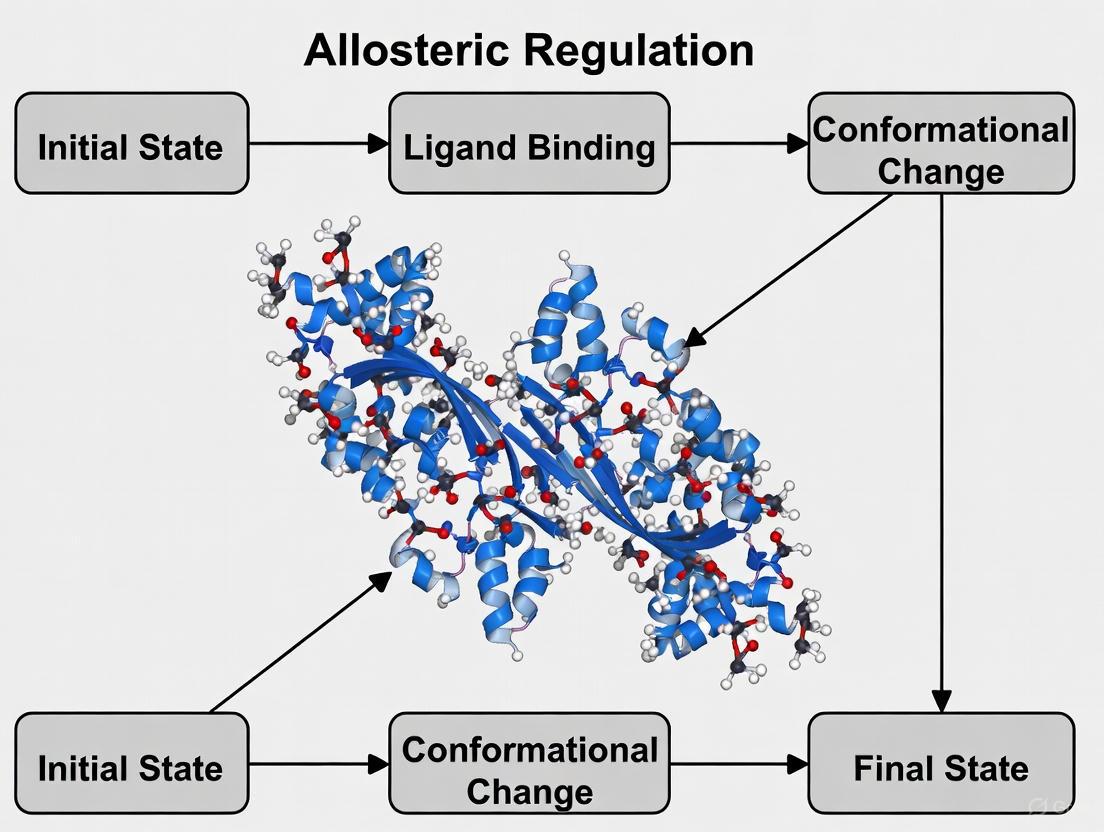
Allosteric regulation, the process of controlling protein function through binding at distal sites, offers a promising avenue for developing highly selective therapeutics.
Decoding Allostery: How Molecular Dynamics Simulations Are Revolutionizing Drug Discovery
Abstract
Allosteric regulation, the process of controlling protein function through binding at distal sites, offers a promising avenue for developing highly selective therapeutics. This article explores the transformative role of molecular dynamics (MD) simulations in elucidating the complex mechanisms of allostery. We detail foundational concepts, advanced computational methodologies—including enhanced sampling and machine learning integration—and their application in identifying cryptic allosteric sites. The content further addresses key challenges in the field, strategies for computational and experimental validation, and provides a forward-looking perspective on how these integrative approaches are paving the way for a new generation of allosteric drugs targeting previously undruggable proteins, with a focus on practical insights for researchers and drug development professionals.
Understanding Allostery: The Foundational Principles and the Critical Role of Dynamics
Allosteric regulation represents a fundamental mechanism of biological control, enabling proteins to communicate and regulate their activity over long molecular distances. Often referred to as the "second secret of life," allostery allows effector molecules to bind at sites distinct from the active site, modulating protein function through conformational changes or alterations in protein dynamics [1] [2]. This regulatory mechanism provides a robust molecular tool for cellular communication, serving critical roles in signal transduction, catalysis, and gene regulation [1]. The conceptual framework of allostery has evolved significantly from early rigid structural models to modern dynamic paradigms that recognize the intrinsic flexibility and conformational ensembles of proteins. This evolution has been driven by advances in structural biology, computational methodologies, and theoretical frameworks, positioning allosteric regulation as a central focus in drug discovery and protein engineering [3] [4]. The growing therapeutic importance of allosteric targeting, particularly for previously "undruggable" targets, underscores the need for a comprehensive understanding of both historical models and contemporary dynamic approaches to allosteric regulation.
Historical Foundations: Classical Allosteric Models
The foundational models of allosteric regulation emerged in the 1960s and established conceptual frameworks that continue to influence the field. These models provided mechanistic explanations for how proteins could transmit binding information across long distances.
Concerted Model (MWC Model)
Proposed by Monod, Wyman, and Changeux, the concerted model postulates that protein subunits exist in a equilibrium between tense (T) and relaxed (R) states, with all subunits necessarily existing in the same conformation [5]. In this symmetric model, the equilibrium between these states can be shifted through the binding of effector molecules to regulatory sites distinct from active sites. The MWC model effectively explains positive cooperativity, as exemplified by oxygen binding to hemoglobin, where ligand binding to one subunit increases the affinity of adjacent subunits [5].
Sequential Model (KNF Model)
Described by Koshland, Nemethy, and Filmer, the sequential model offers an alternative perspective where subunits undergo induced fit conformational changes independently [5]. Unlike the concerted model, the sequential model does not require all subunits to adopt the same conformation simultaneously, allowing for mixed conformational states within the same protein complex. This model accommodates both positive and negative cooperativity through a more flexible mechanism where substrate binding at one subunit only slightly alters the structure of adjacent subunits to make their binding sites more receptive to substrate [5].
Morpheein Model
The morpheein model represents a dissociative concerted model where homo-oligomeric proteins exist as an ensemble of physiologically significant and functionally different alternate quaternary assemblies [5]. Transitions between these assemblies involve oligomer dissociation, conformational change in the dissociated state, and reassembly to a different oligomer. The disassembly step differentiates this model from classic MWC and KNF models, with porphobilinogen synthase serving as the prototype morpheein [5].
Table 1: Classical Models of Allosteric Regulation
| Model | Key Postulates | Mechanistic Insights | Experimental Evidence |
|---|---|---|---|
| Concerted (MWC) | Proteins exist in T/R state equilibrium; all subunits change conformation simultaneously | Explains positive cooperativity; symmetry conservation | Hemoglobin oxygen binding kinetics |
| Sequential (KNF) | Induced fit mechanism; independent subunit conformation changes | Accounts for negative cooperativity; mixed conformational states | Aspartate transcarbamoylase regulation |
| Morpheein | Dissociative model requiring oligomer disassembly/reassembly | Alternative pathway for allosteric transitions | Porphobilinogen synthase quaternary structure changes |
The Modern Dynamic Paradigm
The contemporary understanding of allostery has expanded beyond rigid structural models to embrace the dynamic nature of proteins and the significance of conformational ensembles.
Ensemble Allostery Model
The ensemble model conceptualizes proteins as existing in a statistical ensemble of conformational states, with allosteric regulation occurring through population shifts within this ensemble [1] [2]. This framework acknowledges that allosteric signaling can occur without major structural changes through alterations in the protein's dynamic energy landscape. The model emphasizes that statistical ensembles of preexisting conformational states and communication pathways are intrinsic to a given protein system, allowing for modulation and redistribution induced by external perturbations, ligand binding, and mutations [1].
Dynamic Allostery
Dynamic allostery represents a significant departure from classical models by demonstrating that allosteric regulation can occur through alterations in thermal fluctuations and dynamics without major conformational shifts [2]. First introduced by Cooper and Dryden, this mechanism suggests that ligand binding alters the local effective elastic modulus of the protein, modulating the amplitude of thermal fluctuations rather than inducing large-scale conformational changes [2]. Experimental evidence from NMR spectroscopy has revealed that changes in residue-level fluctuations can drive allosteric effects, demonstrating that allostery can emerge from shifts in dynamic properties rather than distinct conformational changes [2].
Allosteric Communication Networks
Modern paradigms recognize allosteric regulation as a global property of protein systems that can be described by residue interaction networks, where effector binding initiates cascades of coupled fluctuations that propagate through the network and elicit long-range functional responses [1]. Graph-based network approaches map dynamic fluctuations onto graphs with nodes representing residues and edges representing dynamic properties, identifying key functional centers and allosteric communication pathways [1] [3]. These approaches have revealed that rapid signal transmission through small-world networks may be a universal signature encoded in protein families [1].
Figure 1: The conceptual transition from classical to modern paradigms in allosteric regulation, highlighting the key models and mechanisms within each framework.
Quantitative Methodologies and Experimental Protocols
Modern allosteric research employs sophisticated computational and experimental approaches to characterize allosteric mechanisms across multiple spatial and temporal scales.
Molecular Dynamics Simulations
Molecular dynamics (MD) simulations have become indispensable tools for probing biomolecular conformational dynamics, offering atomic-level insights into transient structural states and allosteric communication pathways [3]. These simulations numerically solve Newton's equations of motion for systems comprising thousands to millions of atoms across timescales ranging from nanoseconds to milliseconds, effectively capturing thermal fluctuations and collective motions underlying functional protein dynamics [3].
Protocol 4.1.1: MD Simulation for Allosteric Site Detection
System Preparation: Obtain protein structure from PDB database, add missing residues or loops if necessary, solvate in explicit water box, add ions to neutralize system charge [6].
Energy Minimization: Perform steepest descent minimization (5,000 steps) followed by conjugate gradient minimization (5,000 steps) to remove steric clashes.
Equilibration: Conduct gradual heating from 0K to 300K over 100ps with position restraints on protein heavy atoms (force constant: 1000 kJ/mol/nm²), followed by 1ns NPT equilibration with reduced position restraints (force constant: 400 kJ/mol/nm²).
Production Simulation: Run unrestrained MD simulation for timescales appropriate to system size and research question (typically 100ns-1μs), saving coordinates every 10-100ps for analysis [6].
Trajectory Analysis: Calculate root mean square deviation (RMSD), root mean square fluctuation (RMSF), radius of gyration, and inter-residue distances to identify conformational changes and flexible regions [6].
Allosteric Site Detection: Identify transient pockets using pocket detection algorithms (e.g., MDpocket, POVME), correlate pocket opening with functional motions, and validate through mutational analysis [3].
Large-scale MD datasets, such as the GPCRmd database encompassing over 190 GPCR structures with cumulative simulation times exceeding half a millisecond, have revealed extensive local "breathing motions" of receptors on nano- to microsecond timescales, providing access to numerous previously unexplored conformational states [6]. These simulations have demonstrated that allosteric sites frequently adopt partially or completely closed states in the absence of molecular modulators, highlighting the importance of dynamics in allosteric site accessibility [6].
Network-Based Allostery Analysis
Network-based approaches conceptualize proteins as graphs where residues represent nodes and their interactions represent edges, enabling quantitative analysis of allosteric communication pathways [1] [3].
Protocol 4.2.1: Residue Interaction Network Construction and Analysis
Network Construction: Generate correlation matrix from MD trajectories using linear mutual information (LMI) or generalized correlation methods, define nodes as Cα atoms or individual residues, establish edges based on correlation thresholds or contact maps [1].
Network Metric Calculation: Compute betweenness centrality, closeness centrality, and edge betweenness to identify highly connected residues and potential allosteric hubs [1].
Community Detection: Apply Girvan-Newman or Louvain community detection algorithms to identify clusters of strongly correlated residues that may represent functional modules [3].
Pathway Analysis: Identify optimal allosteric communication pathways using shortest path algorithms (e.g., Dijkstra's algorithm) with edge weights inversely related to correlation strength [1].
Dynamic Coupling Analysis: Calculate Dynamic Flexibility Index (DFI) to quantify residue resilience to perturbations and Dynamic Coupling Index (DCI) to measure inter-residue dynamic coupling, identifying Dynamic Allosteric Residue Couples (DARC sites) [2].
Tools such as MDPath employ normalized mutual information (NMI) analysis of MD simulations to identify allosteric communication paths, demonstrating applications across diverse systems including GPCRs and kinases [7].
Markov State Modeling
Markov State Models (MSMs) provide a powerful framework for reducing the complexity of MD simulations by discretizing conformational space into states and modeling transitions between them as a Markov process [1] [8].
Protocol 4.3.1: Markov State Model Construction
Feature Selection: Choose relevant structural features (e.g., dihedral angles, contact maps, inter-residue distances) that capture functional motions.
Dimensionality Reduction: Apply time-lagged independent component analysis (tICA) or principal component analysis (PCA) to identify slow collective variables.
Clustering: Use k-means clustering or density-based spatial clustering to discretize conformational space into microstates.
Model Construction: Build transition probability matrix between microstates at specified lag time, validating Markov property by testing Chapman-Kolmogorov equality.
Coarse-Graining: Perform Perron cluster cluster analysis (PCCA+) to group microstates into macrostates representing functionally relevant conformations.
Path Analysis: Identify transition paths between functional states and calculate transition rates and fluxes [8].
MSMs have been successfully applied to study allosteric regulation in systems such as KRAS-effector interactions, revealing how oncogenic mutations stabilize active states and enhance binding through modulation of switch region flexibility [8].
Table 2: Quantitative Metrics in Modern Allosteric Research
| Methodology | Key Metrics | Biological Interpretation | Application Examples |
|---|---|---|---|
| Molecular Dynamics | RMSD, RMSF, dihedral angles, contact maps | Conformational stability, flexibility, interaction persistence | GPCR breathing motions, cryptic pocket opening [6] |
| Network Analysis | Betweenness centrality, shortest paths, community structure | Residue importance in communication, signal transduction pathways | Allosteric hub identification in kinases [1] [3] |
| Markov Modeling | Transition probabilities, implied timescales, state populations | Kinetic rates between conformations, thermodynamic stability of states | KRAS activation mechanism analysis [8] |
| Dynamic Analysis | DFI, DCI, vibrational density of states | Resilience to perturbations, allosteric coupling strength, collective motions | Evolutionary analysis of β-lactamases [2] |
The Scientist's Toolkit: Research Reagents and Computational Solutions
Contemporary allosteric research employs diverse reagents and computational tools that enable the characterization and manipulation of allosteric systems.
Table 3: Essential Research Reagents and Computational Tools for Allosteric Studies
| Tool/Category | Specific Examples | Function/Application | Experimental Context |
|---|---|---|---|
| MD Simulation Software | GROMACS, AMBER, NAMD, OpenMM | Biomolecular dynamics simulation, conformational sampling | All-atom simulation of protein dynamics [3] [6] |
| Allosteric Site Prediction | MDPath, AlloScore, SPACER | Identification of regulatory pockets from structural data | Cryptic pocket detection in GPCRs and kinases [7] [3] |
| Network Analysis Tools | NetworkView, Carma, MD-TASK | Residue interaction network construction and analysis | Pathway identification in allosteric proteins [1] |
| Enhanced Sampling Methods | Metadynamics, REST2, Gaussian Accelerated MD | Accelerated exploration of conformational space | Rare event sampling, binding pocket discovery [3] |
| Machine Learning Frameworks | AlphaFold2, ESM-2, DeepAllostery | Structure prediction, sequence analysis, site classification | Allosteric site prediction from sequence and structure [3] |
| Experimental Validation | NMR spectroscopy, HDX-MS, Cryo-EM | Conformational dynamics measurement, structural validation | Experimental verification of predicted allosteric mechanisms [1] [2] |
Allosteric Signaling Pathways: Visualization and Mechanisms
Allosteric communication within proteins follows specific pathways that can be mapped and quantified using computational approaches.
Figure 2: Allosteric signaling pathways illustrating both conformational (black) and dynamic (red) mechanisms of allosteric communication, highlighting the role of network hubs and distally coupled residues.
Application Notes: Case Studies in Allosteric Investigation
GPCR Allosteric Regulation
G protein-coupled receptors represent a paradigm for allosteric regulation in membrane proteins. Large-scale MD simulations of GPCRs have revealed that these receptors exhibit significant "breathing motions" on nanosecond to microsecond timescales, with spontaneous sampling of intermediate and even active-like states even in the absence of agonists [6]. These studies have demonstrated that antagonists, inverse agonists, and negative allosteric modulators reduce conformational sampling, suggesting that perturbation of conformational dynamics through inactive state stabilization represents a general molecular mechanism across receptor subtypes [6]. Lipid insertions into GPCR structures have been identified as valuable markers for membrane-exposed allosteric pockets and lateral entrance gates for specific ligand types [6].
KRAS Oncoprotein Allostery
The KRAS oncoprotein represents an important case study in allosteric regulation, with oncogenic mutations (G12V, G13D, Q61R) stabilizing active states and enhancing effector binding through differential modulation of switch region flexibility [8]. Integrated approaches combining MD simulations, mutational scanning, binding free energy calculations, and dynamic network modeling have elucidated how these mutations modulate allosteric landscapes. The G12V mutation rigidifies both switch I and switch II regions, locking KRAS in a stable active state, while the Q61R mutation induces a more dynamic conformational landscape [8]. Dynamic network analysis has identified critical allosteric centers and a conserved allosteric architecture that enables precision modulation of KRAS dynamics in oncogenic contexts [8].
Enzyme Allosteric Modulation
Allosteric regulation of enzymes demonstrates the therapeutic potential of targeting allosteric sites. FDA-approved allosteric drugs targeting enzymes include trametinib (MEK inhibitor), asciminib (BCR-ABL inhibitor), and deucravacitinib (TYK2 inhibitor) [4]. These drugs exemplify the advantages of allosteric modulation, including enhanced selectivity, reduced toxicity, and the ability to fine-tune enzymatic activity without competing with high-affinity endogenous substrates [4]. Studies on systems such as fructosyltransferase have demonstrated allosteric regulation through distal binding events, where interaction with immobilization surfaces (e.g., Fe₃O₄ interfaces) far from catalytic sites nevertheless influences catalytic activity through allosteric mechanisms [9].
The understanding of allosteric regulation has evolved substantially from early structural models to contemporary dynamic paradigms that recognize the importance of conformational ensembles, fluctuation networks, and population shifts. This evolution has been driven by methodological advances in MD simulations, network analysis, and machine learning, enabling increasingly sophisticated characterization of allosteric mechanisms [3]. The integration of computational and experimental approaches provides a powerful framework for advancing allosteric research, with applications in drug discovery, protein engineering, and fundamental biology [1] [4]. Future directions will likely focus on enhancing the predictive power of allosteric models through advanced ML techniques, integrating multi-scale simulations, and expanding the characterization of allosteric systems across biological networks [3]. As these methodologies continue to mature, they promise to unlock new therapeutic opportunities targeting allosteric regulation in diverse disease contexts.
The Thermodynamic and Structural Basis of Allosteric Communication
Allostery, the process by which a biological macromolecule regulates its activity at one site through the binding of an effector molecule at a distant, topographically distinct site, represents a fundamental mechanism of biological control. This phenomenon enables exquisite regulation of critical cellular processes, from metabolic flux to signal transduction. The thermodynamic and structural basis of allosteric communication provides a framework for understanding how proteins transmit signals over long distances and how these signals can be modulated for therapeutic purposes. Historically, allostery was understood through simple models such as the Monod-Wyman-Changeux (MWC) and Koshland-Némethy-Filmer (KNF) models, which described concerted and sequential conformational transitions, respectively. However, recent advances in structural biology and computational modeling have revealed that allosteric regulation involves a complex interplay of conformational equilibria, dynamics, and energetic pathways that transmit information through proteins.
Contemporary research has demonstrated that allostery is an intrinsic property of all dynamic proteins, not just multimeric proteins as initially thought. All protein surfaces represent potential allosteric sites subject to ligand binding or mutations that can introduce structural perturbations elsewhere in the protein [10]. This expanded understanding has significant implications for drug discovery, as allosteric modulators offer advantages in specificity and reduced toxicity compared to orthosteric drugs that target active sites directly [11]. The growing appreciation of allostery as a dynamic phenomenon has been catalyzed by advances in structural techniques such as cryo-electron microscopy (cryo-EM) and computational methods including molecular dynamics (MD) simulations, which together provide unprecedented insights into the atomic-scale mechanisms of allosteric regulation.
Structural Mechanisms of Allostery
Conformational Transitions in Allosteric Proteins
The structural basis of allostery involves coordinated transitions between distinct conformational states, typically categorized as active (R-state) and inactive (T-state) conformations. Recent cryo-EM studies of human phosphofructokinase-1 (PFK1), a key glycolytic enzyme, have elucidated fundamental differences in allosteric mechanisms between eukaryotic and bacterial systems. While bacterial PFK1 undergoes a classic R-to-T-state transition via a 7-degree rotation between rigid dimers, the human liver isoform (PFKL) exhibits a more complex transition involving a 7-degree rotation between monomers around a different axis not coincident with the protein's symmetry axes [12]. This transition is stabilized by the C-terminus, which acts as an autoinhibitory element, and by ATP binding at multiple sites, including a third site (site 3) between the catalytic and regulatory domains that is not occupied in the R-state [12].
The allosteric transition in PFKL involves local unfolding of an α-helix adjacent to ATP site 3, which disrupts the positions of residues R201 and R292 that normally bind the phosphate of the substrate F6P in the active R-state [12]. This mechanism illustrates how allosteric inhibition functionally disrupts substrate binding without affecting ATP binding in the active site. Similarly, studies on ribonucleotide reductase (RR) have revealed that allosteric regulation can occur through effector-induced oligomerization, where dATP binding promotes the formation of inactive hexamers, while ATP induces active dimers and hexamers [13]. These structural insights demonstrate the diversity of allosteric mechanisms employed by different protein systems.
Allosteric Networks and Communication Pathways
Proteins possess intricate networks of residues that facilitate allosteric communication. These networks enable the transmission of structural perturbations from allosteric sites to functional sites through pathways of spatially connected residues. Research on the response regulator protein CheY, which undergoes allosteric activation upon phosphorylation of D57, has identified specific residues critical for these communication pathways [10]. Computational predictions using tools like Ohm have successfully identified key residues in allosteric networks that correlate well with experimental mutagenesis studies, validating the importance of these pathways for allosteric function [10].
The emerging "allosteric lever" concept provides a physical principle for understanding how these networks function. This hypothesis proposes that structural perturbations at allosteric sites couple localized hard elastic modes with concerted long-range soft-mode relaxation, creating an efficient, directed transmission to distant target sites [14]. This mode-coupling pattern differs from non-allosteric perturbations, which typically couple hard and soft modes uniformly without specific directionality. The allosteric lever mechanism explains how minimal structural distortions can be efficiently transmitted to produce specific changes at distant functional sites, and interestingly, the protein sequence patterns that comprise these transmission channels appear to be evolutionarily conserved [14].
Table 1: Key Structural Features of Allosteric Proteins
| Structural Element | Role in Allostery | Example Protein | Experimental Evidence |
|---|---|---|---|
| C-terminal autoinhibitory segment | Stabilizes T-state conformation | PFKL [12] | Cryo-EM structures of R and T states |
| Multiple nucleotide binding sites | Differential regulation via occupancy | PFKL [12] | Ligand density in cryo-EM maps |
| Oligomerization interfaces | Effector-induced quaternary changes | Ribonucleotide reductase [13] | X-ray structures of hexamers |
| Conserved hydrophobic pockets | Allosteric inhibitor binding | MKP5 [15] | X-ray crystallography with Compound 1 |
| Dynamic loops | Transmit conformational changes | MKP5 [15] | MD simulations and NMR |
Thermodynamic Foundations
Population Shift Model and Energy Landscapes
The thermodynamic basis of allostery is best understood through the population shift model, which posits that proteins exist as ensembles of conformations in equilibrium, with allosteric effectors stabilizing specific subsets of these states. This model represents a significant advancement over earlier induced-fit and lock-and-key mechanisms by incorporating the intrinsic dynamics of proteins into the framework of allosteric regulation. According to this view, allosteric communication occurs through shifts in the conformational equilibrium of a protein, rather than through a simple mechanical transmission of motion [16].
Proteins sample a wide energy landscape with multiple minima corresponding to different conformational states. Allosteric effectors function by altering the relative energies of these minima, thereby changing the population distribution across the conformational ensemble. This thermodynamic model explains how allosteric regulators can both activate and inhibit protein function by stabilizing active or inactive conformations, respectively. For example, in human RR1, ATP binding stabilizes active dimeric and hexameric states, while dATP binding preferentially stabilizes inactive hexamers, providing a elegant mechanism for maintaining balanced dNTP pools [13].
Energetics of Allosteric Communication
The transmission of allosteric signals through proteins involves complex energetic relationships between different regions. Recent research on MKP5, a dual-specificity phosphatase, has provided quantitative insights into how energy is propagated through allosteric networks. Structural studies of MKP5 bound to an allosteric inhibitor (Compound 1) revealed that binding at the allosteric site approximately 8 Å from the catalytic C408 residue induces conformational changes that reduce the volume of the enzymatic site by ~18% [15]. This reduction is accompanied by the formation of new hydrogen bonds between the backbone carbonyl of S446 and the hydroxyl group of S413 in the α3 helix, and the disruption of existing hydrogen bonds between S413 and N448 [15].
These structural changes alter the energy landscape of the catalytic site, reducing its accessibility and affinity for substrates. Molecular dynamics simulations of MKP5 have further elucidated how changes in the allosteric pocket propagate conformational flexibility to reorganize catalytically crucial residues in the active site [15]. The conservation of allosteric residue Y435 among active MKPs underscores the thermodynamic importance of this site for regulating catalytic activity across related enzymes [15].
Computational and Experimental Methodologies
Molecular Dynamics Simulations
Molecular dynamics (MD) simulations have become indispensable tools for studying allosteric mechanisms at atomic resolution. These simulations approximate atomic motions using Newtonian physics, with forces calculated from equations that account for bonded interactions (chemical bonds, angles, dihedrals) and non-bonded interactions (van der Waals forces, electrostatic interactions) [16]. By simulating the jiggling and wiggling of atoms over time, MD can capture the dynamic nature of allosteric processes that are difficult to observe experimentally.
MD simulations have proven particularly valuable for identifying cryptic allosteric sites, enhancing virtual screening methodologies, and directly predicting small-molecule binding energies [16]. For example, accelerated MD (aMD) techniques artificially reduce large energy barriers, allowing proteins to sample conformational states that would be inaccessible within conventional simulation timescales [16]. Specialized hardware like the Anton supercomputer has enabled millisecond-scale simulations, capturing protein folding and drug-binding events that occur on biologically relevant timescales [16].
Table 2: Computational Methods for Allosteric Research
| Method | Principle | Applications | Tools/Implementations |
|---|---|---|---|
| Molecular Dynamics (MD) | Newtonian simulation of atomic motions | Pathway identification, cryptic site discovery | AMBER, CHARMM, NAMD [16] |
| Elastic Network Models (ENM) | Coarse-grained representation of protein dynamics | Allosteric lever identification, mode analysis [14] | Ohm [10] |
| Perturbation Response Scanning | Measures residue sensitivity to perturbations | Critical residue identification | Ohm [10] |
| Allosteric Communication Networks | Graph theory applied to residue interactions | Pathway analysis, hotspot prediction | AlloViz [17] |
| Markov State Models | Statistical analysis of MD trajectories | Conformational ensemble characterization | - |
Experimental Structure Determination
Experimental approaches for studying allostery have advanced significantly with improvements in cryo-EM, X-ray crystallography, and nuclear magnetic resonance (NMR) spectroscopy. Cryo-EM has been particularly transformative, as it can capture structures in multiple conformational states without the crystallization constraints that often preferentially select for R-state conformations [12]. This capability was demonstrated in the determination of both R- and T-state structures of PFKL, revealing conformational differences between bacterial and eukaryotic enzymes [12].
NMR spectroscopy provides complementary information about protein dynamics and allosteric pathways on multiple timescales. Studies on MKP5 have combined NMR with crystallography and MD simulations to reveal how allosteric binding propagates conformational flexibility to reorganize catalytically crucial residues [15]. The residue Y435 was found to be essential for maintaining the structural integrity of the allosteric pocket and for interactions with substrate MAPKs, demonstrating the integration of multiple experimental approaches in elucidating allosteric mechanisms [15].
Application Notes and Protocols
Protocol 1: Mapping Allosteric Pathways with Ohm
Purpose: To identify allosteric sites, pathways, and critical residues using the Ohm computational platform based solely on protein structure.
Experimental Principles: Ohm implements a perturbation propagation algorithm that predicts allosteric coupling through repeated stochastic simulations of perturbation spread across a network of interacting residues. The frequency with which each residue is affected by perturbations originating from active sites defines its allosteric coupling intensity (ACI), which is used to identify allosteric hotspots [10].
Step-by-Step Procedure:
- Input Preparation: Obtain the tertiary structure of the protein of interest from PDB or homology modeling. Identify and annotate active site residues based on experimental data or catalytic signatures.
- Contact Extraction: Extract atomic contacts from the protein structure. Calculate the number of contacts between each residue pair, normalized by the number of atoms in each residue.
- Probability Matrix Calculation: Compute the perturbation propagation probability matrix Pij using the equation: Pij = Cij / Σk Cik, where Cij represents the normalized contact count between residues i and j.
- Perturbation Simulation: Initiate perturbations from active site residues. For each propagation step, generate a random number between 0-1; if this number < Pij, propagate the perturbation from residue i to j.
- Pathway Identification: Repeat the perturbation process 10^4 times, recording residues through which perturbations pass. Calculate ACI values for all residues.
- Hotspot Clustering: Cluster residues according to their ACI values and 3D coordinates. Each significant cluster represents a predicted allosteric hotspot.
- Validation: Compare predictions with known experimental data where available. For Caspase-1, validate that predicted critical residues (R286, E390) match mutagenesis results [10].
Troubleshooting:
- Low ACI values may indicate insufficient sampling; increase repetition count.
- Overprediction of allosteric sites may require adjustment of clustering parameters.
- Comparison with evolutionary conservation can enhance prediction confidence.
Ohm Allosteric Pathway Mapping Workflow: This diagram illustrates the computational workflow for identifying allosteric pathways using the Ohm platform, from structure input to hotspot prediction.
Protocol 2: Allosteric Analysis with AlloViz
Purpose: To quantitatively determine, analyze, and visualize allosteric communication networks using molecular dynamics simulation data.
Experimental Principles: AlloViz is an open-source Python package that computes protein allosteric communication networks from MD trajectories using various correlation metrics, including mutual information with local non-uniformity correction (LNC) for dihedral angles [17]. The tool integrates multiple network construction methods and facilitates analysis using graph theory metrics.
Step-by-Step Procedure:
- MD Trajectory Preparation: Perform molecular dynamics simulations of the protein system of interest. Ensure adequate sampling of conformational space.
- Network Construction: Choose appropriate network construction method based on:
- Motion correlation (Pearson correlation of Cα or Cβ positions)
- Dihedral angle correlation (mutual information of ϕ, ψ, χ1...χ4 angles)
- Contact-based metrics (frequency or strength)
- Interaction energies
- Network Filtering: Apply filters to focus on relevant interactions:
GetContacts_edges: Include only contact pairs identified by GetContactsSpatially_distant: Exclude residue pairs beyond distance thresholdNo_Sequence_Neighbors: Exclude adjacent residues in sequenceGPCR_Interhelix: For GPCRs, retain only inter-helical residue pairs
- Network Analysis: Calculate centrality metrics to identify key residues:
- Betweenness centrality: Number of shortest paths through nodes/edges
- Current-flow betweenness: Random-walk based centrality using electrical current model
- Delta-Network Calculation: Compare allosteric networks between different states (e.g., apo vs. ligand-bound) by subtracting edge weights to identify perturbation-induced changes.
- Visualization: Use AlloViz's graphical interface or Python API to visualize allosteric networks on protein structures.
Troubleshooting:
- High computational demand for large proteins; consider trajectory downsampling.
- Network noise from thermal motion; apply spatial or sequence distance filters.
- Interpretation challenges; use multiple centrality metrics and compare with evolutionary conservation.
Protocol 3: Cryo-EM Analysis of Allosteric States
Purpose: To determine high-resolution structures of allosteric proteins in multiple conformational states using cryo-EM.
Experimental Principles: Cryo-EM enables structure determination of proteins in near-native states without crystallization constraints. Single-particle analysis classifies particles into different conformational states, allowing determination of multiple structures from a single sample [12].
Step-by-Step Procedure:
- Sample Preparation: Purify target protein to homogeneity. Optimize buffer conditions and add relevant ligands (substrates, effectors, inhibitors) to stabilize specific states.
- Grid Preparation: Apply 3-4 μL protein sample (0.5-3 mg/mL) to glow-discharged cryo-EM grids. Blot and plunge-freeze in liquid ethane using vitrification device.
- Data Collection: Collect movie stacks on high-end cryo-EM microscope (e.g., Titan Krios) with dose-fractionation at specified defocus range. Target 500-1000 micrographs per dataset.
- Image Processing:
- Motion correction and dose weighting
- CTF estimation
- Automated particle picking
- 2D classification to remove junk particles
- Ab initio reconstruction and 3D classification
- State Separation: Use 3D classification without symmetry or with appropriate symmetry (e.g., C2 for PFKL filaments) to separate conformational states [12].
- High-Resolution Refinement: Refine each state separately using masked local refinement approaches. Apply symmetry if appropriate.
- Model Building and Analysis: Build atomic models into cryo-EM densities. Analyze conformational differences between states, ligand binding sites, and oligomeric interfaces.
Troubleshooting:
- Preferred orientation: Try different grid types or additives.
- Heterogeneity: Increase 3D classification rounds and particle numbers.
- Resolution limitations: Optimize ice thickness, particle concentration, and data collection parameters.
Cryo-EM Workflow for Allosteric States: This diagram outlines the single-particle cryo-EM workflow for determining structures of multiple allosteric states, from sample preparation to model analysis.
The Scientist's Toolkit: Research Reagent Solutions
Table 3: Essential Research Reagents and Tools for Allosteric Studies
| Reagent/Tool | Function | Application Examples | Key Features |
|---|---|---|---|
| AlloViz | Python package for allosteric network analysis from MD data | β-arrestin 1, PTP1B allosteric communication [17] | Integrates multiple network methods; GUI and scripting interfaces |
| Ohm | Web server for allosteric site/pathway prediction from structure | Caspase-1, CheY allosteric hotspot identification [10] | Structure-based; no MD required; perturbation propagation algorithm |
| Compound 1 (Cmpd 1) | MKP5 allosteric inhibitor | MKP5 catalytic regulation studies [15] | Binds ~8Å from catalytic C408; Y435 interaction |
| AMBER/CHARMM/NAMD | MD simulation software with force fields | Protein dynamics, allosteric pathway analysis [16] | Newtonian physics-based; explicit solvent models |
| Cryo-EM Grids | Sample support for cryo-EM | PFKL R/T state structure determination [12] | UltrAuFoil, Quantifoil; various hole sizes |
| GPCRdb | GPCR structure database and tools | GPCR allosteric site identification [17] | Generic residue numbering; inter-helix contact filters |
Applications in Drug Discovery
Allosteric modulation represents a promising avenue for therapeutic intervention, offering advantages in specificity and the potential to overcome drug resistance. Allosteric drugs can achieve high specificity by targeting unique regulatory sites rather than conserved active sites, reducing off-target effects [18] [11]. The FDA has approved several allosteric modulators, underscoring the clinical relevance of this approach.
Recent advances in computational methods have accelerated allosteric drug discovery by enabling the prediction of hidden allosteric sites that can greatly expand the repertoire of available drug targets [11]. Integration of evolutionary, structural, and dynamic features with machine learning models has improved the identification and exploitation of allosteric sites [18]. These computational approaches are complemented by experimental techniques that validate cryptic and functionally relevant pockets across diverse enzyme families [18].
Case studies on proteins such as MKP5 demonstrate the therapeutic potential of allosteric targeting. The identification of Compound 1 as an allosteric MKP5 inhibitor that binds approximately 8 Å from the catalytic site illustrates how allosteric modulation can achieve effective inhibition without competing directly with substrates at the active site [15]. Similarly, the discovery of dATP-induced oligomerization as a regulatory mechanism for ribonucleotide reductase provides insights for developing anticancer agents that target nucleotide metabolism [13].
The thermodynamic and structural basis of allosteric communication represents a complex interplay of conformational dynamics, energetic pathways, and evolutionary constraints. Advances in structural biology, particularly cryo-EM, have revealed unprecedented details of allosteric mechanisms, while computational approaches have provided tools to predict and analyze allosteric networks. The integration of these methods offers a powerful framework for understanding how proteins transmit signals over long distances and how these signals can be modulated for therapeutic purposes.
Future research directions will likely focus on developing more accurate force fields for molecular dynamics simulations, improving methods for predicting allosteric sites from sequence and structure, and designing allosteric modulators with tailored pharmacological properties. The emerging "allosteric lever" concept, which describes a mode-coupling pattern that enables efficient signal transmission, may provide a unifying principle for understanding allosteric mechanisms across diverse protein systems [14]. As these tools and concepts continue to evolve, they will undoubtedly expand our understanding of allosteric regulation and enhance our ability to target allosteric sites for therapeutic benefit.
Proteins are not static entities; they exist as dynamic conformational ensembles—collections of interconverting structures—around a native state [19]. This inherent flexibility is central to allosteric regulation, where an effector binding at one site remotely influences the functional activity at another site [3] [20] [21]. A critical consequence of this dynamism is the existence of cryptic pockets: transient, often hidden binding sites that are not apparent in static, ground-state protein structures but can emerge due to thermal fluctuations and become druggable upon opening [22]. These pockets vastly expand the potentially druggable proteome, offering opportunities to target proteins currently considered "undruggable" because they lack persistent pockets [23] [22].
The discovery of cryptic pockets is transformative for drug discovery. Unlike often-conserved orthosteric sites, cryptic pockets tend to be less conserved across protein families, enabling the development of highly selective modulators with reduced off-target effects [3] [22]. Furthermore, allosteric modulators targeting these sites can fine-tune protein activity—either inhibiting or activating it—rather than completely blocking it, preserving baseline biological signaling [3] [20]. Understanding and identifying these pockets requires a paradigm shift from a static, single-structure view to a dynamic, ensemble-based perspective, which is enabled by advanced computational strategies in molecular dynamics and machine learning [19] [23].
The Computational Toolkit for Studying Conformational Ensembles
Investigating cryptic pockets and conformational ensembles requires a multi-faceted computational approach. The table below summarizes the key methodologies, their underlying principles, and applications in allosteric research.
Table 1: Computational Methodologies for Analyzing Conformational Ensembles and Cryptic Pockets
| Method Category | Key Methods & Algorithms | Primary Function | Application in Cryptic Pocket Discovery |
|---|---|---|---|
| Molecular Dynamics (MD) | Conventional MD, Accelerated MD (aMD), Steered MD (SMD) | Simulates atomic-level motions and thermodynamic fluctuations of biomolecules over time [20] [21]. | Captures transient pocket opening events and conformational shifts that reveal cryptic sites [22] [15]. |
| Enhanced Sampling | Metadynamics (MetaD), Umbrella Sampling, Replica Exchange MD (REMD) | Accelerates exploration of conformational space and free energy landscapes by overcoming energy barriers [20] [21]. | Efficiently identifies rare, high-energy conformational states where cryptic pockets are formed [20]. |
| Machine Learning (ML) | PocketMiner (Graph Neural Network), CryptoSite | Predicts locations of cryptic pocket formation directly from single protein structures [22]. | Enables rapid, proteome-scale screening for proteins likely to harbor cryptic pockets [22]. |
| Ensemble Structure Prediction | FiveFold (integrates AlphaFold2, RoseTTAFold, etc.) | Generates multiple plausible conformations from a single sequence, modeling conformational diversity [23]. | Provides a set of alternative starting structures for dynamics simulations or analysis, capturing intrinsic flexibility [23]. |
| Network & Motion Analysis | Normal Mode Analysis (NMA), Statistical Coupling Analysis (SCA) | Identifies collective motions and allosteric communication pathways within a protein [3] [20]. | Pinpoints residues critical for allostery and regions prone to conformational changes that may host cryptic pockets [3]. |
Research Reagent Solutions
The following table details essential computational tools and resources that form the core "wet lab" for researchers in this field.
Table 2: Key Research Reagents and Computational Tools
| Tool/Resource Name | Type | Primary Function & Utility |
|---|---|---|
| PocketMiner [22] | Graph Neural Network | Predicts residues where cryptic pockets are likely to open from a single static structure, enabling high-throughput target prioritization. |
| FiveFold [23] | Ensemble Prediction Platform | Generates a conformational ensemble by combining five structure prediction algorithms, providing a better starting point for dynamics. |
| AlphaFold2 [3] [23] | Deep Learning Structure Prediction | Provides highly accurate initial protein structures; its outputs are key components of ensemble methods like FiveFold. |
| MDpocket [20] | Analysis Algorithm | Used with MD trajectories to track the evolution of pocket volumes and identify transient binding sites. |
| GPCRmd [3] | MD Database & Platform | A specialized repository for MD simulation data of GPCRs, facilitating data sharing and comparative analysis. |
| PASSer [20] [21] | Prediction Server | An online platform for the prediction of allosteric sites. |
Protocol 1: Predicting Cryptic Pockets with PocketMiner
This protocol details the use of the PocketMiner graph neural network to rapidly identify proteins with a high probability of containing cryptic pockets, using a single static structure as input [22]. This serves as a powerful pre-screening tool before committing to more resource-intensive MD simulations.
Experimental Workflow
The following diagram outlines the key steps in the PocketMiner prediction workflow.
Figure 1: PocketMiner Cryptic Pocket Prediction Workflow.
Step-by-Step Procedure
Input Preparation (Node A)
- Source: Obtain a 3D structure of the protein of interest in its ligand-free (apo) state. Suitable sources include experimental structures from the PDB or high-confidence predicted models from AlphaFold2 or RoseTTAFold.
- Formatting: Ensure the structure file is in PDB format. Pre-process the file to remove water molecules, ions, and other non-protein heteroatoms that are not relevant to the pocket prediction.
Model Execution (Nodes B & C)
- Featurization: PocketMiner automatically converts the input structure into a graph representation where nodes are amino acid residues and edges represent spatial proximity.
- Prediction: Run the pre-trained PocketMiner model. The model assigns a probability score to each residue, predicting its likelihood of participating in a cryptic pocket opening event within a short (e.g., 40 ns) MD simulation [22].
Output & Analysis (Nodes D & E)
- Visualization: Map the per-residue probability scores onto the protein structure using molecular visualization software like PyMOL or UCSF Chimera. Typically, a continuous surface is colored by the prediction score (e.g., blue for low probability, red for high probability).
- Identification: Identify spatial clusters of residues with high probability scores (e.g., >0.5). The centroid of the largest or highest-scoring cluster indicates the most likely location for a cryptic pocket.
Decision Point (Node F)
- Prioritization: Proteins with strong, high-probability predictions can be prioritized for further investigation via molecular dynamics simulations (Protocol 2) or experimental validation. PocketMiner achieves an ROC-AUC of 0.87 and performs prediction over 1,000-fold faster than simulation-based methods, making it ideal for screening [22].
Protocol 2: Characterizing Pocket Dynamics with Enhanced MD Simulations
Once a target is identified, this protocol uses enhanced sampling Molecular Dynamics to rigorously characterize the conformational ensemble and capture the full process of cryptic pocket opening and closing [20] [21] [15].
Experimental Workflow
The workflow for MD-based characterization of cryptic pockets involves system setup, enhanced sampling, and detailed analysis.
Figure 2: Molecular Dynamics Workflow for Cryptic Pockets.
Step-by-Step Procedure
System Preparation (Nodes A & B)
- Solvation: Place the protein in a simulation box of explicit water molecules (e.g., TIP3P model).
- Ionization: Add ions to neutralize the system's charge and achieve a physiologically relevant salt concentration.
- Minimization & Equilibration: Perform energy minimization to remove steric clashes. Gradually heat the system to the target temperature (e.g., 310 K) and equilibrate under constant pressure (NPT ensemble) to achieve stable density.
Enhanced Sampling Production Simulation (Node C)
- Technique Selection: Choose an enhanced sampling method based on the system.
- Accelerated MD (aMD): Applies a boost potential to the entire system, enhancing the sampling of rare events without requiring pre-defined collective variables. It is particularly useful for initial, unbiased exploration [20] [21].
- Metadynamics (MetaD): Uses a history-dependent bias potential to push the system away from already-visited states. It is ideal for characterizing the free energy landscape of pocket opening if a reasonable collective variable (CV), such as distance between residue Cα atoms around the pocket, can be defined [20] [21].
- Execution: Run the production simulation for a sufficient length (typically hundreds of nanoseconds to microseconds) to observe multiple pocket opening and closing events.
- Technique Selection: Choose an enhanced sampling method based on the system.
Trajectory Analysis (Nodes D, E1, E2, E3)
- Pocket Volume Analysis (E1): Use tools like MDpocket to calculate the volume of potential binding pockets for every frame in the trajectory [20]. This identifies frames where the pocket is open.
- Free Energy Surface (E2): If using MetaD, construct the free energy surface as a function of the CVs. The minima on this surface represent stable conformational states, while the saddle points represent transition states [21].
- Allosteric Communication (E3): Perform correlation analysis (e.g., Dynamic Cross-Correlation) or community analysis on the trajectory to identify networks of residues that move together, potentially revealing allosteric pathways linking the cryptic pocket to the active site [3] [15].
Validation & Output (Node F)
- Structural Clustering: Cluster the simulation frames where the pocket is open to obtain representative structures of the cryptic pocket state.
- Druggability Assessment: Use the representative open structures for virtual screening or druggability prediction to assess the potential for ligand binding.
Case Study: Allosteric Inhibition of MKP5 Phosphatase
Research on the dual-specificity phosphatase MKP5 provides a seminal example of integrating crystallography, MD, and biochemistry to decode an allosteric mechanism [15].
- Experimental Identification: A high-throughput screen identified Compound 1 (Cmpd 1) as an inhibitor. An X-ray co-crystal structure revealed Cmpd 1 binding in a pocket ~8 Å away from the catalytic site, defined as an allosteric site, with residue Y435 as a critical binding mediator [15].
- MD Simulations and Mechanism: MD simulations of both the apo and Cmpd 1-bound states provided the dynamic context missing from static structures. The simulations showed that binding of the allosteric inhibitor introduced structural strain, which propagated through the α4-α5 loop and caused conformational changes in the α3 helix. This reorganization reshaped the catalytic pocket, reducing its volume and compromising enzymatic activity without directly occupying it [15].
- Functional Consequence: This study confirmed that the allosteric site was essential not only for inhibitor binding but also for interactions with its native MAPK substrates. It demonstrated how a perturbation at a distal site can transmit through the protein's conformational ensemble to modulate function at the active site [15].
The study of cryptic pockets and conformational ensembles represents a frontier in structural biology and drug discovery. Moving beyond static structures to a dynamic, ensemble-based view is essential for understanding allosteric regulation and for targeting the vast "undruggable" proteome. As demonstrated, a powerful synergy exists between computational approaches: machine learning models like PocketMiner enable rapid target prioritization, while advanced MD simulations provide atomic-level insight into the dynamics and energetics of pocket opening. The integration of these methods with experimental validation, as in the MKP5 case study, creates a robust framework for discovering and characterizing novel allosteric sites, paving the way for a new generation of selective and effective therapeutics.
Allosteric regulation is a fundamental mechanism in protein regulation, enabling the modulation of protein function from sites distal to the active (orthosteric) site [24]. In contrast to orthosteric drugs that compete with endogenous ligands for the active site, allosteric modulators bind to topographically distinct regulatory sites, inducing conformational changes that fine-tune protein activity [3] [20]. This paradigm is gaining traction as a main mode of action in the realm of antibodies and small molecules, offering a novel pharmacology that enables precise regulation of protein activity [24]. The field is entering a transformative era, driven by advancements in computational biology and artificial intelligence (AI), which hold promise for integrating allosteric site detection with de novo antibody and drug design [24] [3].
This Application Note details the core advantages of allosteric drugs—enhanced specificity, reduced toxicity, and novel mechanisms—and provides established experimental and computational protocols for their discovery and characterization, framed within the context of molecular dynamics simulation research.
Core Advantages of Allosteric Drugs
The therapeutic appeal of allosteric modulators stems from several distinct pharmacological advantages over conventional orthosteric drugs, which are quantified and summarized in Table 1.
Table 1: Quantitative and Qualitative Advantages of Allosteric vs. Orthosteric Drugs
| Parameter | Orthosteric Drugs | Allosteric Drugs | Experimental Evidence |
|---|---|---|---|
| Target Selectivity | Low; targets conserved active sites, leading to off-target effects [25]. | High; targets less conserved allosteric sites, enabling selective targeting of individual members in conserved families [25] [26]. | A study on matrix metalloproteinases (MMPs) demonstrated precise functional modulation of individual isoforms (MMP-7, -12, -13) via latent allosteric sites [27]. |
| Mechanism of Action | Competitive inhibition or activation; completely blocks or mimics endogenous ligand [26]. | Non-competitive, fine-tuned modulation; can be positive (PAM), negative (NAM), or neutral, preserving physiological signaling dynamics [3] [26]. | SBI-553, an allosteric modulator of NTSR1, acts as a "molecular bumper" and "molecular glue," selectively antagonizing Gq/G11 signaling while permitting or enhancing G12/G13 signaling [28]. |
| Toxicity Profile | Higher risk of on-target and off-target toxicity due to complete pathway blockade and target promiscuity [25]. | Reduced toxicity; minimizes on-target side effects by fine-tuning activity and reduces off-target effects via higher selectivity [25] [26]. | Peripherally restricted cannabinoid receptor (CB1) agonists targeting cryptic allosteric sites show significant promise for chronic pain without central toxicity [3]. |
| Therapeutic Application | Limited to "druggable" targets with well-defined, accessible active sites. | Expands the "druggable genome" to previously "undruggable" targets (e.g., GPCRs, Ras) [24] [29]. | Allosteric antibodies have been successfully discovered against previously antibody-undruggable targets like GPCRs and ligand-gated ion channels [24]. |
| Resistance Management | Susceptible to resistance via active site mutations. | Can overcome resistance; mutations in allosteric sites are less common, and allosteric/orthosteric drug combinations can prevent resistance [25] [26]. | The multiplicity of allosteric sites allows for rescuing therapeutic actions when resistance emerges against orthosteric drugs [27]. |
Novel and Diverse Mechanisms of Action
Beyond simple activation or inhibition, allosteric drugs can execute complex pharmacological actions. A prime example is biased signaling, where a drug stabilizes a receptor conformation that preferentially activates a subset of downstream signaling pathways [28]. For instance, the allosteric modulator SBI-553 binds to the intracellular interface of the neurotensin receptor 1 (NTSR1), switching its G protein subtype preference and promoting signaling through β-arrestin and specific G proteins (G12/G13) while antagonizing others (Gq/G11) [28]. This allows for the separation of therapeutic effects from side effects.
Furthermore, a new generation of allosteric modulators can induce protein stabilization, destabilization, or degradation [26]. For example, the allosteric modulator GT-02287, in development for GBA-associated Parkinson's disease, prevents the misfolding of the glucocerebrosidase (GCase) enzyme, enabling it to function properly and restore lysosomal health, demonstrating transformative, disease-modifying activity [26].
The following diagram illustrates the key mechanistic concepts of allosteric regulation and signaling bias.
Figure 1: Allosteric Drug Mechanisms. Allosteric drugs bind to a site distinct from the orthosteric site, inducing conformational changes that fine-tune protein function and can lead to biased activation of specific signaling pathways.
Experimental Protocols for Allosteric Drug Discovery
Protocol 1: Characterizing Allosteric Modulation of GPCR Signaling
This protocol outlines the use of bioluminescence resonance energy transfer (BRET) assays to characterize the G protein subtype selectivity and biased signaling of allosteric modulators, based on a study of the neurotensin receptor 1 (NTSR1) [28].
Application: To quantitatively profile the signaling bias of an allosteric modulator across multiple G protein subtypes and β-arrestin.
Materials and Reagents:
- TRUPATH BRET2 Sensors: A suite of plasmids for measuring activation of 14 different Gα proteins [28].
- BRET1-based β-arrestin recruitment assay: To measure recruitment of β-arrestin 1 and 2 to the GPCR [28].
- Cell Line: HEK293T cells.
- Ligands: The allosteric modulator of interest (e.g., SBI-553), the endogenous orthosteric ligand (e.g., Neurotensin, NT), and a control competitive antagonist (e.g., SR142948A).
Procedure:
- Transfection: Co-transfect HEK293T cells with the plasmid for the target GPCR (e.g., NTSR1) and the appropriate BRET sensor plasmids for specific G proteins or β-arrestin.
- Ligand Treatment:
- Agonism Mode: Treat cells with a concentration range of the allosteric modulator alone to assess its intrinsic agonist activity.
- Allosteric Modulation Mode: Pre-treat cells with a fixed concentration of the allosteric modulator, followed by a concentration range of the orthosteric ligand (e.g., NT).
- BRET Measurement: Measure the BRET signal after ligand addition according to the standard protocol for TRUPATH or β-arrestin recruitment.
- Data Analysis:
- Generate concentration-response curves (CRCs) for each transducer.
- For allosteric modulation experiments, analyze the effect on the orthosteric ligand's CRC: note changes in maximal response (indicating non-competitive antagonism or agonism) and shifts in EC₅₀ (indicating changes in potency) [28].
- Calculate bias factors using operational models to quantify the ligand's preference for specific signaling pathways.
Protocol 2: Computational Workflow for Allosteric Site Prediction
This protocol describes an integrated computational workflow for identifying and validating cryptic allosteric sites using molecular dynamics (MD) and machine learning (ML), a cornerstone of modern allosteric drug discovery [3] [20].
Application: To identify transient, druggable allosteric pockets not visible in static crystal structures.
Materials and Software:
- Initial Structure: A high-resolution structure of the target protein from PDB.
- MD Simulation Software: GROMACS, AMBER, or NAMD.
- Enhanced Sampling Tools: Plumed (for metadynamics, umbrella sampling).
- Pocket Detection Tools: MDpocket, Fpocket.
- Machine Learning Platforms: Allosteric site prediction tools like PASSer; AlphaFold2 for structural insights.
Procedure:
- System Setup:
- Prepare the protein structure in a solvated lipid bilayer (for membrane proteins) or water box, adding necessary ions.
- Energy minimize and equilibrate the system.
- Enhanced Sampling MD:
- Pocket Detection and Analysis:
- Machine Learning Integration:
- Feed features from the MD simulations (e.g., residue contact maps, dihedral angles, pocket volumes) into ML models to predict the druggability and functional role of identified sites [3].
- Validation: Validate computationally predicted sites through mutagenesis studies and functional assays.
The workflow for this integrated protocol is visualized below.
Figure 2: Computational Allosteric Site Prediction. An integrated workflow combining molecular dynamics, pocket detection, network analysis, and machine learning to identify and characterize cryptic allosteric sites.
The Scientist's Toolkit: Research Reagent Solutions
Table 2: Essential Research Reagents and Platforms for Allosteric Drug Discovery
| Reagent/Platform | Function | Specific Application Example |
|---|---|---|
| TRUPATH BRET2 Kit | Measures activation of specific Gα proteins in live cells. | Profiling G protein subtype selectivity of GPCR allosteric modulators (e.g., SBI-553 at NTSR1) [28]. |
| Covalent Fragment Libraries | Contains small molecules with reactive warheads (e.g., for Cys) for targeting allosteric cysteines. | Discovery of Covalent-Allosteric Inhibitors (CAIs), as demonstrated for PTP1B targeting Cys121 [29]. |
| SwissSimilarity / SwissBioisosteres | Open-access platforms for virtual screening and lead optimization via molecular similarity and bioisosteric replacement. | Identifying novel allosteric inhibitors of PI5P4K2C lipid kinase from a known lead (DVF) [30]. |
| MD Simulation Suites (GROMACS/AMBER) | Performs all-atom molecular dynamics simulations to study protein dynamics and reveal transient states. | Identifying cryptic allosteric sites in proteins like BCKDK and thrombin [3] [20]. |
| Enhanced Sampling Software (Plumed) | Accelerates the exploration of conformational space in MD simulations. | Using metadynamics to uncover hidden allosteric pockets in mitochondrial Hsp90 (Trap1) [20]. |
| AlphaFold2 | Predicts protein 3D structures with high accuracy, providing models for targets with no experimental structure. | Generating structural models for allosteric site prediction and drug design [3]. |
Allosteric regulation is a fundamental mechanism in molecular biology through which the binding of an effector molecule at a site distal to the active site modulates protein function, enabling dynamic control of metabolic pathways and cellular signaling processes [21]. This phenomenon represents a "second secret of life" and has gained significant attention in drug discovery due to the unique advantages of allosteric modulators, including enhanced specificity, reduced off-target effects, and the potential for synergistic action with orthosteric drugs [21] [3]. However, the inherent complexity of allosteric mechanisms presents substantial challenges for systematic investigation and therapeutic targeting. Proteins are dynamic entities that transition between multiple conformational states, meaning that functionally critical allosteric sites often exist only as transient pockets in specific conformations [3]. These cryptic binding sites frequently escape detection by conventional structural biology methods such as X-ray crystallography and cryo-electron microscopy (cryo-EM), which provide primarily static structural snapshots [3]. This application note examines the fundamental limitations of static experimental approaches in capturing these transient states and outlines integrated computational methodologies to bridge this critical gap in allosteric research.
The Experimental Limitation: Static Snapshots of Dynamic Systems
The Fundamental Detection Problem
Traditional structural biology methods face inherent limitations in capturing the dynamic spectrum of protein conformational states. X-ray crystallography typically reveals single, stable conformations that may not represent functionally relevant transient states, while the time-averaging nature of these techniques obscures short-lived intermediate conformations where allosteric sites often form [3]. These transient pockets emerge through dynamic conformational changes and represent temporary binding sites that are crucial for allosteric regulation but remain inaccessible to traditional screening methods designed for stable binding pockets [3].
The challenge is particularly pronounced for intrinsically disordered proteins and regions (IDPs/IDRs), which lack ordered structures under physiological conditions yet play significant roles in allosteric regulation [31]. These systems operate through ensemble allostery models where ligand binding stabilizes specific states and shifts conformational ensembles, a mechanism fundamentally different from the order-order transitions described in classical allosteric models like MWC (Monod-Wyman-Changeux) [31]. Static experimental methods cannot adequately capture the thermodynamic landscape of these disordered systems, limiting our understanding of their allosteric mechanisms.
Table 1: Limitations of Static Experimental Methods in Allosteric Research
| Experimental Method | Key Limitations | Impact on Allosteric Site Detection |
|---|---|---|
| X-ray Crystallography | Captures single, stable conformations; may miss flexible regions | Fails to reveal cryptic allosteric sites that form only in transient states |
| Cryo-EM | Provides static snapshots; limited resolution for dynamic regions | Obscures allosteric pathways dependent on coordinated motions |
| NMR Spectroscopy | Can detect dynamics but limited by molecular size and timescale | Challenging to apply to large proteins or very rapid transitions |
| Surface Plasmon Resonance | Measures binding affinity but not structural changes | Cannot identify allosteric mechanisms or communication pathways |
Computational Methodologies: Bridging the Temporal Resolution Gap
Molecular Dynamics Simulations
Molecular dynamics (MD) simulations have emerged as a powerful computational methodology that addresses the fundamental limitations of static experimental approaches by providing atomic-level temporal resolution of biomolecular motions [21]. By numerically solving Newton's equations of motion for systems comprising thousands to millions of atoms across timescales from nanoseconds to milliseconds, MD simulations effectively capture the thermal fluctuations and collective motions that underlie functional protein dynamics and allosteric communication pathways [3]. The strength of MD lies in its ability to reveal conformational changes over various timescales, providing dynamic information essential for understanding enzyme allosteric regulation—information often inaccessible through traditional experimental methods [21].
In studying allosteric regulation, MD has proven particularly effective in identifying cryptic allosteric sites. For instance, in research on branched-chain α-ketoacid dehydrogenase kinase (BCKDK), static X-ray crystallography failed to reveal certain allosteric sites, whereas MD simulations successfully captured their conformational changes [21]. Similarly, in studies of thrombin, MD simulations analyzed the conformational impact of the antagonist hirugen, uncovering cryptic allosteric sites and delineating underlying dynamic pathways [21]. These applications demonstrate how MD provides critical insights into the dynamic adjustments in key intermolecular interactions that govern allosteric regulation.
Table 2: Enhanced Sampling Techniques for Allosteric Site Discovery
| Computational Method | Fundamental Approach | Application in Allosteric Research |
|---|---|---|
| Metadynamics (MetaD) | Applies bias potential along collective variables to overcome energy barriers | Reveals hidden allosteric sites by exploring conformational transitions |
| Accelerated MD (aMD) | Modifies potential energy surface with boost potential | Captures millisecond-scale events in nanosecond simulations, identifying transient pockets |
| Replica Exchange MD (REMD) | Simulates multiple replicas at different temperatures with periodic exchanges | Explores conformational states separated by high energy barriers |
| Umbrella Sampling | Divides conformational space into windows along reaction coordinates | Calculates free energy landscapes for allosteric site formation |
| Markov State Models (MSMs) | Constructs kinetic network from multiple short simulations | Identifies metastable states and allosteric pathways |
Enhanced Sampling Techniques
To overcome the temporal limitations of conventional MD simulations, enhanced sampling techniques have been developed to accelerate the exploration of conformational space. These methods enable researchers to surpass energy barriers that obscure rare conformational events critical to allosteric regulation, thereby revealing hidden allosteric sites inaccessible through conventional MD alone [21].
Collective variable (CV)-based approaches such as metadynamics (MetaD) and umbrella sampling facilitate the exploration of conformational spaces by applying bias potentials along specific CVs involved in allosteric transitions or effector binding events [21]. MetaD introduces time-dependent bias potentials to enable the system to escape local energy minima, facilitating reconstruction of the free energy surface and revealing new conformational states where potential allosteric sites may emerge [21]. Variational Enhanced Sampling (VES) further refines this approach by optimizing a function to determine the optimal bias potential, promoting more efficient exploration of the free energy landscape [21].
When identification of suitable CVs proves challenging, alternative methods including accelerated MD (aMD), replica exchange MD (REMD), and Steered MD (SMD) become invaluable [21]. The aMD approach modifies the potential energy surface by introducing a boost potential, allowing the system to cross high energy barriers and explore broader conformational space, effectively capturing millisecond-timescale events within hundreds of nanoseconds of simulation [21]. REMD involves simulating multiple replicas of the enzyme at different temperatures, with periodic exchanges between replicas to facilitate conformational transitions, thereby enabling exploration of a wider range of conformational states and aiding discovery of allosteric sites hidden in high-energy conformations [21].
Diagram 1: Workflow for Computational Identification of Transient Allosteric States. This workflow illustrates the integrated approach from static structure determination through dynamic simulation to experimental validation of predicted allosteric sites.
Integrated Computational-Experimental Framework
Synergistic Methodologies
The most powerful approaches for investigating transient allosteric states combine computational predictions with experimental validation, creating a synergistic framework that overcomes the limitations of individual methods. This integration leverages the predictive power of computational methods with the empirical validation of experimental techniques, enabling robust identification and characterization of transient allosteric states [32]. Network-based approaches have emerged as particularly valuable in this context, mapping allosteric communication pathways within proteins by representing residue interaction networks where effector binding initiates cascades of coupled fluctuations that propagate through the network and elicit long-range functional responses at distal sites [32].
The understanding of allostery has evolved significantly from rigid structural models to dynamic, network-driven paradigms [3]. Modern computational approaches now reveal the mechanistic basis of allosteric signal transduction by identifying key functional centers and allosteric communication pathways [32]. These network-centric methods represent a powerful complementary strategy to physics-based landscape models of protein dynamics by quantifying global functional changes and identifying residues critical for allosteric signaling [32].
Diagram 2: Allosteric Signal Transduction Pathway. This diagram illustrates the propagation of allosteric signals from effector binding sites to functionally active sites through residue interaction networks.
Machine Learning and Artificial Intelligence
Recent advances in machine learning (ML) and artificial intelligence (AI) have introduced transformative capabilities to allosteric research. ML approaches identify potential allosteric sites from multidimensional biological datasets, while deep learning applications enable modeling of molecular mechanisms and allosteric proteins [3] [32]. The remarkable success of AlphaFold2 in predicting protein structures with high accuracy through deep learning has spurred growing interest in leveraging its capabilities to accelerate allosteric drug discovery [3].
The emerging paradigm of data-centric integration of chemistry, biology, and computer science using artificial intelligence technologies has gained significant momentum and stands at the forefront of many cross-disciplinary efforts [32]. Machine learning can enhance molecular dynamics through data-driven sampling strategies and by augmenting trajectory data for allostery tasks, addressing the data requirements of modern models [3]. The availability of MD repositories, such as the GPCRmd database, provides standardized datasets that facilitate the integration of ML with physics-based simulations [3].
Research Reagent Solutions: Computational Tools for Allosteric Discovery
Table 3: Essential Computational Tools for Transient State Analysis in Allosteric Research
| Tool/Category | Specific Examples | Primary Function | Application Context |
|---|---|---|---|
| Enhanced Sampling Algorithms | Metadynamics, aMD, REMD | Overcome energy barriers to explore conformational space | Identification of cryptic allosteric sites |
| Trajectory Analysis Tools | MDpocket, Carma | Detect and characterize transient pockets in MD trajectories | Mapping allosteric site formation dynamics |
| Network Analysis Platforms | AlloReverse, PASSer | Identify allosteric pathways and communication networks | Residue interaction network mapping |
| Machine Learning Frameworks | AlphaFold, ESM-2 | Predict protein structures and allosteric potentials | Data-driven allosteric site prediction |
| Free Energy Calculations | Thermodynamic Integration, MBAR | Calculate binding free energies and allosteric调控 thermodynamics | Quantifying allosteric effector potency |
Experimental Protocols
Protocol: Identification of Cryptic Allosteric Sites Using Enhanced Sampling
Purpose: To identify and characterize transient allosteric sites in proteins of interest using enhanced sampling molecular dynamics simulations.
Materials and Computational Resources:
- High-performance computing (HPC) cluster with GPU acceleration
- Molecular dynamics software (e.g., GROMACS, NAMD, or OpenMM)
- Enhanced sampling plugins (e.g., PLUMED)
- Visualization software (e.g., VMD, PyMOL)
Procedure:
- System Preparation:
- Obtain initial protein structure from PDB database or AlphaFold2 prediction
- Solvate the protein in appropriate water model (TIP3P, TIP4P)
- Add ions to neutralize system charge and achieve physiological concentration (150mM NaCl)
- Energy minimization using steepest descent algorithm (5000 steps maximum)
Equilibration Phase:
- Perform NVT equilibration for 100ps with position restraints on protein heavy atoms
- Conduct NPT equilibration for 100ps with position restraints on protein heavy atoms
- Final NPT equilibration for 1ns without restraints
Enhanced Sampling Implementation:
- Select collective variables (CVs) relevant to allosteric transitions (e.g., distance between residues, dihedral angles, radius of gyration)
- Apply metadynamics bias potential with deposition rate of 1kJ/ps and Gaussian width adapted to CVs
- Simulate for sufficient time to observe multiple transitions between conformational states (typically 100-500ns)
- Validate convergence by monitoring free energy surface evolution
Trajectory Analysis:
- Use MDpocket or similar tools to detect transient pockets throughout trajectory
- Identify residues involved in allosteric site formation
- Calculate free energy differences between conformational states
- Map allosteric communication pathways using network analysis
Experimental Correlation:
- Design mutants targeting identified allosteric residues
- Validate computational predictions using biochemical assays and structural biology methods
Troubleshooting Notes: If simulation fails to sample relevant conformational states, consider alternative CV selection or combine multiple enhanced sampling methods. For systems with large conformational changes, extended simulation times or coarse-grained approaches may be necessary.
The fundamental challenge of capturing transient states with static experimental methods represents a critical bottleneck in allosteric research and drug discovery. Static structural biology techniques, while invaluable for providing high-resolution snapshots of protein architecture, cannot adequately capture the dynamic conformational ensembles essential for allosteric regulation. Integrated computational methodologies, particularly enhanced sampling molecular dynamics simulations, network-based analyses, and machine learning approaches, provide powerful solutions to this challenge by enabling the identification and characterization of cryptic allosteric sites and communication pathways. The continued development and integration of these computational strategies with experimental validation holds tremendous promise for advancing allosteric drug discovery, potentially enabling therapeutic targeting of previously "undruggable" proteins through allosteric mechanisms.
Computational Arsenal: MD Methods and Machine Learning for Allosteric Site Discovery
Molecular dynamics (MD) simulations have become an indispensable computational tool for probing the atomic-level details of biomolecular function, providing unparalleled insights into the mechanistic underpinnings of allosteric regulation. Allostery, the process by which ligand binding at one site influences protein activity at a distant location, is fundamentally governed by conformational changes and dynamics that are often transient and difficult to capture experimentally [3]. Standard MD simulations numerically solve Newton's equations of motion for systems comprising thousands to millions of atoms, effectively capturing the thermal fluctuations and collective motions that underlie functional protein dynamics and allosteric communication pathways [3]. This approach provides high temporal resolution, enabling researchers to characterize regulatory mechanisms by tracking enzyme conformational changes and internal molecular dynamics—information often inaccessible through static structural analyses alone [21].
The application of MD simulations has proven particularly valuable for identifying cryptic allosteric sites—hidden regulatory binding pockets not apparent in unbound protein structures. For instance, in studies of branched-chain α-ketoacid dehydrogenase kinase (BCKDK), static X-ray crystallography failed to reveal certain allosteric sites, whereas MD simulations successfully captured their conformational changes [21]. Similarly, research on thrombin demonstrated how MD simulations can analyze the conformational impact of antagonists to uncover cryptic allosteric sites and delineate underlying dynamic pathways [21]. For drug discovery professionals, these capabilities are transformative, enabling the targeting of previously undruggable proteins through allosteric mechanisms with potential for enhanced selectivity and reduced off-target effects compared to orthosteric targeting [3].
Computational Methods and Parameters
System Setup and Simulation Parameters
Successful MD simulation of allosteric systems requires careful attention to system preparation and parameterization. The following protocols outline standardized approaches for setting up and running simulations to study allosteric mechanisms.
Table 1: Standard MD Simulation Parameters for Allosteric Studies
| Parameter Category | Recommended Settings | Purpose/Rationale |
|---|---|---|
| Software Packages | GROMACS, NAMD, AMBER, OpenMM | Production-grade MD engines with optimized algorithms for biomolecular systems |
| Force Fields | CHARMM36, AMBER ff19SB, OPLS-AA/M | Accurate parameterization of bonded and non-bonded interactions |
| Water Model | TIP3P, TIP4P-EW | Solvation environment with balanced accuracy/computational cost |
| Neutralization | Counterions (Na+/Cl-) added to 0.15 M concentration | Physiological ionic strength and system charge neutralization |
| Energy Minimization | Steepest descent (5,000 steps) followed by conjugate gradient (5,000 steps) | Remove bad contacts and prepare stable initial configuration |
| Equilibration | NVT (100 ps) followed by NPT (100 ps) | Gradual heating to target temperature and pressure stabilization |
| Production Simulation | 100 ns - 1 μs (system-dependent), 2-fs time step | Sufficient sampling for conformational transitions and allosteric pathways |
Enhanced Sampling Techniques
While standard MD provides valuable insights, capturing rare events in allostery often requires enhanced sampling methods. These techniques accelerate the exploration of conformational space, revealing hidden allosteric sites that remain inaccessible through conventional MD alone [21].
Metadynamics (MetaD): This approach introduces bias potentials to accelerate sampling along specific collective variables (CVs), such as those involved in allosteric transitions or effector binding events. By applying a time-dependent bias to the CV space, MetaD enables the system to escape local energy minima, facilitating reconstruction of the free energy surface and revealing new conformational states where potential allosteric sites may emerge [21].
Accelerated MD (aMD): When identification of suitable CVs is challenging, aMD modifies the potential energy surface by introducing a boost potential, allowing the system to cross high energy barriers and explore broader conformational space. This approach can capture millisecond-timescale events within hundreds of nanoseconds of simulation, effectively revealing transient allosteric pockets [21].
Replica Exchange MD (REMD): This technique involves simulating multiple replicas of the enzyme at different temperatures, with periodic exchanges between replicas to facilitate conformational transitions. This multiscale sampling enables the system to overcome energy barriers and explore a wider range of conformational states, aiding discovery of allosteric sites hidden in high-energy conformations [21].
Step-by-Step Experimental Protocols
Protocol 1: Mapping Allosteric Communication Pathways
This protocol details the procedure for identifying and characterizing allosteric communication pathways within proteins using standard MD simulations and subsequent analysis.
Step 1: System Preparation
- Obtain initial protein structure from PDB database or AlphaFold2 prediction
- Process structure using PDBFixer or similar tool to add missing residues/atoms
- Parameterize ligands using CGenFF or ACPYPE for GAFF force field
- Solvate system in TIP3P water box with 10-Å minimum padding around protein
- Add ions to neutralize system and achieve 0.15 M physiological salt concentration
Step 2: Simulation Execution
- Perform energy minimization using steepest descent algorithm (5,000 steps maximum)
- Equilibrate system in NVT ensemble for 100 ps while restraining heavy protein atoms
- Equilibrate system in NPT ensemble for 100 ps with semi-isotropic pressure coupling
- Run production simulation for time scale appropriate to system (typically 100 ns - 1 μs)
- Save trajectories at 10-100 ps intervals depending on analysis requirements
Step 3: Trajectory Analysis for Allosteric Pathways
- Calculate root mean square deviation (RMSD) to assess system stability
- Perform principal component analysis (PCA) to identify collective motions
- Compute dynamic cross-correlation matrices (DCCM) to residue pairwise motions
- Analyze residue interaction networks using tools like MDPath or NRI [7] [33]
- Identify potential allosteric pathways using shortest-path algorithms or community analysis
Step 4: Validation and Interpretation
- Compare identified pathways with known experimental mutational data
- Validate communication hotspots with residue conservation analysis
- Correlate predicted pathways with functional assays when available
- Visualize pathways in molecular visualization software (VMD, PyMOL)
Figure 1: Workflow for mapping allosteric communication pathways from MD simulations
Protocol 2: Identifying Cryptic Allosteric Pockets
This protocol describes the identification of transient allosteric binding sites that are not visible in static crystal structures but emerge during MD simulations.
Step 1: Extended Sampling of Conformational Landscape
- Run multiple independent simulations (3-5 replicates) from same initial structure
- Utilize enhanced sampling techniques (aMD, MetaD) if pocket opening is rare event
- Ensure aggregate simulation time exceeds expected timescale for pocket formation
Step 2: Trajectory Clustering and State Identification
- Cluster frames based on backbone RMSD or pocket volume coordinates
- Identify major conformational states using k-means or density-based clustering
- Select representative frames from each cluster for detailed analysis
Step 3: Pocket Detection and Characterization
- Use geometric algorithms (MDpocket, Fpocket) to detect cavities in each frame
- Calculate volume and hydrophobicity of detected pockets across trajectory
- Identify residues forming pocket and their conservation scores
- Map pocket opening/closing events to conformational transitions
Step 4: Druggability Assessment
- Calculate physicochemical properties of pocket (volume, depth, hydrophobicity)
- Perform in silico docking of fragment libraries to assess binding potential
- Compare pocket characteristics to known allosteric sites using similarity metrics
- Prioritize pockets based on conservation, druggability, and functional relevance
Data Analysis and Visualization
Key Analytical Metrics for Allosteric Mechanisms
Analysis of MD trajectories for allosteric research requires calculation of specific metrics that capture communication and conformational changes.
Table 2: Key Analytical Metrics for Allosteric Mechanisms from MD Simulations
| Analytical Metric | Computational Method | Interpretation in Allosteric Context |
|---|---|---|
| Root Mean Square Fluctuation (RMSF) | Calculated per residue from trajectory average structure | Identifies flexible regions potentially involved in allosteric signaling |
| Dynamic Cross-Correlation (DCC) | Matrix of pairwise correlated motions between residue pairs | Reveals coordinated motions suggesting communication pathways |
| Principal Component Analysis (PCA) | Dimensionality reduction to identify collective motions | Extracts large-scale conformational changes relevant to allostery |
| Resid Interaction Networks (RIN) | Graph representation of persistent residue contacts | Maps potential information transfer pathways through protein structure |
| Mutual Information (MI) | Information-theoretic measure of correlated motions | Detects non-linear correlations suggesting allosteric coupling |
| Free Energy Calculations | MM/PBSA, MM/GBSA, or umbrella sampling | Quantifies thermodynamic changes associated with allosteric modulation |
Visualization Strategies for Allosteric Communication
Effective visualization is crucial for interpreting and communicating allosteric mechanisms derived from MD simulations.
Pathway Representation: Visualize allosteric pathways using arrow representations between residues, with color coding indicating communication strength. In VMD, this can be achieved by creating a new representation for specific residues and using the "Lines" or "Licorice" drawing method with customized colors [34].
Dynamic Motion Depiction: Use porcupine plots to represent principal components of motion, with arrow direction and length indicating direction and magnitude of collective motions. This helps visualize the large-scale conformational changes associated with alloster regulation.
Interaction Network Visualization: Represent residue interaction networks as graph structures, with nodes colored by community assignment or betweenness centrality. Tools like Cytoscape or custom Python scripts can generate these visualizations from MD analysis outputs.
Comparative Visualization: Display conformational states from different simulation conditions (e.g., apo vs. ligand-bound) aligned to highlight allosterically relevant structural changes. The "NewCartoon" representation in VMD effectively shows secondary structure elements, while specific allosteric residues can be highlighted using "Licorice" or "VDW" representations [34].
Figure 2: Allosteric communication pathway from ligand binding to functional change
The Scientist's Toolkit
Table 3: Essential Research Reagent Solutions for MD Studies of Allostery
| Tool Category | Specific Software/Tool | Function in Allosteric Research |
|---|---|---|
| MD Simulation Engines | GROMACS, NAMD, AMBER, OpenMM | Core simulation execution with optimized performance for different hardware |
| Analysis Suites | MDTraj, MDAnalysis, Bio3D | Trajectory processing, metric calculation, and statistical analysis |
| Visualization Software | VMD, PyMOL, UCSF Chimera | Visualization of trajectories, pathways, and conformational changes |
| Pathway Analysis | MDPath [7], NRI Models [33], AlloPath | Mapping communication pathways and identifying key residues |
| Enhanced Sampling | PLUMED, Colvars | Implementing advanced sampling techniques for rare events |
| Specialized Allostery Tools | AlloReverse, PASSer, AlloSigMA | Prediction of allosteric sites and analysis of allosteric signaling |
Application Notes for Tool Selection
GROMACS is particularly recommended for large systems on CPU clusters, offering excellent parallelization and optimization for biomolecular systems [21].
VMD provides comprehensive visualization capabilities with multiple representation options (NewCartoon, Licorice, VDW) that can be customized for specific residues or regions using selection syntax like "resid 100" [34].
MDPath specializes in analyzing allosteric communication paths in MD simulations using normalized mutual information (NMI)-based analysis, as demonstrated in studies of GPCRs and kinases [7].
Neural Relational Inference (NRI) models based on graph neural networks can learn long-range allosteric interactions from MD trajectories by formulating protein allosteric processes as dynamic networks of interacting residues [33].
Troubleshooting and Optimization
Common Challenges and Solutions
Insufficient Sampling: If simulations fail to capture allosteric transitions, implement enhanced sampling techniques such as metadynamics or aMD. Consider running multiple independent replicates rather than single long simulations.
High Computational Demand: For large systems, utilize coarse-grained modeling for initial screening followed by all-atom simulations of promising states. Leverage GPU-accelerated MD codes like OpenMM or GROMACS with GPU support.
Pathway Ambiguity: When multiple potential pathways are identified, validate using mutational data or phylogenetic analysis. Integrate with coevolutionary analysis to identify evolutionarily coupled residues.
Validation Difficulties: Establish collaboration with experimental groups for mutational validation. Utilize available databases of allosteric proteins and known allosteric sites for benchmarking.
Best Practices for Reliable Results
- Always run multiple independent replicates to assess reproducibility of observed allosteric phenomena
- Perform careful convergence testing to ensure adequate sampling of conformational space
- Validate force field parameters for specific systems, especially for ligands or non-standard residues
- Correlate simulation findings with available experimental data (NMR, DEER, FRET) when possible
- Apply multiple complementary analysis methods to strengthen conclusions about allosteric mechanisms
Molecular dynamics (MD) simulation is a powerful theoretical tool for investigating the structure-function relationships of proteins, providing atomistic insights into mechanisms that modulate biological processes such as allosteric regulation [35]. However, the inherent timescales of allosteric transitions—ranging from microseconds to milliseconds—often exceed the practical limits of conventional MD simulations [35] [21]. This sampling limitation creates a significant barrier to observing rare but critical conformational events, including the formation of transient allosteric sites and the complete pathways of allosteric activation [3].
Enhanced sampling techniques have emerged as essential computational methods that overcome these temporal barriers by accelerating the exploration of conformational space [35] [21]. These methods facilitate the crossing of high free-energy barriers that would otherwise be insurmountable in standard simulations, thereby enabling researchers to reconstruct free energy landscapes and identify metastable states relevant to allosteric function [36]. For allosteric regulation research, where functional mechanisms often involve transitions between multiple conformational states, enhanced sampling provides a critical window into dynamic processes that are difficult to capture experimentally [37].
This application note focuses on three pivotal enhanced sampling methods—Metadynamics, Accelerated Molecular Dynamics, and Replica-Exchange Molecular Dynamics—that have demonstrated particular utility in accelerating the discovery and characterization of allosteric mechanisms. We provide detailed protocols, comparative analyses, and practical guidance for implementing these techniques in the study of allosteric regulation, with emphasis on their applications in drug discovery for challenging therapeutic targets [3] [20].
Fundamental Principles and Comparative Analysis
Enhanced sampling methods function by modifying the underlying energy landscape or simulation parameters to encourage exploration of conformational space beyond local energy minima [38]. While they share this common objective, different approaches employ distinct mechanistic strategies with specific implications for allosteric research. Metadynamics utilizes a history-dependent bias potential that discourages revisiting previously sampled regions in a reduced collective variable space, effectively filling energy basins to promote exploration [35] [38]. Accelerated Molecular Dynamics modifies the potential energy surface itself by adding a boost potential when the system energy falls below a specified threshold, flattening energy barriers to facilitate transitions between states [35] [21]. Replica-Exchange Molecular Dynamics employs parallel simulations at different temperatures or Hamiltonians with periodic exchange attempts between replicas, allowing systems to escape local minima through high-temperature replicas while maintaining proper thermodynamics at the reference temperature [35] [38].
The selection of an appropriate enhanced sampling method depends on several factors specific to the allosteric system under investigation, including prior knowledge of the reaction coordinates, computational resources available, and the specific biological questions being addressed. The table below provides a systematic comparison of these three key techniques to guide method selection.
Table 1: Comparative Analysis of Enhanced Sampling Techniques for Allosteric Research
| Method | Key Principle | Collective Variables Required | Computational Overhead | Primary Applications in Allosteric Research |
|---|---|---|---|---|
| Metadynamics | History-dependent bias potential added along predefined CVs | Yes, critical for performance | Moderate (single system with bias potential) | Mapping allosteric pathways, reconstructing free energy landscapes, identifying cryptic sites [21] [36] |
| Accelerated MD | Boost potential applied when potential energy below threshold | No | Low (single simulation) | Exploring conformational space, observing spontaneous allosteric transitions, pocket formation [21] |
| Replica-Exchange MD | Parallel simulations at different temperatures with exchanges | No | High (multiple parallel simulations) | Enhancing general conformational sampling, studying temperature-dependent allostery, folding-unfolding transitions [35] [38] |
Integration with Allosteric Research Workflows
The investigation of allosteric regulation using enhanced sampling techniques typically follows a structured workflow that integrates computational predictions with experimental validation. This process begins with the preparation of initial structures, often derived from X-ray crystallography, cryo-EM, or homology modeling, followed by system setup in an appropriate force field and solvation environment [20]. Enhanced sampling simulations are then designed and executed based on the specific research questions, with particular attention to the selection of collective variables for Metadynamics or temperature distribution for REMD [36]. The resulting simulation data undergoes rigorous analysis to identify conformational states, map free energy landscapes, and characterize allosteric pathways [39] [36]. Finally, computational predictions are validated through experimental techniques such as mutagenesis, biochemical assays, or spectroscopic methods [40].
Table 2: Research Reagent Solutions for Enhanced Sampling Studies
| Tool/Category | Specific Examples | Function in Allosteric Research |
|---|---|---|
| MD Engines | GROMACS, AMBER, NAMD, OpenMM | Core simulation platforms for running enhanced sampling simulations |
| Enhanced Sampling Plugins | PLUMED, COLVARS | Implementing bias potentials and collective variable analysis [36] |
| Analysis Tools | MDTraj, PyEMMA, MSMBuilder | Processing trajectories, building Markov State Models, identifying states [35] |
| Network Analysis | PyInteraph, NetworkView | Mapping allosteric communication pathways and residue interaction networks [39] [32] |
| Pocket Detection | MDpocket, P2Rank | Identifying transient allosteric pockets from simulation trajectories [21] [36] |
| Free Energy Tools | alchemical analysis tools, WHAM | Calculating binding free energies and potential of mean force [35] |
Methodologies and Protocols
Metadynamics for Mapping Allosteric Pathways
Theoretical Basis and Implementation
Metadynamics operates by depositing Gaussian-shaped bias potentials along predefined collective variables at regular intervals during the simulation [38]. This history-dependent bias discourages the system from revisiting previously explored regions of CV space, effectively pushing the simulation to explore new territories [35]. In the well-tempered variant, the height of the Gaussian bias decreases over time as the simulation progresses, allowing the system to converge to a stationary distribution where the bias potential provides an estimate of the underlying free energy [36]. The free energy surface can be reconstructed using the relationship ( F(\vec{s}) = -\frac{T + \Delta T}{\Delta T} V(\vec{s}, t) ), where ( V(\vec{s}, t) ) is the accumulated bias potential, ( T ) is the system temperature, and ( \Delta T ) is the bias temperature [38].
Protocol for Allosteric Transition Mapping
System Preparation:
- Obtain initial protein structure from PDB or homology modeling
- Solvate the system in an appropriate water model (TIP3P, TIP4P) and add ions to neutralize charge
- Energy minimization using steepest descent algorithm until forces < 1000 kJ/mol/nm
- Equilibration in NVT and NPT ensembles (typically 100 ps each) to stabilize temperature and pressure
Collective Variable Selection:
- Identify CVs relevant to allosteric transitions (e.g., distance between allosteric and active sites, helical rotations, pore diameters)
- For A1 receptor activation, key CVs included TM6 torsion and TM3-TM6 intracellular distances [36]
- Validate CV relevance through preliminary unbiased MD or principal component analysis
Metadynamics Parameters:
- Gaussian height: 1.0-2.0 kJ/mol (initial values)
- Gaussian width: adapt to CV fluctuation profiles
- Deposition rate: 1 Gaussian every 1-10 ps
- Bias factor: 10-30 for well-tempered Metadynamics
- Multiple walkers (typically 10-16) to enhance parallel exploration [36]
Simulation Execution:
- Run production Metadynamics for 100-500 ns per walker
- Monitor convergence through free energy estimate stability
- For A1R-ADO system, 250 ns accumulated simulation time sufficiently revealed intermediate states [36]
Analysis and Interpretation:
- Reconstruct free energy landscape as function of key CVs
- Identify metastable states (minima) and transition states (saddles)
- Extract representative structures from each basin for further analysis
- Calculate committor probabilities to validate transition states
Figure 1: Metadynamics workflow for mapping allosteric pathways
Accelerated Molecular Dynamics for Cryptic Pocket Discovery
Theoretical Foundation
Accelerated MD modifies the potential energy surface by applying a boost potential when the system's potential energy falls below a specified threshold [35]. The modified potential ( V^(r) ) is defined as: [ V^(r) = V(r) + \Delta V(r) ] where ( \Delta V(r) ) is the boost potential given by: [ \Delta V(r) = \frac{(E - V(r))^2}{\alpha + (E - V(r))} \quad \text{when} \quad V(r) < E ] Here, ( E ) is the energy threshold and ( \alpha ) is the acceleration factor [35]. This modification reduces energy barriers, allowing the system to transition more freely between conformational states while maintaining the relative stability of low-energy regions.
Protocol for Cryptic Pocket Identification
Parameter Determination:
- Run conventional MD (50-100 ns) to establish baseline potential energy distribution
- Set energy threshold ( E ) to average potential energy plus 1-2 standard deviations
- Choose acceleration parameter ( \alpha ) as 5-20% of ( E ) to control boost strength
- For protein systems, typical values range: ( E ) = -500,000 to -100,000 kcal/mol, ( \alpha ) = 5,000-15,000 kcal/mol [21]
Simulation Setup:
- Initialize from multiple conformational states if available
- Use hydrogen mass repartitioning (HMR) to enable 4 fs timestep [35]
- Run multiple replicas (3-5) of 200-500 ns each to enhance sampling diversity
Trajectory Analysis for Pocket Detection:
Validation and Characterization:
- Compare identified pockets with known allosteric sites in databases
- Perform residue contact analysis to establish communication with active site
- Calculate pocket druggability scores (e.g., with fpocket, DoGSiteScorer)
- Prioritize pockets based on conservation, druggability, and functional relevance
Replica-Exchange MD for Conformational Ensemble Sampling
Theoretical Basis
Replica-Exchange MD (REMD) employs multiple non-interacting copies (replicas) of the system simulated simultaneously at different temperatures or with modified Hamiltonians [35] [38]. Periodic exchange attempts between adjacent replicas are accepted or rejected based on the Metropolis criterion: [ P(1 \leftrightarrow 2) = \min \left(1, \exp\left[(\beta1 - \beta2)(U1 - U2)\right]\right) ] where ( \beta = 1/k_B T ) and ( U ) is the potential energy [38]. This approach allows systems trapped in local minima at lower temperatures to escape via higher-temperature replicas, while maintaining proper Boltzmann sampling at each temperature.
Protocol for Allosteric State Characterization
Temperature Ladder Optimization:
- Determine temperature range based on system size and properties (typically 300-500 K)
- Calculate optimal temperature distribution for uniform exchange probabilities (20-48 replicas)
- Target exchange acceptance rates of 20-30% between adjacent replicas
- For protein-ligand systems, include Hamiltonian replica exchange for ligand parameters [35]
Simulation Execution:
- Equilibrate each replica independently for 1-5 ns before enabling exchanges
- Attempt exchanges every 1-2 ps between neighboring replicas
- Run simulations for 100-500 ns per replica (dependent on system size)
- For A1R-ADO, 500 ns conventional MD provided initial sampling but insufficient for full transition [36]
Analysis of Allosteric Conformational Ensembles:
- Pool trajectories from all temperatures using weighted histogram analysis
- Identify metastable states through clustering in essential subspace
- Calculate state populations and transition probabilities
- Construct Markov State Models to elucidate kinetics and mechanisms [35]
Figure 2: REMD workflow for allosteric state characterization
Applications in Allosteric Drug Discovery
Case Studies and Research Applications
Enhanced sampling techniques have demonstrated significant utility across multiple aspects of allosteric research, from fundamental mechanistic studies to practical drug discovery applications. The following case studies illustrate the transformative impact of these methods.
Adenosine A1 Receptor Activation Mechanism: A comprehensive study combining metadynamics, conventional MD, and network analysis elucidated the complete activation pathway of the adenosine A1 receptor (A1R) [36]. Metadynamics simulations revealed hidden intermediate and pre-active states in addition to the experimentally observed inactive and fully-active states. The simulations employed TM6 torsion and TM3-TM6 distances as collective variables, with 10 walkers accumulating 250 ns of simulation time. This approach successfully reconstructed the free energy landscape and identified three major states in dynamic equilibrium: inactive, intermediate, and pre-active states [36]. Subsequent network analysis of these states revealed enhanced allosteric communication during activation, with key pathways fine-tuned in the presence of trimeric G-proteins.
Cryptic Allosteric Site Discovery in BCKDK: In branched-chain α-ketoacid dehydrogenase kinase, static X-ray crystallography failed to reveal certain allosteric sites, while MD simulations successfully captured their conformational changes [21]. Researchers integrated MDpocket algorithms with statistical coupling analysis and druggability scoring to map potential druggable allosteric sites. This approach demonstrated how enhanced sampling could identify cryptic pockets that emerge transiently during simulations but remain invisible in static structures, providing new targeting opportunities for allosteric drug design [21].
Allosteric Network Communication in Multiple Systems: Enhanced sampling simulations have been instrumental in elucidating allosteric mechanisms across diverse protein families, including K-Ras4B, LFA-1, p38-α, GR, and MAT2A [21]. In each case, MD simulations revealed crucial dynamic changes often overlooked by conventional static experimental methods. For K-Ras4B, simulations identified key sites regulating GTP-binding activity and interactions with downstream effectors in the membrane-bound state [21]. These studies highlight how enhanced sampling can provide critical insights for structure-based drug design targeting allosteric regulation.
Integration with Experimental Validation
The true power of enhanced sampling methods emerges when computational predictions are validated through experimental approaches. Several successful integrations demonstrate this synergy:
- Mutagenesis Studies: Computational identification of allosteric hotspots followed by site-directed mutagenesis and functional assays [40]
- Biophysical Characterization: NMR chemical shift perturbations validating predicted allosteric pathways [32]
- Structural Biology: Cryo-EM and X-ray crystallography confirming predicted conformational states [40]
- Biochemical Assays: Binding and activity measurements confirming computational predictions of allosteric modulation [20]
This integrated approach ensures that computational predictions are grounded in experimental reality, increasing confidence in the mechanistic insights derived from enhanced sampling simulations.
Technical Considerations and Optimization Strategies
Performance and Convergence Assessment
Effective implementation of enhanced sampling methods requires careful attention to performance optimization and rigorous convergence assessment. The following strategies ensure reliable results:
Metadynamics Convergence Metrics:
- Monitor the root mean square deviation (RMSD) of the free energy estimate over time
- Check the Gaussian hill height decay in well-tempered metadynamics
- Verify that the system exhibits diffusive behavior in collective variable space
- For A1R simulations, convergence was assessed over 250 ns with multiple walkers [36]
aMD Parameter Sensitivity:
- Test multiple values of E and α parameters to ensure results are not artifact-dependent
- Compare boost potential distributions across replicas
- Validate that biological mechanisms are consistent across parameter sets
REMD Efficiency Optimization:
- Monitor exchange rates between replicas (target 20-30% acceptance)
- Adjust temperature spacing to ensure uniform exchange probabilities
- Use replica permutation analysis to assess proper mixing
Integration with Complementary Methods
For comprehensive allosteric mechanism characterization, enhanced sampling methods are most powerful when integrated with complementary computational approaches:
Network Analysis Integration:
- Construct residue interaction networks from enhanced sampling trajectories [39]
- Identify allosteric hotspots and communication pathways using graph theory
- Map dynamic changes in network properties during allosteric transitions [36]
Machine Learning Enhancement:
- Use deep learning approaches for collective variable discovery [3]
- Apply Markov State Models to elucidate kinetics from enhanced sampling data [35]
- Leverage autoencoders for nonlinear dimensionality reduction of conformational ensembles [3]
Multi-scale Method Integration:
- Combine atomistic enhanced sampling with coarse-grained simulations for extended timescales
- Integrate quantum mechanics/molecular mechanics for chemical reactions in allosteric sites
- Incorporate enhanced sampling with molecular docking for virtual screening of allosteric modulators
Enhanced sampling techniques—particularly Metadynamics, aMD, and REMD—have transformed our ability to study allosteric regulation with atomic resolution and biologically relevant timescales. These methods have enabled researchers to map complete allosteric pathways, identify cryptic binding sites, characterize conformational ensembles, and elucidate communication networks in diverse protein systems [36] [21]. The integration of these computational approaches with experimental validation has created a powerful paradigm for advancing our fundamental understanding of allosteric mechanisms and accelerating the discovery of allosteric therapeutics [40].
Looking forward, several emerging trends promise to further enhance the impact of these methods in allosteric research. The integration of machine learning with enhanced sampling is particularly promising, with approaches such as deep learning for collective variable discovery, generative models for exploring conformational space, and reinforcement learning for adaptive sampling strategies [3]. Additionally, the growing availability of specialized hardware for MD simulations, such as GPU acceleration and dedicated supercomputing resources, continues to expand the accessible timescales and system sizes for allosteric research [35]. Finally, the development of standardized protocols and benchmark systems for allosteric studies will enhance reproducibility and comparability across different research groups and protein systems [37].
As these computational methodologies continue to mature and integrate with experimental approaches, they hold tremendous potential to unravel the complexity of allosteric regulation across diverse biological systems, ultimately enabling the rational design of novel allosteric therapeutics for challenging disease targets.
Allosteric regulation is a fundamental biological process whereby the binding of an effector molecule at a site distinct from the active site (the allosteric site) modulates protein function [21]. Understanding the thermodynamics of allosteric site formation is crucial for elucidating the mechanisms of allosteric regulation and for the rational design of allosteric modulators in drug discovery [3]. Allosteric drugs offer unique advantages, including enhanced specificity and reduced off-target effects, as allosteric sites are typically less conserved across protein families compared to orthosteric sites [21] [3]. However, the intrinsic dynamism of allosteric sites—often existing as transient, cryptic pockets that only become apparent during specific conformational states—presents a significant challenge for their identification and characterization [21] [3].
Free energy calculations provide a powerful computational framework to quantify the thermodynamic stability and functional dynamics of allosteric sites. These calculations enable researchers to move beyond static structural analysis and probe the energetic landscape that governs allosteric site formation and allosteric communication [21] [41]. This application note details the theoretical principles, core methodologies, and practical protocols for applying free energy calculations to study the thermodynamics of allosteric site formation, framed within the broader context of molecular dynamics simulation research on allosteric regulation.
Theoretical Foundations: Thermodynamics of Allostery
Allosteric Regulation and Conformational Dynamics
Allosteric regulation operates through ligand-induced conformational changes or dynamic adjustments that are transmitted from the allosteric site to the active site [21]. This process can be classified into two primary types:
- K-type Allostery: Affects the substrate-binding affinity.
- V-type Allostery: Alters the catalytic rate ((k_{cat})) of the enzyme [21] [42].
An allosteric ligand can exhibit both types of effects simultaneously, and these effects need not act in the same direction [42]. The modern understanding of allostery has evolved from rigid, two-state models to dynamic, ensemble-based models where allosteric signals are propagated through complex networks of interacting residues [1].
Energetics of Allosteric Site Formation
The formation of a cryptic allosteric site involves a significant conformational change in the protein, the thermodynamics of which can be described by a free energy landscape [41]. The binding of an allosteric effector stabilizes specific conformational states, shifting the conformational equilibrium and potentially inducing the formation of novel pockets [21]. The overall binding free energy (( \Delta G )) for an allosteric modulator can be decomposed into several components based on the thermodynamic cycle, as outlined in Table 1 [43].
Table 1: Components of Binding Free Energy in Allosteric Site Formation
| Energy Component | Description | Computational Approach |
|---|---|---|
| Gas-Phase Potential Energy | Enthalpic contribution from direct protein-ligand interactions in vacuum. | FMO Method, QM/MM [43] |
| Solvation Free Energy | Energy change associated with transferring the ligand and protein from solvent to bound state. | PCM, COSMO, PBSA, GBSA [43] |
| Deformation Energy | Energy penalty for the ligand and protein to adopt the bioactive conformation. | Conformational Strain Analysis [43] |
| Entropic Contribution (TΔS) | Entropy change due to reduced conformational freedom upon binding. | Interaction Entropy (IE) Method, Normal Mode Analysis [43] [41] |
The process of protein-protein association, relevant to the formation of allosteric interfaces, can be dissected into distinct thermodynamic phases. Studies on HIV-1 integrase multimerization reveal that at small separations, the binding process features two consecutive phases: first, the expulsion of interprotein water molecules, resulting in a small net entropy increase; and second, the optimization of interaction energy between the now-dehydrated binding surfaces at the expense of further protein configurational entropy loss [41].
The following diagram illustrates the conceptual thermodynamic cycle for allosteric ligand binding, integrating the key energy components from Table 1.
Computational Methodologies for Free Energy Calculation
A range of computational methods, from highly accurate but expensive quantum mechanical approaches to more efficient molecular mechanics-based methods, are employed to calculate the free energy components associated with allosteric site formation.
Quantum Mechanics (QM) and Fragment-Based Methods
QM methods provide the most accurate description of electronic interactions but are computationally prohibitive for large biomolecular systems. The Fragment Molecular Orbital (FMO) method overcomes this by dividing the system into smaller fragments, enabling efficient ab initio QM calculations [43].
- FMOScore: This method linearly combines various energy terms calculated using the FMO method to predict binding affinity. Key terms include gas-phase potential energy, deformation energy, and solvation free energy calculated with implicit solvent models like COSMO [43].
- Performance: In benchmark studies, FMOScore showed good performance compared to traditional methods like FEP+, MM/PB(GB)SA, and AutoDock Vina, demonstrating its value in structure-based drug design for targets like SHP-2 allosteric inhibitors [43].
Table 2: Comparison of Free Energy Calculation Methods
| Method | Theoretical Basis | Advantages | Limitations | Typical Use Case |
|---|---|---|---|---|
| FMO/FMOScore [43] | Quantum Mechanics (Fragment-based) | High accuracy for interaction energy; captures CH-π, cation-π interactions. | High computational cost; parametrization of entropy challenging. | Lead optimization; SAR analysis for allosteric sites. |
| Free Energy Perturbation (FEP) [43] | Molecular Mechanics (Alchemical transformation) | High accuracy for relative binding affinities. | Extremely computationally expensive; requires expert setup. | Prospective drug design for congeneric series. |
| MM/PBSA & MM/GBSA [43] | Molecular Mechanics (End-point) | Good balance of speed and accuracy. | Ignores explicit solvent entropy; limited conformational sampling. | Post-processing MD trajectories for binding hotspot identification. |
| Umbrella Sampling [41] | Molecular Dynamics (Enhanced Sampling) | Generates full free energy profile along a defined path. | Requires pre-defined reaction coordinate; can be slow. | Probing allosteric protein-protein association pathways. |
Molecular Dynamics (MD) and Enhanced Sampling
MD simulations are indispensable for capturing the dynamics of allosteric site formation. However, conventional MD may fail to sample rare conformational events. Enhanced sampling techniques are therefore critical [21].
- Metadynamics (MetaD): Applies a bias potential along collective variables (CVs) to accelerate the escape from local energy minima, enabling the reconstruction of the Free Energy Surface (FES) and revealing hidden allosteric sites [21].
- Umbrella Sampling: Uses harmonic potentials to guide sampling along a predefined CV, overcoming energy barriers to calculate the Potential of Mean Force (PMF) for processes like protein-protein association [41].
- Accelerated MD (aMD): Modifies the potential energy surface to allow the system to cross high energy barriers, capturing millisecond-scale events in much shorter simulation times [21].
- Replica Exchange MD (REMD): Simulates multiple replicas at different temperatures, with periodic exchanges to facilitate conformational transitions and explore a wider range of states [21].
The application of these methods, often in combination, allows researchers to quantify the free energy changes associated with the opening and closing of cryptic allosteric pockets and the propagation of allosteric signals.
Experimental Protocols
This section provides a detailed workflow for applying free energy calculations to quantify the thermodynamics of allosteric site formation, from system preparation to data analysis.
The general protocol involves initial system setup, extensive sampling of the conformational landscape using enhanced MD techniques, and subsequent free energy analysis to identify and characterize allosteric sites. The workflow is summarized in the following diagram.
Protocol 1: Free Energy Landscape Mapping with Metadynamics
Objective: To reconstruct the Free Energy Surface (FES) of a protein and identify low-energy states corresponding to formed allosteric pockets.
System Preparation:
- Obtain an initial protein structure from the PDB bank. For apo proteins, consider structures with bound ligands at the allosteric site of interest as a template for CV definition.
- Use molecular modeling software to add missing residues, protonate the protein at physiological pH, and solvate the system in a water box (e.g., TIP3P) with appropriate ions to neutralize the system's charge.
Equilibration Molecular Dynamics:
- Perform energy minimization using steepest descent and conjugate gradient algorithms to remove steric clashes.
- Carry out a two-step equilibration: first with positional restraints on protein heavy atoms to relax the solvent, then without restraints. Use the NVT and NPT ensembles to stabilize the system at the target temperature (e.g., 310 K) and pressure (e.g., 1 bar).
Collective Variable (CV) Selection and Metadynamics:
- Define CVs: Choose CVs that can distinguish between closed and open allosteric pocket states. Examples include:
- Distance between Cα atoms of residues flanking the pocket.
- Radius of gyration of a specific domain.
- Solvent-accessible surface area (SASA) of the putative allosteric site.
- Dihedral angles of key flexible loops.
- Run Well-Tempered Metadynamics: Use PLUMED plugin with a common MD engine. Set up a simulation where Gaussian hills are deposited along the chosen CVs. The bias factor (e.g., 10-20) controls the exploration of the FES. Run the simulation until the FES converges, which can be monitored by the fluctuation of the bias potential.
- Define CVs: Choose CVs that can distinguish between closed and open allosteric pocket states. Examples include:
Free Energy Surface Analysis:
- Use the
sum_hillsutility in PLUMED to reconstruct the FES from the deposited bias potential. - Identify the global minimum (most stable state) and local minima (meta-stable states) on the FES. States with a formed allosteric pocket will appear as distinct minima. The free energy difference (ΔG) between states is calculated as the difference in FES height at the minima.
- Use the
Protocol 2: Binding Affinity Prediction for Allosteric Modulators using FMOScore
Objective: To quantitatively predict the binding free energy of a novel allosteric modulator for a protein target, such as SHP-2 [43].
Structure Preparation and Fragmentation:
- Obtain a high-resolution crystal structure of the protein-ligand complex. Prepare the structure by assigning bond orders, adding hydrogens, and optimizing hydrogen bonding.
- Use the FMO utility to fragment the protein-ligand complex. The ligand is typically treated as a single fragment, while the protein is divided into one fragment per residue.
Gas-Phase Potential Energy Calculation:
- Run an FMO calculation (e.g., at the MP2/6-31G* level of theory) on the fragmented system in the gas phase. This calculation yields the inter-fragment interaction energy (IFIE), which quantifies the strength of interaction between the ligand and each surrounding residue.
Solvation Free Energy and Deformation Energy:
- Solvation Energy: Calculate the solvation free energy for the ligand, protein, and complex using an implicit solvent model. The FMOScore method found the semi-empirical PM7/COSMO model to offer a good balance of accuracy and efficiency [43].
- Deformation Energy: Calculate the energy penalty for the ligand to adopt its bioactive conformation. This is the difference between the ligand's internal energy in the bound state and its energy in the lowest-energy unbound conformation.
Linear Regression and Free Energy Prediction:
- Combine the calculated energy terms using a pre-parameterized linear regression equation (the FMOScore) to obtain the final predicted binding free energy (ΔG_bind) [43]:
ΔG_bind = w1 * ΔE_gas + w2 * ΔG_solv + w3 * ΔE_def + ... + b - Compare the predicted ΔG_bind with experimental values (e.g., IC50, Ki) to validate the model and guide lead optimization in drug discovery projects.
- Combine the calculated energy terms using a pre-parameterized linear regression equation (the FMOScore) to obtain the final predicted binding free energy (ΔG_bind) [43]:
Table 3: Key Computational Tools for Allosteric Free Energy Calculations
| Tool/Resource Name | Category | Primary Function | Application in Allostery Research |
|---|---|---|---|
| PLUMED [21] | Enhanced Sampling Library | Defines CVs and performs enhanced sampling (e.g., MetaD, Umbrella Sampling). | Essential for mapping the FES of allosteric proteins and probing cryptic pocket formation. |
| GROMACS/AMBER/NAMD [21] | Molecular Dynamics Engine | Performs high-performance MD simulations. | Generates the dynamic trajectory data used as input for free energy calculations and network analysis. |
| FMO Program (e.g., GAMESS) [43] | Quantum Mechanics Engine | Performs fragment-based QM calculations. | Provides highly accurate interaction energies between an allosteric ligand and its binding pocket residues. |
| MDPath [7] | Analysis Toolkit (Python) | Analyzes allosteric communication paths from MD trajectories using NMI. | Identifies residue-residue communication pathways and validates the functional relevance of a predicted allosteric site. |
| AlphaFold2 [3] | Structure Prediction (AI) | Predicts protein 3D structures from sequence. | Provides reliable initial structural models, though dynamics must be inferred via subsequent MD simulation. |
| Schrödinger FEP+ [43] | Free Energy Platform | Performs alchemical FEP calculations for binding affinity. | Gold standard for lead optimization, providing high-accuracy ΔG predictions for congeneric allosteric modulators. |
Case Study: Application to SHP-2 Allosteric Inhibitor Design
The FMOScore method was successfully applied to design novel allosteric inhibitors for SHP-2, a key oncology target [43].
- Objective: Perform lead optimization based on the known allosteric inhibitor SHP099 to discover novel, potent scaffolds.
- Method: Researchers employed FMOScore to predict the binding free energy of newly designed compounds. The protocol involved FMO calculations for gas-phase interaction energies, PM7/COSMO for solvation free energy, and deformation energy calculations for the ligands.
- Result: Through scaffold hopping and structural modifications guided by FMOScore predictions, a novel and potent allosteric SHP-2 inhibitor (compound 8) was discovered. This case demonstrates the practical utility of integrating advanced free energy calculations into the structure-based drug design pipeline for therapeutically relevant allosteric targets [43].
Free energy calculations provide an indispensable quantitative framework for probing the thermodynamics of allosteric site formation, a process central to understanding biological regulation and designing novel therapeutics. By leveraging methodologies ranging from enhanced sampling MD and QM-based FMO calculations to emerging AI-assisted tools, researchers can now map the free energy landscapes of proteins, identify and characterize cryptic allosteric pockets, and rationally design modulators with desired potency and selectivity. The integration of these computational strategies with experimental validation is poised to accelerate the discovery of allosteric drugs for traditionally "undruggable" targets, marking a new era in molecular biophysics and drug discovery.
Allosteric regulation represents a fundamental biological mechanism whereby ligand binding at a site distal to a protein's orthosteric (active) site modulates the protein's activity through conformational or dynamic changes [44]. Allosteric drugs offer significant therapeutic advantages, including high specificity, diverse regulatory types, and reduced off-target effects, making them an attractive avenue for modern drug discovery [11]. However, the identification of cryptic allosteric sites—those often hidden in specific conformational ensembles—presents a formidable challenge in drug development [45].
Molecular dynamics (MD) simulations provide a powerful computational approach to study protein conformational changes with high resolution at full atomistic detail [45]. Nevertheless, analyzing massive MD conformational spaces to identify subtle but functionally important states remains technically challenging. Recent advances in artificial intelligence have enabled the development of residue-intuitive machine learning models that effectively bridge this gap by combining the sampling power of MD with sophisticated pattern recognition capabilities [46] [44].
This Application Note details computational protocols for integrating residue-intuitive machine learning approaches with MD simulations to identify allosteric states and predict allosteric sites. Focusing specifically on the Residue-Intuitive Hybrid Machine Learning (RHML) framework [47] [45], we provide comprehensive methodologies for researchers investigating allosteric regulation and developing allosteric drugs.
Key Research Reagent Solutions
Table 1: Essential computational tools and resources for residue-intuitive allosteric site prediction
| Category | Tool/Resource | Primary Function | Key Features/Applications |
|---|---|---|---|
| Molecular Dynamics | GROMACS [48] | MD simulation engine | Perform energy minimization, equilibration, and production MD simulations with CHARMM36 force field |
| Gaussian Accelerated MD (GaMD) [45] | Enhanced sampling | Accelerate conformational sampling of biomolecules | |
| Machine Learning Frameworks | Convolutional Neural Networks (CNN) [45] | Trajectory classification | Classify conformational states from MD trajectories using image-like representations |
| k-means Clustering [45] | Unsupervised learning | Auto-label conformational states from MD trajectories | |
| Neural Relational Inference (NRI) [49] | Graph-based learning | Infer latent residue interaction networks from MD trajectories | |
| Analysis & Visualization | LIME Interpreter [45] | Model interpretation | Identify important residues contributing to classification decisions |
| PyMOL [48] | Molecular visualization | Analyze and render protein structures and dynamics | |
| FTMap [45] | Binding site detection | Identify potential allosteric pockets from protein structures | |
| Validation | MM/GBSA [45] | Binding energy calculation | Calculate binding free energies for protein-ligand complexes |
| Protein Structure Network (PSN) [45] | Allosteric pathway analysis | Probe allosteric communication networks and regulation mechanisms |
Quantitative Performance Metrics
Table 2: Performance benchmarks of machine learning approaches for allosteric site prediction
| Method | Prediction Accuracy | Proteins Tested | Key Residues Identified | Experimental Validation |
|---|---|---|---|---|
| RHML Framework [45] | Successful identification of β2AR allosteric site | β2-adrenoceptor (β2AR) | D79²⁵⁰, F282⁶⁴⁴, N318⁷⁴⁵, S319⁷⁴⁶ | Cell-based function assays (cAMP accumulation, β-arrestin recruitment) |
| Bond-to-Bond Propensity [50] | 127/146 proteins (407/432 structures) | 146 proteins from ASBench and CASBench | Residues with high propensity scores | Statistical measures for allosteric sites and mechanisms |
| Neural Relational Inference [49] | Learned long-range interactions in 3 systems | Pin1, SOD1, MEK1 | T29, C113 (Pin1) | Comparison with constraint network analysis, derivative centrality metric, and dynamics coupling index |
| Residue-Response Map [44] | Accurate classification of allosteric states | PDZ2 domain | Key allosteric residues matching experimental data | Importance quantification of residues for allostery |
Experimental Protocols
Residue-Intuitive Hybrid Machine Learning (RHML) Workflow
The RHML framework integrates unsupervised clustering with interpretable deep learning to identify conformational states containing cryptic allosteric sites from MD trajectories [45].
Gaussian Accelerated Molecular Dynamics (GaMD) Simulation
Objective: Enhance conformational sampling to construct a sufficient conformational space.
Procedure:
- System Preparation:
- Obtain the protein structure from Protein Data Bank or homology modeling
- Solvate the protein in a cubic box with TIP3P water molecules
- Add ions to neutralize the system using CHARMM36 force field parameters
Energy Minimization:
- Perform steepest descent minimization (50,000 steps maximum)
- Continue until the maximum force < 1000 kJ/mol/nm [48]
System Equilibration:
- NVT ensemble: 100 ps at 310 K with V-rescale thermostat (τ = 0.1 ps)
- Apply position restraints to protein and ligand heavy atoms
- NPT ensemble: 100 ps at 310 K and 1 bar using Parrinello-Rahman barostat (τ = 2.0 ps) [48]
GaMD Production:
- Run Gaussian accelerated MD simulations for enhanced sampling
- Set harmonic boost potential to facilitate crossing of energy barriers
- For β2AR, simulations totaled 15 μs across multiple systems [45]
Conformational Clustering with k-means
Objective: Automatically label conformational states in the MD trajectory.
Procedure:
- Feature Extraction:
- Extract Cα coordinates from GaMD trajectories at regular intervals
- Align trajectories to a reference structure to remove global translation/rotation
- Calculate pairwise distances or angles as feature vectors
Dimensionality Reduction:
- Apply Principal Component Analysis (PCA) to reduce feature dimensionality
- Retain principal components explaining >80% of total variance
k-means Clustering:
- Determine optimal cluster number using elbow method or silhouette analysis
- Assign each conformation to a cluster based on structural similarity
- For β2AR, this identified distinct conformational states including those with open allosteric sites [45]
Interpretable Convolutional Neural Network Classification
Objective: Build a residue-intuitive classifier to identify states with open allosteric sites.
Procedure:
- Input Representation:
- Convert protein conformations to 2D "pixel map" representations
- Use residue-residue distance matrices or contact maps as input features
- Normalize values to standard range (0-1)
Network Architecture:
- Implement a convolutional neural network with multiple convolutional layers
- Use ReLU activation functions and max-pooling for dimensionality reduction
- Add fully connected layers leading to softmax output for class probabilities
Model Training:
- Use cluster labels from k-means as ground truth for training
- Employ cross-entropy loss and Adam optimizer
- Implement k-fold cross-validation to prevent overfitting
Residue Importance Interpretation:
- Apply LIME (Local Interpretable Model-agnostic Explanations) interpreter
- Identify residues with highest contribution to classification decisions
- For β2AR, this highlighted residues forming a potential allosteric site [45]
Diagram 1: RHML workflow for allosteric site prediction
Neural Relational Inference for Allosteric Pathways
Objective: Identify long-range allosteric communication pathways from MD trajectories [49].
Procedure:
- Trajectory Preprocessing:
- Extract Cα coordinates from MD simulations at regular intervals
- Remove global translation and rotation by alignment to reference structure
- Format data as time-series of residue positions
NRI Model Architecture:
- Implement encoder-decoder architecture with graph neural networks
- Encoder: Infer latent interactions between residues using GNN
- Decoder: Predict future frames based on learned interactions
- Use variational inference to learn latent edge distributions
Model Training:
- Train on MD trajectories using reconstruction loss
- Optimize using Adam optimizer with learning rate decay
- For Pin1 system, achieved trajectory reconstruction with VSD = 0.187, 0.086 [49]
Pathway Analysis:
- Extract learned edges between residues with high probability
- Calculate shortest paths from allosteric to orthosteric sites
- Identify key mediator residues in allosteric communication
Diagram 2: Neural relational inference for allosteric pathways
Bond-to-Bond Propensity Analysis
Objective: Predict allosteric sites using energy-weighted atomistic graph representation [50].
Procedure:
- Graph Construction:
- Represent protein structure as atomistic graph
- Nodes: atoms; Edges: covalent and noncovalent bonds
- Weight edges by bond energies or physicochemical properties
Propensity Calculation:
- Construct edge-to-edge transfer matrix M
- Calculate propensity score measuring effect of bond fluctuations
- Compute long-range coupling between bonds in allosteric and orthosteric sites
Statistical Evaluation:
- Apply six scoring measures to characterize allosteric sites
- Identify key residues with high propensity scores
- Benchmark against known allosteric sites in ASBench and CASBench datasets
Experimental Validation Protocols
Allosteric Modulator Screening
Objective: Identify potential allosteric modulators for validated sites.
Procedure:
- Structure-Based Virtual Screening:
- Use FTMap to identify hot spots in predicted allosteric sites
- Screen compound libraries (e.g., ZINC) using molecular docking
- For β2AR, identified ZINC5042 as putative allosteric modulator [45]
- Binding Affinity Assessment:
- Perform Molecular Mechanics/Generalized Born Surface Area (MM/GBSA) calculations
- Run conventional MD simulations of protein-ligand complexes
- Calculate binding free energies from simulation trajectories
Cell-Based Functional Assays
Objective: Experimentally validate predicted allosteric sites and modulators.
Procedure:
- cAMP Accumulation Assay:
- Transfert cells with target receptor (e.g., β2AR)
- Treat with orthosteric ligand alone and in combination with putative allosteric modulator
- Measure cAMP levels using ELISA or HTRF assays
- For β2AR, confirmed negative allosteric modulation by ZINC5042 [45]
β-arrestin Recruitment Assay:
- Use BRET or FRET-based β-arrestin recruitment assays
- Test effect of allosteric modulators on β-arrestin pathway
- Assess biased signaling properties
Site-Directed Mutagenesis:
- Mutate key residues identified in allosteric site prediction
- Test functional effects of mutations on allosteric modulation
- Confirm importance of specific residues for allosteric communication
Troubleshooting Guide
Table 3: Common challenges and solutions in residue-intuitive ML for allostery
| Challenge | Potential Cause | Solution |
|---|---|---|
| Poor trajectory classification accuracy | Insufficient conformational sampling | Extend GaMD simulation time; Increase boost potential |
| Uninterpretable residue importance | Noisy features or overfitting | Use simpler model architecture; Increase regularization |
| Failure to identify known allosteric sites | Incomplete feature representation | Incorporate additional features (dihedral angles, contact networks) |
| Long training times | Complex network architecture | Use transfer learning; Implement early stopping |
| Discrepancy between computational and experimental results | Inadequate force field parameters | Test multiple force fields; Include membrane environment for membrane proteins |
The integration of residue-intuitive machine learning models with molecular dynamics simulations has revolutionized the prediction of allosteric sites and understanding of allosteric mechanisms. The RHML framework and related approaches demonstrate how interpretable AI can extract meaningful biological insights from complex simulation data, successfully identifying cryptic allosteric sites as validated by experimental assays. These methodologies provide researchers with powerful tools to accelerate allosteric drug discovery and advance our understanding of allosteric regulation in health and disease.
Allosteric regulation of G protein-coupled receptors (GPCRs) presents a promising avenue for developing drugs with enhanced selectivity and reduced off-target effects compared to orthosteric compounds [3]. The β2-adrenergic receptor (β2AR), a prototypical GPCR and important therapeutic target for asthma and cardiovascular diseases, has a highly conserved orthosteric site, making subtype-selective drug design challenging [45]. Although allosteric modulators offer a solution, identifying transient allosteric sites remains formidable because these cryptic pockets are often absent in static crystal structures and only emerge in specific conformational ensembles [45] [3]. This case study details an integrative computational pipeline combining residue-intuitive machine learning (ML) with molecular dynamics (MD) simulations to identify and validate a novel allosteric site on β2AR, demonstrating a powerful approach for allosteric drug discovery.
Results
Identification of a Novel Allosteric Site and Negative Allosteric Modulator
The Residue-Intuitive Hybrid Machine Learning (RHML) pipeline, applied to extensive Gaussian accelerated MD (GaMD) simulation data of β2AR, successfully identified a previously unknown allosteric site [45]. This site is located around residues D792.50, F2826.44, N3187.45, and S3197.46 (Ballesteros-Weinstein numbering in superscript) [45]. Computational screening against compound databases identified ZINC5042 as a putative negative allosteric modulator (NAM) binding to this site [45].
Experimental validation through cell-based function assays confirmed the allosteric function of the predicted site and the negative allosteric potency of ZINC5042 [45]. Mutagenesis studies targeting residues R131, Y219, and F282—located in a separate computationally identified allosteric site—further validated the pipeline's ability to pinpoint functionally relevant regions [51].
Table 1: Key Allosteric Sites Identified on β2AR
| Location/Residues | Type | Modulator Identified | Experimental Validation | Citation |
|---|---|---|---|---|
| D792.50, F2826.44, N3187.45, S3197.46 | NAM site | ZINC5042 | cAMP accumulation assays | [45] |
| R131, Y219, F282 | PAM/NAM site | Multiple PAMs/NAMs | cAMP generation, ASM cell relaxation, bronchodilation | [51] |
| Near TM5-TM7 (Cholesterol) | Lipid regulatory site | Cholesterol | Modulation of conformational variability | [52] [53] |
Quantifying Allosteric Effects and Regulatory Mechanisms
The allosteric potency of ZINC5042 and the regulation mechanism of the novel site were probed using Molecular Mechanics/Generalized Born Surface Area (MM/GBSA) binding free energy calculations and protein structure network (PSN) analysis [45]. These methods improved identification accuracy by quantifying energetics and mapping allosteric communication pathways.
For the site involving R131, experimental assays demonstrated that positive allosteric modulators (PAMs) augmented the beneficial β2AR-Gs signaling pathway, leading to increased cyclic AMP (cAMP) generation and enhanced relaxation of human airway smooth muscle (ASM) cells [51]. Notably, these modulators exhibited biased signaling, as they did not affect β-agonist-induced β-arrestin recruitment or receptor internalization [51].
Table 2: Summary of Computational Simulations and Outcomes
| System/Study | Simulation Type & Duration | Key Analytical Methods | Primary Outcome |
|---|---|---|---|
| RHML Pipeline for β2AR [45] | GaMD (15 μs), cMD (22.5 μs) | RHML (k-means + CNN), FTMap, MM/GBSA, PSN | Novel NAM site identification and ZINC5042 discovery |
| Cholesterol Modulation [52] [53] | Atomistic MD (>100 μs) | Distance analysis (LL, LG), conformational distribution | Cholesterol binding restricts β2AR conformational variability |
| SILCS Approach [51] | MD simulations (morphing with Climber) | Site Identification by Ligand Competitive Saturation (SILCS) | Identification of PAM/NAM site (R131, Y219, F282) |
Experimental Protocols
Integrative ML-MD Pipeline for Allosteric Site Identification
This protocol describes the residue-intuitive hybrid machine learning (RHML) pipeline for identifying cryptic allosteric sites [45].
Step 1: Enhanced Sampling and Conformational Ensemble Generation
- System Setup: Embed β2AR in a realistic lipid bilayer environment. Add ions and water to solvate the system.
- Simulation Execution: Perform extensive Gaussian accelerated MD (GaMD) simulations to enhance conformational sampling. The cited study accumulated 15 μs of GaMD data [45].
- Output: A massive ensemble of protein conformations representing the dynamic landscape of β2AR.
Step 2: Residue-Intuitive Hybrid Machine Learning (RHML) Analysis
- Unsupervised Clustering: Apply the k-means algorithm to the MD trajectory to automatically group conformations into distinct structural states without pre-defined labels [45].
- Supervised Classification: Train an interpretable Convolutional Neural Network (CNN) using the cluster-derived labels. The model uses pixel map representations of protein structures for classification [45].
- Interpretation with LIME: Employ Local Interpretable Model-agnostic Explanations (LIME) on the trained CNN to identify key residues contributing to the classification decision, thereby pinpointing regions critical for conformational transitions [45].
Step 3: Allosteric Site Detection and Modulator Screening
- Pocket Detection: Use FTMap to identify potential binding pockets in the conformational state identified by RHML as containing an open allosteric site [45].
- Virtual Screening: Screen compound databases (e.g., ZINC) against the identified site to discover putative allosteric modulators [45].
Step 4: Mechanistic Validation and Experimental Confirmation
- Binding Affinity Assessment: Perform MM/GBSA calculations on candidate modulator complexes from cMD simulations to estimate binding free energies [45].
- Pathway Analysis: Apply Protein Structure Network (PSN) analysis to elucidate allosteric communication pathways between the predicted site and the orthosteric site [45].
- Experimental Assays: Validate predictions using cell-based functional assays (e.g., cAMP accumulation, β-arrestin recruitment) and site-directed mutagenesis [45].
Protocol for Allosteric Modulator Validation
This protocol outlines the experimental and computational methods for validating putative allosteric modulators [45] [51].
Step 1: Cell-Based Signaling Assays
- cAMP Accumulation Assay: Measure changes in cAMP generation in HEK293 cells expressing wild-type human β2AR or human ASM cells expressing endogenous β2AR upon stimulation with orthosteric agonist (e.g., isoproterenol) in the presence or absence of the putative modulator [51].
- β-arrestin Recruitment Assay: Use bioluminescence resonance energy transfer (BRET) or other assays to quantify β-arrestin recruitment to β2AR upon agonist stimulation with and without the modulator [51].
Step 2: Functional Studies in Cellular and Tissue Models
- ASM Cell Relaxation: Assess the ability of the modulator to influence β-agonist-induced relaxation of pre-contracted human ASM cells [51].
- Bronchodilation ex vivo: Evaluate modulator effects on β-agonist-induced bronchodilation in contracted human and murine precision-cut lung slices [51].
Step 3: Mutagenesis Studies
- Generate point mutations of key residues (e.g., R131, Y219, F282) identified in the allosteric site [51].
- Repeat signaling assays to confirm diminished modulator effects in mutant receptors [51].
Step 4: Computational Analysis of Allosteric Mechanisms
- Conventional MD Simulations: Perform additional MD simulations (22.5 μs total in the cited study) of β2AR with and without the bound modulator [45].
- Binding Energy Calculations: Use MM/GBSA to calculate binding free energies and identify key interacting residues [45].
- Allosteric Pathway Analysis: Apply Protein Structure Network (PSN) analysis to map communication pathways between allosteric and orthosteric sites [45].
The Scientist's Toolkit
Table 3: Essential Research Reagents and Computational Tools
| Category/Item | Specific Tool/Method | Function in Research |
|---|---|---|
| Simulation Software | Gaussian accelerated MD (GaMD) | Enhanced conformational sampling of protein dynamics [45] |
| Conventional MD (cMD) | Simulating protein-ligand interactions and stability [45] | |
| Machine Learning Frameworks | k-means Clustering | Unsupervised learning for automatic state classification [45] |
| Convolutional Neural Networks (CNN) | Supervised classification of conformational states [45] | |
| LIME (Local Interpretable Model-agnostic Explanations) | Interpreting ML models to identify important residues [45] | |
| Analysis Tools | MM/GBSA | Calculating binding free energies from MD trajectories [45] |
| Protein Structure Network (PSN) | Mapping allosteric communication pathways [45] | |
| FTMap | Identifying binding pockets and hot spots [45] | |
| Experimental Assays | cAMP Accumulation Assay | Measuring canonical Gs protein signaling output [51] |
| β-arrestin Recruitment Assay | Quantifying β-arrestin engagement [51] | |
| Site-directed Mutagenesis | Validating key residues in allosteric sites [45] [51] |
The integrative ML-MD pipeline demonstrated in this β2AR case study represents a state-of-the-art approach for tackling the challenge of cryptic allosteric site discovery. By combining residue-intuitive machine learning with enhanced molecular dynamics simulations and experimental validation, this methodology efficiently identified a novel allosteric site and a negative allosteric modulator, ZINC5042. The pipeline's ability to map allosteric communication pathways and quantify modulator effects provides a comprehensive framework for allosteric drug discovery that is applicable to other therapeutic targets. This approach highlights the transformative potential of combining computational methodologies with experimental biology to advance allosteric drug discovery, particularly for GPCRs and other challenging drug targets.
Allosteric regulation is a fundamental process in proteins, where a perturbation at one site influences the functional activity at a distant regulatory site. Network-based analysis has emerged as a powerful computational framework for mapping the complex residue interaction networks and identifying allosteric communication pathways that underlie this phenomenon [54]. By representing protein structures as graphs, where nodes correspond to amino acid residues and edges represent interactions between them, researchers can analyze the system's topology to pinpoint residues crucial for long-range communication [55] [56]. This approach is particularly valuable when integrated with molecular dynamics (MD) simulations, which provide the necessary data on residue correlations and conformational ensembles [57] [8]. The application of these methods has illuminated allosteric mechanisms across diverse protein families, including Hsp70 chaperones, KRAS oncoproteins, and G-protein-coupled receptors, offering profound insights for molecular biology and targeted drug development [55] [8] [58].
Theoretical Framework and Key Concepts
Network Representation of Protein Structures
In protein structure networks, nodes typically represent individual amino acid residues. Commonly, a single node is placed at the Cα atom of each residue, though alternative schemes may use multiple nodes per residue for more detailed analysis [56]. Edges between nodes signify non-covalent interactions, determined by calculating the shortest distance between heavy atoms of different residues. A widely adopted threshold defines a contact when this distance is within 4.5 Å for at least 75% of the simulation frames [56]. This representation transforms the three-dimensional protein structure into a topological map that can be analyzed using graph theory concepts.
Centrality Measures and Allosteric Regulation
The importance of individual residues within the network is quantified through centrality measures. Betweenness centrality identifies residues that frequently lie on the shortest paths between other residue pairs, making them potential communication hubs [55]. Another crucial concept involves the identification of Interconnectivity Determinants (ICDs) – residues whose computational removal (along with their links) causes a statistically significant increase in the network's characteristic path length [55]. When these centrally important residues are conserved across protein families, they are termed Conserved Interconnectivity Determinants (CICDs) and often play essential roles in allosteric signaling [55].
Community Analysis and Information Flow
Protein residue networks often exhibit modular organization, where densely connected clusters of residues form communities. The Girvan-Newman algorithm and similar approaches can detect these communities, which often correspond to structural or dynamic domains [56] [58]. Allosteric communication frequently occurs through specific pathways that connect these communities, with signal propagation modeled as a "hopping" mechanism between adjacent residues and communities [58]. This community-hopping model provides a framework for understanding how structural changes transmit information across large distances within the protein scaffold.
Computational Protocols
Protocol 1: Constructing Dynamical Networks from MD Simulations
Objective: To convert MD trajectories into residue interaction networks for allosteric pathway analysis.
Materials and Software:
- MD simulation trajectory files (e.g., GROMACS, NAMD, AMBER formats)
- Network analysis tools (e.g., MDN web portal [59], Dynamical Network Analysis package [56], MONETA [54])
- Visualization software (e.g., Cytoscape [57], PyMOL with custom plugins [54])
Procedure:
- Trajectory Preprocessing: Align all trajectory frames to a reference structure to remove global rotation and translation. Ensure consistent numbering of residues across the simulation.
Node Definition: Represent each amino acid residue by a single node placed at its Cα atom. For specific analyses, additional nodes may be placed at side chain heavy atoms.
Edge Definition: For each pair of residues, calculate the shortest distance between their heavy atoms across all trajectory frames. Establish an edge between two nodes if their heavy atoms are within 4.5 Å in at least 75% of analyzed frames [56].
Correlation Calculation: Compute the generalized correlation coefficients between all connected node pairs using the MD trajectory data. This quantifies the degree of correlated motion between residues.
Network Construction: Build the correlation network where nodes represent residues and edges represent both spatial proximity and correlated motion.
Pathway Identification: Apply shortest-path algorithms (e.g., Dijkstra's algorithm) to identify potential communication pathways between functional sites. Residues with high betweenness centrality in these pathways represent potential allosteric mediators.
Troubleshooting Tip: If the network appears too densely connected (all-to-all), increase the correlation cutoff threshold or require higher contact persistence. Conversely, if the network is too fragmented, slightly relax the distance or correlation thresholds.
Protocol 2: Identifying Crucial Residues via Node Removal
Objective: To identify residues crucial for maintaining efficient communication pathways in the protein network.
Materials and Software:
- Established residue interaction network (from Protocol 1)
- Custom scripts for node removal and path length calculation
- Statistical analysis environment (e.g., Python/R)
Procedure:
- Baseline Calculation: Compute the characteristic path length (L) of the intact residue network. This represents the average shortest path distance between all pairs of residues in the network [55].
Systematic Node Removal: Iteratively remove each node (residue) and all its associated edges from the network.
Path Length Measurement: After each removal, recalculate the characteristic path length (L_i) of the perturbed network.
Impact Quantification: For each residue, calculate the change in characteristic path length: ΔLi = Li - L.
Statistical Evaluation: Convert ΔL values to z-scores to identify residues whose removal causes statistically significant disruption (typically z-score ≥ 2.0) [55].
Conservation Analysis: Map these crucial residues onto multiple sequence alignments of homologous proteins. Residues that show both high impact on path length and evolutionary conservation are classified as CICDs [55].
Validation: Compare predicted crucial residues with experimental mutagenesis data where available. For example, in Hsp70 chaperones, validate predictions against known functional residues [58].
Protocol 3: Mapping Allosteric Pathways with MONETA
Objective: To identify and visualize communication pathways between functional sites using the MONETA approach.
Materials and Software:
- MD simulation trajectories
- MONETA software package [54]
- GEPHI module for 2D graph visualization [54]
- PyMOL plugin for 3D representation [54]
Procedure:
- Input Preparation: Provide MD trajectories and protein structure files in compatible formats.
Cross-Correlation Analysis: Calculate the inter-residue cross-correlation matrix from the MD trajectory to quantify correlated motions.
Commute Time Calculation: Compute commute times between residue pairs, which represent the average time for information to travel between residues and return [54].
Dynamic Segmentation: Identify clusters of residues (dynamic segments) that exhibit highly correlated motions using community detection algorithms.
Pathway Determination: Apply MONETA's algorithm to find optimal communication pathways between selected functional sites (e.g., active site and allosteric site).
Visualization:
- Generate 2D graphs using the GEPHI module, where nodes represent dynamic segments and edges represent communication pathways.
- Use the PyMOL plugin to map these pathways onto the 3D protein structure.
Application Example: This approach has been successfully applied to study communication pathways in receptor tyrosine kinases (KIT and CSF-1R) and STAT5 proteins in different phosphorylation states [54].
Case Study: Allosteric Communication in Hsp70 Chaperones
Application of Network Analysis
The Hsp70 chaperone system represents an excellent case study for network-based analysis of allosteric mechanisms. Researchers have applied integrated computational strategies combining atomistic simulations, coarse-grained models, coevolutionary analysis, and network modeling to understand allosteric regulation in Hsp70 [58]. The analysis revealed that functional sites involved in allosteric regulation are characterized by structural stability, proximity to global hinge centers, and local environments enriched with highly coevolving flexible residues [58].
Community analysis of residue interaction networks in DnaK (E. coli Hsp70) showed that concerted rearrangements of local interacting modules at the inter-domain interface are responsible for global structural changes and population shifts [58]. The inter-domain communities harbored the majority of regulatory residues involved in allosteric signaling, suggesting these sites are integral to network organization and coordination of structural changes.
Community-Hopping Model
Based on network analysis, researchers proposed a community-hopping model of allosteric communication for Hsp70 [58]. In this model:
- Signal transmission occurs through a series of jumps between adjacent communities
- Key mediating residues facilitate communication between communities
- Atomistic reconstruction of signaling pathways captured direction-specific mechanisms consistent with mutagenesis experiments
This model successfully reconciled structural and functional experiments from a network-centric perspective, showing that global properties of residue interaction networks and coevolutionary signatures are linked with the specificity and diversity of allosteric regulation mechanisms [58].
Table 1: Key Network Analysis Tools and Their Applications
| Tool Name | Methodology | Application Examples | Access |
|---|---|---|---|
| MONETA | Modular NETwork Analysis based on inter-residue dynamical correlations | Identification of communication pathways in receptor tyrosine kinases and STAT5 proteins [54] | Standalone package with GEPHI and PyMOL integration |
| MDN | Web portal for creating protein energy networks from MD trajectories | Characterization of signal propagation in Hsp70 variants [59] | Web portal |
| Dynamical Network Analysis | Correlation of movement of representative atoms (Cα) | Study of allosteric signaling in tRNA:protein complexes and glutamine amidotransferase [56] | Python package |
Table 2: Key Research Reagent Solutions for Network-Based Allostery Studies
| Item | Function/Application | Examples/Notes |
|---|---|---|
| MD Software | Generates conformational ensembles for network analysis | GROMACS, NAMD, AMBER, CHARMM |
| Network Analysis Packages | Constructs and analyzes residue interaction networks | MONETA [54], MDN web portal [59], Dynamical Network Analysis [56] |
| Visualization Tools | Visualizes networks and pathways in 2D and 3D | Cytoscape [57], GEPHI [54], PyMOL with custom plugins [54] |
| Correlation Algorithms | Quantifies correlated motions between residues | Linear mutual information, generalized correlation |
| Community Detection Algorithms | Identifies clusters of highly correlated residues | Girvan-Newman algorithm, InfoMap |
| Path Analysis Methods | Finds shortest communication pathways | Dijkstra's algorithm, sub-optimal path analysis |
Workflow and Pathway Visualization
Allosteric Communication Pathway
Network-based analyses provide powerful, versatile frameworks for mapping residue interactions and allosteric communication pathways in proteins. By integrating molecular dynamics simulations with graph theory approaches, these methods reveal the fundamental principles of allosteric regulation across diverse protein families. The standardized protocols outlined here—ranging from constructing dynamical networks to identifying crucial residues and mapping communication pathways—offer researchers comprehensive toolsets for investigating allosteric mechanisms. As these methodologies continue to evolve and integrate with experimental validation, they will play an increasingly important role in advancing our understanding of protein allostery and guiding therapeutic development for diseases involving allosteric dysregulation.
Navigating Computational Challenges: From Sampling Limits to Data Interpretation
In molecular dynamics (MD) simulations of allosteric regulation, the "timescale problem" presents a fundamental challenge: the biologically critical conformational transitions that govern function often occur on microsecond to millisecond timescales or longer, whereas conventional MD simulations are frequently limited to nanosecond or microsecond ranges [21] [60]. This discrepancy prevents adequate sampling of the conformational landscape, particularly for rare events such as the opening of cryptic allosteric pockets or shifts between functional states [21] [20]. These rare events are not mere artifacts; they are often central to allosteric mechanisms, molecular recognition, and biological function [60] [32]. This Application Note details computational strategies and protocols to overcome these limitations, enabling researchers to capture and characterize rare conformational events relevant to allosteric drug discovery.
Core Computational Strategies
The following section outlines the primary methodologies for enhancing conformational sampling, with quantitative comparisons provided in Table 1.
Table 1: Quantitative Comparison of Enhanced Sampling Techniques
| Method | Key Principle | Typical Simulation Time Required | Key Output | Best-Suited Applications |
|---|---|---|---|---|
| Metadynamics (MetaD) [21] [20] | Applies a history-dependent bias potential along predefined Collective Variables (CVs) to escape energy minima. | Hundreds of nanoseconds | Free Energy Surface (FES) | Characterizing allosteric transitions and cryptic site formation when reaction coordinates are known. |
| Accelerated MD (aMD) [21] [20] | Adds a non-negative boost potential to the entire system when potential energy is below a threshold. | Hundreds of nanoseconds | Broadened conformational ensemble | Exploring unknown cryptic pockets and large-scale conformational changes without predefined CVs. |
| Replica Exchange MD (REMD) [21] [20] | Runs parallel simulations at different temperatures, allowing periodic exchange of configurations. | Nanoseconds to microseconds per replica (dependent on system size and replica number) | Thermodynamic properties across temperatures | Sampling conformational states separated by high energy barriers; studying temperature-dependent behavior. |
| Markov State Models (MSMs) [61] | Uses many short, independent simulations to build a kinetic model of state-to-state transitions. | Aggregate simulation time of microseconds to milliseconds | Kinetic rates, transition pathways, and long-timescale dynamics from short simulations | Mapping the entire conformational landscape and identifying metastable states and transition probabilities. |
Enhanced Sampling Techniques
Enhanced sampling methods modify the energy landscape or simulation parameters to accelerate the observation of rare events.
Protocol: Well-Tempered Metadynamics for Allosteric Site Detection
- Objective: Reconstruct the Free Energy Surface (FES) and identify low-population, metastable states corresponding to cryptic allosteric sites.
- Materials:
- Software: PLUMED [21] plugin with GROMACS or NAMD.
- Initial Structure: Experimentally determined protein structure (e.g., from PDB).
- Collective Variables (CVs): Predefined based on prior knowledge (e.g., distance between key residues, radius of gyration, dihedral angles).
- Procedure:
- System Setup: Solvate the protein in a water box, add ions to neutralize, and minimize energy.
- Equilibration: Perform NVT and NPT equilibration to stabilize temperature and pressure.
- CV Selection: Define 1-2 relevant CVs that describe the allosteric transition.
- MetaD Simulation: Run Well-Tempered MetaD, applying Gaussian bias potentials every 1-2 ps along the chosen CVs. The height of the Gaussians is gradually reduced over time.
- FES Construction: Use the
sum_hillsutility in PLUMED to compute the FES from the deposited bias. - Analysis: Identify low free-energy basins on the FES. Structures from these basins represent potential allosteric conformations.
Protocol: Accelerated MD (aMD) for Cryptic Pocket Discovery
- Objective: Enhance sampling of conformational space without predefined CVs to reveal transient pockets.
- Materials:
- Software: AMBER, NAMD, or ACEMD with aMD support.
- Initial Structure: Protein structure with bound orthosteric ligand (optional).
- Procedure:
- System Preparation: Follow standard MD setup (solvation, ionization, minimization, equilibration).
- Parameter Calculation: Run a short (5-10 ns) conventional MD simulation to calculate average dihedral and total potential energy values, which are used to set the aMD boost parameters.
- aMD Production Run: Perform aMD simulation with applied boost potential. Monitor the simulation for stability.
- Trajectory Analysis: Use tools like MDtraj or VMD to analyze trajectories. Cluster structures and visually inspect for novel pocket openings not present in the initial structure.
- Druggability Assessment: Probe identified pockets with tools like FPOCKET or MDpocket to assess druggability [21].
Long-Timescale Simulations and Kinetic Modeling
While enhanced methods are efficient, long, conventional simulations and kinetic models provide complementary insights.
Evidence from Direct Comparison: A study on the NEMO zinc finger protein demonstrated that microsecond-scale simulations sampled conformational space inaccessible to nanosecond-scale simulations. Root-mean-square fluctuation (RMSF) analysis showed greater backbone flexibility in long simulations, and clustering revealed unique conformational states that did not appear in shorter runs [60]. This confirms that longer simulations are critical for observing rare but biologically relevant fluctuations.
Protocol: Building a Markov State Model (MSM) from Multiple Short Simulations
- Objective: Model the long-timescale kinetics and thermodynamics of allosteric transitions.
- Materials:
- Software: PyEMMA, MSMBuilder, or Enspara.
- Computing Resources: High-performance computing (HPC) cluster for running hundreds of short simulations.
- Procedure:
- Data Generation: Launch a large set (100s-1000s) of independent, short (10-100 ns) MD simulations from different starting conformations (e.g., from an aMD or long cMD simulation).
- Featurization: Extract features (e.g., distances, angles, dihedral angles) from all trajectories that describe the protein's motions.
- Dimensionality Reduction: Use Time-lagged Independent Component Analysis (tICA) to reduce the feature space to 2-4 slowest reaction coordinates.
- Clustering: Cluster the projected data into microstates (e.g., 100-1000 states) using k-means or k-medoids.
- Model Building: Construct the MSM by counting transitions between microstates at a specified lag time. Validate the model using the implied timescales test and Chapman-Kolmogorov test.
- Analysis: Identify metastable macrostates via Perron Cluster Cluster Analysis (PCCA+). Calculate transition pathways and rates between states to understand the allosteric mechanism [61].
The following diagram illustrates the integrated workflow for applying these strategies to a typical allosteric drug discovery project.
Figure 1. A multi-method workflow for capturing rare conformational events. The process begins with a protein structure and employs various simulation strategies (center). Data from these simulations is integrated (green nodes) to build kinetic models, culminating in the identification of allosteric sites and pathways (blue node).
The Scientist's Toolkit: Research Reagent Solutions
Table 2: Essential Software and Tools for Advanced Sampling Studies
| Tool Name | Type | Primary Function | Application in Allostery Research |
|---|---|---|---|
| PLUMED [21] [20] | Plugin/Library | Enhanced sampling and free-energy calculations. | Core software for implementing MetaD, umbrella sampling, and defining CVs. |
| GROMACS/NAMD/AMBER [21] [60] | MD Engine | Performing MD simulations. | Core simulation software; integrates with PLUMED for enhanced sampling. |
| PyEMMA [61] | Python Library | Analysis of molecular kinetics. | Building and validating MSMs from simulation data. |
| MDtraj | Python Library | Modern, fast analysis of MD trajectories. | Featurization, distance calculations, and trajectory analysis. |
| VMD [60] | Visualization Software | 3D visualization and analysis of biomolecular systems. | Visual inspection of trajectories, identified pockets, and allosteric pathways. |
| FPOCKET/MDpocket [21] | Analysis Tool | Detection and tracking of binding pockets. | Identifying and assessing potential allosteric sites from simulation ensembles. |
Application in Drug Discovery: Case Study of KRAS and EGFR
Targeting previously "undruggable" proteins like KRAS and EGFR demonstrates the power of these approaches. For KRAS G12C, allosteric inhibitors that exploit a cryptic pocket showed 215-fold greater potency for the mutant versus wild-type protein [4]. This specificity, achieved by targeting a less-conserved allosteric site, highlights a key advantage of allosteric drugs.
A multi-scale analysis of EGFR activating mutations (L858R, T790M) used MD, metadynamics, and MSMs to reveal how these mutations rewire allosteric networks. The study found that mutants, especially the T790M/L858R double mutant, exhibited enhanced flexibility in the αC-helix and A-loop regions, favoring active states. MSMs quantified the shift in equilibrium toward these active macrostates, providing a mechanistic rationale for sustained signaling and resistance [61]. The application of Neural Relational Inference (NRI) further uncovered the mutation-induced rewiring of allosteric pathways, suggesting new opportunities for therapeutic intervention.
The timescale problem in MD simulations is no longer an insurmountable barrier. By strategically applying enhanced sampling techniques, leveraging long-timescale simulations on specialized hardware, and constructing kinetic models like MSMs, researchers can now routinely capture and characterize the rare conformational events that underpin allosteric regulation. The integration of these computational strategies into the drug discovery pipeline, as evidenced by successes against targets like KRAS and EGFR, provides a robust framework for identifying novel allosteric sites and designing highly specific modulators, thereby expanding the druggable genome.
Molecular dynamics (MD) simulation serves as a computational microscope for probing allosteric regulation, the process by which ligand binding at a site distal to the active site modulates enzyme activity [21] [62]. In drug discovery, allosteric modulators offer unique advantages, including enhanced specificity and reduced off-target effects, making them attractive therapeutic candidates [21] [63]. However, the inherent complexity of allosteric mechanisms, which occur across multiple spatial and temporal scales, presents significant challenges for computational characterization [21] [32].
The fundamental dilemma in MD simulations lies in balancing the chemical accuracy required to model subtle electronic interactions with the computational efficiency needed to sample biologically relevant timescales [62]. Classical MD simulations, while fast, lack quantum mechanical accuracy, whereas quantum chemistry methods like density functional theory (DFT) provide accuracy but cannot scale to biologically relevant systems [62]. This application note examines current computational methodologies that address this critical balance, providing researchers with practical frameworks for implementing these approaches in allosteric regulation research.
Quantitative Landscape of Computational Costs
The Accuracy-Efficiency Tradeoff: A Quantitative Analysis
The computational cost of MD simulations increases dramatically with system size and required accuracy. The table below quantifies this relationship across different simulation methodologies:
Table 1: Computational Efficiency Comparison for Protein Systems
| Method | System Size (Atoms) | Calculation Time | Accuracy (Force MAE, kcal mol⁻¹ Å⁻¹) | Reference Method |
|---|---|---|---|---|
| AI2BMD | 281 (Trp-cage) | 0.072 seconds/step | 1.974 | DFT [62] |
| DFT | 281 (Trp-cage) | 21 minutes/step | - | - [62] |
| AI2BMD | 746 (Albumin-binding domain) | 0.125 seconds/step | 1.974 | DFT [62] |
| DFT | 746 (Albumin-binding domain) | 92 minutes/step | - | - [62] |
| AI2BMD | 13,728 (Aminopeptidase N) | 2.610 seconds/step | 1.056 | Fragmented DFT [62] |
| DFT | 13,728 (Aminopeptidase N) | >254 days (estimated) | - | - [62] |
| Classical MD | Varies | Fast | 8.094-8.392 | DFT [62] |
| Machine Learning FF | Varies | Intermediate | 1.056-1.974 | DFT [62] |
MAE: Mean Absolute Error; DFT: Density Functional Theory
The time complexity of traditional quantum chemistry methods presents prohibitive barriers: DFT scales at approximately O(N³), while coupled cluster theory CCSD(T) scales at O(N⁷), where N represents system size [62]. For a typical protein system comprising thousands of atoms, these scaling laws render direct quantum mechanical simulation infeasible for allosteric studies requiring nanosecond-to-microsecond timescales.
Enhanced Sampling Techniques for Allosteric Site Detection
Enhanced sampling methods address the timescale problem by accelerating the exploration of conformational space, enabling identification of cryptic allosteric sites that remain inaccessible through conventional MD. The table below compares major enhanced sampling approaches:
Table 2: Enhanced Sampling Methods for Allosteric Site Identification
| Method | Key Principle | Best For | Computational Overhead | Allosteric Applications |
|---|---|---|---|---|
| Metadynamics (MetaD) | Bias potential along collective variables | Overcoming energy barriers | Moderate | Revealing hidden allosteric sites [21] |
| Accelerated MD (aMD) | Modifies potential energy surface | Capturing millisecond events | Low | Identifying transient allosteric pockets [21] |
| Replica Exchange MD (REMD) | Multiple temperatures | Exploring conformational states | High (requires parallel resources) | Discovering high-energy allosteric conformations [21] |
| Steered MD (SMD) | External force along pathway | Probing specific transitions | Low to moderate | Mapping allosteric pathways [21] |
| Umbrella Sampling | Harmonic potentials along reaction coordinate | Free energy calculations | Moderate | Calculating binding free energies [21] |
These methods enable researchers to overcome the rare event problem in allosteric regulation, where transitions between functional states occur on timescales beyond the reach of conventional MD. For example, in studies of branched-chain α-ketoacid dehydrogenase kinase (BCKDK), MD simulations revealed allosteric sites that static X-ray crystallography failed to capture [21].
Experimental Protocols
Protocol 1: AI-Driven Ab Initio Molecular Dynamics
Purpose: To simulate full-atom large biomolecules with ab initio accuracy while reducing computational time by several orders of magnitude compared to conventional quantum chemistry methods [62].
Workflow:
System Preparation
- Obtain protein structure from PDB or AlphaFold prediction
- Solvate the system in explicit solvent using a polarizable force field (AMOEBA)
Protein Fragmentation
- Fragment the target protein into overlapping dipeptide units (12-36 atoms each)
- Generate comprehensive training data for all 21 possible protein unit types
ML Force Field Training
- Employ ViSNet architecture encoding physics-informed molecular representations
- Train on DFT-level data (6-31g* basis set with M06-2X functional)
- Validate force field performance against DFT calculations for folded, unfolded, and intermediate conformations
Dynamics Simulation
- Run 100-500 ns simulations using AI2BMD potential
- Calculate energy and forces through assembled fragmentation approach
- Validate against experimental NMR J-couplings and folding thermodynamics
AI2BMD Workflow: From structure to allosteric insights
Protocol 2: Neural Relational Inference for Allosteric Pathway Analysis
Purpose: To infer latent allosteric interactions and communication pathways from MD trajectories using graph neural networks [33].
Workflow:
MD Trajectory Generation
- Run conventional MD simulations of apo and holo protein forms
- Ensure adequate sampling of relevant conformational states
Trajectory Preprocessing
- Extract Cα atomic coordinates at regular intervals
- Format data as temporal sequence of structural snapshots
NRI Model Configuration
- Implement encoder-decoder architecture with graph neural network
- Define residue nodes and potential interaction edges
- Train model to reconstruct dynamics while inferring latent interactions
Pathway Analysis
- Extract learned edge distributions between residues
- Calculate shortest paths between allosteric and active sites
- Identify key mediating residues through frequency analysis
Validation: Compare predicted pathways with known mutational data; evaluate reconstruction accuracy using velocity standard deviation (VSD) metric [33].
Protocol 3: Enhanced Sampling for Cryptic Allosteric Site Detection
Purpose: To identify and characterize transient allosteric pockets using advanced sampling techniques [21].
Workflow:
System Setup
- Prepare protein structure with appropriate protonation states
- Solvate in water box with ion concentration matching physiological conditions
Collective Variable Selection
- Identify potential allosteric regions through sequence conservation analysis
- Define collective variables (CVs) describing pocket opening/closing
- Use distance-based, dihedral, or pocket volume CVs
Metadynamics Simulation
- Apply bias potential along selected CVs using well-tempered metadynamics
- Use Gaussian hills of appropriate height and width
- Monitor convergence through free energy estimate stability
Pocket Analysis and Validation
- Cluster resulting conformations to identify stable states
- Calculate druggability scores for identified pockets
- Validate through mutational studies or experimental binding assays
The Scientist's Toolkit: Research Reagent Solutions
Table 3: Essential Computational Tools for Allosteric MD Research
| Tool/Resource | Type | Function | Access |
|---|---|---|---|
| drMD | Automated MD Pipeline | User-friendly simulation setup and execution [64] | GitHub: wells-wood-research/drMD |
| AI2BMD | AI-driven MD System | Ab initio accuracy for large biomolecules [62] | Research institutions |
| NRI Model | Graph Neural Network | Infer latent allosteric interactions [33] | Custom implementation |
| PASSer | Allosteric Site Prediction | Machine learning-based allosteric site detection [21] | Web server |
| AlloReverse | Allosteric Modulator Design | Structure-based design of allosteric drugs [21] | Research software |
| OpenMM | MD Engine | High-performance simulation toolkit [64] | Open source |
| Metadynamics | Enhanced Sampling | Accelerate rare events in allostery [21] | PLUMED/OpenMM |
| AMOEBA | Polarizable Force Field | Accurate electrostatic interactions [62] | Commercial/research |
Method Selection Guide: Balancing cost and information gain
The computational cost of molecular dynamics simulations remains a significant challenge in allosteric regulation research, but emerging methodologies are progressively bridging the gap between accuracy and efficiency. AI-driven approaches like AI2BMD demonstrate that quantum chemical accuracy can be achieved at dramatically reduced computational expense, while enhanced sampling techniques enable access to previously inaccessible allosteric timescales. The integration of machine learning with physical principles offers a particularly promising direction, combining the efficiency of data-driven models with the rigor of physics-based simulation.
For researchers investigating allosteric mechanisms, the optimal strategy involves methodological pluralism - selecting computational approaches based on the specific biological question, protein system, and available resources. As these technologies continue to mature, they will increasingly enable the reliable prediction of allosteric regulatory mechanisms and accelerate the discovery of allosteric modulators for therapeutically important protein targets. The future of allosteric MD research lies in the thoughtful integration of multiple computational approaches, each compensating for the limitations of the others to provide a comprehensive understanding of these complex biological processes.
In the study of complex biological processes, such as allosteric regulation in proteins, conformational changes often occur over timescales that are inaccessible to standard molecular dynamics (MD) simulations. Enhanced sampling methods overcome this limitation by accelerating the exploration of these rare events. The efficacy of these techniques hinges almost entirely on a critical preliminary step: the careful selection of collective variables (CVs). CVs are low-dimensional descriptors that capture the essential motions of a system, guiding the simulation over energy barriers that would otherwise be insurmountable. Within molecular dynamics research on allosteric regulation, an ill-chosen CV can lead to a flawed understanding of the mechanism, while a well-defined CV can reveal cryptic allosteric sites and hidden intermediate states, paving the way for novel therapeutic strategies [21] [3]. This application note details the principles and protocols for selecting and validating CVs, with a specific focus on applications in allosteric research.
The Role of CVs in Studying Allosteric Mechanisms
Allosteric regulation involves the transmission of a signal from an effector binding site to a distant functional site through protein dynamics [21]. Capturing this process requires CVs that can describe the concerted molecular motions responsible for the allosteric transition. Enhanced sampling techniques, such as metadynamics and umbrella sampling, use these CVs to reconstruct the Free Energy Landscape (FEL), revealing the stable states and the barriers between them [21] [65].
For instance, research on the Adenosine A1 Receptor (A1R) successfully reconstructed its activation pathway by using CVs describing the inward-to-outward transition of Transmembrane helix 6 (TM6) [65]. This included the TM6 torsion and the distance between the intracellular ends of TM3 and TM6, which allowed for the identification of hidden intermediate and pre-active states not visible in static structures. Similarly, in kinase-inducible domains, Hamiltonian replica exchange methods based on native-centric CVs have enabled the calculation of binding affinities crucial for understanding positive allostery [66]. These examples underscore that the identification of allosteric sites and the characterization of their modulators are directly dependent on a physically meaningful set of CVs [3] [45].
A Framework for Collective Variable Selection
Selecting effective CVs is an iterative process that combines physical intuition with data-driven analysis. The following workflow outlines the key stages, from initial system analysis to final validation.
Types of Collective Variables and Their Applications
The table below categorizes common CV classes used in allosteric studies, along with their typical applications and limitations.
Table 1: Categories of Collective Variables for Allosteric Research
| CV Category | Description | Example CVs | Applicability in Allostery | Key Limitations |
|---|---|---|---|---|
| Geometric | Simple, intuitive descriptors based on molecular geometry. | Interatomic distances, angles, dihedral torsions, radius of gyration. | Monitoring known large-scale conformational shifts (e.g., TM helix movement in GPCRs [65]). | May miss complex, coupled motions; can be non-orthogonal. |
| Structural | Measures similarity to reference structures. | Root Mean Square Deviation (RMSD), Path Collective Variables. | Distinguishing between well-defined inactive/active states; guiding transitions along a presumed pathway. | Requires prior knowledge of end states; pathway may be biased. |
| Network-Based | Describes the propagation of information and dynamics through residue-residue interactions. | Residue interaction graphs, communication centrality, betweenness. | Identifying allosteric hotspots and communication pathways without predefining the mechanism [3] [65]. | Computationally intensive to build and analyze; requires community analysis. |
| Data-Driven | Extracted from unbiased simulations using statistical learning to find the most relevant motions. | Principal Components (PCs) from Principal Component Analysis (PCA), State Labels from Machine Learning. | Discovering unexpected, collective motions underlying allostery from large MD datasets [45]. | Can be difficult to interpret physically; requires significant sampling for accuracy. |
Practical Protocols for CV Selection and Validation
Protocol 1: Identifying CVs for a Novel Allosteric Site
This protocol is adapted from studies that successfully identified cryptic allosteric sites, such as in β2AR and other enzymes [21] [45].
System Preparation:
- Obtain the initial protein structure from the Protein Data Bank (PDB) or a predicted model (e.g., from AlphaFold2).
- Use molecular modeling software (e.g., Maestro, CHARMM-GUI) to add missing residues, protons, and membrane environments if applicable.
- Solvate the system in a water box and add ions to neutralize the charge.
Pilot Unbiased Simulation:
- Perform multiple short (50-100 ns) replicates of conventional MD using packages like GROMACS, NAMD, or AMBER.
- Aim for a cumulative sampling time of ~1 µs to observe initial flexibility and fluctuations.
Data-Driven Motion Analysis:
- Principal Component Analysis (PCA): Align the trajectory to a reference structure and perform PCA on the Cα atomic coordinates to identify the largest collective motions.
- Residue Interaction Network: Construct a network where nodes are residues and edges are non-covalent interactions. Calculate metrics like betweenness centrality to pinpoint residues critical for allosteric communication [3].
- Machine Learning: Employ an unsupervised learning framework, like the Residue-Intuitive Hybrid Machine Learning (RHML) model used for β2AR, to automatically classify conformational states and identify key residue fluctuations indicative of allosteric site opening [45].
CV Candidate Selection and Testing:
- From the analysis, select 3-5 candidate CVs. These could be the first few principal components from PCA, distances involving high-betweenness residues, or dihedral angles in flexible regions.
- Test these CVs in a short (~20 ns) well-tempered metadynamics simulation to assess their ability to drive the system between known states and their mutual correlation.
Protocol 2: Characterizing a Known Allosteric Pathway
This protocol is based on work characterizing the activation pathway of GPCRs like A1R [65].
Define End States:
- Select experimentally determined structures representing the inactive (e.g., PDB: 5N2S) and active (e.g., PDB: 6D9H) states of the protein.
Select Geometry-Based CVs:
- Choose CVs that directly describe the conformational differences between the end states. For A1R, this involved:
CV1: TM6 Torsion: A dihedral angle capturing the twisting of the transmembrane helix.CV2: TM3-TM6 Distance: The distance between the centers of mass of the intracellular ends of TM3 and TM6, which changes significantly upon activation [65].
- Ensure CVs are not highly correlated to avoid inefficient sampling.
- Choose CVs that directly describe the conformational differences between the end states. For A1R, this involved:
Perform Enhanced Sampling:
- Set up a well-tempered metadynamics simulation using PLUMED (a plugin integrated with GROMACS, AMBER, etc.).
- Apply a time-dependent bias potential to the selected CVs. For a system like A1R, an accumulated simulation time of ~250 ns using multiple walkers may be sufficient to achieve convergence for the initial free energy landscape [65].
Validate and Refine:
- Convergence Check: Monitor the time evolution of the free energy estimate for the key metastable states. The profile should fluctuate around a stable average.
- Experimental Validation: Cross-validate the predicted intermediate states and the free energy barrier with available biochemical or biophysical data, such as site-directed mutagenesis or kinetic assays [45].
- Path Projection: Project an unbiased simulation onto the calculated free energy surface to verify that the system samples the identified states without a biasing force.
The Scientist's Toolkit: Essential Research Reagents and Solutions
Table 2: Key Computational Tools for CV Development and Enhanced Sampling
| Tool / Reagent | Type | Primary Function | Relevance to CV Selection |
|---|---|---|---|
| GROMACS/AMBER/NAMD | MD Engine | Performs high-performance molecular dynamics simulations. | Generates the initial unbiased trajectory data for CV analysis. |
| PLUMED | MD Plugin | A versatile library for enhanced sampling and CV analysis; works with major MD engines. | The primary tool for defining, applying, and analyzing CVs in enhanced sampling simulations. |
| MDAnalysis | Analysis Library | Python toolkit to analyze MD trajectories. | Used for scripting custom analyses, such as calculating distances, angles, and correlations between putative CVs. |
| PyEMMA | Analysis Library | Python library for performing Markov state model (MSM) analysis and dimensionality reduction. | Performs PCA and Time-lagged Independent Component Analysis (TICA) to extract slow, relevant CVs from MD data. |
| Carma | Analysis Tool | Software for protein structure network analysis. | Helps build residue interaction networks to identify allosteric hotspots for use as network-based CVs [3]. |
| RHML Framework | Machine Learning Model | A residue-intuitive hybrid ML model for conformational state classification. | Automatically identifies key residues and conformational states associated with allosteric site opening from MD trajectories [45]. |
The strategic selection of collective variables is not merely a technical prerequisite but a foundational scientific decision that dictates the success of enhanced sampling studies in allosteric regulation. A robust approach combines geometric descriptors of known conformational changes with data-driven insights from network analysis and machine learning to uncover the true reaction coordinates of allostery. As computational methodologies continue to evolve, the integration of tools like AlphaFold2 for structural prediction and advanced ML models for trajectory analysis will further refine our ability to define these critical variables, accelerating the discovery of allosteric sites and the design of precision therapeutics.
Overcoming Data Scarcity and Model Generalization in Machine Learning Approaches
The integration of machine learning (ML) with molecular dynamics (MD) simulations is transforming the study of allosteric regulation, a fundamental biological process where ligand binding at one site modulates protein activity at a distant functional site [3]. Allosteric drugs offer significant advantages over orthosteric compounds, including enhanced selectivity and reduced off-target effects, as they target less-conserved regulatory sites [3] [21]. However, the development of reliable ML models in this domain faces two interconnected fundamental challenges: data scarcity, due to the limited availability of high-quality, experimentally validated allosteric sites and the high computational cost of generating extensive MD datasets [3] [67]; and model generalization, referring to the model's ability to make accurate predictions on new, unseen protein systems beyond its training data [68] [69]. This Application Note provides detailed protocols and frameworks to overcome these hurdles, enabling robust ML-driven discoveries in allosteric drug development.
Quantitative Landscape of Computational Methods
The table below summarizes the core computational methods used in allosteric research, highlighting their respective data requirements and inherent challenges related to generalization.
Table 1: Computational Approaches in Allosteric Research: Data Requirements and Generalization Challenges
| Method Category | Specific Technique | Typical Data Requirements | Common Generalization Challenges |
|---|---|---|---|
| Machine Learning | Supervised Learning (e.g., DNN, RF) [46] [44] | Large labeled datasets of known allosteric/orthosteric sites [67]. | Overfitting to limited or biased training data; poor performance on proteins with no evolutionary relatives in training set [3] [68]. |
| Transfer Learning [70] | Large dataset for pre-training; smaller, specific dataset for fine-tuning. | "Negative transfer" if base and target tasks are unrelated [70]. | |
| Few-Shot Learning [70] | Very few examples (e.g., 1-10) per class for new task. | Balancing prior knowledge with new information from minimal data [70]. | |
| Molecular Dynamics | Conventional & Enhanced Sampling (e.g., MetaD, aMD) [3] [21] | Hundreds of nanoseconds to milliseconds of simulation time per system; computationally intensive [3]. | Results and predicted pockets may be specific to the simulated conditions and timescales [21]. |
| Network Analysis | Graph Theory & Correlation Analysis [71] [39] | Long, well-converged MD trajectories to ensure robust statistics. | Identified pathways may be sensitive to simulation parameters and system setup [71]. |
Application Notes & Experimental Protocols
Protocol 1: Overcoming Data Scarcity for Allosteric Site Prediction
Aim: To build a predictive model for allosteric sites when labeled data is scarce. Background: The rarity of experimentally characterized allosteric sites limits supervised ML. This protocol combines data augmentation with alternative learning paradigms [67] [70].
Steps:
Data Augmentation and Synthetic Data Generation:
- Input: A limited set of protein structures with known allosteric sites (e.g., from ASD [44]).
- Method: Employ Generative Adversarial Networks (GANs) [67]. Train the GAN on available protein structural features to generate new, synthetic data points that mirror the statistical properties of the original dataset.
- Output: An enlarged and diversified training dataset.
Leveraging Pre-trained Models via Transfer Learning:
- Pre-training: Select a deep neural network (e.g., a Convolutional Neural Network or Graph Neural Network) pre-trained on a large, related task. This could be a general protein structure or function prediction model, such as one based on AlphaFold2 or ESM-2 embeddings [3] [70].
- Fine-tuning:
- Remove the final classification layer of the pre-trained model.
- Replace it with a new layer tailored to the specific task of allosteric site prediction.
- Retrain (fine-tune) the entire model or its final layers using the (potentially augmented) smaller dataset of allosteric proteins [70]. This allows the model to adapt its general protein knowledge to the specific task.
Few-Shot Learning for Novel Protein Families:
- Scenario: Predicting allosteric sites for a protein family with very few (e.g., 1-5) known examples.
- Method: Utilize a Few-Shot Learning framework. The model is designed to learn a metric space where the similarity between a query protein residue and a small "support set" of known allosteric residues determines the prediction, rather than relying on large amounts of labeled data [70].
Visualization of Workflow:
Protocol 2: Ensuring Model Generalization in Allosteric Studies
Aim: To train ML models that perform accurately on novel protein targets, not just the training data. Background: Generalization is critical for real-world application but is hampered by overfitting and non-representative data [68] [69].
Steps:
Robust Data Curation and Feature Engineering:
- Action: Ensure the training dataset encompasses a wide diversity of protein folds, families, and allosteric mechanisms. Avoid over-representation of a single protein class.
- Action: Use feature engineering to select physiochemically meaningful inputs (e.g., evolutionary conservation scores, residue contact networks, physicochemical properties) that capture fundamental aspects of allostery [68] [69].
Model Design and Regularization:
- Action: Apply L1 (Lasso) or L2 (Ridge) regularization techniques. These methods add a penalty term to the model's loss function that discourages over-reliance on any single feature, promoting simpler and more generalizable models [68].
- Action: For neural networks, use Dropout regularization. During training, this technique randomly "drops out" a subset of neurons, preventing the network from becoming overly dependent on specific neurons and co-adapting too closely to the training data [68] [69].
Rigorous Validation via Cross-Validation:
- Method: Implement K-Fold Cross-Validation.
- Randomly split the entire dataset into k (e.g., 5 or 10) equal-sized subsets (folds).
- Iteratively train the model on k-1 folds and use the remaining 1 fold as the validation set.
- The final performance is the average across all k trials. This provides a more reliable estimate of how the model will perform on unseen data [68] [69].
- Method: Implement K-Fold Cross-Validation.
Visualization of Generalization Strategy:
Protocol 3: Integrating MD Simulations and Network Analysis with ML
Aim: To create a synergistic loop where MD simulations enrich sparse data, and ML extracts hidden allosteric pathways from the simulation data. Background: MD simulations provide atomic-level dynamics but are resource-intensive. ML can analyze these massive trajectories to uncover patterns indicative of allostery [3] [39] [44].
Steps:
Generating Dynamical Data with Enhanced Sampling MD:
- System Setup: Prepare the protein system (with/without allosteric modulators) in a solvated box using molecular modeling software (e.g., GROMACS, AMBER, NAMD).
- Simulation: Run enhanced sampling MD (e.g., Gaussian Accelerated MD (GaMD), Metadynamics) to efficiently explore conformational states, including rare events that may reveal cryptic allosteric pockets [21] [44]. This step generates a high-dimensional trajectory file capturing the motion of every atom over time.
Building Dynamic Networks from MD Trajectories:
- Input: The MD trajectory from Step 1.
- Method: Use tools like Carma [71] or MD-TASK [39] to:
- Calculate Correlations: Compute pairwise residue correlations using metrics like generalized correlation (from mutual information) [71].
- Construct Graph: Represent the protein as a graph where nodes are residues and edges are weighted by the calculated correlation strength.
- Identify Pathways: Apply graph theory algorithms (e.g., Dijkstra's algorithm) to find the shortest path of communication between allosteric and active sites, defining the allosteric network [71] [39].
ML-Driven Analysis of Allosteric Networks:
- Input: The dynamic networks and corresponding MD structural data from Step 2.
- Method: Train a Graph Neural Network (GNN) or other ML models on this data. The model can learn to identify critical "hub" residues and predict allosteric pathways directly from structural and dynamic features, even for proteins with limited simulated data [44].
Visualization of Integrated Workflow:
The Scientist's Toolkit: Research Reagent Solutions
Table 2: Essential Computational Tools for ML-Driven Allosteric Research
| Category | Tool / Resource | Function | Relevance to Scarcity/Generalization |
|---|---|---|---|
| Data & Pre-training | AlphaFold Protein Structure Database [3] | Provides high-accuracy predicted protein structures. | Mitigates scarcity of experimental structures for training and analysis. |
| GPCRmd [3] | Specialized repository for MD trajectories of GPCRs. | Provides curated, community-driven data to combat data scarcity for specific protein families. | |
| ML & AI Libraries | TensorFlow/PyTorch [70] | Open-source libraries for building and training ML/DL models. | Enable implementation of Transfer Learning, Few-Shot Learning, and regularization techniques. |
| MD & Analysis Software | GROMACS/AMBER/NAMD [21] | High-performance MD simulation software. | Generate dynamic data for analysis. Enhanced sampling algorithms make probing rare events feasible. |
| Bio3D, MD-TASK [39] | Software suites for analyzing MD trajectories and residue networks. | Extract features and build correlation networks from MD data, feeding into ML models. | |
| Specialized ML Tools | Graph Neural Networks (GNNs) [44] | ML models designed for graph-structured data. | Directly learn from residue interaction networks, capturing long-range allosteric communication. |
| PASSer, AlloReverse [21] | Specific platforms for predicting allosteric sites and communication. | Implement integrated computational workflows that combine various methods to improve prediction robustness. |
The surge in high-performance computing capabilities has enabled molecular dynamics (MD) simulations to reach biologically relevant timescales, generating massive trajectories that comprehensively capture protein conformational landscapes. This data explosion presents a critical challenge: extracting meaningful biological insights from terabytes of structural data through manual analysis is not only impractical but often impossible. Within allosteric regulation research—where functionally relevant conformational states are often transient and lowly-populated—this challenge is particularly acute. The sheer volume of data obscures the very allosteric mechanisms simulations aim to elucidate, creating a bottleneck between computation and biological discovery.
Automated computational tools are now bridging this gap, transforming raw trajectory data into quantitative models of allosteric function. This Application Note provides structured protocols for employing these tools, focusing on their practical integration within allosteric drug discovery pipelines. We detail specific methodologies for identifying cryptic allosteric sites, mapping communication pathways, and characterizing modulator mechanisms, providing researchers with a framework to move beyond manual analysis.
The Automated Analysis Toolkit
The computational toolbox for analyzing MD trajectories has evolved from specialized scripts to integrated platforms combining multiple analytical techniques. The table below summarizes the core functions and representative tools essential for modern allosteric research.
Table 1: Essential Computational Tools for MD Trajectory Analysis in Allosteric Research
| Tool Category | Representative Tool(s) | Primary Function in Allostery | Key Outputs |
|---|---|---|---|
| Allosteric Network Analysis | AlloViz [17] | Quantifies allosteric communication networks from MD data using various correlation metrics and graph theory. | Residue centrality metrics, communication pathways, delta-networks for comparing states. |
| Integrated ML-MD Pipelines | Residue-Intuitive Hybrid ML (RHML) [45] | Combines unsupervised clustering and interpretable deep learning to identify conformational states with open allosteric sites. | Classified conformational states, residue importance rankings, identified cryptic pockets. |
| Motion Correlation Analysis | Built-in features in MD packages (e.g., CPPTRAJ, MDTraj) | Calculates cross-correlation matrices of atomic displacements to identify coupled motions. | Dynamic cross-correlation matrices (DCCMs), identifying correlated/anti-correlated motion communities. |
| Pocket Detection | FTMap, TRAPP | Identifies potential binding hotspots on protein surfaces using small molecular probes. | Energetically favorable binding sites, hotspot residues. |
| Markov State Modeling | MSMBuilder, PyEMMA | Builds kinetic models from trajectories to identify metastable states and transition pathways. | Markov State Models (MSMs), free energy landscapes, state populations, transition paths. |
These tools collectively address the multi-faceted nature of allostery. For instance, AlloViz provides a unified framework to apply multiple network construction methods—based on atomic motion correlations, dihedral angles, or residue contacts—and extract functionally important residues via graph theory metrics like betweenness or current-flow betweenness centrality [17]. Conversely, the RHML pipeline demonstrates how machine learning can bypass human bias to identify cryptic allosteric states in a clinical target like the β2-adrenoceptor (β2AR), leading to the discovery of a novel allosteric site and a negative allosteric modulator [45].
Application Notes & Protocols
Protocol: Mapping Allosteric Networks with AlloViz
This protocol details the process of calculating and interpreting allosteric communication networks from an MD trajectory using the AlloViz package.
Table 2: AlloViz Workflow Steps and Configuration Notes
| Step | Action | Key Parameters & Notes |
|---|---|---|
| 1. Input Preparation | Prepare the MD trajectory and topology file. | Ensure trajectory is properly aligned and stripped of solvent and ions for analysis. |
| 2. Network Construction | Choose a method to calculate residue-residue edges. | Options include Pearson correlation of atomic positions, mutual information of dihedral angles, or contact-based metrics. The choice depends on the allosteric mechanism of interest. |
| 3. Network Filtering | Apply filters to reduce noise and focus on relevant interactions. | Common filters: Spatially_distant (excludes distant residues), No_Sequence_Neighbors (excludes adjacent residues), or GPCR_Interhelix for GPCR targets [17]. |
| 4. Network Analysis | Calculate node/edge centrality to identify key allosteric residues. | Prefer current-flow betweenness centrality over shortest-path betweenness, as it considers all possible communication pathways and is more robust for allosteric networks [17]. |
| 5. Delta-Network Calculation | Compare two system states (e.g., apo vs. bound). | Subtract edge weights of two networks to highlight differences in allosteric communication induced by a ligand or mutation [17]. |
| 6. Visualization | Map results onto the protein structure. | Use AlloViz's integration with VMD or PyMOL to visually inspect key residues and pathways [17]. |
AlloViz Analysis Workflow: A step-by-step process from trajectory data to biological insight.
Protocol: Identifying Cryptic Allosteric Sites via an Integrative ML-MD Pipeline
This protocol is adapted from a study on β2AR that combines machine learning with MD simulations to discover hidden allosteric sites [45].
Table 3: Protocol for Integrative ML-MD Site Identification
| Stage | Action | Purpose & Technical Notes |
|---|---|---|
| 1. Enhanced Sampling | Run Gaussian accelerated MD (GaMD) simulations. | Purpose: Enhance sampling of conformational states, including rare events. Note: 15 μs of simulation was used for β2AR [45]. |
| 2. Conformation Clustering | Perform unsupervised clustering (e.g., k-means) on the trajectory. | Purpose: Identify distinct conformational families without pre-defined labels. Note: Determines the optimal number of clusters for labeling. |
| 3. State Classification | Train a Residue-Intuitive Hybrid ML (RHML) model. | Purpose: Accurately classify conformations and identify residues decisive for classification. Note: Uses a Convolutional Neural Network (CNN) on a pixel-map representation of structures [45]. |
| 4. Pocket Detection | Run FTMap on ML-identified conformational states. | Purpose: Locate potential binding hotspots on the protein surface. |
| 5. Allosteric Potency Assessment | Run conventional MD (cMD) of protein with bound candidate modulator. | Purpose: Evaluate the stability of binding and calculate binding affinity (e.g., via MM/GBSA). |
| 6. Mechanism Elucidation | Analyze the pathway (e.g., via PSN, DCCM) in the bound state. | Purpose: Understand how the allosteric modulator communicates with the orthosteric site. |
Integrative ML-MD Pipeline: A machine-learning-guided workflow for cryptic allosteric site discovery.
Research Reagent Solutions
The following table catalogues key software and resources that constitute the essential "reagent solutions" for implementing the described protocols.
Table 4: Key Research Reagent Solutions for Automated Trajectory Analysis
| Reagent Solution | Type | Primary Function | Access |
|---|---|---|---|
| AlloViz | Python Package | An open-source tool for building, analyzing, and visualizing allosteric communication networks from MD trajectories. Integrates multiple network methods and graph theory metrics [17]. | https://alloviz.readthedocs.io/ |
| GPCRmd | MD Database & Toolbox | A specialized web platform for GPCR simulations, providing tools for trajectory analysis, visualization, and community-shared datasets [3]. | https://gpcrmd.org |
| FTMap | Web Server / Standalone | Identifies binding hot spots by computationally mapping the protein surface with small molecular probes [45]. | https://ftmap.bu.edu/ |
| RHML Framework | Custom ML Pipeline | A residue-intuitive hybrid machine learning framework combining unsupervised clustering and interpretable deep learning to find allosteric sites from GaMD trajectories [45]. | Custom implementation (see reference code) |
| VMD | Visualization Software | A molecular visualization and analysis program that integrates with tools like AlloViz for displaying allosteric networks on 3D structures [17]. | https://www.ks.uiuc.edu/Research/vmd/ |
The transition from manual inspection to automated, quantitative analysis of massive MD trajectories is fundamental for advancing allosteric regulation research. The protocols outlined herein provide a concrete roadmap for leveraging modern computational tools to uncover cryptic allosteric sites and elucidate communication pathways with statistical rigor. By integrating network analysis, machine learning, and molecular docking into a cohesive workflow, researchers can systematically navigate the conformational landscapes of proteins, transforming vast trajectory datasets into testable hypotheses for allosteric drug design. This approach is poised to expand the therapeutic target space, enabling the precise targeting of previously "undruggable" proteins.
Managing Probe Dependence and Signal Bias in Allosteric Modulator Design
G-protein-coupled receptors (GPCRs) represent one of the most important drug target families, accounting for approximately 35% of all FDA-approved medications [72]. Allosteric modulators provide a powerful alternative to traditional orthosteric drugs by binding to topographically distinct sites on receptors, enabling them to fine-tune physiological signaling with unprecedented selectivity and safety profiles [73] [72]. Two critical pharmacological phenomena dominate modern allosteric drug discovery: probe dependence and signal bias. Probe dependence refers to the phenomenon where an allosteric modulator exerts differential effects depending on the specific orthosteric ligand present at the receptor [74]. Signal bias (or functional selectivity) occurs when ligands stabilize distinct receptor conformations that preferentially activate specific downstream signaling pathways [73] [28]. For researchers employing molecular dynamics (MD) simulations to study allosteric regulation, understanding and quantifying these phenomena is essential for rational drug design. This protocol provides a comprehensive framework for managing these complexities in both computational and experimental settings.
Quantitative Foundations of Allosteric Modulation
Key Pharmacological Parameters
The interaction between orthosteric and allosteric ligands can be quantitatively described using operational models based on the ternary complex model. The following parameters are fundamental to characterizing allosteric effects [72]:
- Cooperativity Factor (α): Quantifies the effect of an allosteric modulator on orthosteric ligand affinity. Values of α > 1 indicate positive cooperativity (enhanced affinity), α < 1 indicate negative cooperativity (reduced affinity), and α = 1 indicates neutral cooperativity.
- Modulation of Efficacy (β): Describes the allosteric ligand's effect on orthosteric ligand efficacy. Values of β > 1 indicate positive modulation (enhanced efficacy), while β < 1 indicates negative modulation (reduced efficacy).
- Bias Factor (ΔΔlog(τ/KA)): A quantitative measure of signaling bias that compares a ligand's relative activity between two different signaling pathways.
Table 1: Quantitative Parameters for Characterizing Allosteric Modulators
| Parameter | Mathematical Definition | Interpretation | Experimental Determination |
|---|---|---|---|
| Affinity Cooperativity (α) | Ratio of orthosteric ligand affinity in presence vs. absence of modulator | α > 1: Positive cooperativityα < 1: Negative cooperativityα = 1: Neutral cooperativity | Radioligand binding assays |
| Efficacy Cooperativity (β) | Ratio of orthosteric ligand efficacy in presence vs. absence of modulator | β > 1: Positive modulationβ < 1: Negative modulation | Functional assays (e.g., GTPγS, ERK phosphorylation) |
| Bias Factor | ΔΔlog(τ/KA) = Δlog(τ/KA)Pathway A - Δlog(τ/KA)Pathway B | Quantifies preferential activation of one pathway over another | Comparison of normalized data from multiple signaling assays |
Manifestations of Probe Dependence
Probe dependence was strikingly demonstrated in studies of the allosteric modulator LY2033298 at M2 muscarinic acetylcholine receptors. The effects of this modulator varied dramatically depending on the orthosteric ligand used as a probe [74]:
- Robust potentiation was observed with endogenous agonist acetylcholine and the full agonist oxotremorine
- Weak positive modulation occurred with the agonist xanomeline
- Neutral cooperativity was seen with the antagonist [³H]quinuclidinyl benzylate (QNB)
- Negative cooperativity was observed with the antagonist [³H]N-methylscopolamine (NMS)
This profound probe dependence indicates that allosteric modulator selectivity often arises not from selective affinity for a poorly conserved allosteric site, but rather from subtype-selective cooperativity with orthosteric ligands upon interaction with a common allosteric binding site [74].
Experimental Protocols for Characterizing Allosteric Modulators
Comprehensive Binding and Functional Assays
Protocol 1: Quantifying Affinity Cooperativity
- Objective: Determine the affinity cooperativity factor (α) between an allosteric modulator and orthosteric ligands.
- Materials:
- Cell membrane preparations expressing the receptor of interest
- Radiolabeled orthosteric ligand (e.g., [³H]NMS for muscarinic receptors)
- Unlabeled allosteric modulator
- Assay buffer appropriate for the receptor system
- Filtration apparatus for separation of bound/free ligand
- Procedure:
- Perform saturation binding experiments with the radiolabeled orthosteric ligand in the absence and presence of increasing concentrations of the allosteric modulator
- Alternatively, conduct competition binding experiments where the allosteric modulator competes with a fixed concentration of radiolabeled orthosteric ligand
- Include controls for non-specific binding using excess unlabeled orthosteric ligand
- Fit data to an allosteric ternary complex model to derive the cooperativity factor (α)
- Data Analysis: Affinity cooperativity is quantified by changes in the dissociation constant (Kd) of the orthosteric ligand in the presence of the allosteric modulator [74] [72].
Protocol 2: Assessing Efficacy Cooperativity and Signaling Bias
- Objective: Determine the efficacy cooperativity factor (β) and identify signaling bias profiles.
- Materials:
- Cell line expressing the receptor of interest
- Orthosteric agonists with varying efficacies
- Allosteric modulator
- Pathway-specific assay reagents:
- [³⁵S]GTPγS for G protein activation assays
- Phospho-ERK antibodies for ERK phosphorylation assays
- Calcium-sensitive dyes for calcium mobilization assays
- TRUPATH BRET sensors for specific G protein subtype activation [28]
- Procedure:
- Stimulate cells with a submaximal concentration (EC₂₀) of orthosteric agonist in the absence and presence of increasing concentrations of allosteric modulator
- Measure multiple signaling pathways in parallel using the same cellular background
- For each pathway, generate concentration-response curves to the orthosteric agonist in the absence and presence of modulator
- Include control conditions with modulator alone to assess intrinsic allosteric agonist activity
- Data Analysis: Calculate the net affinity/efficacy cooperativity parameter (αβ) from the ability of the modulator to potentiate the functional response. Use the operational model of allosterism to derive the efficacy cooperativity factor (β) [75]. Compare transducer ratios (log(τ/KA)) across different pathways to quantify bias factors.
Molecular Dynamics Simulation Framework
Protocol 3: MD Simulations of Allosteric Mechanisms
- Objective: Characterize the structural determinants and dynamic propagation of allosteric signals using MD simulations.
- System Preparation:
- Obtain initial receptor structure from crystallographic data or homology modeling
- Place orthosteric and allosteric ligands in their respective binding sites
- Embed the receptor-ligand complex in an appropriate lipid bilayer
- Solvate the system with explicit water molecules and add ions to physiological concentration
- Simulation Parameters:
- Use AMBER, CHARMM, or GROMACS with appropriate force field parameters
- Apply periodic boundary conditions
- Maintain temperature at 310 K using Langevin dynamics
- Maintain pressure at 1 atm using a Berendsen or Parrinello-Rahman barostat
- Employ GPU acceleration for enhanced sampling
- Enhanced Sampling Techniques:
- Perform Gaussian accelerated MD (GaMD) to enhance conformational sampling
- Use adaptive sampling strategies to focus on relevant conformational states
- Apply bias-exchange metadynamics to explore specific reaction coordinates
- Analysis Methods:
- Calculate root-mean-square fluctuations (RMSF) to identify regions of flexibility changes
- Perform dynamic network analysis to identify allosteric communication pathways [32]
- Use mutual information analysis to detect correlated motions
- Implement principal component analysis (PCA) to identify collective motions
- Employ community analysis to detect dynamic communities and critical hub residues
Visualization of Allosteric Concepts and Mechanisms
Probe Dependence in Allosteric Modulation
Diagram 1: Probe dependence of allosteric modulation. The same allosteric modulator (LY2033298) produces different functional outcomes depending on the orthosteric agonist present at the receptor [74].
Biased Allosteric Modulation of GPCR Signaling
Diagram 2: Biased allosteric modulation of GPCR signaling. Intracellular allosteric modulators like SBI-553 can differentially regulate G protein subtypes while promoting β-arrestin recruitment, leading to pathway-selective effects [28].
The Scientist's Toolkit: Essential Research Reagents
Table 2: Key Research Reagents for Allosteric Modulator Characterization
| Reagent/Category | Specific Examples | Function/Application | Key References |
|---|---|---|---|
| Model Allosteric Modulators | LY2033298 (M₄ mAChR), SBI-553 (NTSR1), DFB (mGluR5), CDPPB (mGluR5) | Reference compounds for validating assay systems and mechanisms | [74] [75] [28] |
| Pathway-Selective Assay Systems | [³⁵S]GTPγS binding, TRUPATH BRET sensors, Phospho-ERK assays, TGFα shedding assay | Quantifying signaling bias across multiple pathways | [74] [75] [28] |
| Computational Tools | Molecular dynamics software (AMBER, GROMACS, CHARMM), Dynamic network analysis, Markov state models | Predicting allosteric pathways and mechanisms | [32] |
| Structural Biology Resources | X-ray crystallography, NMR spectroscopy, Cryo-EM | Determining atomic-level structures of receptor-modulator complexes | [76] [15] |
Managing probe dependence and signal bias requires an integrated multidisciplinary approach combining computational modeling with experimental validation. Molecular dynamics simulations provide atomic-level insights into the dynamic mechanisms of allosteric regulation, revealing how specific mutations and ligand modifications alter allosteric signaling pathways [76] [32]. These computational predictions must be validated through comprehensive pharmacological profiling across multiple orthosteric ligands and signaling pathways. The emerging paradigm in allosteric drug discovery emphasizes the importance of characterizing compounds under physiologically relevant conditions, including the presence of endogenous orthosteric ligands and in relevant cellular backgrounds expressing the full complement of potential transducer proteins. By systematically applying the protocols and conceptual frameworks outlined in this document, researchers can advance the development of allosteric modulators with optimized therapeutic profiles, minimizing off-target effects while maximizing pathway-selective therapeutic benefits.
From Prediction to Practice: Validating and Comparing Allosteric Mechanisms
Allosteric regulation, a fundamental mechanism where ligand binding at a site distal to the active site modulates protein function, offers immense therapeutic potential due to its advantages in specificity and reduced off-target effects compared to orthosteric targeting [21] [3]. The intrinsic complexity and dynamic nature of allosteric mechanisms, however, present significant challenges for their systematic characterization and exploitation [21]. This application note establishes a gold-standard framework that integrates advanced computational predictions with rigorous experimental validation to overcome these challenges. We detail specific protocols and reagents that enable researchers to reliably identify allosteric sites, characterize their mechanisms, and validate modulators, thereby accelerating drug discovery for traditionally "undruggable" targets.
Computational Prediction of Allosteric Sites & Mechanisms
Molecular Dynamics (MD) Simulations
Principle: MD simulations model protein dynamics at an atomic level by numerically solving Newton's equations of motion, capturing thermal fluctuations and collective motions essential for allosteric function [21] [3]. They are particularly effective for identifying cryptic allosteric sites—transient pockets not visible in static crystal structures [21].
Protocol 1.1: Standard MD for Allosteric Site Detection
- System Setup:
- Begin with an experimentally determined protein structure (e.g., from PDB). If a complex with an allosteric effector is unavailable, perform molecular docking to generate a starting structure [77].
- Solvate the protein in a periodic box of explicit water molecules (e.g., TIP3P model).
- Add counter-ions to neutralize the system's charge.
- Simulation Parameters:
- Perform energy minimization to remove steric clashes.
- Equilibrate the system in the NPT ensemble (constant Number of particles, Pressure, and Temperature) to approximate physiological conditions (e.g., 310 K, 1 atm) [77].
- Run production simulation for a timescale relevant to the biological process (typically nanoseconds to microseconds). Monitor root-mean-square deviation (RMSD) to ensure system stability [77].
- Analysis:
- Identify conformational changes and transient pockets using tools like MDpocket [21].
- Analyze dynamic networks and residue correlations to infer allosteric pathways.
- System Setup:
Protocol 1.2: Enhanced Sampling for Cryptic Pockets
- Principle: Accelerate exploration of conformational space and overcome energy barriers that obscure rare events linked to allostery [21].
- Methods:
- Metadynamics (MetaD): Introduce a history-dependent bias potential along pre-defined Collective Variables (CVs), such as distance between residues or pocket volume, to force exploration of new states and reconstruct free energy surfaces [21].
- Accelerated MD (aMD): Apply a non-negative bias potential to the entire system, lowering energy barriers and allowing simulation of millisecond-scale events within nanosecond timescales [21].
- Replica Exchange MD (REMD): Simulate multiple replicas at different temperatures, allowing periodic exchanges to facilitate escape from local energy minima [21].
Machine Learning (ML) Approaches
Principle: ML models, particularly deep learning, identify potential allosteric sites from multidimensional biological datasets, leveraging the growing wealth of structural and sequence information [3].
- Protocol 2: Standard ML Workflow for Allosteric Prediction
- Data Preparation: Curate high-quality datasets of known allosteric and non-allosteric sites from databases like ASD (Allosteric Database).
- Feature Engineering: Compute features for each residue, which may include:
- Evolutionary conservation scores from multiple sequence alignments.
- Structural features (e.g., solvent accessibility, residue depth).
- Physicochemical properties.
- Dynamic features derived from coarse-grained simulations or normal mode analysis [3].
- Model Selection/Training: Train models such as Random Forests, Support Vector Machines, or Deep Neural Networks on the labeled feature set. Transfer learning using pre-trained protein language models (e.g., ESM-2) can boost performance [3].
Network-Based and Evolutionary Analysis
Principle: These methods model the protein as a network of interacting residues, where allosteric signal propagation can be mapped. Key residues often display strong evolutionary co-variance [78] [32].
- Protocol 3: Identifying Allosteric Pathways
- Network Construction: Represent the protein structure as a graph, where nodes are residues and edges represent interactions (e.g., based on atomic contacts or correlated motions) [32].
- Pathway Analysis: Use graph-theoretic algorithms (e.g., shortest path, betweenness centrality, sub-optimal path analysis) to identify potential communication pathways between allosteric and active sites [78] [32].
- Integration with Evolutionary Data: Perform statistical coupling analysis (SCA) or similar methods to identify sectors of evolutionarily correlated residues that often overlap with allosteric networks [78] [77].
Table 1: Comparison of Computational Methods for Allosteric Site Prediction
| Method | Key Principle | Typical Scale | Key Outputs | Primary Applications |
|---|---|---|---|---|
| Molecular Dynamics (MD) | Newtonian physics on atomic interactions [21] | Atomistic, ns-µs [21] | Trajectories, free energy landscapes, cryptic pockets [21] | Unveiling dynamic mechanisms, cryptic site discovery [21] |
| Machine Learning (ML) | Pattern recognition in multidimensional data [3] | Residue/Site-level | Prediction scores for allosteric propensity | High-throughput screening of protein families [3] |
| Network Analysis | Graph theory applied to residue interactions [78] [32] | Residue-level | Communication pathways, hotspot residues [78] | Mapping allosteric communication pathways [78] |
| Evolutionary Analysis | Detection of co-evolving residue pairs [78] | Sequence-level | Conservation scores, co-evolution networks [78] | Prioritizing functionally critical residues [78] |
Experimental Validation of Allosteric Predictions
Computational predictions are hypotheses that require rigorous experimental confirmation. The following protocols describe standard methods for validation.
In Vitro Functional and Binding Assays
Protocol 4: Validating Allosteric Modulation via Enzyme Activity Assays
- Objective: Determine if a predicted allosteric effector modulates the protein's catalytic activity.
- Materials:
- Purified wild-type (WT) target protein.
- Predicted allosteric effector molecule (e.g., a small compound).
- Substrate for the target protein.
- Relevant assay buffers and detection reagents (e.g., spectrophotometric, fluorogenic).
- Procedure:
- Measure the baseline enzyme activity by incubating the enzyme with its substrate.
- Repeat the activity measurement in the presence of varying concentrations of the predicted allosteric effector.
- Analyze the data to determine the effect on Michaelis-Menten parameters ((Km) and (V{max})). A change in (Km) suggests a K-type (affinity) effect, while a change in (V{max}) suggests a V-type (efficacy) effect [21].
- Validation Criterion: A concentration-dependent, non-competitive (or un-competitive) modulation of activity confirms allosteric regulation [21].
Protocol 5: Direct Binding Measurement via Surface Plasmon Resonance (SPR)
- Objective: Quantitatively confirm the binding of an effector to the predicted allosteric site and determine the binding affinity.
- Materials:
- SPR instrument (e.g., Biacore).
- CM5 sensor chip.
- Purified target protein.
- Predicted effector molecule in running buffer (e.g., HBS-EP).
- Amine-coupling reagents (EDC, NHS).
- Procedure:
- Immobilize the purified target protein on a CM5 sensor chip via standard amine-coupling chemistry.
- Inject a series of concentrations of the effector molecule over the protein surface.
- Monitor the association and dissociation phases in real-time.
- Fit the resulting sensorgrams to a suitable binding model (e.g., 1:1 Langmuir) to determine the kinetic rate constants ((ka), (kd)) and the equilibrium dissociation constant ((K_D)) [77].
- Validation Criterion: A dose-dependent binding response with a calculable (K_D) confirms direct interaction.
Structural Validation
- Protocol 6: Determining Allosteric Complex Structures via X-ray Crystallography
- Objective: Obtain a high-resolution structure of the protein in complex with the predicted allosteric effector to visually confirm the binding site and identify specific interactions.
- Materials:
- Purified protein at high concentration (>5 mg/mL).
- Crystallization screens (e.g., sparse matrix screens).
- Predicted allosteric effector.
- Synchrotron source for data collection.
- Procedure:
- Co-crystallize the protein with the effector or soak crystals with the effector.
- Collect X-ray diffraction data at cryogenic temperatures.
- Solve the structure by molecular replacement.
- Analyze the electron density map to confirm effector binding at the predicted site and identify key interacting residues.
- Validation Criterion: Clear, unambiguous electron density for the effector located at the predicted allosteric site, distinct from the orthosteric site [21].
Integrated Workflow: A Case Study of Threonine Dehydrogenase (TD) Re-engineering
The Molecular Dynamics-Based Allosteric Prediction (MBAP) method provides a successful example of this integrated framework [77].
- Protocol 7: MBAP for Relieving Allosteric Inhibition in TD
- Step 1: Prediction of Indirect-Binding Sites.
- MD Simulation: Perform a 100 ns MD simulation of E. coli TD (PDB: 1tdj) in complex with its allosteric inhibitor, isoleucine (docked into the regulatory domain) [77].
- Energy Decomposition: Use the MM-GBSA method to decompose the total binding free energy ((G{binding} = -18.29 \pm 3.95) kcal/mol for WT TD) into contributions from individual residues [77].
- Residue Selection: Select candidate residues for mutation that contribute significantly to the binding energy (>0.1 kcal/mol) but are not direct binders, thus representing "indirect-binding" sites involved in signal transmission [77].
- Step 2: Computer-Aided Mutagenesis.
- Perform in silico saturation mutagenesis on the 23 selected candidate residues [77].
- For each mutant (e.g., P441L), run a short (1 ns) MD simulation and re-calculate the binding energy with isoleucine using MM-GBSA [77].
- Prioritize mutations that most significantly reduce the binding affinity (i.e., make (G{binding}) less negative), predicting a relief of allosteric inhibition [77].
- Step 3: Experimental Validation.
- In Vitro Assay: Clone, express, and purify the top-predicted TD mutants (e.g., P441L). Measure enzyme activity in the presence of varying isoleucine concentrations. The P441L mutant showed significantly reduced allosteric regulation compared to WT [77].
- In Vivo Application: Overexpress the validated TD mutant (P441L) in an E. coli production strain (e.g., MG1655). Fermentation assays confirmed enhanced production of target amino acids, validating the application in synthetic biology for constructing cell factories [77].
- Step 1: Prediction of Indirect-Binding Sites.
The following workflow diagram illustrates this integrated pipeline:
Integrated Computational-Experimental Workflow
Table 2: Key Research Reagent Solutions for Allosteric Research
| Reagent / Resource | Function / Description | Example Use Case |
|---|---|---|
| Molecular Dynamics Software | Simulates atomic-level protein dynamics over time. | GROMACS, AMBER, NAMD for running MD simulations [21]. |
| Enhanced Sampling Algorithms | Accelerates exploration of conformational space in MD. | Metadynamics, aMD, REMD for cryptic pocket discovery [21]. |
| Machine Learning Tools | Predicts allosteric sites from sequence/structure data. | PASSer, AlloReverse for prediction; AlphaFold2 for structure generation [3] [63]. |
| Network Analysis Software | Models proteins as residue interaction networks. | Identifies allosteric pathways and communication hubs [78] [32]. |
| Purified Protein (WT & Mutant) | The target protein for experimental validation. | Essential for in vitro assays (Activity, SPR) and structural studies [77]. |
| Allosteric Effector Candidates | Molecules predicted to bind and modulate allosterically. | Small compounds for validation in activity and binding assays [77]. |
| SPR Instrumentation | Quantifies binding kinetics and affinity in real-time. | Biacore systems to confirm effector binding and measure KD [77]. |
| Crystallization Screens | Facilitates growth of protein crystals for structural studies. | Sparse matrix screens (e.g., from Hampton Research) for X-ray crystallography [21]. |
The integration of computational predictions—from MD, ML, and network analysis—with decisive experimental validation constitutes the gold standard for modern allosteric research. The detailed protocols and case study provided here serve as a practical guide for researchers to implement this powerful synergistic strategy. By adhering to this framework, scientists can systematically decode allosteric landscapes, engineer proteins with tailored regulatory properties, and accelerate the discovery of novel allosteric drugs with high specificity and therapeutic potential.
Synergy of MD with Cryo-EM and NMR for Mechanistic Insights
The study of allosteric regulation—the process by which proteins are modulated through the binding of an effector at a site distinct from the active site—has undergone a paradigm shift. The traditional view of proteins as static entities has been replaced by an understanding that they are dynamic systems sampling an ensemble of conformational states [79]. For drug development professionals, targeting these dynamic allosteric sites presents a promising strategy for modulating proteins previously considered "undruggable" [79] [80]. A comprehensive mechanistic understanding of allosteric regulation requires insights across multiple spatial and temporal scales, a feat unattainable by any single experimental or computational method. The integration of Molecular Dynamics (MD) simulations with Cryo-Electron Microscopy (cryo-EM) and Nuclear Magnetic Resonance (NMR) spectroscopy has emerged as a powerful synergistic approach to visualize and quantify the structural dynamics underpinning allosteric mechanisms in biological systems [80].
The Multiscale Toolkit: Capabilities and Synergies
The synergy between MD, cryo-EM, and NMR stems from their complementary abilities to probe protein structure, energy landscapes, and dynamics. The following table summarizes their individual strengths and how they integrate.
Table 1: Complementary Techniques for Studying Protein Dynamics and Allostery
| Technique | Key Strength | Spatial Resolution | Temporal Resolution | Key Information on Allostery |
|---|---|---|---|---|
| Cryo-EM | Captures structural heterogeneity of large complexes [81] | Near-atomic to intermediate (~3-8 Å) [82] | Snapshots of coexisting states (static) | Visualizes distinct conformational states in allosteric cycles [81] |
| NMR Spectroscopy | Atomic-resolution dynamics in solution [81] | Atomic (Å scale) | Picoseconds to seconds [79] | Probes conformational fluctuations, energy landscapes, and allosteric propagation [81] [79] |
| MD Simulations | Atomistic detail and continuous trajectories [79] | Atomic (Å scale) | Femtoseconds to milliseconds+ [79] | Provides atomic-level trajectory of allosteric pathways and transient states [79] |
This integration can be visualized as a synergistic cycle that bridges spatial and temporal scales:
Diagram 1: The Synergistic Workflow of MD, Cryo-EM, and NMR
Application Notes: Integrated Workflows for Allosteric Mechanisms
Case Study: AAA+ Proteasome and HtrA Family Proteases
Biomolecular machines like AAA+ proteases and HtrA family enzymes are central to intracellular protein degradation and are implicated in cancers and neurodegenerative diseases [81]. Their function is dependent on large size, conformational plasticity, and oligomeric heterogeneity, making them ideal case studies for an integrated approach.
- Cryo-EM Role: Cryo-EM provides snapshots of the different conformational states these large complexes populate during their functional cycle, such as distinct rotary states in AAA+ motors or the cage-like assemblies of HtrA [81]. Advanced classification can resolve these states from a structurally heterogeneous sample.
- NMR Role: Methyl-TROSY NMR monitors structural transitions and conformational dynamics of these systems in solution at atomic resolution. It can identify low-populated (as little as 1%), functionally relevant "hidden" conformations and trace allosteric pathways by monitoring chemical shift perturbations (CSPs) in response to perturbations like ligand binding or mutation [81].
- MD Role: MD simulations, initiated from cryo-EM maps and restrained by NMR data, can model the complete allosteric cycle. They help bridge the discrete states identified by cryo-EM and provide an atomistic view of the transition pathways, revealing how ATP hydrolysis or substrate binding is coupled to mechanical unfolding and translocation [81] [83].
Case Study: Integrated Structure Determination of TET2 Aminopeptidase
A landmark study on the 468 kDa dodecameric TET2 aminopeptidase demonstrated the power of NMR and cryo-EM integration, even with medium-resolution EM data [82].
- The Challenge: De novo atomic-resolution structure determination was challenging for cryo-EM alone with a 4.1 Å resolution map and for NMR due to the large size of the complex [82].
- The Integrated Solution:
- Near-complete MAS NMR assignments provided residue-wise secondary structure and hundreds of distance restraints from backbone amides and ILV methyl groups [82].
- The cryo-EM map provided the three-dimensional envelope and placement of structural features [82].
- An automated computational approach unambiguously assigned the NMR-identified sequence stretches to the 3D structural features detected by EM, followed by joint refinement [82].
- The Outcome: This yielded a structure with a backbone RMSD of 0.7 Å to the crystal structure and provided insight into previously unresolved, functionally important loop regions [82]. This case establishes a protocol for high-precision structure determination of large complexes where traditional methods face limitations.
Experimental Protocols
Protocol: Integrative Structure and Ensemble Determination of a Protein Complex
This protocol outlines the process for determining a dynamic structural model of a protein complex using Cryo-EM, NMR, and MD simulations, based on the CryoFold methodology [83] and integrative studies [82].
Table 2: Key Research Reagent Solutions
| Research Reagent / Material | Function in Protocol |
|---|---|
| Perdeuterated, Methyl-Protonated Sample (for NMR) | Enables application of methyl-TROSY to high molecular weight complexes by reducing relaxation, allowing site-specific probing of dynamics [81]. |
| Cryo-EM Grids (e.g., UltraFoil) | Support for vitrified sample; quality affects ice uniformity and resolution [79]. |
| Amino-Acid-Type Specific 13C-Labeling Schemes (e.g., ILV, LKP) | Simplifies MAS NMR spectra, serving as starting points for manual assignment and enabling specific distance restraints in large proteins [82]. |
| Molecular Dynamics Software (e.g., CryoFold, GROMACS) | Performs data-guided simulations that integrate experimental data to fold proteins and generate structural ensembles [83]. |
| Cryo-EM Detector (e.g., K3) | Direct electron detector crucial for high-resolution data collection in single-particle cryo-EM [79]. |
Step-by-Step Workflow:
Sample Preparation and Data Collection
- Express and purify the target protein complex. For NMR, prepare uniformly ²H/¹³C/¹⁵N-labeled samples and amino-acid-type specific labeled samples (e.g., ILV) [82].
- Vitrify the sample on cryo-EM grids and collect single-particle cryo-EM data to obtain a 3D reconstruction. Note the final resolution and map local quality [82] [83].
- For NMR, acquire methyl-TROSY spectra (for solution-state) or ¹³C-detected/¹H-detected Magic-Angle Spinning (MAS) spectra (for solid-state) to obtain assignments and dynamics parameters [81] [82].
Data Processing and Feature Extraction
- Cryo-EM Processing: Use 3D variability analysis or similar tools to classify and refine multiple conformational states from the particle stack [81].
- NMR Processing: Assign NMR spectra to obtain residue-specific secondary structure propensity and list of distance restraints (e.g., from NOEs or paramagnetic relaxation enhancement) [82].
Integrative Modeling and Simulation
- Use the cryo-EM density map as a structural scaffold.
- Employ a computational pipeline like CryoFold to run molecular dynamics simulations guided by both the cryo-EM density and the NMR-derived restraints (secondary structure and distances) [83].
- The simulation output is an ensemble of structures that collectively satisfy all experimental data.
Validation and Analysis
- Validate the final ensemble by its ability to fit the cryo-EM density and satisfy the NMR restraints.
- Analyze the ensemble to identify conformational heterogeneity, allosteric pathways, and functional mechanisms.
The logical flow of this integrated protocol is depicted below:
Diagram 2: Integrative Experimental Workflow
Protocol: Mapping Allosteric Pathways with Perturbation Experiments
This protocol uses NMR and MD to trace how an allosteric signal propagates through a protein structure.
- Introduce a Perturbation: Introduce a point mutation at a substrate recognition site distal from the active site or titrate in an allosteric effector ligand [81].
- Monitor with NMR: Use NMR chemical shift perturbations (CSPs) or relaxation dispersion experiments to monitor structural and dynamic changes throughout the protein backbone and side chains [81] [79]. Residues with significant changes are part of the allosteric network.
- Simulate with MD: Run MD simulations of both the wild-type and perturbed (mutant or ligand-bound) systems.
- Analyze Correlated Motions: Use methods like dynamical network analysis on the MD trajectories to identify communities of residues that move in a correlated manner and communication pathways between the allosteric and active sites [80].
- Validate and Refine: Correlate the MD-predicted pathway with the NMR CSP map. The pathway should connect the perturbation site to the active site via the residues identified by NMR.
Visualization of Allosteric Mechanisms
The integrated MD, cryo-EM, and NMR approach provides a dynamic view of allostery that can be visualized as a protein navigating a functional energy landscape. This concept is crucial for understanding how allosteric effectors modulate protein activity.
Diagram 3: Integrated View of Allosteric Regulation
The confluence of MD simulations with cryo-EM and NMR spectroscopy represents a transformative advance in the mechanistic dissection of allosteric regulation. This synergy overcomes the inherent limitations of each individual method, providing a comprehensive picture that spans from the atomic-level detail of dynamic fluctuations to the architecture of large macromolecular machines. For researchers and drug development professionals, this integrated approach enables the identification and characterization of novel allosteric sites, informs the rational design of allosteric modulators with high specificity, and ultimately provides a dynamic framework for understanding cellular regulation and treating complex diseases. As these methods continue to evolve, particularly with the integration of machine learning, their combined power will further accelerate the discovery of allosteric mechanisms and the development of novel therapeutic strategies.
Comparative Analysis of Allosteric Mechanisms in GPCRs and Kinases
Allosteric regulation represents a fundamental mechanism of molecular control, where ligand binding at one site influences protein activity at a distant, orthosteric site. This comparative analysis examines allosteric mechanisms in two major pharmaceutical target families: G protein-coupled receptors (GPCRs) and kinases. GPCRs, the largest family of membrane receptors, and kinases, crucial enzymatic regulators of phosphorylation, both exhibit sophisticated allosteric control systems that present unique opportunities for therapeutic intervention [84] [85] [86]. Understanding their distinct and shared allosteric principles is essential for advancing targeted drug discovery, particularly through structure-based design and molecular dynamics simulations.
The investigation of allosteric mechanisms has been revolutionized by computational approaches, especially molecular dynamics (MD) simulations that capture the dynamic nature of allosteric regulation. These methods enable researchers to move beyond static structural snapshots and observe the transient conformational states and allosteric pathways that govern protein function [20]. This analysis integrates current structural biology findings with computational methodologies to provide a framework for studying allosteric regulation across these important protein families.
Table 1: Fundamental Characteristics of GPCR and Kinase Allosteric Regulation
| Feature | GPCRs | Kinases |
|---|---|---|
| Primary Function | Signal transduction across membranes | Phosphorylation of substrates |
| Allosteric Site Diversity | Extracellular vestibule, transmembrane domains, intracellular surface [86] | Cryptic pockets, regulatory subunits, C-lobes [85] [20] |
| Key Allosteric Effectors | Small molecules, ions, peptides, lipids [84] | Small molecules, metabolites (e.g., spermidine in Src) [85] |
| Structural Response | Conformational changes in transmembrane helices [86] | Activation loop rearrangement, helix displacement [85] |
| Therapeutic Targeting | ~34% of FDA-approved drugs [86] | Selective kinase inhibitors [85] |
| Computational Challenges | Capturing lipid bilayer interactions, transducer coupling [20] | Phosphotransfer dynamics, substrate recognition [20] |
GPCRs and kinases exhibit distinct allosteric architectures reflective of their biological roles. GPCRs feature a conserved seven-transmembrane helix bundle that undergoes specific conformational rearrangements upon activation [86]. These receptors contain multiple allosteric sites distributed throughout their structure, including the extracellular vestibule, transmembrane domains, and intracellular surface [86]. Kinases, in contrast, typically display a bilobal structure where allosteric regulation may involve cryptic pockets, regulatory subunits, or specific domains like the C-lobe [85] [20]. Recent research has revealed that even well-studied kinases like Src contain previously unknown allosteric sites that can be targeted by metabolites such as spermidine, opening new avenues for drug development [85].
Quantitative Analysis of Allosteric Signaling
Table 2: Experimentally-Derived Allosteric Parameters for GPCRs and Kinases
| Parameter | GPCR (NTSR1) Values | Kinase (MEK) Values | Measurement Significance |
|---|---|---|---|
| Binding Affinity Range | nM-μM for SBI-553 analogs [28] | 7.2x improved pMEK/uMEK ratio for trametinib vs. selumetinib [4] | Determines therapeutic window and dosing |
| Selectivity Factor | >100-fold G protein subtype selectivity [28] | 215-fold mutant vs. wild-type potency (KRAS G12C) [4] | Predicts off-target effects |
| Bias Factor (β) | Quantifiable G protein vs. β-arrestin preference [28] | Pathway-specific efficacy measurements | Indicates signaling bias |
| Allosteric Coupling Constant (α/β) | Modulator-dependent EC50 shifts [28] | Cooperativity factors with orthosteric ligands | Quantifies allosteric interaction |
| Residence Time | Seconds to minutes (measured via smFRET) [84] | Varies with inhibitor class | Impacts duration of effect |
Quantitative assessment of allosteric parameters reveals important differences between GPCRs and kinases. GPCR allostery often manifests through ligand efficacy, biased signaling, and allosteric modulation [84]. The recent development of SBI-553 for neurotensin receptor 1 (NTSR1) demonstrates how intracellular binding compounds can achieve >100-fold selectivity between G protein subtypes [28]. For kinases, quantitative parameters include inhibitory constants and selectivity ratios, such as the 215-fold mutant versus wild-type potency observed with KRAS G12C inhibitors [4]. The allosteric MEK inhibitor trametinib demonstrates remarkable potency, achieving 7.2 times the pMEK/uMEK ratio with more than 14 times less nM concentration compared to orthosteric alternatives [4].
Experimental Protocols for Allosteric Mechanism Investigation
Molecular Dynamics Simulation Protocol for Allosteric Site Identification
Objective: Identify and characterize cryptic allosteric sites in GPCRs and kinases using enhanced sampling MD simulations.
Workflow Overview: The protocol employs a combination of equilibrium and enhanced sampling simulations to explore conformational landscapes and detect transient allosteric pockets.
Step-by-Step Procedure:
System Preparation (Time: 4-6 hours)
- Obtain high-resolution crystal or cryo-EM structures of target GPCR or kinase from PDB.
- For GPCRs: Embed receptor in appropriate lipid bilayer (e.g., POPC) using CHARGUI or Membrane Builder.
- For kinases: Solvate in TIP3P water box with 150 mM NaCl.
- Add cofactors, ions, and orthosteric ligands as required.
Equilibrium MD (Time: 24-48 hours computation)
- Perform energy minimization using steepest descent algorithm (5,000 steps).
- Equilibrate system with position restraints on protein heavy atoms (100 ps).
- Run unrestrained production MD for 100-500 ns using AMBER, CHARMM, or GROMACS.
- Analyze root mean square deviation (RMSD) and root mean square fluctuation (RMSF) to identify flexible regions.
Enhanced Sampling (Time: 48-72 hours computation)
- Metadynamics: Identify collective variables (CVs) describing allosteric transitions. For GPCRs: intracellular cavity opening; for kinases: DFG motif flip or αC-helix movement. Apply well-tempered metadynamics with PLUMED plugin to explore free energy landscape.
- Alternative: Umbrella Sampling: If allosteric pathway is known, use steered MD to generate configurations along reaction coordinate, then run umbrella sampling with harmonic restraints (force constant: 10-50 kcal/mol/Ų).
Pocket Detection (Time: 2-4 hours)
- Cluster simulation trajectories and extract representative frames.
- Run MDpocket or POVME analysis to detect transient cavities.
- Calculate druggability score using DoGSiteScorer or FTMap.
Allosteric Pathway Analysis (Time: 6-8 hours)
- Perform community analysis using Dynamical Network Analysis (Carma, NetworkView).
- Identify key residue networks and communication pathways between allosteric and orthosteric sites.
- Calculate mutual information and correlation matrices to quantify allosteric coupling.
Expected Outcomes: Identification of 1-3 potential cryptic allosteric sites per target; quantification of allosteric communication pathways; structural models of allosteric modulator binding poses; predictions of key residues for mutagenesis studies.
TRUPATH BRET Assay for GPCR Allosteric Modulation
Objective: Quantitatively assess G protein subtype-specific allosteric modulation of GPCRs using bioluminescence resonance energy transfer.
Workflow Overview: This protocol utilizes the TRUPATH platform to measure ligand-induced activation of 14 different Gα proteins in live cells [28].
Step-by-Step Procedure:
Cell Preparation (Time: 3 days)
- Culture HEK293T cells in DMEM + 10% FBS at 37°C, 5% CO₂.
- Co-transfect cells with target GPCR plasmid and appropriate TRUPATH BRET sensors (Gα-RLuc8, Gγ-GFP2, Gβ) using PEI or lipofectamine.
- Seed transfected cells in white, clear-bottom 96-well plates at 50,000 cells/well.
Ligand Treatment (Time: 2 hours)
- Prepare serial dilutions of allosteric modulators in assay buffer (HBSS + 20 mM HEPES).
- For negative allosteric modulators (NAMs): Pre-treat cells with modulator for 15 minutes before adding EC80 concentration of orthosteric agonist.
- For positive allosteric modulators (PAMs): Co-apply modulator with orthosteric agonist.
BRET Measurement (Time: 1 hour)
- Add coelenterazine 400a substrate to final concentration of 5 μM.
- Measure luminescence and fluorescence using compatible plate reader (e.g., PHERAstar FS).
- Collect RLuc8 emission at 395-405 nm and GFP2 emission at 510-540 nm.
- Calculate BRET ratio as GFP2 emission / RLuc8 emission.
Data Analysis (Time: 4-6 hours)
- Fit concentration-response curves using three-parameter logistic equation in GraphPad Prism.
- Calculate transducer ratio (log(τ/KA)) for each G protein pathway.
- Determine bias factors using the operational model of allosterism.
Expected Outcomes: Quantified efficacy and potency of allosteric modulators across multiple G protein subtypes; identification of G protein subtype-selective compounds; bias factors relative to reference agonists.
Research Reagent Solutions
Table 3: Essential Research Reagents for Allosteric Mechanism Studies
| Reagent Category | Specific Examples | Research Application | Key Suppliers |
|---|---|---|---|
| GPCR Signaling Assays | TRUPATH BRET kits [28] | G protein subtype activation profiling | Addgene, commercial vendors |
| Kinase Activity Probes | Phospho-specific antibodies, FRET biosensors | Allosteric inhibition/activation quantification | Cell Signaling Technology, Cisbio |
| Computational Tools | AMBER, CHARMM, GROMACS, PLUMED [20] | MD simulations and enhanced sampling | Open source, academic licenses |
| Allosteric Site Prediction | MDpocket, AlloMAPS, PASSer, AlloReverse [87] [20] | Cryptic pocket identification | Web servers, academic software |
| Structural Biology | NanoBiT tethering systems, conformation-sensitive nanobodies [86] | Stabilizing active conformations | Promega, academic sources |
| Specialized Cell Lines | HEK293T ΔG proteins, PathHunter β-arrestin cells | Pathway-specific signaling assessment | Commercially available |
The experimental toolkit for investigating allosteric mechanisms has expanded significantly, with critical reagents enabling precise mechanistic studies. The TRUPATH BRET system has revolutionized the quantification of G protein subtype activation, providing unprecedented resolution of GPCR signaling bias [28]. Computational tools like MDpocket and AlloMAPS database offer resources for predicting allosteric sites and communication pathways across entire protein families [87] [20]. For kinases, advanced biosensors and phospho-specific antibodies enable real-time monitoring of allosteric regulation in cellular contexts.
This comparative analysis demonstrates that while GPCRs and kinases employ distinct structural strategies for allosteric regulation, they share fundamental principles that can be exploited therapeutically. GPCR allostery often involves modulation of transducer coupling preferences, as exemplified by SBI-553's ability to switch G protein subtype selectivity at NTSR1 [28]. Kinase allostery frequently targets regulatory domains and cryptic pockets to achieve exceptional selectivity, as observed with KRAS G12C inhibitors showing 215-fold preference for mutant over wild-type protein [4].
The integration of computational methodologies, particularly enhanced sampling MD simulations, with sophisticated experimental approaches like TRUPATH BRET and single-molecule techniques provides a powerful framework for deciphering allosteric mechanisms. These advances are paving the way for rationally designed allosteric drugs with improved specificity and therapeutic profiles. As structural and computational methods continue to evolve, the systematic mapping of allosteric landscapes across both GPCRs and kinases promises to unlock new therapeutic opportunities for diverse diseases.
Allosteric regulation, a fundamental mechanism for controlling protein activity, represents a pivotal frontier in drug discovery. The identification of allosteric sites enables the development of modulators with enhanced specificity and reduced off-target effects compared to orthosteric drugs [20]. The computational prediction of these sites relies primarily on three complementary approaches: machine learning (ML) methods that identify patterns from structural and physicochemical descriptors; network-based approaches that model proteins as residue interaction graphs to detect allosteric communication pathways; and molecular dynamics (MD) simulations that capture the temporal evolution of protein conformations to reveal transient pockets [88] [1]. This application note provides a systematic benchmarking of these methodologies, presenting quantitative performance comparisons, detailed experimental protocols, and essential reagent solutions to guide researchers in selecting appropriate strategies for allosteric drug discovery.
Performance Benchmarking and Quantitative Comparison
The table below summarizes the performance characteristics, advantages, and limitations of the three major computational approaches for allosteric site prediction.
Table 1: Performance Benchmarking of Allosteric Site Prediction Methods
| Method Category | Representative Tool | Reported Performance | Computational Cost | Key Advantages | Major Limitations |
|---|---|---|---|---|---|
| Machine Learning (ML) | STINGAllo [89] | 78% success rate on benchmark datasets; 60.2% overall success rate vs. 21.1%-24.2% for pocket-based predictors | Low to Moderate (seconds for PDB ID input) | High speed; Single-structure input; Per-residue resolution | Limited by training data; May miss cryptic sites |
| MEF-AlloSite [90] | 1-6% higher mean average precision and ROC AUC than PASSer2.0/PASSerRank | Moderate (feature calculation) | Integrates 9460 structural/amino acid features; Robust feature selection | Requires extensive feature calculation | |
| Network-Based | Electrostatic Network Analysis [91] | Effectively detects drug-rescue efficacy in p53 Y220C mutant; Identifies key long-range interactions | Moderate (MD preprocessing + network analysis) | Captures long-range communication; Reveals allosteric mechanisms | Dependent on quality of MD trajectories |
| Molecular Dynamics (MD) | AI2BMD [62] | Potential energy MAE: 0.038 kcal mol⁻¹ per atom; Force MAE: 1.974 kcal mol⁻¹ Å⁻¹ vs DFT | High (but 10⁶× faster than DFT for 13,728-atom system) | Ab initio accuracy; Reveals cryptic pockets; Chemical precision | High computational demand despite AI acceleration |
| Enhanced Sampling MD [20] | Successfully identifies cryptic sites in BCKDK, thrombin, K-Ras4B | Very High (exascale computing often required) | Captures rare events; Models complete allosteric pathways | Millisecond timescales challenging without specialized resources |
Detailed Experimental Protocols
Machine Learning-Based Prediction with STINGAllo
STINGAllo employs a residue-centric machine learning approach to predict allosteric site-forming residues (AFRs) at single-residue resolution, achieving a 78% success rate on benchmark datasets [89].
Table 2: STINGAllo Protocol Workflow
| Step | Procedure | Parameters & Notes |
|---|---|---|
| 1. Input Preparation | Provide protein structure via PDB ID or upload custom structure file | Ensure structure resolution < 3.0Å; Multichain proteins supported |
| 2. Feature Calculation | Automatically computes 54 optimized internal protein nanoenvironment descriptors | Key features: "sponge effect," hydrophobic interaction networks, local density, graph connectivity |
| 3. Residue Classification | CatBoost gradient-boosted decision tree model classifies each residue as allosteric or non-allosteric | Model trained on 1200+ features distilled to 54 most informative descriptors |
| 4. Result Interpretation | Visualize predicted AFR clusters in interactive 3D viewer; Identify potential allosteric pockets | Successful prediction: AFR cluster within known allosteric pocket region (78% success rate) |
| 5. Validation | Compare with known allosteric sites in ASD; Consider mutagenesis experiments for novel predictions | Per-residue classification F1 score: 0.64; Matthews correlation coefficient: 0.64 |
Network-Based Analysis of Allosteric Mechanisms
Network theory approaches model proteins as residue interaction networks, where nodes represent residues and edges represent interaction energies, enabling the detection of allosteric communication pathways [1] [91].
Table 3: Network-Based Allosteric Analysis Protocol
| Step | Procedure | Parameters & Notes |
|---|---|---|
| 1. MD Simulation | Generate conformational ensemble using MD software (AMBER, GROMACS, NAMD) | Minimum 100ns simulation; Solvate with explicit water; Neutralize with ions |
| 2. Trajectory Sampling | Extract frames at regular intervals (e.g., every 100ps for 100ns = 1000 frames) | Ensure adequate sampling of conformational space |
| 3. Network Construction | Build electrostatic interaction networks for each frame; Nodes: residues, Edges: electrostatic interaction energies | Use locally thresholded electrostatic networks rather than simple contact networks |
| 4. Heat Kernel Transformation | Apply heat kernel to each network matrix to capture long-range electrostatic dynamics | Heat kernel reflects how electrostatic information propagates through the network |
| 5. Dimensionality Reduction | Project heat kernel matrices into shared R³ space using Principal Component Analysis (PCA) | Enables visualization of residue electrostatic covariance across simulation time |
| 6. Pathway Analysis | Identify key residues with altered electrostatic connectivity between wild-type and mutant/liganded states | Closer proximity in PC space indicates stronger electrostatic connectivity |
Molecular Dynamics with Ab Initio Accuracy Using AI2BMD
AI2BMD combines artificial intelligence with ab initio principles to simulate full-atom biomolecules with quantum chemical accuracy at significantly reduced computational cost [62].
Table 4: AI2BMD Simulation Protocol
| Step | Procedure | Parameters & Notes |
|---|---|---|
| 1. System Preparation | Obtain protein structure from PDB or prediction; Add hydrogens; Assign protonation states | Use PDB structures or AlphaFold2 predictions with confidence scores > 70 |
| 2. Protein Fragmentation | Fragment protein into overlapping dipeptide units (21 possible unit types) | Enables generalizable application across diverse proteins (12-36 atoms per unit) |
| 3. ML Force Field Application | Apply ViSNet-based machine learning force field to calculate energy and atomic forces | Training data: 20.88 million samples from DFT calculations (6-31g* basis set, M06-2X functional) |
| 4. Solvent Modeling | Embed system in explicit solvent using polarizable AMOEBA force field | Maintains biological relevance of simulation environment |
| 5. Enhanced Sampling | Apply metadynamics, umbrella sampling, or aMD for efficient conformational sampling | Accelerates discovery of cryptic pockets and allosteric transitions |
| 6. Trajectory Analysis | Identify transient pockets, calculate free energies, map allosteric pathways | Use Markov state models or statistical coupling analysis for mechanistic insights |
The Scientist's Toolkit: Essential Research Reagents and Computational Solutions
Table 5: Key Research Reagent Solutions for Allosteric Studies
| Resource Category | Specific Tools | Function and Application | Access Information |
|---|---|---|---|
| Allosteric Site Predictors | STINGAllo [89] | Residue-centric ML predictor using 54 internal protein nanoenvironment descriptors | Web server: https://www.stingallo.cbi.cnptia.embrapa.br/ |
| PASSer2.0, PASSerRank [90] | Pocket-based machine learning predictors for allosteric site identification | Available through published implementations | |
| MEF-AlloSite [90] | Multimodel ensemble feature selection integrating 9460 structural and amino acid features | Available through published implementations | |
| MD Simulation Suites | AI2BMD [62] | AI-based ab initio biomolecular dynamics with quantum chemical accuracy | Available through published implementation |
| GROMACS, AMBER, NAMD | Classical molecular dynamics packages for trajectory generation | Open source and commercial licenses available | |
| Network Analysis Tools | Custom electrostatic network pipelines [91] | Heat kernel and Wasserstein distance-based analysis of allosteric mechanisms | Custom implementations based on published methodologies |
| Data Resources | Allosteric Database v2.0 (ASD) [90] | Curated database of known allosteric sites and modulators | Publicly accessible online database |
| Protein Data Bank (PDB) [89] | Repository of experimentally determined protein structures | https://www.rcsb.org/ |
Integrated Workflow for Allosteric Drug Discovery
A synergistic approach combining multiple methodologies provides the most robust strategy for allosteric site prediction and validation. The recommended integrated workflow begins with rapid ML-based screening using tools like STINGAllo to identify potential allosteric hotspots from static structures. Promising targets should then be subjected to network analysis of MD trajectories to map allosteric communication pathways and identify key residues critical for long-range signaling. For particularly challenging targets with suspected cryptic pockets, AI2BMD or enhanced sampling MD can provide atomistic insight into transient conformational states [88] [20]. This multi-tiered approach balances computational efficiency with physical accuracy, maximizing the likelihood of successful allosteric modulator discovery.
Experimental validation remains essential, with site-directed mutagenesis of predicted allosteric residues serving as the gold standard for confirming functional importance. The convergence of predictions across multiple computational methods significantly increases confidence in identified sites and provides a solid foundation for structure-based drug design of selective allosteric modulators [89] [91].
Allosteric modulation of G protein-coupled receptors (GPCRs) offers a promising strategy for developing subtype-selective therapeutics. However, a significant challenge in this field is probe dependence, a phenomenon where the magnitude and sometimes even the direction of an allosteric modulator's effect depend on the nature of the orthosteric ligand used to probe receptor activity [74]. This case study examines how the integration of molecular dynamics (MD) simulations with experimental pharmacology has been instrumental in unraveling the mechanistic basis of probe dependence at muscarinic acetylcholine receptors (mAChRs), focusing on the allosteric modulator LY2033298.
The mAChR family, particularly the M2 and M4 subtypes, serves as a prototypical model system for understanding GPCR allosterism. The high sequence conservation of the orthosteric acetylcholine-binding site across mAChR subtypes has hindered the development of selective orthosteric ligands, shifting focus toward allosteric sites that may offer greater selectivity [74]. Yet, as we will demonstrate, the conservation of allosteric sites across subtypes and the complex cooperativity between orthosteric and allosteric ligands make probe dependence a critical consideration for drug discovery [92].
Probe Dependence: Concept and Experimental Evidence
Defining Probe Dependence
Probe dependence refers to the experimentally observed scenario where an allosteric modulator produces different functional effects depending on the specific orthosteric ligand it is co-administered with [74]. An allosteric modulator might robustly potentiate the response of one agonist while having neutral, negative, or minimal effects on another agonist acting at the same receptor [92]. This occurs because the allosteric effect is not solely a property of the modulator but arises from the cooperative interaction within the ternary complex of the receptor, orthosteric ligand, and allosteric ligand.
Key Experimental Findings with LY2033298
Experimental studies on the M2 and M4 mAChRs provide clear evidence of probe dependence. LY2033298, initially characterized as a selective M4 mAChR positive allosteric modulator (PAM), was also found to bind to the M2 mAChR, mediating either positive or negative allosteric effects depending on the orthosteric ligand [74].
Table 1: Probe Dependence of LY2033298 at the M2 Muscarinic Receptor
| Orthosteric Ligand | Allosteric Effect of LY2033298 | Experimental Assay |
|---|---|---|
| Acetylcholine | Robust potentiation | [ [74]] |
| Oxotremorine | Robust potentiation | [ [74]] |
| Xanomeline | Weak positive or neutral effect | [ [74] [92]] |
| [[3H]NMS (Antagonist)] | Weak negative effect | [ [74]] |
Mutational analysis further revealed that while residues Tyr177 and Trp99 contributed to LY2033298 binding, the orthosteric site residues Tyr104 and Tyr403 were critical for the modulator's ability to impose pathway-biased modulation, influencing its probe-dependent effects in different signaling assays such as [ [74]] This underscores that probe dependence can extend to functional selectivity across different signaling pathways.
Integrated Computational and Experimental Methodologies
Understanding the structural and dynamic basis of probe dependence requires a multidisciplinary approach. The following protocols outline key computational and experimental methods used in this field.
Computational Protocol: Unraveling Allosteric Mechanisms with MD
Objective: To identify allosteric binding sites and characterize allosteric communication pathways that contribute to probe-dependent effects.
Workflow Overview:
Detailed Procedure:
System Preparation:
- Obtain a high-resolution receptor structure (e.g., from PDB). For mAChRs, inactive-state structures are often available (e.g., M1R, PDB: 5CXV) [93].
- Use tools like CHARMM-GUI to embed the receptor in a lipid bilayer mimicking the plasma membrane, solvate the system in a water box (e.g., TIP3P water model), and add ions to neutralize the system and achieve physiological concentration [93].
Molecular Dynamics Simulation:
- Perform energy minimization to remove steric clashes.
- Equilibrate the system with positional restraints on the protein backbone, gradually releasing them.
- Run production MD simulations. To efficiently sample conformational changes relevant to allostery, employ enhanced sampling techniques:
- Gaussian accelerated MD (GaMD): Adds a harmonic boost potential to smooth the energy landscape, facilitating the observation of rare events [45].
- Metadynamics (MetaD): Uses a history-dependent bias potential to explore free energy surfaces along predefined Collective Variables (CVs), helping identify cryptic allosteric pockets [20].
Trajectory Analysis for Allostery:
- Utilize specialized tools to analyze the massive MD simulation data:
- AlloViz: An open-source Python package that calculates allosteric communication networks from MD trajectories using various metrics like mutual information and correlation. It can identify critical residues and pathways for allosteric signaling [17].
- Residue-Intuitive Hybrid Machine Learning (RHML): A framework combining unsupervised clustering and interpretable deep learning to identify conformational states with open allosteric sites from MD trajectories, pinpointing key residue fluctuations [45].
- MDPath: A Python toolkit that uses Normalized Mutual Information (NMI) analysis on MD trajectories to unravel allosteric communication paths within proteins [7].
- Utilize specialized tools to analyze the massive MD simulation data:
Allosteric Site Identification:
- Site Identification by Ligand Competitive Saturation (SILCS): A computational method that maps the binding affinity patterns of small molecular fragments on the protein surface through MD simulations. These "FragMaps" can predict allosteric binding sites for diverse ligands, such as bile acids on M1R [93].
- FTMap: A server that computationally "maps" the protein surface with small molecular probes to identify hot spots of binding energy, which often correspond to allosteric sites [45].
Experimental Protocol: Validating Probe Dependence
Objective: To functionally characterize the probe-dependent effects of an allosteric modulator across different orthosteric ligands and signaling pathways.
Workflow Overview:
Detailed Procedure:
Cell-based System Preparation:
Radioligand Binding Assays:
- Prepare cell membranes expressing the receptor of interest.
- Perform equilibrium competition binding experiments using a radiolabeled antagonist like [³H]N-methylscopolamine ([³H]NMS) in the presence of varying concentrations of the orthosteric agonist (e.g., ACh, oxotremorine) and the allosteric modulator (e.g., LY2033298) [74] [92].
- Data Analysis: Fit the data to an allosteric ternary complex model to estimate the modulator's binding affinity (pKB) and its cooperative interaction (log α) with each orthosteric ligand. A value of α = 1 indicates neutral cooperativity, α > 1 positive cooperativity, and α < 1 negative cooperativity [74].
Functional Signaling Assays:
- G Protein Activation:
- Second Messenger & Pathway Activation:
- Experimental Design: Test a range of concentrations for each orthosteric agonist in the absence and presence of fixed concentrations of the allosteric modulator.
Data Analysis and Validation:
- Analyze functional data using the Black-Leff operational model of allostery to quantify the modulator's affinity (pKB), cooperativity with the orthosteric agonist (log α), and its own efficacy (log τB) [94] [74].
- Compare the estimated log α and τB values for the modulator across different orthosteric ligands and signaling pathways. Significant differences confirm probe dependence and potential biased modulation.
The Scientist's Toolkit: Essential Research Reagents
Table 2: Key Research Reagents for Studying Allostery in Muscarinic Receptors
| Reagent / Tool | Function / Application | Example Use Case |
|---|---|---|
| LY2033298 | Prototypical allosteric agonist/PAM | Studying probe dependence at M2/M4 mAChRs [74] [92] |
| ML380 | M5-selective PAM (isatin scaffold) | Identifying novel extrahelical allosteric sites [94] |
| VU6007678 | M5-selective PAM | Co-crystallization to reveal TM3-TM4 allosteric pocket [94] |
| [³H]NMS | Radiolabeled antagonist | Radioligand binding assays for affinity/cooperativity [74] [92] |
| IP1 Assay Kit | Functional assay for Gq signaling | Measuring efficacy of agonists/PAMs at M1, M3, M5 mAChRs [94] |
| [ [74]] | Functional assay for Gi signaling | Measuring G protein activation at M2/M4 mAChRs [74] |
| AlloViz | Python package for allosteric network analysis | Calculating communication paths from MD trajectories [17] |
| SILCS | Computational method for site identification | Mapping allosteric binding pockets for diverse ligands (e.g., bile acids) [93] |
The interplay between MD simulations and experimental pharmacology is pivotal for deciphering complex allosteric phenomena like probe dependence. MD simulations provide atomic-level insights into dynamic allosteric sites and communication pathways, while functional assays quantitatively validate these predictions and their pharmacological consequences. This integrated approach, as demonstrated in mAChR research, is essential for the rational design of next-generation allosteric drugs with optimized selectivity and predictable clinical effects, overcoming the challenges posed by probe dependence.
The assessment of target druggability—the likelihood that a protein or nucleic acid can bind with high affinity and specificity to drug-like small molecules—represents a critical first step in streamlining the drug discovery pipeline. Despite notable advancements in fundamental life sciences and biotechnology, the process of discovering and developing drugs continues to encounter substantial obstacles, including prolonged timelines (averaging 15 years) and costs of around $2 billion for a small-molecule drug [95]. More than 43% of these expenses are attributed to the early stages of discovery and preclinical efforts, often due to inadequate target validation or suboptimal drug compounds [95]. The concept of the "druggable genome" has shaped our understanding of target feasibility for two decades, providing a framework for prioritizing targets with the highest probability of success [95]. This application note outlines integrated computational and experimental protocols for comprehensive druggability assessment, with emphasis on allosteric sites and challenging target classes like protein-protein interactions (PPIs) and RNA structures, framed within the context of molecular dynamics simulation of allosteric regulation research.
Computational Assessment of Binding Sites
Structure-Based Druggability Prediction Tools
Computational tools that analyze binding site properties provide initial druggability estimates before committing to extensive experimental programs. These methods characterize pockets based on physicochemical descriptors including hydrophobicity, size, shape, buriedness, and electrostatic properties [96] [97].
Table 1: Computational Tools for Druggability Assessment
| Tool Name | Application Scope | Key Descriptors | Strengths |
|---|---|---|---|
| SiteMap | PPIs, traditional targets | Size, hydrophobicity, enclosure | Reliable Dscore for classification [97] |
| DrugPred_RNA | RNA targets | Volume, buriedness, hydrophobicity | Adapted from protein methods; robust to conformational changes [96] |
| Open Targets Platform | Target identification & validation | Genetic, genomic, chemical tractability | Integrates multiple data sources; gene-to-residue level data [95] |
| DLID (Drug-Like Density) | RNA & protein pockets | Volume, buriedness, hydrophobicity | Identifies pockets likely to bind drug-like molecules [96] |
The SiteMap algorithm exemplifies a robust approach for quantifying druggability through a Druggability Score (Dscore), evaluating potential from a drug discovery perspective [97]. For PPIs, a modified classification system has been proposed: sites with Dscore < 0.83 are "difficult," 0.83-1.03 are "moderately druggable," 1.03-1.14 are "druggable," and >1.14 are "very druggable" [97]. This PPI-specific classification acknowledges the unique structural and physicochemical features of protein-protein interfaces, which often feature larger, shallower binding surfaces compared to traditional deep binding pockets.
For emerging RNA targets, DrugPred_RNA illustrates how methods trained on protein binding sites can be successfully adapted, using only descriptors calculable for both RNA and protein binding sites [96]. The method performs with approximately 90% accuracy in discriminating druggable from less druggable binding sites and is robust against conformational and sequence changes [96].
Protocol: Structure-Based Druggability Assessment with SiteMap
Objective: To computationally evaluate the druggability potential of identified binding pockets using the SiteMap algorithm.
Workflow:
- Protein Preparation: Obtain high-resolution 3D structure from PDB or homology modeling. Remove crystallographic water molecules and co-factors not essential for binding. Add hydrogen atoms and optimize side-chain conformations.
- Binding Site Detection: Run SiteMap to identify potential binding pockets. Specify known binding sites or perform blind detection across the entire protein surface.
- Descriptor Calculation: For each detected site, calculate:
- SiteScore: Combined function of enclosure/closure, hydrophilic/hydrophobic character, and site size
- Dscore: Druggability score based on size, hydrophobicity, and enclosure
- Volume: Binding site volume in ų
- Hydrophobicity/Philicity: Proportion of hydrophobic and hydrophilic residues
- Classification: Classify sites according to Dscore thresholds:
- >1.14: "Very druggable"
- 1.03-1.14: "Druggable"
- 0.83-1.03: "Moderately druggable"
- <0.83: "Difficult"
- Visualization & Analysis: Examine site location relative to functional domains and allosteric networks. Compare multiple conformations if available.
Figure 1: Computational Druggability Assessment Workflow
Experimental Validation of Druggable Pockets
Biophysical and Structural Approaches
Computational predictions require experimental validation to confirm true druggability. Structural biology techniques provide atomic-level insights into binding site characteristics and compound engagement:
X-ray Crystallography: Determine high-resolution structures of target proteins with and without bound fragments or lead compounds. Identify key binding interactions and conformational changes. For allosteric sites, look for structural changes in both the allosteric and active sites, as demonstrated in MKP5 studies where inhibitor binding ~8Å from the catalytic C408 caused conformational changes in both pockets [15].
NMR Spectroscopy: Characterize binding through chemical shift perturbations, line broadening, and relaxation measurements. Particularly valuable for studying dynamic regions and transient binding events, as applied in chorismate mutase studies that revealed flexible, distal loop movements during allosteric regulation [98].
Surface Plasmon Resonance (SPR): Measure binding kinetics (kon, koff) and affinity (KD) of compound interactions without labeling requirements.
Protocol: NMR-Based Binding Site Characterization
Objective: To experimentally validate binding site engagement and characterize compound interactions using NMR spectroscopy.
Workflow:
- Sample Preparation: Prepare uniformly 15N-labeled protein at 50-500 µM concentration in appropriate buffer. For RNA targets, prepare 13C/15N-labeled RNA constructs.
- Data Collection:
- Acquire 1H-15N HSQC spectra of protein alone (reference)
- Titrate compound (typically 0.5:1 to 5:1 molar ratio) and collect HSQC at each point
- Monitor chemical shift perturbations (CSPs) and peak intensity changes
- Data Analysis:
- Calculate CSP using formula: Δδ = √((ΔδHN)² + (ΔδN/5)²)
- Map significant CSPs (≥ mean + 1 standard deviation) onto protein structure
- Identify binding site from residues with largest CSPs and progressive changes
- Interpretation:
- Widespread CSPs may indicate conformational changes or alloster effects
- Specific localized perturbations indicate direct binding site
- Use paramagnetic relaxation enhancement (PRE) to study flexible regions, as demonstrated in chorismate mutase studies of loop 11-12 [98]
Specialized Applications: PPIs, RNA, and Allosteric Sites
Protein-Protein Interaction Druggability
PPIs represent challenging targets due to their typically large, shallow interfaces. However, certain PPIs contain hot spot regions that can be targeted with small molecules [97]. Assessment should focus on:
- Hydrophobic grooves at the interface that can accommodate drug-like molecules
- Structural plasticity and ability to form induced-fit pockets
- Conservation patterns across related proteins
Successful PPI drugs like Venetoclax (BCL-2 inhibitor) demonstrate that hydrophobic grooves on the PPI interface can be effectively targeted [97]. Recent advances also include PPI stabilizers that enhance interactions between protein partners, such as targeted protein degraders like CFT7455 [97].
RNA Target Druggability
RNA represents an emerging class of drug targets with potential to expand the druggable genome [96]. Key considerations include:
- Structural complexity: RNA forms diverse 3D structures with specific small-molecule binding pockets
- Ligand properties: Successful RNA binders may have properties outside conventional drug-like chemical space
- Dynamic behavior: RNA structures often exhibit significant flexibility that impacts druggability
Notable examples include ribosomal RNA targeted by antibiotics like linezolid, and riboswitches such as the flavin mononucleotide (FMN) riboswitch targeted by antibacterial compounds [96].
Allosteric Site Assessment
Allosteric modulators offer advantages including higher specificity and novel mechanisms of action [11]. Assessment strategies include:
- Identification of cryptic pockets through molecular dynamics simulations
- Analysis of conserved allosteric networks using sequence-based methods
- Experimental characterization of long-range communication using NMR and HDX-MS
Recent work on GPCRs demonstrates how small molecules binding to the intracellular GPCR-transducer interface can change G protein coupling by subtype-specific mechanisms, enabling rational design of pathway-selective drugs [28].
Table 2: Druggability Assessment Parameters by Target Class
| Parameter | Traditional Targets | PPI Targets | RNA Targets | Allosteric Sites |
|---|---|---|---|---|
| Typical Site Volume | 500-1000 ų | 800-1500 ų | 600-1200 ų | Variable |
| Key Features | Deep, enclosed | Shallow, hydrophobic grooves | Structured pockets | Cryptic, dynamic |
| Successful Compounds | Drug-like | Larger, more hydrophobic | Diverse properties | Often fragment-derived |
| Assessment Challenges | Identifying selective pockets | Finding tractable hotspots | Limited structural data | Detecting transient pockets |
Integrated Workflow for Comprehensive Druggability Assessment
A robust druggability assessment integrates multiple computational and experimental approaches in a sequential workflow:
Figure 2: Integrated Druggability Assessment Pipeline
Phase 1: Computational Modeling
- Generate high-quality structural models using experimental data or AlphaFold2/RoseTTAFold [95]
- Perform molecular dynamics simulations to identify stable and transient pockets
- Run multiple druggability assessment tools (Table 1) for consensus prediction
Phase 2: Experimental Validation
- Employ biophysical methods (SPR, ITC) to confirm binding
- Use structural biology (X-ray, cryo-EM) to characterize binding mode
- Apply NMR to study dynamics and allosteric communication
Phase 3: Integrative Analysis
- Combine computational and experimental data for comprehensive assessment
- Evaluate therapeutic potential considering biological context and chemical tractability
- Make go/no-go decisions for target progression
The Scientist's Toolkit: Research Reagent Solutions
Table 3: Essential Research Reagents for Druggability Assessment
| Reagent/Category | Specific Examples | Function in Druggability Assessment |
|---|---|---|
| Structural Biology Kits | Crystallization screening kits (e.g., Hampton Research) | Enable efficient structure determination of targets and complexes |
| NMR Isotope Labels | 15N-NH4Cl, 13C-glucose, 2H-water | Produce labeled proteins/RNA for NMR binding studies |
| Fragment Libraries | Various commercial fragment collections (e.g., Maybridge) | Screen for initial binding hits to assess ligandability |
| Computational Tools | SiteMap, DrugPred_RNA, Open Targets | Predict binding sites and classify druggability potential |
| Biosensor Systems | TRUPATH BRET sensors, TGFα shedding assay | Measure functional responses and pathway activation [28] |
| Allosteric Modulators | SBI-553 (NTSR1 modulator) [28] | Probe allosteric site functionality and transducer bias |
Comprehensive druggability assessment requires a multi-faceted approach combining computational prediction with experimental validation. The protocols outlined provide a framework for systematic evaluation of potential drug targets, from initial bioinformatic analysis through detailed biophysical characterization. As structural prediction methods continue to advance and our understanding of allosteric mechanisms deepens, the repertoire of druggable targets will continue to expand, enabling more efficient drug discovery campaigns against challenging target classes.
Conclusion
Molecular dynamics simulations have fundamentally transformed the study of allosteric regulation, evolving from a supportive tool to a central driver of discovery. By integrating with machine learning for intelligent trajectory analysis and network theory for mapping communication pathways, MD provides an unparalleled, atomic-resolution view of protein dynamics that is essential for identifying transient allosteric sites. The future of the field lies in the continued refinement of multiscale modeling, the development of more generalizable and data-efficient AI models, and the deep integration of computational predictions with experimental biophysics and functional assays. This powerful, iterative cycle of prediction and validation is poised to unlock a new era of drug discovery, enabling the rational design of highly selective allosteric modulators for a wide range of therapeutically important, and once considered 'undruggable,' targets.
References
- 1. Allosteric Regulation at the Crossroads of New Technologies [https://pmc.ncbi.nlm.nih.gov/articles/PMC7363947/]
- 2. Dynamic Allostery: Evolution's Double-Edged Sword in ... [https://pmc.ncbi.nlm.nih.gov/articles/PMC12341636/]
- 3. Recent advances in computational strategies for allosteric ... [https://www.sciencedirect.com/science/article/abs/pii/S1359644625001795]
- 4. Rewiring enzyme regulation: Allosteric drugs and ... [https://www.sciencedirect.com/science/article/abs/pii/S0959440X25001770]
- 5. Allosteric regulation [https://en.wikipedia.org/wiki/Allosteric_regulation]
- 6. Large scale investigation of GPCR molecular dynamics ... [https://www.nature.com/articles/s41467-025-57034-y]
- 7. MDPath: Unraveling Allosteric Communication Paths of ... [https://pubmed.ncbi.nlm.nih.gov/41030225/]
- 8. Exploring binding and allosteric energy landscapes for the ... [https://pubmed.ncbi.nlm.nih.gov/40671268/]
- 9. The effect of the allosteric regulation on the catalytic activity ... [https://pubs.rsc.org/en/content/articlelanding/2025/cp/d4cp04131c]
- 10. Mapping allosteric communications within individual proteins [https://www.nature.com/articles/s41467-020-17618-2]
- 11. Sequence and Structure-based Prediction of Allosteric Sites [https://www.sciencedirect.com/science/article/abs/pii/S0022283625003717]
- 12. Structural basis for allosteric regulation of human ... [https://www.nature.com/articles/s41467-024-51808-6]
- 13. STRUCTURAL BASIS FOR ALLOSTERIC REGULATION OF ... [https://pmc.ncbi.nlm.nih.gov/articles/PMC3101628/]
- 14. The allosteric lever: towards a principle of specific ... [https://arxiv.org/html/2311.12025v3]
- 15. Dynamic and structural insights into allosteric regulation on ... [https://www.nature.com/articles/s41467-025-62150-w]
- 16. Molecular dynamics simulations and drug discovery [https://bmcbiol.biomedcentral.com/articles/10.1186/1741-7007-9-71]
- 17. AlloViz: A tool for the calculation and visualisation of protein ... [https://pmc.ncbi.nlm.nih.gov/articles/PMC11087696/]
- 18. Rewiring enzyme regulation: Allosteric drugs and ... [https://pubmed.ncbi.nlm.nih.gov/41005256/]
- 19. Allostery and population shift in drug discovery - PMC [https://pmc.ncbi.nlm.nih.gov/articles/PMC7316380/]
- 20. Decoding allosteric landscapes: computational methodologies ... [https://pubs.rsc.org/en/content/articlehtml/2025/cb/d4cb00282b]
- 21. Decoding allosteric landscapes: computational methodologies ... [https://pmc.ncbi.nlm.nih.gov/articles/PMC11836628/]
- 22. Predicting locations of cryptic pockets from single protein ... [https://www.nature.com/articles/s41467-023-36699-3]
- 23. A comprehensive application of FiveFold for conformation ... [https://www.nature.com/articles/s41598-025-17022-0]
- 24. Allosteric antibodies: a novel paradigm in drug discovery [https://www.sciencedirect.com/science/article/pii/S0165614724002189]
- 25. Allosteric solution to the problems of undruggable targets, ... [https://www.sciencedirect.com/science/article/pii/S0959440X25001903]
- 26. Allosteric drugs: A differentiated small molecule approach [https://www.drugdiscoverytrends.com/allosteric-drugs-a-differentiated-small-molecule-approach/]
- 27. Sequence and Structure at Play in Designing Allosteric ... [https://pubmed.ncbi.nlm.nih.gov/40378916/]
- 28. Designing allosteric modulators to change GPCR G protein ... [https://www.nature.com/articles/s41586-025-09643-2]
- 29. Covalent-Allosteric Inhibitors: Do We Get the Best of Both ... [https://pmc.ncbi.nlm.nih.gov/articles/PMC12207613/]
- 30. Application of chemical similarity and bioisosteres to find ... [https://www.nature.com/articles/s41598-025-07480-x]
- 31. A comprehensive ensemble model for comparing the ... [https://journals.plos.org/ploscompbiol/article?id=10.1371/journal.pcbi.1006393]
- 32. Allosteric Regulation at the Crossroads of New Technologies [https://www.frontiersin.org/journals/molecular-biosciences/articles/10.3389/fmolb.2020.00136/full]
- 33. Neural relational inference to learn long-range allosteric ... [https://www.nature.com/articles/s41467-022-29331-3]
- 34. VMD Representations and Color Schemes [https://www.compchems.com/vmd-representations-and-color-schemes/]
- 35. Advances in Molecular Dynamics Simulations and ... [https://pmc.ncbi.nlm.nih.gov/articles/PMC7504087/]
- 36. Dynamic allosteric networks drive adenosine A1 receptor ... [https://elifesciences.org/reviewed-preprints/90773v1]
- 37. Computing allostery: from the understanding of ... [https://www.sciencedirect.com/science/article/pii/S0959440X23001768]
- 38. Enhanced Sampling in Molecular Dynamics Using ... [https://www.mdpi.com/1099-4300/16/1/163]
- 39. Probing allosteric communication with combined molecular ... [https://www.sciencedirect.com/science/article/pii/S0959440X24000472]
- 40. The Evolving Landscape of Protein Allostery - PubMed - NIH [https://pubmed.ncbi.nlm.nih.gov/40043838/]
- 41. Article Exploring the Free-Energy Landscape and ... [https://www.sciencedirect.com/science/article/pii/S0006349520306019]
- 42. Quantitative Analysis and Interpretation of Allosteric Behavior [https://www.sciencedirect.com/science/article/abs/pii/S0076687904800090]
- 43. Binding Free Energy Calculation Based on the Fragment ... [https://www.mdpi.com/1422-0067/25/1/671]
- 44. Machine learning and protein allostery - PMC - PubMed Central [https://pmc.ncbi.nlm.nih.gov/articles/PMC10023316/]
- 45. Integrative residue-intuitive machine learning and MD ... [https://www.nature.com/articles/s41467-024-52399-y]
- 46. Machine learning approaches in predicting allosteric sites [https://www.sciencedirect.com/science/article/pii/S0959440X24000010]
- 47. - Integrative and MD Approach to... residue intuitive machine learning [https://pubmed.ncbi.nlm.nih.gov/39285201/]
- 48. Integrating machine learning and molecular dynamics ... [https://www.nature.com/articles/s41598-025-25116-y]
- 49. Neural relational inference to learn long-range allosteric interactions in... [https://www.nature.com/articles/s41467-022-29331-3?error=cookies_not_supported&code=cf4ef1fe-555a-4e21-ae1a-84c0e7c68799]
- 50. Prediction of allosteric sites and signaling: Insights from ... [https://pmc.ncbi.nlm.nih.gov/articles/PMC8767309/]
- 51. In silico identification of a β2-adrenoceptor allosteric site that ... [https://pmc.ncbi.nlm.nih.gov/articles/PMC9894167/]
- 52. Mechanism of allosteric regulation of β2-adrenergic ... [https://pmc.ncbi.nlm.nih.gov/articles/PMC5182060/]
- 53. Mechanism of allosteric regulation of β2-adrenergic ... [https://elifesciences.org/articles/18432]
- 54. Allosteric pathway identification through network analysis [https://pubs.rsc.org/en/content/articlelanding/2014/fd/c4fd00024b]
- 55. Residues crucial for maintaining short paths in network ... [https://pmc.ncbi.nlm.nih.gov/articles/PMC1681495/]
- 56. Introduction — Dynamical Network Analysis documentation [https://dynamical-network-analysis.readthedocs.io/en/latest/Introduction.html]
- 57. Network Visualization of Conformational Sampling during ... [https://pmc.ncbi.nlm.nih.gov/articles/PMC3893665/]
- 58. Computational Analysis of Residue Interaction Networks and ... [https://journals.plos.org/ploscompbiol/article?id=10.1371/journal.pcbi.1005299]
- 59. MDN: A Web Portal for Network Analysis of Molecular ... [https://www.sciencedirect.com/science/article/pii/S0006349515005950]
- 60. Importance of long-time simulations for rare event sampling ... [https://pmc.ncbi.nlm.nih.gov/articles/PMC4600012/]
- 61. A Multi-Scale Analysis Using MD, MSMs, and NRI [https://www.mdpi.com/1422-0067/26/13/6226]
- 62. Ab initio characterization of protein molecular dynamics ... [https://www.nature.com/articles/s41586-024-08127-z]
- 63. computational methodologies for enzyme modulation and ... [https://pubs.rsc.org/en/content/articlelanding/2025/cb/d4cb00282b]
- 64. drMD: Molecular Dynamics for Experimentalists [https://www.sciencedirect.com/science/article/pii/S0022283624005485]
- 65. Dynamic allosteric networks drive adenosine A1 receptor ... [https://elifesciences.org/reviewed-preprints/90773]
- 66. Enhanced Sampling Applied to Modeling Allosteric ... [https://pubmed.ncbi.nlm.nih.gov/31535860/]
- 67. Strategies for overcoming data scarcity, imbalance, and ... [https://www.nature.com/articles/s41598-024-59958-9]
- 68. What is Generalization in Machine Learning? [https://www.rudderstack.com/learn/machine-learning/generalization-in-machine-learning/]
- 69. Generalization in Machine Learning: Tips for Better Models [https://qohash.com/generalization-in-machine-learning/]
- 70. Overcoming Data Scarcity in AI Model Training | Medium [https://ongraphtech.medium.com/data-scarcity-in-ai-model-training-1a7559554ed3]
- 71. Detecting Allosteric Networks Using Molecular Dynamics ... [https://pmc.ncbi.nlm.nih.gov/articles/PMC5492730/]
- 72. Allosteric modulators of GPCRs: a novel approach for the ... [https://pmc.ncbi.nlm.nih.gov/articles/PMC2907734/]
- 73. Biased Allosteric Modulators: New Frontiers in GPCR Drug ... [https://pmc.ncbi.nlm.nih.gov/articles/PMC9797227/]
- 74. Probe Dependence in the Allosteric Modulation of a G ... [https://www.sciencedirect.com/science/article/abs/pii/S0026895X2403373X]
- 75. Quantitative Analysis Reveals Multiple Mechanisms of ... [https://pmc.ncbi.nlm.nih.gov/articles/PMC3082933/]
- 76. A dynamic structural framework for the allosteric regulation of ... [https://pmc.ncbi.nlm.nih.gov/articles/PMC12406271/]
- 77. Molecular Dynamics-Based Allosteric Prediction Method to ... [https://pmc.ncbi.nlm.nih.gov/articles/PMC8153896/]
- 78. Integration of network models and evolutionary analysis into high-throughput modeling of protein dynamics and allosteric regulation: theory, tools and applications - PubMed [https://pubmed.ncbi.nlm.nih.gov/30911759/]
- 79. Utilizing Molecular Dynamics Simulations, Machine ... [https://pmc.ncbi.nlm.nih.gov/articles/PMC11395565/]
- 80. Quantifying Protein Dynamics and Allosteric regulation in ... [https://www.cecam.org/workshop-details/quantifying-protein-dynamics-and-allosteric-regulation-in-the-cell-with-emerging-technologies-from-cryo-em-and-nmr-to-multiscale-simulations-networks-and-machine-learning-68]
- 81. Allosteric regulation of proteolytic machines unveiled by the ... [https://pmc.ncbi.nlm.nih.gov/articles/PMC12493191/]
- 82. Integrated NMR and cryo-EM atomic-resolution structure ... [https://pmc.ncbi.nlm.nih.gov/articles/PMC6584647/]
- 83. CryoFold: Determining protein structures and data-guided ... [https://www.sciencedirect.com/science/article/pii/S2590238521004495]
- 84. Unraveling allosteric signaling of G protein-coupled ... [https://link.springer.com/article/10.1007/s12551-025-01361-3]
- 85. Special Issue: Allosteric regulation of kinase activity [https://elifesciences.org/articles/97084]
- 86. G protein-coupled receptors (GPCRs): advances in ... [https://www.nature.com/articles/s41392-024-01803-6]
- 87. Designing Structure-specific and Switchable Allosteric ... [https://pubmed.ncbi.nlm.nih.gov/40513649/]
- 88. Recent advances in computational strategies for allosteric ... [https://pubmed.ncbi.nlm.nih.gov/40914553/]
- 89. STINGAllo: a web server for high-throughput prediction of ... [https://pmc.ncbi.nlm.nih.gov/articles/PMC12368853/]
- 90. MEF-AlloSite: an accurate and robust Multimodel Ensemble ... [https://jcheminf.biomedcentral.com/articles/10.1186/s13321-024-00882-5]
- 91. Network Theory Analysis of Allosteric Drug-Rescue ... [https://www.mdpi.com/1422-0067/26/14/6884]
- 92. Impact of species variability and 'probe-dependence' on the ... [https://pmc.ncbi.nlm.nih.gov/articles/PMC3057301/]
- 93. Bile Acids Are Potential Negative Allosteric Modulators of M1 ... [https://pmc.ncbi.nlm.nih.gov/articles/PMC12467027/]
- 94. Cryo-EM reveals an extrahelical allosteric binding site at ... [https://www.nature.com/articles/s41467-025-62212-z]
- 95. Navigating Druggability in Drug Discovery: From... | The Hyve [https://www.thehyve.nl/articles/navigating-druggability-in-drug-discovery]
- 96. DrugPred_RNA—A Tool for Structure-Based Druggability ... [https://pmc.ncbi.nlm.nih.gov/articles/PMC8389535/]
- 97. Structure-based assessment and druggability classification ... [https://www.nature.com/articles/s41598-022-12105-8]
- 98. A flexible, allosteric loop regulates protein activity and rewires ... [https://pmc.ncbi.nlm.nih.gov/articles/PMC12459221/]