Evolutionary Algorithms for Protein Conformational Space Exploration: A Guide for Biomedical Research
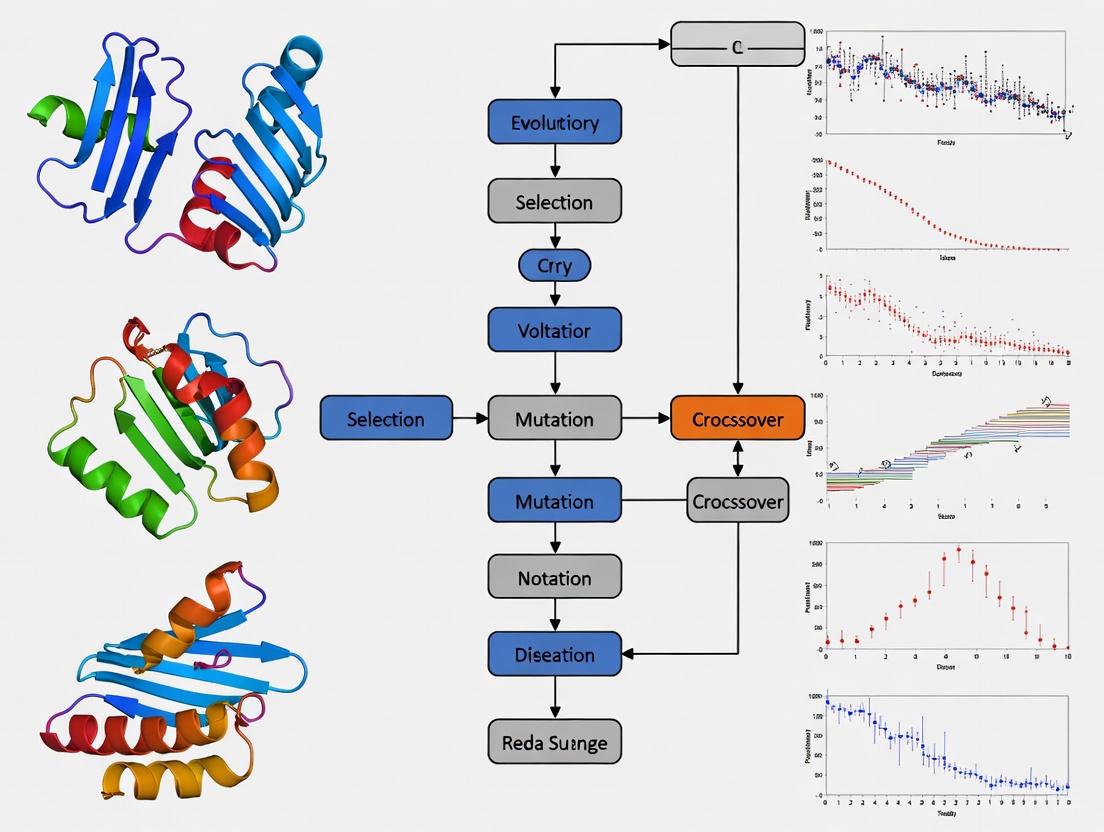
The native state of a protein is not a single static structure but an ensemble of interconverting conformations essential for function, ligand binding, and evolution.
Evolutionary Algorithms for Protein Conformational Space Exploration: A Guide for Biomedical Research
Abstract
The native state of a protein is not a single static structure but an ensemble of interconverting conformations essential for function, ligand binding, and evolution. While deep learning has revolutionized static structure prediction, exploring the vast conformational landscape remains a central challenge. This article details how Evolutionary Algorithms (EAs) provide a powerful, physics-informed approach for sampling this complex space, complementing molecular dynamics and deep learning. We cover the foundational principles of protein dynamism, present specific EA methodologies and their successful applications in prediction and redesign, address key challenges and optimization strategies, and provide a framework for validating and benchmarking results against experimental data and other computational methods. This guide is tailored for researchers and drug development professionals seeking to leverage EAs for probing protein function and engineering.
The Dynamical Protein: Why Conformational Space Matters in Biology and Disease
The classical view of a protein's native state as a single, uniquely defined three-dimensional structure has been fundamentally revised. It is now well-established that the biologically functional native state is not a static snapshot but a conformational ensemble—a collection of interconverting structures that exist under physiological conditions [1] [2]. This ensemble encompasses a spectrum of conformations, from subtle atomic fluctuations to large-scale domain motions, all of which are accessible from the folded state without unfolding [1]. The composition of this ensemble is not random; it is shaped by evolutionary selection to support biological function, with functionally important motions (FIMs) being distinct from biologically unimportant motions (BUMs) [1].
This paradigm shift profoundly impacts structural biology and drug discovery. The concept of allostery, for instance, can be understood not merely as a concerted change between distinct structures, but as a shift in the equilibrium populations within a pre-existing ensemble [1] [3]. This view suggests that all proteins are potentially allosteric to some degree, with dynamics being integral to their function [1]. For researchers exploring protein conformational space, the challenge moves beyond predicting a single structure to sampling and characterizing the entire landscape of functionally relevant states. Within the context of evolutionary algorithm research, this framing opens avenues for developing advanced sampling strategies that mimic natural selection to efficiently navigate this complex conformational space and identify functionally critical states.
Essential Concepts and Energetic Landscapes of Conformational Ensembles
The conformational ensemble of a protein exists on a rugged energy landscape characterized by multiple valleys (energy minima) separated by barriers [4]. The deepest valley typically corresponds to the most stable native structure, while other valleys represent metastable states that are temporarily populated [5]. Transitions between these states are critical for protein function, including processes like enzymatic catalysis, allostery, and substrate binding [4].
- Stable State: The global free energy minimum, representing the most populated conformational state under given conditions.
- Metastable States: Local free energy minima corresponding to less populated, but structurally distinct, conformations that are functionally significant.
- Transition States: High-energy, transient conformations that define the pathways and energy barriers between stable and metastable states.
The distribution of conformations within the ensemble is influenced by a combination of intrinsic protein properties and external environmental factors, as detailed in the table below.
Table 1: Factors Influencing Protein Conformational Ensembles
| Category | Factor | Impact on Conformational Ensemble |
|---|---|---|
| Intrinsic Factors | Flexible Loops & Disordered Regions | Increase local flexibility and conformational diversity [5]. |
| Domain Motions | Allow for large-scale conformational changes between states [5]. | |
| Sequence-Encoded Information | Evolutionary information in the Multiple Sequence Alignment (MSA) inherently encodes conformational diversity [5]. | |
| External Factors | Ligand/Partner Binding | Shifts the ensemble equilibrium via conformational selection or induced fit [5]. |
| Mutations | Alters the energy landscape, potentially inducing new conformational states [5]. | |
| Environmental Conditions (pH, Temperature, Ions) | Directly impacts stability and can trigger conformational shifts [5]. |
The following diagram illustrates the relationship between the energy landscape and the resulting conformational ensemble.
Quantitative Impacts of Dynamics on Protein Function
The intrinsic conformational dynamics of a protein are not merely structural curiosities; they have direct and quantifiable functional consequences. A major recent advance has been the systematic calibration of how conformational fluctuations regulate protein-protein association rates, a fundamental kinetic parameter in biology [6].
Computational studies using multiscale simulation strategies, which integrate Langevin dynamics of individual proteins with kinetic Monte-Carlo simulations of their association, have revealed a nuanced relationship. While the association of complexes with relatively rigid structures tends to be slightly reduced by conformational fluctuations, specific flexibility—particularly in loops or domain linkers—can significantly accelerate association by facilitating the search for and formation of correct intermolecular interactions [6]. Integrating conformational dynamics into association simulations improves the correlation with experimentally measured rates, underscoring the functional importance of accurately modeling the ensemble [6].
Table 2: Impact of Conformational Dynamics on Protein-Protein Association
| Structural Characteristic | Impact on Association Rate | Functional Implication |
|---|---|---|
| Relative Rigidity | Tends to reduce association rate | Suggests a need for stable, pre-formed interfaces. |
| Loop/Linker Flexibility | Can significantly accelerate association | Facilitates searching and captures binding partners. |
| Integration of Dynamics in Models | Improves correlation with experimental rates (kon) | Essential for accurate prediction of binding kinetics. |
Furthermore, the role of dynamics extends to ligand binding and dissociation. For example, in the HIV-1 protease, a protein critical for viral replication, enhanced sampling of conformational changes along true reaction coordinates has accelerated the simulation of flap opening and ligand unbinding—a process with an experimental lifetime of ~8.9 x 10⁵ seconds—to just 200 picoseconds in simulation, an acceleration of 10¹⁵-fold [4]. This not only demonstrates the profound kinetic effects of conformational dynamics but also provides a path to simulating functionally critical processes that were previously inaccessible.
Experimental and Computational Methods for Characterizing Ensembles
A diverse and powerful toolkit of experimental and computational methods is required to move beyond static structures and characterize the full conformational ensemble.
Experimental Techniques
Traditional structural biology techniques are increasingly focused on capturing dynamics.
- X-ray Crystallography: While often providing a single static model, analysis of B-factors (temperature factors) and electron density can reveal flexibility. Higher-resolution structures can sometimes distinguish discrete conformations for individual atoms [1]. Time-resolved methods, such as serial femtosecond crystallography (SFX), are now allowing for the creation of simple "movies" of proteins in action [2].
- Nuclear Magnetic Resonance (NMR): This technique is inherently ensemble-oriented, as the final output is typically a set of models that satisfy experimental constraints. NMR relaxation methods are particularly powerful for probing dynamics across a wide range of timescales [1] [2].
- Cryo-Electron Microscopy (Cryo-EM): Advances in single-particle analysis are enabling researchers to map conformational variations present in the millions of particles used to reconstruct a 3D structure, revealing a more dynamic picture of large molecular machines [2].
Computational Sampling and Enhanced Simulation
Computational methods are indispensable for probing conformational states and transitions that are difficult to capture experimentally.
- Molecular Dynamics (MD) Simulations: MD simulates the physical movements of atoms and molecules over time, providing atomic-level detail of conformational changes. However, the timescales of functional processes (milliseconds to hours) often far exceed what standard MD can achieve (microseconds) [5] [4].
- Enhanced Sampling Methods: To overcome MD's timescale limitation, methods like metadynamics and umbrella sampling apply bias potentials along user-selected Collective Variables (CVs) to accelerate barrier crossing. The critical challenge is identifying the optimal CVs, with True Reaction Coordinates (tRCs) being the ideal choice as they control the progression of conformational changes [4].
- Ensemble Docking with MD: A practical workflow for drug discovery involves running short MD simulations of a protein, clustering the trajectory to capture distinct conformational snapshots, and then performing docking calculations against this entire ensemble. This approach, which treats each snapshot as rigid but samples from a flexible simulation, has been shown to successfully reproduce correct ligand binding poses where rigid docking into a single crystal structure fails [7].
The following diagram illustrates a proven workflow for integrating molecular dynamics and ensemble docking.
Researchers in this field rely on a combination of software, databases, and computational hardware to study conformational ensembles.
Table 3: Essential Research Reagents and Resources for Conformational Ensemble Studies
| Resource Name | Type | Primary Function |
|---|---|---|
| GROMACS/AMBER/OpenMM/CHARMM [5] | MD Simulation Software | High-performance software suites for running molecular dynamics simulations and analyzing trajectories. |
| GPCRmd [5] | Specialized Database | A database of MD simulations for G Protein-Coupled Receptors, providing pre-run trajectories for a key drug target family. |
| ATLAS [5] | General MD Database | The Atlas of Protein Molecular Dynamics contains simulations for nearly 2000 representative proteins. |
| AutoDock Vina [8] [9] | Docking Software | A widely used program for predicting how small molecules bind to a protein receptor. |
| Flare/Lead Finder [7] | Commercial Drug Discovery Platform | Integrates MD, trajectory clustering, and ensemble docking into a unified workflow. |
| AlphaFold2 [5] [10] | AI Structure Prediction | Predicts highly accurate static protein structures; modified inputs can be used to explore conformational diversity. |
Integrating Evolutionary Algorithms and Machine Learning
The exploration of vast conformational spaces is a natural optimization problem, making evolutionary and other metaheuristic algorithms powerful tools. The "No Free Lunch" theorem establishes that no single algorithm is best for all problem instances, creating a need for intelligent algorithm selection and design [9].
Evolutionary Algorithms in Docking and Sampling:
- Protein-Ligand Docking: Docking a flexible ligand into a binding site involves searching a high-dimensional space (translational, rotational, and torsional degrees of freedom). Differential Evolution (DE) algorithms have demonstrated superior performance in this task compared to other classical evolutionary algorithms [8]. Adaptive DE variants, which automatically tune their control parameters during the search, are particularly effective [8].
- Algorithm Selection for Docking: Machine learning can be used to select the best docking algorithm (e.g., a specific variant of the Lamarckian Genetic Algorithm) for a given protein-ligand pair based on molecular descriptors and substructure fingerprints of the ligand. This automated algorithm selection has been shown to outperform using any single default algorithm [9].
Machine Learning and True Reaction Coordinates: A central challenge in enhanced sampling is identifying the optimal Collective Variables (CVs) to bias. True Reaction Coordinates (tRCs) are the few essential coordinates that fully determine the probability of a conformational change occurring (the "committor") [4]. Recent physics-based methods, like the generalized work functional (GWF), can now identify tRCs from energy relaxation simulations. Biasing these tRCs in MD simulations can accelerate conformational changes by factors of 10⁵ to 10¹⁵, enabling the study of previously intractable functional processes [4].
AI-Driven Structural Exploration: The revolutionary AlphaFold2 system has solved the static structure prediction problem. Researchers are now devising methods to leverage its core architecture to explore conformational space. One approach involves systematically modifying the input Multiple Sequence Alignment (MSA), such as by introducing alanine mutations at binding site residues, to drive the model toward different conformations [10]. This exploration can be guided by a genetic algorithm that uses iterative ligand docking scores as a fitness function to optimize the MSA for generating drug-target-friendly structures [10].
The evidence is conclusive: the native, functional state of a protein is a dynamic conformational ensemble, not a single structure. Embracing this view is critical for understanding the mechanistic basis of protein function, allostery, and molecular recognition. The field is rapidly moving beyond describing these ensembles to quantitatively predicting how they modulate function and kinetics.
Future progress will be driven by the deeper integration of computational methods. This includes using evolutionary algorithms and machine learning to better navigate conformational space, the combination of enhanced sampling with AI-derived structural models to predict never-before-seen states, and the development of automated, intelligent workflows that select the optimal computational strategy for a given biological question. As these tools mature, the ability to design drugs that target specific conformational states or to engineer proteins with novel functions by shaping their energy landscapes will become increasingly precise, accelerating discovery in biotechnology and medicine.
Linking Structural Plasticity to Biological Function and Evolution
Proteins are not static entities but exist as dynamic ensembles of interconverting conformations, a fundamental property known as structural plasticity. This plasticity enables proteins to perform complex biological functions, adapt to environmental changes, and evolve new capabilities over time. Under physiological conditions, proteins continuously undergo structural fluctuations across multiple timescales, from picosecond statistical substates to millisecond-scale conformational states [11]. The distribution within this conformational landscape determines protein function, where even sparsely populated states can achieve functional significance and become targets for evolutionary selection or therapeutic intervention [11].
This whitepaper examines how structural plasticity serves as a bridge between protein dynamics, biological function, and evolutionary adaptation. We explore mechanistic insights from diverse protein systems, quantitative analytical frameworks, and experimental-computational methodologies that illuminate how conformational diversity drives functional innovation. For researchers exploring protein conformational space with evolutionary algorithms, understanding these principles provides a foundation for manipulating protein functions and designing novel biocatalysts.
Mechanistic Foundations of Structural Plasticity
Conformational Dynamics in Viral Adaptation
The SARS-CoV-2 spike glycoprotein provides a compelling illustration of how structural plasticity enables functional adaptation and viral evolution. Research utilizing large cryo-EM structural ensembles and integrative modeling reveals that despite substantial sequence divergence across human beta coronaviruses, spike proteins retain a conserved ability to sample open and closed receptor-binding domain (RBD) states [12]. This intrinsic plasticity facilitates viral receptor engagement and immune evasion through several key mechanisms:
- Hinge-like RBD Motion: A dominant hinge-like opening motion modulates accessibility to ACE2 receptors, with ligand binding identified as the principal driver of RBD opening rather than the D614G mutation frequently observed in variants [12].
- Variant-Specific Dynamics: The Omicron variant exhibits a distinctive remodeling of interdomain communication networks, altering mechanical connectivity between RBD, NTD, and S2 subunits while retaining capacity for ligand-induced opening despite favoring closed RBDs in apo forms [12].
- Allosteric Regulation: Dynamical network analysis identifies variant-specific allosteric pathways that enable optimization of receptor engagement while evading immune detection [12].
Oligomeric State Transitions in Evolution
RuBisCO enzymes demonstrate how structural plasticity enables evolutionary innovation through changes in quaternary structure. Diversity-driven structural characterization of 28 form II RuBisCO candidates across phylogeny revealed three distinct evolutionary patterns of oligomerization [13]:
- Structural Entrenchment: One clade exclusively maintained hexameric organization, suggesting functional requirements stabilized this oligomeric state [13].
- Reversible Transition States: A dimer-hexamer clade displayed multiple interconversion events, with closely related homologs (76.3% amino acid identity) adopting different oligomeric states (dimer vs. hexamer), highlighting remarkable structural plasticity [13].
- Oligomeric Innovation: A dimer-tetramer clade revealed a newly discovered tetrameric RuBisCO, demonstrating how nature evolves novel oligomeric states through structural plasticity [13].
Ancestral sequence reconstruction illuminated the evolutionary trajectory, showing that the most recent common ancestor of all form II RuBisCOs was dimeric, with key transitional nodes exhibiting biphasic assemblies capable of forming either dimers or tetramers [13]. This evolutionary plasticity would remain undetectable through sampling of extant enzymes alone, emphasizing the value of ancestral reconstruction for visualizing oligomeric interconversion.
DNA Recognition Through Disordered Regions
Transcription factor AflR exemplifies how intrinsic disorder enables functional plasticity in DNA recognition. The DNA-binding domain of AflR employs a structured zinc cluster motif flanked by dynamic terminal regions to achieve sequence-diverse DNA recognition [14]. Integrated NMR spectroscopy, molecular dynamics simulations, and biochemical approaches reveal that:
- While the zinc cluster provides sequence-specific anchoring to inverted CG half-sites, dynamic termini optimize binding through distributed interactions [14].
- DNA binding induces overall stabilization while terminal regions retain conformational flexibility in the bound state, enabling adaptation to sequence variations [14].
- The C-terminal region functions as a conformational hub coordinating structural changes required for stable complex formation with diverse target sequences [14].
This mechanism demonstrates how intrinsic disorder expands transcriptional regulatory capabilities while maintaining specificity, with over 80% of eukaryotic transcription factors containing disordered regions compared to only 5% of bacterial transcription factors [14].
Table 1: Quantitative Profiles of Structural Plasticity Across Protein Systems
| Protein System | Structural Feature | Functional Impact | Quantitative Measure |
|---|---|---|---|
| SARS-CoV-2 Spike Glycoprotein | RBD open/closed states | Receptor accessibility & immune evasion | Ligand binding principal driver of RBD opening; Multiple open RBDs in ligand-bound states [12] |
| Form II RuBisCO | Oligomeric states (dimer/hexamer/tetramer) | Catalytic efficiency & stability | 23 of 28 characterized enzymes adopted hexameric state; Tetramer represents novel oligomeric state [13] |
| AflR Transcription Factor | Structured core + disordered termini | DNA recognition diversity | KD = 150-400 nM for various constructs; C-terminal truncation increased KD to 4 μM [14] |
Quantitative Frameworks and Evolutionary Models
Computational Models of Plasticity-Led Evolution
The integration of structural plasticity with evolutionary theory has generated new computational frameworks that challenge traditional gene-centric models. Plasticity-led evolution proposes that environmental changes initially induce novel traits via phenotypic plasticity, with subsequent genetic accommodation stabilizing these traits over generations [15]. This framework addresses limitations of the Modern Evolutionary Synthesis, which requires slow accumulation of mutations for adaptive evolution [15].
Gene regulatory network (GRN) models effectively simulate how structural plasticity facilitates evolutionary innovation. The Wagner model implements this through a recursive equation:
[ gi(s+1) = \sigma\left(\sum{j=1}^{n} G{ij}gj(s)\right) ]
where (gi(s)) represents gene expression level of the i-th gene at developmental stage s, (G{ij}) represents regulatory interactions, and σ is the activation function [15]. This model seamlessly incorporates natural selection, genetics, and developmental processes that integrate genetic and environmental information into phenotypic outcomes [15].
Experimental Measurement of Conformational Landscapes
Advanced biophysical techniques enable quantitative characterization of protein structural ensembles:
- Cryo-Electron Microscopy: Rapid vitrification captures conformational distributions under near-physical conditions, with individual structural models combinable with MD simulations to study slow conformational changes [11].
- NMR Spectroscopy: Effectively explores structural and dynamic features of small- to medium-sized proteins, with site-specific fluorine NMR extending capabilities to larger proteins and longer timescales [11].
- EPR Spectroscopy: Investigates protein dynamics across picoseconds to seconds timescales with minimal sample restrictions, providing insights into structure and population of conformational states within ensembles [11].
Table 2: Experimental Techniques for Characterizing Structural Plasticity
| Technique | Timescale Resolution | Spatial Resolution | Key Applications | Limitations |
|---|---|---|---|---|
| Cryo-EM | Milliseconds and beyond | Atomic (3-4 Å) | Conformational ensembles, membrane proteins | Potential freezing artifacts; challenging for highly flexible proteins [11] |
| NMR Spectroscopy | Nanoseconds to seconds | Atomic | Solution-state dynamics, transient states | Limited to smaller proteins (<300 aa); sample requirements [11] |
| EPR Spectroscopy | Picoseconds to seconds | 5-10 Å (distance measurements) | Membrane proteins, conformational equilibrium | Requires spin labeling; complex data interpretation [11] |
| smFRET | Microseconds to milliseconds | 30-80 Å distance range | Conformational heterogeneity, dynamics | Large fluorophores may perturb local structure [11] |
Methodological Framework: Experimental and Computational Protocols
Integrative Structural Biology Workflow
The following workflow diagram illustrates a comprehensive approach for investigating structural plasticity:
Protocol: Conformational Ensemble Analysis of Spike Proteins
Based on recent research into SARS-CoV-2 spike protein dynamics [12], the following detailed protocol enables comprehensive characterization of conformational plasticity:
1. Ensemble Building
- Retrieve experimental structures from specialized databases (e.g., Cov3d)
- Use ProDy (version 2.3) buildPDBEnsemble function with reference structure 6VXX (chain A)
- Apply sequence identity cutoff (90% for variant analysis, 20% for cross-species comparison)
- Implement gap-based filtering to retain structures with ≥90% sequence coverage
- Merge individual chain ensembles into final ensemble (2,872 structures in cited study)
2. Structural Classification
- Classify structures by ligand binding status using Cov3d data
- Categorize by variant lineage (Alpha, Beta, Gamma, Delta, Omicron)
- Include single-experiment multimodel cryo-EM structures (e.g., 20 models per PDB entry)
- Account for experimental conditions (e.g., temperature: 4°C vs 37°C)
3. Conformational State Analysis
- Calculate root-mean-square deviation (RMSD) between structures
- Identify dominant conformational states (closed, open, intermediate)
- Quantify population distributions across variants and conditions
- Correlate conformational states with functional properties (ACE2 binding, antibody evasion)
4. Dynamics Characterization
- Perform normal mode analysis to identify intrinsic motions
- Conduct molecular dynamics simulations (standard and hybrid methods)
- Implement dynamical network analysis to identify allosteric pathways
- Compare communication patterns across variants
5. Data Integration
- Map conformational distributions to phylogenetic relationships
- Correlate dynamic properties with experimental measurements (binding affinity, stability)
- Identify conserved dynamic domains and variant-specific perturbations
Protocol: Ancestral Reconstruction of Oligomeric States
Based on the RuBisCO evolutionary study [13], this protocol enables retracing oligomerization evolution:
1. Phylogenetic Analysis
- Assemble comprehensive sequence dataset spanning target protein family
- Construct maximum-likelihood phylogenetic tree
- Identify major clades and evolutionary relationships
2. Ancestral Sequence Reconstruction
- Infer ancestral sequences at key nodes using appropriate evolutionary models
- Synthesize and express ancestral proteins
- Verify structural integrity and catalytic activity where applicable
3. Oligomeric State Determination
- Employ SEC-SAXS-MALS for oligomeric state characterization
- Collect small-angle X-ray scattering profiles
- Determine molecular weights from multiangle light scattering
- Compare experimental profiles to known standards
4. Structural Characterization
- Conduct X-ray crystallography or cryo-EM for high-resolution structures
- Identify interface residues and stabilizing interactions
- Compare oligomeric interfaces across evolutionary nodes
5. Evolutionary Analysis
- Map oligomeric states onto phylogenetic tree
- Identify transition points between oligomeric states
- Characterize structural features enabling state interconversion
- Engineer mutations to test evolutionary hypotheses
Research Reagent Solutions
Table 3: Essential Research Reagents and Computational Tools
| Category | Specific Tool/Reagent | Function | Application Example |
|---|---|---|---|
| Structural Biology | Cryo-EM with vitrification | Captures conformational distributions under near-native conditions | SARS-CoV-2 spike protein ensemble analysis [12] |
| Spectroscopy | Site-directed spin labeling EPR | Measures distances and dynamics in proteins | Membrane protein conformational studies [11] |
| Computational Modeling | ProDy Python API | Normal mode analysis and dynamics comparisons | Spike protein conformational ensemble building [12] |
| Evolutionary Analysis | Ancestral sequence reconstruction | Infers evolutionary intermediates | RuBisCO oligomerization evolution [13] |
| Molecular Dynamics | GROMACS | Performs molecular dynamics simulations | Protein flexibility and conformational sampling [16] |
| Data Integration | Integrative modeling platform | Combines sparse experimental data | Rare conformational state determination [11] |
Evolutionary Algorithms for Conformational Sampling
The following diagram illustrates the integration of evolutionary algorithms with structural plasticity research:
Evolutionary algorithms provide powerful approaches for exploring vast conformational spaces and optimizing protein functions. These methods mimic natural evolutionary processes while incorporating structural plasticity as a fundamental property:
Generative AI Approaches: Modern artificial intelligence techniques, including generative models and protein language models, exploit evolutionary information from protein databases to predict structural dynamics and design novel conformations [17]. These approaches can identify functional sites and generate conformational ensembles that capture natural variation.
Rosetta-based Protocols: Tools like PyRosetta enable computational prediction of mutation effects on protein stability and function [16]. Key analyses include:
- ΔΔG Calculations: Predicting changes in folding free energy upon mutation
- Solvent Accessible Surface Area: Quantifying surface exposure changes
- Hydrogen Bonding Analysis: Identifying key interactions stabilizing conformations
- Secondary Structure Propensity: Predicting conformational preferences
Multiscale Modeling: Combining evolutionary algorithms with molecular dynamics (GROMACS) and experimental validation creates robust frameworks for exploring structural plasticity [16]. This integrated approach enables researchers to bridge timescales from atomic fluctuations to evolutionary adaptations.
Structural plasticity represents a fundamental organizational principle connecting protein dynamics to biological function and evolutionary innovation. Through detailed examination of viral spike proteins, metabolic enzymes, and transcription factors, we have established how conformational diversity enables functional adaptation, allosteric regulation, and evolutionary exploration of new states. The integrated methodological framework combining ensemble structural biology, ancestral reconstruction, and evolutionary algorithms provides researchers with powerful tools for investigating and manipulating conformational landscapes.
For drug development professionals, targeting structural plasticity offers novel therapeutic strategies, particularly for tackling viral evolution and allosteric modulation. For protein engineers, exploiting conformational diversity enables design of novel functions beyond natural constraints. As generative AI and experimental techniques continue advancing, the deliberate exploration of structural plasticity will undoubtedly yield deeper insights into protein evolution and innovative biotechnological applications.
The accurate sampling of protein conformational ensembles is a cornerstone of modern computational biology, critical for understanding functions ranging from catalysis to allosteric regulation. For decades, Molecular Dynamics (MD) simulations have been the predominant method for studying protein dynamics, providing atomistic detail and a firm foundation in statistical mechanics. However, the high computational cost and slow convergence of MD, particularly for large-scale conformational changes or disordered proteins, has driven the search for alternative sampling strategies [18] [19]. Among these, Evolutionary Algorithms (EAs) have emerged as a powerful niche approach, leveraging stochastic optimization to efficiently navigate the vast conformational landscape. This whitepaper examines the inherent limitations of MD simulations, establishes the theoretical and practical niche for Evolutionary Algorithms, and provides a detailed overview of current methodologies.
The Limitations of Molecular Dynamics Sampling
Despite its physical rigor, MD faces significant challenges in achieving sufficient conformational sampling, which can be categorized as follows:
Computational Expense and Timescale Limitations: The requirement for femtosecond-level integration steps makes accessing biologically relevant timescales (microseconds to milliseconds and beyond) prohibitively expensive for many systems [18] [19]. This is particularly problematic for observing rare events like large-scale domain movements or the sampling of transient, low-population states that are often functionally crucial.
Inefficient Exploration and Sampling Bias: MD simulations can become trapped in local energy minima, leading to inefficient exploration of the conformational landscape. The sampling is often biased by the initial conditions, failing to represent the full equilibrium distribution without enhanced sampling techniques [19].
Specific Challenges with Intrinsically Disordered Proteins (IDPs): The lack of a stable hydrophobic core and the vast, heterogeneous conformational space of IDPs exacerbate the limitations of MD. Capturing their full ensemble diversity requires simulations that span long timescales, which are often computationally intensive and impractical for large-scale studies [19].
Table 1: Key Limitations of Molecular Dynamics (MD) Simulations
| Limitation Category | Specific Challenge | Impact on Sampling |
|---|---|---|
| Computational Cost | High computational cost of exploring long-timescale events [20] | Limits access to biologically relevant timescales and rare events |
| Sampling Efficiency | Struggles to sample rare, transient states [19] | Inability to capture low-population, functionally relevant conformers |
| System Complexity | Inadequate sampling of large conformational changes and IDPs [19] | Fails to represent the full equilibrium distribution of flexible systems |
The Niche for Evolutionary Algorithms
Evolutionary Algorithms (EAs) offer a complementary approach to protein conformation sampling and design. Inspired by biological evolution, EAs use mechanisms like selection, crossover, and mutation to stochastically optimize a population of candidate solutions over multiple generations.
The fundamental niche for EAs in structural biology arises from their core strengths:
Efficient Navigation of Vast Search Spaces: EAs are particularly well-suited for problems with rugged, high-dimensional search spaces. They do not require gradient information and are less prone to becoming trapped in local minima compared to purely local optimization methods [21].
Applicability in Protein Structure Prediction and Design: EAs have been successfully applied to protein structure prediction, using problem information like fragment insertion, secondary structure, and contact maps to better explore the conformational search space [21]. In drug discovery, EAs like REvoLd excel at screening ultra-large make-on-demand compound libraries with full ligand and receptor flexibility, a task that is infeasible with exhaustive screening methods [22].
Table 2: Evolutionary Algorithm Performance in Key Applications
| Application Area | Algorithm / Study | Reported Performance |
|---|---|---|
| Protein Structure Prediction | EA with dynamic speciation & fragment insertion [21] | Competitive results in terms of RMSD, GDT, and processing time |
| Ultra-Large Library Docking | REvoLd (RosettaEvolutionaryLigand) [22] | Improved hit rates by factors of 869 to 1622 compared to random selection |
| General Optimization | Benchmarking against modern deep learning methods [22] | Capabilities found to be on par with modern deep learning methods |
Comparative Analysis: MD vs. EA and Emerging Hybrids
The choice between MD and EA is not always mutually exclusive. A comparison of their core characteristics and the emergence of hybrid methods is informative.
Table 3: Molecular Dynamics vs. Evolutionary Algorithms for Conformational Sampling
| Feature | Molecular Dynamics (MD) | Evolutionary Algorithms (EA) |
|---|---|---|
| Theoretical Basis | Newtonian mechanics, statistical physics | Stochastic optimization, population genetics |
| Sampling Output | Time-ordered trajectories, thermodynamic ensembles | Sets of low-energy structures, diverse candidates |
| Strengths | High physical fidelity, explicit timescales, rigorous ensembles | Efficient global search, no gradient needed, excellent for design |
| Weaknesses | Computationally expensive, local minima trapping | May not find global optimum, no explicit dynamics or thermodynamics |
| Ideal Use Case | Refining structures, studying local dynamics & pathways | De novo structure prediction, exploring large conformational changes, drug docking |
The Rise of Hybrid and Integrated Approaches
To overcome the limitations of any single method, the field is increasingly moving toward hybrid approaches that integrate the strengths of multiple paradigms.
AI-Enhanced Sampling: Deep generative models, such as Denoising Diffusion Probabilistic Models (DDPM), can learn the equilibrium distribution of protein conformations from data. When trained on short MD trajectories, they can generate diverse conformational ensembles with significant computational savings, effectively augmenting MD sampling [20] [18]. However, they may still overlook low-probability regions and require independent validation [20].
Integrating Machine Learning and Physics: Methods like AlphaFold2-RAVE (implemented in the
af2ravepackage) combine the hypothesis-generating power of machine learning (reduced MSA AlphaFold2) with the physical validation of short MD simulations. This pipeline generates diverse initial structures with AlphaFold2 and then uses physics-based MD to sample the local conformational space, embedding the structures in a physically meaningful landscape [23].Experimental Data Integration: Techniques like DEERFold modify AlphaFold2 to incorporate experimental distance distributions from techniques like DEER spectroscopy. This guides the prediction process toward alternative conformations that are consistent with experimental data, effectively biasing the model to sample relevant parts of the conformational landscape [24].
Detailed Experimental Protocols
Protocol: Conformational Sampling with a Denoising Diffusion Probabilistic Model (DDPM)
This protocol is based on the work by Bera et al. [20] to generate atomistically accurate conformational ensembles.
- Training Data Curation: Obtain a dataset of protein conformations. This can be a relatively short MD trajectory (e.g., hundreds of nanoseconds to microseconds) that captures some local fluctuations but may not fully explore the landscape.
- Data Representation: Represent the protein structure using both torsion angle and all-atom coordinate data. This provides the model with local and global structural information.
- Model Training: Train a Denoising Diffusion Probabilistic Model (DDPM) on the curated dataset. The model learns the underlying data distribution by progressively denoising random noise into valid conformations.
- Conformation Generation: Use the trained DDPM to generate a large number of novel conformations by sampling from the learned distribution.
- Validation and Analysis: Rigorously validate the generated ensemble by comparing against known physical properties and, if available, experimental data. Key metrics include:
- Structural Metrics: Calculate the Radius of Gyration (Rg) and compare secondary structure content.
- Ensemble Metrics: Generate and compare contact maps.
- Novelty Check: Identify if the model has generated valid transitions not explicitly observed in the training data.
Protocol: Ultra-Large Library Screening with REvoLd
This protocol details the use of the REvoLd evolutionary algorithm for flexible protein-ligand docking, as described by the developers [22].
- Initialization: Define the combinatorial chemical space (e.g., the Enamine REAL space) by its constituent substrates and reaction rules. Generate a random start population of 200 ligands.
- Evaluation (Docking): Dock each ligand in the current population against the protein target using a flexible docking protocol like RosettaLigand. The docking score serves as the fitness function.
- Selection: From the population, select the top 50 individuals (ligands) based on their fitness to advance to the next generation.
- Reproduction: Apply genetic operators to the selected individuals to create a new generation:
- Crossover: Recombine well-suited ligands to enforce variance.
- Mutation: Introduce changes to promising ligands:
- Switch single fragments to low-similarity alternatives.
- Change the reaction of a molecule and search for similar fragments within the new reaction group.
- Iteration: Repeat steps 2-4 for a set number of generations (e.g., 30). To avoid premature convergence, the protocol includes a second round of crossover and mutation that excludes the fittest molecules, allowing worse-scoring ligands to improve.
- Output: After multiple independent runs, collect the high-scoring, diverse hit molecules identified by the algorithm.
The Scientist's Toolkit: Essential Research Reagents and Solutions
Table 4: Key Software and Computational Tools
| Tool / Resource | Type | Primary Function in Sampling |
|---|---|---|
| Rosetta Suite [22] | Software Suite | Provides the framework for flexible protein-ligand docking (RosettaLigand) and implements evolutionary algorithms (REvoLd). |
| OpenFold [24] | Trainable Model | A PyTorch reproduction of AlphaFold2 that allows for fine-tuning and integration of experimental constraints, as used in DEERFold. |
| AlphaFold2 [24] [23] | Deep Learning Model | A hypothesis generator for creating diverse initial conformations via reduced MSA sampling, used in pipelines like AlphaFold2-RAVE. |
| af2rave Python Package [23] | Software Tool | Implements an automated pipeline combining AlphaFold2 with molecular dynamics for generating and analyzing protein ensembles. |
| GōMartini 3 [25] | Coarse-Grained Force Field | Balances computational efficiency and accurate protein dynamics for studying large conformational changes and protein-environment interactions. |
| Enamine REAL Space [22] | Chemical Library | An ultra-large make-on-demand compound library used for benchmarking and applying virtual screening algorithms like REvoLd. |
The sampling of protein conformational space remains a complex challenge that is critical for advancing structural biology and drug discovery. While Molecular Dynamics provides physical rigor, its computational cost often hinders sufficient exploration. Evolutionary Algorithms have carved out a vital niche by offering efficient, global optimization for specific tasks like structure prediction and ultra-large library docking. The future of the field lies not in a single dominant method, but in the intelligent integration of these approaches. Hybrid methods that leverage the data-driven power of AI, the global search capabilities of EAs, and the physical fidelity of MD simulations are poised to overcome the limitations of any individual technique, providing a more complete and accurate picture of protein dynamics and function.
The exploration of protein conformational space is a fundamental challenge in computational biology and drug discovery. Proteins are not static entities; they dynamically sample a vast ensemble of three-dimensional structures under physiological conditions to perform their biological functions. This conformational space is governed by a complex, high-dimensional energy landscape—a conceptual mapping of all possible protein conformations to their corresponding energy levels. These landscapes are characterized by numerous local minima, barriers, and a overall funnel-like organization that guides the protein toward its native, functional state. Navigating this landscape to identify biologically relevant, low-energy conformations is computationally prohibitive with exhaustive methods due to the astronomical number of possible configurations.
Evolutionary Algorithms (EAs) provide a powerful computational framework inspired by Darwinian principles of natural selection to efficiently explore these vast and rugged energy landscapes. By mimicking the processes of selection, mutation, and recombination, EAs can effectively sample the conformational space and identify regions of low energy corresponding to stable, functionally relevant protein structures. This guide examines the core principles of how EAs emulate natural selection to navigate protein energy landscapes, detailing the underlying theoretical frameworks, specific algorithmic implementations, and practical applications in modern computational structural biology and drug discovery.
Biological and Computational Foundations
The Theory of Protein Energy Landscapes
The conceptual foundation for understanding protein folding and dynamics is energy landscape theory. This theory posits that the potential energy surface underlying a protein's conformational space is not random but funneled toward the native structure. A properly funneled landscape is essential for efficient and reliable folding, as it ensures that a large number of initial unfolded states are guided toward a unique, stable native state without becoming trapped in misfolded conformations. This minimal frustration principle is a key evolutionary constraint that has shaped natural protein sequences, selecting for those that exhibit smooth, funneled landscapes rather than rugged ones with deep kinetic traps [26].
The landscape is multi-dimensional and can be visualized through projections onto one or two key reaction coordinates, such as the fraction of native contacts (Q) or the root-mean-square deviation (RMSD) from the native structure. Within this landscape, local minima represent metastable conformational states, while the global minimum typically corresponds to the native, functional structure. The challenge of conformational search is to find these low-energy minima without exhaustively sampling the entire landscape, a problem known to be NP-hard [27] [28].
Evolutionary Algorithms as a Metaphor for Natural Selection
Evolutionary Algorithms (EAs) are population-based, metaheuristic optimization techniques grounded in the principles of natural evolution. They maintain a population of candidate solutions (in this context, protein conformations or sequences) that undergo iterative cycles of fitness-based selection and variation operations to explore the search space efficiently.
The core components of an EA mapping to evolutionary principles are:
- Population: A set of candidate solutions (individuals), analogous to a population of organisms.
- Fitness Function: A measure of solution quality that drives selection. For protein landscapes, this is typically the potential energy or a scoring function.
- Selection: Biases the population toward higher-fitness individuals, mimicking survival of the fittest.
- Variation (Mutation & Recombination): Introduces new traits into the population, exploring new regions of the search space.
Table 1: Core Components of an Evolutionary Algorithm and Their Biological Analogies
| EA Component | Biological Analogy | Role in Navigating Energy Landscapes |
|---|---|---|
| Population | Population of organisms | Maintains a diverse set of conformations to sample multiple regions of the landscape simultaneously. |
| Fitness Function | Selective pressure | Drives the search toward low-energy conformations (e.g., calculated using a force field). |
| Selection | Natural selection | Prioritizes lower-energy (higher-fitness) conformations for "reproduction". |
| Mutation | Genetic mutation | Introduces small, stochastic changes to a conformation, exploring nearby local minima. |
| Crossover | Sexual recombination | Combines structural elements from two parent conformations to create novel offspring. |
Technical Implementation: EAs for Conformational Search
Algorithmic Workflows and Frameworks
The practical application of EAs to protein conformational search has been realized in several specialized computational frameworks. These implementations tailor the general EA structure to the specific challenges of molecular structure and energy landscapes.
The PLOW (Protein Local Optima Walk) framework exemplifies a sophisticated EA approach. It operates on the subspace of local minima in the protein energy surface, efficiently mapping this discrete representation of the conformational space. PLOW combines a greedy local search to map a sampled conformation to a nearby local minimum with a perturbation move to escape the current minimum and find a new starting point for the next local search. This iterative process, based on the Iterated Local Search (ILS) metaheuristic, results in a trajectory-based exploration that effectively samples a diverse set of low-energy conformations [28].
Another state-of-the-art implementation is REvoLd (RosettaEvolutionaryLigand), designed for ultra-large library screening in drug discovery. REvoLd explores the vast combinatorial space of make-on-demand compounds for protein-ligand docking with full flexibility. Its evolutionary protocol involves maintaining a population of ligand molecules, selecting the fittest based on docking scores, and applying mutation and crossover operations to generate new candidate ligands for the next generation [22].
The following diagram illustrates the core iterative cycle of an EA like REvoLd or PLOW:
Detailed Experimental Protocols
Implementing an EA for protein conformational exploration requires careful configuration of parameters and procedures. The following protocols are derived from successful implementations like REvoLd and PLOW.
Protocol 1: REvoLd for Ligand Docking (Structure-Based Virtual Screening)
- Problem Definition: Define the target protein's binding site and the combinatorial chemical space (e.g., Enamine REAL space) constructed from lists of substrates and chemical reactions.
- Initialization: Generate a random start population of 200 ligands. This size offers sufficient variety without excessive computational cost [22].
- Fitness Evaluation: Dock each ligand in the population against the target protein using a flexible docking protocol (e.g., RosettaLigand) to calculate a binding score (fitness).
- Selection: Select the top 50 highest-fitness (lowest-energy) ligands to advance to the next generation. This elitist strategy preserves the best solutions.
- Variation Operations: Apply the following operations to create offspring:
- Crossover: Recombine well-suited ligands to enforce variance and combine promising structural motifs.
- Mutation (Low-similarity): Switch single molecular fragments to low-similarity alternatives, preserving most of a promising molecule while enforcing significant local changes.
- Mutation (Reaction-swap): Change the core reaction of a molecule and search for similar fragments within the new reaction group, opening larger areas of the combinatorial space.
- Generational Evolution: Repeat steps 3-5 for 30 generations. Well-scored molecules often appear after ~15 generations, with discovery rates flattening around generation 30 [22].
- Output and Analysis: Output the highest-scoring ligands from the final population. Conduct multiple independent runs with different random seeds to explore diverse regions of the chemical space.
Protocol 2: PLOW for Sampling Protein Conformational Landscapes
- Representation: Model the protein chain using a coarse-grained representation, typically focusing on backbone dihedral angles (ϕ and ψ) to reduce dimensionality [28].
- Initialization: Sample an initial conformation, often from a fragment-based assembly (FA) approach that uses structural pieces from known protein structures.
- Local Search (Mapping): Perform a greedy local search (e.g., energy minimization) from the current conformation to map it to a nearby local minimum in the energy surface.
- Fitness Evaluation: The energy of the local minimum conformation serves as its fitness.
- Perturbation (Mutation): Apply a perturbation move to the current local minimum to jump out of the energy basin and obtain a new starting conformation for the next local search cycle. The design of this perturbation function is critical for escaping local traps and ensuring diverse sampling [28].
- Iteration: Repeat steps 3-5 for a predefined number of iterations or until convergence, building a trajectory that walks through various local minima.
- Output: The algorithm outputs a set of conformations that map to low-energy local minima, providing a discrete representation of the functionally relevant conformational space.
Quantitative Performance and Benchmarking
The effectiveness of EA-based approaches is validated through rigorous benchmarking against known targets and comparison with alternative methods.
Table 2: Benchmark Performance of Evolutionary Algorithms in Structural Biology
| EA Framework / Study | Application Context | Key Performance Metric | Result |
|---|---|---|---|
| REvoLd [22] | Virtual screening on 5 drug targets | Hit rate enrichment vs. random selection | 869 to 1622-fold improvement |
| REvoLd [22] | Exploration efficiency | Unique molecules docked per target | ~49,000 to 76,000 (covering billions of compounds) |
| PLOW [28] | Conformational sampling on 15 proteins | Ability to sample near-native structures | More effective or comparable to state-of-the-art methods |
| Genetic Algorithm with AlphaFold2 [10] | Generating drug-target structures | Virtual screening performance vs. PDB structures | Enhanced performance, especially for targets with poor experimental data |
The Scientist's Toolkit: Research Reagent Solutions
The successful application of EAs in protein science relies on a suite of software tools, energy functions, and molecular databases.
Table 3: Essential Research Reagents for EA-Based Protein Exploration
| Research Reagent | Type | Function and Utility |
|---|---|---|
| Rosetta Software Suite [22] | Software Framework | Provides the REvoLd application and the RosettaLigand flexible docking protocol for fitness evaluation. |
| Coarse-Grained Force Fields (e.g., AWSEM) [29] | Energy Function | Provides rapid energy evaluation for conformations, essential for the high number of fitness evaluations in EAs. |
| Fragment Libraries [28] | Molecular Database | Provides discrete, biologically plausible structural pieces for initializing and varying protein conformations in FA-based EAs. |
| Combinatorial Chemical Spaces (e.g., Enamine REAL) [22] | Molecular Database | Defines the vast search space of synthetically accessible molecules for ligand-discovery EAs like REvoLd. |
| AlphaFold2 (Modified) [10] | Structural Model Generator | Used to generate initial protein structural ensembles for virtual screening; can be optimized via genetic algorithm. |
Integrated Workflows and Future Directions
Evolutionary Algorithms are rarely used in isolation. They are most powerful when integrated into a broader computational and experimental workflow. A modern pipeline might begin with generating an ensemble of protein target structures, perhaps using modified versions of AlphaFold2 where the multiple sequence alignment is deliberately altered by a genetic algorithm to create drug-binding-friendly conformations [10]. This ensemble is then used for parallel virtual screening campaigns using a tool like REvoLd to identify hit compounds from ultra-large libraries. The final output is a prioritized list of synthetically accessible compounds for experimental validation.
The following diagram illustrates this integrated research workflow:
Future directions in the field point toward tighter integration of EAs with machine learning. For instance, machine-learned coarse-grained models are being developed that are several orders of magnitude faster than all-atom simulations while maintaining accuracy in predicting metastable states and folding free energies [29]. These models can potentially serve as highly efficient fitness evaluators within EAs, enabling the exploration of even larger and more complex systems, thus further accelerating discovery in protein engineering and drug development.
Implementing Evolutionary Algorithms: From Structure Prediction to Protein Redesign
The exploration of protein conformational space is a fundamental challenge in computational biology, with direct implications for understanding biological function and accelerating drug discovery. The process of protein folding, whereby a linear amino acid sequence adopts a unique three-dimensional structure, represents a complex optimization problem within a high-dimensional, multimodal energy landscape [30] [31]. Evolutionary algorithms (EAs) provide powerful strategies for navigating this landscape, offering robust search capabilities where traditional methods often struggle. This technical guide examines three core algorithmic frameworks—Genetic Algorithms (GAs), Differential Evolution (DE), and Memetic Algorithms (MAs)—within the specific context of protein conformational space exploration. We detail their theoretical foundations, methodological implementations, and performance through curated experimental protocols and quantitative comparisons, providing researchers with a comprehensive resource for applying these techniques to protein structure prediction and refinement.
Theoretical Foundations of Evolutionary Algorithms in Conformational Search
The Protein Folding Optimization Problem
The thermodynamic hypothesis of protein folding, pioneered by Anfinsen, posits that a protein's native conformation corresponds to the global minimum of its free energy landscape [30] [32]. Computational approaches to protein structure prediction (PSP) and refinement formalize this as an optimization problem, seeking the conformation that minimizes a specific energy function. The challenge is formidable; the conformational space for even a small protein encompasses more than 10^50 possible backbone arrangements [33]. This landscape is characterized by high dimensionality, multimodality (many local minima), and potential deceptiveness, where low-energy regions may be distant from the global minimum [31].
Simplified models, such as the Hydrophobic-Polar (HP) model on 2D or 3D lattices, have been instrumental in developing and testing algorithms. In this model, amino acids are classified as hydrophobic (H) or polar (P), and the energy function is often simplified to the negation of the number of non-sequential H-H contacts, making it computationally tractable for method development [33] [34]. Despite its simplicity, the HP model captures essential characteristics of real protein folding landscapes [33].
Core Algorithmic Frameworks
Genetic Algorithms (GAs): Inspired by natural selection, GAs maintain a population of candidate solutions (protein conformations) that undergo iterative evolution through selection, crossover (recombination), and mutation operations. The fitness of each individual is typically its calculated energy, with lower energies being more favorable [32] [33]. GAs excel at global exploration of the conformational space.
Differential Evolution (DE): A specialized EA for continuous optimization, DE creates new candidate solutions by combining existing ones using weighted differences [35]. Its robustness and performance in continuous parameter spaces have made it a preferred choice for many optimization problems, including protein structure refinement where conformational parameters are often continuous [30] [35].
Memetic Algorithms (MAs): MAs hybridize population-based global search (like GA or DE) with problem-specific local search heuristics [30] [36]. This combination leverages the global exploration capabilities of EAs while incorporating domain knowledge to efficiently refine solutions locally. In protein folding, this often means coupling an EA with a local minimization procedure such as Rosetta Relax [30] or specialized local move sets [34].
Methodological Implementations and Protocols
Genetic Algorithm with Advanced Mechanisms
A sophisticated GA for protein structure prediction in an HP cubic lattice model incorporates several advanced mechanisms to enhance performance [34].
Encoding and Initialization:
- Absolute Encoding: Each candidate conformation is encoded as a vector of L-1 absolute directions (Left, Right, Up, Down, Forward, Backward) for a protein of length L [34].
- Population Initialization: The initial population is generated randomly, with infeasible conformations (containing steric clashes) repaired using a backtracking algorithm before evaluation [34].
Genetic Operators:
- Selection: Linear biased selection is used to favor fitter individuals.
- Crossover: A systematic crossover strategy tests every possible crossover point between two parent conformations and selects the two best offspring for the next generation, significantly improving search efficiency [33].
- Mutation: Conventional Monte Carlo moves serve as mutation operators [32] [34].
Advanced Mechanisms:
- Crowding and Clustering: These niching methods help maintain population diversity and prevent premature convergence by dividing the population into subpopulations that can locate different optima in the multimodal landscape [31] [34].
- Local Search: A crucial component that improves convergence speed. Local move operators systematically shift one or two consecutive monomers (where at least one is hydrophobic) throughout the entire conformation to find better energy configurations [34].
- Opposition-Based Learning: This mechanism transforms conformations into opposite directions using the inverse amino acid sequence, facilitating improvement of monomers at both ends of the sequence [34].
Differential Evolution for Protein Structure Refinement
For protein structure refinement—the process of improving near-native models—DE has been successfully combined with the Rosetta Relax protocol in a memetic framework called Relax-DE [30].
Algorithm Workflow:
- Initialization: Generate an initial population of protein conformations, typically starting from models predicted by methods like AlphaFold2.
- Mutation: For each target vector in the population, create a mutant vector through differential mutation, combining randomly selected population members.
- Crossover: Combine the target vector with the mutant vector to create a trial vector.
- Local Search (Memetic Component): Apply the Rosetta Relax protocol to the trial vector. This protocol performs local optimization of side-chain atoms and backbone adjustments using the full-atom Ref2015 energy function, which comprises 19 weighted energy terms including repulsive, electrostatic, and solvation components [30].
- Selection: Compare the refined trial vector against the target vector, selecting the one with lower energy for the next generation.
This memetic approach enables better sampling of the energy landscape compared to Rosetta Relax alone, obtaining better energy-optimized refined conformations within the same runtime [30].
Memetic Algorithm Integration Strategies
The GANMA (Genetic and Nelder-Mead Algorithm) framework demonstrates a structured approach to hybridizing global and local search, relevant to protein conformational search [36].
Integration Methodology:
- Global Phase: The GA performs broad exploration of the conformational space using selection, crossover, and mutation.
- Local Phase: The Nelder-Mead simplex algorithm ref promising solutions identified by the GA, performing local optimization.
- Adaptive Control: Mechanisms balance the application of global and local search based on solution quality and diversity metrics.
This synergy addresses GA's limitation in fine-tuning solutions near optima while maintaining robust global exploration capabilities [36].
Experimental Results and Performance Analysis
Performance Comparison of Algorithmic Frameworks
Table 1: Comparative Performance of Evolutionary Algorithms on Protein Structure Problems
| Algorithm | Problem Type | Key Performance Metrics | Comparative Results |
|---|---|---|---|
| Relax-DE (Memetic DE + Rosetta Relax) | Protein structure refinement (full-atom) | Energy minimization, Runtime efficiency | Better energy-optimized conformations than Rosetta Relax alone in same runtime [30] |
| GA with Systematic Crossover | HP model folding (2D lattice) | Success rate in finding global minimum, Convergence speed | Found global minimum 3/2 times faster for 20-residue chains vs. standard GA [33] |
| GAPSP (GA with advanced mechanisms) | HP model folding (3D cubic lattice) | Best-found energy, Average energy | Superior to state-of-the-art evolutionary and swarm algorithms on standard HP sequences [34] |
| DE with Niching | Protein structure prediction | Diversity of solutions, RMSD to native | Obtained conformations closer to native structure (lower RMSD) for some proteins [31] |
Impact of Advanced Mechanisms on Performance
Table 2: Effectiveness of Advanced Mechanisms in Genetic Algorithms
| Mechanism | Function | Impact on Performance |
|---|---|---|
| Systematic Crossover | Tests all possible crossover points, selects best offspring | Significantly increased search effectiveness; found better local minima with lower mean energy [33] |
| Niching (Crowding/Speciation) | Maintains population diversity, enables exploration of multiple optima | Provided diverse set of optimized conformations in different local minima [31] [34] |
| Local Search Operators | Local movement of monomers to improve energy | Improved convergence speed and solution quality; essential for refining conformations [34] |
| Opposition-Based Learning | Transforms conformations to opposite direction using inverse sequence | Improved ability to optimize monomers at both ends of sequence [34] |
| Repair Mechanism | Resolves steric clashes in conformations | Ensured feasibility of solutions; reduced wasted computation on invalid conformations [34] |
Table 3: Essential Computational Tools for Protein Conformational Search
| Tool/Resource | Type | Function in Research |
|---|---|---|
| Rosetta Software Suite | Software environment | Provides full-atom energy functions (Ref2015), refinement protocols (Relax), and fragment libraries for structure prediction [30] |
| HP Model Lattice Frameworks | Simplified model | Enables algorithm development and testing on computationally tractable but biologically relevant folding problems [33] [34] |
| Differential Evolution (DE) | Algorithm framework | Robust evolutionary optimizer for continuous parameter spaces; effective for conformation refinement [30] [35] |
| Niching Methods | Algorithmic technique | Maintains population diversity in multimodal landscapes; enables finding multiple distinct optima [31] |
| Local Search Operators | Algorithmic component | Refines solutions locally using domain knowledge (e.g., monomer movement, side-chain optimization) [30] [34] |
Workflow Visualization
Algorithm Workflow for Protein Conformational Search
Genetic Algorithms, Differential Evolution, and Memetic Approaches provide increasingly sophisticated frameworks for addressing the complex challenge of exploring protein conformational space. While GAs with advanced operators like systematic crossover and niching effectively navigate multimodal landscapes, DE offers particular strengths in continuous optimization problems. The integration of these global search strategies with problem-specific local refinements in Memetic Algorithms represents the current state-of-the-art, enabling both comprehensive exploration and efficient exploitation of the protein energy landscape. As demonstrated in protein structure refinement applications, these hybrid approaches can outperform standalone methods, obtaining better-quality structures within comparable computational budgets. Future directions will likely involve tighter integration with deep learning approaches, adaptive mechanism selection, and improved energy functions to further bridge the gap between computational prediction and experimentally determined protein structures.
The prediction of a protein's three-dimensional structure from its amino acid sequence constitutes one of the most challenging problems in modern biophysics and computational biology. This challenge is fundamentally rooted in the Levinthal paradox, which highlights the astronomical number of possible conformations a protein could theoretically adopt, making a random search for the native state computationally infeasible [37]. For decades, experimental methods like X-ray crystallography, NMR spectroscopy, and cryo-electron microscopy have served as the gold standard for structure determination. However, these approaches are often time-consuming, expensive, and unable to keep pace with the exponentially growing number of sequenced proteins [37]. The critical gap between known protein sequences (over 200 million in TrEMBL) and experimentally determined structures (approximately 200,000 in the Protein Data Bank) has created an urgent need for robust computational prediction methods [37].
Traditional computational approaches for protein structure prediction are broadly categorized into three groups: template-based modeling (TBM), which relies on homologous structures; template-free modeling (TFM), which includes modern AI-based methods; and ab initio methods, which predict structure purely from physicochemical principles without relying on existing structural templates [37]. While deep learning methods like AlphaFold have demonstrated remarkable success, they essentially reduce the prediction problem to a recognition problem based on patterns learned from existing structures in the PDB [38] [39]. In contrast, ab initio methods aim to truly predict structure by navigating the protein's conformational energy landscape using fundamental physical principles. It is within this challenging domain that the USPEX (Universal Structure Predictor: Evolutionary Xtallography) algorithm, originally developed for crystal structure prediction, has been extended as a novel approach for navigating the complex conformational space of proteins [40] [38].
The USPEX Algorithm: Core Methodology and Adaptation to Proteins
Fundamental Principles
USPEX is an evolutionary algorithm developed initially in 2004 for predicting crystal structures based solely on chemical composition. The method has proven highly successful in materials science, outperforming other methods in blind tests and being used by over 10,600 researchers worldwide [40]. The core principle of USPEX involves generating a population of candidate structures and iteratively improving this population through the application of evolutionary operators that mimic natural selection, including selection, mutation, and crossover [40] [41]. The algorithm operates by evaluating structures based on a fitness function—typically potential energy or a related scoring function—and preferentially selecting low-energy structures to produce subsequent generations.
The extension of USPEX to protein structure prediction represents a significant methodological adaptation. Unlike crystalline materials with periodic symmetry, proteins are complex polymers with intricate folding patterns stabilized by diverse interactions including hydrogen bonds, van der Waals forces, and hydrophobic effects. When applied to proteins, USPEX performs global optimization starting from the amino acid sequence, with the objective of locating the global minimum on the protein's energy landscape, which corresponds to the native functional structure [38].
Key Variation Operators for Proteins
The efficacy of evolutionary algorithms critically depends on specialized variation operators that generate new candidate structures while preserving potentially beneficial structural motifs. For protein structure prediction, novel variation operators had to be developed to handle the complex geometry of polypeptide chains:
- Sequence-Preserving Mutations: These operators introduce conformational changes while maintaining the amino acid sequence, allowing the algorithm to explore different folding patterns for the same sequence [38].
- Secondary Structure Element Recombination: This operator exchanges defined secondary structure elements (alpha-helices, beta-sheets) between different candidate structures, facilitating the mixing of promising structural domains [42].
- Tertiary Structure Crossover: This more sophisticated operator combines larger tertiary structure elements from parent structures to produce offspring with hybrid architectures [38].
These specialized operators enable USPEX to efficiently navigate the high-dimensional conformational space of proteins while preserving physically meaningful structural patterns that may lead to lower-energy states.
Experimental Framework and Implementation
Computational Workflow
The protein structure prediction process using USPEX follows a structured workflow that integrates the evolutionary algorithm with energy evaluation tools. The following diagram illustrates this iterative process:
Figure 1: USPEX Protein Structure Prediction Workflow
Research Reagent Solutions
Successful implementation of USPEX for protein structure prediction requires integration with several computational tools and force fields. The table below details the essential "research reagents" in this computational workflow:
Table 1: Essential Research Reagents for USPEX Protein Structure Prediction
| Component | Type | Function | Implementation in USPEX Study |
|---|---|---|---|
| Tinker | Software Package | Performs protein structure relaxation and energy calculations | Used with multiple force fields (Amber, Charmm, Oplsaal) for geometry optimization [38] |
| Rosetta | Software Suite | Provides energy functions and sampling algorithms for proteins | REF2015 scoring function used for comparative evaluation [38] |
| Amber Force Field | Molecular Mechanics Force Field | Describes potential energy of protein structures | One of several force fields compared for energy calculations [38] |
| Charmm Force Field | Molecular Mechanics Force Field | Alternative parameterization for protein energy calculations | Evaluated for accuracy in blind structure prediction [38] |
| Oplsaal Force Field | Molecular Mechanics Force Field | Additional force field for comprehensive comparison | Tested to assess force field dependence of results [38] |
| Variation Operators | Algorithmic Components | Generate new protein conformations from parent structures | Novel operators designed specifically for protein geometry [38] |
Performance Assessment Methodology
The evaluation of USPEX for protein structure prediction employed a rigorous experimental design. The methodology involved testing on seven proteins lacking cis-proline residues with lengths up to 100 amino acids [38]. The assessment compared several critical aspects:
- Energy Comparison: Final potential energies of USPEX-predicted structures were compared against those generated by the established Rosetta Abinitio protocol using multiple force fields (Amber, Charmm, Oplsaal) and the REF2015 scoring function [38].
- Accuracy Validation: The correctness of predicted structures was evaluated through comparison with experimentally determined reference structures.
- Force Field Evaluation: Multiple force fields were systematically compared to identify the most accurate representations of protein energy landscapes.
Results and Performance Analysis
Quantitative Performance Metrics
The performance of USPEX in protein structure prediction has been quantitatively evaluated against established methods. The table below summarizes key findings from comparative studies:
Table 2: Performance Comparison of USPEX Against Rosetta Abinitio
| Evaluation Metric | USPEX Performance | Rosetta Abinitio Performance | Implications |
|---|---|---|---|
| Final Potential Energy (Amber/Charmm/Oplsaal) | Lower or comparable energies in most cases [38] | Higher energies in several test cases [38] | USPEX locates deeper energy minima on the protein landscape |
| Scoring Function (REF2015) | Comparable or superior scores [38] | Reference performance level | Competitive performance with specialized protein methods |
| Success Rate | High accuracy for proteins without cis-proline residues [38] | Established benchmark | Reliable prediction for specific protein classes |
| System Size Limit | Effective for proteins up to 100 residues [38] | Varies by method | Current limitation for larger proteins |
Force Field Accuracy Assessment
A critical finding from the USPEX protein structure prediction study concerns the role of force fields. While the evolutionary algorithm successfully located deep energy minima, the research revealed that existing force fields lack sufficient accuracy for reliable blind prediction of protein structures without experimental validation [38]. This limitation manifests in several ways:
- Energy-Accuracy Mismatch: Structures with lower computed energy did not always correspond to more accurate predictions of native structure.
- Force Field Dependence: Predictive accuracy varied significantly across different force fields, highlighting methodological dependencies.
- Validation Requirement: Even successfully predicted structures required experimental verification to confirm correctness.
This finding underscores a fundamental challenge in computational structural biology: the energy functions used to guide structure prediction may not perfectly correlate with biological reality, creating a gap between computational optimization and biological accuracy.
Critical Analysis and Research Implications
Advantages of the Evolutionary Approach
The application of USPEX to protein structure prediction offers several distinct advantages over conventional methods:
- Global Search Capability: The evolutionary algorithm efficiently explores vast conformational spaces, avoiding entrapment in local minima that might limit gradient-based methods [40] [38].
- Physical Principle Basis: As a true ab initio method, USPEX does not rely on template recognition or homology, making it potentially applicable to novel protein folds with no evolutionary relatives in databases [38].
- Proven Track Record: The algorithm's demonstrated success in crystal structure prediction for diverse materials systems provides a strong foundation for its application to proteins [40] [43].
Limitations and Challenges
Despite its promising results, the USPEX approach to protein structure prediction faces several significant challenges:
- Computational Scalability: The method is currently effective for proteins with up to 100 residues, but larger proteins present exponentially increasing computational demands [38]. This limitation mirrors the scalability challenges observed in materials science applications, where system size directly impacts performance [40].
- Force Field Limitations: As noted previously, the accuracy of predictions is constrained by the quality of available force fields, which may not adequately capture all relevant physical interactions in protein folding [38].
- Dynamic Representation: Current implementations generate static structural models, while native proteins exist as dynamic ensembles with functional flexibility [39].
- Proline Residue Handling: Initial tests excluded proteins with cis-proline residues, indicating a specific technical challenge that requires specialized treatment [38].
Future Research Directions
The integration of evolutionary algorithms with emerging computational techniques presents promising avenues for advancing protein structure prediction:
- Machine Learning Integration: Combining evolutionary search with deep learning potentials could enhance both efficiency and accuracy, leveraging the strengths of both approaches [44].
- Advanced Force Field Development: More accurate and physically realistic force fields would directly improve the reliability of USPEX predictions [38].
- Hybrid Methodologies: Integrating evolutionary algorithms with fragment-based assembly or other protein-specific approaches could address current limitations.
- Dynamic Ensemble Prediction: Extending the methodology to predict conformational ensembles rather than single structures would better represent biological reality [39].
The adaptation of the USPEX evolutionary algorithm to protein structure prediction represents a significant innovation in computational structural biology. By applying proven global optimization techniques to the complex problem of protein folding, this approach offers a genuine ab initio alternative to template-based and deep learning methods. The demonstrated ability of USPEX to locate deep energy minima for proteins up to 100 residues confirms the viability of evolutionary algorithms for navigating protein conformational space [38].
However, the ultimate accuracy of these predictions remains constrained by the limitations of current force fields, highlighting a critical area for future development. As force fields improve and computational resources grow, evolutionary algorithms like USPEX may play an increasingly important role in predicting structures for novel protein folds and de novo protein designs. This methodology represents a valuable addition to the computational toolbox for researchers and drug development professionals seeking to understand protein structure-function relationships from fundamental physical principles.
The continued development of evolutionary algorithms for protein structure prediction, particularly when integrated with machine learning approaches and advanced force fields, holds significant promise for addressing outstanding challenges in structural biology and drug discovery. As these methods mature, they may ultimately provide a more complete understanding of protein folding landscapes and enable accurate prediction of structures for the vast universe of proteins that remain uncharacterized.
The exploration of protein conformational space represents a fundamental challenge in computational biology and enzyme engineering. Proteins are dynamic molecules whose functions are intimately tied to their structural flexibility and ability to adopt multiple conformational states [18]. While traditional methods like molecular dynamics simulations can model conformational changes, they often require prohibitive computational resources, especially for capturing large-scale transitions or fold-switching events that occur on biologically relevant timescales [45] [18]. Similarly, conventional enzyme engineering approaches such as directed evolution face limitations in efficiently navigating the vast sequence space to identify beneficial mutations, particularly when epistatic interactions between multiple mutations play a crucial role in determining function [46].
In response to these challenges, evolutionary algorithms (EAs) have emerged as powerful tools for exploring complex biomolecular landscapes. These biologically-inspired optimization techniques mimic natural selection to efficiently search high-dimensional spaces where traditional methods struggle [18]. The GAOptimizer tool, developed by researchers at the University of Shizuoka, represents a significant advancement in applying genetic algorithm-based optimization to the problem of protein redesign [47] [48]. This case study examines GAOptimizer's methodology, validation, and place within the broader context of evolutionary algorithms for protein conformational space exploration.
GAOptimizer: Core Architecture and Mechanism
GAOptimizer is a genetic algorithm-based tool specifically designed for optimizing mutation combinations to engineer diverse enzymes [47]. Its architecture requires two fundamental input parameters that guide the mutation selection process: fitness functions and sequence libraries [47]. The tool operates on the principle of simulating virtual evolutionary processes to identify optimal combinations of mutations that enhance enzyme functionality [48].
Genetic Algorithm Workflow
The algorithm implements a structured evolutionary process that mirrors natural selection, with each generation undergoing selection, recombination, and mutation operations [48]:
- Initialization: The process begins with 30 parent structures that serve as the initial population [48].
- Reproduction: The algorithm generates 100 child structures through two primary operations: crossover recombination (randomly selecting two parent structures and crossing them) and random mutation (selecting one parent structure and introducing a point mutation) [48].
- Evaluation: Each generated child structure is evaluated using predefined fitness functions, which calculate a score reflecting the quality of the design [48].
- Selection: The child structure with the best fitness is selected as the elite structure and saved as the representative of the nth generation. Additionally, five structures are randomly selected from the 100 generated child structures, and the one with the best fitness among them becomes a candidate for the parent structure [48].
- Iteration: By repeating this process 30 times, 30 parent structures for the next generation (n+1) are selected from the child structures, completing one generational evolution. This calculation is repeated for N generations to complete the virtual evolution process [48].
Fitness Functions and Sequence Libraries
The algorithm's performance depends critically on two input parameters [47]:
- Fitness Functions: Both stability-based and non-stability-based scores can serve as fitness functions. These scores determine whether selected mutations are favorable in the design process. Key fitness metrics include the Rosetta Energy Unit (REU) for evaluating protein structural stability and the HiSol score, which is independent of structural stability [48].
- Sequence Libraries: These libraries define the sequence space for selecting mutation candidates and are derived from homologous sequences of the target protein [47].
Figure 1: GAOptimizer's evolutionary algorithm workflow for enzyme optimization.
Experimental Validation and Performance Metrics
The research team validated GAOptimizer's utility by applying it to three distinct native enzymes with different structures, sequences, and functions, then experimentally confirming that the artificially designed proteins exhibited superior functionality compared to their natural counterparts [48]. Functional analyses demonstrated that GAOptimizer could produce enzymes exhibiting superior properties to their native equivalents with a high success rate [47] [49].
Application to S-Selective Hydroxynitrile Lyase (S-HNL)
In one key application, researchers targeted S-selective hydroxynitrile lyase (S-HNL) for virtual evolution using GAOptimizer with alternative fitness functions [48]. The results demonstrated significant improvements across multiple functional parameters compared to the natural HNL protein [48]:
Table 1: Performance enhancements in S-HNL engineered using GAOptimizer
| Performance Metric | Improvement Over Wild-Type | Functional Significance |
|---|---|---|
| Productivity | >10-fold increase | Enhanced catalytic output for industrial applications |
| Catalytic Efficiency | >3-fold increase | Improved substrate turnover rates |
| Thermal Resistance (Tm) | ~5°C increase | Enhanced stability under industrial conditions |
These enhancements collectively indicate that the engineered enzyme acquired functionalities particularly suitable for applied use in industrial biocatalysis [48].
Broader Validation Across Multiple Enzymes
The development team applied GAOptimizer to three distinct native enzymes to validate its utility for screening applicable enzymes [47] [49]. While the specific identities of all three enzymes weren't detailed in the available literature, functional analyses confirmed that in all cases, GAOptimizer generated enzymes with superior properties to their native counterparts [47]. The high success rate across diverse enzyme scaffolds suggests the method's generalizability to various protein engineering challenges.
Integration with Broader Protein Conformational Space Research
GAOptimizer operates within a rich ecosystem of computational methods for exploring protein conformational space and engineering enzyme function. Understanding its relationship to these complementary approaches provides context for its specific strengths and applications.
Alternative Conformational Sampling Methods
Recent advances in AI-based protein structure prediction, particularly AlphaFold2 (AF2), have inspired numerous methods for predicting multiple protein conformations, many of which have biological significance [45]. These include:
- CF-random: A ColabFold-based pipeline that generates putative conformational ensembles by combining predictions from deep and shallow multiple sequence alignment (MSA) sampling [45]. This method outperformed other AF-based predictors for fold-switching proteins, achieving a 35% success rate while generating 6× fewer structures overall [45].
- MSA Clustering Methods: Approaches that cluster aligned sequences based on similarity and use these clusters as separate inputs for AF2 to sample distinct conformational states [50]. These methods effectively capture structural variability across different folds but often require hundreds of AF2 runs per protein, making them computationally intensive [50].
- Deep Generative Models (DGMs): Including variational autoencoders, generative adversarial networks, normalizing flows, and diffusion models that learn parametric models of the equilibrium distribution of protein conformations directly from data [18]. These enable rapid generation of diverse, independent structural samples but require extensive training data.
Comparative Methodological Advantages
GAOptimizer occupies a distinct niche in this ecosystem, differing from these approaches in several key aspects:
Table 2: Comparison of protein conformational space exploration methods
| Method | Primary Approach | Key Advantages | Limitations |
|---|---|---|---|
| GAOptimizer | Genetic algorithm-based mutation optimization | High success rate for functional enhancement; Explicit fitness function optimization | Limited to sequence space defined by input libraries |
| CF-random | Random subsampling of MSAs at shallow depths | Effective for fold-switching proteins; Minimal computational sampling | May produce unfolded structures at very shallow depths |
| MSA Clustering | Hierarchical clustering of sequences | Captures evolutionary distinct states; Identifies coevolutionary signals | Computationally intensive; Requires deep MSAs |
| Deep Generative Models | Learning conformational distributions from data | Rapid sampling; No force field required | Data-intensive training; Limited explainability |
Implementing GAOptimizer and related enzyme engineering approaches requires specific computational and experimental resources. The following table outlines key research reagent solutions essential for this field.
Table 3: Essential research reagents and resources for enzyme engineering with evolutionary algorithms
| Research Reagent/Resource | Function/Purpose | Application Context |
|---|---|---|
| GAOptimizer Software | Genetic algorithm-based tool for optimizing mutation combinations | Virtual evolution of enzymes; Available at zenodo.org/records/10208126 [48] |
| Rosetta Energy Unit (REU) | Stability-based fitness function for evaluating protein structural stability | Scoring and selecting optimized enzyme variants in GAOptimizer [48] |
| HiSol Score | Non-stability-based fitness function independent of structural stability | Alternative scoring metric for enzyme optimization in GAOptimizer [48] |
| Sequence Libraries | Collections of homologous protein sequences defining mutational space | Input data for GAOptimizer to constrain evolutionary search [47] |
| Cell-Free Expression Systems | Rapid synthesis and testing of protein variants without cellular transformation | Experimental validation of designed enzymes; ML-guided engineering [46] |
| AlphaFold2/ColabFold | Protein structure prediction for conformational analysis | Assessing structural consequences of mutations; Alternative conformation prediction [45] |
Methodological Protocols: Implementing GAOptimizer for Enzyme Engineering
For researchers seeking to implement GAOptimizer in their enzyme engineering workflows, the following detailed protocols outline the critical steps for successful deployment.
Input Preparation and Parameter Configuration
Template Structure Preparation:
- Obtain a high-quality structure of the target protein to be improved through experimental methods or computational prediction [48].
- Ensure proper structure preprocessing, including hydrogen addition and optimization of protonation states.
Sequence Library Curation:
- Collect homologous sequences of the target protein from public databases (UniProt, NCBI) [47].
- Perform multiple sequence alignment to identify conserved and variable regions.
- Filter sequences based on quality criteria to create a diverse but relevant sequence space.
Fitness Function Selection:
- Choose appropriate fitness functions based on target properties:
- Define weighting schemes for multi-objective optimization when targeting multiple enzyme properties.
Evolutionary Algorithm Execution
Initialization Phase:
- Initialize 30 parent structures from the template structure and sequence libraries [48].
- Define genetic representation of protein variants (typically as amino acid sequences).
Generational Evolution:
- Set population size to 100 child structures per generation [48].
- Implement crossover recombination: randomly select two parent structures and perform sequence crossover.
- Apply mutation operations: select one parent structure and introduce point mutations based on sequence library diversity.
- Calculate fitness scores for each child structure using selected fitness functions.
- Select the elite structure (best fitness) and additional parent candidates through tournament selection (5 random candidates, best fitness selected) [48].
Termination and Output:
- Run for predetermined number of generations (typically 50-500) or until convergence criteria met.
- Output optimized enzyme variants for experimental validation.
- Analyze mutation patterns to identify key residues contributing to functional enhancements.
Experimental Validation Framework
In Vitro Functional Characterization:
- Express and purify designed enzyme variants using cell-free systems or conventional heterologous expression [46].
- Measure catalytic efficiency (kcat/KM) under relevant reaction conditions.
- Assess thermal stability through melting temperature (Tm) measurements.
Structural Validation:
- Determine structures of improved variants through crystallography or cryo-EM where possible.
- Use molecular dynamics simulations to confirm stability of designed conformations.
- Employ spectroscopic methods (CD, fluorescence) to monitor structural integrity.
Figure 2: Comprehensive research workflow for enzyme engineering with GAOptimizer.
GAOptimizer represents a significant advancement in the toolkit for exploring protein conformational space and engineering enzyme function. By leveraging genetic algorithms to efficiently navigate complex sequence spaces, it addresses critical limitations of both traditional directed evolution and physical simulation methods. The documented success in enhancing multiple enzyme properties across diverse protein scaffolds demonstrates its practical utility for biocatalyst development.
The integration of GAOptimizer with emerging methods in the field presents promising future research directions. Combining its evolutionary optimization approach with deep generative models for conformation sampling [18] could enable more comprehensive exploration of sequence-structure-function relationships. Similarly, incorporation of language model representations, as demonstrated in hybrid LLM-GA frameworks [51], could enhance the identification of functionally relevant sequence patterns. As structural biology increasingly recognizes the importance of conformational diversity for protein function [45] [50] [18], tools like GAOptimizer that explicitly optimize functional properties while accounting for structural constraints will become increasingly valuable for both basic research and industrial applications.
The availability of GAOptimizer via online storage platforms (zenodo.org/records/10208126) provides broader research access to this methodology, potentially accelerating adoption and further development within the structural biology and enzyme engineering communities [48]. As with all computational methods, its greatest value emerges when integrated within iterative design-build-test-learn cycles [46], where computational predictions guide experimental validation and experimental results refine computational models.
The prediction of protein three-dimensional structures from amino acid sequences remains one of the most challenging problems in structural bioinformatics. While deep learning approaches such as AlphaFold2 have demonstrated remarkable accuracy in predicting static structures, the exploration of protein conformational ensembles—essential for understanding function, dynamics, and binding mechanisms—requires alternative computational strategies [52] [24]. Evolutionary algorithms (EAs) offer a powerful global optimization framework for navigating the complex energy landscape of proteins, particularly when integrated with physical force fields and fragment-based assembly techniques.
The fundamental challenge in protein structure prediction lies in the astronomically large conformational space that must be searched. Evolutionary algorithms address this through population-based stochastic search inspired by biological evolution, making them particularly suited for navigating rugged energy landscapes with multiple minima [21]. When enhanced with physical force fields, EAs gain a more biologically realistic representation of molecular interactions, while fragment libraries provide localized structural priors that dramatically reduce the search space. This integrated approach represents a sophisticated methodological framework for exploring protein conformational diversity beyond what single-structure predictors can achieve.
Within the broader context of protein conformational space research, this integration enables the investigation of functionally relevant states that may be underrepresented in experimental structures but crucial for biological activity. The synergy between these components allows researchers to balance computational efficiency with physical accuracy, creating a powerful platform for probing protein dynamics, folding pathways, and allosteric mechanisms.
Core Components of the Integrated Framework
Evolutionary Algorithms in Protein Structure Prediction
Evolutionary algorithms provide a robust optimization framework for protein structure prediction by maintaining a diverse population of candidate structures that undergo selection, recombination, and mutation operations. Parpinelli et al. demonstrated an EA that employs a dynamic speciation technique to promote population diversity and prevent premature convergence to local minima [21]. This approach specifically addresses the multi-modal nature of protein energy landscapes by allowing parallel exploration of distinct structural neighborhoods.
Key innovations in modern EA implementations include:
- Problem information aggregation: Utilizing structural fragments, secondary structure predictions, and contact maps to guide the search process [21]
- Adaptive operators: Balancing exploration and exploitation through mutation rates that respond to population diversity metrics
- Parallelarchies: Maintaining subpopulations that explore different regions of conformational space simultaneously
- Elitism strategies: Preserving high-quality solutions while allowing sufficient structural diversity for continued exploration
The selection pressure in these algorithms is typically based on energy functions or knowledge-based scoring metrics, with fitness proportional to the predicted structural quality. This framework enables EAs to efficiently navigate the high-dimensional search space of protein conformations while maintaining diversity in the resulting structural ensembles.
Physical Force Fields: From Additive to Polarizable Models
Physical force fields provide the energetic criteria for evaluating candidate structures in EAs, with recent advances significantly improving their accuracy for biomolecular simulations. Traditional additive force fields like CHARMM36 and Amber ff99SB have been refined to better reproduce protein energetics, with improvements to backbone potentials and side-chain dihedral parameters leading to more accurate sampling of native states [53].
Table 1: Comparison of Modern Protein Force Fields
| Force Field | Type | Key Features | Applications |
|---|---|---|---|
| CHARMM36 | Additive | Updated CMAP backbone potential, optimized side-chain dihedrals | Folded protein simulations, membrane proteins |
| Amber ff99SB-ILDN | Additive | Improved backbone and side-chain torsion potentials | Protein folding, native state dynamics |
| Drude | Polarizable | Explicit electronic polarization via Drude oscillators | Dielectric properties, ion binding |
| AMOEBA | Polarizable | Atomic multipole electrostatics, polarization | Electrostatic interactions, ligand binding |
The latest development in force field accuracy involves the incorporation of electronic polarization, which is crucial for modeling electrostatic interactions in different dielectric environments. The Drude polarizable force field introduces virtual charged particles connected to atoms by harmonic springs to model electronic polarization, while the AMOEBA force field employs atomic multipole electrostatics and induced dipoles [53]. These polarizable force fields more accurately represent protein interactions with solvents, ions, and ligands, though at increased computational cost that must be carefully managed within EA frameworks.
Fragment Libraries: Structural Priors for Efficient Sampling
Fragment libraries provide localized structural information that dramatically reduces the conformational search space by providing plausible local geometries. These libraries are typically derived from known protein structures and categorized by sequence patterns and secondary structure propensities. The Rosetta Quota protocol generates fragments with increased diversity, providing a broader sampling of local conformational space [21].
Fragment-based approaches exploit the observation that local sequence patterns often correspond to similar structural motifs in unrelated proteins. By inserting these experimentally validated structural fragments, EAs can rapidly assemble plausible global folds while focusing computational resources on the search for optimal tertiary arrangements. Advanced implementations use contact maps and secondary structure predictions in selection strategies to better explore the conformational search space [21].
In drug discovery applications, fragment libraries take on a different role, representing small molecular scaffolds that can be grown or linked to develop lead compounds. Computational fragment-based drug discovery has emerged as a powerful scaffold-hopping and lead optimization tool, with applications in designing allosteric modulators for protein targets like mGlu5 [54].
Integrated Methodologies and Protocols
EA-Force Field Integration Strategies
The integration of evolutionary algorithms with physical force fields can be implemented through multiple strategies, each with distinct advantages for conformational sampling:
- Energy-based selection: Candidate structures in the EA population are evaluated using physical force fields as the primary fitness function, with selection probability proportional to energetic favorability
- Hybrid scoring: Physical energy terms are combined with knowledge-based statistical potentials to balance accuracy and computational efficiency
- Hierarchical screening: Rapid knowledge-based scoring identifies promising regions of conformational space, followed by more rigorous physical force field evaluation
- Fragment-guided force field optimization: Fragment assemblies provide starting points for local energy minimization using physical force fields
The implementation typically employs molecular mechanics force fields like CHARMM or AMBER, with energy components including bond stretching, angle bending, torsional potentials, and non-bonded van der Waals and electrostatic interactions. For enhanced efficiency, some implementations use simplified backbone representations with centroid-based scoring functions during initial EA stages, transitioning to all-atom force fields during refinement phases [55].
Table 2: Experimental Metrics for Structure Validation
| Metric | Calculation | Interpretation | Application Context |
|---|---|---|---|
| RMSD | Root-mean-square deviation of atomic positions | Lower values indicate better structural overlap | General structure comparison |
| GDT_TS | Global Distance Test Total Score | Percentage of residues under specific distance cutoffs | CASP assessments, model quality |
| pLDDT | Predicted Local Distance Difference Test | Per-residue confidence score (0-100) | AlphaFold2 model reliability |
| lDDT | Local Distance Difference Test | Measures local distance differences without superposition | Experimental validation |
| TM-score | Template Modeling Score | Scale-independent structure similarity (0-1) | Fold-level similarity |
Protocol: EA with Physical Force Fields and Fragment Assembly
The following protocol outlines a complete workflow for integrating evolutionary algorithms with physical force fields and fragment libraries:
Initialization Phase
- Generate initial population of random decoys or template-based models
- Calculate secondary structure predictions using PSIPRED or similar tools
- Generate fragment libraries based on sequence similarity using the Rosetta Quota protocol [21]
Evolutionary Algorithm Iteration
- Evaluation: Score each candidate structure using a hybrid scoring function combining physical force fields and knowledge-based terms
- Selection: Apply tournament selection or fitness-proportional selection based on scoring function values
- Variation:
- Crossover: Recombine structural segments from parent candidates
- Mutation: Implement fragment insertion from library and local conformational changes
- Speciation: Apply dynamic speciation techniques to maintain population diversity [21]
- Replacement: Generate new population using elitism strategies
Refinement Phase
- Select best-performing candidates from EA
- Perform all-atom energy minimization using physical force fields
- Apply molecular dynamics with simulated annealing for local relaxation
- Cluster refined structures to identify representative conformers
This protocol can be implemented using Rosetta or similar software platforms, with custom modifications for integrating physical force fields as primary scoring components during the evaluation phase.
Visualization of Methodologies
Integrated Sampling Workflow
Multi-Modal Conformational Sampling
Research Reagent Solutions
Table 3: Essential Research Tools and Resources
| Resource | Type | Function | Implementation Example |
|---|---|---|---|
| Rosetta Software Suite | Computational Platform | Protein structure prediction and design | Fragment assembly, docking, and design [55] |
| CHARMM Force Field | Physical Force Field | Molecular mechanics energy calculation | All-atom refinement and scoring [53] |
| Drude Polarizable FF | Polarizable Force Field | Electronic polarization modeling | Membrane proteins, ion binding sites [53] |
| PDB Database | Structural Repository | Experimental protein structures | Fragment library generation [21] |
| AlphaFold2 DB | Structure Database | Predicted protein structures | Template-based initialization [56] |
| RECAP Analysis | Computational Method | Fragment library generation | Retrosynthetic fragment analysis [54] |
| PanDDA Algorithm | Crystallography Tool | Weak electron density analysis | Fragment binding detection [57] |
Applications and Case Studies
Conformational Ensemble Prediction
Advanced sampling methods integrating EAs with physical force fields have demonstrated particular utility in predicting conformational ensembles of proteins with multiple functional states. Recent work on membrane transporters exemplifies this application, where methods like DEERFold have been developed to incorporate experimental distance distributions from Double Electron-Electron Resonance spectroscopy into structure prediction networks [24]. This approach successfully predicted both inward-facing and outward-facing conformations of transporters like LmrP and PfMATE by guiding the sampling process with experimental constraints.
The integration of sparse experimental data provides valuable constraints for guiding EA-based sampling. Mass spectrometry-based covalent labeling techniques, such as hydroxyl radical footprinting (HRF), have been incorporated as additional scoring terms in Rosetta to improve protein structure prediction [55]. Similarly, differential covalent labeling data has been used to guide protein-protein docking in Rosetta when combined with AlphaFold-generated subunit models [58]. These hybrid approaches demonstrate how experimental data can be effectively combined with computational sampling to elucidate complex conformational landscapes.
Drug Discovery Applications
Fragment-based drug discovery represents a major application area where integrated sampling approaches have shown significant impact. Computational fragment-based approaches have been used to design allosteric modulators for G protein-coupled receptors (GPCRs), such as metabotropic glutamate receptor 5 (mGlu5) [54]. In these applications, fragment libraries are generated from known bioactive compounds, then grown, linked, or merged to develop novel lead compounds with optimized properties.
The combination of computational fragment screening with experimental structural biology has proven particularly powerful. X-ray crystallography fragment screening using tools like PanDDA (Pan Dataset Density Analysis) enables detection of weak fragment binding, providing structural information for computational fragment optimization [57]. This integrated approach facilitates the exploration of novel chemical space while maintaining synthetic accessibility, demonstrating the practical utility of fragment-based strategies in drug development.
The integration of evolutionary algorithms with physical force fields and fragment libraries represents a powerful framework for advanced sampling of protein conformational space. While deep learning methods like AlphaFold2 have demonstrated unprecedented accuracy in static structure prediction, the exploration of conformational ensembles underlying protein function requires complementary approaches that explicitly sample the energy landscape [52] [24]. The continued development of polarizable force fields, enhanced fragment libraries, and more efficient evolutionary operators will further expand the capabilities of these integrated methods.
Future research directions likely include tighter integration with deep learning approaches, where generative models could provide improved initial populations for EA sampling, or neural networks could learn adaptive search strategies based on landscape characteristics. Additionally, the incorporation of experimental data as soft constraints during the sampling process, as demonstrated in DEERFold and AlphaLink, provides a promising path for combining computational and experimental structural biology [24] [58]. As these methods mature, they will increasingly enable the predictive modeling of protein dynamics, allostery, and conformational changes fundamental to biological function and therapeutic intervention.
For researchers implementing these approaches, careful attention to the balance between physical realism and computational efficiency remains essential. Hierarchical strategies that combine coarse-grained and all-atom representations, adaptive sampling techniques that focus resources on relevant regions of conformational space, and robust validation against experimental data will continue to drive progress in this rapidly evolving field.
Navigating the Conformational Landscape: Overcoming Challenges and Refining Results
Addressing High Computational Cost and Slow Convergence
The exploration of protein conformational space is fundamental to understanding biological function and advancing drug discovery. Proteins are not static entities; they exist as dynamic ensembles of conformations, and characterizing this landscape is essential for elucidating mechanisms and designing interventions [5]. However, this exploration is plagued by two interconnected challenges: the high computational cost of simulating atomic interactions and the slow convergence of algorithms searching the vast, high-dimensional energy landscape. The conformational space for a typical protein is astronomically large, existing as "a few tiny islands within a vast 'sea of invalidity'" [59]. Computational methods must efficiently navigate this sea to find functional conformations, a process often hindered by high free energy barriers that trap simulations in local minima [60]. This technical guide examines the theoretical causes of these bottlenecks and presents practical strategies, grounded in evolutionary algorithms (EAs) and machine learning, to overcome them, enabling more efficient and accurate exploration of protein dynamics.
Theoretical Foundations: Convergence and Sampling in Evolutionary Algorithms
Evolutionary Algorithms, which model evolution through selection, reproduction, and mutation, are a powerful tool for navigating complex optimization landscapes like that of protein conformations. A critical aspect of their performance is their convergence behavior.
Defining and Ensuring Linear Convergence
For an optimization problem with an objective function ( f(\bm{x}) ) and a population of individuals ( \bm{x}_i ), the convergence rate can be quantified. Recent research has demonstrated that for elitist EAs applied to Lipschitz continuous objective functions, a linear Average Convergence Rate (ACR) can be achieved by employing a positive-adaptive mutation operator [61]. This means the approximation error reduces geometrically per generation. The positive-adaptive property requires that the infimum of the transition probabilities for the population to move to a promising region is positive throughout the search. This ensures the algorithm does not prematurely stop exploring and can escape local optima. An explicit lower bound for this linear ACR can be derived in terms of the Lipschitz constant of the objective function and the problem's dimensionality, providing a theoretical guarantee of performance [61].
The Critical Distinction Between Convergence and Optimality
A crucial insight for algorithm design is that convergence does not inherently imply optimality. It is possible for an EA to converge—meaning the population's diversity vanishes and the solution stabilizes—to a point that is not even locally optimal [62]. This phenomenon can occur in a nominal evolutionary optimizer with dynamics such as:
[ \bm{x}i(k+1) = \bm{x}i(k) + \alpha(\bm{x}j(k) - \bm{x}i(k)) ]
While this system can be proven to converge when ( 0 < \alpha < 1 ), this convergence is to a consensus point that may be far from the true optimum [62]. This highlights that strategies which only promote population convergence are insufficient; the search must also incorporate mechanisms that actively drive the population toward regions of high fitness, such as the positive-adaptive mutation mentioned earlier.
Practical Strategies for Enhanced Sampling and Convergence
Translating theory into practice requires a multi-faceted approach that addresses both the representation of the problem and the behavior of the search algorithm.
Selecting Efficient Protein Representations
The choice of how to represent a protein's structure directly creates a trade-off between computational speed and model accuracy. Using coarse-grained representations can dramatically reduce the number of degrees of freedom and the computational cost of energy evaluations.
Table 1: Comparison of Protein Structure Representations for Computational Efficiency
| Representation | Resolution | Computational Cost | Key Advantage | Best Use Case |
|---|---|---|---|---|
| All-Atom | High | Very High | High Accuracy | Detailed Mechanism Studies |
| Cβ-only | Low | Low | Best Speed-Accuracy Trade-off [63] | Large-Scale Conformational Sampling |
| Cα + Cβ | Low | Low | Good Balance for Scoring Functions [63] | Rapid Folding Simulations |
| MARTINI Beads | Coarse-Grained | Very Low | Optimal for Statistical PMFs [63] | Membrane Proteins, Long Timescales |
Leveraging Machine Learning and Biological Knowledge
Integrating machine learning can guide the evolutionary search, reducing wasted computation on non-promising regions.
- Sequence-Derived Structural Complementarity: Methods like DeepSCFold use deep learning to predict protein-protein structural similarity (pSS-score) and interaction probability (pIA-score) directly from sequence data. This provides an informed starting point and constraints for modeling complex structures, significantly improving prediction accuracy and reducing the sampling required [64].
- Informed Paired Multiple Sequence Alignments (MSAs): For protein complex prediction, constructing deep paired MSAs using biological information (e.g., species annotation, known complexes) and predicted interaction probabilities provides stronger inter-chain interaction signals. This compensates for a lack of clear co-evolutionary signals, which is a common challenge in systems like antibody-antigen interactions [64].
Implementing Adaptive Evolutionary Operators
The theoretical concept of positive-adaptive mutation can be instantiated in practice through dynamic parameter control.
- Adaptive Mutation Rates: Instead of fixed mutation probabilities, implement strategies that adapt the mutation rate based on search progress. This ensures a positive probability of exploring new regions throughout the run, satisfying the condition for linear ACR [61].
- Population Diversity Management: To avoid the pitfall of convergence without optimality, introduce explicit diversity-preservation mechanisms. This prevents the population from collapsing to a single point prematurely, allowing the search to continue exploring for higher-quality solutions [62].
Experimental Protocols for Validation
To validate the effectiveness of any new algorithm or strategy, rigorous benchmarking against standard problems and metrics is essential.
Protocol 1: Benchmarking on Standard Test Functions
Purpose: To measure convergence rate and robustness against premature convergence. Procedure:
- Select a set of established, non-convex benchmark functions with known optima (e.g., Ackley, Rastrigin, Griewank, Rosenbrock) [61].
- Configure the EA with the proposed adaptive mutation strategy and a control EA with a fixed mutation strategy.
- For each run, record the best fitness ( f(X_t) ) at each generation ( t ).
- Calculate the Average Convergence Rate (ACR). Let ( et = |f(Xt) - f^*| ) be the error at generation ( t ). The ACR over ( T ) generations is given by: [ R = \left( \frac{eT}{e0} \right)^{1/T} ] A linear convergence rate is indicated by ( R < 1 ) [61].
- Perform a large number of independent runs (e.g., 50-100) and use statistical tests like the Wilcoxon signed-rank test to confirm the significance of the results [61].
Protocol 2: Assessing Protein Complex Structure Prediction
Purpose: To evaluate performance on a real-world biological problem with limited co-evolutionary signals. Procedure:
- Dataset Curation: Obtain a benchmark set of protein complexes, such as antibody-antigen complexes from the SAbDab database or multimer targets from CASP15 [64].
- Paired MSA Construction:
- Generate monomeric MSAs for each subunit using tools like HHblits or Jackhmmer against multiple sequence databases (UniRef30, BFD, etc.).
- Use a deep learning model (e.g., as in DeepSCFold) to predict pIA-scores between sequence homologs from different subunit MSAs.
- Systematically concatenate monomeric homologs into paired MSAs, ranking them by the predicted pIA-scores [64].
- Structure Prediction and Selection: Use a structure prediction pipeline (e.g., AlphaFold-Multimer) with the constructed paired MSAs. Select the top model using a quality assessment method.
- Evaluation Metrics: Calculate the Template Modeling Score (TM-score) for global structure accuracy and the Interface TM-score (iTM-score) for local binding interface accuracy. Compare against state-of-the-art methods [64].
The Scientist's Toolkit: Essential Research Reagents
Table 2: Key Computational Tools and Resources for Protein Conformational Exploration
| Item Name | Function / Purpose | Relevant Context / Use Case |
|---|---|---|
| Evolutionary Algorithm Framework | Core optimizer for searching conformational space. | Custom implementation of positive-adaptive mutation operators [61]. |
| AlphaFold-Multimer | Predicts protein complex structures from sequence and MSA. | Core engine for structure prediction when provided with informed paired MSAs [64]. |
| Molecular Dynamics Software | Simulates physical movements of atoms over time. | Exploring conformational dynamics, validating stability (GROMACS, AMBER, OpenMM, CHARMM) [5]. |
| Markov State Model (MSM) Tools | Constructs kinetic models from many short simulations. | Identifying metastable states and transition pathways from MD data [60]. |
| Coarse-Grained Force Field | Reduces system complexity by grouping atoms. | Accelerating sampling of large-scale conformational changes (e.g., MARTINI) [63]. |
| Protein Dynamics Databases | Provide raw data on protein motions for training/validation. | Benchmarking and analysis (ATLAS, GPCRmd) [5]. |
| Deep Learning Interaction Model | Predicts structural complementarity and interaction from sequence. | Informing the construction of paired MSAs for complex prediction [64]. |
Visualizing the Adaptive Evolutionary Algorithm Workflow
The following diagram illustrates the core workflow of an Adaptive Evolutionary Algorithm designed to address slow convergence and high computational cost, integrating the strategies discussed in this guide.
AEA Workflow for Protein Conformation
The workflow begins by initializing a diverse population of protein conformations, which is critical for broad exploration. The population undergoes fitness evaluation using a knowledge-based or physics-based scoring function. If convergence criteria are not met, individuals are selected for reproduction. The key differentiator is the positive-adaptive mutation step, which dynamically adjusts mutation rates to maintain a consistent pressure for exploration, preventing premature convergence to non-optimal points [61] [62]. A dedicated diversity check acts as a final safeguard; if population diversity drops below a threshold, new individuals are injected, ensuring the algorithm continues to explore and does not stagnate [62].
Force Field Inaccuracies and Energy Function Optimization
In the computational exploration of protein conformational space, the energy function serves as the fundamental guide for evolutionary and other sampling algorithms. Its accuracy is paramount; an imperfect force field can lead simulations astray, favoring non-native conformations and obscuring the true biological landscape. The core challenge lies in the fact that the native conformation of a protein is not necessarily located in the lowest-energy regions of a computational model due to inherent inaccuracies in the energy model [65]. This whitepaper examines the primary sources of inaccuracy in physics-based force fields and details advanced strategies for their optimization, providing a technical guide for researchers aiming to refine these critical tools for protein structure prediction and dynamics.
Core Inaccuracies in Standard Force Fields
Traditional all-atom force fields, while sophisticated, suffer from several systematic weaknesses that limit their predictive power, particularly when used for conformational sampling and refinement.
Poor Correlation with Native-Likeness
A fundamental requirement for a force field used in refinement is a correlation between the energy it computes and the native similarity of a structure. However, standard potentials often fail this test. For example, a benchmark study of the Amber ff03 force field revealed an average correlation coefficient of just 0.25 between energy and TM-score (a measure of structural similarity) for a set of 58 non-homologous proteins. Furthermore, the native structure was ranked as the lowest in energy for only 22% of the tested proteins [66]. This lack of a funnel-shaped energy landscape makes it difficult for any sampling algorithm, including evolutionary algorithms, to reliably locate the native state.
Limitations in Functional Form and Parameterization
The standard functional form of a molecular mechanics force field, (E{\text{total}} = E{\text{bonded}} + E_{\text{nonbonded}}), where the bonded terms include bonds, angles, and dihedrals, and nonbonded terms include electrostatic and van der Waals interactions [67], possesses inherent limitations:
- Fixed Bond Topology: The bond and angle terms are typically modeled by quadratic energy functions that do not allow for bond breaking, making them unsuitable for studying chemical reactions [67].
- Pairwise Approximations: The nonbonded terms are often limited to pairwise interactions, which can fail to capture many-body effects that are critical in condensed phases and proteins [67].
- Implicit Solvation Inaccuracies: Generalized Born/Surface Area (GB/SA) models, while efficient, can provide an inaccurate description of atomic interactions and folds compared to explicit solvent [68].
- Heuristic Parameterization: Force field parameters are often derived through a combination of quantum mechanical calculations and empirical fitting to experimental data. This process can involve subjectivity and may not guarantee transferability across diverse molecular systems [67].
Force Field Optimization Strategies
To address these inaccuracies, several optimization strategies have been developed, focusing on sculpting a more funnel-like energy landscape where the native structure corresponds to the global minimum.
Global Parameter Optimization
This approach involves systematically adjusting the relative weights of the energy components in a force field to improve its correlation with native-like structures. The process uses a large set of decoy structures for a diverse set of proteins and optimizes the parameters against structural and energetic criteria [66].
Key Methodology:
- Decoy Set Generation: Generate a large and diverse set of decoy structures (e.g., ~30,000 per protein) that are well-packed and compact but not necessarily native, ensuring a low correlation between native similarity and radius of gyration [66].
- Objective Function: Define an objective function based on two key goals:
- Maximizing the average correlation coefficient between the computed energy and a native-likeness metric (e.g., TM-score).
- Maximizing the fraction of proteins for which the native structure scores the lowest energy.
- Optimization Algorithm: Employ global optimization algorithms to iteratively adjust force field parameters to optimize the objective function.
Applying this to the Amber ff03 force field supplemented by an explicit hydrogen-bond potential significantly improved the average energy-to-TM-score correlation from 0.25 to 0.65 and the native structure ranking from 22% to 90% [66]. The explicit hydrogen-bond potential was found to be a critical contributor to this improved performance.
Integration of Restraints from Evolutionary and Machine Learning Data
A powerful modern approach combines physics-based force fields with data-driven restraints, leveraging the explosion of evolutionary and sequence data.
Methodology: Deep Learning / Molecular Dynamics Pipeline:
- Multi-Sequence Alignment (MSA): Use sensitive tools like DeepMSA to generate a deep MSA from a query sequence. The quality of the MSA is critical, as it impacts the accuracy of residue-residue distance predictions [68].
- Residue-Residue Distance Prediction: Employ deep residual-convolutional networks (e.g., trRosetta) to translate the MSA into a distogram—a probability distribution of distances for each residue pair. The predicted distance distribution can reveal multiple local maxima, suggesting conformational flexibility [68].
- Conformational Sampling and Filtering: Use the predicted distance distributions and other constraints (e.g., phi/psi angles) to guide conformational sampling. The generated models are then filtered based on energy scores and clustered by RMSD. The centroid with the lowest energy structure per cluster is selected to represent a distinct conformational state [68].
This pipeline has demonstrated an ability to recapitulate experimental conformational ensembles, such as the open and closed states of Adenylate Kinase, by effectively using evolutionary information to guide physics-based modeling [68].
Development of Ultra-Coarse-Grained Models for Enhanced Sampling
For studying large-scale conformational changes, ultra-coarse-grained (UCG) models can be optimized to overcome the limitations of all-atom models.
Methodology: EDCG and Heterogeneous ENM:
- Essential Dynamics Coarse Graining (EDCG): UCG sites are defined based on collective protein motions computed through principal component analysis of higher-resolution simulation trajectories (e.g., from Martini CG or all-atom MD simulations) [69].
- Heterogeneous Elastic Network Modeling (hENM): Effective harmonic interactions between UCG sites are parameterized using fluctuation data from the reference simulations. The potential is (V(x) = \frac{1}{2}k(x-x0)^2), where (k) is the spring stiffness and (x0) is the equilibrium distance [69].
- Incorporating Anharmonicity: To sample global conformational changes beyond local fluctuations, long-range interdomain interactions are converted from harmonic to anharmonic Morse potentials: (V(x) = De [1 - e^{-\alpha(x-x0)}]^2). This allows the model to overcome energy barriers and sample larger-scale rearrangements [69].
- Machine Learning Backmapping: A novel ML-based approach is used to convert the sampled UCG structures back to a higher-resolution (e.g., Martini CG) representation for further analysis [69].
Table 1: Quantitative Benchmarking of an Optimized Force Field
| Metric | Original Amber ff03 [66] | Optimized Force Field [66] |
|---|---|---|
| Average Energy/TM-score Correlation | 0.25 | 0.65 |
| Fraction of Native Structures as Lowest Energy | 22% | 90% |
| Performance in Decoy Refinement | Not Reported | 63% of decoys improved |
Advanced Methodologies for Conformational Analysis
Identifying Transition States with Deep Learning
Identifying the transition states between stable conformations is crucial for understanding protein function. The TS-DAR (Transition State identification via Dispersion and vAriational principle Regularized neural networks) framework treats this as an out-of-distribution (OOD) detection problem [70].
Experimental Protocol:
- Model Architecture: A deep neural network encoder processes MD conformations. A key feature is an L2-norm/scale layer at the penultimate layer that projects the input into a hyperspherical latent space.
- Loss Function: The model is trained with a combined loss function:
- VAMP-2 Loss: An unsupervised loss that compacts conformations within the same metastable state in the latent space.
- Dispersion Loss: Ensures the centers of different metastable states are uniformly distributed across the hypersphere.
- OOD Detection: Conformations located at the free energy barriers (transition states) naturally fall in the sparsely populated regions between the densely packed metastable state clusters on the hypersphere and are identified as OOD data [70].
Distance Profile-Guided Sampling
This strategy uses residue-residue distance as a key measure to guide conformational sampling, supplementing energy-based criteria.
Protocol: Distance Profile-Guided Differential Evolution:
- For a trial conformation, calculate the average distance error between its residue-residue distances and a target distance profile (e.g., from predictions or statistics).
- If the trial conformation has higher energy but a lower average distance error than the target conformation, it is accepted into the next generation with a probability based on its distance acceptance probability.
- This dual constraint of energy and distance guides the evolutionary algorithm to sample conformations with both lower energies and more reasonable structures. Experiments on 28 benchmark proteins confirmed the effectiveness of this approach in predicting near-native structures [65].
The Scientist's Toolkit: Essential Research Reagents
Table 2: Key Software and Methodologies for Force Field Optimization and Conformational Sampling
| Research Reagent / Tool | Type | Primary Function |
|---|---|---|
| Amber ff03/ff99 [66] | All-Atom Force Field | A physics-based potential serving as a base for optimization and refinement studies. |
| DeepMSA [68] | Bioinformatics Tool | Generates sensitive Multiple Sequence Alignments (MSA) for evolutionary constraint extraction. |
| trRosetta [68] | Deep Learning Software | Translates MSA information into residue-residue distance and orientation distributions. |
| TS-DAR [70] | Deep Learning Framework | Identifies protein conformational transition states via hyperspherical latent space analysis. |
| CIDER [70] | Deep Learning Framework | Provides the OOD detection inspiration for TS-DAR using compactness and dispersion losses. |
| AWSEM [68] | Coarse-Grained Force Field | Used for molecular dynamics simulations after model prediction and filtering. |
| A-TASSER [66] | Conformational Search Tool | Generates decoy structures for force field benchmarking and optimization. |
| MuMMI [69] | Multiscale Modeling Infrastructure | Integrates coarse-grained and ultra-coarse-grained models for large-scale biomolecular simulations. |
| EDCG & hENM [69] | Coarse-Graining Method | Creates ultra-coarse-grained models of proteins for efficient conformational sampling. |
Workflow Visualization
Integrated ML/MD Protein Conformational Sampling
Force Field Optimization via Global Parameter Sculpting
Transition State Identification with TS-DAR Framework
Strategies for Avoiding Local Minima and Ensuring Global Search Efficiency
The exploration of protein conformational space is fundamental to understanding biological function and advancing drug discovery. Proteins exist not as single static structures but as dynamic ensembles of interconverting conformations [5]. Navigating this vast, high-dimensional energy landscape to identify biologically relevant states represents a significant computational challenge. The potential energy surface (PES) of a protein is characterized by numerous local minima—stable but potentially non-native conformations—that can trap optimization algorithms [71]. This whitepaper examines advanced strategies for avoiding local minima and ensuring global search efficiency within the specific context of evolutionary algorithms (EAs) for protein conformation research. We detail methodological frameworks, provide quantitative comparisons of techniques, and outline experimental protocols to guide researchers in effectively sampling conformational space.
The Challenge of Protein Conformational Landscapes
The protein conformational landscape is notoriously complex and rugged. Theoretical models suggest the number of local minima scales exponentially with system size, following a relation of the form (N_{min}(N) = \exp(ξN)), where (ξ) is a system-dependent constant [71]. This complexity arises from the intricate interplay of atomic interactions, leading to a PES riddled with metastable states and high energy barriers.
Key Concepts in Conformational Sampling:
- Local Minima: Energetically stable conformations that are not the global minimum. In protein terms, these may represent misfolded states or non-functional conformers.
- Global Minimum (GM): The most thermodynamically stable conformation, often corresponding to the native, functional state of the protein [71].
- Energy Barriers: Kinetic obstacles separating local minima from the GM, which can hinder sampling efficiency.
Proteins perform their functions through dynamic transitions between multiple conformational states, including stable states, metastable states, and the transition states between them [5]. Therefore, effective sampling must identify not only the global minimum but also these functionally relevant alternative conformations, making the avoidance of local minima entrapment a critical requirement for accurate biological insight.
Core Strategies for Global Search Efficiency
Algorithmic Frameworks for Enhanced Exploration
3.1.1 Evolutionary Algorithms (EAs) EAs mimic natural selection by maintaining a population of candidate solutions (protein conformations) that undergo selection, crossover (recombination), and mutation over multiple generations. The population-based nature of EAs is intrinsically advantageous for exploring disparate regions of conformational space simultaneously, reducing the risk of complete entrapment in any single local minimum [72].
3.1.2 Memetic Algorithms Memetic algorithms hybridize global search strategies with local refinement procedures. A prominent example in protein science combines Differential Evolution (DE) with the Rosetta Relax protocol [30]. This integration allows the EA to perform a broad global search while leveraging domain-specific knowledge from Rosetta's energy minimization to efficiently refine promising candidates, balancing exploration and exploitation.
3.1.3 Conformational Space Annealing (CSA) CSA is a powerful global optimization algorithm that merges ideas from genetic algorithms, simulated annealing, and Monte Carlo minimization [73]. It begins with a widespread search across conformational space and progressively intensifies optimization around numerous distinct local minima. A key feature is its use of a distance cutoff, based on structural similarity, to maintain population diversity throughout the search process [73].
Strategic Mechanisms to Escape Local Minima
3.2.1 Diversity-Preserving Selection Maintaining a diverse population of conformers is essential. Techniques include:
- Distance Cutoffs: In MolFinder, new candidate molecules are only accepted if their structural similarity (e.g., Tanimoto coefficient of fingerprints) to any existing population member exceeds a threshold, ensuring coverage of different structural motifs [73].
- Niche Techniques: Algorithms can be designed to form "sub-populations" around different local minima, preserving distinct conformational families until a more global winner emerges.
3.2.2 Smart Mutation and Crossover Beyond random operations, informed variation can enhance search:
- Fragment-based Mutation: Switching single functional groups or protein fragments with low-similarity alternatives can introduce large, productive changes while preserving well-performing structural cores, as demonstrated in REvoLd [22].
- Multi-parent Crossover: Introducing crossovers between highly fit individuals promotes the recombination of successful structural elements, while a second round of crossover excluding the top performers allows less fit but potentially valuable conformations to contribute their information [22].
3.2.3 Hybrid and Multi-Objective Optimization
- Integration with Physical Models: Embedding molecular dynamics (MD) steps or short MD simulations within an EA framework can help relax strained geometries and assess conformational stability based on physical principles.
- Multi-Objective Optimization: Simultaneously optimizing multiple objectives (e.g., different energy functions like RWplus, Rosetta, and CHARMM) using algorithms like multi-objective Particle Swarm Optimization (PSO) can prevent overfitting to a single, potentially deceptive, energy landscape and produce a more diverse Pareto front of solutions [30].
Quantitative Comparison of Global Optimization Methods
The table below summarizes key global optimization methods, classifying them by their core strategy and highlighting their primary mechanisms for avoiding local minima.
Table 1: Classification and Characteristics of Global Optimization Methods
| Method Class | Specific Algorithm | Core Mechanism | Local Minima Avoidance Strategy | Representative Application |
|---|---|---|---|---|
| Evolutionary | Genetic Algorithm (GA) | Population-based search with selection, crossover, mutation | Population diversity, fitness-based selection | General protein structure prediction [74] |
| Evolutionary | Differential Evolution (DE) | Vector-based mutation and recombination | Robust continuous parameter optimization | Protein structure refinement [30] |
| Evolutionary | Conformational Space Annealing (CSA) | Combines GA, simulated annealing, and Monte Carlo | Explicit distance constraints to maintain diversity | MolFinder for molecular property optimization [73] |
| Stochastic | Simulated Annealing (SA) | Probabilistic acceptance based on temperature schedule | Accepts worse solutions at high temperature to escape minima | General optimization [71] |
| Stochastic | Parallel Tempering (PTMD) | Multiple simulations at different temperatures | Exchanges conformations between temperatures to escape traps | Molecular dynamics simulation [71] |
| Stochastic | Basin Hopping (BH) | Transforms PES into a staircase of local minima | Accepts or rejects steps based on Monte Carlo criteria | Molecular cluster structure prediction [71] |
| Deterministic | Single-Ended Methods | Follows eigenvector following or similar rules | Uses gradient/Hessian to locate transition states | Global reaction route mapping (GRRM) [71] |
The performance of these strategies can be quantified using metrics such as success rate in locating the global minimum, diversity of the generated conformational ensemble, and computational cost. The following table provides a comparative overview based on benchmark studies.
Table 2: Performance Comparison of Strategies in Protein-Related Applications
| Strategy/Algorithm | Reported Performance / Efficiency | Key Advantage for Conformational Search |
|---|---|---|
| REvoLd | Improved hit rates by factors of 869 to 1622 compared to random screening [22] | Efficiently explores ultra-large combinatorial chemical spaces (billions of compounds) without full enumeration. |
| Subsampled AlphaFold2 | Predicted changes in state populations with >80% accuracy vs. NMR data [75] | Leverages co-evolutionary information to directly sample alternative conformations from sequence. |
| Memetic Algorithm (Relax-DE) | Better energy-optimized conformations than Rosetta Relax alone in same runtime [30] | Superior sampling of the energy landscape by combining global (DE) and local (Rosetta) search. |
| MolFinder | Outperformed reinforcement learning methods in property optimization and diversity [73] | Extensive search initially, intensive optimization later; controlled diversity via distance cutoffs. |
| Multi-Objective PSO | Showed better diversity and convergence in refinement [30] | Avoids bias from a single energy function, generating a wider range of near-native structures. |
Experimental Protocols for Evaluating Search Strategies
Protocol: Benchmarking an EA for Conformational Sampling
This protocol outlines the steps for evaluating the performance of an evolutionary algorithm in sampling protein conformational distributions, inspired by methodologies used in recent literature [22] [75].
1. Define System and Objectives:
- Protein Target: Select a well-characterized protein system with known multiple conformational states (e.g., Abl1 kinase, which has active and inactive states) [75].
- Objective Function: Define a scoring function to guide the search. This could be a physics-based energy function (e.g., Rosetta's Ref2015), a knowledge-based potential, or a hybrid score [30].
- Success Metrics: Establish criteria for success:
- Accuracy: Ability to recapitulate known experimental structures (e.g., via RMSD).
- Diversity: Ability to sample distinct functional states (e.g., active vs. inactive kinase conformations).
- Efficiency: Computational time or number of function evaluations required to find low-energy states.
2. Configure the Evolutionary Algorithm:
- Initialization: Generate a diverse starting population. For proteins, this can be done using random fragment assembly, conformers from databases, or by perturbing a known structure.
- Representation: Choose a conformational representation (e.g., internal coordinates, Cartesian coordinates, or fragments).
- Operators: Define mutation (e.g., side-chain rotamer changes, backbone torsion adjustments, fragment replacement) and crossover (ecombining parts of two parent structures) operators.
- Selection & Diversity: Implement a selection mechanism (e.g., tournament selection) and a diversity-preservation method (e.g., a similarity cutoff based on RMSD or Tanimoto coefficient of fingerprints) [73].
3. Execute and Monitor the Search:
- Run the EA for a fixed number of generations or until convergence.
- Track metrics over time: best energy found, population average energy, and population diversity.
- Periodically save the best-performing conformations and representative structures from different clusters within the population.
4. Validate and Analyze Results:
- Cluster Analysis: Cluster the final population and top candidates from all generations based on structural similarity (e.g., using RMSD) to identify distinct conformational states.
- Experimental Comparison: Compare the predicted low-energy conformations and their relative populations against experimental data from X-ray crystallography, Cryo-EM, or NMR spectroscopy [75].
- Compare to Ground Truth: If the native structure is known, calculate metrics like Global Distance Test - Total Score (GDT-TS) to assess prediction quality [30].
Protocol: MSA Subsampling with AlphaFold2 for Ensemble Prediction
This protocol describes a non-EA approach that has proven highly effective for predicting conformational distributions, providing a valuable benchmark for EA performance [75].
1. MSA Construction:
- For a target protein sequence, generate a deep multiple sequence alignment (MSA) using tools like JackHMMR against databases (UniRef90, Small BFD, MGnify).
2. Subsampling and Prediction:
- Instead of using the full MSA, systematically subsample it by adjusting the
max_seqandextra_seqparameters in AlphaFold2. A combination likemax_seq:extra_seq= 256:512 has been shown to encourage conformational diversity for kinases [75]. - Run multiple independent predictions (e.g., 32 seeds with 5 models each, totaling 160 predictions) with dropout enabled during inference to sample model uncertainty.
3. Ensemble Analysis:
- Cluster the resulting models based on relevant structural variables (e.g., activation loop conformation in kinases).
- The relative sizes of clusters can be interpreted as the predicted populations of different conformational states.
- Validate these predicted populations and states against experimental data, such as NMR-derived populations [75].
Visualization of Workflows
EA Workflow for Conformational Sampling
The following diagram illustrates the core workflow of an evolutionary algorithm designed for effective global search in protein conformational space.
Memetic Algorithm Integration
This diagram details the hybrid structure of a memetic algorithm, showing the tight integration of global and local search.
The Scientist's Toolkit: Research Reagent Solutions
Table 3: Essential Software and Databases for Conformational Space Exploration
| Tool/Resource | Type | Primary Function in Research | Application Example |
|---|---|---|---|
| Rosetta | Software Suite | Provides energy functions (Ref2015) and protocols (Relax) for structure prediction and refinement. | Used in memetic algorithms for local refinement of EA-generated conformers [30]. |
| AlphaFold2 | Deep Learning Engine | Predicts protein structures from sequence; subsampling can generate conformational ensembles. | Benchmarking EA performance; generating initial conformational diversity [75]. |
| GROMACS/AMBER/OpenMM | Molecular Dynamics Engine | Simulates physical movements of atoms; used for detailed local exploration and validation. | Can be integrated into EAs for relaxation steps or to assess conformational stability [5]. |
| GPCRmd | Specialized Database | Provides MD trajectories and structures for G-protein coupled receptors. | Source of known conformational states for benchmarking searches on membrane proteins [5]. |
| ATLAS | General MD Database | A database of molecular dynamics simulations for representative proteins. | Provides reference data on protein flexibility and dynamics for various folds [5]. |
| REvoLd | Evolutionary Algorithm | An EA designed for docking-based optimization in ultra-large make-on-demand libraries. | Case study in optimizing protein-ligand interactions with full flexibility [22]. |
| MolFinder | Evolutionary Algorithm | An EA using SMILES representation and CSA for molecular property optimization. | Case study in maintaining diversity while optimizing for a specific objective [73]. |
The computational prediction of protein structures is a fundamental challenge in structural biology and drug discovery. While deep learning methods like AlphaFold2 have revolutionized the prediction of static protein structures, the generation of biologically relevant conformational ensembles remains an active area of research [45] [50]. Within this context, evolutionary algorithms (EAs) provide a powerful framework for exploring the vast conformational space of proteins through stochastic global search [18]. These algorithms mimic natural selection by maintaining a population of candidate solutions that undergo selection, recombination, and mutation to progressively evolve toward low-energy states.
However, the rugged energy landscapes of proteins often contain numerous local minima that pose significant challenges for pure global optimization methods. This is where hybrid approaches, often termed memetic algorithms, demonstrate their particular strength by combining the broad exploration capabilities of EAs with specialized local refinement techniques [30]. The Rosetta Relax protocol offers precisely such a local refinement capability, implementing sophisticated all-atom energy minimization that can efficiently optimize side-chain packing and relieve atomic clashes [76]. By integrating EA's global search with Rosetta Relax's local refinement, researchers can achieve more comprehensive sampling of protein conformational space while maintaining physically realistic atomic geometries.
Core Methodology: The Memetic Algorithm Framework
The memetic algorithm for protein structure refinement operates on a population of protein conformations that evolve through successive generations. The key innovation lies in the strategic integration of a global evolutionary search with local Rosetta Relax refinement applied to promising individuals [30]. Differential Evolution (DE) serves as the EA framework of choice in several implementations due to its robustness and proven performance in continuous optimization problems common in structural biology [30]. DE maintains population diversity through a mutation strategy that creates donor vectors based on weighted differences between population members, followed by crossover operations that mix information between parents and offspring.
The local refinement component utilizes Rosetta Relax, which employs a Monte Carlo Minimization protocol with simulated annealing [76]. This protocol iterates between repacking side chains and minimizing torsional degrees of freedom while ramping the repulsive component of the energy function. This "pulsing" strategy allows structures to escape local minima by temporarily reducing steric clashes before gradually restoring full atomic interactions [76]. The integration typically occurs after the mutation and crossover operations of DE, where selected offspring undergo Rosetta Relax refinement before energy evaluation and selection.
Algorithm Workflow and Integration Strategies
The combined Relax-DE protocol implements a sophisticated memetic strategy that can be visualized in the following workflow:
Workflow: Memetic Algorithm for Protein Refinement
The implementation details vary based on the specific refinement goals:
Tight Integration: In the Relax-DE approach, Rosetta Relax is applied to every offspring generated by DE before energy evaluation [30]. This ensures all structures entering the selection phase are locally optimized, though at increased computational cost per generation.
Selective Application: Alternative implementations may apply Rosetta Relax only to a subset of promising candidates based on pre-screening with faster scoring functions, balancing refinement quality with computational efficiency.
Backbone Flexibility: For more aggressive refinement, the protocol can be configured to allow backbone movements during minimization, though this requires careful handling to maintain structural integrity [76].
The memetic approach particularly excels in navigating the complex energy landscapes of proteins, where EA efficiently explores broad conformational regions while Rosetta Relax refines local atomic interactions that determine thermodynamic stability.
Performance Analysis: Quantitative Assessment
Comparative Performance Metrics
The effectiveness of the hybrid EA-Rosetta approach is demonstrated through rigorous benchmarking against established methods. The following table summarizes key quantitative comparisons:
Table 1: Performance Comparison of Refinement Methods
| Method | Sampling Efficiency | Energy Optimization | Runtime Efficiency | Application Scope |
|---|---|---|---|---|
| Relax-DE (Memetic) | Improved conformational diversity [30] | Lower energy structures [30] | Comparable runtime to Rosetta Relax [30] | General protein refinement [30] |
| Rosetta Relax Alone | Limited to local basin [30] | Higher energy than memetic approach [30] | Reference baseline [30] | Local refinement [76] |
| EvoDOCK | Efficient global and local sampling [77] | Accurate complex structures [77] | 35× faster than Monte Carlo [77] | Protein-protein docking [77] |
The memetic algorithm demonstrates superior performance in locating lower-energy conformations compared to Rosetta Relax alone while maintaining similar computational requirements [30]. In protein-protein docking applications, the EvoDOCK implementation shows dramatic speed improvements over Monte Carlo-based approaches while maintaining or improving accuracy [77].
Rosetta Relax Technical Specifications
Understanding the local refinement component is essential for implementing effective hybrid strategies. The following table details Rosetta Relax's configurable parameters:
Table 2: Rosetta Relax Configuration Parameters
| Parameter | Default Setting | Effect on Refinement | Recommended Usage |
|---|---|---|---|
| Relax Mode | -relax:quick (5 cycles) [76] | Fast, modest refinement | Initial screening, large populations |
| Thorough Mode | -relax:thorough (15 cycles) [76] | Extensive, high-quality refinement | Final refinement, critical targets |
| Backbone Movement | Enabled by default [76] | Allows backbone adjustments | For significant conformational changes |
| Constraint Ramping | Coord constraints ramped down [76] | Balances exploration vs. maintenance | When preserving specific structural features |
| Script Customization | Custom scripts supported [76] | Protocol tailoring | Advanced users with specific needs |
The "fast relax" protocol implements a series of pack-minimize cycles with varying repulsive weights (0.02, 0.25, 0.55, 1.0) to progressively optimize structures while avoiding kinetic traps [76]. The protocol outputs the lowest energy structure encountered across all cycles, ensuring the final model represents a locally optimized conformation.
Implementation Protocols: Technical Guidelines
Differential Evolution Configuration
Successful implementation requires careful parameterization of the evolutionary algorithm:
Population Size: Typically ranges from 50-100 individuals for protein refinement problems, balancing diversity maintenance with computational cost [30].
Mutation Scheme: The DE/rand/1 strategy is commonly employed, where a mutant vector is generated as ( vi = x{r1} + F \cdot (x{r2} - x{r3}) ) with F typically set between 0.5-0.9 [30].
Crossover Rate: CR values between 0.7-0.9 provide a good balance between exploiting current solutions and exploring new regions of conformational space.
Termination Criteria: Implementation typically uses a combination of maximum generations (100-500) and convergence thresholds based on energy improvement stagnation.
Rosetta Relax Integration
The integration of Rosetta Relax into the evolutionary cycle requires the following implementation details:
Workflow: Rosetta Relax Local Refinement Process
The refinement process consists of several technical stages:
Structure Preparation: Input structures are converted to full-atom representation if starting from coarse-grained models, and initial energy evaluation establishes a baseline [76].
Cyclic Repacking and Minimization: The protocol executes multiple cycles (5 for quick, 15 for thorough) of side-chain repacking followed by gradient-based minimization in torsion space [76].
Repulsive Weight Ramping: Each cycle implements a simulated annealing process where the repulsive component of the energy function (fa_rep) is scaled from 2% to 100% across sub-cycles, enabling temporary clash relaxation [76].
Move Application: While traditional molecular dynamics applies explicit moves, Rosetta Relax relies on minimization-driven adjustments, which prove more efficient for local refinement [76].
The refined structures are then evaluated using the full Rosetta energy function before reintroduction to the evolutionary population.
Table 3: Essential Research Tools and Resources
| Tool/Resource | Type | Function | Access |
|---|---|---|---|
| Rosetta Software Suite | Modeling Software | Provides Relax protocol and energy functions | Academic license [76] |
| ROSIE Server | Web Portal | Online access to Rosetta applications | http://rosie.rosettacommons.org [78] |
| EvoDOCK | Docking Software | Memetic algorithm for protein-protein docking | GitHub repository [77] |
| Relax Scripts | Configuration | Customize refinement protocols | Rosetta Documentation [76] |
| PDB Database | Data Resource | Experimental structures for validation | https://www.rcsb.org [30] |
Discussion and Future Directions
The hybrid approach of combining evolutionary algorithms with Rosetta Relax represents a powerful paradigm for protein structure refinement that leverages the complementary strengths of both methodologies. The EA component provides robust global search capabilities that navigate broad conformational regions, while Rosetta Relax delivers atomically precise local optimization [30]. This division of labor proves particularly effective for challenging refinement problems where the energy landscape contains multiple minima separated by significant barriers.
Future research directions include deeper integration with deep learning approaches, such as using generative models to initialize populations or guide evolutionary operators [18]. Additionally, specialized EA strategies for multi-objective optimization could address the challenge of balancing competing energy terms in biomolecular force fields [30]. As molecular representation learning advances, we anticipate more sophisticated mutation and crossover operators that incorporate structural and evolutionary information to guide the search process more efficiently.
The successful application of these hybrid methods in both structure refinement [30] and protein-protein docking [77] suggests their generalizability across various computational structural biology challenges. Continued development of these protocols will enhance our ability to model protein conformational diversity, with significant implications for understanding biological function and accelerating drug discovery.
Benchmarking Performance: How Evolutionary Algorithms Stack Up
In the field of computational structural biology, the accurate prediction and validation of protein three-dimensional structures represent a fundamental challenge. With the advent of advanced prediction methods, including evolutionary algorithms and deep learning systems, the need for robust, informative validation metrics has never been greater. These metrics serve as critical tools for evaluating the quality of predicted models against experimentally determined reference structures, guiding algorithm development, and assessing the functional relevance of generated conformations. Within the specific context of exploring protein conformational space with evolutionary algorithms, validation metrics provide the essential feedback mechanism that drives the iterative search toward biologically relevant structures. They enable researchers to quantify progress, compare different methodological approaches, and ultimately determine the success of a structure prediction campaign.
The selection of appropriate validation metrics is far from trivial, as different measures capture distinct aspects of structural similarity and model quality. This technical guide provides an in-depth examination of three fundamental classes of validation metrics—RMSD (root-mean-square deviation), GDT-TS (global distance test total score), and energy-based scores—detailing their theoretical foundations, calculation methodologies, relative strengths, and limitations. For researchers employing evolutionary algorithms in protein structure prediction, understanding these metrics is paramount for proper implementation and interpretation of results, ultimately advancing our ability to explore the vast conformational landscape of proteins efficiently and accurately.
Fundamental Structure Comparison Metrics
Root-Mean-Square Deviation (RMSD)
Theoretical Foundation and Calculation: Root-mean-square deviation (RMSD) stands as one of the most traditional and widely recognized metrics for quantifying the similarity between two protein structures. Mathematically, RMSD is calculated as the square root of the mean squared distances between corresponding atoms in two superimposed structures. The formula for RMSD calculation is:
$$RMSD = \sqrt{\frac{1}{n} \sum{i=1}^{n} di^2}$$
where $n$ represents the number of atom pairs being compared, and $d_i$ is the distance between the $i$-th pair of equivalent atoms after optimal superposition. Typically, RMSD calculations for protein backbone comparison utilize Cα atoms, though they can be extended to all backbone atoms or even full-atomic representations for more detailed assessments [79].
Strengths and Limitations: The primary strength of RMSD lies in its conceptual simplicity and intuitive interpretation as an average distance measure in angstroms. However, RMSD possesses a significant limitation: it is dominated by the largest deviations in the structure. This sensitivity to outlier regions means that even localized errors, such as incorrectly modeled loops or terminal regions, can disproportionately inflate the global RMSD value, potentially masking high accuracy in the remainder of the structure. Consequently, two structures that are essentially identical except for the position of a single flexible element may exhibit a high global RMSD, misleadingly suggesting overall poor similarity [79]. This characteristic makes RMSD a suboptimal choice for evaluating proteins that undergo domain movements or contain regions of inherent flexibility.
Global Distance Test Total Score (GDT-TS)
Theoretical Foundation and Calculation: The Global Distance Test Total Score (GDT-TS) was developed to address certain limitations of RMSD, particularly its sensitivity to outlier regions. GDT-TS is defined as the largest set of amino acid residues' Cα atoms in a model structure that fall within a defined distance cutoff of their positions in the experimental structure after iterative superposition. Rather than providing a single distance measure, the algorithm calculates the percentage of residues under multiple distance thresholds [80].
The conventional GDT_TS score reported in critical assessments like CASP (Critical Assessment of Protein Structure Prediction) is the average of the percentages obtained at four specific distance cutoffs: 1, 2, 4, and 8 Å. This multi-threshold approach provides a more nuanced view of structural similarity across different spatial scales. The mathematical representation is:
$$GDT\text{-}TS = \frac{GDT(1Å) + GDT(2Å) + GDT(4Å) + GDT(8Å)}{4}$$
where $GDT(xÅ)$ represents the percentage of Cα atoms falling within $x$ angstroms of their reference positions after optimal superposition [80].
Strengths and Limitations: GDT-TS's primary advantage is its robustness to localized errors, as it focuses on identifying the largest superimposable core rather than penalizing large deviations. This makes it particularly valuable for assessing global fold correctness and for comparing structures with variable flexible regions. The metric ranges from 0 to 100%, with higher values indicating better agreement. However, a limitation is that GDT-TS may sometimes overlook significant local errors if they affect only a small fraction of the structure. Variations of the standard GDT-TS have been developed for specific applications, including GDT_HA (High Accuracy) that uses stricter distance cutoffs to better discriminate between highly accurate models [80].
Table 1: Key Characteristics of RMSD and GDT-TS
| Feature | RMSD | GDT-TS |
|---|---|---|
| Calculation Basis | Square root of average squared distances between corresponding atoms | Average percentage of residues within multiple distance cutoffs |
| Standard Atoms | Cα atoms | Cα atoms |
| Output Range | 0 Å to ∞ (lower values indicate better agreement) | 0% to 100% (higher values indicate better agreement) |
| Sensitivity to Outliers | High (dominated by largest deviations) | Low (focuses on largest superimposable core) |
| Primary Application | Local structure comparison, high-accuracy modeling assessment | Global fold recognition, overall model quality |
| Optimal Use Case | Comparing structures with similar flexibility patterns | Comparing structures with variable regions or domain movements |
Energy-Based Validation Scores
Theoretical Foundations
While RMSD and GDT-TS provide geometric measures of similarity to a reference structure, energy-based scores offer a fundamentally different approach to model validation by assessing the physicochemical plausibility of a predicted structure independently of known experimental coordinates. These methods evaluate protein models using molecular mechanics force fields or knowledge-based statistical potentials that capture the fundamental principles of molecular interactions, including bond lengths, bond angles, van der Waals forces, electrostatic interactions, solvation effects, and hydrogen bonding [38].
In the context of evolutionary algorithms for protein structure prediction, energy functions serve dual purposes: they guide the conformational search toward physically realistic regions of the energy landscape, and they provide validation metrics for assessing the quality of generated models. The underlying assumption is that native or native-like structures correspond to deep minima in the energy landscape, characterized by favorable interaction patterns and the absence of steric clashes or other physicochemical inconsistencies [38] [81].
Implementation in Structure Prediction
Energy-based validation plays a crucial role in evolutionary algorithms such as USPEX (Universal Structure Predictor: Evolutionary Xtallography), where it serves as the fitness function guiding the population of structures toward increasingly optimal conformations. In these implementations, protein structure relaxation and energy calculations are typically performed using molecular modeling packages like Tinker (supporting various force fields including Amber, Charmm, and Oplsaal) or Rosetta (with its REF2015 scoring function) [38].
The research by Rachitskii et al. demonstrates that evolutionary algorithms can successfully locate deep energy minima corresponding to stable protein conformations. However, their study also revealed a significant challenge: current force fields are not always sufficiently accurate for blind prediction of protein structures without additional experimental validation, as the lowest-energy structures identified computationally do not always correspond to the biologically relevant native state [38]. This highlights the critical importance of using energy-based scores in conjunction with other validation metrics when assessing predicted protein models.
Advanced and Emerging Validation Metrics
Specialized Metrics for Specific Applications
As protein structure prediction methodologies advance, specialized validation metrics have emerged to address specific challenges and applications beyond global fold assessment. The local Distance Difference Test (lDDT) is a superposition-free score that evaluates local distance differences of atoms in a model compared to a reference structure, making it particularly valuable for assessing models without global alignment. lDDT is robust to domain movements and has become a standard metric in CASP assessments [82].
For researchers specifically interested in the chemical environment of residue surroundings, the recently developed Local Composition Hellinger Distance (LoCoHD) metric provides a unique approach. LoCoHD measures the chemical and structural difference between two local environments in proteins by comparing the distribution of chemical "primitive types" around residue centers. This method captures changes in chemical environments that purely geometric measures might miss, such as alterations in hydrophobic cores, salt bridges, or hydrogen bonding networks [82].
Integrated Assessment Strategies
Contemporary best practices in protein structure validation increasingly advocate for integrated assessment strategies that combine multiple complementary metrics. This multi-faceted approach acknowledges that no single metric can fully capture the complex nature of structural similarity and model quality. Research indicates that combined evaluation using both distance-based and contact-based measures provides a more comprehensive understanding of model accuracy [79].
For example, in the assessment of protein conformational ensembles, such as those generated by evolutionary algorithms, it is often informative to examine both global measures (like GDT-TS) and local measures (like lDDT or LoCoHD) to identify regions of high confidence and potential errors. Additionally, combining geometric measures with energy-based scores helps ensure that models are not only similar to reference structures but also physically plausible. This integrated validation approach is particularly crucial when exploring conformational spaces where multiple structurally distinct states may be biologically relevant.
Table 2: Summary of Protein Structure Validation Metrics and Their Applications
| Metric Category | Specific Metrics | Primary Application | Advantages | Limitations |
|---|---|---|---|---|
| Global Geometric | RMSD, GDT-TS, TM-score | Overall fold correctness, model ranking | Intuitive interpretation, standardized in community assessments | Sensitive to domain movements (RMSD), may overlook local errors |
| Local Geometric | lDDT, LoCoHD, AL0 score | Local structure quality, binding site accuracy | Robust to domain movements, captures local environment details | May not reflect global fold correctness |
| Energy-Based | Rosetta energy, Force field potentials, Statistical potentials | Physicochemical plausibility, model refinement | Reference-independent, guides conformational search | Force field inaccuracies, may not correlate with native state |
| Contact-Based | Contact precision, Interface contact similarity | Domain packing, protein-protein interactions | Biologically relevant, superposition-independent | Requires reference structure or known contacts |
| Hybrid Methods | Distance-AF, Variability refinement | Integrating experimental data, cryo-EM fitting | Combines computational and experimental information | More complex implementation and interpretation |
Experimental Protocols and Methodologies
Standard Protocol for Metric Calculation
A standardized protocol for calculating validation metrics ensures consistent and comparable results across different studies and research groups. For RMSD and GDT-TS calculations, the recommended workflow begins with structure preparation, which includes ensuring consistent residue numbering and chain breaks between the model and reference structure. The next step involves optimal superposition using methods such as Local-Global Alignment (LGA) for GDT-TS or standard least-squares fitting for RMSD [80] [79].
When calculating RMSD, it is important to specify which atoms were used in the superposition (typically Cα atoms) and whether any regions were excluded from the alignment. For GDT-TS calculation, standard practice involves using the LGA program with default parameters to determine the largest superimposable core at multiple distance cutoffs, then computing the average at the standard thresholds of 1, 2, 4, and 8 Å. Reporting both the individual GDT values at each cutoff and the composite GDT-TS provides more comprehensive information about model quality at different spatial scales [80].
Integration with Evolutionary Algorithms
The integration of validation metrics with evolutionary algorithms for protein structure prediction requires specialized protocols to ensure computational efficiency and meaningful guidance of the search process. In the USPEX algorithm, for example, energy-based scores typically serve as the primary fitness function, with geometric metrics employed for periodic assessment of population diversity and convergence [38].
A notable implementation is the iterative protocol used in Rosetta-based evolutionary methods, where distance restraints derived from co-evolutionary analysis are incorporated to guide the conformational search. In this approach, initially developed for CASP11 predictions, contact information is added progressively during the simulation—first for residues close in sequence, then for residues with increasing sequence separation. This staged incorporation of restraints prevents premature convergence and maintains sampling efficiency. The resulting models are then evaluated using a combination of the Rosetta all-atom energy function and the evolutionary restraint fit, with the lowest-energy structures selected for further refinement through iterative hybridization protocols [81].
Research Reagent Solutions
Table 3: Essential Software Tools for Protein Structure Validation
| Tool Name | Primary Function | Application in Validation | Implementation Details |
|---|---|---|---|
| LGA (Local-Global Alignment) | Structure superposition and comparison | GDT-TS and GDT_HA calculation | Standard in CASP assessments; performs iterative superposition to find largest core [80] |
| USPEX | Evolutionary algorithm for structure prediction | Energy-based validation and ranking | Uses force fields (Amber, Charmm, Oplsaal) for relaxation and energy calculation [38] |
| Rosetta | Protein structure modeling and design | Energy-based scoring and model refinement | Employs REF2015 scoring function; integrates co-evolution constraints [81] |
| Phenix.varref | Variability refinement for cryo-EM ensembles | Conformational space exploration and validation | Refines structure ensembles into cryo-EM map series; assesses continuous heterogeneity [83] |
| LoCoHD | Local environment comparison | Chemical environment similarity assessment | Computes Hellinger distance between primitive type distributions; python implementation [82] |
| Distance-AF | AlphaFold2 modification with distance constraints | Model correction and validation | Incorporates distance constraints to adjust domain orientation; uses customized loss function [84] |
Workflow Visualization
Protein Structure Validation Workflow
Metric Integration in Evolutionary Algorithms
The exploration of protein conformational space using evolutionary algorithms relies fundamentally on robust validation methodologies to distinguish accurate, biologically relevant structures from incorrect conformations. RMSD provides a straightforward measure of atomic-level precision but suffers from sensitivity to outlier regions. GDT-TS offers a more global perspective on fold similarity, emphasizing the largest superimposable core while accommodating local variations. Energy-based scores contribute the critical dimension of physicochemical plausibility, enabling assessment without reference to known structures.
For researchers working in this domain, an integrated approach combining multiple validation metrics is essential for comprehensive model evaluation. The continuing development of advanced metrics like LoCoHD, which captures chemical environment similarities, and specialized tools like Distance-AF for incorporating experimental constraints, demonstrates the evolving sophistication of the validation landscape. As evolutionary algorithms continue to advance in their ability to sample complex conformational spaces, parallel progress in validation methodologies will ensure that the generated models provide meaningful insights into protein structure and function.
The exploration of protein conformational space with evolutionary algorithms represents a frontier in computational structural biology. While these algorithms can efficiently sample a vast array of potential structures, their predictive power remains contingent upon rigorous validation against experimental data. Without such validation, computational models risk residing in the realm of speculative geometry, unmoored from biophysical reality. The integration of experimental data from Nuclear Magnetic Resonance (NMR), cryogenic Electron Microscopy (cryo-EM), and conformational databases provides the essential anchor, transforming abstract conformational landscapes into biologically meaningful insights. This guide details the methodologies and standards for validating computational protein models against these experimental pillars, ensuring that predictions of dynamic conformational states—be they subtle fluctuations, rigid body motions, or fold-switching transitions—are both accurate and functionally relevant for researchers and drug development professionals.
Cryo-EM: Validating Macromolecular Architectures
Core Validation Metrics and Recommendations
Cryo-EM has emerged as a powerful tool for determining high-resolution structures of large macromolecular complexes and membrane proteins that are often difficult to crystallize. The 2019 EMDataResource Model Challenge provided critical community-based recommendations for validating cryo-EM-derived models, establishing a suite of metrics that are now essential for benchmarking computational predictions [85].
Table 1: Key Cryo-EM Model Validation Metrics and Their Interpretation
| Metric Category | Specific Metric | Description | Optimal Value/Range |
|---|---|---|---|
| Global Fit-to-Map | Map-Model FSC = 0.5 | Resolution at which Fourier Shell Correlation between model and map falls to 0.5 | Should be close to reported map resolution [85] |
| Q-score | Assesses resolvability of individual atoms in the map | Higher scores (closer to 1) indicate better fit [85] | |
| EMRinger | Evaluues side-chain rotamer fit to density | Score > 1 suggests good fit at near-atomic resolution [85] | |
| Coordinates-Only Quality | MolProbity Clashscore | Measures steric overlaps per 1000 atoms | Lower values preferred; target < 10 [85] |
| Ramachandran Outliers | Proportion of residues in disallowed phi/psi regions | < 1% for high-quality models [85] | |
| CaBLAM | Evaluates protein backbone conformation using virtual dihedrals | Identifies peptide bond misorientation [85] | |
| Comparison to Reference | Global Distance Test (GDT) | Measures Cα distance between model and reference | Higher values (0-100 scale) indicate better accuracy [85] |
| Local Difference Distance Test | Local measure of model deviation | Highlights regional errors [85] |
The challenge outcomes revealed that no single metric is sufficient for comprehensive validation. Instead, a combination of metrics is necessary to provide a full assessment of model quality. For instance, cluster 2 metrics (Phenix Map-Model FSC=0.5, Q-score, and EMRinger) naturally improve with higher map resolution, while cluster 1 metrics (real-space correlation measures) may decrease as they become more demanding of atomic details at higher resolutions [85]. Common modeling errors flagged by these metrics include peptide-bond geometry misassignments, peptide misorientations, local sequence misalignments, and failure to model associated ligands, all of which can compromise the biological interpretation of a structure [85].
Experimental Protocols for Cryo-EM Validation
For researchers aiming to validate computational predictions against cryo-EM data, the following workflow is recommended:
- Data Acquisition and Processing: Collect cryo-EM images using direct electron detectors. Process images through motion correction, CTF estimation, particle picking, 2D and 3D classification, and reconstruction to generate a final density map [86].
- Model-to-Map Fitting: Fit the computationally predicted model into the experimental density map using tools such as
ChimeraXorCoot. - Metric Calculation: Compute the full suite of validation metrics listed in Table 1. The
Phenixsoftware suite provides integrated tools for calculating Map-Model FSC, Q-scores, and real-space correlation.MolProbityis recommended for geometry validation (Clashscore, Ramachandran, CaBLAM). - Ligand and Environment Validation: If the model includes ligands, cofactors, or ions, carefully validate their placement against the density map. Omission of tightly bound ligands (e.g., NADH in ADH) is a common source of local modeling errors, sometimes leading to backbone mistracing [85].
- Iterative Refinement: Use validation outcomes to guide iterative refinement of the model, focusing on regions flagged by poor metric scores.
Cryo-EM validation workflow: from data acquisition to iterative model refinement.
Recent advances have extended cryo-EM to smaller protein targets (under 50 kDa) through fusion strategies, such as coupling the target protein to a coiled-coil motif (e.g., APH2) recognized by nanobodies. This approach enabled the structural determination of kRasG12C at 3.7 Å resolution, with a bound inhibitor and GDP clearly visible, demonstrating the method's growing applicability in drug discovery [87].
NMR Spectroscopy: Probing Dynamics and Hidden States
Methodologies for Validating Conformational Ensembles
NMR spectroscopy is uniquely powerful for studying protein dynamics, conformational equilibria, and "hidden" excited states in solution, providing a critical complement to static structural snapshots. A transformative development is the "AlphaFold-NMR" protocol, which inverts the conventional structure determination process [88]. Rather than using NMR data as restraints to guide modeling, it involves:
- Generating a diverse set of conformers using an enhanced AlphaFold2 sampling protocol (e.g., CF-random).
- Selecting the models that best explain the experimental NMR data (e.g., chemical shifts) using a Bayesian scoring metric.
- Cross-validating the selected ensemble with conformer-specific NOESY data.
This approach has identified previously unrecognized alternative conformational states that are averaged out in conventional restraint-based analysis, providing novel insights into protein structure-dynamic-function relationships [88]. High-Pressure NMR (HP NMR) further expands this capability by perturbing the conformational landscape, allowing researchers to map local stability and populate excited states that are inaccessible under standard conditions [89].
Table 2: Key NMR Validation Metrics and Datasets
| Validation Aspect | Metric or Data Type | Role in Conformational Validation |
|---|---|---|
| Backbone Conformation | Chemical Shifts (Cα, Cβ, C', N, Hα) | Sensitive indicators of secondary structure; used to score pre-generated models [88] |
| Distance Constraints | NOESY/ROESY Cross-peaks | Provide distance upper bounds between protons; used for cross-validation of selected ensembles [88] |
| Dynamic Fluctuations | Relaxation Rates (R1, R2, heteronuclear NOE) | Probe picosecond-to-nanosecond dynamics and conformational entropy |
| Conformational Exchange | Residual Dipolar Couplings (RDCs) | Report on the orientation and dynamics of bond vectors relative to a global frame, sensitive to conformational ensembles |
| Population of States | High-Pressure NMR Titration | Manipulates populations to reveal and characterize low-populated excited states [89] |
The Scientist's Toolkit: Research Reagent Solutions
Table 3: Essential Reagents and Resources for Conformational Studies
| Item | Function/Application | Example/Specification |
|---|---|---|
| CF-random | An AlphaFold2/ColabFold-based pipeline for generating diverse conformational ensembles by random MSA subsampling [45]. | Enables prediction of alternative conformations, including fold-switchers; uses shallow MSA depths (e.g., 3-192 sequences) [45] [90]. |
| AlphaSync Database | A continuously updated database of predicted protein structures, pre-computed with interaction networks and disorder status [91]. | Provides up-to-date predicted structural models for over 2.6 million proteins; minimizes use of outdated structures. |
| Coiled-Coil Scaffolds | Protein fusion modules to increase particle size for cryo-EM study of small proteins [87]. | APH2 motif fused to target protein (e.g., kRas) enables high-resolution structure determination by binding nanobodies. |
| Nanobodies | Small, stable binding domains used to form rigid complexes for cryo-EM or to stabilize specific conformations. | Nanobodies Nb26, Nb28, Nb30, Nb49 bind APH2 scaffold with high affinity [87]. |
| Conformational Databases | Repositories of experimental and simulation-derived structural ensembles for benchmarking and analysis. | PDBFlex, CoDNaS 2.0, ATLAS (MD database), GPCRmd (MD database) [5]. |
Conformational Databases: Repositories of Structural Diversity
Conformational databases are indispensable for accessing pre-compiled structural variations, both from experiment and simulation, providing a baseline for validating the biological relevance of computationally sampled states.
- Static Structure Databases: PDBFlex (https://pdbflex.org) and CoDNaS 2.0 analyze and cluster structures from the Protein Data Bank (PDB), providing insights into native-state protein flexibility by comparing different experimental structures of the same protein [5].
- Molecular Dynamics (MD) Databases: These resources provide access to simulation trajectories, offering a dynamic view of conformational transitions.
- ATLAS (https://www.dsimb.inserm.fr/ATLAS) contains MD simulations for nearly 2,000 representative proteins, covering a broad swath of structural space [5].
- GPCRmd (https://www.gpcrmd.org/) is a specialized database for G Protein-Coupled receptors, crucial for understanding their mechanism and drug discovery [5].
- MemProtMD (https://memprotmd.bioch.ox.ac.uk/) is a database of simulated membrane protein structures within lipid bilayers [5].
These databases allow researchers to cross-reference their predicted conformations against known states or transition pathways, adding a layer of statistical and biological validation beyond geometric metrics.
Integrated Workflow for Comprehensive Validation
For a robust validation of protein conformations predicted by evolutionary algorithms, an integrated approach that synthesizes information from all previously discussed methods is critical. The following workflow provides a structured pathway.
Integrated validation synthesizes computational and experimental data.
- Generate and Filter: Produce a broad conformational ensemble using an evolutionary algorithm or enhanced sampling method like CF-random. Perform an initial filter against conformational databases (e.g., PDBFlex, ATLAS) to remove states inconsistent with known biology or physics [5].
- Validate with NMR for Dynamics: For proteins in solution, use the AlphaFold-NMR protocol [88]. Score the filtered ensemble against experimental NMR chemical shifts and validate against NOESY data. For systems with suspected hidden states, consider HP NMR data to validate populated excited states [89].
- Validate with Cryo-EM for Architecture: For large complexes or proteins with known cryo-EM maps, fit the remaining conformations into the density and compute the multi-metric suite from Table 1. Pay particular attention to regions with functional significance (e.g., active sites, binding interfaces) [85].
- Integrate and Interpret: Synthesize the results from all validation streams. A conformation that is consistently supported by database evidence, NMR dynamics, and cryo-EM density has a high probability of being biologically relevant. Discrepancies between methods can reveal limitations in the algorithms, the experimental data, or both, and often point to areas requiring further investigation.
This multi-faceted validation framework ensures that computational explorations of protein conformational space are grounded in experimental reality, thereby accelerating the discovery of functionally relevant states for drug development and basic biological research.
Comparative Analysis: EAs vs. Molecular Dynamics and Deep Learning (AlphaFold2)
The comprehensive exploration of protein conformational space is a fundamental challenge in structural biology and drug development. This whitepaper provides a comparative analysis of three dominant computational methodologies—Evolutionary Algorithms (EAs), Molecular Dynamics (MD) simulations, and the deep learning system AlphaFold2 (AF2)—for sampling protein energy landscapes and predicting structures. While MD simulations offer high-resolution physical insights but at prohibitive computational costs for large-scale transitions, and AF2 provides unparalleled accuracy for single-state predictions but struggles with conformational diversity, EAs present a flexible, knowledge-driven approach for navigating complex landscapes. Our analysis, framed within broader thesis research on EAs, synthesizes recent benchmarking studies to outline the specific capabilities, limitations, and optimal integration strategies of these tools. We provide detailed experimental protocols and a curated toolkit to empower researchers in selecting and implementing the most effective methodology for their specific protein conformational analysis needs.
Proteins are not static entities; they are dynamic molecules whose function is often governed by their ability to transition between multiple conformational states [92]. These states include everything from local atomic fluctuations and rigid-body domain motions to large-scale fold switching that remodels secondary structure [92] [93]. Understanding this conformational spectrum is critical for elucidating biological mechanisms, from allosteric regulation and signal transduction to the misfolding events implicated in neurodegenerative diseases [94] [92].
Computationally exploring this vast conformational space represents a massive challenge. The energy landscape of a typical protein is rough, with many local minima separated by high energy barriers, making comprehensive sampling difficult [95]. This whitepaper examines three principal strategies for this task:
- Molecular Dynamics (MD): A physics-based method that simulates the physical movements of atoms over time.
- Deep Learning (AlphaFold2): An AI-driven approach that predicts protein structure from amino acid sequence.
- Evolutionary Algorithms (EAs): Optimization techniques inspired by natural selection, which are the central focus of our broader thesis research.
We focus on providing a technical comparison grounded in recent benchmarking data, detailing the scenarios where each method excels or fails, and offering protocols for their practical application.
Molecular Dynamics Simulations
MD simulations numerically solve Newton's equations of motion for a system of atoms, using a molecular mechanics force field to calculate potential energy [95]. This provides an atomistically detailed, physics-based trajectory of conformational changes.
- Strengths: Provides explicit temporal resolution and physical insight into transition pathways and dynamics. It is particularly adept at capturing local fluctuations and thermodynamics around a native state [92] [95].
- Limitations: The computational cost is immense, especially for sampling large-scale conformational transitions or fold-switching events that occur on timescales of seconds, which are "prohibitively long for MD" [93]. The rough energy landscape requires enhanced sampling techniques (e.g., GaMD, meta-dynamics) to overcome energy barriers, which often require prior knowledge to define collective variables [95].
Deep Learning and AlphaFold2
AlphaFold2 represents a paradigm shift in protein structure prediction. It is a deep learning model that uses a transformer-based neural network architecture, combining evolutionary information from multiple sequence alignments (MSAs) with an attention mechanism to achieve atomic-level accuracy [96] [97].
Performance and Limitations in Conformational Sampling: Despite its success, AF2 is primarily designed to predict a single, static structure, which often corresponds to the most stable conformation in the training data [94] [93]. Its performance varies significantly across different types of conformational diversity:
- Autoinhibited Proteins: AF2 fails to reproduce experimental structures for many autoinhibited proteins that toggle between active and inactive states. While individual domain predictions (fdRMSD < 3Å) are accurate, the relative positioning of domains is often incorrect, with about half of the predicted inhibitory modules misaligned [94].
- Fold-Switching Proteins: Standard AF2 performs poorly on proteins that remodel their secondary structures, with initial studies showing failure rates of 80-93% in predicting alternative conformations [93].
- Peptides and Disordered Regions: For short peptides (10-40 residues), AF2 can predict α-helical and β-hairpin structures with high accuracy, often outperforming dedicated peptide prediction tools. However, it shows shortcomings in predicting Φ/Ψ angles and disulfide bond patterns, and the lowest RMSD structure does not always correlate with the highest confidence (pLDDT) prediction [98]. Furthermore, AF2 can mispredict disordered regions as stable helices [93].
Emerging Solutions: To overcome these limitations, new methods like CF-random have been developed. This approach uses very shallow, random subsampling of MSAs (as few as 3 sequences) with ColabFold, directing the network to rely less on co-evolutionary signals and more on its learned structural landscape. This method has shown a 35% success rate in predicting both conformations of fold-switchers, a significant improvement over previous AF2-based sampling methods [93].
Evolutionary Algorithms
While not directly featured in the search results, Evolutionary Algorithms (EAs) are a class of optimization techniques inspired by biological evolution. Within the context of protein conformational sampling, a typical EA would operate as follows:
- Initialization: A population of diverse protein conformations is generated.
- Evaluation: Each conformation is evaluated using a fitness function (e.g., an energy function, a knowledge-based scoring potential, or agreement with experimental data).
- Selection: Conformations with high fitness are selected to "reproduce."
- Variation: Selected conformations are varied using genetic operators like "crossover" (combining parts of different structures) and "mutation" (introducing random structural changes) to create a new generation of conformations.
- Iteration: Steps 2-4 are repeated for multiple generations, driving the population towards fitter, low-energy conformations.
EAs are particularly valuable for navigating complex, high-dimensional energy landscapes where gradient-based methods struggle. They do not require a physical trajectory like MD and are not constrained by the single-state prediction tendency of standard AF2, making them a potent tool for probing multi-state protein systems as part of a broader research thesis.
Comparative Performance Tables
Table 1: Methodological comparison for sampling protein conformational space.
| Feature | Molecular Dynamics | AlphaFold2 | Evolutionary Algorithms |
|---|---|---|---|
| Fundamental Principle | Physics-based simulation of atomic motions | Deep learning from evolutionary and structural data | Stochastic optimization based on a fitness function |
| Temporal Resolution | Explicit (fs to µs+) | None | Non-physical (generational) |
| Computational Cost | Very High | Medium (GPU-dependent) | Variable (Medium to High) |
| Best for | Local dynamics, pathway analysis, solvent effects | Single, high-confidence native structure prediction | Global search of conformational space, finding multiple distinct states |
| Key Limitation | Timescale gap for large transitions | Bias towards a single dominant state; limited ensemble diversity | Quality depends on fitness function; may miss fine details |
Table 2: Benchmarking performance of AlphaFold2 and variants on different protein classes.
| Protein Class | Key Performance Metric | Result & Notes |
|---|---|---|
| Autoinhibited Proteins [94] | gRMSD to experimental structures | ~50% of AF2 predictions > 3Å; poor relative domain placement |
| Fold-Switching Proteins [93] | Success rate for both conformations | Standard AF2: 7-20%; CF-random method: 35% |
| Peptides (10-40 aa) [98] | Accuracy vs. dedicated peptide tools | Outperforms specialized methods for α-helical, β-hairpin peptides |
| Rigid Body Motions [93] | Success rate | CF-random method: 95% success rate |
Table 3: Computational resource benchmarking for deep learning folding tools. [99]
| Sequence Length | ESMFold Time (s) | OmegaFold Time (s) | AlphaFold Time (s) |
|---|---|---|---|
| 50 | 1 | 3.66 | 45 |
| 100 | 1 | 7.42 | 55 |
| 400 | 20 | 110 | 210 |
| 800 | 125 | 1425 | 810 |
Experimental Protocols
Protocol: Using CF-random to Predict Alternative Conformations with ColabFold
This protocol is designed to sample alternative protein conformations, such as those of fold-switching proteins, which are poorly predicted by standard AlphaFold2. [93]
- Input Preparation: Obtain the amino acid sequence of the target protein in FASTA format.
- MSA Generation: Use ColabFold (incorporating MMseqs2) to generate a deep multiple sequence alignment (MSA) for the protein. Do not use structural templates.
- Shallow Random Sampling: Run ColabFold repeatedly with the
--max-seqand--max-extra-seqparameters set to very low values to perform shallow random subsampling of the MSA. A typical range is from 3 to 192 total sequences.- Example notation: A sampling depth of "4:8" means
--max-seq 4and--max-extra-seq 8, resulting in 12 sequences used per prediction.
- Example notation: A sampling depth of "4:8" means
- Structure Prediction and Recycling: For each shallow MSA, execute a full ColabFold prediction cycle, including multiple recycles (e.g., 3-6).
- Conformation Clustering: Collect all predicted structures (from both deep and shallow MSAs). Cluster the structures based on the TM-score of the fold-switching region or the overall structure.
- Validation: Compare the TM-scores of the clustered predictions to experimentally determined structures (if available). Distinct clusters with high TM-scores to different experimental conformations indicate successful prediction of alternative states.
Protocol: Setting Up a Molecular Dynamics Simulation for Conformational Sampling
This protocol outlines a general MD workflow to study protein dynamics, for example, the transition of Adenosine Kinase (ADK) from a closed to an open state. [95]
- System Preparation:
- Obtain a starting structure from the PDB (e.g., 1AKE for closed ADK).
- Use a tool like
pdb2gmx(GROMACS) orLEaP(AMBER) to add hydrogen atoms, assign a force field (e.g., CHARMM27, AMBER), and solvate the protein in a periodic box of water molecules (e.g., TIP3P). - Add ions (e.g., Na+, Cl-) to neutralize the system's charge.
- Energy Minimization: Perform steepest descent or conjugate gradient minimization to remove any steric clashes and relax the system.
- Equilibration:
- Run a short (100-200 ps) simulation in the NVT ensemble (constant Number of particles, Volume, and Temperature) to stabilize the temperature.
- Follow with a short simulation in the NPT ensemble (constant Number of particles, Pressure, and Temperature) to stabilize the pressure.
- Production Run: Execute a long, unbiased MD simulation (nanoseconds to microseconds). Save atomic coordinates to a trajectory file at regular intervals (e.g., every 10-100 ps).
- Enhanced Sampling (Optional): For systems with high energy barriers, employ enhanced sampling techniques like Gaussian-accelerated MD (GaMD) or meta-dynamics to improve the sampling of rare events.
- Analysis: Analyze the trajectory to calculate properties such as Root Mean Square Deviation (RMSD), Radius of Gyration (Rg), and inter-residue distances. Use dimensionality reduction techniques (e.g., PCA, t-SNE) or autoencoders to identify and characterize the major conformational states sampled.
Protocol: Conceptual Workflow for an Evolutionary Algorithm
This protocol describes a generic EA framework for exploring protein conformational space, which can be customized for a specific research thesis.
- Representation: Define a representation for a protein conformation (e.g., internal coordinates - dihedral angles, or Cartesian coordinates).
- Initialization: Generate an initial population of N conformations, ensuring sufficient diversity. This can be done through random perturbations of a starting structure or by sampling from a fragment library.
- Fitness Evaluation: Calculate a fitness score for each conformation in the population. The fitness function could be a physics-based energy function (e.g., from a molecular mechanics force field), a knowledge-based potential, or a hybrid score that incorporates experimental restraints.
- Parent Selection: Select a subset of the population as parents for the next generation, using a strategy that favors higher-fitness individuals (e.g., tournament selection).
- Variation (Crossover & Mutation):
- Crossover: Create new "child" conformations by combining structural elements from two parent conformations.
- Mutation: Apply random changes to child conformations (e.g., small random changes to dihedral angles, loop remodeling) to introduce new variation.
- Survival Selection: Form the new generation by selecting individuals from the pool of parents and children, often using an elitist strategy to preserve the best conformations.
- Termination Check: Repeat steps 3-6 until a termination criterion is met (e.g., a maximum number of generations, convergence of the fitness score, or discovery of a target number of distinct states).
- Ensemble Analysis: Cluster the final population and all sampled conformations to identify the distinct, low-energy states that constitute the predicted conformational ensemble.
Visualization of Workflows
Conformational Sampling Workflows
Table 4: Essential software, databases, and hardware for conformational studies.
| Item Name | Type | Function & Application |
|---|---|---|
| ColabFold [93] | Software | An efficient, cloud-ready implementation of AlphaFold2 for rapid structure prediction. Essential for running CF-random protocol. |
| AlphaFold Database [96] | Database | Repository of pre-computed AF2 structures for the human proteome and model organisms. Useful for initial checks and templates. |
| GROMACS/AMBER [95] | Software | High-performance MD simulation packages for running and analyzing atomistic simulations. |
| OpenMM [95] | Software | A GPU-accelerated toolkit for MD simulation, offering high performance and flexibility. |
| CHARMM/AMBER Force Fields [95] | Parameter Set | Empirical energy functions defining atomistic interactions for MD simulations. |
| Protein Data Bank (PDB) [95] | Database | Primary repository for experimentally determined protein structures. Source for initial coordinates and validation. |
| NVIDIA GPU (A10, A100) [100] [99] | Hardware | Accelerates both deep learning (AF2) and MD simulations. Critical for practical runtime. |
| Google Colab [100] | Platform | Cloud-based platform offering free access to GPUs for running ColabFold and other Python-based tools. |
The exploration of protein conformational space requires a nuanced, multi-tool approach. Molecular Dynamics remains the gold standard for obtaining physical, time-resolved insights but is constrained by computational cost. AlphaFold2 has revolutionized single-state prediction but exhibits systematic biases against conformational diversity, a shortcoming that emerging methods like CF-random are starting to address. Evolutionary Algorithms offer a powerful, flexible strategy for global optimization and ensemble generation, making them a compelling subject for ongoing research, particularly when integrated with other methods.
The future of conformational sampling lies in the intelligent integration of these approaches. Promising directions include using AF2 or ESMFold to generate initial structural states for MD simulation, employing EA-generated ensembles to inform MSA sampling strategies in AF2 variants, and using MD data to train more accurate, physics-informed deep learning models. For researchers and drug developers, the key to success is a clear understanding of the specific biological question and a pragmatic selection from this powerful and complementary toolkit.
The advent of deep learning, particularly AlphaFold, has revolutionized static protein structure prediction, marking a transformative milestone in structural biology [5]. However, protein function is not solely determined by static three-dimensional structures but is fundamentally governed by dynamic transitions between multiple conformational states [5]. This shift from static to multi-state representations is crucial for understanding the mechanistic basis of protein function and regulation, especially in the context of evolutionary algorithms research where capturing conformational diversity is paramount. Many pathological conditions, such as Alzheimer's disease and Parkinson's disease, stem from protein misfolding or abnormal dynamic conformations, making systematic elucidation of conformational transitions essential for designing conformation-specific drugs and treating diseases [5].
The paradigm of protein research is gradually shifting from static structures to dynamic conformations in the post-AlphaFold era [5]. This transition necessitates advanced computational strategies for accurately sampling and assessing conformational diversity. Within this framework, multi-objective evolutionary algorithms provide a powerful approach for exploring protein conformational space by treating structure prediction as a multi-objective optimization problem rather than a single-objective one [101]. This perspective aligns with the modern view of protein allostery which suggests that all possible states are embedded within a protein's energy landscape as multiple significant minima, each with distinct statistical weights [94].
Foundational Concepts in Conformational Diversity
Essential Concepts and Terminology
Proteins exist as conformational ensembles—collections of independent conformations in various motion states under certain conditions—rather than as single, rigid structures [5]. This ensemble reflects the structural diversity of the protein under thermodynamic equilibrium, capturing the distribution and probabilities of the protein's conformations under given conditions [5]. The energy landscape of a protein typically features multiple key conformational states including stable states, metastable states, and transition states between them [5].
Dynamic conformations emphasize the process of protein conformational change over time and space, including both subtle fluctuations and significant conformational transitions [5]. Many functional proteins rely on these dynamic conformational changes to perform specific biological roles. For example, enzymes dynamically modulate their conformational states to facilitate catalytic processes, while membrane proteins utilize specific conformational transitions to mediate signal transduction and regulate molecular transport across cellular membranes [5].
Factors Driving Conformational Diversity
Conformational diversity arises from various intrinsic and extrinsic factors. Intrinsic factors include the presence of disordered regions lacking defined secondary structure, which results in higher flexibility, and relative rotations or adjustments between structural domains that facilitate transitions between different conformations [5]. Proteins such as G Protein-Coupled Receptors (GPCRs), transporters, and kinases undergo specific conformational changes to perform their biological functions [5].
Extrinsic factors encompass alternative conformations influenced by external environmental conditions. Different conformational states can be triggered by the binding of small ligands or interactions with other macromolecules [5]. Changes in environmental factors such as temperature, pH, and ion concentration can directly impact protein stability and conformation. Additionally, mutations in the primary amino acid sequence may induce conformational shifts [5]. Emerging evidence indicates that dynamic information facilitating conformational transitions may be inherently encoded within the protein sequence itself, independent of external environmental perturbations [5].
Quantitative Metrics for Assessing Conformational Diversity
Structural Comparison Metrics
Accurately assessing conformational diversity requires robust quantitative metrics. The most fundamental metric is the Root Mean Square Deviation (RMSD), which measures the average distance between atoms of superimposed protein structures [102]. RMSD can be calculated for different structural segments: global RMSD (full available coordinate region), domain-specific RMSD (functional domain or inhibitory module), and relative domain positioning RMSD (placement of one domain relative to another) [94].
For autoinhibited proteins—a class of allosterically regulated proteins that exist in equilibrium between active and autoinhibited states—the relative positioning of domains is particularly important. The RMSD of inhibitory modules when structures are aligned on functional domains (im↹fdRMSD) provides crucial insights into correct domain positioning [94]. Benchmarking studies have shown that AlphaFold2 predicts structures of two-domain proteins with permanent inter-domain contacts significantly more accurately than autoinhibited proteins, with approximately 80% of two-domain proteins having global RMSDs below 3Å compared to only about half of autoinhibited proteins [94].
Intrinsic Dimensionality and Variance Metrics
Beyond pairwise structural comparisons, assessing the complete conformational ensemble requires metrics that capture the overall diversity. Principal Component Analysis (PCA) serves as a convenient and robust means to reduce the dimensionality of a conformational dataset, capturing maximum variability [102]. The principal components extracted from a conformational ensemble define 3D directions for every atom, and motions along them allow navigating the conformational space [102].
The intrinsic dimensionality of the linear motion manifold underlying an ensemble's conformational variability can be estimated as the number of principal components explaining essentially all positional variance [102]. The higher the dimensionality, the more complex the linear motions required to describe the conformational diversity. The DANCE (Dimensionality Analysis for protein Conformational Exploration) pipeline provides a systematic approach for extracting these linear motions from conformational collections [102].
Table 1: Key Quantitative Metrics for Assessing Conformational Diversity
| Metric | Calculation Method | Interpretation | Applications |
|---|---|---|---|
| Global RMSD | Root mean square deviation of all aligned atoms after optimal superposition | Measures overall structural similarity; lower values indicate higher similarity | Initial assessment of prediction accuracy against experimental structures [94] |
| Domain RMSD | RMSD calculated for specific domains after independent alignment | Assesses accuracy of individual domain predictions | Identifying whether errors stem from domain folding or domain positioning [94] |
| Relative Domain RMSD | RMSD of one domain when structure is aligned on another domain | Quantifies correct relative positioning of domains | Crucial for assessing multi-domain proteins with conformational flexibility [94] |
| Principal Components | Eigenvectors of the covariance matrix of atomic coordinates | Identify directions of maximal variance in conformational ensemble | Extracting dominant motions from structural ensembles; dimensionality reduction [102] |
| Intrinsic Dimensionality | Number of principal components explaining most variance | Estimates complexity of conformational space | Comparing diversity across different protein families or conditions [102] |
Benchmarking Performance on Conformationally Diverse Proteins
Performance on Autoinhibited Proteins
Autoinhibited proteins provide an excellent benchmark for evaluating conformational diversity assessment methods due to their inherent structural heterogeneity. These proteins adopt at least two functionally distinct conformations—an open, active state and a closed, inactive state—often involving large rearrangements in domain positioning [94]. In its simplest form, autoinhibition arises from transient interactions between a functional domain (FD) and an inhibitory module (IM), placing the protein in equilibrium between distinct states [94].
Recent benchmarking studies have revealed significant challenges for structure prediction tools in accurately capturing the conformational diversity of autoinhibited proteins. AlphaFold2 fails to reproduce the experimental structures of many autoinhibited proteins, which is reflected in reduced confidence scores [94]. This contrasts sharply with its high-accuracy, high-confidence predictions of non-autoinhibited multi-domain proteins. When tested on a dataset of 128 autoinhibited proteins, slightly more than half of the AlphaFold2 predictions matched an experimental structure (using a 3Å cutoff), compared to nearly 80% for two-domain proteins with permanent inter-domain contacts [94].
The key limitation appears to be in domain positioning rather than individual domain folding. While more than 75% of both autoinhibited and two-domain proteins have individual domain RMSDs smaller than 3Å, the relative placement of inhibitory modules relative to functional domains shows significant discrepancies [94]. About half of the predicted inhibitory modules in autoinhibited proteins are misaligned relative to experimental structures when using a 3Å cutoff for the im↹fdRMSD metric [94].
Advanced Sampling Methods and Their Performance
Several advanced sampling methods have been developed to address the limitations of standard structure prediction tools for conformationally diverse proteins. These include MSA subsampling techniques (AF-Cluster, SPEACH-AF), generative AI models (BioEmu), and specialized architectures (CFold) [94] [17]. When tested on fold-switching proteins—those with multiple PDB entries exhibiting distinct secondary structures—these methods achieved accurate prediction of alternative conformations for only a subset of proteins [94].
BioEmu, a deep-learning biomolecular emulator trained on large-scale molecular dynamics simulations, AlphaFold structures, and stability data, shows promising results for systems that undergo large-scale conformational rearrangements [94]. Similarly, AlphaFold3 demonstrates marginal improvements over AlphaFold2 in predicting autoinhibited proteins, though the differences are not statistically significant for most metrics [94]. Uniform subsampling of sequence alignments has been shown to perform better for capturing conformational diversity than local subsampling approaches [94].
Table 2: Performance Benchmarks of Structure Prediction Tools on Conformationally Diverse Proteins
| Protein Category | Tool | Global RMSD <3Å (%) | Domain RMSD <3Å (%) | Relative Domain RMSD <3Å (%) | Key Limitations |
|---|---|---|---|---|---|
| Two-domain proteins | AlphaFold2 | ~80% | >75% | >75% | High accuracy for proteins with permanent domain contacts [94] |
| Two-domain proteins (obligate) | AlphaFold2 | ~100% | ~100% | ~100% | Nearly perfect prediction accuracy [94] |
| Autoinhibited proteins | AlphaFold2 | ~50-60% | >75% | ~50% | Poor relative domain positioning [94] |
| Autoinhibited proteins | AlphaFold3 | ~50-65% | >75% | ~50-55% | Marginal improvements over AF2 [94] |
| Autoinhibited proteins | BioEmu | Improved over AF2 for specific cases | Similar to AF3 | Improved over AF2 for specific cases | Struggles with precise details of experimental structures [94] |
| Fold-switching proteins | AF-Cluster/SPEACH-AF | Subset of proteins | Varies | Varies | Limited generalizability [94] |
Multi-Objective Evolutionary Algorithms for Conformational Sampling
Theoretical Foundation
The protein structure prediction problem can be naturally formulated as a multi-objective optimization problem rather than a single-objective one [101]. This approach recognizes that different solutions (three-dimensional conformations) may involve trade-offs among different objectives, and an optimum solution with respect to one objective may not be optimum with respect to another [101]. In multi-objective optimization, there is typically no single optimum solution but rather a set of solutions that are all optimal—the Pareto optimal front [101].
The multi-objective formulation aligns with the physical reality that proteins exist in an ensemble of conformations rather than as a single, rigid structure. As noted in early work on this approach, finding the native structure of a given protein is not equivalent to "finding a native state needle in a conformational space haystack" but should be more like "finding a set of equivalent needles in a haystack" [101]. This perspective allows researchers to model the conformational ensemble as an approximated Pareto front, capturing the population of conformations around the bottom of the folding funnel that are crucial for biological function [101].
Algorithmic Implementation
In practice, multi-objective evolutionary algorithms for protein structure prediction involve optimizing multiple conflicting objective functions simultaneously. These typically include potential energy functions based on calculations of both local (bond atoms) and non-local (non-bond atoms) interaction energies, which have been shown to be in conflict [101]. The Chemistry at HARvard Macromolecular Mechanics (CHARMM) forcefield is one example of a potential energy function that can be decomposed into multiple objectives [101].
The algorithm searches for the Pareto optimal front—a set of solutions where no objective can be improved without worsening another objective [101]. This front represents the ensemble of low-energy conformations that collectively describe the protein's native state ensemble. Early applications of this approach demonstrated promising results for small to medium-sized protein sequences (5-70 residues) [101].
Multi-Objective Evolutionary Algorithm Workflow for Conformational Sampling
Experimental Protocols and Methodologies
The DANCE Pipeline for Systematic Conformational Analysis
The Dimensionality Analysis for protein Conformational Exploration (DANCE) pipeline provides a systematic and comprehensive approach for analyzing conformational diversity across protein families [102]. This fully automated computational pipeline compiles collections of aligned protein conformations and extracts their principal components, interpreting the representation space defined by the main principal components as the linear motion manifold underlying the observed conformations [102].
The DANCE algorithm unfolds in six main steps:
- Extraction of sequences: One-letter amino acid sequences are extracted from all polypeptide chains in input CIF files, with residues missing from the protein structure included as lowercase letters or "X" symbols [102].
- Clustering of sequences: Sequences are clustered using MMseqs2 with customizable levels of sequence similarity and coverage (default 80% for both) [102].
- Multiple sequence alignments: Sequences within each cluster are aligned using MAFFT with default parameters and the BLOSUM62 substitution matrix, followed by removal of columns containing only Xs or gaps [102].
- Extraction of structures: 3D coordinates of backbone atoms (N, C, Cα, O) are extracted, with missing O atoms reconstructed based on other atom coordinates [102].
- Generation of conformational collections: Structures are superimposed using residue matching from alignments, with structural redundancy reduced by removing conformations with RMSD below a cutoff (default 0.1Å) [102].
- Extraction of linear motions: Principal Component Analysis is performed on 3D coordinates to identify orthogonal linear combinations of variables that maximally explain variance [102].
The reference conformation for superimposition is chosen as the one with the amino acid sequence most representative of the multiple sequence alignment, determined by computing a score for each sequence reflecting its similarity to the consensus sequence [102].
Benchmarking Protocols for Predictive Methods
Comprehensive benchmarking of methods for predicting conformational diversity requires carefully curated datasets and standardized evaluation protocols. Key aspects include:
Dataset composition: Benchmarks should include proteins with demonstrated conformational diversity, such as autoinhibited proteins, fold-switching proteins, and allosteric proteins [94]. Control sets of proteins with stable, single conformations should be included for comparison [94].
Multiple experimental structures: Proteins with multiple PDB entries provide crucial reference data for evaluating prediction accuracy across different conformational states [94]. For proteins with multiple PDB entries, the structure pair with the lowest global RMSD should be selected to capture the best overall agreement between prediction and experimental structures [94].
Domain-specific analysis: Evaluation should include separate assessments of individual domain accuracy and relative domain positioning, as these often show different performance characteristics [94].
Confidence metrics: Method-specific confidence scores (e.g., pLDDT in AlphaFold) should be correlated with accuracy metrics to assess their reliability for identifying correct predictions [94].
DANCE Pipeline for Conformational Diversity Analysis
Table 3: Research Reagent Solutions for Conformational Diversity Studies
| Resource Type | Specific Tools/Databases | Function and Application | Key Features |
|---|---|---|---|
| Molecular Dynamics Databases | ATLAS [5], GPCRmd [5], SARS-CoV-2 MD [5] | Provide access to molecular dynamics simulation trajectories for analyzing protein dynamic conformations | ATLAS covers 1938 representative proteins with 5841 trajectories; GPCRmd focuses on GPCR family; SARS-CoV-2 database supports COVID-19 drug discovery [5] |
| Conformational Ensemble Databases | CoDNaS 2.0 [5], PDBFlex [5] | Offer curated collections of protein conformational diversity from PDB | Provide clusters of conformations from experimental structures; insights into protein structural flexibility [5] |
| Analysis Pipelines | DANCE [102] | Systematic analysis of protein conformational variability across sequence homology levels | Automatically compiles conformational collections and extracts principal components; handles both experimental and predicted structures [102] |
| Structure Prediction Tools | AlphaFold2/3 [94], BioEmu [94] | Predict protein structures from sequence with ensemble generation capabilities | BioEmu trained on MD simulations and stability data; specialized for conformational diversity [94] |
| Sampling Methods | AF-Cluster [94], SPEACH-AF [94], MSA subsampling [94] | Generate alternative conformations from structure prediction models | Manipulate evolutionary information through MSA subsampling or clustering to capture conformational diversity [94] |
| Simulation Software | GROMACS [5], AMBER [5], OpenMM [5], CHARMM [5] | Perform molecular dynamics simulations to explore conformational space | Enable direct simulation of physical movements of molecular systems [5] |
Assessing conformational diversity and its biological relevance remains a challenging but crucial aspect of protein science in the post-AlphaFold era. While current structure prediction tools have revolutionized static structure prediction, their performance on conformationally diverse proteins—particularly those with large-scale domain rearrangements like autoinhibited proteins—reveals significant limitations [94]. The multi-objective evolutionary approach to protein structure prediction provides a promising framework for capturing conformational ensembles rather than single structures [101].
Future advancements will likely come from several directions: improved integration of physical principles into machine learning models, better utilization of evolutionary information from multiple sequence alignments, more sophisticated sampling strategies that explicitly explore conformational landscapes, and enhanced benchmarking on diverse protein classes with complex energy landscapes [5] [94]. As these methods mature, the ability to accurately assess conformational diversity and its functional implications will profoundly impact drug discovery, protein design, and our fundamental understanding of biological mechanisms.
The DANCE pipeline and similar systematic approaches for analyzing conformational variability across protein families provide valuable resources for standardizing evaluation metrics and comparison across methods [102]. By leveraging these tools and methodologies, researchers can more effectively interpret the biological relevance of conformational diversity in the context of their specific protein systems of interest.
Conclusion
Evolutionary Algorithms represent a robust and flexible strategy for exploring protein conformational space, effectively complementing high-accuracy static predictions from deep learning. By navigating complex energy landscapes through global optimization, EAs can predict novel folds, redesign enzymes with enhanced functions, and generate functionally relevant conformational ensembles. Key to success are hybrid memetic approaches that integrate EA global search with physics-based local refinement, such as Rosetta Relax, to overcome force field limitations and sampling inefficiencies. Looking forward, the integration of EA-generated ensembles with experimental data and AI-predicted structures will be crucial for modeling dynamic processes like allostery and ligand binding. This convergence of methods promises to accelerate drug discovery by enabling the targeting of specific conformational states and designing proteins with novel therapeutic capabilities, ultimately providing a deeper understanding of protein function in health and disease.
References
- 1. Describing protein conformational ensembles [https://pmc.ncbi.nlm.nih.gov/articles/PMC2924705/]
- 2. Moving beyond static snapshots: Protein dynamics and the ... [https://www.sciencedirect.com/science/article/pii/S0021925821005391]
- 3. Scoring docking models with evolutionary information [https://pubmed.ncbi.nlm.nih.gov/15981273/]
- 4. Enhanced sampling of protein conformational changes via ... [https://www.nature.com/articles/s41467-025-55983-y]
- 5. Beyond static structures: protein dynamic conformations ... [https://pmc.ncbi.nlm.nih.gov/articles/PMC12262120/]
- 6. Understand the Impacts of Conformational Dynamics on ... [https://pmc.ncbi.nlm.nih.gov/articles/PMC10829009/]
- 7. Using molecular dynamics to produce an ensemble of ... [https://www.massbio.org/news/member-news/using-molecular-dynamics-to-produce-an-ensemble-of-protein-conformations-for-more-biologically-relevant-docking-experiments/]
- 8. Protein–ligand docking using differential evolution with an ... [https://www.sciencedirect.com/science/article/abs/pii/S095070512100695X]
- 9. Algorithm selection for protein–ligand docking: strategies ... [https://www.nature.com/articles/s41598-023-35132-5]
- 10. Leveraging AlphaFold2 structural space exploration for ... [https://www.sciencedirect.com/science/article/pii/S2405580825001979]
- 11. Exploring protein structural ensembles: Integration of ... [https://pmc.ncbi.nlm.nih.gov/articles/PMC11405019/]
- 12. Exploring the Intrinsic Structural Plasticity and Conformational ... [https://pmc.ncbi.nlm.nih.gov/articles/PMC12308813/]
- 13. Structural plasticity enables evolution and innovation of ... [https://pmc.ncbi.nlm.nih.gov/articles/PMC9417184/]
- 14. Conformational plasticity of disordered regions enables ... [https://www.nature.com/articles/s41467-025-63926-w]
- 15. Computational modelling of plasticity-led evolution - PMC [https://pmc.ncbi.nlm.nih.gov/articles/PMC9842839/]
- 16. Protein and Math Modeling [https://2023.igem.wiki/ubc-vancouver/model]
- 17. Generative AI techniques for conformational diversity and ... [https://www.sciencedirect.com/science/article/pii/S0959440X25001538]
- 18. Deep Generative Modeling of Protein Conformations [https://www.mdpi.com/2673-6411/5/3/32]
- 19. Use of AI-methods over MD simulations in the sampling of ... [https://www.frontiersin.org/journals/molecular-biosciences/articles/10.3389/fmolb.2025.1542267/full]
- 20. How good is generative diffusion model for enhanced ... [https://pubmed.ncbi.nlm.nih.gov/40960922/]
- 21. Protein structure prediction with evolutionary algorithm [https://pubmed.ncbi.nlm.nih.gov/40973395/]
- 22. Ultra-large library screening with an evolutionary algorithm ... [https://www.nature.com/articles/s42004-025-01758-x]
- 23. af2rave: protein ensemble generation with physics-based ... [https://pmc.ncbi.nlm.nih.gov/articles/PMC12226971/]
- 24. Modeling protein conformational ensembles by guiding ... [https://www.nature.com/articles/s41467-025-62582-4]
- 25. GōMartini 3: From large conformational changes in ... [https://www.nature.com/articles/s41467-025-58719-0]
- 26. , Evolution and the paradoxes of energy folding landscapes protein [https://pubmed.ncbi.nlm.nih.gov/25530262/]
- 27. Exploring the Energy Landscapes of Protein Folding ... [https://pmc.ncbi.nlm.nih.gov/articles/PMC3283771/]
- 28. -inspired probabilistic search for enhancing sampling of... Evolutionary [https://link.springer.com/article/10.1186/1477-5956-10-S1-S5]
- 29. Navigating protein landscapes with a machine-learned ... [https://www.nature.com/articles/s41557-025-01874-0]
- 30. Protein structure refinement with a memetic algorithm [https://link.springer.com/article/10.1007/s11047-025-10027-8]
- 31. Niching methods integrated with a differential evolution ... [https://www.sciencedirect.com/science/article/pii/S2210650222000347]
- 32. Genetic algorithms for protein folding simulations [https://pubmed.ncbi.nlm.nih.gov/8496967/]
- 33. Improving genetic algorithms for protein folding simulations ... [https://www.sciencedirect.com/science/article/abs/pii/S0303264798000902]
- 34. Genetic algorithm with advanced mechanisms applied to ... [https://www.sciencedirect.com/science/article/abs/pii/S1568494616301454]
- 35. Differential evolution: A recent review based on state-of-the ... [https://www.sciencedirect.com/science/article/pii/S111001682100613X]
- 36. A novel hybrid genetic algorithm and Nelder-Mead ... [https://pmc.ncbi.nlm.nih.gov/articles/PMC12355169/]
- 37. Protein structure prediction via deep learning: an in-depth ... [https://pmc.ncbi.nlm.nih.gov/articles/PMC12003282/]
- 38. Protein structure prediction using the evolutionary ... [https://pubmed.ncbi.nlm.nih.gov/36780132/]
- 39. Critical assessment of AI-based protein structure prediction [https://www.sciencedirect.com/science/article/pii/S2950363925000353]
- 40. Universal Structure Predictor: Evolutionary Xtallography [https://uspex-team.org/en/uspex/overview]
- 41. USPEX — apolo-docs 0.1 documentation [https://apolo-docs.readthedocs.io/en/latest/software/applications/USPEX/index.html]
- 42. Protein structure prediction using the evolutionary algorithm ... [https://www.semanticscholar.org/paper/Protein-structure-prediction-using-the-evolutionary-Rachitskii-Kruglov/12ce8904ed753d9eebe9850427fccdbdda2b2683]
- 43. Publications by Artem R. Oganov [https://uspex-team.org/en/oganov/publications]
- 44. Towards quantitative evaluation of crystal structure ... [https://www.sciencedirect.com/science/article/abs/pii/S0927025624000235]
- 45. Large-scale predictions of alternative protein ... [https://www.nature.com/articles/s41467-025-60759-5]
- 46. Accelerated enzyme engineering by machine-learning ... [https://www.nature.com/articles/s41467-024-55399-0]
- 47. Development of evolutionary algorithm-based protein ... [https://www.sciencedirect.com/science/article/pii/S2666386423006033]
- 48. The University of Shizuoka develops GAOptimizer, a tool ... [https://sj.jst.go.jp/news/202402/n0220-01k.html]
- 49. Development of evolutionary algorithm-based protein ... [https://ui.adsabs.harvard.edu/abs/2024CRPS....501758O/abstract]
- 50. Evolutionary Constraints Guide AlphaFold2 in Predicting ... [https://pmc.ncbi.nlm.nih.gov/articles/PMC12458692/]
- 51. Integrating genetic algorithms and language models for ... [https://pubmed.ncbi.nlm.nih.gov/PMC11711099]
- 52. Highly accurate protein structure prediction with AlphaFold [https://www.nature.com/articles/s41586-021-03819-2]
- 53. Current Status of Protein Force Fields for Molecular ... [https://pmc.ncbi.nlm.nih.gov/articles/PMC4554537/]
- 54. Integrated In Silico Fragment-Based Drug Design: Case Study ... [https://pmc.ncbi.nlm.nih.gov/articles/PMC5836546/]
- 55. Rosetta Protein Structure Prediction from Hydroxyl Radical ... [https://pmc.ncbi.nlm.nih.gov/articles/PMC6008241/]
- 56. Unlocking the power of AI models: exploring protein folding ... [https://pmc.ncbi.nlm.nih.gov/articles/PMC11377126/]
- 57. Fragment Screening By Crystallography: An Alternative To ... [https://peakproteins.com/portfolio-items/fragment-screening-by-crystallography-an-alternative-to-high-throughput-screening/]
- 58. Protein complex prediction using Rosetta, AlphaFold, and ... [https://www.nature.com/articles/s41467-022-35593-8]
- 59. Evolutionary algorithms simulating molecular evolution [https://pmc.ncbi.nlm.nih.gov/articles/PMC11317538/]
- 60. Computational methods for exploring protein conformations [https://pmc.ncbi.nlm.nih.gov/articles/PMC7458412/]
- 61. Adaptive evolutionary algorithms with linear average ... [https://www.sciencedirect.com/science/article/abs/pii/S1568494625009469]
- 62. Stagnation in Evolutionary Algorithms: Convergence ≠ [https://arxiv.org/html/2505.01036v1]
- 63. Representations of protein structure for exploring the ... [https://www.sciencedirect.com/science/article/pii/S2001037021001616]
- 64. High-accuracy protein complex structure modeling based ... [https://www.nature.com/articles/s41467-025-65090-7]
- 65. Enhancing Protein Sampling Using Distance... Conformational Space [https://pubmed.ncbi.nlm.nih.gov/28113726/]
- 66. Development of a Physics-Based Force Field for the ... [https://pmc.ncbi.nlm.nih.gov/articles/PMC2275715/]
- 67. Force field (chemistry) [https://en.wikipedia.org/wiki/Force_field_(chemistry)]
- 68. Machine learning/molecular dynamic protein structure prediction... [https://www.nature.com/articles/s41598-022-13714-z?error=cookies_not_supported&code=cbf09407-d806-4bab-9833-9964249a2eb9]
- 69. Enhanced Exploration of Protein Conformational Space ... [https://pmc.ncbi.nlm.nih.gov/articles/PMC12105037/]
- 70. Exploring transition states of protein conformational ... [https://www.nature.com/articles/s41467-024-55228-4]
- 71. A Review of Global Optimization Methods for Molecular ... [https://pmc.ncbi.nlm.nih.gov/articles/PMC12537999/]
- 72. Evolutionary Algorithms Simulating Molecular Evolution [https://arxiv.org/html/2403.08797v2]
- 73. MolFinder: an evolutionary algorithm for the global ... [https://jcheminf.biomedcentral.com/articles/10.1186/s13321-021-00501-7]
- 74. Metaheuristics for protein structure prediction [https://www.sciencedirect.com/science/article/pii/S2468227625002893]
- 75. High-throughput prediction of protein conformational ... [https://www.nature.com/articles/s41467-024-46715-9]
- 76. Relax application [https://docs.rosettacommons.org/docs/latest/application_documentation/structure_prediction/relax]
- 77. A memetic algorithm enables efficient local and global all ... [https://www.sciencedirect.com/science/article/pii/S0969212622003720]
- 78. The Rosetta Online Server That Includes Everyone (ROSIE) [https://journals.plos.org/plosone/article?id=10.1371/journal.pone.0063906]
- 79. Methods of protein structure comparison - PMC [https://pmc.ncbi.nlm.nih.gov/articles/PMC4321859/]
- 80. Global distance test [https://en.wikipedia.org/wiki/Global_distance_test]
- 81. Large-scale determination of previously unsolved protein ... [https://elifesciences.org/articles/09248]
- 82. LoCoHD: a metric for comparing local environments of proteins [https://pmc.ncbi.nlm.nih.gov/articles/PMC11091161/]
- 83. Conformational space exploration of cryo-EM structures by ... [https://www.sciencedirect.com/science/article/pii/S0005273623000159]
- 84. Distance-AF: Modifying Predicted Protein Structure Models ... [https://pmc.ncbi.nlm.nih.gov/articles/PMC10723377/]
- 85. Cryo-EM model validation recommendations based on ... [https://www.nature.com/articles/s41592-020-01051-w]
- 86. High-resolution protein modeling through Cryo-EM and AI [https://pmc.ncbi.nlm.nih.gov/articles/PMC12590954/]
- 87. Structural determination of small proteins by cryo-EM using ... [https://www.nature.com/articles/s41598-025-20608-3]
- 88. October 10, 2025 - Seminar - Hidden Structural States of ... [https://clas.ucdenver.edu/chemistry/2025/10/06/october-10-2025-seminar-hidden-structural-states-proteins-revealed-conformer-selection]
- 89. Mapping Protein Conformational Landscapes with High ... [https://pubmed.ncbi.nlm.nih.gov/41252591/]
- 90. Large-scale predictions of alternative protein conformations by ... [https://pubmed.ncbi.nlm.nih.gov/40595555/]
- 91. AlphaSync database keeps protein structure prediction ... [https://www.stjude.org/media-resources/news-releases/2025-medicine-science-news/alphasync-database-keeps-protein-structure-prediction-resource-up-to-date.html]
- 92. Machine Learning Generation of Dynamic Protein ... [https://pmc.ncbi.nlm.nih.gov/articles/PMC10220786/]
- 93. Large-scale predictions of alternative protein ... [https://pmc.ncbi.nlm.nih.gov/articles/PMC12219334/]
- 94. Challenging AlphaFold in predicting proteins with large- ... [https://www.nature.com/articles/s42004-025-01763-0]
- 95. Explore Protein Conformational Space With Variational ... [https://www.frontiersin.org/journals/molecular-biosciences/articles/10.3389/fmolb.2021.781635/full]
- 96. AlphaFold2 and its applications in the fields of biology and ... [https://www.nature.com/articles/s41392-023-01381-z]
- 97. Overview of AlphaFold2 and breakthroughs in overcoming its limitations - ScienceDirect [https://www.sciencedirect.com/science/article/abs/pii/S0010482524007054]
- 98. Benchmarking AlphaFold2 on peptide structure prediction [https://www.sciencedirect.com/science/article/pii/S0969212622004798]
- 99. Benchmarking Machine Learning Methods for Protein Folding: A Comparative Study of ESMFold, OmegaFold and AlphaFold [https://310.ai/blog/benchmarking-machine-learning-methods-for-protein-folding-a-comparative-study-of-esmfold-omegafold-and-alphafold]
- 100. AlphaFold Benchmarks & Hardware Recommendations [https://www.exxactcorp.com/blog/benchmarks/alphafold2-gpu-benchmarks-and-hardware-recommendations]
- 101. A multi-objective evolutionary approach to the protein ... [https://pmc.ncbi.nlm.nih.gov/articles/PMC1629082/]
- 102. Explaining Conformational Diversity in Protein Families ... [https://www.nature.com/articles/s41597-024-03524-5]