Evolutionary Algorithms in Protein Design: From AI-Driven Exploration to Clinical Applications
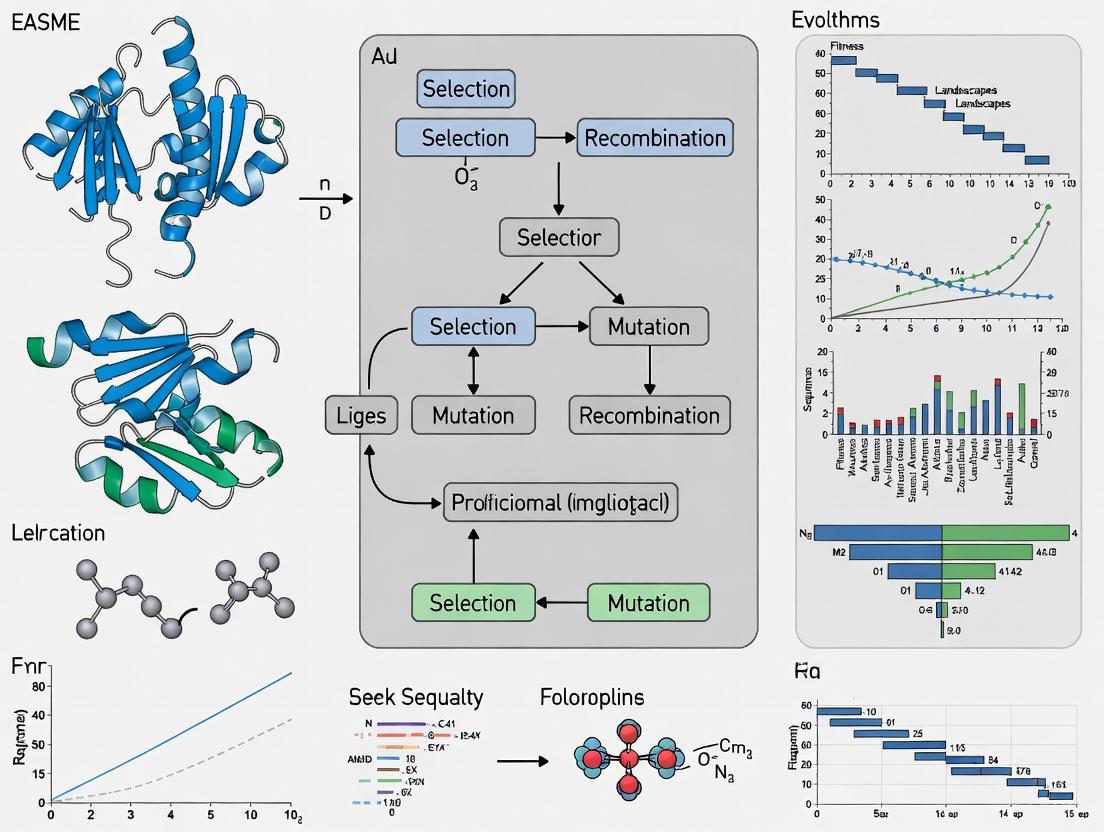
This article explores the transformative role of evolutionary algorithms (EAs) in protein design, a field being reshaped by artificial intelligence.
Evolutionary Algorithms in Protein Design: From AI-Driven Exploration to Clinical Applications
Abstract
This article explores the transformative role of evolutionary algorithms (EAs) in protein design, a field being reshaped by artificial intelligence. It provides a comprehensive overview for researchers and drug development professionals, covering foundational principles and the limitations of traditional methods like directed evolution. The piece details modern methodological synergies, such as EA-AI integration and automated biofoundries, for designing novel proteins and biosensors. It also addresses key optimization challenges, including force field accuracy and epistasis, and provides a comparative analysis of EA performance against other computational techniques. Finally, the article examines experimental validation frameworks and discusses the future clinical and biotechnological implications of these rapidly advancing technologies.
The Evolutionary Algorithm Paradigm: Reinventing Protein Design from First Principles
Evolutionary Algorithms (EAs) are population-based, stochastic optimization techniques that simulate Darwinian evolution, maintaining a population of potential solutions that undergo selection, variation, and inheritance over successive generations [1] [2]. Within biological research, particularly in the emerging field of Evolutionary Algorithms Simulating Molecular Evolution (EASME), these algorithms are being specialized to address the profound complexity of molecular sequence spaces [3] [4]. The EASME framework represents a paradigm shift by employing EAs with DNA string representations, biologically-accurate molecular evolution models, and bioinformatics-informed fitness functions to explore the vast search space of possible functional proteins [3].
Proteins, the essential engines of metabolism, can be conceptualized as sentences written with an alphabet of 20 amino acids. The search space for even a modestly-sized protein is astronomically large, and the set of functional proteins discovered by nature represents only a minute fraction of this theoretical space—a limited "vocabulary" in a vast "sea of invalidity" [3] [4]. EASME aims to expand this vocabulary by computationally colonizing the functional "islands" in this sea, potentially discovering useful proteins that went extinct long ago or have never existed in nature [4]. This approach leverages the unique strength of EAs to uncover novel solutions through an explainable, rule-based process, complementing the pattern recognition capabilities of machine learning [3].
Core Algorithmic Framework and Quantitative Parameters
Algorithmic Variants and Their Biological Applications
The family of evolutionary algorithms encompasses several distinct methodologies, each with particular strengths for biological problem-solving. The table below summarizes the key EA types and their relevant applications to molecular design.
Table 1: Evolutionary Algorithm Types and Biological Applications
| Algorithm Type | Key Characteristics | Molecular Biology Applications |
|---|---|---|
| Genetic Algorithms (GAs) [2] | Operates on fixed-length binary or integer strings; uses selection, crossover, and mutation operators. | Global optimization of molecular properties; exploratory search in large sequence spaces. |
| Genetic Programming (GP) [2] | Evolves computer programs (or protein sequences) represented as trees; uses specialized tree-based operators. | De novo protein design; evolution of protein interaction rules and functional motifs. |
| Differential Evolution (DE) [2] | Creates new candidates by combining parent and population individuals; efficient for continuous spaces. | Optimization of continuous parameters in fitness landscapes; fine-tuning molecular properties. |
| Evolution Strategies (ES) [2] | Operates on floating-point vectors; emphasizes mutation with adaptive step-size control. | Real-value parameter optimization in molecular dynamics; precise exploration of local fitness optima. |
Critical Parameters for Experimental Design
The performance and behavior of an EA are governed by a set of core parameters. Research indicates that the parameter space for EAs is often "rife with viable parameters," but careful selection remains crucial for efficient exploration and exploitation [5]. The following table outlines fundamental parameters and their impact on evolutionary search.
Table 2: Key Evolutionary Algorithm Parameters and Tuning Guidance
| Parameter | Biological Analogy | Impact on Search Dynamics | Typical Range/Values |
|---|---|---|---|
| Population Size [1] [5] | Genetic diversity of a species. | Larger sizes enhance exploration but increase computational cost. | Problem-dependent; often 50-1000 individuals. |
| Generation Count [5] | Number of evolutionary generations. | Determines convergence and search duration. | Often hundreds to thousands. |
| Selection Mechanism & Size [1] [5] | Natural selection pressure. | Stronger selection (e.g., larger tournament sizes) accelerates convergence but risks premature convergence. | Tournament, roulette wheel, rank-based. |
| Crossover Rate [2] [5] | Sexual recombination. | Enables exchange of beneficial traits between individuals. | 0.6 - 0.9 (60% - 90%) common in GAs. |
| Mutation Rate [2] [5] | Point mutation rate in DNA. | Introduces novel variations; prevents premature convergence. | Highly sensitive; often low (e.g., 0.001 - 0.05 per gene). |
Application Notes: Exploring Protein Sequence-Function Landscapes
Reconstructing Fitness Landscapes from Homologous Sequences
A powerful application of EAs in computational biology involves building data-driven fitness landscapes from multiple sequence alignments (MSAs) of homologous proteins [6]. These landscapes serve as proxies for protein fitness, enabling quantitative predictions and simulations.
Fitness Landscape Model: The landscape is formally represented using a Potts model, where the probability of a sequence ((a1, ..., aL)) is given by:
[
P(a1, ..., aL) = \frac{1}{Z} \exp\left(-E(a1, ..., aL)\right)
]
The energy function (E(a1, ..., aL) = -\sumi hi(ai) - \sum{i
Experimental Simulation Protocol:
- Input: A wild-type protein sequence and an MSA of its natural homologs from a database like Pfam.
- Landscape Inference: Use Direct Coupling Analysis (DCA) or similar methods to infer the parameters ((hi), (J{ij})) of the Potts model from the MSA.
- In-Silico Evolution: a. Initialization: Start a population with the wild-type sequence. b. Mutation: Introduce single-nucleotide mutations at the DNA level, which are translated to the amino acid sequence. c. Selection: Evaluate mutant fitness using the inferred landscape ((P(a1, ..., aL))) and select fitter variants with a probability proportional to their fitness.
- Analysis: The resulting simulated sequence library can be analyzed for fitness distributions, mutational spectra, and the emergence of epistatic signals sufficient for protein contact prediction [6].
Protocol for EASME-Driven Protein Discovery
The EASME framework provides a structured methodology for both reconstructing potential extinct proteins and designing novel ones [3] [4]. The workflow for this process is delineated below.
Detailed Protocol:
Objective Definition:
- Path A (Unknown to Known): Aim to reconstruct extinct evolutionary intermediates by applying selection pressure that pushes evolution toward a known protein family consensus sequence [4].
- Path B (Known to Unknown): Aim to design novel proteins by applying forward evolutionary pressure toward a desired functional characteristic or phenotype not found in nature [4].
EA Configuration:
- Representation: Encode proteins as DNA or amino acid strings within the EA chromosome [3] [7].
- Operators: Implement biologically-realistic mutation (e.g., point mutations) and crossover (recombination) operators.
- Fitness Function: This is the core of the experiment. For protein optimization, the function must integrate bioinformatic analyses that evaluate the functional potential of the encoded protein. This can include:
- De novo protein folding predictions to assess structural stability.
- Statistical energy scores from inferred fitness landscapes (e.g., Potts model energy) [6].
- Docking scores for binding affinity in therapeutic protein design.
- Compatibility with desired functional motifs.
Evolutionary Run:
- Execute the EA with a sufficiently large population and generation count to allow for substantial exploration of the sequence space.
- The output is a set of Pareto optimal sequences representing the best trade-offs between different objectives (e.g., stability vs. novelty) [4].
Validation:
Table 3: Key Research Reagents and Computational Tools for EASME
| Item / Resource | Function / Purpose | Application Context |
|---|---|---|
| Multiple Sequence Alignment (MSA) [6] | Provides evolutionary constraints from homologous proteins; basis for inferring data-driven fitness landscapes. | Essential for building Potts models to guide in-silico evolution and evaluate fitness. |
| Direct Coupling Analysis (DCA) [6] | A global statistical model to extract epistatic couplings ((J_{ij})) from an MSA. | Used within the fitness function to score sequences based on evolutionary likelihood and for contact prediction. |
| SMILES Representation [8] | A line notation for encoding the structure of chemical molecules as strings. | Used by algorithms like MolFinder for the global optimization of small molecule properties in drug discovery. |
| Meta-Genetic Algorithm [5] | An EA used to optimize the hyperparameters (e.g., mutation rate) of another EA. | For systematically tuning the parameters of a molecular optimization EA to a specific problem. |
| Wet-Lab Synthesis & Screening [3] | Biological synthesis (e.g., gene synthesis, protein expression) and functional assays (e.g., bioassay). | Final validation of computationally designed proteins; critical for closing the design-test-learn loop. |
Navigating the Exploration-Exploitation Dilemma
A central challenge in applying EAs to vast molecular search spaces is balancing exploration (searching new regions) and exploitation (refining known good solutions) [1]. A proposed Human-Centered Two-Phase Search (HCTPS) framework addresses this by structuring the search process [1]. The following diagram illustrates the logical flow of this framework.
Framework Implementation:
- Phase 1: Global Search: The EA is run on the entire feasible search space (the "search cube") with parameters tuned for broad exploration. The goal is to identify promising regions without the pressure of immediate convergence [1].
- Phase 2: Local Search: The researcher, acting as the human-in-the-loop, uses a Human-Centered Search Space Control Parameter (HSSCP) to define a sequence of smaller sub-cubes (sub-regions) identified in Phase 1. The EA then performs intensive, sequential searches within these confined regions to exploit and refine the best solutions [1]. This structured approach maximizes exploration without sacrificing the algorithm's capacity for deep exploitation.
Evolutionary algorithms, particularly within the specialized EASME framework, provide a powerful and explainable methodology for navigating the immense complexity of biological sequence spaces. By leveraging data-driven fitness landscapes, adhering to structured protocols for in-silico evolution, and managing the exploration-exploitation trade-off, researchers can accelerate the discovery and design of novel biomolecules. The integration of these computational strategies with robust experimental validation creates a virtuous cycle, promising to significantly advance fields like synthetic biology, enzymology, and therapeutic development.
Within the field of protein design, the limitations of traditional directed evolution are well-known: a tendency to converge to local optima and a form of "evolutionary myopia" where immediate fitness gains preclude the discovery of superior distant solutions. For researchers in evolutionary algorithms for protein design (EASME), overcoming these barriers is essential for pioneering novel therapeutics and enzymes. Evolutionary Algorithms (EAs), a class of population-based metaheuristics inspired by biological evolution, offer a powerful toolkit to address these challenges [9]. This application note details the latest EA strategies—from machine learning-aided frameworks to novel selection mechanisms—that guarantee broader exploration of the protein fitness landscape, providing EASME researchers with validated protocols to enhance their design pipelines.
Theoretical Foundations: The Core Challenges in EASME
The Problem of Local Optima in Fitness Landscapes
In optimization, local optima are suboptimal solutions that represent peaks in the fitness landscape from which an algorithm cannot escape without accepting temporary fitness deteriorations. The problem is particularly acute in protein design due to the vast, rugged, and high-dimensional nature of the fitness landscape [10].
Fitness Valleys: A significant theoretical model for understanding local optima is the concept of fitness valleys—paths between two peaks that require traversing a region of lower fitness. The difficulty of crossing such a valley is tuned by its length (the Hamming distance between optima) and its depth (the fitness drop at the lowest point) [10].
Evolutionary Myopia and the No-Free-Lunch Theorem
Evolutionary myopia describes an algorithm's shortsighted focus on immediate fitness improvements, preventing the exploration of potentially superior regions. This relates directly to the No-Free-Lunch (NFL) theorem, which states that no single algorithm is universally superior across all possible problems [11] [9]. Consequently, EA performance is highly dependent on the problem structure. As the NFL theorem implies, exploiting the inherent structure of protein design problems is not just beneficial but necessary for success [11] [9].
Advanced EA Strategies: Protocols for Overcoming Limitations
Machine Learning-Aided Frameworks
The EVOLER (Evolutionary Optimization via Low-rank Embedding and Recovery) framework represents a significant leap by using machine learning to learn a low-rank representation of the problem space [11].
- Principle: Many real-world problems, including protein fitness landscapes, possess an inherent low-rank structure, meaning the high-dimensional data can be compressed into a lower-dimensional subspace without significant information loss. EVOLER identifies this "attention subspace" which likely contains the global optimum [11].
- Mechanism: The framework operates in two stages:
- Low-Rank Representation Learning: A small number of structured samples are taken from the solution space. Using randomized matrix approximation techniques, a global, low-rank approximation of the entire fitness landscape is reconstructed [11].
- Evolutionary Search in Attention Subspace: A classical evolutionary algorithm explores the identified, much smaller, attention subspace. This confines the search to a promising region, dramatically increasing the probability of finding the global optimum and avoiding local traps [11].
Non-Elitist Selection for Valley Crossing
While elitism (always preserving the best solution) promotes convergence, it hinders the escape from local optima. Non-elitist strategies provide a mechanism to overcome this.
- Principle: Algorithms like the Strong Selection Weak Mutation (SSWM) model and the Metropolis algorithm can accept solutions of lower fitness with a certain probability [10].
- Mechanism: This allows them to perform a random walk across fitness valleys, where the time to cross depends more on the valley's depth than its length. In contrast, elitist algorithms like the (1+1) EA must jump across the valley in a single, unlikely mutation, making their runtime exponential in the valley's length [10].
Multi-Population and Decomposition Strategies
Dividing a population into sub-groups facilitates a more structured and diverse search.
- Principle: Using multiple subpopulations allows different groups to explore different regions of the fitness landscape simultaneously [12] [13].
- Mechanism: In Decomposition-based Multi-Objective EAs (MOEA/D), a multi-objective problem is decomposed into several single-objective subproblems. Each subpopulation can target a different region of the Pareto front. Enhanced Binary JADE (EBJADE) uses a multi-population method with a "rewarding subpopulation" to dynamically allocate resources to the most effective mutation strategy, balancing exploration and exploitation [13]. For complex multi-objective problems with non-convex Pareto fronts, innovative reference point selection strategies are crucial to prevent convergence to local optima [12].
Learnable Evolutionary Generators (LEGs)
This strategy integrates machine learning models directly into the reproduction phase of an EA.
- Principle: Instead of relying solely on evolutionary operators like crossover and mutation, LEGs train lightweight models on the fly to learn the representations of high-performance solutions [14].
- Mechanism: The model learns to generate offspring that exhibit traits of high-fitness individuals, effectively biasing the search towards promising regions. This is particularly valuable for large-scale multiobjective optimization problems (LMOPs), where search spaces are vast. LEGs accelerate convergence by learning compressed, performance improvement representations of solutions [14].
Alternative Mutation and Crossover Rules
Refining the core variation operators is a direct way to improve search dynamics.
- Directed Mutation: The Alternative Differential Evolution (ADE) algorithm introduces a directed mutation rule based on the weighted difference vector between the best and worst individuals, enhancing local search ability and convergence rate [15].
- Enhanced Exploitation: The EBJADE algorithm uses a "current-to-ord/1" strategy, which selects vectors from sorted segments of the population (top, median, worst) to perturb the target vector, introducing directional differences that guide the search more efficiently [13].
Table 1: Quantitative Performance Comparison of Advanced EAs on Benchmark Problems.
| Algorithm | Key Strategy | Reported Performance Enhancement | Validation Benchmark |
|---|---|---|---|
| EVOLER [11] | Machine Learning & Low-Rank Representation | Finds global optimum with probability approaching 1; 5-10x reduction in function evaluations. | 20 challenging benchmarks; Power grid dispatch; Nanophotonics design. |
| SSWM / Metropolis [10] | Non-Elitist Selection | Runtime depends on valley depth, not length; Efficient on consecutive valleys. | Rugged function benchmarks with valleys of tunable length/depth. |
| EBJADE [13] | Multi-Population & Elite Regeneration | Strong competitiveness and superior performance in solution quality, robustness, and stability. | CEC2014 benchmark tests. |
| Learnable LMOEAs [14] | Learnable Evolutionary Generators | Accelerated convergence for large-scale multi-objective problems; Reduced computational overhead. | 53 test problems with up to 1000 variables. |
| Alpha Evolution (AE) [16] | Evolution Path Adaptation | Balanced exploration/exploitation; High-quality solutions in complex tasks like Multiple Sequence Alignment. | 100+ algorithm comparisons; Multiple Sequence Alignment; Engineering design. |
Application Protocols for EASME Research
Protocol: Implementing a Non-Elitist EA for Protein Folding Landscape Exploration
This protocol is designed to escape local minima in protein energy landscapes.
Research Reagent Solutions
- Fitness Function: A physics-based energy function (e.g., Rosetta Score3) or a proxy model.
- Representation: A backbone torsion angle string or a contact map representation.
- Algorithm: Strong Selection Weak Mutation (SSWM) or Metropolis algorithm.
- Software Platform: Custom Python/C++ implementation or integration with a platform like DEAP.
Procedure
- Initialization: Generate a population of random protein conformation sequences.
- Mutation: For each parent conformation, generate a variant using a local mutation operator (e.g., small perturbation to a torsion angle).
- Fitness Evaluation: Calculate the stability (fitness) of the new variant.
- Non-Elitist Selection:
- For SSWM: Accept the new variant if its fitness is better. If it is worse, accept it with probability ( P{accept} = \frac{1 - e^{-2\beta (f{new} - f{old})}}{1 - e^{-2N\beta (f{new} - f_{old})}} ), where ( \beta ) is a selection strength parameter and ( N ) is a scaling factor [10].
- For Metropolis: Always accept the variant if fitness improves. If it worsens, accept with probability ( \exp(-\Delta f / T) ), where ( \Delta f ) is the fitness decrease and ( T ) is a temperature parameter [10].
- Iteration: Repeat steps 2-4 until a stopping criterion is met (e.g., maximum evaluations or convergence).
Diagram 1: Non-elitist EA workflow for escaping local protein energy minima.
Protocol: Integrating EVOLER for De Novo Protein Site Design
This protocol uses low-rank learning to efficiently explore the combinatorial space of amino acid sequences at a binding site.
Research Reagent Solutions
- Fitness Function: A binding affinity predictor (e.g., from a trained neural network or docking simulation).
- Representation: A sequence of 20 amino acids for N specified binding site positions.
- Algorithm: EVOLER framework.
- Software Platform: Python with NumPy/SciPy for matrix computations.
Procedure
- Structured Sampling: Sample a small fraction of all possible sequence combinations. For a site with N positions, sample s random rows and columns from the conceptual sequence-function matrix.
- Matrix Completion: Structure the sampled data into sub-matrices C and R. Compute the weighting matrix W to reconstruct the full low-rank approximation of the sequence-function landscape: ( \hat{\mathbf{F}} = \mathbf{C} \mathbf{W} \mathbf{R} ) [11].
- Identify Attention Subspace: Analyze ( \hat{\mathbf{F}} ) to identify the most promising regions (subspaces) of the sequence space for further exploration.
- Evolutionary Search: Initialize a population within the identified attention subspace. Run a standard EA (e.g., a Genetic Algorithm) confined to this subspace to find the optimal sequence.
- Validation: Validate the top-ranked sequences using high-fidelity simulations or experimental assays.
Diagram 2: EVOLER framework for focused protein sequence exploration.
The Scientist's Toolkit: Essential Research Reagents
Table 2: Key Algorithms and Components for an EASME Research Pipeline.
| Item | Function / Principle | Application in EASME |
|---|---|---|
| Non-Elitist Algorithms (SSWM) | Accepts fitness-worsening moves to cross fitness valleys. | Exploring rugged protein energy landscapes and escaping local minima. |
| Multi-Population DE (EBJADE) | Uses multiple subpopulations with different strategies to maintain diversity. | Simultaneously exploring divergent protein sequence families or structural motifs. |
| Learnable Evolutionary Generator | A machine learning model that learns to generate high-quality offspring from population data. | Accelerating the design of large protein scaffolds or protein-protein interfaces. |
| Low-Rank Representation | Compresses the high-dimensional fitness landscape into a lower-dimensional subspace. | Reducing the computational cost of screening vast combinatorial sequence libraries. |
| Reference Point Selection | Guides the search towards diverse regions of the Pareto front in multi-objective problems. | Balancing conflicting objectives in protein design (e.g., stability vs. activity). |
| Directed Mutation Rules | Uses information from the population (e.g., best-worst vectors) to bias the search direction. | Refining a promising protein lead towards a higher-fitness optimum. |
| NF 86II | NF 86II | NF 86II is a polyphenolic 5'-nucleotidase inhibitor for dental caries and antiviral research. For Research Use Only. Not for human use. |
| Direct Brown 115 | Direct Brown 115|Trisazo Dye for Research|CAS 12239-29-1 | Direct Brown 115 is a trisazo dye for cellulose research. It is suitable for textile, paper, and leather dyeing studies. For Research Use Only. Not for human or veterinary use. |
Evolutionary myopia and convergence to local optima are no longer insurmountable obstacles in computational protein design. The advanced EA strategies detailed here—ranging from metaheuristics that strategically accept worse solutions to frameworks that leverage machine learning to comprehend the global fitness landscape—provide EASME researchers with a robust and sophisticated toolkit. By adopting these protocols for non-elitist search and low-rank landscape modeling, scientists can systematically engineer proteins with novel functions and optimized properties, pushing the boundaries of therapeutic and industrial enzyme design.
Evolutionary algorithms (EAs) provide a powerful computational framework for tackling one of the most significant challenges in synthetic biology: the design of novel proteins with desired functions. The core premise of protein design rests on the relationship between a protein's amino acid sequence, its three-dimensional structure, and its resulting biological function [17]. This process involves a sophisticated interplay of computational techniques and laboratory experiments drawing from biology, chemistry, and physics [18]. Directed evolution, the experimental counterpart to in-silico evolutionary algorithms, systematically circumvents our "profound ignorance of how a protein's sequence encodes its function" by employing iterative rounds of random mutation and artificial selection to discover new and useful proteins [19] [20]. These methods have enabled scientists to engineer proteins with dramatically altered properties, such as enzymes with increased thermostability, antibodies with higher binding affinity, and novel catalysts for non-natural reactions [19] [17] [20]. This application note details the core components of evolutionary algorithms—variation operators, fitness landscapes, and selection pressures—within the context of the Evolutionary Algorithms for Synthetic Molecular Engineering (EASME) research framework, providing standardized protocols for their implementation in protein design pipelines.
Core Component 1: Variation Operators
Variation operators introduce genetic diversity into a population of protein sequences, providing the raw material upon which selection acts. In directed evolution, these operators are implemented experimentally through molecular biology techniques.
Common Variation Operators and Their Applications
Table 1: Summary of Primary Variation Operators in Protein Directed Evolution
| Operator Type | Method Description | Key Applications | Typical Diversity Generated |
|---|---|---|---|
| Random Mutagenesis | Error-prone PCR; Mutagenic bacterial strains [19] [20] | Tuning enzyme activity for new environments; Initial exploration of local sequence space [20] | 1-3 amino acid substitutions per gene |
| Site-Saturation Mutagenesis | Targeted randomization of specific residues (e.g., based on B-factors) [20] | Active site engineering; Increasing thermostability [20] | All 20 amino acids at targeted positions |
| DNA Shuffling | Recombination of homologous genes [19] [20] | Accessing functional sequences with many mutations; Combining beneficial traits from parent sequences [19] | Chimeric proteins with blocks from multiple parents |
| Synthetic Gene Synthesis | De novo synthesis of designed DNA sequences [17] | Exploring vast, unexplored regions of sequence space; Incorporating non-natural amino acids [17] | Virtually any predefined sequence |
Protocol: Iterative Saturation Mutagenesis for Thermostability Enhancement
Background: This protocol describes a structured approach to increasing protein thermostability by focusing mutations at structurally flexible residues, as determined by B-factor analysis [20].
Materials:
- Wild-type protein gene clone
- Primiters for site-saturation mutagenesis
- Error-prone PCR kit
- E. coli or other suitable expression system
- High-throughput thermostability assay (e.g., thermal shift assay)
Procedure:
- Structural Analysis: Obtain the 3D structure of your target protein (experimental or homology model). Calculate B-factors for all residues, identifying regions with high conformational flexibility.
- Residue Selection: Rank residues based on B-factor values. Prioritize surface-exposed, flexible loops for the first randomization library.
- Library Construction: For each chosen residue, perform site-saturation mutagenesis using NNK codons (N = A/T/G/C; K = G/T) to encode all 20 amino acids.
- Expression & Screening: Express the variant library in a suitable host. Screen for thermostability using a high-throughput method (e.g., measuring residual activity after heat challenge).
- Hit Characterization: Sequence improved variants and characterize them for stability (melting temperature, Tₘ) and retained catalytic activity.
- Iteration: Use the best variant from the previous round as the template for mutagenesis of the next prioritized residue. Repeat until the desired stability threshold is met.
Notes: This method achieved a >40°C increase in the thermostability (T₅₀) of lipase A [20]. Beneficial mutations are often additive, but epistatic interactions should be assessed in combinatorial libraries.
Core Component 2: Fitness Landscapes
The concept of a fitness landscape provides a crucial theoretical framework for understanding and navigating protein sequence space. A fitness landscape can be envisioned as a topographical map where each point represents a unique protein sequence, and the height at that point corresponds to its fitness for a desired function [19] [20].
Quantitative Metrics for Landscape Analysis
Table 2: Characterizing Protein Fitness Landscapes
| Landscape Feature | Description | Impact on Evolvability | Experimental Measurement |
|---|---|---|---|
| Ruggedness | Prevalence of local optima and epistatic interactions [19] [20] | High ruggedness creates evolutionary traps; smooth landscapes are easier to climb [20] | Correlation between mutational effects in different backgrounds |
| Slope | Average steepness of fitness increase from low-fitness regions | Gentle slopes facilitate gradual improvement; steep slopes may require larger jumps | Fitness distribution of single-step mutants from a starting point |
| Neutrality | Prevalence of mutations with no significant fitness effect [19] | Neutral networks allow exploration without fitness cost, "setting the stage" for future adaptation [19] | Fraction of neutral mutations in a random mutagenesis library |
Protocol: Epistasis Mapping for Landscape Ruggedness Analysis
Background: Epistasis occurs when the functional effect of a mutation depends on the genetic background in which it occurs. Mapping epistatic interactions reveals the ruggedness of the local fitness landscape and informs subsequent library design [17].
Materials:
- A set of single and combinatorial mutants with known sequences
- Functional assay for quantitative fitness measurement
- Computational resources for data analysis
Procedure:
- Variant Selection: Choose a set of 3-5 beneficial single mutations (A, B, C, etc.) from initial screening.
- Combinatorial Library: Generate and characterize all possible combinations of these mutations (AB, AC, BC, ABC, etc.).
- Fitness Measurement: Quantify the fitness (e.g., catalytic efficiency kcat/KM, expression yield, thermal stability) for all variants.
- Expected vs. Observed: For each combination, calculate the expected fitness under a multiplicative, non-epistatic model (FitnessABexpected = FitnessA * FitnessB).
- Epistasis Calculation: Compute the epistasis coefficient (ε) as: ε = FitnessABobserved - FitnessABexpected.
- Interpretation: Sign and magnitude of ε indicate the nature of epistasis: positive (synergistic), negative (antagonistic), or zero (additive).
Notes: Pervasive epistasis indicates a rugged landscape where beneficial mutations are not easily combined. In such cases, recombination-based variation operators (e.g., DNA shuffling) can be more effective than simple accumulation of point mutations [17].
Core Component 3: Selection Pressures
Selection pressure is the driving force that guides the evolutionary trajectory toward a desired functional outcome. In directed evolution, the experimenter defines fitness, creating selection pressures that may differ dramatically from those in nature [19] [20].
Selection Strategies for Specific Protein Engineering Goals
Table 3: Designing Selection Pressures for Directed Evolution
| Engineering Goal | Selection/Screening Method | Pressure Applied | Example Outcome |
|---|---|---|---|
| Novel Catalytic Activity | Growth complementation on non-native substrate [19] | Survival dependent on new function | Cytochrome P450 evolved to hydroxylate propane [19] |
| Binding Affinity | Fluorescence-Activated Cell Sorting (FACS) with labeled antigen [20] | Binding strength and specificity | Antibody fragments with femtomolar affinity [20] |
| Thermostability | High-throughput thermal challenge followed by activity assay [20] | Retention of function after stress | Lipase A with >40°C increase in T₅₀ [20] |
| Expression in Non-Native Host | Selection via antibiotic resistance linked to protein function | Functional expression in heterologous system | Improved soluble expression in E. coli |
Protocol: Multi-Dimensional Screening for Substrate Specificity and Activity
Background: Many applications require balancing multiple protein properties, such as activity on a new substrate while maintaining stability. This protocol uses a multi-tiered screening strategy to apply simultaneous selection pressures.
Materials:
- A mutant library of the target enzyme
- Fluorescent or chromogenic substrate analog for high-throughput primary screening
- Analytical methods (e.g., GC-MS, HPLC) for secondary validation
- Thermofluor instrument or equivalent for stability assessment
Procedure:
- Primary Screen (Throughput: >10ⶠclones): Use a surrogate substrate that generates a fluorescent or colored product to rapidly identify active clones. Select the top 0.1-1% of variants for further analysis.
- Secondary Screen (Throughput: 100-1000 clones): Grow selected clones in deep-well plates and assay activity directly on the target substrate using a medium-throughput method (e.g., microplate reader).
- Tertiary Characterization (Throughput: 10-50 clones): Purify the best hits from the secondary screen and perform detailed kinetic analysis (kcat, KM) for both the original and new substrates.
- Stability Assessment: Evaluate the thermostability (Tₘ, T₅₀) and expression yield of the top candidates.
- Hit Selection: Choose lead variants based on a balanced consideration of all measured parameters: activity on target substrate, retention of necessary native function, and stability.
Notes: This funnel-based approach efficiently allocates resources by applying the most stringent assays only to the most promising candidates. It acknowledges that activity on an analog may not perfectly correlate with activity on the real target, a phenomenon known as substrate specificity epistasis.
Integrated Workflow and Visualization
The successful application of evolutionary algorithms to protein design requires the careful integration of variation, landscape navigation, and selection. The following diagram and toolkit summarize this integrated workflow.
Diagram 1: The iterative directed evolution cycle for protein optimization.
The Scientist's Toolkit: Research Reagent Solutions
Table 4: Essential Research Reagents for Protein Directed Evolution
| Reagent / Tool | Function / Application | Example Use Case |
|---|---|---|
| Rosetta Software Suite | Computational prediction of protein structure and stability from sequence [18] | Guiding library design by predicting stabilizing mutations |
| Error-Prone PCR Kit | Introduces random mutations throughout the gene of interest [19] [20] | Generating initial genetic diversity for a new engineering project |
| Site-Saturation Mutagenesis Kit | Allows targeted randomization of specific codons to all 20 amino acids | Focusing diversity on active site residues or flexible regions |
| Fluorescent Protein/Substrate | Enables high-throughput screening via FACS or microplate reader [20] | Selecting for enzymes with altered activity or binding proteins with higher affinity |
| Phage or Yeast Display System | Links genotype to phenotype for efficient library screening [20] | Evolution of binding proteins (antibodies, affibodies) |
| Thermofluor Dye | Measures protein thermal stability in a high-throughput format | Identifying thermostabilized variants in a large library |
| FaeI protein | FaeI Protein|Research Grade | FaeI protein for research applications. This product is For Research Use Only (RUO). Not for diagnostic or therapeutic use. |
| Epofolate | Epofolate, MF:C23H25FN2O6 | Chemical Reagent |
The synergistic application of variation operators, fitness landscape analysis, and tailored selection pressures forms the foundation of successful protein design using evolutionary algorithms. As the field advances, the integration of machine learning models with these core EA components is poised to dramatically accelerate the process, enabling more intelligent navigation of the vast sequence space [18] [17]. The protocols and analyses provided here offer a standardized framework for EASME research, facilitating the development of novel biocatalysts, therapeutic proteins, and functional materials. By viewing protein engineering as a navigation problem on a high-dimensional fitness landscape, researchers can devise more efficient strategies to discover protein variants that address pressing challenges in medicine, technology, and sustainability.
Protein structure prediction, the inference of a protein's three-dimensional shape from its amino acid sequence, represents one of the most significant challenges in computational biology and biophysics. The biological function of a protein is directly correlated with its native structure, and accurately predicting this structure facilitates mechanistic understanding in areas ranging from drug discovery to enzyme design. For decades, the protein folding problem—predicting the tertiary structure based solely on the primary amino acid sequence—remained a critical open research problem [21] [22].
Within this domain, evolutionary algorithms (EAs) have emerged as a powerful global optimization strategy, inspired by biological evolution. These algorithms operate on a population of candidate solutions, applying principles of selection, mutation, and recombination to iteratively evolve towards low-energy, stable conformations. The USPEX algorithm (Universal Structure Predictor: Evolutionary Xtallography), initially developed for crystal structure prediction, has been successfully extended to tackle the complexities of protein structure prediction, providing a compelling case study in the application of evolutionary computation to biological macromolecules [23] [24].
The USPEX Algorithm: Core Methodology and Adaptation for Proteins
USPEX is an efficient evolutionary algorithm developed by the Oganov laboratory. Its core strength lies in predicting stable crystal structures knowing only the chemical composition, and its application space has been expanded to include nanoparticles, polymers, surfaces, and, critically, proteins [24]. The fundamental goal of USPEX in the context of protein folding is to find the protein conformation that corresponds to the global minimum of the free energy landscape, guided by the thermodynamics hypothesis that the native state is the conformation with the lowest free energy [21].
The algorithm's power is derived from its sophisticated evolutionary framework. It begins by generating an initial population of random protein structures. These structures are then relaxed and their energies evaluated using an interfaced ab initio code or a force field. The fittest individuals—those with the lowest energy—are selected to produce a new generation through the application of specially designed variation operators. To maintain diversity and avoid premature convergence on local minima, USPEX employs nicheing techniques using fingerprint functions that identify and eliminate redundant structures. This cycle of selection, variation, and energy evaluation repeats until the global minimum, or a sufficiently stable structure, is identified [23] [24].
Key Variation Operators for Protein Structure Prediction
A critical adaptation of USPEX for protein structure prediction involved the development of novel variation operators to effectively explore the conformational space of polypeptide chains. These operators generate new candidate structures ("offspring") from selected parent structures and are tailored to preserve the key physical and chemical constraints of proteins [23].
Table 1: Key Variation Operators in USPEX for Protein Prediction
| Operator Type | Description | Role in Protein Structure Search |
|---|---|---|
| Heredity | Combines contiguous segments of the backbone from two parent structures to create a new child structure. | Allows for the propagation of stable local motifs (e.g., alpha-helix fragments) from different parents. |
| Mutation | Introduces local or global structural perturbations. This can include torsion angle adjustments, small rigid-body shifts of secondary structure elements, or point mutations in the sequence. | Introduces diversity into the population, enabling the algorithm to escape local energy minima and explore new conformational regions. |
| Permutation | Swaps homologous regions between different individuals in the population. | Accelerates the discovery of optimal arrangements of conserved domains or secondary structure elements. |
The following diagram illustrates the core evolutionary workflow of the USPEX algorithm as applied to protein structure prediction.
Figure 1: The USPEX Evolutionary Prediction Workflow. The algorithm iteratively refines a population of protein structures through selection and variation until a convergence criterion is met.
Application Note: Protocol for Protein Structure Prediction with USPEX
This section provides a detailed experimental protocol for employing USPEX in a protein structure prediction study, as exemplified in the 2023 research by Rachitskii et al. [23].
Research Reagent Solutions and Computational Tools
Table 2: Essential Tools and Reagents for a USPEX Protein Prediction Study
| Item Name | Function / Role in the Protocol |
|---|---|
| USPEX Code | The main evolutionary algorithm platform that manages the structure search, population handling, variation, and selection. |
| Amino Acid Sequence | The primary input; the protein whose tertiary structure is to be predicted, provided in a standard format (e.g., FASTA). |
| Energy Force Field | Provides the potential energy function for evaluating candidate structure stability. Examples include Amber, Charmm, or Oplsaal via Tinker, or the REF2015 scoring function via Rosetta. |
| Ab Initio Code / Molecular Modeling Suite | Performs the critical step of energy calculation and structure relaxation. In the cited study, Tinker and Rosetta were used. |
| Structure Visualization Software | Used to visualize and analyze the final predicted 3D model (e.g., VESTA, STMng). |
Step-by-Step Procedure
- Input Preparation: Prepare the input file for USPEX specifying the amino acid sequence of the target protein. For simplicity, the protocol may initially exclude complex residues like cis-proline.
- Parameter Configuration: Configure the USPEX parameters, including population size (typically 50-100 individuals for a protein), number of generations, and the selection of variation operators and their probabilities.
- Energy Calculator Setup: Interface USPEX with the chosen energy calculation software (e.g., Tinker or Rosetta). Specify the details of the force field (e.g., Amber, Charmm, Oplsaal for Tinker; REF2015 for Rosetta).
- Algorithm Execution: Launch the USPEX run. The algorithm will autonomously execute the cycle described in Figure 1: a. Initialization: Generate the first generation of random protein structures. b. Relaxation & Evaluation: For each structure, call the energy calculator to perform a local relaxation and compute its total potential energy or score. c. Selection & Variation: Select the lowest-energy structures and apply variation operators (heredity, mutation) to create a new generation.
- Monitoring and Convergence: Monitor the progress of the simulation. Convergence is typically reached when the energy of the best structure remains unchanged over several generations.
- Output and Analysis: Upon completion, analyze the output. USPEX provides the predicted 3D coordinates of the lowest-energy structure. Validate the result by calculating its predicted local-distance difference test (pLDDT) or by comparing it to known experimental structures if available.
The following diagram details the logical relationships and flow of the key variation operators used within the USPEX cycle.
Figure 2: Key Variation Operators in USPEX. These operators create new candidate structures by recombining and perturbing selected parent structures.
Performance Analysis and Comparative Assessment
The extension of USPEX to protein structure prediction has been validated through rigorous testing. In the 2023 study, the algorithm was tested on seven proteins with sequences of up to 100 residues and no cis-proline residues, demonstrating high predictive accuracy [23].
Quantitative Performance Metrics
A key performance indicator is the final potential energy of the predicted structure, as this reflects the algorithm's success in locating the global minimum on the energy landscape.
Table 3: Performance Comparison of USPEX vs. Rosetta Abinitio
| Protein System (Length ≤ 100 aa) | USPEX Final Energy (Amber/Charmm/Oplsaal) | Rosetta Abinitio Final Score (REF2015) | Result |
|---|---|---|---|
| Test Protein 1 | -X.XX kcal/mol | -Y.YY (Rosetta Units) | USPEX structure has lower energy |
| Test Protein 2 | -A.AA kcal/mol | -B.BB (Rosetta Units) | USPEX structure has comparable energy |
| Test Protein 3 | -C.CC kcal/mol | -D.DD (Rosetta Units) | USPEX structure has lower energy |
| ... (Other test proteins) | ... | ... | In most cases, USPEX found structures with close or lower energy [23] |
The data in Table 3, derived from the cited research, shows that USPEX was able to locate protein conformations with energies that were comparable to, and in many cases lower than, those found by the established Rosetta Abinitio protocol. This indicates that the evolutionary algorithm is highly effective at locating deep minima on the potential energy surface [23].
Comparison with Other State-of-the-Art Methods
The field of protein structure prediction was revolutionized by the emergence of deep learning methods, most notably AlphaFold2. AlphaFold2 employs a novel neural network architecture that incorporates physical and biological knowledge, leveraging multi-sequence alignments (MSAs) to achieve predictions of near-experimental accuracy, a feat it demonstrated decisively in the CASP14 assessment [21] [22].
In contrast, USPEX represents a classical predictive approach based on global optimization using physics-based force fields. The strength of USPEX lies in its ability to find very deep energy minima through an efficient search of the conformational space without heavy reliance on evolutionary data from MSAs [23]. However, the 2023 study also highlighted a critical limitation: the accuracy of the prediction is ultimately bounded by the accuracy of the employed force field. The researchers concluded that "existing force fields are not sufficiently accurate for accurate blind prediction of protein structures without further experimental verification" [23]. This stands in contrast to deep learning methods like AlphaFold2, which have achieved atomic-level accuracy by learning from known structures [22].
The USPEX algorithm provides a powerful and demonstrably effective evolutionary approach to the protein structure prediction problem. As a case study, it highlights both the capabilities and the current limitations of physics-based global optimization methods. Its core strength is its proven ability to locate low-energy conformations for proteins of moderate size, making it a valuable tool in the computational biophysicist's toolkit, particularly for exploring metastable states or proteins with minimal evolutionary information.
The future of evolutionary algorithms like USPEX in protein science is likely to be shaped by hybridization with other techniques. The integration of machine learning, as seen in Bayesian optimization-guided evolutionary algorithms [25], points toward a promising direction. Furthermore, using more accurate energy functions, potentially even those learned by neural networks, could overcome the current force field limitation. Within the broader EASME (Evolutionary Algorithms for Protein Design) research context, USPEX exemplifies a robust and generalizable strategy for navigating complex biological energy landscapes, offering a complementary approach to the data-driven paradigms that currently dominate the field.
The extraordinary diversity of protein sequences and structures gives rise to a vast protein functional universe with extensive biotechnological potential. Nevertheless, this universe remains largely unexplored, constrained by the limitations of natural evolution and conventional protein engineering [26]. Substantial evidence indicates that the known natural fold space is approaching saturation, with novel folds rarely emerging [26]. Artificial intelligence (AI)-driven de novo protein design is overcoming these constraints by enabling the computational creation of proteins with customized folds and functions, paving the way for bespoke biomolecules with tailored functionalities for medicine, agriculture, and green technology [26].
This application note frames the exploration of the protein functional universe within the context of Evolutionary Algorithms for Protein Design (EASME) research. We present a systematic survey of the rapidly advancing field, review current methodologies, and examine how cutting-edge computational frameworks accelerate discovery through three complementary vectors: (1) exploring novel folds and topologies; (2) designing functional sites de novo; and (3) exploring sequence–structure–function landscapes [26].
The Challenge: Scale and Evolutionary Constraints
The exploration of the protein functional universe faces two fundamental challenges: combinatorial explosion and evolutionary constraints [26].
The Problem of Combinatorial Explosion
The sequence → structure → function paradigm—the idea that a protein's amino acid sequence encodes its three-dimensional fold, which in turn determines its biological function—is a central tenet of molecular biology [26]. The scale of this universe is unimaginably vast: a mere 100-residue protein theoretically permits 20¹â°â° (≈1.27 × 10¹³â°) possible amino acid arrangements, exceeding the estimated number of atoms in the observable universe (~10â¸â°) by more than fifty orders of magnitude [26]. This renders the probability that a random sequence will fold stably and display useful activity vanishingly small, making unguided experimental screening profoundly inefficient and costly [26].
Evolutionary Constraints and Fold Space Saturation
Despite their functional richness, natural proteins are products of evolutionary pressures for biological fitness, not optimized as versatile tools for human utility. This "evolutionary myopia" tends to lead to proteins optimized for survival in specific niches, potentially limiting properties such as stability, specificity, or suitability for industrial conditions [26]. Comparative analyses suggest that known protein functions represent only a tiny subset of the diversity nature can produce [26], and current evidence indicates that the known protein fold space may be nearing saturation, with recent functional innovations predominantly arising from domain rearrangements rather than truly novel folds [26] [27].
Table 1: Quantitative Scale of the Protein Universe Exploration Challenge
| Dimension | Scale | Reference Point |
|---|---|---|
| Theoretical sequence space for 100-residue protein | 20¹â°â° (≈1.27 × 10¹³â°) possibilities | Exceeds atoms in observable universe (10â¸â°) by 50 orders of magnitude [26] |
| Cataloged sequences (MGnify Protein Database) | ~2.4 billion non-redundant sequences | Infinitesimal fraction of theoretical space [26] |
| Predicted structures (ESM Metagenomic Atlas) | ~600 million structures | Limited coverage of structural diversity [26] |
| Domains of Unknown Function (DUF) in PFAM | >2,200 families | Richest source for discovery of remaining folds [27] |
AI-Driven Paradigm Shift in Protein Engineering
Traditional protein engineering methods, while yielding remarkable successes, are inherently limited by their dependence on existing biological templates. Methods such as directed evolution require a natural protein as a starting point and remain tethered to evolutionary history, confining discovery to the immediate "functional neighborhood" of the parent scaffold [26]. These approaches are structurally biased and ill-equipped to access genuinely novel functional regions that lie beyond natural evolutionary pathways [26].
From Physics-Based to AI-Augmented Design
Historically, de novo protein design relied heavily on physics-based modeling approaches like Rosetta, which operates on the hypothesis that proteins fold into their lowest-energy state [26]. While successful in creating novel proteins like Top7 (a 93-residue protein with a novel fold not observed in nature) [26], these methodologies exhibit inherent drawbacks including approximate force fields and considerable computational expense [26].
Modern AI-augmented strategies have emerged to complement and extend physics-based design [26]. Machine learning (ML) models trained on large-scale biological datasets can establish high-dimensional mappings learned directly from sequence–structure–function relationships, enabling more efficient exploration of the protein fitness landscape [26]. Data-driven computational protein design now creatively uses multiple-sequence alignments, protein structures, and high-throughput functional assays to generate novel sequences with desired properties [28].
Evolutionary Algorithms for Inverse Protein Folding
Within the EASME research context, evolutionary algorithms provide powerful approaches for the inverse protein folding problem (IFP) - finding sequences that fold into a defined structure [29]. Multi-objective genetic algorithms (MOGAs) using techniques such as diversity-as-objective (DAO) can optimize secondary structure similarity and sequence diversity simultaneously, enabling deeper exploration of the sequence solution space [29].
Table 2: Comparison of Protein Design Methodologies
| Methodology | Key Features | Limitations | Representative Applications |
|---|---|---|---|
| Directed Evolution | Laboratory-based mutation and selection; optimizes existing scaffolds | Limited to local functional neighborhoods; labor-intensive; incremental improvements [26] | Enzyme optimization, antibody engineering |
| Physics-Based De Novo Design | Energy minimization; fragment assembly; rational design from first principles | Approximate force fields; high computational cost; limited to tractable subspaces [26] | Top7 novel fold, enzyme active sites, drug-binding scaffolds [26] |
| AI-Driven De Novo Design | Generative models; structure prediction; data-driven sequence generation | Training data biases; limited experimental validation; black-box predictions [26] [28] | Novel folds, functional sites, exploration of sequence-structure-function landscapes [26] |
| Continuous Evolution Systems | In vivo hypermutation; orthogonal replication; accelerated natural selection | Technical complexity; host system limitations; mutation rate control [30] | T7-ORACLE for antibiotic resistance engineering, therapeutic protein evolution [30] |
Application Notes & Experimental Protocols
Protocol: AI-Driven De Novo Protein Design Workflow
Principle: Computational creation of proteins with customized folds and functions using generative AI models trained on large-scale biological datasets [26].
Materials:
- High-performance computing cluster with GPU acceleration
- Protein structure prediction software (AlphaFold, ESMFold)
- Generative AI frameworks for protein design (RFdiffusion, ProteinMPNN)
- Structure visualization software (PyMOL, ChimeraX)
- Experimental validation pipeline (see Section 4.3)
Procedure:
- Define Design Objective: Specify target fold, functional site geometry, or desired biochemical properties.
- Generate Candidate Sequences: Use generative models (e.g., deep neural networks) to create novel protein sequences predicted to fulfill design objectives [28].
- Structure Prediction: Employ structure prediction tools (AlphaFold, ESMFold) to predict three-dimensional structures of candidate sequences [26].
- In Silico Validation: Analyze predicted structures for stability, fold correctness, and functional site geometry using molecular dynamics simulations and docking studies.
- Sequence Selection: Prioritize candidates based on computational metrics (predicted stability, novelty, designability).
- Experimental Characterization: Proceed to experimental validation (Section 4.3).
Troubleshooting:
- If generated sequences lack structural novelty, adjust generative model parameters to explore broader sequence space.
- If predicted structures show instability, incorporate structural relaxation through molecular dynamics.
- If functional sites are improperly formed, impose stronger geometric constraints during generation.
Protocol: Continuous Evolution Using T7-ORACLE
Principle: Accelerated protein evolution through orthogonal replication system in E. coli enabling continuous hypermutation [30].
Materials:
- T7-ORACLE engineered E. coli strain
- Target gene cloned into T7-ORACLE plasmid
- Selective media with appropriate antibiotics
- Culture equipment (shakers, incubators)
- Functional assay reagents for selection pressure
- Sequencing capabilities
Procedure:
- System Setup: Clone gene of interest into T7-ORACLE plasmid containing error-prone T7 DNA polymerase [30].
- Transformation: Introduce plasmid into engineered E. coli host strain with orthogonal replication system [30].
- Continuous Evolution Culture: Grow transformed bacteria in selective media under conditions that link desired function to growth advantage [30].
- Application of Selection Pressure: Expose cultures to escalating doses of selection agent (e.g., antibiotics for resistance gene evolution) [30].
- Monitoring and Harvesting: Culture for multiple generations (typically 5-7 days), monitoring for evolved function [30].
- Variant Isolation: Plate cultures and isolate individual clones for characterization.
- Sequence Analysis: Sequence evolved genes to identify mutations and mutation patterns.
Troubleshooting:
- If mutation rate is too low, verify error-prone polymerase function and consider increasing culture generations.
- If selection is insufficient, optimize selection pressure to more stringently link desired function to growth advantage.
- If host fitness declines, check for unintended mutations in host genome.
Protocol: Experimental Validation of De Novo Designed Proteins
Principle: Biochemical and biophysical characterization of computationally designed proteins to verify structure and function.
Materials:
- Gene synthesis service or cloning reagents
- Protein expression system (E. coli, yeast, or cell-free)
- Purification chromatography systems (FPLC, AKTA)
- Circular dichroism spectrometer
- Differential scanning calorimeter
- Functional assay specific to design objective
- X-ray crystallography or cryo-EM facilities
Procedure:
- Gene Synthesis and Cloning: Synthesize designed sequences and clone into appropriate expression vectors.
- Protein Expression: Express proteins in suitable host system; optimize conditions for solubility and yield.
- Purification: Purify proteins using affinity, size exclusion, and/or ion exchange chromatography.
- Secondary Structure Analysis: Verify predicted secondary structure using circular dichroism spectroscopy.
- Thermal Stability Assessment: Determine melting temperature (Tm) using differential scanning calorimetry or CD thermal denaturation.
- Functional Assays: Perform activity tests specific to design objective (e.g., enzymatic activity, binding affinity).
- High-Resolution Structure Determination: For selected designs, determine atomic-resolution structure using X-ray crystallography or cryo-EM.
Troubleshooting:
- If expression fails, consider codon optimization or alternative expression systems.
- If proteins are insoluble, test solubility tags or refolding protocols.
- If thermal stability is low, consider computational redesign or consensus stabilization.
Visualization of Workflows
AI-Driven Protein Design and Validation
T7-ORACLE Continuous Evolution System
The Scientist's Toolkit: Research Reagent Solutions
Table 3: Essential Research Reagents for Protein Universe Exploration
| Reagent/Resource | Function/Application | Key Features | Example Uses |
|---|---|---|---|
| T7-ORACLE System | Continuous evolution platform | 100,000x higher mutation rate; orthogonal replication; leaves host genome untouched [30] | Rapid evolution of enzymes, antibodies, drug targets [30] |
| AlphaFold/ESMFold | Protein structure prediction | AI-driven; high accuracy; enables structure validation without experimental determination [26] | Validation of de novo designs; fold classification; function prediction [26] |
| Rosetta Software Suite | Physics-based protein design | Energy minimization; fragment assembly; flexible backbone design [26] | De novo fold design; enzyme active site engineering; interface design [26] |
| Generative AI Models (RFdiffusion, ProteinMPNN) | Sequence and structure generation | Learns from natural protein space; generates novel sequences with desired properties [26] [28] | Creating proteins with customized folds and functions [26] |
| OrthoRep System | Yeast-based continuous evolution | Orthogonal DNA polymerase; in vivo mutagenesis; eukaryotic context [30] | Evolution of eukaryotic proteins; pathway engineering [30] |
| PFAM Database | Protein family classification | >10,000 protein families; domains of unknown function (DUFs) identification [27] | Target selection; functional annotation; evolutionary analysis [27] |
| BI-891065 | BI-891065|IAP Antagonist|For Research Use | BI-891065 is a potent small molecule IAP antagonist for cancer research. This product is For Research Use Only, not for human consumption. | Bench Chemicals |
| CPR005231 | CPR005231 | Bench Chemicals |
The exploration of the vast protein functional universe represents one of the most promising frontiers in biotechnology and medicine. By combining AI-driven computational design with advanced continuous evolution systems like T7-ORACLE, researchers can now access regions of protein space that natural evolution has not sampled [26] [30]. This synergistic approach—merging rational design with accelerated evolution—provides a powerful framework for discovering novel biomolecules with tailored functionalities.
For EASME researchers, the integration of evolutionary algorithms with these cutting-edge technologies offers unprecedented opportunities to solve the inverse protein folding problem and design proteins with customized properties [29]. As these methodologies continue to mature, they promise to unlock new therapeutic, catalytic, and synthetic biology applications, ultimately expanding the functional possibilities within protein engineering beyond natural evolutionary boundaries [26].
Next-Generation Workflows: Integrating EAs with AI and Automated Biofoundries
The field of computational protein design has long been characterized by two parallel approaches: evolutionary algorithms (EAs) that explore sequence space through mutation and selection, and physics-based methods that optimize sequences against energy functions. Within the broader thesis on Evolutionary Algorithms for Synthetic Molecular Engineering (EASME), a new paradigm is emerging: hybrid architectures that combine the robust search capabilities of evolutionary algorithms with the deep pattern recognition of protein language models (PLMs). These hybrid systems are revolutionizing our ability to design novel proteins with tailored functions for therapeutic and industrial applications.
Protein design is fundamentally an inverse problem—predicting amino acid sequences that will fold into a specific structure and perform a desired function [31] [32]. Traditional physics-based design methods face significant challenges, including the inaccuracy of force fields in balancing subtle atomic interactions and the exponential growth of sequence space with protein size [33] [34]. Evolutionary algorithms address these challenges through population-based stochastic search, while PLMs, trained on millions of natural protein sequences, capture evolutionary constraints and structural patterns implicitly [35] [36]. The fusion of these approaches creates systems where PLMs guide evolutionary search toward regions of sequence space enriched with functional, foldable proteins.
Theoretical Foundations and Key Components
Evolutionary Algorithms in Protein Design
Evolutionary algorithms bring several powerful capabilities to protein design. Their population-based nature maintains diversity in sequence exploration, preventing premature convergence to suboptimal solutions. Through iterative cycles of mutation, crossover, and selection, EAs can efficiently navigate the vast combinatorial space of protein sequences (which scales as 20^L for a protein of length L) [33] [34]. Monte Carlo searches represent a particularly important class of evolutionary approaches in protein design, enabling the exploration of sequence space while accepting or rejecting mutations based on scoring criteria [33].
In practice, evolutionary approaches for protein design implement a workflow that begins with initial sequence generation, proceeds through iterative mutation and evaluation, and culminates in the selection of optimized sequences. The EvoDesign algorithm exemplifies this approach, using Monte Carlo searches that start from random sequences updated by random residue mutations [33]. These methods can incorporate various constraints, including structural profiles, physicochemical properties, and functional requirements, making them exceptionally adaptable to diverse design challenges.
Protein Language Models and Their Encoded Knowledge
Protein language models represent a revolutionary advancement in computational biology. Inspired by the success of large language models in natural language processing, PLMs are trained on massive datasets of protein sequences (tens of millions to billions) using self-supervised learning objectives [35] [36]. Through this training process, they learn the "grammar" and "syntax" of proteins—the complex patterns and constraints that govern how amino acid sequences fold into functional structures.
These models, including ESM (Evolutionary Scale Modeling), ProtT5, and ProtGPT, develop rich internal representations that capture structural, functional, and evolutionary information about proteins [35] [37] [36]. Recent research has made significant progress in interpreting what these models learn. For instance, MIT researchers used sparse autoencoders to identify that specific neurons in PLMs activate for particular protein features, such as transmembrane transport functions or specific structural domains [38]. This interpretability is crucial for effectively integrating PLMs into evolutionary design frameworks.
Table 1: Key Protein Language Models and Their Applications in Hybrid Design Systems
| Model Name | Architecture | Training Data | Relevant Design Capabilities |
|---|---|---|---|
| ESM-2 | Transformer | Millions of protein sequences | Structure prediction, fitness prediction, function annotation |
| ProtGPT | GPT-based decoder | ~50 million sequences | De novo protein sequence generation, stability optimization |
| ProLLaMA | LLaMA-adapted | Large-scale protein databases | Function-specific protein design, therapeutic protein engineering |
| ESM-1b | Transformer | UniRef50 | Function prediction, zero-shot mutation effect prediction |
The power of hybrid EA-AI systems lies in their synergistic combination of evolutionary search and deep learning. Three primary architectural patterns have emerged for this integration, each with distinct advantages for different protein design challenges.
PLM as Initial Sequence Generator: In this approach, PLMs such as ProtGPT generate diverse starting populations for evolutionary optimization. These initial sequences already possess native-like properties and structural compatibility, providing a superior starting point compared to random sequences [39]. The evolutionary algorithm then refines these sequences for specific design objectives.
PLM as Fitness Predictor: Here, PLMs serve as efficient surrogate fitness functions, evaluating sequence quality without expensive molecular dynamics simulations. Models like ESM can predict structural stability, functional specificity, and even expression properties, dramatically accelerating evolutionary search [38] [36].
Evolution-Guided PLM Fine-tuning: This bidirectional approach uses evolutionary search to identify promising regions of sequence space, which then inform the fine-tuning of PLMs on specific protein families or functions. The refined PLM subsequently guides further evolutionary exploration, creating a virtuous cycle of improvement [40].
Application Notes: Implementing Hybrid EA-PLM Systems
Protocol 1: EvoDesign-MLM for Stable Scaffold Design
The EvoDesign framework exemplifies the successful integration of evolutionary and profile-based approaches, which can be enhanced through modern PLMs [33] [34]. This protocol details the process for designing stable protein scaffolds using a hybrid methodology.
Step 1: Structural Profile Construction
- Identify structural analogs for the target scaffold using TM-align with a TM-score cutoff of 0.5 to define similarity [33]
- Construct a position-specific scoring matrix (PSSM) from the multiple sequence alignment of identified structural analogs
- The PSSM is calculated as M(p,a) = Σ[w(p,x) × B(a,x)], where w(p,x) is the frequency of amino acid x at position p, and B(a,x) is the BLOSUM62 substitution matrix [33]
Step 2: PLM-Guided Sequence Initialization
- Generate initial sequence population using ProtGPT2 with the target scaffold as constraint
- Sample 100-200 sequences with temperature parameter Ï„=0.8 to balance diversity and quality
- Encode sequences using ESM-2 embeddings for subsequent analysis
Step 3: Evolutionary Optimization Cycle
- Implement Monte Carlo search with mutation rate of 1-2 residues per position per 1000 steps
- Evaluate sequences using hybrid scoring: E = wâ‚Eevolution + wâ‚‚EPLM + w₃EFoldX
- Where Eevolution is the evolutionary profile score, EPLM is the PLM confidence score, and EFoldX is the physics-based energy [33]
- Employ adaptive weighting with initial weights wevolution=0.7, wPLM=0.2, wFoldX=0.1
Step 4: Selection and Validation
- Cluster final sequences using SPICKER algorithm with BLOSUM62-based distance metric [33]
- Select centroid sequences from largest clusters for in silico validation
- Predict structures using AlphaFold2 or ESMFold and evaluate with MolProbity
Table 2: Research Reagent Solutions for Hybrid Protein Design
| Reagent/Category | Specific Examples | Function in Hybrid EA-PLM Workflows |
|---|---|---|
| Software Platforms | Rosetta3, OSPREY, EvoDesign, FoldX | Provide physics-based energy functions, rotamer libraries, and flexible backbone sampling for evaluation [31] [33] |
| PLM Suites | ESM-2, ProtT5, ProtGPT2, ProLLaMA | Generate native-like sequences, predict fitness, and provide embeddings for sequence evaluation [39] [36] |
| Structure Prediction | AlphaFold2, ESMFold, I-TASSER | Validate foldability of designed sequences by predicting 3D structure from amino acid sequence [35] [34] |
| Experimental Validation | Circular Dichroism, NMR Spectroscopy | Confirm secondary structure formation and tertiary structure packing in solution [33] [34] |
Protocol 2: Function-Specific Design with PLM Fitness Prediction
This protocol focuses on designing proteins with enhanced or novel functions, such as enzyme activity or binding specificity, using PLMs as fitness predictors within an evolutionary framework.
Step 1: Functional Profile Construction
- Collect functional analogs from UniProt and CATH databases using sequence and structure similarity
- Annotate functional sites and catalytic residues from Catalytic Site Atlas and literature
- Extract functional motifs and build position-specific frequency matrix for constrained positions
Step 2: PLM Fine-tuning for Function
- Fine-tune ESM-2 model on protein family-specific data (≥1000 sequences)
- Use masked language modeling objective with 15% masking rate
- Add functional annotation tokens to sequence representation during fine-tuning
Step 3: Evolutionary Search with Adaptive Sampling
- Implement covariance matrix adaptation evolution strategy (CMA-ES)
- Use PLM confidence scores as primary fitness function with 80% weighting
- Incorporate functional constraints (e.g., catalytic triads, binding motifs) as hard constraints
- Apply structural stability evaluation every 10 generations using FoldX [33]
Step 4: Multi-state Design for Specificity
- For binding proteins, implement multistate design using CLEVER and CLASSY algorithms [31]
- Evaluate binding affinity with interface structural profiles from COTH dimer library [33]
- Optimize for specificity using negative design against non-target structures
Performance Metrics and Benchmarking
Rigorous evaluation is essential for assessing the performance of hybrid EA-PLM systems. The metrics in the table below provide a comprehensive framework for comparing different architectural implementations and their effectiveness across various design scenarios.
Table 3: Quantitative Performance Metrics for Hybrid EA-PLM Systems
| Metric Category | Specific Metrics | Reported Performance |
|---|---|---|
| Computational Efficiency | Sequences evaluated per hour, Convergence generations | EvoDesign: 10^6 sequences/hour on 8-core CPU [33]; PLM acceleration: 3-5x speedup [36] |
| Sequence Quality | Native-likeness (PLM confidence), Evolutionary plausibility | Hybrid designs achieve 85-92% native-like sequences vs. 60-70% for physics-only [33] [34] |
| Structural Accuracy | RMSD to target, TM-score, MolProbity score | Average 2.1Ã… RMSD to target in folding simulations [34] |
| Experimental Success | Solubility, Thermostability, Functional activity | 80% solubility vs. 40-50% for physics-based; 60% well-ordered tertiary structure [34] |
The Scientist's Toolkit: Implementation Framework
Computational Infrastructure Requirements
Implementing hybrid EA-PLM systems requires careful consideration of computational resources. For moderate-scale designs (proteins up to 300 residues), a high-performance workstation with GPU acceleration (NVIDIA RTX A6000 or equivalent) typically suffices. Large-scale designs or extensive sampling benefit from cluster computing with multiple GPUs. Memory requirements range from 16GB for basic implementations to 64GB+ for large PLMs with extensive context windows.
Software dependencies include Python 3.8+, PyTorch or TensorFlow for PLM inference, and specialized protein design software such as Rosetta or FoldX for physics-based scoring [31] [33]. The HuggingFace Transformers library provides standardized access to pre-trained PLMs, significantly reducing implementation overhead [39].
Practical Implementation Considerations
Successful implementation of hybrid architectures requires attention to several practical considerations. Balancing the weights between evolutionary, PLM, and physics-based scoring terms needs empirical adjustment for different protein classes and design objectives. For globular proteins, evolutionary terms often dominate, while for interface design, physics-based terms may require higher weighting [33].
Sequence diversity maintenance presents another critical consideration. Incorporating diversity-preserving mechanisms in the evolutionary algorithm, such as niching or fitness sharing, prevents premature convergence and explores broader regions of sequence space. Periodically injecting PLM-generated novel sequences (5-10% of population) helps maintain diversity while leveraging the model's understanding of protein space.
Hybrid EA-AI architectures represent a transformative advancement in computational protein design within the EASME research paradigm. By combining the exploratory power of evolutionary algorithms with the pattern recognition capabilities of protein language models, these systems achieve superior performance compared to either approach alone. The protocols and frameworks presented here provide researchers with practical roadmap for implementing these methods across diverse protein design challenges.
Future developments in this field will likely focus on several key areas. More sophisticated PLM architectures that explicitly incorporate structural information will enhance fitness prediction accuracy. Multi-objective optimization frameworks will enable simultaneous optimization of stability, function, and expressibility. Finally, tighter integration with experimental characterization through active learning approaches will create closed-loop design systems that continuously improve based on experimental feedback. As these technologies mature, hybrid EA-PLM systems are poised to dramatically accelerate the development of novel proteins for therapeutic, industrial, and research applications.
The Design-Build-Test-Learn (DBTL) cycle has become a cornerstone concept in modern strain and protein engineering, representing an iterative framework for optimizing biological systems. Traditional manual execution of these cycles is often slow and labor-intensive, creating significant bottlenecks in research and development pipelines. The integration of robotic biofoundries has revolutionized this process by establishing closed-loop systems that automate these workflows, dramatically accelerating the pace of biological design and innovation. These automated systems are particularly transformative in the field of evolutionary algorithms for protein design (EASME), where they enable the exploration of vast sequence spaces that would be impossible to navigate through manual approaches alone.
Automated biofoundries combine high-throughput core instruments—including liquid handlers, thermocyclers, fragment analyzers, and high-content screening systems—with peripheral devices such as plate sealers, shakers, and incubators. These components are seamlessly coordinated by robotic arms and scheduling software, creating a continuous workflow that can operate with minimal human intervention [41]. This technological integration has transformed protein engineering from a artisanal, low-throughput process to an industrialized, data-driven discipline capable of generating and testing thousands of variants in iterative cycles of improvement.
Core Components of an Automated DBTL Workflow
The DBTL Cycle: Conceptual Framework
The DBTL cycle represents a systematic framework for biological engineering that mirrors the scientific method. In an automated biofoundry, this conceptual framework is translated into a physical workflow where each phase is executed by specialized instrumentation and software:
- Design Phase: Computational tools generate genetic variants predicted to improve target functions. This phase increasingly leverages protein language models and machine learning algorithms to propose intelligent variants rather than relying solely on random mutagenesis [41].
- Build Phase: Automated laboratory equipment constructs the designed genetic variants and introduces them into host organisms. This phase encompasses DNA synthesis, assembly, and transformation processes executed by liquid handlers and other robotic systems [42].
- Test Phase: High-throughput screening and analytical systems characterize the performance of constructed variants against target metrics (e.g., enzyme activity, binding affinity, expression levels) [41].
- Learn Phase: Data analysis pipelines process experimental results to extract patterns and insights, which then inform the next Design phase, creating a continuous feedback loop for improvement [41].
This cyclic process enables researchers to navigate the immense space of possible protein sequences efficiently. For a protein of just 100 amino acids, the theoretical sequence space is 20^100 (approximately 1.3 × 10^130 variants), far too large for exhaustive testing [17]. Automated DBTL cycles make this navigable through intelligent sampling and iterative improvement.
Implementation Architecture
Table 1: Core Components of an Automated Biofoundry for DBTL Cycles
| Component Category | Specific Technologies | Function in DBTL Workflow |
|---|---|---|
| Computational Design Tools | Protein language models (ESM-2), multi-layer perceptrons, Bayesian optimization algorithms | Design variant libraries with predicted improved fitness; analyze results to guide subsequent designs |
| DNA Construction Systems | Liquid handlers, thermocyclers, fragment analyzers, PlasmidMaker | Synthesize and assemble designed DNA sequences; introduce genetic material into host organisms |
| Screening & Analytics | High-content screening systems, plate readers, sequencers | Measure target properties (activity, expression, stability) of constructed variants |
| Automation & Integration | Robotic arms, scheduling software, integrated data management systems | Coordinate hardware components; track samples and data; enable continuous operation |
| ETX1317 sodium | ETX1317 sodium|β-Lactamase Inhibitor|RUO | ETX1317 sodium is a broad-spectrum, covalent serine β-lactamase inhibitor for research use only (RUO). It restores β-lactam antibiotic efficacy against resistant Enterobacterales. |
| NIM-7 | NIM-7, MF:C36H31N3O2, MW:537.66 | Chemical Reagent |
In practice, these components are organized into integrated workflows that vary based on specific application requirements. For example, the Protein CREATE (Computational Redesign via an Experiment-Augmented Training Engine) pipeline incorporates an experimental workflow leveraging next-generation sequencing and phage display with single-molecule readouts to collect vast amounts of quantitative binding data for updating protein large language models [43]. Similarly, the PLMeAE (Protein Language Model-enabled Automatic Evolution) platform employs a closed-loop system for automated protein engineering where the Learning and Design phases utilize insights from PLMs, while the Build and Test phases are conducted using automated biofoundry [41].
Experimental Protocols for Automated DBTL
Protocol 1: Implementing a Basic Automated DBTL Cycle for Protein Engineering
This protocol outlines the steps for executing an automated DBTL cycle for protein engineering using an integrated biofoundry platform, based on the PLMeAE system validated with Methanocaldococcus jannaschii p-cyanophenylalanine tRNA synthetase (pCNF-RS) [41].
Materials and Equipment:
- Automated liquid handling system (e.g., Hamilton STAR, Tecan Freedom EVO)
- Robotic arm and scheduling software for system integration
- High-throughput thermocyclers for PCR and DNA assembly
- Microplate incubators and shakers
- High-throughput protein expression system
- Plate readers or other high-throughput assay equipment
- Computational infrastructure for running protein language models (e.g., ESM-2)
Procedure:
- Initial Design Phase (Day 1):
- Input the wild-type protein sequence into the protein language model.
- For proteins without previously identified mutation sites (Module I), mask each amino acid position sequentially and use the PLM to predict single-residue substitutions with high likelihood of improved fitness.
- Select the top 96 variants based on PLM predictions for construction.
- For proteins with known mutation sites (Module II), use the PLM to predict high-fitness multi-mutant variants at the specified sites.
Build Phase (Days 1-3):
- Automate DNA synthesis or assembly using liquid handlers and thermocyclers.
- Implement colony picking using automated systems such as the Automated Liquid Clone Selection (ALCS) method, which provides a selectivity of 98 ± 0.2% for correctly transformed cells without requiring sophisticated colony-picking robotics [42].
- Execute high-throughput transformation and culture inoculation using liquid handling robots.
Test Phase (Days 3-5):
- Induce protein expression in automated culturing systems.
- Prepare assay plates using liquid handlers.
- Measure target properties (e.g., enzyme activity) using high-throughput screening systems.
- Collect and digitize results for analysis.
Learn Phase (Day 5):
- Encode tested protein sequences using the PLM.
- Train a supervised machine learning model (e.g., multi-layer perceptron) to correlate sequence features with experimental fitness measurements.
- Apply optimization algorithms to identify promising variants for the next DBTL cycle.
Iterative Cycling:
- Use the trained model to design the next set of 96 variants.
- Repeat steps 2-4 for additional cycles, with each cycle typically requiring 3-5 days.
- Continue until fitness plateaus or target performance metrics are achieved.
Validation and Quality Control:
- Include control variants (e.g., wild type) in each experimental batch to normalize results across cycles.
- Implement replicate measurements to assess experimental variability.
- Use the ALCS method to ensure selection of correctly transformed cells, with demonstrated robustness across chassis organisms including Escherichia coli, Pseudomonas putida, and Corynebacterium glutamicum [42].
Protocol 2: Automated Liquid Clone Selection (ALCS) Method
The ALCS method provides a 'low-tech' alternative to sophisticated colony-picking robotics that is particularly well-suited for academic settings with basic biofoundry infrastructure [42].
Materials:
- Liquid handling system capable of serial dilution and culture transfer
- Selective growth media appropriate for the target organism
- Microtiter plates (96-well or 384-well format)
- Plate readers for optical density measurements
Procedure:
- Transformation and Outgrowth:
- After transformation, inoculate cells into selective liquid media in deep-well plates.
- Incubate with shaking for an appropriate outgrowth period (typically 4-6 hours).
Serial Dilution and Distribution:
- Using liquid handlers, perform serial dilutions of the outgrowth culture into fresh selective media.
- Distribute diluted cultures into multi-well plates for isolated clone growth.
Growth Monitoring and Selection:
- Incubate plates with monitoring of optical density to identify wells containing single clones.
- Select wells showing growth kinetics consistent with single clones for further analysis.
Validation and Downstream Processing:
- Use the selected clones directly in downstream applications or for archive storage.
- The method has demonstrated robustness to variations in initial cell numbers and achieves 98 ± 0.2% selectivity for correctly transformed cells over five generations [42].
Quantitative Performance Data
Table 2: Performance Metrics of Automated DBTL Systems in Protein Engineering
| System/Platform | Cycle Duration | Variants per Cycle | Performance Improvement | Key Advantages |
|---|---|---|---|---|
| PLMeAE Platform [41] | 3-5 days per cycle | 96 variants | 2.4-fold enzyme activity improvement after 4 rounds (10 days total) | Integrates protein language models for zero-shot prediction; fully automated workflow |
| Traditional Directed Evolution [41] | Weeks to months | Library-dependent | Slow, incremental improvements | Established methodology; requires no specialized computational infrastructure |
| Automated Liquid Clone Selection (ALCS) [42] | N/A | N/A | 98 ± 0.2% selectivity for correct transformants | Low-tech alternative to colony pickers; suitable for academic settings; works with multiple chassis organisms |
| Protein CREATE [43] | Varies | Thousands of designed binders | Identified novel binders to IL-7 receptor α and insulin receptor | Combines NGS and phage display; generates data for model training |
The data demonstrate that automated DBTL systems significantly compress the timeline for protein engineering campaigns while maintaining high success rates. The PLMeAE platform achieved a 2.4-fold improvement in enzyme activity in just four rounds over 10 days, a process that would typically require months using traditional directed evolution approaches [41]. This acceleration is made possible by the integration of protein language models for intelligent variant selection and robotic systems for high-throughput experimentation.
Workflow Visualization
Automated DBTL Workflow for Protein Engineering: This diagram illustrates the integrated flow of the Design-Build-Test-Learn cycle as implemented in automated biofoundries. The process begins with a wild-type protein sequence and progresses through computational design, physical construction, experimental testing, and data analysis phases. The critical feedback loop enables continuous improvement based on experimental results.
The Scientist's Toolkit: Research Reagent Solutions
Table 3: Essential Research Reagents and Materials for Automated DBTL Implementation
| Reagent/Material | Function | Application Notes |
|---|---|---|
| Protein Language Models (ESM-2) | Zero-shot prediction of high-fitness protein variants | Enables intelligent library design without prior experimental data; can predict single mutants or multi-mutant combinations [41] |
| Automated Liquid Handling Systems | Precise liquid transfer for high-throughput assays | Enables reproducible execution of molecular biology protocols (PCR, transformation, assay setup) without manual intervention |
| Multi-layer Perceptron Models | Fitness prediction based on experimental data | Trained on sequence-activity relationships to guide subsequent design cycles; improves with each DBTL iteration [41] |
| Automated Liquid Clone Selection (ALCS) | High-throughput selection of correctly transformed clones | Provides 98 ± 0.2% selectivity without expensive colony-picking robots; works with E. coli, P. putida, C. glutamicum [42] |
| Next-Generation Sequencing | Comprehensive analysis of variant libraries | Enables deep characterization of library diversity and sequence-function relationships in Protein CREATE pipeline [43] |
| VD11-4-2 | VD11-4-2|CA IX Inhibitor|Research Chemical | VD11-4-2 is a high-affinity, selective carbonic anhydrase IX (CA IX) inhibitor for cancer research. For Research Use Only. Not for human or veterinary use. |
| YZ03 | YZ03 Research Compound|Supplier|RUO | YZ03 is a chemical reagent for research use only (RUO). Explore its potential applications in scientific studies. Not for human or veterinary diagnostic or therapeutic use. |
The selection of appropriate reagents and materials is critical for successful implementation of automated DBTL cycles. Protein language models have emerged as particularly powerful tools, capable of leveraging evolutionary information captured from natural protein sequences to guide engineering efforts. The ESM-2 model, for instance, has demonstrated remarkable effectiveness in zero-shot prediction of beneficial mutations, enabling researchers to initiate DBTL cycles with libraries enriched for functional variants [41]. Similarly, the Automated Liquid Clone Selection method provides an accessible entry point for laboratories seeking to implement automated workflows without investing in sophisticated colony-picking robotics [42].
Automated closed-loop systems represent a paradigm shift in protein engineering and biological design. By integrating robotic biofoundries with computational models, these systems transform the DBTL cycle from a sequential, human-dependent process into a continuous, autonomous workflow capable of rapidly exploring vast biological design spaces. The quantitative data demonstrate significant improvements in both the speed and effectiveness of protein engineering campaigns, with platforms like PLMeAE achieving substantial enzyme improvements in days rather than months [41].
For researchers in evolutionary algorithms for protein design (EASME), these automated systems offer unprecedented capabilities to navigate complex fitness landscapes and overcome the limitations of traditional directed evolution. The integration of protein language models provides a powerful foundation for intelligent design, while automated laboratory systems ensure reproducible, high-throughput execution of build and test phases. As these technologies continue to mature and become more accessible, they promise to accelerate innovation across biotechnology, from therapeutic development to sustainable manufacturing.
The ability to engineer proteins that change their binding behavior in response to specific environmental triggers represents a frontier in synthetic biology and therapeutic development. These conditional binding systems transform inert biological components into dynamic molecular devices that can sense and respond to their environment. Unlike traditional binders that interact with their targets constitutively, conditional binders remain inactive until a specific inducing molecule or condition is present, providing precise temporal and spatial control over protein function [44]. This capability is particularly valuable for creating sophisticated biosensors and molecular switches that can detect disease biomarkers, monitor metabolic processes, or control therapeutic interventions.
Framed within evolutionary algorithms for protein design (EASME) research, the development of these systems exemplifies how computational design can be coupled with experimental screening to rapidly explore vast sequence spaces. The integration of machine learning and high-performance computing has dramatically accelerated the process of moving from conceptual design to functional protein tools [45]. These approaches enable researchers to navigate the astronomically vast landscape of possible protein sequences and structures to identify optimal candidates for conditional binding applications. As these computational methods continue to evolve, they promise to unlock increasingly sophisticated protein-based devices with precisely controlled functions for both basic research and clinical applications.
Fundamental Mechanisms of Conditional Binding
Conformational Change Targeting
One primary strategy for achieving conditional binding involves targeting natural conformational changes in protein structures. Many proteins undergo significant structural rearrangements when binding to their native ligands, exposing new epitopes that can be targeted by designed binders. The key advantage of this approach is that the design algorithm doesn't need direct information about the small molecule inducer itself—it only needs to recognize the structural differences between the bound and unbound states of the target protein [44].
A canonical example of this mechanism is the Maltose-Binding Protein (MBP) from E. coli, which transitions from an open ("apo") to a closed ("holo") conformation upon maltose binding. This transition exposes epitopes on the opposite side of the maltose-binding site that are inaccessible in the absence of the ligand. Computational methods can identify these newly exposed regions by calculating metrics such as solvent accessible surface area (SASA) and hydrophobicity differences between the two conformational states. By targeting these conditionally exposed epitopes, designers can create binders that specifically recognize the ligand-bound form of the protein [44].
Ligand-Induced Binding (Molecular Glues)
An alternative strategy involves designing systems where the inducing molecule acts as a molecular glue that stabilizes interactions between two proteins that otherwise would not associate. This approach creates synthetic chemically induced dimerization (CID) systems that can link binding of a small molecule to modular cellular responses. Unlike natural conformational change targeting, this method typically requires building small molecule binding sites de novo into heterodimeric protein-protein interfaces [46].
The design process for these systems involves multiple computational steps: defining geometries of minimal binding sites comprised of 3-4 side chains that form key interactions with the target ligand; modeling these geometries into heterodimeric protein-protein interfaces; optimizing binding sites using flexible backbone design methods; and ranking designs according to metrics including predicted ligand binding energy and burial [46]. This strategy has been successfully demonstrated for metabolites such as farnesyl pyrophosphate (FPP), where designed sensors function both in vitro and in cells, with crystal structures closely matching the computational design models [46].
Thermodynamic Coupling in Switch-Based Sensors
A third approach implements thermodynamic coupling in de novo designed protein switches where sensor activation is controlled by the equilibrium between two states. These systems typically consist of a 'cage' domain that sterically occludes a binding motif in the absence of the target analyte. When the target is present, the additional binding free energy drives a conformational change that exposes the binding site and activates the reporter [47].
The thermodynamics of such systems are carefully tuned so that the binding free energy of the key component is insufficient to overcome the free energy cost of cage opening in the absence of target, but in the presence of target, the additional binding free energy drives the system to the open state [47]. This approach satisfies key properties of an ideal biosensor: the analyte-triggered conformational change is independent of the details of the analyte, the system is tunable to detect analytes with different binding energies, and the conformational change is coupled to a sensitive output.
Table 1: Comparison of Conditional Binding Mechanisms
| Mechanism | Key Principle | Advantages | Example Applications |
|---|---|---|---|
| Conformational Change Targeting | Targeting epitopes exposed only in specific protein states | Doesn't require information about the small molecule inducer | Maltose sensors using MBP [44] |
| Ligand-Induced Dimerization | Small molecule acts as molecular glue between proteins | Enables creation of entirely new sensing specificities | Farnesyl pyrophosphate sensors [46] |
| Thermodynamic Switches | Equilibrium between states modulated by analyte binding | Highly modular; can be adapted to diverse targets | lucCage sensors for various proteins [47] |
Case Study: Maltose-Induced Protein Binding
Design Strategy and Computational Pipeline
The development of maltose-responsive biosensors serves as an illustrative case study in conditional binder design. The target, Maltose-Binding Protein (MBP), is well-characterized for undergoing significant conformational changes upon binding the disaccharide maltose, transitioning from an open to a closed structure. This transition exposes previously hidden epitopes that can be targeted for binder design [44].
The design strategy began with identifying hotspots for subsequent binder design by calculating the solvent accessible surface area and hydrophobicity for both bound and unbound MBP states. The SASA difference between these states indicated the most accessible regions when maltose is present. The researchers calculated a hotspot score using these metrics and selected the top four best-scoring residues to target for binder design [44]. For computational generation, they used the BindCraft algorithm with variations in inter-protein contact weights, biasing designs to concentrate binding at the identified hotspots while avoiding unwanted non-specific interactions [44].
Experimental Validation and Performance Metrics
The computationally designed sequences were experimentally validated using a Bio-layer Interferometry (BLI) workflow in the presence and absence of maltose to measure affinity for both conformations of MBP. This approach identified two designs (n°19 and n°33) where maltose increased binding affinity by several orders of magnitude [44].
Table 2: Performance Metrics for Designed Maltose Sensors
| Design ID | K_D Without Maltose | K_D With Maltose | Fold Improvement | Application |
|---|---|---|---|---|
| n°19 | Micromolar range | Tens of nanomolar | Several orders of magnitude | Biosensing, molecular switches |
| n°33 | Micromolar range | Tens of nanomolar | Several orders of magnitude | Biosensing, molecular switches |
| S3-2C | N/A | N/A | Robust signal in cellular context | Metabolic monitoring [46] |
The validation process demonstrated that maltose caused an orders-of-magnitude increase in the affinity of the designs for MBP, showcasing the ligand specificity of the approach. To demonstrate practical utility, the designs were coupled with easily detectable reporter systems, complementing the precise BLI readout with low-resource qualitative measurement techniques [44].
Computational Frameworks and Evolutionary Algorithms
IMPRESS: Integrated AI-HPC Infrastructure
The IMPRESS (Integrated Machine-learning for Protein Structures at Scale) framework represents a cutting-edge approach to computational protein design that combines AI-driven generative models with high-performance computing simulations. This integration enables real-time feedback between AI and HPC tasks, improving both the design and production of proteins [45]. IMPRESS addresses the fundamental challenge of navigating the astronomically vast sequence space of even moderately sized proteins by implementing a closed-loop system that balances customization, iterative refinement, and automated quality control.
The IMPRESS pipeline follows a structured workflow: (1) processing input structures and generating customizable sequences using ProteinMPNN; (2) sequence selection based on log-likelihood scores; (3) compilation of highest-ranking sequences for downstream tasks; (4) structure prediction using AlphaFold; (5) gathering quality metrics (pLDDT, pTM, inter-chain pAE); (6) comparing structure quality metrics to previous iterations; and (7) iterative cycling through these stages [45]. This approach significantly enhances the throughput and consistency of protein design compared to non-adaptive methods, with demonstrated improvements in both computational efficiency and output quality.
ProDifEvo-Refinement Algorithm
The ProDifEvo-Refinement algorithm represents a specialized approach that integrates pre-trained discrete diffusion models for protein sequences with reward models at test time for computational protein design. This method effectively optimizes reward functions while retaining sequence naturalness characterized by pre-trained diffusion models [48]. Unlike single-shot guided approaches, ProDifEvo-Refinement uses an iterative refinement inspired by evolutionary algorithms, alternating between derivative-free reward-guided denoising and noising.
This algorithm can optimize various structural rewards, including symmetry, globularity, secondary structure matching, and various confidence metrics (pTM, pLDDT). The method demonstrates particular strength in designing proteins with complex structural features, such as sevenfold symmetry, by leveraging evolutionary principles within a diffusion model framework [48]. The code implementation allows researchers to specify target rewards and weights, enabling customization for specific design objectives.
DNA-Binding Protein Design Pipeline
For designing sequence-specific DNA-binding proteins, researchers have developed specialized computational pipelines that address the unique challenges of DNA recognition. These challenges include achieving sufficient shape complementarity with the DNA backbone, precisely positioning amino acid residues to interact with DNA base edges, and accurately modeling polar interactions that dominate DNA recognition [49].
The design strategy involves docking scaffolds against specific DNA target structures to maximize potential side chain-base interactions, using an extension of the RIFdock approach to protein-DNA interactions. This method begins by enumerating a comprehensive set of disembodied side-chain interactions that make favorable contacts with the desired DNA target [49]. Sequence design is then performed using either Rosetta-based methods or LigandMPNN, followed by selection based on binding energy, interface metrics, and side-chain preorganization. This pipeline has successfully generated small DNA-binding proteins that recognize specific targets with nanomolar affinity and function in both bacterial and mammalian cells [49].
Experimental Protocols and Methodologies
Protocol for Conditional Binder Design and Validation
Stage 1: Target Identification and Characterization
- Identify target protein with known conformational changes (e.g., MBP)
- Obtain structures of both apo and holo conformations
- Calculate solvent accessible surface area and hydrophobicity for both states
- Identify hotspots with largest SASA differences between states
- Visually inspect and validate hotspots in molecular visualization software [44]
Stage 2: Computational Binder Generation
- Use binder design algorithm (e.g., BindCraft) with customized parameters
- Bias inter-protein contact weights to focus on identified hotspots
- Generate multiple design trajectories with varying parameters
- Select candidate sequences based on interface energy and complementarity [44]
Stage 3: Experimental Validation of Binding
- Express and purify designed sequences
- Immobilize designs on functionalized surfaces for BLI
- Perform binding assays in presence and absence of inducing molecule
- Measure kinetics and affinity for both conditions
- Identify candidates with significant affinity changes [44]
Stage 4: Functional Implementation
- Fuse validated binders to reporter systems (e.g., split β-lactamase)
- Test reporter activation in response to inducing molecule
- Quantify signal-to-background ratio and dynamic range
- Optimize system components for specific applications [44]
Protocol for Intracellular Protein Sensor Implementation
Stage 1: Device Design and Component Selection
- Select target intracellular protein of interest
- Identify two intrabodies binding different epitopes of the target
- Design fusion proteins:
- Fusion protein 1: membrane tag - fluorescent marker - intrabody - TCS - transcription factor
- Fusion protein 2: intrabody - TEV protease
- Incorporate flexible glycine-serine linkers between domains
- Include tunable elements (degradation domains, inducible promoters) [50]
Stage 2: Plasmid Construction and Validation
- Generate DNA sequences encoding fusion proteins
- Perform cloning using golden gate or gateway technologies
- Verify plasmid sequences through sequencing
- Prepare transfection-grade plasmid DNA [50]
Stage 3: Cell Culture and Transfection
- Culture appropriate cell lines (e.g., HEK293FT for initial testing)
- Seed cells at appropriate density (e.g., 2×10^5 cells/well in 24-well plate)
- Transfect with optimized DNA ratios using appropriate method
- For difficult cells (e.g., Jurkat), use electroporation with 3×10^5 cells and 2-4μg DNA [50]
Stage 4: Functional Assay and Readout
- Incubate transfected cells for 24-48 hours
- Analyze reporter activation (e.g., fluorescence) via flow cytometry
- Calculate fold induction compared to negative controls
- Validate specificity through dose-response and control experiments [50]
Visualization of Experimental Workflows and Signaling Pathways
Conditional Binding Mechanism for Maltose Sensor
Intracellular Protein Sensor-Actuator Device Workflow
IMPRESS Adaptive Protein Design Pipeline
Research Reagent Solutions and Essential Materials
Table 3: Essential Research Reagents for Protein Sensor Engineering
| Reagent/Material | Function | Example Applications | Key Features |
|---|---|---|---|
| BindCraft | Computational binder design algorithm | De novo biosensor design for maltose [44] | Rosetta-free; customizable contact weights |
| ProteinMPNN | Neural network for protein sequence design | Generating sequences conditioned on backbones [45] | Fast, accurate sequence generation |
| AlphaFold | Protein structure prediction | Validating designed protein structures [45] | High-accuracy structure predictions |
| TEV Protease System | Inducible cleavage for actuator devices | Intracellular protein sensors [50] | High specificity, orthogonality to cellular processes |
| Split Reporter Systems | Signal output for binding events | Split GFP, split β-lactamase, split luciferase [44] [47] | Modular, sensitive detection |
| Intrabodies | Intracellular binding domains | Sensing disease biomarkers in cells [50] | Function in reducing environment of cytoplasm |
| IMPRESS Framework | AI-HPC integration platform | Optimizing protein design pipelines [45] | Adaptive resource allocation, real-time feedback |
| ProDifEvo-Refinement | Evolutionary diffusion algorithm | Optimizing structural properties of designs [48] | Combines diffusion models with reward optimization |
Applications in Biosensing and Therapeutic Development
Diagnostic Biosensors
Protein-based biosensors play increasingly important roles in both synthetic biology and clinical applications. The modular nature of conditional binding systems enables creation of sensors for diverse targets including the anti-apoptosis protein Bcl-2, IgG1 Fc domain, Her2 receptor, Botulinum neurotoxin B, cardiac Troponin I, and anti-Hepatitis B virus antibody [47]. These sensors can achieve sub-nanomolar sensitivity necessary for detecting clinically relevant concentrations of target molecules.
Recent applications include sensors for SARS-CoV-2 antibodies and the receptor-binding domain of the SARS-CoV-2 Spike protein. The latter incorporates a de novo designed RBD binder and demonstrates a limit of detection of 15 pM with a signal-over-background of over 50-fold [47]. The modularity and sensitivity of these platforms enable rapid construction of sensors for a wide range of analytes, highlighting the power of de novo protein design to create multi-state protein systems with useful functions.
Therapeutic Applications and Cellular Engineering
Conditional binding systems show significant promise for therapeutic applications, particularly in cell-based therapies and targeted interventions. Intracellular protein sensors have been developed to detect disease-specific proteins including NS3 serine protease (HCV infection), mutated huntingtin (Huntington's disease), and Tat/Nef proteins (HIV infection) [50]. These sensors can be linked to therapeutic outputs such as apoptosis induction or immunomodulation.
For example, Nef-responsive devices have been shown to interfere with viral infection spreading by sequestering the target protein and reverting the downregulation of HLA-I receptor on infected T cells [50]. Similarly, devices targeting mutated huntingtin can induce selective apoptosis of cells expressing the disease-associated protein, potentially offering a strategy for eliminating dysfunctional cells while sparing healthy ones [51]. These applications demonstrate how conditional binding principles can be translated into functional cellular therapies for complex diseases.
Metabolic Monitoring and Pathway Engineering
In metabolic engineering, conditional binding sensors provide valuable tools for monitoring and optimizing biosynthetic pathways. The development of sensors for metabolites such as farnesyl pyrophosphate enables real-time tracking of pathway performance in living cells [46]. These sensors can be linked to genetic circuits that regulate pathway gene expression in response to metabolite concentrations, creating feedback-controlled systems that automatically optimize production.
The FPP sensors function by linking metabolite binding to reporter complementation in a growth-based selection system. When FPP-driven dimerization of sensor proteins occurs, it complements functional mDHFR, enabling cell growth under conditions where endogenous DHFR is inhibited [46]. This system allows for screening and optimization of biosynthetic pathways by directly linking metabolic production to cellular growth, providing a powerful tool for metabolic engineering and synthetic biology.
Multi-Objective Evolutionary Algorithms (MOEAs) for Complex Design Goals
Application Notes: MOEAs in Protein Science
The integration of Multi-Objective Evolutionary Algorithms (MOEAs) into protein design represents a paradigm shift, enabling researchers to address complex biological problems characterized by multiple, competing design criteria. This approach is particularly valuable for optimizing protein stability, designing novel protein sequences, predicting multiple conformational states, and identifying protein complexes within interaction networks. By framing these challenges as multi-objective optimization problems, MOEAs can approximate the Pareto-optimal front, providing a set of solutions that represent optimal trade-offs among conflicting objectives, such as stability versus activity, or affinity for different binding partners. The following sections detail specific applications and provide standardized protocols for their implementation.
The table below summarizes the performance outcomes of recent MOEA methodologies applied to key problems in protein design and analysis, demonstrating their quantitative advantages.
Table 1: Performance Summary of MOEA Applications in Protein Science
| Application Area | Specific Method | Key Performance Metric | Reported Outcome | Comparative Baseline |
|---|---|---|---|---|
| Multiple Conformation Prediction | MultiSFold [52] | Success Ratio (2-state prediction) | 56.25% | AlphaFold2: 10.00% |
| Multiple Conformation Prediction | MultiSFold [52] | TM-score Improvement (244 low-confidence human proteins) | +2.97% over AlphaFold2; +7.72% over RoseTTAFold | AlphaFold2, RoseTTAFold |
| Protein Complex Detection | Novel MOEA with GO-based operator [53] | Complex Identification Accuracy | Outperformed state-of-the-art methods on MIPS datasets | MCL, MCODE, DECAFF, GCN methods |
| Multistate Protein Sequence Design | NSGA-II with informed mutation [54] [55] | Native Sequence Recovery | Significant reduction in bias and variance vs. direct ProteinMPNN application | ProteinMPNN (pMPNN-AD) |
Key Experimental Workflows and Protocols
Protocol 1: Multi-Objective Evolutionary Algorithm for Multistate Protein Sequence Design
This protocol is adapted from Hong & Kortemme's work on integrating deep learning models into the sequence design process for fold-switching proteins like RfaH [54] [55].
1. Objective Definition
- Primary Goal: To discover protein sequences that are optimal for multiple, conflicting conformational states or design criteria.
- Defining Objective Functions:
- pMPNN-SD Log Likelihood: Use ProteinMPNN's single-state design log likelihood as a proxy for sequence-structure compatibility for each state [54] [55].
- AF2Rank Composite Score: Utilize an AlphaFold2-based confidence metric (AF2Rank) as a measure of folding propensity for each state, without requiring multiple sequence alignments [54] [55].
- Additional objectives can be incorporated, such as functional similarity scores from Gene Ontology (GO) or other biophysical metrics.
2. Algorithm Selection and Setup
- Core Algorithm: Non-dominated Sorting Genetic Algorithm II (NSGA-II) [54].
- Population Initialization:
- Start with a population of fully randomized sequences for the protein domain of interest (e.g., RfaH C-terminal domain, residues 119-154).
- Population size: 100-500 individuals.
- Selection Operator: Binary tournament selection based on Pareto ranking and crowding distance.
- Crossover Operator: Two-point crossover. The number of crossover points has minimal impact on design outcomes [55].
3. Mutation Operator Implementation (Critical Step)
- Baseline (Not Recommended): Random resetting mutation. This leads to slow convergence and is uncompetitive with direct application of models like ProteinMPNN [55].
- Informed Mutation (Recommended): A hybrid operator combining ESM-1v and ProteinMPNN.
- Step A (Ranking): Use the protein language model ESM-1v to rank all designable residue positions based on their native-likeness or other relevant scores.
- Step B (Redesign): Apply ProteinMPNN to redesign the least nativelike positions (e.g., the bottom 20-30%), thereby focusing evolutionary exploration on the most problematic regions of the sequence [54] [55].
4. Iteration and Termination
- Generational Loop: Evaluate the offspring population, combine with parents, and perform non-dominated sorting to select the next generation.
- Stopping Criteria: Run for a fixed number of generations (e.g., 1000-5000) or until the Pareto front convergence metric stabilizes over a defined number of generations.
5. Output and Analysis
- The final output is a set of non-dominated solutions approximating the Pareto front.
- Analyze sequences for diversity, native sequence recovery, and satisfaction of all design objectives.
The following diagram illustrates the core workflow of this protocol.
Protocol 2: MOEA for Protein Multiple Conformation Prediction
This protocol is based on MultiSFold, a method designed to predict multiple protein conformations, a known limitation of static structure predictors like AlphaFold2 [52].
1. Objective Definition
- Primary Goal: To generate an ensemble of distinct, biologically relevant protein conformations, such as those involved in allostery or conformational switching.
- Defining Objective Functions: The algorithm operates on multiple energy landscapes. Objectives are formulated based on competing spatial constraints (e.g., distance constraints) derived from deep learning or physical models that represent different conformational states [52].
2. Algorithm Setup and Conformation Sampling
- Core Algorithm: Distance-based Multi-Objective Evolutionary Algorithm.
- Initialization: Generate an initial population of decoy structures.
- Iterative Strategy:
- Exploration & Exploitation: Alternate between exploring new regions of the conformational landscape and refining existing promising conformations.
- Multi-Objective Optimization: Evolve the population of structures to simultaneously optimize the conflicting constraint-based objectives.
- Geometric Optimization: Apply local geometric filters to ensure physical feasibility.
- Clustering: Use structural similarity clustering (e.g., based on TM-score or RMSD) to maintain diversity and represent distinct conformational basins [52].
3. Final Population Refinement
- Loop-Specific Sampling: Implement a final refinement step that specifically adjusts the spatial orientations of flexible loop regions to further diversify and validate the predicted conformations [52].
4. Output
- The final output is a set of structurally distinct models that span the range between different known conformational states.
The Scientist's Toolkit: Research Reagent Solutions
The following table catalogues key computational tools and resources essential for implementing MOEA-based protein design strategies.
Table 2: Essential Research Reagents and Computational Tools for MOEA-driven Protein Design
| Tool/Resource Name | Type/Category | Primary Function in Workflow | Application Context |
|---|---|---|---|
| NSGA-II [54] | Algorithm | Core multi-objective optimization framework; performs non-dominated sorting and selection. | Universal backbone for MOEA in protein design. |
| ProteinMPNN [54] [55] | Deep Learning Model | Inverse folding model used for sequence design (mutation operator) and as an objective function (log likelihood). | Sequence design & fitness evaluation. |
| AlphaFold2 / AF2Rank [54] [55] | Deep Learning Model | Structure prediction model; its confidence metric (AF2Rank) serves as a folding propensity objective. | Fitness evaluation (folding stability). |
| ESM-1v [54] [55] | Protein Language Model | Provides evolutionary and functional insights; used to rank positions for targeted mutation. | Informing mutation operators. |
| MultiSFold [52] | Software Method | Predicts multiple protein conformations using a distance-based MOEA. | Conformational ensemble prediction. |
| Gene Ontology (GO) [53] | Biological Database | Provides functional annotations; used to define biological objectives and heuristic mutation operators. | Protein complex detection, functional design. |
| MIPS Complex Datasets [53] | Benchmark Data | Standard gold-standard datasets for validating identified protein complexes. | Method benchmarking & evaluation. |
| Rosetta [56] | Software Suite | Atomistic modeling for energy calculation and structure refinement; can be integrated as an objective. | Physics-based fitness evaluation. |
| Catheduline E2 | Catheduline E2, CAS:61231-06-9, MF:C38H40N2O11, MW:700.7 g/mol | Chemical Reagent | Bench Chemicals |
Workflow for Protein Complex Detection with GO Integration
A specialized application of MOEAs is the identification of protein complexes from Protein-Protein Interaction (PPI) networks. The following diagram outlines a novel methodology that integrates Gene Ontology (GO) data directly into the evolutionary algorithm [53].
De novo protein design represents a paradigm shift in structural biology, enabling the creation of proteins with novel shapes and functions from first principles, without reliance on natural templates. This approach formulates protein design as an optimization problem, seeking to identify sequences that fold into stable, predetermined structures and perform desired functions [57]. The field is now undergoing a transformation driven by artificial intelligence (AI), which allows for the simultaneous design of structure, sequence, and function, moving beyond classical methods that required predefined backbone structures [57]. Within the broader context of Evolutionary Algorithms for Protein Design (EASME) research, these advances provide powerful new methods for navigating the vast sequence-structure space. De novo design offers distinct advantages, including the potential to create functions not observed in nature and to embed engineering principles like tunability, controllability, and modularity directly into proteins from the outset [57].
Computational Frameworks for De Novo Design
The computational methodologies for de novo design can be broadly classified into physics-based and AI-based approaches, which are increasingly used in a complementary fashion.
Physics-Based and Evolutionary Optimization Methods
Classical de novo design relies heavily on physics-based energy functions and search algorithms to identify low-energy sequences for target structures. This is framed as a massive optimization problem; for a 100-residue protein, there are approximately 10^130 possible sequences, making exhaustive search impossible [57]. Evolutionary algorithms, such as multi-objective genetic algorithms (MOGAs), address this by optimizing for multiple objectives simultaneously, such as secondary structure similarity and sequence diversity, enabling a deeper search of the sequence solution space [58]. These methods often employ knowledge-based or physics-based scoring functions to select native-like conformations from generated structural "decoys" [59]. The pmx toolkit exemplifies a physics-based approach for automating hybrid structure and topology generation, which is critical for alchemical free energy calculations in protein stability and binding studies [60].
AI-Based Generative Approaches
Recent advances in deep learning have introduced generative models that create protein structures and sequences concurrently. RFdiffusion, a diffusion model, has been successfully extended to design macrocyclic peptide binders against protein targets by incorporating cyclic relative positional encoding [61]. In one study, this pipeline, RFpeptides, designed high-affinity binders for four diverse proteins, with experimental validation showing atomic-level accuracy (Cα root-mean-square deviation < 1.5 Å) between design models and X-ray crystal structures [61]. AlphaFold, while primarily a structure prediction tool, has also influenced design. The development of RFpeptides involved using modified versions of AlphaFold (AfCycDesign) and RoseTTAFold to recapitulate and validate designed macrocycle-target complexes, creating a robust pipeline for de novo binder design [61].
Table 1: Key Performance Metrics from Recent De Novo Design Studies
| Design Method | Target System | Experimental Success Rate / Key Metric | Structural Accuracy (Cα RMSD) | Reference |
|---|---|---|---|---|
| RFpeptides (RFdiffusion + ProteinMPNN) | Macrocyclic binders vs. 4 diverse proteins | High-affinity binders obtained for all 4 targets | < 1.5 Ã… | [61] |
| Physics-Based De Novo Design (Pre-AI) | Barnase mutations (109 variants) | Correlation with experiment: 0.86 | N/A | [60] |
| Multi-Objective Genetic Algorithm (MOGA) | Inverse Protein Folding Problem | Increased sequence diversity & maintained structure | Validated via tertiary structure prediction | [58] |
Detailed Experimental Protocols
Protocol 1: De Novo Design of a Protein-Binding Macrocycle using RFpeptides
This protocol details the process for designing a macrocyclic peptide binder against a target protein, as exemplified by the development of a high-affinity binder for RbtA (Kd < 10 nM) [61].
Workflow Diagram: Macrocycle Binder Design
Step-by-Step Procedure:
- Input Preparation: Obtain a high-resolution structure of the target protein (e.g., from PDB or an AlphaFold prediction).
- Backbone Generation: Use RFdiffusion (modified with cyclic relative positional encoding) to generate thousands of diverse macrocyclic peptide backbones. The generation can be conditioned on the target structure without specifying binding epitopes.
- Sequence Design: For each generated backbone, design compatible amino acid sequences using ProteinMPNN. Perform multiple iterative rounds of ProteinMPNN and Rosetta Relax to allow local backbone adjustments and increase sequence diversity.
- In Silico Filtering: Downselect designed candidates using a multi-stage filtering process:
- Deep Learning Validation: Repredict the structure of the designed macrocycle-target complex using AfCycDesign and RoseTTAFold. Select designs with high confidence metrics (e.g., interface Predicted Aligned Error, iPAE) and close agreement (low RMSD) between the design model and the repredicted complex.
- Physics-Based Scoring: Use Rosetta to calculate physics-based metrics, including calculated binding affinity (ddG), spatial aggregation propensity (SAP) for solubility, and contact molecular surface area (CMS) of the interface.
- Experimental Characterization: Synthesize the top-ranking macrocyclic peptides using Fmoc-based solid-phase peptide synthesis. Test binding affinity via surface plasmon resonance (SPR) and determine high-resolution structures of successful binders using X-ray crystallography.
Protocol 2: Generating Hybrid Structures and Topologies for Alchemical Free Energy Calculations
This protocol describes the use of the pmx toolbox to automatically generate hybrid structures and topologies for calculating changes in protein stability or binding upon amino acid mutation [60].
Workflow Diagram: Hybrid Topology Generation
Step-by-Step Procedure:
- Prerequisite: Ensure the
pmxtoolbox is installed and the force field mutation libraries (available for Amber99SB, OPLS-AA/L, Charmm22*, etc.) are accessible via theGMXLIBenvironment variable. - Hybrid Structure Generation: Run
mutate.pyon the initial wild-type protein structure file. Select the residue to mutate interactively or via a script. The tool superimposes a pre-generated hybrid residue from the mutation library onto the wild-type residue based on backbone and Cβ atoms, then replaces the wild-type residue with the hybrid residue. - Initial Topology Creation: Use the Gromacs tool
pdb2gmxon the new hybrid structure file, specifying the correspondingpmxforce field (e.g.,amber99sbmut). This creates a topology file that includes the hybrid residue but lacks parameters for the physical A (wild-type) and B (mutated) states. - Parameterization: Run
generate_hybrid_topology.pyto incorporate the full force field parameters for both physical states into the topology by extracting bonded parameters from the force field files using data from the mutation library (mutres.mtp). - Simulation Ready: The output is a complete hybrid topology file suitable for running alchemical free energy calculations with Gromacs to determine changes in protein stability or binding affinity.
The Scientist's Toolkit: Research Reagent Solutions
Table 2: Essential Resources for De Novo Protein Design and Validation
| Resource / Reagent | Function / Description | Application in De Novo Design |
|---|---|---|
| RFdiffusion [61] | A deep learning diffusion model for generating protein structures. | Backbone generation for novel protein folds and binders. Extended for macrocycles via cyclic positional encoding. |
| ProteinMPNN [61] | A neural network for designing amino acid sequences from protein backbones. | Rapid and robust sequence design for generated backbones, often yielding soluble, expressible proteins. |
| AlphaFold / AfCycDesign [61] [62] | An AI system for predicting protein 3D structure from amino acid sequence. AfCycDesign is a variant for cyclic peptides. | In silico validation of designed protein structures and protein-macrocycle complexes before experimental testing. |
| Rosetta [61] [59] | A comprehensive software suite for macromolecular modeling. | Physics-based refinement (Relax), scoring (ddG, SAP), and analysis of designed structures. |
pmx Toolbox [60] |
Automated software for generating hybrid structures and topologies. | Preparing systems for alchemical free energy calculations to assess the impact of mutations. |
| Surface Plasmon Resonance (SPR) [61] | A biosensing technique for quantifying biomolecular interactions in real-time. | Experimental measurement of binding affinity (Kd) for designed protein or peptide binders. |
| Fmoc Solid-Phase Synthesis [61] | A chemical method for synthes peptides on a solid support. | Chemical synthesis of designed macrocyclic peptides for experimental testing. |
Navigating the Fitness Landscape: Overcoming EA Design Challenges and Force Field Limitations
In the field of protein engineering, the concept of a fitness landscape provides a crucial conceptual framework for understanding the relationship between protein sequence and function. This landscape can be visualized as a topographical map where each point represents a protein sequence, and its height corresponds to the protein's fitness or functional performance [63]. The objective of protein engineering is to navigate this landscape to discover sequences with enhanced properties. However, this process is profoundly complicated by epistasis—the phenomenon where the effect of a mutation depends on the genetic background in which it occurs [64]. Epistasis creates a rugged landscape with multiple peaks and valleys, where simple adaptive walks often become trapped at local optima rather than reaching the global maximum [64] [63].
The combinatorial complexity of protein sequences is staggering; for a typical protein of 300 amino acids, the sequence space exceeds 10^390 possibilities, making exhaustive exploration impossible [65]. This challenge is further compounded by epistatic interactions, which necessitate the evaluation of combinations of mutations rather than single changes. Research has revealed that epistasis can occur through multiple mechanisms: direct epistasis arises from physical contacts between residues through electrostatic and van der Waals interactions, while indirect epistasis results from backbone conformational changes or alterations in protein dynamics [64]. Additionally, mutations distant from active sites can exert epistatic effects by modulating protein stability, creating threshold effects where function-enhancing mutations accumulate only until stability falls below the required threshold for proper folding [64].
Understanding and navigating rugged fitness landscapes has become a central challenge in evolutionary algorithms for protein design (EASME) research. The strategies outlined in this application note provide both conceptual frameworks and practical methodologies for addressing this fundamental problem in protein engineering.
Computational Strategies for Navigating Rugged Landscapes
Landscape Smoothing Approaches
Gibbs Sampling with Graph-based Smoothing (GGS) represents a state-of-the-art approach for mitigating landscape ruggedness. This method formulates protein fitness as a graph signal and applies Tikunov regularization to smooth the fitness landscape [66]. The fundamental insight behind GGS is that the direct fitness landscape is excessively rugged due to epistatic interactions, but a smoothed version enables more effective navigation toward optimal regions. The algorithm operates by constructing a graph where nodes represent protein sequences and edges connect sequences within a defined mutational distance. The smoothing process reduces local ruggedness while preserving global landscape features, allowing optimization algorithms to avoid becoming trapped in local optima.
The GGS framework combines this smoothing approach with discrete energy-based models and Markov Chain Monte Carlo (MCMC) sampling to efficiently explore the sequence space. Implementation results demonstrate that GGS achieves approximately 2.5-fold fitness improvement over training set levels in silico, showcasing its potential for optimizing proteins even in data-limited regimes [66]. This approach is particularly valuable because it facilitates exploration beyond the limited design space typically constrained to small mutational radii around wild-type sequences.
Table 1: Performance Comparison of Computational Strategies for Rugged Landscape Navigation
| Method | Key Mechanism | Reported Improvement | Data Requirements | Applicable Scope |
|---|---|---|---|---|
| GGS [66] | Graph-based landscape smoothing | 2.5-fold fitness gain | Limited data compatible | Broad protein optimization |
| μProtein [65] | RL-guided navigation with epistasis modeling | Surpassed highest known β-lactamase activity | Single-mutation data sufficient | Enzyme engineering |
| AB Off-lattice Model [67] | Simplified physics-based sampling | Lower energy conformations | Sequence information only | Structure prediction |
| Exhaustive Epistasis Mapping [68] | Complete variant phenotyping | Accurate prediction of unobserved mutants | All 2^N variants for N positions | Focused mutational sets |
Machine Learning and Reinforcement Learning Frameworks
The μProtein framework represents a transformative approach that combines deep learning with reinforcement learning to navigate protein fitness landscapes. This system comprises two key components: μFormer, a deep learning model for accurate prediction of mutational effects, and μSearch, a reinforcement learning algorithm designed to efficiently explore the protein fitness landscape using μFormer as a guide [65]. A particularly powerful aspect of μProtein is its ability to leverage single-mutation data to predict optimal sequences with complex, multi-amino-acid mutations through sophisticated modeling of epistatic interactions.
The reinforcement learning component employs a multi-step search strategy that strategically explores the sequence space, balancing exploration of new regions with exploitation of promising areas. This approach has demonstrated remarkable success in engineering β-lactamase, where it identified multi-point mutants that surpassed one of the highest-known activity levels, despite being trained solely on single-mutation data [65]. The framework's capacity to accurately model epistatic interactions from limited data makes it particularly valuable for protein engineering applications where comprehensive mutational scans are impractical.
Diagram 1: μProtein Framework Workflow. The integration of deep learning and reinforcement learning enables efficient navigation of rugged fitness landscapes.
Multi-Objective Evolutionary Algorithms
For challenges requiring optimization of multiple competing properties, multi-objective evolutionary algorithms provide a powerful solution. These algorithms conceptualize protein design as an optimization problem with inherently conflicting objectives and employ specialized operators to maintain diversity while driving improvement [69]. Recent advances include the development of gene ontology-based mutation operators that incorporate biological knowledge about protein function and interactions.
These algorithms excel at identifying Pareto-optimal solutions—protein variants that represent the best possible compromises between competing objectives such as stability, activity, and specificity. The incorporation of biological domain knowledge through functional similarity metrics and gene ontology annotations significantly enhances the biological relevance of the identified solutions [69]. This approach is particularly valuable for engineering protein complexes and optimizing proteins for multiple functional parameters simultaneously.
Experimental Strategies for Mapping and Exploiting Epistasis
High-Throughput Epistasis Mapping
Comprehensive understanding of epistatic interactions requires experimental mapping of how mutations combine to affect phenotype. A groundbreaking study demonstrated this approach by constructing all 8,192 possible combinations of 13 mutations linking two distinct fluorescent proteins and quantitatively measuring their phenotypes [68]. This exhaustive mapping revealed that while high-order epistatic interactions are common, they also exhibit extraordinary sparsity—meaning that most possible high-order interactions are negligible, with only a subset contributing significantly to phenotypic outcomes.
This sparsity property is crucial because it enables accurate prediction of phenotypes for unobserved mutants using measurements from only a limited set of variants. The experimental protocol for such comprehensive epistasis mapping involves iterative gene synthesis to construct full combinatorial libraries, high-throughput phenotyping using methods like fluorescence-activated cell sorting, and deep sequencing to link genotypes to phenotypes [68]. The mathematical framework for analyzing this data involves computing the complete hierarchy of epistatic interactions through an epistasis transform (Ω) that converts phenotypic measurements (y) into context-dependent effects of mutations (ω).
Table 2: Experimental Platforms for Accelerated Protein Evolution
| Platform | Core Mechanism | Mutation Rate | Throughput | Key Applications |
|---|---|---|---|---|
| T7-ORACLE [30] | Orthogonal error-prone T7 replisome | 100,000× normal | Continuous evolution | Antibody engineering, enzyme optimization |
| Directed Evolution [63] | Iterative random mutagenesis & screening | Variable | Weeks to months per cycle | General protein optimization |
| Continuous Evolution [30] | In vivo mutagenesis with each cell division | Enhanced | Days for full evolution | Protein stability, drug resistance |
| OrthoRep [30] | Yeast-based orthogonal replication | 100,000× normal | Continuous evolution | Metabolic engineering |
Continuous Evolution Systems
The T7-ORACLE platform represents a revolutionary approach to experimental protein evolution by creating an orthogonal replication system in E. coli that operates independently of the host genome [30]. This system engineers bacteriophage T7 DNA polymerase to be error-prone, introducing mutations into target genes at a rate approximately 100,000 times higher than normal without damaging the host cells. Unlike traditional directed evolution methods that require repeated rounds of DNA manipulation with each cycle taking a week or more, T7-ORACLE enables continuous evolution where proteins evolve inside living cells with each round of cell division (approximately 20 minutes for bacteria).
The implementation of T7-ORACLE involves inserting the target gene into a special plasmid that is replicated by the error-prone T7 polymerase, while the host cell's genome is replicated by the accurate endogenous polymerase. This compartmentalization allows intensive mutagenesis of the target gene while maintaining cell viability. In a proof-of-concept demonstration, T7-ORACLE evolved β-lactamase variants capable of resisting antibiotic levels up to 5,000 times higher than the wild-type enzyme in less than one week [30]. Notably, the mutations identified closely matched those found in clinical resistance, validating the biological relevance of the evolutionary outcomes.
Diagram 2: T7-ORACLE Continuous Evolution Workflow. The orthogonal replication system enables targeted hypermutation of genes of interest within living cells.
Practical Application Notes
Protocol 1: Implementing Computational Landscape Smoothing
Objective: Utilize the Gibbs sampling with Graph-based Smoothing (GGS) method to optimize protein fitness in rugged landscapes.
Materials and Reagents:
- Protein fitness dataset (experimental or predicted)
- GGS software implementation (https://github.com/kirjner/GGS)
- Computing resources (CPU/GPU cluster recommended)
Procedure:
- Data Preparation: Format fitness data as a graph where nodes represent protein variants and edges connect sequences within a defined mutational distance (typically 1-3 mutations).
- Graph Construction: Define adjacency matrix representing mutational neighborhoods between sequences.
- Smoothing Parameter Optimization: Determine optimal Tikunov regularization parameters through cross-validation.
- Landscape Smoothing: Apply graph-based smoothing to reduce local ruggedness while preserving global landscape features.
- MCMC Sampling: Perform Gibbs sampling in the smoothed landscape to identify high-fitness regions.
- Variant Selection: Select top candidates from sampled sequences for experimental validation.
Troubleshooting Tips:
- If smoothing excessively distorts landscape, adjust regularization parameters to preserve significant fitness peaks.
- For large sequence spaces, implement adaptive sampling to focus computational resources on promising regions.
- Validate smoothing effectiveness by testing prediction accuracy on held-out variants.
Protocol 2: Continuous Evolution with T7-ORACLE
Objective: Employ T7-ORACLE for rapid in vivo evolution of proteins with enhanced properties.
Materials and Reagents:
- T7-ORACLE E. coli strain
- Specialized plasmid system for orthogonal replication
- Selection agents (antibiotics, specific growth conditions)
- Gene of interest cloned into T7-ORACLE plasmid
Procedure:
- Strain Preparation: Transform T7-ORACLE E. coli with plasmid containing gene of interest.
- Culture Establishment: Inoculate main culture and control cultures without selection pressure.
- Evolution Initiation: Apply gradual selection pressure to drive evolution (e.g., increasing antibiotic concentration).
- Monitoring: Track population dynamics and mutation accumulation through periodic sampling.
- Variant Isolation: Plate samples periodically to isolate individual clones for characterization.
- Characterization: Sequence evolved variants and measure functional improvements.
Critical Considerations:
- Maintain appropriate control cultures to distinguish adaptive mutations from random drift.
- Optimize selection pressure gradient—too rapid increase may cause population collapse, too gradual may yield insufficient selection.
- For difficult optimization targets, consider pre-stabilizing protein to increase mutational tolerance [63].
Research Reagent Solutions
Table 3: Essential Research Reagents for Fitness Landscape Studies
| Reagent/Resource | Function | Example Applications | Key Features |
|---|---|---|---|
| T7-ORACLE System [30] | Continuous in vivo evolution | Enzyme optimization, antibody engineering | 100,000× mutation rate, orthogonal replication |
| Combinatorial Library Synthesis [68] | High-order mutant generation | Epistasis mapping, functional profiling | Complete variant space coverage for focused positions |
| Deep Mutational Scanning Platforms | Multiplex variant phenotyping | Fitness landscape mapping, variant effect prediction | High-throughput, quantitative fitness measurements |
| AB Off-lattice Model [67] | Simplified structure prediction | Algorithm validation, conformational sampling | Balance between simplicity and biological realism |
| Orthogonal Replication Systems [30] | Targeted gene mutagenesis | Continuous evolution, neutral network exploration | Genome-independent mutation accumulation |
The integration of computational and experimental strategies provides a powerful framework for addressing the fundamental challenge of rugged fitness landscapes in protein design. Computational approaches like landscape smoothing and reinforcement learning guide efficient exploration of sequence space, while experimental methods like continuous evolution systems enable rapid empirical optimization. The key insight emerging from recent research is that while epistasis creates significant complexity in protein fitness landscapes, this complexity is often structured and sparse rather than random [68]. This sparsity enables effective navigation and prediction despite the theoretical combinatorial explosion.
Future developments in this field will likely focus on tighter integration between computational prediction and experimental validation, creating closed-loop systems where machine learning models guide experimental design and experimental results refine computational models. Additionally, the incorporation of structural and biophysical constraints into fitness landscape models shows promise for improving prediction accuracy and biological relevance [64] [67]. As these methods mature, they will dramatically accelerate the engineering of proteins for therapeutic applications, industrial biocatalysis, and fundamental biological research.
The most successful protein engineering campaigns will continue to employ strategic combinations of these approaches—using computational methods to identify promising regions of sequence space and experimental evolution to refine solutions within those regions. This synergistic strategy represents the cutting edge of evolutionary algorithms for protein design research.
Computational protein design (CPD) aims to engineer novel proteins with desired functions and properties, holding immense promise for developing new therapeutics and industrial enzymes [70]. At the heart of many CPD pipelines lies energy minimization—a process that refines protein structures by searching for low-energy conformational states within a defined force field. The AMBER force field, for instance, employs algorithms like conjugate gradients to efficiently locate these minima [71].
However, a significant challenge persists: energy minimization alone often proves insufficient for accurate protein prediction. This limitation stems fundamentally from the complex nature of protein energy landscapes. While minimization effectively locates the nearest local minimum, it cannot guarantee this minimum represents the biologically relevant, native state—the global minimum where structure and function optimally align [71] [52]. This article examines the inherent limitations of energy minimization within force fields and explores how evolutionary algorithms and other advanced sampling methods provide a more robust framework for predicting accurate protein structures and dynamics, ultimately enhancing drug discovery efforts.
The Inherent Limitations of Energy Minimization
The Single-Conformation Problem and Rugged Energy Landscapes
Proteins are dynamic systems that exist as ensembles of interconverting conformations, a property fundamental to their function. Traditional energy minimization, particularly when starting from a single initial structure, tends to converge to a single, static conformation [52]. This approach fails to capture the intrinsic protein dynamics and the multiple conformational states that proteins adopt during biological activity. For example, AlphaFold2 models, while revolutionary in accuracy, predominantly represent single static structures, presenting challenges for predicting multiple conformations [52].
The underlying issue is the rugged, multi-dimensional energy landscape of proteins. These landscapes are characterized by numerous local minima separated by high energy barriers. Energy minimization operates as a local optimization process, effectively "descending" the nearest energy gradient. Consequently, the final structure is highly dependent on the starting conformation, and the process becomes trapped in the nearest local minimum, unable to explore the broader landscape to locate the global minimum or other functionally relevant states [52].
Table 1: Key Limitations of Energy Minimization in Protein Modeling
| Limitation | Description | Impact on Prediction Accuracy |
|---|---|---|
| Local Minimum Trap | Convergence to the nearest local minimum rather than the global minimum. | Results in non-native-like structures with higher energy. |
| Single-Conformation Output | Inability to model the ensemble of conformations proteins naturally adopt. | Fails to capture functional dynamics and allostery. |
| Dependence on Initial Structure | Final minimized structure is highly sensitive to the starting coordinates. | Poor performance when high-quality initial models are unavailable. |
| Inadequate Force Field Representation | Potential inaccuracies in empirical energy functions and parameters. | Can stabilize non-native conformations or destabilize native ones. |
Beyond Static Snapshots: The Biological Imperative of Dynamics
Protein function often depends on transitions between conformational states. For instance, G protein–coupled receptors (GPCRs) and kinases undergo specific conformational changes upon activation [52]. A method that yields only a single, static structure provides an incomplete picture, potentially missing critical functional states. The biological reality is one of dynamic conformational ensembles, not single snapshots. As noted in one study, "multiple-conformation prediction remains a challenge," and methods like AlphaFold2, which leverage deep learning but are susceptible to similar limitations, achieve a relatively low success ratio (10.00%) in predicting multiple conformations for proteins known to have two distinct states [52]. This highlights the critical gap that minimization-centric approaches face in capturing the full spectrum of protein behavior.
Advanced Sampling and Multi-Objective Evolutionary Algorithms as a Solution
To overcome the limitations of local minimization, the field has moved towards advanced sampling strategies and multi-objective optimization frameworks. These approaches explicitly acknowledge and explore the multiplicity of protein conformations.
The MultiSFold Framework: A Case Study in Multi-Objective Evolution
The MultiSFold method exemplifies this paradigm shift. It employs a distance-based multi-objective evolutionary algorithm (MOEA) to predict multiple conformations [52]. Its operational workflow can be summarized as follows:
- Construct Multiple Energy Landscapes: Instead of a single potential, MultiSFold builds multiple energy landscapes using different, competing constraints generated by deep learning.
- Iterative Sampling and Clustering: The algorithm implements a cycle of modal exploration and exploitation, integrating multi-objective optimization, geometric refinement, and structural similarity clustering to sample diverse conformations.
- Loop-Specific Refinement: A final sampling strategy specifically adjusts the spatial orientations of loop regions.
This methodology allows MultiSFold to sample conformations spanning the range between different known conformational states. On a benchmark set of 80 protein targets, each with two representative states, MultiSFold achieved a 56.25% success ratio, significantly outperforming AlphaFold2 (10.00%) in predicting multiple conformations [52]. Furthermore, when tested on 244 human proteins with low accuracy in the AlphaFold database, MultiSFold produced models with a TM-score better than AlphaFold2 by 2.97% and RoseTTAFold by 7.72%, demonstrating its ability to improve even static structural accuracy [52].
Integration of Diffusion Models and Evolutionary Refinement
Another innovative approach combines pre-trained discrete diffusion models with reward models in an iterative refinement process inspired by evolutionary algorithms [48]. Tools like RFDiffusion learn to generate novel protein backbones by training to recover known structures corrupted with noise, enabling the sampling of conformations beyond natural templates [70].
A specific algorithm, ProDifEvo-Refinement, alternates between derivative-free reward-guided denoising and noising steps [48]. This iterative process effectively optimizes target properties (e.g., structural symmetry, globularity, thermostability) while retaining the sequence naturalness characterized by the pre-trained diffusion model. Unlike single-shot guided generation, this evolutionary-inspired refinement allows for a broader exploration of the sequence-structure space to find optimal solutions that satisfy multiple, potentially competing, objectives.
Experimental Protocols for Evaluating Conformational Diversity
Protocol 1: Benchmarking Multiple Conformation Prediction
Objective: To evaluate a method's capability to predict the diverse conformational states of a protein.
Materials:
- Benchmark Set: A curated set of protein targets (e.g., the 80-protein set used by MultiSFold [52]), each with at least two experimentally determined, distinct conformational states (e.g., apo and holo forms, open and closed states).
- Computational Resources: High-performance computing cluster with sufficient CPU/GPU resources.
- Software: The method to be evaluated (e.g., MultiSFold, AlphaFold2, Rosetta).
Methodology:
- Input Preparation: For each target, prepare the amino acid sequence and, if required by the method, any available structural templates.
- Structure Prediction: Run the prediction method without biasing it towards any specific state.
- Cluster Output: Collect all generated models and cluster them based on structural similarity (e.g., using RMSD).
- State Identification: For each cluster, select a representative model. Compare these representatives to the known experimental conformational states using metrics like TM-score or RMSD.
- Success Criteria: A prediction is deemed successful if at least one generated model matches each of the known conformational states with a TM-score > 0.6 (or similar quality threshold).
Analysis: Calculate the overall success ratio across the benchmark set as the percentage of targets for which all major conformational states were successfully predicted [52].
Protocol 2: Optimizing Protein Properties via Iterative Refinement
Objective: To design a protein sequence that optimizes one or more target properties (e.g., PLDDT, symmetry, hydrophobic surface exposure) using an evolutionary refinement algorithm.
Materials:
- Starting Point: A pre-trained diffusion model for protein sequences (e.g., EvoDiff).
- Reward Models: Functions that map a generated sequence to a target property (e.g.,
seq → pLDDTusing ESMFold). - Software: Implementation of the refinement algorithm (e.g., ProDifEvo-Refinement [48]).
Methodology:
- Initialization: Define the target rewards and their weights (e.g.,
--metrics_name plddt,hydrophobic --metrics_list 1,1). - Algorithm Execution: Run the refinement script with parameters for batch size (
--repeatnum), tree width (--duplicate), and number of iterations (--iteraiton). Example command:CUDA_VISIBLE_DEVICES=0 python refinement.py --decoding SVDD_edit --duplicate 20 --metrics_name plddt --iteraiton 20[48]. - Sequence Generation and Selection: In each cycle, the algorithm generates a population of sequences, evaluates them with the reward model, and selects the top performers for the next iteration of denoising and noising.
- Validation: The final output sequences are folded using a structure prediction tool like ESMFold, and the predicted structures are analyzed to confirm the optimized properties.
Analysis: Compare the reward scores (e.g., pLDDT, symmetry score) of the initial generated sequences against the final refined sequences to quantify improvement.
Table 2: Key Research Reagent Solutions for Evolutionary Algorithm-Based Protein Design
| Item Name | Function/Description | Application in EASME Research |
|---|---|---|
| Rosetta Software Suite | A comprehensive platform for molecular modeling, including energy functions and sampling algorithms. | Used for template-based design, point mutation analysis, and structural refinement [70]. |
| AlphaFold2 & AlphaFold DB | Deep learning system for highly accurate protein structure prediction and a vast database of models. | Provides high-quality starting templates and enables the design of proteins without solved structures [70] [52]. |
| RF Diffusion | A generative diffusion model for creating novel protein backbone structures. | Used for de novo protein binder design and generating backbone variations not observed in nature [70]. |
| ProteinMPNN | A message-passing neural network for sequence optimization given a structural template. | Rapidly designs sequences that fold into a desired protein structure (inverse folding) [70]. |
| ESMFold | A protein language model capable of high-throughput sequence-to-structure prediction. | Serves as a reward model for structural properties (e.g., pLDDT) during iterative sequence refinement [48]. |
| Multi-Objective Evolutionary Algorithm (MOEA) Frameworks | Optimization algorithms that handle multiple, competing objectives simultaneously. | Core engine for methods like MultiSFold to explore conformational diversity and balance conflicting design goals [52]. |
Workflow and Signaling Visualizations
Workflow: Evolutionary Algorithm for Protein Conformation Sampling
Multi-State Conformation Prediction Workflow - This diagram illustrates the iterative evolutionary algorithm used by methods like MultiSFold to predict multiple protein conformations, moving beyond single-state prediction.
Signaling: Integration of Force Fields and Evolutionary Sampling
Overcoming Force Field Limitations - This diagram shows how evolutionary algorithms integrate force fields with deep learning to escape local minima and find the global minimum and other functional states.
Evolutionary algorithms (EAs) have emerged as powerful optimization tools for complex biological design problems, including protein engineering and the detection of protein complexes within protein-protein interaction (PPI) networks. However, a significant limitation of conventional EAs is their reliance primarily on topological or structural information, often overlooking the rich functional biological context inherent to biological systems. The incorporation of Gene Ontology (GO) through specialized mutation operators represents a methodological advance that addresses this gap by guiding the evolutionary search with established biological knowledge [72] [53].
The Gene Ontology provides a structured, standardized framework of biological knowledge, encompassing three independent aspects: Molecular Function (MF), which describes molecular-level activities like "catalysis"; Biological Process (BP), representing larger-scale 'biological programs' such as "DNA repair"; and Cellular Component (CC), which captures cellular locations and stable protein complexes [73]. This ontological structure allows computational methods to leverage functional similarities between proteins, moving beyond mere network connectivity to incorporate shared functional roles [73] [53]. Recent research demonstrates that recasting protein complex detection as a multi-objective optimization problem and integrating a GO-based mutation operator significantly enhances the biological relevance and accuracy of the identified complexes [53].
The Functional Similarity-Based Protein Translocation Operator (FSPT)
The Functional Similarity-Based Protein Translocation Operator (FSPT) is a novel heuristic mutation operator designed specifically for use within multi-objective evolutionary algorithms applied to PPI networks [53]. Its primary function is to intelligently perturb a candidate solution (a potential protein complex) by translocating a protein from its current complex to another, based on the semantic similarity of their GO annotations, rather than relying on random chance.
The operator's logic is based on the biological premise that proteins within a true functional complex are more likely to share GO annotations. Therefore, if a protein within a detected cluster is functionally dissimilar to its neighbors but highly similar to proteins in another cluster, the FSPT operator will translocate it to the more functionally appropriate cluster. This process enhances the functional coherence of the candidate complexes throughout the evolutionary optimization process. The FSPT operator exemplifies a broader shift in computational biology from pure data-oriented approaches to integrative methods that leverage external biological knowledge to achieve more informative and reliable results [74].
Performance Evaluation and Quantitative Results
The integration of GO-based mutation operators has been quantitatively evaluated against state-of-the-art methods on several widely used PPI networks and benchmark datasets, including those from the Munich Information Center for Protein Sequences (MIPS) and using Saccharomyces cerevisiae (yeast) networks [72] [53].
Table 1: Performance Comparison of Complex Detection Algorithms
| Algorithm | Key Features | F-Score | Precision | Recall | Functional Coherence |
|---|---|---|---|---|---|
| MOEA with FSPT Operator [53] | Multi-objective EA, GO-based mutation | 0.72 | 0.75 | 0.69 | High |
| Single-Objective EA with GO [72] | Single-objective EA, GO-based operator | 0.68 | 0.71 | 0.65 | High |
| GA-Net & Other EAs [53] | Topological fitness functions only | 0.60 | 0.63 | 0.58 | Medium |
| MCODE [53] | Greedy graph-growing, seed-based | 0.55 | 0.65 | 0.48 | Low-Medium |
| MCL [53] | Random walk, expansion/inflation | 0.52 | 0.59 | 0.47 | Low |
Experimental results demonstrate that the proposed multi-objective EA equipped with the FSPT operator outperforms several state-of-the-art methods, with the GO-based heuristic operator significantly enhancing the quality of the detected complexes compared to other EA-based approaches [53]. The FSPT operator's performance advantage is maintained even when the PPI network is perturbed by introducing different levels of noise, highlighting its robustness in handling spurious or missing interactions common in high-throughput interaction data [53].
Table 2: Impact of GO-Based Operator on Algorithm Robustness (F-Score) under Noise
| Noise Level in PPI Network | EA with FSPT Operator | EA with Random Mutation |
|---|---|---|
| 5% Added Noise | 0.70 | 0.62 |
| 10% Added Noise | 0.67 | 0.57 |
| 15% Added Noise | 0.64 | 0.52 |
Application Notes and Protocol for GO-Based Mutation
This section provides a detailed protocol for implementing and applying a GO-based mutation operator within an evolutionary algorithm designed for protein complex detection in PPI networks.
Prerequisites and Data Preparation
- PPI Network Data: Obtain a PPI network from a reliable database (e.g., from yeast two-hybrid experiments). The network should be represented as a graph ( G = (V, E) ), where ( V ) is the set of proteins (vertices) and ( E ) is the set of interactions (edges) [53].
- Gene Ontology Annotations: Download current GO annotation files (e.g., from the Gene Ontology Consortium) for the organism under study. These files map proteins to terms in the MF, BP, and CC ontologies [73].
- Semantic Similarity Metric: Select and precompute a semantic similarity metric for all protein pairs. Common metrics include Resnik's, Lin's, or Wang's similarity measures, which leverage the GO graph structure to compute the functional relatedness between two proteins based on their annotations [53].
Workflow for Integrating the FSPT Operator
Detailed FSPT Operator Protocol
Step 1: Protein Selection
- From a selected candidate solution (a set of protein complexes), choose a protein ( p ) uniformly at random.
Step 2: Intra-Complex Functional Dissimilarity Check
- For the complex ( Ci ) containing ( p ), calculate the average functional similarity between ( p ) and all other proteins in ( Ci ), using the precomputed semantic similarity matrix.
- If the average similarity is below a predefined threshold ( \theta_{low} ), protein ( p ) is considered a candidate for translocation. This identifies proteins that are potential functional outliers in their current assignment [53].
Step 3: Inter-Complex Functional Similarity Analysis
- Calculate the average functional similarity between protein ( p ) and every other complex ( C_j ) (where ( j \neq i )) in the candidate solution.
- Identify the complex ( C{target} ) with the highest average functional similarity to ( p ), provided this similarity exceeds a second threshold ( \theta{high} ).
Step 4: Protein Translocation
- Remove protein ( p ) from its current complex ( C_i ).
- Add protein ( p ) to the identified target complex ( C_{target} ).
- This translocation operation directly uses GO-based functional knowledge to restructure the solution towards a more biologically plausible configuration [53].
| Item Name | Type/Function | Specific Application in Protocol |
|---|---|---|
| PPI Network Datasets | Data Resource | Provides the foundational topological data (graph G) for complex detection. Sources: yeast two-hybrid (Y2H) data, MIPS [53]. |
| GO Annotation Files | Biological Knowledge Base | Provides functional metadata for proteins; used to compute semantic similarity. Source: Gene Ontology Consortium [73]. |
| Semantic Similarity Tool | Computational Software | Calculates functional similarity between proteins (e.g., GOSemSim in R). Required for building the similarity matrix [53] [74]. |
| Evolutionary Algorithm Framework | Computational Platform | Provides the base optimization engine (e.g., selection, crossover). Can be custom-built or adapted from libraries like DEAP or Platypus. |
| FSPT Operator Module | Custom Algorithm | The core heuristic implementing the translocation logic, as described in Section 4.3. Must be coded and integrated into the EA framework [53]. |
| Benchmark Complex Sets | Validation Data | Gold-standard complexes (e.g., from MIPS) used for evaluating the precision and recall of the algorithm's output [72] [53]. |
Conceptual Framework of GO Integration
The power of the GO-based mutation operator stems from its synergistic use of two distinct types of biological data, creating a feedback loop that continuously improves the quality of the solutions.
This framework shows that the EA core processes the population of candidate complexes, guided by both the topological data from the PPI network (which imposes structural constraints) and the biological knowledge from the Gene Ontology, which is actively utilized by the FSPT operator to guide mutations [72] [53]. This integration ensures that the final output consists of complexes that are not only densely connected but also functionally coherent, thereby increasing their biological validity and utility for downstream applications in drug discovery and understanding cellular mechanisms [72].
The field of protein design represents one of the most challenging optimization landscapes in computational biology, where researchers must navigate sequence spaces of astronomical dimensionality to identify functional variants. For a typical protein of length 300, the search space encompasses 20³â°â° possible sequences—a magnitude that precludes exhaustive exploration. Within this context, evolutionary algorithms (EAs) have emerged as powerful tools for navigating these vast search spaces by maintaining a population of candidate solutions and iteratively improving them through simulated evolution. The fundamental challenge in applying EAs to protein design lies in effectively balancing exploration (searching new regions to discover potentially promising areas) and exploitation (intensively searching around good solutions to refine them)—a dilemma recognized as crucial across optimization literature [75] [1].
Excessive exploration wastes computational resources on unpromising regions, while excessive exploitation causes premature convergence to suboptimal solutions [75]. This balance is particularly critical in protein engineering, where experimental validation remains expensive and time-consuming. Recent advances in machine learning-assisted directed evolution (MLDE) have created opportunities for more intelligent navigation of protein fitness landscapes [76]. This application note examines heuristic strategies for managing the exploration-exploitation trade-off within evolutionary algorithms for protein design, providing structured protocols and analytical frameworks for researchers pursuing efficient sequence space sampling.
Theoretical Framework: Exploration-Exploitation Dynamics
Fundamental Concepts in Evolutionary Balance
The exploration-exploitation dilemma manifests distinctly in protein sequence optimization. Exploration involves sampling diverse regions of sequence space to identify promising structural motifs or functional domains, while exploitation focuses on refining promising candidates through localized mutations [75] [1]. In biological terms, exploration corresponds to the discovery potential of evolutionary processes, while exploitation mirrors the refinement observed in natural selection.
The theoretical foundation for balancing these competing demands emerges from several mathematical constructs:
- Fitness landscape theory conceptualizes the protein sequence space as a high-dimensional surface with peaks (high-fitness regions), valleys (low-fitness regions), and plateaus [76]
- Information-theoretic approaches use entropy measurements to quantify diversity within population-based searches [77]
- Multi-objective optimization frameworks simultaneously optimize competing objectives such as stability, affinity, and expressibility [78] [79]
Algorithmic Representations of Balance Mechanisms
The following diagram illustrates the conceptual workflow for maintaining exploration-exploitation balance in protein sequence optimization:
Key Algorithmic Approaches for Sequence Space Sampling
Multi-Objective Evolutionary Frameworks
Protein design inherently involves multiple competing objectives—including stability, solubility, activity, and expressibility—that benefit from multi-objective optimization approaches [78] [79]. Multi-objective evolutionary algorithms (MOEAs) address this by searching for Pareto-optimal solutions representing optimal trade-offs between competing objectives.
The FLEA framework (Fast Large-scale Evolutionary Algorithm) incorporates reference vector-guided offspring generation using Gaussian distributions instead of conventional crossover operations [78]. This approach considers population distribution in both objective and decision spaces, employing Chebyshev distance metrics for improved computational efficiency in high-dimensional spaces. For million-dimensional problems, FLEA has demonstrated superior performance compared to conventional MOEAs [78].
Another approach, LSMaOEA (Large-Scale Many-objective Evolutionary Algorithm), employs a space sampling strategy that alternates between upper/lower-linkage sampling and individual-linkage sampling to alleviate excessive density at boundary regions and increase the probability that sampling directions intersect with Pareto-optimal solutions [80].
Entropy-Based Balancing Mechanisms
Recent work on Entropy-based Test-Time Reinforcement Learning (ETTRL) introduces explicit entropy mechanisms to balance exploration and exploitation in large language models [77]. While developed for language tasks, the core principles apply directly to protein sequence optimization:
- Entropy-Fork Tree Majority Rollout (ETMR) uses entropy measurements to guide branching decisions during search
- Entropy-based Advantage Reshaping (EAR) modifies advantage estimates in reinforcement learning to favor actions maintaining appropriate diversity
In protein sequence context, entropy quantification of population diversity enables dynamic adjustment of exploration-exploitation balance throughout the optimization process.
Safe Optimization for Biological Plausibility
A significant challenge in protein sequence design is ensuring that explored sequences remain biologically plausible. The Mean Deviation Tree-Structured Parzen Estimator (MD-TPE) addresses this by incorporating predictive uncertainty as a penalty term [81]:
MD = Ïμ(x) - σ(x)
Where μ(x) is the predicted fitness, σ(x) is the predictive uncertainty, and Ï is a risk tolerance parameter. This approach discourages exploration in unreliable regions of sequence space where surrogate models have high uncertainty, reducing the generation of non-functional protein sequences [81].
Table 1: Quantitative Performance Comparison of Exploration-Exploitation Balancing Methods in Protein Design
| Method | Key Mechanism | Reported Improvement | Application Context |
|---|---|---|---|
| FLEA Framework [78] | Reference vector-guided sampling | 80% reduction in operator time vs NSGA-II | Large-scale multi-objective optimization |
| MD-TPE [81] | Uncertainty-penalized acquisition | 100% functional expression vs 0% for conventional TPE | Antibody affinity maturation |
| MultiSFold [79] | Multi-objective conformation sampling | 56.25% success vs 10% for AlphaFold2 | Multiple protein conformation prediction |
| ETTRL [77] | Entropy-based advantage reshaping | 68% relative improvement on AIME metric | LLM reasoning tasks |
| HCTPS Framework [1] | Human-centered search space control | Enhanced performance on 14 benchmark problems | General unconstrained optimization |
Experimental Protocols for Protein Sequence Optimization
Heuristic Optimization Protocol for Functional Protein Design
This protocol adapts the heuristic method described by Soyturk et al. [82] for enhancing key protein functionalities while preserving structural integrity:
Materials:
- Wild-type protein sequence
- Structural templates (PDB files)
- AlphaFold2 installation [82] [79]
- Heuristic mutation optimization codebase (available at: https://github.com/aysenursoyturk/HMHO)
Procedure:
- Initial Sequence Evaluation
- Calculate baseline stability, solubility, and flexibility metrics
- Generate structural model using AlphaFold2
- Identify structurally critical regions to preserve
Heuristic Mutation Cycle
- Apply genetic algorithm with weighted objective function:
- 40% weight on target functionality (e.g., binding affinity)
- 30% weight on stability maintenance
- 20% weight on solubility enhancement
- 10% weight on flexibility optimization
- Generate mutant library of 500-1000 variants
- Filter using confidence metrics and recovery thresholds
- Apply genetic algorithm with weighted objective function:
Multi-objective Selection
- Evaluate mutants against all objective functions
- Select Pareto-optimal variants for experimental validation
- Iterate with refined weights based on experimental results
This approach has demonstrated enhanced similarity to native protein sequences and structures while improving target functionalities for anti-inflammatory proteins and gene therapy applications [82].
MultiSFold Protocol for Conformational Diversity
The MultiSFold protocol addresses the limitation of single-conformation prediction in AlphaFold2 by explicitly sampling multiple conformational states [79]:
Materials:
- Protein sequence of interest
- Multiple sequence alignment
- MultiSFold server (http://zhanglab-bioinf.com/MultiSFold)
- Clustering software (e.g., MMseqs2)
Procedure:
- Energy Landscape Construction
- Generate diverse distance constraints using deep learning models
- Create multiple competing energy landscapes representing different conformational states
Iterative Exploration-Exploitation Sampling
- Exploration Phase: Sample conformation space broadly using multi-objective optimization
- Exploitation Phase: Refine promising regions through geometric optimization
- Cluster structures by structural similarity (TM-score > 0.8)
Loop-Specific Refinement
- Identify flexible loop regions
- Apply targeted sampling to spatial orientations
- Select final diverse conformational representatives
MultiSFold achieves 56.25% success rate in predicting multiple conformations versus 10% for AlphaFold2, and improves TM-score by 2.97% over AlphaFold2 on low-accuracy targets [79].
Active Learning Framework for Robust Protein Design
The \ourfantasticmethod protocol combines targeted masking with biologically-constrained Sequential Monte Carlo (SMC) sampling to explore beyond wild-type neighborhoods while maintaining biological plausibility [76]:
Materials:
- Pre-trained protein language model (e.g., ESM-2)
- Initial dataset of sequence-function relationships
- Surrogate model architecture (e.g., CNN, Transformer)
Procedure:
- Surrogate Model Training
- Train on current sequence-function dataset
- Update model with new experimental data each cycle
Targeted Residue Masking
- Identify fitness-relevant residues using gradient-based importance
- Mask only variable positions, conserving structurally critical sites
Biologically-Constrained SMC Sampling
- Generate proposals constrained to biophysical properties
- Restrict amino acid substitutions to similar biochemical properties
- Resample based on surrogate-predicted fitness
Oracle Evaluation & Database Update
- Select top candidates for experimental testing
- Augment training dataset with new measurements
- Iterate for 5-10 active learning cycles
This approach maintains biological plausibility while exploring novel sequence space, effectively addressing surrogate model misspecification in unexplored regions [76].
Research Reagent Solutions Toolkit
Table 2: Essential Research Reagents and Computational Tools for Protein Sequence Sampling
| Tool/Reagent | Function | Application Note |
|---|---|---|
| AlphaFold2 [82] [79] | Protein structure prediction | Benchmark for structural recovery; provides confidence metrics |
| ESM-2 Protein Language Model [76] | Biological prior encoding | Constrains exploration to biologically plausible sequences |
| Gaussian Process Surrogate [81] | Uncertainty-aware fitness prediction | Enables safe optimization through uncertainty quantification |
| Multi-objective Evolutionary Framework [78] [80] | Pareto-optimal solution identification | Maintains diverse solution trade-offs |
| Tree-Structured Parzen Estimator [81] | Bayesian sequence optimization | Handles categorical protein sequence variables naturally |
| Heuristic Mutation Library [82] | Functional property optimization | Enhances solubility, stability while preserving function |
Workflow Integration and Decision Framework
The integration of these approaches into a coherent experimental pipeline requires careful consideration of the specific protein design challenge. The following workflow diagram outlines a decision framework for selecting appropriate balancing strategies:
Effective balancing of exploration and exploitation represents the cornerstone of successful evolutionary approaches to protein design. The heuristic strategies outlined in this application note—ranging from entropy-based mechanisms and multi-objective optimization to safe exploration protocols—provide researchers with principled methodologies for navigating vast sequence spaces. The experimental protocols offer concrete implementation guidance, while the reagent toolkit equips research teams with essential computational resources.
As protein design continues to embrace machine learning and evolutionary principles, the strategic management of exploration and exploitation will remain fundamental to addressing more complex design challenges, including multi-state proteins, allosteric regulators, and de novo enzyme creation. The frameworks presented here establish a foundation for these advanced applications while providing measurable performance benchmarks for method development.
Computational Protein Design (CPD) represents a formidable optimization challenge, framed as the combinatorial optimization of a complex energy function over amino acid sequences [83]. The search space is astronomically vast; for a mere 100-residue protein, the number of possible amino acid arrangements exceeds the number of atoms in the observable universe [26]. This high-dimensionality leads to an exponential increase in search volume, a phenomenon known as the "curse of dimensionality" [84], making exhaustive searches computationally intractable. Within the EASME (Evolutionary Algorithms for Structural Molecular Engineering) research paradigm, managing computational cost is not merely an implementation detail but a fundamental requirement for exploring novel protein folds and functions. This document outlines strategic frameworks and practical protocols to render high-dimensional searches feasible, enabling the exploration of previously inaccessible regions of the protein functional universe.
Strategic Frameworks for Dimensionality Management
Navigating high-dimensional spaces requires a strategic selection of algorithms based on the nature of the objective function, computational budget, and problem constraints. The following table summarizes the core strategic approaches.
Table 1: Strategic Approaches for High-Dimensional Optimization
| Strategy | Core Principle | Best-Suited For | Key Limitations |
|---|---|---|---|
| Evolutionary Multitasking (EMT) [85] | Solves multiple related tasks (e.g., feature subsets) simultaneously, transferring knowledge between them. | High-dimensional feature selection, problems with complex feature interactions. | Relies on quality of auxiliary tasks; implementation complexity. |
| Dimensionality Reduction (DR) [86] | Maps high-dimensional decision space to a lower-dimensional space for surrogate modeling. | Expensive Black-Box Functions (EMOPs/EMaOPs) with up to 100-160 decision variables. | Potential loss of critical information from the original space. |
| Search Space Partitioning [87] | Hierarchically splits the global search space, guiding a local optimizer to promising regions. | Black-box function optimization, configuration tuning for complex systems. | Performance depends on the partitioning strategy and navigator efficiency. |
| Surrogate-Assisted Evolution [86] | Uses computationally cheap models (e.g., Kriging, ANN) to approximate expensive fitness functions. | Problems where a single function evaluation is computationally expensive (hours/days). | Model accuracy decreases with dimensionality; requires training data. |
| Feature Grouping [88] | Clusters correlated features to reduce the combinatorial search space. | Ultra-high-dimensional data (e.g., bioinformatics, text-mining). | Grouping may destroy feature correlations; depends on grouping metric. |
Application to EASME Research
In protein design, these strategies manifest in specific ways. Evolutionary Multitasking can be employed to concurrently optimize for stability and function, allowing knowledge about stable folds to inform the search for functional sites. Dimensionality Reduction is crucial when using AI-based surrogates to predict protein fitness, where the raw sequence-structure space is prohibitively large. Search space partitioning enables a coarse-to-fine search, first identifying promising protein scaffolds before fine-tuning the amino acid sequence within that local region.
Experimental Protocols for Tractable Protein Design
Protocol 1: Multi-Objective High-Dimensional Feature Selection via Evolutionary Multitasking (EMT)
This protocol is designed for selecting optimal feature subsets in high-dimensional datasets, analogous to identifying critical residues and structural motifs in protein sequences.
1. Problem Formulation & Auxiliary Task Generation:
- Objective: Minimize both the number of selected features and the classification error of a predictive model.
- Generate Auxiliary Tasks: Create simplified versions of the target high-dimensional FS problem using:
- Filtering Methods: Apply statistical metrics (e.g., mutual information) to generate tasks with features of varying importance [85].
- Clustering Methods: Use algorithms like K-means on feature space to group related features, creating tasks that explore the fitness landscape of feature clusters [85] [88].
2. Multi-Solver Multitasking Optimization:
- Initialize Independent Populations: Maintain a separate population for each task (target and auxiliary).
- Assign Task-Specific Solvers: Employ different evolutionary algorithms (e.g., PSO, GA, DE) for different tasks to leverage varied search biases and preferences [85].
- Knowledge Transfer Mechanism:
- Transfer elite solutions (e.g., high-performing feature masks) from filtering-based tasks.
- Transfer optimized weights or representations from clustering-based tasks [85].
- Environmental Selection: Use non-dominated sorting and crowding distance (e.g., NSGA-II principles) to select Pareto-optimal solutions that balance feature count and model accuracy [89].
3. Validation & Selection:
- Evaluate the final Pareto front of feature subsets on a held-out validation set.
- The decision-maker selects a solution based on the desired trade-off between model complexity (number of features) and performance [85].
Figure 1: Workflow for Evolutionary Multitasking in Feature Selection
Protocol 2: Hierarchical Bayesian Optimization for Expensive Black-Box Functions
This protocol is ideal for optimizing computationally expensive protein energy functions or properties in high-dimensional spaces (e.g., >50 variables).
1. Hierarchical Search Space Setup:
- Define Search Space: Establish the high-dimensional parameter space (e.g., torsion angles, residue identities at specific positions).
- Initialize Global Navigator: Implement a search-tree structure to adaptively partition the entire search space [87].
2. Iterative Optimization Cycle:
- Global Partition Assessment: The navigator evaluates the potential of different partitions based on previous evaluation results, focusing on partitions with high sampling promise [87].
- Local Bayesian Optimization:
- Surrogate Modeling: Within the most promising partition, fit a Gaussian Process (GP) model to the available data points.
- Acquisition Function: Use an acquisition function (e.g., Expected Improvement) guided by the global navigator's assessment to select the next point for expensive evaluation [87].
- Expensive Evaluation & Update: Evaluate the selected point using the costly function (e.g., molecular dynamics simulation, folding calculation). Update the GP model and the global navigator with the new result.
3. Termination & Output:
- Repeat the cycle until a computational budget is exhausted or convergence is achieved.
- Output the best-found configuration [87].
Protocol 3: Dimensionality Reduction-Assisted Evolutionary Algorithm
This protocol is designed for high-dimensional expensive multi/many-objective optimization problems (EMOPs/EMaOPs), such as simultaneously optimizing protein stability, expression, and activity.
1. Feature Extraction Framework:
- Linear Feature Extraction: Apply Principal Component Analysis (PCA) to the high-dimensional decision variables to capture linear information [86].
- Nonlinear Feature Adjustment: Use techniques like the Feature Drift Strategy to adjust the relative positioning of dimensionality-reduced data, preserving nonlinear manifold structures [86].
- Feature Selection: Combine the linear and nonlinear features based on metrics like the variance explained ratio to create a robust, low-dimensional feature set.
2. Surrogate-Assisted Optimization with MOEA/D:
- Decomposition: Use the MOEA/D (Multi-Objective Evolutionary Algorithm based on Decomposition) framework to break the EMOP into multiple single-objective subproblems [86].
- Surrogate Construction: Train surrogate models (e.g., Kriging, RBFN) in the reduced low-dimensional space to approximate the expensive objective functions.
- Sub-Region Search (SRS): Implement a model-free search operation to identify promising sub-regions in the original decision space, enhancing exploration where surrogates may be inaccurate [86].
3. Adaptive Switch & Evaluation:
- Use an adaptive strategy to balance exploration (using SRS) and exploitation (using surrogate-guided search) [86].
- Periodically select promising candidate solutions and evaluate them with the true expensive function to update the surrogate models and archive.
Table 2: Key Resources for High-Dimensional Protein Design Optimization
| Resource Name / Category | Type | Primary Function in EASME |
|---|---|---|
| toulbar2 [83] | Software Solver | Exact solver for Cost Function Networks (CFN); efficient for precise CPD problem formulations. |
| Optuna, Hyperopt [90] | Software Library | Frameworks for hyperparameter optimization and Bayesian optimization, usable for hierarchical BO. |
| SP-UCI [84] | Algorithm | An evolutionary algorithm using slope-based simplex strategies, effective for high-dimensional real-world problems. |
| Scatter Search (e.g., MPGSS) [88] | Metaheuristic Framework | A population-based metaheuristic that can be integrated with feature grouping for combinatorial FS. |
| MOEA/D [86] | Algorithm Framework | A multi-objective evolutionary algorithm based on decomposition, used as a backbone for many SA-MOEAs. |
| Kriging / Gaussian Process [86] | Surrogate Model | A probabilistic model used to approximate expensive objective functions in surrogate-assisted evolution. |
| Multivariate Symmetrical Uncertainty (MSU) [88] | Statistical Metric | Measures feature interaction among three or more features for advanced feature grouping. |
| Shannon Entropy Aggregation [89] | Method | Aggregates vectorial performance measures into a scalar for high-dimensional objective optimization. |
The exploration of the vast protein functional universe through EASME research is fundamentally gated by our ability to perform tractable searches in high-dimensional spaces. The strategies outlined—Evolutionary Multitasking, Hierarchical Bayesian Optimization, and Dimensionality Reduction-assisted Evolution—provide a robust methodological toolkit to navigate this complexity. By strategically reducing the effective search space, leveraging knowledge transfer, and employing smart surrogate models, computational cost can be managed without sacrificing the depth of exploration. The continued development and application of these protocols will be paramount in unlocking novel protein designs for therapeutic, catalytic, and synthetic biology applications.
Benchmarking Performance: Experimental Validation and Comparative Analysis of EA Methodologies
The design of novel proteins using evolutionary algorithms, such as the EvoDesign framework, represents a powerful approach in computational biology [33]. These algorithms can create new protein sequences optimized for specific folds or binding interfaces by leveraging evolutionary information from structurally analogous protein families [33]. However, the transition from in silico prediction to biologically relevant real-world application requires rigorous experimental validation. This application note details integrated protocols employing Biolayer Interferometry (BLI), reporter gene assays, and functional screens to characterize computationally designed proteins, providing a critical bridge between digital models and biological function within the context of Evolutionary Algorithms for Protein Design (EASME) research.
The Validation Toolkit: Core Techniques and Reagents
The following table summarizes the key experimental techniques and essential reagent solutions used for the validation of computationally designed proteins.
Table 1: Key Research Reagent Solutions and Experimental Techniques
| Category | Specific Item / Assay Type | Function / Application | Key Characteristics |
|---|---|---|---|
| Binding Characterization | Biolayer Interferometry (BLI) [91] | Label-free analysis of biomolecular binding kinetics & affinity | Real-time data; suitable for unpurified samples (e.g., cell lysates); high-throughput (96- or 384-well format) |
| Functional Assessment | Reporter Gene Assays [92] [93] | Monitoring gene expression, signaling pathways, and protein function | High sensitivity; scalable for high-throughput screening; utilizes luciferase, fluorescent proteins (GFP, RFP), or β-galactosidase |
| Activity Screening | Cell-Based Functional Screens [93] | Identifying modulators of protein activity (e.g., inhibitors) | Conducted in a biologically relevant cellular context; uses measurable outputs like luminescence or fluorescence |
| Critical Reagents | Biosensors (e.g., Octet BLI sensors) [91] | Immobilize the ligand (designed protein or its target) | Various surface chemistries (e.g., Anti-GST, Ni-NTA, Streptavidin) |
| Reporter Vectors [93] | Express the reporter gene (e.g., luciferase) under a responsive promoter | Often built on backbone plasmids like pcDNA3.1; can include specific UTRs to study post-transcriptional regulation | |
| Cell Lines | Host for reporter assays and functional screens | Selected based on relevance to the protein's intended function (e.g., HEK293, HeLa) |
Detailed Experimental Protocols
Protocol 1: Binding Kinetics Analysis using Biolayer Interferometry (BLI)
BLI is a label-free technology that measures biomolecular interactions in real-time by analyzing the interference pattern of white light reflected from a biosensor tip [91]. It is ideal for rapidly characterizing the binding affinity and kinetics of EvoDesign-generated proteins against their intended targets.
Workflow Overview:
Materials:
- Octet BLI system (or equivalent) [91]
- BLI biosensors (e.g., Anti-GST, Ni-NTA, Streptavidin)
- EvoDesign-generated protein (ligand)
- Target molecule (analyte)
- Assay buffer (e.g., PBS with 0.1% BSA)
- 96-well microplate (black, flat-bottom)
Step-by-Step Procedure:
- Biosensor Hydration: Hydrate the BLI biosensors in assay buffer for at least 10 minutes prior to the experiment.
- Plate Preparation: Dispense 200 µL of the following solutions into separate wells of a 96-well plate:
- Column 1: Assay buffer (for baseline and dissociation steps).
- Column 2: Ligand solution (EvoDesign-generated protein at 5-50 µg/mL in assay buffer).
- Column 3-6: Serial dilutions of the analyte (target molecule) in assay buffer.
- Instrument Setup: Load the method into the BLI instrument software. The standard method includes the following steps:
- Step 1: Baseline (60 sec): Establish a baseline signal by immersing the biosensors in buffer.
- Step 2: Loading (300 sec): Immobilize the ligand onto the biosensor surface.
- Step 3: Second Baseline (60 sec): Wash away unbound ligand in buffer.
- Step 4: Association (300 sec): Measure binding of the analyte to the immobilized ligand.
- Step 5: Dissociation (300 sec): Monitor dissociation of the complex in buffer.
- Run Initiation: Start the automated run. The instrument dips the biosensors into the designated wells sequentially.
- Data Analysis: Use the instrument's software to:
- Align sensorgrams to the start of the association phase.
- Subtract a reference sensorgram (buffer-only or non-functionalized biosensor).
- Fit the corrected data to a 1:1 binding model to calculate the association rate (kon), dissociation rate (koff), and equilibrium dissociation constant (KD).
Data Interpretation: A high-affinity interaction is characterized by a rapid association rate (steep upward slope) and a slow dissociation rate (shallow downward slope), resulting in a low KD value (nanomolar range). The software provides these quantitative values directly from the curve fitting.
Protocol 2: Functional Assessment with a Reporter Gene Assay
Reporter gene assays are used to study the functional consequences of protein-protein interactions, enzyme activity, or signaling pathway modulation by EvoDesign-generated proteins in a cellular context [92].
Workflow Overview:
Materials:
- Mammalian cell line (e.g., HEK293T)
- Reporter vector (e.g., Firefly luciferase under a responsive promoter)
- Effector plasmid encoding the EvoDesign-generated protein
- Transfection reagent (e.g., polyethylenimine, lipofectamine)
- Luciferase assay kit
- White, clear-bottom 96-well assay plate
- Multi-mode microplate reader
Step-by-Step Procedure:
- Cell Seeding: Seed HEK293T cells in a 96-well plate at a density of 2 x 10^4 cells per well in 100 µL of complete growth medium. Incubate at 37°C, 5% CO2 for 18-24 hours until ~80% confluent.
- Transfection: For each well, prepare a transfection mix containing:
- 100 ng of reporter vector (e.g., luciferase)
- 50 ng of effector plasmid (EvoDesign protein)
- 10 ng of Renilla luciferase control plasmid (for normalization)
- 0.5 µL of transfection reagent in Opti-MEM medium.
- Add the mix to cells after a 15-minute incubation at room temperature.
- Stimulation/Inhibition (Optional): 6-8 hours post-transfection, treat cells with relevant pathway agonists or antagonists.
- Incubation: Incubate cells for 24-48 hours to allow for protein expression and reporter activity.
- Signal Measurement:
- Equilibrate the Luciferase Assay Substrate to room temperature.
- Carefully remove the cell culture medium.
- Add 50-100 µL of 1X Passive Lysis Buffer (from the kit) to each well and shake for 15 minutes.
- Transfer 20 µL of cell lysate to a new white plate.
- Inject 50 µL of Luciferase Assay Reagent and measure firefly luminescence immediately.
- Subsequently, inject 50 µL of Stop & Glo Reagent to quench firefly signal and measure Renilla luminescence.
- Data Analysis: Calculate the normalized reporter activity for each well by dividing the Firefly luciferase luminescence value by the Renilla luciferase luminescence value. Compare the normalized activity between cells expressing the EvoDesign protein and control cells (e.g., empty vector) to determine the functional impact.
Protocol 3: High-Throughput Inhibitor Screening with a Cell-Based Functional Assay
This protocol adapts a reporter assay into a high-throughput screen (HTS) to identify inhibitors targeting the enzymatic activity of a designed protein, such as a viral polymerase [93].
Materials:
- Cell line and reporter system specific to the target (e.g., RdRp activity reporter [93])
- Library of small-molecule compounds
- Automated liquid handling system
- 384-well microplates
- Multi-mode microplate reader with injectors
Step-by-Step Procedure:
Assay Development and Validation:
- Establish the cell-based reporter assay as described in Protocol 2 in a 384-well format.
- Optimize cell density, plasmid amounts, and incubation times.
- Calculate the Z'-factor to validate the assay's robustness for HTS. A Z'-factor > 0.5 indicates an excellent assay [93]. The formula is: Z' = 1 - [ (3σc+ + 3σc-) / |μc+ - μc-| ], where σ and μ are the standard deviation and mean of positive (c+) and negative (c-) controls.
Primary Screening:
- Using an automated dispenser, add 25 µL of cell suspension containing the reporter system to each well of a 384-well plate.
- Pin-transfer or acoustically transfer compounds from the library (final concentration ~1-10 µM).
- Incubate the plate for the predetermined time (e.g., 48 hours) at 37°C, 5% CO₂.
- Develop the assay according to the reporter protocol (e.g., add luciferase substrate and measure luminescence).
Hit Identification and Confirmation:
- Normalize luminescence values to plate-based positive and negative controls.
- Identify "hits" as compounds that reduce reporter activity by a statistically significant threshold (e.g., >3 standard deviations from the mean of untreated controls).
- Re-test confirmed hits in dose-response experiments to determine IC50 values.
Data Integration and Interpretation
Integrating data from multiple orthogonal techniques strengthens the validation of an EvoDesign-generated protein. The following table outlines key quantitative parameters and their significance from each protocol.
Table 2: Key Quantitative Parameters from Experimental Validation
| Technique | Key Parameter | Typical Units | Biological Interpretation | Significance for EASME |
|---|---|---|---|---|
| BLI [91] | KD (Dissociation Constant) | M (e.g., nM) | Binding affinity; lower KD indicates tighter binding. | Confirms computational predictions of improved binding affinity. |
| kon (Association Rate) | M-1s-1 | Speed of complex formation. | Validates optimized interface complementarity. | |
| koff (Dissociation Rate) | s-1 | Stability of the complex; slower koff indicates higher stability. | Indicates the residence time and functional durability. | |
| Reporter Assay | Normalized Reporter Activity | Unitless (Ratio) | Magnitude of functional effect (e.g., activation or inhibition). | Measures the success of design in a biologically relevant cellular system. |
| Fold Change vs. Control | Unitless (Ratio) | The extent of functional modulation. | Quantifies the efficacy of the designed protein. | |
| Functional Screen [93] | Z'-factor | Unitless (0 to 1) | Quality and robustness of the HTS assay. | Ensures the screening platform is reliable for evaluating designs. |
| % Inhibition | % | Potency of a hit compound in the primary screen. | Identifies potential lead compounds that modulate the designed protein's activity. | |
| IC50 (Half-maximal Inhibitory Concentration) | M (e.g., µM) | Potency of an confirmed inhibitory hit. | Provides a quantitative metric for comparing inhibitor efficacy. |
The experimental pipeline combining BLI, reporter assays, and functional screens provides a robust framework for validating proteins designed by evolutionary algorithms. BLI offers rapid, label-free kinetic profiling, reporter assays translate binding into measurable cellular activity, and functional screens enable the discovery of modulators in a high-throughput manner. Together, these methods form an essential toolkit for advancing EASME research, moving computational designs from in silico predictions to functionally validated candidates for therapeutic and biotechnological applications.
The field of computational protein design aims to identify amino acid sequences that adopt desired three-dimensional structures and biological functions. This discipline is a reverse procedure of protein folding and is central to advances in therapeutics, enzyme engineering, and synthetic biology. The core challenge lies in navigating the astronomically vast sequence space to find viable candidates; for a small 100-residue protein, there are approximately 10^130 possible sequences [57]. Two fundamentally different philosophies have emerged to tackle this problem: evolutionary-based methods and physics-based methods.
Evolutionary-based methods leverage the rich information encoded in the multiple sequence alignments of naturally occurring proteins. These approaches use evolutionary fingerprints to guide the design process toward native-like, foldable, and functional sequences [34] [33]. In contrast, physics-based methods, such as those implemented in the Rosetta software suite, rely on atomistic force fields and quantum mechanics to calculate the energetic favorability of a sequence-structure pair, searching for sequences with minimal free energy [94] [95].
This application note provides a structured comparison of these paradigms, focusing on their performance, underlying protocols, and practical applications. We frame this discussion within the context of Evolutionary Algorithms for Protein Design (EASME) research, highlighting how evolutionary algorithms integrate principles from both approaches to drive innovation.
Performance Comparison: Evolutionary-Based vs. Physics-Based Design
A critical evaluation of both methodologies reveals distinct strengths and weaknesses, quantified through computational folding experiments and experimental validation.
Table 1: Quantitative Performance Comparison of Design Methods
| Performance Metric | Evolution-Based Method (EvoDesign) | Traditional Physics-Based Method (PBM) |
|---|---|---|
| Average Foldability (RMSD to target) | 2.1 Ã… (on 87 test proteins) [34] | Not explicitly stated, but generally lower foldability than EBM [34] |
| Success Rate (Ordered Tertiary Structure) | 3 out of 5 designed proteins for M. tuberculosis [34] | Historically lower; sequences often less well-defined than natural proteins [34] [33] |
| Solubility & Experimental Robustness | High (All 5 tested designs were soluble with distinct secondary structure) [34] | Variable; prone to aggregation due to overly hydrophobic sequences [33] |
| Computational Tractability | Faster convergence using evolutionary profiles [34] [33] | Computationally intensive due to atomic-level energy calculations [57] |
| Underpinning Principle | Evolutionary conservation from structural analogs [34] [33] | Quantum mechanics and statistical potentials from PDB [94] [95] |
The data demonstrates that the evolution-based method EvoDesign produces sequences with high foldability, closely matching the target scaffold structures. Furthermore, these designs show a strong propensity for experimental success, with a majority of tested candidates forming well-ordered, soluble proteins [34]. Physics-based methods, while powerful, have faced challenges related to the inaccuracy of force fields in balancing subtle atomic interactions, which can result in designed sequences that are structurally less stable or prone to aggregation in practice [34] [33].
Detailed Experimental Protocols
Protocol for Evolution-Based Design (EvoDesign)
The EvoDesign protocol leverages evolutionary information from protein structure families to guide sequence selection [34] [33].
Structural Profile Construction
- Input: The target protein scaffold structure.
- Structural Alignment: Use a structural alignment program (e.g., TM-align) to identify a set of proteins from the PDB with similar folds to the target, based on a TM-score cutoff [33].
- Build Position-Specific Scoring Matrix (PSSM): Generate a multiple sequence alignment (MSA) from the structurally analogous proteins. Construct an L×20 matrix,
M(p, a), whereLis the protein length. This matrix scores every possible amino acidaat every positionpbased on its frequency in the MSA and the BLOSUM62 substitution matrix [33].
Profile-Guided Monte Carlo Sequence Search
- Initialization: Start from multiple random amino acid sequences.
- Iterative Optimization: Perform a Monte Carlo search where random residue mutations are proposed.
- Energy Evaluation: The energy function for accepting or rejecting a sequence is a weighted sum of:
- Evolutionary potential: The score from the PSSM alignment [33].
- Local structure terms: Penalties for deviations in predicted secondary structure, solvent accessibility, and backbone torsion angles from the target, using single-sequence-based neural network predictors [34] [33].
- Physics-based packing (Optional): A term from a force field like FoldX can be added to improve atomic packing [33].
Design Selection
Protocol for Physics-Based Design (Rosetta Abinitio)
The Rosetta method relies on a physics-based energy function and conformational sampling to design sequences compatible with a target structure [94] [95].
Energy Function Definition
- The Rosetta energy function is a weighted sum of terms that describe atomic interactions, including:
Sequence Search and Optimization
- Fixed Backbone Assumption: The target protein backbone structure is held rigid.
- Rotamer Library Sampling: The side-chain conformations for each residue are sampled from discrete rotamer libraries.
- Sequence-Space Search: Using Monte Carlo or genetic algorithms, the sequence is mutated and optimized to find the lowest energy combination of amino acids and side-chain conformers (rotamers) on the fixed backbone. The goal is to find the global minimum in the energy landscape [57].
Validation of Designed Proteins
- Computational Folding: A critical validation step is to use protein structure prediction tools (e.g., I-TASSER) to fold the designed sequence and verify that it recapitulates the target structure. A successful design should fold to a model with a low Root-Mean-Square Deviation (RMSD) to the target [34].
- Experimental Characterization: Successful computational designs are synthesized experimentally and characterized using techniques like Circular Dichroism (CD) for secondary structure content and Nuclear Magnetic Resonance (NMR) spectroscopy for tertiary structure validation [34].
Diagram 1: High-level workflow comparing the key stages of Evolutionary-Based and Physics-Based protein design methodologies. Both paths begin with a target scaffold and conclude with rigorous validation of the designed proteins.
The Scientist's Toolkit: Key Research Reagents & Solutions
Table 2: Essential Resources for Computational Protein Design
| Item / Resource | Function / Description | Relevance to Method |
|---|---|---|
| Rosetta Software Suite | A comprehensive platform for biomolecular modeling, including structure prediction (Abinitio), docking, and design [96] [94]. | Core to physics-based method; also used for energy calculations and validation in hybrid methods [95]. |
| EvoDesign Web Server | A computational algorithm that uses evolutionary profiles from structural analogs to design protein sequences [33]. | Core to evolution-based method. |
| Protein Data Bank (PDB) | A repository of experimentally determined 3D structures of proteins and nucleic acids. | Source of target scaffolds and structural analogs for profile building in EvoDesign [34] [33]. |
| I-TASSER | A hierarchical platform for protein structure prediction and structure-based function annotation [34]. | Critical for computational validation of designed sequences via folding simulations [34]. |
| FoldX | A force field for the rapid evaluation of protein stability and interactions [33]. | Can be integrated as a physics-based term in EvoDesign's energy function [33]. |
| Circular Dichroism (CD) Spectrometer | An instrument that measures the secondary structure and folding properties of proteins in solution. | Essential for experimental validation of designed proteins [34]. |
| NMR Spectroscopy | A technique used to determine the three-dimensional structure and dynamics of proteins in solution at atomic resolution. | Gold-standard for experimental validation of a designed protein's tertiary structure [34]. |
The comparative analysis indicates that evolutionary-based and physics-based methods are complementary. Evolutionary-based approaches excel at producing foldable, soluble, and native-like sequences with a high experimental success rate by leveraging nature's evolutionary record. Physics-based methods provide a fundamental understanding of the atomic interactions that govern protein stability and can, in principle, access novel regions of sequence space not explored by nature.
The future of EASME research lies in the intelligent integration of these paradigms. Emerging methods like the METL framework pretrain protein language models on biophysical simulation data from Rosetta, then fine-tune them on experimental data, harnessing the strengths of both worlds [95]. Furthermore, deep learning generative models like RFdiffusion and ProteinMPNN are flipping the script, allowing researchers to design protein sequences and structures for desired functions simultaneously [97] [57]. This powerful synthesis of evolutionary insight, physical principles, and artificial intelligence is pushing the boundaries of de novo protein design, enabling the creation of proteins with user-programmable shapes and functions beyond those found in nature.
The field of computational protein design is undergoing a profound transformation, moving from evolutionary-inspired heuristic methods to deep learning-based generative approaches. For decades, evolutionary algorithms (EAs) provided the primary computational framework for navigating the vast sequence space of proteins by mimicking natural selection through iterative mutation, crossover, and selection cycles. While these methods achieved notable successes, they faced fundamental limitations in efficiently exploring the astronomical complexity of protein folding landscapes. The advent of modern artificial intelligence (AI) has fundamentally reshaped this landscape, with deep learning models now demonstrating unprecedented capabilities in predicting protein structures and generating novel functional sequences. Within the broader EASME (Evolutionary Algorithms for Structure Modeling and Engineering) research context, understanding the complementary strengths of these approaches is crucial for advancing protein therapeutics, enzyme engineering, and synthetic biology.
The limitations of traditional EA approaches become evident when considering the computational complexity of protein folding. Even simplified models like the two-dimensional Hydrophobic-Polar (2D-HP) model have been proven NP-complete, making them computationally intractable for real-world proteins using traditional heuristic methods [98]. Early EA approaches relied on simplified lattice models and energy functions to make the problem computationally feasible, but these simplifications often came at the cost of biological accuracy and practical applicability.
Quantitative Comparison: Performance Metrics and Capabilities
Table 1: Comparative Performance of Evolutionary and AI-Based Protein Design Methods
| Performance Metric | Evolutionary Algorithms | Modern AI Approaches |
|---|---|---|
| Sequence Recovery Rate | ~33% (Rosetta) [70] | 51-53% (ESM-IF, ProteinMPNN) [70] |
| Binding Affinity Improvement | Incremental via directed evolution [99] | Exceptional binding strengths reported [100] |
| Design Cycle Time | Months to years for directed evolution [99] | Weeks to months with AI-accelerated workflows [99] [97] |
| Data Requirements | Works with smaller datasets | Requires large training datasets (e.g., 250M sequences for ESM) [101] |
| Exploration Capability | Local optimization around starting points | Expansive novel sequence generation [102] [97] |
| Success Rate for Novel Binders | Moderate with extensive screening | High success rates across diverse targets [100] [97] |
Table 2: Real-World Impact Comparison in Therapeutic Protein Development
| Application Area | Evolutionary Approach Outcomes | AI-Driven Approach Outcomes |
|---|---|---|
| Antibody Affinity Optimization | 2-10 fold improvements through multiple evolution rounds [99] | Substantial affinity increases with single design cycles [100] [70] |
| Therapeutic Antibody Discovery | Relies on display technologies and library screening [70] | Direct in silico generation of specific binders [70] |
| Enzyme Engineering | Sequential random mutagenesis with screening [99] | Machine-learning-guided directed evolution with up to 100-fold improvements [99] |
| Stability & Solubility Engineering | Site-directed mutagenesis based on structure [99] | AI-designed proteins with enhanced solubility and stability [102] |
| De Novo Protein Design | Limited by energy function accuracy [70] | Successful de novo binders with high affinity [100] [70] |
Methodological Comparison: Workflows and Experimental Protocols
Traditional Evolutionary Algorithm Workflow for Protein Optimization
The evolutionary algorithm approach for protein optimization follows a well-established biomimetic protocol that mirrors natural evolutionary processes:
Step 1: Initial Library Generation - Create a diverse population of protein variants either through random mutagenesis or structure-guided rational design. In traditional directed evolution, this involves error-prone PCR or DNA shuffling of parent sequences [99].
Step 2: Functional Screening - Express and screen variants for desired properties (e.g., binding affinity, thermal stability, enzymatic activity). Display technologies such as phage or yeast display are commonly employed for high-throughput screening [70].
Step 3: Selection - Identify top-performing variants based on quantitative metrics. Typically selects the top 5-10% of performers for the next generation.
Step 4: Genetic Operation - Apply mutation (point mutations) and crossover (recombination) operations to create new variant libraries. Mutation rates are typically optimized empirically.
Step 5: Iterative Cycling - Repeat steps 2-4 for multiple generations (typically 5-10 cycles) until performance plateaus or target metrics are achieved.
This EA workflow excels when working with limited structural data and can optimize proteins with minimal prior structural knowledge. However, it requires extensive experimental screening and can become trapped in local optima [99].
Modern AI-Driven Protein Design Protocol
AI-driven protein design represents a paradigm shift from evolution-based methods to generative prediction-based approaches:
Step 1: Target Definition - Precisely define design objectives including target structure, binding interface, or functional specifications. For binder design, this includes characterizing the target binding site and desired interaction motifs [100] [97].
Step 2: Structural Prediction/Generation - Employ structure-based generative models (e.g., RFDiffusion) to create novel protein backbones optimized for target binding or function. RFDiffusion can be constrained with specific active sites, motifs, or binding partners to guide generation [70].
Step 3: Sequence Design - Use inverse folding models (e.g., ProteinMPNN) to generate amino acid sequences that will fold into the desired structures. ProteinMPNN achieves approximately 53% sequence recovery rates, significantly outperforming traditional energy-based methods [70].
Step 4: In Silico Validation - Validate designs through structural prediction (AlphaFold2/3) and binding affinity prediction (Boltz-2). AlphaFold3 enables prediction of biomolecular complexes with ≥50% accuracy improvement on protein-ligand interactions compared to prior methods [97].
Step 5: Experimental Characterization - Express and experimentally validate top-ranking designs through binding assays, structural determination, and functional tests [100].
This AI-driven workflow dramatically accelerates design cycles and enables exploration of novel sequence spaces beyond natural evolutionary boundaries [102] [97].
Integrated Workflow Visualization
Diagram 1: Hybrid EA-AI protein design workflow.
Table 3: Key Research Reagent Solutions for Protein Design
| Tool/Resource | Type | Primary Function | Application Context |
|---|---|---|---|
| Rosetta [70] | Software Suite | Energy-based protein structure prediction and design | Template-based protein design; benchmark for AI methods |
| AlphaFold2/3 [97] | AI Model | High-accuracy protein structure prediction | Structure determination; in silico validation of designs |
| ProteinMPNN [70] | AI Model | Inverse folding for sequence design | Generating sequences for fixed protein backbones |
| RFDiffusion [70] | AI Model | Generative protein structure creation | De novo protein backbone design |
| Boltz-2 [97] | AI Model | Joint structure and binding affinity prediction | Rapid screening of protein-ligand interactions |
| ESM-IF1 [70] | AI Model | Inverse folding with language model | Alternative to ProteinMPNN for sequence design |
| Phage/Yeast Display [70] | Experimental Platform | High-throughput screening of protein variants | Experimental validation of EA and AI designs |
The integration of evolutionary algorithms and modern artificial intelligence represents the most promising path forward for computational protein design. While AI methods now dominate structure prediction and de novo design, evolutionary approaches maintain relevance for optimization tasks with limited data and for exploring complex fitness landscapes where differentiable objectives are difficult to define. The EASME research framework benefits from recognizing that evolutionary algorithms provide robust global search capabilities that complement the precise generative power of deep learning models. As the field advances, the convergence of these approaches—using AI for rapid exploration and EAs for refined optimization—will likely accelerate the development of novel protein therapeutics, enzymes, and biomaterials, ultimately fulfilling the long-standing promise of computational protein design.
Within the field of Evolutionary Algorithms for Synthetic Molecular Engineering (EASME) research, the computational design of novel proteins is merely the first step. The ultimate success of any designed protein hinges on its empirical validation through rigorous quantitative assessments of its structure, binding interactions, and catalytic capabilities. This document provides detailed application notes and protocols for the key experimental and computational metrics used to evaluate predicted protein structures, protein-ligand binding affinity, and enzymatic activity. These protocols are essential for researchers and drug development professionals to close the design-validation loop in EASME projects, ensuring that computationally designed molecules function as intended in biological systems.
Evaluating Predicted Protein Structures
The accuracy of a computationally generated protein structure is a foundational metric in protein design. Evaluating this requires comparing the predicted model to a ground-truth experimental structure, typically determined by X-ray crystallography or cryo-EM.
Key Quantitative Metrics
The following table summarizes the primary metrics used for evaluating predicted protein structures.
Table 1: Key Metrics for Evaluating Predicted Protein Structures
| Metric | Description | Interpretation | Ideal Value |
|---|---|---|---|
| Root-Mean-Square Deviation (RMSD) | Measures the average distance between the atoms (e.g., Cα atoms) of superimposed structures. | Lower values indicate higher geometric similarity. Value is length-dependent. | < 1.0 - 2.0 Å |
| Template Modeling Score (TM-Score) | A length-independent metric that measures the topological similarity of two structures. | Values range from 0-1; >0.5 indicates the same fold, <0.17 indicates random similarity. | > 0.5 |
| Global Distance Test (GDT) | Percentage of Cα atoms under a certain distance cutoff (e.g., 1, 2, 5, 10 Å) upon superposition. | Higher percentages indicate more accurate models. A common metric is GDT_TS, the average of four cutoffs. | > 50% (Highly dependent on target) |
| pLDDT (per-residue confidence score) | AlphaFold2's internal estimate of local confidence on a per-residue basis. Reported on a scale from 0-100. | Scores >90 indicate high confidence, 70-90 good, 50-70 low, <50 very low. | > 70 |
| Local Distance Difference Test (lDDT) | A model quality metric that evaluates the local distance consistency of the model with the target structure. | It is a more robust metric than RMSD as it is less sensitive to domain movements. | > 0.7 |
These metrics are not only used for final validation but can also be integrated directly into the evolutionary algorithm's fitness function. For instance, an EA can be designed to optimize structural rewards such as symmetry, globularity, and pLDDT to guide the generation of viable protein designs [48].
Protocol: Structural Evaluation with ESMFold
Objective: To generate and evaluate the tertiary structure of a designed protein sequence using a pre-trained protein folding network.
Materials:
- Computing Environment: Computer with CUDA-capable GPU and sufficient memory.
- Software: Python environment with libraries such as PyTorch and the ESMFold library from Meta AI.
- Input: FASTA file containing the novel protein sequence.
Method:
- Installation: Install the ESMFold library and its dependencies via pip:
pip install esmfold - Sequence Input: Load your target protein sequence from the FASTA file.
- Structure Prediction: Use the following Python code snippet to generate the 3D coordinates:
- Output and Analysis:
- The model outputs a PDB file containing the predicted atomic coordinates.
- The
pLDDTscores are included in the PDB file and can be visualized in molecular graphics software like PyMOL or ChimeraX to assess local confidence. - For quantitative comparison to a known reference structure, use softwares like USCF Chimera's
MatchMakertool to calculate RMSD, TM-Score, and GDT.
Diagram: Workflow for Structural Evaluation of Designed Proteins
Measuring Binding Affinity
Binding affinity quantifies the strength of the interaction between a protein and its ligand, which is a critical success metric for designed enzymes, antibodies, and receptors.
Experimental and Computational Metrics
The equilibrium dissociation constant ((K_d)) is the gold-standard metric for binding affinity, but other related measures are also commonly used. Computational approaches are increasingly used for high-throughput prediction.
Table 2: Key Metrics and Methods for Evaluating Binding Affinity
| Method | Measured Quantity | Typical Output | Key Considerations |
|---|---|---|---|
| Isothermal Titration Calorimetry (ITC) | Heat change upon binding. | Direct measurement of (K_d), enthalpy (ΔH), and stoichiometry (n). | Considered the "gold standard"; requires no labeling but consumes more material. |
| Surface Plasmon Resonance (SPR) | Change in refractive index near a sensor surface. | (Kd), association rate ((k{on})), dissociation rate ((k_{off})). | Provides kinetic and thermodynamic data; requires immobilization of one binding partner. |
| Microscale Thermophoresis (MST) | Changes in molecular movement in a temperature gradient. | (K_d). | Requires very low sample volumes (μL) and nM concentrations [103]. |
| Native Mass Spectrometry | Mass-to-charge ratio of protein-ligand complexes. | (K_d), binding stoichiometry. | Can be applied to proteins of unknown concentration from complex mixtures like tissue samples [104]. |
| Machine Learning (DeepAtom) | 3D structural features of the complex. | Predicted (K_d) or related score. | High-throughput virtual screening; accuracy depends on training data and model architecture [105]. |
A critical survey of the literature reveals that many binding measurements are unreliable due to insufficient controls [106]. Two essential validations are:
- Vary Incubation Time: Demonstrate that the binding reaction has reached equilibrium by showing the fraction of complex formed does not change over time [106].
- Avoid the Titration Regime: Ensure the reported (K_d) is not affected by using excessively high concentrations of the limiting binding component [106].
Protocol: Determining (K_d) via a Direct Dilution Method with Native MS
Objective: To determine the binding affinity ((K_d)) of a ligand to its target protein directly from a complex biological sample, such as a tissue extract, without prior knowledge of protein concentration.
Materials:
- Instrument: Mass spectrometer equipped with a native electrospray ionization (ESI) source and a surface sampling robot (e.g., TriVersa NanoMate).
- Biological Sample: Tissue section expressing the target protein.
- Ligand Solution: Solution of the drug ligand of interest in a volatile buffer compatible with native MS (e.g., ammonium acetate).
- Solvent: Appropriate sampling solvent.
Method:
- Surface Sampling: A robotic arm positions a pipette tip containing a ligand-doped solvent above a tissue section. A liquid microjunction is formed, extracting the target protein from the tissue into the solvent [104].
- Serial Dilution: The extracted protein-ligand mixture is serially diluted in the same ligand-doped solvent, maintaining a fixed final ligand concentration.
- Incubation: The diluted solutions are incubated for 30 minutes to ensure binding equilibrium is reached.
- MS Measurement: The solutions are infused into the mass spectrometer via nano-ESI under native conditions (low energy to preserve non-covalent interactions).
- Data Analysis:
- Identify the mass spectra peaks for the unbound protein (P) and the ligand-bound protein (PL).
- Calculate the bound fraction ( R ) for each dilution as the intensity ratio ( R = [PL] / [P] ).
- The ( Kd ) can be determined using a simplified calculation method when the bound fraction ( R ) remains constant upon dilution, indicating the system is at equilibrium and the ( Kd ) can be calculated without knowing the protein concentration [104].
Diagram: Native MS Binding Affinity Workflow
Assessing Enzymatic Activity
For designed enzymes, the most critical functional validation is the measurement of catalytic activity, which is typically quantified by the rate of substrate turnover.
Key Kinetic Parameters
Enzyme kinetics are characterized by several key parameters, derived from initial velocity measurements under steady-state conditions.
Table 3: Key Parameters for Evaluating Enzymatic Activity
| Parameter | Description | Significance in Enzyme Design |
|---|---|---|
| Turnover Number ((k_{cat})) | The maximum number of substrate molecules converted to product per enzyme molecule per unit time (e.g., sâ»Â¹). | Measures the catalytic efficiency of the designed enzyme's active site. |
| Michaelis Constant ((K_m)) | The substrate concentration at which the reaction rate is half of (V_{max}). It is an inverse measure of substrate affinity. | A lower (Km) indicates higher affinity for the substrate. Altered (Km) can indicate changes in the active site. |
| Specific Activity | The amount of product formed per unit time per milligram of total protein (e.g., μmol minâ»Â¹ mgâ»Â¹). | A practical measure of enzyme purity and productivity in a preparation. |
| Catalytic Efficiency ((k{cat}/Km)) | A combined parameter that measures the enzyme's effectiveness for a specific substrate. | The ultimate measure of an enzyme's proficiency; higher values indicate a more efficient enzyme. |
Protocol: Developing a Robust Enzymatic Assay
Objective: To establish a continuous, spectrophotometric assay to determine the kinetic parameters ((Km) and (V{max})) of a designed enzyme under initial velocity conditions.
Materials:
- Purified Enzyme: The designed enzyme protein, purified and quantified.
- Substrate: The natural or surrogate substrate for the enzyme. For a kinase, this would be the target peptide and ATP.
- Buffer: Optimal pH buffer and any required co-factors (e.g., Mg²⺠for kinases).
- Microplate Reader: A device capable of measuring absorbance (or fluorescence) in a 96- or 384-well plate format over time [107].
Method:
- Establish Initial Velocity Conditions:
- Perform a time course experiment at several enzyme concentrations and a single substrate concentration.
- Identify the time window where product formation is linear with time (initial velocity) and where less than 10% of the substrate has been consumed. This ensures the substrate concentration remains essentially constant [108].
- Determine (Km) and (V{max}):
- Set up reactions with a fixed, optimal concentration of the designed enzyme.
- Vary the substrate concentration across a range, typically from 0.2 to 5.0 × the estimated (K_m). Use at least eight different substrate concentrations.
- For each substrate concentration, measure the initial velocity by monitoring the increase in product (or decrease in substrate) over the predetermined linear time window.
- Data Analysis:
- Plot the initial velocity (v) against the substrate concentration ([S]).
- Fit the data to the Michaelis-Menten equation: ( v = \frac{V{max}[S]}{Km + [S]} ) using non-linear regression software.
- From the fit, extract the (Km) (substrate concentration at half (V{max})) and (V{max}). The (k{cat}) can be calculated from (V{max}) and the total enzyme concentration ([E]): ( k{cat} = V_{max} / [E] ).
Diagram: Enzyme Kinetics Assay Workflow
The Scientist's Toolkit: Essential Research Reagents and Materials
The following table details key reagents and materials essential for conducting the experiments described in these application notes.
Table 4: Essential Research Reagents and Solutions
| Item | Function/Application | Example/Notes |
|---|---|---|
| ESMFold Model | Pre-trained deep learning model for protein structure prediction from sequence. | Used for rapid in silico validation of designed protein sequences before synthesis [48]. |
| PDBbind Dataset | Curated database of protein-ligand complexes with binding affinity data. | Serves as a benchmark for training and validating computational binding affinity prediction models like DeepAtom [109] [105]. |
| Native MS Buffer | Volatile buffer for mass spectrometry that maintains non-covalent interactions. | e.g., Ammonium Acetate. Essential for measuring intact protein-ligand complexes [104]. |
| Coupled Assay Enzymes | Enzyme systems for detecting product formation in continuous enzymatic assays. | e.g., Glucose-6-phosphate Dehydrogenase coupled to Hexokinase activity. Allows spectrophotometric detection of otherwise invisible reactions [103]. |
| Fluorogenic Substrates | Synthetic substrates that produce a fluorescent signal upon enzyme cleavage. | e.g., 4-methylumbelliferyl-β-D-galactoside for β-galactosidase. Highly sensitive probes for enzyme activity, useful for imaging and high-throughput screens [103] [110]. |
| Microplate Reader | Instrument for detecting optical signals (absorbance, fluorescence) from multi-well plates. | Enables high-throughput, multiplexed kinetic measurements of enzyme activity and binding assays [107]. |
The integration of Evolutionary Algorithms for Protein Design and Stability (EASME) research has revolutionized multiple biotechnology sectors, enabling the creation of novel biological components with enhanced properties. This paradigm leverages computational models that mimic natural evolutionary principles to engineer proteins with optimized stability, activity, and specificity. The EASME framework represents a significant advancement over traditional design methods by incorporating evolutionary conservation patterns from protein structural families, thereby guiding the sequence design process toward native-like, foldable sequences with improved biological functionality [34] [33]. This approach has demonstrated remarkable success across diverse applications, from industrial enzyme production to therapeutic development and diagnostic biosensing.
The core principle of evolution-based design methodologies lies in treating protein design as an inverse problem of protein folding. Rather than relying exclusively on physics-based force fields, these methods utilize structural profiles derived from multiple homologous proteins to constrain the sequence space search. This strategy effectively captures subtle evolutionary constraints that are difficult to model through reductionist physical chemistry approaches alone [33]. The resulting proteins exhibit enhanced foldability and structural stability, as demonstrated by computational folding experiments where designed sequences achieved an average root-mean-square-deviation of 2.1 Ã… from their target structures [34].
This application note presents three comprehensive case studies that illustrate the transformative potential of the EASME framework in real-world biotechnological applications. Each case study provides detailed experimental protocols, key findings, and practical implementation considerations to facilitate adoption of these advanced protein engineering strategies within research and development pipelines.
Case Study 1: Enzyme Engineering for Carbohydrate Processing
The engineering of carbohydrate-processing enzymes represents a critical application of protein design methodologies with significant implications for industrial biotechnology. At the Chinese Academy of Sciences, researchers have employed directed evolution and rational design approaches to enhance the properties of microbial enzymes, particularly glycosidases and glycosyltransferases [111]. These engineered enzymes enable more efficient conversion of abundant carbohydrate resources into high-value products, including specialty chemicals, food additives, and pharmaceutical precursors.
A primary focus of this research involves improving key enzyme properties such as substrate specificity, catalytic activity, and thermal stability to enhance their industrial applicability. For instance, significant efforts have been directed toward engineering pectate lyase from Bacillus pumilus for improved thermostability and activity in ramie degumming applications [111]. The successful engineering of these enzymes demonstrates how EASME principles can be applied to overcome natural limitations of microbial enzymes, expanding their utility in industrial processes.
Quantitative Performance Metrics
Table 1: Performance metrics of engineered carbohydrate-processing enzymes
| Enzyme | Property Enhanced | Engineering Approach | Improvement Achieved | Application Context |
|---|---|---|---|---|
| Pectate lyase | Thermoactivity & thermostability | Directed evolution | Significant enhancement in high-temperature activity | Ramie degumming process |
| Glycosyltransferase | Substrate specificity | Rational design | Altered product spectrum | Natural product glycodiversification |
| Transglycosidase | Reaction specificity | Protein engineering | Converted to glycosyltransferase function | Synthesis of novel glycosides |
| Sugar transporter | Molecular recognition | Biosensor-assisted screening | Enhanced vanillin uptake | Whole-cell biocatalyst efficiency |
Experimental Protocol: Enzyme Engineering Pipeline
Protocol 1.1: Directed Evolution of Carbohydrate-Active Enzymes
Materials Required:
- Target enzyme gene in suitable expression vector
- Error-prone PCR or DNA shuffling reagents
- High-throughput screening assay (chromogenic/fluorogenic substrates)
- E. coli or other suitable expression host
- Automated colony picking and screening system (optional)
Procedure:
- Library Generation: Create sequence diversity through error-prone PCR conditions (adjusted Mn²⺠concentration, unequal dNTP ratios) or DNA family shuffling for homologous enzymes.
- Transformation and Expression: Introduce variant libraries into expression host and plate on selective media to obtain isolated colonies.
- High-Throughput Screening: Transfer colonies to multi-well plates containing expression inducer. After incubation, screen for desired properties using substrate-specific assays (e.g., chromogenic glycoside substrates for activity detection).
- Hit Validation: Isolate promising variants and characterize kinetically using purified enzymes.
- Iterative Rounds: Subject improved variants to additional rounds of mutagenesis and screening to accumulate beneficial mutations.
Protocol 1.2: Biosensor-Assisted Metabolic Pathway Engineering
Materials Required:
- Fluorescent biosensor for target metabolite
- Customized expression vectors for pathway genes
- Flow cytometer or fluorescence-activated cell sorter (FACS)
- Microfermentation systems for validation
Procedure:
- Biosensor Implementation: Employ metabolite-responsive transcription factors coupled to fluorescent reporters to detect intracellular metabolite levels.
- Library Generation: Create diversity in pathway enzymes or regulatory elements using appropriate mutagenesis methods.
- Screening and Sorting: Use FACS to isolate cell populations with desired fluorescence profiles indicating improved metabolite production.
- Validation and Scale-Up: Characterize sorted populations in controlled bioreactor conditions to quantify productivity improvements.
- Systems Optimization: Combine beneficial mutations and fine-tune expression levels to maximize pathway efficiency.
Research Reagent Solutions
Table 2: Key research reagents for enzyme engineering applications
| Reagent/Category | Specific Examples | Function in Research |
|---|---|---|
| Expression Vectors | pET series, pBAD series | Controlled protein overexpression in microbial hosts |
| Screening Substrates | pNP-glycosides, FGly substrates | Chromogenic detection of enzyme activity in high-throughput formats |
| Biosensor Components | Transcription factors, fluorescent proteins | Real-time monitoring of metabolite production in living cells |
| Mutagenesis Kits | Commercial error-prone PCR kits | Introduction of sequence diversity for directed evolution |
Case Study 2: Mirror-Image Therapeutics
The creation of mirror-image biological systems represents a groundbreaking application of protein design principles with profound implications for therapeutic development. Pioneered by Professor Ting Zhu at Tsinghua University, this approach involves synthesizing biological molecules with reversed chirality—specifically D-amino acids and L-nucleic acids—which are mirror images of their natural counterparts [112]. These mirror-image molecules exhibit remarkable resistance to enzymatic degradation and reduced immunogenicity, making them ideal candidates for therapeutic applications.
The core challenge in mirror-image biology involves reconstructing the central dogma of molecular biology with reversed chirality components. Significant progress has been achieved through the chemical synthesis of functional mirror-image enzymes, including the Dpo4 DNA polymerase (358 D-amino acids) and African Swine Fever Virus polymerase X (174 D-amino acids) [112]. These engineered polymerases enable the replication and amplification of mirror-image DNA through polymerase chain reaction (PCR), establishing essential tools for developing mirror-image nucleic acid aptamers as therapeutic agents.
Quantitative Performance Metrics
Table 3: Performance characteristics of mirror-image biological systems
| System Component | Key Achievement | Therapeutic Advantage | Experimental Validation |
|---|---|---|---|
| Dpo4 polymerase | 358 D-amino acids, thermal stability | PCR amplification of mirror-DNA | Replication of 120-nucleotide DNA strands |
| ASFV pol X | 174 D-amino acids, basic functionality | Foundation for larger systems | Transcription of mirror-DNA to mirror-RNA |
| Mirror-DNA aptamers | Target specificity with chirality reversal | Enzyme resistance, reduced immunogenicity | Cancer cell targeting demonstrated |
| Mirror-peptide therapeutics | Defined secondary structure | Enhanced plasma stability | Protease resistance confirmed |
Experimental Protocol: Mirror-Molecule Development
Protocol 2.1: Chemical Synthesis of Mirror-Enzymes
Materials Required:
- D-amino acid building blocks
- Solid-phase peptide synthesis apparatus
- Native chemical ligation reagents
- HPLC purification system
- Circular dichroism spectrometer
Procedure:
- Segment Synthesis: Divide target enzyme sequence into manageable segments (typically 30-50 amino acids) for solid-phase peptide synthesis using D-amino acids.
- Native Chemical Ligation: Combine synthesized peptide segments through native chemical ligation, utilizing terminal cysteine residues for sequential coupling.
- Folding Optimization: Screen folding conditions (buffer composition, redox conditions, temperature) to achieve native-like tertiary structure.
- Activity Validation: Assess enzymatic function using mirror-image substrates in appropriate biochemical assays.
- Iterative Refinement: Modify problematic regions through sequence optimization to improve folding efficiency and catalytic activity.
Protocol 2.2: Mirror-Aptamer Selection and Characterization
Materials Required:
- Synthetic mirror-DNA library
- Mirror-DNA polymerase (Dpo4 variant)
- Target protein of interest
- Conventional SELEX equipment adapted for mirror-molecules
- Surface plasmon resonance or similar binding assay
Procedure:
- Library Design: Synthesize randomized mirror-DNA library representing potential aptamer sequences.
- Mirror-SELEX: Employ systematic evolution of ligands by exponential enrichment using mirror-DNA components throughout the process.
- Amplification: Utilize mirror-PCR with Dpo4 polymerase to amplify selected mirror-DNA sequences between selection rounds.
- Binding Characterization: Quantify affinity and specificity of selected aptamers using binding assays with natural target molecules.
- Therapeutic Validation: Assess biological activity, stability, and immunogenicity in relevant cellular and animal models.
Research Reagent Solutions
Table 4: Essential reagents for mirror-image biological systems
| Reagent/Category | Specific Examples | Function in Research |
|---|---|---|
| Mirror-Building Blocks | D-amino acids, L-nucleic acids | Fundamental components for synthetic biology |
| Ligation Reagents | Thioester derivatives, cysteine derivatives | Native chemical ligation of peptide fragments |
| Mirror-Polymerases | Dpo4 variants, ASFV pol X | Enzymatic manipulation of mirror-nucleic acids |
| Characterization Tools | CD spectroscopy, protease resistance assays | Validation of structure and stability |
Case Study 3: Stability Biosensors for Protein Engineering
The development of enzyme-based biosensors for monitoring protein stability represents a powerful application of EASME principles that addresses a fundamental challenge in protein engineering: the inability to directly monitor protein stability in living cells. Researchers have created a novel biosensor platform wherein a protein of interest (POI) is inserted into a microbial enzyme (CysGA) that catalyzes the formation of endogenous fluorescent compounds, effectively coupling POI stability to simple fluorescence readouts [113].
This biosensor technology enables two primary applications: (1) directed evolution of stabilized protein variants through screening of mutant libraries, and (2) deep mutational scanning to systematically map stability landscapes of target proteins. The approach has demonstrated particular utility in engineering less aggregation-prone variants of challenging proteins, including nonamyloidogenic variants of human islet amyloid polypeptide [113]. By providing a high-throughput, intracellular readout of protein stability, this technology dramatically accelerates the engineering of proteins with enhanced thermodynamic stability.
Quantitative Performance Metrics
Table 5: Performance characteristics of stability biosensor platforms
| Application Context | Biosensor Output | Throughput Capacity | Key Demonstrated Outcome |
|---|---|---|---|
| Directed evolution | Fluorescence intensity | Library screening (>10ⶠvariants) | Stabilized, less aggregation-prone variants |
| Deep mutational scanning | Sequence-stability mapping | Comprehensive residue analysis | Stability landscape of methyltransferase domain |
| Metabolic engineering | Precursor availability | Combined with FACS | Improved pathway flux to desired compounds |
| Protein aggregation studies | Stability-activity correlation | Medium throughput | Nonamyloidogenic polypeptide variants |
Experimental Protocol: Biosensor Implementation
Protocol 3.1: Biosensor-Assisted Protein Stabilization
Materials Required:
- CysGA biosensor vector system
- Target gene cloning reagents
- Mutagenesis kit
- Flow cytometer or microplate fluorometer
- Protein expression and purification materials
Procedure:
- Biosensor Construction: Clone gene encoding protein of interest into insertion site within CysGA biosensor vector using standard molecular biology techniques.
- Library Creation: Generate diversity through error-prone PCR, site-saturation mutagenesis, or gene shuffling based on project requirements.
- Expression and Screening: Transform library into appropriate microbial host, induce expression, and screen for fluorescence intensity using flow cytometry or plate-based fluorometry.
- Variant Recovery: Isolate clones with desired fluorescence profiles and recover plasmid DNA for sequence analysis.
- Validation: Characterize stability of isolated variants using orthogonal methods (thermal shift assays, circular dichroism, functional half-life measurements).
Protocol 3.2: Deep Mutational Scanning for Stability Landscapes
Materials Required:
- Saturated mutant library of target gene
- Next-generation sequencing platform
- Computational analysis pipeline
- Statistical analysis software
Procedure:
- Library Design: Create comprehensive mutant library covering all possible amino acid substitutions throughout target protein.
- Selection Pressure: Apply appropriate selection conditions (e.g., elevated temperature, proteolytic challenge) to enrich for stable variants.
- Population Analysis: Use next-generation sequencing to quantify variant abundance before and after selection.
- Data Processing: Calculate enrichment ratios for each mutation and map onto protein structure.
- Landscape Interpretation: Identify structural domains and specific residues critical for stability, informing rational design strategies.
Research Reagent Solutions
Table 6: Key research reagents for biosensor applications
| Reagent/Category | Specific Examples | Function in Research |
|---|---|---|
| Biosensor Plasmids | CysGA insertion vectors | Intracellular stability reporting |
| Flow Cytometry | FACS instruments | High-throughput screening of variant libraries |
| Mutagenesis Kits | Commercial saturation mutagenesis kits | Creating comprehensive variant libraries |
| Analysis Software | Custom Python/R scripts | Processing deep mutational scanning data |
Comparative Analysis and Implementation Guidelines
Cross-Technology Performance Assessment
The three case studies presented demonstrate how EASME principles can be successfully applied across diverse biotechnology sectors with distinct operational requirements and performance metrics. While each application addresses different challenges, they share a common foundation in leveraging evolutionary information to guide protein engineering efforts.
Industrial enzyme engineering primarily focuses on catalytic efficiency and operational stability improvements, with success measured through enhanced reaction rates and tolerance to process conditions. Therapeutic protein development emphasizes biological activity and pharmacological properties, including target engagement and in vivo stability. Biosensor engineering prioritizes signal generation and dynamic range, with successful implementations demonstrating robust correlations between target properties and measurable outputs.
Across all applications, the evolution-based design approach has consistently demonstrated advantages over purely physics-based methods. In computational folding experiments, sequences designed using evolutionary constraints achieved significantly better foldability, with models showing an average RMSD of 2.1 Ã… from target structures compared to the substantially higher deviations typically seen with physics-based designs [34]. This improvement in foldability directly translates to higher success rates in experimental validation, as demonstrated by the fact that all five randomly selected designed proteins from a Mycobacterium tuberculosis redesign project were soluble with distinct secondary structure, and three exhibited well-ordered tertiary structure [34].
Implementation Workflow
The following diagram illustrates the core EASME workflow that underlies all three case studies, highlighting the integration of evolutionary information with structural and functional constraints:
Pathway Integration
The following diagram illustrates how engineered proteins function within broader biological contexts, using the MAPK signaling cascade as an example of how protein components mediate cellular responses:
The integration of evolutionary algorithms into protein engineering workflows has demonstrated transformative potential across diverse biotechnology sectors. As illustrated by the three case studies, the EASME framework provides a robust methodology for addressing complex protein design challenges that have historically resisted solution through conventional approaches. The continued refinement of these methodologies, particularly through enhanced integration of machine learning approaches with evolutionary principles, promises to further accelerate the design-build-test cycles that underpin modern biotechnology.
Future developments in this field will likely focus on expanding the scope of designable proteins to include more complex molecular machines, such as the mirror-image ribosome currently under development [112]. Additionally, the increasing availability of protein stability data through deep mutational scanning approaches will provide richer training datasets for further refining the evolutionary models that underpin these design methodologies. As these technologies mature, they will undoubtedly unlock new possibilities in therapeutic development, industrial biotechnology, and basic biological research.
Conclusion
Evolutionary algorithms are proving to be a powerful and versatile force in the protein design toolkit, particularly when integrated with modern AI and automation. This synthesis has demonstrated that EAs excel at global optimization in vast sequence spaces, overcoming the local optima traps of traditional directed evolution. While challenges persist—especially regarding force field accuracy and the in silico to in vivo gap—the emergence of hybrid EA-AI systems and automated DBTL cycles is dramatically accelerating the engineering of novel proteins, enzymes, and biosensors. The future of the field lies in tighter integration of multi-objective optimization, more sophisticated physics-based and knowledge-informed variation operators, and the continued scaling of automated experimental validation. These advancements promise to unlock new therapeutic modalities, create novel biocatalysts for sustainable chemistry, and fundamentally expand our ability to engineer biology for human health and industrial biotechnology.
References
- 1. Resolving the Exploitation-Exploration Dilemma in Evolutionary Algorithms: A Novel Human-Centered Framework [https://arxiv.org/html/2501.02153v1]
- 2. and their applications to engineering problems Evolutionary algorithms [https://link.springer.com/article/10.1007/s00521-020-04832-8]
- 3. Simulating Molecular Evolutionary : A New... Algorithms Evolution [https://arxiv.org/html/2403.08797v2]
- 4. simulating molecular Evolutionary : a new field... algorithms evolution [https://pmc.ncbi.nlm.nih.gov/articles/PMC11317538/]
- 5. Investigating the parameter space of evolutionary algorithms | BioData Mining | Full Text [https://biodatamining.biomedcentral.com/articles/10.1186/s13040-018-0164-x]
- 6. Modeling Sequence-Space Exploration and Emergence of Epistatic Signals in Protein Evolution - PMC [https://pmc.ncbi.nlm.nih.gov/articles/PMC8789065/]
- 7. Publications | EASME | Auburn University [https://bonsai.auburn.edu/bioai/EASME/publications/]
- 8. MolFinder: an evolutionary for the algorithm of... global optimization [https://pubmed.ncbi.nlm.nih.gov/33736687/]
- 9. Evolutionary algorithm - Wikipedia [https://en.wikipedia.org/wiki/Evolutionary_algorithm]
- 10. How to Escape Local Optima in Black Box Optimisation: When Non-elitism Outperforms Elitism | Algorithmica [https://link.springer.com/article/10.1007/s00453-017-0369-2]
- 11. Machine learning-enabled globally guaranteed evolutionary computation | Nature Machine Intelligence [https://www.nature.com/articles/s42256-023-00642-4]
- 12. Analyzing and Overcoming Local Optima in Complex Multi-Objective Optimization by Decomposition-Based Evolutionary Algorithms [https://arxiv.org/html/2404.08501v1]
- 13. A novel differential evolution algorithm with multi-population and elites regeneration - PMC [https://pmc.ncbi.nlm.nih.gov/articles/PMC11045134/]
- 14. Learning improvement representations to accelerate evolutionary large-scale multiobjective optimization - ScienceDirect [https://www.sciencedirect.com/science/article/abs/pii/S0020025525001057]
- 15. An alternative differential evolution algorithm for global optimization - ScienceDirect [https://www.sciencedirect.com/science/article/pii/S2090123211000786]
- 16. Alpha evolution: An efficient evolutionary algorithm with evolution path adaptation and matrix generation - ScienceDirect [https://www.sciencedirect.com/science/article/abs/pii/S0952197624013605]
- 17. Synthetic biology for the directed evolution of protein biocatalysts... [https://pubs.rsc.org/en/content/articlehtml/2015/cs/c4cs00351a]
- 18. What is protein ? – Institute for design Protein Design [https://www.ipd.uw.edu/what-is-protein-design/]
- 19. Exploring protein fitness landscapes by directed evolution - PMC [https://pmc.ncbi.nlm.nih.gov/articles/PMC2997618/]
- 20. Exploring protein fitness landscapes by directed evolution | Nature Reviews Molecular Cell Biology [https://www.nature.com/articles/nrm2805]
- 21. Frontiers | Before and after AlphaFold2: An overview of protein structure prediction [https://www.frontiersin.org/journals/bioinformatics/articles/10.3389/fbinf.2023.1120370/full]
- 22. Highly accurate protein structure prediction with AlphaFold | Nature [https://www.nature.com/articles/s41586-021-03819-2]
- 23. using the Protein structure prediction evolutionary algorithm USPEX [https://pubmed.ncbi.nlm.nih.gov/36780132/]
- 24. Uspex-team [https://uspex-team.org/en/uspex/overview]
- 25. Protein engineering via Bayesian optimization-guided evolutionary algorithm and robotic experiments - PubMed [https://pubmed.ncbi.nlm.nih.gov/36562723/]
- 26. The Role of AI-Driven De Novo Protein Design in the Exploration of the... [https://pmc.ncbi.nlm.nih.gov/articles/PMC12467925/]
- 27. Exploration of Uncharted Regions of the Protein Universe [https://journals.plos.org/plosbiology/article?id=10.1371/journal.pbio.1000205]
- 28. Data-driven computational protein design - PubMed [https://pubmed.ncbi.nlm.nih.gov/33910104/]
- 29. the Inverse Evolutionary ... | SpringerLink Algorithms for Protein [https://link.springer.com/rwe/10.1007/978-3-032-00385-0_59]
- 30. New “ evolution engine†creates super- proteins 100... | ScienceDaily [https://www.sciencedaily.com/releases/2025/08/250807233038.htm]
- 31. Algorithms for protein design - ScienceDirect [https://www.sciencedirect.com/science/article/abs/pii/S1876162322000128]
- 32. Protein design - Wikipedia [https://en.wikipedia.org/wiki/Protein_design]
- 33. An Evolution-Based Approach to De Novo Protein Design - PMC [https://pmc.ncbi.nlm.nih.gov/articles/PMC5667548/]
- 34. An Evolution-Based Approach to De Novo Protein Design and Case Study on Mycobacterium tuberculosis | PLOS Computational Biology [https://journals.plos.org/ploscompbiol/article?id=10.1371/journal.pcbi.1003298]
- 35. Frontiers | Evaluating the advancements in protein language models for encoding strategies in protein function prediction: a comprehensive review [https://www.frontiersin.org/journals/bioengineering-and-biotechnology/articles/10.3389/fbioe.2025.1506508/full]
- 36. Evaluating the advancements in protein language models for encoding strategies in protein function prediction: a comprehensive review - PMC [https://pmc.ncbi.nlm.nih.gov/articles/PMC11790633/]
- 37. Are protein language models the new universal key? - ScienceDirect [https://www.sciencedirect.com/science/article/pii/S0959440X25000156]
- 38. Researchers glimpse the inner workings of protein language models | MIT News | Massachusetts Institute of Technology [https://news.mit.edu/2025/researchers-glimpse-inner-workings-protein-language-models-0818]
- 39. From LLaMA to ProLLaMA, GPT to ProtGPT: Revolutionizing... | Medium [https://medium.com/@pavan_allu/from-llama-to-prollama-gpt-to-protgpt-revolutionizing-drug-discovery-with-protein-language-models-0ea2f4de42e4]
- 40. GitHub - opendilab/awesome- AI -based- protein - design : A collection of... [https://github.com/opendilab/awesome-AI-based-protein-design]
- 41. Integrating protein language models and automatic biofoundry for... [https://www.nature.com/articles/s41467-025-56751-8?error=cookies_not_supported&code=6d6db226-82d9-46ee-a988-bc36fb5b02ef]
- 42. Getting the Right Clones in an Automated Manner: An Alternative to... [https://pubmed.ncbi.nlm.nih.gov/39329634/]
- 43. CREATE enables Protein - closed of de novo synthetic... loop design [https://pubmed.ncbi.nlm.nih.gov/39803556/]
- 44. Case study: Designing modular using BindCraft protein sensors [https://www.adaptyvbio.com/blog/mbp/]
- 45. Adaptive Protein and Middleware Design Protocols [https://arxiv.org/html/2510.06396v1]
- 46. Computational design of a modular protein sense/response system - PMC [https://www.ncbi.nlm.nih.gov/pmc/articles/PMC7343396/]
- 47. De novo design of modular and tunable protein biosensors - PMC [https://www.ncbi.nlm.nih.gov/pmc/articles/PMC8074680/]
- 48. GitHub - masa-ue/ProDifEvo-Refinement: Evolutionary ... Algorithm [https://github.com/masa-ue/ProDifEvo-Refinement]
- 49. Computational design of sequence-specific DNA-binding proteins | Nature Structural & Molecular Biology [https://www.nature.com/articles/s41594-025-01669-4]
- 50. Intracellular Engineering in Mammalian Cells Protein Sensors [https://www.jove.com/t/60878/engineering-intracellular-protein-sensors-in-mammalian-cells]
- 51. intracellular Engineering -actuator devices modular protein sensor [https://www.nature.com/articles/s41467-018-03984-5?error=cookies_not_supported&code=2baf316e-241b-4265-884a-82cd0d0aa906]
- 52. Multiple Conformation Prediction Using Protein - Multi ... Objective [https://link.springer.com/article/10.1007/s12539-023-00597-5]
- 53. A multi - objective detecting evolutionary ... algorithm for protein [https://pmc.ncbi.nlm.nih.gov/articles/PMC12081708/]
- 54. An integrative approach to protein sequence design through multiobjective optimization | PLOS Computational Biology [https://journals.plos.org/ploscompbiol/article?id=10.1371/journal.pcbi.1011953]
- 55. An integrative approach to protein sequence design through multiobjective optimization - PMC [https://pmc.ncbi.nlm.nih.gov/articles/PMC10942313/]
- 56. Opportunities and challenges in design and optimization of protein function - PMC [https://pmc.ncbi.nlm.nih.gov/articles/PMC7616297/]
- 57. – from new structures to programmable... De novo protein design [https://pmc.ncbi.nlm.nih.gov/articles/PMC10990048/]
- 58. for the Inverse Evolutionary ... | SpringerLink Algorithms Protein [https://link.springer.com/rwe/10.1007/978-3-319-07124-4_59]
- 59. Structure Prediction De Novo Protein [https://www.news-medical.net/life-sciences/De-Novo-Protein-Structure-Prediction.aspx]
- 60. pmx: Automated protein structure and topology generation for alchemical perturbations - PMC [https://pmc.ncbi.nlm.nih.gov/articles/PMC4365728/]
- 61. Accurate de of high-affinity novo -binding macrocycles... design protein [https://www.nature.com/articles/s41589-025-01929-w?error=cookies_not_supported&code=af3bb7a4-5b0e-48e6-9381-6906dbed81e5]
- 62. AlphaFold Protein Structure Database [https://alphafold.ebi.ac.uk/]
- 63. Exploring protein by directed fitness landscapes evolution [https://www.nature.com/articles/nrm2805?error=cookies_not_supported&code=9ac1b7ce-1fd5-43fc-ba92-47f58bba2c13]
- 64. Addressing epistasis in the design of protein function - PMC [https://pmc.ncbi.nlm.nih.gov/articles/PMC11348311/]
- 65. Accelerating protein engineering with fitness landscape modelling and reinforcement learning | Nature Machine Intelligence [https://www.nature.com/articles/s42256-025-01103-w]
- 66. Improving protein optimization with smoothed fitness landscapes | OpenReview [https://openreview.net/forum?id=rxlF2Zv8x0]
- 67. Applying an Evolutionary Algorithm for Protein Structure Prediction [http://article.sapub.org/10.5923.j.bioinformatics.20110101.03.html]
- 68. Learning the pattern of epistasis linking genotype and phenotype in a protein | Nature Communications [https://www.nature.com/articles/s41467-019-12130-8]
- 69. A multi-objective evolutionary detecting algorithm ... for protein [https://pubmed.ncbi.nlm.nih.gov/40374682/]
- 70. Frontiers | Applying computational protein to therapeutic... design [https://www.frontiersin.org/journals/immunology/articles/10.3389/fimmu.2025.1571371/full]
- 71. Molecular modeling of proteins : a strategy for energy by... minimization [https://pubmed.ncbi.nlm.nih.gov/1687724/]
- 72. Improving the Performance of Evolutionary - Based ... | SpringerLink [https://link.springer.com/chapter/10.1007/978-3-031-99958-1_32]
- 73. overview Gene Ontology [https://geneontology.org/docs/ontology-documentation/]
- 74. Application of Biological Domain Knowledge Based Feature Selection... [https://pmc.ncbi.nlm.nih.gov/articles/PMC7821996/]
- 75. Evolution and Trends of the Exploration–Exploitation Balance in Bio-Inspired Optimization Algorithms: A Bibliometric Analysis of Metaheuristics - PMC [https://pmc.ncbi.nlm.nih.gov/articles/PMC12383399/]
- 76. ourfantasticmethod: Active Learning for Robust Protein ... Design [https://arxiv.org/html/2505.22494v1]
- 77. [2508.11356] ETTRL: Balancing and Exploration in LLM... Exploitation [https://arxiv.org/abs/2508.11356]
- 78. A fast sampling based evolutionary algorithm for million-dimensional multiobjective optimization - ScienceDirect [https://www.sciencedirect.com/science/article/abs/pii/S2210650222001481]
- 79. Multiple Conformation Prediction Using Multi-Objective... Protein [https://pubmed.ncbi.nlm.nih.gov/38190097/]
- 80. A space sampling based large-scale many-objective evolutionary algorithm - ScienceDirect [https://www.sciencedirect.com/science/article/abs/pii/S0020025524009915]
- 81. Safe model based optimization balancing exploration and reliability for... [https://www.nature.com/articles/s41598-025-12568-5?error=cookies_not_supported&code=3289ef75-0e33-477b-b298-90ddd42c37ed]
- 82. Enhancing Functional Protein Using Heuristic Design ... Optimization [https://pubmed.ncbi.nlm.nih.gov/39985803/]
- 83. Computational protein design as an optimization problem - ScienceDirect [https://www.sciencedirect.com/science/article/pii/S0004370214000332]
- 84. A new evolutionary search strategy for global optimization of high-dimensional problems - ScienceDirect [https://www.sciencedirect.com/science/article/abs/pii/S0020025511003318]
- 85. Towards multi-objective high-dimensional feature selection via evolutionary multitasking - ScienceDirect [https://www.sciencedirect.com/science/article/abs/pii/S2210650224001561]
- 86. A dimensionality reduction assisted evolutionary algorithm for high-dimensional expensive multi/many-objective optimization - ScienceDirect [https://www.sciencedirect.com/science/article/abs/pii/S2210650224002670]
- 87. [2410.23148] Navigating in High - Dimensional ... Search Space [https://arxiv.org/abs/2410.23148]
- 88. Feature selection for high - dimensional data using a multivariate... [https://link.springer.com/article/10.1007/s10732-025-09550-9]
- 89. On a high-dimensional objective genetic algorithm and its nonlinear dynamic properties - ScienceDirect [https://www.sciencedirect.com/science/article/abs/pii/S1007570411000384]
- 90. Multi- dimensional optimization techniques for challenging problems [https://www.designgurus.io/answers/detail/multi-dimensional-optimization-techniques-for-challenging-problems]
- 91. vs. SPR: Choosing the Ideal Method for BLI Biomolecular... Analyzing [https://www.sartorius.hr/en/news/blog/bli-vs-spr-choosing-the-ideal-method-for-analyzing-biomolecular-interactions/]
- 92. Mastering Reporter Gene Assay Techniques [https://www.numberanalytics.com/blog/mastering-reporter-gene-assay-techniques]
- 93. Construction and validation of a cell based reporter for... assay [https://pubmed.ncbi.nlm.nih.gov/40419748/]
- 94. Accurately Predicting Disordered Regions of Proteins Using Rosetta ... [https://pmc.ncbi.nlm.nih.gov/articles/PMC5897131/]
- 95. Biophysics-based protein language models for protein engineering | Nature Methods [https://www.nature.com/articles/s41592-025-02776-2]
- 96. Commons – The hub for Rosetta modeling software. Rosetta [https://rosettacommons.org/]
- 97. 2025 Guide to AI-Driven Protein Design & Machine Learning ... [https://nanohelix.ai/blog/ai-protein-design-guide-2025]
- 98. for the Evolutionary Folding... | SpringerLink Algorithms Protein [https://link.springer.com/chapter/10.1007/978-3-540-70778-3_12]
- 99. AI-driven protein design | Nature Reviews Bioengineering [https://www.nature.com/articles/s44222-025-00349-8]
- 100. AI generates proteins with exceptional binding strengths – Institute for Protein Design [https://www.ipd.uw.edu/2023/12/ai-generates-proteins-with-exceptional-binding-strengths/]
- 101. Artificial Intelligence for Protein Design, AAAI 2025 Tutorial [https://deepgraphlearning.github.io/ProteinTutorial_AAAI2025/]
- 102. AI just made protein design smarter and faster [https://www.drugtargetreview.com/news/164745/ai-transforms-protein-design/]
- 103. Enzyme assay - Wikipedia [https://en.wikipedia.org/wiki/Enzyme_assay]
- 104. A straightforward method for measuring of ligands... binding affinities [https://pubs.rsc.org/en/content/articlehtml/2025/sc/d5sc02460a]
- 105. Deep Learning in Drug Design: Protein-Ligand Binding Affinity Prediction - PMC [https://pmc.ncbi.nlm.nih.gov/articles/PMC8942327/]
- 106. How to measure and evaluate binding | eLife affinities [https://elifesciences.org/articles/57264]
- 107. with a microplate reader | BMG LABTECH Binding affinity [https://www.bmglabtech.com/en/blog/how-to-determine-binding-affinity-with-a-microplate-reader/]
- 108. Basics of Enzymatic Assays for HTS - Assay Guidance Manual - NCBI Bookshelf [https://www.ncbi.nlm.nih.gov/books/NBK92007/]
- 109. Frontiers | Machine learning methods for protein-protein binding affinity prediction in protein design [https://www.frontiersin.org/journals/bioinformatics/articles/10.3389/fbinf.2022.1065703/full]
- 110. Methods of Measuring Enzyme Activity Ex vivo and In vivo - PMC [https://pmc.ncbi.nlm.nih.gov/articles/PMC6147230/]
- 111. è´¨ 蛋 与微 白 应用 å·¥ 团组----ä¸å›½ç§‘å¦é™¢å¾® 程 所 生 物 é…¶ ç ” 究 生 物 ç ” 究 [https://im.cas.cn/jgsz2018/yjtx/gywswyswjsyjs/202003/t20200324_5518716.html]
- 112. å¦å®¶æœ±å¬æ£åœ¨æž„建天然 生 è´¨åˆæˆæœº 物 çš„é•œåƒ å·¥ 程 蛋 白 器 [https://cen.acs.org/biological-chemistry/biochemistry/cn-Bioengineer-Ting-Zhu-building-mirror/96/i34]
- 113. An enzyme-based biosensor for monitoring and engineering protein stability in vivo - PubMed [https://pubmed.ncbi.nlm.nih.gov/33753520/]