Evolutionary Predictability in Molecular Ecology: From Genetic Determinism to Biomedical Applications
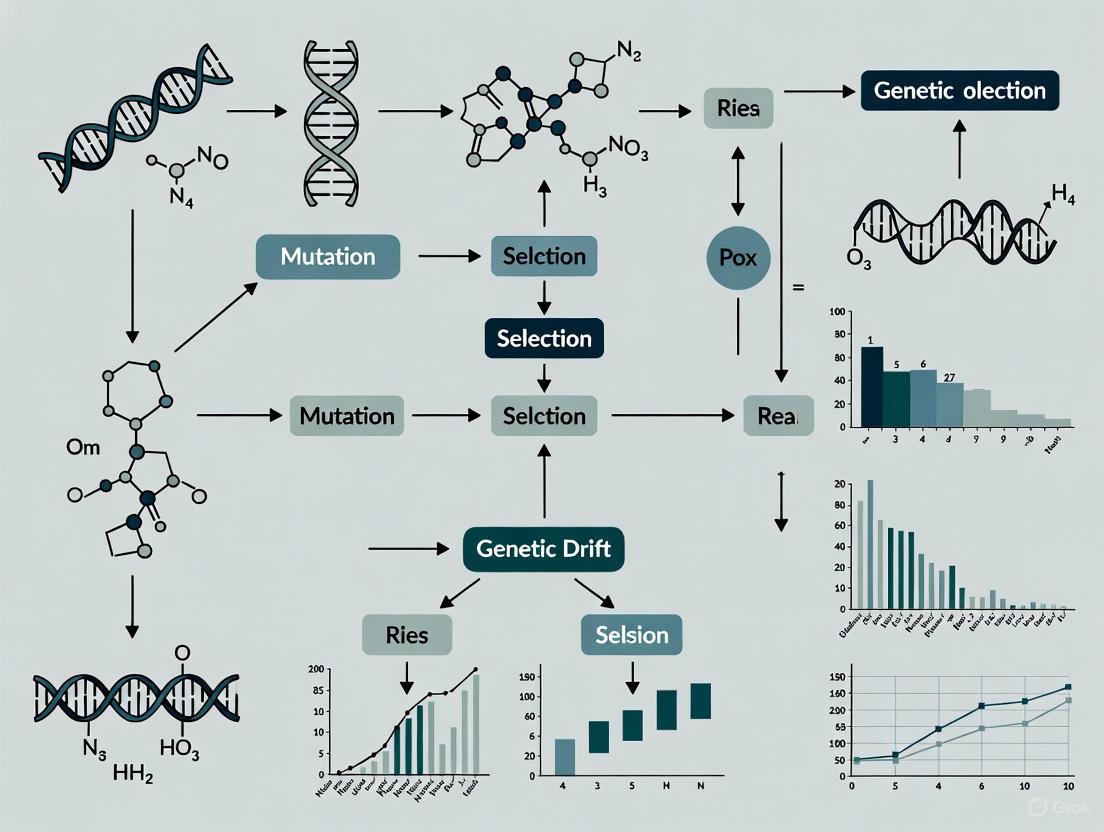
This article explores the emerging science of evolutionary predictability within molecular ecology, synthesizing theoretical foundations with practical applications for researchers and drug development professionals.
Evolutionary Predictability in Molecular Ecology: From Genetic Determinism to Biomedical Applications
Abstract
This article explores the emerging science of evolutionary predictability within molecular ecology, synthesizing theoretical foundations with practical applications for researchers and drug development professionals. It examines the core tension between stochastic evolutionary forces and deterministic patterns observed in molecular evolution, reviewing evidence from convergent evolution, experimental evolution studies, and viral genomics. The content covers predictive methodologies from fitness landscape modeling to genomic selection, addresses key challenges like epistasis and data limitations, and validates approaches through comparative analysis across biological scales. Finally, it outlines transformative implications for predicting pathogen evolution, antibiotic resistance, and guiding therapeutic design, establishing a framework for integrating evolutionary forecasting into biomedical research.
The Determinism Paradox: Reconciling Random Mutation with Predictable Molecular Evolution
Defining Evolutionary Predictability in a Molecular Context
Evolutionary biology has undergone a profound shift, moving from a field traditionally viewed as a historical science to one embracing predictive power. The once-dominant view, popularized by Stephen Jay Gould, held that the random, stochastic nature of evolution made predicting evolutionary trajectories near impossible [1]. However, the development of high-throughput sequencing and sophisticated data analysis technologies has challenged this paradigm, providing an abundance of molecular data that yields novel insights into evolutionary processes [1]. Evolutionary predictions are now increasingly used to develop fundamental knowledge of evolving systems and demonstrate evolutionary control, with critical applications in medicine, agriculture, and conservation biology [1].
This transformation frames a central question in modern molecular ecology: to what extent can we predict evolutionary outcomes? This guide examines evolutionary predictability through the lens of molecular processes, exploring the factors that enhance or diminish our forecasting capabilities across biological scales from single-nucleotide polymorphisms to complex phenotypic traits.
Theoretical Frameworks for Evolutionary Prediction
Foundational Theories and Their Predictive Implications
Two primary theoretical frameworks have shaped our understanding of molecular evolution, each offering distinct perspectives on predictability:
The Modern Synthesis: This framework integrates Darwinian natural selection with Mendelian inheritance, positing that genetic variation arises randomly but natural selection acts deterministically [1]. From this perspective, predictions are grounded in the principle that exposing bacteria to antibiotics will select for individuals harboring resistance mutations, ultimately producing populations dominated by resistant mutants [1]. This deterministic view of selection supports more predictable evolutionary outcomes.
Neutral Theory of Evolution: Proposed by Motoo Kimura, this controversial theory suggests that most genetic variation between and within species results from random accumulation of selectively neutral or nearly neutral mutations [1]. While acknowledging purifying selection (which eliminates deleterious mutations) and positive selection (which favors beneficial mutations), neutral theory assumes most genomes are well-adapted, making advantageous mutations rare [1]. This emphasis on stochastic processes constrains evolutionary predictability.
Modern evolutionary biology recognizes that natural systems often operate with complexity exceeding either theoretical extreme, incorporating elements of both deterministic selection and stochastic processes [1].
Repeatability as a Measure of Predictability
Evolutionary repeatability—the independent evolution of highly similar or identical genotypes or phenotypes—serves as a crucial indicator of evolutionary predictability [1]. Repeatability exists on a quantifiable continuum rather than a binary state, with convergent and parallel evolution representing one extreme end of this spectrum [1].
Table 1: Types of Repeated Evolution
| Type | Definition | Molecular Context |
|---|---|---|
| Parallel Evolution | Evolution of similar traits in independently evolving but related species or populations [1] | Similar genetic changes occurring in closely related lineages facing similar selection pressures |
| Convergent Evolution | Evolution of similar traits in independent species that do not share a recent common ancestor [1] | Different genetic changes producing similar phenotypic outcomes in distantly related lineages |
The extent of evolutionary repeatability provides insights into the deterministic nature of evolutionary processes, with higher repeatability suggesting greater predictability [1]. Understanding the factors influencing repeatability could ultimately enable more accurate evolutionary forecasts [1].
Molecular Evidence for Evolutionary Predictability
Empirical Evidence from Experimental Evolution
Contemporary research provides compelling evidence for evolutionary repeatability at molecular levels. Recent work on temperature adaptation in seed beetles (Callosobruchus maculatus) offers particularly insightful findings [2].
In an evolve-and-resequence experiment, researchers established replicate lines from three geographic populations and reared them at hot (35°C) or cold (23°C) temperatures, then tracked evolutionary trajectories at both phenotypic and genomic levels [2]. The experimental design allowed comparisons within and between genetic backgrounds to quantify repeatability.
Table 2: Phenotypic vs. Genomic Repeatability in Seed Beetle Thermal Adaptation
| Aspect | Hot Temperature (35°C) | Cold Temperature (23°C) |
|---|---|---|
| Evolutionary Rate | Higher (0.87 ± 0.14) [2] | Lower (0.5 ± 0.07) [2] |
| Phenotypic Parallelism | More parallel (39.32° ± 19.16°) [2] | Less parallel (67.42° ± 23.30°) [2] |
| Genomic Repeatability | Lower between backgrounds [2] | Higher between backgrounds [2] |
| Shared Genic Targets | 51 genes (more than expected by chance) [2] | 296 genes (more than expected by chance) [2] |
| Prediction Accuracy | Accurate within but not between backgrounds [2] | More consistent across genetic backgrounds [2] |
This research demonstrated that while phenotypic evolution was faster and more repeatable under hot temperatures, genomic-level adaptation was actually less repeatable across different genetic backgrounds [2]. This paradox suggests that the same strong selection pressures that increase phenotypic repeatability may simultaneously decrease genomic repeatability due to genetic redundancy and epistasis [2].
Microbial Systems as Models for Evolutionary Prediction
Microbial evolution provides another critical window into evolutionary predictability, with significant implications for human health [3]. The global antimicrobial resistance crisis represents a pressing example of microbial adaptation to selective pressures (antibiotic use), making understanding and predicting microbial evolutionary dynamics increasingly urgent [3].
Microbial systems offer particular advantages for studying evolutionary predictability:
- Rapid generation times enable observation of evolutionary processes in real-time
- Large population sizes facilitate statistical analysis of evolutionary trajectories
- Genomic tractability allows comprehensive molecular monitoring
- Controlled laboratory environments reduce confounding variables
Research in microbial evolution has revealed that predictions tend to be more precise on short timescales, where stochastic effects have less opportunity to divert evolutionary trajectories [1].
Methodologies for Studying Evolutionary Predictability
Experimental Evolution Protocols
The seed beetle thermal adaptation study [2] exemplifies a robust approach to quantifying evolutionary predictability:
Figure 1: Experimental evolution workflow for assessing evolutionary repeatability across multiple genetic backgrounds under different selective environments.
Genomic Analysis Techniques
Table 3: Genomic Analysis Methods for Evolutionary Prediction
| Method | Application | Technical Considerations |
|---|---|---|
| Whole-Genome Sequencing (pool-seq) | Tracking allele frequency changes across entire genomes in evolving populations [2] | Requires sufficient sequencing depth; effective population size estimates needed to distinguish selection from drift |
| Selection Coefficient Estimation | Quantifying strength of selection on specific alleles or genomic regions [2] | Must account for effective population size (Nₑ) which differs between selective environments |
| Candidate SNP Identification | Identifying putatively selected polymorphisms [2] | Categorization into synergistically pleiotropic, antagonistically pleiotropic, and private alleles reveals different evolutionary patterns |
| Gene Ontology (GO) Analysis | Identifying biological processes repeatedly targeted by selection [2] | Higher-level repeatability often observed even when individual SNPs show little repeatability |
| Jaccard Indices | Quantifying overlap of selected genes across populations and treatments [2] | Permutation tests determine whether observed overlap exceeds chance expectations |
Research Reagent Solutions for Evolutionary Experiments
Table 4: Essential Research Materials for Evolutionary Predictability Studies
| Reagent/Resource | Function in Evolutionary Experiments |
|---|---|
| Callosobruchus maculatus (Seed Beetle) | Model organism for thermal adaptation studies; well-characterized biology and genome [2] |
| Multiple Genetic Backgrounds | Geographic populations with distinct evolutionary histories to test contingency [2] |
| Controlled Temperature Environments | Standardized selective environments (e.g., 23°C cold, 29°C ancestral, 35°C hot) [2] |
| Whole-Genome Sequencing Platform | Monitoring allele frequency changes at genomic scale over evolutionary time [2] |
| Life-History Trait Assays | Quantifying phenotypic evolution (development time, weight, fecundity, metabolic rate) [2] |
| Bioinformatic Pipelines | Analyzing selection coefficients, effective population size, and parallelism statistics [2] |
Factors Influencing Evolutionary Repeatability and Prediction
Genetic and Environmental Determinants
Multiple factors interact to determine the degree of evolutionary repeatability observed in molecular contexts:
Strength of Selection: Theory suggests that environments imposing stronger selection are more likely to produce repeatable evolutionary outcomes [2]. The seed beetle experiment confirmed that hotter temperatures, which theoretically impose stronger selection due to thermodynamic constraints, produced faster and more parallel phenotypic evolution [2].
Genetic Background and Historical Contingency: Previous evolutionary history significantly influences subsequent adaptive trajectories. The seed beetle study found greater parallelism within genetic backgrounds than between them for both hot and cold temperatures, highlighting the role of historical contingency [2].
Genetic Redundity and Epistasis: Hot temperature adaptation in seed beetles showed lower genomic repeatability between backgrounds, potentially explained by increased importance of epistatic interactions [2]. This genetic redundancy means different genetic solutions can arrive at similar phenotypic outcomes.
Polygenic Architecture of Traits: When adaptation involves many loci of small effect, repeatability is more likely at the pathway level than at the level of individual nucleotides [2]. The seed beetle thermal adaptation was highly polygenic, involving thousands of candidate SNPs [2].
Figure 2: Key factors affecting evolutionary repeatability at phenotypic and genomic levels, showing how some factors differentially impact these two levels.
The Repeatability-Predictability Relationship
The relationship between repeatability and predictability forms the foundation for evolutionary forecasting:
Phenotypic vs. Genomic Predictability: The seed beetle experiment revealed a critical dissociation—while phenotypic evolution was more repeatable (and thus potentially more predictable) at hot temperatures, genomic evolution was less repeatable across genetic backgrounds [2]. This suggests that predictions of adaptation in key phenotypes from genomic data may become increasingly difficult as climates warm [2].
Timescale Dependence: Evolutionary predictions have been shown to be more precise on short timescales, where contingent factors have less opportunity to divert evolutionary trajectories [1]. Over longer timescales, stochastic processes accumulate, reducing predictability.
Level of Biological Organization: Predictability varies across biological scales. While individual nucleotide changes may be poorly predictable, pathway-level evolution shows greater repeatability [2]. Similarly, phenotypic outcomes often show greater predictability than their underlying molecular bases.
Applications and Future Directions
Practical Applications of Evolutionary Prediction
Accurate evolutionary forecasting has transformative potential across multiple fields:
Antimicrobial Resistance: Medicine would be significantly advanced by foreseeing which pathogens are most likely to evolve drug resistance [1]. Understanding the molecular pathways repeatedly involved in resistance evolution could inform drug development and treatment strategies.
Influenza Vaccine Development: Predictive models based on evolutionary theory aid vaccine development by predicting which influenza variant will dominate upcoming flu seasons [1].
Conservation Biology: Conservation efforts can be assisted by identifying which endangered species face the greatest extinction risk from climate change [1]. Genomic data may help predict adaptive potential in threatened populations.
Agricultural Management: Predicting evolutionary trajectories in crop pests and pathogens can inform sustainable agricultural practices and pesticide rotation strategies [1].
Emerging Research Frontiers
Several emerging research areas promise to enhance our predictive capabilities:
Integration of Microbial Evolutionary Dynamics: Research linking microbial evolution to community dynamics and ecosystem functioning represents a growing frontier [3]. This includes understanding how evolutionary dynamics in microbial communities impact human health, biogeochemical cycles, and antibiotic resistance spread [3].
Cross-Scale Predictive Models: Developing models that connect genomic changes to phenotypic outcomes across biological scales remains a fundamental challenge. The observed dissociation between phenotypic and genomic repeatability in seed beetles highlights the complexity of this endeavor [2].
Applied Evolutionary Prediction: Research is increasingly focusing on practical applications of evolutionary forecasting, including developing resilient biotechnological solutions and managing evolutionary processes in clinical and agricultural contexts [3].
As the field advances, integrating knowledge across biological scales—from molecular to ecological—will be essential for enhancing our ability to predict evolutionary outcomes. While significant challenges remain, particularly in reconciling genomic and phenotypic predictability, the growing evidence for repeatable evolutionary patterns offers promise for the future of evolutionary forecasting in molecular ecology and beyond.
The question of whether evolution is a predictable process or a contingent one, heavily dependent on chance historical events, represents a foundational debate in evolutionary biology. The late paleontologist Stephen Jay Gould famously argued that the random, stochastic nature of evolution makes evolutionary processes fundamentally unpredictable, proposing that if one could "replay the tape of life," the outcomes would be vastly different each time [1] [4]. This perspective of historical contingency suggests that evolutionary outcomes are idiosyncratic products of a particular and unpredictable course of historical events, with long-term consequences that make evolution increasingly path-dependent over time [4]. Challenging this view are numerous documented cases of convergent and parallel evolution, where similar phenotypes or genotypes evolve independently in response to similar selection pressures, suggesting that natural selection can override historical contingencies to produce predictable outcomes [1] [5]. This debate has profound implications for molecular ecology and drug discovery, where understanding the predictability of evolutionary processes can inform strategies for anticipating pathogen resistance, identifying therapeutic targets, and developing novel treatments [6] [7].
Theoretical Frameworks: From Historical Contingency to Evolutionary Repeatability
Gould's Contingency Thesis
Stephen Jay Gould's argument for historical contingency rests on the premise that evolution is dominated by stochastic events such as mass extinctions, genetic drift, and unique mutations, creating an inherently unpredictable process. From this perspective, the diversity of life reflects a series of historical accidents rather than deterministic adaptation. Gould proposed that the extraordinary number of potential evolutionary pathways, combined with the sensitivity of long-term outcomes to initial conditions, makes large-scale evolutionary patterns essentially unrepeatable [1] [4]. This view suggests that as lineages diverge over evolutionary time, the likelihood of them evolving similar adaptations decreases substantially due to accumulating genetic and developmental differences that constrain future evolutionary possibilities [5].
Evidence for Convergent and Parallel Evolution
In contrast to Gould's contingency thesis, numerous studies have documented remarkable cases of convergent evolution (similar traits evolving independently in distantly related species) and parallel evolution (similar traits evolving independently in closely related species) across the tree of life [1]. These repeated evolutionary patterns suggest that natural selection can produce predictable outcomes when organisms face similar environmental challenges. Classic examples include the independent evolution of wings in birds and bats, camera-type eyes in vertebrates and cephalopods, and similar morphological adaptations in geographically separated species occupying comparable ecological niches [5]. The repeated evolution of similar adaptations implies that there may be a limited number of optimal solutions to particular functional problems, "stacking the deck" in favor of certain evolutionary outcomes regardless of historical starting points [5].
Table 1: Types of Repeated Evolution and Their Characteristics
| Type | Definition | Genetic Basis | Phylogenetic Pattern |
|---|---|---|---|
| Parallel Evolution | Independent evolution of similar traits in related species | Same genetic mechanisms | More common among closely related taxa |
| Convergent Evolution | Independent evolution of similar traits in distantly related species | Different genetic mechanisms | Occurs across diverse phylogenetic distances |
| Functionally Redundant Evolution | Evolution of different traits serving the same function | Variable genetic mechanisms | Less contingent on evolutionary history |
The Modern Synthesis and Neutral Theory
The debate between contingency and predictability also reflects broader theoretical tensions in evolutionary biology. The Modern Synthesis emphasizes natural selection as the primary driver of adaptive evolution, with genetic variation arising randomly and mutations being selected based on their fitness effects [1]. This framework naturally accommodates repeated evolution when similar selection pressures operate on independent lineages. In contrast, the Neutral Theory proposed by Motoo Kimura emphasizes that most evolutionary change at the molecular level results from the random fixation of selectively neutral mutations through genetic drift [1]. This perspective highlights the substantial role of chance in evolution, particularly at the molecular level, which would support Gould's contingency argument.
Quantitative Evidence: Meta-Analyses of Evolutionary Repeatability
Recent meta-analyses of published examples of repeated evolution provide quantitative insights into the predictability of evolutionary processes and the factors that influence evolutionary repeatability.
The Impact of Phylogenetic Distance
A comprehensive survey of reported cases of repeated evolution in animals revealed that the likelihood of repeated evolution is strongly influenced by the phylogenetic distance between taxa [5]. Overall, reports of repeated evolution decreased progressively as the phylogenetic separation between taxa increased. However, this pattern varied substantially depending on the type of repeated evolution and the phenotypic characteristics under investigation. The survey found that 53% of reported cases involved morphological adaptations, while behavior and physiology accounted for 22% and 18% respectively [5].
Table 2: Factors Influencing Evolutionary Repeatability Based on Meta-Analysis
| Factor | Effect on Repeatability | Evidence Strength |
|---|---|---|
| Phylogenetic Distance | Strong negative correlation with morphological repeatability | High (based on quantitative analysis) |
| Type of Trait | Morphology more contingent than behavior or physiology | Moderate (differential patterns observed) |
| Genetic Mechanism | Parallel evolution (same genes) more contingent than convergent evolution (different genes) | Moderate (trend observed) |
| Functional Redundancy | Less contingent than other forms of adaptation | Moderate (multiple examples) |
| Selection Pressure | Habitat similarity most common factor (48% of cases) | High (based on frequency analysis) |
Differential Repeatability Across Biological Domains
The meta-analysis revealed important differences in how contingent various forms of adaptation appear to be. The repeated evolution of similar morphological characteristics was heavily skewed toward closely related taxa, supporting Gould's view that historical constraints play a significant role in morphological evolution [5]. In contrast, the repeated evolution of behavioral and physiological adaptations appeared less contingent on evolutionary history, occurring across broader phylogenetic distances. This suggests that different aspects of phenotype may be more or less "evolvable," with behavior and physiology potentially having more potential evolutionary pathways than morphology [5]. Additionally, functionally redundant characteristics—alternative phenotypes that achieve the same functional outcome—appeared less contingent, being frequently reported among both closely and distantly related taxa [5].
Experimental Evolution: Replaying the Tape of Life
Experimental Evolution Methodologies
Experimental evolution has emerged as a powerful approach for directly testing evolutionary predictability by "replaying the tape of life" under controlled laboratory conditions [7]. This methodology typically involves establishing replicate populations of model organisms (e.g., bacteria, yeast, or other microorganisms) and exposing them to defined selection pressures over multiple generations. Key methodological approaches include:
- Serial batch transfer: Populations are periodically transferred to fresh media, allowing for continuous evolution under defined conditions [7].
- Chemostat cultures: Continuous culture systems maintain constant environmental conditions while allowing for evolutionary dynamics [7].
- Fluctuating environments: Variable conditions can be introduced to mimic natural environmental variation [7].
- In vivo models: Experimental evolution within host organisms (e.g., mouse models) provides insights into host-pathogen coevolution [7].
Fitness and evolutionary changes are tracked using various metrics, including:
- Growth rates and minimal inhibitory concentrations (MICs) for antimicrobial resistance [7]
- Competitive fitness assays between evolved and ancestral strains [7]
- Genetic analyses including whole-genome sequencing to identify mutations [7]
- Molecular barcoding for high-resolution tracking of subpopulation dynamics [7]
Experimental Evolution Workflow: This diagram illustrates the general approach for testing evolutionary predictability through replicated experimental evolution under defined selection pressures.
Key Findings from Experimental Evolution Studies
Experimental evolution studies have provided nuanced insights into the predictability of evolution:
- Pathogenic fungi evolved resistance to antifungal drugs through both predictable and contingent pathways, with some mutations occurring repeatedly across replicates while others were lineage-specific [7].
- BCL-2 family proteins evolved novel protein-protein interaction specificities through largely unpredictable trajectories, with outcomes strongly dependent on historical starting points [4].
- Collateral sensitivity patterns, where resistance to one drug increases sensitivity to another, have shown some predictability that could inform combination therapy approaches [7].
- Fitness trade-offs associated with resistance mutations often follow predictable patterns, but the specific genetic solutions vary considerably [7].
The experimental evolution of BCL-2 family proteins provides particularly compelling evidence for historical contingency. When researchers used ancestral protein reconstruction to evolve BCL-2 proteins from different historical starting points toward the same functional outcome, they found that evolutionary trajectories yielded "virtually no common mutations," even under strong and identical selection pressures [4]. This suggests that contingency generated over long historical timescales can steadily erase necessity, making evolutionary outcomes increasingly unpredictable as phylogenetic distance increases.
Molecular Evidence: From Genotype to Phenotype
Genetic Constraints on Evolutionary Repeatability
At the molecular level, the debate between contingency and predictability centers on the availability and accessibility of genetic variation that can produce adaptive phenotypes. Studies of parallel and convergent evolution at the genetic level have revealed several key patterns:
- Close relatives are more likely to evolve similar adaptations through identical genetic mechanisms (parallel evolution) due to shared genetic and developmental backgrounds [5].
- Distant relatives more often evolve similar adaptations through different genetic mechanisms (convergent evolution) when different mutations affect the same physiological pathways or protein functions [5].
- Historical mutations can alter the set of accessible future mutations, creating path dependence in protein evolution [4].
- Pleiotropic constraints, where mutations affect multiple functions, can limit evolutionary pathways, making some adaptations less accessible in certain genetic backgrounds [4].
Protein Evolution and Historical Contingency
Research on the evolution of BCL-2 family proteins demonstrated that historical contingency can profoundly shape molecular evolutionary trajectories. When ancestral BCL-2 proteins were evolved to acquire new protein-protein interaction specificities, researchers found that "contingency generated over long historical timescales steadily erased necessity" [4]. Specifically:
- Trajectories launched from the same ancestral protein produced outcomes with some shared mutations, indicating a degree of predictability.
- Trajectories launched from different ancestral proteins showed virtually no common mutations, despite selection for the same functional outcome.
- The effect of historical substitutions was to change the sets of mutations that could productively alter function at each historical point, making evolution increasingly path-dependent over time.
These findings suggest that the specific sequences of BCL-2 proteins—and likely other proteins as well—are "idiosyncratic products of a particular and unpredictable course of historical events" [4].
Applications in Drug Discovery and Molecular Ecology
Evolutionary Principles in Drug Target Identification
The predictability of evolutionary processes has direct applications in drug discovery, particularly in identifying promising drug targets. Evolutionary information has been used to develop the Evolution-Strengthened Knowledge Graph (ESKG), which integrates evolutionary data such as Ohnologs (genes generated in whole-genome duplication events) and evolutionary stages of genes with various biological relationships to predict causative disease genes and drug targets [6]. This approach recognizes that "existing successful targets share some critical evolutionary hallmarks," and that "evolutionary information can facilitate the target prediction" [6]. The ESKG contains more than 4 million triplets and 16 kinds of relations, enabling machine learning models like GraphEvo to predict both the targetability and druggability of genes [6].
Table 3: Evolutionary Concepts in Drug Discovery Applications
| Evolutionary Concept | Drug Discovery Application | Example/Evidence |
|---|---|---|
| Evolutionary Hallmarks | Predicting successful drug targets | Ohnologs and specific evolutionary stages are enriched among successful targets [6] |
| Evolutionary Conservation | Identifying functionally important genes | Ancient, conserved genes often represent core biological processes |
| Convergent Evolution | Anticipating resistance mechanisms | Similar resistance mutations emerge independently [7] |
| Experimental Evolution | Screening for resistance development | Preemptive identification of resistance mutations [7] |
| Evolution-Strengthened Knowledge Graphs | Predicting target-disease associations | Integration of evolutionary data with biological networks [6] |
Anticipating and Managing Drug Resistance
Understanding evolutionary predictability is crucial for anticipating and managing drug resistance in pathogens. Experimental evolution studies with pathogenic fungi have revealed both predictable and contingent aspects of resistance evolution:
- Predictable patterns include frequent mutations in specific target genes (e.g., ERG genes for azole resistance in fungi) and common fitness trade-offs associated with resistance [7].
- Contingent patterns emerge in the specific mutation spectra and evolutionary pathways taken by different lineages, influenced by initial genetic background and historical accidents [7].
- Collateral sensitivity patterns, where resistance to one drug increases sensitivity to another, show some predictability that can be exploited in designing combination therapies [7].
- Agricultural practices can drive predictable cross-resistance to clinical antifungals, highlighting the importance of integrated management approaches [7].
Knowledge Graphs and Predictive Models in Drug Discovery
The integration of evolutionary principles into computational approaches represents a promising frontier in drug discovery. The Evolution-Strengthened Knowledge Graph (ESKG) exemplifies this approach, combining common biological data (e.g., gene-disease associations, drug-target interactions) with evolutionary information to create a comprehensive resource for predicting promising drug targets [6]. Machine learning models like GraphEvo, built on ESKG, can effectively predict both the targetability and druggability of genes, potentially accelerating early-stage drug discovery [6]. Similarly, approaches like MSPEDTI combine protein evolutionary information (via Position-Specific Scoring Matrices) with drug structural information to predict drug-target interactions, achieving prediction accuracies of 86-94% across different target classes [8].
Evolution-Informed Drug Discovery: This diagram shows how evolutionary observations, encompassing both contingent factors and predictable patterns, are integrated into computational frameworks for drug discovery applications.
Research Reagent Solutions Toolkit
Table 4: Essential Research Reagents and Resources for Evolutionary Predictability Studies
| Reagent/Resource | Application | Function | Example Sources |
|---|---|---|---|
| Position-Specific Scoring Matrix (PSSM) | Protein evolutionary analysis | Quantifies evolutionary conservation and variation in protein sequences | PSI-BLAST against SwissProt database [8] |
| Molecular Fingerprints | Drug structure characterization | Encodes molecular structures as binary vectors for computational analysis | PubChem database [8] |
| Fluorescent Protein Markers | Competitive fitness assays | Enables tracking of subpopulation dynamics in experimental evolution | GFP, RFP variants [7] |
| Antifungal/Antibiotic Agents | Experimental evolution studies | Applies selective pressure for resistance evolution | Clinical antifungals/antibiotics [7] |
| Ancestral Protein Reconstruction | Historical contingency studies | Recreates ancient proteins to replay evolution from different starting points | Phylogenetic analysis and gene synthesis [4] |
| Drug-Target Interaction Databases | Predictive model training | Provides gold-standard data for machine learning approaches | BRENDA, KEGG, DrugBank [8] |
| Knowledge Graphs | Data integration and prediction | Integrates diverse biological and evolutionary data for relationship mining | ESKG with >4 million triplets [6] |
The debate between Gould's contingency and convergent evolution evidence does not yield a simple verdict. Instead, empirical evidence reveals a nuanced reality where evolutionary outcomes display both predictable and contingent characteristics. The degree of evolutionary repeatability appears to depend on multiple factors, including:
- Phylogenetic distance: Closely related taxa are more likely to evolve similar adaptations through parallel genetic mechanisms [5].
- Type of trait: Behavior and physiology show greater evolutionary repeatability than morphology across distant taxa [5].
- Functional constraints: When there are limited solutions to functional challenges, convergent evolution is more likely [5].
- Historical constraints: Accumulated mutations over time create path dependence, making evolution increasingly contingent [4].
For molecular ecology and drug discovery, these insights suggest a dual approach: leveraging predictable evolutionary patterns when they exist (e.g., common resistance mutations, evolutionarily conserved target features) while acknowledging and accounting for contingent factors that limit predictability. The integration of evolutionary principles into computational frameworks like knowledge graphs and machine learning models represents a promising approach to navigating this complexity, potentially enhancing our ability to predict evolutionary outcomes and apply these predictions to practical challenges in medicine and biotechnology.
Future research directions should include more comprehensive experimental evolution studies across diverse biological systems, enhanced integration of evolutionary and ecological perspectives, and the development of more sophisticated computational models that can account for both predictable and contingent aspects of evolution. As these efforts advance, they will continue to refine our understanding of when and how we can predict the evolutionary processes that shape the biological world.
The question of whether evolutionary change is predictable sits at the heart of molecular ecology research, creating a fundamental tension between stochastic genetic forces and deterministic phenotypic outcomes. While biological entities operate within physical and chemical laws that suggest determinism, evolutionary processes introduce elements of randomness through mutation, genetic drift, and environmental stochasticity [9]. This framework creates a central question for researchers: to what extent do the deterministic elements of natural selection make evolutionary change predictable, particularly when considering the emergent properties of biological systems [9]?
The resolution to this apparent contradiction lies in understanding that evolutionary predictability exists on a spectrum, influenced by factors including population size, strength of selection, genetic architecture, and environmental stability. Advances in genomic technologies, quantitative models, and long-term empirical studies are now providing unprecedented insights into where specific biological systems fall on this spectrum. This analytical framework is particularly relevant for drug development professionals seeking to anticipate pathogen evolution and resistance mechanisms, where accurate predictions can inform therapeutic design and intervention strategies.
Theoretical Foundations: Random Processes and Deterministic Forces
The Stochastic Elements of Evolution
Genetic randomness originates from several fundamental biological processes that introduce inherent unpredictability into evolutionary systems:
- Mutation: The random appearance of novel genetic variants provides the raw material for evolution, with mutation rates varying across genomes and influenced by environmental factors [10]. These random biochemical events create genetic diversity independently of an organism's functional needs.
- Genetic Drift: The random sampling of alleles across generations becomes particularly influential in small populations, where it can lead to the fixation of deleterious alleles or loss of beneficial ones through a process known as drift load [11]. This effect is quantified through the concept of effective population size (Nₑ), which is often much smaller than census population size [11].
- Recombination: The random reassortment of genetic material during meiosis creates novel allele combinations, with the rate of recombination influenced by chromosomal position and specific hotspot motifs [11].
- Demographic Stochasticity: Random fluctuations in population size due to variations in individual birth, death, and migration rates can significantly impact evolutionary trajectories, especially in small populations targeted for conservation [11].
The Deterministic Forces in Evolution
Counterbalancing these stochastic elements, several deterministic forces impart predictable directionality to evolutionary change:
- Natural Selection: This goal-directed process systematically favors phenotypes with greater fitness in a given environment, potentially leading to convergent evolutionary solutions [9]. The strength of selection determines the degree to which it can overcome random genetic drift.
- Biophysical Constraints: Physical and chemical laws impose absolute limits on possible biological forms and functions [10]. For proteins, folding stability represents a key biophysical constraint that shapes evolutionary outcomes [12].
- Demo-Genetic Feedback: The reciprocal interaction between demographic processes and genetic composition creates self-reinforcing cycles that can drive populations toward predictable states [11]. This feedback can trap small populations in an "extinction vortex" where declining numbers exacerbate genetic erosion.
- Antagonistic Pleiotropy: When mutations have opposing fitness effects in different environments or at different times, this can lead to adaptive tracking where populations continuously adapt to changing conditions, creating patterns that mimic neutrality at the molecular level [13].
Current Research Approaches and Quantitative Frameworks
Predictive Modeling in Population Genetics
Contemporary research employs sophisticated modeling approaches to quantify the balance between randomness and determinism:
Table 1: Quantitative Frameworks for Predicting Evolutionary Outcomes
| Framework | Key Inputs | Predictive Outputs | Applicable Context |
|---|---|---|---|
| Phenotype Design Space (PDS) [10] | Kinetic parameters of molecular processes, environmental variables | Full repertoire of possible biochemical phenotypes, transition probabilities between phenotypes | Microbial systems, molecular pathway analysis |
| Birth-Death Population Models with SCS [12] | Protein folding stability constraints, population parameters | Forecasted protein sequences and stability changes under selection | Viral protein evolution, antimicrobial resistance |
| Demo-Genetic Models [11] | Census population size, genetic load, migration rates | Extinction risk, response to genetic rescue interventions | Conservation biology, threatened species management |
| Polygenic Score Prediction Intervals [14] | GWAS summary statistics, individual genotypes | Calibrated prediction intervals for complex traits, identification of high-risk individuals | Human complex diseases, plant and animal breeding |
Methodological Protocols for Forecasting Evolution
Protocol 1: Forecasting Protein Evolution Using Structurally Constrained Models
This protocol integrates birth-death population genetics with structural constraints to forecast protein evolutionary trajectories [12]:
- Initialize Population: Begin with a founding population of sequences, typically derived from natural isolates or engineered variants.
- Parameterize Fitness Landscape: Define fitness based on protein folding stability (ΔG) using structurally constrained substitution models that incorporate biophysical principles.
- Simulate Birth-Death Process: At each generation, compute birth and death rates for each variant based on its fitness, with high-fitness variants producing more offspring.
- Introduce Mutations: Incorporate novel mutations according to empirically determined mutation rates, with structural constraints influencing acceptance probabilities.
- Track Evolutionary Trajectories: Monitor sequence changes, population diversity, and fitness changes over evolutionary time.
- Validate Predictions: Compare forecasted sequences with subsequently observed natural variants to assess predictive accuracy.
Protocol 2: Constructing Calibrated Prediction Intervals for Polygenic Scores
The PredInterval method provides robust uncertainty quantification for polygenic risk scores [14]:
- Generate PGS Point Estimates: Calculate polygenic scores using any preferred method (e.g., LDpred, PRS-CS, DBSLMM).
- Compute Phenotypic Residuals: Calculate the difference between observed and predicted phenotypic values in training data.
- Estimate Residual Quantiles: Through cross-validation, determine the distribution of phenotypic residuals across genetic backgrounds.
- Construct Prediction Intervals: For each new individual, calculate the (1-α)% prediction interval as PGS ± Q(1-α/2), where Q is the appropriate quantile of the residual distribution.
- Assess Calibration: Verify that the empirical coverage rate matches the nominal coverage rate across diverse genetic architectures.
Quantitative Evidence: Empirical Data on Predictability
Performance Benchmarks for Predictive Methods
Table 2: Empirical Performance of Evolutionary Prediction Methods
| Method/System | Trait/Outcome | Performance Metric | Result | Implications for Determinism |
|---|---|---|---|---|
| PredInterval [14] | 17 complex traits | Prediction coverage at 95% target | 96.0% (quantitative), 96.7% (binary) | High predictability for polygenic traits when uncertainty is properly quantified |
| BLUP Analytical Form [14] | Complex traits | Prediction coverage at 95% target | 91.0% (quantitative), 83.4% (binary) | Underestimation of uncertainty reduces apparent predictability |
| ProteinEvolver2 [12] | Viral protein stability | Prediction error for ΔG | Acceptable errors for stability, larger for sequences | Structural constraints enable stability prediction despite sequence variability |
| Long-term studies [15] | Speciation events | Documentation of complete speciation process | Observed in Darwin's finches over decades | Deterministic selection can overcome random initial conditions |
Temporal Scales of Predictability
Long-term evolutionary studies provide unique insights into how predictability changes across timescales [15]:
Evidence from long-term evolution experiments reveals that while short-term adaptation is often highly predictable from a knowledge of selection pressures and genetic variation, long-term evolutionary trajectories become increasingly influenced by historical contingencies such as rare mutations and chance environmental events [15]. The LTEE with Escherichia coli has demonstrated that while fitness trajectories are remarkably consistent across replicates in the short term, genomic solutions show considerable divergence over thousands of generations [15].
Table 3: Essential Research Resources for Evolutionary Predictability Studies
| Resource Category | Specific Tools/Methods | Primary Application | Key Considerations |
|---|---|---|---|
| Simulation Software | SLiM [11], ProteinEvolver2 [12], Design Space Toolbox [10] | Forward simulation of evolutionary processes | Scalability to large populations, integration of realistic genetic architectures |
| Genomic Data Types | Genome-wide association studies, whole-genome sequencing, epigenetic markers [16] | Mapping genotype-phenotype relationships | Resolution for detecting rare variants, functional validation requirements |
| Experimental Systems | Long-term evolution experiments [15], microbial evolution, synthetic communities [3] | Real-time observation of evolutionary dynamics | Generation time, scalability, relevance to natural systems |
| Analytical Frameworks | PredInterval [14], birth-death models [12], demo-genetic feedback models [11] | Quantifying uncertainty and forecasting changes | Computational demands, parameter estimation, model validation |
Conceptual Framework: Mapping Genotype to Phenotype
The challenge of predicting evolutionary outcomes fundamentally depends on the mapping between genotype and phenotype, which involves multiple mechanistic steps [10]:
The Phenotype Design Space framework addresses the second mapping in this cascade by providing a mathematically rigorous definition of phenotype based on biochemical kinetics, enumerating the full phenotypic repertoire available to a biological system, and functionally characterizing each phenotype independent of its context-dependent selection [10]. This approach enables researchers to determine the distribution of phenotype diversity generated by mutation and available for selection—a longstanding challenge in evolutionary theory.
Applications and Implications for Molecular Ecology and Drug Development
Practical Applications in Disease Research
The tension between genetic randomness and phenotypic determinism has profound implications for drug development:
- Antimicrobial Resistance: Forecasting evolutionary trajectories of pathogens can inform the design of antibiotic combination therapies that minimize resistance emergence [3]. Models incorporating protein stability constraints show promise in predicting which resistance mutations are likely to arise [12].
- Complex Disease Risk: Calibrated prediction intervals for polygenic scores enable more accurate identification of high-risk individuals for preventive interventions, with PredInterval improving identification rates by 8.7-830.4% compared to existing approaches [14].
- Vaccine Design: Forecasting protein evolution in rapidly evolving viruses like influenza and SARS-CoV-2 can guide selection of vaccine strains that anticipate future circulating variants [12].
Conservation Implications
Demo-genetic models inform conservation strategies by quantifying how genetic rescue interventions can counteract the negative effects of genetic drift and inbreeding in small populations [11]. These models reveal that the success of genetic rescue depends not only on genetic composition but also on emergent outcomes of interacting demographic processes and stochastic events.
The apparent tension between genetic randomness and phenotypic determinism reflects complementary rather than contradictory evolutionary forces. Random processes generate the variation upon which deterministic selection acts, with the balance between these forces determining the predictability of evolutionary outcomes. Current research demonstrates that evolutionary trajectories are increasingly predictable when we account for biophysical constraints, quantify uncertainty appropriately, and integrate across biological hierarchies from molecules to populations.
For molecular ecology research and drug development, this emerging predictive capacity offers the potential to anticipate evolutionary responses to environmental change, design more durable therapeutic interventions, and develop effective conservation strategies. The key frontier lies in developing integrated models that simultaneously capture stochastic processes while respecting the deterministic constraints that channel evolutionary outcomes into predictable pathways.
A longstanding goal of evolutionary biology is to understand the relationship between genotype, phenotype, and fitness, and its consequences for adaptation and speciation [17]. The theory of fitness landscapes provides a powerful conceptual and mathematical framework for this endeavor by modeling how genotypes or phenotypes map to reproductive success [17]. In molecular ecology research, this framework is increasingly critical for transforming evolution from a historical science into a predictive one [1]. While Stephen Jay Gould famously argued that the random, stochastic nature of evolution made evolutionary processes inherently unpredictable, recent advances in high-throughput sequencing and data analysis have challenged this view, revealing compelling evidence of evolutionary repeatability across diverse systems [1]. The core principles of natural selection, genetic constraints, and the topography of fitness landscapes collectively determine the degree to which evolutionary trajectories can be forecast, with significant implications for addressing pressing challenges in drug development, antimicrobial resistance, and pathogen evolution [18] [1].
Theoretical Foundations
Natural Selection and Neutral Evolution
Evolutionary outcomes emerge from the interplay of deterministic and stochastic forces. Natural selection acts as a primary deterministic force, favouring beneficial mutations that enhance survival and reproduction [1]. In the context of predictability, a selectionist viewpoint suggests that similar environmental pressures should drive populations toward similar adaptive solutions, particularly when starting from similar genetic backgrounds [1].
Conversely, the neutral theory of evolution, proposed by Motoo Kimura, emphasizes stochasticity. It posits that most genetic variation within and between species arises from the random accumulation of selectively neutral mutations through genetic drift rather than natural selection [1]. According to this view, the rate of molecular evolution is determined primarily by mutation rate and population size, with Darwinian selection playing a minimal role [1].
In natural systems, the reality is more complex than either extreme suggests. Environmental influences and historical contingencies create a complex evolutionary landscape where both selection and drift operate simultaneously [1]. The predictability of evolution is therefore not absolute but exists on a quantifiable scale, influenced by the relative strengths of these forces [9].
Genetic Constraints and Epistasis
Genetic constraints represent limitations on evolutionary paths imposed by genetic architecture. A central concept is epistasis—the phenomenon where the fitness effect of a mutation depends on the genetic background in which it occurs [17]. From a fitness landscape perspective, epistasis introduces nonlinearity into the genotype-phenotype-fitness mapping function [17].
Epistasis manifests in several forms that influence evolutionary predictability:
- Reciprocal sign epistasis: Occurs when the sign of a mutation's fitness effect (beneficial or deleterious) reverses depending on genetic background. This interaction can create fitness peaks and valleys, potentially trapping populations on local optima rather than global fitness peaks [17].
- Diminishing-returns epistasis: A global pattern where the beneficial effect of a mutation tends to be smaller in fitter genetic backgrounds. This pattern has been observed across diverse organisms and reduces the number of accessible evolutionary paths [18].
The strength of epistatic interactions varies substantially across biological systems, influenced by factors including the fitness effects of individual mutations, whether mutations occur in the same or different genes, and environmental conditions [18].
Fitness Landscape Theory
Sewall Wright introduced the fitness landscape concept as a visual metaphor for evolution [18]. In this framework, genotypes are represented in a multi-dimensional space, with fitness as the vertical dimension. Evolution can be envisioned as a population moving across this landscape toward fitness peaks.
The topography of fitness landscapes—their ruggedness or smoothness—profoundly affects evolutionary dynamics and predictability:
- Smooth landscapes with single peaks facilitate predictable evolutionary trajectories toward the global optimum.
- Rugged landscapes with multiple peaks, separated by valleys of lower fitness, reduce predictability as populations may become trapped on different local optima [18].
Analyses of empirical fitness landscapes reveal they are generally rugged, though the degree of ruggedness varies substantially [18]. This variation depends on factors including the biological system, environmental conditions, and the mutations under consideration [18].
Table 1: Key Concepts in Fitness Landscape Theory
| Concept | Description | Impact on Predictability |
|---|---|---|
| Ruggedness | Presence of multiple fitness peaks and valleys due to epistasis | Decreases predictability; populations may become trapped on different local optima |
| Accessibility | Ease with which evolutionary paths can be traversed | Determines which mutational pathways are likely to be used |
| Neutrality | Presence of mutations with identical fitness effects | Increases exploration of genotype space through neutral drift |
| Epistasis | Dependence of mutation effects on genetic background | Creates nonlinearities that constrain or redirect evolutionary paths |
Experimental Approaches and Methodologies
Characterizing Fitness Landscapes
Empirical characterization of fitness landscapes involves systematically measuring fitness effects of mutations and their combinations. Recent methodological advances have dramatically increased the scale of these efforts:
Deep Mutational Scanning: This approach involves creating comprehensive mutant libraries and measuring fitness effects through bulk competitions using deep sequencing [18]. This enables analyses of landscapes involving thousands of genotypes, providing high-resolution maps of fitness effects [18].
Experimental Evolution: This method involves tracking genetic and phenotypic changes in populations over time in controlled laboratory environments. Combined with whole-genome sequencing, it allows researchers to observe evolutionary trajectories directly and test predictions based on fitness landscape models [1].
Critical Experimental Design Considerations
Proper experimental design is paramount in molecular ecology research to ensure the reliability and interpretability of results. Several key considerations include:
Randomization and Balancing: Properly designed (randomized and/or balanced) experiments are standard in ecological research but are often overlooked in laboratory processing of samples [19]. Without randomization during laboratory procedures (e.g., DNA extraction, PCR), unexpected laboratory events (e.g., equipment failure, reagent variability) can systematically bias results and confound interpretations [19]. Molecular ecology studies should report detailed designs of sample processing to ensure safeguards against such biases [19].
Batch Effects: Similar to challenges in early genome-wide association studies, molecular ecology experiments are vulnerable to batch effects where technical artifacts rather than biological factors create spurious patterns [19]. These can be mitigated through randomized sample processing order and balanced experimental designs across batches [19].
Controls: Appropriate controls are essential, including negative controls (e.g., dH₂O instead of DNA template in PCR) and positive controls, which should be randomly distributed within processing batches [19].
Table 2: Summary of Key Experimental Methodologies in Fitness Landscape Research
| Methodology | Key Features | Applications | Scale |
|---|---|---|---|
| Deep Mutational Scanning | Creates mutant libraries; uses high-throughput sequencing to measure fitness | Mapping fitness effects of mutations across genes; identifying epistatic interactions | Thousands of genotypes |
| Experimental Evolution | Tracks evolving populations over time in controlled environments; uses whole-genome sequencing | Observing real-time evolutionary trajectories; testing predictability | Dozens to hundreds of generations |
| Barcoded Lineage Tracking | Uses unique genetic barcodes to follow lineages | Measuring lineage fitness in competition experiments | Millions of lineages |
Research Reagent Solutions
Table 3: Essential Research Reagents and Materials for Fitness Landscape Studies
| Reagent/Material | Function | Example Application |
|---|---|---|
| DNA Extraction Kits (e.g., Macherey-Nagel NucleoSpin Soil, MoBio PowerSoil) | Isolation of high-quality DNA from environmental or experimental samples | Extracting extracellular DNA from sediment cores in molecular ecology studies [19] |
| Polymerase Chain Reaction (PCR) Reagents | Amplification of specific DNA sequences | Preparing taxonomically informative marker gene fragments for metabarcoding [19] |
| High-Throughput Sequencing Platforms | Determining genetic sequences of multiple samples in parallel | Genotyping evolved populations; sequencing mutant libraries [18] |
| Environmental DNA (eDNA) Preservation Solutions | Stabilizing DNA from environmental samples | Preserving community DNA from sediment or water samples for temporal studies [19] |
Quantitative Patterns in Empirical Fitness Landscapes
Empirical studies have revealed consistent quantitative patterns in fitness landscapes across biological systems:
Distribution of Fitness Effects: The distribution of fitness effects of new mutations is typically characterized by a large proportion of deleterious mutations, a small proportion of beneficial mutations, and many mutations of small effect [17].
Trajectory Entropy: This measures the uncertainty in evolutionary paths. Landscapes with high trajectory entropy have many equally likely evolutionary paths, reducing predictability, while low entropy landscapes have constrained paths that enhance predictability [18].
Pervasiveness of Epistasis: Empirical studies consistently detect widespread epistatic interactions, though their strength varies. For example, studies of TEM-1 β-lactamase revealed strong epistasis among just four mutations [18], while other systems show more moderate epistatic effects.
Table 4: Key Quantitative Findings from Empirical Fitness Landscape Studies
| System | Number of Mutations Studied | Strength of Epistasis | Impact on Evolutionary Outcomes |
|---|---|---|---|
| TEM-1 β-lactamase [18] | 4 | Strong | Constrained evolutionary paths to antibiotic resistance |
| E. coli experimental evolution [18] | Multiple | Variable across environments | Altered relationship between mutation frequency and fitness |
| Hsp90 [18] | Multiple | Environment-dependent | Synonymous mutations impacted fitness landscape topography |
| Tobacco etch potyvirus [18] | Multiple | Strong | Deviations from expected evolutionary paths toward peaks |
Visualization of Fitness Landscape Concepts
Applications and Future Directions
The integration of fitness landscape theory with molecular ecology holds significant promise for practical applications. In public health, fitness landscape models have shown utility in predicting influenza evolution for vaccine development [18] [1]. In antimicrobial resistance, understanding the topographic constraints on resistance evolution can inform treatment strategies and drug development [1]. In conservation biology, predictive models based on evolutionary principles can identify endangered species at greatest risk of extinction [1].
Future progress will require:
- Integration of multi-scale data combining molecular, ecological, and environmental information
- Development of dynamic landscape models that account for changing environments and ecological interactions
- Advanced statistical frameworks for characterizing high-dimensional fitness landscapes from experimental data
- Cross-system comparative analyses to identify general principles versus system-specific peculiarities
As empirical data continue to accumulate and modeling frameworks become more sophisticated, fitness landscape theory offers a powerful paradigm for advancing from retrospective explanations to prospective predictions in molecular evolution [17] [18] [1].
In molecular ecology and evolutionary biology, the repeated evolution of similar traits presents a fundamental question: to what extent is evolution predictable? Convergent and parallel evolution represent two points on a spectrum of evolutionary repeatability, providing a powerful framework for investigating the deterministic forces shaping biological diversity. While often used interchangeably, these phenomena are distinguished by the starting points of the lineages in question. Parallel evolution occurs when independently evolving lineages share a recent common ancestor and utilize similar genetic solutions to adapt to comparable environmental challenges [20]. In contrast, convergent evolution describes the emergence of similar traits in distantly related lineages that have independently evolved similar genetic or phenotypic solutions [21].
At the molecular level, these patterns offer critical insights into the constraints and opportunities that dictate how organisms adapt. When the same nucleotide substitutions, gene expression changes, or structural genomic variations recur independently in response to similar selective pressures, they reveal the fundamental predictability of evolutionary processes. This technical guide synthesizes current evidence and methodologies for studying molecular convergence and parallelism, framing these phenomena within the broader context of evolutionary predictability in molecular ecology research.
Empirical Evidence Across Biological Systems
Quantitative Patterns of Molecular Parallelism
Table 1: Documented Patterns of Parallel Molecular Evolution Across Study Systems
| Study System | Generations/Time | Parallelism Level | Key Molecular Changes | Reference |
|---|---|---|---|---|
| Drosophila populations | 85-161 generations | High parallelism in gene expression between populations; reduces between species | 366-2,251 genes with significant expression changes; GO term enrichment | [21] |
| Eucalyptus species | Natural populations | 91% divergent evolution; 50% parallel evolution in adaptive homologous genes | Antagonistic regulation of homologous genes; heat shock protein expression | [22] |
| Laboratory yeast (S. cerevisiae) | ~10,000 generations | Widespread genetic parallelism; declining adaptability over time | Steady accumulation of mutations; historical contingency | [23] |
| Annual killifishes | Natural evolution | Convergent miRNA regulation in independent clades | miR-430 family dysregulation; 3p/5p form switching | [24] |
Molecular Mechanisms and Patterns
The empirical evidence reveals that molecular parallelism and convergence occur across multiple biological levels and systems. In transcriptomic studies of Eucalyptus species, while divergent evolution dominated (91% of significant genes), homologous genes showed parallel adaptive responses in 50% of cases, suggesting that even closely related species may develop different molecular solutions to similar environmental challenges [22]. Notably, plastic responses in homologous genes showed 98% parallel regulation, while adaptive responses showed only 50% parallelism, indicating that the determinism of molecular evolution depends on the type of selection pressure.
In Drosophila experimental evolution, parallel gene expression changes in response to novel environments become increasingly dissimilar with greater genetic divergence between compared groups [21]. This pattern suggests that the adaptive architecture—including allele frequencies and effect sizes of contributing loci—becomes more distinct with increasing divergence, leading to reduced parallel evolution at the gene expression level. However, when genes are grouped by Gene Ontology categories, parallel responses become more apparent, supporting increased parallelism at higher hierarchical levels of biological organization [21].
Long-term evolution experiments with yeast populations reveal that phenotypic adaptation couples with steady accumulation of mutations, widespread genetic parallelism, and historical contingency over 10,000 generations [23]. The dynamics of fitness increase follow repeatable patterns of declining adaptability, while the rate of molecular evolution remains relatively constant. This demonstrates that parallel molecular evolution can persist over extended evolutionary timescales, though the probability of parallel adaptation decreases as populations approach their fitness optimum.
Experimental Approaches and Methodologies
Reciprocal Transplant Designs with Transcriptomics
Objective: To disentangle the contributions of adaptation, plasticity, and genotype-by-environment interactions to molecular evolution patterns.
Protocol:
- Population Selection: Identify multiple natural populations of target species across environmental gradients. For Eucalyptus studies, select populations from tropical and temperate regions with similar coastal environments to minimize confounding climatic factors [22].
- Common Garden Establishment: Establish reciprocal common gardens in contrasting environments (e.g., temperature regimes). Utilize fully factorial designs where all genotypes are grown in all environments.
- RNA Sequencing: Extract RNA from target tissues under standardized conditions. For Eucalyptus species, leaf tissue provides representative gene expression profiles. Sequence using Illumina platforms with minimum 30 million reads per sample and three biological replicates.
- Differential Expression Analysis: Process raw sequences through quality control (FastQC), alignment (STAR or HISAT2), and quantification (featureCounts). Perform differential expression analysis using DESeq2 or edgeR, defining contrasts for plastic, adaptive, and genotype-by-environment interaction effects.
- Homology Assessment: Identify homologous genes between species using orthology prediction tools (OrthoFinder, InParanoid). Categorize parallel evolution when homologous genes show same expression direction, divergent evolution when expression directions oppose.
Laboratory Experimental Evolution
Objective: To observe molecular evolution in real-time under controlled selective pressures.
Protocol:
- Population Founding: Establish multiple replicate populations from common ancestral stock. Include both haploid and diploid populations when possible, as in yeast evolution experiments [23].
- Environmental Regimes: Apply consistent selective environments across replicates. For Drosophila, defined laboratory environments with controlled temperature, humidity, and nutritional resources [21].
- Generational Transfers: Maintain populations for hundreds to thousands of generations with regular propagation. Freeze archival samples at defined intervals (e.g., every 70 generations) to create a "frozen fossil record" [23].
- Fitness Assays: Conduct competitive fitness assays at multiple time points by mixing evolved populations with differentially marked reference strains.
- Whole-Genome Sequencing: Sequence pooled population samples or individual clones at multiple time points. Identify SNPs, structural variants, transposable elements, and gene expression changes.
- Parallelism Quantification: Calculate parallelism indices by determining the proportion of shared differentiated genes or genomic regions between independent replicate populations.
Comparative Phylogenomics
Objective: To identify convergent molecular evolution across independently evolved lineages in natural systems.
Protocol:
- Species Selection: Identify multiple independent pairs of related species that have independently adapted to similar environments, such as annual killifish clades from Africa and South America [24].
- Genome Sequencing and Assembly: Generate high-quality genome assemblies for all target species using long-read technologies (PacBio, Nanopore) and chromatin conformation data (Hi-C) for scaffolding.
- Small RNA Sequencing: For non-model organisms, extract small RNAs from relevant tissues (e.g., killifish embryos during diapause) using mirVana kits [24]. Construct libraries with 3' adapters specifically designed for microRNA capture.
- Expression Quantification: Map sequences to reference genomes, count reads per microRNA, and normalize using DESeq2 accounting for library size differences.
- Convergence Testing: Apply phylogenetic comparative methods to identify genes or miRNAs showing repeated expression shifts in independent lineages adapting to similar environments, correcting for phylogenetic relatedness.
Signaling Pathways and Molecular Workflows
Experimental Workflow for Transcriptomic Studies of Parallel Evolution
Melanocortin Pathway Linking Color and Behavior
Research Reagent Solutions and Essential Materials
Table 2: Essential Research Reagents and Platforms for Molecular Evolution Studies
| Category | Specific Products/Platforms | Application in Research |
|---|---|---|
| Sequencing Platforms | Illumina NovaSeq, PacBio Sequel, Oxford Nanopore | Whole genome sequencing, RNA-seq, smallRNA-seq for variant calling and expression quantification |
| Bioinformatic Tools | DESeq2, edgeR, OrthoFinder, STAR, HISAT2 | Differential expression analysis, orthology prediction, sequence alignment |
| Specialized Kits | mirVana miRNA Isolation Kit, NEBNext Small RNA Library Prep | microRNA extraction and library preparation for non-model organisms |
| Reference Materials | Australian Tree Seed Centre collections, Drosophila Stock Centers | Source of genetically defined founding populations for evolution experiments |
| Laboratory Evolution | 96-well microplates for batch culture, environmental chambers | Maintain defined population structures and selective environments |
| Fitness Assay Tools | Fluorescently labeled reference strains, competition assays | Quantify relative fitness of evolved populations |
Discussion: Implications for Evolutionary Predictability
The documented patterns of convergent and parallel molecular evolution have profound implications for predicting evolutionary responses to environmental change. From the consistent slowing of adaptation rates observed in long-term yeast experiments [23] to the reduced parallelism in gene expression with increasing genetic divergence in Drosophila [21], molecular evolution demonstrates both predictable patterns and important limitations to evolutionary forecasting.
The evidence suggests that prediction is most reliable at higher levels of biological organization. While specific nucleotide substitutions may rarely be parallel, pathway-level and gene-level convergence occurs with remarkable frequency [24]. This hierarchical predictability offers promise for forecasting evolutionary responses to challenges such as climate change, antibiotic resistance, and disease adaptation.
For drug development professionals, these patterns inform strategies for anticipating resistance evolution. The redundant genetic architecture underlying complex traits means that targeted therapies may encounter multiple resistance mechanisms, yet constraints imposed by pleiotropy (as in the melanocortin pathway [25]) can create vulnerabilities that remain stable across evolutionary timescales. Understanding these molecular evolutionary patterns thus provides not only fundamental insights into life's diversity but also practical tools for addressing pressing challenges in medicine and conservation.
The Role of Neutral Evolution and Genetic Drift in Limiting Predictability
An In-depth Technical Whitepaper for Molecular Ecology and Drug Development Research
The question of evolutionary predictability—whether the paths and outcomes of evolution can be forecast from initial conditions—is foundational to molecular ecology and has profound implications for applied fields such as drug development. For decades, the Neutral Theory of Molecular Evolution served as a central paradigm, positing that the majority of fixed mutations at the molecular level are neutral, governed not by natural selection but by the stochastic process of genetic drift [26]. This framework implied a certain degree of predictability, as the molecular clock hypothesis suggests a steady, time-dependent rate of neutral substitution. However, emerging research now fundamentally challenges this premise, revealing that the processes underlying molecular evolution are far from neutral and that the interplay of drift with other forces creates inherent limitations on our predictive capacity. This whitepaper synthesizes recent empirical evidence and theoretical advances to elucidate how neutral evolution and genetic drift act as critical, and often underestimated, constraints on evolutionary predictability. It is structured to provide researchers and drug development professionals with a rigorous technical guide, complete with quantitative data summaries, experimental protocols, and visual frameworks to inform future research and development strategies.
Theoretical Framework
The Foundational Paradigm and Its Modern Challengers
The Neutral Theory, first proposed in the 1960s, argued that most evolutionary changes at the molecular level result from the fixation of neutral mutations via genetic drift, with only a rare minority of adaptations driven by positive selection [26]. This theory provided a powerful null model for evolutionary biology. Its modern challengers, however, demonstrate that while the outcomes of evolution can appear neutral, the underlying processes are not.
Adaptive Tracking with Antagonistic Pleiotropy: A new model termed "Adaptive Tracking with Antagonistic Pleiotropy" reconciles the observed high rate of beneficial mutations with a lower-than-expected fixation rate. It proposes that a mutation beneficial in one environment can become deleterious when the environment changes. Consequently, populations are in a constant state of "chasing" their changing environments, preventing full adaptation and resulting in the fixation of mutations that appear neutral when observed over a longer timescale [26]. This dynamic directly limits predictability, as the trajectory of alleles is highly dependent on the sequence and nature of environmental fluctuations, which are themselves often unpredictable.
Constructive Neutral Evolution (CNE): CNE offers another non-adaptive route to complexity. It describes a process whereby a system's complexity increases without any gain in function, driven by neutral interactions that buffer the effects of deleterious mutations. A neutral interaction between two components (e.g., proteins A and B) can pre-suppress the negative effects of a future mutation in one component (A). This allows the otherwise deleterious mutation to drift to fixation, making the system dependent on the A-B interaction and thereby increasing its complexity [27]. The probabilistic "ratchet" of this process makes it more likely to repeat than reverse. For behavioural or molecular traits, CNE implies that observed complexity is not necessarily an adaptation and may be a historical artefact of neutral processes, posing a significant challenge to predicting evolutionary trajectories based on functional optimization.
Quantitative Genetics of Non-Neutral Traits
Predicting evolution for complex, non-Gaussian traits (e.g., survival, counts of offspring) requires specialized statistical approaches. The Generalized Linear Mixed Model (GLMM) framework has become a cornerstone for estimating quantitative genetic parameters for such traits. A key challenge is that GLMMs provide inferences on a statistically convenient latent scale, which is often non-linearly related to the observed data scale via a link function (e.g., logit, log) [28].
This non-linearity means that additive genetic variance on the latent scale does not directly translate to the observed scale. Consequently, heritability and other parameters crucial for predicting responses to selection are scale-dependent. Failing to properly transform these parameters using established equations [28] can lead to substantial errors in evolutionary predictions, further compounding the unpredictability introduced by neutral and nearly-neutral processes.
Key Experimental Evidence and Data
Recent empirical studies provide robust, quantitative evidence challenging the neutral paradigm and highlighting the sources of unpredictability.
The High Prevalence of Beneficial Mutations
A landmark study from the University of Michigan utilized deep mutational scanning on model organisms like yeast and E. coli to systematically measure the fitness effects of mutations. The results starkly contradicted the Neutral Theory's assumptions [26] [29].
Table 1: Quantitative Findings from Deep Mutational Scanning Studies
| Metric | Finding | Implication for Neutral Theory |
|---|---|---|
| Proportion of Beneficial Mutations | More than 1% of mutations are beneficial [26]. | Orders of magnitude greater than the Neutral Theory allows. |
| Expected Fixation (in constant environment) | This rate would lead to >99% of fixations being beneficial [26]. | Inconsistent with the theory's core tenet that most fixations are neutral. |
| Observed Fixation Rate in Nature | The actual rate of gene evolution is much lower than the above expectation [26]. | Indicates that beneficial mutations are often not fixed. |
The Role of a Changing Environment
The discrepancy between the high rate of beneficial mutations and their low fixation rate was investigated by comparing yeast populations evolving in constant versus changing environments. The group in a constant environment showed a high number of beneficial mutations becoming fixed. In contrast, the group in a changing environment (composed of 10 different growth media, changing every 80 generations) showed far fewer fixed beneficial mutations [26]. This demonstrates that environmental fluctuations prevent beneficial mutations from reaching fixation, as a mutation advantageous in one environment can become deleterious in the next. This results in populations that are perpetually maladapted and whose evolutionary paths are difficult to forecast.
Constructive Neutral Evolution in Molecular Systems
CNE has been implicated in the evolution of several complex molecular systems. A canonical example is the evolution of the mitochondrial genome in Neurospora, where the splicing of some introns became dependent on the protein CYT-18 [27].
Table 2: Evidence for Constructive Neutral Evolution (CNE) in Molecular Systems
| System/Phenomenon | CNE-Based Explanation |
|---|---|
| Intron Splicing (e.g., in Neurospora) | The CYT-18 protein initially bound introns neutrally. This pre-suppression allowed mutations that disabled self-splicing in introns to drift to fixation, creating a dependency [27]. |
| Protein-Protein Interactions | A significant proportion (estimated ~20%) of protein-protein interactions may be neutral, arising from chance structural complementarity [27]. These can serve as presuppressors for future deleterious mutations. |
| Behaviours in Vertebrates | The polygenic and flexible nature of behaviour may make it particularly susceptible to CNE, potentially explaining increases in behavioural complexity without adaptive benefit [27]. |
The following diagram illustrates the core CNE process that leads to increased complexity and dependency.
Experimental Protocols and Methodologies
To investigate the limits of predictability, researchers employ sophisticated experimental and computational protocols. Below are detailed methodologies for key approaches cited in this paper.
Deep Mutational Scanning to Quantify Mutation Fitness Effects
This protocol is used to empirically measure the distribution of fitness effects (DFE) for a large number of mutations, as performed in the University of Michigan study [26] [29].
- Step 1: Library Creation. Create a comprehensive mutant library for a target gene. This is achieved via site-directed mutagenesis or error-prone PCR to generate a vast array of mutations within the gene of interest.
- Step 2: Transformation & Growth. Introduce the mutant library into a model organism (e.g., yeast, E. coli) deficient for the endogenous gene. Grow the transformed population under defined experimental conditions for a sufficient number of generations.
- Step 3: Sampling & Sequencing. Sample the population at the beginning (T~0~) and end (T~end~) of the experiment. Use high-throughput sequencing (e.g., Illumina) to sequence the target gene from both time points.
- Step 4: Fitness Calculation. For each mutation, calculate its relative fitness by comparing its frequency in the T~end~ population to its frequency in the T~0~ population. A frequency increase indicates a beneficial mutation; a decrease indicates a deleterious one.
- Step 5: Environmental Shift Application. To test the role of environmental change, repeat Steps 2-4 in multiple, distinct growth media or abruptly shift the growing environment mid-experiment and track the changing fate of specific mutations.
The workflow for this protocol is visualized below.
Inferring Quantitative Genetic Parameters using GLMMs
For non-Gaussian traits, this protocol outlines how to estimate heritability and predict evolutionary responses using the GLMM framework, as detailed in [28].
- Step 1: Model Fitting. Fit a GLMM to the phenotypic and pedigree (or genomic relatedness) data. The model should include fixed effects (e.g., age, sex) and random effects, most critically the additive genetic effect (breeding value) of individuals. The link function (e.g.,
logitfor binomial data,logfor Poisson) must be specified appropriately. - Step 2: Parameter Extraction on Latent Scale. Extract the estimated additive genetic variance (V~A~) and total phenotypic variance (V~P~) from the model output. Critically, these estimates are on the latent scale defined by the link function.
- Step 3: Data-Scale Transformation. Use analytical expressions or numerical integration (as implemented in software like the R package
QGglmm) to transform the latent-scale parameters to the observed data scale. This derives the population-mean heritability on the scale of measurement. - Step 4: Evolutionary Prediction. To predict the response to selection (R), the selection differential (S) must also be estimated on the latent scale. The Lande equation (R = h²S) can then be applied on this scale to generate unbiased predictions, which are subsequently transformed back to the data scale.
Visualization and Data Analysis Techniques
Analyzing and interpreting the complex data generated in evolutionary studies requires robust visualization and analysis tools.
Molecular Similarity Networks
Molecular Similarity Networks (MSNs) are coordinate-free representations of chemical space used to visualize and mine relationships between molecules, such as bioactive peptides [30]. In these networks, each node represents a molecule, and edges connect nodes with high structural or functional similarity.
- Construction Workflow: The automatic construction of an MSN involves: (i) calculating a large set of molecular descriptors from raw sequence data; (ii) applying a feature selection method (e.g., based on Shannon Entropy) to identify an optimized, non-redundant subset of descriptors; (iii) generating a sparse network where edges are created based on pairwise similarity/distance relationships in the descriptor space [30].
- Application: These networks allow for visual graph mining, helping researchers discover central nodes or clusters that may represent biologically relevant chemical spaces, aiding in drug discovery and the prediction of functional novelties [30].
Rules for Effective Biological Network Figures
When creating network figures for publication, adhering to established rules enhances clarity and communication [31].
- Rule 1: Determine the Figure's Purpose. Before creation, define the specific explanation the figure must convey, as this dictates the data included, the focus, and the visual encoding [31].
- Rule 2: Consider Alternative Layouts. While node-link diagrams are common, adjacency matrices can be superior for dense networks, as they easily encode edge attributes and avoid clutter [31].
- Rule 3: Beware of Unintended Spatial Interpretations. Spatial proximity, centrality, and direction in a layout will be interpreted by viewers as meaning conceptual similarity, relevance, and flow, respectively. The layout must be chosen to align with the intended message [31].
- Rule 4: Provide Readable Labels and Captions. Labels must be legible at publication size, using a font size no smaller than the figure caption. If necessary, provide a high-resolution online version [31].
The Scientist's Toolkit: Essential Research Reagents and Materials
The following table details key reagents, materials, and software essential for conducting research in this field, as derived from the cited experimental and analytical protocols.
Table 3: Research Reagent Solutions for Evolutionary Predictability Studies
| Item Name | Specification / Example | Function in Research |
|---|---|---|
| Model Organisms | Saccharomyces cerevisiae (Yeast), Escherichia coli | Unicellular organisms with short generation times, ideal for experimental evolution and deep mutational scanning studies [26]. |
| Deep Mutational Scanning Library | Comprehensive mutant library of a target gene (e.g., created via error-prone PCR). | Allows for high-throughput, parallel measurement of fitness effects for thousands of genetic variants [26] [29]. |
| High-Throughput Sequencer | Illumina sequencing platform. | Enables quantification of allele frequency changes in population genomic experiments [26]. |
| Generalized Linear Mixed Model (GLMM) Software | R package QGglmm, MCMCglmm, ASReml. |
Statistical tool for estimating quantitative genetic parameters (e.g., heritability) for non-Gaussian traits from pedigree or genomic data [28]. |
| Network Analysis & Visualization Software | Cytoscape, yEd, R (igraph), Python (NetworkX). | Used to construct, analyze, and visualize molecular similarity networks and other biological networks [31] [32] [30]. |
| Molecular Descriptor Software | starPep toolbox, iFeature. | Calculates numerical descriptors from biological sequences (e.g., peptides) for subsequent analysis and network construction [30]. |
Implications for Molecular Ecology and Drug Development
The limitations on predictability imposed by non-neutral processes and genetic drift have significant repercussions.
- For Molecular Ecology Research: The assumption of a neutral molecular clock must be applied with caution. The new model of "Adaptive Tracking" suggests that populations are rarely, if ever, fully adapted to their current environment [26]. This means that inferences about past selection pressures and future evolutionary trajectories are inherently uncertain. Furthermore, CNE indicates that not all complexity is adaptive, complicating the interpretation of trait evolution.
- For Drug Development Professionals: In the context of antimicrobial and anticancer drug development, pathogens and cancer cells are evolving entities. The high rate of beneficial mutations and the influence of environmental heterogeneity (e.g., different host microenvironments) mean that resistance evolution is highly path-dependent and difficult to forecast. Drug development strategies must therefore account for a wider range of potential evolutionary paths and prioritize combination therapies or drugs with higher genetic barriers to resistance. Similarly, understanding the neutral and non-adaptive evolution of drug targets (e.g., via CNE) can provide new insights for target selection.
The long-standing paradigm of neutral molecular evolution has been critically challenged. Evidence now confirms that beneficial mutations are far more common than previously thought, but their fate is dictated by a capricious environment and stochastic drift, leading to outcomes that appear neutral. Concurrently, Constructive Neutral Evolution provides a viable mechanism for the non-adaptive origin of complexity. Together, these advances establish that neutral evolution and genetic drift are not merely background processes but are active and formidable agents that limit evolutionary predictability. For researchers in molecular ecology and drug development, moving forward requires the integration of more complex, non-equilibrium models that account for environmental volatility, historical contingencies, and the nuanced quantitative genetics of non-Gaussian traits. Embracing this inherent unpredictability is not a surrender but a strategic step toward more robust and resilient scientific models and therapeutic interventions.
Evolutionary Repeatability as a Measure of Predictability
Understanding and predicting evolutionary trajectories is a central challenge in molecular ecology, with profound implications for managing biodiversity under climate change, combating drug resistance, and guiding conservation efforts [1]. The concept of evolutionary repeatability—the independent evolution of similar genotypes or phenotypes in response to similar selection pressures—serves as a critical measure for assessing evolutionary predictability [33]. While Stephen Jay Gould famously argued that replaying "life's tape" would produce entirely different outcomes, empirical evidence increasingly demonstrates that evolution can exhibit remarkable regularity, particularly at higher levels of biological organization [1] [33].
This technical guide synthesizes current research on evolutionary repeatability, focusing on its role as a measure of predictability in molecular ecology. We examine the theoretical frameworks underpinning repeatability, present quantitative measures for its assessment, analyze key experimental findings across biological scales, and explore practical applications in drug development and conservation biology. By integrating genomic and phenotypic perspectives, we provide researchers with methodologies for evaluating repeatability and contextualizing its implications for predictive evolutionary biology.
Theoretical Framework of Evolutionary Repeatability
Defining Repeatability and Predictability
Evolutionary repeatability exists on a continuum rather than representing a binary category [1]. Two primary patterns demonstrate repeatability: parallel evolution, where related lineages evolve similarly in response to comparable selection pressures, and convergent evolution, where distantly related lineages independently evolve similar traits [1]. The degree of observed repeatability directly impacts evolutionary predictability—our ability to forecast evolutionary outcomes for specific populations [33].
Three distinct but interrelated concepts quantify different aspects of repeatability [33]:
- Path repeatability: Whether lineages evolve along similar curves in trait space, regardless of evolutionary speed
- Trajectory repeatability: Whether lineages evolve along similar curves at similar rates
- State repeatability: How similar character states of different lineages are at specific time points
Evolutionary Theories and Their Implications
The Modern Synthesis emphasizes natural selection as the primary deterministic force shaping adaptations, suggesting that similar selection pressures should produce convergent evolutionary solutions [1]. In contrast, the Neutral Theory proposes that most evolutionary variation results from random genetic drift, implying greater stochasticity and lower repeatability in evolutionary outcomes [1]. The contemporary understanding recognizes that both deterministic and stochastic processes interact to shape evolutionary trajectories, with their relative importance varying across contexts.
The level of biological organization significantly influences observed repeatability. Empirical evidence consistently demonstrates a hierarchy of repeatability: lowest at the genetic level (specific mutations), higher at the phenotypic level (physical traits), and highest at the fitness level (reproductive success) [33]. This hierarchy emerges because multiple genetic solutions often exist for the same phenotypic adaptation, and multiple phenotypes can achieve similar fitness outcomes.
Quantifying Evolutionary Repeatability
Measurement Approaches
Evolutionary repeatability can be quantified using several statistical approaches depending on the character of interest [33]:
- Discrete characters (e.g., genetic sequences): Simpson's diversity index calculates the probability that two random replicates share the same character state
- Continuous characters (e.g., quantitative traits): Variance along the direction of maximum variation or expected similarity between replicate pairs
- Multivariate traits: Angles between evolutionary change vectors in multivariate trait space
For continuous traits in multivariate space, repeatability is often quantified by calculating the geometric angle between evolutionary change vectors, where smaller angles indicate higher repeatability [2]. In a study of seed beetle thermal adaptation, researchers quantified parallelism as angles between evolutionary vectors, with 0° and 180° representing perfectly parallel and anti-parallel evolution, respectively [2].
Experimental Designs for Assessing Repeatability
Evolve-and-resequence experiments with replicated populations under controlled conditions provide the most powerful approach for quantifying repeatability [2]. These experiments typically involve:
- Establishing multiple independent lines from founding populations
- Applying well-defined selection pressures across generations
- Tracking genomic and phenotypic changes over time
- Comparing outcomes across replicates within and between genetic backgrounds
The power of such experiments depends on replication at multiple levels: within genetic backgrounds (assessing contingency) and between genetic backgrounds (assessing determinism) [2].
Key Experimental Evidence
Thermal Adaptation in Seed Beetles
A comprehensive 2025 study on Callosobruchus maculatus (seed beetles) examined repeatability of temperature adaptation across three geographic populations [2]. Researchers established replicate lines from each population and reared them at hot (35°C) or cold (23°C) temperatures, then tracked evolutionary changes at genomic and phenotypic levels.
Table 1: Repeatability of Thermal Adaptation in Seed Beetles [2]
| Aspect of Evolution | Hot Temperature (35°C) | Cold Temperature (23°C) | Comparison |
|---|---|---|---|
| Phenotypic rate | 0.87 ± 0.14 | 0.5 ± 0.07 | Faster at hot temperature (t-test, t₅ = -4.01, P = 0.003) |
| Phenotypic parallelism | 39.32° ± 19.16° | 67.42° ± 23.30° | More parallel at hot temperature (permutation test, P < 0.001) |
| Genomic repeatability (shared genes) | 51 genes | 296 genes | Greater repeatability at cold temperature (P < 0.001) |
| Selection strength | Stronger | Weaker | Hot lines had lower effective population size |
This research revealed a crucial dissociation between phenotypic and genomic repeatability. While phenotypic evolution was faster and more repeatable under hot temperatures, genomic evolution was actually less repeatable across genetic backgrounds in the hot environment [2]. This pattern suggests that genetic redundancy and epistatic interactions become more important during adaptation to strong selection, reducing repeatability at the genomic level even as phenotypic evolution becomes more predictable.
Factors Influencing Repeatability
Multiple factors influence evolutionary repeatability:
- Strength of selection: Stronger selection typically increases repeatability, explaining why hot-temperature adaptation showed higher phenotypic parallelism [2]
- Genetic background: Similar starting genomes increase likelihood of parallel evolution [2]
- Standing genetic variation: Preexisting variation facilitates faster and more repeatable adaptation [2]
- Epistasis: Interactions between genes can make evolutionary outcomes dependent on historical contingencies [2]
- Community context: In ecological communities, species interactions can either multiply historical contingencies or promote self-organization toward predictable states [33]
Experimental Protocols for Assessing Repeatability
Evolve-and-Resequence Framework
The evolve-and-resequence approach provides a powerful methodology for quantifying evolutionary repeatability:
Table 2: Experimental Protocol for Evolve-and-Resequence Studies
| Stage | Protocol Details | Key Considerations |
|---|---|---|
| Founder population establishment | - Create multiple replicate lines from each genetic background- Maintain sufficient population size to minimize drift | - Document standing genetic variation- Preserve ancestral stocks for comparison |
| Selection application | - Apply consistent selection pressure across replicates- Include control lines when possible- Maintain careful environmental control | - Quantify selection strength- Monitor for unintended selection pressures |
| Phenotypic monitoring | - Track multiple relevant traits across generations- Include fitness components- Use standardized assays | - Balance measurement precision with population disturbance- Consider trade-offs between trait measurements |
| Genomic sampling | - Sequence pools of individuals at multiple time points- Include adequate coverage (>100x)- Preserve samples for replication | - Account for temporal changes in allele frequencies- Apply appropriate statistical models for pool-seq data |
| Data analysis | - Identify candidate loci under selection- Quantify parallelism metrics- Compare within and between genetic backgrounds | - Control for multiple testing- Distinguish selection from drift- Use appropriate null models |
Statistical Analysis Framework
Robust statistical analysis is essential for quantifying repeatability:
- Candidate SNP identification: Use tools like poolSeq to identify loci deviating from neutral expectations [2]
- Parallelism quantification: Calculate Jaccard indices for overlapping candidate genes or SNPs across replicates [2]
- Null model comparison: Compare observed parallelism to expectations under neutral evolution using forward simulations [2]
- Multivariate phenotype analysis: Quantify angles between evolutionary vectors in multivariate trait space [2]
Visualization of Evolutionary Repeatability Concepts
The following diagrams illustrate key concepts and experimental workflows in evolutionary repeatability research.
Evolutionary Repeatability Framework
Experimental Workflow for Assessing Repeatability
Research Toolkit for Evolutionary Repeatability Studies
Table 3: Essential Research Reagents and Resources
| Resource Category | Specific Examples | Application in Repeatability Research |
|---|---|---|
| Model Organisms | Callosobruchus maculatus (seed beetle), E. coli, S. cerevisiae | Established genetic tools, short generation times, controllable environments |
| Genomic Tools | Whole-genome sequencing (pool-seq), barcode sequencing, RAD-seq | Tracking allele frequency changes, identifying selected loci, comparing genomic evolution |
| Bioinformatics Software | poolSeq, PoPoolation, specific R packages | Analyzing time-series genomic data, distinguishing selection from drift, quantifying parallelism |
| Phenotypic Assays | Life-history trait measurements, fitness assays, morphological analysis | Quantifying phenotypic evolution, connecting genomic changes to organismal traits |
| Experimental Platforms | Evolve-and-resequence setups, chemostats, experimental microcosms | Maintaining controlled selection regimes, ensuring replication, minimizing contamination |
Applications in Molecular Ecology and Drug Development
Predicting Responses to Environmental Change
Understanding evolutionary repeatability enables better predictions of how populations will respond to climate change and other anthropogenic pressures [2]. The seed beetle study demonstrated that populations exposed to hot temperatures adapted more rapidly and predictably at the phenotypic level, suggesting that warming climates may drive more repeatable evolutionary responses [2]. However, the lower genomic repeatability observed under hot temperatures complicates predictions from genomic data alone.
Combatting Drug Resistance
In pharmaceutical development, evolutionary repeatability principles help predict pathogen evolution and design strategies to counter drug resistance [1]. When microbial populations repeatedly evolve resistance through similar genetic pathways, researchers can develop companion diagnostics that detect resistance mutations and design multi-drug therapies that block evolutionary escape routes [1].
Conservation Biology
Conservation efforts increasingly use evolutionary principles to identify populations at greatest extinction risk and design management strategies that facilitate adaptive evolution [1]. Quantifying the repeatability of local adaptations helps prioritize populations for protection and design assisted evolution programs when natural adaptation is unlikely to keep pace with environmental change.
Future Directions and Challenges
Several important frontiers remain in evolutionary repeatability research:
- Integrating community ecology: Understanding how species interactions influence evolutionary repeatability in complex communities [33]
- Long-term predictions: Extending repeatability assessments beyond laboratory timescales to evolutionary forecasting in natural systems
- Multi-omics integration: Combining genomic, transcriptomic, and proteomic data to understand repeatability across biological levels
- Therapeutic applications: Applying repeatability principles to predict cancer evolution and design evolution-resistant therapies
The fundamental challenge remains balancing the deterministic forces that create repeatable evolutionary patterns with the stochastic processes that generate unique outcomes. As research progresses, quantifying evolutionary repeatability will continue to provide crucial insights into the predictability of life's responses to changing environments.
Predictive Frameworks in Action: From Genomic Forecasting to Biomedical Innovation
Understanding and predicting evolutionary outcomes represents a central challenge in molecular ecology. The extent to which evolution follows predictable paths, rather than contingent ones, determines our ability to forecast how populations will respond to selective pressures such as climate change, antimicrobial resistance, and habitat fragmentation [2]. At the heart of this scientific inquiry lies quantitative genetics, which provides the theoretical framework and analytical tools for measuring and predicting evolutionary change. Two approaches have been particularly influential: the foundational breeder's equation and the contemporary methodology of genomic selection.
The breeder's equation, with its elegant simplicity, has served for decades as the cornerstone for predicting evolutionary change in quantitative traits. However, its application to natural populations has revealed significant limitations, as ecological heterogeneity often confounds our ability to infer selection on genetic variation and detect evolutionary responses [34]. Meanwhile, the genomic revolution has transformed this field through genomic selection, which uses genome-wide molecular markers to predict breeding values and accelerate genetic gain. Together, these approaches provide complementary perspectives on evolutionary predictability, from the phenotypic to the genomic level.
This technical guide examines the theoretical foundations, methodological applications, and current challenges of these quantitative genetics approaches within the context of evolutionary predictability. By synthesizing traditional wisdom with cutting-edge genomic tools, we provide researchers with a comprehensive framework for investigating and predicting evolutionary dynamics in natural and experimental populations.
The Breeder's Equation: Foundation and Limitations
Theoretical Framework and Components
The breeder's equation represents a fundamental principle in quantitative genetics, providing a predictive framework for how traits will change across generations in response to selection. The classic expression of this equation is:
R = h²S
Where:
- R is the response to selection (the change in mean trait value per generation)
- h² is the heritability (narrow-sense or broad-sense)
- S is the selection differential (the difference between the mean of selected parents and the population mean) [35]
When considering genetic gain per unit of time, this equation expands to:
Rₜ = h²S/t
Where t represents the generation interval or cycle time [35]. This temporal component highlights the importance of generation turnover in evolutionary rates.
Heritability (h²), a core component, measures the proportion of phenotypic variance attributable to genetic factors. Narrow-sense heritability specifically captures additive genetic variance and is calculated as:
h² = σₐ² / (σₐ² + σₑ²)
Where σₐ² represents additive genetic variance and σₑ² represents residual variance [35]. When based on multiple measurements or replications, heritability can be improved to:
hₘ² = σₐ² / (σₐ² + σₑ²/r)
Where r represents the number of replications or repeated measurements [35]. This demonstrates how experimental design can enhance our ability to detect genetic signals.
Table 1: Components of the Breeder's Equation and Their Interpretation
| Component | Definition | Measurement | Biological Significance |
|---|---|---|---|
| R | Response to selection | Change in mean trait value per generation | Evolutionary rate |
| h² | Heritability | σₐ²/(σₐ² + σₑ²) | Proportion of trait variability that is heritable |
| S | Selection differential | yₛ - yₘ (mean of selected vs. population) | Strength of selection |
| t | Generation interval | Time per generation | Speed of generational turnover |
Ecological Confounding and Limitations
Despite its theoretical elegance, the breeder's equation demonstrates significant limitations when applied to natural populations. A comprehensive review by Gienapp et al. (cited in [34]) found that of 35 studies predicting evolution using the breeder's equation, only 12 showed phenotypic change in the predicted direction, 15 showed no trait change, and 8 showed change opposite to predictions. This poor predictive performance stems from several ecological confounding factors:
Counter-gradient variation occurs when environmental influences push phenotypes in the opposite direction to genetic influences, masking evolutionary responses [34]. For example, if warmer temperatures increase body size (plastic response) but selection favors smaller genotypes, the two forces oppose each other, making genetic changes difficult to detect.
Environmentally induced covariance arises when environmental factors simultaneously affect both traits and fitness, creating spurious correlations that can be misinterpreted as selection [34]. This can lead to incorrect predictions about evolutionary trajectories.
Fluctuating environments introduce temporal variation in selection pressures, complicating the detection of consistent evolutionary trends [34]. The oversimplified assumptions of the breeder's equation struggle to accommodate this ecological complexity.
Additional complications include:
- Non-random mating violates the Hardy-Weinberg equilibrium assumptions [36]
- Genetic correlations among traits can lead to correlated responses not accounted for in univariate models [34]
- Demographic structure in age or stage classes can create phenotypic change without genetic evolution [34]
These limitations highlight the critical importance of considering ecological context when interpreting phenotypic change as evolutionary response.
Genomic Selection: Methodology and Implementation
Theoretical Foundation and Statistical Models
Genomic selection represents a paradigm shift in quantitative genetics, using genome-wide molecular markers to predict breeding values without identifying specific quantitative trait loci (QTL). The core principle involves estimating the additive effects of all available markers simultaneously to calculate genomic estimated breeding values (GEBVs) [37]. This approach is particularly valuable for traits with polygenic architectures, where individual loci have small effects that rarely reach genome-wide significance thresholds [38].
The statistical challenge of genomic selection lies in handling the "large p, small n" problem, where the number of markers (p) exceeds the number of phenotyped individuals (n). This has led to the development of specialized methods:
Figure 1: Classification of Genomic Selection Methods
Parametric approaches include:
- Ridge Regression (RR-BLUP/GBLUP): Assumes all markers have normally distributed effects with common variance; robust for highly polygenic traits [37] [38]
- Bayesian Methods (BayesA, BayesB, BayesCπ): Allow for more flexible prior distributions of marker effects; better suited for traits with major genes [37] [38]
- Bayesian LASSO: Uses a double exponential prior that allows more markers to have zero effects [37]
Non-parametric approaches include machine learning methods like random forests, support vector machines, and reproducing kernel Hilbert spaces (RKHS) regression, which may better capture complex epistatic interactions [39].
Table 2: Comparison of Genomic Selection Methods Under Different Genetic Architectures
| Method | Genetic Architecture | Prior Distribution | Advantages | Limitations |
|---|---|---|---|---|
| RR-BLUP/GBLUP | Highly polygenic | Normal distribution with common variance | Robust, computationally efficient | Shrinks all effects equally |
| BayesA | Mixed effect sizes | t-distribution | Accommodates large effects | Computationally intensive |
| BayesB | Major + minor genes | Mixture with point mass at zero | Performs variable selection | Sensitive to prior parameters |
| Bayesian LASSO | Sparse effects | Double exponential | Shrinks small effects to zero | May overshrink moderate effects |
| Random Forests | Complex epistasis | Non-parametric | Captures interactions | Black box, computational demand |
Implementation Across Domains
Genomic selection has been implemented across diverse biological domains, with varying approaches and emphasis:
Animal Breeding: Dairy cattle breeding provided ideal conditions for genomic selection implementation due to existing infrastructure for pedigree-based breeding values and the high economic impact of reducing generation intervals. In German Holsteins, breeding progress more than doubled for all traits following implementation, primarily due to sharply decreased generation intervals for bulls [40]. The reference population has expanded to include over 43,000 bulls and 249,000 cows for milk traits [40].
Plant Breeding: At the International Maize and Wheat Improvement Center (CIMMYT), genomic selection has shown particular promise for stress resistance traits. For drought tolerance in maize, genomic selection achieved "two- to fourfolds higher" selection gain compared to conventional phenotypic selection under drought stress conditions [40]. Similar successes have been reported in sugar beet breeding, where genomic selection addresses the composite trait of sugar yield [40].
Microbial Evolution: Genomic prediction approaches are increasingly applied to microbial systems, particularly for understanding and predicting antimicrobial resistance evolution. Research focuses on how ecological interactions shape evolutionary dynamics and how evolution feeds back to alter community structure and function [3].
Evolutionary Predictability: Empirical Evidence
Temperature Adaptation in Seed Beetles
A recent evolve-and-resequence experiment on seed beetles (Callosobruchus maculatus) provides compelling insights into the predictability of evolution under different thermal regimes [2]. Researchers established replicate lines from three geographic populations and exposed them to hot (35°C) or cold (23°C) temperatures, then tracked phenotypic and genomic changes across seven life-history traits.
The study revealed a fundamental asymmetry in evolutionary predictability:
- Phenotypic evolution was faster and more parallel at hot temperatures (evolutionary rate: 0.87 ± 0.14 at 35°C vs. 0.5 ± 0.07 at 23°C)
- Genomic evolution showed lower repeatability at hot temperatures across genetic backgrounds
- Genomic predictions of phenotypic adaptation were accurate within genetic backgrounds but not between them [2]
This suggests that while stronger selection at higher temperatures increases phenotypic repeatability, it may also enhance the importance of epistatic interactions and historical contingency, reducing genomic-level predictability.
Impact of Genetic Architecture on Predictability
The predictive performance of genomic selection models depends critically on the underlying genetic architecture of traits. Comparative studies have demonstrated:
Additive architectures: Parametric prediction models (e.g., GBLUP, Bayesian methods) generally outperform non-parametric ones when traits are governed primarily by additive gene action [39].
Epistatic architectures: Non-parametric prediction models (e.g., random forests, RKHS) provide more accurate predictions when traits involve significant epistatic interactions [39].
Mixed architectures: Bayesian variable selection methods (e.g., BayesCπ) often perform best when traits are controlled by a combination of major and minor genes [38].
These findings were confirmed in a comprehensive comparison of 14 prediction models, which found that "when the trait was under additive gene action, the parametric prediction models outperformed non-parametric ones. Conversely, when the trait was under epistatic gene action, the non-parametric prediction models provided more accurate predictions" [39].
Methodological Protocols
Genomic Selection Implementation Protocol
Implementing genomic selection requires careful attention to experimental design and analytical procedures. The following protocol outlines key steps:
Step 1: Training Population Development
- Assemble a representative population of 300+ individuals with genomic and phenotypic data [40]
- Ensure adequate representation of the genetic diversity present in the target population
- For quantitative traits, implement replication across environments to account for G×E interactions
Step 2: Genotyping and Quality Control
- Select appropriate marker density based on linkage disequilibrium (LD) structure
- For high-LD populations (e.g., crop breeding lines), 2,000 markers may suffice [40]
- Apply quality filters for missing data, minor allele frequency, and Hardy-Weinberg equilibrium
Step 3: Model Training and Validation
- Divide data into training (≥80%) and validation (≤20%) sets using cross-validation [37]
- Train multiple models (e.g., GBLUP, BayesCπ) to identify optimal approach for target trait
- Evaluate accuracy as correlation between predicted and observed values
Step 4: Genomic Prediction Implementation
- Apply trained model to selection candidates with genomic data but without phenotypic records
- Select individuals based on genomic estimated breeding values (GEBVs)
- Monitor realized genetic gain and update training population regularly
Figure 2: Genomic Selection Workflow
Experimental Evolution Resequencing Protocol
Evolve-and-resequence studies provide powerful approaches for investigating evolutionary predictability:
Step 1: Experimental Design
- Establish multiple replicate lines from different genetic backgrounds [2]
- Apply well-defined selective environments (e.g., temperature gradients, resource limitation)
- Maintain unselected control populations to distinguish selection from drift
Step 2: Phenotypic Monitoring
- Track multiple traits across generations to quantify evolutionary trajectories
- Include fitness components and related physiological traits
- Standardize measurements to minimize environmental variance
Step 3: Genomic Analysis
- Sequence pooled DNA or individuals at multiple time points
- Identify putative selected SNPs based on allele frequency changes
- Account for genetic drift using effective population size estimates [2]
Step 4: Repeatability Assessment
- Quantify parallelism in phenotypic space using vector angles [2]
- Assess genomic convergence using shared selected SNPs and genes
- Evaluate predictive models across genetic backgrounds
Research Reagent Solutions
Table 3: Essential Research Reagents and Platforms for Genomic Studies
| Category | Specific Tools | Application | Considerations |
|---|---|---|---|
| Genotyping Platforms | Illumina SNP chips (50k), Custom arrays | Genome-wide marker genotyping | Balance between density and cost; LD-dependent |
| Sequencing Technologies | Whole-genome sequencing, Pool-seq | Mutation discovery, evolve-resequence | Depth requirements vary by application |
| Statistical Software | R/BLR, GCTA, BLUPF90 | Genomic prediction model fitting | Computational efficiency for large datasets |
| Experimental Organisms | Callosobruchus maculatus, Drosophila, Microbial systems | Experimental evolution | Generation time, tractability, genomic resources |
| Phenotyping Systems | High-throughput phenomics, Automated imaging | Precise trait measurement | Reduce σₑ² to improve heritability estimates |
The integration of quantitative genetics approaches—from the foundational breeder's equation to cutting-edge genomic selection—provides powerful frameworks for investigating evolutionary predictability in molecular ecology research. While the breeder's equation offers conceptual clarity, its limitations in natural populations highlight the complex interplay between genetic and ecological factors. Genomic selection methods, despite their computational complexity, enable more accurate predictions by leveraging genome-wide information.
The empirical evidence from diverse systems reveals that evolutionary predictability varies across biological levels: while phenotypic outcomes may show considerable repeatability under strong selection, genomic implementations may remain contingent on historical factors and genetic background [2]. This has profound implications for predicting responses to climate change, combating antimicrobial resistance, and managing biodiversity.
Future advances will require developing more robust models that better account for ecological heterogeneity, epistatic interactions, and environmental dependencies. The integration of genomic prediction with ecological understanding represents the most promising path toward a truly predictive evolutionary ecology.
Experimental evolution, the study of evolutionary processes in real-time under controlled laboratory conditions, has established microbial systems as powerful predictive models in molecular ecology. By monitoring the adaptation of microbial populations across hundreds of generations, researchers can directly observe the dynamics of natural selection, identify the genetic targets of selection, and quantify the repeatability of evolutionary outcomes [41]. The central question driving this field is whether evolution is predictable: given similar starting populations and parallel selective pressures, will populations arrive at similar phenotypic and genotypic endpoints? Research now reveals that while phenotypic evolution often shows considerable repeatability, especially under strong selection, underlying genomic changes can be far more contingent on historical background and specific genetic details [2]. This whitepaper provides an in-depth technical examination of how microbial experimental evolution systems are constructed, operated, and analyzed to transform evolutionary biology from a historical science into a predictive one, with significant implications for managing antibiotic resistance, optimizing bioengineered strains, and forecasting ecological responses to environmental change.
Theoretical Foundation: Constraints on Evolutionary Outcomes
The predictability of evolution is governed by evolutionary constraints that limit the possible phenotypic and genotypic trajectories available to populations. Phenotypic convergence is often observed in independently evolved lines, suggesting that selection channels populations toward a limited set of optimal functional states [42]. For example, during experimental evolution of E. coli under 95 distinct stress environments, phenotypic changes in stress resistance and gene expression clustered into discrete modular classes, indicating constrained paths of adaptive change [42].
Conversely, genetic redundancy—where multiple genetic solutions can produce similar phenotypic outcomes—reduces repeatability at the genomic level. A recent study on temperature adaptation in seed beetles found that evolution at hot temperatures was phenotypically more repeatable but genomically less repeatable compared to adaptation to cold temperatures [2]. This suggests that the very factors that increase selective strength and phenotypic predictability (e.g., thermodynamic constraints at high temperatures) may also increase the importance of epistatic interactions, making genomic outcomes more contingent on historical background.
The selection strength and environmental context significantly influence evolutionary predictability. Stronger selection pressures typically produce more parallel phenotypic evolution, as demonstrated by faster and more repeatable adaptive changes in microbial populations exposed to harsh versus mild environments [2]. Furthermore, the complexity of the selective environment—whether cells evolve in monoculture versus complex communities—fundamentally alters the evolutionary dynamics and potential for prediction [41].
Methodologies and Technological Platforms
Automated High-Throughput Evolution Systems
Advanced automation platforms have revolutionized experimental evolution by enabling parallel evolution of thousands of microbial lines under precisely controlled conditions. One prominent system integrates a liquid handling robot (Biomek NX span8 workstation) with a microplate reader, shaker incubator, and microplate hotel, capable of maintaining up to 16,896 distinct culture lines when using 384-well microplates [42]. This system performs serial transfers automatically, maintaining cells in exponential growth phase while applying consistent environmental challenges.
Other platforms include Pyhamilton, an open-source software package that integrates automated dispensers with plate readers; eVOLVER, a scalable system of small culturing vessels that enables turbidostat-style experiments; and Opentrons OT2, a more accessible automatic dispenser used for culture maintenance and assays [42]. The key advantage of these integrated systems is the spatial separation of the incubator from the dispenser and measurement areas, which improves throughput and reduces interference between system components during expansion.
Specialized Environmental Control Devices
Beyond general high-throughput systems, specialized devices have been developed to apply specific environmental gradients:
- Temperature gradient devices generate precise thermal gradients across microtiter plates, allowing parallel testing of thermal adaptation across a continuous range of temperatures in a single experiment [42].
- UV irradiation culture devices automatically maintain microbial cultures while applying controlled ultraviolet radiation stress, enabling studies of adaptation to DNA-damaging conditions [42].
- Chemical stress arrays can be integrated with liquid handling systems to maintain precise concentrations of antibiotics, metabolic inhibitors, or other chemical stressors across hundreds of parallel cultures [42].
Table 1: Automated Platforms for Microbial Experimental Evolution
| Platform Name | Key Features | Throughput Capacity | Primary Applications |
|---|---|---|---|
| Biomek NX System | Integrated liquid handler, plate reader, incubator | Up to 16,896 lines (384-well plates) | Large-scale parallel evolution in diverse environments |
| Pyhamilton | Open-source software, modular integration | Flexible, depends on components | Custom experimental workflows, assay automation |
| eVOLVER | Scalable vessel array, real-time monitoring | Dozens to hundreds of cultures | Turbidostat experiments, dynamic environmental control |
| Opentrons OT2 | Lower-cost option, accessible automation | Limited primarily by incubator space | Education, smaller-scale evolution experiments |
Evolution with Complex Communities
While early experimental evolution studies focused on single strains in simple environments, there is growing interest in evolution within synthetic and natural microbial communities [41]. These complex systems introduce additional ecological interactions—competition, cooperation, predation, and cross-feeding—that influence evolutionary outcomes. Experimental designs now include:
- Single microbial populations in complex environments (e.g., plant or animal hosts)
- Synthetic communities of defined composition evolving together
- Natural microbial communities evolving as intact assemblages
Technical challenges in community evolution experiments include tracking population dynamics of multiple taxa simultaneously, distinguishing ecological from evolutionary changes, and analyzing the complex data generated by these systems [41].
Key Experimental Protocols
High-Throughput Serial Transfer Evolution
Objective: To evolve hundreds to thousands of parallel microbial populations under defined selective conditions for hundreds of generations.
Materials:
- Automated liquid handling system (e.g., Biomek NX with Span8)
- Microplate incubator with shaking capability
- Optical plate reader for monitoring culture density
- Sterile 384-well microplates
- Selective growth medium
Procedure:
- Inoculation: Dispense ancestral clones into 384-well plates containing fresh medium using automated liquid handling.
- Growth phase: Incubate plates with continuous shaking at optimal temperature for microbial growth.
- Monitoring: Measure optical density (OD600) of each well at regular intervals (e.g., every 15-30 minutes) to track growth kinetics.
- Transfer calculation: Algorithmically determine the optimal transfer time based on growth curves, typically during mid-exponential phase.
- Dilution and transfer: Automatically dilute cultures into fresh medium (typically 1:100 to 1:1000 dilution) to maintain continuous exponential growth.
- Repetition: Repeat the growth-transfer cycle for the desired number of generations (typically 300-1000 generations for most adaptation studies).
- Archiving: Periodically remove samples for long-term storage at -80°C with cryoprotectant for later analysis.
Considerations: This protocol requires precise environmental control to ensure consistent selection across all lines. The frequency of transfer and dilution factor determine the strength of selection for growth rate [42].
Evolve-and-Resequence for Genomic Analysis
Objective: To identify genetic changes underlying adaptation during experimental evolution.
Materials:
- Evolved populations from serial transfer experiments
- Ancestral clones for reference sequencing
- DNA extraction kits suitable for microbial populations
- Library preparation kits for whole-genome sequencing
- High-throughput sequencing platform (Illumina recommended)
Procedure:
- Sample selection: Choose multiple independently evolved lines and the ancestral strain for sequencing.
- DNA extraction: Extract genomic DNA from evolved populations and ancestral clones.
- Library preparation: Prepare sequencing libraries with unique barcodes for each sample.
- Whole-genome sequencing: Sequence to sufficient coverage (typically 100-200x for pooled population samples).
- Variant calling: Map sequences to reference genome and identify single nucleotide polymorphisms (SNPs), insertions, and deletions.
- Selection identification: Use statistical approaches (e.g., Fisher's exact test, Cochran-Mantel-Haenszel test) to identify mutations that have reached significantly higher frequency than expected under neutral drift.
- Pathway analysis: Group mutations by affected genes and pathways to identify parallel evolution at functional levels.
Considerations: For pooled population sequencing (pool-seq), effective population size must be considered when estimating selection coefficients. Control for multiple testing is essential when scanning entire genomes for signatures of selection [2].
Temperature Adaptation Experiments
Objective: To compare evolutionary responses to hot versus cold temperature stress.
Materials:
- Temperature-controlled incubators or thermal gradient systems
- Microbial strains with sequenced genomes
- Growth medium supporting growth across temperature range
Procedure:
- Strain selection: Choose genetically diverse founder strains to assess contingency.
- Experimental setup: Establish replicate lines from each founder at both hot and cold temperatures, equidistant from the ancestral optimum.
- Evolution phase: Maintain lines for hundreds of generations with periodic transfers.
- Phenotypic assessment: Measure fitness, thermal performance curves, and relevant physiological traits in evolved lines.
- Genomic analysis: Sequence evolved populations to identify temperature-specific genetic adaptations.
- Repeatability quantification: Compare evolutionary trajectories across temperatures and genetic backgrounds using vector analysis in multivariate trait space.
Considerations: The asymmetric nature of thermal performance curves means that adaptation to heat may follow different principles than adaptation to cold, with hotter temperatures typically imposing stronger selection [2].
Quantitative Analysis of Evolutionary Predictability
Measures of Parallel Evolution
The repeatability of evolution can be quantified at both phenotypic and genomic levels:
- Phenotypic repeatability is measured as geometric angles between evolutionary change vectors in multivariate trait space, where smaller angles indicate more parallel evolution [2].
- Genomic repeatability is assessed by counting shared mutations or selected genes across independently evolved lines, often compared to null expectations under drift [2].
Table 2: Quantitative Comparison of Evolutionary Repeatability at Hot vs. Cold Temperatures in Seed Beetles [2]
| Parameter | Hot Temperature (35°C) | Cold Temperature (23°C) | Statistical Significance |
|---|---|---|---|
| Evolutionary rate (per generation) | 0.87 ± 0.14 | 0.5 ± 0.07 | P = 0.003 |
| Mean pairwise parallel angle (degrees) | 39.32 ± 19.16 | 67.42 ± 23.3 | P < 0.001 |
| Number of shared selected genes (across all lines) | 51 | 296 | P < 0.001 |
| Jaccard index of gene overlap | 0.21 ± 0.05 | 0.33 ± 0.06 | P < 0.001 |
| Effective population size (Nₑ) | Lower | Higher | Not reported |
Case Study: Multidimensional Adaptation in E. coli
A large-scale experimental evolution of E. coli across 95 stress environments revealed fundamental constraints on evolutionary paths [42]. Key findings included:
- Transcriptome profiles and antibiotic resistance changes clustered into discrete modular classes despite diverse selection pressures.
- These phenotypic modules corresponded to distinct patterns of cross-resistance and collateral sensitivity.
- Reconstruction of fitness landscapes for eight antibiotics revealed multiple peaks corresponding to different resistance mechanisms.
- Evolutionary trajectories in resistance space were constrained, enabling prediction of resistance evolution based on initial selective conditions.
Table 3: Phenotypic and Genomic Changes in E. coli Evolved Under 95 Stress Conditions [42]
| Evolutionary Parameter | Number/Type of Changes | Functional Implications |
|---|---|---|
| Transcriptome modules | 5 discrete clusters | Constrained gene expression states |
| Antibiotic resistance profiles | 4 cross-resistance patterns | Predictable collateral sensitivity |
| Selected mutations | Hundreds, spanning multiple pathways | Genetic redundancy in adaptive solutions |
| Phenotypic convergence | High within modules | Strong evolutionary constraints |
| Genotypic convergence | Moderate at pathway level | Multiple genetic routes to same phenotype |
The Scientist's Toolkit: Essential Research Reagents
Table 4: Key Research Reagents for Microbial Experimental Evolution
| Reagent/Resource | Function/Application | Technical Specifications |
|---|---|---|
| Automated liquid handlers | High-throughput culture maintenance | Biomek NX, Opentrons OT2, or equivalent |
| Multi-well plates | Parallel culture vessels | 96-well, 384-well, or 1536-well formats |
| Baranyi-Roberts growth model | Quantitative analysis of microbial dynamics | ODE-based model for bacterial growth predictions |
| Statistical model checking (SMC) | Model validation with uncertainty quantification | Formal verification of microbial models |
| BBNet R package | Bayesian belief network modeling | Simplified predictive modeling with limited data |
| PoolSeq software | Analysis of pool-seq evolution data | Estimation of allele frequency changes and selection coefficients |
| Modified Bayesian Belief Networks | Modeling complex system interactions | Uses integer values (-4 to 4) for node and edge strengths |
Uncertainty and Model Validation in Evolutionary Prediction
Biological variability introduces uncertainty into evolutionary predictions, necessitating specialized statistical approaches:
- Statistical Model Checking (SMC) provides formal guarantees for model validation by running multiple simulations with parameter values drawn from probability distributions, then calculating the ratio of simulations that match empirical observations [43].
- Modified Bayesian Belief Networks offer simplified modeling frameworks that use integer values (-4 to 4) to represent the strength of relationships between network components, making them accessible to researchers with limited modeling background [44] [45].
- Fisher information and sensitivity analysis techniques help quantify how uncertainty in parameter estimates affects model predictions [46].
These approaches explicitly incorporate experimental variability as a fundamental feature of biological systems rather than treating it as noise to be eliminated, leading to more robust evolutionary forecasts.
Applications and Future Directions
Microbial experimental evolution systems have enabled significant advances in both basic science and applied fields:
- Antibiotic resistance management: Evolution experiments have identified common evolutionary pathways to resistance and revealed strategies to constrain resistance emergence by exploiting collateral sensitivity relationships [42].
- Bioengineering: Experimental evolution optimizes industrial microbial strains for improved product yield, stress tolerance, and substrate utilization [42] [41].
- Climate change forecasting: Studies of thermal adaptation provide insights into how populations may respond to global warming, revealing both predictable phenotypic outcomes and contingent genomic changes [2].
Future developments will likely focus on increasing experimental complexity to better mirror natural conditions, including:
- Evolution in spatially structured environments
- Long-term coevolution between multiple species
- Integration of horizontal gene transfer into evolutionary models
- Real-time forecasting of evolutionary dynamics during ongoing experiments
As these systems become more sophisticated and modeling approaches better incorporate biological uncertainty, microbial experimental evolution will play an increasingly central role in predicting and managing evolutionary processes across molecular ecology, medicine, and biotechnology.
Fitness Landscape Modeling and Trajectory Prediction
The concept of the fitness landscape, introduced by Sewall Wright, provides a powerful conceptual and mathematical framework for understanding evolutionary processes [47]. It defines the relationship between genotypes and their reproductive success (fitness) in a given environment, often visualized as a topographic map where height corresponds to fitness [47] [48]. Evolution can be viewed as a population's stochastic journey across this landscape towards higher peaks. A central question in modern molecular ecology is whether this evolutionary process is predictable—the degree to which future evolutionary trajectories can be forecasted using existing data and models [49] [1]. The burgeoning field of fitness landscape modeling seeks to quantify this predictability and, in some cases, exert control over evolutionary outcomes [47] [49].
The predictability of evolution sits at the intersection of deterministic and stochastic processes. While Stephen Jay Gould famously emphasized the role of historical contingency, making evolution seem unpredictable, contemporary research has documented numerous cases of parallel and convergent evolution [1]. These repeated patterns, where similar phenotypes or genotypes evolve independently in response to similar selection pressures, provide compelling evidence for a degree of deterministic predictability, at least over short timescales [49] [1]. Accurately modeling fitness landscapes is therefore not merely an academic exercise; it has profound implications for proactive vaccine design, managing antibiotic and drug resistance, conservation efforts, and biotechnology [47] [49] [1].
Theoretical Foundations of Fitness Landscape Models
Core Concepts and Definitions
At its core, a fitness landscape is a mapping from a high-dimensional genotypic space to a one-dimensional fitness value [48]. The structure of this landscape dictates fundamental evolutionary quantities, including the distribution of selection coefficients and the magnitude and type of epistasis—the interaction between mutations where the effect of one mutation depends on the presence of others [48]. Epistasis is a primary factor determining a landscape's ruggedness. Smooth, "Mount Fuji-like" landscapes with a single peak allow for straightforward adaptive walks, whereas highly rugged landscapes with many local peaks can trap populations on suboptimal genotypes and make evolutionary trajectories less predictable [48].
The related concepts of parallel and convergent evolution are key manifestations of evolutionary repeatability. Parallel evolution occurs when independent but related lineages evolve similar traits from a similar genetic starting point, while convergent evolution describes the independent evolution of similar traits in distantly related lineages from different genetic starting points [1]. The prevalence of these phenomena provides a measurable benchmark for the predictability of evolution.
Quantitative-Genetic Models for Moving Optima
A primary framework for modeling adaptation to a changing environment, such as that driven by climate change, involves selection for a moving phenotypic optimum [50]. These models typically focus on quantitative traits with continuous variation, governed by many loci. The evolution of the mean phenotype $\bar{z}$ per generation is described by the Lande equation:
$$
\Delta \bar{z} = G \beta
$$
Here, $G$ is the additive genetic variance-covariance matrix, and $β$ is the selection gradient, pointing in the direction of steepest ascent on the fitness landscape [50]. The rate of adaptation is often measured in haldanes, units of phenotypic standard deviations per generation [50]. Empirical studies suggest that sustainable rates of genetically based change rarely exceed 0.1 haldanes, indicating a limit to the speed of adaptation in response to environmental change [50]. Phenotypic plasticity can greatly facilitate population survival by providing an immediate buffering effect, and heritable variation in plasticity can subsequently accelerate genetic evolution [50].
Phenotypic and Genotypic Landscape Models
Table 1: Key Theoretical Fitness Landscape Models
| Model Name | Core Principle | Key Parameters | Predictive Utility |
|---|---|---|---|
| Fisher's Geometric Model | Models genotype-to-fitness via an intermediate phenotypic space under stabilizing selection [48]. | Phenotype dimensionality (n), distance to optimum, mutation distribution size/effect [48]. |
Predicts distribution of selection & epistasis coefficients; a null model for fitness landscapes [48]. |
| Rough Mount Fuji Model | Fitness = Additive effects of mutations + a random (epistatic) component [48]. | Additive effect strength vs. random roughness. | Explores the interplay between deterministic selection and stochastic epistasis [48]. |
| NK Model | Ruggedness is tunable by K (number of epistatic interactions per locus) [48]. |
Number of loci (N), number of interactions per locus (K). |
Studies how epistasis and landscape ruggedness constrain adaptive paths [48]. |
Fisher's Geometric Model is a prominent phenotypic model that projects the vast genotypic space onto a lower-dimensional phenotypic space [48]. It assumes an organism is characterized by $n$ phenotypic traits under stabilizing selection toward a single optimum. Mutations have random, pleiotropic effects on these traits. This simple model can generate a rich array of empirical landscape structures and successfully predicts several statistical properties of adaptation, including the mean and standard deviation of selection and epistasis coefficients [48]. However, a rigorous survey of 26 empirical landscapes from nine biological systems revealed that Fisher's model is a plausible fit for only three of those systems, indicating that the true biological complexity often exceeds that captured by this foundational model [48].
Experimental Protocols for Constructing Empirical Landscapes
Constructing an empirical fitness landscape involves identifying a set of mutations, creating genotypes with combinations of these mutations, and measuring their relative fitness in a specific environment [48]. The following protocols detail key methodologies.
Protocol 1: Constructing a Genotypic Fitness Landscape from Selected Mutations
This protocol is used to map the adaptive landscape around a set of $L$ mutations of interest, often those that have been fixed during an experimental evolution experiment or are associated with a drug-resistance phenotype [48].
- Mutation Identification: Identify
$L$ candidate mutations through sequencing of evolved isolates or from prior knowledge (e.g., known resistance-conferring mutations in pathogens). - Genotype Construction: Use site-directed mutagenesis or genetic engineering (e.g., CRISPR-Cas9) to create all possible
$2^L$combinations of the$L$ mutations in the ancestral genetic background. This creates a "genotype network". - Fitness Assay: Measure the fitness of each constructed genotype in a controlled, relevant environment. Fitness is typically measured as the growth rate in competition with a reference strain or as the replication rate in a serial dilution experiment [47] [48].
- Landscape Analysis: Analyze the resulting fitness data to identify:
- Sign Epistasis: When the sign of a mutation's effect (beneficial/deleterious) depends on genetic background.
- Reciprocal Sign Epistasis: A stronger form of epistasis that can create local fitness peaks.
- Accessible Pathways: The number and order of mutational paths that allow a population to climb from the ancestor to a high-fitness genotype without crossing fitness valleys.
This approach was famously used by Weinreich et al. (2006) to show that only a few mutational paths were accessible in the evolution of antibiotic resistance in E. coli, highlighting the role of landscape ruggedness in constraining evolution [48].
Protocol 1: Genotypic Landscape Construction
Protocol 2: Biophysical Fitness Model Derivation for Viral Surface Proteins
This protocol, as detailed in a 2025 preprint on Fitness Landscape Design (FLD), creates a predictive model for viral evolution by linking genotype to fitness through biophysical principles [47].
- Define Chemical Reactions: Model the key microscopic reactions: a) reversible binding of viral surface protein
$s$to host cell receptor, b) reversible binding of$s$to an antibody$a_n$, and c) irreversible viral replication via host cell entry and lysis [47]. - Derive Fitness Function: Analytically combine the kinetic rate equations for these reactions to arrive at an expression for absolute fitness (growth rate),
$F(s)$. The derived model is:$$ F(s) \approx k_{rep} (N_o - 1) N_{ent} p_b(s) $$where$k_{rep}$is the replication rate constant,$N_o$is offspring number,$N_{ent}$is the number of entry proteins, and$p_b(s)$is the probability of host-receptor binding [47]. - Parameterize Binding Probabilities: Calculate the binding probability
$p_b(s)$using:$$ p_b(s) \approx \frac{H_{total} e^{-\beta \Delta G_H(s)}}{C_0 + H_{total} e^{-\beta \Delta G_H(s)} + \sum_n [Ab_n^{total}(a_n)] e^{-\beta \Delta G_{Ab}(s, a_n)}} $$where$H_{total}$and$Ab_n^{total}$are host and antibody concentrations, and$ΔG_H(s)$and$ΔG_{Ab}(s, a_n)$are the binding free energies for host-antigen and antibody-antigen interactions, respectively [47]. - Compute Binding Free Energies: Use structural biology software (e.g., EvoEF force field, Potts models) on Protein Data Bank (PDB) structures to compute
$ΔG_H(s)$and$ΔG_{Ab}(s, a_n)$for wild-type and mutant antigen/antibody sequences [47]. - Validate Model: Test the model's predictions against in vitro fitness measurements or global sequencing data on viral variant frequencies [47].
Protocol 2: Biophysical Fitness Model
Quantitative Analysis of Fitness Landscape Properties
The structure of fitness landscapes can be quantitatively analyzed and compared across biological systems. A 2016 meta-analysis fitted Fisher's Geometric Model to 26 empirical landscapes from nine diverse systems to infer underlying parameters [48].
Table 2: Inferred Parameters of Fisher's Geometric Model Across Biological Systems (Adapted from [48])
| Biological System (Representative Data Set) | Inferred Phenotypic Dimensionality (n) |
Inferred Distance to Optimum (Q) |
Goodness-of-Fit of Fisher's Model |
|---|---|---|---|
| Aspergillus niger (Fungus) | Low | Intermediate | Plausible |
| Sacchromyces cerevisiae (Yeast) | Low to Intermediate | Variable | Poor |
| Drosophila melanogaster (Fruit Fly) | Intermediate | Large | Poor |
| Escherichia coli (Beta-lactam resistance) | High | Small | Plausible |
| Other Bacterial Antibiotic Resistance | Variable | Variable | Poor in most cases |
| Vertebrate Viruses | High | Small | Plausible |
This analysis revealed substantial differences in the shapes of underlying fitness landscapes. For example, landscapes for antibiotic resistance in E. coli and vertebrate viruses were best explained by a high-dimensional phenotypic space and a small distance to the fitness optimum, whereas other systems, like yeast and fruit flies, showed a poorer fit, suggesting more complex biological interactions than captured by the model [48].
A key concept in the nascent field of Fitness Landscape Design (FLD) is designability—the extent to which a target fitness landscape, specifying the fitness of specific genotypes, can be realized through an external intervention, such as a designed antibody repertoire [47]. For a pair of genotypes, the set of all possible fitness assignments can be divided into a "designable" region (achievable with some antibody ensemble) and an "undesignable" region (impossible to achieve) [47]. The area of the designable region defines the codesignability score, which quantifies the flexibility in independently controlling the fitnesses of multiple genotypes [47].
Applications in Predictive Control and Drug Development
Proactive Vaccine Design via Fitness Landscape Suppression
The FLD framework can be applied to proactive vaccine design. The goal is to design an antibody response (e.g., through a vaccine) that reshapes the viral fitness landscape to suppress the emergence of escape variants before they arise [47]. The FLD-with-Antibodies (FLD-A) protocol uses stochastic optimization to discover an optimal ensemble of antibodies that forces the viral surface protein to evolve according to a user-defined target fitness landscape—one where all potential escape mutants have low fitness [47]. This approach aims to break the cyclical nature of reactive vaccine updates, offering a strategy for pandemic preparedness by trapping viral evolution in a low-fitness state [47].
Predicting and Managing Antibiotic and Drug Resistance
Fitness landscape models are critical for predicting paths to antibiotic and drug resistance. By mapping the landscape around a resistance genotype, researchers can identify which mutational trajectories are most accessible to pathogens [48]. This knowledge can inform the development of combination therapies where the use of a second drug blocks the primary escape routes, a concept known as evolutionary trapping [47] [48]. For instance, if a mutation conferring resistance to Drug A simultaneously increases susceptibility to Drug B, the judicious use of these drugs can be designed to guide the pathogen towards a fitness valley or dead-end [48].
The Scientist's Toolkit: Key Research Reagents and Materials
Table 3: Essential Research Reagents and Materials for Fitness Landscape Studies
| Reagent / Material | Function in Fitness Landscape Research |
|---|---|
| Site-Directed Mutagenesis Kits | For the precise construction of all combinatorial genotypes in a network for empirical landscape mapping [48]. |
| Model Organisms (E. coli, S. cerevisiae, etc.) | Well-characterized, fast-replicating systems for high-throughput experimental evolution and fitness measurements [48]. |
| Protein Data Bank (PDB) Structures | Provide atomic-level structural data for deriving biophysical fitness models and computing binding free energies (ΔG) [47]. |
| Force Field Software (e.g., EvoEF) | Computes changes in binding free energy (ΔΔG) for mutant proteins, parameterizing the biophysical fitness model [47]. |
| Potts Models / Statistical Potentials | Machine-learning models trained on multiple sequence alignments and structural data to predict the fitness effects of mutations [47]. |
| Next-Generation Sequencing (NGS) | Tracks allele frequencies and identifies mutations in evolved populations during experimental evolution or from natural isolates. |
| Continuous Bioreactors | Enable precise, long-term experimental evolution under controlled conditions for testing evolutionary predictions [49]. |
The concept of evolutionary predictability examines the degree to which future evolutionary paths can be forecast based on current genetic and ecological information. In molecular ecology research, this explores the spectrum from stochastic, unpredictable evolution to deterministic, repeatable trajectories [51]. For viral pathogens, understanding evolutionary predictability is not merely theoretical but constitutes a critical component of public health preparedness. Influenza and SARS-CoV-2 represent exemplary case studies due to their distinct evolutionary dynamics: influenza evolves through antigenic drift and reassortment, while SARS-CoV-2 primarily accumulates mutations in a more clock-like manner, albeit with heterogeneity across its genome [52] [53]. The central thesis of this whitepaper is that viral evolutionary predictability exists on a quantifiable continuum, influenced by molecular constraints, selective pressures, and population dynamics, and that advanced computational models leveraging these factors can substantially improve forecasting accuracy for targeted medical countermeasures.
Theoretical Framework: Quantifying Evolutionary Predictability
Evolutionary predictability in viral systems can be quantified across multiple hierarchical levels, from specific genomic locations to entire phenotypes. As highlighted in molecular ecology research, the degree of predictability depends critically on the type of comparison, geographic scale, and genomic context [51]. Key theoretical components include:
- Molecular Constraints: Structural and functional constraints on viral proteins limit evolutionary pathways, creating predictable patterns of convergent evolution at specific epitopes.
- Selective Pressures: Immune-driven selection (e.g., from population immunity or vaccination) creates deterministic evolutionary responses that can be modeled quantitatively.
- Stochastic Processes: Random mutation, genetic drift, and founder effects introduce irreducible uncertainty, particularly during cross-species transmission or population bottlenecks.
- Environmental Factors: Seasonal patterns, host behavior, and intervention policies create external constraints that shape evolutionary trajectories.
For both influenza and SARS-CoV-2, the overall evolutionary predictability emerges from the interplay between these deterministic and stochastic processes across different temporal and spatial scales.
Forecasting Influenza Evolution
Site-Based Dynamics Modeling (beth-1)
The beth-1 approach represents a significant advancement in influenza forecasting by modeling site-wise mutation fitness informed by viral genomic data and population sero-positivity [54]. This method involves calibrating the transition time of mutations—the duration for a mutation to emerge until it reaches an influential frequency in the population—and projecting the fitness landscape to future time points.
Experimental Protocol for beth-1 Implementation:
- Data Collection: Gather HA and NA sequences from GISAID across targeted geographical regions and time periods [54].
- Transition Time Estimation: Calculate mutation transition times using virus epidemic-genetic association models with a frequency threshold (θ) indicating fitness strength.
- Fitness Projection: Project the fitness landscape of competing residues at individual sites to future epidemic seasons.
- Consensus Strain Construction: Shape a consensus strain containing all mutations showing selective advantage in the upcoming season.
- Wild-type Selection: Identify optimal wild-type vaccine strain by minimizing weighted genetic distance between candidate strains and the projected future consensus strain.
Table 1: Performance Metrics of beth-1 in Retrospective Predictions for Influenza A Subtypes
| Virus Subtype | Prediction Method | AA Mismatch on HA Epitopes (Mean ± SD) | AA Mismatch on NA Epitopes (Mean ± SD) |
|---|---|---|---|
| H1N1pdm09 | beth-1 (two-protein) | 1.2 ± 0.6 | 0.5 ± 0.4 |
| H1N1pdm09 | LBI method | 2.8 ± 1.1 | 2.1 ± 0.9 |
| H1N1pdm09 | Current system | 3.4 ± 1.3 | 4.2 ± 1.7 |
| H3N2 | beth-1 (two-protein) | 5.1 ± 1.7 | 0.6 ± 0.5 |
| H3N2 | LBI method | 7.2 ± 2.4 | 2.3 ± 1.1 |
| H3N2 | Current system | 8.9 ± 3.1 | 4.8 ± 2.2 |
Figure 1: Workflow of beth-1 Influenza Prediction Model
Machine Learning for Reassortment Prediction
Machine learning approaches offer promising capabilities for predicting human-adaptive influenza A virus reassortment based on intersegment nucleotide composition constraints [55]. These methods analyze viral nucleotide composition features, including frequencies of thymine, cytosine, adenine, and guanine, as well as GC/AT content, to identify genetic compatibility between segments.
Experimental Protocol for ML Reassortment Prediction:
- Sequence Processing: Download and process full-length coding sequences for all eight IAV segments from databases (IRD, GISAID) [55].
- Nucleotide Composition Analysis: Calculate nucleotide frequencies (t, c, a, g), GC/AT content, and theoretical nucleotide pairs for each segment.
- Feature Analysis: Use unsupervised ML methods to examine nucleotide composition differences between human-adapted and zoonotic IAVs.
- Model Training: Develop supervised ML models (Random Forest Classifier, Multiple-Layer Perceptor) to predict human adaptation.
- Reassortment Simulation: Simulate reassortant IAVs with pd09H1N1 envelope proteins plus (EPplus) and ribonucleoprotein plus (RNPplus) from other IAV subtypes to identify high-adaptation combinations.
Table 2: Key Research Reagent Solutions for Influenza Evolution Studies
| Reagent/Resource | Function | Application Example |
|---|---|---|
| GISAID Database | Provides access to influenza genomic sequences | Source of HA and NA sequences for beth-1 modeling [54] |
| IRD (Influenza Research Database) | Repository of IAV genetic sequences | Nucleotide composition analysis for reassortment prediction [55] |
| Reverse Genetics Systems | Enables generation of recombinant viruses | Validation of predicted reassortment combinations |
| Hemagglutination Inhibition (HAI) Assay | Measures antigenic properties | Validation of antigenic distance predictions |
| Random Forest Classifier (RFC) | Supervised machine learning algorithm | Prediction of human-adaptive IAV reassortment [55] |
Forecasting SARS-CoV-2 Evolution
Semantic Model for Variants Evolution Prediction (SVEP)
The SVEP model utilizes a language modeling approach to predict SARS-CoV-2 evolution by incorporating both conservative regularity and unconservative randomness of combinatorial mutations [56]. This method operates without requiring phylogenetic trees, deep mutational scanning, or 3D protein structure information.
Experimental Protocol for SVEP Implementation:
- Data Collection and Alignment: Collect S1 peptide sequences of SARS-CoV-2 Omicron variants and perform multiple sequence alignment [56].
- Hot Spot Identification: Calculate Three Days' Frequency (TDF) for each residue site and identify "hot spots" exhibiting significant variation (>0.09) in TDF of the dominant residue over time.
- Grammatical Framework Construction: Group related hot spots into "word clusters," then into "sentence clusters," and finally into "paragraph clusters" to create a structured representation.
- Monte Carlo Simulation with Constraints: Employ Monte Carlo simulation to generate amino acids at each hot spot, constrained by observed co-occurrence patterns in the dataset.
- Mutational Profile Integration: Introduce mutational profile variables to incorporate randomness into combinatorial mutation generation.
- Variant Screening: Apply a screening model to exclude sequences with minimal likelihood of emerging in the real world.
Figure 2: SVEP Language Model for SARS-CoV-2 Prediction
Heterogeneous Evolutionary Patterns Across SARS-CoV-2 Genes
Comprehensive analysis of thousands of SARS-CoV-2 genomes reveals heterogeneous evolution among genes, with varying rates of evolution and selective pressures across genomic regions [52]. Understanding these patterns is essential for accurate forecasting.
Experimental Protocol for Heterogeneity Analysis:
- Genome Sequence Collection: Construct datasets containing thousands of whole genome sequences from different time periods and variants of concern [52].
- Evolutionary Rate Calculation: Estimate rates of molecular evolution (substitutions per site per year) for each coding region using phylogenetic methods.
- Selection Pressure Analysis: Test for evidence of purifying or diversifying selection in each protein-coding region using dN/dS and similar metrics.
- Temporal Dynamics Assessment: Evaluate how evolutionary rates and selection pressures fluctuate over time across different variants of concern.
- VOC-Specific Analysis: Compare evolutionary patterns between Alpha, Beta, Gamma, Delta, and Omicron variants to identify variant-specific characteristics.
Table 3: Evolutionary Characteristics of SARS-CoV-2 Genomic Regions
| Genomic Region | Evolutionary Rate (subs/site/year) | Selection Pattern | Notes |
|---|---|---|---|
| Spike (S) protein | ~10⁻³ | Diversifying selection | Notable increase in Omicron; associated with transmission and immune evasion [52] |
| ORF6 | ~10⁻³ | Diversifying selection | Significant increase in Omicron variant [52] |
| Nucleocapsid (N) | ~10⁻⁴ to 10⁻³ | Purifying selection (with discrepancies among studies) | Essential structural protein with functional constraints [52] |
| ORF8 | ~10⁻³ | Diversifying selection | Associated with immune evasion capabilities |
| ORF1ab (nsp regions) | Varies by region | Predominantly purifying selection | Encodes nonstructural proteins involved in replication |
Comparative Analysis and Research Applications
Cross-Virus Comparative Framework
While influenza and SARS-CoV-2 present distinct evolutionary challenges, they share common principles that can inform predictive modeling across viral systems:
- Data Resolution Requirements: Forecasting accuracy improves with higher-resolution data, as demonstrated by superior performance of type- and subtype-specific influenza forecasts compared to aggregate predictions [57].
- Temporal Calibration: Both systems benefit from calibrating mutation transition times, though the appropriate timescales differ substantially between the viruses.
- Integration of Multiple Data Types: Combining genetic, antigenic, and epidemiological data enhances prediction accuracy for both influenza and SARS-CoV-2.
- Real-Time Surveillance Value: Platforms like Nextstrain provide real-time tracking of pathogen evolution, enabling rapid response to emerging variants [58].
Table 4: Essential Research Reagent Solutions for Viral Evolution Studies
| Resource | Function | Viral Application |
|---|---|---|
| Nextstrain Platform | Real-time pathogen evolution tracking | Phylogenetic analysis for both influenza and SARS-CoV-2 [58] |
| GISAID Database | Global genomic data sharing | Primary sequence source for both pathogens [54] [56] |
| Reverse Genetics Systems | Generation of recombinant viruses | Functional validation of predicted mutations |
| Pseudovirus Assays | Measurement of infectivity and neutralization | Validation of predicted antigenic changes [56] |
| Random Forest Ensemble Models | Combining mechanistic model predictions | Epidemic forecasting and trajectory prediction [59] |
| Antigenic Cartography | Mapping antigenic evolution | Vaccine strain selection for influenza |
The predictability of viral evolution exists on a quantifiable continuum, influenced by molecular constraints, selective landscapes, and epidemiological contexts. For influenza, site-based dynamic models and machine learning approaches leveraging nucleotide composition constraints demonstrate significantly improved forecasting capabilities. For SARS-CoV-2, language models that incorporate both grammatical regularity and mutational randomness show promising predictive potential. In both cases, evolutionary forecasting is enhanced by acknowledging and modeling heterogeneity across genomic regions and over time.
The implications for drug and vaccine development are substantial: evolution-proof countermeasures must target constrained genomic regions under purifying selection or incorporate predictive models to preemptively address likely evolutionary escapes. As forecasting methodologies continue to improve, they offer the potential to transform our approach to pandemic preparedness, enabling proactive rather than reactive medical countermeasures against these continuously evolving viral threats.
Antimicrobial resistance (AMR) represents a quintessential model system for studying evolutionary predictability in molecular ecology. This global health crisis, projected to cause 10 million deaths annually by 2050 without intervention, demonstrates how microbial populations evolve under strong selective pressures from antimicrobial agents [60]. The fundamental question in evolutionary biology—whether adaptation follows predictable pathways or is dominated by historical contingency—has profound implications for combating AMR. While phenotypic adaptation to antibiotic pressure often appears convergent, genomic analyses reveal surprising complexity and context-dependency in evolutionary pathways [2]. This technical guide explores the current state of antibiotic resistance forecasting by integrating molecular target identification, evolutionary prediction models, and therapeutic strategy development, providing researchers with frameworks to address one of the most pressing challenges in modern medicine and molecular ecology.
Molecular Mechanisms of Resistance: Foundations for Prediction
Understanding the predictable elements of resistance evolution begins with characterizing the fundamental molecular mechanisms that pathogens employ. These mechanisms represent convergent evolutionary solutions that arise repeatedly across diverse bacterial populations and species, providing the basis for forecasting models.
Primary Resistance Mechanisms
Bacteria utilize four principal biochemical strategies to overcome antibiotic action [60]:
- Enzymatic inactivation: Production of enzymes that modify or destroy antibiotics before they reach their cellular targets (e.g., β-lactamases hydrolyzing β-lactam antibiotics)
- Target modification: Alteration of antibiotic binding sites through mutation or post-translational modification (e.g., PBP2a in MRSA with reduced affinity for β-lactams)
- Efflux pumps: Membrane transporters that actively export antibiotics from the cell (e.g., TetA efflux of tetracyclines)
- Reduced permeability: Modification of cell wall structure or porin channels to limit antibiotic entry (e.g., porin loss in carbapenem-resistant Enterobacteriaceae)
High-Priority Molecular Targets
The following table summarizes critical resistance mechanisms in priority pathogens, highlighting targets for forecasting and intervention:
Table 1: High-Priority Resistance Mechanisms and Targets in Bacterial Pathogens
| Pathogen | Resistance Mechanism | Key Genetic Elements | Impact |
|---|---|---|---|
| Klebsiella pneumoniae | Carbapenem resistance | blaKPC, blaNDM, blaOXA-48 | >50% treatment failure in some regions [60] |
| Staphylococcus aureus | Methicillin resistance | mecA (PBP2a) | ~10,000 annual deaths in US [60] |
| Escherichia coli | Extended-spectrum β-lactamases | CTX-M, TEM, SHV | >40% resistance to 3rd-gen cephalosporins globally [61] |
| Neisseria gonorrhoeae | Multi-drug resistance | Multiple | Untreatable cases emerging [60] |
| Acinetobacter baumannii | Pan-drug resistance | Multiple carbapenemases | Limited to last-resort antibiotics [60] |
Forecasting Approaches: From Genomic Prediction to Clinical Implementation
Accurate resistance forecasting requires integrating data across biological scales, from molecular interactions to population-level transmission dynamics. Contemporary approaches leverage high-throughput genomics, machine learning, and evolutionary modeling.
Machine Learning for Resistance Prediction
Machine learning (ML) models applied to large-scale surveillance data have demonstrated remarkable accuracy in predicting resistance phenotypes. Recent implementation using the Pfizer ATLAS dataset (containing 917,049 bacterial isolates) achieved exceptional performance [62]:
Table 2: Performance Metrics for Machine Learning Models in AMR Prediction
| Model | Dataset | AUC | Key Predictive Features | Limitations |
|---|---|---|---|---|
| XGBoost | Phenotype-Only (917k isolates) | 0.96 | Antibiotic drug, pathogen species | Geographic bias in data |
| XGBoost | Phenotype + Genotype (590k isolates) | 0.95 | β-lactamase genes, antibiotic drug | Sparse genotypic data |
| Random Forest | Phenotype-Only | 0.94 | Patient demographics, sample source | Missing data imputation needed |
| Neural Networks | Phenotype-Only | 0.93 | Temporal trends, regional patterns | Computational intensity |
The antibiotic compound used emerged as the most influential feature across all models, followed by pathogen identity and geographic location. SHAP analysis provides model interpretability, revealing feature contributions to resistance predictions [62].
Experimental Evolution and Evolve-and-Resequence Approaches
Controlled experimental evolution studies provide fundamental insights into the predictability of resistance evolution. A recent study on thermal adaptation in seed beetles (Callosobruchus maculatus) revealed critical principles applicable to AMR forecasting [2]:
- Phenotypic convergence: Strong selection (e.g., high temperatures or antibiotic pressure) produces faster and more repeatable phenotypic evolution
- Genetic contingency: Despite phenotypic convergence, genomic-level adaptation shows lower repeatability across different genetic backgrounds
- Polygenic architecture: Adaptation typically involves thousands of SNPs with small effects rather than few loci of large effect
- Epistatic interactions: Historical contingency shapes adaptive pathways through gene-gene interactions
These findings explain the paradoxical observation that resistance phenotypes often converge while underlying genetic mechanisms diverge across populations.
Molecular Modeling and Predictive Phenomics
Advanced computational approaches enable prediction of resistance evolution from molecular principles:
- Molecular dynamics simulations: Probe drug-target interactions and identify resistance-conferring mutations before they emerge clinically [63]
- Docking studies: Predict how structural modifications affect antibiotic binding to resistance determinants like β-lactamases [63]
- Free energy calculations: Quantify the thermodynamic consequences of resistance mutations [63]
- Machine learning-enhanced predictions: AI systems like AlphaFold (2024 Nobel Prize in Chemistry) revolutionize protein structure prediction, enabling anticipation of resistance mechanisms [63]
The emerging field of predictive phenomics seeks to integrate multi-omics data (genomics, transcriptomics, proteomics, metabolomics) to forecast phenotype from genotype, with direct applications to AMR forecasting [64].
Experimental Methodologies for Resistance Forecasting
Robust resistance forecasting requires standardized experimental protocols that bridge computational predictions and empirical validation.
Evolve-and-Resequence Protocol for Antibiotic Resistance
Objective: Quantify the repeatability and genetic basis of resistance evolution under controlled antibiotic selection [2].
Materials and Reagents:
- Bacterial strains (multiple genetic backgrounds recommended)
- Antibiotic stock solutions (varying mechanisms of action)
- Mueller-Hinton agar or appropriate growth medium
- DNA extraction kit (compatible with whole-genome sequencing)
- Library preparation kit for whole-genome sequencing
Procedure:
- Strain preparation: Revive frozen stocks and pre-adapt to experimental medium without antibiotics for 24 hours
- Experimental evolution: Propagate 6-12 replicate lines per strain across a gradient of antibiotic concentrations (include no-drug controls)
- Passaging protocol: Transfer populations at defined intervals (e.g., 1:100 dilution daily) for predetermined generations (typically 200-500)
- Phenotypic monitoring: Regularly assess MIC, growth kinetics, and fitness relative to ancestor
- Population sequencing: At intermediate and final timepoints, sequence entire populations (pool-seq) or individual clones
- Variant calling: Identify SNPs, indels, and structural variants relative to ancestor
- Selection analysis: Detect signatures of selection using metrics like selection coefficients and allele frequency change
Data Analysis:
- Quantify phenotypic parallelism using multivariate vector angles
- Identify candidate loci under selection (e.g., SNPs with frequency changes exceeding drift expectations)
- Categorize selected loci as private vs. parallel across replicates
- Perform functional enrichment analysis of candidate genes
Machine Learning Pipeline for Clinical Resistance Prediction
Objective: Develop predictive models for antibiotic resistance from surveillance data [62].
Dataset Preparation:
- Data source: Pfizer ATLAS, GLASS, or institutional antibiogram data
- Core features: Antibiotic drug, pathogen species, patient demographics, sample source, geographic location
- Optional genomic features: Resistance gene markers, SNP profiles
- Data splitting: Temporal split (e.g., pre-2020 training, post-2020 validation) to assess forecasting performance
Preprocessing Steps:
- Handle missing data: Implement appropriate imputation or exclusion criteria
- Address class imbalance: Apply SMOTE, random undersampling, or weighted loss functions
- Feature engineering: Encode categorical variables, create interaction terms
- Normalization: Standardize continuous variables
Model Training & Evaluation:
- Algorithm selection: Implement multiple model classes (XGBoost, Random Forest, Neural Networks)
- Hyperparameter optimization: Use Bayesian optimization or grid search
- Validation: Employ nested cross-validation to avoid overfitting
- Interpretability: Apply SHAP analysis to identify feature importance
- Performance metrics: Calculate AUC, precision, recall, F1-score
Research Reagent Solutions for Resistance Forecasting
Table 3: Essential Research Tools for Antibiotic Resistance Forecasting Studies
| Reagent/Category | Specific Examples | Application in Resistance Forecasting |
|---|---|---|
| Culture Media | Mueller-Hinton agar/broth, Cation-adjusted MH broth | Standardized antibiotic susceptibility testing, experimental evolution |
| Antibiotic Standards | CLSI/EUCAST reference powders, Pre-made susceptibility disks | MIC determination, resistance phenotype characterization |
| DNA/RNA Extraction Kits | DNeasy Blood & Tissue Kit, Quick-DNA Fungal/Bacterial Microprep | Whole genome sequencing, transcriptomic analysis of resistance mechanisms |
| Sequencing Platforms | Illumina NovaSeq, Oxford Nanopore, PacBio | Detection of resistance variants, structural changes, evolutionary tracking |
| PCR & qPCR Reagents | SYBR Green master mix, TaqMan assays, Resistance gene panels | Rapid screening of known resistance determinants, expression quantification |
| Bioinformatics Tools | CLC Genomics Workbench, Galaxy, ARIBA, ResistanceGeneFinder | Analysis of sequencing data, resistance gene identification |
| Machine Learning Libraries | Scikit-learn, XGBoost, TensorFlow, PyTorch | Predictive model development, resistance forecasting |
| Molecular Modeling Software | GROMACS, AutoDock, Rosetta, Schrodinger Suite | Prediction of resistance-conferring mutations, drug-target interactions |
Therapeutic Strategies: Leveraging Predictability for Intervention
Forecasting resistance evolution informs the development of more durable therapeutic strategies that preempt evolutionary escape pathways.
Novel Antibacterial Targets
The declining antibiotic pipeline necessitates targeting novel bacterial processes. Recent analyses identify 28 promising unexplored targets with potential for next-generation antibacterials [65]:
- Essential qualities of ideal targets: Bacterial essentiality, conservation across pathogens, absence in humans, low propensity for resistance
- Target categories: Cell wall biogenesis (beyond peptidoglycan), membrane organization, central metabolism, nucleic acid structure
- Challenges: Target-based screening-to-lead conversion remains difficult due to permeability and efflux issues
Evolutionary-Informed Treatment Strategies
- Collateral sensitivity cycling: Exploiting evolutionary trade-offs where resistance to one drug increases sensitivity to another [66]
- Antibiotic combinations: Simultaneous administration to reduce emergence of resistance
- Anti-evolution drugs: Adjuvants that suppress resistance emergence without antibacterial activity
- Diagnostic-guided therapy: Rapid molecular diagnostics to match treatment to resistance profile [62]
Alternative Therapeutic Approaches
Beyond traditional antibiotics, innovative modalities leverage understanding of resistance evolution:
- Bacteriophage therapy: Overcoming resistance through phage cocktail rotation [66]
- Lysins and enzybiotics: Enzyme-based antibacterials with novel targets [66]
- CRISPR-Cas systems: Sequence-specific targeting of resistance genes [66]
- Immune modulators: Enhancing host clearance to reduce antibiotic pressure [66]
Antibiotic resistance forecasting represents a paradigm shift from reactive to proactive management of infectious diseases. By integrating molecular target identification, evolutionary prediction models, and machine learning approaches, the field is developing increasingly sophisticated tools to anticipate resistance before it emerges clinically. The demonstrated accuracy of ML models (AUC >0.95) applied to comprehensive surveillance data provides immediate clinical utility, while evolve-and-resequence experiments reveal fundamental principles about the predictability of evolutionary processes [2] [62].
The path forward requires deeper integration of molecular ecology principles with therapeutic development. This includes embracing evolutionary forecasting in clinical trial design, antibiotic stewardship programs, and public health policy. As surveillance systems expand—exemplified by WHO GLASS inclusion of 104 countries—and forecasting methodologies refine, we approach an era where resistance evolution becomes increasingly predictable and manageable [61]. This progress is essential not only for addressing the immediate AMR crisis but also for establishing a predictive framework applicable to other evolving biological threats.
Gene Regulatory Networks and Pleiotropy as Predictive Constraints
The pursuit of evolutionary predictability in molecular ecology research centers on understanding the constraints and opportunities governing phenotypic variation. This technical guide examines gene regulatory networks (GRNs) as the central processing units of development and evolution, whose structure directly influences the predictability of evolutionary trajectories. We explore how pleiotropic constraints, arising from the interconnected nature of regulatory networks, and the stabilizing influence of specific network architectures create trade-offs that shape evolutionary outcomes. By synthesizing recent advances in GRN analysis, quantitative perturbation studies, and comparative evolutionary biology, this whitepaper provides researchers with methodological frameworks for quantifying these constraints and applying them to predictive models in molecular ecology and drug development.
Evolutionary biology has long grappled with whether evolution is predictable, particularly at the molecular level. The emerging synthesis suggests that while historical contingencies create path dependencies, the structure and properties of GRNs impose systematic constraints on the available phenotypic space. At the core of this framework lies the relationship between pleiotropy—the phenomenon where a single genetic locus influences multiple phenotypic traits—and the hierarchical organization of GRNs.
Gene regulatory networks operate as complex integrated systems where transcription factors, signaling pathways, and regulatory DNA elements interact to control developmental processes. The positional effect of a mutation within these networks determines its pleiotropic impact: changes to "master regulators" high in the network hierarchy typically affect numerous downstream processes, while mutations at the peripheral ends of networks often influence single traits with minimal cascading effects [67] [68]. This architecture creates a predictable distribution of mutational effects that can be quantified and modeled.
The conservation of developmental GRNs (dGRNs) between sea urchin species (Strongylocentrotus purpuratus and Lytechinus variegatus) separated by 50 million years demonstrates the remarkable evolutionary stability of these core regulatory structures, while documented cases of network evolution reveal the conditions under which these structures can change [68]. This balance between stability and adaptability provides the foundation for predictive models of molecular evolution.
Quantitative Foundations: Measuring Constraints and Variation
Cis- and Trans-Regulatory Variation in Gene Expression
Heritable variation in gene expression arises from mutations in both cis-regulatory elements (promoters, enhancers) and trans-acting factors (transcription factors, signaling molecules). The balance between these two types of regulatory changes has profound implications for evolutionary outcomes due to their differential pleiotropic effects.
Table 1: Characteristics of Cis- and Trans-Regulatory Mutations
| Feature | Cis-Regulatory Mutations | Trans-Regulatory Mutations |
|---|---|---|
| Genomic target | Non-coding regulatory regions | Protein-coding genes |
| Spatial effect | Gene-specific, allele-specific | System-wide, affects multiple targets |
| Pleiotropic potential | Low | High |
| Epistatic interactions | Minimal | Extensive |
| Evolutionary rate | Faster | Slower due to constraints |
| Detection method | Allele-specific expression in F1 hybrids | Linkage analysis, eQTL mapping |
High-throughput studies in model organisms reveal that cis-regulatory changes dominate between closely related species, while trans-regulatory changes accumulate over longer evolutionary timescales [67]. This pattern aligns with theoretical expectations, as cis-regulatory mutations minimize pleiotropic effects by influencing single genes or specific expression contexts, whereas trans-regulatory mutations affect all targets of a transcription factor simultaneously [67].
Feedback Circuits as Stabilizing Elements
Feedback circuits within GRNs provide robustness to genetic and environmental perturbations, influencing evolutionary predictability. Comparative analysis of sea urchin dGRNs reveals numerous feedback loops that buffer the effects of mutations.
Table 2: Feedback Circuit Properties in Developmental GRNs
| Property | Strongylocentrotus purpuratus | Lytechinus variegatus |
|---|---|---|
| Total feedback circuits | Similar number between species | Similar number between species |
| Network location | Varies between species | Varies between species |
| Developmental time | Compressed expression periods | Compressed expression periods |
| Heterochronies | Present in key regulators | Present in key regulators |
| Perturbation buffering | High (similar outcomes) | High (similar outcomes) |
| Evolutionary origin | Unbiased regarding lineage | Unbiased regarding lineage |
The stabilizing function of feedback circuits enables dGRNs to maintain consistent developmental outcomes despite heterochronies in the expression of key regulatory genes and other mutations [68]. This architecture creates a scenario where developmental systems can accumulate genetic changes while preserving phenotypic stability—until certain thresholds are crossed.
Experimental Methodologies for GRN Analysis
High-Throughput Perturbation Mapping
Objective: To systematically identify regulatory interactions and quantify their strength and pleiotropic effects through controlled perturbations.
Protocol:
- Selection of target genes: Focus on transcription factors and signaling molecules occupying different hierarchical positions within the GRN (master regulators, intermediate factors, peripheral effectors).
- Perturbation implementation:
- CRISPR/Cas9-mediated knockout or knockdown (morpholinos, RNAi)
- Inducible systems for temporal control
- Tissue-specific promoters for spatial control
- Phenotypic characterization:
- RNA-seq at multiple developmental time points
- Single-cell RNA-seq for spatial resolution
- Proteomic analysis to assess post-transcriptional effects
- Network reconstruction:
- Identify differentially expressed genes following each perturbation
- Construct interaction maps based on expression correlations
- Validate direct interactions through ChIP-seq or similar methods
This approach enabled the systematic mapping of the sea urchin dGRN, where parallel perturbations of 81 transcription factors in multiple species revealed both conserved and divergent network properties [68].
Cis-Trans Regulatory Analysis
Objective: To quantify the relative contributions of cis- and trans-regulatory changes to expression divergence and assess their differential pleiotropic effects.
Protocol:
- Hybrid construction: Create F1 hybrids between species or divergent populations
- Allele-specific expression quantification:
- RNA sequencing with high coverage to distinguish parental alleles
- Statistical analysis to identify significant allelic imbalances
- Data interpretation:
- Cis-regulatory differences: Show consistent allele-specific expression across tissues and conditions
- Trans-regulatory differences: Show coordinated shifts in both alleles' expression
- Cis-trans compensation: Opposing effects that stabilize expression levels
This methodology revealed that extensive compensatory evolution in cis- and trans-regulatory elements often maintains similar expression levels despite underlying regulatory divergence [67]. In yeast and mouse systems, this approach has quantified the relative rates of cis- versus trans-regulatory evolution and their contributions to expression divergence [67].
Computational Network Analysis and Visualization
Objective: To reconstruct, visualize, and analyze GRN properties using bioinformatics tools and databases.
Protocol:
- Data integration:
- Import protein-protein, protein-DNA, and genetic interactions from multiple databases
- Map gene expression data onto network structures
- Annotate network components with ontological information
- Network visualization and analysis:
- Comparative network biology:
- Identify conserved network motifs across species
- Detect lineage-specific expansions or losses of network components
- Map evolutionary rates onto network positions
Tools such as BiologicalNetworks provide integrated environments for these analyses, supporting complex queries across heterogeneous data sources and enabling the overlay of expression data on biological networks [69].
The Scientist's Toolkit: Research Reagent Solutions
Table 3: Essential Research Reagents and Resources for GRN Analysis
| Reagent/Resource | Function | Application Examples |
|---|---|---|
| Cytoscape [70] [71] | Network visualization and analysis | Integrative analysis of interaction networks with gene expression data |
| BiologicalNetworks [69] | Integrated network analysis | Retrieval, construction and visualization of complex biological networks |
| BioPAX [72] | Pathway data exchange format | Standardized representation of pathway information from multiple databases |
| SBML [72] | Kinetic model representation | Encoding quantitative models for simulation |
| EnrichmentMap [71] | Pathway enrichment visualization | Network representation of functional enrichment results |
| GeneMANIA [71] | Network-based gene function prediction | Extending experimental networks with functional associations |
| MCODE [71] | Network clustering algorithm | Identifying densely connected regions in large networks |
| BiNGO [71] | GO term enrichment analysis | Identifying overrepresented functional terms in networks |
| STRING [70] | Protein-protein interaction database | Importing experimentally validated and predicted interactions |
| Single-cell RNA-seq [68] | High-resolution expression profiling | Resolving cellular heterogeneity in developmental processes |
Visualization of GRN Properties and Analysis Workflows
Gene Regulatory Network Hierarchy and Pleiotropy
Experimental Workflow for GRN Perturbation Analysis
Implications for Predictive Molecular Ecology and Drug Development
The constrained structure of GRNs provides a foundation for predicting evolutionary trajectories in natural populations and disease states. In molecular ecology, understanding how pleiotropic trade-offs limit adaptive paths enables researchers to forecast responses to environmental change. Species with more modular GRN architectures may exhibit greater adaptive flexibility, while those with highly interconnected networks may demonstrate stronger evolutionary constraints.
In drug development, the principles of GRN architecture inform target selection strategies. Drugs targeting network peripheries typically show higher specificity and fewer side effects but may have limited efficacy for complex diseases. Interventions targeting central network hubs risk substantial pleiotropic consequences but may be necessary for comprehensive therapeutic effects. Network-based approaches allow researchers to predict these trade-offs and identify optimal intervention points.
Cancer biology provides a compelling example where understanding GRN dynamics and pleiotropic constraints improves therapeutic predictions. Tumors often exploit the inherent robustness of developmental networks to resist treatments, while simultaneously accumulating mutations that modify network connectivity. Drugs designed with knowledge of these network properties can target specific vulnerabilities created by oncogenic rewiring while minimizing collateral damage to normal cellular functions.
Gene regulatory networks and the pleiotropic constraints they impose provide a powerful predictive framework for molecular ecology and biomedical research. The hierarchical organization of GRNs, the stabilizing influence of feedback circuits, and the differential pleiotropic effects of cis- versus trans-regulatory mutations create systematic patterns in evolutionary potential. By employing the experimental and computational methodologies outlined in this whitepaper, researchers can quantify these constraints and develop more accurate models of evolutionary and disease trajectories. As single-cell technologies and network analysis tools continue to advance, our capacity to predict molecular evolution will increasingly translate into practical applications in conservation biology, agricultural science, and precision medicine.
Mutational Bias and Its Role in Shaping Evolutionary Outcomes
For much of the history of evolutionary biology, mutation has been considered a random force with respect to its consequences, with natural selection alone shaping adaptive outcomes. This paradigm is now being challenged by growing evidence that mutation bias—systematic differences in the rates of occurrence of different types of mutations—exerts a predictable influence on evolutionary trajectories. In molecular ecology research, understanding the interplay between mutation bias and selection is crucial for predicting how populations will respond to environmental challenges, from antibiotic treatment to climate change [73] [74]. The emerging framework of arrival bias theory formalizes this concept, stating that evolution proceeds from the subset of mutations that actually occur, not from all possible mutations [73]. This bias in the introduction of variation can significantly shape adaptive outcomes, particularly when strong selection pressures create constraints on the available paths to adaptation.
The predictability of evolution has been a subject of intense debate. The late Stephen Jay Gould famously argued that the stochastic nature of evolutionary processes made predictions nearly impossible, suggesting that replaying the "tape of life" would yield dramatically different outcomes. However, numerous contemporary studies have documented compelling evidence for evolutionary repeatability through parallel and convergent evolution across diverse taxa [1]. This repeatability exists on a quantifiable scale rather than as a binary phenomenon, with convergent and parallel evolution representing one extreme of this continuum [1]. Within this context, mutation bias provides a mechanistic explanation for certain predictable patterns in evolution, potentially enhancing our ability to forecast evolutionary outcomes in both natural and clinical settings.
Theoretical Framework: From Random Mutation to Mutation-Biased Adaptation
The Origin-Fixation Model and Arrival Bias
The theoretical foundation for understanding mutation-biased adaptation is formalized in origin-fixation models, which describe evolutionary dynamics when the supply of new mutations is limited. In these models, the rate of evolutionary change from allele i to allele j is given by:
R = Nμπ
where N is the population size, μ is the mutation rate, and π is the fixation probability [73]. The ratio of rates for two alternative changes (i → j versus i → k) can be expressed as:
Rij/Rik = (μij/μik) × (πij/πik)
This equation reveals that evolutionary bias between alternative pathways is the product of two components: a bias in origination (mutation bias) and a bias in fixation (selection bias) [73]. This formulation demonstrates that mutational biases can influence adaptive outcomes even when selection is strong, directly challenging the classical view that mutation bias requires evolution by mutation pressure (which necessitates high mutation rates and weak selection).
Mutation Bias in Classical Evolutionary Theory
The Modern Synthesis traditionally viewed evolution as a process acting on standing genetic variation in an abundant gene pool, with minimal consideration for new mutations [73]. In this framework, adaptation occurred primarily through frequency shifts and recombination of existing alleles, with mutation serving merely as a weak pressure that was largely ineffectual except under unusual circumstances. In contrast, the molecular revolution prompted a shift toward viewing evolutionary divergence as a process of accumulating individual substitutions, with mutation playing the more important role of offering variants directly for selective filtering [73]. This conceptual transition laid the groundwork for contemporary understanding of how mutation biases can directly influence adaptive trajectories.
Evolutionary Bias Framework: This diagram illustrates how mutation bias and selection bias interact within the origin-fixation model to produce evolutionary bias.
Types and Patterns of Mutation Bias
Major Categories of Mutation Bias
Mutation bias manifests in several well-documented forms across biological systems. The most prevalent types include:
Transition-Transversion Bias: A preference for mutations within nucleotide chemical classes (purine-to-purine or pyrimidine-to-pyrimidine) over mutations between classes (purine-to-pyrimidine or vice versa) [75]. In E. coli, the transition bias parameter κ is approximately 4, resulting in an aggregate transition:transversion ratio of 2:1 [75]. This bias is even more extreme in some animal viruses, with one study in HIV finding 31 of 34 nucleotide mutations were transitions [75].
GC-AT Bias: A systematic bias with net effects on genomic GC content [75]. Mutation-accumulation studies reveal a strong bias toward AT in Drosophila melanogaster mitochondria and a more modest 2-fold AT bias in yeast [75]. The direction and strength of this bias varies substantially across bacterial species, with Mesoplasma florum showing an extreme 15.97 AT bias while Deinococcus radiodurans shows a slight GC bias (0.49) [75].
Male Mutation Bias: The elevated mutation rate in male germlines compared to female germlines, observed across diverse species [75]. In higher primates, the ratio of Y-linked to X-linked mutation rates is approximately 2.25, corresponding to a male-to-female mutation rate ratio (α) of about 6 [75]. This bias is attributed to both replication-dependent mechanisms (more germline cell divisions in males) and replication-independent mechanisms (such as differential exposure to mutagens) [75].
Insertion-Deletion Bias: Asymmetry in the rates of insertions versus deletions, which varies across taxonomic groups [75]. For example, in Escherichia coli strains, the insertion:deletion ratio ranges from 0.19 to 2.14 depending on the genetic background [75].
Quantitative Variation in Mutation Biases Across Taxa
Table 1: Mutation Bias Patterns Across Prokaryotic Organisms
| Organism | AT Bias | Ts:Tv Bias | Nonsyn:Syn Ratio | Ins:Del Ratio |
|---|---|---|---|---|
| Bacillus subtilis NCIB3610 | 0.60 | 6:1 | 3:1 | — |
| Burkholderia cenocepacia | 0.83 | 2:1 | 3:1 | 0.94 |
| Deinococcus radiodurans | 0.49 | 3:1 | 3:1 | 1.11 |
| Escherichia coli K12 | 1.24 | 3:1 | 2:1 | 0.40 |
| Escherichia coli ED1a | 2.09 | 3:1 | 3:1 | 0.19 |
| Mesoplasma florum L1 | 15.97 | 3:1 | 6:1 | 0.98 |
| Mycobacterium smegmatis | 0.73 | 3:1 | 2:1 | 2.14 |
| Vibrio cholerae | 2.71 | 3:1 | 2:1 | — |
Data compiled from mutation accumulation experiments [75]
Experimental Evidence for Mutation-Biased Adaptation
Mutation Bias Alters the Distribution of Fitness Effects
Groundbreaking experimental work has demonstrated that shifts in mutation bias can fundamentally alter the distribution of fitness effects (DFE) of new mutations. A 2025 study systematically engineered E. coli strains with mutation biases ranging from 97% transitions to 98% transversions, either reinforcing or reversing the wild-type transition bias [76]. The results strongly supported theoretical predictions: strains opposing the ancestral bias (strong transversion bias) had DFEs with the highest proportion of beneficial mutations, while strains exacerbating the ancestral transition bias had up to 10-fold fewer beneficial mutations [76]. This dramatic shift in the DFE has profound implications for adaptive potential, suggesting that mutation bias shifts can determine the amount of adaptive genetic variation available to populations.
Non-Random Mutation Patterns in Arabidopsis
Contrary to the long-standing paradigm of mutation randomness, comprehensive studies in Arabidopsis thaliana have revealed that mutations occur less frequently in functionally constrained genomic regions. Mutation frequency is reduced by half within gene bodies and by two-thirds in essential genes compared to neutral regions [74]. Epigenomic and physical features explain over 90% of the variance in genome-wide mutation patterns around genes, and these mutation frequencies accurately predict patterns of genetic polymorphism in natural Arabidopsis accessions (r = 0.96) [74]. This finding demonstrates that mutation bias is a primary force behind patterns of sequence evolution around genes, challenging the view that such patterns arise solely through purifying selection acting on random mutations.
Temperature Adaptation and Evolutionary Repeatability
Recent research on seed beetles (Callosobruchus maculatus) has provided insights into how mutation bias and selection interact during thermal adaptation. Experimental evolution at hot (35°C) and cold (23°C) temperatures revealed that phenotypic evolution was faster and more repeatable at hot temperatures, consistent with stronger selection pressures [2]. However, genomic-level adaptation to heat was less repeatable across genetic backgrounds, with accurate genomic predictions of phenotypic adaptation possible within but not between backgrounds [2]. This suggests that while selection is stronger at high temperatures, the importance of epistasis and genetic redundancy also increases, constraining genomic-level predictability despite enhanced phenotypic repeatability.
Experimental Methodologies for Studying Mutation Bias
Mutation Accumulation (MA) Experiments
Mutation accumulation experiments represent a powerful approach for characterizing mutation rates and spectra by minimizing the effects of natural selection. In a typical MA protocol:
Population Bottlenecking: Repeatedly imposing severe population bottlenecks (often via single-progeny descent) to minimize the efficacy of natural selection by ensuring most mutations are effectively neutral due to genetic drift [76] [74].
Line Maintenance: Maintaining multiple independent lines through many generations of bottlenecking, allowing mutations to accumulate randomly across lines.
Genome Sequencing: Applying whole-genome sequencing to identify accumulated mutations in each line after dozens or hundreds of generations.
Variant Calling: Using bioinformatic pipelines to identify de novo mutations while filtering false positives based on mapping quality, depth, and variant frequency [74].
Fitness Assays: Measuring the fitness effects of identified mutations through competitive assays or growth rate measurements in relevant environments.
This approach was used effectively in Arabidopsis thaliana, where researchers compiled large sets of de novo mutations by reanalyzing existing MA lines and establishing new large-scale MA populations with 400 lines derived from eight genetically diverse founders [74].
Evolve-and-Resequence Studies
Evolve-and-resequence experiments track genomic changes in populations as they adapt to controlled laboratory environments:
Experimental Evolution: Propagating replicate populations in defined environmental conditions (e.g., specific temperatures, nutrient limitations, or antibiotic exposures) for many generations [2] [77].
Time-Series Sampling: Collecting population samples at regular intervals for genomic analysis.
Whole-Genome Sequencing: Applying high-throughput sequencing to identify genetic changes underlying adaptation.
Allele Frequency Tracking: Monitoring changes in allele frequencies at polymorphic sites to identify targets of selection.
Fitness Validation: Connecting identified genomic changes to phenotypic adaptations through functional assays.
This approach was exemplified in the seed beetle temperature adaptation study, where researchers established replicate lines from three geographic populations and evolved them under hot or cold temperatures before conducting whole-genome sequencing to identify putative selected SNPs [2].
Experimental Approaches Diagram: This workflow illustrates the two primary methodologies for studying mutation bias and its evolutionary consequences.
The Scientist's Toolkit: Essential Research Reagents and Methods
Table 2: Key Research Reagents and Methods for Mutation Bias Studies
| Reagent/Method | Function | Application Example |
|---|---|---|
| Mutation Accumulation Lines | Allows neutral accumulation of mutations to characterize mutation spectra | Identifying mutation rate variation between gene bodies and intergenic regions [74] |
| DNA Repair Gene Knockouts | Modifies mutation spectra by disrupting specific DNA repair pathways | Creating E. coli strains with transversion biases up to 98% [76] |
| Whole-Genome Sequencing | Identifies de novo mutations at single-nucleotide resolution | Characterizing mutation spectra in Arabidopsis MA lines [74] |
| Mismatch Repair (MMR) Mutants | Increases transition mutation rates by disrupting correction of replication errors | Studying effects of reinforced transition bias on DFE [76] |
| 8-oxo-dGTP Repair Mutants | Elevates transversion rates by impairing repair of oxidized guanine | Testing predictions about bias reversal effects on adaptation [76] |
| Pooled Sequencing (Pool-Seq) | Tracks allele frequency changes in evolving populations | Identifying selected SNPs during thermal adaptation in seed beetles [2] |
| Competitive Fitness Assays | Quantifies fitness effects of individual mutations | Measuring DFEs across different mutational backgrounds [76] |
Implications for Predicting Evolutionary Outcomes
Applications in Antimicrobial Resistance and Disease Management
Understanding mutation bias has profound implications for predicting paths to antimicrobial resistance and designing evolution-resistant therapies. Knowledge of mutation spectra in pathogens allows researchers to forecast which resistance mutations are most likely to emerge, enabling proactive drug design and combination therapies that preempt common resistance paths [73] [75]. This approach is particularly valuable given the global crisis of antimicrobial resistance, which is driven by microbial adaptation to antibiotic use [3]. Similarly, in cancer biology, understanding the mutational signatures of different tumor types can inform treatment selection and predict the emergence of therapeutic resistance [75].
Conservation Biology and Climate Change
Mutation bias insights are increasingly relevant for conservation biology amid rapid climate change. Research on thermal adaptation in seed beetles suggests that adaptation to warming may be phenotypically predictable but genomically contingent on genetic background [2]. This has important implications for predicting which populations are most vulnerable to climate change and designing effective conservation strategies. The finding that phenotypic evolution is faster and more repeatable at higher temperatures suggests that populations facing moderate warming may adapt more predictably than those facing cooling, though genomic predictions may remain challenging [2].
Biotechnological Applications
In biotechnology, harnessing mutation bias offers novel approaches to engineer organisms with enhanced evolutionary potential. Strategic manipulation of DNA repair systems could generate strains with mutation biases optimized for specific evolutionary challenges, such as adaptation to novel industrial substrates or environments [76]. This approach could accelerate the development of microbial platforms for bioproduction of valuable compounds, including "new-to-nature" fine chemicals that are currently accessible only through traditional chemistry [3].
The growing recognition of mutation bias as a deterministic force in evolution represents a significant shift from traditional views of mutation as purely random. Evidence from diverse systems—from Arabidopsis to E. coli to seed beetles—demonstrates that predictable patterns in mutation spectra can strongly influence evolutionary outcomes, particularly over short to intermediate timescales where adaptation depends on new mutations [73] [1]. The integration of mutation bias into evolutionary models enhances our ability to predict paths of adaptation in contexts ranging from antibiotic resistance to climate change responses.
Future research directions should focus on quantifying how mutation biases interact with other evolutionary forces across different population genetic contexts and environmental conditions. As empirical knowledge of mutational biases improves and incorporates more taxonomic diversity, this knowledge will become increasingly applicable to the practical challenges of evolutionary prediction [73]. The emerging synthesis recognizes that while selection determines which mutations persist, mutation bias influences which mutations arrive in the first place—and this arrival bias can fundamentally shape evolutionary trajectories in predictable ways.
Navigating Predictive Limitations: Epistasis, Data Gaps, and Complex Systems Challenges
In molecular ecology, a central goal is to predict evolutionary responses to environmental change, such as climate warming. This pursuit is framed by two fundamental categories of barriers: random limits—the stochastic forces like genetic drift that make evolution inherently unpredictable—and data limits—the methodological and conceptual constraints on what our data can capture about biological systems. The tension between these barriers defines the modern challenge of evolutionary forecasting. Recent research highlights that while environmental changes imposing strong selection (e.g., high temperatures) can increase phenotypic repeatability, this often coincides with reduced genomic-level predictability due to factors like epistasis and historical contingency [2]. Furthermore, the very methodology of data collection systematically filters out context-dependent information, creating inherent biases in what can be known or predicted [78]. This whitepaper examines these intersecting barriers through the lens of contemporary molecular ecology research, providing researchers with frameworks to navigate these constraints in evolutionary studies and drug development applications.
Conceptual Framework: Defining the Boundaries
Random Limits in Evolutionary Processes
Random limits refer to the inherent stochasticity in evolutionary systems that constrains predictability:
- Genetic Drift: Stochastic fluctuations in allele frequencies, particularly potent in small populations, can overpower selective forces [2].
- Historical Contingency: The unique evolutionary history of a population, including its standing genetic variation and past adaptive events, creates path dependencies that limit repeatability [2].
- Epistatic Interactions: Non-additive interactions between loci can make fitness effects context-dependent, reducing the predictive power of individual alleles [2].
- Sampling Error: Finite sample sizes in experimental evolution and genomic studies introduce noise that can obscure true biological signals [79].
Data Limits in Measurement and Interpretation
Data limits encompass methodological and conceptual constraints on data collection and interpretation:
- Decontextualization: The process of transforming biological observations into portable, aggregable data systematically strips away contextual information, such as local environmental conditions or individual history [78].
- Standardization Requirements: Large-scale data collection requires standardized categories and metrics, forcing diverse biological phenomena into predefined boxes that may not capture their essence [78].
- Operationalization Bias: Important constructs like "fitness" or "adaptation" are often reduced to easily measurable proxies (e.g., engagement hours for "good art") that may misrepresent the underlying biology [78].
- Sparsity of High-Dimensional Data: As the number of measured variables increases, the data becomes exponentially sparser, increasing the risk of identifying spurious correlations [79].
Table 1: Comparative Analysis of Barrier Types in Evolutionary Research
| Characteristic | Random Limits | Data Limits |
|---|---|---|
| Primary origin | Biological system itself | Measurement methodology |
| Impact on predictability | Reduces replicability across lineages | Reduces accuracy of inferences |
| Influence of sample size | Diminishes with larger N | Complex relationship; may increase spurious correlations |
| Potential for mitigation | Limited (inherent to system) | Partial through improved methods |
| Manifestation in genomics | Non-repeatable allele frequency changes | Missing heritability; incomplete annotations |
Experimental Evidence: A Case Study in Thermal Adaptation
Evolve-and-Resequence in Seed Beetles
Recent research on Callosobruchus maculatus provides compelling empirical evidence of the interplay between random and data limits. An evolve-and-resequence experiment subjected replicate lines from three geographic populations to hot (35°C) and cold (23°C) environments, tracking phenotypic and genomic changes across generations [2].
Experimental Workflow: Thermal Adaptation
Key Findings on Repeatability and Predictability
The experiment revealed a critical dissociation between phenotypic and genomic predictability:
- Phenotypic evolution was faster and more repeatable at hot temperature (mean pairwise angle θ = 39.32° ± 19.16) than at cold temperature (θ = 67.42° ± 23.3), supporting the hypothesis that stronger selection increases predictability [2].
- Genomic evolution, however, showed the opposite pattern: adaptation to heat was less repeatable across genetic backgrounds, with hot lines sharing only 51 genic targets (expected = 0.11) compared to 296 shared genes in cold lines (expected = 2.33) [2].
- Polygenic architecture characterized thermal adaptation, involving thousands of SNPs primarily through private alleles rather than antagonistic pleiotropy [2].
Table 2: Quantitative Results from Seed Beetle Thermal Adaptation Experiment
| Parameter | Hot Environment (35°C) | Cold Environment (23°C) |
|---|---|---|
| Evolutionary rate (per generation) | 0.87 ± 0.14 | 0.50 ± 0.07 |
| Phenotypic repeatability (θ angle) | 39.32° ± 19.16° | 67.42° ± 23.30° |
| Shared genic targets | 51 | 296 |
| Effective population size (Nₑ) | Lower | Higher |
| Selection coefficients | Stronger | Weaker |
| Prediction accuracy between backgrounds | Low | Higher |
This dissociation illustrates the core challenge: the same strong selection that increases phenotypic repeatability may engage more complex genetic architectures with increased epistasis, thereby reducing genomic predictability [2].
Methodological Approaches: Navigating the Barriers
Modified Bayesian Belief Networks for Complex Systems
To address these dual barriers, researchers have developed modified Bayesian Belief Networks (BBNs) that incorporate both quantitative and qualitative data [44]. These networks model complex systems through directional relationships between nodes, representing species, ecosystem functions, or molecular entities.
Key methodological adaptations include:
- Simplified parameterization using integer values from -4 to 4 for relationship strengths, making models accessible to non-specialists [44].
- Incorporation of diverse data sources including literature, expert opinion, and empirical data [44].
- Computational loops to accommodate reciprocal interactions and feedback, overcoming limitations of traditional BBNs [44].
BBN with Feedback Loops
Integrated Molecular Ecology and Conservation Planning
A emerging framework integrates molecular ecology with systematic conservation planning to bridge the gap between evolutionary prediction and practical application [80]. This approach leverages molecular data to inform spatial conservation decisions, addressing both random and data limits through:
- Explicit inclusion of evolutionary processes in conservation planning [80].
- Practical steps for both molecular ecologists and conservation planners to collaboratively build systematic conservation plans [80].
- Focus on multiple levels of biodiversity (genes, populations, species, ecosystems) to capture evolutionary potential [80].
The Scientist's Toolkit: Research Reagent Solutions
Table 3: Essential Research Materials and Their Functions in Evolutionary Predictability Studies
| Reagent/Resource | Function in Research | Application Context |
|---|---|---|
| BBNet R Package | Simplified construction of modified Bayesian Belief Networks | Predictive modeling of complex ecological systems [44] |
| Pool-seq (Pooled sequencing) | Cost-effective whole-genome allele frequency estimation | Tracking genomic changes in evolve-and-resequence experiments [2] |
| Thermal performance curves | Quantifying nonlinear relationships between temperature and physiological performance | Predicting selection strengths under climate warming [2] |
| GO (Gene Ontology) databases | Functional annotation of candidate genes | Identifying conserved molecular pathways in repeated adaptation [2] |
| Geometric morphometrics | Quantifying multivariate phenotypic evolution | Assessing parallelism/divergence in phenotypic trajectories [2] |
The pursuit of evolutionary predictability in molecular ecology is fundamentally constrained by both random limits inherent to biological systems and data limits imposed by our methodological approaches. The empirical evidence reveals that increased selection strength can simultaneously enhance phenotypic predictability while reducing genomic predictability, creating a fundamental tension for forecasting. Navigating these barriers requires integrated approaches that combine sophisticated genomic tools with acknowledgment of the inherent uncertainties in complex biological systems. By explicitly recognizing both categories of limits, researchers can develop more nuanced predictive frameworks and appropriately qualify their conclusions in both basic evolutionary research and applied drug development contexts.
Epistatic Interactions and Historical Contingency as Major Constraints
In molecular ecology research, understanding the potential and limits of evolutionary predictability requires a deep examination of the constraints that shape genomic and phenotypic outcomes. Two of the most significant constraining forces are epistatic interactions—the non-additive effects of gene combinations—and historical contingency—the profound influence of past evolutionary trajectories and chance events on future possibilities [81]. Epistasis defines the complex relational architecture within genotypes, determining which mutational effects are possible or beneficial based on the existing genetic background [81]. Simultaneously, historical contingency ensures that evolution operates not on a blank slate but within a framework established by deep phylogenetic history and singular past events [82]. Together, these forces create a fascinating tension in evolutionary biology: while selection drives adaptation, epistasis and contingency fundamentally constrain the paths available, making the evolutionary process neither entirely random nor perfectly predictable. This whitepaper examines the mechanisms through which these constraints operate and their implications for research in molecular ecology and drug development.
Theoretical Foundations of Gene Interactions and Contingency
The Multifaceted Nature of Epistasis
The term "epistasis" encompasses several distinct but related concepts concerning gene interactions, each with specific methodological approaches for detection and measurement as summarized in Table 1.
Table 1: Categories and Characteristics of Epistasis
| Category | Definition | Measurement Context | Key Features |
|---|---|---|---|
| Compositional Epistasis [81] | The blocking of one allelic effect by an allele at another locus. | Constructed genotypes against a fixed genetic background. | - Examines specific allele combinations- Reveals functional relationships and pathways- Traditionally used with qualitative phenotypes |
| Statistical Epistasis [81] | Deviation from additive combination of two loci in their effects on a phenotype. | Population-level allele frequency analysis. | - Fisher's population genetic definition- Averages effects across many genetic backgrounds- Fundamental for evolutionary models |
| Functional Epistasis [81] | Direct molecular interactions between proteins or genetic elements. | Molecular and biochemical assays. | - Describes physical interactions- Not strictly genetic in measurement- Includes protein-protein interactions |
The distinction between these categories is not merely semantic; it has profound implications for evolutionary prediction. Compositional epistasis reveals the functional architecture of genetic pathways, while statistical epistasis describes how these interactions manifest at the population level, where evolutionary selection operates [81]. A key challenge is that strong compositional epistasis observed in laboratory crosses does not necessarily translate to detectable statistical epistasis in natural populations, creating a significant gap in predicting evolutionary trajectories [81].
Historical Contingency: Between Uniqueness and Replicability
Historical contingency proposes that evolutionary outcomes depend crucially on antecedent states, making history fundamentally unrepeatable. However, evidence suggests important qualifications to this principle:
Temporal Distribution of Innovations: Purportedly unique evolutionary innovations (e.g., specific metabolic pathways or morphological structures) are significantly more ancient than repeated innovations [82]. This pattern suggests that apparent uniqueness may be an artifact of information loss over deep time rather than true singularity [82].
Functional Replicability: While historical details are contingent, important ecological, functional, and directional aspects of evolution demonstrate replicability [82]. Similar functional adaptations (e.g., camera-type eyes, flight membranes) have emerged independently across diverse lineages when similar selective pressures exist.
The tension between contingency and predictability manifests in what has been termed the "hourglass model" in evolutionary developmental biology, where early embryonic stages are more divergent across species, followed by a conserved phylotypic period, and then divergence again in later stages [83]. This pattern suggests underlying developmental constraints that shape evolutionary possibilities.
Experimental Methodologies for Investigating Constraints
Mapping Epistatic Interactions
Experimental Design for Compositional Epistasis Analysis:
- Genetic Crosses: Begin with parental strains exhibiting distinct phenotypic differences for the trait of interest. For microbial systems, this may involve creating isogenic lines differing at specific loci.
- Generation of Recombinant Populations: Create a large population of recombinant genotypes through successive crosses (e.g., Diallel cross design) or in microbial systems, through mating and selection.
- High-Throughput Phenotyping: Measure phenotypic traits of interest with sufficient precision to detect quantitative differences. For molecular traits, this may include transcriptomic, proteomic, or metabolomic profiling.
- Genotype-Phenotype Mapping: Use quantitative trait locus (QTL) mapping, genome-wide association studies (GWAS), or bulk segregant analysis to identify interacting loci.
- Epistasis Detection: Employ statistical models that include interaction terms between genetic markers. For high-dimensional data, machine learning approaches (random forests, neural networks) can detect non-linear interactions.
Key Reagent Solutions:
- Isogenic Lines: Essential for controlling genetic background effects when testing specific allelic combinations.
- DNA/RNA Extraction Kits: High-quality nucleic acid isolation is fundamental for subsequent genotyping and expression analysis.
- Whole-Genome Sequencing Reagents: Enable comprehensive genotyping of recombinant populations.
- Phenotypic Assay Kits: Standardized methods for measuring traits of interest (e.g., enzyme activity, growth rates, morphological features).
Statistical Framework for Epistasis Detection: For two loci with alleles A/a and B/b, the expected phenotypic value based on additive effects would be: P = μ + α₁ + α₂ where μ is the population mean, α₁ is the additive effect of the first locus, and α₂ is the additive effect of the second locus. Epistasis (ε) is detected as a significant deviation from this model: P = μ + α₁ + α₂ + ε
Testing Historical Contingency Through Experimental Evolution
Protocol for Microbial Experimental Evolution:
- Founder Strain Preparation: Establish multiple genetically identical populations from a common ancestor. For contingency studies, also establish populations differing at specific historical mutations.
- Environmental Challenge: Subject populations to identical novel selective environments (e.g., antibiotic stress, nutrient limitation, temperature extremes).
- Longitudinal Sampling: Regularly archive population samples throughout the evolutionary experiment (e.g., every 50-100 generations).
- Whole-Population Sequencing: Perform whole-genome sequencing on population samples to track evolutionary dynamics and identify beneficial mutations.
- Phenotypic Assessment: Measure fitness and relevant phenotypic traits of evolved populations in the selective environment.
- Replay Experiments: Use archived samples from different timepoints to "replay" evolution from different historical states to test whether outcomes depend on prior mutations.
Table 2: Key Reagents for Experimental Evolution Studies
| Reagent/Category | Function/Application | Specific Examples |
|---|---|---|
| Defined Media Components | Control environmental variables precisely | M9 minimal media, specific carbon sources, stress inducers |
| Selection Agents | Apply well-defined selective pressures | Antibiotics, herbicides, toxic metals, extreme pH buffers |
| DNA Sequencing Kits | Track evolutionary dynamics | Whole-genome sequencing, amplicon sequencing for specific loci |
| Fitness Assay Materials | Quantify evolutionary adaptation | Competition experiments, growth rate measurements |
| Cryopreservation Solutions | Archive historical timepoints | Glycerol stocks, specialized freezing media |
Data Analysis and Computational Approaches
Quantitative Framework for Epistasis Measurement
The measurement and interpretation of epistasis requires careful consideration of scale and context. The same genetic interaction may appear qualitatively different depending on whether it is measured on a linear or logarithmic scale (e.g., for fitness traits).
Analysis Workflow for Epistasis Detection:
- Data Preprocessing: Quality control, normalization, and correction for population structure or relatedness.
- Additive Model Fitting: Establish baseline expectation without interaction terms.
- Interaction Term Testing: Include pairwise or higher-order interaction terms in statistical models.
- Multiple Testing Correction: Account for the large number of possible interactions (e.g., Bonferroni, FDR correction).
- Biological Interpretation: Place statistically significant interactions in biological context using pathway databases and functional annotations.
Table 3: Statistical Methods for Epistasis Detection
| Method | Application Context | Strengths | Limitations |
|---|---|---|---|
| Linear Mixed Models | Quantitative traits in structured populations | Controls for confounding, handles relatedness | Limited to linear interactions |
| Multifactor Dimensionality Reduction (MDR) | Case-control studies with binary traits | Non-parametric, detects non-linear patterns | Limited to categorical data |
| Random Forests | High-dimensional genomic data | Detects complex interactions, no distributional assumptions | "Black box" interpretation challenges |
| Bayesian Epistasis Mapping | Complex traits with prior biological knowledge | Incorporates prior information, uncertainty quantification | Computationally intensive |
Modeling Historical Contingency
Computational approaches to historical contingency often employ fitness landscape models that capture how genetic backgrounds influence mutational effects:
These models demonstrate how historical mutations can alter the fitness landscape, opening or closing paths for future evolution—a phenomenon termed "frustration" in evolutionary landscapes.
Implications for Molecular Ecology and Drug Development
Predicting Evolutionary Responses in Natural Populations
The constraints imposed by epistasis and historical contingency have profound implications for predicting how populations will respond to environmental change:
Antimicrobial and Herbicide Resistance: Epistatic interactions determine the mutational pathways available for resistance evolution. Some genetic backgrounds may be "pre-adapted" to develop resistance through single mutations, while others require multiple simultaneous changes of low probability [81].
Conservation Biology: Populations with reduced genetic variation due to historical bottlenecks (contingency) may have limited capacity to adapt to changing environments, particularly if epistatic interactions make beneficial mutations unavailable in the genetic background.
Climate Change Adaptation: Predicting species responses to climate change requires understanding both standing genetic variation and the potential for new mutations, both of which are shaped by epistatic constraints and historical legacies.
Therapeutic Design and Resistance Management
In drug development, understanding epistatic constraints provides strategic advantages:
Combinatorial Therapies: Drugs targeting multiple components of epistatically interacting pathways can create higher evolutionary barriers to resistance.
Background-Specific Treatments: Pharmacogenomic approaches can account for epistatic interactions between drug targets and genetic background, enabling personalized treatment strategies.
Evolutionary-Informed Design: Drugs can be designed to target proteins where resistance mutations would require multiple epistatically constrained changes, slowing resistance evolution.
The integration of epistasis and historical contingency into molecular ecology and therapeutic development represents a frontier in predictive biology, moving beyond single-gene models to embrace the complex, context-dependent nature of evolutionary processes.
Environmental Fluctuations and Eco-evolutionary Feedback Loops
Environmental fluctuations and eco-evolutionary feedback loops represent a foundational framework for understanding evolutionary predictability in molecular ecology. Eco-evolutionary dynamics occur when ecological and evolutionary processes influence each other reciprocally on contemporary timescales [84]. These feedback loops are particularly critical in antagonistic interactions, such as host-parasite or plant-herbivore systems, where species constantly respond to coevolving selective pressures [84]. The growing reliance on genomic data to inform conservation practices and drug development strategies has intensified the need to understand whether evolution follows predictable pathways or remains contingent on historical contexts and environmental variability [2].
The core principle of eco-evolutionary feedback loops lies in their bidirectional nature: strategic behaviors or phenotypic traits change the state of the environment, while in turn, the modified environment alters the selective pressures and payoff structures that drive further evolution [85]. This complex interplay creates nonlinear dynamics that determine evolutionary outcomes across diverse systems, from microbial communities confronting antimicrobial resistance to cancer cells evolving therapeutic resistance [2] [85]. Understanding these dynamics is therefore essential for predicting evolutionary responses to pressing challenges including climate change, biodiversity loss, and infectious disease control.
Theoretical Framework
Eco-evolutionary feedback theory integrates population dynamics with phenotypic evolution through mathematically formalized relationships. The population dynamics of victims (e.g., hosts) and exploiters (e.g., parasites) can be modeled as a discrete-time system where population sizes (Vi for victims, Ej for exploiters) change according to their intrinsic birth rates (bi, bj), death rates influenced by environmental mismatch, and interaction strengths based on trait matching [84].
The mathematical representation follows:
Victim population dynamics: Vi(t+1) = Vi(t) + Vi(t)[bi - di(θi - zi(t))^2 - ∑ciVi(t) - ∑βij(t)E_j(t)]
Exploiter population dynamics: Ej(t+1) = Ej(t) + Ej(t)[bj - dj(θj - yj(t))^2 - ∑cjEj(t) + ∑βij(t)V_i(t)]
Where zi and yj represent mean trait values of victims and exploiters, θi and θj indicate optimal traits favored by environmental selection, and β_ij represents interaction strength based on trait matching [84].
Trait evolution follows fitness-gradient dynamics, where mean trait values change according to the selection gradient of mean population fitness: zi(t+1) = zi(t) + ηi(∂Wi/∂zi) yj(t+1) = yj(t) + ηj(∂Wj/∂yj)
Here, η represents the evolutionary speed, and W represents mean population fitness approximated as the per capita growth rate [84].
Modern extensions incorporate both global environmental fluctuations (time-dependent changes affecting all individuals) and local environmental feedbacks (strategy-dependent changes that coevolve with traits) [85]. The integration of these dual aspects reveals that global environmental fluctuations can fundamentally alter the dynamical predictions of local game-environment evolution, leading to emergent phenomena including cyclic evolution of group cooperation and environmental states [85].
Table 1: Key Components of Eco-evolutionary Theoretical Frameworks
| Component | Mathematical Representation | Biological Interpretation |
|---|---|---|
| Population Dynamics | Discrete-time difference equations with density-dependence | Species abundances change according to birth-death processes and interactions |
| Trait Matching | βij(t) = exp[-γ(zi(t) - y_j(t))^2] | Interaction strength depends on phenotypic similarity between species |
| Environmental Selection | di(θi - z_i(t))^2 | Mortality increases with deviation from optimal trait value |
| Evolutionary Dynamics | Gradient following mean population fitness | Traits evolve toward fitness maxima at speed proportional to genetic variance |
Empirical Evidence and Quantitative Data
Recent empirical investigations have tested theoretical predictions of evolutionary repeatability under environmental fluctuations. A landmark 2025 evolve-and-resequence experiment using the seed beetle Callosobruchus maculatus examined thermal adaptation across three genetic backgrounds reared at hot (35°C) or cold (23°C) temperatures [2]. This study provided comprehensive data from phenotypic measurements and whole-genome sequencing, enabling direct comparison of evolutionary repeatability at both phenotypic and genomic levels.
The research demonstrated that phenotypic evolution was faster and more parallel at hot temperatures (evolutionary rate ‖x̅‖ = 0.87 ± 0.14) compared to cold temperatures (‖x̅‖ = 0.5 ± 0.07), supporting the hypothesis that higher temperatures impose stronger selection [2]. The repeatability of phenotypic changes, quantified as geometric angles between evolutionary change vectors, was significantly greater in hot lines (39.32° ± 19.16°) than in cold lines (67.42° ± 23.3°), with smaller angles indicating more parallel evolution [2].
Contrasting these phenotypic patterns, genomic evolution showed lower repeatability at hot temperatures. While cold lines shared 296 genes targeted by selection (significantly more than the 2.33 expected by chance), hot lines shared only 51 genes (expected = 0.11) [2]. Jaccard indices quantifying overlap of candidate genes confirmed greater repeatability in cold lines (0.33 ± 0.06) than hot lines (0.21 ± 0.05) [2]. This inverse relationship between phenotypic and genomic repeatability suggests that genetic redundancy and epistasis increase during adaptation to heat, constraining genomic predictability despite stronger selection.
Table 2: Evolutionary Repeatability at Hot vs. Cold Temperatures in Seed Beetles
| Parameter | Hot Temperature (35°C) | Cold Temperature (23°C) | Statistical Significance |
|---|---|---|---|
| Phenotypic Evolutionary Rate | 0.87 ± 0.14 | 0.5 ± 0.07 | t₅ = -4.01, P = 0.003 |
| Phenotypic Parallelism (Angle θ) | 39.32° ± 19.16° | 67.42° ± 23.3° | Permutation test, P < 0.001 |
| Shared Selected Genes | 51 (expected = 0.11) | 296 (expected = 2.33) | P < 0.001 for both |
| Genomic Repeatability (Jaccard Index) | 0.21 ± 0.05 | 0.33 ± 0.06 | Permutation test, P < 0.001 |
| Effective Population Size (Nₑ) | Lower | Higher | Supplementary Table 2 [2] |
| Average Selection Coefficient | Stronger | Weaker | Supplementary Table 2 [2] |
Analysis of the genomic architecture of thermal adaptation revealed a polygenic basis involving thousands of candidate single-nucleotide polymorphisms (SNPs) [2]. Contrary to theoretical expectations of antagonistic pleiotropy dominating thermal adaptation, the study found primarily private alleles selected in each thermal regime, with more SNPs evolving in the same direction between temperature regimes than in opposite directions [2].
Table 3: Genomic Architecture of Thermal Adaptation
| SNP Category | Definition | Prevalence Pattern |
|---|---|---|
| Synergistically Pleiotropic | SNPs selected in same direction across both thermal regimes | Moderate representation |
| Antagonistically Pleiotropic | SNPs selected in opposite directions across regimes | Lower than theoretically expected |
| Private Cold | SNPs selected only in cold regime | Shows modest repeatability across backgrounds |
| Private Hot | SNPs selected only in hot regime | Mostly unique to genetic backgrounds |
Methodologies and Experimental Protocols
Evolve-and-Resequence Experimental Design
The investigation of eco-evolutionary dynamics requires specialized methodologies that capture both phenotypic and genomic changes across generations. The following protocol, adapted from contemporary research, provides a framework for studying evolutionary responses to environmental fluctuations [2]:
1. Experimental Evolution Setup:
- Establish replicate lines from multiple genetically distinct source populations (e.g., geographically separated populations)
- Maintain lines in controlled environmental conditions contrasting the selective pressure of interest (e.g., hot vs. cold temperatures equidistant from ancestral optimum)
- Include adequate replication within each genetic background (minimum 2 replicate lines per treatment)
- Maintain ancestor populations in ancestral conditions as reference points
2. Phenotypic Monitoring:
- Track multiple life-history traits across generations, including:
- Lifetime reproductive success (LRS)
- Adult weight
- Juvenile development time
- Rate-dependent traits (e.g., weight loss, water loss, early fecundity, mass-specific metabolic rate)
- Conduct parallel assays of ancestors and evolved lines at standardized conditions
- Calculate evolutionary rates as magnitude of phenotypic change per generation
- Quantify parallelism using geometric angles between evolutionary change vectors in multivariate trait space
3. Genomic Analysis:
- Perform whole-genome sequencing of pooled DNA from all evolved populations and ancestors (pool-seq)
- Identify candidate SNPs under selection by detecting significant allele frequency shifts beyond drift expectations
- Estimate effective population size (Nₑ) and selection coefficients accounting for genetic drift
- Categorize selected SNPs as synergistically pleiotropic, antagonistically pleiotropic, or private to specific conditions
- Conduct gene ontology enrichment analysis to identify functional patterns
4. Repeatability Assessment:
- Compare evolutionary trajectories between line replicates (within genetic backgrounds) and between geographic populations (between genetic backgrounds)
- Calculate Jaccard indices to quantify overlap of candidate genes between evolution lines
- Test whether shared selected genes exceed null expectations using permutation-based approaches
- Evaluate correspondence between genomic and phenotypic estimates of (mal)adaptation
Eco-evolutionary Network Modeling
For systems involving multiple interacting species, a modeling approach captures feedback dynamics [84]:
1. Network Parameterization:
- Compile empirical interaction networks from field data
- Define victim and exploiter species with initial abundances and trait values
- Set interaction strengths based on trait matching using Gaussian functions
- Parameterize birth rates, death rates, and sensitivity to environmental mismatch
2. Simulation Framework:
- Implement discrete-time population dynamics with trait evolution
- Run simulations across parameter spaces exploring selection strengths
- Incorporate forbidden links based on empirical network structure
- Maintain rare species at minimum thresholds to prevent extinctions
3. Stability Analysis:
- Quantify temporal variation in species abundances
- Measure trait dynamics and interaction strength fluctuations
- Assess demographic stability versus vulnerability to perturbations
- Evaluate how network structure modulates eco-evolutionary feedbacks
Visualization of Eco-evolutionary Dynamics
The complex relationships in eco-evolutionary systems can be visualized through the following conceptual diagram:
Eco-evolutionary Feedback Structure
The experimental workflow for investigating evolutionary repeatability follows this process:
Experimental Repeatability Assessment
Research Toolkit
Table 4: Essential Research Reagents and Solutions
| Reagent/Resource | Function/Application | Specifications |
|---|---|---|
| Callosobruchus maculatus | Model organism for experimental evolution | Multiple geographically distinct genetic backgrounds |
| Controlled Environment Chambers | Maintain precise thermal regimes | Capable of maintaining ±0.5°C stability for hot (35°C) and cold (23°C) treatments |
| Pool-seq Library Prep Kit | Whole-genome sequencing of pooled populations | High-throughput, population-genomics optimized |
| SNP Calling Pipeline | Identify candidate loci under selection | Includes drift correction and false discovery rate control |
| Life-History Assay Protocols | Quantify phenotypic traits | Standardized measures of LRS, development time, weight, metabolic rate |
| Eco-evolutionary Network Models | Theoretical framework for multi-species systems | Integrates population dynamics with trait evolution |
Environmental fluctuations and eco-evolutionary feedback loops create complex dynamics that determine evolutionary predictability in molecular ecology research. The evidence reveals a crucial paradox: while stronger selection pressures at higher temperatures increase phenotypic repeatability, they simultaneously decrease genomic repeatability due to increased genetic redundancy and epistasis [2]. This fundamental insight has profound implications for predicting evolutionary responses to climate change and other anthropogenic pressures.
The inverse relationship between phenotypic and genomic predictability presents both challenges and opportunities for drug development professionals and conservation biologists. Genomic data alone may prove insufficient for forecasting evolutionary outcomes, particularly under strong selective pressures, necessitating integrated approaches that combine genomic, phenotypic, and environmental data [2]. The theoretical frameworks and experimental methodologies outlined here provide essential tools for probing these complex dynamics across biological systems, from microbial communities to cancer cell populations. As we advance our understanding of eco-evolutionary feedback loops, we move closer to predicting and managing evolutionary responses in an increasingly volatile world.
Genotype-Phenotype-Fitness Map Complexities
The relationship between genotype, phenotype, and fitness (GPF) represents a foundational mapping in evolutionary biology that determines the predictability of evolutionary trajectories. Despite advances in high-throughput sequencing and experimental techniques, this mapping remains notoriously complex due to multilayered nonlinearities, context-dependent epistasis, and environmental modulation. This technical review synthesizes current understanding of GPF map architecture, examining how molecular-level changes percolate through biological systems to influence organismal fitness. We analyze empirical evidence from model systems including yeast, stick insects, and bacteria, highlighting how ecological context shapes evolutionary outcomes. The findings demonstrate that while low-dimensional structure often underlies these mappings, environmental heterogeneity and latent phenotypic effects fundamentally constrain predictive accuracy in molecular ecology. Understanding these complexities is crucial for advancing predictive evolution in fields ranging from microbial adaptation to anticancer therapeutic design.
The genotype-phenotype-fitness map constitutes a central framework for understanding how genetic variation manifests as phenotypic diversity and ultimately translates into evolutionary success. This mapping relationship lies at the heart of predicting evolutionary outcomes across varying environmental contexts [86] [87]. Despite its conceptual importance, the GPF map remains only partially characterized due to the multilayered organization of biological systems and the nonlinear interactions that occur across these layers [88].
A fundamental challenge arises from the sheer dimensionality of the mapping problem. Genotype space is astronomically large, with each genetic variant potentially influencing multiple molecular phenotypes, which in turn affect higher-level phenotypes [89]. This complexity is further compounded by environmental factors that modulate both phenotypic expression and fitness consequences [86] [89]. The environmental context can dramatically alter the relationship between genotype and phenotype through mechanisms such as phenotypic plasticity, and between phenotype and fitness through changes in selective pressures [86] [90].
Within this framework, epistasis (non-additive interactions between mutations) emerges as a critical factor determining evolutionary dynamics [86] [90] [91]. Epistasis can arise from cellular processes that convert genotype to phenotype and from selective processes that connect phenotype to fitness [90] [91]. Understanding the sources and consequences of epistasis is therefore essential for deciphering GPF maps and their role in evolutionary predictability [90].
Table 1: Key Components of the Genotype-Phenotype-Fitness Mapping Problem
| Component | Description | Sources of Complexity |
|---|---|---|
| Genotype Space | The set of all possible genetic variants | Exponential growth with sequence length; vast dimensionality |
| Phenotype Layer | Multilevel hierarchy from molecular to organismal traits | Nonlinear percolation of effects across biological levels |
| Fitness Landscape | Mapping of genotypes to reproductive success | Environment-dependent; shaped by ecological interactions |
| Environmental Context | External conditions affecting phenotypes and selection | Dynamic modulation of both phenotypic expression and selective pressures |
Structural Properties of GPF Maps
Universal Topological Features
Research across biological systems has revealed that GPF maps exhibit consistent topological properties that deeply affect evolutionary dynamics [87]. Genotype spaces display universal structural characteristics that influence the accessibility of phenotypic variants. One particularly significant property is phenotypic bias—the non-uniform distribution of phenotypes across genotype space, wherein some phenotypes are encoded by vastly more genotypes than others [87]. This bias fundamentally shapes the production of phenotypic variation and consequently influences evolutionary outcomes.
The networked organization of genotype-phenotype relationships further constrains evolutionary trajectories. Rather than existing as isolated entities, genotypes connected by single mutations form extensive networks that percolate through genotype space [87]. These genotype networks allow populations to explore genetic diversity while maintaining phenotypic constancy, thereby facilitating evolutionary innovation. This architectural feature explains how biological systems can balance conservation of functional phenotypes with exploration of genetic novelty.
Low-Dimensionality in High-Dimensional Spaces
Despite the theoretical high-dimensionality of genotype and phenotype spaces, empirical evidence suggests that GPF maps often possess intrinsic low-dimensional structure [89]. This compression occurs because not all phenotypic dimensions contribute equally to fitness, with selection acting primarily on a limited set of phenotypic axes in any given environment [89].
Mathematically, this low-dimensional structure can be represented as:
Where for genotype i in environment Ē, fitness X is a linear combination of K latent phenotypes φᵢₖ weighted by environment-specific coefficients βₖ(Ē) [89]. This formulation demonstrates how complex GPF relationships can be captured through relatively simple linear models operating on inferred latent phenotypes.
Two competing models explain this low-dimensional structure: the pleiotropic expansion model, where mutations selected in one environment are initially constrained to low-dimensional phenotypic space but expand in dimensionality when placed in novel environments; and the pleiotropic shift model, where adaptive mutants always affect many phenotypes, but only a small subset are relevant in any given environment [89]. Experimental evidence from yeast mutants supports the latter model, indicating that limiting functions determine fitness across environments [89].
Epistasis and Nonlinearities
Epistasis represents a fundamental source of complexity in GPF maps, introducing nonlinearities that transform the effects of mutations across genotypic backgrounds [86] [90]. Epistasis can be categorized based on its mechanistic origins: cellular epistasis arises from biochemical and physiological interactions within organisms, while selective epistasis emerges from nonlinear relationships between phenotypes and fitness [90] [91].
Research on stick insect coloration demonstrated that ecological factors can shape epistatic interactions. In this system, color traits showed a largely additive genetic basis with some epistasis enhancing differentiation between morphs [90] [92]. However, for fitness, specific combinations of color loci conferred high survival in particular host-plant environments, with nonlinear correlational selection driving the emergence of pairwise and higher-order epistasis for fitness [90]. This resulted in a rugged fitness landscape where the structure of epistasis varied across ecological contexts [90].
The relationship between genotype-phenotype and fitness landscapes can be incongruent when selection favors low or intermediate phenotypic values [91]. Theoretical models and empirical data on transcription factor-DNA interactions demonstrate that such selection tends to create fitness landscapes that are more rugged than the underlying genotype-phenotype landscape [91]. However, this increased ruggedness does not necessarily frustrate adaptive evolution, as local adaptive peaks tend to be nearly as tall as the global peak [91].
Environmental Modulation
The environmental context profoundly influences GPF relationships through multiple mechanisms. Environments can modulate how genotypes map onto phenotypes through phenotypic plasticity, and how phenotypes map onto fitness through changes in selective optima [86] [89]. This dual modulation means that GPF maps are not static entities but dynamically reconfigure across environmental gradients.
Evidence from yeast mutants demonstrates that fitnotype spaces—latent phenotypic dimensions inferred from fitness variation—overlap only partially across environments [89]. This incomplete overlap means that mutations can have environment-specific fitness consequences that are difficult to predict from single-environment assays. The "limiting functions" model explains this pattern: while cells must perform numerous functions, only a small subset limit fitness in any given environment [89]. As environments change, different functions become limiting, reweighting the contributions of phenotypic effects to fitness.
Table 2: Environmental Effects on GPF Mapping
| Environmental Factor | Effect on Genotype-Phenotype Map | Effect on Phenotype-Fitness Map |
|---|---|---|
| Resource Availability | Alters gene expression patterns and metabolic fluxes | Changes selective importance of efficiency vs. speed |
| Abiotic Conditions (temperature, pH, salinity) | Affects protein folding and enzyme kinetics | Shifts fitness optima for physiological traits |
| Biotic Interactions (predation, competition) | May induce defensive phenotypes or virulence factors | Determines selective value of antagonistic traits |
| Environmental Heterogeneity | Can promote phenotypic plasticity or bet-hedging | Creates fluctuating selection pressures |
Latent Phenotypes and Cryptic Genetic Variation
An important complexity in GPF mapping arises from latent phenotypes—traits that do not affect fitness in the current context but may do so in other environments or genetic backgrounds [93]. These latent phenotypes represent a hidden layer of complexity that can suddenly become relevant when conditions change, potentially altering evolutionary trajectories.
The existence of latent phenotypes helps explain why apparently equivalent mutations can have different evolutionary consequences. If each of several functionally equivalent mutations affects different latent phenotypes, then their fixation—though seemingly stochastic—may predispose populations to different future evolutionary paths [93]. This phenomenon demonstrates how historical contingencies can emerge from the multilayered structure of GPF maps.
Cryptic genetic variation represents another source of complexity, wherein genetic polymorphisms exist without phenotypic effects under normal conditions but can produce phenotypic variation when revealed by environmental stress, genetic background changes, or new mutations [86]. This hidden variation constitutes a reservoir of evolutionary potential that can be mobilized when conditions change, contributing to the unpredictability of long-term evolution.
Experimental Approaches and Methodologies
High-Throughput Genetic Mapping
Recent technological advances have enabled unprecedented empirical characterization of GPF maps through high-throughput genetic mapping approaches [94] [88]. These methods leverage next-generation sequencing to score comprehensive libraries of genotypes for fitness and various phenotypes in massively parallel fashion [94].
Deep mutational scanning represents a particularly powerful approach wherein researchers create systematic mutant libraries and quantify each variant's fitness through competitive growth assays coupled with sequencing-based abundance tracking [94]. In the original EMPIRIC (Extremely Methodical and Parallel Investigation of Randomized Individual Codons) experiment, a comprehensive library of single point mutants in yeast Hsp90 was created, allowing precise measurement of fitness effects for all possible mutations in a targeted region [94]. This approach revealed a bimodal distribution of fitness effects, with mutations being either strongly deleterious or nearly neutral [94].
Barcoded bulk QTL (BB-QTL) mapping represents another advanced approach that enables high-resolution mapping of loci underlying complex traits [88]. In this method, thousands of recombinant offspring are barcoded, pooled, and phenotyped en masse, allowing efficient mapping of quantitative trait loci with minimal confounding environmental variation [88].
Deep Mutational Scanning Workflow
Single-Cell Genotype-Phenotype Mapping
Traditional bulk approaches average across cellular populations, potentially obscuring important heterogeneity. Single-cell RNA sequencing (scRNA-seq) now enables joint quantification of genotype and phenotype at single-cell resolution [88]. This approach is particularly valuable for characterizing rare cell subtypes and capturing the full spectrum of phenotypic variation within populations.
In yeast, scRNA-seq of thousands of segregants from a cross between laboratory and vineyard strains has enabled expression quantitative trait loci (eQTL) mapping at unprecedented resolution [88]. This approach revealed that most expression variation arises through trans-regulation (distant regulators) rather than cis-regulation (local regulators), challenging previous conclusions from lower-throughput studies [88]. The enhanced statistical power of single-cell approaches also enables detection of low-effect regulatory mutations that are important for complex traits but typically missed by traditional methods [88].
Experimental Evolution
Experimental evolution with model organisms provides a powerful approach for directly observing evolutionary dynamics and validating predictions derived from GPF maps [95]. The bacterium Pseudomonas fluorescens has been particularly informative, as the genetic pathways underlying adaptation are well-characterized [95].
In this system, evolution under oxygen-limited conditions repeatedly selects for "wrinkly spreader" (WS) mutants that colonize the air-liquid interface [95]. These mutants arise through activation of diguanylate cyclases that overproduce c-di-GMP, leading to excessive cellulose production and mat formation [95]. The predictability of this evolutionary outcome has enabled mathematical modeling of mutational routes, revealing that mutational hotspots and locus-specific biases can cause departures from expected evolutionary trajectories [95].
Table 3: Key Research Reagents and Methodologies
| Reagent/Methodology | Application in GPF Mapping | Key References |
|---|---|---|
| DNA-barcoded mutant libraries | Enables pooled fitness assays and tracking of lineage frequencies | [89] [88] |
| Single-cell RNA sequencing | Joint genotyping and transcriptome profiling at cellular resolution | [88] |
| Massively parallel reporter assays | High-throughput measurement of regulatory activity for sequence variants | [94] |
| Environmental perturbation arrays | Characterizing context-dependence of GPF relationships | [89] |
| Lineage tracking with barcodes | Quantifying fitness differences between genotypes in mixed populations | [89] [88] |
Implications for Evolutionary Predictability
Predictability in Microbial Evolution
The architectural features of GPF maps directly influence the predictability of evolutionary outcomes. In microbial systems, parallel evolution—the repeated emergence of similar phenotypes through identical or different genetic changes—provides a measure of evolutionary predictability [95]. The extent of parallel evolution depends on the structure of the fitness landscape, with smoother landscapes favoring more predictable trajectories.
Research with Pseudomonas fluorescens demonstrates that despite the potential for evolutionary contingency, predictions of mutational routes are possible with detailed knowledge of genetic pathways and mutational biases [95]. Mathematical models incorporating mechanistic understanding of regulatory networks successfully predicted both the rate at which different mutational routes would be used and the expected mutational targets [95]. However, unanticipated mutational hotspots caused observations to depart from predictions, necessitating model refinement [95].
A significant challenge arises from the mismatch between mutation availability and fitness, wherein the spectra of mutations obtained with and without selection can differ substantially due to low fitness of previously undetected variants [95]. This highlights the importance of considering both the generation of variation and its selection when predicting evolutionary trajectories.
Ecological Influences on Evolutionary Outcomes
The stick insect system illustrates how ecological context shapes evolutionary predictability through its effects on GPF relationships [90] [92]. In transplant experiments with Timema stick insects, different host-plant environments resulted in distinct patterns of selection on color phenotypes [90] [92]. Nonlinear correlational selection for specific combinations of color traits drove the emergence of pairwise and higher-order epistasis for fitness, creating rugged fitness landscapes [90].
This ecological dimension introduces an additional layer of complexity for predicting evolution, as environmental heterogeneity can dramatically alter the structure of fitness landscapes. The extent to which fitness landscapes are correlated across environments determines the trade-offs and specialization that evolve in heterogeneous conditions [89]. Understanding these environmental dependencies is therefore crucial for predicting evolutionary responses to changing ecological conditions.
Factors Determining Evolutionary Outcomes
The genotype-phenotype-fitness map represents a complex, multilayered relationship that fundamentally shapes evolutionary dynamics. Despite this complexity, consistent patterns emerge across biological systems: GPF maps often exhibit low-dimensional structure, universal topological properties, and context-dependent epistasis. These regularities offer hope for predicting evolutionary outcomes, though significant challenges remain.
A promising direction involves developing models that explicitly incorporate the multi-scale organization of biological systems, from molecular interactions to organismal functions to ecological relationships [87]. Such integrative models may bridge the gap between mechanistic understanding at the molecular level and evolutionary outcomes at the population level.
Technical advances in high-throughput phenotyping, single-cell omics, and genome editing will continue to enhance our resolution of GPF maps [94] [88]. However, the most significant conceptual advances may come from better understanding how environmental heterogeneity and ecological interactions shape these mappings across spatial and temporal scales [89] [90].
For evolutionary predictability in molecular ecology research, the evidence suggests a middle ground: complete prediction of evolutionary trajectories remains elusive, but statistical forecasts of evolutionary tendencies are increasingly feasible [95]. This limited predictability stems from the structural properties of GPF maps themselves, which simultaneously constrain and enable evolutionary exploration. As our understanding of these mappings deepens, so too will our ability to anticipate evolutionary responses to environmental change, with important applications in medicine, conservation, and fundamental biology.
Strategies for Overcoming Data Limitations in Predictive Modeling
Predicting evolutionary trajectories is a central goal in molecular ecology, essential for addressing critical issues such as antimicrobial resistance, pathogen evolution, and conservation strategies under environmental change. Historically, evolutionary biology was considered a descriptive science, with predictions believed to be nearly impossible due to the inherent stochasticity of evolutionary processes [1]. However, contemporary research challenges this view, demonstrating that evolutionary predictions are increasingly feasible and are being applied in medicine, agriculture, and conservation biology [1] [96]. The core challenge in this endeavor no longer questions if evolution can be predicted, but rather how accurately we can forecast it given the pervasive data limitations that constrain our understanding of deterministic natural selection [96].
The predictability of evolution is fundamentally constrained by two categories of challenges. The "random limits" hypothesis emphasizes the inherent unpredictability introduced by stochastic processes like genetic drift and random mutation [96]. In contrast, the "data limits" hypothesis posits that even deterministic evolution is difficult to predict due to insufficient data on selection pressures, environmental drivers, genetic architecture, and their complex interactions [96]. This guide focuses on overcoming the latter—the data limits that restrict our predictive capacity despite the underlying deterministic nature of selective processes. By implementing sophisticated strategies to address these data constraints, researchers can enhance the accuracy of evolutionary forecasts in molecular ecology.
Theoretical Framework: Quantifying Predictability
The Spectrum of Evolutionary Repeatability
Evolutionary predictability exists on a quantifiable continuum rather than as a binary outcome [1]. This continuum is evidenced through repeated evolution patterns:
Parallel Evolution: Independent but related species evolve similar traits in response to similar selection pressures, starting from similar genetic backgrounds [1]. Studies of host shifts in Melissa blue butterflies (Lycaeides melissa) reveal that genomic changes are somewhat predictable, with the degree of predictability depending on genomic location (autosomes vs. sex chromosomes), geographic scale, and type of convergence [51].
Convergent Evolution: Distantly related species independently evolve similar traits from different genetic starting points [1]. While compelling, convergent evolution often involves different genetic mechanisms, making prediction more challenging.
The degree of evolutionary repeatability is influenced by multiple factors, including population size, mutation rates, strength of selection, genetic relatedness of evolving lineages, and complexity of the genetic architecture underlying traits [1]. Quantifying these factors enables researchers to assess the potential predictability of a given evolutionary scenario before investing in extensive data collection or modeling efforts.
Key Concepts in Predictive Evolutionary Biology
Table: Fundamental Concepts in Evolutionary Predictability
| Concept | Definition | Implication for Predictability |
|---|---|---|
| Evolutionary Repeatability | Independent evolution of similar genotypes or phenotypes | Serves as evidence for deterministic evolution [1] |
| Parallel Evolution | Similar evolution in related lineages from similar starting conditions | High predictability expected due to shared genetic constraints [1] |
| Convergent Evolution | Similar evolution in distantly related lineages from different starting conditions | Lower predictability due to different genetic pathways [1] |
| Random Limits | Constraints due to stochastic processes (genetic drift, mutation) | Fundamentally limits predictability regardless of data quality [96] |
| Data Limits | Constraints due to insufficient knowledge of selective environments and genetic architecture | Can be overcome with improved data collection and modeling [96] |
Critical Data Limitations in Evolutionary Prediction
Environmental and Selective Uncertainty
A primary data limitation stems from incomplete understanding of selective environments and how they fluctuate:
Unpredictable Environmental Fluctuations: Rare but influential events (e.g., droughts) dramatically alter selection pressures but are difficult to forecast. In Darwin's finches, unpredictable droughts change seed size distributions, exerting strong selection on beak size with limited predictability (r² ~ 0.14) [96].
Complex Ecological Interactions: Negative frequency-dependent selection in Timema stick insects, where predator preference for common prey morphs drives evolutionary fluctuations, demonstrates how species interactions affect selection in ways that require extensive data to quantify [96].
Climate Change Impacts: Plant responses to water stress vary significantly by ecosystem type and are complicated by "climatic memory," where preceding-year precipitation exerts effects comparable to current-year precipitation [97].
Genetic and Genomic Constraints
The genetic architecture of traits presents another major category of data limitations:
Epistatic Interactions: Non-additive interactions between mutations can create fitness landscapes with multiple peaks, constraining evolutionary paths in ways that are difficult to predict without comprehensive genetic data [96].
Standards Heterogeneity: In biodiversity genomics, inconsistent methodologies across studies create challenges for synthesizing insights and building predictive models. Harmonizing approaches is essential for accurate interpretation and comparability [98].
Functional Trait Knowledge: For diverse organisms like protists, functional characterizations are scattered in literature, creating gaps in understanding how these ecologically vital organisms will respond to environmental change [99].
Measurement Error and Analytical Challenges
Technical limitations in data collection and analysis further constrain predictive accuracy:
Dietary Assessment Error: Measurement error in nutritional studies distorts true diet-health relationships and complicates prediction, illustrating a broader challenge across ecological data collection [100].
Time Series Length: The length of ecological time series qualitatively alters patterns of species synchrony, with short versus long series sometimes showing opposite patterns [97].
Scale Integration: Data limitations are exacerbated when factors operate at varying temporal and spatial scales, requiring integration across biological hierarchies from genes to ecosystems [96].
Methodological Strategies for Enhanced Prediction
Experimental Evolution Protocols
Controlled Laboratory Evolution Experiments provide a powerful approach for overcoming data limitations by enabling precise manipulation and monitoring of evolutionary processes:
Protocol Design:
- Establish multiple replicate populations from defined genetic starting points
- Apply consistent, well-defined selective pressures (e.g., antibiotics, temperature, nutrient limitation)
- Implement regular temporal sampling (every 50-100 generations) for whole-genome sequencing
- Measure phenotypic trajectories for traits of interest
- Maintain unselected control populations to distinguish selection from drift [1]
Application Example: Microbial evolution experiments have revealed the predictability of antibiotic resistance development, identifying both constrained and divergent evolutionary paths [3]. These studies enable researchers to quantify the degree of evolutionary repeatability by tracking how often independent populations evolve similar solutions to the same selective challenge.
Genetic Background Manipulation: Systematic experiments using strains with varying degrees of relatedness can determine how genetic distance affects parallel evolution, addressing fundamental questions about evolutionary constraints [1].
Genomic and Bioinformatic Approaches
Standardized Genomic Methodologies address data limitations by ensuring comparability across studies:
Reference Genome Quality: The European Reference Genome Atlas (ERGA) initiative advocates for chromosome-level, haplotype-phased assemblies as foundation genomic resources [98]. High-quality references anchor downstream analyses including variant calling, structural variant identification, and selection scans.
Whole-Genome Resequencing: For population genomic studies, whole-genome resequencing of multiple individuals provides superior resolution compared to reduced-representation approaches, capturing neutral and adaptive variation across the entire genome [98].
Data Harmonization: Implementing common standards for genomic data production and analysis ensures consistent interpretation. Key steps include:
- Standardized sequencing depths and quality metrics
- Unified variant calling pipelines with validated parameters
- Shared functional annotation frameworks
- Coordinated data deposition in accessible repositories [98]
Figure 1: Genomic Predictive Modeling Workflow. This standardized pipeline integrates data generation, analytical processing, and predictive modeling to overcome data limitations in evolutionary forecasting.
Integrated Modeling Frameworks
Hierarchical Bayesian Models provide a powerful framework for addressing multiple data limitations simultaneously:
Table: Analytical Tools for Evolutionary Prediction
| Data Type | Model | Key Features | Application Context |
|---|---|---|---|
| Trait Genetics | Bayesian Sparse Linear Mixed Model (BSLMM) | Estimates heritabilities, genetic covariances, and causal variants while quantifying uncertainty | Genotype-phenotype mapping in genome-wide association studies [96] |
| Time Series | Autoregressive Moving Average Models (ARMA) | Accounts for temporal autocorrelation; quantifies predictability from past data | Projecting evolutionary trajectories from long-term monitoring data [96] |
| Ecological Interactions | Generalized Linear Latent and Mixed Models (GLLAMM) | Multilevel structural equation modeling that considers joint uncertainty across hierarchies | Analyzing how predator-prey dynamics drive fluctuating selection [96] |
| Evolutionary Simulation | Forward Genetic Models (e.g., SLiM3) | Flexible simulation of drift, selection, and gene flow; can incorporate ecological data | Testing evolutionary scenarios and estimating parameter identifiability [96] |
| Climate Variation | Bayesian Ensemble Modeling | Generates predictive distributions of climate with uncertainty across different models | Forecasting how climate change will alter selective environments [96] |
These modeling approaches share a common strength: they explicitly account for and propagate uncertainty from multiple sources, thereby addressing the fundamental challenge of data limitations rather than ignoring it.
Table: Research Reagent Solutions for Predictive Evolutionary Studies
| Resource Type | Specific Examples | Function in Predictive Modeling |
|---|---|---|
| Reference Genomes | European Reference Genome Atlas (ERGA) | Provides standardized genomic backbone for variant discovery and comparison across studies [98] |
| Trait Databases | Protist functional trait databases | Enables traits-based approaches to predict ecological responses to environmental change [99] |
| Biomarkers | Doubly labelled water, urinary nitrogen excretion | Provides objective measures of intake/exposure with minimal error for calibration [100] |
| Experimental Evolution Resources | Microbial stock centers, defined mutant libraries | Enables controlled studies of evolutionary repeatability with known starting variation [3] [1] |
| Bioinformatics Tools | GEMMA, JAGS/STAN, SLiM3 | Implements specialized statistical models for evolutionary prediction with uncertainty quantification [96] |
Implementation Roadmap and Future Directions
Building robust predictive capacity in molecular ecology requires systematic implementation of these strategies across research programs:
Near-Term Priorities (0-2 years): Establish standardized genomic protocols across research communities; initiate long-term monitoring with explicit temporal sampling designs; develop shared databases for evolutionary time series data [98].
Medium-Term Goals (2-5 years): Integrate heterogeneous data types through hierarchical modeling; validate predictions through experimental evolution studies; develop community standards for predictive model reporting [96].
Long-Term Vision (5+ years): Operational evolutionary forecasting for antimicrobial resistance and conservation prioritization; established genomic early-warning systems for extinction risk; integrated prediction platforms combining environmental, genomic, and phenotypic data [3] [98].
The field is moving toward a future where evolutionary predictions inform practical decisions in medicine, conservation, and climate adaptation. By systematically addressing data limitations through the strategies outlined here, researchers can accelerate progress toward this goal. The key insight is that data limitations, while significant, are not insurmountable—with appropriate methodological approaches, strategic data collection, and sophisticated modeling frameworks, predicting evolutionary trajectories is increasingly within reach.
In molecular ecology and evolutionary biology, a central challenge is predicting how populations will respond to environmental change. The predictability of evolution is not constant; it is intrinsically linked to the time scale over which predictions are made. The core thesis is that while short-term evolutionary trajectories can be highly predictable, especially under strong selection, long-term forecasts are fundamentally complicated by the increasing influence of historical contingency, genetic redundancy, and epistatic interactions. This guide synthesizes theoretical frameworks and empirical evidence to dissect the factors governing prediction accuracy across time scales, providing researchers with the methodologies to design more robust forecasting experiments.
Core Concepts and Definitions
Evolutionary Predictability refers to the degree to which the future state of an evolving system can be accurately forecasted. This encompasses both phenotypic predictability (the repeatability of trait evolution) and genomic predictability (the repeatability of molecular evolutionary paths) [2].
The distinction between short-term and long-term forecasting is defined by both temporal horizon and core objectives:
- Short-Term Prediction focuses on immediate, direct responses to a selective pressure. It operates on timescales of a few to dozens of generations and aims for high accuracy and precision in forecasting both phenotypic and allele frequency changes [101] [102].
- Long-Term Prediction addresses the ultimate, equilibrium outcomes of evolution. It spans hundreds to thousands of generations and is more concerned with identifying general trends, potential endpoints, and the probability distribution of possible outcomes rather than precise trajectories [101] [103].
Table 1: Key Differences Between Short-Term and Long-Term Evolutionary Forecasting
| Aspect | Short-Term Forecasting | Long-Term Forecasting |
|---|---|---|
| Time Frame | Hours to dozens of generations [101] [102] | Over a year to centuries [101] |
| Primary Goal | Predict immediate, direct responses to selection [102] | Identify general trends and potential evolutionary endpoints [101] [103] |
| Typical Data | Recent, high-frequency data (e.g., allele frequencies, phenotypic measures) [101] | Historical trends, broader external factors (e.g., climate models, geological data) [101] |
| Accuracy & Precision | High for phenotypes and major alleles [101] [2] | Lower precision; focuses on outcome probabilities [101] [103] |
| Dominant Processes | Direct selection on standing variation, initial adaptive steps [2] | Emergence of new mutations, epistasis, historical contingency, genetic drift [103] [2] |
| Flexibility | High; models can be frequently updated with new data [101] | Low; major revisions are complex and resource-intensive [101] |
Quantitative Data: A Tale of Two Time Scales
Empirical evidence consistently reveals a divergence between phenotypic and genomic predictability, a divergence that is heavily influenced by the time scale of observation.
Table 2: Comparative Repeatability of Evolution at Hot vs. Cold Temperatures in Seed Beetles (C. maculatus) [2]
| Aspect of Repeatability | Hot Temperature (35°C) | Cold Temperature (23°C) |
|---|---|---|
| Phenotypic Evolutionary Rate | Higher (0.87 ± 0.14) |
Lower (0.50 ± 0.07) |
| Phenotypic Parallelism (Angle θ) | More parallel (39.32° ± 19.16°) |
Less parallel (67.42° ± 23.30°) |
| Genomic Repeatability (across genetic backgrounds) | Lower | Higher (especially for private alleles) |
| Number of Shared Selected Genes | 51 | 296 |
| Accuracy of Genomic Predictions | Accurate within, but not between, genetic backgrounds | More repeatable at the gene level |
The data from a recent evolve-and-resequence experiment on seed beetles provides a powerful case study [2]. Under hot temperature, which imposed stronger selection, phenotypic evolution was faster and more repeatable (parallel) than in the cold. This supports the hypothesis that strong selection can drive predictable phenotypic outcomes in the short term. However, at the genomic level, this phenotypic repeatability masked a lower genomic repeatability across different genetic backgrounds. This suggests that multiple genetic solutions (genetic redundancy) and interactions between genes (epistasis) can lead to the same adaptive phenotype, making long-term genomic predictions less reliable, especially under strong selection [2].
Experimental Protocols for Assessing Predictability
To empirically test evolutionary predictability across time scales, researchers can employ the following detailed methodologies.
Evolve-and-Resequence (E&R) Experiments
E&R is a powerful protocol for studying adaptation in real-time, combining experimental evolution with whole-genome sequencing [2] [104].
Detailed Workflow:
- Establish Replicate Lines: Found multiple (e.g., 6-12) independent replicate populations from a common ancestral stock. For studies of contingency, use multiple, genetically distinct ancestral populations [2].
- Apply Selective Pressure: Expose replicates to a controlled environmental variable (e.g., high temperature, antibiotic, novel resource). Include a control environment.
- Maintain Populations: Passage populations for tens to hundreds of generations, ensuring adequate population size to minimize drift and maintain independence of replicates to avoid pseudoreplication [104]. Freeze ancestral and intermediate time-point samples for later analysis.
- Phenotypic Assays: Periodically measure key life-history, physiological, or morphological traits (e.g., lifetime reproductive success, development time) to quantify phenotypic trajectories [2].
- Whole-Genome Sequencing: At the experiment's conclusion, sequence the entire genome of pooled individuals from each replicate and the ancestor (Pool-Seq) or sequence individual genomes. This allows for the estimation of allele frequency changes [2].
- Data Analysis:
- Identify Selected Loci: Use statistical packages (e.g.,
poolSeqin R) to identify Single-Nucleotide Polymorphisms (SNPs) whose frequency changes deviate from neutral drift expectations [2]. - Quantify Repeatability: Calculate metrics like pairwise angles between evolutionary vectors in multivariate trait space for phenotypes and Jaccard indices for the overlap of selected genes/SNPs across replicates [2].
- Identify Selected Loci: Use statistical packages (e.g.,
Genomic Prediction and Cross-Validation
This protocol tests the practical utility of genomic data for forecasting.
Detailed Workflow:
- Generate Training Data: From an E&R experiment, use the genomic (e.g., SNP) and phenotypic data from a set of "training" populations.
- Build Predictive Model: Construct a model (e.g., Genomic Best Linear Unbiased Prediction, GBLUP) that maps genomic data to phenotypic values in the training set.
- Test Prediction Accuracy: Use the model to predict the phenotypes of "testing" populations that were evolved independently but under the same selective regime. The correlation between the predicted and observed phenotypes is the measure of genomic prediction accuracy [2].
- Validate Across Contexts: Critically, test the model's power across different genetic backgrounds to assess the broader applicability of the predictions, a key challenge for long-term forecasting [2].
The following workflow diagram synthesizes the core protocols for designing an experiment to test evolutionary predictability.
The Scientist's Toolkit: Key Research Reagents and Materials
Successful forecasting experiments rely on a suite of biological, chemical, and computational tools.
Table 3: Essential Research Reagents and Materials for Predictability Studies
| Item | Function/Application | Example/Note |
|---|---|---|
| Model Organisms | Subjects for experimental evolution; short generation times and genetic tractability are key. | Callosobruchus maculatus (seed beetle), E. coli, S. cerevisiae, D. melanogaster [2]. |
| DNA Extraction Kits | To obtain high-quality genomic DNA from biological samples for sequencing. | Macherey-Nagel NucleoSpin Soil, MoBio PowerSoil; protocols may be modified for specific sample types [19]. |
| Whole-Genome Sequencing | For identifying genome-wide allele frequency changes and putative selected SNPs. | Pool-Seq is cost-effective for population-level analysis; individual sequencing provides higher resolution [2]. |
| Statistical Software | For data analysis, identifying selected loci, and quantifying repeatability. | R packages (e.g., poolSeq), Python (Pandas, NumPy, SciPy) [105] [2]. |
| Controlled Environment Chambers | To apply precise and consistent selective pressures (e.g., temperature) across replicates. | Critical for reducing uncontrolled environmental noise [104]. |
| Graph Visualization Tools | For creating low-dimensional representations of high-dimensional fitness landscapes. | Tools based on Graphviz DOT language or custom scripts to implement random-walk based dimensionality reduction [103]. |
Visualizing the Conceptual Framework of Forecasting Accuracy
The core relationship between time scale and prediction accuracy, and the factors that influence it, can be conceptualized as follows.
The accuracy of evolutionary predictions is intrinsically tied to time scale. Short-term forecasts benefit from strong, direct selection that can drive repeatable phenotypic outcomes, making them relatively accurate for operational questions. In contrast, long-term predictions are fundamentally challenged by the increasing influence of historical contingency, epistasis, and genetic redundancy, which erode genomic predictability. For researchers in molecular ecology and drug development, this implies that while predicting immediate resistance or adaptive responses is feasible, forecasting the long-term genomic landscape of evolution requires a probabilistic framework that accounts for multiple potential genetic paths. The future of reliable forecasting lies in experimental designs that explicitly account for these temporal dynamics and integrate high-resolution phenotypic data with genomic models that acknowledge, rather than ignore, the complex architecture of biological systems.
Integrating High-Throughput Sequencing and Computational Approaches
The question of whether evolution is predictable—whether, if one could "replay life's tape," similar outcomes would emerge—has transitioned from philosophical speculation to a tractable scientific problem [106] [1]. Evolutionary predictability refers to our ability to forecast the paths, outcomes, or endpoints of evolutionary processes based on knowledge of underlying principles and initial conditions [107]. In molecular ecology, this translates to predicting how populations will adapt to environmental pressures, how pathogens will evolve drug resistance, or how communities will respond to ecological changes [108] [109].
The long-held view of evolution as fundamentally unpredictable and dominated by historical contingency has been challenged by numerous documented cases of parallel and convergent evolution, where similar genetic or phenotypic solutions evolve independently in response to similar selection pressures [1]. The emergence of high-throughput sequencing (HTS) technologies has been instrumental in this paradigm shift, providing the vast datasets necessary to detect patterns amid evolutionary noise [108] [110]. When integrated with sophisticated computational approaches, these technologies enable researchers to move beyond descriptive studies toward mechanistic and predictive models of evolutionary change [108] [111]. This integration forms the foundation for a new predictive framework in evolutionary biology with significant implications for drug development, antimicrobial resistance management, and conservation planning [80] [111] [109].
Theoretical Foundations of Evolutionary Predictability
The Spectrum of Repeatability in Evolution
Evolutionary repeatability exists on a continuum rather than as a binary phenomenon [1]. At one end lies parallel evolution, where independently evolving but related populations or species develop similar traits from similar starting points [1]. At the other end lies convergent evolution, where distantly related lineages independently arrive at similar solutions from different genetic starting points [1]. The degree of repeatability observed depends on multiple factors, including the stringency of selection, mutational availability, and constraints imposed by genetic backgrounds and epistatic interactions [106] [1].
Table 1: Factors Influencing Evolutionary Repeatability
| Factor | Impact on Repeatability | Example/Evidence |
|---|---|---|
| Strength of Selection | Stronger selection increases repeatability by restricting paths | Experimental evolution under high drug concentrations [106] |
| Epistasis | Constrains available paths; can decrease or increase repeatability | Sign epistasis in DHFR mutations constrains trajectories [111] |
| Population Size | Affects efficiency of selection; intermediate sizes may optimize predictability | Early adaptation in rugged landscapes more efficient at smaller sizes [108] |
| Genetic Background | Similar backgrounds increase parallel evolution | Highly conserved genes show more parallel evolution [1] |
| Mutational Biases | Biased mutation rates can skew likelihood of trajectories | Mutation-biased adaptation in Pseudomonas fluorescens [108] |
Theoretical Frameworks: Modern Synthesis vs. Neutral Theory
The Modern Synthesis emphasizes natural selection as the primary directive force in evolution, with genetic variation arising randomly and mutations accumulating through selective processes [1]. From this perspective, predictability stems from understanding how selection acts on phenotypic variation in specific environments. In contrast, the Neutral Theory proposes that most evolutionary changes at the molecular level result from the random fixation of neutral mutations through genetic drift [1]. While not denying the role of selection, this framework suggests that many aspects of molecular evolution are predictable from knowledge of mutation rates and population sizes alone [1].
In practice, these frameworks are complementary rather than mutually exclusive. Contemporary research recognizes that both selective and neutral processes shape evolutionary outcomes, with their relative importance varying across biological contexts [1]. Predictive models in molecular ecology must therefore account for both deterministic selection pressures and stochastic processes [108] [106].
High-Throughput Sequencing Technologies and Applications
HTS Platforms in Molecular Ecology
High-throughput sequencing technologies have revolutionized molecular ecology by enabling comprehensive characterization of genetic diversity within and among populations [109] [110]. The predominant platform in current use is Illumina (HiSeq, MiSeq, NextSeq), which provides high accuracy and throughput at relatively low cost [110]. Emerging technologies such as Oxford Nanopore and PacBio offer advantages in read length and portability, facilitating field applications [110].
Table 2: HTS Applications in Evolutionary Studies
| Application Type | Key Information Gained | Relevance to Predictability |
|---|---|---|
| Whole Genome Sequencing | Comprehensive genetic variation | Identifies all potential mutations for adaptation |
| Reduced-Representation Genomics (e.g., RAD-seq) | Genome-wide polymorphism data | Cost-effective for tracking allele frequency changes in many populations |
| Transcriptomics | Gene expression variation | Links genotypes to functional responses |
| Metabarcoding | Community composition | Reveals ecological context of evolution |
| Metagenomics | Functional potential of communities | Understanding co-evolution in complex systems |
Survey data indicates that molecular ecologists predominantly use reduced-representation approaches (43%) and whole genomes (37%), with transcriptomics (15%) being the third most common application [110]. Notably, the majority of researchers (89%) personally conduct bioinformatic analyses, highlighting the tight integration between data generation and computational analysis in this field [110].
Experimental Design for Predictive Evolutionary Studies
Well-designed evolutionary experiments are crucial for testing predictability hypotheses. Parallel evolution experiments involve establishing multiple replicate populations from a common ancestor under controlled selective conditions, then tracking genetic and phenotypic changes over time [106]. Key considerations include:
- Replication: Sufficient population replicates to distinguish deterministic patterns from stochastic events [106]
- Timescales: Predictions are more precise over short timescales, where fewer potential paths are accessible [1]
- Environmental control: Strict uniformity of conditions to minimize environmental variation as a confounding factor [106]
- Deep sampling: Extensive sequencing across time points and populations to capture evolutionary dynamics [106]
For studies of natural populations, comparative approaches examine whether independent populations facing similar selection pressures have evolved similar solutions [1]. These benefit from HTS capabilities to survey numerous populations and genomic regions efficiently.
Computational Approaches for Predicting Evolutionary Trajectories
Fitness Landscape Models
The concept of a fitness landscape—a representation of the relationship between genotypes and reproductive success—provides a powerful framework for predicting evolutionary paths [106]. Computational approaches can model these landscapes to identify likely evolutionary trajectories:
- Epistatic interactions: Models account for how the fitness effect of one mutation depends on the presence of other mutations [111]
- Binding affinity predictions: For drug resistance, computational models can predict how mutations affect drug-target binding [111]
- Path accessibility: Algorithms identify paths through the landscape that provide continuous fitness increases [106] [111]
A compelling example comes from the evolution of antifolate resistance in Plasmodium falciparum, where computational models parameterized using Rosetta Flex ddG predictions successfully recapitulated experimentally determined evolutionary pathways [111]. The model simulated molecular evolution with selection acting to reduce drug-target binding affinity, revealing that epistasis in binding affinity strongly influences the order of fixation of resistance mutations [111].
Predictive Models from Population Genomic Data
Computational methods can also leverage patterns in natural populations to infer evolutionary principles:
- Population frequency analysis: Mutations that occur at high frequency across independent populations likely reflect deterministic selective pressures [111]
- Time-series allele dynamics: Tracking allele frequency changes across generations reveals selective coefficients and constraints [108]
- Machine learning approaches: Pattern recognition in large genomic datasets can identify predictors of evolutionary outcomes [109]
For example, analysis of mutation frequencies in Plasmodium isolates showed remarkable agreement with pathways predicted by mechanistic models, suggesting that population genomic data alone can provide insights into evolutionary constraints when sampling is sufficient [111].
Integrated Workflows: From Data to Predictions
The power of integrating HTS with computational approaches lies in creating iterative cycles of prediction, experimental testing, and model refinement. The following workflow diagram illustrates this integrative process:
Detailed Methodological Protocols
Targeted Multilocus Genotyping Protocol
Pyrosequencing of emulsion PCR reactions enables efficient genotyping of multiple loci across many individuals [112]. This method is particularly valuable for assessing standing genetic variation in evolving populations:
- Primer Design: Design locus-specific primers flanking regions of evolutionary interest
- Emulsion PCR: Amplify single DNA molecules in water-in-oil emulsion compartments
- Pyrosequencing: Sequence amplified fragments using 454 GS FLX Titanium platform
- Variant Calling: Identify polymorphisms and quantify allele frequencies
- Data Integration: Combine with phenotypic or environmental data
This approach can simultaneously sequence 16 populations (20 individuals each) at 10 different nuclear DNA loci (3,200 loci total) in a single sequencing run [112].
Predicting Resistance Mutation Trajectories
For predicting evolution of drug resistance, the following computational protocol has proven effective [111]:
- Structure Preparation: Obtain 3D structure of drug-target complex
- Mutation Scanning: Compute binding free energy changes (ΔΔG) for all possible single and combination mutations using Rosetta Flex ddG or similar tools
- Fitness Estimation: Model fitness as a function of binding affinity and protein stability
- Trajectory Simulation: Implement stochastic simulations of mutation fixation under population genetic parameters
- Pathway Ranking: Identify most probable mutational trajectories to high resistance
- Validation: Compare predictions with experimental evolution data or population genomic data
This method successfully predicted the stepwise acquisition of resistance mutations in Plasmodium DHFR, demonstrating strong agreement with experimentally measured IC50 values [111].
Table 3: Essential Research Reagents and Computational Tools
| Category | Specific Tools/Reagents | Function/Purpose |
|---|---|---|
| Sequencing Platforms | Illumina HiSeq/MiSeq, Oxford Nanopore, PacBio | Generating genomic data; choice depends on required read length, accuracy, and throughput |
| Library Prep Kits | Illumina TruSeq, Nextera Flex | Preparing sequencing libraries for specific applications (e.g., whole genome, exome, transcriptome) |
| Bioinformatics Tools | GATK, PLINK, STRUCTURE, custom R/Python scripts | Variant calling, population genetics analysis, statistical modeling |
| Evolutionary Models | SLiM, NEMO, NGSpopgen | Forward simulations of evolutionary processes under various parameters |
| Structural Biology Tools | Rosetta Flex ddG, FoldX, AutoDock | Predicting effects of mutations on protein stability and drug binding |
| Data Resources | NCBI SRA, ENA, DDBJ, specialized databases (e.g., PfDB) | Access to reference genomes and population genomic data for comparative analyses |
Applications and Future Directions
Applied Domains for Evolutionary Predictions
The integration of HTS and computational approaches has enabled practical applications across multiple domains:
- Antimicrobial Resistance: Predicting resistance evolution to design "evolution-proof" drugs and treatment strategies [111]. For example, identifying mutations in Plasmodium DHFR that confer pyrimethamine resistance informs drug development efforts [111].
- Infectious Disease Surveillance: Tracking pathogen evolution at wildlife-human interfaces to predict emergence risks [109]. The PREDICT program has identified over 800 novel viruses through HTS surveillance [109].
- Conservation Biology: Incorporating evolutionary potential into conservation planning to protect adaptive capacity [80]. Molecular data helps identify populations with critical genetic variation for future adaptation.
- Cancer Biology: Understanding tumor evolution and predicting resistance to targeted therapies [108].
Current Challenges and Future Frontiers
Despite significant progress, challenges remain in achieving robust evolutionary predictions:
- Epistatic Complexity: Non-additive interactions between mutations create historical contingencies that constrain predictions [111]
- Multi-scale Integration: Linking molecular changes to higher-level ecological and evolutionary dynamics [113]
- Environmental Variation: Fluctuating environments generate more diverse adaptive trajectories, reducing predictability [106]
- Data Integration: Combining genomic, transcriptomic, proteomic, and ecological data into unified predictive models [113]
Future advances will require improved methods for characterizing fitness landscapes, better integration across biological scales, and development of more sophisticated models that incorporate ecological and developmental contexts [108] [113]. As these methods mature, evolutionary prediction will become an increasingly powerful tool for addressing fundamental and applied challenges across biology and medicine.
Measuring Predictive Success: Cross-System Validation and Methodological Comparisons
The quest for evolutionary predictability—the ability to forecast evolutionary trajectories and outcomes—represents a fundamental shift in molecular ecology, moving the field from a historical science to a predictive one [1]. This transition is critical for addressing pressing challenges in drug development, pathogen management, and biodiversity conservation [49]. However, the reliability of any predictive model hinges entirely on the rigorous assessment of its predictive accuracy through robust validation frameworks. Without proper validation, claimed performance metrics may reflect optimistic overfitting rather than genuine predictive power [114].
The development of molecular classifiers from high-dimensional biological data involves multiple analytical decisions, each susceptible to methodological errors that can produce spuriously high performance estimates [114]. This technical guide provides researchers and drug development professionals with comprehensive methodologies for assessing predictive accuracy within the specific context of evolutionary predictability research, emphasizing practical validation protocols and metrics relevant to molecular ecology.
Core Concepts: Predictability and Repeatability in Evolution
Defining Evolutionary Predictability
Evolutionary predictability quantifies our ability to forecast future evolutionary states, such as trait values, allele frequencies, or genotypic changes [49]. Predictability exists on a continuum, influenced by both deterministic processes (especially natural selection) and stochastic forces (including genetic drift and mutation) [1]. The central challenge lies in distinguishing genuine predictive signals from random noise in high-dimensional molecular data.
Repeatability as a Predictability Proxy
Evolutionary repeatability—the independent evolution of similar genotypes or phenotypes under similar selection pressures—serves as a key indicator of predictability [1]. Repeatability manifests primarily through two phenomena:
- Parallel Evolution: Independent evolution of similar traits in related species or populations from similar initial conditions [1].
- Convergent Evolution: Independent evolution of similar traits in distantly related species from different initial conditions [1].
The extent of repeatability provides crucial evidence for deterministic evolution and helps constrain potential evolutionary trajectories, thereby enhancing predictive capability.
Critical Validation Frameworks and Methodologies
Internal Validation Techniques
Internal validation methods estimate predictive accuracy using only the development dataset, guarding against overfitting.
Cross-Validation Protocols
K-Fold Cross-Validation:
- Randomly partition the dataset into k equally sized subsets.
- Iteratively use k-1 folds for model training and the remaining fold for testing.
- Repeat until each fold serves as the test set once.
- Aggregate performance metrics across all iterations.
Leave-One-Out Cross-Validation (LOOCV):
- Extreme case of k-fold CV where k equals the number of samples.
- Computationally intensive but provides nearly unbiased estimates for small datasets.
Critical Implementation Consideration: To prevent bias, all aspects of model development—including feature selection and parameter optimization—must be repeated within each training fold, completely independent of the test data [114].
Bootstrap Methods
Bootstrap techniques resample the original dataset with replacement to create multiple training sets, evaluating models on unsampled observations.
External Validation: The Gold Standard
External validation evaluates model performance on completely independent data not used in any aspect of model development [114]. This approach provides the most realistic assessment of generalizability to new populations, environments, or timepoints.
Implementation Protocol:
- Collect external validation samples from different sources or time periods than training data.
- Ensure no overlap between development and validation subjects.
- Apply the finalized model without any further parameter adjustments.
- Compare performance metrics between internal and external validation.
Empirical Evidence: A comprehensive assessment of molecular classifier studies revealed a substantial performance drop between internal cross-validation and external validation, with median sensitivity decreasing from 94% to 88% and specificity from 98% to 81% [114]. The relative diagnostic odds ratio was 3.26 for cross-validation versus independent validation, highlighting the potential for substantial overestimation of performance without proper external validation [114].
Power Analysis for Validation Studies
Underpowered validation studies cannot reliably detect meaningful performance differences. Statistical power depends on sample size, performance metrics, and the effect size considered biologically significant.
Power Calculation Protocol:
- Define the minimum clinically/practically important difference in performance metrics (e.g., 20% decrease in sensitivity or specificity).
- Set the significance level (typically α = 0.05).
- Estimate power using exact tests for binomial proportions.
- Ensure adequate sample size to achieve sufficient power (typically ≥80%).
Current Limitations: An evaluation of published molecular classifier studies found markedly underpowered validation phases, with median power of only 36% for detecting sensitivity differences and 29% for specificity differences [114].
Key Metrics for Assessing Predictive Accuracy
Classification Performance Metrics
For binary classification tasks common in molecular ecology (e.g., resistant/susceptible, adapted/maladapted), standard performance metrics include:
Table 1: Fundamental Classification Performance Metrics
| Metric | Formula | Interpretation |
|---|---|---|
| Sensitivity | TP / (TP + FN) | Ability to correctly identify positive cases |
| Specificity | TN / (TN + FP) | Ability to correctly identify negative cases |
| Accuracy | (TP + TN) / (TP + TN + FP + FN) | Overall correctness of predictions |
| Diagnostic Odds Ratio (DOR) | (TP × TN) / (FP × FN) | Overall effectiveness of the classifier |
Advanced and Domain-Specific Metrics
Table 2: Advanced Predictive Accuracy Metrics
| Metric | Application Context | Advantages |
|---|---|---|
| Relative DOR (rDOR) | Comparing performance across validation types [114] | Quantifies performance degradation in external validation |
| Predictive R² | Continuous trait prediction | Measures proportion of variance explained |
| Coefficient of Forecast Accuracy | Time-series evolutionary data [49] | Assesses temporal prediction accuracy |
| Parallelism Index | Quantifying evolutionary repeatability [1] | Measures similarity of evolutionary paths |
Experimental Design for Validation Studies
Temporal Validation Design
Temporal validation assesses how well models predict future evolutionary states using time-series data.
Protocol:
- Develop models using data up to time point T.
- Validate predictions against observed data from T+1 to T+n.
- Calculate forecast accuracy metrics across multiple timepoints.
- Assess performance decay over increasing prediction horizons.
Spatial/Environmental Validation Design
Spatial validation tests model transferability across different populations or environmental contexts.
Protocol:
- Develop models using data from one or more source populations.
- Validate on genetically or ecologically distinct target populations.
- Quantify genotype-by-environment interactions affecting predictions.
- Identify environmental covariates influencing generalizability.
Experimental Evolution for Validation
Controlled experimental evolution provides powerful validation through direct manipulation and observation.
Protocol:
- Establish replicate populations from defined ancestral states.
- Apply controlled selection pressures (e.g., antibiotics, temperature, nutrients).
- Track evolutionary trajectories using genomic and phenotypic assays.
- Compare observed evolution to model predictions.
- Resurrect ancestral genotypes to test evolutionary repeatability [115].
The Researcher's Toolkit for Predictive Accuracy Assessment
Table 3: Essential Research Reagents and Computational Tools
| Category | Specific Tools/Reagents | Function in Validation |
|---|---|---|
| Sequencing Technologies | Whole genome sequencing, Targeted panels | Genotype characterization for validation cohorts |
| Experimental Evolution Systems | Microbial chemostats, Drosophila populations, Stick insect enclosures | Controlled testing of evolutionary predictions [115] |
| Phenotypic Assays | High-throughput fitness measures, Antibiotic susceptibility testing, Metabolic profiling | Validation of predicted phenotypic outcomes |
| Statistical Software | R, Python with scikit-learn, specialized evolutionary biology packages | Implementation of validation protocols and metrics calculation |
| Data Resources | Long-term ecological monitoring data, Paleolimnological archives, Resurrection ecology collections [115] | Independent validation datasets spanning temporal and environmental gradients |
Visualization Frameworks for Validation Workflows
Molecular Classifier Validation Workflow
Evolutionary Predictability Assessment Framework
Challenges and Future Directions
Current Limitations in Predictive Accuracy Assessment
Significant challenges remain in properly assessing predictive accuracy in evolutionary studies:
- Inadequate Power: Most validation studies are substantially underpowered to detect meaningful performance differences [114].
- Data Limitations: Poor understanding of deterministic natural selection due to insufficient data on environmental drivers, selection coefficients, and genetic architecture [49].
- Epistatic Interactions: Non-additive genetic interactions create historical contingencies that complicate prediction [49].
- Validation Neglect: Extremely few molecular classifiers undergo subsequent independent validation after initial publication [114].
Promising Approaches for Enhancement
- Multi-factorial Experiments: Systematically testing multiple environmental stressors and genetic backgrounds simultaneously [115].
- Cross-scale Integration: Combining insights from laboratory microcosms to natural populations [115].
- Long-term Monitoring: Establishing extended temporal datasets for proper temporal validation [49].
- Improved Reporting: Adopting transparent reporting standards for both successful and failed predictions.
Robust assessment of predictive accuracy is not merely a technical necessity but a fundamental requirement for establishing evolutionary biology as a predictive science. The frameworks and metrics outlined in this guide provide researchers with practical methodologies for rigorous validation, emphasizing the critical importance of external validation and appropriate power considerations. As molecular ecology increasingly informs critical applications in drug development and public health, adherence to these validation standards will ensure that predictions about evolutionary trajectories provide genuine insight rather than statistical artifacts. The continued development and refinement of these assessment frameworks will ultimately determine our capacity to accurately forecast evolutionary change and harness this knowledge for practical benefit.
The question of whether evolution is repeatable and predictable stands as a fundamental pillar of molecular ecology research. Evolutionary predictability refers to the extent to which we can forecast the genetic, genomic, and phenotypic outcomes of adaptive processes when populations face similar environmental challenges. Research in this domain seeks to determine whether evolution follows deterministic paths shaped by natural selection or follows contingent trajectories dominated by historical chance and stochastic processes [51]. This question transcends theoretical interest, carrying profound implications for forecasting how species will respond to anthropogenic pressures, including climate change and habitat alteration, and for informing conservation strategies [3] [2].
The central challenge in quantifying evolutionary predictability lies in the inherent tension between controlled experimentation and ecological realism. Laboratory systems allow scientists to isolate causal factors through meticulous control of environmental variables, while natural systems present the complex, multi-faceted selective environments in which evolution actually unfolds [116] [117]. This review synthesizes evidence from contemporary research to analyze the predictability of evolutionary processes across this laboratory-field continuum, examining the convergence and divergence of findings from these complementary approaches within the context of molecular ecology.
Theoretical Framework: Predictability Across Hierarchical Levels
Evolutionary predictability is not a monolithic concept; its manifestation varies across biological hierarchies and temporal scales. At the phenotypic level, convergence of form and function in response to similar selective pressures is widely documented across diverse taxa. However, the underlying genetic bases for these convergent phenotypes may differ substantially, revealing a complex relationship between deterministic selection and historical contingency [51] [2].
The Encoding/Decoding Model of Experimental Inference
A useful framework for understanding the relationship between experimental systems and natural ecosystems involves conceptualizing experiments as models that undergo encoding and decoding processes [117]. In this paradigm, scientists first encode a complex natural system into a simplified experimental model by selecting a limited set of variables of interest. Through controlled experimentation, researchers identify causal relationships within this simplified system. The subsequent decoding phase involves translating these findings back to predict behaviors in the natural ecosystem, the success of which depends critically on the validity of the initial analogies drawn between the model and the natural system [117].
The limitations of this approach become apparent when we consider that ecosystems are "materially and conceptually open, non-stationary, historical systems," whereas experimental systems are necessarily closed to some degree to permit causal inference [117]. This fundamental tension establishes the central challenge of evolutionary predictability research: balancing experimental control with ecological relevance.
Laboratory Systems: Controlled Environments for Identifying Causal Mechanisms
Laboratory experimental evolution provides a powerful approach for studying evolutionary processes under controlled conditions. These systems enable researchers to manipulate specific selection pressures while minimizing environmental noise, facilitating the identification of causal relationships [116].
Key Experimental Designs in Laboratory Evolution
Table 1: Common Laboratory Experimental Evolution Designs
| Design Type | Key Characteristics | Applications | Representative Findings |
|---|---|---|---|
| Long-term Evolution Experiments (LTEEs) | Continuous propagation over hundreds to thousands of generations; strong, constant selection | Study fundamental evolutionary processes and constraints | E. coli LTEE: 60,000+ generations, metabolic innovations, mutation rate evolution [116] |
| Evolve-and-Resequence | Genomic tracking of allele frequency changes across generations under defined selection | Identify genomic targets of selection and their dynamics | Seed beetles: Polygenic adaptation to temperature; 1000s of SNPs under selection [2] |
| Microcosms | Simplified multi-species communities in controlled environments | Investigate species interactions, community assembly | Microbial microcosms: Resource competition, evolutionary diversification [117] |
Protocols for Evolve-and-Resequence Experiments
The evolve-and-resequence approach has become a cornerstone method for studying genomic evolution under controlled conditions. A standardized protocol involves:
- Establishment of Replicate Lines: Multiple independent populations are established from one or more genetic backgrounds to assess repeatability [2].
- Application of Defined Selective Pressure: Populations are maintained under specific, constant environmental conditions (e.g., high temperature, antibiotic presence, novel nutrient source) for numerous generations [116] [2].
- Genomic Sampling: Bulk genomic DNA is sampled from populations at regular intervals for whole-genome sequencing, typically using pooled sequencing (pool-seq) approaches [2].
- Variant Calling and Analysis: Sequence data are processed to identify single-nucleotide polymorphisms (SNPs) and monitor allele frequency changes over time.
- Selection Detection: Statistical methods (e.g., Fisher's exact tests, likelihood approaches) are applied to identify SNPs deviating from neutral expectations, indicating putative selection targets [2].
Research Reagent Solutions for Experimental Evolution
Table 2: Essential Research Reagents for Experimental Evolution Studies
| Reagent/Category | Function/Application | Specific Examples |
|---|---|---|
| Model Organisms | Genetically tractable systems for controlled evolution | Escherichia coli, Saccharomyces cerevisiae, Callosobruchus maculatus (seed beetle) [116] [2] |
| Selection Agents | Applying defined selective pressures | Antibiotics, temperature gradients, novel carbon sources, toxic compounds [116] |
| DNA Sequencing Kits | Tracking genomic changes over time | Whole-genome sequencing platforms; pool-seq for population genomic tracking [2] |
| Growth Media | Defining nutritional environment | Minimal media for nutrient stress; specialized media for specific selection regimes [116] |
Natural Systems: Complex Adaptive Landscapes in the Wild
Studies of natural populations provide critical insights into evolutionary processes as they unfold in complex, realistic environments. These systems capture the multidimensional nature of selection, where multiple selective pressures interact and environmental conditions fluctuate [51] [117].
Genomic Studies of Parallel Adaptation in Nature
Research on natural populations has revealed numerous cases of parallel phenotypic evolution, but often with complex genomic underpinnings. A seminal study on Melissa blue butterflies (Lycaeides melissa) that had independently colonized alfalfa host plants found that the genomic changes accompanying host shifts were "somewhat predictable," but the degree of predictability depended on the type of comparison, geographic scale, and genomic location [51]. Specifically, predictability was higher for overlap in host-associated loci among natural populations than between natural and laboratory populations, and greater on autosomes than on sex chromosomes [51].
This pattern of partial repeatability illustrates the interplay between deterministic selection and historical contingency in natural systems. While selection pushes populations toward similar adaptive solutions, differences in starting genetic variation, genetic drift, and pleiotropic constraints create divergent evolutionary paths at the genomic level.
Comparative Analysis: Predictability Across Systems
Direct comparisons of evolutionary outcomes between laboratory and natural systems reveal both striking convergences and notable divergences, highlighting the context-dependent nature of evolutionary predictability.
Temperature Adaptation in Seed Beetles: A Case Study
A comprehensive 2025 study on seed beetles (Callosobruchus maculatus) provides one of the most detailed comparative analyses of thermal adaptation across genetic backgrounds and environments [2]. Researchers established replicate lines from three geographic populations and evolved them under hot (35°C) or cold (23°C) temperatures, then tracked both phenotypic and genomic changes.
Table 3: Comparative Predictability in Seed Beetle Thermal Adaptation
| Aspect of Adaptation | Hot Temperature (35°C) | Cold Temperature (23°C) |
|---|---|---|
| Phenotypic Evolution Rate | Faster (0.87 ± 0.14 per generation) | Slower (0.5 ± 0.07 per generation) [2] |
| Phenotypic Repeatability | Higher (mean angle: 39.32° ± 19.16) | Lower (mean angle: 67.42° ± 23.3) [2] |
| Genomic Repeatability (across backgrounds) | Lower (21 shared genes) | Higher (296 shared genes) [2] |
| Genetic Architecture | Increased epistasis; background-dependent | More additive; higher pleiotropy [2] |
| Prediction Accuracy | Accurate within, not between, backgrounds | More transferable across backgrounds [2] |
This research demonstrated that while phenotypic evolution was faster and more repeatable under hot temperatures, genomic evolution was actually less repeatable across genetic backgrounds in the hot environment compared to the cold. This apparent paradox suggests that the same strong selection that drives rapid, parallel phenotypic evolution at high temperatures may act on genetic variants whose effects are highly dependent on genetic background, potentially through increased epistatic interactions [2].
Microbial Experimental Evolution: Laboratory vs. Natural Dynamics
Comparative studies in microbial systems have revealed fundamental differences in adaptive mechanisms between laboratory and natural environments. Research on E. coli evolution demonstrated that adaptation in laboratory environments frequently occurs through mutations in highly conserved residues of core proteins like RNA polymerase (RNAPC) [116]. These adaptive mutations were found to be highly condition-specific, with minimal overlap in adaptive sites across different laboratory selection pressures—only 4 out of 140 identified amino acid positions appeared under more than one condition [116].
Strikingly, the sites most commonly mutated in laboratory evolution experiments tended to be precisely those positions that are most highly conserved in nature, suggesting that "lab adaptation, which occurs in response to fairly simple and strong pressures, may often occur through mutations that either cannot occur in nature, or are very transient, if they do occur" [116]. This fundamental disconnect arises because natural environments present complex, fluctuating selective pressures that likely constrain evolutionary trajectories that might be favored under simple, constant laboratory conditions.
Methodological Considerations and Experimental Artifacts
The divergence between laboratory and natural evolutionary outcomes can be attributed to several key methodological factors inherent to experimental design.
Conceptual and Material Closure of Experimental Systems
Laboratory systems are necessarily "closed" through both conceptual and material processes to enable control and replication [117]. Conceptual closure involves selecting a limited set of variables of interest from the infinite number of factors operating in natural ecosystems. Material closure involves physically excluding external influences through containment (e.g., test tubes, growth chambers). This closure creates fundamental differences from natural ecosystems, which are "materially and conceptually open, non-stationary, historical systems, in which system-level properties can emerge" [117].
The degree of closure varies systematically across experimental designs, forming a continuum from highly controlled laboratory microcosms to field mesocosms to unmanipulated natural systems [117]. This continuum represents a tradeoff between experimental control (and thus inferential strength) and ecological realism.
Environmental Complexity and Selection Intensity
Natural environments present multidimensional selective pressures that often act in opposing directions, creating complex adaptive landscapes with multiple fitness peaks. In contrast, laboratory environments typically apply strong, unidirectional selection pressures (e.g., high temperature, antibiotic presence) that favor rapid adaptation but may produce evolutionary trajectories inaccessible or maladaptive in more complex natural settings [116] [117].
This difference in environmental complexity may explain why mutations in highly conserved residues—which would likely be deleterious in natural environments with fluctuating conditions—can readily fix in laboratory populations under constant, strong selection [116].
Timescale and Historical Contingency
Laboratory evolution experiments necessarily operate on shortened timescales compared to natural evolutionary processes, potentially emphasizing rapid, large-effect adaptations while missing slower, more subtle evolutionary changes. Additionally, laboratory populations often lack the historical legacy of adaptation that shapes the genetic architecture of natural populations, potentially altering the available adaptive pathways [2].
The influence of historical contingency is evident in the seed beetle experiments, where genomic responses to similar selective pressures differed significantly across genetic backgrounds derived from different geographic populations [2].
Visualization of Experimental Paradigms and Outcomes
Figure 1: Comparative Framework of Evolutionary Predictability in Laboratory vs. Natural Systems
Figure 2: Experimental Workflow for Evolve-and-Resequence Studies
The comparative analysis of laboratory and natural systems reveals that evolutionary predictability is not a binary phenomenon but exists along a spectrum influenced by environmental complexity, genetic background, selection intensity, and timescale. Several key principles emerge from this synthesis:
Hierarchical Dependence: Predictability manifests differently across biological hierarchies. Phenotypic outcomes often show higher repeatability than their underlying genomic architectures, particularly under strong selection [2].
Environmental Context: The complexity and stability of selective environments fundamentally shape evolutionary trajectories. Simple, constant laboratory environments favor adaptations that may be inaccessible or maladaptive in complex, fluctuating natural environments [116] [117].
Historical Contingency: The predictability of evolutionary responses depends critically on historical factors and standing genetic variation, creating path dependence in adaptive evolution [51] [2].
Complementary Approaches: Rather than viewing laboratory and natural systems as competing paradigms, the most powerful insights emerge from their integration, using laboratory studies to identify causal mechanisms and field studies to validate ecological relevance [117] [118].
For molecular ecology research, these findings highlight both the promise and limitations of evolutionary forecasting. While general principles of adaptation are emerging, predicting specific evolutionary responses—particularly at genomic levels—remains challenging due to the complex interplay of deterministic selection and historical contingency. Future research should prioritize multi-scale approaches that integrate across hierarchical levels and environmental contexts to build more predictive frameworks for evolution in natural populations.
The quest to understand the degree of predictability in evolutionary processes represents a central theme in molecular ecology. While physics describes reality through predictable physical laws, evolutionary biology operates through a combination of deterministic elements like natural selection and stochastic processes such as genetic drift and mutation [9]. This framework creates a complex landscape for predicting evolutionary trajectories across biological systems. Recent advances in genomics have revolutionized our capacity to investigate these dynamics, particularly in microbial and viral systems which offer unique models for studying evolutionary processes due to their rapid generation times and extensive diversity. The emerging paradigm suggests that microbial phylogenomics adds new dimensions to our fundamental picture of evolution, revealing novel evolutionary phenomena that challenge traditional views while maintaining Darwin's principle of descent with modification and population genetics at its core [119] [120].
Microbial Systems: Models for Evolutionary Prediction
Fundamental Shifts in Understanding Microbial Evolution
The application of genomics to microbiology has driven a paradigm shift in evolutionary biology, challenging several key tenets of the Modern Synthesis. When Darwin formulated his theories and the Modern Synthesis integrated these principles with population genetics, the principal objects of study were multicellular eukaryotes, with microbes largely overlooked due to technical limitations [120]. The sequencing of rRNA genes initially enabled construction of the three-domain "ribosomal Tree of Life," but subsequent massive sequencing of microbial genomes revealed three fundamental evolutionary phenomena:
- Pervasive horizontal gene transfer (HGT): Widespread gene transfer, largely mediated by viruses and plasmids, shapes archaeal and bacterial genomes and necessitates radical revision or abandonment of the Tree of Life concept [119] [120]
- Lamarckian-type inheritance: This inheritance mechanism appears critical for antivirus defense and other adaptations in prokaryotes [119]
- Evolution of evolvability: Dedicated mechanisms for evolution have emerged, including vehicles for HGT and stress-induced mutagenesis systems [119]
Methodological Framework for Microbial Evolutionary Studies
The investigation of microbial evolutionary dynamics relies on sophisticated genomic and experimental approaches. Key methodologies include:
Table 1: Core Methodologies in Microbial Evolutionary Research
| Methodology | Technical Approach | Primary Applications | Key Limitations |
|---|---|---|---|
| 16S rRNA Gene Sequencing | Amplification and sequencing of hypervariable regions using universal primers | Taxonomic classification of bacterial communities; phylogenetic analysis | Primer biases; cannot resolve beyond genus level; poor for archaea |
| Shotgun Metagenomics | Untargeted sequencing of all DNA in a sample | Functional potential assessment; reveals entire community (eukaryotes, archaea, viruses) | Computational complexity; requires extensive reference databases |
| Single-Cell Genomics | Whole genome amplification of individually sorted cells, followed by sequencing | Study of uncultivated microorganisms; links viruses to specific hosts | Amplification biases; incomplete genome recovery |
| Metatranscriptomics | Sequencing of total RNA from microbial communities | Assessment of actively expressed functions; community activity | Rapid RNA degradation; limited reference databases |
The composition and function of microbial communities are typically analyzed through marker gene sequencing (e.g., 16S rRNA) or shotgun metagenomics, with each approach offering distinct advantages and limitations [121]. Marker gene sequencing provides a cost-effective method for taxonomic classification but introduces amplification biases and offers limited functional information. In contrast, shotgun metagenomics captures the entire genetic content of a community, enabling functional predictions and detection of all domains of life, though it requires more extensive computational resources and reference databases [121].
Experimental Evidence from Protist Microbiomes
Recent single-cell genomic studies of protists (ciliates and testate amoebae) reveal complex microbial associations that provide insights into evolutionary dynamics. A 2025 study analyzing 104 single amplified genomes (SAGs) from protists recovered 724 prokaryotic metagenome-assembled genomes (MAGs), with 439 classified as low quality, 209 as medium quality, and 76 as high quality according to MIMAG standards [122]. This research demonstrated stark differences in microbiome composition between ciliates and amoebae, with significant variation in diversity metrics:
Table 2: Microbial Diversity Metrics Across Protist Hosts
| Host Organism | Bacterial Phyla Detected | Bacterial Orders Detected | Bacterial Genera Detected | Notable Symbiont Groups |
|---|---|---|---|---|
| Hyalosphenia elegans (amoeba) | 16 | 52 | 52 | Francisellaceae, Diplorickettsia, Babelota |
| Hyalosphenia papilio (amoeba) | 15 | 35 | 80 | Legionellales, Chlamydiota, Babelota |
| Loxodes sp. (ciliate) | 16 | 60 | 145 | Paracaedibacterales, Rickettsiales, UBA6186 |
| Spirostomum sp. (ciliate) | 2 | 4 | 9 | Megaira, Caedimonadales |
| Chilodonella (ciliate) | 8 | 19 | 37 | Paracaedibacterales, Patescibacteriota |
| Didinium (ciliate) | 4 | 6 | 11 | Legionellales |
The study identified 117 prokaryotic MAGs affiliated with known eukaryotic endosymbionts, including Holosporales, Rickettsiales, Legionellales, Chlamydiae, and Babelota, plus 258 genomes linked to host-associated Patescibacteriota [122]. Many of these showed genomic reductions and genes related to toxin-antitoxin systems and nucleotide parasitism, indicating adaptations to intracellular lifestyles. These consistent associations across diverse environments suggest predictable evolutionary pathways in host-symbiont relationships.
Viral Systems: Drivers of Microbial Evolution
Viral Diversity and Host Interactions
Viruses represent the dominant biological entities on Earth, with enormous genetic and molecular diversity that profoundly influences microbial evolution. The perennial arms race between viruses and their hosts constitutes one of the defining factors of evolution [119]. Despite their ecological importance, our understanding of viral sequence space remains limited, with traditional viromic studies often containing 60-95% uncharacterized sequences termed "viral dark matter" [123].
A breakthrough approach involving mining of publicly available microbial genomic datasets using the VirSorter tool identified 12,498 high-confidence viral genomes linked to their microbial hosts, augmenting public datasets 10-fold and providing first viral sequences for 13 new bacterial phyla [123]. This research revealed that:
- Genome- and network-based classification was largely consistent with accepted viral taxonomy
- 264 new viral genera were identified, doubling known genera
- Cross-taxon genomic recombination appears limited despite frequent coinfection
- Extrachromosomal prophages and chronic infections are widespread
Giant Viruses in Protist Systems
Recent studies have revealed an astonishing diversity of giant viruses associated with protists. In the single-cell genomics study of ciliates and amoebae, researchers identified more than 80 giant viruses from diverse lineages, with some actively expressing genes in single-cell transcriptomes [122]. The frequent co-occurrence of giant viruses and microbial symbionts, especially in amoebae, suggests complex multipartite interactions that may drive evolutionary innovation through shared metabolic functions or defense mechanisms.
Methodological Advances in Viral Genomics
The VirSorter tool represents a critical methodological advancement for connecting viruses to their hosts. This automated pipeline identifies viral sequences through two primary approaches:
- Statistical enrichment in viral gene content using reference databases of viral genomes
- Detection of viral "hallmark" genes (e.g., major capsid proteins, terminases) combined with viral-like genomic features including statistical depletion in PFAM hits, enrichment in uncharacterized genes, short genes, or strand bias [123]
The application of this tool to 14,977 publicly available microbial genomes has dramatically expanded our catalog of known virus-host relationships, enabling more predictive models of how viral interactions shape microbial evolution and ecosystem function.
Integrated Analysis: Cross-Taxon Evolutionary Dynamics
Predictability in Evolutionary Trajectories
The deterministic elements of evolutionary theory suggest that natural selection should drive predictable adaptations, but the extensive horizontal gene transfer in microbial systems creates a complex evolutionary landscape. Microbial systems demonstrate that evolution can be channeled along certain constrained paths, particularly in host-symbiont relationships where genome reduction and specialized metabolic functions repeatedly emerge [122]. The discovery of dedicated mechanisms for evolution, such as vehicles for HGT and stress-induced mutagenesis systems, indicates that evolvability itself is a selectable trait [119].
The quantitative analysis of protist microbiomes reveals distinct patterns in host specialization, with some bacterial lineages consistently associating with specific host types. For instance, Alphaproteobacterial endosymbionts were exclusively found in association with ciliates, particularly Megaira and Caedimonadales in Spirostomum, and Paracaedibacterales with Loxodes, Chilodonella and Halteria [122]. This specificity suggests predictable patterns in partnership formation driven by metabolic complementarity or defense mechanisms.
Cross-Domain Interactions in Complex Microbiomes
Human microbiome research has largely focused on bacteria, but comprehensive understanding requires examining cross-domain interactions between bacteria, archaea, fungi, protozoa, and viruses [121]. These organisms compete with, synergize with, and antagonize each other, with significant impacts on their host. The immune system interacts with this entire community, creating complex selection pressures that shape evolutionary trajectories across domains.
Visualizing Complex Relationships: Methodological Frameworks
Experimental Workflow for Single-Cell Microbial Genomics
Virus-Host Interaction Network
Research Reagent Solutions and Essential Materials
Table 3: Essential Research Reagents and Platforms for Evolutionary Microbiology
| Reagent/Platform | Specific Function | Application Context |
|---|---|---|
| VirSorter | Automated detection of viral sequences in microbial genomic data | Identification of prophages, extrachromosomal viral sequences, and virus-host linkages |
| Single Cell Amplification Kit (e.g., REPLI-g) | Whole genome amplification from individual sorted cells | Genomic analysis of uncultivated microorganisms from environmental samples |
| 16S rRNA Primers (e.g., 27F/1492R) | Amplification of bacterial 16S rRNA gene for taxonomic classification | Community profiling and phylogenetic analysis of bacterial components |
| MiSeq/Novaseq Platforms | High-throughput sequencing of amplified genes or total DNA | Metagenomic, metatranscriptomic, and single-cell genomic studies |
| MIMAG Standards | Quality standards for metagenome-assembled genomes | Quality assessment and publication standards for genomic data |
| PFAM Database | Annotation of protein domains and families | Functional annotation of metagenomic and genomic datasets |
Cross-taxon comparisons of microbial, viral, and multicellular systems reveal both predictable patterns and stochastic elements in evolutionary processes. The deterministic force of natural selection drives convergent solutions to ecological challenges, particularly in host-symbiont relationships where metabolic complementarity and defense mechanisms repeatedly emerge. However, the pervasive influence of horizontal gene transfer, especially that mediated by viruses, introduces substantial unpredictability into evolutionary trajectories.
The methodological advances in single-cell genomics, metagenomic binning, and viral sequence detection are progressively expanding our capacity to predict evolutionary outcomes. As these tools reveal increasingly complex networks of interaction across biological domains, they provide the foundation for developing predictive models of evolutionary dynamics with applications ranging from antimicrobial development to ecosystem management and evolutionary forecasting.
Future research must continue to integrate across taxonomic boundaries, leveraging the distinct advantages of each system while developing conceptual frameworks that capture the essential interplay between deterministic selection and stochastic processes that characterizes evolutionary predictability across the tree of life.
The genetic architecture of a trait—encompassing the number, frequencies, effect sizes, and interactions of underlying loci—is a critical determinant in evolutionary processes [124]. A central question in molecular ecology and evolutionary biology is the degree to which evolution is predictable, which hinges on understanding the relative contributions of two fundamental sources of genetic variation: standing genetic variation (pre-existing polymorphisms in a population) and de novo mutations (newly arisen genetic changes) [125] [126]. The interplay between these sources dictates a population's immediate capacity to adapt and its long-term evolutionary potential, influencing outcomes from antimicrobial resistance to species' responses to climate change [3] [2]. This review synthesizes current knowledge on how these distinct sources of variation shape genetic architectures and, consequently, evolutionary predictability.
Standing Genetic Variation
Standing genetic variation refers to the pool of alleles already segregating within a population at the time an environmental change occurs or a new selective pressure is applied. Selection acting on this variation can lead to rapid "soft sweeps," where multiple beneficial alleles at a locus are simultaneously driven to higher frequency [125]. The signature of selection from standing variation is often subtle and can be challenging to distinguish from neutral evolutionary patterns [125].
De Novo Mutation
De novo mutations are novel genetic alterations that occur de novo in the germline of an individual and can be passed to offspring [126]. The human germline de novo mutation rate for single-nucleotide variants (SNVs) is estimated at 1.0 to 1.8 × 10⁻⁸ per nucleotide per generation, resulting in approximately 44 to 82 new single-nucleotide mutations per individual genome [126]. These mutations are predominantly of paternal origin, and their number increases with advanced paternal age [126]. Adaptation reliant on de novo mutation is typically slower and results in a "hard sweep," where a single beneficial allele arises and eventually fixes in the population [125].
Theoretical and Empirical Evidence
Theoretical Predictions on Genetic Architecture
Theoretical models predict that the selection pressure on a trait non-monotonically shapes its genetic architecture. Traits under very weak or very strong stabilizing selection tend to be controlled by relatively few loci, whereas traits under moderate selection evolve architectures with many loci of highly variable effects [124]. This occurs because moderate selection allows for the accumulation of variation in allelic effects through compensatory mutations, which in turn makes duplications and recruitments of new loci into the architecture selectively favourable [124].
Evidence from Selection Experiments
Divergent selection experiments starting from highly inbred maize lines demonstrated that adaptation can proceed from both residual standing variation and new mutations. In one experiment, a single pre-existing polymorphism at a flowering time locus explained 35% of the trait variation within a selected population [125]. However, the best model to explain the response to selection incorporated a constant input of new heritable variation from de novo (epi)mutations, with mutational heritability estimates ranging from 0.013 to 0.025 [125]. This highlights that even in populations with reduced variation, de novo mutations can provide a critical substrate for continued adaptation.
Table 1: Key Findings from Experimental Evolution Studies
| Organism | Selection Pressure | Contribution of Standing Variation | Contribution of De Novo Mutation | Key Findings |
|---|---|---|---|---|
| Maize [125] | Divergent selection for flowering time | Major contribution initially; one locus explained 35% of variation. | Significant contribution over 7 generations; mutational heritability 0.013-0.025. | Both standing variation and new mutations are important; standing variation enables a rapid initial response. |
| Seed Beetle [2] | Adaptation to hot (35°C) vs. cold (23°C) temperatures | Polygenic adaptation involving thousands of SNPs. | Evolution was faster and phenotypically more repeatable at hot temperatures, but genetically less repeatable due to epistasis. | |
| Drosophila melanogaster [127] | Genomic prediction for various traits | Inferred from population allele frequencies. | Inferred from population allele frequencies. | Genomic prediction accuracy is low when architecture is infinitesimal but improves when major-effect loci are considered. |
Genomic Prediction and Architecture Complexity
The genetic architecture of a trait profoundly affects the accuracy of genomic prediction models, such as the Genomic Best Linear Unbiased Predictor (G-BLUP), which often assumes an infinitesimal and additive genetic architecture [127]. These models perform poorly for populations of unrelated individuals when the true genetic architecture departs from this assumption, for instance, by being dominated by a few loci or significant epistasis [127]. However, accounting for the true genetic architecture—by prioritizing top-associated variants from genome-wide association studies (GWAS)—can significantly improve prediction accuracy [127]. Furthermore, in the presence of epistatic interactions, models that explicitly include interactions generally outperform purely additive models [127].
Methodologies for Analysis and Prediction
Experimental Protocols
Evolve-and-Resequence (E&R) Experiments: A powerful method for studying adaptation in real-time. This protocol involves:
- Establishing Replicate Lines: Generating multiple, independently maintained populations from a defined ancestral stock.
- Applying Selection: Exposing replicate lines to a controlled selective environment (e.g., high temperature, antibiotic).
- Whole-Genome Sequencing: Sequencing pooled DNA (Pool-Seq) or individuals from ancestral and evolved populations at multiple time points.
- Identifying Selected Loci: Comparing allele frequencies between time points to identify genomic regions that deviate significantly from neutral drift expectations. This allows for the categorization of SNPs as privately selected in one environment, or synergistically/antagonistically pleiotropic across environments [2].
Quantitative Trait Prediction Workflow: A methodology for using genomic data to predict complex phenotypes.
- Population Phenotyping and Genotyping: A large training population is deeply phenotyped and genotyped (e.g., using whole-genome sequencing or high-density SNP chips).
- Model Training: A statistical model (e.g., G-BLUP, Bayesian methods) is trained to associate genetic markers with phenotypic variation.
- Architecture-Informed Refinement (Optional): Top-associated variants from GWAS and epistatic scans are used to construct a informed genomic relationship matrix, which can improve prediction for traits with non-infinitesimal architectures [127].
- Phenotype Prediction: The trained model is used to predict phenotypes in a genotyped-but-not-phenotyped test population.
Key Visualization of Concepts
Diagram 1: From genetic source to evolutionary outcome.
Diagram 2: Evolve-and-resequence workflow.
The Scientist's Toolkit: Research Reagent Solutions
Table 2: Essential Research Materials and Tools
| Tool/Reagent | Function in Research |
|---|---|
| Inbred Lines or Isogenic Stocks | Provides a genetically uniform starting point for evolve-and-resequence experiments, minimizing initial standing variation. |
| Drosophila Genetic Reference Panel (DGRP) | A community resource of fully sequenced, inbred D. melanogaster lines used for mapping traits to a common genomic background. |
| Pooled Sequencing (Pool-Seq) | A cost-effective method for tracking genome-wide allele frequency changes in entire populations rather than sequencing individuals. |
| Genomic Best Linear Unbiased Predictor (G-BLUP) | A standard statistical model for genomic prediction that uses a genomic relationship matrix to estimate breeding values. |
| Structural Variant Callers | Bioinformatics tools (e.g., for WGS data) essential for detecting de novo copy-number variations (CNVs) and other structural mutations. |
Implications for Evolutionary Predictability
The relative contributions of standing variation and de novo mutation are a cornerstone for understanding evolutionary predictability. A key finding from thermal adaptation experiments in seed beetles is that while phenotypic evolution can be faster and more repeatable under strong selection (e.g., high temperature), genomic-level evolution may be less repeatable across different genetic backgrounds due to factors like epistasis and genetic redundancy [2]. This creates a paradox: the same strong selection that drives parallel phenotypic change can reduce genomic predictability. Consequently, genomic predictions of adaptation can be accurate within a genetic background but often fail when applied across disparate backgrounds [2].
In conclusion, the interplay between standing variation and de novo mutations fundamentally shapes the genetic architecture of traits and the trajectory of adaptation. While standing variation facilitates rapid and often more predictable responses to selection, de novo mutation provides the essential fuel for long-term evolution and innovation. Acknowledging the complex, non-infinitesimal, and often non-additive nature of genetic architectures is crucial for advancing molecular ecology, improving genomic prediction, and formulating effective strategies in fields from conservation to medicine.
Predicting the dynamics of biological systems represents a fundamental challenge across ecological and evolutionary sciences. The transition from single-species models to community-level forecasting marks a paradigm shift in molecular ecology, recognizing that species do not exist in isolation but within complex networks of interactions [128]. This progression reflects a growing appreciation that community-level predictability emerges from the interplay between evolutionary histories, environmental constraints, and multispecies interactions [129] [130]. While evolutionary processes introduce elements of contingency through random mutations, increasing evidence reveals surprising evolutionary predictability in the face of similar environmental selection pressures [131].
The conceptual framework for understanding community predictability bridges evolutionary biology and ecology. As posited in research on bacterial communities, "replaying the tape of ecology" tests whether similar initial conditions and environments produce consistent compositional and functional outcomes [129]. Similarly, genomic approaches reveal how local adaptation shapes future adaptive potential, creating a bridge between evolutionary history and predictable responses to environmental change [130]. This whitepaper synthesizes theoretical frameworks, methodological innovations, and empirical evidence establishing the foundations for predicting community dynamics, with profound implications for ecosystem management, conservation, and biomedical applications.
Theoretical Foundations: From Evolutionary Determinism to Ecological Forecasting
Conceptual Frameworks for Predictability
The predictability of biological systems exists along a spectrum between stochastic contingency and deterministic processes. While evolution involves random elements, remarkable patterns of convergent evolution demonstrate that similar environmental pressures can channel phenotypic outcomes along predictable pathways [131]. This "evolutionary funnel" concept suggests that specialization to particular environments follows determinist principles, wherein ecological constraints progressively limit the available phenotypic space [131].
In community ecology, this conceptual framework extends to the existence of alternative stable states – distinct community compositions that can persist under identical environmental conditions [132]. The theoretical basis for community predictability often draws from statistical physics, where community stability is visualized through an energy landscape analogy, with stable states representing low-energy basins separated by higher-energy barriers [132]. Transitions between these states can be triggered by perturbations that push communities across stability thresholds, creating nonlinear dynamics that challenge prediction using traditional linear models [132].
The Single-Species to Community-Level Transition
Traditional ecological forecasting has predominantly focused on single-species models due to their relative simplicity and lower computational demands [128]. However, these models fundamentally neglect biotic interactions that shape population dynamics, including competition, predation, mutualism, and higher-order interactions [128]. The limitations of single-species approaches become particularly evident in systems with strong species interdependencies, where the dynamics of one species are inextricably linked to others in the community.
Multispecies models address these limitations by simultaneously modeling multiple species while accounting for their interactions and shared responses to environmental drivers [128]. Theory suggests that incorporating these multispecies dependencies should improve forecast accuracy, though empirical validation has historically been limited [128]. The integration of community-level forecasting with genomic approaches creates particularly powerful frameworks for predicting adaptive responses to environmental change across biological scales from genes to ecosystems [130].
Methodological Approaches: Experimental and Analytical Frameworks
Experimental Designs for Assessing Community Predictability
Rigorous experimental designs are essential for disentangling the drivers of community predictability. A pioneering approach involves creating replicated community archives that can be repeatedly revived under standardized conditions to directly test whether replaying ecological dynamics produces consistent outcomes [129].
Table 1: Key Experimental Designs for Studying Community Predictability
| Experimental Approach | Core Methodology | Key Measured Variables | Applications |
|---|---|---|---|
| Replicated Community Resurrection | Cryopreservation of natural communities with repeated revival in standardized environments | Taxonomic composition, ecosystem functions, trajectory reproducibility | Bacterial community dynamics [129] |
| Ecosystem Evolution Modeling | Computer simulation incorporating evolutionary history and nutrient cycling | Biomass dynamics, biodiversity metrics, vegetation cover | Island ecosystem restoration [133] |
| Microbiome Time-Series Monitoring | High-frequency sampling with quantitative abundance measurements | Absolute abundance, α-diversity, community abruptness shifts | Microbial community collapse forecasting [132] |
| Genomic Offset Mapping | Landscape genomics combined with environmental data | Genomic variation, allele frequencies, climate associations | Climate change vulnerability assessment [130] |
The bacterial community resurrection experiment exemplifies this approach, where researchers collected 275 naturally occurring bacterial communities from rainwater pools, cryopreserved them to create a frozen archive, then repeatedly revived them in a standardized, complex resource environment [129]. This powerful design directly tests whether independent replicates of the same starting community follow convergent trajectories, quantifying the reproducibility ratio of community assembly outcomes.
Analytical Frameworks for Nonlinear Community Dynamics
Community dynamics often exhibit nonlinearities, state-dependent behavior, and complex attractors that require specialized analytical frameworks. Two complementary approaches have emerged for characterizing these complex dynamics:
Energy Landscape Analysis applies concepts from statistical physics to identify alternative stable states within multidimensional community space [132]. In this framework, stable states represent local energy minima, with the depth of these basins indicating state stability. Transitions between states occur when external perturbations or internal dynamics push communities across energy barriers [132]. This approach allows researchers to map the stability topography of community space and identify early warning indicators of impending state shifts.
Empirical Dynamic Modeling uses time-series data to reconstruct the underlying attractor geometry of community dynamics without specifying explicit equations [132]. Based on Takens' embedding theorem, this approach can capture nonlinearities and state-dependent behavior prevalent in microbial populations, with approximately 85% showing significant nonlinear dynamics [132]. The simplex projection and S-map algorithms within this framework enable both forecasting and quantifying interaction strength between community members [132].
Genomic Tools for Evolutionary Predictability
Molecular ecology increasingly leverages genomic tools to predict evolutionary responses to environmental change. Landscape genomics identifies genetic variants associated with environmental gradients, allowing construction of genomic offset models that predict maladaptation to future conditions [130]. These approaches quantify the genetic change required for populations to remain adapted to changing environments, providing a mechanistic basis for forecasting evolutionary outcomes [130].
Community genomics extends these concepts to multispecies systems, examining how genetic diversity within one species influences broader community composition and ecosystem processes [134]. This recognizes that evolutionary processes occur within ecological contexts, with feedback loops between ecological and evolutionary dynamics (eco-evolutionary dynamics) potentially accelerating or constraining adaptive responses [134].
Key Empirical Evidence: From Microbial Communities to Island Ecosystems
Reproducibility and Tipping Points in Bacterial Communities
Experimental tests with bacterial communities reveal both predictable patterns and sensitive dependence on initial conditions. When 275 different bacterial communities were resurrected in replicate, they followed remarkably reproducible trajectories, with a strong signal-to-noise ratio (ANOSIM R = 0.716) indicating non-random groupings of replicate communities [129]. A linear transformation of starting communities accurately predicted final compositions, suggesting collective, directional shifts in taxonomic space [129].
However, these communities also exhibited compositional tipping points, where minute differences in initial composition produced divergent functional outcomes [129]. The final community state depended strongly on the starting "class" of the community, with 80% of communities having all replicates ending in the same final class, while 2.5% showed evenly split outcomes between alternative states [129]. This demonstrates that community trajectories are ordinally constrained but not inevitably determined by environmental conditions alone.
Multispecies Forecasting in Rodent Communities
A direct comparison of single-species versus multispecies forecasting models provides compelling evidence for the superiority of community-level approaches. Research on a semi-arid rodent community tracked monthly captures of nine species over 25 years, comparing dynamic generalized additive models that either included or excluded multispecies dependencies [128].
Table 2: Forecasting Performance Comparison: Single-Species vs. Multispecies Models
| Model Type | Key Features | Forecast Horizon | Performance Outcome | Limitations |
|---|---|---|---|---|
| Single-Species Models | Species-specific environmental responses, independent errors | Near-term (monthly) | Inferior hindcast and forecast accuracy | Neglects biotic interactions and shared responses |
| Multispecies Models | Nonlinear environmental effects, temporal interactions between species | Near-term (monthly) | Superior predictive performance | Computational complexity, data requirements |
| Joint Species Distribution Models | Spatial and temporal correlations, multi-species autoregressive terms | Medium-term (seasonal) | Improved one-step-ahead predictions | Limited validation beyond single time steps |
| Vector Autoregression | Linear dependencies between species, lagged effects | Short-term (weekly) | Captures key interaction pathways | Misses nonlinear responses |
The results demonstrated unequivocally that models incorporating multispecies dependencies outperformed single-species models in both hindcasting and forecasting [128]. This improvement stemmed from capturing delayed, nonlinear effects between species and their shared responses to environmental drivers like temperature and vegetation [128]. Notably, these models successfully forecast multiple time steps ahead, addressing a critical limitation of earlier approaches that focused only on one-step-ahead predictions [128].
Historical Legacies and Alternative States in Island Ecosystems
The lasting influence of historical contingencies on ecosystem trajectories is vividly demonstrated in restoration efforts on Nakoudojima Island. Despite eradication of feral goats that had denuded vegetation, forests failed to recover even after two decades [133]. Ecosystem evolution models revealed that the founder effect from the distant past created an alternative stable state resistant to restoration efforts.
The models simulated the island's evolutionary history from bare ground through 100,000 time-steps of speciation and immigration, successfully reproducing the primitively forested state [133]. Introduction of invasive species recapitulated the historical vegetation decline, but subsequent goat eradication in the model failed to restore forests, matching empirical observations [133]. The mechanism identified was an oligotrophic trap: early colonization by fast-growing arboreous plants depleted soil nutrients, preventing subsequent plant establishment and creating a persistently unvegetated state [133]. This demonstrates how historical legacies can create path dependencies that constrain future ecological trajectories.
Practical Implementation: Research Reagent Solutions and Experimental Protocols
Essential Research Reagents and Materials
Table 3: Key Research Reagent Solutions for Community Predictability Studies
| Reagent/Material | Specifications | Application | Function | Example Use |
|---|---|---|---|---|
| Cryopreservation Media | Glycerol or DMSO-based, sterile | Bacterial community archiving | Long-term viability maintenance | Creating frozen community archives [129] |
| Standardized Growth Media | Chemically defined, complex resources | Experimental community assembly | Controlling environmental conditions | Tracking community trajectories [129] |
| DNA/RNA Extraction Kits | Meta-community optimized, high-yield | Genomic analyses | Nucleic acid isolation | Community composition assessment [129] [134] |
| Quantitative PCR Reagents | SYBR Green or probe-based, inhibitor-resistant | Absolute abundance quantification | Estimating population sizes | Calibrated abundance data [132] |
| 16S/18S/ITS Primers | Broad specificity, barcoded | Amplicon sequencing | Taxonomic profiling | Microbial community characterization [129] [132] |
| Environmental DNA Kits | Filter-based concentration, inhibitor removal | Field sampling | Non-invasive community monitoring | Landscape genomic studies [130] [134] |
Detailed Experimental Protocol: Community Resurrection Approach
The community resurrection approach provides a powerful methodology for directly testing community-level predictability:
Step 1: Community Collection and Archive Creation
- Collect natural communities from field sites (e.g., bacterial communities from 275 rainwater pools) [129]
- Separate target biota from environmental matrices and co-occurring organisms
- Cryopreserve communities using appropriate media (e.g., glycerol stock) at -80°C
- Create replicated frozen archives for longitudinal experiments
Step 2: Experimental Revival and Tracking
- Revive archived communities independently in standardized environments
- Use complex resource environments that support diverse communities
- Sample communities regularly through time (e.g., daily for 110 days) [132]
- Preserve samples for downstream compositional and functional analyses
Step 3: Compositional and Functional Assessment
- Extract nucleic acids using community-appropriate methods
- Perform quantitative amplicon sequencing to track both relative and absolute abundance [132]
- Measure ecosystem functions of interest (e.g., leaf litter degradation rates) [129]
- Analyze temporal patterns using multivariate statistics
Step 4: Data Analysis and Forecasting
- Conduct energy landscape analysis to identify alternative stable states [132]
- Apply empirical dynamic modeling to reconstruct attractors [132]
- Test forecasting skill using cross-validation approaches
- Quantify reproducibility among replicate communities
Implications and Future Directions in Molecular Ecology Research
The emerging evidence for community-level predictability has profound implications for evolutionary theory, ecosystem management, and biomedical applications. The recognition that evolutionary predictability emerges despite random mutations challenges strictly contingent views of evolution, suggesting instead that natural selection can produce statistically predictable outcomes at community levels [131]. This has direct relevance for forecasting responses to anthropogenic environmental change, including climate change, habitat fragmentation, and species invasions [130] [134].
In applied contexts, microbial community engineering for biomedical, agricultural, and industrial applications stands to benefit tremendously from improved predictive frameworks. The remarkable 120% growth in citations for scientific articles incorporating infographics underscores the importance of effective communication in these complex research domains [135]. Community-level forecasting offers promise for managing dysbiosis in human microbiomes [132], optimizing soil communities for agricultural productivity [134], and controlling industrial microbiomes for biofuel production [132].
Future research directions should focus on integrating genomic data with community-level models to create more mechanistic predictive frameworks [130]. Specifically, mapping the genomic landscape of environmental adaptation onto community dynamics will bridge evolutionary and ecological timescales [130]. Additionally, extending multispecies forecasting beyond near-term predictions to encompass evolutionary trajectories represents a grand challenge that will require novel modeling approaches and extensive empirical validation across diverse biological systems.
The convergence of evidence from microbial experiments [129] [132], rodent community forecasting [128], and ecosystem modeling [133] suggests that community-level predictability, while complex and context-dependent, follows principles that can be quantified, modeled, and ultimately harnessed to address pressing environmental and biomedical challenges. As these fields mature, they promise to transform our understanding of biological systems from collections of individual species to integrated networks with emergent predictable properties.
Generalized Models of Divergent Selection (GMDS) as Validation Tools
The question of whether evolution is predictable sits at the forefront of molecular ecology research. Historically viewed as a fundamentally stochastic process dominated by random mutations and genetic drift, this perspective has been challenged by compelling evidence of repeated evolutionary patterns observed across diverse taxa and ecosystems [136] [1]. This emerging paradigm suggests that under similar selection pressures, evolution can follow predictable pathways, yielding highly similar genotypic and phenotypic outcomes. The investigation of evolutionary predictability now represents a critical research frontier with profound implications for understanding speciation, adaptation to environmental change, and the development of novel therapeutic strategies.
Within this context, Generalized Models of Divergent Selection (GMDS) have emerged as powerful computational and conceptual frameworks for validating hypotheses about evolutionary processes. Divergent selection occurs when populations adapt to different environmental conditions, leading to the accumulation of differences that may ultimately result in reproductive isolation and speciation [137]. GMDS provide the mathematical foundation for simulating these processes, allowing researchers to test whether observed genomic patterns align with theoretical expectations under various selection regimes. By incorporating key parameters such as selection strength, migration rates, dominance relationships, and genotype-environment interactions, these models enable rigorous exploration of the conditions under which evolutionary trajectories become predictable [138].
The core value of GMDS lies in their ability to bridge the gap between theoretical predictions and empirical observations in molecular ecology. As high-throughput sequencing technologies generate increasingly vast genomic datasets, GMDS offer validation frameworks for interpreting heterogeneous genomic landscapes of divergence, including the formation of genomic islands of divergence (regions of exceptionally high differentiation) and genomic valleys of similarity (regions of unexpected conservation) between populations [138]. This technical guide examines the foundational principles, implementation frameworks, and applications of GMDS as essential validation tools in evolutionary predictability research.
Theoretical Foundations of Divergent Selection
Conceptual Framework and Evolutionary Outcomes
Divergent selection describes the process by which populations occupying different ecological niches or environmental conditions experience directional selection that favors different trait values in each environment. This process represents a fundamental mechanism driving biodiversity through its role in adaptive radiation and speciation [137]. GMDS conceptualize this process through several key theoretical components:
The genotype-phenotype map defines the relationship between genetic variation and phenotypic expression, determining how selective pressures on phenotypes translate to changes in allele frequencies [138]. The structure of this map significantly influences evolutionary outcomes; when few genetic pathways lead to an adaptive phenotype, evolution is more constrained and predictable, whereas when multiple genetic solutions exist, outcomes become more contingent on historical chance events.
Selection regimes encompass the type, strength, and direction of selection pressures. GMDS typically model three primary regimes: (1) divergent selection between populations, (2) parallel selection where similar selection operates in different populations, and (3) frequency-dependent selection within populations, where fitness depends on trait prevalence [138]. The interaction between these regimes creates characteristic genomic signatures that GMDS can help identify and interpret.
Gene flow and migration introduce genetic exchange between populations, counteracting divergence. GMDS incorporate migration parameters to reflect realistic evolutionary scenarios where complete isolation is rare. Research shows that intermittent migration regimes can produce significantly different divergence rates compared to constant migration, even with equal total migrants, highlighting the importance of migration timing in evolutionary outcomes [138].
Genomic Landscapes of Divergence
A central application of GMDS involves interpreting heterogeneous genomic patterns of differentiation between populations, known as the genomic landscape of divergence. Empirical studies consistently reveal that genetic divergence between incipient species is typically unevenly distributed across the genome, with most regions showing minimal differentiation while a few loci exhibit exceptionally high divergence [138].
GMDS simulations demonstrate that genomic islands of high differentiation can form under divergent selection between populations, particularly when negative frequency-dependent selection operates within populations [138]. These islands may contain genes under strong selection that contribute to reproductive isolation. Conversely, genomic valleys of similarity can be maintained under parallel selection, especially with positive frequency-dependent selection [138]. The table below summarizes how different evolutionary processes shape genomic landscapes:
Table 1: Evolutionary Processes and Their Genomic Signatures
| Evolutionary Process | Genomic Signature | Formation Mechanism | Interpretation Challenges |
|---|---|---|---|
| Divergent Selection | Genomic Islands of Divergence | Differential adaptation to distinct environments | Distinguishing from selective sweeps in structured populations |
| Parallel Selection | Genomic Valleys of Similarity | Shared selective pressures maintaining similar alleles | Separating from conserved regions due to functional constraints |
| Negative Frequency-Dependent Selection | Enhanced Genomic Islands | Rare morph advantage maintaining polymorphisms | Differentiating from balancing selection without spatial structure |
| Positive Frequency-Dependent Selection | Enhanced Genomic Valleys | Common morph advantage favoring uniformity | Distinguishing from recent selective sweeps |
| Intermittent Migration | Heterogeneous Divergence | Pulses of gene flow altering local adaptation | Separating from historical introgression events |
The interpretation of these genomic patterns requires caution, as similar patterns may emerge from different combinations of evolutionary processes [138]. GMDS provide critical validation by testing whether observed genomic landscapes align with expectations under specific evolutionary scenarios, helping researchers distinguish between alternative explanations for genomic heterogeneity.
GMDS Implementation Frameworks and Methodologies
Individual-Based Simulation Approaches
Individual-based models (IBMs) represent a powerful implementation framework for GMDS, simulating the phenotypic and genotypic distributions of populations under specified selection regimes. These models track individuals rather than population-level allele frequencies, enabling more realistic incorporation of complexity, including finite population sizes, stochastic events, and individual variation [138].
A typical IBM implementation for GMDS includes several core components. The population structure module defines the number of populations, their spatial relationships, and migration patterns between them. The genetic architecture component specifies the number of loci, their effect sizes, dominance relationships, and linkage arrangements. The selection regime implements the specific type, strength, and direction of selection for each population, which can include directional, stabilizing, disruptive, or frequency-dependent selection. Finally, the reproduction system determines mating patterns, inheritance rules, and mutation rates.
Research using IBMs has revealed several critical insights about divergent selection. For instance, simulations show that divergence rates decrease under strong dominance in divergent selection models and in models including genotype-environment interactions under parallel selection [138]. Additionally, the mode of migration significantly impacts divergence; intermittent migration regimes produce higher divergence rates than constant migration with an equal number of total migrants [138]. These findings highlight how GMDS can identify non-intuitive aspects of evolutionary processes that might be overlooked in purely theoretical treatments.
Experimental Evolution and GMDS Validation
Experimental evolution studies provide critical validation for GMDS by comparing empirical evolutionary outcomes with model predictions under controlled conditions. These approaches typically involve establishing replicate populations in defined environments and tracking evolutionary changes across generations using genomic and phenotypic measurements [2].
A seminal example comes from research on Drosophila serrata, where replicate populations were propagated in ancestral versus novel resource environments to test the role of divergent selection in the evolution of mating preferences [137]. This study demonstrated that adaptation to novel environments involved changes in cuticular hydrocarbons (traits predicting mating success) and that female mating preferences for these traits also diverged among populations. A significant component of this divergence (approximately 17%) occurred in correlation with treatment environment, supporting the classic by-product model of speciation where premating isolation evolves as a side effect of divergent selection [137].
Table 2: Key Experimental Systems for GMDS Validation
| Experimental System | Selection Pressure | Measured Outcomes | GMDS Insights |
|---|---|---|---|
| Drosophila serrata [137] | Novel resource environments | Cuticular hydrocarbons and mating preferences | 17% of preference divergence explained by environmental differences |
| Callosobruchus maculatus [2] | Hot (35°C) vs. cold (23°C) temperatures | Life-history traits and genomic architecture | Faster, more parallel phenotypic evolution at hot temperatures |
| Microbial Experimental Evolution [136] | Novel nutrient environments | Fitness trajectories and mutational pathways | High predictability in short-term adaptation in simple environments |
| Stickleback Fish [136] | Freshwater vs. marine environments | Morphological and behavioral traits | Repeated evolution of similar phenotypes from different genetic backgrounds |
More recent experimental work with seed beetles (Callosobruchus maculatus) has further illuminated the complexities of evolutionary predictability. This research demonstrated that while phenotypic evolution was faster and more repeatable at hot temperatures compared to cold, genomic-level adaptation to heat was less repeatable across different genetic backgrounds [2]. This apparent paradox suggests that the same mechanisms that exert strong selection and increase phenotypic repeatability at high temperatures may simultaneously reduce repeatability at the genomic level, possibly due to increased importance of epistasis and genetic redundancy during adaptation to heat [2].
Genomic Dating and Divergence Time Estimation
GMDS often incorporate phylogenetic frameworks to estimate divergence times between populations or species, providing temporal context for interpreting genomic landscapes of divergence. Bayesian evolutionary analysis sampling tools (such as BEAST2) enable co-estimation of gene phylogenies and associated divergence times in the presence of calibration information from fossil evidence or known biogeographic events [139].
The implementation typically involves several steps. First, molecular sequence alignments are prepared and loaded into analysis software like BEAUti. Second, appropriate substitution models are selected (e.g., HKY with gamma-distributed rate variation). Third, clock models are specified (strict vs. relaxed molecular clocks) based on the clock-likeness of the data. Finally, calibrated node dating is implemented using prior distributions based on fossil evidence or other calibration information [139].
For example, in primate phylogenetics, the human-chimp divergence can be calibrated using a log-normal distribution centered at approximately 6 million years, providing a temporal framework for interpreting genomic divergence between these species [139]. These dating approaches help establish whether observed genomic islands represent recent selective events or ancient divergence maintained by selection over extended evolutionary timescales.
Signaling Pathways and Analytical Workflows
Computational Analysis Pipeline for GMDS
The implementation of GMDS involves sophisticated computational workflows that integrate population genomic data, environmental variables, and model simulations. The following diagram illustrates a typical analytical pipeline for GMDS validation:
GMDS Computational Analysis Pipeline
This workflow begins with raw genomic data from multiple populations, progresses through quality control and variant calling, then calculates population genetic summary statistics. A key step involves scanning for divergence peaks using metrics like Fst, which identifies genomic regions with exceptional differentiation. These empirical patterns inform GMDS parameterization, where selection strengths, migration rates, and other parameters are specified. Individual-based simulations generate expected genomic patterns under the specified model, which are then compared to empirical data for validation. The final output provides estimates of selection parameters and insights into the evolutionary processes shaping observed genomic divergence.
Evolutionary Predictability Framework
The relationship between different evolutionary processes and their predictability can be visualized through the following conceptual framework:
Evolutionary Predictability Framework
This framework illustrates how different evolutionary processes shape outcomes and predictability. Strong selection, as observed in thermal adaptation experiments, increases phenotypic repeatability while potentially decreasing genomic repeatability due to multiple genetic solutions to the same selective challenge [2]. Frequency-dependent selection can enable the evolution of parallel phenotypes through different genetic mechanisms, while epistatic interactions increase historical contingency, making outcomes dependent on prior evolutionary history.
Research Reagent Solutions and Methodological Toolkit
Implementing GMDS requires integration of specialized computational tools, laboratory methods, and analytical frameworks. The following table details essential research reagents and methodologies used in GMDS validation studies:
Table 3: Essential Research Reagent Solutions for GMDS Validation
| Category | Specific Tools/Methods | Application in GMDS | Technical Considerations |
|---|---|---|---|
| Sequencing Technologies | Whole-genome sequencing (Illumina, PacBio), Pool-seq for population genomics | Identifying genomic regions under selection, estimating allele frequency shifts | Pool-seq cost-effective for many populations but masks individual variation |
| Analysis Software | BEAST2 (Bayesian evolutionary analysis), PLINK, ANGSD, R/Bioconductor | Phylogenetic dating, population structure analysis, selection scans | Model selection critical; validation through comparison of multiple approaches |
| Experimental Evolution Systems | Drosophila spp., Seed beetles (Callosobruchus), Microbial systems (E. coli, Yeast) | Controlled tests of evolutionary predictability under defined selection regimes | Generation time dictates experimental duration; scalability varies by system |
| Phenotypic Assays | Life-history trait measurements (fecundity, development time), Metabolic profiling, Mate choice trials | Quantifying fitness consequences and trait divergence | High-throughput phenotyping enables more comprehensive trait coverage |
| Genetic Manipulation Tools | CRISPR-Cas9, RNAi, Transgenesis | Functional validation of candidate loci identified through GMDS | Essential for moving from correlation to causation in genomic studies |
| Environmental Simulation | Growth chambers, Environmental arrays, Microcosms | Applying controlled selection regimes in experimental evolution | Precise environmental control reduces confounding variables |
This methodological toolkit enables researchers to move from correlational patterns to causal understanding of evolutionary processes. For example, in the seed beetle temperature adaptation study, researchers combined whole-genome sequencing of evolved populations with detailed life-history trait measurements to connect genomic changes with phenotypic outcomes [2]. This integrated approach revealed that while phenotypic adaptation to heat was highly repeatable, the underlying genomic changes were less predictable across different genetic backgrounds, highlighting the importance of studying both levels of biological organization.
Applications in Predictive Ecology and Evolution
Forecasting Evolutionary Responses to Environmental Change
GMDS provide critical frameworks for predicting how populations will respond to anthropogenic environmental changes, including climate warming, habitat fragmentation, and novel selective pressures. Research on seed beetles demonstrates that phenotypic evolution occurs faster and is more parallel at hot temperatures compared to cold, suggesting that warming climates may drive more predictable evolutionary responses [2]. However, the reduced repeatability of genomic responses to heat across different genetic backgrounds complicates predictions from genomic data alone [2].
This has important implications for conservation biology, where accurately forecasting population responses to climate change is essential for managing biodiversity. GMDS can help identify populations most vulnerable to environmental change based on their genetic architecture and evolutionary history. For instance, populations with limited genetic variation in key thermal tolerance pathways may have reduced capacity for adaptation to warming temperatures, suggesting priorities for conservation resources.
Applications in Antimicrobial and Anticancer Drug Development
The predictability of evolutionary trajectories has profound implications for managing drug resistance in pathogens and cancer cells. GMDS frameworks can identify the conditions under which resistance evolution is most predictable, enabling more strategic deployment of therapeutic agents. For example, if resistance to a particular drug consistently evolves through mutations in specific pathways across independent populations, this suggests a predictable evolutionary outcome that can be proactively addressed through combination therapies or drug cycling strategies.
Recent research indicates that stronger selection pressures, such as high drug concentrations, may increase the repeatability of phenotypic resistance while potentially decreasing genomic repeatability due to multiple genetic solutions [2]. This parallels findings in thermal adaptation and suggests general principles for evolutionary predictability across systems. GMDS can help optimize treatment protocols to minimize resistance evolution while maintaining therapeutic efficacy.
Future Directions and Methodological Advancements
The field of GMDS development and validation continues to evolve rapidly, with several promising research directions emerging. First, there is growing recognition of the need to better incorporate epistatic networks and pleiotropic constraints into models of divergent selection [2]. Current evidence suggests that epistasis plays a particularly important role during adaptation to strong selection, potentially explaining why genomic responses to heat are less repeatable than phenotypic responses.
Second, integration of machine learning approaches with GMDS shows promise for detecting complex patterns in genomic data that may elude traditional statistical methods. These approaches could enhance predictions of evolutionary outcomes by identifying subtle multilocus signatures of selection.
Finally, there is increasing emphasis on bridging timescales in evolutionary prediction. While short-term evolutionary trajectories show considerable predictability, especially under strong selection, long-term outcomes remain challenging to forecast [136] [1]. Developing GMDS that can scale from contemporary adaptation to macroevolutionary patterns represents an important frontier in evolutionary predictability research.
As these methodological advances continue, GMDS will likely play an increasingly central role in validating evolutionary hypotheses and predicting responses to environmental change, with applications spanning molecular ecology, conservation biology, and medical science.
Evolutionary predictability refers to the degree to which evolutionary outcomes can be forecasted when populations face similar environmental challenges. In molecular ecology, this concept bridges genomic changes with ecological processes, examining whether evolution follows consistent paths when repeated. The question of "how predictable is evolutionary predictability" remains central to the field [51]. While historical analyses relied on phenotypic observations, modern research directly interrogates genomic changes, quantifying the repeatability of adaptive mutations across different hierarchical levels—from specific nucleotides to entire pathways.
This review validates the concept of evolutionary predictability through three powerful case studies: the rapid evolution of human immunodeficiency virus (HIV) under drug selection pressure, the repeated adaptive radiation of threespine stickleback fish in freshwater environments, and the long-term experimental evolution of Escherichia coli in controlled laboratory conditions. Each system provides unique insights into the factors governing evolutionary repeatability, from standing genetic variation and population size to mutation rates and selective environments.
HIV-1 Evolution Under Antiretroviral Pressure
Current Evolutionary Trends in Treatment Resistance
HIV-1 evolution demonstrates predictable patterns under antiretroviral therapy (ART) selection pressure, though declining resistance trends reflect improved treatment protocols. Analysis of HIV-1 plasma RNA and proviral DNA sequences from 2018-2024 reveals significant decreases in drug resistance mutation (DRM) prevalence across all major drug classes, attributable to modern regimens with higher resistance barriers and improved tolerability [140].
Table 1: Trends in HIV-1 Drug Resistance Prevalence (2018-2024)
| Resistance Category | 2018 RNA Prevalence | 2024 RNA Prevalence | 2018 DNA Prevalence | 2024 DNA Prevalence |
|---|---|---|---|---|
| Any DRM | 30.2% | 19.1% | 39.5% | 27.3% |
| NRTI + NNRTI dual-class | 8.7% | 4.7% | 13.1% | 8.5% |
| INSTI resistance | 3.5% | 2.1% | 5.2% | 3.3% |
| NRTI + INSTI dual-class | 2.8% | 1.5% | 4.1% | 2.6% |
Resistance prevalence shows demographic variation, with higher rates in older adults (aged 60-90 years), where NRTI+NNRTI resistance reached 14.1% in DNA sequences compared to 3.8% in adults aged 18-39 years [140]. This pattern reflects historical treatment with less robust regimens. The strong correlation between RNA and proviral DNA resistance trends (Pearson r = 0.92) further demonstrates predictable archiving of resistance mutations in the viral reservoir [140].
Experimental Protocol: HIV Drug Resistance Monitoring
Objective: To track temporal trends in HIV-1 drug resistance mutations (DRMs) in plasma RNA and proviral DNA to understand evolutionary dynamics under antiretroviral selection pressure.
Methodology:
- Sample Collection: Deidentified HIV-1 plasma RNA (>90,000 specimens) and proviral DNA sequences (>25,000 specimens) submitted for routine clinical genotypic resistance testing (2018-2024) [140].
- Sequencing Protocols:
- Plasma RNA: Sanger sequencing with bidirectional reads assembled to HIV-1 subtype B consensus.
- Proviral DNA: Next-generation sequencing (Illumina MiSeq) with minority variant cutoff of 10%.
- Variant Analysis: Filtering of defective viral reads (stop codons, frameshifts, large deletions) using Hypermut 2.0 algorithm prior to mapping to HXB-2 reference [140].
- Resistance Scoring: DRMs defined as those with score ≥30 in Stanford HIV Drug Resistance Database (version 9.6).
- Subtyping: BLAST search against NCBI 2009 HIV subtype reference sequences.
- Statistical Analysis: Cochran-Armitage test for trends; Pearson correlation for RNA-DNA comparisons.
Novel Therapeutic Approaches and Evolutionary Responses
Recent advances in HIV prevention and treatment demonstrate how understanding evolutionary predictability informs clinical intervention. Lenacapavir, a novel capsid inhibitor with a multi-stage mechanism of action, represents a breakthrough in evolutionary containment—its twice-yearly subcutaneous administration for pre-exposure prophylaxis (PrEP) could potentially revolutionize HIV prevention [141] [142]. Phase 2 trials show annual persistence to twice-yearly lenacapavir was higher than daily oral F/TDF, addressing adherence challenges that often drive resistance evolution [142].
The investigational twice-yearly regimen of lenacapavir combined with broadly neutralizing antibodies (bNAbs teropavimab and zinlirvimab) maintained viral suppression at 52 weeks in people with HIV possessing susceptible viruses [142]. This approach, now progressing to Phase 3, demonstrates how combinatorial strategies can outpace viral evolution by simultaneously targeting multiple viral components, thereby reducing the probability of escape mutations.
Stickleback Adaptive Radiation
Genomic Basis of Parallel Adaptation
The repeated adaptation of marine threespine sticklebacks (Gasterosteus aculeatus) to freshwater environments provides a powerful natural model of evolutionary predictability. Following the retreat of Pleistocene glaciers 10,000-20,000 years ago, ancestral marine sticklebacks independently colonized newly formed freshwater habitats across the Northern Hemisphere [143]. Despite geographical isolation, these populations evolved remarkably similar morphological and physiological traits through parallel genetic mechanisms.
Whole-genome sequencing of 21 marine and freshwater sticklebacks from ten replicate pairs revealed that freshwater ecotypes diverged significantly at 81 genomic loci, with over 35% of adaptive loci representing parallel reuse of standing genetic variation [143]. This recurring pattern demonstrates how ancestral polymorphism facilitates rapid, predictable adaptation.
Table 2: Stickleback Parallel Adaptation Mechanisms
| Genetic Mechanism | Frequency | Example | Evolutionary Implication |
|---|---|---|---|
| Reuse of standing genetic variation | >35% of adaptive loci | Low-armor Eda allele in freshwater | Enables rapid adaptation without waiting for new mutations |
| Regulatory mutations in non-coding regions | Majority of adaptive changes | Gene expression regulation | Modifies existing traits without altering protein function |
| Genomic inversions | Three large regions identified | Super-gene cassettes | Maintains co-adapted gene complexes despite gene flow |
| De novo mutations | Less common | Not specified | Provides novel genetic material for selection |
Experimental Protocol: Transplant Studies of Selection
Objective: To directly measure selection on the Ectodysplasin (Eda) locus underlying adaptive lateral plate armor reduction in freshwater sticklebacks.
Methodology:
- Study System: Threespine stickleback populations in coastal British Columbia lakes, colonized from marine ancestors after the last ice age (~12,000 years ago) [144].
- Transplant Experiment:
- Source: ~180 adult marine sticklebacks heterozygous for Eda from a saltwater lagoon.
- Transplantation: Equal distribution among four experimental freshwater ponds (23m × 23m × 3m depth).
- Monitoring:
- Sampling of 50 offspring from each pond every 4-6 weeks.
- Tracking of Eda genotype frequencies and growth rates.
- Comparison with laboratory-raised controls.
- Measurements:
- Lateral plate number (finalized at ~30mm length).
- Body size measurements.
- Survival to sexual maturity.
- Fitness Calculation: Relative survival advantages based on allele frequency changes [144].
Molecular Basis of Predictable Adaptation
Stickleback evolution demonstrates surprising molecular predictability. Most adaptive mutations occur in non-coding regulatory regions rather than protein-coding sequences, affecting gene expression timing and level without altering protein structure [143]. This pattern has profound implications for understanding genetic architecture of adaptation across taxa.
Genomic inversions represent another predictable mechanism, with three large inverted regions maintaining co-adapted gene complexes as "adaptive cassettes" transferred intact across generations [143]. Similar inversion systems occur in monkey flowers, apple maggot flies, and Heliconius butterflies, suggesting a general evolutionary strategy for maintaining adaptive combinations despite gene flow.
The fitness consequences of these molecular adaptations were quantified through transplant experiments tracking Eda genotypes. Fish carrying the low-armor allele demonstrated a 1.5-fold survival advantage during growth phases in freshwater, supporting the growth advantage hypothesis for armor reduction [144]. However, countervailing selection against low-armor genotypes early in life revealed unexpected pleiotropic effects, demonstrating how pleiotropy can constrain evolutionary predictability even when genetic basis is known.
E. coli Long-Term Evolution Experiment (LTEE)
Documenting Evolutionary Dynamics in Real-Time
The Long-Term Evolution Experiment (LTEE), initiated in 1988 with 12 initially identical populations of Escherichia coli, provides the most comprehensive record of evolutionary dynamics in a controlled environment [145] [146]. With populations exceeding 80,000 generations as of 2024, this ongoing experiment has quantified evolutionary rates, repeatability, and genetic constraints under constant conditions [146].
All 12 populations show remarkable parallel evolution, including:
- Similar patterns of rapid fitness improvement that decelerate over time
- Increased cell size
- Faster growth rates in the glucose-limited DM25 medium
- Six populations evolving elevated mutation rates through DNA repair defects [146]
Fitness trajectories follow a power law model with no upper bound, suggesting indefinite adaptation is possible even in constant environments [145] [146]. This challenges previous assumptions that populations would quickly reach fitness asymptotes when adapting to simple conditions.
Experimental Protocol: LTEE Design and Maintenance
Objective: To observe and quantify evolutionary processes in real-time using experimentally tractable bacterial populations under controlled conditions.
Methodology:
- Founding Strains: 12 populations founded from two variants (Ara⁻ and Ara⁺) of REL606 E. coli strain [146].
- Growth Conditions:
- Constant environment: 37°C incubation in glucose-limited DM25 medium.
- Daily transfer: 1% of each population transferred to fresh medium.
- Daily generations: ~6.64 generations per day.
- Frozen Fossil Record:
- Samples preserved with cryoprotectant every 500 generations.
- Storage at -80°C for future resurrection and comparison.
- Regular Monitoring:
- Fitness assays relative to ancestral strain.
- Genomic sequencing at multiple time points.
- Phenotypic characterization (cell size, shape, metabolic capabilities).
- Supplemental Experiments: Investigation of notable evolutionary developments (e.g., citrate utilization) [146].
Quantifying Repeatability and Contingency
The LTEE provides unique insights into the balance between deterministic and stochastic evolution. While many phenotypic changes occurred in all 12 populations, genomic analyses reveal both parallel and divergent molecular paths to adaptation [146]. For example, all populations show fitness increases, but through different combinations of mutations affecting various metabolic and regulatory pathways.
The most celebrated example of historical contingency in the LTEE is the evolution of aerobic citrate utilization in one population after 31,000 generations [146]. Despite the potential selective advantage, this innovation occurred only once across all populations, suggesting it required a rare sequence of mutational events. This demonstrates how evolutionary history can constrain predictability, even when eventual adaptations appear obviously beneficial.
Genome sequencing reveals that while the rate of fitness improvement has decelerated, mutation accumulation continues linearly, with beneficial mutations continuing to fix even after 50,000 generations [145] [146]. This ongoing adaptation challenges classic models of evolution and suggests that in even simple environments, evolutionary optimization continues indefinitely through mutations of progressively smaller effect.
Research Reagent Solutions
Table 3: Essential Research Materials for Evolutionary Studies
| Reagent/Resource | Application | Specific Example | Function in Evolutionary Studies |
|---|---|---|---|
| Stanford HIV Database | HIV resistance profiling | Version 9.6 with score ≥30 threshold [140] | Standardized interpretation of drug resistance mutations |
| Frozen Fossil Record | Experimental evolution | LTEE -80°C samples at 500-generation intervals [145] | Enables direct ancestor-descendant comparisons |
| Environmental Data Initiative | Ecological data repository | LTER network data catalog [147] | Long-term ecological monitoring data access |
| DM25 Growth Medium | Bacterial evolution | Glucose-limited (25mg/L) with citrate [146] | Standardized selective environment for LTEE |
| Whole Genome Sequencing | Genomic analysis | Stickleback marine-freshwater ecotype comparison [143] | Identification of parallel adaptive mutations |
| Cryoprotectant Solutions | Sample preservation | Glycerol for bacterial stocks [145] | Maintains viability of evolutionary time points |
| Hypermut Algorithm | Sequence analysis | Hypermut 2.0 for defective variant filtering [140] | Identifies and excludes non-functional sequences |
| Illumina MiSeq | Next-generation sequencing | Proviral DNA HIV resistance testing [140] | High-throughput minority variant detection |
Synthesis: Comparative Analysis of Evolutionary Predictability
These case studies collectively reveal a hierarchical structure to evolutionary predictability, with stronger repeatability at higher phenotypic levels and increasing contingency at finer molecular scales. Several unifying principles emerge:
Standing Genetic Variation Enhances Predictability: Both stickleback adaptation and HIV drug resistance demonstrate how pre-existing polymorphism facilitates rapid, parallel evolution. In sticklebacks, freshwater-adaptive alleles persisted at low frequencies (≤2%) in marine populations, enabling repeated independent selection of identical variants [143]. Similarly, HIV's extensive genetic diversity provides substrate for predictable resistance evolution under drug pressure.
Temporal Scaling of Evolutionary Rates: The LTEE demonstrates continuous fitness improvement following a power law, with no evidence of asymptoting even after 80,000 generations [145] [146]. This suggests that even in constant environments, evolution continues indefinitely through mutations of progressively smaller effect. In contrast, stickleback adaptation shows early rapid morphological evolution followed by slower refinement, while HIV evolution demonstrates rapid response to new drug introductions followed by stabilization as regimens improve.
Environmental Complexity Modulates Repeatability: The simple, constant environment of the LTEE promotes higher phenotypic repeatability across populations, while sticklebacks adapting to complex freshwater environments show more variable outcomes. HIV treatment environments represent an intermediate case—drug selection pressures are strong and predictable, but host factors and viral population dynamics introduce contingency.
Regulatory Evolution Dominates Adaptation: Both stickleback and LTEE studies reveal that most adaptive changes affect gene regulation rather than protein-coding sequences [143] [146]. This suggests a fundamental predictability in evolutionary mechanism—modifying existing traits through expression changes often provides more adaptable solutions than creating novel protein functions.
These principles inform practical applications across fields. In HIV management, understanding evolutionary predictability guides drug rotation strategies and combination therapies that preempt resistance. In conservation biology, stickleback models inform predictions of adaptive responses to environmental change. And in experimental evolution, LTEE principles guide industrial microbial engineering for bio-production.
The evidence confirms that evolution demonstrates significant predictability when analyzed at appropriate biological scales and hierarchical levels. While contingency inevitably influences molecular details, deterministic selection pressures produce remarkably consistent adaptive outcomes across diverse systems—validating evolutionary predictability as a fundamental principle enabling forecasting of biological responses to changing environments.
Conclusion
The integration of molecular ecology with evolutionary prediction represents a paradigm shift from descriptive to predictive science, with profound implications for biomedical research and therapeutic development. While inherent stochasticity ensures evolutionary outcomes remain probabilistic rather than deterministic, substantial predictability exists at phenotypic and molecular levels—particularly over shorter timescales and in response to strong selection pressures. Successfully forecasting evolution requires navigating the interplay between random processes and deterministic constraints, with emerging methodologies increasingly overcoming previous data limitations. For drug development professionals, these advances translate to improved anticipation of pathogen evasion mechanisms, resistance evolution, and cancer progression. Future progress hinges on interdisciplinary integration of high-throughput genomics, systems biology, and ecological theory to develop unified predictive frameworks capable of informing clinical practice and public health strategy in an evolving biological landscape.
References
- 1. Unravelling the factors of evolutionary repeatability [https://www.frontiersin.org/journals/ecology-and-evolution/articles/10.3389/fevo.2024.1335452/full]
- 2. Repeatability of evolution and genomic predictions ... [https://www.nature.com/articles/s41559-025-02716-5]
- 3. Understanding and predicting microbial evolutionary ... [https://microbiologysociety.org/event/society-events-and-meetings/understanding-and-predicting-microbial-evolutionary-dynamics-2025.html]
- 4. Contingency and chance erase necessity in the experimental ... [https://pmc.ncbi.nlm.nih.gov/articles/PMC8282340/]
- 5. Repeated evolution and the impact of evolutionary history on ... [https://bmcecolevol.biomedcentral.com/articles/10.1186/s12862-015-0424-z]
- 6. Evolution-strengthened knowledge graph enables predicting ... [https://pmc.ncbi.nlm.nih.gov/articles/PMC10178923/]
- 7. Unlocking the potential of experimental evolution to study ... [https://www.nature.com/articles/s44259-024-00064-1]
- 8. MSPEDTI: Prediction of Drug–Target Interactions via ... [https://www.mdpi.com/2079-7737/11/5/740]
- 9. Predictability and evolutionary determinism — the search ... [https://www.sciencedirect.com/science/article/pii/S0960982224008406]
- 10. Phenotype Design Space Provides a Mechanistic ... [https://link.springer.com/article/10.1007/s00239-023-10127-y]
- 11. A Guide for Developing Demo‐Genetic Models to Simulate ... [https://pmc.ncbi.nlm.nih.gov/articles/PMC12076008/]
- 12. Forecasting protein evolution by integrating birth-death ... [https://elifesciences.org/articles/106365]
- 13. Articles in 2025 | Nature Ecology & Evolution [https://www.nature.com/natecolevol/articles?year=2025]
- 14. Statistical construction of calibrated prediction intervals for ... [https://www.nature.com/articles/s41588-025-02360-6]
- 15. Long-term studies provide unique insights into evolution - PMC [https://pmc.ncbi.nlm.nih.gov/articles/PMC12359119/]
- 16. List of Symposia [https://eseb2025.com/list-of-symposia/]
- 17. Review Evolution in the light of fitness landscape theory [https://www.sciencedirect.com/science/article/abs/pii/S0169534718302660]
- 18. The utility of fitness landscapes and big data for predicting ... [https://pmc.ncbi.nlm.nih.gov/articles/PMC6180140/]
- 19. Proper experimental design requires randomization/balancing ... [https://pmc.ncbi.nlm.nih.gov/articles/PMC5792580/]
- 20. Genomics of Parallel Experimental Evolution in Drosophila [https://pmc.ncbi.nlm.nih.gov/articles/PMC5400383/]
- 21. Reduced Parallel Gene Expression Evolution With Increasing ... [https://pmc.ncbi.nlm.nih.gov/articles/PMC12143366/]
- 22. The roles of divergent and parallel molecular evolution ... [https://pmc.ncbi.nlm.nih.gov/articles/PMC9828096/]
- 23. Phenotypic and molecular evolution across 10000 ... [https://elifesciences.org/articles/63910]
- 24. Analysis of microRNA expression reveals convergent ... [https://www.frontiersin.org/journals/genetics/articles/10.3389/fgene.2025.1583989/full]
- 25. Assessing the Association Between Animal Color and ... [https://pmc.ncbi.nlm.nih.gov/articles/PMC11617328/]
- 26. A new theory of molecular evolution [https://news.umich.edu/a-new-theory-of-molecular-evolution/]
- 27. The Constructive Neutral Evolution of Behaviour - PMC [https://pmc.ncbi.nlm.nih.gov/articles/PMC12245481/]
- 28. General Methods for Evolutionary Quantitative Genetic ... [https://pmc.ncbi.nlm.nih.gov/articles/PMC5105857/]
- 29. Evolution Is Not Neutral: New Study Challenges 60-Year ... [https://scitechdaily.com/evolution-is-not-neutral-new-study-challenges-60-year-biology-theory/]
- 30. Automatic construction of molecular similarity networks for ... [https://www.nature.com/articles/s41598-020-75029-1]
- 31. Ten simple rules to create biological network figures for ... [https://pmc.ncbi.nlm.nih.gov/articles/PMC6762067/]
- 32. Molecular Networking - GNPS Documentation - GitHub Pages [https://ccms-ucsd.github.io/GNPSDocumentation/networking/]
- 33. Evolutionary repeatability of emergent properties ... [https://pmc.ncbi.nlm.nih.gov/articles/PMC10067272/]
- 34. Evolution of quantitative traits in the wild: mind the ecology [https://pmc.ncbi.nlm.nih.gov/articles/PMC2935108/]
- 35. The elegance of the Breeder's Equation [https://vsni.co.uk/the-elegance-of-the-breeders-equation/]
- 36. Reinventing quantitative genetics for plant breeding [https://www.nature.com/articles/s41437-020-0312-1]
- 37. The utility of genomic prediction models in evolutionary ... [https://pmc.ncbi.nlm.nih.gov/articles/PMC8334854/]
- 38. A comparison of genomic selection methods for breeding ... [https://www.sciencedirect.com/science/article/abs/pii/S2095927316304170]
- 39. Predictive ability of genome-assisted statistical models ... [https://www.nature.com/articles/s41598-018-30089-2]
- 40. A Comparison of the Adoption of Genomic Selection Across ... [https://pmc.ncbi.nlm.nih.gov/articles/PMC8640095/]
- 41. Experimental Evolution in Plant-Microbe Systems: A Tool ... [https://www.frontiersin.org/journals/microbiology/articles/10.3389/fmicb.2021.619122/full]
- 42. Development of specialized devices for microbial ... [https://pmc.ncbi.nlm.nih.gov/articles/PMC11482599/]
- 43. On the Power of Uncertainties in Microbial : No... System Modeling [https://pmc.ncbi.nlm.nih.gov/articles/PMC5715109/]
- 44. Creating simple predictive models in ecology, conservation ... [https://pmc.ncbi.nlm.nih.gov/articles/PMC11630608/]
- 45. Creating simple predictive models in ecology, conservation ... [https://journals.plos.org/plosone/article?id=10.1371/journal.pone.0305882]
- 46. Design for Experimental in... | SpringerLink Predictive Models [https://link.springer.com/chapter/10.1007/978-1-0716-4112-5_4]
- 47. Biophysical fitness landscape design traps viral evolution [https://pmc.ncbi.nlm.nih.gov/articles/PMC11996392/]
- 48. Epistasis and the Structure of Fitness Landscapes [https://pmc.ncbi.nlm.nih.gov/articles/PMC4896198/]
- 49. Increasing our ability to predict contemporary evolution [https://www.nature.com/articles/s41467-020-19437-x]
- 50. Rapid evolution of quantitative traits: theoretical perspectives [https://pmc.ncbi.nlm.nih.gov/articles/PMC3894905/]
- 51. Predicting evolutionary predictability [https://pubmed.ncbi.nlm.nih.gov/29894580/]
- 52. Heterogeneous Evolution Among SARS‐CoV‐2 Genes ... [https://pmc.ncbi.nlm.nih.gov/articles/PMC12431720/]
- 53. Seasonal trends and molecular evolution of SARS-CoV-2 ... [https://www.nature.com/articles/s41598-025-19609-z]
- 54. Predictive evolutionary modelling for influenza virus by site ... [https://www.nature.com/articles/s41467-024-46918-0]
- 55. Machine learning methods for predicting human-adaptive ... [https://www.frontiersin.org/journals/microbiology/articles/10.3389/fmicb.2025.1546536/full]
- 56. A predictive language model for SARS-CoV-2 evolution [https://www.nature.com/articles/s41392-024-02066-x]
- 57. Type- and Subtype-Specific Influenza Forecast - PMC [https://pmc.ncbi.nlm.nih.gov/articles/PMC5860391/]
- 58. Nextstrain [https://nextstrain.org/]
- 59. Random Forest of epidemiological models for Influenza ... [https://www.sciencedirect.com/science/article/pii/S1755436525000507]
- 60. The Global Challenge of Antimicrobial Resistance [https://pmc.ncbi.nlm.nih.gov/articles/PMC12284435/]
- 61. WHO warns of widespread resistance to common ... [https://www.who.int/news/item/13-10-2025-who-warns-of-widespread-resistance-to-common-antibiotics-worldwide]
- 62. Prediction of antibiotic resistance from ... [https://www.nature.com/articles/s41598-025-14078-w]
- 63. The Predictive Revolution: Rethinking Science Through ... [https://scifiniti.com/3105-3734/2/2025.0008]
- 64. Predictive Phenomics: Advancing Molecular Science for ... [https://www.pnnl.gov/events/predictive-phenomics-advancing-molecular-science-controlling-phenome]
- 65. Potential next generation targets for antibacterial agent's ... [https://www.sciencedirect.com/science/article/abs/pii/S0223523425009535]
- 66. Antibiotics re-booted—time to kick back against drug ... [https://www.nature.com/articles/s44259-025-00096-1]
- 67. Molecular and evolutionary processes generating variation in gene expression | Nature Reviews Genetics [https://www.nature.com/articles/s41576-020-00304-w]
- 68. Feedback circuits are numerous in embryonic gene regulatory networks and offer a stabilizing influence on evolution of those networks | EvoDevo | Full Text [https://evodevojournal.biomedcentral.com/articles/10.1186/s13227-023-00214-y]
- 69. BiologicalNetworks: visualization and analysis tool for ... [https://pmc.ncbi.nlm.nih.gov/articles/PMC1538788/]
- 70. A survey of visualization tools for biological network analysis [https://biodatamining.biomedcentral.com/articles/10.1186/1756-0381-1-12]
- 71. All Apps [https://apps.cytoscape.org/apps/all_new]
- 72. Kinetic Modeling using BioPAX ontology - PMC [https://pmc.ncbi.nlm.nih.gov/articles/PMC2941992/]
- 73. Mutation bias and the predictability of evolution - PMC [https://pmc.ncbi.nlm.nih.gov/articles/PMC10067271/]
- 74. Mutation bias reflects natural selection in Arabidopsis ... [https://www.nature.com/articles/s41586-021-04269-6]
- 75. Mutation bias [https://en.wikipedia.org/wiki/Mutation_bias]
- 76. Mutation bias alters the distribution of fitness effects of mutations [https://journals.plos.org/plosbiology/article?id=10.1371/journal.pbio.3003282]
- 77. Can the experimental evolution programme help us elucidate ... [https://pmc.ncbi.nlm.nih.gov/articles/PMC5019151/]
- 78. The Limits of Data [https://issues.org/limits-of-data-nguyen/]
- 79. Better Than Random: The Outer Limits of Big Data Analytics [https://www.datasciencegraduateprograms.com/2018/04/better-than-random-the-outer-limits-of-big-data-analytics/]
- 80. Molecular ecology meets systematic conservation planning [https://www.sciencedirect.com/science/article/pii/S0169534722002269]
- 81. Epistasis—the essential role of gene interactions in the ... [https://pmc.ncbi.nlm.nih.gov/articles/PMC2689140/]
- 82. Historical contingency and the purported uniqueness of ... [https://pmc.ncbi.nlm.nih.gov/articles/PMC1413639/]
- 83. Theories, laws, and models in evo‐devo - PMC [https://pmc.ncbi.nlm.nih.gov/articles/PMC9292786/]
- 84. Eco-evolutionary feedbacks promote fluctuating selection ... [https://pmc.ncbi.nlm.nih.gov/articles/PMC5879624/]
- 85. Nonlinear eco-evolutionary games with global environmental ... [https://journals.plos.org/ploscompbiol/article?id=10.1371/journal.pcbi.1011269]
- 86. Model genotype–phenotype mappings and the algorithmic ... [https://pmc.ncbi.nlm.nih.gov/articles/PMC6893500/]
- 87. From genotypes to organisms: State-of-the-art and ... [https://www.sciencedirect.com/science/article/pii/S1571064521000300]
- 88. Refining the resolution of the yeast genotype-phenotype ... [https://elifesciences.org/reviewed-preprints/93906v1/pdf]
- 89. Low-dimensional genotype - fitness across divergent... mapping [https://pmc.ncbi.nlm.nih.gov/articles/PMC12026818/]
- 90. shapes epistasis in a Ecology – genotype – phenotype for... fitness map [https://www.nature.com/articles/s41559-020-01305-y?error=cookies_not_supported&code=94463609-7fa8-43c2-8132-9f150b5a5a41]
- 91. On the incongruence of genotype-phenotype and fitness ... [https://journals.plos.org/ploscompbiol/article?id=10.1371/journal.pcbi.1010524]
- 92. A genotype - phenotype - fitness for stick insect colour | map ... Research [https://communities.springernature.com/posts/a-genotype-phenotype-fitness-map-for-stick-insect-colour]
- 93. The genotype - phenotype -phenotype- phenotype - fitness map [https://www.evolbio.mpg.de/events/27274/2169]
- 94. Recent insights into the genotype–phenotype relationship ... [https://pmc.ncbi.nlm.nih.gov/articles/PMC6752143/]
- 95. Predicting mutational routes to new adaptive phenotypes | eLife [https://elifesciences.org/articles/38822]
- 96. Increasing our ability to predict contemporary evolution [https://pmc.ncbi.nlm.nih.gov/articles/PMC7645684/]
- 97. Research Briefing in 2025 | Nature Ecology & Evolution [https://www.nature.com/natecolevol/articles?type=research-briefing&year=2025]
- 98. Biodiversity Genomics Research Practices Require ... [https://pubmed.ncbi.nlm.nih.gov/40574266/]
- 99. Towards a trait-based framework for protist ecology and ... [https://www.sciencedirect.com/science/article/pii/S0966842X25002513]
- 100. Challenges for Predictive Modeling With Neural Network ... [https://pmc.ncbi.nlm.nih.gov/articles/PMC11806516/]
- 101. Short-Term vs Long-Term Forecasting: Key Differences [https://www.upskillist.com/blog/short-term-vs-long-term-forecasting-key-differences/]
- 102. What is the difference between short-term and long ... [https://milvus.io/ai-quick-reference/what-is-the-difference-between-shortterm-and-longterm-forecasting]
- 103. Visualizing fitness landscapes - PMC [https://pmc.ncbi.nlm.nih.gov/articles/PMC3668694/]
- 104. How thoughtful experimental design can empower ... [https://www.nature.com/articles/s41467-025-62616-x]
- 105. Top 6 Visualizations for Quantitative Data Analysis Methods [https://chartexpo.com/blog/quantitative-data-analysis-methods]
- 106. Replaying the Tape of Life: Quantification of the Predictability of... [https://pmc.ncbi.nlm.nih.gov/articles/PMC3509945/]
- 107. Determinism, predictability and open-ended evolution : lessons from... [https://link.springer.com/article/10.1007/s11229-010-9721-7]
- 108. Interdisciplinary approaches to predicting evolutionary biology [https://pmc.ncbi.nlm.nih.gov/articles/PMC10067262/]
- 109. High-Throughput Sequencing for Understanding the ... [https://www.frontiersin.org/journals/ecology-and-evolution/articles/10.3389/fevo.2019.00126/full]
- 110. Results of the Molecular Ecologist's Survey on High- ... [https://www.molecularecologist.com/2016/04/11/results-of-the-molecular-ecologists-survey-on-high-throughput-sequencing/]
- 111. A computational method for predicting the most likely evolutionary ... [https://elifesciences.org/articles/84756]
- 112. Next-generation sequencing for high-throughput molecular ... [https://pubmed.ncbi.nlm.nih.gov/23546785/]
- 113. Integration of molecular functions at the ecosystemic level [https://pmc.ncbi.nlm.nih.gov/articles/PMC2901524/]
- 114. An empirical assessment of validation practices for ... [https://pmc.ncbi.nlm.nih.gov/articles/PMC3088312/]
- 115. Experimental ecology and the balance between realism ... [https://www.nature.com/articles/s41467-025-60470-5]
- 116. Nature vs. Laboratory: The differences between ... [https://www.eurekalert.org/news-releases/964545]
- 117. Limitations of controlled experimental systems as models ... [https://www.sciencedirect.com/science/article/abs/pii/S0048969700008780]
- 118. Lab and field experiments: Are they the same animal? [https://www.sciencedirect.com/science/article/abs/pii/S0018506X0900052X]
- 119. Evolution of microbes and viruses: a paradigm shift in evolutionary biology? - PubMed [https://pubmed.ncbi.nlm.nih.gov/22993722/]
- 120. Frontiers | Evolution of microbes and viruses: a paradigm shift in evolutionary biology? [https://www.frontiersin.org/journals/cellular-and-infection-microbiology/articles/10.3389/fcimb.2012.00119/full]
- 121. Cross-Domain and Viral Interactions in the Microbiome [https://pmc.ncbi.nlm.nih.gov/articles/PMC6383444/]
- 122. Single-cell genomics reveals complex microbial and viral ... [https://www.nature.com/articles/s41467-025-65263-4]
- 123. Viral dark matter and virus–host interactions resolved from ... [https://elifesciences.org/articles/08490]
- 124. The evolution of genetic architectures underlying quantitative ... [https://pmc.ncbi.nlm.nih.gov/articles/PMC3768309/]
- 125. Standing variation and new mutations both contribute to a fast ... [https://pmc.ncbi.nlm.nih.gov/articles/PMC2837650/]
- 126. New insights into the generation and role of de novo ... [https://genomebiology.biomedcentral.com/articles/10.1186/s13059-016-1110-1]
- 127. Effect of genetic architecture on the prediction accuracy ... [https://www.nature.com/articles/s41437-017-0043-0]
- 128. leveraging multispecies forecasts to navigate the dynamics ... [https://peerj.com/articles/18929/]
- 129. Replicating community dynamics reveals how initial ... [https://www.nature.com/articles/s41467-025-57591-2]
- 130. Ecological genomics meets community-level modelling of ... [https://www.semanticscholar.org/paper/Ecological-genomics-meets-community-level-modelling-Fitzpatrick-Keller/e9724921423fcb11057a2b4638e04470ba214531]
- 131. Reflections on the Predictability of Evolution: Toward a ... [https://www.sciencedirect.com/science/article/pii/S2589004220309330]
- 132. Alternative stable states, nonlinear behavior, and ... [https://pmc.ncbi.nlm.nih.gov/articles/PMC10052866/]
- 133. Predicting ecosystem changes by a new model of ... [https://www.nature.com/articles/s41598-023-42529-9]
- 134. Molecular Ecology - Helmholtz-Centre for Environmental ... [https://www.ufz.de/index.php?en=39041]
- 135. Enhance Findings With Figures : Visualizing Insights In Research [https://mindthegraph.com/blog/enhance-findings-with-figures/]
- 136. Reflections on the Predictability of Evolution - PubMed Central [https://pmc.ncbi.nlm.nih.gov/articles/PMC7666346/]
- 137. Divergent Selection and the Evolution of Signal Traits and ... [https://pmc.ncbi.nlm.nih.gov/articles/PMC1262626/]
- 138. The effect of divergent and parallel selection on ... [https://pubmed.ncbi.nlm.nih.gov/38063473/]
- 139. Divergence Dating Tutorial with BEAST 2.2.x [https://beast2-dev.github.io/beast-docs/beast2/DivergenceDating/DivergenceDatingTutorial.html]
- 140. HIV-1 Drug Resistance Trends in the Era of Modern ... - PMC [https://pmc.ncbi.nlm.nih.gov/articles/PMC12343105/]
- 141. UNAIDS global AIDS update 2025 [https://www.unaids.org/en/UNAIDS-global-AIDS-update-2025]
- 142. Gilead Presents New HIV Research Data at EACS 2025 [https://www.gilead.com/news/news-details/2025/gilead-presents-new-hiv-research-data-at-eacs-2025--driving-scientific-innovation-in-treatment-and-prevention]
- 143. Adaptation and speciation mechanisms in sticklebacks [https://www.mpg.de/9269898/adaptation-speciation-mechanisms-sticklebacks]
- 144. Natural selection and the genetics of adaptation in ... [https://pmc.ncbi.nlm.nih.gov/articles/PMC2935102/]
- 145. Introduction to the Long-Term Evolution Experiment (LTEE) [https://the-ltee.org/about/]
- 146. E. coli long-term evolution experiment [https://en.wikipedia.org/wiki/E._coli_long-term_evolution_experiment]
- 147. Using LTER Data [https://lternet.edu/using-lter-data/]