A Modern Bioinformatic Workflow for Comparative Resistome Analysis: From Raw Data to Actionable Insights
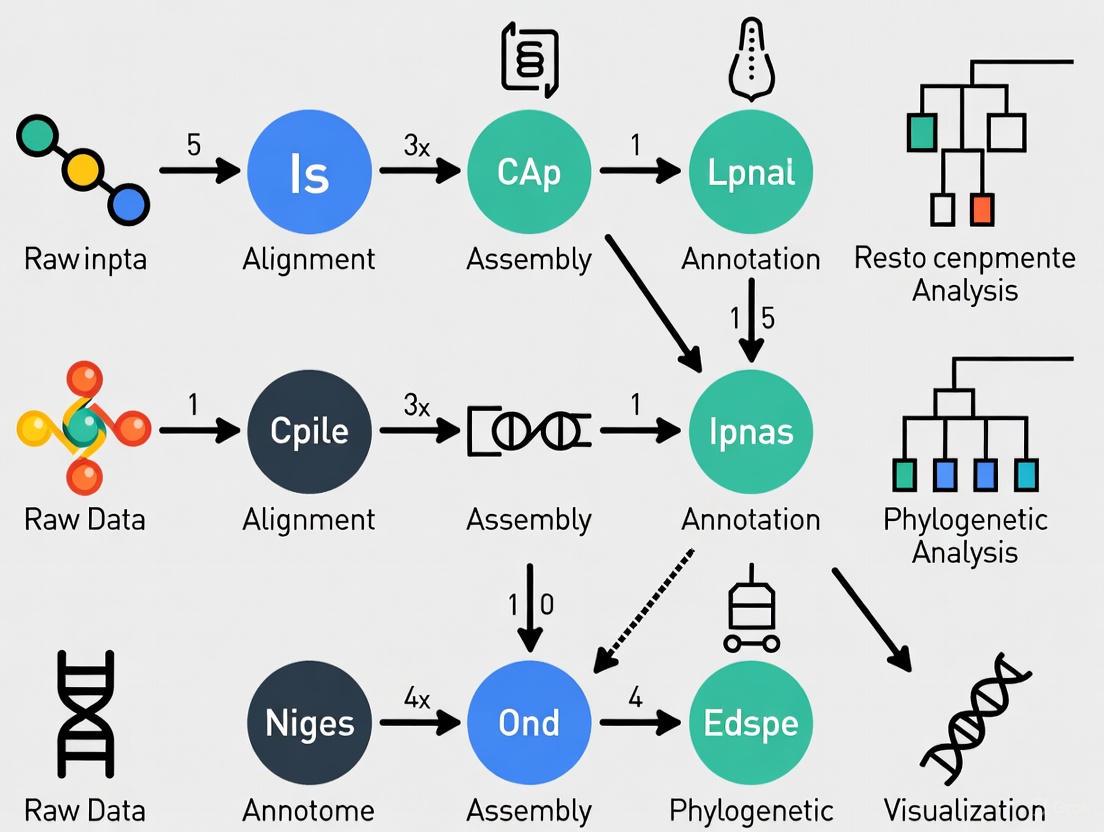
This article provides a comprehensive guide for researchers and bioinformaticians on establishing a robust bioinformatic workflow for comparative resistome analysis.
A Modern Bioinformatic Workflow for Comparative Resistome Analysis: From Raw Data to Actionable Insights
Abstract
This article provides a comprehensive guide for researchers and bioinformaticians on establishing a robust bioinformatic workflow for comparative resistome analysis. As antimicrobial resistance (AMR) poses a escalating global health threat, accurately profiling and comparing antibiotic resistance genes (ARGs) across genomes and metagenomes has become crucial for surveillance and intervention. We detail a structured pipeline covering foundational principles, methodological execution using current tools like CARD and ResFinder, critical troubleshooting for data quality, and rigorous validation techniques. By integrating the latest resources and best practices, this workflow enables the reproducible characterization of resistomes in diverse samples, from clinical isolates to complex environmental microbiomes, supporting efforts to track and mitigate the spread of AMR.
Understanding the Resistome: Core Concepts and Components for Analysis
The term antibiotic resistome encompasses the entire collection of all antibiotic resistance genes (ARGs), their precursors, and associated mobile genetic elements (MGEs) within microbial communities [1]. First coined in 2006, this concept has revolutionized our understanding of antimicrobial resistance (AMR) by recognizing that resistance determinants are not confined to clinical pathogens but are ubiquitous across diverse environments [1] [2]. The resistome includes several distinct components: acquired resistance genes (horizontally transferred between bacteria), intrinsic resistance genes (vertically inherited and taxa-specific), silent or cryptic resistance genes (functional but not expressed), and proto-resistance genes (requiring evolution to confer resistance) [1]. This comprehensive framework is essential for understanding the origins, emergence, and dissemination of ARGs across the One-Health continuum, connecting human, animal, and environmental health [1] [3].
The environmental resistome, particularly in soil, represents the ancient origin of most ARGs, with studies demonstrating that resistance mechanisms predate the clinical use of antibiotics by millennia [1] [2]. Research on 30,000-year-old permafrost has confirmed the presence of functional resistance genes for β-lactams, tetracyclines, and glycopeptides, demonstrating that AMR is a natural phenomenon that has been amplified by anthropogenic activities [2]. The complexity and diversity of the resistome are shaped by microbial community structure, selective pressures, and horizontal gene transfer mechanisms that facilitate the movement of ARGs between bacterial populations [1].
Critical Resistome Components and Their Interactions
Antibiotic Resistance Genes (ARGs): Diversity and Mechanisms
Antibiotic resistance genes represent the functional units of the resistome, encoding proteins that confer resistance through diverse biochemical mechanisms. The Comprehensive Antibiotic Resistance Database (CARD) catalogs ARGs conferring resistance to antibacterial agents across numerous drug classes [4]. Analyses of various environments have revealed striking ARG diversity, with studies identifying genes conferring resistance to at least 26 different antibiotic classes in Baltic Sea sediments [5] and 107 different drug resistance categories in wild rodent gut microbiota [4].
The primary biochemical mechanisms through which ARGs mediate resistance include:
- Antibiotic target alteration (78.93% of ARGs in rodent gut microbiomes) [4]
- Antibiotic target protection (7.47%)
- Antibiotic efflux (5.65%)
- Antibiotic inactivation (documented in other studies as a major mechanism) [6]
Different environments exhibit characteristic ARG profiles. In wild rodent gut microbiota, resistance to elfamycin is most prevalent (49.88%), followed by multidrug resistance (39.19%), glycopeptide resistance (9.07%), and tetracycline resistance (7.88%) [4]. In contrast, contaminated soils show a high prevalence of multidrug resistance genes including MexD, MexC, MexE, MexF, MexT, CmeB, MdtB, MdtC, and OprN, primarily functioning through efflux pump mechanisms (42%) [6].
Table 1: Dominant ARG Types Across Different Environments
| Environment | Most Prevalent ARG Types | Primary Mechanisms | Representative Genes |
|---|---|---|---|
| Wild Rodent Gut | Elfamycin, Multidrug, Glycopeptide | Target alteration (78.9%) | CdifEFTuELF, EcolEFTuKIR [4] |
| Contaminated Soil | Multidrug, Peptide, Tetracycline | Efflux pumps (42%), Antibiotic inactivation (23%) | MexD, MexC, MexE, MexF [6] |
| Baltic Sea Sediments | Multidrug, Tetracycline, Macrolide | Not specified | Not specified [5] |
| Urban Gutters | β-lactam, Aminoglycoside, Fluoroquinolone | Enzyme inactivation (β-lactamase) | Not specified [7] |
Mobile Genetic Elements: Vectors of Resistance Dissemination
Mobile genetic elements serve as the primary vehicles for horizontal transfer of ARGs within and between bacterial populations. The "mobilome" includes transposons, insertion sequences, integrons, plasmids, and bacteriophages that facilitate the movement of genetic material [2] [8]. These elements enable ARGs to transcend taxonomic barriers and disseminate across diverse environments, from natural ecosystems to clinical settings [1] [2].
In wild rodent gut microbiomes, transposable elements (marked by transposase genes) represent the most abundant MGE type (49.24%), followed by IS common region (ISCR) elements (26.08%), and integrases (11.84%) [4]. Plasmids, while less abundant (1.37% of MGEs), play a disproportionately important role in ARG dissemination due to their self-transmissibility and broad host range [4]. The strong correlation observed between the presence of MGEs and ARGs highlights the critical role of horizontal gene transfer in the expansion of the resistome [4] [8].
Research on the Han River demonstrated that anthropogenic influences significantly increase the abundance of MGEs, particularly integrases, which correlate strongly with ARG density in downstream regions affected by human activities [8]. This relationship underscores how human impacts can stimulate the mobility of resistance determinants, facilitating their spread across microbial communities.
Interplay with Virulence Factors and Co-Selection Pressures
The resistome does not exist in isolation but interacts with other genetic elements, particularly virulence factor genes (VFGs). Studies of wild rodent gut microbiota have identified 7,626 VFGs alongside 8,119 ARGs, with a strong correlation between their occurrence [4]. This relationship suggests potential co-selection mechanisms where genetic elements conferring both resistance and pathogenicity are maintained and disseminated together.
Environmental pressures drive co-selection between ARGs and metal resistance genes (MRGs) through two primary mechanisms: co-resistance (where ARGs and MRGs are located on the same genetic element) and cross-resistance (where a single genetic determinant provides resistance to both antibiotics and metals) [6]. Heavy metal contamination, particularly from copper, zinc, and cadmium, has been shown to promote the simultaneous selection of ARGs and MRGs in various environments [6] [5]. This phenomenon is particularly evident in agricultural settings where metals are regularly added to livestock feed, creating persistent selective pressures that maintain and amplify resistance determinants in soil and water ecosystems [6].
Ecological Context and One Health Perspective
Environmental Gradients and Resistome Dynamics
The composition and diversity of environmental resistomes are strongly influenced by physicochemical factors that create selective landscapes for microbial communities. Research across the Baltic Sea revealed that salinity and temperature gradients are primary drivers of resistome structure, with clear distinctions between high-saline regions and areas with lower to mid-level salinity [5]. These environmental factors influence microbial community composition, which in turn shapes the distribution of ARGs and MGEs across geographic regions [5].
Nutrient availability further modulates resistome profiles, with studies demonstrating that total nitrogen and carbon content correlate with ARG abundance in aquatic ecosystems [8]. In riverine environments, anthropogenic impacts create pronounced downstream resistome blooms, with ARG density increasing 2.0- to 16.0-fold in urbanized regions compared to pristine upstream areas [8]. This pattern demonstrates how human activities alter environmental conditions to favor the proliferation and dissemination of resistance determinants.
Table 2: Environmental Drivers of Resistome Composition
| Environmental Factor | Impact on Resistome | Evidence | Mechanisms |
|---|---|---|---|
| Salinity | Primary driver of diversity and composition in aquatic systems [5] | Distinct resistomes in high-saline vs. low-mid salinity regions of Baltic Sea | Shapes microbial community structure; osmotic stress may select for MGEs |
| Temperature | Correlates with ARG distribution patterns [5] | Regional variation in Baltic Sea sediments | Influences microbial growth rates and horizontal gene transfer efficiency |
| Heavy Metals | Co-selection for ARGs and metal resistance genes [6] | Cu, Zn, Cd contamination linked to multidrug resistance | Co-resistance (same genetic element) and cross-resistance (same mechanism) |
| Nutrient Pollution | Increases ARG abundance and diversity [8] | Total nitrogen correlates with ARG density in Han River | Nutrient enrichment stimulates microbial growth and gene transfer |
| Anthropogenic Impact | Blooms of diverse ARG classes in downstream areas [8] | 4.8-10.9 fold increase in ARG density downstream | Fecal contamination, antibiotic pollution, MGE proliferation |
One Health Interconnections
The One Health concept recognizes the interconnectedness of human, animal, and environmental health, providing a crucial framework for understanding resistome dynamics [1] [3]. ARGs circulate continuously across these sectors, with transmission occurring at their interfaces [1]. Clinical resistance genes frequently originate from environmental reservoirs, with strong evidence linking aminoglycoside and vancomycin resistance enzymes, extended-spectrum β-lactamase CTX-M, and the quinolone resistance gene qnr to environmental origins [2].
Agricultural practices significantly influence resistome transmission across One Health sectors. Comparative analyses of farming systems reveal that while conventional (antibiotic-administered) farms show higher ARG prevalence (odds ratio: 2.38-3.21), antibiotic-free farms still harbor detectable ARGs in 97% of studies [9]. This persistence demonstrates the remarkable resilience of resistance determinants once established in agricultural environments and their potential for transmission to human populations through food systems [9] [10].
Wildlife, particularly species in proximity to human settlements, serve as important reservoirs and vectors for ARG dissemination. Studies of wild rodent gut microbiota have identified Enterobacteriaceae, especially Escherichia coli, as dominant carriers of ARGs and VFGs [4]. These findings highlight how wildlife interfaces with anthropogenic environments can facilitate the spread of resistance and virulence traits across ecosystem boundaries.
Experimental Protocols for Resistome Analysis
Sample Collection and Processing for Comparative Resistome Studies
Protocol 1: Environmental Sample Collection and Preservation
Objective: To collect representative environmental samples for comparative resistome analysis while maintaining DNA integrity.
Materials:
- Sterile sample containers (50ml conical tubes for water, sterile spatulas for soil/sediment)
- DNA/RNA Shield solution or equivalent DNA stabilizer
- Cooler with ice packs or dry ice for transport
- GPS unit for precise location documentation
- pH, temperature, and conductivity meters for physicochemical characterization
- Filtration apparatus (for water samples: 0.22μm pore size filters)
- Heavy metal sampling kits (for concurrent metal analysis)
Procedure:
- For water samples (rivers, lakes, wastewater):
- Collect 1L of water in sterile containers at consistent depth (typically 10-20cm below surface)
- Filter through 0.22μm membranes to capture microbial biomass
- Place filters in DNA stabilization buffer and store at -80°C
- Record physicochemical parameters (pH, temperature, conductivity) in situ
For soil/sediment samples:
- Collect ~5g of surface soil/sediment (0-5cm depth) using sterile spatula
- Place in sterile containers with DNA stabilization buffer
- Homogenize samples and store at -80°C
- Collect separate subsamples for heavy metal analysis
For biological samples (feces, gut contents):
- Collect fresh samples using sterile techniques
- Preserve in DNA/RNA stabilization buffer immediately
- Store at -80°C until DNA extraction
Quality Control:
- Process samples within 4 hours of collection
- Include field blanks (sterile water processed identically to samples)
- Document complete metadata: coordinates, date/time, environmental parameters
- Maintain consistent cold chain during transport to laboratory [6] [5] [8]
DNA Extraction and Metagenomic Library Preparation
Protocol 2: High-Quality Metagenomic DNA Extraction and Sequencing Library Preparation
Objective: To extract high-molecular-weight DNA suitable for shotgun metagenomic sequencing and resistome analysis.
Materials:
- DNeasy PowerSoil Pro Kit (Qiagen) or equivalent for environmental samples
- Qubit fluorometer and dsDNA HS Assay Kit
- TapeStation or Bioanalyzer for DNA quality assessment
- Illumina DNA Prep kit for library preparation
- IDT for Illumina DNA/RNA UD Indexes
- AMPure XP beads for size selection
Procedure:
- DNA Extraction:
- Process 0.25g of soil/sediment or complete filters using PowerSoil Pro Kit
- Include extraction controls (no sample) to monitor contamination
- Elute DNA in 50μL of nuclease-free water
- Quantify using Qubit fluorometer
- Assess quality via TapeStation (DNA Integrity Number >7.0 preferred)
Library Preparation:
- Fragment 100ng of DNA to ~350bp using Covaris ultrasonicator
- Clean fragmented DNA using AMPure XP beads (0.8X ratio)
- Perform end repair, A-tailing, and adapter ligation using Illumina DNA Prep Kit
- Clean up ligation reaction with AMPure XP beads (0.8X ratio)
- Amplify libraries with 8 cycles of PCR using unique dual indexes
- Perform final cleanup with AMPure XP beads (0.8X ratio)
- Quantify libraries using Qubit and qualify using TapeStation
Pooling and Sequencing:
Bioinformatic Analysis Workflow for Resistome Characterization
Protocol 3: Comprehensive Resistome Analysis Pipeline
Objective: To identify and quantify ARGs, MGEs, and associated genetic elements from metagenomic data.
Materials:
- High-performance computing cluster with ≥32GB RAM
- Conda environment for package management
- Bioinformatic tools: fastp, MEGAHIT, Prodigal, ABRicate, DeepARG, MobileElementFinder
- Reference databases: CARD, ARGANNOT, MEGARes, NCBI AMR, VFDB, INTEGRALL
Procedure:
- Quality Control and Preprocessing:
Metagenomic Assembly:
Gene Prediction and Annotation:
ARG Identification and Quantification:
MGE and Virulence Factor Analysis:
Read Mapping and Normalization:
Quality Control Metrics:
- Assembly quality: N50 >10kbp, total length >1Mbp for complex samples
- Gene prediction: >50% of reads mapping to assembled contigs
- ARG identification: consensus across multiple databases recommended
- Normalization: use counts per million (CPM) or fragments per kilobase million (FPKM) for cross-sample comparisons [4] [6] [5]
Table 3: Essential Research Reagents and Computational Tools for Resistome Analysis
| Category | Specific Tool/Reagent | Application | Key Features |
|---|---|---|---|
| DNA Extraction | DNeasy PowerSoil Pro Kit (Qiagen) | Environmental DNA extraction | Inhibitor removal, high yield from complex matrices |
| Library Prep | Illumina DNA Prep Kit | Metagenomic library preparation | Compatibility with low-input samples (100ng) |
| Sequencing | Illumina NovaSeq 6000 | High-throughput sequencing | 2×150bp configuration, 10M+ reads/sample |
| Quality Control | fastp v0.23.4 | Read preprocessing | Adapter trimming, quality filtering, correction |
| Assembly | MEGAHIT v1.2.9 | Metagenome assembly | Meta-large preset for complex communities |
| Gene Prediction | Prodigal v2.6.3 | ORF identification | Meta mode for heterogeneous samples |
| ARG Databases | CARD, ARGANNOT, MEGARes, DeepARG | ARG identification | Comprehensive curation, different classification schemes |
| MGE Detection | MobileElementFinder v1.1.2 | Mobile element identification | Transposons, integrons, insertion sequences |
| Virulence Factors | Virulence Factor DB (VFDB) | Pathogenicity assessment | Bacterial virulence factors and mechanisms |
| Statistical Analysis | R packages: vegan, phyloseq, DESeq2 | Ecological and statistical analysis | Diversity measures, differential abundance |
| Visualization | ggplot2, ComplexHeatmaps | Data visualization | Publication-quality figures, heatmaps |
The comprehensive definition of the resistome extends beyond a simple catalog of ARGs to encompass the dynamic network of genetic elements, their mobile vectors, and the ecological contexts that drive their emergence and dissemination. Through the application of standardized metagenomic protocols and bioinformatic workflows, researchers can systematically characterize resistome dynamics across the One Health continuum. The integration of ARG data with information on MGEs, VFGs, and environmental parameters provides crucial insights into the factors driving resistance transmission and persistence.
Future directions in resistome research include: (1) developing standardized methods for ranking critical ARGs and their hosts based on risk assessment frameworks; (2) elucidating ARG transmission dynamics at the interfaces of One Health sectors; (3) identifying key selective pressures driving the emergence and evolution of ARGs; and (4) clarifying the mechanisms that enable ARGs to overcome taxonomic barriers during transmission [1]. Addressing these priorities will require continued refinement of bioinformatic tools, expanded reference databases, and multidisciplinary approaches that integrate molecular biology, microbial ecology, computational biology, and epidemiology.
As resistome studies continue to evolve, the protocols and frameworks outlined here provide a foundation for comparative analyses that can inform evidence-based interventions to mitigate the spread of antimicrobial resistance across human, animal, and environmental ecosystems.
Antimicrobial resistance (AMR) represents one of the most critical threats to global public health, with drug-resistant diseases potentially causing up to 10 million deaths annually by 2050 [11]. Bacteria employ several fundamental mechanisms to survive antibiotic exposure, with efflux pumps, enzyme inactivation, and target modification representing three key strategies that enable pathogens to neutralize, exclude, or circumvent the effects of antimicrobial agents [12] [13]. Understanding these mechanisms is crucial for developing novel therapeutic approaches and diagnostic tools. The ESKAPE pathogens (Enterococcus faecium, Staphylococcus aureus, Klebsiella pneumoniae, Acinetobacter baumannii, Pseudomonas aeruginosa, and Enterobacter species) exemplify microorganisms that utilize these resistance strategies, leading to difficult-to-treat nosocomial infections [14]. This article explores these key resistance mechanisms within the context of bioinformatic workflows for comparative resistome analysis, providing researchers with both theoretical frameworks and practical methodologies for investigating AMR.
Efflux Pumps
Mechanism and Biological Function
Bacterial efflux pumps are membrane transporter proteins that actively export multiple classes of antibiotics from the cell, reducing intracellular drug accumulation to subtoxic levels [13]. These systems predate clinical antibiotic use and play vital roles in bacterial physiology, including regulation of nutrient and heavy metal levels, relief of cellular stress, toxin extrusion, and pathogenicity [15] [13]. While some efflux pumps are specific to certain antibiotics, multidrug efflux pumps can recognize and transport structurally varied molecules, making them particularly significant in clinical resistance [15].
Efflux pumps are classified into six families based on their structures and energy coupling mechanisms: ATP-binding cassette (ABC), major facilitator superfamily (MFS), resistance-nodulation-division (RND), multidrug and toxin extrusion (MATE), small multidrug resistance (SMR), and proteobacterial antimicrobial compound efflux (PACE) [15] [13]. The RND family efflux pumps are particularly important in Gram-negative bacteria due to their broad substrate specificity and role in intrinsic and acquired resistance [12].
Table 1: Major Efflux Pump Families in Bacteria
| Family | Energy Source | Structural Features | Representative Examples | Key Substrates |
|---|---|---|---|---|
| RND | Proton motive force | Tripartite complex spanning inner and outer membranes | AcrAB-TolC (E. coli), MexAB-OprM (P. aeruginosa), AdeABC (A. baumannii) | β-lactams, fluoroquinolones, macrolides, tetracyclines, chloramphenicol |
| MFS | Proton motive force | 12 or 14 transmembrane segments | NorA (S. aureus), EmrB (E. coli) | Fluoroquinolones, tetracyclines, chloramphenicol |
| ABC | ATP hydrolysis | Two nucleotide-binding domains, two transmembrane domains | MacAB (E. coli) | Macrolides, polypeptides |
| MATE | Na+ or H+ antiport | 12 transmembrane segments | NorM (V. parahaemolyticus) | Fluoroquinolones, aminoglycosides |
| SMR | Proton motive force | Small size, 4 transmembrane segments | EmrE (E. coli) | Quaternary ammonium compounds, dyes |
| PACE | Proton motive force | 4 transmembrane segments | AceI (A. baumannii) | Chlorhexidine, acriflavine |
RND Family Efflux Pumps: Structure and Function
RND efflux pumps form tripartite complexes that span the entire Gram-negative cell envelope, consisting of an inner membrane RND protein, a periplasmic membrane fusion protein (MFP), and an outer membrane factor (OMF) protein [15] [12]. These complexes create a continuous channel that allows direct extrusion of substrates from the cytoplasm or periplasm to the extracellular space [15]. The RND protein itself typically contains 12 transmembrane segments with two large loops between transmembrane segments 1-2 and 7-8, forming binding pockets that recognize diverse substrates [15].
These pumps function as proton antiporters, exchanging one hydrogen ion for one molecule of substrate [15]. Their broad substrate specificity stems from large, flexible binding pockets that can accommodate multiple structurally unrelated compounds [12]. In Acinetobacter baumannii, RND pumps such as AdeABC and AdeIJK can transport antibiotics including aminoglycosides, fluoroquinolones, β-lactams, tetracyclines, and tigecycline [15].
Experimental Protocols for Investigating Efflux Pumps
Protocol 1: Assessing Functional Interplay Between Efflux Pumps
Background: Bacteria often express multiple efflux pumps that can cooperate synergistically, particularly when removing compounds with cytoplasmic targets [16]. This protocol describes genetic approaches to study functional interplay between efflux pumps in Escherichia coli, adaptable to other bacterial species.
Materials:
- Efflux-deficient E. coli mutants (e.g., EKO-35 strain lacking all 35 drug efflux pumps)
- Low-copy-number plasmid pGDP2 for efflux pump expression
- Antibiotics for selection
- Constitutive PLacI promoter system
Methodology:
- Strain Construction:
- Integrate the first efflux pump gene into the chromosome of the efflux-deficient mutant using λ-Red recombineering with appropriate selection markers.
- Introduce the second efflux pump gene on the pGDP2 plasmid via electroporation or chemical transformation.
- Validate gene expression via RT-qPCR or Western blotting.
Phenotypic Assessment:
- Determine minimum inhibitory concentrations (MICs) for relevant antibiotics using broth microdilution according to CLSI guidelines.
- Compare MICs for strains expressing: (a) no efflux pumps, (b) pump A alone, (c) pump B alone, and (d) both pumps A and B.
- Calculate interaction effects using multiplicative or additive models.
Data Interpretation:
- Multiplicative increases in resistance (where combined effect ≥ product of individual effects) indicate cooperative functional interplay.
- Additive or unchanged resistance suggests independent pump activity.
- Expected results: Combinations of single-component and multi-component pumps typically show multiplicative effects, while pumps of the same structural type generally show additive effects [16].
Protocol 2: Efflux Pump Inhibition Assays
Background: Efflux pump inhibitors (EPIs) can restore antibiotic susceptibility in multidrug-resistant bacteria [15]. This protocol evaluates potential EPI compounds.
Materials:
- Bacterial strains with characterized efflux pump overexpression
- Test EPI compounds (e.g., phenylalanine-arginine β-naphthylamide, PAβN)
- Fluorometric substrates (e.g., ethidium bromide, Hoechst 33342)
- Microplate reader for fluorescence detection
Methodology:
- Prepare bacterial suspensions in appropriate growth medium.
- Pre-incubate bacteria with varying concentrations of EPI (0-100 μg/mL) for 15 minutes.
- Add fluorometric substrate and measure fluorescence accumulation over time (0-60 minutes).
- Include controls without EPI and with known EPI if available.
- Parallel assays: Determine MIC reduction of antibiotics in presence of subinhibitory EPI concentrations.
Enzyme Inactivation
Mechanism and Significance
Enzyme-mediated antibiotic inactivation represents one of the most common resistance mechanisms, where bacteria produce enzymes that chemically modify or degrade antibiotics before they reach their cellular targets [13]. These enzymes include β-lactamases, aminoglycoside-modifying enzymes, chloramphenicol acetyltransferases, and erythromycin esterases [17]. The genes encoding these enzymes are often located on mobile genetic elements, facilitating rapid dissemination among bacterial populations [11] [17].
β-lactamases constitute the most diverse and clinically significant group of antibiotic-inactivating enzymes, with over 1,000 variants described [12]. These enzymes hydrolyze the β-lactam ring of penicillins, cephalosporins, carbapenems, and monobactams, rendering them ineffective. The development of novel β-lactam/β-lactamase inhibitor combinations (BL/BLI) such as ceftazidime/avibactam (CZA) and ceftolozane/tazobactam (C/T) has been a key strategy to overcome enzyme-mediated resistance [12].
Experimental Protocols for Detecting Inactivating Enzymes
Protocol 3: Molecular Detection of β-Lactamase Genes
Background: Rapid detection of β-lactamase genes is essential for appropriate antibiotic therapy and infection control. This protocol outlines molecular methods for identifying these resistance determinants.
Materials:
- Bacterial DNA extraction kit
- PCR reagents and thermal cycler
- Primers for target β-lactamase genes (e.g., blaKPC, blaNDM, blaCTX-M, blaVIM)
- Gel electrophoresis equipment
- Optional: Sanger sequencing reagents
Methodology:
- DNA Extraction:
- Isolate genomic DNA from pure bacterial cultures using commercial kits.
- Quantify DNA concentration using spectrophotometry.
PCR Amplification:
- Design or select primers specific for target β-lactamase genes.
- Set up PCR reactions with appropriate controls (positive, negative, no-template).
- Use touchdown PCR conditions if needed for specificity.
Amplicon Analysis:
- Separate PCR products by agarose gel electrophoresis.
- Visualize bands under UV light after ethidium bromide staining.
- Confirm identity of amplified products by sequencing if necessary.
Alternative Approach:
- Use commercial DNA microarrays for simultaneous detection of multiple resistance genes.
- Apply loop-mediated isothermal amplification (LAMP) for rapid, equipment-free detection in resource-limited settings [14].
Table 2: Major Classes of Antibiotic-Inactivating Enzymes
| Enzyme Class | Antibiotic Targets | Modification Reaction | Key Gene Families |
|---|---|---|---|
| β-Lactamases | β-Lactam antibiotics | Hydrolysis of β-lactam ring | blaCTX-M, blaKPC, blaNDM, blaVIM, blaOXA |
| Aminoglycoside-Modifying Enzymes | Aminoglycosides | Acetylation, adenylation, phosphorylation | aac, aad, aph genes |
| Chloramphenicol Acetyltransferases | Chloramphenicol | Acetylation | cat genes |
| Macrolide Esterases | Macrolides | Hydrolysis of lactone ring | ere genes |
| Tetracycline Inactivation Enzymes | Tetracyclines | Oxidation, phosphorylation | tet(X) genes |
Target Modification
Mechanisms and Clinical Impact
Target modification involves alterations to bacterial cellular components that serve as binding sites for antibiotics, reducing drug affinity and enabling bacterial survival despite antibiotic presence [17] [13]. This mechanism includes mutations in genes encoding target proteins, enzymatic modification of target sites, and expression of alternative, drug-resistant targets [17].
Clinically significant examples include mutations in DNA gyrase and topoisomerase IV genes (gyrA, gyrB, parC, parE) conferring fluoroquinolone resistance; alterations in RNA polymerase (rpoB mutations) leading to rifampin resistance; modifications to penicillin-binding proteins (PBPs) reducing affinity for β-lactam antibiotics; and methylation of 16S rRNA (mediated by armA and rmt genes) conferring high-level aminoglycoside resistance [17].
Experimental Protocols for Detecting Target Modifications
Protocol 4: Detection of Chromosomal Mutations Conferring Antibiotic Resistance
Background: Target site mutations represent a major resistance mechanism for several antibiotic classes. This protocol describes methods for identifying these mutations.
Materials:
- Bacterial genomic DNA
- PCR reagents and primers for target genes
- Sanger sequencing or next-generation sequencing capabilities
- Sequence analysis software
Methodology:
- Gene Selection:
- Select target genes based on antibiotic resistance profile (e.g., gyrA/parC for fluoroquinolones, rpoB for rifampin, pbp genes for β-lactams).
Amplification and Sequencing:
- Amplify target genes by PCR using specific primers.
- Purify PCR products and perform Sanger sequencing.
- Alternatively, perform whole-genome sequencing for comprehensive analysis.
Sequence Analysis:
- Align sequences to reference genes using bioinformatic tools.
- Identify nonsynonymous mutations associated with resistance.
- Use databases like PointFinder for mutation interpretation [17].
Phenotypic Correlation:
- Correlate genotypic findings with phenotypic susceptibility testing results.
- Express mutated genes in susceptible backgrounds to confirm resistance contribution if necessary.
Bioinformatic Workflows for Resistome Analysis
Computational Tools and Databases
Bioinformatic approaches have revolutionized AMR detection and surveillance, enabling comprehensive analysis of resistance genes (resistomes) from genomic and metagenomic data [11] [18] [14]. These tools facilitate the identification of known and novel resistance mechanisms, including efflux pumps, inactivating enzymes, and target modifications.
Key bioinformatic resources for AMR analysis include:
- CARD (Comprehensive Antibiotic Resistance Database): A manually curated resource containing reference sequences and mutations associated with AMR, utilizing the Antibiotic Resistance Ontology (ARO) for classification [17].
- ResFinder/PointFinder: Specialized tools for detecting acquired resistance genes and chromosomal mutations, respectively [17].
- AMRFinderPlus: NCBI's tool for identifying AMR genes, proteins, and mutations from bacterial genomes [19].
- ResistoXplorer: A web-based tool for visual, statistical, and functional analysis of resistome data, supporting integration with microbiome data [18].
- abritAMR: An ISO-certified bioinformatics platform for genomics-based bacterial AMR gene detection with 99.9% accuracy demonstrated in validation studies [19].
Table 3: Bioinformatics Resources for AMR Detection
| Tool/Database | Type | Key Features | Applications |
|---|---|---|---|
| CARD | Manually curated database | Antibiotic Resistance Ontology (ARO); Resistance Gene Identifier (RGI) tool | Comprehensive AMR gene detection and classification |
| ResFinder/PointFinder | Database with analysis tools | K-mer based alignment; detection of acquired genes and chromosomal mutations | Identification of known resistance determinants |
| AMRFinderPlus | Command-line tool | Protein-based screening; detection of genes, SNPs, and protein variants | NCBI's standardized AMR detection |
| ResistoXplorer | Web-based analysis platform | Visual analytics; statistical analysis; functional profiling | Exploratory resistome analysis |
| abritAMR | Certified bioinformatics platform | ISO-certified workflow; customized reporting | Clinical and public health microbiology |
| DeepARG | Machine learning tool | Prediction of novel ARGs using deep learning models | Detection of divergent or novel resistance genes |
Integrated Workflow for Comparative Resistome Analysis
Bioinformatic Workflow for Comparative Resistome Analysis
Protocol 5: Standardized Bioinformatic Analysis of Resistomes
Background: This protocol describes a comprehensive bioinformatic workflow for comparative resistome analysis from whole-genome sequencing data, suitable for clinical or research applications.
Materials:
- Whole-genome sequencing data (FASTQ files)
- High-performance computing resources
- Bioinformatic tools (AMRFinderPlus, ResistoXplorer, abritAMR)
- Reference databases (CARD, ResFinder)
Methodology:
- Data Quality Control and Preprocessing:
- Assess sequence quality using FastQC.
- Perform adapter trimming and quality filtering with Trimmomatic or similar tools.
- Verify minimum sequencing depth of 40X for reliable analysis [19].
Genome Assembly:
- Assemble quality-filtered reads using SPAdes, SKESA, or Shovill.
- Assess assembly quality (contig N50, number of contigs).
AMR Gene Detection:
- Run AMRFinderPlus or abritAMR on assembled genomes.
- Use ResFinder for detection of acquired resistance genes.
- Apply PointFinder for identification of resistance-associated mutations.
Functional and Comparative Analysis:
- Import results into ResistoXplorer for functional profiling.
- Classify resistance mechanisms by drug class and molecular function.
- Perform comparative analysis across sample groups using statistical methods (e.g., differential abundance analysis).
Validation and Reporting:
- Compare genomic predictions with phenotypic susceptibility testing when available.
- Generate customized reports for clinical or surveillance applications.
- For clinical reporting, abritAMR has demonstrated 98.9% accuracy in predicting phenotype for Salmonella spp. [19].
Table 4: Essential Research Reagents for AMR Mechanism Investigation
| Reagent/Resource | Function/Application | Examples/Specifications |
|---|---|---|
| Efflux-Deficient Mutants | Genetic background for efflux pump studies | EKO-35 (E. coli lacking 35 drug efflux pumps) [16] |
| Expression Plasmids | Controlled gene expression for functional studies | pGDP2 (low-copy-number plasmid with PLacI promoter) [16] |
| Fluorometric Substrates | Efflux activity assessment | Ethidium bromide, Hoechst 33342 |
| β-Lactamase Substrates | Enzyme activity detection | Nitrocefin, CENTA |
| EPI Compounds | Efflux pump inhibition studies | PAβN, MC-207,110 |
| Reference Strains | Quality control and method validation | ATCC strains with characterized resistance mechanisms |
| Curated Databases | Reference for AMR gene annotation | CARD, ResFinder, MEGARes [17] |
| Analysis Platforms | Resistome data interpretation | ResistoXplorer, abritAMR [18] [19] |
The global AMR crisis necessitates sophisticated approaches to understand and combat resistance mechanisms. Efflux pumps, enzyme inactivation, and target modification represent three fundamental strategies that bacteria employ to withstand antibiotic treatment. Investigating these mechanisms requires integrated experimental and bioinformatic approaches, from classical microbiology techniques to advanced genomic analysis. The protocols and resources presented here provide researchers with methodologies to systematically study these resistance mechanisms, while bioinformatic workflows enable comprehensive resistome analysis for surveillance and diagnostic applications. As resistance continues to evolve, these tools will be essential for developing the next generation of antimicrobial therapies and diagnostic systems.
The accurate identification of antibiotic resistance genes (ARGs) is a critical component in the global fight against antimicrobial resistance (AMR). Bioinformatics databases and tools form the backbone of resistome analysis in genomic and metagenomic studies. Among the numerous resources available, the Comprehensive Antibiotic Resistance Database (CARD), ResFinder, and MEGARes have emerged as pivotal, yet distinct, platforms. This application note provides a detailed comparative overview of these three key databases, emphasizing their unique structures, curation philosophies, and operational workflows. The information is framed within the context of a standardized bioinformatic workflow for comparative resistome analysis, enabling researchers to make informed selections based on their specific project goals, whether for clinical surveillance, environmental monitoring, or novel gene discovery.
Table 1: High-Level Comparison of CARD, ResFinder, and MEGARes
| Feature | CARD | ResFinder | MEGARes |
|---|---|---|---|
| Primary Focus | Ontology-driven, mechanistic classification of ARGs [17] [20] | Acquired ARGs and chromosomal mutations for phenotype prediction [17] [21] | Structured database for high-throughput metagenomic analysis [22] |
| Key Characteristics | Rigorous manual curation; Antibiotic Resistance Ontology (ARO) [23] [17] | Integrated with PointFinder for mutation detection; K-mer based alignment [17] | Hierarchical structure (drug class, mechanism, group, gene); reduces redundancy [17] |
| Inclusion Criteria | Experimental validation (MIC increase) & peer-review typically required [17] | Focus on acquired genes and mutations linked to resistance [17] | Consolidates data from multiple sources including CARD and ARDB [17] |
| Associated Tool | Resistance Gene Identifier (RGI) [23] [24] | Integrated webtool and standalone software [21] | Often used with short-read aligners and the MEGARes software package [17] |
| Ideal Use Case | In-depth analysis of resistance mechanisms, model-driven annotation [25] [20] | Rapid prediction of antimicrobial resistance phenotypes from genotype [17] [21] | Quantifying ARG abundance in complex metagenomic samples [17] |
Database Architectures and Curation Philosophies
The structure and curation methodology of a database fundamentally influence the type of results it will produce.
The Comprehensive Antibiotic Resistance Database (CARD)
CARD employs a highly structured, ontology-driven framework built around the Antibiotic Resistance Ontology (ARO) [17] [20]. This ontology meticulously classifies resistance determinants, mechanisms, and antibiotic molecules, creating a rich, interconnected knowledgebase. CARD is known for its rigorous manual curation process. Its typical inclusion criteria demand that ARG sequences are deposited in GenBank, demonstrate an increase in Minimal Inhibitory Concentration (MIC) in experimental studies, and are published in peer-reviewed literature [17]. This stringent process ensures high-quality, reliable data. CARD's primary analytical tool is the Resistance Gene Identifier (RGI), which can be used online or via a command-line interface to analyze protein sequences, genome assemblies, or even raw sequencing reads [23] [24].
ResFinder and PointFinder
ResFinder, often used in tandem with its companion tool PointFinder, has a more direct application: predicting antimicrobial resistance phenotypes from genotypic data [17]. ResFinder specializes in identifying acquired antimicrobial resistance genes, while PointFinder is designed to detect chromosomal point mutations known to confer resistance in specific bacterial pathogens [17]. This integrated approach is crucial for a comprehensive resistance profile. ResFinder utilizes a K-mer-based alignment algorithm that allows for rapid analysis directly from raw sequencing reads, bypassing the need for de novo assembly and accelerating the turnaround time for analysis [17]. Its design is particularly suited for clinical and public health surveillance.
MEGARes
MEGARes is structured to address the challenges of high-throughput metagenomic analysis [17]. Its design incorporates a hierarchical annotation scheme that organizes resistance information at multiple levels: drug class, resistance mechanism, group, and finally, gene [17]. This structure facilitates a more organized and interpretable analysis of complex metagenomic data. MEGARes is a consolidated database, meaning it integrates and harmonizes data from several other resources, such as CARD and the historical ARDB, to provide broad coverage [17]. A key motivation behind its development is the reduction of sequence redundancy, which minimizes alignment artifacts and biases in quantitative metagenomic studies.
Table 2: Quantitative and Technical Specifications
| Specification | CARD | ResFinder | MEGARes |
|---|---|---|---|
| Content Types | Reference sequences, SNPs, detection models, publications [23] [20] | Acquired genes, chromosomal mutations [17] | ARG sequences with hierarchical annotations [17] |
| Update Frequency | Regularly updated (e.g., 2023 publication for v3.2.4) [20] | Regularly updated (e.g., DB versions from 2024) [21] | Information not specified in search results |
| Number of ARG Alleles | 5,010 reference sequences (v3.2.4) [20] | 3,150 alleles [26] | Information not specified in search results |
| Key Analysis Method | RGI (BLAST, homology, & SNP models) [23] [24] | KMA (K-mer alignment) [21] | Short-read alignment (e.g., Bowtie2) [17] |
| Input Data Support | FASTA (assembly), FASTQ (reads) [24] | FASTA (assembly), FASTQ (reads) [21] | Primarily metagenomic sequencing reads [17] |
Experimental Protocols for Resistome Analysis
The following protocols outline standard methodologies for employing these databases in resistome analysis, adaptable for both genomic and metagenomic datasets.
Protocol: Resistome Profiling with CARD's Resistance Gene Identifier (RGI)
Principle: The RGI tool predicts resistomes from DNA sequences based on homology and pre-defined AMR detection models curated within CARD [23] [24].
Materials:
- Computational Environment: Unix-based command-line environment.
- Input Data: Bacterial genome assembly in FASTA format.
- Software: RGI software (command-line version), installed as per instructions on https://github.com/arpcard/rgi.
Procedure:
- Database Setup:
- Analyze Genome Assembly:
- Interpret Results:
- The output file (e.g.,
.txt) will list identified ARGs, their ARO terms, and best-hit identities. - Results are annotated with model information, allowing for interpretation based on the strict CARD curation standards.
- The output file (e.g.,
Protocol: Phenotype Prediction Using ResFinder
Principle: ResFinder identifies acquired ARGs and, with PointFinder, chromosomal mutations to predict resistance phenotypes [17] [21].
Materials:
- Computational Environment: Can be used via the web server at the Center for Genomic Epidemiology (DTU) or as a standalone tool.
- Input Data: Assembled genomes (FASTA) or raw sequencing reads (FASTQ).
- Software: ResFinder/PointFinder suite.
Procedure:
- Data Submission:
- Navigate to the ResFinder web server (https://genepi.food.dtu.dk/resfinder).
- Select the relevant bacterial species.
- Upload your genome assembly or raw read files.
- Analysis Execution:
- Submit the job with default parameters (coverage & identity thresholds typically at 90% and 60%, respectively).
- Result Analysis:
- The results page will list acquired resistance genes and point mutations found.
- A key feature is the phenotype prediction table, which links the genetic findings to likely resistance profiles for specific antibiotics [17].
Workflow Visualization: Comparative Resistome Analysis
The following diagram illustrates a generalized bioinformatic workflow for comparative resistome analysis, integrating the use of the discussed databases and tools.
Resistome Analysis Workflow
Table 3: Key Research Reagents and Computational Solutions
| Resource Name | Type | Function in Resistome Analysis |
|---|---|---|
| CARD | Bioinformatics Database | Provides a curated ontology and reference sequences for mechanistic annotation of ARGs [23] [17]. |
| ResFinder/PointFinder | Analysis Tool & Database | Enables rapid identification of acquired ARGs and mutations for phenotypic resistance prediction [17] [21]. |
| MEGARes | Structured Database | Facilitates quantitative analysis and abundance profiling of ARGs in complex metagenomic samples [17]. |
| AMRFinderPlus | Analysis Tool | A comprehensive tool from NCBI that detects ARGs and point mutations, often used as a benchmark [25] [26]. |
| Abricate | Analysis Pipeline | A meta-tool that aggregates and runs analysis using multiple ARG databases (CARD, ResFinder, etc.) simultaneously [25] [22]. |
| RGI (CARD) | Analysis Tool | The dedicated software for predicting resistomes from sequence data using the CARD database models [23] [24]. |
| BLAST+ | Fundamental Tool | A core algorithm used by many annotation tools for sequence homology searching [21]. |
The Role of Horizontal Gene Transfer in Resistome Dissemination and Evolution
The resistome encompasses the entire repertoire of antibiotic resistance genes (ARGs) within microbial communities, presenting a major challenge to global public health. Horizontal Gene Transfer (HGT) serves as the primary mechanism driving the dissemination and evolution of resistomes across diverse bacterial populations. Unlike vertical gene transfer, HGT enables the rapid exchange of genetic material between distantly related organisms, dramatically accelerating the spread of antibiotic resistance beyond species boundaries [27]. This process transforms local resistance mutations into global health threats by allowing ARGs to move between environmental, commensal, and pathogenic bacteria through various mobile genetic elements (MGEs) [28].
The clinical significance of resistome dissemination is profound, with HGT directly contributing to the emergence of multidrug-resistant "superbugs" that account for millions of infections annually. Understanding the mechanisms and pathways of HGT-mediated resistance spread is therefore critical for developing effective interventions and surveillance strategies in both clinical and environmental settings [29]. This application note provides detailed protocols for analyzing HGT in resistome evolution, enabling researchers to track and predict the dissemination of antibiotic resistance genes.
Bioinformatic Workflow for Comparative Resistome Analysis
A comprehensive bioinformatic workflow for resistome analysis integrates multiple computational tools and databases to identify ARGs, characterize their genetic context, and trace their dissemination pathways. The following diagram illustrates the core workflow for comparative resistome analysis:
Figure 1: Comprehensive workflow for comparative resistome analysis, spanning from sample collection to data interpretation.
Workflow Phase Specifications
Table 1: Detailed description of resistome analysis workflow phases
| Phase | Key Tools/Databases | Output | Critical Parameters |
|---|---|---|---|
| Sample Processing | MasterPure DNA Extraction Kit, Qubit Fluorometer | High-quality DNA | DNA concentration >2 ng/μL, purity (A260/A280 ~1.8) |
| Sequencing | Illumina HiSeq, NovaSeq; PacBio | Raw reads (FASTQ) | Coverage >50x, read length appropriate for analysis |
| Quality Control | FastQC, Trimmomatic | Filtered reads | Q-score >30, adapter removal |
| Assembly | SPAdes, SOAPdenovo, metaSPAdes | Contigs/Scaffolds | N50 >10 kbp, complete BUSCO >90% |
| ARG Identification | CARD, ResFinder, DeepARG, sraX | ARG profile | Identity >90%, coverage >80%, e-value <10-10 |
| MGE Detection | MobileElementFinder, PlasmidFinder, Phaster | MGE inventory | Integrase/transposase identification, plasmid replicons |
| Context Analysis | BLAST, DIAMOND, RGI | Genetic environment | Flanking sequence analysis, operon structure |
| Phylogenetic Analysis | PanGP, ClustalO, FastTree | Evolutionary trees | Bootstrap >70%, appropriate substitution model |
| Visualization | Phandango, ggplot2, Cytoscape | Publication figures | Heatmaps, network diagrams, phylogenetic trees |
Detailed Experimental Protocols
Protocol 1: Resistome Profiling Using sraX Pipeline
The sraX pipeline provides a comprehensive solution for resistome analysis, incorporating unique features such as genomic context exploration and single-nucleotide polymorphism (SNP) validation [30].
Materials and Reagents:
- Computing infrastructure: Linux-based system with minimum 16GB RAM, multi-core processor
- Software dependencies: Perl v5.26+, DIAMOND v0.9.29, NCBI BLAST+ v2.10, MUSCLE v3
- Reference databases: CARD, ARGminer, BacMet
Procedure:
- Installation and Setup
Database Configuration
- Set CARD as primary database with optional integration of ARGminer for expanded coverage
- Customize database selection based on target pathogens and resistance mechanisms
Analysis Execution
Output Interpretation
- Review HTML report for ARG detections and their sequence identity values
- Analyze genomic context visualizations to identify co-localized MGEs
- Validate SNPs in resistance genes using built-in mutation analysis
Troubleshooting Tips:
- For low-identity ARG detection, adjust alignment thresholds to 80% identity and 70% coverage
- Increase memory allocation when processing large metagenomic datasets (>100 GB)
- Verify database versions are current to ensure detection of newly identified ARGs
Protocol 2: Pan-Resistome Analysis Using PRAP
The Pan Resistome Analysis Pipeline (PRAP) enables comparative analysis of resistomes across multiple bacterial isolates, characterizing core and accessory resistome components [31].
Materials and Reagents:
- Input data: Assembled genomes (FASTA), annotated genomes (GBK), or raw reads (FASTQ)
- Reference databases: CARD or ResFinder
- Computational resources: Python 3.6+, R 4.0+ for visualization
Procedure:
- Input Data Preparation
- For assembled genomes: ensure consistent annotation using Prokka or RAST
- For raw reads: perform quality control with FastQC and Trimmomatic
ARG Identification Phase
- Select appropriate database based on research focus (CARD for comprehensive, ResFinder for clinical focus)
- Choose alignment method: BLAST for assembled genomes, k-mer for raw reads
- Set coverage and identity thresholds according to desired stringency
Pan-Resistome Modeling
- Core resistome: ARGs present in all analyzed genomes
- Accessory resistome: ARGs variably present across genomes
Machine Learning Integration
- Apply random forest classifier to predict ARG contribution to resistance phenotypes
- Generate antibiotic matrices linking specific ARGs to phenotypic resistance
Validation and Quality Control:
- Compare results with known phenotypic resistance data when available
- Validate pan-resistome curves using power law regression for large datasets (>50 genomes)
- Perform bootstrap analysis to assess stability of core/accessory classifications
Protocol 3: Tracking HGT Using Mobile Genetic Element Analysis
This protocol focuses on identifying recent HGT events by analyzing the association between ARGs and mobile genetic elements [28].
Materials and Reagents:
- Software: Prokka for annotation, Roary for pan-genome analysis, Phaster for phage identification
- Custom scripts: MGE-boundary detection (available from cited repositories)
- Databases: INTEGRALL, ISfinder, ACLAME
Procedure:
- MGE Identification
- Annotate contigs containing ARGs using Prokka with expanded database
- Identify MGE markers: transposases, integrases, recombinases, plasmid replication genes
- Categorize MGEs by family and mobility mechanism
Genetic Context Analysis
- Extract 10 kbp flanking regions of identified ARGs
- Annotate all open reading frames in flanking regions
- Identify co-localization patterns between ARGs and MGEs
HGT Inference
- Apply statistical test for HGT: compare ARG similarity to 16S rRNA similarity
- Identify discordant phylogenies where ARG similarity exceeds 16S similarity
- Construct gene exchange networks (GENs) illustrating potential transfer pathways
Dissemination Prediction
- Map current distribution of MGEs across bacterial taxa
- Identify potential future dissemination to taxa containing MGEs but not ARGs
- Prioritize high-risk ARG-MGE combinations for surveillance
Interpretation Guidelines:
- Strong evidence for HGT: identical ARG sequences in phylogenetically distant hosts
- Supporting evidence: ARG association with complete MGE structures
- Conservative approach: exclude borderline cases where vertical transfer cannot be ruled out
Research Reagent Solutions
Table 2: Essential research reagents and computational tools for resistome analysis
| Category | Specific Tool/Reagent | Function | Application Context |
|---|---|---|---|
| Reference Databases | CARD (Comprehensive Antibiotic Resistance Database) | Curated ARG repository | Primary reference for resistance gene annotation |
| ResFinder | Focused on acquired ARGs | Clinical isolate analysis, outbreak investigations | |
| BacMet | Biocides & metal resistance genes | Expanded resistance profiling beyond antibiotics | |
| Bioinformatic Tools | sraX | Comprehensive resistome analysis | Integrated ARG identification, context analysis, and reporting |
| PRAP | Pan-resistome analysis | Comparative analysis across multiple genomes | |
| DeepARG | Machine learning-based detection | Metagenomic ARG prediction, novel variant identification | |
| PathoFact | MGE-linked ARG identification | Contextual analysis linking ARGs to mobile elements | |
| Laboratory Reagents | MasterPure DNA Extraction Kit | High-quality DNA isolation | Metagenomic studies requiring inhibitor-free DNA |
| SmartChip Real-Time PCR System | High-throughput qPCR | Targeted resistome quantification [32] | |
| Analysis Frameworks | INTEGRALL | Integron database | Analysis of integron-mediated resistance dissemination |
| ISfinder | Insertion sequence database | Classification and tracking of IS element movements |
Data Interpretation and Application
Key Quantitative Metrics in Resistome Studies
Table 3: Quantitative metrics for interpreting resistome analysis results
| Metric | Calculation Method | Interpretation | Typical Values |
|---|---|---|---|
| ARG Abundance | RPKM (Reads Per Kilobase Million) | Relative abundance in metagenomes | Healthy humans: ~792 RPKM; CDI patients: ~3348 RPKM [33] |
| Resistome Diversity | Number of unique ARG types | richness of resistance mechanisms | Humans: 105 ARGs; Chickens: 81 ARGs; Cattle: 25 ARGs [33] |
| HGT Frequency | % genomes with horizontally acquired ARGs | Extent of gene transfer | 40% of bacterial genomes contain transferred ARGs [28] |
| MGE-ARG Association | % ARGs co-localized with MGEs | Mobilization potential | ~66% of transferable ARGs have mobilization potential to new hosts [28] |
| Core vs Accessory Resistome | % ARGs in all vs some genomes | Stable vs flexible resistome | Species-dependent; ~15-30% core resistome common [31] |
Case Study: Longitudinal Resistome Evolution in Murine Model
A recent study demonstrated the dynamic evolution of resistomes following antibiotic treatment in murine models [29]. The experimental workflow and key findings are summarized below:
Figure 2: Experimental workflow for longitudinal monitoring of resistome evolution following antibiotic intervention.
Key Findings:
- Immediate Impact: Broad-spectrum antibiotic treatment caused significant enrichment of ARGs directly following treatment (day 7), with levels persisting through recovery (day 21) [29]
- Taxonomic Shifts: Specific taxa including Akkermansia muciniphila, Enterobacteriaceae, Enterococcaceae, and Lactobacillaceae acquired resistance and persisted post-treatment
- MGE Role: Integrons were identified as key factors mediating AMR acquisition in antibiotic-treated mice, with chromosomal integration more common than plasmid-mediated transfer
- Cross-Resistance: Selection extended beyond target antibiotic classes, enriching resistance to aminoglycosides, beta-lactams, fluoroquinolones, and glycopeptides simultaneously
The protocols presented herein provide a comprehensive framework for investigating the role of HGT in resistome dissemination and evolution. Implementation of these methods enables researchers to move beyond simple ARG cataloging to mechanistic understanding of resistance spread. For optimal results, we recommend:
- Database Selection: Combine CARD with specialized databases (ResFinder, BacMet) based on research questions
- Multi-method Approach: Apply both read-based and assembly-based methods to maximize detection sensitivity
- Contextual Analysis: Prioritize tools like sraX and PathoFact that integrate MGE and genomic context analysis
- Longitudinal Design: Incorporate time-series sampling to capture dynamic resistome changes under selective pressure
- Validation: Correlate genomic findings with phenotypic resistance data when available
These protocols collectively address the critical need for standardized methods in resistome research, ultimately supporting improved surveillance and management of antibiotic resistance dissemination in clinical, agricultural, and environmental settings.
Comparative resistome analysis research aims to characterize the diversity and abundance of antibiotic resistance genes (ARGs) within microbial communities across different environments and hosts. The field has gained significant importance in addressing the global antimicrobial resistance crisis, which contributes to millions of deaths annually [34]. The design of such studies presents unique challenges, including the selection of appropriate sample types, cohort stratification strategies, and analytical frameworks that can accurately capture resistome dynamics. This application note examines critical methodological considerations for designing robust comparative resistome studies, drawing from recent research across clinical, environmental, and food production settings. We provide a comprehensive overview of experimental protocols, sample processing methodologies, and analytical frameworks to guide researchers in developing rigorous study designs that yield comparable, reproducible results.
Sample Type Selection and Processing Considerations
The choice of sample type significantly influences resistome profiling outcomes due to differences in microbial biomass, community composition, and matrix effects. Research demonstrates that various sample matrices present distinct advantages and limitations for resistome analysis.
Table 1: Comparison of Sample Types for Resistome Analysis
| Sample Type | Typical Sources | Advantages | Limitations | Key Considerations |
|---|---|---|---|---|
| Rectal Swabs | Human patients [35] | Logistically feasible for serial sampling; adequate capture of microbiome signatures | Lower biomass than stool; may require specialized preservation | Correlation with stool specimens is broad but not perfect; appropriate for hospitalized patients |
| Stool Samples | Human cohorts [34], preterm infants [36] | Higher microbial biomass; represents gut reservoir more comprehensively | Collection logistics more complex; participant compliance issues | Gold standard for gut resistome studies; enables strain-level analysis |
| Food Products | Cheese [37], meat, vegetables [38] | Direct assessment of foodborne ARG transmission risk | Diverse matrix effects; processing method influences results | Raw vs. pasteurized products show different resistome profiles |
| Environmental Surfaces | Food processing facilities [38] | Identifies ARG reservoirs in built environments | Surface material may inhibit DNA extraction | Food contact surfaces show higher ARG loads than non-contact surfaces |
| Wastewater/Biosolids | Treatment plants [39] | Composite community sampling; wastewater epidemiology applications | Complex matrices; inhibitor challenges for PCR | Concentration method critically impacts sensitivity (AP vs. FC) |
Sample processing methodologies significantly impact resistome characterization. For instance, DNA extraction methods (standard vs. lytic) can influence ARG detection, though studies on cheese samples found no statistical significance between extraction methods for ARG classes [37]. For wastewater samples, aluminum-based precipitation (AP) methods provided higher ARG concentrations than filtration-centrifugation (FC) protocols, particularly in treated wastewater [39]. In biosolids, both quantitative PCR (qPCR) and droplet digital PCR (ddPCR) performed similarly, though ddPCR demonstrated greater sensitivity in wastewater matrices [39].
Cohort Selection and Stratification Frameworks
Cohort selection strategies must align with research objectives, whether investigating clinical resistome dynamics, environmental transmission, or food production pathways. Effective cohort design incorporates appropriate comparison groups and controls for confounding variables.
Clinical Cohort Design
In clinical settings, cohort stratification often centers on patient risk factors and exposure histories. A study of high-risk patients (ICU, oncology, transplant) compared those colonized with carbapenem-resistant Enterobacterales (CRE) against non-colonized patients, analyzing 112 rectal swabs from 85 patients [35]. This design enabled characterization of resistome differences between colonization states while controlling for patient demographics.
The FINRISK 2002 cohort demonstrated population-scale approaches, incorporating 7,095 adults with extensive demographic, dietary, and prescription drug purchase data [34]. This design revealed that antibiotic use explained 27% of ARG load variation, while demographic variables (income, sex) and diet accounted for smaller but significant proportions of variance [34]. Such large-scale cohorts enable detection of subtle associations between lifestyle factors and resistome features.
Special Population Considerations
Preterm infant studies require unique design considerations, as demonstrated by research on very-low-birth-weight infants receiving probiotics and antibiotics [36]. This study compared probiotic-supplemented versus non-probiotic-supplemented cohorts, with further stratification by antibiotic exposure. Longitudinal sampling over the first three weeks of life captured dynamic resistome development during this critical period [36].
Wildlife and conservation contexts present additional challenges, as shown by kākāpō research comparing chicks versus adults, individuals with different antibiotic histories, and sampling during antibiotic treatment [40]. This design revealed significant age-related differences in ARG expression and tracked resistome dynamics during veterinary intervention.
Environmental and Food Production Cohorts
Food production studies employ distinct sampling frameworks encompassing raw materials, finished products, and processing environments. Research across 113 food processing facilities collected 1,780 samples from raw materials, end products, and surfaces [38]. This comprehensive approach demonstrated that processing surfaces exhibited the highest ARG load and diversity, highlighting their role as resistance reservoirs.
Diagram 1: Food production cohort design framework showing sample type and sector stratification
Comparative Frameworks and Analytical Approaches
Effective resistome comparisons require frameworks that account for compositional data characteristics and multiple hypothesis testing. Both cross-sectional and longitudinal designs offer distinct advantages for addressing different research questions.
Cross-Sectional Comparisons
Cross-sectional designs efficiently identify resistome differences between predefined groups. The CRE colonization study employed α-diversity (Shannon, Simpson, Chao metrics), β-diversity (Bray-Curtis, Jaccard distances), and differential abundance testing (LEfSe) to compare CRE-positive and CRE-negative patients [35]. This approach revealed that resistome α-diversity differed significantly at class, gene, and allele levels, while microbiome differences were more subtle.
Food production studies compared resistomes across industry types (meat, dairy, fish, vegetable) and sample types (raw materials, surfaces, end products) [38]. This multi-factorial design identified sector-specific patterns, with meat production facilities showing higher ARG loads and tetracycline resistance genes particularly dominant in this sector.
Longitudinal and Time-Series Designs
Longitudinal sampling captures resistome dynamics in response to interventions or natural progression. Studies of preterm infants collected weekly fecal samples over the first three weeks of life, revealing how probiotics suppressed ARG prevalence and multidrug-resistant pathogen load [36]. Similarly, tracking a single kākāpō during antibiotic treatment demonstrated dynamic resistome changes, with reduced ARG expression by treatment completion [40].
Clinical studies implemented longitudinal analysis of sequential swabs collected over multiple hospital encounters, revealing that microbiome and resistome fluctuations were associated with antibiotic exposure [35]. Such designs require careful consideration of sampling frequency and duration to capture meaningful temporal patterns.
Integrating Multi-Omics Data
Advanced comparative frameworks incorporate multi-omics approaches to link resistome features with microbial taxonomy and function. Metatranscriptomic analysis in kākāpō research enabled assessment of actively expressed ARGs rather than mere gene presence [40]. Similarly, genome-resolved metagenomics in preterm infant studies enabled strain-level tracking and functional profiling [36].
Machine learning approaches offer powerful predictive frameworks, as demonstrated by the FINRISK study, where boosted GLM models identified key predictors of ARG load and quantified their relative importance [34]. Such methods can handle the high dimensionality of resistome data while accounting for complex covariate interactions.
Experimental Protocols and Methodologies
Sample Collection and Preservation Protocols
Rectal Swab Collection for Clinical Studies
- Utilize ESwab collection system [35]
- Gently insert flocked swab into rectum with gentle rotation
- Immediately place swab into Amies broth or RNAlater for short-term storage at -20°C [35] [40]
- Transfer to -80°C for long-term storage until nucleic acid extraction
Stool Sample Collection for Cohort Studies
- Collect fresh stool during routine health checks or clinical visits
- Aliquot into cryovials with appropriate preservatives (e.g., RNAlater for metatranscriptomics)
- Flash freeze in liquid nitrogen or dry ice for transport
- Store at -80°C until processing [36] [34]
Food and Environmental Surface Sampling
- For food products: aseptically collect representative portions (≥25g) [37]
- For environmental surfaces: use swab-based sampling of standardized areas (e.g., 10x10 cm) [38]
- For wastewater: collect 1L samples in sterile polypropylene bottles [39]
- Refrigerate during transport (within 2 hours) and process immediately or store at 4°C
DNA Extraction and Quality Control
High-Quality DNA Extraction for Metagenomics
- Use dedicated kits for different sample types: DNeasy PowerSoil Pro Kit for rectal swabs [35], Maxwell RSC PureFood GMO Kit for wastewater [39]
- Include mechanical lysis steps (bead beating) for comprehensive cell disruption
- Incorporate inhibitor removal steps for complex matrices (biosolids, food)
- Evaluate DNA quality via spectrophotometry (A260/A280, A260/A230) and fluorometry
- Verify DNA integrity through gel electrophoresis or fragment analyzer
Phage-Associated DNA Extraction
- Filter samples through 0.22μm PES membranes to remove bacterial cells [39]
- Treat filtrates with chloroform (10% v/v) to disrupt viral capsids
- Recover phage particles through precipitation or ultracentrifugation
- Extract DNA using viral-specific kits with DNase treatment to remove external DNA
Library Preparation and Sequencing
Long-Read Metagenomic Sequencing
- Shear genomic DNA to ~10kb using Covaris G-tubes (5000 rpm, 1min each side) [35]
- Prepare libraries using ligation-based kits (SQK-LSK108 for Nanopore)
- Sequence on GridION X5 using R9.4.1 flow cells with high-accuracy basecalling
- Target ≥500,000 reads per specimen with median reads mapped to bacteria ≥100,000 [35]
Short-Read Shotgun Metagenomics
- Fragment DNA to 300-800bp using sonication or enzymatic fragmentation
- Prepare libraries with dual indexing to enable sample multiplexing
- Sequence on Illumina platforms (NovaSeq, HiSeq) to target depth of 10-50 million reads per sample
- Include control samples (extraction blanks, positive controls) in each sequencing batch
Bioinformatic Analysis Workflow
Diagram 2: Bioinformatic workflow for comparative resistome analysis
Quality Control and Host DNA Removal
- Perform adapter trimming and quality filtering (FastP, Trimmomatic)
- Remove host-derived reads using alignment to host genome (minimap2 against CHM13 for human) [35]
- Assess sequencing metrics: median reads per specimen, percentage mapped to microbes
Taxonomic and Resistome Profiling
- Analyze unassembled reads using curated databases (CosmosID-HUB, ARG-ANNOT, ResFinder) [35] [38]
- Utilize k-mer-based algorithms for rapid classification with threshold of 100% identity and five unique kmers [35]
- Normalize ARG abundances as reads per kilobase per million (RPKM) or counts per million (CPM) [38] [34]
Statistical Analysis and Visualization
- Calculate α-diversity metrics (Chao, Shannon, Simpson) using Vegan package in R [35]
- Perform β-diversity analysis (Bray-Curtis, Jaccard) with PERMANOVA testing [35]
- Conduct differential abundance analysis (LEfSe with LDA score threshold of 2.0) [35]
- Generate visualizations using ggplot2 in R [35]
The Scientist's Toolkit: Essential Research Reagents and Materials
Table 2: Essential Research Reagents and Materials for Comparative Resistome Studies
| Category | Item | Specification/Example | Application Notes |
|---|---|---|---|
| Sample Collection | Flocked swabs | ESwab collection system [35] | Optimal for rectal and surface sampling |
| RNAlater stabilization solution | Qiagen RNAlater [40] | Preserves RNA for metatranscriptomics | |
| Sterile polypropylene containers | VWR polypropylene bottles [39] | Wastewater and biosolid collection | |
| Nucleic Acid Extraction | DNA extraction kits | DNeasy PowerSoil Pro (QIAGEN) [35] | Optimal for challenging clinical samples |
| Inhibitor removal reagents | CTAB, proteinase K [39] | Essential for complex matrices | |
| Phage DNA isolation kits | Custom protocols with DNase treatment [39] | Viral fraction resistome analysis | |
| Library Preparation | Long-read library kits | SQK-LSK108 (Oxford Nanopore) [35] | Enables assembly-free analysis |
| Short-read library kits | Illumina DNA Prep | Cost-effective for large cohorts | |
| DNA shearing devices | Covaris G-tubes [35] | Controls fragment size for long-read sequencing | |
| Bioinformatic Analysis | Reference databases | CARD, ARG-ANNOT, ResFinder [35] [38] | Comprehensive ARG annotation |
| Quality control tools | FastQC, MultiQC | Assessing sequencing run metrics | |
| Statistical packages | Vegan, ggplot2 in R [35] | Diversity analysis and visualization |
Robust study design is paramount for meaningful comparative resistome analysis. Selection of appropriate sample types, careful cohort stratification, and implementation of controlled processing protocols significantly impact result reliability and interpretability. Cross-sectional designs efficiently identify differences between predefined groups, while longitudinal approaches capture dynamic responses to interventions. Integration of multi-omics data and advanced computational methods enhances biological insights into resistome dynamics across clinical, environmental, and agricultural settings. Standardization of methodologies across studies will improve comparability and enable meta-analyses, ultimately advancing our understanding of antimicrobial resistance dissemination pathways and intervention strategies.
Executing the Analysis: A Step-by-Step Resistome Workflow Pipeline
Within the framework of a bioinformatic workflow for comparative resistome analysis, the initial acquisition and pre-processing of raw sequencing data are critical steps that directly impact the reliability of downstream results. Comparative resistome research aims to characterize and compare the repertoire of antimicrobial resistance genes (ARGs) across complex microbial communities from various environments, such as wastewater, clinical specimens, or animal guts [41] [18]. The initial raw data generated by high-throughput sequencing platforms is susceptible to various quality issues, including adapter contamination, low-quality bases, and sequencing errors. If unaddressed, these artifacts can lead to misassembly of sequences and, consequently, the misidentification and miscalculation of ARG abundance [42] [43]. This Application Note details a standardized protocol using FastQC for quality assessment and Trimmomatic for quality trimming, establishing a robust foundation for accurate and reproducible resistome analysis.
The Scientist's Toolkit: Essential Research Reagents and Software
The following table catalogs the key software tools and reagents required to execute the quality control and pre-processing protocol described herein.
Table 1: Essential Research Reagent and Software Solutions for NGS Quality Control
| Item Name | Function/Application | Critical Parameters/Examples |
|---|---|---|
| FastQC [44] | A quality control tool that provides an overview of potential issues in high-throughput sequencing data via an HTML report. | Per-base sequence quality, adapter contamination, per-base sequence content, overrepresented sequences. |
| Trimmomatic [43] [45] | A flexible tool used to trim and filter Illumina FASTQ data, removing adapters and low-quality bases. | ILLUMINACLIP, SLIDINGWINDOW, LEADING, TRAILING, MINLEN. |
| Adapter Sequences [43] [45] | A FASTA file containing nucleotide sequences of adapters used in the library preparation kit, enabling their identification and removal. | TruSeq3-SE.fa, TruSeq3-PE.fa, NexteraPE-PE.fa. |
| Java Runtime Environment [42] [44] | A software environment required to run the Java-based tools FastQC and Trimmomatic. | Version 8 or above. |
The pre-processing of raw sequencing data for resistome analysis follows a sequential workflow where quality assessment informs subsequent trimming and filtering steps. A high-level overview of this process is illustrated in the following diagram.
The FASTQ Format and Quality Scores
Raw reads from next-generation sequencing (NGS) are typically delivered in FASTQ format. Each read in a FASTQ file is represented by four lines: a sequence identifier (starting with @), the nucleotide sequence, a separator line (often a +), and a quality score string for each base [42]. The quality scores, encoded as ASCII characters, represent the probability that a base was called incorrectly by the sequencer. The score is calculated as ( Q = -10 \log_{10}(p) ), where ( p ) is the estimated error probability [42]. The most common encoding is Phred+33, where the ASCII character code is derived by adding 33 to the Phred score. For example, a base with a quality score of 20 (Q20) has a 1% error rate. In resistome studies, where the accurate identification of single nucleotide polymorphisms in resistance genes is crucial, maintaining high-quality bases is paramount.
Experimental Protocols
Protocol 1: Quality Assessment with FastQC
This protocol details the steps for assessing the initial quality of raw sequencing data.
Methodology:
- Software Installation: Ensure FastQC is installed. As a Java-based tool, it requires a Java Runtime Environment (JRE) [44].
- Command Execution: Run FastQC from the command line. The basic syntax is:
For example:
fastqc -o QC_Results/ --threads 4 sample_R1.fastq.gz sample_R2.fastq.gz[46]. - Report Generation: FastQC generates an HTML report for each input file. The reports include multiple analysis modules that provide metrics on various aspects of data quality [44].
- Interpretation of Results: Open the HTML report to evaluate key metrics. The report uses a traffic light system (green=good, orange=warning, red=fail) to flag potential issues. For resistome analysis, the following metrics are particularly critical:
- Per-base sequence quality: Reveals if quality drops at the ends of reads, which is common in Illumina data.
- Adapter content: Indicates the proportion of adapter sequences in your library. High adapter content necessitates rigorous adapter trimming.
- Per-base sequence content: Detects biases in nucleotide composition, which can indicate contamination or overrepresented sequences.
- Overrepresented sequences: Identifies sequences (like adapters or contaminants) that appear at high frequency.
Troubleshooting Tip: A single failed module does not necessarily render the data useless. The results should be used to guide the parameters for the trimming step with Trimmomatic [42].
Protocol 2: Read Trimming and Filtering with Trimmomatic
This protocol describes how to clean the raw sequencing data based on the quality issues identified by FastQC.
Methodology:
- Software and Adapter Preparation: Ensure Trimmomatic is installed. Copy the appropriate adapter sequence file (e.g.,
TruSeq3-PE.fafor TruSeq kits) to the working directory [43] [45]. - Parameter Selection: Choose trimming steps and thresholds based on the FastQC report. A standard set of parameters for paired-end data is used in the command below.
- Command Execution: Run Trimmomatic. For paired-end reads, the command structure is:
For single-end data, use
SEand specify only one input and one output file [43] [45]. - Output Analysis: The terminal output provides a summary of the trimming process, including the percentage of read pairs that were kept and discarded.
Table 2: Key Trimmomatic Trimming Parameters and Their Functions
| Parameter | Function | Typical Value & Explanation |
|---|---|---|
| ILLUMINACLIP [43] [45] | Removes adapter sequences. | TruSeq3-PE.fa:2:30:10Uses the TruSeq3 adapter file, allows 2 mismatches, a palindrome threshold of 30, and a simple clip threshold of 10. |
| SLIDINGWINDOW [45] | Scans the read with a sliding window and cuts when average quality drops below a threshold. | SLIDINGWINDOW:4:15Scans with a 4-base window and cuts if the average quality per base drops below Q15 (99.95% base call accuracy). |
| LEADING [45] | Removes low-quality bases from the start of the read. | LEADING:3Trims the 5' end of the read if the quality score is below Q3. |
| TRAILING [45] | Removes low-quality bases from the end of the read. | TRAILING:3Trims the 3' end of the read if the quality score is below Q3. |
| MINLEN [43] [45] | Discards reads that have been trimmed shorter than a specified length. | MINLEN:36Removes any reads shorter than 36 nucleotides after trimming. |
Protocol 3: Post-Trim Quality Verification
After trimming, it is essential to re-run FastQC on the trimmed files to confirm that quality issues have been resolved. Compare the new reports to the original ones to verify improvements, such as the elimination of adapter content and an overall increase in per-base sequence quality scores [43] [46]. For projects involving multiple samples, tools like MultiQC can be used to aggregate all FastQC reports into a single, interactive overview, significantly simplifying the comparative assessment [46].
Application in Resistome Analysis
In comparative resistome research, the consequences of poor data quality are particularly severe. The target ARG sequences often represent a small fraction (e.g., <0.1%) of the total metagenomic DNA [47]. Low-quality reads and adapter contamination can lead to fragmented assemblies or mis-annotated genes, directly affecting the estimation of ARG diversity and abundance. For instance, false positives may arise from misidentified sequences, while true, low-abundance resistance genes might be lost during filtering if the quality of their reads is artificially low [41]. The application of FastQC and Trimmomatic ensures that the input data for resistome-specific tools, such as the Resistance Gene Identifier (RGI) or ResistoXplorer, is of high fidelity, thereby increasing confidence in the final comparative analyses [47] [18].
The implementation of a rigorous quality control and pre-processing pipeline using FastQC and Trimmomatic is a non-negotiable first step in any bioinformatic workflow for comparative resistome analysis. The protocols outlined here provide a standardized method to assess data quality, remove technical artifacts, and verify the effectiveness of the cleaning process. By ensuring that only high-quality, authentic sequences are used for downstream assembly and annotation, researchers can minimize false discoveries and generate more accurate, reliable, and reproducible profiles of antimicrobial resistance across diverse environments and conditions.
Antimicrobial resistance (AMR) represents a critical global health challenge, projected to cause millions of deaths annually if no effective action is taken [48] [17]. Comprehensive surveillance of antibiotic resistance genes (ARGs) across diverse environments is essential for understanding and mitigating the spread of resistance determinants [48] [49]. Next-generation sequencing technologies have revolutionized AMR research by enabling high-throughput identification of ARGs from both bacterial isolates and complex microbial communities [17].
Two principal computational approaches have emerged for analyzing sequencing data: read-based and assembly-based methods. The selection between these strategies involves significant trade-offs in sensitivity, specificity, computational demand, and biological context recovery [48] [17] [50]. This application note provides a detailed comparison of these methodologies and offers protocols for their implementation in resistome studies, framed within a comprehensive bioinformatic workflow for comparative resistome analysis.
Comparative Analysis of Methodological Approaches
Fundamental Principles and Technical Characteristics
Read-based approaches directly screen raw sequencing reads against ARG reference databases, bypassing computationally intensive assembly steps. These methods are typically faster and can detect ARGs that might be lost during assembly, particularly in low-coverage regions [48] [50]. However, they generally provide limited taxonomic resolution and minimal contextual information about ARG genomic location [48].
Assembly-based approaches first reconstruct longer contiguous sequences (contigs) from reads, which are then screened for ARGs. These methods enable more accurate taxonomic classification and preserve genomic context, facilitating the linkage of ARGs to mobile genetic elements and host chromosomes [48] [51]. The primary limitations include higher computational requirements and potential failure to assemble low-abundance targets [48] [50].
Table 1: Performance Characteristics of ARG Identification Approaches
| Characteristic | Read-Based | Assembly-Based |
|---|---|---|
| Computational Speed | Fast (suitable for rapid screening) | Slow (requires intensive assembly) |
| Sensitivity for Low-Abundance ARGs | Higher (avoids assembly coverage requirements) | Lower (requires sufficient coverage for assembly) |
| Taxonomic Resolution | Low (limited by read length) | High (enabled by longer contigs) |
| Genomic Context Recovery | Minimal | Comprehensive (plasmid/chromosome assignment) |
| Detection of Point Mutations | Challenging due to sequencing errors | More reliable through consensus building |
| Dependence on Reference Databases | High | Moderate |
Quantitative Performance Metrics
Recent benchmarking studies have quantified the performance differences between these approaches. In complex environmental metagenomes, assembly-based methods typically recover 15-30% fewer ARG variants compared to read-based methods, primarily due to insufficient coverage for assembling low-abundance targets [48] [50]. However, assembly-based approaches correctly assign ARGs to host genomes with 70-90% higher accuracy when sufficient coverage exists [51].
Read-based classification accuracy is highly dependent on read length. Short reads (150-300 bp) correctly classify ARGs to species level in only 15-25% of cases, while long reads (>1,000 bp) achieve 60-75% accuracy [51]. The recently developed Argo tool, which clusters long reads based on overlap before classification, improves host assignment accuracy to 85-92% by effectively reducing misclassification errors [51].
Table 2: Computational Requirements and Output Metrics
| Metric | Read-Based | Assembly-Based |
|---|---|---|
| Typical Computational Time | 1-4 hours per sample | 6-48 hours per sample |
| Memory Requirements | Moderate (8-32 GB) | High (64-512 GB) |
| ARG Detection Sensitivity | 92-97% | 75-85% |
| Host Assignment Accuracy | 25-75% (read length dependent) | 80-95% |
| Mobile Genetic Element Linkage | <5% of cases | 40-60% of cases |
Experimental Protocols
Read-Based ARG Identification Protocol
Principle: Direct alignment of sequencing reads to curated ARG databases using rapid similarity search algorithms, enabling quick profiling of resistome composition without assembly [50] [31].
Procedure:
- Quality Control and Preprocessing
- Process raw sequencing reads with FastP (v0.23.2) or KneadData to remove adapters and low-quality bases
- Recommended parameters: minimum quality score Q20, minimum length 50 bp after trimming
ARG Identification
Taxonomic Assignment of ARG-Containing Reads
- Classify ARG-like reads using Kraken2 (v2.0.8) with GTDB database (r89) [50]
- Apply abundance filtering: retain taxa with ≥10 supporting reads to minimize false positives
Quantification and Normalization
- Calculate ARG abundance using Transcripts Per Kilobase Million (TPM) to account for gene length and sequencing depth variations [50]
- Generate resistome profile matrices for downstream comparative analysis
Applications: This protocol is ideal for initial resistome screening, large-scale surveillance studies, and situations with limited computational resources where rapid results are prioritized over contextual information [50].
Assembly-Based ARG Identification Protocol
Principle: Reconstruction of longer contiguous sequences from sequencing reads followed by ARG annotation, enabling superior taxonomic classification and genomic context analysis [48] [49].
Procedure:
- Metagenomic Assembly
- Perform de novo assembly using MEGAHIT (v1.1.3) for short reads or metaFlye for long reads
- Recommended parameters: minimum contig length 500-1000 bp, adaptive k-mer sizing for MEGAHIT
- For complex samples, consider co-assembly of multiple related samples to improve contiguity [52]
Gene Prediction and Annotation
- Identify open reading frames on contigs using Prodigal (v2.6.3) with meta-mode for microbial communities
- Annotate predicted proteins against ARG databases using BLASTP (e-value ≤10⁻⁵, identity ≥80%, query coverage ≥70%) [50]
Binning and Metagenome-Assembled Genome (MAG) Generation
- Cluster contigs into MAGs using metaWRAP (v1.2.1) pipeline with MaxBin2, MetaBAT2, and CONCOCT
- Apply strict quality thresholds: completeness >50%, contamination <10% [50]
- Dereplicate MAGs using dRep (v2.6.2) with 95% average nucleotide identity threshold
ARG Host Assignment and Contextual Analysis
- Assign taxonomy to ARG-containing contigs or MAGs using GTDB-Tk (v2.3.2)
- Identify mobile genetic elements by screening contigs against plasmid (PlasmidFinder) and phage (PhiSpy) databases
- For long-read data, leverage DNA methylation patterns to link plasmids with bacterial hosts [48]
Applications: This protocol is essential for studies requiring high-resolution host assignment, investigation of horizontal gene transfer potential, and characterization of novel ARG variants in complex microbial communities [48] [49].
Workflow Integration and Visualization
The following workflow diagram illustrates the strategic integration of both approaches within a comprehensive resistome analysis framework:
Comparative Resistome Analysis Workflow
Advanced Applications and Emerging Methods
Hybrid and Specialized Approaches
The ALR Strategy: A recently developed hybrid approach prescreens ARG-like reads (ALRs) before assembly, reducing computation time by 44-96% while maintaining high accuracy (83.9-88.9%) for host identification [50] [53]. This method is particularly effective for detecting low-abundance ARG hosts (even at 1× coverage) in complex environments and establishes direct relationships between ARG and host abundances [50].
Long-Read Overlapping with Argo: The Argo tool leverages long-read overlapping regions to cluster reads before taxonomic assignment, significantly enhancing species-level resolution by reducing misclassification errors [51]. This approach demonstrates particular utility for tracking ARG dissemination pathways in complex environmental and clinical samples.
Methylation-Based Host Linking: Advanced long-read sequencing platforms enable detection of DNA methylation patterns, which can link plasmids to their bacterial hosts based on shared methylation signatures [48]. This method provides a culture-independent approach for resolving plasmid-host relationships in metagenomic samples.
Pan-Resistome Analysis
The PRAP pipeline enables pan-resistome analysis by categorizing ARGs into core (present in all genomes) and accessory (variable presence) resistomes within a population [31]. This approach reveals population-level ARG distribution patterns and identifies strain-specific resistance determinants that may be missed in bulk analyses.
The Scientist's Toolkit
Table 3: Essential Research Reagents and Computational Resources
| Category | Tool/Resource | Specific Function | Application Context |
|---|---|---|---|
| ARG Databases | CARD [17] | Comprehensive ARG reference with ontology-based classification | General-purpose ARG annotation |
| ResFinder/PointFinder [17] | Specialized detection of acquired ARGs and resistance mutations | Clinical isolate analysis | |
| SARG [51] [50] | Structured database optimized for environmental resistomes | Environmental metagenomics | |
| Analysis Tools | DIAMOND [51] | Ultra-fast protein sequence alignment | Read-based ARG detection |
| MEGAHIT [50] | Efficient metagenomic assembler | Assembly-based analysis of complex communities | |
| metaWRAP [50] | End-to-end metagenomic binning pipeline | MAG recovery from metagenomes | |
| Argo [51] | Long-read ARG profiler with overlap clustering | Species-resolved ARG hosting | |
| Visualization & Statistics | ResistoXplorer [18] | Web-based resistome data exploration | Comparative analysis and visualization |
| PRAP [31] | Pan-resistome analysis pipeline | Population-level ARG distribution studies |
Integrated Analysis Framework
The following diagram illustrates the advanced resistome analysis pipeline that incorporates both foundational and emerging methodologies:
Advanced Resistome Analysis Pipeline
This integrated framework enables researchers to select appropriate methodological pathways based on specific research questions, sample types, and computational resources. The synergistic application of complementary approaches provides the most comprehensive understanding of resistome composition, dynamics, and transmission risks across diverse environments.
Within the framework of a bioinformatic workflow for comparative resistome analysis, the selection of an appropriate antimicrobial resistance (AMR) gene annotation tool is a critical first step. The genetic background of antibiotic resistance arises either from acquired genes via horizontal gene transfer or from chromosomal point mutations [54]. High-throughput sequencing technologies have enabled the use of in silico approaches to predict AMR profiles, with numerous computational pipelines developed to annotate these resistance determinants in genomic and metagenomic datasets [17] [55]. The performance of these tools is heavily dependent on their underlying algorithms and the reference databases they use, leading to significant variation in their outputs [25] [54]. This practical guide provides a detailed comparative analysis of three prominent tools—AMRFinderPlus, DeepARG, and the Resistance Gene Identifier (RGI)—to assist researchers in selecting the optimal tool for their specific resistome analysis research goals.
Core Tool Profiles
AMRFinderPlus is a tool developed by the National Center for Biotechnology Information (NCBI) that identifies AMR genes, resistance-associated point mutations, and other selected classes of genes. It relies on NCBI's curated Reference Gene Database and a collection of Hidden Markov Models (HMMs) for detection, supporting both protein and assembled nucleotide sequence inputs [56] [55]. Its rigorous curation and comprehensive scope make it a standard in the field.
DeepARG represents a shift from traditional homology-based methods by employing a deep learning model, specifically a convolutional neural network (CNN), trained on metagenomic reads to predict antibiotic resistance genes. It is designed to classify ARGs with high precision, particularly outperforming alignment-based methods on unseen data, making it powerful for discovering novel or divergent resistance genes [17] [55].
Resistance Gene Identifier (RGI) is the primary analysis tool for the Comprehensive Antibiotic Resistance Database (CARD). It predicts ARGs in genomic or metagenomic sequences based on curated reference sequences and a pre-trained BLASTP alignment bit-score threshold. Its predictions are grounded in the Antibiotic Resistance Ontology (ARO), which provides a detailed, structured representation of resistance determinants, mechanisms, and antibiotic molecules [17] [57].
Comparative Tool Analysis
Table 1: Core Feature Comparison of AMRFinderPlus, DeepARG, and RGI
| Feature | AMRFinderPlus | DeepARG | RGI |
|---|---|---|---|
| Underlying Algorithm | HMM-based alignment and SNP detection [56] | Deep learning (CNN) [55] | BLAST-based alignment with curated thresholds [17] |
| Primary Database | NCBI Reference Gene Database (curated) [56] | DeepARG-DB (integrates multiple sources) [17] | Comprehensive Antibiotic Resistance Database (CARD) [17] |
| Key Strength | Detects both acquired genes and point mutations; high accuracy [25] [58] | High performance in identifying novel and low-abundance ARGs [17] | Ontology-driven, stringent curation; high-quality annotations [17] [57] |
| Detection Scope | Known AMR genes, mutations, and some virulence factors [25] | Focus on acquired resistance genes, including novel variants [17] [55] | Known AMR genes and mutations catalogued in CARD [17] |
| Typical Use Case | Standardized AMR annotation for bacterial genomes; clinical surveillance [25] [56] | Exploratory research; metagenomic analysis for novel ARGs [17] | Research requiring high-quality, experimentally validated gene annotations [17] |
Table 2: Performance in a Minimal Model Study on K. pneumoniae [25]
| Tool | Annotation Database | Key Finding |
|---|---|---|
| AMRFinderPlus | NCBI Reference Gene Database | Provides comprehensive coverage and is capable of detecting point mutations. |
| DeepARG | DeepARG-DB | Includes an array of variants predicted to have an impact on phenotype with high confidence. |
| RGI | CARD | Based on stringent validation rules, which may exclude emerging genes lacking experimental proof. |
Experimental Protocols for Tool Application
Protocol 1: Tool Execution and Resistome Profiling
This protocol describes the standard operational steps for executing the three annotation tools on a set of assembled bacterial genomes or metagenome-assembled genomes (MAGs) to generate a resistome profile.
- Input Preparation: Collect your input data as assembled genomic contigs in FASTA format. Ensure consistency in sample naming and file structure.
- Software Installation:
- AMRFinderPlus: Install via Conda (
conda install -c bioconda amrfinder) or download from the NCBI GitHub repository. Update the database usingamrfinder -u. - DeepARG: Available as a Docker image or can be run online. The nf-core/funcscan pipeline also provides a containerized implementation [56].
- RGI: Available through the CARD website. Installation can be managed via Conda (
conda install -c bioconda rgi) or by manually setting up the CARD database and software. For commercial use, a license is required [17].
- AMRFinderPlus: Install via Conda (
- Command Line Execution:
- AMRFinderPlus:
- DeepARG: Within the nf-core/funcscan pipeline, DeepARG is executed automatically on the provided contigs. In standalone mode, refer to the tool's documentation for the appropriate predict command [56].
- RGI:
- Output Interpretation: The primary output for all tools is a tabular file (TSV or CSV) listing the detected ARGs, their sequence identity, and other metadata. Use the
hAMRonizationtool, as integrated in pipelines like nf-core/funcscan, to standardize and summarize outputs from different tools into a consistent format for comparative analysis [56].
Protocol 2: Comparative Resistome Analysis for Methodological Benchmarking
This protocol is designed for researchers aiming to benchmark tool performance or to conduct a comprehensive resistome analysis by leveraging the complementary strengths of different tools.
- Data Annotation: Run all three tools (AMRFinderPlus, DeepARG, and RGI) on your dataset using the commands outlined in Protocol 1.
- Output Standardization: Utilize the
hAMRonizationtool to parse the native outputs from AMRFinderPlus, DeepARG, and RGI into a unified schema [56]. - Result Integration and Comparison: Merge the standardized results into a single table. Genes detected by multiple tools can be considered high-confidence hits. Discrepancies should be investigated, as they may arise from differences in database content or algorithmic sensitivity.
- Functional and Statistical Analysis: Import the consolidated table into an analysis tool like
ResistoXplorer[18]. This enables:- Composition Profiling: Visualizing and characterizing the resistome using alpha-diversity indices and ordination analysis.
- Functional Profiling: Analyzing the resistome at the level of drug class or resistance mechanism.
- Comparative Analysis: Identifying ARGs that are significantly differentially abundant between experimental conditions using appropriate statistical models.
Visual Workflow for Tool Selection and Integration
The following workflow diagram illustrates the strategic selection process and integration pathways for these tools within a resistome analysis project.
Table 3: Key Databases and Resources for Resistome Analysis
| Resource Name | Type | Function in Research |
|---|---|---|
| CARD (Comprehensive Antibiotic Resistance Database) [17] [54] | Manually Curated Database | The primary database for RGI; uses the Antibiotic Resistance Ontology (ARO) for detailed classification of resistance determinants. Known for stringent, expert-validated content. |
| NCBI Reference Gene Database [56] | Manually Curated Database | The database used by AMRFinderPlus. A curated collection of sequences and HMMs for AMR genes and point mutations. |
| ResistoXplorer [18] | Analysis & Visualization Tool | A web-based tool for comprehensive visual, statistical, and functional analysis of resistome abundance profiles generated from metagenomic studies. |
| BOARDS [57] | Database with Structural Information | A blanket database that includes AMR gene information with predicted protein structures, useful for in-depth analysis of mutations and their effects. |
| hAMRonization [56] | Output Standardization Tool | A tool integrated into workflows like nf-core/funcscan that parses the outputs of various AMR detection tools (including AMRFinderPlus, DeepARG, and RGI) into a standardized format. |
| BV-BRC [25] [58] | Public Database | The Bacterial and Viral Bioinformatics Resource Centre, a common source of bacterial genome sequences and corresponding phenotypic AMR metadata for model training and testing. |
The choice between AMRFinderPlus, DeepARG, and RGI is not a matter of identifying a single "best" tool, but rather of selecting the most appropriate one based on the specific research question. For a comprehensive analysis of known resistance determinants, including point mutations, AMRFinderPlus is an excellent choice. For exploratory research aimed at uncovering novel resistance genes in complex environments, DeepARG and its deep learning approach offer a powerful advantage. When the research demands high-quality, ontology-based annotations backed by stringent experimental validation, RGI with the CARD database is the preferred tool. Critically, as demonstrated by minimal model approaches, these tools can also be used in concert to benchmark performance and identify knowledge gaps in our understanding of resistance mechanisms [25]. Integrating their complementary strengths, as outlined in the provided protocols and workflow, will provide the most robust and insightful results for any comparative resistome analysis project.
Integrating Mobile Genetic Element Analysis to Understand ARG Transmission Potential
The rapid global spread of antimicrobial resistance (AMR) represents a critical threat to public health, projected to cause 10 million annual deaths by 2050 [30] [59] [60]. This crisis is profoundly fueled by the ability of antibiotic resistance genes (ARGs) to disseminate via horizontal gene transfer (HGT), a process primarily facilitated by mobile genetic elements (MGEs) [61] [59] [60]. Integrating MGE analysis into resistome studies is therefore not merely supplementary but fundamental to understanding ARG transmission potential, tracking dissemination pathways, and developing effective mitigation strategies [60] [62]. MGEs, including plasmids, transposons, insertion sequences, and integrative conjugative elements, function as natural genetic engineers, enabling bacteria to acquire, exchange, and accumulate ARGs across taxonomic boundaries [61] [60]. This horizontal transfer allows for the rapid emergence of multidrug-resistant bacterial strains, complicating infection treatment and accelerating the AMR crisis [61]. The genomic analysis of MGE-ARG associations provides crucial insights into the mobility, persistence, and evolutionary trajectories of resistance determinants within microbial populations [60]. This Application Note details standardized protocols for integrating MGE analysis into resistome profiling workflows, enabling researchers to accurately assess the transmission risk and dissemination capacity of identified ARGs.
Bioinformatics Analysis Protocols
Comprehensive Resistome and Mobilome Profiling
Objective: To simultaneously identify and characterize the repertoire of ARGs and MGEs within genomic or metagenomic samples.
Experimental Workflow:
- Data Input: Begin with high-quality sequencing data (raw reads or assembled contigs) from the bacterial isolates or metagenomic samples of interest. Ensure adequate sequencing depth (e.g., >50x coverage for isolates) for reliable gene detection [30] [63].
- Gene Identification: Perform homology-based searches using BLAST or DIAMOND against curated ARG (e.g., CARD, ARGminer) and MGE databases [30] [4] [18]. The sraX pipeline, for instance, can execute this step comprehensively, integrating multiple databases to ensure extensive coverage of resistance determinants and mobile elements [30].
- Contextual Analysis: For assembled genomes or metagenome-assembled genomes (MAGs), examine the genomic context of identified ARGs. This involves analyzing flanking sequences to detect associated MGEs, such as insertion sequences, transposase genes, and integron-integrases, which indicate potential mobility [30] [4] [60].
- Abundance Quantification: Calculate the abundance of ARGs and MGEs. For metagenomic data, this can be expressed as reads per kilobase per million (RPKM) or copies per million (CPM) to enable cross-sample comparisons [18] [62].
- Co-occurrence Analysis: Statistically assess the correlation between the abundance profiles of MGEs and ARGs across samples. Strong positive correlations suggest a potential for co-mobilization [4] [62] [64]. Tools like ResistoXplorer can facilitate this analysis through integrated statistical modules [18].
MGE-Mediated Horizontal Gene Transfer Examination
Objective: To experimentally investigate and quantify the potential for MGE-mediated transfer of ARGs under conditions mimicking natural environments.
Experimental Protocol (Liquid Mating Assay):
- Strain Preparation: Select donor bacterial strains harboring ARGs of interest and recipient strains lacking these genes but possessing a different selectable marker (e.g., resistance to another antibiotic). Grow donor and recipient cultures separately to mid-logarithmic phase (OD₆₀₀ ≈ 0.4-0.6) in appropriate media [59].
- Mating Assembly: Mix donor and recipient cells at a defined ratio (e.g., 1:1 to 1:10 donor:recipient) in a sterile tube or well plate. Include controls with only donor and only recipient cells to check for spontaneous mutation. Centrifuge the mixture gently to pellet cells and resuspend in a small volume of fresh, non-selective broth to promote cell-to-cell contact [59].
- Incubation: Allow conjugation to proceed by incubating the cell mixture for a predetermined period (typically 2-18 hours) at a suitable temperature. For biofilm-enhanced conjugation, allow a biofilm to form on a solid surface or air-liquid interface before harvesting cells [59].
- Selection of Transconjugants: After incubation, serially dilute the mating mixture and plate onto selective agar media containing antibiotics that inhibit the donor (using the recipient's marker) and the recipient (using the transferred ARG), thereby selecting only for transconjugants that have acquired the ARG [59].
- Enumeration and Frequency Calculation: Count the colony-forming units (CFU) of transconjugants, donors, and recipients. Calculate the conjugation frequency as the number of transconjugants per recipient cell or per donor cell [59].
- Confirmation: Confirm the transfer by PCR amplification of the ARG from transconjugant colonies and, if possible, by Southern blotting or plasmid extraction to verify the MGE carrier (e.g., plasmid) [59] [60].
Table 1: Key MGE Types and Their Roles in ARG Transmission
| MGE Category | Examples | Primary Transfer Mechanism | Role in ARG Spread | Detection Method |
|---|---|---|---|---|
| Plasmids | Conjugative plasmids (e.g., F-type) | Conjugation (cell-to-cell contact) | Major vectors for broad-host-range transfer of multiple ARGs simultaneously [61] [59]. | Plasmid assembly, relaxase gene detection [60]. |
| Transposons | Tn6072, Tn4001, Tn917 | Transposition (within or between DNA molecules) | Capture ARGs and facilitate their movement between chromosomes, plasmids, and phages [61] [64]. | Transposase gene identification, flanking sequence analysis [61] [4]. |
| Insertion Sequences (IS) | IS26, ISCR1 | Transposition | Act as simple mobilizable units; can mobilize adjacent genes and promote genomic rearrangements [61] [4]. | HMM profiles, ISfinder database [61]. |
| Integrative & Conjugative Elements (ICEs) | SXT/R391 family | Conjugation (integrated into chromosome) | Carry ARGs and can excise and transfer like plasmids, then integrate into the recipient's chromosome [61]. | Integrase gene detection, attachment site analysis [61]. |
| Bacteriophages | Generalized transducing phages | Transduction (viral packaging & infection) | Transfer ARGs via erroneous packaging of bacterial DNA, can cross species barriers [59]. | Viral DNA enrichment, phage signature genes [59]. |
Data Integration and Visualization
Objective: To synthesize resistome and mobilome data into an interpretable format for assessing ARG transmission risk and generating actionable insights.
Protocol for Contextual Visualization and Risk Assessment:
- Genomic Map Generation: Use visualization tools like AMRViz to generate circular genome maps (circos plots) that display the physical location of ARGs relative to MGEs on chromosomes and plasmids [63]. This helps identify ARGs embedded within or near MGEs, a key indicator of mobility.
- Phylogenetic Reconciliation: Construct a core-genome phylogeny of the bacterial isolates and map the presence/absence of ARGs and their associated MGEs onto the tree [63]. This can reveal horizontal acquisition events, evidenced by the discontinuous distribution of an ARG-MGE unit across the phylogeny.
- Heatmap Creation: Generate clustered heatmaps that integrate ARG and MGE abundance data with sample metadata (e.g., sample type, location, time point) [63] [18]. Tools like ResistoXplorer and AMRViz can automate this, allowing visual identification of patterns and correlations between specific MGEs and ARGs across different sample groups [63] [18].
- Network Analysis: Construct co-occurrence networks where nodes represent ARGs and MGEs, and edges represent significant positive correlations in their abundance across samples [4] [18] [64]. Dense connections between MGEs and ARGs suggest a highly mobile and interconnected resistome. ResistoXplorer provides built-in network visualization capabilities for this purpose [18].
Case Studies and Data Interpretation
Case Study 1: Wild Rodents as Reservoirs. A comprehensive analysis of 12,255 gut-derived bacterial genomes from wild rodents identified 8,119 ARGs and strongly correlated their presence with MGEs, particularly transposons and ISCR elements [4]. Enterobacteriaceae, especially Escherichia coli, were dominant hosts for numerous ARGs and MGEs, highlighting their role in the dissemination network [4]. This study demonstrates how integrated analysis can identify environmental reservoirs and key bacterial hosts facilitating the spread of resistant genes.
Case Study 2: Seasonal Dynamics in Coastal Ecosystems. Research in the Beibu Gulf revealed that the abundance and diversity of ARGs and MGEs were significantly higher in winter than in autumn [62]. A stronger correlation between MGEs and ARGs in winter suggested an elevated potential for HGT during this season, intensifying health risks [62]. This underscores the importance of temporal factors and the need for seasonally adjusted surveillance strategies.
Case Study 3: Integrated Farming Systems. A metagenomic study of chicken-fish farms identified 384 ARGs and found droppings and sediment to be hotspots for ARGs and MGEs like Tn6072 and Tn4001 [64]. The strong statistical association between specific bacterial genera (Bacteroides, Clostridium, Escherichia) and MGEs pinpointed key actors in the dissemination of resistance and virulence traits within this ecosystem [64].
Table 2: Exemplary Findings from MGE-ARG Association Studies
| Study Context | Key ARGs Identified | Predominant MGEs | Key Finding / Interpretation |
|---|---|---|---|
| Wild Rodent Gut Microbiome [4] | tet(Q), tet(W), vanG, elfamycin resistance genes | Transposons, ISCR (IS Common Region), Integrase | A strong correlation between MGEs and ARGs was observed, facilitating the co-selection of multi-drug resistance traits in gut bacteria [4]. |
| Subtropical Coastal Ecosystem [62] | Beta-lactamase genes, Multidrug efflux pumps | Plasmids, Transposons | Winter conditions intensified MGE-ARG linkages, increasing the potential for HGT and thus elevating environmental and health risks compared to autumn [62]. |
| Integrated Chicken-Fish Farming [64] | tetM, tetX (Tetracycline), MLS genes | Tn6072, Tn4001, Plasmids | Sediment and animal droppings were identified as key reservoirs for gene exchange, with specific MGEs playing a critical role in the transfer of resistance within the system [64]. |
The Scientist's Toolkit
Table 3: Essential Research Reagents and Computational Tools for MGE-ARG Analysis
| Item Name | Type | Function / Application | Examples / Notes |
|---|---|---|---|
| CARD | Database | Comprehensive Antibiotic Resistance Database; primary repository for curated ARG sequences and ontology [30] [4]. | Essential for initial ARG annotation. Often used as a core database by analysis pipelines. |
| ISfinder | Database | Specialized repository for insertion sequences; used for classification and identification of IS elements [61]. | Critical for accurate annotation of the simplest and most abundant MGEs. |
| sraX | Bioinformatics Pipeline | A fully automated tool for resistome analysis. Detects ARGs, validates known SNPs, and performs genomic context analysis [30]. | Unique features include integration of results into a single navigable HTML report. |
| AMRViz | Visualization & Analysis Platform | Manages and visualizes bacterial genomics samples. Provides genome maps, pan-genome analysis, and integrates ARG/MGE data with phylogeny [63]. | Excellent for interactive exploration of the genomic context of ARGs and their association with MGEs. |
| ResistoXplorer | Web Analysis Tool | Enables visual, statistical, and functional analysis of resistome data. Supports co-occurrence network analysis of ARGs and potential microbial hosts [18]. | Useful for integrative analysis and hypothesis generation from complex metagenomic datasets. |
| Selective Media | Laboratory Reagent | Contains antibiotics or other selective agents to isolate specific bacteria (e.g., donors, recipients, transconjugants) in mating assays [59]. | Formulation depends on the resistance markers of the donor, recipient, and transferred ARG. |
| Liquid Mating Assay | Experimental Protocol | Standard method to quantify the frequency of conjugative plasmid transfer between donor and recipient bacterial strains [59]. | Can be adapted to well plates for higher throughput. Biofilm mating assays can also be used. |
Antimicrobial resistance (AMR) presents a critical global health challenge, with bacterial AMR directly responsible for over 1.27 million human deaths annually [65]. Within the One Health framework, which recognizes the interconnectedness of human, animal, and environmental health, understanding the dissemination of antibiotic resistance genes (ARGs) across different reservoirs is paramount [65] [66]. Modern high-throughput sequencing technologies enable the generation of complex resistome profiles, which catalog the repertoire of ARGs within microbial communities [18]. However, the transition from raw ARG abundance tables to biologically meaningful comparative visualizations represents a significant bottleneck in resistome research. This application note details a comprehensive bioinformatic workflow for downstream analysis of resistome data, enabling researchers to extract critical insights from ARG abundance tables through statistical analysis and advanced visualization techniques.
Key Concepts and Definitions
The analytical workflow operates on resistome abundance tables, typically generated by tools such as ARGs-OAP, SARG, or CARD, which quantify the presence and abundance of ARGs across multiple samples [65] [30]. Rank I ARGs represent a critical category of high-risk resistance genes characterized by host pathogenicity, gene mobility, and enrichment in human-associated environments [65]. The Long-read based Antibiotic Resistome Risk Index (L-ARRI) provides a quantitative measure of ARG risk by integrating ARG abundance, mobility potential, and pathogenic host associations [66]. Horizontal gene transfer (HGT) mechanisms facilitate the movement of ARGs between bacteria, with studies analyzing millions of genome pairs to reveal HGT's crucial role in connecting environmental and human resistomes [65].
The downstream analysis of resistome data follows a structured pathway from quality-controlled abundance tables to biological interpretation. This process encompasses four main analytical categories: (1) composition profiling to characterize resistome structure and diversity; (2) functional profiling to understand collective resistance capabilities; (3) comparative analysis to identify differentially abundant features between conditions; and (4) integrative analysis to explore ARG-taxonomy relationships [18]. The complete workflow, illustrated below, ensures a systematic approach to resistome interpretation.
Experimental Protocols
Data Preprocessing and Normalization
Purpose: To address uneven library sizes and compositionality effects in resistome data prior to downstream analysis.
Methodology:
- Quality Filtering: Remove samples with insufficient sequencing depth (e.g., <100MB for Nanopore data) to minimize errors caused by extreme library sizes [66].
- Normalization Selection:
- CSS Normalization: Apply Cumulative Sum Scaling using the
metagenomeSeqR package (version 1.36.0) to handle zero-inflated count data [18]. - Proportional Transformation: Convert raw counts to relative abundances by dividing each ARG count by the total counts per sample.
- Log-Ratio Transformation: Utilize compositional data analysis (CoDA) approaches like center-log ratio transformation for compositional-aware analysis [18].
- CSS Normalization: Apply Cumulative Sum Scaling using the
Technical Notes: For studies investigating temporal trends, normalize data within consistent periods and control for continental origin and land use type combinations to ensure reliable trend detection [65].
Compositional Profiling Protocol
Purpose: To characterize and visualize the structure and diversity of resistomes across samples.
Methodology:
- Alpha Diversity Calculation:
- Compute richness (number of ARG subtypes) and Shannon diversity index using the
veganR package (version 2.6-4). - Generate rarefaction curves to assess sampling completeness [18].
- Compute richness (number of ARG subtypes) and Shannon diversity index using the
- Beta Diversity Analysis:
- Calculate Bray-Curtis dissimilarities between samples based on ARG abundance profiles.
- Perform Principal Coordinates Analysis (PCoA) to visualize sample clustering.
- Conduct PERMANOVA (Adonis test) with 999 permutations to test for significant group differences [65].
- Trend Analysis: For temporal studies, compute Pearson correlation coefficients (r) between ARG relative abundance/occurrence frequency and time variables, with statistical significance assessed at p < 0.05 [65].
Functional Profiling Protocol
Purpose: To analyze resistomes at higher functional categories for biological insights.
Methodology:
- ARG Categorization:
- Map ARGs to drug classes (e.g., aminoglycosides, beta-lactams) using database annotations.
- Categorize by resistance mechanism (e.g., efflux pumps, enzyme inactivation) [18].
- Risk Classification:
- Source Tracking: Apply FEAST (Fast Expectation-Maximization Microbial Source Tracking) to estimate contributions of different habitats (e.g., human feces, wastewater, soil) to the resistome of interest [65].
Comparative Statistical Analysis
Purpose: To identify ARGs with significant abundance differences between experimental conditions.
Methodology:
- Differential Abundance Testing:
- Multiple Testing Correction: Adjust p-values using Benjamini-Hochberg false discovery rate (FDR) control, with significance threshold set at FDR < 0.05.
- Effect Size Calculation: Compute log2 fold changes for significant ARGs, applying a minimum fold-change threshold of 2 for biological relevance.
Integrative Analysis Protocol
Purpose: To explore relationships between resistome profiles and taxonomic compositions.
Methodology:
- Paired Data Preparation: Align resistome abundance profiles with 16S rRNA or whole-metagenome taxonomic profiles from the same samples.
- Network Analysis:
- Construct ARG-taxon association networks using similarity measures.
- Visualize using sigma.js or similar network visualization libraries [18].
- Calculate network metrics (degree centrality, betweenness) to identify key nodes.
- Horizontal Gene Transfer Assessment:
- Analyze sequence similarity between ARGs from different habitats.
- Perform phylogenetic analysis of clinical and environmental isolates (e.g., Escherichia coli) to detect potential cross-habitat transfer events [65].
Visualization Strategies
Effective visualization is crucial for interpreting complex resistome data. The following diagram illustrates the key visualization pathways and their relationships.
Implementation Guidelines
Composition Visualizations:
- Generate PCoA plots colored by experimental groups with ellipses representing confidence intervals.
- Create alpha diversity boxplots with statistical annotations (Kruskal-Wallis test results).
Functional Visualizations:
- Produce heatmaps showing ARG presence/absence across samples, clustered by similarity.
- Construct stacked bar charts showing proportions of drug classes or resistance mechanisms.
Comparative Visualizations:
- Create volcano plots displaying -log10(p-value) versus log2(fold-change) for differential abundance analysis.
- Generate temporal trend plots for high-risk ARGs with correlation coefficients and significance values.
Integrative Visualizations:
- Build interactive network graphs with nodes colored by ARG type or microbial taxonomy.
- Develop Sankey diagrams illustrating source contributions to resistomes.
Research Reagent Solutions
Table 1: Essential Bioinformatics Tools for Resistome Analysis
| Tool Name | Primary Function | Key Features | Applicable Data Types |
|---|---|---|---|
| AMRViz [67] | Genomics analysis & visualization | Pan-genome analysis, resistance/virulence profiling, phylogenetic trees | Bacterial genome collections (Illumina, PacBio, Nanopore) |
| sraX [30] | Resistome analysis pipeline | Genomic context analysis, SNP validation, HTML reports | Assembled genomes, raw sequencing reads |
| ResistoXplorer [18] | Web-based resistome analysis | Multiple normalization methods, statistical analysis, network visualization | ARG abundance tables, taxonomic profiles |
| L-ARRAP [66] | Long-read risk assessment | L-ARRI scoring, mobile genetic element identification | Nanopore, PacBio long-read data |
| FEAST [65] | Source tracking | Estimates contribution of source environments to resistome | ARG abundance profiles from multiple habitats |
Case Study: Global Soil Resistome Analysis
To demonstrate the practical application of this workflow, we present a case study re-analyzing global soil resistome data [65].
Experimental Design
Data Collection: 3,965 metagenomic samples (2,540 soil, 1,425 other habitats) from public databases and in-house data.
Analysis Pipeline:
- ARG Annotation: ARGs-OAP (v3.2.2) with SARG3.0_S database, excluding multidrug efflux pumps to avoid mis-annotations.
- Risk Assessment: Rank I ARG relative abundance as risk indicator.
- Temporal Analysis: Data divided into five periods with normalization for data volume, continental origin, and land use type.
Key Findings and Visualization
Table 2: Significant Results from Global Soil Resistome Analysis
| Analysis Type | Key Finding | Statistical Result | Biological Significance |
|---|---|---|---|
| Temporal Trend | Rank I ARGs increased over time | r = 0.89, p < 0.001 | Rising soil ARG risk from 2008-2021 |
| Habitat Comparison | Soil shared 50.9% of Rank I ARGs with other habitats | Human feces (75.4%), chicken feces (68.3%) | Soil as sink for human-associated ARGs |
| Source Attribution | Wastewater-sourced resistome increased in wet season | Average 30.6% in wet vs. lower in dry season | Rainfall drives wastewater ARG input |
| Clinical Correlation | Soil ARG risk correlated with clinical resistance | R² = 0.40-0.89, p < 0.001 | Environmental-clinical resistome connection |
The analysis revealed significant increases in specific high-risk ARGs over time, including mph(A), APH(3')-Ia, AAC(6')-le-APH(2")-la, and the first detection of NMD-19 in soil samples in 2021 [65]. Visualizations included temporal trend plots showing increasing occurrence frequency of Rank I ARGs, PCoA plots demonstrating separation of soil resistomes from other habitats, and source contribution charts illustrating the dominant role of human and animal feces in soil ARG contamination.
This application note presents a comprehensive framework for downstream analysis of ARG abundance data, enabling researchers to transform raw resistome tables into biologically meaningful insights through statistical analysis and advanced visualization. The integration of multiple analytical approaches—compositional profiling, functional categorization, comparative statistics, and integrative analysis—provides a robust foundation for understanding ARG dynamics within the One Health framework. As antimicrobial resistance continues to pose grave threats to global health, these bioinformatic workflows will play an increasingly crucial role in tracking resistance dissemination and informing intervention strategies.
Overcoming Challenges: Data Quality, Pipeline Errors, and Workflow Optimization
In the field of comparative resistome research, the quality of analytical outcomes is fundamentally constrained by the quality of input data. The adage "garbage in, garbage out" is particularly pertinent when characterizing antimicrobial resistance genes (ARGs) across complex microbial communities. Recent studies of wild rodent gut microbiomes and food production environments have demonstrated that rigorous quality control is essential for accurate resistome characterization, as low-quality data can obscure true biological signals and lead to erroneous conclusions about ARG prevalence, diversity, and mobility [4] [38].
The principal challenges in resistome analysis include the detection of low-abundance ARGs, accurate taxonomic assignment of resistance determinants, differentiation of chromosomal versus mobile genetic elements, and identification of co-selection mechanisms between ARGs and virulence factors. This application note establishes a standardized framework of quality control checkpoints throughout the resistome analysis workflow, from sample collection to bioinformatic processing, enabling researchers to mitigate technical artifacts and generate reliable, reproducible data for comparative studies.
Experimental Design and QC Planning
Pre-Sequencing Quality Assessment
Proper experimental design begins with appropriate sample collection, storage, and DNA extraction protocols tailored to resistome analysis. For fecal samples from wild rodents or food production environments, immediate freezing at -80°C or preservation in specialized buffers is critical to prevent microbial community shifts [4] [38]. DNA extraction should utilize standardized kits with mechanical lysis to ensure comprehensive cell disruption and representative genomic recovery from diverse bacterial taxa.
Quality control checkpoints must be implemented prior to sequencing library preparation. The following parameters should be assessed using appropriate instrumentation with documented thresholds for proceeding to library preparation:
Table 1: Pre-sequencing QC Checkpoints and Thresholds
| QC Parameter | Assessment Method | Minimum Threshold | Optimal Range | Corrective Action if Failed |
|---|---|---|---|---|
| DNA Concentration | Fluorometric quantification (Qubit) | > 10 ng/μL | 20-100 ng/μL | Concentrate sample or re-extract |
| DNA Purity | Spectrophotometry (A260/A280) | 1.8-2.0 | 1.8-2.0 | Cleanup with magnetic beads |
| DNA Integrity | Fragment analyzer (DV200) | > 50% | > 70% | Use specialized library prep kits for degraded DNA |
| Inhibitor Presence | qPCR amplification efficiency | > 80% | > 90% | Dilute sample or use inhibitor removal kits |
Method Selection: Targeted vs. Shotgun Approaches
Selecting the appropriate sequencing strategy is a critical QC decision point that significantly impacts resistome detection sensitivity. While shotgun metagenomics provides comprehensive genomic information, targeted capture approaches dramatically enhance ARG detection sensitivity and specificity:
- Targeted capture (ResCap) improves ARG recovery by 300-fold compared to shotgun metagenomics [68] [69]
- Hybridization-based enrichment detects >70% of known ARG clusters versus <30% with standard shotgun approaches [38] [68]
- Capture efficiency should be monitored using spike-in controls with known concentrations of synthetic ARG sequences
For comprehensive resistome analysis, we recommend a tiered approach: initial screening with targeted capture for maximum sensitivity, followed by shotgun metagenomics on selected samples for discovery of novel resistance mechanisms and contextual analysis.
Wet-Lab QC Checkpoints
Sample Processing and Library Preparation
The following protocol details the QC checkpoints for sample processing and library preparation specifically optimized for resistome analysis:
Protocol 1: Metagenomic Library Preparation for Resistome Analysis
DNA Fragmentation
- Fragment 1μg input DNA to 500-600bp using Covaris sonication
- QC Checkpoint: Analyze fragment size distribution using TapeStation (DV200 > 70%)
Library Construction
- Perform end repair, A-tailing, and adapter ligation using Kapa Library Preparation Kit
- QC Checkpoint: Verify adapter ligation efficiency via qPCR (Cq values < 28)
Library Amplification
- Amplify with 7 PCR cycles using dual-indexed primers
- QC Checkpoint: Quantify amplified library by Qubit (minimum 50nM)
Target Enrichment (for targeted approaches)
- Hybridize with biotinylated RNA probes (ResCap panel: 8,667 canonical resistance genes)
- QC Checkpoint: Assess capture efficiency (>40% on-target reads)
Final Library QC
- QC Checkpoint: Validate library molarity and size distribution (Bioanalyzer)
- QC Checkpoint: Confirm absence of adapter dimers (<5% of total signal)
Sequencing Platform Considerations
Different sequencing platforms offer distinct advantages for resistome analysis, with quality control metrics tailored to each technology:
Table 2: Sequencing Platform Comparison for Resistome Analysis
| Platform | Read Length | Advantages for Resistome | QC Metrics | Limitations |
|---|---|---|---|---|
| Illumina Short-Read | 150-300bp | High accuracy (>Q30), ideal for SNP detection | >80% bases ≥Q30, cluster density within 10% of ideal | Limited phage assembly |
| Oxford Nanopore | Ultra-long | Enables plasmid reconstruction, epigenetic analysis | Mean Q-score >15, pore occupancy monitoring | Higher error rate requires correction |
| PacBio HiFi | 10-25kb | Combines length with high accuracy | Read length N50 >15kb, accuracy >99.9% | Higher input requirements |
For comprehensive resistome analysis including mobile genetic element characterization, we recommend a hybrid approach combining Illumina short-read data for accuracy with Oxford Nanopore or PacBio long-read data for contextual assembly [70].
Bioinformatic QC Checkpoints
Raw Data Processing and Quality Control
Initial bioinformatic QC focuses on assessing raw sequencing data quality and performing appropriate filtering. The following workflow outlines the essential steps with integrated QC checkpoints:
Workflow 1: Raw Data Processing with QC Checkpoints
Each QC checkpoint requires specific thresholds for data progression:
- Quality Assessment: Minimum per-base quality score of Q20, with <10% of bases below Q15
- Adapter/Quality Trimming: Remove adapters and trim bases with quality below Q20 in 4bp sliding windows
- Host DNA Removal: For clinical samples, ensure >80% of reads remain after host depletion
- Contamination Check: Identify and remove samples with >5% contamination from unexpected sources
Assembly and Binning Quality Control
Metagenome assembly and binning represent critical steps where quality issues can significantly impact downstream resistome analysis. The following metrics should be evaluated:
Protocol 2: Assembly and Binning QC Protocol
Metagenome Assembly
- Assemble quality-filtered reads using metaSPAdes or Megahit
- QC Checkpoint: N50 > 10kb, longest contig > 100kb
- QC Checkpoint: >80% of reads map back to assembly
Binning Process
- Generate bins from contigs using metaBAT2, MaxBin2, and CONCOCT
- QC Checkpoint: Draft quality bins: >50% completeness, <10% contamination
- QC Checkpoint: High-quality bins: >90% completeness, <5% contamination
Taxonomic Assignment
- Assign taxonomy to bins using GTDB-Tk
- QC Checkpoint: >70% of bins assigned at least to phylum level
MAG Refinement
- Refine bins using RefineM based on taxonomic consistency
- QC Checkpoint: Check for consistent GC content, coverage, and tetranucleotide frequency
For resistome analysis specifically, special attention should be paid to the recovery of Enterobacteriaceae genomes, as they frequently harbor high numbers of ARGs and virulence factors [4].
Resistome-Specific Quality Control
Resistome analysis requires specialized QC measures to ensure accurate ARG identification and quantification:
Table 3: Resistome Analysis QC Parameters
| Analysis Step | Tool | QC Parameters | Threshold | Interpretation |
|---|---|---|---|---|
| ARG Identification | DeepARG, CARD RGI | Alignment identity, coverage | >80% identity, >80% coverage | Reduces false positives |
| ARG Quantification | ResistomeAnalyzer | Reads per million (RPM) | >1 RPM in >10% samples | Identifies prevalent ARGs |
| MGE Association | MobileElementFinder | Flanking sequence analysis | Identification of integron, transposase | Confirms mobility potential |
| Host Assignment | gSpreadComp | Taxonomic consistency | Consistent classification | Validates ARG host |
Recent studies of wild rodent gut microbiomes have demonstrated the importance of these QC measures, revealing that Enterobacteriaceae, particularly Escherichia coli, harbor the highest numbers of ARGs and virulence factor genes, with a strong correlation between mobile genetic elements and ARG presence [4].
Data Integration and Interpretation QC
Comparative Analysis Framework
The gSpreadComp workflow provides a standardized approach for comparative resistome analysis with integrated QC measures [71]. This workflow includes six modular steps:
Workflow 2: gSpreadComp Resistome Analysis Pipeline
Key QC considerations for the gSpreadComp workflow include:
- Taxonomy Assignment: Consistency across multiple classification methods
- Quality Estimation: Exclusion of MAGs with completeness <50% or contamination >10%
- ARG Annotation: Cross-validation using multiple databases (CARD, ResFinder)
- Plasmid Classification: Identification of relaxase genes and replication origins
- Virulence Factors: Correlation analysis between ARGs and virulence genes
- Risk Ranking: Normalization by genome quality and sample metadata
Validation and Reporting
Final validation of resistome analysis results should include:
Protocol 3: Resistome Validation Protocol
Experimental Validation
- Select key ARGs for PCR confirmation using specific primers
- QC Checkpoint: >90% concordance between sequencing and PCR detection
Statistical Validation
- Perform permutation testing to assess significance of ARG prevalence differences
- QC Checkpoint: FDR-adjusted p-value < 0.05 for reported differences
Contextual Validation
- Examine genomic context of high-priority ARGs for mobility elements
- QC Checkpoint: >80% of reported mobile ARGs show clear MGE association
Reporting Standards
- Adhere to MIRO (Minimum Information about a Metagenome-Assembled Genome) guidelines
- Include all QC metrics in supplementary materials
The Scientist's Toolkit: Essential Research Reagents
Table 4: Essential Research Reagents for Resistome Analysis
| Reagent/Kit | Function | Application in Resistome Analysis | QC Parameters |
|---|---|---|---|
| DNeasy PowerSoil Pro Kit | DNA extraction | Efficient lysis of diverse bacteria | Yield >10ng/μL, A260/A280 1.8-2.0 |
| Kapa HyperPrep Kit | Library preparation | High-efficiency library construction | >80% adapter ligation efficiency |
| ResCap Target Capture | ARG enrichment | Selective enrichment of resistome targets | >40% on-target reads |
| SeqCap EZ Developer Library | Probe design | Customizable target capture | >98% target region coverage |
| Zymo BIOMICS DNA Standard | Mock community | QC standard for process validation | <10% deviation from expected composition |
| Illumina DNA Prep Kit | Library preparation | Standardized workflow for shotgun metagenomics | >75% base calls ≥Q30 |
Implementing rigorous, multi-stage quality control checkpoints throughout the resistome analysis workflow is essential for generating reliable, reproducible data. The protocols and standards presented here address key challenges in comparative resistome research, from sample collection to bioinformatic analysis. By adopting these QC measures, researchers can significantly enhance data quality, enabling accurate assessment of ARG prevalence, diversity, and mobility across different ecosystems and informing effective interventions to combat antimicrobial resistance.
The study of the resistome—the comprehensive collection of antibiotic resistance genes (ARGs) within microbial communities—increasingly relies on computational analysis of genomic and metagenomic data. The management of computational resources is a critical consideration, as the volume of sequencing data continues to grow while research budgets remain constrained. Efficient bioinformatic workflows enable researchers to extract meaningful biological insights about ARG distribution, mobility, and risk from complex datasets without excessive computational overhead.
Recent reviews have highlighted that while numerous computational resources have been developed for antibiotic resistance forecasting, they vary significantly in their maintenance status, with only a fraction being regularly updated [72]. This landscape necessitates careful selection of tools and databases to ensure both analytical accuracy and computational efficiency. The following sections provide a structured overview of available tools, quantitative comparisons, resource management strategies, and standardized protocols for large-scale resistome studies.
Computational Tool Landscape for Resistome Analysis
Tool Classification and Capabilities
Diverse bioinformatic tools have been developed to identify and characterize ARGs from genomic and metagenomic data, each with distinct computational requirements and analytical outputs. These tools can be broadly categorized based on their input data requirements (read-based vs. assembly-based) and primary analytical functions.
Table 1: Bioinformatics Tools for Resistome Analysis
| Tool Name | Input Data Type | Primary Methodology | Unique Features | Computational Demand |
|---|---|---|---|---|
| sraX [30] | Assembled genomes | Parallel processing, contextual analysis | Genomic context analysis, HTML reports, mutation validation | Moderate-High (requires assembly) |
| ResistoXplorer [18] | ARG abundance tables | Web-based visualization, statistical analysis | Multiple normalization methods, network visualization | Low (web-based, no local compute) |
| MetaCompare [73] | Metagenomic reads | Assembly, contig classification | Resistome risk scoring, hazard space projection | High (requires assembly & multiple DB queries) |
| PRAP [31] | Multiple formats | k-mer alignment, pan-resistome modeling | Pan-resistome analysis, phenotype prediction | Variable (k-mer vs. assembly mode) |
| DeepARG [72] | Metagenomic reads | Deep learning, similarity search | Novel ARG prediction, high sensitivity | Moderate (neural network inference) |
The accuracy of resistome analysis depends heavily on the reference databases used for annotation. Over 30 specialized databases have been developed, but their maintenance status varies significantly, impacting their utility for contemporary research.
The Comprehensive Antibiotic Resistance Database (CARD) is regularly updated and serves as a primary data source for many analytical pipelines, including sraX and PRAP [72] [30]. Other databases like ARG-ANNOT, ResFinder, and MEGARes provide complementary information, with some recently developed resources like ARGminer aggregating data from multiple sources to create more comprehensive references [30]. When planning large-scale studies, researchers should verify the update frequency of chosen databases, as outdated references can lead to false negatives in ARG detection.
Quantitative Resource Assessment and Cost Management
Computational Demand Profiling
Understanding the computational requirements of different analytical approaches is essential for project planning and resource allocation. The following table summarizes empirical observations of resource consumption across various tools and dataset sizes.
Table 2: Computational Resource Requirements for Resistome Analysis
| Analysis Type | Sample Size | RAM Requirement | Storage Needs | Processing Time | Cost Optimization Strategies |
|---|---|---|---|---|---|
| Read-based ARG profiling (e.g., DeepARG) | 100 samples (~500GB reads) | 16-32 GB | 1-2 TB | 24-48 hours | Use pre-indexed databases, subset analysis |
| Assembly-based analysis (e.g., MetaCompare) | 100 samples (~500GB reads) | 64-128 GB | 3-5 TB | 3-7 days | Quality-based read filtering, modular workflow |
| Pan-resistome analysis (e.g., PRAP) | 50 genomes | 32-64 GB | 500 GB | 12-24 hours | k-mer approach for raw reads, incremental processing |
| Visualization & Statistics (e.g., ResistoXplorer) | Any size | 8 GB (server) | Minimal | Minimal | Web-based eliminates local compute needs |
Strategic Resource Allocation Framework
Effective management of computational resources in resistome studies requires strategic planning across the analytical workflow:
Pre-processing Phase: Implement quality control and adapter trimming to reduce dataset size by 5-15% without sacrificing analytical quality [31]. Tools like Trimmomatic provide a balance of efficiency and effectiveness.
Analysis Phase Selection: Choose analytical depth based on research questions. Read-based approaches (e.g., GROOT, ARIBA) offer speed advantages (2-5x faster) compared to assembly-based methods but provide less contextual information [30].
Parallelization Opportunities: Tools like sraX explicitly support parallel processing of hundreds of bacterial genomes, significantly reducing wall-clock time [30]. When available, cluster computing can reduce processing time by 60-80% for large datasets.
Cloud vs. Local Compute Evaluation: For projects with intermittent computational needs, cloud-based solutions may offer cost advantages despite higher hourly rates, due to elimination of idle resource costs.
Experimental Protocols for Resource-Efficient Resistome Analysis
Protocol 1: Rapid Resistome Profiling with sraX
Purpose: To efficiently identify and annotate antibiotic resistance determinants across hundreds of bacterial genomes with minimal manual intervention [30].
Materials and Reagents:
- Input Data: Assembled bacterial genomes (FASTA format)
- Reference Databases: CARD (primary), with optional ARGminer and BacMet
- Software Dependencies: Perl v5.26+, DIAMOND, BLAST, MUSCLE
- Computational Environment: Multi-core system (8+ cores recommended), 16+ GB RAM
Methodology:
- Database Preparation: Download and format CARD database using sraX setup utilities
- Configuration: Specify input directory, output directory, and number of parallel threads
- Execution: Run single-command analysis:
srax -i genomes/ -o results/ -t 8 -db card - Output Generation: Navigable HTML report containing ARG annotations, genomic contexts, mutation validations, and drug class proportions
Computational Optimization Notes:
- sraX implements efficient parallel processing, with near-linear speedup for 4-16 cores
- Memory usage scales with database size (~8GB for CARD alone, ~15GB with additional databases)
- Post-processing visualization eliminates need for external tools
Protocol 2: Resistome Risk Assessment with MetaCompare
Purpose: To prioritize resistome risk by evaluating potential for ARG dissemination via mobile genetic elements [73].
Materials and Reagents:
- Input Data: Shotgun metagenomic reads (FASTQ format)
- Reference Databases: CARD (ARGs), ACLAME (MGEs), PATRIC (pathogens)
- Software Dependencies: Trimmomatic, IDBA-UD, Prodigal, BLAST+
- Computational Environment: High-memory system (64+ GB RAM), 500GB+ temporary storage
Methodology:
- Quality Control: Process raw reads with Trimmomatic to remove adapters and low-quality bases
- Assembly: Perform de novo assembly with IDBA-UD using default parameters
- Contig Annotation:
- Identify ARG-like sequences via BLASTX against CARD
- Identify MGE-like sequences via BLASTN against ACLAME
- Identify pathogen-like sequences via BLASTN against PATRIC
- Contig Classification: Categorize contigs based on co-occurrence of ARG, MGE, and pathogen markers
- Risk Scoring: Calculate resistome risk score based on normalized contig counts and project into 3D hazard space
Computational Optimization Notes:
- Assembly is the most resource-intensive step; consider memory-efficient assemblers for larger datasets
- BLAST searches can be partitioned across multiple compute nodes
- Pre-filtering contigs by length (>500bp) reduces computational time with minimal information loss
Protocol 3: Pan-Resistome Analysis with PRAP
Purpose: To characterize core and accessory resistomes across bacterial isolates and investigate ARG distribution patterns [31].
Materials and Reagents:
- Input Data: Multiple formats supported (FASTQ, FASTA, GenBank)
- Reference Databases: CARD or ResFinder
- Software Dependencies: BLAST or k-mer alignment libraries
- Computational Environment: 16-64GB RAM depending on dataset size
Methodology:
- Input Preprocessing: Convert all inputs to standardized format
- ARG Identification:
- For raw reads: k-mer based alignment with user-defined k value and kernels
- For assembled sequences: BLAST-based similarity search
- Pan-Resistome Modeling: Categorize ARGs into core and accessory resistomes
- Distribution Analysis: Characterize ARG patterns across isolates using cluster maps and comparison matrices
- Phenotype Prediction: Apply random forest classifier to predict resistance contributions
Computational Optimization Notes:
- k-mer approach (for raw reads) is 3-5x faster than assembly-dependent methods
- For large datasets, use "power law regression" model for pan-resistome size extrapolation
- Random forest training is computationally intensive; reduce feature set for large genotype collections
Visualization and Reporting Workflow
The following diagram illustrates the relationship between computational inputs, processes, and outputs in a comprehensive resistome analysis workflow, highlighting resource-intensive components:
Resistome Analysis Workflow and Resource Demand
Table 3: Key Research Reagents and Computational Resources for Resistome Studies
| Resource Category | Specific Tools/Databases | Primary Function | Implementation Considerations |
|---|---|---|---|
| Reference Databases | CARD, ARG-ANNOT, ResFinder, MEGARes | ARG annotation and classification | Regular updates essential; CARD most consistently maintained [72] |
| Read-Based Analysis Tools | ARIBA, GROOT, SRST2 | Rapid ARG screening from raw reads | Lower computational demand; suitable for initial screening [30] |
| Assembly-Based Analysis Tools | MetaCompare, sraX, PRAP | Comprehensive ARG context analysis | Higher computational cost; provides mobility and host context [30] [73] [31] |
| Visualization Platforms | ResistoXplorer, Phandango | Results interpretation and exploration | Web-based options reduce local computational burden [30] [18] |
| Quality Control Tools | Trimmomatic, FastQC | Data preprocessing and filtration | Critical for reducing downstream computational load [73] |
| Assembly Tools | IDBA-UD, SPAdes | Metagenome assembly from reads | Memory-intensive; choice impacts downstream analysis [73] [74] |
Effective management of computational resources in large-scale resistome studies requires careful selection of tools and strategies matched to specific research questions. Read-based methods offer speed and efficiency for ARG profiling, while assembly-based approaches provide richer contextual information at greater computational cost. Emerging tools like sraX, MetaCompare, and PRAP represent specialized solutions for distinct analytical needs, from comprehensive annotation to risk assessment and pan-resistome analysis. As the field evolves, researchers must balance analytical depth with computational practicality, leveraging web-based resources where possible and implementing strategic optimizations throughout the analytical workflow. The protocols and comparisons provided here offer a foundation for designing computationally efficient resistome studies that maximize biological insights within resource constraints.
Comparative resistome analysis utilizes high-throughput sequencing to characterize the collection of antibiotic resistance genes (ARGs) within microbial communities. This field faces significant technical challenges that can compromise data integrity and research reproducibility. This protocol addresses three critical pitfalls: tool compatibility in resistome profiling, version control for computational reproducibility, and batch effect removal in microbiome data. The methodologies presented are framed within a comprehensive bioinformatic workflow for robust comparative resistome research, essential for researchers, scientists, and drug development professionals working in antimicrobial resistance.
Pitfall 1: Tool Compatibility in Resistome Profiling
Diverse bioinformatic tools have been developed for resistome analysis, each with distinct operational requirements, input data types, and output formats. Incompatibilities between tools can create significant bottlenecks in analytical workflows. The fundamental methodological divide lies between read-based methods (which align raw sequencing reads to reference databases) and assembly-based methods (which utilize de novo assembled genomes or metagenome-assembled genomes). Read-based methods are typically faster and less computationally demanding but may yield false positives from spurious mapping and generally lack genomic context information. Conversely, assembly-based methods are computationally intensive but enable detection of novel ARGs with lower sequence similarity to reference databases and preserve genomic context for understanding ARG mobilization [30].
Comparative Analysis of Representative Tools
The table below summarizes key features of selected resistome analysis tools, highlighting operational differences that impact compatibility:
Table 1: Comparison of Resistome Analysis Tool Features and Compatibility
| Tool Name | Analysis Type | Input Data | Key Features | Limitations | Compatibility Considerations |
|---|---|---|---|---|---|
| sraX [30] | Assembly-based | Assembled genomes | Single-command execution; genomic context analysis; SNP validation; integrated HTML report | Requires quality assemblies | Compatible with CARD, ARGminer, BacMet databases; Output integrates with visualization tools |
| ResCap [75] | Targeted Capture | Metagenomic DNA | Enhanced sensitivity for minority populations; detects novel ARGs | Requires specialized sequence capture platform | Custom probe design; Compatible with standard bioinformatics pipelines |
| ConQuR [76] | Batch Correction | Taxonomic read counts | Removes batch effects via conditional quantile regression; handles zero-inflation | Computationally intensive for large datasets | Input: raw count tables; Output: corrected counts for downstream analyses |
| GROOT [30] | Read-based | Raw sequencing reads | Uses variation graphs for improved ARG annotation | Limited to metagenome samples; minimal graphical output | Best for profiling known ARG variation in metagenomes |
Recommended Protocol: sraX for Comprehensive Resistome Profiling
sraX provides a fully automated pipeline that addresses several compatibility challenges through standardized workflow execution and comprehensive output integration [30].
Experimental Protocol: Resistome Profiling with sraX
Step 1: Software and Database Setup
- Install sraX via bioconda (
conda install -c lgpdevtools srax) or Docker (docker pull lgpdevtools/srax). - The pipeline automatically downloads and compiles reference databases (CARD is primary source), but can integrate ARGminer and BacMet for expanded coverage.
- Install sraX via bioconda (
Step 2: Input Data Preparation
- Ensure input genomes are assembled into contigs or complete chromosomes in FASTA format.
- For comparative analysis, organize all genome files in a single directory.
Step 3: Pipeline Execution
- Execute with a single command, specifying input directory, output directory, and number of threads:
Step 4: Output Interpretation
- The primary output is an integrated, navigable HTML report containing:
- ARG repertoire for each sample.
- Heatmaps of gene presence and sequence identity.
- Proportions of drug classes and mutated loci types.
- Genomic context visualization of detected ARGs.
- Validation of known resistance-conferring SNPs.
- The primary output is an integrated, navigable HTML report containing:
Key Technical Considerations
- sraX performs best with high-quality genome assemblies.
- The tool is designed to run efficiently on desktop computers with limited RAM.
- Custom reference databases can be incorporated for specialized research applications.
Diagram 1: sraX resistome analysis workflow showing key steps from database compilation to report generation.
Pitfall 2: Version Control for Computational Reproducibility
The Critical Role of Version Control in Research
Version control systems are essential tools for tracking changes to code and documentation, creating a complete history of commits that form a repository [77]. For resistome analysis workflows, which involve complex computational pipelines and multiple analysts, version control provides three fundamental benefits: (1) Backups of analytic scripts across multiple locations, (2) Collaboration support through merging capabilities that manage concurrent edits, and (3) Reproducibility by precisely documenting what code was used to produce specific results [78]. This is particularly crucial when analysis is performed across multiple machines (local computers, clusters, servers) where synchronization is challenging [79].
Specialized Tools for Bioinformatics Data and Code
While Git is the standard for source code versioning, it is poorly suited for large generated data files or numerous small intermediate files common in bioinformatics [79]. The table below details solutions that address these specific challenges:
Table 2: Version Control Solutions for Bioinformatics Workflows
| Tool/Approach | Primary Function | Key Features | Best Suited For |
|---|---|---|---|
| Git [77] [78] | Source code versioning | Tracks changes; enables collaboration; creates reproducible history | Scripts, analysis code, documentation (small text files) |
| DataLad [79] | Data management and versioning | Git-based; handles large files; decentralized; integrates with hosting providers | Large datasets (>1GB); complex directory structures |
| Git Annex [79] | Large file versioning | Manages large files without storing them directly in Git; content tracked by hash | Individual large files (BAM, FASTA) |
| Makefile-based Workflow [79] | Pipeline management | Documents data processing steps; ensures reproducible execution | Defining dependencies in analytical pipelines |
Recommended Protocol: DataLad for Integrated Code and Data Versioning
DataLad builds on Git and git-annex to create a unified system for versioning both code and data, addressing the synchronization challenges between multiple machines [79].
Experimental Protocol: Research Project Versioning with DataLad
Step 1: Initial Setup and Dataset Creation
- Install DataLad (
conda install -c conda-forge datalad). - Create a new dataset which acts as a super-powered Git repository:
- Install DataLad (
Step 2: Version Control for Code and Small Files
- Add and commit analysis scripts, documentation, and small configuration files using standard Git commands or DataLad's simplified interface:
Step 3: Version Control for Large Data Files
- Add large raw data files (sequencing data, assemblies) which are automatically managed by git-annex:
Step 4: Synchronization Across Multiple Machines
- To replicate the dataset on another machine (e.g., a computing cluster):
- After making changes, push updates:
Key Technical Considerations
- DataLad maintains a separation between the identity of large files (their hash) and their actual content, which can be stored across various providers (S3, DropBox, OSF).
- The
datalad savecommand replaces multiple Git commands (git add,git commit) and automatically decides whether to place content in Git or git-annex based on file size and type. - DataLad supports nested datasets, allowing modular organization of complex projects.
Diagram 2: DataLad workflow for integrated version control of code and data in research projects.
Pitfall 3: Batch Effects in Microbiome Data
Understanding and Identifying Batch Effects
Batch effects in microbiome studies represent systematic technical variations introduced when samples are processed across different times, locations, sequencing runs, or laboratories [76]. These non-biological signals can severely distort microbial community profiles, leading to spurious findings, obscured true associations, and reduced predictive performance. In resistome analysis, batch effects can manifest as apparent differences in ARG abundance and distribution that are actually artifacts of differential processing. Particularly when integrating multiple datasets for comparative analysis—a common scenario in expanding resistome studies—batch effects can become a dominant source of variation, complicating the identification of genuine biological signals [76].
Strategies for Batch Effect Management
Multiple approaches exist for addressing batch effects, each with distinct methodological assumptions and applicability to microbiome data:
Table 3: Batch Effect Management Strategies for Microbiome Data
| Method | Approach | Data Type | Advantages | Limitations |
|---|---|---|---|---|
| ConQuR [76] | Conditional Quantile Regression | Raw read counts | Handles zero-inflation; non-parametric; generates corrected counts | Computationally intensive |
| ComBat [76] | Empirical Bayes Framework | Normally-distributed data | Established method for genomic data | Inappropriate for raw microbiome counts |
| MMUPHin [76] | Extended ComBat Model | Relative abundance | Accounts for zero-inflation | Assumes zero-inflated Gaussian distribution |
| Experimental Design | Randomization & Balancing | N/A | Prevents confounding during sample processing | Not always feasible; cannot correct post-hoc |
Recommended Protocol: ConQuR for Batch Effect Removal
ConQuR (Conditional Quantile Regression) is specifically designed to remove batch effects from zero-inflated microbiome read count data while preserving biological signals of interest [76]. Unlike methods that require specific spike-ins or are limited to association testing, ConQuR generates batch-removed read counts suitable for any subsequent analysis, including visualization, association testing, and prediction modeling.
Experimental Protocol: Batch Effect Correction with ConQuR
Step 1: Input Data Preparation
- Prepare the taxa count table (samples × taxa) with raw read counts.
- Prepare a metadata table containing: (1) Batch ID (categorical), (2) Key Variable(s) (e.g., disease status, intervention), and (3) Relevant Covariates (e.g., age, sex).
Step 2: Model Fitting and Correction
- ConQuR employs a two-part quantile regression model for each taxon:
- Part 1: Logistic Regression - Models the probability of the taxon being present (non-zero) versus absent, adjusting for batch, key variables, and covariates.
- Part 2: Quantile Regression - Models percentiles (e.g., median, quartiles) of the read count distribution for samples where the taxon is present, with the same explanatory variables.
- The model estimates the original conditional distribution and a batch-free distribution relative to a user-specified reference batch.
- ConQuR employs a two-part quantile regression model for each taxon:
Step 3: Count Matching and Output Generation
- For each sample and taxon, ConQuR locates the observed count in the estimated original distribution and selects the value at the same percentile in the estimated batch-free distribution as the corrected measurement.
- The output is a corrected count table with the same dimensions as the input, preserving the zero-inflated integer nature of microbiome data.
Key Technical Considerations
- ConQuR thoroughly addresses batch effects affecting mean, variance, and higher-order distributional characteristics, including presence-absence patterns.
- The
ConQuR-libsizevariant directly incorporates library size in the model, preserving between-batch library size variability when biologically relevant. - Corrected counts can be used directly in standard microbiome analysis pipelines (e.g., for alpha/beta diversity, differential abundance testing).
Diagram 3: ConQuR's two-part workflow for batch effect removal in microbiome count data.
The Scientist's Toolkit: Essential Research Reagents and Materials
Table 4: Essential Research Reagents and Computational Tools for Comparative Resistome Analysis
| Item Name | Function/Application | Specification Notes |
|---|---|---|
| ResCap SeqCapEZ Platform [75] | Targeted sequence capture for enhanced resistome detection | NimbleGene technology; includes probes for 8,967 canonical resistance genes |
| CARD Database [30] | Reference database for antibiotic resistance genes | Curated repository with ontology entries; primary source for sraX |
| sraX Pipeline [30] | Comprehensive resistome analysis from assembled genomes | Integrates DIAMOND, BLAST; provides genomic context and SNP validation |
| DataLad [79] | Version control system for code and large data | Git-based; manages data distribution across storage providers |
| ConQuR Package [76] | Batch effect removal for microbiome count data | Implements conditional quantile regression; handles zero-inflation |
| Reference Genomes | Quality control and taxonomic assignment | High-quality bacterial genomes from public repositories (e.g., NCBI RefSeq) |
| Metagenomic DNA Extraction Kits | DNA isolation from complex microbial communities | Should be optimized for sample type (feces, soil, water) to maximize yield |
In the field of comparative resistome analysis research, the computational challenge of processing vast metagenomic datasets demands robust, scalable, and reproducible workflow solutions. Workflow management systems like Nextflow and Snakemake have emerged as pivotal tools that enable researchers to decompose complex analyses into manageable, automated steps while ensuring portability across different computing environments. These systems address the critical need for scalability in modern bioinformatics, where the volume of sequencing data continues to grow exponentially, particularly in studies tracking antimicrobial resistance (AMR) patterns across diverse microbial communities.
The fundamental challenge in comparative resistome research lies in executing computationally intensive tasks—such as taxonomic classification, open reading frame prediction, and homology searches against resistance gene databases—across numerous samples in a reproducible manner. Nextflow and Snakemake provide sophisticated solutions to these challenges through distinct architectural approaches. Nextflow employs a dataflow programming model that inherently supports parallel execution, while Snakemake utilizes a rule-based dependency graph that determines execution order based on input and output requirements. Both systems support container technologies (Docker, Singularity) and package managers (Conda) to ensure computational reproducibility, a critical requirement for robust scientific research [80] [81].
For resistome analysis, which typically involves processing multiple samples through identical analytical steps, the scalability advantages of these workflow systems become particularly evident. They enable researchers to efficiently distribute tasks across available computational resources, from local workstations to high-performance computing clusters and cloud environments, without modifying the underlying workflow logic. This portability and scalability ensure that resistome analyses can scale from small pilot studies to large-scale surveillance projects encompassing thousands of samples [80] [82].
Comparative Analysis of Nextflow and Snakemake
Architectural Foundations and Performance Characteristics
Nextflow and Snakemake approach workflow management through different architectural paradigms, each with distinct implications for scalability in resistome analysis. Nextflow builds upon a dataflow programming model implemented in Groovy, where processes communicate through asynchronous channels, enabling natural parallelism and streaming capabilities. This architecture allows Nextflow to begin executing downstream processes as soon as data becomes available from upstream steps, rather than waiting for complete batches to finish. This streaming capability is particularly advantageous for large-scale resistome analyses where data volume may exceed available storage capacity [83] [84].
Snakemake employs a Python-based domain-specific language centered around rules that define how to create output files from input files using specified commands or scripts. Its execution model builds a directed acyclic graph (DAG) of jobs based on these rules and their dependencies. While this approach requires explicit definition of all input and output files, it provides fine-grained control over the workflow structure and supports a "dry-run" mode that previews the execution plan without running jobs—a valuable feature for debugging and resource planning [85] [84].
Performance characteristics differ notably between the two systems, particularly regarding startup overhead and scalability profiles. Benchmarking studies have demonstrated that Nextflow generally excels in large-scale distributed environments where workflows involve fewer, more computationally intensive processes. Its native support for high-performance computing batch schedulers (SLURM, PBS, LSF) and cloud platforms (AWS Batch, Google Cloud) enables efficient resource management at scale. Conversely, Snakemake demonstrates particular efficiency for workflows with numerous small tasks on single machines or small clusters, though it can scale to distributed environments through DRMAA-compatible schedulers [86] [87].
Feature Comparison for Resistome Analysis
Table 1: Comparative features of Nextflow and Snakemake relevant to resistome analysis
| Feature | Nextflow | Snakemake |
|---|---|---|
| Primary Language | Groovy-based DSL [88] | Python-based DSL [88] |
| Execution Model | Dataflow programming with processes and channels [83] | Rule-based dependency graph [85] |
| Parallelization Approach | Implicit via input declarations [83] | Explicit via rule dependencies [85] |
| Container Support | Docker, Singularity, Podman, Charliecloud, Shifter [84] | Docker, Singularity [84] |
| Cloud Native Support | Built-in AWS Batch, Google Cloud, Azure Batch [83] [88] | Requires additional tools (e.g., Tibanna) for cloud execution [88] |
| Resume Capability | Automatic caching of all process results [83] | Based on file timestamps and completion markers [85] |
| Resistome Analysis Community | nf-core community with curated resistome pipelines [84] [82] | Academic community with various AMR detection workflows [86] |
| Streaming Data | Supported [83] | Not supported [84] |
| Dry-run Capability | Limited (recent stub feature) [84] | Full dry-run to preview execution [86] [84] |
| Error Recovery | Automatic retry with exponential backoff [84] | Configurable retries per rule [84] |
For resistome analysis specifically, both systems can efficiently handle the multi-step processes required, including quality control, assembly, annotation, and AMR gene detection. Nextflow's native support for diverse execution environments and container technologies provides deployment flexibility, which is valuable for collaborative resistome projects spanning multiple institutions with heterogeneous computing infrastructure. Snakemake's Python integration and readable syntax lower the learning curve for researchers already familiar with Python, potentially accelerating workflow development for smaller-scale resistome studies [88] [84].
The choice between systems often depends on the specific resistome analysis requirements. Nextflow demonstrates strengths in large-scale, distributed environments where workflow portability and built-in cloud support are prioritized. Snakemake excels in academic settings where Python integration and gradual workflow development are valued, particularly for complex, file-processing intensive analyses common in resistome research [86] [88].
Implementation Protocols for Resistome Analysis
Scalable AMR Gene Detection Workflow
A robust comparative resistome analysis workflow necessitates the integration of multiple tools for comprehensive antimicrobial resistance gene detection. The following protocol outlines a scalable implementation using workflow managers, incorporating best practices for reproducibility and performance.
Protocol 1: Containerized AMR Detection Pipeline
Workflow Setup and Configuration
- Define computing environment profiles for local execution, HPC, and cloud platforms
- Specify container technology (Docker/Singularity) for each process to ensure reproducibility
- Configure resource parameters (CPU, memory, time) appropriate for each analytical step
Input Processing and Quality Control
- Implement sequence validation and quality trimming using Fastp or Trimmomatic
- Perform contig assembly with Megahit or SPAdes for metagenomic samples
- Conduct taxonomic classification with MMseqs2 using 2bLCA method [82]
Open Reading Frame Prediction
- Annotate contigs using Pyrodigal (default) or Prodigal for ORF prediction
- Generate protein FASTA files for subsequent homology searches
- Optional: Comprehensive annotation with Prokka or Bakta for additional functional insights [82]
Parallel AMR Gene Detection
- Execute multiple AMR detection tools simultaneously:
- ABRicate: Alignment-based detection against multiple databases
- AMRFinderPlus: NCBI's curated reference gene database and HMMs
- DeepARG: Deep learning-based resistance gene prediction
- RGI: Comprehensive Antibiotic Resistance Database (CARD) alignment [82]
- Distribute tasks across available compute nodes to minimize execution time
- Execute multiple AMR detection tools simultaneously:
Results Consolidation and Reporting
- Harmonize outputs using hAMRonization for standardized AMR detection reporting
- Generate summary statistics and visualization with MultiQC
- Compile annotated resistance genes with taxonomic classifications [82]
Table 2: Research Reagent Solutions for Comparative Resistome Analysis
| Reagent/Tool | Function in Resistome Analysis | Implementation Note |
|---|---|---|
| MMseqs2 | Taxonomic classification of contigs using 2bLCA [82] | Enables tracing ARG taxonomic origins |
| Pyrodigal | ORF prediction from metagenomic contigs [82] | Resource-optimized alternative to Prodigal |
| Prokka | Rapid annotation of microbial genomes [82] | Provides additional functional context beyond ARGs |
| AMRFinderPlus | NCBI-curated AMR gene detection [82] | Comprehensive coverage of known resistance mechanisms |
| DeepARG | Deep learning-based ARG prediction [82] | Detects novel resistance genes with homology to known ARGs |
| RGI | CARD database-based resistance detection [82] | Antibiotic resistance ontology integration |
| hAMRonization | Standardized reporting of AMR detection results [82] | Enables cross-tool comparison and meta-analysis |
| MultiQC | Aggregate bioinformatics reports [82] | Quality control and workflow summary |
Performance Optimization Strategies
Protocol 2: Workflow Scaling and Resource Management
Hardware-Accelerated Execution
- Implement GPU-accelerated tools like Parabricks and RAPIDS where available
- Utilize ARM-based architectures (AWS Graviton) for improved parallel task efficiency
- Consider FPGA-based solutions (DRAGEN) for production-scale variant calling [89]
Efficient Resource Allocation
Data Management Optimization
Figure 1: Scalable resistome analysis workflow with parallel execution.
Advanced Scalability Considerations
Execution Environment Optimization
Achieving optimal scalability in resistome analysis requires careful consideration of the execution environment and resource management strategies. Nextflow's native support for multiple cloud platforms (AWS, Google Cloud, Azure) enables seamless bursting to cloud resources during periods of high computational demand, providing essentially unlimited scalability for large-scale comparative resistome studies. This capability is particularly valuable for surveillance projects involving thousands of microbial genomes, where on-premises computational resources may be insufficient [83] [88].
Snakemake's integration with Tibanna for AWS execution provides an alternative cloud strategy, though with somewhat more complex configuration compared to Nextflow's built-in capabilities. For HPC environments, both systems offer robust support for common schedulers including SLURM, PBS, LSF, and SGE. Nextflow implements direct integration with these schedulers, while Snakemake utilizes a cluster execution mode that submits jobs to the available scheduling system [86] [88].
Performance benchmarking indicates that workflow startup overhead differs significantly between the systems. Nextflow's JVM-based execution incurs higher initial startup costs but provides superior performance for workflows with larger, more computationally intensive processes. Snakemake demonstrates lower overhead for workflows with numerous small tasks, making it particularly efficient for complex DAGs with many dependencies [87]. These characteristics should inform system selection based on the specific resistome analysis profile—Nextflow for workflows with fewer, more resource-intensive processes, and Snakemake for workflows with numerous smaller tasks.
Comparative Resistome Analysis Case Study
Figure 2: Architecture comparison for comparative resistome analysis.
Implementing a robust comparative resistome analysis requires careful consideration of the specific research questions and computational constraints. Nextflow's dataflow paradigm excels in studies comparing resistance profiles across multiple treatment conditions or temporal samples, where streaming processing can progressively analyze datasets as they become available. The built-in support for reproducible containers ensures consistent tool versions across all comparisons, critical for valid statistical comparisons between samples [83] [84].
Snakemake's strengths emerge in complex analytical workflows that integrate resistance gene detection with phylogenetic analysis and metadata integration. The ability to create complex dependency graphs and integrate directly with Python data science libraries (pandas, scikit-learn) facilitates sophisticated statistical comparisons between resistomes. The dry-run functionality allows researchers to verify the analysis plan before committing extensive computational resources—particularly valuable in iterative method development [85] [84].
For large-scale multinational resistome surveillance studies, Nextflow's native cloud integration and support for Kubernetes enable seamless scaling across thousands of samples. The nf-core community provides curated, well-tested resistome analysis pipelines that implement best practices for AMR detection and comparison. These community resources significantly accelerate project initiation while ensuring methodological robustness [84] [82].
The selection between Nextflow and Snakemake for comparative resistome analysis depends on multiple factors including project scale, computational environment, and team expertise. Nextflow's inherent scalability, cloud-native architecture, and robust fault recovery mechanisms make it particularly suitable for large-scale resistome surveillance projects and production environments. Snakemake's intuitive Python-based syntax, excellent debugging capabilities, and flexible execution model offer distinct advantages for methodological development and complex analytical workflows.
Both systems successfully address the core requirements of reproducible, scalable resistome analysis through comprehensive support for container technologies, environment management, and distributed computing. By implementing the protocols and optimization strategies outlined in this document, researchers can ensure their comparative resistome analyses are both computationally efficient and scientifically robust, enabling meaningful insights into the distribution and dynamics of antimicrobial resistance across diverse microbial communities.
In comparative resistome analysis research, the goal is to characterize the diversity and abundance of antibiotic resistance genes (ARGs) within microbial communities. Achieving reproducible results in this field is notoriously challenging due to the complex, multi-step bioinformatics workflows required to process metagenomic data [90]. The irreproducibility of computational research has reached critical levels, with one systematic evaluation showing only 2 out of 18 bioinformatics articles could be reproduced [91]. This guide presents a structured approach combining containerization and comprehensive documentation to ensure that resistome analysis workflows yield consistent, verifiable, and biologically meaningful results across different computational environments and research teams.
The Five Pillars of Reproducible Computational Research
A framework of five pillars supports reproducible computational research in bioinformatics. These practices ensure that resistome analysis work can be reproduced accurately long into the future [91].
- Literate Programming: Combine analytical code with human-readable text using tools like R Markdown or Jupyter Notebooks.
- Code Version Control and Sharing: Utilize Git repositories for tracking changes and enabling collaboration.
- Compute Environment Control: Implement containerization technologies like Docker and workflow managers like Nextflow.
- Persistent Data Sharing: Archive datasets in stable, publicly accessible repositories with persistent identifiers.
- Documentation: Create comprehensive, hierarchical documentation covering all aspects of the workflow.
Containerization Implementation
Containerization packages software with all its dependencies into isolated units, guaranteeing consistent execution across different computing environments [90].
Workflow Architecture with Nextflow and Docker
The implementation of a containerized resistome analysis workflow can be structured as follows:
Figure 1: Containerized workflow for comparative resistome analysis
Tool Specifications and Parameters
Table 1: Core software tools for containerized resistome analysis
| Tool | Version | Function | Key Parameters |
|---|---|---|---|
| FastP | 0.23.2 | Read quality control and adapter trimming | --unqualified_percent_limit=10, --cut_front, --cut_right, --n_base_limit=5 [90] |
| Bowtie2 | 2.5.3 | Host DNA removal | -N=1, -L=20, -score-min='G,15,6' [90] |
| Kraken2/Bracken | 2.1.3/2.9 | Taxonomic profiling and abundance estimation | Default database, confidence threshold=0.1 [90] |
| Sourmash | 4.8.11 | Taxonomic profiling using MinHash sketches | -p k=31,scaled=1000,abund for species-level [90] |
| KARGA | 1.02 | Antibiotic Resistance Gene prediction | k-mer length=17, coverage ≥90% [90] |
| KARGVA | 1.0 | Resistance-causing gene variant detection | k-mer length=17, coverage ≥80%, ≥2 KmerSNPHits [90] |
| MegaHit | 1.2.9 | Metagenome assembly | Default parameters, min contig length=1000bp [90] |
Comprehensive Documentation Framework
Effective documentation employs a hierarchical structure that enables users to efficiently find needed information without being overwhelmed [92].
Documentation Hierarchy and Components
Table 2: Essential documentation components for reproducible resistome analysis
| Documentation Type | Target Audience | Key Content | Examples |
|---|---|---|---|
| Peer-Reviewed Manuscript | Research community | Conceptual/technical method details, validation results | Journal article describing workflow [92] |
| README | New users | Basic installation, usage instructions, dependencies | GitHub repository README.md [92] |
| Quick Start Guide | New users | Step-by-step instructions with test dataset | Segway's 4-section quick start [92] |
| Reference Manual | All users | Complete details of settings, inputs, outputs | MEME Suite's option categorization [92] |
| FAQ | All users | Answers to common questions, troubleshooting | Bedtools' extensive examples [92] |
Protocol Validation and Reporting
For validation, provide evidence that the protocol produces reliable results by:
- Including validation data directly in the documentation
- Referencing specific data published in original research articles
- Reporting the number of replicates and controls used
- Documenting all software versions, parameters, and computational environment details [93]
Experimental Protocol for Comparative Resistome Analysis
Sample Processing and Quality Control
Procedure:
- Quality Filtering: Execute FastP with specified parameters to remove low-quality sequences and adapters [90].
- Host DNA Removal: Map reads against reference genomes (e.g., T2T-CHM13v2.0 human genome) using Bowtie2 with described parameters to remove contaminating host sequences [90].
- Quality Assessment: Generate quality reports using built-in Bash and R scripts to visualize read quality before and after processing.
Troubleshooting:
- If the percentage of passing filter reads is low (<70%), review the raw read quality and adjust
--unqualified_percent_limitor quality thresholds. - If host DNA contamination remains high (>5%), consider additional reference genomes or manual curation of host sequences.
Taxonomic and Resistome Profiling
Procedure:
- Taxonomic Classification:
- Resistome Analysis:
- Execute KARGA for ARG identification, applying filters for ≥90% gene coverage.
- Execute KARGVA for resistance gene variant detection, applying filters for ≥80% gene coverage and ≥2 KmerSNPHits.
- Normalize ARG abundances using cells with ARGs-OAP (v3.2.4) with default options [90].
Result Interpretation:
- Generate Phyloseq objects for downstream ecological analysis of taxonomic data.
- Create combined reports linking ARGs to taxonomic assignments where possible.
- Calculate normalized abundance metrics for cross-sample comparisons.
Metagenome Assembly and Binning
Procedure:
- Assembly: Execute MegaHit in per-sample or co-assembly mode based on experimental design [90].
- Contig Filtering: Remove contigs <1000 bp using BBmap (v39.06) to retain only high-quality assemblies [90].
- Binning: Execute multiple binning tools in parallel:
- MetaBAT2 with default parameters
- SemiBin2 with human-intestine trained model (modifiable)
- ComeBin with three attempts using decreasing embedding sizes [90]
- Bin Refinement: Process generated MAGs with Meta... (process interrupted in source) [90].
Research Reagent Solutions
Table 3: Essential computational reagents for resistome analysis
| Resource Type | Specific Tool/Database | Function | Access Method |
|---|---|---|---|
| Workflow Manager | Nextflow (DSL2) | Orchestrates workflow execution across environments | https://www.nextflow.io/ [90] |
| Containerization | Docker | Encapsulates tools and dependencies in isolated environments | https://www.docker.com/ [90] |
| Taxonomic Database | Kraken2 Standard Database | Reference for taxonomic classification of sequencing reads | https://benlangmead.github.io/aws-indexes/k2 [90] |
| Reference Genome | T2T-CHM13v2.0 | Human genome reference for host DNA removal | GCA_000001405.1 [90] |
| Resistance Database | KARGA/KARGVA References | Curated database of ARGs and resistance variants | Included with tool distribution [90] |
The integration of containerization technologies with comprehensive documentation practices provides a robust foundation for reproducible comparative resistome analysis. By implementing the workflow architecture and documentation standards outlined in this protocol, researchers can ensure their findings are verifiable, transparent, and biologically meaningful. This approach directly addresses the reproducibility crisis in bioinformatics while accelerating discovery in antimicrobial resistance research.
Ensuring Accuracy: Benchmarking Tools and Interpreting Comparative Results
Antimicrobial resistance (AMR) poses a significant global health threat, necessitating accurate identification and characterization of antibiotic resistance genes (ARGs) in bacterial pathogens. While whole-genome sequencing has enabled in silico resistome analysis, the variability in bioinformatic tools and databases presents challenges for consistent ARG prediction. This application note addresses these challenges by providing a standardized framework for validating ARG predictions through cross-tool comparison and correlation with phenotypic resistance data. The protocols outlined herein are designed to ensure robust, reproducible resistome analysis that can bridge the gap between genomic prediction and clinical manifestation of resistance, ultimately supporting drug development and antimicrobial stewardship efforts.
Comparative Analysis of AMR Annotation Tools
Multiple bioinformatic tools and databases are available for annotating antimicrobial resistance determinants in bacterial genomes, each with distinct characteristics that influence prediction outcomes.
Table 1: Commonly Used AMR Annotation Tools and Databases
| Tool Name | Database(s) | Key Features | Supported Input | Mutation Detection |
|---|---|---|---|---|
| ARG-ANNOT | Custom ARG database | First database to include point mutations; can detect genes with ≥50% identity covering ≥40% length | Assembled genomes/contigs | Yes (limited) |
| ResFinder | PointFinder, ResFinder | Detects multiple gene copies; customizable thresholds (down to 30% identity, 20% coverage) | Assembled genomes/contigs, raw reads | Yes (via PointFinder) |
| AMRFinderPlus | NCBI AMR database | Comprehensive coverage of genes and mutations; includes virulence factors | Assembled genomes, protein sequences | Yes |
| RGI | CARD | Stringent validation; ontology-based; includes resistance mechanisms | Assembled genomes/contigs | Yes |
| DeepARG | DeepARG-DB | Uses deep learning; predicts ARGs with high confidence | Sequencing reads, assembled genomes | Limited |
| Kleborate | Species-specific K. pneumoniae | Specialized for K. pneumoniae; integrates virulence and resistance scoring | Assembled genomes | Limited |
| Abricate | Multiple (CARD, NCBI, ARG-ANNOT) | Multi-database support; user-friendly | Assembled genomes/contigs | No |
Critical differences exist in database completeness, annotation rules, and detection parameters across tools. The ResFinder database has demonstrated 99.74% concordance between predicted and phenotypic antimicrobial susceptibility when using default parameters [94]. However, adjustable thresholds in tools like ResFinder allow detection of more divergent genes (as low as 30% identity and 20% coverage), though this may reduce specificity [94]. The performance of these tools directly impacts downstream analyses, including machine learning models for resistance prediction [25].
Experimental Protocols
Protocol 1: Cross-Tool Comparison for ARG Annotation
Purpose: To evaluate consistency and discrepancies in ARG predictions across different bioinformatic tools.
Materials:
- Bacterial whole-genome sequencing data (assembled genomes or raw reads)
- High-performance computing environment
- Installation of selected annotation tools (see Table 1)
Procedure:
- Data Preparation:
- Obtain or sequence bacterial isolates of interest
- For raw reads: perform quality control (FastQC), adapter trimming (Trimmomatic), and de novo assembly (SPAdes)
- Ensure assembly quality (contig N50 > 20 kbp, total size appropriate for species)
Tool Execution:
- Run at least 3-4 annotation tools on the same dataset using default parameters
- Example commands:
- AMRFinderPlus:
amrfinder --nucleotide input.fasta -o amrfinder_results.txt - ResFinder:
python3 run_resfinder.py -if input.fasta -o resfinder_output - Abricate:
abricate input.fasta --db card > abricate_results.tab
- AMRFinderPlus:
Results Compilation:
- Extract ARG hits from each tool output
- Normalize gene nomenclature using CARD ontology
- Create presence/absence matrix of ARGs across tools
Discrepancy Analysis:
- Identify ARGs detected by all tools (high-confidence predictions)
- Flag ARGs detected by only one tool (require manual verification)
- Investigate discordant calls by examining sequence coverage, identity thresholds, and database versions
Validation:
- For discordant predictions, perform BLAST analysis against reference databases
- Check for partial genes, pseudogenes, or novel variants
- Consider phylogenetic context and known resistance mechanisms for the bacterial species
Protocol 2: Phenotypic Correlation of Genotypic Predictions
Purpose: To validate in silico ARG predictions against experimental antimicrobial susceptibility testing.
Materials:
- Bacterial isolates with corresponding WGS data
- Mueller-Hinton agar plates
- Antibiotic disks or MIC strips
- EUCAST or CLSI guidelines for interpretation
Procedure:
- Genotypic Resistance Prediction:
- Generate consensus ARG profile from cross-tool analysis (Protocol 1)
- Convert genotype to expected phenotype using established resistance breakpoints
- Classify isolates as resistant, intermediate, or susceptible for each antibiotic
Phenotypic Susceptibility Testing:
- Prepare bacterial suspensions adjusted to 0.5 McFarland standard
- Lawn cultures on Mueller-Hinton agar plates
- Apply antibiotic disks or MIC strips according to manufacturer instructions
- Incubate at appropriate conditions (typically 35°C for 16-20 hours)
- Measure zones of inhibition or MIC values
Data Integration:
- Record phenotypic resistance profiles for each isolate
- Compare with genotypic predictions
- Calculate performance metrics (sensitivity, specificity, positive/negative predictive values)
Discrepancy Resolution:
- Investigate false positives (genotypic resistance without phenotypic expression):
- Check for silent genes, regulatory mutations, or gene expression under specific conditions
- Consider inducible resistance mechanisms requiring activation
- Investigate false negatives (phenotypic resistance without genotypic explanation):
- Explore novel resistance mechanisms, efflux pumps, or membrane permeability changes
- Consider biofilm formation, persister cells, or other phenotypic resistance states [95]
- Investigate false positives (genotypic resistance without phenotypic expression):
Table 2: Example Results from Phenotypic-Genotypic Correlation Study
| Antibiotic Class | Antibiotic | Concordance Rate | Common Discrepancies | Potential Explanations |
|---|---|---|---|---|
| β-lactams | Amoxicillin | 94.2% | False negatives in 3.1% of isolates | Novel β-lactamases not in databases |
| Tetracyclines | Tetracycline | 96.7% | False positives in 2.2% of isolates | Silent tet genes or regulatory mutations |
| Macrolides | Erythromycin | 89.5% | High false negative rate (7.3%) | Efflux pumps not detected by gene-based tools |
| Glycopeptides | Vancomycin | 98.1% | Rare discrepancies | Requires specific activation conditions |
| Aminoglycosides | Streptomycin | 92.8% | False positives in 4.5% of isolates | Point mutations in target sites not included in databases |
The Scientist's Toolkit
Table 3: Essential Research Reagents and Computational Resources
| Category | Item | Specification/Function | Example Products/Platforms |
|---|---|---|---|
| Wet Lab Materials | Culture media | Supports bacterial growth for phenotypic testing | Mueller-Hinton agar, cation-adjusted |
| Antibiotic disks | Standardized diffusion assays for susceptibility | BD BBL Sensi-Disc, Oxoid disks | |
| MIC strips | Determines minimum inhibitory concentration | Liofilchem MIC Test Strips, Etest | |
| Standard bacterial strains | Quality control for AST procedures | ATCC 25922 (E. coli), ATCC 29213 (S. aureus) | |
| Bioinformatics Tools | Annotation pipelines | Identifies ARGs in genomic data | AMRFinderPlus, ResFinder, RGI, DeepARG |
| Analysis frameworks | Integrated analysis of resistome data | ResistoXplorer [18] | |
| Databases | Curated collections of known ARGs | CARD, ResFinder, ARG-ANNOT, MEGARes | |
| Computational Resources | High-performance computing | Processing large genomic datasets | Linux clusters, cloud computing (AWS, Google Cloud) |
| Containerization | Ensures reproducibility of analyses | Docker, Singularity, Conda environments |
Analysis Framework Implementation
The ResistoXplorer platform provides a comprehensive solution for analyzing resistome data, supporting three main analytical modules [18]:
- ARG Table Module: Enables composition profiling, functional profiling, and comparative analysis of resistome abundance data across samples
- Integration Module: Supports integrative analysis of paired taxonomic and resistome profiles to identify associations between microbial hosts and ARGs
- ARG List Module: Facilitates exploration of ARG-microbe associations through network visualization and functional enrichment analysis
Discussion and Future Perspectives
Effective validation of ARG predictions requires a multi-faceted approach that addresses both technical and biological factors. Cross-tool comparison helps mitigate database-specific biases and annotation discrepancies, while phenotypic correlation establishes clinical relevance. Researchers should consider that not all genotypic resistance manifests phenotypically due to various factors including gene expression regulation, synergistic effects, and the influence of bacterial metabolic states on antibiotic susceptibility [95].
Future directions in resistome analysis validation include:
- Development of standardized benchmarking datasets for AMR prediction tools
- Integration of machine learning approaches that incorporate both genomic features and phenotypic outcomes [25]
- Expanded databases that include novel resistance mechanisms and species-specific mutations
- Implementation of ontologies and standardized nomenclature to improve cross-study comparisons
As resistome analysis becomes increasingly important for clinical decision-making, antimicrobial stewardship, and drug discovery [96], robust validation frameworks will be essential for translating genomic insights into actionable information. The protocols presented here provide a foundation for establishing such frameworks in both research and clinical settings.
The "Minimal Model" approach provides a standardized framework for resistome research, enabling precise benchmarking of known antibiotic resistance genes (ARGs) against novel determinants. In an era of escalating antimicrobial resistance (AMR), accurately delineating the core resistome (genes present in all isolates) from the accessory resistome (strain-specific genes) is fundamental for understanding resistance dynamics and tracing dissemination pathways [31]. This methodology addresses critical challenges in comparative resistome analysis, including the reconciliation of results from different sequencing techniques, variable database compositions, and diverse bioinformatic pipelines [97]. By implementing a minimal model, researchers can achieve cross-study comparability, improve sensitivity in detecting minority resistance populations, and systematically identify novel genetic determinants that evade conventional detection methods. This protocol details the application of this approach using a harmonized tool-box, which is essential for drawing robust conclusions about AMR drivers across diverse environmental or clinical settings [97].
Key Concepts and Definitions
The Pan-Resistome Framework
The pan-resistome encompasses the full repertoire of ARGs within a given set of bacterial genomes, categorized into core and accessory components. The core resistome consists of ARGs shared by all genomes under study, often comprising intrinsic resistance genes. The accessory resistome includes genes present in only a subset of genomes, frequently associated with mobile genetic elements and horizontal gene transfer [31]. This classification is critical for benchmarking, as known resistance determinants often populate the core resistome, while novel or emerging determinants may be found in the accessory fraction.
Known vs. Novel Determinants
Within the minimal model context, known determinants are ARGs with curated entries in reference databases, confirmed through experimental evidence to confer resistance. Novel determinants include previously uncharacterized genes homologous to known ARGs, genes with mutations conferring new resistance specificities, and entirely unrecognized genetic elements capable of conferring resistance phenotypes [69]. The ResCap targeted capture platform, for instance, proactively includes probes for such homologous sequences to facilitate novel gene discovery [69].
The following diagram illustrates the comprehensive workflow for the Minimal Model approach, integrating both computational and experimental validation phases.
Research Reagent Solutions
The following table catalogs essential reagents, databases, and software tools required for implementing the minimal model approach.
Table 1: Essential Research Reagents and Resources for Resistome Analysis
| Category | Name | Function in Minimal Model | Key Features |
|---|---|---|---|
| Reference Databases | CARD (Comprehensive Antibiotic Resistance Database) [30] [31] | Primary repository for known resistance determinants; used for benchmarking. | Ontology-organized, regularly updated, includes resistance mutations. |
| ResFinder [31] [69] | Identification of acquired ARGs and their sequences. | Focus on acquired resistance genes in pathogenic bacteria. | |
| BacMet [30] [69] | Database of biocide and metal resistance genes. | Enables analysis of co-selection pressures for antimicrobials. | |
| Bioinformatic Tools | sraX [30] | Comprehensive resistome analysis pipeline. | Identifies ARGs, validates SNPs, provides genomic context, generates HTML reports. |
| PRAP (Pan Resistome Analysis Pipeline) [31] | Pan-genomic analysis of resistomes. | Classifies core/accessory resistomes, models gene distributions, predicts phenotype contributions. | |
| ResCap [69] | Targeted sequence capture for in-depth resistome analysis. | Enhances detection sensitivity for minority resistance populations and novel gene variants. | |
| Analysis Software | DIAMOND [30] | Accelerated sequence alignment for large datasets. | Fast alternative to BLAST for aligning reads to reference databases. |
| MUSCLE [30] | Multiple sequence alignment for SNP analysis. | Creates alignments for validating known polymorphic positions conferring AMR. |
Experimental Protocols
Protocol 1: Targeted Metagenomic Sequencing for Novel Determinant Discovery
Purpose: To enhance the sensitivity and specificity of resistome analysis for detecting minority variants and novel alleles that would be missed by whole metagenome shotgun sequencing (MSS) [69].
Step 1: Library Preparation and Probe Hybridization
- Extract total genomic DNA from samples (e.g., using the standardized Metahit protocol).
- Prepare a whole-metagenome shotgun library (e.g., with the Kapa Library Preparation Kit). Fragment 1.0 μg of DNA to 500–600 bp inserts via sonication. Perform end repair, A-tailing, and adapter ligation. Amplify the library via LM-PCR (e.g., 7 cycles) and barcode samples.
- Hybridization and Capture: Use the custom ResCap probe set (or equivalent) for targeted sequence capture. The ResCap platform includes probes for 8,667 canonical resistance genes and 78,600 homologous sequences, providing comprehensive coverage of known and putative ARGs [69]. Perform hybridization according to the manufacturer's specifications (e.g., NimbleGen SeqCap EZ protocol).
Step 2: Sequencing and Data Processing
- Sequence the captured DNA libraries on an appropriate high-throughput platform (e.g., Illumina HiSeq/NextSeq in a 2x100 or 2x150 paired-end mode).
- Process raw sequences with quality control: use the FastX Toolkit or similar, applying a quality cutoff of Q20 and discarding reads shorter than a defined length (e.g., 100/150 bp) [69].
Step 3: Bioinformatic Analysis
- Map the quality-filtered reads to a consolidated, non-redundant resistance gene database.
- To identify novel determinants, cluster protein sequences by homology (e.g., using CD-HIT at 80% identity and 80% coverage). Build hidden Markov models (HMMs) for each protein family using HMMER3 to detect distant homologs of known resistance genes [69].
Protocol 2: In silico Pan-Resistome Analysis
Purpose: To characterize the distribution and diversity of ARGs across a set of bacterial genomes, differentiating core from accessory resistome components [31].
Step 1: Data Preprocessing and ARG Identification
- Input: Accept various sequence formats (raw FASTQ reads, assembled FASTA nucleotides/amino acids, or GenBank files).
- Identification: For raw reads, use a k-mer based alignment-free method to identify ARGs. For assembled sequences, use BLAST against a selected database (CARD or ResFinder). PRAP executes this by segmenting ARGs into k-mers and matching them to sequenced reads, scoring genes based on the intersection with filtered reads [31].
Step 2: Pan-Resistome Characterization
- Pan/Curve Fitting: Traverse all possible combinations of genomes to extrapolate the size of the pan and core resistomes. Use a user-defined fitting model (e.g., polynomial model or power law regression) to model the growth of the resistome as more genomes are added [31].
- Classification: Generate summary statistics of ARGs classified by antibiotic class in both the pan and accessory resistomes. Visualize the results using stacked bar graphs and cluster maps.
Step 3: Phenotype Correlation (Optional)
- If antimicrobial susceptibility testing (AST) data is available (e.g., Minimum Inhibitory Concentrations), use a machine learning classifier (e.g., Random Forest) within tools like PRAP to predict the contribution of individual genes or gene combinations to the observed resistance phenotypes [31].
Data Analysis and Interpretation
Quantitative Comparison of Resistome Analysis Tools
The following table summarizes the quantitative performance and primary applications of different tools and methods used in the minimal model framework.
Table 2: Performance Comparison of Resistome Analysis Methods
| Tool / Method | Primary Method | Key Performance Metric | Advantage for Minimal Model | Reference |
|---|---|---|---|---|
| sraX | Assembly-based | Confirmed 99.15% of detections in a re-analysis of 197 Enterococcus spp. genomes. | Integrates SNP validation, genomic context, and generates a comprehensive HTML report. | [30] |
| PRAP | k-mer & BLAST-based | Enables pan-resistome modeling and phenotype prediction via Random Forest. | Specifically designed for pan-resistome analysis, classifying core and accessory genes. | [31] |
| ResCap (Targeted Capture) | Targeted Sequencing | Increased gene detection abundance from 2.0% (MSS) to 83.2%. Increased unequivocally detected genes per million reads from 14.9 (MSS) to 26. | Dramatically improves sensitivity for detecting minority populations and novel gene variants in complex metagenomes. | [69] |
| Shotgun Metagenomics | Whole Metagenome Sequencing | Serves as a baseline but has lower sensitivity and specificity compared to targeted methods. | Provides untargeted overview of the metagenomic content; useful for initial community profiling. | [69] |
Benchmarking Known vs. Novel Determinants
The minimal model facilitates a structured comparison between known and novel resistance determinants. Known determinants are readily identified by tools like sraX and PRAP through alignment to curated databases. The benchmarking process involves:
- Sensitivity Analysis: Calculating the proportion of known database genes detected in the sample set. Tools like ResCap significantly increase this sensitivity [69].
- Specificity and Context Assessment: Using features of sraX to analyze the genomic context (e.g., proximity to mobile genetic elements) of identified genes, which helps assess their potential for horizontal transfer and ecological risk [30].
- Novelty Identification: Candidates for novel determinants include:
- Genes with high homology to known ARGs but not exact matches to database entries.
- Genes flanked by known mobilization elements or found in conserved genomic contexts of known ARGs.
- Allelic variants of known genes with specific mutations (e.g., in gyrA, gyrB, parC, parE) that are validated by tools like sraX [30] [31].
- Functional Potential: The ResCap design, which includes thousands of homologs to canonical genes, is explicitly intended to enable the discovery and analysis of novel genes involved in resistance [69].
Statistical Frameworks for Comparing Resistomes Across Sample Groups
The rapid proliferation of antibiotic resistance genes (ARGs) represents a critical challenge to global health, food security, and conservation. Comparative resistome analysis enables researchers to quantify and contrast the diversity, abundance, and risk of ARGs across different sample groups, providing insights into their transmission dynamics and ecological drivers. This field has evolved from simple ARG inventories to sophisticated statistical frameworks that integrate mobile genetic elements (MGEs), bacterial hosts, and anthropogenic factors to assess health risks and inform intervention strategies. The advent of high-throughput sequencing technologies, coupled with specialized bioinformatics tools, now allows for robust cross-comparison of resistomes from diverse habitats—from human-impacted environments to wildlife reservoirs [98] [17]. These frameworks are essential for understanding the spread of antimicrobial resistance (AMR) across the One Health continuum, which encompasses human, animal, and environmental health.
The fundamental challenge in comparative resistome studies lies in distinguishing biologically meaningful differences from methodological artifacts. Variations in sampling techniques, DNA extraction methods, sequencing platforms, and bioinformatic pipelines can significantly influence resistome profiles [99] [97]. Therefore, establishing standardized statistical frameworks is paramount for generating comparable, reproducible results. This protocol outlines comprehensive methodologies for designing experiments, processing data, and performing statistical analyses to enable valid cross-group resistome comparisons, with an emphasis on risk assessment and mechanistic insights.
Key Statistical Approaches and Risk Assessment Frameworks
Quantitative Resistome Profiling
The initial step in comparative resistome analysis involves quantifying ARG abundance and diversity across sample groups. Normalized counts per million reads (CPM) provide a standardized metric for comparing ARG abundance across samples with varying sequencing depths [38]. For absolute quantification, qPCR techniques targeting specific high-priority ARGs offer complementary data. Diversity metrics, including alpha diversity (within-sample richness and evenness) and beta diversity (between-sample dissimilarity), are calculated using ecological statistics such as Shannon-Wiener index and Bray-Curtis dissimilarity [38]. These metrics help determine whether resistome composition differs significantly between sample groups (e.g., polluted vs. pristine environments, or different animal species).
Multivariate statistical methods are essential for identifying the factors driving resistome variation. Permutational multivariate analysis of variance (PERMANOVA) tests the statistical significance of predefined groups in beta diversity distance matrices, while principal coordinates analysis (PCoA) visualizes these groupings [38]. For example, a recent study of food processing environments demonstrated statistically significant differences (adonis P value of 0.001) in resistome composition between raw materials, processing surfaces, and end products across meat, dairy, fish, and vegetable production sectors [38]. Differential abundance analysis tools, such as DESeq2 and LEfSe, identify ARGs that are significantly enriched in specific sample groups, providing insights into environment-specific resistance selection.
Risk Assessment Frameworks
Beyond descriptive profiling, advanced frameworks quantitatively assess the public health risk associated with identified ARGs. The Antibiotic Resistome Risk Index (ARRI) and its long-read adapted version (L-ARRI) provide integrated risk scores by incorporating three critical risk factors: ARG abundance, mobility potential (association with MGEs), and pathogenic host bacteria [66]. These indices enable direct comparison of resistome risk across different environments, such as wastewater, rivers, and agricultural settings.
Table 1: Components of Antibiotic Resistome Risk Assessment Frameworks
| Framework | Key Metrics | Application Context | Advantages |
|---|---|---|---|
| ARRI/L-ARRI | ARG abundance, MGE proximity, pathogenic hosts | Environmental and clinical metagenomes | Quantitative risk ranking; Integrates mobility and pathogenicity |
| MetaCompare | Likelihood of ARG transfer to pathogens | Assembled metagenomic contigs | Prioritizes clinically relevant ARGs |
| 3Es/3Ds Framework | Evolution, Exposure, Epidemiology, Drivers, Dissemination, Detection | Wastewater-human nexus, One Health | Comprehensive systems perspective; Informs intervention strategies |
The 3Es and 3Ds framework offers a systems-oriented perspective by examining Evolution (selection pressures), Exposure (transmission routes), and Epidemiology (temporal-spatial patterns), combined with analysis of Drivers (anthropogenic factors), Dissemination (horizontal gene transfer), and Detection (monitoring approaches) [98]. This framework is particularly valuable for designing interventions that target critical control points in AMR transmission networks.
Experimental Design and Sampling Considerations
Sampling Strategies and Sample Processing
Comparative resistome studies require careful experimental design to ensure statistical power and avoid confounding factors. A harmonized study design with consistent sampling methods across compared groups is essential for valid comparisons [97]. Key considerations include sample type (e.g., water, soil, feces, food products), sampling location and timing, replication, and metadata collection (e.g., antibiotic usage, environmental parameters). For instance, studies of riverine resistomes have demonstrated that local particularities can lead to major inconsistencies between sites, emphasizing the need for site-specific replication and careful interpretation of results [97].
Sample processing methods significantly impact resistome profiles. Studies comparing sampling approaches in farm environments found that sock sampling (gauze socks dragged across surfaces) provides reproducible representation of indoor farm resistomes [99]. Storage conditions should be standardized, though research indicates that storage temperature may have minimal effects on ARG diversity and abundance compared to other variables [99]. DNA extraction protocols should be optimized for the specific sample matrix, with mechanical lysis generally preferred for maximal DNA yield from complex environmental samples.
Sequencing Platform Selection
The choice of sequencing platform involves trade-offs between read length, accuracy, throughput, and cost. Illumina short-read sequencing currently provides the most cost-effective solution for high-depth ARG profiling, with recommendations of at least 25 million 250bp paired-end reads for detecting ARG families and 43 million reads for identifying gene variants [99]. This platform outperforms Oxford Nanopore Technologies (ONT) for comprehensive ARG detection in complex samples, though long-read sequencing (Nanopore, PacBio) offers advantages for resolving ARG genomic context and linkage to MGEs and bacterial hosts [66] [99].
Table 2: Comparison of Sequencing Strategies for Resistome Studies
| Sequencing Approach | Recommended Application | Advantages | Limitations |
|---|---|---|---|
| Illumina short-read | High-depth ARG profiling; Large sample numbers | High accuracy, Cost-effective for depth | Limited genomic context information |
| Nanopore/PacBio long-read | ARG mobility and host attribution; Hybrid assembly | Resolves ARG genomic context; Portable | Higher error rate; Lower throughput |
| Metatranscriptomics | Active ARG expression; Functional resistome | Identifies expressed resistance | RNA stabilization challenges; Higher complexity |
For comprehensive analysis, a hybrid approach combining Illumina and long-read sequencing provides both high sensitivity for ARG detection and information about genetic context. Metatranscriptomic sequencing enables investigation of actively expressed ARGs, as demonstrated in studies of endangered kākāpō gut microbiomes, revealing expressed resistance against 32 antibiotic classes despite minimal antibiotic exposure [40].
Bioinformatics Pipelines and Data Analysis
ARG Identification and Quantification
Bioinformatic analysis begins with quality control of sequencing reads using tools such as FastQC and Chopper, followed by adapter trimming and quality filtering [66]. For short-read data, assembly-based approaches using MEGAHIT or metaSPAdes balance the identification of ARG-carrying bacteria with potential loss of gene diversity [99]. Alternatively, read-based methods directly align sequencing reads to ARG databases without assembly, offering greater sensitivity for detecting low-abundance ARGs but providing less genomic context.
ARG identification relies on comprehensive reference databases. Searching against multiple ARG databases is essential for detecting the highest diversity of resistance determinants [99] [17]. Key databases include:
- CARD (Comprehensive Antibiotic Resistance Database): Ontology-based resource with rigorous curation standards [17]
- ResFinder: Specialized in acquired AMR genes, with K-mer-based alignment for rapid analysis [17]
- SARG (Structured Antibiotic Resistance Gene Database): Popular for environmental resistome studies [66]
- MEGARes: Annotated database designed for metagenomic analysis [17]
Database selection should align with research objectives, as each database has different curation focuses, annotation depths, and coverage of resistance determinants [17].
Statistical Analysis and Visualization
Following ARG identification, statistical analysis tests hypotheses about differences between sample groups. The following workflow outlines the core bioinformatic pipeline for comparative resistome analysis:
Statistical analysis should include both compositional and phylogenetic approaches. For alpha diversity, rarefaction curves verify adequate sequencing depth, while Kruskal-Wallis tests or ANOVA compare diversity metrics between groups. For beta diversity, distance-based methods (Bray-Curtis, Jaccard, weighted/unweighted UniFrac) visualize sample clustering in ordination plots (PCoA, NMDS), with statistical significance tested via PERMANOVA [38]. Differential abundance analysis using DESeq2 (based on negative binomial distribution) or LinDA (accounting for compositionality) identifies ARGs that are significantly enriched in specific conditions.
Visualization is crucial for interpreting complex resistome data. Heatmaps display ARG abundance patterns across samples, bar plots illustrate the distribution of resistance classes, and network diagrams reveal co-occurrence patterns between ARGs, MGEs, and bacterial taxa. For longitudinal studies, time-series plots track temporal dynamics of key ARGs or risk indices.
Case Studies and Applications
Wildlife Reservoirs of Antibiotic Resistance
Wildlife species serve as important reservoirs and vectors for ARG dissemination. A comprehensive analysis of 12,255 gut-derived bacterial genomes from wild rodents identified 8,119 ARGs, with the most prevalent conferring resistance to elfamycin, followed by multi-class antibiotics [4]. Enterobacteriaceae, particularly Escherichia coli, harbored the highest numbers of ARGs and virulence factor genes (VFGs). Statistical analysis revealed a strong correlation between mobile genetic elements, ARGs, and VFGs, highlighting the potential for co-selection and mobilization of resistance traits [4]. This study demonstrates how comparative genomics approaches can identify high-risk reservoirs and understand transmission dynamics at the wildlife-human interface.
In conservation contexts, metatranscriptomic analysis of the critically endangered kākāpō revealed differential ARG expression between chicks and adults, with active resistance against 32 antibiotic classes [40]. Longitudinal analysis of a single individual during antibiotic treatment showed dynamic changes in resistome expression, with decreased expression of relevant ARGs by treatment completion, indicating continued antibiotic efficacy [40]. This case study highlights how comparative resistome analysis can inform conservation medicine and antimicrobial stewardship in threatened species.
Food Production Environments
Food processing systems represent critical control points for ARG transmission to humans. A large-scale study of 1,780 samples from 113 food processing facilities found that >70% of known ARGs circulate throughout food production chains, with tetracycline, β-lactam, aminoglycoside, and macrolide resistance genes most abundant overall [38]. Statistical comparison revealed significantly higher ARG load and diversity on food contact surfaces compared to raw materials or end products, with the meat industry showing the highest resistance burden [38].
Assembly-based analysis identified ESKAPEE group pathogens (Enterococcus faecium, Staphylococcus aureus, Klebsiella pneumoniae, Acinetobacter baumannii, Pseudomonas aeruginosa, Enterobacter spp.) as key ARG carriers, along with food-associated species like Staphylococcus equorum and Acinetobacter johnsonii [38]. Approximately 40% of detected ARGs were associated with mobile genetic elements, predominantly plasmids, highlighting the mobility potential of food-associated resistomes [38]. This research demonstrates how comparative statistical frameworks can identify contamination hotspots and guide targeted interventions in food production systems.
Environmental Monitoring and Risk Assessment
Aquatic environments represent key pathways for ARG dissemination between human, agricultural, and natural ecosystems. A harmonized study of four Austrian rivers found that human faecal pollution was the main driver of aquatic resistomes at the community level, though relationships varied significantly between rivers due to local particularities [97]. Interestingly, phenotypic resistance in Escherichia coli isolates was decoupled from community-level resistome patterns, emphasizing the need for multi-level analysis [97].
The L-ARRI framework successfully differentiated ARG risk in hospital wastewater before versus after disinfection, demonstrating its utility for monitoring intervention effectiveness [66]. This long-read based approach concurrently identifies ARGs, MGEs, and human bacterial pathogens, integrating their interactions for comprehensive risk scoring [66]. The application of such standardized risk indices enables quantitative comparison of resistome threats across different environmental compartments and temporal scales.
Table 3: Essential Research Reagents and Computational Resources for Comparative Resistome Analysis
| Category | Specific Tools/Reagents | Application/Function | Key Considerations |
|---|---|---|---|
| Sampling & Storage | RNAlater, Gauze sock samplers, Sterile swabs | Sample preservation & collection | Standardize across groups; Confirm compatibility with downstream DNA extraction |
| DNA Extraction | Mechanical bead beating, Commercial kits (e.g., DNeasy PowerSoil) | Nucleic acid isolation | Optimize for sample type; Include controls for extraction bias |
| Sequencing | Illumina NovaSeq, Nanopore MinION, PacBio Sequel | High-throughput DNA sequencing | Platform choice depends on need for depth vs. context |
| Reference Databases | CARD, ResFinder, SARG, MEGARes | ARG identification & annotation | Use multiple databases for comprehensive coverage |
| Bioinformatics Tools | FastQC, Trimmomatic, MEGAHIT, MetaSPAdes | Read processing & assembly | Parameter optimization critical for complex samples |
| ARG Identification | ABRicate, DeepARG, ARGs-OAP, HMD-ARG | Detection & quantification of resistance genes | Balance sensitivity & specificity; Validate key findings |
| Statistical Analysis | R packages: vegan, phyloseq, DESeq2 | Diversity analysis & differential abundance | Account for compositionality; Correct for multiple testing |
| Risk Assessment | L-ARRAP, MetaCompare, ARRI | Quantifying resistome risk | Integrate abundance, mobility, & pathogenicity |
Comparative resistome analysis requires integrated statistical frameworks that span experimental design, bioinformatic processing, and ecological interpretation. Robust comparisons demand careful attention to methodological standardization, appropriate sequencing strategies, and comprehensive database searching. The emerging emphasis on risk-ranked analysis through frameworks like L-ARRI represents a significant advance beyond descriptive cataloging, enabling prioritization of the most threatening resistance elements. As resistome research evolves, increased standardization of protocols, expanded reference databases covering novel resistance mechanisms, and integration with clinical surveillance data will enhance our ability to track and mitigate the global spread of antibiotic resistance across the One Health spectrum.
Antimicrobial resistance (AMR) poses a significant and escalating threat to global public health, largely driven by the acquisition and spread of antibiotic resistance genes (ARGs) through horizontal gene transfer mechanisms [4]. Understanding the dissemination of ARGs requires a One Health perspective that recognizes the interconnectedness of human, animal, and environmental health [4]. Wild rodents, particularly those in close proximity to human settlements, serve as crucial reservoirs of ARGs and virulence factor genes (VFGs), facilitating the environmental transmission of resistance traits [4] [100]. This case study employs a bioinformatic workflow for comparative resistome analysis to identify and characterize ARGs in wild rodent populations and assess their overlap with clinical resistance markers, providing insights for monitoring and mitigating AMR spread.
Key Findings from Recent Resistome Studies
Wild Rodents as Significant ARG Reservoirs
Recent large-scale studies of wild rodent gut microbiota have revealed extensive resistomes. An analysis of 12,255 gut-derived bacterial genomes from wild rodents identified 8,119 ARGs and 7,626 VFGs, with the most prevalent ARGs conferring resistance to elfamycin, followed by multi-class antibiotics [4]. The study found that 56.48% of all ARGs were carried by bacteria from the Pseudomonadota phylum, mainly Enterobacteriaceae, with Escherichia coli carrying the highest number of ARGs (1,540 ARG ORFs) [4].
A study profiling the cecal microbiome of wild rats in Hong Kong identified 9,672 ARGs belonging to 29 ARG types and 554 ARG subtypes, with aminoglycosides, macrolide-lincosamide-streptogramin, and chloramphenicol resistance genes being significantly more abundant in rats from livestock farms [100]. This suggests that agricultural environments may contribute to the enrichment of specific ARG profiles in wildlife.
Table 1: Summary of ARG Abundance and Diversity in Wild Rodent Studies
| Study | Sample Source | Total ARGs Identified | Dominant ARG Types | Key Host Bacteria |
|---|---|---|---|---|
| Gut microbiota of wild rodents [4] | 12,255 bacterial genomes | 8,119 | Elfamycin, multi-drug, tetracycline | Escherichia coli, Enterococcus faecalis, Citrobacter braakii |
| Wild rats in Hong Kong [100] | 88 cecal samples | 9,672 | Aminoglycosides, MLS, chloramphenicol | Klebsiella pneumoniae, Proteus mirabilis, Escherichia coli |
| Brandt's voles [101] | Gut microbiota of 79 voles | 851 subtypes | Varied by location | Gut microbiota communities |
Mobile Genetic Elements and Resistance Dissemination
The role of mobile genetic elements (MGEs) in facilitating ARG transfer is a critical focus of resistome studies. In the wild rodent gut microbiome analysis, 1,196 MGE-associated open reading frames (ORFs) were identified across 12,255 genomes, corresponding to 370 MGEs classified into 15 types [4]. Transposable elements were the most abundant MGE type (49.24%), followed by IS common region (26.08%) and integrase (11.84%) [4]. A strong correlation was observed between the presence of MGEs, ARGs, and VFGs, highlighting the potential for co-selection and mobilization of resistance and virulence traits [4].
The Hong Kong rat study further supported these findings, noting that plasmid- and MGE-associated ARGs were significantly more abundant in rats from livestock farms, indicating a higher potential for horizontal gene transfer in these populations [100].
Environmental and Host Factors Influencing Resistomes
A multi-omics analysis of Brandt's voles revealed that both genetic and environmental factors significantly shape gut resistomes [101]. Genome-wide association studies identified 803 loci significantly associated with 31 bacterial species, and structural equation modeling showed that host genetic factors, air temperature, and pollutants (Bisphenol A) significantly affected gut microbiota community structure, which subsequently regulated ARG diversity [101]. This highlights the complex interplay between host genetics, environmental exposures, and microbial ecology in determining resistome profiles.
Experimental Protocols and Methodologies
Sample Collection and Processing
For wild rodent studies, fecal or cecal samples are typically collected aseptically. The Hong Kong rat study collected cecal samples from 88 live rats trapped from city regions, livestock farms, and suburban areas [100]. Samples should be immediately placed on dry ice during transport and stored at -20°C or -80°C until DNA extraction [100] [102].
Table 2: Key Research Reagent Solutions for Resistome Analysis
| Reagent/Kit | Application | Function | Example Use Case |
|---|---|---|---|
| Ezna Stool DNA Kit | DNA extraction from fecal samples | Extracts and purifies microbial DNA from complex samples | DNA extraction from wild mouse feces [102] |
| Maxwell RSC Pure Food GMO and Authentication Kit | DNA extraction from environmental samples | Purifies DNA while removing inhibitors | Extraction from wastewater concentrates and biosolids [39] |
| Illumina HiSeq/NovaSeq platforms | Metagenomic sequencing | High-throughput DNA sequencing | Whole genome sequencing of E. coli isolates [103] |
| CARD database | ARG annotation | Comprehensive reference for antibiotic resistance genes | ARG identification in PRAP pipeline [31] |
| MetaPhlAn4 | Taxonomic profiling | Species-level annotation of metagenomic data | Gut microbiota composition analysis [102] |
DNA Extraction and Sequencing
DNA extraction should be performed using kits specifically designed for complex samples, such as the Ezna Stool DNA Kit [102] or Maxwell RSC Pure Food GMO and Authentication Kit [39]. For metagenomic sequencing, the Illumina HiSeq or NovaSeq platforms are commonly used, generating 150bp paired-end reads [102] [103]. Adequate sequencing depth is crucial—at least 25 million 250bp paired-end reads for AMR gene families and 43 million for gene variants in complex environmental samples [99].
Bioinformatic Analysis Workflow
Diagram 1: Bioinformatic workflow for comparative resistome analysis
Quality Control and Assembly
Raw sequencing reads should undergo quality control using tools like Fastp [102] or Trimmomatic [73], followed by host DNA removal using Bowtie2 [102]. High-quality reads are then assembled de novo using assemblers such as MEGAHIT [102] [99], which has been shown to balance the identification of ARG-carrying bacteria with potential loss of gene diversity [99].
ARG and MGE Identification
For comprehensive ARG identification, the Comprehensive Antibiotic Resistance Database (CARD) is widely used [4] [73] [104]. Searching across multiple databases is recommended to maximize recovered ARG diversity [99]. MGEs can be identified using the ACLAME database [73]. Tools like PRAP [31] and sraX [104] provide specialized pipelines for resistome analysis, with sraX offering unique features like genomic context analysis and validation of known resistance-conferring mutations.
Resistome Risk Assessment
The MetaCompare pipeline enables resistome risk ranking by estimating the potential for ARGs to be disseminated to human pathogens [73]. It projects samples into a 3-dimensional "hazard space" based on normalized values of: (i) contigs with ARG-like sequences, (ii) contigs with both ARG-like and MGE-like sequences, and (iii) contigs with ARG-like, MGE-like, and human pathogen-like sequences [73].
Comparative Analysis Framework
Pan-Resistome Analysis
The concept of "pan-resistome" refers to the entire ARG complement within a group of genomes, classified into core and accessory resistomes [31]. PRAP enables pan-resistome characterization through modules for pan-resistome modeling, ARG classification, and antibiotics matrices analysis [31]. This approach reveals the diversity of acquired ARGs within a population and uncovers the prevalence of group-specific ARGs.
Diagram 2: Comparative analysis framework for resistome studies
Integration with Clinical Data
Comparative analysis should focus on identifying shared ARG profiles between wildlife and clinical isolates. The Hong Kong rat study detected several prioritized antimicrobial-resistant pathogens in wild rats, including Klebsiella pneumoniae, Proteus mirabilis, Escherichia coli, Enterococcus faecium, Acinetobacter baumannii, Campylobacter jejuni, and Staphylococcus aureus [100]. Notably, resistant zoonotic bacteria including Streptococcus suis and Campylobacter coli were more abundant in wild rats from livestock farms [100].
Discussion and Implications
The comparative analysis of resistomes in wild rodents and clinical isolates reveals significant intersections, particularly through shared high-risk ARGs and zoonotic pathogens. The detection of ARGs associated with MGEs in wild rodents living in close proximity to human activities underscores their role as sentinels for environmental AMR pollution and as potential contributors to AMR dissemination [4] [100].
Future resistome surveillance efforts should prioritize high-risk ARGs—those located on MGEs and found in known human pathogens—using frameworks like MetaCompare [73]. The methodological insights from this case study, including optimized sampling protocols, sequencing strategies, and bioinformatic pipelines, provide a robust foundation for standardized resistome comparisons across the One Health spectrum.
This comparative approach enables researchers to identify critical points for intervention, track the dissemination of clinically relevant ARGs, and develop targeted strategies to mitigate the spread of antibiotic resistance at the human-animal-environment interface.
The global spread of antimicrobial resistance (AMR) presents a critical threat to public health, causing an estimated 1.27 million deaths annually [105]. The resistome, defined as the full repertoire of antibiotic resistance genes (ARGs) within a microbial community, extends beyond clinical settings into diverse natural and engineered environments. Understanding the dynamics of resistome profiles requires moving beyond mere cataloging to investigating the complex correlations with host and environmental factors. Framed within a broader thesis on developing robust bioinformatic workflows for comparative resistome analysis, this application note provides detailed protocols for integrating microbial genomics with metadata to uncover the drivers of AMR emergence and dissemination. Such integration is fundamental to the One Health perspective, which recognizes the interconnectedness of human, animal, and environmental health [4]. This document outlines standardized methodologies for researchers and drug development professionals to systematically analyze these critical relationships, enabling the identification of high-risk resistance reservoirs and informing targeted interventions.
Key Experimental Findings and Data Integration
Recent large-scale studies have quantitatively demonstrated the significant influence of habitat and host species on resistome structure. Integrating findings from these investigations provides a foundational understanding for planning correlative analyses.
Table 1: Summary of Key Resistome Studies Integrating Host and Environmental Factors
| Study Focus | Primary Sample Source | Number of Genomes/Analyses | Key Finding on ARG Abundance & Diversity | Primary Host/Environmental Correlates Identified |
|---|---|---|---|---|
| Global Environmental Resistome [105] | 1,723 metagenomes from 13 habitats | 1,723 | Highest ARG diversity in wastewater; Highest ARG abundance in fecal samples. | Habitat type (industrial, urban, agricultural, natural); Bacterial taxonomy. |
| Rodent Gut Resistome [4] | 12,255 gut-derived bacterial genomes | 8,119 ARG ORFs identified | Most prevalent ARGs: Elfamycin resistance. Dominant hosts: Escherichia coli, Enterococcus faecalis. | Host bacterial species; Strong correlation with Mobile Genetic Elements (MGEs). |
| Active Rumen Resistome [106] | 48 beef cattle rumen samples | 60 expressed ARGs (of 187 identified) | Expression influenced microbiome stability & function; not correlated with cattle breed. | Microbiome functional stability; Not host breed. |
| AMR E. coli in Camelids [107] | 39 E. coli strains from camelid feces | 23/39 strains genotypically multidrug-resistant | High prevalence of blaCTX-M-1 and tetracycline resistance genes. | Proximity to humans/livestock; Phylogroup (A, B1). |
A critical finding across studies is the role of mobile genetic elements (MGEs). Research on wild rodent gut microbiomes found a strong correlation between the presence of MGEs (e.g., transposases, ISCR elements, integrases) and the co-localization of ARGs and virulence factor genes (VFGs), highlighting the mechanism for coselection and horizontal gene transfer [4]. Furthermore, the functional activity of the resistome, as measured by metatranscriptomics, can be linked to key microbial community outcomes; in cattle rumen, the total abundance of expressed ARGs was positively correlated with metabolic pathways and the overall stability of the active microbiome [106].
Detailed Experimental Protocols
This section provides a standardized workflow for conducting integrated resistome-metadata correlation studies, from sample collection to bioinformatic analysis.
Protocol 1: Sample Collection, Metadata Recording, and DNA Extraction
Objective: To obtain high-quality genetic material and structured metadata for resistome profiling and correlation analysis.
Materials:
- Sample collection kits (sterile swabs, containers, DNA/RNA shield)
- Metadata recording form (digital or spreadsheet)
- DNA extraction kit (e.g., DNeasy PowerSoil Pro Kit, Qiagen)
- NanoDrop or Qubit for DNA quantification
Procedure:
- Sample Collection: Aseptically collect samples (e.g., feces, soil, water) into sterile containers. Immediately preserve samples on dry ice or in a DNA/RNA stabilization solution.
- Metadata Documentation: For each sample, record a comprehensive set of metadata attributes (See Table 2).
- DNA Extraction: Perform genomic DNA extraction from approximately 250 mg of sample (or volume as per kit instructions) using a commercial kit. Include negative extraction controls.
- Quality Control: Assess DNA purity and concentration using spectrophotometry (A260/A280 ratio ~1.8) and fluorometry. Verify DNA integrity by agarose gel electrophoresis.
Table 2: Essential Metadata Categories for Resistome Correlation Studies
| Metadata Category | Specific Attributes to Record | Example Data Type |
|---|---|---|
| Host Information | Species, breed, health status, age, sex. | Categorical, Ordinal |
| Environmental Source | Habitat type (e.g., human feces, swine feces, wastewater, soil, marine water). | Categorical |
| Geographical Context | Location (GPS coordinates), country, proximity to urban/agricultural/industrial areas. | Geospatial, Categorical |
| Temporal Data | Date and time of collection, season. | Date-time, Categorical |
| Antimicrobial Exposure | History of antibiotic usage (if known), exposure through agriculture or clinical settings. | Categorical, Ordinal |
| Sample Processing | DNA extraction method, sequencing platform, read depth. | Categorical, Numerical |
Protocol 2: Metagenomic Sequencing and Resistome Profiling
Objective: To generate sequencing data and identify the complement of ARGs within the microbial community.
Materials:
- Illumina NovaSeq or similar high-throughput sequencing platform
- Bioinformatic servers/workstations with HPC capabilities
- Software: FastQC, MultiQC, SPAdes, MetaSPAdes, Prokka, ABRicate, RGI
Procedure:
- Library Preparation & Sequencing: Prepare metagenomic sequencing libraries from qualified DNA (e.g., Illumina Nextera XT DNA Library Preparation Kit). Sequence using a paired-end protocol (e.g., 2x150 bp) to a minimum depth of 10 million reads per sample [105].
- Read Quality Control and Assembly:
- Assess raw read quality with
FastQC. - Trim adapters and low-quality bases using
Trimmomaticorfastp. - Perform de novo co-assembly or individual assembly using
MetaSPAdeswith standard parameters [107]. - Evaluate assembly quality with
QUAST; compute metrics like N50 and number of contigs.
- Assess raw read quality with
- ARG Identification and Quantification:
- Identify ARGs from quality-controlled reads and/or assembled contigs using a read-based and assembly-based approach [106].
- Use tools like
ABRicateorAMRFinderPlusagainst curated databases (CARD, ResFinder) [107]. - Quantify ARG abundance as Reads Per Kilobase per Million mapped reads (RPKM) or Contigs Per Million base pairs (CPM) to normalize for sequencing depth and gene length [105].
Protocol 3: Correlation and Statistical Analysis with Metadata
Objective: To identify statistically significant relationships between resistome profiles and host/environmental metadata.
Materials:
- Statistical computing environment (R 4.0+ or Python 3.8+)
- R/Packages:
vegan,phyloseq,ggplot2,stats| Python libraries:pandas,numpy,scikit-bio,scikit-learn
Procedure:
- Data Matrix Construction: Create a sample-by-ARG abundance matrix and a sample-by-metadata matrix.
- Dimensionality Reduction and Ordination:
- Perform Principal Coordinates Analysis (PCoA) based on Bray-Curtis or Jaccard dissimilarity of the resistome profiles.
- Statistically test for resistome composition differences between metadata groups (e.g., habitat, host species) using Permutational Multivariate Analysis of Variance (PERMANOVA) with the
adonis2function in theveganR package.
- Correlation and Indicator Analysis:
- Calculate correlation coefficients (e.g., Spearman's rank) between the abundance of specific ARGs/MGEs and continuous metadata variables.
- Use indicator species analysis (e.g.,
multipattfunction inindicspeciesR package) to identify ARGs that are statistically significant indicators of particular habitats or host types [105].
- Network Analysis: Construct co-occurrence networks between ARGs, MGEs, and bacterial taxa using correlation measures. Visualize the network to identify key hubs and modules using
igraphorCytoscape.
Workflow Visualization
The Scientist's Toolkit
Table 3: Essential Research Reagent Solutions for Resistome Analysis
| Item Name | Function/Application | Example Product/Specification |
|---|---|---|
| DNA/RNA Shield | Preserves nucleic acid integrity in samples during transport and storage, preventing degradation. | Zymo Research DNA/RNA Shield, Norgen Biotek's Stool Nucleic Acid Preservation Buffer. |
| Metagenomic DNA Extraction Kit | Isolates high-quality, inhibitor-free total genomic DNA from complex samples like soil and feces. | Qiagen DNeasy PowerSoil Pro Kit, MO BIO PowerSoil DNA Isolation Kit. |
| Comprehensive Antibiotic Resistance Database (CARD) | A curated bioinformatic resource for ARG detection and annotation using sequence data. | CARD Database (https://card.mcmaster.ca/) [4]. |
| ResFinder Database | A database for identification of acquired antimicrobial resistance genes in bacterial isolates. | ResFinder (https://cge.food.dtu.dk/services/ResFinder/) [107]. |
| Metagenomic Assembler | Software for reconstructing genomes from complex metagenomic sequencing reads. | MetaSPAdes [107], MEGAHIT. |
| AMR Profiling Tool | Command-line software for comprehensive resistance gene identification in genomic data. | AMRFinderPlus [107], ABRicate. |
| MGE Database | A custom or public database for identifying mobile genetic elements like transposases and integrases. | ACLAME, MGE database as used in [4]. |
Conclusion
A well-designed bioinformatic workflow is foundational for robust and reproducible comparative resistome analysis. By integrating rigorous foundational knowledge, standardized methodological execution, proactive troubleshooting, and comprehensive validation, researchers can generate reliable insights into the distribution and dynamics of antimicrobial resistance. Future directions will be shaped by the integration of machine learning models like EvoMoE for predicting resistance evolution, the expansion of curated databases to cover novel mechanisms, and the application of long-read sequencing to fully resolve ARG contexts. Embracing these advanced workflows and collaborative standards will significantly enhance our global capacity to surveil, understand, and ultimately combat the escalating AMR crisis.
References
- 1. Antibiotic resistome from the One-Health perspective [https://pmc.ncbi.nlm.nih.gov/articles/PMC8080597/]
- 2. The antibiotic resistance “mobilome”: searching for the link ... [https://www.frontiersin.org/journals/microbiology/articles/10.3389/fmicb.2013.00138/full]
- 3. Resistome in a changing environment: Hotspots and vectors ... [https://pmc.ncbi.nlm.nih.gov/articles/PMC11341293/]
- 4. Comprehensive genome catalog analysis of the resistome ... [https://www.nature.com/articles/s41522-025-00746-2]
- 5. Environmental drivers of the resistome across the Baltic Sea [https://microbiomejournal.biomedcentral.com/articles/10.1186/s40168-025-02086-x]
- 6. Comprehensive whole metagenomics analysis uncovers ... [https://www.frontiersin.org/journals/microbiology/articles/10.3389/fmicb.2025.1649872/full]
- 7. Resistome profiling and bacterial community structure of ... [https://www.nature.com/articles/s41598-025-20043-4]
- 8. Mobile resistome of human gut and pathogen drives ... [https://pmc.ncbi.nlm.nih.gov/articles/PMC6947943/]
- 9. Comparative analysis of antibiotic-administered vs. ... [https://www.sciencedirect.com/science/article/pii/S0740002025001571]
- 10. Comparative Genomic Analysis and Antimicrobial ... [https://www.mdpi.com/2306-7381/12/8/685]
- 11. Antibiotic resistance: bioinformatics-based understanding ... [https://pmc.ncbi.nlm.nih.gov/articles/PMC9122625/]
- 12. Efflux pump-mediated resistance to new beta lactam ... [https://www.nature.com/articles/s43856-024-00591-y]
- 13. Function and Inhibitory Mechanisms of Multidrug Efflux ... [https://www.frontiersin.org/journals/microbiology/articles/10.3389/fmicb.2021.737288/full]
- 14. Harnessing advanced molecular diagnostics and ... [https://www.sciencedirect.com/science/article/pii/S2950194625000846]
- 15. Types and Mechanisms of Efflux Pump Systems and the ... [https://pmc.ncbi.nlm.nih.gov/articles/PMC10974122/]
- 16. Methods for investigating functional interplay between ... [https://www.sciencedirect.com/science/article/abs/pii/S0076687925003957]
- 17. Identification of antibiotic resistance genes from whole ... [https://onehealthadv.biomedcentral.com/articles/10.1186/s44280-025-00079-x]
- 18. ResistoXplorer: a web-based tool for visual, statistical and ... [https://pmc.ncbi.nlm.nih.gov/articles/PMC7991225/]
- 19. An ISO-certified genomics workflow for identification and ... [https://www.nature.com/articles/s41467-022-35713-4]
- 20. CARD - Database Commons [https://ngdc.cncb.ac.cn/databasecommons/database/id/7106]
- 21. ResFinder - Center for Genomic Epidemiology - DTU [https://genepi.food.dtu.dk/resfinder]
- 22. Comparative Genomic Analysis and Antimicrobial ... [https://pmc.ncbi.nlm.nih.gov/articles/PMC12390221/]
- 23. The Comprehensive Antibiotic Resistance Database [https://card.mcmaster.ca/]
- 24. Analyze [https://card.mcmaster.ca/analyze]
- 25. Comparative assessment of annotation tools reveals ... [https://www.nature.com/articles/s41598-025-24333-9]
- 26. AmrProfiler: a comprehensive tool for identifying ... [https://pmc.ncbi.nlm.nih.gov/articles/PMC12230725/]
- 27. Horizontal Gene Transfer: From Evolutionary Flexibility to ... [https://pmc.ncbi.nlm.nih.gov/articles/PMC7248198/]
- 28. Forecasting the dissemination of antibiotic resistance ... [https://www.nature.com/articles/s41467-021-22757-1]
- 29. Evolution of the murine gut resistome following broad ... [https://www.nature.com/articles/s41467-022-29919-9]
- 30. sraX: A Novel Comprehensive Resistome Analysis Tool [https://www.frontiersin.org/journals/microbiology/articles/10.3389/fmicb.2020.00052/full]
- 31. PRAP: Pan Resistome analysis pipeline - BMC Bioinformatics [https://bmcbioinformatics.biomedcentral.com/articles/10.1186/s12859-019-3335-y]
- 32. Unravelling the evolutionary dynamics of antibiotic ... [https://pmc.ncbi.nlm.nih.gov/articles/PMC11323388/]
- 33. Comparative analyses of the faecal resistome against β- ... [https://www.nature.com/articles/s41598-023-48221-2]
- 34. Variation and prognostic potential of the gut antibiotic ... [https://www.nature.com/articles/s41467-025-61137-x]
- 35. Microbiome and resistome characterization of patients ... [https://pmc.ncbi.nlm.nih.gov/articles/PMC12392892/]
- 36. Impact of early life antibiotic and probiotic treatment on gut ... [https://www.nature.com/articles/s41467-025-62584-2]
- 37. The resistome of pasteurized and raw milk cheeses from ... [https://www.sciencedirect.com/science/article/pii/S0168160525002788]
- 38. The food-associated resistome is shaped by processing ... [https://www.nature.com/articles/s41564-025-02059-8]
- 39. Comparative Analysis of Concentration and Quantification ... [https://pmc.ncbi.nlm.nih.gov/articles/PMC12566704/]
- 40. Influence of developmental stage on the antibiotic ... [https://www.frontiersin.org/journals/microbiology/articles/10.3389/fmicb.2025.1654781/full]
- 41. An assessment of resistome and mobilome in wastewater ... [https://www.sciencedirect.com/science/article/abs/pii/S0043135421010794]
- 42. A Beginner's Guide to Genomic Data Analysis: Quality ... [https://medium.com/@manabeel.vet/a-beginners-guide-to-genomic-data-analysis-quality-control-and-data-preprocessing-using-fastqc-9761c0ef83dd]
- 43. Trimming with Trimmomatic [https://bioinformatics-core-shared-training.github.io/cruk-summer-school-2021/RNAseq/Markdowns/S3_Trimming_Reads.html]
- 44. FastQC A Quality Control tool for High Throughput ... [https://www.bioinformatics.babraham.ac.uk/projects/fastqc/]
- 45. Trimming and Filtering – Data Wrangling and Processing ... [https://sbc.shef.ac.uk/wrangling-genomics/03-trimming/index.html]
- 46. Pre-processing and QC - NGS Analysis - NYU [https://learn.gencore.bio.nyu.edu/de-novo-genome-assembly/pre-processing-and-qc/]
- 47. Capturing the Resistome: a Targeted Capture Method To ... [https://pmc.ncbi.nlm.nih.gov/articles/PMC7187591/]
- 48. Overcoming challenges in metagenomic AMR surveillance ... [https://pmc.ncbi.nlm.nih.gov/articles/PMC12342191/]
- 49. Genome-resolved metagenomics uncovers antimicrobial ... [https://www.sciencedirect.com/science/article/pii/S0048969725022478]
- 50. Rapid identification of antibiotic resistance gene hosts by ... [https://pmc.ncbi.nlm.nih.gov/articles/PMC11889379/]
- 51. Species-resolved profiling of antibiotic resistance genes in ... [https://www.nature.com/articles/s41467-025-57088-y]
- 52. Metagenomic co-assembly uncovers mobile antibiotic ... [https://www.nature.com/articles/s43247-025-02381-3]
- 53. Rapid identification of antibiotic resistance gene hosts by ... [https://www.sciencedirect.com/science/article/pii/S2666498424001169]
- 54. Review and Comparison of Antimicrobial Resistance Gene ... [https://pmc.ncbi.nlm.nih.gov/articles/PMC8944830/]
- 55. AMR-MoEGA: Antimicrobial Resistance Prediction using ... [https://arxiv.org/html/2511.12223v1]
- 56. funcscan: Output [https://nf-co.re/funcscan/1.1.0/docs/output]
- 57. Blanket antimicrobial resistance gene database with ... [https://pmc.ncbi.nlm.nih.gov/articles/PMC10871167/]
- 58. Comparative assessment of annotation tools reveals ... [https://pmc.ncbi.nlm.nih.gov/articles/PMC12627748/]
- 59. Current examining methods and mathematical models of ... [https://pmc.ncbi.nlm.nih.gov/articles/PMC11025395/]
- 60. Impacts of mobile genetic elements on antimicrobial ... [https://www.sciencedirect.com/science/article/pii/S094450132500299X]
- 61. Unraveling the role of mobile genetic elements in antibiotic ... [https://www.frontiersin.org/journals/systems-biology/articles/10.3389/fsysb.2025.1557413/full]
- 62. Seasonal dynamics of antibiotic resistance genes and ... [https://www.sciencedirect.com/science/article/abs/pii/S0013935124012039]
- 63. AMRViz enables seamless genomics analysis and ... [https://pmc.ncbi.nlm.nih.gov/articles/PMC11100100/]
- 64. Abundance and transmission of antibiotic resistance ... [https://www.nature.com/articles/s41598-025-92921-w]
- 65. Global soil antibiotic resistance genes are associated with ... [https://www.nature.com/articles/s41467-025-61606-3]
- 66. Quantifying antibiotic resistome risks across environmental ... [https://pmc.ncbi.nlm.nih.gov/articles/PMC12510455/]
- 67. AMRViz enables seamless genomics analysis and ... [https://bmcbioinformatics.biomedcentral.com/articles/10.1186/s12859-024-05792-9]
- 68. Exploiting a targeted resistome sequencing approach in ... [https://pmc.ncbi.nlm.nih.gov/articles/PMC10052294/]
- 69. In-depth resistome analysis by targeted metagenomics [https://microbiomejournal.biomedcentral.com/articles/10.1186/s40168-017-0387-y]
- 70. Overcoming challenges in metagenomic AMR surveillance ... [https://www.frontiersin.org/journals/microbiology/articles/10.3389/fmicb.2025.1614301/full]
- 71. Integrating comparative genomics and risk classification by ... [https://pmc.ncbi.nlm.nih.gov/articles/PMC12199706/]
- 72. Computational resources in the management of antibiotic ... [https://www.sciencedirect.com/science/article/abs/pii/S1359644621002051]
- 73. MetaCompare: a computational pipeline for prioritizing ... [https://pmc.ncbi.nlm.nih.gov/articles/PMC5995210/]
- 74. Overview of bioinformatic methods for analysis of antibiotic ... [https://pubmed.ncbi.nlm.nih.gov/33624264/]
- 75. In-depth resistome by targeted metagenomics analysis [https://pubmed.ncbi.nlm.nih.gov/29335005/]
- 76. Batch effects removal for microbiome data via conditional ... [https://www.nature.com/articles/s41467-022-33071-9]
- 77. About Version Control [https://igb.mit.edu/mini-courses/version-control-with-git/about-version-control]
- 78. Three reasons computational scientists should use version ... [https://diamondage.com/3-reasons-computational-version-control/]
- 79. How to version the code and the data during the analysis? [https://bioinformatics.stackexchange.com/questions/112/how-to-version-the-code-and-the-data-during-the-analysis]
- 80. Scalable Workflows and Reproducible Data Analysis for ... [https://pmc.ncbi.nlm.nih.gov/articles/PMC7613310/]
- 81. Sustainable data analysis with Snakemake - PMC [https://pmc.ncbi.nlm.nih.gov/articles/PMC8114187/]
- 82. funcscan: Output [https://nf-co.re/funcscan/dev/docs/output/]
- 83. Nextflow: A DSL for parallel and scalable computational ... [https://www.nextflow.io/]
- 84. | EPI2ME Blog Snakemake vs Nextflow [https://epi2me.nanoporetech.com/snakemake-vs-nextflow/]
- 85. Snakefiles and Rules | Snakemake 9.13.7 documentation [https://snakemake.readthedocs.io/en/stable/snakefiles/rules.html]
- 86. . Snakemake : strengths and weaknesses vs Nextflow [https://www.biostars.org/p/258436/]
- 87. Morloc vs Nextflow and Snakemake: A Performance ... [https://www.linkedin.com/posts/zebulun-arendsee_nextflow-snakemake-morloc-activity-7354117470909071362-3ed1]
- 88. Nextflow vs Snakemake: A Comprehensive Comparison of ... [https://tasrieit.com/nextflow-vs-snakemake-comprehensive-comparison-of-workflow-management]
- 89. Scalable Bioinformatics Workflows: Cloud Optimization & ... [https://ardigen.com/why-adding-more-cloud-resources-in-bioinformatics-doesnt-always-solve-the-problem/]
- 90. BugBuster: a novel automatic and reproducible workflow ... [https://pmc.ncbi.nlm.nih.gov/articles/PMC12255886/]
- 91. The five pillars of computational reproducibility: bioinformatics ... [https://pmc.ncbi.nlm.nih.gov/articles/PMC10591307/]
- 92. Top considerations for creating bioinformatics software ... [https://pmc.ncbi.nlm.nih.gov/articles/PMC6054259/]
- 93. General Guidelines for Bioinformatics and Computational ... [https://bio-protocol.org/en/authors?type=bcp]
- 94. Comparison of the Web Tools ARG-ANNOT and ResFinder ... [https://pmc.ncbi.nlm.nih.gov/articles/PMC4136053/]
- 95. Phenotypic Resistance to Antibiotics - PMC [https://pmc.ncbi.nlm.nih.gov/articles/PMC4790337/]
- 96. Phenotypic Drug Discovery: Recent successes, lessons ... [https://pmc.ncbi.nlm.nih.gov/articles/PMC9708951/]
- 97. Using a harmonised study design and quantitative tool-box ... [https://www.sciencedirect.com/science/article/pii/S0304389425002559]
- 98. Resistome Flux in the Environment: A 3Es and 3Ds ... [https://www.sciencedirect.com/science/article/pii/S3050641725000369]
- 99. Methodological aspects of investigating the resistome in ... [https://www.sciencedirect.com/science/article/pii/S0167701225000193]
- 100. Dissecting the gut microbial communities and resistomes of ... [https://www.sciencedirect.com/science/article/pii/S0013935125013593]
- 101. Multi-omics analysis reveals the genetic and environmental ... [https://link.springer.com/article/10.1007/s11427-024-2679-3]
- 102. Metagenomic analysis of gut microbiota composition and ... [https://pmc.ncbi.nlm.nih.gov/articles/PMC12643989/]
- 103. Characterizing the resistome of Escherichia coli isolated from ... [https://pmc.ncbi.nlm.nih.gov/articles/PMC12613279/]
- 104. sraX: A Novel Comprehensive Resistome Analysis Tool [https://pmc.ncbi.nlm.nih.gov/articles/PMC7025521/]
- 105. Distinction and connectivity across diverse habitats ... [https://www.sciencedirect.com/science/article/abs/pii/S004313542300310X]
- 106. Expressions of resistome is linked to the key functions and ... [https://pmc.ncbi.nlm.nih.gov/articles/PMC9167530/]
- 107. Comparative Genomic Analysis of Antimicrobial-Resistant ... [https://pmc.ncbi.nlm.nih.gov/articles/PMC9501560/]