Adaptive Introgression: The Evolutionary Engine Powering Species Survival in Extreme Environments
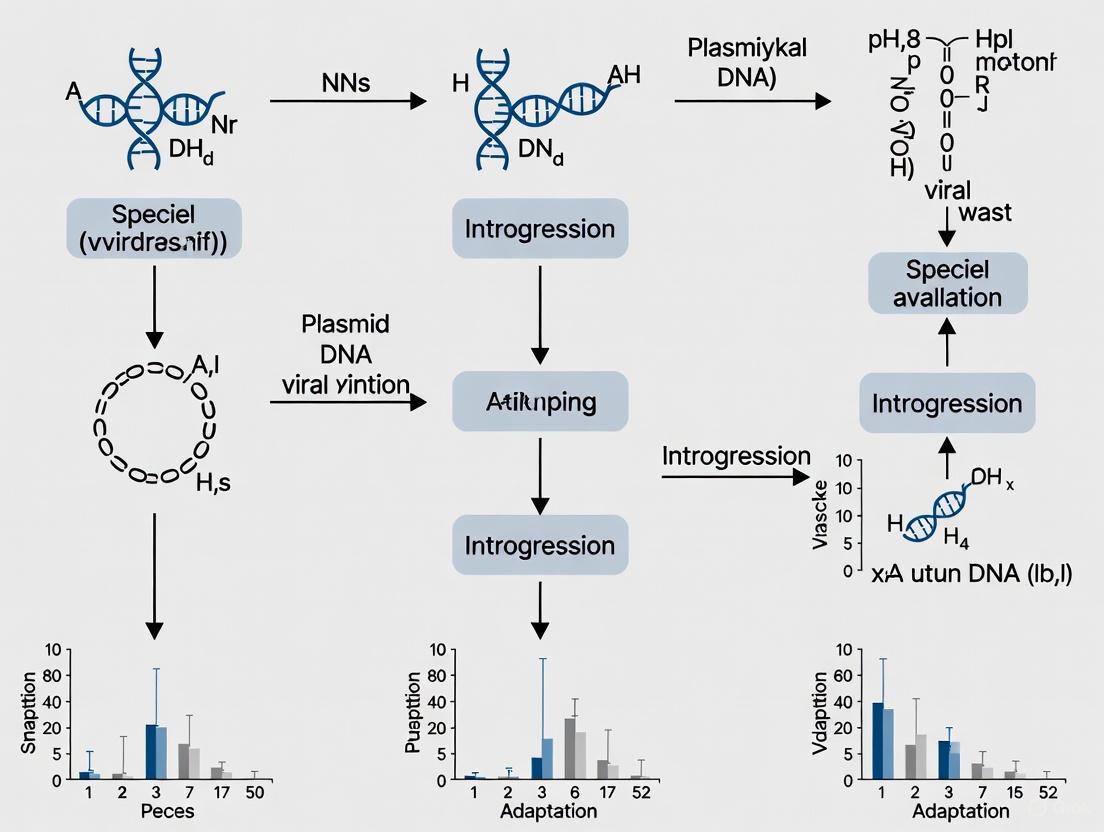
This article synthesizes current research on adaptive introgression—the natural transfer of beneficial genetic variants between species—as a critical mechanism for rapid evolution in extreme environments.
Adaptive Introgression: The Evolutionary Engine Powering Species Survival in Extreme Environments
Abstract
This article synthesizes current research on adaptive introgression—the natural transfer of beneficial genetic variants between species—as a critical mechanism for rapid evolution in extreme environments. For researchers and drug development professionals, we explore the foundational principles of introgression, detail cutting-edge genomic detection methodologies, and address key challenges in validating adaptive gene flow. By presenting comparative analyses across diverse taxa—from trees and rodents to bacteria—we highlight the ubiquity and impact of this process. The review concludes by examining the translational potential of these evolutionary concepts for identifying novel genetic resources for biomedicine and clinical applications in an era of rapid environmental change.
What is Adaptive Introgression? Unraveling the Genetic Basis of Evolutionary Rescue
Introgression, the transfer of genetic material between species through hybridization and repeated backcrossing, has evolved from being considered a maladaptive process to a recognized critical mechanism for rapid adaptation. This technical review synthesizes current genomic evidence demonstrating how adaptive introgression enables species resilience to extreme environmental pressures, including climate change, aridification, and high-altitude hypoxia. We present quantitative meta-analyses of introgression patterns across taxa, detailed experimental protocols for identifying introgressed loci, and visualizations of key biological pathways influenced by introgressed alleles. The accumulated evidence firmly establishes that introgression serves as an evolutionary shortcut, pre-testing adaptive alleles in donor species and facilitating their rapid incorporation into recipient genomes, thereby enhancing survival in challenging environments.
Introgression represents a natural evolutionary process wherein genetic material is permanently incorporated from one species into the gene pool of another through successive cycles of hybridization and backcrossing [1]. Historically regarded as a maladaptive process that could lead to outbreeding depression or genetic swamping [1], this perception has been fundamentally transformed by genomic evidence revealing introgression as a potent driver of adaptive evolution.
The paradigm shift accelerated after 2012, as genomic studies established that introgression can provide beneficial alleles that enable species to adapt more rapidly than through de novo mutation alone [1]. Unlike new mutations, which begin with minimal prevalence (1/2 N), introgressed alleles may enter a population with higher initial frequency, accelerating their potential fixation through selective sweeps [1]. This process is now documented across the biological complexity gradient, from bacteria and protists to fungi, plants, and vertebrates [1].
Adaptive introgression enhances adaptive capacity and drives evolutionary leaps by bypassing intermediate evolutionary stages [1]. This mechanism increases species survival potential, promotes range expansion, and can even support evolutionary rescue in rapidly changing environments [1]. The following sections examine the genomic evidence, molecular mechanisms, and experimental approaches for studying introgression as a critical evolutionary force.
Genomic Evidence of Adaptive Introgression Across Taxa
Quantitative Patterns of Adaptive Introgression
Table 1: Documented Cases of Adaptive Introgression Across Biological Kingdoms
| Taxonomic Group | Species/System | Introgressed Genomic Regions | Adaptive Trait Conferred | Environmental Stressor |
|---|---|---|---|---|
| Flowering Plants | Dendrobium catenatum (orchid) | ~1% of genome; genes: CDPK, HHP, PIF, BRI1, FY [2] | Drought/cold stress tolerance; metal-ion resistance | Arid, metal-enriched sedimentary habitats [2] |
| Trees | Populus fremontii → P. angustifolia | RFLP-755, RFLP-754, RFLP-1286 markers [3] | Survival in warmer, drier conditions | Climate warming [3] |
| Trees | Pterocarya species (wingnuts) | PIEZO1, WRKY39, VDAC3, CBL1, RAF [4] | Environmental adaptation to heterogeneous conditions | Mountain environmental heterogeneity [4] |
| Rodents | Eospalax baileyi → E. cansus | Genes related to energy metabolism, cardiovascular development [5] | High-altitude hypoxia adaptation | Plateau environment [5] |
| Corals | Acropora species | Multiple introgressed regions with faster evolution [6] | Coping with rapid sea-level changes | Climate change, sea-level fluctuations [6] |
| Parasitic Flukes | S. bovis → S. haematobium | 15 introgressed genes approaching fixation [7] | Unknown adaptive traits | Environmental/host challenges [7] |
Genomic Consequences and Evolutionary Dynamics
The genomic architecture of introgression reveals distinctive patterns. Studies frequently identify "islands of differentiation" - genomic regions exhibiting unusually high differentiation between populations or species, often involved in reproductive isolation [1]. Conversely, introgressed regions typically contain lower genetic load and higher genetic diversity compared to the genomic background [4].
In the Pterocarya system, introgressed regions between P. hupehensis and P. macroptera show distinct characteristics: they exhibit minimal genetic divergence yet elevated recombination rates, facilitating the retention of adaptive variation [4]. This pattern suggests that introgression can create genomic regions with enhanced evolutionary potential.
The schistosome system reveals another critical dimension - "introgression deserts" on sex chromosomes that maintain species integrity despite historical gene flow [7]. These regions resistant to introgression are enriched on sex chromosomes, highlighting their role in reproductive isolation.
Table 2: Genomic Impact of Adaptive Introgression Across Systems
| Study System | Percentage of Genome Introgressed | Key Genomic Features | Potential Evolutionary Outcome |
|---|---|---|---|
| Dendrobium orchids [2] | ~1% | Unidirectional introgression; differential expression of paralogs | Colonization of extreme habitats |
| Populus hybrids [3] | Not quantified (marker-specific) | Specific RFLP markers associated with survival | Climate resilience |
| Pterocarya wingnuts [4] | Not quantified (region-specific) | Lower genetic load; higher diversity and recombination | Long-term adaptive potential |
| Davidia involucrata [8] | 138 of 747 climate-associated loci | Reduced genomic vulnerability in admixed populations | Mitigated climate change risk |
| Schistosomes [7] | 15 genes approaching fixation | Introgression deserts on sex chromosomes | Maintained species integrity |
Experimental Methodologies for Introgression Research
Genomic Approaches and Workflows
The detection and validation of adaptive introgression requires integrated genomic, environmental, and experimental approaches. The following workflow visualization outlines the primary methodological framework:
Detailed Experimental Protocols
Genome-Environment Association Analysis
Protocol based on Davidia involucrata study [8]:
Sample Collection: 196 individuals from 18 populations across the species' distribution range, ensuring coverage of diverse environmental conditions.
DNA Sequencing:
- Utilize restriction-associated DNA sequencing (RAD-seq) for genome-wide SNP discovery
- Extract genomic DNA using modified CTAB protocol
- Digest genomic DNA with MseI-TaqI restriction enzyme pair
- Prepare libraries with 400-bp insert size
- Sequence on Illumina HiSeq 2500 to generate 150-bp paired-end reads
Quality Control & SNP Calling:
- Demultiplex using process_radtags tool from STACKS v.2.2
- Filter low-quality reads (Q<20) using Trimmomatic v.0.39
- Align filtered reads to reference genome using BWA v.0.7.17
- Remove PCR duplicates using PICARD tools
- Call variants using bcftools "mpileup" with quality filters:
- Quality score < 30.0
- Quality by depth (QD) < 5.0
- Genotype read depth (DP) < 4 and DP > 150
- Strand odds ratio (SOR) < 10.0
- Retain only diallelic SNPs with <40% missing data and minor allele frequency (MAF) ≥0.01
Climate-Associated Locus Identification:
- Extract climate data for each sampling location (19 bioclimatic variables)
- Perform redundancy analysis (RDA) to identify climate-associated SNPs
- Use gradient forest analysis to model genotype-environment relationships
- Apply false discovery rate (FDR) correction for multiple testing
Common Garden Experiment Design
Protocol based on Populus study [3]:
Experimental Setup:
- Establish common garden in environment representing future climate scenario
- Include parental species, F1 hybrids, and backcross genotypes
- Implement randomized block design with replicates
- Monitor over multiple decades (31 years in the reference study)
Phenotypic Measurements:
- Record survival rates at regular intervals
- Measure biomass accumulation (e.g., tree diameter, height)
- Document reproductive maturity and success
- Assess stress-responsive traits (e.g., leaf morphology, physiological parameters)
Genotype-Phenotype Association:
- Genotype all individuals using genetic markers (RFLP, SNPs)
- Correlate specific introgressed markers with survival and growth
- Calculate selection coefficients for different genotypes
- Model odds ratios for survival based on genetic composition
Molecular Mechanisms of Adaptive Introgression
Key Signaling Pathways and Biological Processes
Introgression facilitates adaptation through the transfer of alleles affecting critical biological pathways. The following diagram illustrates the primary pathways and their interactions in environmental adaptation:
Gene-Specific Adaptive Mechanisms
In the Dendrobium system, detailed molecular analysis revealed that introgressed loci such as CDPK, HHP, PIF, BRI1, and FY show distinct selection signatures and differential expression compared with their paralogs, with each playing specific roles in drought and cold-stress responses [2]. Similarly, introgressed loci containing CIPK23, PDR9, and HAM demonstrated differential expression relative to their paralogous genes and alleles, indicating their potential involvement in responses to metal-ion stress [2].
In schistosomes, 15 introgressed genes from S. bovis are approaching fixation in northern S. haematobium populations, with four genes potentially driving adaptation, though their specific functions require further characterization [7]. This pattern suggests strong selective advantage for these introgressed alleles.
The Scientist's Toolkit: Research Reagent Solutions
Table 3: Essential Research Reagents and Platforms for Introgression Studies
| Reagent/Platform | Specific Application | Function | Example Implementation |
|---|---|---|---|
| STACKS v.2.2 | RAD-seq data processing | Demultiplexing and initial processing of RAD-seq data | Identification of genome-wide SNPs in Davidia involucrata [8] |
| Trimmomatic v.0.39 | Sequence quality control | Filtering of low-quality reads and adapter removal | Quality control in RAD-seq pipeline [8] |
| BWA v.0.7.17 | Sequence alignment | Alignment of sequencing reads to reference genome | Alignment to Davidia involucrata reference genome [8] |
| ADMIXTURE v.1.30 | Population structure analysis | Inference of ancestry proportions and admixture | Identification of admixed populations in schistosomes [7] |
| Gradient Forest Analysis | Genotype-environment association | Modeling relationship between genetic and environmental variation | Assessment of genomic vulnerability in Davidia involucrata [8] |
| RFLP Markers | Genetic mapping | Tracking specific introgressed regions in experimental crosses | Identification of adaptive markers in Populus [3] |
| Common Garden Setup | Phenotypic validation | Assessing fitness consequences of introgression in controlled environment | 31-year climate adaptation experiment in Populus [3] |
The evidence synthesized in this review demonstrates that adaptive introgression represents a critical evolutionary mechanism enabling rapid response to environmental extremes. From drought-tolerant orchids to climate-resilient trees and high-altitude adapted rodents, the transfer of pre-tested adaptive alleles through introgression provides a evolutionary shortcut that enhances species survival under selective pressures.
The molecular mechanisms involve diverse biological pathways—from hypoxia response and cardiovascular development to stress signaling and ion transport—that collectively enable physiological adaptation to challenging environments. The methodological advances in genomic analysis, particularly genome-environment associations and long-term common garden experiments, provide robust frameworks for detecting and validating adaptive introgression.
For conservation biology, these findings suggest reconsidering hybrid-specific management policies, as natural hybridization may represent a valuable adaptive resource rather than a conservation concern [3]. In the context of accelerating climate change, understanding and potentially facilitating adaptive introgression may prove crucial for enhancing species resilience and maintaining ecosystem functions.
Evolutionary adaptation to novel environments can occur through two primary mechanisms: the acquisition of beneficial alleles from closely related species via adaptive introgression, or the emergence of new genetic variants within a population through de novo mutation. While both processes introduce genetic novelty, they differ dramatically in their dynamics, tempo, and genomic consequences. Adaptive introgression provides pre-tested, complex adaptations that can spread rapidly through populations, whereas de novo mutations represent novel solutions that emerge from scratch. This review synthesizes current understanding of these contrasting pathways, highlighting their respective roles in species adaptation to extreme environments with implications for evolutionary biology, conservation, and biomedical research.
The genomic revolution has transformed our understanding of evolutionary mechanisms, revealing that adaptive introgression and de novo mutation represent fundamentally different strategies for evolutionary adaptation. Adaptive introgression involves the natural transfer of genetic material between species through hybridization and backcrossing, followed by selection on introgressed alleles [1]. This process allows recipient species to rapidly acquire beneficial alleles that have been "pre-tested" by selection in the donor species. In contrast, de novo genes evolve from previously non-genic DNA through mutations that create novel functional elements [9]. Historically considered nearly impossible, de novo gene origination is now recognized as a significant source of genetic innovation across diverse eukaryotic lineages [9].
These contrasting pathways operate at different tempos and scales. Introgression can transfer complex, multi-gene adaptations in a single event, while de novo mutations typically arise singly and must accumulate over time. The relative contribution of each mechanism to adaptation depends on multiple factors including population size, evolutionary history, environmental pressure, and genomic architecture. Understanding these complementary pathways is particularly crucial for predicting how species may respond to rapidly changing environments, including climate change and emerging disease pressures.
Fundamental Mechanisms and Theoretical Frameworks
Adaptive Introgression: A Gateway for Pre-Tested Adaptations
Adaptive introgression functions as an evolutionary shortcut, allowing species to bypass the slow process of accumulating beneficial mutations de novo. The process begins with hybridization between species, producing hybrid offspring that undergo backcrossing with parental species. If backcrossed offspring continue to reproduce, this can result in permanent transfer of DNA from one species to another [10]. Crucially, introgressed alleles that increase fitness may spread rapidly through the recipient population.
The theoretical basis for adaptive introgression challenges historical views that considered introgression primarily a homogenizing force that counteracts adaptation [1]. Contemporary research demonstrates that introgression is instead a widespread evolutionary process that can rapidly introduce functional variation. Unlike neutral alleles subject to genetic drift, adaptively introgressed alleles can quickly increase in frequency due to positive selection, sometimes through selective sweeps [1].
Table 1: Key Characteristics of Adaptive Introgression
| Feature | Description | Evolutionary Implication |
|---|---|---|
| Source of Variation | Cross-species gene transfer | Access to pre-adapted alleles |
| Time Scale | Rapid adaptation (generations to decades) | Faster than de novo mutation accumulation |
| Genetic Architecture | Can transfer complex, multi-gene traits | Bypasses need for stepwise mutation |
| Prevalence | Widespread across tree of life [10] | Common mechanism in diverse taxa |
| Allele Frequency | Starts at higher frequency than new mutations | Increased fixation probability |
De Novo Gene Evolution: The Emergence of Novelty from Non-Coding DNA
De novo gene evolution represents the most radical form of genetic novelty, wherein protein-coding genes originate from previously non-genic sequence. This process contradicts historical assumptions that considered such emergence practically impossible [11]. The prevailing conundrum—how functional genes can emerge from random sequence—has been addressed through several hypothesized mechanisms:
First, an appreciable fraction of random sequences may indeed produce biologically beneficial effects. Second, de novo genes may emerge from sequences already enriched for beneficial properties. Third, evolution may test sufficient sequences that it successfully samples the functional minority of sequence space [11]. Evidence now supports de novo origination as a consistent feature of eukaryotic genomes, documented in yeast, plants, flies, mammals, and primates [9].
The molecular pathways for de novo gene birth remain incompletely understood but may proceed through either an "ORF-first" pathway (where an open reading frame emerges before transcription) or an "RNA-first" pathway (where transcription precedes coding potential) [9]. Recent research has identified numerous de novo genes in humans and primates, many expressed in brain tissue, suggesting potential roles in lineage-specific adaptations [9].
Table 2: Key Characteristics of De Novo Gene Evolution
| Feature | Description | Evolutionary Implication |
|---|---|---|
| Source of Variation | Novel mutations in non-genic DNA | Truly novel genetic elements |
| Time Scale | Slow (thousands to millions of years) | Gradual refinement of proto-genes |
| Genetic Architecture | Typically single genes | Limited to simple traits initially |
| Prevalence | Consistent trickle across eukaryotes [9] | Widespread but individually rare |
| Allele Frequency | Starts very low (1/2N) | High probability of loss by drift |
Comparative Analysis: Rate, Scale, and Dynamics of Adaptation
Quantitative Comparison of Evolutionary Parameters
The two adaptation mechanisms differ dramatically in their quantitative parameters, particularly regarding the initial frequency and establishment probability of beneficial alleles. De novo mutations begin with a prevalence of just 1/2N (where N is the population size), making them highly vulnerable to genetic drift regardless of their beneficial effects [1]. In contrast, introgressed alleles enter populations at higher frequencies determined by hybridization rates, substantially increasing their probability of fixation [1]. This frequency advantage can be critical in small populations where genetic drift strongly opposes the spread of beneficial de novo mutations.
The tempo of adaptation also differs substantially. Adaptive introgression can facilitate rapid evolutionary response to environmental change, with documented cases of adaptation occurring in less than 20 generations [10]. De novo adaptation typically requires much longer time scales, though the constant "trickle of proto-genes" [9] provides raw material for gradual adaptation.
Table 3: Quantitative Comparison of Adaptive Mechanisms
| Parameter | Adaptive Introgression | De Novo Mutation |
|---|---|---|
| Initial Allele Frequency | Higher (hybridization-dependent) | Very low (1/2N) |
| Establishment Probability | Moderate to high | Low |
| Time to Fixation | Rapid (can be <20 generations) | Slow (typically >>100 generations) |
| Genetic Complexity | Can transfer multi-gene complexes | Typically single genes |
| Pre-adaptation Testing | Alleles pre-tested in donor species | Novel functionality untested |
Genomic Distribution and Patterns
Both adaptive mechanisms show distinct genomic patterns and distributions. Introgressed regions are distributed non-randomly across genomes, with certain regions introgressing more readily than others [10]. Genomic features influencing introgression patterns include:
- Gene density: Introgressed DNA occurs less frequently in high gene-density regions [10]
- Recombination rate: Regions with low recombination experience less introgression [10]
- Functional elements: Introgression is reduced in protein-coding regions and promoters compared to enhancers [12]
- Incompatibility loci: Genomic regions containing hybrid incompatibilities show resistance to introgression [10]
De novo genes also show non-random genomic distributions, with several studies noting excesses on specific chromosomes (e.g., X-linked in Drosophila) and expression biases (e.g., testis expression) [9]. The location of proto-genes may be influenced by local genomic context, including chromatin accessibility and transcriptional activity.
Methodological Approaches and Experimental Protocols
Detecting and Validating Adaptive Introgression
Research into adaptive introgression has been revolutionized by whole-genome sequencing and sophisticated population genetic analyses. The following experimental workflow represents state-of-the-art methodology for detecting adaptive introgression:
Figure 1: Experimental Workflow for Detecting Adaptive Introgression
Key methodological considerations include:
Sample Design: Studies should include multiple populations from both sympatric and allopatric distributions of putative donor and recipient species. For example, research on plateau zokors and Gansu zokors included 19 populations across their distribution in China [5].
Sequencing Approaches: Low-coverage whole-genome resequencing (LcWGR) provides cost-effective genomic data for numerous individuals. The zokor study sequenced 184 individuals, achieving an average depth of 1.73×, which proved sufficient for population genomic analyses [5].
Introgression Detection Methods: Two primary approaches exist:
- Global ancestry analysis: Identifies introgression and estimates proportion of genome moved between species
- Local ancestry inference: Uses statistical frameworks (e.g., hidden Markov models) to identify specific genomic regions of introgression [10]
Selection Tests: Methods like Fst outlier analysis, Tajima's D, and extended haplotype homozygosity can identify signatures of selection on introgressed regions.
Identifying and Characterizing De Novo Genes
The identification of de novo genes presents unique methodological challenges due to the risk of false positives from undetected homologs or annotation errors. A conservative approach includes:
Figure 2: Workflow for Identifying and Validating De Novo Genes
Critical methodological considerations for de novo gene studies:
Orthology Determination: Accurate identification of orthologous sequences in outgroup species is essential. This requires high-quality genome assemblies and annotations for multiple closely related species.
Evidence of Absence: Conservative criteria require positive evidence of the gene's absence from at least two outgroup species, including evidence that orthologous sequences are not transcribed or are translated differently [11].
Functional Validation: Given the potential for spurious transcription and translation, experimental validation of biological function is crucial. This typically involves gene knockout or knockdown followed by phenotypic assessment.
Distinguishing from Overprinting: De novo origins must be distinguished from "overprinting," where novel genes arise from alternative reading frames of existing genes [9].
The Scientist's Toolkit: Essential Research Reagents and Solutions
Table 4: Essential Research Reagents for Evolutionary Genomics
| Reagent/Solution | Application | Function | Example Use |
|---|---|---|---|
| Whole-Genome Sequencing Kits | Genome-wide variant discovery | Provides comprehensive genetic data | Identifying introgressed regions [5] |
| RNA-seq Library Prep Kits | Transcriptome analysis | Detects gene expression and novel transcripts | Validating de novo gene expression [9] |
| Hi-C Library Prep Kits | Genome assembly and architecture | Maps chromatin interactions | Studying genomic context of introgression |
| CRISPR-Cas9 Systems | Functional validation | Gene knockout and editing | Testing de novo gene function [11] |
| Antibodies for Epitope Tagging | Protein detection and localization | Tracking novel proteins | Characterizing de novo protein localization |
| Population Genetics Software | Data analysis | Detects selection and introgression | Identifying selectively swept regions [5] |
Case Studies in Extreme Environment Adaptation
High-Altitude Adaptation Through Introgression in Zokors
Subterranean rodents of the Myospalacinae subfamily provide exceptional models for studying high-altitude adaptation due to their specialized lifestyle requiring hypoxia tolerance. Research on plateau zokors (Eospalax baileyi) and Gansu zokors (E. cansus) has demonstrated compelling evidence of adaptive introgression facilitating high-altitude adaptation [5].
These sister species diverged approximately 3.22 million years ago and now show sympatric distribution along the eastern edge of the Qinghai-Tibet Plateau. Genomic analyses revealed adaptive introgression from the high-altitude plateau zokors to the lower-altitude Gansu zokors, enabling the latter to colonize high-altitude environments [5]. Positively selected genes with introgressed haplotypes included genes related to:
- Energy metabolism
- Cardiovascular system development
- Calcium ion transport
- Response to hypoxia
This case study exemplifies how adaptive introgression can provide pre-evolved solutions to environmental challenges, in this case enabling relatively rapid adaptation to high-altitude conditions.
De Novo Antifreeze Glycoprotein in Arctic Codfish
The northern gadid antifreeze glycoprotein (AFGP) represents a classic example of de novo gene evolution in response to extreme environmental pressure. This protein evolved approximately 3 million years ago, coinciding with the Pliocene glaciation event, and is essential for survival in subzero Arctic waters [11].
AFGP originated de novo from non-genic sequence and consists of repetitive Thr-(Ala/Pro)-Ala repeats with a signal peptide for secretion. The protein exists in an ensemble of conformations and functions by inhibiting ice crystal formation through interactions between hydroxyl groups on its glycosylated residues and ice crystals [11].
Notably, Antarctic notothenioid fish independently evolved a nearly identical antifreeze glycoprotein, but through exaptation of an ancestral protease gene rather than de novo origination [11]. This convergence demonstrates how similar environmental pressures can drive evolution through different molecular pathways.
Implications for Research and Applications
Conservation Biology and Evolutionary Rescue
Understanding these adaptive pathways has profound implications for conservation biology, particularly regarding evolutionary rescue—the process by which populations adapt to rapid environmental change. Adaptive introgression may provide a rapid mechanism for transferring climate-relevant adaptations between species. Managed gene flow between populations or closely related species could enhance adaptive potential in threatened populations [13].
However, introgression also carries risks, including outbreeding depression and genetic swamping [13]. Conservation strategies must balance these risks against the potential benefits of enhanced adaptive variation.
Agricultural Improvement and Crop Breeding
Crop wild relatives contain substantial genetic diversity lost during domestication bottlenecks. Adaptive introgression from wild relatives provides a mechanism for reintroducing valuable traits, particularly stress resistance genes relevant to climate change adaptation [13]. For example, wild emmer wheat contains ~70% more diversity than domesticated wheat, including numerous biotic and abiotic stress resistance genes [13].
Screening for naturally occurring wild introgressions in cultivated gene pools may identify valuable alleles for breeding programs, potentially providing more rapid results than artificial crossing approaches [13].
Biomedical Research and Human Health
Archaic introgression from Neanderthals and Denisovans has contributed functionally important genetic variation to modern humans. These introgressed haplotypes influence immune function [12], skin physiology [12], and metabolic processes [12]. Similarly, human-specific de novo genes have been implicated in diseases including cancer [9] and neurological disorders [9].
Understanding the origins and functions of these genetic elements provides insights into human evolutionary history and the genetic basis of disease susceptibility.
Adaptive introgression and de novo mutation represent complementary evolutionary pathways with distinct characteristics and implications. Introgression provides a rapid mechanism for acquiring complex, pre-tested adaptations, while de novo mutation creates truly novel genetic elements over longer timescales. The relative importance of each mechanism varies across taxonomic groups, environmental contexts, and evolutionary timescales.
Future research should focus on integrating understanding of these mechanisms across biological levels, from genomic architecture to ecosystem consequences. Developing more sophisticated methods for detecting ancient introgression events and characterizing the functional properties of de novo genes will enhance our understanding of evolutionary processes. As environmental change accelerates, understanding these adaptive pathways becomes increasingly crucial for predicting evolutionary outcomes and managing biodiversity.
In the context of species adaptation to extreme environments, introgression—the transfer of genetic material between species through hybridization and repeated backcrossing—serves as a critical evolutionary mechanism. The genomic architecture of introgression is characterized by pronounced heterogeneity, with certain genomic regions exhibiting greater permeability to gene flow than others. This variation in permeability is not random but is shaped by a complex interplay of evolutionary forces that filter which genetic variants can cross species boundaries and become established in recipient populations. Understanding this architecture is paramount for discerning how life adapts to rapidly changing environments, including those considered extreme, such as high-altitude plateaus, arid regions, or environments under significant anthropogenic pressure [14] [15].
The semi-permeable nature of species' genomes is a fundamental concept in evolutionary biology. Loci associated with broadly advantageous traits, such as environmental adaptation, are observed to introgress more readily, while alleles that contribute to reproductive isolation or are part of negative epistatic interactions typically exhibit limited or no introgression [14] [16]. This selective filtering means that adaptive introgression can provide a rapid evolutionary pathway, transferring pre-tested adaptive alleles across species lines much faster than de novo mutation alone would allow [15]. This review synthesizes current knowledge on the genetic architecture of introgression, detailing the mechanisms that govern regional permeability and its profound implications for species resilience in the face of environmental challenges.
The Evolutionary Framework of Introgression
Defining Introgression and Its Adaptive Role
Adaptive introgression is formally defined as the process by which relatively small genomic regions from a donor species are transferred to a recipient species and subsequently maintained by natural selection due to their positive fitness effects [14]. This process widens the pool of genetic variation available for adaptation, alongside standing variation and de novo mutation [14]. In contrast to new mutations, introgressed alleles arrive with a selective history, having been pre-tested in the genomic background of the donor species, which can accelerate adaptation in the recipient species, particularly in rapidly changing environments [15].
The adaptive significance of introgression is particularly evident in extreme environments. For example, in subterranean rodents (zokors) on the Qinghai-Tibet Plateau, introgression of genes related to energy metabolism, cardiovascular development, and hypoxia response from the plateau zokor (Eospalax baileyi) to the Gansu zokor (E. cansus) appears to have facilitated adaptation to high-altitude conditions [15]. Similarly, in foundation tree species like Populus, introgression of genetic markers from a warm-adapted species into a cool-adapted species has been linked to increased survival under warmer, drier conditions, demonstrating how gene flow can enhance climate change resilience [3].
The Genomic Landscape of Introgression
The genomic landscape of introgression is characterized by a mosaic of blocks of varying ancestry. The permeability of different genomic regions is governed by a balance between selective pressures: while selection often acts globally against foreign ancestry due to genetic incompatibilities or hybridization load, it can also favor specific introgressed regions that confer adaptive advantages [16].
Emerging principles indicate that ancestry from the minor parent (the species contributing a smaller proportion to the hybrid genome) is often selectively removed from the most functionally important regions of the genome [16]. This purging is driven by multiple mechanisms, including ecological selection against hybrids, differences in the burden of deleterious variants between species (hybridization load), and negative epistatic interactions between genes from the two parental species (hybrid incompatibilities) [16]. Conversely, regions experiencing adaptive introgression often display longer tract lengths due to recent introgression or the effects of positive selection, which maintains these blocks against the fragmenting forces of recombination [17].
Mechanisms Governing Genomic Permeability
Selection as the Primary Filter
Natural selection operates as the predominant filter determining the permeability of genomic regions to introgression.
- Directional Selection for Adaptive Alleles: Genomic regions harboring alleles that confer a selective advantage in the recipient species' environment are more likely to introgress. These alleles often relate to local adaptation and can spread rapidly, resulting in wider cline widths than neutral markers [18]. For instance, in hybridizing spruce trees (Picea), alleles with narrow clines are under strong selection and are associated with climatic variables such as precipitation as snow and mean annual temperature [18].
- Selection Against Dobzhansky-Muller Incompatibilities (DMIs): DMIs occur when alleles that function well within their native genomic background cause reduced fitness when brought together in a hybrid genome. Genomic regions containing or linked to such incompatibilities are strongly resistant to introgression, as their passage would reduce hybrid fitness [14] [16].
- Background Selection and Hill-Robertson Effects: Selection against linked deleterious alleles (background selection) can reduce effective population size and hinder the introgression of even potentially beneficial alleles in regions of low recombination. Conversely, in areas of high recombination, beneficial alleles can more readily escape their genetic background and introgress independently [16].
Genomic Features and Architecture
The intrinsic properties of the genome itself create a heterogeneous landscape for introgression.
- Recombination Rate Variation: Recombination is a key determinant of introgression patterns. In high-recombination regions, selection can act more efficiently on individual loci, allowing beneficial alleles to introgress without their linked genomic background. In low-recombination regions, such as inversions or centromeres, large blocks of DNA are inherited as a single unit, leading to suppressed introgression overall, or facilitating the co-introgression of adaptive gene complexes [16].
- Functional Density and Pleiotropy: Genomic regions with high gene density or genes with pleiotropic effects are often less permeable to introgression. This is because introgressed segments in these regions are more likely to disrupt co-adapted gene complexes or introduce alleles with negative fitness consequences across multiple traits [16]. Studies across diverse taxa consistently show that functionally important regions, such as those with essential genes, tend to harbor less foreign ancestry [16].
Table 1: Key Mechanisms Influencing Genomic Permeability to Introgression
| Mechanism | Effect on Permeability | Genomic Outcome | Example |
|---|---|---|---|
| Positive Selection | Increases | Wider clines; longer haplotypes | Vkorc1 gene in house mice conferring rodenticide resistance [17] |
| Negative Selection (DMIs) | Decreases | Narrow clines; ancestry dips | Genomic islands of differentiation in Picea spruces [18] [19] |
| High Recombination | Increases (for individual loci) | Fine-scale ancestry mosaics | Most of the genome in Heliconius butterflies [16] |
| Low Recombination (e.g., Inversions) | Decreases (or facilitates co-introgression) | Large blocked regions | Chromosomal inversions in many sunflowers and flies [16] |
| High Gene Density/Pleiotropy | Decreases | Reduced ancestry in functional cores | Regions with essential genes across diverse taxa [16] |
Demographic and Ecological Influences
The permeability of genomes is also modulated by factors external to the genome itself.
- Divergence Time: The level of sequence divergence between hybridizing species strongly influences introgression rates. Higher divergence generally leads to reduced introgression due to increased incompatibilities and reduced efficiency of homologous recombination. In bacteria, for example, homologous recombination is typically restricted to genomes with less than 2-10% nucleotide divergence [20].
- Population Demography and Hybrid Zone Structure: The spatial structure of hybrid zones and the demographic history of the hybridizing populations shape introgression patterns. Asymmetric introgression, where gene flow is greater in one direction, is common and can be influenced by past demographic events, such as cline movement, or differences in population size and fitness [18].
- Environmental Gradients: In nature, hybrid zones often occur across environmental ecotones. Alleles that are adaptive in one part of the gradient but maladaptive in another will exhibit restricted introgression, maintaining species integrity through environmental selection [18].
Methodologies for Detecting and Analyzing Introgression
Genomic Signatures and Statistical Tests
A suite of statistical methods has been developed to detect introgressed regions and distinguish them from other sources of genealogical discordance like Incomplete Lineage Sorting (ILS).
Table 2: Key Methods for Detecting Introgression and Selective Pressures
| Class of Investigation | Method/Tool | Underlying Principle | Key Application |
|---|---|---|---|
| Introgression Detection | Patterson's D statistic | Detects excess of shared derived alleles between species | Genome-wide test for presence of introgression [14] |
| f~d~ | A modified statistic to identify candidate introgressed regions | Pinpoints specific genomic regions with excess allele sharing [14] | |
| S* Statistics / HMMs | Leverages tract length and linkage disequilibrium in admixed populations | Identifies introgressed fragments; infers local ancestry [14] [17] | |
| Selection Signature Detection | iHS / EHH | Detects extended haplotype homozygosity around a selected variant | Finds recent positive selection, common in long introgressed haplotypes [14] |
| Tajima's D, F~ST~ | Measures allele frequency distribution and population differentiation | Identifies regions under selection; high F~ST~ can indicate locally adapted alleles [14] [18] | |
| Cline Analysis | Geographic Clines | Models change in allele frequency across a geographical transect | Estimates cline width and center; infers strength of selection and gene flow [18] |
| Genomic Clines | Models ancestry deviation against genome-wide average | Identifies loci with excess or deficit of ancestry (under/over-dominance) [18] |
Linking Genotypes to Phenotypes and Fitness
Establishing adaptive introgression requires moving beyond genomic signatures to demonstrate functional consequences.
- Admixture Mapping and QTL Analysis: These approaches link introgressed genomic regions to phenotypic variation. In sticklebacks, admixture mapping identified genomic regions associated with male nuptial colour, and in Mimulus, it revealed the genetic basis of trichome differentiation [14].
- Fitness Assays in Common Gardens: Direct measurement of fitness effects is the most critical step. Long-term common garden experiments, such as those with Populus species, allow researchers to assay the survival and growth of different genotypes, including introgressed individuals, under controlled or realistic field conditions, directly testing the adaptive value of introgressed alleles [3].
- Advanced Association Mapping: Methods like Coal-Map have been developed to account for the complex sample relatedness and local genealogical variation introduced by introgression and ILS. This improves the power to identify the genomic architecture of introgressed traits [17].
Case Studies in Extreme Environments
High-Altitude Adaptation in Zokors
The Qinghai-Tibet Plateau (QTP) presents a extreme environment characterized by hypoxic (low oxygen) conditions. Genomic analysis of the high-altitude plateau zokor (Eospalax baileyi) and the lower-altitude Gansu zokor (E. cansus) revealed evidence of adaptive introgression from the former to the latter. This introgression involved genes with functions related to energy metabolism, cardiovascular system development, calcium ion transport, and hypoxia response. The transfer of these pre-adapted alleles likely accelerated the adaptation of Gansu zokor populations to the plateau environment, a clear example of how introgression can provide a rapid solution to environmental challenges [15].
Climate Resilience in Foundation Trees
Riparian foundation tree species, such as cottonwoods (Populus), are critical to their ecosystems. A 31-year common garden study simulating a warmer, drier climate (a proxy for climate change) planted genotypes of the low-elevation, warm-adapted Populus fremontii, the high-elevation, cool-adapted P. angustifolia, and their hybrids. The study found that P. angustifolia and backcrossed hybrids experienced high mortality (~70-75%), which increased with the climatic transfer distance from their source population. Crucially, survival among these vulnerable groups was significantly associated with the presence of specific introgressed genetic markers (e.g., RFLP-1286) from P. fremontii. Trees carrying the introgressed marker had approximately 75% greater survival, demonstrating that introgression directly enhanced climate change resilience [3].
Historical Environmental Changes in Spruces
Research on three closely related spruce species (Picea asperata, P. crassifolia, and P. meyeri) revealed distinct genetic differentiation despite substantial gene flow among them. The study uncovered bidirectional adaptive introgression, even between allopatrically distributed species pairs. Dozens of the identified adaptive introgressed genes were linked to stress resilience and flowering time. These findings suggest that adaptive introgression has been a prevalent and bidirectional process in the evolutionary history of these trees, likely promoting their adaptability to historical environmental changes and potentially enhancing their resilience to future climate shifts [19].
The Scientist's Toolkit: Key Research Reagents and Materials
Table 3: Essential Reagents and Resources for Introgression Studies
| Research Reagent / Resource | Function and Application | Example Use Case |
|---|---|---|
| Reference Genome Assemblies | Essential for read alignment, variant calling, and phylogenetic framing. High-quality, chromosome-level assemblies are ideal. | Plateau zokor study used a 2.57 Gb reference genome for alignment [15]. |
| Whole-Genome Resequencing Data | Provides the raw data for detecting variants (SNPs, indels) and inferring ancestry. Low-coverage can be sufficient for population genomics. | Zokor study used low-coverage WGR of 184 individuals [15]. |
| Candidate Gene SNPs / Neutral SSRs | SNP panels in candidate genes can test specific hypotheses. Neutral Single Sequence Repeats (SSRs) help assess general population structure and gene flow. | Picea study used 86 candidate gene SNPs and 10 neutral SSRs to characterize the hybrid zone [18]. |
| RFLP or Other Genetic Markers | Used for genotyping and tracking the inheritance of specific genomic regions across hybrids and parentals. | Populus study used RFLP markers to track introgression and link to survival [3]. |
| Common Garden Facilities | Controlled environments or field plantings where genotypes from different sources are grown together to separate genetic and environmental effects on phenotype and fitness. | Critical for measuring fitness effects in Populus [3] and suggested for validation in other systems [14]. |
| Phylogenomic Software (e.g., PhyloNet-HMM) | Software designed to infer phylogenetic networks and detect introgression from genome-scale data, accounting for ILS and gene flow. | Used to uncover genome-wide introgression between mouse species [17]. |
The genetic architecture of introgression is defined by its heterogeneous and semi-permeable nature. Variation in genomic permeability is not stochastic but is a product of a multifaceted interplay between natural selection—which can either promote or inhibit the transfer of genetic material—and the genomic landscape itself, particularly features like recombination rate. The evidence from diverse taxa, from rodents and trees to bacteria, consistently underscores that adaptive introgression is a potent evolutionary mechanism. It enables a rapid response to selective pressures, allowing species to acquire complex, pre-tested adaptive alleles from relatives, which is crucial for adaptation to extreme environments like high altitudes and rapidly changing climates.
Understanding this architecture has profound implications. It challenges strict species boundaries and highlights the evolutionary importance of porous genomes. For conservation biology, this knowledge suggests that preserving the potential for gene flow, particularly in foundation species, may be critical for ecosystem resilience to global change. Future research, leveraging increasingly sophisticated genomic tools and long-term ecological studies, will continue to unravel the complexities of the introgressed genome, further illuminating its role in shaping the adaptive trajectory of life on Earth.
Detecting the Signal: Genomic Tools and Analytical Frameworks for Identifying Adaptive Introgression
Introgression, the transfer of genetic material between species through hybridization, serves as a critical evolutionary mechanism that enables species to rapidly adapt to extreme environmental conditions. This technical guide elucidates the methodologies for mapping these introgressed haplotypes to fitness traits, a process vital for understanding adaptive evolution in challenging habitats. By synthesizing current research and experimental protocols, this whitepaper provides researchers with a comprehensive framework for identifying, validating, and functionally characterizing adaptive introgression events, with particular emphasis on species inhabiting high-altitude, thermally extreme, and other physiologically stressful environments.
Under rapid environmental change, species often face adaptive challenges that outpace their ability to generate de novo beneficial mutations. Adaptive introgression provides a crucial evolutionary shortcut, allowing recipient species to acquire pre-tested genetic variants from donor species that have already evolved strategies for coping with similar environmental challenges [5]. Unlike spontaneous mutations, introgressed alleles arrive with an evolutionary history of selection in the donor species, potentially offering immediate fitness benefits in the recipient population [5]. This mechanism has repeatedly proven significant across diverse taxa, from ancient humans to subterranean rodents, particularly in extreme environments where specialized adaptations are required for survival.
The fitness landscape connecting genotype to phenotype encompasses complex relationships often involving epistatic interactions that are challenging to measure due to their high-dimensional structure [21]. Introgressed haplotypes can alter these landscapes by introducing coordinated suites of alleles that work in concert to enhance fitness. Research on genotype-phenotype maps in model systems has revealed that while additive effects often explain the majority of phenotypic variance, epistatic interactions contribute significantly, particularly in functional regions such as protein-binding sites [21]. Understanding how introgressed haplotypes navigate and reshape these fitness landscapes is fundamental to deciphering their adaptive potential.
Experimental Framework for Mapping Introgressed Haplotypes
Genomic Approaches for Introgression Detection
Population Genomic Sampling requires careful experimental design. Studies on zokors sequenced 230 individuals across 19 populations, providing robust sampling for detecting introgression events [5]. For organisms with larger genomes, low-coverage whole-genome resequencing (LcWGR) provides a cost-effective approach, as demonstrated by research that achieved 1.73× average sequencing depth while maintaining high quality metrics (Q20: 97.83%, Q30: 93.13%) [5]. This approach identified 44,735,823 SNPs after quality filtering, with approximately 39% representing missense mutations in protein-coding regions [5].
Population Genetic Analysis employs multiple complementary methods to detect introgression signals. Phylogenetic reconstruction can reveal unexpected clustering patterns, such as the mixing of high-altitude plateau zokor populations (ZQ and XW) despite their geographic separation [5]. Additional methods include:
- D-statistics for testing gene flow between closely related species
- fd statistics for quantifying the proportion of introgression in specific genomic regions
- Population branch statistics to identify loci with excessive differentiation
- Haplotype-based methods for detecting long, shared haplotypes between species
Phenotypic Assessment of Fitness Traits
Quantifying fitness traits associated with introgressed haplotypes requires careful phenotypic measurement. Research on Neosho Bass provides a model for fitness trait assessment, including:
- Growth metrics: Total length-at-age estimated from sagittal otolith annuli [22]
- Body condition indices: Calculated from mass-length relationships [22]
- Morphological measurements: Standard length, body depth, head length, orbital length [22]
- Age structure: Consensus age estimates from multiple independent assessors to reduce bias [22]
For high-altitude adaptation studies, physiological traits such as hemoglobin concentration, spleen size (relevant for oxygen storage), and cardiovascular function provide critical phenotypic measures [23]. In diving adaptations, spleen size has been identified as a key trait, with genetic variants in PDE10A associated with enlarged spleens that provide oxygen reserves during apnea [23].
Table 1: Genomic Approaches for Detecting Introgression
| Method | Application | Key Output | Considerations |
|---|---|---|---|
| D-statistics | Testing gene flow | Significant D-value indicates introgression | Sensitive to ancestral population structure |
| fd statistics | Quantifying introgression | Proportion of introgressed ancestry | Requires reference populations |
| Haplotype phasing | Identifying introgressed segments | Length and frequency of shared haplotypes | Computationally intensive |
| Population branch statistics | Detecting selection post-introgression | Excessively differentiated loci | Confounded by background selection |
Case Studies in Extreme Environment Adaptation
High-Altitude Adaptation in Humans and Rodents
Human high-altitude adaptation provides well-characterized examples of adaptive introgression. Tibetan populations exhibit adaptations to hypoxia through introgressed haplotypes containing EPAS1 and EGLN1, genes involved in the HIF signaling pathway that coordinates cellular response to low oxygen [23]. Notably, the causative haplotype for EPAS1 was introgressed from Denisovans, an archaic human species [23]. This introgression event has enabled Tibetans to thrive at high altitudes through a blunted erythropoietic response, avoiding the deleterious effects of polycythemia seen in other high-altitude populations [23].
Plateau zokors (Eospalax baileyi) and Gansu zokors (Eospalax cansus) offer a comparative model for studying high-altitude adaptation in subterranean rodents. Genomic analyses reveal adaptive introgression from plateau zokors to Gansu zokors, facilitating the latter's adaptation to the Qinghai-Tibet Plateau environment [5]. Positively selected genes in this system are enriched for functions related to energy metabolism, cardiovascular system development, calcium ion transport, and hypoxia response [5]. The sympatric distribution of these sister species, which diverged approximately 3.22 million years ago, creates natural conditions for interspecific gene flow while maintaining species boundaries [5].
Aquatic and Thermal Environment Adaptations
The Bajau people of Southeast Asia demonstrate genetic adaptations to a marine hunter-gatherer lifestyle dependent on breath-hold diving. Selection has acted on genes including PDE10A, which is associated with enlarged spleens that provide oxygen reserves during diving [23]. The large spleen phenotype results from modulation of thyroid hormone regulation, as thyroid hormone T4 dramatically affects spleen size in model organisms [23]. Additional candidate genes under selection in the Bajau include BDKRB2, which influences dive-induced peripheral vasoconstriction [23].
Cyanidiophyceae red algae thrive in high-temperature (>50°C), acidic (~pH 1), and heavy metal-rich environments that are lethal to most eukaryotes [24]. Genomic analyses reveal that adaptation to these extreme conditions has been facilitated through subtelomeric gene duplication (STGD) of functional genes and horizontal gene transfer (HGT) events [24]. Interestingly, while shared responses to environmental stress exist between Cyanidiales and Galdieriales orders, most adaptive genes (e.g., for arsenic detoxification) evolved independently in these lineages, demonstrating the power of local selection to shape eukaryotic genomes facing different stresses in adjacent microhabitats [24].
Table 2: Fitness Traits in Extreme Environment Adaptation Studies
| Study System | Fitness Traits Measured | Measurement Techniques | Key Genetic Findings |
|---|---|---|---|
| Neosho Bass [22] | Growth parameters, body condition | Otolith aging, morphometric analysis | Negative correlation between non-native ancestry and condition |
| Tibetan humans [23] | Hemoglobin concentration, pregnancy outcomes | Blood analysis, reproductive health surveys | EPAS1 and EGLN1 introgression from Denisovans |
| Bajau divers [23] | Spleen size, dive duration | Ultrasound imaging, dive monitoring | PDE10A variants associated with enlarged spleens |
| Zokors [5] | Cardiovascular function, metabolic efficiency | Physiological monitoring, transcriptomics | Genes related to energy metabolism and hypoxia response |
Methodological Protocols
Genomic Workflow for Introgression Mapping
The following workflow visualization outlines the complete process from sample collection to functional validation of introgressed haplotypes:
Signaling Pathways in Hypoxia Adaptation
The HIF signaling pathway represents a crucial mechanism for oxygen sensing and response, frequently targeted by adaptive introgression in high-altitude species:
Research Reagent Solutions Toolkit
Table 3: Essential Research Reagents and Materials
| Reagent/Material | Application | Function | Example Use |
|---|---|---|---|
| Whole Genome Sequencing Kits | Genome-wide SNP discovery | Generate sequencing libraries for variant calling | Identifying introgressed regions in zokor genomes [5] |
| Microsatellite Markers | Population genetics & ancestry estimation | Genotyping highly polymorphic loci | Estimating interspecific ancestry in Neosho Bass [22] |
| RNA Extraction & Transcriptomics Kits | Gene expression analysis | Isolate RNA for transcriptome sequencing | Studying gene expression in extreme environments [24] |
| CRISPR-Cas9 Systems | Functional validation | Gene editing to validate candidate genes | Testing functional effects of introgressed alleles |
| Antibodies for HIF Pathway Proteins | Protein expression analysis | Detect and quantify hypoxia-related proteins | Validating EPAS1 and HIF-1α protein levels [23] |
| Otolith Sectioning Equipment | Age and growth analysis | Prepare calcified structures for aging | Back-calculating length-at-age in fish [22] |
Data Analysis and Integration
Statistical Approaches for Genotype-Phenotype Mapping
Quantitative Trait Locus (QTL) analysis provides a powerful framework for linking introgressed regions to fitness traits. In the Neosho Bass system, researchers employed von Bertalanffy growth models to assess whether genetic ancestry explained variation in growth parameters, accounting for sex and stream effects [22]. This approach revealed no differences in growth parameters by sex, stream, or ancestry, suggesting phenotypic homogenization potentially mediated by selection on body size [22]. However, a negative correlation between non-native ancestry and condition was detected, indicating possible fitness trade-offs [22].
For genotype-phenotype mapping in promoter regions, research on E. coli lac promoter provides a model using linear regression approaches where fluorescence values (integers 1 to 9) are regressed on genetic code treated as categorical variables [21]. This approach quantified that additive contributions account for approximately two-thirds of explainable phenotypic variance, while pairwise epistasis explains about 7% of variance for full mutagenized sequences and about 15% for subsequences associated with protein binding sites [21].
Functional Validation Techniques
CRISPR-Cas9 genome editing enables direct testing of introgressed haplotype function by introducing candidate alleles into model organism genomes. This approach allows researchers to determine whether introgressed variants recapitulate adaptive phenotypes observed in natural populations.
In vitro functional assays provide complementary approaches for validating gene function. For hypoxia-adapted species, these include:
- HIF-luciferase reporter assays to measure transcriptional activity under varying oxygen conditions
- Electrophoretic mobility shift assays to test DNA-binding properties of transcription factors like EPAS1
- Calcium imaging to assess vascular reactivity in response to hypoxia
- Metabolic flux analysis to quantify shifts in energy metabolism
Discussion and Future Directions
Mapping introgressed haplotypes to fitness traits represents a rapidly advancing frontier in evolutionary genetics with significant implications for understanding species adaptation to extreme environments. The cases discussed demonstrate that introgression provides an evolutionary mechanism for acquiring complex adaptive traits that would be difficult to evolve through de novo mutation alone. From the HIF pathway adaptations in high-altitude populations to the spleen size modifications in diving populations, introgressed haplotypes often influence polygenic traits requiring coordinated changes across multiple genes.
Future research directions should prioritize developing more sophisticated statistical methods for detecting introgression in increasingly complex demographic scenarios, improving functional validation techniques to test the phenotypic effects of introgressed haplotypes, and exploring the role of epistatic interactions in shaping the fitness consequences of introgressed alleles. Additionally, conservation biology would benefit from incorporating introgression mapping to assess genetic swamping risks in endangered species and to develop strategies for managing hybrid zones in rapidly changing environments.
As climate change accelerates environmental shifts, understanding how species utilize adaptive introgression to cope with extreme conditions will become increasingly crucial for predicting ecosystem responses and informing conservation strategies. The methodologies outlined in this technical guide provide a foundation for these vital investigations at the intersection of evolutionary genetics and environmental adaptation.
Navigating Complexity: Challenges and Limitations in Introgression Research
Distinguishing Adaptive Introgression from Incomplete Lineage Sorting and Neutral Introgression
The identification of genetic variation shared between species represents a fundamental challenge in evolutionary genomics. Such shared variation can arise from multiple evolutionary processes, primarily incomplete lineage sorting (ILS) and introgression, with the latter encompassing both neutral and adaptive forms. Distinguishing between these mechanisms is crucial for accurately reconstructing species histories and understanding how populations adapt to extreme environments. This technical guide provides a comprehensive framework for differentiating these processes, emphasizing methodological approaches, statistical tests, and practical considerations for researchers investigating the role of adaptive introgression in species adaptation. We integrate genomic, population genetic, and ecological niche modeling techniques to establish robust diagnostic criteria, enabling scientists to accurately identify cases where gene flow has contributed to adaptive evolution in challenging environmental conditions.
In evolutionary biology, the discovery of genetic variation shared between closely related species has prompted the development of sophisticated analytical frameworks to determine its origin. Shared polymorphisms can result from three primary mechanisms: (1) incomplete lineage sorting, where ancestral genetic variation persists through successive speciation events; (2) neutral introgression, where genetic material transfers between species without fitness consequences; and (3) adaptive introgression, where introgressed alleles provide a selective advantage to the recipient population [1] [25]. The distinction between these processes is particularly relevant for understanding how species adapt to extreme environments, where acquired beneficial alleles may enable rapid response to environmental challenges [26] [13].
ILS occurs when multiple alleles at a locus persist in an ancestral population and are randomly sorted into descendant lineages during speciation. This process creates a discordance between gene trees and species trees, mimicking patterns that might otherwise be attributed to introgression [27]. In contrast, introgression involves the transfer of genetic material between species through hybridization and backcrossing, which can introduce potentially adaptive alleles into new genetic backgrounds [1]. While neutral introgression contributes to genetic diversity without affecting fitness, adaptive introgression can facilitate rapid adaptation to new or changing environments, including extreme altitudes, temperatures, or other challenging conditions [26] [13].
The genomic revolution has established that these processes are not mutually exclusive and often operate concurrently, even when they act in opposite evolutionary directions [1]. This complexity necessitates integrated analytical approaches that can disentangle their respective contributions to observed patterns of genetic variation.
Conceptual Foundations and Definitions
Key Processes and Mechanisms
Incomplete Lineage Sorting (ILS) ILS describes the persistence of ancestral polymorphisms through speciation events, leading to genealogical discordance where gene trees differ from the species tree [27]. This phenomenon is particularly common in rapidly diverging lineages with large effective population sizes, where ancestral polymorphisms may require many generations to sort completely [27] [28]. The probability of ILS increases with larger ancestral population sizes and shorter times between successive speciation events [28] [25].
Neutral Introgression Neutral introgression occurs when genetic material moves across species boundaries without affecting organismal fitness. These introgressed alleles behave neutrally, with their population dynamics governed primarily by genetic drift rather than selection [1]. Neutral theory predicts that such variants may become fixed or lost through random sampling processes rather than selective advantage [29].
Adaptive Introgression Adaptive introgression represents the natural transfer of genetic material through interspecific breeding and backcrossing, followed by selection for beneficial introgressed alleles [1] [13]. This process can introduce functional variation that enhances fitness, potentially enabling recipient populations to colonize new niches or adapt to extreme environments more rapidly than through de novo mutation alone [1] [13]. Adaptive introgression can lead to selective sweeps, where beneficial alleles rapidly increase in frequency, and may contribute to evolutionary rescue in threatened populations [1].
Theoretical Frameworks and Evolutionary Models
The Neutral Theory of Molecular Evolution posits that the majority of evolutionary changes at the molecular level are driven by genetic drift of selectively neutral mutations rather than positive selection [29]. While this theory acknowledges that deleterious mutations are rapidly removed by purifying selection, it maintains that most persistent polymorphisms and fixed differences between species are effectively neutral [29] [30]. However, genome-scale analyses have challenged the universality of this theory, revealing substantial evidence for adaptive evolution in many taxa [30] [31].
The Nearly Neutral Theory extends this framework by incorporating slightly deleterious mutations, whose dynamics are influenced by both selection and drift, particularly in populations with small effective sizes [29]. This theory helps explain observations that conflict with strict neutral expectations.
Recent research suggests a more complex interplay between neutrality and adaptation. Studies indicate that while many observed fixations may appear neutral, they may actually represent formerly beneficial alleles whose selective advantage dissipated due to environmental changes—a process termed "Adaptive Tracking with Antagonistic Pleiotropy" [31]. This model proposes that populations are constantly chasing changing environmental optima, preventing full adaptation but maintaining a pool of previously beneficial mutations.
Table 1: Key Characteristics of Processes Leading to Shared Genetic Variation
| Characteristic | Incomplete Lineage Sorting | Neutral Introgression | Adaptive Introgression |
|---|---|---|---|
| Primary mechanism | Retention of ancestral polymorphisms | Gene flow without fitness effects | Gene flow with positive selection |
| Spatial distribution | Even across populations [25] | Concentrated in contact zones [25] | Concentrated in contact zones, but may spread |
| Effect on fitness | Neutral | Neutral | Increases fitness |
| Frequency spectrum | Coalescent-based expectations | Similar to neutral variants | Signals of selective sweeps |
| Differentiation pattern | Similar across all populations [25] | Reduced in parapatry [25] | Reduced in parapatry, with outlier loci |
Methodological Approaches for Distinction
Population Genomic Data Collection and Processing
Modern approaches for distinguishing ILS from introgression rely on genome-scale datasets from multiple individuals across different populations and species. Recommended data sources include:
- Whole-genome sequencing provides the most comprehensive data for analyzing patterns of shared variation across the entire genome.
- Reduced-representation methods such as ddRAD (double-digestion Restriction-site Associated DNA sequencing) offer cost-effective alternatives for obtaining genomic data from numerous individuals [32].
- Targeted sequencing of specific loci allows for focused analysis of candidate regions, particularly useful for follow-up investigations.
For organisms with small body sizes or low DNA yields, whole-genome amplification prior to library preparation can enable sufficient genomic coverage [32]. This approach was successfully applied in studies of Stygocapitella species, demonstrating that genomic-level data can be obtained from microscopic eukaryotes as small as 1 millimeter [32].
Data processing should include rigorous quality control, variant calling, and filtering to ensure reliable SNP datasets. For non-model organisms, de novo assembly approaches may be necessary, while reference-based alignment is preferred for species with established genomic resources.
Analytical Frameworks and Statistical Tests
Population Structure Analyses Principal Component Analysis and ADMIXTURE can reveal patterns of shared ancestry and admixture. In cases of ILS, shared variation distributes relatively evenly across populations, while introgression produces stronger signals in geographic contact zones [25]. For example, in studies of Pinus massoniana and P. hwangshanensis, researchers found slightly more admixture in parapatric populations than in allopatric populations, supporting introgression over ILS [25].
D-statistics (ABBA-BABA Tests) This test detects gene flow between closely related species by comparing patterns of allele sharing between two focal species and an outgroup. Significant deviations from the null expectation of no gene flow provide evidence for introgression [28] [25]. The test operates on the principle that under pure ILS, shared derived alleles should be equally distributed between sister species, while introgression creates asymmetries in allele sharing.
f-branch Statistics This method extends D-statistics to quantify the proportion of introgressed ancestry in a population, helping to distinguish between ancient and recent gene flow and providing estimates of admixture rates [25].
McDonald-Kreitman Tests By comparing ratios of synonymous to nonsynonymous polymorphisms within species and divergences between species, this test can identify positive selection acting on protein-coding sequences [30]. Applications in Drosophila and other taxa have revealed that 30-50% of amino acid substitutions may be fixed by positive selection, contradicting strict neutral expectations [30].
Approximate Bayesian Computation ABC frameworks allow comparison of different demographic scenarios by simulating data under multiple models and selecting the one that best fits observed genetic patterns [25]. This approach was instrumental in determining that shared nuclear genomic variation between two pine species resulted from secondary contact rather than ILS [25].
Table 2: Key Statistical Tests for Distinguishing Evolutionary Processes
| Test/Method | Primary Application | Interpretation of Significant Results | Key Assumptions/Limitations |
|---|---|---|---|
| D-statistics | Detect gene flow | Asymmetric allele sharing indicates introgression | Requires an outgroup; sensitive to ancestral population structure |
| f-branch | Quantify admixture proportions | Estimates the fraction of introgressed ancestry | Assumes correct species tree |
| McDonald-Kreitman | Detect selection on divergence | Excess of nonsynonymous divergences indicates positive selection | Assumes constant selective pressure; limited to coding regions |
| Tajima's D | Detect selection on polymorphism | Negative D indicates positive selection or expansion; positive D indicates balancing selection | Sensitive to demographic history |
| ABC | Compare demographic models | Identifies most likely divergence scenario | Requires explicit model specification; computationally intensive |
Experimental Design and Workflow
A robust experimental design for distinguishing adaptive introgression from ILS and neutral introgression involves multiple stages of data collection, analysis, and validation. The following workflow outlines key steps in this process:
Sampling Strategies
Effective sampling design is critical for distinguishing between ILS and introgression:
Allopatric vs. Parapatric Comparisons: Include populations from both allopatric regions and potential contact zones. Under ILS, shared polymorphisms distribute evenly across populations, while introgression produces stronger signals in contact zones [25]. Studies on pine species demonstrated that comparing allopatric and parapatric populations revealed reduced interspecific differentiation in parapatry, supporting introgression over ILS [25].
Multiple Individuals per Population: Sample sufficient individuals (typically 10-20 per population) to accurately estimate allele frequencies and detect rare variants.
Outgroup Selection: Include appropriate outgroup species to polarize alleles and distinguish ancestral from derived variants.
Genomic Data Analysis Pipeline
Variant Calling and Filtering Process raw sequencing data through standard variant calling pipelines (e.g., GATK), followed by careful filtering to remove low-quality variants. For non-model organisms, de novo assembly approaches may be necessary.
Population Structure Assessment Use principal component analysis and clustering algorithms to visualize genetic relationships. Unexpected clustering between sympatric populations of different species may indicate recent gene flow.
Tests for Introgression Apply D-statistics to test for significant gene flow between species. Complementary f-branch statistics can quantify the proportion of introgressed ancestry.
Selection Scans Identify regions with signatures of positive selection using approaches such as:
- Site frequency spectrum tests (Tajima's D, Fay and Wu's H)
- Differentiation-based methods (FST outliers)
- Haplotype-based tests (iHS, nSL)
Demographic Modeling Implement ABC or similar frameworks to compare different divergence scenarios. Key models to test include:
- Strict isolation
- Isolation with migration
- Secondary contact
- Ancient gene flow
Ecological and Functional Validation
Ecological Niche Modeling Reconstruct historical species distributions to identify potential periods of secondary contact. This approach was used effectively in pine studies to demonstrate that range expansions during Pleistocene climatic oscillations facilitated secondary contact between previously isolated species [25].
Functional Experiments Validate putative adaptive introgressed regions through:
- Gene expression analyses in different environments
- Phenotypic assays of individuals with and without introgressed alleles
- CRISPR-based manipulation to test causal effects
Table 3: Essential Research Reagents and Computational Tools
| Category | Specific Tools/Reagents | Primary Function | Application Notes |
|---|---|---|---|
| Laboratory Reagents | Phenol-chloroform, E.Z.N.A. Tissue DNA Kit | DNA extraction | Optimal for different sample types and qualities |
| Illustra Genomiphi HY DNA Amplification Kit | Whole genome amplification | Essential for low-biomass samples [32] | |
| Restriction enzymes (Sbfl, Msell) | ddRAD library preparation | For reduced-representation sequencing [32] | |
| Sequencing Approaches | Sanger sequencing | Validation and small-scale studies | High accuracy for limited loci |
| Illumina platforms | Genome-wide SNP discovery | Cost-effective for population genomics | |
| PacBio/Oxford Nanopore | Long-read sequencing | Useful for structural variant detection | |
| Analytical Software | ADMIXTURE, STRUCTURE | Population structure inference | Identifies genetic clusters and admixture |
| ANGSD, BCFtools | Variant calling | Handles next-generation sequencing data | |
| Dsuite, admixr | D-statistics calculation | Tests for introgression | |
| fastsimcoal2, DIYABC | Demographic inference | Models population history | |
| R/bioconductor | General statistical analysis | Flexible platform for custom analyses |
Case Studies and Empirical Examples
Pine Species in Southeast China
A comprehensive study on Pinus massoniana and P. hwangshanensis illustrates the power of integrated approaches. Researchers sequenced 33 intron loci across parapatric and allopatric populations, finding that:
- Population structure analyses revealed slightly more admixture in parapatric than allopatric populations
- Interspecific differentiation was lower in parapatry than allopatry
- ABC analysis favored a scenario of prolonged isolation followed by secondary contact
- Ecological niche modeling suggested range expansion during Pleistocene oscillations enabled secondary contact [25]
This multi-faceted approach demonstrated that secondary introgression, rather than ILS, explained most shared nuclear variation, though cytoplasmic markers showed different patterns.
Stygocapitella Cryptic Species Complex
Genomic studies of morphologically similar Stygocapitella species utilized whole-genome amplification coupled with ddRAD sequencing to overcome challenges posed by small body size. Researchers tested three hypotheses for morphological stasis:
- Bottlenecks reducing genetic variation
- Recent admixture homogenizing populations
- Shared variation from ILS and ancient admixture
Results supported the role of shared genetic variation from ILS and ancient admixture in maintaining morphological similarity, demonstrating how these processes can influence phenotypic evolution [32].
Crop Adaptation Studies
Adaptive introgression has been documented as an important mechanism for crop adaptation to environmental stresses. Wild relatives often harbor genetic diversity lost during domestication, and introgression of these alleles can enhance crop resilience. Studies have shown that:
- Gene flow from wild relatives can introduce stress-resistance alleles
- Adaptive introgression events often target polygenic traits
- Wild introgressions already present in cultivated gene pools may contain valuable adaptations to current environmental changes [13]
Integration with Extreme Environment Research
The distinction between ILS and adaptive introgression has particular significance for understanding adaptation to extreme environments. Research on Tibetan high-altitude adaptation provides compelling examples where introgression from archaic hominins may have contributed to hypoxia tolerance [26]. Similar patterns are emerging in studies of other extreme environments, including arctic temperatures, saline soils, and toxic heavy metal contamination.
When investigating adaptation to extreme environments, researchers should:
- Pay special attention to genes involved in relevant physiological pathways
- Consider environmental metadata when interpreting signals of selection
- Use ecological niche modeling to reconstruct historical environmental conditions
- Validate putative adaptive introgressions through functional assays under relevant stress conditions
Distinguishing between adaptive introgression, ILS, and neutral introgression requires multi-faceted approaches that combine population genomic analyses, demographic modeling, ecological data, and functional validation. No single method provides definitive evidence; rather, consistent patterns across multiple lines of evidence build compelling cases for specific evolutionary scenarios.
Future methodological developments will likely focus on:
- Improved statistical power for detecting selection in the presence of complex demography
- Integrated frameworks that jointly infer phylogeny, demography, and selection
- Functional genomics approaches to validate adaptive consequences of introgressed alleles
- Paleogenomic data to directly observe historical introgression events
As these methods mature, our understanding of how adaptive introgression contributes to species adaptation in extreme environments will continue to improve, with potential applications in conservation biology, agriculture, and human health.
The Risk of Genetic Swamping and Maladaptive Outcomes
Genetic swamping refers to an evolutionary process where gene flow from a large, core population into a smaller, peripheral population is so extensive that it hinders local adaptation and can lead to the replacement of local genotypes [33]. This concept is central to understanding how species adapt—or fail to adapt—to extreme environments. Historically, interspecific hybridization and introgression were viewed primarily as maladaptive processes that could counteract local adaptation and reduce fitness through outbreeding depression and the dilution of locally adapted gene complexes [1] [33]. The prevailing hypothesis held that asymmetric gene flow from populous central habitats to sparser range edges could swamp edge populations with maladapted genes, thereby creating stable range limits and preventing expansion into more extreme or novel environments [34] [35].
However, contemporary research within the context of species adaptation to extreme environments reveals a more nuanced picture. Evidence is accumulating that introgression, rather than being purely detrimental, can serve as a critical source of novel adaptive variation [1]. In some cases, adaptive introgression can facilitate evolutionary leaps, allowing recipient populations to acquire beneficial alleles that enable survival in challenging conditions more rapidly than through de novo mutation alone [1]. This whitepaper synthesizes current empirical and theoretical evidence to evaluate the real risk of genetic swamping, its role in maladaptive outcomes, and its complex relationship with adaptive introgression in extreme environments. We place special emphasis on experimental methodologies and quantitative findings to provide researchers with a definitive technical guide.
Empirical Evidence: Weighing the Risks and Benefits of Gene Flow
Evidence Supporting the Genetic Swamping Hypothesis
The genetic swamping hypothesis posits that maladaptive gene flow can constrain local adaptation and species' range expansions. Experimental and observational studies have provided evidence under specific conditions.
A key experimental test using the ciliate Tetrahymena thermophila demonstrated how sex and gene flow can interact to hinder adaptation. Researchers found that sexual reproduction, which reshuffles genetic variation, accelerated evolution of local adaptation in the absence of gene flow. However, when gene flow was present, sex hindered adaptation because it swamped the range edge with maladapted genes from the core population [34]. This effect occurred independently of whether the population was expanding along an abiotic pH-gradient or a biotic population density gradient, indicating that gene swamping can alter adaptation in life-history strategies across multiple selective contexts [34].
A systematic review of hybridization consequences in mammals, covering studies published from 2010 to 2021, found that negative consequences of hybridization (49%) were reported more frequently than positive (13%) or neutral (38%) consequences [33]. Among these negative outcomes, genetic swamping was the most commonly reported specific maladaptive result, appearing in 21% of the 115 assessed studies [33]. This suggests that while swamping is not the most common overall outcome of hybridization, it remains a significant risk, particularly in conservation contexts.
Evidence Challenging the Generality of Genetic Swamping
In contrast to the traditional swamping hypothesis, a comprehensive review of molecular studies and field experiments found limited support for its generality as a mechanism maintaining species' range limits [35].
The review assessed two key predictions of the swamping hypothesis: 1) that gene flow is consistently asymmetric from central to peripheral populations, and 2) that this gene flow reduces mean fitness in edge populations. The evidence was weak for both premises. Of 26 studies examining asymmetry, only five found clear support for central-to-peripheral gene flow. When evaluating fitness consequences across 23 studies, only one study provided unambiguous evidence for negative fitness effects of gene flow on edge populations [35]. Instead, gene flow tended to have neutral or positive effects on edge population fitness, suggesting that adaptation at range limits may be more frequently limited by the genetic consequences of isolation (e.g., genetic drift and inbreeding) than by swamping [35].
Table 1: Empirical Evidence on Gene Flow Asymmetry and Fitness Effects at Range Edges
| Study Type | Number of Studies | Supported Swamping | Neutral/Positive Effect | Key Findings |
|---|---|---|---|---|
| Gene Flow Asymmetry | 26 | 5 studies [35] | 21 studies [35] | Most studies found no consistent central-to-edge asymmetry or found complex patterns. |
| Fitness Effects | 23 | 1 study [35] | 22 studies [35] | Gene flow typically had neutral or positive effects on edge population fitness. |
Adaptive Introgression as a Counterbalance
The potential benefits of gene flow are embodied in the concept of adaptive introgression—the natural transfer of beneficial genetic material between species through hybridization and backcrossing [1]. A multidimensional meta-analysis found that adaptive introgression functions across all taxonomic groups and levels of biological organization, from bacteria to mammals [1]. This process can provide evolutionary shortcuts, allowing populations to rapidly acquire pre-tested adaptive alleles from another species that are suited to extreme or changing environments.
Research on mountainous birds provides a compelling case of adaptive introgression buffering climate change risk. Hybrid mountain birds were found to exhibit reduced climate vulnerability, demonstrating that gene flow between species can enhance climate resilience and mitigate extinction risks for species with narrow environmental tolerances [36]. Similarly, genomic studies of wild Zizania latifolia (Chinese wild rice) have identified lineage-specific positively selected genes associated with critical adaptive traits like cold tolerance and pathogen defense response, suggesting a history of introgression contributing to local adaptation [37].
Table 2: Documented Cases of Adaptive Introgression Across Taxa
| Species/Group | Introgressed Trait | Environmental Context | Level of Evidence |
|---|---|---|---|
| Mountainous Birds [36] | Climate resilience | Climate change | Phenotypic and genomic |
| Zizania latifolia (Wild Rice) [37] | Cold tolerance, pathogen defense | Latitudinal gradient | Genomic (FST/XP-CLR tests) |
| Various Mammals [33] | Novel adaptive variation | Multiple | Genomic review |
Experimental Approaches and Methodologies
Model System: Range Expansion inTetrahymena thermophila
The ciliate Tetrahymena thermophila serves as a powerful model organism for experimentally testing the gene swamping hypothesis under controlled laboratory conditions. Below is a detailed methodology based on a key experiment [34].
1. Microcosm Setup:
- Landscape: Two-patch landscapes consisting of two 25 ml Sarstedt tubes connected by an 8 cm long silicone tube (inner diameter 4 mm) [34].
- Medium: Patches are filled with 15 ml of modified Neff-medium. The medium is supplemented with 10 μg ml−1 Fungin and 100 μg ml−1 Ampicillin to prevent contamination [34].
- Initial Inoculation: One patch of each landscape is inoculated with 200 μl of ancestor culture, typically a mix of multiple clonal strains to provide initial genetic variation [34].
2. Treatment Design: The experiment employs a full-factorial design, manipulating three key variables with two treatment levels each [34]:
- Abiotic Conditions: 'Uniform' (constant pH 6.5) vs. 'Gradient' (pH gradually decreases from 6.5).
- Reproduction: 'Asexual' (pure asexual reproduction) vs. 'Sexual' (includes sexual reproduction cycles).
- Gene Flow: 'Absent' (no gene flow) vs. 'Present' (gene flow emulated from core to edge).
3. Experimental Evolution Cycle: A 14-day cycle is repeated over 10 weeks, comprising [34]:
- Dispersal Events: Occur on days 1, 3, 5, 10, and 12. Clamps between patches are opened for one hour to allow cell movement.
- Gene Flow Event (Day 8): In relevant treatments, 1.5 ml of culture is transferred from the "core" population to the "range front" patch to simulate asymmetric gene flow.
- Sexual Reproduction Control (Day 8): Populations are transferred to starvation medium to induce mating competence in T. thermophila. Sexual reproduction populations are removed from shakers to allow mating, while asexual populations remain on shakers (shaking prevents mating).
4. Data Collection and Analysis:
- Population Density and Cell Characteristics: Sampled and recorded via video microscopy (10-second videos at 25 fps). Videos are analyzed using the BEMOVI R-package to quantify cell density, morphology, and movement [34].
- Growth Rate Assessment: After the experimental evolution phase, populations are placed in a common garden (pH 6.5) for 72 hours to reduce transient effects. Subsequently, population growth rates are quantified across a pH series (e.g., from 3.0 to 6.5) by fitting a continuous-time Beverton-Holt model to the growth data [34].
Genomic Assessment of Local Adaptation and Maladaptation
For non-model organisms in wild populations, genomic approaches are used to detect signatures of local adaptation and predict vulnerability to future environments.
1. Population Genomic Sampling:
- Collect individuals from across the species' range, with emphasis on sampling both core and peripheral populations, as well as different genetic lineages [37].
- For Zizania latifolia, 168 individuals from 42 populations were whole-genome resequenced, generating 1.14 Tb of data aligned to a chromosome-level reference genome [37].
2. Genomic Data Analysis Workflow:
- Population Structure: Use analyses like ADMIXTURE, Principal Component Analysis (PCA), and phylogenetic inference to identify genetic lineages and historical divergence [37].
- Detection of Selection: Employ FST (population differentiation) and XP-CLR (cross-population composite likelihood ratio) tests to identify genomic regions under positive selection in different environments [37]. For example, in Z. latifolia, this identified genes related to flowering time and cold tolerance under selection in different lineages [37].
- Genomic Offset/Genetic Offset: Model the relationship between genomic variation and environmental variables (Genotype-Environment Association or GEA). Then, project this model under future climate scenarios to predict the degree of maladaptation—the "genomic offset"—for each population [37]. This approach identified southeastern Chinese Z. latifolia populations as most vulnerable to future climate [37].
Table 3: Key Research Reagents and Resources for Studying Genetic Swamping and Adaptation
| Reagent/Resource | Function/Application | Example Use Case |
|---|---|---|
| Tetrahymena thermophila Strains [34] | Model organism for experimental evolution; provides genetic variation for selection to act upon. | Testing interactions between gene flow, sex, and adaptation in microcosms [34]. |
| Modified Neff Medium [34] | Culture medium for maintaining and evolving Tetrahymena populations. | Base medium for microcosm experiments, with pH manipulation to create abiotic gradients [34]. |
| BEMOVI R-Package [34] | Software for analyzing video data to quantify population density, cell morphology, and movement. | High-throughput measurement of population dynamics and cell characteristics in experimental evolution [34]. |
| Chromosome-Level Reference Genome [37] | Essential reference for aligning resequencing data and identifying genomic variants. | Population genomics studies in non-model organisms (e.g., Zizania latifolia) [37]. |
| Landscape Genetic Software | Analyzes spatial patterns of genetic variation (e.g., BEDASSLE, BayPass). | Quantifying the relative roles of environment and geography in shaping adaptive variation [35]. |
| Genomic Offset Pipeline | A framework combining environmental data, genomic data, and future climate projections. | Predicting population vulnerability to climate change and identifying maladapted populations [37]. |
The risk of genetic swamping and maladaptive outcomes from gene flow and introgression is real but context-dependent. Current evidence suggests it is less pervasive than traditionally hypothesized [35]. The balance between maladaptive swamping and adaptive introgression hinges on multiple factors, including the rate and asymmetry of gene flow, the adaptive nature of introduced alleles, the environmental context, and the genetic architecture of local adaptation [34] [1] [35].
For researchers investigating the role of introgression in adaptation to extreme environments, a nuanced, case-specific approach is essential. Future research should leverage interdisciplinary methods that integrate genomic data with experimental validations and environmental modeling. This will improve predictions of when introgression acts as an evolutionary rescue mechanism versus a source of maladaptation, with critical implications for conservation, species management, and forecasting biodiversity responses to rapid environmental change.
Accounting for Background Genetic Variation and Deleterious Allele Load
In evolutionary genetics, accurately accounting for background genetic variation and deleterious allele load is paramount for understanding adaptive processes, particularly in the context of species adapting to extreme environments. The genetic background of an individual consists of the collective effect of all genes across the genome that influence a trait, while deleterious allele load refers to the cumulative burden of mutations that reduce fitness. These elements are not merely statistical noise; they represent fundamental components that shape evolutionary trajectories and adaptive outcomes. Research has demonstrated that failure to properly control for background genetic effects can substantially reduce the power to detect genuine trait-associated variants in genome-wide association studies (GWAS) [38].
The study of species adaptation to extreme environments, such as high-altitude plateaus, provides a compelling framework for examining how background genetic variation and deleterious load interact. In these contexts, adaptive introgression—the natural transfer of beneficial genetic material between species through hybridization—has emerged as a crucial evolutionary mechanism. Unlike spontaneous mutations, introgression allows recipient species to rapidly acquire pre-tested adaptive alleles that have been refined by selection in donor species over evolutionary timescales [5] [1]. This process enables species to bypass intermediate evolutionary stages, thereby facilitating rapid adaptation to environmental challenges.
Quantitative Framework for Genetic Variation and Load
Metrics for Quantifying Genetic Load and Background Variation
Table 1: Key Metrics for Quantifying Genetic Load and Background Variation
| Metric Category | Specific Metric | Definition | Interpretation | Study Context |
|---|---|---|---|---|
| Genetic Load Metrics | Realized Mutation Load | The fraction of the total mutation load expressed in the current generation [39]. | Directly impacts individual fitness; incorporates both homozygous and heterozygous deleterious variants. | Black grouse study [39] |
| Homozygous Load | Number of derived deleterious mutations in homozygous state [39]. | Measures burden of fully expressed recessive deleterious alleles. | Black grouse study [39] | |
| Heterozygous Load | Number of derived deleterious mutations in heterozygous state [39]. | Measures burden of partially recessive deleterious alleles. | Black grouse study [39] | |
| Inbreeding Metrics | FROH | Proportion of autosomal genome in runs of homozygosity (ROH) [39]. | Genome-wide estimate of inbreeding; higher values indicate more recent inbreeding. | Black grouse study [39] |
| Background Variation Metrics | GERP++ Score | Quantifies evolutionary constraint via reduction in substitutions compared to neutral expectations [39]. | Higher scores (≥4) indicate greater evolutionary constraint and likelihood of deleterious effects. | Black grouse study [39] |
| SnpEff Impact | Classifies mutations as low, moderate, high, or modifier based on predicted functional impact [39]. | "High impact" mutations are most likely to disrupt protein function. | Black grouse study [39] | |
| Polygenic Score (PGS) | Weighted sum of allele dosages based on effect sizes from GWAS [38]. | Captures cumulative effect of genetic background on a trait. | GWAS power improvement [38] |
Distribution and Impact of Deleterious Variants
Empirical studies reveal distinct patterns in how deleterious mutations are distributed and impact fitness. In black grouse, both homozygous and heterozygous deleterious mutations significantly reduce male lifetime mating success, indicating that both fully and partially recessive mutations contribute to an individual's realized genetic load [39]. The distribution of these mutations is characterized by:
- Frequency Spectrum: The majority of mutations with high GERP scores (≥4) and high-impact SnpEff mutations occur at low frequencies in the population, consistent with purifying selection removing strongly deleterious alleles [39].
- Regional Effects: Deleterious mutations in promoter regions have disproportionately negative fitness effects, suggesting they impair an individual's ability to dynamically adjust gene expression to meet context-dependent functional demands [39].
- Pathway Specificity: In black grouse, deleterious mutations impact male mating success primarily by reducing lek attendance rather than by altering ornamental trait expression, indicating that behavior serves as an honest indicator of genetic quality [39].
Methodologies for Accounting for Background Genetic Effects
Statistical Control of Background Genetic Variation
Table 2: Methodologies for Accounting for Background Genetic Effects
| Method | Core Principle | Implementation | Advantages | Limitations |
|---|---|---|---|---|
| LOCO PGS (Leave-One-Chromosome-Out Polygenic Score) | Uses polygenic scores derived from SNPs not on the same chromosome as the target SNP to model genetic background effects [38]. | Perform initial GWAS, derive chromosome-specific PGS, then include LOCO PGS as a fixed effect in final model [38]. | Simple, efficient; results in substantial increase in variants passing genome-wide significance [38]. | Requires high-quality GWAS summary statistics; dependent on PGS calculation method. |
| Linear Mixed Models (LMMs) | Includes random effects with covariance proportional to genetic relationship matrix (GRM) [38]. | Construct GRM from genome-wide SNPs; fit mixed model with kinship matrix [38]. | Controls for relatedness; accounts for population structure [38]. | Computationally intensive for large datasets; susceptible to proximal contamination [38]. |
| BOLT-LMM | Uses spike-and-slab Gaussian mixture for effect size distribution rather than standard Gaussian [38]. | Specialized numerical methods to fit mixture model for effect sizes [38]. | Better fit to true effect size distribution; increased power for highly polygenic traits [38]. | High computational requirements (O((NM)1.5) compute time) [38]. |
| fastGWA | Linear mixed model with thresholded GRM to capture only close relationships [38]. | Apply threshold to GRM to create sparse matrix; use specialized computational methods [38]. | Efficient for biobank-scale GWAS; correctly calibrated statistics [38]. | May not fully account for distant relatedness or complex population structure [38]. |
Experimental Workflow for Comprehensive Genetic Analysis
The following diagram illustrates a integrated workflow for accounting for background genetic variation and deleterious load in evolutionary studies:
Detecting and Validating Deleterious Mutations
Two primary computational approaches are employed to identify deleterious mutations from genomic data:
Evolutionary Conservation (GERP++)
- Principle: Quantifies the reduction in substitution rate at each nucleotide position compared to neutral expectations [39].
- Implementation: Calculates GERP++ rejection score (RS), with higher scores indicating greater evolutionary constraint.
- Application: In black grouse research, SNPs with GERP++ scores ≥4 (comprising 5.9% of all SNPs) were classified as deleterious [39].
Functional Prediction (SnpEff)
- Principle: Annotates SNPs based on predicted effects on protein structure and function [39].
- Implementation: Classifies variants into impact categories (low, moderate, high, modifier).
- Application: High-impact mutations (0.08% of SNPs in black grouse) include loss-of-function variants, gained stop codons, and disruptions to start/stop codons [39].
Notably, these approaches show limited overlap, with only 5% of high-impact SnpEff mutations also having GERP++ scores ≥4 in the black grouse study, suggesting they capture complementary aspects of deleterious variation [39].
Introgression as an Adaptive Mechanism in Extreme Environments
Case Study: High-Altitude Adaptation in Zokors
Research on plateau zokors (Eospalax baileyi) and Gansu zokors (Eospalax cansus) on the Qinghai-Tibet Plateau provides compelling evidence for adaptive introgression facilitating adaptation to extreme environments. These subterranean rodents represent an ideal model system due to their specialized lifestyle and sympatric distribution across altitudinal gradients [5].
Genomic Evidence for Introgression
- Population genomic analyses revealed significant gene flow from plateau zokors to Gansu zokors, particularly in high-altitude populations [5].
- Positively selected genes with functions related to energy metabolism, cardiovascular system development, calcium ion transport, and hypoxia response showed signatures of introgression [5].
- This introgression likely enabled Gansu zokors to rapidly acquire pre-adapted alleles for high-altitude survival without waiting for de novo mutations to arise [5].
Functional Pathways Under Selection The introgressed genes significantly enriched biological processes critical for survival in high-altitude environments:
- Hypoxia Response: Genes involved in oxygen sensing and response to low oxygen conditions.
- Energy Metabolism: Adaptations for efficient energy production under limited oxygen availability.
- Cardiovascular Development: Modifications to enhance oxygen delivery to tissues.
- Calcium Ion Transport: Adjustments to cellular signaling processes under hypoxic stress [5].
Dynamics of Adaptive Introgression
The following diagram illustrates how adaptive introgression functions between species in extreme environments:
Adaptive introgression demonstrates several key characteristics across taxonomic groups:
- Taxonomic Widespread: Documented in bacteria, protists, fungi, plants, and animals [1].
- Evolutionary Acceleration: Provides faster adaptation than de novo mutations because alleles have been pre-tested by selection in the donor species [1].
- Complex Outcomes: Can promote divergence despite being a homogenizing force through processes like transgressive segregation [1].
- Environmental Dependence: Frequently reported in response to both natural and anthropogenic environmental pressures [1].
Research Toolkit for Genetic Load and Introgression Studies
Table 3: Essential Research Reagents and Computational Tools
| Tool Category | Specific Tool/Reagent | Primary Function | Application Example |
|---|---|---|---|
| Sequencing & Genotyping | Whole Genome Sequencing | Generate comprehensive genomic data for variant discovery | 190 black grouse genomes at 32× coverage [39] |
| Low-Coverage WGS | Cost-effective approach for population genomic studies | 184 zokor samples across 19 populations [5] | |
| Variant Annotation & Effect Prediction | SnpEff | Functional annotation of genetic variants | Classifying high-impact mutations in black grouse [39] |
| GERP++ | Evolutionary constraint quantification | Identifying deleterious mutations with scores ≥4 [39] | |
| Population Genomic Analysis | PLINK | Whole-genome association analysis toolset | Quality control, population structure analysis [39] |
| ADMIXTURE | Population structure modeling | Estimating ancestry proportions in hybrid zones | |
| Introgression Detection | f4-statistics | Test for admixture and gene flow | Detecting introgression between zokor species [5] |
| ABBA-BABA | Test for introgression using allele frequency patterns | Identifying asymmetrical gene flow [5] | |
| Statistical Genetics | BOLT-LMM | Mixed model association testing | Accounting for background genetic effects [38] |
| fastGWA | Efficient mixed model for large datasets | Biobank-scale association analysis [38] |
Accounting for background genetic variation and deleterious allele load is not merely a statistical consideration but a fundamental requirement for understanding evolutionary processes, particularly in the context of species adaptation to extreme environments. The integration of genomic methodologies with evolutionary theory has revealed that adaptive introgression serves as a critical mechanism for rapidly introducing beneficial genetic variation while simultaneously managing genetic load. The case studies presented—from high-altitude zokors to black grouse—demonstrate how precise quantification of genetic load and background variation provides insights into the mechanisms underlying adaptation. As genomic technologies continue to advance, their application to conservation biology and evolutionary studies will become increasingly sophisticated, enabling more accurate predictions of species responses to environmental change and more effective strategies for biodiversity preservation.
In the study of how species adapt to extreme environments, adaptive introgression—the natural transfer of beneficial genetic material between species via hybridization—has emerged as a critical evolutionary mechanism. It enables recipient species to acquire pre-tested, advantageous alleles from a donor species that has already evolved strategies to cope with similar environmental challenges, thus facilitating rapid adaptation faster than would be possible through de novo mutation alone [5] [1]. However, accurately identifying these introgressed genomic regions is methodologically complex. Two fundamental biological factors, divergence time and recombination rate, profoundly influence the genomic signatures of introgression and, if not properly accounted for, can lead to significant interpretive errors. The impact of these factors is especially pertinent in research on species inhabiting extreme environments, such as the subterranean rodents of the Qinghai-Tibet Plateau or high-altitude birds, where adaptive introgression is increasingly documented [5] [40] [41]. This guide details the methodological pitfalls associated with these factors and provides robust experimental protocols to navigate them.
Core Concepts and Theoretical Framework
The Interplay of Divergence Time and Recombination Rate
Divergence time and recombination rate are not independent forces; they interact to shape the genomic landscape of divergence and introgression. Longer divergence times allow for more accumulated mutations and the establishment of stronger reproductive isolation, making the signal of ancient introgression harder to distinguish from incomplete lineage sorting (ILS). Recombination progressively breaks down the initial block-like structure of introgressed haplotypes, reducing their size and making older introgression events increasingly difficult to detect [42].
Table 1: Interaction of Divergence Time and Recombination Rate on Introgression Signals
| Divergence Time | Recombination Rate | Impact on Introgression Signal | Primary Methodological Challenge |
|---|---|---|---|
| Recent | Low | Large, distinct haplotypes persist. | Distinguishing from ILS; false positives from low mutation rates. |
| Recent | High | Introgressed blocks are quickly fragmented. | Signal becomes mosaic and harder to detect as a single contiguous region. |
| Ancient | Low | Small, well-differentiated haplotypes may persist. | Differentiating from the genomic background; low power for detection. |
| Ancient | High | Signal is largely erased or reduced to very small fragments. | Extreme loss of power; most methods fail. |
Furthermore, the recombination rate itself is not uniform across the genome and can be a target of adaptive evolution. Studies in Drosophila have demonstrated that recombination rate divergence between populations can itself be driven by adaptive evolution, indicating a dynamic feedback loop between selection and genomic architecture [43]. This variation means that a single, genome-wide approach is insufficient; analyses must account for local recombination rate variation to avoid both false positives and false negatives.
Conceptual Workflow for Introgression Analysis
The following diagram outlines the core logical process for conducting an introgression analysis, highlighting key decision points and potential pitfalls related to divergence time and recombination.
Diagram 1: Conceptual workflow for introgression analysis, highlighting key decision points and pitfalls.
Methodological Pitfalls and Statistical Solutions
Pitfall 1: Misinterpretation Due to Variation in Mutation and Recombination Rates
A primary source of error in introgression studies is the conflation of genuine introgression signals with genomic regions characterized by low mutation or low recombination rates. Regions with a low neutral mutation rate will exhibit anomalously high sequence similarity between species, mimicking the signal of recent introgression, which is also characterized by high similarity [42] [44]. Similarly, low-recombination regions are more likely to accumulate divergent haplotypes and form "islands of differentiation," which can be mistaken for barriers to introgression, even when the rest of the genome is permeable [1].
Solution: Utilize Robust Summary Statistics
To counter this, methods that normalize for background mutation rates are essential. Statistics like RNDmin and Gmin were developed for this purpose.
RNDmin(Relative Node Depth Minimum): This statistic is a modification of the minimum sequence distance (d_min). It is calculated asRNDmin = d_min / d_out, whered_outis the average sequence distance from each of the two focal species to an outgroup. This normalization makes the statistic robust to variation in the mutation rate across loci, as low mutation rates will reduce both the numerator and denominator [42].Gmin: This statistic is defined asGmin = d_min / d_XY, whered_XYis the average number of differences between all sequences in the two species. Normalizing by the average inter-species divergence accounts for variable rates of evolution among loci, providing resilience against false positives from low mutation rate regions [42].
Table 2: Comparison of Key Statistics for Detecting Introgression
| Statistic | Formula | Robust to Mutation Rate Variation? | Sensitive to Rare Introgressed Lineages? | Key Requirement |
|---|---|---|---|---|
F_ST |
Based on allele frequency variance. | No | Low | Unphased or phased data |
d_XY |
Average pairwise sequence difference between species. | No | Low | Unphased or phased data |
d_min |
min(d_x,y) for all haplotypes x,y in species X,Y. |
No | High | Phased haplotypes |
RND |
d_XY / d_out |
Yes | Low | Outgroup sequence |
G_min |
d_min / d_XY |
Yes | High | Phased haplotypes |
RND_min |
d_min / d_out |
Yes | High | Phased haplotypes & Outgroup |
Pitfall 2: Power Loss and Signal Ambiguity from Ancient Introgression and High Recombination
The power to detect introgression decays with both the time since introgression and the local recombination rate. Ancient introgression events, particularly those that occurred soon after speciation, are challenging to identify because extensive allele sharing due to Incomplete Lineage Sorting (ILS) can obscure the signal [42]. High recombination rates further compound this by breaking down introgressed haplotypes into smaller fragments over generations. Given enough time and recombination, these fragments may become indistinguishable from the genomic background.
Solution: Lineage-Specific Sorting and Coalescent Simulation
For deeper divergence times where ILS is prevalent, phylogenetic methods like the D-statistic (ABBA-BABA test) and related f-statistics are more powerful. These methods use a four-taxon framework (P1, P2, P3, Outgroup) to detect excess allele sharing between P2 and P3 that is inconsistent with the species tree, which is a signature of introgression [42]. Furthermore, generating null distributions of test statistics like d_min and RNDmin through coalescent simulations that explicitly model the species divergence history, population sizes, and variation in recombination rates provides a robust baseline for identifying significant deviations indicative of introgression [42].
Experimental Protocols for Robust Detection
Protocol 1: Genome Resequencing and Phased Haplotype Construction
Objective: To generate high-quality, phased genomic data for population genomic analysis.
Detailed Methodology:
- Sample Collection & DNA Extraction: Collect tissue samples from multiple individuals of both the focal and potential donor species across their geographical ranges, with a particular focus on sympatric zones. Use extraction kits designed for High Molecular Weight (HMW) DNA (e.g., Qiagen MagAttract HMW DNA Kit) to ensure long fragment length, which is critical for accurate phasing [45].
- Library Preparation & Sequencing: For optimal results, employ a combination of sequencing technologies. Use long-read sequencing (PacBio HiFi or Oxford Nanopore) to generate reads spanning multiple heterozygous sites, which provides the physical linkage information necessary for phasing. Complement this with short-read sequencing (Illumina) for high base-pair accuracy and cost-effective coverage. Prepare sequencing libraries following manufacturer protocols (e.g., Illumina Nextera for tagmentation, PacBio SMRTbell for HiFi) [46].
- Bioinformatic Processing:
- Quality Control: Use FastQC to assess read quality. Trim adapters and low-quality bases with Trimmomatic or Cutadapt.
- Alignment: Map reads to a high-quality reference genome using aligners like BWA-MEM (for short reads) or Minimap2 (for long reads).
- Variant Calling: Call SNPs and small indels using GATK's HaplotypeCaller or BCFtools. Apply strict filtering (QUAL > 30, DP > 10, etc.).
- Phasing: Utilize long-read data with tools like WhatsHap or HapCUT2 to statistically resolve haplotypes, generating the phased VCF files required for statistics like
d_minandGmin[46] [45].
Protocol 2: A Workflow for Detecting Adaptive Introgression
This integrated workflow applies the concepts and statistics discussed to identify introgressed regions and test their adaptive significance.
Diagram 2: A statistical and computational workflow for detecting adaptive introgression.
Detailed Methodology:
- Genome Scan with Multiple Statistics: Perform a sliding window scan across the genome to calculate multiple statistics, including
RNDmin,Gmin, andD. Using multiple complementary metrics increases confidence, as true introgressed regions are often outliers for more than one statistic [42]. - Coalescent Simulation for Null Distribution: Use software such as
msorSLiMto simulate thousands of genomic regions under a realistic model of demographic history without migration. This model should incorporate estimated divergence times, historical population sizes, and a fine-scale recombination map. The output of these simulations provides the null distribution of expectedRNDminandGminvalues under no introgression [42]. - Identification of Candidate Introgressed Regions: Compare the observed values of your statistics from the real data to the simulated null distribution. Genomic windows with observed values in the extreme lower tail (e.g., below the 5th percentile) of the null distribution for
RNDminandGminare strong candidates for being introgressed. - Test for Adaptive Significance: Annotate the genes within the candidate introgressed regions. Perform functional enrichment analysis (e.g., using DAVID or clusterProfiler) for Gene Ontology (GO) terms and biological pathways (e.g., KEGG, Reactome). Significance for adaptation is supported if the introgressed genes are enriched for functions related to the extreme environment in question, such as "response to hypoxia," "energy metabolism," or "cardiovascular system development," as seen in plateau-adapted zokors [5] and high-altitude birds [40].
Table 3: Key Research Reagents and Computational Tools for Introgression Studies
| Item / Resource | Function / Application | Example Products / Software |
|---|---|---|
| HMW DNA Extraction Kit | Obtains long, intact DNA fragments crucial for long-read sequencing and accurate phasing. | Qiagen MagAttract HMW DNA Kit. |
| Long-read Sequencer | Generates reads spanning multiple variants, enabling direct haplotype phasing. | PacBio Sequel II/Revio (HiFi), Oxford Nanopore PromethION. |
| Short-read Sequencer | Provides high base-level accuracy and cost-effective coverage for variant calling. | Illumina NovaSeq, Illumina NextSeq. |
| Phasing Software | Resolves haplotypes from sequencing data, a prerequisite for statistics like d_min. | WhatsHap, HapCUT2. |
| Introgression Statistics | Detects genomic regions with excess shared variation indicative of gene flow. | RNDmin, Gmin, D-statistic (ABBA-BABA). |
| Coalescent Simulator | Generates null expectations of genetic variation under models without introgression. | ms, SLiM, fastsimcoal2. |
| Functional Enrichment Tool | Tests if genes in introgressed regions are enriched for biologically relevant functions. | DAVID, clusterProfiler, Enrichr. |
Navigating the confounding effects of divergence time and recombination rate is not merely a technical exercise but a fundamental requirement for producing reliable insights into the role of introgression in adaptation. The methodological pitfalls are significant, potentially leading to both false positives (misinterpreting low mutation rates as introgression) and false negatives (failing to detect ancient or highly recombined introgressed blocks). By employing a rigorous, multi-pronged strategy that leverages phased genomic data, robust normalized statistics, realistic coalescent simulations, and functional validation, researchers can confidently identify genuine adaptive introgression events. This methodological rigor is paramount for accurately understanding how genetic exchange fuels rapid evolution and enables species to colonize and thrive in the world's most extreme environments.
Defining Species Borders in the Face of Pervasive Gene Flow
The delineation of species boundaries represents a fundamental challenge in evolutionary biology, particularly as genomic evidence reveals pervasive gene flow between nominally distinct species. This technical review examines how introgression—the transfer of genetic material between species through hybridization and backcrossing—shapes species borders and serves as a mechanism for rapid environmental adaptation. We synthesize contemporary genomic studies demonstrating that gene flow is not merely a taxonomic complication but a significant evolutionary force that can enhance adaptive potential. By integrating quantitative analyses of introgression rates across diverse taxa with experimental evidence from long-term ecological studies, this review provides a framework for reconciling traditional species concepts with modern genomic realities. The findings highlight how adaptive introgression of advantageous alleles can increase species resilience to climate change and other environmental pressures, offering critical insights for conservation biology and evolutionary research.
The traditional view of species as discrete, genetically isolated entities has been fundamentally challenged by contemporary genomic evidence revealing widespread gene flow across species boundaries [47] [20]. Introgression, the transfer of genetic material between species through hybridization and subsequent backcrossing, is now recognized as a potent evolutionary force rather than simply a taxonomic complication [48] [3]. This paradigm shift necessitates a re-evaluation of how species borders are defined and understood in evolutionary biology.
Where species were once visualized as distinct branches on an evolutionary tree, genomic data reveals a more complex networked phylogeny with interconnected lineages [20] [48]. This reticulate evolution is particularly relevant in the context of rapid climate change, where introgression may provide critical genetic variation for adaptation to extreme environments [4] [3]. The tension between gene flow's potential to both blur species boundaries and facilitate adaptation creates a fundamental challenge for defining species in the genomic era, requiring integration of traditional taxonomic approaches with modern population genomic methods and models [49] [50].
Quantitative Evidence of Pervasive Gene Flow
Documented Introgression Rates Across Taxa
Empirical studies across diverse organisms reveal strikingly high rates of interspecific gene flow. The table below summarizes documented introgression levels from recent genomic studies:
Table 1: Documented Introgression Rates Across Diverse Taxa
| Taxonomic Group | Study System | Introgression Level | Key Findings | Citation |
|---|---|---|---|---|
| Bacteria | 50 major lineages | Average 2.76% of core genes (up to 14% in Escherichia–Shigella) | Various levels across lineages; most frequent between highly related species | [20] |
| Plants | Three Pterocarya (wingnut) species | Specific introgressed regions identified | Introgressed regions showed lower genetic load and higher genetic diversity | [4] |
| Flowering Plants | Wild tomatoes (Solanum) | Significant expression variance explained | Gene expression patterns consistent with introgression history | [48] |
| Trees | Populus fremontii and P. angustifolia | 75% greater survival with marker RFLP-1286 | Adaptive introgression enhanced climate change resilience | [3] |
Impact of Gene Flow on Species Cohesion
Gene flow influences species cohesion through two primary mechanisms:
Homogenizing Effect: Even low levels of migration (approximately one migrant per generation) can prevent population differentiation through genetic drift [51]. Genomic studies frequently reveal FST values below 0.05, indicating high historical gene flow sufficient to homogenize neutral alleles across many species [51].
Selective Sweeps of Advantageous Alleles: Strongly selected alleles can spread rapidly across populations despite low overall migration rates. Theoretical models indicate that alleles with selective advantages of s = 0.05-0.11 can traverse 20 populations in 4,000-18,000 generations, even with migration rates as low as 0.1 migrants per generation [51]. This mechanism allows species to evolve collectively at major loci while differentiating at others.
Methodological Framework for Detecting Introgression
Genomic Analysis Workflow
The detection and verification of introgression requires a multi-step analytical process, visualized in the following workflow:
Figure 1: Genomic Workflow for Introgression Detection. This pipeline integrates phylogenomic and population genetic approaches to identify and validate introgression signals.
Analytical Models and Methods
Several statistical frameworks have been developed to detect introgression from genomic data:
Table 2: Analytical Methods for Detecting Introgression
| Method Category | Key Methods | Underlying Model | Strengths | Limitations |
|---|---|---|---|---|
| Summary Statistics | D-statistics (ABBA-BABA), FST | Pattern-based tests of allele sharing | Fast computation, intuitive interpretation | Cannot identify direction of gene flow; limited power for recent gene flow [50] |
| Full-Likelihood Approaches | MSC-I (Multispecies Coalescent with Introgression), MSC-M (with Migration) | Coalescent model with discrete introgression (MSC-I) or continuous migration (MSC-M) | Estimates parameters (divergence times, migration rates); uses full sequence information | Computationally intensive; model misspecification concerns [50] |
| Phylogenomic Network Methods | PhyloNet, *BEAST | Multispecies Network Coalescent | Visualizes reticulate evolution; handles both ILS and introgression | Complex model selection; high computational demand [20] |
| Machine Learning Approaches | Supervised classification (e.g., RF, CNN) | Pattern recognition in genomic landscapes | Powerful for complex datasets; can integrate multiple signals | Requires extensive training data; "black box" interpretations [52] |
Experimental Protocol: Common Garden Validation
To validate adaptive introgression identified through genomic analyses, common garden experiments provide critical functional evidence:
Protocol: Common Garden Design for Testing Adaptive Introgression
Experimental Setup:
- Establish garden sites across environmental gradients (e.g., elevation, temperature)
- Plant parental species, hybrids, and backcrossed individuals in randomized blocks
- Include replicates (minimum 10-20 per genotype) to account for environmental variation
Trait Measurements:
- Survival: Monitor mortality rates over multiple years (minimum 3+ years for trees)
- Growth Metrics: Measure height, diameter, biomass accumulation annually
- Physiological Traits: Assess water-use efficiency, photosynthetic rates, stress responses
- Reproductive Fitness: Record flowering time, seed set, germination rates
Genetic Analysis:
- Genotype all individuals using SNP markers or whole-genome sequencing
- Correlate introgressed regions with fitness traits using association mapping
- Identify candidate genes within introgressed regions showing selection signatures
Data Analysis:
- Use mixed models to test effects of genotype, environment, and their interaction
- Calculate selection differentials for introgressed versus non-introgressed alleles
- Model climate transfer functions to predict performance under future scenarios [3]
This protocol, adapted from the 31-year Populus study [3], provides robust evidence for whether introgressed alleles enhance fitness under specific environmental conditions.
Table 3: Essential Research Reagents and Computational Tools for Introgression Studies
| Category | Specific Tools/Reagents | Function/Application | Key Considerations |
|---|---|---|---|
| Sequencing Technologies | Illumina short-read, PacBio HiFi, Oxford Nanopore | Whole genome sequencing for variant calling | HiFi reads ideal for phasing; Nanopore for structural variants |
| Genotyping Methods | SNP arrays, RADseq, Ultraconserved Elements (UCEs) | Cost-effective genotyping of many individuals | Balance between marker density and sample size |
| Reference Materials | Voucher specimens, reference genomes, cell lines | Taxonomic verification and genome annotation | Critical for reproducibility and data integration |
| Computational Tools | BPP (MSC-I/MSC-M), Dsuite (D-statistics), PhyloNet | Statistical testing of introgression | BPP provides full-likelihood framework; Dsuite for rapid screening [50] |
| Visualization Software | ggplot2 (R), IcyTree, DensITree | Display phylogenetic discordance and network phylogenies | Essential for interpreting complex evolutionary relationships |
| Experimental Materials | Common garden facilities, climate-controlled growth chambers, herbarium supplies | Functional validation of adaptive introgression | Long-term commitment required for perennial species |
Genomic Landscapes of Introgression: Signatures of Selection
The distribution of introgressed ancestry across genomes is highly heterogeneous, forming distinct "genomic landscapes" that reflect the interplay of various evolutionary forces:
Figure 2: Genomic Landscapes of Introgression. The distribution of introgressed regions across genomes is shaped by both barriers and selective pressures, creating a heterogeneous landscape.
Several factors shape these genomic landscapes:
Suppressed Recombination: Chromosomal inversions reduce recombination rates, allowing linked adaptive alleles to introgress together while maintaining coadapted gene complexes [52]. In Pterocarya wingnuts, introgressed regions were characterized by elevated recombination rates, facilitating the integration of adaptive alleles [4].
Selection Against Introgressed Alleles: Genome-wide selection against foreign alleles creates a barrier to introgression, particularly in genomic regions with strong epistatic interactions or those involved in reproductive isolation [48] [52].
Local Adaptation: In Populus, introgressed alleles from low-elevation P. fremontii increased survival of high-elevation P. angustifolia in warm common gardens by 75%, demonstrating how introgression provides pre-adapted alleles for climate resilience [3].
Implications for Species Concepts and Taxonomy
Rethinking Species Definitions
The pervasive nature of gene flow necessitates re-evaluation of traditional species concepts:
Biological Species Concept (BSC): Requires reformulation to accommodate porous species boundaries while recognizing that introgression does not necessarily collapse species distinctions [20] [51]. Bacterial studies show that despite average introgression of 2.76% of core genes, species borders remain largely distinct [20].
Genomic Species Concept: Emphasizes cohesive genetic clusters maintained by selective sweeps and barriers to gene flow, even with ongoing introgression [51]. This recognizes that species may evolve collectively at major loci while differentiating at others.
Integrative Taxonomy 4.0
Modern taxonomy is evolving into "integrative taxon-omics" that combines genomic, phenotypic, ecological, and AI-driven approaches [49]:
Multi-locus Genomic Data: Core genome phylogenies provide a reference framework for detecting discordant loci indicative of introgression [20].
Functional Trait Data: Common garden experiments test the adaptive significance of introgressed alleles [3].
Artificial Intelligence: Machine learning and deep learning approaches can identify complex patterns in genomic datasets that traditional methods might miss, helping to delimitate species in taxonomically challenging groups [49] [53].
This integrative approach acknowledges that while gene flow is pervasive, species remain recognizable evolutionary units whose boundaries are maintained by a combination of reproductive isolation, ecological differentiation, and genomic architecture.
The study of species borders in the face of pervasive gene flow reveals a more dynamic and complex evolutionary process than previously recognized. Rather than representing taxonomic challenges, porous species boundaries and adaptive introgression are now understood as important mechanisms enabling rapid evolution, particularly in response to environmental change. The genomic evidence synthesized in this review demonstrates that species maintain their genetic distinctness despite ongoing gene flow, with introgression serving as a creative evolutionary force that introduces adaptive variation.
For researchers investigating adaptation to extreme environments, these findings highlight the importance of considering interspecific gene flow as a potential source of adaptive genetic variation. Conservation strategies should recognize the evolutionary potential inherent in hybrid zones and consider preserving opportunities for adaptive introgression in rapidly changing environments. As genomic methods continue to advance, particularly through AI-driven approaches [53] [52], our understanding of species boundaries will further refine, offering new insights into the balance between gene flow and selection that shapes biodiversity.
Cross-Taxa Insights: Validating Adaptive Introgression from Plants to Pathogens
In evolutionary biology, adaptive introgression describes the process by which genetic material moves from one species into the gene pool of another through repeated backcrossing, conferring a selective advantage to the recipient population [54]. This mechanism represents a crucial source of adaptive genetic variation that enables species to rapidly exploit pre-evolved solutions to environmental challenges. While traditional views emphasized de novo mutations and standing genetic variation as primary sources for adaptation, genomic evidence increasingly reveals that introgression provides a complementary pathway for evolutionary innovation [55]. This whitepaper examines validated cases of adaptive introgression across multiple taxa, focusing on three critical adaptive traits: hypoxia tolerance, climate resilience, and drug resistance. Understanding these mechanisms provides not only fundamental evolutionary insights but also practical applications for conservation biology, agricultural science, and pharmaceutical development.
The framework of adaptive introgression is particularly relevant in contexts where species face rapid environmental change. When a species colonizes a novel environment, it may encounter closely related species that have already evolved adaptive solutions over evolutionary timescales. Through hybridization and subsequent backcrossing, beneficial alleles can transfer into the colonizing population, dramatically accelerating the adaptation process [54]. This review synthesizes evidence from human, animal, and plant systems to elucidate the genomic architecture and functional validation of introgressed adaptive traits, with particular emphasis on their implications for human medicine and ecosystem conservation under anthropogenic climate change.
Validated Cases of Adaptive Introgression
Hypoxia Tolerance
2.1.1 Tibetan Human High-Altitude Adaptation
The adaptation of Tibetan highlanders to chronic hypoxia represents one of the most thoroughly characterized cases of adaptive introgression in humans. Genomic analyses revealed that a specific haplotype of the EPAS1 gene (Endothelial PAS Domain Protein 1), which encodes the oxygen-regulated subunit of the HIF-2α transcription factor, shows exceptional divergence from other modern human populations and exhibits signatures of strong positive selection [54]. This haplotype is associated with a characteristically Tibetan phenotype of relatively low hemoglobin concentration despite chronic hypoxia, a physiological response that may reduce the risk of polycythemia and other complications of high-altitude exposure.
Remarkably, phylogenetic analysis demonstrated that the adaptive EPAS1 haplotype in Tibetans was introgressed from Denisovans, an extinct hominin group [54]. This conclusion is supported by the discovery of Denisovan fossil material at 3,280 meters on the Tibetan Plateau, confirming that this archaic human lineage inhabited high-altitude environments long before the arrival of modern humans [54]. The introgressed segment spans approximately 32.7 kb and contains many derived nucleotide states not found in other global populations. Despite the adaptive significance of this introgression event, Tibetans do not show disproportionately high levels of Denisovan ancestry elsewhere in their genome, with estimates of approximately 0.4% Denisovan admixture, similar to other Asian populations [54].
2.1.2 Tibetan Canid High-Altitude Adaptation
Parallel adaptations have been documented in canids inhabiting the Tibetan Plateau. Tibetan wolves and Tibetan mastiffs both show genomic signatures of positive selection on EPAS1, similar to the pattern observed in Tibetan humans [54]. Population genomic analyses indicate that the sharing of EPAS1 haplotypes between Tibetan wolves and Tibetan mastiffs likely resulted from historical introgression, providing a striking case of convergent evolution across taxonomic classes via similar molecular mechanisms.
2.1.3 Yak Introgression in Tibetan Cattle
Tibetan cattle represent a remarkable example of recent adaptation facilitated by introgression from a high-altitude specialist species. Genomic analyses reveal that Tibetan cattle possess introgressed alleles from yak, covering 0.64%-3.26% of their genomes [56]. These introgressed regions include genes functionally important for high-altitude adaptation:
- EGLN1: Involved in hypoxia response and oxygen sensing
- LRP11: Associated with cold adaptation
- LATS1: Functions in DNA damage repair
- GNPAT: Confers resistance to UV radiation [56]
Functional studies demonstrated that three yak-introgressed single nucleotide polymorphisms (SNPs) in the promoter region of EGLN1 reduce its expression, suggesting a molecular mechanism for enhanced hypoxia tolerance in Tibetan cattle [56]. This case illustrates how adaptive introgression can simultaneously address multiple environmental stressors (hypoxia, cold, and UV radiation) through the transfer of co-adapted allele complexes.
Table 1: Summary of Hypoxia Tolerance Adaptations via Introgression
| Species | Donor Species | Introgressed Gene(s) | Validated Function |
|---|---|---|---|
| Tibetan human | Denisovan | EPAS1 | Regulates hemoglobin concentration, improves hypoxia response [54] |
| Tibetan canids | Tibetan wolf (to mastiff) | EPAS1 | Hypoxia adaptation similar to human mechanism [54] |
| Tibetan cattle | Yak | EGLN1, LRP11, LATS1, GNPAT | Hypoxia response, cold adaptation, DNA repair, UV resistance [56] |
Climate Resilience
2.2.1 Tree Species Response to Climate Warming
Long-term common garden experiments with foundation tree species provide compelling evidence for the role of introgression in climate adaptation. In a 31-year study of naturally hybridizing cottonwoods (Populus species), researchers demonstrated that introgression from the low-elevation, warm-adapted Populus fremontii into the high-elevation, cool-adapted Populus angustifolia enhanced survival and growth in warming conditions [57].
The experimental design involved planting multiple genotypes across a climatic gradient, with the warm common garden representing a climate change scenario for high-elevation genotypes. After three decades, approximately 90% of P. fremontii and 100% of F1 hybrids survived, while only about 25-30% of pure P. angustifolia and backcross genotypes survived [57]. Survival among vulnerable high-elevation genotypes was strongly associated with specific introgressed genetic markers from P. fremontii, particularly marker RFLP-1286, which was associated with approximately 75% greater survival [57]. This finding demonstrates that adaptive introgression can enhance climate resilience in long-lived species that might otherwise lack sufficient standing variation for rapid adaptation.
2.2.2 Wingnut Tree Environmental Adaptation
Genomic studies of three Chinese Pterocarya (wingnut) species—P. stenoptera, P. hupehensis, and P. macroptera—revealed how past introgression has promoted environmental adaptation in sympatric species occupying different elevational niches [4]. Researchers identified candidate genes for environmental adaptation (PIEZO1, WRKY39, VDAC3, CBL1, and RAF) and detected historical introgression between P. hupehensis and P. macroptera.
The introgressed regions exhibited lower genetic load and higher genetic diversity compared to the rest of the genome, and were characterized by elevated recombination rates [4]. These regions contained additional candidate genes (TPLC2, CYCH;1, LUH, bHLH112, GLX1, TLP-3, and ABC1) implicated in environmental adaptation. This study highlights how introgression can simultaneously reduce genetic load and introduce adaptive variation, potentially enhancing species capacity to respond to environmental change.
2.2.3 Rainbowfish Evolutionary Rescue
Research on tropical rainbowfishes (Melanotaenia spp.) in the Australian Wet Tropics provides evidence that hybridization reduces vulnerability to climate change [55]. The study compared a widespread generalist species (M. splendida) with several narrow-range endemic specialists facing climate-induced habitat loss. Hybrid populations between the generalist and endemic species exhibited reduced genomic vulnerability to projected climates compared to pure narrow endemic populations.
Genomic analyses revealed overlaps between introgressed regions and adaptive genomic regions, consistent with adaptive introgression [55]. The findings suggest that natural hybridization may facilitate evolutionary rescue of species with narrow environmental ranges by introducing pre-adapted alleles from generalist species, highlighting the conservation value of hybrid populations in rapidly changing environments.
Table 2: Climate Resilience Adaptations via Introgression Across Taxa
| Species System | Adaptive Challenge | Introgressed Traits | Experimental Validation |
|---|---|---|---|
| Populus cottonwoods | Warming temperatures | Enhanced survival and growth traits | 31-year common garden showing marker-associated survival [57] |
| Chinese wingnuts | Heterogeneous mountain environments | Multiple environmental adaptation genes | Genomic footprints showing introgression with lower genetic load [4] |
| Rainbowfishes | Climate warming in tropical streams | Reduced genomic vulnerability | Genomic vulnerability analysis across hybrid gradients [55] |
Drug Resistance
While the provided search results focus primarily on natural adaptations, the molecular mechanisms underlying introgressed drug resistance in pathogens follow parallel evolutionary principles. Adaptive introgression enables the rapid acquisition of resistance genes across pathogen strains and species boundaries. In agricultural and medical contexts, this process facilitates the spread of resistance alleles against antimicrobials, herbicides, and pesticides, presenting significant challenges for disease management and pest control.
The functional validation of introgressed alleles follows similar protocols across hypoxia tolerance, climate resilience, and drug resistance traits. These typically involve genomic scans for introgression, association studies linking genotypes to phenotypes, and functional characterization through gene expression analysis, biochemical assays, or mutagenesis experiments.
Experimental Protocols for Validating Adaptive Introgression
Genomic Scans for Introgression
Protocol 1: Whole-Genome Resequencing and Local Ancestry Inference
- Sample Collection: Collect tissue or blood samples from multiple populations of target and potential donor species across ecological gradients [56].
- DNA Sequencing: Perform whole-genome resequencing at sufficient coverage (typically 10-30×) using Illumina or similar platforms [56].
- Variant Calling: Map reads to reference genome and call SNPs using standardized pipelines (e.g., GATK), filtering for quality and missing data [56].
- Population Structure Analysis: Apply principal component analysis (PCA) and ADMIXTURE to identify potential admixture [56] [55].
- Local Ancestry Inference: Use specialized software (e.g., RFMix) to identify genomic regions with divergent ancestry [56].
- Introgression Tests: Apply D-statistics (ABBA-BABA tests), f4-ratios, and fdM statistics to confirm introgression and identify specific introgressed regions [55].
Protocol 2: Genotype-Environment Association (GEA) Analysis
- Environmental Data Collection: Compile high-resolution environmental data (temperature, precipitation, elevation, etc.) for sampling locations [55].
- Genotype Data Preparation: Generate genome-wide SNP data through sequencing or array technologies [55].
- Association Testing: Implement GEA methods (e.g., BayPass, LFMM) to identify loci associated with environmental variables while accounting for population structure [55].
- Overlap Analysis: Intersect environmentally associated loci with introgressed regions to identify candidates for adaptive introgression [55].
Functional Validation of Introgressed Alleles
Protocol 3: Gene Expression and Epigenomic Analysis
- RNA Sequencing: Extract RNA from relevant tissues under different experimental conditions (e.g., hypoxic vs. normoxic conditions) [56].
- Differential Expression: Identify genes with expression differences between genotypes or treatments [56].
- ATAC-Seq: Assay chromatin accessibility to identify regulatory elements affected by introgressed variants [56].
- Allele-Specific Expression: Quantify expression from different haplotypes in heterozygous individuals to detect cis-regulatory effects [56].
Protocol 4: Directed Mutagenesis and Phenotypic Assays
- CRISPR-Cas9 Gene Editing: Introduce introgressed alleles into recipient genetic background or revert adaptive alleles to ancestral state [54].
- Physiological Phenotyping: Measure relevant traits (e.g., hemoglobin concentration, growth rates, thermal tolerance) [54] [57].
- Biochemical Assays: Characterize protein function and interaction partners for introgressed variants [54].
Research Reagent Solutions and Methodologies
Table 3: Essential Research Reagents and Platforms for Introgression Studies
| Reagent/Platform | Function | Application Examples |
|---|---|---|
| Illumina sequencing platforms | Whole-genome resequencing | Identifying introgressed regions in Tibetan cattle, rainbowfish [56] [55] |
| CRISPR-Cas9 systems | Gene editing | Functional validation of introgressed alleles in model systems [54] |
| RNA-Seq libraries | Transcriptome profiling | Gene expression analysis under different environmental conditions [56] |
| ATAC-Seq reagents | Epigenomic profiling | Chromatin accessibility mapping for regulatory variants [56] |
| Common garden facilities | Phenotypic assessment | Quantifying climate resilience in trees across environments [57] |
| Environmental chambers | Controlled stress exposure | Hypoxia, temperature, and UV stress experiments [56] |
Visualization of Adaptive Introgression Workflow
Diagram 1: Adaptive Introgression Workflow. This diagram illustrates the sequential process from environmental change to validated adaptation through introgression.
The documented cases of adaptive introgression across diverse taxa and selective pressures reveal a common evolutionary paradigm: genetic exchange between species can provide rapid solutions to environmental challenges that might be difficult to evolve de novo over short timescales. From the hypoxia-tolerant Tibetan highlanders to climate-resilient trees and fishes, adaptive introgression represents a powerful mechanism generating functional diversity in the face of environmental change.
For researchers and drug development professionals, these findings offer both insights and methodologies. The experimental frameworks validated in ecological genetics—including genomic scans, common garden experiments, and functional assays—provide robust protocols for identifying and validating adaptive traits across biological systems. Moreover, the recurring pattern of regulatory evolution (e.g., promoter variants affecting EGLN1 expression) highlights the importance of non-coding regions in adaptive processes, with significant implications for pharmaceutical target identification.
As climate change accelerates and novel disease pressures emerge, understanding the role of introgression in adaptation will become increasingly critical for predicting species responses, managing agricultural systems, and understanding the evolution of drug resistance. The conserved molecular mechanisms underlying these adaptations—particularly in hypoxia-sensing pathways and thermal tolerance—may reveal universal principles that transcend taxonomic boundaries, offering unifying concepts for evolutionary biology and applied biomedical science.
Adaptive introgression, the process by which species acquire beneficial genetic material from closely related species through hybridization, plays a crucial role in organismal adaptation to environmental challenges. While historically considered a homogenizing force, recent genomic evidence reveals that introgression serves as a significant evolutionary mechanism that can enhance resilience and facilitate rapid adaptation. This technical review examines bidirectional adaptive introgression in three allopatrically distributed spruce species (Picea asperata, P. crassifolia, and P. meyeri) as a model system for understanding how genetic exchange between geographically separated species contributes to adaptation in extreme environments. Through comprehensive analysis of high-throughput sequencing data and population genomic approaches, this research demonstrates how interspecific gene flow introduces genetic variation that underlies critical adaptive traits including stress resilience and reproductive timing. The findings offer broader implications for understanding evolutionary mechanisms in geographically structured populations and provide frameworks for applied research in species conservation and ecosystem management under rapid climate change.
The Evolutionary Paradigm of Adaptive Introgression
The historical perspective in evolutionary biology largely regarded introgressive hybridization as a homogenizing process that counteracts divergence and adaptation by introducing alleles outside the local adaptive range [1]. This view positioned introgression as a conservation concern due to potential genetic swamping—the replacement of local genotypes through gene flow from more abundant species [1]. However, the genomic revolution has fundamentally transformed this understanding, establishing that introgression can serve as a significant adaptive mechanism driving evolutionary leaps by transferring beneficial genetic variation across species boundaries [1].
Adaptive introgression represents a natural evolutionary process wherein genetic material transfers through interspecific breeding and backcrossing of hybrids with parental species, followed by selection on introgressed alleles [1]. This mechanism enhances adaptive capacity and enables faster adaptation compared to de novo mutations, as introgressed alleles may have higher initial prevalence than new mutations and can bypass intermediate evolutionary stages [1]. Evidence increasingly demonstrates that adaptation to novel environmental conditions frequently occurs through the introgression of beneficial alleles that have already been tested by selection in related species [1].
Allopatric Species and Bidirectional Introgression
Allopatric speciation occurs when populations become geographically separated, limiting gene flow and allowing independent evolutionary trajectories. The traditional view posited that reproductive isolation in allopatric species would prevent significant genetic exchange. However, recent research challenges this assumption, revealing that even distantly related allopatric species can experience gene flow upon secondary contact, leading to bidirectional adaptive introgression—the mutual exchange of beneficial alleles between species [19].
Bidirectional introgression in allopatric systems demonstrates that adaptive genetic exchange is not merely a unidirectional rescue mechanism but rather a complex evolutionary process that can enhance the adaptive potential of both participating species. This phenomenon is particularly relevant in topographically complex regions where historical climate fluctuations have periodically connected and disconnected species distributions, creating opportunities for genetic exchange while maintaining overall species differentiation [19].
Spruce Species as a Model System
Spruce trees (Picea genus) provide an ideal model system for investigating bidirectional introgression in allopatric species due to their ecological dominance in Northern Hemisphere forests, commercial importance, and well-documented evolutionary history [19]. The three closely related spruce species (P. asperata, P. crassifolia, and P. meyeri) examined in this review have experienced substantial gene flow despite clear genetic differentiation, offering insights into how adaptive introgression functions across taxonomic groups and biological organization levels [19] [1].
Materials and Methods: Experimental Framework for Detecting Adaptive Introgression
Study System and Sampling Design
Research on spruce species employed comprehensive population sampling across the natural distributions of Picea asperata, P. crassifolia, and P. meyeri in topographically complex regions of China. The experimental design incorporated:
- Population Transects: Multiple sampling sites across elevation gradients and geographical ranges for each species to capture genetic variation patterns.
- Allopatric Zone Focus: Targeted sampling in regions where species distributions approach each other without complete overlap, allowing investigation of historical gene flow.
- Ecological Data Collection: Concurrent measurement of environmental variables (temperature, precipitation, soil characteristics) to correlate genetic patterns with selective pressures.
The sampling strategy ensured adequate representation of each species' core distribution while focusing on potential contact zones where historical introgression might have occurred despite current allopatry.
Genomic Sequencing and Data Processing
High-throughput sequencing technologies formed the foundation for detecting introgressed regions and assessing their adaptive significance:
Table 1: Genomic Sequencing and Analysis Methods
| Methodological Component | Specific Approach | Application in Spruce Study |
|---|---|---|
| Sequencing Technology | Illumina HiSeq X Ten Platform | Whole genome resequencing of multiple individuals per species |
| Read Mapping & Alignment | BWA-MEM algorithm | Alignment to reference spruce genome (Picea abies) |
| Variant Calling | GATK HaplotypeCaller | Identification of SNPs and indels across populations |
| Quality Filtering | VCFtools | Removal of low-quality variants and missing data |
| Population Genomic Statistics | Patterson's D, f4-ratio | Tests for introgression and directionality |
The analytical workflow involved processing raw sequencing data through quality control, alignment to a reference genome, variant identification, and rigorous filtering to ensure high-quality datasets for subsequent population genetic analyses.
Population Genomic Analyses for Detecting Introgression
Multiple complementary approaches were employed to detect and validate signals of adaptive introgression:
- Population Structure Analysis: ADMIXTURE and fineSTRUCTURE algorithms assessed genetic clustering and individual ancestries to identify potential admixture between species.
- Tree-Based Methods: Construction of maximum-likelihood phylogenies with quartet-based approaches (e.g., D-statistics) to detect gene tree-species tree discordance indicative of introgression.
- Introgression Tests: Application of ABBA-BABA statistics (D-statistics) to quantify asymmetries in allele sharing patterns consistent with introgression between specific species pairs.
- Genome Scans: Identification of genomic regions with exceptional differentiation (FST) or reduced diversity that might represent loci under selection.
These combined approaches allowed researchers to distinguish true introgression from incomplete lineage sorting and other confounding evolutionary processes.
Identifying Adaptive Loci and Functional Annotation
Candidate adaptive loci were identified through integrated analyses:
- Environmental Association Analysis: Redundancy Analysis (RDA) and BayPass approaches tested correlations between genetic variants and environmental variables.
- Selective Sweep Detection: Composite likelihood ratio (CLR) and cross-population extended haplotype homozygosity (XP-EHH) methods identified regions under recent positive selection.
- Gene Annotation: Functional characterization of candidate genes using spruce reference genome annotations and homology searches against plant protein databases.
- Pathway Enrichment Analysis: GO and KEGG analyses identified biological processes and pathways over-represented among candidate introgressed genes.
This multi-tiered analytical framework enabled discrimination between neutrally introgressed regions and those contributing to adaptive evolution.
Results and Findings
Genetic Differentiation Amidst Substantial Gene Flow
Population genomic analyses revealed distinct genetic differentiation among the three spruce species, confirming their status as separate evolutionary lineages [19]. Phylogenetic reconstruction resolved the species relationships with high support, demonstrating clear genetic boundaries between taxa. Despite this differentiation, tests of introgression revealed substantial historical gene flow among species, with significant evidence of bidirectional introgression between allopatrically distributed species pairs [19].
The distribution of introgressed regions across the genome was heterogeneous, with some genomic segments showing extensive sharing between species while others maintained strong differentiation. This mosaic genomic pattern reflects the combined effects of ongoing gene flow and divergent selection maintaining species boundaries in specific genomic regions.
Bidirectional Adaptive Introgression Patterns
A key finding was the evidence for bidirectional adaptive introgression between allopatrically distributed species pairs, demonstrating that genetic exchange has occurred mutually between species rather than representing unidirectional gene flow [19]. This bidirectional pattern suggests that both participating species derived adaptive benefits from the genetic exchange, rather than one species simply serving as a genetic donor and the other as recipient.
The bidirectional introgression was particularly notable between species pairs with allopatric distributions, challenging the assumption that geographical separation necessarily prevents significant genetic exchange. Rather, the findings indicate that periodic opportunities for gene flow, potentially during past climate fluctuations, allowed mutual genetic exchange that introduced adaptive variation into both species' genomes.
Functional Significance of Introgressed Loci
Genomic analyses identified dozens of adaptively introgressed genes linked to critical biological functions, primarily focused on stress resilience and developmental timing:
Table 2: Functional Categories of Adaptively Introgressed Genes in Spruce Species
| Functional Category | Candidate Genes | Adaptive Significance |
|---|---|---|
| Stress Resilience | LEA1, RD22, ERD4, COR15A | Enhanced tolerance to abiotic stresses including drought, temperature extremes, and oxidative stress |
| Flowering Time Regulation | FT, FLC, SOC1, CO | Phenological adaptation to local seasonal cycles and temperature cues |
| Cell Membrane Protection | ELIP1, ELIP2, PES1 | Maintenance of membrane integrity under freezing and desiccation stress |
| Reactive Oxygen Species Scavenging | APX1, CAT2, SOD1 | Protection against oxidative damage under high UV and temperature stress |
| Signal Transduction | PYL4, SnRK2.2, ABF3 | Enhanced stress signaling and response coordination |
These adaptively introgressed genes have most likely promoted the adaptability of spruce species to historical environmental changes and may enhance their survival and resilience to future climate perturbations [19]. The enrichment of stress-responsive pathways among introgressed loci highlights the role of genetic exchange in facilitating adaptation to extreme environments.
Genomic Architecture of Adaptive Introgression
Analysis of the genomic distribution of introgressed regions revealed non-random patterns with important evolutionary implications:
- Gene-Rich Regions: Adaptively introgressed segments were significantly enriched in gene-dense chromosomal regions compared to gene-poor regions.
- Regulatory vs. Coding Variation: Both regulatory sequences and protein-coding regions showed evidence of adaptive introgression, suggesting multiple molecular mechanisms underlying phenotypic adaptation.
- Recombination Landscape: Introgressed blocks were more frequently located in genomic regions with higher recombination rates, potentially facilitating the selective incorporation of beneficial alleles while purging linked deleterious variation.
The genomic architecture findings suggest that adaptive introgression operates primarily on functionally important genomic regions rather than representing random incorporation of genetic material between species.
Visualization of Analytical Workflows
Population Genomic Analysis Pipeline
Figure 1: Genomic Analysis Workflow for Detecting Adaptive Introgression
Adaptive Introgression Detection Framework
Figure 2: Adaptive Introgression Detection and Validation Framework
Table 3: Essential Research Reagents and Computational Tools for Adaptive Introgression Studies
| Category | Specific Tools/Reagents | Application and Function |
|---|---|---|
| Sequencing Technologies | Illumina NovaSeq, PacBio HiFi, Oxford Nanopore | Generation of high-throughput genomic data for variant discovery and haplotype resolution |
| Reference Genomes | Picea abies v1.0, Species-specific assemblies | Reference sequences for read alignment and functional annotation |
| Bioinformatic Tools | BWA-MEM, GATK, VCFtools, BCFtools | Processing and analysis of sequencing data and variant calling |
| Population Genetics Software | ADMIXTURE, PLINK, TREEMIX, fineSTRUCTURE | Analysis of population structure, ancestry, and admixture patterns |
| Introgression Tests | Dsuite, ANGSD, f4-ratio estimators | Statistical tests for detecting and quantifying introgression |
| Selection Scans | SweepFinder2, OmegaPlus, XP-EHH | Identification of genomic regions under positive selection |
| Environmental Association | R package 'vegan' (RDA), BayPass, LFMM | Correlation of genetic variation with environmental variables |
| Functional Annotation | BLAST, InterProScan, g:Profiler | Functional characterization of candidate genes and pathways |
| Visualization Tools | R ggplot2, Circos, IGV | Creation of publication-quality figures and genome browser visualization |
Discussion
Implications for Evolutionary Theory
The findings of bidirectional adaptive introgression in allopatric spruce species challenge traditional evolutionary paradigms in several significant ways. First, they demonstrate that adaptive genetic exchange can occur even between geographically separated species, suggesting that periods of historical contact or long-distance gene flow can facilitate adaptation without eliminating species boundaries [19]. This supports a more nuanced view of the speciation continuum, where gene flow and divergence represent orthogonal rather than opposing evolutionary forces.
Second, the bidirectional nature of introgression indicates that genetic exchange can be mutually beneficial rather than representing a unidirectional rescue mechanism. This finding aligns with the meta-analysis by [1], which revealed that adaptive introgression functions across taxonomic groups and biological organization levels, from genomic to ecological. The co-occurrence of introgression with divergence forces demonstrates that these processes are not mutually exclusive, even when they act in opposite directions [1].
Conservation and Management Implications
Understanding adaptive introgression has profound implications for conservation biology, particularly in the context of rapid climate change. The discovery that introgressed alleles have enhanced spruce resilience to environmental stresses suggests that managed gene flow between adapted populations could augment the adaptive capacity of threatened populations [19]. This approach requires careful consideration, as indiscriminate introgression could risk outbreeding depression or genetic swamping.
Conservation strategies could incorporate identified adaptive loci as priority targets for monitoring and management. For example, the stress resilience genes identified in spruce species (Table 2) could serve as molecular markers for assessing population vulnerability and adaptive potential. Conservation programs might also facilitate controlled genetic exchange between populations to introduce beneficial alleles while monitoring for potential negative impacts.
Future Research Directions
This review highlights several promising avenues for future research on adaptive introgression:
- Temporal Dynamics: Ancient DNA approaches could elucidate the historical timing of introgression events and their correlation with past environmental changes.
- Experimental Validation: Functional studies using gene editing or transgenic approaches could directly test the adaptive benefits of specific introgressed alleles.
- Extended Taxonomic Sampling: Expanding research to include more divergent spruce species could reveal how phylogenetic distance influences adaptive introgression patterns.
- Ecosystem-Level Consequences: Investigating how adaptive introgression in foundation species like spruce influences associated communities and ecosystem processes.
Future studies combining genomic approaches with experimental ecology will further illuminate the complex interplay between introgression, adaptation, and speciation.
The investigation of bidirectional introgression in allopatric spruce species provides compelling evidence that adaptive genetic exchange represents a significant evolutionary force shaping species responses to environmental challenges. By demonstrating that geographically separated species can engage in mutual genetic exchange that enhances stress resilience and reproductive timing, this research expands our understanding of evolutionary mechanisms in natural populations. The genomic architectures, functional pathways, and analytical frameworks identified offer valuable resources for predicting species responses to climate change and developing targeted conservation strategies. As climate change triggers unprecedented ecological shifts, understanding and leveraging adaptive introgression may prove crucial for maintaining biodiversity and ecosystem function in rapidly changing environments.
This whitepaper explores the critical intersection of evolutionary biology, agricultural science, and biomedical research, focusing on how mechanisms of genetic adaptation inform pathogen management strategies. Adaptive introgression, the stable incorporation of genetic material from one species into another through repeated backcrossing, represents a powerful evolutionary force that enables species to rapidly acquire beneficial traits [58]. In natural populations, this process has repeatedly facilitated adaptation to extreme environments, from high-altitude hypoxia in zokors to herbicide resistance in agricultural weeds [5] [59] [10]. The study of these natural adaptive mechanisms provides a crucial framework for understanding and managing pathogen dynamics in agricultural systems, with significant implications for biomedical innovation.
The conceptual bridge between evolutionary adaptation and pathogen management rests on a fundamental principle: pathogen pressure acts as a potent selective force shaping genetic architectures across diverse species. Understanding how genetic exchange mechanisms like introgression enable rapid adaptation provides researchers with models for predicting pathogen evolution and developing novel control strategies. This is particularly relevant in integrated crop-livestock farming systems (ICLFs), where pathogen transmission pathways create complex evolutionary landscapes that mirror the selective pressures observed in natural systems [60] [61].
Theoretical Foundation: Introgression as an Evolutionary Force
Mechanisms and Detection of Introgression
Genetic introgression differs from simple hybridization through its lasting incorporation of donor DNA into the recipient gene pool via repeated backcrossing [10]. This process facilitates the transfer of adaptive alleles that have been "pre-tested" by selection in the donor species, potentially enabling more rapid adaptation than reliance on de novo mutations alone [5]. The molecular mechanisms governing introgression are not uniform across genomes; regions with high gene density or low recombination rates typically show reduced introgression due to selective purging of incompatible gene combinations [10].
Advanced genomic methods have revolutionized our ability to detect and characterize introgression events:
- Local ancestry inference using hidden Markov models (HMMs) and conditional random fields (CRFs) to identify genomic regions of introgressed origin [10]
- D-statistic methods that measure allele frequency patterns to detect asymmetrical gene flow between species [62]
- Phylogenetic tree approaches that identify discordances between gene trees and species trees indicative of introgression [62]
- Population genetic analyses that identify regions with unexpectedly high similarity between potentially introgressing species [5]
Adaptive Introgression in Natural Systems
Case studies across diverse taxa demonstrate the role of introgression in enabling adaptation to environmental extremes:
Table 1: Documented Cases of Adaptive Introgression in Natural Populations
| Species | Adaptive Trait | Donor Species | Environmental Stress | Citation |
|---|---|---|---|---|
| Plateau zokor (Eospalax baileyi) | Hypoxia tolerance | Unknown | High-altitude environment | [5] |
| Tibetans | High-altitude adaptation | Denisovans | Hypoxia at high elevation | [5] |
| Tibetan cattle | Hypoxia tolerance | Yak | High-altitude environment | [5] |
| Sunflowers | Herbivore resistance | Helianthus species | Herbivore pressure | [48] |
| Asian cultivated rice | Heat resistance (TT1 gene) | Indica subspecies | High temperature stress | [62] |
| Gulf killifish | Industrial pollution tolerance | Unknown | Polluted aquatic environments | [10] |
The zokor study provides particularly compelling evidence of adaptive introgression. Researchers identified positively selected genes with functions related to energy metabolism, cardiovascular system development, calcium ion transport, and response to hypoxia that likely contributed to high-altitude adaptation in both plateau zokors and high-altitude populations of Gansu zokors [5] [59]. This example illustrates how introgression can facilitate rapid adaptation to extreme environments through the transfer of beneficial genetic variants.
Pathogen Dynamics in Agricultural Systems
Quantitative Pathogen Profiles in Farming Systems
Integrated crop-livestock farms (ICLFs) represent complex ecological systems where pathogen transmission pathways create unique evolutionary pressures. Recent research has quantified pathogen prevalence across different production systems, revealing significant differences in contamination risks.
Table 2: Pathogen Prevalence Across Agricultural Production Systems
| Pathogen | ICLF Produce | ICLF Soils | Crop-Only Farm Produce | Crop-Only Farm Soils | Retail Environments |
|---|---|---|---|---|---|
| Salmonella | 0.39% | 2.04% | 0.00% | 1.33% | Single isolation each at farmers' markets |
| Listeria monocytogenes | 1.95% | 2.72% | 0.00% | 0.00% | Single isolation each at farmers' markets |
| Shiga toxin-producing E. coli (STEC)/VF-genes | 13.62% | 20.86% | 5.33% | 20.00% | One supermarket produce |
| Generic E. coli | Higher prevalence | Higher prevalence | Lower prevalence | Lower prevalence | Not specified |
Data derived from a comprehensive analysis of 1,782 soil, animal reservoir, water, and produce samples from ICLFs, crop-only farms (COFs), farmers' markets, and supermarkets [60]. The most frequent Salmonella serovars detected were Bareilly and Newport, while the highest detected STEC serovars and virulence factor genes were O103 and stx2 [60].
Transmission Pathways in Integrated Farming
The elevated pathogen prevalence in ICLFs results from specific transmission pathways inherent to these systems:
- Biological soil amendments of animal origin (BSAAO) serve as potential pathogen reservoirs while simultaneously improving soil health parameters [60]
- Animal pen environments harbor pathogens and generic E. coli that can contaminate adjacent crop fields [60]
- Landscape-level factors including proximity of livestock to crop production areas facilitate pathogen transfer [61]
- Wildlife vectors including birds, rodents, and insects moving between livestock and crop areas [61]
These transmission pathways create ecological gradients that mirror natural selective landscapes, where pathogens and hosts co-evolve under pressure from multiple directions. The genetic exchange mechanisms observed in natural systems, including introgression, may have analogues in pathogen populations exposed to these complex agricultural environments.
Experimental Approaches and Methodologies
Genomic Techniques for Introgression Studies
Research on adaptive introgression employs sophisticated genomic methodologies that can be adapted for pathogen studies:
Genomic Workflow for Introgression Studies
The experimental workflow for detecting introgression typically begins with low-coverage whole-genome resequencing of population samples, as demonstrated in the zokor study which sequenced 184 individuals from 12 zokor populations [5]. Following quality control and alignment to a reference genome, researchers identify single nucleotide polymorphisms (SNPs) which form the basis for subsequent analyses. The zokor study identified 44,735,823 SNPs after quality filtering, with a transition/transversion (Ts/Tv) ratio of 2.51, indicating high-quality variant calling [5]. Multiple analytical approaches are then applied to detect introgression signals, each with particular strengths for identifying different aspects of genetic exchange.
Pathogen Detection and Characterization Methods
Studies of pathogen prevalence in agricultural systems employ standardized microbiological methods:
- Culture-based enumeration of total aerobic bacterial counts and generic Escherichia coli using petrifilms [60]
- Selective culture and PCR confirmation for Salmonella, Listeria monocytogenes, and Shiga toxin-producing E. coli (STEC) [60]
- Serotyping of isolated pathogens to identify specific variants such as Salmonella Bareilly and Newport [60]
- Virulence factor detection through PCR amplification of genes including stx2 [60]
These methods provide both quantitative and qualitative data on pathogen presence, enabling researchers to map transmission pathways and identify critical control points for intervention.
The Researcher's Toolkit: Essential Reagents and Materials
Table 3: Key Research Reagents and Experimental Materials
| Reagent/Material | Application | Function | Example Use |
|---|---|---|---|
| Whole-genome sequencing kits | Genomic analysis | Generate library preparations for sequencing | Population genomics of zokors [5] |
| Petrifilms | Microbiological analysis | Enumeration of aerobic bacteria and generic E. coli | Pathogen screening in farm samples [60] |
| Selective culture media | Pathogen isolation | Selective growth of target pathogens | Isolation of Salmonella and Listeria [60] |
| PCR reagents | Genetic characterization | Amplification of virulence genes | Detection of stx2 in E. coli [60] |
| SNP calling pipelines | Bioinformatics | Identify genetic variants from sequence data | Detection of introgression signals [5] [62] |
| D-statistic algorithms | Population genetics | Detect asymmetrical gene flow | Measure introgression between species [62] |
Agricultural Applications and Management Strategies
Mitigation Approaches for Pathogen Control
Research on pathogen prevalence in ICLFs supports the development of targeted mitigation strategies:
- Holistic systems approaches incorporating diverse crops, crop rotation, and specialized cover crops to reduce pathogen loads [63]
- Strategic management of BSAAOs to balance soil health benefits with pathogen risks [60]
- Spatial planning to create effective separation between livestock operations and crop production areas [61]
- Enhanced biosecurity protocols addressing wildlife vectors that move between livestock and crop areas [61]
- Judicious antibiotic use to reduce selection pressure for antimicrobial resistance [63]
These strategies recognize the ecological complexity of integrated farming systems while addressing specific transmission pathways identified through empirical research.
Diagnostic Innovation Needs
Farmers and researchers have identified critical needs for improved diagnostic capabilities:
- Rapid in-field pathogen tests that can identify specific diseases without requiring euthanasia of animals [63]
- Biological control agents to manage pathogens without synthetic chemicals [63]
- Advanced monitoring systems that track pathogen loads across different components of integrated farming systems [61]
- Molecular subtyping methods to identify pathogen sources and transmission routes in complex agricultural environments [60]
Meeting these needs would significantly enhance management capabilities while supporting the economic viability of diverse farming systems.
Biomedical Implications and Research Translation
Conceptual Frameworks for Therapeutic Development
The study of genetic adaptation in natural and agricultural systems provides valuable frameworks for biomedical innovation:
Knowledge Translation from Agriculture to Biomedicine
Understanding evolutionary genetics in agricultural pathogens directly informs therapeutic development in several key areas:
- Predictive modeling of resistance evolution based on observed adaptation patterns in agricultural systems
- Identification of evolutionary constraints that could be exploited for novel antimicrobial targets
- Development of combination therapies that account for likely evolutionary pathways in pathogen populations
- Diagnostic approaches that detect adaptive mutations before they become fixed in populations
Zoonotic Disease Prevention
The integrated farming model provides insights into zoonotic disease emergence and prevention:
- Transmission interface management between animal and human populations [61]
- Environmental monitoring approaches that detect pathogens before spillover events occur [60]
- Genetic surveillance of pathogen populations circulating in agricultural systems [63]
- Targeted interventions at critical control points in complex transmission networks [61]
These approaches leverage knowledge gained from agricultural systems to address broader public health challenges.
The study of adaptive mechanisms, particularly introgression, in natural populations provides powerful conceptual frameworks for understanding and managing pathogen dynamics in agricultural systems. The observed prevalence of pathogens in integrated farming systems underscores the need for evolution-informed management strategies that address transmission pathways while maintaining agricultural productivity. Future research should prioritize:
- Longitudinal genomic studies tracking pathogen population dynamics in response to management interventions
- Experimental evolution approaches to test hypotheses about adaptation pathways in agricultural pathogens
- Integrated analysis frameworks that connect genetic mechanisms observed in natural systems with pathogen evolution in agricultural settings
- Translational applications that leverage evolutionary principles for sustainable disease management
By bridging evolutionary biology, agricultural science, and biomedical research, this integrated approach offers promising pathways for addressing complex challenges in pathogen management and drug development.
Introgression, the transfer of genetic material between species through hybridization and repeated backcrossing, is no longer considered a mere evolutionary curiosity but a potent evolutionary force. Cutting-edge genomic research reveals that environment and demography act as fundamental architects of introgression patterns, directing the flow of adaptive alleles across species boundaries. This whitepaper synthesizes evidence from diverse taxa—from plants and birds to bacteria and archaea—demonstrating that demographic histories, such as postglacial range expansions, create secondary contacts that facilitate genetic exchange. Furthermore, environmental gradients, particularly those associated with extreme or rapidly changing conditions, filter this genetic variation, promoting the retention of adaptive introgressed alleles. We detail the experimental and computational methodologies empowering these discoveries and present a synthesized analysis of quantitative data across studies. Understanding the intertwined roles of environment and demography in shaping introgression is paramount for predicting species resilience and engineering adaptive traits in the face of global change.
Introgression is defined as the incorporation of genetic material from one species into the gene pool of another through hybridization and repeated backcrossing [10]. For much of the 20th century, this process was largely viewed as a maladaptive or neutral force, potentially leading to "genetic swamping" [1]. However, the genomic revolution has fundamentally altered this perspective, providing overwhelming evidence that introgression can serve as a critical source of adaptive variation, enabling recipient species to rapidly adapt to new environmental challenges [10] [1].
The core thesis of this whitepaper is that environmental and demographic factors are not merely background conditions but primary determinants shaping the genomic patterns and adaptive outcomes of introgression. Environmental pressures create selective landscapes that favor the retention of specific introgressed alleles, while demographic histories—such as range shifts, population bottlenecks, and secondary contact—govern the opportunities for hybridization and the subsequent spread of introgressed variants [64] [10] [1]. This synthesis explores the mechanisms and consequences of this dynamic interplay, providing a framework for researchers investigating adaptation in a rapidly changing world.
Conceptual Foundations of Niche and Introgression
Ecological Niche Theories
The ecological niche provides a foundational framework for understanding how species interact with their environment and each other. Two classical niche concepts are particularly relevant:
- Grinnellian Niche: Focuses on the habitat requirements and abiotic factors (e.g., temperature, precipitation) that define where a species can live. This perspective is often applied in species distribution modeling to predict responses to climate change [65].
- Eltonian Niche: Emphasizes a species' functional role in the ecosystem, particularly its biotic interactions (e.g., trophic relationships), and how it, in turn, alters its environment [65].
The Hutchinsonian Niche integrates these concepts as an "n-dimensional hypervolume," where the dimensions are all environmental and resource factors that define the conditions for a species to persist. This model distinguishes between the fundamental niche (the full range of conditions a species can occupy without interference) and the realized niche (the actual range it occupies under pressure from competition and other biotic interactions) [65]. Introgression can directly alter a species' realized niche by introducing genetic variation that enables it to tolerate new abiotic conditions or exploit new resources.
The Modern Understanding of Introgression
Introgression differs from simple hybridization in that it involves the stable incorporation of alleles into a new genomic background over multiple generations. Key concepts include:
- Adaptive Introgression: The process whereby introgressed alleles confer a fitness advantage and are therefore favored by natural selection. This can lead to "evolutionary leaps," allowing species to bypass slow, step-wise adaptation through de novo mutation [1].
- Genetic Architecture of Introgression: Introgression is typically heterogeneous across the genome. Genomic regions with low recombination rates or high gene density often show reduced introgression, while loci under strong positive selection can introgress rapidly, leading to "selective sweeps" [10] [66].
The permeability of species boundaries to gene flow is thus shaped by a balance between selection against foreign alleles that cause incompatibilities and selection for alleles that provide an adaptive benefit [10] [20].
The Interplay of Environment, Demography, and Introgression
Environmental Change as a Driver of Secondary Contact
Environmental fluctuations, particularly those associated with Pleistocene glacial cycles, have been a powerful engine for creating secondary contact between previously isolated lineages. As species' ranges contract into refugia during glacial periods and then expand during interglacials, formerly allopatric populations come into contact, creating opportunities for hybridization and introgression [64] [10].
A premier example of this process is found in two endemic Taiwanese maple species, Acer caudatifolium and A. morrisonense. During the Last Glacial Maximum (LGM), these species were confined to separate refugia at different elevations. Postglacial warming triggered contrasting range expansions: A. caudatifolium moved upward and northward, while A. morrisonense shifted downward, leading to parapatric distribution and subsequent introgression. Research using Approximate Bayesian Computation (ABC) indicated that introgression occurred around the early Last Glacial Period, with altitude-related adaptive introgression suspected in the high-altitude, expanding populations of A. caudatifolium [64].
Demography and the Establishment of Introgressed Alleles
Demographic history dictates the population genetic context in which introgressed alleles are introduced and either lost or established.
- Population Bottlenecks: Glacial bottlenecks can reduce genetic diversity, potentially increasing the receptivity of a population to beneficial introgressed alleles [64].
- Range Expansion Dynamics: The "wavefront" of an expanding population often exhibits reduced diversity due to repeated founder events. Introgression at this wavefront can reintroduce genetic variation, facilitating further adaptation and expansion. In the Taiwanese maples, the wavefront populations of A. caudatifolium were more severely impacted by introgression, suggesting a direct role in range expansion [64].
- Asymmetric Introgression: Demographic asymmetries, such as differences in population size or density, can lead to uneven gene flow. For instance, in the white wagtail (Motacilla alba), the melanic head plumage allele from the personata subspecies introgressed extensively into the genomic background of the alba subspecies, a pattern potentially influenced by hybrid zone movement or asymmetric selection [66].
Table 1: Documented Cases of Environmentally-Associated Adaptive Introgression
| Taxon | Introgressed Trait | Environmental Driver | Genetic Basis | Citation |
|---|---|---|---|---|
| White Wagtail | Melanic head plumage | Assortative mating / possibly climate | Two loci (incl. ASIP gene on Chr 20) | [66] |
| Taiwanese Maples | Altitude adaptation | Postglacial range shift | Multi-locus (EST-SSR markers) | [64] |
| Sunflowers | Serpentine soil tolerance | Soil composition | Not specified in results | [10] |
| Snowshoe Hares | Winter coat color | Snow cover / season length | Not specified in results | [10] |
| Gulf Killifish | Industrial pollution tolerance | Pollutant exposure | Not specified in results | [10] |
Niche Specialization and the Fate of Introgressed Variation
The concepts of niche breadth and specialization provide a predictive framework for how species respond to environmental change and utilize introgressed variation.
- Specialists vs. Generalists: Organisms with a narrow niche breadth (specialists) are often superior in stable, extreme environments, while generalists, with their broader niche breadth, dominate in changing or heterogeneous environments [67].
- Microbial Evidence: A study on ammonia-oxidizing archaea (Thaumarchaeota) in soil pH gradients confirmed these principles in prokaryotes. Specialists were dominant at the extreme ends of the pH range, while generalists showed greater adaptability following a pH disturbance. Evolutionary analyses further revealed a higher transition rate from generalists to specialists than the reverse, suggesting that metabolic specialization is more easily gained than versatility [67].
This niche-based perspective clarifies the conditions under which introgression is most likely to be adaptive: for a generalist facing a rapidly changing environment, introgressed alleles that broaden its niche or enhance its plasticity can be immediately beneficial. Conversely, for a specialist in an extreme environment, introgression would only be favored if it fine-tunes adaptation to those specific, stable conditions.
Methodologies for Detection and Analysis
Genotyping and Sequencing Technologies
Modern introgression research relies on high-throughput genomic data.
- Molecular Markers: Studies can utilize various markers, including Expressed Sequence Tag-Simple Sequence Repeats (EST-SSRs), as in the Taiwanese maple study which employed 17 EST-SSR loci across 657 individuals [64].
- Whole-Genome Sequencing (WGS): Provides the highest resolution. The white wagtail study, for example, used WGS at 5–7.5x coverage, identifying millions of SNPs to pinpoint the genomic basis of plumage traits [66].
Computational and Statistical Frameworks
Detecting introgression requires distinguishing it from other sources of genealogical discordance like Incomplete Lineage Sorting (ILS).
- Population Genomic Statistics:
- FST: Measures population differentiation. Peaks of high FST can indicate regions under divergent selection that are resistant to introgression [66].
- fd Statistic: A popular D-statistic derivative used to detect excess allele sharing indicative of introgression [66].
- dXY: Measures absolute sequence divergence, which can remain high in regions experiencing limited gene flow [66].
- Approximate Bayesian Computation (ABC): A simulation-based method used to compare demographic models and estimate historical parameters like timing and direction of introgression, as demonstrated in the Taiwanese maple study [64].
- Admixture Mapping and Genome-Wide Association Study (GWAS): Used to associate specific genomic regions with phenotypic traits. In the white wagtail, admixture mapping within the hybrid zone identified two small genomic regions strongly associated with head plumage [66].
- Bayesian Clustering Analysis (BCA): Implemented in software like STRUCTURE, it uses a Bayesian framework to infer population structure and assign individual ancestry coefficients (Q), identifying admixed individuals [64].
Table 2: Key Analytical Methods for Introgression Studies
| Method | Primary Function | Key Outputs | Considerations |
|---|---|---|---|
| ABC (Approximate Bayesian Computation) | Model selection & parameter estimation | Timing, direction, magnitude of introgression; historical demographics | Computationally intensive; requires careful model design |
| Population Statistics (FST, fd, dXY) | Scan for genomic outliers | Regions of high differentiation, signals of allele sharing | Can be confounded by ILS; requires an outgroup for fd |
| Admixture Mapping/GWAS | Identify genotype-phenotype associations | Loci underlying introgressed adaptive traits | Requires phenotypic data; powerful in admixed populations |
| Bayesian Clustering (e.g., STRUCTURE) | Infer population structure & ancestry | Ancestry proportions (Q) for each individual | Struggles with subtle structure; assumes Hardy-Weinberg equilibrium |
Experimental and Field-Based Approaches
- Common Garden Experiments: Used to control for environmental variation and confirm the genetic basis of introgressed traits.
- Resurrection Ecology: Studying ancestors from dormant stages (e.g., seeds, eggs) to track evolutionary changes, including those driven by introgression, over time [67].
- Soil Incubation Experiments: As used in the archaeal niche breadth study, these experiments test the response of microbial communities to controlled environmental disturbances (e.g., pH changes), linking niche specialization to fitness [67].
The following diagram illustrates a generalized workflow for a comprehensive introgression study, integrating field, laboratory, and computational phases.
Integrated Workflow for Introgression Research
Table 3: Essential Reagents and Resources for Introgression Studies
| Category | Specific Item / Tool | Function / Application | Exemplar Use Case |
|---|---|---|---|
| Molecular Biology | CTAB/PVP/PVPP Protocol | DNA extraction from complex tissues (e.g., plant leaves) | DNA extraction from maple leaves [64] |
| EST-SSR Primers | Genotyping transferable markers across related species | 17 EST-SSR loci used in Taiwanese maple study [64] | |
| Capillary Electrophoresis System (e.g., ABI 3730) | Fragment analysis for genotyping SSR markers | Genotyping of EST-SSR products [64] | |
| Bioinformatics | Hardwood Genomics Project / 1KP | Source for transcriptome data & primer design | Primer design for maple EST-SSRs [64] |
| SciRoKo, Uclust | Software for SSR discovery & sequence clustering | EST-SSR design & phylotype dereplication [64] | |
| STRUCTURE, ABCtoolbox | Software for ancestry inference & demographic modeling | Inferring admixture coefficients & testing introgression scenarios [64] | |
| Genomic Resources | Reference Genome | Essential for read mapping & variant calling | M. tschutschensis genome used for white wagtail study [66] |
| Annotated Gene Models | Functional interpretation of candidate regions | Identifying ASIP gene in wagtail plumage locus [66] |
Implications for Research and Drug Development
The principles of adaptive introgression have significant ramifications beyond evolutionary biology.
- Agricultural Bioengineering: Understanding how nature uses introgression to transfer complex traits like stress resistance can inform strategies for crop improvement. The "stepping-stone" model of metabolic network expansion, which involves horizontal gene transfer and pre-adaptations, provides a blueprint for engineering robust metabolic pathways in microbes or plants for bio-production [68].
- Drug Discovery & Microbial Engineering: In bacteria, introgression (homologous recombination between species) is a key evolutionary force [20]. Studying introgressed regions can identify genes critical for niche adaptation, including virulence factors or antibiotic resistance genes. Furthermore, understanding the constraints on gene flow can help in designing synthetic microbial consortia with controlled evolutionary trajectories.
- Conservation and Evolutionary Rescue: Adaptive introgression is a potential mechanism for evolutionary rescue, where genetic variation from a related species enables a population to adapt to a threatening environmental change, such as a novel pathogen or rapid climate shift [10] [1]. Conservation strategies may, in some cases, consider facilitated migration or managed hybridization to introduce critical adaptive alleles into vulnerable populations.
The synthesis of evidence from across the tree of life confirms that environment and demography are inseparable drivers of introgression patterns. Postglacial recolonization, altitudinal range shifts, and other demographic processes create the geographic and genetic context for hybridization. Subsequently, environmental gradients—be they pH, temperature, or soil composition—act as selective filters, determining the fate of introgressed alleles and potentially leading to adaptive evolution on a rapid timescale. The integration of high-resolution genomics with sophisticated demographic modeling and niche-based theory has transformed our understanding of this process. As the field progresses, leveraging these commonalities will be crucial for harnessing the power of introgression to address fundamental and applied challenges, from predicting biodiversity responses to climate change to engineering the next generation of bio-industrial solutions.
Conclusion
The collective evidence firmly establishes adaptive introgression as a potent and widespread evolutionary mechanism, enabling rapid adaptation to extreme environmental pressures—from high-altitude hypoxia to climate warming—on a timescale unattainable by de novo mutation alone. The key takeaway for biomedical and clinical research is the demonstration that complex, adaptive traits can be transferred via discrete genomic segments, offering a paradigm for understanding polygenic adaptation. Future research must focus on refining predictive models to identify genomes most susceptible to beneficial introgression and developing functional tools to validate the physiological impact of introgressed alleles. For drug development, this evolutionary lens could prove transformative, informing strategies to anticipate and counter adaptive resistance in pathogens and parasites by understanding the very gene flow mechanisms that underpin their survival.
References
- 1. Adaptive Introgression as an Evolutionary Force: A Meta ... [https://pmc.ncbi.nlm.nih.gov/articles/PMC12181397/]
- 2. Unidirectional genomic introgression facilitates the ... [https://www.sciencedirect.com/science/article/pii/S2590346225003232]
- 3. Hybrid introgression as a mechanism of rapid evolution ... [https://www.nature.com/articles/s42003-025-08410-3]
- 4. Genomic introgression underlies environmental adaptation ... [https://www.sciencedirect.com/science/article/pii/S2468265925000563]
- 5. Introgression drives adaptation to the plateau environment in ... [https://bmcbiol.biomedcentral.com/articles/10.1186/s12915-024-01986-y]
- 6. The Roles of Introgression and Climate Change in the Rise ... [https://www.sciencedirect.com/science/article/pii/S096098221831145X]
- 7. Genomic data reveal a north-south split and introgression ... [https://www.nature.com/articles/s41467-025-58543-6]
- 8. Genomic vulnerability assessment reveals the potential ... [https://pmc.ncbi.nlm.nih.gov/articles/PMC12648016/]
- 9. New genes from non-coding sequence: the role of de novo ... [https://pmc.ncbi.nlm.nih.gov/articles/PMC4571571/]
- 10. Introgression - PMC [https://pmc.ncbi.nlm.nih.gov/articles/PMC10581619/]
- 11. The Origins and Functions of De Novo Genes: Against All ... [https://link.springer.com/article/10.1007/s00239-022-10055-3]
- 12. Functional consequences of archaic introgression and their ... [https://genomebiology.biomedcentral.com/articles/10.1186/s13059-019-1920-z]
- 13. Adaptive Introgression: An Untapped Evolutionary ... [https://www.frontiersin.org/journals/plant-science/articles/10.3389/fpls.2019.00004/full]
- 14. Adaptive introgression: a plant perspective - PMC [https://pmc.ncbi.nlm.nih.gov/articles/PMC5897607/]
- 15. Introgression drives adaptation to the plateau environment in ... [https://pmc.ncbi.nlm.nih.gov/articles/PMC11368017/]
- 16. The genomic consequences of hybridization [https://elifesciences.org/articles/69016]
- 17. Mapping the genomic architecture of adaptive traits with ... [https://bmcgenomics.biomedcentral.com/articles/10.1186/s12864-015-2298-2]
- 18. Genetic architecture and genomic patterns of gene flow ... [https://www.nature.com/articles/hdy201519]
- 19. A complex interplay of genetic introgression and local ... [https://www.sciencedirect.com/science/article/pii/S2468265925000848]
- 20. Introgression impacts the evolution of bacteria, but species ... [https://www.nature.com/articles/s41467-025-64947-1]
- 21. to Genotype and the Phenotype Landscape of the... Mapping Fitness [https://pmc.ncbi.nlm.nih.gov/articles/PMC3641078/]
- 22. Dryad | Data -- Phenotypic homogenization and potential fitness ... [https://datadryad.org/stash/dataset/doi:10.5061/dryad.xksn02vr6]
- 23. Human adaptation to extreme environmental conditions [https://pmc.ncbi.nlm.nih.gov/articles/PMC7193766/]
- 24. Genome-wide signatures of adaptation to extreme ... [https://www.nature.com/articles/s41467-022-35566-x]
- 25. Importance of incomplete lineage sorting and introgression ... [https://www.nature.com/articles/hdy201672]
- 26. Human genetics: An extreme fitness landscape [https://www.sciencedirect.com/science/article/pii/S0960982223012691]
- 27. Incomplete lineage sorting [https://en.wikipedia.org/wiki/Incomplete_lineage_sorting]
- 28. Incomplete lineage sorting through Pachinko - The G-cat [https://theg-cat.com/2021/03/01/incomplete-lineage-sorting-through-pachinko-a-visual-analogy/]
- 29. Neutral theory of molecular evolution [https://en.wikipedia.org/wiki/Neutral_theory_of_molecular_evolution]
- 30. The Neutral Theory in Light of Natural Selection - PMC [https://pmc.ncbi.nlm.nih.gov/articles/PMC5967545/]
- 31. A new theory of molecular evolution [https://news.umich.edu/a-new-theory-of-molecular-evolution/]
- 32. Incomplete lineage sorting and ancient admixture, and ... [https://pmc.ncbi.nlm.nih.gov/articles/PMC7879940/]
- 33. Consequences of Hybridization in Mammals: A Systematic ... [https://www.mdpi.com/2073-4425/13/1/50]
- 34. Gene swamping alters evolution during range expansions ... [https://pmc.ncbi.nlm.nih.gov/articles/PMC7336843/]
- 35. Little Evidence that Gene Flow Reduces Fitness at Range ... [https://www.sciencedirect.com/science/article/abs/pii/S0169534721000380]
- 36. Gene flow between mountainous birds buffers climate ... [https://www.nature.com/articles/s41558-025-02500-0]
- 37. Signatures of local adaptation and maladaptation to future ... [https://www.nature.com/articles/s42003-024-07036-1]
- 38. Controlling for background genetic effects using polygenic ... [https://www.nature.com/articles/s41598-021-99031-3]
- 39. Predicted deleterious mutations reveal the genetic ... [https://www.nature.com/articles/s41559-025-02802-8]
- 40. Evolutionary ecophysiology in extreme environments ... [https://pmc.ncbi.nlm.nih.gov/articles/PMC12342908/]
- 41. Genomic Convergence in the Adaptation to Extreme ... [https://www.sciencedirect.com/science/article/pii/S2590346220301486]
- 42. Powerful methods for detecting introgressed regions from ... [https://pmc.ncbi.nlm.nih.gov/articles/PMC4899106/]
- 43. Evolution: Is Recombination Rate Variation Adaptive? [https://www.sciencedirect.com/science/article/pii/S0960982220302682]
- 44. Effect of Divergence Time and Recombination Rate on ... [https://pubmed.ncbi.nlm.nih.gov/17896069/]
- 45. Long-read sequencing—Pitfalls, benefits and success stories [https://www.frontiersin.org/journals/genetics/articles/10.3389/fgene.2022.1114542/full]
- 46. Bioinformatics and Computational Tools for Next- ... [https://pmc.ncbi.nlm.nih.gov/articles/PMC7019349/]
- 47. Gene Flow - an overview [https://www.sciencedirect.com/topics/biochemistry-genetics-and-molecular-biology/gene-flow]
- 48. The effects of introgression across thousands ... [https://pmc.ncbi.nlm.nih.gov/articles/PMC8601620/]
- 49. Species delimitation 4.0: integrative taxonomy meets ... [https://www.sciencedirect.com/science/article/pii/S0169534723002963]
- 50. Inference of Gene Flow between Species from Genomic Data ... [https://pmc.ncbi.nlm.nih.gov/articles/PMC12203007/]
- 51. How species evolve collectively: implications of gene flow ... [https://pmc.ncbi.nlm.nih.gov/articles/PMC2600545/]
- 52. Review Decoding genomic landscapes of introgression [https://www.sciencedirect.com/science/article/pii/S0168952525001660]
- 53. Advancing biological taxonomy in the AI era: deep learning ... [https://pubmed.ncbi.nlm.nih.gov/41136689/]
- 54. Introgressive Hybridization and Hypoxia Adaptation in High ... [https://pmc.ncbi.nlm.nih.gov/articles/PMC8258166/]
- 55. Natural hybridization reduces vulnerability to climate change [https://www.nature.com/articles/s41558-022-01585-1]
- 56. Recent selection and introgression facilitated high-altitude ... [https://www.sciencedirect.com/science/article/abs/pii/S2095927324003803]
- 57. Hybrid introgression as a mechanism of rapid evolution ... [https://pmc.ncbi.nlm.nih.gov/articles/PMC12331986/]
- 58. Adaptive Introgression → Term [https://climate.sustainability-directory.com/term/adaptive-introgression/]
- 59. Introgression drives adaptation to the plateau environment ... [https://pubmed.ncbi.nlm.nih.gov/39218870/]
- 60. Integrated crop-livestock farming systems influence the ... [https://pubmed.ncbi.nlm.nih.gov/41143429/]
- 61. Zoonotic bacterial pathogens and mixed crop-livestock ... [https://www.sciencedirect.com/science/article/pii/S0032579119319339]
- 62. Genetic introgression between different groups reveals the ... [https://www.nature.com/articles/s41598-022-22674-3]
- 63. Protecting Crops, Livestock and Fish from Diseases [https://asm.org/magazine/2021/fall/microbiology-on-the-farm-protecting-crops,-livesto]
- 64. Different Roles of Introgression on the Demographic Change ... [https://pmc.ncbi.nlm.nih.gov/articles/PMC8912722/]
- 65. Ecological niche [https://en.wikipedia.org/wiki/Ecological_niche]
- 66. Asymmetric introgression reveals the genetic architecture ... [https://www.nature.com/articles/s41467-021-21340-y]
- 67. Niche breadth specialization impacts ecological and ... [https://pmc.ncbi.nlm.nih.gov/articles/PMC11630254/]
- 68. Niche Adaptation - an overview [https://www.sciencedirect.com/topics/biochemistry-genetics-and-molecular-biology/niche-adaptation]