Ancestral Sequence Reconstruction: Techniques, Applications, and Future Directions in Biomedical Research
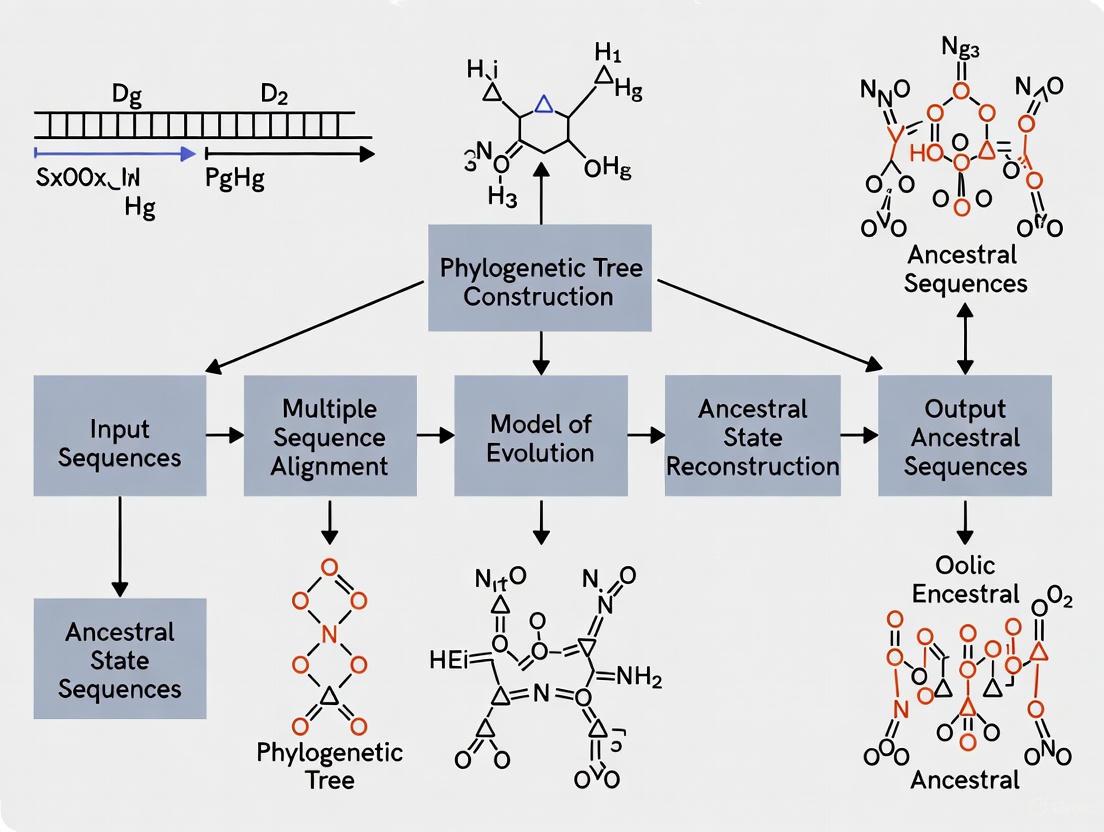
Ancestral Sequence Reconstruction (ASR) has evolved from a theoretical concept into a powerful experimental tool for probing molecular evolution and engineering proteins with enhanced properties.
Ancestral Sequence Reconstruction: Techniques, Applications, and Future Directions in Biomedical Research
Abstract
Ancestral Sequence Reconstruction (ASR) has evolved from a theoretical concept into a powerful experimental tool for probing molecular evolution and engineering proteins with enhanced properties. This article provides a comprehensive overview of ASR techniques, from foundational principles and methodological workflows to advanced applications in structural biology and drug discovery. We detail common troubleshooting strategies for addressing methodological uncertainties and present a comparative analysis of ASR against other protein engineering approaches. Aimed at researchers, scientists, and drug development professionals, this review synthesizes current literature to highlight how ASR is providing deeper mechanistic insights into protein function and creating new opportunities for developing therapeutic and industrial biocatalysts.
The Foundations of Ancestral Sequence Reconstruction: Principles and Evolutionary Insights
Ancestral Sequence Reconstruction (ASR) is a powerful technique in the field of molecular evolution that enables scientists to reconstruct the sequences of ancient genes and proteins that existed in extinct organisms [1]. The foundational concept was first suggested in 1963 by Linus Pauling and Emile Zuckerkandl, who proposed that historical molecular sequences could be inferred from modern descendants [1]. This approach allows researchers to move beyond comparative studies of extant sequences and directly test hypotheses about evolutionary history through experimental analysis of resurrected biomolecules.
The core principle of ASR rests on the observation that closely related species share similar DNA sequences. When modern species differ at specific sequence positions, evolutionary relationships and outgroup comparisons allow researchers to infer which states were most likely present in their common ancestors [1]. This methodology has evolved from early pioneering work in the 1980s and 1990s, led by researchers like Steven A. Benner, into a sophisticated computational and experimental discipline that can reconstruct genes dating back billions of years [1].
ASR serves as a bridge between evolutionary biology and experimental molecular biology, creating a "functional synthesis" that allows researchers to understand how gene sequences, protein structures, and biological functions have diverged over evolutionary timescales [2]. This approach has revealed that ancestral proteins often exhibit properties such as increased thermostability, catalytic activity, and catalytic promiscuity compared to their modern counterparts [1].
Theoretical Foundations and Computational Methodology
Core Principles of Sequence Reconstruction
The theoretical foundation of ASR relies on established evolutionary principles and statistical models. The fundamental assumption is that modern sequences share common ancestry, and their differences result from evolutionary divergence over time. When two species differ at a specific nucleotide position (e.g., humans have 'A' while chimpanzees have 'G'), researchers can infer the ancestral state by examining outgroup sequences (e.g., gorillas and orangutans) [1]. If the outgroups share 'A' with humans, this suggests the ancestor likely had 'A', with a mutation to 'G' occurring in the chimpanzee lineage.
ASR addresses the "multiple hit problem" in molecular evolution – the fact that comparison of present-day sequences alone underestimates the actual number of substitutions that have occurred because multiple changes may affect the same site throughout evolutionary history [2]. Advanced statistical methods are required to account for these hidden changes and produce accurate ancestral reconstructions.
Computational Reconstruction Methods
Table 1: Comparison of ASR Computational Methods
| Method | Key Principle | Advantages | Limitations |
|---|---|---|---|
| Maximum Likelihood (ML) | Identifies the sequence that statistically maximizes the probability of observing the extant sequences given an evolutionary model [1] | Most widely used; incorporates complex evolutionary models; provides probabilistic confidence measures [1] | Dependent on evolutionary model assumptions; computationally intensive |
| Maximum Parsimony (MP) | Selects the ancestral sequence requiring the fewest evolutionary changes [2] [1] | Computationally efficient; conceptually simple | Often oversimplifies evolutionary processes; less accurate for deep reconstructions [1] |
| Bayesian Methods | Generates a posterior distribution of possible ancestral sequences incorporating prior knowledge [1] | Quantifies uncertainty comprehensively; incorporates prior information | Computationally demanding; produces potentially ambiguous sequences [1] |
The Maximum Likelihood method, currently the most widely employed approach, works by generating a sequence where the residue at each position is predicted to be the most likely to occupy that position based on a scoring matrix calculated from extant sequences [1]. This method incorporates sophisticated evolutionary models that account for variation in substitution rates across sites and lineages.
It is crucial to recognize that ASR does not typically claim to recreate the exact sequence of the ancient protein/DNA, but rather a sequence that is likely to be similar and, importantly, shares the functional properties of the ancestral molecule [1]. This aligns with the "neutral network" model of protein evolution, which proposes that at evolutionary junctions, populations contained genotypically different but phenotypically similar protein sequences [1].
Experimental Workflow and Protocol
Comprehensive ASR Pipeline
The following diagram illustrates the complete ASR workflow from sequence collection to functional characterization:
Diagram 1: Complete ASR Experimental Workflow
Detailed Step-by-Step Protocol
Step 1: Sequence Collection and Multiple Sequence Alignment
Collect homologous sequences from diverse but related extant species. The selection should represent an appropriate evolutionary spread for the phylogenetic depth of interest. Create a Multiple Sequence Alignment (MSA) using tools such as MUSCLE, MAFFT, or Clustal Omega to identify conserved and variable regions [2] [1]. The quality of the MSA critically impacts all downstream analyses, so careful refinement is essential.
Step 2: Phylogenetic Tree Construction
Build a phylogenetic tree from the aligned sequences using maximum likelihood, Bayesian inference, or other robust methods. The tree topology and branch lengths will directly influence the ancestral state reconstruction, making this a critical step [1]. Use appropriate model testing to identify the best-fitting substitution model for your dataset.
Step 3: Ancestral Sequence Inference
Apply computational reconstruction methods (Table 1) to infer ancestral sequences at the nodes of interest in the phylogenetic tree. For maximum likelihood approaches, software such as PAML, HyPhy, or GARLI can be used [2]. It is considered best practice to generate several alternative reconstructions for each node to account for uncertainty and ambiguity in the inference process [1].
Step 4: Gene Synthesis and Molecular Cloning
Following ancestral sequence inference, the candidate sequences are synthesized as DNA constructs. Unlike working with extant genes, researchers cannot simply amplify ancestral genes from living organisms, making synthetic gene synthesis an essential step [1]. These synthetic genes are then cloned into appropriate expression vectors.
Step 5: Protein Expression and Purification
Express the reconstructed ancestral proteins in heterologous systems such as E. coli, yeast, or mammalian cell lines [1]. After expression, purify the proteins using affinity chromatography (e.g., His-tag purification) followed by additional purification steps such as size-exclusion or ion-exchange chromatography to achieve homogeneity.
Step 6: Biochemical and Functional Characterization
Characterize the biophysical and functional properties of the resurrected proteins. This typically includes:
- Thermostability Analysis: Measuring melting temperature (Tm) and thermodynamic stability using differential scanning calorimetry or circular dichroism [1]
- Catalytic Activity: Determining enzyme kinetic parameters (Km, kcat) for putative substrates [1]
- Structural Analysis: If possible, determine three-dimensional structure using X-ray crystallography or NMR to complement functional studies
- Ligand Binding: For receptors, measure affinity for relevant ligands [1]
Controls and Validation
To ensure the reliability of ASR findings, incorporate appropriate controls throughout the experimental process:
- Express and characterize modern descendant proteins using identical methods for direct comparison
- Generate and test alternative reconstructions for ambiguous sites to ensure conclusions are robust to inference uncertainty [1]
- For studies observing "ancestral superiority" (e.g., enhanced thermostability), express consensus sequences of modern proteins to determine if observed effects stem from ancestral inference versus simply being a consensus effect [1]
Essential Research Reagents and Materials
Table 2: Key Research Reagents for ASR Experiments
| Reagent/Material | Function/Application | Specifications & Considerations |
|---|---|---|
| Homologous Sequence Datasets | Source material for phylogenetic reconstruction and ancestral inference [1] | Should include evolutionarily diverse but related sequences; public databases (GenBank, UniProt) are primary sources |
| Multiple Sequence Alignment Software | Creates aligned sequence datasets for phylogenetic analysis [2] | Options: MUSCLE, MAFFT, Clustal Omega; alignment quality critically impacts reconstruction accuracy |
| Phylogenetic Analysis Software | Builds evolutionary trees and reconstructs ancestral sequences [1] | Maximum Likelihood: PAML, HyPhy, RAxML; Bayesian: MrBayes; selection of appropriate evolutionary model is crucial |
| Synthetic DNA Constructs | Physical instantiation of inferred ancestral sequences [1] | Custom gene synthesis services; codon optimization for expression system is recommended |
| Heterologous Expression System | Produces protein from synthetic ancestral genes [1] | Common systems: E. coli, yeast, insect, or mammalian cell lines; selection depends on protein properties and requirements |
| Protein Purification Materials | Isifies ancestral protein for functional characterization [1] | Affinity chromatography resins (Ni-NTA for His-tagged proteins), size exclusion, ion exchange columns |
| Biophysical Assay Reagents | Characterizes stability and structural properties [1] | Circular dichroism spectroscopy, differential scanning calorimetry, fluorescence dyes for thermal shift assays |
| Activity Assay Components | Measures enzymatic or receptor function [1] | Substrates, cofactors, specific inhibitors; depends on protein function being studied |
Applications and Case Studies in Evolutionary Biochemistry
Notable Examples of Resurrected Proteins
Table 3: Significant ASR Case Studies and Findings
| Protein/System | Evolutionary Time Scale | Key Findings | Research Group |
|---|---|---|---|
| Hormone Receptors | ~500 million years [1] | Revealed evolutionary pathway of ligand specificity in steroid receptors [1] | Thornton Lab [1] |
| Thioredoxin Enzymes | Up to 4 billion years [1] | Ancestral enzymes showed significantly elevated thermal and acidic stability while maintaining similar chemical activity [1] | Multiple Groups [1] |
| V-ATPase Subunits | ~800 million years [1] | Investigation of ancient enzyme complex assembly and function in yeast lineages | Stevens/Thornton Labs [1] |
| Ribonuclease H1 (E. coli) | Variable evolutionary depths [1] | Detailed studies on evolutionary biophysical history and stability mechanisms | Marqusee Lab [1] |
| Alcohol Dehydrogenases (Adhs) | ~85 million years [1] | Revealed emergence of subfunctionalized Adhs for ethanol metabolism correlated with fleshy fruit emergence in Cambrian Period [1] | Multiple Groups [1] |
| Visual Pigments | Vertebrate evolution scale [1] | Traced evolutionary adaptations in light absorption properties related to visual ecology | Multiple Groups [1] |
| RuBisCO (Solanaceae) | Plant family evolutionary scale [1] | Studies of photosynthetic enzyme evolution in plant family contexts | Multiple Groups [1] |
Technical Considerations and Limitations
While ASR provides powerful insights into molecular evolution, researchers must consider several methodological aspects:
Phylogenetic Uncertainty: The accuracy of ancestral reconstruction depends heavily on the correct phylogenetic tree topology and appropriate evolutionary models [1]. Sensitivity analyses using alternative tree topologies should be conducted to test the robustness of conclusions.
Evolutionary Model Selection: The statistical models used for reconstruction are based on modern sequence data, yet amino acid frequencies and substitution patterns in ancient biological environments may have differed [1]. While studies suggest that derived biophysical properties are generally robust to this concern, it remains an important consideration [1].
Experimental Validation: The ultimate validation of ASR reliability often comes from comparing several alternate reconstructions of the same node and confirming similar biophysical properties emerge across them [1]. This approach leverages the fundamental principle that individual amino acid substitutions typically don't cause drastic biophysical property changes in proteins [1].
Temporal Framing: The "age" of reconstructed sequences is typically determined using molecular clock models calibrated with geological timepoints [1]. These dating approaches have substantial error margins and should be considered approximate temporal frameworks rather than precise dates [1]. Many researchers instead use the number of substitutions between ancestral and modern sequences as a more reliable evolutionary distance metric [1].
Ancestral Sequence Reconstruction has evolved from a theoretical concept to an indispensable practical tool in evolutionary biochemistry and molecular biology. By combining computational phylogenetics with experimental molecular biology, ASR enables researchers to directly test hypotheses about evolutionary history and mechanisms. The methodology continues to develop with improvements in sequencing technologies, computational algorithms, and synthetic biology capabilities.
When rigorously applied with appropriate controls and validation, ASR provides unique insights into the evolutionary processes that have shaped modern biological systems. The technique has revealed fundamental principles about protein evolution, including patterns of thermostability, catalytic innovation, and functional diversification. As the field advances, ASR promises to continue expanding our understanding of life's deep evolutionary history.
Ancestral Sequence Reconstruction (ASR) represents a powerful convergence of evolutionary biology and computational science, enabling researchers to infer the genetic sequences of long-extinct organisms and thereby illuminate the deep history of molecular evolution. This field has transformed from a theoretical concept into an indispensable experimental toolkit, with modern applications spanning protein engineering, drug development, and fundamental research into life's origins. The journey of ASR began with a revolutionary insight from Emile Zuckerkandl and Linus Pauling, who first proposed that comparing sequences from extant species could allow scientists to deduce ancestral molecular forms [3] [1]. Today, this foundational principle underpins sophisticated computational approaches that resurrect ancient proteins for both theoretical inquiry and practical application. This technical guide examines the methodological evolution of ASR, from its earliest conceptual foundations to contemporary computational frameworks that integrate generative models and address persistent challenges like indel reconstruction.
Historical Foundations and Key Theoretical Advances
The conceptual architecture of ASR was established in 1963 when Zuckerkandl and Pauling published their seminal hypothesis suggesting that comparing homologous sequences across species could reveal their evolutionary history [3] [1]. Their work introduced the crucial concept that contemporary genes evolved from common ancestral genes through measurable mutational processes. This theoretical breakthrough created the foundation for a new field—paleogenetics—though the computational tools necessary to implement their vision would require decades to develop.
Table 1: Foundational Methodological Developments in ASR
| Time Period | Methodological Innovation | Key Contributors | Impact on ASR Field |
|---|---|---|---|
| 1963 | Conceptual framework for inferring ancestral sequences | Zuckerkandl & Pauling | Established theoretical basis for molecular evolution studies [3] |
| 1971 | Parsimony method for ancestral reconstruction | Fitch | First algorithmic implementation for ASR [3] |
| 1981 | Maximum likelihood introduced for phylogenetics | Felsenstein | Statistical framework for evolutionary inference [3] |
| 1995-1996 | Maximum likelihood models for protein ASR | Yang et al.; Koshi & Goldstein | First robust probabilistic methods for ancestral protein inference [3] |
| 2000 | Joint reconstruction across nodes | Pupko et al. | Enhanced accuracy by considering complete evolutionary paths [3] |
| 2006 | Bayesian sampling approaches | Williams et al. | Incorporated uncertainty in ancestral predictions [3] |
| 2020s | Autoregressive generative models | Multiple groups | Account for epistasis and context-dependent evolution [4] |
Early methodological development focused on establishing robust computational frameworks for reconstructing ancestral states. The maximum parsimony approach, which minimizes the number of evolutionary changes required to explain observed sequences, dominated early ASR efforts due to its conceptual simplicity and computational tractability [3] [1]. However, the field underwent a significant transformation with the introduction of probabilistic methods, particularly maximum likelihood estimation, which incorporated explicit models of sequence evolution and branch lengths to assess the relative probabilities of potential ancestral states [3]. The equation below illustrates the fundamental calculation of the likelihood of an ancestral sequence (Ar) given modern sequences (Ai'), an evolutionary model (M), and a phylogenetic tree (T):
$$P(Ar|Ai',M,T) = \frac{P(Ai'|Ar,M,T)P(Ar)}{P(Ai'|M,T)}$$ [3]
This statistical framework enabled more accurate characterizations of ancient sequences by accounting for the stochastic nature of molecular evolution, setting the stage for ASR to become an empirically rigorous discipline.
Evolution of Computational Methodologies
Sequence Alignment: The Foundational Step
Accurate ASR depends critically on proper identification of homologous positions across sequences through multiple sequence alignment (MSA). Early alignment algorithms employed dynamic programming approaches like the Needleman-Wunsch algorithm for global alignment and Smith-Waterman for local alignment, which guarantee optimal solutions but suffer from computational complexity that limits their application to large datasets [5] [6]. To address these limitations, heuristic methods such as FASTA and BLAST incorporated anchor-based strategies to identify homologous segments quickly, significantly accelerating the alignment process while maintaining acceptable accuracy [5].
Modern MSA tools typically employ progressive alignment strategies that build alignments according to a guide tree representing estimated evolutionary relationships. Popular implementations include Clustal Omega, MUSCLE, and MAFFT, which balance accuracy with computational efficiency through techniques like iterative refinement and fast Fourier transform-based homology detection [5] [6]. For specialized applications involving sequences with large-scale rearrangements, tools like Mauve provide advanced capabilities for whole-genome alignment [6].
Table 2: Multiple Sequence Alignment Algorithms and Applications
| Algorithm | Alignment Strategy | Optimal Use Cases | Limitations |
|---|---|---|---|
| Geneious Aligner | Progressive | Small datasets (<50 sequences, <1kb length) [6] | Limited scalability |
| MUSCLE | Iterative | Medium datasets (up to 1,000 sequences) [6] | Poor performance with terminal extensions |
| Clustal Omega | Progressive | Large datasets (2,000+ sequences) with terminal extensions [6] | Struggles with large internal indels |
| MAFFT | Progressive-Iterative | Very large datasets (up to 30,000 sequences) with long gaps [6] | Computationally intensive for largest datasets |
| Mauve | Progressive | Sequences with large-scale rearrangements and inversions [6] | Specialized for genomic applications |
Phylogenetic Inference: Reconstructing Evolutionary Relationships
Phylogenetic tree construction provides the evolutionary framework essential for ASR, with methods broadly categorized as distance-based or character-based approaches [7]. Distance-based methods such as Neighbor-Joining (NJ) operate by first calculating a matrix of evolutionary distances between sequences, then applying clustering algorithms to infer tree topology [7] [8]. While computationally efficient and suitable for large datasets, these approaches necessarily discard some evolutionary information during the distance calculation process [7].
Character-based methods offer a more nuanced approach by evaluating individual sequence positions during tree inference. Maximum Parsimony (MP) seeks the tree topology that requires the fewest evolutionary changes, operating on the principle of Occam's razor [7] [8]. Maximum Likelihood (ML) methods identify the tree that maximizes the probability of observing the extant sequences under a specific evolutionary model, making them statistically robust for diverse evolutionary questions [7]. Bayesian Inference extends the likelihood framework to incorporate prior knowledge and quantify uncertainty through posterior probabilities, typically using Markov Chain Monte Carlo sampling to explore tree space [7].
Diagram 1: Phylogenetic Tree Construction Workflow (77 characters)
Ancestral State Reconstruction: Computational Core
The computational core of ASR employs either marginal or joint reconstruction approaches to infer ancestral sequences. Marginal reconstruction calculates the probability of each ancestral state at individual nodes independently, while joint reconstruction simultaneously considers all nodes to find the most probable set of ancestral sequences across the entire tree [3]. Although joint reconstruction offers theoretical advantages by accounting for interactions between nodes, marginal reconstruction remains widely used due to its computational efficiency and generally comparable results [3].
Recent methodological innovations address longstanding limitations in ASR, particularly the challenge of epistasis—the context-dependence of mutational effects. Traditional models assume sequence positions evolve independently, an oversimplification that fails to capture the complex interdependencies within biomolecular structures. Novel autoregressive generative models now incorporate epistatic effects by learning evolutionary constraints from large sequence families, resulting in more accurate ancestral reconstructions that better reflect structural and functional realities [4]. These approaches demonstrate superior performance compared to state-of-the-art methods in both simulation studies and experimental validation [4].
Another active frontier involves improving the handling of insertions and deletions (indels) in ancestral reconstruction. The Deletion-Only Parsimony Problem (DPP) represents a significant theoretical advance, providing polynomial-time algorithms for identifying optimal reconstructions when only deletion events are considered [9]. While this addresses just one aspect of indel evolution, it establishes crucial mathematical foundations for more comprehensive solutions and offers practical approaches for representing uncertainty in ancestral reconstructions through partial order graphs [9].
Experimental Validation and Applications
Early Experimental Milestones
The transition of ASR from computational exercise to experimental discipline began with partial reconstructions that replaced specific amino acid positions in modern proteins with inferred ancestral residues [3]. Malcolm et al. (1990) pioneered this approach by resurrecting three ancestral positions in lysozyme, enabling dissection of potential evolutionary pathways during functional divergence [3]. The first full-length ancestral protein resurrection came five years later with the reconstruction of 13 ribonucleases from artiodactyl evolution, marking a critical technical milestone that demonstrated the feasibility of comprehensive ASR [3].
A transformative period for experimental ASR began in the early 2000s with three landmark studies that expanded the temporal and conceptual boundaries of the field. Chang et al. (2002) resurrected ancestral rhodopsin proteins from archosaurs, including dinosaurs, inferring their visual capabilities in dim light environments [3]. Gaucher et al. (2003) reconstructed ancestral elongation factors to infer the environmental temperature of the last bacterial common ancestor billions of years in the past [3]. Thornton et al. (2003) resurrected steroid receptor proteins, demonstrating that early receptors likely exhibited estrogen specificity [3]. This "trifecta of studies" established ASR as a powerful approach for addressing diverse evolutionary questions across deep time scales.
Contemporary Applications in Structural Biology and Biotechnology
Recent advances have demonstrated ASR's utility for facilitating structural analysis of challenging protein complexes. In a 2025 study of modular polyketide synthases (PKSs)—large multi-domain enzymes critical for antibiotic biosynthesis—researchers replaced a native acyltransferase domain with an ancestral reconstruction (AncAT) to create a chimeric KSQAncAT didomain [10]. This engineered construct maintained native enzymatic function while exhibiting enhanced properties for structural analysis, enabling determination of high-resolution crystal structures that had proven elusive with the wild-type protein [10]. This innovative application illustrates how ASR can serve as a protein engineering tool to improve crystallization success and enable cryo-EM analysis of dynamic molecular machines.
Table 3: Key Research Reagents and Experimental Materials in ASR
| Research Reagent | Function in ASR | Application Example |
|---|---|---|
| Ancestral AT (AncAT) domain | Enhanced stability and solubility for structural studies | Crystallography of polyketide synthase modules [10] |
| Pantetheinamide crosslinking probe | Covalently links interacting domains for structural stabilization | Cryo-EM analysis of KSQ-ACP complexes [10] |
| Fragment antigen-binding (Fab) domains | Stabilize conformational states for single-particle analysis | Cryo-EM of dynamic PKS modules [10] |
| Bayesian phylogenetic models | Incorporate uncertainty in ancestral sequence inference | Probabilistic reconstruction of indel events [9] |
| Autoregressive generative models | Account for epistatic interactions in sequence evolution | Improved accuracy in ancestral protein reconstruction [4] |
The biotechnology and therapeutic applications of ASR continue to expand as methodological improvements enhance reconstruction accuracy. Resurrected ancestral proteins often exhibit exceptional thermostability and catalytic promiscuity compared to their modern counterparts, properties valuable for industrial enzyme applications [1]. In biomedical research, ASR has contributed to vaccine development through reconstruction of ancestral immunogens and advanced protein engineering through revealing evolutionary trajectories of functional attributes [9]. The table below summarizes key properties of resurrected ancestral proteins across diverse studies.
Table 4: Properties of Resurrected Ancestral Proteins
| Protein Family | Estimated Age (Million Years) | Key Experimental Findings | Research Applications |
|---|---|---|---|
| Ribonucleases [3] | 40 | Functional divergence during artiodactyl evolution | Enzyme evolution studies |
| Rhodopsins [3] | 240-400 | Dim-light adaptation in archosaurs | Sensory biology evolution |
| - | - | - | - |
| Elongation Factors [3] | 2,500-4,000 | Inference of ancient Earth temperatures | Paleoclimate reconstruction |
| Steroid Receptors [3] [1] | ~500 | Estrogen specificity in earliest receptors | Hormone signaling evolution |
| Thioredoxins [1] | ~4,000 | Enhanced thermostability with modern-like activity | Protein engineering templates |
| Polyketide Synthases [10] | Not specified | Improved crystallization and structural analysis | Enzyme mechanism studies |
Technical Protocols and Implementation Frameworks
Standard ASR Workflow Protocol
A robust ASR implementation follows a systematic workflow encompassing sequence collection, alignment, phylogenetic analysis, ancestral reconstruction, and experimental validation. The protocol below outlines key considerations and methodological options at each stage:
Sequence Dataset Assembly
Multiple Sequence Alignment
- Select alignment algorithm based on dataset size and sequence characteristics
- For large datasets (>1,000 sequences), consider MAFFT or Clustal Omega [6]
- For sequences with rearrangements, use specialized aligners like Mauve [6]
- Trim unreliably aligned regions while preserving phylogenetic signal [7]
Phylogenetic Tree Construction
- Select evolutionary model using model-testing tools (e.g., ProtTest for proteins)
- For preliminary analysis, use Neighbor-Joining for rapid tree estimation [7]
- For publication-quality trees, implement Maximum Likelihood or Bayesian methods [7]
- Assess node support with bootstrap resampling or posterior probabilities [7]
Ancestral Sequence Reconstruction
Sequence Synthesis and Validation
- Codon-optimize ancestral sequences for expression system
- Synthesize genes commercially or via assembly PCR
- Express and purify recombinant protein for biochemical characterization
- Validate structural integrity and functional properties
Advanced Computational Framework
Contemporary ASR implementations increasingly leverage probabilistic programming frameworks to quantify uncertainty and incorporate prior knowledge. The Bayesian hierarchical model structure below represents a state-of-the-art approach for integrating multiple sources of evolutionary information:
Diagram 2: Bayesian ASR Framework (63 characters)
This Bayesian framework enables researchers to quantify uncertainty in ancestral reconstructions through posterior distributions, providing not just point estimates of ancient sequences but confidence assessments—particularly valuable when considering ancestral proteins for engineering applications [3] [4]. Modern implementations often incorporate Markov Chain Monte Carlo sampling to approximate these posterior distributions, with convergence diagnostics ensuring adequate exploration of parameter space [7].
Future Directions and Methodological Frontiers
The accelerating evolution of ASR methodologies continues to expand both theoretical and practical applications. Several promising frontiers merit particular attention:
Generative Modeling and Epistasis: Autoregressive generative models represent a paradigm shift in ASR, moving beyond site-independent evolutionary models to capture context-dependent effects [4]. These approaches leverage deep learning architectures trained on diverse sequence families to infer evolutionary constraints, potentially enabling more accurate resurrection of complex functional attributes. Future developments will likely integrate structural and functional data directly into the reconstruction process, bridging sequence evolution with phenotypic consequences.
Indel-Aware Phylogenetics: Current efforts to handle insertion and deletion events more rigorously are advancing through problems like the Deletion-Only Parsimony Problem, which provides mathematical foundations for representing uncertainty in gap placement [9]. Next-generation algorithms will need to efficiently handle both insertions and deletions while accommodating varying evolutionary models across sequence regions, particularly important for studying protein families with domain shuffling or flexible regions.
Integrated Paleobiology: ASR increasingly combines with other computational paleobiology approaches, including paleoclimate reconstruction and biogeochemical modeling, to contextualize ancestral protein functions within ancient environments [11]. This interdisciplinary synthesis enables more nuanced hypotheses about selective pressures that shaped molecular evolution across Earth's history.
Experimental High-Throughput Characterization: As gene synthesis costs decline, researchers can implement library-based approaches that characterize numerous alternative reconstructions, directly addressing uncertainty in ancestral inferences [3] [10]. These empirical measurements of sequence-function relationships across reconstructed variants provide rich datasets for refining evolutionary models and understanding neutral networks in protein space.
The historical trajectory from Pauling and Zuckerkandl's theoretical insights to today's sophisticated computational frameworks demonstrates how ASR has matured into an indispensable tool for evolutionary biochemistry. As methodological innovations continue to enhance reconstruction accuracy and expand applicable protein families, ASR promises to deliver increasingly profound insights into life's evolutionary history while providing engineered proteins with novel properties for biomedical and industrial applications.
Ancestral sequence reconstruction (ASR) is a computational technique in molecular evolution used to infer the sequences of ancient, extinct proteins from the sequences of their modern, extant homologs [1]. The fundamental principle underlying ASR is that closely related species share similar DNA and protein sequences due to their common evolutionary origin [1]. By comparing multiple extant sequences, researchers can deduce the sequences of their ancestors at specific nodes in the evolutionary tree. This technique, first suggested by Linus Pauling and Emile Zuckerkandl in 1963, has evolved into a powerful tool for studying molecular evolution, enabling researchers to "resurrect" and experimentally characterize ancestral proteins [1]. The method provides a unique window into evolutionary history, allowing scientists to test hypotheses about the evolution of protein structure and function, ancient environments, and the functional consequences of specific historical mutations [12] [13].
Theoretical Foundations of ASR
The Evolutionary Basis for Reconstruction
ASR operates on the well-established principle that modern protein sequences share common ancestry and have diversified through evolutionary processes including mutation, selection, and genetic drift [1]. When two species differ at a specific sequence position, and outgroup sequences show consistency with one of the variants, we can infer the ancestral state and identify which lineage acquired a mutation [1]. This logic extends across entire protein families and evolutionary trees. The reliability of ASR stems from the statistical nature of sequence evolution and the fact that back-mutations (where a position mutates and then reverts) are statistically unlikely, making evolutionary paths traceable through comparative analysis [1].
Critically, ASR does not claim to recreate the exact historical sequence that existed millions of years ago. Instead, it produces a sequence that is statistically likely to be similar and, most importantly, to share the phenotypic properties of the ancient protein [1]. This approach aligns with the 'neutral network' model of protein evolution, which proposes that at evolutionary junctions, populations contained genotypically different but phenotypically similar protein sequences [1]. Therefore, while a reconstructed sequence may not be genetically identical to the last common ancestor, it likely represents the functional characteristics of the ancestral protein.
Key Algorithmic Approaches
Multiple computational approaches have been developed for ASR, each with distinct theoretical foundations and assumptions:
Maximum Parsimony (MP): This method reconstructs sequences based on the principle that the evolutionary path requiring the smallest number of sequence changes is the most likely [1]. MP operates on Occam's razor logic, seeking the most evolutionarily efficient route. However, it is often considered less reliable for reconstructing very ancient sequences because it arguably oversimplifies evolutionary processes by not adequately accounting for multiple substitutions at the same site or varying evolutionary rates across lineages [1].
Maximum Likelihood (ML): ML methods represent a more sophisticated approach that uses probabilistic models of sequence evolution. For each sequence position, ML calculates the most likely ancestral state based on the extant sequences, a defined phylogenetic tree, and an explicit model of sequence evolution that includes factors like substitution patterns and rate variation across sites [14] [1]. ML methods can incorporate empirical observations about evolutionary processes, such as the fact that transitions between similar amino acids occur more frequently than transversions [15].
Bayesian Methods: These approaches complement ML methods but typically produce more ambiguous reconstructions [1]. Bayesian frameworks incorporate prior knowledge or assumptions about evolutionary parameters and generate posterior distributions of possible ancestral sequences, allowing researchers to quantify uncertainty in their reconstructions. This is particularly valuable for positions where no clear ancestral state can be determined.
Table 1: Comparison of Major ASR Methodological Approaches
| Method | Core Principle | Advantages | Limitations |
|---|---|---|---|
| Maximum Parsimony (MP) | Minimizes the total number of sequence changes required [1] | Computationally simple; intuitive logic | Often oversimplifies evolution; less accurate for deep reconstructions [1] |
| Maximum Likelihood (ML) | Finds the sequence that maximizes the probability of observing the extant sequences [14] [1] | Accounts for varying evolutionary rates; generally more reliable than MP [14] | Computationally intensive; requires accurate evolutionary model |
| Bayesian Methods | Estimates posterior distribution of ancestral states given the data and priors [1] | Quantifies uncertainty in reconstructions | Can produce ambiguous sequences; computationally complex [1] |
Methodological Implementation
Core Workflow and Data Requirements
The implementation of ASR follows a systematic workflow that transforms a set of modern sequences into inferred ancestral proteins. The key stages of this process are visualized in the following workflow diagram:
The process begins with the collection of homologous protein sequences from extant organisms. These sequences must share common ancestry but display sufficient variation to provide meaningful evolutionary signal [1]. The quality and diversity of this initial sequence set significantly impacts the accuracy of the final reconstruction.
The next critical step involves creating a multiple sequence alignment (MSA) to identify corresponding positions across all sequences [1] [6]. This alignment step is crucial as it establishes positional homology, ensuring that evolutionarily related sites are compared correctly. Modern MSA methods like Clustal Omega, MUSCLE, and MAFFT use progressive alignment strategies that begin with the most similar sequences and progressively add more divergent ones [6].
Following alignment, a phylogenetic tree is constructed to represent the evolutionary relationships among the sequences [1]. This tree provides the structural framework for reconstruction, as the branching patterns and branch lengths dictate the probabilistic calculations used in ML and Bayesian methods. Branch lengths are particularly important as they represent the amount of evolutionary change that has occurred along each lineage [14].
Advanced Considerations in Reconstruction
Modern ASR implementations incorporate several sophisticated elements that significantly improve reconstruction accuracy:
Rate Variation Across Sites: Evolutionary rates vary substantially across different positions in a protein due to varying structural and functional constraints [14]. Methods like ANCESCON address this by estimating position-specific evolutionary rates (α) using either an empirical method (αAB) based on sequence conservation or a maximum likelihood approach (αML) [14]. Accounting for this rate heterogeneity prevents systematic underestimation of evolutionary distances and improves the accuracy of ancestral state inference [14].
Epistasis and Context Dependence: Traditional models assume sequence positions evolve independently, but recent advances incorporate epistasis—the fact that the effect of a mutation depends on the rest of the sequence [15]. Newer methods like autoregressive models (e.g., ArDCA) model conditional probabilities between positions, creating more evolutionarily realistic reconstructions that account for co-evolution and structural constraints [15].
Model Selection and Optimization: The choice of substitution model and its parameters significantly influences reconstruction outcomes. Modern implementations often include optimization of background amino acid frequencies (π) and other model parameters specific to the protein family under study [14]. This customization improves the fit between the evolutionary model and the actual patterns observed in the alignment.
Table 2: Advanced Modeling Considerations in ASR
| Consideration | Description | Impact on Reconstruction |
|---|---|---|
| Rate Variation Across Sites | Different positions evolve at different rates due to structural/functional constraints [14] | Prevents distance underestimation; improves accuracy [14] |
| Epistasis | The effect of a mutation depends on the genetic background [15] | Better captures structural constraints; more biophysically realistic [15] |
| Model Optimization | Tuning evolutionary model parameters to specific protein family [14] | Improves fit to data; more accurate ancestral states |
Experimental Validation and Applications
Validation of Reconstructed Sequences
The computational reconstruction of ancestral sequences represents only the first step in a complete ASR study. Experimental validation is crucial for verifying the functional plausibility of the inferred sequences and testing evolutionary hypotheses [1]. The validation process typically involves:
Gene Synthesis and Protein Expression: Once ancestral sequences are computationally inferred, the corresponding genes are synthesized artificially and expressed in host systems (typically E. coli or yeast) to produce the ancestral proteins [1]. This "resurrection" of ancient proteins enables direct experimental characterization of their properties.
Biophysical and Biochemical Characterization: The expressed ancestral proteins undergo comprehensive analysis of their structural stability, catalytic activity (for enzymes), ligand binding specificity, and other functional properties [1] [13]. This experimental validation helps confirm that the reconstructed sequences represent functional proteins rather than computational artifacts.
Control Experiments: To address concerns that ASR might produce "consensus-like" sequences with artificially enhanced properties, researchers typically conduct control experiments including expressing consensus sequences and performing parallel reconstructions using different algorithms [1]. These controls help distinguish genuine ancestral characteristics from potential methodological artifacts.
A notable finding across many ASR studies is the so-called "ancestral superiority" phenomenon, where reconstructed ancestral proteins often exhibit enhanced stability, catalytic activity, or catalytic promiscuity compared to their modern counterparts [1]. While this pattern has been attributed by some to artifacts of the reconstruction process, it may also reflect genuine evolutionary optimization or adaptation to different ancient environmental conditions [1].
Research Applications and Case Studies
ASR has enabled groundbreaking insights across diverse areas of molecular evolution and protein science:
Enzyme Evolution and Functional Divergence: ASR has been used to trace the evolutionary history of enzymes like yeast alcohol dehydrogenases (Adhs), revealing how gene duplication and functional divergence led to specialized metabolic functions [1]. These studies can pinpoint the specific historical mutations that led to changes in substrate specificity or catalytic efficiency.
Environmental Adaptation: Reconstruction of ancestral thioredoxin enzymes dating back ~4 billion years revealed proteins with significantly elevated thermal and acidic stability compared to modern versions, potentially reflecting adaptation to ancient environmental conditions [1]. Similarly, studies of elongation factor thermo-unstable (EF-Tu) proteins support a hotter Precambrian Earth, consistent with geological evidence [1].
Molecular Mechanism Elucidation: By resurrecting ancestral steroid hormone receptors, researchers have identified the specific historical mutations that altered ligand specificity, providing mechanistic insights into how hormone signaling evolved [1]. This historical approach often reveals functional residues that are not apparent from comparisons of only extant proteins [13].
Essential Research Reagents and Tools
Table 3: Key Research Reagents and Computational Tools for ASR
| Tool/Reagent | Type | Function in ASR |
|---|---|---|
| ANCESCON | Software Package | Distance-based phylogenetic inference and ancestral reconstruction incorporating rate variation [14] |
| PAML | Software Package | Phylogenetic analysis by maximum likelihood; implements various evolutionary models [14] |
| ArDCA | Generative Model | Autoregressive model incorporating epistasis for improved reconstruction accuracy [15] |
| Clustal Omega/MUSCLE/MAFFT | Multiple Sequence Alignment Tools | Align homologous sequences to establish positional homology [6] |
| Heterologous Expression System | Experimental Platform | Produce protein from synthesized ancestral genes (e.g., E. coli, yeast) [1] |
Technical Considerations and Limitations
Despite its power, ASR methodology faces several important technical challenges that researchers must consider when designing studies:
Phylogenetic Tree Quality: The accuracy of ancestral reconstruction is heavily dependent on the quality of the underlying phylogenetic tree [14]. Errors in tree topology or branch length estimation propagate directly to the reconstructed sequences. Methods like "Weighbor" (weighted neighbor joining) that account for larger errors in longer distance estimates can improve tree construction [14].
Sequence Alignment Accuracy: Incorrect alignment of homologous positions represents a major source of error in ASR [6]. This is particularly challenging for very divergent sequences or proteins with complex domain architectures. Iterative alignment methods and consensus approaches that combine multiple alignments can help mitigate this issue [6].
Model Misspecification: All ASR methods depend on models of sequence evolution, and inaccuracies in these models can bias results [15]. The common assumption of site-independent evolution is particularly problematic, as it ignores epistatic interactions that shape protein evolution [15]. Emerging methods that incorporate co-evolution and epistasis represent promising advances addressing this limitation.
Ambiguity and Uncertainty: All reconstructed sequences contain positions with uncertain ancestral states [1]. Bayesian methods can quantify this uncertainty, and experimental studies often characterize multiple reconstructions for the same node to account for this ambiguity [1]. The field increasingly recognizes that ASR produces plausible ancestral sequences rather than definitively correct ones.
Molecular Clock Assumptions: Dating of ancestral nodes typically relies on molecular clock models with substantial error margins [1]. These dating uncertainties complicate correlations between ancestral protein properties and specific historical environments or evolutionary events.
Ancestral sequence reconstruction represents a powerful synthesis of computational biology and experimental biochemistry that enables researchers to travel back in time to characterize ancient proteins. The core principles of ASR—using the statistical patterns of sequence evolution across extant homologs to infer ancestral states—have proven remarkably productive for addressing diverse questions in molecular evolution [13]. As methods continue to advance, particularly through better modeling of epistasis and rate heterogeneity, and through integration with structural and functional data, ASR promises to deliver even deeper insights into the evolutionary history of proteins and the processes that have shaped biological diversity over billions of years [14] [15] [12]. The technique has evolved from a specialized method to an essential tool for understanding how protein structure, function, and interactions have changed throughout evolutionary history.
Ancestral Sequence Reconstruction (ASR) has emerged as a powerful phylogenetic tool that enables scientists to infer the sequences of ancient proteins, providing a unique window into molecular evolution. By combining bioinformatics with experimental biochemistry, ASR allows researchers to test hypotheses about the evolutionary history of protein stability, function, and adaptation. This technical review examines how ASR has revealed fundamental insights into protein thermostability, demonstrating that ancestral proteins often exhibit remarkable thermal stability compared to their modern counterparts. We explore the mechanistic basis for these properties, the methodologies enabling these discoveries, and the applications of resurrected ancestral proteins in industrial and pharmaceutical contexts. The evidence synthesized here supports the conclusion that ASR not only illuminates evolutionary trajectories but also provides engineered proteins with enhanced stability for biomedical and biotechnological applications.
Ancestral Sequence Reconstruction (ASR) is a computational methodology that infers the most probable genetic or protein sequences of extinct ancestors using phylogenetically related sequences from contemporary species [16] [17]. This approach leverages the traceable imprints of evolutionary processes preserved in modern sequences, allowing researchers to reconstruct molecular history with remarkable precision. ASR has transformed evolutionary biochemistry by providing direct experimental access to ancient proteins, enabling empirical characterization of their biophysical and functional properties.
The foundational principle of ASR rests on the comparison of multiple extant sequences to deduce ancestral states within an evolutionary framework. The technique requires several key components: a multiple sequence alignment of modern proteins, a phylogenetic tree depicting evolutionary relationships, branch lengths representing divergence times, and a stochastic substitution model describing probabilities of sequence changes over time [18] [19]. The accuracy of reconstruction depends critically on each of these elements, with phylogenetic signal strength being the primary determinant of reliability rather than sophisticated substitution models [18].
ASR has gained prominence in protein engineering and evolutionary studies due to its unique ability to generate highly stable and functional protein variants. Unlike rational design or directed evolution approaches, ASR leverages billions of years of natural evolutionary information captured in sequence databases, often yielding proteins with enhanced thermostability, solubility, and promiscuous functions [20] [10] [21]. These properties make ASR particularly valuable for industrial enzymology and therapeutic protein development, where stability under challenging conditions is paramount.
Methodological Framework of ASR
Computational Approaches and Workflow
The ASR workflow follows a systematic pipeline from sequence collection to ancestral inference, with each stage critical for accurate reconstruction. The process begins with comprehensive sequence identification and curation, followed by multiple sequence alignment to establish homologous positions. Phylogenetic tree construction then provides the evolutionary framework for reconstructing ancestral states using statistical models [19].
Three primary computational methods are employed in ASR:
Maximum Parsimony (MP): This non-parametric method minimizes the total number of character changes along the phylogenetic tree, providing the simplest evolutionary explanation. While computationally efficient, MP may oversimplify complex evolutionary scenarios with multiple substitutions at single sites [19].
Maximum Likelihood (ML): As the most widely used approach, ML employs parametric models of sequence evolution to find ancestral states that maximize the probability of observing the extant sequences. ML incorporates branch lengths and explicit evolutionary models (e.g., Jukes-Cantor, Kimura models), providing more statistically robust inferences, especially for deep evolutionary reconstructions [20] [19].
Bayesian Inference (BI): This method incorporates prior knowledge and calculates posterior probability distributions of ancestral states using Bayes' theorem. BI quantifies uncertainty in ancestral state estimates and allows integration of diverse information sources, such as fossil records and molecular clocks [19].
Table 1: Comparison of ASR Computational Methods
| Method | Key Principle | Advantages | Limitations |
|---|---|---|---|
| Maximum Parsimony | Minimizes total character changes | Computational efficiency; intuitive simplicity | Sensitive to homoplasy; ignores branch lengths |
| Maximum Likelihood | Maximizes probability of observed data | Accounts for branch lengths; robust statistical framework | Computationally intensive; model dependency |
| Bayesian Inference | Calculates posterior probability of ancestral states | Quantifies uncertainty; integrates prior knowledge | Complex implementation; computationally demanding |
Addressing Reconstruction Uncertainties
ASR robustness depends on careful consideration of potential uncertainties and biases. Key concerns include phylogenetic ambiguity, model misspecification, and limited sequence sampling. Statistical support for inferred ancestral states can be assessed through bootstrapping or posterior probabilities [19]. Recent experimental evidence suggests that ASR is surprisingly robust to unincorporated evolutionary heterogeneity, with phylogenetic signal strength being more critical than model complexity [18].
Systematic biases potentially affecting thermostability inferences have been carefully evaluated. While some simulations suggested that maximum likelihood methods might artificially inflate ancestral stability predictions, experimental tests of multiple alternative reconstructions have generally demonstrated robustness of thermostability conclusions [22]. For example, Hart et al. measured ten alternate sequences of a ~3 billion year-old RNase H ancestor and found consistently elevated thermostability (Tm = 76.7 ± 2 °C) compared to modern Escherichia coli RNase H (Tm = 68.0 °C) [22].
ASR Reveals Evolutionary Trends in Protein Thermostability
Evidence for Ancestral Thermostability
Empirical studies across diverse protein families have consistently demonstrated that reconstructed ancestral proteins exhibit significantly enhanced thermostability compared to their modern counterparts. This trend is particularly evident in deep evolutionary reconstructions dating to the Precambrian era. Key examples include:
Elongation Factor-Tu (EF-Tu): Reconstructed ancestral variants showed thermostability far exceeding contemporary mesophilic forms, with inferred environmental temperatures of ancient ancestors resembling modern thermophiles [22].
β-lactamases: Precambrian resurrected enzymes displayed melting temperatures (Tm) substantially higher than their extant descendants, with some ancestral forms tolerating temperatures ~30°C higher and ≥100 times longer incubations than modern versions [21] [22].
Steroid hormone receptors: Ancestral DNA-binding domains exhibited remarkable thermal stability while maintaining functional plasticity, enabling evolutionary biochemistry studies not possible with modern proteins [18].
Cytochrome P450 enzymes: Ancestral vertebrate CYP3 P450 ancestors demonstrated a T50 of 66°C and enhanced solvent tolerance compared to human drug-metabolizing CYP3A4, yet comparable activity toward a broad substrate range [21].
Ketol-acid reductoisomerases: Ancestral forms showed an eight-fold higher specific activity than the cognate Escherichia coli enzyme at 25°C, which increased 3.5-fold at 50°C, highlighting both thermostability and enhanced catalytic efficiency [21].
Table 2: Thermostability Measurements of Ancestral vs. Modern Proteins
| Protein Family | Ancestral Tm/Т50 (°C) | Modern Tm/Т50 (°C) | Stability Increase | Reference |
|---|---|---|---|---|
| Vertebrate CYP3 P450 | 66.0 (T50) | ~6.0 (T50 for modern) | ~60°C T50 increase | [21] |
| β-lactamase | >70.0 | ~45.0 | >25°C Tm increase | [22] |
| EF-Tu | ~85.0 | ~55.0 | ~30°C Tm increase | [22] |
| Ketol-acid reductoisomerase | N/A | N/A | 3.5-fold activity increase at 50°C | [21] |
| RNase H (3 BYA ancestor) | 76.7±2.0 | 68.0 | ~8.7°C Tm increase | [22] |
Environmental Influences and Evolutionary Timing
The elevated thermostability of ancient proteins correlates with Earth's geological history. Analysis of reconstructed proteins suggests that deep ancestors had stability profiles similar to modern thermophiles, with a transition toward lower thermostability occurring as Earth cooled. When melting temperatures are converted to environmental temperature estimates using empirical relationships (Tm generally rises ~1°C per 1°C of environmental temperature), reconstructed proteins indicate elevated environmental temperatures ~3 billion years ago [22].
A study of 3-isopropylmalate dehydrogenase (IPMDH) revealed that a dramatic improvement in low-temperature catalytic activity occurred between the fifth (Anc05) and sixth (Anc06) intermediate ancestors, coinciding with the Great Oxidation Event 2.5-2.1 billion years ago, which led to global cooling [17]. This suggests that climate shifts drove enzyme adaptation to lower temperatures, with key mutations occurring distant from active sites enabling enhanced efficiency at cooler temperatures through structural dynamics modifications [17].
Molecular Mechanisms of Thermal Adaptation
Structural Determinants of Thermostability
ASR studies have identified several key structural mechanisms that contribute to ancestral thermostability:
Improved hydrophobic core packing: Ancestral sequences often feature optimized hydrophobic interactions in protein cores, reducing cavity formation and enhancing stability [20].
Stabilizing salt bridges and electrostatic interactions: Networks of charge-stabilized interactions provide additional stabilizing energy in ancestral proteins compared to modern counterparts [20].
Loop stabilization and rigidification: Shortened loops and strategic proline substitutions reduce conformational flexibility in regions prone to unfolding initiation [20].
Enhanced oligomeric interfaces: In multimeric proteins, ancestral forms often exhibit strengthened subunit interfaces contributing to overall stability [10].
Interestingly, the specific structural mechanisms underlying thermostability can vary significantly among ancestral nodes within the same protein family. A study of RNase H evolution revealed that thermodynamic stabilization mechanisms fluctuated even as thermal denaturation temperatures varied smoothly, indicating that evolution can access alternate structural solutions to maintain stability under environmental selection pressures [22].
Dynamic Properties and Allosteric Regulation
Beyond static structural features, protein dynamics play a crucial role in thermal adaptation. Research on 3-isopropylmalate dehydrogenase (IPMDH) demonstrated that key mutations distant from active sites enabled conformational shifts enhancing catalytic efficiency at lower temperatures [17]. Molecular dynamics simulations revealed that intermediate ancestral enzymes between Anc05 and Anc06 underwent a structural shift from open to partially closed conformations, reducing activation energy and improving low-temperature activity [17].
This highlights that allosteric regions—often far from catalytic sites—significantly influence temperature adaptation through modulation of structural dynamics and conformational landscapes. These dynamic properties buffer the often destabilizing effects of mutations introduced to improve other properties, explaining why robust protein scaffolds are better able to accept potentially destabilizing mutations that confer novel activities [20].
Experimental Validation and Applications
Experimental Protocols for Characterizing Ancestral Proteins
The experimental validation of computationally reconstructed ancestral proteins follows a standardized workflow:
Gene Synthesis and Protein Expression
- Computational sequence optimization: Codon-optimize inferred ancestral sequences for target expression systems (typically E. coli)
- Gene synthesis: De novo synthesis of ancestral gene sequences
- Vector cloning: Insertion into appropriate expression vectors with affinity tags
- Recombinant expression: Protein production in host systems, often with temperature optimization
- Purification: Affinity and size-exclusion chromatography to obtain pure, monodisperse protein [10] [21]
Biophysical Characterization
- Thermal stability assays: Measurement of melting temperatures (Tm) using differential scanning calorimetry (DSC) or fluorometric methods with dyes like SYPRO Orange
- Circular dichroism (CD) spectroscopy: Assessment of secondary structure content and stability under thermal denaturation
- Dynamic light scattering (DLS): Evaluation of monodispersity and aggregation state
- X-ray crystallography/Cryo-EM: Structural determination to identify stabilization features [10] [22]
Functional Characterization
- Enzyme kinetics: Determination of kcat, KM, and catalytic efficiency across temperature gradients
- Substrate profiling: Assessment of substrate specificity and promiscuity
- Long-term stability: Measurement of functional half-life under storage and operational conditions [21]
Research Reagent Solutions for ASR Studies
Table 3: Essential Research Reagents for ASR Experimental Workflows
| Reagent/Category | Specific Examples | Function in ASR Workflow |
|---|---|---|
| Computational Tools | PAML, MEGA, HyPhy, IQ-TREE | Phylogenetic analysis, ancestral sequence inference, evolutionary model testing |
| Gene Synthesis Services | Custom gene synthesis providers | De novo production of optimized ancestral gene sequences |
| Expression Systems | E. coli strains (BL21, Rosetta), cell-free systems | Recombinant production of ancestral proteins |
| Purification Tags | His-tag, GST-tag, MBP-tag | Affinity purification of expressed ancestral proteins |
| Stability Assay Reagents | SYPRO Orange, DSC instruments, CD spectrometers | Measurement of thermal denaturation profiles and melting temperatures |
| Structural Biology Tools | Crystallization screens, Cryo-EM grids | Determination of high-resolution structures of ancestral proteins |
| Activity Assays | Substrate libraries, spectrophotometric assays | Functional characterization of ancestral enzyme kinetics and specificity |
Applications in Biotechnology and Medicine
The unique properties of ancestral proteins resurrected through ASR have enabled diverse applications:
Industrial biocatalysis: Thermostable ancestral enzymes withstand harsh industrial process conditions, enable higher temperature reactions for improved yields, reduce microbial contamination, and provide longer operational lifetimes [20] [21]. For example, ancestral cytochrome P450s and ketol-acid reductoisomerases have been employed in chemical synthesis and biofuel production [21].
Therapeutic protein engineering: Enhanced stability of ancestral proteins translates to longer shelf life for protein therapeutics and broader application contexts [20]. Thermostable ancestral biotin ligases (AirID) have been developed for proximity labeling applications, while stable ancestral L-arginine sensors demonstrate diagnostic potential [10].
Structural biology enablement: Crystallization-resistant modern proteins often yield to structural analysis when ancestral stabilized variants are used [10]. The structural analysis of modular polyketide synthases (PKSs) was enabled by creating chimeric didomains containing ancestral acyltransferase (AncAT) domains, allowing high-resolution crystal and cryo-EM structures previously unattainable [10].
Synthetic biology: Robust ancestral protein 'biobricks' provide stable, standardized components for building bioinspired devices [20]. Their enhanced stability buffers destabilizing mutations introduced for novel functions, making them ideal platforms for further engineering.
Ancestral Sequence Reconstruction has fundamentally advanced our understanding of protein evolution and thermostability. The accumulating evidence from diverse protein families strongly indicates that ancient proteins were often remarkably thermostable, with systematic decreases in stability occurring as Earth's environment cooled over geological timescales. Beyond this overarching trend, ASR reveals the intricate structural and dynamic mechanisms governing thermal adaptation, providing protein engineers with novel strategies for stabilizing modern proteins.
The experimental resurrection of ancestral proteins has transitioned from evolutionary curiosity to practical engineering strategy, yielding robust enzymes and proteins with enhanced properties for industrial, therapeutic, and research applications. As sequence databases expand and computational methods refine, ASR promises continued insights into life's molecular history while providing increasingly sophisticated protein engineering solutions for contemporary challenges.
The integration of ASR with structural biology, directed evolution, and rational design represents a powerful synthetic approach for developing functional proteins that transcend natural variation. By learning from evolutionary history, researchers can create novel proteins optimized for human needs while deepening fundamental understanding of the principles governing protein structure, function, and stability.
Key Biological Questions Addressed by Foundational ASR Studies
Ancestral Sequence Reconstruction (ASR) has emerged as a powerful methodology in evolutionary biology, enabling researchers to formulate and answer fundamental biological questions that are otherwise inaccessible through the study of modern sequences alone. By inferring and resurrecting the sequences of ancient proteins and genomes, ASR allows for the direct experimental testing of hypotheses concerning molecular evolution, protein function, and the origins of biological diversity. This technical guide details the key biological questions addressed by foundational ASR studies, provides detailed experimental protocols, and outlines the essential reagents and analytical tools required for conducting such research. Framed within the broader context of ancestral sequence reconstruction techniques, this review serves as a resource for researchers, scientists, and drug development professionals seeking to apply paleogenetics to problems in protein engineering, evolutionary biochemistry, and therapeutic design.
Ancestral Sequence Reconstruction (ASR) is a computational and experimental technique that infers the sequences of ancient genes and proteins from the phylogenetic analysis of extant sequences, followed by their synthesis and functional characterization in the laboratory [2] [23]. The concept, first proposed by Pauling and Zuckerkandl, posits that biological sequences document evolutionary history, and with sufficient genetic information, the temporal accumulation of mutations can be traced backward to reconstruct sequences from long-lost common ancestors [23] [24]. The subsequent "resurrection" of these ancestral proteins in the lab opens fascinating avenues to test evolutionary hypotheses concerning enzyme mechanism, protein stability, and the functional adaptations that have shaped modern biological systems [2] [23]. Beyond evolutionary studies, ASR has found significant applications in protein engineering and industrial biotechnology, where ancestral proteins often exhibit enhanced stability and novel functions [10].
Key Biological Questions and Findings
Foundational ASR studies have been instrumental in addressing several core questions in molecular evolution. The table below summarizes the primary biological questions, key findings, and the evolutionary implications derived from seminal ASR research.
Table 1: Key Biological Questions Addressed by Foundational ASR Studies
| Biological Question | Key Finding from ASR | Implication for Molecular Evolution |
|---|---|---|
| 1. Protein Promiscuity & Specificity | Ancestral proteins were often more promiscuous, with specificity refining after gene duplication events [2]. | Supports the "gene duplication and functional refinement" model of protein family evolution. |
| 2. Origins of New Functions | New protein functions can evolve de novo from ancestors lacking those functions via a few key mutations [2]. | Suggests the acquisition of new functions is neither difficult nor rare, though stabilizing them is. |
| 3. Historical Substitutions & Epistasis | Horizontal "swap" experiments between extant proteins often fail due to epistasis; ASR identifies functionally compatible historical paths [2]. | Highlights the importance of historical context and pervasiveness of intragenic epistasis in shaping modern protein functions. |
| 4. Evolution of Complex Systems | ASR of modular polyketide synthases (PKSs) enabled high-resolution structural analysis, revealing evolutionary mechanisms in biosynthetic pathways [10]. | Provides a tool for structural analysis of complex, dynamic proteins that are difficult to study with modern sequences alone. |
| 5. Reconstruction of Ancient Genomes | Algorithmic development (e.g., AGORA) allows reconstruction of ancestral gene content and order across hundreds of eukaryotic ancestors [24]. | Enables the study of large-scale genomic events (rearrangements, duplications) and their role in evolution and disease. |
Evolutionary Mechanisms and Protein Dynamics
A primary application of ASR has been to dissect the evolutionary mechanisms behind functional diversification in protein families. Studies have challenged a purely reductionist view by demonstrating that the functional properties of modern proteins are not solely the result of optimization for current roles but are also constrained by their evolutionary history [2]. A key finding is the role of intragenic epistasis, where the effect of a mutation depends on the genetic background in which it occurs. This explains why horizontal swap experiments of amino acids between extant homologs often fail to interconvert function, as the swapped residues may be incompatible with the recipient's background [2]. ASR overcomes this by identifying the specific, historically accurate substitutions that occurred along evolutionary lineages, allowing researchers to trace the step-wise acquisition of new functions without the confounding effects of modern epistatic networks.
Structural Biology and Enzyme Engineering
ASR has proven particularly valuable in structural biology, especially for proteins that are difficult to crystallize due to flexibility or instability. A 2025 study on the FD-891 polyketide synthase (PKS) loading module exemplifies this. Researchers replaced the native acyltransferase (AT) domain with a reconstructed ancestral AT (AncAT) to create a KSQAncAT chimeric didomain [10]. This chimeric protein retained enzymatic function but exhibited properties amenable to crystallization, enabling the determination of a high-resolution crystal structure and cryo-EM structures that were unattainable with the native, more flexible protein [10]. This demonstrates ASR's utility as a protein engineering tool to enhance stability and solubility for structural analysis, providing deeper mechanistic insights into complex multi-domain enzymes like modular PKSs [10].
Experimental Protocols in ASR
The process of ancestral sequence reconstruction and characterization follows a structured pipeline, from sequence collection to functional assays. The workflow below outlines the major stages of a typical ASR study.
Diagram 1: ASR Experimental Workflow
Detailed Methodological Breakdown
Sequence Alignment and Phylogenetic Reconstruction
The foundation of a robust ASR study is an accurate multiple sequence alignment (MSA) and a reliable phylogenetic tree.
- Multiple Sequence Alignment (MSA): The first step involves gathering a comprehensive set of extant protein sequences homologous to the protein of interest. These sequences are then aligned using algorithms such as MAFFT or PRANK [23]. The choice of alignment tool is critical, as it can introduce biases in the inferred ancestral sequences. Some studies improve accuracy by integrating results from multiple alignment algorithms [23].
- Phylogenetic Tree Construction: A phylogenetic tree depicting the evolutionary relationships between the aligned sequences is built using Maximum Likelihood (ML) or Bayesian methods [23]. The tree topology and branch lengths are essential inputs for the subsequent ancestral state inference. While uncertainty in the true phylogeny exists, ASR has been shown to be robust to this uncertainty, with ML methods performing well without integrating over tree topologies [23].
Ancestral Sequence Inference
With the MSA and phylogenetic tree, the ancestral states at each node of the tree can be inferred. The two primary probabilistic approaches are:
- Maximum Likelihood (ML): ML methods, as implemented in software like PAML (via the
codemlprogram), calculate the most probable ancestral sequence at a given node based on the extant sequences, the tree, and a specified model of sequence evolution [23]. Model selection (e.g., LG, WAG) is typically performed using likelihood-based methods to find the best-fitting model for the data [23]. - Bayesian Methods: Bayesian approaches (e.g., implemented in MrBayes) integrate over uncertainty in the reconstruction by sampling from the posterior distribution of ancestral states. While this can account for uncertainty in the tree and model parameters, computational studies suggest it may not significantly improve accuracy over ML methods for ASR [23].
After inference, the predicted ancestral sequences are manually curated, and the corresponding genes are synthesized de novo for laboratory resurrection.
Functional and Structural Characterization
The resurrected ancestral proteins are expressed and purified using standard recombinant protein techniques. Their functional characterization is then tailored to the specific protein family but generally includes:
- Activity Assays: Measuring enzymatic kinetics (Km, kcat) to compare efficiency and substrate specificity with modern counterparts [2] [23].
- Stability Profiling: Assessing thermal stability (e.g., by measuring melting temperature, Tm) and solubility. Ancestral proteins often show enhanced thermostability [10] [23].
- Structural Analysis: Determining three-dimensional structures using X-ray crystallography or cryo-electron microscopy (cryo-EM) to provide mechanistic insights into functional changes [10]. As demonstrated with the PKS system, ancestral domains can facilitate structural studies of otherwise intractable proteins [10].
The Scientist's Toolkit: Essential Research Reagents and Solutions
Successful execution of an ASR study relies on a suite of computational tools, laboratory reagents, and experimental materials. The following table catalogues the key resources required.
Table 2: Essential Research Reagents and Solutions for ASR
| Category | Item/Reagent | Function/Application |
|---|---|---|
| Computational Tools | MAFFT, PRANK | Generation of multiple sequence alignments from extant sequences [23]. |
| IQ-TREE, MrBayes, RAxML | Construction of phylogenetic trees from sequence alignments [23]. | |
| PAML (CodeML), HyPhy | Probabilistic inference of ancestral sequences using ML or Bayesian frameworks [23]. | |
| AGORA Algorithm | Reconstruction of ancestral gene order and genome organization [24]. | |
| Laboratory Reagents | Synthetic Gene Fragments | De novo synthesis of inferred ancestral gene sequences for resurrection. |
| Cloning Vectors & Enzymes | Molecular cloning of synthesized genes into expression plasmids (e.g., pET vectors). | |
| Heterologous Expression System | Production of ancestral protein, typically E. coli, yeast, or insect cell lines [10]. | |
| Chromatography Resins | Protein purification (e.g., Ni-NTA for His-tagged proteins, ion-exchange, size-exclusion) [10]. | |
| Assay Kits & Materials | Spectrophotometry/Fluorometry Kits | Measuring enzymatic activity and determining kinetic parameters. |
| Differential Scanning Calorimetry (DSC) | Assessing protein thermal stability and unfolding transitions. | |
| Crystallization Screens | Identifying conditions for growing protein crystals for X-ray diffraction [10]. | |
| Cryo-EM Grids | Preparing vitrified samples for single-particle cryo-EM analysis [10]. |
Foundational ASR studies have directly addressed profound biological questions regarding the evolution of protein function, specificity, and structure. By serving as a molecular time machine, ASR has provided empirical evidence for the promiscuity of ancient enzymes, the mechanisms behind the emergence of novel functions, and the critical role of historical contingency and epistasis. The methodology, encompassing sophisticated computational inference and rigorous experimental validation, has matured into a discipline that not only illuminates the past but also provides powerful tools for protein engineering and drug development. As genomic databases expand and computational methods refine, the scope of biological questions accessible through ASR will continue to grow, offering an unparalleled window into the evolutionary dynamics that have shaped the biological world.
ASR Methodology and Cutting-Edge Applications in Structural Biology and Biotechnology
Ancestral Sequence Reconstruction (ASR) is a computational and experimental technique that uses the sequences of modern-day (extant) proteins to infer the genetic sequences of their ancient ancestors [25]. This method acts as a "protein time machine," allowing researchers to make educated guesses about evolutionary trajectories based solely on present-day biological data [25]. The resurrection of these ancient proteins in the laboratory provides a powerful tool for probing molecular evolution, testing hypotheses about the origin of new protein functions, and understanding the historical and physical causes of modern protein properties [26]. In recent years, ASR has gained significant popularity for testing hypotheses about the origin of functionalities, changes in activities, and understanding the physicochemical properties of proteins [26]. Furthermore, ASR has emerged as a valuable tool for structural biology, as illustrated by its application in the structural analysis of modular polyketide synthases (PKSs), where ancestral domains can facilitate high-resolution structural studies that are challenging with modern proteins [10].
Theoretical Foundations of ASR
The basic principle underlying ASR is the analysis of a set of related sequences on a site-by-site basis to trace back evolutionary changes through the protein's family tree [25]. For any given position in a multiple sequence alignment, statistical models are used to infer the most likely ancestral state based on the observed states in the descendant sequences and the evolutionary relationships between them [25]. The core assumption is that sequences sharing a common evolutionary origin will contain phylogenetic signals that can be extracted to reconstruct their history.
The reliability of an ASR is highly dependent on the evolutionary time scale and the quality of the input data. Reconstructions are more likely to succeed with more recent ancestors, as the uncertainty in the inference increases the further back in time one attempts to reconstruct [25]. The inclusion of outgroup sequences—those closely related to the protein family of interest—is crucial for accurately determining the evolutionary changes that occurred leading up to the target ancestor [25].
The ASR Workflow: A Step-by-Step Technical Guide
Dataset Collection and Curation
The initial step in any ASR study involves collecting a dataset of the protein family of interest. This process requires a careful balance: including as many sequences as possible to represent the functional diversity of the family, while avoiding excessively large datasets that become computationally intractable [25]. A typical dataset might contain 100-200 sequences to maintain manageability [25].
Key considerations for dataset collection:
- Sequence Selection: The dataset should include sequences that represent all known functions within the protein family, plus closely related outgroup sequences.
- Data Sources: Sequences are typically gathered from public databases such as GenBank, UniProt, or other specialized repositories.
- Dataset Scope: Locate the specific node corresponding to the base of the protein family of interest on a preliminary phylogenetic tree. Sequences that branch off immediately before and after this node are particularly important for the accuracy of the reconstruction [25].
Table 1: Dataset Collection Guidelines and Requirements
| Aspect | Recommendation | Purpose |
|---|---|---|
| Dataset Size | 100-200 sequences [25] | Balances computational requirements with diversity |
| Outgroup Sequences | Essential to include [25] | Roots the tree and provides evolutionary context |
| Sequence Diversity | Representative of all known functions [25] | Ensures comprehensive evolutionary sampling |
| Computational Requirements | Computer with ≥8 virtual cores recommended [25] | Handles computational intensity of phylogenetic analysis |
Multiple Sequence Alignment
Once sequences are collected, they must be aligned to identify homologous positions—sites that share a common evolutionary origin. This is typically performed using alignment algorithms such as ClustalW, which can be accessed through software packages like MEGA X [25].
Alignment Protocol:
- Import the sequence FASTA file into an alignment tool [25].
- Perform the alignment using default parameters (gap opening and extension penalties) unless specific knowledge suggests otherwise [25].
- Manually curate the resulting alignment by:
- Export the final curated alignment in MEGA format for subsequent analysis [25].
A high-quality alignment is critical for the success of the entire ASR pipeline. An alignment full of gaps indicates that the selected sequences may be too evolutionarily distant, and the dataset may need to be revised [25].
Substitution Model Selection
Before phylogenetic tree construction, the most appropriate substitution model must be selected. A substitution model quantifies how frequently one amino acid (or nucleotide) changes to another during evolution, with the assumption that more frequent changes require less evolutionary time [25].
Methodology:
- Use model selection tools within phylogenetic software packages (e.g., MEGA X) to compare different substitution models [25].
- The best-fitting model is typically identified using statistical criteria such as the Bayesian Information Criterion (BIC) or the Akaike Information Criterion (AIC) [25].
- Note whether the best model includes parameters for rate variation among sites (+G for gamma-distributed rates, +I for invariant sites, or +GI for both) [25].
The selected model is then specified during the phylogenetic tree construction phase. This model directly influences the estimation of evolutionary distances between sequences.
Phylogenetic Tree Construction
The phylogenetic tree represents the evolutionary relationships among the sequences and provides the framework for ancestral inference. The maximum likelihood method is commonly used for this purpose [25].
Tree Construction Protocol:
- In MEGA X, select "Construct/Test Maximum Likelihood Tree" and open the curated alignment file [25].
- For the "Test of Phylogeny," select the bootstrap method to assess the statistical support for the tree nodes [25].
- Set the number of bootstrap replicates (default is 500, though 50 is mentioned as a minimum in one guide); more replicates provide more robust support estimates but require greater computational time [25].
- Specify the substitution model identified in the previous step [25].
- Run the analysis to generate the phylogenetic tree with bootstrap values displayed at the nodes [25].
Bootstrap analysis involves creating multiple alignments by randomly sampling alignment columns with replacement. The percentage of replicate trees that support a particular node represents the bootstrap support value. Nodes with weak support (typically below 50-70%) are often collapsed into polytomies (multifurcations) to reflect the uncertainty in the evolutionary relationships [25]. The final tree should be exported in Newick format for the ancestral reconstruction step [25].
Ancestral Sequence Reconstruction
With a robust phylogenetic tree in place, the ancestral sequences at the nodes of interest can be inferred. Most software implementations, including MEGA X, will reconstruct the ancestral state for every node in the tree and every position in the alignment [25].
Reconstruction Protocol:
- In MEGA X, select the "Ancestors" function and provide the alignment file and the phylogenetic tree (in Newick format) [25].
- Specify the same substitution model and rate variation settings used for tree construction [25].
- Choose how to handle gaps in the alignment; the default is typically sufficient [25].
- Execute the analysis.
The software will generate a phylogenetic tree where you can cycle through each position in the sequence and see the most probable ancestral state at each node. When the algorithm is uncertain between multiple possible amino acids, it may display all candidate characters [25]. The final output is the inferred sequence for the target ancestral node.
Ancestor Resurrection and Experimental Characterization
The final, wet-lab phase involves synthesizing the gene encoding the inferred ancestral sequence, expressing the protein, and characterizing its biochemical and functional properties.
Resurrection Protocol:
- Gene Synthesis: The inferred ancestral DNA sequence is synthesized de novo.
- Cloning: The synthesized gene is cloned into an appropriate expression vector.
- Protein Expression: The vector is introduced into a host system (e.g., Escherichia coli) for protein expression. A key challenge can be expressing soluble protein, which is one area where ancestral proteins (often inferred to be more stable) can offer an advantage [10].
- Purification: The expressed protein is purified using standard chromatographic methods.
- Functional Characterization: The resurrected protein is subjected to biochemical assays to determine its activity, specificity, stability, and other functional parameters. This experimental validation is crucial for testing the evolutionary hypotheses that motivated the ASR study [26].
ASR in Practice: A Case Study in Structural Biology
ASR has proven particularly valuable in structural biology, where it can help overcome challenges associated with the structural analysis of modern proteins. A compelling example is the study of the FD-891 polyketide synthase (PKS) loading module, which contains ketosynthase-like decarboxylase (KSQ), acyltransferase (AT), and acyl carrier protein (ACP) domains [10].
Experimental Approach:
- Challenge: The native AT domain exhibited high flexibility (as indicated by high B-factors in crystal structures), increasing conformational variability and hindering high-resolution structural determination [10].
- ASR Solution: Researchers replaced the native AT domain with an ancestral AT (AncAT) domain, creating a KSQAncAT chimeric didomain [10].
- Result: The chimeric protein retained enzymatic function similar to the native protein but displayed enhanced properties amenable to structural analysis. This enabled the determination of a high-resolution crystal structure of the KSQAncAT didomain and cryo-EM structures of the KSQ-ACP complex, which had not been possible with the native protein [10].
This case study demonstrates a powerful application of ASR beyond evolutionary questions: using ancestral sequences as a tool to stabilize flexible regions of proteins for structural studies [10].
Table 2: Research Reagent Solutions for ASR
| Reagent/Tool | Function/Purpose | Example/Notes |
|---|---|---|
| MEGA X Software | Integrated tool for sequence alignment, phylogeny, and ancestral reconstruction [25] | User-friendly interface for the entire ASR workflow |
| Sequence Databases | Source of extant protein sequences for dataset creation | GenBank, UniProt |
| ClustalW Algorithm | Performs multiple sequence alignment [25] | Integrated within MEGA X and other bioinformatics platforms |
| Bootstrap Analysis | Assesses robustness of phylogenetic tree nodes [25] | Standard method for evaluating confidence in evolutionary relationships |
| Gene Synthesis Services | De novo construction of the inferred ancestral gene | Required for laboratory resurrection of the ancestral protein |
| Protein Expression System | Produces the protein from the synthesized gene | e.g., E. coli; ancestral proteins may have higher solubility [10] |
Ancestral Sequence Reconstruction provides a robust methodological framework for inferring and resurrecting ancient proteins, offering deep insights into molecular evolution and protein function. The workflow—from careful dataset collection and alignment to phylogenetic reconstruction and experimental validation—enables researchers to move computationally from present-day sequences to ancestral forms. As demonstrated by its application in structural studies of PKSs, ASR also has practical utility in protein engineering, where ancestral sequences can be used to create more stable protein variants that facilitate structural and functional analyses [10]. The continued development and application of ASR promise to further illuminate the evolutionary history of proteins and empower the design of novel enzymes for biotechnology and medicine.
Ancestral Sequence Reconstruction (ASR) represents a powerful computational approach at the intersection of molecular evolution and protein engineering. This methodology enables researchers to deduce the most probable sequences of ancient proteins from which modern proteins have evolved, effectively serving as "molecular archaeology at the gene level" [27]. While its theoretical foundations were established decades ago, the practical application of ASR has expanded significantly in recent years with advances in computational power and algorithmic sophistication [27]. In protein engineering, ASR has emerged as a valuable strategy for developing proteins with enhanced properties such as thermostability, solubility, and broad substrate selectivity that often surpass their modern counterparts [10] [28].
The core premise of ASR lies in its ability to leverage evolutionary information embedded in contemporary sequences to infer ancestral states. This process typically begins with the collection of homologous sequences, followed by multiple sequence alignment, phylogenetic tree construction, and finally probabilistic inference of ancestral sequences at specific nodes of the tree [28]. The resulting ancestral proteins frequently exhibit remarkable stability characteristics, as exemplified by the reconstruction of a thioredoxin from organisms existing four billion years ago that demonstrated far greater heat and acid resistance compared to modern versions [27]. This robustness makes ASR particularly valuable for biotechnological and biomedical applications where protein stability under harsh industrial conditions or in therapeutic formulations is crucial [28] [29].
The FireProtASR Platform: A Fully Automated Workflow
Core Architecture and Implementation
FireProtASR is a comprehensive web server that provides a fully automated workflow for ancestral sequence reconstruction, overcoming significant barriers that have traditionally limited ASR accessibility to non-expert users [28]. Developed by researchers at Masaryk University, the platform distinguishes itself as the only tool of its kind that initiates the reconstruction process using just a single protein sequence as input [27]. This automation is particularly valuable for researchers lacking specialized bioinformatics expertise in phylogenetic tree construction or evolutionary analysis.
The platform employs a two-phase computational workflow that systematically progresses from data collection to ancestral inference [28]. In the initial phase, the system accepts a query sequence in FASTA format or plain text and automatically searches for catalytic residues using SwissProt and the Catalytic Site Atlas, though users can also manually specify these residues. The tool then utilizes EnzymeMiner to perform iterative PSI-BLAST searches against the NCBI non-redundant database, filtering sequences that lack designated catalytic residues to ensure biological relevance [28]. For sequences without specified catalytic residues, standard BLAST is employed instead, though potentially with lower quality results.
Key Features and Algorithmic Innovations
FireProtASR incorporates several technical innovations that enhance its reliability and user accessibility. The platform implements a novel algorithm for ancestral gap reconstruction based on localized weighted back-to-consensus analysis, addressing a persistent challenge in ASR methodologies [28]. For phylogenetic tree construction, FireProtASR employs RAxML for maximum-likelihood tree building with best-fit evolutionary model selection via IQ-TREE, followed by tree rooting using the minimal ancestor deviation algorithm [28]. This approach has demonstrated comparable accuracy to outgroup rooting for eukaryotic proteins and superior performance for prokaryotic proteins, where horizontal gene transfer complicates evolutionary analysis [28].
The platform further enhances usability through intelligent sequence filtering and selection. The system automatically applies length filters to exclude homologs with sequences 20% longer or shorter than the query and removes sequences with identity outside the 30-90% range to balance diversity and alignment quality [28]. Subsequent clustering with USEARCH at 90% identity followed by random selection from each cluster ensures a diverse yet manageable sequence set. Treemmer further prunes the phylogenetic tree to approximately 150 leaves while minimizing genetic diversity loss, striking a balance between computational tractability and evolutionary representation [28].
Comparative Analysis of ASR Tools and Platforms
Table 1: Comparison of ASR and Related Protein Engineering Platforms
| Platform | Primary Function | Input Requirements | Key Algorithms | Unique Features |
|---|---|---|---|---|
| FireProtASR | Ancestral sequence reconstruction | Single protein sequence | Maximum likelihood (RAxML), Minimal ancestor deviation rooting | Fully automated workflow, Catalytic residue filtering, Ancestral gap reconstruction |
| FireProt 2.0 | Multi-strategy protein stabilization | Protein structure or sequence | Energy-based calculations, Evolution-based consensus, ASR | Integrates ASR with other stabilization strategies, Bron–Kerbosch algorithm for mutation combination |
| Successor Sequence Predictor (SSP) | Prediction of future evolutionary steps | Protein sequence | Linear regression on physicochemical descriptors, Ancestral reconstruction | Predicts future amino acid substitutions, Uses selected AAindices for property enhancement |
The computational protein engineering landscape features several platforms that incorporate ASR with complementary approaches. FireProt 2.0 represents an expanded framework that integrates ASR as one of multiple strategies for protein stabilization [29]. This platform accepts either protein structures or sequences as input, with the ability to query the AlphaFold database for structural models when only sequence information is available [29]. FireProt 2.0 employs three primary approaches for identifying stabilizing mutations: energy-based calculations using force fields, evolution-based back-to-consensus analysis, and ancestral reconstruction-based methods [29]. The platform utilizes the Bron–Kerbosch algorithm to construct multiple-point mutants while minimizing antagonistic effects between individual mutations, offering both low-risk and high-risk design strategies with varying stringency [29].
The recently developed Successor Sequence Predictor (SSP) tool represents a novel extension of ASR principles that aims to predict future protein evolution rather than reconstruct ancestral forms [30]. SSP employs a unique methodology that reconstructs evolutionary histories using standard ASR approaches but then applies linear regression models to nine carefully selected physicochemical descriptors (AAindices) to predict probable future amino acid substitutions along evolutionary trajectories [30]. This approach allows researchers to not only look backward through evolutionary time but also forward, potentially anticipating mutations that could enhance desired properties such as thermostability, activity, and solubility.
Table 2: Quantitative Parameters in FireProtASR Workflow
| Parameter | Default Value | Functional Role |
|---|---|---|
| Sequence identity range | 30-90% | Balances diversity and alignment quality |
| Sequence length tolerance | ±20% | Filters outliers for improved MSA |
| Clustering identity threshold | 90% | Ensures sequence diversity |
| Maximum sequence number | 150 | Optimizes computational efficiency |
| Bootstrap replicates | 50 | Ensures phylogenetic tree robustness |
Experimental Applications and Workflows
Case Study: Structural Analysis of Modular Polyketide Synthases
Recent research demonstrates the powerful application of ASR for structural biology challenges that have proven intractable using conventional approaches. A landmark study published in Nature Communications applied ASR to investigate the structure of modular polyketide synthases (PKSs), large multi-domain enzymes critical for biosynthesis of polyketide antibiotics [10]. Researchers faced significant challenges in structural analysis of the FD-891 PKS loading module due to conformational variability and flexibility in the acyltransferase (AT) domain, which hampered high-resolution structural determination [10].
The experimental workflow implemented a chimeric protein strategy wherein the native AT domain was replaced with an ancestral AT (AncAT) domain reconstructed using ASR [10]. This KSQAncAT chimeric didomain retained similar enzymatic function to the native protein but exhibited enhanced properties amenable to structural analysis. Crucially, this approach enabled the determination of both high-resolution crystal structures of the KSQAncAT chimeric didomain and cryo-EM structures of the KSQ-ACP complex, which had previously been unattainable with the native protein [10]. This case study exemplifies how ASR can facilitate structural biology by generating stabilized protein variants that reduce conformational heterogeneity while maintaining biological function.
Protocol: ASR-Guided Protein Engineering
The following detailed protocol outlines a representative experimental methodology for implementing ASR in protein engineering studies, based on established workflows from recent literature:
Target Selection and Sequence Analysis: Identify the target protein of interest and define specific engineering goals (e.g., enhanced thermostability, altered substrate specificity). For the PKS case study, researchers focused on the GfsA loading module composed of ketosynthase-like decarboxylase (KSQ), acyltransferase (AT), and acyl carrier protein (ACP) domains [10].
Homolog Collection and Curation: Using FireProtASR, input the target protein sequence to automatically collect homologous sequences. The platform performs iterative PSI-BLAST searches, filters sequences lacking essential catalytic residues, and applies length and identity filters to generate a diverse yet relevant sequence set [28].
Multiple Sequence Alignment and Tree Construction: FireProtASR automatically constructs multiple sequence alignment using ClustalΩ and builds phylogenetic trees with RAxML using the best-fit evolutionary model identified by IQ-TREE. The trees are rooted using the minimal ancestor deviation algorithm [28].
Ancestral Sequence Inference: The platform calculates posterior probabilities for each node and reconstructs ancestral sequences using maximum likelihood estimation. For the PKS study, this generated an ancestral AT (AncAT) domain [10].
Chimeric Protein Construction and Validation: Replace the target domain with the reconstructed ancestral domain (e.g., replacing native AT with AncAT). Express and purify the chimeric protein, then validate retention of native function through enzymatic assays before proceeding to structural or functional studies [10].
Figure 1: FireProtASR Automated Workflow. The diagram illustrates the sequential phases of ancestral sequence reconstruction, from input query to ancestral sequence output.
Table 3: Research Reagent Solutions for ASR Experiments
| Reagent/Resource | Function in ASR Workflow | Implementation Example |
|---|---|---|
| FireProtASR Web Server | Fully automated ancestral sequence reconstruction | Primary reconstruction platform requiring only sequence input [27] |
| EnzymeMiner | Collection of biologically relevant homologous sequences | Filters sequences lacking catalytic residues to ensure functional relevance [28] |
| ClustalΩ | Multiple sequence alignment construction | Aligns homologous sequences for phylogenetic analysis [28] |
| RAxML | Phylogenetic tree construction | Implements maximum likelihood algorithm for tree building [28] |
| IQ-TREE | Evolutionary model selection | Identifies best-fit substitution model for phylogenetic inference [28] |
| LAZARUS | Posterior probability calculation | Computes node probabilities for ancestral inference [30] |
Successful implementation of ASR methodologies requires both computational resources and experimental reagents. The core computational tools are integrated within the FireProtASR web server, making them accessible without local installation [27]. For experimental validation, standard molecular biology reagents for protein expression and purification are essential, particularly when working with reconstructed ancestral proteins or chimeric constructs. The PKS case study utilized E. coli expression systems for producing the KSQAncAT chimeric didomain, followed by enzymatic assays to confirm functional retention compared to the native protein [10].
For structural validation steps, resources for X-ray crystallography or cryo-electron microscopy become necessary, as demonstrated by the high-resolution structural analysis performed on the ancestral PKS variants [10]. The integration of AlphaFold database queries within platforms like FireProt 2.0 provides additional computational structural resources that can inform the engineering process without immediate experimental structure determination [29].
Future Directions and Emerging Methodologies
The field of ancestral sequence reconstruction continues to evolve with several promising directions emerging. The integration of ASR with deep learning approaches represents a significant frontier, potentially enhancing both the accuracy of ancestral inferences and the prediction of structural and functional properties [29]. The recent development of Successor Sequence Predictor exemplifies this trend, bridging ancestral reconstruction with forward-looking predictions of protein evolution [30].
Another emerging application involves using ASR to investigate de novo gene emergence, providing insights into evolutionary processes governing the origin of novel protein functions [31]. Additionally, ASR is increasingly being applied to dissect structural and functional determinants within protein families, as demonstrated in studies of pancreatic-type ribonucleases where ancestral reconstruction guided the design of minimal variants that transformed human RNase 2 into an enzyme with antimicrobial and cytotoxic activities [32].
As genomic databases continue to expand and computational methods become more sophisticated, ASR platforms like FireProtASR are poised to play an increasingly central role in protein engineering and evolutionary studies. The automation of complex bioinformatic workflows will make these powerful techniques accessible to broader research communities, accelerating both fundamental understanding of protein evolution and practical applications in biotechnology and biomedicine.
Modular polyketide synthases (PKSs) are among the most complex enzymatic systems in nature, responsible for synthesizing a broad array of pharmaceutically valuable polyketides, including antibiotics, antifungal agents, and immunosuppressants [33]. These megadalton assembly lines have immense potential in drug development as they can be engineered to produce non-natural polyketides through strategic domain manipulation [34]. However, structural biology of these systems has been hampered by their sheer size, conformational flexibility, and dynamic properties [10] [34]. This technical guide explores how ancestral sequence reconstruction (ASR) has emerged as a transformative approach for overcoming these challenges, enabling high-resolution structural analysis and providing deeper mechanistic insights into modular PKS function. We present detailed methodologies, quantitative data comparisons, and visualization tools to empower researchers in structural biology and drug development.
Architectural Principles of cis-AT Polyketide Synthases
Modular polyketide synthases are large, multifunctional enzymes that synthesize complex polyketides through an assembly line-like process [10]. Type I cis-AT PKSs consist of multiple modules, with each module typically containing at least three core domains: ketosynthase (KS), acyltransferase (AT), and acyl carrier protein (ACP) [10]. A set of catalytic domains involved in one round of polyketide chain elongation is called a "module," which contains three essential domains: ketosynthase (KS) domain, acyltransferase (AT) domain and acyl carrier protein (ACP) domain [10]. The polyketide chain is elongated by repeating the condensation and β-position modification steps, with the final chain released from the pantetheine arm of the ACP domain by a thioesterase (TE) domain [10].
The direct relationship between PKS domain composition and the resulting polyketide structure makes these systems attractive engineering targets for producing novel therapeutics [34]. Each catalytic domain of cis-AT PKSs functions only once in polyketide biosynthesis, making module configuration a blueprint that defines the chemical structure of the resulting polyketide compound [10].
Key Structural Biology Challenges
Structural analysis of intact modular PKSs presents multiple significant challenges:
- Size and complexity: Modular PKSs are massive multi-domain enzymes that can exceed megadalton sizes, creating difficulties in recombinant expression, purification, and crystallization [34].
- Conformational flexibility and dynamics: PKS modules exhibit substantial structural dynamics, including the "turnstile mechanism" (where AT domain location relative to KS domain changes during catalysis) and the "pendulum clock model" (where KR and ACP domains swing back and forth) [10]. This flexibility increases conformational heterogeneity, hampering structural determination efforts [10].
- Crystallization difficulties: The large size and flexibility of PKSs prevents their crystallization, and even after obtaining initial crystals, extensive optimization is required to obtain well-diffracting crystals [34].
- Cryo-EM limitations: Sample preparation for single-particle cryo-EM can be challenging due to particle disintegration at air-water interfaces and domain flexibility that prevents resolution of complete structures [34].
Ancestral Sequence Reconstruction: A Transformative Approach
Theoretical Foundations of ASR
Ancestral sequence reconstruction is an emerging strategy for designing proteins with enhanced stability and solubility [10]. The technique estimates amino acid sequences of ancestors corresponding to nodes on phylogenetic trees of existing amino acid sequences [10]. ASR has evolved from molecular evolutionary studies to become a powerful protein engineering tool, enabling the development of ancestral enzymes with higher thermal stability, improved solubility, and broader substrate selectivity compared to extant enzymes [10].
For structural biology applications, ASR serves as a tool for crystal structure analysis by creating surrogate enzymes with enhanced biophysical properties that facilitate crystallization and structure determination [10]. This approach is particularly valuable for studying multi-domain proteins like PKSs, where individual domains may exhibit different stability characteristics.
ASR Implementation for PKS Structural Analysis
In a landmark study, researchers applied ASR to the loading module of the FD-891 PKS (GfsA) as a model system [10]. The loading module contains a ketosynthase-like decarboxylase (KSQ) domain, an AT domain (ATL), and an acyl carrier protein (ACPL) [10]. Analysis of the crystal structure of the native GfsA KSQATL didomain revealed that the temperature factor (B-factor) in the ATL domain was significantly higher than in other domains, indicating substantial flexibility that limited structural resolution [10].
To address this limitation, researchers constructed a KSQAncAT chimeric didomain by replacing the native ATL domain with an ancestral AT (AncAT) designed through ASR [10]. This chimeric construct retained enzymatic function comparable to the native KSQATL didomain while providing enhanced stability for structural studies [10].
Table 1: Key Research Reagents for PKS Structural Studies
| Research Reagent | Function/Application | Reference |
|---|---|---|
| Ancestral AT (AncAT) domains | Enhanced stability and solubility for structural studies | [10] |
| Fab antibody fragments (e.g., 1B2) | Stabilization of dimeric PKS forms for cryo-EM | [34] |
| Citrate buffer additives | Improved thermostability and catalytic activity | [34] |
| Pantetheinamide crosslinking probes | Maintenance of domain interactions for crystallization | [10] |
| Malonyl-CoA ligase (MatB) | Extender unit regeneration for in vitro assays | [35] |
| Sfp phosphopantetheinyl transferase | ACP domain functionalization | [35] |
Experimental Protocols and Methodologies
Ancestral Sequence Reconstruction Protocol
Step 1: Sequence Collection and Alignment
- Collect amino acid sequences of target domains from public databases
- Perform multiple sequence alignment using standard tools (e.g., MAFFT, ClustalOmega)
- Verify alignment quality and adjust manually if necessary
Step 2: Phylogenetic Tree Reconstruction
- Construct phylogenetic trees using maximum likelihood or Bayesian methods
- Assess node support with bootstrap values or posterior probabilities
- Select appropriate nodes for ancestral reconstruction
Step 3: Ancestral Sequence Inference
- Infer ancestral sequences using empirical Bayes or joint reconstruction methods
- Account for site-rate heterogeneity and phylogenetic uncertainty
- Validate reconstructed sequences through statistical measures
Step 4: Chimera Construction
- Replace target domains in extant PKS with ancestral variants using molecular cloning
- Maintain appropriate linker regions to preserve domain interactions
- Verify construct integrity through sequencing and functional assays
Crystallization and Structural Determination Workflow
Protein Expression and Purification
- Express engineered PKS constructs in appropriate host systems (e.g., E. coli)
- Purify using affinity chromatography followed by size exclusion chromatography
- Verify protein monodispersity and homogeneity through analytical SEC and SDS-PAGE
Crystallization Screening and Optimization
- Perform initial crystallization screening using commercial sparse matrix screens
- Optimize hit conditions through grid screening around initial conditions
- Utilize additive screens to improve crystal quality
- Implement microseeding when appropriate
Data Collection and Structure Determination
- Collect X-ray diffraction data at synchrotron facilities
- Process data using standard pipelines (e.g., XDS, DIALS)
- Solve structures by molecular replacement using homologous domains as search models
- Iteratively refine models and validate using MolProbity or similar tools
Diagram 1: ASR-Enabled PKS Structural Workflow (77 characters)
Quantitative Analysis of ASR-Enabled Structural Advances
Structural Resolution and Data Quality Metrics
The application of ASR to PKS structural studies has yielded significant improvements in resolution and data quality. In the case of the GfsA loading module, the moderate resolution (3.40 Å) structure of the native KSQATL-ACPL crosslinked complex showed poor electron density for the crosslinking probe [10]. Replacement of the flexible ATL domain with an ancestral AT domain enabled determination of a high-resolution crystal structure of the KSQAncAT chimeric didomain and cryo-EM structures of the KSQ-ACP complex that were previously unattainable with the native protein [10].
Table 2: Structural Resolution Comparison: Native vs. ASR-Engineered PKS
| Structure | Method | Resolution (Å) | Data Quality Assessment |
|---|---|---|---|
| GfsA ACPL = KSQATL (native) | X-ray crystallography | 3.40 | Moderate resolution, poor electron density for crosslink |
| KSQAncAT chimeric didomain | X-ray crystallography | High-resolution | Improved map quality and side-chain definition |
| KSQ-ACP complex (native) | Cryo-EM | Not determined | Conformational variability prevented structure determination |
| KSQ-ACP complex (ASR-engineered) | Cryo-EM | High-resolution | Enabled cryo-EM single-particle analysis |
Functional Validation of Engineered Constructs
A critical aspect of ASR-enabled structural biology is functional validation to ensure engineered constructs maintain catalytic competence. For the KSQAncAT chimeric didomain, enzymatic assays confirmed retention of similar function to the native KSQATL didomain [10]. The KSQ domain in the chimeric protein catalyzed decarboxylation of malonyl-GfsA ACPL to construct the polyketide starter unit in FD-891 biosynthesis, demonstrating that structural stabilization did not compromise biological activity [10].
Integration with Complementary Structural Stabilization Methods
Antibody Fragment Stabilization
Beyond ASR, researchers have successfully employed antibody fragments to stabilize PKS complexes for structural studies. The Khosla group incubated DEBS module 1 with a Fab antibody fragment that binds to the N-terminal docking domain, a coiled-coil structure that mediates interaction with the upstream PKS [34]. Because this region is part of the dimer interface, Fab binding directly enhances dimer stability, preserving dimeric particles on cryo-EM grids [34].
Buffer Optimization and Additive Screening
The inclusion of specific additives in purification and sample preparation buffers has proven crucial for PKS structural studies. Citrate improved thermostability and catalytic activity of DEBS M1 and M3 chimeras fused to the DEBS TE domain and promoted dimerization of KS-AT didomains [34]. Similarly, including substrates and substrate analogs in sample buffers further stabilized domain-domain interactions [34].
Diagram 2: PKS Structural Stabilization Methods (65 characters)
Implications for PKS Engineering and Drug Development
Rational Engineering Strategies
The structural insights gained through ASR-enabled approaches have direct implications for rational PKS engineering. Modifications to acyltransferases, ketosynthases, and ketoreductase-dehydratase-enoylreductases can fine-tune substrate specificity and stereochemical complexity, while engineering of the thioesterase domain enables controlled hydrolysis or cyclization for precise polyketide tailoring [33]. These strategies support the adaptation of cis-AT PKS systems to enhance product yields and expand the repertoire of accessible polyketides [33].
Evolutionary-Guided Engineering
Gene conversion-associated engineering represents another evolutionary-inspired approach for PKS manipulation. By simulating natural gene conversion processes, researchers have successfully reprogrammed the cinnamomycin BGC to generate macrolides with predicted structural features [36]. This approach enables successive engineering of modular PKSs by prioritizing catalytic elements from the same BGC and selecting replacement boundaries based on regions of high sequence homology [36].
In Vitro Platforms for PKS Engineering
The development of in vitro PKS reconstitution platforms has accelerated engineering efforts by providing controlled environments for studying assembly line biochemistry. Researchers have reconstituted the venemycin PKS, a short assembly line that generates an aromatic product, enabling multi-milligram quantities of venemycin to be isolated without chromatography [35]. This platform has demonstrated that synthases engineered using updated module boundaries outperform those using traditional boundaries by over an order of magnitude [35].
Future Directions and Concluding Remarks
The integration of ancestral sequence reconstruction with structural biology has opened new avenues for understanding and engineering modular polyketide synthases. As these techniques continue to evolve, several promising directions emerge:
- Integration with computational methods: Combining ASR with advanced prediction tools like AlphaFold could further accelerate structural insights, though current limitations in predicting asymmetric architectures of modular PKSs remain to be addressed [34].
- Expanded application to multi-module systems: Extending ASR approaches to full multi-module PKS systems could reveal intermodular communication mechanisms and translocation processes.
- High-throughput engineering platforms: Leveraging structural insights for automated PKS design could enable rapid generation of novel polyketide libraries for drug discovery.
In conclusion, ancestral sequence reconstruction has proven to be a powerful tool for overcoming the formidable challenges associated with structural biology of modular polyketide synthases. By enabling high-resolution structure determination of previously intractable targets, ASR provides deeper mechanistic understanding that directly informs engineering efforts. As these approaches mature, they promise to unlock the full potential of modular PKSs for generating novel therapeutics through rational design.
Enzyme Engineering for Industrial and Therapeutic Applications
Enzyme engineering represents a cornerstone of modern biotechnology, enabling the optimization of natural biocatalysts for applications ranging from pharmaceutical synthesis to industrial bioprocessing. This field has evolved from traditional methods like directed evolution to sophisticated computational and data-driven strategies. Among these, ancestral sequence reconstruction (ASR) has emerged as a powerful technique for developing enzymes with enhanced stability and functionality, providing a phylogenetic approach to engineer robust biocatalysts. By inferring historical sequences from contemporary protein families, ASR creates enzymes that often exhibit remarkable stability and functional plasticity, addressing key limitations in industrial and therapeutic applications where environmental resilience and catalytic efficiency are paramount [10] [37]. This technical guide examines the core principles, methodologies, and applications of modern enzyme engineering with particular emphasis on ASR's growing role in advancing both industrial processes and therapeutic development.
Ancestral Sequence Reconstruction: Core Principles and Applications
Ancestral sequence reconstruction is founded on the principle that resurrected ancestral proteins often possess intrinsic properties advantageous for biocatalyst development. Unlike contemporary enzymes that may have specialized for specific biological contexts, ancestral proteins frequently exhibit enhanced stability, broader substrate selectivity, and improved solubility—attributes highly desirable for industrial and therapeutic applications [10] [37]. The technique leverages phylogenetic analysis of modern sequences to infer the genetic sequences of ancient enzymes, effectively traveling backward along evolutionary timelines to access functional landscapes that may have been lost in contemporary homologs.
The procedural framework for ASR involves multiple stages: (1) compiling and curating a diverse multiple sequence alignment of contemporary homologs, (2) reconstructing phylogenetic relationships, (3) inferring ancestral sequences at specific phylogenetic nodes using statistical models, and (4) synthesizing and experimentally characterizing the resurrected proteins [37]. This approach has demonstrated remarkable success across various enzyme families. For instance, ASR has been applied to engineer structural insights into challenging protein complexes such as modular polyketide synthases (PKSs), where resurrected ancestral acyltransferase (AncAT) domains facilitated high-resolution structural analysis that was unattainable with contemporary domains [10].
Table 1: Experimental Success Rates of Generative Models in Enzyme Engineering
| Generative Model | Enzyme Family | Experimental Success Rate | Key Advantages |
|---|---|---|---|
| Ancestral Sequence Reconstruction (ASR) | Malate Dehydrogenase (MDH) | 55.6% (10/18 active sequences) | Enhanced stability, improved solubility |
| Ancestral Sequence Reconstruction (ASR) | Copper Superoxide Dismutase (CuSOD) | 50.0% (9/18 active sequences) | Correct folding despite truncations |
| ProteinGAN | Malate Dehydrogenase (MDH) | 0% (0/18 active sequences) | Phylogenetically diverse sequences |
| ESM-MSA | Copper Superoxide Dismutase (CuSOD) | 0% (0/18 active sequences) | Large sequence space exploration |
The quantitative superiority of ASR is evident in experimental comparisons. When researchers expressed and purified over 500 natural and generated sequences from two enzyme families (malate dehydrogenase and copper superoxide dismutase), ASR-generated sequences demonstrated significantly higher success rates (50-55.6%) compared to other generative models like ProteinGAN and ESM-MSA, which produced predominantly inactive enzymes [37]. This performance advantage stems from ASR's ability to produce inherently stable scaffolds that tolerate experimental manipulations such as truncations, which often disable contemporary enzymes.
Beyond stability enhancements, ASR has proven valuable for structural biology applications. In one case study, researchers replaced a native acyltransferase domain in the FD-891 PKS loading module with an ancestral AT domain, creating a KSQAncAT chimeric didomain. This engineered construct not only retained enzymatic function but also enabled high-resolution crystal structure determination that had previously been hampered by the flexibility of the contemporary domain [10]. This application demonstrates how ASR can facilitate mechanistic understanding of complex multi-domain enzymes by providing stabilized scaffolds for structural analysis.
Computational Framework for Enzyme Engineering
The integration of computational methodologies has dramatically accelerated enzyme engineering, with approaches spanning machine learning, physics-based modeling, and generative artificial intelligence. These computational strategies complement experimental techniques like ASR by enabling predictive design and reducing the experimental burden of screening non-functional variants.
Data-Driven Machine Learning Approaches
Machine learning (ML) has emerged as a transformative tool for mapping sequence-function relationships in enzymes. Various ML architectures, including random forests, support vector machines, and neural networks, have been deployed to predict enzyme functionality from sequence and structural features [38]. These models employ diverse feature representations ranging from simple one-hot encoding of amino acid sequences to sophisticated physicochemical feature vectors that capture steric, electronic, and hydrophobic properties [38].
A notable application demonstrated the power of ML-guided cell-free expression systems for engineering amide synthetases. Researchers evaluated 1,217 enzyme variants across 10,953 unique reactions to generate training data for ridge regression ML models. The resulting models successfully predicted specialized enzyme variants with 1.6- to 42-fold improved activity for synthesizing nine pharmaceutical compounds compared to the wild-type enzyme [39]. This approach combined high-throughput experimental data generation with computational modeling to navigate fitness landscapes efficiently.
Table 2: Performance Metrics for Machine Learning-Guided Enzyme Engineering
| Engineering Target | Screening Scale | Model Type | Performance Improvement |
|---|---|---|---|
| Amide Synthetases (McbA) | 1,217 variants, 10,953 reactions | Augmented Ridge Regression | 1.6- to 42-fold activity enhancement for 9 pharmaceuticals |
| Malate Dehydrogenase | 144 generated sequences | Composite Metrics (COMPSS) | 50-150% improved experimental success rate |
| Copper Superoxide Dismutase | 144 generated sequences | Composite Metrics (COMPSS) | 50-150% improved experimental success rate |
Physics-Based Modeling and Simulation
Physics-based modeling approaches, including molecular mechanics (MM) and quantum mechanics (QM), provide atomistic insights into enzyme catalysis that complement data-driven methods. These techniques are particularly valuable for engineering objectives where experimental screening is challenging, such as optimizing enzymes for extreme temperatures or non-biological conditions [40].
Molecular dynamics simulations can elucidate conformational flexibility and allosteric networks, while quantum mechanical calculations probe electronic factors governing catalytic efficiency. The integration of these methods with ML creates powerful hybrid approaches; for instance, MD-derived features can enhance the molecular expressiveness of protein sequence models [40]. Physics-based methods also facilitate the engineering of enzyme electrostatic environments, which Linus Pauling and Ariel Warshel identified as crucial for transition state stabilization—a fundamental principle of enzymatic catalysis [40].
Experimental Methodologies and Workflows
Machine Learning-Guided Cell-Free Engineering
A cutting-edge experimental platform combines cell-free DNA assembly, cell-free gene expression, and functional screening to enable rapid mapping of fitness landscapes. This workflow consists of five key steps: (1) introducing mutations via PCR with mismatched primers, (2) digesting parent plasmid with DpnI, (3) performing intramolecular Gibson assembly to form mutated plasmids, (4) amplifying linear DNA expression templates (LETs) via PCR, and (5) expressing mutated proteins through cell-free systems [39].
This platform bypasses laborious transformation and cloning steps, allowing hundreds to thousands of sequence-defined protein mutants to be constructed within a day. The approach was validated using ultra-stable green fluorescent protein before application to engineer amide synthetases for pharmaceutical synthesis [39]. The integration of cell-free systems with ML guidance creates an efficient design-build-test-learn cycle that accelerates directed evolution campaigns.
Computational Evaluation of Generated Sequences
As generative models produce increasingly diverse enzyme sequences, robust computational evaluation metrics have become essential for prioritizing variants for experimental testing. Researchers have developed the Composite Metrics for Protein Sequence Selection (COMPSS) framework, which integrates alignment-based, alignment-free, and structure-based metrics to predict experimental success [37].
Alignment-based metrics assess sequence identity and similarity to natural proteins, while alignment-free methods leverage protein language models to detect sequence defects. Structure-based evaluations employ tools like AlphaFold2 and Rosetta to assess folding quality and stability. The COMPSS framework improved experimental success rates by 50-150% compared to naive selection, demonstrating the value of integrated computational assessment before resource-intensive experimental work [37].
Research Reagent Solutions
The experimental methodologies described rely on specialized reagents and tools that constitute the essential toolkit for modern enzyme engineering research.
Table 3: Key Research Reagent Solutions for Enzyme Engineering
| Reagent/Tool | Function | Application Example |
|---|---|---|
| Cell-Free Gene Expression Systems | Rapid protein synthesis without cellular constraints | High-throughput screening of enzyme variant libraries [39] |
| Linear DNA Expression Templates (LETs) | Template for cell-free protein expression | Accelerated construction of sequence-defined protein libraries [39] |
| Ancestral Sequence Reconstruction Algorithms | Phylogenetic inference of ancient protein sequences | Generation of stabilized enzyme scaffolds for structural and functional studies [10] [37] |
| Composite Metrics for Protein Sequence Selection (COMPSS) | Computational assessment of generated sequences | Prioritization of functional enzyme variants for experimental testing [37] |
| Pantetheinamide Crosslinking Probes | Covalent stabilization of domain interactions | Structural analysis of transient enzyme complexes [10] |
| Machine Learning-guided Fitness Predictors | In silico prediction of variant performance | Navigation of sequence fitness landscapes for multiple target reactions [39] |
Industrial and Therapeutic Applications
Pharmaceutical Synthesis
Enzyme engineering has revolutionized pharmaceutical synthesis by enabling efficient, sustainable routes to complex drug molecules. Engineered biocatalysts demonstrate exceptional stereoselectivity, regioselectivity, and chemo-selectivity under mild reaction conditions, advantages particularly valuable for synthesizing chiral active pharmaceutical ingredients. The ML-guided engineering of amide synthetases exemplifies this application, producing specialized enzymes for synthesizing pharmaceuticals including moclobemide, metoclopramide, and cinchocaine [39].
Another significant application involves engineering enzymes for therapeutic use, including microbial transglutaminases for tissue engineering, α-gliadin peptidases for gluten degradation, and lysosomal enzymes for treating metabolic disorders like Hunter syndrome and metachromatic leukodystrophy [38]. Engineering therapeutic enzymes often focuses on enhancing stability, reducing immunogenicity, and optimizing pharmacokinetic properties.
Industrial Biocatalysis
Industrial applications demand enzymes that operate efficiently under process-specific conditions, including elevated temperatures, extreme pH, or non-aqueous solvents. Engineering thermostability is particularly critical for industrial processes where higher temperatures improve substrate solubility, reduce microbial contamination, and accelerate reaction kinetics [41]. Approaches include structure-guided engineering, ancestral sequence reconstruction, and computational design based on extremophile enzymes.
Sustainability applications include engineering enzymes for polymer degradation and biomass conversion. Notable successes include PET depolymerases for plastic recycling, lipases for polyester depolymerization, and xylanases and cellulases for lignocellulosic biomass processing [38] [41]. These engineered biocatalysts enable circular economy approaches to waste management and resource utilization.
Enzyme engineering has entered an era of unprecedented capability through the integration of ancestral sequence reconstruction, machine learning, and high-throughput experimental methodologies. ASR has proven particularly valuable for generating stabilized enzyme scaffolds that facilitate both structural biology and industrial application. The continued refinement of computational tools, including physics-based modeling and deep learning architectures, promises to further accelerate the design-build-test-learn cycle. As these technologies mature, the scope of addressable engineering objectives will expand, enabling the development of specialized biocatalysts for increasingly challenging synthetic, therapeutic, and sustainability applications. The convergence of phylogenetic insights from ASR with predictive computational power represents a particularly promising trajectory for next-generation enzyme engineering.
Probing the Evolution of Protein Complexes and Molecular Interactions
Understanding the evolution of protein complexes is fundamental to deciphering cellular machinery and developing novel therapeutic strategies. Traditional molecular biology approaches, while powerful in establishing gene-to-function relationships under controlled conditions, often neglect the contribution of evolutionary forces to biological variation [2]. Ancestral Sequence Reconstruction (ASR) has emerged as a transformative methodology that bridges this gap, enabling researchers to synthesize evolutionary biology with molecular biology, structural biology, and biochemistry [2]. This functional synthesis allows for the direct testing of evolutionary hypotheses by resurrecting extinct gene sequences, expressing them in heterologous systems, and characterizing their functions in comparison to modern-day proteins [2]. This technical guide details how ASR, combined with modern protein structure prediction tools, provides a powerful framework for probing the evolutionary history and functional diversification of molecular interactions.
Ancestral Sequence Reconstruction: Core Methodology
Ancestral Sequence Reconstruction (ASR) is a computational and experimental technique that infers the sequences of ancient proteins at specific nodes of a phylogenetic tree, allowing researchers to explore the distant past in gene sequence space [2]. The core workflow involves multiple critical steps, from sequence alignment to functional validation.
Key Experimental Protocols
The following protocol outlines the primary steps for conducting ASR, from initial data collection to the functional characterization of the resurrected protein [2].
Step 1: Multiple Sequence Alignment (MSA)
- Objective: Collect and align homologous protein sequences from extant organisms.
- Procedure: Use alignment tools (e.g., MUSCLE, MAFFT) to generate a high-quality MSA. This alignment forms the foundation for all subsequent phylogenetic analyses.
- Critical Consideration: The quality and breadth of the sequence alignment directly impact the accuracy of the ancestral reconstruction.
Step 2: Phylogenetic Tree Construction
- Objective: Infer the evolutionary relationships among the sequences.
- Procedure: Construct a phylogenetic tree using maximum likelihood (ML) or Bayesian methods. The tree represents the historical pathway of sequence divergence.
- Critical Consideration: Choose an appropriate evolutionary model and validate tree robustness with bootstrapping or posterior probabilities.
Step 3: Ancestral State Inference
- Objective: Predict the amino acid sequences at internal nodes of the phylogenetic tree.
- Procedure: Apply statistical models (e.g., ML or Bayesian inference) to the MSA and phylogenetic tree to calculate the probabilities of ancestral states for each sequence position.
- Critical Consideration: Account for the "multiple hit problem," where multiple substitutions at a single site can lead to an underestimation of the true evolutionary changes [2].
Step 4: Gene Synthesis and Protein Resurrection
- Objective: Generate a physical specimen of the inferred ancestral protein.
- Procedure: The inferred coding sequence is synthesized de novo and cloned into an expression vector. The protein is then expressed in a heterologous system (e.g., E. coli) and purified.
- Critical Consideration: Ancestral proteins often exhibit enhanced stability and solubility, facilitating their experimental analysis [10].
Step 5: Functional and Structural Characterization
- Objective: Compare the properties of the resurrected ancestral protein to its modern counterparts.
- Procedure: Employ biochemical assays, biophysical techniques, and structural biology methods (X-ray crystallography, cryo-EM) to characterize the protein's stability, activity, substrate specificity, and oligomeric state.
Visualizing the ASR Workflow
The following diagram illustrates the integrated computational and experimental pipeline for Ancestral Sequence Reconstruction.
ASR in Practice: A Case Study on Polyketide Synthases
A recent landmark study exemplifies the power of ASR as a tool for the structural and functional analysis of complex, multi-domain proteins [10]. The research focused on the FD-891 modular polyketide synthase (PKS), a large multi-domain enzyme involved in antibiotic biosynthesis.
Experimental Protocol for ASR-Assisted Structural Analysis
This protocol details the specific approach used to solve the structure of a conformationally flexible PKS module.
Step 1: Target Identification and Ancestral Domain Design
- Objective: Identify a flexible domain hindering structural analysis and design a stabilized ancestral variant.
- Procedure: Analyze the B-factors in an existing crystal structure (e.g., of the GfsA KSQATL didomain) to identify a dynamic domain (the ATL domain). Independently, reconstruct the ancestral sequence of the AT domain (AncAT) using ASR [10].
Step 2: Construction of a Chimeric Protein
- Objective: Create a functional protein with enhanced properties for structural studies.
- Procedure: Replace the native, flexible ATL domain in the target protein with the reconstructed AncAT domain to create a chimeric KSQAncAT didomain [10].
Step 3: Functional Validation of the Chimera
- Objective: Confirm that the chimeric protein retains enzymatic function comparable to the native protein.
- Procedure: Use biochemical assays to verify that the KSQAncAT didomain performs the decarboxylation reaction on the malonyl-ACP substrate with similar efficiency to the native KSQATL didomain [10].
Step 4: High-Resolution Structure Determination
- Objective: Determine the high-resolution structure of the stabilized complex.
- Procedure: Use the KSQAncAT chimeric protein for high-resolution X-ray crystallography. Furthermore, utilize the stabilized complex to resolve previously intractable structures, such as the KSQ-ACP complex, via cryo-EM single-particle analysis [10].
Key Findings and Implications
The application of ASR in this study was critical for overcoming the conformational flexibility that had previously hampered structural analysis [10]. The successful determination of high-resolution structures provided deeper mechanistic insight into the turnstile mechanism and pendulum clock model that govern PKS function. This case establishes ASR as a generalizable tool for probing the structure and function of various multi-domain proteins.
Integrating ASR with Modern Protein Complex Prediction
While ASR provides a historical perspective, advanced computational methods are needed to model the complex structures in which proteins operate. Tools like AlphaFold-Multimer (AFM) and CombFold represent the state of the art in predicting protein complex structures [42] [43].
The CombFold Algorithm for Large Assemblies
CombFold is a combinatorial and hierarchical assembly algorithm designed specifically for predicting structures of large protein complexes that are too big for AFM to handle in a single run [43]. Its workflow consists of three major stages:
- Pairwise Interaction Generation: AFM is run on all possible pairs of subunits (individual chains or domains) to generate models of their interactions [43].
- Unified Representation: A single representative structure is selected for each subunit. All transformations (rotations and translations) between subunits, derived from the AFM models, are calculated and scored based on AFM's predicted aligned error (PAE) [43].
- Combinatorial Assembly: The complex is built hierarchically. Starting from individual subunits, larger and larger subcomplexes are assembled by merging smaller ones using the pre-computed pairwise transformations. This process is exhaustive and combinatorial to maximize the chance of finding the correct overall assembly [43].
Advanced Methods: DeepSCFold for Challenging Complexes
DeepSCFold is a recently developed pipeline that addresses a key limitation of AFM: its reliance on inter-chain co-evolutionary signals, which are often absent in complexes like antibody-antigen or virus-host systems [42]. Instead of relying solely on sequence co-evolution, DeepSCFold uses deep learning to predict protein-protein structural similarity (pSS-score) and interaction probability (pIA-score) directly from sequence. These sequence-derived, structure-aware scores are used to build superior paired multiple sequence alignments (pMSAs), leading to more accurate models for complexes lacking clear co-evolution [42].
Quantitative Performance Comparison of Structure Prediction Tools
The table below summarizes the performance of key protein complex prediction methods as reported in recent benchmarks.
Table 1: Performance Benchmark of Protein Complex Structure Prediction Methods
| Method | Key Innovation | Reported Performance | Reference / Benchmark |
|---|---|---|---|
| AlphaFold-Multimer (AFM) | Adapted AlphaFold2 for multimers using paired MSAs. | Baseline performance for multimer prediction. | [42] [43] |
| AlphaFold3 | End-to-end diffusion model for molecular complexes. | Achieved lower TM-score than DeepSCFold on CASP15 targets. | [42] |
| CombFold | Combinatorial assembly of pairwise AFM predictions. | Top-10 success rate of 72% (TM-score >0.7) on large, asymmetric assemblies. | [43] |
| DeepSCFold | Uses structural complementarity instead of co-evolution. | 11.6% higher TM-score than AFM; 24.7% higher success rate for antibody-antigen interfaces. | [42] |
The Scientist's Toolkit: Essential Research Reagents and Solutions
The following table catalogs key reagents and computational tools essential for conducting research in the evolution of protein complexes.
Table 2: Essential Research Reagents and Solutions for ASR and Complex Analysis
| Item Name | Function / Application | Technical Notes |
|---|---|---|
| Heterologous Expression System | Protein resurrection and production. | Typically E. coli; used to express synthesized ancestral genes [2]. |
| Crosslinking Probes | Stabilize transient protein interactions for structural study. | E.g., Pantetheinamide probe used to crosslink KSQ and ACP domains [10]. |
| AlphaFold-Multimer (AFM) | Predicts structures of protein complexes. | Requires paired MSAs; memory-intensive for large complexes [42] [43]. |
| CombFold Software | Predicts structures of very large protein assemblies. | Hierarchically assembles complexes from AFM-derived pairwise interactions [43]. |
| DeepSCFold Pipeline | Models complexes lacking co-evolution signals. | Uses pSS-score and pIA-score to build pMSAs based on structural complementarity [42]. |
| Ancestral AT (AncAT) Domain | ASR-derived stabilized protein domain. | Replaced native AT domain to enable high-resolution cryo-EM and crystallography [10]. |
The integration of Ancestral Sequence Reconstruction with cutting-edge protein structure prediction methods like DeepSCFold and CombFold provides a powerful, multi-faceted toolkit for probing the evolution of protein complexes. ASR allows researchers to travel back in evolutionary time to identify key historical mutations and test their functional consequences, while modern AI-driven structural tools enable the accurate modeling of these complexes, even in the most challenging cases. This synergistic approach, part of the broader "functional synthesis" between evolutionary and molecular biology, is dramatically advancing our ability to understand, engineer, and target molecular interactions, with profound implications for basic science and drug development.
Navigating Challenges in ASR: Addressing Methodological Uncertainties and Optimizing Reconstructions
Ancestral sequence reconstruction (ASR) is a powerful technique in molecular evolution for inferring the sequences of ancient proteins, enabling researchers to form and experimentally test hypotheses about the functional and structural changes that occurred throughout history [18] [44]. The reliability of these reconstructions is foundational to their use in downstream applications, such as understanding the genetic basis of disease or informing drug development. However, this reliability is contingent on accurately modeling complex evolutionary processes, and uncertainties in key analytical components can profoundly impact the results. This technical guide examines three major sources of uncertainty in ASR—tree topology, model misspecification, and the treatment of alignment gaps—framed within the context of a broader thesis on improving reconstruction techniques. We synthesize recent findings on the robustness of ASR to these factors and provide methodologies for quantifying and mitigating associated risks, equipping researchers with the tools to critically evaluate and enhance their reconstructions.
Tree Topology Uncertainty
Impact on Ancestral Reconstruction
The phylogenetic tree, which represents the evolutionary relationships among the extant sequences, is the scaffold upon which ancestral states are inferred. Uncertainty in the tree topology—whether due to insufficient phylogenetic signal, methodological artifacts, or biological complexities—directly propagates into uncertainty in the reconstructed ancestral sequences [18]. Incorrectly placing sequences on a tree can create false evolutionary paths, leading to erroneous inferences about the ancestral state at a node of interest. This is particularly critical when the node is deep or connected by long branches, where the potential for topological error is greater [44].
Quantifying Topological Uncertainty
Beyond choosing a tree-building method, robust analysis requires quantifying the uncertainty of the inferred topology.
- Classical Methods: The non-parametric bootstrap is a standard approach for assessing branch support, but it can be computationally prohibitive for large datasets [45].
- Machine Learning Alternatives: Emerging methods use machine learning models trained on simulated datasets to predict branch support values. These approaches aim to provide a clear probabilistic interpretation and have been shown to outperform standard bootstrap in both accuracy and computational efficiency in some cases [45].
Experimental Workflow for Assessing Topology Impact
The following workflow allows researchers to empirically gauge the sensitivity of their ASR results to topological uncertainty.
Diagram 1: An experimental workflow for evaluating the impact of tree topology uncertainty on ancestral sequence reconstruction (ASR).
Model Misspecification
The Prevalent Use of Homogeneous Models
Most ASR is performed using site-homogeneous substitution models [18] [44]. These models assume that all sites in a protein alignment evolve under the same set of rules—specifically, the same 20x20 matrix of instantaneous substitution rates and the same equilibrium amino acid frequencies. This assumption is made for computational tractability and statistical convenience, with model parameters often being "average" values derived from large, diverse protein databases [18].
The homogeneous model assumption is routinely violated in nature due to structural and functional constraints on proteins. Misspecification arises from two primary forms of heterogeneity:
- Among-Site Heterogeneity: Different positions in a protein are subject to different selective pressures. For example, a residue in the hydrophobic core will favor different amino acids than one on the solvent-exposed surface [18] [44]. This results in different equilibrium frequencies and substitution rates at different sites.
- Among-Lineage Heterogeneity: Epistatic interactions mean that the fitness effect of a mutation at one site can depend on the genetic background of other sites. As sequences diverge, the functional constraints at a given site can change across different lineages [18] [44].
Unincorporated heterogeneity is known to cause systematic errors in phylogenetic tree inference, such as long-branch attraction [18] [46]. Its impact on ASR, however, has been less clear.
Robustness of ASR to Realistic Heterogeneity
Recent research has parameterized site-specific (SS) substitution models using data from deep mutational scanning (DMS) experiments to directly incorporate realistic heterogeneity into ASR [18] [44]. The findings demonstrate a remarkable robustness in ASR.
Table 1: Impact of Model Misspecification on Ancestral Sequence Reconstruction (ASR)
| Aspect | Homogeneous Model Used | Site-Specific (SS) Model Used | Observed Effect on Reconstructed Sequences |
|---|---|---|---|
| Among-Site Heterogeneity | Assumes all sites have same substitution rates and amino acid frequencies. | Uses unique substitution matrix for every site, parameterized with DMS data. | Sequences reconstructed from empirical alignments are almost identical [18] [44]. |
| Among-Lineage Heterogeneity | Assumes constraints are constant across all lineages. | Can incorporate DMS data from distantly related proteins to simulate changing constraints. | Minimal impact on ASR; rare differences occur where phylogenetic signal is weak [18]. |
| Accuracy on Simulated Data | Model is misspecified for the simulation. | Model matches the simulation conditions. | No improvement in accuracy from incorporating heterogeneity; errors increase with branch length, not model choice [18] [44]. |
The key conclusion is that phylogenetic signal, not the substitution model, is the primary determinant of ASR accuracy [18] [44]. Consequently, investing in densely sampled sequence alignments to maximize signal at the nodes of interest is a more effective strategy for improving accuracy than developing increasingly complex evolutionary models [18].
Alignment Gaps as a Source of Error
The Standard Practice and Its Pitfalls
The standard practice in phylogenetic analysis is to treat gaps in a multiple sequence alignment (MSA) as missing data [46]. This approach is simple and computationally convenient but rests on a critical assumption: that the processes of substitution and insertion/deletion (indel) are independent. When this assumption is violated, treating gaps as missing data can lead to a non-linear corrected distance function between sequences, which in turn can cause inconsistent and incorrect inference of the tree topology [46].
Conditions for Inconsistent Inference
Theoretical work has shown that even under mild conditions, this practice can lead to guaranteed preference for an incorrect tree. For instance, if some sequence sites are immune to substitutions and indels (e.g., ultra-conserved regions) while the rest evolve with independent substitution and indel processes, the distances derived from treating gaps as missing data will consistently support a wrong topology, even with unlimited data [46]. The specific form of the error depends on the shape of the distance function:
- Concave functions lead to long-branch attraction.
- Convex functions can lead to a single incorrect tree being preferred, a phenomenon observed in "twisted Farris-zone" tree shapes [46].
Since the tree topology is a direct input to ASR, these systematic errors in tree inference become a significant source of uncertainty in ancestral reconstructions.
Table 2: Key Reagents and Tools for Addressing Uncertainty in ASR
| Tool or Reagent | Type | Primary Function in ASR |
|---|---|---|
| Deep Mutational Scanning (DMS) Data | Experimental Dataset | Provides empirical, site-specific fitness effects of mutations to parameterize heterogeneous substitution models [18] [44]. |
| CSUBST | Software/Algorithm | Implements the ωC metric to detect and correct for phylogenetic error in studies of molecular convergence [47]. |
| Phyla | Computational Model | A hybrid state-space and transformer model trained with a tree-based objective for evolutionary reasoning and tree reconstruction [48]. |
| MAFFT / Clustal Omega | Software | Generates multiple sequence alignments (MSAs), a critical and precursor step to tree building and ASR [48]. |
| FastTree / IQ-TREE | Software | Performs phylogenetic tree reconstruction from MSAs using heuristics and maximum likelihood methods [48]. |
| Site-Specific (SS) Substitution Model | Computational Model | A model that defines a unique substitution rate matrix for each site in an alignment, moving beyond homogeneous assumptions [18]. |
Advanced Quantitative Frameworks
Error-Corrected Metrics for Convergent Evolution
On macroevolutionary timescales, distinguishing true adaptive convergence from stochastic noise and phylogenetic errors is a major challenge. The ωC metric has been developed to address this. It extends the classic dN/dS (ω) framework by measuring the error-corrected rate of protein convergence [47].
Methodology:
- Input: A rooted phylogenetic tree and a codon sequence alignment.
- Calculation: ωC contrasts the rates of non-synonymous convergence (dNC) and synonymous convergence (dSC) in a branch combination (ωC = dNC / dSC).
- Error Correction: Because topological errors affect both non-synonymous and synonymous substitutions similarly, a high ωC value indicates an excess of non-synonymous convergence that is unlikely to be caused by phylogenetic error alone. This makes it a robust metric for genome-wide scans of adaptive molecular convergence without a pre-defined phenotypic hypothesis [47].
The following diagram illustrates the logical workflow for using this metric to filter false positives.
Diagram 2: A logic flow for calculating the error-corrected convergence metric ωC, which helps distinguish true adaptive signals from phylogenetic noise.
Uncertainty in tree topology, evolutionary models, and the treatment of alignment gaps presents significant challenges in ancestral sequence reconstruction. The findings reviewed here lead to several key conclusions for researchers and drug development professionals. First, while model misspecification from unincorporated heterogeneity is real, its impact on ASR is minimal compared to the paramount importance of strong phylogenetic signal. Second, the common practice of treating alignment gaps as missing data is a non-trivial source of error that can lead to statistically inconsistent tree estimates. To mitigate these uncertainties, the field is moving towards robust, data-driven metrics like ωC for correcting phylogenetic errors and rigorous sensitivity analyses that explicitly test the impact of alternative topologies and models on ancestral inferences. Prioritizing densely sampled alignments and critically evaluating these core assumptions will lead to more accurate and reliable reconstructions of evolutionary history.
Ancestral sequence reconstruction (ASR) is a powerful technique for inferring the sequences of ancient proteins and nucleic acids, providing a window into evolutionary history. Within a broader thesis on ASR techniques, this guide details the foundational strategies of phylogenetic sampling and model selection, which are critical for enhancing the accuracy of reconstructed sequences. Accurate reconstructions are indispensable for downstream applications in basic evolutionary research and applied fields such as drug development, where resurrected ancestral proteins can serve as stable scaffolds or novel functional entities [10]. This document provides an in-depth technical guide for researchers and scientists, summarizing current methodologies, data, and experimental protocols.
Phylogenetic Sampling Strategies
Phylogenetic sampling forms the foundation upon which reliable ancestral reconstruction is built. The goal is to select a set of extant sequences that accurately represent the evolutionary history of the gene or protein family of interest.
The Impact of Taxon Sampling on Accuracy
Comprehensive taxon sampling is crucial for resolving deep phylogenetic relationships and minimizing systematic error, which can lead to incorrect ancestral state inferences. The strategy should aim to reduce the impact of long-branch attraction (LBA), a phenomenon where fast-evolving lineages are incorrectly grouped together, creating artifacts in the tree.
Table 1: Impact of Taxon Sampling Density on Topological Accuracy
| Sampling Strategy | Number of Taxa | Normalized RF Distance to Ground Truth | Key Advantage | Primary Limitation |
|---|---|---|---|---|
| Sparse Sampling | 20-40 | 0.000 [49] | Computational efficiency; rapid analysis. | Increased risk of systematic errors like LBA; poor resolution of deep nodes. |
| Dense Sampling | 60-100 | 0.020 - 0.046 [49] | Reduced systematic error; better support for node probabilities. | Higher computational burden; requires more sequence data. |
| Targeted Subtree Update | Varies (subtree) | 0.021 - 0.031 (for n=60-100) [49] | Balance of accuracy and efficiency; ideal for integrating new data. | Potential for minor topological discrepancies (avg. RF increase 0.004-0.014) [49]. |
Advanced Sampling: Integrating DNA Language Models
A modern approach to efficient sampling and tree updating involves the use of pretrained DNA language models. The PhyloTune method demonstrates how to accelerate the integration of new taxa into an existing phylogenetic tree [49].
Experimental Protocol: Taxonomic Unit Identification with PhyloTune
- Objective: To rapidly identify the smallest taxonomic unit (e.g., genus, family) for a newly sequenced organism and update the corresponding subtree without reconstructing the entire phylogeny.
- Methodology:
- Model Fine-tuning: A pretrained DNA large language model (e.g., DNABERT) is fine-tuned using the taxonomic hierarchy information of the target phylogenetic tree [49].
- Hierarchical Linear Probes (HLP): For each taxonomic rank in the tree, an HLP is trained. These probes simultaneously perform two tasks:
- Novelty Detection: Determine if a new sequence belongs to a known taxon at a given rank or is an out-of-distribution (OOD) sequence.
- Taxonomic Classification: Assign in-distribution (ID) sequences to their correct taxon at that rank [49].
- Subtree Update: Once the smallest taxonomic unit is identified, only the sequences within that unit are aligned and used to reconstruct the specific subtree, which is then integrated into the larger tree.
This method significantly reduces computational time compared to full tree reconstruction, with only a modest trade-off in topological accuracy, as measured by the Robinson-Foulds distance [49].
Model Selection for Phylogenetic Inference
Selecting an appropriate evolutionary model is equally critical as sampling. The model describes the patterns of sequence change over time, and an incorrect model can bias the inferred tree and ancestral states.
Character-Based Model Selection
Character-based methods, such as maximum likelihood (ML) and Bayesian inference, evaluate the probability of the sequence data given a tree and a model of evolution. Model selection is typically automated using statistical criteria.
Table 2: Comparison of Evolutionary Model Selection Strategies
| Strategy | Methodology | Best For | Software Tools |
|---|---|---|---|
| Hierarchical Likelihood Ratio Test (hLRT) | Nested models are compared using statistical tests (e.g., χ²). | Smaller datasets where model complexity can be rigorously tested. | ModelTest, PAUP* |
| Information-Theoretic Criteria (AIC/AICc/BIC) | Scores models based on goodness-of-fit while penalizing complexity. | General use; AICc is preferred for smaller datasets to correct for bias. | jModelTest, PartitionFinder, ModelTest-NG |
| Bayesian Framework | Evaluates models based on their marginal likelihoods or Bayes Factors. | Complex models and datasets where incorporating model uncertainty is desired. | MrBayes, PhyloBayes |
Distance-Based and Deep Learning Approaches
While character-based methods are often preferred for accuracy, distance-based and emerging deep learning methods offer alternatives, especially for large datasets.
- Distance-Based Methods: These methods calculate a matrix of pairwise genetic distances between sequences, which is then used to build a tree (e.g., via Neighbor-Joining). Their primary advantage is computational speed, making them suitable for very large datasets. However, they can be less accurate than character-based methods as they do not use the raw sequence data directly [49].
- Deep Learning Methods: These are broadly categorized into classification-based and distance-based methods.
- Classification-based methods treat tree inference as a classification problem but struggle with scalability and cannot infer branch lengths.
- Distance-based deep learning methods use neural networks to improve distance estimation [49].
- PhyloTune's Approach: As a hybrid method, PhyloTune uses a DNA language model to extract high-attention regions from sequences. These regions, deemed most informative for the phylogenetic task, are then used with traditional tools (e.g., MAFFT for alignment, RAxML for tree inference) to build the subtree, offering a balance of efficiency and interpretability [49].
Experimental Protocols for Key ASR Workflows
Protocol: Ancestral Sequence Reconstruction with ASR
This protocol outlines the core workflow for using ASR, highlighting its utility in structural biology as demonstrated in the analysis of modular polyketide synthases (PKSs) [10].
- Objective: To reconstruct stable ancestral protein domains to facilitate structural analysis via X-ray crystallography or cryo-electron microscopy (cryo-EM).
- Procedure:
- Sequence Alignment: Curate a multiple sequence alignment (MSA) of homologous extant sequences.
- Phylogenetic Tree Construction: Infer a phylogeny from the MSA using a selected evolutionary model (see Section 3).
- Ancestral Reconstruction: Use statistical inference (e.g., empirical Bayes) to compute posterior probabilities of ancestral states at each node of the tree.
- Synthesis and Validation: Synthesize the gene encoding the inferred ancestral sequence, express the protein, and biochemically validate its function to ensure the reconstruction is plausible.
- Structural Analysis: Use the stabilized ancestral protein for high-resolution structural studies. For example, replacing a flexible native AT domain with a reconstructed ancestral AT (AncAT) enabled the determination of a high-resolution crystal structure of a KSQAncAT chimeric didomain that was previously unattainable [10].
Protocol: Attention-Guided Region Selection for Subtree Construction
This protocol details the method for identifying phylogenetically informative regions using a DNA language model, as implemented in PhyloTune [49].
- Objective: To extract high-attention regions from DNA sequences to accelerate phylogenetic updates.
- Procedure:
- Sequence Division: For each sequence in the target subtree, divide the sequence equally into K regions.
- Attention Scoring: Pass the sequences through the fine-tuned transformer model and extract the attention weights from the last layer. These weights indicate the importance of each nucleotide for the taxonomic classification task.
- Region Ranking: Score each of the K regions based on the cumulative attention weights of its constituent nucleotides.
- Voting and Selection: Use a minority-majority voting approach across all sequences in the subtree to identify the top M (where M < K) regions with the highest scores.
- Targeted Alignment and Tree Building: Extract these M high-attention regions from all sequences in the subtree. Perform multiple sequence alignment and tree construction using these truncated, but highly informative, sequence data.
Visualization of Workflows
ASR-Enhanced Structural Biology Workflow
PhyloTune Subtree Update Logic
The Scientist's Toolkit: Research Reagent Solutions
Table 3: Essential Research Reagents and Materials for ASR and Phylogenetics
| Item | Function / Application |
|---|---|
| Polyketide Synthase (PKS) Modules | Large multi-domain enzymes used as model systems for understanding ASR and engineering novel antibiotics [10]. |
| Ancestral AT (AncAT) Domain | A reconstructed, stabilized protein domain used to replace flexible native domains in chimeric proteins to enable high-resolution structural studies [10]. |
| Pantetheinamide Crosslinking Probe | A chemical probe used to covalently link protein domains (e.g., KSQ and ACP) to stabilize transient interactions for crystallography [10]. |
| Pretrained DNA Language Model (DNABERT) | A foundational model for generating high-dimensional representations of DNA sequences, used for taxonomic classification and identifying phylogenetically informative regions [49]. |
| Hierarchical Linear Probes (HLPs) | Classifiers trained on top of a DNA language model to perform simultaneous novelty detection and taxonomic classification at different ranks [49]. |
In the context of ancestral sequence reconstruction (ASR) and modern drug discovery, accurately interpreting biological data is paramount. Two fundamental types of accuracy govern this interpretation: sequence accuracy and phenotype accuracy. While often related, these concepts measure fundamentally different aspects of biological systems. Sequence accuracy concerns the precise determination of genetic code, whereas phenotype accuracy relates to the correct characterization of observable biological functions and morphological traits resulting from that code. Understanding their distinction, relationship, and limitations is crucial for researchers employing ASR techniques to engineer proteins with desired functions or to understand evolutionary pathways. This guide provides an in-depth technical examination of both accuracy types, their measurement methodologies, and their implications for research validity.
Sequence Accuracy: Quantifying Genetic Fidelity
Sequence accuracy refers to the correctness with which the nucleotide or amino acid sequence of a biological molecule is determined. It is a measure of technical precision in reading genetic information.
Key Metrics and Measurement
Read accuracy is the inherent error rate of individual sequencing measurements (reads). Consensus accuracy, in contrast, is determined by combining information from multiple overlapping reads to eliminate random errors [50]. The standard metric for expressing this accuracy is the Phred quality score (Q-score), which logarithmically relates to error probability.
Table 1: Sequencing Quality Scores and Error Rates
| Quality Score (Q) | Probability of Incorrect Base Call | Base Call Accuracy |
|---|---|---|
| Q10 | 1 in 10 | 90% |
| Q20 | 1 in 100 | 99% |
| Q30 (Common Benchmark) | 1 in 1000 | 99.9% |
A quality score of Q20 represents an error rate of 1 in 100, meaning every 100-base-pair sequencing read may contain an error. A Q30 score is considered a benchmark for high-quality next-generation sequencing, where virtually all reads are perfect with no errors or ambiguities [51].
Experimental Protocols for Determining Sequence Accuracy
The following methodology, adapted from whole-genome sequencing for drug-resistant Mycobacterium tuberculosis, outlines a standard workflow for generating high-accuracy sequence data [52]:
- Genomic DNA Extraction: Use the cetyltrimethylammonium bromide (CTAB)-lysozyme method for genomic DNA extraction and purification from bacterial cultures. Assess DNA concentration and quality using spectrophotometry (e.g., Nanodrop) and agarose gel electrophoresis.
- Library Preparation & Sequencing: Prepare DNA libraries using a commercially available kit (e.g., Nextera XT). Perform sequencing on an Illumina MiSeq System using a MiSeq Reagent Kit V2 (500-cycles), producing paired-end reads (e.g., 2 x 250 bp).
- Bioinformatic Processing:
- Quality Filtering: Remove adapter sequences and trim low-quality bases using a tool like Trimmomatic, applying a sliding window approach and a minimum Phred quality score threshold (e.g., Q20). Filter for a minimum read length (e.g., 36 bp).
- Alignment: Map filtered reads to a reference genome (e.g., M. tuberculosis H37Rv) using alignment tools such as BWA (Burrows-Wheeler Aligner).
- Variant Calling: Identify genomic variants (single nucleotide polymorphisms and indels) using a combination of tools like the Genome Analysis Toolkit (GATK) and SAMtools. Annotate variants using a dedicated database (e.g., TubercuList).
- Accuracy Assessment: Compare the identified variants against known resistance-conferring mutations from a database like TB Profiler. Calculate concordance with phenotypic drug susceptibility tests as a form of functional validation.
Phenotype Accuracy: Measuring Biological Function
Phenotype accuracy refers to the correctness with which a biological function, trait, or morphological state is characterized. In ASR and drug discovery, this often means accurately determining a protein's functional activity or a compound's mechanism of action (MoA) in a biologically relevant system.
Phenotypic Profiling in Drug Discovery
Modern phenotypic drug discovery (PDD) has re-emerged as a powerful approach for identifying first-in-class drugs with novel mechanisms of action. It focuses on modulating a disease phenotype or biomarker in a realistic model system, without a pre-specified molecular target hypothesis [53]. Success stories like the CFTR correctors (e.g., tezacaftor) for cystic fibrosis and risdiplam for spinal muscular atrophy were discovered through phenotypic screens that identified compounds with unexpected mechanisms of action [53].
Image-based phenotypic profiling, using techniques like Cell Painting, quantifies morphological changes in cells in response to genetic or chemical perturbations. This involves staining up to eight cellular components, automated high-content microscopy, and computational analysis to generate a multiparametric profile for each perturbation [54]. The accuracy of phenotype identification is critical for correct MoA classification and target identification.
Experimental Protocols for Phenotypic Accuracy Assessment
The following workflow details a protocol for image-based phenotypic profiling, a key method for determining phenotypic accuracy in cell-based assays [54]:
- Cell Preparation & Treatment:
- Seed cells into multi-well plates (e.g., 384-well format).
- Treat cells with experimental perturbations (e.g., ancestral/resurrected proteins, small molecules, environmental stressors, siRNAs).
- Include appropriate positive and negative controls on each plate.
- Incubate for a predetermined time.
- Staining and Fixation:
- Fix cells and stain with multicolour fluorescent probes. For a comprehensive Cell Painting assay, use dyes targeting nuclei, endoplasmic reticulum, Golgi apparatus, actin cytoskeleton, plasma membrane, and mitochondria.
- Image Acquisition:
- Capture images using an automated high-content microscope.
- Image Analysis Pipeline:
- Illumination Correction: Correct each image for spatial illumination heterogeneities.
- Quality Control: Identify and remove problematic images (e.g., over-saturated, out-of-focus, or containing debris).
- Segmentation: Identify objects of interest (e.g., nuclei, cytoplasm) by setting intensity thresholds. This often starts with nucleus identification.
- Feature Extraction: Extract multi-dimensional features for each cell, including morphology (area, shape), fluorescence intensity (mean, maximum), and texture.
- Data Analysis and Phenotype Classification:
- Use machine learning (supervised or unsupervised) to classify and cluster perturbations based on their extracted feature profiles. This allows for grouping compounds or proteins with similar phenotypic impacts and MoAs.
Comparative Analysis: Sequence vs. Phenotype Accuracy
The relationship between genotypic sequence and observable phenotype is complex and non-linear. The following table summarizes the core distinctions.
Table 2: Core Differences Between Sequence and Phenotype Accuracy
| Aspect | Sequence Accuracy | Phenotype Accuracy |
|---|---|---|
| Definition | Fidelity of genetic code determination | Fidelity of biological function or trait characterization |
| Primary Metric | Phred Quality Score (Q-score), Consensus Accuracy | Concordance with known function, predictive performance (e.g., ROC-AUC) |
| Measurement Scope | Base pairs, amino acids | Cell morphology, organismal traits, enzymatic activity, drug efficacy |
| Key Challenges | Systematic sequencing errors, low-complexity regions, coverage uniformity [50] [55] | Experimental confounders (e.g., batch effects), natural biological variability, model system relevance [56] |
| Typical Validation | Re-sequencing, cross-platform validation, Sanger confirmation | Functional assays, orthogonal phenotypic tests, clinical outcomes |
A key technical point is that high sequence accuracy does not guarantee high phenotype accuracy. For instance, in tuberculosis research, Whole Genome Sequencing (WGS) showed high, but not perfect, concordance with phenotypic drug susceptibility testing (DST). One study found WGS sensitivity and specificity for rifampicin resistance were 87.5% and 92.3%, respectively, and 95.6% and 100% for isoniazid [52]. Furthermore, WGS detected a specific mutation (Val170Phe in rpoB) that was missed by commercial genotypic tests, which would have led to an inaccurate resistance phenotype prediction [52]. This highlights that our knowledge of which genetic variants lead to which phenotypes is often incomplete.
The Scientist's Toolkit: Essential Reagents and Materials
Table 3: Key Research Reagents and Solutions for Accuracy Studies
| Reagent / Material | Function | Example Application |
|---|---|---|
| CTAB-lysozyme Solution | Lyses bacterial cell walls and membranes to release genomic DNA. | DNA extraction from microbial cultures for subsequent sequencing [52]. |
| Nextera XT DNA Library Prep Kit | Fragments DNA and attaches adapter sequences compatible with sequencing platforms. | Preparation of sequencing libraries for Illumina platforms [52]. |
| Cell Painting Dye Set | Fluorescently labels key cellular organelles for morphological profiling. | Staining for high-content imaging and phenotypic screening (e.g., labels nucleus, ER, Golgi, actin) [56] [54]. |
| MGIT-SIRE Kit | A culture-based system for phenotypic drug susceptibility testing (DST). | Serves as a gold standard for determining resistance to first-line TB drugs (Streptomycin, Isoniazid, Rifampicin, Ethambutol) [52]. |
| Genotype MTBDRplus Assay | A line probe assay for genotypic detection of resistance-conferring mutations. | Rapid molecular testing for resistance to rifampicin and isoniazid; compared to WGS accuracy [52]. |
| Harmony (Software) | A batch effect correction tool that integrates into cell profiling pipelines. | Corrects for technical variation (e.g., from different laboratory conditions) in high-dimensional data to improve phenotypic accuracy [56]. |
In ancestral sequence reconstruction and modern drug development, a comprehensive approach that rigorously assesses both sequence and phenotype accuracy is essential. Sequence accuracy provides the foundational genetic blueprint, while phenotype accuracy validates the functional outcome of that blueprint. Researchers must employ the detailed experimental protocols outlined herein—from high-coverage sequencing with robust bioinformatic filters to confounder-aware phenotypic profiling—to ensure the validity of their findings. Recognizing the limitations and potential disconnects between these two forms of accuracy, such as undiscovered genotype-phenotype maps or technical artifacts, is critical for accurate interpretation and advancement in the field. Ultimately, integrating both perspectives with a critical eye is what enables the transition from precise genetic data to meaningful biological insight.
The inference of ancestral biological sequences—whether genes, proteins, or entire genomes—provides a powerful window into evolutionary history. However, all such inferences are probabilistic in nature, making the evaluation of their robustness a cornerstone of reliable evolutionary analysis. Robustness testing ensures that reconstructed ancestral properties are not mere artifacts of methodological choices or incomplete data but are stable, reliable estimates of true historical states. Within the broader context of ancestral sequence reconstruction (ASR) research, assessing robustness is particularly crucial when these techniques are applied to functional studies or drug development, where conclusions about evolutionary pathways and resurrected protein functions must be built upon a solid foundation [2] [57].
This guide synthesizes current methodologies for evaluating the robustness of inferred ancestral properties, focusing on practical experimental and computational techniques. We frame these methods within a comprehensive paradigm that moves from computational validation through to empirical verification, providing researchers with a structured approach to critically appraise their ASR outcomes. The techniques discussed herein are essential for establishing confidence in ancestral reconstructions before proceeding to costly downstream functional characterization, especially in applied contexts like enzyme engineering or therapeutic protein development [57].
Foundational Concepts in Robustness Evaluation
Robustness in ASR refers to the stability of an inferred ancestral state when key analytical parameters are altered. A reconstruction is considered robust if it remains largely unchanged under different models of evolution, alignment strategies, or phylogenetic tree topologies. The primary factors that can influence reconstruction robustness include evolutionary model misspecification, heterogeneity in substitution rates across sites and lineages, alignment uncertainties, and phylogenetic tree errors [58] [2].
A critical insight from recent research is that phylogenetic signal often outweighs model complexity as a determinant of reconstruction accuracy. One study found that despite extensive among-site and among-lineage heterogeneity in real protein families, sequences reconstructed from empirical alignments were almost identical when using either heterogeneous or homogeneous models [58]. This suggests that for many applications, the primary focus for improving robustness should be on obtaining densely sampled alignments that maximize phylogenetic signal at nodes of interest, rather than developing increasingly complex models [58].
Computational Techniques for Assessing Robustness
Phylogenetic Uncertainty and Model Selection
The foundation of robust ancestral reconstruction begins with assessing how uncertainty in the phylogenetic tree topology and evolutionary model parameters affects the inferred states. Parametric bootstrapping approaches can evaluate how different tree topologies or branch length estimates influence reconstruction outcomes. Similarly, sampling alternative evolutionary models from a predefined set and comparing their impact on ancestral states provides insights into model-induced uncertainties [2].
For evaluating model fit and selection, information criteria such as the Akaike Information Criterion (AIC) or Bayesian Information Criterion (BIC) offer objective metrics. However, recent findings suggest that in many empirical cases, the choice between homogeneous and complex heterogeneous models may have minimal impact on the final reconstructed sequences, particularly when phylogenetic signal is strong [58].
Posterior Probability Sampling
Bayesian approaches provide a natural framework for robustness assessment through posterior probability distributions of ancestral states. Instead of relying solely on the single most probable ancestral sequence, these methods quantify uncertainty for each site by:
- Markov Chain Monte Carlo (MCMC) sampling of ancestral character states from their posterior distribution
- Calculating posterior probabilities for each possible state (nucleotide or amino acid) at each site
- Identifying ambiguously reconstructed sites with low posterior probabilities for downstream experimental scrutiny [2]
Sites with posterior probabilities below a predetermined threshold (e.g., <0.7) should be flagged as potentially unreliable and targeted for additional validation or considered for experimental mutagenesis in functional studies [57].
Resampling Methods
Non-parametric resampling techniques assess robustness without assuming specific evolutionary models:
- Bootstrapping: Generating multiple sequence alignments by sampling sites with replacement, followed by independent ancestral reconstructions on each bootstrapped alignment. The proportion of replicates that support a particular ancestral state represents a robustness measure.
- Jackknifing: Systematically excluding subsets of sequences or sites from the alignment to evaluate their influence on ancestral state inference.
These methods are particularly valuable for identifying sites whose reconstruction depends heavily on specific taxa or alignment regions, highlighting potential instability in the inference [2].
Experimental Validation of Robustness
Functional Complementation Assays
Experimental validation provides the ultimate test of reconstruction robustness by assessing whether resurrected ancestral sequences function in biologically relevant contexts. Functional complementation assays involve expressing reconstructed ancestral genes in organisms lacking the modern counterpart and measuring rescue of phenotype or function.
Protocol Overview:
- Clone reconstructed ancestral gene into appropriate expression vector
- Transform into mutant host organism deficient for the corresponding modern gene
- Measure complementation efficiency through growth assays, enzymatic activity, or other phenotypic readouts
- Compare results across multiple ancestral variants reconstructed under different parameters
Successful complementation by reconstructions derived from different methodological approaches increases confidence in their robustness, particularly when these independent reconstructions share common functional properties despite sequence variations [2].
Stability and Biochemical Characterization
Biophysical characterization of resurrected ancestral proteins provides orthogonal validation of reconstruction robustness:
Thermal Stability Assessment:
- Express and purify ancestral proteins resurrected using different inference parameters
- Use differential scanning fluorimetry (DSF) or calorimetry (DSC) to determine melting temperatures (Tm)
- Compare stability profiles across reconstruction variants
Catalytic Activity Profiling:
- Measure enzyme kinetics (kcat, KM) for ancestral variants
- Test substrate specificity across multiple potential substrates
- Compare functional profiles to identify consistent characteristics across reconstruction methods
Proteins reconstructed through different approaches that exhibit similar biophysical and functional properties provide strong evidence for robust inference, particularly when these properties align with predictions from evolutionary hypotheses [57].
Quantitative Benchmarking Frameworks
Simulation-Based Benchmarking
Simulation approaches provide ground-truth validation by testing reconstruction methods on datasets where the ancestral states are known:
Workflow:
- Start with a known ancestral sequence
- Simulate evolution along a phylogenetic tree with defined evolutionary model parameters
- Generate "extant" sequences at the tips of the tree
- Apply ancestral reconstruction methods to these simulated extant sequences
- Compare reconstructed sequences to the known ancestral ground truth
This approach allows precise quantification of accuracy and identification of conditions that affect robustness. Recent simulations have demonstrated that reconstruction errors become more likely as branch lengths increase, but incorporating evolutionary heterogeneity into the model does not necessarily improve accuracy [58].
Table 1: Key Metrics for Simulation-Based Benchmarking
| Metric | Description | Interpretation |
|---|---|---|
| Ancestral State Accuracy | Percentage of correctly reconstructed sites | Overall reconstruction fidelity |
| Branch Length Effect | Accuracy variation with increasing evolutionary distance | Identifies limitations under weak phylogenetic signal |
| Model Misspecification Impact | Accuracy change under incorrect model assumptions | Tests sensitivity to model choices |
| Heterogeneity Effect | Performance with vs. without among-site/lineage variation | Measures robustness to unmodeled complexity |
Empirical Benchmarking
Empirical benchmarking uses biological datasets with trusted ancestral references, such as:
- Ancestral gene orders from manually curated resources like the Yeast Gene Order Browser (YGOB)
- Ancestral sequences with known functional properties from previous literature
- Extant sequences with well-characterized evolutionary relationships
One recent study benchmarked ancestral gene order inference by comparing predictions against YGOB-curated ancestors, reporting precision of 91.7% and recall of 77.5% for one leading method [59]. Such empirical benchmarks provide realistic performance assessments under complex, real-world evolutionary scenarios.
Table 2: Empirical Benchmarking Results for Ancestral Gene Order Inference (Adapted from [59])
| Benchmark Type | Method | Precision (%) | Recall (%) | Conditions |
|---|---|---|---|---|
| Simulated Data | edgeHOG | 98.9 | 96.8 | 100 ancestral genomes |
| Simulated Data | AGORA | 96.0 | 94.9 | 100 ancestral genomes |
| Yeast Ancestor | edgeHOG | 91.7 | 77.5 | Comparison to YGOB |
| Yeast Ancestor | AGORA | 90.6 | 79.2 | Comparison to YGOB |
| Vertebrata | edgeHOG | +1.5* | +0.4* | Improvement over AGORA |
*Average precision and recall improvement over AGORA in vertebrate gene adjacency prediction
Specialized Tools and Reagents
Computational Tools for Robustness Assessment
Several specialized software tools implement the robustness evaluation techniques discussed above:
- PAML: Implements Bayesian posterior probability sampling for ancestral states [2]
- GRASP: Specializes in handling insertion-deletion variants during reconstruction [57]
- GLOOME: Models gain and loss of evolutionary features [57]
- edgeHOG: Provides scalable ancestral gene order inference with built-in validation [59]
- Guidance2 & OD-seq: Detect unreliable alignment regions that impact reconstruction robustness [57]
These tools employ different algorithms but share the common goal of quantifying uncertainty in ancestral state inference.
Research Reagent Solutions
Table 3: Essential Research Reagents for Experimental Validation
| Reagent/Category | Function in Robustness Evaluation | Example Applications |
|---|---|---|
| Site-Directed Mutagenesis Kits | Testing alternative ancestral states at ambiguous positions | Functional analysis of sites with low posterior probabilities |
| Expression Vectors | Heterologous production of resurrected ancestral proteins | Biophysical characterization and activity assays |
| Complementation Strains | Host organisms with gene deletions for functional tests | Validation of ancestral protein function in biological context |
| Thermal Shift Dyes | Reporting protein stability through fluorescence | Measuring melting temperatures of ancestral variants |
| Chromatography Media | Purification of resurrected ancestral proteins | Obtaining pure protein for biochemical characterization |
| Activity Assay Substrates | Detecting catalytic function of resurrected enzymes | Kinetic profiling of ancestral enzyme variants |
Integrated Workflow for Comprehensive Robustness Assessment
Based on the techniques discussed above, we propose an integrated workflow for systematic robustness evaluation:
Integrated Robustness Assessment Workflow
This workflow emphasizes the complementary nature of computational and experimental approaches, with iterative refinement based on convergence or divergence between methods.
Robustness evaluation is not merely an optional quality control step but an essential component of rigorous ancestral property inference. The techniques outlined in this guide—from computational assessments of uncertainty to experimental validations of function—provide a comprehensive framework for establishing confidence in reconstructed ancestral states. Particularly for applications in drug development and protein engineering, where decisions based on ancestral reconstructions can have significant resource implications, robust validation is indispensable.
Future directions in robustness assessment will likely involve more sophisticated integration of evolutionary heterogeneity models, though current evidence suggests that maximizing phylogenetic signal through dense taxonomic sampling may provide greater returns than model complexity alone. As ASR methodologies continue to evolve, so too must the techniques for validating their outputs, ensuring that inferences about deep evolutionary history rest upon the most secure empirical and computational foundations possible.
Best Practices for Experimental Validation of Resurrected Proteins
Ancestral Sequence Reconstruction (ASR) has emerged as a powerful phylogenetic tool that enables researchers to infer the amino acid sequences of ancient proteins and experimentally "resurrect" them in the laboratory. This methodology provides a direct empirical window into molecular evolution, allowing hypotheses about the functional and biochemical properties of ancient proteins to be tested. The experimental validation of these resurrected proteins is a critical component that transforms computational predictions into biologically meaningful insights. Within the broader context of ancestral sequence reconstruction techniques research, rigorous validation serves as the essential bridge between in silico inference and paleobiological interpretation, enabling studies of significant biogeochemical transitions evidenced in the geologic record [60].
The fundamental goal of experimental validation is to confirm that the resurrected protein not only folds correctly but also exhibits the functional characteristics that can be reliably attributed to the ancestral state. This process is particularly crucial because the maximum likelihood (ML) sequence estimated through phylogenetic methods represents the best point estimate of the true ancestral sequence but is seldom inferred with complete certainty. Virtually all real-world reconstructions contain ambiguously inferred sites where alternative amino acid states remain statistically plausible, making experimental validation of the inferred functions paramount to robust scientific conclusions [61]. This technical guide outlines comprehensive best practices for establishing confidence in the functional properties of resurrected ancestral proteins.
Core Principles of Ancestral Sequence Reconstruction
Ancestral sequence reconstruction begins with the collection of extant protein sequences, which are aligned and used to infer a phylogenetic tree. Probabilistic models of sequence evolution are then applied to calculate the likelihood of every possible ancestral state at each sequence position for internal nodes of interest. The maximum likelihood estimate of the ancestral sequence represents the string of ML states at all sites—the sequence that maximizes the conditional probability that all observed extant sequences would have evolved [61].
A critical consideration in ASR is the inherent uncertainty in these reconstructions. A typical 200-amino acid ancestral protein might contain 20 ambiguously reconstructed sites where two states are plausible with posterior probabilities of 0.8 and 0.2. In such cases, the probability that the ML sequence is correct at every single site is only 1.2%, with an expected 4 erroneous residues. This uncertainty exists because the ML sequence sits at the center of a cloud of plausible alternative sequences, and the true ancestral sequence likely contains a combination of the most probable states and some alternative states at ambiguous sites [61]. The experimental validation phase must therefore address this uncertainty to ensure robust functional inferences.
Addressing Phylogenetic Uncertainty in Experimental Design
Strategies for Incorporating Reconstruction Ambiguity
The functional characterization of resurrected proteins must account for statistical uncertainty in their primary sequences. Three principal strategies have been developed for this purpose:
Single-Residue Neighbors Approach: This method involves generating variants of the ML ancestral sequence, each containing a plausible alternate amino acid at one of the ambiguously reconstructed sites (typically those with a posterior probability above a defined cutoff, such as 0.2). Each variant is experimentally characterized to determine the impact of each plausible alternate amino acid in isolation [61].
"Worst Plausible Case" (AltAll) Method: This conservative approach introduces all plausible alternate states into a single protein, creating the sequence that is most different from the ML reconstruction while still being statistically plausible. Functional characterization of this AltAll reconstruction tests whether inferences about the ancestral protein's function are robust to large amounts of sequence uncertainty and addresses potential epistatic interactions among plausible alternative states [61].
Bayesian Sampling Strategy: This technique constructs a set of sequences by sampling amino acid states from the posterior probability distribution at each site. Several such sampled proteins are then experimentally characterized to provide information about the distribution of functions associated with the posterior probability distribution of sequences [61].
Comparative Robustness of Validation Strategies
Research across multiple protein domain families has demonstrated that qualitative conclusions about ancestral proteins' functions and the effects of key historical mutations are generally robust to sequence uncertainty. However, quantitative descriptors of function can vary among plausible sequences, suggesting that experimental characterization of robustness is particularly important when precise biochemical parameters are desired [61].
The AltAll method appears to provide an efficient strategy for characterizing functional robustness to large amounts of sequence uncertainty, though it represents a conservative test. Bayesian sampling sometimes produces artifactually nonfunctional proteins when sequences are reconstructed with substantial ambiguity, as the ensemble of all possible sequences contains far more very low-probability than high-probability sequences [61].
Table 1: Strategies for Addressing Phylogenetic Uncertainty in ASR Validation
| Strategy | Key Methodology | Advantages | Limitations |
|---|---|---|---|
| Single-Residue Neighbors | Create & test variants with alternative amino acids at individual ambiguous sites | Isolates effect of uncertainty at each site; practical for small numbers of ambiguous sites | Does not account for epistatic interactions between multiple ambiguous sites |
| AltAll ("Worst Case") | Incorporate all plausible alternate states into a single protein | Tests robustness to maximum plausible uncertainty; accounts for potential epistasis | Highly conservative; true ancestor likely much closer to ML sequence |
| Bayesian Sampling | Sample amino acids from posterior distribution to create multiple sequences | Characterizes distribution of possible functions; addresses epistasis | May produce nonfunctional artifacts with highly ambiguous reconstructions |
Experimental Workflows for Functional Validation
Expression and Solubility Assessment
The initial experimental validation of a resurrected protein involves heterologous expression and assessment of solubility—the protein must be expressible and fold correctly in a suitable host system, typically E. coli. Researchers should monitor for a new visible band on SDS-PAGE gels of both total and soluble protein fractions compared to empty vector controls [62]. Sequences that fail these initial checks may require alternative expression strategies, including different host systems, expression conditions, or solubility tags.
Recent studies have highlighted several factors that can interfere with successful expression. Signal peptides—N-terminal leader sequences that facilitate secretion—may not be efficiently processed in heterologous systems and can interfere with expression. Similarly, transmembrane domains are particularly challenging to express in standard systems. For multi-domain proteins, improper truncation boundaries can remove essential structural elements or interaction interfaces, as demonstrated in copper superoxide dismutase (CuSOD) studies where truncations removed residues critical for dimerization [62].
Functional Assays for Activity Confirmation
After confirming expression and solubility, researchers must demonstrate that the resurrected protein exhibits activity above background levels in appropriate functional assays. The specific assay depends on the protein's function, but should provide quantitative measures of activity.
Table 2: Key Validation Metrics for Resurrected Proteins
| Validation Stage | Key Metrics | Acceptance Criteria | Technical Considerations |
|---|---|---|---|
| Expression & Folding | SDS-PAGE band intensity; soluble fraction yield | New visible band in soluble fraction; sufficient yield for characterization | Compare to empty vector control; consider tags and their removal |
| Structural Integrity | Circular dichroism spectra; thermal stability (Tm) | Proper secondary structure; cooperative unfolding | Compare to modern counterparts if available |
| Functional Activity | Specific activity; kinetic parameters (Km, kcat) | Significant activity above negative controls; physiologically relevant parameters | Use standardized assay conditions; include appropriate controls |
| Robustness to Uncertainty | Activity of ML, AltAll, and variant proteins | Consistent functional properties across plausible sequences | Focus on qualitative conclusions when uncertainty is high |
For enzymatic proteins, functional validation typically involves spectrophotometric activity assays. For example, malate dehydrogenase (MDH) and copper superoxide dismutase (CuSOD) activities can be monitored through direct spectrophotometric readouts of their biochemical reactions [62]. A protein is considered experimentally successful if it can be expressed and folded in the host system and demonstrates activity significantly above background levels in these in vitro assays [62].
The following workflow diagram illustrates the complete experimental validation process for resurrected proteins:
Case Studies in Ancestral Protein Validation
Validation of Resurrected Polyketide Synthases
A recent groundbreaking study demonstrated the application of ASR to structural and functional analysis of modular polyketide synthases (PKSs), large multi-domain enzymes critical for biosynthesis of polyketide antibiotics. Researchers focused on the FD-891 PKS loading module composed of ketosynthase-like decarboxylase (KSQ), acyltransferase (AT) and acyl carrier protein (ACP) domains. To facilitate structural analysis, they constructed a KSQAncAT chimeric didomain by replacing the native AT with an ancestral AT (AncAT) designed through ASR [10].
Experimental validation confirmed that the KSQAncAT chimeric didomain retained similar enzymatic function to the native KSQAT didomain, enabling successful determination of high-resolution crystal structures that had proven elusive with the native protein. This case study highlights how ASR can generate stabilized protein variants that facilitate structural characterization while maintaining biological function—a validation approach that confirmed both enzymatic activity and structural integrity [10].
Systematic Evaluation of Generative Models
A comprehensive 2024 study provided robust experimental validation of sequences generated by multiple computational methods, including ASR, generative adversarial networks (GANs), and protein language models. Focusing on two enzyme families—malate dehydrogenase (MDH) and copper superoxide dismutase (CuSOD)—researchers expressed and purified over 500 natural and generated sequences to benchmark computational metrics for predicting in vitro enzyme activity [62].
The validation results revealed striking differences between generation methods. For the initial round of testing, only 19% of all experimentally tested sequences (including natural sequences) were active. None of the CuSOD sequences from the ESM-MSA language model or the MDH sequences from GAN or ESM-MSA models showed activity. In contrast, ASR generated 9 of 18 active enzymes for CuSOD and 10 of 18 for MDH, demonstrating its superior performance in generating functional proteins [62]. This systematic validation approach underscores the importance of experimental verification across multiple protein families and generation methods.
Table 3: Experimental Success Rates by Generation Method (Round 1)
| Generation Method | Protein Family | Expressed | Soluble | Active | Success Rate |
|---|---|---|---|---|---|
| ASR | CuSOD | 18 | 16 | 9 | 50.0% |
| ASR | MDH | 18 | 15 | 10 | 55.6% |
| GAN (ProteinGAN) | CuSOD | 18 | 11 | 2 | 11.1% |
| GAN (ProteinGAN) | MDH | 18 | 5 | 0 | 0.0% |
| Language Model (ESM-MSA) | CuSOD | 18 | 9 | 0 | 0.0% |
| Language Model (ESM-MSA) | MDH | 18 | 7 | 0 | 0.0% |
| Natural Test Sequences | CuSOD | 18 | 8 | 0 | 0.0% |
| Natural Test Sequences | MDH | 18 | 12 | 6 | 33.3% |
The Scientist's Toolkit: Essential Research Reagents
Successful experimental validation of resurrected proteins requires specific reagents and methodologies. The following table details essential research reagents and their applications in ASR validation studies:
Table 4: Essential Research Reagents for ASR Validation
| Reagent / Material | Function in Validation | Application Notes |
|---|---|---|
| Heterologous Expression System | Protein production in controlled laboratory environment | E. coli BL21(DE3) most common; other systems (yeast, insect cells) for complex proteins |
| Affinity Chromatography Resins | Purification of recombinant proteins | Nickel-NTA for His-tagged proteins; glutathione sepharose for GST-tagged fusions |
| Spectrophotometric Assay Reagents | Quantitative measurement of enzymatic activity | Substrate-product conversion monitoring; MDH: NADH oxidation; CuSOD: cytochrome c reduction |
| Crosslinking Probes | Stabilization of protein complexes for structural studies | Pantetheinamide crosslinks for PKS domains; enables crystal structure determination |
| Fragment Antigen-Binding (Fab) Domains | Reduction of conformational heterogeneity for structural biology | Fab 1B2 stabilizes dimeric PKS modules for cryo-EM single-particle analysis |
| Crystallization Screening Kits | Identification of conditions for protein crystallization | Sparse matrix screens for ancestral protein crystal formation |
Methodological Considerations and Potential Biases
Experimental validation of resurrected proteins must account for several potential sources of bias that can affect functional interpretations. One significant consideration is the enhanced stability often observed in ancestral proteins reconstructed using ASR. While this stability can facilitate experimental characterization through improved expression and solubility, it may also introduce reconstruction bias if not properly accounted for in functional interpretations [60] [62].
Another critical consideration involves proper sequence truncation and domain boundary definition. Studies have demonstrated that improper truncation can remove essential structural elements, as evidenced in CuSOD validations where truncations removed residues critical for dimerization, thereby abolishing activity [62]. Similar issues may arise when signal peptides or transmembrane domains are incompletely identified and removed before heterologous expression.
The following diagram illustrates the decision process for addressing these methodological challenges:
Researchers should also consider that the COMPSS (Composite Metrics for Protein Sequence Selection) framework, developed through multiple rounds of experimental validation, can improve the rate of experimental success by 50-150% by filtering generated sequences based on a combination of computational metrics before experimental testing [62]. This integrated approach demonstrates how computational and experimental methods can be synergistically combined to enhance validation efficiency.
The experimental validation of resurrected proteins represents a critical nexus between computational phylogenetics and empirical molecular biology. By implementing robust validation strategies that address phylogenetic uncertainty, employ appropriate functional assays, and account for potential methodological biases, researchers can draw meaningful inferences about ancient protein functions and their evolution. The case studies and methodologies outlined in this guide provide a framework for conducting these essential validations, contributing to the growing field of molecular paleobiology. As ASR methodologies continue to advance, rigorous experimental validation will remain indispensable for transforming statistical sequence reconstructions into insights about the functional history of biomolecules.
Validating ASR Results and Comparative Analysis with Directed Evolution and Consensus Design
Ancestral Sequence Reconstruction (ASR) has emerged as a powerful methodology for probing molecular evolution, allowing researchers to resurrect the sequences of extinct genes and proteins for empirical characterization. This approach forms a functional synthesis between evolutionary biology and molecular biology, enabling direct testing of hypotheses about historical evolutionary processes [2]. While computational advances now enable the reconstruction of hundreds of reference ancestral genomes across the eukaryotic kingdom [24], the true power of ASR is realized only through rigorous experimental validation of the inferred ancestral biomolecules. This guide provides comprehensive methodologies for the biophysical, biochemical, and structural characterization of resurrected ancestral proteins, framed within the broader context of a research thesis on ASR techniques. The experimental frameworks detailed herein are designed to equip researchers with robust protocols to validate computational predictions and derive meaningful insights into protein evolution, stability, and function—findings with significant implications for drug development and protein engineering.
From Sequence to Protein: Core Workflows and Reagents
The journey from a reconstructed ancestral gene sequence to a fully characterized protein involves a multi-stage pipeline. The logical relationships and dependencies between these stages are outlined in the workflow below, while the essential research reagents required are summarized for quick reference.
Experimental Workflow for ASR Validation
The following diagram illustrates the core experimental workflow for validating resurrected ancestral sequences, from computational analysis to final structural characterization:
Research Reagent Solutions for ASR Validation
Table 1: Essential research reagents and materials for experimental validation of ancestral sequences
| Reagent/Material | Function/Application | Key Considerations |
|---|---|---|
| Synthesized Ancestral Genes | Template for protein expression; codon-optimized for expression system | Commercial gene synthesis services; verify sequence fidelity by sequencing [2] |
| Expression Vectors/Plasmids | Molecular vehicles for gene cloning and protein expression | Choose system (bacterial, insect, mammalian) matching protein requirements [2] |
| Heterologous Expression Systems | Cellular factories for protein production (e.g., E. coli, yeast, insect cells) | Select based on protein complexity, post-translational modifications needed [2] |
| Chromatography Media | Matrix for protein purification (affinity, ion-exchange, size-exclusion) | His-tag affinity resins most common; may require specialized resins for difficult proteins |
| Thermal Shift Dyes | Report on protein stability and thermal denaturation (e.g., SYPRO Orange) | Enable high-throughput stability screening via fluorescence change [2] |
| Spectroscopic Reagents | Buffer components for spectroscopic analysis (CD, fluorescence) | Ensure high-purity, low-UV absorbance chemicals for optimal signal-to-noise |
| Crystallization Screens | Sparse matrix screens for identifying protein crystallization conditions | Commercial screens available; may require optimization for ancestral proteins |
Methodologies for Biophysical Characterization
Biophysical characterization provides critical insights into the intrinsic physical properties of resurrected ancestral proteins, including their stability, folding, and conformational dynamics.
Thermal Stability Assessment by Differential Scanning Fluorimetry
Principle: Differential Scanning Fluorimetry (DSF), also known as the thermal shift assay, monitors protein unfolding as a function of temperature using environment-sensitive fluorescent dyes. As the protein unfolds, hydrophobic regions become exposed, allowing the dye to bind and produce increased fluorescence.
Protocol:
- Prepare protein samples at 0.1-1 mg/mL concentration in appropriate buffer
- Add fluorescent dye (e.g., SYPRO Orange) at recommended concentration
- Aliquot samples into 96-well PCR plates in triplicate
- Perform thermal ramping from 25°C to 95°C at a rate of 1°C/min in a real-time PCR instrument
- Monitor fluorescence continuously during the heating process
- Determine melting temperature (T~m~) from the first derivative of the fluorescence curve
Data Interpretation: The melting temperature (T~m~) represents the midpoint of the thermal denaturation transition, providing a quantitative measure of protein stability. Comparison of T~m~ values between ancestral and modern variants reveals evolutionary changes in thermodynamic stability.
Circular Dichroism Spectroscopy for Secondary Structure Analysis
Principle: Circular Dichroism (CD) spectroscopy measures differences in the absorption of left-handed and right-handed circularly polarized light, providing information about protein secondary structure content (α-helices, β-sheets, random coils).
Protocol:
- Dialyze protein samples into CD-compatible buffer (low UV absorbance)
- Adjust protein concentration to optimal range (0.1-0.5 mg/mL for far-UV CD)
- Load sample into quartz cuvette with appropriate path length (0.1-1.0 mm)
- Collect spectra in far-UV region (190-260 nm) with appropriate bandwidth and scanning speed
- Perform multiple scans and average to improve signal-to-noise ratio
- Subtract buffer baseline from protein spectra
- Analyze spectra using secondary structure estimation algorithms (e.g., SELCON3, CONTIN)
Data Interpretation: CD spectra provide characteristic signatures for different secondary structure elements. Minimum at 208 nm and 222 nm indicates α-helical content, while a single minimum at 215-218 nm suggests β-sheet structure.
Analytical Ultracentrifugation for Oligomeric State Determination
Principle: Analytical Ultracentrifugation (AUC) separates macromolecules based on their sedimentation under high centrifugal force, providing information about molecular weight, oligomeric state, and shape.
Protocol:
- Prepare protein samples in appropriate buffer with matching dialysis
- Load samples into centerpiece cells with reference buffer
- Equilibrate rotor at 20°C in ultracentrifuge
- Perform sedimentation velocity experiments at high speed (e.g., 50,000 rpm)
- Monitor sedimentation using absorbance or interference optics
- Analyze data using continuous size distribution models
Data Interpretation: Sedimentation coefficients provide information about molecular size and shape, while molecular weight distributions reveal homogeneity and oligomeric state.
Table 2: Quantitative parameters from biophysical characterization
| Technique | Key Parameters | Typical Values for Well-Folded Proteins | Information Gained |
|---|---|---|---|
| Differential Scanning Fluorimetry | Melting Temperature (T~m~) | 45-75°C | Thermal stability; ligand binding effects |
| Circular Dichroism | Mean Residual Ellipticity ([θ]); Secondary Structure % | [θ]~222~ = -15,000 to -35,000 deg·cm²·dmol⁻¹ | Secondary structure content and folding |
| Analytical Ultracentrifugation | Sedimentation Coefficient (s); Molecular Weight | s~20,w~ = 2-10 Svedberg | Oligomeric state; conformational changes |
| Dynamic Light Scattering | Hydrodynamic Radius (R~h~); Polydispersity Index | PDI < 0.2 (monodisperse) | Sample homogeneity; aggregation state |
Methodologies for Biochemical Characterization
Biochemical characterization focuses on the functional properties of resurrected ancestral proteins, including enzymatic activity, ligand binding, and interaction specificity.
Steady-State Enzyme Kinetics
Principle: Steady-state kinetics measures the initial rates of enzyme-catalyzed reactions under conditions where the enzyme-substrate complex is in steady state, allowing determination of catalytic efficiency and substrate affinity.
Protocol:
- Prepare enzyme dilution series in appropriate assay buffer
- Vary substrate concentration across range spanning expected K~m~
- Initiate reactions by adding enzyme or substrate
- Monitor product formation continuously or at fixed time points
- Ensure initial rate conditions (≤5% substrate conversion)
- Fit data to Michaelis-Menten equation: v = (V~max~[S])/(K~m~ + [S])
- Calculate k~cat~ = V~max~/[E~total~] and k~cat~/K~m~ as specificity constant
Data Interpretation: The Michaelis constant (K~m~) reflects substrate binding affinity, k~cat~ represents the catalytic turnover number, and k~cat~/K~m~ describes catalytic efficiency. Comparison of these parameters between ancestral and modern variants reveals evolutionary refinement of enzyme function.
Ligand Binding Affinity by Isothermal Titration Calorimetry
Principle: Isothermal Titration Calorimetry (ITC) directly measures heat changes associated with binding interactions, providing a complete thermodynamic profile (K~d~, ΔH, ΔS, n) in a single experiment.
Protocol:
- Dialyze both protein and ligand into identical buffer
- Degas samples to prevent bubble formation during titration
- Load protein solution into sample cell and ligand solution into syringe
- Program automated titration with appropriate injections (e.g., 2-4 μL per injection)
- Measure heat of binding for each injection
- Subtract dilution heats from control experiments
- Fit data to appropriate binding model
Data Interpretation: ITC provides direct measurement of binding affinity (K~d~), enthalpy change (ΔH), entropy change (ΔS), and binding stoichiometry (n). This complete thermodynamic profile offers insights into the forces driving molecular recognition.
Protein-Protein Interaction Analysis by Surface Plasmon Resonance
Principle: Surface Plasmon Resonance (SPR) measures biomolecular interactions in real-time by detecting changes in refractive index at a sensor surface when binding occurs.
Protocol:
- Immobilize one binding partner (ligand) on sensor chip surface
- Flow other binding partner (analyte) over surface at varying concentrations
- Monitor association phase during analyte injection
- Monitor dissociation phase during buffer flow
- Regenerate surface to remove bound analyte
- Fit sensorgrams to appropriate binding models
Data Interpretation: SPR provides kinetic parameters (association rate k~on~, dissociation rate k~off~) and equilibrium binding constants (K~D~ = k~off~/k~on~), revealing the dynamics of complex formation and dissociation.
Table 3: Quantitative parameters from biochemical characterization
| Technique | Key Parameters | Typical Range | Information Gained |
|---|---|---|---|
| Steady-State Kinetics | K~m~, k~cat~, k~cat~/K~m~ | K~m~: μM-mM; k~cat~: 0.1-1000 s⁻¹ | Catalytic efficiency; substrate specificity |
| Isothermal Titration Calorimetry | K~d~, ΔG, ΔH, -TΔS, n | K~d~: nM-mM; ΔG: -8 to -15 kcal/mol | Binding affinity; thermodynamic driving forces |
| Surface Plasmon Resonance | k~on~, k~off~, K~D~ | k~on~: 10³-10⁷ M⁻¹s⁻¹; k~off~: 10⁻⁵-1 s⁻¹ | Binding kinetics; interaction mechanism |
| Fluorescence Polarization | K~d~, Binding Curve | K~d~: nM-μM | Ligand binding; competition assays |
Methodologies for Structural Characterization
Structural characterization provides atomic-level insights into the three-dimensional architecture of resurrected ancestral proteins, enabling structure-function evolutionary analysis.
X-ray Crystallography Workflow
Principle: X-ray crystallography determines atomic structures by measuring diffraction patterns from protein crystals, enabling reconstruction of electron density maps.
Protocol:
- Screen crystallization conditions using commercial sparse matrix screens
- Optimize initial hits using grid screening around promising conditions
- Grow large, single crystals for data collection
- Cryoprotect crystals and flash-cool in liquid nitrogen
- Collect diffraction data at synchrotron source
- Process data (indexing, integration, scaling)
- Solve phase problem by molecular replacement or experimental phasing
- Build and refine atomic model against electron density
- Validate final model geometry and fit to density
Data Interpretation: The atomic model reveals detailed interactions at active sites, conformational states, and structural features that explain functional properties. Comparison of ancestral and modern structures identifies key structural changes during evolution.
Integrative Structural Biology Approaches
Principle: Integrative structural biology combines multiple complementary techniques (e.g., cryo-EM, NMR, SAXS) to determine structures of challenging complexes, leveraging the strengths of each method [63].
Protocol:
- Generate structural restraints from multiple sources:
- Cryo-EM: 2D class averages and 3D reconstructions
- NMR: Chemical shifts, distance restraints, residual dipolar couplings
- SAXS: Overall shape and dimensions
- Cross-linking MS: Distance constraints
- Compute structural models satisfying all experimental restraints
- Validate models against unused experimental data
- Assess model precision and accuracy
Data Interpretation: Integrative models provide structural insights for complexes refractory to single techniques, often revealing conformational heterogeneity and dynamics.
The relationship between these structural techniques and their application to ancestral proteins is visualized in the following workflow:
Table 4: Structural characterization methods and their applications
| Technique | Resolution Range | Sample Requirements | Key Applications in ASR |
|---|---|---|---|
| X-ray Crystallography | 1.0-3.5 Å | Single crystals (>50 μm); high purity | High-resolution structures; active site architecture |
| Cryo-Electron Microscopy | 2.0-8.0 Å | Homogeneous particles; 0.01-1 mg/mL | Large complexes; conformational heterogeneity |
| Nuclear Magnetic Resonance | Atomic detail (≤25 kDa) | ¹⁵N/¹³C-labeled protein; high concentration | Dynamics; conformational exchange; ligand interactions |
| Small-Angle X-ray Scattering | Low resolution (1-10 nm) | Monodisperse solution; 1-10 mg/mL | Overall shape and dimensions; flexibility |
Data Integration and Interpretation in Evolutionary Context
The ultimate goal of experimental validation in ASR is to integrate biophysical, biochemical, and structural data to reconstruct functional evolutionary histories and draw biologically meaningful conclusions.
Correlating Structural and Functional Data
Successful ASR studies integrate multiple data types to explain how specific mutations led to functional changes. For example, ancestral steroid receptor reconstructions revealed that a few key mutations were sufficient to generate new functional specificities, with structural data showing how these mutations altered the active site architecture [2]. Similarly, studies of plant metabolic enzymes have demonstrated how gene duplication events followed by functional refining shaped the chemical diversification of plant metabolism [2].
Statistical Analysis of Quantitative Data
Robust statistical analysis is essential for drawing meaningful evolutionary inferences from experimental data:
- Error Analysis: Report standard deviations or standard errors from multiple experimental replicates (typically n≥3)
- Significance Testing: Apply appropriate statistical tests (t-tests, ANOVA) to determine if differences between ancestral and modern variants are statistically significant
- Evolutionary Rate Analysis: Correlate functional changes with sequence evolutionary rates to identify periods of accelerated functional evolution
- Epistasis Analysis: Use ancestral mutational pathways to identify historical epistatic interactions that constrained evolutionary trajectories
The comprehensive experimental framework outlined in this guide provides researchers with robust methodologies to validate computationally reconstructed ancestral sequences, bridging the gap between sequence evolution and functional adaptation. Through rigorous biophysical, biochemical, and structural characterization, ASR moves beyond computational prediction to empirical validation, offering powerful insights into molecular evolution with significant applications in protein engineering and drug development.
Protein engineering is a cornerstone of modern biotechnology, enabling the development of enzymes, therapeutics, and biosensors with enhanced properties. Among the diverse strategies available, ancestral sequence reconstruction (ASR) and directed evolution represent two powerful yet philosophically distinct approaches for creating proteins with improved stability, activity, and specificity [20] [64]. While directed evolution mimics natural selection in the laboratory through iterative rounds of mutagenesis and screening, ASR leverages statistical inference and phylogenetic analysis to resurrect historical protein sequences, often resulting in enhanced stability and functional promiscuity [2] [65].
The selection between these methodologies carries significant implications for experimental design, resource allocation, and expected outcomes. This review provides a comprehensive technical comparison of ASR and directed evolution, examining their theoretical foundations, methodological workflows, performance characteristics, and ideal application domains. By synthesizing recent advances and practical considerations, we aim to equip researchers with the knowledge necessary to select the most appropriate strategy for their specific protein engineering challenges.
Theoretical Foundations and Core Principles
Directed Evolution: Principles and Rationale
Directed evolution is a biomimetic approach that recapitulates the process of natural selection in laboratory settings. This method involves creating genetic diversity through random mutagenesis or recombination, followed by screening or selection for variants with desired properties [20]. The fundamental premise is that iterative cycles of mutation and selection can progressively improve protein function without requiring detailed structural knowledge or mechanistic understanding.
A key limitation of traditional directed evolution is that random mutations are statistically more likely to be deleterious or neutral than beneficial [20]. This constraint typically restricts researchers to introducing only one to two mutations per sequence per iteration, thereby exploring only a limited local region of sequence space. Additionally, the screening efforts required to identify improved variants can be substantial, often requiring high-throughput methods to assess thousands to millions of clones [20].
Ancestral Sequence Reconstruction: Principles and Rationale
ASR operates on the principle that extant proteins retain historical signals in their sequences that allow for statistical inference of ancestral forms [66]. The method is predicated on the observation that reconstructed ancestral proteins often exhibit enhanced thermostability and functional promiscuity compared to their modern counterparts [20] [65]. This increased stability is thought to buffer the effects of subsequently acquired mutations that confer specialized functions, suggesting that ancestral proteins may have been more robust and functionally versatile [2].
Unlike directed evolution, ASR leverages natural sequence variation that has already been "vetted" by evolution, potentially accessing regions of sequence space that are enriched in functional proteins [65]. The technique is particularly valuable for engineering proteins when structural information is limited, as it relies primarily on sequence data rather than detailed structural knowledge [20].
Table 1: Fundamental Characteristics of ASR and Directed Evolution
| Characteristic | Ancestral Sequence Reconstruction (ASR) | Directed Evolution |
|---|---|---|
| Theoretical Basis | Phylogenetic inference, evolutionary models | Artificial selection, molecular evolution |
| Sequence Space Sampled | Historically validated sequences | Local exploration around starting sequence |
| Structural Information Required | Not essential | Not essential, but beneficial for focused libraries |
| Primary Output | Historical variants with ancestral properties | Optimized variants for specific function |
| Typical Properties | Enhanced thermostability, promiscuity | Task-specific optimization |
Methodological Workflows and Technical Requirements
Directed Evolution Workflow
The directed evolution pipeline consists of iterative cycles comprising diversity generation, screening, and variant selection. The initial step involves creating a library of protein variants through methods such as error-prone PCR, DNA shuffling, or saturation mutagenesis [20]. The size and quality of this library significantly influence the success of the campaign.
Library screening represents the most resource-intensive phase of directed evolution. Researchers must implement high-throughput assays capable of assessing the target property, such as enzymatic activity under stringent conditions, binding affinity, or thermal stability [20]. Advanced automation platforms, such as the iAutoEvoLab system, have recently emerged to streamline this process, enabling continuous evolution of proteins with minimal manual intervention [67].
A significant advancement in directed evolution has been the development of structure-guided approaches such as SCHEMA, which uses sequences of homologous proteins and representative structures to estimate optimal recombination points that minimize disruption of stabilizing interactions [20]. Such methods generate libraries with higher proportions of functional variants, reducing screening burdens.
ASR Workflow
The ASR workflow begins with comprehensive sequence collection, gathering homologous sequences from public databases [66]. This initial step critically influences reconstruction quality, as the diversity and phylogenetic distribution of sequences affect ancestral inference accuracy. Following sequence collection, multiple sequence alignment is performed using tools such as MAFFT, with manual correction often required to address misaligned regions or indels [66].
The aligned sequences then serve as input for phylogenetic tree construction using maximum likelihood or Bayesian methods [2]. This phylogenetic hypothesis provides the framework for ancestral state reconstruction, where statistical models of sequence evolution are applied to infer ancestral sequences at internal nodes [65]. Several software packages, including FireProt ASR, have been developed to automate this process, making ASR accessible to non-specialists [27].
Finally, the inferred ancestral sequences are synthesized de novo, cloned into expression vectors, and experimentally characterized [68]. The entire process leverages natural sequence variation rather than artificial mutagenesis, accessing functional regions of sequence space that have been validated through evolution.
Diagram 1: Comparative Workflows of ASR and Directed Evolution. ASR (yellow) follows a bioinformatics-driven path from sequence collection to characterization, while directed evolution (green) employs iterative laboratory cycles of diversification and selection.
Performance Comparison and Typical Outcomes
Stability and Solubility Enhancements
A consistent observation across numerous studies is that proteins generated via ASR frequently exhibit superior thermostability compared to both their modern counterparts and variants produced through directed evolution [20] [65]. For example, ancestral thioredoxins reconstructed from organisms believed to exist four billion years ago demonstrated exceptional resistance to heat and acids, far exceeding the stability of contemporary versions [27]. This enhanced stability is thought to reflect historical environmental conditions and the inherent robustness of ancestral protein folds.
The stability enhancements achieved through ASR often emerge without explicit selection for thermostability during the reconstruction process. In contrast, directed evolution typically requires explicit screening for stability under denaturing conditions or at elevated temperatures [20]. While directed evolution can certainly improve stability, the mutations identified often represent local optima rather than global stability enhancements.
Functional Properties and Catalytic Diversity
Directed evolution excels at optimizing specific functions when appropriate screening assays are available. Through iterative improvement, directed evolution can significantly enhance catalytic efficiency, substrate specificity, or expression levels for targeted applications [20]. However, this specialization often comes at the cost of functional promiscuity, with evolved variants frequently displaying narrowed substrate ranges.
In contrast, ancestral proteins reconstructed through ASR often exhibit remarkable functional promiscuity and broader substrate specificity [2] [65]. This promiscuity may reflect the historical roles of ancestral enzymes in metabolizing diverse substrates before gene duplication and functional specialization. For protein engineers, this inherent promiscuity makes ASR particularly valuable for generating catalyst platforms for non-natural substrates or multi-step biotransformations.
Table 2: Typical Outcomes of ASR and Directed Evolution Engineering Campaigns
| Property | Ancestral Sequence Reconstruction | Directed Evolution |
|---|---|---|
| Thermostability | Significantly enhanced (often +10°C to +30°C in Tm) | Moderately enhanced (dependent on screening) |
| Solubility/Expression | Frequently improved | Variable, target-dependent |
| Catalytic Activity | Often lower but more promiscuous | Highly optimized for specific substrates |
| Substrate Scope | Typically broad | Typically narrow/specialized |
| Structural Robustness | High, tolerant to subsequent mutations | Variable, dependent on evolutionary path |
Practical Implementation and Resource Considerations
Technical Expertise and Resource Requirements
The implementation of ASR and directed evolution demands distinct technical expertise and instrumentation. ASR requires specialized knowledge in bioinformatics and phylogenetics, including proficiency with sequence alignment algorithms, evolutionary models, and phylogenetic reconstruction methods [2] [66]. While automated platforms like FireProt ASR have simplified the process, interpretation of results still necessitates evolutionary biology expertise [27].
Directed evolution primarily demands expertise in molecular biology and high-throughput screening methodologies. The resource requirements are heavily weighted toward laboratory work, particularly the development of robust screening assays and the processing of large variant libraries [20]. Recent advances in automation, such as the iAutoEvoLab platform, have reduced manual labor but require significant capital investment [67].
Complementary Applications and Hybrid Approaches
Rather than competing methodologies, ASR and directed evolution increasingly function as complementary techniques in the protein engineer's toolkit. A particularly powerful strategy employs ASR to generate highly stable, functional protein scaffolds, which then serve as superior starting points for directed evolution campaigns [68]. This hybrid approach leverages the stability and promiscuity of ancestral proteins while harnessing the optimizing power of directed evolution for specific applications.
ASR has demonstrated particular utility in structural biology, where ancestral proteins with enhanced stability and solubility facilitate crystallography and cryo-EM studies [10]. For instance, researchers successfully determined high-resolution structures of polyketide synthase domains by replacing flexible regions with reconstructed ancestral sequences, enabling structural insights that were unattainable with the native proteins [10].
The Scientist's Toolkit: Essential Research Reagents and Platforms
Table 3: Key Research Tools for ASR and Directed Evolution
| Tool Category | Specific Tools | Function/Application |
|---|---|---|
| ASR Bioinformatics | FireProt ASR [27] | Automated ancestral sequence reconstruction |
| Sequence Alignment | MAFFT [66] | Multiple sequence alignment construction |
| Phylogenetic Analysis | IQ-TREE, MrBayes, RAxML [66] | Phylogenetic tree inference |
| Directed Evolution Platforms | iAutoEvoLab [67] | Automated continuous evolution in yeast |
| Library Creation | SCHEMA [20] | Structure-guided recombination design |
| High-Throughput Screening | FACS, microfluidics [20] | Rapid variant screening and selection |
ASR and directed evolution represent distinct yet complementary paradigms in protein engineering. ASR provides access to evolutionarily validated regions of sequence space, yielding stable, promiscuous proteins well-suited for applications requiring robustness or as scaffolds for further engineering. Directed evolution offers unparalleled power for task-specific optimization when appropriate screening methods are available. The emerging integration of these approaches, along with increasingly sophisticated computational design tools, promises to accelerate the creation of novel proteins for therapeutic, industrial, and research applications. As both methodologies continue to advance—with improvements in phylogenetic modeling, automation, and machine learning—their strategic combination will likely become the standard approach for addressing complex protein engineering challenges.
Ancestral sequence reconstruction (ASR) and consensus design represent two powerful, yet philosophically distinct, computational approaches for inferring historical or idealized protein sequences. While both aim to generate highly functional and stable proteins, their underlying rationales, methodologies, and resultant outcomes diverge significantly. ASR employs probabilistic models of evolution to infer the sequences of extinct ancestral proteins, treating modern sequences as descendants. In contrast, consensus design identifies the most frequent amino acids across a multiple sequence alignment of modern homologs to create a synthetic sequence. This technical guide delineates the core principles, experimental protocols, and comparative performance of these strategies, providing researchers in bioengineering and drug development with a framework for selecting and implementing these techniques.
The exploration of protein sequence space is fundamental to understanding evolution and engineering novel biocatalysts, therapeutics, and biosensors. Two primary methodologies have emerged for navigating this vast space: Ancestral Sequence Reconstruction (ASR) and Consensus Design. ASR is a phylogenetic approach that uses models of sequence evolution to infer the most likely sequences of ancient, extinct proteins at the internal nodes of an evolutionary tree [15]. It leverages the historical evolutionary record encapsulated in modern sequences. Conversely, consensus design is a statistical approach that derives a single sequence by selecting the most common amino acid at each position from a multiple sequence alignment (MSA) of contemporary proteins [69]. It effectively captures the predominant chemical preferences of a protein family at a present moment in time.
The choice between these methodologies is critical, as it influences the properties of the resulting protein. A growing body of evidence suggests that while both can produce stable and active proteins, the evolutionary relationship of the input sequences in consensus design profoundly impacts the outcome. Notably, consensus proteins derived from overly diverse MSAs can be poorly folded and unstable, whereas those from phylogenetically restricted clades often exhibit enhanced stability and cooperative folding [69]. This guide provides an in-depth technical comparison of these methods, detailing their theoretical foundations, implementation workflows, and performance metrics.
Methodological Foundations and Workflows
Ancestral Sequence Reconstruction (ASR)
Rationale: ASR operates on the principle that modern protein sequences are the products of an evolutionary process that can be modeled probabilistically. The goal is to travel backwards in time along a phylogenetic tree to infer the sequences of ancestral proteins, which can then be synthesized and characterized to study molecular evolution or to obtain stable, functional proteins.
Core Experimental Protocol:
- Sequence Collection and Alignment: Gather a comprehensive set of homologous protein sequences. Perform a multiple sequence alignment (MSA) to establish residue-residue correspondences.
- Phylogenetic Tree Inference: Reconstruct the evolutionary relationships among the sequences using maximum likelihood or Bayesian methods to generate a phylogenetic tree.
- Model Selection and Ancestral State Inference: Choose a model of sequence evolution. Standard models (e.g., LG, WAG) often assume sites evolve independently, while advanced generative models incorporate epistasis (context-dependent mutations) by learning co-evolutionary constraints from the MSA [15].
- Sequence Reconstruction: Apply an inference algorithm, such as the empirical Bayes approach implemented in tools like PAML or IQ-TREE, to compute the posterior probability of ancestral states at each node of the tree. The most probable sequence (or a sample of probable sequences) is then reconstructed.
Consensus Design
Rationale: Consensus design is based on the hypothesis that the most frequent amino acid at a given position in an MSA of functional proteins is likely to be optimal for stability and function. It is a non-phylogenetic method that ignores evolutionary relationships, treating all input sequences as independent observations.
Core Experimental Protocol:
- Curating the Input MSA: Assemble a multiple sequence alignment of homologous proteins. The evolutionary breadth and relatedness of these sequences are critical, as they directly impact the quality of the consensus protein [69].
- Calculating Consensus: For each column in the MSA, calculate the frequency of each amino acid. The amino acid with the highest frequency is selected for the consensus sequence. A minimum frequency threshold (e.g., 40%) is sometimes applied.
- Handling Gaps and Ambiguity: Positions with a high frequency of gaps or no clear amino acid majority may require manual inspection or the application of more sophisticated statistical thresholds.
- Sequence Synthesis: The final consensus sequence is synthesized de novo and characterized experimentally.
The fundamental differences in their approaches are visualized in their respective workflows below.
Comparative Workflow Visualization
Quantitative Performance and Outcomes
The choice between ASR and consensus design has tangible consequences for the properties of the resulting proteins. The table below summarizes key comparative metrics derived from empirical studies, particularly within the Ribonuclease H family [69].
Table 1: Comparative Outcomes of ASR vs. Consensus Design
| Metric | Ancestral Sequence Reconstruction (ASR) | Consensus Design |
|---|---|---|
| Protein Stability | Often significantly more stable than extant homologs [15]. | Highly variable; depends on phylogenetic diversity of input MSA. A restricted MSA can yield high stability, while a diverse MSA can produce unstable proteins [69]. |
| Folding Cooperativity | Typically exhibits properties of a well-folded, cooperative protein [15]. | Not guaranteed. The overall consensus from a diverse MSA may lack cooperative folding, whereas a clade-specific consensus can recover it [69]. |
| Functional Accuracy | Reconstructs functionally authentic ancestral states, useful for studying functional evolution. | Can create functional proteins, but the "average" sequence may not correspond to a historical functional state. |
| Theoretical Basis | Generative models that can incorporate epistasis (amino acid co-evolution), providing a more realistic evolutionary dynamics model [15]. | Statistical frequency; ignores evolutionary history and epistatic networks, treating each position independently. |
| Sequence Diversity | Allows for sampling a diversity of potential ancestors, enabling a less biased characterization [15]. | Produces a single, deterministic sequence for a given MSA. |
A critical finding is that the stability of a consensus protein is not inherent to the method but is a direct function of the input data. Research shows that the pairwise covariance and higher-order couplings between amino acid positions, analyzable through methods like singular value decomposition (SVD), differ significantly between stable and unstable consensus proteins. Stable consensus sequences occupy a similar region in SVD space to their analogous ancestral sequences, whereas unstable consensus sequences are outliers [69]. This underscores the importance of evolutionary context, which ASR explicitly models.
The Scientist's Toolkit: Essential Research Reagents and Materials
Successful implementation of ASR and consensus design relies on a suite of computational tools and reagents. The following table details key resources for conducting these analyses.
Table 2: Essential Research Reagents and Computational Tools
| Item Name | Type/Category | Primary Function in ASR/Consensus |
|---|---|---|
| Multiple Sequence Alignment Tool (e.g., MAFFT, ClustalOmega) | Software | Aligns homologous input sequences to establish positional homology, the critical first step for both methods. |
| Phylogenetic Inference Software (e.g., IQ-TREE, MrBayes) | Software | Reconstructs the evolutionary tree from the MSA, which is the backbone for ASR [15]. |
| Evolutionary Model (e.g., LG, WAG, Generative Model) | Computational Model | Provides the substitution probabilities for sequence change over time. Standard models assume site independence; advanced generative models incorporate epistasis [15]. |
| Ancestral State Reconstruction Software (e.g., PAML, IQ-TREE) | Software | Implements algorithms (e.g., Felsenstein's pruning) to calculate the posterior probabilities of ancestral characters at each node of the phylogenetic tree. |
| Analyte Specific Reagent (ASR) | Wet-Lab Reagent | In a biochemical context, these are antibodies, nucleic acid sequences, or ligands used for identification and quantification of specific analytes in lab tests [70] [71]. (Note: Distinct from Ancestral Sequence Reconstruction). |
| Curated Protein Sequence Database (e.g., UniProt, Pfam) | Data | Provides the raw, homologous sequences required to build the MSA for both ASR and consensus design. |
Advanced Methodologies: Incorporating Epistasis into ASR
A significant limitation of traditional ASR models is the assumption that sequence positions evolve independently. In reality, epistasis—where the effect of a mutation depends on the genetic background—is a fundamental factor shaping protein evolution. Newer methodologies are overcoming this limitation.
Generative Model-Based ASR: This advanced approach uses generative protein models, such as Autoregressive Domain-specific Conditional Architecture (ArDCA), which are trained on MSAs to learn the sequence-function relationship, including epistatic constraints [15]. These models define a probability for any possible sequence. When applied to ASR, this model can be extended to describe evolutionary dynamics while accounting for epistasis, leading to more accurate ancestral reconstructions compared to site-independent methods. The model's probability distribution is given by:
[
P(a1,\dots,aL) = P(a1)P(a2|a1)\dots P(aL|a1,\dots,a{L-1}) = \prod{i=1}^L P(ai|a_{
where (a1,\dots,aL) is a protein sequence and (a_{
The integration of these advanced models into the ASR workflow is depicted in the following diagram.
ASR and consensus design are complementary yet distinct strategies for protein sequence inference. Ancestral Sequence Reconstruction leverages evolutionary history and phylogenetic relationships, employing probabilistic models—increasingly those that account for epistasis—to infer the sequences of ancient proteins. This approach generally produces stable, well-folded proteins and allows for the exploration of historical evolutionary pathways. Consensus Design, on the other hand, is a non-phylogenetic, statistical method that generates a single "average" sequence from a multiple sequence alignment. Its success is highly dependent on the phylogenetic coherence of the input data; a restricted, coherent MSA can yield excellent results, while a diverse MSA can lead to poorly functional proteins.
For researchers and drug development professionals, the choice hinges on the project's goal. If the objective is to understand evolutionary mechanisms, resurrect ancient functions, or reliably obtain stable proteins, ASR with modern generative models is the more robust approach. If the goal is rapid generation of a potentially stabilized variant from a well-defined, closely related protein family, consensus design from a curated MSA offers a simpler and effective alternative. Understanding the contrasting rationales and outcomes of these methods is essential for their successful application in basic research and biotechnology.
Ancestral Sequence Reconstruction (ASR) has emerged as a powerful tool in evolutionary biology and protein engineering, enabling scientists to infer the sequences of ancient proteins from the genomic data of extant organisms. This technique provides a unique window into molecular evolution, allowing researchers to study the functional heritage of modern enzymes. When applied to sortases—a critical family of bacterial enzymes—ASR offers a novel strategy for generating biocatalysts with enhanced properties for therapeutic and biotechnological applications [72] [73]. This case study examines the functional analysis of ancestral sortase enzymes, framing the research within the broader context of ancestral sequence reconstruction techniques and their potential to address the growing threat of antibiotic-resistant gram-positive bacteria.
Sortase enzymes are membrane-bound transpeptidases found predominantly in Gram-positive bacteria, where they anchor surface proteins to the cell wall by recognizing and cleaving specific motif sequences, most commonly LPXTG [73]. These enzymes are classified into six main classes (A-F) based on sequence and functional characteristics [72] [73]. The transpeptidase activity of sortases has made them valuable tools in protein engineering applications, particularly in sortase-mediated ligation (SML), which enables site-specific conjugation of proteins, peptides, and other molecules [73]. However, the utility of natural sortase variants is often limited by relatively low catalytic efficiency and narrow substrate specificity, prompting ongoing efforts to engineer improved enzymes [72].
Table: Sortase Classes and Their Recognition Motifs
| Class | Recognition Motif | Primary Biological Function |
|---|---|---|
| A | LPXTG | Anchoring surface proteins to cell wall |
| B | NP[Q/K]TN | Iron acquisition |
| C | [I/L][P/A]XTG | Pilus formation |
| D | LPNTA | Sporulation |
| E | LAXTG | Unknown |
| F | LPXTG (predicted) | Unknown |
Theoretical Framework and Analytical Approaches
Ancestral Sequence Reconstruction Methodology
Ancestral Sequence Reconstruction employs computational phylogenetics to infer the most probable sequences of ancestral proteins based on multiple sequence alignments of modern descendants. The process begins with the collection of extant protein sequences from databases, followed by multiple sequence alignment to identify conserved and variable regions. Phylogenetic trees are then constructed using statistical methods such as maximum likelihood or Bayesian inference, with ancestral states predicted at specific nodes of interest [72]. The reconstructed sequences are subsequently synthesized and expressed recombinantly for biochemical characterization.
Principal Component Analysis (PCA) has proven valuable for understanding sequence-function relationships within the sortase superfamily. When applied to 39,188 sortase sequences, PCA successfully distinguishes the known sortase classes (A-F) and identifies regions of high sequence variation, particularly in structurally conserved loops near the active site that likely influence substrate recognition and catalytic efficiency [72]. This analytical approach reveals natural sequence variation that can inform protein engineering efforts.
Molecular De-extinction Concepts
The functional analysis of ancestral sortases aligns with the broader field of molecular de-extinction, which selectively resurrects extinct genes, proteins, or metabolic pathways for applications in medicine and biotechnology [74]. This approach leverages advances in paleogenomics (the study of ancient DNA) and paleoproteomics (the analysis of ancient proteins) to mine evolutionary history for novel bioactive compounds. In the context of antibiotic discovery, molecular de-extinction has already yielded promising results, with researchers identifying and validating antimicrobial peptides from extinct organisms such as mammoths and Neanderthals [74].
Experimental Platform: Ancestral Sortase Reconstruction and Characterization
Research Reagents and Materials
Table: Essential Research Reagents for Ancestral Sortase Studies
| Reagent/Material | Specification/Example | Primary Function |
|---|---|---|
| Sortase Sequences | UniProt database | Source for multiple sequence alignment and phylogenetic analysis |
| Expression Vector | pET series (E. coli) | Recombinant protein expression |
| Host Cells | E. coli BL21(DE3) | Protein expression system |
| Chromatography Media | Ni-NTA resin | Purification of His-tagged recombinant proteins |
| Fluorogenic Substrates | Dabcyl-QALPETG-edans | Kinetic assays of sortase activity |
| Chromatography System | ÄKTA FPLC | Protein purification |
| Spectrofluorometer | - | Monitoring kinetic assays |
Ancestral Sortase Reconstruction Workflow
Biochemical Characterization Methods
The experimental protocols for characterizing ancestral sortases involve comprehensive biochemical analyses to determine catalytic efficiency, substrate specificity, and structural properties. The key methodologies include:
Fluorometric Activity Assays: Sortase activity is typically measured using fluorogenic substrates such as Dabcyl-QALPETG-edans, where sortase-mediated cleavage separates the quencher (Dabcyl) from the fluorophore (edans), generating a measurable increase in fluorescence [72]. Standard reaction conditions include 50 mM Tris-HCl buffer (pH 7.5), 150 mM NaCl, 10 mM CaCl₂, and 1-10 μM enzyme, with fluorescence monitored continuously at excitation 335 nm/emission 495 nm.
Kinetic Parameter Determination: Initial velocity measurements at varying substrate concentrations (typically 1-200 μM) allow calculation of Michaelis-Menten parameters (Kₘ and kcₐₜ) using nonlinear regression analysis. These parameters provide quantitative comparisons of catalytic efficiency between ancestral and extant sortase variants [72].
Substrate Specificity Profiling: To assess sequence recognition preferences, substrate libraries with systematic variations at each position of the LPXTG motif are screened. This profiling identifies permissible substitutions and reveals differences in specificity between ancestral and modern sortases [72] [73].
Structural Analysis: While not always essential for functional characterization, high-resolution structural techniques such as X-ray crystallography and cryo-electron microscopy can provide atomic-level insights into ancestral sortase architecture and substrate recognition mechanisms. Ancestral proteins often exhibit enhanced stability that facilitates structural studies [10].
Results and Functional Analysis
Biochemical Characterization of Ancestral Sortases
Comparative analysis of ancestral and extant sortases reveals significant differences in catalytic performance and substrate recognition. Studies on reconstructed ancestral Streptococcus Class A sortase demonstrated that the ancient enzyme retained substantial transpeptidase activity, with the ancestral Streptococcus enzyme exhibiting the second-highest activity among four Streptococcus SrtA proteins tested [72]. Notably, the ancestral Streptococcus SrtA showed markedly increased activity and P1 promiscuity compared to its extant S. pneumoniae relative, suggesting broader substrate tolerance in the ancestral enzyme [72].
Table: Comparative Analysis of Sortase Activity and Specificity
| Sortase Variant | Relative Activity (%) | P1 Promiscuity | Key Functional Characteristics |
|---|---|---|---|
| Ancestral Streptococcus SrtA | High (2nd of 4 tested) | Increased | Broad substrate tolerance, robust activity |
| Extant S. pneumoniae SrtA | Lower than ancestral | Restricted | Narrower substrate specificity |
| Ancestral Staphylococcus SrtA | Lower than extant | N/D | Reduced activity compared to saSrtA |
| S. aureus SrtA (saSrtA) | Reference | Moderate | LPXTG specificity, moderate efficiency |
| saSrtA Pentamutant (P94R/D160N/D165A/K190E/K196T) | >100-fold increase vs wild-type | Engineered | Enhanced catalytic efficiency |
In contrast to the promising results with ancestral Streptococcus sortases, reconstruction of ancestral Staphylococcus enzymes yielded proteins with lower relative activity compared to extant S. aureus sortase A (saSrtA) [72]. This highlights the variable outcomes of ASR approaches and underscores the importance of phylogenetic context and selective pressures in shaping ancestral enzyme function. Interestingly, attempts to reconstruct sortases from nodes encompassing multiple genera resulted in catalytically inactive proteins, suggesting that deep ancestral reconstruction spanning major phylogenetic divides may introduce incompatibilities in folding or active site architecture [72].
Structural Features and Stability
Structural analysis of ancestral enzymes reconstructed through ASR often reveals features contributing to enhanced stability. Although direct structural data on ancestral sortases is limited, studies of other ancestral proteins demonstrate that reconstructed ancestors frequently exhibit improved thermostability and solubility compared to their modern counterparts [10]. For instance, ASR has been successfully employed to stabilize challenging multi-domain proteins like polyketide synthases, enabling high-resolution structural determination that was not feasible with the extant proteins [10]. This enhanced stability is particularly valuable for structural biology applications and industrial processes requiring robust enzymes.
Applications in Biotechnology and Drug Discovery
Sortase-Mediated Ligation (SML) Applications
The transpeptidase activity of sortases has been harnessed for numerous biotechnological applications, primarily through Sortase-Mediated Ligation (SML). This chemoenzymatic strategy enables site-specific conjugation of proteins with various molecules, including fluorophores, drugs, and other proteins [73]. SML has proven particularly valuable for generating antibody-drug conjugates (ADCs), protein labeling for imaging studies, and constructing cyclic proteins with modified properties [73].
Ancestral sortases with enhanced catalytic efficiency or altered substrate specificity could significantly expand SML applications. The natural sequence variation observed in ancestral sortases, particularly in loops near the active site, presents opportunities for engineering enzymes with improved activity or novel recognition motifs [72]. Such engineered sortases could enable more efficient labeling strategies or conjugation to non-natural substrates, broadening the scope of sortase-based bioconjugation platforms.
Antimicrobial Strategies and Antibiotic Development
Sortases represent promising targets for anti-virulence therapies against Gram-positive pathogens. Unlike conventional antibiotics that directly kill bacteria or inhibit growth, sortase inhibitors disrupt the proper localization of virulence factors to the cell surface, potentially reducing pathogenicity without imposing strong selective pressure for resistance [73]. This approach is particularly relevant for addressing infections caused by multidrug-resistant Staphylococci and Streptococci, which account for a substantial proportion of hospital-acquired infections [72].
Molecular de-extinction approaches complement these efforts by resurrecting ancient antimicrobial peptides from extinct organisms. Recent studies have identified and validated several antimicrobial peptides from Neanderthals, mammoths, and other extinct species, with some demonstrating efficacy comparable to polymyxin B in mouse infection models [74]. The combination of ASR for engineering improved sortase variants and discovering novel antimicrobial peptides represents a powerful strategy for addressing the ongoing crisis of antibiotic resistance.
Technical Integration and Workflow
ASR-Enhanced Sortase Engineering Pipeline
Challenges and Considerations
While ASR offers significant promise for sortase engineering and functional analysis, several challenges must be addressed. Technical limitations include the potential for incomplete or inaccurate ancestral sequence reconstruction, particularly for deep ancestral nodes spanning major phylogenetic divisions [72]. Additionally, expressed ancestral proteins may exhibit poor solubility or folding issues, though ancestral proteins often demonstrate enhanced stability compared to modern variants [10].
Ethical considerations surrounding molecular de-extinction include questions about the commercialization of resurrected ancient molecules and potential ecological impacts if engineered genes were to transfer to environmental microorganisms [74]. Establishing appropriate ethical frameworks and regulatory guidelines will be essential as these technologies advance toward clinical applications.
Future directions for ancestral sortase research include the integration of machine learning approaches to improve ancestral sequence prediction accuracy, combinatorial exploration of reconstructed ancestral variants, and application of these engineered enzymes in therapeutic contexts such as ADC development and novel antimicrobial strategies [74].
The Unique Value Proposition of ASR for Understanding Natural Evolutionary Trajectories
Ancestral Sequence Reconstruction (ASR) is a powerful computational and experimental technique that allows researchers to infer the genetic sequences of ancient proteins, providing a direct window into evolutionary history. By analyzing the phylogenetic relationships of modern sequences, ASR statistically predicts the most likely sequences of ancestral proteins that existed at various nodes of an evolutionary tree. This methodology has emerged as an indispensable tool for testing hypotheses about molecular evolution, enabling scientists to move beyond theoretical models to empirical experimentation on resurrected ancient biomolecules. The unique value proposition of ASR lies in its ability to reveal the step-by-step historical pathways that shaped modern protein function, stability, and specificity—information that is critical for understanding natural evolutionary trajectories and for informing rational drug design strategies.
ASR Methodologies and Experimental Workflows
Computational Phylogenetic Analysis
The foundation of any ASR study is a robust phylogenetic analysis. The process begins with the collection of a diverse set of homologous protein sequences from contemporary organisms, ensuring adequate representation across the evolutionary lineage of interest. These sequences are then subjected to multiple sequence alignment using tools such as MAFFT or ClustalOmega to identify conserved and variable regions. The aligned sequences serve as input for phylogenetic tree reconstruction using maximum likelihood or Bayesian methods implemented in software packages like RAxML or MrBayes. This phylogenetic framework provides the evolutionary topology and branch lengths necessary for subsequent ancestral sequence inference [10].
Statistical methods for inferring ancestral states are then applied to each site in the alignment. Both maximum likelihood and Bayesian approaches are commonly employed, with the latter providing posterior probabilities that quantify the uncertainty of the reconstruction at each position. The resulting ancestral sequences represent probabilistic predictions of ancient proteins, which can then be synthesized for experimental characterization. This computational pipeline generates testable hypotheses about functional and structural changes throughout evolution, allowing researchers to pinpoint key historical substitutions that may have driven functional diversification [10].
Sequence Resurrection and Validation
Once ancestral sequences have been computationally predicted, the corresponding genes are synthesized using modern codon optimization techniques for expression in contemporary host systems such as Escherichia coli. The expressed proteins are purified using standard chromatographic methods, and their structural integrity is verified through circular dichroism spectroscopy and other biophysical techniques. Functional validation is crucial to ensure that the resurrected proteins behave as authentic ancestral forms rather than artifacts of the reconstruction process [10].
Structural Analysis Techniques
A significant advantage of ASR is its ability to facilitate structural studies of ancient proteins. As demonstrated in recent research on polyketide synthases (PKSs), replacing extant domains with reconstructed ancestral domains can yield chimeric proteins with enhanced stability and crystallizability. This approach enabled the determination of high-resolution crystal structures that had proven elusive for the fully extant proteins. Specifically, researchers constructed a KSQAncAT chimeric didomain by replacing the native AT domain with an ancestral AT (AncAT) designed through ASR. This chimeric protein retained enzymatic function comparable to the native KSQAT didomain while exhibiting improved properties for structural analysis [10].
Cryo-electron microscopy (cryo-EM) has emerged as a particularly powerful technique for structural analysis of ancestral protein complexes. The enhanced stability of ancestral proteins often reduces conformational heterogeneity, facilitating high-resolution structure determination through single-particle analysis. This approach has enabled visualization of protein-protein interactions and dynamic mechanisms that are fundamental to understanding evolutionary trajectories [10].
Table 1: Key Methodological Steps in Ancestral Sequence Reconstruction
| Stage | Key Procedures | Tools & Techniques |
|---|---|---|
| Sequence Collection & Alignment | Identification of homologous sequences, multiple sequence alignment | BLAST, MAFFT, ClustalOmega |
| Phylogenetic Analysis | Tree building, model selection, branch length estimation | RAxML, MrBayes, PhyML |
| Ancestral State Reconstruction | Site-specific probability estimation, gap handling, uncertainty quantification | PAML, HyPhy, BEAST |
| Sequence Resurrection | Gene synthesis, codon optimization, protein expression & purification | Commercial gene synthesis, E. coli expression systems, FPLC |
| Functional & Structural Validation | Activity assays, biophysical characterization, structural determination | Enzyme kinetics, CD spectroscopy, X-ray crystallography, Cryo-EM |
Case Study: Structural Elucidation of Polyketide Synthase Evolutionary Trajectories
Experimental Implementation
A compelling demonstration of ASR's value comes from recent work on the FD-891 polyketide synthase (PKS) loading module. Researchers focused on the GfsA loading module composed of ketosynthase-like decarboxylase (KSQ), acyltransferase (AT), and acyl carrier protein (ACP) domains. Analysis of the extant GfsA KSQATL crystal structure revealed high flexibility in the ATL domain, which hampered high-resolution structural studies. To address this, the team replaced the native ATL domain with a reconstructed ancestral AT (AncAT) domain, creating a KSQAncAT chimeric didomain [10].
The experimental protocol involved several key steps:
- Phylogenetic Analysis: Construction of a comprehensive phylogenetic tree using AT domain sequences from various modular PKSs.
- Ancestral Sequence Inference: Statistical reconstruction of ancestral AT sequences at key phylogenetic nodes.
- Chimeric Protein Construction: Replacement of the native ATL domain in the GfsA loading module with the reconstructed AncAT domain using molecular cloning techniques.
- Functional Validation: Enzymatic assays confirming that the KSQAncAT chimeric didomain maintained decarboxylation activity similar to the native protein.
- Structural Determination: Crystallization of the KSQAncAT didomain and determination of its high-resolution structure, followed by cryo-EM analysis of KSQ-ACP complexes [10].
This approach enabled the research team to overcome the conformational variability that had limited structural studies of the native protein, ultimately providing mechanistic insights into the decarboxylation function and ACP recognition mechanisms that would have been difficult to obtain otherwise.
Research Reagent Solutions
Table 2: Essential Research Reagents for ASR Studies on Modular Polyketide Synthases
| Reagent / Material | Function in ASR Experiments |
|---|---|
| Ancestral AT (AncAT) Domain | Replaces flexible extant domains to enhance protein stability and crystallizability for structural studies [10]. |
| KSQAncAT Chimeric Didomain | Engineered protein construct combining extant KSQ with ancestral AT for functional and structural analysis [10]. |
| Pantetheinamide Crosslinking Probe | Covalently links ACP and KSQ domains to stabilize transient protein-protein interactions for structural studies [10]. |
| Polyketide Synthase Homologues | Provides diverse sequence data for phylogenetic reconstruction and ancestral sequence inference [10]. |
| E. coli Expression Systems | Host for synthesizing and expressing resurrected ancestral proteins and chimeric constructs [10]. |
Quantitative Analysis of ASR Outcomes
Structural Determination Metrics
The application of ASR to structural biology has yielded quantifiable improvements in the resolution and quality of protein structures. In the case of the PKS loading module, the reconstruction of an ancestral AT domain and its incorporation into a chimeric protein directly enabled high-resolution structural determination that had previously failed with the fully-extant protein. The KSQAncAT chimeric didomain yielded a high-resolution crystal structure, while the cryo-EM structures of the KSQ-ACP complex, which could not be determined for the native protein, provided unprecedented insights into domain interactions and catalytic mechanisms [10].
Table 3: Structural Biology Outcomes Enabled by Ancestral Sequence Reconstruction
| Structural Parameter | Native KSQATL Didomain | KSQAncAT Chimeric Didomain |
|---|---|---|
| Crystallization Success | Limited | Successful [10] |
| Cryo-EM Analysis | Not achievable | Achieved for KSQ-ACP complex [10] |
| Domain Flexibility | High B-factors in ATL domain | Reduced flexibility [10] |
| Mechanistic Insights | Limited understanding of ACP recognition | Elucidation of ACP recognition mechanism [10] |
Functional Conservation Metrics
A critical aspect of ASR validation is demonstrating that reconstructed ancestral proteins maintain biological relevance and function. In the PKS case study, enzymatic assays confirmed that the KSQAncAT chimeric didomain retained decarboxylation function similar to the native KSQAT didomain, specifically catalyzing the decarboxylation of malonyl-GfsA ACPL to construct the polyketide starter unit in FD-891 biosynthesis. This functional conservation validates the ASR approach and ensures that structural insights derived from ancestral proteins reflect biologically relevant mechanisms [10].
Implications for Understanding Natural Evolutionary Trajectories
The unique value of ASR for elucidating natural evolutionary trajectories stems from its ability to provide empirical data about historical biological states. By studying resurrected ancestral proteins, researchers can directly test hypotheses about the evolutionary pathways that led to modern protein functions. The structural stability often observed in ancestral proteins reconstructed through ASR not only facilitates experimental analysis but may also reflect important biological properties of ancient proteins, possibly indicating that historical enzymes operated under different selective constraints than their contemporary counterparts.
The mechanistic insights gained from ASR studies have profound implications for understanding the fundamental principles of protein evolution. For example, the structural analysis of ancestral PKS domains has provided new understanding of the dynamic motions and domain interactions essential for polyketide biosynthesis. These findings reveal how complex molecular machines evolved their sophisticated mechanisms through historical sequence changes, information that is invaluable for both basic evolutionary biology and applied drug discovery efforts targeting these biosynthetic pathways.
Ancestral Sequence Reconstruction represents a paradigm shift in evolutionary biology, transforming the field from observational science to experimental discipline. The unique value proposition of ASR for understanding natural evolutionary trajectories lies in its capacity to empirically test evolutionary hypotheses using resurrected ancient proteins. As demonstrated by its successful application to modular polyketide synthases, ASR provides direct access to historical biological states, enables high-resolution structural analysis of challenging protein complexes, and reveals fundamental mechanisms of molecular evolution. These capabilities make ASR an indispensable tool for elucidating the evolutionary pathways that have shaped modern protein function and for informing the rational design of novel enzymes and therapeutic agents in drug development.
Conclusion
Ancestral Sequence Reconstruction has firmly established itself as an indispensable tool for both exploring protein evolution and engineering novel biocatalysts. By providing a historical lens, ASR reveals fundamental principles of protein stability and function, enables structural analysis of challenging protein complexes, and generates robust enzymes with therapeutic and industrial potential. Future directions will likely focus on integrating more realistic evolutionary models, leveraging machine learning to enhance accuracy, and expanding applications in drug development—particularly for targeting multi-domain enzymes and designing next-generation biologics. For biomedical researchers, ASR offers a powerful framework for understanding disease-related genetic variations and developing innovative protein-based therapeutics.
References
- 1. Ancestral sequence reconstruction [https://en.wikipedia.org/wiki/Ancestral_sequence_reconstruction]
- 2. Ancestral sequence reconstruction [https://pmc.ncbi.nlm.nih.gov/articles/PMC8039532/]
- 3. : From Chemical Paleogenetics... Ancestral Sequence Reconstruction [https://pmc.ncbi.nlm.nih.gov/articles/PMC7828096/]
- 4. Reconstruction of Ancestral Protein Sequences Using ... [https://pubmed.ncbi.nlm.nih.gov/40139916/]
- 5. Developments in Algorithms for Sequence Alignment [https://pmc.ncbi.nlm.nih.gov/articles/PMC9024764/]
- 6. Understanding Sequence Alignment [https://www.geneious.com/guides/understanding-sequence-alignment]
- 7. Common Methods for Phylogenetic Tree Construction and ... [https://pmc.ncbi.nlm.nih.gov/articles/PMC11117635/]
- 8. Computational phylogenetics [https://en.wikipedia.org/wiki/Computational_phylogenetics]
- 9. Algorithms to reconstruct past indels: The deletion-only ... [https://journals.plos.org/ploscompbiol/article?id=10.1371/journal.pcbi.1012585]
- 10. Ancestral sequence reconstruction as a tool for structural ... [https://www.nature.com/articles/s41467-025-62168-0]
- 11. New probabilistic methods for quantitative climate ... - CP [https://cp.copernicus.org/articles/21/357/2025/]
- 12. High-Throughput Reconstruction of Ancestral Protein Sequence, Structure, and Molecular Function - PubMed [https://pubmed.ncbi.nlm.nih.gov/30298396/]
- 13. Ancestral protein reconstruction: techniques and applications - PubMed [https://pubmed.ncbi.nlm.nih.gov/26351909/]
- 14. Reconstruction of ancestral protein sequences and its applications | BMC Ecology and Evolution | Full Text [https://bmcecolevol.biomedcentral.com/articles/10.1186/1471-2148-4-33]
- 15. Reconstruction of Ancestral Protein Sequences Using ... [https://pmc.ncbi.nlm.nih.gov/articles/PMC12006719/]
- 16. Learning About Protein Stability and Functional Activity ... [https://pubmed.ncbi.nlm.nih.gov/40945575/]
- 17. The evolution of low-temperature adapted enzymes | ScienceDaily [https://www.sciencedaily.com/releases/2025/03/250325115256.htm]
- 18. Robustness of Ancestral Sequence Reconstruction to ... [https://pmc.ncbi.nlm.nih.gov/articles/PMC12046983/]
- 19. | Computational... | Fiveable Ancestral sequence reconstruction [https://fiveable.me/computational-biology/unit-7/ancestral-sequence-reconstruction/study-guide/KBmtva2GwJz99Ylf]
- 20. Engineering functional thermostable proteins using ancestral ... [https://pmc.ncbi.nlm.nih.gov/articles/PMC9525910/]
- 21. Engineering highly functional thermostable proteins using ancestral ... [https://www.nature.com/articles/s41929-018-0159-5?error=cookies_not_supported&code=636fc6f8-54f5-4cd7-8a6c-2c0a6c7fc7ed]
- 22. The thermostability and specificity of ancient proteins - PMC [https://pmc.ncbi.nlm.nih.gov/articles/PMC5010474/]
- 23. Ancestral sequence reconstruction as a tool to study the ... [https://pmc.ncbi.nlm.nih.gov/articles/PMC10512382/]
- 24. Reconstruction of hundreds of reference ancestral ... [https://www.nature.com/articles/s41559-022-01956-z]
- 25. Ancestral Sequence Reconstruction [https://dtc-coding-dojo.github.io/main/blog/Ancestral_sequence_reconstruction/]
- 26. Resurrecting Enzymes by Ancestral Sequence Reconstruction - PubMed [https://pubmed.ncbi.nlm.nih.gov/34813062/]
- 27. Ancestral sequence reconstruction using the FireProt ASR ... [https://www.sci.muni.cz/en/current-news/ancestral-sequence-reconstruction-using-the-fireprot-asr-web-server]
- 28. FireProtASR: A Web Server for Fully Automated Ancestral ... [https://pmc.ncbi.nlm.nih.gov/articles/PMC8294521/]
- 29. FireProt 2.0: web-based platform for the fully automated ... [https://pmc.ncbi.nlm.nih.gov/articles/PMC10685400/]
- 30. Anticipating protein evolution with successor sequence predictor [https://jcheminf.biomedcentral.com/articles/10.1186/s13321-025-00971-z]
- 31. Ancestral Sequence Reconstruction as a Tool to Detect ... [https://pmc.ncbi.nlm.nih.gov/articles/PMC11965980/]
- 32. Ancestral sequence reconstruction dissects structural and ... [https://www.sciencedirect.com/science/article/pii/S0021925824017812]
- 33. Structural insights and rational engineering strategies for ... [https://pubmed.ncbi.nlm.nih.gov/40533022/]
- 34. Architecture of Full-length Type I Modular Polyketide ... [https://pmc.ncbi.nlm.nih.gov/articles/PMC11324418/]
- 35. An in vitro platform for engineering and harnessing ... [https://www.nature.com/articles/s41467-019-13811-0]
- 36. Gene conversion-associated successive engineering of ... [https://www.nature.com/articles/s42004-025-01671-3]
- 37. Computational scoring and experimental evaluation of ... [https://www.nature.com/articles/s41587-024-02214-2]
- 38. Data-driven enzyme engineering to identify function ... [https://pmc.ncbi.nlm.nih.gov/articles/PMC10365845/]
- 39. Accelerated enzyme engineering by machine-learning ... [https://www.nature.com/articles/s41467-024-55399-0]
- 40. Physics-based Modeling in the New Era of Enzyme Engineering [https://pmc.ncbi.nlm.nih.gov/articles/PMC12239909/]
- 41. Enhancing stability of enzymes for industrial applications [https://pubmed.ncbi.nlm.nih.gov/41060484/]
- 42. High-accuracy protein complex structure modeling based ... [https://www.nature.com/articles/s41467-025-65090-7]
- 43. CombFold: predicting structures of large protein ... [https://www.nature.com/articles/s41592-024-02174-0]
- 44. Robustness of ancestral sequence reconstruction to ... [https://pmc.ncbi.nlm.nih.gov/articles/PMC11702759/]
- 45. Contemporary Challenges in Large-Scale Sequence ... [https://www.imsi.institute/activities/contemporary-challenges-in-large-scale-sequence-alignments-and-phylogenies/]
- 46. The impact of model mis-specification in distance corrections [https://pubmed.ncbi.nlm.nih.gov/26256643/]
- 47. Detecting macroevolutionary genotype–phenotype ... [https://www.nature.com/articles/s41559-022-01932-7]
- 48. Sequence Modeling Is Not Evolutionary Reasoning - PMC [https://pmc.ncbi.nlm.nih.gov/articles/PMC11785049/]
- 49. PhyloTune: An efficient method to accelerate phylogenetic ... [https://www.nature.com/articles/s41467-025-61684-3]
- 50. understanding accuracy in DNA sequencing [https://www.pacb.com/blog/understanding-accuracy-in-dna-sequencing/]
- 51. Sequencing Quality Scores [https://www.illumina.com/science/technology/next-generation-sequencing/plan-experiments/quality-scores.html]
- 52. Accuracy of whole genome sequencing versus phenotypic ... [https://pmc.ncbi.nlm.nih.gov/articles/PMC9328935/]
- 53. Phenotypic Drug Discovery: Recent successes, lessons ... [https://pmc.ncbi.nlm.nih.gov/articles/PMC9708951/]
- 54. Phenotypic profiling in drug discovery [https://www.drugtargetreview.com/article/44422/phenotypic-profiling-in-drug-discovery/]
- 55. Accurate and comprehensive sequencing of personal ... [https://pmc.ncbi.nlm.nih.gov/articles/PMC3166834/]
- 56. Confounder-aware foundation modeling for accurate ... [https://www.nature.com/articles/s44303-025-00116-9]
- 57. Using the Evolutionary History of Proteins to Engineer... | SpringerLink [https://link.springer.com/protocol/10.1007/978-1-0716-1826-4_6]
- 58. of Robustness to Among-site... Ancestral Sequence Reconstruction [https://pubmed.ncbi.nlm.nih.gov/40203289/]
- 59. EdgeHOG: a method for fine-grained ancestral gene order ... [https://www.nature.com/articles/s41559-025-02818-0]
- 60. How to resurrect ancestral proteins as proxies for ancient ... [https://www.sciencedirect.com/science/article/pii/S0891584918315831]
- 61. Robustness of Reconstructed Ancestral Protein Functions to ... [https://pmc.ncbi.nlm.nih.gov/articles/PMC6095102/]
- 62. Computational scoring and experimental evaluation of ... [https://pmc.ncbi.nlm.nih.gov/articles/PMC11919684/]
- 63. Review The future of integrated structural biology [https://www.sciencedirect.com/science/article/pii/S0969212624003319]
- 64. Ancestral sequence reconstruction for protein engineers [https://pubmed.ncbi.nlm.nih.gov/34023793/]
- 65. Ancestral sequence reconstruction for protein engineers [https://www.sciencedirect.com/science/article/abs/pii/S0959440X21000555]
- 66. Learning about protein stability and functional activity from ... [https://www.sciencedirect.com/science/article/abs/pii/S0022283625005017]
- 67. iAutoEvoLab as an all-in-one laboratory for programmable ... [https://www.nature.com/articles/s44286-025-00305-8]
- 68. [Enzyme ancestral sequence reconstruction and directed ... [https://pubmed.ncbi.nlm.nih.gov/34984867/]
- 69. The importance of input sequence set to consensus-derived ... [https://pubmed.ncbi.nlm.nih.gov/37425932/]
- 70. Commercially Distributed Analyte Specific Reagents (ASRs) [https://www.fda.gov/regulatory-information/search-fda-guidance-documents/commercially-distributed-analyte-specific-reagents-asrs-frequently-asked-questions]
- 71. 21 CFR 864.4020 -- Analyte specific reagents. [https://www.ecfr.gov/current/title-21/chapter-I/subchapter-H/part-864/subpart-E/section-864.4020]
- 72. Comparative Analysis and Ancestral Sequence ... [https://www.mdpi.com/2674-1334/1/2/11]
- 73. Review Sortases: structure, mechanism, and implications ... [https://www.sciencedirect.com/science/article/abs/pii/S0968000424001002]
- 74. Molecular de-extinction opens possibilities for new antibiotics [https://www.cas.org/resources/cas-insights/molecular-de-extinction]