Beyond Purpose: A Self-Regulation Framework for Teleological Thinking in Evolution and Drug Discovery
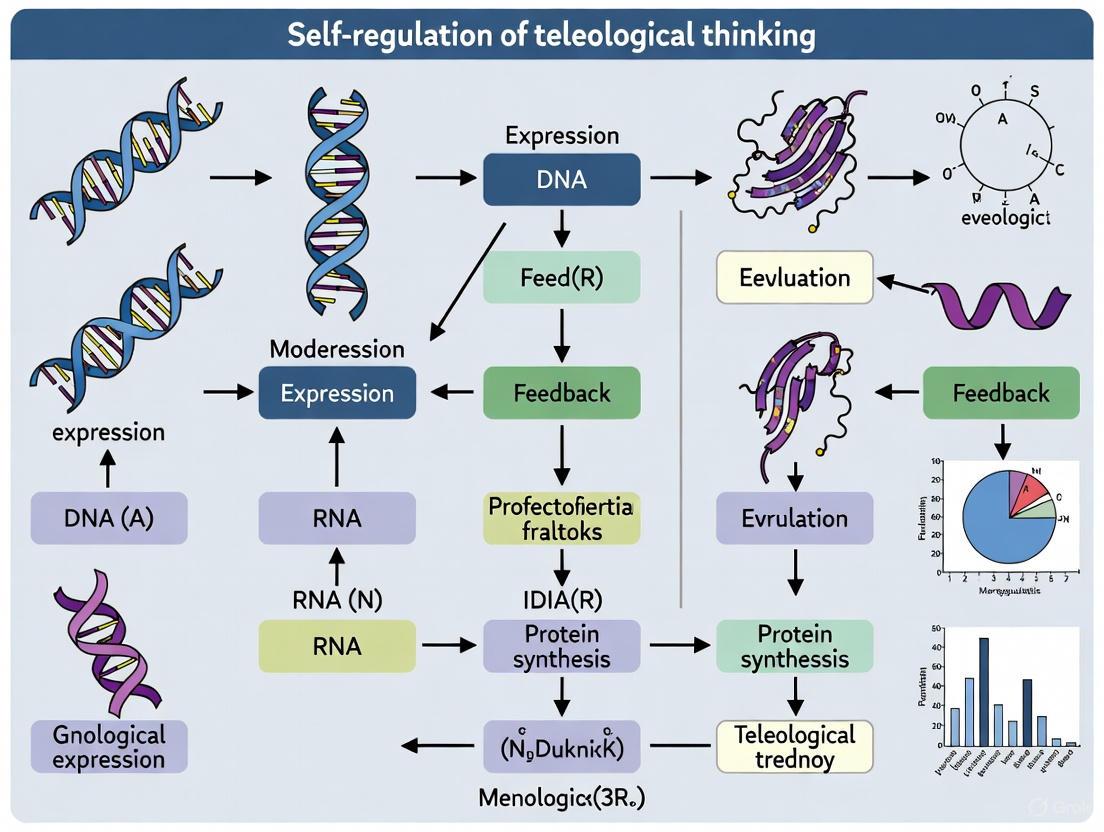
This article addresses the persistent challenge of teleological thinking—the attribution of purpose to biological traits and evolutionary processes—in scientific research and drug development.
Beyond Purpose: A Self-Regulation Framework for Teleological Thinking in Evolution and Drug Discovery
Abstract
This article addresses the persistent challenge of teleological thinking—the attribution of purpose to biological traits and evolutionary processes—in scientific research and drug development. We synthesize epistemological, psychological, and educational perspectives to present a self-regulation framework for managing this cognitive bias. The article explores the foundational role of teleology in biology, details metacognitive strategies for its regulation, troubleshoots common pitfalls in evolutionary psychiatry and pharmacotherapy, and validates the framework through comparative analysis with alternative approaches. Aimed at researchers and drug development professionals, this work provides practical methodologies to refine research paradigms, enhance the validity of disease models, and ultimately foster more robust therapeutic innovation.
The Teleological Dilemma: From Epistemological Obstacle to Cognitive Framework
Teleology, from the Greek telos (end, purpose) and logos (branch of learning), represents one of the most persistent and controversial modes of explanation in biological sciences. It encompasses explanations of biological phenomena by reference to goals, purposes, or functions they appear to serve—for instance, stating that "the chief function of the heart is the transmission and pumping of the blood" or that "bacteria mutate in order to become resistant to the antibiotic" [1] [2]. Despite decades of criticism and attempts at elimination, teleological language and reasoning persist in modern biological research, from evolutionary biology and genetics to medicine and ethology [1] [3]. This persistence raises fundamental questions about whether teleology represents an eliminable obstacle to scientific understanding or an indispensable explanatory tool within biological sciences.
The status of teleology remains controversial for several substantive reasons. Critics argue that teleological notions are: (1) vitalistic (positing some special 'life-force'); (2) requiring backwards causation (using future outcomes to explain present traits); (3) incompatible with mechanistic explanation; (4) mentalistic (attributing the action of mind where there is none); and (5) not empirically testable [1]. Nevertheless, teleological formulations continue to appear throughout biological literature because they play an important explanatory role that appears difficult to eliminate without significant loss of explanatory power [1] [3]. This paper examines the epistemological foundations of teleology in biology, analyzes its legitimate and illegitimate uses, and proposes a framework for the self-regulation of teleological thinking in evolution research and drug development contexts.
Historical and Epistemological Foundations
Philosophical Origins and Development
The conceptual foundations of teleological reasoning trace back to ancient Greek philosophy, with significantly different formulations in Plato and Aristotle that continue to influence contemporary biological thought [1]. Plato's teleology was anthropocentric and creationist, envisioning the universe as an artifact of a Divine Craftsman (Demiurge) who imposed order on disorder with the goal of transfusing his soul into creation [1] [2]. This view perceives the natural world as "unnatural"—the product of a wise craftsman rather than natural processes [2]. In contrast, Aristotle's teleology was naturalistic and functional, identifying four causes acting in nature: efficient, material, formal, and final causes [2]. For Aristotle, final causes served the maintenance of the organism—organs existed because they were functionally useful to the organism that possessed them, without any intention or design [1] [2]. This crucial distinction between external design and immanent functionality continues to inform contemporary debates about legitimate versus illegitimate teleology in biology.
The Scientific Revolution of the 17th century fundamentally questioned the validity of teleological notions, with mechanical philosophy seeking to explain nature through efficient causation alone [4]. Despite this, teleological reasoning persisted in physiology and medicine, with figures like William Harvey representing a liminal case—using mechanical analogies for the heart while maintaining teleological aspects in his explanations [1]. Immanuel Kant's analysis in the Critique of Judgment further developed this tension, arguing that humans inevitably understand living things as if they were teleological systems, while maintaining that this teleology was merely apparent, a product of our cognitive faculties [1]. This Kantian perspective informs what would later be called the "heuristic" view of teleology in biology.
The Darwinian Revolution and Its Aftermath
Charles Darwin's theory of evolution by natural selection represents the pivotal moment in the history of biological teleology. A common interpretation holds that Darwin succeeded in "getting rid of teleology and replacing it with a new way of thinking about adaptation" [1]. Indeed, Darwin's theory provided biology with naturalistic resources to explain adaptive complexity without appeal to a benevolent Creator, thus challenging the argument from design presented by William Paley and other natural theologians [1] [3]. However, there remains substantial disagreement about whether Darwin's evolutionary explanations are themselves teleological [1]. Darwin himself used the language of 'final causes' throughout his career and reflected frequently on the relationship between natural selection and teleology [1].
The contemporary philosophical literature offers both Darwinian and non-Darwinian accounts of teleology in biology that aim to avoid traditional concerns [1]. These naturalistic accounts (teleonaturalism) attempt to ground teleological language in scientifically respectable mechanisms, primarily natural selection [1]. The key insight is that Darwin's theory does indeed purge biology of external, Platonic teleology (divine design), but may retain or reconfigure immanent, Aristotelian teleology (natural functionality) [1] [2].
Table 1: Historical Conceptions of Teleology in Biology
| Conception | Key Proponents | Core Principle | Status in Modern Biology |
|---|---|---|---|
| Divine Design | Plato, William Paley | Features exist because a benevolent Creator designed them for specific purposes | Largely rejected post-Darwin |
| Immanent Teleology | Aristotle | Features exist because they are functionally useful to the organism itself | Reconstituted in naturalized forms |
| Vitalist Teleology | Henri Bergson, Hans Driesch | Evolution driven by purposeful life force (élan vital, entelechy) | Rejected by mainstream biology |
| Naturalized Teleology | Darwin, contemporary philosophy of biology | Teleological language as shorthand for evolutionary functions | Subject of ongoing debate and refinement |
The Problem of Teleology in Contemporary Biology
Legitimate Versus Illegitimate Teleology
A crucial distinction in contemporary discussions separates legitimate (scientifically acceptable) from illegitimate (scientifically problematic) uses of teleology in biological explanations [2] [5]. The distinction hinges on the underlying consequence etiology—how the function or purpose referenced in the explanation relates to causal history [2]. Scientifically legitimate teleological explanations reference functions that exist "because of their selection for their positive consequences for its bearers" [2]. For example, stating that "the heart exists to pump blood" is legitimate when this is understood as shorthand for the evolutionary history wherein hearts were selected for because of their blood-pumping function [2] [5].
In contrast, scientifically illegitimate teleological explanations assume that traits exist "because it was intentionally designed, or simply needed, for this purpose" [2]. This includes both explicit creationism (divine design) and implicit needs-based reasoning (e.g., "giraffes developed long necks because they needed to reach high leaves") [6] [2]. The latter represents a pervasive cognitive bias wherein students and even researchers slip into Lamarckian-style reasoning, attributing evolutionary change to an organism's needs or goals rather than variational selection [6] [4].
The conceptual overlap between legitimate and illegitimate teleology lies in their shared means-ends structure [5]. Both consider biological structures or mechanisms as means to ends. The critical difference is that legitimate teleology naturalizes this means-ends relationship through evolutionary mechanisms, while illegitimate teleology either supernaturalizes it (through divine intention) or internalizes it (through organismic needs or intentions) [5].
The Psychological Dimensions of Teleological Reasoning
Research in cognitive psychology and science education has identified teleological reasoning as a deep-seated cognitive default that poses significant challenges for understanding evolution [6] [4] [2]. Teleological thinking emerges early in human development and represents an intuitive conceptual framework that benefits young learners by focusing attention on relevant inputs [6]. For adult learners, however, this intuitive framework can impede understanding of counterintuitive scientific concepts like evolution [6].
Studies with undergraduate students reveal that lower levels of teleological reasoning predict learning gains in understanding natural selection over the course of a semester, whereas cultural/attitudinal factors like religiosity or acceptance of evolution do not directly impact these learning gains [6]. This suggests that teleological reasoning represents a primarily cognitive rather than cultural obstacle to evolution understanding [6]. The psychological prevalence of teleological thinking is such that some researchers argue that eliminating it may be impossible, leading instead to educational approaches focused on metacognitive regulation rather than elimination [4].
Table 2: Types of Teleological Reasoning in Biological Contexts
| Type of Teleology | Basis | Example | Scientific Legitimacy |
|---|---|---|---|
| Design Teleology | Attribution to conscious designer | "The eye was designed for seeing" | Illegitimate (unless referring to artificial selection) |
| Need-Based Teleology | Attribution to organism's needs | "Giraffes got long necks because they needed to reach leaves" | Illegitimate |
| Selection Teleology | Natural selection for function | "Hearts pump blood because this function was selected for" | Legitimate |
| Functional Teleology | Current utility without historical claims | "Feathers function for insulation in birds" | Legitimate with caveats |
Self-Regulation of Teleological Thinking: A Framework for Researchers
Metacognitive Vigilance as a Research Competency
Given the persistence and potential utility of teleological thinking in biology, a promising approach focuses on developing researchers' capacity for metacognitive vigilance—the sophisticated ability to regulate teleological reasoning [4]. This framework, developed from French concepts of epistemological obstacles and metacognitive vigilance, recognizes that teleological thinking cannot be entirely eliminated but must be consciously managed in scientific reasoning [4]. Metacognitive vigilance comprises three core components:
- Declarative knowledge about teleology—understanding what teleology is, its various forms, and its problematic and legitimate uses in biology [4].
- Procedural knowledge of how to recognize teleological reasoning in its multiple expressions, both in one's own thinking and in scientific literature [4].
- Conditional knowledge of when and why to regulate teleological reasoning—understanding the contexts in which it is likely to be misleading versus those in which it may serve as a productive heuristic [4].
This approach aligns with broader psychological models of metacognition and self-regulated learning, emphasizing researchers' ability to monitor and control their own cognitive processes [4].
Experimental Protocols for Identifying Teleological Reasoning
Research on teleological reasoning has developed specific methodological approaches for identifying and categorizing different types of teleological explanations. These protocols can be adapted for researcher self-assessment and education:
Protocol 1: Explanation Analysis
- Objective: To identify and categorize teleological reasoning in verbal or written explanations of biological phenomena [6] [2].
- Procedure:
- Present biological scenarios (e.g., "Why do polar bears have white fur?")
- Collect open-ended explanations from participants
- Code explanations for teleological elements using predetermined categories
- Distinguish between selection-based, need-based, and design-based teleology [2]
- Application: Researchers can apply this protocol to their own written explanations or research communications to identify potential teleological biases.
Protocol 2: Conceptual Inventory Assessment
- Objective: To quantify understanding of natural selection and identify specific teleological misconceptions [6].
- Procedure:
- Administer standardized instruments like the Conceptual Inventory of Natural Selection (CINS) [6]
- Analyze patterns of errors for teleological tendencies
- Focus particularly on items addressing origin of traits and adaptation mechanisms
- Application: Research teams can use these assessments for self-evaluation and to identify areas where teleological reasoning may be influencing experimental design or interpretation.
Figure 1: Protocol for Self-Regulation of Teleological Reasoning in Biological Research
Research Reagent Solutions for Studying Teleological Reasoning
Table 3: Key Research Instruments and Methodologies for Investigating Teleological Reasoning
| Research Tool | Type | Primary Application | Key Strengths |
|---|---|---|---|
| Conceptual Inventory of Natural Selection (CINS) | Quantitative assessment | Measuring understanding of natural selection and identifying misconceptions | Comprehensive; measures understanding across diverse organisms [6] |
| Teleological Reasoning Scale | Quantitative scale | Assessing tendency toward teleological explanations | Distinguishes between different types of teleology [6] |
| Explanation Analysis Protocol | Qualitative coding system | Categorizing types of teleology in open-ended responses | Captures nuance in reasoning patterns [2] |
| Acceptance of Evolution Measures | Attitudinal assessment | Distinguishing cognitive from cultural/attitudinal factors | Separates understanding from acceptance [6] |
Implications for Research Practice and Drug Development
Applications in Evolutionary Medicine and Drug Development
The self-regulation of teleological thinking has particular significance for evolutionary medicine and drug development, where functional reasoning is essential but must be properly grounded in evolutionary mechanisms [6]. In antimicrobial resistance research, for example, stating that "bacteria mutate to become resistant" represents an illegitimate teleological formulation that misrepresents the random nature of mutation and selective process [4]. The regulated, scientifically legitimate formulation would specify that "random mutations conferring resistance are selected for in antibiotic environments" [4] [2].
Evolutionary medicine provides a promising context for addressing teleological reasoning because it offers practical applications that engage students and researchers regardless of their initial acceptance of evolution [6]. By focusing on health-related decision making and practical medical applications, evolutionary medicine can facilitate learning about natural selection while minimizing cultural identity conflicts [6]. This approach can be particularly valuable in pharmaceutical research settings where understanding evolutionary dynamics is crucial for addressing resistance but where researchers may come from diverse educational backgrounds.
Methodological Recommendations for Research Teams
Research teams in biological sciences, particularly in evolution-related fields and drug development, can implement specific practices to regulate teleological reasoning:
Language Audits: Regularly review research communications (papers, presentations, protocols) for teleological language that may imply backward causation or need-based evolution [4] [5].
Explication of Causal Mechanisms: When using functional language, explicitly connect functions to evolutionary mechanisms or clearly specify when referring only to current utility without historical claims [2] [5].
Dual-Process Awareness Training: Incorporate education about intuitive versus reflective reasoning processes into research team training, helping researchers recognize when they may be defaulting to teleological intuitions [4] [5].
Epistemological Framing: Clearly distinguish between ontological claims (about how nature actually is) and epistemological uses of teleology (as heuristic tools for organizing knowledge) in research discussions and writings [5].
Figure 2: Metacognitive Vigilance Model for Regulating Teleological Reasoning in Biological Research
Teleology persists in biological sciences not merely as a vestigial obstacle but as a complex epistemological phenomenon with both problematic and productive dimensions. The distinction between legitimate and illegitimate teleology hinges on the underlying consequence etiology—whether teleological explanations reference evolutionary histories of selection for function or instead imply need-based mechanisms or conscious design [2]. Rather than attempting to eliminate teleological thinking entirely, which research suggests may be impossible [4], the most promising approach involves developing researchers' capacity for metacognitive vigilance—the sophisticated regulation of teleological reasoning [4].
This self-regulation framework has particular relevance for evolution research and drug development, where functional reasoning is indispensable but must be properly grounded in evolutionary mechanisms. By implementing methodological practices such as language audits, explicit causal mechanism specification, and dual-process awareness training, research teams can harness the heuristic value of teleological thinking while avoiding its epistemological pitfalls. The result is not merely more scientifically accurate biological explanations, but more powerful conceptual frameworks for addressing complex biological challenges from antibiotic resistance to cancer evolution.
Teleology, the explanation of phenomena by reference to goals or purposes, represents a fundamental epistemological obstacle in scientific reasoning, particularly within evolutionary biology. This obstacle functions as a double-edged sword: it can serve as a useful heuristic while simultaneously restricting and biasing scientific thought. The concept of the "epistemological obstacle" originates from Gaston Bachelard, referring to intuitive ways of thinking that are transversal and functional but potentially interfere with learning scientific theories [4] [7]. In biology, teleological thinking persists as such an obstacle because it fulfills important cognitive functions, including heuristic, predictive, and explanatory roles, while systematically leading reasoning astray from mechanistic evolutionary explanations [4].
The central problem of teleology in biology stems from its historical associations with supernatural assumptions and its apparent incompatibility with mechanistic explanation and classical causality [4] [1]. Despite the scientific revolution's rejection of Aristotelian final causes and Darwin's provision of a naturalistic explanation for adaptation, teleological language and explanations have persisted in biological sciences [8] [4] [1]. This persistence is what constitutes teleology as an epistemological obstacle—it is not merely a misconception but a deeply ingrained pattern of thought that must be recognized and regulated rather than simply eliminated [4] [7]. The functional and restrictive roles of this obstacle are particularly evident in evolution research, where students and researchers alike struggle to reconcile intuitive teleological thinking with the non-directional mechanism of natural selection [4].
Historical and Philosophical Context
From Aristotle to Darwin: The Evolution of Teleological Thought
Teleological explanations have ancient origins, particularly in Aristotle's philosophy of nature. Aristotle believed that a complete explanation of physical objects or physiological structures required understanding their purposes or "final causes" [8] [1]. For instance, he argued that one cannot understand what a kidney is merely by knowing its material composition; one must also understand that it has the purpose of filtering blood [8]. This Aristotelian view conceived purposes as unusual properties like "ends" or "final causes" that were difficult to reconcile with the mechanistic worldview that emerged from the scientific revolution [8].
The Darwinian revolution presented a fundamental challenge to traditional teleology by providing a naturalistic explanation for the appearance of design in living organisms. As Michael Ghiselin notes, Darwin's theory succeeded in "getting rid of teleology and replacing it with a new way of thinking about adaptation" [1]. However, contrary to what some interpretations suggest, Darwin did not completely eliminate teleology from biology; rather, he transformed it [4] [1]. The theory of natural selection rendered references to divine design unnecessary for explaining complex adaptations, but teleological language persisted in biological discourse [4] [1]. This persistence highlights the deep-rooted nature of teleological thinking as an epistemological obstacle that transcends specific theoretical frameworks.
Philosophical Accounts of Biological Teleology
Modern philosophical approaches to teleology in biology have primarily sought to naturalize teleological concepts, making them compatible with a scientific worldview. The current literature offers both Darwinian and non-Darwinian accounts of teleology in biology that aim to avoid vitalism, backwards causation, and mentalism [1]. Two prominent approaches include:
Selected-Effects Theories: These theories, advocated by philosophers like Millikan, Neander, and Griffiths, hold that the purpose of a biological trait is to do whatever it was selected for by natural selection [9] [1]. From this perspective, "where there is selection there is teleology" [9]. The purpose of hearts is to pump blood because pumping blood explains why hearts were selected in evolutionary history.
Causal Role Theories: Developed by Robert Cummins and others, these theories focus on the current causal role a component plays within a system, rather than its evolutionary history [8]. The function of a trait is what it contributes to the complex capacities of the containing system.
Table 1: Major Philosophical Accounts of Biological Teleology
| Theory Type | Key Proponents | Central Claim | Strengths | Weaknesses |
|---|---|---|---|---|
| Selected-Effects | Millikan, Neander, Griffiths | Purpose is what trait was selected for | Explains normative dimension of functions | Less useful for traits without clear selective history |
| Causal Role | Cummins | Function is current causal role in system | Applicable to non-evolved systems | Lacks normative dimension |
| Etiological | Wright | Function explains why trait exists | Captures explanatory structure | Faces problems with functional equivalents |
Teleology as Epistemological Obstacle: Theoretical Framework
The Bachelardian Concept of Epistemological Obstacles
The notion of "epistemological obstacle" was developed by Gaston Bachelard to describe mental patterns that hinder scientific understanding despite being functionally useful in everyday reasoning [7]. These obstacles are not mere gaps in knowledge but active forces of resistance to scientific thought. As Leitão Ribeiro et al. argue, unitary and pragmatic knowledge is correlated to teleological categories and serves as the basis for prevailing debate on the notion of "function" in biology [7]. When these patterns of thought are applied to evolutionary biology, they become particularly problematic, constituting what can be termed a "teleological obstacle" [7].
This teleological obstacle exhibits three key characteristics: it is transversal (applicable across domains), functional (serving cognitive purposes), and interfering with scientific learning [4]. The obstacle manifests when students assume that in nature, everything exists and occurs to achieve a predetermined purpose, often survival-related [4]. For example, students might claim that "bacteria mutate in order to become resistant to the antibiotic" or that "polar bears became white because they needed to disguise themselves in the snow" [4]. These explanations reveal the restrictive role of teleology as an epistemological obstacle—it imposes a substantial restriction on the process of learning evolutionary content by directing attention away from mechanistic population-level processes and toward goal-directed narratives.
The Functional Role of Teleological Thinking
Despite its restrictive potential, teleological thinking serves important cognitive functions that explain its persistence. Research in cognitive psychology suggests that teleological thinking fulfills heuristic, predictive, and explanatory roles [4]. It serves as a cognitive shortcut for understanding complex biological systems, allowing for rapid predictions and explanations without detailed mechanistic knowledge. This functional aspect explains why teleological thinking is not merely a misconception to be eliminated but a reasoning pattern that requires careful regulation [4].
Kelemen's research on "promiscuous teleology" provides evidence for the deep-rooted nature of this thinking [10]. Her studies show that children willingly extend teleological explanations to all domains, claiming that "lions exist for going in the zoo and clouds for raining" [10]. While adults typically restrict teleological explanations to artifacts and biological parts, the underlying tendency persists [10]. This pattern suggests that teleological thinking represents a default mode of conceptualizing biological world that must be actively regulated rather than simply outgrown.
Experimental Evidence and Research Protocols
Psychological Studies on Teleological Reasoning
Empirical research in psychology has systematically investigated the patterns and prevalence of teleological thinking across different populations. These studies employ carefully designed protocols to isolate teleological reasoning from other cognitive patterns:
Experiment Protocol 1: Explanation Choice Task
- Objective: To determine whether participants prefer teleological or mechanistic explanations for natural phenomena.
- Methodology: Participants are presented with two explanations for a property of a familiar object—one teleological and one mechanistic—and must choose which is better [10]. For example, children might be shown a pointy rock and asked to decide if it is pointy "because little bits of stuff piled up on it" (mechanistic) or "because being pointy keeps animals from sitting on it" (teleological) [10].
- Key Variables: Age of participants, domain of object (biological vs. non-biological natural kinds), wording of explanations.
- Findings: Kelemen found that children chose the teleological explanation for all kinds of objects, including non-biological natural kinds, while adults restricted teleological explanations to artifacts and biological parts [10].
Experiment Protocol 2: Function Production Task
- Objective: To investigate the spontaneous generation of teleological explanations.
- Methodology: Participants are presented with various objects and asked what each is "for," with the option to respond that it is not "for" anything [10].
- Key Variables: Type of objects (biological kinds, artifacts, non-biological natural kinds), age groups, cultural background.
- Findings: Preschoolers willingly produced functions for items from any domain, even when explicitly given the option of claiming that the object is not "for" anything [10].
Table 2: Key Experimental Paradigms in Teleology Research
| Experiment Type | Core Methodology | Key Dependent Measures | Principal Findings |
|---|---|---|---|
| Explanation Choice | Forced choice between teleological and mechanistic explanations | Preference for teleological explanation | Children prefer teleology across domains; adults restrict to artifacts/biological parts |
| Function Production | Open-ended questions about what objects are "for" | Tendency to attribute functions | Children attribute functions promiscuously; adults show selective attribution |
| Causal Structure Evaluation | Rating explanations while evaluating causal structure | Acceptance of teleological explanations conditional on causal role | TE acceptance requires function played causal role in bringing about explained phenomenon |
The Causal and Generality Conditions for Teleological Explanation
Recent experimental work has investigated the specific conditions under which teleological explanations are deemed acceptable. Lombrozo and Carey (2006) conducted five experiments exploring the theoretical commitments underlying teleological explanations [10]. Their findings indicate that people accept teleological explanations when two conditions obtain:
- Causal Role Condition: The function invoked in the explanation must have played a causal role in bringing about what is being explained.
- Generality Condition: The process by which the function played a causal role must be generalizable, conforming to a predictable pattern or causal schema.
These experiments revealed that teleological explanations are not simply tied to specific conceptual domains but are evaluated based on their causal structure and generality [10]. This research supports the "Explanation for Export" hypothesis, which suggests that a psychological function of explanation is to highlight information likely to subserve future prediction and intervention [10].
Self-Regulation of Teleological Thinking in Evolution Research
Metacognitive Vigilance as an Educational Strategy
Given the persistent nature of teleological thinking as an epistemological obstacle, educational approaches have shifted from eliminative strategies toward self-regulation frameworks. The concept of "metacognitive vigilance" has emerged as a central educational aim, referring to a sophisticated ability for the regulation of teleological reasoning [4]. This approach acknowledges that eliminating teleological thinking may be impossible and potentially undesirable, given its functional aspects in biological reasoning.
Metacognitive vigilance involves three key components [4]:
- Declarative Knowledge: Knowing what teleology is and recognizing its multiple expressions.
- Procedural Knowledge: Knowing how to evaluate and appropriately use teleological reasoning.
- Conditional Knowledge: Knowing why and when teleological reasoning is appropriate or problematic.
This framework aligns with Schraw's (1998) conceptualization of metacognitive awareness, which includes declarative, procedural, and conditional knowledge about cognition [4]. The development of metacognitive vigilance enables researchers and students to intentionally regulate their use of teleological reasoning, harnessing its heuristic value while avoiding its restrictive effects on evolutionary understanding.
Instructional Implications for Evolution Education
The self-regulation approach to teleological thinking has significant implications for evolution education and research training. Rather than attempting to eliminate teleological intuitions, effective instruction should aim to develop students' metacognitive skills to regulate the use of teleological reasoning [4]. This involves:
- Explicit Instruction: Teaching students about teleology as an epistemological obstacle, including its functional and restrictive roles.
- Recognition Training: Providing practice in identifying different forms of teleological reasoning in scientific discourse and personal thinking.
- Contextual Application: Guiding students in determining when teleological language is appropriate (e.g., in functional biology) versus problematic (e.g., in evolutionary mechanisms).
This instructional approach is consistent with the didactic concepts of epistemological obstacles and metacognitive vigilance developed by French science education researchers [4]. By framing teleology as an obstacle to be regulated rather than a error to be eliminated, this approach acknowledges the complexity of conceptual change in science learning.
Research Reagents and Methodological Tools
Essential Materials for Teleology Research
Investigating teleology as an epistemological obstacle requires specialized methodological approaches and conceptual tools. The following table details key "research reagents" - experimental paradigms and analytical frameworks - essential for studying teleological thinking in scientific contexts.
Table 3: Research Reagent Solutions for Teleology Studies
| Reagent/Tool | Type | Function | Example Application | Key References |
|---|---|---|---|---|
| Explanation Choice Paradigm | Experimental Protocol | Measures preference for teleological vs. mechanistic explanations | Testing developmental changes in teleological preferences | Kelemen (1999a), Keil (1992) |
| Function Production Task | Experimental Protocol | Assesses spontaneous attribution of functions | Comparing teleological tendencies across cultures | Kelemen (1999b), Casler & Kelemen (2003) |
| Causal Structure Evaluation | Experimental Protocol | Tests acceptance of TEs under varying causal structures | Isolating conditions for TE acceptance | Lombrozo & Carey (2006) |
| Metacognitive Vigilance Scale | Assessment Tool | Measures awareness and regulation of teleological thinking | Evaluating educational interventions | González Galli & Meinardi (2011) |
| Epistemological Obstacle Framework | Analytical Framework | Characterizes teleology as cognitive obstacle rather than simple error | Designing evolution education curricula | Bachelard, Leitão Ribeiro et al. (2015) |
Implications for Scientific Practice and Drug Development
Teleological Pitfalls in Biomedical Research
The teleological obstacle presents particular challenges in drug development and biomedical research, where functional language is ubiquitous yet potentially misleading. Researchers in these fields must navigate the fine line between useful functional ascriptions and restrictive teleological assumptions. Common pitfalls include:
- Target Identification: Assuming that biological structures exist "for" specific functions may lead researchers to overlook alternative mechanisms or multifunctional roles of drug targets.
- Resistance Explanations: Framing antibiotic resistance as bacteria "trying" to survive or "purposely" evolving resistance misrepresents the evolutionary process and may constrain conceptual exploration of alternative resistance mechanisms [4].
- Therapeutic Design: Over-reliance on teleological narratives about biological systems may limit the conceptual space for exploring non-obvious therapeutic approaches.
Regulatory Strategies for Research Practice
To mitigate the restrictive effects of teleological thinking while preserving its functional utility, research teams can implement specific regulatory strategies:
- Language Monitoring: Establish protocols for critical examination of teleological language in research communications, distinguishing between heuristic shorthand and explanatory commitments.
- Alternative Mechanism Generation: Systematically generate non-teleological explanations for biological phenomena as a practice for expanding conceptual possibilities.
- Interdisciplinary Dialogue: Foster collaboration between evolutionary biologists and biomedical researchers to contextualize functional claims within evolutionary frameworks.
The concept of "teleological obstruction" reminds us that the very cognitive tools that make biological systems intelligible can also constrain our understanding of their evolutionary dynamics [7]. By developing metacognitive vigilance toward teleological reasoning, researchers can harness its explanatory power while avoiding its conceptual pitfalls.
Teleology persists as an epistemological obstacle in biology not because it is entirely misguided, but because it reflects a deeply embedded cognitive tendency with both functional and restrictive aspects. The challenge for researchers and educators is not to eliminate teleological thinking but to develop the metacognitive vigilance needed to regulate its application appropriately. This requires recognizing that teleology serves important heuristic functions while systematically misdirecting understanding of evolutionary mechanisms.
The self-regulation of teleological thinking represents a promising framework for evolution education and research practice. By fostering metacognitive awareness of when and why teleological reasoning is appropriate, we can transform this epistemological obstacle from a barrier to understanding into a tool for critical reflection. This approach acknowledges the complexity of conceptual change in science while providing practical strategies for navigating the tension between intuitive and scientific reasoning.
As biological research continues to advance, particularly in complex fields like evolutionary development and systems biology, the ability to thoughtfully regulate teleological thinking will become increasingly important. The functional and restrictive roles of teleology as an epistemological obstacle remind us that scientific progress involves not only accumulating new knowledge but also developing greater awareness of our own cognitive processes.
Teleological thinking—the tendency to ascribe purpose or final causes to objects and events—represents a fundamental aspect of human cognition that manifests with profound consequences in scientific domains, particularly in evolution research. While functional reasoning serves as a legitimate tool in biology when properly constrained, spurious teleology extends beyond valid functional attribution to impose purpose where none exists, such as claiming "bacteria mutate in order to become resistant to antibiotics" or attributing unrelated life events to purposeful design [4] [5]. This cognitive bias poses substantial challenges in science education and professional research practice, where it can distort mechanistic understanding and fuel unwarranted conclusions.
The persistence of teleological explanations in biology persists despite Darwin's naturalistic explanation of adaptation because scientific explanation of adaptation necessarily involves appeal to the metaphor of design [4]. Within evolution research, this thinking style functions as what French-speaking science education researchers term an epistemological obstacle—intuitive ways of thinking that are transversal across domains and functionally useful in certain contexts, yet potentially interfere with learning accurate scientific theories [4]. The critical educational challenge lies not in eliminating teleological thinking (which may be impossible), but in developing sophisticated metacognitive skills for regulating its application [4].
Recent experimental evidence has illuminated the fundamental cognitive mechanisms underpinning excessive teleological thinking, revealing a surprising finding: maladaptive teleology correlates more strongly with aberrant associative learning processes than with failures in propositional reasoning [11] [12]. This distinction between two causal learning pathways—associative versus propositional—provides a novel framework for understanding how teleological thinking arises and persists in scientific contexts. By examining the roots of spurious teleology through this lens, researchers can develop more effective strategies for fostering appropriate scientific reasoning.
Theoretical Framework: Two Pathways of Causal Learning
Associative Learning Mechanisms
Associative learning represents an evolutionarily conserved mechanism for detecting predictive relationships in the environment, operating through relatively automatic processes of linking stimuli that co-occur. This form of learning appears across diverse species, from invertebrates to mammals, and enables organisms to form expectations based on statistical regularities [13]. In humans, associative learning typically proceeds through mechanisms like prediction error—the discrepancy between expected and actual outcomes—which drives updating of causal beliefs [11]. The neurocognitive systems supporting associative learning appear to involve phylogenetically older brain regions, including the basal ganglia and amygdala, which operate with minimal conscious awareness.
Propositional Reasoning Mechanisms
In contrast, propositional reasoning constitutes a more recently evolved capacity for explicitly representing and evaluating logical relationships between concepts or events. This system operates through controlled, effortful processing that follows rules of logic and evidence evaluation [11]. Propositional reasoning enables humans to deduce conclusions from premises, test hypotheses through mental simulation, and override intuitive responses through reflective thought. This capacity depends heavily on prefrontal cortical regions that mature later in both phylogeny and ontogeny, and which support the complex representational abilities characteristic of human higher cognition.
Interactive Relations Between Systems
The relationship between these two systems is not merely parallel but interactive. Under optimal conditions, propositional reasoning can modulate and override associative tendencies, allowing for more accurate causal inferences. However, under certain conditions—including cognitive load, time pressure, or strong prior beliefs—associative processes may dominate, leading to patterns of thinking that prioritize perceived meaningful connections over logical ones [5]. This dynamic interplay proves particularly relevant for understanding how teleological thinking arises and persists in scientific contexts, where both systems are continuously engaged.
Table 1: Key Characteristics of Two Causal Learning Pathways
| Feature | Associative Learning | Propositional Reasoning |
|---|---|---|
| Primary Mechanism | Prediction error-driven updating | Rule-based logical inference |
| Cognitive Demands | Relatively automatic, low effort | Controlled, effortful processing |
| Phylogenetic Prevalence | Widespread across animal species | More developed in humans |
| Neural Substrates | Basal ganglia, amygdala | Prefrontal cortex |
| Role in Teleology | Source of aberrant associations | Potential regulatory mechanism |
| Development Trajectory | Early emergence | Later development and education-dependent |
Experimental Evidence: Dissociating the Pathways of Teleology
The Kamin Blocking Paradigm and Causal Learning
To disentangle the contributions of associative and propositional processes to teleological thinking, researchers have adapted the Kamin blocking paradigm, a classic experimental design from causal learning research [11]. Originally developed by Leon Kamin in 1969, blocking demonstrates how prior learning about one cue can block learning about a second, redundant cue when both are subsequently paired with an outcome. The phenomenon highlights the role of prediction error in learning—when outcomes are fully predicted by existing knowledge, no new learning occurs about additional cues [11].
In the standard paradigm, participants learn that cue A predicts an outcome (e.g., a specific food causes allergic reaction). Later, they encounter compound cue AX (A paired with a new cue X) followed by the same outcome. Robust blocking occurs when participants fail to learn the association between X and the outcome because A already fully predicts it. This reflects an adaptive learning mechanism that prioritizes predictive information while ignoring redundant cues [11].
Experimental Modifications: Additive vs. Non-Additive Scenarios
Recent research introduced critical modifications to distinguish associative from propositional learning [11]. In the non-additive blocking condition, participants encounter scenarios where outcomes are binary (allergy present/absent), engaging primarily associative learning mechanisms. In the additive blocking condition, participants receive pre-training that establishes an "additivity rule"—that two allergy-causing foods together would produce a stronger reaction than either alone. This condition engages propositional reasoning, as participants can deduce that if X had causal power, the AX compound should produce a stronger reaction than A alone [11].
The experimental protocol involves four phases:
- Pre-learning: Introduction to basic cue-outcome relationships
- Learning: Establishment of initial associations (e.g., A→outcome)
- Blocking: Exposure to compound cues (AX→outcome)
- Test: Assessment of learning about individual cues
Table 2: Experimental Conditions in Teleology Research
| Condition | Training | Mechanism Engaged | Key Measure |
|---|---|---|---|
| Non-additive Blocking | Binary outcomes (allergy/no allergy) | Associative learning | Strength of association to blocked cue |
| Additive Blocking | Pre-training on additivity rule | Propositional reasoning | Deductive inferences about blocked cue |
| Teleology Assessment | Purpose attribution to random events | Teleological thinking | Belief in Purpose of Random Events survey |
| Clinical Correlates | Delusion-like ideas inventory | Maladaptive cognition | Distress and conviction measures |
Key Findings: Associative Learning Predicts Teleological Thinking
Across three experiments involving 600 participants, teleological tendencies—measured by standardized "Belief in the Purpose of Random Events" surveys—consistently correlated with performance on the non-additive (associative) blocking task, but not with the additive (propositional) blocking task [11] [12]. Participants who showed weaker blocking effects—indicating they learned associations to redundant, irrelevant cues—also exhibited stronger tendencies to ascribe purpose to random, unrelated events [11].
Computational modeling revealed that this relationship was explained by aberrant prediction errors—participants prone to teleological thinking appeared to assign excessive significance to random events, forming spurious associations where none existed [11] [14]. Furthermore, teleological tendencies correlated with delusion-like ideas, suggesting this cognitive style may contribute to more maladaptive thinking patterns beyond scientific contexts [11] [12].
The Research Toolkit: Methods and Materials for Teleology Research
Core Experimental Paradigms
Research on teleological thinking employs several validated experimental paradigms adapted from cognitive psychology. The Kamin blocking task represents the gold standard for dissociating associative from propositional learning components [11]. In typical implementations, participants complete a causal learning scenario where they must predict allergic reactions to various foods, with carefully controlled contingencies that create blocking scenarios. The task includes learning phases (establishing initial associations), blocking phases (presenting compound cues), and test phases (assessing learning about individual cues) [11].
The Belief in the Purpose of Random Events survey represents the primary outcome measure for assessing teleological thinking tendencies [11]. This validated instrument presents participants with pairs of unrelated events (e.g., "a power outage happens during a thunderstorm and you have to do a big job by hand" and "you get a raise") and asks them to rate the extent to which one event might have happened for the purpose of influencing the other [11]. The survey demonstrates good psychometric properties and has been correlated with various measures of intuitive thinking and cognitive biases.
Computational Modeling Approaches
Computational modeling approaches have proven invaluable for identifying the specific mechanisms underlying aberrant learning in teleological thinking. Rescorla-Wagner models and their descendants have been applied to behavioral data from blocking paradigms, enabling researchers to quantify prediction errors and learning rates across individuals [11]. These models parameterize how strongly individuals update their beliefs in response to prediction errors, with higher learning rates for irrelevant cues characterizing those prone to spurious teleological thinking [11].
Table 3: Essential Methodological Components in Teleology Research
| Component | Function | Implementation Example |
|---|---|---|
| Causal Learning Task | Dissociates associative vs. propositional learning | Food allergy prediction task with blocking design |
| Teleology Assessment | Quantifies purpose attribution tendencies | Belief in Purpose of Random Events survey |
| Clinical Correlates | Measures maladaptive thinking | Delusion-like ideas inventory |
| Computational Models | Identifies specific learning parameters | Rescorla-Wagner model applied to blocking data |
| Cognitive Measures | Assesses general reasoning tendencies | Cognitive reflection test, analytical thinking |
Research Reagent Solutions
The experimental study of teleological thinking requires specific "research reagents"—carefully designed stimuli and procedures that enable precise measurement of cognitive processes:
Causal Learning Scenarios: Computer-based tasks presenting coherent causal scenarios (e.g., food allergies, medical diagnoses) with controlled cue-outcome contingencies that enable testing of blocking effects and other learning phenomena [11].
Teleology Assessment Instruments: Standardized surveys measuring individual differences in teleological thinking tendencies, including purpose attribution to objects, events, and biological phenomena [11] [4].
Computational Modeling Frameworks: Mathematical models that quantify learning parameters from behavioral data, allowing researchers to identify specific aberrations in learning mechanisms [11].
Dual-Process Task Batteries: Collections of tasks that differentiate automatic versus controlled processing, helping to locate teleological thinking within broader cognitive architecture [5].
Educational Implications: Regulating Teleology in Evolution Research
Metacognitive Vigilance as a Regulatory Strategy
Given the evidence that spurious teleology arises more from aberrant associations than reasoning failures, effective educational approaches should focus on developing metacognitive vigilance rather than simply teaching correct concepts [4]. This involves helping learners recognize teleological reasoning patterns, understand their intuitive appeal, and develop strategies for regulating their application [4]. Metacognitive vigilance comprises three interconnected components: knowing what teleology is (declarative knowledge), recognizing its multiple expressions (procedural knowledge), and intentionally regulating its use (conditional knowledge) [4].
In evolution education specifically, this approach acknowledges that teleological thinking cannot be entirely eliminated, but must be managed through conscious cognitive monitoring. Effective instruction would explicitly teach students to distinguish between legitimate functional reasoning in biology (e.g., "the heart functions to pump blood") from illegitimate teleological explanations (e.g., "the heart evolved in order to pump blood") [4] [5]. This distinction requires understanding the different notions of telos in biological discourse—epistemological versus ontological uses—with the former representing a legitimate scientific tool and the latter an inappropriate imposition of purpose onto natural processes [5].
Epistemological Obstacles as Learning Challenges
From a pedagogical perspective, teleological thinking functions as what French didacticians term an epistemological obstacle—a formerly useful way of thinking that now impedes learning of more adequate scientific theories [4]. This characterization carries important implications for teaching, suggesting that simply presenting correct information will be insufficient to overcome deeply entrenched thinking patterns. Instead, educators must help students consciously recognize and overcome these obstacles through targeted instructional interventions.
The obstacle concept explains why teleological thinking proves so resistant to change: it represents a transversally applicable cognitive style that serves important cognitive functions, including heuristic value for generating explanations and predictions [4]. Effective evolution instruction would therefore explicitly address teleology as a cognitive phenomenon, exploring its origins, usefulness, and limitations rather than simply dismissing it as "wrong thinking" [4].
The experimental dissociation between associative and propositional pathways to teleological thinking provides a new framework for understanding this pervasive cognitive phenomenon. The evidence that aberrant associative learning, rather than propositional reasoning deficits, drives spurious teleology represents a significant reorientation of how researchers conceptualize the origins of this thinking style. This finding helps explain why simply teaching correct scientific concepts often fails to dislodge teleological intuitions—they arise from more automatic, associative processes that operate largely outside conscious awareness.
For evolution research and education, these findings suggest the need for intervention strategies that target associative learning mechanisms directly, rather than focusing exclusively on conceptual clarification. Potential approaches might include targeted reinforcement of appropriate associations, visualization of variation in populations to counteract essentialist thinking, and explicit contrasting of adaptive versus maladaptive associative patterns in biological reasoning. Future research should explore how these different intervention strategies impact both associative learning patterns and teleological thinking tendencies.
The broader project of regulating teleological thinking in science represents a critical dimension of scientific literacy. By understanding the cognitive roots of spurious teleology and developing effective metacognitive strategies for its regulation, researchers and educators can foster more accurate biological reasoning while acknowledging the intuitive appeal of purpose-based explanations. This balanced approach recognizes both the value and limitations of our natural cognitive tendencies, ultimately supporting more rigorous scientific thinking within evolution research and beyond.
Teleological thinking—the attribution of purpose or final causes to natural phenomena and biological structures—represents a significant epistemological obstacle in scientific reasoning. Despite its known pitfalls, this cognitive bias is deeply ingrained, often persisting even in sophisticated scientific contexts such as evolutionary psychology [4]. The tendency to ask "what is this for?" is a fundamental aspect of human cognition that begins developing in early childhood and can fuel explanation-seeking while simultaneously biasing scientific understanding [11].
Within evolutionary research, teleological assumptions frequently manifest as implicit design-thinking, where traits are interpreted as having evolved "for" a specific purpose rather than as products of non-teleological processes. This case study examines how such thinking permeates one prominent area: the hijack model of addiction. We analyze this model through the lens of teleology, explore competing theoretical frameworks, and present experimental approaches for investigating the cognitive mechanisms underlying teleological reasoning itself. This analysis is framed within the broader context of developing metacognitive vigilance—the ability to recognize and regulate teleological thinking in evolution research [4].
Theoretical Frameworks: From Hijack to Neurotoxin Regulation
The Dominant Paradigm: Hijack Model and Its Teleological Underpinnings
The hijack model represents the dominant paradigm for understanding substance addiction within neurobiology and evolutionary psychology. This model posits that psychoactive substances "hijack," "usurp," or "co-opt" evolutionarily ancient reward systems in the brain, particularly the mesolimbic dopamine pathway, which originally evolved to reinforce fitness-enhancing behaviors such as seeking food, sex, and social rewards [15] [16] [17].
The core theoretical foundation rests on an evolutionary mismatch argument: modern concentrated psychoactive substances and their methods of delivery (e.g., smoking, injection) are evolutionarily novel, creating a maladaptive disconnect between our ancestral psychology and contemporary environment [15] [16]. From this perspective, drugs generate a "false signal" of fitness benefits, leading to compulsive drug-seeking behaviors that displace adaptive behaviors despite negative consequences [16].
The model's teleological character emerges in its conceptualization of the brain's reward system as having a proper purpose or function that drugs artificially subvert. This framework implicitly treats the mesolimbic pathway as a system "designed for" natural rewards that is being improperly used, thereby employing a form of reverse teleology where current function explains evolutionary origins [17].
Competing Framework: Neurotoxin Regulation Model
In contrast to the hijack model, the neurotoxin regulation model proposes that most globally popular drugs are plant neurotoxins or their close chemical analogs that evolved to deter herbivore consumption, not to reward it [17]. This framework suggests that humans, like other animals, have evolved sophisticated detoxification mechanisms and regulated intake behaviors to minimize fitness costs while potentially maximizing benefits from limited consumption of plant secondary compounds [16] [17].
This model explains drug consumption not as a pathological hijacking but as the outcome of an evolved regulatory system that manages neurotoxin intake, potentially for benefits such as self-medication against pathogens or parasites [17]. From this perspective, the brain doesn't misinterpret drugs as rewards but rather carefully regulates their consumption based on toxicity cues and potential benefits, particularly considering developmental stages and sex-specific vulnerabilities to teratogenic effects [17].
Table 1: Comparative Analysis of Addiction Models
| Theoretical Aspect | Hijack Model | Neurotoxin Regulation Model |
|---|---|---|
| Evolutionary Premise | Evolutionary mismatch; novel substances hijack conserved reward systems | Long-term coevolution with plant neurotoxins; regulated consumption |
| Primary Mechanism | Artificial stimulation of mesolimbic dopamine pathway | Activation of toxin defense mechanisms with regulated intake |
| Function of Drugs | False signal of fitness benefit | Deterrent with potential self-medication benefits in regulated doses |
| Teleological Character | Reverse teleology (proper function subverted) | Ateleological adaptation to chemical environment |
| Predicted Patterns | Universal vulnerability to addiction | Age and sex differences in consumption based on toxicity tolerance |
Three-Stage Neurobiological Framework of Addiction
Contemporary neurobiological research describes addiction as a chronic, relapsing disorder progressing through three distinct stages, each involving specific brain regions and neuroadaptations [18]:
Binge/Intoxication Stage: Focused on the basal ganglia, this stage involves increased dopaminergic firing for drug-associated cues (incentive salience) while diminishing for the substance itself.
Withdrawal/Negative Affect Stage: Centered on the extended amygdala ("anti-reward" system), this stage involves activation of stress systems leading to withdrawal symptoms and diminished baseline pleasure.
Preoccupation/Anticipation Stage: Governed by the prefrontal cortex, this stage features executive dysfunction, diminished impulse control, and cravings that predispose to relapse.
This framework forms the foundation for the Addictions Neuroclinical Assessment (ANA), which translates these stages into measurable neurofunctional domains for clinical application [18].
Experimental Approaches to Teleological Thinking
Investigating the Cognitive Roots of Teleology
Recent research has employed sophisticated causal learning paradigms to investigate the cognitive mechanisms underlying excessive teleological thinking. The fundamental question is whether this tendency stems primarily from aberrant associative learning or failures in propositional reasoning [11].
The experimental approach uses a modified Kamin blocking paradigm, a classic phenomenon in causal learning where prior learning about one cue blocks new learning about a redundant cue. This paradigm can distinguish between two learning pathways:
- Associative learning: Based on prediction errors and largely automatic
- Propositional reasoning: Based on explicit rule-based reasoning
Across three experiments (total N=600), teleological tendencies (measured using the "Belief in the Purpose of Random Events" survey) correlated with delusion-like ideas and were uniquely explained by aberrant associative learning, not by learning via propositional rules [11]. Computational modeling suggested that the relationship between associative learning and teleological thinking can be explained by excessive prediction errors that imbue random events with significance.
Experimental Protocol: Kamin Blocking Paradigm
Objective: To dissociate the contributions of associative versus propositional learning mechanisms to teleological thinking tendencies.
Design: Participants complete a causal learning task where they must predict allergic reactions to various food cues through multiple phases [11]:
Pre-Learning Phase: Participants learn initial cue-outcome relationships. In additive blocking conditions, they learn rules about how cues combine (e.g., additivity).
Learning Phase: Participants learn that specific cues (A1, A2) predict outcomes.
Blocking Phase: Compound cues (A1B1, A2B2) are presented with the same outcomes, making B cues redundant.
Test Phase: Participants are tested on their responses to the blocked cues (B1, B2) alone.
Critical Manipulation: The additive versus non-additive pre-learning conditions differentially engage propositional versus associative learning mechanisms.
Measurements:
- Blocking magnitude (reduced responding to blocked cues)
- Teleological thinking scores (Belief in Purpose of Random Events survey)
- Delusion-like ideation measures
Table 2: Key Research Reagents and Methodological Components
| Research Component | Function in Experimental Protocol |
|---|---|
| Kamin Blocking Paradigm | Dissociates associative vs. propositional learning pathways |
| Belief in Purpose of Random Events Survey | Quantifies teleological thinking tendencies |
| Additive vs. Non-Additive Pre-Learning | Engages different cognitive mechanisms (propositional vs. associative) |
| Computational Modeling of Prediction Errors | Identifies potential mechanisms linking learning to teleological thought |
| Delusion-Ideation Measures | Establishes clinical relevance of cognitive mechanisms |
Experimental Workflow and Cognitive Assessment
The following diagram illustrates the experimental workflow for investigating cognitive mechanisms of teleological thinking:
Neurobiological Mechanisms and Signaling Pathways
Three-Stage Addiction Cycle Neurocircuitry
The neurobiological framework of addiction involves distinct brain regions and signaling pathways across the three-stage cycle. The following diagram illustrates the primary neural circuits and neurotransmitter systems involved:
Molecular Pathways in Addiction
At the molecular level, addictive substances converge on common circuitry despite diverse chemical substrates. Key molecular mechanisms include [18] [16]:
- Dopamine transmission facilitation in the nucleus accumbens via disinhibition, excitation, or uptake blockade
- Dynorphin, CRF, and norepinephrine systems activation in the extended amygdala during withdrawal
- Glutaminergic-GABAergic imbalance shifting toward increased glutaminergic tone
- Cellular adaptations in cAMP and CREB signaling pathways
- Genetic and epigenetic modifications affecting receptor expression and signaling cascades
The hijack model emphasizes that drugs artificially stimulate these pathways, while the neurotoxin regulation model focuses on how toxin defense mechanisms interact with these systems.
Discussion: Metacognitive Vigilance in Evolution Research
Teleology as Epistemological Obstacle
The persistence of teleological thinking in evolutionary psychology and addiction research represents what French science education researchers term an epistemological obstacle—intuitive ways of thinking that are transversal and functional but potentially interfere with learning scientific theories [4]. This obstacle is particularly challenging because teleological reasoning fulfills important cognitive functions, including heuristic, predictive, and explanatory roles, while simultaneously biasing and limiting thinking about evolutionary processes.
Within evolutionary psychology specifically, controversies and disagreements often stem from the field's failure to reach the stage of mature, normal science with a unifying research program [19]. This theoretical fragmentation creates fertile ground for teleological assumptions to persist unchallenged, as fundamental disagreements about adaptationism, modularity, and human nature remain unresolved.
Implications for Research and Clinical Practice
Recognizing teleological biases in addiction models has significant implications:
Research Directions: The neurotoxin regulation model suggests different research priorities, including investigations into potential benefits of regulated neurotoxin consumption and evolved individual differences in toxin regulation mechanisms.
Treatment Approaches: The hijack model leads to interventions focused on preventing reward system hijacking, while the neurotoxin regulation model might emphasize managed consumption and toxin titration.
Policy Considerations: Evolutionary perspectives may help reshape addiction policies by reducing criminalization and stigma through better understanding of underlying biological mechanisms [15].
Developing Metacognitive Vigilance
The educational response to teleological thinking should not be its elimination, which may be impossible, but rather the development of metacognitive vigilance—sophisticated awareness and regulation of teleological reasoning [4]. This involves:
- Declarative knowledge about what teleology is and its multiple expressions
- Procedural knowledge about how to recognize teleological assumptions in scientific reasoning
- Conditional knowledge about when teleological thinking is appropriate versus misleading
For evolutionary psychologists and addiction researchers, this means cultivating heightened awareness of how implicit design metaphors and reverse-teleological reasoning may shape theoretical frameworks and interpretations of empirical data.
The hijack model of addiction, while heuristically valuable, exemplifies how teleological thinking can persist even in ostensibly naturalistic evolutionary explanations. By examining this model through the lens of teleology and contrasting it with alternative frameworks like the neurotoxin regulation model, we can identify implicit assumptions that may constrain theoretical progress.
Experimental approaches that dissociate cognitive mechanisms underlying teleological thinking provide promising avenues for understanding how such biases operate in scientific reasoning itself. Ultimately, advancing evolutionary psychology and addiction research requires not only empirical investigations but also critical reflection on the metaphysical and epistemological frameworks that shape how we interpret biological phenomena—a commitment to metacognitive vigilance about the very tools we use to construct scientific knowledge.
Cultivating Metacognitive Vigilance: Strategies for Regulating Teleological Bias
Metacognitive vigilance represents a sophisticated framework for regulating non-scientific reasoning patterns, such as teleological thinking, within science education and professional research domains. This whitepaper delineates the three core pillars of metacognitive vigilance—knowledge, recognition, and intentional regulation—situated within the context of evolutionary biology and its applications in biomedical research. We synthesize contemporary research on metacognitive theory and its role in mitigating cognitive biases that impede accurate understanding of natural selection mechanisms. The paper provides experimental protocols, quantitative data synthesis, and visualization tools to equip researchers and drug development professionals with practical methodologies for enhancing scientific reasoning through metacognitive vigilance.
Metacognitive vigilance refers to the conscious awareness and strategic regulation of one's own cognitive processes, particularly when confronting deeply ingrained but scientifically problematic reasoning patterns [4]. Within evolutionary biology research and its applications in drug development, this concept proves particularly valuable for addressing persistent teleological reasoning—the intuitive but incorrect assumption that biological traits evolve to fulfill specific goals or purposes [4] [20].
The framework of metacognitive vigilance has emerged from synthesis of metacognitive theory and didactic research, positioning intuitive reasoning styles not as simple misconceptions to be eliminated, but as epistemological obstacles that must be recognized and regulated [4] [20]. This perspective acknowledges that teleological thinking serves important cognitive functions while simultaneously biasing and limiting scientific reasoning about evolutionary processes.
For research scientists and drug development professionals, cultivating metacognitive vigilance enables more rigorous evaluation of adaptive processes in pathogen evolution, host-pathogen interactions, and treatment resistance mechanisms—areas where teleological assumptions frequently compromise theoretical models and experimental interpretations.
The Theoretical Foundation: From Metacognition to Metacognitive Vigilance
Core Metacognitive Components
Metacognition, broadly defined as "thinking about thinking," encompasses several interrelated components that form the foundation for metacognitive vigilance [21] [22]. The standard model includes three fundamental elements:
- Metacognitive Knowledge: Understanding one's own cognitive processes, including knowledge about different learning strategies and when to apply them [21]
- Metacognitive Regulation: The ability to plan, monitor, and evaluate one's learning and cognitive processes through strategic control mechanisms [21]
- Metacognitive Experiences: Conscious reflections and insights gained from previous learning situations that inform future decision-making [21]
These components work synergistically to enable individuals to reflect on their thought processes, recognize cognitive biases, and implement corrective strategies when reasoning diverges from scientific norms.
Epistemological Obstacles and the Need for Vigilance
In the specific context of evolution education and research, teleological thinking constitutes what French didactic researchers term an "epistemological obstacle"—intuitive ways of thinking that are transversal across domains and functionally useful in everyday reasoning, yet potentially interfere with learning scientific theories [4]. This conceptualization differs from simple "misconceptions" by acknowledging the adaptive value of such reasoning in appropriate contexts while recognizing its limitations in scientific domains.
The concept of metacognitive vigilance extends basic metacognitive theory by emphasizing sustained, conscious monitoring and regulation of these epistemological obstacles [4]. Rather than attempting to eliminate teleological thinking—an approach research suggests may be impossible—metacognitive vigilance focuses on developing sophisticated awareness and control mechanisms that allow researchers to recognize and regulate these intuitive reasoning patterns as they emerge in professional scientific practice [4] [20].
The Three Pillars of Metacognitive Vigilance
Pillar 1: Metacognitive Knowledge
Metacognitive knowledge forms the foundational pillar of metacognitive vigilance, encompassing awareness of one's cognitive processes and understanding how different strategies influence reasoning outcomes [21] [22]. Within the context of regulating teleological thinking in evolution research, this pillar includes three distinct knowledge types:
- Declarative Knowledge: Factual understanding about cognitive processes, including knowing that teleological reasoning represents a common intuitive pattern when considering biological adaptation [4] [22]
- Procedural Knowledge: Understanding how to implement specific strategies to regulate teleological reasoning, such as applying counter-example analysis or mechanistic causal modeling [22]
- Conditional Knowledge: Recognizing when and why to apply particular regulatory strategies, such as deploying teleological filtering specifically when considering complex adaptive traits [21] [22]
This knowledge base enables researchers to understand both their own cognitive tendencies and the specific challenges that teleological reasoning presents for accurate interpretation of evolutionary processes, particularly in applied research contexts like antimicrobial resistance studies.
Pillar 2: Recognition
The recognition pillar involves developing conscious awareness of teleological reasoning as it occurs in real-time during scientific work. This capacity for timely detection requires attentional control and pattern identification skills that allow researchers to flag intuitive assumptions before they influence experimental design or data interpretation [4] [20].
Research in educational contexts demonstrates that recognition abilities develop through specific practices:
- Monitoring Comprehension: Maintaining ongoing awareness of one's understanding during literature review, experimental planning, and data analysis phases [21] [22]
- Identifying Cognitive Dissonance: Noticing moments of confusion or contradiction that may signal clashes between intuitive and scientific reasoning patterns [4]
- Cue Detection: Learning to recognize linguistic markers (e.g., "in order to" phrasing) and conceptual patterns (e.g., need-based explanatory frameworks) associated with teleological reasoning [4]
This recognition capability represents a form of "metacognitive monitoring" that several researchers have associated with prefrontal cortex function, highlighting the neurobiological underpinnings of this pillar [22].
Pillar 3: Intentional Regulation
Intentional regulation encompasses the active control processes employed once teleological reasoning has been recognized [4] [20]. This pillar transforms passive awareness into strategic intervention through three sequenced activities:
- Planning: Selecting appropriate regulatory strategies before engaging with evolution-related content, such as pre-committing to mechanistic causal explanations [21] [22]
- Strategy Implementation: Executing specific cognitive techniques to override intuitive reasoning, such as deliberate practice with natural selection mechanisms or engagement with alternative explanatory frameworks [4]
- Evaluating: Assessing the effectiveness of regulatory efforts and refining approaches for future applications based on outcomes [21] [22]
In research settings, intentional regulation manifests as conscious correction of experimental hypotheses, methodological adjustments to account for teleological biases, and systematic refinement of theoretical models to better align with evolutionary principles.
Experimental Evidence and Methodologies
Quantitative Synthesis of Metacognitive Monitoring Studies
Table 1: Experimental Findings on Metacognitive Monitoring Accuracy
| Study Paradigm | Participant Population | Monitoring Accuracy Metric | Key Finding | Implication for Vigilance |
|---|---|---|---|---|
| Exogenous Cueing with Confidence Judgments [23] | N=100 adults | Correlation between sensitivity increases and confidence reports | Confidence efficiently tracks involuntary sensitivity gains (100ms post-cue) | Metacognition can track fleeting cognitive modulations |
| Compound Arrow Cueing [24] | Unspecified sample size | Detection response times to valid vs. invalid cues | Global cueing effects more reflexive than local effects | Attentional effects vary by processing level |
| Essentialism Regulation in Evolution Learning [20] | 80 secondary students | Thematic analysis of classroom discussions | Students implicitly regulate essentialism during peer discussions | Social interaction supports metacognitive regulation |
Detailed Experimental Protocol: Exogenous Attention Metacognition Study
Based on research examining metacognitive monitoring of exogenous attention [23], the following protocol provides a template for investigating core components of metacognitive vigilance:
Objective: To determine whether metacognitive confidence judgments track involuntary, transient increases in perceptual sensitivity induced by exogenous cues.
Participants: 100 human observers with normal or corrected-to-normal vision.
Stimuli and Apparatus:
- Low-contrast Gabor patches (2° visual angle, 5 c/° spatial frequency) presented at 5° eccentricity
- CRT monitor (100-Hz refresh rate) with Python/PsychoPy experimental control
- Chinrest to maintain 57cm viewing distance
Procedure:
- Trial initiation with fixation display (300-1000ms randomized duration)
- Presentation of uninformative peripheral pre-cue (60ms duration)
- Variable cue-to-target onset asynchrony (CTOA: 100, 150, 250, 450, or 850ms)
- Simultaneous presentation of target (tilted Gabor) and distractor (horizontal Gabor) for 30ms
- Two-alternative forced choice: clockwise vs. counterclockwise tilt discrimination
- Confidence judgment: higher or lower than average confidence in perceptual decision
Design:
- Fully factorial with 5 CTOA conditions × 2 cue validity conditions (valid/invalid)
- 50% target at cued location, 50% at uncued location
- Pseudo-randomization within virtual blocks of 20 trials
Analysis:
- Signal detection theory measures for perceptual sensitivity (d')
- Type 2 ROC analysis for metacognitive sensitivity
- Computational modeling of confidence-action relationship
This protocol demonstrates how tightly controlled experimental designs can isolate specific components of metacognitive monitoring relevant to vigilance development.
Research Reagent Solutions for Metacognition Studies
Table 2: Essential Methodological Components for Metacognitive Vigilance Research
| Research Component | Function in Vigilance Studies | Example Implementation |
|---|---|---|
| PsychoPy (Python) [23] | Open-source experimental control | Presentation of stimuli, timing precision, data collection |
| Exogenous Cueing Paradigm [23] | Isolate involuntary attention effects | Unpredictive peripheral cues to trigger reflexive orienting |
| Confidence Judgments [23] | Measure metacognitive monitoring | Trial-by-time confidence ratings relative to personal average |
| Hierarchical Stimuli [24] | Investigate competing cognitive processes | Global arrows composed of local arrows with congruent/incongruent directions |
| Thematic Analysis [20] | Qualitative assessment of regulation processes | Identify implicit regulation in verbal discourse and reasoning |
Visualization of Metacognitive Vigilance Framework
Figure 1: The Three Pillars of Metacognitive Vigilance and Their Interactions
Implementation in Evolution Research and Drug Development
The application of metacognitive vigilance principles offers significant potential for enhancing research practices in evolutionary biology and pharmaceutical development. Specific implementation strategies include:
Protocol Integration
Research teams can integrate metacognitive vigilance checks into standard experimental workflows through:
- Pre-study Bias Audits: Systematic identification of potential teleological assumptions in research questions and hypotheses
- Methodological Filtering: Explicit evaluation of experimental designs for need-based explanatory frameworks
- Results Interpretation Frameworks: Structured approaches to prevent teleological reasoning during data analysis phases
Training Applications
For drug development professionals facing challenges in understanding pathogen evolution and treatment resistance mechanisms, targeted training in metacognitive vigilance should emphasize:
- Teleological Pattern Recognition: Developing sensitivity to need-based language in scientific discourse
- Mechanistic Causal Modeling: Practicing explicit formulation of natural selection mechanisms without goal-directed framing
- Regulatory Feedback Loops: Implementing iterative self-correction processes during literature review and experimental design
Research with secondary students learning evolution content demonstrates that implicit regulation of essentialist and teleological assumptions can develop through structured discursive practices [20], suggesting similar approaches could benefit research professionals.
Metacognitive vigilance represents a powerful framework for enhancing scientific reasoning in evolution research and its applications in drug development. By systematically developing the three pillars of metacognitive knowledge, recognition, and intentional regulation, researchers can more effectively monitor and regulate persistent cognitive biases like teleological thinking. The experimental protocols, quantitative findings, and conceptual models presented in this whitepaper provide a foundation for implementing metacognitive vigilance strategies in professional scientific contexts. Future research should focus on developing domain-specific interventions tailored to the unique challenges faced by researchers working with evolutionary models in biomedical contexts.
Implementing Self-Regulated Learning in Research Team Practices and Literature Evaluation
The integration of Self-Regulated Learning (SRL) principles into research team practices represents a transformative approach to enhancing scientific rigor, particularly within the specialized context of evolution research where teleological thinking—the inherent cognitive bias to attribute purpose or intentional design to natural phenomena—persistently challenges objective analysis. This technical guide provides research teams with evidence-based frameworks and practical protocols for implementing SRL strategies that specifically target the regulation of teleological biases while strengthening literature evaluation methodologies. By adapting educational SRL models to research settings, teams can cultivate higher-order cognitive monitoring that recognizes and corrects for the intuitive yet scientifically problematic assumption that evolutionary processes serve predetermined purposes or goals [4] [25].
The self-regulation of teleological thinking is not merely an elimination strategy but rather a sophisticated form of metacognitive vigilance that enables researchers to identify, monitor, and appropriately constrain purpose-based reasoning when it conflicts with mechanistic evolutionary explanations [4]. This approach recognizes that teleological thinking constitutes an epistemological obstacle—a intuitively functional yet limiting cognitive framework that requires active management rather than wholesale elimination. For research teams investigating evolutionary processes, developing this disciplinary-specific form of SRL creates a crucial buffer against cognitive biases that have historically distorted scientific interpretation [4] [26].
Theoretical Framework: SRL Models for Research Teams
Cyclical SRL Phase Model for Scientific Research
Table 1: Research-Specific Adaptation of Zimmerman's SRL Phases
| SRL Phase | Educational Context | Research Team Application | Teleology Regulation Focus |
|---|---|---|---|
| Forethought | Goal setting, strategic planning, self-motivation | Research question formulation, experimental design, methodology selection | Identifying potential teleological traps in hypothesis formulation |
| Performance | Implementation of strategies, self-monitoring | Data collection, protocol execution, preliminary analysis | Monitoring for purpose-based language and assumptions during observation |
| Self-reflection | Self-evaluation, adaptive adjustment | Results interpretation, peer feedback, manuscript revision | Critical assessment of teleological explanations in conclusions |
Research teams function most effectively when SRL is conceptualized as a dynamic cyclical process rather than a linear sequence. The adapted framework shown in Table 1 enables researchers to deploy phase-appropriate regulatory strategies across the research continuum [27] [28]. During the forethought phase, teams engage in collaborative planning sessions that explicitly identify where teleological thinking might infiltrate research design—particularly when investigating adaptive traits or evolutionary pathways [4]. The performance phase incorporates real-time monitoring through lab meeting discussions and documentation practices that flag purpose-based language. The self-reflection phase formalizes the evaluation of teleological influences through specific manuscript review checkpoints and revision protocols [29] [30].
Multi-Dimensional SRL Strategy Framework
Table 2: SRL Dimensions and Research Application
| SRL Dimension | Definition | Research Team Strategies | Measurement Approaches |
|---|---|---|---|
| Cognition | Information processing strategies | Literature synthesis methods, data analysis protocols, statistical planning | Pre-post tests of literature evaluation accuracy |
| Metacognition | Awareness and control of cognitive processes | Research question refinement, assumption tracking, bias monitoring | Metacognitive awareness questionnaires (MAI) adapted for research |
| Motivation | Beliefs about capabilities and task value | Growth mindset cultivation, failure normalization, intrinsic motivation nurturing | Academic Motivation Scale (AMS) modified for research context |
| Behavioral | Focus and effort maintenance | Time management systems, milestone tracking, distraction management | Project management metrics, timeline adherence rates |
| Affective | Emotion management impacting learning | Stress reduction protocols, constructive feedback practices, conflict resolution | PANAS scales, team climate surveys |
The comprehensive SRL framework presented in Table 2 addresses the multiple dimensions that collectively determine research effectiveness [30]. Particularly critical for evolution research is the metacognitive dimension, which enables the detection and regulation of teleological reasoning—the often implicit assumption that traits evolve "in order to" achieve some beneficial outcome, rather than through non-goal-directed processes [4] [25]. Research teams that systematically develop this multidimensional SRL capacity show significantly improved ability to identify methodological flaws in literature, generate alternative interpretations of data, and avoid confirmation bias in experimental design [27] [30].
Quantitative Evidence: SRL Efficacy in Professional Contexts
Documented Outcomes of Structured SRL Interventions
Table 3: Efficacy Metrics of SRL Implementation Across Disciplines
| Study Context | Intervention Type | Duration | Sample Size | Key Outcomes | Effect Size |
|---|---|---|---|---|---|
| University STEM Students [31] | Self-instructional SRL material in mathematics | 1 semester | 258 students | Significant improvement in lower-performing students; girls engaged more actively with SRL strategies | F(2.295, 50) = 73.657, p < .05, ηp² = .880 |
| First-Year University Students [30] | Intracurricular SRL interventions | Varies (multiple studies) | 54% dropout reduction | Combined cognitive, metacognitive, motivational strategies most effective | Holistic approach showed greatest impact |
| EFL Writing Students [29] | SRL strategy instruction | 15 weeks | 11 students | Significant improvement in writing performance across time | F(2.295, 50) = 73.657, p < .05, ηp² = .880 |
| Online Blended Learning [28] | SRL-enhanced LMS | 1 semester | 69 students | Experimental group showed higher self-regulation and better initial exam performance | Significant between-group differences (p<.05) |
The quantitative evidence summarized in Table 3 demonstrates that structured SRL interventions produce measurable improvements in professional and academic competencies [29] [31] [30]. Particularly noteworthy is the finding that lower-performing individuals often benefit most dramatically from SRL support, suggesting its potential to elevate team performance by strengthening contributions across skill levels [31]. The combination of multiple SRL strategies targeting different dimensions (cognitive, metacognitive, motivational) consistently outperforms single-focus interventions, highlighting the importance of comprehensive implementation [30]. For research teams, these findings validate investment in multi-faceted SRL development as a mechanism for enhancing research quality and output.
SRL Protocols for Research Teams
Teleological Bias Monitoring Protocol
Objective: Systematically identify and regulate teleological reasoning in evolution research practices.
Theoretical Basis: Teleological thinking operates as an epistemological obstacle that is functional for everyday cognition but problematic for evolutionary biology [4]. This protocol builds on metacognitive vigilance frameworks that treat teleology as a reasoning style to be regulated rather than eliminated [4] [26].
Materials:
- Research documentation system (electronic or physical lab notebooks)
- Teleological reasoning checklist
- Collaborative discussion framework
- Reflection template
Procedure:
- Pre-Research Phase Screening
- Formulate research questions using both teleological and mechanistic frames
- Identify specific points where teleological assumptions are most likely to occur
- Document explicit alternative mechanistic explanations for anticipated findings
Active Research Monitoring
- Implement language checks during data recording to flag purpose-based descriptions
- Conduct weekly "assumption audits" where team members identify potential teleological slips
- Utilize a "teleology tracker" that documents instances where purpose-based reasoning emerges
Post-Research Reflection
- Compare initial and final interpretations for evidence of teleological influence
- Analyze whether mechanistic explanations were sufficiently considered
- Document lessons for improving teleological regulation in future projects
Validation Approach: This protocol can be validated through pre-post tests of literature evaluation accuracy, analysis of manuscript revisions, and tracking reduction in teleological language in research documentation [4].
Literature Evaluation Enhancement Protocol
Objective: Improve the quality, accuracy, and critical analysis of research literature evaluation through SRL strategies.
Theoretical Basis: SRL enhances critical reading through metacognitive monitoring, cognitive strategies for information processing, and motivational regulation during challenging tasks [29].
Materials:
- Structured literature evaluation template
- Critical reading guide
- Team discussion framework
- Annotation system
Procedure:
- Forethought Phase Planning
- Set specific learning goals for each literature review session
- Activate prior knowledge through brief team discussions of existing understanding
- Allocate specific time resources for different aspects of literature analysis
Performance Phase Monitoring
- Annotate articles using a consistent system for key findings, methodology, and limitations
- Periodically self-check comprehension through summary writing
- Flag unclear sections for team discussion rather than skipping over them
Reflection Phase Consolidation
- Compare individual interpretations with team members' perspectives
- Identify knowledge gaps and plan additional reading to address them
- Evaluate the effectiveness of literature search and analysis strategies
Validation Approach: Protocol efficacy can be measured through pre-post tests of literature evaluation accuracy, tracking the diversity and depth of critical questions generated, and monitoring the identification of methodological flaws in experimental design [27] [29].
Visualization: SRL in Research Practice
SRL Research Cycle with Teleology Regulation
Research Reagent Solutions: SRL Implementation Toolkit
Table 4: Essential Resources for Implementing SRL in Research Teams
| Tool Category | Specific Tool/Resource | Function | Implementation Guidelines |
|---|---|---|---|
| Assessment Tools | Metacognitive Awareness Inventory (MAI) | Measures researchers' awareness of their own thinking processes | Administer pre- and post-intervention to assess development |
| Teleological Reasoning Checklist | Identifies purpose-based assumptions in research reasoning | Use during research design and manuscript preparation phases | |
| Technology Platforms | SRL-Enhanced LMS [28] | Provides structured SRL training and progress tracking | Integrate with existing research management systems |
| AI-Based Recommendation Dashboard [27] | Suggests learning tasks and resources based on progress | Customize to recommend relevant literature and methodologies | |
| Protocol Templates | Literature Evaluation Framework | Guides critical analysis of research papers | Implement during journal club meetings and literature reviews |
| Research Bias Audit Template | Systematically identifies potential biases in research design | Use during experimental planning and peer review processes | |
| Collaborative Structures | SRL-Focused Lab Meetings | Dedicated time for discussing thinking processes and challenges | Schedule regularly with structured facilitation |
| Cross-Level Mentoring Programs | Pairs experienced and novice researchers for SRL development | Create formal mentor training and meeting protocols |
The toolkit presented in Table 4 provides research teams with essential resources for implementing SRL practices, with particular emphasis on regulating teleological thinking in evolution research [27] [28]. These practical tools translate theoretical SRL frameworks into daily research practices, creating the infrastructure necessary for sustained cognitive monitoring and regulation. Particularly valuable are the technology platforms that provide scaffolding for SRL processes while generating data for ongoing refinement of team practices [27]. When selecting and implementing these tools, research teams should prioritize resources that specifically address the metacognitive dimension of SRL, as this dimension most directly influences the detection and regulation of teleological biases [4] [30].
Successful implementation of SRL in research teams requires a phased approach that begins with assessment of current practices, moves through structured skill development, and culminates in full integration into research workflows. Initial phases should focus on building metacognitive awareness of teleological thinking patterns, while later phases introduce increasingly sophisticated regulation strategies [4]. Throughout implementation, teams should collect both quantitative metrics (literature evaluation accuracy, reduction in teleological language) and qualitative data (researcher reflections, team dynamics) to refine their approach [30].
The regulation of teleological thinking through SRL frameworks represents more than a methodological enhancement—it constitutes a fundamental improvement in how research teams engage with evolutionary concepts. By adopting these evidence-based SRL practices, research teams can achieve not only more rigorous literature evaluation but also more sophisticated experimental design and interpretation, ultimately advancing the quality and impact of evolutionary research.
Within evolutionary biology and related research fields, teleological language—the attribution of function, purpose, or directedness to biological traits—is both pervasive and contentious. This technical guide delineates the critical epistemological distinction between design teleology and selection teleology, framing this distinction within the broader thesis of self-regulating teleological thinking in scientific practice. Design teleology, which intuitively asses traits to the intentions of a conscious designer or an organism's needs, presents a significant cognitive and explanatory obstacle [4] [32]. In contrast, selection teleology provides a naturalistic framework for understanding the apparent purposiveness of biological structures as a consequence of natural selection acting on heritable variation [33] [34]. For researchers in fields like drug development, where teleological shorthand is common, mastering this distinction is not merely philosophical but essential for rigorous experimental design and interpretation. This paper provides a conceptual framework, quantitative data on teleological reasoning, detailed experimental protocols for its study, and practical tools for fostering metacognitive vigilance in research.
Teleological explanations, derived from the Greek telos (end, goal), are foundational yet problematic in biology. Their usage ranges from the scientifically illegitimate (e.g., "the bacteria mutated to become resistant") to the indispensable (e.g., "the heart exists to pump blood") [32]. The core challenge for scientists is to navigate this landscape without conflating heuristic utility with causal mechanism.
The historical roots of this issue are deep. The teleological argument for the existence of God, or the argument from design, is associated with Socrates and was later developed by philosophers like William Paley and his famous watchmaker analogy [35]. Charles Darwin's theory of natural selection provided a naturalistic explanation for the appearance of design in nature, yet teleological language persisted within the science itself [35] [4]. This persistence is what philosopher Michael Ruse identifies as necessary; the scientific explanation of adaptation inherently involves the metaphor of design [4]. Therefore, the goal for the modern researcher is not the impossible task of elimination, but the essential practice of regulation [4] [26]. This paper operationalizes the self-regulation of teleological thinking by providing a clear taxonomy, experimental evidence, and practical resources for distinguishing valid selection-based reasoning from invalid design-based assumptions.
Core Conceptual Framework: A Teleological Taxonomy for Researchers
From an epistemological standpoint, teleological explanations in biology can be classified into two distinct types, which are grounded in different conceptions of causality [32] [34].
Design Teleology (Representational Teleology)
This form of teleology explains the existence of a trait by appealing to a prior representation of a goal, either external (e.g., a divine designer) or internal (e.g., the organism's own needs or intentions) [32] [34]. It is also termed "representational teleology" because it requires a representation of the end state in an agent's mind or a functional equivalent, such as a "developmental program" [34].
- External Design Teleology: The trait exists because of an external agent's intention. This is the view embodied in Paley's natural theology and is scientifically illegitimate in evolutionary explanation [35] [32].
- Internal Design Teleology (Need-Based): The trait exists because of the organism's own needs or intentions (e.g., "polar bears became white because they needed camouflage"). This implies a Lamarckian mechanism and is also scientifically invalid [4] [32].
Design teleology functions as an epistemological obstacle—a way of thinking that is intuitively functional but biases and restricts scientific understanding, particularly of evolution [4].
Selection Teleology (Conditional Teleology)
This form of teleology provides a naturalistic account of a trait's function and existence by appealing to the causal process of natural selection [33] [32]. It is also termed "conditional teleology" because it explains a trait by stating the conditions that were necessary for its existence and maintenance [34]. In this framework, a trait exists because in the past, it conferred a functional advantage that increased the reproductive fitness of ancestors, leading to its selection and propagation [33].
- Foundational Principle: A trait T exists because in the past, T performed function X, and X conferred a selective advantage. The function X is the reason for T's existence and maintenance in the population [33].
- Logical Structure: It is valid to state, "The heart exists in order to pump blood," if this is shorthand for, "Hearts exist in current organisms because, in their ancestors, the activity of pumping blood contributed to survival and reproduction, leading to the propagation of the genes responsible for heart development" [32].
The following diagram illustrates the logical structures and causal relationships that distinguish these two teleological frameworks.
Quantitative Data on Teleological Thinking
Understanding the prevalence and impact of teleological reasoning is crucial for addressing it in research and education. The following table summarizes key empirical findings.
Table 1: Empirical Findings on Teleological Thinking in Evolution Education and Research
| Study Focus | Population | Key Finding | Implication for Research |
|---|---|---|---|
| Prevalence of Teleological Explanations [4] | Students & Undergraduates | Teleology is a central, persistent assumption in intuitive thinking about evolution. | Teleological bias is a default cognitive mode that requires active mitigation. |
| Function vs. Design [33] | Philosophical Analysis | A trait can have a function without being perfectly designed for it (e.g., turtle flippers for digging). | Researchers must distinguish between a trait's current utility and its evolutionary origin. |
| Intervention Impact in Young Children [32] | Young Children | Teacher-led interventions can yield significant learning gains; teleology is a lesser barrier than expected. | Proactive training in distinguishing teleological types can be effective. |
| Metacognitive Vigilance [4] | Educational Research | Learning is optimized by developing skills to regulate, not eliminate, teleological reasoning. | Research teams should adopt frameworks for self-critical language use. |
Experimental Protocols: Methodologies for Studying Teleological Reasoning
To investigate and mitigate design teleology in scientific contexts, researchers employ rigorous experimental protocols. The following workflow details a standard methodology for diagnosing and analyzing teleological reasoning, adaptable for studies with students, professionals, or in public understanding of science.
Protocol Details
Participant Recruitment and Group Stratification
- Purpose: To assemble a representative sample of the target population (e.g., research scientists, graduate students, undergraduates) and control for confounding variables.
- Procedure: Recruit participants through institutional emails, professional networks, or course pools. Stratify participants into experimental and control groups randomly. The experimental group will receive the targeted intervention, while the control group may receive standard instruction or no intervention.
- Key Variables to Measure: Prior coursework in evolutionary biology, years of research experience, and specific field of study.
Pre-Intervention Assessment (Baseline Diagnosis)
- Purpose: To quantify the baseline prevalence and type of teleological reasoning in the participant group.
- Procedure: Administer a validated written instrument containing open-ended and multiple-choice questions. Example prompts include:
- "Explain why antibiotic resistance in bacteria develops."
- "Why do polar bears have white fur?"
- "How did the giraffe's long neck evolve?"
- Data Collection: Responses are recorded anonymously. The instrument should be designed to elicit causal explanations without leading the participant.
Instructional Intervention (The Independent Variable)
- Purpose: To explicitly teach the distinction between design teleology and selection teleology.
- Procedure (for Experimental Group): A 60-90 minute structured workshop or interactive online module covering:
- The definitions and examples of design teleology (external and internal) and its scientific shortcomings.
- The definition and logical structure of selection teleology, emphasizing its foundation in natural selection.
- Side-by-side comparison of explanations for the same trait (e.g., "Bacteria mutated in order to become resistant" vs. "Resistant bacteria existed in the population, and antibiotics selected for them").
- Guided practice in identifying and rephrasing design-teleological statements.
- Control Group: Receives a session of equal length on a neutral topic or standard evolutionary theory without explicit focus on teleology.
Post-Intervention Assessment and Data Analysis
- Purpose: To measure the effect of the intervention on the quality of teleological reasoning.
- Procedure: Administer an assessment equivalent in difficulty and scope to the pre-intervention test.
- Data Analysis:
- Coding Scheme: Develop a reliable coding scheme for responses. For example:
- Code 0 (Design Teleology): Explicit use of need, intention, or purpose as a causal force (e.g., "because it needed to...").
- Code 1 (Selection Teleology): Correct attribution of cause to natural selection acting on variation (e.g., "individuals with a random variation had higher fitness...").
- Code 2 (Mixed/Other): Incoherent or mixed explanations.
- Statistical Testing: Use appropriate statistical tests (e.g., chi-square tests for categorical data, ANOVA for score comparisons) to determine if a significant shift from Code 0 to Code 1 reasoning occurred in the experimental group compared to the control.
- Coding Scheme: Develop a reliable coding scheme for responses. For example:
The Scientist's Toolkit: Research Reagent Solutions
This table details key "reagents"—both conceptual and methodological—essential for experiments in this field.
Table 2: Essential Research Reagents for Studying Teleological Reasoning
| Item/Tool | Type | Primary Function | Example Use Case |
|---|---|---|---|
| Validated Assessment Instrument | Methodological Tool | To reliably diagnose and quantify the type and frequency of teleological explanations. | Serving as the pre- and post-test to measure intervention efficacy [4]. |
| Coding Scheme Protocol | Analytical Framework | To categorize open-ended response data into distinct teleological types (Design vs. Selection). | Ensuring inter-rater reliability during qualitative data analysis [32]. |
| Instructional Module | Interventional Tool | The active component designed to teach the critical distinction between teleological types. | Delivering the experimental treatment in a standardized way across participants. |
| Metacognitive Prompt Library | Cognitive Tool | To stimulate self-regulation by prompting participants to reflect on their own reasoning. | Asking, "Did you just use a 'need' or 'purpose' to explain the cause? Can you rephrase using 'variation' and 'selection'?" [4] [26]. |
For researchers, scientists, and drug development professionals, the line between heuristic and fallacy is defined by a rigorous understanding of causality. The distinction between design teleology and selection teleology is not a semantic triviality but a foundational element of scientific literacy in evolutionary biology. The persistence of teleological language is not a failure of science but a feature of human cognition that requires management [4]. The path forward, as substantiated by epistemological and psychological analysis, is the cultivation of metacognitive vigilance—the practiced ability to recognize, analyze, and regulate one's own teleological reasoning [4] [26]. This involves:
- Declarative Knowledge: Knowing what teleology is and its different forms.
- Procedural Knowledge: Recognizing its expressions in one's own language and experimental hypotheses.
- Conditional Knowledge: Intentionally regulating its use, employing selection teleology as a powerful explanatory tool while vigilantly avoiding the pitfalls of design teleology [4].
By integrating this framework into laboratory practice, peer review, and scientific communication, the research community can fortify the conceptual rigor of evolutionary explanations, ensuring that the metaphor of design serves as a servant to understanding, not a master of misconception.
Teleology, from the Greek telos meaning "end" or "purpose," refers to the explanation of phenomena by reference to goals or purposes [3]. In biology, teleological language appears in accounts of evolutionary adaptation, which some biologists and philosophers of science find problematic [3]. The use of such language remains controversial in evolutionary biology, genetics, and related fields because it may imply several scientifically unsupported concepts: (1) vitalism (a special 'life-force'); (2) backwards causation (future outcomes explaining present traits); (3) incompatibility with mechanistic explanation; and (4) mentalism (attributing mind-like action where none exists) [1].
Despite these concerns, teleological formulations remain nearly ineliminable from biological sciences because they play an important explanatory role [1]. Most post-Darwinian approaches attempt to naturalize teleology in biology, grounding it in natural selection rather than divine purpose or vital forces [1]. This creates a tension for researchers: how to use the practical shorthand of goal-directed language while avoiding scientifically problematic implications. This guide provides a structured approach to identifying and mitigating teleological language within the context of self-regulation in evolution research.
A Self-Regulation Framework for Researchers
The following checklist provides a structured approach to identifying and mitigating teleological language. It is designed for use during the writing and review phases of research hypotheses and grant proposals.
Table 1: Checklist for Identifying and Mitigating Teleological Language
| Phase | Checkpoint | Teleological Example (Avoid) | Naturalistic Alternative (Use) | Mitigation Strategy |
|---|---|---|---|---|
| Hypothesis Development | Examine verb usage | "This gene aims to increase fitness." | "This gene variant correlates with increased survival rates." | Replace intention-implying verbs with mechanistic or correlational language. |
| Identify implied agency | "The pathway designs itself for efficiency." | "The pathway represents an adaptation refined through natural selection." | Remove agency from non-conscious entities; reference evolutionary processes. | |
| Grant Proposal Writing | Review justification language | "This trait exists in order to allow the organism to..." | "This trait contributes to reproductive success by..." | Replace "in order to" with "contributes to" or "results in" frameworks. |
| Scrutinize adaptation descriptions | "The system optimizes itself for future challenges." | "The system exhibits variations that confer advantages in specific environments." | Avoid terms suggesting perfect optimization or future-preparedness. | |
| Peer Review & Revision | Check for backward causation | "The need for flight caused feathers to evolve." | "Feathers, which originally served insulation functions, were co-opted for flight." | Ensure explanations don't reference future needs as causal mechanisms. |
| Verify testability | "The behavior serves the purpose of species preservation." | "The behavior increases inclusive fitness under observed conditions." | Frame hypotheses in empirically testable terms without circular reasoning. |
Essential Research Reagent Solutions for Evolutionary Biology
Table 2: Key Research Reagents and Their Functions in Evolutionary Studies
| Reagent/Resource Category | Specific Examples | Primary Research Function |
|---|---|---|
| Genomic Sequencing Tools | Whole genome sequencing kits, RNA-seq protocols | Enable comparative analysis of genetic sequences across species to establish phylogenetic relationships and identify evolutionary changes. |
| Computational Biology Resources | BLAST, PHYLIP, BEAST, PAML | Facilitate phylogenetic reconstruction, molecular dating, and detection of natural selection in DNA sequences. |
| Model Organism Databases | FlyBase, WormBase, Zebrafish Information Network | Provide curated information on genetics, genomics, and biology of key model organisms for evolutionary comparisons. |
| Paleontological References | Fossil databases, Morphobank | Offer access to morphological character matrices and fossil calibration points for divergence dating. |
| Statistical Analysis Packages | R packages (ape, phytools, geiger) | Perform phylogenetic comparative methods to test evolutionary hypotheses about trait evolution and adaptation. |
Visualization of Teleology Identification Workflow
The following diagram illustrates a systematic workflow for identifying and addressing teleological language in research documents:
Case Studies: Problematic and Revised Language
Molecular Evolution Example
Teleological Statement: "The HIV virus designs its envelope proteins to evade the host immune system."
Problem Analysis: This statement implies conscious design and strategic anticipation, attributing mental capacities to a virus. It suggests the virus possesses foresight about immune responses, which constitutes the mentalism problem [1].
Naturalistic Revision: "Natural selection favors HIV variants with envelope protein mutations that confer resistance to host immune responses."
Morphological Adaptation Example
Teleological Statement: "The giraffe developed a long neck in order to reach high leaves."
Problem Analysis: This phrasing implies the giraffe's ancestors consciously directed their evolutionary trajectory to solve a future food access problem, representing both backward causation and false agency [3].
Naturalistic Revision: "Giraffes with genetically determined longer necks gained nutritional advantages during food scarcity, leading to differential reproductive success."
Genetic System Example
Teleological Statement: "The CRISPR system functions to protect bacteria from future viral infections."
Problem Analysis: While commonly used, "functions to" can imply purposeful design for future benefit rather than historical selection based on past utility [1].
Naturalistic Revision: "The CRISPR system, which confers resistance to viral infections, represents an adaptive immune mechanism shaped by natural selection in prokaryotes."
Implementation Protocol for Research Teams
Document Screening Methodology
Automated Scanning: Deploy text analysis tools to flag high-risk phrases including "in order to," "functions to," "designed to," "aims to," "strategically," and "optimized for."
Collaborative Annotation: Use shared document platforms for team members to highlight potentially teleological statements using a standardized color-coding system.
Structured Peer Review: Implement a dedicated "teleology check" in manuscript and proposal review checklists with specific items evaluating:
- Agency attribution to non-conscious entities
- Explanation by future benefit
- Assumptions of perfect optimization
- Testability of functional claims
Quantitative Assessment Framework
Table 3: Metrics for Tracking Teleological Language Mitigation
| Metric Category | Measurement Method | Target Benchmark |
|---|---|---|
| Agency Attribution Index | Count of intention-implying verbs per 1,000 words | Reduction of ≥70% from initial draft |
| Future-Cause Statements | Frequency of "in order to" constructions | Elimination of ≥90% in final draft |
| Testability Score | Peer rating of hypothesis testability (1-5 scale) | Average score ≥4.0 in final version |
| Reviewer Compliance | Percentage of reviewers using teleology checklist | ≥85% implementation rate |
Teleological language presents a persistent challenge in evolutionary biology because it represents a natural cognitive tendency to attribute purpose to biological structures [3]. The strategic implementation of this checklist enables researchers to maintain conceptual rigor while effectively communicating adaptive hypotheses. By systematically identifying and mitigating teleological language, the scientific community can strengthen the epistemological foundation of evolutionary explanations while maintaining the practical utility of functional descriptions in research communication.
Overcoming Teleological Pitfalls in Disease Modeling and Therapeutic Validation
The process of discovering and developing new drugs for psychiatric disorders is in a state of acknowledged crisis. Despite significant advances in neuroscience, the translation of basic research into novel, effective therapeutics has been largely unsuccessful. A fundamental challenge lies in how we define, measure, and interpret the phenotypic expressions of psychiatric disorders—the phenotyping problem. This problem is compounded by deeply ingrained teleological assumptions—the attribution of purpose or design to biological phenomena—that unconsciously shape research paradigms and clinical interpretations.
The field faces a stark reality: pharmaceutical companies have significantly reduced or shut down their central nervous system (CNS) research divisions due to an empty drug pipeline and frequent failures of potential new drugs in clinical trials [36]. These translational failures stem partly from a lack of robustness in preclinical testing and behavioral tasks that lack predictive, construct, and etiological validity [36]. Compounding this problem is psychiatry's unique challenge: unlike other medical specialties, it lacks consensual biological markers and must diagnose and treat based primarily on clinical observations and patient reports [37] [38].
This whitepaper argues that teleological thinking—the assumption that biological traits and behaviors exist for a predetermined purpose—represents a fundamental epistemological obstacle in psychiatric research. By examining this problem through the lens of evolutionary biology and self-regulatory models, we can develop more rigorous phenotypic assessments and decision models that transcend simplistic teleological interpretations.
Theoretical Framework: Teleology in Biology and Psychiatry
The Persistence of Teleological Thinking in Biological Sciences
Teleological explanations in biology have a long and contentious history. In the West, explanations of the natural world by Plato and Aristotle included teleological assumptions, though the worldview resulting from the Scientific Revolution questioned the validity of such notions [4]. The core problem with teleological explanations from a scientific perspective is threefold: (1) historically, they have been associated with religious perspectives including supernatural assumptions; (2) they seem to imply a temporary inversion of cause and effect incompatible with classical causality; and (3) they appear incompatible with the nomological-deductive model of scientific explanation [4].
Despite Darwin's provision of a naturalistic explanation for adaptive complexity through natural selection, which was often interpreted as expelling teleology from biology, teleological language and explanations persisted in biological discourse [4]. The problem of teleology in biology thus refers to the fact that biology retained teleological explanations and notions even after Darwin offered a naturalistic explanation of "biological design."
Selected-Effects Theories and Biological Regulation
Contemporary philosophical approaches to biological teleology often center on selected-effects theories. According to these theories, the purpose of a trait is to do whatever it was selected for [9]. The vast majority of selected-effects theories consider biological teleology to be introduced by natural selection, but natural selection is not the only relevant selective process in biology.
Biological regulation represents a distinct form of biological selection that operates at the level of individual organisms rather than across evolutionary timescales [9]. Regulatory mechanisms directly modulate the behavior of the systems they control through differential reinforcement processes. From this perspective, self-regulation constitutes a selective process that gives rise to genuine teleology independent of natural selection.
Table 1: Sources of Biological Teleology in Selected-Effects Theories
| Source of Teleology | Selective Mechanism | Timescale | Locus of Selection |
|---|---|---|---|
| Natural Selection | Differential reproduction based on heritable traits | Generational | Population |
| Biological Regulation | Differential reinforcement of physiological/behavioral states | Real-time | Individual organism |
| Learning Processes | Differential reinforcement of behaviors based on outcomes | Developmental | Individual nervous system |
Teleological Reasoning as an Epistemological Obstacle in Psychiatry
In psychiatric research, teleological thinking manifests as what French didactic theorists term an "epistemological obstacle"—intuitive ways of thinking that are transversal (applicable across domains) and functional (fulfilling cognitive needs) but that potentially interfere with learning scientific theories [4]. This obstacle promotes thinking about certain topics while simultaneously biasing and limiting that thinking.
In practical terms, teleological assumptions in psychiatry lead researchers to:
- Attribute purposeful explanations to symptoms (e.g., "depression exists to make us withdraw")
- Assume that biological correlates serve adaptive functions in disorder maintenance
- Overlook non-adaptive byproducts of neurophysiological processes
- Confuse evolutionary origins with current maintenance of disorders
The core educational aim should not be to eliminate teleological thinking—which may be impossible—but to develop metacognitive vigilance in relation to teleological reasoning [4]. This involves sophisticated ability for the regulation of teleological reasoning through declarative knowledge (knowing what teleology is), procedural knowledge (knowing how to recognize its expressions), and conditional knowledge (knowing when and why to regulate its use).
The Phenotyping Problem in Psychiatric Drug Discovery
Diagnostic Challenges in Psychiatry
Psychiatry faces fundamental challenges in phenotyping that distinguish it from other medical specialties. Currently, the Diagnostic and Statistical Manual of Mental Disorders (DSM) and International Statistical Classification of Diseases (ICD) serve as major references that guide clinicians in diagnosing mental disorders, but these manuals are increasingly criticized for being based on phenomenological approaches—diseases are classified according to observable symptoms rather than measurable biological characteristics [39]. This symptom-based approach is seen by many as the root cause of the lack of efficient therapies for mental disorders [39].
The central problem is that psychiatry lacks what other medical specialties take for granted: clinically useful biomarkers [38]. Outside of neurodegenerative conditions, no psychiatric disorder requires or has available a quantitative biomarker to establish a diagnosis, stage illness progression, guide treatment selection, or evaluate treatment impact [38]. This failure rests in part on diagnostic procedures that, in their current form, cannot be fully operationalized.
Decision Models and Their Idiosyncratic Application
A critical factor underlying the phenotyping problem is psychiatry's reliance on what we term "idiosyncratic decision models." We define a decision model as the series of strategies and policies that a clinician uses to evaluate a patient and craft a treatment plan [38]. These strategies can be acquired explicitly through instruction or implicitly through clinical experience.
In many medical specialties, decision models are operationalized and standardized—they exist outside individual clinicians' minds and can be empirically evaluated and refined. In psychiatry, however, clinical data are gathered and used in decision models that exist solely in the clinician's mind and therefore cannot be systematically evaluated or improved [38]. This fundamental limitation makes it impossible to define how a biomarker might be clinically useful, as there is no standardized decision process for the biomarker to inform.
Table 2: Comparison of Decision Models Across Medical Specialties
| Characteristic | Standardized Medical Specialties | Psychiatry |
|---|---|---|
| Primary Data | Quantitative signs (lab values, imaging) | Qualitative symptoms and signs |
| Decision Process | Operationalized algorithms | Idiosyncratic clinician judgment |
| Biomarker Utility | Can be defined relative to decision points | Cannot be defined without standardized decisions |
| Error Detection | Systematic through process evaluation | Limited to outcome evaluation |
Methodological Consequences for Drug Discovery
The phenotyping problem and unexamined teleological assumptions have direct consequences for psychiatric drug discovery:
Weak preclinical models: Behavioral tests in animal models often have limited translational validity because they are designed to be sensitive to older drugs already on the market rather than based on an understanding of comparative principles of behavior [36].
Target identification challenges: The lack of connection between underlying biology and disease states leads to high failure rates in target validation [40].
Clinical trial limitations: Without precise phenotyping, patient populations in clinical trials are heterogeneous, diluting treatment effects and contributing to trial failures.
Translational gaps: There is frequently a failure to translate results in non-human animals to parallel results in humans, in part because animal tests may not engage the particular cognitive process of interest in human disorders [36].
Digital Phenotyping as a Potential Solution
Defining Digital Phenotyping
Digital phenotyping refers to "the moment-by-moment quantification of the individual-level human phenotype in situ using data from personal digital devices" [37]. This approach represents a fundamental shift in how psychiatric phenotypes can be conceptualized and measured. Digital phenotyping data can be divided into active data (requiring user engagement, such as completing questionnaires) and passive data (collected without user participation via smartphone sensors and other digital interfaces) [37].
The passive data collection through sensors represents a particular advance, as it gathers fine-grained information that can be more relevant to illness phenotypes than exclusively active data collection [37]. Today, individuals interact with a variety of connected objects—wearables and smartphones equipped with measurement tools that can store and measure different types of data, including GPS data, proximity to other devices, walking speed, heart rate, sleep quality, social media activity, and linguistic patterns [37].
The methodological foundation of digital phenotyping rests on accessing diverse digital data streams:
Evidence for Clinical Utility
Emerging evidence supports the clinical validity of digital phenotyping approaches across multiple psychiatric conditions:
Mood and Anxiety Disorders: Digital phenotyping can detect behavioral markers of depression and anxiety, including reduced mobility, social withdrawal, and changes in sleep patterns [41] [37]. Machine learning applied to digital phenotyping data shows promise for mood prediction and relapse detection [41].
Schizophrenia Spectrum Disorders: Research demonstrates the feasibility of using smartphone sensors to detect relapse patterns in schizophrenia, with several studies showing promising results for early intervention [41]. The US National Institutes of Health's Accelerating Medicine Partnership Schizophrenia Study is collecting smartphone digital phenotyping data from over 40 sites worldwide in people at clinical high risk for psychosis for up to 12 months, representing one of the largest validation efforts [41].
General Well-being: Beyond specific disorders, digital phenotyping can track mental well-being through indicators of physical activity, social engagement, and sleep quality that correlate with subjective quality of life measures [41].
Table 3: Digital Phenotyping Markers Across Psychiatric Conditions
| Disorder Category | Digital Marker | Data Source | Clinical Correlation |
|---|---|---|---|
| Mood Disorders | Reduced mobility, sleep disruption, decreased social communication | GPS, accelerometer, communication logs | Depression severity, anhedonia |
| Psychotic Disorders | Speech anomalies, motor agitation, social isolation | Voice analysis, accelerometer, Bluetooth proximity | Positive and negative symptoms |
| Anxiety Disorders | Avoidance patterns, physiological arousal | GPS, heart rate monitoring, skin conductance | Anxiety severity, phobic avoidance |
| Cognitive Disorders | Navigation deficits, fine motor impairment | GPS tracking, touchscreen interaction | Cognitive decline, processing speed |
Methodological Considerations and Standards
Despite promising advances, digital phenotyping faces significant methodological challenges:
Lack of Standardization: A recent review of digital phenotyping across mental health found that even when generating seemingly uncontroversial behavioral features such as sleep duration, each study used different combinations of sensors and processing pipelines, making comparison of results and generalizability of outcomes challenging [41].
Data Processing Variability: The field lacks standards for data collection, processing, and feature creation, with variable data streams derived from different smartphone models and brands [41]. Efforts to externally validate digital phenotyping work remain limited due to this heterogeneity [41].
Privacy and Ethical Considerations: Standards around protecting privacy and data governance in this sensitive area are needed to engender trust and patient interest in sharing personal data for research [41].
Experimental Protocols and Methodological Approaches
Digital Phenotyping Workflow Protocol
A standardized approach to digital phenotyping involves multiple stages from data collection to clinical interpretation:
Research Reagent Solutions for Digital Phenotyping
Table 4: Essential Research Tools for Digital Phenotyping Studies
| Tool Category | Specific Examples | Function | Implementation Considerations |
|---|---|---|---|
| Mobile Sensing Platforms | Beiwe, AWARE, Purple Robot | Data collection from smartphone sensors | Cross-platform compatibility, battery optimization |
| Wearable Device APIs | Apple HealthKit, Google Fit, Fitbit API | Integration with wearable sensor data | Data standardization across devices |
| Signal Processing Libraries | Python SciPy, MATLAB Toolboxes | Processing raw sensor data | Computational efficiency for real-time processing |
| Machine Learning Frameworks | TensorFlow, PyTorch, scikit-learn | Behavioral feature classification | Model interpretability for clinical adoption |
| Data Visualization Tools | R Shiny, Tableau, custom dashboards | Clinical data presentation | Real-time display of behavioral trends |
| Privacy-Preserving Tools | Differential privacy, federated learning | Ethical data handling | Balance between data utility and privacy |
Validation Study Design Protocol
To establish clinical validity for digital phenotyping approaches, researchers should implement rigorous validation protocols:
Participant Recruitment and Characterization:
- Recruit well-phenotyped clinical populations using standardized diagnostic instruments (e.g., SCID, MINI)
- Include transdiagnostic samples to assess specificity of digital markers
- Collect comprehensive demographic and clinical covariates
Data Collection Protocol:
- Deploy standardized mobile sensing platforms across participant devices
- Implement active tasks (ecological momentary assessment) at stratified intervals
- Collect passive sensor data continuously throughout study period
- Include device-level quality controls to address data missingness
Analytical Validation:
- Pre-register analytical plans to avoid data dredging
- Implement cross-validation approaches to assess model generalizability
- Establish test-retest reliability of digital markers
- Compare digital markers against gold-standard clinical assessments
Clinical Validation:
- Assess predictive validity for clinically meaningful outcomes
- Establish minimal clinically important differences for digital markers
- Evaluate utility within clinical decision models
- Assess patient and clinician acceptability of digital monitoring
Implementing Self-Regulation Principles to Mitigate Teleological Bias
Metacognitive Vigilance Framework
The concept of metacognitive vigilance provides a practical framework for addressing teleological assumptions in psychiatric research [4]. This approach does not attempt to eliminate teleological thinking—recognized as likely impossible—but instead develops researchers' capacity to regulate its application. The framework comprises three core components:
Declarative Knowledge: Researchers must understand what teleological reasoning is, its various forms, and its historical role in biological thinking.
Procedural Knowledge: Research teams need tools to recognize teleological assumptions in their own reasoning and in research designs.
Conditional Knowledge: Scientists must develop judgment about when teleological thinking is problematic versus when it might serve legitimate heuristic functions.
Practical Implementation in Research Teams
Research organizations can implement specific practices to cultivate metacognitive vigilance:
Structured Teleology Audits: Regular review of research questions, experimental designs, and interpretation frameworks to identify unconscious teleological assumptions.
Alternative Hypothesis Generation: Mandatory development of multiple non-teleological explanations for observed phenomena before settling on interpretations.
Cross-Disciplinary Dialogue: Ongoing engagement with evolutionary biologists and philosophers of science to identify field-specific teleological tendencies.
Blinded Interpretation Protocols: Procedures where data are interpreted without knowledge of initial hypotheses to prevent confirmation bias.
Decision Model Operationalization
To address the problem of idiosyncratic decision models in psychiatry, research must focus on operationalizing clinical decision processes:
Future Directions and Implementation Challenges
Integrating Artificial Intelligence and Machine Learning
Artificial intelligence (AI) and machine learning (ML) are transforming medication discovery, particularly in neuropsychiatric illnesses where traditional drug research presents major obstacles [42]. AI approaches show particular promise in:
Target Identification: Machine learning can analyze high-dimensional data from genomics, proteomics, and digital phenotyping to identify novel therapeutic targets [42].
BBB Permeability Prediction: AI models can predict blood-brain barrier penetration of candidate compounds, a critical factor in CNS drug development [42].
Clinical Trial Optimization: AI can enhance patient stratification using digital phenotyping data to create more homogeneous trial populations.
Addressing Ethical and Implementation Challenges
The implementation of digital phenotyping and computational psychiatry approaches faces significant challenges:
Privacy and Data Governance: Fine-grained behavioral monitoring raises serious privacy concerns that must be addressed through transparent data governance frameworks [41] [37].
Health Equity: Digital phenotyping approaches must be validated across diverse populations to avoid exacerbating health disparities [41].
Clinical Integration: Successful implementation requires workflow integration that complements rather than replaces clinician judgment [37] [38].
Regulatory Frameworks: New regulatory pathways are needed for digital biomarkers and AI-based diagnostic tools [42].
A New Research Paradigm
Overcoming the phenotyping problem requires nothing less than a paradigm shift in psychiatric research:
From Subjective to Quantitative Assessment: Transition from purely subjective symptom reports to multimodal quantitative phenotyping.
From Static to Dynamic Phenotypes: Reconceptualize psychiatric constructs as dynamic processes rather than static entities.
From Teleological to Mechanistic Explanations: Replace purpose-based explanations with mechanistic models of symptom formation and maintenance.
From Idiosyncratic to Operationalized Decisions: Develop and validate explicit decision models that can be systematically evaluated and refined.
The phenotyping problem in psychiatry—the challenge of defining, measuring, and interpreting psychiatric phenotypes—is fundamentally entangled with teleological assumptions that unconsciously shape research questions, methodological approaches, and clinical interpretations. By recognizing teleological thinking as an epistemological obstacle rather than simply an error, and by implementing metacognitive vigilance practices, psychiatric research can overcome these limitations.
Digital phenotyping and computational approaches offer a path forward by providing quantitative, high-dimensional data about behavior and mental states in real-world contexts. When integrated with explicit decision models and rigorous validation frameworks, these approaches can support a more mechanistic, non-teleological understanding of psychiatric disorders.
The transformation of psychiatric phenotyping will require interdisciplinary collaboration across psychiatry, computational science, evolutionary biology, and philosophy of science. By addressing the foundational assumptions that have limited progress, we can develop more valid phenotypes, more predictive animal models, more targeted therapeutics, and ultimately more effective treatments for psychiatric disorders.
In the pursuit of treatments for chronic neurological and psychiatric disorders, the biomedical community has established a fundamental dichotomy between symptomatic therapies that provide temporary relief and disease-modifying treatments that alter the underlying pathological progression. This distinction has driven drug development paradigms, regulatory pathways, and clinical decision-making for decades. Simultaneously, within evolutionary biology, a parallel discourse has emerged regarding teleological thinking—the inherent cognitive tendency to attribute purpose or goal-directedness to biological processes. This article argues that the rigid classification of therapies into symptomatic versus disease-modifying categories represents a form of teleological fallacy in medical science, one that can be understood and addressed through the conceptual framework of self-regulated teleological thinking developed in evolution research.
The teleological bias in biological thinking has been extensively documented as a significant epistemological obstacle in science education, particularly in understanding natural selection [4]. Students routinely explain evolutionary adaptations in purposeful terms, stating that "bacteria mutate in order to become resistant" or that "polar bears became white because they needed to disguise themselves" [4]. This cognitive framework, while functionally useful in everyday reasoning, imposes substantial restrictions on comprehending complex, non-directed biological processes. Similarly, in therapeutic development, the presumption that treatments must belong to mutually exclusive categories of "symptomatic" or "disease-modifying" reflects a comparable teleological mindset that may limit innovation and understanding.
The Current Therapeutic Dichotomy: Definitions and Limitations
Conceptual Foundations and Clinical Implications
The conventional distinction between symptomatic and disease-modifying treatments rests on fundamentally different mechanisms of action and temporal effect profiles. Symptomatic treatments provide clinical benefit by alleviating manifestations of disease without addressing the underlying pathophysiology, while disease-modifying therapies target core pathological processes to produce enduring benefits that persist beyond the treatment period [43] [44].
This dichotomy carries significant implications for drug development, regulation, and clinical use. From a regulatory perspective, product labels must clearly distinguish between "treatment (symptomatic, curative, or modifying the evolution or the progression of the disease), prevention (primary or secondary), and diagnostic" purposes according to European Medicines Agency (EMA) guidelines [44]. This classification system directly influences prescribing decisions, reimbursement policies, and patient expectations.
Table 1: Characteristics of Symptomatic versus Disease-Modifying Treatments
| Parameter | Symptomatic Treatments | Disease-Modifying Treatments |
|---|---|---|
| Mechanism of Action | Compensates for neurotransmitter deficiencies or functional impairments | Targets underlying pathophysiology (e.g., proteinopathies, inflammation) |
| Temporal Effect Profile | Transient, requires continuous administration | Enduring, may persist after treatment cessation |
| Representative Examples | Levodopa for Parkinson's; Cholinesterase inhibitors for Alzheimer's | Amyloid immunotherapies for Alzheimer's; Disease-modifying drugs for MS |
| Regulatory Evidence Requirements | Demonstration of short-term symptom improvement | Complex trial designs demonstrating altered disease course |
| Development Challenges | Relatively shorter, less expensive trials | Longer, larger trials costing tens of millions [43] |
The Challenge of Demonstration and Classification
Demonstrating a genuine disease-modifying effect presents substantial methodological challenges. The regulatory and clinical development paths for proving disease modification are "significantly more complex compared to the development paths for symptomatic treatments" [44]. These complexities include the need for longer trial durations, larger sample sizes, specialized biomarkers, and innovative statistical approaches to distinguish true disease modification from prolonged symptomatic effects.
The conceptual definition of "disease modification" itself varies both within and between neurodegenerative disorders [44]. This terminology is applied inconsistently across regulatory guidelines, with the EMA generally applying "disease modification" terminology while the U.S. Food and Drug Administration (FDA) has moved away from explicit disease modification claims in recent years [44]. The resulting confusion poses significant challenges for effective communication between developers, regulators, prescribers, and patients.
Teleological Thinking in Biology: A Framework for Understanding Therapeutic Fallacies
The Nature and Persistence of Teleological Reasoning
Teleological thinking represents a fundamental cognitive bias in human reasoning about biological systems, characterized by the explanation of phenomena by reference to goals, purposes or ends [4]. In evolution education, this manifests as students attributing purposeful directionality to evolutionary processes, fundamentally misunderstanding the mechanism of natural selection. This thinking style constitutes what French didactic researchers term an "epistemological obstacle"—intuitive ways of thinking that are transversal (applicable across domains) and functional (serving cognitive purposes) while potentially interfering with scientific understanding [4].
Research in cognitive psychology and science education has demonstrated that teleological thinking cannot be simply eliminated through education [4]. Rather, it represents a deeply embedded cognitive framework that requires sophisticated metacognitive regulation. As González Galli and colleagues argue, "the primary educational aim must be to encourage students to develop metacognitive skills to regulate the use of teleological reasoning" [4] [26]. This approach, centered on developing "metacognitive vigilance," acknowledges the functional utility of teleological reasoning while building capacity to recognize and regulate its inappropriate application.
Selected-Effects Theories and Biological Teleology
Within philosophy of biology, selected-effects theories provide the dominant account of biological teleology [9]. According to these theories, "the purpose of a trait is to do whatever it was selected for" [9]. While typically applied to natural selection, selected-effects theories can be extended to other biological processes, including regulation. As one philosophical analysis notes, "biological regulation is a form of biological selection" that gives rise to its own form of legitimate teleology [9].
This perspective offers a nuanced understanding of biological purposes that avoids both the complete rejection of teleological language and its uncritical application. It recognizes that while evolution lacks foresight or intentionality, the products of evolutionary processes can legitimately be described in functional terms. The challenge lies in distinguishing appropriate from inappropriate teleological attributions—a challenge directly relevant to the classification of therapeutic interventions.
The Teleological Fallacy in Therapeutic Classification
The False Dichotomy in Drug Development
The rigid symptomatic/disease-modifying distinction represents a form of teleological fallacy in its presumption that treatments must serve one discrete "purpose" or another. This binary classification fails to accommodate the complexity of biological systems and therapeutic actions. As Doody argues, "we should not distinguish between symptomatic and disease-modifying treatments in Alzheimer's disease drug development" because "it is highly likely that many trials will demonstrate a combination of such effects" [45].
The convergence approach (or "lumping") that has dominated clinical trials assumes that any feature of a clinicopathologic disease entity is relevant to most affected individuals [46]. While successful for developing symptomatic therapies that correct common neurotransmitter deficiencies, this approach has "been consistently futile in trials of neuroprotective or disease-modifying interventions" [46]. The presumption that a single therapeutic "purpose" can be defined across heterogeneous patient populations reflects a teleological oversimplification of complex biological reality.
Mechanistic Overlap and Dual Effects
Many treatments targeting underlying disease pathophysiology may simultaneously produce both symptomatic and disease-modifying effects through related or distinct mechanisms. As Huttunen explains, "drugs improving neuronal health, enhancing synaptic function, and alleviating neuroinflammation could slow down disease progression but also provide early symptomatic effects" [43]. This mechanistic overlap challenges the clean taxonomic separation implied by the current dichotomy.
From a patient perspective, the strict separation between symptomatic and disease-modifying effects creates artificial distinctions that may not reflect clinical reality. Patients reasonably seek both immediate symptom relief and long-term disease modification, yet the teleological classification system often forces a choice between these objectives. Huttunen notes that "as a patient, how long would you remain on a medication that does not seem to affect the symptoms in the short term but may slow down the progression of the disease in the long term?" [43] This practical concern highlights how the teleological framework may misalign with patient priorities and lived experience.
Table 2: Manifestations of Teleological Fallacies in Therapeutic Development
| Domain | Teleological Fallacy | Consequence |
|---|---|---|
| Trial Design | Presumption that treatments must have exclusively symptomatic OR disease-modifying effects | Failure to detect combined benefits; simplified endpoints that don't reflect clinical complexity |
| Regulatory Classification | Belief that drug "purpose" can be categorically defined | Product labels that obscure complex mechanisms and effects |
| Clinical Practice | Assumption that treatment goals must prioritize either immediate symptoms or long-term progression | Artificial treatment hierarchies that may not reflect patient values or needs |
| Drug Development | Conception that mechanisms must align with predefined therapeutic categories | Early termination of compounds with mixed or complex effect profiles |
Self-Regulation of Teleological Thinking: Lessons from Evolution Education
Metacognitive Vigilance as a Regulatory Strategy
Research on teleological thinking in evolution education suggests that elimination of this cognitive bias is likely impossible [4]. Instead, educational approaches should focus on developing metacognitive vigilance—"a sophisticated ability for the regulation of teleological reasoning" [4]. This involves three key components: (1) knowing what teleology is, (2) recognizing its multiple expressions, and (3) intentionally regulating its use [4].
Applied to therapeutic development, this approach would acknowledge the functional utility of categorical thinking while developing frameworks to recognize and regulate its inappropriate application. Researchers and clinicians would cultivate awareness of when the symptomatic/disease-modifying distinction serves useful heuristic purposes versus when it inappropriately constrains scientific thinking or clinical practice.
Embracing Epistemological Obstacles
The concept of epistemological obstacles reframes teleological thinking not as a simple misconception to be eliminated, but as a thinking style with both productive and problematic aspects [4]. In therapeutic science, the categorical distinction between symptomatic and disease-modifying treatments serves important functions—guiding trial design, informing regulatory decisions, facilitating clinical communication—while simultaneously limiting innovation and understanding.
Recognizing this dual nature allows for more nuanced approaches to therapeutic classification that preserve functional distinctions while avoiding rigid categorization. As González Galli and colleagues note, "the obstacle can promote thinking about certain topics while, at the same time, biasing and limiting thinking about that topics" [4]. This perspective enables researchers to leverage the symptomatic/disease-modifying distinction as a helpful heuristic while remaining vigilant to its limitations.
Diagram 1: Self-Regulation Model for Teleological Thinking in Therapeutic Science. This diagram illustrates the pathway from recognizing teleological thinking as an epistemological obstacle to developing metacognitive vigilance and ultimately achieving more sophisticated therapeutic classification frameworks.
Toward a Post-Teleological Framework for Therapeutic Science
Precision Medicine and Biological Subtyping
Moving beyond teleological fallacies requires embracing the fundamental heterogeneity of neurodegenerative and psychiatric disorders. The precision medicine approach recognizes that "individuals affected by the same neurodegenerative disorder do not share the same biological drivers" and that "splitting such disease into small molecular/biological subtypes, to match people to therapies most likely to benefit them, is vital in the pursuit of disease modification" [46]. This represents a shift from "lumping" to "splitting" approaches that acknowledge biological complexity rather than imposing simplistic categorical frameworks.
This reconfiguration requires three key strategic shifts: (1) developing aging cohorts agnostic to phenotype to enable biology-to-phenotype biomarker development; (2) implementing bioassay-based recruitment for disease-modifying trials to match therapies to appropriate recipients; and (3) using Mendelian randomization studies to evaluate epidemiological leads before designing clinical trials [46]. These approaches prioritize biological mechanisms over categorical distinctions.
Mechanism-Centered Classification
A post-teleological framework for therapeutic classification would prioritize mechanistic understanding over categorical assignments. Rather than asking whether a treatment is symptomatic or disease-modifying, researchers would investigate its specific effects on biological systems across multiple timescales. This approach acknowledges that treatments may have simultaneous symptomatic and disease-modifying effects through related or distinct mechanisms.
This framework requires development of dynamic assessment methods capable of capturing complex temporal effect patterns. As Huttunen notes, "a neuroprotective treatment that increases the number and functionality of dopamine neuron terminals in the midbrain would be expected to gradually start bolstering endogenous dopamine production, which would eventually reduce motor symptoms and the need for levodopa" [43]. This progression from underlying biological effects to clinical manifestations cannot be neatly categorized as purely symptomatic or disease-modifying.
Table 3: Research Reagent Solutions for Investigating Complex Therapeutic Effects
| Research Tool Category | Specific Examples | Research Application |
|---|---|---|
| Biomarker Assays | CSF amyloid/tau measures; Neurofilament light chain; Synaptic pathology markers | Quantifying target engagement and biological effects beyond clinical symptoms |
| Imaging Technologies | PET ligands for proteinopathies; Functional connectivity MRI; Transcranial sonography | Visualizing treatment effects on brain structure and function across timescales |
| Preclinical Models | Induced pluripotent stem cell models; Genetic animal models; Humanized mouse models | Investigating mechanism of action without categorical constraints |
| Clinical Trial Methodologies | Randomized discontinuation designs; Adaptive trial platforms; Biomarker-enriched recruitment | Detecting complex effect patterns in heterogeneous populations |
Regulatory and Communication Adaptations
Transitioning to a post-teleological framework requires evolution in regulatory science and communication practices. Regulatory agencies would need to develop more nuanced approaches to characterizing treatment effects that move beyond binary categorization. This might include mechanism-based indications rather than effect-based classifications, or multidimensional characterization of treatment effects across biological and clinical domains.
Communication to prescribers and patients would need to evolve beyond simplistic categorical claims. As Morant and colleagues note, "a potential disease-modifying effect is more likely to be inferred from the label descriptions of the mechanism of action, clinical efficacy data and trial design, and target patient population" rather than explicit disease modification claims [44]. This approach provides more comprehensive information while avoiding teleological oversimplification.
Diagram 2: Transition from Teleological to Dynamic Therapeutic Frameworks. This diagram contrasts the current binary classification system with a future framework that integrates multiple dimensions of treatment effects without categorical constraints.
The rigid distinction between symptomatic and disease-modifying treatments represents a form of teleological thinking that limits innovation and understanding in therapeutic science. By applying insights from research on teleological reasoning in evolution education, the field can develop more sophisticated approaches to conceptualizing treatment effects that acknowledge biological complexity without abandoning useful distinctions.
Cultivating metacognitive vigilance within the therapeutic research community would enable scientists to recognize and regulate teleological fallacies while preserving the functional utility of categorical thinking where appropriate. This approach aligns with the broader movement toward precision medicine that acknowledges biological heterogeneity and mechanistic complexity.
The path forward requires collaborative effort across basic, translational, and clinical research; regulatory science; and clinical practice to develop frameworks, methodologies, and communication strategies that transcend simplistic dichotomies. By embracing this challenge, the therapeutic research community can accelerate progress toward more effective treatments for complex neurological and psychiatric disorders.
The "hijack model" of addiction, which posits that drugs of abuse usurp brain reward circuits, represents a dominant teleological framework in addiction neuroscience. This analysis re-examines this model through a non-teleological lens, rejecting the implicit design assumptions in favor of an evolutionary perspective focused on mechanistic dysregulation. We integrate evidence from behavioral assays, whole-brain mapping, and molecular profiling to demonstrate how addictive substances corrupt existing learning architectures through natural, rather than designed, processes. By framing addiction as a maladaptive byproduct of evolutionarily conserved plasticity mechanisms, we provide a revised conceptual framework that aligns with modern evolutionary biology and offers novel pathways for therapeutic intervention.
Teleological thinking—the attribution of purpose or design to natural phenomena—permeates neuroscience, particularly in descriptions of brain regions "for" specific functions like reward processing [47]. The pervasive "hijack model" of addiction exemplifies this tendency, metaphorically characterizing drugs as external agents that "usurp" or "co-opt" brain reward systems that evolved for natural rewards [17] [48]. This framework implicitly suggests intentional design in neural circuit organization, creating conceptual limitations for understanding addiction's underlying mechanisms.
A non-teleological reinterpretation, grounded in evolutionary biology, rejects this design metaphor. Instead, it frames addiction as a maladaptive byproduct of conserved learning mechanisms operating in evolutionarily novel contexts [48]. This perspective aligns with Ruse's analysis of teleology in biology, which acknowledges the utility of design metaphors while emphasizing their literal inaccuracy [4]. This case analysis systematically re-evaluates evidence for the hijack model through this non-teleological lens, focusing on the mechanistic basis of addiction without recourse to purpose-based explanations.
Theoretical Framework: Teleology as an Epistemological Obstacle
The Nature of Teleological Thinking in Biology
Teleological thinking constitutes an "epistemological obstacle" in science education and research—a functional but potentially limiting intuitive reasoning pattern [4] [26]. In evolution, this manifests as assumptions that traits evolve "for" specific purposes, rather than through natural selection acting on random variation. Similarly, in neuroscience, teleology appears in descriptions of neural circuits "designed for" specific functions, obscuring their evolutionary origins as adaptations [47].
The Hijack Model as a Teleological Construct
The hijack model employs distinctly teleological language, describing drugs as "hijacking," "usurping," or "co-opting" reward systems [17] [49]. This phrasing implies these systems possess a proper, designed function that substances abnormally redirect. As Wakefield notes, this view frames addiction as a "harmful dysfunction" in which evolutionarily novel substances disrupt designed motivational mechanisms [48]. The model's core metaphor thus relies on implicit assumptions about neural design and proper function that warrant critical examination.
Neural Circuitry Revisited: A Non-Teleological Account of Reward Pathway Engagement
Mesolimbic Circuitry in Natural and Drug Reward
The nucleus accumbens (NAc) serves as a central hub integrating both natural reward and drug reward signals [50]. Whole-brain FOS mapping reveals that both cocaine and morphine exposure activate the NAc, along with orbitofrontal cortex (ORB) and anterior cingulate area (ACA) [50]. Rather than "hijacking" a dedicated reward circuit, these substances engage evolutionarily conserved learning systems through existing molecular pathways.
Table 1: Brain Regions Activated by Drugs of Abuse
| Brain Region | Function | Response to Cocaine | Response to Morphine |
|---|---|---|---|
| Nucleus Accumbens (NAc) | Reward integration | Strong activation | Strong activation |
| Orbitofrontal Cortex (ORB) | Value representation | Activated | Activated |
| Anterior Cingulate Area (ACA) | Conflict monitoring | Activated | Activated |
| Basolateral Amygdala | Emotion-memory linkage | Activated | Activated |
| Dorsolateral Striatum | Habit formation | Activated | Activated |
A Non-Teleological Circuit Diagram
Neural Pathways in Addiction
This diagram illustrates how drugs and natural rewards engage overlapping neural circuits, with a potential "shortcut" (dashed line) from basolateral amygdala to dorsolateral striatum that may facilitate compulsive drug-seeking without engaging prefrontal regulatory regions [49].
Molecular Mechanisms: Beyond Dopamine Hijacking
Dopamine and the Reinforcement Learning System
Dopamine plays a central role in reinforcement learning, with drugs causing exaggerated dopamine release compared to natural rewards [51]. From a non-teleological perspective, this represents not circuit "hijacking" but rather excessive activation of a conserved prediction-error signaling system. The brain's reward circuitry evolved to reinforce adaptive behaviors, not specifically "for" natural rewards versus drugs [17].
mTORC1 as a Universal Effector in Addiction
Quantitative systems pharmacology analysis of 50 drugs of abuse reveals mTORC1 (mechanistic target of rapamycin complex 1) as a "universal effector of the persistent restructuring of neurons" in response to chronic drug exposure [52]. This pathway integrates signals from various neurotransmitter systems to mediate neuroplasticity, representing a convergent mechanism through which diverse substances produce lasting neural changes.
Table 2: Key Molecular Pathways in Addiction
| Pathway | Function | Drug Classes Affected | Therapeutic Implications |
|---|---|---|---|
| Dopaminergic transmission | Reinforcement learning | All major classes | Limited intervention success |
| mTORC1 signaling | Neuroplasticity regulation | Cocaine, opioids, cannabinoids | Potential novel target |
| Rheb signaling | Cell-type-specific signal transduction | Cocaine, morphine | Identified via FOS-Seq/CRISPR |
| Serotonergic systems | Mood, impulse control | Hallucinogens, stimulants | SSRI limitations in addicts |
Experimental Evidence and Methodologies
Whole-Brain Mapping of Drug Responses
Comprehensive understanding of addiction mechanisms requires unbiased whole-brain activity mapping. The following experimental workflow illustrates this approach:
Experimental Workflow for Mapping
This methodology identified the NAc as a convergent hub for both cocaine and morphine action, demonstrating common neural substrates rather than circuit-specific "hijacking" [50].
In Vivo Single-Neuron Calcium Imaging
To track how individual neurons respond across natural and drug rewards, researchers employ in vivo single-neuron calcium imaging in freely behaving animals. This technique allows observation of how drug exposure "disorganizes overlapping ensemble responses to natural rewards in a cell-type-specific manner" [50]. The procedure involves:
- Surgical implantation of microendoscopes or gradient-index (GRIN) lenses above target regions (e.g., NAc)
- Viral expression of genetically encoded calcium indicators (e.g., GCaMP) in specific neuronal populations
- Behavioral monitoring during natural reward (food, water) and drug exposure
- Computational analysis of ensemble encoding patterns across reward conditions
This approach reveals that drugs corrupt shared neural representations rather than creating entirely new activity patterns [50].
The Research Toolkit: Essential Methodologies
Table 3: Key Research Reagent Solutions
| Reagent/Method | Function | Application Example |
|---|---|---|
| DREADDs (Designer Receptors Exclusively Activated by Designer Drugs) | Chemogenetic control of neural activity | Testing necessity of NAc in drug effects [50] |
| FOS-Seq | Linking neural activity to gene expression | Identifying Rheb as molecular substrate [50] |
| snRNA-seq | Cell-type-specific transcriptomics | Revealing distinct D1/D2 MSN responses [50] |
| Quantitative Systems Pharmacology | Network analysis of drug-target interactions | Identifying mTORC1 as universal effector [52] |
| Whole-Brain Clearing (SHIELD) | Tissue transparency for imaging | Comprehensive activity mapping [50] |
Alternative Frameworks: The Neurotoxin Regulation Model
Challenging the hijack metaphor, the neurotoxin regulation model proposes that brains evolved to carefully regulate neurotoxin intake, balancing costs and benefits [17]. Most plant-derived drugs evolved as defensive chemicals to deter herbivores, not to reward consumption. According to this view, drug use represents not circuit hijacking but regulated consumption of toxins that may provide benefits (e.g., self-medication) despite their costs [17]. This framework better explains developmental and sex differences in drug use, as children and women of childbearing age show greater avoidance of teratogenic substances.
Implications for Research and Therapeutics
Research Directions
A non-teleological approach suggests several research priorities:
- Identify evolutionary mismatches between modern drugs and ancient regulatory systems
- Investigate conserved learning mechanisms co-opted by drugs
- Develop assays that distinguish designed functions from evolutionary byproducts
Therapeutic Implications
Moving beyond hijack metaphors opens novel therapeutic avenues:
- Interventions targeting mTORC1 signaling to reverse drug-induced plasticity [52]
- Pharmacological approaches that restore natural reward sensitivity
- Behavioral therapies that exploit conserved learning mechanisms
The hijack model of addiction, while intuitively appealing, relies on teleological assumptions that misrepresent both neural evolution and addiction mechanisms. A non-teleological framework reconceptualizes addiction as a maladaptive byproduct of conserved learning systems operating in evolutionarily novel contexts. This perspective aligns with modern evolutionary biology while offering novel research and therapeutic directions centered on mechanistic dysregulation rather than circuit hijacking.
The high failure rates of therapies transitioning from animal models to human clinical trials present a significant challenge in biomedical research. A primary reason for this translational gap is the ∼100-million-year evolutionary divergence between humans and mice, a common model organism [53]. Despite highly conserved gene sequences, functional divergence frequently emerges, leading to phenotypic discrepancies that undermine the predictive value of animal models [53]. This paper proposes an integrated framework addressing two fundamental causes of this failure: evolutionary mismatches in how organisms respond to modern environments and diseases, and evolutionary rewiring of gene regulatory networks (GRNs) that alters phenotypic outcomes even when genes are conserved. Furthermore, we frame this discussion within the context of regulating teleological thinking—the cognitive bias toward assuming purpose in biological traits—which can obscure the neutral evolutionary processes and network dynamics that underlie these discrepancies [4]. By adopting this multifaceted perspective, researchers can develop more sophisticated, predictive, and evolutionarily-informed preclinical models.
Theoretical Foundations
The Evolutionary Mismatch Hypothesis and Disease Susceptibility
The evolutionary mismatch hypothesis posits that humans evolved in environments that differ radically from contemporary conditions, resulting in traits that were once advantageous becoming disease-causing in modern contexts [54]. At the genetic level, this framework predicts that loci with a history of selection will exhibit genotype-by-environment (GxE) interactions, demonstrating different health effects in ancestral versus modern environments [54]. This has profound implications for modeling human diseases in laboratory animals, which are typically maintained in standardized, controlled environments that may not accurately represent the human ecological context.
- Supporting Evidence: Positive correlations exist between modern lifestyles and various physical diseases; conditions like obesity, hypertension, and type 2 diabetes are rarely found in hunter-gatherers and non-industrialized populations but increase when people adopt modern lifestyles [55]. This suggests that many laboratory animal models may be studying diseases that are themselves products of evolutionary mismatch, requiring careful consideration of environmental context in experimental design.
Evolutionary Rewiring of Gene Regulatory Networks
Beyond environmental mismatch, differences arise from how gene regulation has evolved. Research demonstrates that the rewiring of regulatory relationships between transcription factors (TFs) and target genes in functional modules contributes significantly to phenotypic discrepancies between humans and mice [53]. This regulatory divergence means that even with conserved gene sequences, differences in cis-regulatory elements and trans-regulatory circuitry can lead to divergent gene expression patterns and consequent phenotypic outcomes.
- Modular Network Structure: Gene regulatory networks often display modular structures where genes within functional modules have co-evolved [53]. Genes associated with similar diseases often share physical interactions and similar expression profiles, and perturbations within these modules can have cascading effects that differ between species due to rewired connections [53].
The Role of Teleological Thinking in Research Design
Teleological thinking—the assumption that biological traits exist for a predetermined purpose—represents a significant epistemological obstacle in evolutionary research [4]. In preclinical research, this may manifest as assumptions that gene functions are conserved for specific "purposes" rather than resulting from evolutionary processes including contingency, neutral evolution, and historical constraint. This cognitive bias can impede understanding of how evolutionary mismatches and network rewiring contribute to species-specific phenotypes.
- Metacognitive Vigilance: Rather than attempting to eliminate teleological thinking entirely—which may be impossible—researchers should develop metacognitive vigilance to regulate its application [4]. This involves recognizing when teleological assumptions might bias experimental design or interpretation, particularly when assuming functional conservation between model organisms and humans.
Quantitative Evidence: Phenotypic Divergence and Regulatory Rewiring
Phenotypic Similarity Metrics and Regulatory Divergence
Systematic analysis of phenotypic outcomes reveals substantial divergence between humans and mice. Quantitative measures of phenotypic similarity (PS) scores for orthologous genes enable researchers to classify genes into high and low phenotypic similarity groups, facilitating investigation of the molecular basis for these differences [53].
Table 1: Quantitative Evidence for Regulatory Network Rewiring Between Species
| Measurement | Finding | Implication |
|---|---|---|
| Phenotypic Similarity (PS) Score | Orthologous genes show varying degrees of phenotypic conservation between humans and mice [53] | Not all gene perturbations recapitulate human disease phenotypes in mouse models |
| Regulatory Connection (RC) Divergence | Rewired regulatory networks contain higher proportions of species-specific regulatory elements [53] | Differences arise from regulation rather than gene presence/absence |
| Expression Divergence | Altered target gene expression triggered by network rewiring leads to phenotypic differences [53] | Gene expression patterns, not just coding sequences, drive phenotypic outcomes |
| Functional Module Co-evolution | Genes within functional modules have co-evolved, with modules behaving differently between species [53] | Network topology affects phenotypic outcomes of genetic perturbations |
Experimental Evidence for Mismatch Effects
The following table summarizes key experimental approaches that have provided evidence for both evolutionary and developmental mismatch effects, illustrating methodologies applicable to preclinical model optimization:
Table 2: Experimental Evidence for Mismatch Hypotheses Across Model Systems
| Experimental System | Mismatch Type | Key Findings | Reference |
|---|---|---|---|
| Mouse (Female) - Stress/Enriched rearing vs. adult environment | Developmental | Mismatched individuals displayed less social, more anxious behaviors compared to matched individuals [55] | Santarelli et al., 2014 |
| Rat - Early vs. adult stress on hippocampal function | Developmental | Mismatch group (no early stress + adult chronic stress) showed poor hippocampal memory performance [55] | Zalosnik et al., 2014 |
| Human Populations - Lifestyle transition studies | Evolutionary | Adoption of modern lifestyle correlates with increased NCD incidence; provides natural GxE experiments [54] | Lea et al., 2023 |
| Human Clinical - Early vs. recent adversity | Developmental/Evolutionary | Neuroimaging showed reduced left hippocampal volume in mismatched groups; supported both cumulative stress and mismatch [55] | Paquola et al., 2017 |
Methodological Framework: Integrating Mismatch and Network Theory
Computational Pipeline for Analyzing Regulatory Network Conservation
A robust methodology for comparing regulatory networks between humans and mice involves a multi-step computational pipeline that can identify potentially rewired modules with functional consequences:
Diagram 1: Regulatory Network Analysis Pipeline
This computational approach enables systematic identification of regulatory network differences that may underlie translational failure.
Environmental Mismatch Correction Protocol
To address evolutionary mismatch in preclinical models, researchers can implement environmental manipulations that better approximate human ecological contexts:
Diagram 2: Environmental Mismatch Correction Protocol
Detailed Experimental Protocols
Regulatory Network Conservation Analysis
Objective: Quantify the degree of conservation in regulatory networks surrounding a gene of interest between humans and mice.
Materials:
- Genomic Data: Reference genomes for human (GRCh38) and mouse (GRCm39)
- Orthology Data: Orthologous gene pairs from databases such as Ensembl Compara
- Regulatory Data: TF-target interactions from RegNetwork or TRRUST
- Functional Annotation: Gene ontology biological processes from MSigDB
- Expression Data: Tissue-specific transcriptomes from ENCODE or similar resources
Methodology:
- Functional Module Definition: For a human gene of interest, identify all genes participating in the same biological processes using gene ontology annotations. Filter out overly general terms (those containing >50 genes) to maintain specificity [53].
- Orthology Transfer: Map the human functional module to mouse using one-to-one orthologous relationships from authoritative databases.
- Regulatory Network Construction:
- Retrieve TF-target relationships from RegNetwork for both species, using only experimentally validated connections.
- Use hypergeometric testing to identify TFs whose targets are significantly enriched (adjusted p < 0.01) within the functional module.
- Construct species-specific regulatory networks connecting significantly enriched TFs to target genes in the functional module.
- Network Comparison: Calculate conservation metrics including:
- Jaccard similarity of TFs regulating the module
- Conservation coefficient of regulatory connections
- Topological similarity using graph alignment algorithms
Validation:
- Assess co-expression within functional modules using Pearson correlation of tissue transcriptomes.
- Compare against 10,000 randomly generated modules to establish significance of co-expression patterns [53].
Mismatch-Informed Model Development
Objective: Develop preclinical models that account for evolutionary mismatches by manipulating environmental parameters.
Materials:
- Animal Models: Genetically standardized mouse strains with orthologues to human disease genes
- Environmental Chambers: Programmable systems for controlling multiple environmental parameters
- Dietary Components: Defined diets approximating ancestral or modern human nutritional profiles
- Activity Monitoring: Automated systems for tracking voluntary movement and behavior
- Molecular Profiling Tools: RNA sequencing, proteomics, and metabolomics platforms
Methodology:
- Environmental Parameterization:
- Identify environmental factors differing between ancestral and modern human contexts relevant to the disease being modeled (e.g., diet composition, activity patterns, light cycles, microbial exposure).
- Quantify these parameters for incorporation into model system housing.
- GxE Interaction Mapping:
- Implement a factorial design crossing genotype (wild-type vs. disease-model) with environment (ancestral-mimicking vs. modern-mimicking).
- For complex traits, include multiple genetic backgrounds to capture genetic heterogeneity.
- Phenotypic Profiling:
- Measure disease-relevant phenotypes across experimental conditions.
- Perform molecular profiling (transcriptomics, epigenomics) to identify pathways responsive to environmental context.
- Conservation Assessment:
- Compare molecular responses between mouse and human cells (e.g., iPSC-derived tissues) under equivalent environmental perturbations.
- Prioritize models and conditions showing conserved response patterns for further therapeutic development.
Essential Research Reagents and Tools
The following table details key reagents and computational resources essential for implementing the proposed integrated framework:
Table 3: Research Reagent Solutions for Integrated Preclinical Modeling
| Resource Category | Specific Tools/Databases | Function | Application in Framework |
|---|---|---|---|
| Regulatory Network Databases | RegNetwork, TRRUST | Provide experimentally validated TF-target gene interactions [53] | Construction of species-specific regulatory networks for comparison |
| Phenotype Ontologies | Human Phenotype Ontology (HPO), Mammalian Phenotype Ontology (MP) | Standardized terms for semantic phenotype comparison [53] | Calculation of phenotypic similarity scores between species |
| Orthology Resources | Ensembl Compara, OrthoDB | Curated orthology relationships across species [53] | Transfer of functional modules between humans and mice |
| Environmental Manipulation Systems | Programmable light cycles, dietary control systems | Precise manipulation of environmental parameters suspected in mismatch | Creating ancestral vs. modern environmental contexts in model systems |
| Gene Expression Resources | ENCODE, GTEx, Mouse ENCODE | Tissue-specific transcriptome data for multiple species [53] | Validation of co-expression within functional modules |
| Computational Analysis Tools | Custom R/Python scripts for network analysis | Quantitative comparison of network topology and conservation | Identification of rewired regulatory connections |
Implementation Workflow: From Gene Selection to Model Validation
The following integrated workflow combines regulatory network analysis with mismatch correction for optimizing preclinical models:
Diagram 3: Integrated Model Optimization Workflow
This workflow provides a systematic approach for researchers to prioritize model development efforts based on both regulatory conservation and environmental context considerations.
Integrating evolutionary mismatch theory with gene regulatory network analysis provides a powerful framework for addressing the persistent challenge of translational failure in preclinical research. By acknowledging and accounting for both the environmental context differences that create evolutionary mismatches and the regulatory rewiring that alters phenotypic outcomes, researchers can develop more predictive animal models. Furthermore, maintaining metacognitive vigilance regarding teleological assumptions enables more critical assessment of functional conservation between species. The methodological approaches and experimental protocols outlined here offer concrete strategies for implementing this integrated framework, potentially accelerating the development of effective therapies by ensuring that preclinical models more accurately recapitulate human disease biology.
Assessing Framework Efficacy: Empirical Support and Comparative Theoretical Analysis
Within the broader thesis on the self-regulation of teleological thinking in evolution research, this guide consolidates evidence from science education on its practical application. Teleological thinking—the attribution of purpose or design to natural phenomena—is a major cognitive default and a significant obstacle to understanding evolution [4] [56]. An "eliminative" approach, which seeks to eradicate such thinking, has been largely abandoned as unfeasible [4]. Instead, modern science education research champions an approach centered on metacognitive vigilance, where students develop the ability to recognize and regulate their use of teleological reasoning [4] [32]. This in-depth technical guide synthesizes the experimental evidence, quantitative learning gains, and detailed methodologies for fostering this self-regulation, providing a framework with potential implications for cultivating rigorous scientific thought in professional research domains, including drug development.
Theoretical Foundation: Teleology as an Epistemological Obstacle
Defining the Problem of Teleology
Teleology represents a powerful intuitive way of thinking about the biological world. Students often provide explanations such as "bacteria mutate in order to become resistant to the antibiotic" or "polar bears became white because they needed to disguise themselves in the snow" [4]. These conceptions are highly resistant to change because they are not simple knowledge gaps, but deep-seated cognitive biases that function as epistemological obstacles [4].
These obstacles are characterized as:
- Transversal: They have a degree of generality and can be applied to topics across different domains.
- Functional: They fulfill an important cognitive function, including heuristic, predictive, and explanatory roles.
- Interfering: They can potentially bias and limit thinking when learning scientific theories like natural selection [4].
From Elimination to Metacognitive Vigilance
The foundational shift in educational strategy has been from trying to eliminate teleological thinking to teaching its regulation. This is grounded in the recognition that teleological language and reasoning are ubiquitous, and in some cases, such as in describing the function of a trait that has been shaped by natural selection (e.g., "the heart exists to pump blood"), it can be scientifically acceptable—a form of "selection teleology" [32]. The core problem is the underlying design stance, where a feature is believed to exist because of an external agent's intention or the organism's own needs, rather than as a consequence of evolutionary processes [32]. The educational aim is therefore to encourage students to develop metacognitive skills to regulate the use of teleological reasoning [4].
Quantitative Evidence of Learning Gains
Empirical studies demonstrate that instructional approaches targeting teleological reasoning lead to measurable conceptual change. The table below summarizes key quantitative findings from intervention-based research.
Table 1: Summary of Quantitative Learning Gains from Teleology-Focused Interventions
| Study Population | Intervention Type | Key Measured Outcome | Result | Citation |
|---|---|---|---|---|
| High-school students (Genetics context) | Standard curriculum (cross-sectional) | Prevalence of teleological conceptions | 65% of students held teleological conceptions; prevalence decreased with age/instruction [57] | |
| Young children (approx. 5-8 years old) | Teacher-led, storybook-based intervention on natural selection | Learning gains in understanding natural selection | "Impressive learning gains"; teleology was a much less significant barrier than expected [32] | |
| Undergraduate students | Teleology priming & cognitive load experiment | Endorsement of teleological statements under time pressure | Teleological endorsements increased significantly under time pressure, indicating its status as a cognitive default [58] |
Experimental Protocols for Regulating Teleological Thinking
The following section details specific methodologies employed in research to study and foster the regulation of teleology.
Protocol: Eliciting and Confronting the Design Stance
This protocol is designed to make implicit teleological reasoning explicit and then provide a scientific alternative [4] [32].
- Elicitation of Prior Conceptions: Present students with an evolutionary scenario (e.g., the evolution of antibiotic resistance). Ask them to explain, in writing or discussion, why the bacteria became resistant.
- Identification of Teleological Language: Guide students to identify teleological language in their own explanations (e.g., "in order to," "so that," "to," "for the purpose of").
- Categorization of Reasoning: Introduce and differentiate between external design teleology (e.g., a designer's intention), internal design teleology (e.g., the organism's needs), and selection teleology (function due to natural selection).
- Contrastive Analysis: Provide a clear, mechanistic explanation of the same scenario using the principles of random variation and differential survival.
- Metacognitive Reflection: Have students reflect on the differences between their initial explanation and the scientific one, focusing on the causal mechanisms.
Protocol: Priming and Cognitive Load Experiment
This experimental method, adapted from psychology research, demonstrates the persistence of teleological thinking and can be used to teach vigilance [58].
- Group Assignment: Randomly assign participants to an experimental (teleology prime) or control (neutral prime) group.
- Priming Phase:
- Experimental Group: Complete a task that requires teleological reasoning, such as rating the acceptability of statements like "Rocks are pointy to protect themselves from animals."
- Control Group: Complete a neutral task, such as rating the grammatical correctness of similar sentences.
- Cognitive Load Manipulation: Further randomize each group into speeded (time pressure) and delayed (no time pressure) conditions for the subsequent task.
- Assessment Phase: Under the assigned time condition, participants complete:
- A moral judgment task involving scenarios where intentions and outcomes are misaligned (to test for outcome-based vs. intent-based judgments).
- A teleology endorsement task with biological and non-biological statements.
- Debriefing and Discussion: Use the results to show participants how cognitive load can trigger a reversion to teleological intuitions, reinforcing the need for metacognitive regulation in demanding situations.
Protocol: Phylogenetics Instruction to Counter Teleology
This instructional protocol uses tree-thinking to combat teleological narratives about "goals" or "progress" in evolution [32].
- Avoid Linear Arrangements: Actively avoid presenting taxa in a linear order of increasing complexity, which reinforces the "great chain of being" iconography.
- Rotate Tree Topologies: Use and display phylogenetic trees with rotated branches to demonstrate that the placement of taxa is arbitrary and does not imply a progression.
- Vary Focal Taxa: Ensure that humans are not consistently placed on the outermost edge of phylogenies, which can reinforce notions of humans as an evolutionary goal.
- Use Evograms: Utilize diagrams that integrate multiple lines of evidence (e.g., fossils, comparative anatomy, genetics) to emphasize the mechanistic, evidence-based nature of evolutionary history over narrative-based, goal-oriented explanations.
The Scientist's Toolkit: Research Reagent Solutions
The following table catalogues key "reagents"—both conceptual and assessment-based—used in research on teleological thinking.
Table 2: Essential Research Reagents for Studying Teleological Conceptions
| Research Reagent | Function & Explanation | Example Application |
|---|---|---|
| Teleology Endorsement Questionnaire | A validated instrument to quantify an individual's tendency towards teleological explanations. Typically uses a Likert scale. | Measuring the prevalence of teleological conceptions in high-school genetics [57]. |
| Intentionality-Based Moral Judgment Scenarios | Paired vignettes where an actor's intention (good/bad) is decoupled from the outcome (good/bad). | Testing the link between teleological bias (assuming outcomes are intended) and moral reasoning under cognitive load [58]. |
| Cognitive Load Induction (Time Pressure) | A methodological tool, such as strict time limits, to constrain executive function and force reliance on intuitive thinking. | Experimentally triggering a reversion to teleological reasoning in adults, demonstrating its default status [58]. |
| Contrastive Case Studies (e.g., Design vs. Selection) | Instructional materials that explicitly contrast scientifically illegitimate (design) and legitimate (selection) forms of teleology. | Helping students develop conditional knowledge about when and why teleological language may or may not be appropriate [4] [32]. |
| Metacognitive Reflection Prompts | Guided questions that direct learners to analyze their own thought processes and the structure of their explanations. | Fostering metacognitive vigilance by having students identify teleological language in their own writing and regulate its use [4]. |
Visualization of Conceptual Change and Regulation Pathways
The following diagram models the conceptual change process from naive teleology to metacognitively vigilant reasoning, integrating the key concepts and protocols discussed.
Figure 1: Pathway from Naive Teleology to Metacognitive Vigilance
The pathway illustrates the staged process of conceptual change, initiated by making naive thinking explicit and culminating in the self-regulated application of appropriate reasoning.
Implications for Research and Professional Practice
The principles of teleology regulation, while rooted in evolution education, offer a framework for critical thinking that is highly relevant to scientific professionals, including those in drug discovery and development. The cognitive biases that lead students to perceive purpose in evolution are the same ones that can contribute to confirmation bias or the misinterpretation of causal relationships in complex biological systems and clinical data [59].
Cultivating metacognitive vigilance in a corporate or lab setting involves creating a culture where team members are encouraged to:
- Question the "purpose" of biological phenomena and demand mechanistic accounts.
- Recognize the difference between heuristic tools (e.g., thinking of a drug "targeting" a receptor) and causal explanations.
- Apply regulatory strategies, especially under the high cognitive load typical of research deadlines, to prevent a reversion to intuitive but scientifically limiting patterns of thought [4] [58].
By integrating the evidence-based protocols and assessment tools outlined in this guide, research organizations can foster a more sophisticated, critical, and ultimately more productive scientific discourse.
Teleological thinking—the attribution of purpose or goal-directedness to natural phenomena and entities—represents a significant epistemological obstacle in science education and research, particularly in evolutionary biology [4]. This cognitive bias, which leads to assertions such as "bacteria mutate in order to become resistant to antibiotics," persists even among educated adults and professionals, imposing substantial restrictions on accurate scientific understanding [4] [60]. The scientific community has developed two primary pedagogical approaches to address this challenge: the eliminativist approach, which seeks to completely eradicate teleological reasoning, and the self-regulation approach, which aims to develop metacognitive skills to regulate its use [4]. This analysis examines the theoretical foundations, methodological implementations, and practical efficacy of these competing frameworks within evolution research and science education.
Theoretical Foundations and Epistemological Underpinnings
The Nature of Teleological Thinking
Teleological reasoning constitutes a fundamental, intuitive cognitive style characterized by explaining phenomena by reference to end states, purposes, or goals [4] [61]. From a developmental perspective, humans begin as "pure teleologists," understanding actions and phenomena simply in terms of worldly facts that constitute good reasons for their occurrence, without regard for the agent's perspective [61]. This thinking style is transversally applied across domains and fulfills important cognitive functions, including heuristic prediction and explanation, which contributes to its persistence [4].
Epistemologically, teleological explanations face substantial criticism for their association with religious and supernatural assumptions, their apparent inversion of temporal causality, and their incompatibility with positivist scientific explanation models [4]. Despite Darwin's naturalistic explanation of biological adaptation, teleological language persists in biological sciences, creating what has been termed "the problem of teleology in biology" [4].
The Eliminativist Approach
The eliminativist approach, historically dominant in science education, operates on the premise that teleological thinking is fundamentally incorrect and must be completely abandoned in favor of scientific explanations [4]. Proponents of this view argue that teleological conceptions are "unscientific explanations" that require "a substantial force to displace" [4]. This perspective implicitly assumes that teleology can be fully eliminated from biological reasoning and that its complete removal represents the optimal endpoint of science education.
The Self-Regulation Approach
The self-regulation approach, in contrast, is grounded in the concept of "epistemological obstacles" - intuitive ways of thinking that are simultaneously functional (serving predictive and explanatory purposes) yet potentially interfering with scientific understanding [4]. This framework acknowledges that teleological thinking cannot be entirely eliminated but must be regulated through metacognitive vigilance [4]. This approach draws theoretical support from Michael Ruse's epistemological analysis, which suggests that teleology persists in biology because scientific explanation of adaptation necessarily involves the metaphor of design [4]. The educational aim thus becomes developing students' metacognitive skills to intentionally regulate the application of teleological reasoning [4].
Table 1: Theoretical Comparison of Approaches to Teleological Thinking
| Aspect | Eliminativist Approach | Self-Regulation Approach |
|---|---|---|
| Core Premise | Teleology is fundamentally incorrect and must be completely eradicated | Teleology is an epistemological obstacle that must be regulated |
| View of Teleology | Wholly maladaptive | Functional but requiring contextual regulation |
| Primary Goal | Replacement of teleological with scientific explanations | Metacognitive vigilance over teleological reasoning |
| Theoretical Basis | Traditional conceptual change models | Epistemological obstacles and metacognition |
| Practical Implication | Students must abandon intuitive conceptions | Students develop skills to monitor and control teleological thinking |
Methodological Implementations and Experimental Evidence
Measuring Teleological Thinking
Research into teleological cognition employs various validated instruments and experimental paradigms. The Teleological Beliefs Scale (TBS), comprising items that measure acceptance of teleological explanations about biological and nonbiological natural entities, successfully discriminates between religious and non-religious individuals and correlates positively with anthropomorphism measures [60]. The Anthropomorphism Questionnaire (AQ) addresses limitations of earlier measures by focusing on childhood and adulthood experiences rather than abstract philosophical concepts [60].
Recent innovative paradigms include visual perception tasks where participants identify social interactions (e.g., one dot "chasing" another) [62]. Individuals with higher teleological thinking tendencies perform worse on these tasks, more confidently claiming social interactions exist when none occur [62]. This suggests teleological thinking may manifest in basic perceptual processes, with implications for understanding conditions like schizophrenia [62].
Table 2: Key Methodologies in Teleological Thinking Research
| Methodology | Description | Key Findings |
|---|---|---|
| Teleological Beliefs Scale (TBS) | 28-item scale measuring acceptance of teleological explanations | Discriminates between religious/non-religious individuals; correlates with anthropomorphism [60] |
| Anthropomorphism Questionnaires | IDAQ and AQ measure attribution of human characteristics to non-human entities | Positively associated with teleological beliefs; reduces perceived uncertainty [60] |
| Visual Perception Tasks | Participants identify "chasing" behavior between moving dots | Those with high teleological thinking perceive nonexistent social interactions [62] |
| Cognitive Reflection Test | Measures tendency to inhibit intuitive responses | Negatively correlated with acceptance of teleological explanations [60] |
The Cognitive Basis of Teleological Thinking
Teleological thinking appears to operate within a dual-process framework, where it represents an intuitively appealing default that can be overridden through deliberate reflection [60]. Under conditions of cognitive constraint (time pressure, limited formal education, neurodegeneration), acceptance of teleological explanations increases [60]. This suggests that regulating teleological thinking requires cognitive resources and metacognitive awareness.
Kelemen's theoretical framework posits that teleological reasoning stems from an early-developing ability to understand intentional agents' purposes, which becomes overextended to explain natural phenomena through what Dennett terms the "intentional stance" [60]. This is paralleled by Epley's three-factor theory of anthropomorphism, which identifies the need to understand, predict, and control one's environment as a key driver of teleological attribution [60].
Neural Mechanisms Relevant to Regulation
While the search results do not specifically address the neural basis of teleological thinking, research on related regulatory processes identifies key neural systems. Self-regulation generally depends on prefrontal cortical regions implementing control processes that modulate stimulus-bound reactive responses [63]. The capacity for self-awareness allows reflection on behaviors against norms, mentalizing enables understanding others' potential evaluations, and threat detection monitors for social exclusion cues - all components supporting self-regulation [63].
Extinction learning research reveals that regulating previously acquired responses involves acquisition, consolidation, and retrieval phases dependent on amygdala, prefrontal cortex, and hippocampus, with glutamatergic signaling in prefrontal pathways particularly important for new learning that modifies existing associations [64] [65]. These mechanisms may be relevant for modifying entrenched teleological reasoning patterns.
Comparative Analysis in Educational Contexts
Educational Efficacy
Research in evolution education demonstrates the limitations of eliminativist approaches. Despite direct instruction aimed at eliminating teleological reasoning, students consistently maintain deep-seated teleological conceptions about natural selection [4]. This persistence suggests that simply attempting to replace intuitive conceptions with scientific ones is insufficient.
The self-regulation approach, by contrast, explicitly teaches students to recognize teleological reasoning and consciously regulate its application. This method acknowledges that teleology serves important cognitive functions and cannot be entirely eliminated, focusing instead on developing metacognitive vigilance [4]. This approach aligns with broader frameworks of self-regulated learning and the development of metacognitive awareness comprising declarative, procedural, and conditional knowledge about cognition [4].
Practical Implications for Science Communication
The practical implications of these approaches extend beyond formal education to science communication and public understanding of evolution. Teleological and anthropomorphic beliefs influence how individuals interpret significant events like global pandemics [60]. Both anthropomorphism and teleology negatively associate with perceived uncertainty and threat regarding coronavirus, while positively associating with self-reported behavioral change [60]. This complex relationship suggests that while teleological thinking may facilitate certain forms of behavioral engagement, it may do so at the cost of accurate scientific understanding.
Research Reagents and Methodological Toolkit
Table 3: Essential Research Materials for Studying Teleological Thinking
| Research Tool | Application/Function | Key Features |
|---|---|---|
| Teleological Beliefs Scale (TBS) | Quantifies acceptance of teleological explanations | 28 test items + control items; discriminates religious/non-religious [60] |
| Anthropomorphism Questionnaire (AQ) | Measures tendency to attribute human traits | Focuses on experiences rather than abstract concepts [60] |
| Cognitive Reflection Test (CRT) | Assesses tendency to inhibit intuitive responses | Predicts acceptance of teleological explanations [60] |
| Visual Perception Paradigms | Measures social perception biases | Dot-chasing tasks reveal misattribution of social agency [62] |
| fMRI/Neuroimaging | Identifies neural correlates of regulation | Prefrontal cortex, amygdala, hippocampal involvement [63] [65] |
The comparative analysis of eliminativist and self-regulation approaches to teleological thinking reveals fundamental differences in how science education conceptualizes the challenge of intuitive yet scientifically problematic reasoning styles. The eliminativist approach, while conceptually straightforward, appears limited in its efficacy and psychological plausibility, as it fails to account for the persistent, functional nature of teleological cognition. The self-regulation approach, grounded in concepts of epistemological obstacles and metacognitive vigilance, offers a more nuanced framework that acknowledges the complexity of conceptual change while providing practical strategies for developing scientific reasoning. For researchers, scientists, and educators, adopting self-regulation approaches promises more effective strategies for addressing deep-seated teleological tendencies, ultimately supporting more sophisticated understanding of evolutionary mechanisms and other complex scientific concepts. Future research should further develop specific metacognitive interventions and explore how regulatory capacities can be systematically cultivated across science education and communication contexts.
Validation is a cornerstone of scientific rigor, ensuring that the tools and methods researchers use produce accurate, reliable, and meaningful results. Within the specific context of a broader thesis on the self-regulation of teleological thinking in evolution research, the process of validation takes on added significance. Teleological thinking—the cognitive bias to explain phenomena in terms of their purpose or end goal—poses a substantial restriction on learning evolutionary biology, as it leads to misconceptions such as "bacteria mutate in order to become resistant" [4]. Effectively regulating this intuitive form of reasoning requires metacognitive vigilance, a skill that involves knowing what teleology is, recognizing its expressions, and intentionally regulating its use [4] [26]. This paper applies structured validation frameworks to two distinct domains: neuroimaging software in neurobiology and psychometric instruments in attachment system research. By examining these applications, we illuminate how rigorous validation protocols are essential not only for verifying methodological tools but also for supporting the broader cognitive self-regulation required to overcome ingrained epistemological obstacles in scientific reasoning.
Validation Frameworks: Core Principles and Relevance to Teleological Thinking
A robust validation framework moves beyond simple computational reproducibility—obtaining the same result from the same input data and code—to establish computational validity, which determines whether the software accurately recovers ground-truth parameters [66]. This distinction is critical. A method can be repeatable yet systematically wrong, a situation analogous to the persistent and often functional errors in reasoning introduced by teleological thinking.
The general validation framework comprises three core components, which can be adapted to various scientific contexts [66]:
- x-Synthesize: Methods to produce synthetic test data with known parameters.
- x-Analyze: Application of the algorithms under test to the synthetic data.
- x-Report: Tools to compare the algorithm outputs with the known ground truth.
This structured approach directly parallels the process of managing teleological thinking. Just as the framework uses synthetic data to test and identify biases in software, educators can use carefully designed cognitive exercises to make students aware of their teleological biases and learn to regulate them [4]. This involves developing metacognitive skills to recognize when teleological reasoning is being used inappropriately, such as in explanations of natural selection, and to consciously apply correct, mechanistic causal models [4].
Table 1: Core Components of a General Validation Framework
| Component | Function | Example in Neuroimaging | Analogy in Regulating Teleology |
|---|---|---|---|
| Synthesize | Generate ground-truth data | Synthesize fMRI time series from known pRF parameters [66] | Create learning scenarios that expose teleological intuitions |
| Analyze | Apply tool to the data | Run pRF estimation algorithms on synthetic data [66] | Student applies intuitive reasoning to a problem |
| Report | Compare output to ground truth | Quantify difference between estimated and true parameters [66] | Metacognitive comparison of intuitive vs. scientific explanation |
Application 1: Validation in Neurobiological Research
Validating Neuroimaging Software
Neuroimaging software methods are complex, involving thousands of lines of code and hundreds of configuration parameters, making the existence of some errors a near certainty [66]. Modern computational techniques like containerization (e.g., Docker, Singularity) ensure computational reproducibility but do not guarantee the scientific validity of the results [66]. For instance, in the case of population receptive field (pRF) modeling for functional MRI data, a validation framework was used to test four public pRF analysis tools (mrVista, AFNI, Popeye, analyzePRF). The framework identified that the accuracy of these tools had a strong dependency on the hemodynamic response function (HRF) model used. Unless the empirical HRF matched the HRF used in the tool, parameter estimates were incorrect—a limitation that would remain undetected using classic validation methods [66].
Detailed Experimental Protocol for Neuroimaging Validation
The following workflow, implemented using containerization to guarantee reproducibility, details the steps for validating a neuroimaging algorithm such as a pRF tool [66]:
prf-Synthesize: Generate synthetic BOLD time series data.
- Stimulus Representation: A sequence of 2D binary images representing the presence or absence of contrast at each location.
- Receptive Field (RF) Model: A 2D function, such as a Gaussian model defined by center (x, y), standard deviations (σ₁, σ₂), and orientation (θ), or a Difference of Gaussians (DoG) model [66].
- Forward Model: The synthetic BOLD signal is created by computing the inner product of the stimulus and the RF matrix to produce a response time series, which is then convolved with a hemodynamic response function (HRF). A noise model is finally added to generate the final synthetic BOLD signal [66].
- Output: Synthetic data in Brain Imaging Data Structure (BIDS) format.
prf-Analyze: Process the synthetic data with the algorithms under test.
- Containerization: Each pRF analysis tool (e.g., mrVista, AFNI) is incorporated into a container that accepts the standardized BIDS-formatted input data.
- Execution: The synthetic data is fed into each containerized tool to produce parameter estimates.
- Output: Results are saved in a standardized BIDS derivatives format.
prf-Report: Compare the outputs to the ground truth.
- Quantification: The estimated pRF parameters (e.g., center location, size) from each tool are compared to the known ground-truth parameters used in the synthesis step.
- Reporting: A report is generated to visualize and quantify the accuracy and potential biases of each tool under the tested conditions.
Advanced Validation: A Latent Variable Approach to the RDoC Framework
Recent research employs sophisticated latent variable approaches to validate overarching theoretical frameworks themselves. One study used a bifactor analysis on 84 whole-brain task-based fMRI activation maps to examine the construct validity of the Research Domain Criteria (RDoC) framework [67]. The study compared:
- RDoC-specific factor model: Maps were grouped into factors based on RDoC domain definitions (e.g., Cognitive Systems, Negative Valence) [67].
- RDoC bifactor model: Added a general factor reflecting domain-general activation patterns to the RDoC structure [67].
- Data-driven models: Used exploratory factor analysis to derive latent constructs from the data itself, in both specific and bifactor forms [67].
The analysis revealed that a data-driven bifactor model, incorporating a task-general domain and splitting the cognitive systems domain, provided a better fit to the fMRI data than the standard RDoC framework [67]. This data-driven validation supports revising the RDoC framework to more accurately reflect the underlying brain circuitry it seeks to elucidate.
Table 2: Key Reagents and Tools for Neurobiological Validation
| Research Reagent / Tool | Function in Validation Protocol |
|---|---|
| Containerization (Docker/Singularity) | Guarantees computational reproducibility by encapsulating the complete software environment [66]. |
| Synthetic Data (prf-Synthesize) | Provides the ground-truth benchmark against which software accuracy is measured [66]. |
| BIDS Format (Brain Imaging Data Structure) | Standardizes input and output data, ensuring interoperability between framework components [66]. |
| Population Receptive Field (pRF) Models | Serves as the forward model for generating synthetic BOLD responses with known properties [66]. |
| Latent Variable Models (Bifactor Analysis) | A statistical reagent for deconstructing and validating the structure of complex theoretical frameworks like RDoC [67]. |
Application 2: Validation in Attachment System Research
Psychometric Validation of Attachment Instruments
In social and developmental psychology, validation is critical for ensuring that questionnaires and scales accurately measure theoretical constructs like attachment styles. The process is essential for both research and clinical practice, as it provides reliable tools for screening and assessment [68]. For example, the Attachment Relationship Inventory—Caregiver Perception (ARI-CP 2–5) was developed to assess the caregiver's perception of the attachment relationship with their 2- to 5-year-old child [68]. Its validation followed a rigorous multi-step protocol to establish its psychometric properties.
Detailed Experimental Protocol for Psychometric Validation
The following workflow outlines the standard procedures for validating a psychometric instrument, such as an attachment questionnaire:
Instrument Development and Translation:
- Item Generation: Develop questionnaire items based on a firm theoretical foundation (e.g., the four types of attachment relationships: secure, avoidant, ambivalent, disorganized) [68].
- Translation: If adapting an existing tool, perform forward and backward translation following established guidelines to ensure linguistic and conceptual equivalence [69].
Data Collection and Sampling:
- Recruit a sufficiently large and representative sample. For instance, the validation of the ARI-CP 2–5 involved 446 caregivers, and the Attachment Style Classification Questionnaire-Bangla (ASCQ-B) involved 801 secondary school students [68] [69].
- Administer the new scale alongside established measures of related constructs (e.g., psychopathology, general attachment representations) for validity testing [68] [69] [70].
Quantitative Psychometric Analysis:
- Factor Analysis: Use Exploratory Factor Analysis (EFA) to uncover the underlying factor structure of the items. Subsequently, use Confirmatory Factor Analysis (CFA) to test how well the hypothesized model fits the observed data. For example, the ASCQ-B validation revealed a stable two-factor structure (anxious and avoidant) [69].
- Reliability Assessment: Calculate internal consistency (e.g., Cronbach's α or McDonald's ω) to ensure items within a subscale are interrelated. Test-retest reliability is also assessed to establish stability over time [69] [70].
- Validity Assessment:
- Convergent Validity: Demonstrate that the scale correlates in theoretically expected ways with other measures (e.g., positive correlations with anxiety and depression) [69] [70].
- Measurement Invariance: Test whether the factor structure is equivalent across different groups (e.g., gender, clinical vs. general population), ensuring the tool measures the same construct for everyone [68] [69].
Key Findings from Attachment Scale Validations
Recent validation studies highlight the importance of this process. The Adult Attachment Scale (AAS) was validated on a sample of emerging adults, with Confirmatory Factor Analysis supporting a two-factor model (attachment anxiety and avoidance). The subscales demonstrated excellent and acceptable internal consistency, respectively, and showed the expected positive correlations with adverse childhood experiences (ACEs), depression, and anxiety, establishing good convergent validity [70]. Similarly, the Bangla translation of the Attachment Style Classification Questionnaire (ASCQ-B) was found to be a reliable and valid 7-item tool with a two-factor structure, showing measurement invariance across genders and satisfactory reliability [69].
Table 3: Key Analytical Reagents for Psychometric Validation
| Research Reagent / Method | Function in Validation Protocol |
|---|---|
| Exploratory Factor Analysis (EFA) | Uncovers the underlying latent factor structure of the questionnaire items without strong a priori hypotheses [69]. |
| Confirmatory Factor Analysis (CFA) | Tests the pre-specified factor structure (e.g., a two-factor model of anxiety and avoidance) for model fit [69] [70]. |
| Measurement Invariance Analysis | Determines if the instrument operates equivalently across different groups (e.g., gender, population type), which is crucial for fair comparison [68] [69]. |
| Internal Consistency Reliability (α/ω) | Measures the extent to which items within a single subscale are correlated and thus measure the same construct [69] [70]. |
| Convergent Validity Correlations | Establishes the extent to which the scale relates to other measures of similar constructs, providing evidence for its practical significance [68] [70]. |
Synthesis: Validation as a Tool for Regulating Teleology
The validation frameworks applied in neurobiology and attachment research, though methodologically distinct, share a common deep structure with the educational challenge of regulating teleological thinking. In neuroimaging, the x-Synthesize step creates a known ground truth, just as educators must make students' implicit teleological assumptions explicit [66] [4]. The x-Analyze step involves applying a tool to the data, analogous to a student applying their intuitive reasoning to a scientific problem. Finally, the x-Report step, which quantifies deviation from the ground truth, is the equivalent of metacognitive vigilance, where learners consciously compare their intuitive, potentially teleological explanations with the correct scientific model and regulate their thinking accordingly [66] [4].
This parallel demonstrates that validation is not merely a technical procedure but a fundamental epistemological principle. It is a systematic instantiation of self-regulation at the methodological level. By applying rigorous validation frameworks, researchers in any field create a feedback loop that identifies and corrects for biases—whether those biases are in software algorithms, measurement tools, or the very patterns of human reasoning used to interpret complex phenomena like evolution. Therefore, mastering these validation frameworks empowers researchers not only to build better tools but also to cultivate the metacognitive vigilance necessary to overcome deep-seated epistemological obstacles like teleology.
Teleology, the explanation of phenomena by reference to goals or purposes, remains a persistent and contentious concept in biological sciences. Despite the rejection of teleological assumptions after the Scientific Revolution, biologists have never completely abandoned teleological reasoning and expressions, even when stating that their science does not include such explanations [4]. The problem of teleology in biology centers on the fact that biological language and explanations retained teleological notions even after Darwin provided a naturalistic explanation of "biological design" through natural selection [4]. This whitepaper examines how self-regulatory mechanisms in biological systems provide a bridging concept that complements and integrates two dominant theoretical frameworks: selected-effects theories and organizational theories of teleology.
Selected-effects theories, currently the most popular account of biological teleology, contend that the purpose of a trait is to do whatever it was selected for, typically through natural selection [9]. According to this view, selected-effects theories provide direct support to the position that biological purposes are introduced by natural selection, provided natural selection is considered a genuine selective process [9]. Organizational theories, alternatively, focus on the self-maintaining and self-determining characteristics of biological systems, where teleology arises from the causal organization of living entities [71].
The Central Thesis: Self-regulatory mechanisms operating within biological organisms constitute a distinct selective process that both complements and bridges evolutionary selected-effects and organizational accounts of teleology. This integration provides a more comprehensive framework for understanding biological purposiveness across multiple scales of biological organization.
Theoretical Foundations: Three Pillars of Biological Teleology
Selected-Effects Theories: The Evolutionary Pillar
Selected-effects theories dominate contemporary discussions of biological teleology. According to these accounts, "where there is selection there is teleology" [9]. These theories contend that:
- Function as Selected Effect: The purpose of a biological trait is to do whatever it was selected for, with natural selection being the primary selective mechanism [9]
- Etiological Foundation: The existence of a current token of a trait is explained by the fact that past members of its lineage produced certain effects that enhanced survival and reproduction
- Normative Dimension: Teleological notions are associated with standards of success, creating an evaluative dimension where successful performances count as good qua instances of purposive behavior [9]
The selected-effects approach captures the circular dependence between effects and causes distinctive of teleology, where the presence of a purposive trait is explained by its tendency to produce certain effects [9].
Organizational Theories: The Self-Maintenance Pillar
Organizational accounts of teleology focus on the self-determining characteristics of biological systems:
- Self-Determination: Teleology arises from self-determining systems whose activity contributes to the conditions of that system's existence [71]
- Current Organization vs. Historical Etiology: Unlike selected-effects theories that emphasize evolutionary history, organizational theories focus on the current causal organization of biological systems
- Constraint-Based Organization: Teleological organization emerges from specific causal relationships between components of an organized biological system that enable self-determination [71]
Organizational theorists argue that not every biological system with response-dependent mechanisms counts as teleological, requiring specific conditions of constraint and self-determination [71].
Self-Regulation: The Bridging Pillar
Self-regulatory mechanisms provide a third perspective that integrates elements from both selected-effects and organizational approaches:
- Biological Regulation as Selection: Biological regulation operates as a form of biological selection, where regulatory mechanisms directly modulate system behavior [9]
- Distinct Selective Process: Self-regulation constitutes a selective process distinct from natural selection, operating at the level of individual organism dynamics rather than across generations
- Explanatory Power: Purposes derived from biological regulation are particularly valuable for explaining and predicting organismal behavior, given that regulatory mechanisms directly modulate the systems they regulate [9]
Table 1: Comparative Analysis of Teleological Theories in Biology
| Theory Type | Primary Mechanism | Temporal Focus | Unit of Analysis | Key Strengths |
|---|---|---|---|---|
| Selected-Effects | Natural selection | Historical (evolutionary) | Populations, traits | Explains adaptation history; accounts for maladaptive traits |
| Organizational | Self-maintaining organization | Current (moment-to-moment) | Individual organisms | Explains current system persistence; non-historical |
| Self-Regulatory | Biological regulation | Both historical and current | Organisms, subsystems | Predicts behavior; bridges timescales; operational for research |
The Self-Regulatory Synthesis: Mechanisms and Processes
Biological Regulation as a Selective Process
Self-regulatory mechanisms in biological systems instantiate a genuine selective process that parallels natural selection in key respects:
- Differential Reinforcement: Regulatory processes involve differential positive and negative reinforcement of system states, where certain states are retained, reproduced, or promoted while others are inhibited or rejected [9]
- Blind Variation and Selective Retention: Following Campbell's (1960) framework, self-regulatory processes often involve blind variation and selective retention, where multiple responses are generated and selectively reinforced based on their consequences [9]
- Evaluative Standards: The selective nature of self-regulatory processes introduces thin evaluative normativity, where selected states are "positively evaluated" relative to the system's maintenance requirements [9]
Self-Regulation in Evolutionary Context
Self-regulatory mechanisms serve as crucial intermediaries between evolutionary pressures and organismal responses:
- Adaptive Plasticity: Self-regulatory systems enable organisms to adjust to environmental challenges without requiring genetic change, providing flexible adaptation mechanisms
- Evolutionary Bridging: Regulatory mechanisms translate evolutionary selected functions into operational responses to immediate environmental conditions
- Constraint and Channeling: Self-regulatory structures both constrain and channel evolutionary possibilities, creating developmental biases that influence evolutionary trajectories
Table 2: Characteristics of Selective Processes in Biology
| Characteristic | Natural Selection | Biological Regulation |
|---|---|---|
| Timescale | Generational (long) | Moment-to-moment (short) |
| Locus of Operation | Population level | Organismal/sub-organismal level |
| Variation Source | Genetic mutation/recombination | Multiple response possibilities |
| Retention Mechanism | Differential reproduction | Differential reinforcement of states |
| Teleological Output | Functions (selected effects) | Purposes (regulatory goals) |
Methodological Framework: Research Approaches and Reagents
Experimental Protocols for Studying Self-Regulatory Teleology
Protocol 1: Identifying Self-Regulatory Mechanisms in Biological Systems
- System Perturbation: Introduce controlled perturbations to the biological system of interest while monitoring multiple response parameters
- Response Trajectory Mapping: Track the system's response trajectory toward restoration of pre-perturbation state or transition to new stable state
- Regulatory Component Identification: Ispecific components responsible for detecting deviations and implementing corrective responses
- Selective Process Analysis: Determine how specific responses are selectively reinforced over alternative possible responses
- Teleological Attribution Validation: Test whether the identified regulatory mechanism supports robust teleological explanations of system behavior
Protocol 2: Comparative Analysis of Teleological Frameworks
- Case Selection: Identify biological phenomena explicable through multiple teleological frameworks
- Explanatory Power Assessment: Evaluate each framework's ability to explain system behavior, predict responses to novel challenges, and account for malfunction
- Integrative Potential Analysis: Determine points of complementarity and conflict between selected-effects, organizational, and self-regulatory accounts
- Bridge Concept Development: Formulate conceptual bridges that integrate insights across theoretical frameworks
- Empirical Validation: Design experiments to test predictions generated by integrated theoretical models
Research Reagent Solutions for Teleology Research
Table 3: Essential Methodological Resources for Teleology Research
| Research Tool Category | Specific Examples | Function in Teleology Research |
|---|---|---|
| Conceptual Analysis Frameworks | Selected-effects theory, Organizational accounts, Mechanistic philosophy | Provide theoretical foundations for distinguishing teleological types |
| Comparative Methodologies | Cross-species comparison, Phylogenetic analysis, Experimental evolution | Enable detection of selective histories and regulatory convergences |
| Perturbation Techniques | Genetic manipulations, Environmental modifications, Surgical interventions | Allow testing of regulatory responses and system goal-directedness |
| Modeling Approaches | Dynamical systems modeling, Agent-based simulations, Network analysis | Facilitate formalization of regulatory architectures and selective processes |
| Measurement Technologies | Real-time monitoring, High-throughput sequencing, Neuroimaging | Enable tracking of regulatory processes across multiple timescales |
Conceptual Integration: Self-Regulation as a Unifying Principle
The integration of self-regulatory mechanisms with selected-effects and organizational theories provides a more comprehensive framework for biological teleology:
- Pluralistic Yet Unified: This integrated approach maintains a pluralistic recognition of different teleological types while providing unifying principles across them [9]
- Multi-Scalar Explanation: Self-regulatory processes operate across multiple biological scales, from molecular networks to ecosystem dynamics, providing explanatory bridges across levels of organization
- Dynamic Teleology: Unlike static selected-effects accounts, self-regulatory teleology emphasizes the dynamic, process-oriented nature of biological purposiveness
- Context-Sensitive Application: Different teleological frameworks may be more or less appropriate depending on explanatory context, with self-regulation particularly valuable for explaining real-time organismal behavior
Implications and Applications
Research Implications
The integration of self-regulatory mechanisms with teleological theories has significant implications for biological research:
- Experimental Design: Research protocols should simultaneously consider historical selected-effects, current organizational constraints, and ongoing regulatory processes when investigating biological functions
- Data Interpretation: Experimental results require interpretation through multiple teleological frameworks to fully capture biological complexity
- Interdisciplinary Collaboration: Comprehensive understanding necessitates collaboration across evolutionary biology, physiology, systems biology, and philosophy of biology
Practical Applications in Drug Development
For pharmaceutical researchers and developers, this integrated framework offers practical insights:
- Target Identification: Understanding the teleological organization of biological systems helps identify critical regulatory nodes for therapeutic intervention
- Side Effect Prediction: Recognizing multiple teleological dimensions enables better prediction of unintended consequences of interventions
- Therapeutic Strategy Development: Treatments can be designed to work with, rather than against, natural teleological organization of biological systems
Self-regulatory mechanisms in biological systems provide a crucial bridging concept that integrates selected-effects and organizational theories of teleology. By recognizing biological regulation as a genuine selective process that operates alongside natural selection [9], researchers can develop a more comprehensive and operationally useful understanding of biological purposiveness. This integrated framework acknowledges the historical origins of functions through natural selection while emphasizing the ongoing regulatory processes that maintain biological organization and enable adaptive responses to environmental challenges.
The self-regulatory perspective offers particular value for drug development professionals and researchers, providing conceptual tools for understanding biological systems as dynamically purposive rather than merely mechanically reactive. By working with the inherent teleological organization of biological systems, therapeutic interventions can be designed that are both more effective and less disruptive to essential biological functions.
Future research should continue to develop formal models of self-regulatory teleology, empirical methods for identifying regulatory architectures across biological scales, and practical frameworks for applying these insights to complex challenges in medicine and biotechnology. The integration of self-regulation with established teleological theories represents a promising path forward for understanding the purposeful nature of living systems.
Conclusion
The self-regulation of teleological thinking is not an endorsement of its use but a pragmatic acknowledgment of its deep-seated role in human cognition. By adopting a framework of metacognitive vigilance, researchers and drug developers can transform a significant epistemological obstacle into a managed cognitive process. This approach promises to enhance the conceptual rigor of evolutionary models in psychiatry, address the crisis in psychopharmacology by refining disease phenotypes, and steer therapeutic development away from symptomatic approaches toward genuinely disease-modifying interventions. Future progress hinges on interdisciplinary collaboration, further empirical validation of this framework in industrial and clinical settings, and the development of targeted training to equip scientists with the skills to navigate the complex, non-teleological landscape of evolutionary causation.
References
- 1. Teleological Notions in Biology [https://plato.stanford.edu/entries/teleology-biology/]
- 2. Students' “teleological misconceptions” in evolution ... [https://pmc.ncbi.nlm.nih.gov/articles/PMC7328066/]
- 3. Teleology in biology [https://en.wikipedia.org/wiki/Teleology_in_biology]
- 4. The self-regulation of teleological thinking in natural selection ... [https://evolution-outreach.biomedcentral.com/articles/10.1186/s12052-020-00120-0]
- 5. The relationship between biological function and teleology [https://evolution-outreach.biomedcentral.com/articles/10.1186/s12052-020-00122-y]
- 6. Teleological reasoning, not acceptance of evolution, impacts ... [https://evolution-outreach.biomedcentral.com/articles/10.1186/s12052-017-0070-6]
- 7. On the debate about teleology in biology: the notion of " teleological ..." [https://pubmed.ncbi.nlm.nih.gov/25650703/]
- 8. Causal Role Theories of Functional Explanation [https://iep.utm.edu/func-exp/]
- 9. Biological Purposes Beyond Natural Selection: Self- ... [https://link.springer.com/article/10.1007/s10670-023-00695-2]
- 10. Functional explanation and the function of explanation [https://www.sciencedirect.com/science/article/abs/pii/S0010027705000466]
- 11. Excessive teleological thinking is driven by aberrant ... [https://pmc.ncbi.nlm.nih.gov/articles/PMC10495659/]
- 12. Excessive teleological thinking is driven by aberrant ... - PubMed [https://pubmed.ncbi.nlm.nih.gov/37705957/]
- 13. Evolutionary transitions in learning and cognition - PMC [https://pmc.ncbi.nlm.nih.gov/articles/PMC7935133/]
- 14. Teleological thinking is driven by aberrant associations [https://www.ethicalpsychology.com/2023/08/teleological-thinking-is-driven-by.html]
- 15. Evolutionary perspectives on substance and behavioural ... [https://www.sciencedirect.com/science/article/pii/S0149763424000721]
- 16. Evolutionary models of human drug use [https://en.wikipedia.org/wiki/Evolutionary_models_of_human_drug_use]
- 17. The Neurotoxin Regulation Model of Substance Use vs. ... [https://www.frontiersin.org/journals/psychiatry/articles/10.3389/fpsyt.2013.00142/full]
- 18. Neurobiology of Addiction - StatPearls - NCBI Bookshelf [https://www.ncbi.nlm.nih.gov/books/NBK597351/]
- 19. Evolutionary Psychology and Normal Science: in Search of a ... [https://pmc.ncbi.nlm.nih.gov/articles/PMC10113342/]
- 20. Metacognitive Regulation of Essentialism in the Teaching ... [https://www.ijese.com/article/metacognitive-regulation-of-essentialism-in-the-teaching-of-evolution-12223]
- 21. The 3 Types of Metacognition Explained [https://www.schoolsthatlead.org/blog/2025/2/25/the-3-types-of-metacognition-explained]
- 22. Metacognition [https://en.wikipedia.org/wiki/Metacognition]
- 23. Metacognition tracks sensitivity following involuntary shifts of ... [https://pmc.ncbi.nlm.nih.gov/articles/PMC9668230/]
- 24. Which way is which? Examining symbolic control of ... [https://link.springer.com/article/10.3758/s13414-016-1145-0]
- 25. The Biology and Evolution of the Three Psychological ... [https://pmc.ncbi.nlm.nih.gov/articles/PMC6174228/]
- 26. The self-regulation of teleological thinking in natural ... [https://doaj.org/article/ee1dfd65c70c4577bf03232fb615bc66]
- 27. A systematic literature review on designing self-regulated ... [https://www.sciencedirect.com/science/article/abs/pii/S0360131525002337]
- 28. Empowering Students in Online Learning Environments ... [https://pmc.ncbi.nlm.nih.gov/articles/PMC12382742/]
- 29. Enhancing Students' Writing Performance through Self ... [https://latinjournal.org/index.php/gist/article/view/1959]
- 30. Systematic Review of the Literature on Interventions to ... [https://www.mdpi.com/2227-7102/15/3/372]
- 31. Evaluation of a self-instructional self-regulated learning ... [https://www.frontiersin.org/journals/education/articles/10.3389/feduc.2025.1507803/full]
- 32. Teleology and evolution education: introduction to the special ... [https://evolution-outreach.biomedcentral.com/articles/10.1186/s12052-020-00130-y]
- 33. Teleological Notions in Biology [https://plato.stanford.edu/archives/fall2018/entries/teleology-biology/]
- 34. representational vs. conditional teleology in biological ... [https://pubmed.ncbi.nlm.nih.gov/16602488/]
- 35. Teleological argument [https://en.wikipedia.org/wiki/Teleological_argument]
- 36. Comparative psychology and the grand challenge of drug ... [https://www.sciencedirect.com/science/article/abs/pii/S0376635711002178]
- 37. Digital Phenotyping: Data-Driven Psychiatry to Redefine ... [https://pmc.ncbi.nlm.nih.gov/articles/PMC10585447/]
- 38. Decision Models and Technology Can Help Psychiatry ... [https://www.frontiersin.org/journals/psychiatry/articles/10.3389/fpsyt.2021.706655/full]
- 39. What's it got to do with the Brain? Mobilising and Doing ... [https://link.springer.com/article/10.1007/s11024-025-09575-1]
- 40. Neuropsychiatric drug development: Perspectives on the ... [https://www.sciencedirect.com/science/article/pii/S1359644624003805]
- 41. The evolving field of digital mental health: current evidence ... [https://pmc.ncbi.nlm.nih.gov/articles/PMC12079407/]
- 42. The impact of artificial intelligence on drug discovery for ... [https://pmc.ncbi.nlm.nih.gov/articles/PMC12381367/]
- 43. Symptomatic vs. Disease-modifying treatments in ... [https://www.openaccessgovernment.org/article/symptomatic-vs-disease-modifying-treatments-in-neurological-diseases-where-next/178067/]
- 44. Labeling of Disease-Modifying Therapies for ... [https://www.frontiersin.org/journals/medicine/articles/10.3389/fmed.2019.00223/full]
- 45. We should not distinguish between symptomatic and ... [https://pubmed.ncbi.nlm.nih.gov/18631995/]
- 46. Disease-modifying vs symptomatic treatments [https://pubmed.ncbi.nlm.nih.gov/36803811/]
- 47. Teleological thinking in evolution and beyond [https://philosophy.stackexchange.com/questions/127278/teleological-thinking-in-evolution-and-beyond]
- 48. How there can be a mental disorder in a normal brain [https://www.sciencedirect.com/science/article/abs/pii/S0166432820303648]
- 49. Highway to addiction: how drugs and alcohol can hijack ... [https://www.cam.ac.uk/research/features/highway-to-addiction-how-drugs-and-alcohol-can-hijack-your-brain]
- 50. Drugs of abuse hijack a mesolimbic pathway that processes ... [https://pmc.ncbi.nlm.nih.gov/articles/PMC10508763/]
- 51. How Drugs and Behaviors Hijack the Brain [https://www.judges.org/news-and-info/how-drugs-and-behaviors-hijack-the-brain/]
- 52. Quantitative Systems Pharmacological Analysis of Drugs of ... [https://pmc.ncbi.nlm.nih.gov/articles/PMC6418047/]
- 53. Evolutionary rewiring of regulatory networks contributes to ... [https://pmc.ncbi.nlm.nih.gov/articles/PMC8887464/]
- 54. Applying an evolutionary mismatch framework to understand ... [https://journals.plos.org/plosbiology/article?id=10.1371/journal.pbio.3002311]
- 55. Two Different Mismatches: Integrating the Developmental ... [https://pmc.ncbi.nlm.nih.gov/articles/PMC9634284/]
- 56. Changing Minds? Implications of Conceptual Change for Teaching and Learning about Biological Evolution | Evolution: Education and Outreach | Full Text [https://evolution-outreach.biomedcentral.com/articles/10.1007/s12052-008-0037-8]
- 57. How are High-School Students’ Teleological and Essentialist Conceptions Expressed in the Context of Genetics and What Can Teachers Do to Address Them? | SpringerLink [https://link.springer.com/chapter/10.1007/978-3-030-86051-6_9]
- 58. Frontiers | Means to an end: teleological bias in moral reasoning [https://www.frontiersin.org/journals/psychology/articles/10.3389/fpsyg.2025.1380048/full]
- 59. Drug design using evolutionary first principles [https://evolutionmedicine.com/2022/04/15/drug-design-using-evolutionary-first-principles/]
- 60. The Consequences of Anthropomorphic and Teleological ... [https://www.mdpi.com/2076-328X/14/2/146]
- 61. The practical other: teleology and its development - PMC [https://pmc.ncbi.nlm.nih.gov/articles/PMC7099935/]
- 62. Yale study links paranoia to visual perception deficits [https://www.news-medical.net/news/20241217/Yale-study-links-paranoia-to-visual-perception-deficits.aspx]
- 63. Neuroscience of Self and Self-Regulation - PMC [https://pmc.ncbi.nlm.nih.gov/articles/PMC3056504/]
- 64. Treatment of addiction and anxiety using extinction approaches [https://pubmed.ncbi.nlm.nih.gov/20723558/]
- 65. Neural mechanisms of extinction learning and retrieval [https://pubmed.ncbi.nlm.nih.gov/17882236/]
- 66. A validation framework for neuroimaging software: The case of ... [https://pmc.ncbi.nlm.nih.gov/articles/PMC7343185/]
- 67. A data-driven latent variable approach to validating the ... [https://www.nature.com/articles/s41467-025-55831-z]
- 68. Development and validation of the Attachment ... [https://pmc.ncbi.nlm.nih.gov/articles/PMC8048982/]
- 69. Psychometric validation of Attachment Style Classification ... [https://www.sciencedirect.com/science/article/pii/S000169182500575X]
- 70. Psychometric Validation of the Adult Attachment Scale [https://link.springer.com/article/10.1007/s10862-025-10235-7]
- 71. Teleological organisation | Synthese [https://link.springer.com/article/10.1007/s11229-017-1340-0]