Beyond Purpose: Navigating Teleological Reasoning in Evolutionary Biology for Biomedical Innovation
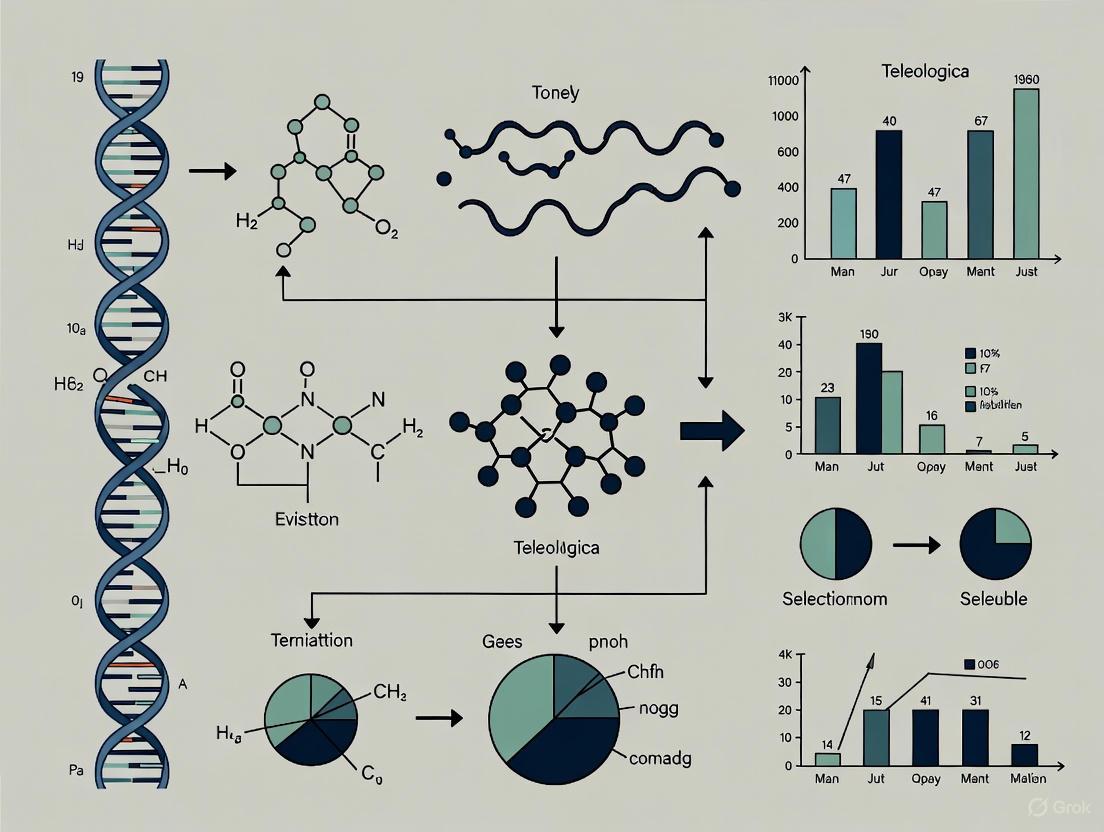
Teleological reasoning—the attribution of purpose or intent to biological traits and processes—is a pervasive cognitive bias that presents both a conceptual obstacle and a nuanced tool in evolutionary biology.
Beyond Purpose: Navigating Teleological Reasoning in Evolutionary Biology for Biomedical Innovation
Abstract
Teleological reasoning—the attribution of purpose or intent to biological traits and processes—is a pervasive cognitive bias that presents both a conceptual obstacle and a nuanced tool in evolutionary biology. For researchers, scientists, and drug development professionals, understanding this bias is critical for interpreting evolutionary data, building predictive models, and avoiding scientific errors. This article provides a comprehensive framework for the target audience, exploring the psychological and epistemological foundations of teleology, its impact on interpreting evolutionary trees and data, methodological strategies for regulation and application in predictive fields like drug resistance and AI-driven discovery, and finally, techniques for validating evolutionary hypotheses free from teleological assumptions. The synthesis aims to equip professionals with the metacognitive vigilance needed to harness evolutionary theory more effectively in biomedical research.
The Teleological Mind: Unraveling the Cognitive and Epistemological Roots in Biology
Teleology is a mode of explanation that references a purpose, goal, or end (telos) to account for why something is the way it is [1] [2]. In daily life, this is intuitive: we say a knife's purpose is to cut, so its form is explained by this goal [2]. In biology, however, such reasoning becomes problematic. Statements like "giraffes evolved long necks in order to reach high leaves" imply a forward-looking, purposeful process, which is a misrepresentation of the mechanistic, undirected process of natural selection [3] [2].
For researchers in evolutionary biology and drug development, unexamined teleological reasoning can skew hypothesis generation and experimental design. It can lead to assuming every trait is a perfect adaptation for a specific function, overlooking historical constraints, exaptations, or non-adaptive origins [3]. This technical support guide is designed to help you identify and troubleshoot this common cognitive bias in your research practice.
FAQs: Addressing Teleological Reasoning in Evolutionary Research
Q1: What does "teleological reasoning" look like in a modern research context? It often appears as a subtle, often unconscious, use of language and underlying assumptions:
- Implied Agency: Attributing intention to evolution (e.g., "Evolution gave this protein this function...").
- Backward Causation: Explaining a trait's existence by its future outcome (e.g., "This signaling pathway exists so that cells can communicate," instead of "This pathway exists because it conferred a reproductive advantage to ancestral cells").
- Perfect Adaptation Assumption: Assuming a trait is optimally designed for its current role, which can halt further inquiry into its evolutionary history or other potential functions [3] [4].
Q2: Isn't teleological language just a harmless shorthand? While common, it is rarely harmless for a researcher. Habitual use can reinforce flawed mental models, leading to testable hypotheses that are framed incorrectly. For example, investigating a trait by asking only "what is it for?" may blind you to questions like "what is its developmental origin?" or "what historical constraints shaped it?" [3]. Replacing teleological statements with mechanistic ones forces greater clarity and scientific rigor.
Q3: How can I avoid teleological pitfalls when formulating research hypotheses?
- Replace "in order to" with "which resulted in": This reframes the explanation from purpose to historical consequence.
- Use "function" carefully: Define a trait's function as the effect for which it was selected, not a purpose it is designed to fulfill [3] [4].
- Embrace Tinbergen's Four Questions: For any trait, systematically ask about its:
- Mechanism (What causes it in the individual?)
- Ontogeny (How does it develop?)
- Adaptive Value (What is its survival/reproductive value?)
- Phylogeny (What is its evolutionary history?) [3]
Troubleshooting Guides: Correcting Teleological Bias in Experimental Cycles
The following guides apply a structured troubleshooting methodology [5] to common research scenarios where teleological reasoning can lead to dead ends.
Scenario 1: Interpreting a Novel Gene's Function
- Step 1: Identify the Problem: Initial experiments show Gene X is highly expressed in muscle tissue. The immediate, teleological inference is: "The function of Gene X is for muscle contraction."
- Step 2: List All Possible Explanations (Expanding Beyond the Teleological Assumption):
- E1: The gene's product is directly involved in the contractile apparatus.
- E2: The gene's product regulates energy production for muscle tissue.
- E3: The gene's product is involved in muscle tissue development but is not active in mature tissue.
- E4: The gene is a relic of evolutionary history (a vestigial trait) with no critical current function in muscle.
- E5: The gene has a different primary function, and its expression in muscle is a non-adaptive side-effect of its regulation (pleiotropy).
- Step 3: Collect Data to Eliminate Explanations:
- Knockdown/Knockout Experiment: Silence Gene X and observe the phenotype. If muscle contraction proceeds normally, it weakens E1 and E2.
- Expression Timing Analysis: Check if expression is high during embryonic development, supporting E3.
- Phylogenetic Analysis: Check for Gene X homologs in species without muscles. The presence of such homologs would strongly support E4 or E5 and refute a muscle-specific purpose.
- Step 4: Identify the Cause: The correct explanation emerges not from assuming a purpose, but from systematically testing the trait's mechanistic and evolutionary context.
Scenario 2: A Failed Drug Target Validation
- Step 1: Identify the Problem: A drug designed to inhibit Protein Y (selected because it is "for" a disease pathway) fails to show efficacy in an animal model.
- Step 2: List All Possible Explanations (Why the Teleological Assumption Failed):
- E1: Protein Y is not the primary driver of the pathway in vivo (the "function" was misattributed).
- E2: The pathway has significant redundancy; other proteins compensate when Y is inhibited.
- E3: The protein has multiple functions (pleiotropy), and inhibition causes off-target toxicity that masks efficacy.
- E4: The protein's role is different in the model organism than in humans due to divergent evolutionary paths.
- Step 3: Collect Data to Eliminate Explanations:
- Biomarker Analysis: Measure downstream pathway activity after inhibition. If activity remains, supports E1 or E2.
- Genetic Redundancy Test: Perform a double-knockout of Y and a suspected redundant partner.
- Comprehensive Phenotyping: Look for unexpected physiological effects, supporting E3.
- Cross-Species Comparison: Analyze the pathway's composition and robustness in your model organism versus humans.
- Step 4: Identify the Cause: The failure often results from an oversimplified, teleological view of the protein's role within the complex, evolved network of the organism.
The diagram below outlines this core troubleshooting logic as a reusable workflow.
Research Reagent Solutions for Evolutionary Mechanistic Studies
The following table details key reagents and their applications for conducting experiments that can help test and avoid teleological assumptions.
| Research Reagent | Function in Experimental Protocol | Application in Troubleshooting Teleology |
|---|---|---|
| siRNA/shRNA | Gene knockdown by degrading complementary mRNA or blocking translation [5]. | To test if a gene is necessary for a hypothesized function (e.g., Is Gene X required for muscle contraction?). |
| CRISPR-Cas9 | Gene editing system for creating knockout models or introducing specific mutations [5]. | To create stable loss-of-function models and study pleiotropic effects, challenging single-purpose assumptions. |
| Phylogenetic Markers(e.g., 16S rRNA, CO1) | Gene sequences used for comparative analysis and reconstructing evolutionary relationships [6]. | To trace the evolutionary history of a trait and determine if it predates its current function (exaptation). |
| RNA-Seq | High-throughput sequencing to catalog all RNA transcripts in a sample. | To identify all effects of a gene knockout, revealing networks and pleiotropy beyond a single supposed purpose. |
| Antibodies (for IHC/IF) | Proteins that bind specific antigens, used for visualizing protein localization and expression. | To determine where and when a protein is expressed, testing if its location aligns with a hypothesized function. |
Core Experimental Protocols for Robust Evolutionary Inference
Protocol 1: Phylogenetic Analysis to Distinguish Adaptation from Historical Inheritance
Principle: This method tests if a trait is a specific adaptation for a current function or merely a legacy from a common ancestor [6] [7].
Methodology:
- Sample Collection & DNA Preservation: Collect tissue (e.g., muscle, mantle) from fresh specimens and preserve in >95% ethanol or specialized RNA/DNA stabilizer [6].
- DNA/RNA Extraction: Isolate and purify genetic material from cells. The end product is DNA/RNA in nuclease-free water [6].
- Gene Selection & Amplification: Select appropriate orthologous genes (e.g., from the genome or transcriptome). Amplify the target gene using Polymerase Chain Reaction (PCR) with specific primers [6].
- Sequence the Gene: Use a automated sequencer to read the DNA base sequence (A, T, G, C), producing a chromatogram for analysis [6].
- Phylogenetic Tree Construction: Input aligned sequences from multiple species into cladistics software. The software uses shared, derived characteristics (synapomorphies) to generate a hypothesis of evolutionary relationships [6].
Interpretation: If the trait in question maps onto the tree in a way that correlates with ecological factors rather than lineage, it may be an adaptation. If it maps strictly according to lineage, it is more likely a result of common ancestry [7].
Protocol 2: Gene Knockout followed by Comprehensive Phenotyping
Principle: Systematically tests the necessity of a gene for a hypothesized function and reveals its full range of effects, challenging single-purpose assumptions.
Methodology:
- Design gRNAs: Design guide RNAs (gRNAs) targeting early exons of the gene of interest using CRISPR design tools.
- Deliver CRISPR Components: Transfect target cells (e.g., zygotes, cell lines) with a plasmid expressing Cas9 nuclease and the specific gRNAs.
- Validate Knockout: Screen cells or organisms for indels (insertions/deletions) at the target site using techniques like T7 Endonuclease I assay or sequencing.
- Establish Stable Line: Expand validated clones or organisms to establish a stable knockout model.
- Comprehensive Phenotyping:
- Primary Assay: Perform the specific functional assay related to the initial hypothesis.
- Secondary Screens: Conduct unbiased screens (e.g., RNA-Seq, metabolomics, histological staining of multiple tissues) to identify unexpected phenotypes.
Interpretation: A clean knockout with no effect on the hypothesized function directly refutes the initial teleological claim. Off-target phenotypes revealed in secondary screens provide evidence for pleiotropy and complex, evolved roles.
The workflow for this gene knockout protocol is visualized below.
FAQs: Understanding Teleological Bias in Research
Q1: What is teleological thinking in the context of scientific research? Teleological thinking is the predisposition to explain phenomena by reference to their apparent purpose or end goal, rather than their immediate causes [8]. In biology, this often manifests as believing that "evolution proceeds toward a goal" or that "traits exist in order to" achieve a specific outcome, which is inconsistent with the Darwinian model of natural selection [8] [3].
Q2: Why is teleological reasoning considered a cognitive bias? Cognitive biases are systematic patterns of deviation from norm or rationality in judgment [9]. Teleological thinking operates as such a bias because it is an established, intuitive way of thinking that resists change due to its perceived explanatory power, even when it leads to inaccurate scientific judgments [8] [10].
Q3: What is the difference between useful functional language and problematic teleology in biology? Biologists often use shorthand like "a function of the heart is to pump blood," which can be translated into non-teleological explanations about evolutionary history and natural selection [3]. Problematic teleology implies that evolution is directed toward future goals or that variations appear because they are needed by an organism [8].
Q4: How can I identify if my reasoning is influenced by teleological bias? Common signs include:
- Framing hypotheses around what an organism or biological system "wants" or "needs" to achieve.
- Assuming that a trait exists for a singular, optimal purpose without considering historical constraints or exaptations.
- Interpreting evolutionary processes as progressive or leading inevitably to more complex or "better" outcomes [8] [3].
Q5: What practical steps can research teams take to mitigate this bias?
- Explicitly Re-word Statements: Practice rewriting teleological sentences into causal, evolutionary ones [3].
- Blinded Data Analysis: Where possible, implement blinding protocols to prevent goal-oriented interpretation of results.
- Peer Challenge: Designate a team member to specifically identify and challenge potential teleological assumptions during group discussions.
Troubleshooting Guide: Resolving Experimental Design Errors Caused by Teleological Bias
This guide follows a systematic approach to identify and correct for deep-seated cognitive biases in research design [11].
Step 1: Identify the Problem
Scenario: An experiment is designed to test why a specific protein "evolved to prevent cancer in aging mice," with the underlying assumption that its function is the reason for its evolution. Action: Clearly state the research question without assuming purpose. A reframed question could be: "What is the fitness effect of Protein X across the lifespan of the mouse, and what evolutionary processes explain its current prevalence?" [8] [3]
Step 2: List All Possible Explanations
Generate a list of hypotheses that include both adaptive and non-adaptive evolutionary explanations:
- Hypothesis 1 (Adaptive): Protein X increased in frequency due to positive selection for its role in late-life survival.
- Hypothesis 2 (Neutral): Protein X was fixed by genetic drift and is not under selection.
- Hypothesis 3 (Exaptation): Protein X evolved for a different primary function (e.g., development) and incidentally affects cancer risk later in life [3].
Step 3: Collect the Data
Design experiments and collect data that can distinguish between these hypotheses.
- Controls: Include appropriate phylogenetic controls to understand the evolutionary history of the protein.
- Data Collection: Gather data on the protein's function in other contexts and across different life stages, not just its effect in aged mice [11].
Step 4: Eliminate Some Possible Explanations
Based on the data, begin to rule out hypotheses.
- Example: If the protein shows no variation in fitness effects across a population in a controlled setting, the neutral hypothesis (Hypothesis 2) gains support. If the protein is found to have a critical, conserved function in early development, the exaptation hypothesis (Hypothesis 3) becomes more likely [11].
Step 5: Check with Experimentation
Design a crucial experiment to test the remaining, most plausible explanations.
- Sample Protocol: Use CRISPR/Cas9 to create a knock-in allele that separates the protein's developmental function from its proposed anti-cancer function. Measure the fitness consequences of each allele variant in a population over multiple generations [3].
Step 6: Identify the Cause
Synthesize all data to identify the most likely evolutionary cause, remaining open to the possibility that the trait is not a perfect adaptation for the function you initially assumed [3] [11].
Visualizing the Bias and Its Solution
The following diagram maps the logical pathway from a teleological intuition to a scientifically robust conclusion, highlighting key points for intervention.
Title: Pathway from Teleological Bias to Robust Science
Research Reagent Solutions for Evolutionary Biology Studies
The following table details key reagents and their functions for conducting experiments in evolutionary biology, designed to test adaptive hypotheses.
| Reagent / Material | Primary Function in Evolutionary Research |
|---|---|
| CRISPR/Cas9 Gene Editing System | Allows for precise manipulation of genes in model organisms to test the fitness effects of specific alleles and simulate evolutionary changes [3]. |
| Long-Range PCR Kit | Amplifies DNA sequences for phylogenetic analysis or to construct recombinant DNA for functional assays, helping to trace evolutionary history [11]. |
| Competent Cells (e.g., DH5α, BL21) | Essential for plasmid propagation and protein expression, enabling the functional characterization of genes from different species or ancestral gene reconstructions [11]. |
| Next-Generation Sequencing (NGS) Reagents | Used for whole-genome sequencing, population genomics, and transcriptomics to identify genetic variation, selection signatures, and functional elements [3]. |
| Phylogenetic Analysis Software (e.g., BEAST, RAxML) | Not a physical reagent, but a crucial tool for inferring evolutionary relationships and testing hypotheses about trait evolution using molecular data [3]. |
Frequently Asked Questions (FAQs)
Q1: What does "ubiquity" mean in a biological context, and why is it important for my research? Biological ubiquity refers to the widespread presence of a particular organism, metabolic process, or genetic trait across diverse and often distinct environments. For researchers, demonstrating that a process is ubiquitous is powerful evidence that it is a fundamental and critical biological function, not a laboratory artifact. When framing your research, it is crucial to distinguish this from a teleological misconception that the process is widespread in order to serve a fundamental purpose; instead, its widespread nature is a consequence of its functional advantage and selection across many environments [12].
Q2: I've isolated a bacterium with a novel function. How can I investigate its environmental ubiquity? A key methodology is the Most-Probable-Number (MPN) count, which quantifies functional populations in environmental samples. The process below is adapted from a study on (per)chlorate-reducing bacteria [13]:
- Sample Collection: Obtain samples from a range of pristine and contaminated environments (e.g., soils, sediments, waste sludges).
- Media Preparation: Use a bicarbonate-buffered freshwater medium. Boil and dispense under an N₂-CO₂ (80:20) atmosphere to maintain anaerobiosis. Sterilize by autoclaving in sealed tubes [13].
- Inoculation: Set up a three- or five-tube MPN series for each sample. Inoculate tubes with serial dilutions of the environmental sample.
- Incubation: Incubate tubes anaerobically in the dark at a relevant temperature (e.g., 30°C). Use your specific electron donor (e.g., 10 mM acetate) and electron acceptor (e.g., 10 mM chlorate) to selectively enrich for your target organism [13].
- Confirmation: Positive growth is indicated by turbidity and consumption of the electron donor/acceptor. Confirm the presence of your organism and its function through downstream molecular analysis (e.g., 16S rRNA gene sequencing) and chemical assays (e.g., chloride production for perchlorate reduction) [13].
Q3: My hypothesis is that a specific trait provides a selective advantage. What is a common evolutionary pitfall I should avoid in my explanations? A common pitfall is presenting a "how" question as a "why" answer, which can lead to teleological reasoning. To avoid this, ensure your hypotheses are based on consequence etiology. A scientifically legitimate explanation states that a trait exists because it was selectively advantageous in the past, leading to its propagation. A teleological misconception would state that a trait exists in order to or for the purpose of fulfilling a need. Always frame your explanations around historical selection pressures, not future goals [14] [12].
Q4: I am working with cold-adapted microorganisms. What are the key considerations for designing isolation protocols? A study on denitrifying bacteria from Antarctica highlights several critical factors [15]:
- Temperature: Perform all cultivation and enrichment steps at the environmental temperature of interest (e.g., 4°C).
- Anaerobic Conditions: For isolating anaerobic respirers, use anoxic media prepared by flushing with N₂ and use sealed vessels with butyl rubber stoppers. For solid media, use anaerobic bags [15].
- Media Diversity: Employ different media formulations to capture a wider phylogenetic diversity. The Antarctic study used both a standard mineral medium and a nutrient-rich medium for this purpose [15].
- Extended Incubation: Growth can be very slow; incubate for weeks or months until macroscopic growth is observed [15].
Experimental Protocols
Protocol 1: Isolating Ubiquitous Microorganisms with a Specific Metabolic Function
This protocol, derived from studies on (per)chlorate-reducers and cold-adapted denitrifiers, provides a framework for isolating microorganisms from diverse environments based on their metabolic capability [13] [15].
1. Sample Collection and Processing
- Materials: Sterile containers, soil corer, water sampler, cooler with ice.
- Procedure: Collect samples (e.g., soil, sediment, water) from multiple, diverse sites. Process samples immediately upon returning to the lab or, if in the field, begin enrichments on-site. For solid samples, a 1-g subsample is transferred to 9 ml of anoxic medium [13] [15].
2. Enrichment and Isolation
- Materials: Anaerobic pressure tubes or serum bottles, butyl rubber stoppers, anoxic stock solutions of electron donors and acceptors.
- Procedure:
- Prepare anoxic medium with a target electron acceptor (e.g., 10 mM chlorate) and a simple electron donor (e.g., 10 mM acetate) [13].
- Inoculate medium with environmental sample.
- Incubate under appropriate conditions (e.g., temperature, darkness) until growth is observed (increased turbidity).
- Transfer a portion (e.g., 10% inoculum) of the positive enrichment to fresh medium to strengthen the culture.
- Obtain pure isolates using the agar shake tube technique or by streaking on solid anaerobic media with the same electron donor and acceptor [13].
3. Functional Confirmation
- Materials: HPLC system, ion chromatograph, or other relevant analytical equipment.
- Procedure: Grow the pure isolate with the electron acceptor and monitor its disappearance (e.g., chlorate depletion) and the production of end products (e.g., chloride ions). This confirms the isolate is responsible for the metabolic function [13].
The following workflow diagram summarizes the key steps in this isolation protocol:
Protocol 2: Ruling Out Adaptive Hypotheses with a Null Model
This methodology guides the formulation of robust evolutionary hypotheses by first constructing a null model, as illustrated by the mutation accumulation theory of aging [14].
1. Define the Observation (X)
- Clearly state the biological trait or phenomenon you wish to explain (e.g., "organisms senesce").
2. Construct a Null Hypothesis
- Develop a "boring" explanation for X that does not invoke direct adaptation. A powerful null model is based on the inevitable accumulation of deleterious mutations and the age-related decline in the force of natural selection. The null hypothesis is that senescence occurs because selection is too weak to purge late-acting deleterious mutations [14].
3. Formulate an Alternative Hypothesis
- State your adaptive hypothesis (e.g., "senescence itself provides a selective advantage").
4. Design Tests to Distinguish the Hypotheses
- Mathematical Modeling: Build a quantitative model, like Hamilton's model for aging, to deduce the expected patterns under the null hypothesis [14].
- Comparative Analysis: Look for patterns that cannot be explained by the null model alone. For example, the vastly different lifespans of eusocial ant queens and workers, despite identical genetic loads, challenge a pure mutation accumulation model and suggest a role for additional factors [14].
The logical relationship between these hypotheses and how to test them is shown below:
Data Presentation
Table 1: Ubiquity of Metabolically Specialized Bacteria in Diverse Environments Data from a study enumerating (per)chlorate-reducing bacteria (ClRB) using Most-Probable-Number (MPN) counts with acetate as the electron donor [13].
| Environment | Population Size (cells/g wet weight) |
|---|---|
| Pristine Soil | 2.31 × 10³ |
| Hydrocarbon-Contaminated Soil | 2.4 × 10⁶ |
| Aquatic Sediments | 4.32 × 10⁵ |
| Paper Mill Waste Sludge | 1.23 × 10⁵ |
| Farm Animal Waste Lagoon | 3.79 × 10⁴ |
Table 2: Diversity of Cultivable Denitrifying Bacteria from Antarctic Ecosystems Data from a study isolating bacteria capable of anaerobic growth with nitrate at 4°C from various Antarctic samples [15].
| Bacterial Genus | Relative Predominance | Sample Sources (Examples) |
|---|---|---|
| Pseudomonas | High | Lake sediment, meltwater, ornithogenic soil |
| Janthinobacterium | High | Lake water, penguin feces |
| Flavobacterium | Medium | Microbial mat, glacier ice |
| Psychrobacter | Medium | Sea water, sea sediment |
| Yersinia | Medium | Penguin feces |
| Cryobacterium | Low | Glacier ice |
| Carnobacterium | Low | Ornithogenic soil |
The Scientist's Toolkit: Research Reagent Solutions
Table 3: Essential Materials for Microbial Isolation and Enrichment Studies
| Item | Function/Brief Explanation |
|---|---|
| Bicarbonate-Buffered Medium | Provides a stable pH and essential minerals for microbial growth in freshwater environments [13]. |
| Butyl Rubber Stoppers | Creates and maintains a seal on culture tubes and serum bottles to preserve anoxic conditions for anaerobic respiration [13] [15]. |
| Electron Acceptor Stock Solutions | Anoxic, sterile solutions of compounds like chlorate or nitrate are used to selectively enrich for microorganisms that use them for respiration [13]. |
| Electron Donor Stock Solutions | Anoxic, sterile solutions of simple organic compounds (e.g., acetate, lactate) that serve as the energy and carbon source for metabolizing bacteria [13]. |
| Anaerobic Bags (e.g., Anaerocult) | Generate an anaerobic atmosphere for cultivating microorganisms on solid media plates [15]. |
Frequently Asked Questions (FAQs)
Q1: What constitutes a legitimate versus illegitimate role for non-epistemic values in evolutionary biology research? The distinction lies in whether non-epistemic values (social, political, ethical) play an acceptable role without compromising scientific integrity. Legitimate roles include guiding research questions in transdisciplinary contexts, while illegitimate roles involve allowing values to override empirical evidence in scientific conclusions. Demarcation requires context-specific application of criteria rather than universal rules [16].
Q2: How can researchers avoid teleological reasoning when analyzing phylogenetic data? Teleological reasoning (assuming purpose-driven evolution) can be avoided by:
- Using explicit statistical models rather than narrative interpretations
- Implementing rigorous hypothesis testing through methods like RelTime dating in MEGA software
- Applying phylogenomic subsampling (PSU) frameworks to validate results without presupposing adaptive purposes [17]
Q3: What computational best practices ensure reproducible machine learning in genomics? Reproducible ML requires:
- Adherence to reporting standards like DOME and FAIR principles
- Proper feature selection and dimensionality reduction techniques
- Using frameworks like Tidymodels in R that prevent data leakage
- Implementing interpretable ML approaches (e.g., SHAP values) to understand feature importance rather than assuming biological purpose [18]
Q4: How should researchers handle low-contrast visualizations in scientific communications? WCAG 2.0 Level AA requires minimum contrast ratios of 4.5:1 for normal text and 3:1 for large text (18pt+ or 14pt+bold). Graphical objects need 3:1 contrast. Use color picker tools to verify ratios and avoid color semantics that imply teleological judgments (e.g., using "warning" colors for supposedly "imperfect" evolutionary traits) [19] [20] [21].
Troubleshooting Guides
Problem: Irreproducible Machine Learning Results in Omics Analysis
Symptoms: Inconsistent feature selection, performance metrics varying across runs, inability to replicate published findings.
Resolution Protocol:
- Data Leakage Diagnosis: Implement strict separation of training and test data using Tidymodels framework [18]
- Feature Selection Validation: Apply multiple selection methods (network-based, statistical, domain-knowledge) to identify robust features
- Cross-Validation: Use appropriate cross-validation strategies matching data structure
- Interpretability Analysis: Apply SHAP values or similar methods to verify biological plausibility of feature importance [18]
Preventive Measures:
- Follow DOME reporting standards for ML in biology
- Use version-controlled workflow systems like Snakemake for MPRA data analysis [18]
- Implement phylogenomic subsampling (PSU) for large datasets to ensure computational stability [17]
Problem: Teleological Bias in Evolutionary Interpretation
Symptoms: Assuming adaptive purpose for all traits, misinterpreting correlation as adaptation, overlooking neutral evolution.
Resolution Protocol:
- Null Model Testing: Compare observed patterns against neutral evolutionary models using MEGA software [17]
- Multiple Hypothesis Framework: Test adaptive, neutral, and constraint hypotheses simultaneously
- Convergence Analysis: Use molecular evolutionary analyses to distinguish parallel adaptation from neutral convergence
- Population Genetics Validation: Apply appropriate tests for selection signatures using tools like BCalm for MPRA data [18]
Corrective Actions:
- Frame research questions to avoid presupposing function
- Use explicit statistical models rather than narrative explanations
- Implement RelTime dating with confidence intervals to avoid presupposing evolutionary rates [17]
Problem: Inaccessible Scientific Visualizations Impeding Communication
Symptoms: Low-contrast diagrams, color-dependent information, unclear phylogenetic trees.
Resolution Protocol:
- Contrast Verification: Use WebAIM Contrast Checker to validate all text and graphical elements meet WCAG 2.0 AA standards (4.5:1 for normal text, 3:1 for large text and graphics) [21]
- Color Semantics: Implement RAG (Red-Amber-Green) schemes consistently while ensuring colorblind accessibility [22]
- Data Hierarchy: Use bold hues for primary data (main phylogenetic branches) and lighter shades for secondary elements (subclades) [22]
Visualization Standards:
- All phylogenetic trees must have minimum 3:1 contrast for branches and labels
- Gantt charts for research timelines should use consistent color coding with explicit legends
- Signaling pathway diagrams must convey information through both color and pattern differences [22] [23]
Table 1: Computational Methods for Avoiding Teleological Reasoning
| Method | Implementation | Quantitative Benchmark | Purpose in Demarcation |
|---|---|---|---|
| RelTime Dating | MEGA Software | 100x faster than Bayesian methods with equivalent accuracy [17] | Prevents assumption-driven molecular clock calibration |
| Phylogenomic Subsampling (PSU) | MEGA Releases | Equivalent results with 60% computational resource reduction [17] | Enables neutral model testing without resource constraints |
| MPRA Statistical Analysis | BCalm Package | Variant-effect detection with p < 0.001 significance [18] | Distinguishes functional elements from neutral sequences |
| Machine Learning Interpretation | SHAP Values in R | Feature importance quantification with exact confidence intervals [18] | Prevents narrative-driven feature selection |
Table 2: Visual Accessibility Standards for Evolutionary Biology Communications
| Element Type | Minimum Contrast Ratio | Color Semantics | Teleological Risk Mitigation |
|---|---|---|---|
| Phylogenetic Tree Branches | 3:1 [19] | Avoid "progress" gradients (e.g., light-to-dark) | Prevents implied evolutionary progress |
| Gantt Chart Task Status | 4.5:1 for labels [22] | RAG scheme with explicit legend | Avoids value judgments about biological processes |
| Signaling Pathway Components | 3:1 for all shapes [23] | Function-based not value-based coloring | Prevents assumption of optimal design |
| Genomic Feature Maps | 4.5:1 for annotation text [20] | Consistent coding across figures | Ensures objective interpretation of genomic elements |
Research Reagent Solutions
Essential Materials for Evolutionary Genomics Demarcation Research
| Reagent/Software | Function | Role in Preventing Teleological Reasoning |
|---|---|---|
| MEGA Software Suite | Molecular Evolutionary Genetics Analysis [17] | Provides neutral evolutionary null models and rigorous statistical testing |
| Tidymodels R Framework | Machine Learning Workflows [18] | Prevents data leakage and ensures reproducible feature selection |
| BCalm Package | MPRA Barcode Analysis [18] | Enables statistical identification of functional elements without presupposition |
| MPRAsnakeflow | MPRA Data Processing [18] | Standardizes quality control to prevent confirmation bias |
| WebAIM Contrast Checker | Accessibility Validation [21] | Ensures visualizations don't imply value judgments through color semantics |
| Snakemake Workflow System | Pipeline Management [18] | Maintains computational reproducibility across evolutionary analyses |
Experimental Workflow Visualizations
Evolutionary Analysis Workflow
Color Semantics Framework
Troubleshooting Guides
Guide: Diagnosing and Resolving Teleological Reasoning in Evolutionary Analysis
Problem Statement: Researchers frequently observe unintended teleological language and reasoning in team discussions, research documentation, or manuscript drafts, which can undermine the scientific rigor of evolutionary interpretations.
| Problem | Root Cause | Diagnostic Check | Resolution Step |
|---|---|---|---|
| Use of goal-oriented language | Default human cognitive bias to ascribe purpose to natural phenomena [24]. | Scan for phrases like "in order to," "so that," or "for the purpose of" in descriptions of trait evolution [3]. | Rephrase statements to focus on causal mechanisms. Replace "The giraffe's neck elongated to reach high leaves" with "Giraffes with longer necks had a survival advantage, leading to selection for that trait" [25]. |
| Misinterpreting evolutionary trees as progress | Conceptual alignment with the "great chain of being" or "increasing complexity" ideas [24]. | Check if team members interpret trees with certain taxa (e.g., humans) as the "goal" or "peak" of evolution [24]. | Actively teach that evolutionary trees represent patterns of descent and branching, not a ladder of progress. Rotate tree diagrams to displace "goal" taxa from the top position [24]. |
| Ascribing agency to natural selection | Personification of evolutionary forces, often as a shorthand [3]. | Identify if selection is described as a conscious force "designing" or "planning" traits [25]. | Use precise language: "Natural selection is an unconscious, automatic process with no foresight" [25]. Emphasize it is a consequence of differential survival and reproduction [25]. |
| Assuming variation is non-random | Deep-seated intuition that the environment directly induces adaptive variation [25]. | Question if the origin of genetic variation is confused with the mechanism of selection. | Explicitly separate the two steps of evolution: 1) origin of random variation (mutations), and 2) non-random selection of advantageous variations [25]. |
Guide: Addressing Teleology in Experimental Design and Interpretation
Problem Statement: Teleological assumptions can inadvertently influence the framing of hypotheses, the design of experiments in applied evolution (e.g., drug resistance studies), and the interpretation of results.
| Stage | Teleological Risk | Corrective Protocol |
|---|---|---|
| Hypothesis Formulation | Framing a study around how an organism "wants" or "needs" to evolve a trait. | Methodology: Ground hypotheses in established mechanistic theory. Instead of "The cancer cells will mutate gene X to resist the drug," frame it as "We hypothesize that drug Y imposes selective pressure that favors pre-existing or random mutations in gene X" [25]. |
| Data Interpretation | Concluding that an observed adaptive outcome was the predetermined goal of the evolutionary process. | Methodology: Conduct blind analyses where possible. Always consider and test alternative, non-adaptive explanations (e.g., genetic drift, pleiotropic effects). Use conservative statistical models to avoid over-interpreting patterns as adaptations [4]. |
| Communication & Documentation | Using teleological shorthand in lab notes, which can solidify into misconceptions. | Methodology: Implement a peer-review process for key internal documents to flag teleological language. Maintain a "language guide" for the lab with approved, non-teleological phrases for common descriptions [24] [26]. |
Frequently Asked Questions (FAQs)
Q1: Is all teleological language in biology unacceptable? A1: Not necessarily. Many philosophers and biologists argue that teleological language is inescapable when describing biological functions (e.g., "The function of the heart is to pump blood") [3] [4] [27]. The problem arises when this slips into teleological explanation for the origin of traits, implying evolution is goal-directed. The key is to be mindful and precise in language, distinguishing between a trait's current utility and its evolutionary history [3] [25].
Q2: What is the core epistemological obstacle posed by teleology? A2: The core obstacle is that it blocks a causal, mechanistic understanding of evolution [24]. It satisfies our intuition with a "purpose" as an explanation, which can prevent researchers from seeking and testing the actual historical and population-genetic causes of a trait, such as random variation, natural selection, and genetic drift [24] [25].
Q3: How can we train new researchers to overcome teleological biases? A3: Evidence from education research suggests several effective methods [24] [26]:
- Active Confrontation: Explicitly teach about the teleological bias and its pitfalls.
- Tree-Thinking Skills: Focus on developing proficiency in reading and interpreting evolutionary trees, which visually represent non-directional descent [24].
- Sentence Rephrasing Exercises: Actively practice converting teleological statements into causal ones [24] [26].
- Self-Explanation: Encourage researchers to verbalize their reasoning when analyzing evolutionary scenarios to surface hidden assumptions [26].
Q4: In our work on viral evolution, we model selection pressures. Is it teleological to say a variant evolved "to escape" the host immune response? A4: This is a common and tricky area. Strictly speaking, yes, this phrasing is teleological. While it is efficient shorthand, it can lead to the misconception that the immune response caused the specific escape mutation to occur. A more precise formulation would be: "Viral variants with random mutations that conferred immune escape were selectively favored and increased in frequency in the population." [25] This maintains clarity about the mechanistic process.
| Item/Category | Function & Relevance | Key Consideration |
|---|---|---|
| Selected Effects (SE) Theory | A philosophical framework for defining biological "function" in a non-teleological way. A trait's function is the effect for which it was naturally selected in the past [4] [27]. | Prevents conflating a trait's current utility with its evolutionary reason for arising. Helps clarify discussions on adaptation. |
| Tree-Thinking | The skill of reading evolutionary trees as hypotheses of evolutionary relationships based on common descent [24]. | An antidote to "ladder-of-progress" thinking. Essential for correctly interpreting macroevolutionary patterns and testing hypotheses about relatedness. |
| No Teleology Condition | A proposed formal addition to the definition of natural selection. It specifies that variation is random with respect to adaptation and selection is not forward-looking [25]. | A useful formal criterion for ensuring experimental designs and models strictly adhere to the principles of non-guided evolution. |
| Organizational Account of Function | Defines a trait's function by its contribution to the self-maintenance of the organism as a whole [27] [28]. | Offers a non-historical, systems-based way to talk about function, which can be useful in functional biology without invoking evolutionary history. |
Visualizing the Diagnostic Path for Teleological Reasoning
The diagram below outlines a workflow for identifying and categorizing common teleological reasoning errors in evolutionary biology research.
From Bias to Tool: Methodological Frameworks and Applications in Predictive Research
Troubleshooting Guide & FAQs
This section addresses common challenges researchers face when designing experiments and interpreting data within evolutionary biology, with a specific focus on avoiding non-mechanistic, teleological reasoning.
FAQ 1: My experimental data shows a strong correlation between a trait and an environmental factor. Is it correct to conclude the trait "evolved for" or "was designed for" that specific function?
- Answer: This is a common pitfall. You should avoid stating that a trait evolved for a current function, as this implies foresight or purpose. Instead, frame your conclusions in terms of mechanistic processes and historical pathways. The observed trait may be an adaptation shaped by natural selection for that function, but it could also be an exaptation—a trait that evolved for one function and was later co-opted for its current role [3]. For example, feathers in birds may have initially evolved for insulation and were later co-opted for flight [3]. Your conclusion should be that the trait currently serves a function that likely conferred a selective advantage, not that the evolutionary process was directed toward that goal.
FAQ 2: I find myself using phrases like "to survive" or "in order to" when writing about my research. Is this a problem?
- Answer: Such teleological language is pervasive in biology as a shorthand [3]. While useful for communication, it can obscure the causal, mechanistic explanation. In your formal research and writing, strive to rephrase these statements. Instead of "The bacteria developed resistance in order to survive the antibiotic," you could write, "A mutation conferring antibiotic resistance arose randomly; bacteria with this mutation had higher survival and reproduction rates, leading to the spread of the resistance trait" [3]. This reinforces that the mechanism is natural selection acting on random variation, not a purposeful response.
FAQ 3: How can I experimentally distinguish between an adaptive trait and a trait that is a byproduct of another adaptation?
- Answer: This requires careful experimental design to test alternative hypotheses. You must define a clear null hypothesis that your observation could be explained by a non-adaptive, "boring" process [14]. For instance, the null model for aging is the mutation accumulation theory, which posits that deleterious mutations with late-acting effects are not efficiently purged by natural selection because its strength declines with age [14]. To argue for an adaptive benefit of a specific trait, your experiments must gather evidence that allows you to reject such a null model and other byproduct hypotheses [14].
FAQ 4: What is a robust methodological check for teleological bias in my experimental design?
- Answer: A powerful check is to explicitly formulate and test your hypothesis against a null model and a byproduct hypothesis [14]. The table below outlines this framework for a hypothetical study on a specific animal behavior.
Table: Framework for Testing Evolutionary Hypotheses
| Hypothesis Type | Definition | Example: "Why do gazelles stott (jump) when they see a predator?" |
|---|---|---|
| Adaptive Hypothesis | The trait itself was directly selected for because it provides a fitness advantage. | The "Predator Detection" hypothesis: Stotting signals to the predator that it has been seen, deterring attack [29]. |
| Byproduct Hypothesis | The trait is a side effect of selection for another, related trait. | Stotting is a non-adaptive byproduct of a physiological "startle" response to a threat. |
| Null/Intrinsic Hypothesis | The trait's prevalence can be explained by a default, non-adaptive process like chance or physical constraint. | The observed stotting behavior is not heritable and appears randomly in the population with no effect on survival. |
Experimental Protocol: Testing Teleological Claims
This protocol provides a generalized methodology for designing experiments that can critically evaluate adaptive claims and avoid teleological reasoning.
Objective: To determine if a observed biological trait (T) is an adaptation for a proposed function (F), a byproduct, or explainable by a null model.
Background: A fundamental challenge in evolutionary biology is to provide evidence for adaptation that rules out simpler, non-teleological explanations [14]. This protocol structures the investigation around competing hypothesis types.
Materials:
- In silico: Statistical software (e.g., R, Python with pandas/scipy)
- In vivo/vitro: Standard laboratory equipment for the model organism or system under study.
- In natura: Field observation equipment (e.g., GPS, cameras, data loggers).
Procedure:
- Trait Identification: Precisely define the trait (T) and its proposed function (F).
- Heritability Test: Conduct breeding studies or quantitative genetics analyses to establish that the trait has a heritable component. A trait cannot evolve by natural selection without heritability.
- Fitness Correlation: Design a experiment or observational study to measure the correlation between variation in trait (T) and fitness (e.g., survival, reproductive output). An adaptive trait should show a positive correlation with fitness when performing function (F).
- Null Model Construction: Formulate a quantitative null model. For example, use population genetics models to test if the trait's distribution is consistent with genetic drift alone [14].
- Byproduct Test: Identify a different trait (T2) that could be the primary target of selection and investigate if trait (T) is mechanistically linked to it. If (T) is a byproduct, its correlation with fitness should disappear when controlling for (T2).
- Phylogenetic Analysis: Map the trait onto a phylogenetic tree of related species to determine if the trait's origin correlates with the ecological context of function (F), which would support the adaptation hypothesis.
Expected Outcome: The data will allow you to weigh the evidence for the adaptive hypothesis against the null and byproduct hypotheses. A strong case for adaptation requires rejecting the other two.
Visualization of a Self-Regulated Learning Cycle for Research
The following diagram illustrates the iterative, self-correcting cycle a researcher can use to maintain metacognitive vigilance against teleological reasoning.
Research Workflow for Metacognitive Vigilance
The Scientist's Toolkit: Research Reagent Solutions
Table: Essential Conceptual "Reagents" for Evolutionary Biology Research
| Item | Function / Definition | Role in Combating Teleology |
|---|---|---|
| Null Model | A default explanation for a phenomenon based on chance, constraint, or a non-adaptive process [14]. | Serves as a critical baseline that must be ruled out before invoking adaptation. Prevents "just-so" storytelling. |
| Byproduct Test | A methodological check to determine if a trait is a side effect of selection for another trait [14]. | Helps distinguish a trait's primary evolutionary cause from its incidental effects, refining adaptive explanations. |
| Phylogenetic Analysis | The study of evolutionary relationships among species and traits. | Provides historical context, helping to determine if a trait's origin coincides with the ecological context of its proposed function. |
| Mechanistic Language | A mode of description that focuses on causal, step-by-step processes (e.g., natural selection) rather than goals or purposes. | The primary tool for rephrasing teleological statements into evolutionarily valid explanations [3]. |
Strategies for Accurate Evolutionary Tree (Tree-Thinking) Interpretation
Troubleshooting Guides and FAQs
Troubleshooting Common "Tree-Thinking" Errors
| Common Misconception | Evidence-Based Correction | Key Reference |
|---|---|---|
| Reading Across Tips: Interpreting taxa positioned next to each other at the tips as being closely related. | Closeness on a page is misleading. Relatedness is determined by recency of common ancestry. Trace the path from each taxon back to their most recent common ancestor [30]. | [30] |
| Progress and "Higher" vs. "Lower" Organisms: Interpreting trees as showing progressive advancement, with some taxa being "more evolved." | Evolution is not progressive. It does not aim for complexity or "perfection." Traits are adaptations to specific environments. Rotate branches around nodes—it changes the order of tips but not the evolutionary relationships [30]. | [30] |
| Ancestral Taxa at Tips: Misidentifying a living (extant) taxon as the ancestor of another. | Tip taxa are the evolutionary "cousins" of one another, not direct ancestors. All nodes represent extinct common ancestors [30]. | [30] |
| Improper Teleological Reasoning: Explaining trait existence solely with a forward-looking purpose (e.g., "Polar bears became white in order to camouflage"). | A scientifically legitimate explanation must reference a backward-looking causal process (e.g., "Individuals with whiter fur had a survival advantage and were naturally selected") [31] [12]. | [31] [12] |
Frequently Asked Questions (FAQs)
Q1: What is the single most important rule for correctly reading an evolutionary tree? A: Time always runs from the root (the oldest point) to the tips (the present). Never interpret time as running horizontally across the tips of the tree. Always trace the path from the tips back to the root to understand the sequence of evolutionary events [30].
Q2: I've been told my explanations are "teleological." What does this mean, and how can I correct it? A: Teleology means explaining something by its purpose or end goal, often using phrases like "in order to." In evolutionary biology, this is a common but often incorrect reasoning pattern. The core issue is the "design stance"—the intuition that traits exist because they were needed or designed for a purpose [12]. Correction Strategy: Reframe your explanations to focus on the historical causal process of natural selection.
- Incorrect (Teleological): "Bacteria developed resistance in order to survive antibiotics."
- Correct (Causal): "Random mutations occurred in some bacteria. Those with mutations conferring resistance had higher survival and reproduction in the presence of antibiotics, leading to the spread of resistance genes in the population [31] [12]."
Q3: Are all teleological explanations in biology wrong? A: Not necessarily. Philosophers of biology distinguish between different types of teleology. The problem in evolution education is not teleology per se, but the underlying "consequence etiology" [12].
- Scientifically Legitimate Teleology: A trait exists because it was naturally selected for a function that gave its bearers a reproductive advantage (e.g., "The heart exists in order to pump blood," which is shorthand for a long history of selection for this function) [12].
- Scientifically Illegitimate Teleology: A trait exists because it was intentionally designed or simply needed for a purpose, implying a designer or a conscious need of the organism (e.g., "Birds grew wings in order to fly") [12].
Q4: My phylogenetic tree has low statistical support. What are some strategies to improve its accuracy? A: Low support (e.g., low bootstrap values) often stems from inadequate modeling of sequence evolution. Modern genomic datasets contain regions that evolve at different rates (site heterogeneity). Advanced partitioning tools can address this.
- Experimental Protocol: Improved Phylogenetic Analysis with Site Partitioning
- Data Preparation: Compile your DNA sequence alignment in a standard format (e.g., FASTA, Phylip).
- Model Selection and Partitioning: Use a computational tool like PsiPartition to automatically identify the optimal number of data partitions and their best-fit evolutionary models. This tool uses parameterized sorting indices and Bayesian optimization to account for site heterogeneity more efficiently and accurately than traditional methods [32].
- Tree Reconstruction: Execute your preferred phylogenetic inference method (Maximum Likelihood or Bayesian) using the partition scheme and models identified in step 2.
- Validation: Assess the statistical support of the resulting tree (e.g., bootstrap values, posterior probabilities). The improved model is expected to yield higher support values and greater topological accuracy, especially for large and complex datasets [32].
Q5: What software can I use to visualize and annotate phylogenetic trees for publication?
A: The ggtree R package is a powerful, programmable platform for visualizing and annotating phylogenetic trees with diverse associated data. It supports multiple layouts and integrates seamlessly with other R-based analysis workflows [33].
- Basic Visualization Protocol in R:
- Available Layouts:
ggtreesupports numerous layouts including"rectangular","circular","slanted","fan", and"unrooted", which can be specified in theggtree()command [33].
The Scientist's Toolkit: Research Reagent Solutions
| Tool / Resource | Function / Application in Phylogenetics |
|---|---|
| PsiPartition Software | A computational tool that automates the partitioning of genomic data, improving the accuracy and efficiency of phylogenetic tree reconstruction by better modeling site heterogeneity [32]. |
ggtree R Package |
A powerful, programmable platform for visualizing and annotating phylogenetic trees. It allows for the integration of diverse data types (e.g., evolutionary rates, ancestral sequences) and supports a wide variety of tree layouts [33]. |
| Phylogenetic Independent Contrasts (PICs) | A statistical method used to account for phylogenetic non-independence when testing for correlations between traits across species. It calculates independent, standardized contrasts at each node of the tree [34]. |
| Standard Tree File Formats | Universal formats like Newick and NEXUS are essential for storing tree topology, branch lengths, and other data, ensuring interoperability between different analysis and visualization software [35]. |
Conceptual Diagrams
Diagram 1: Correct vs. Incorrect Tree Reading
Diagram 2: Teleology in Explanations
Diagram 3: Phylogenetic Analysis Workflow
The Role of Teleology in Evolutionary Predictions and Forecasting
Troubleshooting Guide: Addressing Teleological Reasoning in Research
FAQ: Core Concepts and Common Problems
Q1: What is teleological reasoning and why is it a problem in evolutionary biology? Teleological reasoning is the explanation of phenomena by reference to a final purpose or goal (from the Greek telos, meaning 'end' or 'purpose') [3]. In evolutionary biology, this manifests as the implicit assumption that traits evolved in order to achieve a specific future outcome, such as an organism developing eyes in order to see. This is problematic because it inverts causality, suggesting future benefits cause current traits, and can reintroduce a quasi-theological argument from design into scientific explanation [3] [36]. While biologists sometimes use teleological language as shorthand, it represents a logical fallacy that can distort research questions and interpretations [3].
Q2: My experimental models seem to assume optimality. Is this a form of teleology? Yes, this is a common form of implicit teleology sometimes called "mechano-finalism" [36]. Using optimization algorithms that assume natural selection always produces perfectly adapted traits presupposes a goal-oriented process. Evolution, however, is not striving for an optimum but works with available variation, historical constraints, and trade-offs [36]. This can lead to forecasting errors by ignoring non-adaptive traits, evolutionary dead ends, and multiple potential trajectories.
Q3: How can I identify teleological bias in my own research or experimental design? Audit your work for these warning signs:
- Language: Do your explanations use phrases like "in order to," "for the purpose of," or "so that" when describing trait evolution?
- Assumptions: Do your models assume all traits are functional and perfectly adapted?
- Agency: Do you describe genes or organisms as having human-like intentionality (e.g., "genes want to replicate themselves")? [36].
- Data Gaps: Do you struggle to explain non-adaptive or poorly adapted traits in your study system?
Experimental Protocol: Testing for Teleological Cognitive Bias
This protocol adapts methods from cognitive science to quantify a researcher's propensity for teleological thinking, which can help identify personal bias in experimental interpretation [37].
1. Objective To measure an individual's level of teleological thinking using a visual perception task involving chasing discs.
2. Background Studies show that individuals with higher levels of teleological thinking are more likely to perceive intentional chasing in the random motion of simple shapes, a type of "social hallucination" [37]. This protocol uses a chasing discrimination task.
3. Materials and Reagents
| Item | Function |
|---|---|
| Computer with display | Stimulus presentation and data collection. |
| Custom software (e.g., PsychoPy, jsPsych) | To run the chasing animation paradigm. |
| Chasing Discs Stimulus Set | Displays multiple moving discs; one ("wolf") may chase another ("sheep") with defined subtlety [37]. |
4. Methodology
- Stimulus Presentation: Participants view displays containing multiple moving discs.
- Trial Types:
- Chasing-Present: One disc (the "wolf") pursues another (the "sheep") with a defined "chasing subtlety" (e.g., 30°), which controls the noisiness of the pursuit [37].
- Chasing-Absent: The "wolf" disc follows the mirror image of the sheep's path, creating correlated motion without intentional chasing [37].
- Task: On each trial, the participant must indicate:
- Detection: Whether they perceived a chase (Yes/No).
- Confidence: Rate their confidence in that decision.
- Data Analysis:
- Calculate the rate of false alarms (reporting a chase on "chasing-absent" trials).
- Analyze confidence ratings for false alarms.
- A higher false alarm rate with high confidence is correlated with a higher level of teleological thinking [37].
The table below summarizes key quantitative findings from research on teleological thinking and its cognitive correlates [37].
Table 1: Quantitative Findings from Teleological Thinking Studies
| Study | Sample Size (N) | Dependent Variables | Key Finding Related to Teleology |
|---|---|---|---|
| Study 1 | 120 | Chase Detection | Higher teleology scores correlated with increased false alarms (perceiving chase when absent). |
| Study 2 | 114 | Chase Detection, Confidence | High-teleology participants showed high-confidence false alarms ("social hallucinations"). |
| Study 3 | 100 per group | Agent Identification (Wolf/Sheep) | High-teleology participants were specifically impaired at identifying the chasing agent (the "wolf"). |
| Studies 4a & 4b | 102 & 87 | Agent Identification, Confidence | Impaired identification of both "wolf" and "sheep" was replicated, linked to hallucinatory percepts. |
Research Reagent Solutions
Table 2: Essential Conceptual and Analytical Tools for Mitigating Teleological Bias
| Item | Function in Research |
|---|---|
| Tinbergen's Four Questions | A framework ensuring questions about a trait are separated into mechanism, ontogeny, phylogeny, and adaptation (function), preventing conflation of proximate and ultimate causation [3]. |
| Phylogenetic Comparative Methods | Analytical tools that use evolutionary trees to test hypotheses about adaptation while accounting for shared ancestry, helping avoid assumptions of optimality. |
| Exaptation Analysis | A conceptual tool to rigorously test if a trait was co-opted for its current function from an earlier one, countering the assumption that all traits are "designed for" their current role [3]. |
| Neutral Theory Testing | Statistical methods to test if observed patterns (e.g., genetic variation) differ from neutral expectations, providing a null hypothesis against adaptationist assumptions. |
| Optimality Modelling (with caution) | A tool to generate quantitative predictions about trait performance, but must be used to test if a trait is optimal, not to assume it is optimal [36]. |
Best Practices Protocol: Minimizing Teleology in Experimental Design
A persistent challenge in evolutionary biology and drug discovery is avoiding teleological reasoning—the assumption that evolution has a goal or purpose, such as bacteria "trying" to become resistant. This conceptual pitfall can skew experimental design and data interpretation [3] [4]. Modern research instead uses predictive models and functional genomics to anticipate resistance based on selective pressures and existing genetic variation in natural environments [38] [39]. This technical support center provides FAQs and troubleshooting guides to help researchers integrate these non-teleological, predictive approaches into their experimental workflows.
Frequently Asked Questions (FAQs)
Q1: What is the core principle behind predicting antibiotic resistance instead of just reacting to it? The core principle is proactive prediction. Instead of only analyzing resistance mechanisms after they appear in clinics, advanced methods now identify resistance genes already circulating in environmental bacteria before they emerge as clinical threats. This allows for the design of "resistance-evasive" antibiotics from the outset [38].
Q2: How can machine learning (ML) models predict the antimicrobial activity of a novel molecule? ML models, particularly Graph Neural Networks (GNNs), can predict antimicrobial activity by learning from molecular structure data. They use input features like molecular graphs and various fingerprints (e.g., MACCS, PubChem, ECFP) to associate structural patterns with growth inhibition data against target bacteria [40]. This allows for the rapid in-silico screening of vast chemical libraries.
Q3: My model predicts high antimicrobial activity, but the compound fails in lab assays. What is the most common cause? A common cause is that the compound may not be able to effectively cross the bacterial cell membrane or is being actively pumped out by efflux systems. Additionally, in cell-based assays, the compound might be targeting an inactive form of the kinase or an upstream/downstream target instead of the intended one [41].
Q4: What does the Z'-factor tell me, and why is it more important than a large assay window? The Z'-factor is a key metric for assessing the robustness and quality of an assay. It takes into account both the assay window (the difference between the maximum and minimum signals) and the data variation (standard deviation). A large window with high noise can be less reliable than a smaller, more precise one. Assays with a Z'-factor > 0.5 are generally considered suitable for screening [41].
Q5: From a non-teleological viewpoint, why do resistant strains persist even in the absence of antibiotics? Evolutionary epidemiology models show that resistant strains can persist due to a complex balance of factors, not a "goal" of survival. This includes the fitness cost of resistance, rates of transmission between hosts, and the presence of compensatory mutations that offset any cost of resistance. Coexistence of sensitive and resistant strains is possible in a narrow window of treatment rates and depends on this multi-factor equilibrium [39].
Troubleshooting Guides
Guide 1: Addressing Failures in TR-FRET-Based Assays
Problem: No assay window in a Time-Resolved Förster Resonance Energy Transfer (TR-FRET) assay.
- Step 1: Verify Instrument Setup. The most common reason is an improperly configured instrument. Confirm that the correct emission and excitation filters, as specified for your assay and instrument model, are installed [41].
- Step 2: Test Reader Setup. Before proceeding with your assay reagents, use control reagents to test your microplate reader's TR-FRET setup. Follow the application notes for your specific donor (e.g., Terbium (Tb) or Europium (Eu)) [41].
- Step 3: Check Reagent Pipetting. TR-FRET is highly sensitive to pipetting accuracy. Inconsistent delivery of donor or acceptor reagents can severely impact the signal. Ensure proper pipetting technique and calibrated equipment [41].
Guide 2: Troubleshooting Machine Learning Model Performance for Activity Prediction
Problem: Your ML model for predicting antimicrobial activity shows poor generalization on new data.
- Step 1: Check for Data Leakage. Ensure your training and test sets are properly split. Use the Scaffold method, which groups molecules by their core structure, to create a more realistic and challenging split that better tests generalizability [40].
- Step 2: Address Class Imbalance. Antimicrobial screening datasets are often imbalanced, with a small percentage of active compounds. Employ techniques like class weight adjustment or balanced sampling during model training to prevent the model from being biased toward the inactive majority class [40].
- Step 3: Enhance Molecular Representation. Relying on a single type of molecular fingerprint can limit performance. Integrate multiple representations, such as combining molecular graphs with different types of fingerprints (MACCS, PubChem, ECFP), to provide a richer feature set for the model [40].
Guide 3: Interpreting Evolutionary Experimental Data Without Teleological Bias
Problem: Observing a rapid increase in Minimum Inhibitory Concentration (MIC) in an experimental evolution study and interpreting it as the bacterium's "goal" to become resistant.
- Step 1: Reframe the Language. Replace teleological statements like "the bacteria evolved resistance to survive the antibiotic" with mechanistic ones: "A random mutation conferring resistance arose, and natural selection increased its frequency in the population under antibiotic pressure" [3] [4].
- Step 2: Sequence Resistant Isolates. Identify the specific genetic changes (e.g., point mutations, horizontal gene transfer) that are causally responsible for the resistance phenotype. This shifts the explanation from purpose to mechanism [38] [42].
- Step 3: Measure Fitness Costs. A non-teleological perspective predicts that resistance mutations often carry a fitness cost in the absence of the antibiotic. Perform competitive growth assays without antibiotic pressure to quantify this cost, explaining why sensitive strains can sometimes persist [39].
Key Experimental Protocols
Protocol 1: Metagenomic Screening for Environmental Resistance Genes
This methodology identifies resistance genes from natural environments before they emerge clinically [38].
- Sample Collection & DNA Extraction: Collect soil or other environmental samples. Perform high-throughput DNA extraction to obtain microbial DNA.
- Library Construction: Create a large-insert metagenomic library in a model bacterial host (e.g., E. coli).
- Functional Screening: Plate the library onto media containing the antibiotic of interest (e.g., albicidin). Surviving colonies indicate the presence of a functional resistance gene.
- Sequence & Identify: Isolate the plasmid DNA from resistant clones and sequence it to identify the resistance gene.
- Mechanism Elucidation: Biochemically characterize the resistance protein to determine its mechanism (e.g., drug efflux, enzymatic inactivation, target protection).
- Informed Drug Design: Use the structural vulnerabilities revealed by the resistance mechanisms to guide the optimization of your antibiotic candidate, making it more resilient.
Metagenomic screening workflow for environmental resistance genes.
Protocol 2: Training a GNN Model for Molecular Activity Prediction
This protocol outlines the steps for developing a Graph Neural Network (GNN) to predict molecular antimicrobial activity [40].
- Dataset Curation:
- Source Data: Obtain a dataset containing molecular structures (as SMILES strings) and corresponding experimental growth inhibition data for your target pathogen.
- Labeling: Perform binary classification based on a defined inhibition threshold (e.g., growth inhibition rate below 0.2).
- Data Preprocessing & Splitting:
- Convert SMILES strings into structured molecular graphs (nodes=atoms, edges=bonds).
- Calculate multiple molecular fingerprints (e.g., MACCS, PubChem, ECFP).
- Split the dataset using the Scaffold method (e.g., 80:20 for training:test) to ensure structural diversity between sets.
- Model Training:
- Architecture: Use a hybrid model like MFAGCN that integrates molecular graphs and fingerprint features.
- Feature Integration: Input the combined features into the GNN. An attention mechanism can be incorporated to weight the importance of different molecular substructures.
- Imbalance Handling: Apply class weight adjustment or balanced sampling during training.
- Model Validation & Testing:
- Evaluate the model on the held-out test set using metrics like AUROC, accuracy, and F1-score.
- Analyze the model's attention weights to identify functional groups critical for activity, providing interpretable insights.
GNN model workflow for molecular activity prediction.
The Scientist's Toolkit: Research Reagent Solutions
Table: Essential computational and experimental tools for resistance prediction research.
| Tool / Reagent | Function / Application | Key Consideration |
|---|---|---|
| Metagenomic DNA Library [38] | A collection of DNA fragments from environmental samples, used to discover novel resistance genes from the natural resistome. | Library size and diversity are critical for comprehensive screening. |
| LanthaScreen TR-FRET Assay [41] | A homogeneous assay technology used for studying biomolecular interactions (e.g., kinase activity, binding). | Requires precise instrument filter setup and ratiometric data analysis for optimal performance. |
| Molecular Fingerprints (ECFP, MACCS) [40] | Computational representations of molecular structure, used as features for machine learning models. | Different fingerprints capture different aspects of structure; using multiple types can improve model performance. |
| Z'-LYTE Kinase Assay [41] | A fluorescence-based coupled enzyme assay for measuring kinase activity and inhibitor potency. | The development reaction must be carefully titrated to avoid over- or under-development, which destroys the assay window. |
| Graph Neural Network (GNN) Model [40] | A type of deep learning model that operates directly on graph-structured data, ideal for processing molecular graphs. | Model generalizability is highly dependent on a proper train/test split (e.g., Scaffold split) to avoid overfitting. |
Data Analysis and Interpretation
Table: Global resistance rates for common bacterial pathogens (representative data).
| Bacterial Pathogen | Resistance to Common Antibiotics | Public Health Context |
|---|---|---|
| Escherichia coli [43] | 42% median reported rate of resistance to third-generation cephalosporins. | A major cause of urinary tract infections; 1 in 5 cases show reduced susceptibility to standard antibiotics. |
| Staphylococcus aureus [43] | 35% median reported rate of methicillin-resistance (MRSA). | A common cause of healthcare-associated and community infections. |
| Klebsiella pneumoniae [43] | Elevated resistance levels against critical antibiotics, driving use of last-resort carbapenems. | A dangerous nosocomial pathogen associated with pneumonia and sepsis; carbapenem resistance is a major concern. |
Table: Performance metrics of the MFAGCN model for antimicrobial activity prediction (representative data).
| Model | Target Bacterium | Key Performance Metric (e.g., AUROC) | Key Innovation |
|---|---|---|---|
| MFAGCN [40] | Escherichia coli | Superior to baseline models (e.g., SVM, RF) on experimental datasets. | Integration of molecular graphs with multiple fingerprints and an attention mechanism. |
| MPNN Model [40] | Acinetobacter baumannii | Successfully identified Halicin, a novel antibiotic candidate, from a chemical library. | Demonstrated the feasibility of using ML to discover structurally novel antibiotics with in-vivo efficacy. |
Leveraging AI and Machine Learning to Overcome Anthropomorphic Biases in Data Analysis
Frequently Asked Questions (FAQs)
Q1: What is anthropomorphic bias in the context of data analysis and evolutionary biology? Anthropomorphic bias occurs when researchers unconsciously attribute human-like characteristics, such as purpose or conscious intent, to non-human entities or processes. In evolutionary biology, this often manifests as teleological reasoning—the assumption that evolution is goal-directed or that traits exist for a predetermined purpose [3]. For example, stating that "birds evolved feathers in order to fly" implies a foresight that the evolutionary process lacks. AI models can inherit these biases if trained on data or hypotheses contaminated by such reasoning.
Q2: How can machine learning models help identify teleological language in scientific literature? Natural Language Processing (NLP) models can be trained to detect and flag teleological statements. The process involves:
- Curating a Labeled Dataset: A gold-standard corpus is created by annotating sentences from biological texts (e.g., "the heart is for pumping blood") as teleological or not [4].
- Model Training: A transformer-based model (like BERT) is fine-tuned on this dataset to classify sentences.
- Deployment and Screening: The trained model can screen new research proposals, manuscripts, or datasets to identify potential anthropomorphic biases for researcher review.
Q3: What are the common failure modes when using AI to analyze evolutionary data?
- Confirmation Bias Amplification: An AI might overfit to patterns that align with human-intuitive, goal-directed narratives present in the training literature, missing more complex, non-teleological explanations [44].
- Pattern Imputation: Deep learning models, particularly neural networks, can "hallucinate" or impose patterns where none exist, creating a false sense of purpose or direction in evolutionary pathways [44].
- Data Inheritance: If the historical biological data used to train a model is framed with teleological language (a common issue), the AI will perpetuate and amplify these biases in its outputs [3].
Q4: How can I validate that my AI tool is reducing bias and not introducing new errors? Validation requires a multi-pronged approach:
- Abductive Reasoning Checks: Use the AI to generate multiple competing hypotheses for a observed trait, not just the most intuitively "purposeful" one.
- Holdout Testing: Test the model's predictions on a carefully curated dataset of known non-teleological explanations.
- Cross-Disciplinary Review: Have findings reviewed by experts in both evolutionary biology and philosophy of science to identify residual biases that may not be apparent to a single specialist.
Troubleshooting Guides
Issue: AI Model Consistently Proposes Goal-Directed Hypotheses
Symptoms: Your model explains all biological traits with "in order to" or "for the purpose of" type language, neglecting non-adaptive explanations like genetic drift or exaptation [3].
| Possible Cause | Diagnostic Steps | Solution |
|---|---|---|
| Biased Training Data | Audit the training corpus for the frequency of teleological phrases. | Augment the training data with literature focused on non-adaptive evolution and neutral theory. |
| Over-simplified Loss Function | Review if the model is only rewarded for predicting adaptive function. | Modify the loss function to penalize overly simplistic teleological explanations and reward the identification of multiple causal pathways. |
| Lack of Causal Reasoning | Test if the model can distinguish between correlation and causation in trait emergence. | Integrate causal inference frameworks into the model architecture to move beyond pattern-matching. |
Issue: Poor Generalization on Novel Evolutionary Datasets
Symptoms: The model performs well on its training data but fails to provide accurate or non-teleological analyses on new, unseen data from different organisms or evolutionary contexts.
| Possible Cause | Diagnostic Steps | Solution |
|---|---|---|
| Overfitting | Check for a large performance gap between training and validation accuracy. | Apply regularization techniques like lasso penalties, which simplify models and can mimic cognitive processes that favor parsimony, or use ensemble methods like bagging to improve stability [44]. |
| Insufficient Feature Representation | Analyze whether the input data adequately represents non-teleological factors (e.g., population size, mutation rates). | Engineer new features that capture neutral and contingent evolutionary forces, not just functional utility. |
Summarized Quantitative Data
Table 1: Color Contrast Ratios for Accessible Visualizations
Adhering to WCAG guidelines ensures that visualizations are readable by all team members, preventing misinterpretation. The following table summarizes minimum contrast ratios [45] [46]:
| Element Type | Size / Weight | Minimum Contrast Ratio (Level AA) | Enhanced Contrast Ratio (Level AAA) |
|---|---|---|---|
| Normal Text | < 18pt / < 14pt Bold | 4.5:1 | 7:1 |
| Large Text | ≥ 18pt / ≥ 14pt Bold | 3:1 | 4.5:1 |
| Graphical Objects | Icons, charts, graphs | 3:1 | - |
Table 2: Analysis of Teleological Statements in Biological Texts
A manual audit of literature can help quantify the problem and create training data for NLP models.
| Source Material Category | Sample Size (Papers) | Prevalence of Teleological Statements | Most Common Phrasing |
|---|---|---|---|
| Introductory Biology Textbooks | 10 | ~22% | "Designed for", "In order to" |
| Primary Research (Genetics) | 50 | ~8% | "Serves the function of" |
| Primary Research (Paleontology) | 50 | ~15% | "Adaptation for", "Evolution of X to achieve Y" |
Experimental Protocols
Protocol 1: Detecting Teleological Bias in a Dataset Using NLP
Objective: To quantify the prevalence of teleological language in a corpus of evolutionary biology literature.
Materials:
- Computational environment (e.g., Python with PyTorch/TensorFlow).
- Curated text corpus (e.g., PDFs of research papers, textbooks).
- Pre-trained language model (e.g., BERT-base-uncased).
- Annotation guidelines defining teleological statements [3] [4].
Methodology:
- Data Preprocessing: Convert PDFs to plain text. Segment text into individual sentences.
- Annotation: A panel of biologists and philosophers manually labels a subset of sentences (e.g., 5000) as 'Teleological' or 'Non-Teleological'. This forms your gold-standard dataset.
- Model Fine-Tuning: Split the labeled data (80/20 for training/validation). Fine-tune the BERT model for sequence classification.
- Inference and Analysis: Run the trained model on the entire corpus. Calculate the percentage of sentences classified as teleological and analyze trends over time or across sub-disciplines.
Protocol 2: A/B Testing of Hypothesis Generation with and without AI De-biasing
Objective: To evaluate if an AI tool trained to avoid anthropomorphic bias can help researchers generate a wider range of evolutionary hypotheses.
Materials:
- Two groups of research participants (e.g., graduate biologists).
- A set of evolutionary phenomena (e.g., "the origin of feathers").
- The de-biased AI hypothesis generation tool.
Methodology:
- Control Group: Provide Group A with a standard description of a phenomenon and ask them to list all possible hypotheses.
- Intervention Group: Provide Group B with the same description, along with hypotheses generated by the de-biased AI tool.
- Blinded Analysis: Have a separate panel of experts, blinded to the group identity, score the hypotheses for:
- Quantity: Total number of unique hypotheses.
- Quality/Diversity: Presence of non-teleological, non-adaptive hypotheses (e.g., exaptation, genetic drift).
- Statistical Comparison: Use non-parametric tests (e.g., Mann-Whitney U) to compare the scores between groups.
Research Reagent Solutions
Table 3: Essential Digital Tools for De-biasing Research
| Item / Tool Name | Function / Description | Application in Overcoming Bias |
|---|---|---|
| Teleology Detection NLP Model | A fine-tuned language model that flags goal-directed language in text. | Used to screen literature, research notes, and draft manuscripts to identify unconscious anthropomorphic bias [44]. |
| Causal Network Inference Software | Tools like DoWhy or CausalNex that model cause-and-effect relationships from data. | Helps move beyond correlational analyses, which are prone to teleological interpretation, to establish causal pathways in evolution [44]. |
| Ensemble Learning Framework | A machine learning approach (e.g., using Scikit-learn) that combines multiple models (bagging/boosting). | Reduces variance and overfitting, mitigating the risk of latching onto a single, biased, "goal-directed" narrative [44]. |
| Annotated Digital Corpus | A collection of biological texts pre-annotated for teleological reasoning. | Serves as a benchmark for training and validating new de-biasing AI models [3] [4]. |
System and Workflow Visualizations
Diagram 1: Teleological Bias Detection Workflow
Diagram 2: AI-Augmented Hypothesis Generation
Identifying and Correcting Teleological Pitfalls in Research and Analysis
Common Teleological Misconceptions in Interpreting Adaptation and Natural Selection
Frequently Asked Questions (FAQs)
FAQ 1: What is teleological reasoning in the context of evolution? Teleological reasoning is the tendency to explain the existence of a biological feature—like an organ or a behavior—based on the function it performs or a future goal it seems to achieve, often phrased with "in order to" or "so that" [12] [47]. In evolution, this often manifests as the misconception that traits evolved because organisms needed or wanted them to survive, implying a conscious intention or purpose behind the evolutionary process [24] [48].
FAQ 2: Why is teleological reasoning considered a problem for researchers? Teleological reasoning is a fundamental misconception because it misrepresents the causal mechanism of natural selection. Natural selection is a backward-looking process, where traits that were randomly generated and proved advantageous in past environments become more common. Teleology incorrectly frames it as a forward-looking process where traits arise to meet future needs [12] [47]. This can skew research hypotheses and the interpretation of experimental data on adaptation and function.
FAQ 3: What is the difference between a legitimate functional explanation and a teleological misconception? The key difference lies in the underlying "consequence etiology" [12]. A scientifically legitimate explanation states that a trait exists because it was naturally selected for its function—that is, it provided a survival or reproductive advantage in the past. A teleological misconception states that a trait exists in order to or so that it can fulfill a future need, often invoking a need-driven or intentional mechanism [12].
FAQ 4: How does teleological thinking affect the interpretation of evolutionary trees? When reading evolutionary trees, teleological thinking can lead to the misinterpretation that the process is goal-oriented, for example, that evolution is "aimed" at producing certain lineages (like humans) or at increasing complexity [24]. This can cause researchers to misread the relative relatedness of taxa and misunderstand macro-evolutionary processes.
Troubleshooting Guide: Identifying and Correcting Teleological Pitfalls
| Observed Issue | Underlying Teleological Misconception | Scientifically Accurate Interpretation |
|---|---|---|
| Explaining trait origin by its utility (e.g., "Giraffes got long necks in order to reach high leaves.") | The Need-Based misconception: The environment creates a "need" that directly causes beneficial traits to appear [48]. | Natural selection acts on existing variation; giraffes with randomly longer necks had a survival advantage and passed this trait on [12]. |
| Attributing evolutionary change to conscious will (e.g., "Bacteria become resistant because they want to survive the antibiotic.") | The Intentionality misconception: Evolution is a conscious, goal-driven effort by the organism [24]. | Resistance arises from random mutations; bacteria with pre-existing resistant traits survive and reproduce, not due to will or effort [47]. |
| Viewing evolution as a linear progression towards "higher" or more "complex" organisms. | The Great Chain of Being / Complexity misconception: Evolution is a progressive ladder leading to more advanced forms, like humans [24]. | Evolution is a branching process (a tree), not a ladder. It does not have a pre-determined goal, and "success" is measured by reproductive fitness in a given environment [24]. |
| Confusing the function of a trait with the cause of its evolution. | The Design-Stance Teleology: The current function is mistaken for the reason the trait came into existence [12]. | The trait's function (e.g., pumping blood) is a consequence that explains its maintenance via selection, not the initial cause of its origin, which is a random genetic event [12] [47]. |
Quantitative Data on Teleological Misconceptions
Table 1: Prevalence of Teleological Explanations Among College Students on a Natural Selection Concept Inventory (CINS) [48]
| CINS Topic Area | Difficulty Level for Students | Associated Misconception |
|---|---|---|
| How change occurs in a population | High | Teleological and Lamarckian explanations are favored. |
| Origin of variation | High | The origin of new traits is misunderstood. |
| Heritability of variation | High | The mechanism of trait inheritance is misunderstood. |
| The origin of species | High | The process of speciation is misunderstood. |
Note from the study: Students with an average level of understanding of natural selection were found to particularly favor teleological explanations for why organisms adapt (they need to) and Lamarckian explanations for how they adapt (by passing on acquired traits) [48].
Experimental Protocol: Diagnosing Teleological Reasoning
Objective: To identify the presence and type of teleological reasoning in study participants or in the formulation of research hypotheses.
Materials:
- List of open-ended questions (e.g., "Why do polar bears have thick fur?")
- Recording device or transcription tool.
- Coding framework for categorizing responses (e.g., "Scientifically Accurate," "Need-Based Teleology," "Intentionality Teleology").
Methodology:
- Stimulus Presentation: Present participants with a series of "Why?" questions concerning the origin of specific biological traits [12].
- Data Collection: Record the participants' verbatim explanations.
- Data Analysis (Coding):
- Analyze responses for key phrases indicating teleology, such as "in order to," "so that," "so they can," "because it needs to," or "because it wants to" [12].
- Code each response based on the predefined framework.
- For quantitative studies, use multiple-choice assessments like the Conceptual Inventory of Natural Selection (CINS), where teleological ideas are included as distractors [48].
Interpretation: A high frequency of coded teleological explanations indicates a strong underlying tendency towards this type of reasoning, which requires targeted instructional intervention to correct [12] [24].
The Scientist's Toolkit: Key Reagents for Evolution Education Research
Table 2: Essential Materials for Studying and Addressing Teleological Misconceptions
| Item / Tool | Function in Research |
|---|---|
| Conceptual Inventory of Natural Selection (CINS) | A validated 20-item multiple-choice test that uses common misconceptions as distractors to quantitatively assess understanding of natural selection and identify prevalent errors [48]. |
| Open-Ended Interview Protocols | Allows for qualitative, in-depth exploration of a participant's reasoning patterns, revealing the nuances of teleological thought that multiple-choice tests might miss [12]. |
| Evolutionary Tree (Phylogenetic) Diagrams | Indispensable tools for teaching and testing macro-evolutionary understanding. Used to diagnose misconceptions like viewing evolution as a goal-oriented progression [24]. |
| Pre- and Post-Test Experimental Design | A standard methodology for measuring the effectiveness of specific educational interventions designed to reduce teleological reasoning in a cohort. |
Visual Guide: Differentiating Causal Explanations in Evolution
The following diagram illustrates the critical logical distinction between a scientifically valid explanation for a trait's existence and a common teleological misconception.
This technical support guide addresses a critical challenge in evolutionary biology research: teleological reasoning. This is the cognitive tendency to view evolution as a purposeful or goal-oriented process, which can lead to significant misinterpretations of evolutionary trees and hinder research accuracy, particularly in fields like drug discovery and comparative genomics [24]. The following FAQs and troubleshooting guides are designed to help scientists identify and correct these common pitfalls in their work.
Frequently Asked Questions (FAQs)
1. What is teleological reasoning in the context of evolutionary trees?
Teleological reasoning is the unconscious assumption that evolutionary processes are driven by purpose or intent to achieve a goal, such as becoming "more complex" or "more advanced" [24]. When reading evolutionary trees, researchers may fall into the trap of thinking that:
- Evolution aims to create certain lineages (e.g., humans as an end goal) [24].
- Traits arise to fulfill a future need of a species [24].
- One extant species is "more evolved" or "higher" than another [24].
2. Why is the "ladder of progress" misconception problematic for biomedical research?
Viewing an evolutionary tree as a ladder misrepresents evolutionary relationships and can lead to flawed experimental models. For instance, assuming that animal models exist on a "ladder" below humans can obscure the fact that different species have unique adaptations. A systematic, phylogenetic mapping of disease vulnerability across the full diversity of life is required to identify appropriate animal models that naturally resist diseases like cancer or infections, which can provide blueprints for novel human therapies [49]. Using a "ladder" mindset may cause researchers to overlook these valuable, non-intuitive model systems.
3. How can poor diagram design exacerbate teleological pitfalls?
Certain diagrammatic properties of evolutionary trees can unintentionally foster teleological thinking. Troublesome properties include [24]:
- Using a rectangular instead of a diagonal tree format. The diagonal format is less likely to be misread as a ladder.
- Inconsistent or poorly chosen color schemes that create false groupings or emphasize certain branches as "endpoints."
- The order of terminal taxa. Users often incorrectly interpret the left-to-right order of species as reflecting increasing complexity or importance.
Troubleshooting Guides
Problem: Misinterpreting Evolutionary Relationships as a Linear Progression
Symptom: A researcher interprets a phylogenetic tree of primates, concluding that one extant species is the "ancestor" of another or that the tree shows a linear progression toward a "most evolved" species (e.g., humans).
Solution:
- Re-orient the Tree: Visually rotate the branches at internal nodes. A key principle of evolutionary trees is that rotating branches around a node does not change the evolutionary relationships [50].
- Focus on Common Ancestors: Correctly identify the Most Recent Common Ancestor (MRCA) for the taxa in question. Evolutionary relatedness is determined by how recently groups share a common ancestor, not by their position on the tree [50].
- Check for Apomorphies: Use shared, derived traits (apomorphies) to objectively define clades and relationships, moving away from subjective impressions of "advancement" [50].
Problem: Ascribing Purpose to Evolutionary Traits and Nodes
Symptom: A scientist explains the emergence of a trait with phrases like "this trait evolved to allow..." or "the node represents the goal of developing..." implying foresight in evolution.
Solution:
- Reframe the Language: Replace teleological language with mechanistic, evidence-based explanations. Instead of "Trait X evolved to allow survival in cold climates," use "Trait X provided a survival and reproductive advantage in cold climates, leading to its selection."
- Understand Node Meaning: Reinforce that internal nodes represent hypothetical common ancestors (HTUs), not goals or purposes. They are points of divergence based on empirical data [51] [50].
- Consult the Data: Return to the underlying data (e.g., genetic sequences, morphological characters) that supports the tree hypothesis. The tree is a summary of this data, not a narrative of progress [51].
Problem: Selecting Inappropriate Biological Models Due to Teleological Bias
Symptom: A drug development team selects an animal model based on its perceived "closeness" to humans on a mental ladder of life, rather than on specific, shared physiological or genetic characteristics relevant to the disease.
Solution:
- Use a Phylogenetic Framework: Systematically map the trait or disease of interest across a broad phylogenetic tree to identify species that show natural resistance or vulnerability, regardless of their perceived "position" [49].
- Identify Key Adaptations: Focus on the specific molecular or physiological adaptations that make a species a good model, such as a unique resistance mechanism to a pathology [49].
- Leverage Phylogenetic Databases: Utilize tools and databases that allow for the construction and analysis of phylogenetic trees to make objective comparisons based on shared ancestry and derived traits [51].
Experimental Protocols for Validating Tree-Reading
Protocol 1: Assessing Tree-Reading Skills Using the STREAM Model
Objective: To empirically evaluate and diagnose a researcher's ability to read evolutionary trees and identify tendencies toward teleological reasoning.
Background: The Synthetic Tree-Reading Model (STREAM) breaks down tree-reading into distinct, testable skills, ranging from naïve misconceptions to expert-level inference [50].
Methodology:
- Skill Assessment: Administer a validated test instrument based on the STREAM model. The test should include items targeting the five skill dimensions identified in the revised model [50].
- Item Response Theory Analysis: Evaluate results using Item Response Theory (IRT) to pinpoint specific difficulties. This helps distinguish whether errors are due to a lack of specific sub-skills or more fundamental misconceptions [50].
- Diagnosis and Training: Use the results to create a personalized training plan. For example, if a researcher struggles with the "Identifying Relationships" dimension (e.g., evaluating relative relatedness), targeted exercises on interpreting Most Recent Common Ancestors (MRCAs) should be provided [50].
Table 1: Key Skill Dimensions in Tree-Reading (Revised STREAM Model)
| Skill Dimension | Description of Researcher Competency | Example Task |
|---|---|---|
| Identifying Structures | Correctly identifies and interprets diagram elements (nodes, branches, root). | "What does the internal node labeled 'X' represent?" [50] |
| Handling Apomorphies | Correctly interprets evolutionary traits (apomorphies) shown on the tree. | "Which species share the derived trait 'Y'?" [50] |
| Identifying Relationships | Accurately determines relative relatedness and identifies monophyletic groups (clades). | "Are species A and B more closely related than species A and C?" [50] |
| Comparing Trees | Able to determine whether different tree diagrams convey the same or conflicting evolutionary relationships. | "Do these two rotated trees show the same relationships?" [50] |
| Arguing and Inferring | Uses the phylogenetic hypothesis to make predictions beyond the directly given information. | "Based on this tree, predict whether species Z is likely to have trait Y." [50] |
Protocol 2: Building a Simple Phylogenetic Tree to Understand Methodology
Objective: To construct a phylogenetic tree from genetic sequence data, reinforcing the non-teleological, data-driven nature of phylogenetic inference.
Background: Phylogenetic trees are hypotheses of evolutionary relationships based on analysis of heritable traits, most commonly DNA or protein sequences [51].
Methodology:
- Sequence Collection & Alignment: Collect homologous DNA sequences from public databases (e.g., GenBank). Perform a multiple sequence alignment using tools like ClustalO or MUSCLE. Trim the aligned sequences to remove unreliable regions [51].
- Model Selection: Select an appropriate evolutionary model (e.g., Jukes-Cantor, HKY85) that best fits the aligned sequence data. This model accounts for the patterns of molecular change [51].
- Tree Inference: Use an algorithm to infer the tree topology. Common methods include [51]:
- Distance-based (Neighbor-Joining): Calculates evolutionary distances between sequences and builds a tree by sequentially merging the closest neighbors. It is fast and useful for large datasets [51].
- Character-based (Maximum Likelihood): Finds the tree topology that has the highest probability of producing the observed sequence data, given the evolutionary model. It is statistically powerful but computationally intensive [51].
- Tree Evaluation: Assess the robustness of the inferred tree using methods like bootstrapping, which tests how often the branches in the tree are recovered from random re-samples of the data [51].
The Scientist's Toolkit: Research Reagent Solutions
Table 2: Essential Tools for Phylogenetic Analysis and Model Selection
| Tool / Reagent | Function | Application in Evolutionary Research |
|---|---|---|
| Sequence Databases (GenBank, EMBL) | Repositories for nucleotide and protein sequence data. | Source of raw, homologous sequence data for building phylogenetic hypotheses [51]. |
| Multiple Sequence Alignment Tools (MUSCLE, MAFFT) | Algorithms for aligning three or more biological sequences. | Identifies regions of homology and variation, forming the basis for phylogenetic analysis [51]. |
| Evolutionary Models (e.g., HKY85, TN93) | Mathematical models that describe the rates of change from one nucleotide to another over time. | Provides a statistical framework for tree-building methods like Maximum Likelihood, making the process objective and repeatable [51]. |
| Tree-Building Software (PHYLIP, RAxML, MrBayes) | Implements algorithms (e.g., Neighbor-Joining, Maximum Likelihood, Bayesian Inference) to construct trees from aligned data. | Generates the phylogenetic tree hypothesis from the empirical data [51]. |
| Bootstrapping Analysis | A resampling method used to test the robustness and confidence of branches in a phylogenetic tree. | Helps researchers avoid over-interpreting weakly supported nodes, a common cognitive pitfall [51]. |
Challenges in Evolutionary Model Building and the Risk of Anthropomorphism
Troubleshooting Guide: Resolving Common Issues in Evolutionary Research
1. Problem: The Model Yields Misleading or Over-Adaptationist Explanations
- Root Cause: The object of explanation is incorrectly defined as a disease or a rare allele, which are typically not direct products of natural selection, rather than the species-typical trait that creates vulnerability [52].
- Solution: Reframe the research question. Follow Q1-Q3 from the diagnostic checklist to precisely define the evolved trait under investigation. Ask, "What is the specific, evolved aspect of biology that makes the organism vulnerable to this problem?" instead of "What is the evolutionary purpose of this disease?" [52].
- Best Practices: Systematically consider alternative hypotheses, including mismatch with modern environments, co-evolutionary arms races, and evolutionary trade-offs, rather than defaulting to a single adaptive story [52].
2. Problem: Teleological Language and "Goal-Oriented" Reasoning Skews Model Design
- Root Cause: Unintentional use of agential thinking (e.g., "the gene wants to...") can lead to flawed assumptions about evolutionary processes, conflating heuristic metaphors with mechanistic explanations [53] [3].
- Solution: Adopt a "licensed anthropomorphizing" approach. Use agential thinking as a creative tool to generate hypotheses and identify the locus of selection, but then ground these insights in formal, mathematical models [53]. Rewrite all model descriptions to eliminate goal-oriented language (e.g., replace "evolved to" with "was shaped by selection for") [3].
- Best Practices: Treat agential thinking as part of System 1 (intuitive) reasoning. Always subject its outputs to the rigorous, analytical scrutiny of System 2 (deliberative) reasoning through quantitative modeling [54].
3. Problem: Inadequate Methods to Test Evolutionary Hypotheses
- Root Cause: Relying solely on consistency with evolutionary theory or narrative plausibility, without employing robust, comparative, or experimental validation methods [52].
- Solution: Utilize a multi-pronged testing strategy. The table below outlines primary methodological families for testing evolutionary hypotheses about disease vulnerabilities [52].
| Method Category | Description | Key Application |
|---|---|---|
| Quantitative Modeling | Using population genetic or optimality models to test if a proposed mechanism could work as hypothesized. | Formalizing verbal theories and exploring evolutionary dynamics [53] [52]. |
| Comparative Methods | Comparing traits across different species, human subgroups, or varying individuals. | Identifying correlations between traits and selective pressures [52]. |
| Experimental Methods | Includes extirpation/knock-out, augmentation, or observing regulation of facultative traits. | Testing causal links between traits and fitness-related outcomes [52]. |
Frequently Asked Questions (FAQs)
Q1: What is the core risk of using intentional language (e.g., "selfish gene") in evolutionary biology? The risk is falling for "Darwinian paranoia"—the trap of thinking that genes are conscious, purposeful agents with agendas, which they are not [53]. Such language is a shorthand that must be translatable into respectable, mechanistic terms. The danger lies in the heuristic steering research wrongly, especially on foundational issues, making it hard to stop seeing agency everywhere [53].
Q2: Is it ever acceptable to use teleological language in scientific writing? Yes, but with caution. Many biologists use teleological statements as a convenient shorthand for describing functions that confer an evolutionary advantage [3]. The key is to ensure that this "sloppy language" can always be translated back into the respectable terms of variation, selection, and inheritance [53]. Some philosophers argue that such language is, to a degree, unavoidable in evolutionary biology [3].
Q3: Our model for a drug discovery project is not yielding useful results. Could an evolutionary perspective help? Yes. Drug discovery is itself an evolutionary process with high attrition, mirroring natural selection [55]. Challenges like the "Red Queen Hypothesis" (keeping up with evolving pathogens or safety standards) and funding environments that stifle innovation can be analyzed. Learning from past, highly productive individuals like Gertrude Elion and James Black, who worked in small, focused teams, can provide a model for structuring successful research [55].
Q4: How can I visually map the process of building and testing an evolutionary hypothesis to avoid anthropomorphism? The following workflow diagram outlines a rigorous, iterative process to maintain methodological clarity.
The Scientist's Toolkit: Key Research Reagents & Conceptual Frameworks
This table details essential conceptual "reagents" for constructing robust evolutionary models and avoiding methodological pitfalls.
| Research Reagent | Function & Application |
|---|---|
| Ten-Question Checklist [52] | A diagnostic framework for formulating and testing evolutionary hypotheses, ensuring the object of explanation and type of explanation are correctly specified. |
| Gene's-Eye View [53] | A conceptual tool for analyzing genetic conflicts and understanding evolutionary pressures from the perspective of gene-level selection. |
| Teleological Stances Framework [56] | A psychological model distinguishing design, basic-goal, and belief stances, helping researchers identify and classify their own anthropomorphic biases. |
| Comparative Method [52] | A foundational biological method for testing adaptive hypotheses by comparing traits across species, populations, or individuals. |
| Formal Population Genetic Model [53] | The rigorous mathematical foundation for converting verbally stated, agent-based hypotheses into testable, mechanistic models. |
Conceptual Foundation: Understanding Teleological Reasoning and Its Challenges
Frequently Asked Questions (FAQs)
What is teleological reasoning in evolutionary biology? Teleological reasoning, or teleology, is the use of goal-directed or purpose-oriented language to explain biological structures and processes [3] [29]. For instance, stating that "the eye evolved for the purpose of seeing" employs teleological reasoning. While this type of language is common and often serves as a useful shorthand, it can imply a deterministic narrative where evolution is working toward specific, pre-ordained goals, which is a misinterpretation of the evolutionary process [3] [47].
Why is teleological reasoning problematic for research? Teleological explanations are problematic for several key reasons recognized by biologists and philosophers of science [3] [29]. They can be mistaken for vitalism, which posits a special life-force. They seem to require backward causation, where a future goal causes a present trait. They are incompatible with purely mechanistic explanations and can be mentalistic, attributing mind-like action to mindless processes. Perhaps most critically for scientists, they can lead to hypotheses that are not empirically testable.
How can a focus on 'historical contingency' address this problem? Historical contingency emphasizes that evolutionary outcomes are highly dependent on unique, chance events in history rather than a deterministic path toward optimal solutions [57]. A trait is not the "best possible" solution, but rather a "contingent" one, shaped by a chain of prior forms and random events. Fostering this perspective helps researchers avoid the trap of assuming that every trait is a perfectly optimized adaptation [3] [57].
What are common 'symptoms' of teleological bias in experimental design? Common symptoms include: interpreting all traits as perfect adaptations for their current function; neglecting exaptations (where a trait evolved for one function is later co-opted for another); and failing to consider path dependence, where the historical sequence of changes constrains future evolutionary possibilities [3] [29].
Troubleshooting Guides for Common Research Challenges
Issue 1: Interpreting Adaptive Function
Problem: A researcher consistently frames evolutionary outcomes as inevitable, optimal solutions, using language like "Trait X was designed by natural selection to perform Y."
Diagnosis and Solution:
| Diagnostic Step | Action | Rationale |
|---|---|---|
| Identify Language | Flag phrases like "in order to," "so that," "designed for" in hypotheses and notes [3]. | This raises awareness of potentially teleological language that implies forward-looking intent. |
| Reframe Hypothesis | Rewrite the hypothesis to focus on historical variation and selection. Instead of "Feathers evolved for flight," use "Feathers, which initially may have served for insulation, were co-opted for flight, conferring a survival advantage" [3] [29]. | This reframing aligns with the mechanistic process of natural selection acting on existing variation. |
| Consider Exaptation | Actively ask, "Could this trait have originated for a different function?" [3] | This directly counters the assumption that current utility explains evolutionary origin. |
Issue 2: Designing Experiments to Test Evolutionary Hypotheses
Problem: An experimental protocol assumes a single, optimal function for a biological structure, potentially missing its evolutionary history or alternative functions.
Diagnosis and Solution:
| Diagnostic Step | Action | Rationale |
|---|---|---|
| Isolate the Function | Treat the hypothesized function as one of several competing explanations. Design controls that would distinguish between them [58]. | This systematic approach prevents confirmation bias toward a single, seemingly "obvious" purpose. |
| Change One Variable | When testing environmental or genetic factors that influence a trait, alter only one variable at a time [58]. | Isolating variables is crucial for understanding the specific contribution of historical contingencies, not just the final outcome. |
| Compare to a Working Model | Use phylogenetic comparisons to contrast the trait in question with homologous traits in related species that may have different functions [29]. | This provides a natural context for understanding how history and contingency have shaped trait utility. |
Issue 3: Modeling Evolutionary Pathways
Problem: A computational model of evolution consistently converges on the same "optimal" topology or network, failing to capture the diversity of possible outcomes seen in nature.
Diagnosis and Solution:
| Diagnostic Step | Action | Rationale |
|---|---|---|
| Check Model Parameters | Review if the model's initial conditions or selection rules are overly constrained, forcing a deterministic outcome. | Introducing stochasticity is essential for simulating the role of chance events. |
| Introduce Historical Contingency | Incorporate path dependence into the model. For example, use a generative graph model where the final network structure depends on the specific, randomized sequence of earlier assembly steps [57]. | This directly tests how historical accidents can steer outcomes away from a single optimum. |
| Analyze Output Diversity | Quantify the range of outcomes (e.g., graph topologies) from multiple model runs with different random seeds. Compare this diversity to that seen in empirical data [57]. | A low-diversity output suggests the model is overly deterministic and may not accurately reflect evolutionary reality. |
Experimental Protocols and Data
Protocol 1: Quantifying the Role of Contingency in Graph Assembly
This protocol is based on a random graph model inspired by Assembly Theory, designed to demonstrate how historical contingencies influence final structures [57].
1. Objective: To generate and characterize an ensemble of graphs where the final properties are steered by historical contingencies during the generative process, rather than a deterministic set of rules.
2. Methodology:
- Initialization: Begin with a multiset
𝔾containing simple path graphs (e.g., one 2-node path and one 3-node path). - Iterative Assembly: For N iterations, repeat the following process:
- Selection: Select two graphs,
LandR, from𝔾.- Graph
Lis selected with bias: with probabilityp, choose it uniformly from the largest graphs in𝔾; with probability1-p, choose it uniformly from all of𝔾. - Graph
Ris always selected uniformly at random from𝔾.
- Graph
- Merge: Select a number
M(e.g., chosen uniformly at random from[1, 3]). MergeMdistinct pairs of vertices betweenLandR(one vertex fromLand one fromRper pair). The merged vertex inherits all edges from both original vertices. - Update: Add the new, merged graph back into the multiset
𝔾.
- Selection: Select two graphs,
- Analysis: After N iterations, analyze the properties of the largest graph in
𝔾or the entire ensemble.
3. Key Parameters and Variables:
| Parameter | Description | Impact on Experiment |
|---|---|---|
p |
Probability of biasing selection towards larger graphs | Higher p yields larger graphs faster but reduces diversity [57]. |
M |
Range for the number of vertex pairs merged per step | A broader range (e.g., [1, 3] vs. always 1) increases structural diversity and allows for non-tree-like graphs [57]. |
N |
Number of assembly iterations | Determines the final size and complexity of the generated graphs. |
4. Expected Outcomes and Metrics: Graphs generated through this contingent process often exhibit extreme topological properties compared to random configuration models with identical degree sequences [57]. The table below summarizes metrics to calculate for the assembled graph versus 1000 randomized controls.
| Graph Metric | Definition | Interpretation in Contingent Models |
|---|---|---|
| Global Clustering Coefficient | Measures the degree to which nodes tend to cluster together. | Contingent graphs often show higher clustering than random graphs, indicating more tightly knit groups [57]. |
| Mean Betweenness Centrality | Average of the fraction of shortest paths that pass through each node. | Contingent graphs can have higher betweenness, indicating key "bottleneck" nodes formed by historical mergers [57]. |
| Algebraic Connectivity | The second-smallest eigenvalue of the Laplacian matrix; reflects how well-connected the graph is. | Contingent graphs may have lower algebraic connectivity, meaning they are more easily disconnected by removing a few central nodes [57]. |
| Z-score | (AssembledGraphValue - MeanofRandomModels) / StdDevofRandomModels | A large absolute Z-score indicates the assembled graph is an extreme case relative to the random ensemble, demonstrating the power of historical contingency [57]. |
Workflow: Historical Contingency in Graph Assembly
The Scientist's Toolkit: Research Reagent Solutions
| Item / Concept | Function / Explanation | Relevance to Historical Contingency |
|---|---|---|
| Assembly Theory Framework | A theoretical framework for characterizing selection and complexity by measuring the number of steps required to construct an object from basic blocks [57]. | Provides a quantitative basis for modeling how a path-dependent, stepwise assembly process leads to complex and diverse outcomes. |
| Randomized Graph Models | Computational models, like the one described in Protocol 1, that use stochastic rules for growth and assembly [57]. | Serves as a "reagent" for generating ensembles of structures where history matters, allowing for direct tests of contingency. |
| Phylogenetic Comparative Methods | Statistical techniques that use evolutionary trees to compare traits across species. | The evolutionary tree itself is a product of historical contingency; these methods are essential for reconstructing that history and testing hypotheses about it. |
| Exaptation | A term describing a trait that currently serves a function but was not originally evolved for that function through natural selection (e.g., feathers initially for insulation, later for flight) [3]. | A core conceptual tool for breaking deterministic "form-fits-function" assumptions and introducing historical sequence into functional explanations. |
| Null Models (e.g., Erdős-Rényi) | Random graph models where edges are placed independently and at random [57]. | Acts as a critical control or baseline to demonstrate that the properties of a system are not due to chance alone but to a contingent, path-dependent process. |
Conceptual Framework: Avoiding Teleological Traps
Addressing the 'Balance of Nature' and 'Normal State' Fallacies in Biomedical Models
Conceptual Troubleshooting Guide: FAQs for Researchers
This guide helps researchers identify and correct for the 'Balance of Nature' and 'Normal State' fallacies, which are forms of teleological reasoning, in experimental design and data interpretation.
FAQ 1: What are the 'Balance of Nature' and 'Normal State' fallacies, and why are they problematic in biomedical research?
- The Fallacies Explained: The 'Balance of Nature' fallacy is the concept that biological systems exist in a stable, harmonious, and persistent equilibrium, and that they will return to this state after a disturbance [59] [60]. The 'Normal State' fallacy is a related concept, often applied in biomedicine, which assumes that physiological parameters or healthy biological states are static, optimal endpoints.
- Why They Are Problematic: Modern ecology has largely rejected the 'Balance of Nature' in favor of understanding nature as a dynamic system in constant flux, subject to disturbance and change [60]. Interpreting data with the assumption of a single, stable "normal" state can lead to:
- Misinterpretation of Data: Variability in experimental results may be dismissed as noise rather than recognized as part of a dynamic system.
- Flawed Models: Biomedical models (e.g., of disease progression or homeostasis) may be inaccurate if they assume a return to a single, predetermined state instead of accounting for multiple potential pathways and adaptations.
- Teleological Explanations: These fallacies can foster teleological reasoning—the assumption that processes are goal-directed towards a specific optimal endpoint (e.g., "the body aims to return to its normal state") rather than being the result of complex, non-purposeful mechanisms [24] [61].
FAQ 2: How can I identify if my research design contains teleological biases like the 'Normal State' fallacy?
Systematically review your experimental workflows and hypotheses for these common symptoms:
- Symptom 1: Assuming Restoration. Your hypothesis predicts that a perturbed biological system will fully and predictably return to its pre-defined "normal" state after an intervention is removed.
- Symptom 2: Ignoring Historical Contingency. Your model does not account for the unique evolutionary history and past environmental exposures of the biological entities (cells, tissues, model organisms) you are studying, which shape their current responses.
- Symptom 3: Overlooking Individual Variability. You define a single, narrow range as "normal" for a biomarker and treat all measurements outside this range as aberrant, without considering that variability itself may be a functional feature.
- Symptom 4: Using Teleological Language. Your descriptions of processes use purpose-driven language, such as "the pathway acts to...", "the mechanism is designed to...", or "the cell's purpose is to..." instead of mechanistic explanations [24].
The following workflow diagram helps visualize the diagnostic process for these fallacies in an experimental plan:
FAQ 3: What experimental protocols can I use to minimize these fallacies in my research?
Implement these methodologies to build a more dynamic and robust research framework.
Protocol 1: Designing for Dynamic States instead of Static Norms
- Objective: To model biological systems as possessing multiple potential stable states rather than a single normal state.
- Methodology:
- Perturbation-Time Series: Instead of single "before-and-after" measurements, introduce a perturbation and collect high-frequency temporal data to track the system's trajectory.
- Data Analysis: Use state-space modeling or trajectory analysis to identify if the system returns to its original state, settles into a new stable state, or exhibits ongoing oscillations. Avoid assuming a single attractor state.
- Expected Outcome: A more accurate, dynamic model of system behavior that can reveal hysteresis, path dependence, and bistability.
Protocol 2: Quantifying and Incorporating Individual Variability
- Objective: To treat variability as data, not noise.
- Methodology:
- Cohort Design: Increase sample size and diversity to adequately capture population heterogeneity. Avoid relying on a single "wild-type" or control strain.
- Statistical Modeling: Employ mixed-effects models that account for both fixed experimental effects and random individual variations. Report ranges and distributions, not just means and standard deviations.
- Expected Outcome: Identification of sub-populations and a better understanding of the true range of biological responses, improving the translational potential of research.
FAQ 4: What are common troubleshooting steps for correcting teleological reasoning in data analysis?
Follow this structured approach when you suspect your conclusions are influenced by the 'Balance of Nature' or 'Normal State' fallacies.
| Step | Procedure | Key Question to Ask |
|---|---|---|
| 1. Interrogate Language | Scrutinize the language in your manuscript or report for teleological terms like "in order to," "purpose is," "aims to achieve." | "Am I ascribing consciousness or intent to a biological process?" [24] |
| 2. Check Assumptions | Explicitly state your assumption about the system's "normal" state. Challenge its validity. | "Is my assumed 'normal' based on empirical data for this specific context, or is it an inherited, untested concept?" |
| 3. Re-analyze for Flux | Re-plot your data to highlight changes over time and individual trajectories, not just endpoint measurements. | "Does the data support a single stable state, or does it suggest a dynamic system with multiple possible outcomes?" [60] |
| 4. Seek Alternative Models | Actively try to fit your data to a model that does not assume a return to a baseline state (e.g., a model with a new stable state). | "Is my current model the best explanation, or simply the one that aligns with the 'Normal State' fallacy?" |
The Scientist's Toolkit: Key Conceptual "Reagents"
The following table lists essential conceptual tools and their functions for avoiding teleological pitfalls in evolutionary and biomedical research.
| Research "Reagent" | Function & Application | Key Reference |
|---|---|---|
| Teleonomy | A concept proposing that seemingly goal-directed processes in biology are actually governed by mechanistic, programmable functions (e.g., a genetic algorithm) rather than a future purpose. Used to replace teleological explanations. [61] | Pittendrigh (1958) |
| Dynamic State Model | A framework that replaces the static 'Normal State' by defining system behavior as a set of possible trajectories and stable states influenced by history and environment. | Rooted in modern ecological theory [60] |
| Phylogenetic Comparative Method | A technique that uses evolutionary trees (phylogenies) to test hypotheses while accounting for the shared evolutionary history of species, thus avoiding assumptions of independent, goal-directed evolution. [24] | Baum et al. (2005) |
| Constraint Analysis | A quantitative genetic approach to study the limitations on evolutionary pathways, helping to explain why certain "optimal" states are not achieved, without invoking purpose. [62] | - |
The logical relationship between these core concepts and the fallacies they help address is shown below:
Ensuring Scientific Rigor: Validation Techniques and Comparative Analyses
Troubleshooting Guides and FAQs
Frequently Asked Questions
Q1: Our predictive model for a viral pathogen fits past data well but fails to forecast new epidemics accurately. What might be wrong? A potential issue is overfitting to a single epidemic pattern. True predictive validation requires testing the model against epidemics not used in its construction. Ensure your model incorporates real-world perturbations, such as changes in vaccination coverage or viral strain types, and validate its forecasts against multiple, distinct observed epidemics. Relying on graphical matches to a single past epidemic is insufficient [63].
Q2: We are developing a model to predict SARS-CoV-2 evolution. How can we balance the need to identify conserved "rules" of mutation with the reality of random mutational events? An effective approach is to integrate both aspects. You can establish a "grammatical framework" from viral sequence data to capture latent, conservative patterns of evolution. To account for randomness, incorporate a "mutational profile" that reflects the frequency of mutations. Combining structured frameworks with stochastic simulation methods like Monte Carlo can generate candidate variants that adhere to biological rules while exploring novel, random combinations [64].
Q3: What is a common cognitive pitfall when formulating evolutionary hypotheses, and how can it be avoided? A common pitfall is defaulting to teleological reasoning—the assumption that traits exist for a purpose or goal. To avoid this, always define a strong null hypothesis. For instance, when observing a trait, your null model should be that it arose through non-adaptive processes like mutation accumulation or is a byproduct of selection for another trait. A higher burden of proof is required to support an adaptive hypothesis [14].
Q4: What key data is critical for building a predictive model for the start of an influenza epidemic? Clinical diagnosis rates of other respiratory diseases, such as bronchiolitis, are highly important. Meteorological variables, particularly mean temperature, are also strong predictors. Using lagged variables (data from previous weeks) and techniques like principal component analysis can help build a robust logistic regression model capable of predicting the epidemic start at least one week in advance [65].
Q5: When building a clinical prediction model for severe influenza outcomes, what types of variables should we consider? A comprehensive model should include:
- Demographic and Baseline Factors: Underlying health conditions and prematurity.
- Clinical Symptoms: Duration of fever, presence of wheezing, and poor appetite.
- Laboratory Parameters: Leukocyte count, neutrophil-lymphocyte ratio (NLR), erythrocyte sedimentation rate (ESR), lactate dehydrogenase (LDH), and inflammatory cytokines like IL-10 and TNF-α. Combining these variables into a nomogram can effectively stratify patients by risk [66].
Troubleshooting Common Scenarios
Scenario 1: Model Predictions Diverge from Observed Real-World Data Problem: Your simulated epidemic curve does not match subsequent observed data. Solution:
- Re-evaluate Perturbations: Systematically check if all relevant real-world perturbations (e.g., new public health interventions, changes in strain transmissibility) have been accurately quantified and incorporated into the model [63].
- Check Parameter Sensitivity: Perform sensitivity analysis on key model parameters to understand which inputs have the greatest effect on output variability. This can identify areas where more accurate data is needed [63].
Scenario 2: Difficulty Predicting Emergence of Novel Viral Variants Problem: Your model fails to anticipate new variants of concern that later become prevalent. Solution:
- Incorporate Combinatorial Mutations: Move beyond single-mutation models. Use a language model approach that simulates combinations of mutations across the genome, respecting co-occurrence patterns observed in existing sequences [64].
- Validate Experimentally: Complement your computational predictions with wet-lab experiments using pseudovirus assays to validate the infectivity and immune evasion properties of predicted variants [64].
Scenario 3: Struggling to Formulate a Null Model for an Evolutionary Trait Problem: You are unsure how to construct a null hypothesis for the evolution of a specific trait. Solution:
- Identify the "Boring" Explanation: Formulate a hypothesis where the trait arises "by chance alone," without invoking adaptation. For example, for a gene's existence, the null is that its open reading frame is no longer than expected from random genetic sequence [14].
- Formalize Mathematically: Develop a mathematical model of the null process (e.g., mutation accumulation). This makes the assumptions and logic explicit and testable, providing a solid baseline against which to compare your alternative hypothesis [14].
Experimental Protocols
Protocol 1: Predictive Validation of an Influenza Spread Model
This protocol outlines the process for assessing the predictive validity of an individual-based model (IBM) for influenza spread, as detailed in [63].
1. Model Generalization and Initial Fitting
- Model Selection: Select a well-established IBM framework, such as the model by Ferguson et al. [63].
- Spatial Generalization: Adapt the model's population structure, contact networks, and demographic parameters to your specific study region (e.g., a city or country).
- Initial Calibration: Fit the generalized model to a single season of high-quality, laboratory-confirmed influenza infection data (e.g., from the 1998-1999 season). This establishes a baseline model fit.
2. Incorporation of Perturbations
- Identify Perturbation Factors: Determine which real-world factors have changed between the calibration season and future seasons you wish to predict. Key factors include:
- Vaccination Coverage: Obtain data on age-group-specific vaccine uptake for the target season.
- Viral Strain Type: Identify the dominant circulating strain and its antigenic properties.
- Parameter Modification: Quantify the identified perturbations and modify the corresponding parameters in your pre-fitted model.
3. Simulation and Forecasting
- Run Simulations: Execute multiple stochastic simulations of the perturbed model to generate probabilistic forecasts for the target epidemic.
- Define Epidemic Metrics: Extract key metrics from the simulated and subsequently observed epidemic curves for comparison:
- Absolute Intensity: The total number of cases or infection rate.
- Peak Week: The week when the epidemic reaches its maximum.
- Epidemic Duration.
4. Validation and Error Measurement
- Calculate Deviation: Quantify the error (deviation) between the simulated forecast and the observed epidemic data for each metric.
- Assess Reliability: Evaluate the model's predictive ability by analyzing the distribution of errors across multiple forecasted seasons. The model can be considered predictively validated if it forecasts key metrics like peak week and intensity several weeks in advance with reasonable reliability [63].
Protocol 2: Building a Language Model for SARS-CoV-2 Variant Prediction
This protocol describes the methodology for constructing a semantic model for variants evolution prediction (SVEP) to forecast emerging SARS-CoV-2 variants, based on [64].
1. Data Acquisition and Preprocessing
- Sequence Collection: Gather a large dataset of SARS-CoV-2 Spike (S) protein sequences, specifically the S1 subunit, from a defined time period (e.g., five months). This is your training set (dataset-1).
- Multiple Sequence Alignment: Perform a multiple sequence alignment on the collected S1 sequences.
2. Defining "Grammatical Frameworks" for Regularity
- Identify Hot Spots: Calculate the temporal variability of each amino acid residue site. Define "hot spots" as sites with significant variation in their dominant amino acid over time (e.g., TDF variance > 0.09).
- Dimensionality Reduction: Cluster the hot spots hierarchically to create a "grammatical framework":
- Word Clusters: Group closely related hot spots.
- Sentence Clusters: Group related word clusters.
- Paragraph Clusters: Group related sentence clusters. This framework captures the latent co-occurrence patterns and regularity in the sequence data.
3. Incorporating Randomness via a Mutational Profile
- Calculate Mutational Profile: This variable represents the combined effect of all mutational processes. It is defined as the frequency of mutations observed in the sequence data and is used to introduce stochasticity into the model.
4. Sequence Generation and Screening
- Monte Carlo Simulation: Use Monte Carlo simulation, constrained by the derived grammatical frameworks and the mutational profile, to generate a large set of candidate variant sequences.
- Filtering: Screen the generated sequences to exclude those with minimal real-world emergence likelihood, based on their adherence to the learned biological "grammar."
5. Experimental Validation
- Pseudovirus Assay: Clone the S protein sequences of the top-predicted variants into an HIV-1-based pseudovirus system.
- Functional Characterization: Measure the infectivity and immune evasion capabilities (e.g., against convalescent or vaccine-elicited sera) of the pseudoviruses to validate the predicted fitness of the variants.
Data Presentation
Quantitative Metrics from Predictive Model Case Studies
Table 1: Performance Metrics of Different Influenza Epidemic Onset Prediction Models [65]
| Model Type | Accuracy | Kappa Index | Area Under the Curve (AUC) |
|---|---|---|---|
| Logistic Regression (with Principal Components) | 0.952 | 0.876 | 0.988 |
| Support Vector Machine | 0.945 | 0.863 | 0.991 |
| Random Forest | 0.938 | 0.849 | 0.975 |
Table 2: Independent Predictors for Severe H1N1 in Pediatric Patients [66]
| Predictor Category | Specific Factor | Role in Prediction |
|---|---|---|
| Demographic & Baseline | Underlying Conditions | Increases susceptibility to severe disease. |
| Prematurity | A known risk factor for severe respiratory infection. | |
| Clinical Features | Fever Duration | Longer duration associated with severity. |
| Wheezing | Indicates significant respiratory involvement. | |
| Poor Appetite | A marker of systemic illness. | |
| Laboratory Parameters | Leukocyte Count | Reflects inflammatory response. |
| Neutrophil-Lymphocyte Ratio (NLR) | Indicator of systemic inflammation. | |
| Erythrocyte Sedimentation Rate (ESR) | Non-specific marker of inflammation. | |
| Lactate Dehydrogenase (LDH) | Correlates with tissue damage. | |
| Interleukin-10 (IL-10) | Anti-inflammatory cytokine level. | |
| Tumor Necrosis Factor-α (TNF-α) | Pro-inflammatory cytokine level. |
Model Visualization
Workflow of the Predictive Validation Process for an Influenza Model
Architecture of the SARS-CoV-2 Predictive Language Model (SVEP)
The Scientist's Toolkit
Key Research Reagent Solutions
Table 3: Essential Materials for Predictive Modeling and Validation Experiments
| Reagent / Material | Function / Application | Relevant Use Case |
|---|---|---|
| Laboratory-Confirmed Influenza Infection Data | Provides high-quality, empirical data for model fitting and validation. | Calibrating and testing the predictive accuracy of the influenza IBM [63]. |
| Clinical Diagnosis Rates for Respiratory Diseases | Serves as proxy variables and early indicators for epidemic onset in statistical models. | Predicting the start of the annual influenza epidemic using logistic regression [65]. |
| SARS-CoV-2 S Protein Sequence Databases (e.g., GISAID) | The primary source of data for training models that predict viral evolution. | Constructing the grammatical framework and mutational profile for the SVEP language model [64]. |
| HIV-1 Pseudovirus System | A safe and versatile platform for studying the functional properties of viral glycoproteins from highly pathogenic viruses. | Experimentally validating the infectivity and immune evasion of predicted SARS-CoV-2 variants [64]. |
| Specific Cytokine Assays (e.g., for IL-10, TNF-α) | Quantifying levels of inflammatory biomarkers from patient serum. | Incorporating key immunological parameters into a clinical nomogram for predicting severe H1N1 outcomes [66]. |
Frequently Asked Questions (FAQs)
Q1: What exactly is teleological reasoning and why is it problematic in experimental evolution?
Teleological reasoning explains the existence of biological features based on their apparent purposes or goals (e.g., "this trait exists in order to perform a function") [12] [47]. This becomes problematic when it implies nature acts intentionally to achieve future advantages, which contradicts the mechanistic, non-directed process of natural selection [36]. Scientifically legitimate teleological explanations reference a trait's evolutionary history and the selective pressures that shaped it, rather than implying design or need [12].
Q2: How can I distinguish between legitimate and illegitimate teleological explanations in my research?
The key distinction lies in the underlying "consequence etiology" [12]. The table below outlines the critical differences:
| Explanation Characteristic | Scientifically Legitimate Explanation | Misguided Teleological Explanation |
|---|---|---|
| Basis of Explanation | Historical selection for a function [12] | Intentional design or mere need for a function [12] |
| Temporal Focus | Backward-looking (evolutionary history) [12] | Forward-looking (future benefit as cause) [36] |
| Causal Mechanism | Natural selection acting on past variation [12] | An implicit "design stance" or intentional optimizer [12] [36] |
| Example | "Eagles have wings because ancestral winged birds had a selective advantage for flight." | "Eagles have wings in order to fly." (implying flight was the goal) |
Q3: My experimental results are being interpreted with a "design stance." How should I address this in peer review?
Politely highlight the confusion between consequence and cause. Emphasize that while it is correct to discuss the function a trait was selected for, it is incorrect to state that the trait arose because of that future function [12]. Guide the reviewer toward evolutionary, mechanistic language that describes the trait's historical selective advantage rather than its perceived purpose.
Q4: Are there specific experimental design flaws that can lead to teleological interpretations?
Yes, several common pitfalls can reinforce teleological biases:
- Inadequate Controls: Without proper controls, it is easier to misinterpret a trait's current effect as its evolutionary reason for being [67].
- Poor Sample Selection/Small Sample Sizes: These can lead to skewed data and patterns that appear optimized or designed, misleading researchers about the actual evolutionary trajectory [67].
- Ignoring Historical Context: Designing experiments that only look at current function without considering phylogenetic or historical environmental data can promote "design-stance" interpretations [36].
Troubleshooting Guides
Guide 1: Diagnosing Teleological Reasoning in Experimental Design and Interpretation
Use the following flowchart to identify and correct teleological reasoning in your research workflow.
Guide 2: Correcting Common Teleological Pitfalls in Evolutionary Experiments
The table below provides examples of common teleological pitfalls encountered in experimental evolution and offers scientifically rigorous alternatives.
| Pitfall Scenario | Teleological Wording (Avoid) | Mechanistically Accurate Wording (Use) |
|---|---|---|
| Interpreting Adaptation | "The bacteria evolved antibiotic resistance in order to survive." | "Random mutations conferring resistance allowed those bacteria to survive and reproduce, leading to the spread of resistance alleles." |
| Describing Trait Function | "The enzyme is produced for the purpose of metabolizing lactose." | "The enzyme's function is lactose metabolism, for which it was historically selected. Its production is regulated by current environmental cues." |
| Explaining Evolutionary Outcomes | "The population became larger so that it could access more resources." | "Individuals with genetic tendencies for larger size gained better access to resources, leading to higher reproductive success and increasing the mean size in the population." |
| Modeling & Optimization | "The algorithm shows how natural selection aims to optimize energy efficiency." | "The model demonstrates that traits conferring greater energy efficiency can be selectively favored, leading to outcomes that appear optimized." [36] |
| Tool / Resource | Function / Purpose | Relevance to Mitigating Teleology |
|---|---|---|
| Open Repositories (e.g., Zenodo, Dryad) [68] | Archiving raw data, code, and scripts with a permanent DOI. | Ensures full reproducibility, allowing others to verify that results emerge from data and code, not from post-hoc "purpose-driven" narratives. |
| Preregistration Platforms | Posting research questions and analysis plans before data collection [68]. | Helps avoid confusing postdictions (which can be teleological) with predictions, forcing a focus on mechanism from the outset. |
| Phylogenetic Analysis Software | Reconstructing evolutionary relationships and trait history. | Provides the historical context needed to test hypotheses about selection and trait evolution, moving beyond "snapshot" just-so stories. |
| Population Genetics Models | Mathematical frameworks for modeling allele frequency change. | Provides a non-teleological, mechanistic language (mutation, drift, selection) for describing evolutionary change [36]. |
Experimental Protocol: A Framework for Testing Adaptation Hypotheses
Objective: To empirically test a hypothesis about the adaptive function of a trait while avoiding teleological assumptions.
Background: A common mistake is to assume a trait is an optimal adaptation for its current function. This protocol outlines steps to rigorously test this link.
Materials:
- Model organism population (e.g., E. coli, D. melanogaster, C. elegans)
- Relevant environmental challenge (e.g., antibiotic, novel toxin, temperature shift)
- Equipment for phenotyping and fitness assays
- Genomic analysis tools (e.g., for sequencing, genotyping)
Methodology:
- Hypothesis Formulation: State a clear, testable hypothesis. Example: "Allelic variation in gene X confers a fitness advantage in environment Y by enabling function Z."
- Experimental Replication & Randomization: Establish multiple replicate populations with random assignment to treatment and control groups. This accounts for drift and avoids attributing change solely to "need" [67].
- Measure Fitness Correlates: Track not only the trait of interest (e.g., resistance level) but also direct measures of fitness (e.g., survival, reproductive output) across generations.
- Genetic Analysis: Use genomic tools to identify the genetic basis of the adaptive trait. This moves the explanation from a vague "goal" to a specific mutational mechanism.
- Control for Pleiotropy/Linkage: Design experiments to determine if the selected gene directly affects the trait or if the association is indirect.
- Data & Code Deposition: Archive all raw data and analysis scripts in an open repository as per modern publishing standards to ensure full transparency and reproducibility [68].
The Principle of Falsifiability and Testing the Null Hypothesis in Evolutionary Scenarios
Frequently Asked Questions (FAQs)
Q1: What is the core principle of falsifiability in scientific research?
- A1: Falsifiability is the principle that for a theory or hypothesis to be considered scientific, it must be capable of being proven false by observable evidence or experiment [69] [70]. It was introduced by philosopher Karl Popper as a solution to the problem of demarcating science from non-science [69]. A key insight is the asymmetry between verification and falsification; while no number of confirming observations can definitively prove a universal theory (like "all swans are white"), a single, credible counter-observation (a black swan) can falsify it [69] [70].
Q2: How does testing the null hypothesis relate to falsifiability?
- A2: Standard statistical hypothesis testing is a practical application of the logic of falsification [71]. The null hypothesis (H₀) typically states that there is no effect or no difference. The researcher's goal is not to prove the alternative hypothesis (H₁) directly but to see if they can reject the H₀. The logic is: "Given that the null hypothesis is true, how likely is it that we would observe our data?" [71] A low p-value indicates the data is unlikely under H₀, leading to its rejection. Importantly, failing to reject H₀ does not prove it true; it means there is insufficient evidence to discard it [71].
Q3: What is teleological reasoning and why is it a problem in evolutionary biology?
- A3: Teleological reasoning is the cognitive bias to explain biological phenomena as occurring for a purpose or toward a specific goal [72] [47]. In evolution, this manifests as explanations like "giraffes evolved long necks in order to reach high leaves" [72]. This is problematic because natural selection is not a goal-oriented process; traits are selected because they conferred a reproductive advantage in a past environment, not to fulfill a future need [47]. This bias can lead to fundamental misunderstandings of how natural selection works.
Q4: How can we avoid teleological reasoning when formulating evolutionary hypotheses?
- A4: Frame hypotheses in terms of heritable variation and differential reproductive success. Instead of stating "Trait X evolved for purpose Y," formulate a hypothesis that can be tested with evidence. For example, "Individuals with Trait X had higher reproductive success than those without it in Environment Z, leading to an increase in the frequency of X in the population over generations." This focuses on mechanistic causes and testable historical scenarios rather than unverifiable purposes.
Q5: A competitor's study failed to reject their null hypothesis and claims it proves their drug has no effect. Is this a valid conclusion?
- A5: No, this is a common misinterpretation. Failing to reject the null hypothesis is not the same as accepting it as true [71]. The absence of evidence is not evidence of absence. The failure to find an effect could be due to a small sample size, high variability, or an insensitive experimental design (a Type II error) [71]. A more accurate conclusion would be that the study did not find statistically significant evidence of an effect.
Troubleshooting Guides
Guide 1: Diagnosing and Resolving Non-Falsifiable Evolutionary Hypotheses
Symptoms:
- Your hypothesis is structured in a way that makes it compatible with any possible observational outcome.
- It relies on untestable, purpose-driven explanations (e.g., "for the good of the species").
- It cannot be refined or rejected based on new data.
Underlying Cause: The hypothesis is often grounded in teleological reasoning or is too vague to make specific predictions.
Resolution Protocol:
- Identify the Problem: Clearly state the hypothesis and list its key assumptions.
- Formulate a Testable Prediction: Derive a specific, risky prediction from your hypothesis. What specific observation would contradict your hypothesis?
- Design a Critical Experiment: Create an experiment or identify a piece of evidence that could, in principle, yield the falsifying observation.
- Implement the Solution: Run the experiment or gather the data.
- Verify Functionality: If the data contradicts the prediction, reject or modify the hypothesis. If it does not, the hypothesis has withstood a test but is not proven.
Table 1: Troubleshooting Non-Falsifiable Hypotheses
| Symptom | Faulty Formulation (Non-Falsifiable) | Corrected Formulation (Falsifiable) |
|---|---|---|
| Vague Prediction | "This gene is important for adaptation." | "Knocking out Gene A will reduce reproductive success by at least 20% in Environment B." |
| Teleological Language | "Bacteria mutate in order to become resistant to antibiotics." [47] | "A random mutation conferring antibiotic resistance will increase in frequency in a population exposed to that antibiotic." |
| Shifting Goalposts | Explaining away contradictory data as a "special case" without refining the hypothesis. | Using contradictory data to refine the initial hypothesis, making it more precise and retesting. |
Guide 2: Addressing Type I and Type II Errors in Drug Development Trials
Symptoms:
- Type I Error (False Positive): Approving an unsafe or ineffective drug, potentially causing harm to patients and leading to costly recalls/litigation [71].
- Type II Error (False Negative): Failing to approve a safe and effective drug, depriving patients of a beneficial treatment and resulting in financial losses [71].
Underlying Cause: A trade-off exists between these two errors. The strictness of the significance threshold (alpha level) determines their balance.
Resolution Protocol:
- Identify the Problem: Define the consequences of both Type I and Type II errors for your specific trial, considering patient safety and public health [71].
- Establish a Theory of Probable Cause: Determine if your trial design (e.g., sample size, alpha level, endpoint selection) appropriately balances these risks.
- Test the Theory: Conduct power analysis to ensure your study has a high probability (power) of detecting a true effect, thereby minimizing Type II error.
- Establish a Plan of Action: Pre-specify the statistical analysis plan, including the primary alpha level and rules for stopping the trial. In some contexts, the "precautionary principle" may prioritize avoiding Type I errors (false approvals) [71].
- Verify Functionality: Use independent data monitoring committees to oversee the trial and ensure adherence to the protocol.
Table 2: Balancing Errors in Clinical Trials
| Error Type | Definition | Primary Consequence | Mitigation Strategy |
|---|---|---|---|
| Type I (False Positive) | Concluding a drug is effective when it is not. | Patient harm from unsafe/ineffective drug; reputational and financial damage [71]. | Set a stringent significance level (e.g., α = 0.05) and require replication. |
| Type II (False Negative) | Concluding a drug is ineffective when it is effective. | Loss of a beneficial treatment; opportunity cost for the company and patients [71]. | Increase the sample size and statistical power of the study. |
The Scientist's Toolkit: Key Research Reagent Solutions
Table 3: Essential Materials for Evolutionary Biology Research
| Item | Function / Explanation |
|---|---|
| Validated Assessment Instruments (e.g., CINS) | The Conceptual Inventory of Natural Selection (CINS) is a standardized test to quantify understanding of natural selection, helping to diagnose teleological misconceptions [72]. |
| Teleology Diagnostic Probes | A set of open-ended questions (e.g., "Why do giraffes have long necks?") designed to reveal underlying purposeful reasoning in subject responses [72]. |
| Statistical Software (R, Python) | Essential for performing null hypothesis significance testing, calculating p-values, and assessing the power of experimental designs. |
| Evolutionary Medicine Case Studies | Practical examples (e.g., antibiotic resistance, cancer evolution) that provide a motivational framework to teach evolution without triggering identity-protective resistance [72]. |
Experimental Protocols and Workflows
Protocol: Testing an Evolutionary Hypothesis Against a Null Model
Objective: To determine if a observed trait difference between two populations is due to natural selection or genetic drift.
Methodology:
- Define Hypotheses:
- Null Hypothesis (H₀): The trait difference between Population A and Population B is no greater than expected by random genetic drift.
- Alternative Hypothesis (H₁): The trait difference is too large to be explained by drift alone, suggesting the action of natural selection.
- Quantitative Trait Measurement: Measure the trait of interest (e.g., beak depth, running speed) in a large, random sample from both populations.
- Genetic Data Collection: Genotype all measured individuals at multiple neutral genetic markers (e.g., microsatellites).
- Data Analysis:
- Use the neutral genetic markers to estimate the overall genetic divergence (FST) between populations, which sets the expectation under drift.
- Calculate the quantitative trait divergence (QST) between populations.
- Statistically compare QST to the distribution of FST. If QST is significantly larger than FST, reject the null hypothesis of neutral evolution.
Testing Trait Divergence Workflow
Protocol: A Drug Development Falsification Framework (STAR Profile)
Objective: To classify drug candidates early using the Structure–Tissue Exposure/Selectivity–Activity Relationship (STAR) to balance clinical dose, efficacy, and toxicity, thereby reducing the 90% clinical failure rate [73].
Methodology:
- Simultaneous Optimization: During preclinical development, optimize not just for potency and specificity (Structure-Activity Relationship, SAR) but also for tissue exposure and selectivity (Structure-Tissue exposure/selectivity Relationship, STR) [73].
- Profile Drug Candidates: Assign each candidate to a STAR class based on its combined SAR and STR profile [73].
- Strategic Decision-Making: Use the STAR classification to make go/no-go decisions and predict the required clinical dose and likelihood of success [73].
Drug Candidate STAR Profiling
Table 4: STAR Classification for Drug Candidates [73]
| STAR Class | Potency/Selectivity (SAR) | Tissue Exposure/Selectivity (STR) | Clinical Dose | Predicted Outcome |
|---|---|---|---|---|
| Class I | High | High | Low | Superior efficacy/safety; high success rate. |
| Class II | High | Low | High | Likely efficacy but with high toxicity; evaluate cautiously. |
| Class III | Adequate | High | Low | Achievable efficacy with manageable toxicity; often overlooked. |
| Class IV | Low | Low | N/A | Inadequate efficacy/safety; terminate early. |
Benchmarking AI-Generated Hypotheses for Underlying Teleological Assumptions
Foundational Concepts: Teleology and AI Benchmarking
What is teleological reasoning and why is it a concern in evolutionary biology and AI? Teleological reasoning is the tendency to explain phenomena by reference to a final end or purpose (a telos), often using phrases like "in order to" or "for the sake of" [12]. In evolutionary biology, this manifests as a misconception that traits evolve because they are needed or to fulfill a future goal, rather than through the mechanistic process of natural selection [72] [12]. When AI systems generate hypotheses, they can inadvertently embed or amplify these flawed teleological assumptions present in their training data, potentially leading to scientifically invalid research directions [74].
How can AI benchmarks help detect teleological bias? Benchmarks provide a standardized method for evaluation. By designing benchmarks that specifically test for purpose-based reasoning versus selection-history-based reasoning, researchers can quantify the extent of teleological bias in an AI's outputs [74] [75]. This process makes implicit assumptions explicit, allowing for their systematic identification and correction [75].
What is the difference between legitimate and illegitimate teleology in scientific explanations? The key is the underlying "consequence etiology" [12].
- Legitimate Teleology (Selection-Based): A trait exists because it was selectively favored due to the positive consequences it provided to ancestors. The explanation is grounded in a historical, causal process. Example: "Giraffes have long necks because ancestors with longer necks reached more food and had higher reproductive success." [12]
- Illegitimate Teleology (Design-Based): A trait exists in order to fulfill a need or purpose, implying a forward-looking intention. This is scientifically invalid in biology. Example: "Giraffes have long necks in order to reach tall trees." [72] [12]
The following table contrasts the two types of teleological explanations.
| Feature | Legitimate Selection Teleology | Illegitimate Design Teleology |
|---|---|---|
| Causal Structure | Backward-looking (historical selection) | Forward-looking (future purpose) |
| Basis for Trait Existence | Past reproductive success due to trait's function | A current or future "need" of the organism |
| Scientifically Valid in Biology? | Yes | No |
| Example | "We have a heart because ancestral hearts' blood-pumping function conferred a selective advantage." [12] | "We have a heart in order to pump blood." [12] |
The Researcher's Toolkit: Frameworks and Materials
What are the key reagents and tools for an AI teleology audit? This table details the essential components for designing and executing an audit of AI-generated hypotheses.
| Tool Category | Specific Tool / Reagent | Function / Explanation |
|---|---|---|
| Conceptual Framework | Teleological Explanation Framework [74] | Provides the philosophical grounding to distinguish between selection-based and design-based teleology. |
| Benchmarking & Modeling | Structural Equation Modeling (SEM) [75] | A statistical technique to make explicit the assumed relationships between latent constructs (e.g., cultural knowledge) and their measurable indicators in benchmarks. |
| Hypothesis Testing | Statistical Hypothesis Testing (Null & Alternative) [76] | Provides a systematic, quantitative method to assess patterns in AI behavior and determine if observed teleological biases are statistically significant or due to random chance. |
| Audit Simulation | Custom Simulation Environments [76] | Allows auditors to test for specific biases (e.g., gender disparity in hiring algorithms) in a controlled setting before real-world deployment. |
Experimental Protocol 1: Benchmarking for Cross-Domain Teleological Transfer This protocol tests if teleological biases learned in one domain (e.g., social knowledge) transfer to another (e.g., biological reasoning) [75].
- Model Selection: Choose the AI model(s) to be audited.
- Benchmark Assembly: Curate two sets of benchmark questions:
Latent Construct Modeling: Develop a Structural Equation Model (SEM) to define the assumed relationships. The following diagram illustrates a simplified model for testing cross-lingual alignment transfer, which can be adapted for cross-domain teleology.
Execution and Scoring: Administer the benchmarks to the AI. Score responses for the presence of illegitimate design-teleology.
- Data Analysis: Use the SEM to analyze the relationship between the "Social Teleology" and "Biological Teleology" latent factors. A strong positive relationship indicates significant cross-domain transfer of teleological bias.
Experimental Protocol 2: Hypothesis Testing for Teleological Bias in a Hiring Algorithm This protocol uses classical statistical methods to audit a specific AI system [76].
- Define Hypotheses:
- Null Hypothesis (H₀): The AI's hypothesis generation does not contain a statistically significant level of design-teleology.
- Alternative Hypothesis (H₁): The AI's hypothesis generation contains a statistically significant level of design-teleology.
- Data Sampling: Generate a large set of biological hypotheses from the AI (e.g., "Hypothesize why this bacterial strain became antibiotic-resistant").
- Coding and Classification: Have human experts (biologists) code each hypothesis as either "legitimate (selection-based)" or "illegitimate (design-based)" without knowing the source.
- Statistical Test: Use a chi-squared test to compare the observed proportion of design-teleology responses against the expected proportion under the null hypothesis (e.g., a very low baseline).
- Interpretation: If the p-value is below the significance level (e.g., α=0.05), reject the null hypothesis and conclude the AI has a significant teleological bias.
Troubleshooting Common Experimental Issues
We've identified teleological bias in our model. What are the next steps for mitigation?
- Problem: AI outputs consistently show design-based teleology.
- Solution:
- Data Curation: Revise the training dataset to filter out or correct texts that contain unscientific teleological explanations.
- Prompt Engineering: Use system prompts that explicitly instruct the model: "When explaining biological traits, provide explanations based on the process of natural selection and historical evolution. Avoid explanations that attribute purpose or need to the trait."
- Fine-Tuning: Create a high-quality dataset of correct, selection-based explanations and fine-tune the model on it to reinforce the appropriate reasoning pattern.
Our benchmark results are inconsistent. What could be wrong?
- Problem: High variability in teleology scores across different runs or similar questions.
- Solution:
- Check Benchmark Validity: Ensure your benchmark questions are unambiguously linked to the latent construct of "teleological reasoning." Poorly worded questions can lead to noise [75].
- Increase Sample Size: Use a larger and more diverse set of test questions to reduce the impact of random error and increase the statistical power of your audit [76].
- Control for Contamination: Verify that the AI model has not been trained on your specific test set, as this can lead to artificially inflated performance and invalid results [77].
How do we avoid a "formalism trap" where the model learns to game the benchmark?
- Problem: The AI learns to recognize and answer benchmark questions correctly without genuinely internalizing the correct reasoning.
- Solution:
- Dynamic Benchmarks: Continuously develop new, held-out benchmark questions that probe the same concept in novel ways.
- Probe for Understanding: Use follow-up questions that ask the model to justify its reasoning or apply the concept in a slightly different context.
- Focus on Constructs: Remember that the benchmark is a proxy for measuring the underlying construct. Use multiple, diverse benchmarks to triangulate the model's true "understanding" [75].
Frequently Asked Questions (FAQs)
Is all teleology bad in biological explanations? No. Teleological explanations are legitimate when they are shorthand for explanations based on natural selection. Stating "The heart exists to pump blood" is acceptable if it is understood to mean "The heart exists because it pumped blood in ancestors, conferring a selective advantage" [12]. The problem arises with "design-teleology," which invokes intention or need.
Can we ever completely eliminate teleological bias from AI? It is unlikely to be completely eliminated, as teleological language and shortcuts are deeply embedded in human language and texts used for training AIs. The goal of benchmarking is not necessarily total elimination, but to create awareness, develop quantification methods, and reduce the bias to a level where it does not jeopardize scientific integrity.
How is benchmarking for teleology different from standard AI performance testing? Standard benchmarks often measure performance on a specific task (e.g., accuracy, speed). Benchmarking for teleology is a form of trait or capability assessment [75]. It seeks to measure a deep-seated reasoning tendency, which requires carefully constructed tests that probe the model's internal logic and causal assumptions, rather than just its final output.
Frequently Asked Questions (FAQs) and Troubleshooting Guides
FAQ 1: What is the difference between a teleological explanation and an evolutionary adaptation hypothesis? Answer: A teleological explanation inappropriately implies that evolution is goal-directed or that traits exist to fulfill a future purpose. In contrast, a proper evolutionary adaptation hypothesis explains a trait's current utility based on how it was shaped by natural selection in the past. For example, stating "birds evolved wings in order to fly" is teleological. A more precise formulation is "wings evolved because ancestral variations that enabled flight conferred a survival and reproductive advantage, which was selected for" [3] [4].
FAQ 2: Why is my experimental model not showing predictable evolutionary paths? Troubleshooting Guide: This is a common challenge, as evolutionary processes are influenced by multiple stochastic and contingent factors.
- Check 1: Analyze Ancestral Sequence Influence. Recent research indicates that properties of the ancestral sequence, particularly the strength of epistatic interactions, can dominate short-term evolutionary trajectories and limit predictability. The influence of the ancestral sequence fades over longer time scales [78].
- Check 2: Account for Multiple Evolutionary Forces. Ensure your model considers not just natural selection, but also other forces like genetic drift, mutation rates, and migration, which can cause fluctuations and divergence from expected paths [52] [78].
- Check 3: Evaluate for Epistatic Constraints. Strong interactions between genetic sites (epistasis) can lead to collective evolution and historical contingency, making paths harder to predict over long periods [78].
FAQ 3: How can I avoid teleological language and reasoning when formulating my research hypotheses? Troubleshooting Guide: Systematically frame your research questions using the following checklist [52]:
- Step 1: Precisely Define the Trait. Are you explaining a universal species trait (e.g., narrow birth canal) or variation in a trait? Most diseases themselves are not traits shaped by selection; instead, focus on the vulnerability that leads to disease [52].
- Step 2: Specify the Explanation Sought. Clearly distinguish between a proximate explanation (the immediate mechanical cause of a trait) and an evolutionary explanation (the historical selective pressure that shaped it) [52].
- Step 3: Consider All Viable Hypotheses. Actively consider and test multiple non-teleological evolutionary explanations. Do not focus on a single favored hypothesis. Common categories include [52]:
- Mismatch: The trait is maladapted to a novel environment.
- Trade-offs: A beneficial trait comes with unavoidable costs.
- Constraints: Selection is limited by genetic or developmental factors.
- Co-evolution: Pathogens evolve faster than hosts can adapt.
Experimental Protocols and Data Presentation
Protocol 1: Quantifying Fluctuations and Predictability in Protein Evolution
This methodology is based on approaches used to disentangle sources of variation in evolutionary trajectories [78].
Aim: To determine the time scale over which the ancestral sequence influences evolutionary paths and to quantify the limit of predictability in a protein family.
Materials:
- Data-driven Energy Landscape: A computational model representing the fitness of different protein sequences.
- Ancestral Sequence: A reconstructed or known starting sequence.
- Computational Platform: For running stochastic simulations of sequence evolution.
Methodology:
- Simulation Setup: Initiate multiple, independent evolutionary simulations from the same ancestral sequence using the energy landscape as a fitness proxy.
- Path Divergence Tracking: Over numerous generations, track how sequences diverge from each other and from the ancestor.
- Correlation Analysis: Apply spatio-temporal correlation functions to the resulting sequence data.
- Variance Decomposition: Disentangle the fluctuations originating from:
- The stochastic nature of mutations along independent paths.
- The specific initial conditions (the ancestral sequence).
- Ancestral Influence Persistence Time: Identify the time scale at which the correlation with the ancestral sequence decays significantly.
Table 1: Key Quantitative Metrics for Predictability Analysis
| Metric | Description | Interpretation |
|---|---|---|
| Sequence Divergence | Average number of amino acid changes from the ancestor over time. | Tracks the pace of evolution. |
| Path Variance | Statistical variance between independent evolutionary trajectories. | Higher variance indicates lower predictability. |
| Ancestral Correlation Decay Time | Time for the influence of the initial sequence to become negligible. | Defines the window of predictability from ancestral data. |
| Epistatic Strength | Measure of the interaction effect between different genetic sites on fitness. | Stronger epistasis correlates with longer persistence of ancestral influence and more complex dynamics [78]. |
Visualization of Evolutionary Fluctuation Sources
Protocol 2: Framework for Hypothesis Testing in Evolutionary Medicine
This framework provides a structure for formulating non-teleological hypotheses about disease vulnerabilities [52].
Aim: To systematically investigate why natural selection has left organisms vulnerable to a specific disease.
Methodology:
- Task 1: Define the Object of Explanation
- Q1: Is it a uniform species trait or a variable trait?
- Q2: Is the trait influenced by evolution?
- Q3: Categorize the trait (e.g., fixed, facultative, pathogen gene).
- Task 2: Specify the Explanation Sought
- Q4: Is the goal a proximate or evolutionary explanation?
- Q5: Is the goal a phylogenetic history or a functional explanation?
- Task 3: List All Viable Hypotheses
- Q6: Are all hypotheses being given fair consideration?
- Q7: Could different vulnerabilities cause the disease in different subgroups?
- Q8: List hypotheses from all categories (see Table 2).
- Q9: Could multiple explanations be correct?
- Task 4: Test the Hypotheses
- Q10: Apply methods like comparative analysis (across species/subgroups), mathematical modeling, or experimental manipulation.
Table 2: Categories of Explanation for Disease Vulnerability
| Category | Description | Example |
|---|---|---|
| Mismatch | Bodies are adapted to past environments, not modern ones. | Prevalence of myopia in populations with high levels of near-work [52]. |
| Trade-offs | Benefits of a trait outweigh its costs. | Sickle-cell trait provides malaria resistance but causes anemia in homozygotes [4]. |
| Constraints | Natural selection is limited by physics, genetics, or development. | The narrow human birth canal due to the compromise for bipedal locomotion [52]. |
| Co-evolution | Pathogens evolve counter-adaptations faster than hosts. | Rapid evolution of antibiotic resistance in bacteria. |
| Reproduction vs. Health | Traits that enhance fitness spread even if they harm health. | High testosterone levels may increase mating success but suppress immune function. |
| Defenses | Protective responses are harmful if dysregulated. | Fever fights infection but can cause tissue damage if excessive [52]. |
Visualization of Hypothesis Testing Workflow
The Scientist's Toolkit: Research Reagent Solutions
Table 3: Essential Resources for Evolutionary Biology Research
| Item / Reagent | Function / Application |
|---|---|
| Data-driven Protein Energy Landscapes | Computational models that predict the fitness effect of mutations; used as a proxy for fitness in in silico evolution experiments [78]. |
| Ancestral Sequence Reconstruction Algorithms | Computational tools to infer the most likely genetic sequences of extinct ancestors; used to study the influence of historical states on current evolution [78]. |
| Comparative Genomic Datasets | Curated collections of genetic sequences from multiple related species; used for identifying conserved traits, positive selection, and phylogenetic history. |
| Spatio-temporal Correlation Analysis Tools | Software and statistical methods for quantifying how fluctuations (e.g., in sequence space) correlate across different sites and times [78]. |
| Stochastic Evolutionary Simulation Software | Platforms (e.g., SLiM, simuPOP) that simulate population genetics with realistic mutation, drift, and selection, allowing for hypothesis testing under controlled conditions. |
Conclusion
Teleological reasoning is not an error to be simply eliminated but a fundamental cognitive tendency that requires disciplined regulation. For biomedical researchers and drug developers, mastering this distinction is paramount. The key takeaways are: a robust understanding of teleology's foundations prevents projecting human norms onto natural phenomena; methodological strategies like metacognitive vigilance and precise tree-thinking are essential for sound research; actively troubleshooting deep-seated pitfalls enhances the accuracy of evolutionary models; and rigorous validation through predictive testing and falsifiability is the ultimate defense against teleological error. Future directions involve developing more sophisticated, non-teleological AI models for drug discovery, embracing evolutionary control to manage resistance, and further integrating the principles of historical contingency and stochasticity into clinical and pharmaceutical research paradigms, ultimately leading to more resilient and effective biomedical innovations.
References
- 1. Teleology | Definition, Examples & Debate [https://www.britannica.com/topic/teleology]
- 2. Ethics Explainer: Teleology [https://ethics.org.au/ethics-explainer-teleology/]
- 3. Teleology in biology [https://en.wikipedia.org/wiki/Teleology_in_biology]
- 4. Teleological Notions in Biology [https://plato.stanford.edu/entries/teleology-biology/]
- 5. How to be a Better Troubleshooter in Your Laboratory [https://www.goldbio.com/blogs/articles/how-to-be-a-better-troubleshooter?srsltid=AfmBOooLamvR-1NhIveJe0lA2zXxYgHKL3Lahjxfah9X4g0uV2MRHHZ5]
- 6. Methods Used in Studying Evolution [https://bivalves.teacherfriendlyguide.org/index.php?option=com_content&view=article&id=34&Itemid=139]
- 7. Evolutionary biology | Research Starters [https://www.ebsco.com/research-starters/health-and-medicine/evolutionary-biology]
- 8. The Role of Teleological Thinking in Learning the Darwinian Model of Evolution | Evolution: Education and Outreach | Full Text [https://evolution-outreach.biomedcentral.com/articles/10.1007/s12052-010-0272-7]
- 9. Cognitive bias [https://en.wikipedia.org/wiki/Cognitive_bias]
- 10. Editorial: Highlights in psychology: cognitive bias - PMC [https://pmc.ncbi.nlm.nih.gov/articles/PMC10352116/]
- 11. How to be a Better Troubleshooter in Your Laboratory [https://www.goldbio.com/blogs/articles/how-to-be-a-better-troubleshooter?srsltid=AfmBOoqhrW116vIhKcDp4aIHdmMrAurAciVpzKJoYrCSKLxP0pQtKiEG]
- 12. Students' “teleological misconceptions” in evolution ... [https://pmc.ncbi.nlm.nih.gov/articles/PMC7328066/]
- 13. Ubiquity and Diversity of Dissimilatory (Per)chlorate- ... [https://pmc.ncbi.nlm.nih.gov/articles/PMC91710/]
- 14. Answering evolutionary questions: a guide for mechanistic ... [https://pmc.ncbi.nlm.nih.gov/articles/PMC4917405/]
- 15. Ubiquity and Diversity of Cold Adapted Denitrifying ... [https://www.frontiersin.org/journals/microbiology/articles/10.3389/fmicb.2022.827228/full]
- 16. Distinguishing between legitimate and illegitimate roles for ... [https://www.sciencedirect.com/science/article/pii/S0039368121002016]
- 17. Enabling data-driven discoveries in evolutionary genetics and ... [https://pmc.ncbi.nlm.nih.gov/articles/PMC12239198/]
- 18. Tutorials [https://www.iscb.org/ismbeccb2025/programme-agenda/tutorials]
- 19. Understanding Success Criterion 1.4.3 [https://www.w3.org/TR/UNDERSTANDING-WCAG20/visual-audio-contrast-contrast.html]
- 20. Understanding Success Criterion 1.4.3: Contrast (Minimum) [https://www.w3.org/WAI/WCAG21/Understanding/contrast-minimum.html]
- 21. Contrast Checker [https://webaim.org/resources/contrastchecker/]
- 22. How to use colors to create more powerful Gantt Charts [https://www.officetimeline.com/blog/how-to-use-colors-to-create-more-powerful-gantt-charts]
- 23. Understanding WCAG 2 Contrast and Color Requirements [https://webaim.org/articles/contrast/]
- 24. Teleological pitfalls in reading evolutionary trees and ways to ... [https://evolution-outreach.biomedcentral.com/articles/10.1186/s12052-019-0112-3]
- 25. Natural selection requires no teleology in addition to ... [https://link.springer.com/article/10.1007/s10539-024-09954-0]
- 26. Teleology and Evolution Education [https://evolution-outreach.biomedcentral.com/tee]
- 27. Teleology for the twenty-first century: editorial introduction [https://link.springer.com/article/10.1007/s11229-025-04926-7]
- 28. Teleology and its constitutive role for biology as the ... [https://pubmed.ncbi.nlm.nih.gov/22326080/]
- 29. Teleological Notions in Biology [https://plato.stanford.edu/archives/spr2019/entries/teleology-biology/]
- 30. Tips for tree reading [https://evolution.berkeley.edu/the-tree-room/evolutionary-trees-a-primer/tips-for-tree-reading/]
- 31. The self-regulation of teleological thinking in natural selection ... [https://evolution-outreach.biomedcentral.com/articles/10.1186/s12052-020-00120-0]
- 32. Streamlining genetic analysis for phylogenetic studies [https://www.sciencedaily.com/releases/2025/01/250123110231.htm]
- 33. Chapter 4 Phylogenetic Tree Visualization [https://yulab-smu.top/treedata-book/chapter4.html]
- 34. 4.2: Estimating Rates using Independent Contrasts [https://bio.libretexts.org/Bookshelves/Evolutionary_Developmental_Biology/Phylogenetic_Comparative_Methods_(Harmon)/04%3A_Fitting_Brownian_Motion/4.02%3A_Estimating_Rates_using_Independent_Contrasts]
- 35. A reference guide for tree analysis and visualization - PMC [https://pmc.ncbi.nlm.nih.gov/articles/PMC2844399/]
- 36. Teleology in Biology: Bergson and evolutionary theory [https://www.dialecticalsystems.eu/contributions/teleology-in-biology-bergson-and-evolutionary-theory/]
- 37. Paranoid and teleological thinking give rise to distinct ... [https://pmc.ncbi.nlm.nih.gov/articles/PMC11652377/]
- 38. New tool helps predict antibiotic resistance [https://www.rockefeller.edu/news/38082-new-tool-helps-predict-antibiotic-resistance/]
- 39. Evolutionary epidemiology models to predict the dynamics ... [https://pmc.ncbi.nlm.nih.gov/articles/PMC6383707/]
- 40. A machine learning method for predicting molecular ... [https://www.nature.com/articles/s41598-025-91190-x]
- 41. Drug Discovery Assays Support—Troubleshooting [https://www.thermofisher.com/us/en/home/technical-resources/technical-reference-library/drug-discovery-development-support-center/drug-discovery-assays-support/drug-discovery-assays-support-troubleshooting.html]
- 42. Researchers develop new method to combat antibiotic ... [https://www.news-medical.net/news/20251119/Researchers-develop-new-method-to-combat-antibiotic-resistant-bacteria-using-bacteriophages.aspx]
- 43. Antimicrobial resistance [https://www.who.int/news-room/fact-sheets/detail/antimicrobial-resistance]
- 44. The Rhetoric and Reality of Anthropomorphism in Artificial ... [https://link.springer.com/article/10.1007/s11023-019-09506-6]
- 45. Text has enhanced contrast | ACT Rule | WAI [https://www.w3.org/WAI/standards-guidelines/act/rules/09o5cg/]
- 46. Elements must meet minimum color contrast ratio thresholds [https://dequeuniversity.com/rules/axe/4.8/color-contrast]
- 47. Teleological Explanations: Purposes, Functions, and Goals ... [https://1000wordphilosophy.com/2025/10/18/teleology/]
- 48. "Prevalence of Teleological and Lamarckian ... [https://scholarsarchive.byu.edu/etd/3151/]
- 49. The future of evolutionary medicine: sparking innovation in ... [https://pmc.ncbi.nlm.nih.gov/articles/PMC10590274/]
- 50. Modeling and Measuring Tree-Reading Skills in ... [https://pmc.ncbi.nlm.nih.gov/articles/PMC8715814/]
- 51. Common Methods for Phylogenetic Tree Construction and ... [https://pmc.ncbi.nlm.nih.gov/articles/PMC11117635/]
- 52. Ten questions for evolutionary studies of disease ... [https://pmc.ncbi.nlm.nih.gov/articles/PMC3352562/]
- 53. Genetic conflicts and the case for licensed anthropomorphizing [https://pmc.ncbi.nlm.nih.gov/articles/PMC9715452/]
- 54. How an AI Works: the 2025 Evolution [https://medium.com/@m.mastrodonato/how-an-ai-works-the-2025-evolution-cbdadbd10a2d]
- 55. Drug discovery: lessons from evolution - PMC - PubMed Central [https://pmc.ncbi.nlm.nih.gov/articles/PMC3080636/]
- 56. The Biology and Evolution of the Three Psychological ... [https://www.frontiersin.org/journals/psychology/articles/10.3389/fpsyg.2018.01839/full]
- 57. Historical Contingencies Steer the Topology of Randomly ... [https://arxiv.org/html/2507.00335v1]
- 58. The Art of Troubleshooting for Customer Support ... [https://www.helpscout.com/helpu/art-of-troubleshooting-support/]
- 59. The Balance of Nature? [https://rewilding.org/the-balance-of-nature/]
- 60. The 'balance of nature' is an enduring concept. But it's wrong. [https://www.nationalgeographic.com/environment/article/balance-of-nature-explained]
- 61. Revisiting a Proposed Conceptual Replacement for Teleology [https://pmc.ncbi.nlm.nih.gov/articles/PMC10191995/]
- 62. Quantitative genetic approaches to evolutionary constraint [https://pubmed.ncbi.nlm.nih.gov/23106699/]
- 63. Predictive Validation of an Influenza Spread Model - PMC [https://pmc.ncbi.nlm.nih.gov/articles/PMC3670880/]
- 64. A predictive language model for SARS-CoV-2 evolution [https://pmc.ncbi.nlm.nih.gov/articles/PMC11663983/]
- 65. A Predictive Model of the Start of Annual Influenza Epidemics [https://www.mdpi.com/2076-2607/12/7/1257]
- 66. Development and validation of a nomogram for predicting ... [https://www.sciencedirect.com/science/article/pii/S2405844024116027]
- 67. A Guide to Effective Troubleshooting in Experimental Design ... [https://www.bioprecisioncrafted.ca/post/uncovering-the-root-causes-a-guide-to-effective-troubleshooting-in-experimental-design-failures]
- 68. Guide for Authors - PCI Evolutionary Biology [https://evolbiol.peercommunityin.org/help/guide_for_authors]
- 69. Falsifiability [https://en.wikipedia.org/wiki/Falsifiability]
- 70. Karl Popper: Falsification Theory [https://www.simplypsychology.org/karl-popper.html]
- 71. Don't believe in the Null Hypothesis? - Creative Wisdom [https://www.creative-wisdom.com/computer/sas/hypothesis.html]
- 72. Teleological reasoning, not acceptance of evolution, impacts ... [https://evolution-outreach.biomedcentral.com/articles/10.1186/s12052-017-0070-6]
- 73. Why 90% of clinical drug development fails and how to ... [https://pmc.ncbi.nlm.nih.gov/articles/PMC9293739/]
- 74. Leveraging teleological explanation to support general ... [https://link.springer.com/article/10.1007/s00146-025-02587-1]
- 75. Exposing Assumptions in AI Benchmarks through ... [https://arxiv.org/html/2409.16849]
- 76. Hypothesis Testing for AI Audits [https://cdt.org/insights/hypothesis-testing-for-ai-audits/]
- 77. State-of-the-Art: The Temporal Order of Benchmarking Culture [https://pmc.ncbi.nlm.nih.gov/articles/PMC12048445/]
- 78. Fluctuations and the limit of predictability in protein evolution [https://arxiv.org/abs/2412.01969]