Commemorating a Century of Genetics (1900-2000)
From Mendel to the Genome: The transformative journey that unlocked the molecular language of life
The Dawn of a New Science
Imagine a world where the fundamental blueprint of life was a complete mystery, where how traits were passed from parents to children was merely a subject of speculation. This was the reality before the 20th century began.
Then, in a breathtakingly short span of one hundred years, humanity unraveled one of nature's most profound secrets: the code of heredity. The period from 1900 to 2000 witnessed a scientific revolution that reshaped our understanding of biology, medicine, and human origins.
From the quiet rediscovery of a monk's pea plant experiments to the international triumph of the Human Genome Project, this century of discovery unlocked the molecular language of life itself, creating a new scientific discipline—genetics—and forever altering our future. This journey, marked by brilliant insights, fierce competition, and tools of ever-increasing precision, is a testament to human curiosity and our relentless pursuit of knowledge.
The Rediscovery of Mendel: Laying the Foundation
The 20th century in genetics began not with a new discovery, but with the recognition of a forgotten one. In 1866, Gregor Mendel, an Austrian monk, had published "Experiments on Plant Hybridization," outlining the basic principles of inheritance through his work with pea plants. He deduced that invisible factors (later called genes) were passed down in predictable patterns, establishing the principles of dominance, segregation, and independent assortment 6 . Yet, his work lay dormant for 34 years.
Mendel's Experiments
Gregor Mendel's pea plant experiments established the fundamental laws of inheritance, though they remained unrecognized for decades.
Rediscovery
In 1900, three botanists independently rediscovered Mendel's work, launching the modern science of genetics.
Key Foundational Discoveries (1865-1909)
| Year | Scientist(s) | Discovery | Significance |
|---|---|---|---|
| 1866 | Gregor Mendel | Principles of Inheritance | Established laws of heredity through pea plant experiments. |
| 1900 | de Vries, Correns, Tschermak | Rediscovery of Mendel's work | Launched the modern science of genetics. |
| 1902 | Archibald Garrod | Inborn Errors of Metabolism | First linked a human disease (alkaptonuria) to a recessive Mendelian factor. |
| 1905 | William Bateson | Coined the term "Genetics" | Gave the new field its name. |
| 1909 | Wilhelm Johannsen | Introduced terms "Gene", "Genotype", "Phenotype" | Provided the language to discuss genetic concepts. |
The Molecular Revolution: Unveiling the Double Helix
For the first half of the 20th century, scientists knew genes were located on chromosomes, but the true nature of the genetic material remained a mystery. Was it protein or DNA? A series of elegant experiments pointed to the latter.
1944: Avery-MacLeod-McCarty Experiment
Demonstrated that DNA alone was the "transforming principle" capable of changing the traits of bacteria, strongly suggesting it was the stuff of genes 6 .
1952: Hershey-Chase Experiment
Used bacteriophages to show that viral DNA, not its protein coat, carried the genetic information into infected cells 6 .
Early 1950s: Chargaff's Rules
Erwin Chargaff found that in DNA, the amount of adenine always equaled thymine, and the amount of guanine always equaled cytosine 4 .
The Double Helix Structure
Watson and Crick's model revealed that DNA is a double-stranded helix with sugar-phosphate backbones on the outside, held together by hydrogen bonds between complementary bases: A always pairs with T, and G always pairs with C 4 8 . As they famously noted, "It has not escaped our notice that the specific pairing we have postulated immediately suggests a possible copying mechanism for the genetic material" 7 .
The Architectural Rules of DNA
| Component | Chemical Nature | Functional Role |
|---|---|---|
| Nucleotide | Phosphate group + sugar (deoxyribose) + nitrogenous base | The monomeric building block of the DNA polymer. |
| Backbone | Alternating phosphate and sugar groups | Forms the structural framework of the double helix. |
| Complementary Base Pairing | A-T (2 hydrogen bonds), G-C (3 hydrogen bonds) | Ensures accurate replication and information encoding; Chargaff's Rules in action. |
| Antiparallel Strands | One strand runs 5' to 3', the other 3' to 5' | Critical for the geometry of the helix and the process of DNA replication. |
Cracking the Code of Life: From DNA to Protein
With the structure of DNA solved, the next great challenge was to understand how its four-letter alphabet spelled out the instructions for building the vast array of proteins in a living cell. This launched the quest to crack the genetic code.
Central Dogma
In 1958, Francis Crick articulated the "Central Dogma" of molecular biology: DNA → RNA → Protein 5 .
Genetic Code
By 1966, the entire genetic code was deciphered, revealing it was a triplet code where each set of three nucleotides specifies a single amino acid 6 .
Gene Regulation
In 1961, Jacob and Monod discovered the operon in bacteria, revealing how cells can turn genes on and off 6 .
Universal Code
The genetic code is shared by almost all living organisms, a powerful testament to our common evolutionary origin. This universality means that genes from one organism can often be expressed in another, forming the basis of genetic engineering.
The Toolkit of Genetic Engineering: Reading, Cutting, and Pasting DNA
The latter part of the 20th century saw genetics evolve from a descriptive science to an applied one, driven by the development of powerful new tools for manipulating DNA itself.
Restriction Enzymes
Discovered in 1970, these molecular "scissors" cut DNA at specific sequences, allowing scientists to isolate individual genes 6 .
Recombinant DNA
In 1972, Cohen and Boyer created the first recombinant DNA molecules, splicing DNA from one organism into a bacterial plasmid 6 .
PCR
Developed in 1985, the Polymerase Chain Reaction acts as a molecular "copy machine," amplifying DNA segments millions of times 3 .
Biotechnology Revolution
These tools collectively provided the technical foundation for the biotechnology industry. The ability to produce human proteins like insulin in bacterial factories revolutionized medicine and launched a new era of pharmaceutical development.
This technological toolkit also made possible the most ambitious genetic project of all: the Human Genome Project, launched in 1990 with the goal of sequencing the entire human genetic blueprint 3 .

Landmark Experiment: Sequencing the Blueprint of Life
While several methods for sequencing DNA were developed in the 1970s, one would become the gold standard for decades: the dideoxy chain-termination method, developed by Frederick Sanger and his colleagues 2 .
Methodology: A Step-by-Step Guide
Sanger's ingenious method relies on the principles of DNA replication, strategically halted to reveal the sequence.
- Reaction Setup: The DNA template is divided into four separate sequencing reactions.
- Key Ingredients: Each tube contains DNA template, primer, DNA polymerase, and the four normal nucleotides.
- Chain-Terminator: Each tube also receives a different dideoxynucleotide (ddNTP) that lacks the 3'-OH group needed for chain elongation.
- Random Termination: When a ddNTP is incorporated, chain elongation stops at that position.
- Separation and Reading: The fragments are separated by size on a gel, creating a "ladder" that reveals the DNA sequence 2 .

Results and Analysis: Deciphering Phi X174
Sanger first applied this method to the genome of the bacteriophage Phi X174 . The results were groundbreaking. His team determined the first complete, 5,375-nucleotide-long genome of a DNA-based organism . This revealed that genes could overlap, with one gene located inside the coding sequence of another . For this and his earlier work, Frederick Sanger earned his second Nobel Prize in Chemistry in 1980.
Interpreting a Sanger Sequencing Gel
| Lane on Gel | Terminating ddNTP | Sequence of Fragments (from shortest to longest) | Deduced DNA Sequence (5' → 3') |
|---|---|---|---|
| A | ddATP | A, AA, AAT, AATG, AATGC | The shortest fragment ends with A, so the first base is A. The next shortest ends with A, so the second base is A, and so on. |
| T | ddTTP | T, AT, AAT, AATT | Confirms the presence of T at specific positions. |
| G | ddGTP | G, GC, ATG, AATGC | Confirms the presence of G at specific positions. |
| C | ddCTP | C, GC, AGC | Confirms the presence of C at specific positions. |
| Resulting Sequence | A A T G C | ||
The Scientist's Toolkit: Essential Reagents for Genetic Research
The monumental progress in genetics during the 20th century was made possible by a suite of specialized reagents and materials that allowed scientists to manipulate and analyze DNA with ever-increasing precision.
| Reagent / Material | Function in Genetic Research |
|---|---|
| Restriction Enzymes | Molecular "scissors" that cut DNA at specific nucleotide sequences, enabling gene isolation and recombinant DNA technology 6 . |
| DNA Ligase | The molecular "glue" that joins two pieces of DNA by forming phosphodiester bonds, essential for cloning genes into plasmids 6 . |
| Plasmid Vectors | Small, circular DNA molecules from bacteria that act as "shipping vehicles" to clone, amplify, and express foreign genes in a host cell 6 . |
| DNA Polymerase | The enzyme that synthesizes new DNA strands by adding nucleotides to a primer-template complex; the workhorse of DNA replication, sequencing, and PCR 2 . |
| Dideoxynucleotides (ddNTPs) | Chain-terminating nucleotides that lack a 3'-OH group. Their random incorporation during DNA synthesis halts elongation, forming the basis of the Sanger sequencing method 2 . |
| Taq Polymerase | A heat-stable DNA polymerase isolated from a thermophilic bacterium. It is essential for the Polymerase Chain Reaction (PCR), as it can withstand the high temperatures required for DNA denaturation 3 . |
| Primers | Short, single-stranded sequences of DNA or RNA that provide a starting point for DNA synthesis by DNA polymerase. They are crucial for sequencing, PCR, and many other applications 2 . |
Laboratory Revolution
These reagents transformed genetics laboratories, enabling routine manipulation of DNA that was once thought impossible. The development of these tools created a positive feedback loop: each new tool enabled discoveries that led to the development of even more powerful tools, accelerating the pace of genetic research exponentially throughout the 20th century.
A New Dawn for Humanity: The Human Genome Project and Beyond
The century of genetics culminated in an undertaking as ambitious as the Apollo moon landing: the Human Genome Project (HGP).
Launched in 1990, this international, collaborative effort set out to sequence all 3 billion base pairs of the human genetic code and identify all human genes 3 . The project was a technological and logistical marvel, requiring the development of automated sequencers and sophisticated computational tools to assemble the vast amount of data.
In 2000, a draft of the human genome was completed, with a high-quality, "finished" sequence announced in 2003, coinciding with the 50th anniversary of Watson and Crick's double helix publication 3 .
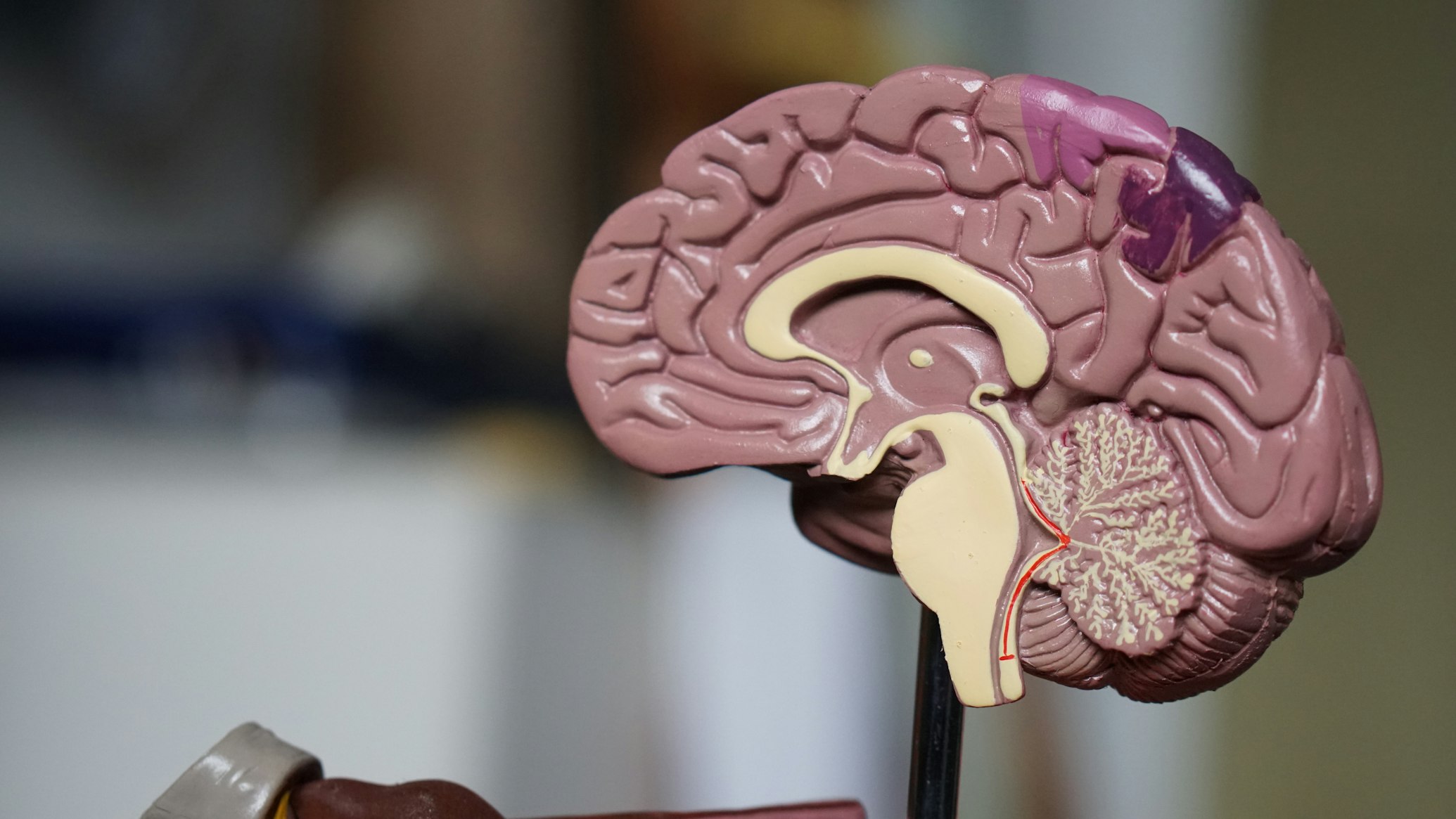
20,000-25,000
Protein-coding genes in the human genome, far fewer than most scientists had predicted 8 .
3 Billion
Base pairs in the human genome that were sequenced through the international collaboration.
2003
Year the completed human genome sequence was announced, 50 years after the double helix discovery.
The Genomic "Parts List"
The HGP revealed that the human genome contains approximately 20,000-25,000 protein-coding genes, far fewer than most scientists had predicted 8 . It also provided a comprehensive "parts list" for a human being, offering unprecedented insights into human development, physiology, and medicine.
The Genomics Era
The completion of the HGP was not an end, but a new beginning. It launched the "genomics era", where genetics is no longer about studying one gene at a time, but about analyzing entire genomes and their complex interactions 6 . It has paved the way for:
Personalized Medicine
Tailoring medical treatments to an individual's genetic makeup.
Gene Therapy
Developing strategies to correct genetic defects.
Evolutionary Genetics
Tracing human migration and history through DNA.
The century from 1900 to 2000 transformed genetics from a theoretical concept to an information science that is fundamentally changing our relationship with the natural world and with ourselves. As we look to the future, the challenge will be to use this powerful knowledge with the same wisdom and foresight that characterized the greatest discoveries of the past.