Decoding the Blueprint: Principles of Genotype-Phenotype Linkage and Their Evolutionary Impact
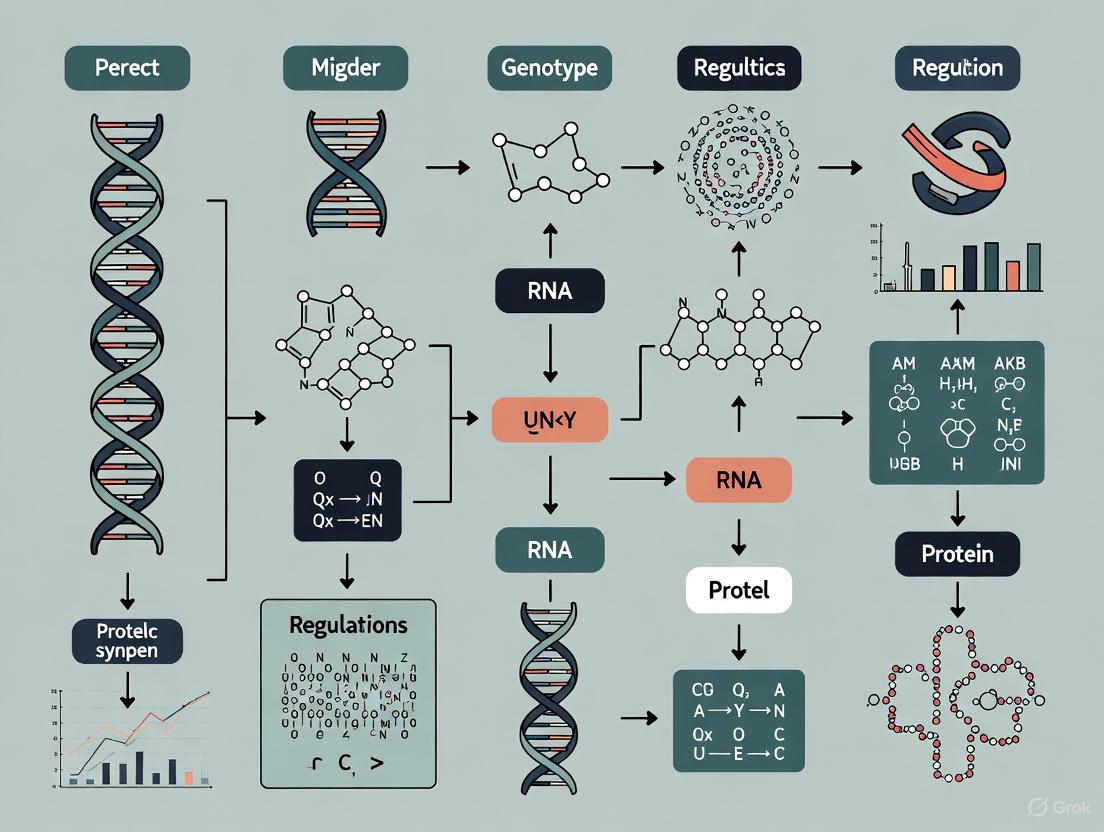
This article synthesizes foundational principles and cutting-edge methodologies for understanding genotype-phenotype relationships, a core challenge in evolutionary genetics and biomedicine.
Decoding the Blueprint: Principles of Genotype-Phenotype Linkage and Their Evolutionary Impact
Abstract
This article synthesizes foundational principles and cutting-edge methodologies for understanding genotype-phenotype relationships, a core challenge in evolutionary genetics and biomedicine. We explore the historical distinction between genotype and phenotype and its modern reinterpretation through concepts like the 'supervisor-worker' gene architecture. The review covers transformative methodologies, from deep mutational scanning to AI-driven frameworks like G–P Atlas, which enable the mapping of complex genetic interactions. We address key challenges such as pervasive epistasis and data scarcity, while evaluating solutions through metabolic control theory and multi-omics integration. Finally, we compare the predictive power of different modeling approaches. This synthesis provides researchers and drug development professionals with a comprehensive framework for leveraging genetic principles to predict evolutionary trajectories, understand disease mechanisms, and accelerate therapeutic discovery.
From Classical Concepts to Modern Architectures: Deconstructing the Genotype-Phenotype Map
The genotype-phenotype distinction, first proposed by Danish scientist Wilhelm Johannsen in 1909, represents one of the conceptual pillars of twentieth-century genetics and remains a cornerstone of modern evolutionary research [1]. Johannsen introduced these terms in his seminal work "Elemente der exakten Erblichkeitslehre" (The Elements of an Exact Theory of Heredity) and further elaborated them in his 1911 paper "The Genotype Conception of Heredity" [1]. This distinction emerged from Johannsen's pure-line breeding experiments on barley and the common bean, through which he demonstrated that the hereditary dispositions of organisms (genotypes) could be distinguished from their physical manifestations (phenotypes) [1]. The profound insight that phenotypes represent the variable expression of stable genotypes under different environmental conditions fundamentally reshaped biological research and continues to influence how researchers investigate the genetic architecture of complex traits.
Johannsen's conceptual framework was developed amidst intense scientific debates between biometricians, who supported Darwinian gradualist evolution through continuous variation, and Mendelians, who advocated for discontinuous evolutionary leaps [1]. His distinction provided a resolution to these controversies by demonstrating that continuous phenotypic variation could arise from stable genotypes through environmental influences and developmental processes. This historical context underscores how foundational concepts continue to shape contemporary research into genotype-phenotype relationships in evolutionary biology and drug development.
Historical Foundation: Johannsen's Experiments and Theoretical Contributions
The Pure Line Experiments
Johannsen's conceptual breakthrough emerged from meticulously designed experiments with self-fertilizing plants, primarily the princess bean (Phaseolus vulgaris) [1]. His experimental protocol involved several key steps that established the empirical basis for the genotype-phenotype distinction:
- Seed Selection and Grouping: Johannsen began with 5,000 bean seeds in 1900, selecting 100 average-weight seeds plus 25 each of the smallest and largest seeds for planting [2].
- Pedigree Tracking: He maintained careful pedigree records through multiple generations of self-fertilization, establishing pure lines descended from single individuals [1].
- Statistical Analysis: Johannsen measured seed weights across generations and applied statistical methods to analyze variation patterns [1] [3].
- Selection Testing: He applied selection pressure within pure lines to test hereditary response, discovering that selection only produced changes when applied across genetically mixed populations, not within pure lines [1].
The critical finding was that within pure lines, selection for larger or smaller seeds produced no hereditary change, despite phenotypic variation existing [1]. This demonstrated that the genotype remained stable while the phenotype fluctuated in response to environmental conditions, fundamentally challenging the then-prevailing "transmission conception" of heredity which assumed parental traits were directly transmitted to offspring [1].
Conceptual Innovation and Terminology
Johannsen's genius lay in recognizing that his experimental results required a new conceptual vocabulary. He introduced three fundamental terms that would become foundational to genetics:
- Genotype: "The sum total of all the 'genes' in a gamete or in a zygote" [4], representing the hereditary constitution of an organism.
- Phenotype: "The statistical average of the environmentally influenced variable appearances of individuals" [2], comprising the observable characteristics.
- Gene: A "fully free from any hypothesis" unit representing the "securely ascertained fact that at least many properties of the organism are conditional on individual, separable and thus independent 'states', 'basis', 'dispositions' found in the gametes" [3].
Johannsen explicitly contrasted his "genotype conception of heredity" with what he termed the "transmission conception" of heredity [5]. He rejected the notion that characteristics themselves were transmitted from parents to offspring, instead arguing that what was inherited was the genotype, which then interacted with environmental factors during development to produce the phenotype [5]. This ahistorical view of heredity positioned the genotype as immune to environmental influences across generations, though it expressed differently depending on developmental conditions [1].
Table: Key Terminology Introduced by Johannsen
| Term | Original Meaning | Modern Interpretation |
|---|---|---|
| Genotype | The hereditary constitution underlying a pure line; "the type as determined by the gametes" [1] | The full hereditary information of an organism, encoded in DNA |
| Phenotype | Observable characteristics of an organism as expressed under particular conditions; "the type as it is seen" [1] | The observable physical, biochemical, and behavioral properties of an organism |
| Gene | A unit of calculation for hereditary dispositions; explicitly non-hypothetical [3] | A unit of heredity composed of DNA sequence encoding functional product |
| Pure Line | A population of organisms descending from a single self-fertilized individual through repeated inbreeding [1] | A genetically homogeneous population maintained through specific breeding protocols |
Modern Research Methodologies: From Univariate to Multivariate Approaches
Evolution of Genotype-Phenotype Mapping
Contemporary research has dramatically expanded Johannsen's original concepts through sophisticated methodologies that capture the multidimensional nature of genotype-phenotype relationships. Where traditional approaches examined single genetic loci against individual traits, modern frameworks employ multivariate strategies that acknowledge the complex interplay between multiple genetic variants and phenotypic measures [6]. This evolution reflects the growing recognition that both genotypes and phenotypes exist as complex systems rather than as collections of independent elements.
The limitations of univariate approaches became increasingly apparent as researchers recognized that complex phenotypes rarely stem from single genetic variants. As noted in recent literature, "studying the pairwise associations between all measurements and all alleles is highly inefficient and prevents insight into the genetic pattern underlying the observed phenotypes" [6]. This realization has driven the development of multivariate genotype-phenotype mapping (MGP) approaches that identify patterns of allelic variation (genetic latent variables) maximally associated with patterns of phenotypic variation (phenotypic latent variables) [6].
Contemporary Experimental Workflows
Modern genotype-phenotype research typically follows sophisticated experimental workflows that integrate large-scale genomic data with multidimensional phenotypic characterization:
Diagram: Modern Genotype-Phenotype Association Workflow. This workflow illustrates the integrated approach used in contemporary studies, combining comprehensive genomic sequencing with multidimensional phenotypic assessment.
A landmark example of this approach comes from a recent study of 1,086 Saccharomyces cerevisiae isolates, which employed near telomere-to-telomere assemblies to generate a species-wide structural variant atlas [7]. The experimental protocol included:
- Genome Assembly: Long-read sequencing using Oxford Nanopore technology (average depth 95×, N50 19.1 kb) with hybrid assembly pipeline for chromosome-scale contiguity [7].
- Variant Detection: Comprehensive identification of structural variants (SVs >50 bp) through pairwise alignment with reference genome, classifying variants into presence-absence variations (PAVs), copy-number variations (CNVs), inversions, and translocations [7].
- Phenotypic Profiling: High-throughput phenotyping across 8,391 molecular and organismal traits, including transcriptomic, proteomic, and metabolic profiling integrated with growth and morphological assessments [7].
- Association Analysis: Genome-wide association studies (GWAS) incorporating the full spectrum of genetic variation, including single-nucleotide polymorphisms (SNPs), small indels, and structural variants [7].
This comprehensive approach revealed that structural variants contribute significantly to phenotypic variation, with SV inclusion improving heritability estimates by an average of 14.3% compared to SNP-only analyses [7]. Moreover, structural variants demonstrated greater pleiotropy than other variant types and were more frequently associated with organismal traits [7].
Machine Learning Approaches
The growing complexity of genomic and phenomic data has motivated the development of specialized machine learning tools such as deepBreaks, which identifies and prioritizes genotype-phenotype associations using multiple algorithms [8]. The deepBreaks workflow involves:
- Data Preprocessing: Imputation of missing values, handling of ambiguous reads, removal of zero-entropy columns, and clustering of correlated features using DBSCAN algorithm [8].
- Model Training: Simultaneous training of multiple machine learning models (AdaBoost, Decision Tree, Random Forest, etc.) with k-fold cross-validation [8].
- Feature Importance Analysis: Interpretation of model results to identify and prioritize sequence positions most predictive of phenotypic variation [8].
This approach addresses key challenges in genotype-phenotype mapping, including nonlinear associations, feature collinearity, and high-dimensional data, thereby uncovering complex relationships that traditional methods might miss [8].
Table: Comparison of Genotype-Phenotype Mapping Methods
| Method | Key Features | Advantages | Limitations |
|---|---|---|---|
| Univariate GWAS | Single marker-trait associations; Linear models | Simple interpretation; Well-established statistics | Multiple testing burden; Misses epistatic effects |
| Multivariate Genotype-Phenotype Mapping (MGP) | Identifies latent variables maximizing genotype-phenotype association [6] | Reduces dimensionality; Captures pleiotropic effects | Complex implementation; Challenging biological interpretation |
| Machine Learning (deepBreaks) | Multiple algorithm comparison; Non-linear pattern detection [8] | Handles complex interactions; Robust to collinearity | "Black box" interpretation; Computationally intensive |
| Graph Pangenome GWAS | Incorporates full genomic variation spectrum; Population-scale assemblies [7] | Comprehensive variant representation; Improved heritability estimates | Resource-intensive sequencing; Complex data integration |
Key Research Findings and Quantitative Insights
Structural Variants as Major Drivers of Phenotypic Diversity
Recent research has illuminated the critical role of structural variants (SVs) in shaping phenotypic diversity, a dimension largely inaccessible in earlier genetic studies. The comprehensive yeast genome study revealed:
Diagram: Structural Variant Contributions to Phenotypic Diversity. Structural variants, particularly presence-absence variations and copy-number variations, contribute disproportionately to phenotypic variation and heritability compared to single-nucleotide polymorphisms.
The yeast genome analysis identified 262,629 redundant structural variants across 1,086 isolates, corresponding to 6,587 unique events spanning 27.3 Mb of sequence [7]. The distribution of these variants across functional categories revealed:
- Presence-Absence Variations (PAVs): 4,755 events, frequently associated with transposable elements (39% involved Ty elements) [7].
- Copy-Number Variations (CNVs): 1,207 events, with 9% associated with Ty elements [7].
- Inversions: 231 events, 20% associated with Ty elements [7].
- Translocations: 394 events, predominantly in subtelomeric regions [7].
Notably, 69% of SVs were rare (minor allele frequency <1%), suggesting potential selective constraints, while SVs exhibited significantly higher heterozygosity than SNPs, particularly for larger variants (>30 kb) where 78% were heterozygous [7].
Dimensionality of Genotype-Phenotype Maps
Multivariate analyses have revealed the surprisingly low dimensionality of genotype-phenotype relationships, with fundamental implications for evolutionary biology. In a study of mice scored for 353 SNPs and 11 phenotypic traits:
- The first dimension of genetic and phenotypic latent variables accounted for >70% of genetic variation present in all 11 measurements [6].
- 43% of variation in this phenotypic pattern was explained by the corresponding genetic latent variable [6].
- The first three dimensions together accounted for almost 90% of genetic variation in the measurements and for all interpretable genotype-phenotype association [6].
This low dimensionality enables researchers to reduce the number of statistical tests from thousands to just a few meaningful independent tests, dramatically improving statistical power while providing a more integrated view of how genetic variation shapes phenotypic diversity [6].
Table: Quantitative Findings from Contemporary Genotype-Phenotype Studies
| Study System | Sample Size | Genetic Variants | Phenotypic Measures | Key Finding |
|---|---|---|---|---|
| S. cerevisiae [7] | 1,086 isolates | 6,587 unique SVs; 262,629 redundant SVs | 8,391 molecular and organismal traits | SVs improved heritability estimates by 14.3% compared to SNP-only analyses |
| Mouse sample [6] | Unspecified | 353 SNPs | 11 phenotypic traits | First three dimensions accounted for ~90% of genetic variation |
| Machine learning simulation [8] | 1,000 samples (simulated) | 1,000-2,000 features | Single continuous trait | ML approaches maintained performance despite feature collinearity |
The Scientist's Toolkit: Essential Research Reagents and Materials
Table: Essential Research Reagents for Genotype-Phenotype Studies
| Reagent/Material | Function | Application Example |
|---|---|---|
| Long-read Sequencing Platforms (Oxford Nanopore, PacBio) | Generate high-contiguity assemblies; Resolve complex genomic regions | Near telomere-to-telomere assemblies for structural variant detection [7] |
| Reference Genomes | Provide coordinate system for variant calling; Enable comparative analyses | S288c reference genome for yeast pangenome construction [7] |
| Phenotypic Screening Platforms | High-throughput characterization of molecular and organismal traits | Multiplexed growth assays; Transcriptomic, proteomic, and metabolic profiling [7] |
| Machine Learning Frameworks (deepBreaks, etc.) | Detect nonlinear genotype-phenotype associations; Prioritize predictive variants | Identification of important sequence positions associated with phenotypic traits [8] |
| Graph Pangenome Structures | Represent full spectrum of population genetic variation; Include non-reference sequences | 2.5 Mb of non-reference sequence uncovered in yeast graph pangenome [7] |
| Multiple Sequence Alignment | Align homologous sequences across individuals; Identify variable positions | Input for deepBreaks analysis to identify phenotype-associated positions [8] |
Implications for Evolutionary Research and Drug Development
Evolutionary Biology Perspectives
Johannsen's distinction between genotype and phenotype established the conceptual foundation for understanding how hereditary information passes between generations while phenotypic expression remains contingent on developmental and environmental contexts [1]. This fundamental insight continues to shape evolutionary research in profound ways:
The genotype-phenotype map concept has become central to evolutionary biology, as it determines how genetic variation translates into phenotypic variation available for natural selection [9]. As Lewontin articulated, the theoretical task for population genetics involves a process in two spaces: "genotypic space" and "phenotypic space" [9]. The challenge lies in providing laws that predictably map populations of genotypes to phenotypes where selection operates, then back to genotype space where Mendelian genetics predict subsequent generations [9].
Modern research has revealed that the genotype-phenotype relationship exhibits both phenotypic plasticity (environmental influence on phenotype expression) and genetic canalization (mutations having minimal effect on phenotypes due to developmental buffering) [9]. These complementary concepts, derived from Johannsen's original distinction, help explain how organisms maintain robustness to genetic and environmental perturbations while retaining evolutionary adaptability.
Biomedical and Pharmacological Applications
In drug development, the genotype-phenotype distinction provides a crucial framework for understanding individual variation in drug response and disease susceptibility:
- Precision Medicine: Understanding how genetic variation influences phenotypic traits enables targeted therapies for specific genotypic subgroups [7].
- Variant Interpretation: Comprehensive variant catalogs, including structural variants, improve identification of clinically relevant mutations [7].
- Pleiotropy Assessment: Recognition that genetic variants often influence multiple phenotypes helps anticipate unintended therapeutic consequences [7].
The multivariate approaches discussed in this review directly address the challenge of "missing heritability" in complex traits by considering the joint effects of multiple genetic variants on integrated phenotypic representations [6]. This represents a fundamental advancement beyond single-variant association studies that have dominated biomedical genetics.
More than a century after Wilhelm Johannsen introduced the genotype-phenotype distinction, his conceptual framework continues to guide and inspire genetic research. While modern science has revealed extraordinary complexity in the relationships between genetic information and phenotypic expression, Johannsen's fundamental insight—that heredity involves the transmission of potentialities rather than predetermined traits—remains valid [1] [4].
Contemporary research has expanded Johannsen's concepts in unexpected directions, demonstrating that structural variants often contribute more significantly to phenotypic diversity than single-nucleotide polymorphisms [7], that machine learning approaches can detect nonlinear genotype-phenotype relationships inaccessible to traditional methods [8], and that multivariate frameworks can dramatically reduce the dimensionality of genotype-phenotype maps [6]. Yet所有这些进展仍然在操作within the conceptual space that Johannsen first delineated.
As genetic research continues to evolve, with increasingly sophisticated technologies for characterizing both genomic variation and phenotypic expression, Johannsen's genotype-phenotype distinction remains an indispensable foundation for understanding biological heredity. Its enduring relevance across a century of dramatic scientific progress testifies to the power of this fundamental conceptual framework to organize our understanding of how genetic information manifests in living organisms.
The relationship between genotype and phenotype is a cornerstone of evolutionary biology, with the distribution of fitness effects (DFE) of new mutations being a critical determinant of evolutionary trajectories. The nearly neutral theory of molecular evolution emphasizes the importance of weakly selected mutations, proposing that a substantial proportion of mutations are slightly deleterious and that their fate is governed by the interplay of selection and genetic drift [10]. This framework predicts that the effective population size (Nₑ) is a key factor, with genetic drift overpowering weak selection in smaller populations [10]. A profound insight from recent empirical studies is that the DFE is often bimodal, with mutations clustering into categories of nearly neutral and strongly deleterious effects [11]. This bimodality has significant implications for understanding evolutionary dynamics, from the evolution of drug resistance in pathogens to the identification of disease-causing mutations in humans. This whitepaper explores the principles, evidence, and methodologies for studying this bimodal distribution within the context of genotype-phenotype linkage, providing researchers with a technical guide for probing one of evolution's fundamental patterns.
Theoretical Foundations: The Nearly Neutral Theory
The nearly neutral theory, primarily developed by Tomoko Ohta, represents a crucial refinement of the strict neutral and selectionist models of molecular evolution. It posits that a significant fraction of mutations are not strictly neutral, but are subject to very weak selection [10]. The theory assigns a central role to genetic drift, recognizing that in finite populations, the stochastic effects of drift can permit the fixation of slightly deleterious mutations and prevent the fixation of slightly advantageous ones.
The core prediction of the theory is a dependence on population size. The strength of genetic drift is inversely related to the effective population size (Nₑ). Consequently, the efficacy of selection in purging deleterious mutations and promoting advantageous ones is correlated with Nₑ. This leads to the expectation of a selection-drift balance, where the same mutation can behave as effectively neutral in a small population but be subject to selection in a larger one [10].
The nearly neutral theory provides a powerful explanation for the observed bimodality in the DFE. If the fitness effects of new mutations are continuously distributed but clustered near neutrality, the interaction with population size will naturally separate them into two fates: those that are effectively neutral and can fix via drift, and those that are sufficiently deleterious to be efficiently removed by purifying selection. This theoretical framework is supported by both population genetic models and, as detailed in subsequent sections, a growing body of empirical evidence.
Empirical Evidence for Bimodal Distributions
Key Experimental Findings
The advent of deep mutational scanning assays has enabled the high-throughput, empirical measurement of fitness effects for thousands of mutations in parallel. These experiments have provided direct, quantitative evidence for the bimodal nature of the DFE.
Table 1: Empirical Evidence for Bimodal DFE from Deep Mutational Scanning
| Protein/Gene System | Key Finding | Implication for DFE | Citation |
|---|---|---|---|
| S. cerevisiae Hsp90 | A comprehensive study of a 9-amino acid region revealed a bimodal distribution with "a fairly equal proportion of mutations being either strongly deleterious or nearly neutral". | Direct empirical support for the nearly neutral model; synonymous changes had minimal effects compared to nonsynonymous. | [11] |
| Human Growth Hormone | High tolerance to mutations in solvent-exposed positions; many mutations existed that increased both stability and binding affinity over wild-type. | Suggests a distribution where a subset of mutations are not deleterious, challenging a simple unimodal DFE. | [11] |
| Human WW Domain | 97% of library variants bound ligand less tightly than wild-type; mutational intolerance correlated with evolutionary conservation. | Indicates a DFE skewed towards deleterious effects, with a mode near neutrality and a long tail of deleteriousness. | [11] |
| Gβ1 Domain | Systematic mutagenesis of the 56-residue domain, assessing stability for over 400 mutations, provides a robust dataset for benchmarking predictive models. | Provides a high-resolution map of mutational effects for a complete protein domain. | [12] |
Quantitative Measures of Selection
The effect of mutations can be quantified using population genetic measures that contrast neutral and non-neutral evolution. At the microevolutionary scale (within species), the ratio of nonsynonymous to synonymous diversity (πN/πS) is used. At the macroevolutionary scale (between species), the ratio of nonsynonymous to synonymous substitutions (dN/dS, denoted as ω) is applied [10]. The nearly neutral theory predicts a negative correlation between effective population size (Nₑ) and both πN/πS and ω, as larger populations more efficiently purge slightly deleterious mutations [10]. However, these relationships are predicated on equilibrium assumptions, and demographic histories, such as population bottlenecks or expansions, can disturb the selection-drift balance and complicate interpretation [10].
In cancer genomics, the concept of "cancer effect size" has been developed to move beyond mere statistical significance (P-values) and quantify the selective advantage conferred by somatic mutations. This metric estimates the selection intensity for variants in cancer cell lineages, providing a more direct measure of a mutation's functional impact on tumorigenesis [13].
Methodological Approaches for Analysis
Experimental Protocols
Deep Mutational Scanning (DMS) for Fitness Effects This protocol enables the large-scale measurement of genotype-fitness relationships [11].
- Library Construction: Create a comprehensive library of genetic variants (e.g., all possible single point mutations in a gene-coding region) using methods such as Kunkel mutagenesis or synthetic oligonucleotide pools.
- Transformation & Propagation: Introduce the variant library into a model organism (e.g., yeast) and culture the population under competitive growth conditions. In essential gene studies, repress the native genomic copy to make cell fitness dependent on the library variant.
- Time-Point Sampling: Sample the population at multiple time points over several generations.
- Genotype Frequency Quantification: Use high-throughput sequencing (e.g., Illumina) to sequence the library variants at each time point. The read count for each variant serves as a proxy for its frequency in the population.
- Fitness Calculation: For each mutant, calculate the selection coefficient relative to the wild type. This is derived from the change in the ratio of mutant to wild-type read counts over time, normalized by the known wild-type generation time. The result is a quantitative fitness estimate for every mutation in the library.
Assessing Fitness Trade-offs in Drug Resistance This methodology, as applied to fluconazole-resistant yeast, identifies distinct classes of adaptive mutations based on their phenotypic trade-offs [14].
- Laboratory Evolution: Perform massively parallel evolution experiments in a range of drug concentrations (e.g., fluconazole), sometimes in combination with a second drug, to generate a diverse set of resistant mutants.
- Lineage Tracking: Use DNA barcoding to track a wide spectrum of adaptive lineages, including those that do not come to dominate the population, thus capturing a fuller range of resistance mechanisms.
- High-Throughput Phenotyping: Measure the fitness of each evolved mutant (e.g., 774 mutants) across a panel of distinct environments (e.g., 12 different drug conditions).
- Clustering Analysis: Group mutants based on their fitness profiles (trade-offs) across the tested environments. Mutants clustering together are inferred to operate through similar underlying molecular mechanisms.
Diagram 1: DMS Workflow for DFE.
Computational and Statistical Algorithms
Computational methods are essential for predicting mutational effects and analyzing genetic data.
Physics-Based Free Energy Prediction: Methods like Free Energy Perturbation (FEP) simulate the atomic-level thermodynamics of mutations. The QresFEP-2 protocol is a hybrid-topology approach that calculates the change in free energy (ΔΔG) associated with a point mutation, predicting its impact on protein stability or ligand binding with high accuracy [12]. It outperforms many machine learning and statistical methods by explicitly modeling physics-based interactions and solvation effects.
Statistical Genetics for Model Selection: Algorithms have been developed to analyze deleterious mutations within family pedigrees using phenotypic data alone. These methods perform model selection and parameter estimation to distinguish between scenarios like single gene mutation, double cross-effect mutations, or no genetic cause, using both classical fit methods and neural network approaches [15].
Mendelian Randomization (MR) for Causal Inference: MR uses genetic variants as instrumental variables to infer causal relationships between a biomarker (e.g., gene expression) and a complex trait. Drug target MR specifically uses genetic variants in or around a drug target gene to mimic the effect of pharmacological perturbation, thereby informing on target efficacy and safety during drug development [16]. The TWMR (Transcriptome-Wide Mendelian Randomization) extension integrates GWAS and eQTL data from multiple genes simultaneously to better account for pleiotropy and identify putatively causal gene-trait associations [17].
The Scientist's Toolkit: Research Reagent Solutions
Table 2: Essential Research Reagents and Resources for DFE Studies
| Reagent/Resource | Function and Application | Key Features |
|---|---|---|
| Deep Mutational Scanning Libraries | Comprehensive collections of genetic variants (e.g., all single-nucleotide mutants of a gene) for high-throughput phenotyping. | Synthesized via pooled oligo libraries; cloned into display vectors (phage, yeast) or expression plasmids. |
| Display Systems (Phage, Yeast) | Couples the phenotype of a protein variant (e.g., binding affinity) to its genetic material, enabling selection and sequencing-based enrichment. | Critical for measuring biochemical phenotypes beyond fitness in cellular contexts. |
| QresFEP-2 Software | Open-source, physics-based software for predicting the effect of point mutations on protein stability and binding free energy. | Uses hybrid-topology Free Energy Perturbation (FEP); high accuracy and computational efficiency [12]. |
| cancereffectsizeR Software | R package for calculating the selection intensity (cancer effect size) of somatic mutations in tumor populations from sequencing data. | Based on evolutionary principles; estimates selective advantage of cancer drivers [13]. |
| eQTL/pQTL Datasets (e.g., GTEx, eQTLGen) | Provide summary-level data on associations between genetic variants and gene expression (eQTLs) or protein levels (pQTLs). | Used as proxies for drug target perturbation in Mendelian randomization studies [16] [17]. |
Applications and Implications
Evolutionary Dynamics and Drug Resistance
The bimodal DFE and nearly neutral theory are critical for understanding the adaptation of pathogens and cancer cells. The distribution of fitness effects dictates the rate of adaptation and the potential for evolutionary predictability. For instance, the evolution of drug resistance is not a uniform process; a single drug can select for hundreds of different resistant mutations. Research in yeast has shown that these mutants can be clustered into a limited number of groups based on their fitness trade-offs across different environments [14]. Some mutants resistant to a single drug may not resist drug combinations, while others do. This diversity of mechanisms and associated trade-offs complicates the design of sequential or combination drug therapies, which rely on the assumption that resistance to one drug confers a predictable cost (sensitivity to another) [14].
Drug Development and Evolutionary Safety
Understanding mutational effects is directly applicable to pharmaceutical development. Drug target Mendelian randomization leverages human genetics to validate therapeutic targets, demonstrating that targets with genetic support are twice as likely to succeed in clinical development [16]. This approach can inform on efficacy, safety, and repurposing opportunities by using genetic variants as proxies for lifelong drug target modulation.
A particularly nuanced application concerns mutagenic drugs, which act by increasing the mutation rate of pathogens (e.g., molnupiravir for SARS-CoV-2). The evolutionary safety of such drugs—whether they reduce the total load of viable mutant pathogens—must be rigorously assessed. A four-step framework has been proposed for this evaluation, involving measuring the natural mutation rate, the mutagenic potential of the drug, clinical trial assessment, and post-approval surveillance [18]. The goal is to ensure that the drug pushes the pathogen population toward error catastrophe without increasing the risk of generating dangerous escape mutants.
The exploration of the distribution of mutational effects has revealed a fundamental bimodality, strongly supporting the nearly neutral theory of molecular evolution. This pattern, where mutations often fall into categories of near-neutrality or strong deleteriousness, is a powerful emergent property of the genotype-phenotype map with profound consequences. The integration of high-throughput experimental genetics like deep mutational scanning with sophisticated computational models and population genetic theory allows researchers to move from descriptive observation to predictive power. This understanding is not merely academic; it is essential for tackling some of the most pressing challenges in medicine, from anticipating the evolution of antibiotic resistance to the rational design of evolutionarily robust therapeutics. As methods for profiling and predicting mutational effects continue to advance, so too will our ability to decipher the complex rules governing evolution and disease.
The relationship between genotype and phenotype is not a simple linear pathway but a complex network shaped by two fundamental forces: epistasis (the non-linear interaction between genes) and pleiotropy (the phenomenon of a single gene influencing multiple traits). Together, these forces structure the fitness landscape, determining the paths available for evolutionary adaptation and constraining the phenotypes that can emerge from genetic variation. Understanding their interplay is crucial for explaining how populations evolve complex adaptations, why genetic backgrounds influence phenotypic expression, and how biological systems balance evolutionary stability with adaptive potential.
For researchers investigating complex traits and their evolution, recognizing that epistasis and pleiotropy are integral features of genetic architecture—rather than rare exceptions—transforms our approach to studying genotype-phenotype relationships. As this technical guide will demonstrate, these forces operate across biological scales, from molecular networks to organismal phenotypes, with profound implications for evolutionary genetics, disease research, and therapeutic development.
Conceptual Foundations and Definitions
Epistasis: Beyond Simple Additivity
Epistasis occurs when the effect of a genetic variant depends on the genetic background in which it appears. In quantitative genetics, this is formally defined as a statistical deviation from additive expectation for multi-locus genotypes [19]. The biological reality is that genes operate within interconnected networks rather than in isolation, creating dependence structures where the phenotypic impact of a mutation is context-dependent.
Mathematically, for two mutations (A and B) occurring on a haplotype with wild-type fitness W0, epistasis (ε) quantifies the deviation from multiplicative expectation:
ε = log(WAB/W0) - [log(WA/W0) + log(WB/W0)] [20]
Where WAB/W0 represents the fitness effect of the double mutant, while WA/W0 and WB/W0 represent the fitness effects of each single mutation alone. When ε = 0, mutations act independently; when ε ≠ 0, epistatic interactions are present.
Pleiotropy: One Gene, Multiple Effects
Pleiotropy describes the phenomenon whereby a single genetic polymorphism affects multiple phenotypic traits [21]. Two distinct types have been characterized:
- True pleiotropy occurs when a polymorphism directly and independently affects multiple traits ("horizontal pleiotropy") or affects one trait that subsequently influences another ("mediating pleiotropy").
- Apparent pleiotropy arises when different polymorphisms in linkage disequilibrium within a gene or haplotype independently affect different traits.
The distinction has significant implications for interpreting genetic associations and predicting evolutionary trajectories, as true pleiotropy creates stronger genetic constraints than apparent pleiotropy, which can dissipate with recombination.
Quantitative Framework and Measurement
Quantifying Epistatic and Pleiotropic Effects
Researchers can measure epistasis and pleiotropy through several established quantitative frameworks. The following table summarizes key metrics and their applications:
Table 1: Quantitative Measures for Epistasis and Pleiotropy
| Measure | Formula/Approach | Application Context | Interpretation |
|---|---|---|---|
| Epistasis Coefficient (ε) | ε = log(WAB/W0) - [log(WA/W0) + log(WB/W0)] | Fitness landscapes, adaptive evolution [20] | ε = 0: No epistasis; ε > 0: Positive/synergistic epistasis; ε < 0: Negative/antagonistic epistasis |
| Pleiotropic Degree (PD) | Number of traits significantly affected by a mutation | Gene function characterization, genetic constraint estimation [21] [22] | High PD indicates greater pleiotropy; distribution often follows power law with few highly pleiotropic genes |
| Epistatic Pleiotropy (PDE) | Number of traits affected by a pairwise genetic interaction | Network analysis, evolutionary potential [22] | Measures how epistasis modifies pleiotropic patterns; high PDE increases evolutionary modularity |
| Variance Component Analysis | Partitioning genetic variance into additive, dominance, and epistatic components | Quantitative genetics, breeding values, heritability estimation [19] | Epistatic variance typically smaller than additive variance but biologically important |
The NK Model: A Framework for Studying Interactions
The NK model provides a powerful computational framework for investigating how epistasis and pleiotropy shape evolutionary dynamics [20] [23]. In this model:
- N represents the number of loci in the genome.
- K represents the number of other loci that interact with each locus (epistasis).
- Each locus contributes to fitness via interactions with K other loci, creating a tunably rugged fitness landscape.
- Increasing K amplifies both epistasis and pleiotropy, as each locus affects more phenotypic traits and interacts with more genetic partners.
Simulations using this model reveal that intermediate K values (moderate epistasis/pleiotropy) often optimize the balance between fitness potential and evolvability, allowing populations to discover high-fitness peaks without becoming trapped on local optima [20].
Experimental Approaches and Methodologies
Research Reagent Solutions for Interaction Studies
Table 2: Essential Research Reagents for Epistasis and Pleiotropy Studies
| Reagent/Resource | Function | Example Applications | Key References |
|---|---|---|---|
| Gene deletion/knockout collections | Systematic assessment of single gene effects across multiple traits | Quantifying pleiotropic degree; synthetic genetic array screens | [19] [21] |
| CRISPR-Cas9 genome editing | Precise engineering of specific variants in isogenic backgrounds | Testing epistasis between specific alleles; creating allelic series | [24] |
| Diallel cross designs | Comprehensive analysis of pairwise interactions between alleles | Mapping epistatic networks; detecting background effects | [19] |
| Near-isogenic lines (NILs) | |||
| Chromosome substitution lines | Isolating specific genomic regions in uniform genetic backgrounds | Measuring epistatic effects without confounding variation | [19] [21] |
| Transcriptional/reporter constructs | Quantifying gene expression effects in different genetic backgrounds | Cis-regulatory epistasis; network perturbations | [24] |
| P-element insertions | |||
| Transposon mutagenesis | Generating mutational variation for systematic interaction studies | Forward genetic screens for modifiers; pleiotropy assessment | [21] |
Protocol: Systematic Epistasis Mapping in Model Organisms
The following workflow outlines a comprehensive approach for detecting and quantifying epistatic interactions, integrating methodologies from multiple model systems [19] [24]:
Experimental Workflow Description
Generate Mutant Collection: Create a comprehensive set of single mutants in a uniform genetic background using gene knockouts (yeast), CRISPR-Cas9 (plants, animals), or transposon mutagenesis (Drosophila). For the tomato inflorescence study, CRISPR-Cas9 was used to generate promoter variants in the EJ2 gene [24].
Comprehensive Phenotyping: Characterize each mutant across multiple phenotypic domains. In the tomato study, this involved quantifying inflorescence branching architecture across over 35,000 inflorescences [24].
Select Query Mutations: Choose mutations representing biological pathways of interest or those showing interesting single-mutant phenotypes. Selection should balance coverage and practical feasibility.
Construct Double Mutants: Systematically cross query mutations with target mutations. In yeast, this uses synthetic genetic array technology; in plants and animals, planned crosses with genotypic verification.
High-Throughput Phenotyping: Measure relevant phenotypes in all single and double mutants. The scale required typically demands automated systems and quantitative imaging.
Statistical Interaction Analysis: Calculate epistasis using appropriate models. For continuous traits, compare observed double-mutant values to expectations based on additive or multiplicative models. Account for multiple testing using false discovery rate control.
Network Modeling: Build interaction networks from significant epistatic pairs, identifying hub genes and modular structures. Use topology measures to characterize network properties.
Functional Validation: Test predictions from network models using additional genetic perturbations or molecular assays to confirm biological mechanisms.
Protocol: Pleiotropy Quantification Across Traits
The following diagram illustrates the hierarchical nature of epistasis revealed through recent research on tomato inflorescence development, showing how different genetic layers interact to produce phenotypic outcomes [24]:
Experimental Workflow Description
Standardized Genetic Background: Use inbred lines or isogenic strains to minimize confounding variation. Engineered mutations in a common background provide the clearest evidence for true pleiotropy.
Multi-Trait Phenotyping: Measure a comprehensive set of phenotypes relevant to the biological system. This should include morphological, physiological, and molecular traits. High-throughput phenotyping platforms can automate this process.
Control for Linkage Disequilibrium: In natural populations, use fine-mapping approaches to distinguish true pleiotropy from apparent pleiotropy due to linked variants.
Effect Size Estimation: Calculate additive effects for each trait by comparing means between genotypes. Standardize effects to enable cross-trait comparisons.
Pleiotropic Degree Calculation: Count the number of traits with statistically significant effects after multiple testing correction. Alternatively, use multivariate methods like principal components analysis to identify trait covariation patterns.
Pleiotropy Network Construction: Create bipartite networks connecting genetic variants to affected traits. Analyze network topology to identify hubs and modules.
Key Findings and Empirical Patterns
Prevalence and Functional Patterns
Recent empirical studies across model organisms reveal consistent patterns in epistasis and pleiotropy:
Table 3: Empirical Patterns of Epistasis and Pleiotropy Across Biological Systems
| System | Epistasis Prevalence | Pleiotropy Patterns | Functional Consequences |
|---|---|---|---|
| Yeast (S. cerevisiae) | ~1-3% of tested pairs in qualitative screens; 13-35% in quantitative assays [19] | Most genes affect multiple growth conditions; few genes are essential | Network robustness; essential genes have higher pleiotropy |
| HIV-1 drug resistance | Extensive epistasis between reverse transcriptase and protease mutations [22] | Mutations show variable pleiotropy across drug environments | Epistatic pleiotropy creates modular cross-resistance patterns |
| Tomato inflorescence | Hierarchical epistasis with synergism within paralogs, antagonism between paralogs [24] | cis-regulatory variants show trait-specificity with minimal pleiotropy | Cryptic variation enables sudden phenotypic change |
| Drosophila melanogaster | 27% of tested random mutation pairs show epistasis for metabolic traits [19] | Distribution of pleiotropic degrees follows power law | Most mutations affect few traits; few affect many |
Evolutionary Dynamics and Landscape Topology
Research combining theoretical models with empirical data demonstrates how epistasis and pleiotropy shape evolutionary trajectories:
Fitness Valley Crossing: Epistasis can facilitate crossing fitness valleys through compensatory mutations and synergistic interactions. Populations with higher mutation rates navigate valleys more effectively but may sacrifice robustness [23].
Modularity Emergence: Epistatic pleiotropy—where the pleiotropic degree of mutations depends on genetic background—promotes the evolution of modular genetic architectures, allowing traits to evolve independently [22].
Cryptic Genetic Variation: Epistasis creates reservoirs of hidden variation that can be exposed under environmental change or genetic perturbation, fueling rapid adaptation [24].
Additive Variance Dominance: Despite pervasive biological interactions, additive genetic variance typically dominates in populations because epistatic components are converted to additive effects through allele frequency changes [19].
Implications for Biomedical Research and Therapeutic Development
The interplay of epistasis and pleiotropy has profound implications for human genetics and drug development:
Complex Disease Genetics
Missing Heritability: Epistatic interactions may contribute to the missing heritability problem in GWAS, as standard approaches primarily detect additive effects [19] [21].
Background Effects: The impact of risk alleles often depends on genetic background, explaining reduced replicability across populations with different allele frequencies and linkage disequilibrium patterns [21].
Variant Interpretation: Pleiotropy complicates causal inference, as associated variants may affect multiple traits through shared biological processes or mediated effects [21].
Antimicrobial and Antiviral Resistance
HIV research demonstrates how epistasis and pleiotropy shape resistance evolution:
Cross-Resistance Networks: Mutations in HIV reverse transcriptase and protease show distinct pleiotropic profiles across drug classes, with epistasis increasing drug-specificity of pleiotropic effects [22].
Combination Therapy: Understanding epistatic networks informs rational combination therapies that create evolutionary traps or high fitness costs for resistant variants.
Drug Target Identification
Dual-Purpose Targets: Genes with pleiotropic effects on aging and multiple age-related diseases represent promising therapeutic targets with broad impacts [25].
Network Pharmacology: Considering epistatic interactions improves prediction of drug effects across genetic backgrounds, enabling stratification by genetic context.
Epistasis and pleiotropy are not merely statistical curiosities but fundamental forces that shape evolutionary landscapes and biological complexity. Rather than representing noise in the genotype-phenotype map, they constitute essential features of its structure, enabling both robustness and adaptability in biological systems.
For research professionals, incorporating these concepts into experimental design and analysis is crucial for meaningful biological inference. Future progress will depend on developing more sophisticated computational models that capture the hierarchical nature of genetic interactions, expanding multi-trait phenotyping capabilities, and creating new statistical methods that bridge quantitative genetics and systems biology.
The integration of epistasis and pleiotropy into evolutionary models and biomedical research represents a paradigm shift from a reductionist, single-locus perspective to a network-based understanding of genetic effects. This transition promises not only more accurate predictions of evolutionary outcomes and disease risk but also more effective therapeutic interventions that work with, rather than against, the complex architecture of biological systems.
Understanding how genetic information translates into observable traits represents one of the most fundamental challenges in evolutionary biology and genetics. The genotype-phenotype relationship has long been conceptualized through various models, yet emerging evidence suggests this relationship operates through a sophisticated hierarchical architecture that reflects evolutionary processes. Recent research has revealed that natural selection and neutral drift, the dual engines of evolution, have shaped a structured gene architecture that governs complex traits through specialized genetic components with distinct functional roles. This architecture, termed the "supervisor-worker" framework, provides not only a mechanistic understanding of trait development but also insights into evolutionary constraints and opportunities that have shaped biological diversity across timescales [26]. The elucidation of this hierarchy addresses critical challenges in reconciling observations from different research strategies and offers a unified framework for interpreting how genetic variation manifests at phenotypic levels.
Within evolutionary biology, the supervisor-worker model helps explain how evolutionary forces operate differently on various components of the genetic architecture. This perspective aligns with broader efforts in comparative genomics that seek to illuminate the genetic basis of phenotypic diversity across macro-evolutionary timescales [27] [28]. As the field moves toward more comprehensive analyses, understanding this hierarchical organization becomes essential for deciphering how multiple molecular mechanisms jointly contribute to differences in cognition, metabolism, body plans, and medically relevant phenotypes. The framework also provides context for interpreting why some genetic approaches successfully identify certain components of trait architecture while overlooking others, thereby offering a more principled foundation for future research on complex traits and their evolution.
Core Concepts: Defining the Supervisor-Worker Architecture
Theoretical Foundation and Key Definitions
The supervisor-worker gene architecture represents a hierarchical model for understanding how genes collectively influence complex traits. This framework emerged from systematic analyses of approximately 500 quantitative traits in yeast, which revealed a fundamental organizational principle: genes controlling a trait segregate into two non-overlapping functional categories with distinct characteristics and roles [26]. The architecture resolves apparent contradictions between different research strategies by demonstrating that each approach targets different components of the same hierarchical system.
Supervisor Genes: These regulatory elements occupy upper hierarchical positions in gene regulatory networks and exhibit strong, detectable effects when perturbed. Supervisors are primarily identified through perturbational approaches (P-strategy) such as gene deletion, knockout, or overexpression experiments. These genes typically function as master regulators or key signaling nodes that coordinate the activity of downstream worker genes. Supervisor genes often show pleiotropic effects, influencing multiple traits simultaneously, and are enriched for functional annotations such as "Biological Regulator" in Gene Ontology analysis [26].
Worker Genes: These operational elements execute the mechanistic processes that directly construct traits but typically show small, statistically insignificant effects when individually perturbed. Workers are primarily identified through observational approaches (O-strategy) that examine correlations between gene activity patterns and trait values across various genetic or environmental backgrounds. While individually subtle in their effects, worker genes collectively implement the biochemical and cellular processes that manifest as observable phenotypes [26].
Complementary Research Strategies
The supervisor-worker architecture emerged from recognizing that two fundamental research strategies in genetics target different components of the hierarchical system:
Perturbational Strategy (P-strategy): This approach establishes causal relationships by measuring phenotypic consequences of direct genetic perturbations. It excels at identifying supervisor genes with strong phenotypic effects but typically fails to detect worker genes due to their functional redundancy or subtle individual contributions [26].
Observational Strategy (O-strategy): This approach identifies statistical correlations between gene activity patterns (e.g., mRNA expression, protein abundance) and trait values across different conditions. It effectively detects worker genes but often misses supervisors, which may not show consistent expression-trait correlations across backgrounds [26].
The surprising finding that these strategies identify essentially non-overlapping gene sets underscores the fundamental dichotomy in genetic functional organization and explains why integrative frameworks are necessary for comprehensive understanding of trait architecture.
Quantitative Evidence: Data from Yeast Morphological Traits
Empirical Patterns and Statistical Relationships
The discovery of the supervisor-worker architecture emerged from comprehensive analysis of yeast cell morphology, in which 501 quantitative morphological traits were characterized for 4,718 yeast mutants, each lacking a different nonessential gene [26]. This systematic approach provided unprecedented resolution for examining gene-trait relationships through both perturbational and observational strategies.
Table 1: Summary of Supervisor (PIG) and Worker (OIG) Identification in Yeast Morphological Traits
| Parameter | Supervisor Genes (PIGs) | Worker Genes (OIGs) |
|---|---|---|
| Identification Method | Perturbational (gene deletion) | Observational (expression-trait correlation) |
| Number of Traits Analyzed | 216 morphological traits | 501 morphological traits |
| Genes Examined | 4,718 nonessential genes | 6,123 yeast genes |
| Mean Genes per Trait | 301 | 138 |
| Median Genes per Trait | 212 | 12 |
| Proportion of Trait Variance Explained | Not quantified | 3.4% ± 2.1% (mean ± SD) |
| Total Nonredundant Genes Identified | 4,554 genes | 2,541 genes |
| Overlap Between PIGs and OIGs | Minimal (even slightly less than expected by chance) | Minimal (even slightly less than expected by chance) |
The data reveal several striking patterns. First, the number of worker genes (OIGs) identified for a trait poorly predicts the number of supervisor genes (PIGs) for that same trait (Spearman's ρ = 0.21, n = 216, P = 0.002) [26]. This statistical independence underscores the functional specialization within the hierarchy. Some traits had hundreds of worker genes but no supervisor genes, while others showed the opposite pattern, indicating that different traits vary in their regulatory complexity.
Table 2: Representative Examples of Supervisor and Worker Genes in Yeast
| Gene Name | Architectural Role | Biological Function | Phenotypic Impact |
|---|---|---|---|
| YIL040W | Supervisor | Regulates nuclear envelope morphology | Strong deletion effects on dozens of traits |
| YGR092W | Supervisor | Primary septum formation and cytokinesis | Strong deletion effects on dozens of traits |
| YNL148C | Supervisor | Folding of alpha-tubulin | Strong deletion effects on dozens of traits |
| Typical Worker Genes | Worker | Diverse cellular functions | Small, statistically insignificant individual deletion effects |
The minimal overlap between supervisor and worker genes persists even under varying statistical thresholds, with only three "super-informative" genes (YIL040W, YGR092W, and YNL148C) appearing as both strong supervisors and workers across dozens of traits [26]. When these exceptional genes are excluded, the remaining overlaps show no special status in terms of deletion effect size or explained trait variance, confirming the fundamental distinction between architectural roles.
Methodological Details for Experimental Replication
For researchers seeking to implement similar analyses, the experimental workflow involves several critical stages:
Strain Library Preparation: Generate a comprehensive collection of mutant strains, typically through homologous recombination-based gene deletion for nonessential genes. For essential genes, consider conditional knockdown systems (tet-off promoters, degrons) or temperature-sensitive alleles.
High-Content Phenotyping: Implement automated microscopy with multi-parameter staining (e.g., triple-stained cells for different cellular compartments) followed by computational image analysis to extract quantitative morphological descriptors.
Expression Profiling: Conduct transcriptome-wide mRNA quantification using RNA-seq across multiple mutant backgrounds, ensuring sufficient biological replicates to distinguish technical from biological variation.
Integrated Data Analysis:
- For P-strategy: Calculate deletion effects using appropriate linear mixed models that account for batch effects and genetic background.
- For O-strategy: Compute expression-trait correlations across mutants, applying false discovery rate control for multiple testing.
- Implement cross-validation approaches to assess robustness of identified gene-trait relationships.
This integrated methodology enables simultaneous mapping of both supervisor and worker components, providing a comprehensive view of the genetic architecture.
Evolutionary Significance: Selection and Neutral Drift in Architectural Formation
Distinct Evolutionary Forces Shape Different Architectural Components
The supervisor-worker architecture reflects the operation of different evolutionary forces on its distinct components. Analyses suggest that most worker-worker interactions evolve largely through neutral drift, resulting in pervasive epistasis that reduces the tractability of worker genes to traditional genetic analysis [26]. This neutral evolution of worker networks creates a background of complex interactions that can obscure detection of individual worker contributions.
In contrast, supervisor genes are often recruited or maintained by natural selection to establish and preserve coordinated expression patterns among worker genes. This selective maintenance boosts the tractability of worker genes by reducing interaction complexity and establishing predictable regulatory relationships [26]. The evolutionary process thus creates a mixed architecture where selection acts predominantly on supervisors to maintain functional coherence, while neutral processes shape the detailed implementation networks among workers.
This evolutionary perspective helps explain the missing heritability problem observed in human genome-wide association studies, where even extensive catalogs of associated variants fail to account for most of the estimated heritability of complex traits [29]. The supervisor-worker framework suggests this missing heritability may partly reflect the limited detection power for distributed worker genes with small individual effects and context-dependent contributions.
Implications for Comparative Genomics and Evolutionary Analysis
The hierarchical architecture provides a new lens for interpreting comparative genomics studies that link phenotypic diversity to genotypic differences across species [27] [28]. Rather than seeking one-to-one mappings between genetic changes and phenotypic innovations, this framework suggests that evolutionary changes often occur through modifications to supervisor genes that subsequently reorganize worker networks. This perspective may explain why studies frequently uncover joint contributions of multiple molecular mechanisms to phenotypic differences and indicate an underappreciated role for gene and enhancer losses in driving phenotypic change [28].
The architecture also offers insights into the genetic complexity of traits, defined as the excess of genotypic diversity over phenotypic diversity [29]. Supervisor genes may buffer phenotypic variation against genotypic variation in worker networks, allowing for evolutionary exploration of genotypic space while maintaining phenotypic stability. This buffering capacity could facilitate evolutionary innovation by permitting the accumulation of potentially useful genetic variation without immediate phenotypic consequences.
Research Applications: Methods and Experimental Toolkit
Experimental Approaches for Dissecting Architectural Components
The supervisor-worker framework necessitates specialized methodological approaches for characterizing different components of the hierarchy. The complementary strengths of perturbational and observational strategies can be leveraged in a coordinated manner to fully elucidate trait architecture.
Table 3: Research Reagent Solutions for Supervisor-Worker Architecture Studies
| Research Reagent | Function in Analysis | Architectural Target |
|---|---|---|
| CRISPR-Cas9 Gene Editing | Targeted gene knockout or modification | Supervisor identification via P-strategy |
| RNAi Libraries | Gene knockdown through RNA interference | Supervisor validation and partial perturbation |
| Single-Cell RNA Sequencing | High-resolution expression profiling | Worker identification via O-strategy |
| Yeast Deletion Collection | Systematic analysis of nonessential gene deletions | Supervisor screening in model organisms |
| Tiling Deletion Libraries | Saturation mutagenesis for essential regions | Comprehensive supervisor mapping |
| Massively Parallel Reporter Assays | Functional assessment of regulatory elements | Supervisor regulatory logic dissection |
| Protein-Protein Interaction Mapping | Physical network determination | Worker network characterization |
| Chromatin Conformation Capture | 3D genomic architecture analysis | Supervisor regulatory domain identification |
For supervisor gene identification, optimal approaches include:
- Systematic gene perturbation: Implement genome-wide CRISPR screens with deep phenotypic profiling across multiple cellular contexts.
- Epistasis mapping: Cross supervisor mutants with worker mutants to delineate hierarchical relationships.
- Expression quantitative trait locus (eQTL) analysis: Map genetic variants that regulate worker gene expression to identify potential supervisors.
For worker gene network characterization, effective strategies include:
- Multi-condition expression profiling: Measure transcriptomes across dozens to hundreds of genetic or environmental perturbations.
- Machine learning approaches: Train models to predict traits from expression patterns, then extract feature importance.
- Network inference algorithms: Reconstruct co-expression modules to identify worker communities.
Visualization of Experimental Workflows
The following diagram illustrates the integrated experimental approach for dissecting supervisor-worker architecture:
Experimental Workflow for Supervisor-Worker Architecture Dissection
Statistical Considerations and Analytical Framework
The distinct properties of supervisor and worker genes necessitate specialized statistical approaches:
For supervisor detection: Employ false discovery rate control on deletion effect sizes, with careful attention to pleiotropy metrics and network centrality measures.
For worker detection: Use correlation-based approaches with permutation testing to establish significance thresholds, accounting for the multiple testing burden across thousands of genes.
For hierarchical modeling: Implement Bayesian hierarchical models that simultaneously estimate supervisor effects and worker contributions, partially pooling information across genes to improve stability of estimates [30].
Recent methodological advances in hierarchical modeling offer promising approaches for more stable ranking of gene effects, addressing the inherent noise in individual gene effect estimates [30]. These approaches can be particularly valuable for worker gene identification, where individual effects are small and measurements noisy.
The supervisor-worker gene architecture represents a significant advance in understanding the relationship between genotype and phenotype within an evolutionary framework. This hierarchical model provides a principled explanation for why different research strategies identify distinct genetic components and how evolutionary forces shape these components differently. By revealing the complementary roles of supervisor and worker genes, this framework offers a more comprehensive understanding of complex trait architecture that integrates both regulatory and mechanistic perspectives.
For evolutionary research, this architecture provides insights into how natural selection and neutral drift operate on different genetic components to produce the patterns of trait variation observed within and between species. For biomedical applications, it suggests new strategies for identifying therapeutic targets by distinguishing between master regulatory elements and implementation networks. As the field progresses, integrating this architectural perspective with comparative genomics approaches [27] [28] and large-scale mapping studies [31] will further illuminate the genetic basis of phenotypic diversity and its evolution.
The supervisor-worker framework ultimately bridges molecular genetics with evolutionary theory, providing a more sophisticated understanding of how genetic information flows through biological systems to produce the remarkable diversity of life. This perspective moves beyond simple genotype-phenotype mappings toward a more nuanced understanding of the hierarchical genetic architectures that have evolved to balance phenotypic stability with evolutionary flexibility.
Accurate phenotypic replication constitutes the fundamental mechanism through which evolutionary processes operate and become observable. Within evolutionary biology research, the fidelity with which genotypes map to phenotypes determines not only the capacity to predict evolutionary trajectories but also the very feasibility of identifying genuine biological relationships. This technical treatise examines phenotypic replication accuracy as an indispensable prerequisite for evolution, framing this necessity within the broader thesis of robust genotype-phenotype linkage. For researchers and drug development professionals, understanding and quantifying these relationships has profound implications for predicting disease risk, reconstructing evolutionary histories, and engineering biological systems. Contemporary research reveals that even with incomplete genotype-to-phenotype maps, accurate predictions of phenotypic differences can be achieved with greater than 90% accuracy in specific contexts, underscoring the potential for extracting more phenotypic information from genomic data than previously appreciated [32]. The emerging paradigm demonstrates that the direction of phenotypic differences—whether one individual will exhibit a greater or lesser phenotypic value than another—often provides more achievable and biologically actionable information than precise phenotypic value prediction.
Theoretical Foundations: Quantitative Genetics of Phenotypic Replication
The Genetic Architecture of Complex Traits
Quantitative trait locus (QTL) analysis provides the statistical foundation for linking phenotypic data with genotypic information to explain the genetic basis of variation in complex traits [33]. This methodology bridges the gap between genes and the phenotypic traits resulting from them, allowing researchers to identify the action, interaction, number, and precise location of chromosomal regions contributing to trait variation. The fundamental principle underpinning QTL analysis is that markers genetically linked to a QTL will segregate more frequently with specific trait values, whereas unlinked markers show no significant association with phenotype [33]. Historically, a key question addressed through QTL analysis has been whether phenotypic differences stem primarily from few loci with large effects or many loci each with minute effects, with evidence suggesting both contribute substantially across different traits and organisms [33].
The additive genetic covariance matrix (G matrix) serves as a primary statistical tool for predicting phenotypic evolution, capturing all genetic variation underlying a set of traits and revealing how this variation influences each characteristic [34]. This matrix identifies which combination of trait values has the greatest amount of genetic variation (gmax), indicating the direction in which a population will evolve most rapidly. Observational and manipulative experiments have demonstrated that the G matrix corresponds with how natural populations adapt to different environments, with meta-analyses showing genetic variation can predict approximately 40% of phenotypic differences in plant populations [34].
Probabilistic Effects in Genotype-Phenotype Mapping
Despite traditional approaches focusing on deterministic genotype-phenotype relationships, recent evidence highlights the importance of probabilistic effects at cellular levels. Single-cell Probabilistic Trait Loci (scPTL) represent genetic variants that modify the statistical properties of cellular-level quantitative traits without necessarily altering mean trait values [35]. These probabilistic effects may underlie phenomena such as incomplete penetrance, where carriers of a mutation display a phenotype at increased frequency but not universally [35]. Technological advances in high-throughput flow cytometry, multiplexed mass-cytometry, image content analysis, and droplet-based single-cell transcriptome profiling now enable empirical estimation of statistical distributions for molecular and cellular traits, facilitating the detection of these scPTL [35].
Table 1: Key Concepts in Genotype-Phenotype Mapping
| Concept | Definition | Research Application | ||||
|---|---|---|---|---|---|---|
| QTL (Quantitative Trait Locus) | A chromosomal region linked to variation in a quantitative trait [33] | Mapping genetic loci contributing to continuous phenotypes | ||||
| scPTL (Single-cell Probabilistic Trait Locus) | A genetic locus modifying any characteristics of a single-cell trait density function [35] | Identifying genetic variants affecting cellular heterogeneity | ||||
| G Matrix | Additive genetic covariance matrix capturing genetic variation underlying a set of traits [34] | Predicting multivariate phenotypic evolution | ||||
| PGRM (Phenotype-Genotype Reference Map) | Curated set of genetic associations for high-throughput replication studies [36] | Validating phenotype-genotype associations across biobanks | ||||
| Known-to-Total Ratio (κ) | Ratio between sum of known effects and total effects ( | Δ | /( | Δ | +σ)) [32] | Estimating accuracy of directional phenotype predictions |
Methodological Frameworks: Ensuring Accuracy in Phenotypic Replication
Experimental Designs for Phenotypic Replication Studies
Robust phenotypic replication requires carefully controlled experimental designs that account for sources of biological and technical variation. Traditional QTL analysis necessitates two or more strains of organisms that differ genetically regarding the trait of interest, along with genetic markers that distinguish between these parental lines [33]. Molecular markers (SNPs, SSRs, RFLPs) are preferred for genotyping because they unlikely affect the trait of interest. Following crossing of parental strains, the phenotypes and genotypes of derived populations are scored, enabling identification of markers linked to QTLs influencing the trait [33].
For multicellular organisms, single-cell phenotypic replication studies must account for cell types and intermediate differentiation states that constitute predominant sources of cellular trait variation [35]. Unicellular model organisms like Saccharomyces cerevisiae provide powerful experimental systems by eliminating this complexity, enabling studies of individual cells belonging to a single cell type [35]. Methodological innovations like ptlmapper (an open-source R package) implement novel genetic mapping approaches that scan genomes for scPTL by comparing distributions of single-cell traits without prior assumptions about how genetic loci affect these distributions [35].
Diagram 1: QTL Mapping Workflow. This experimental design illustrates the process from parental crosses through genotyping, phenotyping, and statistical analysis to identify loci associated with trait variation.
Multi-Omics Integration for Enhanced Prediction
The integration of multi-omics data addresses limitations of single-omics analyses by providing more comprehensive biological context for genotype-phenotype associations. Methodologies such as the GSPLS (Group lasso and SPLS model) approach effectively handle the challenge of large feature sets with small sample sizes by clustering genes using protein-protein interaction networks and gene expression data, screening gene clusters with group lasso, obtaining SNP clusters through expression quantitative trait locus (eQTL) data, and integrating these into three-layer network blocks for analysis [37]. This approach accounts for intra-omics associations and biological pathway relationships across omics layers, improving prediction accuracy while maintaining biological interpretability [37].
Comparative analyses demonstrate that methods incorporating biological network clustering (GSPLS and GGLM) outperform approaches without such clustering (NETAM) or those ignoring inter-omics associations (mixOmics), particularly with small sample sizes [37]. This superiority highlights the importance of leveraging known biological relationships to enhance phenotypic replication accuracy when data limitations exist.
Table 2: Methodological Comparisons for Genotype-Phenotype Association Studies
| Method | Approach | Key Features | Performance (AUC) |
|---|---|---|---|
| GSPLS [37] | Multi-omics integration with biological networks | Gene clustering via PPI networks, accounts for intra-omics associations | 0.85-0.90 (superior on tested datasets) |
| GGLM [37] | Group lasso with generalized linear model | Gene network clustering, multiple regression for SNP-gene association | 0.75-0.80 (improved over basic methods) |
| NETAM [37] | Multi-staged analysis without clustering | Direct multiple regression with lasso on three-layer network | 0.60-0.65 (unsuitable for small samples) |
| mixOmics [37] | Meta-dimensional integration | Independent prediction models for each omics type | 0.70-0.75 (improves on single-omics) |
| PGRM [36] | Phenotype-genotype reference mapping | Standardized phecode phenotypes for replication studies | Effective for biobank data quality assessment |
The Phenotype-Genotype Reference Map Framework
The Phenotype-Genotype Reference Map (PGRM) provides a curated set of 5,879 genetic associations from 523 GWAS publications, standardized using phecodes to ensure interoperability between biobanks [36]. This resource enables high-throughput replication studies across diverse datasets, facilitating data quality assessment, analytical validation, and investigation of factors affecting replicability. The PGRM development involved meticulous filtering of GWAS catalog associations to exclude those with phenotype misalignment (qualifications by severity, family history, or subtype), cohort misalignment (specialized cohorts sharing specific characteristics), or non-standard statistical models [36]. This rigorous curation ensures that the PGRM consists of associations likely to replicate across general population biobanks, providing a robust benchmark for assessing phenotypic replication accuracy.
Quantitative Framework: Predicting Direction of Phenotypic Differences
Known-to-Total Ratio Model
A fundamental advancement in phenotypic prediction involves shifting focus from precise phenotypic value estimation to predicting the direction of phenotypic differences. This approach formalizes through the known-to-total ratio (κ), which quantifies the relationship between known genetic effects and total contributions to phenotypic variation [32]. The model distinguishes between known effects (genotyped variants with established phenotypic predictions) and unknown effects (loci or environmental factors with undetermined associations), considering only loci where compared individuals differ genotypically [32].
The known-to-total ratio is defined as κ = |Δ|/(|Δ|+σ), where Δ represents the sum of known effects and σ denotes the standard deviation of unknown effects [32]. The prediction accuracy (P) - the probability that predictions match true phenotypic direction - relates to κ through the standard normal cumulative distribution function: P = Φ(κ/(1-κ)) [32]. This formulation demonstrates that accurate directional predictions (>90% accuracy) can be achieved even when known genetic effects explain only a modest portion of phenotypic variance, provided the ratio between known effects and uncertainty meets certain thresholds.
Diagram 2: Direction Prediction Model. This computational framework illustrates how known and unknown effects combine to determine the accuracy of predicting phenotypic direction between individuals.
Empirical Validation of Directional Prediction
Empirical studies validate that directional prediction of phenotypic differences achieves high accuracy across diverse biological contexts. Research examining tens of thousands of individuals from the same family, same population, or different species found that the direction of phenotypic difference can often be identified with >90% accuracy [32]. This approach demonstrates particular utility for overcoming limitations in transferring genetic association results across populations, as directional predictions require less exhaustive characterization of all contributing loci than precise phenotypic value estimation.
Applications of directional prediction span multiple domains: assessing whether an individual's disease risk exceeds clinical thresholds, predicting evolutionary trajectories, guiding genetic engineering outcomes, and reconstructing traits of extinct species [32]. In agricultural contexts, this approach enables predictions about whether one crop variety will yield more than another, while in evolutionary biology, it facilitates identification of selective pressures pushing phenotypes in particular directions over time [32].
Research Reagent Solutions: Essential Materials for Experimental Analysis
Table 3: Key Research Reagents and Resources for Phenotypic Replication Studies
| Reagent/Resource | Function | Application Context |
|---|---|---|
| Molecular Markers (SNPs, SSRs, RFLPs) [33] | Genotyping to distinguish parental lines | QTL analysis in crosses between divergent strains |
| Protein-Protein Interaction Networks (e.g., PICKLE) [37] | Biological network data for gene clustering | Multi-omics integration methods (GSPLS) |
| Expression Quantitative Trait Loci (eQTL) (e.g., GTEx) [37] | Mapping regulatory relationships between SNPs and genes | Linking genetic variants to expression changes |
| Phecode Standardized Phenotypes [36] | Consistent phenotype definitions across studies | Biobank replication studies using PGRM |
| Single-Cell Technologies (flow cytometry, mass cytometry) [35] | Measuring cellular-level trait distributions | scPTL mapping for probabilistic trait loci |
| Model Organisms (S. cerevisiae, C. elegans) [35] [34] | Controlled genetic backgrounds for experimentation | Experimental evolution studies, genetic mapping |
Accuracy in phenotypic replication represents not merely a methodological concern but a fundamental prerequisite for understanding evolutionary processes and harnessing genetic principles across biological disciplines. The frameworks and methodologies examined—from traditional QTL mapping to innovative directional prediction approaches and multi-omics integration—collectively demonstrate that precise genotype-phenotype linkage enables robust evolutionary inference and prediction. For research scientists and drug development professionals, these advances translate to improved disease risk assessment, therapeutic target identification, and agricultural optimization. As single-cell technologies and multi-omics integration continue maturing, the precision of phenotypic replication will further enhance, deepening understanding of evolutionary mechanisms and strengthening capacity to predict biological outcomes from genetic information.
Beyond Single Genes: High-Throughput and AI-Driven Mapping Strategies
A central challenge in evolutionary biology and genetics is understanding how genetic variations translate into phenotypic variations. For decades, this relationship was studied through laborious, single-mutation experiments. Deep mutational scanning (DMS) has emerged as a transformative approach that enables the high-throughput functional characterization of tens to hundreds of thousands of genetic variants in a single experiment [38] [39]. By coupling genotype-phenotype linkage with deep sequencing, DMS allows researchers to empirically map the functional landscape of proteins, revealing how mutations affect stability, binding, enzymatic activity, and other biologically relevant phenotypes [38] [40]. This technical guide examines the principles, methodologies, and applications of DMS within the broader context of understanding genotype-phenotype relationships in evolution research.
Core Principles and Methodological Framework
Conceptual Foundation of DMS
Deep mutational scanning solves a fundamental limitation of traditional mutagenesis: the inability to predict which mutations will be most informative for understanding protein function [38]. Even highly conservative mutations or changes distant from active sites can have dramatic effects on protein stability and function. DMS addresses this by enabling unbiased functional assessment of mutation effects at a comprehensive scale [38].
The technique is defined by three key characteristics:
- Massively parallel nature: Thousands to millions of variants are assessed simultaneously in a single experiment
- Direct genotype-phenotype coupling: Each variant's sequence is linked to its functional readout
- Quantitative precision: High-throughput sequencing provides precise measurements of variant enrichment or depletion
The DMS Experimental Workflow
A typical DMS experiment follows a structured pipeline with three core components, illustrated below:
Figure 1: The core DMS experimental workflow integrates library generation, functional selection, deep sequencing, and computational analysis to map genotypes to phenotypes.
Genetic Library Generation Methods
The initial step involves creating comprehensive variant libraries, with several established methods available:
Table 1: Comparison of DMS Library Generation Methods
| Method | Key Features | Advantages | Limitations | Example Applications |
|---|---|---|---|---|
| Error-Prone PCR | Uses low-fidelity polymerases to incorporate random mutations [39] [40] | Low cost, easy implementation, suitable for random mutagenesis [39] [40] | Mutation biases, cannot target specific codons, generates multiple simultaneous mutations [39] [40] | Directed evolution studies [39] |
| Oligo Pools with NNN/S/K Codons | Synthesized oligonucleotides containing degenerate codons (NNN = any amino acid) [39] [40] | Customizable, reduced bias, comprehensive amino acid coverage [39] | Higher cost, requires specialized synthesis | Site-saturation mutagenesis, comprehensive single-AA substitution libraries [39] |
| Doped Oligos | Oligonucleotides synthesized with defined percentage of mutations at each position [39] | User-defined mutation rates, scalable | Synthesis complexity, cost | Large-scale combinatorial libraries [39] |
| Combinatorial Nicking Mutagenesis | Method for generating all possible mutations between two sequence states [41] | Precise control over mutation combinations, tracks developmental pathways | Technical complexity | Antibody affinity maturation studies [41] |
High-Throughput Phenotyping Platforms
The selection of an appropriate phenotyping platform depends on the biological question and protein system:
- Phage display: Effective for studying protein-protein interactions and binding specificity [42] [38]
- Yeast surface display: Particularly valuable for antibody engineering and binding affinity measurements [41]
- Cell-based complementation assays: Can link protein function to cellular growth or survival [38]
- In vitro enzymatic assays: Direct measurement of catalytic activity in purified systems
For example, in a study of Plasminogen activator inhibitor-1 (PAI-1), researchers used phage display coupled with immunoprecipitation to measure the functional stability of thousands of variants after incubation at physiological temperatures [42]. This approach enabled the quantification of functional half-lives for 697 single missense variants in a single experiment [42].
Sequencing and Computational Analysis
Deep sequencing of pre- and post-selection libraries provides count data that must be statistically analyzed to infer mutational effects. Tools like dms_tools implement likelihood-based methods to estimate enrichment ratios and amino acid preferences from sequencing counts [43]. The fundamental parameter calculated is the enrichment ratio (φ):
[ \phi{r,x} = \frac{f{r,x} / f{r,wt(r)}}{\mu{r,x} / \mu_{r,wt(r)}} ]
Where (f{r,x}) and (\mu{r,x}) represent the frequencies of character x at position r post-selection and pre-selection, respectively [43]. These ratios are then transformed into amino acid preferences (π) that sum to one at each site, providing an intuitive measure of each position's tolerance to substitutions [43].
Advanced Applications in Evolutionary Research
Mapping Protein Stability and Function
DMS provides unprecedented insights into the relationships between protein sequence, stability, and function. In a comprehensive study of PAI-1, researchers identified 439 single amino acid substitutions that increased functional stability beyond the wild-type protein, with these stabilizing mutations concentrated in highly flexible regions of the protein structure [42]. This demonstrates how DMS can reveal allosteric networks that control protein conformational transitions.
Tracing Historical Genotype-Phenotype Maps
A particularly powerful application of DMS in evolutionary research involves combining it with ancestral protein reconstruction to characterize historical genotype-phenotype maps [44]. In a landmark study of steroid hormone receptor evolution, researchers created combinatorially complete libraries of ancestral DNA-binding domains containing 160,000 amino acid variants and measured their binding specificity to all possible DNA response elements [44]. This approach revealed that ancestral GP maps were both anisotropic (non-uniform phenotype distribution) and heterogeneous (varying accessibility around different genotypes), properties that steered evolutionary trajectories toward lineage-specific phenotypes that actually evolved during history [44].
Environmental Context and Condition-Dependent Effects
Traditional DMS experiments conducted under single conditions may miss important aspects of protein evolution. Recent multi-environment DMS approaches address this limitation by profiling mutational effects across different conditions. In a study of a bacterial kinase, researchers systematically identified temperature-sensitive and temperature-resistant variants, finding that substitutions causing temperature sensitivity occurred in both the protein core and surface, contrary to existing paradigms [45]. This demonstrates how environmental context shapes sequence-function relationships.
Antibody Engineering and Viral Evolution
DMS has proven particularly valuable in biomedical applications, especially antibody engineering and understanding viral evolution:
Table 2: Key Applications of DMS in Biomedical Research
| Application Area | Specific Use Cases | Technical Approach | Key Insights |
|---|---|---|---|
| Antibody Engineering | Affinity maturation, specificity profiling, humanization [41] | Yeast surface display of Fab libraries, MAGMA-seq technology [41] | Mapping antibody development pathways, paratope sequence determinants [41] |
| Viral Evolution | Antigenic escape, receptor binding, drug resistance [46] | Pseudovirus systems, binding assays to antibodies and receptors [46] | Identification of escape mutations, vaccine design guidance [39] [46] |
| Viral Protein Function | Essential gene function assessment [46] | Replicative fitness measurements under mutation | Constraints on viral evolution, drug target identification |
The MAGMA-seq technology enables wide mutational scanning of multiple antibody Fab libraries simultaneously, quantifying biophysical parameters like binding affinity for numerous antibodies across different antigens in a single experiment [41]. This approach facilitates rapid antibody engineering while generating datasets suitable for machine learning approaches to antibody design.
The Scientist's Toolkit: Essential Research Reagents
Successful DMS experiments require carefully selected reagents and methodologies:
Table 3: Essential Research Reagents for DMS Experiments
| Reagent/Tool | Function | Examples & Specifications |
|---|---|---|
| Mutant Library | Comprehensive variant collection | ~10⁶-10⁸ independent clones, defined mutation rate [42] [39] |
| Display System | Genotype-phenotype linkage | M13 phage [42], yeast surface display [41], mammalian display |
| Selection Matrix | Functional enrichment | Immobilized binding partners, FACS sorting, growth selection [38] |
| Barcoding System | Variant identification and tracking | 20nt molecular barcodes linked to Fabs [41], unique sequence identifiers |
| Sequencing Platform | Variant quantification | Illumina short-read, Oxford Nanopore for barcode pairing [41] |
| Analysis Software | Data processing and visualization | dms_tools [43], Enrich [38], dms-viz [47] [46] |
Visualization and Data Interpretation
Interpreting the vast datasets generated by DMS experiments requires specialized visualization tools that contextualize mutational effects within protein structures. dms-viz is a web-based tool that enables researchers to visualize mutation-based data in the context of 3D protein structures through an interactive interface [47] [46]. The tool creates integrated visualizations with four key components:
- Context plot: Provides an overview of the entire dataset
- Focus plot: Summarizes data with points representing protein sites
- Detail heatmap: Shows measurements for all mutations at a selected site
- Interactive structure: Highlights selected sites on a 3D protein model [46]
This structural visualization is particularly valuable for understanding how mutations that affect biological functions (e.g., antibody escape) relate to physical features of the protein structure (e.g., antibody binding epitopes) [46].
Deep mutational scanning has fundamentally transformed our approach to understanding genotype-phenotype relationships in evolution research. The ability to quantitatively measure functional effects for thousands of mutations in parallel provides unprecedented insights into protein evolution, stability, and function. As the field advances, several key developments are shaping its future:
- Multi-environment DMS: Characterizing mutational effects across different conditions [45]
- Combinatorial completeness: Assessing higher-order epistatic interactions [44]
- Temporal resolution: Monitoring functional changes over time [42]
- Integration with ancestral reconstruction: Revealing historical evolutionary constraints [44]
These advances, combined with improved visualization tools and statistical methods, are establishing DMS as an essential methodology for elucidating the fundamental principles that govern sequence-function relationships in proteins. By providing comprehensive maps of mutational effects, DMS bridges the gap between protein sequence space and functional adaptation, offering profound insights into both evolutionary history and future protein engineering possibilities.
Gene discovery represents a fundamental pursuit in genetics and biomedicine, driving our understanding of biology and enabling therapeutic development. Two principal paradigms—observational and perturbational strategies—offer distinct yet complementary approaches for linking genotypes to phenotypes. Observational methods analyze naturally occurring variation to identify statistical associations, while perturbational approaches actively intervene in biological systems to establish causal relationships. This review examines the methodological frameworks, applications, and comparative strengths of these strategies, with particular emphasis on their roles in elucidating genotype-phenotype relationships. We provide technical protocols for implementing these approaches, quantitative performance comparisons, and resource guidance for researchers. The integration of both strategies, facilitated by recent technological advances, creates a powerful synergistic framework for accelerating gene discovery and its translation into clinical applications.
The central challenge in genetics lies in establishing definitive connections between genotype and phenotype—a relationship fundamental to evolution, disease pathogenesis, and therapeutic development [48]. The principle of genotype-phenotype linkage provides the conceptual foundation for all gene discovery approaches, whether through observing natural variation or creating controlled perturbations.
Observational strategies leverage naturally occurring genetic diversity to identify statistical associations between genetic variants and phenotypic traits. These approaches, including genome-wide association studies (GWAS), excel at cataloging potential relationships across entire populations but often struggle to establish causality amid confounding factors [49].
Perturbational strategies actively intervene in biological systems using genetic or chemical tools to disrupt gene function and observe outcomes. By employing controlled interventions, these approaches can demonstrate causal relationships between genes and phenotypes, addressing a fundamental limitation of observational methods [50].
The complementary nature of these approaches stems from their respective strengths: observational methods identify candidate genes from population-level patterns, while perturbational methods validate their functional roles through direct experimentation. Together, they form a powerful cycle of hypothesis generation and testing that accelerates the pace of gene discovery.
Observational Strategies: Learning from Natural Variation
Methodological Framework
Observational gene discovery relies on analyzing correlations between naturally occurring genetic variation and phenotypic traits without experimental intervention:
Genome-Wide Association Studies (GWAS): These studies systematically scan markers across the genomes of many individuals to find genetic variants associated with specific diseases or traits. Modern GWAS analyze millions of single-nucleotide polymorphisms (SNPs) across tens to hundreds of thousands of individuals [49].
Gene-Based Association Tests: These methods aggregate the effects of multiple genetic variants within a gene, increasing statistical power to detect associations, particularly for genes containing multiple rare variants with moderate effects [49].
Integration with Molecular Quantitative Trait Loci (xQTL): By combining GWAS data with xQTL datasets (including expression, splicing, and protein QTLs), researchers can prioritize putative causal genes and identify potential mechanisms through which genetic variants influence traits [49].
Technical Protocol: Integrating GWAS with xQTL Data
The following protocol outlines the key steps for gene discovery through integration of observational data:
Sample Collection: Recruit large cohorts of unrelated individuals or families, ensuring appropriate statistical power for trait of interest.
Genotyping and Imputation: Perform high-density genotyping followed by statistical imputation to infer ungenotyped variants using reference panels.
Phenotype Characterization: Collect comprehensive phenotypic data using standardized measures, including clinical assessments, biomarker quantification, or imaging data.
Association Testing: Conduct genome-wide association analysis using linear or logistic regression models, adjusting for relevant covariates including population structure.
xQTL Mapping: In subsets of participants with available functional data (e.g., transcriptomics, epigenomics), identify genetic variants associated with molecular phenotypes.
Colocalization Analysis: Apply statistical methods (e.g., COLOC, fastENLOC) to determine whether GWAS signals and xQTLs share causal genetic variants.
Functional Enrichment: Annotate prioritized genes with biological pathway information and test for enrichment in specific processes, cell types, or tissues.
Strengths and Limitations
Observational approaches offer several advantages, including the ability to study human biology directly in diverse populations, capture complex genetic architectures involving multiple variants, and identify unexpected gene-phenotype relationships. However, they face significant challenges in establishing causal directionality, resolving linkage disequilibrium, and detecting rare variants with large effects [49].
Perturbational Strategies: Establishing Causality Through Intervention
Methodological Framework
Perturbational approaches actively manipulate biological systems to establish causal gene-phenotype relationships:
CRISPR-Based Screening: CRISPR-Cas9 and CRISPRi technologies enable targeted gene knockout or knockdown at scale, allowing systematic functional assessment of genes across the genome [51] [50].
Perturb-seq: This method combines CRISPR perturbations with single-cell RNA sequencing, enabling high-resolution mapping of transcriptional consequences following genetic interventions [51] [52].
Large Perturbation Models (LPMs): Advanced computational frameworks integrate heterogeneous perturbation data by representing perturbation, readout, and context as disentangled dimensions, enabling prediction of perturbation outcomes and inference of gene-gene interactions [53].
Technical Protocol: Genome-Scale Perturbation Screening with Single-Cell Readout
The following protocol outlines the key steps for Perturb-seq experiments:
Guide RNA Library Design: Design and synthesize a genome-scale library of CRISPR guide RNAs (gRNAs) targeting genes of interest, including non-targeting controls.
Viral Vector Production: Package gRNA library into lentiviral vectors at low multiplicity of infection (MOI ~0.3) to ensure single integrations.
Cell Infection and Selection: Transduce target cells (e.g., K562, RPE1) with the lentiviral library and select with appropriate antibiotics (e.g., puromycin).
Single-Cell Partitioning: Harvest cells and partition into nanoliter-scale droplets using microfluidic devices, co-encapsulating with barcoded beads.
Library Preparation and Sequencing: Perform reverse transcription, cDNA amplification, and library preparation for single-cell RNA sequencing using platforms such as 10x Genomics.
Computational Analysis:
- Assign cell barcodes and unique molecular identifiers (UMIs) to quantify gene expression.
- Assign gRNA identities to cells based on expressed barcode sequences.
- Identify differentially expressed genes between perturbation and control cells.
- Construct gene regulatory networks using computational methods [51].
Causal Network Inference Methods
Advanced computational methods have been developed specifically for inferring causal networks from perturbation data:
INSPRE (Inverse Sparse Regression): A two-stage procedure that leverages large-scale intervention-response data to learn causal networks with small-world and scale-free properties [52].
DCDI (Differentiable Causal Discovery from Interventional Data): Continuous optimization-based methods that enforce acyclicity via a differentiable constraint, making them suitable for deep learning approaches [51].
GIES (Greedy Interventional Equivalence Search): A score-based method that extends Greedy Equivalence Search to incorporate interventional data [51].
Table 1: Performance Comparison of Causal Network Inference Methods
| Method | Data Type | Key Strengths | Limitations |
|---|---|---|---|
| INSPRE [52] | Interventional | Handles confounding and cycles; fast computation | Performance depends on intervention strength |
| DCDI [51] | Interventional | Suitable for deep learning; differentiable constraint | Limited scalability to very large networks |
| GIES [51] | Interventional | Incorporates interventional data | Does not outperform observational counterparts in some benchmarks |
| NOTEARS [51] | Observational | Continuous optimization; handles large datasets | Assumes acyclicity; no interventional data use |
| PC Algorithm [51] | Observational | Constraint-based; well-established | Computationally intensive for high dimensions |
Comparative Analysis: Quantitative Benchmarks
Performance Metrics and Evaluation Frameworks
Rigorous benchmarking is essential for evaluating gene discovery methods. The CausalBench framework provides biologically-motivated metrics and distribution-based interventional measures for realistic evaluation of network inference methods [51]. Key performance metrics include:
Mean Wasserstein Distance: Measures the extent to which predicted interactions correspond to strong causal effects.
False Omission Rate (FOR): Quantifies the rate at which existing causal interactions are omitted by a model.
Structural Hamming Distance (SHD): Measures the number of edge additions, deletions, and reversals needed to transform the estimated graph into the true graph.
Precision and Recall: Standard metrics for evaluating the accuracy of network inference.
Empirical Performance Findings
Recent large-scale benchmarking reveals several key insights:
Scalability Limitations: The performance of many causal inference methods is limited by poor scalability to large biological networks [51].
Interventional Data Utilization: Contrary to theoretical expectations, methods using interventional information do not consistently outperform those using only observational data on real-world benchmarks [51].
Trade-offs Between Metrics: An inherent trade-off exists between maximizing mean Wasserstein distance and minimizing false omission rate, reflecting the fundamental precision-recall trade-off in network inference [51].
Table 2: Quantitative Performance of Selected Methods on CausalBench Evaluation
| Method | Type | Mean Wasserstein Distance | False Omission Rate | F1 Score (Biological) |
|---|---|---|---|---|
| Mean Difference [51] | Interventional | High | Low | High |
| Guanlab [51] | Interventional | Medium-High | Low | High |
| GRNBoost [51] | Observational | Low | Low | Medium |
| NOTEARS [51] | Observational | Low | Medium | Low |
| DCDI [51] | Interventional | Low | Medium | Low |
Successful implementation of perturbational and observational gene discovery strategies requires specialized reagents and computational resources:
Table 3: Key Research Reagent Solutions for Gene Discovery
| Reagent/Resource | Function | Applications | |
|---|---|---|---|
| CRISPR gRNA Libraries | Targeted gene knockout/knockdown | Genome-scale functional screens | |
| Lentiviral Vectors | Efficient delivery of genetic constructs | Stable cell line generation; in vivo studies | |
| Single-Cell RNA-seq Kits | (e.g., 10x Genomics) | High-throughput transcriptomic profiling | Perturb-seq; cell type identification |
| L1000 Assay [50] | Reduced transcriptome profiling | High-throughput drug perturbation screening | |
| CPA (Compositional Perturbation Autoencoder) [53] | Predicts effects of unseen perturbations | Drug combination modeling; dose response | |
| GEARS (Graph-enhanced gene activation and repression simulator) [53] | Predicts effects of unseen genetic perturbations | Genetic interaction mapping; perturbation prediction | |
| CausalBench Suite [51] | Benchmarking for network inference methods | Method evaluation; performance comparison |
Integration and Future Directions
The most powerful applications emerge from integrating observational and perturbational approaches. Network-based prioritization methods incorporate GWAS findings with biological networks to identify disease-associated genes, including those with weak GWAS signals [49]. Similarly, integrative approaches that leverage GWAS findings, perturbation-induced transcriptomic profiles, and biological networks show immense potential for drug repurposing [49].
The Large Perturbation Model (LPM) represents a significant advance, integrating diverse perturbation experiments by representing perturbation, readout, and context as disentangled dimensions [53]. LPM outperforms existing methods across multiple biological discovery tasks, including predicting post-perturbation transcriptomes of unseen experiments and facilitating inference of gene-gene interaction networks [53].
Future developments will likely focus on improved scalability of computational methods, multi-omic integration, and context-specific network inference to better capture the dynamic nature of biological systems across different cell types, tissues, and environmental conditions.
Visualizing Experimental Workflows and Biological Relationships
Perturbational Gene Discovery Workflow
Integrative Gene Discovery Strategy
Observational and perturbational strategies represent complementary pathways to gene discovery, each with distinct strengths and limitations. Observational approaches excel at identifying potential gene-phenotype relationships from natural variation, while perturbational methods establish causality through controlled interventions. The integration of both paradigms, facilitated by advances in CRISPR technology, single-cell genomics, and computational methods, creates a powerful framework for elucidating the genetic architecture of complex traits and diseases. As these approaches continue to evolve and converge, they will undoubtedly accelerate the pace of gene discovery and its translation into therapeutic applications.
The relationship between genotype and phenotype is a cornerstone of genetics, central to understanding inheritance, disease mechanisms, and evolutionary processes. Despite its importance, the methodological core of genotype-phenotype mapping has seen little fundamental change for nearly a century. Conventional approaches predominantly analyze one phenotype and one genotype at a time, operating under assumptions of linearity and additivity that fail to capture the complex, nonlinear interactions inherent in biological systems [54]. This reductionist perspective treats organisms as collections of isolated traits rather than integrated wholes, potentially missing a substantial portion of biological phenomena and even misidentifying causal genetic drivers [54].
The G–P Atlas framework represents a transformative departure from these traditional methods. By leveraging a specialized neural network architecture, it simultaneously models multiple phenotypes and genotypes, capturing the complex interactions between them. This holistic approach enables more accurate phenotype prediction and reveals genetic influences that conventional genome-wide association studies (GWAS) and quantitative trait locus (QTL) mapping often overlook [54]. Positioned within the broader thesis that understanding evolutionary processes requires models that reflect the true complexity of living systems, G–P Atlas provides a powerful tool for deciphering the intricate principles of genotype-phenotype linkage.
Core Architecture and Theoretical Foundations
The G–P Atlas framework is built upon a two-tiered denoising autoencoder architecture specifically designed to be data-efficient—a critical consideration for biological research where data collection is often expensive and datasets are limited [54]. This two-stage process first models the relationships between phenotypes before integrating genetic data.
Phenotype-Phenotype Autoencoder
The initial stage involves training a denoising autoencoder to learn a compressed, information-rich latent representation of the phenotypic data. The model is trained to predict uncorrupted phenotypic data from intentionally corrupted input data, forcing it to discover robust patterns and relationships among phenotypes [54]. This process captures the complex phenotypic correlations structured by shared genetics (e.g., pleiotropy), physical constraints, and evolutionary history.
Genotype-to-Phenotype Mapping
In the second stage, the framework incorporates genetic data through a separate training round using paired genotypic and phenotypic data from the same individuals. A new network module maps genotypic data directly into the latent space of the previously trained phenotypic decoder. During this phase, the weights of the phenotypic decoder remain fixed, significantly reducing the number of parameters that require training and enhancing data efficiency [54].
The complete architecture employs three-layer encoders and decoders with leaky ReLU activation functions (negative slope of 0.01) and batch normalization (momentum of 0.8). The output layer utilizes a linear activation function for quantitative phenotype prediction. The model is implemented in PyTorch and trained using the Adam optimizer with a mean squared error loss function for quantitative traits [54].
Table 1: Key Architectural Components of G–P Atlas
| Component | Type/Value | Function |
|---|---|---|
| Overall Architecture | Two-tiered Denoising Autoencoder | Enables data-efficient learning of complex relationships [54] |
| Phenotype Encoder/Decoder | 3 Layers each | Learns compressed phenotypic representations [54] |
| Activation Function | Leaky ReLU (slope=0.01) | Introduces non-linearity while preventing dead neurons [54] |
| Output Activation | Linear | Suitable for quantitative phenotype prediction [54] |
| Optimizer | Adam (β₁=0.5, β₂=0.999) | Efficient gradient-based parameter optimization [54] |
| Loss Function | Mean Squared Error | Standard for quantitative trait prediction [54] |
Detailed Methodologies and Experimental Protocols
Model Training and Hyperparameter Tuning
The G–P Atlas training protocol follows a systematic two-stage procedure with integrated hyperparameter optimization [54]:
Stage 1: Phenotype Autoencoder Training
- Input: Phenotypic data with added Gaussian-distributed noise
- Objective: Reconstruct uncorrupted phenotypes from corrupted input
- Output: Learned latent representation capturing phenotypic covariance structure
Stage 2: Genotype-to-Phenotype Mapping
- Input: Genotypic data (with missing/erroneous genotypes) paired with phenotypic data
- Procedure: Train mapping network to project genotypes into the fixed phenotypic latent space
- Regularization: Combined L1 (weight=0.8) and L2 (weight=0.01) norms on weights mapping genotypes to latent space
Hyperparameter Tuning
- Method: Grid search on 80%/20% train-test splits
- Parameters: Latent space size, hidden layer sizes, noise magnitude
- Training Specs: Batch size of 16, 250 epochs for all training phases
Variable Importance Analysis
G–P Atlas employs permutation-based feature ablation to determine the importance of specific genotypes and phenotypes [54]. This method, implemented using the Captum library, quantifies the mean shift in predicted phenotype distribution when individual features are omitted. For each allele, the mean squared variable importance is reported, with locus-level importance determined by the maximum value among all alleles at that locus [54].
Experimental Datasets and Validation
The framework has been validated on multiple datasets, including both simulated and empirical biological data:
Simulated Dataset
- Individuals: 600 with genotypes at 3,000 loci [54]
- Phenotypes: 30 quantitative traits [54]
- Genetic Architecture: 10 loci contribute additively to each phenotype, with 20% probability of pleiotropy and 20% probability of epistatic interactions between contributing loci [54]
Empirical Dataset
- Organism: Saccharomyces cerevisiae (budding yeast) [54]
- Cross Design: F1 cross between two strains [54]
- Validation: Demonstrates identification of causal genes including those with non-additive interactions [54]
Performance Metrics and Comparative Analysis
G–P Atlas demonstrates superior performance in predicting phenotypes and identifying causal genetic variants compared to traditional methods. The framework's ability to capture nonlinear relationships and model multiple phenotypes simultaneously contributes to its enhanced accuracy.
Table 2: Performance Metrics of G–P Atlas on Validation Datasets
| Metric | Simulated Dataset | Yeast F1 Cross Dataset | Advantage Over Traditional Methods |
|---|---|---|---|
| Phenotype Prediction Accuracy | High accuracy on test set (20% holdout) [54] | Successful prediction of many phenotypes [54] | More accurate for traits with non-additive genetic components [54] |
| Causal Variant Identification | Identifies loci with additive and epistatic effects [54] | Reveals previously unappreciated genetic drivers [54] | Detects non-additive interactions that conventional approaches miss [54] |
| Multi-Phenotype Modeling | Captures pleiotropic relationships (20% built-in probability) [54] | Models organisms holistically rather than trait-by-trait [54] | Leverages phenotypic covariance for improved prediction [54] |
| Data Efficiency | Effective with limited data (600 individuals) [54] | Robust with real biological sample sizes [54] | Two-stage training reduces parameter count during genotype mapping [54] |
The Scientist's Toolkit: Essential Research Reagents
Implementation of the G–P Atlas framework requires both computational tools and biological data resources. The following table details essential components for deploying this methodology in research settings.
Table 3: Essential Research Reagents and Computational Tools for G–P Atlas Implementation
| Resource | Type | Function in G–P Atlas Framework | Implementation Notes |
|---|---|---|---|
| PyTorch (v2.2.2) | Software Library | Neural network implementation and training [54] | Provides flexible deep learning infrastructure [54] |
| Captum Library | Software Library | Permutation-based feature importance analysis [54] | Enables identification of causal genotypes [54] |
| Simulated Genetic Datasets | Benchmark Data | Framework validation and hyperparameter tuning [54] | 600 individuals, 3,000 loci, 30 phenotypes with known architecture [54] |
| Empirical Cross Data | Biological Data | Real-world performance validation [54] | F1 yeast cross data with known genotype-phenotype relationships [54] |
| High-Performance Computing | Hardware | Training complex neural network models | GPU acceleration recommended for large datasets |
| Genotype-Phenotype Database | Data Resource | Source of training and validation data | Formats: VCF for genotypes, tabular for phenotypes |
Evolutionary Context and Biological Interpretation
The G–P Atlas framework provides significant advantages for evolutionary research by moving beyond the limitations of single-trait genetic models. In evolutionary biology, the multivariate nature of selection operates on multiple traits simultaneously, with genetic constraints such as pleiotropy and linkage disequilibrium shaping evolutionary trajectories. Traditional single-locus, single-trait approaches cannot adequately capture these complex relationships, potentially misrepresenting the genetic architecture underlying evolutionary processes.
By modeling organisms holistically, G–P Atlas enables researchers to investigate how genetic correlations between traits facilitate or constrain evolutionary change. The framework's ability to detect non-additive genetic effects (epistasis) addresses a critical gap in evolutionary genetics, where the contribution of epistasis to evolutionary potential has been historically difficult to quantify. Furthermore, the identification of pleiotropic loci through simultaneous multi-phenotype analysis provides a more accurate representation of how genetic variation translates into phenotypic variation upon which selection acts.
The biological interpretability of G–P Atlas, facilitated by its permutation-based importance analysis, allows evolutionary geneticists to move beyond mere prediction to genuine understanding of the genetic architecture shaping evolutionary dynamics. This aligns with the broader thesis that comprehending genotype-phenotype relationships in evolution requires computational approaches that respect the integrated complexity of biological systems rather than reducing them to isolated components.
G–P Atlas represents a significant methodological advance in genotype-phenotype mapping that aligns with the complex, integrated nature of biological systems. By simultaneously modeling multiple phenotypes and genotypes through a carefully designed neural network architecture, the framework achieves both accurate prediction and biological insight that eludes traditional single-trait approaches. Its capacity to identify non-additive genetic effects and pleiotropic loci makes it particularly valuable for evolutionary research, where such genetic complexities fundamentally shape evolutionary trajectories.
The framework's two-stage denoising autoencoder design addresses the critical challenge of data efficiency in biological research, making it applicable to real-world datasets with limited sample sizes. As genomic data continue to grow in scale and complexity, approaches like G–P Atlas that can extract meaningful biological patterns from high-dimensional data will become increasingly essential for advancing our understanding of evolutionary processes and the genetic architecture of complex traits.
A central goal in evolutionary biology is to decipher the genotype-phenotype map—the complex relationship between an organism's genetic makeup and its observable traits [37]. For decades, researchers have sought to understand how genomic variation gives rise to the phenotypic diversity upon which natural selection acts. While genome-wide association studies (GWAS) have successfully identified numerous genetic variants correlated with traits and diseases, single-omics approaches often fail to reveal the causal mechanisms underlying these associations [37] [55]. Most phenotypic variation, particularly for complex traits, arises from polygenic architectures and intricate interactions across multiple biological levels, from DNA to metabolites to environment [56].
Multi-omics integration represents a paradigm shift in evolutionary research, enabling a comprehensive characterization of molecular interactions across genomics, transcriptomics, proteomics, and metabolomics [55]. This approach provides a systems-level framework for bridging the gap between genotype and phenotype by capturing the flow of biological information from genetic variation through molecular expression to functional outcomes [57] [56]. The transition from traditional hypothesis-driven research to data-driven scientific discovery allows for unprecedented exploration of the complex molecular dysregulation networks underlying phenotypic variation in evolution [55]. This technical guide examines current methodologies, challenges, and applications of multi-omics integration for connecting genomic variation to downstream molecular outputs within the context of evolutionary biology research.
Core Principles and Computational Challenges
Fundamental Concepts in Multi-Omics Integration
Effective multi-omics integration relies on several core principles that ensure biologically meaningful interpretation of complex data. The vertical integration principle follows the central dogma of biology, connecting variations at the DNA level to functional consequences at the RNA, protein, and metabolite levels [37]. This approach recognizes that SNPs often lead to changes in gene expression, which in turn affect protein expression and ultimately cause phenotypic differences [37]. A second key principle is biological context preservation, which maintains tissue specificity, developmental timing, and environmental influences throughout the analysis [37]. This is particularly crucial in evolutionary studies where the same genetic variant may yield different phenotypic outcomes across populations or environments due to phenotypic robustness mechanisms [56].
A third principle involves network-based analysis, which leverages known biological networks such as protein-protein interactions to constrain and guide the integration process [37]. This approach acknowledges that genes and proteins do not function in isolation but rather in complex interconnected pathways that shape phenotypic outcomes. The emerging data-driven discovery paradigm represents a shift from strictly hypothesis-driven research, allowing the multi-omics data itself to reveal previously unrecognized relationships between biological layers [55] [56].
Analytical Frameworks and Integration Strategies
Multi-omics integration methodologies generally fall into three main architectural frameworks, each with distinct advantages and applications in evolutionary research. Horizontal integration connects replicate batches or groups with overlapping homologous features, while vertical integration links different features across replicate sets of the same individuals [56]. Mosaic integration offers flexibility by not requiring matching individuals or features, instead allowing joint embedding of datasets into a common space using techniques like uniform manifold projections (UMAP) [56].
Table 1: Multi-Omics Integration Approaches in Evolutionary Research
| Integration Type | Data Relationship | Key Methods | Evolutionary Applications |
|---|---|---|---|
| Multi-staged Analysis | Sequential layers (e.g., SNP→gene→phenotype) | Linear regression, PLS, canonical correlation | Mapping causal pathways from genotype to phenotype [37] |
| Meta-dimensional Analysis | Parallel omics layers | Concatenation, transformation, model integration | Identifying polygenic architectures of complex traits [37] |
| Network-Based Integration | Biological network constraints | Group lasso, SPLS, PPI networks | Understanding evolutionary constraints in molecular pathways [37] |
Key Computational Challenges and Solutions
The integration of multi-omics data presents several significant computational challenges, particularly in evolutionary studies where sample sizes may be limited. The curse of dimensionality arises when dealing with extremely large feature sets (e.g., millions of SNPs) relative to sample numbers, increasing the risk of overfitting and spurious correlations [37]. The GSPLS method addresses this by clustering genes using protein-protein interaction networks and gene expression data, then screening gene clusters with group lasso to reduce dimensionality while preserving biological relevance [37].
A second major challenge lies in distinguishing causation from correlation, as conventional machine learning approaches often identify statistically significant associations without revealing causal mechanisms [57]. Biology-inspired AI frameworks that incorporate known biological pathways and interactions can help prioritize likely causal relationships [57]. Additionally, data visualization of diverse types and magnitudes of biological data remains challenging, with tools like DataColor offering color spectrum-based representation to facilitate pattern recognition across omics layers [58].
Methodological Approaches and Workflows
Experimental Design for Evolutionary Studies
Robust experimental design is crucial for meaningful multi-omics integration in evolutionary research. Sample collection strategies must account for population structure, phylogenetic relationships, and environmental variation when comparing across species or populations [56]. Temporal sampling across developmental stages can reveal how genotype-phenotype relationships change throughout ontogeny, providing insights into evolutionary developmental biology (evo-devo) [56]. The scale of omics data required depends on the research question, with single-cell technologies offering unprecedented resolution for studying cellular heterogeneity in evolutionary contexts [55].
Environmental controls are particularly important in evolutionary studies, as the same genotype may produce different molecular and phenotypic outputs under varying conditions—a phenomenon known as phenotypic plasticity [56]. Experimental designs should include replication at both biological and technical levels to distinguish true biological variation from measurement noise, especially when working with non-model organisms that may lack well-annotated genomes [56].
Data Preprocessing and Quality Control
Standardized preprocessing ensures comparability across different omics datasets. For genomic data, this includes imputation of missing genotypes, filtering based on minor allele frequency (typically >0.1), and removal of variants with excessive missing data [37]. Transcriptomic data requires normalization to account for library size differences and removal of batch effects that could confound biological signals [37]. Proteomic and metabolomic data often need normalization to correct for technical variation and handling of missing values that may arise from detection limits [55].
Quality control measures should be implemented for each omics layer separately before integration. For genomic data, this includes checking for population outliers and assessing Hardy-Weinberg equilibrium [37]. Transcriptomic data should be evaluated for RNA quality metrics and presence of housekeeping genes. Proteomic data requires assessment of peptide intensity distributions and mass accuracy [55]. Multi-omics integration then proceeds only with samples that pass quality thresholds across all data types.
The GSPLS Workflow for Small Sample Sizes
The GSPLS (Group lasso and SPLS model) methodology provides an effective workflow for genotype-phenotype association mapping in datasets with limited sample sizes, a common scenario in evolutionary studies of non-model organisms [37]. This approach addresses the challenge of large feature sets (e.g., SNPs) with small sample numbers through several key steps:
- Gene Clustering: Genes are clustered using protein-protein interaction networks and gene expression data to identify functional modules [37].
- Feature Screening: Gene clusters are screened with group lasso to select those most relevant to the phenotype [37].
- SNP-Gene Mapping: SNP clusters corresponding to selected gene clusters are identified through expression quantitative trait locus (eQTL) data [37].
- Network Construction: SNP clusters and corresponding gene clusters and phenotypes are integrated into three-layer network blocks [37].
- Prediction and Averaging: Analysis and prediction are performed based on each block, with final predictions obtained by averaging across blocks [37].
This workflow has demonstrated superior performance compared to alternative methods like NETAM and mixOmics in scenarios with small sample sizes, particularly because it considers both intra-omics and inter-omics associations while effectively reducing dimensionality [37].
Analytical Tools and Visualization Platforms
Software Solutions for Multi-Omics Integration
Several specialized software platforms have been developed to address the computational challenges of multi-omics integration. These tools vary in their analytical approaches, user interfaces, and specific applications in evolutionary research.
Table 2: Software Tools for Multi-Omics Data Integration and Visualization
| Tool Name | Primary Function | Key Features | Applications in Evolutionary Research |
|---|---|---|---|
| panomiX | Multi-omics integration toolbox | Automated preprocessing, variance analysis, interaction modeling | Identifying trait emergence mechanisms in plants [59] |
| DataColor | Multi-omics visualization | 23 tools, 600+ parameters, color spectrum representation | Visualizing diverse data types and magnitudes [58] |
| GSPLS | Genotype-phenotype mapping | Group lasso, SPLS, network-based clustering | Association mapping with small sample sizes [37] |
| mixOmics | Multi-omics integration | Concatenation, transformation, model-based integration | Predictive modeling of complex traits [37] |
Visualization Strategies for Multi-Omics Data
Effective visualization is crucial for interpreting complex multi-omics datasets and communicating findings in evolutionary research. Heatmaps remain powerful tools for displaying and clustering multi-omics data, allowing researchers to easily distinguish different data clusters and observe distribution patterns [58]. The DataColor platform employs advanced color spectrum representations to visualize data spanning diverse types and magnitudes, facilitating pattern recognition across omics layers [58].
Network visualizations are particularly valuable for representing interactions between different biological molecules and highlighting key nodes that connect multiple omics layers [58]. Three-dimensional plotting techniques can capture complex relationships across omics dimensions that might be lost in traditional 2D visualizations [58]. For temporal multi-omics data in evolutionary developmental studies, calendar plotters enable visualization of phenotypic traits over time, facilitating analysis of changes throughout development [58].
Applications in Evolutionary Biology and Medicine
Understanding Evolutionary Mechanisms
Multi-omics integration has revolutionized evolutionary research by enabling comprehensive analysis of the molecular underpinnings of phenotypic variation. In Tibetan sheep, researchers combined whole genome sequencing, transcriptomics, proteomics, and metabolomics to elucidate the molecular pathway promoting single or multiple offspring due to domestication [56]. This integrated approach revealed how selective breeding has shaped molecular networks to influence reproductive traits.
The eco-evo-devo (ecology-evolution-development) framework benefits particularly from multi-omics integration, as it allows researchers to connect environmental influences through developmental processes to evolutionary outcomes [56]. For example, integrating genomic, transcriptomic, and phenotypic data across different environments has helped uncover the mechanisms behind phenotypic robustness, where genetic variants may not affect the phenotype until certain environmental or genomic thresholds are crossed [56].
Biomedical and Translational Applications
In biomedical research, multi-omics approaches have catalyzed a paradigm shift in epilepsy research, transitioning from traditional hypothesis-driven investigations to data-driven research architectures [55]. Multi-omics integration has enabled the discovery of epileptic biomarkers and personalized management approaches by revealing the complex molecular dysregulation networks underlying different epilepsy phenotypes [55].
Metagenomics integrated with other omics technologies has enhanced understanding of the microbiota-gut-brain axis in epilepsy, identifying microbial biomarkers linked to disease states [55]. Similarly, in cancer research, multi-omics integration of SNP and gene expression data has improved classification of tumor subtypes and identification of driver mutations [37].
Agricultural and Plant Evolution Applications
Multi-omics integration has advanced agricultural research by elucidating the genetic and molecular bases of important crop traits. The panomiX toolbox has been applied to tomato heat-stress experiments combining image-based phenotyping, transcriptomics, and Fourier-transform infrared spectroscopy data [59]. This approach identified condition-specific, cross-domain relationships between gene expression, metabolite levels, and phenotypic traits, including connections between photosynthesis traits and stress-responsive kinases under elevated temperatures [59].
Such integrated analyses accelerate the discovery of trait emergence mechanisms in plants and enable selection of specific candidate genes for crop improvement based on multi-omics analyses [59]. The application of these approaches to evolutionary studies of crop domestication has revealed how human selection has reshaped molecular networks to produce desirable agricultural traits.
The Scientist's Toolkit: Essential Research Reagents and Materials
Successful multi-omics integration requires specialized reagents and computational resources across various experimental stages. The following table details essential components of the multi-omics research toolkit.
Table 3: Essential Research Reagents and Resources for Multi-Omics Studies
| Category | Specific Items | Function/Application | Considerations for Evolutionary Research |
|---|---|---|---|
| Sequencing Resources | Affymetrix SNP 6.0 arrays, Whole Genome Sequencing kits | Genomic variant detection, structural variation analysis | Population-specific reference genomes for non-model organisms [37] |
| Expression Analysis | Affymetrix U133 Plus 2.0 microarrays, RNA-Seq reagents | Transcriptome profiling, differential expression analysis | Tissue-specific preservation protocols for field collections [37] |
| Protein Interaction | PICKLE database, Yeast two-hybrid systems | Protein-protein interaction mapping, network biology | Conservation of interaction networks across species [37] |
| Bioinformatics | eQTL data (GTEx Analysis), DataColor software, panomiX toolbox | Data integration, visualization, statistical analysis | Cross-species orthology mapping for comparative analyses [37] [58] [59] |
| Sample Preparation | Tissue-specific preservation reagents, DNA/RNA extraction kits | Sample integrity maintenance, nucleic acid isolation | Compatibility with historical specimens and degraded samples [55] |
Future Directions and Emerging Technologies
The field of multi-omics integration is rapidly evolving, with several emerging technologies poised to enhance our understanding of genotype-phenotype relationships in evolutionary contexts. Single-cell multi-omics technologies enable the measurement of multiple molecular layers simultaneously in individual cells, providing unprecedented resolution for studying cellular heterogeneity in evolutionary processes [57] [55]. Spatial omics methods add geographical context to molecular measurements, revealing how tissue organization influences gene expression and phenotype [55].
AI-driven multi-scale modeling frameworks represent another frontier, combining multi-omics data across biological levels, organism hierarchies, and species to predict genotype-environment-phenotype relationships under various conditions [57]. These biology-inspired AI models may identify novel molecular interactions and causal relationships that traditional statistical approaches miss [57]. The integration of temporal dynamics through time-series multi-omics data will further enhance our ability to model evolutionary processes as they unfold across developmental and evolutionary timescales.
As these technologies advance, they will increasingly enable researchers to move beyond correlation to causation in genotype-phenotype mapping, ultimately providing a more comprehensive understanding of the evolutionary processes that generate biological diversity.
The relationship between genotype and phenotype is a cornerstone of evolutionary biology, fundamentally concerned with how genetic information translates into observable traits. In precision medicine, this classic principle is applied with a therapeutic goal: to decipher the causal links between an individual's unique genomic sequence and their disease phenotype, enabling interventions that are predictably effective [11]. This represents a shift from a reactive, symptom-based medical model to a proactive, mechanism-based one. The field has been revolutionized by the ability to conduct large-scale functional mapping of genotype-phenotype relationships, often through deep mutational scanning assays that can score comprehensive libraries of genetic variants for fitness and other phenotypes in a massively parallel fashion [11]. These empirical maps are paving the way for predictive models that can anticipate disease behavior from sequencing data, thereby closing the loop between fundamental genetic understanding and clinical application. This review explores how this foundational principle is being operationalized to diagnose rare diseases and create personalized cancer vaccines, transforming patient care in the process.
Genotype-First Diagnostics: Ending the Diagnostic Odyssey in Rare Diseases
Rare diseases, while individually uncommon, collectively affect nearly 7% of the global population, with over 10,000 identified conditions [60]. The majority are genetic in origin, making them ideal candidates for a genotype-first approach. This strategy uses next-generation sequencing (NGS) to identify pathogenic variants, effectively reversing the traditional diagnostic pathway of starting solely from a clinical phenotype.
Clinical Workflow and Impact
The implementation of a genotype-first diagnostic strategy involves a structured pipeline. A 2025 study of 6,267 index patients demonstrated a 32.9% diagnostic yield (ranging from 12% to 62% by condition) using a customized rare disease exome panel (pRARE) [61]. This approach integrated customized probe designs, virtual gene panels, and a Personalized Medicine Module (PMM) for variant prioritization. The process begins with whole exome or genome sequencing, followed by bioinformatic analysis and variant filtering using tools that incorporate population frequency data (e.g., gnomAD), pathogenicity prediction algorithms (e.g., PolyPhen, SIFT, CADD), and clinical databases (e.g., ClinVar, OMIM) [61] [62]. The resulting molecular diagnoses can directly inform tailored therapeutic strategies, such as enzyme replacement therapy for lysosomal storage diseases or antisense oligonucleotides for neurological disorders like Spinal Muscular Atrophy (SMA) [63] [60].
Table 1: Key Genomic Technologies and Databases for Rare Disease Diagnosis
| Technology/Database | Function | Application in Rare Diseases |
|---|---|---|
| Next-Generation Sequencing (NGS) | High-throughput parallel sequencing of DNA/RNA [62]. | Identification of pathogenic single-nucleotide variants, indels, and copy number variations. |
| Whole Exome Sequencing (WES) | Targets all protein-coding regions of the genome (1-2% of total genome) [62]. | Cost-effective first-line test for heterogeneous rare diseases. |
| Whole Genome Sequencing (WGS) | Sequences the entire genome, including non-coding regions [62]. | Identifies deep intronic and structural variants missed by WES. |
| gnomAD | Public repository of population allele frequencies [62]. | Filters out common polymorphisms unlikely to cause rare disease. |
| ClinVar | Public archive of variant pathogenicity assertions [62]. | Annotates clinical significance of identified variants. |
| ACMG/AMP Guidelines | Standardized framework for variant interpretation [62]. | Provides consistent rules for classifying variants as pathogenic, likely pathogenic, or VUS. |
Therapeutic Strategies Informed by Genotype
Once a genetic diagnosis is established, the genotype-phenotype link directly enables targeted interventions:
- Antisense Oligonucleotides (ASOs): These small synthetic nucleotides can modulate RNA splicing and protein translation. For example, nusinersen (Spinraza) for SMA promotes the production of functional survival motor neuron (SMN) protein [60]. Fully personalized ASOs, like milasen, have been developed for ultra-rare conditions, demonstrating the ultimate in genotype-directed therapy [60].
- Gene Replacement Therapy: This approach delivers a functional copy of a defective gene. Onasemnogene abeparvovec for SMA and therapies for Duchenne Muscular Dystrophy (DMD) represent this class [60].
- Small Molecule Modulators: In Cystic Fibrosis, CFTR modulators like Trikafta can correct the function of defective CFTR protein caused by specific mutations, prolonging survival for up to 90% of patients [60].
Phenotype-Tailored Interventions: The Dawn of Personalized Cancer Vaccines
In oncology, precision medicine leverages the unique mutational phenotype of a patient's tumor to create bespoke immunotherapies. The principle of genotype-phenotype linkage is central: the tumor's somatic mutation genotype gives rise to neoantigens—novel proteins that are phenotypically presented on the cell surface and can be recognized as foreign by the immune system [64]. Personalized cancer vaccines are designed to exploit this very presentation.
The Workflow of Personalization
The development of an mRNA cancer vaccine is a multi-step process that integrates deep sequencing, bioinformatics, and rapid manufacturing:
- Tumor and Normal Sample Sequencing: A patient's tumor (from biopsy or surgery) and matched normal tissue undergo whole-exome sequencing (WES) and often RNA sequencing [64]. This allows for the identification of tumor-specific somatic mutations.
- Neoantigen Identification and Prioritization: Bioinformatic pipelines compare tumor and normal sequences to identify mutations. The resulting mutant peptides are analyzed for their ability to bind the patient's specific Human Leukocyte Antigen (HLA) alleles, using tools like NetMHCpan [64]. The neoantigen candidates are filtered and prioritized based on HLA binding affinity, expression level, and dissimilarity to self-proteins.
- Vaccine Construction and Manufacturing: The selected neoantigen sequences are encoded into mRNA and packaged into lipid nanoparticles (LNPs) for delivery. Manufacturing innovations have reduced production timelines from nine weeks to under four weeks, though costs remain high (>$100,000 per patient) [65].
This workflow was successfully implemented in a phase 1 trial for pancreatic cancer at Memorial Sloan Kettering. The resulting personalized mRNA vaccine, administered in tandem with standard drugs, led to a significant immune response in half of the recipients, with six of those eight patients still in remission years later [66]. This is a profound achievement for a cancer with a typical five-year survival rate of only 8% [66].
Figure 1: Workflow for Developing a Personalized mRNA Cancer Vaccine. The process begins with genomic sequencing of tumor and normal samples, followed by bioinformatic identification of patient-specific neoantigens, and culminates in the manufacture and administration of a custom vaccine designed to elicit a targeted anti-tumor immune response. [66] [65] [64]
Clinical Efficacy and Platform Innovation
Recent clinical trials underscore the transformative potential of this approach. In advanced melanoma, the combination of an mRNA vaccine (mRNA-4157) with the checkpoint inhibitor pembrolizumab resulted in a 44% reduction in the risk of recurrence or death compared to pembrolizumab alone [65]. Similar trials are now targeting kidney, bladder, and lung carcinomas [66].
Platform technologies are also rapidly evolving beyond conventional mRNA. Circular RNA (circRNA) vaccines offer enhanced stability, while self-amplifying mRNA platforms provide prolonged immune stimulation with lower doses [65]. Advances in lipid nanoparticle (LNP) delivery systems, including tissue-specific targeting, are further improving vaccine efficacy and safety.
Table 2: Quantitative Clinical Outcomes of Selected Personalized Cancer Vaccine Trials (2024-2025)
| Cancer Type | Vaccine Platform | Combination Therapy | Key Efficacy Outcome |
|---|---|---|---|
| Melanoma [65] | mRNA-4157 (V940) | Pembrolizumab (ICI) | 44% reduction in recurrence/death risk vs. ICI alone |
| Pancreatic Ductal Adenocarcinoma [66] | Personalized mRNA | Atezolizumab (ICI) & Chemotherapy | 6 of 8 immune responders in remission at ~4 years |
| Glioblastoma [65] | Layered mRNA-LNP | Not Specified | Rapid immune activation within 48 hours in pre-clinical models |
The Scientist's Toolkit: Essential Reagents and Protocols
The translation of genotype-phenotype principles into clinical applications relies on a sophisticated suite of research tools and protocols.
Key Research Reagent Solutions
Table 3: Essential Reagents and Technologies for Precision Medicine Research
| Reagent/Technology | Function | Specific Example/Application |
|---|---|---|
| Next-Generation Sequencers [62] | High-throughput DNA/RNA sequencing. | Illumina NovaSeq for whole exome/genome and transcriptome sequencing. |
| CRISPR-Cas9 Systems [60] | Gene editing for functional validation. | Creating isogenic cell lines to confirm variant pathogenicity. |
| Lipid Nanoparticles (LNPs) [65] | Nucleic acid delivery vector. | Packaging mRNA vaccines for intracellular delivery to antigen-presenting cells. |
| HLA Tetramers [64] | Detection of antigen-specific T-cells. | Validating immunogenicity of predicted neoantigens in vitro. |
| Polymerase Chain Reaction (PCR) | Amplification of specific DNA sequences. | Library preparation for NGS; validation of mutations. |
| Multiplex Ligation-dependent Probe Amplification (MLPA) [61] | Detection of copy number variations. | Confirming deletions/duplications in genes like SMN1. |
Detailed Experimental Protocol: Neoantigen Immunogenicity Validation
After bioinformatic prediction of neoantigen candidates, their ability to elicit a T-cell response must be empirically validated. The following is a standard T-cell-based assay protocol [64]:
- Isolation of Peripheral Blood Mononuclear Cells (PBMCs): Draw fresh blood from the patient (or HLA-matched donor) and isolate PBMCs via density gradient centrifugation (e.g., Ficoll-Paque).
- Antigen Presentation: Use autologous antigen-presenting cells (APCs), such as monocyte-derived dendritic cells (DCs). Differentiate DCs from CD14+ monocytes using GM-CSF and IL-4 over 5-7 days.
- Pulsing APCs with Antigen: Load the DCs with the predicted neoantigen peptides (synthetic 15-20mer peptides spanning the mutation) by co-incubation. A common positive control is a peptide from a viral antigen (e.g., CMV pp65), while an irrelevant peptide serves as a negative control.
- Co-culture and T-Cell Stimulation: Co-culture the peptide-pulsed DCs with autologous CD8+ and/or CD4+ T-cells from the PBMCs. Include T-cell growth factors (e.g., IL-2, IL-7, IL-15). Re-stimulate weekly with fresh peptide-pulsed DCs.
- Readout of T-Cell Activation (After 2-3 weeks):
- Enzyme-Linked Immunospot (ELISpot) Assay: Measure IFN-γ (or other cytokine) secretion upon re-stimulation with the peptide. Spot-forming units indicate antigen-reactive T-cells.
- Intracellular Cytokine Staining (ICS) & Flow Cytometry: Identify the frequency of cytokine-positive (IFN-γ, TNF-α) T-cells and assess surface activation markers (e.g., CD137, CD134).
- MHC Tetramer Staining: Use fluorochrome-labeled peptide-MHC complexes to directly stain and quantify antigen-specific T-cells by flow cytometry.
Figure 2: Experimental Workflow for Validating Neoantigen Immunogenicity. This protocol details the steps from isolating patient immune cells to functionally confirming that a bioinformatically-predicted neoantigen can activate a T-cell response, a critical step in personalized cancer vaccine development. [64]
The application of evolutionary biology's core principle—the link between genotype and phenotype—is fundamentally reshaping modern medicine. In rare diseases, a genotype-first approach via NGS is ending diagnostic odysseys and enabling therapies that target root causes. In oncology, the somatic genotype of a tumor is used to create a phenotype-tailored vaccine that directs the immune system with precision. The convergence of advanced sequencing, bioinformatics, and manufacturing agility has made this possible.
The future of the field lies in deeper integration. Multiomics—layering genomic data with transcriptomic, proteomic, epigenomic, and metabolomic profiles—will provide a more holistic view of the functional phenotype and uncover new therapeutic targets [62]. Artificial intelligence is revolutionizing neoantigen selection and optimizing vaccine design [65] [62]. Furthermore, the regulatory landscape is evolving to accommodate these personalized therapies, with the first commercial mRNA cancer vaccines anticipated by 2029 [65]. As these technologies mature and become more accessible, the paradigm of precision medicine, firmly grounded in the principles of genotype-phenotype linkage, is poised to become the standard of care for an increasingly broad spectrum of human disease.
Overcoming Nonlinearity and Data Scarcity in Complex Trait Analysis
A central goal of evolutionary research is to understand the principles that govern the relationship between genotype and phenotype. A dominant theme emerging from this pursuit is the pervasive nature of epistasis—the phenomenon where the effect of a genetic mutation depends on the genetic background in which it occurs [67] [68]. This context-dependence represents a fundamental challenge for predicting evolutionary trajectories, understanding genetic architecture, and mapping disease-related genotypes to their phenotypic outcomes. The presence of epistasis means that the relationship between genotype and phenotype is not a simple additive function but a complex, interactive network where the whole cannot be easily predicted from the sum of its parts [69] [70]. This article examines how epistasis creates tractability problems across evolutionary genetics, systems biology, and biomedical research, while exploring emerging methodologies and conceptual frameworks aimed at overcoming these challenges.
The Empirical Case: Widespread Epistasis Across Biological Systems
Patterns of Epistasis in Microbial Evolution
Experimental evolution studies with microbial systems have provided compelling evidence for the pervasiveness of epistasis. A commonly observed pattern is diminishing-returns epistasis, where beneficial mutations confer smaller advantages in fitter genetic backgrounds [67]. This pattern has been observed across diverse organisms including E. coli, yeast, and bacteriophages [67]. In the iconic E. coli Long-Term Evolution Experiment (LTEE), the rate of fitness increase has declined dramatically over tens of thousands of generations, primarily due to shifts in the distribution of fitness effects (DFE) of new mutations rather than exhaustion of beneficial mutations [67].
Conversely, increasing-costs epistasis has been documented for deleterious mutations, where insertions become more deleterious in adapted genetic backgrounds, suggesting a reduction in mutational robustness through evolutionary time [67]. These systematic patterns of epistasis illustrate how the fitness landscape itself changes as populations evolve, creating a moving target for evolutionary prediction.
Epistasis at the Molecular and Protein Level
At the molecular level, deep mutational scanning studies have revealed that epistasis is common within individual proteins. A frequent observation is global epistasis, where mutations have additive effects on an unobserved biophysical property (such as protein stability or binding affinity), which then maps nonlinearly to the observed phenotype [67] [71]. This pattern simplifies the genotype-phenotype map by allowing prediction of mutational effects using relatively few parameters [67].
Table 1: Documented Patterns of Epistasis Across Biological Scales
| Pattern Name | Description | Biological System | Key References |
|---|---|---|---|
| Diminishing-returns epistasis | Beneficial mutations have smaller effects in fitter backgrounds | Microbial evolution | [67] |
| Increasing-costs epistasis | Deleterious mutations become more harmful in adapted backgrounds | Yeast evolution | [67] |
| Global epistasis | Apparent interactions emerge from nonlinear mapping of additive latent traits | Protein evolution | [67] [71] |
| Specific epistasis | Direct physical interaction between mutations affects phenotype | Protein structure | [71] |
| Sign epistasis | Effect of mutation changes sign (beneficial/deleterious) depending on background | Cis-regulatory elements | [72] |
Hierarchical Epistasis in Complex Traits
Recent work in plant systems has revealed hierarchical epistasis in regulatory networks controlling complex phenotypes. In tomato inflorescence development, research demonstrated layers of dose-dependent interactions within paralogue pairs that enhance branching, coupled with antagonism between paralogue pairs that buffers phenotypic change [24]. This hierarchical structure creates a landscape where phenotypes can remain stable across many genetic combinations until critical thresholds are crossed, resulting in sudden phenotypic change [24].
Methodological Approaches: Experimental Designs for Detecting Epistasis
High-Throughput Genetic Interaction Mapping
The development of systematic approaches for genetic interaction mapping has been crucial for documenting the pervasiveness of epistasis. The Epistatic Mini-Array Profile (E-MAP) approach introduced protocols to quantitatively measure genetic interactions in high-throughput format by measuring colony sizes in arrayed format [73]. Similarly, Synthetic Genetic Array (SGA) analysis in yeast enables systematic construction of double mutants to assess synthetic lethal interactions [73].
More recently, combinatorial mutagenesis coupled with deep mutational scanning (DMS) has enabled researchers to assay the phenotypes of thousands to millions of protein variants simultaneously using high-throughput sequencing [71]. These approaches have revealed that epistasis is common but structured in ways that sometimes enables prediction from relatively few parameters.
Table 2: Key Experimental Methods for Epistasis Detection
| Method | Principle | Throughput | Key Applications |
|---|---|---|---|
| E-MAP (Epistatic Mini-Array Profile) | Quantitative measurement of colony sizes in arrayed double mutants | High | Genetic networks, functional modules |
| SGA (Synthetic Genetic Array) | Systematic mating to generate double mutant arrays | High | Synthetic lethality, genetic interactions |
| dSLAM (diploid-based Synthetic Lethal Analysis with Microarrays) | Competitive growth of barcoded double mutants | High | Genetic interaction networks |
| Deep Mutational Scanning (DMS) | High-throughput sequencing to assess variant effects | Very High | Protein structure-function, epistasis landscapes |
| Thermodynamic Mutant Cycles | Free energy measurements of single/double mutants | Low | Protein folding, molecular interactions |
Distinguishing Specific from Global Epistasis
A significant methodological challenge lies in distinguishing specific epistasis (direct interactions between mutations) from global epistasis (apparent interactions arising from nonlinear mapping). A recently developed approach called Resample and Reorder (R&R) exploits the observation that global epistasis, under assumption of monotonicity, preserves the rank-order of mutational effects across genetic backgrounds [71]. This rank-based method can detect specific epistasis without assuming or estimating the form of global epistasis, addressing a key limitation of previous approaches [71].
The following diagram illustrates the conceptual relationship between specific and global epistasis in a protein system:
Table 3: Key Research Reagent Solutions for Epistasis Studies
| Reagent/Resource | Function | Example Applications |
|---|---|---|
| Yeast deletion libraries | Comprehensive sets of gene knockouts | Systematic genetic interaction mapping [73] |
| Barcoded mutant libraries | Unique identifiers for mutant strains | Competitive fitness assays, dSLAM [73] |
| CRISPR/Cas9 variants | Precision genome editing | Engineering allelic series in regulatory networks [24] |
| Inducible promoter systems | Controlled gene expression | Environmental modulation of epistasis [72] |
| Fluorescent reporter constructs | Quantitative phenotype measurement | Gene expression analysis in cis-regulatory elements [72] |
Mechanistic Origins: Towards Predictive Models of Epistasis
Thermodynamic Models of Cis-Regulatory Epistasis
In bacterial gene regulation, a thermodynamic framework based on biophysical principles of protein-DNA binding has shown remarkable predictive power for epistasis. Research on the lambda bacteriophage promoter demonstrated that the sign of epistasis between mutations in overlapping RNA polymerase and repressor binding sites can be predicted from the individual mutation effects and their environmental context [72]. This system exhibits widespread environment-dependent epistasis, with 58% of double mutants showing a change in the sign of epistasis depending on repressor concentration [72].
The following diagram illustrates the workflow for quantifying epistasis in a canonical cis-regulatory element:
Metabolic Control Analysis as a Framework for Epistasis
Metabolic Control Analysis (MCA) provides a systemic model of the genotype-phenotype relationship where kinetic parameters and enzyme concentrations reflect the genotype level, and metabolic fluxes represent phenotypes related to fitness [74]. The nonlinear, concave relationship between enzymes and fluxes inherent to metabolic networks can account for common genetic effects including dominance, various types of epistasis, and heterosis [74]. This framework reveals how diminishing returns in flux-enzyme relationships naturally lead to patterns of epistasis commonly observed in evolutionary genetics [74].
Computational and Analytical Challenges
The Combinatorial Explosion Problem
The fundamental challenge in epistasis detection is the combinatorial explosion of possible interactions. For a set of N genetic variants, the number of potential epistatic interactions increases exponentially with the order of interaction [70]. Explicitly modeling all possible interactions quickly becomes computationally infeasible—for just 100 SNPs considering only pairwise interactions, nearly 5000 potential interactions must be tested [70].
This combinatorial challenge is compounded by issues of statistical power, multiple testing burdens, and the fact that many methods assume specific mathematical forms of epistasis that may not reflect biological reality [70]. While some approaches focus on two-way or three-way interactions to manage complexity, this risks missing biologically important higher-order interactions [70].
Emerging Computational Approaches
Machine learning approaches, particularly deep neural networks (DNNs), offer promise for detecting epistasis without strong prior assumptions about its mathematical form [70]. The universal approximation theorem guarantees that DNNs can approximate arbitrary functional relationships, potentially capturing complex epistatic interactions missed by traditional methods [70].
Alternative approaches leverage the weighted Walsh-Hadamard transform as a unifying mathematical formalism that connects different definitions of epistasis across fields [68]. This framework reveals that different quantitative definitions of epistasis used in biochemistry, genomics, and evolutionary biology are manifestations of a common mathematical principle [68].
The pervasiveness of epistasis across biological scales and systems presents a fundamental challenge for predicting genotype-phenotype relationships. However, recognizing the structure within this complexity—patterns such as diminishing-returns epistasis, global epistasis, and hierarchical epistasis—offers a path toward more tractable models. Future progress will require continued development of high-throughput experimental methods, computational approaches that can navigate combinatorial complexity, and theoretical frameworks that connect mechanisms at molecular scales to evolutionary patterns.
Critically, overcoming the hurdle of epistasis will necessitate moving beyond simple additive models and embracing the context-dependent nature of genetic effects. Integration of biological knowledge—from protein biophysics to regulatory network architecture—will be essential for constraining the search for epistatic interactions and building predictive models of genotype-phenotype relationships. As these efforts advance, they will illuminate not only evolutionary principles but also the genetic architectures underlying complex diseases and agricultural traits.
Metabolic Control Analysis (MCA), originally developed five decades ago, represents a foundational framework in systems biology for quantifying how metabolic systems respond to perturbations [75]. This article explores its pivotal role as a biologically realistic model for the genotype-phenotype (GP) relationship in evolutionary genetics. By treating kinetic parameters and enzyme concentrations as genotypic variables and metabolic fluxes or pools as phenotypes linked to fitness, MCA provides a mechanistic basis for connecting these two levels of biological organization [74] [76]. The core of this relationship lies in the non-linear and concave nature of the response of metabolic fluxes to changes in enzyme concentrations, a property that accounts for dominant genetic effects, epistasis, heterosis, and other phenomena that reductionist approaches have struggled to explain comprehensively [74]. This paper surveys the historical and recent achievements of MCA in genetics, quantitative genetics, and evolution, focusing specifically on its capacity to illuminate the structural links between fundamental genetic effects and evolutionary dynamics.
Theoretical Foundations of Metabolic Control Analysis
Core Principles and System-Level Properties
MCA operates on several foundational principles that distinguish it from classical limiting-factor models in biochemistry. Its primary insight is that control of metabolic fluxes is distributed across all enzymes in a pathway, effectively marginalizing the concept of a single rate-limiting step [75]. This distribution is formally captured by two key concepts:
- Flux Control Coefficients (FCCs): These quantify the fractional change in metabolic flux resulting from a fractional change in the activity of a specific enzyme. The summation property states that the sum of all FCCs in a pathway equals one, indicating the shared control of flux [74].
- Elasticity Coefficients: These measure the sensitivity of a reaction's rate to changes in metabolite concentrations, representing the local enzyme properties.
The systemic nature of MCA emerges from the interaction between these local elasticities and the global control coefficients, providing a mathematical framework to predict how genetic variation at enzyme-encoding loci propagates through the metabolic network to influence phenotypic traits.
The Flux-Enzyme Relationship as a GP Map Paradigm
The relationship between enzyme concentration and metabolic flux is fundamentally non-linear and concave, typically following a diminishing returns law [74] [76]. As enzyme concentrations increase from zero, flux rises steeply initially but plateaus at higher concentrations as other enzymes become increasingly rate-limiting. This simple yet profound relationship serves as a powerful paradigm for the genotype-phenotype map because:
- Enzyme concentrations are directly linked to genotype through the expression levels of enzyme-encoding genes.
- Metabolic fluxes represent phenotypes with direct fitness consequences, particularly in pathways governing growth, energy production, or biosynthesis.
The concave shape of this relationship imposes critical metabolic constraints on the possible phenotypic outcomes of genetic variation, fundamentally shaping the genetic effects observed in populations and the response to evolutionary pressures [74].
Table 1: Key Quantitative Properties in Metabolic Control Analysis
| Property | Mathematical Expression | Biological Interpretation | Genetic/Evolutionary Implication |
|---|---|---|---|
| Flux Control Coefficient (FCC) | ( C^Ji = \frac{dJ/J}{dEi/E_i} ) | Fractional control of flux ( J ) by enzyme ( E_i ) | Quantifies the phenotypic effect of a mutation affecting enzyme concentration/activity [74]. |
| Summation Theorem | ( \sum{i=1}^n C^Ji = 1 ) | Total control is shared among all system enzymes | Explains L-shaped distribution of QTL effects; most mutations have small effects [74]. |
| Flux-Enzyme Relationship | ( J = \frac{f(E)}{aE + b} ) (example) | Non-linear, concave relationship (diminishing returns) | Accounts for dominance, epistasis, heterosis, and selective neutrality [74] [76]. |
MCA Explanations for Fundamental Genetic Effects
Dominance
The MCA framework provides a natural explanation for the prevalence of dominance of active alleles. In a metabolic pathway, a 50% reduction in the concentration of a single enzyme (as in a heterozygote for a null allele) typically results in a much smaller than 50% reduction in flux due to the system's buffering capacity and the distributed control of flux [74] [77]. This buffering effect arises because:
- At wild-type enzyme levels, the flux control coefficient (FCC) of any single enzyme is generally small.
- When an enzyme's concentration is reduced, its FCC increases, but the flux response is dampened by the non-linear kinetics.
Consequently, the wild-type phenotype (flux level) appears dominant over the mutant phenotype in heterozygotes. This is not an evolved property per se but rather an inherent systemic constraint of metabolic networks with enzymes operating below saturation [77]. However, MCA also reveals that dominance can be modified through evolutionary changes that alter enzyme saturation levels, with low saturation correlating with higher dominance degrees for mutations that decrease enzyme concentration [77].
Epistasis
MCA powerfully accounts for various forms of epistasis (gene-gene interaction) through the non-linear interactions between enzymes in a pathway. When multiple enzymes are perturbed simultaneously (as in double mutants), the combined effect on flux is rarely additive. The MCA framework allows for the quantification of epistasis by comparing the observed flux in a double mutant to the flux predicted under an additive model [74]. The type of epistasis observed (synergistic/positive or antagonistic/negative) depends on the topological relationships and kinetic parameters within the pathway. The structural links between epistasis and other genetic effects like heterosis become apparent within this metabolic framework, as they all stem from the same underlying non-linearities [75].
Heterosis (Hybrid Vigor)
Heterosis, the phenomenon where hybrids exhibit superior performance compared to their parents, finds a mechanistic explanation in MCA. The concave flux-enzyme relationship means that hybrid offspring, which may possess intermediate enzyme concentrations from both parents, can experience a flux that exceeds the mid-parent value and sometimes even the best parent [74] [75]. This occurs because:
- Different parental lines may have fixed alleles leading to different enzyme concentrations across various pathway steps.
- The hybrid's new combination of alleles can create a more balanced distribution of enzyme concentrations, reducing bottlenecks and thereby increasing the overall metabolic efficiency and flux beyond what was possible in either parental configuration.
Distribution of QTL Effects and Selective Neutrality
The summation property of FCCs directly accounts for the observed L-shaped distribution of Quantitative Trait Locus (QTL) effects, where most detected loci have small effects on the phenotype, while only a few have large effects [74]. Since the total control sums to one, it is structurally impossible for all enzymes to have high FCCs; most must, by mathematical necessity, exert small control. This results in a situation where mutations affecting most enzymes will have minor phenotypic effects, rendering them effectively neutral to selection [74] [76]. Furthermore, the diminishing return of the flux-enzyme relationship means that as enzyme concentrations increase evolutionarily, the fitness gain per unit increase diminishes, leading evolution toward selective neutrality [74].
Experimental Methodologies and Protocols
Quantifying Flux-Enzyme Relationships
Objective: To empirically determine the relationship between enzyme concentration and metabolic flux and calculate Flux Control Coefficients (FCCs).
Protocol:
- System Selection: Choose a well-defined metabolic pathway (e.g., glycolysis, serine biosynthesis).
- Genetic Manipulation: Create an isogenic series of strains (e.g., in yeast or bacteria) where the copy number or expression level of a single gene encoding a pathway enzyme is systematically varied. This can be achieved using:
- Titratable promoters (e.g., tetO, GAL) for fine-controlled expression.
- CRISPR-Cas9 for generating heterozygous and homozygous null alleles in diploid organisms.
- Enzyme Quantification:
- Use quantitative Western blotting or targeted mass spectrometry-based proteomics (e.g., SRM/PRM) to measure absolute enzyme concentrations in each strain.
- Normalize data per cell or per total protein.
- Flux Measurement:
- Employ stable isotope tracing (e.g., with ¹³C-labeled substrates like glucose).
- Use LC-MS to measure the incorporation of the label into pathway end-products or intermediate pools.
- Calculate the steady-state flux through the pathway using computational modeling tools like Metabolite AutoPlotter or INCA [78].
- Data Analysis:
- Plot metabolic flux (J) against relative enzyme concentration (E).
- Fit a non-linear function (e.g., Michaelis-Menten type, power-law) to the data.
- Calculate the FCC at the wild-type point using the derivative: ( FCC = (dJ/J) / (dE/E) ).
Mapping QTLs to Metabolic Traits
Objective: To identify genomic regions (QTLs) influencing metabolic flux and understand their interplay.
Protocol:
- Population Construction: Cross two genetically distinct parental lines (e.g., exhibiting different flux levels for a trait of interest) to create a mapping population (e.g., F2, RILs).
- Phenotyping: For each individual in the population, quantify:
- Metabolic Fluxes: As described in Protocol 4.1.
- Metabolite Pools: Using quantitative LC-MS/MS.
- Genotyping: Perform whole-genome sequencing or high-density SNP genotyping on all individuals.
- QTL Analysis:
- Use software (e.g., R/qtl) to perform interval mapping for flux and metabolite QTLs.
- Identify genomic intervals significantly associated with metabolic variation.
- Data Integration:
- Overlap flux QTLs with the genomic positions of enzyme-encoding genes.
- Test for epistasis between QTLs by including interaction terms in the statistical model. The metabolic basis of any detected epistasis can be inferred from the pathway topology.
Table 2: Research Reagent Solutions for MCA-Guided Genetics
| Reagent / Tool | Function / Application | Technical Notes |
|---|---|---|
| Titratable Promoter Systems | Precise control of gene expression to modulate enzyme concentration. | Common systems: tet-OFF/tet-ON, GAL1, etc.; allows for fine-tuning of the genotype-phenotype map [77]. |
| Stable Isotope Tracers | Enables precise measurement of in vivo metabolic fluxes. | ¹³C-Glucose, ¹⁵N-Glutamine; required for Flux Balance Analysis (FBA) and MCA parameter estimation. |
| LC-MS/MS Platform | Absolute quantification of metabolite pools and isotope labeling patterns. | Critical for phenotyping at the metabolic level; provides data on fluxes and concentrations [78]. |
| CRISPR-Cas9 Gene Editing | Generation of allelic series (knock-outs, point mutations) in specific enzymes. | Creates defined genetic perturbations to test MCA predictions about dominance and epistasis. |
| Metabolite AutoPlotter | Automated processing and visualization of quantified metabolite data. | R/Shiny-based tool; generates single plots for each metabolite, streamlining data analysis [78]. |
Evolutionary Genetics in the Light of MCA
Evolutionary Scenarios Beyond the Infinitesimal Model
Metabolic models of the response to selection generate evolutionary scenarios that differ markedly from those predicted by the classical infinitesimal model of quantitative genetics [74]. The infinitesimal model assumes an additive genetic architecture with normally distributed gene effects. In contrast, MCA recognizes that:
- The phenotypic effect of a mutation is not fixed but depends on the genetic background and the current state of the metabolic system due to epistasis.
- Selectable genetic variation is finite and structured by the biochemistry of the pathway.
As selection increases the concentration of a particular enzyme, its FCC decreases, reducing the potential for further adaptive changes at that locus and effectively channeling subsequent selection toward other pathway steps. This dynamic interaction between genetics and system biochemistry leads to a more integrated and constrained evolutionary process.
Diminishing Returns and Selective Neutrality
A cornerstone of the MCA-based evolutionary view is the principle of diminishing returns [74] [76]. As a population adapts and enzyme concentrations increase toward their metabolic optimum, the same mutational effect (e.g., a 10% increase in enzyme concentration) yields progressively smaller gains in flux and, consequently, fitness. This has two major implications:
- The rate of adaptation naturally slows down as a population approaches its fitness optimum.
- A vast number of mutations with small effects on enzymes already at high concentrations will have negligible fitness effects, rendering them effectively neutral.
This provides a mechanistic, systems-level explanation for the prevalence of neutral molecular variation in natural populations, linking biochemical principles to population genetics theories.
Visualizing MCA Concepts and Workflows
The Core MCA Framework and Genetic Implications
Diagram 1: Core MCA GP map framework.
Experimental Workflow for MCA in Genetics
Diagram 2: MCA experimental workflow.
Metabolic Control Analysis has established itself as an indispensable framework for grounding the abstract concepts of genetics and evolutionary biology in biochemical reality. By modeling the genotype-phenotype relationship through the quantitative lens of enzyme-flux dynamics, MCA provides unifying explanations for dominance, epistasis, heterosis, the distribution of QTL effects, and the evolution of selective neutrality. Its core insight—that these phenomena are not merely contingent but are structurally linked consequences of the non-linear, systemic properties of metabolic networks—offers a profound shift from reductionist accounts. As a form of pioneering systems biology, MCA continues to reveal how the fundamental principles of genotype-phenotype linkage are constrained and shaped by the very architecture of the biochemical systems they encode, providing a predictive, mechanistic foundation for future research in evolutionary genetics.
A central challenge in evolutionary biology revolves around deciphering the complex principles that link genotype to phenotype. This relationship is fundamental to understanding how genetic variation drives phenotypic diversity, adaptation, and ultimately, evolutionary processes [28]. Modern technologies, particularly in genomics and single-cell analysis, have amplified our capacity to generate vast amounts of biological data. However, the phenotypic characterization of genetic variants—a process essential for establishing this link—often remains a significant bottleneck due to cost, time, and technical constraints [79] [80]. This reality creates a pervasive low-resource setting, where the abundance of genotypic data is not matched by corresponding phenotypic measurements, thus necessitating data-efficient computational approaches.
Machine learning (ML) offers a robust framework for analyzing complex biological data and building predictive models of genotype-phenotype relationships [81]. Yet, conventional deep learning models often rely on enormous, costly-to-acquire datasets, creating a steep barrier to entry for many research laboratories [79]. This review focuses on data-efficient ML, a paradigm that prioritizes model performance in scenarios with limited labeled data. We specifically examine the role of denoising autoencoders (DAEs) and dimensionality reduction as powerful tools for overcoming data scarcity. These methods are particularly suited for biological research as they can learn meaningful, low-dimensional representations from noisy, high-dimensional data—such as single-cell RNA sequencing (scRNA-seq) outputs or genomic sequences—without requiring extensive labeled examples [82] [79]. By enabling effective learning from smaller, more focused datasets, these techniques are poised to accelerate the discovery of the genetic underpinnings of phenotypic variation.
Core Principles of Data Efficiency in Biological ML
Data-efficient machine learning explicitly considers the trade-offs between prediction accuracy, model complexity, and generalization ability when training data is limited [81] [80]. The primary goal is to build models that generalize effectively from a small set of training examples to new, unseen data that follows the same distribution. A key challenge in this endeavor is managing overfitting, where a model becomes too complex and captures noise instead of underlying patterns, and underfitting, where a model is too simple to capture essential trends [81].
In biological contexts, data efficiency is not merely a technical convenience but a fundamental requirement for several reasons. First, high-throughput phenotyping of genetic variants, such as measuring protein expression for thousands of mutant strains, is both time-consuming and expensive [79]. Second, in fields like single-cell genomics, data, while plentiful in the number of cells, is often characterized by technical noise and "dropout" events (where genes show zero expression due to technical limitations), creating a different kind of data quality scarcity [82]. Finally, research in low-resource settings may be constrained by computational capacity, energy, and connectivity, further necessitating lean and efficient AI models [80].
Data-efficient approaches like denoising autoencoders address these issues through self-supervised or unsupervised learning. These paradigms allow models to learn useful representations from data without the need for extensive labeled datasets, which are often the most scarce resource in biological research [82] [80].
Denoising Autoencoders for Biological Data Imputation and Beyond
Architectural Foundations and the Denoising Principle
A Denoising Autoencoder (DAE) is a neural network trained to reconstruct a clean, original input from a corrupted or noisy version of that input [82]. Its architecture consists of two main components:
- Encoder: A function, ( f\theta(\cdot) ), that maps the corrupted input data ( \tilde{x} ) to a latent, low-dimensional representation ( z ), i.e., ( z = f\theta(\tilde{x}) ). This bottleneck layer captures the essential features of the data.
- Decoder: A function, ( g\phi(\cdot) ), that maps the latent representation ( z ) back to the original data space, reconstructing the clean input ( \hat{x} = g\phi(z) ) [82].
The model is trained by minimizing a reconstruction loss, typically the Mean Squared Error (MSE), between the original uncorrupted data ( x ) and the reconstructed output ( \hat{x} ): ( \text{MSE}(x, \hat{x}) = \frac{1}{G}\sum(xi - \hat{x}i)^2 ), where ( G ) is the number of features (e.g., genes) [82]. By learning to denoise the input, the DAE is forced to capture the underlying data distribution and robust statistical structures, making it highly effective for imputation and representation learning in noisy biological datasets.
Advanced Implementation: The DropDAE Framework for scRNA-seq Data
The challenge of dropout events in scRNA-seq data is a prime example where DAEs excel. DropDAE is a specific DAE framework enhanced with contrastive learning to address this issue [82]. The following diagram illustrates its integrated workflow and architecture.
Diagram 1: The DropDAE integrated workflow and architecture. The model corrupts input data, encodes it into a latent representation, and uses clustering-based pseudo-labels to compute a triplet loss that enhances cluster separation alongside the standard reconstruction loss.
The DropDAE methodology proceeds through several key stages, incorporating both denoising and contrastive learning [82]:
- Input Corruption: The original scRNA-seq expression matrix ( x ) is artificially corrupted using a function like
splatSimDropoutfrom the R packageSplatterto generate ( \tilde{x} ). This step introduces realistic dropout noise in a controlled manner. - Encoding and Decoding: The corrupted input ( \tilde{x} ) is passed through the encoder to obtain the latent representation ( z ), which is then decoded to produce the reconstructed output ( \hat{x} ).
- Pseudo-Label Generation: In each training epoch, a clustering algorithm (e.g., K-means) is applied to the latent representation ( z ) to generate pseudo-labels for the cells.
- Contrastive Learning with Triplet Loss: For each batch of data, triplets of samples (anchor, positive from the same cluster, negative from a different cluster) are selected based on the pseudo-labels. The triplet loss is computed as: ( \text{TripletLoss} = \max(0, \| f(A) - f(P) \|^2 - \| f(A) - f(N) \|^2 + \alpha ) ) where ( A, P, N ) are the anchor, positive, and negative samples, ( f(\cdot) ) is the embedding function, and ( \alpha ) is a margin parameter. This loss pulls similar cells closer and pushes dissimilar cells apart in the latent space.
- Combined Loss Optimization: The model is trained by minimizing a total loss that combines the reconstruction MSE and the triplet loss: ( \text{TotalLoss} = \text{MSE} + \lambda \text{TripletLoss} ), where ( \lambda ) is a hyperparameter controlling the balance between accurate reconstruction and cluster separation.
Performance Evaluation of DropDAE and Competing Methods
The performance of denoising methods like DropDAE is typically evaluated against other imputation approaches using both synthetic and real-world datasets. Key metrics include clustering accuracy (e.g., Adjusted Rand Index - ARI, Normalized Mutual Information - NMI) and reconstruction error.
Table 1: Comparative performance of scRNA-seq data imputation methods.
| Method | Category | Key Principle | Advantages | Limitations | Reported ARI |
|---|---|---|---|---|---|
| DropDAE | Global Model (DL) | DAE + Contrastive Learning | Improved clustering, robust representation | Hyperparameter tuning required | 0.78 (simulated data) |
| DCA | Global Model (DL) | Autoencoder (ZINB loss) | Models count data, denoises entire dataset | Parametric assumptions may not hold | 0.65 |
| RESCUE | Neighbor-based | Bootstrap sampling from neighbors | Intuitive, model-free | Computationally heavy for large datasets | 0.59 |
| CCI | Neighbor-based | Imputation based on consensus clustering | Leverages cell similarity | Sensitive to clustering quality | 0.55 |
As illustrated in Table 1, global model-based deep learning methods like DropDAE and DCA (Denoising Autoencoder) generally offer advantages in computing efficiency and robustness compared to neighbor-based approaches, which require defining cell neighborhoods and can become computationally burdensome [82]. DropDAE's integration of contrastive learning provides a measurable boost in clustering performance, which is a critical downstream task in scRNA-seq analysis for identifying cell types and states [82].
Dimensionality Reduction for Data-Efficient Genotype-Phenotype Modeling
Dimensionality reduction is another cornerstone of data-efficient ML, crucial for managing the high-dimensional nature of biological data. While traditional methods like PCA are widespread, non-linear and neural network-based approaches often provide more powerful representations.
Convolutional Neural Networks for Sequence-to-Expression Modeling
In synthetic biology, a common goal is to predict phenotypic outcomes like protein expression from DNA sequences. This is a classic genotype-phenotype linkage problem. Convolutional Neural Networks (CNNs) have shown remarkable success in this domain, even with moderately sized datasets [79]. CNNs automatically learn informative, lower-dimensional features from raw nucleotide sequences, bypassing the need for manual feature engineering.
Key findings on data efficiency in sequence modeling [79]:
- Minimal Data Requirements: Accurate models for predicting protein expression from 96-nucleotide upstream sequences can be trained on as few as 1,000 to 2,000 variants.
- Impact of Sequence Encoding: Base-resolution one-hot encoding of DNA sequences consistently outperformed encodings based on global biophysical properties (e.g., codon adaptation index, mRNA secondary structure) for non-deep and deep learning models.
- Controlled Diversity: Training datasets designed with controlled sequence diversity (e.g., containing multiple mutational series) lead to substantially better data efficiency and model generalization compared to fully random or overly narrow sequence libraries.
Quantitative Benchmarking of Model Performance
The systematic evaluation of various ML models on datasets of varying sizes provides clear guidance for data-efficient biological ML.
Table 2: Model performance (R² score) vs. training set size for predicting protein expression. [79]
| Training Set Size | Ridge Regressor | Multilayer Perceptron (MLP) | Support Vector Regressor (SVR) | Random Forest (RF) | Convolutional Neural Network (CNN) |
|---|---|---|---|---|---|
| ~200 | < 0.10 | 0.15 - 0.25 | 0.20 - 0.30 | 0.25 - 0.35 | 0.30 - 0.40 |
| ~1000 | < 0.10 | 0.35 - 0.45 | 0.45 - 0.55 | 0.50 - 0.60 | 0.55 - 0.65 |
| ~3000 | < 0.10 | 0.45 - 0.55 | 0.50 - 0.60 | 0.55 - 0.65 | 0.65 - 0.75 |
Note: R² score ranges are approximate and based on performance across different mutational series. An R² of 1.0 is a perfect prediction.
As shown in Table 2, tree-based models like Random Forests are strong performers on small datasets (~1000 samples), while CNNs begin to show a distinct advantage as the dataset size increases modestly, achieving the highest accuracy without requiring an explosion in data volume [79]. This demonstrates that deep learning can be effectively deployed in data-scarce biological contexts.
Integrated Experimental Protocol for Genotype-Phenotype Linkage
This section outlines a generalized workflow for applying data-efficient ML to link genetic variation to phenotypic outcomes, integrating the principles of DAEs and dimensionality reduction.
Diagram 2: A generalized experimental workflow for data-efficient genotype-phenotype modeling. The protocol progresses from data collection to in-silico prediction, with flexible model choices based on data type and research goal.
Detailed Methodological Steps:
- Data Acquisition & Curation: Assemble a dataset of genotypes (e.g., DNA sequences, SNP arrays) and corresponding phenotypic measurements (e.g., protein expression, fluorescence intensity, disease state). For scRNA-seq, this involves generating a gene expression matrix [82] [79].
- Data Preprocessing & Feature Encoding:
- For sequence data, use a one-hot encoding scheme to convert nucleotide strings (A, C, G, T) into binary vectors [79].
- For scRNA-seq data, perform standard normalization and filter low-quality cells. For DAE application, split the data into training and test sets.
- Train Data-Efficient ML Model:
- Option A (Denoising): Implement a DAE like DropDAE. Corrupt the training data, then train the encoder-decoder network using the combined MSE and triplet loss. Use the trained encoder to generate clean, low-dimensional representations for downstream tasks [82].
- Option B (Dimensionality Reduction & Prediction): Train a CNN or Random Forest model on the encoded sequences and phenotypic labels. For CNNs, the architecture should include convolutional layers to detect motifs, pooling layers for reduction, and fully connected layers for regression/classification [79].
- Model Validation & Interpretation: Evaluate model performance on the held-out test set using metrics like R² (for regression) or ARI (for clustering). Use Explainable AI (XAI) tools, such as saliency maps for CNNs, to identify which sequence features (nucleotides) most strongly influence the model's predictions, thereby generating biological insights [79].
- In-silico Prediction & Hypothesis Generation: Use the validated model to predict phenotypic outcomes for new, uncharacterized genetic variants. These computational predictions can prioritize the most promising candidates for experimental validation, dramatically streamlining the research cycle [79].
Table 3: Key software tools and resources for implementing data-efficient ML in biology.
| Tool / Resource | Type | Primary Function | Relevance to Data-Efficient G-P Linkage |
|---|---|---|---|
| Splatter (R package) | Bioinformatics Tool | Simulation of scRNA-seq data, including dropout | Used to artificially corrupt data for training DAEs like DropDAE [82]. |
| TensorFlow / PyTorch | ML Framework | Library for building and training neural networks | Essential for implementing custom DAE, CNN, and other deep learning architectures [82] [79]. |
| scikit-learn | ML Library | Collection of classic ML algorithms | Provides implementations of Random Forest, SVR, and data preprocessing utilities [79]. |
| UMAP | Dimensionality Reduction | Non-linear dimension reduction for visualization | Useful for visualizing latent spaces from DAEs or clustering results to assess group separation [79]. |
| ZINB Model | Statistical Model | Zero-Inflated Negative Binomial loss function | Alternative loss function for DAEs (e.g., in DCA) to model count-based scRNA-seq data [82]. |
The integration of data-efficient machine learning methods, particularly denoising autoencoders and sophisticated dimensionality reduction techniques, is transforming our approach to the fundamental biological problem of genotype-phenotype linkage. By enabling robust analysis and prediction from limited and noisy datasets, these tools empower researchers to extract maximal insight from costly experimental work. The progression towards self-supervised and semi-supervised learning, the development of methods that integrate physical and biological constraints (physics-informed neural networks), and the creation of more interpretable models will further solidify the role of data-efficient AI as a foundational paradigm in evolutionary genetics and biomedical research [81] [80]. This will not only accelerate discovery but also promote more equitable and sustainable innovation by lowering the resource barriers to cutting-edge computational biology.
The field of evolutionary genomics is undergoing a profound transformation, driven by the ability to generate vast amounts of genomic data. This data-rich era presents an unprecedented opportunity to unravel the genetic basis of phenotypic diversity across macro-evolutionary timescales [27] [28]. Comparative genomics has emerged as a powerful approach for linking genotype to phenotype, enabling researchers to uncover genomic determinants underlying differences in cognition, metabolism, body plans, and biomedically relevant traits such as cancer resistance and longevity [27] [28]. However, this opportunity is coupled with a significant challenge: the massive scale and complexity of genomic datasets often create an analytical bottleneck that can hinder scientific progress.
The core of this bottleneck lies in the multi-faceted challenge of managing, processing, and interpreting terabytes of data generated by modern sequencing technologies. Efficiently navigating this bottleneck is not merely a technical necessity but a fundamental prerequisite for advancing our understanding of evolutionary principles. This guide outlines strategic frameworks and practical methodologies for managing massive genomic datasets, with a specific focus on enabling robust, reproducible research into the links between genotype and phenotype.
The Computational Landscape: Frameworks for Scalable Analysis
The sheer volume of data produced by next-generation sequencing (NGS) platforms necessitates a shift from local computing to scalable, cloud-native solutions. Effectively leveraging these resources is the first critical step in overcoming the omics bottleneck.
Cloud Computing and Federated Architectures
Cloud platforms such as Amazon Web Services (AWS), Google Cloud Genomics, and Microsoft Azure provide the scalable infrastructure required for modern genomic analysis [83] [84]. They offer immense storage capacity and flexible computational power, allowing researchers to avoid substantial upfront investments in local high-performance computing (HPC) infrastructure [83]. A key paradigm shift facilitated by cloud computing is the "compute-to-the-data" model, which is championed by initiatives like the Global Alliance for Genomics and Health (GA4GH) Cloud Work Stream [85]. This approach addresses technical, jurisdictional, and privacy concerns by defining, sharing, and executing portable workflows across distributed data repositories, thus allowing for secure analysis of data in its protected place of origin rather than moving vast datasets [85].
Table 1: Core Cloud Services and Standards for Genomic Analysis
| Service/Standard | Primary Function | Key Benefit |
|---|---|---|
| GA4GH Data Repository Service (DRS) [85] | Standardized access and retrieval of genomic datasets from multiple sources. | Enables interoperability and federation across different data repositories. |
| GA4GH Workflow Execution Service (WES) [85] | Executes analytical workflows in a standardized way across different cloud environments. | Ensures portability and reproducibility of analysis pipelines. |
| GA4GH Task Execution Service (TES) [85] | Manages the execution of individual computational tasks. | Allows for fine-grained control and optimization of compute resources. |
| Federated Learning [86] | Trains machine learning models across decentralized data nodes without moving raw data. | Preserves data privacy and security while enabling collaborative model development. |
Workflow Management and Containerization
To ensure reproducibility and scalability, modern genomic analysis relies on workflow management systems and containerization. Tools like Nextflow, Snakemake, and Cromwell enable the creation of robust, portable, and scalable analysis pipelines [87] [86] [84]. These frameworks allow researchers to define complex, multi-step workflows that can be seamlessly executed on everything from a local machine to a large cloud cluster. Containerization technologies, particularly Docker and Singularity, are integral to this process [84]. They package the entire computational environment—including software, libraries, and dependencies—into a single, immutable unit, guaranteeing that analyses are consistent and reproducible across different computing environments [84].
Diagram 1: Scalable Genomic Analysis Workflow.
Data Management Protocols: From Raw Data to AI-Ready Datasets
Preparing high-quality, well-annotated datasets is a critical, often underappreciated step that directly impacts the validity of all downstream genotype-phenotype analyses.
Data Preprocessing and Quality Control
Real-world genomic data is often messy, and this noise can propagate through analyses, leading to misleading biological conclusions [86]. A rigorous preprocessing protocol is essential.
- Data Backup and Assessment: Before any processing, create a secure backup of the raw data (e.g., FASTQ files). Perform an initial quality assessment using tools like FastQC to evaluate sequence quality, GC content, and adapter contamination.
- Data Cleaning: Clean the data by removing duplicate reads, correcting systematic errors, and trimming low-quality bases or adapter sequences using tools like Trimmomatic or Cutadapt. Address missing values through estimation or imputation where appropriate [86].
- Batch Effect Correction: In large-scale studies integrating multiple datasets, technical variations from different sample processing conditions are a common problem [86]. Use batch effect correction techniques such as ComBat to remove this non-biological variability, ensuring that true biological signals are not obscured [86].
Annotation, Labeling, and FAIRification
For data to be usable for AI-driven discovery and genotype-phenotype linking, it must be richly annotated and structured according to the FAIR principles (Findable, Accessible, Interoperable, Reusable) [86].
- Structuring Data: Convert raw sequence reads and other unstructured data into standardized, machine-readable formats such as FASTA for sequences, BAM/SAM for alignments, and VCF for genetic variants [86].
- Comprehensive Labeling: Genomic features such as genes, regulatory elements, and variants must be clearly annotated and linked to relevant biological traits and health outcomes [86]. This process should combine computational annotation (using tools like Ensembl VEP and databases like gnomAD [87]) with manual curation for accuracy.
- Tracking Data Provenance: Maintain a clear record of the data's origin and all processing steps. Use version control systems like Git and provenance tracking tools such as the Open Provenance Model to ensure full reproducibility and transparency [86].
Table 2: Essential Public Data Resources for Comparative Genomics
| Resource | Type | Application in Evolutionary Genomics |
|---|---|---|
| NCBI / GenBank [87] | Sequence Repository | Access to genomic sequences from a vast range of species for comparative analysis. |
| Sequence Read Archive (SRA) [87] | Raw Data Archive | Source of raw NGS data from diverse organisms for re-analysis and meta-studies. |
| gnomAD [87] | Human Variation Catalog | Serves as a reference for understanding constraint and variation in the human genome. |
| Ensembl Genome Browser [87] | Genome Annotation & Visualization | Provides high-quality genome annotations and comparative genomics tools for many vertebrates. |
| Pfam [87] | Protein Family Database | Essential for functional annotation of genes and analyzing protein domain evolution. |
| Gene Expression Omnibus (GEO) [87] | Functional Genomics Repository | Provides data on gene expression patterns across conditions and species. |
Analytical Strategies for Genotype-Phenotype Linkage
With data managed and preprocessed, the next challenge is applying analytical strategies that can robustly connect genomic variation to phenotypic outcomes.
Multi-Omics Integration
Genomics alone often provides an incomplete picture. Multi-omics integration combines genomic data with other molecular layers—such as transcriptomics (RNA), proteomics (proteins), metabolomics (metabolites), and epigenomics (e.g., DNA methylation)—to provide a systems-level view of biological function and its evolution [83]. This approach is particularly powerful for dissecting complex traits. For example, in cancer research, multi-omics can reveal interactions within the tumor microenvironment, while in cardiovascular disease, it can identify novel biomarkers by combining genomic and metabolomic data [83].
Artificial Intelligence and Machine Learning
AI and ML have become indispensable for interpreting the complexity and scale of genomic datasets, uncovering patterns that traditional methods may miss [83] [88].
- Variant Calling and Prioritization: Deep learning models like Google's DeepVariant identify genetic variants from sequencing data with superior accuracy compared to traditional methods [83] [84]. Furthermore, AI models can help prioritize functionally relevant variants from thousands of candidates by predicting their impact on molecular pathways and phenotypes.
- Gene Constraint and Selection Estimation: Advanced population genetics models, powered by AI, are used to estimate the strength of natural selection acting on genes. A seminal protocol involves applying a demography-aware framework to large-scale exome datasets (e.g., gnomAD v4) to estimate per-gene selection coefficients (s_het) for loss-of-function variants [89]. This approach, which incorporates ancestry-stratified polymorphism data and corrects for LoF mis-annotation, provides the most accurate estimates of gene constraint to date, helping identify genes critical for survival and implicated in disease [89].
- Phenotype Prediction: ML models are used to analyze polygenic risk scores and predict an individual's susceptibility to complex diseases. They are also increasingly used to predict drug response and other complex traits from genomic data [83] [88].
Diagram 2: Multi-Omics & AI Data Integration Flow.
Application in Evolutionary Research: A Case Study on Ancient DNA
The strategies outlined above converge in cutting-edge evolutionary research. A prime example is the use of ancient DNA to uncover signals of positive selection in West Eurasian populations during the Holocene [89].
Experimental Protocol: Linking Ancient Selection to Autoimmune Trade-Offs
- Data Acquisition and Integration: Obtain genome-wide significant signals of positive selection from ancient DNA analyses (e.g., Akbari et al. 2024) [89]. Integrate these loci with diverse Genome-Wide Association Study (GWAS) data, particularly for autoimmune diseases like Inflammatory Bowel Disease (IBD), and functional genomic data (e.g., ATAC-seq, RNA-seq) from relevant cell types.
- Colocalization and Enrichment Analysis: Statistically test for colocalization between ancient selection loci and GWAS loci for autoimmune diseases. Perform pathway and tissue enrichment analyses to determine if selection signals are over-represented in specific biological processes (e.g., inflammation, gut immune response) or cell types (e.g., mononuclear phagocyte system) [89].
- Phenotypic Causal Inference: Use quantitative trait locus (pQTL) data—genetic variants associated with protein levels—in a formal test of causality on selection. This helps identify genes whose expression was likely the target of selection and that converge onto adaptive biological pathways, such as IL12 and IL23 signaling, which are critical for immune defense against mycobacterial pathogens like M. tuberculosis [89].
- Hypothesis Validation: Corroborate findings by checking if positively selected genes overlap with expertly curated lists of genes known to be causal for Mendelian Susceptibility to Mycobacterial Disease (MSMD) [89]. The combined evidence strongly supports a model where adaptation to ancient pathogens like M. tuberculosis inadvertently increased genetic risk for autoimmune diseases in modern populations, a classic example of antagonistic pleiotropy.
Table 3: Research Reagent Solutions for Evolutionary Genomics
| Reagent / Resource | Function | Example in Evolutionary Research |
|---|---|---|
| High-Throughput Sequencing Kits (Illumina, Nanopore) | Generate raw genomic data from diverse samples. | Sequencing ancient DNA specimens or genomes from non-model organisms to build phylogenetic datasets. |
| Genomic Databases (gnomAD, TCGA, Pfam) [87] | Provide reference data on genetic variation, gene function, and protein domains. | Used as a background for estimating gene constraint and identifying rapidly evolving genes. |
| Bioinformatic Workflows (Nextflow/Snakemake) [86] [84] | Automate and ensure reproducibility of complex analytical pipelines. | Deployed to run consistent variant calling or selection scans across hundreds of genomes. |
| AI-Based Variant Caller (DeepVariant) [83] [84] | Accurately identifies single nucleotide variants (SNVs) and indels from sequencing data. | Generating high-quality variant calls from low-coverage ancient DNA or long-read sequencing data. |
| Protein Family Database (Pfam) [87] | Annotates protein domains and families. | Identifying Domain of Unknown Function (DUFs) and studying the evolution of gene families. |
| Tool for Homology Detection (eHMMER) [89] | Detects remote homologies using evolutionary models. | Identifying conserved genes and regulatory elements across distantly related species. |
Navigating the 'omics' bottleneck is a defining challenge for modern evolutionary biology. Success hinges on a integrated strategy that combines scalable computational frameworks, rigorous data management protocols, and sophisticated analytical techniques like multi-omics integration and artificial intelligence. By adopting the strategies outlined in this guide—from cloud-native "compute-to-the-data" models and reproducible workflows to AI-ready data preparation and causal inference testing—researchers can effectively manage massive genomic datasets. This, in turn, unlocks the potential to decisively link genotype to phenotype, revealing the deep evolutionary history written in the genome and its profound implications for health and disease.
In evolutionary biology and genomics research, establishing true causal relationships between genotypic variations and phenotypic outcomes represents a fundamental challenge. While observational data of natural variation provides the foundational evidence for evolutionary processes, distinguishing causal genetic determinants from mere correlations requires sophisticated methodological approaches. The problem is succinctly captured by the statistical axiom that "correlation does not imply causation" [90] [91] [92]. In observational studies, which examine associations without experimental manipulation, two variables may appear related not because one causes the other, but due to random chance, systematic bias, or the influence of confounding variables [93] [92]. For researchers investigating genotype-phenotype linkages, this challenge is particularly acute: observed associations between genetic markers and traits may reflect shared population history, environmental covariates, or linkage disequilibrium rather than true causal mechanisms [27] [28]. This technical guide examines advanced methodologies for strengthening causal inferences from observational data, with specific application to evolutionary genomics research.
Theoretical Foundations: Defining Causality in Biological Systems
Philosophical and Epidemiological Frameworks
The concept of causality has evolved from deterministic philosophical definitions to probabilistic frameworks better suited to biological complexity. David Hume's classical definition proposed that A causes B if: (1) B always follows A (sufficient cause), and (2) B never occurs without A (necessary cause) [90]. However, in biological systems, particularly in genotype-phenotype relationships, these strict conditions are rarely met. A more practical definition recognizes probabilistic causality, where a cause (e.g., a genetic variant) increases the probability of an effect (e.g., a phenotype) without guaranteeing it [90]. This framework accommodates the complex, multi-factorial nature of most genotype-phenotype relationships, where multiple genetic and environmental factors interact to produce phenotypic outcomes.
The Bradford Hill criteria provide a more practical set of considerations for assessing causal relationships in biological systems [90]. These include:
- Strength: Strong associations are less likely to be explained by confounding
- Consistency: Observations replicated across multiple studies and populations
- Specificity: A specific population exhibits a specific trait
- Temporality: The cause must precede the effect
- Biological gradient: Dose-response relationships (e.g., gene dosage effects)
- Plausibility: Agreement with current biological knowledge
- Coherence: Compatibility with general biological knowledge
- Experiment: Supporting evidence from experimental manipulation
- Analogy: Similarity to established cause-effect relationships
In genotype-phenotype mapping, these criteria help evaluate whether observed associations likely reflect causal relationships rather than spurious correlations.
Counterfactual Framework and Potential Outcomes
Modern causal inference relies heavily on the counterfactual framework, which defines causal effects in terms of potential outcomes [94]. In this framework, the causal effect of a genetic variant is the difference between the outcome that would occur if an individual carries the variant and the outcome that would occur if the same individual does not carry it [94]. Since both outcomes cannot simultaneously be observed for the same individual (the "fundamental problem of causal inference"), methodological approaches focus on creating comparable groups where the only systematic difference is the exposure or genetic variant of interest.
Methodological Approaches to Causal Inference
Quasi-Experimental Designs
When randomized controlled trials are impractical or unethical—as is often the case in evolutionary studies—quasi-experimental designs can provide robust alternatives for causal inference.
Regression-Discontinuity Design
Regression-discontinuity design is a quasi-experimental approach applicable when a continuous assignment variable is used with a specific threshold value [90]. In evolutionary genomics, this might involve studying phenotypes that change abruptly at specific environmental thresholds (e.g., altitude thresholds for hypoxia-related genes) or genetic thresholds (e.g., specific allele frequency cutoffs). The key assumption is that individuals just above and just below the threshold are essentially comparable, with the threshold creating a "natural experiment" for evaluating causal effects [90].
Interrupted Time Series
Interrupted time series is a special form of regression-discontinuity where time is the assignment variable and an external event (e.g., environmental change, migration event) serves as the interruption [90]. In evolutionary studies, this approach could analyze how phenotypic trajectories change following specific evolutionary events, such as the introduction of a new selective pressure or the colonization of a new habitat.
Statistical Control Methods
Propensity Score Methods
Propensity score matching addresses confounding by creating comparable groups based on the probability of receiving "exposure" (e.g., carrying a particular genetic variant) given observed covariates [93] [94]. This method attempts to mimic randomization by balancing the distribution of measured covariates between exposed and unexposed groups. The process involves:
- Estimating propensity scores using logistic regression
- Matching exposed and unexposed individuals with similar scores
- Assessing balance in covariates after matching
- Estimating treatment effects in the matched sample
Marginal Structural Models
Marginal structural models use inverse probability weighting to create a "pseudo-population" where the exposure is independent of measured confounders [94]. This approach is particularly valuable for dealing with time-varying confounders in longitudinal studies of evolutionary processes.
Table 1: Types of Error in Observational Studies and Mitigation Strategies
| Error Type | Description | Impact on Causal Inference | Mitigation Strategies |
|---|---|---|---|
| Random Error | Occurs by chance in sampling | Erroneous associations; type I errors | Use validated instruments [93]; calculate p-values and confidence intervals [93]; increase sample size |
| Selection Bias | Participants not representative of target population | Biased effect estimates | Address healthy worker effect, hospital patient bias, selective survival [93]; improve sampling methods |
| Measurement Bias | Systematic error in data collection | Misclassification of exposure or outcome | Standardize data collection protocols [93]; use objective measures; calibrate equipment |
| Confounding | Extraneous variable associated with both exposure and outcome | Spurious associations or masked true effects | Multivariable regression [90] [94]; stratification; propensity scores [94]; marginal structural models [94] |
Application to Genotype-Phenotype Linkage Studies
Causal Inference in Comparative Genomics
Comparative genomics aims to illuminate the genetic basis of phenotypic diversity across evolutionary timescales [27] [28]. Recent advances have unveiled genomic determinants contributing to differences in cognition, metabolism, body plans, and biomedically relevant phenotypes like cancer resistance and longevity [27] [28]. These studies highlight the joint contributions of multiple molecular mechanisms, including an underappreciated role for gene and enhancer losses in driving phenotypic change [27] [28].
The primary challenges in establishing causal genotype-phenotype relationships include:
- Comprehensive phenotype databases: Incomplete phenotypic data limits causal inference
- Improved genome annotations: Better functional annotation supports biological plausibility assessments
- Lineage-specific adaptations: Identifying genuine adaptations versus neutral changes
- Functional validation: Moving beyond correlation to demonstrated mechanism [27] [28]
Methodological Workflow for Genotype-Phenotype Causal Inference
The following diagram illustrates a systematic approach to causal inference in genotype-phenotype studies:
Workflow for Genotype-Phenotype Causal Analysis
Research Reagent Solutions for Evolutionary Genomics
Table 2: Essential Research Tools for Genotype-Phenotype Causal Studies
| Research Tool Category | Specific Examples | Function in Causal Inference |
|---|---|---|
| Sequencing Technologies | Whole genome sequencing, long-read sequencing, single-cell sequencing | Comprehensive variant detection; structural variant identification; cellular resolution |
| Genome Annotation Resources | ENSEMBL, NCBI Annotation, UCSC Genome Browser | Functional element identification; regulatory region annotation; evolutionary constraint data |
| Phenotyping Platforms | High-throughput phenotyping, imaging mass spectrometry, behavioral assays | Objective, quantitative phenotype measurement; reduced measurement bias |
| Statistical Genetics Software | PLINK, GCTA, MR-Base, METASOFT | Genetic association testing; confounding control; Mendelian randomization |
| Functional Validation Systems | CRISPR/Cas9, organoid models, cross-species transgenesis | Experimental verification of putative causal relationships |
Advanced Analytical Framework
Triangulation Framework
Triangulation approaches causal inference by combining evidence from multiple methods, data sets, disciplines, or theories [90]. When different approaches with different, unrelated sources of potential bias converge on the same conclusion, confidence in a causal relationship increases substantially. In genotype-phenotype mapping, triangulation might involve combining:
- Comparative genomics across multiple species
- Population genetic analyses within species
- Experimental manipulation in model systems
- Studies of convergent evolution
Mendelian Randomization
Mendelian randomization uses genetic variants as instrumental variables to test causal relationships between modifiable risk factors and outcomes [94]. Since genetic variants are randomly assigned at conception and fixed throughout life, this approach minimizes confounding and reverse causation. In evolutionary studies, Mendelian randomization principles can be adapted to test causal hypotheses about phenotypic evolution.
The following diagram illustrates the logical structure of causal relationships and confounding in observational studies:
Causal Relationships and Confounding Structure
Moving from correlation to causation in observational studies of genotype-phenotype relationships requires methodological sophistication and careful attention to study design. While observational data from natural populations provides the raw material for understanding evolutionary processes, robust causal inference demands approaches that address confounding, bias, and random error. The methods described here—including quasi-experimental designs, propensity score methods, marginal structural models, and triangulation approaches—provide powerful tools for strengthening causal claims when randomized experiments are impractical. As comparative genomics advances, integrating these causal inference frameworks with emerging technologies in sequencing, phenotyping, and functional validation will increasingly enable researchers to distinguish true causal mechanisms from mere correlations in the complex landscape of genotype-phenotype relationships.
Benchmarking Predictive Models and Evolutionary Frameworks
A central challenge in modern evolution research and drug development is bridging the genotype-phenotype (GP) gap—understanding how genetic information manifests as observable traits in organisms. This relationship is fundamental to deciphering evolutionary pathways, understanding disease mechanisms, and developing targeted therapies. The explosive growth of genomic data, with over 1.5 billion variants identified in large-scale sequencing studies, has dramatically outpaced our ability to link this variation to phenotypic outcomes [95]. This imbalance creates a critical bottleneck in evolutionary biology and pharmaceutical research, where accurately predicting phenotypic consequences from genetic data remains a formidable challenge.
The core problem lies in the complex, multi-layered nature of GP relationships. Traditional linear models, while interpretable, often struggle to capture the non-linear interactions and epistatic effects that characterize biological systems. Conversely, sophisticated nonlinear artificial intelligence (AI) frameworks can model these complexities but often operate as "black boxes," obscuring the biological mechanisms driving their predictions. For researchers and drug development professionals, this creates a critical trade-off: should one prioritize model interpretability to generate biological insights, or predictive power to maximize accuracy, even if the underlying reasoning remains opaque? This technical analysis provides a structured comparison of these competing approaches within the specific context of GP mapping, offering evidence-based guidance for method selection in evolutionary and pharmaceutical research.
Theoretical Foundations: Model Architectures and Biological Interpretability
Linear Additive Models: Generalized Additive Models (GAMs)
Generalized Additive Models (GAMs) represent a flexible extension of traditional linear models, bridging the gap between rigid parametric forms and fully non-parametric approaches. In the context of GP mapping, GAMs model the relationship between genotypic variations (e.g., SNPs, amino acid substitutions) and phenotypic outcomes using the following formulation:
𝔼[Y∣X=𝐱] = g₁(x₁) + g₂(x₂) + ⋯ + gₖ(xₖ)
Here, Y represents the phenotypic trait, X = (X₁, X₂, …, Xₖ) are the genotypic predictors, and each gⱼ(xⱼ) is a smooth, non-linear function that can take various forms (spline functions, regression smoothers, etc.) [96]. The key advantage of this additive structure is that it maintains intrinsic interpretability—the effect of each genetic variant on the phenotype can be visualized and understood in isolation, while still capturing non-linear relationships that simple linear models would miss.
For evolutionary biologists, this interpretability is crucial. When studying how specific mutations in transcription factor binding sites affect DNA binding specificity—a classic GP problem—GAMs can reveal precisely how each amino acid substitution influences the phenotypic outcome without being confounded by complex interaction effects [44]. The model's structure aligns well with biological intuition, where researchers often hypothesize that multiple genetic variants contribute additively to a trait, even if their individual effects are non-linear.
Nonlinear AI Frameworks: Neural Networks and Tree-Based Methods
Nonlinear AI frameworks encompass a diverse family of models that can capture complex, high-order interactions between genetic variants. Neural networks (NNs), particularly multilayer perceptrons, represent one prominent class of these frameworks. A basic neural network for GP mapping can be represented as:
𝔼[Y∣X=𝐱] = NN(x₁, x₂, …, xₖ) = f(𝐖ₙf(⋯f(𝐖₁𝐱 + 𝐛₁)⋯ + 𝐛ₙ₋₁) + 𝐛ₙ)
Where f are activation functions introducing non-linearity, and 𝐖 and 𝐛 are weight matrices and bias vectors learned during training [96]. This architecture allows NNs to automatically learn complex interaction effects between genetic variants without requiring researchers to manually specify these interactions beforehand—a significant advantage when dealing with the high-dimensional, correlated nature of genomic data.
Tree-based ensemble methods like Random Forests and Gradient Boosting (e.g., XGBoost, AdaBoost) represent another powerful class of nonlinear frameworks. These models combine multiple decision trees to create highly accurate predictors that can handle mixed data types and automatically perform feature selection [97] [98]. For GP mapping tasks, these methods have demonstrated particular strength in identifying which genetic variants are most predictive of phenotypic variation.
The fundamental strength of these nonlinear AI frameworks is their status as universal approximators—in theory, they can approximate any continuous function given sufficient data and model complexity [96]. This makes them exceptionally well-suited for modeling the intricate, non-linear relationships that characterize biological systems, where the phenotypic effect of a genetic variant may depend critically on the genetic background in which it appears.
Performance Comparison: Quantitative Analysis Across Domains
Systematic Review of Predictive Performance
A recent systematic review comparing GAMs and neural networks across 143 papers and 430 datasets provides comprehensive evidence for their relative performance on structured/tabular data, which includes most GP mapping problems. The analysis, which used mixed-effects modeling to account for dataset characteristics, found no consistent evidence of superiority for either approach when considering commonly reported metrics like RMSE, R², and AUC [99] [96]. This suggests that for many GP mapping applications, the choice between linear additive models and nonlinear AI frameworks may not be determined by raw predictive accuracy alone.
The same review revealed that dataset characteristics significantly influence relative performance. Neural networks tended to outperform in larger datasets (those with more samples and more predictors), but this advantage narrowed over time, possibly due to improvements in GAM implementations and training methodologies [99]. Conversely, GAMs remained highly competitive, particularly in smaller data settings typical of many biological studies, while retaining their interpretability advantage.
Table 1: Performance Comparison Across Studies and Domains
| Application Domain | Best Performing Model | Key Performance Metrics | Interpretability Level |
|---|---|---|---|
| Almond Shelling Trait Prediction [97] | Random Forest (Nonlinear) | Correlation: 0.727, R²: 0.511, RMSE: 7.746 | Medium (with SHAP analysis) |
| Bearing Capacity Prediction [98] | AdaBoost (Nonlinear) | R²: 0.881 (testing) | Medium (with SHAP/PDP analysis) |
| House Area Estimation [100] | Machine Learning Algorithms (Nonlinear) | Accuracy: 93% (design data), 90% (existing buildings) | Low to Medium |
| Customer Acquisition [101] | GAM (Linear Additive) | AUROC comparable to Random Forest | High |
| General Tabular Data (430 datasets) [99] | Context-Dependent | No consistent superiority | Variable |
The Critical Role of Interpretability in GP Mapping
Beyond raw predictive accuracy, model interpretability represents a crucial consideration for GP mapping in evolutionary research and drug development. While nonlinear AI frameworks can achieve high predictive performance, their "black box" nature often obscures the biological mechanisms underlying their predictions [97]. This limitation has prompted the development of Explainable AI (XAI) techniques, such as SHAP (SHapley Additive exPlanations) values, which help illuminate how these models make their predictions [97] [98].
In one compelling application, researchers used tree-based ML models with SHAP analysis to predict almond shelling percentage from genomic data. The approach not only achieved strong predictive performance (correlation = 0.727) but also identified specific genomic regions associated with the trait, including one located in a gene potentially involved in seed development [97]. This demonstrates how combining nonlinear AI frameworks with interpretability techniques can provide both accuracy and biological insights.
For studies where mechanistic understanding is paramount, such as investigating how ancient transcription factor mutations led to new DNA binding specificities, GAMs provide inherent interpretability that aligns with biological reasoning [44]. The ability to visualize how each genetic variant contributes to the phenotypic outcome makes these models particularly valuable for generating testable hypotheses about evolutionary mechanisms.
Experimental Protocols and Methodologies
Protocol 1: Combinatorial Deep Mutational Scanning for GP Map Characterization
This approach experimentally characterizes the complete GP map for specific protein-DNA interfaces using ancestral protein reconstruction and high-throughput binding assays [44].
Experimental GP Map Characterization
Key Steps:
- Ancestral Reconstruction: Infer ancient protein sequences using phylogenetic methods [44].
- Library Design: Create libraries containing all possible amino acid combinations at historically variable sites (e.g., 160,000 variants for 4 sites with 20 amino acids) [44].
- Reporter System: Engineer yeast strains with GFP reporters for each possible response element variant [44].
- Transformation & Sorting: Transform each RE strain with protein libraries, sort by fluorescence intensity using FACS [44].
- Sequencing & Analysis: Sequence barcoded variants from sorted populations, assign specificity phenotypes [44].
- GP Map Characterization: Quantify map properties like anisotropy (non-uniform phenotype distribution) and heterogeneity (varying accessibility across genotypes) [44].
Application: This protocol revealed how ancestral GP maps in steroid hormone receptors were anisotropic and heterogeneous, steering evolution toward lineage-specific DNA binding specificities that actually evolved during history [44].
Protocol 2: ML-Based Genotype-Phenotype Prediction with deepBreaks
The deepBreaks workflow provides a generalized approach for identifying important sequence positions associated with phenotypic traits using machine learning [8].
deepBreaks Genotype-Phenotype Analysis
Key Steps:
- Input Preparation: Multiple Sequence Alignment (MSA) file and corresponding phenotypic measurements [8].
- Preprocessing: Impute missing values, filter low-information positions, cluster correlated features using DBSCAN [8].
- Model Training: Train multiple ML algorithms (Random Forest, AdaBoost, Decision Trees, etc.) with k-fold cross-validation [8].
- Model Selection: Rank models by cross-validation performance using appropriate metrics (MAE for regression, F-score for classification) [8].
- Interpretation: Calculate feature importance values from best model, scale to 0-1, assign same importance to clustered features [8].
- Position Prioritization: Report most discriminative sequence positions with their relative importance scores [8].
Application: This approach effectively handles challenges like non-linear GP associations, collinearity between features, and high-dimensional input data, making it suitable for various sequence-to-phenotype studies [8].
Research Reagent Solutions for GP Mapping Studies
Table 2: Essential Research Reagents and Computational Tools
| Reagent/Tool | Function/Application | Key Features | Example Use |
|---|---|---|---|
| Combinatorial Variant Libraries | Testing all amino acid/nucleotide combinations at variable sites | Complete coverage of genotype space | Characterizing anisotropy in ancestral GP maps [44] |
| Barcoded Yeast Reporting System | High-throughput measurement of molecular phenotypes | Enables FACS sorting and sequencing | Measuring transcription factor binding specificity [44] |
| SHAP (SHapley Additive exPlanations) | Interpreting complex ML model predictions | Game theory-based feature importance | Identifying causal SNPs in genomic prediction [97] |
| deepBreaks Software | Identifying important sequence positions | Multiple ML models with unified interface | Prioritizing genotype-phenotype associations [8] |
| Multiple Sequence Alignment (MSA) | Input data for sequence-to-phenotype models | Aligned genomic/protein sequences | Providing features for ML-based GP prediction [8] |
The evidence comparing linear additive models and nonlinear AI frameworks reveals a nuanced landscape for genotype-phenotype mapping in evolution research. Rather than a simple superiority of one approach over the other, the optimal choice depends critically on research goals, data characteristics, and interpretability requirements.
For evolutionary biologists seeking to understand mechanistic relationships between specific genetic variations and phenotypic outcomes—particularly when studying ancient protein evolution or generating testable hypotheses—GAMs and other interpretable models provide the transparency needed for biological insight. Their performance remains competitive, especially with small-to-medium datasets, and their additive structure aligns well with biological reasoning [99] [96] [44].
For prediction-focused applications where maximizing accuracy is the primary objective, such as genomic selection in crop breeding or predicting disease risk from genetic markers, nonlinear AI frameworks (particularly tree-based ensembles and neural networks) often deliver superior performance, especially with larger datasets [97] [98]. The integration of XAI techniques like SHAP can help mitigate interpretability concerns, though this adds complexity.
The most promising future direction lies in hybrid approaches that combine the strengths of both paradigms. By using nonlinear frameworks for initial feature selection and pattern discovery, then applying interpretable models to validate and understand these relationships, researchers can leverage both predictive power and biological interpretability. As GP mapping continues to evolve, this balanced approach will be essential for translating genetic data into meaningful evolutionary insights and therapeutic breakthroughs.
A fundamental pursuit in evolutionary biology is understanding the precise relationship between an organism's genotype and its observable characteristics, or phenotype. For researchers and drug development professionals, accurately predicting this link is crucial, as it underpins the ability to model disease progression, identify therapeutic targets, and understand adaptive processes. This guide explores the experimental and computational frameworks for validating such predictions through two advanced case studies: a large-scale functional genomics approach in fission yeast and a general-purpose engine for simulating eco-evolutionary processes. These methodologies provide complementary and powerful paradigms for testing hypotheses about how genetic information manifests as complex traits over vastly different spatial and temporal scales.
Case Study 1: Functional Prediction in Fission Yeast Phenomics
This case study focuses on a large-scale phenomics study conducted in Schizosaccharomyces pombe (fission yeast) to uncover the functions of poorly characterized proteins [102]. The primary bottleneck in biological research is that a significant proportion of proteins, even in well-studied model organisms, remain uncharacterized. This study aimed to assign potential functions to these "unknown" genes, many of which are conserved in humans, thereby providing a rich resource for understanding fundamental cellular processes and disease mechanisms. The core objective was to use systematic phenotyping and machine learning to generate and validate functional predictions for thousands of proteins, moving beyond the well-studied genes that typically dominate research.
The experiment generated a massive quantitative dataset by measuring the fitness of genome-wide deletion mutants across a diverse panel of conditions. The key quantitative findings are summarized in the table below.
Table 1: Summary of Key Quantitative Data from Fission Yeast Phenomics Study [102]
| Metric | Value | Significance |
|---|---|---|
| Non-essential genes assayed | 3,509 | Represents the majority of the fission yeast non-essential genome. |
| Experimental conditions tested | 131 | Included varied nutrients, drugs, and stresses to expose diverse phenotypes. |
| Mutants with exposed phenotypes | 3,492 | ~99.5% of mutants showed a phenotype in at least one condition. |
| "Priority unstudied" proteins with phenotypes | 124 | Provides functional clues for conserved proteins with no prior functional data. |
| Proteins newly implicated in oxidative stress resistance | >900 | Vastly expands the known network of proteins involved in this key process. |
| High-scoring Gene Ontology (GO) predictions from machine learning (NET-FF) | 56,594 | A large-scale resource of functional hypotheses. |
| Novel GO predictions for 783 genes (integrated analysis) | 1,675 | Includes 47 predictions for 23 priority unstudied proteins. |
Detailed Experimental Protocol
The methodology for this case study can be broken down into four main components [102]:
Strain Library and Growth Conditions:
- Biological Material: A library of deletion mutants for 3,509 non-essential S. pombe genes was used.
- Phenotyping Assay: Colony-growth phenotypes were used as a proxy for fitness. Mutants were grown in 131 distinct conditions, including environmental stresses, nutrient limitations, and drug treatments.
- Data Collection: High-throughput imaging and quantification of colony size and growth were performed to calculate a fitness score for each mutant in each condition.
Phenotype-Correlation Network Analysis ("Guilt by Association"):
- Method: Phenotypic profiles (the vector of fitness scores across all conditions) for different mutants were compared. Genes with highly correlated phenotypic signatures were clustered together.
- Validation Principle: This operates on the "guilt by association" principle, where unstudied genes that cluster with genes of known function are inferred to participate in related biological processes. The strength of the correlation provides a measure of confidence for the prediction.
Machine Learning for Functional Prediction (NET-FF):
- Input Data: The machine learning model (NET-FF) exploited two primary data types: protein-protein interaction network data and protein-sequence homology data.
- Prediction Output: The model was trained to predict informative Gene Ontology (GO) terms, which provide a standardized vocabulary for biological processes, molecular functions, and cellular components.
- Output Scoring: Predictions were associated with a score indicating confidence. A subset of 22,060 predictions also featured high information content, meaning they were specific and informative rather than general and vague.
Experimental Validation:
- Approach: A critical final step involved selecting genes based on the novel predictions and subjecting them to direct experimental tests.
- Reported Outcome: The study reported the experimental identification of new proteins involved in cellular aging (chronological lifespan), thereby validating the predictions generated by the integrated analysis.
Research Reagent Solutions for Yeast Phenomics
Table 2: Key Research Reagents and Tools for Large-Scale Yeast Genetics [102]
| Reagent / Tool | Function in the Experiment |
|---|---|
| S. pombe Deletion Mutant Library | Comprehensive set of strains, each with a single gene knocked out, enabling systematic analysis of gene function. |
| Defined Chemical and Nutrient Libraries | A curated collection of compounds to create the 131 stress, drug, and nutrient conditions that challenge cellular processes. |
| High-Throughput Automated Phenotyping System | Robotic systems for precise inoculation, incubation, and imaging of thousands of yeast colonies. |
| Gene Ontology (GO) Database | Standardized framework for annotating gene function, providing the target vocabulary for machine learning predictions. |
| Protein-Protein Interaction Networks | Curated datasets of known physical and genetic interactions, used as input for the NET-FF machine learning model. |
Workflow and Data Integration Diagram
The following diagram illustrates the integrated workflow of the yeast phenomics study, from data generation to validated prediction.
Case Study 2: Validation in Simulated Evolutionary Landscapes
The second case study shifts from a wet-lab model organism to a computational framework, focusing on the "gen3sis" simulation engine [103]. This engine is designed for eco-evolutionary simulations of the processes that shape Earth's biodiversity. The central challenge it addresses is explaining the origins of macroscopic biodiversity patterns, such as the Latitudinal Diversity Gradient (LDG)—the observed increase in species richness towards the tropics. The objective of a gen3sis simulation is not to predict a specific genotype-phenotype link but to validate whether proposed evolutionary processes, when run over realistic landscapes and timescales, can generate the macro-scale phenotypic (biodiversity) patterns we observe in nature.
Key Simulation Inputs and Outputs
The gen3sis framework operates by configuring a set of core processes and running them through a dynamic landscape. The key quantitative and structural inputs and outputs are summarized below.
Table 3: Inputs, Processes, and Outputs of the gen3sis Simulation Engine [103]
| Component | Description | Role in Validation |
|---|---|---|
| Input: Landscape | A spatially explicit, dynamic environment. Can range from a theoretical axis to a realistic model of Earth's continents over millions of years. | Provides the abiotic context (selective pressures) in which virtual evolution occurs. |
| Input: Configuration | A set of functions defining core evolutionary processes: speciation, dispersal, evolution, and ecology. | Encodes the "genotype-to-phenotype" rules and evolutionary mechanisms to be tested. |
| Output: Biodiversity Patterns | Spatially explicit data on species distributions, phylogenetic trees, and trait distributions. | The simulated "phenotype" resulting from the configured rules, ready for comparison with real-world data. |
| Output: Model Performance | Quantitative metrics evaluating how well the simulation's outputs (e.g., LDG pattern) match empirical observations. | Serves as the validation metric for the hypothesized processes configured in the model. |
Detailed Simulation Protocol
The protocol for using a simulation engine like gen3sis for validating evolutionary hypotheses involves a structured process [103]:
Landscape Definition:
- The user defines the initial landscape and its dynamics over time. In the cited case study, this involved using a detailed model of the shifts in continents and climate over the Cenozoic era (the last 65 million years).
Model Configuration (Hypothesis Formulation):
- This is the core of the experimental setup. The user defines the rules for the four core processes:
- Speciation: How and when do new species arise from existing ones?
- Dispersal: How do organisms move across the landscape?
- Evolution: How do traits change within lineages in response to selection, drift, or mutation?
- Ecology: How do species interact with each other and the environment (e.g., carrying capacity, competition)?
- Crucially, different configurations represent different evolutionary hypotheses. For example, one model might impose a strong energetic carrying capacity, while another might not.
- This is the core of the experimental setup. The user defines the rules for the four core processes:
Simulation Execution:
- The engine runs the configured model on the defined landscape. This is a computationally intensive process that generates emergent biodiversity patterns from the bottom-up.
Validation against Empirical Data:
- The simulated outputs (e.g., the spatial distribution of species richness) are quantitatively compared to real-world data (e.g., the observed LDG).
- The performance of different model configurations is assessed. A model whose output closely matches empirical data provides support for the underlying evolutionary hypotheses it encoded. In the gen3sis case study, the model that included an energetic carrying capacity (M5) best reproduced the observed LDG [103].
Research Reagent Solutions for Evolutionary Simulation
Table 4: Key "Reagents" for Eco-Evolutionary Simulation Studies [103]
| Tool / Resource | Function in the Research |
|---|---|
| Simulation Engine (e.g., gen3sis R package) | The core platform that executes the configured evolutionary model over the specified dynamic landscape. |
| Paleo-Landscape Reconstructions | Data describing historical continent positions, climate, and other environmental factors, serving as the input landscape. |
| Empirical Biodiversity Datasets | Data on the current distribution of species (e.g., the LDG), used as the ground truth for validating simulation outputs. |
| High-Performance Computing (HPC) Cluster | Essential computational infrastructure for running multiple, complex simulations over geological timescales. |
Simulation Engine Workflow Diagram
The workflow for validating evolutionary predictions using a simulation engine like gen3sis is depicted below.
Synthesis of Validation Approaches
These two case studies represent complementary approaches to validating predictions in evolutionary biology. The following table contrasts their key features.
Table 5: Comparison of Validation Approaches in Yeast Genetics and Simulated Landscapes
| Aspect | Yeast Phenomics Case Study | Simulated Landscapes Case Study |
|---|---|---|
| System | A specific, well-defined model organism (S. pombe). | A general, flexible engine for simulating any defined landscape and taxa. |
| Primary Data | Empirical, high-throughput laboratory measurements of fitness. | Simulated, in-silico generated data from a computational model. |
| Scale | Cellular and molecular processes, short timescales (days). | Macroecological and macroevolutionary patterns, geological timescales (millions of years). |
| Validation Method | Direct experimental assay of predicted gene function (e.g., lifespan). | Quantitative comparison of emergent simulation patterns with real-world biogeographic data. |
| Key Output | Annotated gene functions and mechanistic insights. | Supported high-level evolutionary hypotheses and processes. |
Despite their differences, both case studies exemplify a modern, data-intensive paradigm for validating evolutionary predictions. The yeast study demonstrates how "guilt by association" in phenomic networks and machine learning can generate testable hypotheses for genotype-phenotype mapping at the molecular level, which are then confirmed with direct experiments [102]. The simulation study demonstrates how hypothesized evolutionary processes (the "genotype" of the model) can be validated by their ability to produce observed large-scale phenotypic patterns (biodiversity) when instantiated in a realistic computational framework [103]. Together, they underscore a critical principle: robust validation requires an iterative cycle of prediction generation and empirical (or virtual) testing, bridging the gap between genetic information and phenotypic expression across all scales of biological organization. For researchers and drug developers, these frameworks provide a methodological roadmap for moving from correlation to causation in the complex landscape of genotype-phenotype relationships.
The Role of Natural Selection vs. Neutral Drift in Shaping Detectable Gene Architectures
Understanding the evolutionary forces that shape the relationship between genotype and phenotype is a fundamental goal in modern genetics. This relationship, or gene architecture, determines how genetic variation translates into phenotypic diversity and is crucial for interpreting data in evolutionary biology, complex disease research, and drug development. Two primary evolutionary forces—natural selection and neutral drift—play distinct and critical roles in assembling these architectures. While natural selection adapts architectures to optimize fitness, neutral drift shapes them through stochastic processes. Recent research reveals that these forces create a hierarchical genetic structure with profound implications for how we detect and interpret genotype-phenotype relationships. This technical review examines the distinct signatures of selection versus drift on gene architectures, provides methodologies for their experimental dissection, and discusses the implications for evolutionary genetics research and therapeutic development.
Core Concepts: Supervisor-Worker Gene Architecture
Advanced genetic analyses, particularly in model organisms like yeast, have revealed that complex traits are typically governed by a hierarchical genetic architecture consisting of two non-overlapping classes of genes: supervisors and workers [26].
Supervisor Genes: These are regulatory genes identified primarily through perturbational strategies (P-strategy), such as gene deletion or knockout studies. Supervisor genes exhibit significant effects on phenotypic traits when disrupted and often function as high-level regulators within genetic networks. They provide the majority of the tractable genetic understanding of a trait and are frequently enriched for functional annotations such as "Biological Regulator" [26].
Worker Genes: These genes are identified primarily through observational strategies (O-strategy), which examine statistical correlations between gene activity (e.g., mRNA expression levels) and trait values across various genetic or environmental backgrounds. Worker genes typically show small, statistically insignificant effects when individually deleted but collectively provide rich mechanistic understanding of trait implementation. They often operate within densely interconnected networks with pervasive epistatic interactions [26].
Table 1: Characteristics of Supervisor vs. Worker Genes
| Feature | Supervisor Genes | Worker Genes |
|---|---|---|
| Primary Identification Method | Perturbational approaches (e.g., gene deletion) | Observational approaches (e.g., expression correlation) |
| Deletion Effect Size | Large and statistically significant | Small and often statistically insignificant |
| Contribution to Trait Variance | ~1.5% (for overlapping genes) [26] | ~3.4% (mean ± 2.1%) [26] |
| Pleiotropy | High (top 5% affect many traits) [26] | Variable |
| Network Position | Regulatory hubs | Executive units |
| Epistatic Interactions | Minimal | Pervasive |
The following diagram illustrates the hierarchical relationship between supervisor and worker genes, and the experimental strategies used to identify them:
Evolutionary Forces Shaping Genetic Architectures
Distinct Roles of Selection and Drift
Natural selection and neutral drift operate differently on supervisor versus worker gene architectures, creating distinctive evolutionary signatures:
Natural Selection acts predominantly on supervisor genes, recruiting and maintaining them to establish and stabilize co-expression networks among worker genes. This selective optimization boosts the tractability of worker genes and enhances the predictability of genotype-phenotype relationships [26]. Selected architectures often exhibit optimized regulatory circuits that buffer against environmental and genetic perturbations.
Neutral Drift predominantly shapes worker gene networks, allowing the emergence of pervasive epistatic interactions that evolve largely through stochastic processes. These drift-dominated architectures reduce the tractability of worker genes and create complex, non-additive genetic interactions that complicate prediction from individual genotypes [26].
Selection Strength and Architectural Complexity
The strength of selection on a trait non-monotonically determines the complexity of its genetic architecture. Population-genetic models predict that traits under intermediate selection pressures evolve the most complex architectures with the greatest number of contributing loci and highest variance in their effects [104].
Table 2: Relationship Between Selection Strength and Genetic Architecture
| Selection Strength | Number of Loci (L) | Effect Size Variance | Architectural Type |
|---|---|---|---|
| Weak Selection (High σf) | Small (neutral equilibrium) | Low | Few loci with similar effects |
| Intermediate Selection (Moderate σf) | Large | High | Many loci with divergent effects |
| Strong Selection (Low σf) | Small | Low | Few loci with similar effects |
The relationship between selection strength and architectural complexity follows a predictable pattern, as shown in the following diagram:
This non-monotonic relationship arises through a process called compensation, where slightly deleterious mutations at one locus persist long enough to be counterbalanced by mutations at other loci, increasing variance in allelic effects [104]. Under intermediate selection, this variation makes both duplications and deletions mildly deleterious on average, but creates a bias favoring duplications that increases locus number.
Experimental Approaches and Methodologies
Strategy Comparison: Perturbational vs. Observational
Dissecting genotype-phenotype relationships requires complementary experimental strategies that target different architectural components:
Perturbational Strategy (P-Strategy): This forward genetics approach directly manipulates gene function through deletion (e.g., homologous recombination, CRISPR-Cas9), knockdown (RNAi), or overexpression and measures phenotypic consequences. P-strategy excels at identifying supervisor genes with large phenotypic effects but typically misses worker genes with small individual effects [26].
Observational Strategy (O-Strategy): This reverse genetics approach examines statistical correlations between natural variation in gene activity (mRNA expression, protein abundance, phosphorylation) and trait values across genetic or environmental conditions. O-strategy effectively identifies worker genes but may miss supervisor genes due to buffering or redundancy [26].
Yeast Morphological Trait Analysis Protocol
A foundational methodology for studying gene architectures involves high-throughput phenotypic profiling in yeast. The following protocol outlines key steps:
Strain Preparation: Generate a comprehensive library of non-essential gene deletion mutants (4,718 strains) using homologous recombination [26].
Morphological Profiling: For each mutant, quantitatively characterize 501 morphological traits using triple-stained cells and automated image analysis. Traits include cell size, roundness, nucleus position, bud neck position angle, and bud growth direction [26].
Transcriptomic Profiling: Measure whole transcriptomes for ~1,300 deletion mutants using RNA sequencing or microarray platforms [26].
Data Integration:
- For P-strategy: Statistically compare each mutant's morphological profile to wild-type to identify genes with significant deletion effects (P-strategy Identified Genes - PIGs).
- For O-strategy: Calculate correlation coefficients between gene expression levels and trait values across mutants to identify correlated genes (O-strategy Identified Genes - OIGs).
Architectural Mapping: Determine hierarchical relationships between PIGs and OIGs using network analysis and epistasis testing.
The experimental workflow integrates these approaches systematically:
Statistical Analysis and Contrast Implementation
Proper statistical implementation is crucial for distinguishing true genetic effects. For transcriptomic data analysis using tools like edgeR:
Experimental Design: Use a zero-intercept model (
~0+group) when planning to make multiple comparisons between experimental groups [105].Contrast Specification: Define specific comparisons of interest using the
makeContrastsfunction. For example, to compare knockout to wildtype:WTvsKO = GenoKO - GenoWT[105].Model Fitting: Apply appropriate generalized linear models (e.g.,
glmQLFit) with empirical Bayes moderation to handle overdispersion in count data [105].Significance Testing: Use
glmQLFTestfor quantitative likelihood F-tests that control for multiple testing using false discovery rate methods.
Research Reagent Solutions
Table 3: Essential Research Reagents for Gene Architecture Studies
| Reagent/Tool | Function | Example Application |
|---|---|---|
| Yeast Deletion Collection | Comprehensive library of ~4,718 non-essential gene deletions | Systematic screening of gene functions [26] |
| CRISPR-Cas9 Systems | Precise genome editing for essential genes and specific mutations | Creating targeted perturbations in various organisms [26] |
| RNAi Libraries | Gene knockdown through RNA interference | Large-scale functional screening [26] |
| Triple-Stain Cell Imaging | Simultaneous visualization of multiple cellular structures | High-content morphological profiling [26] |
| RNA-Seq Platforms | Comprehensive transcriptome quantification | Correlation of expression with phenotypic traits [26] |
| edgeR / DESeq2 | Statistical analysis of differential expression | Identifying significant expression-trait correlations [105] |
| Comparative Genomics Databases | Multi-species genome alignments and annotations | Evolutionary analysis of gene architectures [27] [28] |
Implications for Genotype-Phenotype Research
Evolutionary Genetics Context
The supervisor-worker architecture framework provides evolutionary explanations for observed patterns in genetic analyses:
Missing Heritability: In genome-wide association studies (GWAS), worker genes with small, epistatic effects contribute to heritability but evade detection due to statistical limitations, while supervisor genes with larger effects are more readily identified [106].
Architectural Diversity: The spectrum from Mendelian (single-gene) to Fisherian (highly polygenic) traits reflects different evolutionary histories and selection pressures rather than fundamental biological differences [104].
Comparative Genomics: Cross-species analyses reveal that both gene loss and gain contribute to phenotypic evolution, with supervisor genes showing greater evolutionary conservation than worker genes [27] [28].
Biomedical and Drug Development Applications
Understanding genetic architectures has direct implications for therapeutic development:
Target Identification: Supervisor genes represent promising drug targets due to their strong phenotypic effects and regulatory positions, while worker genes may offer mechanistic insights but poorer intervention points.
Personalized Medicine: Individual variation in drug response often stems from polymorphisms in worker gene networks, explaining why pharmacogenomic effects can be context-dependent and population-specific.
Complex Disease Modeling: Neurodegenerative, metabolic, and psychiatric disorders likely involve disruptions in supervisor genes that cascade through worker networks, suggesting therapeutic strategies should target regulatory hubs rather than executive units.
Future Directions and Methodological Advances
Emerging technologies and approaches will enhance our ability to dissect gene architectures:
Single-Cell Multi-omics: Simultaneous measurement of transcriptome, proteome, and epigenome in individual cells will resolve architectural heterogeneity within tissues.
Machine Learning Applications: Advanced discriminative models like CONTRAST, which uses support vector machines and conditional random fields, can extract more information from genomic alignments than traditional phylogenetic hidden Markov models [107].
Cross-Species Engineering: Synthetic biology approaches that reconstruct putative ancestral architectures or transplant architectures between species will enable direct testing of evolutionary hypotheses.
Time-Resolved Perturbation: High-temporal-resolution tracking of phenotypic responses to perturbations will distinguish primary from secondary effects in genetic networks.
The continued integration of evolutionary theory with empirical dissection of gene architectures will be essential for unraveling the complex relationship between genotype and phenotype across biological scales and evolutionary timescales.
Understanding how genetic variation translates into phenotypic variation is a fundamental challenge in evolutionary biology, with significant implications for biomedical research and complex disease mapping. Two contrasting theoretical frameworks have emerged to explain this relationship: the Metabolic Diminishing Returns model, rooted in the biochemistry of metabolic networks, and the Infinitesimal Model, a statistical approach describing quantitative trait inheritance. The Metabolic Diminishing Returns perspective posits that the genotype-phenotype relationship is fundamentally non-linear and constrained by biochemical architecture [74] [108]. This framework explains commonly observed genetic phenomena such as dominance, epistasis, and heterosis as natural consequences of the concave relationship between enzyme activity and metabolic flux [74]. In contrast, the Infinitesimal Model, originally developed by Ronald Fisher in 1918, operates on the principle that traits are influenced by an infinite number of loci, each making an infinitesimally small contribution to the phenotype, resulting in normally distributed trait variations within populations [109] [110]. This review provides a comprehensive technical comparison of these frameworks, their experimental validation, and their implications for evolutionary genetics and drug development research.
Theoretical Foundations and Key Principles
Metabolic Control Analysis and Diminishing Returns
Metabolic Control Analysis (MCA) provides a quantitative framework for understanding how control of metabolic flux is distributed across enzymatic steps in a pathway [111]. A central finding of MCA is the summation property, which states that the sum of the flux control coefficients across all steps in a pathway equals one [74]. This inherently contradicts the classical concept of a single "rate-limiting enzyme," demonstrating instead that control is shared among multiple steps.
The diminishing returns phenomenon emerges naturally from this framework. As the concentration or activity of any single enzyme increases, its marginal effect on the total pathway flux decreases in a concave relationship that eventually plateaus [74] [108]. This relationship is mathematically described by the flux control coefficient (C), which measures the sensitivity of flux (J) to changes in enzyme activity (E): C = (dJ/J)/(dE/E). Petrizzelli et al. (2024) recently demonstrated that this diminishing returns pattern holds for metabolic networks of any complexity by applying mathematical frameworks originally developed for electrical circuits [108].
Table 1: Core Principles of Metabolic Diminishing Returns Framework
| Principle | Mathematical Expression | Biological Interpretation |
|---|---|---|
| Summation Theorem | ∑Ci^J = 1 | Control of metabolic flux is distributed across multiple enzymatic steps rather than residing in a single "rate-limiting" enzyme [74]. |
| Flux-Enzyme Relationship | J = f(E), where d²J/dE² < 0 | Increasing enzyme concentration yields progressively smaller flux gains, creating a concave relationship [74] [108]. |
| Epistasis Propagation | ε = (AB - A - B) | Epistasis emerges from network topology and propagates from molecular to organismal levels [112]. |
| Global Diminishing Returns | sH < sL | The same beneficial mutation provides smaller advantages in fitter genetic backgrounds [113]. |
The Infinitesimal Model and Its Extensions
The Infinitesimal Model represents a fundamentally different approach to quantitative genetics. Originally formulated by Fisher, it assumes that traits are influenced by a very large number (theoretically infinite) of Mendelian factors, each with an infinitesimally small effect [109] [110]. Under this model, the genetic component of offspring traits follows a normal distribution centered at the average of the parents' genetic values, with a variance independent of parental traits [110].
A key strength of the infinitesimal model is its robustness to selection and population structure – the within-family genetic variance remains constant even when the population distribution is substantially altered by selection [110]. Recent work has extended the infinitesimal model to include dominance effects. Barton et al. (2023) demonstrated that even with dominance, the genetic values within families follow a multivariate normal distribution when the number of loci is large [114]. The genetic value can be decomposed into shared and residual components: Z~i = z̄₀ + Aᵢ + Dᵢ + RAᵢ + RDᵢ + Eᵢ, where A represents additive effects, D represents dominance effects, RA and RD are residual terms, and E is environmental variation [114].
Figure 1: The Infinitesimal Model with Dominance: Trait decomposition and determinants. The genetic value is determined by ancestral variance components and pedigree structure, and can be partitioned into additive, dominance, and residual components [114].
Contrasting Predictions and Evolutionary Implications
Genetic Effects and Architecture
The two frameworks offer markedly different explanations for fundamental genetic phenomena:
Dominance: In the metabolic framework, dominance of active alleles emerges naturally from the concave flux-enzyme relationship. As enzyme activity increases, the marginal effect on flux decreases, meaning that reducing activity from a high level (as in heterozygotes for a wild-type and null allele) has minimal effect on flux [74]. The infinitesimal model can incorporate dominance through variance components but does not provide a mechanistic basis for its occurrence [114].
Epistasis: Metabolic Control Analysis predicts that epistasis should be ubiquitous and background-dependent due to the non-linear nature of metabolic networks [74] [112]. In contrast, the classical infinitesimal model primarily incorporates additive effects, with epistasis being of negligible importance for complex traits, though recent extensions can include it [109] [110].
Response to Selection: The frameworks predict different long-term evolutionary trajectories. The metabolic model suggests that evolution toward selective neutrality occurs as a consequence of diminishing returns – as fitness increases, the benefit of additional beneficial mutations decreases [74]. The infinitesimal model predicts continuous response to selection maintained by the constant generation of genetic variance through recombination [110].
Table 2: Contrasting Predictions of Evolutionary Models
| Evolutionary Phenomenon | Metabolic Diminishing Returns | Infinitesimal Model |
|---|---|---|
| Distribution of QTL Effects | L-shaped distribution due to summation theorem [74] | Normal distribution from central limit theorem [110] |
| Long-Term Response to Selection | Decreasing gains due to flux optimization constraints [74] | Sustained response due to constant genetic variance [110] |
| Genetic Background Dependence | Strong background dependence due to network context [112] | Weak background dependence in classical form [109] |
| Origin of Dominance | Non-linear biochemical kinetics [74] | Statistical variance component [114] |
| Epistasis Prevalence | Ubiquitous and structured by network topology [74] [112] | Generally negligible for complex traits [109] |
Empirical Evidence and Experimental Validation
Strong experimental support for the diminishing returns model comes from large-scale studies in model organisms. A comprehensive analysis of 1,005 yeast segregants across 47 environments revealed that 66-92% of tested polymorphisms exhibited diminishing returns epistasis [113]. This prevalence remained consistent across diverse environmental conditions, suggesting this is a fundamental property of genetic systems rather than environment-specific phenomenon.
The yeast study implemented a robust methodology for quantifying diminishing returns epistasis. For each SNP, researchers compared its effect size in the slowest-growing 20% of segregants (sL) versus the fastest-growing 20% (sH) [113]. The widespread observation that sH < sL across most polymorphisms and environments provides compelling evidence for global diminishing returns. This pattern was also observed at the QTL level, with 37 of 41 environments showing sH < sL for over 50% of mapped QTLs [113].
Figure 2: Yeast Segregant Study Workflow: Experimental design for high-throughput quantification of diminishing returns epistasis [113].
Methodologies for Experimental Investigation
Quantitative Trait Locus Mapping in Segregating Populations
The yeast study exemplifies a powerful approach for investigating global epistasis patterns [113]:
- Cross Design: Cross two divergent strains (BY and RM) to create a hybrid population
- Segregant Collection: Generate 1,005 haploid segregants through meiosis and random spore isolation
- High-Throughput Genotyping: Sequence entire segregant population to determine genotypes at 28,220 SNP positions
- Multi-Environment Phenotyping: Measure growth rates (colony radius) across 47 environments varying in temperature, pH, carbon sources, and chemical stressors
- Effect Size Calculation:
- For each SNP, calculate sL = |RBY - RRM| in the slowest-growing 20% of segregants
- Calculate sH = |R'BY - R'RM| in the fastest-growing 20% of segregants
- Epistasis Quantification: Identify diminishing returns epistasis when sH < sL
This method effectively controls for background effects by comparing SNP effects in different genetic background quantiles, avoiding spurious correlations that can arise from single-background measurements [113].
Metabolic Control Analysis Protocols
Determining flux control coefficients requires experimental manipulation of enzyme concentrations followed by flux measurements [111]:
Enzyme Titration: Systematically vary activity of a specific enzyme using:
- Titration with specific inhibitors
- Genetic modification to create expression gradients
- In vitro reconstitution with varying component concentrations
Flux Quantification:
- Measure metabolic flux through the pathway (e.g., product formation rate)
- Ensure system is at steady-state during measurements
- Normalize flux to reference conditions
Control Coefficient Calculation:
- Plot flux (J) versus enzyme activity (E)
- Fit curve to determine derivative dJ/dE at different points
- Calculate control coefficient: C = (dJ/J)/(dE/E)
Summation Theorem Validation: Repeat for all enzymes in pathway and verify ∑Cᵢ = 1
Table 3: Research Reagent Solutions for Metabolic Genetics Studies
| Reagent/Tool | Application | Key Features |
|---|---|---|
| Yeast Segregant Panel (BYxRM) [113] | Genetic mapping of quantitative traits | 1,005 haploid segregants, fully genotyped, phenotypic data across 47 environments |
| Specific Metabolic Inhibitors | Enzyme activity titration for MCA [111] | Targeted inhibition without off-target effects, adjustable inhibition constants |
| Flux Reporter Systems | Metabolic flux quantification | Real-time monitoring, minimal perturbation, high temporal resolution |
| CRISPR/Cas9 Genome Editing | Precise manipulation of enzyme concentrations | Allele-specific modification, expression level tuning, promoter swapping |
| Computational MCA Tools | Prediction of control coefficients | Network modeling, parameter estimation, flux prediction |
Implications for Biomedical Research and Drug Development
The contrasting evolutionary scenarios presented by these models have significant implications for disease research and therapeutic development:
Target Identification and Validation
The metabolic perspective suggests that target identification must consider network context. A metabolically influential enzyme identified through MCA may represent a better drug target than one identified as a "rate-limiting step" through classical biochemistry [111]. This is particularly relevant for metabolic diseases, cancer therapy (targeting tumor metabolism), and antimicrobial drugs targeting essential pathways in pathogens.
The diminishing returns effect also has implications for drug dosage optimization. The non-linear relationship between enzyme inhibition and metabolic effect means that dose-response curves may be sharper than expected at low doses and shallower at high doses, affecting therapeutic window calculations [74] [108].
Complex Disease Genetics
The infinitesimal model provides the theoretical foundation for genome-wide association studies and polygenic risk scores [109]. The assumption of additivity and normal distribution of genetic effects underlies most statistical approaches in complex disease genetics. However, evidence of widespread diminishing returns epistasis [113] suggests that background genetic effects may significantly modify the penetrance of disease-associated variants, complicating risk prediction.
Understanding how epistasis propagates through biological networks [112] could improve our ability to identify combinations of therapeutic targets for complex diseases, moving beyond single-target approaches toward network pharmacology strategies.
The Metabolic Diminishing Returns and Infinitesimal Models offer contrasting yet potentially complementary perspectives on genotype-phenotype relationships in evolution. The metabolic framework provides a mechanistic, biochemical basis for ubiquitous genetic phenomena like dominance and epistasis, with important implications for understanding evolutionary constraints and network-level effects in biomedicine [74] [112] [108]. The infinitesimal model offers a powerful statistical framework for predicting trait inheritance and evolution in complex pedigrees, with demonstrated utility in agricultural, evolutionary, and human genetics [109] [110] [114].
Future research should focus on integrating these perspectives – developing models that incorporate biochemical realism while maintaining predictive power for complex trait evolution. Such integration will be essential for advancing personalized medicine, where understanding both the additive genetic background and non-linear network effects will be crucial for accurate prediction and effective intervention. The continuing development of high-throughput experimental systems [113] and theoretical frameworks [112] [114] promises to further bridge these historically separate approaches to understanding evolution and genetics.
The application of artificial intelligence (AI) and machine learning (ML) in biological research has transformed our capacity to analyze complex datasets, from genomic sequences to multi-omics profiles. However, the "black-box" nature of many sophisticated ML models often hinders biological interpretability, presenting a significant barrier to generating actionable insights [115]. In evolutionary genomics and genotype-phenotype research, understanding why a model makes a specific prediction is frequently as important as the prediction itself. The emerging field of explainable AI (XAI) seeks to bridge this gap by enhancing model transparency and aligning computational outputs with biological contexts [115]. This technical guide examines current methodologies for interpreting black-box models, with particular emphasis on feature importance techniques that enable researchers to extract meaningful biological knowledge from complex computational frameworks.
Foundations of Feature Importance in Biological Contexts
Feature importance methods aim to quantify the contribution of individual input variables (e.g., genetic variants, phenotypic traits, or environmental factors) to a model's predictions. These techniques are particularly valuable in biological research where identifying drivers of phenotypic expression, disease susceptibility, or evolutionary adaptation is paramount. Different feature importance methods measure distinct types of associations between features and prediction targets, which explains why methodological selection critically influences biological interpretations [116].
Theoretical Framework: Conditional vs. Unconditional Associations
The biological relevance of feature importance analyses depends on understanding two fundamental types of feature-target associations:
- Unconditional Association: A feature is considered unconditionally important if, on its own, it helps predict the outcome without information from other features. This association reflects standalone predictive power but may capture correlations rather than causal relationships.
- Conditional Association: A feature is conditionally important if it provides valuable predictive information even when other features are known. This approach better isolates a feature's unique contribution, potentially revealing biological mechanisms that operate independently of other measured variables [116].
Table 1: Core Types of Feature-Target Associations in Biological Data
| Association Type | Definition | Biological Interpretation | Common Use Cases |
|---|---|---|---|
| Unconditional | Predictive power of a feature in isolation | Identifies biomarkers with gross correlation to phenotype | Initial biomarker screening, hypothesis generation |
| Conditional | Predictive power when other features are accounted for | Isolates unique contributions, potentially revealing independent biological mechanisms | Causal inference, pathway analysis, controlling for covariates |
Methodological Approaches to Feature Importance
Algorithmic Foundations and Implementation
Different feature importance methods operate through distinct mechanisms for removing feature information and assessing performance impact. Understanding these technical differences is essential for proper method selection in biological research.
Table 2: Comparison of Key Feature Importance Methods for Biological Data
| Method | Mechanism of Feature Removal | Performance Comparison | Association Type Measured | Considerations for Biological Data |
|---|---|---|---|---|
| Permutation Feature Importance (PFI) | Randomly shuffles feature values to destroy feature-target relationship | Performance decline vs. full model | Theoretical: Unconditional | May highlight features correlated with true drivers rather than causal features |
| Leave-One-Covariate-Out (LOCO) | Retrains entire model without the feature | Performance decline vs. full model | Theoretical: Conditional | Computationally intensive but better for identifying unique contributions |
| SHAP (SHapley Additive exPlanations) | Computes average marginal contribution across all feature subsets | Comparison across all possible feature combinations | Mixed (game-theoretic approach) | Computationally demanding but provides unified framework |
| Integrated Gradients | Computes path integral from baseline to input | Attribute importance based on gradient | Model-specific conditional | Used in deep learning models (e.g., PhenoLinker [117]) |
Experimental Validation of Feature Importance Stability
Recent research has challenged the conventional wisdom that high model performance is a prerequisite for valid feature importance analysis. Systematic experiments on tabular biomedical data have demonstrated that the validity of feature importance can be maintained even at low performance levels if the data size is adequate [118]. This finding has significant implications for biological research where obtaining large sample sizes is often challenging.
In controlled degradation experiments, feature importance stability was assessed using:
- Data Cutting: Sequentially reducing sample sizes while maintaining all features
- Feature Cutting: Sequentially reducing features while maintaining sample size
Stability was quantified using multiple metrics:
- Rank Difference: Absolute change in feature rankings
- Spearman's Rank Correlation Coefficient (SRCC): Monotonic relationship between rankings
- Canberra Distance (CD): Weighted measure of rank disagreement
- Bray-Curtis Distance: Proportional dissimilarity between importance distributions
Results indicated that models maintain more stable feature importance rankings through feature cutting than through data cutting, suggesting that adequate sample size is more critical than feature richness for reliable biological interpretation [118].
Experimental Protocols for Biological Validation
Protocol 1: Benchmarking Feature Importance Methods for Genotype-Phenotype Association
Objective: Systematically evaluate feature importance methods for identifying genetic variants associated with phenotypic traits.
Materials:
- Genotype data (e.g., SNP arrays, whole-genome sequencing)
- Phenotypic measurements (quantitative traits or binary classifications)
- High-performance computing environment
Procedure:
- Data Preprocessing: Perform quality control on genetic data (MAF filtering, Hardy-Weinberg equilibrium, genotype imputation)
- Model Training: Implement multiple ML models (Random Forest, XGBoost, neural networks) using stratified k-fold cross-validation
- Feature Importance Calculation: Apply at least three different importance methods (e.g., PFI, LOCO, SHAP) to each model
- Stability Assessment: Calculate rank stability metrics across cross-validation folds
- Biological Validation: Compare identified features with known associations in public databases (e.g., GWAS Catalog)
- Functional Enrichment: Perform pathway analysis on top-ranked features using tools like g:Profiler or Enrichr
Validation Metrics:
- Statistical power for known associations
- Stability across cross-validation folds
- Enrichment in biologically relevant pathways
- Replication in independent datasets
Protocol 2: Explainable AI for Evolutionary Genomics with PhenoLinker
Objective: Implement and validate graph-based explainable AI for gene-phenotype associations in evolutionary contexts.
Materials:
- Heterogeneous biological networks (gene-phenotype interactions, protein-protein interactions)
- Phenotype ontology annotations (e.g., HPO, MPO)
- Genomic feature annotations
Procedure:
- Network Construction: Build heterogeneous information network integrating genes, phenotypes, and their relationships
- Model Architecture: Implement graph convolutional neural network following PhenoLinker framework [117]
- Model Training: Employ two-phase training with regularization to prevent overfitting
- Explanation Generation: Apply Integrated Gradients to identify subnetwork features driving predictions
- Temporal Validation: Assess performance on evolutionarily divergent lineages to test generalization
- Experimental Prioritization: Rank candidate gene-phenotype associations for functional validation
Interpretation Framework:
- Attribution scores for network edges and nodes
- Evolutionary conservation analysis of important features
- Modularity analysis of important subnetworks
Advanced Applications in Evolutionary Genomics
EvoAug: Evolution-Inspired Data Augmentation for Genomic DNNs
The EvoAug framework addresses data limitations in genomic deep learning through evolution-inspired data augmentations, significantly improving model generalization and interpretability [119]. This approach applies synthetic evolutionary perturbations (mutations, deletions, insertions, inversions, translocations) during training to enhance robustness.
Two-Stage Training Curriculum:
- Augmentation Stage: Train model on sequences with stochastic evolutionary augmentations using original labels
- Fine-Tuning Stage: Refine model on original, unperturbed data to remove augmentation-induced biases
Biological Insights: EvoAug-trained models demonstrate:
- Improved generalization across evolutionarily divergent sequences
- Enhanced motif representations in convolutional filters
- More interpretable attribution maps with identifiable cis-regulatory elements
- Better performance in predicting functional consequences of non-coding mutations
Multi-Domain Phenotyping for Enhanced Genotype-Phenotype Studies
Complex rule-based phenotyping algorithms that integrate multiple electronic health record (EHR) domains significantly improve genome-wide association study (GWAS) outcomes [120]. These approaches address limitations of simple billing code-based phenotyping by incorporating laboratory measurements, medications, procedures, and observations.
Table 3: Impact of Phenotyping Algorithm Complexity on GWAS Outcomes
| Phenotyping Algorithm Complexity | Data Domains Utilized | GWAS Power | Functional Hit Recovery | Best Use Cases |
|---|---|---|---|---|
| Low Complexity (e.g., 2+ conditions) | Condition codes only | Baseline | Baseline | Initial exploratory analysis |
| Medium Complexity (e.g., Phecode) | Curated condition sets with temporal constraints | Moderate improvement | Moderate improvement | Large-scale biobank studies |
| High Complexity (e.g., OHDSI, ADO) | Multiple domains: conditions, medications, measurements, procedures | Greatest improvement | Greatest improvement | Precision medicine, causal inference |
The Scientist's Toolkit: Research Reagent Solutions
Table 4: Essential Computational Tools for Interpretable AI in Biological Research
| Tool Category | Specific Tools | Function | Implementation Considerations |
|---|---|---|---|
| Feature Importance Libraries | fippy (Python), SHAP, scikit-learn | Quantify and visualize feature contributions | Method selection depends on association type of interest |
| Deep Learning Interpretability | Captum, Integrated Gradients, DeepLIFT | Explain predictions of neural network models | Computational intensity varies by method |
| Biological Network Analysis | PhenoLinker [117], Cytoscape, NetworkX | Graph-based analysis of biological relationships | Scalability to large heterogeneous networks |
| Data Augmentation | EvoAug [119] | Evolution-inspired sequence transformations | Requires fine-tuning on original data to remove bias |
| Phenotyping Algorithms | OHDSI Phenotype Library, UK Biobank ADO | Multi-domain cohort definition for biobanks | Complexity improves GWAS power and functional annotation |
Visualization Framework for Biological Interpretability
The integration of explainable AI methods with biological domain knowledge represents a paradigm shift in genotype-phenotype research. By carefully selecting feature importance methods aligned with biological questions, implementing rigorous validation protocols, and leveraging evolution-inspired approaches, researchers can transform black-box models into powerful tools for biological discovery. The continued development of methods that balance predictive performance with interpretability will be essential for unraveling the complex relationships between genetic variation and phenotypic expression across evolutionary timescales. As these approaches mature, they promise to bridge the gap between computational prediction and mechanistic understanding, ultimately advancing both basic evolutionary biology and translational applications in precision medicine.
Conclusion
The principles governing genotype-phenotype linkage are being radically transformed by new data and computational frameworks. The movement is away from isolated, linear gene-trait models and toward integrated, hierarchical architectures where 'supervisor' genes control networks of 'worker' genes, all operating within constrained metabolic and biophysical systems. This refined understanding, powered by AI and multi-omics, is not merely academic; it is the bedrock for the next generation of biomedical innovation. It enables more accurate prediction of disease risk from genetic data, reveals new druggable targets in complex traits, and provides a more realistic model for forecasting pathogen and cancer evolution. Future progress hinges on developing even more data-efficient and interpretable models, expanding diverse biobank resources, and successfully translating these intricate evolutionary principles into clinically actionable insights for personalized therapeutics.
References
- 1. Wilhelm Johannsen's Genotype-Phenotype Distinction [https://embryo.asu.edu/pages/wilhelm-johannsens-genotype-phenotype-distinction]
- 2. Johannsen Coins the Terms Gene, Genotype, and ... [https://www.ebsco.com/research-starters/history/johannsen-coins-terms-gene-genotype-and-phenotype]
- 3. The holist tradition in twentieth century genetics. Wilhelm ... [https://pmc.ncbi.nlm.nih.gov/articles/PMC4048101/]
- 4. Commentary: Genotype does not determine phenotype [https://pmc.ncbi.nlm.nih.gov/articles/PMC4258773/]
- 5. The Genotype/Phenotype Distinction [https://plato.stanford.edu/archives/fall2019/entries/genotype-phenotype/]
- 6. Multivariate Analysis of Genotype–Phenotype Association - PMC [https://pmc.ncbi.nlm.nih.gov/articles/PMC4905550/]
- 7. From genotype to phenotype with 1086 near telomere-to- ... [https://www.nature.com/articles/s41586-025-09637-0]
- 8. deepBreaks identifies and prioritizes genotype–phenotype ... [https://www.nature.com/articles/s41598-025-25580-6]
- 9. Genotype–phenotype distinction [https://en.wikipedia.org/wiki/Genotype%E2%80%93phenotype_distinction]
- 10. A Nearly Neutral Model of Molecular Signatures of Natural ... [https://pmc.ncbi.nlm.nih.gov/articles/PMC9127441/]
- 11. Recent insights into the genotype–phenotype relationship ... [https://pmc.ncbi.nlm.nih.gov/articles/PMC6752143/]
- 12. Accurate predictions of protein mutational effects ... [https://www.nature.com/articles/s42004-025-01771-0]
- 13. Effect Sizes of Somatic Mutations in Cancer - PMC [https://pmc.ncbi.nlm.nih.gov/articles/PMC6235682/]
- 14. Distinguishing mutants that resist drugs via different ... [https://elifesciences.org/articles/94144]
- 15. Statistical algorithms for the analysis of deleterious genetic ... [https://www.sciencedirect.com/science/article/pii/S0303264725000735]
- 16. Common pitfalls in drug target Mendelian and how to... randomization [https://pmc.ncbi.nlm.nih.gov/articles/PMC11481744/]
- 17. integrating... | Nature Communications Mendelian randomization [https://www.nature.com/articles/s41467-019-10936-0?error=cookies_not_supported&code=4b86d227-94e7-440a-a32b-8fd3f05e89e1]
- 18. The evolutionary safety of mutagenic drugs should be ... [https://pmc.ncbi.nlm.nih.gov/articles/PMC10971753/]
- 19. Epistasis and Quantitative Traits: Using Model Organisms to ... [https://pmc.ncbi.nlm.nih.gov/articles/PMC3918431/]
- 20. Impact of epistasis and pleiotropy on evolutionary adaptation [https://pmc.ncbi.nlm.nih.gov/articles/PMC3223680/]
- 21. Pleiotropy, epistasis and the genetic architecture of ... [https://pmc.ncbi.nlm.nih.gov/articles/PMC11330371/]
- 22. Epistasis and Pleiotropy Affect the Modularity of the Genotype ... [https://pmc.ncbi.nlm.nih.gov/articles/PMC5100054/]
- 23. The Role of Pleiotropy and Epistasis on Evolvability and ... [https://www.mdpi.com/2079-7737/13/12/1003]
- 24. Cryptic variation fuels plant phenotypic change through ... [https://www.nature.com/articles/s41586-025-09243-0]
- 25. From clock to clock: Therapeutic target discovery for aging ... [https://www.sciencedirect.com/science/article/pii/S156816372500217X]
- 26. The Genotype–Phenotype Relationships in the Light of ... [https://pmc.ncbi.nlm.nih.gov/articles/PMC5850688/]
- 27. Linking phenotype to genotype using comprehensive ... [https://www.sciencedirect.com/science/article/pii/S0959437X25000760]
- 28. Linking phenotype to genotype using comprehensive ... [https://pubmed.ncbi.nlm.nih.gov/40712504/]
- 29. Genetic architecture of quantitative traits and complex ... [https://pmc.ncbi.nlm.nih.gov/articles/PMC6764439/]
- 30. Using hierarchical modeling to get more stable rankings of ... [https://statmodeling.stat.columbia.edu/2025/07/30/using-hierarchical-modeling-to-get-more-stable-rankings-of-gene-expression/]
- 31. Review Genetic and molecular architecture of complex traits [https://www.sciencedirect.com/science/article/pii/S0092867424000606]
- 32. Predicting the direction of phenotypic difference [https://www.nature.com/articles/s41467-025-62355-z]
- 33. Quantitative Trait Locus (QTL) Analysis [http://www.nature.com/scitable/topicpage/quantitative-trait-locus-qtl-analysis-53904]
- 34. Phenotypic Evolution: Predicting the future [https://elifesciences.org/articles/91450]
- 35. Exploiting Single-Cell Quantitative Data to Map Genetic ... [https://pmc.ncbi.nlm.nih.gov/articles/PMC4968810/]
- 36. The phenotype-genotype reference map: Improving biobank ... [https://pmc.ncbi.nlm.nih.gov/articles/PMC10502848/]
- 37. Linking genotype to phenotype in multi-omics data of small ... [https://bmcgenomics.biomedcentral.com/articles/10.1186/s12864-021-07867-w]
- 38. Deep mutational scanning: a new style of protein science - PMC [https://pmc.ncbi.nlm.nih.gov/articles/PMC4410700/]
- 39. Deep mutational scanning: A versatile tool in systematically ... [https://pmc.ncbi.nlm.nih.gov/articles/PMC9878224/]
- 40. Deep mutational scanning: A versatile tool in systematically ... [https://www.frontiersin.org/journals/genetics/articles/10.3389/fgene.2023.1087267/full]
- 41. An integrated technology for quantitative wide mutational ... [https://www.nature.com/articles/s41467-024-48072-z]
- 42. Deep mutational scanning and massively parallel kinetics of ... [https://pmc.ncbi.nlm.nih.gov/articles/PMC9667310/]
- 43. Software for the analysis and visualization of deep mutational ... [https://bmcbioinformatics.biomedcentral.com/articles/10.1186/s12859-015-0590-4]
- 44. The structure of an ancient genotype-phenotype map shaped ... [https://pmc.ncbi.nlm.nih.gov/articles/PMC11838366/]
- 45. Multi-environment deep mutational scanning reveals the ... [https://www.sciencedirect.com/science/article/pii/S2211124725012173]
- 46. dms-viz: Structure-informed visualizations for deep ... [https://pmc.ncbi.nlm.nih.gov/articles/PMC10634933/]
- 47. What is dms-viz? [https://dms-viz.github.io/dms-viz-docs/introduction/what-is-dms-viz/]
- 48. Genotype-phenotype linkage for directed evolution and ... [https://pubmed.ncbi.nlm.nih.gov/11562254/]
- 49. From genetic associations to genes: methods, applications ... [https://www.sciencedirect.com/science/article/pii/S0168952524000957]
- 50. Application of perturbation gene expression profiles in drug ... [https://pmc.ncbi.nlm.nih.gov/articles/PMC12341996/]
- 51. A large-scale benchmark for network inference from single- ... [https://www.nature.com/articles/s42003-025-07764-y]
- 52. Large-scale causal discovery using interventional data sheds ... [https://pmc.ncbi.nlm.nih.gov/articles/PMC12579002/]
- 53. In silico biological discovery with large perturbation models [https://www.nature.com/articles/s43588-025-00870-1]
- 54. G–P Atlas: A neural network framework for mapping ... [https://research.arcadiascience.com/pub/result-g-p-atlas/release/1/]
- 55. Multi-omics: a bridge connecting genotype and phenotype for ... [https://pmc.ncbi.nlm.nih.gov/articles/PMC12175374/]
- 56. Navigating Through the Noise: A Roadmap for Combining ... [https://link.springer.com/article/10.1007/s11692-025-09655-w]
- 57. AI-driven multi-omics integration for multi-scale predictive ... [https://www.sciencedirect.com/science/article/pii/S2001037024004513]
- 58. DataColor: unveiling biological data relationships through ... [https://pmc.ncbi.nlm.nih.gov/articles/PMC10852383/]
- 59. panomiX: Investigating Mechanisms Of Trait Emergence ... [https://www.sciencedirect.com/science/article/pii/S2643651525001372]
- 60. The Future of Rare Disease Treatment with Precision ... [https://www.news-medical.net/health/The-Future-of-Rare-Disease-Treatment-with-Precision-Medicine.aspx]
- 61. A genomic strategy for precision medicine in rare diseases [https://pmc.ncbi.nlm.nih.gov/articles/PMC11748347/]
- 62. Genomics and multiomics in the age of precision medicine [https://www.nature.com/articles/s41390-025-04021-0]
- 63. How Precision Medicine is Transforming Rare Disease ... [https://tfscro.com/resources/rare-disease-day-2025-how-precision-medicine-is-transforming-treatment-for-rare-diseases/]
- 64. Cancer vaccines: current status and future directions [https://jhoonline.biomedcentral.com/articles/10.1186/s13045-025-01670-w]
- 65. Current Progress and Future Perspectives of RNA-Based ... [https://pmc.ncbi.nlm.nih.gov/articles/PMC12153701/]
- 66. Personalized mRNA Vaccines Will Revolutionize Cancer ... [https://www.scientificamerican.com/article/personalized-mrna-vaccines-will-revolutionize-cancer-treatment-if-federal/]
- 67. Epistasis and evolution: recent advances and an outlook for ... [https://pmc.ncbi.nlm.nih.gov/articles/PMC10206586/]
- 68. The Context-Dependence of Mutations: A Linkage of Formalisms [https://journals.plos.org/ploscompbiol/article?id=10.1371/journal.pcbi.1004771]
- 69. Genotype–phenotype mapping and the end of the 'genes as ... [https://pmc.ncbi.nlm.nih.gov/articles/PMC2817137/]
- 70. Considerations in the search for epistasis | Genome Biology [https://genomebiology.biomedcentral.com/articles/10.1186/s13059-024-03427-z]
- 71. Distinguishing direct interactions from global epistasis using ... [https://pmc.ncbi.nlm.nih.gov/articles/PMC12501145/]
- 72. On the mechanistic nature of epistasis in a canonical cis ... [https://elifesciences.org/articles/25192]
- 73. Quantitative Genetic Interactions Reveal Layers of ... [https://pmc.ncbi.nlm.nih.gov/articles/PMC2946632/]
- 74. The genotype–phenotype relationship and evolutionary ... [https://www.sciencedirect.com/science/article/pii/S0303264723001752]
- 75. The genotype-phenotype relationship in the light of ... [https://moulon.inrae.fr/en/news/2023/10/the-genotype-phenotype-relationship-in-the-light-of-metabolic-control-analysis-a-review-of-its-genetic-and-evolutionary-implications/]
- 76. The genotype-phenotype relationship and evolutionary ... [https://pubmed.ncbi.nlm.nih.gov/37586656/]
- 77. Evolution of Dominance in Metabolic Pathways - PMC [https://pmc.ncbi.nlm.nih.gov/articles/PMC1448794/]
- 78. Metabolite AutoPlotter - an application to process and ... [https://pmc.ncbi.nlm.nih.gov/articles/PMC7350678/]
- 79. Accuracy and data efficiency in deep learning models of ... [https://www.nature.com/articles/s41467-022-34902-5]
- 80. Rethinking data-efficient artificial intelligence for low- ... [https://www.sciencedirect.com/science/article/pii/S2666827025001793]
- 81. Machine learning in biological research: key algorithms ... [https://pmc.ncbi.nlm.nih.gov/articles/PMC12574268/]
- 82. DropDAE: Denosing Autoencoder with Contrastive Learning ... [https://pmc.ncbi.nlm.nih.gov/articles/PMC12383624/]
- 83. 2025 and Beyond: The Future of Genomic Data Analysis ... [https://blog.crownbio.com/2025-and-beyond-the-future-of-genomic-data-analysis-and-innovations-in-genomics-services]
- 84. Top NGS Data Analysis Tools of 2025 [https://www.dromicsedu.com/blog-details/revolutionizing-genomics-top-ngs-data-analysis-tools-of-2025]
- 85. The GA4GH Cloud Work Stream facilitates large-scale ... [https://www.ga4gh.org/news_item/the-ga4gh-cloud-work-stream-facilitates-large-scale-genomic-data-analysis-by-bringing-compute-to-the-data/]
- 86. Top ten steps to get your genomics data AI-Ready [https://sangerinstitute.blog/2025/04/01/top-ten-steps-to-get-your-genomics-data-ai-ready/]
- 87. 20 Free Bioinformatics Tools for Genomic Data Analysis [https://ngscloud.com/20-free-bioinformatics-tools-for-genomic-data-analysis/]
- 88. AI in Genomic Data Processing 2025 [https://www.rapidinnovation.io/post/ai-agents-for-genomic-data-processing]
- 89. Boston Evolutionary Genomics Supergroup Annual Retreat ... [https://evogen.hms.harvard.edu/boston-evolutionary-genomics-supergroup-annual-retreat-2025]
- 90. Methods for Evaluating Causality in Observational Studies [https://pmc.ncbi.nlm.nih.gov/articles/PMC7081045/]
- 91. Correlation and causation [https://www.abs.gov.au/statistics/understanding-statistics/statistical-terms-and-concepts/correlation-and-causation]
- 92. Correlation vs Causation | Introduction to Statistics [https://www.jmp.com/en/statistics-knowledge-portal/what-is-correlation/correlation-vs-causation]
- 93. Observational Studies: Methods to Improve Causal ... [https://pmc.ncbi.nlm.nih.gov/articles/PMC10036082/]
- 94. Making valid causal inferences from observational data [https://www.sciencedirect.com/science/article/abs/pii/S0167587713002845]
- 95. Bridging the genotype-phenotype gap with generative ... [https://arxiv.org/abs/2511.13141]
- 96. Comparison of generalised additive models and neural ... [https://arxiv.org/html/2510.24601v1]
- 97. Explainable artificial intelligence for genotype ... [https://pmc.ncbi.nlm.nih.gov/articles/PMC11420924/]
- 98. Comparative performance evaluation of machine learning ... [https://www.nature.com/articles/s41598-025-13926-z]
- 99. Comparison of generalised additive models and neural ... [https://arxiv.org/abs/2510.24601]
- 100. Comparing the Performance of Regression and Machine ... [https://www.mdpi.com/2076-3417/15/11/6297]
- 101. Generalized Additive Models: Explainability Strikes Back [https://cfp.pydata.org/seattle2025/talk/PYWMUA/]
- 102. Broad functional profiling of fission yeast proteins using phenomics and... [https://elifesciences.org/articles/88229]
- 103. Simulating eco-evolution - by Elliot Hershberg [https://centuryofbio.com/p/simulating-eco-evolution]
- 104. The evolution of genetic architectures underlying quantitative ... [https://pmc.ncbi.nlm.nih.gov/articles/PMC3768309/]
- 105. edgeR: how to make contrasts with makeContrasts [https://www.biostars.org/p/348796/]
- 106. Uncovering the Genetic Architectures of Quantitative Traits [https://www.sciencedirect.com/science/article/pii/S2001037015000458]
- 107. prediction: compare and Gene | CONTRAST Biology | Full Genome Text [https://genomebiology.biomedcentral.com/articles/10.1186/gb-2007-8-12-233]
- 108. In biology, the law of diminishing returns also exists [https://moulon.inrae.fr/en/news/2024/10/in-biology-the-law-of-diminishing-returns-also-exists/]
- 109. Infinitesimal model [https://en.wikipedia.org/wiki/Infinitesimal_model]
- 110. The infinitesimal model: Definition, derivation, and ... [https://www.sciencedirect.com/science/article/pii/S0040580917300886]
- 111. Metabolic Control Analysis: A Tool for Designing Strategies to ... [https://pmc.ncbi.nlm.nih.gov/articles/PMC2447884/]
- 112. Emergence and propagation of epistasis in metabolic ... [https://elifesciences.org/articles/60200]
- 113. Patterns and Mechanisms of Diminishing Returns from ... [https://pmc.ncbi.nlm.nih.gov/articles/PMC6681633/]
- 114. The infinitesimal model with dominance - PMC [https://pmc.ncbi.nlm.nih.gov/articles/PMC10550317/]
- 115. The Role of Explainable AI in Evolutionary Genomics [https://pubmed.ncbi.nlm.nih.gov/40455160/]
- 116. Choosing the Right Feature Importance Method [https://mcml.ai/news/2025-03-27-research-insight-ewald/]
- 117. PhenoLinker: Phenotype-gene link prediction and ... [https://www.sciencedirect.com/science/article/pii/S0933365725001125]
- 118. Validity of Feature Importance in Low-Performing Machine ... [https://arxiv.org/html/2409.13342v1]
- 119. EvoAug: improving generalization and interpretability of ... [https://genomebiology.biomedcentral.com/articles/10.1186/s13059-023-02941-w]
- 120. Multi-domain rule-based phenotyping algorithms enable ... [https://pmc.ncbi.nlm.nih.gov/articles/PMC12318046/]