Directed Evolution: Mimicking Natural Selection in the Lab to Engineer Better Proteins and Drugs
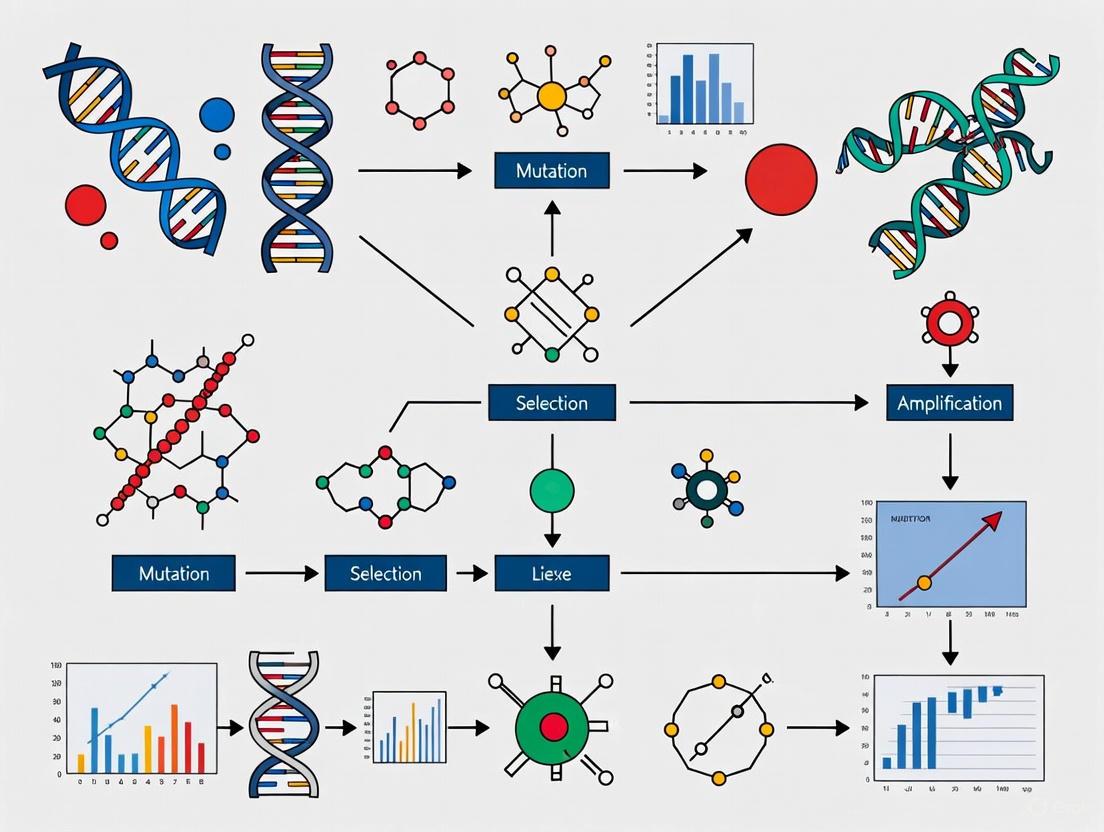
This article explores how directed evolution accelerates natural selection in laboratory settings to develop proteins and enzymes with enhanced functions for biomedical and therapeutic applications.
Directed Evolution: Mimicking Natural Selection in the Lab to Engineer Better Proteins and Drugs
Abstract
This article explores how directed evolution accelerates natural selection in laboratory settings to develop proteins and enzymes with enhanced functions for biomedical and therapeutic applications. It details the foundational principles of creating genetic diversity and selecting for desired traits, covering established methodologies like error-prone PCR and phage display alongside cutting-edge techniques such as CRISPR-based mutagenesis and active learning with machine learning. The content addresses common challenges and optimization strategies, validates the approach through comparative analysis with rational design, and provides insights for researchers and drug development professionals on implementing these powerful protein engineering tools.
The Principles of Artificial Selection: How Directed Evolution Harnesses Darwinian Principles
Directed evolution stands as a transformative methodology in protein engineering and synthetic biology, deliberately mimicking the principles of natural selection within a controlled laboratory environment. This technical guide delineates the core conceptual framework of directed evolution, drawing direct parallels to natural evolutionary processes. It provides a comprehensive examination of contemporary methodologies, detailed experimental protocols, and advanced applications, with a specific emphasis on drug development and therapeutic discovery. The document is structured to serve researchers and scientists by synthesizing current literature and presenting quantitative data, essential reagent toolkits, and standardized workflows to facilitate the design and execution of directed evolution campaigns.
Natural evolution operates on three fundamental principles: 1) the introduction of genetic variation, 2) selection of variants based on heritable phenotypic differences, and 3) the amplification of selected variants through reproduction [1]. Over millennia, this process has yielded an immense diversity of life and optimized biological molecules for specific functions.
Directed evolution (DE) harnesses this powerful Darwinian algorithm, condensing it into a practical and rapid laboratory technique [2] [3]. It enables the "breeding" of biomolecules, such as enzymes and antibodies, guiding them toward user-defined goals that may not be favored in natural environments [4] [3]. The success of this approach, recognized by the 2018 Nobel Prize in Chemistry, has revolutionized fields from industrial biocatalysis to the development of therapeutic proteins [1] [4].
Table 1: Core Principles - Natural Evolution vs. Directed Evolution
| Principle | Natural Evolution | Directed Evolution |
|---|---|---|
| Variation | Random mutations and genetic recombination in genomes. | Artificial mutagenesis of a target gene (e.g., error-prone PCR, DNA shuffling). |
| Selection | Environmental pressures determine survival and reproduction. | Application of artificial selection or screening for a desired function. |
| Amplification | Reproduction of selected organisms. | PCR or cellular replication of selected gene variants. |
| Time Scale | Thousands to millions of years. | Weeks to months in the laboratory. |
| Goal | Adaptation to a changing environment. | Achievement of a researcher-defined biochemical or biophysical property. |
The Directed Evolution Workflow: A Detailed Methodology
The standard directed evolution cycle is an iterative process comprising three critical stages: Diversification, Selection or Screening, and Amplification [1] [2] [4]. A generalized workflow is depicted in the diagram below.
Stage 1: Generating Diversity (Mutagenesis)
The first step involves creating a vast library of genetic variants from a starting gene. The methods chosen dictate the nature and quality of the library [2].
Table 2: Common Mutagenesis Methods in Directed Evolution
| Method | Principle | Key Advantage | Key Disadvantage |
|---|---|---|---|
| Error-Prone PCR [2] [4] | Uses reaction conditions that reduce the fidelity of DNA polymerase, introducing random point mutations. | Easy to perform; requires no prior structural knowledge. | Biased mutagenesis spectrum; limited sampling of sequence space. |
| DNA Shuffling [1] [2] | Fragments of homologous genes are reassembled randomly via PCR. | Recombines beneficial mutations from multiple parents. | Requires high sequence homology between parent genes. |
| Site-Saturation Mutagenesis [2] | All possible amino acid substitutions are introduced at one or more predefined residues. | Enables deep exploration of specific, functionally important positions. | Library size can become impractically large if many positions are targeted. |
| RAISE [2] | Random insertion and deletion of short sequences. | Mimics indels common in natural evolution. | Often introduces frameshifts, generating many non-functional proteins. |
Stage 2: Identifying Improved Variants (Selection and Screening)
This is the critical step that mimics natural selection. A high-throughput assay is essential to find the rare, beneficial variants within a large library [1].
- Selection: Couples the desired protein function directly to the survival or replication of the host organism (e.g., bacteria or phage). For example, an enzyme's activity can be linked to the production of an essential nutrient or the degradation of an antibiotic [1] [2]. Methods like Phage-Assisted Continuous Evolution (PACE) automate this process by linking protein function to the propagation of bacteriophages [5].
- Screening: Involves assaying individual clones from the library for the desired activity. While lower in throughput than selection, screening provides quantitative data on each variant [1]. Techniques include fluorescence-activated cell sorting (FACS), microtiter plate-based assays, and mass spectrometry [2] [4].
Stage 3: Amplification and Iteration
The genes encoding the top-performing variants are isolated and amplified, typically using PCR or by growing the host cells. This amplified genetic material then serves as the template for the next round of mutagenesis and selection, creating an iterative optimization loop [1] [4].
Advanced Platforms and Cutting-Edge Applications
Recent advancements have expanded the scope and efficiency of directed evolution. A prime example is the development of the GRAPE (Geminivirus Replicon-Assisted in Planta Directed Evolution) platform, which enables rapid evolution of genes directly in plant cells [6]. The workflow of this novel system is illustrated below.
Case Study: Evolving Bridge Recombinases for Gene Therapy
A compelling 2025 application of directed evolution aims to overcome limitations in CRISPR-based gene editing. The project focuses on evolving bridge recombinases—enzymes that use a bridge RNA (bRNA) to precisely insert large DNA fragments, such as healthy gene copies, without creating double-stranded breaks [5].
- Therapeutic Goal: Develop a universal gene replacement therapy for Alpha-1 Antitrypsin Deficiency (A1ATD) by inserting a healthy SERPINA1 gene into its natural genomic location [5].
- Directed Evolution Strategy: The team employs two sophisticated in vivo evolution systems:
- E. coli Orthogonal Replicon (EcORep): A system that uses a high-mutation-rate replicon within E. coli to continuously generate and enrich for recombinase variants with higher activity [5].
- Phage-Assisted Continuous Evolution (PACE): Links bridge recombinase activity directly to the propagation of bacteriophages, creating a continuous evolution system with minimal researcher intervention [5].
- Integration of Machine Learning: A computational screening method called deep mutational learning (DML) is used to analyze thousands of sequence variants and identify the most promising candidates for experimental testing, thereby accelerating the optimization process [5].
The Scientist's Toolkit: Essential Reagents and Platforms
Successful directed evolution experiments rely on a suite of specialized reagents and systems. The table below catalogs key solutions used in the field.
Table 3: Research Reagent Solutions for Directed Evolution
| Reagent / System Name | Function / Application | Key Feature |
|---|---|---|
| Kapa Biosystems Reagents [4] | PCR, qPCR, and NGS library preparation. | Utilizes novel DNA polymerases engineered via directed evolution for enhanced fidelity, processivity, and inhibitor resistance. |
| Error-Prone PCR Kits [2] [4] | Generation of random mutant libraries. | Pre-optimized buffer conditions to control mutation rate and spectrum. |
| Phage Display Systems [1] [2] | Selection of high-affinity binding proteins (e.g., antibodies, peptides). | Links the displayed protein to its genetic code, allowing for genotype-phenotype coupling. |
| PACE System [5] | Continuous evolution of proteins in bioreactors. | Automates the evolution cycle by linking protein function to phage replication, enabling evolution over hundreds of generations. |
| GRAPE Platform [6] | Directed evolution of genes directly in plants. | Uses geminivirus replicons to couple gene function to DNA replication, enabling rapid 4-day selection cycles in plant leaves. |
| OrthoRep System [2] [7] | Targeted in vivo mutagenesis in yeast. | An orthogonal DNA polymerase-plasmid pair that mutates only the target gene at a high rate within the host cell. |
Directed evolution has matured into an indispensable component of the modern molecular biology toolkit. By strategically applying the selective pressures of natural evolution in a controlled and accelerated laboratory setting, researchers can solve complex problems in protein engineering, metabolic engineering, and therapeutic development. The continued development of more efficient, scalable, and intelligent evolution platforms—such as GRAPE and PACE—coupled with machine learning, promises to further expand the boundaries of what is possible. This will undoubtedly lead to new breakthroughs in green chemistry, agriculture, and the creation of next-generation genetic medicines.
Directed evolution is one of the most powerful tools in protein engineering, functioning by harnessing the principles of natural evolution on a laboratory timescale [2]. This method enables the rapid selection of protein variants with properties that make them more suitable for specific applications, from industrial biocatalysts to therapeutic drugs [2] [8]. The process mimics the core mechanism of natural selection—variation, selection, and heredity—but under conditions directed by researchers to achieve predefined goals [1]. Since the pioneering in vitro evolution experiments performed by Sol Spiegelman in the 1960s, the field has diversified dramatically, incorporating a wide range of sophisticated techniques for genetic diversification and variant isolation [2] [9]. This whitepaper traces the historical foundation of directed evolution, detailing its core principles, methodologies, and its transformative impact on modern drug discovery and protein engineering.
Spiegelman's Monster: The Foundational Experiment
The origins of directed evolution can be traced back to a groundbreaking experiment in the 1960s by Sol Spiegelman and his team [9]. This experiment, often called "Spiegelman's Monster," demonstrated for the first time that biomolecules could be evolved in a test tube.
- Objective: To study RNA evolution under selective pressure for replication speed [9].
- Experimental System: The experiment used the replicase enzyme from the Qβ bacteriophage, which replicates the phage's RNA genome. Spiegelman introduced this enzyme into a test tube with the building blocks for RNA synthesis [9].
- Methodology: The initial RNA strand was replicated. After a period of replication, a sample of the resulting RNA population was transferred to a new tube with fresh reagents. This process was repeated iteratively across multiple generations [9].
- Outcome: Over time, the RNA molecules that could replicate the fastest were selectively favored. This resulted in the evolution of a highly optimized, minimal RNA genome of only 218 nucleotides—dubbed "Spiegelman's Monster"—that had lost its original biological function but was supremely adapted for rapid replication in the test tube environment [9].
This experiment established a critical precedent: Darwinian evolution could be reproduced and directed in a laboratory setting, setting the stage for the application of these principles to proteins.
Experimental Protocol: Spiegelman's In Vitro RNA Evolution
1. Reagent Setup:
- Qβ Replicase: Purified RNA-dependent RNA polymerase from the Qβ bacteriophage.
- NTPs Solution: Adenosine, Guanosine, Cytidine, and Uridine 5'-triphosphates (building blocks for RNA synthesis).
- Reaction Buffer: Provides optimal pH and ionic strength (e.g., Tris-HCl, MgCl₂, DTT).
- Template RNA: The native Qβ bacteriophage RNA genome.
2. Procedure:
- Step 1 - Initial Reaction: Combine the template RNA, Qβ replicase, NTPs, and reaction buffer in a test tube. Incubate at 37°C for a defined period to allow RNA replication.
- Step 2 - Serial Transfer: After incubation, take an aliquot of the reaction mixture and transfer it to a fresh tube containing all other components except the template RNA.
- Step 3 - Iteration: Repeat Step 2 multiple times, serially transferring an aliquot from one replication reaction to the next over dozens of generations.
- Step 4 - Analysis: Analyze the RNA products at different generational time points using gel electrophoresis to observe the reduction in genome size over time.
3. Key Outcome: The sequential transfers created a selective pressure where only the fastest-replicating RNA molecules could outcompete others. The final evolved RNA (the "Monster") was significantly shorter and replicated more efficiently than the starting template [9].
Core Principles: Mimicking Natural Selection in the Lab
Directed evolution in protein engineering formalizes Spiegelman's approach into a cyclical, iterative process with three defined steps, directly analogous to natural selection.
- Diversification (Creating Variation): A parent gene encoding the protein of interest is subjected to mutagenesis to create a vast library of genetic variants. This library represents the genetic diversity upon which selection can act [2] [1].
- Screening/Selection (Applying Selective Pressure): The library of protein variants is expressed and subjected to a high-throughput assay designed to identify individuals with improved or desired properties (e.g., higher stability, enzymatic activity, binding affinity) [2] [1].
- Amplification (Ensuring Heredity): The genes encoding the best-performing variants are isolated and amplified, typically using PCR or by replicating the host cells. This creates a new, enriched template for the next round of evolution [1].
The likelihood of success in a directed evolution experiment is directly related to the total library size, as screening more mutants increases the probability of finding a rare beneficial mutation [1].
Modern Methodologies in Directed Evolution
Library Generation Techniques
A variety of sophisticated methods have been developed to create genetic diversity, each with distinct advantages and applications.
Table 1: Key Methods for Genetic Diversification in Directed Evolution
| Method | Principle | Key Advantage | Key Disadvantage |
|---|---|---|---|
| Error-Prone PCR [2] | Uses PCR under conditions that introduce random point mutations across the whole gene. | Easy to perform; does not require prior knowledge of key positions. | Reduced sampling of mutagenesis space; mutagenesis bias. |
| DNA Shuffling [2] [1] | Fragments of homologous genes are reassembled randomly, creating chimeric proteins. | Recombines beneficial mutations from multiple parents. | Requires high sequence homology between parent genes. |
| Site-Saturation Mutagenesis [2] [1] | All possible amino acid substitutions are systematically introduced at one or more predefined positions. | In-depth exploration of chosen positions; enables smart library design. | Libraries can become very large; only a few positions are mutated. |
| RAISE [2] | Inserts random short insertions and deletions (indels) across the sequence. | Enables random indels, mimicking a broader range of natural mutations. | Can introduce frameshifts, leading to non-functional proteins. |
| SCRATCHY [2] | Combines two non-homologous genes through incremental truncation. | Allows recombination of sequences with no homology. | Gene length and reading frame are not always preserved. |
Screening and Selection Platforms
Isolating improved variants from a large library requires robust high-throughput methods.
Table 2: Prominent Screening and Selection Methodologies
| Method | Principle | Throughput | Best For |
|---|---|---|---|
| Phage/Yeast Display [2] [8] [1] | The protein variant is displayed on the surface of a phage or yeast cell, while its gene is inside. Binding to an immobilized target selects for high-affinity binders. | Very High (up to 1010) | Selecting antibodies, peptides, or other proteins based on binding affinity. |
| Fluorescence-Activated Cell Sorting (FACS) [2] | A fluorescent signal linked to protein function (e.g., enzymatic activity via a surrogate substrate) is used to sort single cells. | Very High (up to 108 variants/day) | Activities that can be coupled to a fluorescent readout. |
| Microtiter Plate Screening [2] | Variants are expressed in individual wells and assayed using colorimetric or fluorogenic assays. | Medium (103 - 104 variants) | Enzymatic assays where substrates or products have spectral properties. |
| mRNA Display [1] | The protein is covalently linked to its encoding mRNA molecule via puromycin, creating a direct genotype-phenotype link. | High (up to 1013 variants) | In vitro selection of peptides and proteins without cellular constraints. |
| In Vivo Selection [1] | Enzyme activity is coupled to cell survival, e.g., by enabling the synthesis of a vital metabolite or destroying a toxin. | Extremely High (limited only by transformation efficiency) | When protein function can be directly linked to host cell fitness. |
The Scientist's Toolkit: Essential Research Reagents
Table 3: Key Reagents and Materials for Directed Evolution Experiments
| Reagent / Material | Function in the Experiment |
|---|---|
| Parent Plasmid DNA | The vector containing the gene of interest to be evolved; the starting genetic template. |
| Oligonucleotide Primers | For PCR-based mutagenesis (error-prone PCR, saturation mutagenesis) and gene amplification. |
| Mutagenic Polymerase & Biased Nucleotides | Enzymes and nucleotide mixes used in error-prone PCR to introduce random mutations during amplification [2]. |
| E. coli or Yeast Strains | Workhorse host organisms for library transformation, protein expression, and in vivo selection. |
| Phage or Yeast Display System | A engineered virus (phage) or yeast strain designed to display protein variants on its surface for selection [1]. |
| Immobilized Target Antigen/Ligand | For display techniques; the target molecule is fixed to a solid support to capture binding variants [1]. |
| Fluorescent Substrate/Probe | A compound that yields a fluorescent product upon enzymatic reaction, enabling FACS-based screening [2]. |
| Microtiter Plates (96/384-well) | High-density plates for culturing and assaying thousands of individual variants in a screening campaign. |
| Next-Generation Sequencing (NGS) Platform | For deep analysis of library diversity and identifying enriched mutations after selection rounds. |
The Computational Revolution: AI and Biophysics in Protein Engineering
A significant modern shift is the integration of advanced computational tools with directed evolution, creating "semi-rational" approaches that accelerate the engineering cycle [10] [11].
Machine Learning and Protein Language Models (PLMs): Models like METL (Mutational Effect Transfer Learning) are pretrained on vast datasets of protein sequences and biophysical simulation data. They learn the fundamental relationships between protein sequence, structure, and energetics [10]. When fine-tuned on small sets of experimental data, these models can predict the effects of mutations with high accuracy, guiding the design of smarter, more focused libraries [10]. This is particularly powerful for generalizing from small training sets, a common challenge in protein engineering [10].
AlphaFold and Structure Prediction: The rise of highly accurate protein structure prediction tools, such as AlphaFold, has provided unprecedented structural insights [11]. Researchers can now use predicted structures to identify key regions for mutagenesis (e.g., active sites, binding interfaces) without requiring experimental structural determination, thereby informing more rational library design [11].
Applications in Drug Discovery and Therapeutic Development
Directed evolution has profoundly impacted biopharmaceuticals, enabling the development of highly specific and effective protein-based therapeutics [8] [12].
- Therapeutic Antibodies: Phage and yeast display technologies, for which George Smith and Gregory Winter received a Nobel Prize, are used to engineer monoclonal antibodies with ultra-high affinity (affinity maturation) and reduced immunogenicity [1] [12]. This has led to treatments for cancer, autoimmune diseases, and more.
- Enzyme Therapeutics: Enzymes can be evolved for enhanced stability in the bloodstream, altered substrate specificity, or reduced immunogenicity for use as therapeutic agents (e.g., enzyme replacement therapies) [8] [1].
- Optimized Biologics: Properties such as pharmacokinetics and pharmacodynamics can be tuned. For instance, site-specific mutagenesis in the Fc region of antibodies can increase circulation half-life by enhancing binding to the neonatal Fc receptor (FcRn) [12].
The journey from Spiegelman's Monster to today's AI-powered directed evolution platforms illustrates a powerful narrative in biotechnology. The core principle remains unchanged: applying selective pressure to populations of evolving molecules to solve complex problems. However, the methodologies have evolved from simple serial transfers of RNA to an integrated, sophisticated toolkit that combines the exploratory power of random mutagenesis with the predictive power of computational models. As these tools continue to advance, particularly with the integration of biophysical models and machine learning, the capacity to engineer novel proteins for therapeutics, industrial catalysis, and synthetic biology will expand further, solidifying directed evolution's role as a cornerstone of modern bioengineering.
Directed evolution serves as a powerful laboratory analogue of natural selection, accelerating the process of adaptation to evolve biomolecules with novel functions. This technical guide deconstructs the core cycle of directed evolution—genetic diversification, phenotype screening, and gene amplification—within the context of a broader thesis on how this methodology mimics natural selection in vitro. We provide a comprehensive overview of modern platforms, detailed experimental protocols, and a curated toolkit for researchers and drug development professionals, synthesizing the most recent advancements in the field.
Natural selection operates on heritable genetic variation that influences an organism's fitness. Directed evolution meticulously replicates this process in a controlled laboratory setting through iterative rounds of: 1) Genetic Diversification, which introduces mutations to create vast variant libraries; 2) Phenotype Screening, where high-throughput assays select for desired functional traits; and 3) Gene Amplification, which physically enriches the genetic material of superior performers for the next cycle [13] [14]. This recursive biomolecular evolution has become an indispensable tool for generating proteins, enzymes, and antibodies with enhanced properties for therapeutic and industrial applications [13].
The field has recently seen the development of platforms that integrate the core cycle with unprecedented speed and scale. The table below summarizes key quantitative metrics for two cutting-edge systems: GRAPE for plant cells and T7-ORACLE for bacterial systems.
Table 1: Comparison of Modern Directed Evolution Platforms
| Platform Feature | GRAPE (Geminivirus Replicon-Assisted in Planta Directed Evolution) | T7-ORACLE (Orthogonal T7 Replisome for Continuous Hypermutation) |
|---|---|---|
| Host System | Plant cells (Nicotiana benthamiana) | Escherichia coli |
| Core Mechanism | Geminivirus rolling circle replication (RCR) linked to gene function [15] | Orthogonal, error-prone T7 DNA polymerase [13] |
| Mutation Rate | Not explicitly quantified | 100,000 times higher than normal [13] |
| Cycle Duration | ~4 days per full selection cycle on a single leaf [15] | ~20 minutes (with each bacterial cell division) [13] |
| Key Demonstration | Evolution of NLR immune receptors (NRC3, Pikm-1) to recognize new pathogen effectors [15] | Evolution of TEM-1 β-lactamase to resist antibiotic levels 5,000x higher than wild-type [13] |
| Primary Advantage | Evolves plant-specific phenotypes directly in plant cells [15] | Ultra-fast, continuous evolution in a scalable, standard bacterial workflow [13] |
Detailed Experimental Protocols
Protocol for Optical Pooled Screening with In Situ Sequencing
This protocol enables high-content image-based screening of pooled genetic libraries by linking cell phenotype to genotype via in situ sequencing [16].
Day 1: Library Delivery and Cell Culture
- Lentiviral Transduction: Transduce a population of adherent cells (e.g., a cancer cell line) with a pooled lentiviral CRISPR library (e.g., CROP-seq vector) at a low Multiplicity of Infection (MOI) to ensure most cells receive a single viral integration.
- Selection and Expansion: Culture cells under appropriate selection (e.g., puromycin) for 3-5 days to eliminate untransduced cells and expand the library population.
- Phenotypic Assay: Perform the desired phenotypic assay, which may involve live-cell imaging, immunostaining, or response to environmental stimuli. Subsequently, fix cells with a paraformaldehyde-based fixative. A key optimization is to add glutaraldehyde post-fixation after reverse transcription of cDNA to improve sequencing read quality [16].
Day 2-3: In Situ Amplification
- Reverse Transcription: Generate cDNA from the barcode or sgRNA mRNA within the fixed cells.
- Padlock Probe Hybridization and Gap-Filling: Add padlock probes that are complementary to the target cDNA sequence. Carefully titrate the dNTP concentration in the gap-fill reaction to maximize efficiency, which improves the number and brightness of sequencing reads [16].
- Rolling Circle Amplification (RCA): Amplify the circularized padlock probes via RCA to create large, detectable DNA amplicons ("spots") at the site of the original mRNA.
Day 4: In Situ Sequencing and Imaging (~1.5 hours per cycle)
- Sequencing by Synthesis (SBS): Perform fluorescent in situ SBS. Each cycle involves the addition of fluorescently-labeled nucleotides, imaging, and cleavage.
- High-Throughput Imaging: Use a high-content microscope with 10x magnification to image the sequencing spots across multiple cycles. The provided image analysis pipeline, designed for cloud or cluster computing, then aligns phenotypic data to perturbation identities for each cell [16].
Protocol for GRAPE in Plant Cells
This platform enables directed evolution directly in plant cells by exploiting geminivirus replication [15].
- Library Construction: Mutagenize the gene of interest (GOI) in vitro and clone the variant library into an artificial geminivirus replicon vector.
- Plant Transformation: Deliver the replicon library into Nicotiana benthamiana leaves via Agrobacterium-mediated transfection.
- Selection via Replication Coupling: Inside the plant cells, the activity of the GOI variant is functionally coupled to the replication of the geminivirus replicon. Variants that promote replication are selectively amplified, while those that inhibit it are depleted.
- Harvest and Analysis: Recover the enriched replicon DNA from the plant tissue after a 4-day selection cycle. The DNA can be sequenced directly to identify beneficial mutations or re-cloned for subsequent iterative cycles [15].
Visualizing the Directed Evolution Workflow
The following diagram illustrates the core iterative cycle of directed evolution and the specific mechanisms of the GRAPE and T7-ORACLE platforms.
Diagram 1: Core cycle and platform mechanisms.
The Scientist's Toolkit: Essential Research Reagents
Successful execution of directed evolution campaigns relies on a suite of specialized reagents and tools. The following table details key components.
Table 2: Essential Research Reagent Solutions for Directed Evolution
| Reagent / Tool | Function / Description | Example Application |
|---|---|---|
| Barcoded Lentiviral Libraries | Programmable genetic perturbation vectors (e.g., CRISPR) that allow for pooled screening and genotype tracking via a unique barcode [16]. | Delivering a diverse set of genetic perturbations to a pooled population of cells for optical pooled screening. |
| Padlock Probes & In Situ Sequencing Kits | Reagents for amplifying and reading out nucleotide barcodes directly within fixed cells, linking genotype to cellular phenotype [16]. | Identifying which genetic perturbation is present in each cell during an image-based screen. |
| Artificial Geminivirus Replicon | A plant virus-based vector that undergoes rolling circle replication (RCR) in plant cells, used to link gene function to DNA amplification [15]. | Serving as the platform for variant library delivery and selection in the GRAPE system. |
| Orthogonal T7 Replisome | A synthetic DNA replication system derived from bacteriophage T7, engineered to be highly error-prone, which operates independently of the host genome [13]. | Driving continuous and rapid mutation of a target gene in E. coli without damaging the host cell's DNA. |
| Fluorescent Protein Reporters | Proteins whose fluorescence properties (intensity, color) can be quantitatively measured, serving as a selectable phenotype [14]. | Providing a high-throughput screenable output in evolution experiments, such as in tests of Ohno's hypothesis. |
The deliberate deconstruction of directed evolution into its fundamental phases—genetic diversification, phenotype screening, and gene amplification—reveals a powerful framework for mimicking natural selection in the laboratory. The advent of integrated platforms like GRAPE and T7-ORACLE, which dramatically accelerate this cycle, underscores the field's trajectory toward higher throughput, greater scalability, and more physiologically relevant contexts. By providing detailed protocols and a catalog of essential tools, this guide aims to empower researchers and drug developers to harness these methodologies, accelerating the discovery of novel proteins and therapeutic agents.
Protein engineering is a powerful biotechnological process that focuses on creating new enzymes or proteins and improving the functions of existing ones by manipulating their natural macromolecular architecture [17]. Within this field, two primary philosophies have emerged: directed evolution, which mimics natural selection in the laboratory, and rational design, which employs computational and structure-based approaches for precise modifications [1] [17]. These methodologies represent fundamentally different approaches to navigating the vast sequence space of proteins—directed evolution empirically explores functional variants through iterative selection, while rational design attempts to predict them through knowledge-driven computation.
The core distinction lies in their treatment of natural evolutionary principles. Directed evolution explicitly harnesses Darwinian principles of mutation, selection, and amplification in a controlled setting, steering proteins toward user-defined goals without requiring mechanistic understanding [1] [18]. In contrast, rational design adopts a more Lamarckian perspective, using intelligent design and prior knowledge to specify beneficial mutations [17]. This whitepaper examines these contrasting engineering philosophies, their methodological frameworks, experimental protocols, and emerging synergisms, providing researchers and drug development professionals with a comprehensive technical comparison.
Directed Evolution: Mimicking Natural Selection in the Laboratory
Philosophical and Mechanistic Principles
Directed evolution (DE) operates on the fundamental principle that natural evolutionary processes—variation, selection, and heredity—can be replicated and accelerated in a laboratory setting to achieve specific functional objectives [1]. This approach requires no prior knowledge of protein structure or mechanism, instead relying on the power of high-throughput screening to identify beneficial mutations from large variant libraries [1] [18]. The process mimics millions of years of natural evolution but condenses it into a practical timeframe through iterative rounds of genetic diversification and selection [2].
The theoretical foundation rests on three essential requirements, mirroring natural evolution: (1) variation between replicators, (2) fitness differences upon which selection acts, and (3) heritability of favorable variations [1]. In directed evolution, a single gene is evolved through iterative rounds of mutagenesis (creating a library of variants), selection or screening (isolating members with desired function), and amplification (generating a template for the next round) [1]. The likelihood of success is directly related to total library size, as evaluating more mutants increases the chances of finding one with improved properties [1].
Core Methodologies and Experimental Protocols
The directed evolution workflow follows a consistent iterative protocol, though specific techniques vary. A standard experimental cycle proceeds as follows:
Library Generation via Mutagenesis: Create genetic diversity through:
- Error-prone PCR: Random point mutations are introduced throughout the gene by adjusting PCR conditions to promote nucleotide misincorporation [1] [2].
- DNA Shuffling: Genes from homologous enzymes or beneficial mutants are fragmented with DNase I, then reassembled in a primer-free PCR-like reaction that recombines fragments into novel chimeric sequences [18].
- Site-saturation Mutagenesis: All possible amino acid substitutions are introduced at specific targeted positions [2].
Library Expression and Phenotypic Interrogation: Identify improved variants through:
- Screening: Each variant is individually expressed and assayed, often using colorimetric or fluorogenic substrates, then ranked by performance [1] [2]. This provides detailed information on each variant but typically has lower throughput than selection.
- Selection: Protein function is directly coupled to host survival or binding affinity, enabling extremely high-throughput isolation of functional variants from non-functional ones [1] [2].
Template Amplification: Genes from the best-performing variants are isolated and amplified to serve as templates for the next round of diversification [1].
This cycle repeats until the desired level of improvement is attained. The process can be performed in vivo (in living cells) or in vitro (in cell-free systems), with the latter often enabling larger library sizes due to bypassing cellular transformation bottlenecks [1].
Research Reagent Solutions Toolkit
Table 1: Essential Research Reagents for Directed Evolution
| Reagent/Category | Specific Examples | Function in Experimental Workflow |
|---|---|---|
| Mutagenesis Reagents | Error-prone PCR kits, DNase I, DNA polymerases | Introduces genetic diversity into the target gene to create variant libraries [1] [2]. |
| Cloning & Expression Systems | Expression vectors, competent cells (E. coli, yeast) | Enables propagation and expression of genetic variants to link genotype with phenotype [1]. |
| Screening Assays | Fluorogenic/colorimetric substrates, FACS | Identifies and isolates variants with improved properties from the library [1] [2]. |
| Selection Systems | Phage display, metabolic selection | Couples protein function to survival or binding for high-throughput variant isolation [1] [2]. |
Rational Protein Design: A Knowledge-Driven Approach
Philosophical and Mechanistic Principles
Rational protein design operates on the principle that detailed knowledge of protein structure, function, and mechanism enables precise, computational prediction of beneficial mutations [17]. This approach requires in-depth structural information (from X-ray crystallography or NMR) and understanding of catalytic mechanisms to make specific changes via site-directed mutagenesis [1] [17]. Unlike directed evolution's exploratory approach, rational design follows a deterministic model where researchers hypothesize specific structure-function relationships and test them through targeted modifications.
The core strength of rational design lies in its precision and efficiency—when successful, it can achieve significant functional improvements without requiring the screening of large libraries [17]. However, a significant limitation is the difficulty in accurately predicting sequence-structure-function relationships, particularly at the single amino acid level, as the structural and dynamic consequences of mutations remain challenging to model [17] [2]. This approach traditionally required extensive structural knowledge, though artificial intelligence has substantially improved protein structure prediction capabilities in recent years [17].
Core Methodologies and Experimental Protocols
Rational design employs a more linear workflow compared to the iterative cycling of directed evolution:
Structural and Sequence Analysis:
- Obtain high-resolution 3D structure of the target protein through crystallography, NMR, or computational prediction (AlphaFold, RoseTTAFold) [17].
- Identify key functional regions (active site, binding interfaces, flexible loops) and residues through structural analysis and multiple sequence alignments [19].
Computational Modeling and In Silico Design:
- Use molecular modeling software (Rosetta, FoldX) to predict the energetic effects of proposed mutations on protein stability and function [19] [20].
- Apply quantum mechanics/molecular mechanics (QM/MM) calculations to model catalytic mechanisms and transition states [19].
- Generate a limited set of candidate variants predicted to improve the target property.
Experimental Validation:
- Construct top-predicted variants using site-directed mutagenesis.
- Express and purify protein variants.
- Characterize biochemical and biophysical properties to test design hypotheses.
Recent advances incorporate machine learning and generative models to expand the capabilities of rational design. For instance, the Omni-Directional Multipoint Mutagenesis (ODM) pipeline uses a fine-tuned protein BERT model to generate and rank mutant sequences, enabling multipoint mutation design with high accuracy in recovering functional regions [21]. Another emerging approach uses deep generative models to learn "nature's blueprint" for protein design, creating synthetic proteins with elevated or novel properties through a computational-experimental feedback loop [22].
Comparative Analysis: Performance and Applications
Quantitative Comparison of Engineering Outcomes
Table 2: Comparative Analysis of Directed Evolution vs. Rational Design
| Parameter | Directed Evolution | Rational Design |
|---|---|---|
| Philosophical Basis | Darwinian/exploratory [1] [18] | Lamarckian/knowledge-driven [17] |
| Knowledge Requirements | Low (no structural/mechanistic knowledge needed) [1] | High (requires detailed structural/functional knowledge) [1] [17] |
| Library Size | Very large (10³-10¹⁵ variants) [1] | Small (often <10 variants) [19] [17] |
| Success Rate | High with adequate screening [1] | Variable; depends on prediction accuracy [17] [20] |
| Stabilization Achieved | ~3.1 ± 1.9 kcal/mol (location-agnostic) [20] | ~2.0 ± 1.4 kcal/mol (structure-based) [20] |
| Primary Limitations | Requires high-throughput assay; can get stuck in local optima [1] [23] | Difficult to predict mutation effects; limited by current knowledge [1] [17] |
| Ideal Applications | Improving stability in harsh conditions, altering substrate specificity, optimizing binding affinity [1] [18] | Engineering catalytic machinery, designing protein-protein interactions, creating de novo functions [19] [17] |
A side-by-side comparison of stabilization strategies for α/β-hydrolase fold enzymes reveals that location-agnostic directed evolution approaches (e.g., error-prone PCR) yielded the highest stabilization increases (average 3.1 ± 1.9 kcal/mol), followed by structure-based approaches (2.0 ± 1.4 kcal/mol) and sequence-based consensus approaches (1.2 ± 0.5 kcal/mol) [20]. This performance ranking held even when normalizing for the number of substitutions, suggesting that empirical exploration can identify cooperative stabilizing effects that are difficult to predict computationally [20].
Application-Specific Considerations
The choice between directed evolution and rational design often depends on the specific engineering goal and available resources. Directed evolution has proven particularly successful for: improving protein stability under harsh industrial conditions (e.g., thermostability, solvent tolerance) [1] [18]; altering substrate specificity [1]; and enhancing binding affinity of therapeutic antibodies [1]. Notable successes include the evolution of subtilisin E for 256-fold higher activity in dimethylformamide [18] and β-lactamase variants conferring 32,000-fold increased antibiotic resistance [18].
Rational design excels when precise structural modifications are required, such as: engineering catalytic residues to alter reaction specificity [19]; designing protein-protein interactions; and de novo protein design [19] [17]. Successes include the computational design of a stereoselective Diels-Alderase [19] and the creation of functional models of nitric oxide reductase in myoglobin [19].
Emerging Paradigms: Integrated and Machine Learning-Enhanced Approaches
Semi-Rational Design and Machine Learning Integration
The historical dichotomy between directed evolution and rational design is increasingly bridged by hybrid approaches that leverage the strengths of both philosophies. Semi-rational design utilizes computational and bioinformatic analysis to identify promising target regions, then creates focused libraries that are much smaller than traditional directed evolution libraries but enriched in functional variants [19] [17]. These approaches use evolutionary information from multiple sequence alignments, phylogenetic analysis, and structural constraints to preselect target sites and limited amino acid diversity [19].
Machine learning has dramatically enhanced both directed evolution and rational design. Active Learning-assisted Directed Evolution (ALDE) employs iterative machine learning with uncertainty quantification to explore protein sequence space more efficiently than traditional DE, particularly for challenging landscapes with epistatic interactions [23]. In one application to optimize a non-native cyclopropanation reaction, ALDE improved product yield from 12% to 93% in just three rounds while exploring only ~0.01% of the design space [23]. Similarly, generative models like ProteinBERT are being used to create omni-directional mutagenesis pipelines that can generate and rank thousands of mutant sequences in silico before experimental testing [21].
Autonomous Protein Engineering Systems
Fully integrated platforms are emerging that combine AI-driven design with automated experimental workflows. The Self-driving Autonomous Machines for Protein Landscape Exploration (SAMPLE) platform uses AI programs to learn protein sequence-function relationships and design new proteins, with a robotic system automatically performing experiments to test designs and provide feedback [17]. These systems represent the cutting edge of protein engineering, potentially accelerating the design-build-test cycle beyond human capabilities.
Directed evolution and rational design represent complementary philosophies for protein engineering, each with distinct strengths, limitations, and ideal applications. Directed evolution excels through its empirical exploration of sequence space and ability to identify beneficial mutations without requiring mechanistic understanding, directly mimicking natural selection principles in a accelerated timeframe. Rational design offers precision and efficiency when sufficient structural and mechanistic knowledge exists to make informed predictions. The future of protein engineering lies not in choosing between these approaches, but in developing integrated strategies that leverage the exploratory power of directed evolution with the predictive capabilities of rational design, increasingly enhanced by machine learning and automation. As these methodologies continue to converge and advance, they promise to unlock new possibilities in therapeutic development, industrial biocatalysis, and fundamental biological research.
The Protein Engineer's Toolkit: Methods and Real-World Applications in Biomedicine
Directed evolution harnesses the principles of Darwinian evolution—iterative cycles of genetic diversification and selection—within a laboratory setting to tailor proteins for specific, human-defined applications. [24] This process compresses geological timescales into weeks or months by intentionally accelerating the rate of mutation and applying a user-defined selection pressure. [24] The profound impact of this approach was formally recognized with the 2018 Nobel Prize in Chemistry awarded to Frances H. Arnold for her pioneering work. [24]
A key strategic advantage of directed evolution lies in its capacity to deliver robust solutions without requiring detailed a priori knowledge of a protein's three-dimensional structure or its catalytic mechanism. [24] This allows it to bypass the inherent limitations of rational design. The process functions as a two-part iterative engine: first, the generation of genetic diversity to create a library of protein variants, and second, the application of a high-throughput screen or selection to identify the rare improved variants. [24] The success of any directed evolution campaign hinges on the quality of the initial library and the power of the screening method. [24]
This technical guide provides a detailed examination of the core techniques for generating genetic diversity, with a focus on established methods like error-prone PCR, DNA shuffling, and saturation mutagenesis, and explores how modern CRISPR-based tools are further enhancing these capabilities.
Foundational Techniques for Library Generation
The creation of a diverse library of gene variants is the foundational step that defines the boundaries of the explorable sequence space. [24] Several methods have been developed, each with distinct advantages, limitations, and inherent biases that shape evolutionary trajectories.
Error-Prone PCR (epPCR)
Error-prone PCR (epPCR) is a widely utilized biological mutagenesis technique for generating DNA mutations during protein evolution. [25] This method exploits the inherent error-prone nature of Taq DNA polymerase in the presence of manganese ions (Mn2+), which reduces the enzyme's fidelity and leads to base mutations during PCR amplification. [25]
- Mechanism: The technique is a modified PCR that intentionally reduces fidelity. This is typically achieved by using a polymerase that lacks proofreading activity, creating an imbalance in dNTP concentrations, and adding manganese ions (Mn2+). [24] The concentration of Mn2+ can be tuned to achieve a mutation rate of 1–5 base mutations per kilobase. [24]
- Inherent Bias: epPCR is not truly random. DNA polymerases have an intrinsic bias that favors transition mutations (purine-to-purine or pyrimidine-to-pyrimidine) over transversion mutations (purine-to-pyrimidine or vice-versa). Due to the degeneracy of the genetic code, this means epPCR can only access an average of 5–6 of the 19 possible alternative amino acids at any given position. [24]
- Limitations: A significant drawback is that relatively low mutation efficiency often requires multiple rounds of mutagenesis to achieve a diverse array of mutation types, which can be time-consuming. [25] Furthermore, excessive Mn2+ can significantly impede PCR amplification efficiency, resulting in low yields. [25]
DNA Shuffling
DNA Shuffling, also known as "sexual PCR," was pioneered by Willem P. C. Stemmer to overcome the limitations of point mutagenesis and more closely mimic the power of natural sexual recombination. [24] This technique allows for the combination of beneficial mutations from multiple parent genes into a single, improved offspring. [24]
- Mechanism: In this method, one or more related parent genes are randomly fragmented using DNaseI. These small fragments are then reassembled in a PCR reaction without primers. During annealing, homologous fragments from different parental templates can prime each other, resulting in crossovers that shuffle genetic information. [24]
- Family Shuffling: An extension of this concept uses homologous genes from different species. By drawing from nature's standing variation, family shuffling provides access to a broader and more functionally relevant region of sequence space. [24]
- Limitations: The requirement for sequence homology is a primary limitation. Parental genes typically need at least 70–75% sequence identity for efficient reassembly. Crossovers also tend to occur more frequently in regions of high sequence identity. [24]
Saturation Mutagenesis
As a semi-rational alternative to random approaches, saturation mutagenesis targets specific regions or residues within a protein. [24] This is often employed when structural or functional information is available, allowing for the creation of smaller, higher-quality libraries. [24]
- Mechanism: This technique is used to comprehensively explore the functional importance of one or a few amino acid positions. At the target codon, a library is created that encodes for all 19 other possible amino acids. [24] This allows for a deep, unbiased interrogation of a residue's role. [24]
- Application: This approach is highly effective for targeting "hotspots" identified from a prior round of random mutagenesis or predicted from a structural model. It dramatically increases the efficiency of directed evolution by reducing library size and increasing the frequency of beneficial variants. [24]
Table 1: Quantitative Comparison of Library Generation Techniques
| Technique | Mutational Diversity | Typical Mutation Rate | Key Advantage | Primary Limitation |
|---|---|---|---|---|
| Error-Prone PCR (epPCR) | Primarily transition mutations (CT, AG) [24] | 1-5 mutations/kb [24] | Simple, applicable to any gene | Limited amino acid substitution space (5.6 on average) [24] |
| DNA Shuffling | Recombination of existing mutations; crossovers | N/A (depends on parents) | Combines beneficial mutations from multiple genes | Requires high sequence homology (>70-75%) [24] |
| Saturation Mutagenesis | All 19 amino acids at targeted positions [24] | Focused on specific codons | Comprehensive exploration of specific sites | Requires prior knowledge to identify key residues |
| DRM (Deaminase-driven) | C-to-T, G-to-A, A-to-G, T-to-C [25] | 14.6x higher frequency than epPCR [25] | High mutation frequency in a single round | Limited to specific transition mutations |
| EvolvR | All four nucleotides (all 12 possible substitutions) [26] | Tunable window of at least 40 bp [26] | Access to transversion mutations in genomic DNA | Performance varies with gRNA sequence [26] |
Advanced and Emerging Techniques
Recent research has focused on developing novel methods that overcome the limitations of traditional techniques, offering higher mutation frequencies, broader mutational diversity, and the ability to operate directly on chromosomal DNA.
Deaminase-Driven Random Mutation (DRM)
To address the low mutation efficiency of epPCR, researchers have developed a novel DNA mutagenesis strategy termed deaminase-driven random mutation (DRM). [25]
- Mechanism: DRM utilizes an engineered cytidine deaminase (A3A-RL) and an engineered adenosine deaminase (ABE8e) to introduce a broad spectrum of mutations, including C-to-T, G-to-A, A-to-G, and T-to-C, in both DNA strands. [25]
- Performance: This approach enables the generation of a multitude of DNA mutation types within a single round. Results show that the DRM strategy exhibits a 14.6-fold higher DNA mutation frequency and produces a 27.7-fold greater diversity of mutation types compared to epPCR. [25]
CRISPR-Guided Diversification
The advent of CRISPR technology has significantly advanced the field by enabling precise and efficient gene targeting directly on chromosomes. [27] [28] CRISPR-based methods can be categorized into two distinct mechanistic paradigms: double-strand break (DSB)-dependent and DSB-independent systems. [27]
- DSB-Dependent (CRISPR-HDR): This method uses Cas9 to create a DSB at a target locus, which is then repaired using a library of mutagenic donor DNA templates via Homology-Directed Repair (HDR). [28] This allows for the integration of user-defined variant libraries into the genome. [28]
- DSB-Independent (Base Editing & EvolvR): These systems fuse a catalytically impaired Cas9 (dCas9 or nCas9) to mutagenic proteins. For example, fusing a nickase to an error-prone DNA polymerase creates a tool like EvolvR. [26] Unlike deaminases, which are limited to transition mutations, EvolvR can generate both transition and transversion mutations throughout a mutation window of at least 40 base pairs, enabling access to a much wider diversity of missense mutations. [26]
Figure 1: Workflow of Library Generation Techniques. Traditional methods (green) are complemented by modern CRISPR-based and enzymatic methods (red) to create diverse variant libraries (blue).
Experimental Protocols
Standard Error-Prone PCR Protocol
A typical epPCR protocol aims for a mutation rate of 1–5 mutations per kilobase. [24]
- Template: 1 ng of plasmid DNA containing the gene of interest.
- Primers: Forward and reverse primers (10 µM each) flanking the gene.
- Reaction Mix:
- 25 µL of 2x high-fidelity master mix (lacking proofreading).
- Imbalanced dNTPs (e.g., higher dCTP and dTTP).
- 0.5 mM MnCl₂ (concentration can be adjusted to tune error rate). [24]
- Add primers and template, then bring to 50 µL with nuclease-free water.
- PCR Cycling Conditions:
- Initial Denaturation: 95°C for 3 min.
- 30 cycles of:
- Denaturation: 95°C for 30 sec.
- Annealing: 65°C for 30 sec.
- Extension: 68°C for 30 sec/kb.
- Final Extension: 68°C for 10 min. [25]
- Post-Processing: Analyze the PCR product by agarose gel electrophoresis and purify using a gel extraction kit. [25]
DNA Shuffling Protocol
- Fragmentation: Digest 1-2 µg of the parent DNA(s) with DNase I in the presence of Mn2+ to generate random fragments of 100-300 bp. [24]
- Purification: Gel-purify the fragments of the desired size.
- Reassembly PCR:
- Combine fragments without added primers.
- Use a thermocycler program with cycles of denaturation (95°C for 1 min), annealing (55-60°C for 1 min), and extension (72°C for 1-2 min) to allow fragments to prime each other. [24]
- Run for 40-60 cycles.
- Amplification: Use the reassembled product as a template for a standard PCR with outer primers to amplify the full-length, shuffled genes. [24]
Table 2: Research Reagent Solutions for Library Generation
| Reagent / Tool | Function / Description | Example Use Case |
|---|---|---|
| Taq DNA Polymerase | Low-fidelity polymerase used for error-prone PCR. | Introducing random point mutations across a gene in the presence of Mn²⁺. [25] [24] |
| KAPA HiFi DNA Polymerase | An engineered, high-fidelity polymerase developed via directed evolution. [29] | Amplifying mutant libraries with high accuracy and yield for NGS library preparation. [29] |
| DNase I | Enzyme that cleaves DNA to generate random fragments. | Creating small DNA fragments for the initial step of DNA shuffling. [24] |
| A3A-RL & ABE8e Deaminases | Engineered cytidine and adenosine deaminases for in vitro mutagenesis. | DRM strategy for high-frequency C-to-T and A-to-G mutagenesis. [25] |
| nCas9-PolI3M/5M (EvolvR) | Fusion protein of a Cas9 nickase and an error-prone DNA polymerase. | Targeted in vivo diversification of genomic loci with all 12 possible substitutions. [26] |
| sgRNA Library | Library of single-guide RNAs targeting different genomic sites. | Directing CRISPR-based diversifiers (like EvolvR or base editors) to multiple locations in a gene or genome. [26] [28] |
The toolbox for generating diversity in directed evolution has expanded significantly from its foundational methods. While error-prone PCR, DNA shuffling, and saturation mutagenesis remain critically important, they each possess inherent limitations in mutational scope and efficiency. The field is now being transformed by new technologies that more comprehensively mimic natural mutation. Techniques like DRM offer dramatically higher mutation frequencies, while CRISPR-guided systems like EvolvR break the constraint of transition-only mutations by enabling all 12 possible base substitutions directly in the chromosome. [25] [26] This progression towards more powerful, targeted, and diverse library generation methods continues to accelerate the exploration of protein fitness landscapes, enabling researchers to more efficiently discover novel enzymes, therapeutics, and biomaterials.
Directed evolution (DE) is a powerful protein engineering method that mimics the process of natural selection in a laboratory setting to steer proteins, nucleic acids, or entire organisms toward a user-defined goal [1] [18]. It operates on the fundamental principles of evolution: variation, selection, and heredity [1] [30]. In nature, random genetic mutations create diversity in a population. Environmental pressures then select for individuals with beneficial traits that enhance survival and reproduction, ensuring these advantageous traits are passed to the next generation.
The laboratory process of directed evolution mirrors this natural cycle through iterative rounds of:
- Diversification: Creating a library of genetic variants.
- Selection or Screening: Identifying variants with desired properties.
- Amplification: Replicating the best variants to serve as templates for the next round [1] [18].
The critical step that determines the success of any directed evolution campaign is the ability to efficiently identify the rare, improved "winners" from a vast pool of variants. This is where high-throughput screening and selection methods become indispensable [1] [31]. This guide provides an in-depth technical examination of the core high-throughput methods—including Phage Display, Fluorescence-Activated Cell Sorting (FACS), and other emerging techniques—used to isolate these winners, thereby accelerating the engineering of biological molecules for research, industrial, and therapeutic applications.
High-Throughput Screening and Selection: Core Principles
In directed evolution, a high-throughput assay is vital for finding the rare variants with beneficial mutations amid a library where the majority of mutations are deleterious [1]. The terms "screening" and "selection" refer to distinct, yet complementary, approaches for this identification.
- Screening involves individually assaying each variant from a library to quantitatively measure its activity (e.g., using a colorimetric or fluorogenic reaction) [1]. The variants are then ranked based on their performance, and the experimenter decides which ones to proceed with. Screening provides detailed information on every tested variant, allowing for the characterization of the activity distribution across the library [1].
- Selection directly couples the desired protein function to the survival or physical isolation of the host organism or the gene itself. For example, an enzyme's activity can be made essential for cell survival by enabling it to synthesize a vital metabolite or destroy a toxin [1]. Selection methods are typically limited only by the transformation efficiency of cells, allowing for the evaluation of extremely large libraries (up to 10^15 variants in in vitro systems) [1]. They are less expensive and labor-intensive than screening but can be more challenging to engineer and may provide less granular data on library performance [1].
A key enabler for both approaches, especially screening, is High-Throughput Screening (HTS) technology. HTS is a method for scientific discovery that uses robotics, data processing software, liquid handling devices, and sensitive detectors to quickly conduct millions of chemical, genetic, or pharmacological tests [32]. The process is built around microtiter plates (with 96, 384, 1536, or more wells) and integrated robotic systems that automate the plate handling, reagent addition, incubation, and final readout steps [32].
The Scientist's Toolkit: Essential Reagents and Materials for HTS
Table 1: Key research reagent solutions and materials used in high-throughput screening and selection workflows.
| Item | Function/Description | Application Example |
|---|---|---|
| Microtiter Plates | Disposable plastic plates with a grid of wells (96, 384, 1536); the primary labware for HTS. | Used in all HTS phases for assay execution [32]. |
| Liquid Handling Robots | Automated systems for precise transfer of nanoliter to microliter volumes of liquids (samples, reagents). | Assay plate preparation from stock plates; reagent addition [32]. |
| Cell Sorters (e.g., FACS) | Instruments that automatically sort cells or other microscopic particles based on specific fluorescent labels. | Isolation of cells displaying binding antibodies or enzymes from a library [33]. |
| Phage Display Libraries | Libraries of bacteriophages (e.g., M13) genetically engineered to display proteins/peptides (e.g., antibody ScFvs) on their surface. | Selection of antibodies against cell-surface targets like CCR5 [33]. |
| Fluorescent Dyes (e.g., PrestoBlue, PI) | Reagents that produce a colorimetric or fluorogenic signal in response to biological activity (e.g., cell viability, enzymatic activity). | PrestoBlue for cell viability in outgrowth assays; Propidium Iodide (PI) for dead cell staining [34]. |
| 96-Pin Replicators | Tools for simultaneous transfer of small liquid volumes (∼1 µL) between well plates. | Transfer of phage lysates during enrichment steps in high-throughput phage isolation [35]. |
Key Methodologies and Experimental Protocols
Phage Display with FACS Screening
Phage display is a foundational selection technology where a library of proteins or peptides is displayed on the surface of bacteriophages, physically linking the protein (phenotype) to its genetic code (genotype) [1] [18]. This linkage allows for the affinity-based selection of binders. When combined with FACS, it becomes a powerful tool for isolating binders to complex cellular targets.
- Principle: A phage library is incubated with a mixed population of target cells (e.g., cells expressing a protein of interest) and control cells (not expressing it). Phages binding to common surface antigens are removed by the control cells, while specific binders attach to the target cells. FACS then quantitatively sorts single cells (with bound phages) based on fluorescent labeling, enabling the isolation of highly specific binders [33].
- Experimental Protocol for Isolating Anti-CCR5 Antibodies [33]:
- Cell Preparation: Generate a target cell line (e.g., 3T3.T4.CCR5-GFP) expressing the membrane protein of interest (CCR5) and an intracellular fluorescent marker (GFP). A control cell line is otherwise identical but does not express the target.
- Negative Selection (Pre-clearing): Incubate the pooled human ScFv phage display library (e.g., Metha1 and Metha2) with an excess of control cells to remove phages that bind nonspecifically to common cell surface molecules.
- Positive Selection: Incubate the pre-cleared phage library with the target cell population (CCR5+ GFP+).
- Flow Cytometry Sorting: Use a FACS sorter (e.g., FACSAria) to isolate single GFP-positive target cells that have bound phages on their surface. The GFP signal identifies the target cells.
- Phage Elution and Amplification: Recover the bound phages from the sorted cells, typically by a low-pH elution. Infect E. coli cells (e.g., TG1 strain) with the eluted phages to amplify the selected pool.
- Iteration: Repeat steps 2-5 for 3-4 rounds to enrich for specific high-affinity binders.
- Characterization: After the final round, isolate single clones, and characterize the displayed ScFv antibodies for specificity and affinity. Promising candidates can be converted to full-length IgG.
Figure 1: Workflow for isolating specific binders using phage display combined with FACS screening. The process involves pre-clearing against control cells to remove non-specific phages, positive selection on target cells, and FACS-based isolation to recover specific clones.
High-Throughput Phage Isolation (HiTS)
While phage display often focuses on engineering known proteins, there is also a need to rapidly isolate novel, natural phages for therapy or biocontrol. The HiTS method is a high-throughput process for enriching and isolating distinct phages from hundreds of environmental samples simultaneously.
- Principle: The method organizes and upscales traditional enrichment and soft-agar overlay techniques into a 96-well plate format, using a 96-pin replicator for efficient liquid transfer. It selects for lytic, culturable phages from a large number of samples in a short time [35].
- Experimental Protocol [35]:
- Day 1: Phage Amplification: Distribute up to 94 environmental samples (≤1.5 mL) in a deep-well plate. To each well, add CaCl₂, MgCl₂, host medium, and an overnight host culture (e.g., E. coli, Salmonella). Incubate overnight on a shaker.
- Day 2: Liquid Purification: Filter the culture through a 0.45 μm filter plate to remove host bacteria, collecting the filtrate (containing phages) in a new plate. Prepare a second plate with fresh medium, host culture, and salts. Use a 96-pin replicator to transfer ∼1 μL of each filtrate to this new plate for a second overnight incubation.
- Day 3: Spot Test: Filter the second culture. Spot the filtrates onto two large soft-agar overlay plates seeded with the host bacteria. Incubate to allow plaque formation.
- Day 4: Phage Collection and Sequencing: Pick individual plaques for further purification or proceed directly to sequencing of the phage DNA (e.g., by Direct Plaque Sequencing).
Quantitative High-Throughput Screening (qHTS) in Directed Evolution
Screening is the alternative to selection. qHTS is an advanced HTS paradigm that generates full concentration-response curves for each compound or variant in a library, providing rich datasets for analysis.
- Principle: Instead of testing a single concentration, qHTS assays each library member across a range of concentrations in an automated, miniaturized format. This allows for the determination of parameters like EC₅₀, maximal response, and Hill coefficient for the entire library, enabling a more robust assessment of activity and the early establishment of structure-activity relationships (SAR) [32].
- Application in Enzyme Evolution: While classical screening uses a proxy substrate to indicate activity, qHTS can be applied to screen for improved enzyme properties. For instance, to evolve a lignin-degrading enzyme, a researcher could use a two-step HTS process [36]:
- Primary Screening: Screen a large library of microbial consortia or enzyme variants in a 96-well plate format with a liquid culture-based assay. Use a quantitative enzyme assay (e.g., for laccase activity) to identify the top performers.
- Secondary Screening and Characterization: Take the hits from the primary screen and characterize them further for multiple related enzyme activities (e.g., laccase, xylanase, and β-glucanase activities) to identify the most promising and versatile candidates.
Table 2: Comparison of high-throughput screening and selection methods in directed evolution.
| Method | Principle | Typical Library Size | Throughput | Key Applications | Advantages | Limitations |
|---|---|---|---|---|---|---|
| Phage Display with FACS | Binding to target cells followed by fluorescence-based sorting. | 10^10 - 10^11 [33] | 10^7 - 10^8 events per hour (FACS dependent) | Selecting antibodies against cell-surface proteins (e.g., GPCRs) [33]. | High specificity; direct selection on native cell-surface targets. | Requires a fluorescent label; equipment is expensive. |
| In vitro Selection (e.g., mRNA Display) | Covalent genotype-phenotype link; selection in vitro. | Up to 10^15 [1] [31] | Limited by selection steps, not transformation | Evolving protein/peptide binders and catalysts; incorporating unnatural amino acids [31]. | Largest possible library sizes; versatile selection conditions. | No cellular amplification; can be technically complex to establish. |
| Microtiter Plate-Based HTS | Individual assay of each variant in multi-well plates. | 10^4 - 10^6 [1] | 10^3 - 10^5 variants per day | Screening enzyme variants for improved activity, stability, or specificity [1] [36]. | Provides quantitative data on every variant; highly adaptable. | Lower throughput than selection; requires a good assay. |
| Quantitative HTS (qHTS) | Assaying each variant at multiple concentrations. | 10^4 - 10^5 | 10^3 - 10^4 concentration curves per day | Detailed pharmacological profiling of enzyme variants or inhibitors [32]. | Generates rich data (EC₅₀, efficacy); reduces false positives/negatives. | Even lower throughput per variant; complex data analysis. |
High-throughput screening and selection methods are the critical engines that drive successful directed evolution experiments, directly enabling the "survival of the fittest" principle in a laboratory context. Methods like phage display coupled with FACS allow for the precise isolation of binders against complex, native targets, while advanced HTS and qHTS platforms enable the quantitative ranking of enzyme variants for detailed functional improvements. The choice of method is dictated by the experimental goal, the desired library size, and the available assay technology. As these methodologies continue to advance—becoming faster, more sensitive, and more integrated with automation and data analysis—they will further accelerate our ability to engineer biological molecules with novel and enhanced functions, bridging the gap between natural evolutionary principles and human-designed objectives.
The cytochrome P450 (CYP) enzyme superfamily represents one of nature's most remarkable evolutionary success stories, with members found across all biological domains that catalyze oxidative reactions with extraordinary regio- and stereoselectivity under mild conditions [37]. These heme-containing monooxygenases have evolved in nature to perform critical functions ranging from detoxification to the biosynthesis of complex natural products [38]. The catalytic versatility of P450s, combined with their relaxed substrate specificity, makes them ideal candidates for repurposing in industrial biocatalysis, particularly for pharmaceutical synthesis where selective C-H functionalization remains a formidable challenge [37].
This case study examines how directed evolution strategically mimics natural evolutionary processes in laboratory settings to optimize P450 enzymes for novel biocatalytic applications. While natural evolution operates through random mutation and selective pressures over geological timescales, directed evolution accelerates this process by applying gene mutagenesis and high-throughput screening to achieve desired enzymatic properties within weeks [39]. The parallel between these processes is profound: both leverage sequence diversity and functional selection to solve complex biochemical challenges, with directed evolution offering the distinct advantage of targeted intentionality [40].
Evolutionary Principles in Natural P450 Diversity
Molecular Drivers of P450 Evolution in Nature
Natural P450 diversity has primarily been generated through gene duplication events followed by functional divergence, operating under a birth-and-death evolution model [41]. In this process, duplicated genes undergo neofunctionalization (acquiring novel functions) or subfunctionalization (partitioning ancestral functions between paralogs) [42]. The CYP superfamily exhibits particularly rapid evolution in response to ecological pressures, as evidenced by the expanded CYPomes in herbivorous insects and their host plants—a clear molecular arms race [41].
A compelling example of natural P450 evolution is documented in the Brassicales plant order, where a CYP98A3 retrogene emerged in a common ancestor and subsequently underwent tandem duplication, giving rise to CYP98A8 and CYP98A9 [42]. This duplication led to initial functional overlap followed by subfunctionalization, where ancestral activities partitioned between paralogs, and eventually neofunctionalization through the acquisition of novel substrate specificities [42]. This evolutionary trajectory mirrors the stepwise optimization achieved through laboratory directed evolution campaigns.
Structural Conservation Amid Sequence Divergence
Despite remarkable sequence divergence among P450 families, these enzymes maintain a conserved structural fold with a heme-binding domain that facilitates oxygen activation and catalysis [43] [38]. This structural conservation amid sequence variation enables phylogenetic analysis using physicochemical properties and structural alignment techniques, revealing evolutionary relationships that are obscured at the sequence level alone [43]. The interplay between structural constraint and functional plasticity makes P450s ideal systems for engineering, as their fundamental catalytic machinery remains intact while substrate recognition elements can be readily modified.
Directed Evolution Methodologies for P450 Optimization
Experimental Workflows for Laboratory Evolution
Directed evolution applies iterative cycles of mutagenesis and screening to enhance enzyme properties, mimicking natural selection's explore-and-exploit strategy with greatly accelerated tempo. The standard workflow encompasses three fundamental phases: diversity generation, high-throughput screening, and variant characterization [39] [38].
Diagram 1: Directed evolution workflow for P450 enzyme engineering.
Key Engineering Approaches
Three complementary strategies dominate modern P450 engineering, each with distinct advantages and applications:
Rational design utilizes structural and mechanistic knowledge to introduce targeted mutations at specific residues. This approach has successfully repurposed P450s for non-natural reactions like C-H amination by disrupting the native proton relay network and modifying conserved structural elements [38]. For example, mutations at residues T268, H266, E267, and T438 in bacterial P450s suppressed unproductive pathways while enhancing nitrene transfer activity [38].
Semi-rational design focuses mutagenesis on substrate-binding regions identified through phylogenetic analysis or structural modeling, creating smaller but higher-quality mutant libraries. This approach balances the comprehensiveness of random methods with the efficiency of rational design [38].
Directed evolution through random mutagenesis explores sequence space more broadly, particularly effective when structural information is limited or when targeting multiple enzyme properties simultaneously [37]. Recent advances incorporate machine learning to predict beneficial mutations from large datasets, reducing experimental burden [40].
Case Study: Engineering P450s for Cardiac Drug Synthesis
Experimental Protocol and Performance Metrics
A recent application of directed evolution for synthesizing cardiac drugs demonstrates the power of this approach [39]. Researchers engineered multiple enzyme classes including cytochrome P450 monooxygenases, ketoreductases (KREDs), transaminases, and hydrolases to optimize a biocatalytic route for cardiac drug synthesis. The experimental methodology followed a comprehensive workflow:
Library Construction: Mutant libraries were created via site-saturation mutagenesis targeting substrate-binding regions and potential bottleneck residues identified from structural models.
High-Throughput Screening: Approximately 10,000 variants were screened using colorimetric assays for activity and HPLC for enantioselectivity.
Iterative Evolution: Beneficial mutations were combined in subsequent rounds, with 3-4 cycles typically performed.
Biochemical Characterization: Kinetic parameters (k~cat~, K~M~), thermal stability (T~m~), organic solvent tolerance, and operational half-lives were quantified for lead variants.
Process Optimization: Reaction conditions including cofactor recycling systems, solvent composition, and temperature were optimized for scaled-up transformations.
Table 1: Performance Metrics of Engineered P450 Enzymes in Cardiac Drug Synthesis
| Parameter | Wild-type | Engineered Variant | Improvement Factor |
|---|---|---|---|
| Catalytic Turnover (k~cat~) | Baseline | 7-fold increase | 7x |
| Catalytic Proficiency (k~cat~/K~M~) | Baseline | 12-fold increase | 12x |
| Substrate Conversion (CYP450-F87A) | <20% | 97% | >5x |
| Enantioselectivity (KRED-M181T) | <80% ee | 99% ee | >20% absolute increase |
| Thermal Stability (T~m~) | Baseline | +10-15°C increase | Significant |
| Organic Solvent Tolerance | <50% activity in 15% ethanol | 85% activity in 30% ethanol | >2x concentration tolerance |
The engineered P450 variant CYP450-F87A achieved remarkable 97% substrate conversion while the ketoreductase variant KRED-M181T reached 99% enantioselectivity, critical for pharmaceutical applications where stereochemistry profoundly influences biological activity [39].
Sustainability Advantages of Engineered Biocatalysis
The directed evolution approach demonstrated substantial environmental benefits compared to conventional chemical synthesis [39]. The E-factor (environmental factor measuring waste per product unit) was reduced from 15.2 for conventional synthesis to 3.7 for the biocatalytic route—a 76% reduction in waste generation. Additionally, CO~2~ emissions were reduced by approximately 50%, and energy usage decreased by 45% while maintaining an exceptional 85-92% atom economy [39]. These metrics highlight how directed evolution contributes to more sustainable pharmaceutical manufacturing.
Computational Tools and Structural Analysis in P450 Engineering
Integrating Computational and Experimental Approaches
Modern P450 engineering increasingly relies on computational methods to guide experimental efforts [38] [44]. Molecular dynamics simulations probe enzyme flexibility and substrate access, docking studies predict binding orientations, and machine learning algorithms identify sequence-function relationships from large mutagenesis datasets [40] [44].
In one case study, computational redesign of CYP105AS1 for pravastatin biosynthesis employed the Rosetta CoupledMoves protocol to generate a virtual library of mutants optimized for compactin binding [38]. This approach accounted for protein plasticity, with computational predictions correlating strongly with experimental stereoselectivity. The optimized variant exhibited >99% selective hydroxylation of compactin to pravastatin, completely eliminating the undesired 6-epi-pravastatin diastereomer [38].
Overcoming Kinetic Limitations
Engineering improved P450 variants requires careful consideration of enzyme kinetics beyond initial activity improvements. Challenges include substrate depletion effects, product inhibition, and rate-limiting steps in the catalytic cycle [45]. For instance, a rate-limiting step occurring after product formation can lower the apparent K~M~ and distort inhibition constants (K~i~), complicating data interpretation [45]. Modern kinetic modeling software like KinTek Explorer helps researchers identify and address these limitations during the engineering process [45].
Table 2: Essential Research Reagents and Tools for P450 Directed Evolution
| Category | Specific Tools/Reagents | Function in P450 Engineering |
|---|---|---|
| Diversity Generation | Error-prone PCR kits, Site-directed mutagenesis kits, DNA shuffling reagents | Create genetic diversity in P450 genes |
| Expression Systems | E. coli expression vectors, Yeast expression systems, Cell-free transcription/translation kits | Produce P450 protein variants for screening |
| Cofactor Systems | NADPH regeneration systems, Cytochrome P450 reductase, Phosphite dehydrogenase | Supply reducing equivalents for P450 catalysis |
| Analytical Tools | HPLC-MS systems, Colorimetric activity assays, High-throughput sequencing platforms | Screen variants and characterize enzyme properties |
| Computational Resources | Molecular docking software (AutoDock, Rosetta), MD simulation packages (GROMACS, AMBER), AlphaFold2 structure prediction | Predict enzyme structures, substrate binding, and guide mutagenesis |
| Process Monitoring | Oxygen sensors, Inline spectroscopy, Microscale bioreactors | Monitor reaction progress and enzyme stability under process conditions |
Future Directions and Industrial Implementation
Emerging Trends in P450 Engineering
The field of P450 engineering is rapidly evolving with several emerging trends shaping future research directions. Artificial intelligence and machine learning are increasingly employed to predict beneficial mutations and guide library design, potentially reducing experimental burden [40] [38]. The integration of structural predictions from AlphaFold with molecular dynamics simulations enables researchers to model P450-substrate interactions without experimental structures, expanding the engineering toolbox [44].
Industrial implementation increasingly focuses on multi-enzyme cascades that combine P450s with other biocatalysts in one-pot systems, improving efficiency by minimizing intermediate purification [40]. Additionally, engineering P450s for non-natural reactions such as carbene and nitrene transfers significantly expands their synthetic utility beyond traditional monooxygenase chemistry [38].
Addressing Scale-Up Challenges
Despite significant laboratory successes, challenges remain in transitioning engineered P450s to industrial-scale manufacturing [40]. Key hurdles include optimizing cofactor recycling, enhancing long-term operational stability, and developing efficient product separation methods. Integrated approaches that combine enzyme engineering, host strain development, and process optimization from the outset show promise in addressing these challenges [40]. Recent reports describe timelines for industrial implementation compressing to 12-18 months through such integrated approaches [40].
Directed evolution of cytochrome P450 enzymes represents a powerful paradigm for biomolecular engineering that strategically mimics natural evolutionary principles while achieving dramatically accelerated timescales. By applying iterative cycles of diversity generation and functional selection, researchers have engineered P450 variants with dramatically enhanced catalytic efficiency, stability, and novel activities beyond their natural functions. These engineering efforts have enabled more sustainable pharmaceutical synthesis with reduced environmental impact while providing valuable insights into structure-function relationships in this versatile enzyme superfamily.
The continued integration of advanced computational methods, machine learning, and structural biology with experimental directed evolution promises to further accelerate the engineering cycle, expanding the applications of P450 biocatalysis in drug development and green chemistry. As the field advances, the synergy between natural evolutionary wisdom and laboratory innovation will undoubtedly yield increasingly sophisticated biocatalysts to meet evolving synthetic challenges.
Directed evolution is a powerful laboratory technique that mimics the principles of natural selection to engineer biomolecules with enhanced properties. In nature, random genetic variations occur, and environmental pressures select for individuals with advantageous traits, leading to evolution over generations. Directed evolution accelerates this process in the laboratory by: (1) introducing diversity into gene sequences to create vast variant libraries, and (2) employing high-throughput screening to identify and isolate variants with improved functional characteristics. This iterative process of mutation and selection allows researchers to rapidly optimize proteins, antibodies, and even viral vectors for therapeutic applications, compressing evolutionary timelines that would take millennia in nature into weeks or months in the laboratory.
This technical guide explores the application of directed evolution across three critical therapeutic domains: antibody engineering, enzyme optimization for replacement therapy, and the development of advanced gene therapy vectors. For each area, we detail the experimental methodologies, present quantitative performance data, and illustrate the workflows that enable efficient biomolecular optimization, providing researchers with practical frameworks for implementing these approaches in drug development programs.
Engineering Antibodies for Therapeutic Applications
Advanced Antibody Formats and Engineering Strategies
Therapeutic antibody engineering has expanded beyond conventional monoclonal antibodies (mAbs) to include a diverse range of optimized formats. Single-domain antibodies (VHH/sdAbs), derived from heavy-chain-only antibodies, offer significant benefits due to their small size, high affinity and stability, low immunogenicity, good solubility, and enhanced tissue penetration [46]. These properties make them particularly valuable for diagnostic applications and therapeutic contexts where deep tissue penetration is required.
Table 1: Engineered Antibody Formats and Their Therapeutic Applications
| Antibody Format | Key Structural Features | Therapeutic Advantages | Representative Applications |
|---|---|---|---|
| Monoclonal IgG | Full-length antibody, bivalent | Long serum half-life, effector functions | Oncology (EGFR, HER2 targets), autoimmune diseases [46] |
| Bispecific IgG-based | Two different antigen-binding sites | Targets two epitopes; engages immune cells | Reduced drug resistance and toxicity compared to combination therapies [46] |
| Bispecific VHH-based | Two or three VHH domains connected by linkers | Increased solubility and thermal stability | Treatment of solid tumors, psoriatic arthritis, psoriasis [46] |
| Antibody-Drug Conjugate (ADC) | mAb conjugated to cytotoxic payload via linker | Precise payload targeting to disease sites | Oncology: delivery of toxins directly to tumor cells [46] |
| CAR-T Targeting Domain (scFv) | Single-chain variable fragment as CAR targeting domain | Redirects T-cells to tumor antigens | Hematological malignancies (six FDA-approved therapies) [46] |
| CAR-T Targeting Domain (VHH) | Single-domain antibodies as CAR targeting domain | Enhanced stability, low immunogenicity, binding affinity | Investigational CAR-T therapies with potential improved efficacy [46] |
Engineering strategies now routinely include antibody humanization to reduce immunogenicity, Fc engineering to modulate effector functions and half-life, and stability optimization to improve developability [47]. The strategic decision to develop an antibody fragment rather than a full-length antibody depends on the target-product profile, particularly when short half-life, absence of effector function, monovalency, or specialized engineering scaffolds are required [47].
Experimental Protocol: Engineering Bispecific VHH Antibodies
Materials Required:
- Phage display library of VHH sequences
- Antigen(s) for selection
- Recombinant expression system (e.g., E. coli, mammalian cells)
- Flexible peptide linkers (e.g., (GGGGS)ₙ)
- Chromatography purification systems
- Surface Plasmon Resonance (SPR) for affinity measurement
- Cell-based assays for functional characterization
Methodology:
- Library Construction and Selection: Isolate target-specific VHH domains from immune or synthetic phage display libraries through panning against the antigens of interest. Typically, 3-5 rounds of selection are performed with increasing stringency.
Sequence Analysis and Linker Design: Sequence selected clones and analyze complementarity-determining regions (CDRs). Design expression constructs connecting two or three VHH domains with flexible peptide linkers (15-25 amino acids) to maintain domain independence and functionality.
Recombinant Expression: Clone the multispecific constructs into appropriate expression vectors. Express the bispecific/trispecific VHH proteins in suitable host systems (E. coli for simplicity, mammalian cells for proper folding and post-translational modifications).
Purification and Characterization: Purify proteins using affinity chromatography (e.g., His-tag, protein A/G) followed by size-exclusion chromatography. Characterize using:
- SDS-PAGE and Western blot for molecular weight and purity
- Surface Plasmon Resonance to determine binding affinity and kinetics for each target
- Competitive binding assays to confirm simultaneous target engagement
Functional Validation: Test multispecific function in cell-based assays relevant to the therapeutic mechanism, such as:
- Target cell killing in co-culture with immune effector cells
- Signal blockade in receptor-ligand systems
- Tissue penetration assays using multicellular spheroids or explant models
Lead Optimization: Iteratively improve properties through additional engineering cycles, potentially including point mutations to enhance stability or affinity, or linker optimization to improve pharmacokinetics.
Enzyme Engineering for Replacement Therapy
Directed Evolution Platforms for Enzyme Optimization
Directed evolution of enzymes for therapeutic applications requires specialized platforms that can efficiently explore sequence space and identify variants with enhanced properties. Recent advances include both in vivo and in silico approaches:
The GRAPE Platform (Geminivirus Replicon-Assisted in Planta Directed Evolution) enables rapid directed evolution directly in plant cells by harnessing geminiviruses, which replicate DNA rapidly via rolling circle replication (RCR) [15]. In this system:
- Genes of interest are mutagenized in vitro and inserted into artificial geminivirus replicons
- Replicon libraries are delivered into Nicotiana benthamiana leaves
- Desired gene activity is linked to viral replication, enriching functional variants
- A full selection cycle can be completed on a single leaf within four days [15]
This platform has been successfully applied to evolve the nucleotide-binding domain leucine-rich repeat-containing (NLR) immune receptor NRC3 to evade inhibition by nematode effectors while preserving immune activity, creating valuable genetic resources for breeding disease-resistant crops [15].
Active Learning-assisted Directed Evolution (ALDE) represents a machine learning-enhanced approach that addresses the challenge of epistasis (non-additive mutation effects) in protein fitness landscapes [23]. The ALDE workflow:
- Defines a combinatorial design space on k residues (20^k possible variants)
- Collects initial sequence-fitness data through wet-lab screening
- Trains machine learning models to predict fitness from sequence
- Uses acquisition functions to prioritize new variants for testing
- Iterates between computational prediction and experimental validation
In one application, ALDE optimized five epistatic residues in the active site of a Pyrobaculum arsenaticum protoglobin (ParPgb) for a non-native cyclopropanation reaction, improving the yield from 12% to 93% in just three rounds while exploring only ~0.01% of the design space [23].
Quantitative Dynamics-Property Relationships (QDPR) for Data-Efficient Engineering
The QDPR framework addresses the data limitation challenges in machine learning-guided protein engineering by incorporating biophysical information from molecular dynamics simulations [48]. This method requires only a small number of experimental measurements (on the order of tens) while providing molecular-level explanations of mutation effects.
Table 2: Comparison of Directed Evolution Platforms
| Platform | Key Features | Cycle Time | Therapeutic Applications | Data Requirements |
|---|---|---|---|---|
| GRAPE | In planta selection using geminivirus replicons | 4 days | Immune receptor engineering, disease resistance traits | No prior data needed; selection based on replication coupling [15] |
| ALDE | Machine learning with active learning cycles | Weeks per iteration (depends on assay) | Enzyme engineering for novel catalytic activities | Initial library of ~hundreds of variants [23] |
| QDPR | Molecular dynamics features with experimental labels | Computational screening plus validation | Optimizing binding affinity, fluorescence intensity, stability | As few as tens of experimental measurements [48] |
| Traditional Microbial DE | Serial passages in microbial hosts | 1-2 weeks | Long-established for industrial enzymes | No prior data needed; relies on high-throughput screening |
QDPR Experimental Methodology:
Molecular Dynamics Simulations: Perform high-throughput MD simulations of randomly selected protein variants (100 ns per variant) using Amber 22 with ff19SB force field and OPC3 water model.
Biophysical Feature Extraction: From each simulation, extract:
- By-residue root-mean-square fluctuation (RMSF)
- By-residue hydrogen bonding energies (Kabsch-Sander and Wernet-Nilsson)
- By-residue solvent accessible surface areas (Shrake-Rupley)
- Principal component analysis of alpha carbon motions
- By-residue global allosteric communication scores
Neural Network Training: Train convolutional neural networks to predict each biophysical feature from protein sequences using combined one-hot and physicochemical properties encoding from the amino acid index database.
Property Prediction: Train a downstream score prediction network that uses the outputs of the biophysical feature networks as inputs to predict the target property, enabling selection of optimized variants.
This approach has demonstrated success across highly distinct proteins and functions, including the Streptococcus protein G B1 domain and its affinity for binding human IgG, and Aequorea victoria green fluorescent protein fluorescence intensity [48].
Engineering Gene Therapy Vectors
Capsid Evolution for Targeted Gene Delivery
Engineering adeno-associated virus (AAV) vectors for targeted gene delivery represents a critical application of directed evolution in gene therapy. A recent breakthrough involves the development of a tumor-targeted AAV vector for treating neurofibromatosis type 1 (NF1) [49].
Experimental Protocol: Capsid Evolution for NF1-Targeted AAV
Background: NF1 stems from mutations in the NF1 gene that produces neurofibromin, a protein that regulates RAS signaling. When disrupted, the pathway becomes overactive, driving tumor formation. The NF1 gene is more than twice the size a standard AAV can carry, requiring both vector and payload engineering [49].
Materials:
- AAV capsid library with diversified sequences
- Mouse models bearing human NF1 tumors
- Miniaturized NF1 construct (GRD-C24)
- Quantitative PCR for viral genome quantification
- Immunohistochemistry and Western blot for efficacy assessment
- Tumor volume measurement systems
Methodology:
Payload Engineering: Create a "mini-NF1" construct retaining the core enzyme region responsible for turning off RAS hyperactivity. Fuse it with a short cell membrane-binding sequence from RAS to ensure proper cellular localization.
Capsid Library Selection:
- Generate libraries of modified AAV capsids
- Inject capsid libraries into mice bearing human NF1 tumors
- Isolate and sequence AAV genomes from tumor tissue after 48-72 hours
- Enrich for variants that efficiently reach tumor cells
Iterative Selection: Perform multiple rounds (typically 3-5) of selection with increasing stringency to identify lead candidate AAV-K55, which demonstrates efficient tumor targeting while minimizing liver uptake.
In Vivo Validation: Test the engineered vector AAV-NF(K55) paired with the GRD-C24 payload in xenograft mouse models of NF1-related cancers. Evaluate:
- Tumor growth suppression
- Biodistribution (tumor vs. liver uptake)
- Transduction efficiency
- Safety profile
Dose Optimization: Conduct dose-escalation studies in mice to establish the therapeutic window and identify optimal dosing for efficacy while minimizing off-target effects.
This approach has demonstrated significant tumor growth suppression in animal models of NF1, establishing a foundation for advancing toward larger-animal safety studies and first-in-human clinical trials [49].
Lentiviral Vector Engineering for SCID Treatment
Lentiviral vectors have shown remarkable success in treating severe combined immunodeficiency (SCID) due to adenosine deaminase (ADA) deficiency. Recent long-term follow-up data (median 7.5 years, representing 474 patient-years) demonstrates 100% overall survival and 95% event-free survival in 62 treated patients [50].
Key Engineering Features:
- Autologous CD34+ hematopoietic stem cells as the therapeutic vehicle
- Nonmyeloablative conditioning with busulfan to enhance engraftment
- Lentiviral vector encoding human ADA for stable genomic integration
- Ex vivo transduction to minimize safety risks
All 59 patients with successful gene-marked engraftment at 6 months continued not to receive enzyme-replacement therapy and maintained stable gene marking, ADA enzyme activity, metabolic detoxification, and immune reconstitution through the last follow-up; 58 of these patients (98%) discontinued IgG replacement therapy and demonstrated robust response to vaccinations [50]. No patients experienced leukoproliferative events or clonal expansion, confirming the long-term safety profile of this engineered approach.
The Scientist's Toolkit: Essential Research Reagents and Materials
Table 3: Key Research Reagent Solutions for Directed Evolution
| Reagent/Material | Function | Example Applications | Technical Considerations |
|---|---|---|---|
| Geminivirus Replicons | DNA vectors that replicate rapidly in plant cells via RCR | GRAPE platform for in planta directed evolution [15] | Enables selective amplification of desirable variants based on function |
| NNK Degenerate Codons | PCR-based mutagenesis method to randomize target codons | Saturation mutagenesis of active site residues [23] | Covers all 20 amino acids with minimal redundancy; 32 possible codons |
| AAV Capsid Libraries | Diverse collections of AAV variants with modified tropism | Targeted gene delivery to specific tissues [49] | Enables selection of tissue-specific vectors through in vivo biopanning |
| Lentiviral Vectors | RNA viruses engineered for gene delivery and integration | Ex vivo gene therapy for ADA-SCID [50] | Stable genomic integration; suitable for dividing and non-dividing cells |
| Molecular Dynamics Software | Simulates atomistic protein dynamics over time | QDPR analysis of mutation effects [48] | Amber, GROMACS, CHARMM; requires significant computational resources |
| Phage Display Libraries | Collections of phage particles displaying protein variants | Selection of VHH antibodies and binding proteins [46] [47] | Billions of variants can be screened in parallel through panning |
| Active Learning Algorithms | ML methods that select informative variants for testing | ALDE for navigating epistatic landscapes [23] | Balances exploration and exploitation; requires uncertainty quantification |
Directed evolution successfully mimics natural selection in laboratory settings by applying iterative cycles of diversity generation and functional selection to biomolecules. This approach has enabled remarkable advances across antibody engineering, enzyme optimization, and gene therapy vector development. The integration of machine learning, molecular dynamics simulations, and innovative platforms like GRAPE and ALDE is further accelerating the pace of therapeutic biomolecule engineering, reducing the experimental burden while enhancing success rates for challenging engineering problems, particularly those involving significant epistatic interactions. As these methodologies continue to mature, directed evolution will play an increasingly central role in developing the next generation of targeted therapeutics for precision medicine applications.
Overcoming Evolutionary Hurdles: Navigating Epistasis and Library Limitations
In evolutionary biology, the concept of a fitness landscape provides a powerful metaphor for visualizing adaptation. Introduced by Sewall Wright in 1932, this landscape imagines genotypes as locations in space, with their height representing reproductive fitness [51]. Evolution, in this view, becomes a process of populations climbing fitness peaks. However, the simplicity of this metaphor belies the complex topography that real evolutionary processes must navigate. When mutations interact—a phenomenon known as epistasis—the resulting fitness landscape can become extremely "rugged," characterized by multiple peaks, valleys, and ridges that constrain adaptive paths [52] [51].
This ruggedness presents a fundamental challenge to both natural and laboratory evolution. In directed evolution, researchers mimic natural selection in laboratory settings to steer proteins or nucleic acids toward user-defined goals, subjecting genes to iterative rounds of mutagenesis, selection, and amplification [1]. This methodology has become indispensable in protein engineering, earning Frances Arnold, George Smith, and Gregory Winter the 2018 Nobel Prize in Chemistry [1]. However, its success is critically dependent on the structure of the underlying fitness landscape. When epistatic interactions are prevalent, they can create evolutionary dead-ends, trap populations on local optima, and dramatically reduce the number of accessible mutational pathways to higher fitness [53] [51]. Understanding and navigating these rugged landscapes is thus essential for advancing both evolutionary theory and biotechnological applications.
The Mechanisms of Evolutionary Stalling
Epistasis and Its Consequences
Epistasis occurs when the fitness effect of one mutation depends on the presence or absence of other mutations in the genetic background [53]. This interaction between mutations is a primary determinant of landscape ruggedness. A particularly constraining form, known as sign epistasis, occurs when a mutation that is beneficial in one genetic background becomes deleterious in another [51] [53]. Sign epistasis can cause fitness landscapes to become multi-peaked, with adaptive valleys separating local optima, making it impossible for a population to reach the global peak via single mutational steps without temporarily decreasing fitness [51].
Theoretical and experimental studies demonstrate that epistasis becomes more pronounced as interactions between loci increase. Research on N interacting loci shows that the magnitude of epistatic interactions between substitutions increases with the number of loci each locus interacts with (K) [52]. This growing complexity creates a fundamental constraint: while genetic interactions enable the evolution of sophisticated functional modules, excessive ruggedness eventually stalls the adaptive process by reducing the number of beneficial mutations available at each evolutionary step [52].
Pleiotropy and Competing Molecular Demands
Closely related to epistasis is pleiotropy, which occurs when a single mutation affects multiple molecular traits or phenotypes [53]. In enzyme evolution, for instance, a mutation might simultaneously influence catalytic activity, thermodynamic stability, cofactor binding affinity, and substrate specificity. When a mutation has opposing effects on different molecular features essential for function—such as improving catalytic efficiency while decreasing stability—it creates an evolutionary trade-off [53].
This pleiotropic conflict was quantitatively demonstrated in a study of metallo-β-lactamase evolution, where researchers analyzed all possible evolutionary pathways to an optimized variant [53]. They found the fitness landscape "strongly conditioned by epistatic interactions arising from the pleiotropic effect of mutations in the different molecular features of the enzyme" [53]. Crucially, measurements of individual molecular traits (e.g., activity and stability of purified enzymes) failed to predict fitness; only by assessing these properties in conditions mimicking the native environment could researchers accurately explain the observed evolutionary outcomes [53]. This highlights how pleiotropic constraints emerge from the integrated functionality of biological systems in their native contexts.
Directed Evolution as a Model System
Principles and Methodology
Directed evolution (DE) intentionally mimics natural evolutionary processes in a controlled laboratory environment [1]. The method operates through iterative cycles of diversity generation, selection, and amplification, effectively accelerating evolution to achieve specific biochemical objectives [1]. This approach allows researchers to address fundamental questions about evolutionary principles while simultaneously engineering proteins with enhanced or novel functions.
The directed evolution cycle comprises three core steps [1]:
- Diversification: Creating a library of gene variants through random mutagenesis (e.g., error-prone PCR) or gene recombination methods (e.g., DNA shuffling).
- Selection: Applying high-throughput screening or selective pressure to identify library members with desired functional improvements.
- Amplification: Recovering and replicating the genes of superior variants to serve as templates for subsequent evolution rounds.
Table 1: Core Steps in Directed Evolution and Their Natural Analogues
| Directed Evolution Step | Natural Evolutionary Analogue | Common Methodologies |
|---|---|---|
| Diversification | Genetic mutation and recombination | Error-prone PCR, DNA shuffling, site-saturation mutagenesis |
| Selection | Natural selection based on fitness | High-throughput screening, phage display, survival-based selection |
| Amplification | Reproduction of fit genotypes | PCR, bacterial transformation and culture |
Navigating Rugged Landscapes in the Laboratory
Directed evolution experiments have provided compelling empirical evidence of how epistasis and rugged fitness landscapes constrain evolutionary adaptation. A landmark study on the β-lactamase TEM gene demonstrated that sign epistasis severely limits accessible evolutionary pathways [51]. Among all possible mutational trajectories to an optimized enzyme, only a very small fraction were viable without passing through intermediate stages of reduced function [51]. This pathway constraint enhances evolutionary predictability in rugged landscapes by funneling populations along certain trajectories while blocking others [51].
Similar constraints were observed in the evolution of metallo-β-lactamase BcII, where researchers mapped a combinatorial fitness landscape containing four mutations [53]. The study revealed strong sign epistasis that restricted the available adaptive pathways to the local fitness optimum [53]. Quantitative analysis showed that optimization of Zn(II) binding affinity—a pleiotropic requirement for enzyme function—was more critical for fitness than protein stabilization [53]. This highlights the importance of considering multiple molecular constraints simultaneously when analyzing evolutionary landscapes.
Figure 1: Directed Evolution Workflow and Stalling Points. The iterative process of directed evolution can encounter stalling at local optima due to epistatic constraints, requiring additional diversification strategies to continue adaptive progress.
Quantitative Evidence and Case Studies
Empirical Landscape Analyses
Recent technological advances have enabled the systematic construction and analysis of empirical fitness landscapes, providing unprecedented insights into evolutionary predictability. A comprehensive analysis of the entire phylogenetic tree of the LacI/GalR transcriptional repressor family—comprising 1,158 extant and ancestral sequences—revealed an extremely rugged fitness landscape with rapid specificity switching between adjacent nodes [54]. This ruggedness was attributed to the functional requirement for repressors to evolve specificity for asymmetric DNA operators while minimizing adverse regulatory crosstalk [54]. Such findings demonstrate how biological function directly influences landscape topography.
The characterization of empirical fitness landscapes has revealed several consistent patterns. Most experimental landscapes exhibit some degree of ruggedness, though the extent varies systematically depending on how the mutations forming the landscape were selected [51]. Rugged landscapes generally reduce the number of accessible mutational pathways to higher fitness, making evolutionary outcomes more constrained and predictable, especially in large populations where beneficial mutations are less likely to be lost by genetic drift [51].
Table 2: Quantitative Studies of Epistasis in Protein Evolution
| Protein System | Type of Epistasis Observed | Impact on Evolutionary Pathways | Reference |
|---|---|---|---|
| β-lactamase TEM | Sign epistasis | Only very few mutational paths to fitter proteins accessible | [51] |
| Metallo-β-lactamase BcII | Sign epistasis from pleiotropic effects | Limited adaptive pathways to optimized variant | [53] |
| LacI/GalR Repressors | High ruggedness with rapid specificity switching | Necessary to prevent adverse regulatory crosstalk | [54] |
| Sesquiterpene Synthases | Multidimensional epistasis | Divergent functions separated by complex landscapes | [51] |
Experimental Protocols for Fitness Landscape Mapping
Combinatorial Complete Fitness Landscape Analysis provides a powerful methodology for comprehensively characterizing epistatic interactions [53]. This approach involves systematically studying all possible combinations (2ⁿ) of a defined set of n mutations to construct a high-resolution map of the fitness landscape.
Protocol for Combinatorial Landscape Analysis [53]:
- Variant Construction: Create all possible combinatorial mutants of the target mutations using site-directed mutagenesis and gene assembly techniques. For a set of 4 mutations, this requires constructing and testing 16 (2⁴) variants.
- Functional Characterization: Measure relevant biochemical and biophysical parameters for each variant. For enzymes, this typically includes:
- Catalytic activity (kcat/KM) under multiple conditions
- Thermodynamic stability (e.g., melting temperature ΔTm)
- Cofactor binding affinity (if applicable)
- Expression levels and solubility
- Fitness Correlation: Determine the relationship between molecular properties and organismal fitness. For antibiotic resistance enzymes, this involves measuring minimal inhibitory concentration (MIC) values in relevant microbial hosts.
- Epistasis Calculation: Quantify epistatic interactions using multiplicative or additive models of fitness effects. Sign epistasis is identified when the beneficial/detrimental effect of a mutation reverses depending on genetic background.
Key Consideration: Measurements performed in purified systems may not accurately reflect biological fitness. The metallo-β-lactamase study demonstrated that activity and stability assays in purified enzymes provided limited explanatory power, whereas measurements in periplasmic extracts—mimicking the native environment—yielded accurate correlations with antibiotic resistance [53].
Research Reagent Solutions for Landscape Studies
Table 3: Essential Research Tools for Fitness Landscape and Directed Evolution Studies
| Reagent/Technique | Function in Fitness Landscape Studies | Key Applications and Considerations |
|---|---|---|
| Error-Prone PCR Kits | Generates random point mutations across gene of interest | Creates initial diversity; mutation rate adjustable via Mg²⁺/Mn²⁺ concentration |
| DNA Shuffling Protocols | Recombines genetic material from multiple parent sequences | Allows jumping between regions of sequence space; most effective with >70% sequence identity |
| Site-Directed Mutagenesis Kits | Creates specific point mutations or focused randomizations | Essential for constructing combinatorial variant libraries for landscape mapping |
| Phage Display Systems | Links genotype to phenotype for binding protein evolution | High-throughput selection for binding affinity; limited for enzymatic activity |
| Microfluidic Droplet Systems | Ultrahigh-throughput compartmentalization screening | Enables screening of >10⁷ variants; allows selection based on enzymatic activity |
| Deep Mutational Scanning | Comprehensive assessment of single mutations effects | Provides foundational data for landscape construction; scalable to genome-wide studies |
Discussion and Future Perspectives
The empirical characterization of fitness landscapes has fundamentally advanced our understanding of evolutionary constraints. Evidence across diverse biological systems—from antibiotic resistance enzymes to transcriptional repressors—consistently demonstrates that epistasis and landscape ruggedness are pervasive features of protein evolution [53] [54] [51]. This ruggedness arises from fundamental biophysical principles and functional requirements, particularly the need to maintain multiple molecular properties simultaneously [53] [54].
These findings have profound implications for both natural and directed evolution. In laboratory evolution, they underscore the importance of strategic diversity generation to overcome evolutionary stalling. When populations become trapped on local fitness optima due to epistatic constraints, traditional mutation/selection cycles may prove ineffective. Combining directed evolution with rational design creates promising synergies—structural information and computational predictions can guide the creation of "focused libraries" that target regions of sequence space more likely to contain beneficial mutations, potentially bypassing evolutionary roadblocks [1].
Emerging technologies are further expanding our ability to navigate complex fitness landscapes. Ultrahigh-throughput screening methods, such as droplet-based microfluidics, enable the evaluation of millions of variants, dramatically increasing the exploration of sequence space [55]. Meanwhile, artificial intelligence and protein language models are enabling in-silico prediction of functional sequences, potentially allowing researchers to identify adaptive paths across rugged landscapes that would be difficult to traverse through traditional directed evolution alone [55]. As these tools mature, they will enhance both our fundamental understanding of evolutionary processes and our ability to engineer biological systems for human benefit.
The study of epistasis and rugged fitness landscapes continues to reveal the intricate constraints and creative potential of evolution. By integrating detailed molecular characterization with fitness measurements and computational modeling, researchers are developing increasingly sophisticated approaches to navigate these complex landscapes, bridging the gap between fundamental evolutionary theory and practical protein engineering.
Directed evolution is a powerful laboratory technique that meticulously mimics the principles of natural selection—variation, selection, and heredity—to engineer biological molecules with enhanced or novel functions. In nature, random genetic mutations create diversity in a population upon which environmental pressures act, selecting individuals best suited for survival and reproduction. Similarly, in the laboratory, researchers introduce random mutations into a gene of interest to create a vast library of variants. This library is then subjected to a high-throughput screening or selection process to identify the rare mutants exhibiting improved properties (e.g., higher stability, catalytic activity). These improved variants are then used as templates for the next round of mutation and selection, iteratively guiding the protein toward a desired functional goal [18].
This report posits that the integration of Machine Learning (ML) with Active Learning (ALDE) creates a computational framework that operates on an analogous evolutionary principle, enabling "smarter navigation" of the vast combinatorial space in drug discovery. While traditional directed evolution physically screens thousands of variants, the ALDE framework aims to intelligently and iteratively select the most informative data points, dramatically accelerating the design-make-test-analyze (DMTA) cycle. This synergy represents a shift from a brute-force empirical approach to a predictive, adaptive, and holistic methodology, crucial for addressing the complexity of human biology and disease [56] [57].
The Convergence of Principles: Directed Evolution and Active Learning
At a conceptual level, the processes of directed evolution and Active Learning are strikingly aligned. Both are iterative, feedback-driven optimization strategies designed to navigate immense search spaces efficiently.
The table below summarizes the core parallels between these two powerful paradigms.
Table 1: Core Parallels Between Directed Evolution and Active Learning
| Aspect | Directed Evolution | Active Learning (ML) |
|---|---|---|
| Core Cycle | (1) Diversify gene pool, (2) Screen/Select, (3) Amplify best variants [18] | (1) Query informative data, (2) Human annotator labels data, (3) Retrain model with new data [58] [59] |
| Goal | Evolve biological entities with desired traits (e.g., protein activity) | Develop accurate models with minimal labeled data cost |
| "Variation" Source | Random mutagenesis (error-prone PCR), DNA shuffling of gene fragments [18] | Pool of unlabeled data; diversity sampling to ensure broad coverage [58] |
| "Selection" Mechanism | High-throughput screening for a desired phenotype or function | Query strategy (e.g., uncertainty sampling) to select most informative data points [58] [59] |
| "Heredity" Principle | Best-performing variants serve as templates for the next generation | Newly labeled data is added to the training set, updating the model's knowledge base [58] |
| Key Advantage | Does not require a priori knowledge of protein structure [18] | Reduces labeling costs and improves model performance and generalization [58] |
The ALDE Framework: A Technical Architecture for Drug Discovery
The ALDE framework is not a single algorithm but an integrated architecture that combines machine learning models with a strategic data acquisition engine. Its power lies in creating a continuous feedback loop where the model's predictions directly guide the next set of experiments, effectively learning from both its successes and uncertainties.
Core Components of the ALDE Framework
- The Initial Model: The process begins with a model trained on a small, often sparse, set of initial labeled data. This could be a model predicting protein-ligand binding affinity, compound toxicity, or cellular phenotype from chemical structure.
- The Active Learning Query Engine: This is the core "navigation" system. It employs specific strategies to interrogate the model and identify which unlabeled data points would be most valuable to label next. Key strategies include:
- Uncertainty Sampling: Selects data points where the model's prediction confidence is lowest (e.g., for a classifier, points where the predicted probability is closest to 0.5) [58] [59].
- Diversity Sampling: Aims to build a representative training set by selecting a broad, diverse set of examples to avoid model overfitting to a specific region of the data space [58].
- Query-by-Committee (QBC): Utilizes an ensemble (committee) of models. Data points where the committee members disagree the most are selected for labeling, as they represent areas of high model uncertainty [59].
- The "Wet-Lab" Oracle: In drug discovery, the "oracle" that provides labels is often a sophisticated automated experimental system. This translates the ALDE-selected candidates (e.g., a specific molecular structure) into physical experiments using automated, high-throughput biology platforms [56]. The results from these experiments (e.g., binding affinity, solubility, efficacy in a cell-based assay) become the new labeled data.
- The Iterative Loop: The newly acquired labeled data is fed back into the training set, and the model is retrained. This cycle repeats, with the model becoming progressively more accurate and informative with each iteration, thereby guiding the experimental campaign with increasing precision.
Visualization of the ALDE Workflow
The following diagram illustrates the continuous feedback loop of the ALDE framework, showing the interaction between the computational and experimental components.
Experimental Protocols: Implementing ALDE in the Laboratory
Translating the computational ALDE framework into actionable laboratory research requires well-defined experimental protocols. The following section details a methodology for a typical campaign aimed at optimizing a small-molecule lead compound.
Detailed Protocol for ALDE-Driven Lead Optimization
Objective: To optimize a lead compound for improved binding affinity and metabolic stability using an ALDE-guided iterative design-make-test-analyze cycle.
Step 1: Initial Library Design and Model Training
- Procedure: Begin with a lead compound and generate an initial virtual library of ~10,000 analogs using a defined set of chemical reactions and available building blocks. Train a multi-task deep learning model (e.g., a Graph Neural Network) on existing historical data to predict key properties (e.g., IC50, microsomal stability, cLogP). In the absence of extensive historical data, a foundation model pre-trained on large chemical databases can be used as a starting point [57].
Step 2: Active Learning Query and Compound Selection
- Procedure: Use the trained model to predict the properties of all compounds in the virtual library. Apply an uncertainty sampling strategy by calculating the entropy of the model's predictions for each compound. Simultaneously, apply a diversity sampling strategy based on molecular fingerprints (e.g., ECFP4) to ensure structural coverage. A combined score (e.g., 70% uncertainty, 30% diversity) is used to rank and select the top 100-200 compounds for synthesis and testing [58].
Step 3: Automated Synthesis and Testing (The "Wet-Lab" Phase)
- Procedure: The selected compounds are synthesized, often using automated chemistry platforms as highlighted in recent industry presentations [56]. The synthesized compounds are then tested in a suite of standardized, miniaturized, and automated assays:
- Binding Affinity Assay: A biochemical assay (e.g., TR-FRET) to determine IC50.
- Metabolic Stability Assay: An assay using liver microsomes to determine half-life.
- Cytotoxicity Assay: A cell-based assay (e.g., CellTiter-Glo) to assess preliminary safety.
- All assay data is automatically uploaded to a centralized data management platform to ensure traceability and immediate availability for the next model update [56].
Step 4: Data Integration and Model Retraining
- Procedure: The newly generated experimental data for the ~150 compounds is added to the training dataset. The multi-task predictive model is retrained from scratch on this augmented dataset. This step is computationally intensive but critical for incorporating the latest experimental feedback [57].
Step 5: Iteration and Convergence
- Procedure: Steps 2 through 4 are repeated. With each cycle, the model's predictions become more accurate for the specific chemical space of interest. The process continues until a predefined optimization goal is met (e.g., a compound with IC50 < 10 nM and metabolic half-life > 30 minutes is identified). Typically, 3-5 cycles are sufficient to achieve significant improvements [57].
The Scientist's Toolkit: Essential Research Reagents and Materials
The successful execution of the aforementioned protocol relies on a suite of integrated wet-lab and dry-lab tools.
Table 2: Key Research Reagent Solutions for ALDE Implementation
| Category | Item / Technology | Function in the ALDE Workflow |
|---|---|---|
| Biology & Automation | MO:BOT Platform (mo:re) [56] | Automates 3D cell culture (e.g., organoids) to provide reproducible, human-relevant biological data for model training. |
| eProtein Discovery System (Nuclera) [56] | Rapidly produces purified proteins from DNA, enabling quick testing of protein-target interactions. | |
| Veya Liquid Handler (Tecan) [56] | Provides walk-up automation for reliable and consistent liquid handling in high-throughput assays. | |
| Data & AI Platforms | Cenevo/Labguru Platform [56] | Serves as a digital R&D platform to connect data, instruments, and processes, ensuring structured data for AI. |
| Sonrai Discovery Platform [56] | Integrates complex imaging, multi-omic, and clinical data into a single analytical framework with advanced AI pipelines. | |
| Computational Models | Pharma.AI (Insilico Medicine) [57] | A comprehensive platform using generative models and knowledge graphs for target identification and molecular design. |
| Recursion OS Models (e.g., Phenom-2, MolGPS) [57] | AI models trained on massive proprietary datasets to predict molecule-phenotype effects and molecular properties. |
Quantitative Data and Performance Metrics
The true value of the ALDE framework is demonstrated through its impact on key drug discovery metrics. The following tables summarize hypothetical but realistic quantitative outcomes from an ALDE-driven campaign compared to a traditional brute-force approach.
Table 3: Comparative Efficiency of ALDE vs. Traditional Screening
| Metric | Traditional Approach | ALDE Approach | Improvement Factor |
|---|---|---|---|
| Total Compounds Synthesized & Tested | 5,000 | 750 | 6.7x reduction |
| Time to Identify Lead Candidate | 18 months | 7 months | 2.6x acceleration |
| Overall Project Cost | $5 Million | $1.5 Million | 3.3x cost saving |
| Final Compound Potency (IC50) | 25 nM | 8 nM | 3.1x improvement |
Table 4: Analysis of Active Learning Query Strategies in a Project
| Query Strategy | Labeling Cost Reduction | Model Performance (AUC) | Best Use Case |
|---|---|---|---|
| Random Sampling (Baseline) | 0% | 0.85 | N/A (Control) |
| Uncertainty Sampling | 60% | 0.92 | Optimizing for a single, well-defined property |
| Diversity Sampling | 50% | 0.89 | Exploring a new chemical space |
| Hybrid (Uncertainty + Diversity) | 65% | 0.94 | Complex, multi-parameter optimization |
The integration of Machine Learning with Active Learning represents a paradigm shift in biomedical research, establishing a dynamic, self-improving pipeline that closely mirrors the iterative principles of natural selection. The ALDE framework moves beyond static data analysis to create a continuous active learning process, where computational predictions directly guide empirical experiments, and experimental results, in turn, refine the computational models [57]. This virtuous cycle enables a smarter navigation of the astronomically large design spaces in biology and chemistry.
The implications for drug discovery are profound. This approach directly addresses industry challenges by reducing labeling costs—where "labeling" equates to expensive and time-consuming wet-lab experiments—improving model accuracy, and ensuring faster convergence on optimal solutions [58]. As the field advances, the integration of ALDE with emerging technologies like automated high-throughput biology [56] and foundation models for biology [57] will further solidify its role as an indispensable tool for delivering transformative medicines to patients with unprecedented speed and precision.
Directed evolution is a powerful protein engineering method that mimics the process of natural selection in a laboratory setting to steer proteins or nucleic acids toward user-defined goals [1]. This approach harnesses the core principles of Darwinian evolution—genetic variation, selection based on fitness, and heredity—but compresses timescales that span millennia in nature into weeks or months through intentional acceleration of mutation rates and application of unambiguous, user-defined selection pressures [24]. Since its early demonstrations in the 1960s with Spiegelman's evolution of RNA molecules, directed evolution has matured into a transformative biotechnology with profound applications across pharmaceutical development, industrial biocatalysis, and basic scientific research [2] [1].
The fundamental cycle of directed evolution consists of iterative rounds of (1) diversification of a parent gene to create variant libraries, (2) screening or selection to identify rare variants with improved desired properties, and (3) amplification of superior variants to serve as templates for subsequent cycles [1] [24]. While conceptually straightforward, this process faces two critical technical bottlenecks that constrain its effectiveness: the challenge of generating and sampling sufficiently large library sizes to access beneficial mutations, and the limitations of screening throughput in identifying functional variants within these vast libraries [60] [24]. This technical guide examines these core challenges within the broader context of how directed evolution mimics natural selection, providing researchers with advanced methodologies to overcome these constraints and accelerate protein engineering campaigns.
The Evolutionary Analogy: Laboratory vs. Natural Selection
Natural evolution progresses through random genetic mutations occurring in reproducing organisms, with environmental pressures selecting for beneficial traits that enhance survival and reproductive success [1]. These advantageous mutations are then inherited by subsequent generations, leading to gradual adaptation over extended periods. Directed evolution mirrors this process but replaces environmental pressures with user-defined selection criteria tailored to specific application needs, such as enhanced enzymatic activity under industrial conditions, altered substrate specificity, or improved thermostability [24].
In natural evolution, the "library size" is effectively the entire population of a species, with mutation rates constrained by biological limits. In contrast, directed evolution can generate dramatically accelerated mutation rates in targeted genes, creating library sizes that range from thousands to trillions of variants [1] [24]. The "screening throughput" in nature is survival and reproduction, where organisms automatically self-select through fitness advantages. Directed evolution must replicate this efficiency through artificial screening systems that maintain the crucial genotype-phenotype link—preserving the connection between a genetic variant and the functional molecule it encodes [60] [1]. This fundamental requirement to couple genetic information with protein function represents the core challenge in overcoming screening throughput bottlenecks, as it necessitates physical linkage between each variant and its functional output throughout the screening process.
Library Generation Methods and Their Limitations
The creation of diverse gene variant libraries establishes the foundation for all directed evolution experiments, defining the sequence space that can be explored during evolutionary optimization [24]. Several methodologies have been developed to introduce genetic diversity, each with distinct advantages, limitations, and inherent biases that shape evolutionary trajectories.
Table 1: Library Generation Methods in Directed Evolution
| Method | Mechanism | Advantages | Limitations | Typical Library Size |
|---|---|---|---|---|
| Error-Prone PCR (epPCR) | Intentional introduction of point mutations during PCR amplification through reduced polymerase fidelity [61] [24] | Easy to perform; requires no structural knowledge; introduces diversity throughout sequence | Mutational bias toward transitions; limited amino acid substitutions (5-6 of 19 possible); codon bias due to genetic code | 10^4 - 10^8 variants |
| DNA Shuffling | Fragmentation of homologous genes with recombination via staggered extension process [61] [31] | Recombines beneficial mutations; mimics natural recombination; can use natural sequence diversity | Requires high sequence homology (>70-75%); crossover bias in high-identity regions | 10^6 - 10^12 variants |
| Site-Saturation Mutagenesis | Systematic randomization of specific codons to all possible amino acids [2] [24] | Comprehensive exploration of key positions; reduced library size; high frequency of beneficial variants | Requires prior knowledge of target regions; limited to localized regions | 10^2 - 10^5 variants per position |
| Mutator Strains | In vivo mutagenesis using bacterial strains with defective DNA repair pathways [2] [61] | Technically simple; continuous mutation generation; minimal equipment requirements | Uncontrolled genome-wide mutations; slow mutagenesis rate; host viability issues | 10^3 - 10^6 variants |
| Orthogonal Replication Systems | Engineered DNA replication machinery with error-prone polymerases (e.g., T7-ORACLE) [13] | Continuous in vivo evolution; extremely high mutation rates (100,000× normal); minimal manual intervention | Technical complexity; potential host toxicity; specialized required | 10^8 - 10^11 variants |
Critical Limitations in Library Generation
The quest for larger library sizes faces several inherent biological and technical constraints that impact library quality and diversity:
Mutational Bias: Error-prone PCR methods exhibit significant bias in mutation types, with Taq polymerase favoring transition mutations (AG, CT) over transversions [61]. This bias constrains accessible sequence space and may prevent discovery of optimal variants requiring specific transversion mutations.
Codon Bias: The degeneracy of the genetic code means that single nucleotide changes can only access approximately 5-6 of the 19 possible alternative amino acids on average [61]. Accessing all possible amino acid substitutions requires multiple mutations at a single codon, which occurs with low probability in random mutagenesis.
Amplification Bias: PCR-based methods preferentially amplify certain sequences, leading to uneven representation of variants in the final library [61]. This distortion reduces the effective library diversity and can cause loss of rare beneficial variants.
Transformation Bottleneck: For in vivo methods, the critical limitation becomes library introduction into host cells via transformation, with maximum efficiencies typically plateauing around 10^9-10^10 variants for most bacterial systems [60] [24]. This creates a fundamental ceiling for library sizes requiring cellular expression.
Advanced Screening and Selection Platforms
Screening and selection methodologies represent the primary throughput bottleneck in directed evolution, as they must process the entire library to identify rare improved variants [24]. The key distinction lies between screening (assaying each variant individually) and selection (coupling desired function to survival or replication), with the latter offering potentially higher throughput but greater technical complexity [1].
Table 2: Screening and Selection Methodologies in Directed Evolution
| Method | Principle | Throughput | Advantages | Limitations |
|---|---|---|---|---|
| Microtiter Plate Screening | Individual variant culture and assay in multi-well plates [2] [24] | 10^3 - 10^4 variants | Quantitative data; wide applicability; accessible instrumentation | Low throughput; labor intensive; costly reagents |
| Fluorescence-Activated Cell Sorting | Microdroplet compartmentalization with fluorescent detection [2] [60] | 10^7 - 10^9 variants per day | Ultrahigh throughput; precise quantification; flexible assay design | Requires fluorescence signal; specialized equipment; emulsion optimization |
| Phage Display | Surface expression of variants with affinity selection [2] [1] | 10^9 - 10^11 variants | Extremely high throughput; efficient genotype-phenotype linkage | Limited to binding functions; biased by expression differences |
| mRNA Display | In vitro covalent linkage of peptide to encoding mRNA [31] | 10^12 - 10^13 variants | Largest library sizes; flexible reaction conditions; incorporation of unnatural amino acids | In vitro translation limitations; complex chemistry |
| Emulsion-Based Compartmentalization | Water-in-oil emulsions creating artificial cells [62] [29] | 10^9 - 10^10 variants | Single-molecule sensitivity; minimal cross-talk; compatible with various assays | Technical complexity; emulsion stability issues |
Ultrahigh-Throughput Screening (uHTS) Advances
Recent innovations in uHTS have dramatically expanded screening capabilities, primarily through sophisticated compartmentalization strategies that preserve the essential genotype-phenotype linkage while enabling massive parallel processing [60]:
In Vitro Compartmentalization (IVC): This approach utilizes water-in-oil emulsions to create microscopic aqueous compartments (~10^10 per mL) that each contain a single gene variant, the necessary transcription/translation machinery, and substrates for activity detection [60] [29]. These artificial cells enable sorting at rates exceeding 10^7 variants per hour using fluorescence-activated cell sorting (FACS) when coupled with fluorogenic substrates [60].
Microfluidic Droplet Sorting: Advanced microfluidic platforms now allow for the generation, incubation, and sorting of picoliter-sized droplets with extreme precision [60]. These systems can screen library sizes of 10^8-10^9 variants in a single day while using minimal reagent volumes, dramatically reducing costs compared to plate-based methods.
Next-Generation Sequencing Integration: The coupling of NGS with directed evolution enables deep analysis of selection outputs, providing unprecedented insight into sequence-function relationships [62]. This approach allows for the identification of significantly enriched mutants even at relatively low sequencing coverage, with studies demonstrating accurate variant identification at coverages as low as 50-100x per library [62].
Experimental Protocols for Enhanced Throughput
Emulsion-Based Screening Protocol for Enzyme Evolution
This methodology establishes a direct link between enzyme activity and gene amplification using compartmentalization in water-in-oil emulsions, enabling screening of libraries exceeding 10^10 variants [62] [29]:
Library Construction: Generate variant library using error-prone PCR or DNA shuffling as described in Section 3. Clone into expression vector containing necessary regulatory elements.
Compartmentalization:
- Prepare aqueous phase containing:
- DNA library (0.5-5 nM)
- In vitro transcription/translation system (e.g., PURE system)
- Fluorogenic enzyme substrate (0.1-1 mM)
- PCR components for gene amplification (primers, dNTPs, polymerase)
- Create water-in-oil emulsion by adding 1 mL aqueous phase to 4 mL oil phase (mineral oil with 4.5% Span 80, 0.5% Tween 80, 0.05% Triton X-100) while stirring at 1200 rpm for 5 minutes.
- Dispense emulsion into 100 μL aliquots in PCR tubes.
- Prepare aqueous phase containing:
Dual-Function Incubation:
- Conduct thermocycling protocol: 30 cycles of (95°C for 30s, 55°C for 60s, 72°C for 90s)
- Simultaneous enzyme expression and gene amplification occurs within compartments
- Active enzymes generate fluorescent products that remain compartmentalized
Flow Cytometry Sorting:
- Break emulsion by adding 1 mL emulsion to 2 mL ether, vortexing, and centrifuging at 3000g for 5 minutes
- Collect aqueous layer and dilute in sorting buffer (PBS with 0.1% Tween 20)
- Sort fluorescent droplets using FACS with 488nm excitation and 530/30nm emission filter
- Collect top 0.1-1% most fluorescent droplets for gene recovery
Gene Recovery and Analysis:
- Extract DNA from sorted droplets using phenol-chloroform extraction and ethanol precipitation
- Amplify recovered genes using standard PCR
- Clone into fresh expression vector for subsequent evolution round or sequence to identify mutations
T7-ORACLE Continuous Evolution Protocol
The T7-ORACLE system represents a groundbreaking approach that bypasses traditional screening bottlenecks by enabling continuous evolution in vivo with mutation rates approximately 100,000 times higher than natural levels [13]:
T7-ORACLE Continuous Evolution Workflow
System Setup:
- Clone gene of interest (GOI) into specialized T7 replicon plasmid containing origin of replication recognized by T7 RNA polymerase and error-prone T7 DNA polymerase
- Transform plasmid into engineered E. coli strain expressing error-prone T7 DNA polymerase (with mutations D219A, D324A, E355Q, M361L, I362S, F364S to reduce fidelity)
Continuous Evolution Phase:
- Inoculate 5 mL LB medium containing selective antibiotic with transformed cells, grow overnight at 37°C with shaking at 250 rpm
- Dilute culture 1:1000 into fresh medium containing appropriate selection pressure (e.g., antibiotic for resistance gene evolution, non-native substrate for enzyme evolution)
- Culture for 24 hours with serial passaging every 12-16 hours (1:1000 dilution into fresh medium with incrementally increased selection pressure if applicable)
- Continue passaging for 5-20 generations, monitoring population growth and function
Variant Isolation and Analysis:
- After significant functional improvement observed, plate culture on solid medium to isolate single colonies
- Screen 24-96 individual clones for desired function to identify top performers
- Sequence genes from superior variants to identify beneficial mutations
- Characterize purified proteins from lead variants for detailed functional analysis
The Scientist's Toolkit: Essential Research Reagents
Table 3: Essential Research Reagents for Directed Evolution
| Reagent/System | Function | Application Examples | Key Considerations |
|---|---|---|---|
| Error-Prone PCR Kits (e.g., Diversify, GeneMorph) | Controlled introduction of random mutations | General enzyme improvement, stability engineering | Mutation rate control, bias characteristics |
| PURE System | Reconstituted in vitro translation | mRNA display, non-natural amino acid incorporation | Customizability, lack of competing amino acids |
| Fluorogenic Substrates | Enzyme activity detection in uHTS | Hydrolase, protease, phosphatase evolution | Membrane permeability, signal-to-noise ratio |
| Microfluidic Droplet Generators | Compartmentalization for screening | Antibody affinity maturation, metabolic pathway engineering | Droplet uniformity, stability, fusion compatibility |
| T7-ORACLE System | Continuous in vivo evolution | Antibiotic resistance studies, therapeutic enzyme engineering | Transformation efficiency, mutation rate optimization |
| Orthogonal DNA Polymerases | Specialized replication with reduced fidelity | XNA polymerase engineering, synthetic biology | Fidelity range, processivity, template specificity |
| Surface Display Systems (phage, yeast, bacterial) | Phenotype-genotype linkage for binders | Antibody engineering, receptor-ligand studies | Expression efficiency, copy number per cell |
The persistent challenges of library size and screening throughput in directed evolution demand integrated strategies that combine multiple methodologies while carefully considering the specific requirements of each protein engineering campaign. Successful navigation of these bottlenecks requires matching library diversity generation methods with screening platforms of appropriate throughput, while leveraging recent technological advances such as microfluidic compartmentalization and continuous evolution systems. By understanding both the theoretical framework of how directed evolution mimics natural selection and the practical considerations of implementing these methodologies, researchers can design evolution campaigns that maximize the probability of isolating dramatically improved protein variants. As the field advances, the integration of machine learning with directed evolution experimental data promises to further optimize library design and screening strategies, potentially overcoming these fundamental bottlenecks through predictive in silico pre-screening and intelligent library design.
Directed evolution is a powerful laboratory technique that intentionally mimics the process of natural selection to evolve genes and proteins with new or enhanced functions. In nature, random mutations occur in genomes, and environmental pressures select for individuals with advantageous traits, leading to the evolution of new functions over extended periods. Directed evolution condenses this timeline by applying cycles of random mutagenesis and artificial selection to a gene of interest in the lab. While traditionally performed in microbes or test tubes, recent advances now enable this process to be conducted directly within the complex cellular environments of plants and mammals, a methodology known as in vivo directed evolution. This guide details how CRISPR-based systems are revolutionizing this field by enabling targeted, in vivo mutagenesis for therapeutic and agricultural applications.
CRISPR-Facilitated Directed Evolution: Core Concepts
The CRISPR-Cas system provides a programmable platform for introducing targeted double-stranded breaks (DSBs) in DNA. When coupled with libraries of guide RNAs (gRNAs), it can be used to generate diverse pools of mutations within a specific gene or genomic region.
- Random Mutagenesis via gRNA Libraries: Instead of a single gRNA, a library of gRNAs targeting numerous sites across a gene is used. This approach enables near-saturation mutagenesis of the target gene's coding sequence, creating a vast array of genetic variants. A proof-of-concept study in rice used a library of 119 sgRNAs to target the entire coding sequence of the OsSF3B1 gene [63].
- Selection for Desired Phenotypes: The population of mutated cells or organisms is subjected to a selective pressure (e.g., the presence of a drug or a pathogen). Only variants with mutations that confer a survival advantage (e.g., drug resistance) will proliferate.
- Recovery and Analysis: The selected variants are recovered, and the causative mutations are identified through sequencing of the targeted gene, often using the protospacer sequence of the sgRNA as a barcode [63].
This process mirrors natural selection but operates on a dramatically accelerated timescale and with focused intent on a specific gene.
Advanced Platforms for In Vivo Directed Evolution
Novel platforms have been developed to perform directed evolution directly in the native cellular context of plants and mammals, overcoming the limitations of heterologous systems.
GRAPE: In Planta Directed Evolution
The Geminivirus Replicon-Assisted in Planta Evolution (GRAPE) platform enables rapid and scalable directed evolution directly in plant cells [64] [6].
- Core Technology: GRAPE harnesses geminiviruses, plant DNA viruses that replicate their DNA rapidly in plant cells via rolling circle replication (RCR).
- Functional Coupling: The gene of interest (GOI) is mutagenized in vitro and inserted into artificial geminivirus replicons. The desired gene activity (e.g., immune receptor function) is functionally linked to the replication of the virus.
- Selection Mechanism: Variants possessing the targeted function promote viral replication, leading to their selective amplification within the plant leaf. Inhibitory variants are depleted. A full selection cycle can be completed on a single leaf within four days [64] [6].
- Application Example: Researchers used GRAPE to evolve the rice immune receptor Pikm-1, generating variants that respond to six different alleles of the Magnaporthe oryzae effector AVR-Pik, significantly expanding its pathogen recognition range [64].
PROTEUS: Mammalian Cell Directed Evolution
The PROtein Evolution Using Selection (PROTEUS) platform was developed to evolve proteins directly within mammalian cells, creating a more stable system that closely mimics the human therapeutic environment [65].
- Platform Operation: PROTEUS uses virus-like particles to introduce mutations and select for improved proteins inside mammalian cells without disrupting cellular integrity.
- Therapeutic Relevance: This platform has been successfully used to improve a gene-regulating protein and to evolve a nanobody that responds to DNA damage, an important application in cancer research [65].
Experimental Protocols for Key Applications
Protocol: Domain-Focused Directed Evolution in Rice
This protocol is adapted from a study that evolved herbicide resistance in rice [63].
- Design and Synthesis of sgRNA Library: Design a library of sgRNAs to target the specific protein domain of interest (e.g., HEAT repeats 15–17 of OsSF3B1). The library should provide comprehensive coverage of the target domain.
- Plant Transformation: Co-deliver the sgRNA library and a Cas9 expression construct into rice calli using Agrobacterium-mediated transformation.
- Selection Pressure: Subculture approximately 15,000 transformed calli on a selection medium containing the target agent (e.g., the splicing inhibitor GEX1A at a concentration that inhibits wild-type growth).
- Regeneration and Screening: Regenerate plantlets from resistant calli. Among 21 SF3B1-GEX1A-resistant (SGR) lines regenerated from selection medium containing 0.4 μM GEX1A, seven were analyzed in the original study [63].
- Genetic Analysis: Genotype the resistant lines by sequencing the target gene. The protospacer sequence of each sgRNA acts as a barcode to identify the resulting mutations (e.g., in-frame deletions, missense mutations).
Protocol: Evolving Cas12a for Expanded PAM Recognition
This protocol describes a directed evolution approach to engineer Cas12a variants with relaxed PAM requirements [66].
Library Generation:
- Perform error-prone PCR on the DNA fragment encoding the PAM-interacting (PI) and wedge (WED) domains of Lachnospiraceae bacterium Cas12a (LbCas12a) to introduce random mutations.
- Use a low error rate (6–9 nucleotide mutations per kilobase) to maintain protein functionality.
- Clone the mutagenized fragments back into a full-length LbCas12a bacterial expression plasmid via Gibson assembly. This creates a library of ~10⁵ Cas12a variants.
Bacterial Selection System:
- Use a dual-plasmid selection system in E. coli:
- Expression Plasmid (CAM⁺): Carries the LbCas12a variant library and a specific crRNA targeting a sequence adjacent to a noncanonical PAM (e.g., AGCT, AGTC, TGCA, TCAG).
- Selection Plasmid (Amp⁺): Carries an arabinose-inducible ccdB lethal gene. The crRNA target sequence is located within this ccdB gene.
- Electroporate the expression plasmid library into competent cells containing the selection plasmid.
- Plate the transformed bacteria on agar dishes containing chloramphenicol (CAM) and arabinose. Arabinose induces the ccdB gene, killing the bacteria. Only cells expressing a Cas12a variant that can cleave the ccdB target (i.e., recognizes the noncanonical PAM) will survive.
- Use a dual-plasmid selection system in E. coli:
Variant Isolation and Validation:
- Isolate plasmids from surviving colonies and sequence them to identify the mutations in the Cas12a variants.
- Perform multiple rounds of selection to enrich for variants with the desired PAM relaxation.
- Purify and biochemically characterize the top candidates (e.g., Flex-Cas12a) in mammalian or plant cells to confirm their expanded PAM recognition and editing efficiency.
Quantitative Data and Research Reagents
Performance of Engineered CRISPR Systems
Table 1: Comparison of Wild-Type and Engineered Cas12a Variants
| Feature | Wild-Type LbCas12a | Flex-Cas12a (Engineered) |
|---|---|---|
| Canonical PAM | 5'-TTTV-3' | Retains 5'-TTTV-3' recognition [66] |
| Expanded PAM | Not applicable | 5'-NYHV-3' [66] |
| Genome Targeting Access | ~1% of a typical genome [66] | ~25% of the human genome [66] |
| Key Mutations | N/A | G146R, R182V, D535G, S551F, D665N, E795Q [66] |
| Primary Application | Basic genome editing with limited scope | Therapeutic and agricultural engineering of previously inaccessible loci [66] |
Table 2: Outcomes of Domain-Focused Directed Evolution in Rice [63]
| Mutant Line | Mutations in OsSF3B1 | Phenotype |
|---|---|---|
| SGR3 | Deletion of K1050 | Resistance to GEX1A |
| SGR4 | K1049R, K1050E, G1051H | Strongest resistance; seeds germinated at 10 μM GEX1A |
| SGR5 | H1048Q, Deletion of K1049 | Resistance to GEX1A |
| SGR6 | H1048Q, 1046S, Deletion of K1049 | Resistance to GEX1A |
The Scientist's Toolkit: Essential Research Reagents
Table 3: Key Reagents for CRISPR-Based Directed Evolution
| Research Reagent | Function in Experiment |
|---|---|
| LbCas12a / Flex-Cas12a | RNA-guided endonuclease for creating targeted DSBs. Flex-Cas12a offers expanded PAM recognition [66]. |
| gRNA/sgRNA Library | A pool of guide RNAs designed to target multiple sites within a gene, facilitating random mutagenesis [63]. |
| Geminivirus Replicon | A circular DNA vector in the GRAPE platform that undergoes RCR in plant cells, linking gene function to replicon amplification [64] [6]. |
| Error-Prone PCR Reagents | Used to introduce random mutations into specific protein domains (e.g., PI and WED domains of Cas12a) for directed evolution [66]. |
| AAV Vectors | Leading platform for in vivo delivery of CRISPR machinery in therapeutic contexts due to safety and efficacy profiles [67]. |
| Dual-Plasmid Bacterial Selection System | Used to select for Cas variants with altered PAM specificity; employs a lethal gene (ccdB) under inducible control [66]. |
Directed evolution, a cornerstone of modern protein engineering, mimics the principles of natural selection—variation, selection, and inheritance—within a controlled laboratory environment to tailor biomolecules for human-defined applications [2] [24]. While traditional directed evolution has achieved remarkable success, it often relies on the random mutagenesis of a parent gene and the high-throughput screening of vast mutant libraries, a process that can be resource-intensive and limited in its ability to navigate complex sequence-function landscapes [68] [69].
A new paradigm is emerging that powerfully integrates computational predictions with experimental screening. This hybrid strategy uses in-silico tools to intelligently guide the exploration of sequence space, dramatically increasing the efficiency and success rate of directed evolution campaigns [70] [68]. This guide details the core components, methodologies, and practical implementation of this integrated approach.
The Computational Toolkit for Guided Evolution
Computational methods are deployed to predict which mutations or sequence regions are most likely to yield improvements, creating focused, "smarter" libraries.
Table 1: Key Computational Approaches in Directed Evolution
| Computational Approach | Underlying Principle | Primary Application in Directed Evolution | Example Tools/Methods |
|---|---|---|---|
| Protein Language Models (pLMs) | Learn evolutionary patterns and structural constraints from millions of natural protein sequences through unsupervised training [71]. | Zero-shot prediction of functional mutations; guiding sequence generation and optimization. | ESM (Evolutionary Scale Modeling) [71], ProGen [71] |
| Machine Learning (ML) & Active Learning | Builds a surrogate model of the sequence-function landscape from experimental data, which is iteratively refined with new data [71]. | Adaptive sampling of sequence space; predicting variant fitness to prioritize screening. | DeepDE [72], Model-based adaptive sampling (CbAS) [71] |
| Evolutionary Conservation Analysis | Identifies conserved and variable positions in a protein family via multiple sequence alignments (MSA) [70]. | Identifying critical functional residues (to avoid) or flexible regions (to target) for mutagenesis. | ConSurf [70] |
| Molecular Dynamics (MD) Simulations | Simulates the physical movements of atoms and molecules over time, providing dynamic structural information [68]. | Understanding conformational changes, mechanism of action, and the structural impact of mutations. | GROMACS, AMBER |
| Homology Modeling & Molecular Docking | Predicts a protein's 3D structure from its sequence and simulates how it interacts with small molecules or other proteins [68]. | Guiding semi-rational design, especially for altering substrate specificity or binding affinity. | SWISS-MODEL, AutoDock |
Integrated Experimental Workflows and Protocols
The power of computational predictions is fully realized when they are embedded within rigorous experimental workflows. The following diagram illustrates a generalized iterative cycle for computer-aided directed evolution.
Protocol 1: Deep Learning-Guided Evolution (e.g., DeepDE)
This protocol demonstrates how a deep learning model can be trained on relatively small libraries to achieve dramatic improvements.
- 1. Initial Library Generation: Create a initial mutant library, for instance, focusing on triple mutants. A mutation radius of three allows for efficient exploration of a much greater sequence space compared to single mutants [72].
- 2. First-Round Screening: Screen a experimentally compact library of approximately 1,000 variants for the desired function (e.g., fluorescence intensity for GFP). This limited screening mitigates data sparsity issues [72].
- 3. Model Training: Train a supervised deep learning model (DeepDE) on the collected dataset, where the input is the protein variant sequence and the output is its measured activity [72].
- 4. In-Silico Prediction & Selection: Use the trained model to predict the fitness of a vast number of in-silico variants. Select a new set of promising variants (e.g., the top predictions) for the next round of experimental synthesis and testing [72].
- 5. Iterative Rounds: Repeat steps 3 and 4, using the data from each round to retrain and refine the model. This iterative process efficiently climbs the fitness landscape. In the case of GFP, this resulted in a 74.3-fold increase in activity in just four rounds [72].
Protocol 2: Protein Language Model with Advanced Search (e.g., AlphaDE)
This protocol leverages evolutionary information captured in pLMs and combines it with a strategic search algorithm.
- 1. Model Fine-Tuning: Fine-tune a pretrained pLM (e.g., ESM) using a masked language modeling objective on a multiple sequence alignment of homologous proteins related to your target. This "activates" the model's knowledge for the specific protein class of interest [71].
- 2. Monte Carlo Tree Search (MCTS) for Evolution:
- Selection: Start from the wild-type sequence (root node). Navigate the tree by selecting nodes with high predicted fitness and high potential for improvement.
- Expansion: Create new mutant sequence nodes by introducing amino acid substitutions.
- Simulation: Use the fine-tuned pLM to evaluate the potential fitness of the new mutants without physical experimentation.
- Backpropagation: Update the tree nodes with the simulation results to inform future selections [71].
- 3. Experimental Validation: Synthesize and test the best-performing sequences identified by the MCTS process in the wet lab [71].
- 4. Active Learning Loop: Integrate the new experimental data back into the model to further improve its predictive accuracy for subsequent rounds [71].
The Scientist's Toolkit: Essential Research Reagents and Materials
Table 2: Key Reagent Solutions for Integrated Directed Evolution
| Reagent/Material | Critical Function in the Workflow |
|---|---|
| High-Fidelity & Error-Prone PCR Systems | Library construction: Error-prone PCR (epPCR) introduces random mutations, while high-fidelity systems are for gene assembly and site-saturation mutagenesis [24]. |
| Site-Saturation Mutagenesis Kits | Semi-rational design: Allows researchers to target specific residues (e.g., active site) and generate all 19 possible amino acid substitutions at that position [24]. |
| Phage or Yeast Display Systems | Genotype-phenotype linkage: Enables high-throughput selection of proteins with desired binding properties by linking the protein to its encoding DNA within a viral or cellular particle [2]. |
| Microfluidic Droplet Generators & Sorters | Ultra-high-throughput screening: Allows for the compartmentalization of single cells or genes in water-in-oil emulsions, enabling screening of libraries exceeding 10^7 variants based on enzymatic activity or binding [73]. |
| Next-Generation Sequencing (NGS) Platforms | Deep mutational scanning & data acquisition: Essential for sequencing entire mutant libraries pre- and post-selection to identify enriched variants and gather data for machine learning models [73]. |
The fusion of computational predictions with experimental screening represents a strategic evolution of the directed evolution method itself. By using computational tools to simulate evolutionary exploration and learning from experimental data, researchers can navigate the vastness of protein sequence space with unprecedented speed and precision. This approach not only accelerates the engineering of biomolecules for therapeutics, diagnostics, and industrial catalysts but also deepens our fundamental understanding of sequence-function relationships, further closing the loop between computation and experiment.
Proof of Concept and Strategic Fit: Validating Directed Evolution Against Other Methods
Directed evolution serves as a powerful laboratory counterpart to natural selection, enabling researchers to engineer biomolecules with enhanced functions. While natural selection operates on fitness for survival and reproduction, directed evolution applies artificial selection pressures for predefined industrial or therapeutic objectives. This whitepaper provides a comprehensive technical guide to the key performance metrics essential for quantifying the success of evolved biomolecules. We detail quantitative assessment methodologies, experimental protocols, and emerging technologies that facilitate the precise measurement of biomolecular fitness, enabling researchers to navigate complex fitness landscapes and accelerate the development of novel biocatalysts, therapeutics, and biosensors.
Natural selection and directed evolution share fundamental principles of variation, selection, and inheritance, though they operate in different contexts and timescales. Where natural selection favors traits that enhance organismal survival and reproductive success in ecological niches, directed evolution employs artificial selection to optimize biomolecules for specific applications. Both processes navigate vast fitness landscapes, with success quantified through carefully defined metrics. In natural selection, fitness is measured through survival and reproduction rates; in directed evolution, success is quantified through precise biochemical, biophysical, and functional metrics that form the focus of this technical guide.
The efficacy of directed evolution hinges on robust quantification methods that can accurately measure improvements in biomolecular function across iterative rounds of mutagenesis and selection. This paper establishes a standardized framework for evaluating evolved biomolecules, encompassing traditional enzyme kinetics, modern binding assays, structural analysis, and high-throughput screening methodologies that collectively provide a comprehensive assessment of evolutionary success.
Core Quantitative Metrics for Biomolecular Fitness
Biomolecular Efficacy Metrics
Table 1: Key Efficacy Metrics for Evolved Biomolecules
| Metric Category | Specific Metric | Definition | Measurement Technique | Research Context |
|---|---|---|---|---|
| Catalytic Efficiency | Catalytic Efficiency (kcat/KM) | Specificity constant measuring enzyme efficiency | Michaelis-Menten kinetics | β-lactamase evolution for ceftazidime hydrolysis [74] |
| Turnover Number (kcat) | Maximum number of substrate molecules converted per active site per unit time | Michaelis-Menten kinetics | Non-native cyclopropanation reaction optimization [23] | |
| Binding Interactions | Dissociation Constant (Kd) | Ligand concentration at which half binding sites are occupied | Isothermal Titration Calorimetry, Surface Plasmon Resonance | Nanobody affinity maturation [75] |
| Inhibition Constant (Ki) | Concentration at which an inhibitor reduces enzyme activity by half | Competitive binding assays | Drug resistance profiling [74] | |
| Biological Activity | Minimum Inhibitory Concentration (MIC) | Lowest concentration inhibiting visible microbial growth | Broth microdilution, agar dilution | Antibiotic resistance evolution in β-lactamase [74] |
| Diastereomeric Ratio | Ratio of stereoisomers produced in enzymatic reaction | Chiral chromatography, NMR | Cyclopropanation stereoselectivity optimization [23] | |
| Thermodynamic Stability | Melting Temperature (Tm) | Temperature at which half protein molecules are unfolded | Differential Scanning Calorimetry | Thermostability engineering [74] |
| Free Energy of Folding (ΔG) | Energetic difference between folded and unfolded states | Chemical denaturation monitors | Protein stability optimization [70] |
Structural and Dynamic Metrics
Table 2: Structural and Dynamic Characterization Metrics
| Metric | Definition | Technique | Information Gained | Application Example |
|---|---|---|---|---|
| RMSD | Root Mean Square Deviation of atomic positions | X-ray crystallography, NMR | Global structural changes from wild-type | Tracking Ω-loop conformational shifts in β-lactamase [74] |
| Rg | Radius of Gyration | Small Angle X-ray Scattering | Compactness and overall dimension | Assessing oligomeric state changes |
| S2 | Order Parameter | NMR relaxation | Backbone and sidechain flexibility | Identifying μs-ms dynamics in active site loops [74] |
| Conformational Ensemble | Population of distinct structural states | NMR chemical shift analysis | Multi-state conformational distributions | Detecting peak doubling indicating multiple states [74] |
Experimental Protocols for Metric Quantification
Protocol: Minimum Inhibitory Concentration (MIC) Determination
Background: MIC values provide crucial quantitative data on antibiotic resistance evolution, as demonstrated in β-lactamase directed evolution studies [74].
Reagents Required:
- Mueller-Hinton broth
- Bacterial strain expressing evolved β-lactamase
- Ceftazidime antibiotic stock solutions
- Sterile 96-well microtiter plates
Procedure:
- Prepare two-fold serial dilutions of ceftazidime in Mueller-Hinton broth across a 96-well plate
- Standardize bacterial inoculum to 0.5 McFarland standard (approximately 1-2 × 10⁸ CFU/mL)
- Dilute bacterial suspension and add to each well for final concentration of 5 × 10⁵ CFU/mL
- Include growth control (no antibiotic) and sterility control (no inoculum)
- Incubate plates at 37°C for 16-20 hours
- Determine MIC as lowest antibiotic concentration inhibiting visible growth
- For enhanced sensitivity, utilize drop assays with OD600 ranges (0.3-0.0003) on antibiotic-containing agar plates [74]
Data Interpretation: In β-lactamase evolution, MIC values increased from <0.5 μg/mL (wild-type) to 63 μg/mL (evolved variants), representing >120-fold improvement [74].
Protocol: Enzyme Kinetics Using Michaelis-Menten Analysis
Background: Essential for quantifying catalytic improvements in directed evolution campaigns.
Reagents Required:
- Purified enzyme variants
- Substrate stock solutions
- Appropriate reaction buffer
- Detection system (spectrophotometer, fluorometer, or HPLC)
Procedure:
- Prepare substrate dilutions spanning 0.2-5 × KM (estimated)
- Initiate reactions by adding enzyme to substrate solutions
- Monitor product formation continuously or at timed intervals
- Ensure initial rate conditions (<5% substrate conversion)
- Plot initial velocity (v0) versus substrate concentration ([S])
- Fit data to Michaelis-Menten equation: v0 = (Vmax[S])/(KM + [S])
- Calculate kcat = Vmax/[E]total
- Determine catalytic efficiency as kcat/KM
Data Interpretation: For β-lactamase evolution, catalytic efficiency against ceftazidime was significantly enhanced through accumulation of specific mutations (P167S, D240G, I105F, H184R) [74].
Protocol: Structural Dynamics Analysis via NMR Spectroscopy
Background: NMR provides atomic-level insight into conformational changes and dynamics resulting from directed evolution.
Reagents Required:
- 15N- and/or 13C-labeled protein samples
- NMR-compatible buffer (e.g., phosphate buffer, minimal salt)
- Deuterated solvent for locking (e.g., D2O)
- Standard NMR reference compounds (e.g., DSS, TSP)
Procedure:
- Collect 1H-15N HSQC spectra of wild-type and evolved variants
- Assign backbone resonances using standard triple resonance experiments
- Monitor chemical shift perturbations between variants
- Identify peak doubling indicating multiple conformations
- Measure 15N relaxation parameters (T1, T2, heteronuclear NOE)
- Analyze μs-ms dynamics using Carr-Purcell-Meiboom-Gill (CPMG) relaxation dispersion
- Calculate order parameters (S2) characterizing ps-ns backbone dynamics
Data Interpretation: In evolved β-lactamase variants, NMR revealed enhanced μs-ms dynamics in the Ω-loop and population of multiple conformational states not apparent in crystal structures [74].
Emerging Technologies Enhancing Metric Quantification
CRISPR-Enhanced Directed Evolution Platforms
Technology Overview: CRISPR systems enable precise and efficient gene targeting for directed evolution, facilitating rapid generation of genetic diversity and selection of improved phenotypes [27].
Key Applications:
- Enzyme Engineering: CRISPR-base editors enable targeted diversification of enzyme active sites
- Antibody Evolution: CRISPR facilitates efficient antibody affinity maturation in mammalian cells
- Metabolic Pathway Optimization: Multiplex CRISPR editing enables simultaneous evolution of multiple pathway components
- Genome-Scale Evolution: CRISPRa/CRISPRi modules allow modulation of gene expression networks
Quantitative Advancements: CRISPR-directed evolution platforms demonstrate significantly higher efficiency compared to traditional methods, with mutation rates optimized through modulation of DNA repair pathways and editor variants [27].
Machine Learning-Guided Evolution
Technology Overview: Active learning-assisted directed evolution (ALDE) combines machine learning with experimental screening to navigate protein fitness landscapes more efficiently [23].
Workflow:
- Define combinatorial design space (e.g., 5 residues = 3.2 million variants)
- Screen initial random library (100-1000 variants)
- Train machine learning model on sequence-fitness data
- Use acquisition function to select next variants for testing
- Iterate rounds of testing and model refinement
Quantitative Performance: ALDE optimized a non-native cyclopropanation reaction from 12% to 93% yield in just three rounds, exploring only ~0.01% of the design space while overcoming epistatic barriers [23].
Diagram 1: Active Learning-Assisted Directed Evolution (ALDE) Workflow. This iterative process combines machine learning with experimental screening to efficiently navigate protein fitness landscapes [23].
Mammalian Cell Evolution Platforms
Technology Overview: PROTEUS (PROTein Evolution Using Selection) utilizes chimeric virus-like vesicles (VLVs) to enable directed evolution in mammalian cellular environments [75].
System Components:
- SFV-DE Replicon: Modified Semliki Forest Virus replicon encoding non-structural proteins
- VSVG Envelope Protein: Determines VLV infectivity and enables host-dependent propagation
- Error-Prone Replication: RNA-dependent RNA polymerase introduces mutations (~2.6/105 cells) [75]
Quantitative Applications: PROTEUS successfully evolved tetracycline-controlled transactivators (tTA) with altered doxycycline responsiveness, generating a more sensitive TetON-4G tool for gene regulation [75].
The Scientist's Toolkit: Essential Research Reagents
Table 3: Key Research Reagents for Directed Evolution Metrics
| Reagent/Technology | Function | Application Context |
|---|---|---|
| Error-Prone PCR (epPCR) | Generates random mutations throughout gene | Initial diversification in β-lactamase evolution [74] |
| Site-Saturation Mutagenesis (SSM) | Systematically varies specific positions | Active site optimization in protoglobin engineering [23] |
| CRISPR-Base Editors | Enable targeted nucleotide conversions | Antibody affinity maturation in mammalian cells [27] |
| NMR Spectroscopy | Characterizes protein dynamics and conformations | Identifying μs-ms dynamics in evolved β-lactamases [74] |
| RosettaEvolutionaryLigand (REvoLd) | Evolutionary algorithm for ligand optimization | Ultra-large library screening for drug discovery [76] |
| Chimeric VLVs (PROTEUS) | Enable mammalian directed evolution platforms | Evolution of tetracycline-responsive transactivators [75] |
| Microfluidic Droplet Systems | Enable ultra-high-throughput screening | Single-cell sorting based on enzymatic activity |
| Mass-Activated Cell Sorting (MACS) | Separates cells based on functional biomarkers | Enrichment of improved enzyme variants |
Quantifying success in directed evolution requires a multifaceted approach that integrates catalytic metrics, binding parameters, structural analyses, and stability measurements. The most successful evolution campaigns employ orthogonal validation methods that collectively provide a comprehensive picture of biomolecular improvement. As directed evolution continues to advance through CRISPR technologies, machine learning guidance, and mammalian cell platforms, the corresponding metric quantification methods must similarly evolve to provide increasingly precise measurements of biomolecular fitness. By standardizing these quantification approaches across the field, researchers can more effectively compare results, accelerate optimization cycles, and ultimately harness the full potential of directed evolution to create novel biomolecules that address pressing challenges in medicine, biotechnology, and beyond.
Directed evolution is a powerful protein engineering method that mimics the principles of natural selection in a laboratory setting to steer biological molecules toward user-defined goals [1]. This process operates through iterative cycles of genetic diversification, selection based on function, and amplification of improved variants [18] [77], effectively compressing evolutionary timeframes from millennia to weeks. While natural selection acts on random mutations that confer survival and reproductive advantages in specific environments, directed evolution applies deliberate selection pressures to generate proteins with enhanced or entirely novel functionalities [18] [31]. This methodology has revolutionized fields from biocatalysis to therapeutic development, earning its pioneers the 2018 Nobel Prize in Chemistry [1] [77].
This whitepaper explores the application of directed evolution to advance a crucial technology in functional genomics and drug discovery: the auxin-inducible degron (AID) system. We present a detailed case study on the development of AID 3.0, a superior degron technology engineered through base-editing-mediated directed protein evolution. This case exemplifies how directed evolution strategies overcome the limitations of rational design for complex biological systems, yielding tools with minimal basal degradation, rapid inducible depletion, and faster recovery of target proteins [78].
Directed Evolution: Principles and Methodologies
The Directed Evolution Cycle
The directed evolution workflow consists of three fundamental steps that form an iterative cycle:
- Diversification: Creating a library of genetic variants through random or targeted mutagenesis of the starting gene [18] [1].
- Screening/Selection: Applying a high-throughput assay to identify library members exhibiting improved desired properties [18] [77].
- Amplification: Isolating and replicating the best-performing variants to serve as templates for subsequent evolution rounds [1] [77].
This process is repeated through multiple generations until the desired functional enhancement is achieved. The critical requirement for success is a robust screening or selection method capable of evaluating thousands to millions of variants [1] [31].
Key Techniques in Directed Evolution
Table 1: Fundamental Techniques in Directed Evolution
| Technique | Description | Key Advantage |
|---|---|---|
| Error-Prone PCR [18] [77] | Introduces random point mutations throughout the gene during PCR amplification. | Simple, requires no structural information. |
| DNA Shuffling [18] [31] | Fragments and recombines genes from homologous parents to create chimeric variants. | Mimics natural recombination, combines beneficial mutations. |
| Site-Saturation Mutagenesis [1] | Targets specific amino acid positions for randomization to all possible amino acids. | Focuses diversity on regions of interest, reduces library size. |
| Base Editing [78] [79] | Uses CRISPR-guided deaminases to directly convert one base to another at target sites. | Enables precise, single-nucleotide changes without double-strand breaks. |
The choice of technique depends on the engineering goal and available structural knowledge. For improving the AID system, researchers employed base-editing-mediated mutagenesis, allowing for targeted exploration of specific regions within the OsTIR1 gene [78] [79].
Case Study: Directed Evolution of the Auxin-Inducible Degron (AID) System
The Challenge: Limitations of Existing Degron Technologies
Inducible degron technologies enable precise control over protein levels in cells by tagging a protein of interest with a "degron" sequence that conditionally targets it for proteasomal degradation [80]. These systems are invaluable for studying essential genes and dynamic biological processes [78] [79]. However, first-generation AID systems faced significant limitations:
- Basal Leakiness: Undesired degradation of the target protein even in the absence of the inducing ligand (auxin) [81].
- High Ligand Concentration: Required high, potentially cytotoxic doses of auxin (e.g., 100-500 µM IAA) [81].
- Slow Recovery: Slow protein re-accumulation after ligand washout, hindering rescue experiments [78] [79].
While the AID 2.0 system (using the OsTIR1(F74G) mutant and 5-Ph-IAA ligand) substantially reduced basal degradation and operational ligand concentration, it still exhibited target-specific leakiness and slower recovery kinetics [81] [79]. These drawbacks motivated the use of directed evolution to create a superior third-generation system.
Experimental Workflow: Evolving AID 3.0
The development of AID 3.0 followed a structured directed evolution pipeline. The overall workflow, from initial comparison to final validation, is summarized in the diagram below.
Initial Comparative Analysis
The process began with a systematic comparison of five major degron technologies (dTAG, HaloPROTAC, IKZF3, and two AID systems) in human induced pluripotent stem cells (hiPSCs) [79]. This analysis identified the OsTIR1-based AID 2.0 system as the most efficient for rapid protein degradation but confirmed its shortcomings regarding basal degradation and slow recovery after ligand washout [79].
Library Generation and Mutagenesis
To address these limitations, researchers implemented a directed evolution strategy using base-editing-mediated mutagenesis [78] [79]. This involved:
- Library Design: A custom sgRNA library was designed to target all possible mutation sites in the OsTIR1 gene.
- Mutagenesis: Cytosine and adenine base editors were used to introduce point mutations across the OsTIR1 gene in living cells, creating a vast library of OsTIR1 variants [79]. Base editors enable precise, single-nucleotide changes without causing double-strand DNA breaks, making them ideal for this application.
Functional Screening and Selection
The mutant cell library was subjected to iterative rounds of functional screening to isolate variants with improved properties. The screening strategy selected for OsTIR1 variants that demonstrated:
- Minimal basal degradation of the target protein.
- Rapid and efficient induced degradation upon addition of low-dose 5-Ph-IAA.
- Faster recovery of target protein levels after ligand washout [78].
Hit Identification and Validation
Through this process, several gain-of-function OsTIR1 variants were identified. The most prominent was the S210A mutant [78] [79]. This novel variant, along with others discovered, was isolated and sequenced. The resulting improved system was designated AID 3.0.
Results and Performance of the Evolved AID 3.0 System
The directed evolution effort successfully produced the AID 3.0 system, which demonstrated marked improvements over previous technologies.
Table 2: Quantitative Performance Comparison of Degron Systems
| Performance Metric | Original AID | AID 2.0 | AID 3.0 (Evolved) |
|---|---|---|---|
| Basal Degradation | Significant leakiness [81] | Reduced but target-specific leakiness [79] | Minimal / Not detected [78] |
| DC₅₀ (Ligand Concentration) | ~300 nM IAA [81] | ~0.45 nM 5-Ph-IAA [81] | Further optimized efficiency [78] |
| Degradation Half-Life (T₁/₂) | ~147 minutes [81] | ~62 minutes [81] | Rapid induced depletion [78] |
| Recovery after Washout | Slow [78] | Slower kinetics [79] | Faster recovery [78] |
| Cellular Phenotype Rescue | Compromised by slow recovery and basal degradation [78] | Improved but suboptimal [79] | Substantially rescued phenotypes [78] |
The critical functional relationships and components of the final evolved AID 3.0 system are illustrated below.
The Scientist's Toolkit: Essential Reagents for Directed Evolution of Degrons
Table 3: Key Research Reagent Solutions for Directed Evolution and Degron Applications
| Reagent / Tool | Function in Experiment |
|---|---|
| Base Editors (CBE, ABE) | Enable precise, efficient single-nucleotide mutagenesis in vivo for creating variant libraries [79]. |
| sgRNA Library | Guides base editors to specific target sites in the gene of interest for comprehensive mutagenesis [79]. |
| PURE System | Reconstituted, customizable in vitro translation system; allows incorporation of unnatural amino acids [31]. |
| 5-Ph-IAA Ligand | Synthetic "bumped" auxin analog used with OsTIR1(F74G) mutant; induces degradation at low nM concentrations [81]. |
| Auxinole | OsTIR1 inhibitor; used to suppress basal degradation in original AID systems during experimental setup [81]. |
| KAPA Biosystems Reagents | Engineered polymerases (via directed evolution) for high-performance PCR and qPCR in screening and validation steps [77]. |
Discussion and Implications
The successful evolution of AID 3.0 underscores the power of directed evolution to optimize complex biological systems that are difficult to engineer through rational design alone. The key outcome was the discovery of novel OsTIR1 variants, such as S210A, which were not obvious candidates through structural analysis alone [78]. This demonstrates directed evolution's ability to explore vast sequence spaces and identify synergistic mutations that collectively enhance overall system performance.
The methodological approach combining base-editing-mediated mutagenesis with iterative functional screening provides a blueprint for improving other degron technologies and biological tools [78] [79]. This strategy is particularly valuable because it continuously selects for functional improvements within a relevant cellular context, ensuring the resulting variants are optimized for practical application.
For researchers and drug development professionals, the AID 3.0 system offers a more precise tool for studying essential genes and dynamic processes with minimal confounding effects from basal degradation. Its faster recovery kinetics enable robust rescue experiments, strengthening phenotypic analysis [78]. The principles demonstrated in this case study highlight how directed evolution effectively mimics natural selection in the laboratory, accelerating the development of sophisticated molecular tools that drive both basic research and therapeutic innovation.
Protein engineering represents a cornerstone of modern biotechnology, enabling the development of enzymes, therapeutics, and biomaterials with tailored properties. This technical guide provides a comprehensive comparative analysis of the three dominant protein engineering methodologies: directed evolution, rational design, and de novo approaches. Framed within the context of how directed evolution mimics natural selection in laboratory settings, we examine the fundamental principles, experimental protocols, strengths, and limitations of each strategy. The analysis reveals an emerging paradigm where integrated approaches, particularly those leveraging machine learning and computational design, are overcoming the limitations of individual methods. For researchers and drug development professionals, this review synthesizes current methodologies, quantitative performance data, and future directions to inform strategic decisions in therapeutic and biocatalyst development.
Protein engineering has transformed from a discovery-based discipline to a predictive science capable of creating molecular solutions to challenges in medicine, industry, and sustainability. The field is primarily governed by three methodological frameworks: directed evolution, which mimics natural selection through iterative rounds of mutagenesis and screening; rational design, which employs structural knowledge for targeted modifications; and de novo design, which creates entirely novel proteins not found in nature [82] [83]. These approaches are not mutually exclusive but represent a spectrum of strategies balancing computational prediction with experimental validation.
The conceptual framework of directed evolution directly parallels Darwinian evolution, implementing the core principles of variation, selection, and inheritance in a laboratory setting. Where natural selection operates on genetic diversity generated through random mutation and sexual recombination over geological timescales, directed evolution accelerates this process by generating molecular diversity through artificial mutagenesis and selecting for desired phenotypes over weeks or months [82] [84]. This biomimetic approach has proven exceptionally powerful, earning Frances Arnold the 2018 Nobel Prize in Chemistry and yielding engineered proteins with transformative applications across biotechnology.
Fundamental Principles and Methodologies
Directed Evolution: Laboratory-Based Natural Selection
Directed evolution employs an iterative, two-step process that closely mirrors natural selection. First, genetic diversity is introduced into a target protein gene through random mutagenesis (e.g., error-prone PCR) or in vitro recombination (e.g., DNA shuffling). Second, the resulting variant library undergoes high-throughput screening or selection to identify individuals with improved functional properties [82] [19]. Superior variants then serve as templates for subsequent rounds of diversification and selection, progressively optimizing the protein toward the desired specification.
The power of directed evolution lies in its ability to improve protein functions without requiring detailed structural knowledge or mechanistic understanding. However, its effectiveness is constrained by the immense sequence space of proteins—for even a small 100-amino acid protein, there are 20¹⁰⁰ possible sequences—making comprehensive sampling impossible with practical library sizes [83] [19]. This limitation has driven the development of "smarter" approaches that reduce library size while increasing functional content.
Recent platform innovations have significantly expanded the scope of directed evolution. The PROTEUS platform enables directed evolution in mammalian cells by using chimeric virus-like vesicles to host the protein variants, maintaining system integrity across multiple evolution rounds while providing the appropriate cellular context for proteins requiring mammalian post-translational modifications [84] [85]. Similarly, the GRAPE platform facilitates directed evolution directly in plant cells using geminivirus replicons, enabling rapid selection cycles (as short as four days) for plant-specific traits like disease resistance [15].
Rational Design: The Structure-Function Approach
Rational design adopts a deductive approach, leveraging detailed knowledge of protein structure-function relationships to make targeted modifications. This methodology requires high-resolution structural data (from X-ray crystallography, NMR, or cryo-EM), understanding of catalytic mechanisms, and computational tools to predict how specific amino acid substitutions will affect protein function [82] [86].
Key rational design strategies include:
- Site-directed mutagenesis: Replacing specific residues to alter catalytic activity, substrate specificity, or stability
- Backbone remodeling: Modifying the fundamental protein scaffold to create new binding surfaces
- Active site redesign: Reengineering catalytic pockets to accommodate novel substrates or reaction mechanisms
The primary advantage of rational design is its precision and efficiency—when successful, it can achieve significant functional improvements with minimal variants. However, its effectiveness is limited by our incomplete understanding of protein folding and dynamics, often resulting in unpredictable effects from seemingly straightforward modifications [86].
Semi-Rational Design: Bridging the Divide
Semi-rational approaches have emerged as a powerful hybrid methodology that combines elements of both directed evolution and rational design. These strategies use computational analysis of sequence and structural data to identify "hot spots" for mutagenesis, then create focused libraries that explore limited amino acid diversity at these key positions [82] [19].
Tools enabling semi-rational design include:
- HotSpot Wizard: Identifies mutable positions based on evolutionary conservation and structural considerations
- 3DM system: Analyzes protein superfamilies to identify evolutionarily allowed substitutions
- Sequence-based metrics: Use multiple sequence alignments to identify positions with natural variability
By reducing library size from millions to thousands of variants while maintaining high functional content, semi-rational design significantly decreases screening burdens while increasing the probability of identifying improved variants [19].
De Novo Design: Computational Protein Creation
De novo protein design represents the most computationally intensive approach, aiming to create entirely novel protein structures and functions not found in nature. This methodology relies on sophisticated physical modeling, protein folding algorithms, and biophysical principles to design sequences that will fold into stable, functional proteins [87] [83].
The de novo design process typically involves:
- Backbone design: Creating novel protein folds that support desired functional sites
- Sequence optimization: Identifying amino acid sequences that stabilize the target fold
- Functional motif incorporation: Integrating catalytic residues or binding sites into the scaffold
Recent advances in machine learning, particularly deep learning models like AlphaFold and RosettaFold, have dramatically improved de novo design capabilities by enabling more accurate structure prediction [83].
Comparative Analysis of Protein Engineering Strategies
Strategic Advantages and Limitations
Table 1: Strategic Comparison of Protein Engineering Approaches
| Parameter | Directed Evolution | Rational Design | De Novo Design |
|---|---|---|---|
| Knowledge Requirements | Low (no structural data needed) | High (detailed structure-function understanding) | Very high (physics, folding principles) |
| Library Size | Very large (10⁶-10¹² variants) | Small (often <10 variants) | N/A (designed individually) |
| Experimental Workload | High (extensive screening) | Low (focused validation) | Variable (computational heavy) |
| Ability to Explore Novel Functions | Moderate (limited by starting scaffold) | Low to moderate (constrained by existing mechanisms) | High (unconstrained by natural proteins) |
| Success Rate for Complex Traits | High (proven track record) | Variable (depends on system knowledge) | Emerging (rapidly improving) |
| Resource Requirements | High (HTS infrastructure) | Moderate (structural biology tools) | High (computational resources) |
| Risk of Failure | Medium (limited by screening capacity) | High (prone to unpredicted effects) | High (folding unpredictability) |
| Typical Optimization Rounds | Multiple (3-10+ iterations) | Single or few iterations | Computational refinement |
Performance Metrics and Applications
Table 2: Quantitative Performance Comparison Across Applications
| Application Domain | Engineering Approach | Reported Improvement | Key Achievements |
|---|---|---|---|
| Enzyme Thermostability | Directed Evolution | 15°C increase in operating temperature [82] | Industrial enzymes for harsh conditions |
| Enzyme Thermostability | Semi-Rational Design | Up to 15°C increase via SCHEMA recombination [19] | Chimeric cellulases for biomass processing |
| Enzyme Enantioselectivity | Semi-Rational Design | 200-fold activity, 20-fold enantioselectivity [19] | Chiral chemical synthesis |
| Catalytic Activity | Structure-Based Redesign | 32-fold improvement via tunnel engineering [19] | Haloalkane dehalogenase for bioremediation |
| Substrate Specificity | Computational Redesign | >10⁶ specificity change [19] | Altered human guanine deaminase |
| Mammalian Tool Development | PROTEUS Platform | Enhanced sensitivity for TetON systems [84] [85] | Improved gene regulation tools |
| Plant Immunity Engineering | GRAPE Platform | Expanded effector recognition [15] | Disease-resistant crop development |
Integrated Approaches and Machine Learning
The historical distinctions between protein engineering approaches are increasingly blurring as integrated strategies demonstrate superior performance. Computer-aided directed evolution combines computational simulations with experimental techniques, using homology modeling, molecular docking, molecular dynamics simulations, and machine learning to predict mutation effects and optimize enzyme performance [68].
Machine learning has been particularly transformative, enabling:
- Predictive modeling: Using neural networks to map sequence-structure-function relationships
- Library optimization: Identifying high-probability mutation sites to reduce screening burden
- Fitness prediction: Forecasting functional outcomes from sequence data alone
Notable implementations include:
- UniRep: Extracts fundamental protein characteristics directly from amino acid sequences to predict mutation impacts [82]
- CLIPzyme: Uses contrastive learning to align enzyme structures and chemical reactions in shared embedding spaces for virtual screening [87]
- EnzymeCAGE: Integrates geometric deep learning with catalytic pocket information to improve enzyme retrieval and function prediction [87]
These computational approaches are increasingly being hybridized with experimental methods, creating powerful feedback loops where experimental data improves computational models, which in turn design better experiments.
Experimental Protocols and Methodologies
PROTEUS Platform for Mammalian Directed Evolution
The PROTEUS platform represents a significant advancement for directed evolution in complex mammalian cellular environments. The methodology addresses the challenge of maintaining system integrity across multiple evolution rounds by using chimeric virus-like vesicles (VLVs) to host the evolving genes [84] [85].
Experimental Workflow:
Vector Construction: The gene of interest is cloned into the pSFV-DE replicon vector, containing attenuated non-structural proteins from Semliki Forest Virus to reduce cytopathic effects.
VLV Packaging: BHK-21 cells are co-transfected with the replicon vector and pCMV_VSVG (constitutively expressing the VSVG coat protein) to generate chimeric VLVs.
VLV Propagation: Naive BHK-21 cells are transfected to express VSVG and transduced with the VLV library, creating a tight linkage between transgene function and viral replication.
Selection Rounds: Multiple rounds of transduction are performed with selective pressure applied through the dependence of VLV propagation on host-cell complementation.
Variant Analysis: Enriched variants are sequenced and validated for desired functional improvements.
The platform leverages the natural error-prone replication of alphaviruses (mutation rate ~2.6×10⁻⁵ per nucleotide) to generate diversity, while the capsid-free system prevents cheating through capsid-genome packaging interactions that plague other viral systems [85].
GRAPE Platform for Plant-Based Directed Evolution
The Geminivirus Replicon-Assisted in Planta Directed Evolution platform enables rapid protein evolution directly in plant cells, addressing the challenge of slow plant cell division that traditionally limits directed evolution in plant systems [15].
Experimental Workflow:
Library Generation: The gene of interest is mutagenized in vitro using error-prone PCR or other diversification methods.
Replicon Library Construction: Variant libraries are inserted into artificial geminivirus replicons designed for rolling circle replication (RCR).
Plant Transformation: Replicon libraries are delivered into Nicotiana benthamiana leaves via agrobacterium-mediated transformation.
Functional Coupling: Desired gene activity is linked to viral replication, with functional variants promoting replication and non-functional variants being depleted.
Variant Recovery: Enriched replicons are recovered from plant tissue and subjected to additional rounds or analyzed.
The GRAPE platform achieves remarkably rapid selection cycles, with full rounds completed in just four days, significantly accelerating the evolution of plant-specific traits like disease resistance [15].
The Scientist's Toolkit: Essential Research Reagents and Platforms
Table 3: Key Research Reagents and Platforms for Protein Engineering
| Tool/Platform | Type | Primary Function | Applications |
|---|---|---|---|
| PROTEUS | Directed Evolution Platform | Mammalian cell-directed evolution using virus-like vesicles | Evolving proteins requiring mammalian PTMs, intracellular nanobodies, regulatory tools |
| GRAPE | Directed Evolution Platform | Plant cell-directed evolution using geminivirus replicons | Plant immunity engineering, agriculturally relevant traits |
| HotSpot Wizard | Computational Tool | Identifies mutable positions based on evolutionary conservation | Semi-rational library design, focused mutagenesis |
| 3DM System | Database/Software | Analyzes protein superfamilies for evolutionary patterns | Identifying allowed substitutions, predicting functional mutations |
| RosettaDesign | Software Suite | De novo protein design and enzyme redesign | Creating novel proteins, altering substrate specificity |
| CLIPzyme | Machine Learning | Aligns enzyme structures and reactions for virtual screening | Enzyme function prediction, identifying catalysts for novel reactions |
| EnzymeCAGE | Machine Learning | Geometric deep learning for enzyme function prediction | Enzyme retrieval, reaction de-orphaning, functional annotation |
| UniRep | Neural Network | Learns protein representations from sequence data | Predicting mutation effects, protein stability optimization |
The comparative analysis of directed evolution, rational design, and de novo approaches reveals a dynamic and rapidly evolving field where methodological boundaries are increasingly permeable. Directed evolution excels at optimizing complex traits without requiring mechanistic understanding, effectively mimicking natural selection's exploratory power. Rational design provides precision and efficiency when sufficient structural and functional knowledge exists. De novo approaches offer ultimate creative freedom but demand extensive computational resources and validation.
The most significant trend emerging across protein engineering is methodological integration. Semi-rational design combines the exploratory power of directed evolution with the focus of rational design. Computer-aided directed evolution leverages computational predictions to guide experimental screening. Machine learning approaches create powerful sequence-structure-function models that accelerate all engineering paradigms [82] [83] [68].
Future advancements will likely focus on several key areas:
- Improved computational predictions: More accurate modeling of protein dynamics and epistatic effects
- High-throughput characterization: Automated platforms for rapid functional screening
- Machine learning integration: Expanding neural network applications across all engineering approaches
- Standardized benchmarking: Comparative metrics for evaluating methodology performance
For researchers and drug development professionals, strategic selection of protein engineering approaches should consider the available structural knowledge, screening capacity, computational resources, and project timeline. The emerging toolkit of integrated methodologies offers unprecedented capability to create proteins addressing challenges in therapeutics, industrial catalysis, and sustainable technology. As computational power increases and biological understanding deepens, the distinction between engineering and creation will continue to blur, enabling the design of protein-based solutions to some of humanity's most pressing problems.
Directed evolution stands as a powerful embodiment of Darwinian principles within a laboratory setting, harnessing the core mechanisms of variation, selection, and heredity to engineer biomolecules with human-defined functions. This process mimics natural selection by applying iterative cycles of mutagenesis and functional screening to steer molecular lineages toward optimal performance for specific applications. However, this engineered evolution, or "evotype" [88], navigates a landscape fraught with technical and ethical challenges. Key among these are selection biases that trap experiments in local optima, the formidable resource intensity of screening vast sequence spaces, and the critical biosafety considerations for managing environmental risks. This technical guide examines these core limitations within the context of a broader thesis on how directed evolution mimics natural selection in the lab, providing researchers and drug development professionals with advanced strategies to navigate these constraints.
Selection Bias: Navigating Rugged Fitness Landscapes
In natural evolution, selection acts on phenotypic variations, yet the genotype-to-phenotype map is complex and often non-linear. Similarly, in directed evolution, the relationship between protein sequence and function creates a "fitness landscape" where peaks represent high-functioning variants. Epistasis—where the effect of one mutation depends on the presence of others—makes these landscapes rugged, creating local optima that can ensnare evolutionary trajectories [89] [23].
Causes and Impacts of Selection Bias
- Greedy Exploitation Traps: Standard practice of selecting only the top-performing variants each generation represents a "greedy" algorithm prone to entrapment in local fitness peaks. This approach fails to explore potentially productive but lower-fitness regions of the sequence space [69].
- Epistatic Constraints: When mutations exhibit strong epistatic interactions, the fittest variant at any given round is not guaranteed to have the best evolutionary prospects. The distribution of fitness effects (DFE) for future mutations changes with each genetic background, making some evolutionary paths inaccessible from certain genotypes [89].
Strategic Solutions for Bias Mitigation
Table 1: Approaches to Mitigate Selection Bias in Directed Evolution
| Strategy | Mechanism | Implementation | Key Considerations |
|---|---|---|---|
| Tuned Selection Stringency | Balances exploration vs. exploitation by selecting variants probabilistically based on fitness | Parameterized selection functions that don't exclusively take top performers [69] | Increased heterogeneity in fitness effects encourages diversification; effective with larger population sizes and more evolutionary rounds [89] |
| Population Splitting | Maintains multiple parallel evolutionary trajectories to explore different landscape regions | Dividing library into sub-populations that evolve independently [69] | Prevents premature convergence; demonstrates up to 19-fold increase in probability of attaining global fitness peak in empirical landscapes [69] |
| Active Learning-Assisted Directed Evolution (ALDE) | Uses machine learning to model epistatic landscapes and prioritize informative variants | Iterative cycles of wet-lab experimentation and ML model retraining with uncertainty quantification [23] | Batch Bayesian optimization efficiently handles combinatorial spaces; demonstrated optimization of 5 epistatic residues with ~0.01% of design space screened [23] |
| Alternative Selection Pressures | Reduces bias toward specific parasitic pathways | Design of Experiments (DoE) to screen and benchmark selection parameters [73] | Optimizes cofactor concentrations, reaction times; maximizes recovery of desired phenotypes while minimizing parasites |
Experimental Protocol: Active Learning-Assisted Directed Evolution
The ALDE workflow represents a cutting-edge approach to navigating epistatic landscapes [23]:
- Define Combinatorial Space: Select k residues for optimization (e.g., 5 active-site residues), creating a 20^k possible sequence space.
- Initial Library Construction: Generate an initial diverse library through saturation mutagenesis at all k positions using NNK degenerate codons.
- Sequence-Fitness Assay: Express and screen the initial library (typically hundreds of variants) using a relevant functional assay.
- Model Training: Train a supervised machine learning model (e.g., Gaussian process, neural network) on collected sequence-fitness data.
- Uncertainty Quantification: Apply frequentist uncertainty quantification to the trained model to identify regions of sequence space with high predictive uncertainty.
- Variant Prioritization: Use an acquisition function (e.g., upper confidence bound) to balance exploration and exploitation when ranking unscreened variants.
- Iterative Cycling: Select top N ranked variants for the next round of experimental screening, then repeat steps 4-7 until fitness objectives are met.
Resource Intensity: Optimizing Experimental Efficiency
The vastness of protein sequence space creates profound resource challenges. For context, a modest protein with just 100 amino acids has 20^100 possible sequences—a number that exceeds astronomical scales. Directed evolution compresses this search space through intelligent library design and screening strategies, but remains resource-intensive.
Library Design and Screening Optimization
Table 2: Strategies for Reducing Resource Burden in Directed Evolution
| Aspect | Traditional Approach | Efficiency Optimization | Resource Impact |
|---|---|---|---|
| Library Diversification | Error-prone PCR (epPCR) with inherent mutagenesis bias | Semi-rational site-saturation mutagenesis at key positions; algorithmic mutations through slipped-strand mispairing [88] | Focuses resources on functionally relevant regions; reduces library size by orders of magnitude while maintaining quality |
| Phenotype-Genotype Linkage | Microtiter plate screening (10^3-10^4 variants) [24] | Fluorescence-activated cell sorting (FACS) with in vitro compartmentalization [2] [90] | Enables screening of >10^7 variants per hour; couples desired function to fluorescence signal for ultra-high-throughput |
| Sequencing Requirements | Deep sequencing for comprehensive variant identification | Low-coverage sequencing (as low as 50-100x coverage per variant) for significant enrichment detection [73] | Reduces sequencing costs by >80% while maintaining accurate identification of significantly enriched mutants |
| Mutation Introduction | Sequential rounds of in vitro mutagenesis | Continuous in vivo mutagenesis systems (EvolvR, MutaT7, OrthoRep) [69] | Eliminates repetitive library construction steps; enables hands-off evolution over hundreds of generations |
Experimental Protocol: Emulsion-Based Cell-Surface Display Screening
This high-throughput platform efficiently links genotype to phenotype [73]:
- Library Transformation: Transform the DNA library into a display system (phage, yeast, or bacterial).
- Emulsion Formation: Create water-in-oil emulsions with compartments containing:
- Single library cell
- Substrate for desired reaction
- Detection reagents (e.g., fluorescently-labeled antibodies or products)
- Reaction Incubation: Incubate emulsions to allow enzymatic conversion.
- Emulsion Breaking and Staining: Break emulsions and stain cells with fluorescent detection reagents.
- FACS Sorting: Sort single cells based on fluorescence intensity corresponding to desired activity.
- Variant Recovery: Isolate DNA from sorted cells for sequencing or subsequent rounds.
Selection Condition Optimization Framework
Systematic optimization of selection parameters dramatically improves efficiency [73]:
- Parameter Screening: Use small, focused libraries to test critical selection parameters (substrate concentration, cofactors, time, additives).
- Output Analysis: Measure recovery yield, variant enrichment, and functional fidelity across conditions.
- Condition Selection: Identify parameters that maximize desired outputs while minimizing parasite recovery.
- Scale-Up: Apply optimized conditions to larger, more diverse libraries.
Biosafety Considerations: Ethical and Risk Governance
The capacity to engineer biological systems carries inherent responsibility. Unlike natural evolution, directed evolution operates outside ecological contexts but may introduce organisms into environments where unintended consequences could occur.
Environmental Risk Assessment
Synthetic biology systems pose several potential environmental risks that must be addressed [91]:
- Ecological Disruption: Competition with native species, horizontal gene transfer, and changes to or depletion of environmental resources.
- Toxicity and Pathogenicity: Unintended emergence of pathogenic or toxic functions.
- Bioterrorism and Biosecurity: Malicious use of engineered organisms.
Risk Mitigation Framework
Table 3: Biosafety and Biosecurity Measures for Directed Evolution
| Risk Category | Mitigation Strategy | Implementation Examples |
|---|---|---|
| Environmental Containment | Physical and biological barriers to prevent escape | Laboratory biosecurity; engineered auxotrophies and kill switches [88] |
| Gene Flow Prevention | Genetic isolation through codon reassignment | Recoding organisms to use non-canonical amino acids; orthogonal genetic systems [90] |
| Evolutionary Stability | Designing systems with limited evolutionary potential | Constraining evolutionary dispositions ("evotype") to maintain function over required generations [88] |
| Ethical Governance | Application of precautionary principle | Stakeholder engagement and risk-benefit analysis prior to project commercialization [91] |
Experimental Protocol: Biocontainment Through Genetic Recoding
Advanced biocontainment strategies create organisms that cannot survive outside laboratory conditions [90]:
- Genome-Wide Recoding: Use multiplex automated genome evolution (MAGE) to remove all instances of a particular codon (e.g., amber stop codon) from the entire E. coli genome.
- Orthogonal System Engineering: Introduce tRNA/synthetase pairs that reassign the removed codon to a non-canonical amino acid (ncAA).
- Essential Gene Dependency: Incorporate the reassigned codon into essential genes, creating dependency on laboratory-supplied ncAA.
- Validation Testing: Measure escape frequency under non-permissive conditions (absence of ncAA) to verify containment efficacy.
Integrated Workflows and Visualization
The following diagrams illustrate key workflows and relationships for addressing directed evolution limitations.
ALDE Workflow for Selection Bias Mitigation
Resource Optimization Strategy
The Scientist's Toolkit: Essential Research Reagents
Table 4: Key Research Reagent Solutions for Directed Evolution
| Reagent/Category | Function | Application Examples |
|---|---|---|
| Error-Prone PCR Kits | Introduces random point mutations across gene sequence | Commercial kits with optimized Mn²⁺ concentrations for tunable mutation rates (1-5 mutations/kb) [24] |
| NNK Degenerate Codons | Enables saturation mutagenesis covering all 20 amino acids | Site-saturation mutagenesis at predicted "hotspot" residues [23] |
| Orthogonal Rep systems | Enables targeted in vivo mutagenesis of specific genes | EvolvR, MutaT7, OrthoRep for continuous evolution without library reconstruction [69] |
| Fluorescent Substrates | Enables high-throughput screening via FACS | Fluorogenic enzyme substrates; transcription factor-based biosensors [2] |
| Non-Canonical Amino Acids | Enables genetic isolation and novel chemistries | Biocontainment strategies; expanded genetic code for novel protein functions [90] |
| Microfluidic Devices | Enables single-cell analysis and sorting over time | Long-term phenotypic tracking; selection based on dynamic phenotypes [69] |
Directed evolution successfully mimics natural selection in the laboratory by applying iterative rounds of variation and selection to biomolecules. However, its effectiveness is constrained by selection bias on rugged fitness landscapes, substantial resource requirements, and significant biosafety considerations. Strategic implementation of machine learning-guided exploration, high-throughput screening technologies, and engineered biocontainment systems provides a comprehensive framework for addressing these limitations. As the field advances toward an "engineering theory of evolution" [88], the deliberate design of evolutionary potential—the evotype—will be crucial for realizing the full potential of directed evolution while responsibly managing its risks. For drug development professionals and researchers, these refined methodologies offer a pathway to more efficient, predictable, and safe biomolecular engineering outcomes.
Conclusion
Directed evolution successfully mimics the core principles of natural selection—variation, selection, and heredity—but compresses the timescale from millennia to weeks, providing an unparalleled tool for optimizing biomolecules. The synergy between traditional methods and disruptive technologies like machine learning and CRISPR is making the process faster, more predictable, and capable of tackling increasingly complex challenges, such as engineering highly epistatic active sites. For biomedical research and drug development, these advancements promise a new generation of highly specific therapeutic enzymes, antibodies, and gene therapies. The future of directed evolution lies in the deeper integration of computational and automated platforms, paving the way for personalized medicine solutions and the discovery of biocatalysts for reactions not yet known to nature.
References
- 1. Directed evolution [https://en.wikipedia.org/wiki/Directed_evolution]
- 2. A primer to directed evolution: current methodologies and ... [https://pmc.ncbi.nlm.nih.gov/articles/PMC10074555/]
- 3. Nobel Laureate Frances Arnold Explains the Breakthrough ... [https://magazine.caltech.edu/post/frances-arnold-directed-evolution]
- 4. Directed Evolution [https://www.sigmaaldrich.com/US/en/technical-documents/technical-article/protein-biology/protein-expression/directed-evolution?srsltid=AfmBOopiNOtyqv2f_HXN3x0zS6tfF1ZPE4duVqxUjBTGfj9g7NOiHIHY]
- 5. iDEC 2025 | Evolution Suisse 2025 [https://idec-teams.github.io/2025_Evolution_Suisse_2025/]
- 6. Scientists develop rapid and scalable platform for in planta ... [https://www.eurekalert.org/news-releases/1100080]
- 7. Synthetic gene circuit evolution: Insights and opportunities at ... [https://pmc.ncbi.nlm.nih.gov/articles/PMC11330362/]
- 8. Protein Engineering and Drug Discovery [https://pubmed.ncbi.nlm.nih.gov/41301547/]
- 9. Spiegelman's Monster: a milestone in molecular biology [https://oligofastx.com/spiegelmans-monster-a-milestone-in-molecular-biology/]
- 10. Biophysics-based protein language models for protein engineering [https://www.nature.com/articles/s41592-025-02776-2?error=cookies_not_supported&code=dd44a5ec-d0e9-43da-86a2-2f042be5c4c1]
- 11. Protein Engineering and Drug Discovery [https://www.mdpi.com/2218-273X/15/11/1628]
- 12. Engineering protein-based therapeutics through structural ... [https://www.nature.com/articles/s41467-023-38039-x]
- 13. T7-ORACLE Foretells Functional Proteins by Accelerating ... [https://www.genengnews.com/topics/drug-discovery/t7-oracle-foretells-functional-proteins-by-accelerating-evolution/]
- 14. A direct experimental test of Ohno's hypothesis [https://elifesciences.org/reviewed-preprints/97216]
- 15. A Rapid and Scalable Platform for In Planta Directed ... [http://gaolab.genetics.ac.cn/en/new/202510/t20251003_780459.html]
- 16. Pooled genetic perturbation screens with image-based ... [https://pmc.ncbi.nlm.nih.gov/articles/PMC9654597/]
- 17. Insights Into Protein Engineering: Methods and Applications [https://www.the-scientist.com/insights-into-protein-engineering-methods-and-applications-72286]
- 18. Directed Evolution: Past, Present and Future - PMC [https://pmc.ncbi.nlm.nih.gov/articles/PMC4344831/]
- 19. Beyond directed evolution - semi-rational protein ... [https://pmc.ncbi.nlm.nih.gov/articles/PMC2982887/]
- 20. Comparison of five protein engineering strategies to ... [https://pmc.ncbi.nlm.nih.gov/articles/PMC5736438/]
- 21. Rational protein engineering using an omni-directional ... [https://pmc.ncbi.nlm.nih.gov/articles/PMC12392658/]
- 22. Rational Protein Engineering using Data-Driven ... [https://datascience.uchicago.edu/research/rational-protein-engineering-using-data-driven-generative-models/]
- 23. Active learning-assisted directed evolution [https://www.nature.com/articles/s41467-025-55987-8]
- 24. A Technical Guide to Directed Evolution for Enhancing ... [https://www.ranomics.com/a-technical-guide-to-directed-evolution-for-enhancing-protein-stability-and-function]
- 25. Deaminase-driven random mutation enables efficient DNA ... [https://pubs.rsc.org/en/content/articlehtml/2025/sc/d5sc00861a]
- 26. Nickase fidelity drives EvolvR-mediated diversification in ... [https://pmc.ncbi.nlm.nih.gov/articles/PMC12009436/]
- 27. Advanced research and exploration of CRISPR technology ... [https://www.sciencedirect.com/science/article/abs/pii/S0734975025001193]
- 28. Fueling chromosomal gene diversification and artificial ... [https://genomebiology.biomedcentral.com/articles/10.1186/s13059-025-03756-7]
- 29. Directed Evolution Technology for Engineering Enzymes in ... [https://sequencing.roche.com/us/en/article-listing/directed-evolution.html]
- 30. | DOCX Directed evolution [https://www.slideshare.net/slideshow/directed-evolution-62944148/62944148]
- 31. Directed Evolution - an overview [https://www.sciencedirect.com/topics/agricultural-and-biological-sciences/directed-evolution]
- 32. High-throughput screening [https://en.wikipedia.org/wiki/High-throughput_screening]
- 33. The Isolation of Novel Phage Display-Derived Human ... [https://pmc.ncbi.nlm.nih.gov/articles/PMC3739959/]
- 34. PICLS with human cells is the first high throughput screening ... [https://biologydirect.biomedcentral.com/articles/10.1186/s13062-024-00455-4]
- 35. A New High-Throughput Screening Method for Phages [https://pmc.ncbi.nlm.nih.gov/articles/PMC9041460/]
- 36. A high throughput screening process and quick isolation of ... [https://www.sciencedirect.com/science/article/pii/S2215017X23000292]
- 37. Directed evolution of cytochrome P450 enzymes for ... [https://pubmed.ncbi.nlm.nih.gov/25793416/]
- 38. Recent Advances in the Engineering of Cytochrome P450 ... [https://www.mdpi.com/2073-4344/15/4/374]
- 39. Directed evolution of enzymes for sustainable biocatalysis ... [https://pubmed.ncbi.nlm.nih.gov/40553855/]
- 40. Reflections from Biotrans 2025: Charting the Future of… [https://www.biocatalysts.com/media-resources/biotrans-biocatalysis-future-trends]
- 41. Signatures of selection and evolutionary relevance ... [https://www.sciencedirect.com/science/article/abs/pii/S2214574520301644]
- 42. Evolutionary interplay between sister cytochrome P450 ... [https://www.nature.com/articles/ncomms13026]
- 43. Inference of Cytochrome P450 Evolutionary History Using ... [https://pmc.ncbi.nlm.nih.gov/articles/PMC12502919/]
- 44. Exploring the selectivity of cytochrome P450 for enhanced ... [https://pubs.rsc.org/en/content/articlehtml/2024/fd/d4fd00004h]
- 45. Kinetic Modeling of Steady-State Situations in Cytochrome ... [https://www.sciencedirect.com/science/article/abs/pii/S0090955624076578]
- 46. Advances in Antibody Engineering for Therapeutic ... [https://www.insideprecisionmedicine.com/sponsored/advances-in-antibody-engineering-for-therapeutic-applications/]
- 47. Therapeutic antibody engineering: Current and future ... [https://pmc.ncbi.nlm.nih.gov/articles/PMC3893228/]
- 48. Quantified Dynamics-Property Relationships: Data-Efficient ... [https://pmc.ncbi.nlm.nih.gov/articles/PMC12606628/]
- 49. Johns Hopkins Team Creates Targeted Gene Therapy ... [https://www.hopkinsmedicine.org/news/articles/2025/10/johns-hopkins-team-creates-targeted-gene-therapy-vector-for-neurofibromatosis-type-1-tumors]
- 50. Long-Term Safety and Efficacy of Gene Therapy for ... - PubMed [https://pubmed.ncbi.nlm.nih.gov/41092330/]
- 51. Empirical fitness and the predictability of landscapes evolution [https://www.nature.com/articles/nrg3744?error=cookies_not_supported]
- 52. Impact of epistasis and pleiotropy on evolutionary adaptation [https://pubmed.ncbi.nlm.nih.gov/21697174/]
- 53. Quantitative Description of a Protein Fitness Landscape ... [https://pmc.ncbi.nlm.nih.gov/articles/PMC4476158/]
- 54. Rugged fitness landscapes minimize promiscuity in the ... [https://www.sciencedirect.com/science/article/pii/S2405471224000620]
- 55. Re-engineering Biology: Directed Evolution of Enzymes ... [https://www.forth.gr/onassis/index.php?show=2025-07-07]
- 56. Inside ELRIG's Drug Discovery 2025 [https://www.drugtargetreview.com/article/190237/inside-elrigs-drug-discovery-2025/]
- 57. Beyond Legacy Tools: Defining Modern AI Drug Discovery ... [https://www.biopharmatrend.com/business-intelligence/what-is-ai-drug-discovery/]
- 58. Active Learning in Machine Learning Guide [Full Guide] [https://encord.com/blog/active-learning-machine-learning-guide/]
- 59. ACTIVE LEARNING IN MACHINE LEARNING: A STEP ... [https://teaching.ieee.org/active-learning-in-machine-learning-a-step-towards-smarter-models/]
- 60. Advances in ultrahigh-throughput screening for directed ... [https://pubmed.ncbi.nlm.nih.gov/31815263/]
- 61. library construction methods for directed evolution [https://pmc.ncbi.nlm.nih.gov/articles/PMC390300/]
- 62. Navigating directed evolution efficiently: optimizing selection ... [https://pmc.ncbi.nlm.nih.gov/articles/PMC11493728/]
- 63. CRISPR enables directed evolution in plants - Genome Biology [https://genomebiology.biomedcentral.com/articles/10.1186/s13059-019-1693-4]
- 64. Scientists Develop Rapid and Scalable Platform for in ... [https://english.cas.cn/newsroom/research_news/life/202510/t20251009_1075518.shtml]
- 65. New platform to evolve proteins for better therapies [https://www.centenary.org.au/news/new-platform-to-evolve-proteins-for-better-therapies/]
- 66. Directed evolution expands CRISPR–Cas12a genome- ... [https://pmc.ncbi.nlm.nih.gov/articles/PMC12266133/]
- 67. CRISPR-Based Therapeutic Genome Editing: Strategies ... [https://pmc.ncbi.nlm.nih.gov/articles/PMC7236621/]
- 68. Advances in the Directed Evolution of Computer-aided ... [https://pubmed.ncbi.nlm.nih.gov/40454510/]
- 69. Optimisation strategies for directed evolution without sequencing [https://journals.plos.org/ploscompbiol/article?id=10.1371/journal.pcbi.1012695]
- 70. Computer-Aided Protein Directed Evolution: a Review of ... [https://pmc.ncbi.nlm.nih.gov/articles/PMC3962222/]
- 71. Boosting In-Silicon Directed Evolution with Fine-Tuned ... [https://arxiv.org/html/2511.09900v2]
- 72. An iterative deep learning-guided algorithm for directed ... [https://www.sciencedirect.com/science/article/pii/S2589004225015858]
- 73. Navigating directed evolution efficiently: optimizing ... [https://www.frontiersin.org/journals/molecular-biosciences/articles/10.3389/fmolb.2024.1439259/full]
- 74. Directed evolution of a beta‐lactamase samples a wide ... [https://pmc.ncbi.nlm.nih.gov/articles/PMC12514840/]
- 75. A chimeric viral platform for directed evolution in ... [https://www.nature.com/articles/s41467-025-59438-2]
- 76. Ultra-large library screening with an evolutionary algorithm ... [https://www.nature.com/articles/s42004-025-01758-x]
- 77. Directed Evolution [https://www.sigmaaldrich.com/US/en/technical-documents/technical-article/protein-biology/protein-expression/directed-evolution?srsltid=AfmBOooFAsoZtRld3sy9yz3qIguGpidCXawpQduhmNppSjBQU4WejdNO]
- 78. Comparative analysis and directed protein evolution yield an ... [https://pubmed.ncbi.nlm.nih.gov/39606491/]
- 79. Systematic comparison and base-editing-mediated ... [https://www.nature.com/articles/s41467-025-61848-1]
- 80. The Roles of Degrons in Targeted Protein Degradation [https://www.bmglabtech.com/en/blog/the-roles-of-degrons-in-targeted-protein-degradation/]
- 81. The auxin-inducible degron 2 technology provides sharp ... [https://www.nature.com/articles/s41467-020-19532-z]
- 82. Protein engineering design from directed evolution to de ... [https://www.sciencedirect.com/science/article/abs/pii/S1369703X21001728]
- 83. Computational protein design: Advancing biotechnology ... [https://www.sciencedirect.com/science/article/abs/pii/S0079610725000380]
- 84. Scientists Found a Way to Speed Up Evolution Inside ... [https://www.popularmechanics.com/science/a65347070/proteus-directed-evolution-cells/]
- 85. A chimeric viral platform for directed evolution in ... [https://pmc.ncbi.nlm.nih.gov/articles/PMC12059018/]
- 86. Rational Design vs Directed Evolution [https://synapse.patsnap.com/article/protein-engineering-showdown-rational-design-vs-directed-evolution]
- 87. De novo enzyme design (Part 2) [https://medium.com/@falk_hoffmann/de-novo-enzyme-design-part-2-79984a93b6fa]
- 88. Towards an engineering theory of evolution [https://www.nature.com/articles/s41467-021-23573-3]
- 89. Effects of selection stringency on the outcomes of directed ... [https://pmc.ncbi.nlm.nih.gov/articles/PMC11185767/]
- 90. Selection platforms for directed evolution in synthetic biology [https://pmc.ncbi.nlm.nih.gov/articles/PMC4984445/]
- 91. Ethical framework on risk governance of synthetic biology [https://www.sciencedirect.com/science/article/pii/S2588933823000201]