Directed Evolution vs. Rational Design: A Data-Driven Comparison of Success Rates in Modern Drug Discovery
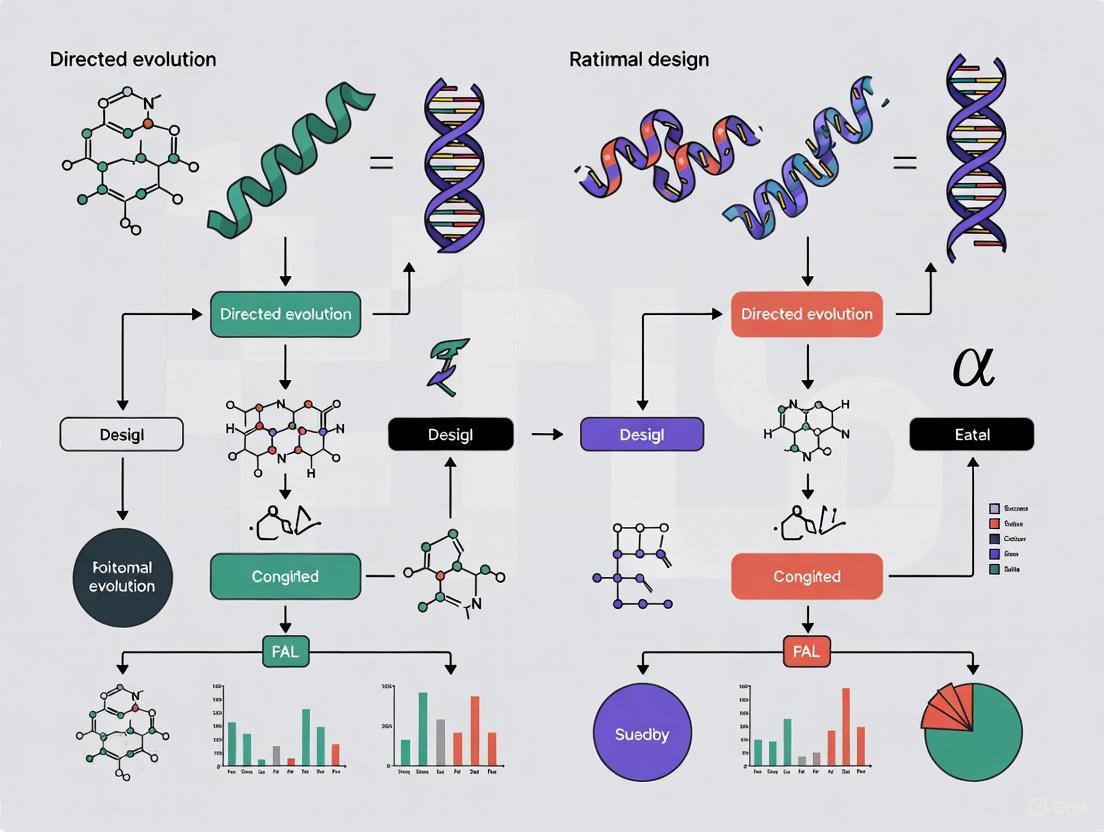
This article provides a comparative analysis of directed evolution and rational design, two cornerstone methodologies in protein engineering and drug development.
Directed Evolution vs. Rational Design: A Data-Driven Comparison of Success Rates in Modern Drug Discovery
Abstract
This article provides a comparative analysis of directed evolution and rational design, two cornerstone methodologies in protein engineering and drug development. Tailored for researchers, scientists, and drug development professionals, it explores the foundational principles, distinct methodological workflows, and real-world application success rates of each approach. By examining recent technological integrations—such as AI and automation—and presenting concrete case studies, this review offers a framework for selecting and optimizing these strategies. It concludes with a forward-looking synthesis on how hybrid models are accelerating the development of novel enzymes, antibodies, and gene therapies, providing actionable insights for strategic planning in biomedical research.
Core Principles: Deconstructing the Philosophies of Directed Evolution and Rational Design
In the pursuit of advanced biologics, sustainable biocatalysts, and novel research tools, protein engineering has emerged as a transformative discipline driving innovation across the global bioeconomy, projected to exceed $500 billion by 2035 [1]. This rapid growth is powered by two fundamentally distinct yet increasingly complementary methodologies: directed evolution (empirical exploration) and rational design (structure-informed prediction). Directed evolution mimics natural selection in the laboratory through iterative rounds of mutagenesis and screening, requiring no prior structural knowledge to discover improved variants. In contrast, rational design employs computational models and structural insights to predictively engineer proteins with specific characteristics. While early implementations highlighted the philosophical and practical divides between these approaches, modern protein engineering increasingly demonstrates their powerful synergy. This guide provides an objective comparison of these paradigms, examining their success rates, methodological frameworks, and experimental requirements to inform research strategy and resource allocation in scientific and drug development contexts.
Directed Evolution: Harnessing Evolutionary Principles
Directed evolution is an iterative laboratory process that applies Darwinian principles of mutation and selection to engineer biomolecules with improved or novel functions. As formally defined, it constitutes "an iterative two-step process involving first the generation of a library of variants of a biological entity of interest, and second the screening of this library in a high-throughput fashion to identify those mutants that exhibit better properties" [2]. This empirical approach explores sequence space through random or targeted mutagenesis followed by phenotypic screening, relying on high-throughput methods to identify beneficial mutations without requiring mechanistic understanding of their effects.
The fundamental strength of directed evolution lies in its ability to discover cooperative mutations that would be difficult to predict computationally. Early landmark demonstrations included the evolution of subtilisin E for 256-fold higher activity in dimethylformamide [2] and β-lactamase for 32,000-fold increased antibiotic resistance using DNA shuffling techniques [2]. The methodology has since expanded beyond individual proteins to encompass metabolic pathways, circuits, and entire genomes [2].
Rational Design: Computational Prediction and Structure-Based Engineering
Rational design employs computational models and structural biology insights to predictively engineer proteins with desired functions. This paradigm encompasses structure-based virtual screening, molecular dynamics simulations, and artificial intelligence-driven models that explore vast chemical spaces, investigate molecular interactions, predict binding affinity, and optimize drug candidates with increasing accuracy [3]. Unlike directed evolution's exploratory approach, rational design seeks to establish causal relationships between sequence, structure, and function to enable targeted engineering.
The core assumption underlying many rational design approaches is that "natural proteins are under evolutionary pressure to be functional; therefore, novel sequences drawn from the same distribution will also be functional" [4]. This principle enables the use of generative protein sequence models to sample novel sequences with predicted functionality, though challenges remain in predicting whether generated proteins will fold and function as intended [4].
Comparative Analysis: Success Metrics and Performance Indicators
Table 1: Quantitative Performance Comparison of Protein Engineering Approaches
| Engineering Approach | Reported Improvement | Experimental Scale | Timeframe | Key Applications |
|---|---|---|---|---|
| Classical Directed Evolution | 256-fold activity increase (subtilisin E) [2] | Multiple iterative rounds | Several months | Enzyme activity, stability |
| AI-Guided Directed Evolution | 74.3-fold activity increase (GFP) in 4 rounds [5] | ~1,000 mutants per round | Weeks | Optimizing protein activity |
| CRISPR-Enhanced Directed Evolution | Efficient mammalian cell evolution [6] | Varies by system | Varies | Mammalian-specific adaptations |
| Autonomous AI-Powered Engineering | 26-90-fold activity improvements [7] | <500 variants total | 4 weeks | Multi-property optimization |
| Generative Model-Guided Design | 50-150% improved success rate for active variants [4] | 500+ expressed variants | Multiple rounds | Generating diverse functional sequences |
Table 2: Methodological Characteristics and Resource Requirements
| Parameter | Directed Evolution | Rational Design |
|---|---|---|
| Knowledge Requirements | Minimal structural knowledge needed | Requires detailed structural data |
| Infrastructure Needs | High-throughput screening capabilities | Computational resources, structural biology tools |
| Typical Experimental Workflow | Iterative: diversify → screen → select [2] | Predictive: model → design → validate |
| Strengths | Discovers cooperative mutations, avoids mechanistic understanding limitations | Targeted interventions, explores specific hypotheses |
| Limitations | Screening throughput constraints, potential for missing optimal variants | Prediction inaccuracies, limited by current model capabilities |
Experimental Protocols and Methodological Frameworks
Directed Evolution Workflows: From Classical to CRISPR-Enhanced
The classical directed evolution workflow follows a systematic, iterative process of diversity generation and screening. A representative protocol for enzyme improvement typically involves:
Library Construction: Genetic diversity is introduced through error-prone PCR or DNA shuffling. For example, error-prone PCR introduces random mutations throughout the gene of interest at controlled mutation rates [2].
Expression and Screening: Variant libraries are expressed in suitable host systems (typically E. coli or yeast) and screened for desired properties using high-throughput assays. Recent advances employ droplet microfluidics to improve screening efficiency by hundreds of times [6].
Selection and Iteration: Improved variants are selected as templates for subsequent rounds of diversification. Modern platforms like the autonomous engineering system reported by Nature Communications can complete four evolution rounds in just four weeks while testing fewer than 500 variants [7].
CRISPR-based directed evolution represents a significant methodological advancement, enabling precise and efficient gene targeting. CRISPR-directed evolution "employs RNA-guided nucleases (e.g., Cas9, Cas12a) from the CRISPR-Cas system to achieve precise and efficient gene targeting" [6]. The methodology leverages double-strand break-dependent and independent systems to generate genetic diversity, with applications spanning enzymatic engineering, metabolic engineering, antibody engineering, and plant breeding [6].
Diagram 1: Directed Evolution Workflow - Classical empirical approach
Rational Design Protocols: From Molecular Modeling to AI-Driven Design
Rational design methodologies employ computational frameworks to predict protein behavior and guide engineering decisions:
Structure Prediction and Analysis: Initial phase involves obtaining or generating high-quality protein structures through X-ray crystallography, NMR, or computational prediction tools like AlphaFold [1] [3].
Computational Scoring and Filtering: Generated sequences are evaluated using composite metrics. The COMPSS (composite metrics for protein sequence selection) framework enables selection of phylogenetically diverse functional sequences, improving experimental success rates by 50-150% [4].
Validation and Iteration: Computational predictions are validated through experimental testing. The DeepDE algorithm exemplifies iterative refinement in rational design, using "supervised learning on ~1,000 mutants" with "a mutation radius of three allows efficient exploration of vast sequence space" [5].
Machine learning pipelines like ProDomino demonstrate the power of rational design for specific engineering challenges. ProDomino uses "ESM-2-derived protein sequence representations as model inputs in combination with a masking strategy" to predict domain insertion sites in proteins, achieving approximately 80% success rates in experimental validation [8].
Diagram 2: Rational Design Workflow - Structure-informed predictive approach
Integrated Approaches: Hybrid Methodologies
Contemporary protein engineering increasingly employs hybrid approaches that leverage the strengths of both paradigms. For example, the DeepDE algorithm "enables iterative protein evolution via supervised learning on ~1,000 mutants" and achieved "a 74.3-fold increase in GFP488nm activity in just four rounds" by combining directed evolution's iterative approach with deep learning guidance [5].
Autonomous enzyme engineering platforms represent the cutting edge of this integration, combining "machine learning and large language models with biofoundry automation to eliminate the need for human intervention, judgement, and domain expertise" [7]. These systems can engineer enzyme variants with 16-90-fold improvements in specific activities within four weeks while requiring construction and characterization of fewer than 500 variants [7].
Research Reagent Solutions: Essential Materials and Platforms
Table 3: Key Research Reagents and Platforms for Protein Engineering
| Reagent/Platform | Function | Application Context |
|---|---|---|
| Error-Prone PCR | Introduces random mutations throughout target gene | Directed evolution library generation [2] |
| DNA Shuffling | Recombines gene fragments to create chimeric variants | Directed evolution of homologous genes [2] |
| CRISPR-Cas Systems | Enables precise gene targeting and editing | CRISPR-directed evolution in various host systems [6] |
| ESM-2 (Evolutionary Scale Modeling) | Protein language model for sequence likelihood prediction | Variant fitness prediction and library design [7] |
| AlphaFold2 | Protein structure prediction from sequence | Structure-informed rational design [1] |
| PROTEUS Platform | Mammalian directed evolution using virus-like vesicles | Evolution of proteins requiring mammalian cellular environment [9] |
| ProDomino | Machine learning pipeline for predicting domain insertion sites | Engineering allosteric protein switches [8] |
| Rosetta | Molecular modeling software for protein design | Structure-based design and stability prediction [4] |
| Autonomous Biofoundries | Integrated robotic systems for automated experimentation | AI-powered autonomous protein engineering [7] |
The comparative analysis of directed evolution and rational design reveals a complex landscape where strategic selection and integration of approaches delivers optimal outcomes. Directed evolution excels when structural information is limited or when targeting complex phenotypes involving cooperative mutations, with recent AI-guided approaches dramatically improving its efficiency. Rational design provides superior precision for well-characterized systems and when specific molecular properties are targeted, with computational advances continuously expanding its applicability.
The emerging paradigm of autonomous protein engineering represents the logical convergence of these approaches, combining "machine learning and large language models with biofoundry automation" to achieve dramatic improvements in efficiency and success rates [7]. These systems highlight the diminishing distinction between empirical exploration and structure-informed prediction, instead leveraging both methodologies within integrated frameworks.
For research and drug development professionals, selection criteria should consider target characterization status, available structural data, throughput capabilities, and computational resources. The experimental data and methodological comparisons presented in this guide provide a foundation for these strategic decisions, enabling more effective navigation of the protein engineering landscape and contributing to accelerated development of novel biologics, enzymes, and research tools.
Directed evolution is a powerful protein engineering technology that harnesses Darwinian principles in a laboratory setting. Through iterative cycles of genetic diversification and functional screening, researchers can tailor proteins for specific applications without requiring detailed prior knowledge of their structure, thereby bypassing the limitations of purely rational design approaches [10] [2]. This guide provides an objective comparison of its performance against rational design, supported by experimental data and detailed protocols.
Comparative Success Rates: Directed Evolution vs. Rational Design
The table below summarizes key performance metrics from recent studies, illustrating the distinct advantages and outputs of each protein engineering strategy.
| Engineering Strategy | Key Principle | Typical Fold Improvement (Recent Examples) | Required Structural Knowledge | Typical Experimental Timeline |
|---|---|---|---|---|
| Directed Evolution | Iterative random mutagenesis and screening/selection to discover improved variants [10]. | • AtHMT enzyme: 16-fold improvement in ethyltransferase activity [7].• YmPhytase: 26-fold improvement in activity at neutral pH [7].• Subtilisin E: 256-fold higher activity in organic solvent [2]. | Low to None [10] | 4 weeks for 4 rounds (AI-powered platform) [7] |
| Rational Design | Targeted mutations based on structural knowledge and computational models to achieve a predefined design [11]. | • De novo serine hydrolase: Catalytic efficiency (kcat/Km) of up to 2.2 × 10⁵ M-1·s-1 [11].• Often results in low initial activities requiring subsequent evolution [11]. | High [11] | Varies; can be lengthy for de novo design and validation |
Detailed Experimental Protocols
Protocol 1: A Generalized Autonomous Directed Evolution Workflow
This modern protocol integrates machine learning (ML) and laboratory automation for efficient enzyme engineering [7].
- Library Design: Generate an initial library of protein variants using a combination of a protein language model (e.g., ESM-2) and an epistasis model (e.g., EVmutation) to maximize diversity and quality [7].
- Automated Library Construction:
- Utilize a biofoundry (e.g., the Illinois Biological Foundry for Advanced Biomanufacturing, iBioFAB) for a fully automated workflow.
- Employ a high-fidelity (HiFi) assembly-based mutagenesis method to create variant libraries without the need for intermediate sequencing, achieving ~95% accuracy [7].
- The process is divided into automated modules: mutagenesis PCR, DNA assembly, transformation, colony picking, plasmid purification, and protein expression [7].
- High-Throughput Screening:
- Culture expressed variants in a 96-well format.
- Perform automated, quantifiable functional enzyme assays (e.g., measuring ethyltransferase activity for AtHMT or phytase activity at neutral pH for YmPhytase) to determine variant fitness [7].
- Machine Learning-Driven Learning and Iteration:
Protocol 2: Directed Evolution of Enzyme Stability in Organic Solvents
This classic protocol outlines the evolution of subtilisin E for enhanced function in dimethylformamide (DMF) [2].
- Diversification via Error-Prone PCR (epPCR):
- Method: Perform PCR on the gene of interest under low-fidelity conditions. This is achieved by using a non-proofreading polymerase (e.g., Taq polymerase), biasing dNTP concentrations, and adding manganese ions (Mn²⁺) to introduce random mutations at a target rate of 1-5 mutations per kilobase [10] [2].
- Library Expression and Screening:
- Clone the mutated gene library into an expression vector and transform into a host organism (e.g., E. coli).
- Culture individual clones in 96-well microtiter plates and induce protein expression.
- Assay: Transfer cell lysates to a new plate containing a colorimetric or fluorometric substrate dissolved in 60% DMF. Measure the reaction rate using a plate reader to identify variants with retained or improved activity under the denaturing condition [2].
- Iteration:
Protocol 3: Rational De Novo Enzyme Design
This protocol describes the workflow for designing a novel enzyme from scratch, culminating in a designed serine hydrolase [11].
- Theozyme (Theoretical Enzyme) Construction:
- Quantum Mechanics (QM) Calculation: Define the transition state of the target chemical reaction (e.g., C-H bond cleavage). Use QM methods (e.g., Density Functional Theory) to build a minimal active-site model ("theozyme") by positioning idealized catalytic amino acid side chains around the transition state to stabilize it. This provides key geometric constraints [11].
- Backbone Generation and Sequence Design:
- Use generative AI models (e.g., RFdiffusion) to create novel protein backbone structures that are compatible with the theozyme's geometric constraints [11].
- Apply inverse-folding neural networks (e.g., ProteinMPNN) to design amino acid sequences that will fold into the generated backbone and maintain the pre-organized active site [11].
- Computational Filtering and Experimental Testing:
- Filter the designed enzyme candidates using structural prediction tools (e.g., AlphaFold2) and active-site geometry scoring [11].
- Synthesize the genes encoding the top candidates, express them in a host system, and purify the proteins for experimental characterization of catalytic efficiency (kcat/Km) [11].
Workflow Visualization: Directed Evolution vs. Rational Design
The diagrams below illustrate the core logical workflows for both directed evolution and rational design, highlighting their fundamental differences.
Directed Evolution Workflow
Rational Design Workflow
The Scientist's Toolkit: Key Research Reagent Solutions
The following table details essential materials and their functions in a standard directed evolution campaign.
| Research Reagent / Tool | Function in Workflow |
|---|---|
| Error-Prone PCR (epPCR) Kit | Introduces random mutations across the gene of interest during amplification to create genetic diversity [10]. |
| High-Fidelity DNA Polymerase | Used for accurate gene amplification in library construction methods like HiFi assembly, minimizing unintended errors [7]. |
| Expression Vector (e.g., pPICZαA) | Plasmid for cloning the variant library and expressing the target protein in a host organism (e.g., E. coli, P. pastoris) [12]. |
| Colorimetric/Fluorometric Substrate | Enables high-throughput screening by producing a measurable signal (color/fluorescence) in response to enzyme activity [10] [12]. |
| Automated Liquid Handling System | Robotics platform that automates repetitive tasks like pipetting, colony picking, and assay setup, enabling high-throughput workflows [7]. |
| Machine Learning Models (e.g., ESM-2) | AI tools used to design initial variant libraries and predict fitness from screening data, guiding the exploration of sequence space [7]. |
In the field of protein engineering, two dominant philosophies have emerged for tailoring biocatalysts: directed evolution, which mimics natural selection through iterative rounds of randomization and screening, and rational design, which employs structural and mechanistic knowledge to make targeted enhancements [2] [13]. While directed evolution has transformed protein engineering over the last two decades, its requirement for high-throughput screening and the vastness of protein sequence space present significant limitations [14] [2]. In contrast, rational design employs a "knowledge-based" strategy, leveraging understanding of protein sequence, structure, and function to preselect promising mutations, resulting in dramatically reduced library sizes and more intellectually predictable engineering outcomes [14] [13].
This guide objectively compares the performance of rational design against directed evolution and its AI-enhanced derivatives, providing experimental data and methodologies that highlight the distinct advantages, limitations, and optimal application spaces for each approach. As the toolkit available to protein engineers expands with artificial intelligence and advanced computation, the lines between these strategies are blurring, giving rise to powerful hybrid methodologies [11] [7].
Core Principles and Workflows
The Rational Design Workflow
Rational enzyme design aims to predict mutations that confer desired properties based on understanding the relationships between protein structure and function [13]. The strategy is universal, relatively fast, and has the potential to be developed into algorithms that can quantitatively predict the performance of designed sequences [13]. Its successful application, however, often depends on the availability of structural data and a deep understanding of catalytic mechanisms.
The typical workflow for rational design involves several key stages, as visualized below.
Directed Evolution and AI-Enhanced Workflows
Directed evolution employs an iterative "design-build-test-learn" (DBTL) cycle, mimicking natural selection in the laboratory [2]. Traditional directed evolution relies on random mutagenesis and high-throughput screening, while modern implementations increasingly incorporate machine learning to guide the exploration of sequence space [7] [5].
Quantitative Performance Comparison
The table below summarizes representative performance data for rational design, directed evolution, and AI-enhanced approaches across various protein engineering campaigns.
Table 1: Performance Comparison of Protein Engineering Approaches
| Target Protein | Engineering Goal | Approach | Library Size | Improvement | Key Mutations | Ref. |
|---|---|---|---|---|---|---|
| Pseudomonas fluorescens esterase | Improved enantioselectivity | Semi-rational (3DM analysis) | ~500 variants | 200-fold improved activity, 20-fold improved enantioselectivity | 4 active site positions | [14] |
| Halide methyltransferase (AtHMT) | Altered substrate preference | AI-powered autonomous platform | <500 variants over 4 rounds | 90-fold improvement in substrate preference, 16-fold in ethyltransferase activity | Combination of mutations from initial library | [7] |
| GFP from Aequorea victoria | Increased activity | DeepDE (AI-guided) | ~1,000 mutants per round | 74.3-fold increase in activity over 4 rounds | Triple mutant combinations | [5] |
| Thermus aquaticus DNA polymerase | Altered substrate specificity | Semi-rational (REAP analysis) | 93 variants | Efficient incorporation of unnatural nucleotides | Single amino acid substitution | [14] |
| Phytase (YmPhytase) | Improved neutral pH activity | AI-powered autonomous platform | <500 variants over 4 rounds | 26-fold improvement in activity at neutral pH | Combination of mutations from initial library | [7] |
| Subtilisin E | Improved organic solvent stability | Traditional directed evolution | Not specified | 256-fold higher activity in 60% DMF | 6 cumulative point mutations | [2] |
Methodologies and Experimental Protocols
Key Rational Design Strategies
Sequence-Based Design: Multiple Sequence Alignment
Multiple sequence alignment (MSA) leverages evolutionary information from homologous proteins to identify functionally important residues [13]. The underlying principle is that enzymes with high sequence identity and structural similarity tend to have functional similarity.
Protocol:
- Collect homologous sequences from databases using BLAST or specialized tools like 3DM [14]
- Perform multiple sequence alignment using tools like ClustalOmega or MUSCLE
- Identify conserved regions and CbD sites (conserved but different) - positions conserved in homologs but different in the target enzyme [13]
- Design mutations to match consensus sequences or incorporate beneficial residues from high-performing homologs
- Validate structural compatibility of proposed mutations
Case Study: Engineering Bacillus-like esterase (EstA) for improved activity toward tertiary alcohol esters [13]. MSA of 1,343 sequences revealed a conserved GGG motif in the oxyanion hole, while EstA contained GGS. The S→G mutation generated EstA-GGG with 26-fold higher conversion rate.
Structure-Based Design: Active Site Remodeling
This approach utilizes 3D structural information to design mutations that alter steric hindrance, electrostatic interactions, or hydrogen bonding networks in the active site [14] [13].
Protocol:
- Obtain 3D structure through X-ray crystallography, NMR, or homology modeling
- Identify key active site residues involved in substrate binding and catalysis
- Analyze substrate binding mode and potential bottlenecks (steric clashes, poor geometry)
- Design mutations to optimize substrate positioning, transition state stabilization, or product release
- Compute binding energies and verify geometric compatibility using molecular modeling software
Computational Protein Design with Theozymes
Theozymes (theoretical enzymes) are minimal active site models composed of catalytic groups positioned to stabilize the reaction transition state, designed using quantum mechanical calculations [11].
Protocol:
- Define the catalytic mechanism and identify key catalytic residues
- Model the transition state using quantum mechanical methods (DFT, HF, semi-empirical)
- Position catalytic groups around the transition state to form stabilizing interactions
- Scan protein scaffolds for compatibility with the designed active site (e.g., using RosettaMatch)
- Design the surrounding protein matrix to support the preorganized catalytic geometry
AI-Enhanced Directed Evolution Methodologies
Modern autonomous enzyme engineering platforms combine machine learning with biofoundry automation to accelerate protein optimization [7].
Protocol for AI-Powered Engineering:
- Initial Library Design: Use protein language models (ESM-2) and epistasis models (EVmutation) to select 150-200 diverse, high-quality variants [7]
- Automated Library Construction: Implement high-fidelity assembly methods with ~95% accuracy, eliminating intermediate sequencing verification [7]
- High-Throughput Screening: Automate protein expression, purification, and functional assays on robotic platforms
- Machine Learning Analysis: Train models on sequence-activity relationships to predict improved variants for subsequent rounds
- Iterative Optimization: Conduct multiple DBTL cycles, with each round informed by previous results
The Scientist's Toolkit: Essential Research Reagents and Solutions
Table 2: Key Research Reagents and Computational Tools for Rational Design
| Category | Tool/Reagent | Specific Examples | Function in Workflow |
|---|---|---|---|
| Computational Design Software | Rosetta Design Suite | RosettaMatch, RosettaDesign | Scaffold screening, sequence design, and energy calculations for de novo enzyme design [14] [11] |
| Molecular Dynamics Software | GROMACS, AMBER, NAMD | VMD for visualization | Simulating protein dynamics, identifying functional motions, and analyzing access tunnels [14] [15] |
| Quantum Chemistry Packages | Gaussian, ORCA | DFT (B3LYP/6-31+G*) | Transition state optimization and theozyme design [11] |
| Sequence Analysis Platforms | 3DM, HotSpot Wizard | Multiple sequence alignment, phylogenetic analysis | Identifying evolutionary patterns and functional hotspots [14] |
| AI/ML Tools | Protein Language Models | ESM-2, ProteinMPNN | Variant fitness prediction and sequence design based on evolutionary patterns [7] [15] |
| Experimental Mutagenesis Kits | Site-directed mutagenesis kits | Q5 Site-Directed Mutagenesis Kit | Introducing specific mutations into target genes [13] |
| Structural Biology Reagents | Crystallization screens | Hampton Research screens | Protein crystallization for structural determination |
The comparative analysis presented in this guide demonstrates that rational design, directed evolution, and AI-enhanced approaches each occupy distinct but complementary niches in the protein engineering landscape.
Rational design excels when substantial structural and mechanistic knowledge is available, enabling targeted interventions with minimal experimental screening [14] [13]. Its strength lies in engineering specific properties like enantioselectivity or altering substrate specificity where the structural determinants are reasonably well-understood. The methodology is particularly powerful for introducing novel catalytic functions through de novo design, as demonstrated by the creation of artificial Diels-Alderases [14].
Traditional directed evolution remains valuable for optimizing complex phenotypes where structural insights are limited, or when multiple interdependent properties require improvement simultaneously [2]. However, its requirement for large library sizes and high-throughput screening presents practical limitations.
AI-enhanced approaches represent the emerging frontier, combining the exploratory power of directed evolution with the predictive capability of computational design [7] [5]. These methods significantly reduce experimental burden while efficiently navigating sequence space, as evidenced by the rapid optimization of halide methyltransferase and phytase enzymes within four weeks [7].
For researchers and drug development professionals, the strategic selection of an engineering approach should be guided by the availability of structural information, understanding of mechanism, complexity of the target property, and available screening capacity. As computational power and biological understanding advance, the integration of these methodologies will continue to push the boundaries of what is achievable in protein engineering.
Historical Context and Nobel Prize-Winning Advancements
The quest to tailor enzymes and proteins for research, therapeutics, and industrial applications has been fundamentally shaped by two powerful philosophies: directed evolution and rational design. Directed evolution, a method that mimics natural selection in the laboratory, was championed by Frances H. Arnold, whose groundbreaking work earned her the Nobel Prize in Chemistry in 2018. [16] This approach stands in contrast to rational design, which relies on detailed knowledge of protein structure and mechanism to make precise, computational predictions. For decades, these strategies have been viewed as distinct, even competing, paths to engineering better biocatalysts. Today, the most advanced platforms in the field are moving beyond this dichotomy, leveraging artificial intelligence (AI) to fuse the exploratory power of evolution with the precision of design, thereby creating a new, hybrid paradigm for protein engineering. [7] [16]
Historical Development and Key Methodologies
The journey of protein engineering reflects a continuous effort to balance the exploration of vast sequence space with the practical constraints of laboratory work.
The Rise of Directed Evolution
Modern directed evolution emerged in the 1990s as an iterative, two-step process of diversification and screening. [2] Early landmark studies, such as the evolution of the serine protease subtilisin E for enhanced activity in an organic solvent, demonstrated its power. Through sequential rounds of random mutagenesis via error-prone PCR and screening, researchers identified a variant with a 256-fold improvement, a feat achieved through the accumulation of six cooperative mutations that would have been difficult to predict in advance. [2] A significant leap forward came with the development of recombination-based techniques like DNA shuffling, which recombines beneficial mutations from different parent genes. This approach, mimicking natural sexual reproduction, proved vastly more efficient than purely random methods, yielding a β-lactamase variant that conferred a 32,000-fold increase in antibiotic resistance to its host E. coli. [2]
The Principles of Rational and Semi-Rational Design
Concurrently, rational design sought to apply a "first-principles" understanding of protein structure and function. This approach often begins with a detailed analysis of a protein's three-dimensional structure to identify key active site residues, which are then targeted for site-directed mutagenesis. [16] A more recent and powerful extension is semi-rational design, which uses computational tools to leverage evolutionary information. [14] By analyzing multiple sequence alignments of homologous proteins, tools like the HotSpot Wizard and 3DM database can identify "hotspot" positions that are naturally tolerant to mutation, allowing engineers to create small, high-quality libraries focused on functionally rich regions of the protein. [14] This strategy dramatically increases the odds of success while reducing the number of variants that need to be screened.
Table 1: Core Methodologies in Protein Engineering
| Methodology | Underlying Principle | Key Tools & Techniques | Library Size |
|---|---|---|---|
| Directed Evolution | Mimics natural selection; exploration without requiring structural knowledge. | Error-prone PCR, DNA shuffling, StEP recombination. [2] | Very Large (10^4 - 10^6+ variants) |
| Rational Design | Structure-based precise alterations using physics and knowledge. | Site-directed mutagenesis, computational modeling (e.g., Rosetta). [16] | Very Small (Often < 10 variants) |
| Semi-Rational Design | Combines evolutionary information with structural data to target specific regions. | Sequence conservation analysis (e.g., 3DM), structural analysis. [14] | Small (10^2 - 10^3 variants) |
Quantitative Comparison of Success Rates and Performance
Directly comparing the success rates of directed evolution and rational design is complex, as "success" is project-dependent. However, emerging data from AI-powered platforms that integrate both approaches provides compelling evidence for their combined efficacy.
A 2025 study demonstrated a generalized autonomous platform that integrated machine learning with biofoundry automation. This system, which uses both protein language models (e.g., ESM-2) and epistasis models (e.g., EVmutation) to design variants, achieved remarkable results in just four weeks. For two different enzymes, the initial designed libraries contained 180 variants each. A significant proportion of these designed variants performed above the wild-type baseline (59.6% for AtHMT and 55% for YmPhytase), with 50% and 23% being significantly better, respectively. [7] After four rounds of iterative optimization, the platform generated variants with up to 90-fold improvement in substrate preference and 26-fold improvement in catalytic activity. [7]
Another 2025 study on the AiCE (AI-informed constraints for protein engineering) platform, which uses inverse folding models, reported success rates across eight different protein engineering tasks ranging from 11% to 88%, successfully engineering proteins from tens to thousands of residues in size. [17]
Table 2: Representative Experimental Outcomes from Integrated AI Platforms
| Engineering Platform | Target Protein | Engineering Goal | Key Results | Experimental Timeline |
|---|---|---|---|---|
| AI-Powered Autonomous Platform [7] | Halide methyltransferase (AtHMT) | Improve ethyltransferase activity | 16-fold improvement in activity; 90-fold change in substrate preference. [7] | 4 weeks (4 rounds) |
| AI-Powered Autonomous Platform [7] | Phytase (YmPhytase) | Improve activity at neutral pH | 26-fold improvement in activity at neutral pH. [7] | 4 weeks (4 rounds) |
| AiCE Platform [17] | Various (Deaminases, Nucleases, etc.) | Improve activity & specificity | Success rates of 11%-88% across 8 different protein tasks. [17] | Not Specified |
Detailed Experimental Protocols
To illustrate how these methodologies are implemented, below are detailed protocols for a classic directed evolution campaign and a modern semi-rational design workflow.
Protocol 1: Directed Evolution via Error-Prone PCR and Screening
This protocol outlines the iterative DBTL (Design-Build-Test-Learn) cycle used in traditional directed evolution. [2]
- Diversification (Design & Build): The gene of interest is amplified using error-prone PCR. This technique uses altered reaction conditions (e.g., unbalanced dNTP concentrations, the addition of Mn2+) to reduce the fidelity of the DNA polymerase, introducing random mutations throughout the gene sequence.
- Library Construction: The mutated PCR products are cloned into an appropriate expression vector and transformed into a host organism (e.g., E. coli) to create a library of variant clones.
- Screening (Test): The expressed variants are screened for the desired property using high-throughput assays. This could involve growing colonies on selective media, assaying cell lysates for enzymatic activity against a chromogenic substrate, or using fluorescence-activated cell sorting (FACS) for surface-displayed proteins.
- Selection (Learn): The best-performing variants from the screen are identified. Their genes are sequenced and serve as the templates for the next round of diversification. This cycle is repeated until the desired level of improvement is attained.
Protocol 2: Semi-Rational Design with Consensus Analysis
This protocol leverages evolutionary data to create smart, focused libraries. [14]
- Sequence Analysis (Design): A multiple sequence alignment (MSA) is generated by collecting hundreds to thousands of homologous sequences from public databases. Residues that are highly conserved across the family are identified as potential critical functional spots. Positions that show natural variability are identified as potential "hotspots" for engineering.
- Target Selection: Based on the MSA and, if available, a 3D structure of the target protein, a subset of hotspot residues (e.g., those lining the active site or a substrate access tunnel) is chosen for mutagenesis.
- Library Construction (Build): Instead of random mutagenesis, site-saturation mutagenesis (e.g., using NNK codons) is performed at each selected position, either individually or in combination. This results in a library where only the targeted positions are varied, and only to amino acids that are evolutionarily "allowed."
- Screening & Characterization (Test & Learn): The smaller, functionally enriched library is screened. The hit rate is typically much higher than in a random library. Positive hits are characterized in detail to understand the structural and mechanistic basis for the improvement.
The logical flow of this semi-rational design strategy is summarized in the diagram below.
The Modern Toolkit: AI-Integrated Platforms
The most significant recent advancement is the fusion of these approaches into autonomous AI-powered platforms. These systems close the DBTL loop with minimal human intervention, creating a hyper-efficient cycle of protein optimization.
- AI-Driven Design: Machine learning models, particularly protein language models (e.g., ESM-2) and inverse folding models (e.g., ProteinMPNN), are used to predict beneficial mutations and generate novel sequences that are likely to be stable and functional. [7] [11] [17]
- Automated Build & Test: Robotic biofoundries, like the Illinois Biological Foundry (iBioFAB), automatically execute the construction of DNA variants, transform hosts, express proteins, and run high-throughput functional assays. [7]
- Machine Learning Learn: The experimental data from each round is used to retrain and refine the AI models, improving their predictive power for subsequent iterations. This allows the system to efficiently navigate the fitness landscape. [7]
This integrated workflow is depicted in the following diagram.
The Scientist's Toolkit: Essential Research Reagents and Solutions
The experiments cited rely on a suite of specialized reagents and computational tools.
Table 3: Key Research Reagents and Solutions for Modern Protein Engineering
| Tool / Reagent | Function / Application | Example Use Case |
|---|---|---|
| Error-Prone PCR Kit | Introduces random mutations across a gene during amplification. | Creating diverse variant libraries for initial directed evolution rounds. [2] |
| Site-Directed Mutagenesis Kit | Introduces a specific, pre-determined mutation into a plasmid. | Validating individual hits or conducting rational design of active sites. [16] |
| Protein Language Models (ESM-2) | AI model trained on protein sequences; predicts variant fitness and allowed mutations. | Generating high-quality initial variant libraries without structural data. [7] |
| Inverse Folding Models (ProteinMPNN) | AI model that designs protein sequences that will fold into a desired structure. | De novo enzyme design or optimizing sequences for a given scaffold. [11] [17] |
| Robotic Biofoundry (e.g., iBioFAB) | Integrated automation system for molecular biology and assays. | Executing the entire Build-Test cycle autonomously for high-throughput engineering. [7] |
The historical narrative of directed evolution versus rational design has converged into a unified story of integration. While their foundational principles differ—broad exploration versus targeted precision—the data shows that neither is obsolete. Instead, the highest success rates and most dramatic performance improvements are now being achieved by platforms that synergize their strengths. By using AI to draw insights from both evolutionary history and physical first principles, and by employing automation to accelerate experimentation, this hybrid approach is setting a new standard for protein engineering. It enables researchers to navigate the complex fitness landscape of proteins with unprecedented speed and accuracy, paving the way for breakthroughs in drug development, synthetic biology, and green chemistry.
Methodologies in Action: Techniques, Workflows, and Success Stories
In the pursuit of advanced biocatalysts and therapeutic proteins, researchers primarily employ two philosophical approaches: directed evolution, which mimics natural selection through iterative rounds of mutation and screening, and rational design, which relies on precise, knowledge-based modifications [10]. The successful application of these strategies depends heavily on core laboratory techniques for generating genetic diversity. Among these, Error-Prone PCR (epPCR), DNA Shuffling, and Site-Directed Mutagenesis constitute a fundamental toolkit. This guide provides an objective comparison of these three key techniques, detailing their performance characteristics, experimental protocols, and ideal applications within modern protein engineering workflows, particularly in pharmaceutical development contexts.
Core Technique Comparison
The following table summarizes the fundamental characteristics, advantages, and limitations of the three techniques, providing a high-level overview for experimental planning.
Table 1: Core Characteristics of Key Protein Engineering Techniques
| Feature | Error-Prone PCR (epPCR) | DNA Shuffling | Site-Directed Mutagenesis |
|---|---|---|---|
| Core Principle | Introduces random point mutations via low-fidelity PCR [10]. | Recombines beneficial mutations from multiple parent genes [10]. | Introduces specific, pre-determined mutations at a targeted site [18]. |
| Primary Application | Initial exploration of sequence space for property improvement [19] [10]. | Combining beneficial mutations to achieve additive or synergistic effects [19] [20]. | Probing function of specific residues or constructing known beneficial variants [18]. |
| Typical Library Size | Very Large (10^7 - 10^12) | Large (10^6 - 10^9) | Small (Single variant to 10^3 for saturation) |
| Key Advantage | Requires no structural or mechanistic knowledge; explores broad mutational space. | Mimics natural sexual recombination; can rapidly improve function. | High precision; generates clean, specific mutations without unwanted changes. |
| Key Limitation | Mutation bias (favors transitions); most mutations are neutral or deleterious [10]. | Requires high sequence homology (>70-75%) for efficient crossovers [10]. | Requires prior knowledge of which residues to target. |
Technical Performance and Experimental Data
When selecting a methodology, understanding the practical outcomes and experimental requirements is crucial. The following table compares the techniques based on quantitative data, technical requirements, and success rates from cited studies.
Table 2: Experimental Performance and Data from Applied Studies
| Aspect | Error-Prone PCR (epPCR) | DNA Shuffling | Site-Directed Mutagenesis |
|---|---|---|---|
| Mutation Rate/Fidelity | 1-5 mutations/kb, tunable via Mn²⁺ and dNTP imbalance [10]. Bias towards transition mutations [10]. | Crossovers not uniform; favors regions of high sequence identity [10]. | Near 100% fidelity for the targeted codon when optimized. |
| Reported Success Rate | Identified variants with 1.2-1.3x increased activity and expanded pH range (pH 4.0-11.25) [19]. | Generated a 7-mutation variant with a 1.2x activity increase and shifted product ratio from 1:3 to 1:7 [19]. | High success in altering product specificity when targeting known subsites (e.g., -3, -6, -7) [19]. |
| Documented Improvement | Enhanced γ-cyclodextrin synthesis and created activity in a broader pH range [19]. | Combined beneficial mutations from earlier epPCR rounds for additive improvements [19] [20]. | Successfully enhanced product specificity in α-, β-, and γ-CGTases [19]. |
| Technical Complexity | Low. A single, standard PCR reaction, though cloning can be a bottleneck [21]. | Moderate to High. Involves gene fragmentation, reassembly, and amplification [10]. | Low to Moderate. Simplified by modern kits and two-stage PCR methods [18]. |
| Structural Data Required | None | None (but beneficial for interpreting results). | Essential for effective targeting. |
Analysis of Comparative Data
The experimental data reveals a clear synergy between these techniques. A classic strategy involves using epPCR for initial discovery of beneficial mutations, as demonstrated by the engineering of a bacterial cyclodextrin glucanotransferase (CGTase), where epPCR identified variants with up to 1.3-fold increased activity [19]. DNA shuffling then serves to combine these hits, as seen in the same study where a variant (S54) with seven combined amino acid substitutions showed a 1.2-fold increase in activity and a significantly improved product ratio [19]. Conversely, Site-Directed Mutagenesis is unparalleled for focused interrogation, such as probing the role of specific amino acids at substrate-binding subsites, which has successfully altered the product spectrum of CGTases [19].
Detailed Experimental Protocols
Error-Prone PCR (epPCR)
The following workflow visualizes the standard epPCR process, from gene amplification to variant screening.
Title: Error-Prone PCR Workflow
Key Protocol Steps [10]:
- Reaction Setup: A standard PCR is assembled using a DNA polymerase lacking proofreading activity (e.g., Taq polymerase). Fidelity is reduced by adding manganese ions (Mn²⁺) and creating an imbalance in the concentrations of the four dNTPs.
- Amplification: The PCR is run with standard thermocycling conditions. The mutation rate can be tuned by adjusting the Mn²⁺ concentration, typically aiming for 1-5 base substitutions per kilobase.
- Library Construction: The mutated PCR product must be cloned into an expression vector. Traditional restriction-enzyme based cloning (Ligation-Dependent Cloning Process, LDCP) can limit library diversity. Circular Polymerase Extension Cloning (CPEC) is a more efficient alternative that avoids these pitfalls [21].
- Screening: The library of clones is then screened for the desired improved protein function.
DNA Shuffling
DNA shuffling recombines beneficial mutations from multiple gene variants. The process is more complex than epPCR, as shown in the following workflow.
Title: DNA Shuffling Workflow
Key Protocol Steps [10]:
- Fragmentation: A pool of related parent genes (e.g., beneficial mutants from a prior epPCR round) is randomly digested into small fragments (100–300 base pairs) using the enzyme DNaseI.
- Reassembly: The fragments are purified and subjected to a PCR-like reaction without added primers. During the annealing step, homologous fragments from different parents prime each other. The polymerase then extends these overlaps, leading to template switching and the recombination of genetic information.
- Amplification: Standard PCR with outer primers is used to amplify the newly assembled, full-length chimeric genes.
- Cloning and Screening: The shuffled genes are cloned into an expression vector, and the library is screened for variants with enhanced properties, often uncovering additive or synergistic effects.
Site-Directed Mutagenesis
Modern Site-Directed Mutagenesis often uses efficient whole-plasmid amplification methods. The following diagram illustrates a robust two-stage PCR method.
Title: Site-Directed Mutagenesis via Megaprimer PCR
Key Protocol Steps (Improved Two-Stage Method) [18]:
- Stage 1 - Megaprimer Synthesis: A mutagenic primer (and optionally an antiprimer) is used in a few cycles of PCR with the plasmid template. This generates a double-stranded megaprimer containing the desired mutation.
- Stage 2 - Plasmid Amplification: The product from Stage 1 is used as a megaprimer in a second PCR. The annealing temperature is increased to prevent the original oligonucleotide primers from binding. Over 20 cycles of amplification extend the megaprimer around the entire plasmid, producing a nicked, circular DNA molecule.
- Digestion and Transformation: The PCR product is treated with DpnI to digest the original, methylated template DNA. The remaining mutated plasmid is then transformed directly into E. coli, where cellular machinery repairs the nicks. This method is highly efficient and works well for difficult-to-amplify templates.
Essential Research Reagent Solutions
Successful implementation of these techniques relies on a suite of specialized reagents and tools. The following table details key solutions and their functions in the experimental workflow.
Table 3: Key Research Reagent Solutions for Mutagenesis and Screening
| Reagent/Tool Category | Specific Examples | Function in Workflow |
|---|---|---|
| Low-Fidelity DNA Polymerases | Taq Polymerase [10] | Essential for epPCR; inherent lack of proofreading allows incorporation of random mutations during amplification. |
| High-Fidelity DNA Polymerases | KOD Hot Start DNA Polymerase [18] | Used in protocols requiring high accuracy, such as CPEC [21] or the two-stage Site-Directed Mutagenesis where faithful amplification is critical [18]. |
| Cloning & Assembly Kits | CPEC (in-house) [21], T7 Ligase [21] | For assembling DNA fragments into vectors. CPEC is highlighted as a more efficient alternative to traditional LDCP for library construction [21]. |
| Specialized Primers | Mutagenic Primers, Snapback Primers [22] | Mutagenic primers introduce specific or saturated changes. Snapback primers are used in advanced SNP genotyping methods like HRM [22]. |
| Restriction Enzymes | DpnI [18], EcoRI-HF, BamHI-HF [21] | DpnI selectively digests methylated template DNA in Site-Directed Mutagenesis [18]. Other enzymes are used in traditional LDCP of epPCR products [21]. |
| Host Organisms | E. coli DH5α [18], Saccharomyces cerevisiae [20] | Standard cloning and expression hosts. S. cerevisiae is noted for its high recombination efficiency, useful for in vivo assembly techniques like Directed DNA Shuffling [20]. |
| Screening Assays | Congored Agar Plate Assay [19], Microtiter Plate Fluorometry [10] | Enable high-throughput identification of improved variants. The congored assay is highly selective for γ-cyclodextrin production [19]. |
Error-Prone PCR, DNA Shuffling, and Site-Directed Mutagenesis are not mutually exclusive techniques but are instead complementary tools in the protein engineer's arsenal. The experimental data shows that a strategic combination of these methods often yields the best results: starting with epPCR to explore sequence space, using DNA shuffling to combine beneficial mutations, and finishing with Site-Directed Mutagenesis to fine-tune key residues. The choice of technique and the design of the screening method remain the most critical factors in a successful directed evolution campaign. As the field advances, techniques like machine learning-assisted library design and continuous evolution platforms are emerging, yet the three core techniques discussed here remain the foundational workhorses for generating genetic diversity and driving innovation in enzyme engineering and drug development.
The Rise of AI and Generative Models in De Novo Enzyme Design
The field of enzyme engineering is undergoing a transformative shift from methodology-dependent approaches to function-driven computational creation. Traditional enzyme engineering has primarily relied on two paradigms: rational design, which uses structural knowledge to make targeted mutations, and directed evolution, which mimics natural selection through iterative rounds of randomization and screening [2] [11]. While directed evolution has proven remarkably successful for optimizing existing enzymes and was recognized with a Nobel Prize, it remains inherently constrained by its requirement for a natural starting scaffold, labor-intensive experimental screening, and a tendency to discover local optima rather than globally novel solutions [23] [24] [25].
The emerging paradigm of de novo enzyme design aims to transcend these limitations by creating entirely novel enzymes from first principles without relying on natural templates [11] [24] [26]. This approach has been supercharged by artificial intelligence (AI) and generative models, which enable the computational generation of protein sequences and structures tailored to specific catalytic functions. By leveraging deep learning and structural bioinformatics, researchers can now explore regions of the protein universe that natural evolution has not sampled, potentially bypassing the evolutionary constraints that have limited traditional enzyme engineering [23] [24]. This article compares the performance, success rates, and methodological frameworks of these competing approaches through experimental data and case studies.
Quantitative Comparison of Engineering Approaches
The table below summarizes key performance metrics and characteristics across different enzyme engineering methodologies, synthesized from recent experimental validations.
Table 1: Comparative Analysis of Enzyme Engineering Methodologies
| Engineering Approach | Reported Success Rates | Catalytic Efficiency (kcat/Km) | Experimental Throughput Requirements | Key Advantages | Major Limitations |
|---|---|---|---|---|---|
| Directed Evolution | Varies significantly by target | Gradual improvement over starting point | High: Requires screening of 10^3-10^6 variants per round [2] [5] | Requires no structural knowledge; proven experimental track record | Labor-intensive; confined to local optima around parent scaffold [2] [24] |
| Traditional De Novo Design | Typically <1% for novel functions [27] [11] | Often orders of magnitude below natural enzymes [11] | Medium: Computational design with experimental validation | Can create entirely novel scaffolds | Low success rates; limited catalytic efficiency [11] [26] |
| AI-Guided Directed Evolution | N/A (optimization approach) | 74.3-fold improvement in GFP activity over 4 rounds [5] | Reduced: ~1,000 variants per round sufficient for training [5] | Efficient exploration of sequence space; reduces screening burden | Still requires starting scaffold; limited to optimization rather than creation |
| AI-Driven De Novo Design | Up to 15% for functional designs [23] | Up to 2.2×10^5 M^-1·s^-1 for novel hydrolases [23] | Lower: In silico filtering prior to experimental testing | Creates novel folds; explores uncharted protein space; higher success rates | Requires sophisticated computational infrastructure [28] [23] |
The data reveal a clear progression in capabilities. While directed evolution remains invaluable for optimizing existing enzymes, AI-driven de novo design achieves unprecedented success rates and catalytic efficiencies for novel enzymes. A notable example includes the design of a fully de novo serine hydrolase with catalytic efficiencies approaching natural enzymes and a novel fold not observed in nature [23].
Table 2: Experimental Validation Metrics for AI-Designed Enzymes
| Designed Enzyme | Structural Accuracy (Cα RMSD) | Experimental Success Rate | Key Validation Methods | Reference |
|---|---|---|---|---|
| De novo serine hydrolase | <1.0 Å | 15% (20/132 variants active) [23] | X-ray crystallography, kinetic assays | Lauko et al. [23] |
| Venom toxin binders | 0.42-1.32 Å | 14% improved affinity after optimization [23] | Surface plasmon resonance, animal studies | Torres et al. [23] |
| Thermostable myoglobin | 0.66 Å | 25% (5/20 designs functional at 95°C) [23] | Thermal denaturation, spectroscopy | Sumida et al. [23] |
Experimental Protocols and Workflows
Traditional Directed Evolution Protocol
The classical directed evolution workflow follows an iterative Design-Build-Test-Learn (DBTL) cycle [2] [25]:
Library Generation: Create genetic diversity through error-prone PCR or DNA shuffling. Early studies used error-prone PCR to introduce random mutations throughout the gene of interest [2].
Expression and Screening: Express variant libraries in host systems (typically E. coli) and screen for improved activity using high-throughput assays (fluorescence, survival selection, etc.).
Selection: Identify improved variants through selective pressure (e.g., antibiotic resistance for enzyme evolution) [2].
Iteration: Use improved variants as templates for subsequent rounds of diversification and selection.
This process typically requires screening thousands to millions of variants per round and multiple iterative cycles to achieve significant improvements [2] [5].
AI-Driven De Novo Design Protocol
Modern AI-driven de novo enzyme design implements a more computationally intensive but experimentally efficient workflow [11] [26]:
Catalytic Requirement Definition: Specify the target chemical reaction and transition state geometry.
Active Site Design: Create a theoretical enzyme (theozyme) using quantum mechanical calculations to identify optimal arrangements of catalytic residues [11].
Backbone Generation: Use generative models (RFdiffusion, RFdiffusion2) to create protein backbones compatible with the active site geometry [27] [23].
Sequence Design: Apply inverse folding models (ProteinMPNN, LigandMPNN) to generate amino acid sequences that stabilize the designed backbone [23].
Computational Filtering: Prioritize designs using structure prediction (AlphaFold2/3) and functional metrics (ipSAE, pLDDT) [27] [23].
Experimental Validation: Express and characterize a limited set of top-ranking designs.
AI-Guided Directed Evolution Protocol
Hybrid approaches like DeepDE combine AI with directed evolution principles [5]:
Initial Library Construction: Generate ~1,000 protein variants focusing on triple mutants for broader sequence space coverage.
Deep Learning Training: Train supervised learning models on the variant library and corresponding activity measurements.
In Silico Prediction: Use trained models to predict improved sequences from virtual libraries.
Focused Experimental Testing: Validate top AI-predicted candidates experimentally.
Iterative Model Refinement: Incorporate new experimental data to retrain and improve predictive models.
This approach achieved a 74.3-fold increase in GFP activity over just four rounds with significantly reduced screening burden compared to conventional directed evolution [5].
The Scientist's Toolkit: Essential Research Reagents and Computational Tools
Table 3: Essential Resources for AI-Driven Enzyme Design
| Tool Category | Specific Tools | Function | Application Context |
|---|---|---|---|
| Generative Models | RFdiffusion [27] [23], RFdiffusion2 [23], SCUBA-D [11] | De novo backbone generation conditioned on functional motifs | Creating novel protein scaffolds around catalytic sites |
| Inverse Folding | ProteinMPNN [23], LigandMPNN [23] | Sequence design for stable protein structures | Optimizing sequences for designed backbones and active sites |
| Structure Prediction | AlphaFold2/3 [27] [23], RoseTTAFold All-Atom [23] | Protein structure prediction from sequence | Validating designs and filtering candidates before experimental testing |
| Functional Metrics | ipSAE [27], pLDDT [27], Interface Shape Complementarity [27] | Quantitative assessment of design quality | Ranking candidates by predicted binding and catalytic capability |
| Quantum Chemistry | DFT (B3LYP/6-31+G*) [11] | Transition state optimization and theozyme construction | Defining optimal catalytic geometry for novel reactions |
The experimental data demonstrate that AI-driven de novo enzyme design represents a paradigm shift rather than merely an incremental improvement over traditional methods. While directed evolution excels at optimizing existing functions and will continue to play a role in enzyme engineering, AI-driven approaches offer unprecedented capabilities for creating novel enzymes with customized functions. The key differentiator is the ability of generative models to explore protein sequence and structure spaces beyond natural evolutionary boundaries, accessing regions that would be unreachable through mutation of existing scaffolds alone [23] [24].
Future developments will likely focus on improving the precision of functional predictions, with recent research identifying optimized metric combinations (AF3 ipSAE_min with interface shape complementarity) that significantly enhance experimental success rates [27]. As these computational tools mature and integrate with high-throughput experimental validation, the design-build-test-learn cycle will accelerate, potentially making the precise design of efficient artificial enzymes with novel functions a mature technology in the near future [28] [26]. For researchers, the strategic implication is clear: while directed evolution remains viable for optimization problems, de novo design approaches now offer compelling advantages for creating entirely new catalytic functions not found in nature.
The field of protein engineering has traditionally been dominated by two distinct methodologies: rational design and directed evolution. Rational design operates as a precise, knowledge-driven approach, relying on detailed structural information to make targeted mutations that alter protein function. In contrast, directed evolution mimics natural selection through iterative rounds of random mutagenesis and screening to accumulate beneficial mutations without requiring prior structural knowledge [29] [30]. While both methods have successfully generated engineered enzymes for various applications, they face significant limitations in efficiency, scalability, and accessibility to non-specialists.
The recent emergence of autonomous AI-powered platforms represents a paradigm shift that transcends this traditional dichotomy. These integrated systems combine artificial intelligence, robotic automation, and biofoundry infrastructure to create self-driving laboratories capable of executing the entire design-build-test-learn (DBTL) cycle with minimal human intervention [7] [31]. This case study examines the implementation of one such generalized AI platform for engineering two distinct enzyme classes: Arabidopsis thaliana halide methyltransferase (AtHMT) and Yersinia mollaretii phytase (YmPhytase). The performance data generated from these engineering campaigns provides compelling evidence for the superior efficiency and effectiveness of autonomous platforms compared to traditional protein engineering methodologies.
Platform Architecture: Integrating AI with Biofoundry Automation
The autonomous enzyme engineering platform developed by Zhao and colleagues represents a landmark achievement in synthetic biology, integrating multiple technological innovations into a seamless workflow [7] [31]. The system's architecture eliminates human decision-making bottlenecks through a sophisticated multi-stage process that operates continuously once initiated with only a protein sequence and a quantifiable fitness metric.
Core Workflow and Integration
Table: Core Components of the Autonomous AI Platform
| Platform Component | Technology Implementation | Function in Workflow |
|---|---|---|
| AI-Driven Design | Protein LLM (ESM-2) & epistasis model (EVmutation) | Designs initial variant libraries without experimental data |
| Automated Construction | iBioFAB robotic biofoundry with HiFi-assembly mutagenesis | Executes gene synthesis, cloning, and protein expression |
| High-Throughput Testing | Integrated assay systems | Measures variant activity with minimal human intervention |
| Machine Learning | Low-N regression model | Learns from data to predict improved variants for next cycle |
The platform operates through seven fully automated modules that handle mutagenesis PCR, DNA assembly, transformation, colony picking, plasmid purification, protein expression, and enzyme assays [7]. A critical innovation enabling this continuous workflow is a high-fidelity mutagenesis method that achieves approximately 95% accuracy without requiring intermediate sequence verification, which traditionally creates significant delays in protein engineering campaigns [7]. This robust automated pipeline allows for complete DBTL cycles to be executed with remarkable efficiency, as demonstrated by the ability to engineer significantly improved enzyme variants in just four weeks.
Research Reagent Solutions
Table: Essential Research Reagents and Materials
| Reagent/Platform | Specific Implementation | Function in Workflow |
|---|---|---|
| Protein Language Model | ESM-2 (Evolutionary Scale Modeling) | Predicts beneficial mutations from natural sequence patterns |
| Epistasis Model | EVmutation | Identifies co-evolved residues and functional constraints |
| Biofoundry System | Illinois Biological Foundry (iBioFAB) | Robotic automation of molecular biology and screening |
| Mutagenesis Method | HiFi-assembly | High-fidelity DNA assembly without sequence verification |
| Host System | Komagataella phaffii (Pichia pastoris) | Eukaryotic expression host for phytase production |
| Screening Method | Oxygen Transfer Rate (OTR) monitoring | High-throughput activity assessment without manual assays |
Experimental Protocols and Performance Outcomes
Engineering Campaign for Halide Methyltransferase (AtHMT)
The engineering campaign focused on improving the ethyltransferase activity of Arabidopsis thaliana halide methyltransferase (AtHMT), an enzyme with potential applications in synthesizing S-adenosyl-L-methionine (SAM) analogs from cost-effective alkyl halides and S-adenosyl-L-homocysteine (SAH) [7]. The platform initiated the process without any prior experimental data for AtHMT, instead relying on unsupervised models (ESM-2 and EVmutation) to design the initial library of 180 variants. These AI-designed variants were subsequently constructed, expressed, and screened by the iBioFAB automated system.
The platform demonstrated remarkable efficiency in navigating the sequence-function landscape of AtHMT. In the initial round, 59.6% of variants performed above the wild-type baseline, with 50% showing significant improvement [7]. Through four iterative DBTL cycles, the system identified a variant with an approximately 16-fold increase in ethyltransferase activity and another variant with a ~90-fold shift in substrate preference toward ethyl iodide over methyl iodide [7] [31]. This engineering accomplishment was achieved while screening fewer than 500 total variants and completing the entire process in just four weeks—a timeline that would be challenging with traditional methods.
Engineering Campaign for Phytase (YmPhytase)
The parallel engineering campaign targeted Yersinia mollaretii phytase (YmPhytase), an enzyme with industrial importance in animal feed applications where high activity at neutral pH is essential for functionality throughout the gastrointestinal tract [32] [7]. Traditional directed evolution had previously been applied to this enzyme, achieving a 7-fold improvement in specific activity at neutral pH through identification of key positions T44 and K45 in the active site loop [32]. This prior work provided a valuable benchmark against which to compare the performance of the autonomous AI platform.
The AI-driven engineering campaign employed the same generalized workflow used for AtHMT, beginning with AI-designed libraries and progressing through iterative DBTL cycles. The platform successfully identified a YmPhytase variant with an approximately 26-fold higher specific activity at neutral pH compared to the wild-type enzyme [7] [31]. This result significantly surpassed the improvements achieved through traditional directed evolution and was accomplished with exceptional efficiency—requiring only four weeks and screening fewer than 500 variants.
Comparison of Engineering Methodologies
Table: Performance Comparison of Protein Engineering Methods
| Engineering Method | Time Required | Variants Screened | Fold Improvement | Key Limitations |
|---|---|---|---|---|
| Traditional Directed Evolution | Several months | 10,000+ | 7-fold (YmPhytase) [32] | Labor-intensive, expert-dependent |
| Rational Design | 1-2 months | 10-100 | Varies by target | Requires structural data, limited exploration |
| Autonomous AI Platform | 4 weeks | <500 per enzyme | 16-90 fold (AtHMT)26-fold (YmPhytase) [7] [31] | Requires quantifiable fitness assay |
The experimental outcomes from both engineering campaigns demonstrate the superior efficiency of the autonomous AI platform. The platform achieved substantially greater improvements in enzyme function while screening orders of magnitude fewer variants and completing the process in less time compared to traditional directed evolution. Furthermore, the generalized nature of the platform allowed it to successfully engineer two distinct enzymes with different catalytic mechanisms and engineering goals using the same underlying workflow.
Comparative Analysis: Traditional vs. Autonomous Approaches
Efficiency and Resource Utilization
The quantitative data from the enzyme engineering campaigns reveals dramatic differences in resource utilization between traditional and autonomous approaches. Where traditional directed evolution typically requires screening tens of thousands of variants over multiple months, the AI-powered platform achieved superior results with fewer than 500 variants screened in just four weeks [7]. This improvement in efficiency stems from several key advantages:
Intelligent Library Design: Unlike random mutagenesis methods used in directed evolution, the AI platform uses protein language models to design libraries with a higher probability of containing beneficial mutations, resulting in 55-60% of initial variants performing above wild-type levels [7].
Efficient Exploration: The machine learning component enables the system to strategically explore the fitness landscape by combining beneficial mutations identified in previous rounds, avoiding wasteful screening of non-productive regions of sequence space.
Continuous Operation: The integrated biofoundry eliminates manual workflows and operates 24/7, dramatically compressing each DBTL cycle compared to human-paced experimentation.
Accessibility and Generalizability
A significant limitation of both rational design and directed evolution has been their dependence on specialized expertise—structural biology and computational modeling for rational design, and extensive experimental optimization for directed evolution [29] [30]. The autonomous platform effectively democratizes protein engineering by encapsulating this expertise within AI tools and automated workflows [31]. Researchers need only provide a protein sequence and a quantifiable fitness assay, making advanced protein engineering capabilities accessible to non-specialists.
The platform's generalizability across two enzymatically distinct targets—AtHMT (methyltransferase) and YmPhytase (hydrolase)—with different engineering objectives demonstrates its versatility across the enzyme engineering landscape [7]. This stands in contrast to traditional methods that often require customization for each new engineering target.
Limitations and Future Directions
Despite its impressive capabilities, the autonomous platform has certain limitations. Its effectiveness depends on the availability of quantifiable high-throughput assays for the target property, which can be challenging for complex phenotypes such as organic solvent tolerance or in vivo efficacy [31]. Additionally, while the platform efficiently explores point mutations, engineering more complex structural changes such as domain swaps or insertions remains challenging.
Future developments will likely address these limitations through expanded assay capabilities and more sophisticated AI models capable of predicting the effects of larger structural modifications. The integration of foundation models trained on broader biological contexts may further enhance prediction accuracy and expand the platform's applicability to more complex engineering challenges [33].
The empirical data generated from engineering methyltransferases and phytases with autonomous AI platforms provides compelling evidence for a paradigm shift in protein engineering methodology. The demonstrated capabilities—achieving 16-90 fold improvements in enzyme activity with fewer than 500 variants screened in just four weeks—significantly surpass what is routinely achievable through traditional directed evolution or rational design alone [7] [31].
This case study illustrates how autonomous platforms have effectively transcended the historical rational design versus directed evolution dichotomy by creating a unified approach that combines the precision of computational design with the exploratory power of evolutionary methods. The resulting technology enables more efficient, accessible, and generalizable enzyme engineering that has profound implications for accelerating advancements in biotechnology, therapeutic development, and sustainable manufacturing.
As these platforms continue to evolve and become more widely adopted, they promise to transform protein engineering from a specialized craft requiring deep expertise into a more democratized capability accessible to broader scientific communities. This transition has the potential to dramatically accelerate innovation across numerous fields that rely on engineered enzymes, from pharmaceutical development to renewable energy and green chemistry.
The development of therapeutic antibodies represents a cornerstone of modern biologics, with a market value expected to reach $445 billion in the coming years and over 160 antibody therapeutics currently licensed globally [34]. A critical challenge in therapeutic antibody development involves reducing immunogenicity of antibodies derived from non-human sources, necessitating sophisticated humanization processes. Traditional antibody humanization methods have primarily relied on CDR-grafting and backmutation techniques, which often require extensive experimental optimization and can result in variable success rates [35].
This case study examines the paradigm shift from traditional methods to AI-assisted computational design platforms, focusing on their performance relative to conventional approaches. Within the broader context of protein engineering strategies, this analysis positions AI-assisted humanization as a hybrid approach that combines the precision of rational design with the exploratory power of directed evolution. While directed evolution employs iterative rounds of random mutagenesis and screening to improve protein properties [2], and rational design utilizes structural knowledge for precise modifications [36], AI-assisted humanization represents a convergence of these philosophies through computational intelligence.
Traditional Humanization Methods: Established Approaches with Limitations
Core Methodologies
Traditional antibody humanization has primarily relied on several key methodologies. Chimeric antibody construction involves joining variable regions from non-human antibodies with constant regions from human antibodies [35]. Complementarity-determining region (CDR) grafting transplants the antigen-binding loops from non-human antibodies onto human antibody frameworks [34] [35]. Specifcity-determining region (SDR) grafting represents a more refined approach that transfers only the essential residues responsible for antigen binding [35]. Additionally, resurfacing techniques modify surface residues to reduce immunogenicity while preserving core binding residues [35].
These methods typically require sequential optimization cycles, often involving experimental determination of critical framework residues that must be back-mutated to preserve binding affinity. The process is inherently labor-intensive and requires substantial domain expertise, with success heavily dependent on researcher experience and intuition.
Limitations and Challenges
Traditional humanization approaches face several significant limitations. The experimental burden is substantial, requiring extensive laboratory work for each candidate antibody [35]. These methods often exhibit variable success rates, with inconsistent outcomes across different antibody candidates [35]. There is also an inherent trade-off between humanness and affinity, where increasing human likeness frequently compromises binding affinity [35]. Furthermore, these approaches largely depend on manual operation and expert intuition, making the process difficult to standardize [35].
AI-Assisted Computational Humanization: A New Paradigm
Platform Architectures and Methodologies
Recent advances in artificial intelligence have enabled a new generation of computational platforms for antibody humanization. These systems leverage diverse AI architectures to optimize both human likeness and structural integrity. The following diagram illustrates the core workflow of AI-assisted humanization platforms:
YabXnization Platform Architecture
The YabXnization platform exemplifies the modern approach to AI-assisted antibody humanization, offering multi-species heterologization including humanization, caninization, and felinization [35]. This platform provides two distinct operational modes:
- Traditional Rational Design Mode: Implements conventional CDR-grafting followed by bioinformatics analysis-based backmutation
- AI-Assisted Computational Design Mode: Employs a fusion of CDR-grafting with a DeepForest-based humanness evaluation model and multi-population genetic algorithm (MGA) for backmutation optimization [35]
The AI-assisted mode utilizes evolutionary computation to simultaneously optimize two objective functions: the humanness score (calculated by the DeepForest model) and the structural distance to previously identified human templates. This approach generates multiple optimized humanized variants in a single computational run, significantly accelerating the optimization process [35].
Hu-MCTs Framework
An alternative approach, Hu-MCTs, employs a two-stage framework for structure-aware antibody humanization [37]. This method incorporates:
- Pretraining Phase: Learning latent representations of human antibody sequences
- Humanization Phase: Optimizing murine sequences toward human-like sequences using a novel black-box optimization algorithm based on Monte Carlo Tree Search [37]
This algorithm jointly considers both humanness and structural integrity, specifically minimizing disruption to CDR conformations that are essential for maintaining binding affinity [37].
Experimental Validation and Performance Metrics
The YabXnization platform has undergone rigorous experimental validation across multiple antibodies and species. In one comprehensive study, the platform was tested with 18 antibodies targeted for heterologization: 10 for humanization, 6 for caninization, and 2 for felinization [35]. The results demonstrated a remarkable 90% success rate, with binding affinity loss of heterologized antibodies within an order of magnitude compared to corresponding chimeric antibodies [35]. Notably, some heterologized antibodies even exhibited increased binding affinity over their chimeric counterparts [35].
Validation methods included indirect ELISA for initial binding assessment and BLI (Octet)/SPR (Biacore) for precise binding affinity measurement [35]. These experimental protocols provide robust quantification of both binding capability and affinity, essential for evaluating the functional success of humanized variants.
Comparative Analysis: Quantitative Assessment of Humanization Methods
Performance Metrics Comparison
The table below summarizes the key performance differences between traditional and AI-assisted humanization approaches:
Table 1: Performance Comparison of Humanization Methods
| Performance Metric | Traditional Methods | AI-Assisted Platforms |
|---|---|---|
| Success Rate | Variable, often requiring multiple optimization cycles | 90% success rate demonstrated [35] |
| Binding Affinity Preservation | Frequently compromised, often requiring extensive back-mutation | Within one order of magnitude loss, with some improvements observed [35] |
| Processing Time | Weeks to months per antibody | Minutes for computational design [35] |
| Multi-species Capability | Typically limited to humanization | Humanization, caninization, and felinization in unified platform [35] |
| Structural Preservation | Manual assessment, variable results | Explicit optimization of CDR conformations [37] |
Methodological Comparison
Table 2: Methodological Comparison of Humanization Approaches
| Methodological Aspect | Traditional Methods | AI-Assisted Platforms |
|---|---|---|
| Core Approach | CDR-grafting with experimental back-mutation [35] | CDR-grafting with AI-guided back-mutation optimization [35] |
| Design Philosophy | Experience-driven, sequential optimization | Multi-objective optimization using evolutionary algorithms [35] |
| Humanness Evaluation | IMGT/DomainGapAlign, Blastp against germline databases [35] | DeepForest-based evaluation models trained on OAS and SAbDab [35] |
| Structural Considerations | Limited to essential back-mutations | Explicit preservation of CDR conformations through structural awareness [37] |
| Throughput | Single or few variants per cycle | Generation of top K (up to 25) variants in single run [35] |
Integration with Broader Protein Engineering Paradigms
Relationship to Directed Evolution and Rational Design
AI-assisted humanization occupies a unique position within the spectrum of protein engineering methodologies, blending elements from both directed evolution and rational design. The following diagram illustrates how these methodologies interrelate within modern protein engineering:
Like directed evolution, AI-assisted humanization employs iterative optimization and exploration of sequence space, but with computational guidance rather than random mutagenesis [2]. Similar to rational design, it leverages structural knowledge and precise modifications, but with AI determining optimal mutations rather than human experts [36]. This hybrid approach enables more efficient navigation of the sequence-function landscape than either method alone.
Synergies with AI-Powered Protein Engineering Platforms
The emergence of autonomous enzyme engineering platforms demonstrates how AI-assisted humanization fits within broader trends in protein engineering. Recent developments integrate machine learning with biofoundry automation to create self-driving systems for protein optimization [7]. These systems typically implement complete design-build-test-learn (DBTL) cycles with minimal human intervention, achieving significant improvements in enzyme properties within remarkably short timeframes [7].
For antibody humanization specifically, the integration of structure prediction tools like RFdiffusion fine-tuned on antibody structures enables atomically accurate design of antibody variable chains [34]. When combined with experimental screening methods such as yeast surface display, these computational approaches can generate novel, epitope-specific antibodies with nanomolar affinity [34].
The Scientist's Toolkit: Essential Research Reagents and Platforms
Table 3: Essential Research Tools for AI-Assisted Antibody Humanization
| Tool/Platform | Type | Primary Function | Key Features |
|---|---|---|---|
| YabXnization [35] | Web Platform | Antibody heterologization | Multi-species support (humanization, caninization, felinization); Dual modes (AI-assisted and rational design) |
| RFdiffusion [34] | Computational Tool | de novo Antibody Design | Fine-tuned on antibody structures; Enables epitope-specific design |
| Hu-MCTs [37] | Algorithm | Structure-aware humanization | Monte Carlo Tree Search-based optimization; Joint humanness and structural integrity optimization |
| DeepForest [35] | Machine Learning Model | Humanness evaluation | Multi-granularity cascaded random forests; Improved interpretability over neural networks |
| OAS Database [35] | Data Resource | Antibody sequence database | Over 2.5 billion antibody sequences; Training data for humanness models |
| SAbDab [35] | Data Resource | Structural antibody database | ~16,000 antibody variable regions; Structural training data |
| Yeast Surface Display [34] | Experimental System | High-throughput screening | Enables screening of thousands of designed variants |
AI-assisted computational design represents a transformative advancement in antibody humanization, addressing fundamental limitations of traditional methods while achieving impressive success rates and efficiency gains. The 90% success rate demonstrated by platforms like YabXnization, combined with the ability to generate multiple optimized variants in minutes rather than months, positions this technology as a cornerstone of next-generation therapeutic antibody development [35].
The integration of AI-assisted humanization within the broader context of protein engineering strategies reveals a converging trend where computational intelligence bridges the historical divide between rational design and directed evolution. As these platforms continue to evolve, incorporating more sophisticated structural modeling [34] and experimental validation [35], they promise to further accelerate the development of safer, more effective antibody therapeutics while reducing development costs and timelines.
For researchers and drug development professionals, embracing these AI-assisted platforms requires developing new interdisciplinary competencies that span computational biology, structural bioinformatics, and traditional antibody engineering. The organizations that successfully integrate these capabilities will be best positioned to lead the next wave of innovation in biologic therapeutics.
In the fields of industrial biotechnology and gene therapy, engineering biological molecules for enhanced performance is a central challenge. Two primary strategies have emerged: rational design and directed evolution. Rational design uses prior knowledge of structure-function relationships to make targeted modifications, while directed evolution mimics natural selection by screening large, random mutant libraries for desired traits [30] [13]. The choice between these strategies significantly impacts the efficiency, cost, and success of developing novel enzymes and viral vectors. This guide provides an objective comparison of their application, success rates, and experimental protocols, offering researchers a framework for selecting the optimal engineering approach for their projects.
Rational Design in Enzyme Engineering
Core Principles and Methodologies
Rational enzyme design relies on a deep understanding of enzyme structure, mechanism, and sequence to predict mutations that confer improved properties. Its key advantage is the production of small, intelligent mutant libraries, drastically reducing the need for high-throughput screening [30] [38]. Several powerful methodologies have been developed:
- Structure-Guided Consensus Approach: This method is based on the hypothesis that the most frequent amino acid at a given position in a multiple sequence alignment of homologs contributes more to fitness. Replacing non-consensus residues in a target enzyme with these consensus amino acids often improves thermostability. In one notable success, this approach increased the unfolding temperature of a fungal phytase by over 30°C [30].
- Active Site Redesign and Remodeling Interaction Networks: By analyzing the catalytic mechanism and substrate binding pocket, researchers can introduce mutations to alter steric hindrance, reposition key residues, or create new hydrogen bonds. For example, converting a Bacillus-like esterase's GGS motif in the oxyanion hole to the conserved GGG motif found in homologs increased its activity toward tertiary alcohol esters by 26-fold [13].
- Leveraging Computational Databases and Tools: Platforms like 3DM create super-family databases that integrate sequences, structures, and mutational data, helping to identify residues critical for function [30]. Furthermore, deep learning models like CataPro are now being used to predict enzyme kinetic parameters (kcat, Km) by using protein language models and molecular fingerprints, guiding the design of enzymes with improved activity [39].
Detailed Experimental Protocol for a Rational Design Workflow
The following protocol outlines a standard structure-guided rational design cycle for improving enzyme thermostability or activity.
Title: Rational design workflow for enzyme engineering.
Step-by-Step Procedure:
- Define Engineering Target: Clearly identify the property to be improved (e.g., thermostability at 60°C, catalytic efficiency kcat/Km for a specific substrate, or enantioselectivity) [13].
- Collect Structural and Sequence Data:
- In Silico Analysis:
- For stability: Use the MSA to find consensus amino acids, or analyze the structure for flexible regions (high B-factor) where rigidifying mutations (e.g., Gly->Pro) might be introduced [30].
- For activity/specificity: Identify residues lining the active site and substrate-binding pocket. Use molecular docking simulations to model substrate binding and pinpoint residues causing steric clashes or unfavorable interactions [38] [13].
- Computational tools like FoldX or Rosetta can be used to calculate the predicted change in folding free energy (ΔΔG) for point mutations to prioritize stabilizing ones [38] [13].
- Design Mutations and Construct Library: Based on the analysis, select a limited set of residues for mutation. Use site-directed mutagenesis or site-saturation mutagenesis to create a focused library of variants. A typical rational design library may contain only tens to hundreds of variants, unlike the millions in directed evolution [30] [13].
- Experimental Screening: Express and purify the variant proteins. Screen for the targeted property using relevant assays (e.g., thermal shift assays for stability, HPLC or GC analysis of product formation for activity/enantioselectivity) [13].
- Iterate and Characterize: If no improved variants are found, refine the model and design a new library. Characterize the best hits with detailed biochemical assays to determine kinetic parameters and biophysical properties [38].
Directed Evolution in AAV Capsid Engineering
Core Principles and Methodologies
Directed evolution (DE) is a powerful method for optimizing Adeno-associated virus (AAV) capsids when a priori knowledge of structure-function relationships is limited. It involves generating vast diversity and employing high-throughput screening to select for desired traits, such as novel tissue tropism, enhanced transduction efficiency, or evasion of neutralizing antibodies [41] [42].
- Diversity Generation:
- Peptide Display: Short, random peptides (e.g., 7-mer) are inserted into surface-exposed loops of the capsid, such as the variable regions VR-IV and VR-VIII. This can create new receptor-binding sites, as demonstrated by the development of AAV.CAP-B10, which efficiently crosses the blood-brain barrier [41] [43].
- DNA Shuffling: Genes from different AAV serotypes (e.g., AAV1, 2, 9) are fragmented and randomly reassembled, creating chimeric capsids like AAV-DJ that combine the advantages of their parents [42].
- Error-Prone PCR: Random mutations are introduced throughout the cap gene to create a large pool of sequence variants [41].
- Selection and Screening: The created library is administered to an in vitro cell system or an in vivo animal model. Capsids that successfully transduce the target tissue are recovered, and their genomes are sequenced to identify the functional capsid variant. This process is typically repeated for several rounds to achieve significant enrichment [41] [43].
Detailed Experimental Protocol for a Directed Evolution Workflow
The following protocol describes an in vivo directed evolution campaign to select for AAV capsids with enhanced tropism for specific brain regions.
Title: Directed evolution workflow for AAV capsid engineering.
Step-by-Step Procedure:
- Generate Diverse AAV Library:
- Choose a parental serotype (e.g., AAV2, AAV9).
- Use molecular biology techniques to create a library. For peptide display, this involves designing a plasmid library with oligonucleotides encoding random peptides inserted into a specific surface loop (e.g., VR-IV) [43].
- The library complexity should be high, often >10^9 unique variants [42].
- Package the Library: Produce infectious AAV particles by transfecting the plasmid library into producer cells (e.g., HEK293) alongside helper plasmids providing Rep/Cap and adenoviral genes. Purify the viral library [41].
- In Vivo Selection:
- Administer the packaged AAV library to an animal model. The route of administration (e.g., intravenous, intracerebral) depends on the target tissue. For brain targeting, a direct injection into a central structure like the globus pallidus can be effective [43].
- Allow time for transduction and transgene expression (e.g., 2-4 weeks).
- Recovery and Analysis:
- Euthanize the animal and harvest the target tissues.
- Extract total DNA from the tissue. Use PCR to amplify the sequences of the AAV capsids that successfully delivered their genome to the target cells.
- Analyze the PCR products by next-generation sequencing (NGS) to identify which capsid variants are enriched compared to the initial library [43].
- Iterate Rounds of Selection: Use the enriched pool of capsids from the first round to produce a new viral library for a subsequent round of selection. Typically, 2-3 rounds are performed to strongly select for the fittest variants [41] [43].
- Validate Individual Hits: Clone the DNA sequences of the top-enriched capsids into a production plasmid. Package individual variants and administer them to a new animal model to confirm their enhanced performance compared to the parental serotype [43].
Comparative Analysis: Success Rates and Performance Data
The table below summarizes objective performance data and key characteristics of projects employing rational design and directed evolution across enzyme and AAV engineering.
Table 1: Comparative performance of rational design and directed evolution
| Engineering Project | Approach | Key Mutations/Strategy | Performance Improvement | Library Size & Screening Effort |
|---|---|---|---|---|
| Esterase (EstA) Activity [13] | Rational Design | Single point mutation (S->G) in oxyanion hole based on MSA. | 26-fold increase in conversion of tertiary alcohol esters. | Minimal (site-directed mutagenesis). |
| Fungal Phytase Stability [30] | Rational Design (Consensus) | Multiple point mutations to consensus amino acids. | Unfolding temperature increased by >30°C. | Focused library. |
| AAV2 Transduction [40] | Rational Design | Triple tyrosine-to-phenylalanine mutation (Y444F/Y500F/Y730F). | Enhanced transduction in mouse liver; reduced degradation. | Small, targeted library. |
| AAV-DB-3 Capsid for Brain [43] | Directed Evolution | Peptide display on AAV1 backbone, selected in NHP brain. | >100x more potent in NHP striatum than AAV5; transduced ~45% of target neurons. | Initial library: ~6.8 million variants; 2-3 selection rounds. |
| AAV.CAP-B10 Capsid [41] | Directed Evolution | Peptide insertion into VR-IV region, selected for BBB crossing. | Efficient neuronal transduction after IV injection; liver de-targeting. | High-complexity library; iterative in vivo screening. |
| AAV6 Immune Evasion [40] | Rational Design | Point mutation K531 based on cryo-EM and antibody mapping. | Potential evasion of neutralizing antibody ADK6. | Targeted, knowledge-based library. |
Quantitative Success Rate Comparison
A direct, quantitative comparison of "success rates" is challenging due to differing definitions of success. However, the data in Table 1 reveals clear trends:
- Efficiency and Speed: Rational design consistently achieves significant improvements with minimal screening effort, as seen with the single mutation in the esterase EstA. The library sizes are orders of magnitude smaller than those used in directed evolution [13].
- Potency and Novel Function Discovery: Directed evolution excels at discovering entirely new functions where structural knowledge is insufficient. The development of AAV-DB-3, which demonstrated unprecedented potency and distribution in the non-human primate brain, is a feat that would be exceptionally difficult to achieve through rational design alone [43]. The trade-off is the immense resource requirement for library construction and high-throughput screening.
The Scientist's Toolkit: Essential Research Reagents
This section details key reagents and computational tools essential for conducting research in enzyme and AAV engineering.
Table 2: Essential reagents and tools for engineering research
| Item Name | Function/Application | Specific Examples |
|---|---|---|
| Site-Directed Mutagenesis Kits | To introduce specific, targeted point mutations into a gene of interest. | Commercial kits from Agilent (QuikChange) or NEB. |
| HEK293 Cells | The standard cell line for the production of recombinant AAV vectors. | Used in AAV capsid engineering and vector production [41]. |
| B-Factor Analysis Software | To identify flexible regions in a protein structure that are potential targets for rigidifying mutations to enhance stability. | Used in B-Factor Iterative Test (B-Fit) method [30]. |
| 3DM Database Systems | Super-family databases that integrate sequence, structure, and mutational data to guide rational design. | Used to identify correlated mutations and key functional residues [30]. |
| CataPro Deep Learning Model | Predicts enzyme kinetic parameters (kcat, Km) from sequence and substrate structure, informing design. | A tool for in silico screening and ranking of enzyme variants [39]. |
| Rosetta & FoldX | Software suites for computational protein design and predicting the stability change of mutations (ΔΔG). | Used for in silico screening of mutations in rational design pipelines [38] [13]. |
| Next-Generation Sequencing (NGS) | Essential for analyzing the enrichment of specific capsid variants throughout rounds of directed evolution. | Illumina sequencing platforms used in AAV-DB-3 identification [43]. |
The choice between rational design and directed evolution is not a matter of which is universally superior, but which is most appropriate for the specific research goal and available resources. Rational design shines when a well-defined target exists and structural or mechanistic knowledge is available, enabling efficient, targeted improvements with minimal screening. In contrast, directed evolution is unparalleled for exploring vast sequence spaces and discovering novel functions without requiring prior structural knowledge, though it demands significant resources for library screening. The future of biological engineering lies in the synergistic combination of these approaches, such as using AI models like CataPro to inform the design of smarter libraries or using structural insights to focus directed evolution efforts, thereby accelerating the development of next-generation enzymes and gene therapy vectors.
Navigating Challenges and Enhancing Success Rates with Integrated Strategies
In the field of protein engineering, directed evolution (DE) and rational design (RD) represent two fundamental philosophies for creating proteins with improved or novel functions. Directed evolution mimics natural selection through iterative rounds of mutagenesis and screening, while rational design employs computational and structural insights to make targeted modifications. Despite remarkable successes, both approaches face inherent limitations: DE struggles with efficiently navigating vast sequence spaces due to library diversity constraints, while RD is hampered by incomplete structural knowledge and an imperfect understanding of sequence-structure-function relationships. This guide objectively compares the performance of these strategies by synthesizing recent experimental data and methodological advances, providing researchers with a clear framework for selecting and optimizing protein engineering campaigns.
Library Diversity Challenges in Directed Evolution
The Fundamental Diversity Problem
Directed evolution relies on creating and screening genetic diversity, but the combinatorial explosion of possible sequences presents an immense challenge. For a typical 300-residue protein, the number of possible sequences is astronomically large (20^300), while even the most high-throughput screening methods typically assess only 10^4 to 10^8 variants [44]. This discrepancy creates a massive sampling problem, where the probability of discovering rare high-performing mutants diminishes exponentially with library size requirements.
Recent studies demonstrate that the relationship between library diversity and functional improvement is not linear. In conventional DE, limited screening capacity often forces researchers to make difficult trade-offs between sequence space coverage and experimental feasibility. For example, a comprehensive analysis of generated enzyme sequences found that initial "naive" generation attempts resulted in mostly inactive sequences, with only 19% of tested variants (including natural controls) showing measurable activity in vitro [4].
Quantitative Analysis of Diversity Limitations
Table 1: Experimental Success Rates of Different Protein Generation Methods
| Method | Library Size | Experimental Success Rate | Key Limitations |
|---|---|---|---|
| Classical DE | 10^3-10^8 variants | Highly variable (often <0.1% hit rate) | Limited by screening throughput; epistatic interactions overlooked |
| Ancestral Sequence Reconstruction | 18 variants tested | 50-56% (9/18 CuSOD, 10/18 MDH active) | Constrained by phylogenetic history; limited novel sequence exploration |
| Generative Adversarial Network | 18 variants tested | 0-11% (0/18 MDH, 2/18 CuSOD active) | High proportion of non-functional sequences; folding instability |
| Language Model (ESM-MSA) | 18 variants tested | 0% (0/18 active for both enzymes) | Poor in vitro performance despite computational promise |
| DeepDE-guided Evolution | ~1,000 variants/round | 74.3-fold improvement over 4 rounds | Requires carefully curated training data; complex implementation |
Data derived from large-scale experimental evaluations of generated enzyme sequences [4] and machine learning-guided directed evolution platforms [44].
The data reveal that traditional random mutagenesis approaches often produce predominantly non-functional libraries. Across three contrasting generative models (ASR, GAN, and ESM-MSA) applied to malate dehydrogenase (MDH) and copper superoxide dismutase (CuSOD), the majority of generated sequences were inactive when tested experimentally [4]. This highlights the critical importance of library quality over sheer size in determining experimental success.
Experimental Workflows for Diversity Optimization
DeepDE Iterative Workflow:
- Initial Library Construction: Create a training dataset of ~1,000 single or double mutants
- Supervised Learning: Train model on experimental fitness data
- Triple Mutant Prediction: Identify beneficial triple mutations using the trained model
- Experimental Validation: Screen or select top predicted variants
- Iterative Refinement: Use best performers as templates for subsequent rounds
This approach demonstrated a remarkable 74.3-fold increase in GFP activity over just four rounds, significantly surpassing the benchmark superfolder GFP [44]. The mutation radius of three per round enabled exploration of a much greater sequence space compared to single or double mutants while remaining experimentally tractable.
Figure 1: DeepDE iterative workflow for optimizing library diversity in directed evolution
Structural Knowledge Gaps in Rational Design
The Precision Challenge in Active Site Design
Rational design depends on accurate structural knowledge to make targeted modifications, but even high-resolution crystal structures often fail to capture the dynamic conformational changes essential for function. Theozymes—theoretical minimal enzyme models built from quantum mechanical calculations—represent one approach to addressing this limitation. These models position catalytic residues around transition-state analogs to define the geometric and electrostatic requirements for catalysis [11]. However, transferring these idealized geometries to stable protein scaffolds remains challenging.
Recent advances in 19F NMR spectroscopy have enabled more precise probing of protein structure and interactions by exploiting the sensitivity of 19F chemical shifts to ring currents. By designing labels with direct contact to native or engineered aromatic rings, researchers can obtain direct measurements of sidechain interactions and dynamics [45]. This approach has proven particularly valuable for studying complex systems like ribosome-bound folding intermediates and in-cell protein-protein interactions where traditional structural methods fail.
Computational Metrics for Predicting Function
Table 2: Computational Metrics for Evaluating Generated Protein Sequences
| Metric Category | Specific Metrics | Prediction Accuracy | Experimental Validation |
|---|---|---|---|
| Alignment-Based | Sequence identity, BLOSUM62 score | Moderate | Limited by homology requirements; misses epistasis |
| Alignment-Free | Language model likelihoods, Evolutionary velocity | Variable (Spearman: 0.30-0.74) | Correlates with activity in some families |
| Structure-Based | AlphaFold2 pLDDT, Rosetta energy, Inverse folding likelihood | Higher for stability than function | Requires reliable structures; computationally expensive |
| Composite Metrics | COMPSS framework | 50-150% improvement in success rate | Validated across multiple enzyme families |
Data from computational scoring and experimental evaluation of AI-generated enzymes [4].
The development of COMPSS (Composite Metrics for Protein Sequence Selection) represents a significant advance in addressing structural knowledge gaps. By combining multiple computational metrics, this framework improved the rate of experimental success by 50-150% compared to single metrics alone [4]. The implementation includes:
- Filtering sequences with predicted signal peptides or transmembrane domains
- Assessing structural完整性 using AlphaFold2 confidence scores
- Evaluating evolutionary plausibility through language model likelihoods
- Predicting functional residues via conservation analysis
AI-Driven De Novo Design Platforms
Fully autonomous enzyme engineering platforms now integrate machine learning with biofoundry automation to overcome rational design limitations. These systems can execute iterative design-build-test-learn cycles with minimal human intervention [7]. Key components include:
- Protein language models (e.g., ESM-2) for variant prioritization
- Epistasis models (e.g., EVmutation) for identifying cooperative mutations
- Robotic workflows for high-fidelity assembly and screening
- Low-N machine learning for predicting variant fitness from limited data
In proof-of-concept applications, this platform engineered Arabidopsis thaliana halide methyltransferase (AtHMT) for a 90-fold improvement in substrate preference and 16-fold improvement in ethyltransferase activity in just four weeks [7]. Similarly, a Yersinia mollaretii phytase (YmPhytase) variant was developed with 26-fold improvement in activity at neutral pH, demonstrating the generalizability of the approach.
Figure 2: Rational design workflow highlighting iterative refinement based on experimental feedback
Comparative Experimental Data
Success Rates and Efficiency Metrics
Table 3: Direct Comparison of Directed Evolution vs. Rational Design Performance
| Engineering Parameter | Directed Evolution | Rational Design | Hybrid AI-Guided Approaches |
|---|---|---|---|
| Typical Timeframe | Months to years | Weeks to months | 4 weeks for 4 rounds |
| Variants Tested | 10^3-10^8 | 10-100 | ~500 per enzyme |
| Fold Improvement | Highly variable | Often limited | 16-90 fold demonstrated |
| Novel Function Design | Limited by starting scaffold | Possible but challenging | Fully de novo enzymes demonstrated |
| Structural Data Required | Minimal | Extensive (high-resolution) | Optional (can use sequence alone) |
| Automation Potential | Moderate | Low | High (fully autonomous platforms) |
| Epistatic Effects | Captured empirically | Difficult to predict | Modeled explicitly |
Data synthesized from multiple sources on protein engineering approaches [4] [7] [44].
Case Study: Enzyme Engineering Comparisons
In a direct comparison of engineering approaches for GFP improvement:
- Traditional directed evolution produced the superfolder GFP (sfGFP) with approximately 40.2-fold increased activity through multi-year efforts
- DeepDE-guided evolution achieved a 74.3-fold increase in just four rounds using a library of ~1,000 variants per cycle [44]
For de novo enzyme design:
- Early rational design efforts using Rosetta and similar tools produced catalysts with activities orders of magnitude below natural enzymes
- AI-generated de novo enzymes now achieve catalytic efficiencies (kcat/Km) up to 2.2 × 10^5 M^-1·s^-1 with folds distinct from natural hydrolases [11]
The Scientist's Toolkit: Essential Research Reagents and Platforms
Table 4: Key Research Reagents and Platforms for Protein Engineering
| Tool Category | Specific Tools | Function | Application Context |
|---|---|---|---|
| Generative Models | ESM-2, ProteinGAN, RFdiffusion | Novel protein sequence generation | De novo design, sequence optimization |
| Structure Prediction | AlphaFold2, RoseTTAFold | Protein structure prediction | Rational design, functional site identification |
| Experimental Characterization | 19F NMR with tfmF labeling | Probe protein structure and dynamics | Study of complex systems (ribosomes, in-cell) |
| Automation Platforms | iBioFAB, A-Lab | Automated experimental workflows | High-throughput screening, autonomous engineering |
| Epistasis Models | EVmutation | Identify cooperative mutations | Library design, variant prioritization |
| Quantum Chemistry | DFT calculations (B3LYP/6-31+G*) | Transition state optimization | Theozyme construction, catalytic mechanism design |
Tools compiled from recent protein engineering literature [45] [11] [4].
The comparative analysis reveals that both directed evolution and rational design face significant but distinct challenges. Directed evolution fundamentally struggles with library diversity limitations, where the vastness of sequence space overwhelms practical screening capabilities. Rational design, while powerful in principle, remains constrained by gaps in structural knowledge and our ability to predict epistatic interactions.
The most promising advances emerge from hybrid approaches that integrate machine learning with both strategies. Autonomous engineering platforms combine the exploratory power of directed evolution with the predictive capabilities of rational design, demonstrating order-of-magnitude improvements in efficiency and success rates. As these technologies mature, they promise to overcome the traditional pitfalls of both approaches, enabling more rapid engineering of proteins for therapeutic, industrial, and research applications.
For researchers planning protein engineering campaigns, the key consideration is aligning method selection with available resources and project goals. When structural knowledge is limited and high-throughput screening is feasible, directed evolution remains valuable. When high-quality structural and mechanistic data are available, rational design approaches can yield more targeted solutions. In either case, incorporating machine learning guidance and computational metrics significantly enhances the probability of success.
The fields of synthetic biology and protein engineering are in the midst of a profound transformation. For decades, scientists have relied primarily on two distinct approaches for protein optimization: directed evolution, which mimics natural selection through iterative rounds of random mutagenesis and screening, and rational design, which uses structural knowledge to make targeted mutations [2] [11]. While both methods have achieved remarkable successes, they face inherent limitations. Directed evolution is often slow, labor-intensive, and can become trapped in local fitness optima, while rational design requires extensive structural knowledge and struggles to predict the complex epistatic interactions that govern protein function [46]. The integration of artificial intelligence (AI), large language models (LLMs), and biofoundry automation is now creating a new paradigm that transcends these traditional boundaries, enabling unprecedented speed, precision, and scalability in protein engineering.
This next-generation framework operates within the Design-Build-Test-Learn (DBTL) cycle, where each component enhances the others in a synergistic feedback loop [47]. AI and protein-specific LLMs accelerate the design and learning phases through their remarkable predictive capabilities, while automated biofoundries execute the build and test phases with robotic precision and throughput [46] [7]. The result is a closed-loop, autonomous experimentation system that can dramatically compress engineering timelines from years to weeks while achieving fitness improvements that elude conventional methods. This guide provides a comprehensive comparison of these emerging hybrid platforms against traditional approaches, with detailed experimental protocols and performance data to inform researchers, scientists, and drug development professionals.
Quantitative Comparison of Engineering Approaches
The performance advantages of hybrid AI-biofoundry platforms become evident when examining key metrics such as engineering duration, throughput, and functional improvement across multiple studies.
Table 1: Performance Comparison of Protein Engineering Methodologies
| Engineering Approach | Typical Duration | Variants Tested | Fold Improvement | Key Innovations |
|---|---|---|---|---|
| Traditional Directed Evolution [2] | Months to years | 10,000-100,000+ | ~256-fold (subtilisin E) | Random mutagenesis, DNA shuffling |
| Rational Design [11] | Months | Limited by design capacity | Varies widely | Structure-based modeling, theozymes |
| Hybrid: PLMeAE Platform [46] | 10 days (4 rounds) | 384 variants | 2.4-fold (tRNA synthetase) | Protein language models, automated DBTL |
| Hybrid: Autonomous iBioFAB [7] | 4 weeks (4 rounds) | <500 variants | Up to 90-fold (substrate preference) | LLM + epistasis model, fully automated workflow |
Table 2: Throughput and Efficiency Metrics of Automated Platforms
| Platform Component | Traditional Methods | AI-Biofoundry Hybrid | Efficiency Gain |
|---|---|---|---|
| Design Phase | Structure analysis, limited mutations | AI-generated diverse libraries (180+ variants) | 59.6% of initial variants above wild-type activity [7] |
| Build Phase | Manual cloning, sequence verification | Automated HiFi assembly (95% accuracy) [7] | Uninterrupted workflow, minimal human intervention |
| Test Phase | Individual assays, limited throughput | Automated functional assays in 96/384-well formats | 100s of variants characterized per round [46] |
| Learning Phase | Researcher intuition, limited data modeling | Active learning with Bayesian optimization | Continuous model refinement from experimental feedback |
Experimental Protocols for Hybrid Platforms
Protein Language Model-Enabled Automatic Evolution (PLMeAE)
The PLMeAE platform exemplifies the tight integration of computational prediction and experimental validation [46]. The methodology employs two distinct modules tailored to the available structural knowledge of the target protein:
Module I (Proteins Without Known Mutation Sites): The process begins with the wild-type protein sequence. Each amino acid position is systematically masked, and a protein language model (ESM-2) predicts all possible single-residue substitutions, calculating the likelihood of each variant exceeding wild-type fitness. The top 96 candidates ranked by predicted fitness gain are selected for experimental characterization. This zero-shot learning approach requires no prior mutation data.
Module II (Proteins With Known Mutation Sites): When structurally important sites are identified through previous experiments or molecular dynamics simulations, the PLM samples informative multi-mutant variants at these specified positions. The initial round serves to annotate variants for training a supervised machine learning model, which then guides subsequent optimization rounds.
Biofoundry Integration: The automated system executes a continuous workflow comprising mutagenesis PCR, DNA assembly, transformation, colony picking, plasmid purification, protein expression, and enzyme assays. This eliminates manual intervention between steps and ensures consistent experimental conditions. After each round, the collected functional data trains a multi-layer perceptron to correlate sequence variations with fitness levels, creating an increasingly accurate predictor for subsequent design cycles.
Generalized Autonomous Enzyme Engineering Platform
The Illinois Biological Foundry for Advanced Biomanufacturing (iBioFAB) represents a broadly applicable framework for autonomous enzyme engineering [7]. The protocol employs a combination of a protein LLM (ESM-2) and an epistasis model (EVmutation) to maximize both diversity and quality in the initial library design:
Library Construction: The platform utilizes a high-fidelity assembly-based mutagenesis method that eliminates the need for intermediate sequence verification, achieving approximately 95% accuracy. This enables an uninterrupted workflow where higher-order mutants are generated through site-directed mutagenesis of templates containing fewer mutations, minimizing the need for new primers in iterative cycles.
Automated Workflow Modules: The system divides protein engineering into seven fully automated modules: (1) mutagenesis PCR preparation, (2) DpnI digestion, (3) 96-well microbial transformations, (4) plating on 8-well omnitray LB plates, (5) crude cell lysate preparation, (6) functional enzyme assays, and (7) data processing. Each module is individually programmed and integrated via a central robotic arm, allowing robust operation and easy troubleshooting without restarting the entire process.
Machine Learning Integration: Experimental data from each cycle trains low-data machine learning models to predict variant fitness. For the Arabidopsis thaliana halide methyltransferase (AtHMT), the platform achieved a 90-fold improvement in substrate preference and 16-fold improvement in ethyltransferase activity. For Yersinia mollaretii phytase (YmPhytase), engineering produced a variant with 26-fold improvement in activity at neutral pH, demonstrating the generalizability of the approach across different enzyme systems and target properties.
Diagram 1: Workflow comparison between traditional directed evolution and AI-biofoundry hybrid approaches. The hybrid system creates an iterative feedback loop where data from each cycle improves subsequent design phases.
The Scientist's Toolkit: Essential Research Reagents and Solutions
Successful implementation of hybrid AI-biofoundry platforms requires specific reagents, computational tools, and instrumentation. The following table details essential components referenced in the experimental protocols.
Table 3: Key Research Reagent Solutions for Hybrid Protein Engineering
| Item Name | Function/Description | Application in Workflow |
|---|---|---|
| ESM-2 (Evolutionary Scale Modeling) [46] [7] | Protein language model trained on millions of natural sequences for zero-shot fitness prediction | Design phase: predicts beneficial mutations without experimental data |
| EVmutation [7] | Epistasis model analyzing co-evolution patterns in protein families | Design phase: identifies functionally important residue interactions |
| HiFi DNA Assembly Master Mix | High-fidelity DNA assembly for error-free construct generation | Build phase: enables automated library construction with ~95% accuracy |
| ProteinMPNN [11] | Neural network for protein sequence design based on structural scaffolds | Design phase: generates stable protein sequences for desired backbones |
| pCNF-RS (tRNA synthetase) [46] | Model enzyme for validating engineering platforms | Test phase: well-characterized system for benchmarking performance |
| AtHMT & YmPhytase [7] | Diverse enzyme targets for generalizability testing | Test phase: demonstrates platform applicability across protein families |
| Automated Liquid Handlers | Robotic systems for precise liquid transfer in microplates | Build/Test phases: enables high-throughput, reproducible operations |
| Multi-layer Perceptron (MLP) | Supervised learning model for sequence-fitness correlation | Learn phase: predicts variant performance from experimental data |
Case Studies: Experimental Data and Outcomes
tRNA Synthetase Engineering via PLMeAE
In a landmark demonstration, the PLMeAE platform was applied to engineer Methanocaldococcus jannaschii p-cyanophenylalanine tRNA synthetase (pCNF-RS) [46]. The system completed four rounds of evolution within 10 days, testing only 384 total variants - a fraction of the library sizes required for traditional directed evolution. The platform progressively improved enzyme activity, with the fourth round producing mutants with up to 2.4-fold enhancement. Notably, 59.6% of initial variants designed by the protein language model exhibited performance above the wild-type baseline, demonstrating the remarkable predictive power of these models compared to random mutagenesis approaches where the majority of variants typically show reduced function.
Generalizable Platform for Multiple Enzyme Targets
The iBioFAB platform provided compelling evidence of broad applicability by simultaneously engineering two distinct enzymes with different optimization goals [7]. For Arabidopsis thaliana halide methyltransferase (AtHMT), the platform achieved a 90-fold improvement in substrate preference and 16-fold enhancement in ethyltransferase activity. For Yersinia mollaretii phytase (YmPhytase), engineering produced variants with 26-fold higher activity at neutral pH. Both campaigns were completed in just four rounds over four weeks, with each requiring construction and characterization of fewer than 500 variants. This demonstrates the efficiency of targeted AI design compared to traditional methods that often require screening tens of thousands of clones.
Diagram 2: The autonomous enzyme engineering cycle, showing how experimental feedback continuously improves AI models in successive iterations.
Comparative Analysis and Future Directions
When evaluated against the broader context of directed evolution versus rational design research, hybrid AI-biofoundry platforms demonstrate distinctive advantages. Traditional directed evolution excels at exploring sequence space without requiring structural knowledge but often plateaus at local optima [2]. Rational design provides targeted interventions but struggles with complex epistatic interactions and requires extensive structural data [11]. The hybrid approach transcends these limitations by leveraging the exploratory power of AI models trained on evolutionary information while maintaining the precision of computational design.
The integration of generative AI introduces particularly transformative capabilities for de novo enzyme design, moving beyond natural protein scaffolds to create entirely novel architectures [11] [48]. These models can explore structural spaces inaccessible to natural evolution, designing proteins with unprecedented folds tailored for specific catalytic functions. When combined with automated biofoundries for experimental validation, this creates a powerful framework for engineering enzymes that catalyze reactions not found in nature or that operate under extreme industrial conditions.
As these technologies mature, several challenges remain for widespread adoption. Current platforms require significant infrastructure investment and specialized expertise at the intersection of biology, robotics, and computer science [47]. Future developments will likely focus on making these systems more accessible through cloud-based platforms and standardized workflows. Additionally, as de novo designed proteins become more common, robust biosafety and bioethics frameworks will be essential to address potential risks such as immune reactions, cellular pathway disruptions, and environmental persistence [48]. Despite these challenges, the accelerating pace of innovation in hybrid protein engineering promises to revolutionize biotechnology, medicine, and sustainable manufacturing in the coming decade.
Optimizing High-Throughput Screening for Improved Functional Variant Identification
High-throughput screening (HTS) has become an indispensable technology in modern biological research, enabling the rapid evaluation of thousands to millions of genetic variants, compounds, or cellular responses. The global HTS market, valued at approximately $26-32 billion in 2025, is projected to grow at a compound annual growth rate of 10-12.1% through 2032-2035, reflecting its expanding role in pharmaceutical and academic research [49] [50] [51]. This growth is driven by technological advancements in automation, artificial intelligence integration, and the development of increasingly physiologically relevant assay systems.
Within functional genomics, HTS platforms provide powerful tools for identifying and characterizing genetic variants, particularly through two dominant engineering approaches: directed evolution and rational design. Directed evolution mimics natural selection through iterative rounds of mutagenesis and screening to improve enzyme properties, while rational design uses structural and mechanistic knowledge to make targeted mutations [11] [52]. The optimization of HTS methodologies is crucial for enhancing the efficiency of identifying functional variants, as both approaches rely on accurate, high-throughput assessment of variant libraries.
This guide objectively compares current HTS methodologies for functional variant identification, examining their performance across key parameters including throughput, sensitivity, cost, and applicability to different biological systems. By providing detailed experimental protocols and analytical frameworks, we aim to equip researchers with the knowledge to select optimal HTS strategies for their specific variant identification challenges.
Comparative Analysis of HTS Platforms for Variant Identification
Technology Performance Metrics
HTS technologies for variant identification can be broadly categorized into cell-based assays, biochemical assays, and sequencing-based approaches. Each category offers distinct advantages and limitations for functional variant characterization.
Table 1: Performance Comparison of Major HTS Platform Categories
| Platform Type | Throughput | Functional Relevance | Cost per Datapoint | Key Applications | Primary Limitations |
|---|---|---|---|---|---|
| Cell-Based Assays | 10³-10⁵ variants/run | High (physiological context) | Medium | Trafficking rescue, signaling pathways, toxicity | Complex data analysis, false positives |
| Ultr-HTS | 10⁶-10⁸ variants/run | Medium | Low | Large library screening, initial hit identification | Limited mechanistic information |
| Lab-on-a-Chip | 10³-10⁴ variants/run | High (microenvironments) | High | Single-cell analysis, precision medicine | Low throughput, specialized equipment |
| Label-Free Technologies | 10²-10³ variants/run | High (unperturbed systems) | Very High | Kinetic studies, molecular interactions | Low throughput, high cost |
| Sequencing-Based | 10⁵-10⁹ variants/run | Variable (depends on assay) | Low-Medium | Deep mutational scanning, variant mapping | Indirect functional assessment |
Cell-based assays dominate the HTS landscape, holding 33.4-39.4% of the technology segment share in 2025 [49] [50]. These assays provide critical physiological context by assessing variant function within living systems, making them particularly valuable for studying membrane proteins, signaling pathways, and complex cellular phenotypes. For example, in identifying therapeutics for Long QT syndrome caused by Kv11.1 channel variants, researchers employed a thallium-flux trafficking assay in HEK-293 cells to screen 1,680 clinical drugs, successfully identifying evacetrapib as a promising candidate that improved both membrane trafficking and channel function [53].
Ultra-high-throughput screening (uHTS) platforms enable the rapid assessment of extremely large variant libraries (10⁶-10⁸ variants) through extensive miniaturization and automation. These systems are projected to grow at a 12% CAGR through 2035, driven by advances in microfluidics and nanoliter liquid handling [50]. uHTS is particularly valuable for directed evolution campaigns where library sizes often exceed the capacity of conventional screening methods.
Sequencing-based approaches represent another powerful category, with technologies like single-cell DNA-RNA sequencing (SDR-seq) enabling simultaneous profiling of up to 480 genomic DNA loci and genes in thousands of single cells [54]. This allows accurate determination of variant zygosity alongside associated gene expression changes, providing a multi-dimensional view of variant impact.
Success Rate Comparison: Directed Evolution vs. Rational Design
The choice between directed evolution and rational design significantly impacts HTS experimental design and success rates. Each approach demonstrates distinctive strengths and optimal applications for functional variant identification.
Table 2: Success Rate Comparison Between Directed Evolution and Rational Design
| Parameter | Directed Evolution | Rational Design |
|---|---|---|
| Throughput Requirement | Very High (10⁶-10⁹ variants) | Medium (10²-10⁵ variants) |
| Hit Rate | Low (0.01-0.1%) but broad exploration | Higher (1-20%) with focused libraries |
| Structural Knowledge Required | Minimal | Extensive |
| Development Timeline | Longer (iterative cycles) | Shorter (targeted approach) |
| Capital Investment | Higher (automation, screening) | Lower (computational resources) |
| Optimal Application | Novel functions, complex traits | Stability, specificity optimization |
| Key Limitations | Random mutagenesis inefficiency | Limited by current knowledge |
Directed evolution excels when little structural or mechanistic information is available, allowing exploration of vast sequence spaces through iterative mutagenesis and screening. However, this approach requires enormous throughput, as random mutations have a low probability of being beneficial. Establishing a robust high-throughput screening or selection method is the most challenging aspect of directed evolution [52]. For example, in engineering hydrocarbon-producing enzymes for biofuel applications, directed evolution faces unique challenges due to the physiochemical properties of target molecules, which can be insoluble, gaseous, and chemically inert, complicating their detection in vivo [52].
Rational design approaches benefit from advanced computational tools including generative AI, which enables de novo enzyme design by generating novel architectures to meet predefined catalytic objectives [11]. These methods leverage either consensus structure identification from natural enzyme families or theoretical enzyme models (theozymes) built through quantum mechanical calculations of transition states [11]. While rational design typically achieves higher success rates from smaller libraries, its effectiveness is constrained by the accuracy of structural predictions and our understanding of sequence-function relationships.
Experimental Protocols for Key HTS Methodologies
Thallium-Flux Trafficking Assay for Ion Channel Variants
The Tl+-flux assay represents a robust HTS approach for identifying pharmacological chaperones that rescue trafficking-deficient ion channel variants, with applications in cardiac channelopathies like Long QT Syndrome [53].
Protocol Details:
- Cell Line Preparation: HEK-293 cells stably expressing trafficking-deficient Kv11.1 variants (e.g., G601S, N470D, G601S-G965*, A422T) are cultured in 384-well plates.
- Compound Treatment: Cells are treated with library compounds (1,680 clinical drugs) for 24 hours to allow potential trafficking rescue.
- Flux Assay: Cells are loaded with Thallium-sensitive fluorescent dye in assay buffer. Thallium solution is added, and fluorescence is measured using a plate reader.
- Data Analysis: Fluorescence increase indicates improved channel trafficking. Data is quantified using robust z-score, with hits defined as compounds yielding z-score ≥3 in two independent screens.
- Secondary Validation: Hit compounds undergo concentration-response testing (0.5 nM to 25 μM), followed by Western blot and patch-clamp electrophysiology to confirm trafficking rescue and functional improvement.
This protocol successfully identified evacetrapib as a dual-mechanism compound that both improves Kv11.1 variant trafficking and activates channel function, with human plasma concentrations (1.9-8.2 μM) within the effective range observed in vitro [53].
Single-Cell DNA-RNA Sequencing (SDR-seq) for Multiomic Variant Phenotyping
SDR-seq enables simultaneous genomic and transcriptomic profiling at single-cell resolution, allowing direct correlation of variants with functional impacts [54].
Protocol Details:
- Cell Preparation: Cells are dissociated into single-cell suspension, fixed with glyoxal (superior to PFA for nucleic acid preservation), and permeabilized.
- In Situ Reverse Transcription: Custom poly(dT) primers add unique molecular identifiers, sample barcodes, and capture sequences to cDNA molecules.
- Droplet Generation: Cells are loaded onto the Tapestri platform (Mission Bio), generating first droplets followed by cell lysis and proteinase K treatment.
- Multiplex PCR: Reverse primers for gDNA/RNA targets are mixed with forward primers containing capture sequence overhangs and barcoding beads. Multiplex PCR amplifies both gDNA and RNA targets within droplets.
- Library Preparation: Emulsions are broken, and sequencing libraries are prepared with distinct overhangs for gDNA and RNA to enable optimized separate sequencing.
- Data Analysis: Sequencing data is processed to associate coding and noncoding variants with gene expression changes, with minimal cross-contamination (<0.16% for gDNA, 0.8-1.6% for RNA).
SDR-seq achieves high sensitivity, detecting 80% of gDNA targets in >80% of cells across panels of 120-480 targets, enabling comprehensive variant phenotyping [54].
CRISPR Screening for T Cell Therapy Optimization
CRISPR-based HTS identifies genetic modifiers of T cell function, with applications in enhancing adoptive T cell therapies for cancer treatment [55].
Protocol Details:
- Library Design: Whole-genome or functionally focused sgRNA libraries are designed, typically employing 4-10 sgRNAs per gene.
- Viral Transduction: Primary human T cells are activated and transduced with lentiviral sgRNA libraries at low MOI to ensure single integration.
- Selection and Expansion: Transduced cells are selected with antibiotics and expanded ex vivo.
- Functional Screening: Edited T cells are co-cultured with tumor cells or stimulated with antigens/cytokines. Cells with enhanced or impaired functions are isolated using FACS based on surface markers or cytokine secretion.
- Sequencing and Hit Identification: Genomic DNA is extracted, sgRNAs are amplified and sequenced. Enriched or depleted sgRNAs are identified by comparing to baseline or control populations.
- Validation: Hit genes are validated through individual knockout/activation studies in primary T cells followed by functional assays.
This approach has identified novel regulators of T cell exhaustion, persistence, and cytotoxicity, enabling engineering of enhanced CAR-T and TCR-T cell therapies [55].
Visualization of Key HTS Workflows
SDR-seq Multiomic Screening Workflow
SDR-seq Multiomic Screening Workflow - This integrated approach enables simultaneous DNA and RNA profiling from single cells, correlating variants with functional impacts.
Directed Evolution vs. Rational Design Pathways
Directed Evolution vs. Rational Design Pathways - Comparative workflow illustrating the divergent approaches and their iterative processes for functional variant identification.
Essential Research Reagent Solutions
Successful implementation of HTS for functional variant identification requires specialized reagents and tools. The following table details key solutions and their applications.
Table 3: Essential Research Reagent Solutions for Functional Variant HTS
| Reagent/Tool Category | Specific Examples | Function in HTS | Key Suppliers |
|---|---|---|---|
| Cell-Based Assay Systems | Reporter assays, 3D cell cultures, organoids | Provide physiological context for variant function | INDIGO Biosciences, PerkinElmer |
| Liquid Handling Systems | Echo Liquid Handlers, Fluent Automation Workstation | Enable nanoliter-scale compound dispensing | Beckman Coulter, Tecan Group |
| Detection & Readout Systems | High-content imagers, plate readers | Measure variant functional consequences | BMG LABTECH, Thermo Fisher |
| CRISPR Screening Tools | Whole-genome sgRNA libraries, Cas9 variants | Enable high-throughput functional genomics | Merck KGaA, Synthego |
| Multiomic Analysis Platforms | SDR-seq, single-cell barcoding | Correlate genotypes with functional impacts | Mission Bio, 10x Genomics |
| Specialized Reagents | Thallium-sensitive dyes, assay kits | Enable specific functional readouts | Bio-Rad Laboratories, Agilent |
The reagents and kits segment accounts for 36.5-42.19% of the HTS products and services market, reflecting their critical role in assay performance and reproducibility [56] [50]. Specialized reagents for cell-based assays dominate this segment, driven by the need for reliable, standardized components that ensure consistent results across screening campaigns.
Leading suppliers continue to innovate in this space. For example, INDIGO Biosciences recently launched a comprehensive Melanocortin Receptor Reporter Assay family, providing researchers with optimized tools for studying receptor biology and advancing drug discovery for metabolic and inflammatory conditions [49]. Similarly, Beckman Coulter's Echo Liquid Handlers enable non-contact acoustic dispensing with nanoliter precision, essential for miniaturized HTS workflows [51].
Optimizing high-throughput screening for functional variant identification requires careful consideration of multiple factors, including throughput needs, functional relevance, and analytical capabilities. Cell-based assays provide physiological context crucial for understanding variant impact in biologically relevant systems, while sequencing-based approaches offer unprecedented scale for variant discovery. The choice between directed evolution and rational design fundamentally shapes screening strategy, with the former enabling broad exploration of sequence space and the latter offering more targeted, efficient optimization.
Successful implementation also demands attention to emerging trends in the HTS landscape, including the growing integration of AI and machine learning for data analysis and experimental design. The market shift toward service-based HTS offerings, particularly through CDMOs, provides researchers with access to sophisticated screening capabilities without substantial capital investment [56]. Additionally, the continued miniaturization of assays through microfluidics and lab-on-a-chip technologies enables higher throughput with reduced reagent costs.
As HTS technologies evolve, researchers must maintain flexibility in their approach, selecting and often combining methodologies that best address their specific variant identification challenges. The protocols, comparisons, and reagent solutions presented here provide a foundation for developing optimized HTS strategies that accelerate functional variant characterization and therapeutic development.
Data-Driven Library Design Using Protein Language Models (e.g., ESM-2) and Epistasis Models
The field of protein engineering is undergoing a significant transformation, moving away from traditional discovery-based approaches toward hypothesis-driven, data-rich strategies. For decades, the primary methodologies were directed evolution, an iterative process of random mutagenesis and high-throughput screening, and rational design, which relies on precise, structure-based site-directed mutagenesis [14] [2]. While powerful, both approaches have limitations; directed evolution can be time-consuming and labor-intensive, while rational design requires extensive prior knowledge of protein structure and function [13]. A new paradigm is emerging that leverages the power of machine learning (ML), protein language models (pLMs), and a deeper understanding of epistasis (the context-dependence of mutational effects) to design smarter, smaller, and more effective mutant libraries [14] [57]. This guide compares the performance of these data-driven strategies against traditional methods, providing experimental data and protocols to inform the design of future protein engineering campaigns.
Core Technologies and Their Functions
Data-driven library design is built on several key technological pillars. The table below outlines the essential "research reagent solutions" and their roles in modern protein engineering.
Table 1: Key Research Reagent Solutions for Data-Driven Protein Design
| Tool Category | Specific Tool / Model | Primary Function in Library Design |
|---|---|---|
| Protein Language Models (pLMs) | ESM-2 (8M to 15B parameters) [58] | Generate rich, contextual sequence embeddings used as features for predicting protein function and variant fitness. |
| Protein Language Models (pLMs) | ESM C (300M to 6B parameters) [58] | Provides an efficient alternative for transfer learning, often matching larger models' performance at a lower computational cost. |
| Protein Language Models (pLMs) | ProtBERT [59] | A transformer-based pLM used for tasks like enzyme commission (EC) number prediction and function annotation. |
| Epistasis Models | Epistatic Transformer [57] | A specialized neural network designed to isolate and quantify higher-order epistatic interactions within protein sequences. |
| Traditional Alignment | BLASTp / DIAMOND [59] | The gold standard for homology-based function prediction; used to complement and validate ML-based predictions. |
| Analysis & Design Servers | HotSpot Wizard [14] [60] | Identifies mutable "hot spot" residues by integrating evolutionary sequence and structural data. |
| Analysis & Design Servers | 3DM Database [14] [60] | Systematically analyzes protein superfamilies to identify evolutionarily allowed amino acid substitutions. |
Performance Comparison: pLMs and Epistasis Models vs. Traditional Methods
Systematic evaluations have benchmarked these new data-driven tools against established methods, revealing their relative strengths and optimal use cases.
Protein Language Models for Function Prediction
Protein Language Models, particularly the ESM family, excel at converting amino acid sequences into numerical embeddings that capture evolutionary and structural information. These embeddings can be used as input for machine learning models to predict various protein properties.
Table 2: Performance Comparison of Enzyme Function (EC Number) Prediction Tools [59]
| Prediction Method | Key Performance Characteristics | Best-Suited Use Cases |
|---|---|---|
| BLASTp (Homology) | Marginally better overall performance; accuracy drops sharply for sequences with low identity (<25%) to known proteins. | Mainstream annotation of enzymes with clear, high-identity homologs in databases. |
| pLMs (ESM2, ProtBERT) | Slightly lower overall accuracy than BLASTp, but superior performance on "difficult-to-annotate" enzymes and those with low homology. | Predicting functions for orphan or highly divergent sequences; provides complementary information to BLASTp. |
| Ensemble (BLASTp + pLMs) | Performance surpasses any single method, leveraging the strengths of both homology-based and deep learning-based approaches. | High-stakes annotation tasks where maximum accuracy and coverage are required. |
A critical consideration for pLMs is the trade-off between model size and practical utility. A 2025 systematic evaluation found that while larger models like ESM-2 15B capture complex patterns, medium-sized models (ESM-2 650M, ESM C 600M) consistently perform nearly as well while being far more computationally efficient [58]. This is especially true when data is limited, a common scenario in real-world applications. Furthermore, for transfer learning via feature extraction, the study found that mean pooling (averaging embeddings across the sequence) consistently outperformed other compression methods [58].
The Critical Role of Epistasis Models
The effect of a mutation is often not additive but depends on the genetic background in which it occurs, a phenomenon known as epistasis [61]. This makes the sequence-function landscape "rugged" and complicates prediction. Understanding epistasis is crucial for effective library design.
Table 3: Prevalence and Impact of Epistasis in Protein Evolution [61]
| Interaction Type | Prevalence in Deep Mutational Scans | Impact on Protein Evolution and Library Design |
|---|---|---|
| Negative Epistasis | 3-20x more common than positive epistasis. | Acts as a constraint, making many potential evolutionary paths inaccessible; leads to "dead ends" in sequence space. |
| Positive Sign Epistasis | Less common, but still widespread. | Opens new paths by making combinations of deleterious mutations beneficial; essential for accessing new functions. |
| Higher-Order Epistasis | Ranges from negligible to accounting for up to 60% of the epistatic signal [57]. | Critical for generalizing from local sequence data to distant regions of sequence space and for modeling multi-peak fitness landscapes. |
Traditional models that consider only additive or pairwise epistatic effects are insufficient for complex engineering tasks. A novel epistatic transformer model demonstrated that higher-order interactions (involving three or more residues) are not rare and can be the dominant form of epistasis in some proteins [57]. Models that account for these higher-order interactions show significantly improved generalization, especially when making predictions for sequences that are distantly related to those in the training data [57].
Experimental Protocols for Data-Driven Design
To implement these strategies, researchers can follow the detailed protocols below.
Protocol 1: pLM-Based Feature Extraction for Fitness Prediction
This protocol is used to predict the functional impact of protein variants, such as in deep mutational scanning studies [58].
- Sequence Input: Provide the wild-type and variant protein sequences in FASTA format.
- Embedding Extraction: Pass each sequence through a pre-trained pLM (e.g., ESM-2 650M) and extract the embeddings from the last hidden layer. Each residue is represented by a high-dimensional vector (e.g., 1280 dimensions).
- Embedding Compression: Compress the per-residue embeddings into a single vector per sequence using mean pooling (calculate the mean value for each dimension across all residues). Avoid using the [CLS] token embedding.
- Model Training: Use the compressed embeddings as input features to train a supervised machine learning model, such as a regularized regression (LassoCV) or a fully connected neural network, to predict the experimental fitness or activity measurement.
- Variant Prediction & Ranking: Apply the trained model to a virtual library of variants. Rank the predicted variants based on their forecasted fitness to prioritize a small, high-likelihood subset for experimental synthesis and testing.
Figure 1: Workflow for pLM-Based Fitness Prediction
Protocol 2: Epistasis-Aware Library Design for Enzyme Engineering
This semi-rational protocol integrates evolutionary information with structural analysis to design focused libraries [14] [60] [13].
- Multiple Sequence Alignment (MSA): Collect hundreds to thousands of homologous sequences for the target protein. Use tools like 3DM or the HotSpot Wizard to identify positions that are either highly conserved or show a specific conservation pattern (CbD - "conserved but different").
- Structural Analysis: Map the identified positions onto a protein structure (experimental or homology model). Filter for residues near the active site, substrate binding pocket, or regions known to influence dynamics and allostery.
- Computational Saturation Scan: For the 5-10 most promising positions, perform in silico saturation mutagenesis. Use a tool like Rosetta or FoldX to estimate the stability energy (ΔΔG) of every possible single mutant.
- Epistasis Modeling (Optional but Recommended): For combinations of top mutations, use an epistatic transformer or similar model to predict higher-order interactions and identify sets of mutations that are predicted to work cooperatively, rather than antagonistically.
- Library Construction: Based on the computational predictions, synthesize a focused library that includes:
- The top single mutants from each position.
- The most promising predicted combinations of mutations (double, triple mutants).
- This typically results in a library of a few hundred to a thousand variants, drastically reducing the screening burden compared to random mutagenesis.
Figure 2: Workflow for Epistasis-Aware Library Design
The integration of protein language models and epistasis frameworks represents a powerful synthesis of rational design and directed evolution principles. The key insight from recent data is that medium-sized pLMs offer a favorable balance of performance and efficiency for most practical applications, and that mean-pooled embeddings are a robust choice for transfer learning [58]. Furthermore, the explicit modeling of higher-order epistasis is no longer optional for ambitious protein engineering goals, as it is critical for accurately traversing the rugged protein fitness landscape and escaping local optima [57].
The future of protein library design lies in hybrid approaches. One such strategy involves using pLM embeddings to rapidly pre-screen millions of in silico variants, followed by more refined, epistasis-aware modeling on the shortlisted candidates to design a final, highly enriched library for experimental validation. This data-driven pipeline effectively bridges the gap between the broad exploration of directed evolution and the precise targeting of rational design, promising to significantly accelerate the engineering of novel biocatalysts, therapeutics, and biomaterials.
Data-Driven Validation: Quantifying Success Rates and Performance Metrics
The fields of directed evolution and rational design represent two fundamental paradigms in enzyme engineering, each offering distinct pathways to enhancing catalytic performance. Directed evolution mimics natural selection through iterative rounds of mutagenesis and screening, while rational design employs computational and structure-based approaches to make targeted enhancements. For researchers and drug development professionals, understanding the quantitative performance improvements achievable through each method is crucial for selecting appropriate engineering strategies. This guide provides a systematic comparison of these approaches through objectively presented experimental data, focusing on key metrics including catalytic efficiency (kcat/KM), binding affinity (KM), thermal stability (Tm), and expression yield, thereby offering a framework for evaluating their respective success rates in biocatalyst development.
Performance Comparison: Directed Evolution vs. Rational Design
Table 1: Quantitative Comparison of Enzyme Engineering Approaches
| Engineering Approach | Catalytic Efficiency (kcat/KM) Improvement | Impact on KM (Binding Affinity) | Impact on kcat (Turnover) | Thermal Stability (Tm) Change | Key Supporting Evidence |
|---|---|---|---|---|---|
| Directed Evolution | 90 to 3,000-fold increase in de novo Kemp eliminases [62] [63] | Variable; e.g., 0.23 mM to 2.1 mM in Kemp eliminase variants [63] | Primary driver; e.g., increase from undetectable to 320 s⁻¹ in HG3 lineage [63] | Variable (-9°C to +11°C); can be stabilizing or destabilizing [63] | Iterative random mutagenesis and screening [2] |
| Rational Design | Up to 2.2 × 10⁵ M⁻¹·s⁻¹ for de novo serine hydrolase [11] | Designed based on theozyme and scaffold compatibility [11] | Designed via active site pre-organization [11] | Designed via stable fold selection; varies by scaffold [11] | Theozyme-based active site design [11] |
| Combined Approach | 1.5 to 3-fold higher catalytic efficiency in evolved hydrolases [64] | Improved via optimized substrate binding pockets [64] | Enhanced through optimized active sites [64] | 10-15% lower RMSD, 20-30% higher H-bond formation [64] | Structure-guided design followed by evolution [64] |
Table 2: Impact of Mutation Location on Catalytic Parameters in Kemp Eliminases
| Variant Type | Number of Mutations | Catalytic Efficiency (kcat/KM, M⁻¹ s⁻¹) | Fold Increase vs. Designed | Thermal Stability (Tm, °C) |
|---|---|---|---|---|
| HG3-Designed | - | 1,300 ± 90 | - | 51 |
| HG3-Shell (Distal) | 9 | 4,900 ± 500 | 4 | 50 |
| HG3-Core (Active Site) | 7 | 120,000 ± 20,000 | 90 | 52 |
| HG3-Evolved | 16 | 150,000 ± 40,000 | 120 | 56 |
| KE70-Designed | - | 150 ± 7 | - | 57 |
| KE70-Shell (Distal) | 2 | 130 ± 30 | 1 | 60 |
| KE70-Core (Active Site) | 6 | 22,000 ± 4,000 | 150 | 55 |
| KE70-Evolved | 8 | 26,000 ± 2,000 | 170 | 58 |
Experimental Protocols and Methodologies
Directed Evolution Workflow
The standard directed evolution protocol involves iterative cycles of diversity generation and screening [2]. The process begins with library generation through random mutagenesis of the parent gene using error-prone PCR or DNA shuffling [2] [64]. For hydrolytic enzymes like PHB depolymerase and lipase, error-prone PCR conditions are adjusted to achieve a mutation rate of 1-3 nucleotides per gene [64]. The resulting mutant libraries are then cloned into expression vectors (e.g., pET series) and transformed into host strains such as E. coli BL21(DE3) [64].
High-throughput screening follows, where thousands of colonies are typically screened for improved activity. For biodegradation enzymes, this involves cultivating clones in 96-well plates and assaying activity toward specific substrates like polycaprolactone (PCL) or polylactic acid (PLA) emulsified in agar [64]. Positive hits exhibiting larger degradation halos or higher fluorescence in enzyme-coupled assays are selected for further characterization [64].
Characterization of improved variants includes kinetic analysis to determine KM and kcat values, typically performed using spectrophotometric assays at relevant temperatures and pH conditions [64]. Thermostability is assessed by measuring residual activity after incubation at elevated temperatures or by determining melting temperature (Tm) using differential scanning calorimetry [65]. Structural validation often employs molecular dynamics simulations to analyze RMSD (Root Mean Square Deviation) and Rg (Radius of Gyration) parameters, which provide quantitative measures of structural stability [64].
Rational Design Workflow
Rational design employs a structure-based approach beginning with active site identification. For novel reactions, this involves constructing a "theozyme" (theoretical enzyme) - a quantum mechanically optimized model of catalytic residues arranged around the transition state of the target reaction [11]. Density functional theory (DFT) methods like B3LYP/6-31+G* are commonly used for this optimization [11].
Scaffold selection and design follows, where protein scaffolds are identified or generated to accommodate the designed active site. Generative AI methods such as RFdiffusion and ProteinMPNN enable the creation of novel protein backbones with tailored topological features [11] [24]. These tools allow designers to impose geometric constraints derived from the theozyme model to ensure proper catalytic geometry [11].
Computational validation involves molecular dynamics simulations to assess the stability of the designed enzyme and the pre-organization of its active site [11] [62]. Designs with low conformational flexibility (RMSF < 0.7 Å) and stable active site geometries are selected for experimental testing [64]. The final designs are synthesized as genes, expressed, and purified for experimental characterization using the same methodologies applied to directed evolution variants [11].
Diagram 1: Comparative workflows for directed evolution and rational design.
The Scientist's Toolkit: Essential Research Reagents and Solutions
Table 3: Key Research Reagents and Solutions for Enzyme Engineering
| Reagent/Solution | Function/Application | Example Use Cases |
|---|---|---|
| Transition-State Analogues | Mimic reaction transition state for active site characterization and design | 6-nitrobenzotriazole (6NBT) for Kemp eliminase studies [62] |
| Error-Prone PCR Kits | Introduce random mutations during library generation | Creating diverse mutant libraries for directed evolution [2] [64] |
| Molecular Cloning Systems | Vector-based expression of enzyme variants | pET vectors in E. coli BL21(DE3) for high-yield protein expression [64] |
| Quantum Chemistry Software | Calculate optimal geometry of catalytic residues | DFT (B3LYP/6-31+G*) for theozyme construction [11] |
| Generative AI Tools | Design novel protein scaffolds | RFdiffusion, ProteinMPNN for de novo enzyme design [11] [24] |
| MD Simulation Packages | Assess structural stability and dynamics | Analyzing RMSD, Rg, and hydrogen bonding patterns [64] |
The quantitative comparison presented in this guide demonstrates that both directed evolution and rational design offer powerful but complementary pathways for enzyme improvement. Directed evolution excels at generating substantial improvements in catalytic efficiency (90- to 3,000-fold) through iterative screening, often identifying synergistic mutations that would be difficult to predict computationally [62] [63]. Conversely, rational design provides a targeted approach capable of creating entirely novel enzymatic activities from scratch, with catalytic efficiencies approaching natural enzymes (up to 2.2 × 10⁵ M⁻¹·s⁻¹) [11]. The emerging integration of both approaches—using rational design to create initial functional enzymes and directed evolution to optimize them—represents a particularly promising strategy [64]. For researchers selecting an engineering strategy, key considerations include the availability of structural information, the novelty of the target activity, and the resources available for library screening and computational design.
In the field of protein engineering, rational design and directed evolution represent two dominant strategies for developing enzymes and biologics with enhanced properties. While rational design employs precise, knowledge-driven modifications, directed evolution harnesses the power of iterative selection to improve protein functions. Understanding the comparative throughput, resource demands, and success rates of these methodologies is crucial for researchers, scientists, and drug development professionals to select the optimal strategy for their specific projects. This guide provides an objective comparison of these approaches, supported by experimental data and detailed protocols, to inform strategic decision-making in biological research and development.
Fundamental Principles
Rational Design: This approach functions as a precise architectural planning process. It relies on detailed knowledge of protein structure-function relationships to introduce specific, targeted changes in a protein's amino acid sequence. The method leverages computational models and structural data (e.g., from X-ray crystallography or computational predictions) to predict how modifications will alter protein performance [66] [29] [13]. Its key advantage is precision, allowing for direct alterations to enhance stability, specificity, or activity without generating excessively large variant libraries.
Directed Evolution: This strategy mimics natural evolution in a laboratory setting. It involves creating diverse libraries of protein variants through random mutagenesis and/or recombination, followed by high-throughput screening or selection to identify individuals with improved traits [2] [10]. This process is iterative, with multiple rounds of mutation and selection accumulating beneficial changes. Its principal strength is that it does not require prior, detailed structural knowledge and can uncover non-intuitive, highly effective solutions that computational models might not predict [10].
Comparative Workflow Diagrams
The following diagrams illustrate the distinct iterative processes of Rational Design and Directed Evolution, highlighting their fundamental differences in approach.
Diagram 1: Rational Design Workflow illustrates the hypothesis-driven, knowledge-based cycle of rational protein design.
Diagram 2: Directed Evolution Workflow shows the iterative generate-and-test cycle that mimics natural evolution.
Comparative Performance Analysis
Quantitative Comparison Table
The following table synthesizes data on the key performance metrics of Rational Design and Directed Evolution, providing a direct comparison of their throughput, resource requirements, and typical outcomes.
| Metric | Rational Design | Directed Evolution |
|---|---|---|
| Theoretical Throughput (Library Size) | Low to Moderate (10 - 10² variants) [66] | Very High (10⁴ - 10¹³ variants) [2] [10] |
| Experimental Throughput (Screening Scale) | Low (10 - 10² variants) [13] | High (10³ - 10⁸ variants) [10] [13] |
| Time Requirement per Cycle | Days to weeks (less time-consuming) [66] | Weeks to months (labor-intensive) [2] [13] |
| Required Prior Knowledge | High (detailed structural, functional, and mechanistic insights) [66] [13] | Low to None (no prior structural knowledge needed) [2] [10] |
| Typical Mutations per Variant | Specific and targeted (1- few mutations) [13] | Random (1-5 amino acid substitutions per variant via epPCR) [10] |
| Resource & Cost Intensity | Lower (smaller libraries, reduced screening burden) [13] | Higher (large-scale library generation and high-throughput screening) [13] |
| Reported Success Rates | High when structural knowledge is comprehensive; success is closely tied to depth of understanding [13]. | Variable; highly dependent on screening power; can identify non-intuitive solutions [10]. |
| Key Limitations | Limited by the accuracy of structure-function predictions and current knowledge [66] [13]. | Bottlenecked by the throughput and quality of the screening/selection method [10] [13]. |
Representative Experimental Data
Rational Design Success: Engineering a Bacillus-like esterase (EstA) illustrates a high-success scenario. Multiple sequence alignment identified a non-conserved serine in the oxyanion hole (GGS motif versus conserved GGG). A single S->G mutation generated EstA-GGG, which showed a 26-fold improvement in converting tertiary alcohol esters [13]. This demonstrates how a targeted, knowledge-based change can yield substantial functional gains with minimal experimental effort.
Directed Evolution Scale and Success: A fully automated, AI-powered platform recently engineered two enzymes through iterative directed evolution. For a halide methyltransferase (AtHMT), the campaign achieved a 16-fold improvement in ethyltransferase activity. For a phytase (YmPhytase), it achieved a 26-fold improvement in activity at neutral pH. This was accomplished in four rounds over 4 weeks, requiring the construction and characterization of fewer than 500 variants for each enzyme, showcasing a highly efficient and successful modern evolution campaign [7].
Detailed Experimental Protocols
Protocol for Rational Design via Site-Directed Mutagenesis
This protocol is standard for implementing targeted changes identified through rational design strategies [13].
- Target Identification: Analyze the protein's crystal structure, homology models, or perform multiple sequence alignment (MSA) with functional homologs to identify specific residues for mutation (e.g., active site residues, residues affecting substrate access, or stability-determining residues).
- Primer Design: Design forward and reverse primers that are complementary to the template DNA but contain the desired nucleotide mutation(s) in their center.
- PCR Amplification: Set up a PCR reaction using a high-fidelity DNA polymerase, the template plasmid, and the mutagenic primers. The PCR parameters are tailored to amplify the entire plasmid.
- Template Digestion: Following PCR, treat the product with the DpnI restriction enzyme. DpnI specifically cleaves methylated and hemi-methylated DNA, which is characteristic of the template plasmid isolated from standard E. coli strains. This step digests the parental template DNA.
- Transformation: Transform the DpnI-treated DNA into competent E. coli cells.
- Verification & Characterization: Isolate plasmids from resulting colonies and sequence the gene to confirm the introduction of the desired mutation(s) and the absence of unintended errors. Express the protein and characterize its function experimentally.
Protocol for Directed Evolution via Error-Prone PCR (epPCR)
This protocol details a common method for generating random diversity in a gene of interest for directed evolution [10].
- Library Generation via epPCR:
- Reaction Setup: Prepare a standard PCR mixture with modifications that reduce fidelity:
- Use a non-proofreading polymerase (e.g., Taq polymerase).
- Include an imbalance of dNTP concentrations.
- Add Manganese ions (Mn²⁺). The concentration of Mn²⁺ can be tuned to achieve a target mutation rate of typically 1-5 base substitutions per kilobase.
- Amplification: Run the PCR to amplify the target gene.
- Reaction Setup: Prepare a standard PCR mixture with modifications that reduce fidelity:
- Library Cloning: Clone the resulting mutated PCR fragments into an appropriate expression vector.
- Transformation: Transform the library of plasmid DNA into a bacterial host to create a library of variant expressions.
- High-Throughput Screening (HTS): Screen the resulting colonies or cultures for the desired property. This can be done via:
- Plate-based assays using colorimetric or fluorometric substrates.
- Robotic screening in microtiter plates (96- or 384-well format).
- Selections where survival is linked to protein function.
- Hit Isolation & Iteration: Isolate the genes from the top-performing variants. These genes then serve as the templates for the next round of diversification (e.g., further epPCR or DNA shuffling) and screening, repeating the cycle until the desired performance level is attained.
The Scientist's Toolkit: Research Reagent Solutions
The following table lists key reagents, methods, and technologies essential for executing rational design and directed evolution campaigns.
| Item / Solution | Function / Application | Relevant Method |
|---|---|---|
| Site-Directed Mutagenesis Kits | Introduces precise, pre-determined point mutations into a DNA sequence. | Rational Design [13] |
| Error-Prone PCR (epPCR) Kits | Generates random mutations throughout a gene during amplification. | Directed Evolution [10] |
| DNA Shuffling Reagents | Recombines fragments from related genes to create chimeric libraries. | Directed Evolution [2] [10] |
| High-Throughput Screening Systems | Enables rapid functional assay of thousands to millions of variants (e.g., FACS, microplate readers). | Directed Evolution [66] [10] |
| Protein Structure Prediction Software | Provides 3D structural models for analysis and hypothesis generation (e.g., AlphaFold2, RoseTTAFold). | Rational Design [66] [11] |
| Multiple Sequence Alignment Tools | Identifies conserved and divergent residues across protein families to guide target selection. | Rational Design [13] |
| Biofoundry / Robotic Automation | Automates the entire Design-Build-Test-Learn (DBTL) cycle, enabling large-scale, autonomous experimentation. | Both Methods [7] |
In the field of protein engineering, directed evolution and rational design represent two fundamentally distinct approaches for creating and optimizing biological molecules. For decades, these methodologies have been viewed as competing strategies, yet technological advancements are increasingly blurring the lines between them. This guide provides a comprehensive, data-driven comparison of these techniques, examining their respective strengths, limitations, and ideal applications within modern research and drug development contexts. Framed within broader research on comparative success rates, this analysis synthesizes current methodologies, experimental protocols, and performance metrics to inform strategic decision-making for scientists and drug development professionals.
Core Principles and Methodologies
Directed Evolution: Harnessing Evolutionary Principles
Directed evolution is a laboratory process that mimics natural evolution to engineer biological entities with desired traits. It functions as an iterative, two-step engine that compresses geological timescales into weeks or months [10]. The process involves: (1) generating genetic diversity to create a library of variants, and (2) applying high-throughput screening or selection to identify improved mutants [2]. The best performers from each round become templates for subsequent cycles, allowing beneficial mutations to accumulate [10]. The selection pressure is decoupled from organismal fitness and is focused solely on optimizing a specific, user-defined protein property [10].
Rational Design: A Knowledge-Driven Approach
Rational design employs computational and structural biology principles to make precise, targeted changes to protein sequences. Unlike the stochastic nature of directed evolution, this approach requires detailed a priori knowledge of protein structure-function relationships to predict mutations that will confer desired properties [2]. The strategy is "inside-out," beginning with an atomic-level understanding of catalytic mechanisms [11]. Key methodologies include:
- Theozyme (Theoretical Enzyme) Construction: Building minimal active-site models composed of transition states and catalytic groups using quantum mechanical calculations to define optimal spatial arrangements for stabilizing reactions [11].
- Consensus Structure Identification: A data-driven approach that extracts conserved geometrical features from families of natural enzymes to identify highly conserved spatial relationships and hydrogen-bonding networks associated with function [11].
Comparative Analysis: Performance and Applications
The table below summarizes the fundamental characteristics, strengths, and limitations of each protein engineering approach.
| Feature | Directed Evolution | Rational Design |
|---|---|---|
| Core Principle | Laboratory mimicry of natural evolution through iterative diversification and selection [2] [10]. | Knowledge-driven, computational design based on structure-function understanding [11] [2]. |
| Required Knowledge | Minimal a priori structural knowledge needed [10]. | Requires detailed 3D structural data and catalytic mechanism insight [11] [2]. |
| Key Strength | Ability to discover non-intuitive, beneficial mutations that are unpredictable by models [10]. | Capable of creating entirely novel functionalities and scaffolds not found in nature [11]. |
| Primary Limitation | High-throughput screening is a major bottleneck; limited by library size and screening capability [10]. | Success is constrained by the accuracy of structural models and current computational energy functions [11]. |
| Ideal for Optimizing | Existing functions like stability, activity, and selectivity under non-natural conditions [2] [10]. | Designing novel active sites and catalytic activities from first principles [11]. |
| Automation & AI Integration | Platforms like iBioFAB enable autonomous DBTL cycles using ML models trained on experimental data [7]. | Generative AI (e.g., RFdiffusion, ProteinMPNN) creates novel protein backbones and sequences [11] [7]. |
Experimental Protocols in Practice
Directed Evolution Workflow
A standard directed evolution campaign for enhancing enzyme thermostability follows a well-established iterative cycle [10]:
Step 1: Generating Genetic Diversity
- Error-Prone PCR (epPCR): A modified PCR protocol reduces polymerase fidelity using Mn²⁺ ions and dNTP imbalances to introduce random mutations at a target rate of 1–5 mutations per kilobase [10].
- DNA Shuffling: Homologous genes from different parents are fragmented with DNaseI and reassembled in a primer-free PCR, recombining beneficial mutations from multiple templates [2] [10].
Step 2: High-Throughput Screening
- For thermostability, the variant library is expressed and heated to a temperature that denatures the parent enzyme.
- Residual catalytic activity is measured using colorimetric or fluorometric substrates in a 96- or 384-well microtiter plate format [10].
- Throughput typically ranges from 10³ to 10⁴ variants per screening round [10].
Rational Design Workflow
The de novo enzyme design process leverages computational tools to create artificial enzymes, as demonstrated in generative AI workflows [11] [7]:
Theozyme Construction via Quantum Mechanics
- The transition-state structure of the target reaction is determined using quantum mechanical methods like Density Functional Theory (DFT) [11].
- Catalytic residue models (simplified amino acid side chains) are positioned around the transition state, and the entire supramolecular system is geometry-optimized to maximize transition-state stabilization [11].
- This process yields key geometric parameters—distances, angles, and dihedrals—that serve as constraints for subsequent enzyme design algorithms [11].
Generative AI-Driven Design
- Tools like RFdiffusion use active-site constraints to generate novel protein backbones with compatible topological features [11].
- Inverse-folding models (e.g., ProteinMPNN, LigandMPNN) then design sequences that stabilize the generated backbone and preorganize the active site [11] [7].
Quantitative Performance Comparison
Recent studies provide concrete data on the performance and efficiency of both traditional and modern AI-enhanced approaches.
Success Rates and Efficiency Metrics
| Engineering Campaign | Methodology | Rounds & Duration | Key Improvement | Libraries Screened |
|---|---|---|---|---|
| Subtilisin E (1990s) [2] [10] | Directed Evolution (epPCR) | 3 rounds | 256x higher activity in 60% DMF | Not specified |
| Autonomous Enzyme Engineering (2025) [7] | AI-Driven (LLM + ML) | 4 rounds (4 weeks) | 16- to 26-fold improved activity | <500 variants each for AtHMT and YmPhytase |
| β-lactamase [2] | Directed Evolution (DNA Shuffling) | 3 cycles + 2 backcrosses | 32,000x increase in MIC | Not specified |
| Serine Hydrolase [11] | Generative AI De Novo Design | N/A | Catalytic efficiency (kcat/Km) of 2.2 × 10⁵ M⁻¹·s⁻¹ | N/A (designed from scratch) |
Industrial Adoption and Applicability
Directed evolution has a proven track record in industrial applications, with its impact recognized by the 2018 Nobel Prize in Chemistry [10]. It is routinely deployed across pharmaceutical, chemical, and agricultural industries to create enzymes optimized for performance, stability, and cost-effectiveness [10]. Rational design, particularly with recent AI advancements, demonstrates strong potential for creating novel biomolecules. The successful design of a fully de novo serine hydrolase with catalytic efficiencies approaching natural enzymes highlights this potential, showcasing the ability to explore structural space inaccessible to natural evolution [11].
The Scientist's Toolkit: Essential Research Reagents
Successful implementation of these protein engineering strategies requires specific reagents and computational resources.
| Tool Category | Specific Examples | Function in Workflow |
|---|---|---|
| Diversification Reagents | Taq polymerase (for epPCR), MnCl₂, DNaseI (for shuffling) [10] | Introduce genetic diversity into the target gene. |
| Screening Tools | Colorimetric/fluorometric substrates, microtiter plates (96-/384-well) [10] | Enable high-throughput detection of desired protein function. |
| AI/ML Platforms | RFdiffusion, ProteinMPNN, LigandMPNN, ESM-2 [11] [7] | Generate protein scaffolds and design optimized sequences. |
| Computational Chemistry | Quantum Mechanics software (e.g., for DFT calculations) [11] | Model transition states and optimize active-site geometries. |
| Automation Infrastructure | Biofoundries (e.g., iBioFAB) [7] | Automate iterative Design-Build-Test-Learn (DBTL) cycles. |
The choice between directed evolution and rational design is not a simple binary but a strategic decision based on project goals, available structural knowledge, and resource constraints. Directed evolution remains the preferred choice when the goal is to improve an existing function—such as enhancing thermostability, organic solvent tolerance, or catalytic activity under process conditions—and when high-throughput screening is feasible. Its power lies in its ability to navigate complex fitness landscapes without requiring deep mechanistic understanding [10].
Rational design is indispensable for more ambitious projects: creating entirely novel catalytic activities not found in nature, or when a deep understanding of the catalytic mechanism is available and can be leveraged [11]. The emergence of generative AI and autonomous experimentation platforms is fundamentally transforming both fields [7]. These technologies are bridging the historical divide, creating hybrid workflows where AI models propose intelligent variant libraries for directed evolution or generate entirely novel protein scaffolds for rational design. This convergence promises to accelerate the pace of protein engineering, enabling more efficient development of biologics, enzymes for sustainable chemistry, and advanced biomaterials.
In the competitive landscape of drug discovery, the transition from initial candidate selection to successful clinical therapy hinges on robust validation. For researchers, scientists, and drug development professionals, this often involves characterizing biomolecular interactions with high precision to predict in vivo efficacy. Within the broader thesis of comparing directed evolution and rational design success rates, the choice of validation assay is not merely a technical detail but a critical factor that can accelerate or hinder a program's progress. Surface Plasmon Resonance (SPR) and Biolayer Interferometry (BLI) have emerged as two preeminent label-free, real-time technologies for quantifying binding kinetics and affinity [67] [68]. These assays provide the foundational in vitro data that inform decisions about which engineered candidates—whether from the diverse libraries of directed evolution or the focused designs of rational approaches—are worthy of costly and complex in vivo efficacy studies.
This guide objectively compares the performance of SPR and BLI, detailing their operational principles, presenting structured experimental data, and outlining standard protocols. The goal is to provide a clear framework for selecting the appropriate assay to validate protein engineering outputs effectively, thereby bridging the gap between in vitro characterization and in vivo success.
Technology Face-Off: SPR vs. BLI
Core Principles and Mechanisms
Surface Plasmon Resonance (SPR) is a highly sensitive technique based on the optical excitation of surface plasmons on a thin metal film, typically gold [67] [69]. In an SPR experiment, one binding partner (the ligand) is immobilized on the sensor chip. The other partner (the analyte) flows over the surface in a microfluidic system. When light is directed through a prism at the metal film, a resonance phenomenon occurs at a specific angle of incidence. Binding events on the sensor surface change the local refractive index, leading to a shift in this resonance angle, which is monitored in real-time [67] [69]. This shift is directly proportional to the mass change on the sensor surface, allowing for detailed kinetic analysis.
Biolayer Interferometry (BLI), while also label-free and real-time, operates on a different principle. BLI uses disposable fiber-optic biosensors (or "dips") coated with the ligand [67] [68]. White light is directed down the sensor, and the reflected light creates an interference pattern. When analyte binds to the immobilized ligand, the thickness of the biological layer on the tip changes, causing a shift in the interference pattern [67]. This shift in wavelength is measured and reported as the binding signal, enabling real-time observation of binding interactions without a fluidic system [67] [69].
Comparative Performance Data
The following table summarizes the key characteristics of SPR and BLI, providing a direct comparison of their performance and operational profiles.
Table 1: Technical and operational comparison of SPR and BLI
| Feature | Surface Plasmon Resonance (SPR) | Biolayer Interferometry (BLI) |
|---|---|---|
| Principle | Measures refractive index changes via resonance angle shift on a gold film [69] | Measures thickness changes of biomolecular layers via interference pattern shifts [69] |
| Core Components | Gold-coated sensor chip, microfluidic system, optical prism [69] | Fiber-optic biosensor, no fluidics required [69] |
| Sensitivity | High (detects low-concentration samples) [69] | Moderate (suited for medium/high concentrations) [69] |
| Real-Time Monitoring | Excellent (provides detailed kinetic data) [67] [69] | Limited (faster but lower resolution) [69] |
| Data Output | Binding/dissociation rates, affinity constants [67] | Binding levels, less precise kinetics [69] |
| Throughput | Moderate (depends on instrument channels) [70] | High (supports 96/384-well plates) [69] |
| Operational Complexity | High (requires fluidics, professional operation) [69] | Simple ("dip-and-read" operation) [69] |
| Sample Consumption | Lower (controlled by flow system) [71] | Relatively high [71] |
| Typical Applications | Detailed kinetics (e.g., antibody-antigen interactions, drug discovery) [67] [69] | Rapid screening (e.g., hybridoma screening, protein binding validation) [69] [68] |
Experimental Protocols for Kinetic Characterization
General Workflow for Binding Kinetics
A standardized workflow for kinetic analysis ensures data quality and reproducibility, whether for SPR or BLI. The following diagram outlines the key stages of a typical experiment.
The core of the experiment involves three main phases that generate the characteristic sensorgram [67]:
- Association: The analyte is introduced, and binding to the immobilized ligand causes an increase in the signal (Response Units, RU) as complexes form.
- Equilibrium: The rate of association equals the rate of dissociation, leading to a signal plateau.
- Dissociation: The analyte solution is replaced with buffer, and the signal decreases as the complexes dissociate [67].
Detailed Methodologies
SPR Protocol for Antibody-Antigen Kinetics (e.g., using a Biacore system)
- Sensor Chip Preparation: A CM5 or CM3 sensor chip is docked into the instrument. The system is primed with running buffer (e.g., HBS-EP: 10 mM HEPES, 150 mM NaCl, 3 mM EDTA, 0.05% surfactant P20, pH 7.4) [67].
- Ligand Immobilization: The antibody (ligand) is covalently immobilized on the sensor chip surface using standard amine-coupling chemistry. This involves activating the dextran matrix with a mixture of EDC (N-Ethyl-N'-(3-dimethylaminopropyl)carbodiimide) and NHS (N-hydroxysuccinimide), injecting the antibody in sodium acetate buffer (pH 4.5-5.5), and then deactivating excess reactive groups with ethanolamine [67] [70].
- Kinetic Measurement: The antigen (analyte) is serially diluted in running buffer. These solutions are injected over the antibody surface and a reference surface at a constant flow rate (e.g., 30 µL/min) for the association phase, followed by a dissociation phase with buffer only. Each concentration is tested in a single-cycle or multi-cycle mode [67].
- Regeneration: The antibody surface is regenerated between analyte cycles by injecting a short pulse of a regeneration buffer (e.g., 10 mM Glycine-HCl, pH 1.5-3.0) to remove bound analyte without damaging the immobilized ligand [67].
- Data Analysis: The resulting sensorgrams for different analyte concentrations are globally fitted to a 1:1 Langmuir binding model using the instrument's software (e.g., Biacore Evaluation Software) to calculate the kinetic rate constants (kon, koff) and the equilibrium dissociation constant (KD = koff/kon) [67].
BLI Protocol for Hybridoma Screening (e.g., using an Octet system)
- Biosensor Preparation: Anti-human Fc (AHC) biosensors are hydrated in kinetics buffer (e.g., PBS with 0.1% BSA and 0.02% Tween 20) for at least 10 minutes.
- Ligand Immobilization (Loading): The biosensor tips are dipped into a microplate containing the antibody (typically 5-20 µg/mL) for 300-600 seconds to load the ligand onto the tip surface [69].
- Baseline: The tips are transferred to a well containing only kinetics buffer for 60-120 seconds to establish a stable baseline.
- Association: The loaded tips are dipped into a microplate containing the antigen at various concentrations for 300-600 seconds to monitor binding.
- Dissociation: Finally, the tips are moved back to a well with kinetics buffer for 300-600 seconds to monitor dissociation.
- Data Analysis: The data is processed and analyzed using the instrument's software (e.g., Octet Analysis Studio), which performs reference subtraction and fits the binding curves to calculate kinetic parameters or steady-state affinity values [69].
Connecting In Vitro Kinetics to In Vivo Efficacy
The ultimate validation of any therapeutic candidate occurs in vivo. The kinetic parameters derived from SPR and BLI are not merely numbers; they are critical predictors of in vivo efficacy, especially for antibodies. The dissociation rate constant (koff) is often considered a key indicator of drug efficacy. A slower off-rate means the antibody remains bound to its target for a longer duration, which can be crucial for neutralizing pathogens or blocking receptor signaling in the dynamic in vivo environment [70]. This is particularly relevant when comparing candidates from rational design, which may have highly optimized binding interfaces, versus directed evolution, which might produce variants with unexpected but beneficial kinetic profiles.
High-throughput SPR systems, such as the Carterra LSA platform, are changing the paradigm by enabling the kinetic and epitope screening of hundreds of antibodies early in the discovery process [70] [72]. This allows researchers to fully appreciate the diversity of a library and select leads based on comprehensive kinetic data, increasing the chances that the selected candidates will demonstrate the desired efficacy in subsequent animal models [72].
Research Reagent Solutions
Successful execution of SPR and BLI experiments relies on key reagents and materials. The following table details essential components for setting up these assays.
Table 2: Essential research reagents and materials for SPR and BLI assays
| Item | Function | Example Use Cases |
|---|---|---|
| SPR Sensor Chips (Gold) | Provides the surface for ligand immobilization. Various chemistries available (e.g., CM5 for amine coupling, NTA for His-tag capture) [67] [70]. | Immobilizing antibodies, protein receptors, or viral particles for interaction studies [67]. |
| BLI Biosensors | Disposable fiber-optic tips functionalized for specific capture (e.g., Anti-Human Fc, Anti-Mouse Fc, Streptavidin, Ni-NTA) [67] [68]. | Capturing antibodies from crude supernatants for high-throughput screening or quantifying analyte binding [68]. |
| Coupling Reagents (EDC/NHS) | Activates carboxylated sensor surfaces for covalent amine coupling of proteins [67]. | Standard covalent immobilization of proteins via lysine residues in SPR. |
| Regeneration Buffers | Removes bound analyte from the immobilized ligand without denaturing it, allowing for sensor chip re-use [67]. | Stripping bound antigens from antibodies between analysis cycles (e.g., using low pH glycine) [67]. |
| Kinetics Buffer | Provides a consistent, biocompatible matrix for diluting analytes and running the assay. Often includes a surfactant to minimize non-specific binding [67]. | HBS-EP buffer is a standard choice for SPR; PBS with 0.1% BSA is common for BLI. |
SPR and BLI are powerful, label-free workhorses for the validation of biomolecular interactions in drug discovery. SPR stands out for its high sensitivity and the quality of its kinetic data, making it the gold standard for detailed characterization and publication [67] [69]. BLI excels in operational simplicity and high-throughput screening, enabling rapid triaging of large numbers of candidates, such as those generated by directed evolution campaigns [69] [68].
The choice between them should be driven by the project's stage and goals. For initial library screening where speed and throughput are paramount, BLI is highly effective. For the detailed kinetic characterization of final lead candidates—a critical step in rationalizing the success of either a directed evolution or rational design strategy—SPR provides unparalleled data quality. Ultimately, integrating the strengths of both technologies, and connecting the in vitro kinetic parameters they provide to in vivo outcomes, creates a robust validation framework that de-risks the journey from candidate selection to clinical development.
Conclusion
The comparison between directed evolution and rational design is no longer a binary choice but a strategic continuum. The future of protein engineering lies in powerful hybrid models that integrate the exploratory power of directed evolution with the predictive precision of rational design, augmented by AI and full laboratory automation. These platforms demonstrate dramatically improved success rates, achieving multi-fold activity enhancements within weeks, as seen in engineered enzymes and humanized antibodies. For researchers, this means a shift towards leveraging integrated tools like protein LLMs for library design and automated biofoundries for testing. Embracing these synergistic, data-driven approaches will be crucial for efficiently tackling complex challenges in therapeutic development, from creating novel gene therapies to designing next-generation biocatalysts, ultimately accelerating the translation of research into clinical applications.
References
- 1. Protein engineering as a driver of innovation in ... [https://link.springer.com/article/10.1007/s44371-025-00313-w]
- 2. Directed Evolution: Past, Present and Future - PMC [https://pmc.ncbi.nlm.nih.gov/articles/PMC4344831/]
- 3. Structural bioinformatics for rational drug design [https://www.sciencedirect.com/science/article/pii/S2475037925000159]
- 4. Computational scoring and experimental evaluation of ... [https://www.nature.com/articles/s41587-024-02214-2]
- 5. An iterative deep learning-guided algorithm for directed ... [https://www.sciencedirect.com/science/article/pii/S2589004225015858]
- 6. Advanced research and exploration of CRISPR technology ... [https://www.sciencedirect.com/science/article/abs/pii/S0734975025001193]
- 7. A generalized platform for artificial intelligence-powered ... [https://www.nature.com/articles/s41467-025-61209-y]
- 8. Rational engineering of allosteric protein switches by in ... [https://www.nature.com/articles/s41592-025-02741-z]
- 9. A chimeric viral platform for directed evolution in ... [https://pmc.ncbi.nlm.nih.gov/articles/PMC12059018/]
- 10. A Technical Guide to Directed Evolution for Enhancing ... [https://www.ranomics.com/a-technical-guide-to-directed-evolution-for-enhancing-protein-stability-and-function]
- 11. Generative Artificial Intelligence for Function-Driven De ... [https://www.sciepublish.com/article/pii/701]
- 12. Results | DEPU - iGEM 2025 [https://2025.igem.wiki/depu/results]
- 13. Rational design of enzyme activity and enantioselectivity [https://www.frontiersin.org/journals/bioengineering-and-biotechnology/articles/10.3389/fbioe.2023.1129149/full]
- 14. Beyond directed evolution - semi-rational protein ... [https://pmc.ncbi.nlm.nih.gov/articles/PMC2982887/]
- 15. Tuning antibody stability and function by rational designs of ... [https://pmc.ncbi.nlm.nih.gov/articles/PMC12269682/]
- 16. Protein engineering design from directed evolution to de ... [https://www.sciencedirect.com/science/article/abs/pii/S1369703X21001728]
- 17. Advancing protein evolution with inverse folding models ... [https://www.sciencedirect.com/science/article/abs/pii/S0092867425006804]
- 18. Improved PCR method for the creation of saturation ... [https://pmc.ncbi.nlm.nih.gov/articles/PMC7419347/]
- 19. Stepwise error-prone PCR and DNA shuffling changed ... [https://pmc.ncbi.nlm.nih.gov/articles/PMC4491590/]
- 20. A novel directed evolution approach for co-evolution of β- ... [https://www.sciencedirect.com/science/article/abs/pii/S0168165625000422]
- 21. Combination of error-prone PCR (epPCR) and Circular ... [https://www.nature.com/articles/s41598-024-66584-y]
- 22. PCR-based SNP genotyping [https://www.sciencedirect.com/science/article/abs/pii/S0003267025003885]
- 23. Beyond evolution: De novo designed protein toolkit ... [https://pmc.ncbi.nlm.nih.gov/articles/PMC12624534/]
- 24. The Role of AI-Driven De Novo Protein Design in the ... [https://pmc.ncbi.nlm.nih.gov/articles/PMC12467925/]
- 25. Engineering is evolution: a perspective on design ... [https://www.nature.com/articles/s41467-024-48000-1]
- 26. AI-driven de novo enzyme design: Strategies, applications, ... [https://www.sciencedirect.com/science/article/abs/pii/S0734975025000898]
- 27. From Heuristics to Precision in De Novo Binder Design [https://www.ailurus.bio/post/from-heuristics-to-precision-in-de-novo-binder-design]
- 28. Generative artificial intelligence for enzyme design [https://www.sciencedirect.com/science/article/pii/S2452223625000148]
- 29. Rational Design vs Directed Evolution [https://synapse.patsnap.com/article/protein-engineering-showdown-rational-design-vs-directed-evolution]
- 30. Recent advances in rational approaches for enzyme ... [https://pmc.ncbi.nlm.nih.gov/articles/PMC3962183/]
- 31. The Autonomous Lab: AI Platforms Redefining Enzyme ... [https://www.ailurus.bio/post/the-autonomous-lab-ai-platforms-redefining-enzyme-engineering]
- 32. Directed evolution of an acid Yersinia mollaretii phytase for ... [https://pubmed.ncbi.nlm.nih.gov/30141080/]
- 33. Artificial intelligence–powered biofoundries for protein ... [https://www.sciencedirect.com/science/article/pii/S0958166925001247]
- 34. Atomically accurate de novo design of antibodies with ... [https://www.nature.com/articles/s41586-025-09721-5]
- 35. YabXnization platform: A monoclonal antibody ... [https://pmc.ncbi.nlm.nih.gov/articles/PMC11630649/]
- 36. Rational design strategy for thermostability enhancement ... [https://www.sciencedirect.com/science/article/abs/pii/S0141813025021312]
- 37. Structure-Aware Antibody Humanization via a Novel Black- ... [https://openreview.net/forum?id=TmB7xhr8SK]
- 38. Unlocking the potential of enzyme engineering via rational ... [https://www.sciencedirect.com/science/article/abs/pii/S0734975024000703]
- 39. Robust enzyme discovery and engineering with deep ... [https://pmc.ncbi.nlm.nih.gov/articles/PMC11923063/]
- 40. Adeno-Associated Virus (AAV) Vectors: Rational Design ... [https://pmc.ncbi.nlm.nih.gov/articles/PMC6516759/]
- 41. Artificial Intelligence‐Based Approaches for AAV Vector ... [https://pmc.ncbi.nlm.nih.gov/articles/PMC11884542/]
- 42. AAV Capsids_AAVnerGene [https://aavnergene.com/aav-capsid-development/]
- 43. Optimized AAV capsids for basal ganglia diseases show ... [https://www.nature.com/articles/s41467-025-60000-3]
- 44. An iterative deep learning-guided algorithm for directed ... [https://pmc.ncbi.nlm.nih.gov/articles/PMC12415074/]
- 45. Rational design of 19F NMR labelling sites to probe protein ... [https://www.nature.com/articles/s41467-025-59105-6]
- 46. Integrating protein language models and automatic ... [https://www.nature.com/articles/s41467-025-56751-8]
- 47. Frontiers in biofoundry: opportunities and challenges [https://www.frontiersin.org/journals/synthetic-biology/articles/10.3389/fsybi.2025.1630026/full]
- 48. Beyond evolution: De novo designed protein toolkit ... [https://www.sciencedirect.com/science/article/pii/S2590053625001314]
- 49. High Throughput Screening Market Forecast, 2025-2032 [https://www.coherentmarketinsights.com/industry-reports/high-throughput-screening-market]
- 50. High Throughput Screening Market [https://www.futuremarketinsights.com/reports/high-throughput-screening-market]
- 51. Top Leading Companies in the Global High Throughput ... [https://www.intellectualmarketinsights.com/blogs/top-leading-companies-in-the-global-high-throughput-screening-market-2025]
- 52. Directed evolution of hydrocarbon-producing enzymes [https://biotechnologyforbiofuels.biomedcentral.com/articles/10.1186/s13068-025-02689-4]
- 53. High-throughput screens identify genotype-specific ... [https://pmc.ncbi.nlm.nih.gov/articles/PMC12643509/]
- 54. Functional phenotyping of genomic variants using joint ... [https://www.nature.com/articles/s41592-025-02805-0]
- 55. High-throughput screening for optimizing adoptive T cell ... [https://ehoonline.biomedcentral.com/articles/10.1186/s40164-024-00580-w]
- 56. High-throughput Screening Market Size & Share Analysis [https://www.mordorintelligence.com/industry-reports/high-throughput-screening-market]
- 57. Importance of higher-order epistasis in protein sequence- ... [https://elifesciences.org/reviewed-preprints/108005]
- 58. Medium-sized protein language models perform well at ... [https://www.nature.com/articles/s41598-025-05674-x]
- 59. Comparative Assessment of Protein Large Language ... [https://pmc.ncbi.nlm.nih.gov/articles/PMC11866580/]
- 60. Beyond directed evolution—semi-rational protein ... [https://www.sciencedirect.com/science/article/abs/pii/S0958166910001540]
- 61. Epistasis in protein evolution - PMC [https://pmc.ncbi.nlm.nih.gov/articles/PMC4918427/]
- 62. Distal mutations enhance catalysis in designed enzymes ... [https://www.nature.com/articles/s41467-025-63802-7]
- 63. Distal mutations enhance catalysis in designed enzymes ... [https://pmc.ncbi.nlm.nih.gov/articles/PMC12484545/]
- 64. Directed evolution of hydrolytic enzymes for enhanced ... [https://www.sciencedirect.com/science/article/abs/pii/S0141813025071776]
- 65. Enzyme Miniaturization: Revolutionizing Future Biocatalysts [https://pmc.ncbi.nlm.nih.gov/articles/PMC12226312/]
- 66. Insights Into Protein Engineering: Methods and Applications [https://www.the-scientist.com/insights-into-protein-engineering-methods-and-applications-72286]
- 67. Applications of Surface Plasmon Resonance and Biolayer ... [https://pmc.ncbi.nlm.nih.gov/articles/PMC9027846/]
- 68. Biolayer interferometry and its applications in drug ... [https://www.sciencedirect.com/science/article/pii/S0165993624002243]
- 69. Surface Plasmon Resonance (SPR) vs Biolayer Interferometry ... [https://www.iaanalysis.com/surface-plasmon-resonance-biolayer-interferometry-choice.html]
- 70. High-throughput analysis system of interaction kinetics for ... [https://www.nature.com/articles/s41598-023-46756-y]
- 71. Biolayer Interferometry vs Surface Plasmon Resonance ... [https://nicoyalife.com/blog/biolayer-interferometry-vs-surface-plasmon-resonance/]
- 72. High Throughput Surface Plasmon Resonance [https://carterra-bio.com/understanding-surface-plasmon-resonance/]