EASME: Evolutionary Algorithms Simulating Molecular Evolution for Next-Generation Drug Design
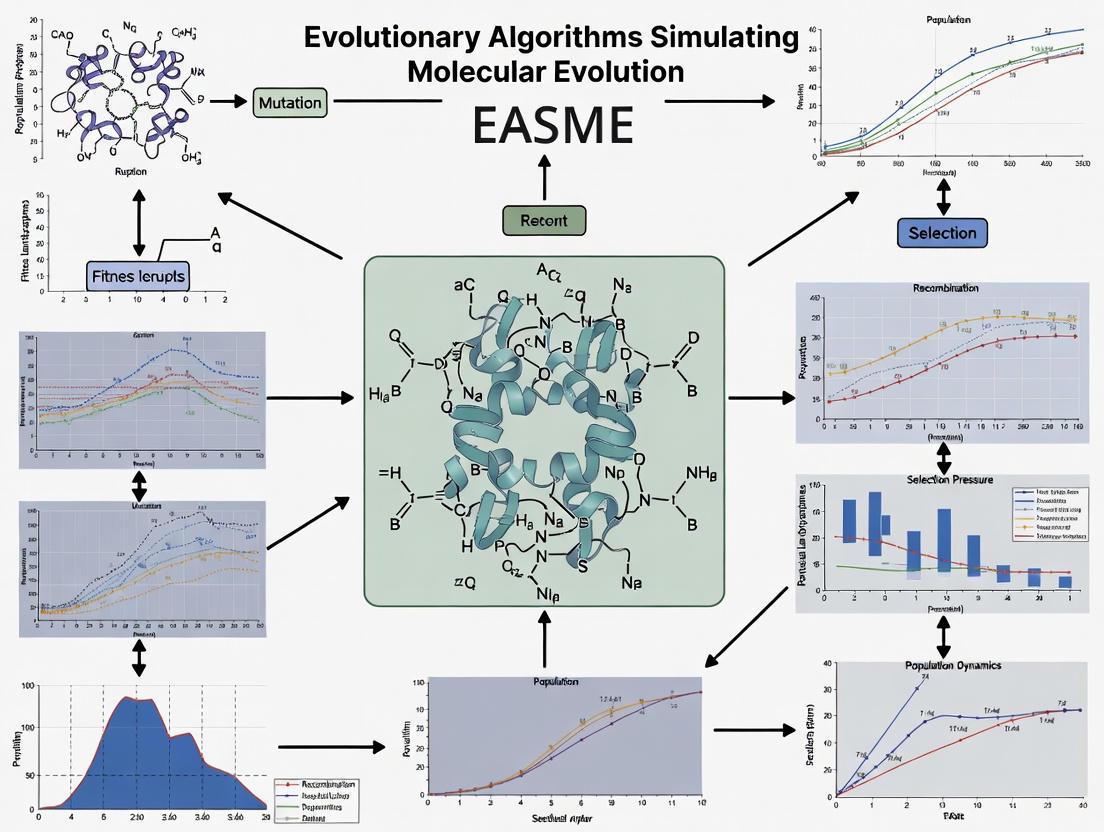
This article explores Evolutionary Algorithms Simulating Molecular Evolution (EASME), an emerging computational frontier that leverages evolutionary principles to design novel functional proteins and molecules.
EASME: Evolutionary Algorithms Simulating Molecular Evolution for Next-Generation Drug Design
Abstract
This article explores Evolutionary Algorithms Simulating Molecular Evolution (EASME), an emerging computational frontier that leverages evolutionary principles to design novel functional proteins and molecules. Tailored for researchers and drug development professionals, we dissect EASME's foundation in bridging bio-inspired computation with molecular biology. The scope encompasses its core methodology—using DNA-string representations and bioinformatics-informed fitness functions—and its application in de novo protein design and drug discovery. We further address critical challenges like computational cost and fitness function accuracy, compare EASME's performance against machine-learning alternatives, and validate its potential through proposed wet-lab synthesis and high-throughput screening frameworks. This synthesis aims to provide a comprehensive roadmap for harnessing EASME to expand nature's functional protein vocabulary and accelerate biomedical innovation.
What is EASME? Defining a New Paradigm for Computational Molecular Design
The fundamental challenge driving the genesis of Evolutionary Algorithms Simulating Molecular Evolution (EASME) is the vast disparity between nature's limited protein "vocabulary" and the massive potential search space of all possible amino acid sequences [1]. While genome sequencing has revealed extensive protein diversity in nature, this represents only a minimal fraction of what is theoretically possible. The core question EASME seeks to address is whether we can computationally expand this vocabulary to include useful proteins that went extinct long ago or have never evolved in nature's history [2]. This represents a significant evolution from traditional evolutionary algorithms, which have often operated on abstract representations, toward biologically-grounded simulations that can accurately mirror molecular evolution processes. The EASME framework emerges at the intersection of evolutionary algorithms, machine learning, and bioinformatics, creating a new subfield specifically dedicated to developing highly customized "designer proteins" through computationally intensive, biologically realistic simulations [1].
The transition from abstract evolution to biologically-accurate simulation marks a paradigm shift in computational biology. Where previous evolutionary algorithms utilized simplified representations for optimization tasks, EASME embraces biological complexity through DNA string representations, molecular-level evolutionary mechanisms, and bioinformatics-informed fitness functions [2]. This approach enables researchers to explore evolutionary trajectories that nature either never attempted or that disappeared from the historical record, opening unprecedented possibilities for drug development, metabolic engineering, and synthetic biology. For research scientists and drug development professionals, EASME represents a powerful new methodology for protein engineering that leverages the full predictive power of computational evolution while maintaining fidelity to biological constraints and mechanisms.
Theoretical Foundations: Bridging Computational and Molecular Evolution
Traditional evolutionary algorithms (EAs) have typically employed abstract problem representations that prioritize computational efficiency over biological accuracy. These conventional approaches often utilize binary encodings, real-valued vectors, or other simplified representations that bear little resemblance to biological genetic structures. While effective for many optimization problems, this abstraction creates a significant gap when applied to molecular design, as the mapping between solution representation and biological implementation becomes increasingly problematic [1].
EASME addresses this fundamental limitation by implementing DNA string representations that closely mirror biological genetic material, creating a direct pathway from computational simulation to wet-lab implementation. This biological fidelity extends to the evolutionary operators employed—mutation, recombination, and selection—which are designed to operate in ways consistent with molecular biology principles rather than mathematical convenience. The EASME framework incorporates population genetics constraints, structural biological principles, and functional conservation requirements that maintain biological plausibility throughout the evolutionary process [2]. This represents a significant departure from previous computational evolution approaches and enables the exploration of protein sequence spaces with greater biological relevance and experimental feasibility.
Core Components of the EASME Framework
Table 1: Core Technical Components of the EASME Framework
| Component | Traditional EA Approach | EASME Advancements | Biological Significance |
|---|---|---|---|
| Representation | Binary strings, real-valued vectors | DNA string representations | Maintains biological constraints; enables direct translation to synthetic biology |
| Fitness Evaluation | Mathematical objective functions | Bioinformatics-informed multi-objective functions | Incorporates structural stability, functional specificity, and evolutionary conservatism |
| Mutation Operators | Random bit-flips, Gaussian noise | Biologically plausible substitutions, indel mutations | Respects chemical similarity, structural constraints, and codon optimization |
| Recombination | Uniform, n-point crossover | Homology-aware sequence recombination | Mimics natural genetic exchange mechanisms; maintains reading frame integrity |
| Selection Pressure | Optimization-driven | Ecologically-inspired competitive dynamics | Balances innovation with functional constraint; promotes stable folds |
The EASME framework integrates several computational advances that enable this biological fidelity. Biologically accurate molecular evolution operators ensure that sequence transformations maintain reading frames, respect codon usage biases, and preserve functional domains [1]. The bioinformatics-informed fitness functions incorporate multiple constraints including thermodynamic stability, functional site conservation, structural viability, and phylogenetic plausibility. This multi-objective approach prevents the biologically meaningless solutions that often emerge from overly simplified optimization targets and ensures that evolved sequences represent potentially functional proteins rather than merely mathematical optima.
EASME Methodologies: Experimental Protocols and Workflows
Core Experimental Protocol for Protein Family Expansion
The following detailed methodology outlines a standard EASME approach for expanding protein functional families, providing researchers with a reproducible experimental framework:
Biological Context Definition: Establish the target protein family and functional context, including structural templates, conserved domains, and known functional residues. Curate multiple sequence alignments from relevant databases to establish evolutionary constraints.
EASME Initialization:
- Create initial population using natural sequences as seeds, ensuring phylogenetic diversity
- Define DNA-based representation scheme with appropriate genetic code
- Establish mutation rates based on molecular evolutionary patterns (typically 10⁻⁸ to 10⁻⁹ per site per generation)
- Set up recombination parameters reflecting homologous exchange frequencies
Evolutionary Loop Execution:
- For each generation, evaluate population using multi-objective fitness function
- Apply selection based on combined metrics of stability, function, and novelty
- Implement mutation operators with transition-transversion bias (typically 2:1 ratio)
- Perform homology-aware recombination between selected parents
- Maintain population diversity through niche specialization or island models
Convergence and Analysis:
- Monitor evolutionary trajectories for stabilization of fitness metrics
- Apply clustering to identify distinct evolutionary lineages
- Select representative sequences from promising lineages for further validation
- Perform in silico characterization of selected variants
This protocol emphasizes the maintenance of biological plausibility at each step, with fitness evaluations incorporating not just desired functional characteristics but also structural stability metrics, evolutionary conservation patterns, and metabolic feasibility when expressed in target host organisms [1].
EASME Workflow Visualization
EASME Computational Workflow: The complete iterative process of evolutionary algorithms simulating molecular evolution, from biological context definition to final sequence output.
Molecular Evolution Pathway
Molecular Evolution Pathway: The biological simulation pathway within EASME, showing the complete cycle from DNA to selection pressure.
Key Research Reagent Solutions
Table 2: Essential Research Reagents and Computational Tools for EASME Implementation
| Tool Category | Specific Tools/Resources | Function in EASME Pipeline | Implementation Considerations |
|---|---|---|---|
| Evolutionary Computation Platforms | DEAP, EASEA, OpenBEAM | Provides evolutionary algorithm infrastructure | Customization required for biological operators; DNA-aware representations |
| Molecular Simulation | GROMACS, Rosetta, MODELLER | Protein folding and stability predictions | Computational intensity requires HPC resources; accuracy trade-offs |
| Bioinformatics Databases | UniProt, Pfam, NCBI BLAST | Evolutionary constraints and family definitions | Essential for fitness function development; provides natural sequence landscapes |
| Machine Learning Integration | AlphaFold2, ProteinMPNN, ESMFold | Fitness prediction and sequence optimization | Enhances traditional evolutionary operators; reduces computational burden |
| Experimental Validation | Gene synthesis, Protein expression kits | Wet-lab confirmation of predictions | Critical for closing the design-build-test loop; confirms biological activity |
The EASME research toolkit bridges computational prediction with experimental validation, creating an iterative design-build-test-learn cycle. The evolutionary computation platforms provide the foundational infrastructure for population management, evolutionary operators, and selection mechanisms. These platforms require significant customization for EASME applications, particularly in implementing biologically realistic mutation rates, recombination mechanisms, and DNA-aware representations that maintain reading frames and respect genetic code constraints [1].
Molecular simulation tools form the computational core for fitness evaluation, providing in silico estimates of protein stability, folding kinetics, and functional characteristics. The computational intensity of these simulations often necessitates high-performance computing resources, making cloud integration and parallel processing essential considerations for practical implementation. The bioinformatics databases provide the evolutionary context and natural sequence landscapes that inform fitness functions and constrain evolutionary trajectories to biologically plausible regions of sequence space [2].
Quantitative Framework: Data Structures and Performance Metrics
EASME Data Structures and Evolutionary Parameters
Table 3: Quantitative Parameters and Performance Metrics in EASME Implementation
| Parameter Category | Typical Range/Values | Impact on Evolutionary Dynamics | Optimization Guidelines |
|---|---|---|---|
| Population Genetics | Effective population size: 10³-10⁵ | Maintains genetic diversity; influences selection efficacy | Balance diversity with computational constraints |
| Mutation Parameters | Rate: 10⁻⁸-10⁻⁹ per site; Ti/Tv ratio: 1.5-2.5 | Controls exploration-exploitation balance | Match biological reality; avoid premature convergence |
| Fitness Components | Stability (ΔΔG), Function, Expressibility | Multi-objective optimization landscape | Weight components based on application priorities |
| Convergence Metrics | Generations: 10³-10⁶; Fitness plateau detection | Determines experimental duration | Implementation-dependent; requires pilot studies |
| Sequence Validation | Identity to natural (<70%); Novelty metrics | Balances innovation with foldability | Context-dependent thresholds for application needs |
The quantitative framework for EASME requires careful parameterization to balance biological realism with computational feasibility. Population genetics parameters must reflect realistic effective population sizes that maintain sufficient diversity for evolutionary innovation without becoming computationally prohibitive. The mutation parameters should mirror natural molecular evolutionary patterns, including appropriate transition-transversion ratios and context-dependent mutation rates that reflect sequence context effects on mutagenesis [1].
The fitness evaluation components create a multi-objective optimization landscape that typically includes stability metrics (predicted ΔΔG), functional characteristics (binding affinity, catalytic efficiency), and expressibility considerations (codon optimization, solubility). The relative weighting of these components depends on the specific application, with drug development applications potentially prioritizing stability and function, while metabolic engineering applications might emphasize expressibility and metabolic burden. Convergence metrics for EASME experiments differ from traditional EAs, as biological evolution often exhibits punctuated equilibrium rather than smooth optimization, requiring more sophisticated detection of evolutionary plateaus and adaptive breakthroughs [2].
Applications and Future Directions in Drug Development
The translational potential of EASME in pharmaceutical research is substantial, particularly for addressing challenging drug targets that have proven refractory to conventional approaches. For drug development professionals, EASME offers methodologies for engineering novel biologics, enzyme therapies, and targeted delivery systems based on protein scaffolds that may have never existed in nature. The approach enables systematic exploration of sequence spaces around known therapeutic proteins to enhance stability, reduce immunogenicity, or modify binding specificity. Additionally, EASME can resurrect ancient protein variants that may possess desirable characteristics lost in modern lineages, providing access to evolutionary tested scaffolds with potentially superior drug-like properties.
Future developments in EASME are likely to focus on integration with experimental evolution systems that close the loop between computational prediction and laboratory validation. The field will also need to address scaling challenges as more complex protein systems and molecular machines become targets for design. For research scientists, key frontiers include incorporating epigenetic regulation, multi-protein complexes, and dynamic cellular environments into the evolutionary simulations. As the field matures, standardization of validation protocols, benchmarking datasets, and performance metrics will be essential for translating EASME methodologies from basic research to applied pharmaceutical development.
The genesis of EASME represents a fundamental shift in computational biology, moving from abstract optimization to biologically-grounded simulation of molecular evolutionary processes. This paradigm shift enables researchers to explore protein sequence spaces with unprecedented breadth and biological relevance, creating powerful new methodologies for drug development, metabolic engineering, and synthetic biology applications.
The field of Evolutionary Algorithms Simulating Molecular Evolution (EASME) represents a transformative interdisciplinary framework that integrates computational evolution with molecular design to accelerate scientific discovery. This approach leverages nature-inspired optimization strategies to navigate the vast complexity of molecular and biological spaces, enabling researchers to solve problems that are intractable for traditional analytical methods. EASME research provides the foundational methodology for automating the discovery of novel molecular entities and predicting evolutionary pathways, with profound implications for drug development, materials science, and therapeutic design. By simulating evolutionary processes in silico, EASME allows for the exploration of chemical and biological landscapes at unprecedented scales and speeds, effectively compressing years of experimental research into computationally feasible timeframes. This technical guide examines the three core pillars of EASME—evolutionary algorithms, molecular representation, and fitness landscapes—providing researchers with both theoretical foundations and practical methodologies for implementing these powerful techniques.
Core Principles of Evolutionary Algorithms
Fundamental Mechanisms
Evolutionary Algorithms (EAs) constitute a robust class of artificial intelligence search techniques inspired by biological principles of natural selection and genetics [3]. Unlike traditional mathematical methods that rely on derivative calculations, EAs simulate evolution to solve complex optimization problems by maintaining a population of potential solutions that compete, reproduce, and mutate [3]. This approach enables EAs to navigate vast, rugged search spaces where the optimal solution is unknown or impossible to derive analytically, making them particularly valuable in machine learning for tasks ranging from automated model design to complex scheduling in drug discovery pipelines.
The functionality of an Evolutionary Algorithm mirrors the concept of survival of the fittest through an iterative cycle of biological operators [3]:
- Initialization: The system generates a random population of potential solutions to the problem.
- Fitness Evaluation: Each candidate is tested against a defined fitness function that quantifies its performance for the target application.
- Selection: Candidates with higher fitness scores are preferentially selected to act as parents for the next generation.
- Reproduction and Variation: New solutions are created using crossover (combining traits from two parents) and mutation (introducing random changes). Mutation is particularly critical as it introduces genetic diversity, preventing premature convergence to local optima.
Table 1: Key Components of Evolutionary Algorithms and Their Functions
| Component | Function | Role in EASME |
|---|---|---|
| Population | Maintains diversity of candidate solutions | Ensures broad exploration of chemical space |
| Fitness Function | Evaluates solution quality | Quantifies molecular drug-likeness or binding affinity |
| Selection | Prioritizes high-performing solutions | Drives optimization toward target properties |
| Crossover | Combines promising solution elements | Enables hybridization of beneficial molecular features |
| Mutation | Introduces novel variations | Generates new molecular structures beyond training data |
Distinctive Advantages for Molecular Optimization
EAs offer distinctive advantages that make them particularly suitable for molecular optimization problems in EASME research. As gradient-free optimization methods, EAs can optimize non-differentiable or discrete problems where gradients are unavailable or poorly defined [3]. This capability is essential when dealing with molecular structures that may have complex, discontinuous property landscapes. Furthermore, EAs excel at global exploration of search spaces, effectively navigating multi-modal fitness landscapes where gradient-based methods might become trapped in local optima [4].
The versatility of EAs is demonstrated across multiple domains in EASME research. In hyperparameter tuning for deep learning models in drug discovery, EAs automate the optimization of training configurations, systematically evolving parameters such as learning rates, momentum, and weight decay to maximize model performance [3]. For neural architecture search (NAS), EAs treat network structures as genetic code, evolving highly efficient architectures tailored for specific molecular prediction tasks [3]. In molecular design, EAs facilitate scaffold hopping by evolving novel molecular core structures while preserving desired biological activity [5].
Molecular Representation Methods
Traditional Representation Approaches
Molecular representation forms the critical bridge between chemical structures and their computational analysis, serving as the foundation for all machine learning and evolutionary algorithms in EASME research [5]. Effective translation of molecules into computer-readable formats enables the application of computational optimization techniques to chemical space. Traditional representation methods rely on explicit, rule-based feature extraction developed through decades of cheminformatics research.
The Simplified Molecular-Input Line-Entry System (SMILES) represents one of the most widely adopted traditional representations, encoding chemical structures as linear strings using atomic symbols and structural indicators [5] [6]. Despite its compactness and human-readability, SMILES has inherent limitations in capturing molecular complexity and can generate invalid structures due to syntactic constraints. Molecular fingerprints such as Extended-Connectivity Fingerprints (ECFP) constitute another fundamental approach, representing molecules as binary vectors indicating the presence or absence of specific substructures [6]. These fingerprints enable efficient similarity calculations and have proven valuable for quantitative structure-activity relationship (QSAR) modeling [5].
Table 2: Comparison of Molecular Representation Methods
| Representation Type | Key Examples | Advantages | Limitations |
|---|---|---|---|
| String-Based | SMILES, SELFIES, InChI | Human-readable, compact storage | May generate invalid structures, limited structural context |
| Descriptor-Based | Molecular weight, hydrophobicity, topological indices | Direct physicochemical interpretation, computational efficiency | May miss complex structural patterns, requires expert knowledge |
| Fingerprint-Based | ECFP, MACCS keys | Effective for similarity search, QSAR modeling | Predefined features limit novelty, may miss emerging patterns |
| Graph-Based | Graph Neural Networks (GNNs) | Native representation of molecular structure, captures topology | Computationally intensive, requires large datasets |
| Language Model-Based | Transformer models, BERT architectures | Captures contextual relationships, transfer learning potential | Black-box nature, limited interpretability |
AI-Driven Representation Innovations
Modern AI-driven molecular representation methods have emerged as transformative tools in EASME research, shifting from predefined rules to data-driven learning paradigms [5]. These approaches leverage deep learning models to automatically extract and learn intricate features from molecular data, enabling more sophisticated understanding of structure-function relationships. Graph Neural Networks (GNNs) have gained particular prominence as they natively represent molecules as graphs with atoms as nodes and bonds as edges, directly capturing topological information [6]. This representation naturally aligns with chemical intuition and has demonstrated superior performance in predicting molecular properties and activities.
Language model-based approaches represent another significant advancement, adapting transformer architectures from natural language processing to treat molecular sequences (e.g., SMILES) as specialized chemical languages [5]. These models tokenize molecular strings at the atomic or substructure level and process them through sophisticated neural architectures to capture contextual relationships within and across sequences. The resulting embeddings reflect complex molecular characteristics and functions, enabling more accurate property prediction [5]. Recent research has also explored multimodal and contrastive learning frameworks that integrate multiple representation types to create more comprehensive molecular characterizations [5].
The topology of molecular representations has emerged as a critical factor influencing machine learning performance in EASME applications [6]. Studies indicate that the geometric arrangement of molecules in feature space directly impacts model generalizability, with discontinuous "activity cliffs" - where small structural changes yield large property differences - presenting particular challenges for predictive modeling [6]. Tools like the Roughness Index (ROGI) and TopoLearn model have been developed to quantify landscape complexity and guide representation selection based on topological characteristics [6].
Fitness Landscapes in Molecular Evolution
Theoretical Foundations and Quantification
In evolutionary genetics, fitness represents a measure of an organism's reproductive success, while a fitness landscape maps the relationship between genotypes and their corresponding fitness values, typically visualized as a topographic surface with peaks and valleys [7] [8]. This powerful metaphor, introduced by Sewall Wright, conceptualizes evolution as a stochastic climb toward higher fitness peaks - a survival-of-the-fittest process operating on genotypic variations [8]. In EASME research, fitness landscapes provide the fundamental framework for understanding and guiding molecular evolution, whether applied to viral proteins, therapeutic antibodies, or novel chemical entities.
For SARS-CoV-2 and other viruses, fitness can be quantified as the relative effective reproduction number (R~e~) between variants, representing their relative transmission advantage in a specific host population with defined immunity profiles [7]. The mathematical relationship between genotype and fitness creates a landscape that governs evolutionary trajectories, with variants accumulating mutations that enhance their fitness through improved receptor binding, immune evasion, or replication efficiency [7]. Quantitative indices have been developed to characterize the topography of these landscapes, including:
- Structure-Activity Landscape Index (SALI): Identifies "activity cliffs" where structurally similar molecules exhibit significant property differences [6]
- Roughness Index (ROGI): Quantifies global surface roughness through fractal dimension analysis [6]
- Modelability Index (MODI): Assesses the predictability of structure-activity relationships for classification tasks [6]
These quantitative descriptors enable researchers to evaluate landscape navigability and predict the performance of machine learning models applied to molecular optimization problems [6].
Fitness Landscape Design (FLD)
A groundbreaking advancement in EASME research is the emergence of Fitness Landscape Design (FLD), which represents the "inverse problem" of evolutionary biology [8]. Rather than merely predicting evolution on existing landscapes, FLD aims to actively reshape the fitness landscape itself to steer evolutionary outcomes toward desired states. This approach employs stochastic optimization of biophysically derived fitness models to discover intervention strategies that force target proteins to evolve according to user-defined fitness landscapes [8].
The biophysical basis of fitness landscapes derives from microscopic chemical interactions between molecules. For viral proteins, fitness can be modeled through binding affinities to host receptors and neutralizing antibodies, creating a quantifiable genotype-fitness mapping [8]. This biophysical foundation enables researchers to establish designability phase diagrams that delineate the space of achievable fitness assignments for different genotypes through appropriate interventions [8]. The codesignability score quantifies the degree to which two genotypes' fitnesses can be independently controlled, with higher scores indicating greater flexibility in landscape engineering [8].
Integrated EASME Experimental Protocols
Protocol: Protein Language Model for Fitness Prediction
The CoVFit model exemplifies the integration of evolutionary principles with molecular representation for predicting viral fitness [7]. This protocol details the implementation of a protein language model adapted from ESM-2 to forecast variant fitness based solely on spike protein sequences.
Materials and Data Requirements:
- Viral genome sequences from surveillance databases (e.g., GISAID)
- Deep mutational scanning (DMS) data for antibody escape profiles
- Computational resources for transformer model fine-tuning
- Fitness estimates derived from temporal variant frequency data
Methodological Steps:
Domain Adaptation: Perform additional pretraining on ESM-2 model with spike protein sequences from Coronaviridae family to create ESM-2~Coronaviridae~ [7]
Multitask Fine-tuning: Simultaneously optimize model on both genotype-fitness data and DMS escape profiles using shared representations [7]
Country-Specific Fitness Modeling: Account for varying immune landscapes across geographical regions through separate output heads [7]
Ensemble Validation: Create multiple model instances (e.g., CoVFit~Nov23~) through cross-validation to estimate prediction uncertainty [7]
Performance Metrics: The model achieves Spearman's rank correlation of 0.990 for fitness prediction on non-extrapolative data, successfully prioritizing high-risk variants based solely on sequence information [7].
Protocol: Fitness Landscape Design with Antibodies (FLD-A)
This protocol outlines the computational methodology for designing antibody ensembles that reshape viral fitness landscapes to suppress escape variant emergence [8].
Materials and Data Requirements:
- Protein Data Bank structures of target antigen complexes
- Binding free energy calculations (EvoEF force field, Potts models)
- Antibody sequence libraries with paratope variation
- Stochastic optimization algorithms
Methodological Steps:
Biophysical Model Derivation: Establish quantitative relationship between antigen sequence and viral growth rate through kinetic reaction equations [8]
Binding Affinity Computation: Calculate host-antigen (ΔG~H~(s)) and antibody-antigen (ΔG~Ab~(s,a)) binding free energies for sequence variants [8]
Designability Assessment: Construct codesignability matrices to identify genotype pairs with independent fitness controllability [8]
Antibody Ensemble Optimization: Employ stochastic search to identify antibody combinations that minimize escape variant fitness across targeted neutral networks [8]
Validation Approach: Implement in silico serial dilution experiments using microscopic chemical reaction dynamics simulations to verify evolutionary trajectories conform to designed landscapes [8].
Table 3: Essential Research Reagents and Computational Tools for EASME
| Tool/Reagent | Function | Application in EASME |
|---|---|---|
| ESM-2 Protein Language Model | Protein sequence representation | Base architecture for fitness prediction models [7] |
| Graph Neural Networks (GNNs) | Molecular graph representation | Captures topological structure of molecules [6] |
| Evolution Strategies | Gradient-free optimization | Navigates complex molecular fitness landscapes [9] |
| Extended-Connectivity Fingerprints (ECFP) | Molecular fingerprinting | Traditional representation for QSAR and similarity [6] |
| Topological Data Analysis (TDA) | Shape analysis of data | Quantifies feature space topology for representation selection [6] |
| Stochastic Optimization Algorithms | Landscape design | Discovers antibody ensembles for fitness suppression [8] |
| Binding Free Energy Calculations | Biophysical interaction modeling | Quantifies protein-protein interactions for fitness models [8] |
| Ultralytics YOLO Tuning | Hyperparameter optimization | Genetic algorithm-based model configuration [3] |
The integration of evolutionary algorithms, advanced molecular representations, and fitness landscape modeling within the EASME framework represents a paradigm shift in computational molecular design. By simulating evolutionary processes in silico, researchers can now navigate the vast complexity of chemical and biological spaces with unprecedented efficiency, accelerating the discovery of novel therapeutics and materials. The emerging capability to not just predict but actively design fitness landscapes opens transformative possibilities for proactive biomedical interventions, particularly in viral evolution management where conventional approaches consistently lag behind pathogen adaptation.
Future advancements in EASME research will likely focus on several key frontiers: the development of more sophisticated multimodal representations that integrate structural, dynamic, and chemical information; the creation of real-time evolutionary forecasting systems for pandemic preparedness; and the application of fitness landscape design to cancer therapeutics and antibiotic development. As these methodologies mature, EASME promises to fundamentally transform our approach to molecular optimization, shifting from reactive discovery to proactive design of evolutionary outcomes.
The search for functional proteins is akin to navigating an immense ocean. The space of all possible amino acid sequences is astronomically vast, yet the islands of functional, stable proteins within this sea are vanishingly small. This landscape defines the central challenge in protein engineering today. The set of proteins produced by nature is minuscule compared to the theoretical search space of all possible sequences; most random permutations would be unstable and non-functional [10]. The goal of modern computational biology is to develop sophisticated methods to chart these unknown waters and efficiently discover or design new functional proteins. This endeavor is not merely academic; it holds the key to developing novel therapeutics, enzymes, and materials. The field of Evolutionary Algorithms Simulating Molecular Evolution (EASME) has emerged specifically to address this challenge by merging evolutionary computation with bioinformatics to fast-forward molecular evolution in silico [10] [2]. This whitepaper provides an in-depth examination of the strategies and tools enabling researchers to navigate this vast search space, focusing on the integration of evolutionary algorithms with cutting-edge structural genomics and machine learning.
Quantifying the Search Space and Functional Landscape
The challenge begins with understanding the scale of the problem. For a typical protein of 100 amino acids, the possible sequence combinations are 20^100, creating a search space of such magnitude that exhaustive exploration is impossible. This space is often visualized as a largely empty "sea of invalidity" punctuated by small archipelagos of functional proteins [10]. Only a small region of this functional archipelago is occupied by proteins that have actually evolved through natural history.
Recent advances in structural biology have begun mapping this archipelago with unprecedented resolution. The analysis of massive datasets from the AlphaFold Protein Structure Database (AFDB), ESMAtlas, and the Microbiome Immunity Project (MIP) has revealed significant structural complementarity between different databases, meaning they collectively cover broader regions of the functional landscape than any single source [11]. This unified mapping shows that high-level biological functions tend to cluster in specific regions of the structure space, providing a valuable guide for navigation. The table below summarizes key characteristics of these major structural databases that researchers use to understand the functional protein landscape.
Table 1: Major Protein Structure Databases for Landscape Exploration
| Database | Source Organisms | Key Characteristics | Structural Coverage |
|---|---|---|---|
| AlphaFold Protein Structure Database (AFDB) [11] | Wide range, significant eukaryote representation | Based on UniProt; includes high and low-quality models; categorized into "light" and "dark" clusters | Extensive coverage of known structural landscape, overlaps with ESMAtlas light proteins |
| ESMAtlas [11] | Metagenomic studies (predominantly prokaryotic) | Contains over 600 million predictions; high-quality subset available | Reveals significant novelty, especially from metagenomic sequences |
| Microbiome Immunity Project (MIP) [11] | Bacterial genomes (GEBA) | Short, single-domain proteins (40-200 residues) | Distinct region of structure space, complementary to AFDB and ESMAtlas |
Computational Frameworks for Navigation
The EASME Paradigm
Evolutionary Algorithms Simulating Molecular Evolution (EASME) represents a foundational framework for navigating protein sequence space. EASME employs evolutionary algorithms (EAs) that simulate evolution through selection, reproduction, and mutation to optimize and design protein sequences [10]. Unlike machine learning approaches that are often limited by their training data to existing natural sequences, EAs can theoretically explore the entire search space, including regions corresponding to functional proteins that have never existed in nature [10]. The EASME approach can operate in two primary modes:
- "Unknown to Known": Evolving a random sequence toward a known consensus sequence or protein family, effectively reconstructing sequences that may have gone extinct during evolution.
- "Known to Unknown": Forward-evolving a known protein by implementing a selection regimen that drives toward a desired characteristic or phenotype, acting as a "fast forward" button on evolution [10].
Table 2: Comparison of Computational Protein Design Approaches
| Approach | Core Principle | Advantages | Limitations |
|---|---|---|---|
| EASME [10] [2] | Evolutionary algorithms with bioinformatics-informed fitness functions | Biomimetic; explainable decisions; explores beyond natural sequence space | Computationally intensive; requires careful fitness function design |
| Semantic Design (Evo) [12] | Genomic language model leveraging contextual gene relationships | High experimental success rates; designs novel sequences with no natural similarity | Limited to prokaryotic systems; relies on genomic context patterns |
| DeepEvolve [13] | Integrates deep research with algorithm evolution | Sustained performance gains; combines external knowledge with validation | Complex workflow requiring multiple coordinated modules |
| Interaction Selective Network (ISN) [14] | Quantitative coarse-grained model using chemical interaction networks | Robust discrimination of protein classes; incorporates structural information | Requires predefined interaction criteria and cutoff distances |
Semantic Design with Genomic Language Models
A powerful complementary approach is semantic design, which uses genomic language models like Evo to leverage the natural distribution of gene functions in prokaryotic genomes [12]. This method operates on the distributional hypothesis that "you shall know a gene by the company it keeps" – functionally related genes often cluster together in operons. By prompting these models with genomic sequences of known function, researchers can generate novel sequences enriched for targeted biological functions, effectively performing a genomic "autocomplete" [12]. This approach has successfully generated functional toxin-antitoxin systems and anti-CRISPR proteins, some with no significant sequence similarity to natural proteins [12].
Augmented Workflows: Deep Research Meets Evolution
The integration of deep research with evolutionary algorithms, as seen in systems like DeepEvolve, creates a powerful feedback loop for algorithm and protein discovery [13]. This framework overcomes limitations of pure evolution (which can plateau) and pure research (which can propose unrealistic ideas) by uniting external knowledge retrieval, cross-file code editing, and systematic debugging [13]. In this workflow, each iteration not only proposes new hypotheses but also refines, implements, and tests them, leading to sustained performance improvements across diverse scientific domains.
Experimental Methodologies and Validation
Workflow for Semantic Design of Protein Systems
The experimental validation of computationally designed proteins is crucial. The following diagram illustrates a generalized workflow for the semantic design of multi-component systems, such as toxin-antitoxin pairs, integrating computational generation and experimental testing.
Quantitative Structural Classification with ISNs
To quantitatively categorize and validate protein structures, the Interaction Selective Network (ISN) provides a robust framework. Unlike conventional Cα networks (CAN) or atomic distance networks (ADN), ISNs incorporate chemical properties of interactions—including hydrogen bonds, hydrophobic interactions, disulfide bonds, ionic interactions, and covalent bonds—using specific distance cutoffs (Rc) [14]. The methodology proceeds as follows:
- Network Construction: Represent the protein 3D structure as a network where vertices correspond to amino acid residues and links represent specific chemical interactions based on defined atom-pair distances [14].
- Parameter Calculation: Calculate key network parameters, particularly the average vertex degree (k) and average clustering coefficient (C) [14].
- Classification: Plot k versus C to achieve quantitative discrimination between protein structural classes, successfully distinguishing between "all-α" and "all-β" proteins where other methods fail [14].
Table 3: Interaction Cutoffs for ISN Construction
| Interaction Type | Atom Pairs | Cutoff Distance (Rc) | Relevant Residues |
|---|---|---|---|
| Hydrogen Bonds [14] | Donor-Acceptor | 3.5 Å | Polar residues |
| Hydrophobic Interactions [14] | Side chain carbon atoms | 5.0 Å | Ala, Val, Leu, Ile, Met, Phe, Trp, Pro, Tyr |
| Disulfide Bonds [14] | Sulfur-Sulfur | 2.2 Å | Cysteine |
| Ionic Interactions [14] | Nitrogen-Oxygen (side chains) | 6.0 Å | Arg, Lys, His, Asp, Glu |
| Covalent Bonds [14] | Main chain | Consecutive residues | All |
Successful navigation of the protein sequence space requires a comprehensive toolkit of computational and experimental resources. The following table details key reagents, databases, and software essential for conducting research in this field.
Table 4: Key Research Reagents and Resources for Protein Discovery
| Resource Name | Type | Function/Application | Access |
|---|---|---|---|
| AlphaFold Protein Structure Database (AFDB) [11] | Database | Repository of high-quality protein structure predictions for a wide range of organisms | Publicly available |
| ESMAtlas [11] | Database | Extensive database of protein structures from metagenomic sequences, revealing novel folds | Publicly available |
| SynGenome [12] | Database | AI-generated genomic sequence database enabling semantic design across diverse functions | https://evodesign.org/syngenome/ |
| Evo (Genomic Language Model) [12] | Software | Enables semantic design of novel protein sequences through genomic context prompting | Research use |
| Foldseek [11] | Software | Efficient tool for protein structure clustering and comparison, used for redundancy removal | Publicly available |
| deepFRI [11] | Software | Structure-based function prediction method for functional annotation of protein models | Publicly available |
| Geometricus [11] | Software | Generates fixed-length shape-mer vector representations for protein structures | Publicly available |
| Growth Inhibition Assay [12] | Experimental Protocol | Validates function of generated toxin proteins by measuring bacterial growth reduction | Wet-lab method |
Navigating the vast sea of invalid protein sequences to find functional islands is one of the most challenging yet promising frontiers in computational biology. The integration of evolutionary algorithms simulating molecular evolution (EASME) with structural genomics, genomic language models, and robust experimental validation creates a powerful pipeline for protein discovery. Frameworks like semantic design and tools like Interaction Selective Networks provide quantitative methods to characterize and generate proteins that not only recapitulate natural functions but also explore entirely novel regions of sequence space. As these computational methods continue to mature, complemented by ever-expanding structural databases and validation protocols, they promise to dramatically accelerate the design of novel proteins for therapeutic, industrial, and research applications, effectively colonizing new islands in the vast sea of possibility.
The fundamental challenge in molecular biology and drug development lies in the vast unexplored potential of protein sequences. While genome sequencing has revealed immense diversity, the set of known functional protein families remains minimal compared to the nearly infinite search space of all possible amino acid sequences [1]. This limitation represents a significant bottleneck in designing novel therapeutics and understanding biological systems. The emerging subfield of Evolutionary Algorithms Simulating Molecular Evolution (EASME) directly addresses this challenge by merging evolutionary algorithms, machine learning, and bioinformatics to develop highly customized "designer proteins" [1] [2]. This approach enables researchers to explore protein sequences that may have gone extinct over evolutionary history or, more significantly, those that have never existed in nature, thereby expanding nature's limited protein "vocabulary" [2].
The EASME framework represents a paradigm shift in computational biology, moving beyond observation to active creation of novel biological molecules. By implementing biologically accurate molecular evolution with DNA string representations and bioinformatics-informed fitness functions, EASME provides a systematic methodology for protein engineering and design [1]. This technical guide explores the core methodologies, experimental protocols, and practical implementation frameworks for researchers seeking to leverage EASME approaches in molecular biology and pharmaceutical development contexts, with particular attention to the European regulatory landscape that governs the translation of these computational discoveries into clinically applicable therapies.
Core Methodologies and Technical Framework
Fundamental EASME Architecture
The EASME framework operates on principles inspired by natural evolution but implemented through computational optimization techniques. The architecture consists of four interconnected components that form an iterative design cycle:
Population Initialization: EASME begins with a diverse population of DNA sequences, which can be derived from natural templates or generated de novo based on structural constraints. This initial genetic diversity is crucial for exploring the sequence space effectively and avoiding premature convergence to suboptimal solutions.
Fitness Evaluation: Each candidate sequence undergoes rigorous computational assessment using bioinformatics-informed fitness functions that predict molecular performance characteristics. These multi-objective functions typically evaluate protein stability, binding affinity, solubility, and specificity, often employing machine learning models trained on known protein structures and functions [1].
Selection Pressure: The algorithm applies selective pressure based on fitness scores, preserving elite performers while eliminating poorly performing variants. Tournament selection and elitism strategies maintain population diversity while steadily improving average fitness across generations.
Variation Operators: Biologically realistic genetic operators introduce sequence variations through point mutations, cross-over recombination, insertions, deletions, and domain shuffling. These operators are calibrated to reflect observed molecular evolutionary rates while focusing exploration on functionally relevant regions.
This computational evolutionary process continues iteratively until convergence criteria are met, typically when fitness improvement plateaus or a specified number of generations have elapsed. The output is a set of optimized protein sequences with predicted enhanced or novel functions, which then advance to experimental validation phases.
Computational Infrastructure and Requirements
Implementing EASME requires substantial computational resources and specialized software infrastructure. The table below outlines the core computational requirements and representative tools for establishing an EASME research pipeline:
Table 1: Computational Requirements for EASME Implementation
| Component | Specifications | Representative Tools/Libraries |
|---|---|---|
| Evolutionary Algorithm Framework | Support for custom genetic representations and operators | DEAP, Distributed Evolutionary Algorithms in Python |
| Molecular Modeling | Atomic-level structure prediction and simulation | Rosetta, GROMACS, OpenMM |
| Machine Learning Integration | Neural networks for fitness prediction | PyTorch, TensorFlow, Scikit-learn |
| Bioinformatics Processing | Sequence analysis and structural bioinformatics | Biopython, HMMER, BLAST+ |
| High-Performance Computing | CPU/GPU cluster for parallel fitness evaluation | SLURM workload manager, CUDA |
| Data Management | Storage and retrieval of sequence-structure-function relationships | MongoDB, PostgreSQL with biochemical extensions |
The computational intensity of EASME workflows necessitates careful resource planning, particularly for the fitness evaluation phase which often involves molecular dynamics simulations that can require hundreds to thousands of CPU-hours per candidate sequence. Cloud computing platforms and specialized hardware (e.g., GPUs for neural network inference) can significantly accelerate these computations.
Experimental Protocols and Validation Frameworks
In Silico Validation Methodology
Before advancing to wet-lab experimentation, EASME-generated candidates must undergo rigorous computational validation to assess their structural integrity and functional potential. The protocol involves a multi-stage filtering process:
Stage 1: Structural Stability Assessment Candidate sequences undergo molecular dynamics simulations to evaluate folding stability under physiological conditions. Simulations run for a minimum of 100ns at 310K using explicit solvent models, with analysis of root-mean-square deviation (RMSD), radius of gyration, and secondary structure preservation. Candidates exhibiting unstable folding trajectories or misfolding tendencies are eliminated at this stage.
Stage 2: Functional Site Conservation For enzymes and binding proteins, catalytic or interaction sites are analyzed for geometric and chemical complementarity to intended substrates or targets. Binding free energy calculations using methods such as MM/GBSA provide quantitative estimates of interaction strength, with thresholds set based on natural reference systems.
Stage 3: Specificity Profiling To minimize off-target effects, candidates are screened against databases of non-target structures (e.g., the Human Proteome for therapeutic applications). Docking simulations and sequence homology analyses identify potential cross-reactivities, with candidates demonstrating excessive promiscuity flagged for redesign or elimination.
Stage 4: Evolvability Assessment As a unique advantage of evolutionary approaches, the mutational robustness and evolvability of candidates are evaluated by simulating future evolutionary trajectories. Sequences with excessive fragility to single-point mutations may have limited practical utility and are deprioritized.
This comprehensive computational validation protocol typically reduces candidate lists by 80-90%, focusing experimental resources on the most promising designs. The workflow below visualizes this multi-stage filtering process:
Wet-Lab Experimental Translation
Following computational validation, EASME-designed sequences transition to laboratory experimentation for empirical verification. The standard translation protocol involves:
Gene Synthesis and Expression Optimization
- Codon Optimization: EASME-designed sequences are reverse-translated to DNA with host-specific codon optimization for expression in target systems (E. coli, yeast, mammalian cells)
- Vector Assembly: Synthetic genes are cloned into expression vectors with appropriate tags (e.g., His-tag for purification) and promoters
- Small-Scale Expression Testing: Initial expression in 10-50mL cultures to assess protein yield and solubility, with adjustment of induction conditions (temperature, inducer concentration, duration)
Biophysical Characterization
- Purification: Affinity chromatography followed by size-exclusion chromatography to obtain monodisperse protein samples
- Structural Validation: Circular dichroism spectroscopy to verify secondary structure content, followed by thermal denaturation to assess stability (Tm measurement)
- X-ray Crystallography or Cryo-EM: For high-resolution structure determination to confirm computational models (where resources permit)
Functional Assays
- Enzyme Kinetics: For catalytic proteins, measurement of kcat and Km parameters using spectrophotometric or fluorometric assays
- Binding Affinity: Surface plasmon resonance (SPR) or isothermal titration calorimetry (ITC) to quantify interactions with target molecules
- Cellular Activity: Cell-based reporter assays or phenotypic screens to confirm function in biologically relevant contexts
This experimental pipeline generates critical feedback for refining EASME fitness functions, creating an iterative design-build-test cycle that progressively improves the algorithm's predictive accuracy and biological relevance.
Regulatory Considerations for EASME-Generated Therapeutics
European Regulatory Pathways
The translation of EASME-derived therapeutics from research to clinical application requires careful navigation of the European regulatory landscape. The European Medicines Agency (EMA) offers several mechanisms to support the development of novel biological entities, which are particularly relevant for computationally designed molecules:
Table 2: EMA Regulatory Pathways Relevant to EASME Applications
| Regulatory Mechanism | Purpose | Relevance to EASME |
|---|---|---|
| Scientific Advice & Protocol Assistance | Early dialogue on appropriate tests and studies in medicine development [15] | Critical for novel protein modalities with non-natural sequences |
| PRIME (PRIority MEdicines) | Enhanced support for medicines targeting unmet medical needs [15] | Accelerates development of first-in-class designer proteins |
| Innovation Task Force (ITF) | Briefing meetings on emerging therapies and technologies [15] | Suitable for EASME platform technology discussions |
| Orphan Drug Designation | Incentives for rare disease therapies (affecting ≤5 in 10,000 in EU) [16] | Applicable to targeted therapies for rare genetic disorders |
| Qualification of Novel Methodologies | Scientific advice on innovative development methods [15] | Pathway for validating EASME as a drug discovery platform |
Engaging with these regulatory mechanisms early in development is essential for EASME-derived therapeutics, as they may challenge conventional classification frameworks and require demonstration of novel analytical and validation approaches.
Evidentiary Standards and Validation Requirements
For EASME-generated candidates progressing toward marketing authorization, developers must address specific evidentiary standards expected by regulatory authorities. While EMA has not issued specific guidance for computationally designed therapeutics, general principles for biological products apply with additional considerations:
Analytical Characterization: Extensive physicochemical and biological characterization must demonstrate structural consistency between computationally designed and manufactured products. Orthogonal analytical methods (mass spectrometry, NMR, HPLC) should verify sequence accuracy and post-translational modifications.
Manufacturing Consistency: Process validation must demonstrate consistent production of the designed molecule, with particular attention to avoiding sequence variants or misfolded products. The "well-characterized biological" framework may apply, requiring comprehensive analysis of critical quality attributes.
Non-clinical Data Package: Beyond standard toxicology studies, non-clinical data should address potential immunogenicity risks of novel protein scaffolds and include comparative analyses with natural analogs where available.
Clinical Development: Given their novel mechanisms, EASME-derived therapeutics may qualify for adaptive licensing pathways. Early clinical studies should include comprehensive biomarker strategies to confirm mechanism of action and establish pharmacokinetic-pharmacodynamic relationships.
The EMA's reflection paper on "Single-arm Trials as Pivotal Evidence" may be particularly relevant for rare disease applications where randomized trials are not feasible [16]. Additionally, the "Guideline on Clinical Trials in Small Populations" provides statistical approaches for studies with limited patient numbers [16].
Research Reagents and Computational Tools
Implementing EASME research requires specialized computational tools and biological reagents. The table below details essential components of the EASME research toolkit:
Table 3: Essential Research Reagents and Computational Tools for EASME
| Category | Specific Resource | Function/Purpose |
|---|---|---|
| Evolutionary Algorithm Frameworks | DEAP (Distributed Evolutionary Algorithms in Python) | Flexible framework for custom genetic algorithm implementation [1] |
| Molecular Dynamics Software | GROMACS, OpenMM | High-performance simulation for fitness evaluation and validation [1] |
| Protein Structure Prediction | Rosetta, AlphaFold2 | Template-based and template-free structure prediction [1] |
| Sequence Analysis | HMMER, BLAST+ | Profile hidden Markov models and sequence homology searches [1] |
| Expression Systems | E. coli (BL21), HEK293, Sf9 insect cells | Heterologous protein expression for experimental validation |
| Purification Systems | Ni-NTA/Co²⁺ affinity resins, Size-exclusion chromatography | Recombinant protein purification with tag removal capability |
| Characterization Instruments | Circular dichroism spectrometer, Surface plasmon resonance | Secondary structure confirmation and binding affinity measurement |
| Cellular Assay Systems | Reporter gene assays, Primary cell coculture | Functional assessment in biologically relevant contexts |
These resources enable the complete EASME workflow from computational design to experimental validation. Open-source tools dominate the computational components, while wet-lab implementations benefit from standardized commercial reagents and systems to ensure reproducibility.
Integration with European Research Area Priorities
The EASME research agenda aligns strategically with several priorities outlined in the European Research Area (ERA) Policy Agenda 2025-2027, facilitating potential funding opportunities and collaborative frameworks [17] [18]. Key areas of alignment include:
Open Science and Data Sharing: EASME research generates valuable datasets of sequence-structure-function relationships that can contribute to the European Open Science Cloud (EOSC) initiative, supporting the ERA structural policy of "Enabling open science via sharing and re-use of data" [18].
Research Infrastructures: The substantial computational requirements of EASME workflows benefit from ERA policies aimed at "Strengthening sustainability, accessibility and resilience of research infrastructures" [18], potentially accessing European High-Performance Computing joint undertakings.
Attractive Research Careers: The interdisciplinary nature of EASME (spanning computational biology, bioinformatics, and experimental molecular biology) supports the ERA goal of "Making research careers more attractive and sustainable" [19] by creating innovative training opportunities at the intersection of multiple disciplines.
Artificial Intelligence in Science: EASME's integration of machine learning with evolutionary algorithms directly supports the ERA action of "Facilitating and accelerating the responsible use of AI in science in the EU" [18], positioning Europe competitively in this emerging research domain.
New Approach Methodologies (NAMs): The computational-first approach of EASME aligns with the ERA action on "Accelerating new approach methodologies to advance biomedical research and testing of medicinal products" [18], potentially reducing animal testing through improved in silico prediction.
Researchers developing EASME methodologies should consider these alignments when preparing funding applications to European frameworks, particularly Horizon Europe, which supports ERA implementation [17]. Collaborative opportunities may exist through the "Choose Europe for Science" package, which highlights support schemes for researchers at all career stages [19].
Evolutionary Algorithms Simulating Molecular Evolution represents a transformative approach to biological design, leveraging computational power to explore protein sequence spaces beyond natural evolutionary boundaries. The rigorous methodology outlined in this technical guide—from initial algorithm configuration through experimental validation and regulatory planning—provides a framework for researchers to implement EASME approaches in diverse molecular biology and therapeutic development contexts.
As the field advances, key challenges remain in improving the accuracy of fitness predictions, especially for complex phenotypic outcomes, and in streamlining the experimental validation pipeline. Continued development of specialized machine learning models trained on expanding biological datasets will address these limitations, progressively enhancing the predictive power of EASME workflows.
The strategic alignment with European research priorities and established regulatory pathways positions EASME as a promising methodology for advancing Europe's biotechnology capabilities and therapeutic development pipeline. By bridging computational evolution and molecular biology, EASME opens new frontiers in protein engineering with significant potential for addressing unmet medical needs and expanding fundamental understanding of biological sequence-function relationships.
Building the EASME Engine: From DNA Strings to Designer Proteins
In the emerging sub-field of Evolutionary Algorithms Simulating Molecular Evolution (EASME), the genetic representation of individuals forms the foundational layer upon which artificial evolution operates. EASME proposes that to effectively explore the vast sequence space of functional proteins, computational models must employ biologically-grounded representations, primarily modeling individuals as DNA sequences or amino acid strings [20] [21]. This approach represents a significant departure from traditional evolutionary algorithms that often utilize abstract representations, instead aiming to closely mirror the molecular mechanisms of natural evolution [21].
The core premise is that nature has only explored a minuscule fraction of the possible protein sequence space, often described as a "vast sea of invalidity" containing small "archipelagos of functional proteins" [20] [21]. EASME seeks to expand beyond nature's limited protein vocabulary by employing evolutionary algorithms (EAs) with genetically accurate representations, enabling the discovery of novel proteins that may have never existed in nature or went extinct long ago [20] [21] [1].
Conceptual Framework of Representation in EASME
The Sequence Space Challenge
The representation challenge in EASME stems from the astronomical size of possible sequence spaces. Protein strings are "sentences" written with an alphabet of 20 amino acids, with many functional proteins exceeding 1,000 characters in length [20]. This creates a search space of possible protein strings that is practically unfathomable, where most random combinations would be unstable and non-functional [20] [21]. The EASME framework conceptualizes this challenge as navigating a vast "sea of invalidity" containing tiny "islands" of functional proteins, with extant natural proteins occupying only a small region of these islands [20].
Table: Sequence Space Complexity in Molecular Representation
| Representation Type | Alphabet Size | Typical Length Range | Possible Sequences for L=100 | Primary Application in EASME |
|---|---|---|---|---|
| DNA Representation | 4 nucleotides | 300-3000+ base pairs | 4^100 ≈ 1.6×10^60 | Evolutionary engine, genetic operators |
| Amino Acid Representation | 20 amino acids | 100-1000+ residues | 20^100 ≈ 1.3×10^130 | Fitness evaluation, functional analysis |
DNA vs. Amino Acid Representations
EASME specifically advocates for DNA string representations as the primary genetic encoding, with several conceptual advantages [21] [22]. DNA representation maintains the central dogma of molecular biology (DNA → RNA → protein) within the algorithm, enables the application of biologically accurate genetic operators including point mutations, insertions, deletions, and recombination, and allows for the natural degeneracy of the genetic code where multiple DNA sequences can encode the same amino acid sequence [22].
In contrast, direct amino acid representation operates at the protein level, simplifying the sequence-to-function mapping but potentially missing evolutionary constraints and opportunities present at the DNA level. EASME utilizes amino acid sequences primarily for fitness evaluation rather than as the fundamental representation [22].
Technical Implementation of Genetic Representation
DNA String Representation
In EASME implementations, individuals are represented as DNA sequences using strings of nucleotides (A, T, C, G) [22]. This representation captures the fundamental genetic blueprint that encodes biological function in nature. The DNA representation enables the algorithm to simulate molecular evolution with high biological fidelity, as the genetically inspired operators can be applied directly to these sequences [22].
The initialization of populations can occur through multiple strategies. Random initialization generates diverse DNA sequences de novo, while seeded initialization begins with known functional sequences from biological databases, and hybrid approaches combine both strategies to balance exploration and exploitation [22].
Genetic Operators for DNA Sequences
The EASME framework implements biologically realistic genetic operators that mirror natural evolutionary processes [22]:
- Point Mutations: Random changes to individual nucleotides within the DNA sequence, simulating natural substitution mutations.
- Deletions: Removal of short stretches of nucleotides from the sequence.
- Insertions: Addition of novel nucleotide stretches into existing sequences.
- Recombinations: Exchange of genetic material between two parent DNA sequences during reproduction, mimicking sexual recombination.
These operators are applied to populations of DNA sequences over multiple generations, with selection pressure guided by fitness functions that evaluate the functional potential of the encoded proteins [22].
EASME Workflow Architecture
The following diagram illustrates the comprehensive workflow of the EASME framework, integrating both computational and experimental components:
EASME Computational-Experimental Workflow
Fitness Evaluation Methodologies
Multi-Component Fitness Functions
The fitness function in EASME is necessarily multifaceted, analyzing the functional potential of proteins encoded by the DNA sequences through several computational approaches [20] [22]:
Protein Schemas: Bioinformatic analysis identifying key amino acid motifs or consensus sequences associated with specific enzymatic functions. This component checks for preserved functional domains using databases like PROSITE, Pfam, or InterPro [22].
Protein Grammar Rules: Structural validation of a protein's primary sequence based on de novo folding algorithms that minimize free energy functions and analyze structural viability [20].
Primary String Attribute Properties: Direct analysis of sequence characteristics including hydrophobicity profiles, isoelectric charge, and amino acid sub-word frequencies [22].
Structural Validation Approaches
A critical component of fitness evaluation involves predicting and validating the three-dimensional structure of proposed protein sequences. EASME incorporates de novo protein folding algorithms that work by minimizing free energy functions to identify stable tertiary structures [20] [22]. This process is computationally intensive but essential for filtering out structurally non-viable proteins. The fitness function penalizes sequences that fold into unstable or high-energy conformations, focusing the search on biophysically plausible proteins [22].
Protein "Spam Filter"
To dramatically reduce the search space of non-viable sequences, EASME implements filtering rules that efficiently eliminate obviously non-functional proteins [20]. These rules incorporate basic biophysical principles such as requiring minimum sequence lengths for functional domains, penalizing hydrophobic residues on protein surfaces where they would be unstable, and detecting sequence patterns that disrupt secondary structure formation [22].
Experimental Validation Protocols
From In Silico to In Vitro Validation
A crucial phase in the EASME pipeline is the experimental validation of computationally evolved proteins [20] [22]. The process begins with chemical synthesis of peptides corresponding to promising DNA sequences identified through the evolutionary algorithm. These synthesized peptides are assembled into libraries for high-throughput screening against target activities [20].
For example, libraries might be screened for insecticidal activity to identify novel biopesticides, or for enzymatic function in specific biochemical pathways [20]. Positive hits from these screens are then analyzed further, with results fed back into the EASME algorithm to refine the fitness function and improve future generations of protein design [22].
Research Reagent Solutions
Table: Essential Research Reagents and Resources for EASME Implementation
| Resource Category | Specific Examples | Function in EASME Pipeline |
|---|---|---|
| Bioinformatic Databases | PROSITE, Pfam, InterPro | Identify functional protein motifs and domains for fitness evaluation [22] |
| Protein Folding Tools | De novo folding algorithms, Free energy minimization | Structural validation and stability assessment [20] [22] |
| Chemical Synthesis Platforms | Peptide synthesizers | Physical production of proposed protein sequences [20] |
| Screening Assays | Target-based activity screens (e.g., insecticidal) | Functional validation of synthesized proteins [20] |
| Genomic Data Resources | Whole-genome databases (e.g., OpenGenome) | Training and validation data for model development [23] |
Operational Modes and Applications
Two Operational Paradigms
EASME can operate in two distinct modes, each with different representation implications [20]:
The "Unknown to Known" mode evolves random DNA sequences toward known consensus sequences, effectively attempting to reconstruct protein sequence clusters that may have existed but went extinct during evolutionary history. The selective fitness here pushes evolution toward established protein families, with outputs representing theoretical evolutionary intermediates [20].
The "Known to Unknown" mode starts with known functional DNA sequences and forward-evolves them toward desired characteristic phenotypes, effectively acting as a "fast forward" button on evolution. This approach aims to discover novel protein variants with enhanced or new functions that may have never existed in nature [20].
Representation in Alternative Approaches
While EASME emphasizes DNA-level representation, other computational biology approaches employ different representation strategies. Autoregressive models like arDCA represent proteins as amino acid sequences and use statistical learning to generate novel sequences, offering computational efficiency but potentially less biological fidelity [24]. Large language models for proteins, such as Evo, represent sequences at single-nucleotide resolution across entire genomes, capturing multi-scale biological information from molecular to genomic levels [23].
Table: Comparison of Molecular Representation Approaches
| Representation Approach | Fundamental Units | Biological Fidelity | Computational Efficiency | Novelty Generation Potential |
|---|---|---|---|---|
| EASME (DNA) | Nucleotides with translation | High | Moderate | High (guided exploration) |
| Autoregressive Models | Amino acids directly | Moderate | High | Moderate (extrapolation) |
| Foundation Models | Nucleotides or amino acids | Variable | Variable | High (pattern learning) |
Implementation Considerations
Computational Challenges
The implementation of genetically accurate representations in EASME presents significant computational challenges. The astronomical size of sequence spaces requires efficient search strategies and fitness evaluation methods [20]. De novo protein folding remains computationally intensive, despite advances in machine learning approaches [21]. Designing accurate fitness functions that properly capture the complex relationship between sequence and function requires substantial domain expertise and iterative refinement [22].
Hybrid AI Approaches
EASME envisions a hybrid AI approach where evolutionary algorithms form the core engine for exploration and novelty generation, supplemented by machine learning models where appropriate [21]. ML can enhance the accuracy and speed of protein folding predictions, learn from experimental data to refine fitness functions, and identify patterns in high-dimensional sequence spaces that might be missed by traditional bioinformatic approaches [22].
Genetic representation using DNA or amino acid sequences forms the conceptual and technical core of Evolutionary Algorithms Simulating Molecular Evolution. By adopting biologically grounded representations and evolution mechanisms, EASME provides a powerful framework for exploring the vast sequence space of possible proteins beyond what nature has produced. The DNA-level representation maintains fidelity to natural evolutionary processes while enabling the discovery of novel proteins with valuable functions.
The integration of computationally evolved sequences with experimental validation creates a virtuous cycle of discovery and refinement, accelerating the process of protein design beyond what could be achieved through either computational or experimental methods alone. As this field advances, the principles of genetic representation established in EASME are likely to inform broader efforts in computational biology and synthetic biology, enabling more sophisticated engineering of biological systems at the molecular level.
The emerging sub-field of Evolutionary Algorithms Simulating Molecular Evolution (EASME) represents a paradigm shift in computational biology, employing evolutionary algorithms with DNA string representations and bioinformatics-informed fitness functions to explore the vast search space of molecular possibilities [25] [1]. These algorithms mimic natural evolutionary processes—selection acting on variation where fitter individuals have higher reproductive success, with crossover (recombination) and mutation generating diversity—to solve complex biological optimization problems [25]. The EASME framework is particularly valuable for protein engineering, where the search space of all possible amino acid sequences is immeasurably vast compared to the limited "vocabulary" of proteins that exist in nature [25]. By implementing these core evolutionary operators with biological accuracy, researchers can generate highly customized "designer proteins" and explore molecular configurations that have never existed in nature [1].
Table 1: Core Components of Evolutionary Algorithms in Molecular Evolution
| Component | Role in Algorithm | Biological Analogue |
|---|---|---|
| Selection | Determines which solutions persist based on fitness | Natural selection favoring adapted organisms |
| Crossover | Combines genetic information from parent solutions | Sexual reproduction combining parental DNA |
| Mutation | Introduces random changes to genetic material | Random genetic mutations in DNA replication |
| Population | Collection of candidate solutions | Gene pool of interbreeding population |
| Fitness Function | Evaluates solution quality against objectives | Environmental selection pressures |
Molecular Representation and Encoding Schemes
The representation of molecular structures is a foundational consideration in EASME implementations, as it determines the efficiency of search operations and the chemical validity of generated solutions. The two primary representation schemes are graph-based representations and string-based encodings, each with distinct advantages for different molecular manipulation tasks.
Graph-based representations explicitly model atoms as nodes and bonds as edges, enabling strict validity control through structural rules [26]. This approach allows algorithms to filter invalid actions at every step, guaranteeing molecular validity for each intermediate and final structure [26]. The EvoMol algorithm implements this representation, considering hydrogens implicitly—atoms are automatically bonded with hydrogens until defined valency is reached [26]. This representation facilitates chemically meaningful neighborhood definitions, enhancing the interpretability of the exploration process.
String-based encodings include popular formats like SMILES (Simplified Molecular Input Line Entry System), a linear text representation that allows processing with sequential methods [26]. However, methods building SMILES character by character cannot filter invalid solutions during intermediate steps, as they must explore invalid solution spaces to perform ring closure and branching operations [26]. The SELFIES representation was recently proposed as an alternative offering guaranteed validity, though at the cost of increased complexity [26].
Selection Operators: Fitness-Based Population Management
Selection operators determine which individuals from the current population are chosen to create offspring for the next generation, implementing the "survival of the fittest" principle in silico. The proportional selection method, also known as roulette wheel selection, calculates selection probability using the formula:
Where P_i is the probability of selecting individual i, f_i is the fitness value for individual i, f_min is the minimum fitness value in the population, and a is an exponent controlling selection strength [27]. This approach provides fitter individuals with higher probabilities of being selected while maintaining stochasticity to preserve population diversity.
In implementation, selection pressure must be carefully balanced. Too strong selection leads to premature convergence on suboptimal solutions, while too weak selection slows optimization progress. Advanced EASME implementations often employ elitist selection strategies that automatically preserve the best-performing individuals unchanged in the next generation, ensuring that discovered high-quality solutions are not lost [28]. The EvoMol algorithm uses a straightforward approach where the population is sorted by objective function, the worst-scoring individuals are replaced, and the best-scoring individuals are selected for mutation operations [26].
Crossover Operators: Biological Recombination in Silico
Crossover (recombination) is a genetic operator that combines genetic information from two parent solutions to generate new offspring, analogous to chromosomal crossover in biological sexual reproduction [29]. The implementation of crossover varies significantly based on the representation scheme and problem domain, with different operators offering distinct exploration characteristics.
Crossover for Binary and Real-Valued Representations
For traditional genetic algorithms using bit array representations, several crossover strategies have been developed:
- One-point crossover: A single crossover point is selected randomly on both parents' chromosomes, with bits to the right of this point swapped between the two parents [29].
- Two-point and k-point crossover: Two or more crossover points are randomly selected, with segments between alternating points exchanged between parents [29].
- Uniform crossover: Each gene (bit) is chosen from either parent with equal probability, effectively independent assortment of all genes [29].
For real-valued genomes, discrete recombination applies the rules of uniform crossover to real-valued numbers, while intermediate recombination creates offspring alleles through weighted averages of parent alleles: α_i = α_i,P1·β_i + α_i,P2·(1-β_i) where β_i ∈ [-d,1+d] controls the blending of parental traits [29].
Crossover for Permutations and Sequences
For combinatorial tasks like molecular sequence optimization, specialized crossover operators that preserve permutation validity are required:
- Partially Mapped Crossover (PMX): Designed for traveling salesman-like problems, PMX randomly selects a gene segment from one parent, copies it to the child, then maps remaining genes from the second parent while resolving conflicts through a mapping relationship [29].
- Order Crossover (OX1): Transfers information about relative order from the second parent by copying randomly selected segments from the first parent, then filling remaining positions with genes from the second parent in their order of appearance [29].
Recent research has demonstrated that properly implemented crossover operators can provide exponential speed-ups in evolutionary multi-objective optimization, enabling coverage of entire Pareto fronts in expected polynomial time where mutation-only algorithms require exponential time [28].
Mutation Operators: Introducing Novelty and Diversity
Mutation operators introduce random variations into individual solutions, maintaining population diversity and enabling exploration of new regions in the search space. In molecular evolution contexts, mutations must generate chemically valid structures while providing sufficient diversity for effective exploration.
The EvoMol implementation defines seven generic mutations at the atomic level for molecular graph manipulation [26]:
- Atom addition: Introducing a new atom with specified element type and bonding
- Atom removal: Deleting an atom and resolving resulting bonding patterns
- Bond addition: Creating new bonds between existing atoms
- Bond removal: Breaking existing bonds between atoms
- Bond type modification: Changing single bonds to double or triple bonds and vice versa
- Atom type mutation: Changing the element type of an existing atom
- Bond rotation: Rotating around bonds to create different molecular conformations
Each mutation operation includes validation rules to ensure chemical stability and validity, such as respecting atomic valences, avoiding impossible bond configurations, and maintaining molecular stability [26]. The mutation rate—typically controlled through a parameter—balances exploration of new solutions with exploitation of known good solutions.
Experimental Protocols and Implementation Frameworks
EvoMol Algorithm Framework
The EvoMol algorithm provides a flexible implementation framework for molecular generation using evolutionary algorithms [26]. Its workflow can be visualized as:
Figure 1: EvoMol Molecular Generation Workflow
The algorithm begins by defining the chemical subspace through mutation operators, allowed atoms, size limits, and filter rules [26]. The population is initialized with one or more molecules (commonly starting with simple structures like methane for materials optimization) [26]. The main evolutionary loop then evaluates fitness, selects individuals based on scores, applies mutations to best-scoring individuals, replaces worst-scoring individuals, and maintains uniqueness through duplicate detection using canonical SMILES comparison [26].
Benchmarking and Validation Protocols
EASME implementations are typically validated against standard molecular optimization benchmarks:
- Drug-likeness metrics: QED (Quantitative Estimate of Drug-likeness), penalized logP (lipophilicity), SAscore (synthetic accessibility), and CLscore [26]
- GuacaMol benchmark: A set of goal-directed functions for evaluating de novo molecular generation algorithms [26]
- Electronic properties: For materials applications, HOMO/LUMO energy optimization demonstrates flexibility across problem domains [26]
Successful EvoMol implementations have achieved state-of-the-art performance on penalized logP optimization and competitive results across the GuacaMol benchmark suite [26]. For electronic property optimization, the algorithm can generate molecules with optimized HOMO/LUMO energies starting from simple methane, with optional constraints on synthesizability scores and structural features [26].
Table 2: Key Research Reagents and Computational Tools for EASME
| Tool/Resource | Type | Function in EASME Research |
|---|---|---|
| RDKit | Software Library | Cheminformatics functionality for molecular manipulation and validation [26] |
| EvoMol | Evolutionary Algorithm | Molecular generation using graph-based representation and atomic mutations [26] |
| GuacaMol | Benchmark Suite | Standardized assessment of molecular generation algorithms [26] |
| SMILES | Representation | String-based molecular encoding for linear representation [26] |
| SELFIES | Representation | String-based molecular encoding with guaranteed validity [26] |
Advanced Crossover Strategies for Specific Domains
Cost-Guided Crossover for Sequencing Problems
For molecular sequencing applications, recent research has developed crossover operators inspired by selection mechanisms [27]. Unlike conventional stochastic fragment selection, these operators link the probability of sequence selection to the total cost of internal connections within exchanged fragments [27]. This approach represents an intermediate solution between completely random and fully deterministic crossover, balancing exploration with guided optimization.
The mathematical foundation adapts the proportional selection formula to fragment selection, where the probability of selecting a particular sequence fragment is inversely related to its internal transition costs [27]. This method has demonstrated improved performance for traveling salesman problem instances and multidimensional sequencing problems compared to traditional PMX, OX, and single-point crossover operators [27].
Multi-objective Optimization with Crossover
In multi-objective evolutionary optimization (EMO), crossover plays a critical role in covering Pareto fronts efficiently [28]. Theoretical analysis of algorithms like GSEMO and NSGA-II has demonstrated exponential performance gaps between crossover-enabled and mutation-only implementations on "royal road" function classes [28]. Properly implemented crossover enables these algorithms to cover entire Pareto fronts in expected polynomial time, while disablement of crossover results in exponential time requirements [28].
The implementation of mutation, crossover, and selection operators within the EASME framework provides powerful capabilities for exploring molecular search spaces that are intractable through traditional experimental approaches [25]. By combining biologically inspired operators with computationally efficient representations, these algorithms can generate novel functional proteins and organic materials with optimized properties [25] [26].
Future developments in EASME will likely focus on hybrid approaches that combine evolutionary algorithms with machine learning models, leveraging the explainability and novelty generation of evolutionary approaches with the pattern recognition capabilities of deep learning [25] [30]. As these methodologies mature, they hold promise for transforming drug discovery, materials science, and biotechnology by enabling systematic exploration of molecular spaces beyond what nature has evolved [25] [1]. The continuing challenge remains balancing exploration of unprecedented molecular architectures with the constraints of chemical stability, synthesizability, and functional requirements—a challenge that will drive further refinement of in silico evolutionary operators.
In the emerging field of Evolutionary Algorithms Simulating Molecular Evolution (EASME), fitness functions represent the most critical component bridging computational exploration with biological reality. EASME proposes using evolutionary algorithms to explore the vast search space of possible protein sequences—a space where known functional families represent merely a tiny "archipelago" in a "sea of invalidity" [25]. While natural evolution has traversed only a limited path through this space, EASME aims to accelerate the discovery of novel functional proteins, potentially including those that went extinct or never evolved in nature [1] [2]. The fitness function serves as the environmental pressure in this in silico evolutionary process, determining which genetic variants survive and reproduce across generations. Without biologically accurate fitness evaluations, an evolutionary algorithm may efficiently converge on solutions that are computationally optimal but biologically irrelevant or non-functional. This technical guide examines the core principles, components, and implementation strategies for crafting bioinformatics-informed fitness functions that can drive meaningful molecular discovery within the EASME framework, with particular relevance for researchers in computational biology and drug development.
Foundational Concepts for Fitness Function Design
The EASME Paradigm and Fitness Evaluation
Evolutionary Algorithms (EAs) mimic natural selection by applying selection pressure to a population of candidate solutions, where fitter individuals have higher probability of reproducing and passing their characteristics to subsequent generations [25]. In EASME, these "individuals" typically represent DNA sequences or protein strings, and the evolutionary process operates on populations of these molecular sequences. The fitness function quantitatively evaluates how well each candidate sequence performs against predefined biological criteria. Unlike traditional EAs that might optimize for computational efficiency alone, EASME fitness functions must embody biological plausibility, evaluating molecules for their potential to function within living systems. This requires integrating multiple bioinformatics tools to predict structure, function, and stability from sequence data alone.
The fundamental challenge in EASME is the enormous search space of possible protein configurations. With proteins consisting of strings of 20 possible amino acids that can exceed 1,000 characters in length, the combinatorial possibilities are astronomical [25]. Most random combinations would be unstable or non-functional, making the fitness function essential for guiding the evolutionary search toward biologically relevant regions of this space. A well-designed fitness function acts as a compass in this vast search space, directing evolutionary exploration toward sequences with genuine biological potential.
Comparative Analysis of AI Approaches in Protein Design
Table 1: Comparison of AI Approaches for Protein Design
| Approach | Strengths | Limitations | Suitability for Novel Protein Discovery |
|---|---|---|---|
| Machine Learning (e.g., AlphaFold) | High accuracy for predicting structures of natural proteins; rapid inference | Limited to patterns in training data (existing proteins); "black box" decisions; struggles with truly novel folds | Limited - excels at interpolation within known protein space but not extrapolation to novel designs |
| Evolutionary Algorithms (EASME) | Can explore beyond known protein space; explainable solutions; doesn't require pre-existing examples | Computationally intensive; requires careful fitness function design | High - specifically designed to discover novel functional proteins beyond nature's current vocabulary |
| Hybrid Approaches | Combines strengths of both methods; ML can accelerate fitness evaluation in EAs | Increased implementation complexity | Potentially optimal - EAs drive novelty while ML enhances evaluation efficiency [25] |
As illustrated in Table 1, machine learning approaches, while powerful for analyzing existing proteins, face inherent limitations for designing novel sequences. As noted in research, ML models "will always be limited by their training sets, which are restricted to the archipelago of extant functional proteins" [25]. In contrast, evolutionary algorithms can generate and test hypotheses outside the constraints of existing biological data, potentially discovering entirely new protein folds and functions. The explainable nature of EAs also provides advantages, with research showing that genetic programming approaches can produce decisions that are "easily comprehensible by its human operators" compared to the "black boxes" of many ML systems [25].
Core Components of Bioinformatics-Informed Fitness Functions
Structural Stability Metrics
A fundamental requirement for any functional protein is proper folding into a stable three-dimensional structure. Fitness functions must therefore evaluate the thermodynamic stability of predicted protein structures. Key metrics include:
- Folding Energy: Calculated using force fields such as AMBER or CHARMM, folding energy represents the free energy difference between folded and unfolded states. Lower (negative) values indicate more stable structures. Molecular dynamics simulations can provide estimates of these parameters [31].
- Solvent Accessibility: Measuring the extent to which amino acid residues are exposed to solvent provides insights into packing efficiency. Well-packed proteins typically have hydrophobic cores and hydrophilic surfaces.
- Secondary Structure Composition: Assessing the proportion and arrangement of alpha-helices, beta-sheets, and coils helps evaluate structural plausibility. Deviations from natural distributions may indicate folding problems.
These structural evaluations increasingly leverage machine learning tools like AlphaFold, though with recognition of their limitations. As noted in research, "AlphaFold does not solve, or seek to solve, the folding problem. It 'reasons' from what is ultimately biological data, not from fundamental laws of chemical physics" [25]. Therefore, EASME implementations often combine ML-based structure prediction with physics-based simulations for more robust stability assessment.
Functional Efficacy Predictors
Beyond structural stability, fitness functions must evaluate the potential for a protein to perform specific biological functions. For drug discovery applications, this often involves assessing interactions with therapeutic targets:
- Molecular Docking Scores: These quantify the binding affinity between a designed protein (e.g., an enzyme or antibody) and its target molecule. Tools like AutoDock Vina predict binding orientations and calculate binding energies [32]. In drug discovery, molecular docking serves as "a widely employed computational, structure-based method in drug design" that can "accelerate the selection of new targets by identifying hit points" [32].
- Active Site Conservation: For enzymatic functions, evaluating the preservation of catalytic residues and binding pockets is essential. This can involve comparing proposed active sites to those in known enzymes with similar functions.
- Allosteric Regulation Potential: For proteins involved in signaling pathways, the ability to undergo conformational changes in response to binding events may be an important fitness component.
The integration of these functional assessments enables EASME systems to evolve proteins with tailored therapeutic properties. For example, in cardiovascular drug development, proteins could be designed to specifically interact with targets like AIMP3—a protein found to be crucial for heart function because it helps edit harmful homocysteine [33].
Biological Plausibility and Synthesizability Constraints
To ensure that in silico designs can be translated into working biological systems, fitness functions must incorporate constraints reflecting real-world biological and experimental limitations:
- Codon Optimization: Evaluating how well a protein sequence can be encoded by DNA sequences with appropriate codon usage for the target expression system (e.g., E. coli, yeast, mammalian cells).
- Expressibility Scores: Predicting the likelihood that a protein can be successfully expressed and purified in laboratory settings, often based on sequence properties like amino acid composition and complexity.
- Toxicity and Immunogenicity: Screening for sequences that might provoke unwanted immune responses or cellular toxicity, particularly for therapeutic applications.
- Metabolic Burden: Assessing the impact of protein production on host cell metabolism, which is especially important for designs intended for in vivo applications.
These practical considerations ensure that EASME-generated designs have realistic pathways to experimental validation and application.
Quantitative Framework for Multi-Objective Optimization
Weighted Scoring System
A comprehensive fitness function typically integrates multiple evaluation criteria into a single quantifiable score. This enables direct comparison of candidate solutions during selection. A general formula for such a fitness score can be represented as:
Fitness = w₁S₁ + w₂S₂ + w₃S₃ + ... + wₙSₙ
Where wᵢ represents the weight assigned to each criterion, and Sᵢ represents the normalized score for that criterion. Proper calibration of these weights is essential for steering the evolutionary process toward desired outcomes.
Table 2: Representative Fitness Components and Weighting Schemes for Different Applications
| Fitness Component | Typical Weight Range | Cardiovascular Therapeutic | Industrial Enzyme | Diagnostic Protein |
|---|---|---|---|---|
| Structural Stability | 20-40% | 30% | 25% | 35% |
| Target Binding Affinity | 15-35% | 35% | 30% | 25% |
| Specificity | 10-25% | 20% | 15% | 25% |
| Expressibility | 5-15% | 10% | 20% | 10% |
| Thermal Stability | 5-15% | 5% | 10% | 5% |
Threshold-Based Filtering
In addition to weighted scoring, effective fitness functions often implement sequential filters that eliminate candidates failing to meet minimum criteria in essential domains. This approach prevents the evolutionary process from wasting computational resources on promising but fatally flawed solutions. A typical filtering cascade might include:
- Structural Integrity Threshold: Minimum requirements for folding energy and core packing
- Functionality Floor: Basic binding affinity or catalytic activity levels
- Practicality Gates: Expressibility and stability minima for experimental feasibility
This combination of continuous optimization and categorical filtering helps maintain evolutionary pressure toward practically realizable molecular designs.
Implementation Workflow and Experimental Validation
EASME Fitness Evaluation Pipeline
The process of evaluating candidate proteins in an EASME framework follows a structured workflow that integrates multiple bioinformatics tools and databases. The diagram below illustrates this pipeline:
This workflow begins with a candidate protein sequence and progresses through sequential evaluation stages, each contributing specific metrics to the final composite fitness score. The integration of database validation ensures that novel designs maintain biologically relevant features, even when exploring uncharted regions of protein space.
Experimental Validation Framework
Computational predictions require experimental validation to confirm biological functionality. The following diagram outlines a standard validation pipeline for EASME-generated protein designs:
This validation framework begins with gene synthesis based on computational designs, proceeds through protein expression and purification, then employs structural characterization techniques (such as X-ray crystallography or cryo-EM) and functional assays to confirm predicted properties. For drug discovery applications, this would further include specific pharmacological testing relevant to the therapeutic target.
Essential Research Reagents and Tools
Successful implementation of EASME requires specialized computational and experimental resources. The table below details key reagents and tools essential for fitness function development and validation:
Table 3: Essential Research Reagents and Computational Tools for EASME
| Resource Type | Specific Examples | Primary Function | Application in EASME |
|---|---|---|---|
| Protein Structure Databases | UniProtKB/Swiss-Prot, wwPDB [32] | Reference data for known protein structures | Training data for prediction tools; validation of novel designs |
| Genomic Databases | NCBI RefSeq, GenBank, EMBL [32] | Genome sequence repositories | Evolutionary context; codon usage optimization |
| Specialized Cancer Databases | CancerResource, canSAR, NPACT [32] | Disease-specific target information | Fitness function design for therapeutic applications |
| Molecular Docking Tools | AutoDock Vina, Molecular Operating Environment | Protein-ligand interaction prediction | Assessing binding affinity in fitness evaluation |
| Structure Prediction Tools | AlphaFold, Rosetta, I-TASSER | 3D structure from sequence | Structural stability metrics for fitness functions |
| Gene Synthesis Services | Commercial oligonucleotide synthesis | DNA construction from computational designs | Experimental validation of EASME-generated proteins |
These resources enable both the computational evaluation of candidate proteins during evolution and the subsequent experimental validation of promising designs. The biological databases provide essential reference data for constructing biologically realistic fitness functions, while the computational tools enable efficient evaluation of candidate sequences.
Application in Cardiovascular Drug Discovery
The EASME framework holds particular promise for cardiovascular drug development, where recent research has identified novel therapeutic targets requiring precise molecular interventions. For example, studies have revealed that the protein AIMP3 plays a critical role in heart function by helping another protein (MetRS) properly edit and remove harmful homocysteine from heart cells [33]. Without AIMP3, homocysteine accumulation leads to oxidative stress, protein aggregation, defective mitochondria, and ultimately cell death—making AIMP3-related pathways promising targets for therapeutic intervention.
An EASME approach targeting this pathway could design novel proteins that:
- Enhance AIMP3 stability or function under stress conditions
- Mimic AIMP3's protective role in homozygous deficiency states
- Facilitate homocysteine reduction through alternative mechanisms
The fitness function for such an application would prioritize:
- Specific binding affinity to MetRS or related pathway components
- Stability under cardiac cell conditions
- Low immunogenicity for potential therapeutic use
- Complementarity to existing cardiac protein interaction networks
This targeted approach demonstrates how EASME moves beyond conventional drug discovery by creating entirely novel biological solutions rather than simply screening existing compounds.
Future Directions and Implementation Challenges
As EASME matures, several frontiers will shape its development and application. First, the integration of multi-omics data will enable more sophisticated fitness functions that consider transcriptomic, proteomic, and metabolomic contexts [32] [31]. Second, advances in explainable AI will help bridge the gap between evolutionary algorithms' explainable solutions and machine learning's pattern recognition power [25]. Third, high-performance computing infrastructures will make increasingly complex fitness evaluations feasible at evolutionary scales.
Key implementation challenges include:
- Computational Cost: Comprehensive molecular simulations remain resource-intensive, requiring optimization for large-scale evolutionary runs.
- Validation Bottlenecks: Experimental testing cannot keep pace with computational generation, necessitating better prioritization methods.
- Context Dependence: Proteins functioning well in isolation may fail in cellular environments, requiring more sophisticated environmental modeling in fitness functions.
Despite these challenges, EASME represents a promising frontier in computational biology, potentially enabling the discovery of novel proteins with applications across therapeutics, industrial catalysis, and synthetic biology. By crafting sophisticated, bioinformatics-informed fitness functions, researchers can harness evolutionary algorithms to explore protein sequence spaces far beyond what nature has provided, accelerating the development of customized molecular solutions to biological challenges.
De novo protein design represents a transformative shift in biotechnology, enabling the creation of proteins with novel shapes and functions not found in nature. Framed within the emerging research field of Evolutionary Algorithms Simulating Molecular Evolution (EASME), this approach moves beyond the constraints of natural evolutionary history to expand nature's limited protein "vocabulary" with entirely new functional elements [2] [1]. By merging evolutionary algorithms, machine learning, and bioinformatics, researchers can now develop highly customized "designer proteins" for specific therapeutic and catalytic applications [1]. This paradigm operates on an inverse biomolecular design framework that progresses from function to structure to sequence, providing synthetic biology with a new generation of high-performance modules precisely engineered to fulfill specific requirements in biomedical applications [34].
The integration of artificial intelligence (AI) has dramatically accelerated this field, with deep learning methods now capable of generating protein structures with atomic precision [35] [34]. These advances were recognized by the 2024 Nobel Prize in Chemistry, highlighting their transformative impact on biotechnology [34]. For researchers and drug development professionals, these methodologies offer unprecedented opportunities to create targeted therapeutic interventions and novel enzymatic functions with precision that rivals or exceeds naturally evolved proteins.
Computational Foundations: From RFdiffusion to EASME
Generative Architecture of RFdiffusion
At the forefront of de novo protein design tools is RFdiffusion, a generative model based on denoising diffusion probabilistic models (DDPMs) that has demonstrated remarkable capabilities for protein backbone generation [35] [34]. The system operates by fine-tuning the RoseTTAFold structure prediction network on protein structure denoising tasks, creating a generative model that can produce protein backbones achieving outstanding performance across diverse design challenges [35].
The methodology involves several technical innovations:
- Frame Representation: RFdiffusion utilizes a frame representation comprising a Cα coordinate and N-Cα-C rigid orientation for each residue, enabling precise modeling of protein backbone geometry [35].
- Training Process: The model is trained on structures from the Protein Data Bank by noising them for up to 200 steps. For translations, Cα coordinates are perturbed with 3D Gaussian noise, while residue orientations are modified using Brownian motion on the manifold of rotation matrices [35].
- Self-Conditioning: Unlike canonical diffusion models, RFdiffusion incorporates self-conditioning, where the model conditions on previous predictions between timesteps, significantly improving performance on both conditional and unconditional protein design tasks [35].
This architecture enables RFdiffusion to solve a wide range of design challenges, including unconditional protein monomer design, protein binder design, symmetric oligomer design, enzyme active site scaffolding, and symmetric motif scaffolding for therapeutic and metal-binding protein design [35].
Evolutionary Algorithms Simulating Molecular Evolution (EASME)
The EASME framework represents a complementary approach that applies evolutionary algorithms to protein design, creating a computational simulation of molecular evolution [2] [1]. This subfield employs evolutionary algorithms with DNA string representations, biologically accurate molecular evolution, and bioinformatics-informed fitness functions to explore the vast sequence space beyond natural proteins [1].
Table 1: Core Computational Tools for De Novo Protein Design
| Model | Core Task | Application Scenarios | Key Features |
|---|---|---|---|
| RFdiffusion | Generating protein backbone for a given function | De novo backbone/topology design; binder design; symmetric oligomer and active-site scaffolding | Diffusion-based generative model that produces de novo protein backbone conditioned on motifs, symmetry, or binding constraints [34] |
| RFdiffusion2 | Generating protein backbone for a given function | Atom-level enzyme active-site scaffolding; precise ligand/cofactor placement | Enhanced, atom-aware diffusion model offering finer control for active-site and ligand scaffolding [34] |
| ProteinMPNN | Sequence design conditioned on backbone/structure | Designing sequences to stabilize de novo backbones | Graph-neural-network sequence-design model that generates amino-acid sequences optimized for a given 3D backbone [35] [34] |
| AlphaFold2 | Predicting protein structure from a given amino acid sequence | Predicting single-chain protein structures | Deep learning method that predicts single-chain protein structures with atomic precision from amino-acid sequences [34] |
| ESM3 | Sequence-structure-function co-generation | Zero/few-shot functional prediction; sequence generation conditioned on function | Large-scale protein language model producing sequence/structure embeddings for property prediction [34] |
Case Studies in Novel Enzyme Design
De Novo Serine Hydrolase with Novel Topology
A landmark achievement in de novo enzyme design is the creation of a serine hydrolase featuring a novel topology not observed in nature [34]. This design demonstrated exceptional catalytic efficiency, with a kcat/Km of up to 2.2 × 10⁵ M⁻¹ s⁻¹ [34]. Notably, crystal structures of the designed enzymes showed remarkable agreement with computational models, with Cα root mean-square deviation (RMSD) values below 1 Å [34]. The experimental success rate of 15% (20/132 variants exhibiting detectable catalytic activity) establishes a robust foundation for developing high-efficiency biocatalysts with customized functions [34].
Experimental Protocol:
- Backbone Generation: RFdiffusion was employed to generate novel protein backbones conditioned on catalytic site geometries compatible with serine hydrolase function
- Sequence Design: ProteinMPNN designed amino acid sequences compatible with the generated backbones and incorporating essential catalytic residues
- In Silico Validation: AlphaFold2 predicted structures from designed sequences, with designs selected based on high confidence (pLDDT) and structural agreement with design models (RMSD)
- Experimental Characterization: Crystal structures were solved to validate folding, and catalytic activity was measured using spectrophotometric assays
Mechanistic Rules for Optimal Enzyme Function
Recent research has identified three fundamental rules for de novo enzyme design based on physical principles of energy transduction [36]:
- Friction Matching: The enzyme and substrate molecule should be attached at the smaller end of each to optimize energy transfer
- Conformational Change Scale: The conformational change of the enzyme must be comparable to or larger than the conformational change required of the substrate molecule
- Kinetic Optimization: The conformational change of the enzyme must be fast enough so that the substrate molecule actually stretches, rather than just following the enzyme without stretching [36]
These rules emerge from a thermodynamically consistent model showing that enzymatic function can arise through a bifurcation upon appropriate implementation of momentum conservation on the effective reaction coordinates, facilitated by generically present dissipative coupling [36]. This mechanistic understanding provides critical input for training machine learning algorithms and fine-tuning force fields in all-atom simulations.
Metallo-Enzyme Design for Diverse Catalytic Functions
The design of metal-binding proteins has seen significant advances, with numerous successful implementations of de novo metallo-enzymes:
- Due Ferri (DF) Proteins: The DF scaffold has been adapted to bind various metals, including a protein-titanium complex that forms the first soluble titanium protein complex capable of hydrolytically cleaving DNA [37]
- Manganese Catalase Mimics: Dinuclear Mn clusters incorporated into the DF scaffold successfully reproduced the functions of Mn Catalase and participated in electron transfer reactions similar to the Mn cluster of PSII [37]
- Tetra-Zinc Clusters: A homotetrameric assembly using four Zn atoms as anchor points for four separate helices was created, establishing a design approach that avoids Cys and His ligation in favor of Asp residues [37]
Table 2: Experimental Results from De Novo Enzyme Design Studies
| Enzyme Type | Catalytic Efficiency | Structural Accuracy | Success Rate | Key Applications |
|---|---|---|---|---|
| Serine Hydrolase | kcat/Km = 2.2 × 10⁵ M⁻¹ s⁻¹ | Cα RMSD < 1 Å | 15% (20/132 variants active) | Biocatalysis, synthetic biology [34] |
| Redesigned Myoglobin | Retained heme-binding at 95°C | Cα RMSD = 0.66 Å | 25% (5/20 designs functional) | Extreme-condition catalysis [34] |
| Artificial Multienzyme Complexes | 45.1-fold increase in resveratrol titers | N/A | Enhanced efficiency across multiple hosts | Metabolic engineering, plastic depolymerization [34] |
Case Studies in Therapeutic Protein Design
Venom Toxin-Binding Proteins
A striking application of de novo protein design in therapeutics is the engineering of potent, stable binders that neutralize elapid venom toxins [34]. Using RFdiffusion, researchers designed proteins targeting short-chain α-neurotoxins, long-chain α-neurotoxins, and cytotoxins:
- Initial Design Round: 44 designs targeting short-chain α-neurotoxins were generated, with the top candidate binding at Kd = 842 nM [34]
- Optimized Designs: After partial diffusion optimization, 11 of 78 variants (14%) showed improved affinity, with the top candidate (SHRT) reaching Kd = 0.9 nM [34]
- Structural Validation: Crystal structures confirmed high accuracy, with complex RMSD values of 0.42 Å for the long-chain neurotoxin binder (LNG) and 1.32 Å for the cytotoxin binder (CYTX) [34]
- In Vivo Efficacy: Animal experiments demonstrated that the designed binder SHRT provided protection against venom challenge, validating the therapeutic potential [34]
Experimental Protocol:
- Motif Scaffolding: RFdiffusion was conditioned on structural motifs complementary to venom toxin surfaces
- Affinity Maturation: Iterative rounds of diffusion-based optimization improved binding interfaces
- Biophysical Characterization: Surface plasmon resonance or similar techniques quantified binding affinity (Kd)
- Structural Validation: X-ray crystallography confirmed design accuracy
- Functional Validation: In vitro neutralization assays and animal models tested therapeutic efficacy
Programmable Cell-Surface Switches
De novo design has created novel protein-based switches called Colocalization-dependent Latching Orthogonal Cage-Key pRoteins (Co-LOCKR) that perform computations on the surface of cells [38]. These systems represent a significant advancement in therapeutic protein design with applications in hematological disorders and beyond:
- Conditional Activation: Co-LOCKR systems remain inactive until triggered by specific cell-surface markers, enabling precise targeting of therapeutic cells [38]
- Therapeutic Application: In cancer immunotherapy, these switches can enhance the specificity of CAR-T cells, reducing off-target effects while maintaining anti-tumor efficacy [38]
- Design Innovation: Unlike natural signaling proteins, Co-LOCKR implements Boolean logic operations on cell surfaces, allowing for complex decision-making based on multiple input signals [38]
Engineered Cytokine Mimetics
The design of neoleukin-2/15 (de novo IL-2/IL-15 mimetics) demonstrates how de novo approaches can overcome limitations of natural therapeutic proteins [38]. These designed proteins exhibit:
- Enhanced Stability: Unlike natural cytokines, neoleukins maintain structural integrity under physiological conditions, extending therapeutic half-life
- Reduced Immunogenicity: By avoiding natural protein sequences, neoleukins minimize immune recognition and neutralization
- Tunable Signaling: Precise control over receptor binding affinity enables optimization of therapeutic window, enhancing efficacy while reducing toxicity
- CAR-T Cell Enhancement: Neoleukin-2/15 demonstrates a better capacity to enhance chimeric antigen receptor T-cell activity compared to natural cytokines [38]
Experimental Methodology and Validation
Integrated Computational-Experimental Workflow
The standard pipeline for de novo protein design combines computational generation with experimental validation in an iterative framework:
Diagram 1: De Novo Protein Design Workflow. This iterative pipeline integrates computational generation with experimental validation to refine design models.
Key Experimental Reagents and Methods
Table 3: Essential Research Reagents for De Novo Protein Validation
| Reagent/Method | Function | Application in Validation |
|---|---|---|
| Surface Plasmon Resonance | Quantifies binding affinity and kinetics | Measures protein-ligand or protein-protein interactions (Kd, kon, koff) [34] |
| Cryogenic Electron Microscopy | High-resolution structure determination | Validates architectural accuracy of large complexes and symmetric assemblies [35] |
| X-ray Crystallography | Atomic-resolution structure determination | Confirms design accuracy by comparing experimental and computational models (RMSD) [34] |
| Circular Dichroism Spectroscopy | Assesses secondary structure and stability | Verifies folding and thermal stability of designed proteins [35] |
| Electron Paramagnetic Resonance | Characterizes metal coordination environments | Validates metallo-enzyme active sites and cluster incorporation [37] |
De novo protein design has matured from a theoretical concept to a practical methodology for creating novel enzymes and therapeutics with precision that increasingly rivals nature's capabilities. The integration of generative AI tools like RFdiffusion with evolutionary algorithms within the EASME framework represents a powerful paradigm for exploring the vast sequence space beyond natural proteins [2] [34] [1].
For researchers and drug development professionals, these advances offer unprecedented opportunities to create targeted therapeutic interventions, including the venom toxin binders and cell-surface switches described in this review [34] [38]. In enzyme design, the creation of novel hydrolases and metallo-enzymes demonstrates the potential for developing custom biocatalysts with applications ranging from green chemistry to biomedical engineering [37] [34].
As the field progresses, key challenges remain in improving the accuracy of functional site design and enhancing our understanding of dynamic conformational changes essential for catalysis [36]. The integration of physical principles—such as the three golden rules for optimal enzyme function [36]—with data-driven AI approaches will likely drive the next generation of advances. Through continued development of computational tools and experimental methods, de novo protein design promises to expand nature's functional repertoire with novel proteins that address fundamental challenges in therapeutics, catalysis, and synthetic biology.
The quest for novel functional molecules is a central challenge in drug discovery and materials science. Traditional machine learning (ML) models, particularly deep learning, have accelerated molecular property prediction but face significant limitations as "black boxes"–their decision-making processes are opaque, making it difficult to extract chemically intuitive insights [39]. This opacity hinders scientific trust and the generation of truly novel molecular structures beyond chemical space neighborhoods represented in training data. Within the emerging research paradigm of Evolutionary Algorithms Simulating Molecular Evolution (EASME), evolutionary algorithms (EAs) are being refined to overcome these limitations by simulating molecular evolution processes to discover new proteins and organic compounds with customized properties [2] [1] [40].
EASME represents a specialized sub-field that merges evolutionary algorithms, machine learning, and bioinformatics to develop highly customized "designer proteins" and organic molecules [1]. This approach employs evolutionary algorithms with DNA string representations, biologically accurate molecular evolution, and bioinformatics-informed fitness functions to expand nature's limited protein "vocabulary" [2]. By simulating molecular evolution from the bottom up, EASME provides a powerful framework for explainable and novel molecular discovery that addresses fundamental limitations of pure black-box ML approaches.
Evolutionary Algorithms as a Discovery Engine in EASME
Core Principles and Workflow
Evolutionary algorithms belong to a class of population-based metaheuristic optimization techniques inspired by biological evolution [41]. In molecular discovery, EAs treat molecules as individuals in a population that undergoes bio-inspired operations–such as mutation, crossover (recombination), and selection–across generations [42]. The fundamental components of an EA in molecular discovery include:
- Representation: Molecular structures are encoded as chromosomes (e.g., SMILES strings, molecular graphs, or fingerprint vectors) [41]
- Fitness Evaluation: Each molecule is assessed against target properties using predictive models or simulations [41]
- Selection: Molecules with higher fitness scores are preferentially selected for "reproduction" [42]
- Variation Operators: Mutation and crossover introduce structural diversity in each generation [41]
- Elitism: Preservation of best-performing molecules across generations [42]
The EASME framework enhances this approach by incorporating biologically accurate molecular evolution, using codon-based EAs that simulate molecular protein string evolution from the bottom up [40]. This allows researchers to model the emergence of specific protein functions, such as the Wolbachia toxin-antidote protein functions studied by Beckmann et al. [40].
Comparative Analysis of Evolutionary Algorithms
Various evolutionary algorithms have been developed and applied to molecular optimization problems, each with distinct strengths and limitations as highlighted in comparative studies:
Table 1: Performance Comparison of Evolutionary Algorithms in Molecular Discovery
| Algorithm | Optimization Approach | Key Advantages | Reported Limitations |
|---|---|---|---|
| Genetic Algorithm (GA) | Population-based with crossover and mutation | Flexible representation; handles multi-objective optimization [43] | May require many fitness evaluations; premature convergence [43] |
| Particle Swarm Optimization (PSO) | Population-based following leaders in search space | Faster convergence in some applications [43] | May get trapped in local optima [43] |
| Differential Evolution | Uses difference vectors for mutation | Effective for continuous optimization problems [43] | Parameter sensitivity [43] |
| Artificial Bee Colony (ABC) | Simulates foraging behavior of honey bees | Good exploration-exploitation balance [43] | Slower convergence for some molecular problems [43] |
| Bacterial Foraging Optimization | Based on E. coli foraging behavior | Effective for noisy optimization landscapes [43] | Complex parameter tuning [43] |
| Cat Swarm Optimization | Models cat behavior (seeking and tracing) | Good for high-dimensional problems [43] | Relatively new with limited application [43] |
Integrating Explainability into Evolutionary Molecular Discovery
The Explainable AI (XAI) Framework for EAs
The opacity of pure ML models represents a critical barrier to scientific discovery and trust in predictive outcomes [39]. Explainable Artificial Intelligence (XAI) has emerged as a crucial solution for enhancing transparency, trust, and reliability by clarifying the decision-making mechanisms that underpin AI predictions [39]. In molecular discovery, XAI techniques can identify which molecular features or descriptors contribute most significantly to a given prediction, estimate the marginal contribution of each feature to the output, or highlight specific substructures strongly associated with predicted outcomes [39].
Two widely adopted XAI methods in molecular discovery are:
- SHapley Additive exPlanations (SHAP): A game theory-based approach that quantifies the contribution of each feature to the prediction [44]
- Local Interpretable Model-agnostic Explanations (LIME): Creates local surrogate models to explain individual predictions [44]
These XAI methods are particularly valuable when integrated with EA frameworks, as they help researchers understand which structural features contribute to desirable molecular properties, creating a more intuitive discovery process [44].
Structure-Property Relationship Elucidation
The integration of XAI with EAs enables researchers to move beyond simple prediction to understanding structure-property relationships–a fundamental goal in chemistry [45]. For instance, in distinguishing between dual-target and single-target compounds, SHAP analysis can reveal small numbers of specific features whose presence or absence determines accurate predictions [44]. These features often form coherent substructures in dual-target compounds that serve as signatures of different dual-target activities [44].
Advanced frameworks like XpertAI further integrate XAI methods with large language models (LLMs) accessing scientific literature to generate accessible natural language explanations of raw chemical data automatically [45]. This combination leverages the strengths of XAI and LLMs in terms of specificity, interpretability, accessibility, and scientific rigor of the explanations [45].
Experimental Protocols and Methodologies
Deep Learning-Guided Evolutionary Design
A representative methodology for EA-based molecular discovery comes from a 2021 study that developed an evolutionary design method where a genetic algorithm finds the design route toward target properties under the guidance of deep learning models [41]. This approach automatically optimizes seed molecule structures through collaborative work of encoding, decoding, and property prediction functions.
Workflow Protocol:
Encoding: The molecular structure of a seed molecule (m₀) in SMILES format is transformed into an extended-connectivity fingerprint (ECFP) vector (x₀) using an encoding function e(∙) [41]
Initial Population Generation: Create population P₀ = {z₁, z₂, …, z_L} through mutation of x₀ [41]
Decoding and Validation: Convert each vector zᵢ into a SMILES string mᵢ using decoding function d(zᵢ) and validate chemical correctness with RDKit library [41]
Fitness Evaluation: Predict molecular properties with tᵢ = f(e(mᵢ)) using a deep neural network [41]
Selection and Evolution: Select top-performing ECFP vectors as parents for new population Pₙ via crossover and mutation [41]
Iterative Optimization: Repeat steps 3-5 across generations, selecting best-fit molecules at each iteration [41]
The decoding function uses a recurrent neural network (RNN) composed of three hidden layers with 500 long short-term memory units to obtain SMILES strings from ECFP vectors [41]. The property prediction function employs a five-layer deep neural network with 250 hidden units in each layer to identify nonlinear relationships between molecular structures and properties [41].
Explainable Machine Learning for Dual-Target Compounds
For elucidating structure-property relationships in multi-target compounds, the following experimental protocol has been demonstrated effective [44]:
Data Preparation Protocol:
Compound Curation: Assemble datasets containing dual-target compounds (DT-CPDs) with activity against target pairs (e.g., MAOB and A2aR) and corresponding single-target compounds (ST-CPDs) [44]
Molecular Representation: Encode compounds using layered atom environments or other interpretable molecular descriptors [44]
Model Training: Construct balanced random forest (BRF) classification models to distinguish between DT-CPDs and corresponding ST-CPDs [44]
Explanation and Analysis Protocol:
SHAP Value Calculation: Compute exact local Shapley values using Path Dependent Tree Explainer to quantify feature contributions [44]
Feature Importance Assessment: Identify representation features responsible for accurate predictions of DT-CPDs and ST-CPDs [44]
Substructure Mapping: Map important features onto compound structures to identify coherent substructures characteristic of DT-CPDs [44]
Cross-Validation: Perform control experiments applying BRF models derived for one target pair to predict DT-CPDs and ST-CPDs of other target pairs [44]
Table 2: Essential Research Resources for EA-driven Molecular Discovery
| Resource Category | Specific Tools/Components | Function in Research |
|---|---|---|
| Evolutionary Algorithm Frameworks | Genetic Algorithm, Particle Swarm Optimization, Differential Evolution [43] | Provides core optimization engine for molecular evolution |
| Molecular Representations | SMILES strings, Extended-Connectivity Fingerprints (ECFP), Molecular Graphs [41] | Encodes chemical structures for computational processing |
| Machine Learning Models | Deep Neural Networks (DNN), Recurrent Neural Networks (RNN), Balanced Random Forests (BRF) [41] [44] | Property prediction and structure generation |
| Explainability Tools | SHAP, LIME, XpertAI Framework [44] [45] | Interprets model predictions and reveals structure-property relationships |
| Chemical Validation Tools | RDKit Library, Chemical Rule-Based Filters [41] | Ensures chemical validity and synthesizability of proposed molecules |
| Bioinformatics Resources | Protein Alignment Algorithms, Structural Databases [40] | Informs fitness functions and evolutionary constraints in EASME |
| Literature Mining Tools | LLMs with RAG, arXiv API, Scientific Databases [45] | Provides scientific context and evidence for explanations |
EASME Research Directions and Applications
Protein Design through Molecular Evolution
The EASME framework specifically addresses the challenge of expanding nature's limited protein "vocabulary" to include useful proteins that went extinct long ago or never evolved [2] [1]. This approach involves:
- Codon-Based Representation: Implementing EA chromosomes that represent protein sequences at the codon level for biologically accurate evolution [40]
- Bioinformatics-Informed Fitness Functions: Developing fitness functions that incorporate structural constraints, functional motifs, and stability predictors [1]
- Complex Function Evolution: Modeling the emergence of sophisticated protein functions like enzymatic activity, binding interactions, and cellular localization signals [40]
Research has demonstrated that EAs can simulate how complex protein functions evolve, revealing that nuclear localization signals (NLS) and Type IV secretion system signals (T4SS) evolve rapidly due to low complexity, while binding interactions have intermediate complexity, and enzymatic activity is the most complex [40].
Organic Molecule Design with Explainable Outcomes
For small organic molecules, the EASME approach has been successfully applied to optimize molecular structures for specific properties while maintaining explainability [41]. Key applications include:
- Spectral Property Optimization: Modifying light-absorbing wavelengths of organic molecules through iterative evolutionary design [41]
- Multi-Objective Optimization: Balancing multiple properties such as efficacy, selectivity, and drug-like characteristics during molecular evolution [42]
- Structural Constraint Implementation: Applying constraints through blacklists of forbidden substructures or required molecular features [41]
The workflow generates novel molecules while maintaining proximity to the seed molecule's structural framework, enabling controlled exploration of chemical space [41].
The integration of evolutionary algorithms with explainable artificial intelligence represents a paradigm shift in molecular discovery, directly addressing the limitations of black-box machine learning approaches. Through the EASME framework, researchers can now explore vast chemical spaces systematically while maintaining interpretability and scientific intuition. The methodologies and protocols outlined in this technical guide provide a foundation for implementing these approaches across various molecular discovery contexts, from protein engineering to small molecule drug design. As EASME continues to evolve, it promises to accelerate the discovery of novel functional molecules while enhancing our fundamental understanding of structure-property relationships–ultimately bridging the gap between computational prediction and practical molecular design.
Navigating the EASME Landscape: Overcoming Computational and Validation Hurdles
The field of Evolutionary Algorithms Simulating Molecular Evolution (EASME) represents a groundbreaking approach to protein engineering, aiming to expand nature's limited protein "vocabulary" by exploring the vast search space of possible amino acid sequences [25] [20]. This computational evolution framework faces a fundamental obstacle: the prohibitive computational cost of accurately simulating protein folding and structure for the enormous sequence populations that EASME generates. The protein sequence space is often described as a "sea of invalidity" with only tiny archipelagos of functional proteins, making efficient navigation essential [25]. Within this context, taming computational expenses becomes not merely an optimization challenge but a prerequisite for feasible research.
The EASME framework operates through two primary modalities: "unknown to known" (evolving random sequences toward known consensus sequences) and "known to unknown" (forward-evolving known entities toward desired phenotypic characteristics) [20]. Both approaches require iterative evaluation of protein structures, making folding prediction a bottleneck that demands strategic optimization. This technical guide examines current strategies for balancing computational efficiency with predictive accuracy, providing researchers with methodologies to accelerate protein folding and simulation within EASME workflows.
Computational Frameworks for Protein Structure Prediction
Deep Learning Architectures for Rapid Folding Prediction
Deep learning models have revolutionized protein structure prediction by achieving atomic-level accuracy without expensive molecular dynamics simulations. These models leverage different architectural approaches with varying computational requirements:
AlphaFold2 employs a novel computational approach that has demonstrated exceptional accuracy competitive with experimental methods [46] [47]. Its architecture uses attention mechanisms and evolutionary information to generate precise 3D structures from amino acid sequences. However, its computational demands can be significant, especially for large proteins or complexes.
ESMFold represents an alternative approach that trains transformer protein language models for sequence-to-structure prediction [46] [48]. This architecture enables faster inference times compared to AlphaFold2, though with potential trade-offs in accuracy for certain protein classes. ESMFold's speed advantage facilitated the creation of the ESM Metagenomics Atlas containing over 600 million metagenomics proteins [46].
ColabFold combines the swift homology search of MMseqs2 with AlphaFold2's folding capabilities, offering accelerated prediction of protein structures and complexes [46] [49]. This integration provides a favorable balance between accuracy and computational efficiency, making it particularly valuable for high-throughput applications in EASME pipelines.
Table 1: Comparison of Protein Structure Prediction Tools
| Tool | Computational Requirements | Relative Speed | Key Advantages | Best Use Cases |
|---|---|---|---|---|
| AlphaFold2 | High (GPU-intensive) | Moderate | Exceptional accuracy, extensive database | Final validation, publication-quality models |
| ColabFold | Moderate | High | Fast homology search, good accuracy | High-throughput screening, initial assessments |
| ESMFold | Moderate to Low | Very High | Rapid inference, language model-based | Large-scale exploration, metagenomic proteins |
| RoseTTAFold | Moderate | Moderate | Good accuracy, open architecture | Complementary validation, complex structures |
Evaluation Metrics for Quality Assessment
Understanding the outputs and quality metrics of folding models is essential for efficient computational workflows. Several key metrics enable researchers to assess prediction reliability without experimental validation:
The pLDDT (predicted Local Distance Difference Test) score evaluates per-residue confidence on a scale from 0 to 100, with scores above 90 indicating high reliability, 70-90 indicating lower confidence, and below 50 suggesting low-quality predictions [46]. This metric allows researchers to quickly identify regions requiring additional refinement or alternative modeling approaches.
Predicted Aligned Error (PAE) measures the expected positional error between residues after optimal alignment, providing insight into domain-level confidence and inter-residue relationships [46]. PAE is particularly valuable for assessing confidence between domains or chains, with lower scores indicating higher reliability.
The predicted TM-score (pTM) evaluates global fold accuracy, with values closer to 1 indicating better quality [46]. This metric complements pLDDT by providing a holistic assessment of structural correctness.
Table 2: Key Quality Metrics for Computational Protein Models
| Metric | Scale/Range | Interpretation | Computational Cost to Calculate | Application in EASME |
|---|---|---|---|---|
| pLDDT | 0-100 | Per-residue confidence | Low | Rapid filtering of unstable designs |
| PAE | 0-30+ Å | Inter-domain/residue confidence | Moderate | Identifying problematic domain interactions |
| pTM | 0-1 | Global fold accuracy | Low | Overall quality assessment |
| RMSD | 0-∞ Å | Structural deviation from reference | Low | Comparing similar structures |
| GDT_TS | 0-100 | Structural similarity to reference | Moderate | Benchmarking against known structures |
Strategic Optimization Approaches
Hybrid AI-EA Workflows
Integrating evolutionary algorithms with machine learning protein folding presents a promising approach to balancing exploration and computational efficiency in EASME. This hybrid framework leverages the respective strengths of each methodology:
Evolutionary algorithms excel at exploring vast sequence spaces through mutation, crossover, and selection operations [25]. However, fitness evaluation traditionally requires computationally expensive structure prediction. Machine learning models can mitigate this cost by serving as rapid pre-screening filters, identifying promising candidates for full structural analysis.
The inverse relationship between exploration capability and evaluation cost creates a fundamental trade-off in EASME workflows [48] [25]. Strategic deployment of hierarchical evaluation systems—using faster but less accurate methods for initial screening and reserving resource-intensive methods for final validation—enables more efficient navigation of the protein fitness landscape.
Diagram 1: Hybrid EA-ML Protein Optimization Workflow. This workflow integrates machine learning pre-screening to reduce computational costs in evolutionary algorithms for protein design.
Energy Landscape Navigation Strategies
Global optimization methods provide powerful approaches for navigating the complex energy landscapes of protein folding. These methods can be broadly categorized into stochastic and deterministic approaches, each with distinct advantages for different aspects of the protein folding problem [50]:
Stochastic methods incorporate randomness in structure generation and evaluation, enabling broad exploration of conformational space. These include Genetic Algorithms, Simulated Annealing, and Particle Swarm Optimization. Their ability to avoid local minima makes them particularly valuable for the initial exploration phases in EASME workflows.
Deterministic methods rely on analytical information such as energy gradients to direct search trajectories. These include various Molecular Dynamics approaches and Single-Ended methods. While computationally intensive, they provide precise convergence toward local minima, making them suitable for refinement stages.
The potential energy surface (PES) of proteins is characterized by numerous local minima, with their number growing exponentially with system size [50]. Effective navigation requires algorithms that balance exploration (searching new regions) with exploitation (refining promising solutions), a challenge that has spurred development of specialized hybrid algorithms.
Diagram 2: Global Optimization Methods for Energy Landscape Navigation. Categorization of stochastic and deterministic approaches for exploring protein energy landscapes.
Multi-Scale Modeling and Approximation Techniques
Multi-scale modeling approaches strategically allocate computational resources based on the criticality of different structural elements, enabling more efficient exploration of protein sequence space:
Selective Refinement focuses computational resources on structurally ambiguous regions while using faster methods for well-folded domains. This approach is particularly valuable for proteins containing both structured domains and flexible loop regions, which often exhibit varying prediction confidence [49].
Template-Based Initialization leverages known structural homologs from databases such as the AlphaFold Protein Structure Database (containing over 200 million predictions) to provide starting points for refinement rather than ab initio prediction [47]. This can significantly reduce conformational search space.
Coarse-Grained Modeling employs simplified representations that reduce the number of degrees of freedom, enabling longer timescale simulations. These approaches sacrifice atomic-level detail for improved sampling efficiency, making them valuable for initial fold assessment and large-scale conformational changes.
Experimental Protocols for Validation
Protocol 1: Multi-Tool Consensus Prediction
Objective: To achieve reliable protein structure predictions while mitigating individual tool limitations and computational costs through consensus approaches.
Methodology:
- Sequence Preparation: Obtain target protein sequence in FASTA format. For EASME-generated sequences, include flanking regions if applicable.
- Tool Selection Matrix:
- Primary: ColabFold (balance of speed and accuracy)
- Secondary: ESMFold (rapid assessment)
- Tertiary: AlphaFold2 (high-accuracy reference)
- Execution Parameters:
- ColabFold: Run with MMseqs2 alignment, 3 recycles, no template information
- ESMFold: Use default parameters with MSA generation disabled for speed
- AlphaFold2: Reserve for final validation with full database search
- Consensus Evaluation: Compare results using RMSD, pLDDT, and PAE metrics. Identify regions of high agreement and divergence.
- Quality Assessment: Flag models with average pLDDT < 70 or high inter-model variance for additional analysis.
Computational Notes: This protocol reduces reliance on any single tool's biases, with ESMFold providing rapid initial assessment (minutes), ColabFold offering balanced analysis (hours), and AlphaFold2 serving as high-confidence validation (days for large proteins) [46] [49].
Protocol 2: Hierarchical Fitness Evaluation for EASME
Objective: To efficiently evaluate protein sequence fitness within evolutionary algorithms while managing computational costs.
Methodology:
- Population Initialization: Generate initial sequence population using evolutionary operators (mutation, recombination) on parent sequences.
- Tier 1 Screening (Sequence-Based):
- Apply grammatical filters based on amino acid composition and patterns
- Use biophysical propensity scores (hydrophobicity, charge distribution)
- Eliminate sequences with unstable motifs or problematic characteristics
- Computational cost: Minimal (seconds per sequence)
- Tier 2 Screening (Fast Folding):
- Process remaining candidates with ESMFold or similar rapid tools
- Apply structural stability thresholds (pLDDT > 60, compactness)
- Identify candidates with plausible folding characteristics
- Computational cost: Moderate (minutes per sequence)
- Tier 3 Evaluation (High-Fidelity Folding):
- Process top candidates with ColabFold or AlphaFold2
- Evaluate structural quality using full metric suite
- Calculate interface compatibility for multi-chain proteins
- Computational cost: High (hours to days per sequence)
- Fitness Integration: Combine structural metrics with evolutionary objectives for selection and reproduction.
Implementation Considerations: This multi-stage approach typically reduces folding computations by 80-90% while retaining high-quality candidates, dramatically accelerating EASME iterations [25] [20].
Essential Research Reagent Solutions
Table 3: Computational Tools and Resources for Efficient Protein Folding
| Resource | Type | Primary Function | Access Method | Computational Efficiency |
|---|---|---|---|---|
| AlphaFold DB | Database | Pre-computed structures for known sequences | Web interface, API | High (instant access) |
| ColabFold | Software | Fast homology search + AlphaFold2 | Google Colab, Local | Moderate-High |
| ESMFold | Software | Language model-based structure prediction | Web server, API | Very High |
| Robetta | Web Service | Automated protein structure prediction | Web submission | Moderate |
| trRosetta | Software | Transform-restrained Rosetta | Web server, Local | Moderate |
| CAMEO | Evaluation | Continuous model quality assessment | Web service | N/A |
| Molecular Dynamics | Simulation | Atomic-level dynamics and refinement | Local HPC | Low |
| Particle Swarm Optimization | Algorithm | Conformational search | Local implementation | Variable |
The integration of efficient protein folding methodologies within EASME frameworks represents a critical enabling technology for computational protein design. As the field advances, several emerging trends promise further improvements in computational efficiency:
Machine Learning Force Fields are bridging the gap between accurate quantum methods and classical molecular dynamics, potentially offering orders-of-magnitude speed improvements while maintaining physical fidelity [50] [51]. These approaches leverage neural network potentials trained on quantum mechanical data to achieve near-quantum accuracy at significantly lower computational cost.
Multi-Scale Integration combines coarse-grained explorations with all-atom refinement, allowing researchers to identify promising regions of conformational space efficiently before committing resources to detailed simulation [50] [52]. This hierarchical approach mirrors the multi-tier evaluation strategy successfully employed in EASME workflows.
Specialized Hardware including GPU acceleration and potentially quantum computing offers pathways to overcome current computational bottlenecks [50]. As these technologies mature, they may enable more thorough exploration of protein sequence space and more accurate simulation of folding dynamics.
The strategic implementation of the efficiency approaches outlined in this guide will empower EASME researchers to navigate the vast landscape of protein sequence space more effectively, accelerating the discovery of novel proteins with valuable functions for biotechnology, medicine, and basic science.
In the nascent field of Evolutionary Algorithms Simulating Molecular Evolution (EASME), researchers aim to harness evolutionary computation to engineer novel biological molecules, essentially expanding nature's limited protein "vocabulary" [2] [25]. This endeavor represents a specific realization of Computational Evolution, proposing that more sophisticated, biologically-grounded evolutionary models can solve complex problems at the molecular level [25]. The core of any Evolutionary Algorithm (EA) is the fitness function, which acts as the surrogate for natural selection, guiding the population toward optimal solutions.
Within EASME, the fitness function carries a particularly heavy burden. It must not only steer the search toward molecules with desired functions but also contend with the profound complexity of molecular reality and the astronomical vastness of the possible sequence space [22] [25]. This document details the core challenges of designing fitness functions for EASME, provides a framework for their construction, benchmarks multi-objective strategies, outlines experimental protocols for validation, and visualizes the critical workflows, offering researchers a comprehensive guide to navigating this complex landscape.
Core Components of a Molecular Fitness Function
Designing a fitness function for molecular evolution requires integrating multiple, often competing, objectives into a single, actionable metric. The following components are essential for creating biologically viable proteins in silico.
Primary Objective: Functional Accuracy
The primary objective quantifies the desired functional capability of the evolved protein. For a transcription factor, this would be its binding specificity to a target DNA sequence [53]. In drug discovery, this is often the binding affinity to a target protein, calculated through tools like RosettaLigand [54]. The functional accuracy is the primary driver of the evolutionary search, moving the population toward the target phenotype.
Constraining for Biophysical Realism: Complexity
The "sea of invalidity" in the protein sequence space necessitates functions that penalize biophysically unrealistic molecules [25]. This "complexity" component acts as a constraint, ensuring interpretability and synthesizability.
- Structural Stability: This is often evaluated through de novo folding algorithms that predict the 3D structure and its stability, for instance, by calculating the minimized free energy of the folded protein [22].
- Primary Sequence Attributes: Rules can be applied directly to the amino acid sequence to filter out undesirable traits. This includes checks for:
- A high proportion of hydrophobic residues on the surface, which can lead to aggregation.
- An overabundance of proline, which can disrupt secondary structures like alpha-helices [22].
- Protein "Spam Filter": A set of rules to quickly eliminate sequences that are highly unlikely to be functional or stable, such as those below a minimum length [22].
Guiding the Search Process
The final role of the fitness function is to efficiently navigate the search space. This involves balancing exploration (searching new regions) and exploitation (refining known good solutions) [55]. Algorithms can leverage feedback from the evolutionary run itself to guide this process. For example, the CUSDE algorithm uses the count of consecutive unsuccessful updates (ciG) to identify and remove stagnant individuals, thereby reallocating computational resources more effectively [56]. Integrating such advanced memory mechanisms helps maintain population diversity and prevents premature convergence [55].
Quantitative Benchmarks and Multi-Objective Strategies
Striking a balance between the competing objectives of accuracy and complexity is a non-trivial challenge. Quantitative benchmarks and structured strategies are essential for evaluating the success of this balancing act.
Table 1: Metrics for Anisotropy and Heterogeneity in a Genotype-Phenotype Map (Based on AncSR1 Data [53])
| Metric | Description | Value in AncSR1 Study |
|---|---|---|
| Functional Genotypes | Number of protein variants yielding a functional protein. | 107 out of 160,000 (0.07%) |
| Specific Genotypes | Number of protein variants specific to a single DNA response element. | 91 out of 107 functional genotypes |
| Anisotropy (B) | Deviation from a uniform phenotype distribution (1 - Shannon entropy). | Calculated for the specific map |
The data in Table 1 illustrates the inherent anisotropy of a real GP map, where phenotypic outcomes are not uniformly distributed [53]. This non-uniformity means that the fitness function must be designed to find rare, viable genotypes within a vast space of non-functional ones.
Multiple algorithmic strategies exist to manage the multi-objective nature of the fitness function:
- Solution and Fitness Evolution (SAFE): This coevolutionary algorithm automatically and dynamically balances competing objectives like accuracy and complexity, performing as well as a standard EA but without the need for manual pre-weighting of objectives [57].
- Dynamic Parameter Tuning: As seen in CUSDE, algorithms can adaptively tune their parameters based on feedback, such as removing inferior individuals with high counts of unsuccessful updates, which improves search accuracy [56].
- Hierarchical Filtering: A common practical approach is to structure the fitness evaluation as a pipeline. A candidate molecule must first pass a "spam filter" of biophysical rules, then meet a threshold for structural stability, before its functional accuracy is evaluated in detail [22]. This saves computational resources.
Table 2: Comparison of Multi-Objective Strategies for Fitness Functions
| Strategy | Mechanism | Advantages | Context |
|---|---|---|---|
| SAFE [57] | Coevolution of solutions and fitness objectives. | Automatic balancing; no performance loss. | Complex simulated genetics datasets. |
| CUSDE [56] | Uses consecutive unsuccessful updates to guide search and delete stagnant individuals. | Improves search accuracy; efficient resource allocation. | Global optimization benchmarks (CEC 2005/2017). |
| Hierarchical Filtering [22] | Applies fitness components as sequential gates. | Reduces computational cost; ensures basic viability. | EASME framework for novel protein design. |
Experimental Protocols for Validation
Computational predictions from EASME must be rigorously validated through experimental workflows. The following protocols describe key methods for testing evolved molecules.
Deep Mutational Scanning (DMS) of Ancestral Proteins
Purpose: To empirically characterize a Genotype-Phenotype (GP) map and understand its anisotropy [53]. Methodology:
- Library Construction: Create a combinatorial library containing all possible amino acid variants at historically variable sites of a reconstructed ancestral protein (e.g., 160,000 variants for 4 sites with 20 amino acids) [53].
- Phenotype Screening: For a transcription factor, clone this library into a system like yeast and measure each variant's capacity to bind a comprehensive set of target DNA sequences (e.g., all 16 possible combinations of nucleotides at variable sites) [53].
- Data Acquisition: Use Fluorescence-Activated Cell Sorting (FACS) to sort cells based on activity (e.g., GFP fluorescence) and sequence the sorted populations to assign specificity phenotypes (specific, promiscuous, nonfunctional) to each genotype [53].
- Analysis: Quantify the anisotropy and heterogeneity of the resulting GP map to see how the map's structure steers evolutionary outcomes.
Ultra-Large Library Docking with REvoLd
Purpose: To efficiently discover high-affinity protein ligands from a vast combinatorial chemical space without exhaustive screening [54]. Methodology:
- Initialization: Generate a random start population of ligands (e.g., 200 molecules) from the make-on-demand library (e.g., Enamine REAL space) [54].
- Evaluation: Dock each ligand against the target protein using a flexible docking protocol like RosettaLigand to calculate binding affinity as the fitness score [54].
- Selection & Reproduction: Select the top-performing individuals (e.g., 50) to advance to the next generation. Apply genetic operators:
- Crossover: Recombine fragments of well-performing parent molecules.
- Mutation: Swap single fragments for low-similarity alternatives or change the core reaction, introducing diversity [54].
- Iteration: Repeat the evaluation-selection-reproduction cycle for multiple generations (e.g., 30), tracking the emergence of high-scoring ligands [54].
- Validation: Synthesize and test the top-scoring evolved molecules in vitro to confirm activity.
Visualization of EASME Workflows
The following diagrams, generated with Graphviz, illustrate the logical structure of the EASME fitness challenge and the key experimental workflows.
Fitness Function Challenge Logic
EASME Fitness Evaluation Pipeline
REvoLd Algorithm Workflow
The Scientist's Toolkit: Research Reagent Solutions
The following table details key resources and their functions for establishing an EASME research pipeline, from computation to experimental validation.
Table 3: Essential Research Reagents and Resources for EASME
| Item Name | Function / Application | Relevance to EASME |
|---|---|---|
| Rosetta Software Suite [54] | A comprehensive platform for computational structural biology, including the REvoLd application. | Enables flexible protein-ligand docking for fitness evaluation in an evolutionary context. |
| Combinatorial DNA Library [53] | A synthetically constructed set of DNA sequences encompassing all possible variants at defined amino acid sites. | Serves as the "genotype" population for experimental GP map characterization via Deep Mutational Scanning (DMS). |
| Yeast Reporter System [53] | A living assay (e.g., with GFP reporter) for high-throughput screening of protein function (e.g., DNA binding). | Provides the empirical phenotypic data (fitness scores) for validating computational predictions and characterizing GP maps. |
| Enamine REAL Space [54] | An ultra-large, make-on-demand combinatorial library of readily synthesizable compounds. | Provides the vast chemical search space for evolutionary algorithms like REvoLd to discover novel drug leads. |
| EvoJAX / PyGAD [4] | Modern, hardware-accelerated software toolkits for implementing evolutionary algorithms. | Accelerates the in-silico evolution process, compressing weeks of computation into hours for rapid iteration. |
Within the emerging sub-field of Evolutionary Algorithms Simulating Molecular Evolution (EASME), a central challenge is navigating the vast "sea of invalidity" that characterizes the search space of possible molecules to find the tiny "archipelago" of functional, stable, and synthesizable compounds [25]. EASME employs evolutionary algorithms (EAs) with biologically-informed representations and fitness functions to drive the design of novel molecular structures, such as proteins and drug-like compounds [1] [58]. While the primary fitness function often targets a specific biological activity, the ultimate practical value of any computationally evolved molecule depends on two critical factors: its structural stability and its synthetic accessibility (SA).
Without explicit filtering for these properties, evolutionary algorithms can readily converge on molecules that are theoretically active but practically useless—either because they are structurally unstable or because they cannot be feasibly synthesized in a laboratory [59] [60]. This guide details the core methodologies and experimental protocols for integrating stability and synthesizability filters into an EASME pipeline, ensuring that the evolved molecules are not only computationally promising but also experimentally viable.
Computational Methodologies for Stability and Synthesizability Assessment
Implicit vs. Explicit Strategies for Ensuring Synthesizability
Two primary philosophical approaches exist for handling synthesizability in evolutionary molecular design: implicit and explicit. The table below summarizes and compares these core strategies.
Table 1: Core Strategies for Ensuring Synthesizability in Evolutionary Molecular Design
| Strategy | Core Principle | Example Methods | Advantages | Disadvantages |
|---|---|---|---|---|
| Implicit | Restricts the search space to synthetically feasible regions by construction [59]. | - Fragment-based representation [59] [60]- Knowledge-based bonding rules [59] | - Guarantees synthesizability of outputs.- No need for a separate SA scoring function. | - May overly constrain chemical novelty.- Requires a curated fragment library. |
| Explicit | Uses a separate fitness objective or filter to penalize or eliminate hard-to-synthesize molecules [59] [60]. | - Synthetic Accessibility (SA) scoring functions [59]- Multi-objective optimization [60] | - More flexible, allows exploration of a wider chemical space.- Can use sophisticated retrosynthetic analysis. | - Computationally expensive.- Risk of "wasting" resources on optimizing non-synthesizable molecules. |
The implicit approach is powerfully exemplified by tools like LEADD (Lamarckian Evolutionary Algorithm for De Novo Drug Design) and REvoLd (RosettaEvolutionaryLigand). LEADD represents molecules as graphs of molecular fragments (e.g., ring systems, functional groups) extracted from a library of known drug-like molecules [59]. Crucially, it enforces knowledge-based atom pair compatibility rules that dictate which fragments can be bonded and how. These rules, derived from observed connections in existing drug-like matter, ensure that the EA only assembles molecules using chemical transformations known to be viable [59]. Similarly, REvoLd is designed to explore "make-on-demand" combinatorial libraries, which are built from lists of available substrates and known, robust chemical reactions. This inherently biases the search toward chemically accessible space [54].
In contrast, the explicit approach involves calculating one or more SA scores for a given molecule and using this as a filter or an additional objective in a multi-objective optimization scheme. While simpler SA metrics are often used due to computational constraints, this can lead to molecules that are still challenging to synthesize [59].
Quantitative Metrics for Stability and Synthesizability
A robust EASME pipeline requires quantitative metrics to evaluate potential molecules. The following table outlines key metrics for assessing stability and synthesizability.
Table 2: Key Metrics for Assessing Molecular Stability and Synthesizability
| Category | Metric | Description | Interpretation |
|---|---|---|---|
| Structural Stability | RosettaLigand Binding Score [54] | Full flexible docking score accounting for ligand and protein flexibility. | More negative scores indicate stronger, more stable binding. |
| Molecular Dynamics (MD) Simulation [25] | Simulates physical movements of atoms and molecules over time. | Stable RMSD (root-mean-square deviation) indicates a structurally stable complex. | |
| Synthetic Accessibility (SA) | Fragment Complexity Score [59] | Measures the frequency of a molecule's constituent fragments in a reference library. | Lower frequency (more unique fragments) suggests higher synthetic complexity. |
| Rule-Based SA Score [59] | Applies heuristic rules (e.g., presence of problematic functional groups, ring strain). | Higher scores indicate more synthetic challenges. | |
| Retrosynthetic Complexity Score [59] | Estimates the number of synthetic steps and yield from commercially available starting materials. | Higher scores indicate more complex, lower-yielding syntheses. |
Experimental Protocols for Integrated Filtering
Protocol 1: Fragment-Based EA with Knowledge-Based Filtering
This protocol, inspired by LEADD and REvoLd, uses an implicit strategy to ensure synthesizability [54] [59].
Fragment Library Creation:
- Input: A virtual library of drug-like molecules (e.g., ZINC, ChEMBL).
- Procedure: Systematically fragment each molecule. Ring systems are typically kept intact as single fragments. Acyclic regions are broken into all possible molecular subgraphs of a user-defined size (e.g., 2-5 bonds) [59].
- Output: A SQL database of fragments, their connection points (connectors), and their frequency of occurrence in the source library.
Define Compatibility Rules:
- Strict Rule: Two molecular connectors are compatible only if their bond types are identical and their atom types are mirrored (i.e., the start atom type of one is the end atom type of the other) [59]. This preserves the exact connectivity from the source molecules.
- Lax Rule: Two connectors are compatible if their bond types are identical and their starting atom types have been observed to be paired in any connection within the source library [59]. This allows for more novel combinations while remaining plausible.
Evolutionary Run with Embedded Rules:
- Initialization: Generate a random population of molecules by connecting compatible fragments from the library.
- Fitness Evaluation: Score each molecule using the primary objective (e.g., RosettaLigand docking score [54]).
- Selection & Variation: Apply genetic operators (crossover, mutation) that are specifically designed to only produce offspring that adhere to the predefined compatibility rules. For instance, a crossover operation would only swap fragments at compatible connection sites [59].
The following diagram illustrates this fragment-based evolutionary workflow:
Protocol 2: Multi-Objective EA with Explicit SA Filtering
This protocol uses an explicit strategy, treating synthesizability as a separate objective to be optimized.
Define Objective Functions:
- Primary Objective (f₁): Biological activity (e.g., docking score from RosettaLigand [54]).
- Secondary Objective (f₂): Synthetic Accessibility score (e.g., a rule-based SA score or a retrosynthetic complexity score).
Multi-Objective Evolutionary Optimization:
- Algorithm Selection: Employ a multi-objective EA (MOEA) such as NSGA-II (Non-dominated Sorting Genetic Algorithm II).
- Population Initialization: Generate a diverse population, which may include molecules not strictly confined to a fragment library.
- Fitness Evaluation: Calculate both f₁ and f₂ for every individual in the population.
- Non-Dominated Sorting: The MOEA ranks individuals based on Pareto dominance, identifying a set of "non-dominated" solutions that represent the best trade-offs between high activity and high synthesizability [60].
Pareto Front Analysis:
- Output: The algorithm produces a Pareto front—a set of molecules where improving one objective necessitates worsening the other.
- Decision: The researcher selects the final molecule(s) from this front based on the project's specific tolerance for synthetic complexity versus required activity.
The workflow for this explicit, multi-objective approach is shown below:
The Scientist's Toolkit: Essential Research Reagents and Software
Implementing the protocols above requires a suite of computational tools and data resources.
Table 3: Essential Reagents and Software for EASME Pipelines
| Category | Item / Software | Function in the Pipeline |
|---|---|---|
| Reference Libraries & Data | ZINC Database, ChEMBL, Enamine REAL Space | Provides source molecules for fragment library creation or defines the "make-on-demand" chemical space for screening [54] [59]. |
| Fragment-Based EA Tools | LEADD, REvoLd, LigBuilder | Specialized EAs that use implicit fragment-based rules to ensure synthesizability during the evolutionary process [54] [59] [60]. |
| Docking & Scoring | RosettaLigand (within Rosetta Suite) | Performs flexible protein-ligand docking to evaluate binding affinity and structural stability (primary fitness function) [54]. |
| Synthetic Accessibility | RDKit (Cheminformatics Toolkit) | Provides functions for calculating rule-based SA scores, molecular fragmentation, and handling molecular graphs [59]. |
| Retrosynthesis Planning | AiZynthFinder, IBM RXN for Chemistry | Estimates retrosynthetic pathways and complexity for explicit SA scoring (computationally intensive) [59]. |
| Multi-Objective Optimization | Platypus, jMetal | Frameworks providing implementations of MOEAs like NSGA-II for multi-objective optimization [60]. |
Integrating robust filtering for stability and synthesizability is not an optional post-processing step but a foundational component of a successful EASME research program. By adopting either an implicit strategy, which builds synthesizability directly into the evolutionary representation and operators, or an explicit multi-objective strategy, which optimizes for it concurrently with activity, researchers can ensure that the molecules designed by the algorithm have a genuine pathway to experimental validation. The choice between these strategies depends on the desired balance between chemical novelty, computational efficiency, and the ultimate goal of synthesizing and testing the evolved molecules in the wet lab. As EASME continues to mature, the development of even more accurate and efficient stability and SA metrics will be critical to fully harnessing the power of evolutionary computation for molecular design.
In the nascent field of Evolutionary Algorithms Simulating Molecular Evolution (EASME), optimizing algorithmic performance is not merely a technical exercise but a fundamental requirement for exploring the vast and complex search space of biological sequences. This whitepaper provides an in-depth technical guide to advanced performance optimization strategies, focusing on parameter tuning and hybrid artificial intelligence (AI) approaches. We detail how these methods enable the efficient discovery of novel functional proteins and ligands, directly supporting EASME's goal of expanding nature's limited protein "vocabulary" into uncharted regions of biochemical function [25]. By integrating evolutionary algorithms with machine learning and bioinformatics, researchers can achieve convergence speeds several orders of magnitude faster than traditional methods, making the screening of ultra-large combinatorial libraries not only feasible but practical for accelerating drug discovery and bio-engineering [61] [54].
The central challenge in EASME is the sheer scale of the search space. The set of all possible proteins constitutes an unfathomably vast "sea of invalidity," within which exists only a tiny archipelago of functional proteins discovered by nature [25]. Navigating this space with conventional computational methods is prohibitively expensive and time-consuming. Evolutionary Algorithms (EAs) form the computational backbone of EASME, mimicking natural selection to evolve solutions to complex problems. However, their standalone performance is often hampered by slow convergence and high computational costs due to numerous input/output parameters and complex fitness calculations, particularly when simulating molecular evolution with biologically accurate models [61] [25].
The necessity for optimization is therefore paramount. Parameter tuning ensures that the algorithm's search behavior—the balance between exploring new regions of the search space and exploiting known promising areas—is optimally calibrated for the specific problem domain. Meanwhile, hybrid AI approaches combine the strengths of EAs with other computational techniques, such as machine learning and traditional optimization algorithms, to create more powerful and efficient problem-solving tools. In EASME, these optimized systems are critical for tasks such as designing novel proteins with customized functions or identifying high-affinity ligands from libraries of billions of compounds [25] [54]. This guide details the methodologies and protocols for implementing these optimization strategies within an EASME research framework.
Theoretical Foundations: EASME and the Need for Hybridization
Core Principles of EASME
Evolutionary Algorithms Simulating Molecular Evolution (EASME) is proposed as a sub-field of computational evolution that specifically employs evolutionary algorithms with DNA string representations, biologically accurate molecular evolution models, and bioinformatics-informed fitness functions [25]. Unlike general-purpose EAs, EASME aims to bridge the gap between artificial evolution and real-world biological mechanisms by incorporating as much granularity and precision as possible in simulating molecular evolution. The ultimate goal is to expand the set of extant proteins by "colonizing new islands" in the sea of invalidity, yielding functional protein strings that can be synthesized and analyzed in wet-lab experiments [25].
Limitations of Standalone Algorithms and the Hybrid Advantage
Standalone metaheuristic algorithms, including EAs, often face significant challenges:
- Long convergence times and high computational costs due to complex calculations and numerous parameters [61].
- The "black box" nature of some AI models, such as deep learning, which can lack explainability and struggle to generate true novelty beyond their training data [25].
- Synthetic inaccessibility of computationally designed molecules, where proposed compounds may be difficult or impossible to synthesize [54].
Hybrid approaches address these limitations by combining the strengths of different paradigms. For instance, EAs excel at global exploration of search spaces and producing human-comprehensible solutions, while machine learning can offer rapid fitness predictions and pattern recognition [62] [25]. A hybrid system can leverage the EA as the core engine that drives exploration, using ML models to pre-screen or approximate fitness evaluations, thereby drastically reducing the number of full, computationally expensive evaluations required [54].
Parameter Normalization and Tuning Frameworks
A Unified Parameter Normalization Scheme
To construct an effective hybrid optimization scheme, the first step is to normalize the input parameters of various algorithms based on their influence on the two fundamental characteristics of any search algorithm: exploration (diversification) and exploitation (intensification) [61]. This creates a unified operational baseline.
Table 1: Normalization of Common EA Parameters to Exploration/Exploitation
| Algorithm | Key Parameters | Primary Influence | Normalization Approach |
|---|---|---|---|
| Genetic Algorithm (GA) | Population Size, Crossover Rate, Mutation Rate | Exploration & Exploitation | High mutation rates → Exploration; High selection pressure → Exploitation |
| Firefly Algorithm | Attractiveness, Absorption Coefficient, Randomization | Exploration & Exploitation | High randomization → Exploration; High attractiveness → Exploitation |
| Black Hole Algorithm | Event Horizon Radius, Absorption Rate | Exploitation | Larger event horizon → Intensified local search (Exploitation) |
| Harmony Search | Harmony Memory Considering Rate, Pitch Adjusting Rate | Exploration & Exploitation | Low memory consideration → Exploration; High pitch adjustment → Exploitation |
This normalization allows for the cooperative use of different algorithms by aligning their control parameters with the shared goals of exploring the solution space and intensifying the search around promising optima [61].
Protocol for Hyperparameter Optimization
The REvoLd (RosettaEvolutionaryLigand) evolutionary algorithm provides a robust case study in hyperparameter tuning for ultra-large library screening [54]. Through iterative testing on a pre-docked benchmark subset of one million molecules, an optimal protocol was established.
Table 2: Optimized Hyperparameters for the REvoLd Evolutionary Algorithm
| Hyperparameter | Optimized Value | Functional Impact |
|---|---|---|
| Random Start Population | 200 individuals | Balances initial variety with computational cost. |
| Generational Advance | 50 individuals | Prevents population homogeneity while carrying forward effective genetic material. |
| Total Generations | 30 generations | Provides a balance between convergence and continued exploration. |
| Crossover & Mutation | Multiple tailored steps (see 3.3) | Ensures recombination of promising ligands and enforces exploration of novel chemical space. |
| Independent Runs | ≥ 20 runs | Seeds different evolutionary paths, yielding diverse high-scoring molecular motifs. |
The optimization process revealed that overly greedy selection, which only allows the fittest individuals to reproduce, leads to rapid convergence but limited exploration of the target space. The introduction of additional crossover and mutation steps, including ones that operate on lower-fitness individuals, was critical for maintaining diversity and improving overall hit rates [54].
Hybrid AI and Evolutionary Scheme Architectures
The Leader-Based Hybrid Evolutionary Scheme
A proven hybrid architecture is the "leader-based" mixed-scheme optimization algorithm. In this model, one algorithm is designated as a "leader" to initiate the optimization process. This leader then guides other algorithms in iterative evaluations, with the process enforcing intermediate exchanges of solutions [61]. This collaborative framework creates a dynamic where different algorithms can compensate for each other's weaknesses. For example, an algorithm strong in global exploration can feed promising regions to another algorithm specialized in local exploitation. This approach has been demonstrated to achieve convergence speeds at least three times faster than the best-performing standalone algorithms while maintaining solution quality [61].
EASME-Oriented Hybridization: REvoLd and ML Integration
Within EASME, a powerful hybrid approach combines evolutionary algorithms with flexible molecular docking and machine learning. The REvoLd algorithm exemplifies this architecture [54]. It uses an EA to efficiently search the ultra-large Enamine REAL combinatorial chemical space (containing over 20 billion molecules) for high-affinity protein ligands. The fitness function is provided by the RosettaLigand flexible docking protocol, which accounts for both ligand and receptor flexibility, providing a more accurate but computationally expensive evaluation [54].
This EA-docking hybrid is further enhanced by its relationship with ML. While ML models like AlphaFold have revolutionized protein structure prediction, they are often limited by their training data to the known archipelago of natural proteins and can struggle to generate truly novel structures [25]. In the EASME paradigm, the evolutionary algorithm acts as the primary engine for generating novelty, while ML can serve as a fast, pre-screening filter or a surrogate model to approximate docking scores, thus reducing the number of full, costly RosettaLigand evaluations required. This hybrid AI approach has demonstrated dramatic efficiency, improving hit rates by factors between 869 and 1622 compared to random selection in benchmark studies on five drug targets [54].
Experimental Protocols and Validation
Detailed Protocol for REvoLd-based Screening
The following methodology details a structure-based virtual screening campaign using the hybrid REvoLd algorithm, as benchmarked in recent literature [54].
Target Preparation:
- Obtain the 3D structure of the target protein (e.g., from Protein Data Bank).
- Prepare the structure using a molecular modeling suite: add hydrogens, assign partial charges, and define the binding site residue.
Chemical Space Definition:
- Select a make-on-demand combinatorial library (e.g., Enamine REAL Space). The library is defined by its constituent fragments (synthons) and the reaction rules that combine them.
REvoLd Execution:
- Initialization: Generate a random start population of 200 ligands by combinatorially assembling available synthons.
- Generational Loop (Repeat for 30 Generations):
- Fitness Evaluation: Dock each ligand in the current population against the target using the flexible RosettaLigand protocol.
- Selection: Rank ligands by their docking score (fitness). Select the top 50 individuals to advance.
- Reproduction:
- Crossover: Perform crossovers between fit molecules to recombine promising molecular fragments.
- Mutation: Apply multiple mutation steps:
- Fragment Swap: Switch single fragments to low-similarity alternatives to enforce large changes.
- Reaction Switch: Change the core reaction of a molecule and search for similar fragments within the new reaction group.
- New Population: The offspring from reproduction form the next generation.
Validation:
- Select top-scoring molecules from multiple independent REvoLd runs (≥20 runs recommended) for in vitro synthesis and bioassay to confirm binding and activity.
Performance Benchmarking and Results
In a benchmark against five drug targets, REvoLd screened between 49,000 and 76,000 unique molecules per target to identify high-affinity hits. This represents a minuscule fraction (<< 0.001%) of the full 20-billion molecule library, demonstrating the algorithm's exceptional enrichment capability [54]. The table below summarizes the quantitative performance of this hybrid approach.
Table 3: Performance Benchmark of the REvoLd Hybrid Algorithm
| Metric | Performance Result | Context & Implication |
|---|---|---|
| Hit Rate Enrichment | 869x to 1622x improvement | Compared to random selection from the same ultra-large library [54]. |
| Computational Efficiency | ~50,000 - 76,000 docking evaluations | Required to find hits in a >20 billion molecule library, vs. exhaustive screening [54]. |
| Scaffold Diversity | High (Low inter-run overlap) | Multiple independent runs explore distinct regions of the chemical space, yielding diverse molecular motifs [54]. |
| Convergence Speed | 3x faster than standalone algorithms | Consistent with the performance of other advanced hybrid evolutionary schemes [61]. |
The Scientist's Toolkit: Essential Research Reagents and Solutions
The successful implementation of an EASME pipeline, particularly for drug discovery, relies on a suite of computational and wet-lab resources.
Table 4: Key Research Reagent Solutions for EASME and Drug Discovery
| Tool / Reagent | Function / Purpose | Example / Provider |
|---|---|---|
| Rosetta Software Suite | Provides physics-based energy functions and flexible docking protocols (RosettaLigand) for accurate fitness evaluation in evolutionary algorithms [54]. | REvoLd application within Rosetta [54]. |
| Make-on-Demand Libraries | Ultra-large combinatorial chemical spaces of synthetically accessible compounds for virtual screening and evolutionary exploration. | Enamine REAL Space (Billions of compounds) [54]. |
| Bioinformatic Databases | Provide data on known protein structures, sequences, and functions to inform fitness function design and validate novelty. | Protein Data Bank (PDB), UniProt, Pfam. |
| Machine Learning Models | Serve as surrogate models for rapid fitness prediction or pre-screening to accelerate the evolutionary search process. | AlphaFold (Structure Prediction), Custom QSAR Models [25]. |
| In Vitro Synthesis & Screening | Validates computational predictions by synthesizing evolved molecules and testing their biological activity in assays. | Enamine, other chemical providers; HTS facilities [54]. |
The integration of sophisticated parameter tuning and hybrid AI architectures is a cornerstone of effective EASME research. By moving beyond standalone evolutionary algorithms to create collaborative, hybrid systems that leverage normalized parameters, explainable EA search strategies, and machine learning acceleration, researchers can effectively navigate the astronomical search spaces of molecular biology. The demonstrated success of frameworks like the leader-based hybrid scheme and the REvoLd algorithm in drastically improving convergence speeds and hit rates provides a clear roadmap for future efforts. As EASME continues to evolve, these optimization methodologies will be critical for unlocking the full potential of evolutionary computation to design novel biomolecules, thereby advancing frontiers in drug discovery, synthetic biology, and agricultural science.
Proving EASME's Worth: Validation Frameworks and Competitive Analysis
The field of Evolutionary Algorithms Simulating Molecular Evolution (EASME) proposes a revolutionary framework for discovering novel functional proteins that nature has never produced. This approach employs evolutionary algorithms (EAs) with DNA string representations and bioinformatics-informed fitness functions to explore the vast search space of possible protein sequences [25] [1]. While the computational prediction of novel biomolecules represents a significant breakthrough, the true validation of these discoveries occurs within the wet laboratory. This technical guide outlines the critical workflows necessary to bridge the gap between in-silico predictions and in-vitro validation, focusing specifically on the integration of EASME-generated candidates with wet-chemical synthesis and high-throughput screening (HTS) methodologies. The seamless integration of these domains accelerates the design-make-test-analyze cycle, enabling researchers to efficiently explore biological function and advance therapeutic development.
EASME and In-Silico Protein Design
The EASME Conceptual Framework
The EASME framework is founded on the insight that the set of proteins produced by nature is minuscule compared to the search space of all possible proteins [25]. Evolutionary algorithms, which model natural selection processes, are particularly suited to navigate this immense search space. They operate by applying selection pressure to a population of digital DNA sequences, where fitter individuals—those encoding proteins with desired functions—have a higher probability of reproducing and passing on their genetic information [25]. This iterative process of variation and selection allows EAs to "evolve" solutions to complex biological design problems, often through unintuitive approaches that might escape human designers [25].
Advantages Over Pure Machine Learning Approaches
While machine learning (ML) has demonstrated remarkable success in predicting protein structures from sequence data, it faces fundamental limitations for de novo protein design. ML models are inherently constrained by their training datasets, which are restricted to the archipelago of extant functional proteins [25]. In contrast, evolutionary algorithms can generate truly novel sequences that diverge significantly from natural templates. Furthermore, EAs offer superior interpretability; the decisions they make are built from simple, predefined primitives, creating solutions that are more comprehensible to human researchers compared to the "black box" nature of many deep learning models [25]. A hybrid approach, where an EA drives novelty generation within constraints informed by biophysical principles, represents the most promising path forward for creating functional designer proteins [1].
Wet-Chemical Synthesis of Designed Molecules
The transition from digital DNA sequences to physical molecules requires robust wet-chemical synthesis methods. These bottom-up approaches enable the production of nanostructured materials and complex organic molecules under controlled conditions [63].
Common Wet-Chemical Synthesis Techniques
Table 1: Overview of Wet-Chemical Synthesis Methods for Nanomaterial Production
| Method | Key Principle | Advantages | Disadvantages | EASME Application |
|---|---|---|---|---|
| Reverse Microemulsion | Uses oil phase, surfactant, and co-surfactant to create nanoreactors [63] | Produces NPs with uniform size/morphology; room temperature operation [63] | Requires purification steps; may need high-temperature calcination [63] | Synthesis of inorganic nanostructures for biocatalysis |
| Hydro/Solvothermal Synthesis | Liquid-phase crystallization at high temperature/pressure in sealed autoclave [63] | High yield, crystallinity, and purity; optimized crystalline structures [63] | Difficult to monitor mechanism; requires precise parameters; may need surfactants [63] | Production of layered transition metal dichalcogenides |
| Molten Salt Method | Uses low-melting point salts as reaction medium [63] | Lower synthesis temperature; prevents agglomeration; green chemistry compatible [63] | Unclear synthesis mechanisms; some salts are toxic [63] | Synthesis of layered oxides and two-dimensional materials |
| Electrochemical Deposition | Ions migrate to electrode under external electric field [63] | Low-cost; precise thickness control [63] | Limited to conductive substrates; scaling challenges [63] | Creating conductive bio-nano interfaces |
Experimental Protocol: Reverse Microemulsion Synthesis of FeVO₄ Nanoparticles
The synthesis of functional nanoparticles via reverse microemulsion provides a representative protocol for producing inorganic materials predicted by EASME to have specific catalytic or binding properties [63]:
- Preparation of Oil Phase: Combine cyclohexane, Triton X-100 (surfactant), and n-hexylalcohol (co-surfactant) in a mass ratio of 1:2:1 [63].
- Aqueous Phase Preparation: Dissolve Fe(NO₃)₃·9H₂O and NH₄VO₃ in deionized water to form the precursor solution [63].
- Emulsion Formation: Add the aqueous solution dropwise to the microemulsion under homogeneous magnetic stirring [63].
- Reaction Termination: Add acetone to the system to break the emulsion [63].
- Purification: Centrifuge the precipitate and wash alternately with deionized water and ethanol to remove impurities [63].
- Drying and Calcination: Dry the product in an oven at 80°C for 12 hours, followed by heating at 600°C for 2 hours in air [63].
This method exemplifies the type of wet-chemical approach needed to synthesize inorganic components identified through EASME optimization for specific functions, such as photocatalysis or sensing [63].
Automated Synthesis and Action Extraction
To achieve the high-throughput experimental validation required for EASME-generated candidates, automation of chemical synthesis is essential. Recent advances in natural language processing (NLP) for chemistry have enabled the conversion of unstructured experimental procedures into structured, automation-friendly formats [64].
From Experimental Prose to Structured Actions
The conversion of textual experimental procedures into precise action sequences addresses a critical bottleneck in automated synthesis. Deep learning models based on the transformer architecture can now convert prose descriptions of chemical synthesis into structured sequences of actions with defined properties [64]. For example, the experimental procedure: "To a suspension of methyl 3-7-amino-2-[(2,4-dichlorophenyl)(hydroxy)methyl]-1H-benzimidazol-1-ylpropanoate (6.00 g, 14.7 mmol) and acetic acid (7.4 mL) in methanol (147 mL) was added acetaldehyde (4.95 mL, 88.2 mmol) at 0°C," can be translated into a sequence of specific, executable actions [64].
Synthesis Actions for Automation
Table 2: Common Synthesis Actions for Automated Chemical Synthesis
| Action Type | Allowed Properties | Function in Automated Workflow |
|---|---|---|
| Add | Reagent, amount, temperature, atmosphere [64] | Introduces specific reactants to the reaction vessel |
| Stir | Duration, temperature, atmosphere [64] | Provides mixing under controlled conditions |
| Heat/Cool | Temperature, rate [64] | Modifies reaction temperature profile |
| Wash | Solvent, number of times [64] | Removes impurities through solvent washing |
| Purify | Method (e.g., column chromatography) [64] | Isolates desired product from complex mixtures |
| Dry | Agent (e.g., sodium sulfate) [64] | Removes residual water from organic solutions |
| Concentrate | Pressure (e.g., in vacuo) [64] | Removes volatile solvents to concentrate product |
These structured actions enable robotic systems to execute complex synthetic procedures with minimal human intervention, dramatically accelerating the validation of EASME-predicted molecules [64].
High-Throughput Screening Methodologies
Once synthesized, EASME-generated compounds require efficient evaluation through high-throughput screening (HTS). HTS uses automated equipment to rapidly test thousands to millions of samples for biological activity [65].
HTS Platform Configuration
Modern HTS systems utilize microtiter plates with densities ranging from 96 to 6144 wells, liquid handling robots, sensitive detectors, and sophisticated data processing software [66]. A typical HTS facility maintains a library of stock plates whose contents are carefully catalogued. Assay plates are created by pipetting nanoliter volumes from stock plates to empty plates, which are then used for experiments [66]. Integrated robot systems transport assay microplates between stations for sample and reagent addition, mixing, incubation, and final readout [66]. Contemporary HTS systems can prepare, incubate, and analyze many plates simultaneously, testing up to 100,000 compounds per day [66].
HTS Assay Formats
HTS assays fall into two primary categories: biochemical and cell-based approaches [67]. Biochemical assays measure interactions with purified targets, while cell-based assays assess compound activity in more physiologically relevant contexts [67].
Table 3: High-Throughput Screening Assay Formats
| Assay Type | Detection Method | Applications | Advantages | Throughput |
|---|---|---|---|---|
| Fluorescence Polarization/Anisotropy | Polarized light measurement [67] | Molecular binding interactions | Homogeneous; no separation steps [67] | Ultra-high |
| FRET/TR-FRET | Energy transfer between fluorophores [67] | Protein-protein interactions, enzyme activity | Reduced background; ratiometric measurements [67] | High to ultra-high |
| Surface Plasmon Resonance (SPR) | Refractive index changes [67] | Binding kinetics, affinity measurements | Label-free; kinetic information [67] | Medium |
| Reporter Gene Assays | Luminescence/fluorescence [67] | Pathway activation, cellular responses | Functional readout; pathway-specific [67] | High |
| High-Content Screening | Automated microscopy [67] | Morphological changes, subcellular localization | Multiparametric; single-cell resolution [67] | Medium |
Quantitative HTS (qHTS) Protocol
Quantitative high-throughput screening represents an advanced paradigm that tests compounds at multiple concentrations to generate concentration-response curves immediately after screening [65]. The qHTS workflow:
- Assay Plate Preparation: Create dilution series of test compounds across assay plates [65].
- Biological System Introduction: Add cells, enzymes, or other biological entities to each well [65].
- Incubation: Allow time for biological interaction under controlled conditions [65].
- Signal Detection: Measure assay endpoints using appropriate detectors (fluorescence, luminescence, etc.) [65].
- Curve Fitting: Generate concentration-response curves for each compound [65].
- Data Analysis: Calculate EC₅₀, maximal response, and Hill coefficient for the entire library [65].
qHTS decreases false positive and negative rates while providing richer data for structure-activity relationship analysis [65].
Integrated In-Silico to In-Vitro Workflow
The complete integration of EASME, automated synthesis, and HTS creates a powerful cycle for discovering and validating novel functional molecules.
Diagram 1: Integrated EASME to HTS workflow showing the complete design-make-test-analyze cycle.
Quality Control and Hit Selection
Robust quality control (QC) measures are essential for reliable HTS results. Effective QC requires good plate design, selection of appropriate positive and negative controls, and development of QC metrics to identify assays with inferior data quality [66]. Common quality-assessment measures include signal-to-background ratio, signal-to-noise ratio, and Z-factor [66]. The strictly standardized mean difference (SSMD) has been proposed as a more recent metric for assessing data quality in HTS assays [66].
Hit selection methods differ between primary screens (without replicates) and confirmatory screens (with replicates). For screens without replicates, the z-score method or SSMD are commonly used, though robust methods like z*-score or B-score are preferred due to outlier sensitivity [66]. For screens with replicates, SSMD or t-statistics are appropriate as they directly estimate variability for each compound [66].
The Scientist's Toolkit
Research Reagent Solutions
Table 4: Essential Research Reagents for EASME Validation Workflows
| Reagent/Category | Function | Example Applications |
|---|---|---|
| RPTEC/TERT1 Cells | Human proximal tubule cell line | Renal clearance prediction; transporter studies [68] |
| Transthyretin (TTR) | Serum transport protein | Thyroxine disruption assays; protein-binding studies [69] |
| ANSA Fluorescent Probe | Fluorescent probe for TTR binding | Displacement assays for binding disruption [69] |
| Microtiter Plates (96 to 1536-well) | Miniaturized assay platforms | HTS biochemical and cell-based assays [66] [65] |
| Alamar Blue | Cell viability indicator | Antimicrobial screening; cytotoxicity testing [65] |
| CRISPR/dCas Systems | Gene editing and modulation | Target deconvolution; functional genomics [67] |
| OAT1-Overexpressing Cells | Transporter-enhanced cell lines | Uptake and transport studies [68] |
Workflow Implementation Example
A representative integrated workflow for predicting renal clearance exemplifies the combination of in-vitro and in-silico approaches [68]:
- In-Vitro Assay: Culture RPTEC/TERT1 cells (and OAT1-overexpressing variants) in 96-well plates and Transwells to measure uptake, directional transport, and intracellular accumulation of test compounds [68].
- Kinetic Modeling: Use time-course concentration data for two-compartment (96-well) or three-compartment (Transwell) kinetic modeling [68].
- Parameter Integration: Integrate permeability parameters into a physiologically-based kidney model for in-vitro to in-vivo extrapolation (IVIVE) [68].
- Model Validation: Conduct follow-up validation studies with independent experiments to verify predictions [68].
This workflow demonstrates how mechanistic in-vitro data can be integrated with computational models to predict complex biological outcomes for EASME-generated compounds.
The integration of EASME-driven molecular design with automated wet-chemical synthesis and high-throughput screening represents a paradigm shift in biomolecular discovery. This end-to-end workflow enables researchers to efficiently explore regions of protein sequence space that natural evolution has never accessed, creating novel biomolecules with tailored functions. As these technologies continue to mature—with improvements in computational design accuracy, synthesis automation, and screening sensitivity—they promise to dramatically accelerate the discovery and development of new therapeutic agents, diagnostic tools, and industrial enzymes. The future of biomolecular innovation lies in the tight integration of these computational and experimental approaches, creating a virtuous cycle of design, synthesis, testing, and learning that expands nature's limited protein vocabulary into uncharted territories of function and application.
The accelerating pace of technological innovation is fundamentally reshaping molecular discovery, pushing the boundaries beyond naturally evolved biological systems. Within this landscape, Evolutionary Algorithms Simulating Molecular Evolution (EASME) has emerged as a distinct sub-field of computational evolution that employs evolutionary algorithms with DNA string representations, biologically-accurate molecular evolution, and bioinformatics-informed fitness functions to design novel functional proteins [25]. This approach aims to colonize the vast "sea of invalidity" in the protein search space, discovering useful proteins that may have gone extinct or never evolved in nature [25].
Simultaneously, the field of de novo molecular design has witnessed the proliferation of various machine learning (ML) and deep learning (DL) generative models, presenting researchers with a diverse toolkit for molecular discovery [70] [71]. This technical whitepaper provides a comprehensive benchmarking framework for evaluating EASME against established ML-based de novo methods, offering researchers in computational biology and drug development critical insights for selecting appropriate methodologies based on their specific project requirements.
Methodological Foundations
Evolutionary Algorithms Simulating Molecular Evolution (EASME)
The EASME framework is grounded in computational evolution (CE) principles, incorporating richer biological nuances than traditional artificial evolution approaches [25]. This methodology operates on several key components:
Representation: EASME utilizes DNA string representations that directly mirror biological sequences, enabling the exploration of sequence space beyond naturally occurring proteins [1] [25].
Evolutionary Operators: The approach implements biologically accurate molecular evolution through mutation, recombination, and selection operators that simulate natural evolutionary processes [25].
Fitness Evaluation: A distinctive feature of EASME is its use of bioinformatics-informed fitness functions that evaluate the functional capabilities of generated protein sequences through de novo folding algorithms and other predictive bioinformatics tools [25].
This methodology addresses a fundamental limitation of pure ML approaches: their dependence on training data restricted to the "archipelago of extant functional proteins" [25]. By contrast, EASME can potentially discover novel functional proteins that have no natural precursors.
Machine Learning and Deep Learning Generative Models
ML-based generative models for molecular design have gained significant traction, with several architectures demonstrating promising results:
Generative Adversarial Networks (GANs): Including Objective-Reinforced Generative Adversarial Networks (ORGAN), which combine adversarial training with reinforcement learning objectives for targeted generation [70].
Variational Autoencoders (VAEs): These models learn a latent representation of molecular structures, enabling sampling and generation of novel molecules [70].
Autoregressive Models: Character-level Recurrent Neural Networks (CharRNN) and similar sequence models generate molecular representations token-by-token [70].
Reinforcement Learning-Based Approaches: Models like REINVENT employ reinforcement learning to optimize generated molecules toward specific property profiles [70].
Graph-Based Models: Architectures such as GraphINVENT generate molecular structures directly as graphs, capturing topological information [70].
These models typically operate on various molecular representations, including SMILES strings, molecular fingerprints, and molecular graphs, each with distinct advantages and limitations [71].
Performance Benchmarking Framework
Quantitative Performance Metrics
A robust benchmarking framework for generative molecular models requires multiple complementary metrics. Based on established platforms like Molecular Sets (MOSES), the following metrics provide comprehensive evaluation [70]:
Table 1: Key Performance Metrics for Generative Molecular Models
| Metric Category | Specific Metric | Definition | Interpretation |
|---|---|---|---|
| Validity | Fraction of Valid Structures (fᵥ) | Proportion of generated structures that represent valid molecules | Higher values indicate better model understanding of chemical rules |
| Diversity | Fraction of Unique Structures (f₁₀ₖ) | Proportion of unique structures in a sample of 10,000 generations | Measures model avoidance of mode collapse |
| Internal Diversity (IntDiv) | Diversity within the set of generated molecules | Higher values indicate exploration of chemical space | |
| Similarity to Training Data | Nearest Neighbor Similarity (Sₙₙ) | Similarity between generated molecules and nearest neighbors in training data | Balances novelty and realism |
| Distribution Similarity | Fréchet ChemNet Distance (FCD) | Distance between distributions of generated and training molecules | Lower values indicate generated distributions closer to real data |
Comparative Performance Analysis
Recent benchmarking studies provide quantitative comparisons of various generative models, though primarily focused on polymer design rather than protein generation specifically [70]. These insights offer valuable parallels for understanding relative model strengths:
Table 2: Comparative Performance of Generative Models Based on Polymer Design Benchmarking
| Generative Model | Validity (fᵥ) | Diversity (IntDiv) | Novelty | Property Optimization | Best Application Context |
|---|---|---|---|---|---|
| CharRNN | High | Moderate | High | Moderate | Real polymer datasets |
| REINVENT | High | Moderate | High | High | Targeted property generation |
| GraphINVENT | High | High | High | Moderate | Complex structural generation |
| VAE | Moderate | High | Very High | Low | Hypothetical polymer exploration |
| AAE | Moderate | High | Very High | Low | Chemical space expansion |
| ORGAN | Moderate | Moderate | High | High | Multi-objective optimization |
The benchmarking data indicates that CharRNN, REINVENT, and GraphINVENT demonstrate excellent performance when applied to real polymer datasets, while VAE and AAE show advantages in generating hypothetical polymers with high novelty [70]. These patterns likely extend to protein design, though with domain-specific considerations.
Experimental Protocols for EASME Evaluation
Core EASME Workflow Protocol
Implementing a rigorous benchmarking protocol for EASME requires careful experimental design:
Population Initialization:
- Begin with a diverse population of DNA sequences, which can include naturally occurring sequences, randomly generated sequences, or sequences seeded with known functional motifs.
- Population size should be determined based on computational resources and sequence length, typically ranging from 100 to 10,000 individuals.
Fitness Evaluation:
- Translate DNA sequences to amino acid sequences using standard genetic code.
- Employ de novo protein folding algorithms (e.g., molecular dynamics simulations) to predict tertiary structure.
- Calculate fitness scores using bioinformatics-informed functions targeting specific protein properties (e.g., stability, binding affinity, catalytic activity).
- Incorporate multiple objectives for complex functional requirements using Pareto optimization approaches.
Selection and Variation:
- Implement tournament selection or fitness-proportional selection to choose parent sequences.
- Apply biologically accurate mutation operators including point mutations, insertions, deletions, and recombination events.
- Control mutation rates to balance exploration and exploitation, typically using adaptive mutation schemes.
Termination and Analysis:
- Run experiments for a fixed number of generations or until fitness convergence is detected.
- Analyze resulting populations for diversity, novelty, and functional characteristics.
- Validate top candidates through in silico analyses and select for experimental testing.
Benchmarking Protocol Against ML Methods
To directly compare EASME against ML generative models, implement the following controlled experimental protocol:
Dataset Curation:
- Compile a standardized dataset of protein sequences with associated functional annotations.
- Partition data into training, validation, and test sets using temporal split or cluster-based split to avoid data leakage.
Model Training and Configuration:
- Implement EASME with standardized parameters across experiments.
- Train comparable ML models (VAE, GAN, RNN) on the same dataset.
- For ML models, use standardized architectures and hyperparameter tuning protocols.
Generation and Evaluation:
- Generate 10,000+ sequences from each model.
- Evaluate all generated sequences using the standardized metrics in Table 1.
- Assess functional predictions for generated sequences using consistent bioinformatics tools.
Statistical Analysis:
- Perform multiple runs with different random seeds to account for stochasticity.
- Use appropriate statistical tests (e.g., paired t-tests, ANOVA) to determine significant performance differences.
- Calculate effect sizes to determine practical significance beyond statistical significance.
Visualization of Methodologies
EASME Framework Workflow
The following diagram illustrates the core EASME workflow, highlighting its cyclical nature and key components:
Comparative Benchmarking Methodology
This diagram outlines the experimental protocol for comparative benchmarking between EASME and ML approaches:
The Scientist's Toolkit: Essential Research Reagents
Implementing and benchmarking EASME requires specialized computational tools and resources. The following table catalogues key "research reagents" essential for this field:
Table 3: Essential Research Reagents for EASME Implementation and Benchmarking
| Tool Category | Specific Tool/Resource | Function | Application Context |
|---|---|---|---|
| Evolutionary Algorithm Frameworks | DEAP, MOEA Framework | Provide infrastructure for implementing custom EAs | Core EASME implementation |
| Protein Structure Prediction | AlphaFold, Rosetta, Molecular Dynamics | Predict 3D structure from amino acid sequences | Fitness evaluation in EASME |
| Bioinformatics Analysis | BLAST, HMMER, InterProScan | Analyze sequence properties and functional domains | Fitness function development |
| ML Generative Model Implementations | REINVENT, CharRNN, GraphINVENT | Benchmark ML models for comparison | Comparative performance analysis |
| Molecular Representation | SMILES, Molecular Graphs, Fingerprints | Standardized molecular representations | Model input standardization |
| Validation Databases | PDB, UniProt, PubChem | Source of known structures and functions | Ground truth for validation |
Discussion and Future Directions
The benchmarking framework presented enables rigorous comparison between EASME and ML-based generative models, highlighting their complementary strengths. EASME offers particular promise for exploring novel regions of protein space beyond natural sequences, potentially discovering functions not observed in nature [25]. In contrast, ML models typically excel at interpolating within known chemical space and can be more computationally efficient for well-characterized design tasks [70] [71].
Future advancements in this field will likely focus on hybrid approaches that leverage the strengths of both paradigms. EASME could benefit from incorporating ML-based surrogate models for fitness evaluation to reduce computational costs [25]. Conversely, ML models could integrate evolutionary principles to enhance their exploration capabilities and avoid limitations imposed by training data biases [25].
The emerging "lab-in-a-loop" concept, which creates closed-loop, self-improving discovery ecosystems, represents a promising direction that could integrate EASME and ML approaches [71]. In such systems, AI algorithms would generate predictions, which would be experimentally validated, with results feeding back to retrain and enhance the models in a continuous cycle [71].
As these methodologies mature, development of standardized benchmarking protocols specific to protein design will be essential for meaningful cross-study comparisons [72]. These protocols must account for the unique complexities of protein structures and functions, going beyond metrics developed for small molecules to capture relevant biological properties.
For researchers and drug development professionals, selection between EASME and ML approaches should be guided by specific project requirements: EASME shows particular promise for novel function discovery and exploring uncharted regions of protein space, while ML methods may offer advantages for optimizing known protein scaffolds and efficient exploration of characterized chemical spaces. As both paradigms continue to evolve, their strategic integration promises to accelerate the development of customized "designer proteins" with transformative applications across therapeutics, biotechnology, and materials science.
The integration of artificial intelligence (AI) into drug development and biomedical research has revolutionized target identification, compound design, and therapeutic discovery. However, many state-of-the-art AI models, particularly deep learning networks, operate as "black boxes" – their internal logic and decision-making processes are opaque, making it difficult to understand or verify their predictions [73] [74]. This opacity presents a critical barrier in fields like drug discovery, where understanding why a model makes a certain prediction is as important as the prediction itself for building scientific trust, ensuring regulatory compliance, and generating actionable biological insights [73]. In response to this challenge, Interpretable AI and Explainable AI (XAI) have emerged as foundational disciplines. While often used interchangeably, a key distinction exists: interpretability refers to how well a human can understand the internal mechanics of a machine learning system, while explainability is the ability to describe the model's behavior and justify its results in human terms [75] [76].
Evolutionary Algorithms Simulating Molecular Evolution (EASME) represent a paradigm shift, offering a fundamentally transparent and interpretable framework for computational biology. This whitepaper details how EASME's inherent transparency addresses the critical limitations of black-box machine learning, providing researchers and drug development professionals with a powerful, auditable, and scientifically verifiable tool for tackling complex biological problems.
Defining the Problem: The Black Box and the Regulatory Landscape
The Core Challenge of Opaque Models
Black-box AI models, despite their predictive power, create significant hurdles:
- Accountability and Trust: When a model predicts a drug target or a therapeutic molecule, researchers cannot easily scrutinize the reasoning process, fostering skepticism and limiting adoption [73].
- Bias Amplification: Models can perpetuate and even amplify biases present in training data. Without transparency, identifying and correcting these biases is nearly impossible [73]. For instance, if clinical datasets underrepresent certain demographic groups, AI models may yield skewed efficacy or safety predictions [73].
- Regulatory Scrutiny: Regulatory bodies are increasingly mandating transparency. The U.S. Food and Drug Administration (FDA), along with Health Canada and the UK's MHRA, has identified guiding principles that emphasize providing users with "clear, essential information" and the "logic" behind a model's output [77]. Similarly, the EU AI Act classifies many healthcare AI systems as "high-risk," requiring them to be "sufficiently transparent" so users can correctly interpret their outputs [73].
The Distinction: Interpretability vs. Explainability
Understanding the nuance between these terms is crucial for evaluating AI systems [75] [76]:
- Interpretable AI describes how a model makes a prediction. It implies that the model's internal workings are transparent and can be understood by a human. A linear regression model, for example, is inherently interpretable because one can see the coefficient assigned to each input feature [76].
- Explainable AI (XAI) describes why a model made a specific prediction. It often involves post-hoc techniques and tools applied to complex models to justify their outputs after the fact [75] [76]. For a black-box model, you might not know how it works internally, but you can use a separate method to explain which inputs were most important for a given prediction.
EASME frameworks are intrinsically interpretable. Their logic and decision pathways are transparent by design, unlike deep learning models that often require additional XAI techniques like LIME or SHAP to generate post-hoc explanations [76].
EASME: A Framework for Transparent and Interpretable AI
Evolutionary Algorithms Simulating Molecular Evolution (EASME) are inspired by biological evolution. They operate on a population of candidate solutions (e.g., molecular structures, protein sequences) and use mechanisms like selection, crossover (recombination), and mutation to iteratively evolve toward optimal solutions. This process itself provides a natural and accessible logic trail.
Core Principles of EASME Transparency
The interpretability of EASME stems from several key principles:
- Auditable Search Trajectory: The step-by-step evolution of solutions can be tracked and recorded. Researchers can trace the lineage of a final solution back to its ancestors, understanding the sequence of mutations and recombinations that led to its selection.
- Fitness-Driven Explanations: Every solution is evaluated against a pre-defined, human-understandable fitness function (e.g., binding affinity, solubility, stability). The "reason" a solution thrives or dies is directly tied to this explicit metric, providing a clear causal link [75].
- Parameter Transparency: The parameters controlling the evolutionary process (mutation rate, population size, selection pressure) are explicit and set by the researcher. Their impact on the outcome can be systematically studied and understood.
Quantitative Comparison: EASME vs. Black-Box ML
The table below summarizes the fundamental contrasts between the EASME approach and typical black-box machine learning models in a biomedical context.
Table 1: Comparative Analysis of EASME and Black-Box ML Models in Biomedical Research
| Feature | EASME (Interpretable) | Black-Box ML (e.g., Deep Neural Nets) |
|---|---|---|
| Decision Logic | Transparent and auditable evolutionary pathway [76] | Opaque; hidden layer transformations are not easily decipherable [75] [74] |
| Bias Identification | Straightforward; fitness function and selection process can be inspected for introduced biases [73] | Difficult; requires specialized XAI tools and may not reveal root causes [73] |
| Regulatory Alignment | High; naturally provides the logic and documentation required by FDA/MHRA guiding principles [77] | Challenging; often struggles to meet transparency demands without additional frameworks [78] [73] |
| Model Debugging | Intuitive; poor solutions can be analyzed by examining their evolutionary history | Opaque; often described as a "debugging nightmare" due to unclear failure causes |
| Primary Strength | Interpretability, trust, scientific insight generation [76] | Predictive accuracy on complex, high-dimensional data (e.g., image, text) [76] |
| Typical XAI Need | Low (inherently interpretable) | High (requires post-hoc explanation tools) [76] |
Case Study: Interpretability in Action for Aging and Fibrosis Research
Recent advancements in AI-driven biomedical research highlight the power of interpretable models. A study leveraging UK Biobank data from over 50,000 participants developed interpretable organ-specific aging models using elastic net regularization, a transparent linear modeling technique [79]. This approach stands in stark contrast to a black-box deep learning model that might predict biological age with similar accuracy but without revealing the underlying drivers.
Experimental Protocol for an Interpretable Aging Clock
Objective: To develop a proteomic aging clock that predicts chronological age and mortality risk while identifying specific plasma proteins that drive organ-specific aging.
Methodology:
- Data Acquisition: Source plasma proteome data (~2,900 proteins) and associated clinical data from 44,952 UK Biobank participants [79].
- Model Training: Train an elastic net regression model to predict chronological age from protein levels.
- Algorithm: Elastic Net, which performs automatic feature selection via regularization.
- Validation: 5-fold cross-validation to ensure robustness [79].
- Interpretation & Analysis:
- Driver Identification: Extract the model coefficients to identify the specific proteins (features) with the strongest positive or negative weights for predicting age.
- Biological Validation: Link these driver proteins to known biological pathways and organ systems through gene set enrichment analysis (e.g., associating specific proteins with heart, brain, or liver function) [79].
- Association Testing: Apply the trained model to independent cohorts (e.g., severe COVID-19 patients) to calculate biological age acceleration and correlate it with specific diseases and mortality [79] [80].
This protocol yields a model that is both predictive and interpretable. Researchers can see exactly which proteins the model uses and how important each one is, turning a numerical prediction into a biologically testable hypothesis.
Research Reagent Solutions for Interpretable AI Studies
The following table details key reagents and datasets essential for conducting rigorous, interpretable AI research in the biomedical domain.
Table 2: Essential Research Reagents and Resources for Interpretable AI Studies
| Reagent/Resource | Function in Research | Example from Case Study |
|---|---|---|
| High-Throughput Proteomics Platform | Measures abundance of thousands of proteins simultaneously from plasma or tissue samples to serve as model input features. | Olink Explore 3072/1536 platform used with UK Biobank samples [79] [80]. |
| Large-Scale Biobank Data | Provides the large, phenotypically rich datasets needed to train robust and generalizable models. | UK Biobank data (n > 50,000) with proteomics and linked health records [79]. |
| Elastic Net Regression Algorithm | A interpretable linear modeling technique that performs variable selection and regularization, making it clear which features drive the prediction. | Used to train the primary organ-specific aging models [79]. |
| Pathway Analysis Software | Tools for gene set enrichment analysis (GSEA) to map model-identified protein drivers to biological pathways and organ systems. | Used to link model coefficients to TGF-β signaling, inflammation, etc. [80]. |
| Independent Validation Cohort | A separate dataset from a different population or condition used to test the generalizability and clinical relevance of the model. | Dataset of COVID-19 patients used to validate the association between biological age acceleration and severe disease [80]. |
EASME Workflow Visualization
The diagram below illustrates the logical workflow of an EASME-based approach to drug target discovery, highlighting its transparent and iterative nature.
EASME Drug Discovery Workflow
The "interpretability advantage" of EASME and similar transparent modeling frameworks is not merely a technical convenience but a fundamental requirement for the responsible and effective application of AI in drug development and biomedical science. While black-box models may occasionally offer marginal gains in raw predictive accuracy, this comes at the cost of transparency, trust, and the ability to generate novel scientific insights. The current regulatory trajectory, exemplified by the FDA's guiding principles and the EU AI Act, firmly underscores the necessity of explainability and interpretability [77] [73]. By adopting EASME's transparent logic, researchers and drug developers can build trustworthy AI systems that not only predict but also explain, fostering discovery, ensuring accountability, and ultimately accelerating the delivery of safe and effective therapies.
Evolutionary Algorithms Simulating Molecular Evolution (EASME) represents a transformative approach in computational biology, enabling the exploration of vast biological design spaces that were previously inaccessible. By merging evolutionary computation principles with biologically accurate molecular simulations, EASME systems can efficiently navigate combinatorial chemical libraries and protein sequence spaces to identify novel therapeutic candidates and agricultural biotechnology solutions. This whitepaper provides a technical assessment of EASME's real-world impact across these domains, presenting structured quantitative data, detailed experimental protocols, and specialized research toolkits to facilitate adoption within research and development pipelines. The integration of EASME methodologies is demonstrating measurable improvements in success rates, cost efficiency, and innovation potential for biotechnology applications facing increasing pressure to deliver solutions for complex health and food security challenges.
EASME in Drug Discovery: Revolutionizing Hit Identification
Quantitative Impact Assessment
The application of EASME frameworks in drug discovery has yielded substantial improvements in key performance metrics compared to traditional virtual high-throughput screening (vHTS) approaches. Table 1 summarizes performance data from recent implementations, including the REvoLd (RosettaEvolutionaryLigand) algorithm applied to ultra-large make-on-demand compound libraries [54].
Table 1: EASME Performance Metrics in Drug Discovery Applications
| Metric | Traditional vHTS | EASME Approach | Improvement Factor |
|---|---|---|---|
| Hit Rate Enrichment | Baseline | 869-1622x | 869-1622x higher [54] |
| Compounds Screened | Billions (full enumeration) | 49,000-76,000 (directed evolution) | ~99.99% reduction [54] |
| Trial Success Rates | Baseline | 20-30% improvement | 20-30% higher [81] |
| Trial Duration | Baseline | 50% reduction | 2x faster [81] |
| Annual Cost Savings | Baseline | Up to $26 billion industry-wide | Significant cost avoidance [81] |
| Project Cycle Times | Baseline | 40% faster | Accelerated timelines [81] |
Core Mechanism and Workflow
EASME addresses the fundamental challenge of ultra-large chemical spaces, which encompass billions of readily available compounds in make-on-demand libraries like Enamine's REAL space (over 20 billion molecules) [54]. Where exhaustive screening is computationally prohibitive, especially with flexible docking, EASME employs evolutionary principles to efficiently explore this space. The REvoLd algorithm implements this through a structured workflow that mimics natural selection to evolve promising drug candidates [54].
The workflow employs specialized genetic operators tailored to combinatorial chemistry spaces:
- Crossover Operations: Recombines well-performing molecular fragments from parent ligands to create novel offspring with potentially enhanced properties [54].
- Mutation Operations: Introduces structural diversity through multiple mechanisms:
- Fitness Evaluation: Utilizes flexible protein-ligand docking through RosettaLigand, which accounts for full receptor and ligand flexibility, providing more accurate binding affinity predictions compared to rigid docking approaches [54].
Experimental Protocol: REvoLd Implementation
Protocol Title: Structure-Based Virtual Screening of Ultra-Large Make-on-Demand Libraries Using REvoLd
1. System Requirements and Setup
- Install Rosetta software suite with REvoLd application module [54]
- Prepare target protein structure: resolve missing atoms, assign protonation states, define binding site coordinates
- Configure Enamine REAL space building blocks and reaction rules [54]
2. Parameter Configuration
- Set population size to 200 initially created ligands [54]
- Configure evolutionary parameters: 30 generations, top 50 individuals advance [54]
- Define mutation rates: fragment switching (0.15), reaction switching (0.1), crossover (0.4)
- Specify RosettaLigand scoring function weights and flexible docking parameters
3. Execution Protocol
- Initialize population through random combination of building blocks
- For each generation:
- Perform parallel docking of all individuals in population using RosettaLigand
- Calculate fitness scores based on binding affinity predictions
- Select top-performing ligands for reproduction
- Apply genetic operators (crossover and mutation) to create new generation
- Remove duplicates and maintain population diversity
- Run 20 independent evolutionary trajectories with different random seeds [54]
- Terminate after 30 generations or when convergence criteria met (stagnation of fitness improvement)
4. Hit Validation
- Synthesize top-ranking compounds through make-on-demand suppliers [54]
- Conduct in vitro binding assays (SPR, thermal shift)
- Perform functional biological assays to confirm therapeutic activity
EASME in Agricultural Biotechnology: Engineering Climate Resilience
Market Impact and Application Scope
The global agricultural biotechnology market is projected to grow from USD 160.21 billion in 2025 to USD 260.65 billion by 2032, exhibiting a 7.2% CAGR [82]. EASME approaches are accelerating innovation across key segments, particularly in crop enhancement and sustainable agriculture solutions. Table 2 quantifies EASME's potential impact across major agricultural biotechnology domains.
Table 2: EASME Applications in Agricultural Biotechnology Market Segments
| Application Domain | 2025 Market Share | EASME Impact Potential | Key Innovation Vectors |
|---|---|---|---|
| Nutritionally Enhanced GM Crops | 49.3% (product type) [82] | High | Optimized enzymatic pathways for vitamin biosynthesis; enhanced protein profiles [82] [25] |
| Genetic Engineering Technologies | 31.2% (technology) [82] | Very High | CRISPR enzyme optimization; trait stacking via multi-gene constructs [82] |
| Vaccine Development | 24.2% (application) [82] | Medium | Plant-based vaccine optimization; antigen design for veterinary applications [82] |
| Biopesticides/Biofertilizers | Growing segment | High | Microbial strain optimization; metabolic pathway engineering [81] |
Implementation Framework for Crop Improvement
EASME enables directed evolution of agricultural traits through computational simulations that would require decades of field trials using conventional breeding approaches. The framework applies evolutionary algorithms to optimize genetic constructs, protein functions, and microbial consortia for agricultural applications.
Recent implementations demonstrate EASME's transformative potential:
- Climate-Resilient Crops: Terrana Biosciences (launched 2025 with USD 50 million backing) has built a pipeline of over 15 RNA-based crop solutions using AI-driven design to improve drought and pest resistance through non-GMO approaches [82].
- Nutritional Enhancement: EASME frameworks optimize complete metabolic pathways for biofortification, addressing deficiencies in essential vitamins and minerals through optimized enzyme kinetics and expression levels in engineered crops [82] [25].
- Soil Microbiome Engineering: Evolutionary algorithms model and optimize microbial consortia for enhanced nutrient fixation, carbon sequestration, and pathogen suppression, with Ideagro establishing specialized research centers to advance these applications [82].
Experimental Protocol: Plant Metabolic Pathway Optimization
Protocol Title: EASME-Mediated Optimization of Biofortification Pathways in Crops
1. Pathway Identification and Model Construction
- Define target metabolic pathway (e.g., carotenoid biosynthesis for Golden Rice)
- Construct kinetic model with enzyme parameters from databases
- Identify key regulatory nodes and thermodynamic constraints
- Define fitness function: product yield, flux efficiency, energy cofactor balance
2. EASME Implementation for Enzyme Optimization
- Initialize population of enzyme variants with natural diversity
- Configure multi-objective fitness function:
- Catalytic efficiency (kcat/KM)
- Expression stability in plant system
- Thermodynamic favorability
- Reduced allosteric inhibition
- Apply evolutionary operators:
- Site-directed mutagenesis simulations
- Domain shuffling for chimeric enzymes
- Codon optimization for plant expression
3. In Silico Validation and Selection
- Integrate optimized enzymes into full pathway model
- Run flux balance analysis to predict metabolic impact
- Select top candidates for synthetic gene construct assembly
- Predict protein structures to confirm folding stability
4. Experimental Translation
- Synthesize gene constructs with plant-specific regulatory elements
- Transform into model plant systems (Arabidopsis, tobacco)
- Analyze metabolite production (HPLC, LC-MS)
- Conduct greenhouse and confined field trials for performance validation
The Scientist's Toolkit: Essential Research Reagents and Platforms
Implementation of EASME methodologies requires specialized computational and experimental resources. Table 3 details the essential research reagent solutions and platforms for establishing EASME capabilities in both drug discovery and agricultural biotechnology research programs.
Table 3: Essential Research Reagent Solutions for EASME Implementation
| Resource Category | Specific Tools/Platforms | Function/Purpose | Access Method |
|---|---|---|---|
| Evolutionary Algorithm Suites | REvoLd (Rosetta) [54]; EvoMPF [83]; EASME frameworks [25] | Directed exploration of ultra-large chemical/sequence spaces | Open source (Rosetta license); Custom implementation |
| Make-on-Demand Libraries | Enamine REAL Space (20B+ compounds) [54] | Source of synthetically accessible, diverse chemical building blocks | Commercial access (Enamine Ltd.) |
| Docking & Scoring Platforms | RosettaLigand [54]; Molecular dynamics simulations | Flexible protein-ligand binding affinity prediction | Open source; Commercial suites |
| Bioinformatics Databases | Microbial protein families database [84]; Y1000+ Project [84] | Source of natural diversity data for fitness function development | Publicly accessible databases |
| Protein Structure Prediction | AlphaFold; ESMFold; RosettaFold | 3D structure inputs for molecular docking simulations | Web servers; Local installation |
| Synthetic Biology Tools | CRISPR-Cas systems; Modular cloning systems | Experimental validation of designed genetic constructs | Commercial vendors; Academic cores |
| Plant Transformation Systems | Agrobacterium-mediated; Biolistic delivery | In planta testing of optimized genetic designs | Established protocols; Service providers |
Future Directions and Synthesis
EASME represents a paradigm shift in how we approach biological design challenges in both therapeutic and agricultural domains. By leveraging evolutionary principles within computationally efficient frameworks, researchers can now explore biological possibility spaces at unprecedented scales and resolutions. The integration of these approaches with experimental validation creates a powerful feedback loop for accelerating innovation.
The quantitative improvements demonstrated in early implementations - particularly the 869-1622x enrichment in hit rates for drug discovery [54] and the rapid development of climate-resilient crop varieties [82] - suggest that EASME methodologies will become increasingly central to biotechnology R&D pipelines. As these frameworks continue to incorporate more sophisticated biological constraints and leverage growing genomic databases [84], their predictive power and real-world impact will further accelerate, potentially unlocking entirely new classes of therapeutic agents and sustainable agricultural solutions to address pressing global challenges.
Conclusion
Evolutionary Algorithms Simulating Molecular Evolution (EASME) represents a transformative, bio-inspired framework poised to significantly accelerate the discovery of novel functional proteins and therapeutic molecules. By moving beyond abstract artificial evolution to embrace biologically accurate simulations, EASME offers a powerful, explainable complement to machine learning, capable of exploring uncharted regions of the molecular search space. Success hinges on continued innovation in computationally efficient fitness evaluation, robust validation through experimental feedback loops, and the development of hybrid AI models. The future implications for biomedical and clinical research are profound, promising a new era of bespoke 'designer proteins' for targeted drug development, sustainable biocatalysis, and the treatment of currently incurable diseases. Realizing this potential will require deep collaboration between computational scientists, structural biologists, and drug development professionals.
References
- 1. Evolutionary algorithms simulating molecular evolution [https://pubmed.ncbi.nlm.nih.gov/39129360/]
- 2. Evolutionary Algorithms Simulating Molecular Evolution [https://arxiv.org/abs/2403.08797]
- 3. Evolutionary Algorithms (EAs) Explained [https://www.ultralytics.com/glossary/evolutionary-algorithms]
- 4. The Quest for the Ultimate Algorithm III — The Niche of ... [https://medium.com/@adnanmasood/the-quest-for-the-ultimate-algorithm-iii-the-niche-of-global-search-and-optimization-with-cb5ef8d742ac]
- 5. Recent advances in molecular representation methods and ... [https://www.nature.com/articles/s44386-025-00017-2]
- 6. The topology of molecular representations and its influence on ... [https://jcheminf.biomedcentral.com/articles/10.1186/s13321-025-01045-w]
- 7. A protein language model for exploring viral fitness ... [https://www.nature.com/articles/s41467-025-59422-w]
- 8. Biophysical fitness landscape design traps viral evolution [https://pmc.ncbi.nlm.nih.gov/articles/PMC11996392/]
- 9. Evolutionary Algorithms, 2025-2026 - Studiegids [https://studiegids.universiteitleiden.nl/courses/131526/evolutionary-algorithms]
- 10. Evolutionary algorithms simulating molecular evolution [https://pmc.ncbi.nlm.nih.gov/articles/PMC11317538/]
- 11. Large protein databases reveal structural complementarity ... [https://www.nature.com/articles/s41467-025-63250-3]
- 12. Semantic design of functional de novo genes from a ... [https://www.nature.com/articles/s41586-025-09749-7]
- 13. Scientific Algorithm Discovery by Augmenting AlphaEvolve ... [https://arxiv.org/html/2510.06056v1]
- 14. Quantitative description and classification of protein structures ... [https://pmc.ncbi.nlm.nih.gov/articles/PMC6853966/]
- 15. Research and development | European Medicines Agency ... [https://www.ema.europa.eu/en/human-regulatory-overview/research-development]
- 16. FDA and EMA Resources, Policies, and Programs ... - NCBI [https://www.ncbi.nlm.nih.gov/books/NBK609376/]
- 17. ERA Policy Agenda 2025-2027 [https://european-research-area.ec.europa.eu/era-policy-agenda-2025-2027]
- 18. European Commission Adopts ERA Policy Agenda 2025 ... [https://www.inspiring-era.eu/european-commission-adopts-era-policy-agenda-2025-2027-a-renewed-vision-for-research-and-innovation/]
- 19. New ERA Policy Agenda 2025-2027 & Choose Europe for ... [https://european-research-area.ec.europa.eu/news/new-era-policy-agenda-2025-2027-choose-europe-science-launched]
- 20. About [https://easme.auburn.edu/about/]
- 21. Evolutionary Algorithms Simulating Molecular Evolution [https://arxiv.org/html/2403.08797v1]
- 22. [Literature Review] Evolutionary Algorithms Simulating Molecular ... [https://www.themoonlight.io/en/review/evolutionary-algorithms-simulating-molecular-evolution-a-new-field-proposal]
- 23. Sequence modeling and design from molecular to genome ... [https://pmc.ncbi.nlm.nih.gov/articles/PMC12057570/]
- 24. Efficient generative modeling of protein sequences using ... [https://www.nature.com/articles/s41467-021-25756-4]
- 25. Evolutionary Algorithms Simulating Molecular Evolution [https://arxiv.org/html/2403.08797v2]
- 26. EvoMol: a flexible and interpretable evolutionary algorithm for ... [https://jcheminf.biomedcentral.com/articles/10.1186/s13321-020-00458-z]
- 27. Crossover Operator Inspired by the Selection ... [https://www.mdpi.com/2076-3417/14/24/11786]
- 28. Crossover can guarantee exponential speed-ups in ... [https://www.sciencedirect.com/science/article/pii/S0004370224000341]
- 29. Crossover (evolutionary algorithm) [https://en.wikipedia.org/wiki/Crossover_(evolutionary_algorithm)]
- 30. A large-scale in silico replication of ecological and ... [https://www.nature.com/articles/s41559-024-02530-5]
- 31. Advances in bioinformatic methods for the acceleration of ... [https://www.sciencedirect.com/science/article/abs/pii/S094471132500159X]
- 32. The role and application of bioinformatics techniques and ... [https://pmc.ncbi.nlm.nih.gov/articles/PMC11865229/]
- 33. Molecular-level discovery about heart mechanisms could ... [https://www.brown.edu/news/2025-06-25/heart-research]
- 34. Beyond evolution: De novo designed protein toolkit ... [https://pmc.ncbi.nlm.nih.gov/articles/PMC12624534/]
- 35. De novo design of protein structure and function with ... [https://www.nature.com/articles/s41586-023-06415-8]
- 36. Mechanistic rules for de novo design of enzymes [https://www.sciencedirect.com/science/article/pii/S2667109325001320]
- 37. Recent Progress Using De Novo Design to Study Protein ... [https://pmc.ncbi.nlm.nih.gov/articles/PMC7999464/]
- 38. What Can De Novo Protein Design Bring to the Treatment ... [https://pubmed.ncbi.nlm.nih.gov/36829445/]
- 39. Explainable Artificial Intelligence: A Perspective on Drug ... [https://pmc.ncbi.nlm.nih.gov/articles/PMC12472777/]
- 40. Publications [https://easme.auburn.edu/publications/]
- 41. Evolutionary design of molecules based on deep learning ... [https://www.nature.com/articles/s41598-021-96812-8]
- 42. Evolutionary Algorithms in Drug Design | Natural Computing [https://link.springer.com/article/10.1007/s11047-004-5237-8]
- 43. Comparative performance analysis of evolutionary ... [https://www.sciencedirect.com/science/article/abs/pii/S1570870514000213]
- 44. Explainable machine learning predictions of dual-target ... [https://www.nature.com/articles/s41598-021-01099-4]
- 45. Human interpretable structure-property relationships in ... [https://www.nature.com/articles/s42004-024-01393-y]
- 46. Unlocking the power of AI models: exploring protein folding ... [https://pmc.ncbi.nlm.nih.gov/articles/PMC11377126/]
- 47. AlphaFold Protein Structure Database [https://alphafold.ebi.ac.uk/]
- 48. Artificial intelligence methods for protein folding and design [https://www.sciencedirect.com/science/article/abs/pii/S0959440X25000843]
- 49. A comparative study of protein structure prediction tools for ... [https://www.sciencedirect.com/science/article/pii/S0041010123003707]
- 50. A Review of Global Optimization Methods for Molecular ... [https://pmc.ncbi.nlm.nih.gov/articles/PMC12537999/]
- 51. Enhanced Machine Learning Molecular Simulations for ... [https://www.sciencedirect.com/science/article/pii/S089268752400445X]
- 52. Frontier advances in molecular dynamics simulations for the ... [https://pubs.rsc.org/en/content/articlehtml/2025/ra/d5ra00059a?page=search]
- 53. The structure of an ancient genotype-phenotype map shaped ... [https://pmc.ncbi.nlm.nih.gov/articles/PMC11838366/]
- 54. Ultra-large library screening with an evolutionary algorithm ... [https://www.nature.com/articles/s42004-025-01758-x]
- 55. Evolutionary salp swarm algorithm with multi-search ... [https://www.nature.com/articles/s41598-025-09345-9]
- 56. Improving the search accuracy of differential evolution by ... [https://www.sciencedirect.com/science/article/abs/pii/S0950705122004877]
- 57. Automatically Balancing Model Accuracy and Complexity ... [https://arxiv.org/abs/2206.15409]
- 58. EASME [https://easme.auburn.edu/]
- 59. LEADD: Lamarckian evolutionary algorithm for de novo drug ... [https://jcheminf.biomedcentral.com/articles/10.1186/s13321-022-00582-y]
- 60. Evolutionary algorithms for de novo drug design – A survey [https://www.sciencedirect.com/science/article/pii/S1568494614004955]
- 61. A Hybrid Evolutionary-Based AI Scheme for Optimal ... [https://www.mdpi.com/2073-431X/14/3/97]
- 62. Data visualization colors [https://cloudscape.design/foundation/visual-foundation/data-vis-colors/]
- 63. Wet Chemical Synthesis - an overview [https://www.sciencedirect.com/topics/materials-science/wet-chemical-synthesis]
- 64. Automated extraction of chemical synthesis actions from ... [https://www.nature.com/articles/s41467-020-17266-6]
- 65. High Throughput Screening - an overview [https://www.sciencedirect.com/topics/chemistry/high-throughput-screening]
- 66. High-throughput screening [https://en.wikipedia.org/wiki/High-throughput_screening]
- 67. High-Throughput Screening: today's biochemical and cell ... [https://pubmed.ncbi.nlm.nih.gov/32801051/]
- 68. An in vitro-in silico workflow for predicting renal clearance ... [https://www.sciencedirect.com/science/article/pii/S0300483X25002951]
- 69. Combined In Vitro and In Silico Workflow to Deliver Robust, ... [https://pubmed.ncbi.nlm.nih.gov/40273369/]
- 70. Benchmarking study of deep generative models for inverse ... [https://pubs.rsc.org/en/content/articlehtml/2025/dd/d4dd00395k]
- 71. Digital Alchemy: The Rise of Machine and Deep Learning ... [https://www.mdpi.com/1422-0067/26/14/6807]
- 72. Practically Significant Method Comparison Protocols for ... [https://pubmed.ncbi.nlm.nih.gov/40932128/]
- 73. Making sense of AI: bias, trust and transparency in pharma ... [https://www.drugtargetreview.com/article/183358/making-sense-of-ai-bias-trust-and-transparency-in-pharma-rd/]
- 74. Artificial intelligence in drug development: reshaping the ... [https://pubmed.ncbi.nlm.nih.gov/40008227/]
- 75. Interpretability vs Explainability: The Black Box of Machine ... [https://www.bmc.com/blogs/machine-learning-interpretability-vs-explainability/]
- 76. Explainable vs. Interpretable Artificial Intelligence [https://www.splunk.com/en_us/blog/learn/explainability-vs-interpretability.html]
- 77. Guiding Principles - Transparency for Machine Learning ... [https://www.fda.gov/medical-devices/software-medical-device-samd/transparency-machine-learning-enabled-medical-devices-guiding-principles]
- 78. Evaluating transparency in AI/ML model characteristics for ... [https://www.nature.com/articles/s41746-025-02052-9]
- 79. Plasma protein-based organ-specific aging and mortality ... [https://www.sciencedirect.com/science/article/abs/pii/S1550413124004017]
- 80. AI-driven toolset for IPF and aging research associates ... [https://www.aging-us.com/article/206295/text]
- 81. BioTech 2025: Key Trends, Innovations, and Challenges ... [https://biotechbreakthroughawards.com/biotech-2025-key-trends-innovations-and-challenges-shaping-the-future/]
- 82. Agricultural Biotechnology Market Forecast, 2025-2032 [https://www.coherentmarketinsights.com/industry-reports/agricultural-biotechnology-market]
- 83. An evolutionary algorithm for interpretable molecular ... [https://www.sciencedirect.com/science/article/pii/S2451929424000664]
- 84. Advances and challenges in understanding evolution ... [https://pmc.ncbi.nlm.nih.gov/articles/PMC12571500/]