Engineering Transcription Factors with Directed Evolution: From Design Principles to Therapeutic Breakthroughs
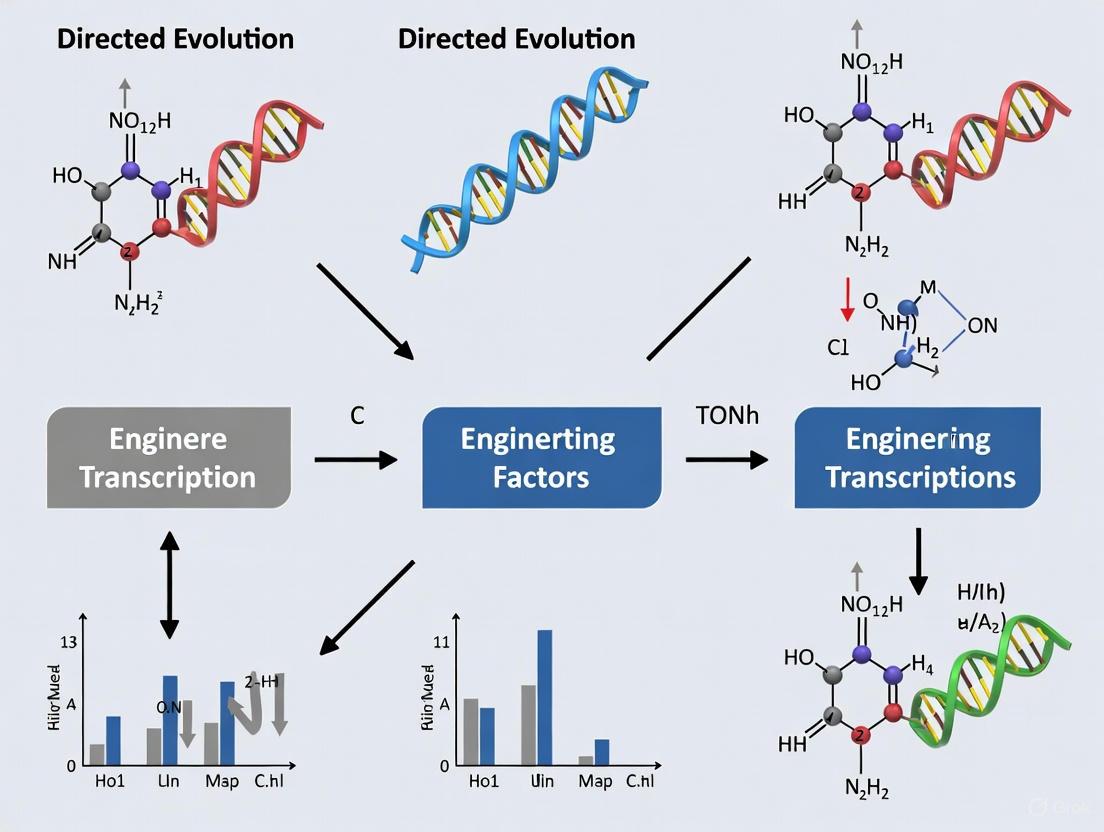
This article provides a comprehensive overview for researchers and drug development professionals on the convergence of directed evolution and transcription factor (TF) engineering.
Engineering Transcription Factors with Directed Evolution: From Design Principles to Therapeutic Breakthroughs
Abstract
This article provides a comprehensive overview for researchers and drug development professionals on the convergence of directed evolution and transcription factor (TF) engineering. It explores the foundational principles of TF structure and function, details state-of-the-art methodologies for creating and screening variant libraries, and addresses key challenges in delivery and optimization. Highlighting recent advances, including the mapping of the human TF interactome and the development of TF-targeted therapies, the content synthesizes how directed evolution is overcoming historical barriers to create powerful tools for regenerative medicine, cancer therapy, and the treatment of genetic disorders.
Decoding the Blueprint: Transcription Factor Structure, Function, and Evolvability
Transcription factors (TFs) are modular proteins that precisely control gene expression by binding specific DNA sequences and recruiting transcriptional machinery. They accomplish this through two principal functional domains: DNA-binding domains (DBDs) that recognize specific nucleotide sequences, and effector domains that modulate transcriptional activity through interactions with cofactors, chromatin remodelers, and the basal transcription apparatus [1]. The DBDs are typically well-conserved structural classes that enable classification of TFs into families, with zinc fingers Cys2His2 (ZF-C2H2) and homeodomains representing the largest families among the 1,639 recognized human TFs [1]. In contrast, effector domains are generally less conserved across paralogs and orthologs, often lack well-defined structures, and have proven more challenging to characterize and predict computationally [1].
Effector domains function through several mechanisms including interactions with cofactors, enzymes, and mediators, leading to histone modifications, changes in DNA methylation states, and recruitment of RNA polymerase II [1]. These domains can be classified as activator domains (AD), repressor domains (RD), or bifunctional domains that can activate or repress gene expression depending on cellular and chromatin contexts [1]. Understanding the architectural principles governing these domains provides the foundation for engineering novel transcription factors with customized functions for therapeutic and biotechnological applications.
Fundamental Domains of Transcription Factors
DNA-Binding Domains: Structure and Classification
DNA-binding domains provide the sequence specificity that targets transcription factors to appropriate genomic regulatory regions. These domains employ distinct structural motifs to recognize DNA sequences, primarily through interactions with base edges in the major and minor grooves. The human transcription factor repertoire is classified into 25 distinct DBD families based on their structural characteristics and DNA recognition mechanisms [1].
The helix-turn-helix (HTH) domain represents one of the most widespread DNA-binding motifs across evolution. This compact domain consists of approximately 20 amino acids that form two α-helices separated by a β-turn, with the recognition helix positioned in the major groove of DNA [2]. Computational analyses have identified approximately 26,000 HTH scaffolds in metagenomic data, sampling diverse helix orientations and loop geometries that enable recognition of different DNA sequences [2]. Engineering novel DNA-binding specificity often focuses on HTH domains due to their small size and structural simplicity compared to other DNA-binding motifs.
Zinc finger domains constitute the largest family of human transcription factors, with ZF-C2H2 being particularly abundant. These domains use zinc ions to stabilize finger-like structures that interact with DNA. Each zinc finger typically recognizes 3-4 base pairs, and multiple fingers can be combined to extend binding specificity. The modular nature of zinc fingers has made them attractive scaffolds for engineering artificial DNA-binding proteins [2].
Basic helix-loop-helix (bHLH) domains feature two amphipathic α-helices connected by a loop region. The N-terminal helix basic region mediates DNA contact while the C-terminal helix facilitates dimerization. This family includes 62 human TFs and often binds to E-box sequences (CANNTG) [1]. Other important DBD families include homeodomains (68 human TFs) which contain three α-helices, with the third serving as the recognition helix, and leucine zipper domains that use coiled-coil interactions for dimerization before DNA binding.
Effector Domains: Mechanisms and Diversity
Effector domains execute the regulatory functions of transcription factors by integrating signals from the cellular environment and communicating with the transcriptional machinery. Unlike the well-conserved DBDs, effector domains display remarkable functional and sequence diversity, making them challenging to classify and predict bioinformatically.
A comprehensive manual curation of human transcription factors identified 924 effector domains across 594 TFs, with only 94 of these domains represented in the Pfam database (mostly corresponding to KRAB and BTB/POZ domains) [1]. This highlights the limited structural classification available for most effector domains. The same study revealed that 40% of TFs contain two or more effector domains, enabling complex regulatory integration [1].
Effector domains modulate transcription through several mechanisms:
- Recruitment of co-activators or co-repressors that possess enzymatic activities including histone acetyltransferases, deacetylases, methyltransferases, and kinases
- Direct interactions with mediator complex to facilitate pre-initiation complex assembly
- Recruitment of chromatin remodeling complexes that alter nucleosome positioning and DNA accessibility
- Modulation of RNA polymerase II activity through direct or indirect contacts
The median length of experimentally determined activator domains is 91 amino acids, substantially longer than the 9-30 residue regions typically predicted by computational tools like ADpred and PADDLE [1]. This discrepancy suggests that many carefully mapped ADs contain extended structural contexts necessary for their function, highlighting limitations in current computational prediction approaches.
Engineering Transcription Factors via Directed Evolution
Principles of Directed Evolution
Directed evolution mimics natural selection in laboratory settings to generate biomolecules with novel or enhanced properties. This powerful protein engineering strategy involves iterative cycles of genetic diversification followed by selection or screening for desired functions, bypassing the need for comprehensive structural or mechanistic understanding [3]. Since the first in vitro evolution experiments in the 1960s, directed evolution methodologies have diversified considerably, enabling engineering of increasingly complex biomolecular properties [3].
The directed evolution workflow comprises two essential steps: (1) library generation to create genetic diversity, and (2) variant identification to isolate improved variants [3]. Library generation methods range from random approaches (error-prone PCR, mutator strains) to more targeted strategies (site-saturation mutagenesis, DNA shuffling). Identification techniques include display technologies, fluorescent-activated cell sorting (FACS), and functional complementation in microbial hosts. The key challenge lies in establishing tight coupling between genotype and phenotype to enable efficient selection [3].
For transcription factor engineering, directed evolution offers particular advantages over rational design due to the complex relationships between protein sequence, DNA-binding specificity, allosteric regulation, and transcriptional output. Even subtle mutations can simultaneously affect multiple TF properties, making comprehensive prediction extremely challenging [4].
Directed Evolution Methodologies for TF Engineering
Table 1: Directed Evolution Techniques for Transcription Factor Engineering
| Technique | Purpose | Key Advantages | Limitations | TF Engineering Applications |
|---|---|---|---|---|
| CIS Display | In vitro selection of DNA-binding proteins | Library sizes >1012 variants; no cloning required | Requires specialized methodology | Selection of minimal TFs like Cro from complex libraries [5] |
| Error-prone PCR | Random mutagenesis across entire sequence | Easy to perform; no structural information required | Mutagenesis bias; limited sequence space sampling | Engineering PbrR metal specificity [6] |
| Dual Selection Systems | Alter binding specificity | Simultaneous positive and negative selection pressure | Requires careful optimization of selection conditions | Enhancing lead selectivity of PbrR while reducing zinc interference [6] |
| Yeast Display | Screening DNA-binding specificity | Direct physical linkage between TF and encoding DNA | Limited to binding affinity/specificity | Screening computationally designed DBPs [2] |
| FACS-based Screening | High-throughput sorting of functional variants | Extreme throughput (107-108 cells/hour) | Requires fluorescent reporter; expensive instrumentation | Engineering AraC and LuxR specificity [4] |
Case Study: Engineering Metal Specificity in PbrR Transcription Factor
A representative example of transcription factor engineering through directed evolution involves enhancing the metal selectivity of PbrR, a lead-responsive transcription factor from Ralstonia metallidurans CH34. While PbrR demonstrates relative specificity for lead ions, it cross-reacts with other divalent cations including zinc, copper, and cadmium, limiting its utility as a specific biosensor [6].
Researchers implemented a dual selection system incorporating both ON and OFF selection markers to evolve PbrR variants with improved lead specificity and reduced zinc interference [6]. The ON selection utilized the ampicillin resistance gene (amp) coupled to lead-responsive expression, while the OFF selection employed the levansucrase gene (sacB) which converts sucrose to toxic levans when expressed in the presence of zinc ions [6]. This design enabled simultaneous selection for mutants that responded strongly to lead (ON selection) while eliminating variants that cross-reacted with zinc (OFF selection).
Following multiple rounds of error-prone PCR and ON-OFF selection, two improved PbrR mutants (M1 and M2) were isolated [6]. These variants exhibited 1.8-fold and 2-fold enhanced response to lead ions respectively, while demonstrating significantly reduced zinc responsiveness. Structural analysis revealed that mutation C134R in M1 occurred in the metal-binding loop at the C-terminal region, potentially enhancing cadmium binding. The double mutations D64A and L68S in M2 were located near metal-binding residue C79, likely contributing to reduced zinc affinity through subtle alterations in the binding pocket geometry [6].
Experimental Protocols for TF Engineering and Analysis
CIS Display Protocol for Engineering Minimal Transcription Factors
CIS display is a DNA-based display technique that enables in vitro selection of functional proteins from large libraries (>1012 variants) without transformation bottlenecks [5]. The method creates genotype-phenotype linkage through the DNA replication initiator protein RepA, which binds exclusively to the template from which it was expressed [5].
Protocol Steps:
- Library Construction: Generate DNA library encoding TF variants using error-prone PCR or other mutagenesis methods. Library diversity typically exceeds 109 unique members.
- In Vitro Transcription/Translation: Express the TF library using coupled transcription-translation system to physically link each protein to its encoding DNA via RepA.
- Selection: Incubate the DNA-protein complexes with target DNA sequence immobilized on magnetic beads. Wash extensively to remove non-specific binders.
- Recovery: Elute bound complexes and amplify recovered DNA for subsequent selection rounds.
- Analysis: Sequence enriched pools after 3-5 selection rounds and characterize individual clones for DNA-binding specificity and affinity.
This protocol has successfully been used to enrich the minimal transcription factor Cro from extremely low starting frequencies (1 in 109), demonstrating its utility for engineering DNA-binding proteins from combinatorial libraries [5].
Dual Selection System for TF Specificity Engineering
The dual selection system enables engineering of transcription factor specificity by applying alternating positive and negative selection pressures [6]. This protocol is particularly valuable for enhancing specificity toward desired ligands while reducing cross-reactivity with similar compounds.
Materials:
- Selection plasmid: Contains ON and OFF selection markers under control of TF-responsive promoter
- Bacterial host: E. coli strains with appropriate genetic background
- Selection agents: Antibiotics for ON selection (e.g., ampicillin), sucrose for OFF selection
- Inducers: Target ligand for ON selection, competing ligands for OFF selection
Procedure:
- Library Transformation: Introduce TF mutant library into bacterial host carrying selection plasmid.
- ON Selection: Plate transformed cells on medium containing target inducer (e.g., 50 μM Pb2+) and ON selection agent (e.g., 100 μg/mL ampicillin). Incubate 24-48 hours at 37°C.
- Pool Recovery: Harvest surviving colonies and extract plasmid DNA.
- OFF Selection: Transform recovered library into fresh cells and plate on medium containing competing inducers (e.g., 50 μM Zn2+) and OFF selection agent (e.g., 5% sucrose).
- Iterative Selection: Repeat ON-OFF selection for 3-5 cycles, gradually increasing selection stringency.
- Characterization: Isolate individual clones and quantify their response to target versus competing inducers using reporter assays.
This system successfully enhanced lead specificity while reducing zinc interference in PbrR, generating mutants with improved characteristics for biosensing applications [6].
KAS-ATAC-seq for Analyzing TF Binding and Function
KAS-ATAC-seq represents an advanced genomic method that simultaneously profiles chromatin accessibility and transcriptional activity of cis-regulatory elements [7]. This technique provides quantitative analysis of TF binding and its functional consequences.
Method Details:
- Cell Permeabilization: Treat cells with optimized permeabilization buffer to allow N3-kethoxal entry.
- ssDNA Labeling: Incubate with N3-kethoxal to specifically label single-stranded DNA regions associated with transcriptionally active elements.
- Chromatin Tagmentation: Perform Tn5 transposase-mediated tagmentation to fragment accessible chromatin regions.
- Click Chemistry: Conjugate biotin to labeled ssDNA using copper-free click chemistry.
- Streptavidin Pulldown: Enrich ssDNA fragments using streptavidin beads.
- Library Preparation and Sequencing: Construct sequencing libraries and perform high-throughput sequencing.
Data Analysis:
- Identify single-stranded transcribing enhancers (SSTEs) as a subset of accessible chromatin regions with high ssDNA signals
- Quantify transcriptional activity at promoters and enhancers
- Correlate TF binding with transcriptional output
- Define immediate-early activated CREs in response to stimuli
KAS-ATAC-seq provides more precise functional annotation of CREs compared to ATAC-seq alone by distinguishing actively transcribed elements from merely accessible regions [7].
Research Reagent Solutions
Table 2: Essential Research Reagents for Transcription Factor Engineering and Analysis
| Reagent/Category | Specific Examples | Function/Application | Key Features |
|---|---|---|---|
| Directed Evolution Systems | CIS Display [5] | In vitro selection of DNA-binding proteins | Library sizes >1012; no cloning required |
| Dual Selection System [6] | Engineering TF specificity | Combines positive (ampR) and negative (sacB) selection | |
| Reporter Assays | Gal4/UAS System [1] | Mapping effector domain activity | Heterologous DBD for sufficiency tests |
| LexA System [1] | Effector domain characterization | Bacterial DBD for mammalian systems | |
| Genomic Analysis | KAS-ATAC-seq [7] | Simultaneous profiling of accessibility and transcription | Identifies single-stranded transcribing enhancers |
| CCRA [8] | Quantitative analysis of TF binding and expression | Measures binding energy landscapes in vivo | |
| Computational Design | RIFdock [2] | De novo design of DNA-binding proteins | Samples scaffold docks for optimal base contacts |
| LigandMPNN [2] | Protein-DNA interface design | Models DNA atoms in interaction graph | |
| Selection Markers | ampR (Ampicillin resistance) [6] | Positive selection | Cell survival linked to desired TF function |
| sacB (Levansucrase) [6] | Negative selection | Sucrose conversion to toxic levans |
Computational Design of Novel DNA-Binding Proteins
Recent advances in computational protein design have enabled the generation of novel sequence-specific DNA-binding proteins recognizing arbitrary target sequences. This approach addresses limitations of natural DNA-binding domains and existing technologies like CRISPR-Cas and TALEs, which have delivery constraints due to their size [2].
The computational pipeline involves several key steps:
Scaffold Library Generation: Curate diverse structural scaffolds, focusing on compact domains like helix-turn-helix motifs. Metagenome sequence data coupled with AlphaFold2 structure prediction enables assembly of approximately 26,000 HTH scaffolds sampling varied helix orientations and loop geometries [2].
Interaction-Focused Docking: Use the RIFdock algorithm to sample millions of possible protein-DNA docking configurations, emphasizing interactions with base atoms in the major groove while satisfying hydrogen-bond requirements of the DNA backbone [2].
Interface Design: Employ either Rosetta-based design or LigandMPNN to optimize protein sequences for specific DNA recognition, selecting for favorable binding energy, interface surface area, hydrogen bonding, and preorganization of interface side chains [2].
Validation and Optimization: Predict monomer structures of designed proteins using AlphaFold2, filter designs that deviate from original models, and characterize binding affinity and specificity experimentally.
This approach has generated small DBPs (<65 amino acids) recognizing five distinct DNA targets with nanomolar affinities and specificities closely matching computational models [2]. Crystal structures of designed protein-DNA complexes show close agreement with design models, and the designed DBPs function in both bacterial and mammalian cells to regulate transcription of neighboring genes [2].
Applications in Synthetic Biology and Therapeutics
Engineered transcription factors have profound implications for synthetic biology and therapeutic development. In synthetic circuits, evolved TFs can reduce crosstalk between regulatory systems - for example, directed evolution of AraC produced variants with 10-fold increased sensitivity to arabinose and reduced inhibition by IPTG, improving compatibility with LacI-based systems [4].
Biosensor engineering represents another significant application. Transcription factors with altered ligand specificity can detect environmental pollutants, metabolic intermediates, or disease biomarkers. The engineered PbrR variants with enhanced lead selectivity demonstrate the potential for environmental monitoring of heavy metal contamination [6].
In therapeutic contexts, engineered zinc finger proteins have been used to repress mutant huntingtin expression in mouse models of Huntington's disease [5]. Similarly, designed DBPs capable of activating or repressing endogenous genes offer potential for gene therapy without introducing permanent genetic changes. The compact size of computationally designed DBPs (<65 aa) facilitates viral delivery, addressing a key limitation of larger systems like TALEs and CRISPR-Cas [2].
Metabolic engineering represents a fourth application area, where engineered TFs can regulate non-native metabolic pathways in response to intracellular metabolites, dynamically optimizing flux without human intervention [4]. This approach enables more sophisticated control strategies than constitutive expression or externally inducible systems.
Visualization of Key Concepts and Workflows
Transcription Factor Domain Architecture and Engineering Approaches
Directed Evolution Workflow for TF Engineering
The central challenge in deciphering the human gene regulatory code lies in what we term the Specificity Paradox: how can transcription factors (TFs) achieve precise, context-dependent gene expression control amid the overwhelming complexity of the genomic landscape? This paradox emerges from the fundamental disparity between the limited repertoire of transcription factors and the vast number of regulatory targets they must specifically recognize. While revolutionary techniques have mapped millions of TF binding sites, our ability to predict functional outcomes from binding events remains constrained by this core paradox.
Engineering transcription factors through directed evolution provides a powerful methodological framework to resolve this paradox. By applying selective pressure for desired regulatory functions, researchers can bypass incomplete mechanistic understanding and directly evolve solutions that optimize both specificity and efficacy within complex cellular environments. This approach has recently demonstrated remarkable success in creating orthogonal transcriptional systems with enhanced functionality across diverse eukaryotic hosts [9] [10].
Decoding Regulatory Complexity: Mechanistic Insights
The Genomic Basis of Specificity
The specificity paradox manifests at multiple regulatory levels. Comprehensive mapping of transcription factor binding sites reveals that functional variation at these sites explains the majority of heritable phenotypic variation—approximately 72% of trait heritability across numerous phenotypes according to recent maize studies that provide evolutionary insights applicable to mammalian systems [11]. This finding underscores the critical importance of non-coding variation in shaping complex traits.
The mechanistic basis of recognition specificity involves multi-layered complexity:
- Cis-element variations: Single nucleotide polymorphisms at TF binding sites significantly alter binding affinity and subsequent gene expression output
- Chromatin accessibility: Nucleosome positioning and epigenetic modifications create physical barriers to binding site accessibility
- Combinatorial control: TF cooperativity and antagonism create context-specific regulatory outcomes from the same binding event
Recent research utilizing MNase-defined cistrome occupancy analysis (MOA-seq) has identified approximately 100,000 TF-occupied loci in complex genomes, with only 35% of these regions detectable through conventional ATAC-seq profiling [11]. This hidden regulatory landscape exemplifies the challenges in comprehensively mapping functional regulatory elements.
Engineering Solutions to the Specificity Paradox
Directed evolution approaches address the specificity paradox by functionally selecting for optimized TF properties rather than relying exclusively on rational design. This methodology has produced breakthrough technologies including:
- Evolved orthogonal RNA polymerases: T7 RNAP fusion enzymes with enhanced co-transcriptional capping activity show nearly 100-fold improvement in protein expression compared to wild-type versions in eukaryotic systems [9]
- Engineered virus-like particles (eVLP): Fifth-generation eVLPs with evolved capsids demonstrate 2-4-fold increased delivery potency for gene editing applications [12]
- Compressed genetic circuits: Transcriptional Programming (T-Pro) enables 3-input Boolean logic operations with 4-fold reduction in genetic footprint compared to canonical designs [13]
Table 1: Quantitative Performance of Evolved Transcriptional Systems
| Evolved System | Performance Improvement | Application Context | Key Evolved Properties |
|---|---|---|---|
| NPT7 RNAP Fusion [9] | ~100x protein expression | Eukaryotic gene expression | Enhanced capping activity, nuclear function |
| v5 eVLP Capsids [12] | 2-4x delivery potency | Gene editing delivery | Optimized RNP packaging, cargo release |
| T-Pro Circuits [13] | 4x size reduction | Genetic circuitry | Minimal footprint, precise setpoints |
Application Notes: Directed Evolution of Orthogonal Transcription Systems
Protocol: Directed Evolution of T7 RNA Polymerase Fusion for Eukaryotic Applications
Background: The absence of 5' methyl guanosine caps on T7 RNAP-derived transcripts has limited its utility in eukaryotic systems. This protocol describes the evolution of a fusion enzyme combining T7 RNAP with the capping enzyme from African swine fever virus (NP868R) for orthogonal gene regulation in eukaryotic hosts [9].
Experimental Workflow:
Library Construction
- Perform error-prone PCR on NPT7 fusion gene (NP868R-T7 RNAP with glycine-serine linker)
- Use mutation rates yielding 1-5 amino acid changes per variant
- Clone variants into yeast integration vector with galactose-responsive promoter and N-terminal nuclear localization signal
Selection Platform
- Integrate library into Saccharomyces cerevisiae strain BY4741 at HO locus
- Transform with reporter plasmid containing ZsGreen fluorescent protein under T7 promoter control
- Include polyadenylation signal and T7 terminator in multi-copy yeast plasmid
Screening and Isolation
- Induce expression with galactose gradient (0-2%) for titratable control
- Perform fluorescence-activated cell sorting (FACS) for high-expressors after 48-hour induction
- Conduct iterative sorting rounds with increasing stringency
Validation
- Sequence enriched variants to identify mutation profiles
- Test capping dependency by introducing K294A mutation in NP868R domain
- Compare against host-regulated promoters (e.g., galactose-responsive) for benchmarking
Key Outcomes: Evolved variants v433 and v443 demonstrated two orders of magnitude higher protein expression compared to wild-type NPT7, with maintained programmability and cross-kingdom functionality in mammalian cells [9].
Protocol: Barcoded Directed Evolution of Engineered Virus-like Particles
Background: eVLPs enable transient delivery of gene editing agents but require optimization of packaging and transduction efficiencies. This protocol describes a barcoded evolution system for improving eVLP capsids without native viral genomes [12].
Experimental Workflow:
Barcoded Library Design
- Insert 15-bp barcode into tetraloop of sgRNA scaffold
- Clone barcoded sgRNA and evolving eVLP component (capsid, envelope, or cargo) on single vector
- Use four-plasmid system for eVLP production: (1) Gag-cargo fusion, (2) barcoded sgRNA, (3) Gag-Pro-Pol polyprotein, (4) VSV-G envelope
Library Production and Selection
- Transfert producer cells under limiting dilution conditions (single variant per cell)
- Harvest eVLPs and apply selection pressure (e.g., transduction efficiency, stability)
- Recover barcodes from selected populations via sgRNA sequencing
Variant Identification
- Sequence enriched barcodes from post-selection population
- Correlate barcodes with corresponding eVLP variants
- Combine beneficial mutations for synergistic effects
Validation
- Compare packaging efficiency via RT-qPCR of sgRNA molecules
- Assess transduction potency in relevant cell lines (e.g., HEK293T)
- Evaluate structural changes via electron microscopy
Key Outcomes: Fifth-generation (v5) eVLPs with combined beneficial mutations exhibited 2-4-fold increased delivery potency, optimized RNP packaging, and altered capsid structure compared to previous v4 eVLPs [12].
Visualizing Experimental Approaches
Directed Evolution Workflow for Transcription Factor Engineering
Diagram 1: Directed Evolution Workflow
Barcoded eVLP Evolution System
Diagram 2: Barcoded eVLP Evolution
The Scientist's Toolkit: Research Reagent Solutions
Table 2: Essential Research Reagents for Transcription Factor Engineering
| Reagent / Tool | Function | Example Application | Key Features |
|---|---|---|---|
| NPT7 Fusion System [9] | Orthogonal transcription in eukaryotes | Gene circuit engineering in yeast and mammalian cells | Nuclear localization signal, co-transcriptional capping |
| Barcoded sgRNA System [12] | eVLP variant tracking | Directed evolution of delivery vehicles | 15-bp barcode in tetraloop, minimal functional impact |
| T-Pro Components [13] | Genetic circuit compression | 3-input Boolean logic operations | Anti-repressor TFs, reduced metabolic burden |
| MOA-seq Methodology [11] | TF footprint mapping | Pan-cistrome construction | High-resolution TF binding site identification |
| CelR Anti-Repressor Set [13] | Orthogonal transcriptional control | 3-input logic with cellobiose response | Engineered from E+TAN scaffold with L75H mutation |
The specificity paradox in gene regulation presents both a fundamental biological challenge and an engineering opportunity. Directed evolution approaches enable researchers to navigate this complexity by functionally selecting for optimized performance rather than requiring complete mechanistic understanding. The development of orthogonal transcription systems, evolved capsids for delivery, and compressed genetic circuits demonstrates the power of this methodology for overcoming natural constraints.
As these technologies mature, the integration of computational design with laboratory evolution will further accelerate our ability to engineer precise gene regulatory systems. The continued expansion of synthetic biology toolkits—from evolved RNA polymerases to barcoded evolution platforms—provides researchers with an increasingly sophisticated arsenal for deciphering and reprogramming the human gene regulatory code.
Transcription factors (TFs) are proteins that control the rate of genetic information transcription from DNA to messenger RNA by binding to specific DNA sequences [14]. They function as critical regulatory switches, turning genes on and off to ensure proper cellular function, and represent the single largest family of human proteins with approximately 1600 members in the human genome [14]. TFs contain at least two core structural domains: a DNA-binding domain (DBD) that recognizes specific TF binding sites (TFBSs), and an effector domain (ED) that serves as a regulatory sensor [15]. The DBD often includes structural motifs such as helix-turn-helix (HTH), helix-loop-helix, zinc finger, or leucine zipper, while the ED can bind various intracellular metabolites or respond to changes in the external environment [15].
The fundamental regulatory mechanism of TFs relies on their ability to respond to effectors and concurrently interact with binding sites, thereby modulating the transcription of target genes [15]. This review comprehensively examines the molecular mechanisms by which TFs activate and repress transcription, with particular emphasis on applications in directed evolution research for engineering novel TF functions.
Molecular Mechanisms of Transcriptional Activation
Basic Principles of Transcription Initiation
Gene transcription is catalyzed by the holo-RNA polymerase (RNAP), which contains five subunits (α₂ββ'ωσ) [15]. While the α₂ββ'ω complex plays a catalytic role facilitating enzymatic activity, the σ factor recognizes promoters and directly binds to conserved -10 and -35 regions [15]. Transcription factors influence this process through several well-characterized mechanisms.
Recruitment Mechanism: Class I transcriptional activators like the catabolic gene activator protein (CAP) bind to promoter DNA upstream of RNAP and interact with the C-terminal domain of the α subunit (αCTD) of RNAP, effectively recruiting the transcriptional machinery to the promoter [15].
Conformational Change Mechanism: Class II activators such as CAP bind to sites coinciding with the -35 region of the promoter and interact with the σ subunit of RNAP, inducing conformational changes that facilitate transcription activation [15]. Recent cryo-electron microscopy structures have revealed authentic microscopic phenomena of these interactions, including the spatial conformation of opened promoter DNA and bending angles of DNA strands in transcriptional complexes [15].
Chromatin Remodeling Mechanism: In eukaryotic systems, TFs can catalyze histone acetylation or recruit other proteins with histone acetyltransferase (HAT) activity, which weakens DNA-histone associations and makes DNA more accessible to transcription machinery [14]. The quantitative analysis of PHO5 regulation in budding yeast demonstrated that Pho4 binding to upstream activation sequences triggers displacement of adjacent nucleosomes, leading to accumulation of TATA box-accessible, transcriptionally active states [16].
Effector-Dependent Activation
TFs can be regulated through their effector domains by various intracellular metabolites including CoA, NADP(H)/NAD(H), sugar metabolites (pyruvate, glucosamine-6-phosphate, fructose-1,6-diphosphate), and amino acids like lysine [15]. External environmental changes such as pH, temperature, light, dissolved gases, or cell density can also serve as induction signals [15]. These effectors modulate TF activity through several pathways:
- Direct Interactions: Effectors can directly interact with TFs, as seen with the malate-responsive TF MalR [15]
- Activator Recruitment: Effectors can activate activators for TFs, such as the glutamine-responsive TF GlnR [15]
- Proteolytic Processing: Effectors can trigger truncation of redundant sequences within TFs, demonstrated by the pH-responsive TF PacC [15]
- Oligomerization: Effectors can induce oligomerization, as observed in the temperature-sensitive TF Hsf [15]
- Post-Translational Modification: Effectors can promote phosphorylation of TFs, like the glucose-responsive TF CcpA [15]
Molecular Mechanisms of Transcriptional Repression
Transcriptional repressors employ diverse strategies beyond simple steric hindrance of RNA polymerase binding. While some repressors do impede subsequent binding of RNA polymerase to promoters, a growing list of repressors allow simultaneous binding of RNA polymerase but interfere with subsequent initiation events [17]. The repression mechanism used is typically exquisitely adapted to the characteristics of the promoter and the repressor involved [17].
Steric Hindrance: Simple repression occurs when a repressor binds to a site overlapping the promoter, physically blocking RNA polymerase access [18]. This architecture is realized by a single repressor binding site overlapping the promoter and represents a fundamental regulatory motif in bacteria, with over 400 circuits in E. coli alone regulated by this mechanism [18].
Inhibition of Initiation Complex Formation: Some repressors allow RNA polymerase binding but prevent subsequent steps in the initiation process, such as open complex formation or promoter escape [17].
Chromatin-Mediated Repression: In eukaryotes, TFs can directly or indirectly recruit proteins with histone deacetylase (HDAC) activity, which strengthens DNA-histone associations and makes DNA less accessible to transcription machinery [14].
Co-repressor Recruitment: Quantitative studies of human erythropoiesis revealed that co-repressors are dramatically more abundant than co-activators at the protein level in the nucleus, creating a regulatory environment where repression may be the default state that must be overcome for activation [19].
Table 1: Major Transcription Factor Families and Their Characteristics
| Family | Example | Primary Action | Regulated Functions | TFBS Characteristics | DBD Position |
|---|---|---|---|---|---|
| TetR | MexZ, QacR, AcrR | Repressor | Antibiotic biosynthesis, efflux pumps, osmotic stress | Inverting palindrome sequences | N-terminal [15] |
| GntR | FadR, McbR, GabR | Repressor | General metabolism | Inverted or direct repeat sequences | N-terminal [15] |
| LysR | Various | Activator/Repressor | Carbon and nitrogen metabolism | Interrupted palindrome sequences | N-terminal [15] |
| AraC | Various | Activator | Carbon metabolism, stress response, pathogenesis | Asymmetrical, AT-rich sequences | C-terminal [15] |
| MerR | SoxR, BltR, BmrR | Activator | Resistance and detoxification | Dyad symmetrical sequence | N-terminal [15] |
| CRP | CAP, RedB, FNR | Activator/Repressor | Global responses, catabolite repression, anaerobiosis | Two inversely-repeated sequences | C-terminal [15] |
Quantitative Models of TF Function
Thermodynamic Models of Simple Repression
For the simple repression motif, thermodynamic models assume transcription initiation processes are in quasi-equilibrium, allowing application of statistical mechanics to describe RNA polymerase and TF binding to DNA [18]. The fold change in gene expression due to repressor presence can be described by:
[ \text{Fold Change} = \left(1 + \frac{2R}{N{NS}} e^{-\beta\Delta\varepsilon{rd}}\right)^{-1} ]
where R is the number of repressor tetramers, N~NS~ ≈ 5×10⁶ is the number of nonspecific DNA sites, β = (k~B~T)⁻¹, and Δε~rd~ is the repressor-DNA binding energy [18]. This framework allows parameter-free predictions of gene expression levels that show significant agreement with experimental measurements over multiple orders of magnitude of inputs and outputs [18].
Gene Regulation Functions (GRFs) in Eukaryotic Systems
Quantitative analysis of the PHO5 promoter in budding yeast demonstrated how the affinity and accessibility of TF binding sites combine to produce fine-tuned transcriptional responses [16]. The GRF describes the relationship between transcription factor input (Pho4 concentration) and gene expression output, characterized by three parameters:
- Threshold: Pho4 concentration required for half-maximal activation
- Sensitivity: Steepness of the response curve (Hill coefficient)
- Maximum Expression Level: Plateau value at saturation [16]
Experimental measurements revealed that the threshold depends largely on the affinity of exposed, non-nucleosomal Pho4 binding sites, while the maximum expression level depends more on the affinity of nucleosomal sites [16]. Even at full activation, nucleosome occupancy at the TATA box region inversely correlates with maximum expression, indicating that TATA box accessibility is only partial and likely corresponds to promoter transitions between transcriptionally active and inactive states [16].
Table 2: Quantitative Parameters for Transcription Factor Binding
| Parameter | Description | Experimental Determination | Typical Range/Values |
|---|---|---|---|
| TF Copy Number | Absolute number of TF molecules per cell | Quantitative immunoblots, targeted mass spectrometry [18] [19] | Varies widely; precise numbers for 103 TFs in erythropoiesis [19] |
| Binding Energy (Δε) | Energy difference between specific and nonspecific binding | Variants with altered binding site affinities [16] [18] | Dissociation constants span nanomolar to micromolar range |
| Hill Coefficient | Measure of cooperativity/sensitivity | Fitting GRF to Hill equation [16] | >1 (1.95 ± 0.14 for PHO5 variants) [16] |
| Fold Change | Relative change in gene expression due to TF | Comparison of expression with and without TF [18] | Can span nearly four orders of magnitude [18] |
Directed Evolution of Transcription Factors
Library Generation Methods
Directed evolution mimics natural evolution on a shorter timescale, enabling rapid selection of biomolecular variants with improved properties [3]. The main methodological considerations for TF engineering include:
Mutagenesis Techniques:
- Error-prone PCR: Insertion of point mutations across whole sequences; easy to perform but has reduced sampling of mutagenesis space and mutagenesis bias [3]
- RAISE: Insertion of random short insertions and deletions (indels) across sequence [3]
- TRINS: Insertion of random tandem repeats that mimic natural evolutionary duplications [3]
- DNA shuffling: Random sequence recombination that requires high homology between parental sequences [3]
- Site-saturation mutagenesis: Focused mutagenesis of specific positions allowing in-depth exploration but limited to few positions [3]
In Vivo Mutagenesis Systems:
- Mutator strains: Simple system for in vivo random mutagenesis but with biased and uncontrolled mutagenesis spectrum [3]
- Orthogonal systems: Using engineered DNA polymerases or CRISPR systems to restrict mutagenesis to target sequences [3]
Variant Identification and Selection
Identifying desired variants from libraries represents a critical challenge in directed evolution:
Screening Methods:
- Colorimetric/fluorimetric analysis: Fast and easy but limited to biomolecules with appropriate spectral properties [3]
- Plate-based automated enzymatic assays: Automation increases throughput but remains limited compared to other methods [3]
- FACS-based methods: Provide high throughput but require the evolved property to be linked to fluorescence changes [3]
- Mass spectrometry-based methods: High throughput that doesn't rely on specific substrate properties [3]
Selection Methods:
- Display techniques: Phage, ribosome, or yeast display enable high-throughput selection of binding partners but limited to biomolecules with specific binding properties [3]
- QUEST: Selection based on substrate/ligand constraints [3]
- Cofactor regeneration coupling: Applicable to wide range of small molecule biocatalysts [3]
Directed Evolution Workflow for Engineering Transcription Factors
Experimental Protocols
Protocol 1: Quantitative Measurement of Gene Regulation Functions
Purpose: To measure the relationship between transcription factor input and gene expression output (GRF) for a promoter of interest [16].
Materials:
- Inducible TF Expression System: Tetracycline (TET)-regulated promoter system (e.g., P~TETO7~) for controlled TF expression [16]
- Fluorescent Reporters: TF tagged with YFP (e.g., yEmCitrine) and target gene replaced with CFP (e.g., Cerulean) [16]
- Flow Cytometer or Fluorescence Microscope: For quantitative measurement of fluorescence intensities at single-cell level [16]
- Cell Culture System: Appropriate host cells (e.g., yeast or mammalian cell lines) with defined media [16]
Procedure:
- Engineer construct with TF under inducible promoter and fluorescent protein tag
- Replace target gene open reading frame with alternative fluorescent reporter
- Grow cells at multiple inducer concentrations (e.g., 4 different doxycycline concentrations) to steady state
- Pool cells and image using wide-field microscope or analyze by flow cytometry
- Determine GRF by relating TF input (YFP intensity) to expression output (CFP intensity) for single cells
- Fit data to Hill equation to extract threshold, sensitivity, and maximum expression level parameters [16]
Applications: This protocol enables quantitative characterization of how promoter sequence variations affect transcriptional response, facilitating engineering of promoters with desired input-output characteristics [16].
Protocol 2: Directed Evolution of DNA-Binding Specificity
Purpose: To evolve transcription factors with altered DNA-binding specificity using directed evolution.
Materials:
- Mutagenesis Method: Error-prone PCR kit or DNA shuffling reagents [3]
- Selection System: FACS with fluorescent reporter or display system [3]
- Library Transformation Reagents: Competent cells with high transformation efficiency
- Target Reporter Plasmid: Fluorescent reporter gene under control of target DNA binding site
Procedure:
- Generate TF mutant library using error-prone PCR or DNA shuffling
- Co-transform library with reporter plasmid containing target binding site
- Grow under selective conditions and screen for desired phenotype
- For FACS-based screening: sort cells based on fluorescence intensity corresponding to binding activity [3]
- Israte plasmid DNA from sorted population and sequence variants
- Characterize hits using quantitative binding assays
- Iterate process with beneficial mutations as new parental sequence [3]
Key Considerations: Library diversity must balance coverage with practical screening constraints; selection pressure should be carefully tuned to maintain functional variants while encouraging exploration of sequence space [3].
The Scientist's Toolkit: Research Reagent Solutions
Table 3: Essential Research Reagents for Transcription Factor Studies
| Reagent/Category | Specific Examples | Function/Application | Key Characteristics |
|---|---|---|---|
| Inducible Expression Systems | Tetracycline (TET)-regulated systems, chemically inducible promoters [16] | Controlled TF expression for dose-response studies | Tight regulation, broad dynamic range, minimal pleiotropic effects |
| Fluorescent Reporters | YFP (yEmCitrine), CFP (Cerulean), other spectral variants [16] | Quantitative measurement of TF concentration and gene expression output | Brightness, photostability, minimal spectral overlap for multiplexing |
| Mutagenesis Kits | Error-prone PCR kits, DNA shuffling reagents [3] | Generation of sequence diversity for directed evolution | Controlled mutation rate, minimal bias, high efficiency |
| Library Selection Systems | FACS instrumentation, phage/yeast display systems [3] | High-throughput screening of variant libraries | High throughput, sensitive detection, compatibility with living cells |
| Quantitative Assays | Chromatin immunoprecipitation (ChIP) reagents, quantitative immunoblots [16] [18] | Measurement of TF binding and protein abundance | Sensitivity, specificity, quantitative accuracy, broad dynamic range |
| Bioinformatics Resources | ChEA3, TRANSFAC, JASPAR databases [20] [15] | Prediction of TF binding sites and target genes | Comprehensive coverage, accurate predictions, user-friendly interfaces |
Transcription Factor Activation and Repression Mechanisms
Applications in Biotechnology and Medicine
Cell Engineering and Biomanufacturing
Transcription factors serve as powerful tools for metabolic engineering and optimizing biomanufacturing processes [15]. By engineering TFs that respond to key metabolic intermediates, researchers can create dynamic regulatory circuits that automatically balance metabolic fluxes [15]. Applications include:
- Biosynthesis Pathway Optimization: Engineered TFs can sense metabolite levels and dynamically regulate rate-limiting enzymes to maximize product yield [15]
- Stress Response Engineering: TFs responsive to fermentation stresses (pH, oxygen, toxins) can be harnessed to improve cell robustness in industrial conditions [15]
- Dynamic Control Systems: TF-based regulatory circuits can implement sophisticated control strategies that surpass conventional constitutive expression [15]
Therapeutic Applications
TF-based approaches show significant promise for therapeutic development:
Transcription Factor Activation Profiling (TFAP): This method uses gene expression data to estimate TF activation by analyzing the expression patterns of their target genes [20]. Applied to drug repurposing, TFAP identified compounds promoting differentiation of Acute Myeloid Leukemia cell lines by activating master regulators of myeloid differentiation [20]. From 22 candidate compounds identified computationally, 10 were experimentally validated to promote significant differentiation of HL-60 cells [20].
Differentiation Therapy: Directing cell fate decisions through controlled TF expression represents a promising therapeutic strategy, particularly in cancer treatment [20]. The quantitative framework of erythropoiesis, which integrates temporal protein stoichiometry data with mRNA measurements, provides a blueprint for manipulating differentiation pathways [19].
Disease Modeling: Quantitative understanding of TF networks enables better models of disease states caused by TF dysfunction, which can lead to various diseases and syndromes [15].
The mechanistic understanding of how transcription factors activate and repress transcription provides a foundation for engineering novel regulatory functions through directed evolution. The integration of quantitative models with high-throughput experimental methods enables precise tuning of TF properties for biotechnological and therapeutic applications. Future research directions include developing more sophisticated multi-input regulatory circuits, engineering TFs with orthogonal DNA-binding specificities, and creating dynamically regulated systems that respond to complex environmental signals. As quantitative methodologies continue to improve and directed evolution strategies become more sophisticated, the engineering of transcription factors with custom functions will increasingly become a routine tool for controlling gene expression in both basic research and applied contexts.
Rational design of biomolecules, including transcription factors, relies on a comprehensive understanding of structure-function relationships to make precise, predictive changes. While powerful, this approach is frequently confounded by the inherent complexity of biological systems, where phenomena such as epistasis (non-additive interactions between mutations) and incomplete structural knowledge can lead to suboptimal or non-functional designs. Directed evolution addresses these limitations by employing iterative cycles of diversity generation and screening to navigate vast sequence spaces empirically, often revealing solutions that are not predictable through rational means. This application note details how directed evolution methodologies are being used to overcome the constraints of rational design in the engineering of transcription systems and other complex biomolecules, providing detailed protocols for implementation.
The challenge is exemplified by the "hox specificity paradox," where transcription factors from the homeodomain family bind to identical primary DNA motifs yet execute distinct biological functions during development [21]. Rational design struggles to explain or replicate this specificity, whereas directed evolution approaches can select for the complex, cooperative interactions that underpin such functional diversity.
Key Research Reagent Solutions
The following table catalogs essential reagents and tools that form the foundation of modern directed evolution campaigns, particularly those focused on transcriptional components.
Table 1: Key Research Reagent Solutions for Directed Evolution
| Reagent/Tool Name | Function/Description | Application in Featured Studies |
|---|---|---|
| CAP-SELEX | High-throughput method to identify cooperative binding motifs for transcription factor (TF) pairs [21]. | Mapping the human TF-TF interactome; identified 2,198 interacting TF pairs [21]. |
| T7 RNA Polymerase (RNAP) | A single-subunit, orthogonal phage RNA polymerase with high specificity for its T7 promoter [10] [9]. | Engineered via directed evolution for programmable gene expression in eukaryotic cells [10] [9]. |
| African Swine Fever Virus Capping Enzyme (NP868R) | A single-subunit enzyme that catalyzes the addition of a 5' methyl guanosine cap to RNA [9]. | Fused to T7 RNAP to create a chimeric enzyme (NPT7) for eukaryotic synthetic circuitry [9]. |
| Error-Prone PCR | A technique to introduce random mutations into a DNA sequence during amplification. | Used to generate diverse libraries of NPT7 fusion enzyme variants for selection in yeast [9]. |
| Barcoded sgRNAs | Guide RNAs containing unique identifier sequences within their scaffold (e.g., in the tetraloop) [12]. | Used to uniquely label eVLP variants in a library for directed evolution of delivery vehicles [12]. |
| Fluorescence-Activated Cell Sorting (FACS) | A method to sort and isolate individual cells based on fluorescent signals. | Used to isolate top-performing NPT7 variants from a library based on reporter expression in yeast [9]. |
Case Study: Directed Evolution of an Orthogonal Transcription Engine
The adaptation of the bacteriophage T7 RNA polymerase (RNAP) for use in eukaryotes provides a compelling case study of directed evolution overcoming a critical failure of rational design.
The Rational Design Limitation
T7 RNAP is a cornerstone of orthogonal gene expression in prokaryotes. However, its transcripts lack the 5' methyl guanosine cap essential for mRNA stability and translation in eukaryotes, severely limiting its utility [10] [9]. A rational design approach involved fusing T7 RNAP to a viral capping enzyme (NP868R) to create a single polypeptide, NPT7, that would co-transcriptionally cap its RNA products. While this fusion showed some activity, the initial designed enzyme exhibited low activity in yeast, resulting in only a 2-fold increase in protein production over background, a performance inadequate for most applications [9].
The Directed Evolution Solution
To enhance the NPT7 fusion, a directed evolution campaign was implemented in Saccharomyces cerevisiae.
- Diversity Generation: A library of NPT7 variants was created via error-prone PCR.
- Screening & Selection: The library was expressed in yeast, and variants exhibiting high activity were isolated using fluorescence-activated cell sorting (FACS) based on the expression of a ZsGreen fluorescent protein reporter driven by a T7 promoter [9].
- Outcome: After several selection rounds, highly active variants (v433 and v443) were isolated. These evolved enzymes demonstrated a dramatic ~100-fold increase in protein expression compared to the wild-type fusion enzyme, a level of improvement that was unpredictable at the outset [9]. The workflow for this successful evolution campaign is detailed below.
Figure 1: Directed Evolution of NPT7 Fusion Enzyme.
Quantitative Results of the Evolution Campaign
The following table summarizes the performance gains achieved through directed evolution, quantified against the initial rational design.
Table 2: Quantitative Performance of Evolved T7 Transcription Systems
| Variant / System | Key Feature / Mutation | Performance Metric | Result |
|---|---|---|---|
| Wild-Type NPT7 | Initial rational design fusion | Protein expression in yeast | Baseline (2-fold increase) [9] |
| Evolved NPT7 (v443) | 10 amino acid mutations | Protein expression in yeast | ~100-fold increase vs. WT [9] |
| Capping-Dead NPT7 | K294A mutation in NP868R | Reporter expression level | Severely reduced (confirms cap-dependence) [9] |
| Fifth-Generation (v5) eVLPs | Combined beneficial capsid mutations | Delivery potency in mammalian cells | 2-4 fold increase vs. v4 eVLPs [12] |
| DeepDE-evolved GFP | Iterative deep learning on triple mutants | Fluorescence activity | 74.3-fold increase over 4 rounds [22] |
Experimental Protocols
This section provides detailed methodologies for key techniques in directed evolution.
Protocol 1: Directed Evolution of a Protein in a Eukaryotic Host (Yeast)
This protocol outlines the general workflow for evolving a protein for improved function in S. cerevisiae, as demonstrated with the NPT7 fusion enzyme [9].
Construct Design:
- Clone the gene of interest (GOI), in this case the NPT7 fusion, into a yeast expression vector under a regulatable promoter (e.g., pGAL1).
- Integrate this construct into a specific genomic locus (e.g., HO locus) for stable expression.
- Construct a separate high-copy reporter plasmid where a fluorescent protein (e.g., ZsGreen) is under the control of the orthogonal system's element (e.g., T7 promoter).
Library Generation:
- Use error-prone PCR to introduce random mutations into the GOI.
- Clone the mutated PCR products into the yeast expression vector to create a plasmid library.
Transformation and Selection:
- Co-transform the library of GOI expression vectors and the reporter plasmid into an appropriate yeast strain.
- Induce expression of the GOI library (e.g., with galactose).
- Use Fluorescence-Activated Cell Sorting (FACS) to isolate the top-performing yeast cells exhibiting the highest fluorescence from the reporter. This step is repeated for multiple rounds to enrich for superior variants.
Hit Analysis:
- Isolate plasmids from sorted yeast populations.
- Sequence the evolved GOI genes to identify beneficial mutations.
- Characterize the performance of individual hit variants in fresh assays.
Protocol 2: Active Learning-Assisted Directed Evolution (ALDE)
ALDE integrates machine learning with directed evolution to navigate epistatic landscapes more efficiently [23]. The logical flow of the ALDE cycle is shown below.
Figure 2: Active Learning-Assisted Directed Evolution (ALDE) Cycle.
Define Design Space: Select
kresidues to target for mutagenesis, defining a search space of 20^k possible variants [23].Initial Data Collection: Create an initial library by mutating all
kresidues simultaneously (e.g., using NNK codons). Screen this library using a relevant biochemical assay to collect an initial set of sequence-fitness data.Machine Learning Model Training: Train a supervised machine learning model on the collected sequence-fitness data. The model learns to map sequences to fitness and should provide uncertainty estimates for its predictions [23].
Variant Proposal with Acquisition Function: Use an acquisition function (e.g., one that balances exploration and exploitation) on the trained model to rank all possible sequences in the design space. Select the top N candidates for the next round of experimentation [23].
Iteration: Return to Step 2, using the newly proposed variants to gather more fitness data. The cycle repeats until a variant with satisfactory fitness is obtained.
Directed evolution has proven to be an indispensable strategy for optimizing complex biological systems where rational design falls short. The empirical process of generating diversity and selecting for function successfully addresses the central challenges of epistasis and incomplete knowledge. As evidenced by the engineering of a eukaryotic T7 RNAP system, evolution campaigns can yield improvements of two orders of magnitude that were unattainable through initial rational design [10] [9].
The future of the field lies in the sophisticated integration of computation and evolution. Methods like ALDE [23] and DeepDE [22] use machine learning to model fitness landscapes and propose smarter variant libraries, dramatically accelerating the discovery process. Furthermore, innovative evolution schemes for non-traditional targets, such as engineered virus-like particles (eVLPs) that package barcoded sgRNAs instead of their own genomes, are expanding the scope of what can be evolved [12]. These advanced approaches, coupled with a growing understanding of transcription factor interactomes [21], provide a powerful toolkit for researchers and drug developers to create novel biomolecules and therapeutics that defy rational design.
The DNA-binding specificities of transcription factors (TFs) form the molecular basis of the gene regulatory code, a system far more complex than the genetic code due to the combinatorial interactions between over 1,600 human TFs [21] [24]. While individual TF-binding specificities provide a foundational understanding, they cannot fully explain the precision of cellular identity and developmental patterning. A key mechanism for expanding this regulatory vocabulary lies in DNA-guided transcription factor cooperativity, where TF-TF interactions on DNA create novel binding specificities beyond the recognition patterns of individual factors [25]. This cooperativity enables the generation of extraordinary regulatory diversity from a limited set of TFs, allowing for the precise spatiotemporal control of gene expression necessary for complex processes like embryonic development and cellular differentiation [21] [25].
For researchers engaged in directed evolution of transcription factors, understanding these native cooperative mechanisms provides both inspiration and practical templates for engineering novel DNA recognition specificities. The emerging paradigm reveals that rather than functioning in isolation, TFs frequently operate through coordinated assemblies where composite DNA motifs dictate partnership selectivity and functional outcomes [21] [25] [26]. This application note examines recent advances in mapping these interactions and provides practical methodologies for studying DNA-guided TF cooperativity, with particular emphasis on applications for TF engineering through directed evolution approaches.
Key Advances in DNA-Guided TF-TF Interactions
Large-Scale Mapping of TF Cooperativity
Recent technological advances have enabled the systematic mapping of TF-TF interactions on a proteome-wide scale. The CAP-SELEX method (consecutive-affinity-purification systematic evolution of ligands by exponential enrichment) has been particularly transformative, allowing simultaneous identification of individual TF binding preferences, TF-TF interactions, and the precise DNA sequences bound by these cooperative complexes [21]. A landmark screen of 58,754 TF-TF pairs identified 2,198 interacting pairs, revealing that approximately 60% showed preferred binding to their motifs arranged in distinct spacing and/or orientation, while 40% formed entirely novel composite motifs distinct from their individual binding preferences [21].
Table 1: Key Quantitative Findings from Recent TF-TF Interaction Studies
| Study Type | Scale | Interacting Pairs Identified | Novel Composite Motifs | Validation Rate |
|---|---|---|---|---|
| CAP-SELEX Screen [21] | 58,754 TF pairs | 2,198 | 1,131 | 45% (ChIP-seq validation) |
| Coordinator Mechanism [25] | Embryonic face/limb mesenchyme | 1 cooperative system (TWIST1+HD TFs) | 1 long DNA motif ("Coordinator") | Functional validation in development |
| SMAD Composite Motifs [26] | >65 luciferase constructs | 1 specific spacing rule | 1 composite motif architecture | Functional validation via reporter assays |
This research demonstrated that short binding distances (≤5 bp) between TF binding sites are generally preferred, with different members of the same TF family often preferring distinct spacings when interacting with the same or related partners [21]. These DNA-guided interactions frequently cross TF family boundaries, with some families like TEAD TFs exhibiting particularly promiscuous interaction capabilities, while C2H2 zinc finger TFs showed fewer interactions than other structural families [21].
Biological Significance of Composite Motifs
The composite motifs discovered through these systematic approaches are not merely biochemical curiosities—they display significant enrichment in cell-type-specific regulatory elements and are more likely to be formed between developmentally co-expressed TFs [21]. This functional relevance was further demonstrated in embryonic systems, where the "Coordinator" motif—a long DNA sequence composed of common motifs bound by basic helix-loop-helix (bHLH) and homeodomain (HD) TFs—was shown to uniquely define regulatory regions of face and limb mesenchyme [25]. This Coordinator guides cooperative binding between TWIST1 and homeodomain factors, creating a mutually dependent relationship where TWIST1 is required for HD factor binding and open chromatin at Coordinator sites, while HD factors stabilize TWIST1 occupancy [25].
Similarly, research on BMP signaling revealed that SMAD transcription factors require specific 5-bp composite motifs for effective gene activation, with deviations from this precise spacing preventing transcription despite maintained binding capability [26]. This exquisite spacing sensitivity underscores how composite motifs can confer regulatory specificity beyond what single binding sites can achieve.
Experimental Strategies and Protocols
Core Methodologies for Studying TF-TF Interactions
Table 2: Key Methodologies for Studying Transcription Factor Interactions
| Method | Throughput | Data Type | Key Applications | Advantages |
|---|---|---|---|---|
| CAP-SELEX [21] | High (384-well format) | TF-TF interactions, composite motifs, spacing preferences | Systematic mapping of cooperative binding | Identifies both spacing preferences and novel composite motifs |
| HT-SELEX [27] | High | Individual TF binding specificities | Determining primary binding motifs | Comprehensive binding affinity data |
| ChIP-seq [27] | Medium | In vivo binding profiles | Validation of in vitro findings | Biological context, chromatin accessibility |
| Reporter Assays [26] | Low-medium | Functional validation of motifs | Testing specific motif arrangements | Direct assessment of transcriptional activity |
| Directed Evolution [28] [6] | Medium | Engineered TF specificity | Altering effector specificity, biosensor development | Creates novel specificities not found in nature |
Detailed Protocol: CAP-SELEX for Identifying TF-TF Interactions
Principle: CAP-SELEX combines consecutive affinity purification with high-throughput sequencing to identify cooperative binding between transcription factor pairs and their preferred DNA binding sequences [21].
Workflow:
Procedure:
Protein Production: Express and purify TFs enriched in proteins conserved in mammals. In the recent large-scale study, this represented all major TF families, though some subfamilies like KRAB-family C2H2 zinc fingers were underrepresented [21].
TF Pair Combination: Combine TFs into pairs in 384-well microplate format. Include positive control pairs on each plate (e.g., CEBPD–ETV5, FOXO1–ETV5, TEAD4–CLOCK) for quality control [21].
CAP-SELEX Cycles:
- Incubate each TF pair with a random DNA oligonucleotide library.
- Perform consecutive affinity purification using tags on both TFs.
- Repeat binding and purification for three cycles to enrich specifically bound sequences [21].
Sequencing and Analysis:
- Sequence selected DNA ligands using massively parallel sequencing.
- Apply mutual information-based algorithm to identify TF pairs with preferred spacing and orientation.
- Use k-mer enrichment comparison to detect novel composite motifs that differ from individual TF specificities [21].
Validation:
- Validate findings using ENCODE ChIP-seq data, examining enrichment in overlapping peaks.
- Confirm composite motifs using mixture-SELEX where TFs are simply mixed rather than sequentially purified [21].
Key Algorithmic Approaches:
- Mutual Information Analysis: Identifies TF-TF pairs that show preferential binding to particular spacings and orientations relative to each other [21].
- Composite Motif Detection: Compares subsequence (k-mer) enrichment in CAP-SELEX with enrichment observed in HT-SELEX experiments for individual TFs to identify motifs that change when TFs bind DNA together [21].
Protocol: Functional Validation of Composite Motifs
Principle: Reporter assays test whether identified composite motifs can drive transcription in a cellular context, validating their functional significance [26].
Procedure:
Construct Design: Create firefly luciferase constructs containing a minimal promoter preceded by suspected composite motifs with varying spacing and orientation [26].
Spacing Optimization: Test constructs with systematically varied distances between binding motifs (e.g., 2-20 bp spacing) to identify optimal configurations [26].
Stimulus Response: Transfer constructs into appropriate cell lines and stimulate with relevant signaling molecules (e.g., BMP6 for SMAD signaling) [26].
Quantification: Measure luciferase activity to determine transcriptional output relative to controls [26].
Key Findings from SMAD Studies:
- Precisely 5-bp spacing between SMAD binding motifs is critical for BMP-induced gene activation.
- Deviations of just 1 bp can abolish signaling completely.
- The position of the composite motif relative to the promoter significantly affects transcriptional output [26].
The Scientist's Toolkit: Essential Research Reagents
Table 3: Key Research Reagent Solutions for Studying TF-TF Interactions
| Reagent/Tool | Function | Application Examples | Key Characteristics |
|---|---|---|---|
| CAP-SELEX Platform [21] | High-throughput mapping of TF-TF-DNA interactions | Screening 58,754 TF pairs for cooperative binding | 384-well format, compatible with mass sequencing |
| Dual Selection System [6] | Directed evolution of TF specificity | Engineering PbrR for improved lead selectivity | Combines positive (amp) and negative (sacB) selection markers |
| Composite Motif Discovery (CoMoDis) [29] | Bioinformatics identification of regulatory modules | Discovering novel composite motifs from seed motifs | Integrates eight motif discovery programs |
| Universal PBMs [27] | In vitro TF binding specificity profiling | Determining binding energy landscapes | Up to 1 million features covering all 10-mer permutations |
| Reporter Construct Library [26] | Functional testing of motif activity | Testing 65+ SMAD motif configurations | Systematic variation of spacing and orientation |
Implications for Transcription Factor Engineering
Applications in Directed Evolution
The principles of natural DNA-guided TF cooperativity provide powerful inspiration for TF engineering through directed evolution. Recent successes demonstrate how dual selection systems can tune TF binding specificity toward particular ligands while reducing cross-reactivity with competing inducers [6]. For example, evolution of the lead-responsive transcription factor PbrR yielded mutants with 1.8 to 2-fold increased response to lead ions while significantly reducing zinc interference [6].
The directed evolution workflow typically involves:
- Library Construction via error-prone PCR of the TF of interest
- Dual Selection using ON selection (target inducer + antibiotic resistance) and OFF selection (competing inducers + negative selection marker)
- Screening for desired specificity profiles using reporter assays [6]
Structural analysis of evolved mutants can reveal molecular mechanisms behind altered specificity, such as mutations in metal-binding loops or near DNA interaction domains that subtly alter binding preferences [6].
Engineering Novel Composite Specificities
Understanding natural composite motifs enables more rational design of synthetic TF complexes with novel specificities. The discovery that TF-TF interactions can create entirely new DNA recognition patterns suggests that engineered TF pairs could be programmed to target unique genomic addresses not recognized by naturally occurring TFs [21]. This approach holds particular promise for:
- Biosensor Development: Creating highly specific sensors for clinical metabolites, environmental contaminants, or industrial process monitoring [28] [6]
- Gene Therapy Applications: Designing TFs that target pathological alleles while sparing wild-type sequences
- Synthetic Biology Circuits: Implementing complex logic operations through engineered TF cooperativity
Visualizing the Coordinator Mechanism
The Coordinator mechanism discovered in face and limb mesenchyme provides an elegant example of natural TF cooperativity that can inspire engineering approaches:
This mechanism demonstrates how weak TF-TF contacts guided by DNA mediate the selectivity of cooperating partners, resulting in shared regulation of genes involved in cell-type and positional identities [25]. Similar principles could be harnessed in engineered systems to achieve precise transcriptional control.
Future Directions and Applications
The expanding knowledge of DNA-guided TF-TF interactions opens several promising research avenues:
Integration with Structural Biology: Combining interaction mapping with structural approaches like cryo-EM can reveal atomic-level mechanisms of cooperativity [15].
Single-Cell Resolution: Applying these principles at single-cell resolution will uncover how cooperative binding contributes to cellular heterogeneity.
Engineering Enhanced Specificity: Leveraging natural cooperative principles to design TFs with unprecedented specificity for therapeutic applications [28] [6].
Dynamic Control: Developing systems that exploit cooperativity for temporal control of gene expression in synthetic circuits.
The continued elucidation of DNA-guided TF cooperativity will undoubtedly expand our toolkit for transcriptional engineering, providing new ways to program cellular behavior for research, therapeutic, and biotechnological applications.
The Engineer's Toolkit: Methods for Evolving and Applying Novel Transcription Factors
Directed evolution has emerged as a powerful method for engineering proteins, including transcription factors, to possess novel or enhanced properties. This process mimics natural evolution in a laboratory setting through iterative cycles of diversity generation and screening or selection. The quality of the mutant libraries created during the diversity generation phase significantly influences the success of directed evolution campaigns, making the choice of library generation method a critical consideration for researchers [30] [31].
This article provides application notes and detailed protocols for three fundamental library generation strategies—error-prone PCR (epPCR), DNA shuffling, and saturation mutagenesis—within the context of engineering transcription factors. We focus on practical implementation, recent methodological advancements, and strategic insights to assist researchers in selecting and applying these techniques effectively for their directed evolution projects.
The table below summarizes the key characteristics, advantages, and limitations of the three library generation methods.
Table 1: Comparison of Library Generation Strategies for Directed Evolution
| Method | Key Principle | Mutation Spectrum | Theoretical Diversity | Best Applications in Transcription Factor Engineering |
|---|---|---|---|---|
| Error-Prone PCR (epPCR) | Introduces random point mutations via low-fidelity PCR amplification [32] [33]. | Broad, but often biased (e.g., favored transitions) [32] [34]. | Limited by the number of transformants and the desired mutation rate. | Rapid exploration of sequence space; enhancing stability or affinity without a structural model. |
| DNA Shuffling | Recombination of homologous DNA sequences to create chimeric genes [30]. | Recombines existing mutations and can introduce point mutations. | High, as it creates new combinations of beneficial mutations. | Recombining beneficial mutations from different parent sequences (e.g., from different organisms). |
| Saturation Mutagenesis | Replaces specific codon(s) with all or a subset of possible amino acids [30] [35]. | Focused on all 20 amino acids at pre-defined positions. | For one codon: ~20 variants. For multiple residues, diversity multiplies (e.g., 2 codons: ~400 variants). | Analyzing and optimizing specific functional residues (e.g., DNA-binding domain specificity). |
Table 2: Quantitative Output and Practical Considerations
| Method | Typical Mutation Frequency | Key Reagents | Time Investment | Critical Step for Success |
|---|---|---|---|---|
| Error-Prone PCR | Variable (e.g., 0.1-10 mutations/kb) via Mn²⁺ and unbalanced dNTPs [33] [36]. | Taq polymerase, MnCl₂, unbalanced dNTPs [33]. | Low to Moderate (days) | Optimization of mutation rate to avoid mostly inactive libraries. |
| DNA Shuffling | Dependent on parent sequence homology and method. | DNase I, DpnI, thermostable polymerase. | Moderate (days to a week) | Generation of random fragments of optimal size and their homologous reassembly. |
| Saturation Mutagenesis | Defined by the number of targeted codons. | Degenerate primers (e.g., NNK/NNN), high-fidelity polymerase, DpnI [35]. | Low (days) | Primer design and comprehensive library coverage. |
Detailed Experimental Protocols
Error-Prone PCR (epPCR)
Application Note: epPCR is ideal for introducing global diversity into a transcription factor gene when no structural information is available or when the goal is to explore a wide mutational landscape. A modern adaptation uses deaminase-driven random mutation (DRM) to achieve higher mutation frequency and a broader spectrum of mutation types compared to traditional epPCR [32].
Table 3: Reagent List for Deaminase-Driven Random Mutation (DRM)
| Reagent | Function/Description | Example Source / Notes |
|---|---|---|
| Engineered Cytidine Deaminase (A3A-RL) | Deaminates cytidine (C) to uridine (U), leading to C-to-T and G-to-A mutations [32]. | Purified protein; exhibits comparable activity across sequence contexts [32]. |
| Engineered Adenosine Deaminase (ABE8e) | Deaminates adenosine (A) to inosine (I), leading to A-to-G and T-to-C mutations [32]. | Purified protein; highly efficient for DNA deamination [32]. |
| Double-stranded DNA Template | The gene of interest to be mutated. | A 321-bp dsDNA template (MT-1) was used in the original study [32]. |
| Accurate Taq DNA Polymerase | For PCR amplification following deamination. | Accurate Biology [32]. |
| Q5 High-Fidelity Master Mix | For initial preparation of the dsDNA template. | New England Biolabs [32]. |
Protocol: Deaminase-Driven Random Mutation (DRM) [32]
- Prepare dsDNA Template: Amplify your transcription factor gene using high-fidelity PCR (e.g., Q5 High-Fidelity Master Mix) to generate a clean, double-stranded template. Purify the PCR product using standard agarose gel electrophoresis and extraction kits.
- Deaminase Treatment: Incubate the purified dsDNA template (e.g., 100-200 ng) with a combination of purified A3A-RL and ABE8e deaminase proteins in an appropriate reaction buffer. The original study used a buffer containing 50 mM NaCl, 50 mM Tris-HCl (pH 7.5), 0.5 mM dithiothreitol, 0.01 mM EDTA, and 0.01% Tween-20.
- PCR Amplification: Use the deaminase-treated DNA as the template for a standard PCR amplification with Accurate Taq DNA polymerase. This step incorporates the deamination-induced mutations into the full-length gene.
- Library Generation: Clone the resulting mutated PCR product into your expression vector of choice using a high-efficiency cloning method (e.g., Gibson Assembly, Golden Gate cloning) and transform into a competent E. coli strain to create the mutant library.
- Library Validation: Sequence a representative number of clones (e.g., 20-50) to determine the mutation frequency and spectrum.
Diagram 1: DRM Mutagenesis Workflow
DNA Shuffling
Application Note: DNA shuffling is used to recombine beneficial mutations identified from separate epPCR or saturation mutagenesis libraries. This is particularly useful for evolving transcription factors from different homologs to create chimeras with hybrid properties.
Protocol: DNA Shuffling Based on Fragment Assembly [30]
- Fragment Generation: Digest the parent genes (e.g., a family of transcription factor genes) with DNase I to generate random fragments of 10-50 bp. Gel-purify fragments in the desired size range.
- Reassembly PCR: Without added primers, use a thermostable polymerase to reassemble the fragments. The protocol involves repeated cycles of denaturation, annealing of homologous fragments, and polymerase extension. Fragments with homologous regions prime each other, leading to the formation of full-length chimeric genes.
- Amplification: Add gene-specific primers to the reaction to amplify the full-length, reassembled products.
- Cloning and Transformation: Clone the shuffled PCR products into an expression vector and transform into E. coli to create the library.
- Screening: Screen the library for transcription factor variants with improved or novel functions.
Diagram 2: DNA Shuffling Workflow
Saturation Mutagenesis
Application Note: Saturation mutagenesis is a targeted approach to probe the function of specific amino acid positions. For transcription factors, this is invaluable for dissecting and reprogramming the specificity of DNA-binding domains or transactivation domains. An improved method using a two-stage PCR with a megaprimer is highly effective for difficult-to-amplify templates [30].
Protocol: Two-Stage Whole-Plasmid Saturation Mutagenesis [30]
- Primer Design: Design two complementary primers containing a degenerate codon (e.g., NNK or NNN, where K = G/T) at the target amino acid position. The "antiprimer" is a non-mutagenic primer used to complete complementary extension.
- First-Stage PCR (Megaprimer Generation): Perform a limited number of PCR cycles (e.g., 5-10) using a high-fidelity polymerase (e.g., KOD Hot Start) with the mutagenic primer and the antiprimer. This generates a mutated linear plasmid fragment (the "megaprimer").
- Second-Stage PCR (Plasmid Amplification): Increase the annealing temperature to prevent priming by the short oligonucleotides. Continue with ~20 PCR cycles, during which the megaprimer anneals to the original template and extends to produce the full-length mutated plasmid.
- Template Digestion: Treat the PCR product with DpnI to digest the methylated parental template DNA.
- Transformation: Transform the DpnI-treated product directly into competent E. coli cells. The cells repair the nicks in the plasmid, yielding the mutant library.
Diagram 3: Saturation Mutagenesis Workflow
The Scientist's Toolkit: Essential Research Reagents
Table 4: Key Research Reagent Solutions for Library Generation
| Reagent / Kit | Function in Library Generation | Example Use Case |
|---|---|---|
| KOD Hot Start DNA Polymerase | High-fidelity PCR amplification in saturation mutagenesis and megaprimer generation [30]. | Improved two-stage PCR for difficult templates like P450-BM3 [30]. |
| PfuTurbo DNA Polymerase | High-fidelity PCR for site-directed mutagenesis protocols [35]. | QuikChange-based saturation mutagenesis [35]. |
| Stratagene QuikChange Kit | Facilitates site-directed mutagenesis; can be adapted for saturation mutagenesis with degenerate primers [35]. | Creating single-site saturation libraries in a DNA polymerase [35]. |
| DpnI Restriction Enzyme | Digests the methylated parental DNA template post-PCR, enriching for newly synthesized mutant DNA [30] [35]. | Essential step in almost all PCR-based mutagenesis protocols to reduce background. |
| NNK Degenerate Primers | Encodes all 20 amino acids while reducing stop codon frequency (N = A/T/G/C; K = G/T) [35]. | Codon randomization for saturation mutagenesis libraries. |
| Gateway Technology | High-efficiency cloning system for moving DNA sequences between vectors; can be adapted for one-step epPCR library generation [36]. | Streamlined generation of epPCR libraries without intermediate subcloning steps [36]. |
The strategic application of error-prone PCR, DNA shuffling, and saturation mutagenesis provides a versatile toolkit for the directed evolution of transcription factors. The choice of method should be guided by the specific goals of the project: use epPCR for broad exploration, DNA shuffling for recombination, and saturation mutagenesis for focused optimization of key residues. By leveraging the detailed protocols and advanced reagents outlined in this article, researchers can systematically engineer transcription factors with tailored properties for therapeutic and biotechnological applications.
Directed evolution has revolutionized protein engineering by mimicking natural evolution in laboratory settings, enabling the development of enzymes and transcription factors with enhanced properties. The success of any directed evolution campaign hinges critically on the ability to efficiently identify improved variants from vast genetic libraries. High-throughput screening (HTS) and selection methods provide this essential capability, dramatically increasing the probability of discovering desired phenotypes while reducing time and resource investments [37]. These methodologies are particularly valuable for engineering transcription factors, where functional improvements may involve complex phenotypic outcomes such as altered gene expression profiles, DNA binding specificity, or transcriptional activation strength.
Screening and selection represent two fundamentally different approaches to library analysis. Screening involves evaluating each individual variant for the desired property, while selection automatically eliminates nonfunctional variants by creating a direct link between protein function and host survival or physical separation [37]. Selection methods typically enable the assessment of much larger libraries (often exceeding 10^11 variants) due to their "rejective to the unwanted" characteristic [37]. The compatibility between the chosen HTS method and the phenotypic analysis is often the most challenging aspect of developing an effective directed evolution strategy [37].
This article provides detailed application notes and protocols for three powerful high-throughput methodologies that have proven particularly valuable for engineering transcription factors: Fluorescence-Activated Cell Sorting (FACS), phage display, and phenotypic assays. For each method, we present core principles, experimental protocols, and adaptation strategies specifically for transcription factor engineering.
Fluorescence-Activated Cell Sorting (FACS) for Transcription Factor Engineering
Flow cytometry and FACS provide rapid multi-parametric analysis of single cells in solution at rates exceeding 10,000 cells per second [38]. In a flow cytometer, cells pass single or multiple lasers in a fluidic stream, generating both scattered light (indicating cell size and internal complexity) and fluorescent light signals that are detected by photomultiplier tubes or photodiodes [38]. FACS extends this analytical capability to physical sorting, where cells are automatically separated based on their fluorescent characteristics into collection vessels for further analysis [39].
For transcription factor engineering, FACS enables sorting based on fluorescent reporter genes placed under control of target promoters, creating a direct link between transcription factor function and a measurable signal [37]. This approach is exceptionally powerful because it can quantify transcriptional activation at single-cell resolution, can be multiplexed for multiple targets, and provides a quantitative (rather than binary) readout that enables isolation of variants with specific activity ranges.
Application Notes for Transcription Factor Engineering
FACS has been successfully applied to engineer transcription factors with altered DNA-binding specificity, increased transcriptional activation strength, and modified regulatory properties. Key applications include:
- Altered Specificity Engineering: By using competing fluorescent reporters with different binding sites, FACS can isolate variants with shifted DNA-binding preferences while maintaining transcriptional function [37].
- Dynamic Range Optimization: Dual-color reporter systems (e.g., CFP and YFP under different regulatory contexts) enable sorting for variants with improved induction ratios or reduced background activity [37].
- Orthogonal System Creation: Incorporating negative selection pressures against wild-type binding sites while maintaining positive selection for novel sites facilitates development of orthogonal transcription factors that function without cross-talk with native regulatory networks.
The table below summarizes quantitative performance characteristics of FACS in protein engineering applications:
Table 1: Quantitative Performance Metrics of FACS in Directed Evolution
| Parameter | Typical Range | Application Notes |
|---|---|---|
| Throughput | Up to 30,000 cells/second [37] | Practical sorting rates typically 10,000 cells/second [38] |
| Enrichment Factor | 500-6,000-fold per round [37] | Depends on signal-to-noise ratio and gating strategy |
| Library Size | 10^7 - 10^9 variants | Limited by transformation efficiency, not sorting capacity |
| Multiplexing Capacity | 2-18 fluorescence parameters [38] | Spectral overlap requires careful panel design and compensation |
| Resolution | >10^3-fold dynamic range [38] | Enables discrimination of small functional differences |
Detailed Protocol: FACS-Based Evolution of Transcription Factor Specificity
This protocol describes a 5-day procedure for evolving transcription factors with altered DNA-binding specificity using dual-color fluorescence reporting and FACS.
Day 1: Strain and Reporter Preparation
- Reporter Strain Construction: Transform host cells (e.g., E. coli or yeast) with two fluorescent reporter plasmids:
- Reporter A: GFP under control of wild-type transcription factor binding sites
- Reporter B: RFP under control of desired novel binding sites
- Library Transformation: Introduce the mutagenized transcription factor library into the reporter strain by electroporation or chemical transformation.
- Culture Expansion: Inoculate transformed cells into selective medium and incubate overnight with shaking (12-16 hours).
Day 2: Induction and Expression
- Subculture: Dilute overnight culture 1:50 into fresh selective medium containing appropriate inducer if using inducible expression.
- Transcription Factor Expression: Incubate for 2-3 hours (for constitutive promoters) or until mid-log phase, then induce transcription factor expression if using inducible system.
- Equilibration: Allow 2-3 hours for transcription factor expression and reporter activation.
Day 3: Cell Preparation and Sorting
- Harvesting: Collect cells by centrifugation at 4,000 × g for 5 minutes at 4°C.
- Washing: Resuspend cells in ice-cold FACS buffer (PBS + 1 mM EDTA + 0.1% glucose) and repeat centrifugation.
- Filtration: Filter cells through 35-40 μm mesh to remove aggregates that could clog the flow cytometer.
- Sorting: Perform FACS analysis and sorting with the following gating strategy:
- Gate 1 (P1): Exclude debris based on FSC-A vs SSC-A
- Gate 2 (P2): Exclude doublets using FSC-H vs FSC-A
- Gate 3 (P3): Select cells with low GFP and high RFP fluorescence
- Collection: Sort 10^6 - 10^7 cells into recovery medium
Day 4: Recovery and Expansion
- Recovery: Incubate sorted cells overnight in rich medium at appropriate temperature.
- Analysis: Analyze a small aliquot by flow cytometry to verify sorting efficacy.
Day 5: Clone Isolation and Validation
- Plating: Spread cells on selective agar plates to obtain single colonies.
- Screening: Pick 48-96 individual clones for validation in small-scale cultures.
- Sequence Analysis: Sequence transcription factor genes from validated hits.
Research Reagent Solutions for FACS
Table 2: Essential Reagents for FACS-Based Transcription Factor Engineering
| Reagent Category | Specific Examples | Function | Notes |
|---|---|---|---|
| Fluorescent Proteins | GFP, CFP, YFP, RFP, mCherry [38] | Reporter genes | CFP/YFP pair enables FRET applications [37] |
| Cell Viability Markers | Propidium iodide | Dead cell exclusion | Membrane-impermeant DNA dye |
| Surface Markers | CD19, CD3 [40] | Cell type identification | Important for mammalian systems |
| Buffers | PBS + EDTA + glucose | Maintain cell viability | Prevents clumping and adhesion |
| Selection Antibiotics | Ampicillin, Kanamycin | Plasmid maintenance | Concentration depends on host system |
Phage Display for DNA-Binding Domain Engineering
Phage display technology expresses peptides or proteins on the surface of bacteriophages by fusing them with phage coat proteins, creating a physical link between the displayed protein and its encoding DNA [41]. This genotype-phenotype linkage enables in vitro selection of binding proteins from highly diverse libraries (10^9-10^11 independent clones) through a process called "panning" [42]. For transcription factor engineering, phage display is particularly valuable for evolving DNA-binding domains with novel specificities, as the target DNA sequence can be immobilized and used as bait for selection.
The most common phage systems include M13 (filamentous, single-stranded DNA), T7 (linear double-stranded DNA), and T4 (complex double-stranded DNA) [41]. M13 phage is particularly well-established for display of antibody fragments (scFv, Fab) and DNA-binding domains like zinc fingers [41] [42].
Application Notes for DNA-Binding Domain Engineering
Phage display has been successfully employed to engineer DNA-binding domains with altered specificity, improved affinity, and novel functions:
- Zinc Finger Engineering: By randomizing key residues in zinc finger domains and panning against target DNA sequences, researchers have created artificial transcription factors with predetermined specificities.
- TALE and CRISPR Protein Engineering: Phage display provides a platform for evolving novel DNA-recognition properties in TALE effectors and catalytically dead Cas9 variants.
- Affinity Maturation: Sequential rounds of mutagenesis and panning enable development of DNA-binding domains with picomolar affinities.
- Specificity Profiling: Using counterselection with non-target DNA sequences during panning reduces off-target binding.
The table below summarizes key performance metrics for phage display systems:
Table 3: Performance Comparison of Phage Display Systems
| Parameter | M13 Phage | T7 Phage | T4 Phage |
|---|---|---|---|
| Display System | pIII or pVIII fusion | Capsid fusion | Soc or Hoc fusion |
| Library Size | 10^9 - 10^11 [42] | 10^7 - 10^9 | 10^7 - 10^9 |
| Display Efficiency | High [41] | High for larger proteins [41] | Accommodates large complexes [41] |
| Selection Cycles | 3-5 rounds | 2-4 rounds | 3-5 rounds |
| Primary Application | Peptides, antibody fragments [41] | Protein-protein interactions [41] | Large protein complexes [41] |
Detailed Protocol: Phage Display Selection of DNA-Binding Domains
This protocol describes a 7-day procedure for selecting DNA-binding domains with novel specificity using M13 phage display.
Day 1: Library Amplification and Preparation
- Library Rescue: Inoculate phage display library into 50 mL 2×YT medium containing appropriate antibiotic and M13KO7 helper phage (10^10 pfu/mL).
- Incubation: Grow with shaking at 37°C for 2 hours, then add kanamycin (50 μg/mL) and continue incubation overnight (16-18 hours).
Day 2: Phage Purification
- PEG Precipitation: Centrifuge culture at 10,000 × g for 15 minutes. Transfer supernatant to fresh tube and add 1/5 volume PEG/NaCl solution (20% PEG-8000, 2.5 M NaCl).
- Incubation: Incubate on ice for 1 hour, then centrifuge at 10,000 × g for 30 minutes at 4°C.
- Resuspension: Resuspend phage pellet in 1 mL PBS and filter through 0.45 μm membrane.
Day 3: Panning Round 1 - Positive Selection
- Immobilization: Coat immunotube or 96-well plate with 10 μg biotinylated target DNA sequence in 1 mL binding buffer (10 mM Tris, 100 mM NaCl, 1 mM DTT, pH 7.5). Incubate 2 hours at room temperature.
- Blocking: Block with 2% BSA in binding buffer for 1 hour.
- Binding: Add 10^11 - 10^12 phage particles in 1 mL binding buffer + 0.1% BSA. Incubate with gentle rocking for 1-2 hours.
- Washing: Wash 10× with TBST (Tris-buffered saline + 0.1% Tween-20) to remove non-specific binders.
- Elution: Elute bound phage with 1 mL 100 mM triethylamine (pH 11.0) for 10 minutes with gentle agitation.
- Neutralization: Immediately transfer eluate to tube containing 0.5 mL 1 M Tris-HCl (pH 7.4).
Day 4: Infection and Amplification
- Infection: Mix eluted phage with 10 mL mid-log E. coli TG1 cells (OD600 = 0.5-0.7). Incubate without shaking for 30 minutes at 37°C.
- Titration: Plate 10 μL of 10^2, 10^3, and 10^4 dilutions on selective agar to determine output titer.
- Amplification: Transfer remaining infection mixture to 50 mL 2×YT with antibiotic and grow with shaking for 1 hour at 37°C.
- Helper Phage Addition: Add M13KO7 helper phage (multiplicity of infection = 20:1) and incubate 30 minutes without shaking.
- Antibiotic Addition: Add kanamycin (50 μg/mL) and continue incubation overnight.
Day 5: Subsequent Panning Rounds
- Repeat: Repeat Days 2-4 for 2-4 additional rounds with increasing selection pressure:
- Increase wash stringency (add competitor DNA or increase Tween concentration)
- Implement counterselection with non-target DNA sequences
Day 6: Clone Analysis
- Isolation: Pick 96 individual colonies from output titration plates and inoculate into 96-deep well plates containing 1 mL 2×YT with antibiotic.
- Phage Production: Add M13KO7 helper phage and incubate overnight with shaking.
- Clarification: Centrifuge plates at 3,000 × g for 15 minutes and transfer supernatant containing phage to new plates.
Day 7: Specificity Screening
- ELISA: Coat ELISA plates with target and non-target DNA sequences (1 μg/well in bicarbonate buffer).
- Binding Assay: Add phage supernatant and incubate 2 hours at room temperature.
- Detection: Add anti-M13 HRP-conjugated antibody, develop with TMB substrate, and measure absorbance at 450 nm.
- Sequencing: Sequence clones showing strong specific binding to target DNA with minimal non-target binding.
Research Reagent Solutions for Phage Display
Table 4: Essential Reagents for Phage Display Selections
| Reagent Category | Specific Examples | Function | Notes |
|---|---|---|---|
| Vectors | pComb3, pHEN, pAK | Phagemid vectors | Contain phage origin and antibiotic resistance |
| Helper Phage | M13KO7, VCSM13 | Provides phage proteins | Essential for phage production |
| Host Strains | E. coli TG1, XL1-Blue | Phage propagation | F+ pilus expression required for infection |
| Selection Matrices | Streptavidin-coated beads, immunotubes | Target immobilization | Enables solution-phase or solid-phase panning |
| Detection Reagents | Anti-M13 HRP, anti-pVIII antibodies | Phage detection | Quantitative analysis of binding |
Phenotypic Assays and Growth Selection Systems
Phenotypic screening approaches focus on modulating disease-relevant cellular phenotypes rather than predefined molecular targets [43] [44]. In the context of transcription factor engineering, phenotypic assays measure the downstream functional consequences of transcription factor activity, such as cell growth, survival, differentiation, or reporter gene expression. Growth selection systems represent a particularly powerful form of phenotypic assay that directly links transcription factor function to host cell survival or proliferation [45].
These systems work by placing an essential gene under control of a promoter that requires transcription factor activity, creating a direct selection for functional variants [45]. Growth selection enables extremely high throughput (entire library sizes limited only by transformation efficiency) with minimal equipment requirements, making it accessible to most laboratories [45].
Application Notes for Transcription Factor Engineering
Growth selection systems have been successfully applied to engineer various enzyme classes [45] and can be adapted for transcription factor engineering:
- Metabolic Selection Systems: Place a gene essential for biosynthesis of required metabolite (e.g., amino acid, nucleotide) under control of transcription factor-responsive promoter.
- Antibiotic Resistance Selection: Place antibiotic resistance gene under transcriptional control, enabling survival only when functional transcription factor is present.
- Toxin-Based Selection: Use conditionally lethal genes (e.g., barnase, ccdB) under control of repressible promoters, creating selection for functional repressors.
- Dual Selection Systems: Combine positive and negative selection to simultaneously evolve desired specificity and counterselect against wild-type binding.
The table below summarizes published growth selection systems and their performance:
Table 5: Performance Metrics of Growth Selection Systems
| Selection System | Library Size | Enrichment Factor | Fold Improvement | Application |
|---|---|---|---|---|
| Amine-Forming Enzymes [45] | >10^9 | >10,000-fold | 26-270-fold | Amine transaminase, monoamine oxidase, ammonia lyase |
| Cofactor Auxotrophs [45] | 10^8 - 10^9 | ~1,000-fold | ~10-fold | Cofactor-dependent enzymes |
| Antibiotic Resistance [45] | >10^10 | >100,000-fold | Varies | β-lactamase, aminoglycoside resistance |
| Metabolic Complement | 10^8 - 10^9 | >10,000-fold | Varies | Amino acid, nucleotide biosynthesis |
Detailed Protocol: Growth Selection for Transcription Factor Engineering
This protocol describes a 5-day procedure for evolving transcription factors using a growth selection system based on metabolic complementation.
Day 1: Strain and Selection System Preparation
- Selection Strain Construction:
- Delete endogenous transcription factor gene if present
- Insert reporter construct where essential metabolic gene (e.g., leuB, argE) is under control of promoter containing transcription factor binding sites
- Control Validation:
- Verify strain cannot grow in minimal medium lacking the essential metabolite
- Confirm that wild-type transcription factor restores growth in selective medium
- Library Transformation: Introduce mutagenized transcription factor library into selection strain by electroporation.
Day 2: Selection Pressure Application
- Plating: Spread transformed cells on minimal medium plates containing:
- Limited concentration of essential metabolite (10-50% of requirement)
- Target inducer if applicable
- Appropriate antibiotics for plasmid maintenance
- Incubation: Incubate plates at appropriate temperature for 24-72 hours.
- Control Plating: Plate controls on permissive medium to determine total library size and transformation efficiency.
Day 3: Selection and Recovery
- Colony Isolation: Pick largest colonies (typically appear after 24-48 hours) and restreak on fresh selection plates to confirm phenotype.
- Liquid Culture: Inoculate confirmed positives into liquid selective medium and grow overnight.
Day 4: Secondary Screening
- Characterization: Measure growth rates in selective vs. non-selective medium to quantify functional improvement.
- Specificity Assessment: Test growth response to different inducers or under different selective conditions to evaluate specificity.
Day 5: Analysis and Iteration
- Sequence Analysis: Sequence transcription factor genes from improved variants.
- Characterization: Measure transcriptional activation of target genes using qRT-PCR or reporter assays.
- Iterative Evolution: Use improved variants as templates for subsequent rounds of mutagenesis and selection.
Research Reagent Solutions for Phenotypic Screening
Table 6: Essential Reagents for Growth Selection Systems
| Reagent Category | Specific Examples | Function | Notes |
|---|---|---|---|
| Selection Markers | leuB, argE, thyA | Metabolic complementation | Enable auxotrophy-based selection |
| Antibiotic Resistance | Amp^R, Kan^R, Cam^R | Plasmid maintenance and selection | Concentration varies by host system |
| Inducers | IPTG, Arabinose, Tetracycline | Modulate transcription factor expression | Titratable control of expression level |
| Minimal Media | M9, MOPS | Defined growth conditions | Enable precise control of nutrient availability |
| Reporter Genes | lacZ, gfp, lux | Secondary screening | Quantitative assessment of function |
Integrated Strategies and Future Directions
The most successful directed evolution campaigns often combine multiple high-throughput methodologies in an integrated strategy. For example, initial library enrichment using growth selection can be followed by FACS-based screening to fine-tune dynamic range or specificity [45]. Similarly, phage display can be used to evolve DNA-binding specificity, followed by phenotypic assays to optimize transcriptional activation function.
Emerging technologies such as microfluidic droplet sorting [37], mass cytometry [38], and CRISPR-based tracking of variant fitness [44] promise to further enhance the throughput and resolution of these methods. Additionally, machine learning approaches are increasingly being employed to analyze high-dimensional screening data and design smarter libraries for subsequent evolution rounds [43].
When engineering transcription factors for therapeutic applications, consideration must be given to the translatability of the screening system to disease-relevant models [44]. Incorporating more physiologically relevant cellular contexts, such as primary cells or organoid systems, in later-stage screening can help ensure that evolved transcription factors maintain their function in therapeutically relevant environments.
By leveraging and combining the methods described in these application notes, researchers can accelerate the engineering of transcription factors with novel functions, contributing to both basic scientific understanding and therapeutic development.
Directed evolution has revolutionized protein engineering by mimicking natural selection in the laboratory to optimize biomolecules for specific applications. This article details two advanced platforms accelerating this process: continuous directed evolution systems and in vitro compartmentalization (IVC). These methodologies are particularly valuable for engineering complex allosteric proteins like transcription factors (TFs), where traditional evolution approaches often face challenges due to epistatic effects and the need to maintain multi-domain functionality. Continuous evolution systems enable rapid protein optimization through seamless mutation-selection cycles, while IVC provides unprecedented throughput by compartmentalizing reactions in microscopic emulsions. We frame these technologies within the specific context of TF engineering, providing application notes, detailed protocols, and resource guidance for researchers aiming to develop novel biosensors, therapeutic proteins, and genetic circuitry.
Continuous Directed Evolution Systems
Continuous directed evolution platforms bypass the need for iterative rounds of manual mutagenesis and screening by directly linking protein function to genetic propagation. This enables rapid exploration of sequence space and is particularly effective for optimizing TFs, where functional changes often require coordinated mutations across DNA-binding and allosteric domains.
Key Platform Technologies
Table 1: Continuous Directed Evolution Platforms
| Platform Name | Key Principle | Evolution Rate | Primary Applications | Notable Achievements |
|---|---|---|---|---|
| PACE [46] | Bacteriophage life cycle linked to protein function | ~1-50 generations per day | Enzyme activity, DNA-binding proteins, TFs | Evolution of novel bridge recombinases for gene therapy |
| EcORep [46] | Orthogonal DNA replicon in E. coli with high mutation rate | Continuous mutagenesis | Protein-DNA interactions, metabolic engineering | Continuous evolution of biosensor components |
| ALDE [47] | Machine learning-guided variant selection | 3 rounds to optimize 5 active-site residues | Epistatic enzyme active sites, allosteric regulators | 12% to 93% yield improvement for cyclopropanation reaction |
Application Note: Evolving a Eukaryotic Transcription Engine
Background: The T7 RNA polymerase (RNAP) system provides orthogonal gene control but produces uncapped transcripts inefficiently translated in eukaryotes. A fusion enzyme combining T7 RNAP with African swine fever virus capping enzyme (NP868R) was created but showed limited activity [9] [10].
Engineering Strategy: Researchers employed yeast-based directed evolution of the NPT7 fusion enzyme using error-prone PCR and fluorescence-activated cell sorting (FACS). A genetic circuit with the fusion enzyme under a galactose promoter and a ZsGreen reporter under T7 promoter enabled high-throughput screening [9] [10].
Results: After several selection rounds, variants v433 and v443 showed nearly two orders of magnitude higher activity than wild-type. The evolved enzymes maintained function in mammalian cells, demonstrating inter-kingdom portability. This engineered transcription engine enables orthogonal, programmable gene expression across diverse eukaryotic hosts [9] [10].
Protocol: Phage-Assisted Continuous Evolution (PACE) for TF Engineering
Equipment & Reagents:
- Lagoon apparatus: 500 mL growth vessel with constant inflow/outflow
- E. coli host strain with accessory plasmid
- Selection phage vector encoding TF variant library
- Mutator plasmid expressing mutagenesis proteins
- M9 minimal media with essential nutrients
- Antibiotics for plasmid maintenance
Procedure:
- System Setup: Transform E. coli with mutator plasmid and accessory plasmid containing a TF-dependent reporter activating an essential phage gene.
- Library Construction: Clone diverse TF variants into selection phage vector.
- Evolution Initiation: Infect lagoon culture with selection phage library (MOI ~0.01) at 37°C with constant stirring.
- Continuous Flow: Maintain constant media inflow (1 vessel volume/hour) and outflow, retaining bacteria and phage in lagoon via filtration.
- Monitoring: Daily collect effluent phage samples and titer on selective plates.
- Harvesting: After 100-200 generations, isolate phage DNA and sequence TF genes from population.
Troubleshooting:
- If evolution stalls: Increase selection stringency by reducing accessory plasmid copy number
- If diversity decreases too rapidly: Dilute selection phage with "dummy" phage lacking TF gene
- For enhanced mutagenesis: Incorporate additional mutator plasmids targeting specific mutation types
Protocol: Active Learning-Assisted Directed Evolution (ALDE)
Background: ALDE addresses epistasis challenges in TF engineering by combining machine learning with directed evolution, particularly effective for optimizing 3-8 residue sites with strong interdependencies [47].
Procedure:
- Define Design Space: Select 3-8 target residues in TF DNA-binding or allosteric domain.
- Initial Library Construction: Generate initial diversity via saturation mutagenesis (~100-500 variants).
- High-Throughput Screening: Quantify TF activity via fluorescence reporter or growth selection.
- Machine Learning Model Training: Train supervised model on sequence-fitness data using one-hot encoding or embeddings.
- Variant Selection: Apply acquisition function (e.g., upper confidence bound) to rank unscreened variants.
- Iterative Cycling: Test top N predictions (50-200 variants) and retrain model with new data over 3-8 rounds.
Implementation Notes:
- For TFs with known structures: Incorporate structural constraints into ML model
- For biosensor engineering: Screen against both target and non-target ligands to enhance specificity
- Recommended tools: GitHub ALDE codebase (https://github.com/jsunn-y/ALDE) with frequentist uncertainty quantification [47]
In Vitro Compartmentalization (IVC) Platforms
IVC uses water-in-oil emulsions to create cell-like compartments, each containing a single gene and its encoded proteins. This enables ultra-high-throughput screening (>10^10 variants/day) while maintaining critical genotype-phenotype linkage, making it ideal for TF and enzyme engineering.
Table 2: In Vitro Compartmentalization Methods
| Compartment Type | Size Range | Throughput | Genotype-Phenotype Linkage | Ideal TF Engineering Applications |
|---|---|---|---|---|
| Water-in-Oil Emulsion [48] | 2-5 μm diameter | 10^10 compartments/mL | STABLE display, covalent tagging | DNA-binding specificity, allosteric regulation |
| Double Emulsion (DE) Droplets [49] [50] | 5-20 μm diameter | 10^9 compartments/mL | Microbead immobilization | CRISPR-Cas screening, TF-DNA interactions |
| Microfluidics-Assisted DE [49] [50] | 10-50 μm diameter | 10^7-10^8/hour | Bead-based amplification | High-sensitivity biosensor development |
Application Note: Cell-Free CRISPR-Cas Screening
Background: Microfluidics-assisted IVC provides an alternative to traditional in vivo selection for engineering CRISPR-Cas systems, enabling precise control of reaction conditions [49] [50].
Implementation: Researchers encapsulated cell-free transcription-translation (TXTL) reactions with CRISPR-Cas protein-encoding plasmids into double emulsion droplets using on-chip microfluidics. A genetic circuit linked CRISPR activity to reporter gene expression, allowing FACS-based screening. Genotype-phenotype linkage was preserved through compartmentalized gene amplification on magnetic microbeads [49] [50].
Outcomes: The platform demonstrated enhanced signal alteration from CRISPR activity while maintaining genotype-phenotype linkage, laying foundation for IVC-based evolution of CRISPR systems with altered properties [49] [50].
Protocol: IVC for TF Biosensor Evolution
Equipment & Reagents:
- Light mineral oil with 4.5% Span 80, 0.4% Tween 80, 0.05% Triton X-100
- Cell-free transcription-translation system (wheat germ or rabbit reticulocyte extract)
- Biotinylated DNA library encoding TF variants
- Streptavidin-coated magnetic beads (1-3 μm diameter)
- Microfluidics device or homogenizer
- FACS sorter with 100 μm nozzle
Procedure:
- DNA-Bead Complexation: Incubate biotinylated TF DNA library with streptavidin beads (1 DNA molecule/bead).
- Emulsion Formation:
- Method A (Bulk): Add TXTL mix with DNA-bead complexes to oil-surfactant mixture with stirring (2,500 rpm, 5 min)
- Method B (Microfluidics): Use droplet generator chip for monodisperse double emulsions
- Incubation: Incubate emulsions at 30-37°C for 2-4 hours for protein expression.
- Ligand Introduction: For allosteric TF screening, inject ligand solution through oil phase using microfluidics.
- Droplet Sorting: Analyze and sort droplets via FACS based on fluorescence from TF-activated reporter.
- Recovery: Break sorted emulsions with ethyl ether, recover beads, and amplify encoded genes.
Key Optimization Parameters:
- Compartment size: 2-3 μm for maximal throughput, 10-20 μm for complex assays
- DNA-to-bead ratio: 0.1-0.3 for >75% single-gene compartments
- TXTL system: Rabbit reticulocyte lysate for eukaryotic TFs, bacterial extracts for prokaryotic TFs
The Scientist's Toolkit: Research Reagent Solutions
Table 3: Essential Reagents for Advanced Directed Evolution
| Reagent/Category | Specific Examples | Function in Experiment | Key Considerations for TF Engineering |
|---|---|---|---|
| Cell-Free TXTL Systems | PURExpress, RRL, wheat germ extract | Protein expression without cells | Eukaryotic systems for nuclear receptor TFs |
| Emulsion Surfactants | Span 80, Tween 80, Abil EM90 | Stabilize water-in-oil interfaces | Abil EM90 for rabbit reticulocyte systems |
| Genotype-Phenotype Linkage | Streptavidin-biotin, VirD2, HaeIII fusions | Connect protein to encoding DNA | VirD2 for covalent linkage in allosteric TFs |
| Microfluidics Chips | Dolomite Microfluidics, Microfluidic Chipshop | Generate monodisperse droplets | 20-50 μm nozzles for bead-containing compartments |
| Reporting Systems | GFP, ZsGreen, luciferase | Quantify TF activity | Dual reporters for activation/repression TFs |
| Mutation Generation | error-prone PCR, MutaT7 polymerase | Create sequence diversity | Low mutation rate (1-3 mutations/gene) for TFs |
Concluding Remarks
Continuous directed evolution and IVC represent powerful paradigms for overcoming traditional bottlenecks in transcription factor engineering. PACE and ALDE enable efficient navigation of complex fitness landscapes with significant epistasis, while IVC provides unparalleled screening throughput in a controlled cell-free environment. These platforms are particularly valuable for evolving allosteric transcription factors for biosensor applications, where engineering must preserve multi-domain functionality while altering ligand specificity. As these technologies continue to mature through improved microfluidics, better genotype-phenotype linkage strategies, and more sophisticated machine learning integration, they will dramatically accelerate the development of novel transcription factors for therapeutic, diagnostic, and biomanufacturing applications.
Transcription factors (TFs) are pivotal regulators of gene expression that have emerged as powerful tools for cellular reprogramming, fundamentally changing the landscape of regenerative medicine, disease modeling, and drug discovery. The ability of TFs to redefine cellular identity was first demonstrated in seminal studies showing that somatic cells could be reprogrammed into induced pluripotent stem cells (iPSCs) through forced expression of specific TF combinations [51]. While initially deemed "undruggable" due to their lack of traditional binding pockets, TFs are now being therapeutically targeted through selective modulators, degraders, and innovative engineering strategies [52]. This Application Note explores how directed evolution and engineering approaches are advancing TF-based cellular reprogramming, providing detailed protocols and resources for researchers seeking to harness these powerful regulatory proteins for therapeutic applications.
Transcription Factor Engineering through Directed Evolution
CIS Display Protocol for Evolving DNA-Binding Proteins
Directed evolution has emerged as a powerful strategy for engineering TFs with enhanced properties. Classical methods limited library sizes to ~10⁶-10⁷ variants due to transformation efficiencies, but newer in vitro techniques like CIS display enable library sizes exceeding 10¹² members, allowing unprecedented exploration of sequence space [5] [53].
Protocol: CIS Display for Transcription Factor Evolution
Library Construction: Generate random mutant libraries of your target TF DNA-binding domain using error-prone PCR. For a 1 kb gene, use 0.1-0.2 mM MnCl₂ in the PCR reaction to achieve a mutation rate of 1-5 amino acid changes per protein [54].
In Vitro Transcription/Translation: Express the mutant library using E. coli S30 extracts for in vitro protein synthesis. The CIS display system creates a genotype-phenotype link through the RepA replication initiator protein, which binds exclusively to the DNA template from which it was expressed [53].
Selection: Incubate the expressed protein-DNA complexes with immobilized target DNA sequences. Wash under increasingly stringent conditions to select for high-affinity binders.
Recovery and Amplification: PCR-amplify bound DNA complexes and cycle through additional rounds of selection (typically 3-5 rounds) to enrich functional binders.
Validation: Sequence enriched pools and characterize individual clones for DNA-binding specificity and affinity using EMSA and reporter assays.
This method has been successfully used to enrich minimal transcription factors like Cro from pools of nonbinding proteins at frequencies as low as 1 in 10⁹ [5] [53].
Dual-Selection System for Transcriptional Switches
Genetic switches with improved specifications can be evolved using dual-selection systems that enable both on-state and off-state selection [54].
Protocol: Dual-Selection Evolution of Transcriptional Switches
Vector Design: Clone the TF gene(s) of interest into a dual-selection system featuring positive and negative selectable markers (e.g., hsvTK-APH fusion) under control of the target promoter.
Library Generation: Create mutant libraries through error-prone PCR or DNA shuffling focused on the TF coding sequence.
On-State Selection: Under inducing conditions, select for functional switches using positive selection (e.g., kanamycin resistance via APH). Incubate for 3 hours to select functional clones.
Off-State Selection: Under non-inducing conditions, apply negative selection (e.g., dP compound for hsvTK) for 5-60 minutes to eliminate leaky clones.
Screening: Isplicate surviving clones and screen for desired switch properties (dynamic range, sensitivity, stringency).
Characterization: Analyze lead variants through flow cytometry, reporter assays, and sequencing to identify beneficial mutations.
This system has been applied to evolve LuxR-based quorum sensing switches with improved stringency, demonstrating how directed evolution can optimize TF function for synthetic biology applications [54].
Advanced Delivery Platforms for TF-Based Reprogramming
Effective delivery of TFs remains a critical challenge for therapeutic applications. Recent advances have produced multiple platform technologies with distinct advantages and limitations.
Table 1: Comparison of Transcription Factor Delivery Platforms
| Delivery Method | Key Features | Therapeutic Advantages | Limitations |
|---|---|---|---|
| Viral Vectors [51] | High transduction efficiency; Stable expression | Proven in reprogramming to iPSCs | Immunogenicity; Insertional mutagenesis; Limited cargo capacity |
| Cell-Penetrating Peptides [55] | Direct protein delivery; No genetic modification | Transient effect; Reduced safety concerns | Low stability; Limited nuclear translocation |
| Lipid Nanoparticles [55] | Encapsulation of nucleic acids or proteins; Tunable properties | Improved specificity; Minimized off-target effects | Variable efficiency across cell types |
| Tissue Nanotransfection (TNT) [56] | Non-viral nanoelectroporation; In vivo application | High specificity; Non-integrative; Minimal cytotoxicity | Limited to accessible tissues; Potential phenotypic instability |
| Extracellular Vesicles [55] | Natural membrane vesicles; Biocompatible | Low immunogenicity; Native trafficking mechanisms | Loading efficiency; Production scalability |
Tissue Nanotransfection Protocol
Tissue nanotransfection represents a cutting-edge physical delivery method that enables in vivo reprogramming through localized nanoelectroporation [56].
Protocol: In Vivo Reprogramming via TNT
Device Setup: Assemble TNT device with hollow-needle silicon chip beneath a cargo reservoir containing plasmid DNA or mRNA encoding reprogramming TFs.
Application: Place device directly on target tissue (skin for most applications) with dermal electrode as positive terminal.
Electroporation: Apply optimized electrical pulses (typical parameters: 100-200 V/cm, 1-100 ms pulse duration, 1-10 pulses) to temporarily porate cell membranes and enable genetic cargo entry.
Monitoring: Assess reprogramming efficiency through immunohistochemistry and functional assays at 1-4 weeks post-treatment.
This platform has demonstrated success in regenerating damaged tissues, repairing ischemic injuries, and converting somatic cells directly to other lineages without intermediate pluripotent states [56].
Quantitative Analysis of TF Dose in Reprogramming
Recent advances in single-cell technologies have revealed the critical importance of TF dose in determining reprogramming outcomes. The development of single-cell TF sequencing (scTF-seq) enables systematic mapping of how TF expression levels shape cellular identities [57].
Table 2: TF Classes Based on Dose Sensitivity and Reprogramming Capacity
| TF Category | Reprogramming Characteristics | Representative Examples | Therapeutic Implications |
|---|---|---|---|
| Low-Capacity TFs [57] | Minimal transcriptomic impact regardless of dose | Many orphan nuclear receptors | Limited utility for reprogramming |
| High-Capacity, Dose-Sensitive TFs [57] | Strong fate changes with clear dose dependency | Lineage-specifying TFs (MYOD, NEUROD1) | Require precise dosing control for clinical applications |
| High-Capacity, Dose-Insensitive TFs [57] | Robust reprogramming across wide dose range | Core pluripotency TFs (OCT4, SOX2) | More forgiving for therapeutic delivery |
| Context-Dependent TFs [57] | Synergistic or antagonistic effects based on relative dose in combinations | Various HOX and CDX family members | Critical for combinatorial approaches |
Experimental Approach: scTF-seq for TF Function Analysis
Library Construction: Clone 384+ TF ORFs into doxycycline-inducible lentiviral vectors with unique barcodes (TF-ID) in the 3' UTR.
Cell Transduction: Introduce library into target cells (e.g., mouse embryonic multipotent stromal cells) via arrayed lentiviral transduction.
Induction and Sequencing: Induce TF expression with doxycycline gradient and perform single-cell RNA sequencing with TF-ID enrichment.
Data Analysis: Quantify TF dose through TF-ID UMI counts and correlate with transcriptomic changes using customized bioinformatics pipelines.
Validation: Confirm key findings using multiplex RNA in situ hybridization (RNAscope) and functional assays.
This approach has revealed that TF dose not only affects gene expression levels but also the set of targeted genes, explaining substantial heterogeneity in reprogramming outcomes [57].
Research Reagent Solutions
Table 3: Essential Research Reagents for TF Engineering and Reprogramming
| Reagent Category | Specific Examples | Research Applications | Key Features |
|---|---|---|---|
| Directed Evolution Systems [5] [54] | CIS display; Dual-selector systems | Engineering DNA-binding specificity; Optimizing transcriptional switches | Enables library sizes >10¹²; No cloning required |
| Delivery Technologies [55] [56] | Tissue nanotransfection chips; Lipid nanoparticles | In vivo reprogramming; Targeted TF delivery | Non-viral; Minimal cytotoxicity; High specificity |
| Synthetic TF Platforms [56] | CRISPR/dCas9-effector fusions; Artificial zinc finger proteins | Precise gene regulation; Epigenome editing | Programmable DNA targeting; Modular design |
| Screening Platforms [57] | scTF-seq; Perturb-seq | High-resolution mapping of TF function | Single-cell resolution; Links TF dose to transcriptomic changes |
| Reprogramming Factors [51] | OSKM (OCT4, SOX2, KLF4, c-MYC); Lineage-specific TFs | iPSC generation; Direct lineage conversion | Well-characterized; Proven efficacy across cell types |
Visualization of Key Concepts
Directed Evolution Workflow for Transcription Factors
scTF-seq Experimental Pipeline
The integration of directed evolution strategies with advanced delivery platforms has dramatically expanded the therapeutic potential of transcription factors in regenerative medicine. By applying the protocols and methodologies outlined in this Application Note, researchers can engineer TFs with enhanced specificity and functionality, deliver them with spatial and temporal precision, and quantitatively assess their impact on cell fate decisions. As these technologies continue to mature, TF-based cellular reprogramming promises to deliver transformative therapies for a broad spectrum of diseases that currently lack effective treatments.
Transcription factors (TFs) are master regulatory proteins that control gene expression by binding to specific DNA sequences. The dysregulation of endogenous TFs underpins a vast spectrum of human diseases, including cancers and hereditary disorders [58]. Many of these pathogenic drivers have been considered "undruggable" by conventional small molecules or biologics. Artificial transcription factors (ATFs) represent a synthetic biology approach to overcome this limitation. These are engineered molecular tools composed of a programmable DNA-binding domain (DBD) fused to one or more transcriptional effector domains (TEDs) that can precisely modulate the expression of disease-associated genes [59].
The therapeutic application of ATFs is a paradigm shift, moving beyond single gene correction to the orchestrated control of entire genetic programs. This is particularly powerful for complex diseases where pathogenesis involves multiple genes or requires the reinstatement of sophisticated regulatory networks. Early clinical trials of therapeutic angiogenesis, for instance, met with limited success partly due to the complex spatial and temporal coordination required by multiple growth factors. Engineered transcription factors offered a novel solution by enabling the simultaneous induction of multiple angiogenic genes, demonstrating their potential to modulate complex pathological processes [60].
Components and Engineering of Artificial Transcription Factors
Functional Components of ATFs
The design of ATFs is modular, integrating distinct functional units:
- DNA-Binding Domains (DBDs): These domains provide sequence specificity. Early ATFs utilized microbial DBDs from Gal4, LexA, and TetR systems. Modern ATFs are built on fully programmable platforms, primarily Zinc-Finger Proteins (ZFPs), Transcription Activator-Like Effors (TALEs), and the CRISPR-Cas system [59]. The latter, using a catalytically dead Cas9 (dCas9), offers unparalleled ease of retargeting via guide RNA (gRNA) sequences.
- Transcriptional Effector Domains (TEDs): These domains determine the functional outcome on gene expression. Transcriptional activation domains (e.g., VP64, VP16, VPR) recruit co-activators to drive gene expression, while repression domains (e.g., KRAB) recruit co-repressors to silence genes [58] [59]. Recent high-throughput screens have identified novel human-derived TEDs, such as MSN and NFZ, expanding the toolbox for creating more compact and less immunogenic ATFs [59].
- Control Switches: For precise therapeutic control, ATFs can be equipped with molecular switches that render their activity inducible by small molecules, light, or specific physiological signals, enabling spatiotemporal control over therapeutic gene expression [59].
Engineering and Optimization via Directed Evolution
The rational design of ATFs is complemented by empirical engineering methods like directed evolution, which allows for the high-throughput selection of optimized DBDs and TEDs from vast combinatorial libraries.
Protocol: Directed Evolution of DNA-Binding Proteins using CIS Display
CIS display is an in vitro display technique that avoids the bottleneck of bacterial transformation, enabling the screening of libraries with >10^12 members [5] [53]. The following protocol is adapted for evolving minimal transcription factors:
- Library Construction: Generate a diverse library of DNA sequences encoding variants of the DNA-binding protein (e.g., based on a minimal scaffold like the Cro protein). The library is cloned into a CIS display vector where each gene is linked to its encoded protein via the RepA DNA replication initiator.
- In Vitro Transcription/Translation: Incubate the DNA library in an E. coli S30 extract system to synthesize the protein library. The RepA protein binds exclusively to the DNA template from which it was expressed, creating the essential genotype-phenotype link.
- Selection/Biopanning: Incubate the protein-DNA complexes with immobilized target DNA sequences containing the desired binding site. Remove non-binding and weak-binding complexes through stringent washing.
- Recovery and Amplification: Elute the protein-DNA complexes that remain bound. Use the associated DNA as a template for PCR amplification to create an enriched library for the next selection round.
- Iteration and Screening: Typically, 3-5 rounds of selection are performed with increasing stringency. The final output library is then cloned into a standard expression vector, and individual clones are sequenced and characterized for their binding affinity and specificity [53].
Table 1: Key Reagents for CIS Display Directed Evolution
| Reagent / Material | Function / Description |
|---|---|
| CIS Display Vector | Plasmid containing origin of replication and gene for RepA. Genotype and phenotype are physically linked. |
| E. coli S30 Extract | A cell-free system for coupled transcription and translation of the library. |
| Immobilized Target DNA | Biotinylated DNA oligonucleotides containing the target binding site, immobilized on streptavidin-coated beads. |
| PCR Reagents | For amplification of the enriched DNA pool between selection rounds. |
| Control DNA | DNA with a non-target sequence to assess binding specificity during counter-selection. |
The directed evolution workflow, from library creation to the identification of evolved binders, is illustrated below.
Diagram 1: Directed evolution workflow using CIS display.
Application Notes in Therapeutics
Therapeutic Angiogenesis
Ischemic diseases resulting from inadequate tissue perfusion are a primary target for therapeutic angiogenesis. Early gene therapy approaches delivering single growth factors had limited success. Engineered TFs designed to target promoter regions of multiple angiogenic genes (e.g., VEGF, FGF) can coordinately activate a regenerative program, offering a more robust and physiologically relevant response [60]. The ATF approach is particularly suited to this application because it can mimic the natural complexity of vascular growth, which relies on the spatial and temporal synergy of several factors.
Neurological and Genetic Disorders
ATFs have shown significant promise in preclinical models of neurological and monogenic disorders:
- Huntington's Disease: Synthetic zinc-finger repressors have been designed to target the mutant huntingtin (HTT) allele. Delivery of these ATFs into the brain of R6/2 mouse models resulted in reduced expression of the mutant protein, highlighting a potential gene silencing strategy for dominant disorders [53].
- Fragile X Syndrome: This disorder is caused by epigenetic silencing of the FMR1 gene. CRISPR/Cas9-based transcriptional activators have been used to specifically target the FMR1 promoter and reverse its DNA methylation, successfully restoring FMR1 expression in patient-derived neurons [59]. This "epigenome editing" approach demonstrates the ability of ATFs to reactivate silenced endogenous genes without altering the underlying DNA sequence.
- Angelman Syndrome: Research has explored the delivery of an artificial transcription factor to activate the paternal Ube3a allele in mouse models, aiming to compensate for the mutated maternal allele [53].
Table 2: Selected Preclinical Applications of Engineered TFs
| Disease Model | ATF Platform | Target Gene | Therapeutic Effect | Key Challenge / Note |
|---|---|---|---|---|
| Huntington's Disease | Zinc-Finger Repressor | Mutant HTT | Reduced mutant huntingtin expression in mouse brain [53] | Allele-specific targeting; delivery across the blood-brain barrier. |
| Fragile X Syndrome | CRISPR/dCas9 Activator | FMR1 | Reactivation of epigenetically silenced gene in neurons [59] | Precision of epigenetic remodeling; durability of effect. |
| Ischemic Disease | Engineered ZFP TF | VEGF, FGF pathways | Coordinated activation of multiple angiogenic genes [60] | Spatial and temporal control over angiogenesis; complex regulation. |
| Cancer | TALE- or CRISPR-based Repressor | Oncogene (e.g., MYC) | Suppression of oncogene-driven proliferation (Multiple patents) [61] | Tumor-specific targeting; avoiding off-tumor effects. |
Cell Reprogramming and Differentiation
A major application of ATFs is in controlling cell fate for regenerative medicine. The ectopic expression of specific TFs can reprogram somatic cells into induced pluripotent stem cells (iPSCs) or transdifferentiate one somatic cell type into another. ATFs provide a powerful tool to perform this reprogramming more efficiently and safely by directly activating endogenous master regulator genes without the need for permanent integration of transgenes [59]. For example, CRISPRa (activation) systems have been used to reprogram fibroblasts into induced neuronal cells or induced cardiac progenitor cells by targeting key developmental genes [59].
The mechanism of an ATF based on the CRISPR/dCas9 system for targeted gene activation is detailed below.
Diagram 2: CRISPR/dCas9-based ATF for gene activation.
Research Reagent Solutions
The following table catalogs essential tools and materials required for pioneering research in the development of engineered transcription factors.
Table 3: Research Reagent Solutions for Engineering TFs
| Category / Reagent | Specific Examples | Function in ATF Development |
|---|---|---|
| Programmable DBDs | Zinc-Finger (ZF) arrays, TALE repeats, CRISPR-dCas9 (e.g., dCas9, Cas12n) [59] | Provides DNA sequence specificity. Choice impacts size, immunogenicity, and ease of retargeting. |
| Effector Domains | VP64, VPR, KRAB, MS2, p65, SunTag system [58] [59] | Confers transcriptional activity (activation or repression). Fusion or recruitment to DBD. |
| Delivery Vectors | AAV, Lentivirus, Adenovirus, Lipid Nanoparticles (LNPs) [59] | Critical for in vitro and in vivo delivery. AAV has a ~5 kb size limit, influencing ATF design. |
| Directed Evolution Systems | CIS display, Yeast surface display, Phage display [5] [53] | For high-throughput screening and optimization of DBDs or TEDs from large combinatorial libraries. |
| Assembly Kits | Golden Gate Assembly (e.g., for TALEs), MoClo kits | Modular cloning systems for rapid construction of ATF coding sequences. |
| Control Switches | Small-molecule inducible (e.g., Doxycycline), Light-inducible (Optogenetic) systems [59] | Enables precise, spatiotemporal control over ATF activity for enhanced safety and specificity. |
Challenges and Future Directions
Despite the considerable promise, the clinical translation of ATFs faces several hurdles. Key challenges include potential immunogenicity from non-human protein domains, inefficient in vivo delivery due to the large size of some constructs (especially TALEs), off-target effects, and a lack of durable activity for some applications [58] [59]. Strategies to overcome these include:
- Deimmunization: Engineering protein domains to remove immunogenic epitopes.
- Miniaturization: Developing smaller DBDs (e.g., compact Cas proteins like Cas12n) and human-derived effector domains to fit within delivery vectors like AAV [59].
- Advanced Delivery: Utilizing split systems reconstituted in vivo and optimizing non-viral delivery methods like LNPs.
- Enhanced Specificity: Employing higher-fidelity Cas variants and logic-gated genetic circuits that activate only in the presence of multiple disease-specific signals [61].
The integration of directed evolution into the ATF design cycle will be crucial for generating optimized, humanized, and highly specific binders and effectors, ultimately paving the way for these powerful tools to become mainstream therapeutics for once-undruggable targets.
Navigating the Challenges: Optimization and Delivery of Engineered Transcription Factors
Engineering transcription factors (TFs) for therapeutic applications requires overcoming significant intracellular delivery barriers. While directed evolution powerfully optimizes molecular function, the evolved proteins must still navigate the complex cellular environment to reach their nuclear targets. This document details protocols and application notes for assessing and improving the critical journey of engineered TFs from the extracellular space to the nucleus, focusing on quantitative metrics for uptake, translocation, and stability. These methodologies are designed to be integrated within a broader directed evolution pipeline, enabling the selection of variants that are not only functionally superior but also adept at intracellular delivery.
Core Concepts and Quantitative Benchmarks
Before embarking on experimental protocols, it is essential to define the key barriers and establish benchmarks for success. The journey of an engineered TF involves three major hurdles: (1) cellular uptake across the plasma membrane, (2) stability within the harsh cytoplasmic environment, and (3) active translocation into the nucleus. The table below summarizes critical parameters and performance targets informed by recent studies on engineered biomolecules.
Table 1: Key Performance Indicators for Engineered Transcription Factor Delivery
| Parameter | Description | Benchmark for Success | Relevant System |
|---|---|---|---|
| Binding Affinity (KD) | Dissociation equilibrium constant measuring target-binding strength. | Low nanomolar range (e.g., 0.2 - 2 nmol/L) [62] | HER2-targeting mini-binders [62] |
| Thermal Stability (Tm) | Melting temperature; indicator of protein structural stability. | >10°C improvement over baseline or superior to reference (e.g., Tm ~85°C) [62] | Engineered mini-proteins (e.g., Design.01, Design.05) [62] |
| Proteolytic Stability | Resistance to degradation by proteases like trypsin. | Maintains integrity at trypsin concentrations ≥10 μmol/L [62] | Protease-resistant mini-protein designs [62] |
| Spatial Aggregation Propensity (SAP) | Computational score predicting hydrophobicity-driven aggregation. | Low score, indicating high hydrophilicity and reduced non-specific uptake [62] | Mini-proteins with low liver uptake [62] |
| Nuclear Localization | Efficiency of entry into the nucleus, often assessed via imaging. | Clear signal overlap with nuclear markers in >60% of target cells [63] [64] | DNA origami & machine-guided TF cocktails [63] [64] |
Experimental Protocols for Directed Evolution Workflows
The following protocols are designed as iterative "build-test-learn" cycles that can be integrated into a directed evolution campaign. The goal is to apply selective pressure not just on function, but also on delivery properties.
Protocol: Evolution of Stability and Solubility
Application Note: This protocol uses a combination of computational design and experimental screening to evolve protein scaffolds with enhanced stability and solubility, which directly influences their survival in the cytoplasm. The method is adapted from the evolution-guided design of mini-proteins [62].
Workflow Diagram:
Materials:
- Research Reagent Solutions:
- EvoDesign/EvoEF2 Software: For generating and scoring sequence decoys using knowledge-based force fields [62].
- I-TASSER Suite: For in silico assessment of folding integrity and structural confirmation [62].
- SAP Calculation Scripts: High-throughput scripts to estimate spatial aggregation propensity and minimize hydrophobicity [62].
- Yeast Surface Display Vector: For cloning and initial affinity screening [62].
- E. coli Expression System: For high-yield soluble protein production [62].
Methodology:
- Computational Design:
- Input: Begin with a known protein structure or a structural template (e.g., PDB ID 3MZW for an affibody) [62].
- Scaffold Alignment: Use a structural alignment tool like TM-align to identify 150+ structurally analogous scaffolds from the PDB to inform the evolutionary profile [62].
- Sequence Generation: Employ EvoDesign to run Replica-Exchange Monte Carlo (REMC) simulations, generating 500 low-energy sequence decoys [62].
- Druggability Filtering: Filter the decoys using a multi-parameter pipeline:
- Final Selection: Apply Wynn statistics to identify 5-10 top candidate designs for experimental testing [62].
- Experimental Validation:
- Cloning & Expression: Clone selected designs with an appropriate tag (e.g., C-Myc) into a yeast display vector for initial screening, and subsequently into an E. coli vector for soluble expression. Target yields should exceed 200 mg/L for practical use [62].
- Affinity Measurement: Use Surface Plasmon Resonance (SPR) to determine kinetics and KD values. Successful designs should achieve KD values in the nanomolar range (0.191-1.99 nmol/L) [62].
- Thermal Stability: Use Differential Scanning Fluorimetry (DSF) to determine melting temperatures (Tm). Superior variants will show Tm values higher than reference molecules (e.g., ABY-025) [62].
- Structural Stability: Confirm alpha-helical content and resilience using Circular Dichroism (CD), noting minimal peak shifts after heat stress (e.g., 100°C for various durations) [62].
- Proteolytic Stability: Incubate proteins with a trypsin gradient (0.01 - 10 μmol/L) and analyze via SDS-PAGE. High-performing variants resist degradation at the highest concentrations [62].
Protocol: Engineering Nuclear Translocation using DNA Origami
Application Note: This protocol leverages DNA nanotechnology to create custom carriers that protect transcription factors or genetic cargo and facilitate their delivery to the nucleus, addressing a central challenge in gene regulation therapies [63].
Workflow Diagram:
Materials:
- Research Reagent Solutions:
- Custom Scaffold Smith Tool: For producing custom-sequence scaffold DNA for origami, allowing the incorporation of functional genetic elements [63].
- M13mp18 ssDNA: A common viral-derived scaffold for traditional DNA origami construction [63].
- Staple Oligonucleotides: ~200 synthetic DNA strands that fold the scaffold into the desired 2D or 3D shape; can be modified with peptides, proteins, or other functional groups [63].
- Coating Reagents: Such as DNA brushes or peptoids, to enhance nanostructure stability in serum [63].
Methodology:
- Carrier Design and Assembly:
- Sequence Design: For gene delivery, use a tool like "scaffold smith" to generate a custom scaffold DNA sequence that itself encodes the functional gene of interest (up to ~10 kb) [63].
- Origami Folding: Design staple strands to fold the custom scaffold into a compact, stable nanostructure (e.g., octahedron, truncated icosahedron). Incorporate staple strands with overhangs for subsequent TF loading or directly conjugate TFs to staples [63].
- Cargo Loading: If delivering a protein TF, conjugate it to the origami via modified staple strands. For gene delivery, the scaffold DNA itself is the cargo [63].
- Stability Enhancement: Incubate the assembled origami with coating reagents (e.g., lipid bilayers, peptides) to enhance stability in serum, aiming for stability lasting up to 12 hours [63].
- Delivery and Functional Assessment:
- Cellular Uptake: Treat target cells with the DNA origami construct. Uptake is typically via endocytosis and can be influenced by the origami's size, shape, and surface modifications [63].
- Endosomal/Lysosomal Fate: Monitor localization using fluorescent colocalization markers. Note that most unmodified origami will localize to endosomes/lysosomes. Functional elements (e.g., pH-responsive structures, endosomolytic peptides) can be designed to enhance cytosolic escape [63].
- Nuclear Entry and Expression: For gene-carrying origami, successful nuclear entry and dissociation lead to transcription of the encoded gene. Assess using RT-qPCR (for mRNA) or fluorescence microscopy (for reporter genes). Successful delivery should lead to transgene expression in >60% of target cells [63] [64].
The Scientist's Toolkit: Essential Research Reagents
The following table catalogs key reagents and their applications in overcoming delivery hurdles for engineered transcription factors.
Table 2: Research Reagent Solutions for TF Delivery Engineering
| Reagent / Tool | Function | Application in Delivery Hurdles |
|---|---|---|
| EvoDesign | Evolution-guided computational protein design platform. | Generating stable, high-affinity protein scaffolds; optimizing sequences for reduced immunogenicity and aggregation [62]. |
| SAP (Spatial Aggregation Propensity) Tools | Computationally predicts protein aggregation and nonspecific binding. | Filtering designed variants for low hydrophobicity, minimizing nonspecific liver uptake in vivo [62]. |
| DNA Origami Scaffolds | Programmable nanoscale DNA structures. | Acting as a protective carrier for TFs or genetic cargo, facilitating cellular uptake and nuclear delivery [63]. |
| CAP-SELEX | High-throughput method to map TF-TF interactions on DNA. | Identifying cooperative TF pairs that bind novel composite motifs, which can be engineered for enhanced specificity and function in synthetic systems [21]. |
| CellCartographer | Machine-learning pipeline for cell-fate engineering. | Designing optimal combinations of TFs for differentiation; indirectly informs which engineered TFs are efficiently functional in the nucleus [64]. |
| CRISPR-Directed Evolution (e.g., EvolvR) | In vivo continuous diversification of genomic loci. | Generating large libraries of TF variants directly in the host cell for selection under desired pressures (e.g., stability, function) [65]. |
The path to effective transcription factor-based therapeutics is paved with intracellular barriers. By integrating the protocols and quantitative frameworks described here—from computational stability design and DNA-origami-mediated delivery to high-throughput interaction screening—researchers can systematically evolve TFs that not only perform their intended function but also efficiently complete the complex journey to the nucleus. This holistic approach to engineering, which considers delivery as a selectable trait, is essential for translating powerful transcriptional programming technologies into viable clinical applications.
The engineering of transcription factors for precise genomic modulation represents a frontier in molecular biology and therapeutic development. A significant challenge in this field is the efficient intracellular delivery of these large, macromolecular complexes. This document provides detailed Application Notes and Protocols for three advanced delivery platforms—Cell-Penetrating Peptides (CPPs), Lipid Nanoparticles (LNPs), and Extracellular Vesicles (EVs)—specifically framed within the context of delivering engineered transcription factors developed via directed evolution. These notes summarize quantitative performance data and provide standardized methodologies to facilitate their adoption in research and development workflows.
Quantitative Platform Comparison
The following table summarizes the key characteristics of each delivery platform to aid in selection for specific application needs.
Table 1: Quantitative Comparison of Advanced Delivery Platforms
| Parameter | Cell-Penetrating Peptides (CPPs) | Lipid Nanoparticles (LNPs) | Extracellular Vesicles (EVs) |
|---|---|---|---|
| Typical Cargo | Proteins, siRNAs, small molecules [66] [67] | Nucleic acids (mRNA, siRNA) [68] | Proteins, nucleic acids (miRNA, mRNA), lipids [69] [70] [71] |
| Delivery Mechanism | Covalent/Non-covalent complexation; Direct penetration/Endocytosis [67] | Encapsulation; Endosome fusion [68] | Native membrane fusion; Endocytosis [70] [71] |
| Cargo Capacity | Limited by peptide-cargo conjugation efficiency [66] | High encapsulation efficiency for nucleic acids [68] | Varies by source/engineering; ~30nm-1μm diameter [70] |
| Production Titer/ Yield | High (chemical synthesis) [66] | High (scalable formulation) [68] | Low to Moderate (challenging scalable production) [69] [71] |
| Targeting Ability | Low intrinsic targeting; requires functionalization [66] | Primarily hepatic tropism; targeting requires formulation optimization [68] | Innate targeting from parent cell; highly engineerable [69] [70] |
| Immunogenicity | Generally low [66] | Low to moderate (can be modulated) [68] | Very low (native biocompatibility) [69] [71] |
| Key Advantage | Versatile cargo conjugation, simple production [67] | Proven clinical success with RNA, scalable manufacturing [68] | Natural biocompatibility, innate tissue targeting, BBB crossing [71] |
| Key Limitation | Poor serum stability, low target specificity [66] | Limited cargo type (primarily nucleic acids), endosomal trapping [68] | Low yield, heterogeneity, complex isolation [69] [70] |
Application Notes & Protocols
Cell-Penetrating Peptides (CPPs) for Protein Delivery
Application Note: CPPs are short peptides (5-30 amino acids) that facilitate cellular uptake of various cargoes. Their positive charge facilitates interaction with the negatively charged cell membrane [66] [67]. For delivering engineered transcription factors, covalent conjugation via cleavable linkers ensures co-transport of the cargo into the cell, protecting it from enzymatic degradation and increasing bioavailability [66]. The choice between cationic (e.g., TAT), amphipathic (e.g., Penetratin), or other classes depends on the cargo and desired uptake mechanism [67].
Protocol 1: Covalent Conjugation of Transcription Factors to CPPs
- Objective: To covalently link an engineered transcription factor to a CPP for intracellular delivery.
Materials:
- Purified engineered transcription factor
- CPP (e.g., TAT sequence: YGRKKRRQRRR)
- Heterobifunctional crosslinker (e.g., SMCC: Succinimidyl-4-(N-maleimidomethyl)cyclohexane-1-carboxylate)
- Purification system (e.g., Dialysis cassette, Size-exclusion chromatography)
- Cell culture and transfection validation reagents
Procedure:
- Derivatization: Resuspend the CPP in a suitable buffer. Add a molar excess of the heterobifunctional crosslinker (e.g., SMCC) to the CPP solution and incubate to allow the NHS-ester end of the linker to react with primary amines on the CPP.
- Purification: Remove excess, unreacted crosslinker from the derivatized CPP using dialysis or desalting chromatography.
- Conjugation: Mix the purified, derivatized CPP with the engineered transcription factor. The maleimide group on the crosslinker will react with cysteine thiols on the transcription factor. Incubate the mixture to allow conjugation.
- Purification of Conjugate: Separate the CPP-Transcription Factor conjugate from unreacted components using size-exclusion chromatography.
- Validation & Delivery: Validate conjugation via SDS-PAGE or Western Blot. For cellular delivery, add the purified conjugate directly to the cell culture medium of target cells and incubate for 4-24 hours before functional assessment.
Lipid Nanoparticles (LNPs) for Nucleic Acid Delivery
Application Note: LNPs are the leading non-viral vector for nucleic acid delivery. They encapsulate and protect RNA from degradation, enhance cellular uptake, and facilitate endosomal escape [68]. For directed evolution of transcription factors, LNPs are ideal for delivering mRNA encoding the engineered protein, enabling transient expression that minimizes off-target effects—a crucial advantage over viral DNA delivery.
Protocol 2: Formulation of LNPs for mRNA Delivery
- Objective: To encapsulate mRNA encoding an engineered transcription factor within LNPs for delivery to cells in vitro.
Materials:
- mRNA of interest (encoding the transcription factor)
- Lipid mixtures: Ionizable cationic lipid, DSPC, Cholesterol, PEG-lipid
- Acidity buffer (e.g., 10 mM Citrate buffer, pH 4.0)
- Neutral buffer (e.g., 1x PBS, pH 7.4)
- Microfluidic device or T-tube mixer
Procedure:
- Lipid Solution Preparation: Dissolve the lipid mixture (e.g., at a molar ratio of 50:10:38.5:1.5 for ionizable lipid:DSPC:Cholesterol:PEG-lipid) in ethanol.
- Aqueous Solution Preparation: Dilute the mRNA in acidity buffer (pH 4.0) to a defined concentration.
- Rapid Mixing: Use a microfluidic device or rapid pipetting (T-tube mixer) to combine the ethanolic lipid solution with the aqueous mRNA solution at a fixed flow rate ratio (typically 3:1 aqueous:organic). This initiates self-assembly of LNPs with encapsulated mRNA.
- Dialyze & Buffer Exchange: Dialyze the formed LNP suspension against a large volume of PBS (pH 7.4) for several hours to remove ethanol, raise the pH, and form stable particles.
- Characterization & Delivery: Determine particle size and polydispersity via Dynamic Light Scattering (DLS). Measure encapsulation efficiency using a Ribogreen assay. For cell delivery, dilute LNPs to the desired mRNA concentration in serum-free medium, add to cells, and incubate for 6-48 hours before analysis.
Extracellular Vesicles (EVs) for Macromolecular Cargo
Application Note: EVs are natural lipid bilayer nanoparticles secreted by cells. They function as innate intercellular communicators, transporting proteins, nucleic acids, and lipids [69] [70]. Their inherent biocompatibility, low immunogenicity, and natural ability to cross biological barriers like the blood-brain barrier make them exceptional delivery vehicles [71]. EVs can be engineered to display specific surface markers for targeted delivery to specific cell types.
Protocol 3: Engineering and Loading of EVs with Transcription Factors
- Objective: To load engineered transcription factors into EVs and modify the EV surface for targeted delivery.
Materials:
- Parent cells (e.g., HEK293T, MSC)
- Plasmid for transfection (e.g., encoding transcription factor fused to an EV-sorting domain like CD63)
- Purification equipment (Ultracentrifuge, Size-Exclusion Chromatography columns)
- Characterization reagents (BCA, Western Blot antibodies)
Procedure:
- Genetic Engineering of Parent Cells: Transfect parent cells with a plasmid encoding your engineered transcription factor fused to a tag that promotes loading into EVs (e.g., fused to the N-terminus of CD63, a tetraspanin highly enriched in EVs).
- EV Production & Harvest: Culture the transfected cells in EV-depleted serum for 24-48 hours. Collect the conditioned medium.
- EV Isolation & Purification:
- Differential Centrifugation: Centrifuge medium at 300 × g to remove cells, then at 2,000 × g to remove dead cells, and 10,000 × g to remove cell debris.
- Ultracentrifugation: Centrifuge the supernatant at 100,000 × g for 70 minutes to pellet crude EVs.
- Purification: Resuspend the pellet in PBS and further purify using size-exclusion chromatography (e.g., qEV columns) to obtain a homogeneous EV population.
- Characterization: Quantify protein content (BCA assay). Confirm the presence of EV markers (CD63, CD81, TSG101) and the loaded transcription factor via Western Blot. Determine particle size and concentration via Nanoparticle Tracking Analysis (NTA).
- Delivery: Add purified, loaded EVs directly to the culture medium of recipient cells.
The Scientist's Toolkit: Research Reagent Solutions
Table 2: Essential Reagents for Advanced Delivery Platform Research
| Reagent / Material | Function / Application | Example & Notes |
|---|---|---|
| Heterobifunctional Crosslinker | Covalently conjugates cargo to CPPs via distinct reactive groups. | SMCC (NHS-ester + Maleimide). Choose linkers based on reactive groups available on cargo and CPP [66]. |
| Ionizable Cationic Lipid | Key LNP component for nucleic acid encapsulation and endosomal escape. | DLin-MC3-DMA (Onpattro). Critical for efficient mRNA delivery and low toxicity [68]. |
| Microfluidic Mixer | Enables reproducible, scalable LNP formulation with low polydispersity. | NanoAssemblr, Staggered Herringbone Mixer. Ensures rapid, uniform mixing of lipid and aqueous phases [68]. |
| Tetraspanin Plasmid (e.g., CD63) | Genetic tool for loading cargo into EVs via fusion. | pCD63-GFP. Fusing cargo to CD63 directs it to intraluminal vesicles during EV biogenesis [70]. |
| VSV-G Envelope Glycoprotein | Pseudotypes delivery vehicles for broad tropism. | Used in eVLPs and viral vectors. Confers wide host cell range by binding to LDL receptors [12]. |
| Ultracentrifuge | Gold-standard for EV isolation via high-g-force pelleting. | Requires fixed-angle or swinging-bucket rotors capable of >100,000 × g [69] [71]. |
| Size-Exclusion Chromatography (SEC) | Purifies EVs or protein complexes based on hydrodynamic volume. | qEV columns. Removes contaminating proteins and aggregates from EV preparations post-ultracentrifugation [71]. |
Workflow and Pathway Visualizations
Delivery Platform Workflow
EV Engineering and Uptake
In the fields of gene editing, transcriptional regulation, and therapeutic development, off-target effects represent a significant hurdle to clinical translation and reliable research outcomes. These unintended interactions can compromise experimental validity, lead to unpredictable phenotypic consequences, and raise substantial safety concerns in therapeutic applications [72]. For researchers engineering transcription factors (TFs) through directed evolution, minimizing off-target activity is paramount for creating precise molecular tools that function predictably in complex biological systems. Off-target effects are particularly problematic in clinical contexts, where they can cause lethal genetic mutations, large genomic deletions, and genomic rearrangements [72]. This application note provides a comprehensive framework of strategies and detailed protocols to identify, quantify, and minimize off-target effects, with particular emphasis on their application within directed evolution projects for transcription factor engineering.
Understanding and Detecting Off-Target Effects
Mechanisms of Off-Target Activity
Off-target effects arise through distinct biological mechanisms depending on the molecular tool employed:
- CRISPR-Cas Systems: Off-target cleavage occurs when the Cas nuclease binds and cleaves genomic sites with partial complementarity to the guide RNA, particularly when mismatches occur in the PAM-distal region [72]. The target recognition process involves reversible R-loop formation that can tolerate mismatches, especially when not in close proximity [73].
- Transcription Factors: Engineered TFs may bind to regulatory elements with sequence similarity to their intended target sites, potentially activating or repressing non-target genes [74] [4]. Their modular nature, while enabling engineering, can lead to unintended DNA binding specificities.
- RNA Interference (siRNA): Off-target effects occur through miRNA-like behavior where the guide strand binds to mRNAs with partial complementarity, particularly in the seed region (bases 2-8) [75].
Detection and Quantification Methods
Accurately detecting and quantifying off-target effects is foundational to any minimization strategy. The table below summarizes the primary methodological approaches:
Table 1: Methods for Detecting and Quantifying Off-Target Effects
| Method Category | Specific Methods | Detection Principle | Sensitivity | Applications |
|---|---|---|---|---|
| Biased Detection | Cas-OFFinder, CasOT, FlashFry | Computational prediction based on sequence alignment and scoring algorithms | N/A (predictive) | CRISPR gRNA design, early-stage risk assessment [72] |
| Unbiased Detection | GUIDE-seq, CIRCLE-seq | Experimental genome-wide identification without prior sequence assumptions | High (detects novel sites) | Comprehensive off-target profiling [72] |
| Sequencing-Based | Sanger sequencing, Next-generation sequencing | Direct sequence analysis of target loci | ~0.01% | Precise mutation spectrum analysis [76] |
| Enzyme-Based | T7E1, CEL-I | Detection of heteroduplex DNA formed by indel mutations | ~1-2% | Rapid, economical initial screening [76] |
| Expression Profiling | RNA-seq, Microarrays | Genome-wide transcriptome analysis | Variable | Assessing transcriptional off-target effects [75] |
Strategic Approaches to Minimize Off-Target Effects
Protein and Complex Engineering
Engineering the molecular tools themselves represents the most direct approach to enhancing specificity:
Directed Evolution of Transcription Factors: Dual selection systems enable the evolution of TFs with enhanced specificity. This approach uses positive selection (e.g., antibiotic resistance) in the presence of the target inducer and negative selection (e.g., toxic gene expression) in the presence of competing inducers [6]. This strategy was successfully applied to evolve a lead-responsive transcription factor PbrR with improved lead selectivity and reduced zinc interference [6].
Cas Protein Engineering: Creating high-specificity variants through:
- Rational design: Point mutations like F148A in ABE systems reduce off-target editing [77].
- Cas-embedding: Inserting editing enzymes into tolerant sites within Cas9 (e.g., positions 1048-1063) dramatically reduces RNA off-target effects without compromising on-target efficiency [77].
- Engineered variants: eSpCas9, HypaCas9, and evoCas9 feature mutations that enhance specificity through improved proofreading mechanisms [72].
Truncated gRNAs: Using shorter guide RNAs (17-18 nt instead of 20 nt) reduces off-target activity by decreasing binding energy to partially complementary sites while largely maintaining on-target efficiency [72].
Computational and Design-Based Strategies
Advancements in computational prediction play a crucial role in off-target minimization:
Algorithmic gRNA Design: Tools like DeepCRISPR use deep learning to predict both on-target and off-target activities simultaneously, incorporating features such as GC content, RNA secondary structure, and epigenetic factors [72].
Seed Sequence Optimization: For siRNA design, creating pools with distinct seed sequences reduces the effective concentration of any individual seed, minimizing off-target silencing associated with seed sequence similarity [75].
Homology Assessment: BLAST and similar tools identify sequences with significant homology to avoid during the design phase of siRNAs and gRNAs [75].
Delivery and Formulation Optimization
The method of delivering gene-editing components or transcription factors significantly impacts specificity:
Ribonucleoprotein (RNP) Delivery: Direct delivery of preassembled Cas9-gRNA complexes rather than plasmid DNA encoding these components reduces the duration of nuclease expression, thereby decreasing off-target effects [72].
Chemical Modifications: In siRNA therapeutics, strategic incorporation of 2'-O-methyl, 2'-fluoro, or 2'-methoxyethyl modifications reduces off-target effects while improving stability and reducing immunogenicity [75].
Dose Optimization: Titrating delivery vehicles to use the lowest effective dose of nucleases or transcription factors minimizes off-target activity while maintaining on-target efficacy [72].
Table 2: Comparative Analysis of Off-Target Minimization Strategies
| Strategy Category | Specific Approach | Key Mechanism | Effectiveness | Implementation Complexity |
|---|---|---|---|---|
| Protein Engineering | Directed Evolution (Dual Selection) | Selects variants with desired specificity under positive/negative pressure | High for transcription factors [6] | High |
| Protein Engineering | Cas-Embedding | Steric hindrance and altered enzyme accessibility | High (236× reduction in RNA edits) [77] | Medium |
| Protein Engineering | Rational Mutagenesis | Point mutations to reduce promiscuity | Medium (varies by system) | Medium |
| Molecule Design | Truncated gRNAs | Reduced binding energy to off-target sites | High for CRISPR [72] | Low |
| Molecule Design | Asymmetric siRNA Design | Preferential RISC loading of guide strand | High for siRNA [75] | Low |
| Molecule Design | Chemical Modifications | Enhanced specificity through controlled binding | Medium-High [75] | Medium |
| Delivery Method | RNP Complex Delivery | Transient activity reduces off-target exposure | High for CRISPR [72] | Medium |
| Computational | Advanced Algorithms | Predictive off-target identification pre-experiment | Improving rapidly [72] [75] | Low |
Application Notes: Directed Evolution of Transcription Factors
Dual Selection System for Enhanced Specificity
Directed evolution employing a dual selection system represents a powerful approach for enhancing transcription factor specificity. The core principle involves applying alternating selective pressures to enrich for variants that respond to the target inducer while eliminating those that respond to competing inducers.
Diagram 1: Dual Selection Workflow for TF Evolution
Protocol: Dual Selection for Metal-Responsive Transcription Factor
Background: This protocol describes the directed evolution of PbrR, a lead-responsive transcription factor, to enhance specificity for lead over competing zinc ions using a dual selection system with ampicillin resistance as the ON selection and levansucrase (sacB) as the OFF selection [6].
Materials:
- Bacterial Strain: E. coli DH5α
- Selection Plasmid: pZE21-PBS containing:
- pbrR-PpbrA lead-sensing element
- Ampicillin resistance gene (amp) with premature stop codon (A118X)
- Levansucrase gene (sacB) as negative selection marker
- Kanamycin resistance for selection
- Inducers: Pb(NO₃)₂ (50 µM), ZnCl₂ (50 µM)
- Antibiotics: Ampicillin (100 µg/mL), Kanamycin (50 µg/mL)
- Media: LB broth and plates
Procedure:
Mutant Library Construction:
- Perform error-prone PCR on the pbrR gene to introduce random mutations using standard protocols with increased Mg²⁺ and Mn²⁺ concentrations to boost mutation rate.
- Clone the mutated pbrR sequences into the selection plasmid pZE21-PBS.
- Transform the library into E. coli DH5α, plate on kanamycin plates, and incubate overnight at 37°C to obtain ~10⁶-10⁹ transformants.
ON Selection (Target Inducer):
- Inoculate the mutant library into LB medium containing kanamycin and 50 µM Pb²⁺ (target inducer).
- Add ampicillin (100 µg/mL) to select for functional PbrR variants that activate transcription in response to lead, repairing the ampicillin resistance gene.
- Incubate for 24 hours at 37°C with shaking.
- Collect surviving cells, which represent functional lead-responsive variants.
OFF Selection (Competing Inducer):
- Inoculate the ON-selected pool into LB medium containing kanamycin and 50 µM Zn²⁺ (competing inducer).
- Add sucrose (5-10% w/v) to activate the toxic effects of sacB expression.
- Incubate for 24 hours at 37°C with shaking.
- Collect surviving cells, which represent variants that do not respond to zinc.
Iterative Selection:
- Repeat steps 2-3 for 3-5 cycles to progressively enrich for lead-specific variants.
- After final cycle, plate cells on kanamycin plates and pick individual colonies for characterization.
Characterization:
- Sequence the pbrR gene from selected clones to identify mutations.
- Measure dose-response curves to lead and competing ions to quantify specificity improvements.
- For the evolved PbrR, response to lead increased 1.8-2.0 fold while zinc interference was significantly reduced [6].
Troubleshooting:
- If no variants survive ON selection, reduce ampicillin concentration (50 µg/mL) or increase lead concentration.
- If no variants survive OFF selection, reduce sucrose concentration (2-5%) or decrease zinc concentration.
- If specificity improvement is insufficient, increase selection stringency gradually across cycles.
Essential Research Reagents and Tools
Table 3: Research Reagent Solutions for Off-Target Minimization Studies
| Reagent/Tool | Function | Application Examples | Key Features |
|---|---|---|---|
| CIS Display System | In vitro directed evolution platform | Selection of DNA-binding proteins from combinatorial libraries [5] | Library sizes >10¹² members, no cloning required |
| Dual Selection Plasmid | Positive and negative selection in one vector | Evolution of transcription factor specificity [6] | Combines antibiotic resistance and toxic gene markers |
| Traffic Light Reporter (TLR) | Simultaneous measurement of NHEJ and HDR | Quantifying genome editing outcomes [76] | Distinguishes between mutagenic and precise editing |
| Error-Prone PCR Kits | Introduction of random mutations | Creating diverse mutant libraries for directed evolution | Controlled mutation rates, high coverage |
| CEL-I or T7 Endonuclease I | Detection of mismatched heteroduplex DNA | Identification of indel mutations in target loci [76] | Rapid, economical screening |
| Single-Molecule DNA Twist Assays | Quantifying R-loop formation dynamics | Mechanistic studies of CRISPR off-targeting [73] | Resolves transient intermediate states |
| Next-Generation Sequencing Platforms | Comprehensive off-target profiling | Genome-wide identification of editing sites [72] | Unbiased detection, high sensitivity |
Minimizing off-target effects requires a multifaceted approach combining protein engineering, computational design, and optimized delivery strategies. For researchers engineering transcription factors through directed evolution, dual selection systems provide a powerful methodology to evolve enhanced specificity directly in the relevant cellular context. The strategic integration of these approaches—from careful initial design using advanced computational tools to thorough validation using sensitive detection methods—enables the development of more precise molecular tools with reduced off-target activities. As these technologies continue to evolve, particularly with advances in machine learning prediction and novel protein engineering strategies, researchers are positioned to create increasingly specific transcription factors and gene-editing tools that will accelerate both basic research and therapeutic development while maintaining the highest standards of safety and specificity.
In the field of directed evolution for transcription factor (TF) engineering, the central challenge lies in balancing the immense size of genetic libraries with the practical throughput of functional screening methods. The goal is to efficiently identify rare, functional variants from pools of millions to billions of possibilities. While traditional methods like plasmid cloning limit library diversity to approximately 10^6-10^7 variants due to bacterial transformation efficiency, modern in vitro techniques such as CIS display circumvent this bottleneck, enabling the creation of ultra-large libraries exceeding 10^12 members [5]. Similarly, DNA-encoded library (DEL) technology allows for the screening of up to 10^12 compounds in a single tube, dramatically expanding accessible chemical space [78].
The selection of an appropriate screening strategy is paramount, as it directly impacts the success and cost of engineering transcription factors with desired properties, such as altered specificity or enhanced binding for biosensor applications. This Application Note provides a structured comparison of current screening methodologies, detailed protocols for their implementation, and practical guidance for integrating these approaches into a cohesive directed evolution workflow for TF engineering.
Quantitative Comparison of Screening Platforms
The following table summarizes the key characteristics of major screening platforms used in contemporary directed evolution campaigns, highlighting the inherent trade-off between library size and screening throughput.
Table 1: Performance Metrics of Screening Platforms for Directed Evolution
| Screening Platform | Typical Library Size | Throughput (Variants Processed) | Key Applications in TF Engineering | Practical Limitations |
|---|---|---|---|---|
| Growth-Coupled Selection (GCHTS) [79] | >10^9 variants | Limited by transformation efficiency | Engineering DNA-binding specificity; biosensor development [80] | Requires clever genetic circuit design; potential for false positives |
| CIS Display [5] | >10^12 variants | Single-tube affinity selection | In vitro evolution of DNA-binding proteins and minimal transcription factors | In vitro format lacks cellular context |
| DNA-Encoded Libraries (DEL) [78] | Up to 10^12 compounds | Single-tube affinity selection | Identifying binders for TF domains | Identifies binders, not always functional modulators |
| Sensor-seq [81] | ~10^4 variants (profiled in parallel) | Highly multiplexed RNA-seq | Designing allosteric transcription factors to sense new ligands | Specialized construct and sequencing requirements |
| Traditional HTS with FACS [80] | ~10^6-10^8 variants | ~10^7 events/day (instrument dependent) | Screening TF mutant libraries via fluorescent reporters | Requires expensive instrumentation; lower throughput than selection |
Detailed Experimental Protocols
Protocol 1: Dual Selection System for Enhancing Transcription Factor Specificity
This protocol describes a growth-coupled in vivo selection system to evolve transcription factors with enhanced specificity for a target ligand over competing inducers [80].
Research Reagent Solutions
Table 2: Essential Materials for Dual Selection System
| Item | Function/Description | Example Source/Details |
|---|---|---|
| Selection Plasmid | Carries the TF mutant library, reporter genes, and origin of replication. | e.g., pZE21-PBS backbone (ColE1 Ori, Kan^R) [80] |
| ON Selection Marker | Confers resistance for positive selection. | Ampicillin resistance gene (amp) [80] |
| OFF Selection Marker | Confers susceptibility for negative selection. | Levansucrase gene (sacB); lethal in presence of sucrose [80] |
| Error-Prone PCR Kit | Generates random mutations in the TF gene to create diversity. | Commercial kits available from various suppliers |
| E. coli DH5α | Host strain for library construction and selection. | High transformation efficiency required [80] |
| Target Inducer | The ligand for which enhanced specificity is desired. | e.g., Lead ions (Pb²⁺) as Pb(NO₃)₂ [80] |
| Competing Inducer(s) | The ligand(s) from which specificity should be reduced. | e.g., Zinc ions (Zn²⁺) as ZnCl₂ [80] |
Workflow Diagram
Step-by-Step Procedure
- Library Construction: Generate a mutant library of your transcription factor (e.g., PbrR) via error-prone PCR. Clone the diversified pool into a selection plasmid where the TF regulates the expression of both the amp (ON selection) and sacB (OFF selection) markers [80].
- Transformation: Transform the library into an appropriate E. coli host strain (e.g., DH5α) and plate on LB agar with kanamycin to select for the plasmid. Pool all colonies to create the library stock.
- ON Selection (Positive Selection):
- Inoculate the library into liquid LB medium containing the target inducer (e.g., 50 µM Pb²⁺) and ampicillin (e.g., 100 µg/mL).
- Incubate at 37°C for 24 hours with shaking.
- Only cells expressing TF variants that activate transcription in response to the target inducer will survive.
- OFF Selection (Negative Selection):
- Plate the culture from the ON selection onto minimal medium plates containing the competing inducer (e.g., 50 µM Zn²⁺) and sucrose (e.g., 5% w/v).
- Incubate until colonies appear.
- Cells expressing TF variants that are not activated by the competing inducer will survive, as the sacB gene remains off.
- Validation and Iteration: Isolate plasmid DNA from surviving colonies and sequence the TF gene. This enriched pool can be subjected to additional rounds of ON-OFF selection to further refine specificity. Validate the final hits using individual assays (e.g., fluorescence measurements).
Protocol 2: CIS Display forIn VitroEvolution of DNA-Binding Proteins
This protocol uses CIS display, a DNA-based in vitro technique, to select functional DNA-binding proteins from highly diverse combinatorial libraries, bypassing the need for cellular transformation [5].
Workflow Diagram
Step-by-Step Procedure
- Library Preparation: Assemble the CIS display library where the gene for each protein variant (e.g., a minimal transcription factor like Cro) is fused to the gene for the DNA replication initiator protein RepA. The entire construct must be on a linear DNA template [5].
- In Vitro Expression: Subject the library DNA to a coupled in vitro transcription/translation system. During this step, the RepA protein is synthesized and binds specifically to the ori region of the DNA template from which it was expressed, creating a stable genotype-phenotype link.
- Affinity Selection:
- Incubate the expressed library with the immobilized target DNA sequence (e.g., a specific operator sequence) in a suitable binding buffer.
- Allow time for binding, then wash extensively with buffer to remove non-specific binders and weak binders.
- Elution and Amplification:
- Elute the protein-DNA complexes that remain bound to the target. This is often done by disrupting the protein-DNA interaction (e.g., using high salt, low pH, or denaturing conditions).
- Use the eluted DNA as a template for PCR amplification to recover the genes encoding the binding proteins.
- Iterative Rounds: The amplified DNA pool is used as the input for the next round of selection. Typically, 3-5 rounds of selection are performed to achieve significant enrichment of functional binders from a very low starting frequency (e.g., 1 in 10^9) [5].
- Analysis: After the final round, clone the PCR-amplified DNA and sequence individual colonies to identify the selected TF variants.
Strategic Integration and Outlook
Success in engineering transcription factors often requires a strategic combination of the platforms described. An effective workflow might begin with an in vitro method like CIS display [5] or a computational pre-screen using an evolutionary algorithm like REvoLd [82] to efficiently narrow an ultra-large library down to a smaller, enriched subset of promising candidates. This subset can then be transitioned to a more physiologically relevant in vivo system, such as the dual selection system [80] or Sensor-seq [81], for functional validation and fine-tuning of properties like allosteric regulation and specificity within a cellular context.
The future of screening for TF engineering is being shaped by several key innovations. The integration of machine learning with DEL and HTS data is improving hit prediction and library design [78]. Furthermore, the development of highly multiplexed phenotyping platforms like Sensor-seq provides deep, quantitative data on thousands of variants in parallel, offering rich datasets that fuel these machine learning models and provide unprecedented insight into sequence-function relationships [81]. Finally, the move towards in-cell DEL screening and other methods that incorporate more physiological relevance during the initial selection phase is helping to bridge the gap between in vitro binding and functional activity in living systems [78].
Transcription factor (TF) cooperativity, the process where multiple TFs bind DNA in a synergistic manner, is a fundamental mechanism for achieving precise gene regulatory control. In the context of engineering transcription factors with directed evolution, understanding and manipulating the principles of cooperativity is paramount. This is particularly true for addressing challenges like the "hox specificity paradox," where TFs with nearly identical primary DNA-binding specificities, such as the anterior homeodomain proteins (HOX1–HOX8) that all bind TAATTA motifs, execute distinct developmental functions [21]. The molecular basis for this specificity often lies in DNA-guided TF cooperativity, where the DNA molecule itself serves as a scaffold to facilitate selective and cooperative binding between different TF pairs [21] [25]. This process expands the gene regulatory lexicon far beyond what is possible through simple protein-protein interactions or individual TF binding events, allowing a limited set of TFs to generate vast regulatory complexity [21]. For researchers and drug development professionals, the ability to rationally design or evolve TF pairs with optimized cooperative properties opens new avenues in synthetic biology, therapeutic gene regulation, and the fundamental study of gene regulatory networks.
Quantitative Foundations of Cooperativity
A comprehensive understanding of TF-TF cooperativity requires a quantitative analysis of the spatial constraints and sequence features that define it. High-throughput methods like CAP-SELEX have enabled the systematic screening of thousands of TF pairs, revealing that a significant portion exhibit specific spacing and orientation preferences or form novel composite motifs.
Key Spatial Parameters from High-Throughput Studies
Table 1: Key Quantitative Findings on TF-TF Cooperativity from a Large-Scale CAP-SELEX Screen [21]
| Parameter | Finding | Implications for Design |
|---|---|---|
| Scale of Interactome | Screen of >58,000 TF pairs identified 2,198 interacting pairs (1,329 with spacing/orientation preferences; 1,131 with novel composite motifs). | Demonstrates that cooperativity is a widespread phenomenon, affecting a substantial fraction of the TF interactome. |
| Preferred Spacing | Short binding distances are generally preferred; distances of more than 5 bp between characteristic 8-mer sequences were rare. | Designers should prioritize short spacings, though rare, specific long-range interactions (e.g., 8-9 bp for BACH2-LMX1A) exist. |
| Motif Flexibility | Estimated that the screen identified between 18% and 47% of all human TF-TF motifs. | A vast space of potential cooperative motifs remains to be discovered and characterized. |
| Family Promiscuity | TF-TF interactions commonly cross family boundaries. The TEA (TEAD) family was very promiscuous, while C2H2 zinc fingers had fewer interactions. | Choosing promiscuous TFs as engineering scaffolds may increase the probability of successful cooperative pair design. |
The Role of DNA Shape and Higher-Order Features
Beyond primary nucleotide sequence, the physical DNA shape—including parameters like minor groove width and helix conformation—is a critical driver of cooperative binding. A statistical learning framework applied to SELEX data demonstrated that models incorporating DNA shape features significantly outperform those based on sequence alone for predicting TF co-binding affinity [83]. This effect is particularly strong for specific TF families; for instance, Forkhead-Ets pairs show a marked dependency on DNA shape for their cooperative interactions [83]. Furthermore, the surrounding sequence context of a TF binding site, modeled as a Transcription Factor Binding Unit (TFBU), quantitatively influences TF binding and enhancer activity [84]. Deep learning models trained on ChIP-seq data can score these context sequences, enabling the rational design of enhancers by optimizing not just the core motifs but also their surrounding context [84].
Experimental Protocols for Analysis and Design
Protocol 1: Mapping TF-TF Interactions with CAP-SELEX
The CAP-SELEX (Consecutive-Affinity Purification Systematic Evolution of Ligands by EXponential Enrichment) method is a powerful in vitro technique for identifying cooperative binding between TF pairs and the DNA sequences that facilitate them [21].
Workflow Overview:
Detailed Methodology:
- Protein Expression and Pairing: Express and purify individual human TFs (e.g., enriched for mammalian conservation). Combine them into a matrix of TF–TF pairs. The protocol has been adapted to a 384-well microplate format to achieve high throughput, screening tens of thousands of pairs [21].
- CAP-SELEX Cycles:
- Incubate the TF pair with a random DNA oligonucleotide library.
- Perform consecutive affinity purification, typically using tags on both TFs. This selectively pulls down DNA bound by the cooperative complex.
- Amplify the selected DNA and subject it to multiple rounds (e.g., three cycles) of selection to enrich for high-affinity, cooperative binding sequences [21].
- Sequencing and Data Analysis:
- Sequence the selected DNA ligands from the final SELEX cycle using high-throughput sequencing.
- Analyze the data with two primary algorithms:
- Mutual Information-based Analysis: Identifies TF–TF pairs that show preferential binding to their individual motifs at a distinct spacing and/or orientation [21].
- Composite Motif Discovery: Compares k-mer enrichment in CAP-SELEX data with enrichment from HT-SELEX data for individual TFs to identify novel composite motifs that differ from the simple combination of individual motifs [21].
- Validation: Confirm the biological relevance of discovered composite motifs by analyzing their enrichment in cell-type-specific regulatory elements and overlapping ChIP-seq peaks in vivo [21].
Protocol 2: Directed Evolution of Minimal TFs with CIS Display
CIS display is an in vitro directed evolution technique ideal for engineering DNA-binding proteins like minimal TFs from large combinatorial libraries, bypassing the transformation efficiency limitations of cellular systems [5] [53].
Workflow Overview:
Detailed Methodology:
- Library Construction: Generate a library of TF variants. This can be done via error-prone PCR of a parent TF gene or by synthesizing a library of designed variants. The DNA library is constructed so that each TF variant is fused to a DNA replication initiator protein (RepA) that binds exclusively to its own encoding DNA template, creating the essential genotype-phenotype link [5] [53].
- In Vitro Selection:
- Use an E. coli S30 extract or similar system for in vitro transcription and translation of the library to produce protein-DNA complexes [53].
- Incubate the library with an immobilized target DNA sequence containing the desired binding site.
- Wash extensively to remove non-binding and weak-binding complexes.
- Elution and Amplification: Elute the tightly bound protein-DNA complexes. The attached DNA genotype is then amplified by PCR to be used as the input for the next selection round or for sequencing [5].
- Stringency and Counterselection: To evolve specificity, include counterselection steps against non-cognate DNA sequences. Increase selection stringency over multiple rounds by reducing incubation time or increasing competitor DNA concentration to isolate the highest-affinity binders [5] [54]. This protocol has been successfully used to enrich a minimal TF (Cro) from an initial frequency as low as 1 in 10^9 [5].
The Scientist's Toolkit
Table 2: Essential Research Reagent Solutions for Studying TF-TF Cooperativity
| Reagent / Tool | Function in Experiment | Key Features & Considerations |
|---|---|---|
| CAP-SELEX Platform [21] | High-throughput mapping of cooperative TF-TF-DNA interactions. | 384-well format; enables screening of >58,000 TF pairs; identifies spacing, orientation, and novel composite motifs. |
| CIS Display System [5] [53] | In vitro directed evolution of DNA-binding proteins and TFs. | Library sizes >10^12 variants; no transformation required; genotype-phenotype link via RepA protein. |
| Dual-Selector Systems (e.g., hsvTK-APH) [54] | Directed evolution of genetic switches using dual (on/off) selection. | Rapid, bactericidal-based selection (~hours); applicable in liquid handling formats for automation. |
| Single Molecule Footprinting (SMF) [85] | In vivo detection of TF binding and co-occupancy on single DNA molecules. | Uses methyltransferases and bisulfite sequencing; quantifies simultaneous binding frequency of multiple TFs. |
| DeepTFBU Toolkit [84] | Deep learning-based modeling and design of enhancers via Transcription Factor Binding Units (TFBUs). | Integrates core TFBS and context sequence; enables rational enhancer design and optimization. |
| MAGIC Algorithm [86] | Mining transcriptomic data to predict TFs and cofactors controlling gene lists. | Uses ENCODE ChIP-seq data without binary target/non-target classification; predicts driving TFs from RNA-seq. |
Data Analysis & Computational Tools
Computational analysis is indispensable for interpreting the complex data generated from cooperative binding assays and for making predictive models.
- Identifying Spacing and Orientation: After CAP-SELEX, a mutual information-based algorithm can be applied to the sequenced DNA ligands to identify TF-TF pairs with a statistically significant preference for a specific spacing and orientation of their binding motifs [21].
- Predicting Binding Affinity with Chromatin Context: Tools like TRAFICA represent advances in predicting TF-DNA binding affinity. This open chromatin language model is first pre-trained on sequences from ATAC-seq experiments to learn the characteristics of in vivo accessible chromatin. It is then fine-tuned on in vitro binding data (like PBM and HT-SELEX) to predict intrinsic and context-aware binding affinity [87].
- Deciphering Mechanisms from SELEX Data: A statistical learning framework using L2-regularized multiple linear regression (L2-MLR) can be applied to CAP-SELEX data. This model uses features like mononucleotides (1mer), dinucleotides (2mer), and DNA shape to predict the relative affinity of k-mers for TF pairs. Comparing model performances (∆R²) helps identify the key DNA features, such as shape, that drive cooperativity for specific TF families [83].
Applications in Biological Research
The study of TF-TF cooperativity has yielded profound insights into fundamental biological processes and provides a roadmap for engineering new functions.
- Resolving Developmental Specificity: DNA-guided cooperativity explains how TFs with similar binding specificities, like TWIST1 and homeodomain factors in face and limb mesenchyme, achieve distinct regulatory outcomes. They form cooperative complexes at long composite "Coordinator" motifs, which define cell-type-specific enhancers and control genes that shape facial morphology [25].
- Enhancer Design and Optimization: The TFBU concept allows for the modular design of synthetic enhancers. By using deep learning models to score and optimize the context sequence surrounding a core TFBS, researchers can significantly modulate enhancer activity. This has been demonstrated to boost activity by over 20-fold for a single TFBU and create cell-type-specific responses, providing a powerful tool for synthetic biology and gene therapy [84].
- Linking Cooperativity to Disease Phenotypes: Understanding cooperative TF binding can improve the stratification of disease. For example, the cooperative pair FOXO1 and ETV6 in chronic lymphocytic leukemia (CLL) showed that the joint expression levels of these TFs were associated with significantly higher time-to-treatment values in patients, highlighting the clinical relevance of TF cooperativity [83].
Troubleshooting and Best Practices
- Validating In Vitro Findings In Vivo: While CAP-SELEX is excellent for discovery, interactions and composite motifs identified in vitro must be validated in a cellular context. Cross-reference findings with in vivo data such as ChIP-seq co-binding or use Single Molecule Footprinting to confirm molecular co-occupancy [21] [85].
- Optimizing Selection Stringency in Directed Evolution: When using CIS display or dual-selector systems, the key to success is minimizing false positives and negatives. This is achieved by systematically screening selection conditions (e.g., concentration of bactericidal agents or incubation times) in parallel to find the optimal balance for enriching desired variants [54].
- Addressing DNA Shape in Design: When designing sequences for specific TF cooperativity, such as for Forkhead-Ets pairs, consider that the DNA shape readout is a critical feature. Simply optimizing the primary sequence based on position weight matrices may be insufficient if the resulting DNA shape is non-optimal for the cooperative interface [83].
Conclusion
The synergy between directed evolution and transcription factor engineering is fundamentally expanding the toolkit for therapeutic intervention, transforming TFs from undruggable targets into programmable genomic devices. By leveraging powerful evolution strategies to navigate complex sequence-function landscapes, researchers can now create TFs with novel specificities and enhanced functionalities, overcoming historical challenges of delivery and specificity. Recent breakthroughs, from the systematic mapping of the human TF interactome to the clinical approval of direct TF inhibitors like belzutifan, underscore the immense translational potential of this field. Future directions will focus on refining continuous evolution platforms, improving the safety and efficiency of in vivo delivery systems, and leveraging AI to predict functional variants, ultimately accelerating the development of next-generation, TF-based cell and gene therapies for a broad spectrum of diseases.
References
- 1. Compendium of human transcription factor effector domains [https://pmc.ncbi.nlm.nih.gov/articles/PMC8818021/]
- 2. Computational design of sequence-specific DNA-binding ... [https://www.nature.com/articles/s41594-025-01669-4]
- 3. A primer to directed evolution: current methodologies and ... [https://pmc.ncbi.nlm.nih.gov/articles/PMC10074555/]
- 4. Directed evolution: new parts and optimized function - PMC [https://pmc.ncbi.nlm.nih.gov/articles/PMC2775421/]
- 5. A Directed Evolution Protocol for Engineering Minimal ... [https://pubmed.ncbi.nlm.nih.gov/38441754/]
- 6. Directed evolution of a transcription factor PbrR to improve ... [https://amb-express.springeropen.com/articles/10.1186/s13568-020-01004-8]
- 7. Quantitative analysis of cis-regulatory elements in ... [https://www.nature.com/articles/s41467-024-50680-8]
- 8. Quantitative analysis of transcription factor binding and ... [https://pmc.ncbi.nlm.nih.gov/articles/PMC7229839/]
- 9. Directed evolution of an orthogonal transcription engine for ... [https://pmc.ncbi.nlm.nih.gov/articles/PMC11732208/]
- 10. Directed evolution of an orthogonal transcription engine for ... [https://www.sciencedirect.com/science/article/pii/S2589004224027688]
- 11. Genetic variation at transcription factor binding sites largely ... [https://www.nature.com/articles/s41588-025-02246-7]
- 12. Directed evolution of engineered virus-like particles with ... [https://www.nature.com/articles/s41587-024-02467-x]
- 13. Engineering wetware and software for the predictive design of ... [https://pmc.ncbi.nlm.nih.gov/articles/PMC12552734/]
- 14. Transcription factor [https://en.wikipedia.org/wiki/Transcription_factor]
- 15. Mechanisms and biotechnological applications of transcription ... [https://pmc.ncbi.nlm.nih.gov/articles/PMC10482752/]
- 16. A quantitative model of transcription factor–activated gene ... [https://pmc.ncbi.nlm.nih.gov/articles/PMC2696132/]
- 17. Mechanisms of transcriptional repression [https://pubmed.ncbi.nlm.nih.gov/11282469/]
- 18. Quantitative dissection of the simple repression input– ... [https://pmc.ncbi.nlm.nih.gov/articles/PMC3141941/]
- 19. Absolute Quantification of Transcription Factors Reveals ... [https://www.sciencedirect.com/science/article/pii/S1097276520301994]
- 20. Transcription Factor Activation Profiles (TFAP) identify ... [https://www.nature.com/articles/s41420-021-00811-7]
- 21. DNA-guided transcription factor interactions extend human ... [https://www.nature.com/articles/s41586-025-08844-z]
- 22. An iterative deep learning-guided algorithm for directed ... [https://www.sciencedirect.com/science/article/pii/S2589004225015858]
- 23. Active learning-assisted directed evolution [https://www.nature.com/articles/s41467-025-55987-8]
- 24. DNA-guided transcription factor interactions extend human ... [https://www.repository.cam.ac.uk/items/d0969c43-b9dc-4aa1-8079-d9f8792f9568]
- 25. DNA-guided transcription factor cooperativity shapes face ... [https://www.sciencedirect.com/science/article/pii/S0092867423014381]
- 26. 5-bp composite motifs define SMAD binding in BMP signaling [https://bmcbiol.biomedcentral.com/articles/10.1186/s12915-025-02183-1]
- 27. Experimental strategies for studying transcription factor–DNA ... [https://pmc.ncbi.nlm.nih.gov/articles/PMC3080775/]
- 28. Directed Evolution of Transcription Factor-Based ... [https://pubmed.ncbi.nlm.nih.gov/35727451/]
- 29. CoMoDis: composite motif discovery in mammalian genomes [https://pmc.ncbi.nlm.nih.gov/articles/PMC1702496/]
- 30. Improved PCR method for the creation of saturation mutagenesis libraries in directed evolution: application to difficult-to-amplify templates - PMC [https://pmc.ncbi.nlm.nih.gov/articles/PMC7419347/]
- 31. Nickase fidelity drives EvolvR-mediated diversification in ... [https://pmc.ncbi.nlm.nih.gov/articles/PMC12009436/]
- 32. Deaminase-driven random mutation enables efficient DNA ... [https://pubs.rsc.org/en/content/articlehtml/2025/sc/d5sc00861a]
- 33. Random mutagenesis by error-prone PCR - PubMed [https://pubmed.ncbi.nlm.nih.gov/20676978/]
- 34. Development of potent in vivo mutagenesis plasmids with ... [https://www.nature.com/articles/ncomms9425]
- 35. Efficient Site-Directed Saturation Mutagenesis Using Degenerate Oligonucleotides - PMC [https://pmc.ncbi.nlm.nih.gov/articles/PMC2062545/]
- 36. One-step generation of error-prone PCR libraries using Gateway® technology | Microbial Cell Factories | Full Text [https://microbialcellfactories.biomedcentral.com/articles/10.1186/1475-2859-11-14]
- 37. High Throughput Screening and Selection Methods for ... [https://pmc.ncbi.nlm.nih.gov/articles/PMC4461044/]
- 38. Flow Cytometry: An Overview - PMC [https://pmc.ncbi.nlm.nih.gov/articles/PMC5939936/]
- 39. Applications of Flow Cytometry [https://www.seattlechildrens.org/research/resources/flow-cytometry/applications-of-flow-cytometry/]
- 40. Flow Cytometry (FACS) Application Experiments [https://www.sinobiological.com/category/fcm-facs-application-experiments]
- 41. Phage Display Library Construction: Comprehensive Guide [https://www.creative-biolabs.com/phage-display-library-construction-comprehensive-guide.html]
- 42. Construction of a Large Naïve Human Phage-Displayed Fab ... [https://pmc.ncbi.nlm.nih.gov/articles/PMC3423197/]
- 43. Phenotypic Drug Discovery: Recent successes, lessons ... [https://pmc.ncbi.nlm.nih.gov/articles/PMC9708951/]
- 44. Opportunities and challenges in phenotypic drug discovery [https://www.nature.com/articles/nrd.2017.111]
- 45. A growth selection system for the directed evolution of ... [https://www.nature.com/articles/s41467-022-35228-y]
- 46. iDEC 2025 | Evolution Suisse 2025 [https://idec-teams.github.io/2025_Evolution_Suisse_2025/]
- 47. Active learning-assisted directed | Nature Communications evolution [https://www.nature.com/articles/s41467-025-55987-8?error=cookies_not_supported&code=362ff6ac-6a2f-4b77-a54c-1844b2844bc0]
- 48. In vitro compartmentalization [https://en.wikipedia.org/wiki/In_vitro_compartmentalization]
- 49. Cell-free screening of CRISPR-Cas activity by microfluidics ... [https://pubmed.ncbi.nlm.nih.gov/40817028/]
- 50. Cell-free screening of CRISPR-Cas activity by microfluidics ... [https://www.sciencedirect.com/science/article/pii/S0167779925002689]
- 51. Cell reprogramming: methods, mechanisms and applications [https://cellregeneration.springeropen.com/articles/10.1186/s13619-025-00229-x]
- 52. The role of transcription factors in next-gen drug discovery [https://www.news-medical.net/whitepaper/20250826/The-role-of-transcription-factors-in-next-gen-drug-discovery.aspx]
- 53. A Directed Evolution Protocol for Engineering Minimal ... [https://link.springer.com/protocol/10.1007/978-1-0716-3718-0_1]
- 54. Directed evolution of transcriptional switches using dual- ... [https://www.sciencedirect.com/science/article/abs/pii/S0076687920301956]
- 55. Advances in transcription factor delivery: Target selection, ... [https://www.sciencedirect.com/science/article/pii/S016836592500505X]
- 56. Tissue nanotransfection and cellular reprogramming in ... [https://www.frontiersin.org/journals/bioengineering-and-biotechnology/articles/10.3389/fbioe.2025.1558735/full]
- 57. Dissecting the impact of transcription factor dose on cell ... [https://www.nature.com/articles/s41588-025-02343-7]
- 58. Development of artificial transcription factors and their ... [https://pubmed.ncbi.nlm.nih.gov/39473180/]
- 59. Development of artificial transcription factors and their ... [https://www.sciencedirect.com/science/article/abs/pii/S1525001624006890]
- 60. for Engineered angiogenesis transcription factors therapeutic [https://pubmed.ncbi.nlm.nih.gov/17458168/]
- 61. Therapeutic applications of synthetic gene/genetic circuits [https://www.frontiersin.org/journals/bioengineering-and-biotechnology/articles/10.3389/fbioe.2024.1425529/full]
- 62. Evolution-guided design of mini-protein for high-contrast in ... [https://pmc.ncbi.nlm.nih.gov/articles/PMC12541621/]
- 63. Emerging Research on Gene Delivery to the Nucleus via DNA ... [https://pmc.ncbi.nlm.nih.gov/articles/PMC12458035/]
- 64. Machine-guided cell-fate engineering [https://www.sciencedirect.com/science/article/pii/S2211124725004978]
- 65. Synthetic directed evolution for targeted engineering of plant ... [https://pmc.ncbi.nlm.nih.gov/articles/PMC11402689/]
- 66. Applications of cell penetrating peptide-based drug ... [https://www.frontiersin.org/journals/immunology/articles/10.3389/fimmu.2025.1540192/full]
- 67. The Different Cellular Entry Routes for Drug Delivery Using ... [https://pmc.ncbi.nlm.nih.gov/articles/PMC12149500/]
- 68. Review Lipid nanoparticles: Composition, formulation, and ... [https://www.sciencedirect.com/science/article/pii/S2329050125000580]
- 69. Extracellular vesicle-based drug overview [https://www.nature.com/articles/s41392-025-02312-w]
- 70. Extracellular vesicles for targeted drug delivery [https://pmc.ncbi.nlm.nih.gov/articles/PMC12486671/]
- 71. Extracellular vesicles as vital players in drug delivery [https://www.frontiersin.org/journals/bioengineering-and-biotechnology/articles/10.3389/fbioe.2025.1600227/full]
- 72. Latest Developed Strategies to Minimize the Off-Target ... [https://pmc.ncbi.nlm.nih.gov/articles/PMC7407193/]
- 73. A quantitative model for the dynamics of target recognition ... [https://www.nature.com/articles/s41467-022-35116-5]
- 74. Transcription Factors and Methods for the Pharmacological ... [https://pubmed.ncbi.nlm.nih.gov/40650173/]
- 75. Methods for reducing siRNA off-target binding [https://eclipsebio.com/eblogs/sirna-off-target-strategies/]
- 76. Quantifying On and Off-Target Genome Editing - PMC [https://pmc.ncbi.nlm.nih.gov/articles/PMC4308725/]
- 77. A Cas-embedding strategy for minimizing off-target effects ... [https://www.nature.com/articles/s41467-020-19690-0]
- 78. The Advantages of Using DNA-Encoded Libraries (DELs ... [https://www.vipergen.com/the-advantages-of-using-dna-encoded-libraries/]
- 79. Growth-coupled high throughput selection for directed ... [https://www.sciencedirect.com/science/article/abs/pii/S0734975023001453]
- 80. Directed evolution of a transcription factor PbrR to improve ... [https://pmc.ncbi.nlm.nih.gov/articles/PMC7148400/]
- 81. Highly multiplexed design of an allosteric transcription ... [https://www.nature.com/articles/s41467-024-54260-8]
- 82. Ultra-large library screening with an evolutionary algorithm ... [https://pmc.ncbi.nlm.nih.gov/articles/PMC12594993/]
- 83. Mechanistic insights into transcription factor cooperativity ... [https://pmc.ncbi.nlm.nih.gov/articles/PMC6949242/]
- 84. Modeling and designing enhancers by introducing and ... [https://www.nature.com/articles/s41467-025-56749-2]
- 85. Molecular co-occupancy identifies transcription factor ... [https://pmc.ncbi.nlm.nih.gov/articles/PMC7612519/]
- 86. MAGIC: A tool for predicting transcription factors and ... [https://pmc.ncbi.nlm.nih.gov/articles/PMC7162552/]
- 87. TRAFICA: an open chromatin language model to improve ... [https://pmc.ncbi.nlm.nih.gov/articles/PMC12582366/]