Estimating Effective Population Size from Genetic Data: A Comprehensive Guide for Biomedical Researchers
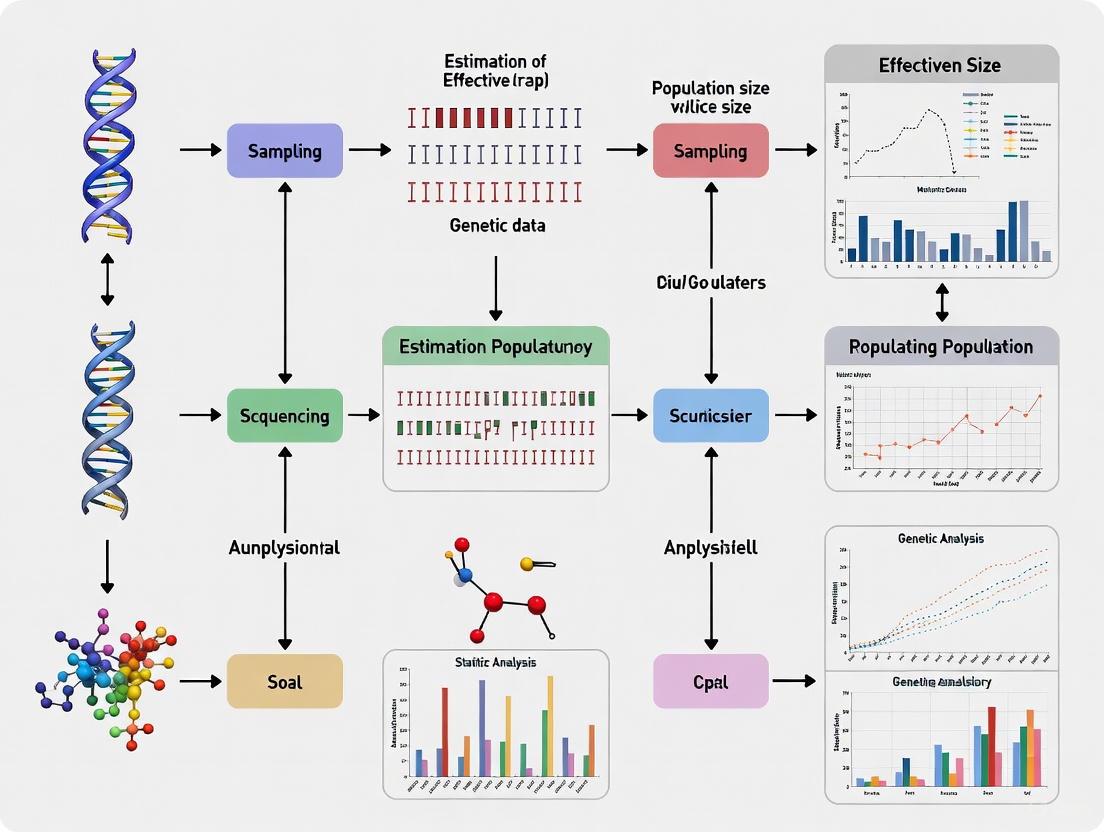
This article provides a comprehensive overview of methodologies for estimating effective population size (Ne) from genetic data, tailored for researchers, scientists, and drug development professionals.
Estimating Effective Population Size from Genetic Data: A Comprehensive Guide for Biomedical Researchers
Abstract
This article provides a comprehensive overview of methodologies for estimating effective population size (Ne) from genetic data, tailored for researchers, scientists, and drug development professionals. It covers foundational concepts, including the definition of Ne as the size of an idealized population experiencing the same genetic drift as a real population and its critical role in understanding inbreeding, genetic diversity, and evolutionary potential. The scope extends to a detailed examination of contemporary estimation methods—such as linkage disequilibrium, temporal allele frequency changes, and heterozygosity excess—along with their underlying assumptions and required data inputs. The article further addresses common challenges and biases in Ne estimation, offers strategies for method selection and optimization, and provides guidance for validating and interpreting results within biomedical and clinical research contexts, such as clinical trial design and pharmacogenomics.
Understanding Effective Population Size: Core Concepts and Significance in Genetic Analysis
Effective population size (Ne) represents a cornerstone concept in population genetics, conservation biology, and evolutionary studies. Formally defined as the size of an idealized population that would experience the same rate of genetic drift or inbreeding as the real population under consideration [1], Ne provides a powerful metric for quantifying evolutionary processes in natural populations. The concept was first introduced by Sewall Wright in 1931 [1] [2] to bridge the gap between theoretical models and the complexities of real-world populations. Unlike census population size (N), which simply counts individuals, Ne captures the strength of genetic drift, thereby influencing the rate of genetic diversity loss, the efficiency of selection, and the dynamics of inbreeding [3] [4].
The fundamental importance of Ne extends across multiple biological disciplines. In evolutionary biology, it determines the relative power of drift versus selection [5]. In conservation genetics, Ne predicts vulnerability to inbreeding depression and loss of adaptive potential [4]. In breeding programs, it guides strategies for maintaining genetic diversity [6]. The "50/500" rule, a widely cited conservation guideline, proposes that Ne > 50 is required for short-term viability and Ne > 500 for long-term evolutionary potential [4]. However, empirical studies reveal that Ne is typically much smaller than census size, with an average Ne/N ratio of approximately 0.34 across 102 animal and plant species, dropping to just 0.10-0.11 after accounting for fluctuations in population size, variance in family size, and unequal sex ratio [1].
Theoretical Foundations: From Idealized Populations to Modern Interpretations
Wright's Idealized Population
The conceptual foundation of Ne rests on Wright's idealized population model [7], which makes several simplifying assumptions: (1) constant population size with discrete generations, (2) random mating including self-fertilization in hermaphrodites, (3) Poisson distribution of offspring number (mean equal to variance), and (4) no selection, migration, or mutation [1] [7]. Under these conditions, the rate of genetic drift is inversely proportional to population size, and Ne equals the census size N.
In this idealized Wright-Fisher model, the conditional variance of allele frequency p' given p is:
var(p'∣p) = p(1-p)/2N [1]
This equation establishes the fundamental relationship between population size and genetic drift, with the variance in allele frequency change increasing as N decreases.
Extensions of the Basic Concept
As population genetics developed, several distinct definitions of Ne emerged to address different aspects of genetic drift:
Variance Effective Size (Ne(v)) relates to the change in allele frequency variance across generations [1] [2]. It is defined as Ne(v) = p(1-p)/2var̂(p), where var̂(p) is the estimated variance of allele frequency change [1].
Inbreeding Effective Size (Ne(f)) relates to the rate of increase in inbreeding coefficient [1] [8]. It measures how quickly heterozygosity is lost from a population.
Eigenvalue Effective Size is derived from the largest non-unit eigenvalue of the transition matrix describing allele frequency dynamics [2] [9].
Coalescent Effective Size is defined through coalescence theory, where the expected coalescence time for two genes is T = 2Ne [2].
For a population with constant size and stable breeding structure, these different definitions generally converge to the same value, but they may diverge in populations with changing size or complex structure [2].
Factors Influencing Effective Population Size
Demographic Factors
Real populations systematically deviate from idealized assumptions, leading to Ne < N. The major demographic factors affecting Ne include:
Table 1: Demographic Factors Affecting Ne/N Ratio
| Factor | Effect on Ne | Mathematical Formulation | Biological Interpretation |
|---|---|---|---|
| Fluctuating Population Size | Decreases Ne dramatically | 1/Ne = (1/t)Σ(1/Ni) [1] [8] | Harmonic mean is dominated by smallest bottleneck |
| Unequal Sex Ratio | Decreases Ne, especially with few breeding males | Ne = (4NmNf)/(Nm + Nf) [1] [8] | Reduced contribution from the scarce sex increases drift |
| Variance in Family Size | Generally decreases Ne | Ne = (4N - 2)/(2 + Vk) [1] | Vk > 2 (Poisson expectation) increases drift; Vk < 2 increases Ne |
| Overlapping Generations | Decreases Ne | Complex, depends on age-specific reproduction [8] | Increases variance in reproductive success across generations |
| Population Subdivision | Variable effects | Depends on migration rates and selection [8] | Limited gene flow allows independent drift in subpopulations |
The following diagram illustrates how these demographic factors reduce the effective population size relative to the census count:
Selective and Genomic Factors
Beyond demographic factors, heterogeneity in Ne across the genome arises from selection at linked sites:
- Background selection against deleterious mutations reduces Ne in regions with low recombination [1] [5]
- Selective sweeps from positive selection temporarily reduce Ne in surrounding genomic regions [5]
- Genetic hitchhiking can cause neutral mutations to have dynamics characteristic of smaller populations [1]
These processes create variation in local Ne along chromosomes, with areas of low recombination typically exhibiting lower effective sizes due to reduced efficacy of selection against linked deleterious mutations [1].
Methodologies for Estimating Effective Population Size
Contemporary methods for estimating Ne leverage different genetic signals and data types, each with specific strengths and applications:
Table 2: Methodologies for Estimating Effective Population Size
| Method | Genetic Basis | Timescale | Key Software | Data Requirements |
|---|---|---|---|---|
| Linkage Disequilibrium (LD) | Non-random association of alleles at unlinked loci | Recent (1-100 generations) | NeEstimator [6] | Single-sample SNP data |
| Temporal Method | Allele frequency change between generations | Historical (t generations ago) | MaxTemp [10] | Two or more temporal samples |
| Coalescent-based | Time to most recent common ancestor | Deep evolutionary | fastsimcoal2 [5] | DNA sequence data |
| Pedigree-based | Rate of inbreeding accumulation | Recent generations | - | Multi-generational pedigree |
| Sibship Assignment | Reconstruction of family structure | Contemporary | - | Single-sample genotype data |
Detailed Experimental Protocol: LD-based Ne Estimation
The linkage disequilibrium (LD) method is widely used for estimating contemporary Ne from single-time-point genetic samples. Below is a detailed protocol for implementing this approach:
1. Sample Collection and DNA Extraction
- Collect tissue, blood, or other appropriate biological samples from the target population
- Aim for a sample size of at least 50 individuals, as this provides a reasonable approximation of the true Ne value [6]
- Extract high-quality DNA using standard protocols (e.g., phenol-chloroform, silica column, or magnetic bead methods)
- Quantify DNA concentration and quality using spectrophotometry or fluorometry
2. Genotyping and Quality Control
- Genotype samples using appropriate SNP arrays or sequencing approaches
- Apply quality filters to remove:
- SNPs with high missing data rates (>5-10%)
- Individuals with excessive missing genotypes (>10%)
- Markers with minor allele frequency below 0.01-0.05
- SNPs deviating from Hardy-Weinberg equilibrium (p < 0.001)
- For LD-based Ne estimation, prune markers in high linkage disequilibrium (r² > 0.5) using software such as PLINK [6]
3. Data Formatting for NeEstimator
- Convert genotype data to the appropriate input format (e.g., GENEPOP format)
- Ensure correct population assignment and sampling information
- For large datasets, consider partitioning chromosomes to reduce computational load
4. Parameter Settings in NeEstimator v2.1
- Select the LD method with random mating assumption
- Set the critical value for excluding rare alleles (recommended: 0.05 for sample sizes > 100, 0.02 for smaller samples)
- Choose the jackknifing option for confidence interval estimation
- Specify the monogamous mating model for species with pair bonding, or random mating otherwise
5. Interpretation of Results
- Examine the relationship between Ne estimates and the allele frequency threshold
- Consider the confidence intervals, which are typically wide due to the inherent stochasticity of genetic drift
- For declining populations, note that LD methods reflect Ne approximately 1-100 generations in the past [6]
The following workflow diagram illustrates the complete process from sample collection to Ne estimation:
Detailed Experimental Protocol: Temporal Method with MaxTemp
For populations with samples collected across multiple generations, the temporal method provides estimates of historical Ne:
1. Study Design and Sampling
- Collect samples from the same population at multiple time points (minimum 2, preferably more)
- Ensure sufficient generational separation (at least 1, preferably 2-5 generations between samples)
- Maintain consistent sampling strategies across time points
- Record sample sizes for each temporal collection
2. Laboratory Analysis
- Use consistent genotyping methods across all temporal samples
- Include technical replicates to estimate genotyping error rates
- Target the same set of markers across all sampling events
3. Data Processing with MaxTemp
- Implement the newly developed MaxTemp software, which increases precision of temporal Ne estimates [10]
- Input allele frequency data for all time points
- The software optimizes the weighting of temporal F (F̂) estimates to maximize precision
- MaxTemp produces single-generation estimates of Ne, allowing matching with specific management actions or environmental events [10]
4. Validation and Interpretation
- Compare estimates with demographic data when available
- Assess consistency across different marker sets
- Consider confidence intervals, which remain challenging for temporal methods
Table 3: Essential Research Tools for Effective Population Size Estimation
| Tool/Resource | Type | Primary Application | Key Features | Implementation Considerations |
|---|---|---|---|---|
| NeEstimator v2.1 | Software | LD-based Ne estimation | User-friendly interface, multiple methods, confidence intervals | Requires unlinked markers; sensitive to rare alleles [6] |
| MaxTemp | Software | Temporal method with enhanced precision | Optimizes weighting of temporal F estimates | Newly developed; requires multiple temporal samples [10] |
| fastsimcoal2 | Software | Coalescent-based inference | Flexible demographic modeling, uses SFS | Computationally intensive; requires phased data [5] |
| PLINK | Software | Data quality control and processing | Efficient handling of large SNP datasets | Essential preprocessing for LD-based methods [6] |
| SNP Arrays | Genotyping platform | High-throughput marker generation | 50K-800K SNPs available for model species | Species-specific arrays needed; limited to known variants |
| Whole Genome Sequencing | Sequencing | Comprehensive variant discovery | Identifies novel variants; highest resolution | Higher cost; computational challenges for large sample sizes |
| Goat/Sheep SNP50K | Species-specific array | Livestock Ne studies | Standardized panels for consistent genotyping | Used in recent Ne optimization studies [6] |
Applications in Conservation and Management
Conservation Genetics
In conservation biology, Ne serves as a key indicator of population viability. Small populations with low Ne face elevated risks from:
- Inbreeding depression: Reduced fitness due to increased homozygosity of deleterious alleles [4]
- Loss of adaptive potential: Diminished capacity to respond to environmental change [4]
- Extinction vortices: Synergistic interactions between genetic and demographic threats [4]
The "50/500" rule provides a practical guideline, suggesting that Ne > 50 is needed for short-term viability and Ne > 500 for long-term evolutionary potential [4]. However, some argue that these values may be insufficient when considering demographic and environmental stochasticity, suggesting that Ne in the thousands may be necessary for long-term persistence [4].
Agricultural and Breeding Applications
In livestock and crop improvement programs, monitoring Ne helps balance selection intensity with maintenance of genetic diversity. Recent studies in sheep and goats have demonstrated that a sample size of approximately 50 animals provides a reasonable approximation of Ne, enabling cost-effective genetic monitoring in conservation programs [6]. This is particularly valuable for local breeds with limited conservation funding.
Future Directions and Methodological Challenges
Despite substantial progress in Ne estimation, several challenges remain:
- Integration of multiple methods: Combining information from LD, temporal, and pedigree approaches for more robust estimates
- Accounting for population structure: Developing better methods for structured populations and metapopulations
- Genomic heterogeneity: Modeling variation in Ne along chromosomes due to linked selection
- Single-generation estimates: New methods like MaxTemp aim to provide Ne estimates for specific generations [10]
- Standardization of reporting: Developing guidelines for sample sizes, quality control, and interpretation across studies
As sequencing technologies continue to advance and sample sizes increase, precision of Ne estimates will improve, providing deeper insights into population history and contemporary dynamics. However, careful interpretation of results remains essential, as different methodological approaches and biological factors can significantly influence estimates [6] [2].
The continued refinement of effective population size concepts and estimation methods will enhance our ability to monitor genetic health, predict evolutionary potential, and develop effective conservation strategies in an era of rapid environmental change.
The effective population size (Ne) is a foundational concept in population genetics, first introduced by Sewall Wright in 1931 [2] [11]. It is defined as the size of an idealized Wright-Fisher population that would experience the same amount of genetic drift or inbreeding as the real population under study [2] [12]. Unlike the census population size (Nc), which simply counts the number of mature individuals, Ne quantifies the number of individuals effectively contributing genes to the next generation, thereby determining the rate of genetic change in a population [13] [14]. Understanding and accurately estimating Ne is critical across evolutionary biology, conservation genetics, and breeding programs, as it directly influences a population's evolutionary potential, risk of inbreeding depression, and long-term viability [2] [11].
This article outlines the pivotal role of Ne in understanding microevolutionary dynamics and its practical estimation from genetic data. We detail the theoretical underpinnings linking Ne to genetic drift and inbreeding, provide structured protocols for its estimation, and showcase applications through contemporary case studies.
Theoretical Foundations: Ne, Genetic Drift, and Inbreeding
Ne as a Measure of Genetic Drift
Genetic drift refers to the random fluctuations in allele frequencies from one generation to the next, a process whose intensity is governed by the effective population size. In a Wright-Fisher idealized population, the variance in allele frequency change of a neutral gene is given by p(1-p)(1-(1-1/Ne)^t) after t generations [12]. This establishes that genetic drift occurs more rapidly in populations with a small Ne, leading to an increased risk of allele loss or fixation due to chance alone, rather than selection [11]. The coalescent effective population size further frames this concept in terms of genealogy, where the expected coalescence time for two random gene copies is T = 2Ne generations [2].
Ne as a Determinant of Inbreeding
The inbreeding effective population size specifically relates to the rate at which individuals become more genetically similar over time. A small Ne accelerates the accumulation of identical-by-descent (IBD) alleles, increasing the homozygosity of deleterious recessive alleles and manifesting as inbreeding depression—a reduction in fitness traits such as survival and fertility [15]. The following conceptual diagram illustrates how a small Ne drives this process.
The Critical Distinction Between Ne and Nc
A common and critical simplification is to equate the census size (Nc) with the effective size. In reality, Ne is almost always smaller than Nc due to factors such as unequal sex ratios, variance in reproductive success, and population size fluctuations [13] [2]. The relationship can be conceptually framed through the Diversity Partitioning Theorem, where the census size (Nc) represents a "richness" (the total number of potential breeders), while the effective size (Ne) is an "evenness-based diversity" that accounts for disparities in reproductive output [13]. The ratio Ne/Nc is therefore a key metric, often ranging from 0.1 to 0.3 in many vertebrates and plants, with 0.1 considered a conservative general estimate [14].
Quantitative Data and Predictive Equations
Predictive equations for Ne have been developed for populations with various reproductive modes and structures. The following table summarizes key predictive equations for different population models.
Table 1: Predictive Equations for Effective Population Size (Ne) Under Different Population Models
| Population Model | Predictive Equation | Key Parameters | Primary Reference |
|---|---|---|---|
| Simple, Constant Size | Ne ≈ (4Nc - 2) / (Vk + 2) |
Nc: Census size; Vk: variance in reproductive success |
[13] |
| Separate Sexes (Dioecious) | Ne ≈ (4NmNf) / (Nm + Nf) |
Nm: Number of males; Nf: Number of females |
[2] |
| Partial Selfing (Hermaphrodites) | Ne ≈ Nc / [σ²(1+α) + (1-α)/2] |
σ²: Variance in offspring number; α: Correlation of genes within individuals |
[2] |
These equations highlight that Ne is not a direct count but a complex parameter shaped by demography and breeding structure. For instance, the equation for separate sexes shows that Ne is maximized when the sex ratio is equal and is drastically reduced if one sex becomes a reproductive bottleneck [2].
Protocols for Estimating Ne from Genetic Data
Several genetic methods have been developed to estimate contemporary Ne. The Linkage Disequilibrium (LD) method is among the most widely used due to its practicality and reliability [11] [14] [16]. The following workflow outlines the key steps for Ne estimation using the LD method, applicable to SNP data from diploid organisms.
Protocol 4.1: Estimating Ne Using the Linkage Disequilibrium Method
Principle: Linkage disequilibrium (LD) refers to the non-random association of alleles at different loci. In finite populations, genetic drift generates LD, the extent of which is inversely proportional to the effective population size and the recombination rate c [11] [16]. The relationship is described by Sved's formula: E(r²) ≈ 1 / (4Nec + 1), which can be rearranged to estimate Ne [16].
Step 1: Sample Collection and Genotyping
- Sample a representative cohort of individuals from the target population. The sample should be random with respect to family structure to avoid bias.
- Extract high-quality DNA and generate genotype data using a high-throughput platform such as Genotyping-by-Sequencing (GBS), Whole Genome Sequencing (WGS), or SNP arrays [16].
Step 2: Data Quality Control (QC)
Perform rigorous QC on the raw variant call data using software like PLINK 1.9 [11] [16]. Standard filters include:
- Call Rate: Remove samples and SNPs with more than 5% missing data.
- Minor Allele Frequency (MAF): Filter out SNPs with MAF < 0.05, as rare alleles can bias LD estimates [16].
- Hardy-Weinberg Equilibrium (HWE): Exclude markers significantly deviating from HWE.
- Heterozygosity: Remove samples with exceptionally high heterozygosity, which may indicate contamination.
Step 3: Calculate Linkage Disequilibrium
- Use software such as PLINK 1.9 or GCTA to compute the squared correlation coefficient (
r²) between all pairs of SNP markers within a specified physical distance (e.g., 0-750 kb) [16]. - The analysis should stratify SNPs by distance bins (e.g., 0-10 kb, 10-20 kb, etc.) to observe the decay of LD with physical distance.
Step 4: Estimate Ne from LD
- Apply Sved's formula,
Ne ≈ 1 / (4cr²), wherecis the recombination rate in Morgans per base pair. Often,cis approximated using a constant value (e.g., 1 cM/Mb = 10⁻⁸ M/bp) [16]. - This calculation can be performed using specialized software like SNeP 1.1 [11] or custom scripts in R.
- The estimate reflects the effective population size
tgenerations ago, wheret = 1/(2c)generations [11]. Therefore, LD at short distances informs about more ancient Ne, while LD at long distances reflects recent Ne.
The Scientist's Toolkit: Software and Reagents
Accurate estimation of Ne relies on a suite of bioinformatics tools and laboratory reagents. The tables below catalog essential resources for researchers.
Table 2: Key Software for Estimating Effective Population Size
| Software Name | Primary Method | Application Scope | Input Data |
|---|---|---|---|
| NeEstimator v2.1 [17] [14] | LD, Heterozygosity excess, Temporal, Sibship | All-in-one suite for contemporary Ne estimation | SNP, Microsatellite |
| SNeP 1.1 [11] | Linkage Disequilibrium (LD) | Trajectory of historical Ne from SNP data | SNP data |
| GONE [17] [14] | Linkage Disequilibrium (LD) | Estimation of historical Ne over the last ~1000 generations | SNP data |
| Lamarc [18] | Coalescent Likelihood | Estimation of Ne, growth rates, and migration | Sequence, Microsatellite |
| gesp [19] | Analytical Framework | Prediction of Ne for complex, subdivided populations | Demographic parameters |
Table 3: Essential Research Reagents and Materials
| Reagent/Material | Function in Ne Estimation Workflow | Example Protocols |
|---|---|---|
| DNA Extraction Kit (e.g., DNeasy Plant Mini Kit) | High-quality DNA isolation from tissue samples (leaf, blood, etc.) for subsequent genotyping [16] | Standard silica-membrane based protocol |
| Restriction Enzyme ApeKI | Used in Genotyping-by-Sequencing (GBS) library preparation to reduce genome complexity [16] | GBS protocol as in Bari et al. [16] |
| Illumina NovaSeq S1 | High-throughput sequencing platform for generating genome-wide SNP data | Manufacturer's sequencing protocol |
| PLINK 1.9 [11] [16] | Command-line tool for robust data management, QC, and basic LD calculations | plink -bfile mydata -r2 -ld-window-kb 750 -ld-window 99999 -ld-window-r2 0 |
Case Studies in Conservation and Breeding
Case Study: Genetic Health of Kelp Forests
A 2025 genomic study of bull and giant kelp in the Northeast Pacific provides a stark example of the consequences of low Ne [15]. Researchers sequenced 429 bull kelp and 211 giant kelp genomes, identifying 6-7 genetically distinct populations. They found that populations with low Ne exhibited significantly reduced genetic diversity and higher inbreeding coefficients. Crucially, small bull kelp populations showed fixation of many deleterious alleles due to strong genetic drift, with no evidence of purging by natural selection. This reduces within-population inbreeding depression but predicts hybrid vigor in crosses between different small populations, a key insight for designing restoration strategies [15].
Case Study: Monitoring Diversity in Crop Breeding
Monitoring Ne in plant breeding programs is essential to prevent the loss of genetic gain. A 2024 study estimated Ne in two field pea germplasm sets: an elite breeding line (NDSU set) and a genetically diverse panel (USDA set) [16]. Using the LD method with GBS SNP data, they found the elite lines had a much smaller Ne (64) compared to the diversity panel (Ne = 174). The elite lines also showed higher and longer-range LD, consistent with their history of selection and a smaller effective number of founders. This three-fold difference in Ne highlights how breeding practices can narrow genetic diversity and underscores the need to actively monitor Ne to sustain long-term breeding progress [16].
The effective population size (Ne) is more than an abstract parameter; it is a vital indicator of a population's genetic health and evolutionary potential. A small Ne accelerates the loss of genetic diversity through drift and increases the genetic load through inbreeding, directly compromising population viability [15]. Modern genomics, combined with robust analytical methods and software, provides researchers and conservation managers with the tools to accurately estimate Ne and interpret its implications. Integrating these estimates into management frameworks—from setting conservation priorities for kelp forests to optimizing selection protocols in crop breeding—is fundamental to ensuring the long-term survival and adaptability of populations in a changing world.
Effective population size (Ne) is a foundational concept in population genetics, translating the complex genetic drift of a real population into the simplified framework of an idealized Wright-Fisher population [1]. It is a critical parameter for understanding the dynamics of genetic variation, inbreeding, and adaptive potential in fields ranging from conservation biology to animal breeding [2]. While often summarized as a single number, different definitions of Ne exist, each tailored to specific genetic processes and time scales. Among these, the inbreeding effective size, the variance effective size, and the coalescent effective size are paramount. These variants, though often equivalent in a constant, ideal population, can diverge significantly under realistic biological conditions such as fluctuating population size, overlapping generations, or population sub-structure [20] [12]. This article delineates these three key types of effective population size, providing a structured comparison, detailed protocols for their estimation, and practical guidance for researchers working with genetic data.
Conceptual Frameworks and Quantitative Comparison
The following table summarizes the core definitions, focal processes, and typical applications of the three primary effective population size types.
Table 1: Key Types of Effective Population Size (Ne)
| Type of Ne | Definitional Focus | Key Genetic Process | Primary Applications | Underlying Idealized Model |
|---|---|---|---|---|
| Inbreeding Effective Size | The size of an idealized population that would exhibit the same rate of increase in identity by descent (inbreeding) as the real population [1] [2]. | Rate of inbreeding | Conservation genetics (assessing inbreeding depression), managing breeding programs [2] [12]. | Wright-Fisher Model |
| Variance Effective Size | The size of an idealized population that would experience the same variance in allele frequency change over a generation due to genetic drift [1] [12]. | Allele frequency variance (genetic drift) | Microevolutionary studies, quantifying genetic drift over short terms, temporal method estimation [2] [12]. | Wright-Fisher Model |
| Coalescent Effective Size | The size of an idealized population where two gene lineages have the same expected time to coalesce (find a common ancestor) as in the real population [2] [20]. | Time to most recent common ancestor (coalescence) | Analyzing molecular sequence and polymorphism data, inferring long-term demographic history [2] [20]. | Coalescent Theory |
The relationships between these concepts and the genetic processes they represent can be visualized as a unified logical framework.
Predictive Equations and Empirical Data
Theoretical predictions for Ne are crucial for study design and interpretation. The foundational equation for a dioecious population with separate sexes, derived from the variance of individual contributions, is often expressed as:
Here, Nm and Nf are the numbers of breeding males and females, respectively [2]. This approximation assumes a Poisson distribution of offspring number. More complex equations account for variances and covariances in offspring number [2]. For a population with partial selfing (β), the effective size is approximated by Ne ≈ N / (1 + β), highlighting how inbred mating systems reduce Ne [2].
Empirical data across taxa reveal that Ne is typically much smaller than the census size. A large-scale review of 102 wildlife species found that the average ratio of effective to census size (Ne/N) was only 0.34, and when accounting for fluctuations and unequal sex ratios, this average dropped to a mere 0.10-0.11 [1]. This means a population of 1,000 individuals might genetically behave like a population of only 100-110. Furthermore, a global survey of 3829 populations showed that many taxonomic groups struggle to meet conservation thresholds, with plants, mammals, and amphibians having less than a 54% probability of reaching Ne = 50 and less than 9% probability of reaching Ne = 500 [21].
Estimation Protocols and Methodologies
Protocol for Estimating Recent Ne via Linkage Disequilibrium (LD)
The LD method is a widely used single-sample estimator for contemporary (recent) effective population size, based on the principle that genetic drift generates linkage disequilibrium between neutral loci.
- Principle: The amount of linkage disequilibrium (non-random association of alleles at different loci) in a population is inversely related to its effective size. In smaller populations, genetic drift creates stronger LD [2] [22].
- Workflow: The following diagram outlines the standard workflow for LD-based Ne estimation, from sampling to interpretation.
- Key Considerations:
- Marker Type: High-density SNPs are now standard. The number of loci should be large (hundreds to thousands) [21].
- Sample Size: A larger sample size improves precision. Typically, 50-100 individuals are used, but more may be needed for large populations [21].
- Allele Frequency Cut-off: Applying a minor allele frequency (MAF) cut-off (e.g., 0.05) is critical to avoid upward bias in Ne estimates [21].
- Software: NEESTIMATOR (v1 or v2) and LDNe are commonly used software implementations for this method [21].
Protocol for Estimating Historical Ne Using the GONE Software
For inferring recent historical Ne (over the last ~100-200 generations), methods leveraging long-range linkage disequilibrium from linked markers, such as those implemented in the software GONE, have become prominent.
- Principle: The extent of LD between linked loci decays over generations due to recombination. The pattern of LD at different genetic distances therefore contains information about the effective population size in the past, with closer loci reflecting more recent history [22].
- Workflow: The estimation of historical Ne requires high-density genomic data and careful pre-processing to ensure accuracy.
- Key Considerations:
- Assumption of Isolation: GONE assumes the population has been isolated for a significant period. Recent admixture or high migration rates can create severe biases, generating spurious signals of population bottlenecks or growth [22].
- Data Requirements: High-quality, phased genotype data from a single, well-defined population is essential. Sample sizes of 100 or more individuals are recommended.
- Chromosomal Inversions: Genomic regions with suppressed recombination (e.g., chromosomal inversions) can distort estimates and should be identified and removed prior to analysis [22].
The Scientist's Toolkit: Essential Reagents and Software
Table 2: Key Research Reagents and Solutions for Effective Population Size Estimation
| Item Name | Type | Critical Function | Application Context |
|---|---|---|---|
| NeEstimator (v2.1) | Software Program | Implements multiple methods for contemporary Ne estimation, including LD, heterozygote excess, and temporal method [21]. | General use for estimating recent Ne from microsatellite or SNP data. |
| GONE | Software Program | Estimates historical Ne for the past ~200 generations from patterns of linkage disequilibrium in a single sample [22]. | Inferring recent demographic history (bottlenecks, expansions). |
| SNP Genotyping Array | Wet-Lab / Bioinformatic Reagent | Provides high-density genotype data (1000s to millions of SNPs) from which LD is calculated. | Primary data source for most modern LD-based Ne estimates. |
| Whole-Genome Sequencing Data | Wet-Lab / Bioinformatic Reagent | Provides the most comprehensive genetic data, allowing for the highest-resolution Ne estimates and the detection of runs of homozygosity (ROH). | Advanced analyses, including historical inference and inbreeding assessment via FROH [23]. |
| Minor Allele Frequency (MAF) Filter | Bioinformatics Parameter | Reduces bias in LD-based Ne estimates by excluding rare variants [21]. | A standard quality control step in LD and GONE analyses. |
Advanced Considerations and Future Directions
The estimation of Ne is not without challenges. A critical consideration is that the coalescent effective population size, often considered the most general form, only exists when the genealogical process of a population can be approximated by the standard coalescent with a simple linear scaling of time [20]. Complex demographic histories, such as strong continuous population subdivision, can violate this condition, meaning no single Ne can accurately describe the genetic diversity and drift across the entire genome [20].
Furthermore, different genomic regions can have different effective histories due to selection at linked sites. Areas of low recombination have a lower effective population size because selection at one site affects linked neutral variants, a process known as genetic hitchhiking or background selection [1]. This means that a single genome-wide estimate is an average, and local Ne can vary significantly along chromosomes.
Emerging methods continue to refine our ability to track Ne. For example, the Ttne software leverages identity-by-descent (IBD) segments detected in ancient DNA time-series data to infer effective population size trajectories with increased resolution for recent fluctuations [24]. The use of runs of homozygosity (ROH) is also a powerful tool for quantifying individual inbreeding levels, which reflects past Ne, as demonstrated in studies of isolated wolf populations [23]. As genomic datasets grow in size and temporal depth, the integration of these various methods and a careful acknowledgment of their assumptions will be key to robust inferences of effective population size.
In population genetics, the effective population size (Ne) is a cornerstone concept, defined as the size of an idealized Wright-Fisher population that would experience the same rate of genetic drift or inbreeding as the real population under consideration [1]. In contrast, the census size (Nc) represents the total number of individuals in a population, typically counting only reproductively mature individuals for conservation and monitoring purposes [14]. This distinction is not merely academic; it has profound implications for understanding evolutionary trajectories, predicting the loss of genetic diversity, and designing effective conservation strategies [2]. The ratio between these two parameters (Ne/Nc) provides a crucial metric for evaluating population viability and genetic health, yet this relationship is notoriously complex and influenced by numerous biological and demographic factors [25] [2].
The conceptual foundation of effective population size was introduced by Sewall Wright in 1931 to quantify genetic drift in real populations by comparing them to an idealized random mating population [1]. This idealized population assumes constant size, equal sex ratio, random mating, no selection, mutation, or migration, and Poisson distribution of offspring number [2]. Real populations inevitably deviate from these assumptions, resulting in Ne values that are typically substantially lower than Nc [1]. Understanding the relationship between Ne and Nc is particularly critical in conservation biology, where Ne determines the rate of genetic diversity loss and inbreeding accumulation, ultimately affecting population adaptive potential and extinction risk [26].
Key Conceptual Differences Between Ne and Nc
The distinction between effective and census population size transcends mere numerical difference, representing fundamentally different aspects of population biology with significant consequences for genetic diversity and evolutionary potential.
Conceptual Definitions and Biological Significance
The census population size (Nc) serves as a straightforward demographic count, typically of reproductively mature individuals in a population [14]. It provides essential information about population density and abundance but offers limited insight into genetic health or evolutionary potential. In contrast, the effective population size (Ne) represents a genetic parameter that quantifies the rate of genetic drift and inbreeding [2]. Different types of effective sizes focus on specific genetic processes: the variance effective size relates to changes in allele frequency variance due to sampling error, while the inbreeding effective size relates to the rate at which heterozygosity decreases over generations [1]. For populations in equilibrium, these values converge, but they can differ dramatically in non-equilibrium populations [27].
The biological significance of Ne becomes apparent when considering its relationship to key evolutionary processes. The magnitude of genetic drift is inversely proportional to Ne, meaning smaller effective populations experience stronger drift, leading to faster loss of genetic diversity and increased fixation of deleterious mutations [28]. Similarly, the efficiency of natural selection is directly related to Ne, with larger populations better able to purge deleterious mutations and fix beneficial ones [1]. This relationship has profound implications for genome evolution, potentially affecting transposable element accumulation and overall genome architecture [28].
Factors Creating Discrepancy Between Ne and Nc
The disparity between Ne and Nc arises from systematic deviations from the idealized Wright-Fisher population assumptions. These factors can be quantified through predictive equations that adjust Ne based on specific population characteristics:
Table 1: Factors Causing Discrepancy Between Ne and Nc
| Factor | Effect on Ne | Mathematical Relationship | Biological Basis |
|---|---|---|---|
| Unequal sex ratio | Reduces Ne | ( Ne = \frac{4NmNf}{Nm + N_f} ) [2] | Skewed reproductive contributions between sexes |
| Variance in reproductive success | Reduces Ne | ( Ne = \frac{4N - 2D}{2 + Vk} ) where ( V_k ) = variance in offspring number [1] | Certain individuals contribute disproportionately to next generation |
| Population fluctuations | Reduces Ne (harmonic mean) | ( \frac{1}{Ne} = \frac{1}{t} \sum{i=1}^t \frac{1}{N_i} ) [1] | Bottlenecks have disproportionate effect |
| Overlapping generations | Complex effects | Age-structured models [2] | Different age classes contribute unequally to reproduction |
| Population subdivision | Variable effects | Dependent on migration rates and subpopulation sizes [29] | Restricted gene flow between demes affects overall genetic drift |
These factors often interact in natural populations, creating complex relationships between census counts and genetic parameters. For instance, social structure in many vertebrate species can create substantial reproductive skew, where a few dominant individuals monopolize reproduction while others contribute little to the next generation [29]. This effectively creates a genetic bottleneck regardless of the actual number of individuals physically present. Similarly, historical population fluctuations can leave a lasting genetic signature, with the harmonic mean of population sizes over time determining contemporary Ne rather than current abundance [1].
Quantitative Relationship: The Ne/Nc Ratio
Typical Values and Biological Determinants
The Ne/Nc ratio provides a practical metric for translating between demographic counts and genetic parameters, with considerable variation across taxa and populations. Empirical studies have documented Ne/Nc ratios ranging from as low as 10^-6 for Pacific oysters to nearly 0.994 for humans, with an average of approximately 0.34 across examined species [1]. After accounting for fluctuations in population size, variance in family size, and unequal sex-ratio, more comprehensive estimates average only 0.10-0.11 [1]. This surprisingly low ratio indicates that census counts often substantially overestimate genetically effective population sizes.
For conservation applications, a general conversion ratio of 0.1 is widely recommended as a conservative and suitable approximation when precise genetic data are unavailable [14]. This means that an Ne of 500—a commonly cited threshold for maintaining evolutionary potential—translates to a census size of approximately 5,000 mature individuals [26]. However, this ratio represents a generalization, with typical values potentially ranging from 0.1 to 0.3 in many vertebrates and plants [14].
Table 2: Empirical Ne/Nc Ratios Across Taxonomic Groups
| Taxonomic Group | Typical Ne/Nc Range | Notable Examples | Primary Influencing Factors |
|---|---|---|---|
| Marine fishes | Highly variable (0.000001-0.994) [1] | Pacific oyster (10^-6) [1] | Extreme variance in reproductive success, sweepstakes reproduction |
| Elasmobranchs | Near 1 in some species [25] | Grey shark, Leopard shark [25] | More stable reproductive success, different life history |
| Forest trees | Often very low [30] | Various conifers and hardwoods | Pollen and seed dispersal patterns, mating system |
| Birds and mammals | 0.1-0.5 [14] | Wide variation among species | Social structure, mating systems, reproductive skew |
| Humans | ~0.994 [1] | Inuit populations [1] | Cultural factors moderating reproductive variance |
The biological determinants of Ne/Nc ratios are complex and multifaceted. Life history traits play a predominant role, with species exhibiting high fecundity, Type III survivorship curves, and high variance in reproductive success typically demonstrating lower Ne/Nc ratios [25]. This pattern is particularly pronounced in marine species with "sweepstakes reproduction," where environmental stochasticity creates massive variance in reproductive success among individuals [25]. Similarly, mating systems profoundly influence Ne/Nc ratios, with monogamous species typically exhibiting higher ratios than polygynous or promiscuous species where reproductive skew is more extreme [29].
Implications for Conservation and Management
The Ne/Nc ratio has direct practical applications in conservation policy and management. The Ne > 500 indicator has been formally adopted as a genetic diversity metric, measuring the proportion of populations within species that maintain sufficient size to preserve evolutionary potential [26]. This threshold translates to approximately Nc > 5,000 individuals when applying the conservative 0.1 ratio, providing a tangible conservation target [26] [14].
This relationship becomes particularly important when considering minimum viable populations and conservation prioritization. Population viability analyses that consider only demographic parameters without accounting for genetic erosion may substantially overestimate long-term persistence probabilities. Furthermore, the Ne/Nc ratio provides a mechanism for estimating genetic parameters for species where comprehensive genetic studies are logistically or financially prohibitive, allowing managers to make preliminary assessments based on census data alone [14].
Methodologies for Estimating Effective Population Size
Genetic Methods for Contemporary Ne Estimation
Several methodological approaches have been developed to estimate effective population size from genetic data, each with specific requirements, assumptions, and applications. These methods leverage different signatures of genetic drift detectable in population genetic data:
Figure 1. Genetic methods for estimating contemporary versus historical effective population sizes from different analytical approaches and software implementations.
The linkage disequilibrium (LD) method is among the most widely used approaches for estimating contemporary Ne [25]. This method capitalizes on the fact that genetic drift generates non-random associations between loci (linkage disequilibrium) in finite populations, with the extent of LD inversely related to Ne [25]. The standardized LD statistic (r²) is calculated between unlinked pairs of loci, with corrections for sampling bias [25]. This approach implemented in software such as LDNe and NeEstimator provides a snapshot of contemporary effective size but requires large sample sizes and dense genetic markers for accurate estimation, particularly in large populations [25] [30].
The temporal method estimates Ne by analyzing changes in allele frequencies between samples collected across multiple generations [27]. The principle underpinning this approach is that the variance in allele frequency change over time is inversely proportional to Ne [27]. Methods such as MLNE and TempoFS implement this approach, which can provide accurate estimates but requires sampling across generations, which may be impractical for long-lived species [14].
The heterozygosity excess method leverages deviations from Hardy-Weinberg equilibrium expectations in finite populations [27]. In Wright-Fisher populations, genetic drift generates a systematic heterozygote excess relative to Hardy-Weinberg proportions by an amount approximately equal to 1/(2N-1) [27]. This method, implemented in NeEstimator, can be applied to single samples but typically exhibits low precision and is most appropriate for very small populations [27].
More recent approaches include sibship assignment methods that estimate Ne from patterns of relatedness within a sample [14], and coalescent-based methods that reconstruct historical demographic trajectories over deeper timescales [31]. The latter includes pairwise sequentially Markovian coalescent (PSMC) approaches that can infer historical population size changes from single genomes but are not appropriate for estimating contemporary Ne [14].
Demographic and Predictive Approaches
In the absence of genetic data, predictive equations based on demographic parameters provide an alternative approach for estimating Ne. These methods build on the mathematical relationships summarized in Table 1, incorporating species-specific life history information including sex ratio, variance in reproductive success, population fluctuation data, and mating systems [2].
For dioecious species with separate sexes, the foundational equation incorporating sex ratio is:
[ Ne = \frac{4NmNf}{Nm + N_f} ]
where (Nm) and (Nf) represent the number of breeding males and females, respectively [2]. More comprehensive equations incorporate variance in reproductive success:
[ Ne = \frac{4N - 2D}{2 + Vk} ]
where (D) represents dioeciousness (0 for hermaphrodites, 1 for dioecious species) and (Vk) is the variance in offspring number [1]. Under ideal Wright-Fisher conditions with Poisson-distributed reproductive success ((Vk = 2)), this simplifies to (N_e = N) [1].
For populations with fluctuating sizes, the harmonic mean provides the appropriate estimator:
[ \frac{1}{Ne} = \frac{1}{t} \sum{i=1}^t \frac{1}{N_i} ]
where (N_i) represents population size in generation (i) [1]. This relationship explains the disproportionate impact of population bottlenecks on effective size, as the harmonic mean is heavily weighted toward the smallest values in a series.
Experimental Protocols and Research Reagent Solutions
Protocol for Contemporary Ne Estimation via Linkage Disequilibrium
The linkage disequilibrium method provides a robust approach for estimating contemporary Ne from genetic data. The following protocol outlines the key steps for implementation:
Sample Collection and DNA Extraction
- Collect tissue samples from 50-100+ unrelated individuals, with larger sample sizes required for larger populations [30]
- Extract high-quality DNA using standardized extraction kits (e.g., DNeasy Blood & Tissue Kit, Qiagen)
- Quantify DNA concentration using fluorometric methods and normalize to working concentration
Genotype Data Generation
- For non-model organisms: Utilize restriction site-associated DNA sequencing (RAD-seq) to discover and genotype thousands of single nucleotide polymorphisms (SNPs) [30]
- For organisms with reference genomes: Apply whole-genome resequencing or targeted capture approaches
- Ensure adequate marker density: Minimum 1,000 SNPs recommended, with 10,000+ preferred for large populations [25]
- Apply standard quality control filters: Call rate >95%, minor allele frequency >0.01, Hardy-Weinberg equilibrium p-value >1×10^-6
Data Analysis with LDNe Software
- Convert genotype data to appropriate format (e.g., GENEPOP)
- Execute LDNe with sampling correction for bias [25]
- Apply allele frequency threshold (e.g., exclude alleles with frequency <0.05) to minimize bias from rare alleles [25]
- Generate point estimate and confidence intervals through jackknifing procedures
- Interpret results considering the method's limitations for very large populations (>10,000) where confidence intervals may be wide [25]
Validation and Interpretation
- Compare estimates from multiple methods when possible (e.g., temporal, heterozygosity excess)
- Consider biological plausibility given species' life history and census data
- Report confidence intervals and methodological limitations transparently
Research Reagent Solutions for Effective Population Size Studies
Table 3: Essential Research Reagents and Tools for Ne Estimation Studies
| Reagent/Tool | Function | Example Products/Software | Application Notes |
|---|---|---|---|
| DNA Extraction Kits | High-quality DNA isolation from various tissue types | DNeasy Blood & Tissue Kit (Qiagen), MagMAX DNA Multi-Sample Kit (Thermo Fisher) | Critical for downstream genotyping success; choose based on source material |
| SNP Genotyping Platforms | Genome-wide polymorphism discovery and scoring | Illumina NovaSeq, DNBSEQ-G400, RAD-seq protocols | Balance between coverage, cost, and information content |
| Genotype Calling Software | Raw sequence data to genotype format | STACKS, GATK, FreeBayes | Parameter optimization critical for data quality |
| Ne Estimation Software | Implementation of LD, temporal, and other methods | NEESTIMATOR v2.1, LDNe, GONE, SNeP | Method selection depends on data type and population characteristics |
| Bioinformatics Tools | Data format conversion, quality control, visualization | VCFtools, PLINK, R/genetics packages | Essential for preprocessing and results interpretation |
Critical Considerations and Methodological Limitations
Technical Challenges and Validation Approaches
Estimating effective population size presents substantial technical challenges that researchers must acknowledge and address. A primary limitation concerns statistical power, particularly for large populations where confidence intervals may be extremely wide without massive sample sizes [30]. For instance, accurate estimation of Ne > 1,000 may require sampling hundreds of individuals and genotyping tens of thousands of markers [25]. This creates practical and financial constraints, especially for conservation applications where resources are limited.
The interpretation of Ne estimates requires careful consideration of underlying assumptions. Methods based on linkage disequilibrium assume unlinked loci, an assumption increasingly violated with genomic data where physical linkage is common [25]. Similarly, most methods assume discrete generations and random mating, assumptions frequently violated in natural populations with overlapping generations and complex social structures [29]. Violations of these assumptions can generate spurious signals of population size changes, with population subdivision particularly problematic as it can create false bottleneck or expansion signatures [31] [29].
Validation approaches should include:
- Comparison of multiple estimation methods applied to the same dataset
- Simulation studies using known demographic models to assess method performance
- Comparison with demographic estimates where available
- Sensitivity analyses evaluating the impact of sampling scheme and marker selection
Conservation Applications and Policy Implications
The translation of Ne estimates into conservation policy requires careful consideration of several conceptual and practical issues. The Ne > 500 threshold widely adopted in conservation represents a practical compromise based on theoretical considerations and empirical observations [26]. This threshold aims to balance short-term demographic stability with long-term evolutionary potential, with populations below this value considered at risk of losing adaptive capacity.
However, practical application of this threshold faces challenges. Many species exhibit Ne/Nc ratios substantially lower than the conservative 0.1 value, meaning census sizes must be much larger than 5,000 to maintain genetic health [1]. This is particularly problematic for marine species with sweepstakes reproduction, where Ne/Nc ratios can approach 10^-6, requiring impossibly large census sizes to maintain genetic diversity [25]. In such cases, conservation strategies must focus on maintaining connectivity and multiple populations rather than single population size targets.
Emerging issues in conservation genetics include the environmental costs of intensive genetic monitoring programs [30]. As conservation genetics increasingly relies on genomic approaches with substantial carbon footprints through sequencing and computational requirements, the field must balance information gain against environmental impact [30]. This necessitates careful consideration of when genomic monitoring is truly necessary for conservation decision-making versus when simpler approaches may suffice.
Furthermore, the interpretation of Ne estimates in structured populations remains challenging, as different sampling schemes can yield dramatically different estimates [29]. Conservation decisions based on flawed Ne estimates risk misallocating limited resources or implementing inappropriate management strategies. As such, effective population size should be interpreted as one component of a comprehensive conservation assessment rather than a definitive metric in isolation.
Biomedical research is undergoing a paradigm shift toward approaches centered on human disease models, driven by the notoriously high failure rates of the current drug development process. Despite a 44% increase in research and development investments among the 15 largest pharmaceutical companies since 2016, the drug attrition rate reached an all-time high of 95% in 2021 [32]. Most drugs fail in clinical stages despite proven efficacy and safety in animal models, highlighting a critical translational gap between preclinical research and clinical success [32]. This gap partially stems from relying almost exclusively on animal-derived data for decisions about clinical trial entry, despite fundamental interspecies differences in anatomical layouts, biological barriers, receptor expression, immune responses, and pathomechanisms [32].
The concept of effective population size (Ne), introduced by Sewall Wright in 1931, provides a crucial framework for quantifying genetic drift and inbreeding in real-world populations [2] [27]. In biomedical contexts, understanding and accurately estimating Ne is paramount for interpreting genetic variation, validating disease targets, and designing clinically relevant experimental models. This application note establishes protocols for Ne estimation and demonstrates its critical importance across the biomedical research continuum, from basic disease mechanism discovery to clinical therapeutic development.
Ne Estimation Methodologies: Experimental Protocols and Workflows
Linkage Disequilibrium-Based Estimation Protocol
Principle: This method estimates contemporary Ne from patterns of linkage disequilibrium (LD), the non-random association of alleles at different loci, within a single population sample. LD increases as population size decreases due to greater genetic drift [25] [27].
Table 1: Key Reagents and Software for LD-Based Ne Estimation
| Category | Specific Tool/Reagent | Specifications/Requirements | Primary Function |
|---|---|---|---|
| Genomic Data | Whole Genome Sequencing (WGS) Data | Blood-derived DNA; ≥30x mean coverage; PCR-free libraries; Illumina NovaSeq 6000 [33] | High-density variant discovery |
| Genotyping Array Data | Different DNA aliquot than WGS; for quality control [33] | Sample validation and QC | |
| Software | NeEstimator2 | Includes bias correction for sample size [25] | Standardized LD calculation |
| GONE | Requires ~10^4 loci; provides historical Ne trends [25] | Estimates Ne over recent generations | |
| QC Materials | NIST Reference Materials | Genome in a Bottle consortium samples [33] | Sensitivity and precision validation |
Procedural Workflow:
- Sample Collection & DNA Extraction: Collect blood samples in EDTA-treated tubes from the target population. Process to extract high-molecular-weight DNA. Preserve plasma, genomic DNA, and urine samples at -80°C for additional studies [34] [33].
- Library Preparation & Sequencing: Prepare PCR-free barcoded WGS libraries using the Illumina Kapa HyperPrep kit. Pool libraries and sequence on an Illumina NovaSeq 6000 instrument to generate paired-end reads (150 bp) [33].
- Data Processing & QC: Demultiplex sequences and perform initial quality control using the Illumina DRAGEN pipeline. Assess lane, library, and sample-level metrics, including contamination, mapping quality, and concordance with genotyping array data [33].
- Variant Calling & Joint Calling: Align FASTQ data to the human reference genome (e.g., hg19) using Burrows–Wheeler Aligner (BWA). Perform variant calling with Genome Analysis Toolkit (GATK) HaplotypeCaller. Implement large-scale joint calling across all samples to prune artefact variants and increase sensitivity [33].
- LD Calculation & Ne Estimation: Input the final variant call format (VCF) file into specialized software (e.g., NeEstimator2). The software calculates a standardized LD statistic (r²) between unlinked pairs of loci, applying necessary corrections for sampling bias and pseudo-replication in high-density data. Generate Ne estimates with confidence intervals [25].
Temporal Allele Frequency Change Protocol
Principle: This method estimates Ne by analyzing the variance in allele frequency changes at neutral markers over multiple generations between temporally spaced samples [27].
Procedural Workflow:
- Cohort Establishment & Baseline Sampling: Establish a defined patient cohort, such as newborns with congenital anomalies and their parents (trio-based design). Collect blood samples and generate whole genome sequencing data as described in Section 2.1 [34].
- Phenotypic Data Collection: Record detailed phenotype information according to Human Phenotype Ontology (HPO) terms. Collect epidemiological data through environmental factor questionnaires covering parental occupational history, exposure to hazardous substances, medication intake, and other relevant factors [34].
- Longitudinal Follow-up & Resampling: Implement a long-term tracking system to record newly added or changed clinical symptoms and genetic information over time. Collect subsequent samples after a defined number of generations have passed [34].
- Variant Frequency Comparison: For neutral loci, calculate the variance in allele frequency changes (F) between the temporal samples. Estimate Ne using the formula: Ne = t / (2F), where t is the number of generations between samples [27].
Quantitative Data Synthesis: Ne Values Across Biological Contexts
Table 2: Effective Population Size Estimates and Ratios Across Species and Genomic Contexts
| Species/System | Census Size (N) | Effective Size (Ne) | Ne/N Ratio | Estimation Method | Key Implications |
|---|---|---|---|---|---|
| Drosophila | 16 | 11.5 | 0.72 | Direct measurement of drift [1] | High reproductive variance reduces Ne |
| Various Wildlife | Variable | Variable | 0.10-0.11 (avg, adjusted) [1] | Multiple methods [1] | Fluctuations, family size variance reduce Ne |
| Inuit Humans | Census | Autosomal: 0.6-0.7N | 0.6-0.7 | Genealogical analysis [1] | Differences in inheritance patterns |
| Census | mtDNA: 0.7-0.9N | 0.7-0.9 | Genealogical analysis [1] | Haploid, maternal inheritance | |
| Census | Y-DNA: 0.5N | 0.5 | Genealogical analysis [1] | Haploid, paternal inheritance | |
| Human Genomic Regions | - | Low in low recombination areas | Variable | Coalescent rate [1] | Selection at linked sites reduces Ne |
| - | High in high recombination areas | Variable | Coalescent rate [1] | Recombination uncouples loci from selection |
Application in Disease Modeling and Drug Development
Enhancing Preclinical Model Selection and Validation
Advanced human disease models, including organoids, bioengineered tissue models, and organs-on-chips (OoCs), are being developed to bridge the translational gap [32]. Understanding Ne is critical for characterizing the genetic diversity and potential drift within these model systems, especially when derived from specific patient populations.
- Stratified Epithelia Models: Bioengineered tissue models of the gut, lungs, and skin are cultivated at air–liquid interfaces to emulate in vivo-like tissue conditions. The genetic characterization of the primary cell sources used to create these models should include Ne considerations to ensure they adequately represent the genetic diversity of the target human population [32].
- Organoid Systems: Self-organizing 3D structures generated from tissue-specific adult stem cells (ASCs) or induced pluripotent stem (iPS) cells can mimic human organs. However, the cell type composition of organoids can vary significantly depending on the protocol, impacting reproducibility. Genetic monitoring, informed by Ne concepts, can help assess stability and representativeness [32].
- Organs-on-Chips (OoCs): These perfused microfluidic platforms contain bioengineered tissues interconnected by microchannels. Multi-organ systems aim to emulate inter-tissue crosstalk. When these systems incorporate cells from multiple donors, understanding Ne-related dynamics helps maintain representative genetic variation throughout experimental durations [32].
Informing Genetic Study Design and Analysis in Drug Discovery
The drug development process is exceptionally long and costly, requiring over 12 years and approximately $2.6 billion on average to bring a new molecular entity to market [35]. The likelihood of advancing a candidate from clinical testing to market is dramatically lower for neuropsychiatric drugs (8.2%) compared to all drugs combined (15%) [35].
- Target Validation: A biological target must be validated as relevant to the human disease. Genetic data from diverse human populations, accounting for Ne, provides critical evidence. However, drug developers face challenges as many published findings on new targets cannot be reproduced [35]. Accurate Ne estimation in source populations strengthens the validity of genetic associations.
- Clinical Trial Design: The All of Us Research Program highlights the importance of diversity in genomic datasets. This program, with 77% of participants from communities historically underrepresented in biomedical research, provides a resource to better understand genetic variants and their health correlations across diverse groups [33]. Considering Ne and population structure is essential when using such datasets for trial design to ensure findings are generalizable.
Advanced Considerations and Computational Tools
Modern algorithms, particularly Sequentially Markovian Coalescent (SMC) methods, can reconstruct historical population sizes over thousands of generations [31]. These tools are computationally faster and can exploit larger sample sizes, providing rich demographic history. However, a critical consideration is that population subdivision can produce strong false signatures of changing population size. A signal often interpreted as a recent decline (bottleneck) may actually reflect a history of structured populations undergoing range changes [31]. Collaboration between geneticists, paleoecologists, and climatologists is crucial for accurate interpretation.
Table 3: Software Tools for Advanced Ne and Demographic Inference
| Software | Method Class | Key Features | Application Scope |
|---|---|---|---|
| SLiM | Simulation | Forward-time simulation of complex evolutionary scenarios [25] | Generating biologically realistic data for method testing |
| msprime | Simulation | Efficient coalescent simulations [25] | Simulating genetic data under complex demographies |
| GADMA | SFS-based | Genetic algorithm for demographic model selection [25] | Inferring complex demographic histories, including Ne changes |
| δaδi | SFS-based | Uses diffusion approximation for allele frequency spectrum [25] | Model selection and parameter estimation for 1-5 populations |
A Practical Guide to Contemporary Ne Estimation Methods and Software
The effective population size (Ne) is a fundamental parameter in population genetics, quantifying the number of individuals in an idealized population that would experience the same amount of genetic drift or inbreeding as the observed population [22]. Accurate estimation of Ne is crucial for understanding evolutionary processes, assessing population viability, and informing conservation strategies [36]. Among various genetic methods for estimating contemporary Ne, the linkage disequilibrium (LD) method has emerged as a powerful and widely used single-sample approach [37].
Linkage disequilibrium refers to the non-random association of alleles at different loci within a population [38]. The core principle of the LD method is that in a finite population, genetic drift generates random LD between unlinked loci. The magnitude of this drift-generated LD is inversely related to the effective population size. The expected relationship is formalized as E(r²) ≈ 1/(3Ne) + 1/S, where S is the sample size, after adjusting for sampling error [37]. This theoretical foundation allows researchers to estimate Ne from a single sample of individuals, making it particularly valuable for studying natural populations where temporal data are unavailable.
The LD method presents significant advantages for conservation applications, as it performs best for relatively small populations (Ne < 200) [37], which are often the focus of conservation efforts. With the advent of high-throughput sequencing technologies, the availability of vast numbers of genetic markers has further enhanced the precision and utility of LD-based Ne estimates across diverse taxa [39] [40].
Theoretical Foundations and Mathematical Principles
Core Mathematical Formulations
The linkage disequilibrium method for estimating effective population size derives from the expected equilibrium between the creation of LD by genetic drift and its breakdown by recombination. The fundamental equation describing this relationship for a finite population was established by Hill (1981):
E(r²) = 1/(3Ne) + 1/S [37]
In this formulation, E(r²) represents the expected squared correlation coefficient of allele frequencies at pairs of loci, Ne is the effective population size, and S is the number of individuals sampled. The 1/S term accounts for the LD generated by sampling error. To obtain an unbiased estimate of the drift component, this sampling error must be subtracted:
1/(3Ne) = E(r²) - 1/S
This adjusted estimate of the drift contribution to LD can then be used to solve for Ne. However, this initial formulation is approximate and ignores second-order terms in S and Ne, which can lead to substantial bias in certain circumstances [37]. Subsequent work has developed adjusted expectations for the drift and sampling error components to address these biases, leading to improved accuracy in Ne estimation.
Accounting for Allele Frequency and Population Structure
The performance of the LD method is significantly influenced by allele frequency distributions, particularly the presence of rare alleles. Low-frequency alleles can upwardly bias Ne estimates, but this can be mitigated by excluding alleles below a frequency threshold (typically Pcrit = 0.05 or 0.02) [37]. The method's precision increases with the number of independent allelic comparisons, which is a function of both the number of loci (L) and the number of alleles per locus (K). The total degrees of freedom for the weighted mean r² is given by:
n = Σ(Ki - 1)(Kj - 1) for all pairwise locus comparisons [37]
Recent theoretical advances have extended the LD method to account for population structure through a partitioned approach:
δ² = δw² + δb² + 2·δbw² [40]
This formulation decomposes total LD (δ²) into within-subpopulation (δw²), between-subpopulation (δb²), and between-within components (δbw²). This allows for more accurate estimation in structured populations by explicitly modeling migration rates (m), genetic differentiation (FST), and the number of subpopulations (s) [40].
Software Implementation: NeEstimator and Beyond
NeEstimator v2 represents a comprehensive implementation of software for estimating contemporary effective population size from genetic data [41]. This completely revised and updated version includes:
- Three single-sample estimators: Updated versions of the linkage disequilibrium and heterozygote-excess methods, plus a new method based on molecular coancestry
- Two-sample temporal method: A moment-based temporal approach for comparing samples across generations
- Enhanced data handling: Improved methods for accounting for missing data and analyzing datasets with large numbers of genetic markers (10,000 or more)
- Bias reduction: Options for screening out rare alleles that can upwardly bias estimates
- Confidence assessment: Confidence intervals for all estimation methods
- Batch processing: Capability to analyze large numbers of datasets sequentially, facilitating method comparisons
The software features a user-friendly JAVA interface compatible with MacOS, Linux, and Windows operating systems, making it accessible to a broad research community [41].
Next-Generation Software Tools
While NeEstimator remains a cornerstone for LD-based Ne estimation, several advanced tools have emerged to address specific methodological challenges:
Table 1: Software Tools for LD-Based Effective Population Size Estimation
| Software | Key Features | Data Requirements | Strengths |
|---|---|---|---|
| GONE2 [40] | Infers recent Ne changes; accounts for population structure; handles haploid data and genotyping errors | SNP data with genetic map | Accurate for recent demographic history; models migration and subdivision |
| currentNe2 [40] | Estimates contemporary Ne without genetic maps; accounts for population structure | SNP data without genetic map | Ideal for non-model organisms; provides FST and migration estimates |
| Ttne [42] | Uses identity-by-descent (IBD) in time-series ancient DNA; models time-transect sampling | Ancient DNA with temporal sampling | Leverages temporal stratification for improved accuracy |
| HapNe [42] | Estimates recent Ne from IBD or LD; designed for modern and ancient DNA | Phased genotypes | Flexible for different data types and quality |
Experimental Protocols and Application Workflows
Standard Protocol for LD-based Ne Estimation Using NeEstimator
Step 1: Data Collection and Quality Control
- Genotype a sufficient number of individuals (recommended S = 50-100) [37]
- Utilize highly polymorphic markers (microsatellites or SNPs); for SNPs, >1000 loci are typically necessary
- Ensure genotypes represent a random sample from the population of interest
Step 2: Input File Preparation
- Format data according to NeEstimator requirements (multiple formats supported)
- Include appropriate metadata (sample size, ploidy, missing data codes)
- For large SNP datasets, consider filtering to minimize linkage between markers
Step 3: Parameter Selection in NeEstimator
- Select the LD method from available estimators
- Set allele frequency threshold (Pcrit) to exclude rare alleles; Pcrit = 0.05 is often optimal [37]
- Specify confidence interval method (jackknifing or parametric)
- Choose output options for results and diagnostic information
Step 4: Results Interpretation
- Examine point estimate and confidence intervals for Ne
- Check for diagnostic warnings about potential biases
- Consider multiple Pcrit values if results are sensitive to allele frequency threshold
Advanced Protocol for Structured Populations Using GONE2
For populations with suspected subdivision or migration, the standard LD method may produce biased estimates. The following protocol adapts the process for structured populations:
Step 1: Preliminary Population Structure Analysis
- Conduct PCA, STRUCTURE, or ADMIXTURE analysis to identify genetic clusters
- Determine whether analysis should focus on total or subpopulation-level Ne
- If strong structure is detected, consider separate analyses for distinct clusters
Step 2: Data Preparation for GONE2
- Convert genotype data to required format (PLINK or similar)
- Ensure genetic map is available for the species
- If no species-specific map exists, use a proxy from a related species
Step 3: Parameter Optimization
- Run initial analysis with default parameters
- Adjust number of chromosomes and sample size settings as needed
- Set appropriate recombination rate bins for LD decay analysis
Step 4: Metapopulation Parameter Estimation
- Use GONE2's integrated approach to estimate migration rate (m), FST, and number of subpopulations (s)
- Validate parameter estimates against biological knowledge of the population
- If structure is confirmed, use the metapopulation-aware Ne estimates
Step 5: Trajectory Interpretation
- Examine Ne trajectory over recent generations (typically 100-200 generations)
- Identify periods of stability, decline, or expansion
- Correlate demographic changes with historical events or conservation interventions
Research Reagent Solutions and Materials
Table 2: Essential Research Reagents and Materials for LD-based Ne Estimation
| Category | Specific Examples | Function/Application |
|---|---|---|
| Genotyping Platforms | Illumina SNP arrays; RADseq; Whole-genome sequencing | Generating multilocus genotype data from sampled individuals |
| DNA Extraction Kits | Qiagen DNeasy Blood & Tissue Kit; Macherey-Nagel NucleoSpin | High-quality DNA extraction from various tissue types |
| Analysis Software | NeEstimator v2.1; GONE2; currentNe2; R/popgen packages | Implementing LD algorithms and estimating Ne with confidence intervals |
| Genetic Markers | Microsatellite panels; SNP sets (100s to 1000s loci); Sequence variants | Providing polymorphic loci for LD calculation; more loci improve precision |
| Quality Control Tools | PLINK; VCFtools; custom R/Python scripts | Filtering markers, checking for Hardy-Weinberg equilibrium, removing related individuals |
Critical Considerations and Methodological Limitations
Impact of Population Structure and Sampling
The standard LD method assumes panmixia, and violations of this assumption can significantly bias Ne estimates [22]. Recent mixture of previously separated populations can create substantial LD, leading to downwardly biased Ne estimates. Similarly, ongoing migration between subpopulations at low rates (<5-10%) can distort Ne trajectories [22]. When population structure is detected, the following approaches are recommended:
- Perform preliminary structure analysis to identify distinct genetic clusters
- Conduct separate analyses for differentiated groups when possible
- Use next-generation tools like GONE2 that explicitly model population structure [40]
- Interpret results cautiously when evidence of recent admixture exists
Sampling design also critically influences LD-based estimates. The method requires a random sample of unrelated individuals from the population. Relatedness among sampled individuals can artificially inflate LD and bias Ne estimates downward.
Data Quality and Analytical Considerations
Marker Type and Density: The precision of LD estimates increases with both the number of loci and their polymorphism. For microsatellites, 10-20 loci with approximately 10 alleles each provide reasonable precision for small populations (Ne < 200) [37]. For SNPs, hundreds to thousands of loci are typically necessary due to their lower heterozygosity.
Allele Frequency Filtering: Rare alleles (frequency < 0.05) can substantially upwardly bias Ne estimates [37]. Applying appropriate frequency thresholds (typically Pcrit = 0.05 or 0.02) reduces this bias with minimal loss of precision. The optimal threshold depends on sample size, with more stringent thresholds needed for smaller samples.
Genotyping Errors: Base-calling errors and genotyping inaccuracies can artificially create or mask LD patterns [40]. Error rates as low as 1% can significantly impact estimates, particularly for large populations. Implementing rigorous quality control protocols and using software that explicitly models error rates (e.g., GONE2) is essential for reliable inference.
Applications in Conservation and Evolutionary Biology
The LD method has become an invaluable tool across biological disciplines, particularly in conservation genetics where monitoring population status is essential. A recent global meta-analysis demonstrated that genetic diversity loss occurs worldwide, with two-thirds of analyzed populations impacted by threats, and conservation interventions involving improved connectivity or translocations can maintain or increase genetic diversity [36]. The LD method provides a direct means to monitor these genetic consequences of population management.
In evolutionary biology, LD-based Ne estimates help quantify the strength of genetic drift relative to other evolutionary forces. The method has been successfully applied to diverse taxa, including marine species with large census sizes [39], livestock breeds [22], and ancient human populations [42]. The development of temporal extensions like Ttne now enables more refined tracking of population size changes using time-series ancient DNA data, revealing demographic fluctuations correlated with cultural and environmental changes [42].
As genomic technologies continue to advance, LD methods will likely play an increasingly important role in biodiversity monitoring and conservation assessment, particularly for tracking progress toward international genetic diversity targets as outlined in the Kunming-Montreal Global Biodiversity Framework [36].
The effective population size (Ne) is a cornerstone parameter in population genetics, quantifying the rate of genetic drift and inbreeding in a population [2] [1]. Among the various genetic methods for estimating Ne, those based on temporal changes in allele frequency are powerful tools for inferring short-term effective population size. The foundational principle of this method is that the variance in allele frequency change over time is directly related to the genetic drift experienced by the population, which in turn is a function of its effective size [43]. In a finite population under neutral evolution, allele frequencies will drift randomly from one generation to the next. The standardized variance of this change (F) provides an estimate of Ne, following the relationship F = 1 - [1 - 1/(2Ne)]^t, where t is the number of generations between samples [2] [43]. This approach is particularly valued for its conceptual clarity and the direct insight it offers into contemporary demographic processes.
Data Requirements and Sampling Design
Successful application of the temporal method requires careful consideration of data requirements and sampling strategy. The core data consists of allele frequencies estimated from genetic samples taken from the same population at two or more distinct time points.
Table 1: Key Data Requirements for Temporal Ne Estimation
| Requirement | Specification | Considerations |
|---|---|---|
| Genetic Markers | Single Nucleotide Polymorphisms (SNPs) are standard. | A large number of neutral, independent, biallelic markers are required [25] [43]. |
| Temporal Samples | Minimum of two time points (generations 0 and t). | More time points can improve accuracy [44]. |
| Generational Interval (t) | Must be known or estimated. | The number of generations between samples is critical for calculation [43]. |
| Sample Size (Individuals) | Per time point. | A sample of ~50 individuals can provide a reasonable approximation, balancing cost and precision [6]. |
| Read Depth (for Pool-Seq) | Per SNP, per pool. | Must be sufficient to accurately estimate allele frequencies; varies by study [43]. |
| Sampling Scheme | Plan I or Plan II. | Plan I: Sample after reproduction. Plan II: Sample before reproduction and remove individuals. Must be specified for accurate variance calculation [43]. |
Sampling Plans and Experimental Design
Two primary sampling plans dictate how the variance in allele frequency change is calculated:
- Plan I (Sampling After Reproduction): Individuals are sampled after the breeding season, and their genotypes are considered to be a reflection of the gene pool that produced the next generation. The initial and subsequent samples are correlated because they are derived from the same population.
- Plan II (Sampling Before Reproduction): Individuals are sampled and permanently removed from the population before reproduction. The initial sample and the individuals contributing to the next generation are considered independent binomial samples from the same parental gene pool [43].
For studies utilizing pooled sequencing (Pool-Seq), the sampling process involves two steps, each contributing variance that must be accounted for in the estimation model. First, individuals are sampled from the population to create a DNA pool. Second, sequencing reads are sampled at random from this DNA pool [43]. Failure to correct for this second sampling step can lead to substantial bias in Ne estimates.
Figure 1: Workflow for temporal sampling and Ne estimation, highlighting the critical choice between Sampling Plan I and II.
Available Software and Tools
Several software tools have been developed to implement the temporal method, ranging from likelihood-based approaches to those designed for modern sequencing data.
Table 2: Software Tools for Estimating Ne from Temporal Data
| Software/Method | Estimation Approach | Key Features and Data Suitability |
|---|---|---|
| Nest [43] | Method-of-moments | Specifically designed for Pool-Seq data. Corrects for the two-step sampling variance (individuals and reads). Can provide genome-wide and local Ne estimates. |
| Likelihood Methods [44] | Maximum Likelihood / Hidden Markov Model (HMM) | Uses a diffusion process to model allele frequency transitions. Computationally efficient for large populations. Can jointly estimate Ne and selection coefficient (s). |
| Moments-based Estimators [43] | Method-of-moments (e.g., Nei & Tajima, Waples) | Classic, computationally simple methods. Can be biased if assumptions are violated (e.g., not accounting for Pool-seq variance). |
| GONE [25] [22] | Linkage Disequilibrium (LD) | Estimates recent historical Ne (past ~100-200 generations) from a single sample using linked markers. Not a temporal method per se, but provides a historical context. |
Step-by-Step Protocol
This protocol outlines the process for estimating Ne from temporal SNP data, with specific considerations for Pool-Seq.
A. Wet-Lab Protocol: Sample Collection and Sequencing
- Population Sampling: Collect tissue or DNA samples from the target population at two or more time points, separated by a known number of generations (t).
- Record Sampling Plan: Document whether you are following Plan I (non-destructive, post-reproduction sampling) or Plan II (destructive, pre-reproduction sampling).
- DNA Extraction and Pooling: For Pool-Seq, extract DNA from each individual and combine equal masses of DNA from all sampled individuals within a time point to create a single, representative DNA pool for that generation. The pool size should be documented.
- Library Preparation and Sequencing: Prepare sequencing libraries from each DNA pool and sequence using high-throughput technology (e.g., Illumina). Aim for sufficient and uniform read coverage across the genome to minimize sampling error in allele frequency estimation.
B. In Silico Protocol: Data Analysis and Ne Estimation
The following workflow, implemented in tools like Nest, corrects for Pool-Seq specific biases [43].
Figure 2: Bioinformatic workflow for processing temporal Pool-Seq data to generate input for Ne estimation software like Nest.
- Data Preprocessing: Align sequencing reads to a reference genome. Call SNPs and apply standard filters for quality, depth, and minor allele frequency. A critical step for LD-based methods like GONE, and good practice for temporal methods, is to prune SNPs in high linkage disequilibrium (e.g., using an r² threshold of 0.5 in PLINK) to ensure independence of data points [6].
- Allele Frequency Calculation: For each time point and each SNP, calculate the allele frequency from the read counts. For Pool-Seq, this is the count of the alternative allele divided by the total read depth at that locus.
- Input File Preparation: Prepare an input file for your chosen software. For Nest, this typically includes a matrix of reference and alternative allele read counts for all SNPs and all time points.
- Parameter Setting: Run the estimation software, specifying key parameters including the number of generations between samples (t) and the sampling plan (I or II).
- Interpretation: Examine the output Ne estimate and its confidence intervals. Be aware that estimates can be biased if the underlying assumptions (e.g., population isolation, neutrality of markers) are severely violated [22].
The Scientist's Toolkit
Table 3: Essential Research Reagents and Computational Tools
| Item | Function/Description | Example/Note |
|---|---|---|
| High-Throughput Sequencer | Generating raw sequence data from DNA samples. | Illumina platforms are standard for Pool-Seq. |
| Reference Genome | A sequenced and annotated genome for the species. | Essential for accurate read alignment and variant calling. |
| Bioinformatics Software | Processing raw data into analyzable allele frequencies. | Tools for alignment (BWA), variant calling (GATK), and data handling (PLINK) [6]. |
| Ne Estimation Software | Implementing the statistical model to calculate Ne from allele frequencies. | Nest (for Pool-Seq), MLNE, TempoFS, or others listed in Table 2. |
| Genetic Markers | Neutral, bi-allelic polymorphisms used for analysis. | Genome-wide distributed SNPs are the marker of choice. |
| R/Python Environment | For statistical analysis, data visualization, and running certain analysis pipelines. | Nest is implemented as an R package [43]. |
Limitations and Biasing Factors
While powerful, the temporal frequency method is subject to several potential biases that researchers must consider:
- Population Structure and Migration: Admixture (recent mixture of previously separated populations) and ongoing migration can severely bias Ne estimates. These processes create allele frequency changes that mimic the effects of strong genetic drift, leading to underestimation of Ne [22]. Analysis should be preceded by population structure assessment (e.g., using PCA or ADMIXTURE), and estimation should be restricted to identified genetic groups.
- Selection: The method assumes markers are neutral. Selection on a marker or linked sites will cause allele frequency changes not due to drift, violating model assumptions.
- Sampling and Sequencing Variance: As detailed above, failure to account for all sources of variance, particularly in Pool-Seq designs, will result in biased estimates. The two-step sampling model in Nest is designed to mitigate this [43].
- Chromosomal Inversions: Large genomic regions with suppressed recombination (e.g., inversions) exhibit strong linkage disequilibrium, which can be misinterpreted as a small local Ne. It is often necessary to identify and exclude these regions from the analysis [22].
The heterozygosity excess method is a genetic approach for estimating the contemporary effective population size (Ne), a pivotal parameter in population genetics, ecology, and conservation biology. This method is grounded in the principle that when the effective number of breeders in a population is small, stochastic differences in allele frequencies between males and females occur, leading to a measurable excess of heterozygotes in their progeny relative to Hardy-Weinberg equilibrium (HWE) expectations [45] [27] [46]. Unlike temporal methods that require samples from multiple time points, the heterozygosity excess method can estimate Ne from a single sample of individuals, making it particularly valuable for studying natural populations where longitudinal data are unavailable [27] [14].
The theoretical basis stems from the understanding that in a finite diploid population with separate sexes, genetic drift in the parental generation causes a systematic heterozygote excess in offspring [27]. This occurs because the sampling of finite numbers of male and female parents leads to a stochastic difference in gene frequency between sexes. Robertson (1965) demonstrated that in an idealized population with Nm male and Nf female parents, the heterozygote excess in the progeny is αp = -1/(8Nm) - 1/(8Nf) = -1/(2Ne), where Ne is the effective size of the parental population [27].
Calculation Methodology and Key Formulas
The heterozygosity excess method quantifies the deviation between observed and expected heterozygosity to estimate effective population size. The foundational calculations begin with determining expected heterozygosity (Hexp), also known as gene diversity (D), which represents the genetic variation expected under Hardy-Weinberg equilibrium [47].
For a single locus with multiple alleles, expected heterozygosity is calculated as:
Hexp = 1 - Σpi²
where pi is the frequency of the ith allele in the population [47]. This formula essentially subtracts the homozygosity (the sum of squared allele frequencies) from 1, providing the probability that an individual will be heterozygous at a given locus in a randomly mating population [47].
The observed heterozygosity (Hobs) is simply the proportion of heterozygous individuals in the sampled population [48]. The measure of heterozygote excess (D) is then calculated as:
D = Hexp / (Hexp - Hobs)
For biallelic loci, Pudovkin et al. (1996) derived the estimator:
N̂e = 1/(2D) + 1/[2(D+1)]
For multiallelic loci, D is calculated as the average across alleles per locus, and then averaged across multiple loci [27]. This estimator has been shown through computer simulation studies to be nearly unbiased across various mating systems, though it has relatively low precision unless population sizes are small or sample sizes are large [45] [27] [46].
Table 1: Key Parameters and Formulas in Heterozygosity Excess Method
| Parameter | Symbol | Formula | Interpretation |
|---|---|---|---|
| Expected Heterozygosity | Hexp | 1 - Σpi² | Genetic diversity expected under HWE |
| Observed Heterozygosity | Hobs | Proportion of heterozygotes in sample | Actual measured heterozygosity |
| Heterozygote Excess Measure | D | Hexp/(Hexp - Hobs) | Quantification of heterozygote excess |
| Effective Population Size | N̂e | 1/(2D) + 1/[2(D+1)] | Estimated effective breeders |
Experimental Protocol and Workflow
Sample Collection and Preparation
The heterozygosity excess method requires a single, random sample of individuals from the population of interest, preferably comprising unrelated offspring from the same generation [27]. For animal species, 15-120 individuals typically provide reasonable estimates, though precision increases with larger sample sizes [45] [46]. Tissue samples (e.g., blood, feathers, skin biopsies, or leaves for plants) should be collected and preserved appropriately for DNA extraction using standard protocols.
Genetic Marker Selection and Genotyping
The method performs best with 5-30 highly polymorphic, codominant marker loci [45] [46]. While allozymes were historically used, modern implementations typically employ microsatellites or Single Nucleotide Polymorphisms (SNPs). For SNP data, the Excess Heterozygosity annotation in GATK provides a Phred-scaled p-value for exact tests of excess heterozygosity, implementing the algorithm from Wigginton, Cutler, and Abecasis (2005) [49]. Markers should be unlinked, selectively neutral, and have sufficient polymorphism (minor allele frequency > 0.05) to provide accurate estimates [16].
Data Quality Control
Before analysis, genotype data should undergo rigorous quality control:
- Filter markers with high missing data (>20%)
- Remove markers with low minor allele frequency (<5%) as they can bias LD and Ne calculations [16]
- Exclude markers with excessive heterozygosity (>20%) that may indicate technical artifacts [16]
- Ensure all samples are diploid, as the heterozygosity excess method is not applicable to haploid datasets [49]
Figure 1: Experimental workflow for heterozygosity excess method implementation
Implementation and Data Analysis
Software and Computational Tools
Several software packages implement the heterozygosity excess method for estimating contemporary effective population size:
Table 2: Software Tools for Heterozygosity Excess Analysis
| Software | Method Implementation | Data Requirements | Key Features |
|---|---|---|---|
| NeEstimator | Heterozygosity excess | Genotype data from single time point | User-friendly interface, multiple Ne estimation methods |
| GATK | ExcessHet annotation | SNP data from sequencing | Phred-scaled p-value for excess heterozygosity, handles large datasets |
| Custom R scripts | Sved (1970) formula | LD calculations from SNP data | Flexible implementation for specific research needs [16] |
NeEstimator is particularly recommended for practitioners as it provides a straightforward implementation of the heterozygosity excess method alongside other contemporary Ne estimation approaches [14]. The software accepts various input formats and can handle both biallelic and multiallelic marker data.
Statistical Interpretation and Limitations
When interpreting results from the heterozygosity excess method, several important considerations apply:
- The method provides nearly unbiased estimates of Neb (effective number of breeders) across mating systems (polygamous, polygynous, and monogamous) [45] [46]
- Confidence intervals tend to be wide unless populations are produced by <10 effective breeders or sample sizes are large (>60 individuals and 20 multiallelic loci) [45] [46]
- For large, continuously distributed populations (such as widespread forest trees), estimates may be biased downward if samples are small or spatially restricted [50]
- The method assumes discrete generations, so caution is needed when applied to species with overlapping generations [27] [50]
The precision of estimates can be improved by:
- Increasing the number of individuals sampled (>60 recommended)
- Using more polymorphic loci (20+ multiallelic markers)
- Ensuring random sampling across the entire population distribution
- Avoiding population subsamples that may exhibit Wahlund effects [45] [46]
Research Reagent Solutions and Applications
Table 3: Essential Research Reagents and Materials
| Reagent/Material | Function | Application Notes |
|---|---|---|
| DNeasy Plant Mini Kit (Qiagen) | DNA extraction from plant tissues | Used for pea genomic DNA extraction [16] |
| ApeKI restriction enzyme | Genotyping-by-sequencing library preparation | Enzyme for complexity reduction in GBS protocols [16] |
| Illumina sequencing platforms | High-throughput genotyping | NovaSeq recommended for large-scale SNP discovery [16] |
| Plink v1.9 | Quality control and LD calculation | Filters markers by MAF and missingness [16] |
| Tassel v5.0 | Heterozygosity assessment | Identifies markers with >20% heterozygosity [16] |
| Genome Analysis Toolkit (GATK) | Variant discovery and ExcessHet calculation | Provides statistical test for excess heterozygosity [49] |
The heterozygosity excess method has been successfully applied across diverse taxa, including:
- Penguins and dolphins: Method validation in natural populations [48]
- Brown bears in Sweden: Ne estimation for conservation monitoring [14]
- Field pea breeding programs: Assessment of genetic diversity in crop plants (Ne = 64-174) [16]
- Maritime pine populations: Evaluation of genetic conservation status in forest trees [50]
The approach is particularly valuable for multi-locus gene families where determining allelism is challenging, such as toll-like receptors, the major histocompatibility complex in animals, and self-incompatibility genes in plants [48]. In these cases, traditional FIS estimation is problematic because Next Generation Sequencing cannot easily determine which variants are allelic at which locus—a requirement for calculating FIS [48].
Comparative Context with Other Methods
The heterozygosity excess approach occupies a specific niche within the broader toolkit of effective population size estimators. Unlike temporal methods that track allele frequency changes across generations or linkage disequilibrium methods that exploit associations between loci, the heterozygosity excess method leverages deviations from HWE expectations in a single sample [27] [14]. This makes it particularly valuable when historical samples are unavailable or when studying species with long generation times where temporal methods are impractical.
While linkage disequilibrium methods have gained popularity with the availability of high-density SNP markers [16], the heterozygosity excess method remains relevant for specific scenarios, particularly when working with small effective population sizes or when using traditional genetic markers like microsatellites. Each method has its strengths and limitations, and applying multiple approaches can provide more robust estimates of contemporary effective population size for conservation and monitoring purposes [14] [50].
In genetic studies of natural and breeding populations, accurately inferring pedigrees is a critical step for estimating key parameters such as the effective population size (Ne), which quantifies the rate of genetic drift and a population's evolutionary potential. Sibship and parentage assignment from molecular marker data provides a powerful, indirect method for pedigree reconstruction, especially in species where controlled breeding or direct observation of reproduction is impossible. The software COLONY is a leading tool for this purpose, implementing maximum-likelihood methods to jointly infer full-sib and half-sib families, assign parentage, and reconstruct complex pedigrees from multilocus genotype data [51]. This application note details the use of COLONY within a research framework aimed at estimating effective population size, providing a structured protocol for researchers.
Core Principles and Computational Methodology
Foundation in Likelihood-Based Inference
COLONY uses a maximum-likelihood approach to evaluate the probability of the observed genotype data given different possible configurations of sibship and parentage among sampled individuals [51]. Unlike simpler exclusion-based methods, which disqualify relationships based on Mendelian incompatibilities, likelihood-based methods quantitatively assess all possible relationships, making them more robust to genotyping errors and more powerful for inferring complex pedigrees, especially with half-sibling relationships [52]. The method can handle both diploid and haplo-diploid species and use both codominant markers (e.g., SNPs, SSRs) and dominant markers [51].
Configuration Score and the Sum of Log-Likelihoods
A key innovation in COLONY is its computationally efficient scoring of relationship configurations. The software calculates a configuration's score as the sum of the log-likelihoods of all pairwise relationships within that configuration [52]. These pairwise likelihoods are calculated once and stored, allowing for rapid evaluation of different configurations without repeated intensive computation. This makes the analysis of large datasets with thousands of individuals feasible [52].
Search Algorithm for the Optimal Pedigree
Finding the best pedigree configuration among all possibilities is a complex combinatorial problem. COLONY employs a simulated annealing algorithm, a likelihood-guided Monte Carlo search method, to efficiently explore the vast space of possible sibships and parentage assignments. This algorithm constructs and evaluates a subset of high-likelihood configurations to converge on an optimal solution [52].
The following diagram illustrates the core computational workflow implemented in COLONY for pedigree reconstruction.
Experimental Protocol for Pedigree Reconstruction
Sample and Data Collection
- Sample Grouping: Individuals should be subdivided into three categories based on age, sex, or other prior information:
- Offspring Subsample (OFS): The core group of individuals whose relationships are to be inferred (e.g., a single cohort).
- Candidate Father Subsample (CFS): Potential male parents (optional).
- Candidate Mother Subsample (CMS): Potential female parents (optional) [52].
- Genotyping: Genotype all individuals using a sufficient number of codominant markers (e.g., Single Nucleotide Polymorphisms - SNPs, or microsatellites). The required number of markers depends on the genetic diversity and the complexity of the pedigree.
Input File Preparation and Analysis Setup
COLONY requires a specific input file format. The following steps are critical for preparation:
- Data Filtering: Filter genetic markers to retain high-quality, informative loci. Common filters include:
- Parameter Specification: In the COLONY interface or parameter file, define:
- Mating System: Specify whether males/females are monogamous or polygamous.
- Marker Type: Define the type (e.g., SNP, microsatellite) and dominance.
- Allele Frequencies: Choose to estimate from the data or provide known frequencies.
- Genotyping Error Rate: Specify a rate to account for mistyping [51].
- Analysis Method: Choose between the full-likelihood or the faster pairwise likelihood method [51].
Running COLONY and Output Interpretation
- Execution: Run the analysis. COLONY can utilize parallel computation to speed up processing on multi-core systems [51].
- Output Analysis: Key outputs include:
- The most likely configuration of full-sib and half-sib families.
- Probabilistic assignments of individuals to these families.
- Parentage assignments for offspring when candidate parents are provided.
- Estimates of population allele frequencies.
Application in Effective Population Size Estimation
Accurate pedigree reconstruction is a cornerstone for several methods of estimating contemporary effective population size. The reconstructed sibships directly inform the number of contributing parents and their reproductive success.
- Linkage Disequilibrium (LD) Method: This common method for estimating Ne from unrelated individuals can be confounded by the presence of close relatives in the sample. Using COLONY, one can first identify a subset of unrelated individuals (e.g., by selecting one individual from each reconstructed full-sib group) and then apply the LD method to this subset to obtain a less biased Ne estimate [53] [25].
- Sibship Assignment Method: This method directly estimates Ne from the reconstructed pedigree. The effective number of breeders (Nb) can be derived from the number and size of reconstructed sibship groups, as it reflects the number of parents that successfully produced the sampled offspring cohort [25].
Optimization and Validation
Optimizing Parameters for SNP Data
When using SNP data, the number of SNPs and their properties significantly impact assignment accuracy. The following table summarizes findings from empirical studies on optimizing COLONY analyses with SNPs.
Table 1: Guidelines for Optimizing COLONY Analysis with SNP Data
| Parameter | Recommended Value | Impact on Accuracy | Source |
|---|---|---|---|
| Number of SNPs | ≥ 500 SNPs | Accuracy increases with SNP number up to a point; 500 SNPs provided >95% concordance with microsatellite pedigrees. | [54] |
| Minor Allele Frequency (MAF) | 0.20 - 0.30 | Higher MAF (e.g., >0.20) increases assignment accuracy compared to using all SNPs with MAF > 0.05. | [53] [54] |
| Assigned Genotyping Error Rate | 1 - 10% | Assignment accuracy was robust to assigned error rates up to 10%, suggesting the method is tolerant to this parameter. | [54] |
Comparison with Other Software
Different tools offer trade-offs between speed and accuracy. Sequoia is a newer R package designed specifically for large SNP datasets and can process data significantly faster than COLONY, albeit with a potential minor reduction in accuracy [54]. The choice of software may depend on the dataset size and the required precision.
Table 2: Comparison of Pedigree Reconstruction Software
| Software | Methodology | Key Features | Best Suited For |
|---|---|---|---|
| COLONY | Maximum likelihood | High accuracy; infers sibship & parentage jointly; robust to complex mating systems. | High-precision pedigree reconstruction, especially without parental data. |
| Sequoia | Likelihood-based | Very fast processing of large SNP datasets; designed for genomic data. | Large-scale breeding programs with thousands of individuals and SNPs. |
The Scientist's Toolkit
Table 3: Essential Research Reagents and Tools for Sibship Assignment
| Item | Function / Description | Example / Note | |
|---|---|---|---|
| High-Throughput Sequencer | Platform for generating raw genotype data. | Illumina DArTseq platform, etc. | [53] |
| SNP Markers | Codominant genetic markers used for relationship inference. | Prefer SNPs with high Minor Allele Frequency (MAF). | [54] |
| Microsatellite Markers | Traditional, highly polymorphic genetic markers. | Can be used but may have issues with null alleles and standardization. | [54] |
| COLONY Software | Primary tool for maximum-likelihood sibship and parentage analysis. | Available for Windows, Linux, and Mac. | [51] |
| R Statistical Environment | Platform for data preprocessing, analysis, and running alternative packages. | Used for filtering SNPs, calculating allele frequencies, and running Sequoia. | [53] [54] |
Approximate Bayesian Computation (ABC) represents a class of flexible statistical methods that enable inference in complex evolutionary models where traditional likelihood-based calculations are computationally infeasible. These approaches have become indispensable tools in population genetics for estimating key parameters such as effective population size (Ne), migration rates, and divergence times. The fundamental principle underlying ABC is the substitution of explicit likelihood calculations with simulations and summary statistics, allowing researchers to approximate posterior distributions for parameters of interest even in models with high dimensionality and numerous nuisance parameters [55]. This flexibility makes ABC particularly valuable for investigating realistic evolutionary scenarios that incorporate factors such as population size changes, migration, and selection.
In the specific context of effective population size estimation, ABC frameworks provide distinct advantages over traditional moment-based and likelihood-based estimators. The "SummStat" Ne estimator, which operates within an ABC framework, has demonstrated superior performance in simulation studies, showing the lowest bias among competing methods across a wide range of sampling scenarios and true Ne values [56]. This robust performance, combined with the ability to incorporate diverse sources of genetic information, establishes ABC as a powerful approach for addressing fundamental questions in evolutionary biology, conservation genetics, and biodiversity management.
Theoretical Foundation of ABC
Core Principles and Mechanism
The operational mechanism of ABC relies on two sequential approximation steps to overcome the challenges posed by complex likelihood functions. The first approximation involves reducing the dimensionality of the full genetic dataset through the calculation of summary statistics. These statistics capture essential patterns in the data, such as measures of genetic diversity, allele frequency spectra, or linkage disequilibrium [57]. The second approximation accepts simulated parameter values when the distance between simulated and observed summary statistics falls below a specified tolerance threshold. This process effectively generates samples from an approximation of the posterior distribution: P(θ | Sobs) ∝ P(θ) P(|Ssim - Sobs| < ε | θ), where θ represents the parameters of interest, Sobs and Ssim are the observed and simulated summary statistics, and ε is the tolerance level [55].
A significant advantage of the ABC framework is its inherent capacity to automatically integrate over nuisance parameters during the simulation process. In population genetic applications, this feature is particularly valuable as it enables researchers to focus inference on parameters of primary interest (such as Ne) while accounting for the effects of other factors (such as mutation rates and recombination landscapes) without requiring explicit mathematical integration [55]. This capability has propelled ABC to the forefront of methods for analyzing complex demographic histories and selection patterns from genomic data.
The ABC Workflow
The following diagram illustrates the standard computational workflow for Approximate Bayesian Computation:
ABC Protocols for Effective Population Size Estimation
The selection of appropriate summary statistics is critical for achieving accurate and precise estimates of effective population size. Statistics must capture sufficient information about genetic drift, which is the primary determinant of Ne. For temporal methods using two sampling points, key statistics include:
- Allele frequency change metrics: Fc statistic measuring variance in allele frequency changes [56]
- Heterozygosity changes: Reductions in expected heterozygosity between time points
- Private alleles: Number of alleles present in only one sample
- Allele size variance: For microsatellite markers, variance in repeat size distributions
For single-time-point methods based on linkage disequilibrium, relevant statistics include:
- r² values: Mean and variance of squared correlation coefficients between loci [39]
- Haplotype diversity: Measures of haplotype block structure and breakdown
- Segregating sites: Number of polymorphic positions in the sample
The "SummStat" Ne estimator demonstrates that combining multiple complementary summary statistics generally improves inference accuracy compared to reliance on single statistics [56]. This flexible structure allows incorporation of any informative summary statistic, making it adaptable to various marker types (SNPs, microsatellites) and sampling regimes.
Simulation and Calibration Protocol
Protocol Title: ABC-Based Estimation of Contemporary Effective Population Size Using Temporal Genetic Data
Purpose: To estimate contemporary effective population size (Ne) using genetic samples collected at two or more time points with an ABC framework that minimizes bias and provides accurate confidence intervals.
Materials and Reagents:
- Genetic data from a minimum of two temporal samples (≥20 individuals per sample)
- Genotyping platform (SNP array, sequencing) with ≥5 informative loci
- Computational resources for population genetic simulations
Procedure:
Data Preparation
- Genotype individuals from both time points using appropriate markers
- Calculate observed summary statistics (Sobs) including:
- Variance in allele frequency changes (Fc)
- Changes in expected heterozygosity
- Changes in allele size variance (for microsatellites)
Prior Specification
- Define uniform prior distributions for Ne covering biologically plausible range
- For most applications, set prior range from 10 to 1000 individuals
- Specify prior for nuisance parameters (mutation rate, migration) if applicable
Simulation Engine
- For each parameter set θi drawn from prior distributions:
- Simulate genetic data using Wright-Fisher model with parameters θi
- Apply identical sampling scheme as empirical data (sample sizes, generations)
- Calculate summary statistics (Ssim) from simulated data
- For each parameter set θi drawn from prior distributions:
Acceptance/Rejection Step
- Calculate Euclidean distance between Ssim and Sobs
- Accept θi if distance < tolerance threshold (ε)
- Repeat until 500-1000 parameter values are accepted
Posterior Estimation
- Apply local linear regression to adjust accepted parameters [55]
- Construct posterior distribution of Ne from adjusted values
- Calculate point estimate (median or mode) and 95% credible intervals
Troubleshooting:
- If acceptance rate is too low (<0.1%), increase tolerance threshold or use larger prior ranges
- If posterior distribution is multimodal, increase number of simulations and check summary statistic suitability
- For biased estimates, incorporate additional summary statistics or apply transformation to improve multivariate normality
Performance Evaluation and Comparative Analysis
Quantitative Comparison ofNeEstimators
Simulation studies under controlled conditions provide critical insights into the relative performance of different Ne estimation approaches. The following table summarizes the comparative performance of four estimation methods across different sampling scenarios and true Ne values, based on evaluations using a Wright-Fisher population with known parameters [56]:
Table 1: Performance comparison of Ne estimation methods across different sampling scenarios
| Estimation Method | Bias (Average) | Relative MSE (n=20, 5 loci, 1 gen) | Relative MSE (n=50, 10 loci, 3 gen) | Confidence Interval Coverage |
|---|---|---|---|---|
| ABC (SummStat) | Lowest in 32/36 tests | >1 | Greatly reduced when Ne ≤ 50 | More conservative, more likely to include true Ne |
| Likelihood-based 1 | Intermediate | >1 | Greatly reduced when Ne ≤ 50 | Less conservative |
| Likelihood-based 2 | Intermediate | >1 | Greatly reduced when Ne ≤ 50 | Less conservative |
| Moment-based | Highest | >1 | Less reduced | Variable |
The superior performance of the ABC estimator is particularly evident in its reduced bias across most parameter combinations tested. When sample sizes are small (n = 20 individuals, 5 loci) and samples are collected only one generation apart, all estimators show limited precision (RMSE > 1). However, when samples are separated by three or more generations and Ne is less than or equal to 50, the ABC and likelihood-based estimators all demonstrate substantially improved accuracy [56].
Visualization of Performance Relationships
The relationships between sampling design, true effective population size, and estimation accuracy can be visualized as follows:
Advanced Tuning for Genomic-Scale Data
The advent of genomic-scale datasets presents both opportunities and challenges for ABC implementation. While large numbers of genetic markers can provide unprecedented resolution for parameter estimation, they also necessitate careful handling of high-dimensional summary statistics to avoid the "curse of dimensionality." Several sophisticated approaches have been developed to address this challenge:
- Semi-automatic ABC: Identifies optimal linear combinations of summary statistics through regularization techniques [57]
- Partial Least Squares (PLS): Reduces summary statistic dimensionality while preserving information about parameters of interest
- Random Forest ABC: Uses machine learning to nonlinearly relate parameters to summary statistics
- Kernel-based ABC: Employs statistical kernels to measure similarity between observed and simulated data [57]
These advanced methods help minimize information loss while maintaining computational efficiency, enabling application of ABC to whole-genome datasets with thousands of individuals and millions of polymorphic sites.
Integration with OtherNeEstimation Methods
In contemporary population genomic studies, ABC is often deployed alongside other estimation approaches to provide complementary insights into demographic history. The following table outlines key software tools for effective population size estimation and their appropriate applications:
Table 2: Software tools for effective population size estimation
| Tool Name | Methodological Approach | Data Requirements | Strengths | Limitations |
|---|---|---|---|---|
| NeEstimator2 | Linkage disequilibrium, temporal method | Single or multiple time points | User-friendly, multiple methods | Confidence intervals can be wide |
| GONE | Linkage disequilibrium decay | Single time point (large sample) | Estimates historical Ne over 100+ generations | Requires large sample sizes |
| GADMA | Allele frequency spectra, ABC | Single time point | Infer complex demography with periodical changes | Computationally intensive |
| ABC Sampler | Approximate Bayesian Computation | Multiple data types | Flexible, model comparison | Requires programming expertise |
Each tool has distinct strengths and is appropriate for different sampling scenarios and biological questions. For instance, GONE provides estimates of historical Ne over the past 100-200 generations from a single contemporary sample, while temporal methods in NeEstimator2 estimate contemporary Ne but require multiple sampling events [39].
Research Reagent Solutions
Table 3: Essential research reagents and computational tools for ABC-based population size estimation
| Reagent/Tool | Specification | Function in ABC Protocol |
|---|---|---|
| Genotyping Array | Species-specific SNP panel | Generate genotype data for empirical samples |
| Sequence Alignment Tool | BWA, Bowtie2 | Process raw sequencing data to genotype format |
| Simulation Software | SLiM, ms, msprime | Generate simulated genetic data under evolutionary models |
| Summary Statistics Package | Arlsumstat, PLINK | Calculate summary statistics from empirical and simulated data |
| ABC Software Platform | ABCtoolbox, DIY-ABC | Implement rejection algorithm and regression adjustment |
| High-Performance Computing | Cluster or cloud computing | Handle computationally intensive simulation steps |
Applications in Conservation and Management
The practical utility of ABC approaches for effective population size estimation extends to numerous applied fields including conservation biology, wildlife management, and agricultural breeding programs. In conservation contexts, accurate Ne estimates are critical for assessing population viability, predicting inbreeding accumulation, and designing genetic rescue strategies. The ABC framework is particularly valuable in these applications due to its ability to incorporate auxiliary information such as known demographic events, migration rates, and selection pressures.
For marine species and other populations with high abundance, ABC methods can be integrated with novel genomic tools to overcome traditional challenges in Ne estimation [39]. Simulation frameworks that incorporate realistic biological features—including complex demographic histories, variable recombination landscapes, and sampling artifacts—enable researchers to evaluate estimator performance under conditions that mirror their specific study systems. These developments support more reliable assessment of genetic health in species of commercial importance or conservation concern.
The flexible architecture of ABC allows incorporation of diverse data types beyond standard genetic markers, including physical and behavioral traits, environmental variables, and geographic information. This integrative capacity positions ABC as a powerful approach for addressing complex questions in evolutionary biology and ecology that require joint estimation of multiple parameters from heterogeneous data sources.
Estimating the effective population size (Ne) is a fundamental objective in population genetics, crucial for understanding evolutionary history, quantifying genetic diversity, and informing conservation strategies. The advent of high-throughput sequencing has generated an abundance of genomic data, accompanied by a suite of sophisticated inference methods. Navigating this methodological landscape requires a clear framework that aligns the researcher's specific data type and research question with the appropriate analytical tool. This Application Note provides a structured decision guide and detailed protocols for researchers and drug development professionals selecting and applying Ne estimation methods within a genomics research program.
Decision Framework: Matching Methods to Research Goals
The selection of a method for estimating effective population size is primarily dictated by the scale of available genomic data, the phasing quality of the data, and the specific time period of demographic history under investigation. The following table summarizes the key characteristics of major method classes to guide this selection.
Table 1: Decision Framework for Ne Estimation Methods
| Method Class / Example | Optimal Data Type & Sample Size | Key Strength / Research Question | Primary Time Scale of Inference | Key Considerations |
|---|---|---|---|---|
| Coalescent HMMs (e.g., CHIMP) [58], MSMC2 [58] | Large samples (n > 10); Unphased or phased genomes [58] | Inferring detailed population size history over thousands of generations; Exploits full linkage information [31] [58] | Intermediate to ancient times [58] | Computationally intensive; Can be confounded by population subdivision [31] |
| Allele Frequency Spectrum (AFS) Methods (e.g., SMC++) [58] [39] | Large sample sizes (n >> 10); Unphased data suitable [58] | Powerful for inferring recent population size changes [58] [39] | Recent to intermediate times | Does not model linkage disequilibrium; Less power in very ancient times [58] |
| Linkage Disequilibrium (LD) Methods (e.g., NeEstimator2, GONE) [39] | Smaller sample sizes; Genotype data [39] | Estimating recent Ne; Conservation genetics applications [39] | Very recent (last few generations) | Performance can be affected by migration and complex sampling schemes [39] |
| Identity-by-Descent (IBD) Tract Methods [58] | Phased haplotype data [58] | Inferring very recent demographic events [58] | Very recent times | Most powerful for inferring recent events; Does not model correlation along chromosome [58] |
The following workflow diagram encapsulates the decision process for selecting the appropriate method based on data characteristics and research objectives.
Foundational Principles and Key Considerations
The Sequentially Markovian Coalescent (SMC) Framework
Many modern methods for inferring past population size, including Coalescent Hidden Markov Models (CHMMs), are built upon the Sequentially Markovian Coalescent (SMC) framework [58]. This approach models the correlation between local genealogies along a chromosome as a Markov process, providing a computationally efficient way to leverage linkage information present in genomic data [31] [58]. These methods infer the relative, coalescent-scaled population size history, η(t), which is a function of the population size N(k) at generation k in the past relative to the reference population size N0: η(t) = N(2N₀t)/N₀ [58].
Critical Interpretation of Results
A critical pitfall in Ne estimation is the misinterpretation of results. SMC-based methods often show signals of recent population decline. However, this signature can be a false signal produced by population subdivision or range expansion/contraction, rather than an actual population-wide crash [31]. Collaboration with experts in palaeoecology and geology is often crucial for accurate interpretation, as genomic patterns can reflect species' range changes over tens to hundreds of thousands of years [31].
Experimental Protocol I: Inference with Coalescent HMMs
Application Scope and Objective
This protocol details the application of Coalescent HMMs, such as CHIMP (CHMM History-Inference Maximum-Likelihood Procedure), for inferring a population's size history over intermediate to ancient timescales (thousands of generations) from whole-genome sequencing data [58]. The method is particularly valuable as it can utilize large sample sizes and is agnostic to the phasing status of the genomic data [58].
The computational workflow for inferring population history using a Coalescent HMM involves a series of steps from raw data processing to the final interpretation of the demographic history.
Step-by-Step Procedural Details
- Step 1: Data Collection and Quality Control. Collect whole-genome sequencing data from the population of interest. For clinical-grade data, as in the "All of Us" Research Program, this involves PCR-free library preparation and sequencing on platforms like the Illumina NovaSeq 6000 to a mean coverage of ≥30x [33]. Perform initial quality checks to identify issues such as low-quality bases, contamination, and poor mapping quality [59] [33].
- Step 2: Data Processing and Variant Calling. Process the sequencing reads, which includes aligning them to a reference genome (e.g., using DRAGEN pipeline) and performing joint variant calling across all samples [33]. Joint calling increases sensitivity and helps prune artefactual variants. Annotate the final variant call set (e.g., using Illumina Nirvana) for downstream analysis [33].
- Step 3: Model Application and Parameter Inference. Execute the CHMM tool (e.g., CHIMP). The method uses latent states (like TMRCA or total branch length) that evolve along the genome. It numerically solves systems of differential equations to compute transition and emission probabilities for the HMM and infers the parameters of the population size history using an Expectation-Maximization (EM) algorithm [58].
- Step 4: Visualization and Interpretation. Visualize the output as a plot of effective population size (Ne) against time (in generations). Critically evaluate the inferred trajectory, specifically checking for potential false signals of population decline that may actually be caused by underlying population structure [31].
Research Reagent Solutions
Table 2: Essential Materials and Tools for Genomic Inference
| Item / Reagent | Function / Application in Protocol |
|---|---|
| Illumina NovaSeq 6000 System | High-throughput platform for generating whole-genome sequencing data [33]. |
| Kapa HyperPrep Kit (PCR-free) | Used for constructing barcoded NGS libraries to minimize amplification biases [33]. |
| Reference Genome | Used as a scaffold for aligning sequencing reads during data processing. |
| DRAGEN Bio-IT Platform | Provides a pipeline for secondary analysis of NGS data, including mapping and variant calling [33]. |
| CHIMP Software | Implements the Coalescent HMM for inferring population size history from genomic data [58]. |
Experimental Protocol II: Estimation for Recent and Contemporary Ne
Application Scope and Objective
This protocol applies to the estimation of very recent and contemporary effective population sizes, which is often a priority in conservation genetics and fisheries management. Methods based on Linkage Disequilibrium (LD) or Allele Frequency Spectra (AFS) are well-suited for this task and can be applied to large populations, sometimes with confounding factors like migration [39].
The process for estimating recent Ne often involves a combination of empirical data analysis and simulation-based validation to ensure robustness.
Step-by-Step Procedural Details
- Step 1: Genotype Data Collection. Collect genome-wide genotype data, typically from a set of individuals representing the population. The power and accuracy of estimation can be improved by using high-density genomic information from large sample sizes [39].
- Step 2: Simulation-Based Validation. Given the potential confounding factors (e.g., migration, complex sampling), use computational genetics tools to simulate genotype datasets with known population size histories. This creates a benchmark to evaluate the strengths and limitations of different estimation methods under conditions mimicking your study [39].
- Step 3: Empirical Ne Estimation. Apply one or more estimation software tools (e.g., NeEstimator2 for LD-based estimates, GONE for more recent inference, or GADMA for AFS-based inference) to your empirical genotype data [39].
- Step 4: Comparison and Synthesis. Compare the estimates obtained from the empirical data with the results of the simulation study. This synthesis allows for a more robust and reliable interpretation of the contemporary Ne, accounting for potential methodological biases [39].
Selecting the optimal method for estimating effective population size is a critical step that directly impacts the validity of research conclusions in population genetics and conservation. This decision framework underscores that there is no single best method; rather, the choice is a deliberate match between the research question (time scale of interest), data characteristics (sample size, phasing), and the underlying principles of the inference tool. By employing the structured protocols and validation strategies outlined here, researchers can navigate this complex landscape with greater confidence, generating more reliable and interpretable insights into the demographic histories of populations.
Navigating Challenges and Biases in Effective Population Size Estimation
The accurate estimation of effective population size ((Ne)) is a cornerstone of conservation genetics, evolutionary biology, and the management of populations in drug development research. (Ne) is defined as the size of an ideal population that would experience the same amount of genetic drift or inbreeding as the real population under study [60]. It is a crucial measure for predicting the long-term viability and adaptive potential of populations. However, molecular methods for estimating (Ne) rely on a set of strict, ideal assumptions that are seldom met in real-world populations. When these assumptions are violated, the resulting estimates can be significantly biased, leading to flawed conservation decisions, incorrect assessments of evolutionary potential, and misguided management actions [60] [61]. This article details the major assumption violations, quantifies their biasing effects, and provides structured protocols to detect, mitigate, and correctly interpret (Ne) estimates within a rigorous research framework.
Critical Assumptions and Their Violations in (N_e) Estimation
The following table summarizes the core assumptions, the consequences of their violation, and the resulting direction of bias in (N_e) estimates.
Table 1: Common Pitfalls in Effective Population Size ((N_e)) Estimation
| Violated Assumption | Description of the Assumption | Consequence of Violation | Typical Direction of Bias |
|---|---|---|---|
| No Migration (Isolation) | The population is a single, closed unit without immigration or emigration [61]. | Ignoring gene flow leads to miscalculation of allele frequency changes. In the short term, migration mimics strong genetic drift, causing overestimation of drift; in the long term, it dampens divergence, masking drift [61]. | Short-term: Underestimation of (Ne)Long-term: Overestimation of (Ne) [61] |
| Panmixia (Random Mating) | All individuals have an equal probability of mating with any other individual in the population (no substructure) [60]. | The presence of family structure, inbreeding, or spatial genetic structure (Isolation by Distance) means matings are not random. This increases the rate of inbreeding and allele frequency variance above that expected in an ideal population [60]. | Underestimation of (N_e) |
| Constant Population Size | The population size remains stable over the generations considered in the analysis. | Real populations experience expansions, contractions, and bottlenecks. A past bottleneck reduces genetic diversity, making the population appear as if it has been small for a long time [60]. | Underestimation of (N_e) (if a recent bottleneck is not accounted for) |
| Non-Overlapping Generations | The model assumes discrete generations where all parents reproduce and then die before the offspring generation begins. | Most species have overlapping generations. This alters the rate at which alleles are passed on and can affect the correspondence between census size and the effective number of breeders [60]. | Varies, often leads to Underestimation |
| Mutation-Drift Equilibrium | The input of new genetic variation by mutation is balanced by the loss of variation via genetic drift. | Populations not at equilibrium (e.g., those that have recently expanded or declined) will have genetic diversity levels that do not reflect their current (N_e) [60]. | Underestimation or Overestimation, depending on demographic history |
| Selectively Neutral Markers | The genetic markers used are not under natural selection; their frequency changes are due solely to drift. | The use of markers under selection (e.g., adaptive loci) introduces allele frequency changes driven by selection, which are misinterpreted as genetic drift [62]. | Varies dramatically; can create spurious population structure [62] |
Experimental Protocols for Robust (N_e) Estimation
Protocol: Joint Estimation of (N_e) and Migration Rate (m)
Application Note: This protocol extends classical temporal methods to account for gene flow, which otherwise causes severe bias [61].
Sampling Design:
- Collect genetic samples from the same population at a minimum of two time points ((t0), (t1), ..., (t_n)), separated by a known number of generations.
- Optionally, collect contemporaneous spatial samples from a suspected source population to inform migration patterns.
- Sample size: Aim for a minimum of 50 individuals per time point, though more may be required for small populations [61].
Genetic Data Generation:
- Use a high-throughput genotyping method (e.g., Whole Genome Sequencing, RAD-seq, or large SNP arrays) to genotype a panel of presumably neutral markers.
- Reagent: SNP Chip or GT-seq Panel. A customized panel of several hundred to thousands of Single Nucleotide Polymorphisms (SNPs). Function: Provides a high-density, cost-effective set of neutral markers for estimating allele frequencies with high precision [62].
- Filter data to remove low-quality markers (e.g., those with high missing data rates or significant deviation from Hardy-Weinberg Equilibrium, which could indicate selection or technical artifacts).
Data Analysis:
- Method Selection: Employ a method capable of jointly estimating (Ne) and (m). This can be:
- A moment-based method that uses the standardized temporal variance in allele frequencies ((Fc)) and adjusts it for migration [61].
- A maximum-likelihood or Bayesian approach (e.g., using tools like
MLNEorbayesNe) that co-estimates parameters by finding the values that make the observed data most probable [61].
- Software: Implement analysis in specialized population genetics software such as
NE2M(for moment methods) orCoNe(for likelihood-based methods).
- Method Selection: Employ a method capable of jointly estimating (Ne) and (m). This can be:
Interpretation:
- Compare the estimate from the joint model to one from a model that assumes no migration. A large discrepancy indicates that migration is a critical factor to include.
Protocol: Assessing and Correcting for Population Substructure
Application Note: This protocol detects violations of panmixia, such as family structure or spatial subdivision, which can lead to underestimated (N_e).
Sampling: Collect tissue or DNA samples from individuals across the putative population's geographic range. A random or grid-based sampling scheme is preferable to avoid kin-structured sampling.
Genetic Data Generation:
- Generate genome-wide data. Reduced-Representation Genomics like RAD-seq is a key reagent.
- Reagent: RAD-seq (Restriction-site Associated DNA Sequencing). Function: Sequences regions flanking restriction enzyme cut sites across the genome, providing thousands of neutral genetic markers without the need for a prior genome sequence.
Testing for Panmixia:
- Calculate pairwise genetic relatedness between all individuals in the dataset using software like
PLINKorVCFtools. - Test for a pattern of Isolation by Distance (IBD) by performing a Mantel test between a matrix of genetic distances and a matrix of geographic distances.
- Use clustering algorithms (e.g.,
STRUCTURE,ADMIXTURE) to determine if more than one genetic cluster ((K>1)) exists in the sample.
- Calculate pairwise genetic relatedness between all individuals in the dataset using software like
Correcting (N_e) Estimates:
- If substructure is detected, account for it in (Ne) estimation by either: a) Estimating (Ne) separately for each identified genetic cluster, or b) Using methods that explicitly model the metapopulation structure to estimate a global (N_e) [60].
Protocol: Avoiding High-Grading Bias in Marker Selection
Application Note: Selecting only the most differentiated markers from a genome scan reuses the same data to define and test groups, creating spurious population structure and biasing (N_e) estimates [62].
Initial Data Collection: Begin with a genome-wide set of genetic markers (e.g., from WGS or RAD-seq) from all individuals.
Marker Selection:
- Pitfall: Calculating (F{ST}) for all loci, then selecting only the top 5% of high-(F{ST}) loci for downstream (N_e) estimation [62].
- Best Practice: Use the full, unfiltered set of neutral markers. If marker number must be reduced for cost reasons, select a random subset of loci or use statistically based outlier tests (e.g., with
BayeScan) to remove putatively adaptive loci, rather than actively selecting for them.
Bias Detection:
- Use the R package
PCAssessto perform permutation tests. This tool automates tests to determine if the population structure observed in a PCA is robust or an artifact of high-grading bias [62]. - Cross-validate findings by dividing the dataset into a training set (for marker selection) and a test set (for structure analysis). A failure to replicate structure in the test set indicates high-grading bias.
- Use the R package
Visualization of Workflows and Relationships
The following diagrams, generated with Graphviz, illustrate the logical workflows for designing robust studies and diagnosing common pitfalls.
Figure 1: Robust study design workflow for Ne estimation.
Figure 2: Diagnostic guide for interpreting unexpected Ne results.
The Scientist's Toolkit: Research Reagent Solutions
Table 2: Essential Materials and Tools for Genetic Estimation of (N_e)
| Tool/Reagent | Function | Key Application Note |
|---|---|---|
| SNP Chip / GT-seq Panel | A customized panel of hundreds to thousands of SNPs for high-throughput, cost-effective genotyping [62]. | Ideal for long-term monitoring of known populations. Avoid high-grading bias by designing panels from a random subset of neutral loci, not just high-(F_{ST}) loci [62]. |
| RAD-seq (Restriction-site Associated DNA Sequencing) | Discovers and genotypes thousands of SNPs across the genome without a prior reference sequence [62]. | Excellent for non-model organisms. Provides the genome-wide marker density needed to detect population substructure and select neutral markers. |
| Whole Genome Sequencing (WGS) | Sequences the entire genome, providing the most comprehensive dataset on genetic variation. | The gold standard. Allows for the most powerful and detailed analyses but is cost-prohibitive for very large sample sizes. |
Software: MLNE or CoNe |
Implements likelihood-based methods for estimating (N_e), including some that can jointly estimate migration rates [61]. | Preferable when sample size is limited, as it makes more efficient use of genetic data than moment-based methods. |
Software: PCAssess (R package) |
Automates permutation tests to detect high-grading bias in Principal Component Analysis (PCA) [62]. | A critical quality control step to validate that observed population structure is not a statistical artifact. |
| Data Use Agreement (DUA) | A legal contract governing the sharing of genomic data with external collaborators or repositories [63]. | Essential for compliance with NIH Genomic Data Sharing (GDS) Policy and for maintaining participant confidentiality when sharing data [63]. |
In genetic research, particularly in studies aimed at estimating effective population size (Ne), the sample size dilemma presents a fundamental challenge. Effective population size serves as a crucial indicator of genetic diversity and adaptive potential, making its accurate estimation essential for conservation biology, fisheries management, and understanding evolutionary trajectories [25]. However, obtaining adequate sample sizes for robust Ne estimation remains challenging due to practical constraints including budget limitations, species accessibility, and ethical considerations, especially for endangered or marine species [25] [64].
The advancement of next-generation sequencing technologies has transformed this field by providing high-density genomic information, expanding both data collection capabilities and analytical tools [25]. Despite these technological improvements, the fundamental statistical challenge remains: insufficient sample sizes generate biased or imprecise results, while excessively large samples waste limited resources [64] [65]. This application note addresses this core dilemma by providing structured frameworks, practical protocols, and evidence-based recommendations to optimize sample size decisions in genetic studies of effective population size.
Theoretical Foundations: Statistical Principles and Their Application to Ne Estimation
Key Statistical Concepts and Their Genetic Implications
Statistical power represents the probability that a test will correctly reject a false null hypothesis, essentially measuring the ability to detect a real effect when it exists [66]. In Ne estimation, this translates to the ability to detect true genetic signals against background noise. The conventional minimum power target across most scientific fields is 80%, representing a balance between thoroughness and practical constraints [67]. Achieving this power level means the researcher accepts a 20% risk of missing a real effect due to random chance, a tradeoff generally considered acceptable in most research contexts [67].
The relationship between effect size and sample size requirements is particularly relevant to Ne estimation. Larger, more obvious genetic differences require fewer samples to detect reliably, while subtle genetic patterns demand larger sample sizes [67]. This principle is critical when studying species with different characteristics—detecting strong population structure signals requires different sampling than identifying subtle differentiation in panmictic populations. A common methodological error involves using sample sizes appropriate for detecting large effects when researching more subtle genetic differences [67].
Sample Size Guidelines for Different Genetic Marker Systems
Table 1: Recommended Minimum Sample Sizes for Different Genetic Marker Types
| Marker Type | Recommended Minimum Sample Size | Key Considerations | Applicable Ne Methods |
|---|---|---|---|
| Simple Sequence Repeats (SSRs) | 20-40 individuals [64] | Higher variance requires larger samples; better for detecting rare alleles | Linkage disequilibrium methods [25] |
| Single Nucleotide Polymorphisms (SNPs) | 8-50 individuals [64] | Lower variance allows smaller samples; better for genome-wide coverage | Allele frequency spectra methods [25] |
| Combined/Genomic Data | 30+ individuals as baseline [67] | Adjust based on expected effect size and population characteristics | LD-based, SFS-based, and temporal methods [25] |
The variation in recommended sample sizes stems from differences in research hypotheses, study objectives, and taxa evaluated, confirming that no single ideal minimum sample size fits all studies [64]. For SNP-based analyses, the generally smaller recommended sample sizes reflect the marker's lower variance and greater genomic coverage [64]. For SSR markers, the higher recommended minimums address their greater variability and different inheritance patterns.
Practical Framework: Balancing Power and Constraints in Ne Studies
Five Practical Rules for Sample Size Determination
The "Magic Number" of 30 as Baseline: For most basic genetic analyses, aim for at least 30 observations as a starting point. This threshold derives practical justification from the Central Limit Theorem, making standard statistical tests reliable even with moderate departures from normality [67]. However, this represents a minimum baseline rather than a universal solution, particularly for Ne estimation where larger samples are often needed.
Bigger Genetic Effects Need Fewer Subjects: When studying populations with strong genetic differentiation or recent bottlenecks (large effects), smaller samples may suffice. Conversely, detecting subtle population structure or estimating Ne for stable populations requires larger samples [67]. This relationship is crucial for planning conservation genetic studies where effect sizes may vary dramatically between threatened and stable populations.
80% Power as Conventional Standard: The 80% power threshold represents a balanced tradeoff between scientific rigor and practical feasibility in genetic studies [67]. For high-stakes conservation decisions where missing a true effect could have serious consequences, researchers may consider higher power targets (90-95%), though this substantially increases sample requirements [68].
Account for the Non-Linear Power-Sample Size Relationship: Statistical power increases with sample size, but not linearly. To double power from 40% to 80%, researchers might need to quadruple their sample size [67]. This diminishing returns relationship means that small pilot studies often have very low power, and substantial increases are needed to reach acceptable levels.
Plan for Attrition in Longitudinal Studies: For temporal Ne estimation methods requiring multiple sampling events, recruit approximately 20% more individuals than needed to account for sample degradation, lost data, or inability to relocate specimens [67]. Studies with longer durations or demanding protocols may require even larger buffers.
Strategies to Improve Power Without Increasing Sample Size
Table 2: Approaches for Enhancing Statistical Power Under Sample Size Constraints
| Strategy | Mechanism | Application to Ne Estimation |
|---|---|---|
| Improve Measurement Precision | Reduce outcome variance through better genotyping methods | Use high-quality DNA extraction, replicate genotyping, validate markers [66] |
| Increase Treatment Signal | Enhance genetic contrast through sampling design | Focus on populations with stronger expected differentiation [66] |
| Utilize Covariates and Pre-Data | Account for known variation sources | Incorporate environmental variables, age structure, or sex ratios in models [66] |
| Homogenize Samples | Reduce background variability | Screen out genetic outliers or focus on specific demographics [66] |
| Outcome Selection | Choose less variable response metrics | Use standardized genetic diversity metrics instead of complex multivariate indices [66] |
Several specialized approaches can enhance power for Ne estimation specifically. Reducing noise through careful measurement includes using high-fidelity DNA extraction methods, replicating genotyping procedures, and validating markers before full implementation [66]. Averaging observations over time applies particularly to temporal methods for Ne estimation, where multiple sampling events across generations can average out seasonal variability and idiosyncratic shocks [66]. Making samples more homogeneous involves screening out genetic outliers or focusing on specific demographics to reduce background variability, though this changes the estimand to a specific subpopulation [66].
Methodological Protocols: Sample Size Determination for Effective Population Size Studies
Protocol 1: Sample Size Assessment Using SaSii for Population Genetic Studies
The Sample Size Impact (SaSii) tool provides an accessible R-based framework for determining optimal sample sizes in population genetic studies without requiring advanced programming skills [64] [69]. The protocol involves these key steps:
Data Input Preparation: Format genetic data (SSR or SNP) according to Structure file specifications, with individuals in rows and loci in columns, using numerical allele designations with missing data coded as 0 or -9 [64].
Configuration Setup: Complete the configuration file parameters specifying data structure, including data organization format (one row per individual with two consecutive columns per locus, or two consecutive rows per individual with one column per locus) [64].
Analysis Execution: Run the script to estimate genetic parameters from subsamples of varying sizes, generating rarefaction curves that display how parameter estimates stabilize as sample size increases [64].
Interpretation and Decision: Identify the sample size at which rarefaction curves reach a plateau or show minimal variance, indicating the point of diminishing returns for additional sampling [64].
This method enables researchers to determine adequate sample sizes that accurately represent population genetic parameters without exhaustive sampling, particularly valuable for rare or endangered species where samples are inherently limited [64].
Protocol 2: Simulation-Based Sample Size Planning for Large Marine Populations
For species with high abundance, such as marine populations, specialized simulation approaches are necessary due to methodological challenges with large Ne values [25]. This protocol utilizes SLiM and msprime software to generate biologically realistic data sets:
Scenario Definition: Specify population parameters including census size, mating systems, and life history characteristics that influence Ne [25].
Data Generation: Simulate genotype data sets with varying sample sizes and locus numbers using SLiM for forward-time simulation and msprime for coalescent-based approaches [25].
Method Comparison: Analyze simulated data sets with multiple Ne estimation software tools (NeEstimator2, GONE, GADMA) to compare performance across methods [25].
Bias Assessment: Evaluate estimation robustness by comparing known simulated Ne values with estimates across different sample sizes, identifying optimal tradeoffs [25].
This approach is particularly valuable for fisheries management and conservation of commercially important marine species, where traditional Ne estimation methods often face limitations with large populations [25].
Workflow Visualization: Sample Size Planning for Genetic Studies
Research Reagent Solutions: Essential Tools for Sample Size Planning
Table 3: Key Software and Analytical Tools for Sample Size Determination in Genetic Studies
| Tool/Resource | Primary Function | Application Context | Access Method |
|---|---|---|---|
| SaSii | Empirical sample size estimation via rarefaction curves | Population genetics studies with SSR and SNP markers [64] | R script [64] |
| SLiM | Forward-time population genetic simulation | Generating biologically realistic data for method testing [25] | Standalone software [25] |
| msprime | Coalescent simulation of genetic data | Efficient simulation of neutral genetic diversity [25] | Python library [25] |
| NeEstimator2 | Ne estimation using multiple methods | Empirical Ne estimation from genetic data [25] | Standalone software [25] |
| GONE | Historical Ne estimation from linkage disequilibrium | Estimating Ne trends over recent generations [25] | Standalone software [25] |
| GADMA | Demographic inference using genetic algorithms | Complex demographic modeling including Ne [25] | Standalone software [25] |
These tools collectively address different aspects of the sample size dilemma in effective population size estimation. Simulation tools (SLiM, msprime) enable researchers to test various sampling scenarios before expensive data collection [25]. Estimation software (NeEstimator2, GONE, GADMA) provides multiple methodological approaches suited to different population characteristics and genetic marker systems [25]. The SaSii framework offers specific guidance for determining minimum adequate sample sizes based on empirical data patterns [64].
Navigating the sample size dilemma in effective population size research requires methodical planning and strategic compromise. By applying the frameworks and protocols outlined in this application note, researchers can make informed decisions that balance statistical requirements with practical constraints. The fundamental principle remains that well-planned sample design should precede data collection, with sample size determinations based on explicit power calculations, expected effect sizes, and methodological considerations specific to different Ne estimation approaches.
No universal sample size fits all genetic studies of effective population size, but structured approaches using available tools and frameworks can optimize research designs within inevitable constraints. As genetic technologies continue evolving, increasing accessibility to genomic data may alleviate some sample size challenges, but the fundamental statistical principles and practical tradeoffs will remain relevant for robust population genetic inference.
The accurate estimation of effective population size (Ne) is a cornerstone of conservation genetics, evolutionary biology, and wildlife management. It provides critical insights into genetic drift, inbreeding potential, and a population's capacity to adapt to environmental change. However, real-world populations are often not simple, panmictic units. Instead, they are frequently structured, fragmented, or exist as metapopulations—sets of local populations inhabiting patchy landscapes, connected by varying levels of dispersal. Traditional Ne estimation methods often fail to account for this spatial complexity, leading to biased results and misleading conservation recommendations. This application note synthesizes recent advances in ecological and genetic theory to outline strategies for addressing these challenges, providing researchers with protocols for obtaining more accurate Ne estimates in complex population structures.
Application Notes: Key Insights from Recent Research
The following points summarize critical insights from recent research on metapopulations and structured populations, with direct implications for genetic analysis.
Reconceptualizing Metapopulation Response to Fragmentation
Classical metapopulation theory, often based on simple networks of identical patches, predicts that fragmentation universally reduces viability. However, spatially explicit models incorporating realistic landscape structures reveal that this conclusion is not always generalizable. The dynamics on fragmented landscapes can often invalidate or reverse conventional thinking [70].
- Dualities in Response: Fragmentation can give rise to dualities, such as both positive and negative responses to environmental noise, and relative slowdown or acceleration of population decline [70].
- Life-History Trait Paradox: Counter to common intuition, species that interact locally ("residents") can be more resilient to fragmentation than long-ranging "migrants." Furthermore, traits that are initially adaptive can become maladaptive as fragmentation progresses [70].
- Landscape Configuration Matters: A regular, grid-like arrangement of habitat patches is typically detrimental for persistence compared to a random arrangement, as randomness can sometimes create fortuitous clusters of well-connected patches [71].
The Critical Link Between Population Structure and Genetic Inference
Genetic estimates of past population size can be severely confounded by population structure, a factor often overlooked in genomic analyses.
- The Subdivision Trap: Signals often interpreted as genome-wide evidence of a past population decline (bottleneck) can be produced by stable but subdivided population structures. This is a significant "trap for the unwary" [31].
- A Flawed Baseline: Many inference methods assume a simple, panmictic population model. Neglecting the ubiquitous effects of population subdivision and gene flow can lead to a misleading interpretation of demographic history, where structure is mistaken for a population size change [31] [72].
- Circular Challenges in Inference: A fundamental challenge exists: accurate estimation of selection and recombination rates requires knowledge of demography, while accurate demographic estimation requires accounting for selection and recombination. This creates a circular problem that must be carefully addressed in any analysis [72].
Empirical Patterns in Global Effective Population Sizes
A recent global review of Ne estimates provides context for assessing population viability against established conservation thresholds.
- Widespread Failure to Meet Conservation Thresholds: Many wild populations fail to meet the conservation thresholds of Ne ≥ 50 (to avoid short-term inbreeding) and Ne ≥ 500 (to preserve long-term adaptive potential). Plants, mammals, and amphibians have less than a 54% probability of reaching Ne = 50 and a less than 9% probability of reaching Ne = 500 [21].
- Impact of Human Activity: Populations listed as threatened on the IUCN Red List have a smaller median Ne than non-threatened populations. Furthermore, Ne is generally reduced in areas with a greater Global Human Footprint, particularly for amphibians, birds, and mammals [21].
Table 1: Key Metapopulation Responses on Realistic vs. Simple Landscapes
| Factor | Classical Model Prediction | Spatially Realistic Model Finding |
|---|---|---|
| Environmental Noise | Generally accelerates extinction [70] | Can either accelerate or delay extinction, depending on landscape context [70] |
| Dispersal Strategy | Long-range dispersal ("migrants") enhances persistence | "Residents" (local dispersers) can be more resilient; migrants are often more vulnerable [70] |
| Patch Arrangement | Regular grids are often used as a model | Random patch arrangement promotes higher persistence than a regular grid [71] |
| Spatial Dynamics | Metapopulation declines uniformly | Dynamics can become spatially localized, with confined clusters acting as sources [71] |
Table 2: Global Status of Effective Population Sizes Across Taxa (from [21])
| Taxonomic Group | Probability of Ne ≥ 50 | Probability of Ne ≥ 500 | Impact of Human Footprint |
|---|---|---|---|
| Amphibians | <54% | <9% | Strong negative impact |
| Birds | Information missing | Information missing | Strong negative impact |
| Mammals | <54% | <9% | Strong negative impact |
| Plants | <54% | <9% | Information missing |
| Marine Fish | Information missing | Information missing | Weaker/Not Reported |
Experimental Protocols
This section provides a practical workflow for genetic data generation and analysis tailored to structured populations, followed by a framework for ecological assessment.
Protocol 1: Genomic Analysis for Structured Populations
This protocol outlines the steps for generating and analyzing genomic data to estimate Ne in complex populations, emphasizing the mitigation of confounding factors like population structure [73] [72].
1. Sample Collection and DNA Extraction:
- Design: Employ a stratified sampling scheme that considers potential geographic or ecological subdivisions. Record precise location data (GPS) for all individuals.
- Collection: Non-invasively collected tissue, blood, or feathers. For plants, use leaf tissue.
- DNA Extraction: Use standardized commercial kits (e.g., DNeasy Blood & Tissue Kit, Qiagen) to obtain high-quality, high-molecular-weight DNA. Quantify DNA using fluorometry (e.g., Qubit).
2. Library Preparation and Sequencing:
- Method Selection: Choose an appropriate genotyping method based on the project's goals and resources.
- Whole-Genome Resequencing (WGS): Provides the most comprehensive data, ideal for detecting all variant types (SNPs, InDels, SVs). Recommended for species with a high-quality reference genome [74].
- Reduced-Representation Sequencing (RRS): Methods like Genotyping-by-Sequencing (GBS) or RAD-seq are cost-effective for large sample sizes and species without a reference genome, generating abundant SNP markers [74].
- Library Prep: Follow manufacturer protocols for the chosen sequencing platform (e.g., Illumina). Use unique dual indices to multiplex samples.
- Sequencing: Sequence on an Illumina NovaSeq or similar platform. Target a minimum mean coverage of 10-15x for WGS and higher depth (e.g., 20x) for RRS.
3. Bioinformatics Processing:
- Quality Control: Use
FastQCto assess raw read quality. - Trimming and Filtering: Use
Trimmomaticorfastpto remove adapter sequences and low-quality bases. - Alignment: Map cleaned reads to a reference genome using
BWA-MEM[73] orMinimap2[73]. For non-model organisms, a de novo genome assembly may be required first. - Variant Calling: Process aligned reads (BAM files) using the
GATKBest Practices workflow, including marking duplicates (Picard), and performing haplotype calling withGATK HaplotypeCaller[73]. For a population-scale call set, useGATK GenotypeGVCFs. - Variant Filtering: Create a high-confidence set of bi-allelic SNPs using
vcftoolsorBCFtools[73]. Apply filters based on quality, depth, missing data, and Hardy-Weinberg equilibrium.
4. Population Genetic Analysis and Ne Estimation:
- Population Structure Analysis: Before Ne estimation, characterize population structure.
- Effective Population Size Estimation:
- Linkage Disequilibrium (LD) Method: The most common single-sample method. Use
NeEstimator v2[21] with a minor allele frequency cutoff (e.g., 0.05) and apply genome-wide correction for biased estimates [21]. This provides a contemporary Ne estimate. - Temporal Method: If samples are available from multiple time points, use
NeEstimator v2orMNEto estimate Ne from the change in allele frequencies over time. - Coalescent-based Methods (for past Ne): Use
MSMC2[73] orPSMC[74] to infer historical demographic changes. Crucial Caveat: Interpret results with extreme caution, as population structure can produce spurious bottleneck signals [31]. Always compare models with and without migration.
- Linkage Disequilibrium (LD) Method: The most common single-sample method. Use
Protocol 2: Spatially Realistic Metapopulation Viability Assessment
This protocol describes a framework for assessing the viability of a metapopulation in a fragmented landscape, based on Spatially Realistic Metapopulation Theory [75].
1. Landscape and Habitat Patch Delineation:
- Habitat Mapping: Using GIS software (e.g., QGIS, ArcGIS), create a map of the study landscape. Identify and digitize all potential habitat patches using remote sensing imagery (e.g., satellite, aerial photos) and/or field surveys.
- Patch Characterization: For each habitat patch i, measure key attributes:
- Area (Ai): The size of the patch in hectares or km².
- Isolation (dij): The distance (e.g., edge-to-edge) from patch i to all other patches j.
- Quality (Qi): An index of habitat suitability, which could be based on vegetation density, resource availability, or other species-specific factors.
2. Field Surveys for Patch Occupancy:
- Conduct systematic surveys of each habitat patch to determine the presence or absence of the focal species. Repeat surveys over multiple seasons or years to account for detection probability and temporal turnover.
- Record the state of each patch j as occupied (Oj = 1) or empty (Oj = 0).
3. Parameterizing a Spatially Realistic Metapopulation Model (e.g., Incidence Function Model - IFM):
- The model connects patch characteristics to colonization and extinction probabilities. The core of an IFM defines the probability of patch i being occupied at equilibrium as:
- Incidence: Pi = Ci / (Ci + Ei)
- Colonization Rate: Ci = β * Σj≠i exp(-α * dij) * Aj * Oj*, where β and α are species-specific parameters (estimated from data) describing colonization ability and dispersal distance, respectively.
- Extinction Rate: Ei = μ / Aiξ, where μ and ξ are parameters relating extinction risk to patch area.
- Parameter Estimation: Use statistical software (e.g., R) with maximum likelihood or Bayesian methods to fit the model to the observed occupancy data, thereby estimating the parameters (α, β, μ, ξ).
4. Metapopulation Viability Analysis:
- Metapopulation Capacity (λM): Calculate this key metric, which summarizes the combined effect of landscape configuration and patch areas on persistence. A metapopulation is predicted to persist if λM > δ/β, where δ is a composite extinction parameter [75].
- Stochastic Simulations: Use the parameterized model to run individual-based or patch-occupancy simulations under scenarios of future habitat loss or climate change to forecast metapopulation extinction risk.
The Scientist's Toolkit
Table 3: Essential Research Reagents and Software Solutions
| Item Name | Type | Primary Function in Analysis |
|---|---|---|
| DNeasy Blood & Tissue Kit (Qiagen) | Laboratory Reagent | High-quality genomic DNA extraction from various sample types. |
| Illumina Sequencing Platforms | Instrumentation | High-throughput generation of short-read genomic sequence data. |
| BWA-MEM | Bioinformatics Tool | Aligning sequencing reads to a reference genome [73]. |
| GATK (Genome Analysis Toolkit) | Bioinformatics Suite | Variant discovery and genotyping following best practices [73]. |
| BCFtools/VCFtools | Bioinformatics Tool | Manipulating, filtering, and summarizing genetic variant calls (VCF files) [73]. |
| NeEstimator v2 | Population Genetics Software | Estimating effective population size using the LD method, temporal method, and others [21]. |
| ADMIXTURE | Population Genetics Software | Fast maximum-likelihood estimation of individual ancestries in a structured population. |
| MSMC2 | Population Genetics Software | Inferring historical population size changes and separation times from genome sequences [73]. |
| R Statistical Environment | Software Platform | Data analysis, visualization, and running specialized packages for population genetics and ecology. |
| QGIS | Software Platform | Mapping habitat patches, measuring areas and distances for spatially explicit models. |
Effective population size (Ne) is a pivotal genetic parameter that quantifies the rate of genetic drift and inbreeding in a population, with profound implications for conservation biology, evolutionary studies, and breeding programs [76]. Estimating Ne across different temporal and spatial scales presents significant methodological challenges and interpretation complexities. This guide provides a structured framework for selecting appropriate genetic estimators based on the specific research questions, temporal scales of interest, and biological characteristics of the study system, enabling researchers to generate robust and biologically meaningful inferences.
A Multi-Scale Framework for Effective Population Size
The choice of Ne estimator is fundamentally guided by the temporal scale of interest, which ranges from contemporary (very recent generations) to historical (thousands of generations ago). The table below summarizes the primary methodological approaches, their temporal applicability, and key software implementations.
Table 1: Genetic Methods for Estimating Effective Population Size Across Temporal Scales
| Temporal Scale | Generations Ago | Core Method | Typical Data Requirements | Common Software | Primary Applications |
|---|---|---|---|---|---|
| Contemporary | ~1 to ~5 | Linkage Disequilibrium (LD) from unlinked/loosely linked loci | Single sample, genome-wide SNPs | NeEstimator [77] [76], currentNe [76] |
Conservation monitoring, quantifying current genetic erosion [76] |
| Recent-Historical | Up to ~200 | Linkage Disequilibrium (LD) from linked loci | Single sample, known SNP positions on chromosomes | GONE [77] [22] [76] |
Inferring population bottlenecks/expansions over recent centuries [77] |
| Ancient/Historical | Thousands to hundreds of thousands | Coalescent-based (SMC methods) | Whole-genome sequences from one or a few individuals | PSMC [77] [31] |
Deep demographic history, speciation events, glacial cycles [77] [31] |
Experimental Protocols forNeEstimation
Protocol for ContemporaryNeusing Linkage Disequilibrium
This protocol is ideal for conservation applications where a recent Ne estimate is needed to assess extinction risk.
- Objective: Estimate the contemporary effective population size, representing the average Ne over the last few generations.
- Principle: The method exploits the fact that genetic drift generates linkage disequilibrium (LD) between unlinked loci in a finite population at a rate inversely proportional to Ne [76].
- Workflow:
- Sample Collection: Collect tissue or DNA from 50-100 randomly sampled, unrelated individuals. A single sampling time point is sufficient.
- Genotyping: Generate genome-wide SNP data. Reduced-representation methods like GBS or RAD-seq are suitable.
- Data Filtering:
- Filter SNPs for minimum minor allele frequency (e.g., MAF > 0.05).
- Remove individuals and SNPs with high levels of missing data.
- Note: Information on SNP physical positions is not strictly required for some contemporary estimators but improves accuracy [76].
- Analysis with
NeEstimator:- Input the filtered genotype data.
- Set the critical value for the lowest allele frequency (e.g., 0.05).
- The software will output an Ne estimate with confidence intervals.
- Interpretation & Caveats: This method assumes a closed, panmictic population. Immigration or population substructure can significantly bias estimates [22] [50]. The estimate reflects Ne over approximately the last 1-5 generations.
Protocol for Recent-HistoricalNeusing GONE
This protocol infers changes in Ne over the last 200 generations, providing insight into recent demographic history.
- Objective: Reconstruct the trajectory of historical Ne from the present back to ~200 generations ago.
- Principle:
GONEuses the pattern of LD between linked SNPs at different genetic distances to estimate Ne for each preceding generation [22] [76]. - Workflow:
- Sample Collection & Genotyping: As in Protocol 2.1.
- Prerequisite Analysis - Population Structure: This is a critical step. Use software like
ADMIXTUREorPCAto confirm the population is genetically homogeneous. If structure is detected, analysis should be restricted to a distinct genetic cluster [22]. - Data Preparation for
GONE:- A genetic map with the physical positions of SNPs on chromosomes is mandatory.
- Format the input files as specified in the
GONEdocumentation.
- Running
GONE:- Execute the script, specifying the number of chromosomes and sample size.
- The software outputs files containing Ne estimates for each of the past 200 generations.
- Interpretation & Caveats: The assumption of population isolation is crucial. Recent admixture of previously separated populations can create a strong, but false, signal of a recent population bottleneck [22] [31]. Chromosomal inversions can also distort estimates and should be filtered out if known [22].
Protocol for AncientNeusing PSMC
This protocol reveals the deep demographic history of a species using minimal genomic data.
- Objective: Estimate effective population size changes over tens to hundreds of thousands of generations.
- Principle: The Pairwise Sequentially Markovian Coalescent (
PSMC) model infers the time to the most recent common ancestor between two homologous chromosomes across the genome. Changes in the coalescence rate over time are used to infer historical Ne [31]. - Workflow:
- Data Requirement: A high-quality, consensus whole-genome sequence from a single diploid individual.
- Data Preparation:
- Map sequencing reads to a reference genome.
- Call consensus sequence and generate a "fasta" file for the input genome.
- Convert the sequence into a hidden Markov model (HMM) input format.
- Running
PSMC:- Run the
PSMCalgorithm with parameters for mutation rate and generation time. - The output is a file containing Ne estimates across sequential time periods.
- Run the
- Plotting: Use the provided utility to generate a plot of Ne over time.
- Interpretation & Caveats: A key insight is that apparent "declines" in Ne in the recent past often do not reflect true population crashes. Instead, they are frequently a signature of past population subdivision or range fragmentation that occurred during events like glacial cycles [31]. Collaboration with paleoecologists is recommended for accurate interpretation [31].
Decision Workflow and Conceptual Integration
The following diagram illustrates the integrated decision-making process for selecting and applying the appropriate Ne estimator, incorporating critical checks for population structure.
The Scientist's Toolkit: Key Research Reagents and Computational Solutions
Successful estimation of Ne relies on a combination of biological reagents, computational tools, and data resources.
Table 2: Essential Reagents and Resources for Effective Population Size Analysis
| Category | Item/Solution | Function & Application Notes |
|---|---|---|
| Genetic Markers | Microsatellites | Traditional markers; suitable for some contemporary Ne estimates but largely superseded by SNPs [77]. |
| Single Nucleotide Polymorphisms (SNPs) | Genome-wide SNPs are the standard. Can be obtained via Whole-Genome Sequencing (WGS) or Reduced-Representation Sequencing (RRS) like GBS/RADseq [76]. | |
| Computational Software | NeEstimator & currentNe |
Robust tools for estimating contemporary Ne using the LD method with a single sample [77] [76]. |
GONE |
Software for inferring recent-historical Ne (up to 200 gens) from linked LD. Sensitive to population structure [22] [76]. | |
PSMC |
Algorithm for inferring ancient demographic history from a single genome. Sensitive to past population structure [77] [31]. | |
| Data Resources | Reference Genome | Essential for mapping sequences, calling SNPs, and running coalescent-based methods like PSMC. |
| Genetic/Physical Map | Information on the location of SNPs on chromosomes is critical for accurate analysis with GONE [76]. |
|
| Ancillary Analysis Tools | Population Structure Software | Tools like ADMIXTURE, STRUCTURE, or PCA are mandatory for validating assumptions of panmixia before using GONE [22]. |
| ColorBrewer / Viz Palette | Tools for selecting accessible color schemes for visualizing Ne trajectories across different populations [78]. |
The effective population size (Ne) is a foundational concept in population genetics, conservation biology, and breeding programs, representing the size of an idealized population that would experience the same rate of genetic drift or inbreeding as the real population under study [2] [1]. Accurate estimation of Ne is crucial for understanding evolutionary processes, predicting the loss of genetic diversity, and informing conservation strategies. However, Ne estimates are highly sensitive to experimental design and data quality, necessitating optimized protocols from genotyping through to analysis [79]. This article provides detailed application notes and protocols framed within the broader context of estimating effective population size from genetic data, offering researchers a comprehensive guide to generating robust and reproducible results.
The following workflow diagram outlines the integrated stages of a genetic study for Ne estimation, highlighting how experimental design, quality control, and analysis protocols interlink.
Foundational Concepts: Effective Population Size and Its Determinants
Theoretical Framework of Effective Population Size
Effective population size quantifies the magnitude of genetic drift and inbreeding in real-world populations by reference to an idealized Wright-Fisher population [2]. Several formulations of Ne exist, including variance effective size (measuring changes in genetic variance), inbreeding effective size (measuring changes in inbreeding coefficients), and coalescent effective size (based on the expected time to common ancestry of genes) [2] [8]. For populations with constant size and random mating, these definitions generally converge, but they may differ in complex demographic scenarios [2].
The classical prediction equation for effective population size in an idealized population accounts for the variance in parental contributions [2]:
[ Ne = \frac{4N}{2 + \sigmak^2} ]
Where (N) is the census size and (\sigma_k^2) is the variance in family size. This equation demonstrates how unequal reproductive success reduces Ne below the census count.
Factors Influencing Effective Population Size
Multiple biological and demographic factors cause discrepancies between census population size and effective population size, typically resulting in Ne < N [8]. The following table summarizes these key factors and their impacts on effective population size.
Table 1: Factors Affecting Effective Population Size (Ne)
| Factor | Impact on Ne | Mathematical Relationship | Practical Implications |
|---|---|---|---|
| Fluctuating Population Size | Reduces Ne | Harmonic mean: ( \frac{1}{Ne} = \frac{1}{t} \sum{i=1}^t \frac{1}{N_i} ) [8] [1] | Bottlenecks have disproportionate effects |
| Unequal Sex Ratio | Reduces Ne | ( Ne = \frac{4NmNf}{Nm + N_f} ) [8] [1] | Skewed breeding ratios decrease Ne |
| Variance in Family Size | Reduces Ne (typically) | ( Ne = \frac{4N - 2D}{2 + \sigmak^2} ) [2] [1] | Equalizing family sizes can increase Ne |
| Overlapping Generations | Reduces Ne | Complex, depends on age-specific reproduction [8] | Life history traits affect Ne estimates |
| Population Substructure | Variable effects | Depends on migration rates and subdivision [8] | Metapopulations have complex Ne dynamics |
Experimental Planning and Design Considerations
Sampling Strategies for Robust Ne Estimation
Careful sampling design is paramount for accurate Ne estimation. The sampling strategy should account for the spatial and temporal distribution of genetic variation, with specific considerations for the method of Ne estimation to be employed [80]. For temporal methods that compare allele frequencies across generations, sampling should span multiple time points with adequate sample sizes per cohort. For linkage disequilibrium (LD) methods, a single time point may suffice, but sample size remains critical for precise estimation [79].
When designing disease transmission experiments to estimate effects of genetic variants on epidemiological traits, three distinct experimental designs have been identified for maximizing precision: (1) single contact-group design, (2) multi-group "pure" design (uniform SNP genotypes within groups), and (3) multi-group "mixed" design (different SNP genotypes within groups) [80]. The mixed design is generally preferred as it uses information from naturally-occurring infections while maintaining precision for estimating infectivity effects [80].
Sample Size and Statistical Power
Statistical power for Ne estimation depends on multiple factors, including the number of genetic markers, their polymorphism, and the number of individuals sampled [79]. For LD-based methods, precise estimation typically requires at least 50-100 individuals genotyped at hundreds to thousands of single nucleotide polymorphisms (SNPs) [79]. The following table provides quantitative guidance on sample requirements for different Ne estimation approaches.
Table 2: Sample and Marker Requirements for Ne Estimation Methods
| Estimation Method | Minimum Sample Size | Recommended Markers | Key Considerations |
|---|---|---|---|
| Linkage Disequilibrium | 50-100 individuals [79] | 500-1000 SNPs [79] | Sensitive to MAF thresholds; 0.05-0.10 recommended [79] |
| Temporal Method | 50+ individuals per time point [2] | 100+ polymorphic loci | Time between samples affects precision |
| Sib Frequency | 100+ individuals [2] | 100+ SNPs | Requires knowledge of family structure |
| Coalescent-Based | Varies with population history | Sequence data | Whole genome or reduced representation |
Genotyping Strategies and Data Generation
Platform Selection and Experimental Setup
Next-generation sequencing (NGS) technologies have revolutionized genetic data generation for effective population size estimation. The selection of an appropriate genotyping platform depends on research objectives, budget, and available resources [81]. Whole genome sequencing provides the most comprehensive data but at higher cost, while reduced representation approaches (e.g., RADseq, sequence capture) offer cost-effective alternatives for generating sufficient genome-wide SNPs for Ne estimation [82].
Proper library preparation is critical for NGS success. Protocols vary depending on sample type, sequencing method, and platform [81]. Quality control checks during library preparation determine size distribution and integrity, ensuring samples meet specific requirements set by the sequencing provider [82]. For Illumina platforms, careful quantification and normalization of libraries prevent overclustering or underclustering, which can adversely affect data quality and yield [82].
The Scientist's Toolkit: Research Reagent Solutions
Table 3: Essential Research Reagents and Platforms for Genetic Studies
| Reagent/Platform | Function | Application Notes |
|---|---|---|
| Spectrophotometers (NanoDrop) | Nucleic acid quantification and purity assessment | A260/A280 ~1.8 for DNA, ~2.0 for RNA indicates high purity [82] |
| Electrophoresis Systems (TapeStation, Bioanalyzer) | RNA integrity number (RIN) and DNA quality scores | RIN 7+ recommended for RNA-seq; critical for gene expression analyses [82] |
| Illumina Sequencing Platforms | High-throughput SNP genotyping and sequencing | Various platforms offer different throughput options; select based on project scale [81] |
| Library Preparation Kits | Sample-specific DNA/RNA library construction | Select kits compatible with sample type and downstream sequencing method [82] |
| Quality Control Tools (FastQC, MultiQC) | Assessment of raw read quality | Identifies adapter contamination, low-quality bases, and other issues [82] |
Quality Control Procedures for Genetic Data
Comprehensive QC Workflow for Genotypic Data
Quality control procedures for genome-wide association studies are computationally intensive but essential for ensuring data integrity [83]. The following diagram illustrates the comprehensive QC workflow that should be implemented before Ne estimation analyses.
Sample Quality Control
Initial QC procedures identify potential sample identity problems resulting from sample handling errors [83]. The --check-sex option in PLINK uses X chromosome heterozygosity rates to determine sex empirically, flagging individuals where recorded sex doesn't match genetic predictions [83]. This check may also reveal sex chromosome anomalies such as Turner syndrome (XO) or Klinefelter syndrome (XXY) [83].
Additional sample QC metrics include:
- Call Rate: Individuals with genotyping call rates below 95-97% should be excluded [83]
- Relatedness: Identity-by-descent (IBD) estimation identifies unexpected duplicates or close relatives that might bias analyses [83]
- Heterozygosity: Individuals with extreme heterozygosity rates may indicate sample contamination or inbreeding [83]
- Population outliers: Principal components analysis (PCA) identifies individuals with divergent ancestry that may represent population stratification [83]
Marker Quality Control
Marker QC focuses on identifying problematic SNPs that may generate spurious results:
- Call Rate: Exclude markers with high missingness (typically >2-5%) [83]
- Hardy-Weinberg Equilibrium (HWE): Significant deviations from HWE (p < 1×10^-6) may indicate genotyping errors [83]
- Minor Allele Frequency (MAF): The appropriate MAF threshold depends on the study; for LD-based Ne estimation, thresholds between 0.05 and 0.10 provide lowest mean square error [79]
For sequence data, additional QC steps include assessing sequencing depth, mapping quality, and genotype quality scores to ensure reliable genotype calls [82].
Batch Effects and Technical Artifacts
Batch effects arising from processing samples at different times or locations can introduce technical artifacts that confound genetic analyses [83]. To minimize batch effects:
- Randomize samples across processing batches
- Include control samples in each batch
- Test for allele frequency differences between batches
- Apply batch correction methods when necessary
Analytical Methods for Estimating Effective Population Size
Method Selection Based on Data Characteristics
Several methodological approaches exist for estimating effective population size from genetic data, each with specific data requirements and assumptions [2]. The selection of an appropriate method depends on the sampling design, data type, and timescale of interest.
Linkage disequilibrium (LD) methods estimate contemporary Ne based on the extent of correlation between alleles at different loci in a population [79]. The rate of decline in LD as a function of genetic distance can be used to estimate effective population size [79]. These methods assume that LD primarily reflects genetic drift rather than other forces like population structure or selection.
Temporal methods compare allele frequencies between samples collected at different time points to estimate the rate of genetic drift and thus Ne [2] [8]. These approaches are particularly useful for estimating Ne over intermediate timescales (several to dozens of generations).
Coalescent-based methods use the distribution of time to most recent common ancestor (TMRCA) to estimate historical Ne [2]. These approaches can reveal changes in population size over longer evolutionary timescales and are particularly suited to whole genome sequence data.
Implementation Considerations for LD-based Methods
For LD-based Ne estimation, several analytical decisions significantly impact results [79]:
- Minor allele frequency (MAF) thresholds: Estimates are highly sensitive to MAF thresholds; values between 0.05 and 0.10 generally provide the lowest mean square error [79]
- Adjustment for finite sample size: Correction for bias in r² estimation due to limited sampling is essential [79]
- Linkage disequilibrium estimation: Different estimators (e.g., r², D') may yield different results
- Genetic distance categories: Binning marker pairs by genetic distance affects the precision of Ne estimates
The following table summarizes key analytical tools for Ne estimation and their applications.
Table 4: Software Tools for Effective Population Size Estimation
| Software/Tool | Methodology | Data Requirements | Application Context |
|---|---|---|---|
| NEESTIMATOR [2] | LD, Temporal, Heterozygosity excess | Multilocus genotype data | Contemporary Ne estimation |
| GONE [2] | Linkage disequilibrium | Genome-wide SNPs | Historical Ne over recent generations |
| GDA [2] | Temporal method | Allele frequencies at two time points | Generational Ne |
| Coalescent Samplers (e.g., BEAST) [2] | Coalescent theory | Sequence data or SNPs | Historical demographic inference |
| PLINK [83] | Data management and basic QC | Genotype data | Preprocessing for Ne estimation |
Interpretation and Reporting Guidelines
Contextualizing Ne Estimates
Effective population size estimates must be interpreted in the context of the species' biology and the study's limitations [2]. The ratio of effective to census population size (Ne/N) varies widely across species, with a survey of wildlife species showing ratios from 10^-6 to 0.994 and an average of 0.34 [1]. For human populations, Ne/N ratios have been estimated as 0.6-0.7 for autosomal DNA and 0.7-0.9 for mitochondrial DNA [1].
When reporting Ne estimates, researchers should include:
- Methodological details: Specific estimation method, software version, and key parameters
- Uncertainty measures: Confidence intervals or standard errors around point estimates
- Data quality metrics: Sample sizes, number of markers, MAF distributions
- Assumptions and limitations: Potential violations of methodological assumptions
Common Pitfalls and How to Avoid Them
Several common pitfalls can compromise the accuracy of Ne estimates:
- Inadequate sample size: Small samples yield imprecise estimates with wide confidence intervals [79]
- Poor marker quality: Insufficient QC leads to biased estimates; careful filtering is essential [83]
- Ignoring population structure: Undetected subdivision can invalidate Ne estimates [8]
- Inappropriate timescales: Method-timescale mismatch produces misleading results [2]
- Neglecting linked selection: Background selection and hitchhiking reduce Ne in low-recombination regions [1]
By following the optimized experimental design and quality control procedures outlined in this article, researchers can generate robust estimates of effective population size that reliably inform conservation, breeding, and evolutionary studies.
Validating, Interpreting, and Comparing Ne Estimates for Robust Conclusions
Benchmarking Genetic Estimates Against Demographic or Pedigree Data
Accurately estimating the effective population size (Ne) is a fundamental objective in population genetics, with critical implications for understanding evolutionary processes, managing conservation efforts, and guiding breeding programs. The effective population size represents the size of an idealized Wright-Fisher population that would experience the same amount of genetic drift or inbreeding as the population under study [2]. While numerous genetic methods have been developed to estimate Ne, their accuracy must be rigorously evaluated against benchmark data, such as detailed demographic records or known pedigree information [27]. This application note provides a structured framework for benchmarking genetic estimates of Ne against demographic and pedigree data, offering standardized protocols, comparative analyses, and visualization tools to enhance the reliability of population genetic studies.
The discrepancy between census population size and effective population size can be substantial, as real populations depart from ideal assumptions due to factors like unequal sex ratios, variance in reproductive success, and population fluctuations [2]. Genetic estimators of Ne leverage different aspects of genetic data, including patterns of linkage disequilibrium, temporal changes in allele frequency, heterozygote excess, and identity-by-descent (IBD) segments [27] [2]. However, each method carries specific assumptions and sensitivities, making benchmarking against known demographic or pedigree information an essential step in validating their accuracy and applicability for specific research contexts.
Established Methods for Estimating Effective Population Size
Table 1: Common Genetic Methods for Estimating Effective Population Size (Ne)
| Method Category | Underlying Principle | Data Requirements | Key Applications | Major Limitations |
|---|---|---|---|---|
| Linkage Disequilibrium (LD) | Uses the non-random association of alleles at different loci, which decays faster in larger populations [2]. | Single-sample genotype data | Estimating recent Ne in a wide range of species [2]. | Sensitive to population structure, requires knowledge of recombination rates. |
| Temporal Method | Measures the variance in allele frequency change over two or more sampling generations [2]. | Genotype data from the same population collected at different time points | Tracking historical Ne trajectories over decades or centuries [2]. | Requires samples from multiple time points, sensitive to sampling error. |
| Heterozygote Excess | Quantifies the excess of heterozygotes relative to Hardy-Weinberg expectations in a finite population [27]. | Single-sample genotype data | Estimating contemporary Ne, particularly in small populations [27]. | Low precision and high variance in estimates [27]. |
| Identity-by-Descent (IBD) | Infers Ne from the distribution of genomic segments shared identically by descent from a recent common ancestor [84]. | High-density genome-wide SNP data or sequence data | Inferring recent relatedness, population structure, and Ne [84] [85]. | Highly sensitive to marker density and recombination rate; can perform poorly in high-recombining genomes if not optimized [84] [85]. |
| Coalescent-Based | Uses the distribution of time to the most recent common ancestor (TMRCA) of gene copies [2]. | DNA sequence data from multiple individuals | Inferring ancient and historical population sizes over evolutionary timescales [2]. | Computationally intensive, requires high-quality sequence data. |
The Critical Role of Pedigree and Demographic Data in Benchmarking
Demographic and pedigree data provide a crucial benchmark for validating genetic estimates of Ne. Demographic data, such as census counts, sex ratios, and variance in reproductive success, allows for the calculation of a demographically predicted Ne using established equations [2]. For instance, Wright's equation for a population with different numbers of males (Nₘ) and females (N_f) under a Poisson distribution of offspring is:
- Nₑ = (4 × Nₘ × Nf) / (Nₘ + Nf) [2]
Similarly, pedigree data, which records the ancestral relationships and mating history of individuals in a population over multiple generations, provides a direct measure of the rate of inbreeding, from which an inbreeding effective population size can be derived [86]. The PERSEUS tool exemplifies how pedigree relationships can be visualized and managed for such analyses, tagging relationships based on whether they were historically reported or resolved using genotypic data [86]. Benchmarking involves comparing the Ne values estimated from genetic data against these independent, demographically derived benchmarks to assess bias, precision, and overall performance.
Experimental Protocols for Benchmarking Studies
Protocol 1: Benchmarking Using Known Pedigrees
This protocol is designed to validate genetic estimates of Ne against a population with a completely known and verified pedigree.
1. Prerequisite Data Collection:
- Pedigree Data: Obtain a multi-generational pedigree for the study population. The depth and completeness of the pedigree are critical for accuracy. Tools like PERSEUS can assist in managing and visualizing complex pedigree structures [86].
- Genetic Data: Collect genome-wide genotype data (e.g., SNP arrays or whole-genome sequencing) for all individuals within the pedigree.
2. Calculate Pedigree-Based Effective Population Size (Nₑₚ):
- Use the pedigree to calculate the rate of inbreeding (ΔF) per generation.
- Compute the pedigree-based effective size using the formula: Nₑₚ = 1 / (2 × ΔF).
3. Estimate Genetic Effective Population Size (Nₑ_g):
- Apply one or more genetic methods (e.g., LD, IBD) to the genotype data from a single generation to estimate Ne.
- For IBD-based methods, ensure parameters are optimized for the study organism, especially in species with high recombination rates like Plasmodium falciparum [84] [85]. The tool hmmIBD has been shown to be particularly robust for Ne estimation in such contexts [84].
4. Statistical Comparison:
- Compare the genetic estimate (Nₑ_g) directly to the pedigree-based benchmark (Nₑₚ).
- Calculate performance metrics such as bias (Nₑ_g - Nₑₚ), relative error, and correlation across multiple sampled generations or sub-populations.
Protocol 2: Benchmarking Using Simulated Populations
Simulations provide a powerful approach for benchmarking because the true Ne is known by design. This is especially useful for evaluating methods in contexts where real-world pedigree data is incomplete.
1. Forward-Time Simulation with Known Parameters:
- Use a population genetics simulator (e.g., SLiM, msprime) to generate genomic data for a population over multiple generations.
- Set a pre-defined, known effective population size (Nₑ_truth) as a simulation parameter.
- Incorporate realistic biological complexity, such as substructure, complex mating systems, and varying recombination rates [84].
2. Generate Synthetic Genetic Data:
- Export simulated genotype data at specific time points, mimicking real-world sampling strategies.
3. Apply Genetic Estimation Methods:
- Run multiple Ne estimation tools on the simulated genetic data.
- Systematically vary parameters, such as minimum allele frequency filters and critical IBD segment length, to find optimal settings [85].
4. Performance Evaluation:
- Compare the distribution of estimated Ne values against the known truth (Nₑ_truth).
- Quantify accuracy using Mean Squared Error (MSE) and precision using the variance of estimates.
Key Considerations and Best Practices
Data Quality and Parameter Optimization
The accuracy of benchmarking studies is highly dependent on data quality. For genetic data, marker density is a critical factor. Studies have shown that low SNP density per centimorgan, often a feature of high-recombining genomes like Plasmodium falciparum, can severely compromise the accuracy of IBD detection and, consequently, Ne estimation [84] [85]. Therefore, it is essential to optimize method-specific parameters rather than relying on default settings. For example, when using IBD callers such as hmmIBD or Refined IBD, parameters related to minimum segment length and allele frequency thresholds should be calibrated for the specific dataset and organism [85].
Interpretation of Results
Researchers must carefully interpret benchmarking results, recognizing that different methods estimate Ne over different timescales. Pedigree-based Ne reflects very recent generational processes, while LD-based estimates also capture recent history but may be influenced by deeper ancestral events. Coalescent-based methods often infer Ne over much longer, historical timescales [2]. Consequently, a perfect correlation between estimates from different methods is not expected. The goal of benchmarking is not to find a single "correct" Ne but to characterize the performance and appropriate context of each genetic estimator.
The Scientist's Toolkit: Essential Research Reagents and Materials
Table 2: Key Research Reagent Solutions for Benchmarking Studies
| Tool/Reagent Name | Type/Category | Primary Function in Benchmarking | Example Use Case |
|---|---|---|---|
| PERSEUS | Software / Web Tool | Interactive visualization and management of pedigree relationships as directed graphs [86]. | Tracing parent-offspring relationships and validating recorded pedigrees against genotypic data. |
| hmmIBD | Software / Algorithm | Probabilistic detection of Identity-by-Descent (IBD) segments from genetic data [84] [85]. | Estimating recent effective population size and relatedness; recommended for quality-sensitive analysis in high-recombining genomes. |
| EIGENSOFT (SMARTPCA) | Software Package | Performing Principal Component Analysis (PCA) on genetic data [87]. | Assessing population structure and stratification, which can confound Ne estimates if not accounted for. |
| Reference Panels | Dataset | Provide population-specific linkage disequilibrium (LD) patterns for summary-statistics-based methods [88]. | Correcting for LD structure in methods like LD Score Regression when individual-level data is unavailable. |
| msprime / SLiM | Software / Library | Forward-time and coalescent-based simulation of genomic data under complex demographic models [84]. | Creating synthetic populations with a known true Ne for controlled method validation. |
| High-Density SNP Array | Laboratory Reagent | Genome-wide genotyping of hundreds of thousands to millions of single nucleotide polymorphisms (SNPs). | Generating the primary genetic data required for most LD, temporal, and IBD-based Ne estimation methods. |
Interpreting Confidence Intervals and Addressing Estimation Uncertainty
In genetic research, particularly in the estimation of key parameters such as effective population size ((Ne)) and heritability, point estimates alone provide an incomplete picture. Confidence intervals (CIs) are fundamental statistical tools that quantify the precision and uncertainty of these estimates, forming the bedrock for robust scientific inference and reliable decision-making in conservation and biomedical applications [89] [90]. The effective population size ((Ne)), defined as the size of an ideal population that would experience the same amount of genetic drift as the real population under study, is a cornerstone parameter in evolutionary biology, conservation genetics, and breeding programs [2] [60]. However, its estimation from genetic data is fraught with challenges, as real-world populations often violate the core assumptions of estimation models—including isolation, panmixia, constant size, and mutation-drift equilibrium [50] [60]. Consequently, estimates of (N_e) can vary by orders of magnitude depending on the spatial and temporal scale of sampling and the specific method used [60]. Interpreting confidence intervals correctly is therefore not merely a statistical formality but an essential practice for assessing the reliability of these estimates and for making credible comparisons between populations, species, or time periods [89].
Fundamental Concepts: Confidence Intervals and Effective Population Size
What is a Confidence Interval?
A confidence interval provides a range of plausible values for an unknown population parameter. A 95% CI, for instance, indicates that if the same sampling and estimation procedure were repeated many times, approximately 95% of the calculated intervals would be expected to contain the true parameter value. It is crucial to interpret this correctly: the confidence level refers to the long-run performance of the method, not the probability that a specific calculated interval contains the true value. In genetic studies, CIs are vital for contextualizing point estimates of parameters like diversity indices, heritability, and (N_e), allowing researchers to acknowledge the uncertainty inherent in working with sample data rather than entire populations [89] [91].
The Complexity of Effective Population Size ((N_e))
The parameter (Ne) is uniquely challenging to estimate. It is not a direct count of individuals but a complex abstraction that reflects the rate of genetic drift. Several types of (Ne) exist, including inbreeding, variance, and coalescent effective sizes, which are identical under ideal conditions but can diverge in realistic scenarios [60]. Furthermore, (Ne) operates on different temporal scales: historical (Ne) represents a geometric mean over many generations, explaining the current genetic makeup, while contemporary (N_e) reflects the effective size of the current or recent generations, which is more relevant for immediate conservation planning [60]. This distinction is critical, as estimation methods and their resulting CIs can refer to vastly different time frames.
Table 1: Key Types of Effective Population Size and Their Interpretations
| Type of (N_e) | Definition | Typical Temporal Scale | Primary Use in Interpretation |
|---|---|---|---|
| Variance (N_e) | Size of an ideal population with the same variance in allele frequency change. | Contemporary (1-2 generations) | Predicting short-term genetic drift. |
| Inbreeding (N_e) | Size of an ideal population with the same rate of increase in inbreeding. | Contemporary (1 generation) | Assessing short-term inbreeding risk. |
| Coalescent (N_e) | Size of an ideal population with the same mean coalescence time for genes. | Historical (many generations) | Inferring long-term demographic history. |
| Linkage Disequilibrium (LD) (N_e) | Size of an ideal population with the same level of LD generated by drift. | Contemporary (last few generations) | Estimating recent (N_e) from gametic phase imbalance. |
Quantitative Data: Methods for Constructing Confidence Intervals
The construction of CIs varies with the estimation method and the genetic parameter of interest. Below is a summary of established and emerging approaches.
Confidence Intervals for an Index of Diversity
Simpson's index of diversity is commonly used to assess the discriminatory power of genetic typing techniques. An unbiased estimate of the true diversity ((\lambda)) is given by (D = 1 - \sum \pij^2), where (\pij) is the frequency of the jth type. The variance of D is estimated as: [ \varsigma^2 = 4 \left[ \sum \pij^3 - \left( \sum \pij^2 \right)^2 \right] / n ] where (n) is the total number of strains in the sample. An approximate 95% CI can then be constructed as: [ D \pm 2 \sqrt{\varsigma^2} ] This approach allows for the objective comparison of diversity between different environments or the discriminatory power of various typing systems. Non-overlapping CIs provide evidence of a true difference in population structures or methodological resolution [89].
Confidence Intervals in Genomic Prediction and Heritability
In genomic prediction, validation statistics like predictivity (correlation between breeding values and pre-adjusted phenotypes) and the linear regression (LR) method (comparing "early" and "late" estimated breeding values) are crucial. Until recently, assessing the sampling variation of these statistics required computationally intensive methods like bootstrapping or k-fold cross-validation [91]. New analytical methods have been derived for standard errors and Wald confidence intervals for these statistics, which are computationally efficient and avoid the potential narrowness of bootstrap CIs [91].
For heritability estimation, standard methods like Restricted Maximum Likelihood (REML) rely on asymptotic assumptions that are often violated, leading to biased estimates and inflated or deflated CIs, especially for low or high heritability values. The ALBI (Accurate LMM-based heritability bootstrap confidence intervals) method has been proposed as a computationally efficient solution to construct more accurate confidence intervals, which can be used alongside popular software like GCTA and GEMMA [90].
Table 2: Summary of CI Methods for Different Genetic Parameters
| Genetic Parameter | Common Estimation Method | CI Construction Method | Key Challenges |
|---|---|---|---|
| Index of Diversity (D) | Simpson's Index | Analytical; based on estimated variance of D [89] | Sample size dependency; number of genotypes increases with sample size. |
| Contemporary (N_e) | Linkage Disequilibrium (LD), Sib Frequency | Approximate Bayesian, Jackknifing, Parametric Bootstrap [2] | Sensitive to sampling scheme, gene flow, and population structure [50]. |
| Heritability ((h^2)) | Linear Mixed Models (REML) | Asymptotic (e.g., GCTA), ALBI Bootstrap [90] | Inaccurate with bounded parameter space; poor performance at low/high (h^2). |
| Genomic Prediction Accuracy | Predictivity, Linear Regression | New analytical Wald CIs, Bootstrap [91] | Correlated and random nature of breeding values complicates classical CI theory. |
Experimental Protocols and Application Notes
Protocol 1: Constructing a CI for Simpson's Index of Diversity
Objective: To calculate a confidence interval for the index of diversity of a microbial population genotyped with a specific molecular marker. Background: This protocol is essential for objectively comparing the genetic population structure of microorganisms from different environments or the discriminatory power of different typing techniques [89].
Materials and Reagents:
- Genomic DNA from microbial isolates.
- PCR reagents (primers, nucleotides, polymerase, buffer).
- Gel electrophoresis equipment or capillary sequencer (depending on typing method, e.g., RAPD, macrorestriction).
- Statistical computing software (e.g., R, Python).
Procedure:
- Sample Collection and Genotyping: Collect a representative sample of n isolates from the population of interest. Perform genotyping using a standardized protocol (e.g., macrorestriction analysis with SmaI) to distinguish genetic types.
- Tally Type Frequencies: Classify all isolates into distinct genotypes (Z types). For each type j, count the number of isolates belonging to it ((nj)) and calculate its frequency in the sample: (\pij = n_j / n).
- Calculate Diversity Index: Compute Simpson's index of diversity: (D = 1 - \sum \pi_j^2).
- Estimate the Variance: Calculate the variance of the estimate using the formula: (\varsigma^2 = 4 \left[ \sum \pij^3 - \left( \sum \pij^2 \right)^2 \right] / n).
- Construct the Confidence Interval: The approximate 95% CI is: (D \pm 2 \sqrt{\varsigma^2}).
Interpretation Notes:
- A wider CI indicates lower precision, which may be due to a small sample size (n) or a highly even distribution of types.
- When comparing two populations (e.g., community vs. hospital carriage strains), non-overlapping 95% CIs suggest a statistically significant difference in their population diversity [89].
Protocol 2: Addressing (N_e) Estimation Uncertainty in Conservation
Objective: To estimate the contemporary effective population size with a reliable measure of uncertainty for a species of conservation concern. Background: Reporting (N_e) without confidence intervals can lead to misguided conservation decisions. This protocol outlines a cautious approach to estimation and interpretation [60].
Materials and Reagents:
- Tissue or DNA samples from a spatially explicit sampling design.
- High-throughput sequencing platform or multiplexed SNP genotyping kit.
- Bioinformatics pipeline for variant calling.
- Software for (N_e) estimation (e.g., NEESTIMATOR, GONE).
Procedure:
- Study Design and Sampling:
- Define the Biological Population: Critically assess the spatial extent of the population and potential for gene flow. A management unit may not align with a biological population [60].
- Sampling Scheme: Avoid spatially restricted sampling, which can severely bias (N_e) estimates downwards in large, continuously distributed populations [50]. Aim for a random sample of reproductive individuals across the population's range.
- Data Generation and Quality Control:
- Genotype individuals at a sufficient number of neutral genetic markers (e.g., thousands of SNPs).
- Apply standard bioinformatic filters for genotype quality, missing data, and minor allele frequency.
- Select an Estimation Method:
- Run Analysis and Record Output:
- Execute the analysis, noting the point estimate of (N_e) and its associated 95% CI.
- Document all software settings and critical assumptions (e.g., random mating, no migration).
- Interpret Results with Caution:
- The point estimate is meaningless without its CI. A point estimate of 100 with a 95% CI of 50 to 500 indicates very low precision.
- Do not over-interpret small differences in (N_e) between populations if their CIs broadly overlap.
- Acknowledge violations of model assumptions (e.g., immigration, population structure) as these can make CIs inaccurate [60].
Diagram 1: A workflow for estimating effective population size ((N_e)) for conservation, highlighting critical steps where assumptions must be evaluated to ensure confidence intervals (CIs) are meaningful. The final decision incorporates both the estimate and its uncertainty.
The Scientist's Toolkit: Research Reagent Solutions
Table 3: Essential Reagents and Tools for Genetic Estimation and CI Construction
| Research Reagent / Tool | Function / Application | Example Use in Protocol |
|---|---|---|
| High-Fidelity PCR Kit | Amplification of genomic DNA for subsequent genotyping. | Generating amplicons for SNP identification in (N_e) estimation studies. |
| Restriction Enzyme (e.g., SmaI) | Cutting DNA at specific sequences for macrorestriction analysis. | Used in Protocol 1 for bacterial strain typing to calculate diversity indices. |
| Whole Genome Sequencing Kit | Providing comprehensive data for variant calling across the genome. | The optimal data source for estimating (N_e) using LD or coalescent methods. |
| NEESTIMATOR Software | Implementing various methods (e.g., LD) to estimate contemporary (N_e). | Used in Protocol 2 to generate a point estimate and confidence interval for (N_e). |
| GCTA Software | Estimating variance components and heritability using REML. | Can be paired with the ALBI method to construct accurate CIs for heritability [90]. |
| R Statistical Environment | Platform for custom statistical analysis and computation of CIs. | Can be used to compute Simpson's index, its variance, and the final CI in Protocol 1. |
Confidence intervals are not mere statistical annotations but are central to the rigorous interpretation of genetic estimates. In the complex and assumption-laden task of estimating parameters like effective population size, ignoring uncertainty can lead to profoundly incorrect conclusions with real-world consequences for species conservation or breeding programs. By adopting the protocols and cautious interpretive frameworks outlined here—which emphasize proper sampling, method selection, and, most importantly, the integral role of the confidence interval—researchers can significantly enhance the reliability and credibility of their scientific inferences.
The effective population size (Nₑ) is a cornerstone parameter in population genetics, providing critical insights into the genetic health, evolutionary history, and future viability of populations [56]. Accurate estimation of Nₑ is paramount in fields ranging from conservation biology to drug development, where understanding genetic diversity impacts the identification of susceptible populations and the interpretation of genetic associations with disease. This article employs a case study approach to present a comparative analysis of modern methods for estimating Nₑ from genetic data. We provide application notes, detailed protocols, and standardized data presentations to equip researchers with the practical tools needed for robust demographic inference.
Modern Nₑ estimators can be broadly categorized by their underlying statistical approaches and the type of genetic data they utilize. The following table summarizes the key methods analyzed in this application note.
Table 1: Comparative Overview of Effective Population Size Estimation Methods
| Method Category | Specific Estimator | Underlying Principle | Data Requirements | Key Strengths | Primary Limitations |
|---|---|---|---|---|---|
| Temporal | Moment-based (e.g., Waples) | Measures allele frequency change over generations [56] | Two or more temporal samples | Conceptual simplicity; well-established | Can be biased with small samples or few loci [56] |
| Likelihood-based | Berthier et al.; Wang | Uses a genealogical framework to compute likelihood of Nₑ given allele frequency data [56] | Temporal samples | Generally lower bias than moment-based methods [56] | Computationally intensive; confidence intervals can be narrow [56] |
| Approximate Bayesian Computation (ABC) | SummStat | Uses summary statistics and simulation to approximate the posterior distribution of Nₑ [56] | Flexible (e.g., temporal or spatial) | Least biased in many scenarios; highly flexible to incorporate informative statistics [56] | Requires careful selection of summary statistics; computationally demanding |
| Sequentially Markovian Coalescent (SMC) | PSMC, MSMC, etc. | Reconstructs past population size from the coalescent history in a single genome [31] | Whole-genome sequence data from one or few individuals | Can infer Nₑ over thousands of generations from minimal sampling [31] | Strongly confounded by population structure, which can produce false signals of decline [31] |
Case Study: Performance Evaluation Under Simulated Conditions
To illustrate the practical performance of these estimators, we present a case study based on simulations of a Wright-Fisher population with a known Nₑ [56]. This allows for a direct comparison of bias, precision, and reliability.
Experimental Protocol for Method Benchmarking
Objective: To quantitatively compare the performance of multiple Nₑ estimators (SummStat, two likelihood-based methods, and a traditional moment-based method) under a range of sampling conditions.
Workflow: The following diagram outlines the experimental workflow for the performance benchmarking case study.
Detailed Methodology:
Population Simulation:
- Simulate a diploid Wright-Fisher population with a known, constant effective population size (e.g., Nₑ = 50 or 100) using a forward-time simulator.
- Initialize the population with allele frequencies drawn from a Dirichlet distribution or a mutation-drift equilibrium model to reflect realistic genetic variation [56].
Sampling Design:
- Systematically vary key sampling parameters to test estimator robustness [56]:
- Number of Individuals (n): Test small (n=20) and larger (n=50 or 100) sample sizes.
- Number of Loci (L): Test from a limited panel (e.g., 5 microsatellites) to a larger SNP panel (e.g., 100+ SNPs).
- Generations Between Samples (G): Collect samples 1, 3, and 10 generations apart.
- Systematically vary key sampling parameters to test estimator robustness [56]:
Parameter Estimation:
- For each simulated dataset, apply the four estimators (SummStat, two likelihood-based, one moment-based).
- For the SummStat (ABC) method, use a set of informative summary statistics (e.g., allele frequency variance, heterozygosity, F-statistics). Run the ABC algorithm to obtain a posterior distribution for Nₑ and derive a point estimate (e.g., the median) and 95% confidence intervals [56].
Performance Metrics:
- For each method and parameter combination, run a minimum of 1000 simulations.
- Calculate performance metrics [56]:
- Bias: Average difference between the estimated Nₑ and the true simulated Nₑ.
- Relative Mean Square Error (RMSE): A combined measure of bias and variance, calculated as RMSE = √(Bias² + Variance).
- Coverage Probability: The proportion of simulations in which the true Nₑ falls within the method's 95% confidence interval.
Data Presentation and Results
The results of the simulation study are synthesized into the following table for clear comparison.
Table 2: Performance Comparison of Nₑ Estimators from Simulation Case Study (Summarized from [56])
| Estimation Method | Sampling Scenario | Average Bias (Low is good) | Relative MSE (Low is good) | Coverage of 95% CI (Close to 95% is good) |
|---|---|---|---|---|
| SummStat (ABC) | n=20, L=5, G=1 | Low | >1 (Intermediate) | More conservative and reliable |
| Likelihood-Based | n=20, L=5, G=1 | Low to Intermediate | >1 (Intermediate) | Less conservative |
| Moment-Based | n=20, L=5, G=1 | Highest | >1 (Highest) | Poor |
| SummStat (ABC) | n=50, L=50, G=3; Nₑ ≤ 50 | Lowest | Greatly reduced | High |
| Likelihood-Based | n=50, L=50, G=3; Nₑ ≤ 50 | Low | Greatly reduced | High |
| Moment-Based | n=50, L=50, G=3; Nₑ ≤ 50 | High | Reduced, but higher than others | Intermediate |
Key Findings:
- The SummStat estimator demonstrated the lowest bias in 32 out of 36 simulated parameter combinations [56].
- All estimators performed poorly (RMSE > 1) with small sample sizes (n=20, 5 loci) taken only one generation apart, highlighting the importance of study design.
- With adequate sampling (3+ generations between samples and sufficient loci), the SummStat and likelihood-based estimators all showed high precision and accuracy, especially for small populations (Nₑ ≤ 50).
Case Study: Pitfalls and Opportunities in Genomic Analysis
A major application of Nₑ estimation is inferring historical demography from whole-genome data using SMC methods. However, this requires careful interpretation.
Protocol for Interpreting SMC-Based Demographic Histories
Objective: To reconstruct past population size from genomic data while correctly identifying and accounting for potential confounding factors like population structure.
Workflow: The logical process for conducting and interpreting an SMC analysis is detailed below.
Detailed Methodology:
Data Preparation:
- Obtain high-coverage whole-genome sequences from one or more individuals. For methods like MSMC, use multiple haplotypes from unrelated individuals.
- Call genetic variants and generate a consensus sequence or a masked genome, excluding low-complexity and repetitive regions.
SMC Analysis:
- Run the SMC algorithm (e.g., PSMC) on the genome sequence(s). The method infers the time to the most recent common ancestor (TMRCA) along the genome and uses the sequentially Markovian coalescent to estimate the rate of coalescence events back in time, which is inversely related to Nₑ [31].
- Plot the results as a trajectory of Nₑ over historical time (generations).
Interpretation and Validation:
- Critical Step: Do not take a signal of recent decline at face value. This pattern is frequently a false signature produced by changes in population structure, such as the merging of previously subdivided groups (admixture) or range expansion into new territories [31].
- Use Approximate Bayesian Computation (ABC) to test different demographic models (e.g., pure decline vs. structured population) and evaluate which model best fits the observed genetic data [31].
- Collaborate with researchers in palaeoecology, climatology, and geology to integrate independent evidence about past species ranges and environmental changes to validate genetic inferences [31].
The Scientist's Toolkit: Research Reagent Solutions
Table 3: Essential Reagents and Tools for Nₑ Estimation Studies
| Item / Resource | Function / Application | Example / Note |
|---|---|---|
| High-Throughput Sequencer | Generating whole-genome or reduced-representation genomic data for SMC and other analyses. | Platforms from Illumina, PacBio, or Oxford Nanopore. |
| Variant Caller | Identifying single nucleotide polymorphisms (SNPs) from raw sequencing data. | GATK, SAMtools/BCFtools. Essential for preparing input for most Nₑ estimators. |
| Genotyping Array | A cost-effective solution for genotyping many individuals at a predefined set of loci, useful for temporal methods. | Custom or species-specific SNP arrays. |
| Simulation Software | Benchmarking estimator performance and designing studies through forward-in-time simulation. | SLiM, ms, and msprime allow simulation of genetic data under complex demographic models. |
| ABC Software Platform | Implementing flexible ABC frameworks for Nₑ estimation and model comparison. | DIY-ABC, abcR. |
| SMC Program | Inferring historical population sizes from a single genome. | PSMC, MSMC, SMC++. |
This application note provides a structured framework for comparing and applying methods for estimating effective population size. The case studies demonstrate that the choice of estimator is critical and must be guided by the biological question, sampling design, and available genetic data. The SummStat (ABC) approach offers low bias and valuable confidence intervals, especially for contemporary Nₑ estimation, while SMC methods provide a powerful window into deep demographic history but require cautious, multidisciplinary interpretation to avoid the common pitfall of misinterpreting structure as decline [56] [31].
The provided protocols, workflows, and tables serve as a guide for researchers in drug development and other applied fields to generate robust, interpretable estimates of Nₑ, thereby enhancing the reliability of inferences about population history and genetic diversity that are fundamental to both basic and applied genetic research.
The effective population size (Ne) is a cornerstone concept in population genetics, providing critical insights into the evolutionary forces shaping genetic diversity. However, a single Ne value often fails to capture the complex demographic history of populations. Different genetic signals persist in genomic data across varying timescales, creating both a challenge and an opportunity for researchers. This protocol details methodologies for integrating contemporary estimates derived from linkage disequilibrium (LD) with historical estimates inferred from coalescent-based models and the allele frequency spectrum (AFS). The power of this integrative approach lies in its ability to reconstruct a more complete temporal narrative of population size changes, which is essential for understanding past bottlenecks, expansions, and continuous population dynamics for conservation and evolutionary studies [25].
The necessity for such integration stems from the inherent limitations of each method when used in isolation. LD-based methods excel at estimating contemporary Ne (recent generations) but lose precision further back in time. In contrast, coalescent and AFS-based methods infer historical Ne over longer, but often more vague, timescales [25]. By reconciling these distinct temporal signals, researchers can achieve a more robust and detailed understanding of population history, which is particularly valuable for informing conservation strategies for non-model species and managed populations [25] [50].
Theoretical Foundation of Temporal Signals in Genetic Data
The Allele Frequency Spectrum (AFS) and Coalescent-Based Estimates
Coalescent-based methods and those utilizing the AFS infer historical effective population size by analyzing the distribution of allele frequencies in one or more populations. These approaches model the genetic ancestry of samples backward in time to estimate harmonic mean Ne over long historical periods, often spanning hundreds to thousands of generations. The AFS represents the proportion of loci with a derived allele at a given frequency in the sample, and deviations from the expected spectrum under a constant-size population model indicate past demographic events such as expansions or bottlenecks [25]. Methods like δaδi use diffusion equations to compute the theoretical AFS for complex multi-population demographic models, allowing for the estimation of Ne at different historical periods through model selection and parameter estimation [25].
Linkage Disequilibrium (LD) and Contemporary Estimates
Linkage disequilibrium methods estimate contemporary Ne based on the non-random association of alleles at different loci. The underlying principle is that in a small population, genetic drift leads to higher levels of LD because of the increased correlation in allele frequencies. The standardised LD statistic ((r^2)) is calculated for pairs of unlinked loci, with a correction for sampling bias. The contemporary Ne is then derived from the relationship (Ne \approx \frac{1}{c(\bar{r^2} - \frac{1}{S})}), where (c) is a constant and (S) is the sample size [25]. This method provides an estimate of Ne for the most recent generations but becomes increasingly imprecise for historical periods as the LD signal decays rapidly due to recombination [25].
Table 1: Key Characteristics of Major Ne Estimation Method Classes
| Method Class | Foundational Principle | Typical Timescale | Key Software |
|---|---|---|---|
| Linkage Disequilibrium (LD) | Measures non-random association of alleles at unlinked loci due to genetic drift in small populations. | Contemporary (last few generations) | NeEstimator2, SPEEDNe, LDNe [25] |
| Temporal Method | Measures variance in allele frequency change ((F)) between samples taken (t) generations apart. | Harmonic mean over the sampled interval [92] | maxtemp [92] |
| Allele Frequency Spectrum (AFS) | Compares the observed distribution of allele frequencies to a theoretical model under drift. | Historical (long-term, often vague) | δaδi, moments [25] |
| Coalescent-Based | Models the genealogy of sequences backward in time; older coalescence times indicate larger Ne. | Historical (pre-defined epochs) | GONE, SNeP [25] |
Integrated Experimental and Bioinformatic Protocol
Stage 1: Study Design and Sample Collection
A robust study design is paramount for successfully integrating temporal signals. The sampling strategy must accommodate the requirements of both contemporary and historical estimation methods.
Key Considerations:
- Temporal Sampling: For precise single-generation estimates using the temporal method (e.g., with
maxtemp), collect systematic, discrete-generation samples. Sampling every generation allows for the calculation of single-generation ( \hat{F} ) and multi-generation ( \tilde{\hat{F}} ) statistics, which can be leveraged to drastically improve precision [92]. - Sample Size and Marker Density: High-throughput sequencing data is highly recommended. A large number of independent Single Nucleotide Polymorphisms (SNPs) (>10,000) and a sufficient sample of individuals (S > 50) are crucial for precise Ne estimates, especially for large populations [25]. The effective number of loci ((L')) should be considered to account for physical linkage.
Stage 2: Data Simulation and Method Validation
Before applying estimation methods to real data, a simulation-based validation is advised to assess potential biases and the power of the chosen methods under your specific demographic scenario.
Protocol:
- Define an Evolutionary Model: Specify a known demographic history, including changes in Ne over time that you wish to test for.
- Generate Genomic Data: Use simulation software like
SLiM(for forward-in-time simulations with selection) andmsprime(for coalescent-based simulations) to generate realistic genotype data under your defined model [25]. - Apply Ne Estimation Methods: Run the simulated data through your chosen battery of estimators (e.g.,
NeEstimator2for LD,GONEfor recent trends,δaδifor deeper history) [25]. - Compare and Validate: Compare the estimates from each method against the known "true" Ne from your simulation. This step helps identify which methods are most reliable for your data type and population context.
Stage 3: Multi-Method Empirical Estimation
This stage involves the parallel application of LD-based, temporal, and historical methods to the empirical dataset.
Workflow for Contemporary & Recent Past Ne:
- LD-based Estimation: Use
NeEstimator2with a standardized LD statistic and a critical value for rare alleles (e.g., excluding alleles with frequency <0.05) to minimize bias. This provides a point estimate for contemporary Ne [25] [50]. - Precise Single-Generation Temporal Estimation: If temporal samples are available, use the
maxtempsoftware. It mobilizes information from multi-generational comparisons to refine the single-generation ( \hat{F} ) estimates, reducing standard deviation and the incidence of infinite Ne estimates [92]. For example, the estimate for generation 3 (( \hat{Ne}3 )) can be improved by incorporating information from the multigenerational estimates spanning generations 1-3 (( \tilde{\hat{Ne}}{2-3} )) and 2-4 (( \tilde{\hat{Ne}}_{2-4} )) [92]. - Recent Historical Trends: Apply software like
GONEorLinkNeto the same dataset. These methods use patterns of LD across loci at different genetic distances to infer Ne trends over the last ~100-200 generations, providing a bridge between contemporary and deep historical estimates [25].
Workflow for Historical Ne:
- AFS-based Inference: Use
δaδiormomentsto estimate historical demographic parameters. This involves defining a demographic model (e.g., one-population size change, two-population split-with-migration) and fitting the model's expected AFS to the observed AFS from your data [25]. - Coalescent-based Inference: Tools like
SNePcan infer Ne over different historical epochs based on LD patterns and known recombination rates, providing another perspective on historical population size [25].
The following workflow diagram illustrates the integration of these methods into a coherent analytical pipeline.
Data Integration and Interpretation Framework
The final and most critical stage is the synthesis of estimates from all methods into a unified demographic history.
Guidelines for Integration:
- Temporal Overlap Recognition: Acknowledge that the timescales of different methods are not strictly disjoint. For instance,
GONEprovides estimates for the recent past (up to 200 generations), which may overlap with the deeper end of LD-based estimates and the recent end of AFS-based inferences [25]. - Identify Consistent Patterns: Look for concordant signals across methods. A strong, recent bottleneck might be indicated by a low contemporary Ne from LD methods, a low harmonic mean from the temporal method, and a pronounced drop in Ne in the recent past from
GONEand AFS-based models. - Reconcile Discrepancies: Discrepancies are common and informative. A significantly larger historical Ne compared to the contemporary Ne suggests a recent population decline. Conversely, a small historical Ne with a large contemporary Ne indicates a recent expansion. Differences can also arise from methodological biases; for example, spatially restricted sampling in large, continuously distributed populations can lead to artificially low contemporary Ne estimates from LD methods [50].
- Construct a Coherent Narrative: Weave the individual estimates into a single narrative. Plot all estimates on a log(Ne) versus time (generations ago) graph. Use the contemporary and recent-past estimates to anchor the recent timeline and the AFS/coalescent estimates to define the deeper historical trend.
Table 2: Troubleshooting Common Issues in Ne Estimation Integration
| Problem | Potential Causes | Solutions and Considerations |
|---|---|---|
| Extreme or infinite LD-based Ne estimates [92] | Very large true Ne, small sample size (S), insufficient loci (L), or high migration. | Use maxtemp to reduce variance; increase S and L; test for migration with population structure analysis. |
| Low contemporary Ne despite large census size [50] | Spatially restricted sampling in a large population, violating the random mating assumption (isolation by distance). | Employ broader, stratified sampling; interpret with caution; use methods accounting for spatial structure. |
| Conflicting trends between LD and AFS methods | Different temporal scales; model misspecification in AFS inference (e.g., unaccounted-for migration). | Recognize the different time periods integrated; test complex demographic models with AFS methods. |
| Low precision in single-generation temporal estimates [92] | Limited genetic drift signal from comparing only two consecutive generations. | Apply maxtemp to leverage information from multiple generations and improve precision. |
Table 3: Key Software and Computational Resources for Ne Estimation
| Resource Name | Type/Category | Primary Function in Protocol |
|---|---|---|
| NeEstimator2 [25] | Software Program | User-friendly tool for calculating contemporary Ne using LD methods, the temporal method, and others. A common starting point. |
| maxtemp [92] | Software Program | Specifically designed to increase the precision of single-generation temporal Ne estimates by leveraging multi-generational data in systematically sampled populations. |
| GONE [25] | Software Program | Estimates Ne trends over the recent past (~100-200 generations) from a single sample using LD patterns and a genetic algorithm. |
| δaδi [25] | Software Program | Infers complex demographic history, including historical Ne, by fitting models to the joint Allele Frequency Spectrum. |
| SLiM [25] | Simulation Software | Forward-in-time simulator for generating genetically realistic data with complex evolutionary scenarios (e.g., selection, complex demography). |
| msprime [25] | Simulation Software | Coalescent-based simulator for efficiently generating large-scale genomic data under neutral models and complex demographies. |
| High-Density SNP Dataset | Data | Genome-wide SNP data (e.g., from Whole Genome Sequencing or SNP arrays) is a fundamental requirement for all methods to ensure precise estimates. |
| Temporal Sample Series | Biological Sample | Multiple biological samples collected from the same population across distinct, known generations are required for the temporal method and maxtemp. |
The integration of contemporary LD and coalescent-based historical estimates represents a powerful paradigm in population genetics. By systematically applying the protocols outlined herein—from careful study design and simulation-based validation to the parallel application of LD, temporal, and AFS/coalescent methods—researchers can move beyond point estimates to reconstruct dynamic demographic histories. This integrative approach is particularly crucial for conservation genetics, where understanding both recent and historical population trends is key to assessing vulnerability and forecasting evolutionary potential. While challenges in interpretation remain, especially concerning the precise temporal boundaries of each estimate, the synergistic use of these methods provides a more nuanced and reliable picture of the effective population size through time.
Reporting Standards and Best Practices for Publishing Ne Estimates
Effective population size (Ne) is a fundamental parameter in population genetics, quantifying the magnitude of genetic drift and inbreeding within populations [6]. Originally introduced by Wright in 1931, Ne estimation has become pivotal across evolutionary biology, conservation genetics, and livestock breeding programs [6] [16]. The growing availability of genomic technologies has enabled Ne estimation from genetic markers, particularly through linkage disequilibrium (LD)-based approaches that provide insights into both contemporary and historical population dynamics [6]. This document establishes comprehensive reporting standards and methodological protocols for publishing Ne estimates to ensure reproducibility, comparability, and scientific rigor across studies.
Methodological Considerations forNe Estimation
Sample Size and Data Quality Requirements
Sample size critically impacts the precision of Ne estimates. Research on livestock species indicates that a sample size of approximately 50 individuals provides a reasonable approximation of unbiased Ne values, balancing cost and precision [6]. However, this may vary based on population characteristics and genetic diversity.
Table 1: Quality Control Parameters for Genomic Data in Ne Studies
| Parameter | Threshold | Tool | Rationale |
|---|---|---|---|
| Minor Allele Frequency (MAF) | > 0.05 | PLINK, Tassel | Reduces bias in LD and Ne calculations [16] |
| Missing Genotypes | < 20% | PLINK v1.9/2.0 [6] | Ensures data completeness & reliability |
| Heterozygosity | < 20% | Tassel v5.0 [16] | Filters potential genotyping errors |
| Marker Independence | r² < 0.5 | PLINK (--indep-pairwise) [6] | Removes tightly linked SNPs for LD-based Ne |
LD-BasedNe Estimation Workflow
The following diagram illustrates the standard workflow for LD-based Ne estimation:
ComparativeNe Estimation Results
Empirical studies demonstrate how different sample characteristics affect Ne estimates. The following table summarizes findings from recent research:
Table 2: Comparative Ne Estimates from Empirical Studies
| Population/Species | Sample Size | Markers Post-QC | Average LD (r²) | Estimated Ne | Key Factors |
|---|---|---|---|---|---|
| USDA Pea Diversity Panel [16] | 482 | 19,826 SNPs | 0.34 | 174 | High diversity, population structure |
| NDSU Pea Breeding Lines [16] | 300 | 7,157 SNPs | 0.57 | 64 | Selection intensity, lower recombination |
| Tibetan Sheep [6] | 659 | 35,529 SNPs | Not Reported | Variable | Sample size impact on precision |
| Livestock Breeds (General) [6] | ~50 | 18,708-45,487 SNPs | Not Reported | Reasonable approximation | Cost-precision balance |
Experimental Protocols
Protocol 1: LD-basedNe Estimation Using NeEstimator
Application: Estimating contemporary effective population size from a single sampling time point.
Reagents and Equipment:
- Genotype data in VCF or PLINK format
- High-performance computing environment
- R statistical environment (v4.0+)
- NeEstimator software (v2.1) [6]
Procedure:
- Data Preparation: Convert genotype data to appropriate format (PLINK .bed/.bim/.fam)
- Quality Control: Apply filters per Table 1 parameters using PLINK commands:
- LD Pruning: Remove markers in high linkage disequilibrium:
- NeEstimator Execution:
- Launch NeEstimator and select "LD-based Ne" method
- Input pruned genotype data
- Set critical value for rare alleles (default: 0.05)
- Specify random mating model or appropriate breeding system
- Output Interpretation:
- Record Ne estimate with confidence intervals
- Note any warnings about sample size limitations
- Export pairwise LD values for additional validation
Troubleshooting:
- If Ne estimates are infinity, check for insufficient sample size or too few markers
- For unstable estimates, increase sample size to ≥50 individuals [6]
- With high LD, verify pruning parameters and consider population structure
Protocol 2:Ne Estimation for Structured Populations
Application: Handling populations with subdivision or diverse breeding systems.
Procedure Modifications:
- Population Structure Assessment:
- Perform PCA using PLINK or ADMIXTURE
- Identify distinct genetic clusters
- Stratified Analysis:
- Estimate Ne separately for each genetic cluster
- Calculate overall Ne using appropriate weighting
- Breeding System Adjustment:
- For selfing species (e.g., peas), apply specific correction factors [16]
- For mixed mating systems, use model-based approaches
Visualization and Reporting Standards
Color Accessibility in Data Visualization
All figures must be accessible to readers with color vision deficiencies, which affect approximately 8% of men and 0.5% of women [93]. Use the following approved color palette with sufficient contrast:
Table 3: Color Blind-Friendly Palette for Data Visualization
| Color Name | Hex Code | RGB Values | Recommended Use |
|---|---|---|---|
| Google Blue | #4285F4 | (66, 133, 244) | Primary data series |
| Google Red | #EA4335 | (234, 67, 53) | Contrasting elements |
| Google Yellow | #FBBC05 | (251, 188, 5) | Highlighting |
| Google Green | #34A853 | (52, 168, 83) | Secondary data series |
| Light Grey | #F1F3F4 | (241, 243, 244) | Backgrounds |
| Dark Grey | #5F6368 | (95, 99, 104) | Text, axes |
| White | #FFFFFF | (255, 255, 255) | Backgrounds |
Best Practices:
- Avoid red-green combinations, the most problematic for color blindness [93] [94]
- Use direct labels instead of legends where possible [93]
- Supplement color with shapes, patterns, or textures (e.g., dashed lines) [93] [94]
- Test visualizations using grayscale conversion or color blindness simulators (e.g., Color Oracle) [94]
Minimum Reporting Standards
All publications must include these essential elements:
Methodology Section:
- Software used (name, version, command-line parameters)
- Sample size and justification
- Quality control thresholds applied
- LD calculation method and parameters
- Assumptions about mating system
Results Section:
- Point estimate of Ne with confidence intervals
- LD decay plot with distance
- Sample characteristics post-QC
- Comparison to census size if available
Supplementary Materials:
- Raw genotype data summary statistics
- Scripts used for analysis
- Quality control reports
The Scientist's Toolkit
Table 4: Essential Research Reagents and Computational Tools
| Tool/Reagent | Function | Specifications | Application Context |
|---|---|---|---|
| NeEstimator v2.1 [6] | LD-based Ne calculation | Implements LD and temporal methods | Primary Ne estimation |
| PLINK v1.9/2.0 [6] [16] | Genotype data management & QC | Command-line toolset | Data preprocessing, QC |
| R Statistical Environment | Data analysis & visualization | Comprehensive packages | Custom analyses, plotting |
| Goat/Sheep SNP50K Illumina BeadChip [6] | Genotype generation | ~50,000 SNPs | Livestock population studies |
| Genotyping-by-Sequencing (GBS) [16] | Reduced-representation sequencing | Cost-effective SNP discovery | Non-model organisms, plants |
| Color Oracle [94] | Color blindness simulation | Real-time preview | Figure accessibility checking |
| Nextflow Pipelines [6] | Workflow management | Reproducible analysis | Automated Ne estimation |
Conclusion
Accurate estimation of effective population size is paramount for drawing valid conclusions in population genetics, conservation, and biomedical research. This guide synthesizes key takeaways: a solid grasp of foundational concepts is non-negotiable; methodological choice must be aligned with the specific research question and data characteristics; and no method is immune to biases, making careful troubleshooting and validation essential. For future directions in biomedical and clinical research, robust Ne estimation can enhance the design of clinical trials by informing on population structure, advance pharmacogenomics by clarifying the genetic basis of drug response variability, and improve the analysis of somatic evolution in cancers. As genomic technologies evolve, so too will the precision and accessibility of Ne estimation, further solidifying its role as a cornerstone parameter in genetic analysis.
References
- 1. Effective population size [https://en.wikipedia.org/wiki/Effective_population_size]
- 2. Prediction and estimation of effective population size [https://www.nature.com/articles/hdy201643]
- 3. What Is Ne, Anyway? [https://pubmed.ncbi.nlm.nih.gov/35532202/]
- 4. Effective Population Size - an overview [https://www.sciencedirect.com/topics/earth-and-planetary-sciences/effective-population-size]
- 5. Effective Population Size - an overview [https://www.sciencedirect.com/topics/biochemistry-genetics-and-molecular-biology/effective-population-size]
- 6. Estimating the optimal number of samples to determine the ... [https://pmc.ncbi.nlm.nih.gov/articles/PMC12170570/]
- 7. Idealised population [https://en.wikipedia.org/wiki/Idealised_population]
- 8. Lect. 7. Eff. pop. size, Ne [https://www.uwyo.edu/dbmcd/molmark/lect07/lect7.html]
- 9. All you ever wanted to know about Ne in one handy place [https://evolbiol.peercommunityin.org/articles/rec?id=651]
- 10. MaxTemp: A Method to Maximise Precision of the ... [https://pubmed.ncbi.nlm.nih.gov/39778082/]
- 11. Estimating Linkage Disequilibrium and Effective Population ... [https://pmc.ncbi.nlm.nih.gov/articles/PMC12617354/]
- 12. Characteristics of the variance effective population size ... [https://www.sciencedirect.com/science/article/abs/pii/S0040580913001032]
- 13. Population Size in Evolutionary Biology Is More Than the ... [https://pmc.ncbi.nlm.nih.gov/articles/PMC11496246/]
- 14. How to estimate population sizes | Genetic Diversity Indicators [https://ccgenetics.github.io/guidelines-genetic-diversity-indicators/docs/3_Howto_guides_examples/Populations_sizes.html]
- 15. Population genomics reveals strong impacts of genetic drift ... [https://www.sciencedirect.com/science/article/abs/pii/S0960982224016932]
- 16. Effective population size in field pea | BMC Genomics | Full Text [https://bmcgenomics.biomedcentral.com/articles/10.1186/s12864-024-10587-6]
- 17. Population Genomics Software [https://www.duckdna.org/softwares/]
- 18. Software that allows to infer population genetic parameters [http://www.sc.fsu.edu/~beerli/popgensoftware.html]
- 19. gesp: A computer program for modelling genetic effective ... [https://pmc.ncbi.nlm.nih.gov/articles/PMC5724513/]
- 20. On the Meaning and Existence of an Effective Population ... [https://pmc.ncbi.nlm.nih.gov/articles/PMC1449138/]
- 21. Global contemporary effective population sizes across ... [https://datadryad.org/dataset/doi:10.5061/dryad.p2ngf1vzm]
- 22. Impact of population structure in the estimation of recent ... [https://gsejournal.biomedcentral.com/articles/10.1186/s12711-023-00859-2]
- 23. Genomic Analysis Reveals Inbreeding in an Island Population ... [https://pmc.ncbi.nlm.nih.gov/articles/PMC12340708/]
- 24. Estimating effective population size trajectories from time- ... [https://pubmed.ncbi.nlm.nih.gov/39854269/]
- 25. Effective Population Size Estimation in Large Marine ... [https://pmc.ncbi.nlm.nih.gov/articles/PMC12304085/]
- 26. Genetic Diversity Indicator – Proportion of populations with ... [https://geobon.org/genetic-diversity-indicator-proportion-of-populations-with-ne-500/]
- 27. Estimation of effective population sizes from data on ... [https://pmc.ncbi.nlm.nih.gov/articles/PMC1847562/]
- 28. Effective population size does not explain long-term ... [https://elifesciences.org/articles/100574]
- 29. Effects of Social Structure on Effective Population Size ... [https://pmc.ncbi.nlm.nih.gov/articles/PMC11732743/]
- 30. Quantophrenia and the Promises of Genetics: Do Research ... [https://pmc.ncbi.nlm.nih.gov/articles/PMC12559669/]
- 31. Can genomic analysis actually estimate past population ... [https://www.sciencedirect.com/science/article/pii/S0168952525000502]
- 32. Human disease models in drug development - PMC [https://pmc.ncbi.nlm.nih.gov/articles/PMC10173243/]
- 33. Genomic data in the All of Us Research Program [https://www.nature.com/articles/s41586-023-06957-x]
- 34. Optimal Protocols and Management of Clinical and Genomic ... [https://pmc.ncbi.nlm.nih.gov/articles/PMC10605914/]
- 35. Drug discovery and development: Role of basic biological ... [https://pmc.ncbi.nlm.nih.gov/articles/PMC5725284/]
- 36. Global meta-analysis shows action is needed to halt ... [https://www.nature.com/articles/s41586-024-08458-x]
- 37. Linkage disequilibrium estimates of contemporary Ne using ... [https://pmc.ncbi.nlm.nih.gov/articles/PMC3352464/]
- 38. Estimation of Linkage Disequilibrium Decay [https://plant-breeding-genomics.extension.org/estimation-of-linkage-disequilibrium-decay/]
- 39. Effective Population Size Estimation in Large Marine ... [https://pubmed.ncbi.nlm.nih.gov/40740291/]
- 40. Accounting for population structure and data quality in ... [https://www.nature.com/articles/s41467-025-61378-w]
- 41. NeEstimator v2: re-implementation of software for the ... [https://pubmed.ncbi.nlm.nih.gov/23992227/]
- 42. Estimating effective population size trajectories from time ... [https://pmc.ncbi.nlm.nih.gov/articles/PMC11912830/]
- 43. Estimating the Effective Population Size from Temporal ... [https://pmc.ncbi.nlm.nih.gov/articles/PMC5068858/]
- 44. Estimation of 2Nes From Temporal Allele Frequency Data - PMC [https://pmc.ncbi.nlm.nih.gov/articles/PMC2390626/]
- 45. Estimating the effective number of breeders from ... [https://pmc.ncbi.nlm.nih.gov/articles/PMC1460520/]
- 46. Estimating the effective number of breeders from ... [https://umimpact.umt.edu/en/publications/estimating-the-effective-number-of-breeders-from-heterozygote-exc]
- 47. Lect 4. Heterozygosity [https://www.uwyo.edu/dbmcd/molmark/lect04/lect4.html]
- 48. A new method for ecologists to estimate heterozygote ... [https://pmc.ncbi.nlm.nih.gov/articles/PMC11264353/]
- 49. ExcessHet – GATK [https://gatk.broadinstitute.org/hc/en-us/articles/5257881614491-ExcessHet]
- 50. On the feasibility of estimating contemporary effective ... [https://www.sciencedirect.com/science/article/pii/S0006320722002579]
- 51. COLONY [https://www.zsl.org/about-zsl/resources/software/colony]
- 52. Computationally Efficient Sibship and Parentage ... [https://pmc.ncbi.nlm.nih.gov/articles/PMC3338259/]
- 53. Sibship assignment to the founders of a Bangladeshi Catla ... [https://gsejournal.biomedcentral.com/articles/10.1186/s12711-019-0454-x]
- 54. Effectiveness of SNPs for parentage and sibship ... [https://www.sciencedirect.com/science/article/abs/pii/S0044848618309700]
- 55. Approximate Bayesian computation in population genetics [https://pmc.ncbi.nlm.nih.gov/articles/PMC1462356/]
- 56. Comparative evaluation of a new effective population size ... [https://pmc.ncbi.nlm.nih.gov/articles/PMC1470910/]
- 57. Fine-tuning of Approximate Bayesian Computation for ... [https://www.sciencedirect.com/science/article/abs/pii/S0959437X17301764]
- 58. Robust inference of population size histories from genomic ... [https://pmc.ncbi.nlm.nih.gov/articles/PMC9518926/]
- 59. 2.1 Steps of (genomic) data analysis [https://compgenomr.github.io/book/steps-of-genomic-data-analysis.html]
- 60. Dealing With the Complexity of Effective Population Size in ... [https://pmc.ncbi.nlm.nih.gov/articles/PMC11645448/]
- 61. Estimating effective population size and migration rates ... [https://pmc.ncbi.nlm.nih.gov/articles/PMC1462406/]
- 62. 'Highly‐Informative' Genetic Markers Can Bias Conclusions [https://pmc.ncbi.nlm.nih.gov/articles/PMC12415817/]
- 63. Research Involving Genetic, Genomic, and/or DNA Collection ... [https://az.research.umich.edu/medschool/guidance/research-involving-genetic-genomic-andor-dna-collection-or-analysis/]
- 64. Sample Size Impact (SaSii): An R script for estimating optimal ... [https://journals.plos.org/plosone/article?id=10.1371/journal.pone.0316634]
- 65. Power and sample size: tools for experiment precision [https://www.statsig.com/perspectives/power-and-sample-size-tools-for-experiment-precision]
- 66. Seven ways to improve statistical power in your experiment ... [https://blogs.worldbank.org/en/impactevaluations/seven-ways-improve-statistical-power-your-experiment-without-increasing-n]
- 67. 5 Practical Rules of Thumb for Power & Sample Size [https://www.statology.org/5-practical-rules-of-thumb-for-power-sample-size/]
- 68. Sample size, power and effect size revisited: simplified and ... [https://pmc.ncbi.nlm.nih.gov/articles/PMC7745163/]
- 69. Sample Size Impact (SaSii): An R script for estimating ... [https://pubmed.ncbi.nlm.nih.gov/39946360/]
- 70. Landscape fragmentation overturns classical ... [https://pmc.ncbi.nlm.nih.gov/articles/PMC11098110/]
- 71. Metapopulation Persistence in Random Fragmented ... [https://journals.plos.org/ploscompbiol/article?id=10.1371/journal.pcbi.1004251]
- 72. Recommendations for improving statistical inference in ... [https://journals.plos.org/plosbiology/article?id=10.1371/journal.pbio.3001669]
- 73. A protocol for applying a population-specific reference ... [https://pmc.ncbi.nlm.nih.gov/articles/PMC9157554/]
- 74. 8 Methods of Population Genetic Analysis [https://www.cd-genomics.com/blog/population-genetic-analysis/]
- 75. Metapopulation theory for fragmented landscapes [https://www.sciencedirect.com/science/article/abs/pii/S0040580903000224]
- 76. Estimation of contemporary effective population size in plant ... [https://pmc.ncbi.nlm.nih.gov/articles/PMC11069024/]
- 77. Estimating the Effective Population Size Across Space and ... [https://pubmed.ncbi.nlm.nih.gov/41079639/]
- 78. How to choose colors for data visualizations [https://www.atlassian.com/data/charts/how-to-choose-colors-data-visualization]
- 79. of historical Estimation using linkage... effective population size [https://pubmed.ncbi.nlm.nih.gov/22775258/]
- 80. Optimal experimental designs for estimating genetic and non ... [https://gsejournal.biomedcentral.com/articles/10.1186/s12711-022-00747-1]
- 81. NGS Experimental Design & Protocol Guidance [https://www.illumina.com/science/technology/next-generation-sequencing/plan-experiments.html]
- 82. How-to: NGS Quality Control [https://frontlinegenomics.com/how-to-ngs-quality-control/]
- 83. Quality Control Procedures for Genome Wide Association ... [https://pmc.ncbi.nlm.nih.gov/articles/PMC3066182/]
- 84. Benchmarking and Optimization of Methods for the ... [https://elifesciences.org/reviewed-preprints/101924v1]
- 85. Benchmarking and Optimization of Methods for the ... [https://pmc.ncbi.nlm.nih.gov/articles/PMC11092787/]
- 86. PERSEUS: an interactive and intuitive web-based tool for ... [https://pmc.ncbi.nlm.nih.gov/articles/PMC10898331/]
- 87. Methods for Assessing Population Relationships and History ... [https://pmc.ncbi.nlm.nih.gov/articles/PMC11040641/]
- 88. Comparison of methods for estimating genetic correlation ... [https://pmc.ncbi.nlm.nih.gov/articles/PMC8425307/]
- 89. Determining Confidence Intervals When Measuring Genetic ... [https://pmc.ncbi.nlm.nih.gov/articles/PMC88515/]
- 90. Fast and Accurate Construction of Confidence Intervals for ... [https://www.sciencedirect.com/science/article/pii/S0002929716301434]
- 91. Confidence intervals for validation statistics with data ... [https://gsejournal.biomedcentral.com/articles/10.1186/s12711-024-00883-w]
- 92. maxtemp : A Method to Maximise Precision of the Temporal ... [https://pmc.ncbi.nlm.nih.gov/articles/PMC12415818/]
- 93. The best charts for color blind viewers | Blog [https://www.datylon.com/blog/data-visualization-for-colorblind-readers]
- 94. Guidelines color blind friendly figures [https://www.nki.nl/about-us/responsible-research/guidelines-color-blind-friendly-figures]