Filtration-Centrifugation vs. Precipitation: A Comparative Guide for Optimizing ARG Concentration in Environmental Samples
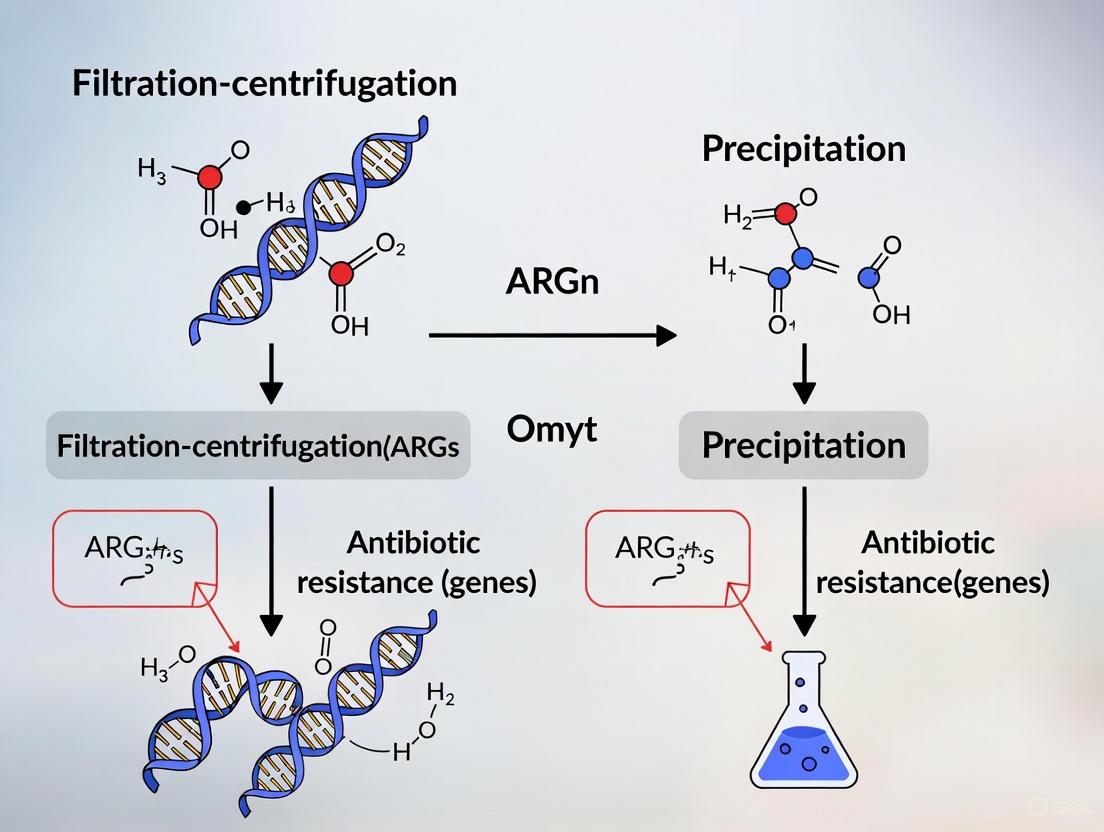
Antimicrobial resistance (AMR) poses a significant global health threat, and effective environmental surveillance of antibiotic resistance genes (ARGs) is critical under the One Health framework.
Filtration-Centrifugation vs. Precipitation: A Comparative Guide for Optimizing ARG Concentration in Environmental Samples
Abstract
Antimicrobial resistance (AMR) poses a significant global health threat, and effective environmental surveillance of antibiotic resistance genes (ARGs) is critical under the One Health framework. The accurate quantification of ARGs in complex matrices like wastewater and biosolids heavily depends on the initial concentration step. This article provides a comprehensive, evidence-based comparison of two prevalent concentration methods—filtration-centrifugation (FC) and aluminum-based precipitation (AP). Tailored for researchers and drug development professionals, we explore the foundational principles, detailed methodological protocols, and troubleshooting strategies for both techniques. Furthermore, we integrate validation data comparing quantitative PCR (qPCR) and droplet digital PCR (ddPCR) for downstream detection, offering a holistic guide for selecting and optimizing protocols based on specific sample matrices and surveillance objectives to improve data reliability and comparability.
The Critical Role of ARG Concentration in Environmental AMR Surveillance
Antimicrobial resistance (AMR) represents one of the most severe global public health threats, with resistant bacterial infections linked to an estimated 4.71 million deaths worldwide in 2021 alone [1]. The One Health perspective emphasizes the interconnected nature of AMR spread across human, animal, and environmental domains, recognizing that resistant microorganisms and their genetic determinants circulate freely across ecosystem boundaries [2]. Within this framework, antibiotic resistance genes (ARGs) serve as critical mobile genetic elements that facilitate the dissemination of resistance traits, even in the absence of direct antimicrobial selection pressure.
Environmental compartments—particularly wastewater and biosolids from wastewater treatment plants (WWTPs)—function as significant reservoirs and amplifiers for ARGs [3] [4]. WWTPs receive inputs from domestic, industrial, and hospital sources, creating hotspots for the selection, concentration, and dissemination of antimicrobial resistance bacteria (ARB) and ARGs into receiving water bodies [3]. The European Commission has accordingly prioritized safe water reuse as a pillar of the circular economy, while climate-driven water scarcity further underscores the imperative for robust environmental AMR monitoring strategies [3].
Reliable environmental ARG monitoring depends heavily on the sensitivity and reproducibility of analytical methods for concentration and detection. The diversity of available protocols, however, complicates comparability across studies, particularly for complex matrices like wastewater and biosolids [3]. This application note examines methodological considerations for ARG surveillance within the One Health context, with particular emphasis on comparing concentration approaches and detection platforms to inform public health-oriented environmental monitoring.
Comparative Analysis of ARG Concentration Methods
Methodological Principles and Procedures
The selection of appropriate concentration methods is paramount for accurate ARG surveillance in environmental matrices. Two commonly used approaches—filtration–centrifugation (FC) and aluminum-based precipitation (AP)—demonstrate distinct advantages and limitations depending on matrix characteristics and surveillance objectives [3].
Filtration–Centrifugation (FC) Protocol [3]:
- Sample Processing: 200 mL of secondary treated wastewater is filtered through 0.45 µm sterile cellulose nitrate filters under vacuum.
- Elution: Filters are transferred to Falcon tubes containing 20 mL of buffered peptone water (2 g/L + 0.1% Tween) and vigorously agitated.
- Sonication: Samples undergo sonication for 7 minutes with an ultrasonic wave power density and frequency of 0.01–0.02 w/mL and 45 KHz, respectively.
- Concentration: After filter removal, samples are centrifuged at 3000× g for 10 minutes, the pellet is resuspended in PBS, and then concentrated by centrifugation at 9000× g for 10 minutes.
- Final Preparation: The supernatant is discarded, and the pellet is resuspended in 1 mL of PBS for subsequent DNA extraction.
Aluminum-Based Precipitation (AP) Protocol [3]:
- pH Adjustment: The pH of 200 mL wastewater is lowered to 6.0.
- Precipitation: Aluminum chloride (0.9 N AlCl₃) is added at a ratio of 1:100 (v/v) and shaken at 150 rpm for 15 minutes.
- Centrifugation: The solution is centrifuged at 1700× g for 20 minutes.
- Reconstitution: The pellet is reconstituted in 10 mL of 3% beef extract (pH 7.4) and shaken at 150 rpm for 10 minutes at room temperature.
- Final Concentration: The resultant suspension is centrifuged for 30 minutes at 1900× g, and the pellet is resuspended in 1 mL of PBS.
Table 1: Comparative Performance of FC and AP Concentration Methods for ARG Recovery [3]
| Parameter | Filtration–Centrifugation (FC) | Aluminum-Based Precipitation (AP) |
|---|---|---|
| General Performance | Lower ARG concentrations recovered | Higher ARG concentrations, particularly in wastewater samples |
| Matrix Dependence | Variable efficiency across matrices | Consistently higher recovery across diverse matrices |
| Practical Considerations | More steps; potential for particle loss | Fewer steps; more efficient for diverse targets |
| Best Applications | Clear aqueous matrices | Complex matrices with diverse microbial communities |
Method Selection Guidance for Public Health Surveillance
The choice between FC and AP methods should be guided by surveillance objectives and matrix characteristics. For public health applications seeking comprehensive ARG profiling, the AP method generally provides superior recovery rates, especially in complex environmental matrices like wastewater [3]. This enhanced sensitivity is particularly valuable for detecting low-abundance ARGs that may still pose significant public health risks due to their mobility and clinical relevance.
For surveillance targeting specific microbial fractions or particle-associated ARGs, FC methods may offer advantages through size-based selection. However, the potentially lower recovery rates must be weighed against the public health imperative of sensitive detection. In outbreak scenarios or high-resolution source tracking, the enhanced sensitivity of AP may better support public health decision-making.
Advanced Detection Platforms for ARG Quantification
Technical Comparison of qPCR and ddPCR Platforms
The transition from concentration to detection introduces another critical methodological consideration: selection of appropriate nucleic acid quantification platforms. Quantitative PCR (qPCR) and droplet digital PCR (ddPCR) represent the two most prominent technologies for ARG detection and quantification, each with distinct advantages for public health surveillance [3].
qPCR Protocol [3]:
- DNA Extraction: Concentrated samples are processed using the Maxwell RSC Pure Food GMO and Authentication Kit with the Maxwell RSC Instrument.
- Sample Preparation: 300 μL of concentrated water samples or resuspended biosolids are treated with 400 μL of CTAB and 40 μL of proteinase K solution.
- Incubation: The mixture is incubated at 60°C for 10 minutes and centrifuged at 16,000× g for 10 minutes.
- Automated Extraction: The supernatant is transferred with 300 μL of lysis buffer to the loading cartridge for automated extraction using the PureFood GMO program.
- Elution: DNA is eluted in 100 μL of nuclease-free water.
ddPCR Protocol [3]:
- Sample Partitioning: Following DNA extraction, samples are partitioned into thousands of nanoliter-sized droplets.
- Amplification: PCR amplification occurs within each individual droplet.
- Absolute Quantification: Endpoint fluorescence detection enables absolute quantification without standard curves.
- Analysis: Positive and negative droplets are counted to determine target concentration.
Table 2: Performance Comparison of qPCR and ddPCR for ARG Detection [3]
| Performance Characteristic | qPCR | ddPCR |
|---|---|---|
| Quantification Approach | Relative quantification (requires standard curve) | Absolute quantification (no standard curve needed) |
| Sensitivity in Wastewater | Good | Superior, especially for low-abundance targets |
| Performance in Biosolids | Similar to ddPCR | Similar to qPCR, though with slightly weaker detection |
| Inhibition Resistance | Susceptible to PCR inhibitors | More resistant to inhibitors |
| Detection in Phage Fractions | Lower detection sensitivity | Generally higher detection levels |
| Best Applications | High-abundance targets; established assays | Complex matrices; low-abundance targets; inhibitory samples |
Platform Selection for Public Health Objectives
The choice between qPCR and ddPCR should align with surveillance priorities and resource constraints. For routine monitoring of established ARG targets in relatively clean matrices, qPCR offers a cost-effective and widely accessible platform. However, for emerging threats, low-abundance targets, or highly inhibitory matrices, ddPCR's enhanced sensitivity and resistance to inhibitors provide significant public health advantages [3].
Digital PCR platforms particularly excel in scenarios requiring precise quantification without reference standards, such as when tracking specific ARG variants across interconnected One Health compartments. This capability supports more accurate risk assessment and intervention planning for public health protection.
Experimental Workflow for ARG Surveillance
The following workflow diagram illustrates the integrated process for environmental ARG surveillance, from sample collection through data interpretation:
The Researcher's Toolkit: Essential Reagents and Materials
Table 3: Essential Research Reagents for ARG Concentration and Detection [3]
| Reagent/Material | Function | Application Notes |
|---|---|---|
| Cellulose Nitrate Filters (0.45 µm) | Particle and microbial capture | Used in FC method; compatible with vacuum filtration |
| Aluminum Chloride (0.9 N AlCl₃) | Flocculating agent | Critical for AP method; facilitates precipitation |
| Buffered Peptone Water + Tween | Elution buffer | Releases captured material from filters in FC method |
| Beef Extract (3%, pH 7.4) | Reconstitution solution | Used in AP method to resuspend pellets |
| CTAB + Proteinase K | Lysis buffer combination | Facilitates cell disruption and DNA release during extraction |
| Maxwell RSC Pure Food Kit | Automated nucleic acid purification | Provides high-quality DNA for downstream applications |
| PBS Buffer | Resuspension medium | Maintains osmotic balance and sample integrity |
Environmental monitoring of ARGs represents a critical early warning system within the One Health framework, enabling proactive public health interventions against AMR spread. The methodological considerations outlined in this application note provide a foundation for robust surveillance programs capable of generating comparable data across jurisdictions and temporal scales.
The integration of environmental ARG data with clinical AMR surveillance creates a powerful holistic picture of resistance flow through interconnected ecosystems. This approach aligns with the World Health Organization's emphasis on One Health strategies to combat AMR, particularly as climate change and water scarcity intensify the public health risks associated with environmental resistance dissemination [1] [2].
Method selection should ultimately reflect public health priorities: the AP-ddPCR combination offers maximum sensitivity for early threat detection, while FC-qPCR may suffice for routine monitoring of established targets. Regardless of the specific methods chosen, standardization and quality control remain essential for generating actionable public health intelligence from environmental ARG monitoring.
Wastewater Treatment Plants as Hotspots for ARG Accumulation and Dissemination
Wastewater Treatment Plants (WWTPs) are critically recognized as significant reservoirs and dissemination points for Antimicrobial Resistance Genes (ARGs) [5]. They function as key interfaces where human, industrial, and environmental waste streams converge, creating unique ecosystems where selective pressures promote the development and spread of antimicrobial resistance (AMR) [5] [6]. The global threat of AMR, potentially leading to 10 million deaths annually by 2050, underscores the urgent need to understand and mitigate ARG propagation through WWTPs [7] [8]. This application note provides a detailed framework for monitoring ARGs in wastewater matrices, with a specific focus on comparing two primary concentration methodologies—Filtration–Centrifugation (FC) and Aluminum-based Precipitation (AP)—within the context of broader ARG surveillance and risk assessment in WWTPs.
Key ARGs of Interest and Their Detection in WWTPs
The selection of target ARGs for surveillance is guided by their clinical relevance, environmental persistence, and mobility. Studies consistently identify sulfonamide (sul), tetracycline (tet), and beta-lactam resistance genes as among the most abundant and persistently detected in WWTPs [5] [7]. The European Food Safety Authority (EFSA) has prioritized specific ARGs for monitoring, including those conferring resistance to carbapenems (blaVIM, blaNDM, blaOXA), extended-spectrum cephalosporins (blaCTX-M, AmpC), colistin (mcr), and vancomycin (vanA) [3]. The following table summarizes the fate and risk status of key ARGs commonly tracked in wastewater studies.
Table 1: Key Antibiotic Resistance Genes (ARGs) in Wastewater Treatment Plants
| ARG | Antibiotic Class | Clinical/Ecological Relevance | Abundance in WWTPs | Risk Ranking (arg_ranker) |
|---|---|---|---|---|
sul1 |
Sulfonamide | High prevalence; often linked to mobile genetic elements [7] | One of the most abundant ARGs in effluent [7] | Rank I (High Risk) [7] |
tet(A) |
Tetracycline | High clinical and environmental relevance; used in comparative method studies [3] | Persists in treated wastewater and biosolids [3] [9] | - |
blaCTX-M |
Beta-lactam (ESBL) | Confers resistance to extended-spectrum cephalosporins; a critical priority [3] [5] | Detected in wastewater and biosolid samples [3] | - |
aph(3'')-Ib |
Aminoglycoside | - | Most abundant high-risk ARG subtype in effluent [7] | Rank I (High Risk) [7] |
ere(A) |
Macrolide | - | One of the most abundant high-risk ARG subtypes in effluent [7] | Rank I (High Risk) [7] |
Comparative Analysis of ARG Concentration and Detection Methods
Choosing appropriate protocols for concentrating and quantifying ARGs from complex matrices like wastewater and biosolids is crucial for accurate surveillance. The following tables summarize comparative data on two common concentration methods and two advanced detection techniques.
Table 2: Comparison of ARG Concentration Methods for Wastewater
| Method | Procedure Summary | Key Advantages | Key Limitations | Reported Performance |
|---|---|---|---|---|
| Filtration-Centrifugation (FC) | 1. Filter sample through 0.45 µm membrane.2. Agitate and sonicate filter in buffer.3. Centrifuge and resuspend pellet [3]. | Effectively captures biomass and particle-associated ARGs. | May miss small particles or viruses; potential for cell damage [3]. | Lower ARG concentrations recovered compared to AP, particularly in wastewater samples [3] [9]. |
| Aluminum-based Precipitation (AP) | 1. Adjust sample pH to 6.0.2. Add AlCl₃, shake, and centrifuge.3. Reconstitute pellet in beef extract, recentrifuge, and resuspend final pellet [3]. | Higher recovery rates of ARGs; effective for concentrating diverse targets [3]. | More complex procedure; involves chemical precipitation [3]. | Provided higher ARG concentrations than FC, especially in wastewater samples [3] [9]. |
Table 3: Comparison of ARG Detection and Quantification Techniques
| Technique | Principle | Advantages | Disadvantages | Reported Performance |
|---|---|---|---|---|
| Quantitative PCR (qPCR) | Amplifies and quantifies target DNA using a standard curve [3] [5]. | High sensitivity and specificity; cost-effective for targeted, high-throughput monitoring [3] [5]. | Requires standard curve; performance can be impaired by matrix-associated inhibitors [3]. | Demonstrated similar performance to ddPCR in biosolids; less sensitive than ddPCR in wastewater [3]. |
| Droplet Digital PCR (ddPCR) | Partitions sample into thousands of droplets for absolute quantification via Poisson statistics [3]. | Absolute quantification without standard curves; reduced impact of inhibitors; enhanced sensitivity [3]. | Higher cost per sample; less widespread in environmental labs [3]. | Greater sensitivity than qPCR in wastewater; generally higher detection levels in phage fractions [3] [9]. |
| Next-Generation Sequencing (NGS) | High-throughput sequencing of all DNA in a sample (metagenomics) [5]. | Untargeted, comprehensive resistome profiling; enables discovery of novel ARGs [5]. | Higher cost and computational demand; semi-quantitative [5]. | Identified 1331 ARG subtypes in WWTP influent; crucial for risk assessment and uncovering hosts/MGEs [7]. |
Workflow Diagram for Comparative Method Analysis
The following diagram illustrates a consolidated experimental workflow for comparing concentration and detection methods for ARG analysis in wastewater and biosolids, incorporating the phage purification track.
Detailed Experimental Protocols
Protocol 1: Concentration of ARGs from Wastewater
This protocol details the two concentration methods (FC and AP) used for secondary treated wastewater, suitable for subsequent DNA extraction and ARG analysis [3].
Filtration–Centrifugation (FC) Method
- Sample Filtration: Filter 200 mL of secondary treated wastewater through a sterile 0.45 µm cellulose nitrate membrane under vacuum.
- Elution and Sonication: Transfer the filter to a Falcon tube containing 20 mL of buffered peptone water (2 g/L + 0.1% Tween). Agitate vigorously and then subject to sonication for 7 minutes (wave power density: 0.01–0.02 W/mL; frequency: 45 kHz).
- Primary Centrifugation: Remove the filter and centrifuge the sample at 3,000 × g for 10 minutes.
- Secondary Centrifugation: Resuspend the pellet in PBS and concentrate by centrifugation at 9,000 × g for 10 minutes.
- Final Resuspension: Discard the supernatant and resuspend the final pellet in 1 mL of PBS.
- Storage: Store concentrated samples at -80°C until DNA extraction.
Aluminum-based Precipitation (AP) Method
- pH Adjustment: Lower the pH of a 200 mL wastewater sample to 6.0.
- Precipitation: Add 0.9 N AlCl₃ at a ratio of 1:100 (v/v) to the sample.
- Mixing: Shake the solution at 150 rpm for 15 minutes at room temperature.
- Primary Centrifugation: Centrifuge the mixture at 1,700 × g for 20 minutes.
- Reconstitution: Discard the supernatant and reconstitute the pellet in 10 mL of 3% beef extract (pH 7.4). Shake at 150 rpm for 10 minutes at room temperature.
- Secondary Centrifugation: Centrifuge the resultant suspension at 1,900 × g for 30 minutes.
- Final Resuspension: Discard the supernatant and resuspend the final pellet in 1 mL of PBS.
- Storage: Store concentrated samples at -80°C until DNA extraction.
Protocol 2: DNA Extraction from Concentrates and Biosolids
A standardized protocol for extracting DNA from both wastewater concentrates and biosolid samples [3].
- Sample Preparation: Use 300 µL of the concentrated water sample (from FC or AP) or a PBS-resuspended biosolid sample (0.1 g biosolids in 900 µL PBS).
- Lysis: Add 400 µL of CTAB (cetyltrimethyl ammonium bromide) and 40 µL of proteinase K solution to the sample. Mix thoroughly.
- Incubation: Incubate the mixture at 60°C for 10 minutes, then centrifuge at 16,000 × g for 10 minutes.
- Automated Extraction: Transfer the supernatant together with 300 µL of lysis buffer to the loading cartridge of a Maxwell RSC Instrument.
- Purification: Execute the "PureFood GMO" program on the instrument.
- Elution: Elute the purified DNA in 100 µL of nuclease-free water.
Protocol 3: Purification of Phage-Associated ARG Fraction
A protocol for isolating the bacteriophage fraction, a potential vector for horizontal gene transfer of ARGs, from concentrated wastewater and biosolids [3].
- Pre-filtration: Filter 600 µL of the AP-concentrated sample or biosolid suspension through a 0.22 µm low protein-binding polyethersulfone (PES) membrane.
- Chloroform Treatment: Treat the filtrate with chloroform (10% v/v) and shake for 5 minutes at room temperature.
- Phase Separation: Separate the two-phase mixture by centrifugation.
- DNA Extraction: The resulting phage-containing fraction is now ready for DNA extraction (using the protocol above or a dedicated viral DNA extraction kit) followed by qPCR or ddPCR analysis to detect phage-associated ARGs.
Protocol 4: Quantification of ARGs by qPCR and ddPCR
General procedures for quantifying target ARGs using PCR-based methods.
- Primer/Probe Design: Utilize validated primer and probe sets for specific ARG targets (e.g.,
tet(A),blaCTX-M,qnrB,catI). - qPCR Setup:
- Prepare reaction mixtures according to the manufacturer's instructions for the selected master mix.
- Include a standard curve for absolute quantification, generated from recombinant plasmids with known concentrations of the target gene.
- Run amplification on a real-time PCR instrument using a standard thermal cycling protocol (e.g., initial denaturation at 95°C for 3 min, followed by 40 cycles of 95°C for 5 s and 58–60°C for 30 s) [8].
- ddPCR Setup:
- Partition each sample into approximately 20,000 nanoliter-sized droplets.
- Perform PCR amplification on the droplet emulsion.
- Read the droplets and analyze the data using a droplet reader. The concentration of the target DNA molecule is calculated based on the fraction of PCR-positive droplets using Poisson statistics [3].
The Scientist's Toolkit: Essential Reagents and Materials
Table 4: Key Research Reagent Solutions for ARG Analysis in Wastewater
| Item | Function/Application | Example Product/Catalog |
|---|---|---|
| Cellulose Nitrate Membrane Filters (0.45 µm) | Initial concentration and collection of particulate matter and associated bacteria in the FC method [3]. | MicroFunnel Filter Funnel (Pall Corporation) [3] |
| Aluminum Chloride (AlCl₃) Solution | Flocculating agent used to precipitate microorganisms and free DNA in the AP concentration method [3]. | 0.9 N AlCl₃ [3] |
| Maxwell RSC PureFood GMO and Authentication Kit | Automated purification of high-quality DNA from complex matrices like wastewater concentrates and biosolids [3]. | Promega [3] |
| Buffered Peptone Water + Tween | Elution and resuspension buffer used after filtration in the FC method to dislodge captured biomass from the filter [3]. | Buffered Peptone Water (2 g/L + 0.1% Tween) [3] |
| 3% Beef Extract Solution | Solution used to reconstitute the pellet and elute microorganisms after aluminum flocculation in the AP method [3]. | pH 7.4 [3] |
| Low Protein-Binding PES Membranes (0.22 µm) | Sterile filtration to remove bacteria and larger particles for the isolation of the phage fraction [3]. | Millex-GP PES Membrane (Merck Millipore) [3] |
| qPCR/ddPCR Master Mixes & Assays | Fluorescence-based chemistry and reagents required for the amplification and quantification of specific ARG targets. | - |
| Validated Primers/Probes for ARGs | Target-specific oligonucleotides for amplifying and detecting ARGs like tet(A), blaCTX-M group 1, qnrB, and catI [3]. |
- |
WWTPs are confirmed hotspots for the accumulation and dissemination of ARGs, with significant quantities of diverse and high-risk ARGs persisting in final effluents and biosolids [3] [7]. The choice of analytical methodology profoundly influences the outcomes of ARG surveillance. Evidence indicates that the Aluminum-based Precipitation (AP) method offers higher recovery efficiency for ARGs from wastewater compared to Filtration–Centrifugation (FC) [3] [9]. For detection, droplet digital PCR (ddPCR) provides superior sensitivity, especially in inhibitor-rich matrices like wastewater and for detecting ARGs in the phage fraction, while qPCR remains a robust and cost-effective alternative, particularly for biosolids [3]. A comprehensive risk assessment strategy should, therefore, integrate efficient concentration and sensitive detection protocols with advanced metagenomic analysis to not only quantify ARGs but also evaluate their mobility and host associations, ultimately informing targeted interventions to protect public and environmental health.
In the context of research on ARG (Antibiotic Resistance Gene) concentration, the selection of an appropriate sample concentration method is a critical strategic decision that directly influences the reliability and interpretability of experimental data. The core challenge lies in balancing the often-competing demands of maximizing yield, ensuring purity, and maintaining representativeness of the target analytes. This document frames this challenge within the specific comparison of two dominant methodological families: filtration-centrifugation and precipitation.
Filtration-centrifugation techniques primarily rely on physical forces—including centrifugal force, pressure differentials, and size exclusion—to separate and concentrate target molecules from a liquid matrix [10] [11]. In contrast, precipitation methods utilize chemical and biochemical principles to alter the solubility of the target substance, causing it to fall out of solution for subsequent collection [12] [13]. The choice between these pathways involves inherent trade-offs, and the optimal protocol is highly dependent on the nature of the sample and the downstream analytical application. The following sections provide a detailed comparison of these techniques, supported by quantitative data and structured protocols, to guide researchers in making an informed selection for their specific ARG concentration research.
Core Principles and Comparative Analysis
The fundamental principles of sample concentration revolve around exploiting differences in physical or chemical properties between the target molecule and the solution. The following diagram illustrates the primary decision-making workflow for selecting and optimizing a concentration method, highlighting the key factors that influence the final outcome of yield, purity, and representativeness.
The application of these principles leads to distinct performance outcomes for each technique. The table below provides a comparative analysis of precipitation and filtration-centrifugation across several key parameters, synthesizing data from various biological and industrial contexts.
Table 1: Comparative Analysis of Precipitation and Filtration-Centrifugation for Sample Concentration
| Parameter | Precipitation | Filtration-Centrifugation | Key Considerations for ARG Research |
|---|---|---|---|
| Typical Yield | Variable; can be high for target molecules (e.g., exosomes: ~5610 µg/mL protein) [14]. | High yield reported in some contexts (e.g., exosome protein yield significantly higher than precipitation) [15]. | Yield can be influenced by sample composition; precipitation may co-precipitate contaminants. |
| Typical Purity | Can be lower due to co-precipitation of contaminants (e.g., salts, other biomolecules) [12] [13]. | Generally high purity, especially with size-based methods like ultrafiltration [15]. | Purity is critical for downstream molecular analysis (e.g., PCR); filtration offers better contaminant exclusion. |
| Representativeness | Risk of biasing sample towards certain macromolecules or aggregates [12]. | High representativeness when shear forces do not damage targets; complete discharge possible [10]. | Filtration-centrifugation is less likely to alter the native state of ARGs. |
| Cost & Scalability | Often low-cost and easily scalable, using common lab reagents [13]. | Higher initial equipment investment; can be automated for high-throughput [10] [16]. | Precipitation is cost-effective for large-volume pilot studies. |
| Handling Time | Can be time-consuming due to incubation and drying steps [14] [17]. | Typically faster for processing large volumes, but requires dedicated equipment [11] [16]. | Throughput needs should be aligned with the project timeline. |
| Sample Volume | Well-suited for large volumes [17]. | Capacity can be limited by filter area or centrifuge tube volume [16]. | Filtration is ideal for concentrating ARGs from large volumes of water. |
The choice between these methods is not always clear-cut. For instance, a study isolating exosomes found that polymer precipitation gave the highest protein yield, but ultrafiltration provided a superior particle-to-protein ratio, indicating higher purity [15] [14]. Similarly, in protein purification, precipitation is a cost-efficient workhorse, but its efficiency is highly dependent on the complex interactions within the feedstock, which can reduce purity [13]. These findings underscore the necessity of validating the chosen method against the specific sample matrix and analytical goals of ARG research.
Detailed Experimental Protocols
Protocol 1: Polymer-Based Precipitation for Macromolecules
This protocol is adapted from methods used for concentrating exosomes and proteins and can be tailored for nucleic acids like ARGs [12] [14]. It is highly effective for processing large sample volumes.
Research Reagent Solutions
| Item | Function |
|---|---|
| Precipitating Agent (e.g., PEG, Isopropanol) | Alters solvent thermodynamics to reduce solute solubility, inducing aggregation. |
| Salt Solution (e.g., Sodium Acetate, Ammonium Sulfate) | Neutralizes charged molecules to reduce electrostatic repulsion and aid aggregation. |
| Wash Buffer (e.g., 70% Ethanol) | Removes co-precipitated salts and replaces less volatile precipitants without redissolving the pellet. |
Step-by-Step Procedure:
- Sample Pre-clearing: Centrifuge the liquid sample (e.g., water, plasma) at 2,500–10,000 × g for 15-30 minutes at 4°C to remove cells and large debris. Retain the supernatant [14].
- Precipitation: To the clarified supernatant, add the appropriate precipitating agent.
- For a polymer-based method, add a volume of PEG solution equal to the sample volume, mix thoroughly, and incubate at 4°C for at least 2 hours [14].
- For an alcohol-based method, add 0.6–0.7 volumes of room-temperature isopropanol and mix immediately by inversion. Note: Using solutions at room temperature minimizes co-precipitation of salt [17].
- Pellet Formation: Centrifuge the mixture immediately at 10,000 × g for 15-60 minutes at 4°C to form a pellet.
- Supernatant Removal: Carefully decant the supernatant without disturbing the pellet. Note: Pellets from isopropanol can have a glassy appearance and be loosely attached; take care when pouring [17].
- Washing: Resuspend the pellet in a suitable volume of cold 70% ethanol. Centrifuge again at 10,000 × g for 5-15 minutes and carefully decant the wash supernatant.
- Drying: Air-dry the pellet for 5-20 minutes to evaporate residual ethanol. Caution: Do not over-dry the pellet, as this can make resuspension, particularly of nucleic acids, very difficult [17].
- Resuspension: Resuspend the final pellet in a small volume of an appropriate buffer (e.g., TE buffer for DNA, PBS for vesicles). Gently pipette or agitate to ensure complete resuspension.
Protocol 2: Ultrafiltration-Centrifugation for Size-Based Concentration
This protocol uses centrifugal force to drive a solvent and small molecules through a semi-permeable membrane, retaining and concentrating the larger target molecules (e.g., DNA, vesicles) [15].
Research Reagent Solutions
| Item | Function |
|---|---|
| Ultrafiltration Device | A centrifugal unit containing a membrane with a specific molecular weight cut-off (MWCO). |
| Dilution/Wash Buffer (e.g., PBS) | Reduces sample viscosity and salt concentration, improving filtration efficiency and purity. |
Step-by-Step Procedure:
- Sample Preparation: Pre-clear the sample by centrifugation at 2,500 × g for 15-30 minutes to remove particulate matter that could clog the membrane [14].
- Device Priming (if required): Some devices may require pre-rinsing with buffer. Consult the manufacturer's instructions.
- Loading: Transfer the clarified supernatant to the sample reservoir of the ultrafiltration device. Do not exceed the maximum volume capacity.
- Concentration: Centrifuge the device at the recommended speed and temperature (typically 2,000–4,000 × g at 4°C). Centrifuge until the desired volume reduction is achieved. The time required depends on the sample viscosity and the membrane properties.
- Buffer Exchange (Optional): To further purify or change the buffer, add the desired buffer to the concentrated sample and centrifuge again. Repeat this step as needed.
- Recovery: To recover the concentrated sample, place the device upside-down in a clean collection tube and centrifuge briefly at 1,000 × g, or use a pipette to retrieve the concentrate from the reservoir.
Discussion: Selecting an Optimal Strategy for ARG Research
The selection between precipitation and filtration-centrifugation for ARG concentration should be guided by the specific requirements of the downstream analysis and the sample characteristics.
Prioritizing Purity and Representativeness: Filtration-centrifugation, particularly ultrafiltration, is generally superior. It provides excellent purity by excluding contaminants smaller than the membrane's pore size and minimizes chemical alterations, thereby preserving the representativeness of the native ARG structures [15]. This method is ideal for applications requiring high-quality, unbiased DNA for sensitive detection and quantification.
Prioritizing Cost-Effectiveness and Large Volumes: Precipitation is a powerful alternative when working with very large volumes or under budget constraints. Its scalability and low reagent cost are significant advantages [13]. However, researchers must be vigilant about the potential for lower purity due to co-precipitation of humic acids, salts, and other inhibitors that can interfere with downstream PCR analysis [12] [13].
The decision can be visualized as a trade-off between these key performance metrics, as shown in the diagram below.
Ultimately, there is no universally superior technique. The core principle is to align the method with the research objective. For discovery-phase studies where representativeness is paramount, filtration-centrifugation is recommended. For large-scale monitoring where cost and scalability are primary drivers, precipitation is a viable and effective option. Validating the chosen method with spiked controls and parallel analysis is essential to confirm that the balance of yield, purity, and representativeness meets the specific needs of the ARG research project.
Defining Filtration-Centrifugation (FC) and Aluminum-Based Precipitation (AP)
In the context of antimicrobial resistance (AMR) surveillance, environmental samples like wastewater and biosolids are complex matrices where target analytes, such as antibiotic resistance genes (ARGs), exist in low concentrations. Efficient concentration of these analytes from large volume samples is a critical first step for reliable downstream molecular analysis [9] [18]. Two established concentration methods are Filtration-Centrifugation (FC) and Aluminum-Based Precipitation (AP). This note defines these techniques, details their protocols, and presents a quantitative comparison based on recent research, framing them within the context of ARG concentration and analysis.
Core Definitions and Principles
Filtration-Centrifugation (FC)
Filtration-Centrifugation is a sequential physical separation process. It initially employs filtration to selectively remove particles and contaminants from a liquid matrix based on size using a membrane [19]. This is followed by centrifugation, an accelerated separation technique that uses centrifugal force to separate heterogeneous mixtures based on density, thereby pelleting microorganisms or particles for further concentration [19]. In protocol design, this often involves an initial filtration step to capture biomass on a filter, which is then processed and subjected to centrifugation to create a final, highly concentrated pellet [9].
Aluminum-Based Precipitation (AP)
Aluminum-Based Precipitation is a chemical concentration method that relies on coagulation and flocculation. It involves adding aluminum chloride (AlCl₃) to a sample and adjusting the pH, which causes the formation of positively charged aluminum hydroxide flocs [20]. These flocs attract and adsorb negatively charged viral particles, bacteria, and free DNA [20]. The flocs, with the entrapped analytes, are then separated from the liquid by centrifugation and subsequently resuspended in a small volume of an elution buffer, such as beef extract, to release the concentrated targets [9] [20].
Comparative Quantitative Analysis of FC and AP
Recent research directly comparing FC and AP for concentrating antibiotic resistance genes (ARGs) from treated wastewater provides critical performance data. The study evaluated the concentration of four clinically relevant ARGs and their presence in phage fractions [9] [3].
Table 1: Quantitative Comparison of ARG Concentration by FC and AP Methods in Wastewater [9] [3]
| Antibiotic Resistance Gene (ARG) | Concentration Method | Relative Concentration in Wastewater | Performance in Phage Fraction |
|---|---|---|---|
| tet(A) | Filtration-Centrifugation (FC) | Lower | Detected |
| Aluminum-Based Precipitation (AP) | Higher | Detected | |
| blaCTX-M group 1 | Filtration-Centrifugation (FC) | Lower | Detected |
| Aluminum-Based Precipitation (AP) | Higher | Detected | |
| qnrB | Filtration-Centrifugation (FC) | Lower | Detected |
| Aluminum-Based Precipitation (AP) | Higher | Detected | |
| catI | Filtration-Centrifugation (FC) | Lower | Detected |
| Aluminum-Based Precipitation (AP) | Higher | Detected |
Table 2: General Method Comparison for Environmental Sample Concentration
| Parameter | Filtration-Centrifugation (FC) | Aluminum-Based Precipitation (AP) |
|---|---|---|
| Primary Principle | Physical size exclusion and density separation [19] | Chemical adsorption and charge-based flocculation [20] |
| Typical Cost | Higher (membrane filters, centrifuge) [21] | Lower cost per sample [20] |
| Handling of Inhibitors | May be less effective at removing PCR inhibitors | Can co-precipitate inhibitors, requiring careful purification [18] |
| Recovery Efficiency | Varies with particle size and filter porosity; may miss small targets [9] | Generally higher recovery for viruses and free DNA; efficiency depends on pH and elution [9] [20] |
| Key Advantage | Pre-assembled, ready-to-use devices available; fast processing for some volumes [22] | Simplicity, adaptability, and effectiveness for a range of viruses and free nucleic acids [20] |
Detailed Experimental Protocols
Protocol for Filtration-Centrifugation (FC)
This protocol is adapted from methods used for concentrating ARGs from secondary treated wastewater [9].
- Sample Filtration: Filter 200 mL of wastewater through a 0.45 µm sterile cellulose nitrate membrane under vacuum.
- Filter Processing: Aseptically transfer the filter into a Falcon tube containing 20 mL of buffered peptone water (e.g., 2 g/L with 0.1% Tween). Agitate the tube vigorously.
- Sonication: Subject the tube to sonication for 7 minutes (e.g., at 45 kHz wave frequency and 0.01–0.02 W/mL power density) to dislodge captured material.
- Initial Centrifugation: Remove the filter and centrifuge the resulting suspension at 3,000 × g for 10 minutes.
- Final Concentration: Resuspend the pellet in phosphate-buffered saline (PBS) and perform a second centrifugation at 9,000 × g for 10 minutes.
- Storage: Discard the supernatant and resuspend the final pellet in 1 mL of PBS. Store concentrates at -80°C until nucleic acid extraction [9].
Protocol for Aluminum-Based Precipitation (AP)
This protocol is optimized for concentrating viral particles and associated genetic material from wastewater [9] [20].
- pH Adjustment: Lower the pH of a 200 mL wastewater sample to 6.0.
- Flocculation: Add AlCl₃ to a final concentration of 1 part 0.9 N AlCl₃ per 100 parts sample. Shake the mixture at 150 rpm for 15 minutes at room temperature to promote floc formation.
- Primary Centrifugation: Centrifuge the sample at 1,700 × g for 20 minutes to pellet the flocs. Carefully discard the supernatant.
- Elution: Resuspend the pellet in 10 mL of 3% beef extract solution (pH 7.4). Shake at 150 rpm for 10 minutes at room temperature to release adsorbed particles.
- Secondary Centrifugation: Centrifuge the suspension at 1,900 × g for 30 minutes to pellet debris.
- Storage: Collect the supernatant and resuspend the final concentrate in 1 mL of PBS. Store at -80°C until analysis [9].
Workflow Visualization
The following diagram illustrates the key decision points and sequential steps involved in both the FC and AP concentration protocols.
FC and AP Concentration Workflow
The Scientist's Toolkit: Key Research Reagents
Table 3: Essential Materials and Reagents for FC and AP Protocols
| Item | Function / Application | Example Specifications / Notes |
|---|---|---|
| Cellulose Nitrate Filters | Size-based retention of particles and microorganisms during the initial FC step [9]. | 0.45 µm pore size; sterile. Example: MicroFunnel Filter Funnel (Pall Corporation) [9]. |
| Aluminum Chloride (AlCl₃) | Acts as a coagulant to form positively charged flocs for adsorbing targets in the AP method [20]. | Typically used as a 0.9 N solution. pH adjustment is critical for optimal recovery [9] [20]. |
| Beef Extract | Elution solution used to resuspend the pellet in the AP method, helping to release viruses and nucleic acids from the flocs [9] [20]. | Commonly used at 3-10% concentration in water or PBS, with pH adjusted to 7.4 [9] [20]. |
| Buffered Peptone Water | Solution used for sonication in the FC protocol to help dislodge material from the filter without damaging cells or genetic material [9]. | Often supplemented with a small amount of detergent like Tween [9]. |
| Centrifuge | Essential equipment for pelleting cells, flocs, or other particulates in both FC and AP protocols [19]. | Must accommodate required sample volumes and achieve specified g-forces (e.g., 1,700–9,000 × g) [9]. |
| Phosphate-Buffered Saline (PBS) | Isotonic buffer used for final resuspension of concentrates, maintaining a stable environment for sample storage [9]. | 0.01 M concentration is typical [9]. |
The accurate detection and quantification of antibiotic resistance genes (ARGs) in environmental samples are crucial for public health risk assessment within the One Health framework [23]. Wastewater treatment plants (WWTPs) are recognized as significant hotspots for the amplification and dissemination of antimicrobial resistance (AMR) [3]. However, the analysis of ARGs in matrices such as wastewater and biosolids is fraught with methodological challenges, primarily due to the complex nature of these samples which contain numerous interfering substances that can inhibit molecular analyses and cause significant variability in results [3] [24]. The selection of appropriate concentration and detection methods is therefore paramount for obtaining reliable and comparable data for environmental AMR surveillance [3] [23].
This application note directly addresses these challenges by providing a comparative analysis of two common concentration methods—filtration–centrifugation (FC) and aluminum-based precipitation (AP)—within the context of ARG research. We evaluate their performance in conjunction with two detection techniques—quantitative PCR (qPCR) and droplet digital PCR (ddPCR)—focusing on their susceptibility to inhibition, nucleic acid yield variability, and their applicability within diverse experimental protocols.
Comparative Performance of Concentration and Detection Methods
The choice of methodology significantly impacts the observed concentration of ARGs. The following table summarizes the quantitative performance of the FC and AP concentration methods when paired with qPCR and ddPCR for the detection of key ARGs in wastewater and biosolids, based on a controlled comparative study [3].
Table 1: Comparative Analysis of ARG Concentration and Detection Methods
| Matrix | Concentration Method | Detection Method | Target ARG | Key Performance Findings |
|---|---|---|---|---|
| Secondary Treated Wastewater | Filtration-Centrifugation (FC) | qPCR | tet(A), blaCTX-M, qnrB, catI | Lower ARG concentrations compared to AP [3] |
| Secondary Treated Wastewater | Aluminum-based Precipitation (AP) | qPCR | tet(A), blaCTX-M, qnrB, catI | Provided higher ARG concentrations than FC [3] |
| Secondary Treated Wastewater | Filtration-Centrifugation (FC) | ddPCR | tet(A), blaCTX-M, qnrB, catI | Lower ARG concentrations compared to AP; greater sensitivity than qPCR in wastewater [3] |
| Secondary Treated Wastewater | Aluminum-based Precipitation (AP) | ddPCR | tet(A), blaCTX-M, qnrB, catI | Higher ARG concentrations than FC; greater sensitivity than qPCR in wastewater [3] |
| Biosolids | Filtration-Centrifugation (FC) | qPCR / ddPCR | tet(A), blaCTX-M, qnrB, catI | Both qPCR and ddPCR performed similarly [3] |
| Biosolids | Aluminum-based Precipitation (AP) | qPCR / ddPCR | tet(A), blaCTX-M, qnrB, catI | Both qPCR and ddPCR performed similarly; ddPCR yielded weaker detection [3] |
| Phage Fraction (Wastewater & Biosolids) | Aluminum-based Precipitation (AP) | ddPCR | tet(A), blaCTX-M, qnrB, catI | ARGs detected; ddPCR generally offered higher detection levels [3] |
Detailed Experimental Protocols
Sample Concentration Workflow
The following diagram illustrates the key steps and decision points in the concentration of ARGs from complex matrices using either Filtration-Centrifugation or Aluminum-based Precipitation.
Diagram 1: Workflow for the concentration of bacterial cells and associated ARGs from secondary treated wastewater using Filtration-Centrifugation (FC) and Aluminum-based Precipitation (AP) protocols, adapted from [3].
Protocol A: Filtration–Centrifugation (FC) for Treated Wastewater
This protocol is designed to concentrate bacterial cells from 200 mL of secondary treated wastewater [3].
- Filtration: Filter 200 mL of sample through a sterile 0.45 µm cellulose nitrate membrane under vacuum.
- Elution: Aseptically transfer the filter into a Falcon tube containing 20 mL of buffered peptone water (2 g/L + 0.1% Tween). Agitate the tube vigorously.
- Sonication: Subject the tube to sonication for 7 minutes with an ultrasonic wave power density of 0.01–0.02 w/mL and a frequency of 45 KHz to dislodge cells from the filter. Remove and discard the filter after sonication.
- Primary Centrifugation: Centrifuge the resulting suspension at 3000 × g for 10 minutes. Carefully discard the supernatant.
- Pellet Resuspension: Resuspend the pellet in 1x Phosphate-Buffered Saline (PBS).
- Final Concentration: Centrifuge the resuspended pellet at 9000 × g for 10 minutes. Discard the supernatant and resuspend the final pellet in 1 mL of PBS.
- Storage: Freeze the concentrated samples at -80°C until DNA extraction is performed.
Protocol B: Aluminum-Based Precipitation (AP) for Treated Wastewater
This protocol uses flocculation to concentrate microorganisms from 200 mL of secondary treated wastewater and is noted for providing higher ARG yields in this matrix [3].
- pH Adjustment: Lower the pH of 200 mL of wastewater to 6.0 using an appropriate acid (e.g., HCl).
- Flocculation: Add 0.9 N AlCl₃ at a ratio of 1 part per 100 parts sample. Shake the mixture at 150 rpm for 15 minutes at room temperature.
- Primary Centrifugation: Centrifuge the solution at 1700 × g for 20 minutes. Discard the supernatant.
- Pellet Reconstitution: Reconstitute the pellet in 10 mL of 3% beef extract (pH adjusted to 7.4).
- Elution: Shake the suspension at 150 rpm for 10 minutes at room temperature to ensure thorough mixing.
- Final Concentration: Centrifuge the resultant suspension at 1900 × g for 30 minutes. Discard the supernatant and resuspend the final pellet in 1 mL of PBS.
- Storage: Freeze the concentrated samples at -80°C until DNA extraction is performed.
Protocol C: Nucleic Acid Extraction from Complex Matrices
The efficiency of nucleic acid extraction is a critical source of yield variability. Different extraction kits and sample pre-treatment steps can significantly impact the quantification of ARGs [25].
- Sample Pre-treatment:
- For wastewater concentrates (from Protocol A or B) or biosolids, begin with a 300 μL aliquot. For biosolids, first resuspend 0.1 g in 900 μL of PBS [3].
- For samples with particulates (e.g., containing toilet paper), a slow-speed centrifugation step (1500 × g for 30 seconds) can be applied to pellet large debris before proceeding with the supernatant [25].
- Lysis:
- Add 400 μL of CTAB (Cetyltrimethylammonium bromide) buffer and 40 μL of Proteinase K solution to the 300 μL sample.
- Incubate the mixture at 60°C for 10 minutes, then centrifuge at 16,000 × g for 10 minutes.
- Automated Extraction:
- Transfer the supernatant to the loading cartridge of an automated system (e.g., Maxwell RSC Instrument).
- Use a dedicated kit (e.g., Maxwell RSC PureFood GMO and Authentication Kit) and the appropriate program to complete the DNA extraction and purification.
- Elution: Elute the purified DNA in 50-100 μL of nuclease-free water. Assess DNA concentration and purity using a spectrophotometer and store at -20°C or -80°C.
The Scientist's Toolkit: Key Research Reagents & Materials
The following table details essential reagents and materials used in the featured protocols, along with their critical functions.
Table 2: Essential Research Reagents and Materials for ARG Analysis in Complex Matrices
| Item | Specific Example / Properties | Function in the Protocol |
|---|---|---|
| Filtration Membrane | 0.45 µm, Cellulose Nitrate (e.g., MicroFunnel, Pall Corporation) | Initial concentration and size-based separation of bacterial cells from liquid sample [3]. |
| Precipitation Reagent | 0.9 N Aluminum Chloride (AlCl₃) | Acts as a flocculant, causing microorganisms to clump together and precipitate out of solution [3]. |
| Elution Buffer | 3% Beef Extract (pH 7.4) | Facilitates the desorption and recovery of viruses and bacteria from the precipitate floc [3]. |
| Lysis Buffer | CTAB (Cetyltrimethylammonium bromide) | A cationic detergent that disrupts membranes and aids in the separation of DNA from polysaccharides and other contaminants in complex samples [25]. |
| DNA Extraction Kit | Maxwell RSC PureFood GMO and Authentication Kit (Promega) | Automated, magnetic bead-based purification of high-quality DNA, reducing inhibitor carryover [3]. |
| DNA Polymerase Master Mix | For qPCR or ddPCR | Enzymatic amplification of specific ARG targets (e.g., tet(A), blaCTX-M). ddPCR master mix is partitioned into nanoliter-sized droplets [3]. |
| DNase-/RNase-Free Water | Molecular Grade | Used for resuspending and diluting nucleic acids to ensure no enzymatic degradation occurs [25]. |
Discussion & Technical Considerations
Navigating Inhibition and Yield Variability
The data unequivocally demonstrates that the AP concentration method yielded higher ARG concentrations than the FC method in treated wastewater, likely due to more efficient recovery of cells and cell-free DNA, including those associated with particles [3]. Furthermore, the choice of detection technology is critical for mitigating the effects of inhibitors common in complex matrices like wastewater and biosolids. Droplet digital PCR (ddPCR) showed greater sensitivity than qPCR in wastewater samples, attributed to its partitioning technology which reduces the impact of matrix-derived inhibitors [3]. This makes ddPCR particularly valuable for detecting low-abundance ARGs or when analyzing inhibitor-rich samples without extensive dilution.
Implications for Protocol Selection and Standardization
The observed performance differences between FC, AP, qPCR, and ddPCR underscore a significant challenge in environmental AMR surveillance: protocol-induced variability. This diversity in available methods complicates the direct comparability of data across different studies and monitoring programs [3] [23]. The selection of an optimal protocol is not universal but should be guided by:
- Matrix Characteristics: AP may be preferred for treated wastewater, while FC or direct extraction might be suitable for other matrices.
- Surveillance Objectives: For absolute quantification and handling inhibitory samples, ddPCR is advantageous. For high-throughput routine monitoring, qPCR remains a robust and cost-effective choice [3] [23].
- Target Analysis: The successful detection of ARGs in the phage DNA fraction of both wastewater and biosolids highlights the importance of including viral concentrates in resistome studies to fully understand the potential for horizontal gene transfer via transduction [3].
In conclusion, researchers must carefully consider the trade-offs between sensitivity, resistance to inhibition, throughput, and cost when designing studies for ARG quantification in complex matrices. The protocols detailed here provide a foundation for robust and reproducible analysis, contributing to the much-needed harmonization in environmental AMR research.
Step-by-Step Protocols: Implementing FC and AP in Your Lab
The Filtration-Centrifugation (FC) protocol is a established method for concentrating and analyzing bacterial cells and associated genetic material, such as antibiotic resistance genes (ARGs), from liquid samples. In the context of environmental monitoring, particularly from matrices like wastewater, effective concentration of target analytes is a critical first step prior to molecular detection. This application note details the FC methodology as utilized in comparative research against alternative concentration techniques, such as aluminum-based precipitation (AP), for the recovery of ARGs [3]. The provided protocol, reagent list, and performance data serve as a guide for researchers and scientists in the fields of environmental microbiology and drug development.
Research Reagent Solutions
The following table catalogues the essential materials and reagents required to execute the Filtration-Centrifugation protocol effectively.
Table 1: Essential Research Reagents and Materials for the FC Workflow
| Item | Function / Application in the FC Protocol |
|---|---|
| Sterile Cellulose Nitrate Filters (0.45 µm pore size, 47 mm diameter) [3] [26] | Initial capture of bacterial cells and particulate matter from the liquid sample. |
| Buffered Peptone Water (2 g/L + 0.1% Tween) [3] | Resuspension medium used to dislodge and wash captured cells from the filter membrane. |
| Polyethersulfone (PES) Membranes (0.22 µm pore size) [3] [27] | Sterile filtration of media and buffers; purification of phage particles from filtrates. |
| PBS (Phosphate Buffered Saline) [3] [27] | Final resuspension of the concentrated pellet for downstream analysis or storage. |
| Polypropylene Tubes & Sterile Conical Tubes [3] [27] | Sample processing and centrifugation steps. |
| Ultrasonic Bath / Sonicator [3] [26] | Application of ultrasonic waves to agitate the solution and aid in detaching cells from the filter. |
| Centrifuge [3] [26] | Generation of centrifugal force to pellet cells and concentrate the sample. |
Experimental Protocol & Workflow
This section provides the detailed, step-by-step methodology for the Filtration-Centrifugation protocol as adapted from comparative ARG research [3].
Detailed Step-by-Step Procedure
- Filtration: Filter 200 mL of the sample (e.g., secondary treated wastewater) through a sterile 0.45 µm cellulose nitrate membrane under vacuum pressure [3].
- Filter Transfer: Aseptically transfer the filter membrane into a Falcon tube containing 20 mL of buffered peptone water supplemented with 0.1% Tween [3].
- Agitation and Sonication:
- Filter Removal: After sonication, carefully remove and discard the filter membrane from the suspension [3].
- Initial Centrifugation: Centrifuge the resulting suspension at 3,000 × g for 10 minutes. This step pellets the concentrated cells while leaving finer particles in suspension [3].
- Pellet Resuspension: Discard the supernatant and resuspend the pellet in PBS [3].
- Final Concentration Centrifugation: Centrifuge the resuspended solution at a higher force of 9,000 × g for 10 minutes to form a tight, final pellet [3].
- Final Resuspension: Carefully discard the final supernatant. Resuspend the resulting pellet in 1 mL of PBS. This concentrate is now ready for immediate DNA extraction or should be frozen at -80 °C for long-term storage [3].
Workflow Visualization
The following diagram illustrates the logical sequence and key decision points in the Filtration-Centrifugation protocol.
Quantitative Data and Performance
The FC method's performance must be evaluated within the broader research context, often in direct comparison to other techniques. The following tables summarize key parameters and typical experimental findings.
Table 2: Key Centrifugation Parameters in the FC Protocol
| Step | Relative Centrifugal Force (RCF) | Time | Temperature | Purpose |
|---|---|---|---|---|
| Initial Clarification | 3,000 × g [3] | 10 min [3] | Not Specified | To pellet the concentrated bacterial cells. |
| Final Concentration | 9,000 × g [3] | 10 min [3] | Not Specified | To form a tight pellet for final resuspension. |
Table 3: Comparative Performance of FC vs. Aluminum-Based Precipitation (AP) for ARG Quantification
| Metric | Filtration-Centrifugation (FC) | Aluminum-Based Precipitation (AP) | Research Context |
|---|---|---|---|
| General Recovery Efficiency | Lower ARG concentrations recovered [3] | Higher ARG concentrations recovered, particularly in wastewater [3] | Comparison of concentration methods for ARGs (tet(A), blaCTX-M, qnrB, catI) in wastewater and biosolids [3]. |
| Optimal Detection Method | ddPCR demonstrated greater sensitivity in wastewater [3]. | Performance similar between qPCR and ddPCR in biosolids [3]. | FC-concentrated samples may benefit from the superior sensitivity of ddPCR, especially for low-abundance targets [3]. |
| Method Rationale | A widely used and established protocol for cell concentration [3] [26]. | An alternative chemical precipitation method offering higher recovery for some analytes [3]. | Highlights the importance of method selection based on matrix and surveillance goals [3]. |
Within the field of environmental microbiology and antimicrobial resistance (AMR) surveillance, concentrating target analytes from complex aqueous matrices is a critical first step. This application note details the Aluminum-Based Precipitation (AP) protocol, a method evaluated for concentrating antibiotic resistance genes (ARGs) from treated wastewater. The following protocol is framed within a comparative research context against the Filtration-Centrifugation (FC) method [3]. The AP method leverages the formation of aluminum hydroxide flocs to adsorb microbial content, including cell-free DNA and bacteriophage particles, which are crucial in the horizontal gene transfer of ARGs [3] [28]. Studies have demonstrated that the AP method can provide higher concentrations of target ARGs compared to FC, making it a valuable technique for enhancing the sensitivity of downstream molecular analyses [3].
Comparative Performance: AP vs. Filtration-Centrifugation (FC)
A direct comparative analysis of the AP and FC concentration methods was conducted using secondary treated wastewater and biosolids, with subsequent quantification of selected antibiotic resistance genes (tet(A), blaCTX-M group 1, qnrB, and catI) via qPCR and ddPCR [3].
Table 1: Comparative Performance of AP and FC Concentration Methods for ARG Detection
| Matrix | Target | Concentration Method | Detection Method | Key Finding | Reference |
|---|---|---|---|---|---|
| Treated Wastewater | ARGs (tet(A), blaCTX-M, etc.) | AP | ddPCR | Provided higher ARG concentrations than FC | [3] |
| Treated Wastewater | ARGs (tet(A), blaCTX-M, etc.) | AP | qPCR | Provided higher ARG concentrations than FC | [3] |
| Biosolids | ARGs (tet(A), blaCTX-M, etc.) | AP | qPCR/ddPCR | Both detection methods performed similarly | [3] |
| Treated Wastewater | Viral Particles (MgV) | AP | RT-qPCR | Average of 0.65 log10 units lost during concentration | [28] |
| Treated Wastewater | ARGs in phage fraction | AP | ddPCR | Higher detection levels in phage-associated DNA | [3] |
Table 2: Quantitative Data on Method Variability and Robustness (Viral Recovery)
| Parameter | Value | Context |
|---|---|---|
| Overall Process Variability (CV) | 53.82% | For AP concentration step across 122 experiments [28] |
| Contribution to Total Variability | 53.73% | Attributable to the AP concentration step [28] |
| Average Log10 Loss | 0.65 units | During the AP viral concentration step [28] |
Detailed Experimental Protocols
Aluminum-Based Precipitation (AP) for Treated Wastewater
This protocol is adapted from methods used for concentrating viral particles and ARGs from secondary treated wastewater [3] [28].
Materials:
- Sample: 200 mL of secondary treated wastewater.
- Aluminum Chloride (AlCl₃) Solution: 0.9 N in water [3] [28].
- Hydrochloric Acid (HCl): 1 M for pH adjustment.
- Sodium Hydroxide (NaOH): 10 M for pH adjustment.
- Beef Extract Solution: 3% (w/v) in water, pH adjusted to 7.4 [3] or 7.0 [28].
- Phosphate Buffered Saline (PBS).
- Centrifuge bottles (250-500 mL capacity).
- Orbital shaker.
- Centrifuge capable of 1900–4000 × g.
Procedure:
- pH Adjustment: Measure 200 mL of wastewater into a centrifuge bottle. Adjust the pH to 6.0 using 1 M HCl [3] [28].
- Floc Formation: Add 2 mL of 0.9 N AlCl₃ solution per 200 mL of sample (a 1:100 v/v ratio) [3] [28]. Mix thoroughly.
- pH Re-adjustment: Confirm the pH is still 6.0 after AlCl₃ addition. Readjust to pH 6.0 with 10 M NaOH if necessary [28].
- Flocculation: Place the bottle on an orbital shaker and agitate at 150 rpm for 15 minutes at room temperature to form flocs [3] [28].
- Precipitation / Centrifugation: Centrifuge the bottles at 1700–1900 × g for 20–30 minutes to pellet the flocs [3] [28]. Carefully decant the supernatant.
- Elution: Resuspend the pellet in 10 mL of 3% beef extract solution. Vortex or shake vigorously to dissociate the flocs and release captured analytes.
- Secondary Centrifugation: Centrifuge the resuspension at 1900 × g for 30 minutes [28]. This step pellets large floc debris.
- Final Concentration: Collect the supernatant and centrifuge it at a higher speed (e.g., 9000 × g for 10 minutes) if a more concentrated final volume is needed, or proceed directly to the next step [3].
- Final Resuspension: The final pellet is resuspended in 1 mL of PBS [3]. The concentrate can be stored at -80°C until nucleic acid extraction.
Performance Monitoring with Process Controls
To ensure robustness and track efficiency losses, implementing process controls is critical [28].
- Sample Process Control (SPC): Spike 200 mL of autoclaved tap water with a known quantity of a surrogate virus (e.g., Mengovirus) and process it alongside samples. This controls for the efficiency of the entire method [28].
- Extraction Control (EC): Spike the surrogate virus directly into the final elution volume (e.g., 3 mL of PBS) to monitor the efficiency of the nucleic acid extraction step independently [28].
- Negative Process Control (NSPC): Process a sample identical to the SPC but without the surrogate virus to check for cross-contamination [28].
Workflow Visualization
AP Protocol Workflow
AP vs FC Concentration
The Scientist's Toolkit: Essential Research Reagents
Table 3: Key Reagent Solutions for Aluminum-Based Precipitation
| Reagent / Material | Function / Role in Protocol |
|---|---|
| Aluminum Chloride (AlCl₃), 0.9N | Coagulant; source of Al³⁺ ions that form insoluble Al(OH)₃ flocs upon neutralization, entrapping and adsorbing microbial targets [3] [28]. |
| Beef Extract (3%), pH 7.4 | Elution buffer; disrupts the interaction between the target analytes (viruses, DNA) and the aluminum flocs, facilitating their release into solution [3] [28]. |
| Sodium Hydroxide (NaOH), 10M | pH adjustment; critical for ensuring the solution reaches and maintains the optimal pH (~6.0) for efficient Al(OH)₃ floc formation and analyte adsorption [28]. |
| Hydrochloric Acid (HCl), 1M | pH adjustment; used to lower the sample pH to the target of 6.0 prior to floc formation [3] [28]. |
| Phosphate Buffered Saline (PBS) | Final resuspension buffer; provides a stable, isotonic, and chemically compatible medium for storing the final concentrate before nucleic acid extraction [3]. |
| Polyacrylamide Flocculant | Aid for sedimentation; accelerates the aggregation and settling of micro-flocs, significantly reducing sedimentation time and improving recovery [29]. |
Sample-Specific Adaptations for Wastewater, Biosolids, and Manure
The accurate monitoring of Antimicrobial Resistance Genes (ARGs) in environmental samples is a cornerstone of public health efforts to combat the global antimicrobial resistance crisis. Wastewater, biosolids, and manure represent critical reservoirs and potential pathways for ARG dissemination into the environment. However, the complex and varied nature of these matrices poses significant challenges for analytical comparability. Research consistently demonstrates that the physical and chemical characteristics of the sample matrix profoundly influence the efficiency of ARG concentration and detection methods. This application note, framed within a broader thesis investigating filtration-centrifugation versus precipitation for ARG concentration, provides detailed protocols and comparative data to guide researchers in selecting and optimizing methods based on their specific sample type. The goal is to advance harmonized surveillance by addressing the key methodological variabilities that currently complicate data interpretation across studies.
Comparative Analysis of Concentration and Detection Methods
Quantitative Performance Across Matrices
The selection of concentration and detection methodologies is not one-size-fits-all; performance is highly dependent on the sample matrix. A comparative study analyzing secondary treated wastewater and biosolids for clinically relevant ARGs (tet(A), blaCTX-M group 1, qnrB, and catI) yielded the following insights [3] [9].
Table 1: Comparative Performance of Concentration Methods for ARG Analysis
| Matrix | Concentration Method | Key Findings | Recommended Use |
|---|---|---|---|
| Wastewater | Filtration-Centrifugation (FC) | Lower ARG concentrations recovered | When the target is the particulate-associated fraction |
| Aluminum-based Precipitation (AP) | Higher ARG concentrations, especially in wastewater samples | General surveillance for a more comprehensive ARG profile [3] | |
| Biosolids | Filtration-Centrifugation (FC) | Performance similar to ddPCR | Standardized processing of solid matrices |
| Aluminum-based Precipitation (AP) | Performance similar to ddPCR | Standardized processing of solid matrices [3] |
Table 2: Comparative Performance of Detection Methods for ARG Analysis
| Matrix | Detection Method | Key Findings | Recommended Use |
|---|---|---|---|
| Wastewater | Quantitative PCR (qPCR) | Good sensitivity, but impaired by inhibitors | High-throughput routine monitoring |
| Droplet Digital PCR (ddPCR) | Greater sensitivity, more resistant to matrix inhibitors | Detecting low-abundance ARGs and inhibitor-rich samples [3] | |
| Biosolids | Quantitative PCR (qPCR) | Similar performance to ddPCR | Routine quantification |
| Droplet Digital PCR (ddPCR) | Similar performance to qPCR, but with weaker detection | Verification of qPCR results or absolute quantification without standards [3] |
The Role of Bacteriophages in ARG Dissemination
A crucial finding from recent research is the detection of ARGs in the purified bacteriophage fraction of both wastewater and biosolids [3]. This highlights bacteriophages as potential, and often overlooked, vectors for the horizontal transfer of resistance genes in the environment. The study further noted that ddPCR generally offered higher detection levels for these phage-associated ARGs, underscoring its value for this specific application [3]. This is particularly important given that bacteriophages are intrinsically resistant to conventional disinfection processes, raising concerns about their role as persistent ARG reservoirs in treated effluents and biosolids applied to land [3].
Detailed Experimental Protocols
Protocol A: Filtration-Centrifugation (FC) for Wastewater
This protocol is designed to concentrate bacterial cells from treated wastewater samples [3].
- Step 1: Filtration. Filter 200 mL of secondary treated wastewater through a sterile 0.45 µm cellulose nitrate membrane under vacuum.
- Step 2: Elution and Sonication. Transfer the filter to a Falcon tube containing 20 mL of buffered peptone water (2 g/L + 0.1% Tween). Agitate vigorously and then subject to sonication for 7 minutes (power density 0.01–0.02 w/mL, frequency 45 KHz).
- Step 3: Initial Centrifugation. Remove the filter and centrifuge the sample at 3000 × g for 10 minutes. Resuspend the pellet in PBS.
- Step 4: Final Concentration. Centrifuge the PBS suspension at 9000 × g for 10 minutes. Discard the supernatant and resuspend the final pellet in 1 mL of PBS.
- Step 5: Storage. Store concentrated samples at -80°C until DNA extraction.
Protocol B: Aluminum-based Precipitation (AP) for Wastewater
This method utilizes chemical precipitation to concentrate microorganisms and is particularly effective for recovering a broad spectrum of targets [3].
- Step 1: pH Adjustment. Lower the pH of a 200 mL wastewater sample to 6.0.
- Step 2: Precipitation. Add 1 part of 0.9 N AlCl₃ per 100 parts of sample. Shake the solution at 150 rpm for 15 minutes.
- Step 3: Pellet Formation. Centrifuge the mixture at 1700 × g for 20 minutes.
- Step 4: Reconstitution. Resuspend the pellet in 10 mL of 3% beef extract (pH 7.4) and shake at 150 rpm for 10 minutes at room temperature.
- Step 5: Final Concentration. Centrifuge the suspension at 1900 × g for 30 minutes. Discard the supernatant and resuspend the final pellet in 1 mL of PBS.
- Step 6: Storage. Store concentrated samples at -80°C until DNA extraction.
Protocol C: DNA Extraction from Biosolids and Wastewater Concentrates
A standardized DNA extraction protocol is vital for comparative analysis [3].
- Step 1: Preparation. For biosolids, resuspend 0.1 g of sample in 900 µL of PBS. For wastewater, use 300 µL of the concentrated sample (from Protocol A or B).
- Step 2: Lysis. Add 400 µL of CTAB (cetyltrimethyl ammonium bromide) and 40 µL of proteinase K solution. Incubate the mixture at 60°C for 10 minutes, then centrifuge at 16,000 × g for 10 minutes.
- Step 3: Automated Extraction. Transfer the supernatant together with 300 µL of lysis buffer to the loading cartridge of a Maxwell RSC Instrument.
- Step 4: Elution. Execute the "PureFood GMO" program. The instrument will elute the purified DNA in 100 µL of nuclease-free water.
- Step 5: Quality Control. Determine DNA concentration and purity using a spectrophotometer. Include a negative control (nuclease-free water) in each extraction batch.
Protocol D: Purification of Phage Particles
To specifically investigate the phage-associated ARG fraction, follow this purification step [3].
- Step 1: Clarification. Filter 600 µL of wastewater concentrate (preferably from the AP method) or a biosolids suspension through a 0.22 µm low protein-binding polyethersulfone (PES) membrane.
- Step 2: Treatment. Treat the filtrate with chloroform (10% v/v) and shake for 5 minutes at room temperature.
- Step 3: Separation. Separate the two-phase mixture by centrifugation. The resulting aqueous phase contains the purified phage particles, which can then be subjected to DNA extraction for subsequent ARG analysis.
The following workflow diagram illustrates the key decision points and pathways for processing different sample types, from collection to final analysis.
The Scientist's Toolkit: Research Reagent Solutions
Table 3: Essential Reagents and Kits for ARG Analysis in Complex Matrices
| Item | Function/Application | Specific Example / Note |
|---|---|---|
| 0.45 µm Cellulose Nitrate Filter | Initial concentration of bacterial cells from wastewater via filtration. | Used in the Filtration-Centrifugation (FC) protocol [3]. |
| Aluminum Chloride (AlCl₃) | Flocculating agent for chemical precipitation of microorganisms from liquid samples. | Critical reagent in the Aluminum-based Precipitation (AP) protocol [3]. |
| Maxwell RSC PureFood GMO Kit | Automated extraction and purification of DNA from complex matrices. | Effective for both wastewater concentrates and biosolids; helps manage inhibitors [3]. |
| 0.22 µm PES Membrane Filter | Clarification and purification of bacteriophage particles from sample concentrates. | Low protein-binding properties are essential to prevent phage loss [3]. |
| Droplet Digital PCR (ddPCR) Supermix | Absolute quantification of ARGs without a standard curve; superior for inhibitor-rich samples. | Recommended over qPCR for wastewater and phage-associated ARG detection [3]. |
| Buffered Peptone Water + Tween | Elution buffer for recovering cells from filter membranes post-filtration. | Adding a surfactant like Tween 0.1% improves elution efficiency [3]. |
| Chloroform | Solvent treatment to purify bacteriophage fractions by removing cellular debris. | Used in the phage purification protocol [3]. |
Effective surveillance of antimicrobial resistance in environmental compartments requires methodical rigor and a sample-specific approach. The data and protocols presented herein demonstrate that Aluminum-based Precipitation (AP) coupled with Droplet Digital PCR (ddPCR) offers a highly sensitive pipeline for analyzing wastewater, particularly for capturing the full spectrum of ARGs, including those associated with bacteriophages. For more solid matrices like biosolids, the choice between qPCR and ddPCR is less clear-cut, though ddPCR retains an advantage in scenarios involving potent PCR inhibitors. By providing these detailed application notes, this work aims to empower researchers in making informed methodological choices, thereby enhancing the reliability and comparability of data in the critical field of environmental AMR monitoring.
Within the scope of research focused on antibiotic resistance genes (ARGs) in complex environmental matrices, the sample preparation workflow is a two-stage process: an initial concentration step followed by a critical DNA extraction and purification step. The choice of concentration method—filtration-centrifugation (FC) or aluminum-based precipitation (AP)—significantly influences the composition of the sample concentrate and, consequently, the optimal strategy for downstream DNA extraction [9]. This application note provides detailed protocols and best practices for integrating these stages to ensure the recovery of high-quality, inhibitor-free DNA suitable for sensitive downstream quantification methods like quantitative PCR (qPCR) and droplet digital PCR (ddPCR).
Recent comparative studies have demonstrated that the AP concentration method generally provides higher yields of ARGs, particularly in wastewater samples [9]. However, this increased yield may come with a greater burden of co-precipitated inhibitors, necessitating robust extraction and purification protocols. This document outlines optimized methodologies to handle concentrates from both FC and AP methods, ensuring data comparability and reliability in ARG surveillance.
Comparative Performance of Post-Concentration DNA Extraction
The efficiency of DNA extraction and subsequent quantification is highly dependent on the upstream concentration method and the nature of the sample matrix. The following table summarizes key findings from a 2025 comparative analysis performed on treated wastewater and biosolids.
Table 1: Comparative analysis of DNA recovery and detection post-concentration
| Parameter | Filtration-Centrifugation (FC) | Aluminum-Based Precipitation (AP) |
|---|---|---|
| Typical ARG Concentration | Lower yields in wastewater [9] | Higher yields in wastewater [9] |
| Inhibitor Burden | Potentially lower | Potentially higher due to co-precipitation |
| Recommended Extraction | Standard silica-based kits often sufficient [30] | Kits with enhanced inhibitor removal recommended [30] |
| qPCR Performance | Good sensitivity | Good sensitivity |
| ddPCR Performance | High sensitivity in wastewater [9] | High sensitivity; superior for phage-associated ARG detection [9] |
| Best Suited For | Samples with lower particulate load | Maximizing recovery from complex wastewater |
Detailed Experimental Protocols
Protocol A: Extraction from AP Concentrates using an Optimized Commercial Kit
This protocol is optimized for processing pellets derived from aluminum-based precipitation, which are often challenging due to the presence of inhibitors and a complex matrix [9] [30].
Research Reagent Solutions:
- QIAGEN QIAamp PowerFecal Pro DNA Kit: Effective for difficult environmental samples; includes reagents for mechanical and chemical lysis and inhibitor removal [30].
- CD1 Lysis Buffer: Contains chaotropic salts to denature proteins and facilitate DNA binding to silica.
- Proteinase K: An enzyme that digests proteins and nucleases.
- Solution C5 & C6 (Wash Buffers): Ethanol-based buffers to remove salts and other impurities without eluting DNA.
- Elution Buffer (EB): Low-salt buffer (e.g., 10 mM Tris-Cl, pH 8.5) to release purified DNA from the silica membrane.
Procedure:
- Lysis: Transfer the AP-derived pellet to a tube containing a modified volume of 500 µL of CD1 lysis buffer. Add Proteinase K as per the kit's instructions.
- Mechanical Disruption: Mechanically lyse the sample using a vortex adapter (e.g., Vortex-Genie 2) at maximum speed for 10 minutes. This step is critical for breaking down tough bacterial cell walls and the precipitate matrix [30].
- Incubation: Incubate the lysate at a controlled temperature (typically 55–65°C) to facilitate enzymatic digestion [31].
- Binding: Load the supernatant onto a silica spin column and centrifuge.
- Washing: Perform two wash steps with 250 µL of Solution C5. Incubate the column on ice for 5 minutes after adding the wash buffer, then centrifuge at 13,000 × g. This modified ice incubation enhances the removal of inhibitors [30].
- Drying: After the final wash, leave the column lid open for 10 minutes to allow complete evaporation of residual ethanol.
- Elution: Apply 50 µL of pre-heated (50°C) Elution Buffer to the center of the silica membrane. Incubate at room temperature for 1–5 minutes before centrifuging to elute the high-purity DNA [32].
Protocol B: Rapid Extraction for High-Throughput Screening
For labs processing large sample volumes, a rapid, high-yield method is essential. The SHIFT-SP (Silica bead based HIgh yield Fast Tip based Sample Prep) method offers a significant advantage.
Research Reagent Solutions:
- Magnetic Silica Beads: Solid-phase matrix for nucleic acid binding.
- Lysis Binding Buffer (LBB) with low pH (~4.1): Critical for efficient DNA binding to silica by reducing electrostatic repulsion [33].
- Chaotropic Salts (e.g., Guanidinium Thiocyanate): Denature proteins and protect nucleic acids from nucleases.
- Wash Buffer: Ethanol-based buffer for removing contaminants.
- Elution Buffer: Low-salt, slightly alkaline buffer (e.g., 10 mM Tris-HCl, pH 8.5).
Procedure:
- Lysis and Binding: Combine the sample concentrate (from either FC or AP) with a low-pH Lysis Binding Buffer. Add magnetic silica beads.
- Tip-Based Mixing: Instead of orbital shaking, use a pipette to aspirate and dispense the binding mix repeatedly for 1–2 minutes. This "tip-based" method dramatically increases binding efficiency and speed, achieving ~85% binding in 1 minute [33].
- Washing: Capture the beads with a magnet and discard the flow-through. Wash the beads twice with wash buffer.
- Elution: Resuspend the beads in a small volume (e.g., 50 µL) of pre-warmed Elution Buffer. Incubate for 1 minute to maximize DNA elution, especially for longer fragments [33] [32].
Workflow Visualization
The following diagram illustrates the two primary pathways for downstream DNA extraction following the initial concentration of wastewater samples.
Essential Research Reagent Solutions
Successful DNA extraction post-concentration relies on a toolkit of specialized reagents and materials. The following table details key solutions and their functions.
Table 2: Key research reagents for post-concentration DNA extraction
| Reagent/Material | Function | Application Note |
|---|---|---|
| Chaotropic Salts (e.g., Guanidinium Thiocyanate) | Denature proteins, inactivate nucleases, and promote DNA binding to silica [33]. | Essential for efficient lysis and protection of nucleic acids, but is a potent PCR inhibitor requiring thorough washing [33]. |
| Magnetic Silica Beads | Solid phase for nucleic acid binding; enables automation and rapid processing via magnetic separation [33]. | Bead size and surface chemistry affect yield. "Tip-based" mixing drastically improves binding kinetics [33]. |
| Inhibitor Removal Buffers | Specifically formulated to remove humic substances, divalent cations, and other common environmental inhibitors. | Critical when working with AP concentrates from wastewater. Protocols may include ice incubation or multiple wash steps [30]. |
| Proteinase K | Broad-spectrum serine protease that digests proteins and nucleases. | Vital for breaking down complex samples and preventing DNA degradation during extraction [30]. |
| Low-pH Binding Buffer | Creates conditions that reduce negative charge on silica, enhancing DNA binding efficiency [33]. | A pH of ~4.1 can achieve >98% binding efficiency compared to higher pH buffers [33]. |
| Pre-heated Elution Buffer | Low-salt, slightly alkaline solution (e.g., 10 mM Tris, pH 8.5) used to release DNA from the silica matrix. | Pre-warming to 50°C and incubating for 1-5 minutes significantly increases elution yield, especially for long DNA fragments [32]. |
The integration of sample concentration and DNA extraction is a pivotal determinant of success in ARG research. While aluminum-based precipitation offers superior concentration yields, it demands a subsequent DNA extraction protocol that is optimized for inhibitor removal, such as the optimized QIAGEN PowerFecal Pro method [30]. For higher-throughput applications or samples concentrated via filtration-centrifugation, rapid magnetic bead-based methods like SHIFT-SP provide an excellent balance of speed and yield [33].
The choice of quantification method remains crucial; ddPCR demonstrates superior sensitivity for quantifying low-abundance targets in complex environmental samples and is less susceptible to inhibition, making it highly recommended for the final analysis of extracted DNA [9]. By carefully selecting and optimizing the downstream DNA extraction protocol to match the upstream concentration method, researchers can ensure the generation of robust, reliable, and comparable data for antimicrobial resistance surveillance.
Safety Considerations and Laboratory Equipment Requirements
Antimicrobial resistance (AMR) poses a significant threat to global public health, and environmental surveillance of antibiotic resistance genes (ARGs) in complex matrices like wastewater and biosolids is a critical component of One Health strategies. A key challenge in this field is the diversity of available laboratory protocols for concentrating and detecting ARGs, which complicates data comparability. Research directly comparing these methodologies is essential for developing standardized, efficient, and safe approaches. This application note details the safety and equipment requirements for research comparing two common ARG concentration techniques—filtration–centrifugation (FC) and aluminum-based precipitation (AP)—within a rigorous experimental framework. Adherence to these protocols ensures not only the integrity of research data but also the protection of personnel and the environment [3] [34].
Quantitative Comparison of Concentration and Detection Methods
The selection of a concentration and detection method significantly impacts the results of ARG monitoring. The following tables summarize key quantitative findings from a comparative study, providing a basis for protocol selection.
Table 1: Comparison of ARG Concentration Methods in Treated Wastewater [3] [9] [34]
| Method | Key Procedural Steps | Relative ARG Concentration Yield | Key Advantages | Key Limitations |
|---|---|---|---|---|
| Filtration-Centrifugation (FC) | 1. Filter 200 mL through 0.45 µm.2. Sonicate filter in buffered peptone water.3. Centrifuge at 3000 × g for 10 min.4. Resuspend pellet and concentrate at 9000 × g for 10 min. | Lower | - Separates based on particle size.- Does not involve chemical precipitants. | - May miss particles of certain sizes.- Centrifugation may damage cells. |
| Aluminum-based Precipitation (AP) | 1. Adjust sample pH to 6.0.2. Add AlCl3 and shake.3. Centrifuge at 1700 × g for 20 min.4. Reconstitute pellet in beef extract. | Higher (particularly in wastewater) | - Higher recovery of ARGs.- Effective for a broad range of particles. | - Precipitation efficiency varies with reagent chemistry.- Introduces chemical reagents. |
Table 2: Performance of ARG Detection Techniques Across Different Matrices [3] [34]
| Detection Method | Principle | Performance in Wastewater | Performance in Biosolids | Performance in Phage Fractions |
|---|---|---|---|---|
| Quantitative PCR (qPCR) | Quantification via standard curve across amplification cycles. | Lower sensitivity compared to ddPCR; more affected by inhibitors. | Similar performance to ddPCR. | Lower detection levels compared to ddPCR. |
| Droplet Digital PCR (ddPCR) | Absolute quantification by partitioning sample into nanoliter droplets. | Greater sensitivity; reduced impact from matrix-associated inhibitors. | Similar performance to qPCR, but with weaker detection. | Generally higher detection levels. |
Experimental Protocols
Detailed Protocol: Filtration–Centrifugation (FC) for Treated Wastewater
Safety Warning: Perform all steps in a designated biosafety cabinet. Wear appropriate personal protective equipment (PPE): lab coat, gloves, and safety goggles. Treat all wastewater samples as potentially infectious.
Materials and Reagents:
- Secondary treated wastewater sample
- Sterile 0.45 µm cellulose nitrate filters (e.g., MicroFunnel Filter Funnel, Pall Corporation)
- Buffered peptone water (2 g/L + 0.1% Tween)
- Phosphate-Buffered Saline (PBS)
- Vacuum pump and filtration apparatus
- Centrifuge with fixed-angle rotor (capable of 9000 × g)
- Sonicator bath
- Sterile polypropylene tubes (50 mL and 1.5 mL)
Procedure:
- Filtration: Filter 200 mL of secondary treated wastewater through a sterile 0.45 µm membrane under vacuum [3] [34].
- Elution: Aseptically transfer the filter membrane to a 50 mL Falcon tube containing 20 mL of buffered peptone water. Cap the tube and vortex vigorously to resuspend material.
- Sonication: Subject the tube to sonication in a water bath for 7 minutes (wave power density 0.01–0.02 W/mL, frequency 45 kHz) to dislodge remaining particles [3] [34].
- Primary Centrifugation: Carefully remove the filter membrane. Centrifuge the suspension at 3000 × g for 10 minutes at 4°C to pellet solids.
- Washing: Decant and discard the supernatant. Resuspend the pellet in 10 mL of PBS.
- Secondary Centrifugation: Centrifuge the resuspended pellet at 9000 × g for 10 minutes at 4°C for final concentration [3] [34].
- Storage: Discard the supernatant and resuspend the final pellet in 1 mL of PBS. Transfer to a 1.5 mL microcentrifuge tube and store at -80°C until DNA extraction.
Detailed Protocol: Aluminum-Based Precipitation (AP) for Treated Wastewater
Safety Warning: Aluminum chloride (AlCl3) is corrosive and can cause skin and eye burns. Use gloves and eye protection when handling. Work in a fume hood if weighing powdered reagent.
Materials and Reagents:
- Secondary treated wastewater sample
- 0.9 N Aluminum Chloride (AlCl3) solution
- 3% Beef extract, pH 7.4
- Phosphate-Buffered Saline (PBS)
- pH meter and adjusters (e.g., HCl, NaOH)
- Orbital shaker
- Centrifuge with swinging-bucket rotor (capable of 1900 × g)
- Sterile polypropylene tubes (50 mL and 1.5 mL)
Procedure:
- pH Adjustment: Measure 200 mL of wastewater into a sterile beaker. Adjust the pH to 6.0 using a suitable acid (e.g., 1N HCl) [3] [34].
- Precipitation: Add 2 mL of 0.9 N AlCl3 solution (a ratio of 1:100) to the sample. Secure the lid and mix on an orbital shaker at 150 rpm for 15 minutes at room temperature.
- Primary Centrifugation: Transfer the solution to 50 mL centrifuge tubes. Centrifuge at 1700 × g for 20 minutes to pellet the precipitate.
- Elution: Discard the supernatant. Resuspend the pellet in 10 mL of 3% beef extract (pH 7.4). Shake at 150 rpm for 10 minutes at room temperature.
- Secondary Centrifugation: Centrifuge the suspension at 1900 × g for 30 minutes [3] [34].
- Storage: Discard the supernatant and resuspend the final pellet in 1 mL of PBS. Aliquot and store at -80°C until DNA extraction.
Workflow and Signaling Pathway Diagrams
Filtration-Centrifugation Workflow
Aluminum Precipitation Workflow
The Scientist's Toolkit: Essential Research Reagents and Equipment
Table 3: Essential Laboratory Materials for ARG Concentration Research
| Item | Function/Application | Specific Examples/Notes |
|---|---|---|
| Centrifuge | Separation of particles from liquid suspensions based on density and size. | Must accommodate required RCF (up to 9,000 × g). Fixed-angle and swinging-bucket rotors needed [35]. |
| Centrifuge Rotors | Hold sample tubes during centrifugation. Rotor type and radius impact the RCF. | Use manufacturer's nomograms or formula (RCF = (1.118 × 10⁻⁵) × r × RPM²) for correct speed calculation [36] [37]. |
| Membrane Filters | Initial size-based separation of particles from liquid samples. | 0.45 µm sterile cellulose nitrate filters [3] [34]. |
| Chemical Precipitants | Flocculate and precipitate suspended particles for concentration. | 0.9 N Aluminum Chloride (AlCl3) solution [3] [34]. |
| Resuspension Buffers | Maintain osmotic balance and stabilize samples during processing. | Buffered Peptone Water, Phosphate-Buffered Saline (PBS), 3% Beef Extract [3] [34]. |
| Personal Protective Equipment (PPE) | Primary barrier against biological and chemical hazards. | Lab coat, safety goggles, nitrile gloves. Gloves should be changed after handling waste [37]. |
| Biosafety Cabinet (BSC) | Provides a contained, HEPA-filtered workspace for handling potentially infectious samples. | Class II BSC is recommended for all procedures involving open containers of wastewater [3]. |
Critical Safety Considerations and Best Practices
Centrifuge Safety and Optimization
Centrifugation poses significant mechanical and biological risks if not performed correctly. Proper calculation of speed is critical; the appropriate metric is Relative Centrifugal Force (RCF in ×g), not just RPM. The conversion is RCF = (1.118 × 10⁻⁵) × r × RPM², where 'r' is the rotor radius in centimeters [36] [37]. To ensure safety and reproducibility:
- Inspection and Balancing: Always inspect rotors for signs of corrosion or fatigue. Tubes must be perfectly balanced with masses identical to within 0.1 grams to prevent catastrophic rotor failure [37].
- Avoiding Over-Speeding: Never exceed the maximum speed (RPM and RCF) specified for the rotor and tubes being used [35] [37].
- Ramp-Up and Slow-Down: Use controlled acceleration and deceleration to avoid disturbing the sample and to minimize stress on the motor and rotor.
- Emergency Preparedness: Familiarize yourself with the location and operation of the emergency stop button [37].
General Laboratory Safety for Environmental Samples
- Biosafety Level 2 (BSL-2) Practices: Treat wastewater and biosolid samples as potentially infectious. Perform all manipulations that may create aerosols within a Biosafety Cabinet [3].
- Chemical Hygiene: Aluminum chloride is corrosive. Review its Safety Data Sheet (SDS) and handle with appropriate chemical-resistant gloves and eye protection. Have spill control materials readily available.
- Waste Disposal: Segregate and dispose of all biological and chemical waste according to institutional hazardous waste management protocols. Autoclave liquid waste containing biological material before disposal.
Solving Common Problems and Enhancing Concentration Efficiency
Within the framework of a broader thesis investigating filtration-centrifugation (FC) versus aluminum-based precipitation (AP) for antibiotic resistance gene (ARG) concentration, addressing low DNA yield is a critical research challenge. The efficiency of downstream molecular analyses, including quantitative PCR (qPCR) and droplet digital PCR (ddPCR), is fundamentally dependent on the initial concentration and purity of the nucleic acids recovered from complex environmental matrices such as wastewater and biosolids [3] [9]. This application note provides a comparative analysis and detailed, optimized protocols for the FC and AP methods to maximize DNA recovery, supported by empirical data.
Comparative Performance of FC and AP Methods
A direct comparative study of these two concentration methods revealed significant differences in their efficacy for ARG recovery from treated wastewater. The table below summarizes the key performance metrics derived from experimental data [3] [9].
Table 1: Performance Comparison of FC and AP Concentration Methods in Treated Wastewater
| Feature | Filtration-Centrifugation (FC) | Aluminum-Based Precipitation (AP) |
|---|---|---|
| General Principle | Size-based filtration followed by centrifugal pelleting | Flocculation and adsorption of nucleic acids onto aluminum salts |
| Typical Sample Volume | 200 mL | 200 mL |
| Average ARG Concentration Recovery | Lower | Higher, particularly in wastewater samples [3] |
| Key Advantage | Effective for particle-associated targets | Higher sensitivity for a broader range of targets, including phage-associated ARGs [3] |
| Key Limitation | May miss extracellular or viral-associated ARGs | Protocol is highly dependent on precise pH and mixing conditions |
The selection between FC and AP should be guided by the specific surveillance objectives and the nature of the target genetic material. The AP method is generally superior for achieving high yields, especially when targeting low-abundance ARGs or those associated with bacteriophages [3].
Optimized Experimental Protocols
The following sections provide step-by-step protocols for both concentration methods, optimized for maximum DNA yield from liquid environmental samples.
Filtration-Centrifugation (FC) Protocol
This protocol is adapted from the comparative analysis for concentrating bacterial cells and associated ARGs from secondary treated wastewater [3] [9].
Workflow Diagram: Filtration-Centrifugation (FC)
Materials & Reagents:
- Secondary treated wastewater sample
- Sterile cellulose nitrate filters, 0.45 µm (e.g., MicroFunnel Filter Funnel, Pall Corporation)
- Buffered peptone water (2 g/L + 0.1% Tween)
- Phosphate-Buffered Saline (PBS)
- Centrifuge and compatible tubes
- Sonicator bath
Procedure:
- Filtration: Filter 200 mL of wastewater through a sterile 0.45 µm membrane under vacuum [3] [9].
- Sonication: Aseptically transfer the filter into a Falcon tube containing 20 mL of buffered peptone water. Agitate vigorously and then sonicate for 7 minutes (e.g., at 45 kHz) to dislodge captured material [3] [9].
- Primary Centrifugation: Carefully remove the filter and centrifuge the suspension at 3000 × g for 10 minutes. Discard the supernatant [3] [9].
- Wash: Resuspend the pellet in a suitable volume of PBS.
- Secondary Centrifugation: Centrifuge the resuspended pellet at 9000 × g for 10 minutes to concentrate the sample. Discard the supernatant [3] [9].
- Storage: Resuspend the final pellet in 1 mL of PBS and store at -80°C until DNA extraction [3] [9].
Aluminum-Based Precipitation (AP) Protocol
This protocol outlines the optimized steps for the AP method, which has demonstrated higher recovery rates for ARGs [3] [9].
Workflow Diagram: Aluminum-Based Precipitation (AP)
Materials & Reagents:
- Secondary treated wastewater sample
- Aluminum Chloride (AlCl₃), 0.9 N solution
- 3% Beef extract solution, pH 7.4
- Phosphate-Buffered Saline (PBS)
- pH meter and adjusters
- Centrifuge and orbital shaker
Procedure:
- pH Adjustment: Adjust the pH of a 200 mL wastewater sample to 6.0 [3] [9].
- Flocculation: Add 0.9 N AlCl₃ to the sample at a ratio of 1 part per 100 parts sample (v/v). Shake the mixture at 150 rpm for 15 minutes at room temperature to ensure complete reaction [3] [9].
- Primary Centrifugation: Centrifuge the solution at 1700 × g for 20 minutes to pellet the flocculated material. Discard the supernatant [3] [9].
- Elution: Reconstitute the pellet in 10 mL of 3% beef extract (pH 7.4). Shake at 150 rpm for 10 minutes at room temperature to release the concentrated nucleic acids [3] [9].
- Secondary Centrifugation: Centrifuge the resultant suspension at 1900 × g for 30 minutes to remove insoluble debris [3] [9].
- Storage: Collect the supernatant and resuspend any critical pelleted material in 1 mL of PBS. Store at -80°C until DNA extraction [3] [9].
The Scientist's Toolkit: Essential Research Reagents
The following table details key reagents used in the optimized protocols and explains their specific functions in the concentration process.
Table 2: Key Research Reagent Solutions and Their Functions
| Reagent | Function in Protocol |
|---|---|
| Aluminum Chloride (AlCl₃) | Acts as a flocculant in the AP method; hydrolyzes in water to form aluminum hydroxides that adsorb to and precipitate nucleic acids and particulates [3] [9]. |
| Sodium Acetate | A salt used in ethanol precipitation to neutralize the negative charge on the DNA backbone, reducing its solubility and facilitating precipitation [38] [39]. |
| Buffered Peptone Water + Tween | Used in the FC method for sonication; helps to dislodge and suspend filtered cells from the membrane while maintaining osmotic balance [3] [9]. |
| Beef Extract (3%) | Used in the AP method to elute concentrated nucleic acids from the aluminum floc by competing for binding sites [3] [9]. |
| Magnesium Chloride (MgCl₂) | Divalent cation that can be added (e.g., 10 mM final) during ethanol precipitation to increase the yield of short DNA fragments [39]. Its principle of inhibiting nucleases is also key in specialized HMW DNA extractions [40]. |
| CTAB (Cetyltrimethylammonium bromide) | A cationic detergent used in DNA extraction to lyse cells and separate DNA from polysaccharides and other contaminants, particularly useful for complex environmental samples like biosolids [3]. |
Downstream Analysis and Detection
The concentrated nucleic acids obtained via FC or AP are typically analyzed using PCR-based methods. The same comparative study evaluated qPCR and ddPCR for ARG quantification [3] [9].
Table 3: Comparison of qPCR and ddPCR for ARG Detection
| Feature | Quantitative PCR (qPCR) | Droplet Digital PCR (ddPCR) |
|---|---|---|
| Principle | Relies on amplification kinetics and a standard curve for quantification | Partitions samples into nanoliter droplets for absolute counting of target molecules |
| Sensitivity in Wastewater | Good, but can be impaired by inhibitors present in concentrates | Greater than qPCR; more resistant to PCR inhibitors [3] [9] |
| Quantification Output | Relative quantification (e.g., copy number/µL) | Absolute quantification (copies/µL), no standard curve needed [3] |
| Performance in Biosolids | Similar to ddPCR | Comparable to qPCR, though can yield weaker detection signals in this complex matrix [3] [9] |
For environmental samples where inhibitor resistance and absolute quantification of low-abundance targets are priorities, ddPCR is the recommended detection technique [3] [9].
Optimizing concentration methods is fundamental to overcoming low DNA yield in environmental ARG research. The evidence indicates that the Aluminum-Based Precipitation (AP) method, followed by detection via droplet digital PCR (ddPCR), provides a superior workflow for sensitive and absolute quantification of antibiotic resistance genes in complex matrices like wastewater. The protocols and parameters detailed in this application note provide a robust framework for researchers to enhance the efficiency and reproducibility of their surveillance studies, thereby contributing to more accurate risk assessments of environmental antimicrobial resistance.
Managing PCR Inhibition from Co-concentrated Substances
The accurate molecular analysis of antibiotic resistance genes (ARGs) in environmental samples is critically important for public health surveillance, yet a significant technical challenge persists: PCR inhibition from co-concentrated substances. When concentrating targets from complex matrices like wastewater or biosolids for ARG detection, substances such as humic acids, melanin, bile salts, and metallic ions are frequently co-concentrated [41] [42]. These compounds interfere with DNA polymerases and fluorescence detection, leading to underestimated ARG concentrations and potentially false negative results [43] [42]. The selection of concentration methodology significantly influences the degree and type of inhibitors encountered, directly impacting downstream molecular analysis reliability. Within a broader thesis comparing filtration-centrifugation versus precipitation for ARG concentration, understanding and managing this inhibition is paramount for generating comparable, accurate data.
PCR Inhibition Mechanisms and Impact on ARG Analysis
Common PCR Inhibitors in Environmental Concentrates
The process of concentrating microbial targets from voluminous environmental samples inevitably co-concentrates interfering substances. The table below summarizes prevalent PCR inhibitors, their sources, and primary mechanisms of action.
Table 1: Common PCR Inhibitors in Environmental Concentrates
| Inhibitor Category | Specific Examples | Common Sources | Primary Inhibition Mechanism |
|---|---|---|---|
| Organic Substances | Humic and Fulvic Acids [42] | Soil, sediment, water | Bind to DNA polymerase and nucleic acids [42] |
| Melanin [41] [44] | Hair, skin | Reversibly binds to thermostable DNA polymerase [41] | |
| Collagen [41] [44] | Tissues, bones | Determined as human collagen type I [41] | |
| Bile Salts/Pigments | Bile Salt [41] [44] | Fecal samples | Interferes with DNA polymerase activity [41] |
| Hematin [41] [44] | Blood | Derivative of hemoglobin; inhibits polymerase [41] | |
| Indigo [41] [44] | Dyes, textiles | Interferes with amplification [41] | |
| Inorganic Ions | Calcium Ions (Ca²⁺) [41] [43] | Water, buffers | Competes with magnesium ions (Mg²⁺) for polymerase binding sites [43] |
| Other | Urea [41] [44] | Urine, fertilizers | Denatures enzymes and interferes with amplification [41] |
Consequences for qPCR, dPCR, and MPS Analysis
PCR inhibitors adversely affect all major DNA analysis techniques, though the extent and manifestation vary:
- Quantitative PCR (qPCR): Inhibitors reduce amplification efficiency, leading to elevated quantification cycle (Cq) values and substantial underestimation of target concentration. This skewing of amplification kinetics makes qPCR particularly vulnerable [42].
- Digital PCR (dPCR): While dPCR's end-point quantification makes it less affected by inhibitors that impact amplification kinetics, it is not immune. Complete inhibition still occurs at high inhibitor concentrations, and some inhibitors can also quench fluorescence signals, leading to inaccurate droplet calling [42] [3].
- Massively Parallel Sequencing (MPS): Library preparation for MPS relies on efficient DNA polymerization. Inhibitors can cause low library yield or biased sequencing results, compromising data quality [42].
Comparative Performance of Concentration Methods
The initial sample concentration step is critical, as it determines the profile and load of co-concentrated inhibitors. The core thesis comparing filtration-centrifugation (FC) and aluminum-based precipitation (AP) reveals significant methodological differences.
Table 2: Comparison of Concentration Method Performance
| Parameter | Filtration-Centrifugation (FC) | Aluminum-Based Precipitation (AP) |
|---|---|---|
| Basic Principle | Size exclusion via filter followed by centrifugal pelleting [3] | Flocculation and adsorption of particles and microbes using AlCl₃ [3] |
| Typical ARG Yield | Lower concentrations reported [3] [9] | Higher concentrations, particularly in wastewater samples [3] [9] |
| Inhibitor Co-concentration | Can miss certain particulate inhibitors [3] | Tends to co-concentrate a broader spectrum of dissolved and particulate organics [43] |
| Suitability for Downstream Analysis | May require additional purification for optimal qPCR [3] | Often necessitates robust inhibitor removal treatment due to higher inhibitor load [3] |
A 2024 study demonstrated that the AP method provided higher reported concentrations for ARGs like tet(A), blaCTX-M-1, qnrB, and catI in wastewater compared to FC [43]. This suggests superior recovery of genetic targets but also implies a potentially higher burden of co-concentrated inhibitors, which must be managed to avoid analytical bias.
Experimental Protocols for Inhibitor Removal and Assessment
Protocol A: Assessing PCR Inhibition via Dilution
A simple preliminary test to diagnose inhibition involves sample dilution.
- Prepare Dilutions: Serially dilute the extracted DNA sample (e.g., 1:2, 1:5, 1:10) using nuclease-free water [43].
- Amplify Dilutions: Run all dilutions in parallel with the undiluted sample using a standardized qPCR assay for a target ARG and a control (e.g., 16S rRNA gene) [43].
- Analyze Results: A significant decrease in Cq value (> 2-3 cycles) in diluted samples compared to the neat extract indicates the presence of PCR inhibitors. The dilution factor that yields a stable Cq is optimal for that sample [43].
Protocol B: Chemical Adsorption with DAX-8
Polymeric adsorbents like Supelite DAX-8 permanently remove hydrophobic inhibitors like humic acids.
- Treat Sample: Add 5% (w/v) DAX-8 resin to the concentrated sample (e.g., post-PEG precipitation reconstitute) [43].
- Mix: Vortex or shake the mixture for 15 minutes at room temperature to allow inhibitor adsorption [43].
- Separate: Centrifuge at ~8,000 rpm for 5 minutes to pellet the insoluble DAX-8 resin [43].
- Recover Supernatant: Carefully transfer the clarified supernatant to a fresh tube for nucleic acid extraction. This treated extract shows significantly reduced inhibition [43].
Protocol C: Silica-Based Column Purification
Commercial kits designed for inhibitor removal employ specialized silica membranes.
- Extract DNA: Perform initial DNA extraction from the concentrated sample pellet using your standard method.
- Bind: Apply the extracted DNA in a binding buffer to the purification column (e.g., Zymo Research OneStep, MoBio PowerClean). The buffer allows DNA to bind while inhibitors pass through [41] [45].
- Wash: Wash the membrane with provided wash buffers to remove residual salts and contaminants.
- Elute: Elute the purified, inhibitor-free DNA in a small volume of nuclease-free water or elution buffer [41] [45]. The OneStep kit reports a simple sub-5-minute protocol with ≥80% DNA recovery [45].
Integrated Workflow for Concentration and Inhibition Management
The following diagram illustrates a recommended workflow that integrates concentration method selection with subsequent inhibition management strategies.
The Scientist's Toolkit: Essential Reagent Solutions
Table 3: Key Research Reagents for PCR Inhibitor Management
| Reagent / Kit | Primary Function | Key Characteristics | Application Note |
|---|---|---|---|
| Supelite DAX-8 [43] | Polymeric adsorbent for humic acid removal | Insoluble resin; used as 5% (w/v) slurry; 15 min treatment | Highly effective for environmental water extracts; requires centrifugation separation. |
| OneStep PCR Inhibitor Removal Kit [45] | Silica-based filter for nucleic acid clean-up | <5 min protocol; handles DNA & RNA; ≥80% recovery claimed | Useful for quick clean-up post-extraction; no nucleic acid binding limit. |
| PowerClean DNA Clean-Up Kit [41] | Silica-based spin column for inhibitor removal | Effectively removes humic acid, hematin, polyphenols | Validated for removing 8 common inhibitors in forensic samples [41]. |
| DNA IQ System [41] | Paramagnetic beads for DNA extraction/purification | Combines DNA extraction and inhibitor removal | Convenient for automated workflows; effective against common inhibitors [41]. |
| Bovine Serum Albumin (BSA) [43] | PCR additive to counteract inhibition | Protein added directly to PCR mix | Mitigates various inhibitors by stabilizing polymerase [43]. |
Managing PCR inhibition is not merely a supplementary step but a fundamental component of robust ARG surveillance in environmental matrices. The choice between filtration-centrifugation and precipitation methods directly influences the inhibitor profile and must be accounted for in downstream analytical protocols. Researchers are advised to systematically check for inhibition—for instance, via a dilution test—in every concentrated sample batch. For heavily inhibited samples, particularly those from precipitation-based concentration, chemical adsorption with DAX-8 or dedicated cleanup kits provides a powerful solution. By integrating inhibitor management directly into the concentration research workflow, scientists can ensure that the data generated on ARG abundance and dissemination accurately reflect environmental realities, thereby strengthening public health responses to antimicrobial resistance.
Antimicrobial resistance (AMR) poses a growing threat to public health, and environmental surveillance is crucial for monitoring its dissemination [3]. A key challenge in this field is the accurate concentration and detection of antibiotic resistance genes (ARGs) from complex environmental matrices, such as wastewater and biosolids, which are characterized by high turbidity and organic content [3]. The diversity of available protocols complicates data comparability, making the selection of an appropriate concentration strategy paramount [3]. This application note is framed within a broader thesis research that directly compares filtration–centrifugation (FC) and aluminum-based precipitation (AP) for concentrating ARGs. We provide a detailed, experimentalist-focused guide for selecting and optimizing methods based on sample matrix properties, supported by quantitative data and detailed protocols.
Comparative Performance of Concentration Methods
The choice between Filtration-Centrifugation (FC) and Aluminum-based Precipitation (AP) is highly matrix-dependent. The table below summarizes their performance characteristics based on comparative studies.
Table 1: Characteristics of Filtration-Centrifugation vs. Aluminum-Based Precipitation
| Feature | Filtration-Centrifugation (FC) | Aluminum-Based Precipitation (AP) |
|---|---|---|
| Basic Principle | Sequential membrane filtration followed by centrifugal concentration of retained solids [3]. | Chemical flocculation and precipitation of suspended solids and associated analytes using AlCl₃ [3]. |
| Reported Relative ARG Concentration (in Wastewater) | Lower recovery [3] | Higher recovery [3] |
| Sensitivity to Turbidity/ Solids | High sensitivity; prone to membrane fouling and clogging with high-solids samples [3]. | High tolerance; effective for concentrating analytes from turbid samples [3]. |
| Cost & Complexity | Moderate; requires filter membranes and equipment [3]. | Low to Moderate; requires chemical reagents [3]. |
| Typical Sample Volume | 200 mL (as used in protocol [3]) | 200 mL (as used in protocol [3]) |
| Key Advantage | Physical separation, avoids chemical additives. | Higher recovery of targets, particularly in wastewater; handles complex matrices well [3]. |
| Key Limitation | Lower recovery and potential for particle-associated ARG loss [3]. | Introduction of chemical reagents; requires pH adjustment [3]. |
Detailed Experimental Protocols
Protocol A: Filtration-Centrifugation (FC) for ARG Concentration
This protocol is adapted from methods used for concentrating ARGs from secondary treated wastewater [3].
Ⅰ Materials and Reagents:
- Sample: 200 mL of secondary treated wastewater or other aqueous sample.
- Filters: 0.45 µm sterile cellulose nitrate filters (e.g., MicroFunnel Filter Funnel, Pall Corporation) [3].
- Elution/Resuspension Buffer: Buffered peptone water (2 g/L + 0.1% Tween), PBS [3].
- Equipment: Vacuum filtration apparatus, centrifuge, sonic bath, sterile polypropylene tubes.
Ⅱ Procedure:
- Filtration: Filter the 200 mL sample through a 0.45 µm sterile cellulose nitrate filter under vacuum [3].
- Elution: Aseptically transfer the filter to a 50 mL Falcon tube containing 20 mL of buffered peptone water. Agitate the tube vigorously [3].
- Sonication: Subject the tube to sonication for 7 minutes (e.g., 45 kHz frequency, 0.01–0.02 W/mL power density) to dislodge captured material [3].
- Primary Centrifugation: Remove the filter and centrifuge the suspension at 3,000 × g for 10 minutes. Carefully decant the supernatant [3].
- Pellet Washing & Final Concentration: Resuspend the pellet in PBS and transfer to a microcentrifuge tube. Centrifuge at 9,000 × g for 10 minutes. Discard the supernatant and resuspend the final pellet in 1 mL of PBS [3].
- Storage: Freeze the concentrated sample at -80°C until nucleic acid extraction [3].
Protocol B: Aluminum-Based Precipitation (AP) for ARG Concentration
This protocol is adapted from methods demonstrating higher recovery of ARGs in wastewater samples [3].
Ⅰ Materials and Reagents:
- Sample: 200 mL of wastewater or high-turbidity sample.
- Precipitation Reagent: 0.9 N Aluminum Chloride (AlCl₃) solution.
- Elution Buffer: 3% Beef extract, pH 7.4.
- Resuspension Buffer: Phosphate-Buffered Saline (PBS).
- Equipment: Centrifuge, pH meter, orbital shaker, sterile polypropylene tubes.
Ⅱ Procedure:
- pH Adjustment: Adjust the pH of the 200 mL sample to 6.0 [3].
- Precipitation: Add 2 mL of 0.9 N AlCl₃ solution (1 part per 100 parts sample). Shake the mixture at 150 rpm for 15 minutes to allow floc formation [3].
- Primary Centrifugation: Centrifuge the solution at 1,700 × g for 20 minutes. Discard the supernatant [3].
- Elution: Resuspend the pellet in 10 mL of 3% beef extract (pH 7.4). Shake at 150 rpm for 10 minutes at room temperature [3].
- Secondary Centrifugation: Centrifuge the suspension at 1,900 × g for 30 minutes. Discard the supernatant [3].
- Final Concentration: Resuspend the final pellet in 1 mL of PBS [3].
- Storage: Freeze the concentrated sample at -80°C until nucleic acid extraction [3].
Method Selection Workflow
The following decision diagram outlines the process for selecting the appropriate sample preparation method based on sample characteristics and research objectives.
The Scientist's Toolkit: Research Reagent Solutions
Table 2: Essential Materials and Reagents for ARG Concentration Protocols
| Item | Function/Application | Example Specifics |
|---|---|---|
| 0.45 µm Cellulose Nitrate Filters | Primary capture of suspended solids and associated ARGs in FC protocol [3]. | MicroFunnel Filter Funnel (Pall Corporation) [3]. |
| Aluminum Chloride (AlCl₃) | Flocculating agent used in AP to precipitate dissolved and particulate matter [3]. | 0.9 N solution, used at 1:100 (v/v) ratio [3]. |
| Beef Extract (3%) | Elution buffer in AP protocol; helps desorb analytes from the chemical precipitate [3]. | Prepared at pH 7.4 [3]. |
| Buffered Peptone Water + Tween | Elution buffer in FC protocol; aids in dislodging material from the filter membrane [3]. | 2 g/L buffered peptone water with 0.1% Tween [3]. |
| PBS (Phosphate-Buffered Saline) | Final resuspension buffer for concentrated pellets prior to DNA extraction or storage [3]. | Standard formulation, neutral pH. |
| Maxwell RSC PureFood Kit | Automated nucleic acid extraction and purification from complex concentrates; reduces inhibitor carryover [3]. | Used with Maxwell RSC Instrument (Promega) [3]. |
Navigating the challenges of high-turbidity and high-organic samples requires a strategic, matrix-specific approach. Filtration-centrifugation offers a straightforward physical method but may be less efficient for complex matrices. In contrast, aluminum-based precipitation demonstrates superior recovery for ARGs in challenging samples like wastewater. The optimal choice hinges on a clear understanding of sample characteristics and research goals. The protocols and data provided herein offer a robust foundation for designing effective ARG monitoring strategies in environmental compartments, directly supporting thesis research aimed at comparing these fundamental concentration techniques.
The Impact of Sample Volume and Processing Time on Results
In antimicrobial resistance (AMR) surveillance, the reliability of data comparing concentration techniques like filtration-centrifugation (FC) and aluminum-based precipitation (AP) is highly dependent on pre-analytical parameters. Sample volume and processing time are critical factors that directly influence the concentration efficiency and subsequent detection of antibiotic resistance genes (ARGs) in complex environmental matrices [3]. This application note details standardized protocols and data to guide method selection and implementation, contextualized within a broader thesis on FC versus AP for ARG concentration.
Quantitative Comparison of Method Performance
The following tables summarize key quantitative data and methodological parameters from comparative studies, highlighting the impact of initial sample volume, processing time, and resultant output.
Table 1: Impact of Sample Volume and Processing Time on Method Output
| Parameter | Filtration-Centrifugation (FC) | Aluminum-based Precipitation (AP) |
|---|---|---|
| Typical Input Sample Volume | 200 mL [3] | 200 mL [3] |
| Final Concentrate Volume | 1 mL [3] | 1 mL [3] |
| Effective Concentration Factor | 200-fold | 200-fold |
| Reported Processing Time | Approximately 60-90 minutes (estimated) | Approximately 60-75 minutes (estimated) [3] |
| Relative ARG Concentration in Wastewater | Lower [3] [9] | Higher [3] [9] |
| Key Advantage | Well-established for bacterial cells | Higher recovery of targets, including phage-associated ARGs [3] |
| Key Limitation | Potential for particle size exclusion and cell damage [3] | Precipitation efficiency subject to reagent chemistry and matrix effects [3] |
Table 2: Comparative Sensitivity of Detection Techniques Post-Concentration
| Detection Method | Matrix | Relative Sensitivity & Performance |
|---|---|---|
| Droplet Digital PCR (ddPCR) | Treated Wastewater | Greater sensitivity than qPCR; higher detection levels in phage fractions [3] [9] |
| Droplet Digital PCR (ddPCR) | Biosolids | Similar performance to qPCR, though with weaker detection signals [3] |
| Quantitative PCR (qPCR) | Treated Wastewater | Good sensitivity, but impaired by matrix-associated inhibitors [3] |
| Quantitative PCR (qPCR) | Biosolids | Similar performance to ddPCR [3] |
Experimental Protocols
The following sections provide detailed methodologies for the two key concentration techniques, with emphasis on standardized volumes and timing.
Filtration-Centrifugation (FC) Protocol
This protocol is adapted from methods used to concentrate ARGs from secondary treated wastewater [3].
1. Materials and Equipment
- Sterile cellulose nitrate filters, 0.45 µm pore size (e.g., MicroFunnel Filter Funnel, Pall Corporation)
- Vacuum filtration setup
- Centrifuge capable of 9000× g
- Buffered Peptone Water (2 g/L + 0.1% Tween)
- Phosphate-Buffered Saline (PBS)
- Ultrasonic water bath (45 KHz)
2. Step-by-Step Procedure 1. Filtration: Filter 200 mL of sample through a 0.45 µm sterile cellulose nitrate filter under vacuum [3]. 2. Elution: Aseptically transfer the filter into a Falcon tube containing 20 mL of buffered peptone water. Agitate vigorously [3]. 3. Sonication: Subject the tube to sonication for 7 minutes at a wave power density of 0.01–0.02 w/mL and a frequency of 45 KHz to dislodge captured material [3]. 4. Primary Centrifugation: Remove the filter and centrifuge the suspension at 3000× g for 10 minutes [3]. 5. Pellet Resuspension: Discard the supernatant and resuspend the pellet in 1-2 mL of PBS. 6. Secondary Centrifugation: Transfer the resuspension to a microcentrifuge tube and concentrate by centrifugation at 9000× g for 10 minutes [3]. 7. Final Concentrate: Discard the final supernatant and resuspend the pellet in 1 mL of PBS. Freeze at -80°C until DNA extraction [3].
Aluminum-Based Precipitation (AP) Protocol
This protocol is adapted from methods demonstrating higher recovery of ARGs from wastewater samples [3].
1. Materials and Equipment
- Aluminum Chloride (AlCl₃) solution, 0.9 N
- Sodium Hydroxide (NaOH) or Hydrochloric Acid (HCl) for pH adjustment
- 3% Beef Extract solution, pH 7.4
- Centrifuge capable of 1900× g
- Orbital shaker
2. Step-by-Step Procedure 1. pH Adjustment: Lower the pH of a 200 mL sample to 6.0 [3]. 2. Precipitation: Add 2 mL of 0.9 N AlCl₃ solution (1 part per 100 parts sample). Shake the mixture at 150 rpm for 15 minutes [3]. 3. Primary Centrifugation: Centrifuge the solution at 1700× g for 20 minutes. Discard the supernatant [3]. 4. Pellet Reconstitution: Resuspend the pellet in 10 mL of 3% beef extract (pH 7.4). Shake at 150 rpm for 10 minutes at room temperature [3]. 5. Secondary Centrifugation: Centrifuge the suspension for 30 minutes at 1900× g [3]. 6. Final Concentrate: Discard the supernatant and resuspend the final pellet in 1 mL of PBS. Freeze at -80°C until DNA extraction [3].
Workflow Visualization
The following diagram illustrates the parallel steps, estimated timing, and critical decision points for the two concentration methods.
The Scientist's Toolkit: Research Reagent Solutions
Table 3: Essential Materials and Reagents for ARG Concentration
| Item | Function / Application | Example Protocol |
|---|---|---|
| 0.45 µm Cellulose Nitrate Filters | Size-based capture of bacterial cells and particulates during FC. | FC Protocol, Step 1 [3] |
| Aluminum Chloride (AlCl₃) | Flocculating agent used to precipitate dissolved and particle-associated targets in AP. | AP Protocol, Step 2 [3] |
| Buffered Peptone Water + Tween | Elution buffer for dislodging and resuspending material from filters post-filtration. | FC Protocol, Step 2 [3] |
| 3% Beef Extract (pH 7.4) | Solution used to reconstitute and elute targets from the aluminum floc during AP. | AP Protocol, Step 4 [3] |
| Maxwell RSC PureFood GMO Kit | Automated nucleic acid extraction and purification from complex concentrates (e.g., wastewater, biosolids). | DNA Extraction [3] |
| DNeasy PowerSoil Kit | Manual DNA extraction kit optimized for challenging environmental matrices with high inhibitor content. | DNA Extraction from water samples [46] |
| 0.22 µm PES Membranes | Sterile filtration for purifying phage particles by removing bacterial cells from concentrates. | Phage Purification [3] |
In the comparative analysis of concentration methods for antibiotic resistance genes (ARGs), such as filtration-centrifugation (FC) and aluminum-based precipitation (AP), robust quality control (QC) is not merely a supplementary step but a foundational requirement for data integrity [3]. The complexity of sample matrices, including wastewater and biosolids, introduces significant challenges such as inhibition in molecular assays and cross-contamination risks [3] [47]. The consistent integration of negative and positive controls throughout the experimental workflow enables researchers to distinguish true ARG signals from artifacts, validate method performance, and ensure the reliability and comparability of results. This application note provides detailed protocols for incorporating these essential QC measures into studies comparing ARG concentration techniques.
The Scientist's Toolkit: Essential Research Reagents for QC
The following reagents are critical for implementing effective quality control in ARG concentration studies.
Table 1: Key Research Reagents and Controls for ARG Concentration Experiments
| Reagent/Solution | Function in Protocol | Role in Quality Control |
|---|---|---|
| Nuclease-Free Water [3] | Used in DNA elution and as a diluent; replaces sample in negative controls. | Serves as the Extraction Negative Control to detect contamination from reagents or the extraction process itself. |
| PBS (Phosphate Buffered Saline) [3] | Used for resuspending pellets and as a suspension medium. | Acts as a Process Blank during concentration steps to monitor environmental contamination. |
| Inhibitor-Resistant Enzyme Blends (e.g., for ddPCR) [3] | Enhances amplification efficiency in the presence of matrix-derived inhibitors. | Aids in validating positive controls in complex matrices, ensuring detection failures are not due to inhibition. |
| Murine Norovirus (MNV) or Bacteriophage Phi6 [48] | A non-target virus spiked into samples prior to processing. | Functions as a Process Control to monitor the efficiency of the concentration and extraction workflow. |
| Synthtic DNA Plasmid with Target ARG Sequence | A known quantity of a non-naturally occurring gene sequence spiked into samples or used as a standard. | Serves as an Amplification Positive Control to confirm that PCR conditions are functioning optimally. |
Experimental Protocols for QC Implementation
Sample Collection and Concentration QC Protocol
This protocol outlines the steps for concentrating ARGs from wastewater using Filtration-Centrifugation (FC) and Aluminum-based Precipitation (AP) methods, with integrated QC measures [3].
Step 1: Sample Collection and Pre-processing
- Collect wastewater (e.g., 1L secondary effluent) in sterile polypropylene bottles [3].
- Transport and store at 4°C, processing within 24 hours [3].
- QC Action: At the time of sample processing, create a Field Blank by pouring nuclease-free water over the sampling equipment into a sterile bottle, or simply include a bottle of nuclease-free water that accompanies the samples through transportation and subsequent steps.
Step 2: Primary Concentration
- For Filtration-Centrifugation (FC):
- Filter 200 mL of wastewater through a 0.45 µm sterile cellulose nitrate filter [3].
- Place the filter in a tube with buffered peptone water and agitate vigorously [3].
- Subject to sonication (e.g., 7 min at 45 KHz), then centrifuge at 3000 × g for 10 min [3].
- Resuspend the pellet in PBS and concentrate via a second centrifugation at 9000 × g for 10 min. Discard the supernatant and resuspend the final pellet in 1 mL of PBS [3].
- For Aluminum-based Precipitation (AP):
- Adjust the pH of 200 mL wastewater to 6.0 [3].
- Add AlCl₃ (1 part 0.9 N AlCl₃ per 100 parts sample) and shake at 150 rpm for 15 min [3].
- Centrifuge at 1700 × g for 20 min. Discard the supernatant [3].
- Resuspend the pellet in 10 mL of 3% beef extract (pH 7.4) and shake at 150 rpm for 10 min at room temperature [3].
- Centrifuge for 30 min at 1900 × g. Discard the supernatant and resuspend the final pellet in 1 mL of PBS [3].
- QC Action: For each concentration method and batch of samples, process a Concentration Negative Control (e.g., 200 mL of PBS or nuclease-free water) alongside the actual samples.
- For Filtration-Centrifugation (FC):
Step 3: Purification of Phage-associated Fractions (Optional)
Step 4: DNA Extraction
Downstream Detection and Analysis QC Protocol
This protocol covers QC for the quantification of ARGs using methods like quantitative PCR (qPCR) and droplet digital PCR (ddPCR).
Step 1: DNA Quantification and Normalization
- Quantify DNA using a fluorometric method. Normalize DNA concentrations to a standard value (e.g., 10 ng/µL) for downstream assays to ensure consistency.
- QC Action: Assess DNA purity via absorbance ratios (A260/A280 and A260/A230). Note that deviations from ideal ratios may indicate the presence of contaminants that could inhibit downstream PCR.
Step 2: Inhibition Testing
- Perform the detection assay (e.g., ddPCR) on a dilution series of the sample DNA.
- QC Action: A significant increase in the measured target concentration with dilution is indicative of the presence of PCR inhibitors [3]. Alternatively, spike a known quantity of a control DNA (e.g., a synthetic ARG) into each sample and measure recovery.
Step 3: Target Detection and Quantification (ddPCR/qPCR)
- Set up reactions for target ARGs (e.g., tet(A), blaCTX-M, qnrB, catI) [3].
- QC Action: On every reaction plate, include:
- No-Template Control (NTC): Contains all reaction components except DNA, replaced with nuclease-free water. This identifies reagent contamination.
- Positive Amplification Control: A well-characterized plasmid or synthetic oligo containing the target ARG sequence. This confirms the assay is functioning.
- Internal Positive Control (IPC): For qPCR, an exogenous sequence can be spiked into each reaction well to distinguish true target negativity from PCR inhibition.
Data Presentation and Analysis
Interpreting Control Results and Troubleshooting
The value of controls is realized during data analysis. The table below outlines expected outcomes and corrective actions for control failures.
Table 2: Interpretation of Control Results and Corrective Actions
| Control Type | Expected Result | Failed Result & Interpretation | Corrective Action |
|---|---|---|---|
| Field/Concentration Blank | No amplification of target ARGs. | Amplification in blank. Interpretation: Contamination from environment, equipment, or reagents. | Decontaminate workspaces and equipment. Use fresh aliquots of sterile reagents. Implement stricter aseptic technique. |
| Extraction Negative Control | No amplification of target ARGs. | Amplification in control. Interpretation: Contamination during DNA extraction. | Replace contaminated reagents. Clean nucleic acid extraction system. Use new filter tips. |
| No-Template Control (NTC) | No amplification. | Amplification in NTC. Interpretation: Contamination of PCR master mix or primers. | Prepare new master mix from fresh stock solutions. Use UV irradiation in pre-PCR workspace. |
| Positive Control (Amplification) | Successful amplification with expected quantification cycle (Cq) or copies/µL. | No amplification or delayed Cq. Interpretation: PCR reaction failure, reagent degradation, or instrument error. | Check reagent integrity and preparation steps. Verify thermal cycler calibration. |
| Process Control (Spiked Virus) | Consistent, high recovery efficiency across samples. | Low or variable recovery. Interpretation: Inefficient sample concentration or extraction, or presence of inhibitors. | Troubleshoot concentration protocol. Re-optimize lysis conditions. Dilute samples to mitigate inhibition [3]. |
Quantitative Data from Comparative Studies
Integrating QC allows for confident interpretation of performance data from method comparison studies. The following table summarizes key findings from a comparative assessment of FC and AP concentration methods.
Table 3: Comparative Performance of FC and AP for ARG Concentration in Wastewater [3]
| Performance Metric | Filtration-Centrifugation (FC) | Aluminum-based Precipitation (AP) | Notes on QC & Context |
|---|---|---|---|
| Relative Concentration Efficiency | Lower | Higher | AP provided higher ARG concentrations, particularly in wastewater samples. QC ensured this was a true signal, not contamination [3]. |
| Suitability for Matrix | - | Better for wastewater | Performance is matrix-dependent. QC controls are vital when applying methods to new matrices like biosolids. |
| Compatibility with Downstream Detection | Good with ddPCR | Good with ddPCR | ddPCR demonstrated greater sensitivity than qPCR in wastewater, and was less affected by inhibitors—a key factor validated by inhibition controls [3]. |
| Detection in Phage Fraction | Detected | Detected | ARGs were detected in phage fractions with both methods. The use of AP concentration and ddPCR detection generally offered higher sensitivity [3]. |
Head-to-Head Comparison and Validation with Downstream Detection
Antimicrobial resistance (AMR) poses a significant threat to global public health, with drug-resistant infections contributing to millions of deaths annually [49]. Environmental compartments, particularly wastewater treatment plants (WWTPs), are critical hotspots for the dissemination of antibiotic resistance genes (ARGs), functioning as conduits for the selection and release of resistance determinants into ecosystems [3]. Effective surveillance of ARGs in complex environmental matrices like treated wastewater and biosolids requires robust and efficient concentration and detection methodologies. This application note provides a detailed, experimental comparison of two common concentration techniques—Filtration-Centrifugation (FC) and Aluminum-based Precipitation (AP)—for recovering ARGs, delivering structured protocols and quantitative performance data to guide researchers in environmental AMR monitoring.
Experimental Protocols
Sample Collection and Preparation
- Sample Type: Collect secondary treated wastewater (1 L samples) and biosolids from urban wastewater treatment plants.
- Storage: Use sterile polypropylene bottles for collection. Transport samples to the laboratory under refrigeration within 2 hours of collection and store at 4°C until analysis [3].
- Biosolids Preparation: Resuspend 0.1 g of biosolid sample in 900 μL of phosphate-buffered saline (PBS) prior to nucleic acid extraction [3].
Concentration Methods
Filtration–Centrifugation (FC) Protocol
This protocol is designed for processing 200 mL of secondary treated wastewater [3].
- Filtration: Filter the 200 mL sample through a 0.45 µm sterile cellulose nitrate membrane under vacuum.
- Elution: Aseptically transfer the filter into a Falcon tube containing 20 mL of buffered peptone water (2 g/L supplemented with 0.1% Tween).
- Agitation and Sonication: Vigorously agitate the tube, then subject it to sonication for 7 minutes (ultrasonic wave power density: 0.01–0.02 W/mL; frequency: 45 kHz).
- Primary Centrifugation: Remove the filter and centrifuge the sample at 3,000 × g for 10 minutes.
- Pellet Resuspension and Concentration: Resuspend the resulting pellet in PBS and perform a secondary centrifugation at 9,000 × g for 10 minutes.
- Final Reconstitution: Discard the supernatant and resuspend the final pellet in 1 mL of PBS.
- Storage: Store concentrated samples at -80°C until DNA extraction is performed.
Aluminum-based Precipitation (AP) Protocol
This protocol is designed for processing 200 mL of secondary treated wastewater [3].
- pH Adjustment: Lower the pH of the 200 mL sample to 6.0.
- Precipitation: Add 0.9 N AlCl₃ to the sample at a ratio of 1:100 (v/v). Shake the mixture at 150 rpm for 15 minutes.
- Primary Centrifugation: Centrifuge the solution at 1,700 × g for 20 minutes.
- Pellet Reconstitution: Discard the supernatant and resuspend the pellet in 10 mL of 3% beef extract (pH 7.4). Shake at 150 rpm for 10 minutes at room temperature.
- Secondary Centrifugation: Centrifuge the resultant suspension at 1,900 × g for 30 minutes.
- Final Reconstitution: Discard the supernatant and resuspend the final pellet in 1 mL of PBS.
- Storage: Store concentrated samples at -80°C until DNA extraction is performed.
DNA Extraction and Purification
- Extraction Kit: Use the Maxwell RSC Pure Food GMO and Authentication Kit with the Maxwell RSC Instrument.
- Lysis: Mix 300 μL of concentrated sample (from FC or AP) or resuspended biosolids with 400 μL of CTAB (cetyltrimethyl ammonium bromide) and 40 μL of proteinase K solution.
- Incubation: Incubate the mixture at 60°C for 10 minutes, then centrifuge at 16,000 × g for 10 minutes.
- Automated Extraction: Transfer the supernatant and 300 μL of lysis buffer to the instrument's loading cartridge. Execute the "PureFood GMO" program.
- Elution: Elute the purified DNA in 100 μL of nuclease-free water. Include a negative control (nuclease-free water) in each extraction batch [3].
Purification of Phage Particles
- Filtration: Filter 600 μL of AP-concentrated samples or biosolid suspensions through a 0.22 μm low protein-binding PES membrane.
- Chloroform Treatment: Treat the filtrate with chloroform (10% v/v), shake for 5 minutes at room temperature, and separate the phases by centrifugation [3].
Detection and Quantification of ARGs
- Target ARGs: Select clinically relevant genes such as tet(A) (tetracycline resistance), blaCTX-M group 1 (extended-spectrum β-lactamase), qnrB (quinolone resistance), and catI (phenicol resistance) [3] [9].
- Quantitative PCR (qPCR): Perform using standard curve-based absolute or relative quantification methods.
- Droplet Digital PCR (ddPCR): Utilize for absolute quantification without the need for a standard curve. Partition each sample into thousands of nanoliter-sized droplets for endpoint PCR amplification and counting of positive/negative droplets [3].
Results & Data Analysis
Performance Comparison of Concentration Methods
The table below summarizes the comparative performance of the FC and AP concentration methods for ARG recovery in wastewater, as established by the cited study.
Table 1: Comparative Performance of FC and AP Concentration Methods in Wastewater
| Performance Metric | Filtration–Centrifugation (FC) | Aluminum-based Precipitation (AP) |
|---|---|---|
| Relative Concentration Efficiency | Lower | Higher, particularly in wastewater samples [3] |
| Key Advantage | - | Superior recovery of ARG targets [3] |
| Matrix Consideration | Performance is matrix-dependent | Performance is matrix-dependent; efficiency relative to FC was most notable in wastewater versus biosolids [3] |
Performance Comparison of Detection Methods
The table below summarizes the comparative performance of qPCR and ddPCR for ARG quantification in different sample matrices.
Table 2: Comparative Performance of qPCR and ddPCR for ARG Quantification
| Sample Matrix | Quantitative PCR (qPCR) | Droplet Digital PCR (ddPCR) |
|---|---|---|
| Wastewater | Lower sensitivity | Greater sensitivity [3] |
| Biosolids | Similar performance to ddPCR | Similar performance to qPCR, though yielded weaker detection [3] |
| Phage-Associated DNA Fractions | Detected ARGs | Generally provided higher detection levels [3] |
| Inhibition Resistance | More susceptible to PCR inhibitors | More robust, reduced impact of matrix-associated inhibitors [3] |
The Scientist's Toolkit
Table 3: Essential Research Reagent Solutions and Materials
| Item | Function / Application |
|---|---|
| 0.45 µm cellulose nitrate filters | Initial size-based concentration of bacterial cells from liquid samples during FC [3]. |
| Aluminum Chloride (AlCl₃) | Flocculating agent used to precipitate microorganisms and particles in the AP method [3]. |
| Buffered Peptone Water + Tween | Elution buffer for dislodging and resuspending cells captured on filters during the FC protocol [3]. |
| 3% Beef Extract (pH 7.4) | Solution used to resuspend and elute the precipitate formed during the AP protocol [3]. |
| Maxwell RSC Pure Food GMO Kit | Automated system for high-quality, consistent DNA extraction and purification from complex samples [3]. |
| Chloroform | Solvent used in the purification of phage particles to remove residual cellular debris [3]. |
| 0.22 µm PES Membrane Filters | Sterile filtration for purifying phage particles by removing bacterial and other cellular contaminants [3]. |
Workflow and Decision Pathway
The following diagram illustrates the core experimental workflow for comparing FC and AP concentration methods, leading to a data-driven decision pathway for method selection.
The accurate detection and quantification of target nucleic acids, such as antibiotic resistance genes (ARGs), in complex matrices is a critical step in environmental surveillance, clinical diagnostics, and drug development. This process typically involves a concentration step to increase target abundance, followed by a detection phase. The choice of concentration and detection methods can significantly impact the sensitivity, accuracy, and overall reliability of the results. This application note, framed within a broader thesis comparing filtration-centrifugation (FC) and aluminum-based precipitation (AP) for ARG concentration, provides a detailed comparison of quantitative PCR (qPCR) and droplet digital PCR (ddPCR) performance post-concentration. We summarize quantitative data, provide detailed experimental protocols, and offer guidance for researchers and scientists on selecting the optimal downstream detection method.
Comparative Performance of qPCR and ddPCR
The performance of qPCR and ddPCR differs significantly, particularly when analyzing samples concentrated from complex matrices. The following table summarizes their key characteristics and comparative performance based on recent studies.
Table 1: Key characteristics and comparative performance of qPCR and ddPCR.
| Feature | Quantitative PCR (qPCR) | Droplet Digital PCR (ddPCR) |
|---|---|---|
| Principle | Real-time monitoring of amplification; relative quantification requiring a standard curve [50] [51] | End-point detection in partitioned samples; absolute quantification using Poisson statistics [50] [51] |
| Quantification Basis | Cycle threshold (Ct) value compared to a standard curve [51] | Direct count of positive and negative partitions [51] |
| Sensitivity in Wastewater | Lower sensitivity compared to ddPCR [3] [9] | Higher sensitivity, particularly in complex matrices like wastewater [3] [9] |
| Precision at Low Concentration (<1 copy/µL) | Lower quantification precision [51] | Higher quantification precision [51] [52] |
| Tolerance to PCR Inhibitors | Susceptible to inhibition, which can affect amplification efficiency and Ct values [50] | High tolerance to inhibitors due to sample partitioning [50] |
| Detection of Mutation Rates | ≥1% [50] | ≥0.1% [50] |
| Performance in Biosolids | Similar to ddPCR, though ddPCR may yield weaker detection [3] [9] | Similar to qPCR, though may yield weaker detection in biosolids [3] [9] |
| Best Suited For | Applications with a broad dynamic range; high-throughput gene expression analysis [50] | Detecting low-abundance targets; quantifying small fold-changes; analyzing complex samples with inhibitors [50] |
Table 2: Impact of concentration method on ARG recovery for downstream detection (Adapted from [3] [9]).
| Matrix | Concentration Method | Detection Method | Key Finding on ARG Concentration |
|---|---|---|---|
| Secondary Treated Wastewater | Filtration-Centrifugation (FC) | qPCR / ddPCR | Lower ARG concentrations recovered [3] [9] |
| Secondary Treated Wastewater | Aluminum-based Precipitation (AP) | qPCR / ddPCR | Higher ARG concentrations recovered [3] [9] |
| Biosolids | Not Applicable (Direct analysis) | qPCR / ddPCR | Both methods performed similarly [3] [9] |
Detailed Experimental Protocols
The following protocols are adapted from comparative studies on ARG monitoring [3] [9]. They detail the concentration of targets from water samples and the subsequent quantification using qPCR and ddPCR.
Sample Concentration Methods
Filtration-Centrifugation (FC) Protocol
- Sample Filtration: Filter 200 mL of secondary treated wastewater through a 0.45 µm sterile cellulose nitrate filter under vacuum [3].
- Filter Processing: Transfer the filter into a Falcon tube containing 20 mL of buffered peptone water (2 g/L supplemented with 0.1% Tween). Agitate the tube vigorously [3].
- Sonication: Subject the tube to sonication for 7 minutes (e.g., at a wave power density of 0.01–0.02 W/mL and frequency of 45 KHz) [3].
- Initial Centrifugation: Remove the filter and centrifuge the sample at 3,000 × g for 10 minutes [3].
- Pellet Resuspension: Resuspend the resulting pellet in Phosphate-Buffered Saline (PBS) [3].
- Final Concentration: Centrifuge the resuspended pellet at 9,000 × g for 10 minutes. Discard the supernatant and resuspend the final pellet in 1 mL of PBS [3].
- Storage: Store concentrated samples at -80°C until DNA extraction [3].
Aluminum-Based Precipitation (AP) Protocol
- pH Adjustment: Lower the pH of 200 mL of wastewater to 6.0 [3].
- Precipitation: Add 1 part of 0.9 N AlCl3 per 100 parts of the sample. Shake the solution at 150 rpm for 15 minutes [3].
- Initial Centrifugation: Centrifuge the solution at 1,700 × g for 20 minutes [3].
- Pellet Reconstitution: Reconstitute the pellet in 10 mL of 3% beef extract (pH 7.4). Shake at 150 rpm for 10 minutes at room temperature [3].
- Second Centrifugation: Centrifuge the resultant suspension for 30 minutes at 1,900 × g [3].
- Final Resuspension: Resuspend the final pellet in 1 mL of PBS [3].
- Storage: Store concentrated samples at -80°C until DNA extraction [3].
DNA Extraction Protocol
This protocol uses the Maxwell RSC PureFood GMO and Authentication Kit [3].
- Sample Preparation: For concentrated water samples or resuspended biosolids (0.1 g in 900 µL PBS), add 400 µL of CTAB (cetyltrimethyl ammonium bromide) and 40 µL of proteinase K solution [3].
- Incubation: Incubate the mixture at 60°C for 10 minutes, then centrifuge at 16,000 × g for 10 minutes [3].
- Automated Extraction: Transfer the supernatant together with 300 µL of lysis buffer to the loading cartridge of the Maxwell RSC Instrument. Run the "PureFood GMO" program [3].
- Elution: Elute the purified DNA in 100 µL of nuclease-free water [3].
Detection and Quantification Protocols
qPCR Workflow
- Reaction Setup: Prepare a reaction mix containing the appropriate master mix (e.g., Environmental Master Mix), template-specific primers, a fluorescently labelled probe, and the DNA template [51].
- Standard Curve: Include a dilution series of standard samples with known concentrations of the target DNA fragment [51].
- Amplification and Data Collection: Run the PCR, monitoring the accumulation of fluorescence in real-time during each amplification cycle. Record the Cycle threshold (Ct) value for each reaction [51].
- Quantification: Generate a standard curve by plotting the Ct values against the logarithm of the known concentrations. Interpolate the Ct values of unknown samples against this curve to determine their concentration [51].
ddPCR Workflow
- Reaction Setup: Prepare a reaction mix similar to qPCR, containing master mix, primers, probe, and DNA template [50].
- Partitioning: Load the reaction mixture into a ddPCR system. The instrument partitions the sample into thousands of nanoliter-sized droplets, ideally containing zero, one, or a few target molecules each [51].
- PCR Amplification: Perform PCR to endpoint amplification on the droplet emulsion [50] [51].
- Droplet Reading: Read each droplet in a microfluidic detector. Droplets are counted as positive or negative based on their fluorescence intensity [51].
- Absolute Quantification: Apply Poisson statistics to the ratio of positive to total droplets to calculate the absolute concentration of the target DNA in copies per microliter of the original sample [51].
Workflow and Decision Pathway
The following diagram illustrates the integrated experimental workflow from sample concentration to data analysis, highlighting the critical methodological choices.
The Scientist's Toolkit: Essential Research Reagents and Materials
The following table lists key materials and reagents essential for executing the concentration and detection protocols described in this note.
Table 3: Essential research reagents and materials for concentration and detection workflows.
| Item | Function / Application | Examples / Specifications |
|---|---|---|
| Cellulose Nitrate Filters | Initial concentration of targets from large water volumes by size-based filtration. | 0.45 µm pore size; MicroFunnel Filter Funnel (Pall Corporation) [3] |
| Polyethersulfone (PES) Membranes | Purification of phage particles by filtering out larger particles. | 0.22 µm low protein-binding PES membranes (e.g., Millex-GP, Merck Millipore) [3] |
| Aluminum Chloride (AlCl3) | Acts as a flocculant in the precipitation method, concentrating nucleic acids and particles. | 0.9 N solution for pH-adjusted precipitation [3] |
| Maxwell RSC PureFood GMO Kit | Automated extraction and purification of DNA from complex concentrated samples and biosolids. | Used with Maxwell RSC Instrument (Promega) [3] |
| Buffered Peptone Water with Tween | Resuspension and washing buffer during FC protocol; aids in removing material from the filter. | 2 g/L concentration with 0.1% Tween [3] |
| Beef Extract | Used to reconstitute the pellet in the AP method, helping to elute concentrated targets. | 3% solution, pH 7.4 [3] |
| qPCR/ddPCR Master Mix | Provides enzymes, nucleotides, and buffer for the PCR reaction. Hydrolysis probes (e.g., TaqMan) are typically used. | Commercial master mixes (e.g., from QIAGEN, Bio-Rad). Inhibitor-resistant mixes are beneficial for complex samples [50] [51] |
| Primers and Probes | Target-specific oligonucleotides for amplifying and detecting the ARG of interest. | Must be designed for specific targets (e.g., tet(A), blaCTX-M, qnrB, catI) [3] |
This application note provides a detailed protocol for the concentration and quantification of clinically relevant antibiotic resistance genes (ARGs), specifically tet(A) and blaCTX-M, from complex environmental matrices. Framed within a broader thesis investigating concentration methodologies, we present a comparative analysis of filtration-centrifugation (FC) and aluminum-based precipitation (AP) methods, coupled with detection via quantitative PCR (qPCR) and droplet digital PCR (ddPCR). Our data, derived from treated wastewater and biosolid samples, demonstrate that the choice of method significantly impacts absolute gene quantification and detection sensitivity, offering critical insights for researchers designing surveillance studies.
The global spread of antimicrobial resistance (AMR) poses a severe threat to public health. Environmental compartments, particularly wastewater and biosolids, are recognized as reservoirs and potential amplifiers of antibiotic resistance genes (ARGs), facilitating their dissemination back into the environment and to human populations [3]. Effective monitoring of these ARGs is essential for One Health-based surveillance strategies.
A significant challenge in environmental ARG research is the lack of protocol standardization, especially for the concentration of targets from complex matrices. This case study directly addresses this gap by evaluating two common concentration techniques—filtration-centrifugation (FC) and aluminum-based precipitation (AP)—within a thesis research context. We focus on two high-priority ARGs: blaCTX-M, a prevalent extended-spectrum beta-lactamase (ESBL) gene conferring resistance to cephalosporins, and tet(A), which confers resistance to tetracyclines [3] [53]. The findings provide a validated, detailed protocol to guide scientists in selecting the most appropriate methodology for their specific research objectives.
Material and Methods
The Scientist's Toolkit: Research Reagent Solutions
The following table details essential materials and reagents required for the protocols described in this note.
Table 1: Essential Research Reagents and Materials
| Item | Function/Application | Example/Note |
|---|---|---|
| Aluminum Chloride (AlCl3) | Flocculant in the AP concentration method. | Used at 0.9 N concentration [3]. |
| Cetyltrimethyl Ammonium Bromide (CTAB) | Used in DNA extraction to lyse cells and separate DNA from polysaccharides and proteins. | Component of commercial DNA extraction kits [3]. |
| Polyethersulfone (PES) Membranes | Used for filtering phage particles post-concentration. | 0.22 µm pore size, low protein-binding [3]. |
| Buffered Peptone Water + Tween | Resuspension buffer in the FC method to facilitate cell recovery from filters. | Typically 2 g/L peptone with 0.1% Tween [3]. |
| Phosphate Buffered Saline (PBS) | Universal buffer for resuspending and washing concentrated pellets. | Standard pH 7.4 formulation [3]. |
| Maxwell RSC PureFood GMO Kit | Automated system for nucleic acid extraction and purification. | Used with the Maxwell RSC instrument [3]. |
| CHROMagar ESBL | Selective chromogenic medium for phenotypic screening of ESBL-producing bacteria. | Used in clinical isolate studies [53]. |
Sample Collection and Preparation
- Wastewater Samples: Collect secondary treated wastewater samples in sterile polypropylene bottles. Store samples at 4°C and process within a short timeframe (e.g., 2 hours) of collection to preserve sample integrity [3].
- Biosolid Samples: Collect biosolids from wastewater treatment plants. Resuspend 0.1 g of biosolid in 900 µL of PBS prior to nucleic acid extraction [3].
Concentration Protocols: Filtration-Centrifugation vs. Precipitation
The following workflow diagram outlines the two core concentration methods compared in this study.
- Filtration: Filter 200 mL of wastewater through a sterile 0.45 µm cellulose nitrate membrane under a vacuum.
- Sonication: Aseptically transfer the filter membrane to a Falcon tube containing 20 mL of buffered peptone water (2 g/L with 0.1% Tween). Agitate the tube vigorously and then subject it to sonication in a water bath for 7 minutes (e.g., at 45 KHz, 0.01–0.02 w/mL power density).
- Initial Centrifugation: Remove the filter membrane and centrifuge the suspension at 3000 × g for 10 minutes.
- Concentration: Discard the supernatant and resuspend the pellet in PBS. Centrifuge again at a higher speed of 9000 × g for 10 minutes.
- Final Resuspension: Discard the final supernatant and resuspend the pellet in 1 mL of PBS. Store the concentrate at -80°C until DNA extraction.
- pH Adjustment: Adjust the pH of 200 mL of wastewater to 6.0.
- Precipitation: Add 0.9 N AlCl3 to the sample at a ratio of 1:100 (v/v). Shake the mixture at 150 rpm for 15 minutes at room temperature.
- Initial Centrifugation: Centrifuge the solution at 1700 × g for 20 minutes.
- Reconstitution: Discard the supernatant and reconstitute the pellet in 10 mL of 3% beef extract (pH 7.4). Shake at 150 rpm for 10 minutes at room temperature.
- Final Centrifugation: Centrifuge the suspension at 1900 × g for 30 minutes.
- Final Resuspension: Discard the supernatant and resuspend the final pellet in 1 mL of PBS. Store the concentrate at -80°C until DNA extraction.
DNA Extraction and Purification
- Use an automated nucleic acid extraction system, such as the Maxwell RSC Instrument with the PureFood GMO and Authentication Kit.
- For concentrated samples (300 µL), add 400 µL of CTAB and 40 µL of proteinase K. Incubate at 60°C for 10 minutes and centrifuge at 16,000 × g for 10 minutes.
- Transfer the supernatant and 300 µL of lysis buffer to the instrument's cartridge.
- Execute the "PureFood GMO" program. DNA is eluted in 100 µL of nuclease-free water [3].
Quantification of ARGs via qPCR and ddPCR
- Primer Design: Utilize validated primer sets specific for the target ARGs (tet(A), blaCTX-M group 1, etc.) and the 16S rRNA gene as a reference [54].
- Quantitative PCR (qPCR): Perform reactions on a standard real-time PCR instrument. Use a thermal profile as follows: initial denaturation at 95°C for 10 min, followed by 40 cycles of 95°C for 30 s and 60°C for 30 s. Include a standard curve for relative quantification.
- Droplet Digital PCR (ddPCR): This method provides absolute quantification without the need for a standard curve. Partition each sample into thousands of nanoliter-sized droplets. Use a thermal cycler with the same profile as qPCR. Read the droplet data on a droplet reader to determine the absolute copy number of the target gene per microliter of input DNA [3].
Results and Data Analysis
Comparative Performance of Concentration and Detection Methods
The following table summarizes quantitative findings comparing the efficiency of FC vs. AP concentration methods and qPCR vs. ddPCR detection methods for ARGs in wastewater.
Table 2: Quantitative Comparison of Method Performance for ARG Analysis in Wastewater
| Target ARG | Concentration Method | Detection Method | Key Finding | Implication for Protocol |
|---|---|---|---|---|
| tet(A), blaCTX-M, etc. | Aluminum Precipitation (AP) | qPCR / ddPCR | Yields higher ARG concentrations than FC in wastewater samples [3]. | AP is superior for maximizing gene capture from liquid matrices. |
| Various ARGs | Filtration-Centrifugation (FC) | qPCR / ddPCR | Lower recovery compared to AP [3]. | FC may miss targets; useful when precipitation inhibitors are a concern. |
| Various ARGs | AP & FC | Droplet Digital PCR (ddPCR) | Greater sensitivity than qPCR in wastewater; less affected by inhibitors [3]. | ddPCR is preferred for low-abundance targets or inhibitor-rich samples. |
| Various ARGs | (In Biosolids) | qPCR vs. ddPCR | Both methods performed similarly; ddPCR yielded slightly weaker detection [3]. | For solid matrices like biosolids, qPCR remains a robust and effective choice. |
| tet(A), blaCTX-M | (Phage DNA fraction) | ddPCR | ARGs detected; ddPCR generally offered higher detection levels [3]. | ddPCR is valuable for assessing phage-mediated ARG transfer. |
Clinical and Environmental Prevalence of Target ARGs
To contextualize the importance of the target genes, the table below collates prevalence data from clinical and environmental studies.
Table 3: Prevalence of Clinically Relevant ARGs Across Different Studies
| ARG | Context / Location | Prevalence / Abundance Finding | Citation |
|---|---|---|---|
| blaCTX-M | Gram-negative bloodstream isolates (USA, 66 hospitals) | Found in 11% of 4,209 isolates. Species-specific prevalence: 16% in E. coli, 14% in K. pneumoniae [55]. | [55] |
| blaCTX-M | Childhood diarrhoea (Yaoundé, Cameroon) | The most prevalent β-lactamase resistance gene among ESBL-producing E. coli isolates [53]. | [53] |
| tet(A) | Childhood diarrhoea (Yaoundé, Cameroon) | Detected among tetracycline-resistant, ESBL-producing E. coli isolates [53]. | [53] |
| blaCTX-M | River Toce (Italy) | Abundance increased significantly during a moderate rain event [56]. | [56] |
| Various ARGs | Yellow River (China) | Absolute abundance of total ARGs ranged from 1.49 × 10⁴ copies/L to 8.35 × 10⁸ copies/L; higher in summer than winter [54]. | [54] |
Discussion
Interpretation of Experimental Data
This case study provides clear, quantitative evidence that the aluminum-based precipitation (AP) method is more efficient than the filtration-centrifugation (FC) method for concentrating bacterial cells and associated ARGs from treated wastewater. The higher yields from AP are critical for the downstream detection of low-abundance targets, reducing the risk of false negatives.
Furthermore, the data strongly supports the use of ddPCR for the analysis of wastewater concentrates. Its enhanced sensitivity over qPCR and superior tolerance to PCR inhibitors commonly found in complex environmental samples make it an invaluable tool for ARG surveillance [3]. The detection of ARGs within the phage DNA fraction using ddPCR also highlights its utility for exploring the role of bacteriophages in the horizontal gene transfer of resistance determinants.
Troubleshooting and Protocol Adaptation
- Low DNA Yield from AP Concentrate: Ensure the pH is accurately adjusted to 6.0 before adding AlCl3, as precipitation efficiency is pH-dependent. Increasing the starting sample volume can also improve yield.
- Inhibition in qPCR: If qPCR amplification is inefficient, dilute the DNA template (1:10 or 1:100) to dilute out inhibitors. Alternatively, re-purify the DNA or transition to ddPCR, which is more robust against inhibition.
- Adapting for Biosolids: For solid matrices like biosolids, the initial resuspension in PBS is crucial. Mechanical disruption (e.g., bead beating) during DNA extraction may be necessary to lyse tough bacterial cells.
This application note delivers a validated, step-by-step protocol for the quantification of tet(A) and blaCTX-M ARGs. The core finding for researchers designing a thesis on this topic is that aluminum-based precipitation coupled with droplet digital PCR (AP-ddPCR) provides the most sensitive and robust workflow for monitoring these clinically relevant resistance genes in treated wastewater. This methodology enables accurate environmental surveillance, which is fundamental for understanding and mitigating the spread of antimicrobial resistance.
The critical role of horizontal gene transfer in the dissemination of antibiotic resistance genes among bacterial populations is well-established. Within this field, the analysis of the phage fraction represents a specialized area requiring meticulous methodological consideration. Bacteriophages, the most abundant biological entities in the biosphere, can facilitate gene transfer through transduction, serving as vectors for antibiotic resistance genes across diverse environments [57] [58]. This application note details protocols for concentrating phage particles and quantifying associated ARGs, framed within a comparative analysis of filtration-centrifugation and precipitation approaches for environmental surveillance.
The phage fraction is operationally defined as virus-like particles that pass through 0.22 µm filters and contain nucleic acids protected from external nuclease activity [59]. This fraction is of particular significance because phages can transfer genetic material between bacterial hosts despite not being capable of independent replication [57]. In the context of antibiotic resistance surveillance, accurately analyzing this fraction is essential for understanding the full scope of ARG dissemination potential in various ecosystems, from wastewater treatment plants to natural water bodies [3] [59].
Theoretical Framework: Phage-Mediated Gene Transfer
Mechanisms of Phage Transduction
Bacteriophages mediate horizontal gene transfer through several distinct mechanisms, each with implications for ARG dissemination:
Specialized transduction: Occurring in temperate phages, this process involves imprecise excision of the prophage from the host genome, carrying adjacent host genes. This mechanism is generally restricted to genes near the phage attachment site and represents a relatively rare event, with successful transduction occurring at rates of approximately 1 in 10^6 for phage lambda [57].
Generalized transduction: During the lytic cycle, phage genomes are replicated as concatemers, and the terminase complex packages DNA into procapsids. In a fraction of cases, bacterial DNA fragments are mistakenly packaged instead of phage DNA. The headful packaging mechanism used by pac-type phages can package 102-110% of the phage genome size, occasionally including host DNA [57].
Lateral transduction: An exceptionally efficient form of transduction that can mobilize large segments of bacterial DNA at high frequencies [57].
The abundance of tailed bacteriophages in environments like the human gut (estimated at >10^12 viruses) makes them significant gene-transfer particles in microbial communities [57]. Their capsid structure protects genetic material during environmental transit, enhancing the potential for ARG dissemination across ecosystem boundaries.
Significance in Antimicrobial Resistance Dissemination
Phage-mediated transfer of ARGs represents a concerning pathway for the spread of antimicrobial resistance. Multiple studies have detected clinically relevant ARGs in phage DNA fractions from diverse environments:
Wastewater and biosolids: Genes including tet(A), blaCTX-M group 1, qnrB, and catI have been identified in phage fractions from treated wastewater [3] [9].
River sediments: Significant increases in sulI gene abundance in phage DNA fractions were observed after river passage through urban areas [59].
Aquatic environments: Metagenomic analyses have revealed that phages carry ARGs across diverse habitats, with varying distribution patterns [58].
The intrinsic resistance of phage particles to conventional disinfection processes and their environmental persistence raise particular concerns about their role as reservoirs for ARGs in treated effluents and biosolids [3].
Methodological Comparison: Concentration Techniques
Filtration-Centrifugation Protocol
The filtration-centrifugation method employs sequential physical separation to concentrate phage particles from environmental samples:
Initial filtration: Process 200 mL of sample through 0.45 µm sterile cellulose nitrate filters under vacuum conditions to remove bacterial cells and particulate matter [3].
Filter processing: Transfer filters to Falcon tubes containing 20 mL of buffered peptone water (2 g/L + 0.1% Tween) and agitate vigorously [3].
Sonication: Subject samples to sonication for 7 minutes using an ultrasonic wave power density of 0.01-0.02 w/mL at 45 KHz frequency to dislodge captured particles [3].
Centrifugation: Remove filters and centrifuge samples at 3,000 × g for 10 minutes. Resuspend pellet in PBS and concentrate further by centrifugation at 9,000 × g for 10 minutes [3].
Final resuspension: Discard supernatant and resuspend final pellet in 1 mL of PBS for downstream analysis [3].
This method relies primarily on physical separation forces and is particularly suited for samples with lower turbidity where filter clogging may be minimized.
Aluminum-Based Precipitation Protocol
The aluminum-based precipitation method utilizes chemical flocculation to concentrate viral particles:
pH adjustment: Lower the pH of 200 mL wastewater sample to 6.0 to optimize precipitation efficiency [3].
Chemical precipitation: Add 0.9 N AlCl3 at a ratio of 1:100 (v/v) to the sample. Shake at 150 rpm for 15 minutes to ensure complete mixing [3].
Initial centrifugation: Centrifuge at 1,700 × g for 20 minutes to pellet the flocculated material [3].
Pellet reconstitution: Resuspend pellet in 10 mL of 3% beef extract (pH 7.4) and shake at 150 rpm for 10 minutes at room temperature to dissociate particles from the matrix [3].
Secondary centrifugation: Centrifuge resultant suspension for 30 minutes at 1,900 × g to repellet the concentrated material [3].
Final resuspension: Resuspend final pellet in 1 mL of PBS for subsequent analysis [3].
This method leverages chemical interactions to concentrate viral particles and may be more effective for complex matrices with higher organic content.
Comparative Performance Data
Table 1: Comparative Performance of FC and AP Concentration Methods for ARG Detection
| Target ARG | Matrix | FC Concentration (copies/mL) | AP Concentration (copies/mL) | Performance Notes |
|---|---|---|---|---|
| tet(A) | Wastewater | 4.2 × 10³ | 8.7 × 10³ | AP provided 2.1-fold higher concentration [3] |
| blaCTX-M-1 | Wastewater | 2.8 × 10³ | 6.1 × 10³ | AP provided 2.2-fold higher concentration [3] |
| qnrB | Wastewater | 1.5 × 10³ | 3.9 × 10³ | AP provided 2.6-fold higher concentration [3] |
| catI | Wastewater | 3.1 × 10³ | 7.2 × 10³ | AP provided 2.3-fold higher concentration [3] |
| All ARGs | Biosolids | Variable | Variable | Both methods performed similarly in complex matrices [3] |
The aluminum-based precipitation method consistently outperformed filtration-centrifugation for wastewater samples, providing approximately 2-fold higher ARG concentrations across all targets analyzed [3]. This enhanced performance may be attributed to more efficient recovery of phage particles through chemical flocculation compared to physical retention methods. However, in complex matrices like biosolids, both methods demonstrated comparable performance, suggesting matrix characteristics significantly influence method efficacy [3].
Phage Purification and DNA Extraction
Purification of Phage Particles
Following concentration, additional purification steps are essential to remove residual free DNA and contaminants:
Sterile filtration: Pass 600 µL of concentrated sample through 0.22 μm low protein-binding polyethersulfone membranes to remove any remaining bacterial cells [3].
Chloroform treatment: Treat filtrates with chloroform (10% v/v) and shake for 5 minutes at room temperature to disrupt lipid membranes of potential contaminants [3].
Phase separation: Separate the two-phase mixture by centrifugation to isolate the aqueous phase containing phage particles [3].
This purification protocol is critical for ensuring that detected ARGs originate from within phage particles rather than external contamination.
DNase Treatment and DNA Extraction
To specifically target phage-associated ARGs, rigorous DNase treatment must precede DNA extraction:
DNase digestion: Treat purified phage fractions with DNase (100 U/mL) to eliminate free DNA external to phage capsids [59]. Multiple treatments may be necessary for samples with high DNA background.
Validation of bacterial DNA removal: Screen phage DNA fractions for the absence of 16S rRNA genes using qPCR to confirm effective removal of bacterial DNA contamination [59].
Phage DNA extraction: Extract DNA from DNase-treated samples using appropriate kits (e.g., Maxwell RSC Pure Food GMO and Authentication Kit) or standard phenol-chloroform methods [3] [59].
Proper controls, including samples spiked with known amounts of free ARG DNA, should be included to validate that DNase treatment effectively degrades non-encapsidated DNA while preserving encapsidated genetic material.
Detection and Quantification Technologies
Quantitative PCR vs. Droplet Digital PCR
Two primary detection platforms are commonly employed for quantifying ARGs in phage fractions:
Quantitative PCR: A well-established method offering high sensitivity (typically 1-10 gene copies per reaction) and a broad quantitative range (up to six logs) [60]. However, qPCR requires standard curves for absolute quantification and is susceptible to inhibition from co-concentrated matrix components [3].
Droplet Digital PCR: A more recent technology that partitions samples into thousands of nanoliter-sized droplets for absolute quantification without standard curves. ddPCR demonstrates enhanced resistance to inhibitors and improved sensitivity for low-abundance targets [3] [60].
Table 2: Comparison of qPCR and ddPCR Performance for ARG Detection in Phage Fractions
| Performance Characteristic | Quantitative PCR | Droplet Digital PCR |
|---|---|---|
| Quantification Basis | Relative to standard curve | Absolute counting |
| Detection Sensitivity | High (1-10 copies/reaction) | Higher, especially for low-abundance targets [3] |
| Matrix Inhibition Resistance | Moderate | High [3] |
| Performance in Wastewater | Good | Superior sensitivity [3] |
| Performance in Biosolids | Similar to ddPCR | Similar to qPCR, though may yield weaker detection [3] |
| Precision | Good | Excellent due to partitioning [3] |
| Cost and Accessibility | Widely accessible, lower cost | Emerging, higher cost |
Target ARG Selection
When designing surveillance programs for phage-associated ARGs, target selection should prioritize genes with clinical and environmental relevance. High-priority targets based on European Food Safety Authority recommendations include [3]:
- β-lactamase genes: blaCTX-M, blaVIM, blaNDM, blaOXA variants
- Carbapenem resistance genes: blaKPC
- Colistin resistance: mcr genes
- Glycopeptide resistance: vanA
- Tetracycline resistance: tet genes
- Sulfonamide resistance: sul genes
In environmental samples, tet(A), blaCTX-M group 1, qnrB, and catI have been successfully detected in phage fractions and represent practical surveillance targets [3] [9].
Environmental Applications and Case Studies
Wastewater Treatment Plants as Hotspots
Wastewater treatment plants represent critical interception points for monitoring phage-mediated ARG dissemination:
Comparative studies: Analyses of secondary treated wastewater and biosolids have confirmed the presence of ARGs in phage fractions, highlighting WWTPs as significant sources [3].
Treatment impacts: While conventional treatment processes reduce overall ARG abundance, certain ARGs remain detectable in phage fractions of effluents, indicating potential for environmental dissemination [59].
Method application: The aluminum-based precipitation method has demonstrated particular efficacy for wastewater matrices, yielding higher ARG concentrations in phage fractions compared to filtration-centrifugation [3].
River Systems as Transport Pathways
Fluvial environments serve as conduits for phage-associated ARG dissemination:
Urban impact: Studies of the Onyar River in Spain revealed increased abundance of sulI genes in phage DNA fractions after river passage through urban areas, highlighting anthropogenic influence [59].
Sediment reservoirs: River sediments accumulate phage particles carrying ARGs, creating potential reservoirs for future gene transfer events [59].
Longitudinal monitoring: Comparative analysis of samples collected before and after urban areas can help identify point and non-point sources of phage-associated ARGs [59].
Cross-Habitat Distribution Patterns
Metagenomic analyses of diverse habitats reveal distinct patterns of phage-carried ARGs:
Habitat specificity: The composition and species interactions of phages vary significantly across aquatic, terrestrial, and human-associated habitats [58].
Abundance trends: Certain genes including sul1, intI1, and β-lactam ARGs are frequently abundant in phage fractions across multiple habitats [58].
Health risk assessment: Identification of active phage carriers of ARGs and their association with human pathogens is essential for evaluating human health risks [58].
The Scientist's Toolkit
Table 3: Essential Research Reagents and Equipment for Phage Fraction Analysis
| Item | Specification | Application Note |
|---|---|---|
| Filtration Membranes | 0.45 µm cellulose nitrate; 0.22 µm PES | Sequential filtration for bacterial removal and phage purification [3] |
| Precipitation Reagents | AlCl3 (0.9 N), beef extract (3%, pH 7.4) | Chemical flocculation for phage concentration [3] |
| Nuclease Enzymes | DNase I (100 U/mL) | Elimination of free DNA external to phage capsids [59] |
| DNA Extraction Kit | Maxwell RSC Pure Food GMO and Authentication Kit | High-quality DNA extraction from complex matrices [3] |
| PCR Reagents | SYBR Green master mix, target-specific primers | Detection and quantification of ARG targets [3] [61] |
| Digital PCR System | Droplet generator and reader | Absolute quantification of low-abundance targets [3] |
| Centrifuge | Benchtop with variable speed (to 9,000 × g) | Sample processing and concentration [3] |
| Sonication Bath | 45 KHz frequency, 0.01-0.02 w/mL power | Particle dislodgement from filters [3] |
Workflow Visualization
Diagram 1: Comprehensive workflow for phage fraction analysis and ARG detection, highlighting key decision points between methodological approaches.
Quality Assurance and Method Validation
Robust quality control measures are essential for reliable phage fraction analysis:
Negative controls: Include extraction controls with nuclease-free water instead of sample to monitor cross-contamination [3].
Inhibition assessment: Evaluate sample inhibition through dilution series or internal controls, particularly for complex matrices [3].
DNase efficacy verification: Confirm complete degradation of free DNA through spiked controls and 16S rRNA gene screening [59].
Process replicates: Perform technical replicates to assess method precision and reproducibility [3].
Standard curves: For qPCR applications, establish standard curves with known copy numbers of target genes to ensure quantitative accuracy [59].
Method validation should demonstrate linearity, sensitivity, specificity, and reproducibility using standardized reference materials when available.
The analysis of phage fractions for horizontal gene transfer potential requires specialized methodological considerations distinct from bacterial fraction analysis. The comparative evaluation of filtration-centrifugation and aluminum-based precipitation methods reveals context-dependent performance, with precipitation generally superior for wastewater matrices while both methods perform comparably in complex biosolid samples [3]. Coupling these concentration approaches with advanced detection technologies like droplet digital PCR enhances sensitivity for low-abundance targets while mitigating matrix inhibition effects [3].
The consistent detection of ARGs in phage fractions across diverse environments [3] [59] [58] underscores the importance of including this fraction in comprehensive antimicrobial resistance surveillance programs. Standardization of methods across laboratories will facilitate more meaningful comparisons and temporal trend analyses, ultimately supporting evidence-based interventions to limit the environmental dissemination of antibiotic resistance genes through phage-mediated pathways.
Selecting an optimal protocol for concentrating antibiotic resistance genes (ARGs) from environmental samples is a critical step that directly impacts the sensitivity, accuracy, and reproducibility of downstream detection. The diversity of available methods and the complexity of sample matrices—ranging from treated wastewater to biosolids—complicate data comparability across studies [3]. Within the context of a broader thesis on filtration-centrifugation versus precipitation for ARG concentration research, this application note provides a structured framework for method selection. We summarize comparative performance data and provide detailed, executable protocols to guide researchers, scientists, and drug development professionals in aligning their methodological choices with specific matrix characteristics and research objectives.
Performance Comparison: Filtration-Centrifugation vs. Aluminum-Based Precipitation
A direct comparative study of two common concentration methods—filtration–centrifugation (FC) and aluminum-based precipitation (AP)—was conducted using secondary treated wastewater and biosolids. The study quantified four clinically relevant ARGs (tet(A), blaCTX-M group 1, qnrB, and catI) and evaluated two detection techniques (quantitative PCR (qPCR) and droplet digital PCR (ddPCR)) [3] [9]. The key findings are summarized in the table below.
Table 1: Comparative Performance of Concentration and Detection Methods for ARG Analysis
| Method Category | Method Name | Sample Matrix | Key Performance Findings | Recommended Application |
|---|---|---|---|---|
| Concentration | Filtration–Centrifugation (FC) | Treated Wastewater | Provided lower ARG concentrations compared to AP [3]. | When aiming for a gentler concentration process; suitable for a variety of water matrices. |
| Concentration | Aluminum-Based Precipitation (AP) | Treated Wastewater | Provided higher ARG concentrations than FC, offering superior recovery [3]. | When maximizing ARG yield from wastewater is the primary goal. |
| Concentration | FC vs. AP | Biosolids | Both concentration methods performed with similar efficacy in this complex matrix [3]. | Both are viable; choice may depend on cost, throughput, or equipment availability. |
| Detection | Droplet Digital PCR (ddPCR) | Treated Wastewater | Demonstrated greater sensitivity than qPCR, improving detection of low-abundance targets [3]. | Ideal for samples with low pathogen/ARG load or when inhibitors are a concern. |
| Detection | qPCR vs. ddPCR | Biosolids | Both methods performed similarly, though ddPCR yielded marginally weaker detection [3]. | qPCR is a robust and standard choice; ddPCR remains viable but may not offer significant advantages in this matrix. |
| Detection | ddPCR | Phage-associated DNA fractions (Wastewater & Biosolids) | Generally offered higher detection levels for ARGs in the viral fraction [3]. | Essential for research focusing on the role of bacteriophages in ARG dissemination. |
Detailed Experimental Protocols
Concentration Protocol 1: Filtration–Centrifugation (FC) for Treated Wastewater
This protocol is adapted from methods used in the comparative study for concentrating microbial biomass from 200 mL of secondary treated wastewater [3].
Materials:
- Sample: 200 mL of secondary treated wastewater.
- Filtration Unit: Sterile 0.45 µm cellulose nitrate filters (e.g., MicroFunnel Filter Funnel, Pall Corporation).
- Centrifuge and compatible tubes (e.g., 50 mL Falcon tubes).
- Buffered Peptone Water: 2 g/L + 0.1% Tween.
- Phosphate-Buffered Saline (PBS)
- Sonication bath (e.g., 45 KHz frequency).
Procedure:
- Filtration: Filter the 200 mL wastewater sample through a 0.45 µm sterile cellulose nitrate filter under vacuum.
- Elution: Aseptically transfer the filter into a Falcon tube containing 20 mL of buffered peptone water.
- Agitation and Sonication: Vigorously agitate the tube, then subject it to sonication for 7 minutes at a power density of 0.01–0.02 w/mL to dislodge captured material.
- Initial Centrifugation: Remove the filter and centrifuge the suspension at 3,000 × g for 10 minutes.
- Pellet Resuspension and Concentration: Discard the supernatant, resuspend the pellet in PBS, and concentrate it by a second centrifugation at 9,000 × g for 10 minutes.
- Final Resuspension: Discard the final supernatant and resuspend the pellet in 1 mL of PBS.
- Storage: Freeze the concentrated sample at -80°C until DNA extraction is performed.
Concentration Protocol 2: Aluminum-Based Precipitation (AP) for Treated Wastewater
This protocol, also using 200 mL of wastewater, leverages flocculation to concentrate targets and has been shown to provide higher yields than FC in wastewater [3].
Materials:
- Sample: 200 mL of secondary treated wastewater.
- Aluminum Chloride (AlCl3) Solution: 0.9 N.
- Beef Extract: 3% solution, pH 7.4.
- Centrifuge and compatible tubes.
- Phosphate-Buffered Saline (PBS)
- pH meter and reagents for adjustment.
Procedure:
- pH Adjustment: Lower the pH of the 200 mL wastewater sample to 6.0.
- Precipitation: Add 2 mL of 0.9 N AlCl3 (1 part per 100 parts sample) to the wastewater. Shake the mixture at 150 rpm for 15 minutes at room temperature.
- Initial Centrifugation: Centrifuge the solution at 1,700 × g for 20 minutes. Discard the supernatant.
- Pellet Reconstitution: Resuspend the pellet in 10 mL of 3% beef extract (pH 7.4). Shake at 150 rpm for 10 minutes at room temperature.
- Secondary Centrifugation: Centrifuge the suspension at 1,900 × g for 30 minutes.
- Final Resuspension: Discard the supernatant and resuspend the final pellet in 1 mL of PBS.
- Storage: Freeze the concentrated sample at -80°C until DNA extraction.
Workflow Visualization: Method Selection for ARG Concentration
The following diagram illustrates the decision-making pathway for selecting between the Filtration-Centrifugation and Aluminum Precipitation methods, based on sample matrix and research goals.
The Scientist's Toolkit: Essential Reagents and Materials
Selecting the right reagents and kits is fundamental to the success of the concentration and extraction workflows described above.
Table 2: Key Research Reagent Solutions for ARG Concentration and Analysis
| Item | Function/Application | Example Product(s) |
|---|---|---|
| 0.45 µm Cellulose Nitrate Filter | Primary capture of bacterial cells and particles during Filtration-Centrifugation. | MicroFunnel Filter Funnel (Pall Corporation) [3] |
| Aluminum Chloride (AlCl3) | Acts as a flocculant in the Aluminum-Based Precipitation method, forming pellets with cellular material. | 0.9 N AlCl3 solution [3] |
| Beef Extract | Used to reconstitute the pellet formed during precipitation, aiding in the recovery of concentrated targets. | 3% Beef Extract, pH 7.4 [3] |
| Nucleic Acid Extraction Kit | Purifies DNA from concentrated samples and complex matrices like biosolids for downstream PCR analysis. | Maxwell RSC Pure Food GMO and Authentication Kit (Promega) [3], DNeasy Blood and Tissue Kit (Qiagen) [25] |
| PCR Reagents | For the quantification and detection of specific ARG targets via qPCR or ddPCR. | SYBR Green PCR Master Mix [62], Novo Start SYBR qPCR Super Mix Plus [62] |
| Lysis Buffer with CTAB | Used in DNA extraction to break down complex biological matrices and remove contaminants. | Cetyltrimethyl ammonium bromide (CTAB) [3] |
Selection Criteria and Concluding Recommendations
The choice between Filtration-Centrifugation and Aluminum-Based Precipitation is not one-size-fits-all and should be guided by a clear understanding of the trade-offs.
- For Maximizing Yield in Wastewater: The AP method is superior for recovering higher concentrations of ARGs from treated wastewater, making it the preferred choice when analytical sensitivity is the highest priority [3].
- For Complex Solid Matrices: For samples like biosolids, the choice of concentration method is less critical, as both FC and AP performed similarly. The decision can therefore be based on cost, equipment availability, or throughput requirements [3].
- For Detecting Low-Abundance Targets and Phage-Associated ARGs: The ddPCR detection platform demonstrates clear advantages in sensitivity for wastewater and for analyzing the phage fraction across all matrices, making it invaluable for surveillance of low-level or emerging resistance threats [3].
In conclusion, a method-first approach that strategically matches the concentration and detection protocol to the sample matrix and specific research question is fundamental to generating reliable, comparable, and impactful data in the field of environmental antimicrobial resistance monitoring.
Conclusion
The choice between filtration-centrifugation and aluminum-based precipitation is not trivial and significantly impacts the outcome of environmental ARG surveillance. Evidence indicates that aluminum-based precipitation generally provides higher ARG concentrations, particularly in wastewater, while filtration-centrifugation may offer advantages in specific contexts. The optimal method is matrix-dependent, and this decision should be made in tandem with the selection of a detection technology, such as ddPCR, which can offer superior sensitivity for low-abundance targets. Future efforts must focus on standardizing these protocols to enable robust data comparison across studies. Advancing our understanding of sample concentration is a foundational step toward accurate risk assessment, the formulation of potential regulatory standards, and the development of effective control strategies to mitigate the global AMR crisis.
References
- 1. A One Health framework for global and local stewardship ... [https://www.nature.com/articles/s43856-025-01090-4]
- 2. A One-Health Perspective of Antimicrobial Resistance (AMR) [https://pmc.ncbi.nlm.nih.gov/articles/PMC12565658/]
- 3. Comparative Analysis of Concentration and Quantification ... [https://pmc.ncbi.nlm.nih.gov/articles/PMC12566704/]
- 4. Antibiotic resistant genes in the environment-exploring ... [https://www.sciencedirect.com/science/article/abs/pii/S0013935122015390]
- 5. The interplay between antimicrobial resistance genes and ... [https://annalsmicrobiology.biomedcentral.com/articles/10.1186/s13213-025-01814-w]
- 6. Antibiotic resistance selection and deselection in municipal ... [https://www.nature.com/articles/s41467-025-65670-7]
- 7. Removal efficiency of ARGs in different wastewater ... [https://www.nature.com/articles/s41545-025-00456-4]
- 8. Dissemination Characteristics and Exposure Risk ... [https://www.mdpi.com/2073-4441/17/9/1305]
- 9. Comparative Analysis of Concentration and Quantification ... [https://pubmed.ncbi.nlm.nih.gov/41156661/]
- 10. Centrifugation vs Filtration: Pros & Cons Explained - De Dietrich [https://www.ddpsinc.com/blog/centrifugation-vs-filtration-product-comparison]
- 11. Which Is Better Vacuum Filtration or Centrifugation [https://www.zyoilpurifier.com/which-is-better-vacuum-filtration-or-centrifugation/]
- 12. Protein precipitation: A comprehensive guide [https://www.abcam.com/en-us/knowledge-center/proteins-and-protein-analysis/protein-precipitation]
- 13. Precipitation of complex antibody solutions: influence ... [https://pmc.ncbi.nlm.nih.gov/articles/PMC6527789/]
- 14. Comparison of the yield and purity of plasma exosomes ext... [https://www.degruyterbrill.com/document/doi/10.1515/chem-2022-0139/html?lang=en&srsltid=AfmBOoqSHdcxyFFbsU9cpBv1J-p8Mas95DThmRw-0T_plgUQOAmVWl7-]
- 15. Comparison of Yield, Purity, and Functional Properties of ... [https://pubmed.ncbi.nlm.nih.gov/35196679/]
- 16. Advantages and disadvantages of centrifugal filtration-SINO ... [https://www.lubeoilrecycle.com/news/industry-news/Advantages-and-disadvantages-of-centrifugal-filtration.html]
- 17. Isopropanol DNA Precipitation Protocol for Pure Yield [https://www.qiagen.com/us/knowledge-and-support/knowledge-hub/bench-guide/dna/handling-dna/isopropanol-precipitation-of-dna]
- 18. Molecular epidemiology of aquatic environments [https://www.frontiersin.org/journals/public-health/articles/10.3389/fpubh.2025.1652535/full]
- 19. Separation Technologies: Filtration and Centrifugation for... | CoLab [https://colab.ws/articles/10.1007%2F978-3-031-75834-8_6]
- 20. Optimized Aluminum Hydroxide Adsorption–Precipitation ... [https://www.mdpi.com/1660-4601/22/2/148]
- 21. Column Protection #1: Filtration or Centrifugation ? | Separation... [https://www.sepscience.com/hplc-solutions-21-column-protection-1-filtration-or-centrifugation-7657]
- 22. Large Volumes With Centricon® Plus-70 Concentrating ... Centrifugal [https://www.sigmaaldrich.com/EE/en/technical-documents/technical-article/protein-biology/protein-concentration-and-buffer-exchange/concentrating-large-volumes-with-centrifugal-filter-device0]
- 23. A Practical Framework for Environmental Antibiotic ... [https://www.mdpi.com/2079-6382/14/8/840]
- 24. Overview of Methods and Considerations for Handling ... [https://www.chromatographyonline.com/view/overview-methods-and-considerations-handling-complex-samples]
- 25. Assessment of nucleic acid extraction protocols for antibiotic ... [https://humgenomics.biomedcentral.com/articles/10.1186/s40246-024-00617-5]
- 26. Membrane filtration, filtration on gauze pad and centrifugation [https://pmc.ncbi.nlm.nih.gov/articles/PMC8913413/]
- 27. Lentivirus Production Protocol [https://www.addgene.org/protocols/lentivirus-production/]
- 28. Assess the Variability and Robustness of an Aluminum ... [https://pmc.ncbi.nlm.nih.gov/articles/PMC12195461/]
- 29. Removal of aluminum content of concentrated salt ... [https://link.springer.com/article/10.1007/s11696-025-03942-8]
- 30. Optimization of DNA extraction methods from pig farm ... [https://pmc.ncbi.nlm.nih.gov/articles/PMC12551764/]
- 31. How to Work with Challenging or Limited Genomic ... [https://blog.omni-inc.com/blog/how-to-work-with-challenging-or-limited-genomic-samples-updated-for-2025]
- 32. Essential Tips for Successful DNA Gel Extraction [https://www.neb.com/en-us/nebinspired-blog/essential-tips-for-successful-dna-gel-extraction?srsltid=AfmBOooQ_3bKi9iF74W0Vuf50ZS5PNnHvux0CwYm7aoekgybarQ5zPhW]
- 33. A rapid and high-yield method for nucleic acid extraction [https://www.nature.com/articles/s41598-025-95226-0]
- 34. Comparative Analysis of Concentration and Quantification ... [https://www.mdpi.com/2076-0817/14/10/1050]
- 35. Guidelines for an optimized differential centrifugation of cells [https://pmc.ncbi.nlm.nih.gov/articles/PMC10709023/]
- 36. Centrifuge Best Practices | Thermo Fisher Scientific - ES [https://www.thermofisher.com/us/en/home/life-science/lab-equipment/lab-equipment-learning-center/centrifuges/centrifuge-best-practices.html]
- 37. Optimizing Centrifuge Speed: Importance & Calculation | TOMY [https://tomy.amuzainc.com/centrifuges/optimizing-centrifuge-speed/]
- 38. A Quantitative Determination of Dielectric Thresholds for ... [https://www.protocols.io/view/a-quantitative-determination-of-dielectric-thresho-hfuib3nuf.html]
- 39. Ethanol Precipitation of DNA and RNA: How it Works [https://bitesizebio.com/253/the-basics-how-ethanol-precipitation-of-dna-and-rna-works/]
- 40. dependent high-yield method for extracting high-molecular ... [https://bmcgenomics.biomedcentral.com/articles/10.1186/s12864-025-11731-6]
- 41. A comparison of four methods for PCR inhibitor removal [https://www.sciencedirect.com/science/article/abs/pii/S1872497314002762]
- 42. PCR inhibition in qPCR, dPCR and MPS—mechanisms and ... [https://pmc.ncbi.nlm.nih.gov/articles/PMC7072044/]
- 43. Assessment of PCR Inhibitor Removal Methods to Monitor ... [https://link.springer.com/article/10.1007/s11270-023-06821-8]
- 44. A comparison of four methods for PCR inhibitor removal [https://pubmed.ncbi.nlm.nih.gov/25553520/]
- 45. OneStep PCR Inhibitor Removal Kit – Get A Free Sample ... [https://www.zymoresearch.com/pages/onestep-pcr-inhibitor-removal-kit?srsltid=AfmBOorR3CKCq0jmlhBIkTRoSfNkwhby_39bXi0l2kCl-TKU5mXJhj3G]
- 46. Rainfall Drives Fluctuating Antibiotic Resistance Gene ... [https://www.mdpi.com/2073-4441/17/15/2260]
- 47. Comparison of viral concentration techniques for native ... [https://www.sciencedirect.com/science/article/abs/pii/S0048969723058175]
- 48. and precipitation-based methods for the concentration of ... [https://www.research.ed.ac.uk/en/publications/comparative-assessment-of-filtration-and-precipitation-based-meth/]
- 49. The Global Challenge of Antimicrobial Resistance [https://pmc.ncbi.nlm.nih.gov/articles/PMC12284435/]
- 50. dPCR vs qPCR – QIAGEN [https://www.qiagen.com/us/applications/digital-pcr/beginners/dpcr-vs-qpcr]
- 51. Quantifying the Detection Sensitivity and Precision of qPCR and... [https://pmc.ncbi.nlm.nih.gov/articles/PMC11634988/]
- 52. Assessing reliability and accuracy of qPCR, dPCR ... [https://pmc.ncbi.nlm.nih.gov/articles/PMC11995889/]
- 53. Occurrence of Extended-spectrum β-lactamase (ESBL) and... [https://bmcmicrobiol.biomedcentral.com/articles/10.1186/s12866-024-03559-z]
- 54. High-throughput profiling of antibiotic resistance genes in ... [https://www.nature.com/articles/s41598-024-68699-8]
- 55. of Prevalence - blaCTX in Gram-Negative Bloodstream... M Genes [https://pubmed.ncbi.nlm.nih.gov/33827899/]
- 56. Rainfall increases the abundance of antibiotic resistance ... [https://www.sciencedirect.com/science/article/abs/pii/S0269749116327427]
- 57. Phage-mediated horizontal gene transfer and its ... [https://pmc.ncbi.nlm.nih.gov/articles/PMC9006064/]
- 58. Phages in different habitats and their ability to carry ... [https://www.sciencedirect.com/science/article/abs/pii/S030438942400520X]
- 59. Bacteriophages as Vehicles for Antibiotic Resistance Genes in ... [https://pmc.ncbi.nlm.nih.gov/articles/PMC12089252/]
- 60. Critical review of antibiotic resistance genes in the atmosphere [https://pubs.rsc.org/en/content/articlehtml/2022/em/d2em00091a]
- 61. Assessing the nonlinear association of environmental ... [https://www.nature.com/articles/s41598-023-45973-9]
- 62. The impact of green spaces, urban settings, seasonal ... [https://www.nature.com/articles/s41598-025-95477-x]