Gene Variant Libraries in Directed Evolution: A Comprehensive Guide for Researchers and Drug Developers
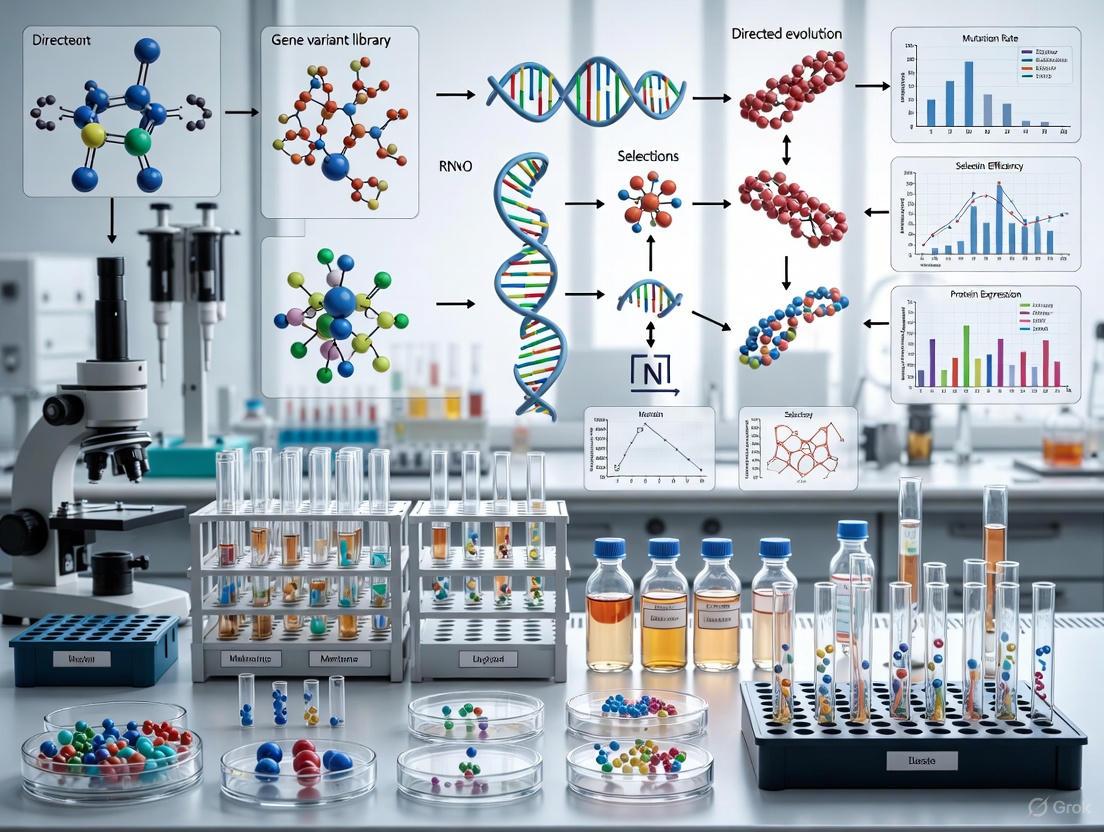
This article provides a comprehensive overview of gene variant libraries, the cornerstone of directed evolution for protein engineering.
Gene Variant Libraries in Directed Evolution: A Comprehensive Guide for Researchers and Drug Developers
Abstract
This article provides a comprehensive overview of gene variant libraries, the cornerstone of directed evolution for protein engineering. Tailored for researchers, scientists, and drug development professionals, it details the foundational principles of creating diverse genetic collections and their pivotal role in mimicking natural selection in the laboratory. The scope encompasses the latest methodologies for library construction, from random mutagenesis to sophisticated synthetic and recombination techniques, alongside their direct applications in optimizing therapeutic antibodies, enzymes, and delivery vehicles like virus-like particles. It further explores critical strategies for troubleshooting library design, optimizing screening processes without sequencing, and validating library quality and functional outputs to ensure successful outcomes in biomedical and clinical research.
The Engine of Innovation: Defining Gene Variant Libraries and Their Role in Directed Evolution
What is a Gene Variant Library? Core Definitions and Basic Principles
A gene variant library is a systematically engineered collection of DNA sequences that encompass a defined spectrum of mutations within a gene of interest. These libraries serve as a foundational tool in directed evolution research, enabling scientists to explore vast sequence spaces and identify variants with enhanced or novel properties. This whitepaper details the core principles, construction methodologies, and applications of gene variant libraries, providing researchers and drug development professionals with a technical framework for their implementation in protein engineering and therapeutic development.
In the context of directed evolution research, a gene variant library is a pool of nucleic acid molecules designed to encode a diverse population of protein variants. The fundamental premise is to generate genetic diversity, which is then expressed to create a corresponding protein library. This library is subsequently subjected to screening or selection processes to isolate individuals with improved or modified characteristics, such as enhanced stability, binding affinity, or enzymatic activity [1].
The power of this combinatorial approach lies in the link between the functional protein and its genetic code. This allows for the amplification, manipulation, and identification of selected variants through DNA sequencing, bridging the gap between phenotypic selection and genotypic information [1].
Core Principles of Library Construction
Methodologies for creating gene variant libraries can be broadly classified into three categories based on how they generate diversity, each with distinct advantages and ideal use cases. Table 1 summarizes the fundamental principles of these three primary approaches to library construction.
Table 1: Core Principles of Gene Variant Library Construction
| Method Category | Fundamental Principle | Key Feature | Ideal Use Case |
|---|---|---|---|
| Random Mutagenesis | Introduces mutations randomly throughout the entire gene sequence [1]. | Creates diversity without requiring prior structural knowledge. | Initial optimization of proteins when no structural data is available. |
| Targeted/Saturation Mutagenesis | Focuses diversity on specific, pre-determined amino acid positions or regions [1]. | Maximizes screening efficiency by concentrating on functionally relevant sites. | Affinity maturation, probing active sites, or studying protein-protein interfaces. |
| Recombination-Based Methods | Recombines fragments from existing sequences to create new chimeric genes [1]. | Combines beneficial mutations and can remove deleterious ones. | Diversifying homologous genes or reassorting mutations from different lineages. |
The following diagram illustrates the operational workflow integrating these library construction methods within a standard directed evolution pipeline.
Figure 1: The Directed Evolution Workflow. A gene of interest is diversified via one or more library construction methods to create a gene variant library. This DNA library is expressed into a protein library, which is then screened for desired properties. Hits are identified and sequenced, and the process is often repeated iteratively to achieve the desired functional improvement.
Detailed Methodologies for Library Construction
Random Mutagenesis Methods
Error-Prone PCR (epPCR) is a widely used random mutagenesis technique. It deliberately reduces the fidelity of DNA replication during PCR by altering standard reaction conditions. Common strategies include adding Mn2+ ions to replace Mg2+ and using biased dNTP concentrations to promote misincorporation by DNA polymerases like Taq, achieving error rates of approximately 1 nucleotide per kilobase [1]. Kits such as the Clontech Diversify PCR Random Mutagenesis Kit and the Stratagene GeneMorph System offer standardized, user-friendly platforms for this purpose [1].
However, epPCR libraries are subject to several biases. Error bias occurs because polymerases favor certain types of misincorporations. Codon bias arises from the genetic code, where single nucleotide changes can only access a subset of possible amino acids. Amplification bias is inherent to any PCR-based method. Using a combination of polymerases with different error profiles can help construct a less biased library [1].
Targeted and Saturation Mutagenesis
This category involves the direct synthesis of DNA molecules with controlled randomization at specific sites. Site-saturation mutagenesis is a prime example, where the wild-type codon at a specific position is systematically replaced with codons for all other 19 amino acids [2]. This allows researchers to exhaustively probe the functional role of a single residue.
Advanced commercial services, such as Officinae Bio's Precision Libraries, enable researchers to move beyond simple NNK degeneracy (which encodes all amino acids but with uneven distribution and one stop codon). These services allow for the design of variants encoding a custom-defined subset of amino acids at each position, with precise control over their ratios. This eliminates codon bias, removes unwanted stop codons, and streamlines screening efforts [3]. Similarly, Thermo Fisher's GeneArt Site-Saturation Mutagenesis and GeneArt Combinatorial Libraries offer synthetic processes for introducing unbiased random mutations in specific regions or across multiple codons simultaneously [2].
Recombination-Based Methods
DNA shuffling is a classic recombination technique that involves fragmenting a pool of homologous genes and then reassembling them through a PCR-like process. This method mimics sexual recombination by recombining portions of existing sequences—such as homologous genes from different species or beneficial mutations from a first-round library—into novel combinations [1]. This allows for the accumulation of positive mutations and the removal of deleterious ones that might be present in individual variants.
A key application of this principle was demonstrated in the directed evolution of AAV capsid variants for gene therapy. By evolving a family of AAV capsids in mice and non-human primates, researchers identified MyoAAV variants. These capsids, which contain an RGD motif, enable highly potent and selective muscle transduction across species following intravenous delivery, showing superior therapeutic efficacy in mouse models of muscle disease compared to natural AAV capsids [4].
The Scientist's Toolkit: Research Reagent Solutions
The construction and analysis of high-quality gene variant libraries rely on a suite of specialized reagents and services. Table 2 catalogs key solutions available to researchers.
Table 2: Research Reagent Solutions for Gene Variant Library Construction and Analysis
| Tool / Service | Function / Description | Example Provider(s) |
|---|---|---|
| Error-Prone PCR Kits | Pre-mixed reagents for controlled random mutagenesis via PCR. | Clontech (Diversify Kit), Stratagene (GeneMorph System) [1] |
| Precision Library Synthesis | De novo synthesis of variant libraries with user-defined amino acid distributions at each position. | Officinae Bio (Precision Libraries Pro) [3] |
| Site-Saturation Services | Systematic substitution of a wild-type codon with codons for all other 19 amino acids. | Thermo Fisher (GeneArt), Synbio Technologies [2] [5] |
| Combinatorial Library Services | Synthetic construction of libraries with random variation in multiple codons. | Thermo Fisher (GeneArt) [2] |
| Prime Editing Sensor Libraries | High-throughput method to install and evaluate genetic variants in their endogenous genomic context. | N/A (Method from primary literature) [6] |
| Next-Generation Sequencing (NGS) QC | Critical quality control service to analyze library diversity, sequence integrity, and distribution. | Various (e.g., offered as optional QC by Thermo Fisher [2]) |
Emerging Technologies and Future Directions
The field of variant library creation and analysis is rapidly advancing. High-throughput prime editing sensor libraries represent a cutting-edge development that moves beyond in vitro library construction. This approach uses prime editing to install genetic variants directly into the endogenous genome of cells, coupled with a synthetic "sensor" site that allows for quantitative assessment of editing efficiency and functional impact. This enables the functional screening of thousands of variants, such as cancer-associated TP53 mutations, in their native genomic and regulatory context, providing more physiologically relevant data than traditional overexpression systems [6].
Furthermore, the integration of single-cell sequencing with pooled variant screens is poised to revolutionize variant interpretation. Techniques like Perturb-seq capture the high-dimensional molecular phenotypes (e.g., full transcriptome changes) induced by genetic variants, moving beyond simple fitness or reporter readouts to uncover the diverse mechanistic consequences of pathogenic variants [7]. This allows for the construction of deep phenotypic atlases of variant effects, accelerating both discovery and therapeutic cell engineering.
Gene variant libraries are indispensable tools in modern directed evolution research. The strategic selection of a library construction method—whether random, targeted, or recombination-based—is critical to the success of a protein engineering campaign. By leveraging the sophisticated commercial services and emerging technologies available today, researchers can design and synthesize libraries with unprecedented control and diversity. This empowers the efficient exploration of sequence-function relationships, accelerating the development of novel enzymes, therapeutics, and biological insights.
Directed evolution (DE) is a powerful protein engineering method that mimics the process of natural selection in a laboratory setting to steer proteins or nucleic acids toward a user-defined goal. This method consists of subjecting a gene to iterative rounds of mutagenesis (creating a library of variants), selection (expressing those variants and isolating members with the desired function), and amplification (generating a template for the next round) [8]. The crucial difference from natural evolution is that directed evolution achieves results much more quickly—in many cases, with just a few rounds of mutagenesis and selection, compressing timescales that would take millions of generations in nature into a manageable laboratory process [2].
The success of this method is fundamentally linked to the creation and screening of gene variant libraries. These libraries are collections of mutated genes that encode proteins with sequence variations, creating a pool of diversity from which improved or novel functions can be discovered. Within the broader thesis of what constitutes a gene variant library in directed evolution research, it is essential to understand that these libraries represent the raw material upon which selective pressures act. Their design, size, and diversity directly determine the potential success of any directed evolution campaign [8] [1].
The Directed Evolution Workflow: A Cycle of Diversification and Selection
The directed evolution cycle is an iterative process that mirrors the fundamental principles of natural evolution: variation, selection, and heredity. The workflow can be broken down into four key stages, which are repeated until a variant with the desired properties is obtained.
Stage 1: Library Diversification - Generating Genetic Variation
The first step involves creating a library of gene variants by introducing mutations into the starting gene sequence. This can be achieved through various methods, which are explored in detail in Section 3 [8].
Stage 2: Selection or Screening - Identifying Improved Variants
The gene library is then expressed, and the resulting proteins are subjected to a selection or screening process to identify the rare variants with improved or desired properties. Selection directly couples protein function to survival, enriching for functional variants, while screening involves individually assaying each variant against a quantitative threshold [8].
Stage 3: Amplification - Propagating the Best Hits
The genes encoding the top-performing variants are isolated and amplified, typically using PCR or by transforming host bacteria. This provides the template for the next round of evolution [8].
Stage 4: Iteration - Repeating the Cycle
The process of diversification and selection is repeated, using the best variant from one round as the template for the next. This allows for the stepwise accumulation of beneficial mutations [8] [9].
The following diagram illustrates this continuous, iterative workflow.
The Heart of Directed Evolution: Creating Gene Variant Libraries
A gene variant library is a collection of DNA sequences, all derived from a parent gene but containing controlled variations. These libraries are the foundational starting point for directed evolution experiments, and the method chosen for their construction profoundly impacts the experiment's outcome [1]. The techniques for creating these libraries fall into three broad categories: random mutagenesis, targeted/semi-rational approaches, and recombination-based methods.
Table 1: Methods for Generating Gene Variant Libraries
| Method | Key Principle | Key Features | Typical Library Size |
|---|---|---|---|
| Error-Prone PCR (epPCR) [1] | Random point mutations introduced via low-fidelity PCR. | - Uncontrolled position and identity of mutations.- Prone to bias (error, codon, amplification).- Simple to perform. | Varies with mutation rate. |
| Mutator Strains [1] | Host E. coli strains with defective DNA repair pathways. | - Simple, requires minimal molecular biology expertise.- Mutagenesis is indiscriminate (affects entire plasmid/host).- Process can be slow. | N/A |
| Site-Saturation Mutagenesis (SSM) [2] [1] | Systematic replacement of a specific codon with codons for all or a subset of other amino acids. | - Focuses diversity on specific, pre-selected residues.- Requires some knowledge of protein structure/function.- Creates "focused libraries." | Up to 20 variants per position. |
| Combinatorial Libraries [2] | Simultaneous randomization of multiple codons. | - Explores interactions between distant sites.- Creates highly diverse libraries.- Can be completely synthetic. | Up to 10^12 variants. |
| DNA Shuffling [8] [9] | In vitro recombination of fragments from a set of parent genes. | - Mimics natural sexual recombination.- Can combine beneficial mutations from different parents.- Removes deleterious mutations. | Varies with number of parents. |
Random Mutagenesis Methods
These methods introduce genetic diversity randomly throughout the gene sequence. Error-prone PCR (epPCR) is the most common technique, which utilizes conditions that reduce the fidelity of the DNA polymerase (e.g., adding Mn²⁺ and biased dNTP concentrations) to introduce random point mutations during amplification [1]. While accessible, epPCR libraries suffer from several biases: error bias (where certain mutations are more common due to polymerase preferences), codon bias (where the genetic code makes some amino acid changes require multiple base substitutions), and amplification bias [1]. An alternative random method uses mutator strains of bacteria, which have defective DNA repair mechanisms and thus introduce mutations as the plasmid is replicated within the cell [1].
Targeted and Semi-Rational Methods
These methods leverage knowledge of protein structure or function to concentrate diversity where it is most likely to be beneficial, creating smaller, more intelligent libraries. Site-saturation mutagenesis systematically randomizes specific positions in a gene to all 19 possible non-wild-type amino acids [2]. This is ideal for probing active sites or specific structural elements. When multiple such positions are randomized simultaneously, a combinatorial library is created, which can explore synergistic effects between mutations [2]. These libraries can be synthesized de novo, offering maximum control over the introduced variation and avoiding the pitfalls of PCR-based methods [2].
Recombination-Based Methods
These techniques mimic natural recombination by shuffling genetic material from different parent sequences. A landmark method is DNA shuffling, where a family of homologous genes is digested with DNase I, and the fragments are reassembled in a primer-free PCR-like process to create chimeric genes [9]. This allows the combination of beneficial mutations from different parents and can result in dramatic improvements in function, as demonstrated by a 32,000-fold increase in antibiotic resistance evolved in β-lactamase [9].
Advanced Applications and Cutting-Edge Methodologies
Directed evolution has moved beyond optimizing single proteins in test tubes to addressing complex challenges in therapeutic and mammalian cell biology. The following case studies illustrate the power of modern directed evolution campaigns.
Case Study 1: Expanding the Genome-Editing Toolbox with Directed Evolution
The targeting capacity of CRISPR-Cas12a genome-editing tools is limited by its requirement for a specific Protospacer Adjacent Motif (PAM). To overcome this, researchers combined directed evolution with rational engineering [10]. They used error-prone PCR to create a library of Lachnospiraceae bacterium Cas12a (LbCas12a) variants with random mutations in the PAM-interacting (PI) and wedge (WED) domains. A bacterial selection system was employed where cell survival depended on Cas12a's ability to cleave a lethal gene next to a non-canonical PAM. After multiple rounds of selection, they isolated Flex-Cas12a, a variant with six mutations that recognizes a much broader range of PAMs (5'-NYHV-3'), expanding potential target sites in the human genome from ~1% to over 25% while retaining high editing efficiency [10].
Case Study 2: Evolving a Novel Enzyme for Cellular Applications
Researchers sought to develop a new proximity-labeling enzyme, LaccID, from a fungal laccase that uses O₂ instead of toxic H₂O₂. The challenge was that no laccase was active in the mammalian cellular environment. Through 11 rounds of directed evolution on the yeast surface, they progressively improved the enzyme [11]. They used error-prone PCR to create mutant libraries, displayed them on yeast, and employed fluorescence-activated cell sorting (FACS) to isolate clones with high activity using a biotin-phenol probe. Beneficial mutations from each round were manually combined before further diversification. The resulting LaccID enzyme is active at the plasma membrane of mammalian cells and has been successfully used for mapping surface proteomes and for electron microscopy [11].
The Rise of Machine Learning and High-Throughput Measurements
A significant frontier in directed evolution is the integration of machine learning (ML) and high-throughput measurements (HTMs). Active Learning-assisted Directed Evolution (ALDE) is an iterative ML workflow that uses uncertainty quantification to guide the exploration of protein sequence space more efficiently than traditional DE, which is particularly valuable for navigating rugged fitness landscapes with strong epistatic (non-additive) interactions [12]. Furthermore, HTMs, such as next-generation sequencing of sorted variant pools (sort-seq), allow researchers to quantitatively characterize the genotype and phenotype of thousands to millions of variants in a single experiment [13]. This generates large, high-quality datasets that not only enhance screening efficiency but also provide the foundation for training accurate ML models to predict protein function [13].
The Scientist's Toolkit: Essential Reagents for Directed Evolution
Table 2: Key Research Reagent Solutions for Directed Evolution
| Reagent / Tool | Function in Directed Evolution |
|---|---|
| Error-Prone PCR Kits (e.g., from Clontech, Stratagene) [1] | Provide optimized reagents (polymerases, Mn²⁺, biased dNTPs) for introducing random mutations during gene amplification. |
| Gene Synthesis Services (e.g., GeneArt) [2] | Enable de novo synthesis of custom variant libraries (e.g., site-saturation, combinatorial) with precise control over randomization, avoiding PCR bias. |
| Yeast Surface Display [11] | A platform for displaying protein variants on the yeast cell surface, enabling sorting of large libraries using FACS. |
| Fluorescence-Activated Cell Sorter (FACS) [11] | A high-throughput instrument that physically separates cells (e.g., yeast or mammalian) based on a fluorescent signal linked to protein function (e.g., binding, activity). |
| NNK Degenerate Codon [12] | A synthetic DNA codon (N = A/T/G/C; K = G/T) used in oligo synthesis to randomize a single amino acid position, encoding all 20 amino acids and one stop codon. |
| Biotin-Phenol Probe [11] | A small molecule substrate used in proximity labeling applications. Enzymes like APEX2 or LaccID oxidize the probe to generate highly reactive, short-lived radicals that biotinylate nearby proteins. |
| Chimeric Virus-like Vesicles (VLVs) [14] | A mammalian directed evolution platform (e.g., PROTEUS) where a target gene is placed in a viral replicon. Propagation is tied to host-provided VSVG, linking target gene function to viral fitness. |
Directed evolution has firmly established itself as a cornerstone technique in modern protein engineering and biological research. By harnessing the power of artificial selection on gene variant libraries, scientists can solve complex problems in enzyme engineering, therapeutic development, and basic science with a speed and efficacy that rational design alone often cannot match. The field continues to evolve rapidly, with advances in library construction, high-throughput screening, and machine learning integration pushing the boundaries of what is possible. As these tools become more sophisticated and accessible, directed evolution is poised to unlock even greater innovations in biotechnology and medicine.
Directed evolution is an iterative protein engineering process that mimics natural evolution to enhance or alter protein properties. The foundation of any directed evolution experiment is the gene variant library, a collection of genes encoding diverse versions of a target protein. In the context of a broader thesis, a gene variant library is the engineered genetic diversity from which improved proteins are selected. The process involves two fundamental steps: 1) constructing a library of variant genes, and 2) screening or selecting from the protein products of these genes for desired characteristics [1]. The success of directed evolution experiments is heavily influenced by the quality and design of these libraries, as they define the landscape of potential solutions that can be explored [15].
This guide details the core objectives in protein engineering—enhancing stability, affinity, catalytic activity, and solubility—and the methodologies for constructing and screening libraries to achieve them. Directed evolution has successfully been applied to areas including protein-ligand binding, improved protein stability, and modified enzyme selectivity, making it a powerful tool for researchers and drug development professionals [1].
Library Construction Methods
The method chosen for library construction dictates the type and distribution of diversity in a gene variant library. Methods can be broadly categorized into those that introduce random mutations throughout a gene, those that target diversity to specific regions, and those that recombine existing diversity.
Random Mutagenesis Methods
These methods introduce mutations randomly along the entire gene sequence.
- Error-Prone PCR (epPCR): This is a widely used method that reduces the fidelity of DNA replication during PCR. Error rates are increased by altering reaction conditions, such as adding Mn²⁺ and using biased dNTP concentrations [1]. Commercially available kits, such as the Clontech Diversify PCR Random Mutagenesis Kit and the Stratagene GeneMorph System, provide controlled mutagenesis [1].
- Mutator Strains: This approach utilizes bacterial strains with defective DNA repair pathways (e.g., Stratagene's XL1-Red strain) to generate random mutations as the DNA replicates within the host cell. While simple, it is slower than epPCR and mutagenesis is not confined to the gene of interest [1].
Targeted and Saturation Mutagenesis Methods
These methods offer precise control over the location and nature of mutations.
- Site-Saturation Mutagenesis: This technique systematically substitutes the wild-type codon at specific positions with codons for up to all 19 other amino acids. This is ideal for exploring the function of specific active site or structural residues [2].
- Gene Synthesis and Controlled Randomization: Fully synthetic processes, such as the GeneArt Controlled Randomization Service, allow for the introduction of unbiased random mutations at a specified frequency and in specific regions of a gene. This method offers maximum control and can generate libraries with up to 10¹¹ variants [2].
- Combinatorial Libraries: Synthetic libraries can be designed to introduce random variation at multiple codons simultaneously, creating vast libraries (up to 10¹² variants) with customized amino acid distributions at each position [2].
Recombination Methods
These methods do not create new sequence diversity but combine existing mutations or homologous sequences in new ways.
- DNA Shuffling: This technique fragments a set of homologous genes and then reassembles them through a PCR-like process to create chimeric genes. This allows beneficial mutations from different parents to be combined [1].
- Staggered Extension Process (StEP): A modified PCR process that uses short extension times to continually reprime the synthesis of DNA, leading to the recombination of sequences from different templates [1].
Table 1: Comparison of Gene Library Construction Methods
| Method | Key Feature | Theoretical Library Size | Primary Use Case |
|---|---|---|---|
| Error-Prone PCR | Random mutations throughout the gene | Limited by host transformation | General diversification; initial rounds of evolution |
| Mutator Strains | Random in vivo mutagenesis | Limited by host transformation | Simple, low-tech initial experiments |
| Site-Saturation Mutagenesis | Mutates a single codon to all amino acids | 20 variants per position | Probing function of specific residues |
| Combinatorial Libraries | Randomization at multiple specific codons | Up to 10¹² [2] | Exploring interactions between specific residues |
| DNA Shuffling | Recombines segments of homologous genes | High | Combining beneficial mutations from different variants |
Key Protein Engineering Objectives
Stability
Protein stability is critical for functionality, especially in non-physiological conditions. Low stability is a significant barrier in directed evolution, as mutations that enhance activity are often destabilizing [15]. Thermostability can be engineered using cell survival screens with thermophilic bacteria. For example, variants of kanamycin nucleotidytransferase (KNTase) with improved stability were selected by identifying mutants that allowed bacterial growth in the presence of kanamycin at elevated temperatures (61–71°C) [15].
Affinity
Enhancing binding affinity is a primary goal, particularly for therapeutic antibodies. This process, known as affinity maturation, involves creating diverse libraries of antibody variable regions and selecting for tighter binders [2]. High-throughput screening methods, such as phage display or yeast surface display, are typically used to isolate variants with improved affinity for a target antigen.
Activity
Improving the catalytic efficiency (kcat/KM) or altering the specificity of an enzyme is a common objective. A key challenge is the activity-stability trade-off; mutations in the active site often enhance activity but disrupt the network of intramolecular interactions that govern stability [15]. For instance, studies on β-lactamase have shown that reverting key active-site residues to less active ones can significantly increase stability, demonstrating the inherent conflict between the structural requirements for high activity and high stability [15].
Solubility
Poor solubility can limit the activity and usability of proteins. Directed evolution can generate more soluble protein variants. This is often achieved by creating surface mutations that improve hydrophilicity or reduce aggregation propensity, followed by screening for expression in the soluble fraction of cell lysates or using functional assays that require proper folding [2].
Experimental Protocols and Screening Methodologies
The choice of screening methodology is as critical as library construction and is often the bottleneck in directed evolution.
Cell Survival Screens
This high-throughput method links desired protein function to host cell survival. A classic example is evolving β-lactamase for antibiotic resistance or enzymes like KNTase for function at higher temperatures in thermophilic hosts [15]. Library size in these screens is typically limited only by transformation efficiency (10⁶–10¹⁰ variants), allowing for extensive diversity to be explored [15].
- Protocol Outline:
- Transform the gene variant library into a suitable microbial host.
- Plate cells under selective pressure (e.g., antibiotic, high temperature).
- Isolate surviving colonies, which harbor functional enzyme variants.
- Characterize the genes from these colonies through sequencing.
Functional Screens
For most enzymes and proteins, a direct link to survival is not feasible, requiring functional screens where each variant is assayed individually. Throughput is lower (~10²–10⁴ variants), but emerging technologies are improving this.
- Microtiter Plate-Based Screening:
- Express the protein library clonally in a microtiter plate.
- Lyse cells or isolate the protein.
- Add a substrate that produces a detectable signal (e.g., colorimetric, fluorescent) upon conversion.
- Identify hits based on signal intensity.
- Emerging High-Throughput Methods: Techniques using nanoliter droplets or wells compartmentalize individual reactions, enabling the screening of orders of magnitude more variants than traditional microtiter plate methods [15].
Workflow Visualization
Directed Evolution Workflow
The Scientist's Toolkit: Research Reagent Solutions
Table 2: Essential Research Reagents and Kits for Directed Evolution
| Item / Service | Function / Description | Key Feature |
|---|---|---|
| Error-Prone PCR Kits (e.g., Clontech Diversify, Stratagene GeneMorph) | Provide optimized reagents for introducing random mutations via PCR. | Controlled mutation rate; easy to use. |
| Mutator Strains (e.g., E. coli XL1-Red) | Host strains with high mutation rates for in vivo random mutagenesis. | Simple protocol, requires no specialized molecular biology skills. |
| Site-Saturation Mutagenesis Kits | Systematically replace a single codon to encode all 20 amino acids. | Exhaustively explores the functional role of a specific residue. |
| Gene Synthesis Services (e.g., GeneArt Directed Evolution) | De novo synthesis of variant libraries with controlled randomization. | Maximum control over diversity; no physical template required [2]. |
| DNA Shuffling Kits | Recombine homologous genes to create chimeric libraries. | Combines beneficial mutations from different sequences. |
| High-Throughput Screening Platforms (e.g., microfluidic droplet generators) | Enable screening of very large libraries (>10⁶ variants) via compartmentalization. | Dramatically increases screening throughput for functional assays [15]. |
In the field of protein engineering, directed evolution stands as a powerful methodology for generating biomolecules with enhanced or novel properties, mimicking the process of natural selection in a controlled laboratory environment. The entire process is driven by a core, iterative workflow: diversification followed by selection. This cycle is fundamentally powered by a foundational resource—the gene variant library. A gene variant library is a collection of DNA sequences, each encoding a different version of a protein of interest. This library represents the genetic diversity from which improved variants are subsequently isolated [1] [16]. Since the first in vitro evolution experiments in the 1960s, the techniques for creating and screening these libraries have diversified enormously, enabling researchers to tackle more ambitious targets, from industrial enzyme engineering to the development of advanced gene therapies and therapeutic agents [16].
The appeal of directed evolution lies in its ability to bypass the need for comprehensive knowledge of protein structure and function. Instead of relying on rational design, which can be limited by our incomplete understanding of the sequence-structure-function relationship, directed evolution uses iterative rounds of mutagenesis and screening to discover beneficial mutations that would be difficult to predict a priori [16]. This review will provide an in-depth technical guide to the core workflow, detailing modern methodologies for library construction and selection, complete with experimental protocols and resource guidance for the practicing scientist.
Phase I: Library Diversification Methodologies
The first phase of the directed evolution cycle is the creation of genetic diversity. Methods for generating gene variant libraries can be broadly categorized into three groups: methods that introduce random mutations throughout a gene, those that target diversity to specific regions, and those that recombine existing diversity [1].
Random Mutagenesis Methods
These techniques introduce mutations at random positions along the entire gene sequence.
- Error-Prone PCR (epPCR): This is one of the most popular methods for introducing random mutations. The fidelity of the PCR reaction is deliberately compromised to encourage misincorporation of nucleotides. This is typically achieved by using reaction conditions that include a small amount of Mn²⁺ (in place of Mg²⁺) and biased concentrations of dNTPs [1]. The level of mutagenesis can be controlled by adjusting the concentration of Mn²⁺, the number of amplification cycles, or by using nucleoside triphosphate analogues that lead to high and controllable levels of misincorporation [1]. Kits such as the Clontech Diversify PCR Random Mutagenesis Kit and the Stratagene GeneMorph System are commercially available to simplify this process.
- Mutator Strains: This method involves passing a plasmid containing the gene of interest through a bacterial strain with defects in its DNA repair pathways (e.g., the XL1-Red strain from Stratagene). This leads to a higher mutation rate as the DNA is replicated [1]. While simple and accessible, especially for labs with less molecular biology experience, the mutagenesis is indiscriminate (affecting the entire plasmid and host chromosome) and can be slow to achieve optimal mutation rates [1] [16].
A significant challenge with random mutagenesis methods, particularly epPCR, is the issue of bias. This bias manifests in three ways:
- Error Bias: Specific polymerases have inherent misincorporation preferences, meaning some mutations occur more frequently than others [1].
- Codon Bias: The genetic code is degenerate. Single nucleotide changes can only access a subset of the 20 amino acids. To access all possible amino acid substitutions, two or three simultaneous mutations at a single codon are required, which are statistically less likely [1].
- Amplification Bias: The PCR amplification process itself can lead to uneven representation of certain variants [1].
Targeted and Saturation Mutagenesis
In contrast to random methods, these approaches focus diversity on specific residues, often informed by structural knowledge or previous rounds of evolution.
- Site-Saturation Mutagenesis: This technique allows for the systematic replacement of a single wild-type codon with codons for all or a subset of the other 19 amino acids [16] [2]. This is ideal for exploring the function of specific active site residues or "hotspots" identified in prior selections.
- Gene Synthesis and Controlled Randomization: Advances in gene synthesis have enabled the construction of fully synthetic variant libraries. Companies like Thermo Fisher Scientific offer services such as the GeneArt Controlled Randomization Service, which can introduce unbiased random mutations at a specified frequency and in specific regions of a gene. The GeneArt Combinatorial Library service can create vast libraries (up to 10^12 variants) with customized amino acid composition at multiple codons simultaneously [2]. This synthetic approach minimizes silent mutations and stop codons in non-targeted regions, leading to higher-quality libraries [2].
Recombination-Based Methods
These methods do not create new sequence diversity de novo but instead shuffle existing diversity to combine beneficial mutations from different parent sequences.
- DNA Shuffling: This technique, pioneered by Willem Stemmer, involves fragmenting a set of homologous parent genes with DNase I and then reassembling them into full-length chimeric genes using a PCR-like process without primers. The fragments prime each other based on homology, and repeated cycles of annealing and extension result in recombination [1] [16].
- Staggered Extension Process (StEP): A simpler alternative to DNA shuffling, StEP recombination involves short annealing/extension cycles in a PCR reaction. The polymerase extends primers on different templates for only a short time before denaturing, leading to the continuous recombination of templates as the reaction proceeds [1] [16].
Table 1: Comparison of Key Library Diversification Techniques
| Technique | Principle | Advantages | Disadvantages | Ideal Mutation Rate |
|---|---|---|---|---|
| Error-Prone PCR [1] | Random misincorporation of nucleotides during PCR. | Easy to perform; no prior knowledge of structure needed. | Mutational bias; only accesses a subset of amino acids via single mutations. | 1-10 mutations/kb, depending on target. |
| Mutator Strains [1] [16] | In vivo mutagenesis via defective DNA repair. | Technically simple; good for preliminary experiments. | Slow; mutagenesis is not restricted to the gene of interest. | Difficult to control; requires multiple passages. |
| Site-Saturation Mutagenesis [16] [2] | Systematic randomization of specific codons. | In-depth exploration of key positions; can incorporate structural data. | Libraries can become very large if many positions are targeted simultaneously. | N/A (targeted to specific residues). |
| DNA Shuffling [1] [16] | Recombination of fragmented homologous genes. | Can combine beneficial mutations from different parents. | Requires high sequence homology between parent genes. | N/A (recombines existing variation). |
| Synthetic Libraries (e.g., GeneArt) [2] | De novo gene synthesis with defined degenerate codons. | Maximum control over variation; high library quality; no template required. | Higher cost for large libraries; requires sequence design. | Fully customizable. |
The following workflow diagram illustrates the decision-making process for selecting a diversification strategy.
Diagram 1: Decision workflow for selecting a gene diversification methodology.
Phase II: Selection and Screening Strategies
Once a diverse gene variant library is constructed, the second phase is to identify the few clones with the desired improved property. The choice of strategy here is critical and depends on the property being evolved and the available assay throughput.
Screening Methods
Screening involves assessing the phenotype of individual library members, typically in a multi-well format. This is necessary when the desired property cannot be directly linked to survival or binding.
- Colorimetric/Fluorimetric Analysis: This is a fast and easy method for screening variants of enzymes that act on substrates which yield a colored or fluorescent product. Similarly, fluorescent proteins can be directly screened by analyzing colonies or cultures for fluorescence intensity or wavelength [16].
- Plate-Based Automated Assays: Automation and robotics have increased the throughput of plate-based screens. Assays can be coupled to instruments like GC or HPLC to analyze enantiomers or complex product mixtures. A caveat is that surrogate substrates are sometimes used for speed, and results with these do not always replicate with the native substrate [16].
- Mass Spectrometry-Based Methods: MS-based screening offers high throughput and does not rely on the optical properties of substrates or products. For example, variants of fatty acid synthase and cyclodipeptide synthase have been screened using MALDI-TOF MS, though this often requires immobilization of cells or proteins on a matrix [16].
Selection Methods
Selections are powerful because they directly link the desired function to the survival or physical isolation of the host organism. They can handle extremely large library sizes (up to 10^10-10^11 variants).
- Display Techniques: Methods like phage display, yeast display, and ribosome display physically link the protein variant (phenotype) to its encoding genetic information (genotype). Libraries of displayed proteins can be panned against a target of interest (e.g., an antigen for antibodies) over several rounds to enrich for high-affinity binders. This technique has been widely successful for engineering antibodies, peptides, and other binding proteins [16].
- Fluorescence-Activated Cell Sorting (FACS): FACS is a high-throughput screening method that can analyze and sort hundreds of thousands of cells per second based on fluorescence. It is ideal for evolving fluorescent proteins or enzymes where activity can be coupled to a fluorescent signal via product entrapment or substrate conversion [16]. Similar principles can be applied using in vitro compartmentalization (IVC).
- In Vivo Selection: This involves growing the library in a host organism under a selective pressure. For example, to evolve antibiotic resistance, a library of β-lactamase variants can be plated on media containing increasing concentrations of an antibiotic. Only hosts expressing a sufficiently improved enzyme will survive [16]. More complex in vivo selections can be coupled with orthogonal replication systems, such as those based on CRISPR or T7 RNA polymerase, to restrict mutagenesis to the target sequence [16].
Table 2: Comparison of Key Selection and Screening Techniques
| Technique | Principle | Throughput | Advantages | Disadvantages |
|---|---|---|---|---|
| Colorimetric Assays [16] | Detection of colored product from enzyme action. | Medium (10^3 - 10^4) | Fast, easy, and inexpensive. | Limited to reactions with spectrally distinct inputs/outputs. |
| FACS [16] | Sorting single cells based on fluorescence. | Very High (>10^8) | Extremely high throughput; quantitative. | Requires activity to be linked to a change in fluorescence. |
| Display Techniques [16] | Physical link between protein and its gene. | Very High (>10^10) | Can screen vast libraries; directly selects for binding affinity. | Generally limited to binding molecules (affinity, not catalysis). |
| In Vivo Selection [16] | Cell survival linked to protein function. | Very High (>10^10) | Powerful direct selection; can be coupled with in vivo mutagenesis. | Requires a direct link between protein function and host survival. |
| MS-Based Screening [16] | Detection of product by mass. | High (10^5 - 10^6) | Does not require chromogenic/fluorescent tags. | Requires specialized, expensive equipment. |
Integrated Experimental Protocol: AAV Capsid Evolution
A landmark study by Tabebordbar et al. (2021) provides a powerful, real-world example of the core workflow applied to evolve adeno-associated virus (AAV) capsids for potent muscle-directed gene delivery [4]. The following protocol details their integrated approach.
Experimental Workflow
- Library Construction (Diversification): A diverse library of AAV capsid variants was created starting from a natural AAV capsid gene. Diversity was introduced using techniques to generate a vast array of peptide insertions and point mutations within the cap gene, resulting in a library of billions of unique variants.
- In Vivo Selection: The library of AAV variants was administered intravenously to mice. The key to the selection was that the capsid's primary function—delivering its genetic payload to the nucleus of muscle cells—is essential for the subsequent steps. Only capsids that successfully transduced muscle cells would have their encoding DNA present in the target tissue.
- Recovery and Amplification: After a period to allow for gene delivery and expression, genomic DNA was extracted from the mouse muscle tissue. The AAV cap gene sequences were recovered from this DNA via PCR. This step physically isolates the genetic material of the successful variants from the overwhelming majority of non-functional or poorly functional ones.
- Iteration: The recovered cap genes were then used to generate a new, enriched AAV library for the next round of selection. The researchers performed this iterative process across multiple rounds in mice and, crucially, also in non-human primates to identify capsids with conserved potency across species.
- Validation: The top candidate capsids, dubbed MyoAAV, were then rigorously validated. This involved administering them at low doses to disease model mice (for Duchenne muscular dystrophy and X-linked myotubular myopathy) and demonstrating significantly higher therapeutic efficacy compared to natural AAV capsids. Further mechanistic studies showed that the evolved capsids transduced cells via interaction with integrin heterodimers [4].
The following diagram summarizes this integrated iterative cycle.
Diagram 2: Integrated directed evolution workflow for AAV capsid engineering.
The Scientist's Toolkit: Research Reagent Solutions
Table 3: Essential Reagents and Resources for Directed Evolution
| Reagent / Resource | Function / Application | Example / Source |
|---|---|---|
| Error-Prone PCR Kits | Provides optimized reagents for introducing random mutations during PCR amplification. | Diversify PCR Random Mutagenesis Kit (Clontech); GeneMorph System (Stratagene) [1]. |
| Mutator Strains | In vivo mutagenesis of plasmid DNA through defective DNA repair pathways. | XL1-Red E. coli strain (Stratagene) [1] [16]. |
| Synthetic Gene Libraries | De novo synthesis of gene variant libraries with controlled and biased mutational spectra. | GeneArt Directed Evolution Services (Thermo Fisher) [2]. |
| Phage Display Vectors | Cloning and expression system for creating libraries of peptides or proteins displayed on phage surfaces. | Commercial vectors from New England Biolabs, Thermo Fisher. |
| FACS Instrumentation | High-throughput analysis and sorting of cell-based libraries based on fluorescence. | Instruments from BD Biosciences, Beckman Coulter. |
| Specialized Assay Substrates | Chromogenic or fluorogenic compounds used to detect enzymatic activity in colony or plate-based screens. | Available from various biochemical suppliers (e.g., Sigma-Aldrich, Promega). |
The core workflow of directed evolution—the iterative cycle of diversification and selection—remains a profoundly powerful engine for protein engineering. The field has moved far beyond simple random mutagenesis, now offering a sophisticated toolkit for library construction, including targeted saturation and fully synthetic approaches, coupled with ultra-high-throughput screening methods like FACS and next-generation sequencing. The successful application of this workflow to engineer AAV capsids for gene therapy [4] and the growing recognition of its importance in drug development, including for tackling genetic variation in drug targets [17] [18], underscore its broad impact. As library design becomes more intelligent and screening methods more powerful, directed evolution will continue to be an indispensable strategy for solving complex challenges in biotechnology and medicine.
Directed evolution has matured from a novel academic concept into a transformative protein engineering technology, representing a paradigm shift in how new biological functions are created and optimized. This powerful, forward-engineering process harnesses the principles of Darwinian evolution—iterative cycles of genetic diversification and selection—within a laboratory setting to tailor proteins for specific, human-defined applications [19]. The profound impact of this approach was formally recognized with the 2018 Nobel Prize in Chemistry, awarded to Frances H. Arnold for her pioneering work that established directed evolution as a cornerstone of modern biotechnology and industrial biocatalysis [19].
The primary strategic advantage of directed evolution lies in its capacity to deliver robust solutions—such as enhanced stability, novel catalytic activity, or altered substrate specificity—without requiring detailed a priori knowledge of a protein's three-dimensional structure or its catalytic mechanism [19]. This capability allows it to bypass the inherent limitations of rational design, which relies on a predictive understanding of sequence-structure-function relationships that is often incomplete [16]. By exploring vast sequence landscapes through a process of mutation and functional screening, directed evolution frequently uncovers non-intuitive and highly effective solutions that would not have been predicted by computational models or human intuition [19].
Table: Major Historical Milestones in Directed Evolution
| Time Period | Key Development | Significance |
|---|---|---|
| 1960s | First in vitro evolution experiments by Sol Spiegelman et al. [16] [9] | Demonstrated evolutionary principles in a test tube with Qβ bacteriophage RNA replication |
| 1980s | Development of phage display technology [16] [9] | Enabled selection of binding peptides/antibodies; shifted focus to application-driven approaches |
| 1990s | Establishment of modern directed evolution (error-prone PCR, DNA shuffling) [9] | Formalized iterative diversification/screening cycles; proved multiple rounds could dramatically improve proteins |
| 2000s | Expansion to metabolic pathways and whole genomes [9] | Scaled evolution from single proteins to complex biological systems |
| 2010s-Present | Integration of AI and machine learning [20] [12] | Dramatically improved efficiency of navigating protein fitness landscapes |
The Foundations: Early In Vitro Evolution
The first in vitro evolution experiments can be traced back to the 1960s. In a pioneering Darwinian experiment, Sol Spiegelman and colleagues iteratively selected RNA molecules based on their ability to be replicated by Qβ bacteriophage RNA polymerase [16] [9]. In these studies, purified RNA replicases were reconstituted in vitro with their homologous RNA templates, and the fate of the resulting RNA molecules was monitored through several generations under different selective pressures [9]. The authors stated their interest in answering the question, "What will happen to the RNA molecules if the only demand made on them is the Biblical injunction, multiply, with the biological proviso that they do so as rapidly as possible?" [9] This work represented one of the earliest attempts to emulate the precellular world to witness firsthand the fundamental principles of the development of life.
During the 1980s, in vitro selections became more applications-driven, as exemplified by the development of phage display [16] [9]. In this technique, an exogenous sequence is fused to a gene encoding a minor coat protein of a filamentous phage, leading the assembled viral particles to display the extra amino acids [16]. A set of phages with different fused peptides could then be subjected to affinity purification against desired binding partners to obtain variants with high affinity toward them [16]. This methodology enabled the enrichment of particular peptides that exhibited desired binding properties from a phage-expressed library, with clear relevance to fields such as antibody engineering [9].
The term "directed evolution" in the modern sense began to take root in earnest in the 1990s [9]. In broad terms, directed evolution can be defined as an iterative two-step process involving first the generation of a library of variants of a biological entity of interest, and second the screening of this library in a high-throughput fashion to identify those mutants that exhibit better properties, such as higher activity or selectivity [9]. The best mutants from each round then serve as the templates for the subsequent rounds of diversification and selection, and the process is repeated until the desired level of improvement is attained [9].
The Directed Evolution Workflow: A Technical Framework
At its core, directed evolution functions as a two-part iterative engine, relentlessly driving a protein population toward a desired functional goal [19]. This process compresses geological timescales of natural evolution into weeks or months by intentionally accelerating the rate of mutation and applying an unambiguous, user-defined selection pressure [19]. The iterative cycle consists of two fundamental steps: first, the generation of genetic diversity to create a library of protein variants, and second, the application of a high-throughput screen or selection to identify the rare variants exhibiting improvement in the desired trait [19].
Step 1: Generating Genetic Diversity - Library Creation Strategies
The creation of a diverse library of gene variants is the foundational step that defines the boundaries of the explorable sequence space [19]. The quality, size, and nature of this diversity directly constrain the potential outcomes of the entire evolutionary campaign [19]. Several methods have been developed to introduce genetic variation, each with distinct advantages, limitations, and inherent biases that shape the evolutionary trajectories available to the protein [19].
Random Mutagenesis Techniques
Random mutagenesis aims to introduce mutations across the entire length of a gene without pre-selecting specific sites [19]. The most established and widely used method is Error-Prone Polymerase Chain Reaction (epPCR) [19]. This technique is a modified PCR that intentionally reduces the fidelity of the DNA polymerase, thereby introducing errors during gene amplification [19]. This is typically achieved through a combination of factors: using a polymerase that lacks a 3' to 5' proofreading exonuclease activity (such as Taq polymerase), creating an imbalance in the concentrations of the four deoxynucleotide triphosphates (dNTPs), and, most critically, adding manganese ions (Mn²⁺) to the reaction [19]. The concentration of Mn²⁺ can be precisely controlled to tune the mutation rate, which is typically targeted to 1–5 base mutations per kilobase, resulting in an average of one or two amino acid substitutions per protein variant [19].
A landmark example in this field is the evolution of subtilisin E, a serine protease useful in several industrial applications, for increased activity in dimethylformamide [9]. In this pioneering study, random mutations were introduced to the subtilisin E gene using an error-prone PCR amplification strategy [9]. After three sequential rounds of mutagenesis and screening, a mutant was identified with six additional point mutations that exhibited 256-fold higher activity in 60% dimethylformamide [9]. This effort clearly demonstrated the power of a sequential, evolutionary protein engineering strategy to identify multiple cooperative mutations for vast protein improvement [9].
Recombination-Based Methods (Gene Shuffling)
To overcome the limitations of point mutagenesis and to more closely mimic the power of natural sexual recombination, methods based on gene shuffling were developed [19]. These techniques allow for the combination of beneficial mutations from multiple parent genes into a single, improved offspring [19].
DNA Shuffling, also known as "sexual PCR," was pioneered by Willem P. C. Stemmer [19]. In this method, one or more related parent genes are randomly fragmented using the enzyme DNaseI [19]. These small fragments (typically 100–300 bp) are then reassembled in a PCR reaction without any added primers [19]. During the annealing step, homologous fragments from different parental templates can overlap and prime each other for extension by the polymerase [19]. This template switching results in crossovers, effectively shuffling the genetic information and creating a library of chimeric genes that contain novel combinations of mutations from the parent pool [19].
As an example of the power of this approach, a β-lactamase was evolved to improve the resistance of its host Escherichia coli strain to the antibiotic cefotaxime [9]. After three cycles of shuffling and two cycles of backcrossing (to remove non-essential mutations), a mutant was identified that increased the minimum inhibitory concentration (MIC) of the host by 32,000-fold, compared to the 16-fold increase observed when non-recombinogenic methods were employed [9].
Focused and Semi-Rational Mutagenesis
As an alternative to random approaches, focused mutagenesis targets specific regions or residues within a protein [19]. This is often employed when some structural or functional information is available, allowing for the creation of smaller, higher-quality libraries [19].
Site-Saturation Mutagenesis is a powerful example of this strategy [19]. This technique is used to comprehensively explore the functional importance of one or a few amino acid positions, often "hotspots" identified from a prior round of random mutagenesis or predicted from a structural model [19]. At the target codon, a library is created that encodes for all 19 other possible amino acids [19]. This allows for a deep, unbiased interrogation of a residue's role, something that is statistically improbable with epPCR [19]. This semi-rational approach, which combines knowledge-based targeting with random diversification at those sites, can dramatically increase the efficiency of a directed evolution campaign by reducing the library size and increasing the frequency of beneficial variants [19].
Step 2: High-Throughput Screening and Selection
Once a diverse library of gene variants is created, the central challenge of directed evolution emerges: identifying the rare variants with improved properties from a population dominated by neutral or non-functional mutants [19]. This step, which links the genetic code of a variant (genotype) to its functional performance (phenotype), is widely recognized as the primary bottleneck in the process [19]. The success of a campaign is dictated by the axiom, "you get what you screen for" [19]. The power and throughput of the screening platform must match the size and complexity of the library generated in the first step [19].
A key distinction exists between screening and selection [19]. Screening involves the individual evaluation of every member of the library for the desired property [19]. In contrast, selection establishes a system where the desired function is directly coupled to the survival or replication of the host organism, automatically eliminating non-functional variants [19]. Selections can handle much larger libraries and are less labor-intensive, but they are often difficult to design, can be prone to artifacts, and provide little information about the distribution of activities within the library [19]. Screening, while lower in throughput, guarantees that every variant is tested and provides quantitative data on its performance [19].
Table: Comparison of Screening and Selection Methods in Directed Evolution
| Method | Throughput | Key Principle | Advantages | Disadvantages | Application Examples |
|---|---|---|---|---|---|
| Colorimetric/Fluorimetric Analysis | 10³-10⁴ variants | Detection of chromogenic/fluorescent products | Fast, easy to perform | Limited to molecules with spectral properties | Fluorescent proteins [16] |
| Fluorescence-Activated Cell Sorting (FACS) | >10⁸ variants | Fluorescence-based cell sorting | Extremely high throughput | Requires property linkable to fluorescence | Sortase, Cre recombinase, β-galactosidase [16] |
| Phage Display | >10⁹ variants | Binding affinity selection | Extremely high throughput | Limited to binding molecules | Antibodies, binding proteins [16] |
| Microtiter Plate Assays | 10³-10⁴ variants | Individual clone analysis in multi-well plates | Quantitative data, robust | Low throughput | Lipase, laccase [16] |
| MS-Based Methods | Variable | Mass spectrometry detection | Doesn't rely on specific substrate properties | Requires specialized equipment | Fatty acid synthase, cytochrome P411 [16] |
Modern Advancements: AI-Guided Directed Evolution
The integration of artificial intelligence and machine learning with directed evolution represents the current frontier in protein engineering [20] [12]. These computational approaches help navigate the vastness of protein sequence space more efficiently than traditional methods, particularly when mutations exhibit non-additive, or epistatic, behavior [12].
Deep Learning-Guided Algorithms
Deep learning has rapidly emerged as a promising toolkit for protein optimization [20]. DeepDE is a robust iterative deep learning-guided algorithm leveraging triple mutants as building blocks and a compact library of ~1,000 mutants for training [20]. Triple mutants allow for the exploration of a much greater sequence space compared to single or double mutants in each iteration [20]. When applied to GFP from Aequorea victoria, DeepDE achieved a remarkable 74.3-fold increase in activity over four rounds of evolution, far surpassing the benchmark superfolder GFP [20]. This study suggests that limited screening involving experimentally affordable ~1,000 variants significantly enhances the performance of DeepDE, likely by mitigating the constraints imposed by the intractable data sparsity problem in protein engineering [20].
Active Learning-Assisted Directed Evolution
Active Learning-assisted Directed Evolution (ALDE) is an iterative machine learning-assisted workflow that leverages uncertainty quantification to explore the search space of proteins more efficiently than current DE methods [12]. ALDE alternates between collecting sequence-fitness data using a wet-lab assay and training an ML model to prioritize new sequences to screen in the wet lab [12]. This approach resembles existing wet-lab mutagenesis and screening workflows for DE and is generally applicable to any protein engineering objective [12].
In one application, researchers used ALDE to find the ideal combination of five mutations in the active site of a biocatalyst based on a protoglobin from Pyrobaculum arsenaticum (ParPgb) for performing a non-native cyclopropanation reaction with high yield and stereoselectivity [12]. After performing three rounds of ALDE (exploring only ~0.01% of the design space), the optimal variant had 99% total yield and 14:1 selectivity for the desired diastereomer of the cyclopropane product [12]. The mutations present in the final variant were not expected from the initial screen of single mutations at these positions, demonstrating that the consideration of epistasis through ML-based modeling is important [12].
Advanced Applications: Engineered Virus-like Particles
Recent innovations have extended directed evolution to complex biological systems. Researchers have developed a system for the laboratory evolution of engineered virus-like particles (eVLPs) that enables the discovery of eVLP variants with improved properties [21]. This system uses barcoded guide RNAs loaded within DNA-free eVLP-packaged cargos to uniquely label each eVLP variant in a library, enabling the identification of desired variants following selections for desired properties [21]. By applying this system to mutate and select eVLP capsids, researchers developed fifth-generation (v5) eVLPs, which exhibit a 2–4-fold increase in cultured mammalian cell delivery potency compared to previous-best v4 eVLPs [21].
The Scientist's Toolkit: Essential Research Reagents
Table: Key Research Reagent Solutions in Directed Evolution
| Reagent/Technology | Function | Application Example |
|---|---|---|
| Error-Prone PCR Kit | Introduces random mutations during gene amplification | Creating diverse mutant libraries from a parent gene [19] |
| DNase I | Fragments genes for DNA shuffling experiments | Recombination-based library generation [19] |
| NNK Degenerate Codons | Allows all 20 amino acids at targeted positions | Site-saturation mutagenesis libraries [12] |
| Fluorescence-Activated Cell Sorter (FACS) | High-throughput screening based on fluorescence | Sorting microbial cells expressing improved fluorescent proteins [16] |
| Barcoded Guide RNAs | Unique identification of eVLP variants during selection | Tracking engineered virus-like particle libraries [21] |
| Microtiter Plates (96/384-well) | Individual clone cultivation and assay | Medium-throughput screening of enzyme variants [19] |
| Chromogenic/Fluorogenic Substrates | Visual detection of enzyme activity | Colony-based or liquid assays for hydrolytic enzymes [16] |
| CRISPR-Cas Systems | Targeted genome integration of large DNA fragments | Inserting pathway genes or large genetic elements [22] |
Directed evolution has undergone a remarkable transformation from its early origins in basic evolutionary studies to its current status as an indispensable protein engineering tool. The field has progressed from simple random mutagenesis approaches to sophisticated strategies incorporating structural insights, recombination, and most recently, artificial intelligence [20] [12] [9]. This evolution has been driven by the persistent challenge of navigating the vastness of protein sequence space to discover variants with novel or enhanced functions.
The integration of AI and machine learning with directed evolution represents perhaps the most promising current direction [20] [12] [23]. As these computational methods continue to advance, they offer the potential to dramatically accelerate the protein engineering process by more efficiently predicting which regions of sequence space are most likely to yield improvements. However, these approaches still face challenges, including the need for large, high-quality training datasets and the difficulty of predicting complex epistatic interactions [12].
Future developments in directed evolution will likely focus on expanding these techniques to more complex systems, including entire metabolic pathways, regulatory networks, and synthetic organisms [9]. Additionally, as demonstrated by the evolution of engineered virus-like particles, the application of directed evolution principles is expanding beyond enzymes to include complex macromolecular assemblies with therapeutic potential [21]. The continued refinement of gene editing technologies, particularly CRISPR-based systems capable of introducing large DNA fragments, will further enhance our ability to implement diverse genetic variations during library construction [22].
As these technological advances converge, directed evolution will remain a cornerstone of biological engineering, enabling the creation of novel biological functions that address challenges in medicine, industry, and sustainability. The historical journey from simple in vitro evolution experiments to today's AI-guided platforms demonstrates the remarkable power of harnessing evolutionary principles for human-designed purposes.
Building Diversity: Techniques for Library Construction and Real-World Applications
In directed evolution research, a gene variant library is a systematically generated collection of DNA sequences encoding for a diverse population of protein variants. These libraries serve as the foundational search space for engineering biomolecules with enhanced or novel properties, mimicking natural evolution on an accelerated timescale in the laboratory [16] [19]. The construction of these libraries through diversification of a parent gene sequence represents the initial critical step in the directed evolution cycle, enabling researchers to explore vast sequence-function landscapes without requiring complete a priori knowledge of protein structure or mechanism [19]. Since its formal establishment, directed evolution has matured into a transformative protein engineering technology recognized by the 2018 Nobel Prize in Chemistry, with applications spanning industrial biocatalysis, therapeutic development, and diagnostic tools [19].
The strategic generation of genetic diversity allows directed evolution to bypass limitations of rational design approaches, frequently uncovering non-intuitive and highly effective solutions that would not be predicted by computational models or human intuition [19]. By applying iterative cycles of diversification and selection, researchers can drive a protein population toward desired functional goals such as enhanced stability, novel catalytic activity, altered substrate specificity, or improved binding affinity [16] [2]. The quality, size, and nature of the genetic diversity introduced in library construction directly constrains the potential outcomes of the entire evolutionary campaign, making the choice of diversification methodology a fundamental strategic decision [19].
Library Diversification Methodologies
Random Mutagenesis Approaches
Random mutagenesis techniques aim to introduce genetic changes throughout the entire length of a gene without targeting specific positions, creating libraries where mutations are distributed across the sequence [1].
Error-Prone PCR (epPCR) is the most established and widely used method for random mutagenesis. This technique modifies standard PCR conditions to reduce the fidelity of DNA polymerase, thereby introducing errors during gene amplification [19]. This is typically achieved through a combination of strategies: using polymerases lacking 3' to 5' proofreading capability, creating imbalances in dNTP concentrations, and adding manganese ions (Mn²⁺) to the reaction mixture [1] [19]. The mutation rate can be tuned by adjusting Mn²⁺ concentration, typically targeting 1-5 base mutations per kilobase, resulting in an average of one or two amino acid substitutions per protein variant [19].
Despite its widespread use, epPCR is not truly random and exhibits several inherent biases. DNA polymerases have intrinsic bias favoring transition mutations (purine-to-purine or pyrimidine-to-pyrimidine) over transversion mutations (purine-to-pyrimidine or vice versa) [19]. Combined with the degeneracy of the genetic code, this means epPCR can only access approximately 5-6 of the 19 possible alternative amino acids at any given position [19]. Additional sources of bias include "codon bias" from the genetic code structure and "amplification bias" from the PCR process itself [1].
Mutator Strains provide an alternative approach for random mutagenesis through biological means. These bacterial strains (e.g., XL1-Red) have defects in DNA repair pathways, leading to higher mutation rates as genetic material passes through them [1]. While simple to implement, this method is indiscriminate—mutagenizing both the gene of interest and the host genome—and can be slow to achieve desired mutation levels [1].
Error-Prone Artificial DNA Synthesis (epADS) represents a more recent approach that incorporates base errors randomly generated during chemical synthesis of oligonucleotides under specific conditions [24]. This method can introduce diverse mutation types including base substitutions and indels randomly distributed across the entire DNA sequence, with mutation frequencies of 0.05%-0.17% reported for fluorescent protein genes [24].
Table 1: Random Mutagenesis Techniques Comparison
| Technique | Key Features | Mutation Rate | Advantages | Limitations |
|---|---|---|---|---|
| Error-Prone PCR | Mn²⁺, imbalanced dNTPs, low-fidelity polymerase | 1-5 mutations/kb | Easy to perform; tunable mutation rate; no prior knowledge needed | Transition bias; limited amino acid accessibility; PCR bias |
| Mutator Strains | Bacterial strains with defective DNA repair | Variable, increases with passages | Simple system; minimal molecular biology expertise | Mutagenizes entire host genome; slow process; uncontrolled spectrum |
| epADS | Chemical oligonucleotide synthesis with error-prone conditions | 0.05%-0.17% total mutations | Diverse mutation types; random distribution; applicable to various DNA elements | Requires DNA synthesis expertise; optimization needed for error rate control |
Targeted and Semi-Rational Approaches
Targeted mutagenesis methods focus diversity to specific regions or residues within a protein, creating more focused libraries when structural or functional information is available [19].
Site-Saturation Mutagenesis is a powerful technique that comprehensively explores the functional importance of specific amino acid positions by creating a library encoding all 19 possible alternative amino acids at targeted codons [19]. This approach allows for deep, unbiased interrogation of a residue's role, which is statistically improbable with random methods like epPCR [19]. Sites for saturation mutagenesis are often selected based on prior random mutagenesis results or structural predictions of functionally important regions [16].
GeneArt Site-Saturation and Controlled Randomization Services represent commercial implementations of these approaches, offering systematic mutagenesis with options to substitute wild-type codons with codons for up to all 19 non-wild type amino acids, or introducing unbiased random mutations at specified frequencies in selected gene regions [2].
Oligonucleotide-Mediated Mutagenesis utilizes synthetic oligonucleotides containing degenerate codons (e.g., NNK or NNN, where N = A/T/G/C, K = G/T) to target specific regions for diversification [25]. With advances in DNA synthesis technology, this approach can now target multiple positions simultaneously, creating focused libraries that explore combinations of mutations at known hotspots [25].
Table 2: Targeted Mutagenesis Techniques Comparison
| Technique | Key Features | Library Characteristics | Advantages | Limitations |
|---|---|---|---|---|
| Site-Saturation Mutagenesis | Systematic substitution with all 19 amino acids | Focused, high-quality; comprehensive coverage of specific positions | Exhaustively explores residue function; reduces library size | Only a few positions mutated; libraries can become large with multiple sites |
| Controlled Randomization | Unbiased random mutations in specified regions | Customizable diversity; maximized sequence integrity in unmutated regions | Maximum variation where desired; reduced screening effort | Requires prior knowledge of target regions; commercial service needed |
| Oligonucleotide-Mediated Mutagenesis | Degenerate oligonucleotides with defined randomization | Focused, combinatorial; can target multiple positions | Enables smart library design; combines beneficial mutations | Limited to known hotspots; requires structural/functional information |
Recombination-Based Methods
Recombination techniques combine existing genetic diversity from multiple parent sequences into novel combinations, mimicking natural sexual recombination to bring together beneficial mutations while removing deleterious ones [1].
DNA Shuffling, also known as "sexual PCR," pioneered by Willem P. C. Stemmer, involves randomly fragmenting one or more parent genes with DNaseI, then reassembling the fragments in a primerless PCR reaction where homologous fragments from different templates prime each other, resulting in crossovers and chimeric genes [19]. This method allows the combination of beneficial mutations from different variants and can efficiently explore the sequence landscape between parental sequences [16].
Family Shuffling extends this concept by applying DNA shuffling to a set of homologous genes from different species, accessing the standing variation that nature has already created and tested [19]. This approach provides access to a much broader and more functionally relevant region of sequence space than mutating a single gene and has demonstrated significantly accelerated rates of functional improvement compared to epPCR or single-gene shuffling [19].
Staggered Extension Process (StEP) is a recombination method that employs extremely short annealing and extension cycles in PCR, continually switching templates to generate chimeric sequences [16] [24]. This technique simplifies the recombination process while achieving similar outcomes to DNA shuffling.
The primary limitation of recombination-based methods is their requirement for sequence homology between parent genes—typically at least 70-75% identity for efficient reassembly [19]. Additionally, crossovers are not uniformly distributed and tend to occur more frequently in regions of high sequence identity, which can restrict library diversity [19].
Table 3: Recombination-Based Techniques Comparison
| Technique | Key Features | Parent Sequence Requirements | Advantages | Limitations |
|---|---|---|---|---|
| DNA Shuffling | DNaseI fragmentation, primerless PCR reassembly | Homologous sequences (70-75% identity) | Combines beneficial mutations; removes deleterious ones; mimics natural recombination | High homology required; crossover bias toward identical regions |
| Family Shuffling | DNA shuffling of homologous genes from different species | Natural homologs with significant identity | Accesses nature-evolved diversity; accelerates functional improvement | Limited to natural homologs; requires multiple related genes |
| Staggered Extension Process (StEP) | Short annealing/extension cycles with template switching | Homologous sequences | Simpler than DNA shuffling; efficient recombination | Similar homology requirements as DNA shuffling |
| ITCHY/SCRATCHY | Non-homologous recombination through incremental truncation | Any sequences, no homology required | Recombines unrelated genes; crossovers at structurally-related sites | Gene length and reading frame not preserved; complex implementation |
Experimental Protocols
Error-Prone PCR Protocol
The following protocol for error-prone PCR is adapted from methodologies used in directed evolution of CRISPR-Cas12a [10] and represents a standard approach for generating random mutagenesis libraries:
Reaction Setup: Prepare a 100 μL PCR reaction containing:
- 10 μL of 10× ThermoPol reaction buffer
- 30 ng of template plasmid DNA
- 2 μL each of 10 μM forward and reverse primers
- 1 μL of ThermoTaq DNA Polymerase (M0267S, NEB)
- 2.4 μL of 10 mM MnCl₂ (critical for reducing fidelity)
- Adjust dNTP concentrations to create imbalance (e.g., 0.2 mM dGTP, 0.2 mM dATP, 1 mM dCTP, 1 mM dTTP)
- Nuclease-free water to 100 μL
PCR Amplification:
- Initial denaturation: 95°C for 2 minutes
- 25-30 cycles of:
- Denaturation: 95°C for 30 seconds
- Annealing: 55-60°C (primer-specific) for 30 seconds
- Extension: 72°C for 1 minute per kb of template
- Final extension: 72°C for 5 minutes
Purification and Cloning:
- Purify PCR product using commercial PCR cleanup kit
- Digest with restriction enzymes appropriate for cloning vector
- Ligate into expression vector and transform into competent E. coli cells
- Plate transformed cells to obtain library of variant clones
This protocol typically generates mutation rates of 6-9 nucleotide mutations per kilobase [10]. Mutation frequency can be adjusted by varying Mn²⁺ concentration (higher concentrations increase mutation rate) or number of amplification cycles [1].
Site-Saturation Mutagenesis Protocol
This protocol for site-saturation mutagenesis at specific residues can be implemented using commercial kits or custom designs:
Primer Design:
- Design forward and reverse primers containing degenerate codons (NNK or NNN) at the target positions, flanked by 15-20 bp of homologous sequence on each side
- For multiple positions, design primers with degenerate codons at all target sites
Library Construction:
- Set up PCR reaction with high-fidelity polymerase using plasmid template:
- 5-30 ng template DNA
- 0.5 μM each primer
- 1× high-fidelity PCR buffer
- 200 μM dNTPs
- 1-2 units polymerase
- PCR conditions:
- Initial denaturation: 98°C for 30 seconds
- 25 cycles: 98°C for 10 seconds, 55-72°C for 20 seconds, 72°C for 2-4 minutes (depending on insert size)
- Final extension: 72°C for 5 minutes
- Set up PCR reaction with high-fidelity polymerase using plasmid template:
Template Removal and Product Purification:
- Digest parental template with DpnI restriction enzyme (targets methylated DNA from bacterial propagation) for 1-2 hours at 37°C
- Purify PCR product using commercial cleanup kit
Vector Ligation and Transformation:
- Ligate purified insert into expression vector using standard molecular biology techniques
- Transform ligation product into high-efficiency competent E. coli cells (≥10⁸ cfu/μg)
- Plate appropriate dilution to assess library size and diversity
- Harvest remaining transformation for plasmid library preparation
This approach systematically explores all possible amino acid substitutions at targeted positions, creating focused libraries ideal for optimizing key residues identified through prior evolution or structural analysis [19].
Research Reagent Solutions
Table 4: Essential Research Reagents for Library Construction
| Reagent/Category | Specific Examples | Function in Library Construction |
|---|---|---|
| Polymerases | ThermoTaq DNA Polymerase, Q5 High-Fidelity DNA Polymerase | DNA amplification; error-prone PCR requires low-fidelity polymerases while recombination methods benefit from high-fidelity versions |
| Commercial Kits | Diversify PCR Random Mutagenesis Kit (Clontech), GeneMorph System (Stratagene) | Provide optimized, ready-to-use systems for specific mutagenesis approaches with controlled mutation rates |
| Mutation Services | GeneArt Site-Saturation Mutagenesis, GeneArt Controlled Randomization Service | Commercial gene synthesis services creating custom variant libraries with defined diversity patterns |
| Cloning Systems | Gibson Assembly, Golden Gate Assembly, TA cloning | Enable efficient insertion of variant libraries into expression vectors; Gibson Assembly particularly useful for recombination-based methods |
| Competent Cells | High-efficiency E. coli strains (10-beta, XL1-Red mutator strain) | Library transformation and propagation; specialized strains for specific applications like in vivo mutagenesis |
| Selection Systems | Antibiotic resistance markers, bacterial two-hybrid systems, metabolic selection | Enable selection of successful library clones and functional variants; essential for handling large library sizes |
Methodology Selection and Workflow Integration
The choice of diversification strategy represents a critical decision point in directed evolution experimental design, with significant implications for library quality, screening requirements, and ultimate success. Random approaches like epPCR are ideal for initial exploration when limited structural or functional information is available, while targeted methods become increasingly valuable as knowledge accumulates through successive evolution rounds [19]. Recombination-based techniques excel at combining beneficial mutations from different lineages and exploring sequence space between known functional variants [16].
A robust directed evolution strategy often employs multiple diversification methods sequentially—beginning with random mutagenesis to identify beneficial mutations, followed by recombination to combine them, and culminating with targeted saturation of key positions to exhaustively explore the most promising regions of the fitness landscape [19]. This integrated approach maximizes the probability of discovering highly optimized variants while managing library size and screening resources.
The continuous advancement of library construction methodologies—including emerging techniques like CRISPR-mediated mutagenesis [25] and error-prone artificial DNA synthesis [24]—expands the toolbox available for directed evolution campaigns. These developments enable researchers to tackle increasingly ambitious protein engineering challenges, from engineering novel enzymatic activities to developing therapeutic biologics with customized properties. By strategically selecting and combining diversification methods based on project goals and available information, researchers can efficiently navigate vast sequence spaces to isolate variants with desired functions, accelerating the development of novel biocatalysts, therapeutics, and research tools.
In the field of directed evolution, the creation of a gene variant library is the foundational step that enables the engineering of proteins with novel or enhanced properties. This process mimics Darwinian evolution in a laboratory setting, employing iterative cycles of genetic diversification and functional screening to evolve biomolecules toward a specific, user-defined goal [26] [19]. The power of this approach, recognized by the 2018 Nobel Prize in Chemistry, lies in its ability to bypass the need for comprehensive structural knowledge, often yielding non-intuitive and highly effective solutions that computational models or human intuition might miss [19]. Random mutagenesis techniques are a primary method for generating the diversity within these libraries. By introducing mutations randomly across a gene sequence, researchers can create vast populations of variants from which individuals with improved characteristics—such as altered substrate specificity, enhanced stability, or novel catalytic activity—can be isolated [1] [27]. This technical guide provides an in-depth examination of two principal methods for random mutagenesis—Error-Prone PCR and Mutator Strains—framed within the context of developing comprehensive gene variant libraries for directed evolution research. We will explore their respective advantages, inherent biases, detailed protocols, and how they integrate into the broader workflow of protein engineering.
Core Principles of Library Generation
What is a Gene Variant Library?
A gene variant library is a collection of thousands to millions of DNA molecules, each harboring a slightly different sequence of a specific gene of interest. When expressed, this collection of genes produces a corresponding library of protein variants. In directed evolution, this library serves as the "search space" from which improved proteins are identified [19]. The quality of this library—defined by its diversity (the range of different sequences), size (the number of individual variants), and quality (the proportion of functional proteins)—directly constrains the potential outcomes of the entire evolutionary campaign [1] [19].
The Directed Evolution Workflow
The process of directed evolution functions as an iterative engine, compressing geological timescales of natural evolution into manageable laboratory timelines. The fundamental cycle consists of two main steps, with the creation of the gene variant library being the first and critical initial phase [19]. The following diagram illustrates this iterative process and where random mutagenesis methods are applied.
Error-Prone PCR (epPCR)
Mechanism and Methodology
Error-prone PCR (epPCR) is a widely used random mutagenesis method that intentionally reduces the fidelity of DNA polymerase during gene amplification, leading to the mis-incorporation of incorrect nucleotides and the generation of randomly mutated products [28] [1]. The technique modifies standard PCR conditions to enhance the natural error rate of the polymerase through several key adjustments [29]:
- Manganese Ions: Adding MnCl₂ is a critical step, as manganese ions can substitute for magnesium, stabilizing non-complementary base pairs and significantly increasing the error rate [1] [29].
- Unbalanced dNTP Concentrations: Providing biased concentrations of the four deoxynucleotide triphosphates (dATP, dCTP, dGTP, dTTP) creates a nucleotide pool that promotes mis-incorporation by the polymerase [1] [19].
- Increased Magnesium Concentration: Using higher than standard concentrations of MgCl₂ (e.g., 7 mM) further stabilizes non-complementary base pairing [29].
- Polymerase Choice: Utilizing a polymerase that lacks 3' to 5' proofreading exonuclease activity, such as Taq polymerase, prevents the correction of mis-incorporated nucleotides, allowing mutations to remain in the final product [19].
By carefully controlling factors like the concentration of Mn²⁺ and the number of PCR cycles, researchers can tune the mutation frequency, which is typically targeted to 1–5 base mutations per kilobase, resulting in an average of one or two amino acid substitutions per protein variant [19].
Advantages of epPCR
- High Mutational Density: epPCR can achieve a high mutation frequency, with reports of up to 3–4 mutations per kilobase under optimized conditions, making it suitable for exploring a wide sequence space in early evolution rounds [28].
- Rapid and In Vitro: The entire process is performed in a test tube, requiring only a few hours to generate a mutant library, independent of in vivo biological processes [27].
- Direct Control: Researchers have direct control over the mutational load by adjusting reaction components and cycle numbers [29].
Biases and Limitations of epPCR
Despite its utility, epPCR is not truly random, and its biases can constrain the accessible sequence space [1] [19].
- Error Bias: DNA polymerases have an intrinsic bias that favors transition mutations (purine-to-purine or pyrimidine-to-pyrimidine) over transversion mutations (purine-to-pyrimidine or vice-versa) [19]. This means that some types of nucleotide changes are systematically under-represented in the library.
- Codon Bias: Because epPCR introduces single nucleotide mutations, the genetic code itself introduces a bias. At any given amino acid position, single-point mutations can only access an average of 5–6 of the 19 possible alternative amino acids. Amino acids that require two or three specific base changes (e.g., Valine to Tryptophan) are statistically improbable to be found in a typical epPCR library [1].
- Amplification Bias: The PCR amplification process itself can lead to uneven representation of certain sequences, and regions with high or low GC content may be mutated at different rates [1].
Table 1: Summary of Error-Prone PCR Characteristics
| Feature | Description | Implication for Library Design |
|---|---|---|
| Mechanism | Reduced polymerase fidelity during in vitro gene amplification [1] | Fast, controlled generation of diversity. |
| Mutation Rate | Tunable, typically 1-20 bp/kb [19] [29] | Allows control over the number of amino acid changes per variant. |
| Mutation Type | Primarily point mutations (substitutions) [27] | Explores local sequence space around the parent sequence. |
| Key Advantage | High mutational density and speed [28] | Efficient for initial diversification. |
| Primary Bias | Polymerase-driven preference for transitions over transversions [19] | Library diversity is non-random; certain mutations are under-represented. |
Mutator Strains
Mechanism and Methodology
The mutator strain method employs bacterial strains with defective DNA repair pathways, leading to an increased rate of mutations during chromosomal and plasmid DNA replication [1] [30]. The most commonly used strain is E. coli XL1-Red (Stratagene), which is deficient in three primary DNA repair pathways: mutS, mutD, and mutT [27]. This results in a random mutation rate approximately 5000-fold higher than in wild-type strains [28]. The protocol is straightforward: the plasmid containing the gene of interest is transformed into the mutator strain, which is then grown for an extended period (often more than 24 hours). As the cells divide, the plasmid DNA is replicated with low fidelity, accumulating random mutations [28] [1]. The mutated plasmids are then extracted from the culture and can be re-transformed into a standard expression strain for screening.
Different mutator genotypes produce distinct mutational spectra based on the specific repair pathway that is compromised. For example:
- A
mutT-defective strain specifically leads to A·T → C·G transversions [30]. - A
mutY-defective strain increases G·C → T·A transversions [30].
Advantages of Mutator Strains
- Simplicity: The protocol is technically simple, involving standard bacterial transformation and growth, without specialized enzymatic reactions [1].
- No Ligation Required: Unlike epPCR, which often requires a cloning step, the gene is already housed in a plasmid, eliminating troublesome ligation reactions that can limit library size [28] [27].
- Diversity of Mutations: Mutator strains can incorporate a wide variety of mutation types, including substitutions, deletions, and frameshifts [27].
Biases and Limitations of Mutator Strains
- Low Mutation Frequency: Under standard conditions, the mutation frequency is relatively low, around 0.5 mutations per kilobase, requiring prolonged cultivation or multiple passages to introduce multiple mutations [28].
- Strain Health: The mutator strain accumulates deleterious mutations in its own genome over time, progressively becoming "sick," which can limit the yield and quality of the plasmid library [27].
- Indiscriminate Mutagenesis: Mutagenesis affects the entire plasmid, including the bacterial origin of replication and antibiotic resistance markers, not just the gene of interest. This can lead to plasmid instability [1].
- Mutational Spectrum Bias: Each mutator strain has a specific mutational signature. This bias is not merely in the mutation rate but in the type of mutation produced, which can profoundly influence the fitness distribution of beneficial mutations and the evolutionary outcome [30].
Table 2: Summary of Mutator Strain Characteristics
| Feature | Description | Implication for Library Design |
|---|---|---|
| Mechanism | In vivo accumulation of replication errors due to defective DNA repair [1] | Simple, ligation-independent workflow. |
| Mutation Rate | Low, ~0.5 bp/kb per passage [28] | Requires extended cultivation for multiple mutations. |
| Mutation Type | Substitutions, deletions, frameshifts [27] | Broader types of sequence changes. |
| Key Advantage | Technical simplicity and no need for post-mutagenesis cloning [1] | Accessible for labs with less molecular biology expertise. |
| Primary Bias | Spectrum bias determined by the specific DNA repair defect (e.g., mutT vs. mutY) [30] |
The type of beneficial mutations accessible is predetermined and environment-dependent. |
Comparative Analysis and Strategic Implementation
Direct Comparison of Techniques
Table 3: Comparative Analysis of Random Mutagenesis Methods
| Parameter | Error-Prone PCR | Mutator Strains |
|---|---|---|
| Mutation Rate | High (1-20 bp/kb), tunable [19] [29] | Low (~0.5 bp/kb), fixed [28] |
| Speed | Very fast (hours) [27] | Slow (days) [28] |
| Technical Demand | Moderate (requires cloning) [31] | Low (simple transformation and growth) [1] |
| Library Size | Limited by cloning efficiency [28] [31] | Limited by plasmid stability and strain health [27] |
| Mutation Spectrum | Point mutations, biased toward transitions [19] | Broader range, but with defined spectrum bias [30] |
| Best Use Case | Early-stage evolution for rapid exploration of local sequence space. | When a simple, in vivo method is preferred and low mutational load is acceptable. |
Navigating Mutational Biases in Library Design
The biases inherent in both epPCR and mutator strains are not merely technical shortcomings; they are fundamental factors that shape the evolutionary trajectory. A key insight is that the mutational spectrum—the specific types of mutations a method produces—can determine the fitness distribution of beneficial mutants [30]. For instance, a ΔmutY strain (G·C→T·A bias) might generate high-fitness rifampicin-resistant RNA polymerase mutants but low-fitness streptomycin-resistant ribosomal protein mutants, while a ΔmutT strain (A·T→C·G bias) would show the opposite pattern [30]. This implies that the success of a directed evolution campaign can depend on matching the mutational spectrum to the genetic solution required for a given protein and selective pressure.
Therefore, a robust R&D strategy involves using these methods sequentially or in combination to mitigate their individual limitations. A common approach is to begin with one or two rounds of epPCR to quickly identify beneficial "hotspot" regions, then use DNA shuffling to recombine those beneficial mutations, and finally, apply site-saturation mutagenesis to exhaustively explore the most critical positions [19]. Understanding the biases of each method allows researchers to make strategic choices that maximize the coverage of sequence space and increase the probability of finding optimal variants.
Essential Research Reagents and Protocols
The Scientist's Toolkit: Key Reagents
Table 4: Essential Reagents for Random Mutagenesis
| Reagent | Function in epPCR | Function in Mutator Strains |
|---|---|---|
| Taq DNA Polymerase | Low-fidelity polymerase for error-prone amplification [19] | - |
| MnCl₂ | Critical cofactor that drastically increases error rate [1] [29] | - |
| Unbalanced dNTP Mix | Promotes mis-incorporation by unbalancing substrate pools [19] | - |
| XL1-Red E. coli | - | Commercial mutator strain (mutS, mutD, mutT deficient) [27] |
| High-Efficiency Competent Cells | For transformation of the constructed library post-cloning [31] | For initial transformation of the parent plasmid into the mutator strain. |
| Circular Polymerase Extension Cloning (CPEC) Reagents | High-fidelity polymerase for efficient, ligation-free cloning of epPCR products [31] | - |
Detailed Experimental Protocol: Error-Prone PCR and Cloning
The following workflow details a standard epPCR protocol followed by the modern CPEC cloning method, which has been shown to improve library coverage compared to traditional restriction enzyme-based cloning [31].
epPCR Reaction Setup (100 μL total volume) [29] [31]:
- Template DNA: ~10 ng of plasmid or 2 fmol of gene fragment.
- Primers: 30 pmol each of forward and reverse primers.
- 10X epPCR Buffer.
- dNTP Mix: Use a commercially available 50X mix or create an unbalanced stock (e.g., 1 mM dATP, 1 mM dGTP, 5 mM dCTP, 5 mM dTTP).
- MgCl₂: 10 μL of 55 mM stock (final conc. ~7 mM).
- MnCl₂: 1-10 μL of a 55 mM stock (concentration is titrated to control mutation rate).
- Taq Polymerase: 1 μL (5 U).
- Add H₂O to 100 μL.
Cloning via CPEC [31]:
- Prepare Vector: Amplify your plasmid vector backbone using primers that have 5' overhangs complementary to the ends of your epPCR product.
- Assemble Reaction: Mix the purified epPCR product (insert) and the linearized vector in a 1:1 molar ratio.
- CPEC Reaction: Use a high-fidelity polymerase (e.g., TAKARA LA Taq) with the following program:
- 94°C for 2 min (initial denaturation)
- 30 cycles of:
- 94°C for 15 s
- 63°C for 30 s
- 68°C for 4 min (extension/assembly)
- 72°C for 5 min (final extension)
- Transform: Directly transform the CPEC reaction product into high-efficiency competent E. coli cells for library propagation.
Within the framework of directed evolution, the construction of a high-quality gene variant library is the critical first step that enables all subsequent discovery. Both Error-Prone PCR and Mutator Strains offer powerful, yet distinct, pathways for generating the necessary genetic diversity. epPCR provides speed and high mutational density but is hampered by polymerase-driven and codon-based biases. Mutator strains offer simplicity and a different spectrum of mutations but suffer from low frequency and in vivo limitations. A sophisticated approach to directed evolution requires an understanding of these advantages and biases. By strategically selecting and combining these methods—and leveraging modern cloning techniques like CPEC to maximize library coverage—researchers can effectively navigate the vast fitness landscape of proteins to develop novel enzymes, therapeutics, and biosensors that meet the ever-growing demands of biotechnology and medicine.
In directed evolution, a gene variant library is a collection of DNA sequences that encode for diverse versions of a protein. These libraries serve as the foundational starting material for engineering biomolecules with enhanced or novel properties, mimicking natural evolution in an accelerated, laboratory-controlled setting [1]. Unlike random mutagenesis methods that scatter changes unpredictably throughout a gene, targeted approaches like site-saturation and combinatorial mutagenesis enable precision engineering by focusing diversity on specific amino acid positions or functional domains [32]. This strategic focus allows researchers to efficiently explore a protein's sequence space to investigate the relationship between sequence and protein structure and function, making it possible to improve characteristics such as substrate specificity, thermostability, enantioselectivity, or catalytic activity [33] [34].
The evolution of library construction technologies has progressed from early methods relying on error-prone PCR and mutator strains to modern, synthesis-based platforms that offer unprecedented control over codon usage and variant representation [1] [2]. Current high-precision methods now make it possible to generate libraries where >95-99% of desired variants are present, dramatically reducing screening efforts and increasing the likelihood of discovering optimized protein variants [33] [35]. This technical guide explores the methodologies, applications, and implementation strategies for site-saturation and combinatorial mutagenesis libraries, providing researchers with a framework for leveraging these powerful tools in protein engineering and therapeutic development.
Site-Saturation Mutagenesis: Systematic Exploration of Sequence-Function Relationships
Fundamental Principles and Methodologies
Site-saturation mutagenesis (SSM) is a protein engineering strategy that systematically substitutes targeted amino acid residues with all other naturally occurring amino acids [34]. This approach allows for a comprehensive analysis of the function of the original amino acid in the targeted position, providing significantly more information than traditional alanine-scanning mutagenesis [34]. The methodology produces a "saturated" collection of clones, each containing a different codon at the targeted position, enabling researchers to examine the chemical and structural tolerance of each position in a protein [34].
The experimental design for SSM involves careful selection of target residues based on structural information, computational predictions, or previous functional studies. Common targeting strategies include:
- Active site residues to modify substrate specificity or catalytic efficiency
- Surface residues to improve stability or solubility
- Interface residues to modulate protein-protein interactions
- Structurally important regions to enhance thermostability
Several molecular techniques can be employed to produce SSM libraries, with most methods based on annealing mutagenic primers to a targeted area of the template [34]. These methodologies include:
Oligonucleotide-Directed Methods: Mutagenic primers containing degenerate codons (such as NNK or NNS, where N = A/T/G/C, K = G/T, S = G/C) are designed to incorporate diversity at specific positions [1]. These primers are then used in PCR-based mutagenesis protocols, resulting in libraries where each targeted codon is varied to encode different amino acids.
Overlap Extension PCR: This method involves two separate PCR reactions that produce DNA fragments with overlapping ends containing the desired mutations. These fragments are then combined in a subsequent fusion PCR where the overlapping regions anneal, creating a full-length product with the incorporated mutations [32].
Synthetic Oligonucleotide Libraries: With advances in DNA synthesis technology, pools of synthetic oligonucleotides containing defined mutations can be synthesized and cloned directly into expression vectors [32]. This approach offers the highest level of control over codon usage and amino acid distribution.
Technical Implementation and Quality Control
Modern commercial platforms for site-saturation mutagenesis offer varying levels of completeness and format options to suit different research needs. The table below summarizes key service options available from leading providers:
Table 1: Commercial Site-Saturation Mutagenesis Service Options
| Service Type | Variant Coverage | Delivery Format | Key Applications | Providers |
|---|---|---|---|---|
| Pool of One Position | All 19 variants at one codon | Pooled glycerol stock | Single position comprehensive analysis | Thermo Fisher [36] |
| Pool of All Positions | All 19 variants at multiple codons | Pooled glycerol stock | Multi-position screening | Thermo Fisher [36] |
| Average 16 | Average of 16 amino acids per position | Individual glycerol stocks | Balanced diversity/screening efficiency | Thermo Fisher [36] |
| Minimum 16 | Minimum of 16 amino acids per position | Individual glycerol stocks | Guaranteed diversity threshold | Thermo Fisher [36] |
| Full 19 | All 19 amino acids per position | Individual glycerol stocks | Comprehensive analysis | Thermo Fisher [36] |
| High-Precision SSM | Up to 20 amino acids with custom codons | Cloned plasmids or dsDNA | Critical residue mapping | Twist [33], GenScript [35] |
Quality control is essential for ensuring library integrity and functionality. Next-generation sequencing (NGS) verification has become the gold standard for validating that all desired variants are present in the correct ratios [33]. Key quality metrics include:
- Variant uniformity: Confirmation that all variants are represented at approximately equal frequencies
- Codon accuracy: Verification that the correct codons are present for each amino acid variant
- Coverage validation: Assurance that >95% of desired variants are present in the library
- Frame integrity: Confirmation that unwanted stop codons or frameshifts are minimized
Advanced platforms like Twist's silicon-based DNA synthesis platform demonstrate how precision control over codon usage (all 64 codons available) and high uniformity of variant representation can generate libraries where 99% of desired variants are present [33].
Table 2: Comparison of Mutagenesis Methods for Library Construction
| Method Feature | Error-Prone PCR | Traditional Degenerate (NNK) | Modern Site-Saturation |
|---|---|---|---|
| Sequence Bias | High | Moderate | Eliminated [33] |
| Available Codons | Unknown | 32 | All 64 [33] |
| Control Over Codon Usage | No | No | Complete [33] [35] |
| Stop Codons | Present | Limited (1/21) | Eliminated [33] |
| Variant Uniformity | Low | Variable | High [33] |
| Representation Verification | Limited | Limited | NGS-confirmed [33] |
Combinatorial Mutant Libraries: Multi-Position Optimization
Strategic Design and Assembly
Combinatorial mutant libraries represent a powerful extension of saturation approaches, enabling simultaneous mutagenesis at multiple positions to achieve high diversity across specific target regions [35]. This methodology is particularly valuable for exploring epistatic interactions—where the effect of one mutation depends on the presence of other mutations—that are common in protein engineering but difficult to predict computationally [37].
The fundamental advantage of combinatorial libraries lies in their ability to test synergistic effects between mutations. While site-saturation identifies beneficial point mutations, combinatorial approaches reveal how these mutations interact when combined, often leading to discoveries of variants with significantly enhanced properties that would not be predicted from single mutations alone [35]. A notable success story demonstrating this approach achieved a 1000-fold affinity boost in a monoclonal antibody through a two-step process involving initial saturation scanning followed by combinatorial optimization of top candidates [35].
Experimental design for combinatorial libraries requires careful consideration of:
- Library size: Determined by the number of positions randomized and the diversity at each position
- Screening capacity: Must be aligned with the practical limitations of the available screening method
- Position selection: Typically focused on functionally related residues (e.g., all CDRs in antibodies, active site residues in enzymes)
- Amino acid diversity: Can include full randomization or restricted sets based on structural or phylogenetic data
Implementation Platforms and Applications
Commercial platforms for combinatorial library construction leverage advanced DNA synthesis technologies to create highly complex variant pools. GenScript's Combinatorial Mutant Library service exemplifies this approach, offering complete flexibility in codon usage and user-defined amino acid composition with superior diversity coverage verified by NGS [35].
The Twist Combinatorial Library platform utilizes massively parallel oligonucleotide synthesis on a proprietary silicon-based DNA synthesis platform to create libraries with precise control over variant composition [33]. This technology enables researchers to screen 1 to 20 different amino acids at each position, with options for either individual well distribution (e.g., one position per well in a 96-well plate) or all positions pooled in a single tube [33].
Table 3: Applications of Targeted Mutagenesis Libraries in Biotechnology
| Application Area | Library Type | Engineering Goals | Success Examples |
|---|---|---|---|
| Therapeutic Antibodies | Saturation Scanning + Combinatorial | Affinity maturation, reduced immunogenicity | 1000x affinity boost for mAb [35] |
| Enzyme Engineering | Site-Saturation | Substrate specificity, thermostability, activity | Thermostable beta-glucosidase [34] |
| CAR-T Cell Therapy | Combinatorial | Enhanced targeting, persistence | Approved therapies (Kymriah, Yescarta) [38] |
| AAV Vector Engineering | Combinatorial | Tissue specificity, reduced immunogenicity | Improved gene therapy vectors [35] |
| CRISPR Systems | Combinatorial | Specificity, efficiency, reduced toxicity | Potent CRISPR activators with reduced toxicity [37] |
Large-scale combinatorial approaches have demonstrated remarkable success in recent studies. One investigation created and tested over 15,000 multi-domain CRISPR activators, identifying potent synthetic activators (MHV and MMH) with enhanced activity across diverse targets and cell types compared to the gold-standard activator [37]. This highlights how combinatorial protein engineering can overcome limitations of natural protein domains to create optimized synthetic tools.
Experimental Workflows and Technical Protocols
Library Design and Construction Workflow
The following diagram illustrates the generalized workflow for designing and constructing targeted mutagenesis libraries:
Target Identification and Library Design: The process begins with selecting target residues based on structural data, evolutionary conservation, or functional hypotheses. For site-saturation libraries, this involves choosing specific positions for comprehensive amino acid substitution. For combinatorial libraries, multiple positions are selected for simultaneous randomization. Modern design tools, such as Twist's Library Design Tool, provide interactive interfaces for library design with real-time optimization and validation [33].
Oligonucleotide Design and Synthesis: mutagenic oligonucleotides are designed with degenerate codons at target positions. Commercial services typically use semiconductor-based synthesis platforms (e.g., Twist's silicon-based platform or GenScript's GenTitan) for highly parallel oligo synthesis with minimal bias [33] [35]. For full control over amino acid distribution, trimucleotide (trimers) synthesis can be employed instead of traditional degenerate codons [35].
Library Assembly and Cloning: Synthetic oligonucleotides are assembled into full-length genes using various methods such as PCR assembly, ligation, or advanced cloning techniques. The assembled library is then cloned into appropriate expression vectors for functional screening. Quality control at this stage typically includes NGS verification to confirm variant representation and uniformity [33].
Screening and Selection Strategies
Functional screening represents the critical bottleneck in directed evolution experiments. The screening approach must be carefully matched to the library size and complexity:
Low-Throughput Screening (<10³ variants): Suitable for small site-saturation libraries with individual clones. Methods include:
- Individual clone expression and purification
- Enzyme activity assays
- Binding affinity measurements (e.g., SPR, ELISA)
Medium-Throughput Screening (10³-10⁶ variants): Necessary for combinatorial libraries. Methods include:
- Microtiter plate-based assays
- FACS screening with fluorescent reporters
- Phage or yeast display for binding selections
High-Throughput Screening (>10⁶ variants): Required for large combinatorial libraries. Methods include:
- Microfluidics-based screening [35]
- In vivo selection systems
- NGS-coupled enrichment strategies
Recent advances in screening technologies, particularly microfluidics, have dramatically increased throughput. The collaboration between GenScript and Allozymes exemplifies this trend, combining library construction with microfluidics screening to enable analysis of large enzyme libraries against diverse substrates at unprecedented throughput [35].
Research Reagent Solutions and Materials
Successful implementation of targeted mutagenesis requires specific reagents and tools. The following table outlines essential components for library construction and screening:
Table 4: Essential Research Reagents for Targeted Mutagenesis
| Reagent/Tool | Function | Examples/Providers |
|---|---|---|
| DNA Synthesis Platform | Oligonucleotide synthesis with controlled degeneracy | Twist silicon platform [33], GenScript GenTitan [35] |
| Vector Systems | Library cloning and expression | Custom vectors with appropriate promoters, tags |
| Polymerase Systems | High-fidelity PCR for library assembly | Q5, Phusion, and specialized error-prone polymerases |
| Host Strains | Library transformation and propagation | High-efficiency competent cells (E. coli, yeast) |
| Screening Assays | Functional evaluation of variants | Activity assays, binding tests, phenotypic selections |
| NGS Platforms | Library quality control and variant identification | Illumina, PacBio for long-read sequencing [35] |
| Design Software | Library design and optimization | Twist Library Design Tool [33] |
Commercial service providers offer comprehensive solutions that bundle many of these components. For example, Twist Bioscience provides end-to-end services from library design through validated library delivery, with options for either individual clone formats or pooled variants [33]. Similarly, GenScript's Precision Mutant Library services guarantee >95% coverage of all desired variants with industry-leading turnaround times starting at two weeks [35].
Applications in Therapeutic Development and Biotechnology
Case Studies in Protein Engineering
Targeted mutagenesis libraries have demonstrated remarkable success across diverse applications:
Antibody Engineering: A prominent case study utilized a two-step DNA mutant library strategy to achieve a 1000-fold affinity boost for a therapeutic monoclonal antibody [35]. The process began with saturation scanning of 6 CDR regions using 19 non-wild type amino acids per position. Following identification of beneficial point mutations, a second combinatorial library was constructed combining these mutations, resulting in a lead candidate with KD = 1.23E-13 M compared to the wildtype KD of 5.39E-10 M [35].
Enzyme Optimization: Site-saturation mutagenesis has been extensively applied to improve enzyme properties including substrate specificity, thermostability, and enantioselectivity [34]. In one example, researchers characterized bridge helix mutants of RNA polymerase from Methanocaldococcus jannaschii, identifying variants with a spectrum of activities including hyperactive mutants with higher activity than wild type [36].
CRISPR Tool Development: A recent large-scale combinatorial study engineered over 15,000 multi-domain CRISPR activators, leading to the identification of novel activators (MHV and MMH) with enhanced potency and reduced cellular toxicity compared to existing systems [37]. This demonstrates how combinatorial exploration of protein domain arrangements can overcome limitations of natural systems.
Emerging Applications in Advanced Therapies
Targeted mutagenesis plays an increasingly important role in developing advanced therapeutic medicinal products (ATMPs), including cell and gene therapies [38]:
CAR-T Engineering: Combinatorial approaches are being used to optimize chimeric antigen receptors for enhanced targeting, persistence, and safety profiles [35] [38]. The approved therapies Kymriah and Yescarta represent first-generation successes in this area, with ongoing efforts focused on improving efficacy and reducing side effects.
AAV Vector Engineering: Combinatorial libraries are employed to develop adeno-associated virus variants with improved tissue specificity, reduced immunogenicity, and enhanced transduction efficiency [35]. These optimized vectors address critical limitations in gene therapy applications.
Synthetic Biology Circuits: As synthetic biology advances toward therapeutic applications, combinatorial approaches are being used to optimize genetic circuits for precise control of therapeutic gene expression in response to disease biomarkers [38].
Targeted mutagenesis through site-saturation and combinatorial libraries represents a powerful paradigm for precision protein engineering. The integration of advanced DNA synthesis technologies with high-throughput screening methods has created an accelerated path for optimizing protein function, moving beyond random exploration to systematic engineering. As DNA synthesis capabilities continue to improve and costs decline, the scale and complexity of accessible sequence space will expand dramatically.
Future developments will likely focus on integrating computational design with experimental screening, using machine learning algorithms to prioritize library designs based on growing datasets of sequence-function relationships. Additionally, the convergence of targeted mutagenesis with in vivo editing technologies [39] may enable new approaches for direct evolution in chromosomal contexts, opening possibilities for engineering complex cellular behaviors and therapeutic applications.
For researchers embarking on directed evolution projects, the current landscape offers unprecedented tools for precision library construction. By strategically applying site-saturation and combinatorial approaches matched to specific engineering goals and screening capacities, scientists can efficiently navigate protein sequence space to discover variants with transformative properties for therapeutics, industrial biotechnology, and basic research.
In directed evolution research, a gene variant library is a collection of mutant genes created to encode a diverse population of proteins from which improved or novel functions can be selected [1]. These libraries are fundamental combinatorial tools for protein engineering, allowing researchers to mimic natural evolution in laboratory timeframes [1]. Directed evolution methodologies generally rely on two core components: the creation of a library of variant proteins and a means of screening or selecting from that library [1].
Library construction techniques fall into three broad categories: 1) methods that generate random diversity throughout a gene sequence (e.g., error-prone PCR), 2) methods that target randomization to specific positions (e.g., site-saturation mutagenesis), and 3) recombination techniques that combine existing diversity into new combinations [1]. DNA shuffling is a premier recombination method, enabling a rapid increase in library size and diversity by in vitro recombination of parent genes [40]. This technique allows researchers to mix beneficial mutations from different parental sequences, potentially yielding variants with combinations of desirable traits such as thermostability, high activity, or altered substrate specificity [40] [2].
Core Principles and Historical Context of DNA Shuffling
DNA shuffling, also known as molecular breeding, was first reported by Willem P.C. Stemmer in 1994 [40] [41]. The foundational experiment involved shuffling the β-lactamase gene, demonstrating that the method could efficiently recombine gene fragments and that applying selection pressure to the resulting library led to a significant increase in antibiotic resistance [40]. A key innovation was the combination of shuffling with backcrossing—recombining improved mutants with the wild-type gene—which helped eliminate non-essential or deleterious mutations while combining beneficial changes [40].
The fundamental principle of DNA shuffling is the in vitro random recombination of DNA fragments derived from parent genes [40]. Unlike methods that introduce point mutations, DNA shuffling physically breaks apart multiple parent sequences and reassembles them into full-length chimeric genes [1] [40]. This process can generate libraries with a high degree of diversity, averaging many crossovers per gene, thus creating protein variants with new qualities or multiple advantageous features encoded in the parent genes [41]. The technique's power lies in its ability to explore a vast sequence space by recombining blocks of existing, functional sequences, which can be more efficient than purely random mutagenesis [2].
Methodological Approaches to DNA Shuffling
Three primary procedures have been developed for DNA shuffling, each with distinct mechanisms, advantages, and limitations.
Molecular Breeding (Homologous Recombination)
This is the original DNA shuffling method, which relies on the homology, or sequence similarity, between the parent genes for recombination [40].
- Procedure:
- Fragmentation: One or more parent genes are fragmented using DNase I, which randomly cleaves DNA, producing double-stranded fragments ranging from 10–50 base pairs to over 1 kilobase pair [40].
- Reassembly: The fragments are subjected to a primerless PCR. During this process, fragments with sufficiently overlapping and homologous sequences anneal to each other. The DNA polymerase then extends these annealed fragments [40] [41].
- Amplification: After multiple cycles of reassembly, primers complementary to the ends of the full-length gene are added to a standard PCR to amplify the recombined sequences [40].
- Advantages: This method can produce a high frequency of crossovers and is effective for recombining homologous genes [41].
- Disadvantages: Its major limitation is the requirement for significant sequence similarity (homology) between the parent genes for efficient annealing and extension [40].
Restriction Enzyme-Mediated Recombination
This method uses restriction enzymes instead of homology to fragment and reassemble genes [40].
- Procedure:
- Advantages: It offers control over the number and location of recombination events and does not require a PCR amplification step for reassembly, potentially reducing PCR-introduced biases [40].
- Disadvantages: The requirement for common restriction enzyme sites across the parent genes can be a significant constraint, limiting its applicability [40].
Nonhomologous Random Recombination
This technique was developed to recombine genes with little to no sequence homology [40].
- Procedure:
- Fragmentation and Blunting: Parent genes are fragmented with DNase I, and the ends of the fragments are made blunt using T4 DNA polymerase [40].
- Hairpin Ligation: Synthetic hairpin oligonucleotides with an embedded restriction site are ligated to the blunt-ended fragments using T4 DNA ligase. The hairpins cap the fragments, preventing uncontrolled ligation [40].
- Hairpin Removal and Ligation: The hairpins are then cleaved with the appropriate restriction enzyme, leaving behind fragments with compatible ends that can be ligated together to form full-length genes [40].
- Advantages: It does not require sequence homology between the parent genes [40].
- Disadvantages: The recombination is entirely random, which can lead to a high proportion of non-functional chimeras. The requirement for multiple enzymatic steps (polymerase, ligase, restriction enzyme) can also be technically demanding [40].
Table 1: Comparison of DNA Shuffling Techniques
| Feature | Molecular Breeding | Restriction Enzyme | Nonhomologous Random Recombination |
|---|---|---|---|
| Basis of Recombination | Sequence Homology | Common Restriction Sites | Random Ligation via Hairpins |
| Typical Crossover Frequency | High [41] | Defined by restriction sites | Random |
| PCR Amplification Required | Yes | No | No (for ligation step) |
| Suitable for Low-Homology Genes | No | Possible if sites are conserved | Yes |
| Key Advantage | High recombination efficiency | Control over crossover positions | No homology required |
| Key Disadvantage | Requires sequence homology | Requires common restriction sites | High fraction of non-functional variants |
Experimental Protocol: DNA Shuffling by Molecular Breeding
The following is a detailed methodology for performing DNA shuffling via the homologous recombination pathway, adapted from foundational papers [40] [41].
1. Preparation of Parent DNA:
- Start with 100 fmol to 1 µg of each parent gene. The genes can be PCR-amplified fragments or plasmid DNA. Using a mixture of related but distinct genes (e.g., homologs from different species or mutants from a previous evolution round) will increase library diversity.
2. Fragmentation with DNase I:
- Prepare a 100 µL reaction mixture containing the parent DNA, 20 mM Tris-HCl (pH 7.4), 10 mM MnCl₂. Mn²⁺ is used instead of Mg²⁺ to promote double-stranded, non-specific cleavage.
- Add 0.015–0.15 units of DNase I (concentration must be titrated for each batch to achieve the desired fragment size).
- Incubate at 15–25 °C for 5–20 minutes. The goal is to generate small fragments of 50–200 base pairs.
- Stop the reaction by adding EDTA to a final concentration of 10 mM and heating at 90 °C for 10 minutes.
3. Purification of Fragments:
- Resolve the digested fragments on a 2–2.5% agarose gel.
- Excise the gel slice containing fragments in the desired size range (e.g., 50–200 bp) and purify the DNA using a gel extraction kit.
4. Reassembly PCR:
- Set up a 100 µL PCR reaction without primers, containing the purified fragments, standard PCR buffer (with MgCl₂), and 0.25 mM of each dNTP.
- Use a high-fidelity DNA polymerase. The thermocycling program is as follows:
- 95 °C for 2 minutes (initial denaturation)
- 40–60 cycles of:
- 95 °C for 30 seconds (denaturation)
- 50–60 °C for 30–90 seconds (annealing/extension. The longer time allows for hybridization of homologous fragments and polymerase extension).
- 60 °C for 5–10 minutes (final extension).
- During these cycles, short, homologous fragments randomly anneal and are extended, progressively reassembling into full-length genes.
5. Amplification of Full-Length Products:
- Use 1–5 µL of the reassembly PCR product as a template in a standard 50–100 µL PCR reaction with primers that flank the ends of the gene of interest.
- Run 15–25 cycles of amplification.
- Analyze the final product by agarose gel electrophoresis to confirm the presence of a band of the expected size.
6. Cloning and Screening:
- Clone the shuffled library into an appropriate expression vector.
- Transform the vector into a bacterial host to create the library.
- Screen or select the resulting colonies for the desired protein function.
Diagram 1: DNA Shuffling by Molecular Breeding Workflow
Comparative Analysis with Other Recombination Techniques
Other in vitro recombination methods have been developed to achieve similar goals, often addressing specific limitations of traditional DNA shuffling.
Staggered Extension Process (StEP): This method involves repeated very short cycles of annealing and extension. In each cycle, primers anneal to templates and are extended by a DNA polymerase for just a few seconds, generating short, incomplete fragments. These fragments then denature and anneal to different templates in subsequent cycles, leading to recombination as the fragments "switch" templates. The main advantage is its simplicity, as it does not require physical fragmentation [40].
Random Chimeragenesis on Transient Templates (RACHITT): This method involves hybridizing single-stranded DNA fragments from the parent genes onto a single-stranded temporary template. Overhanging unhybridized "flaps" are trimmed off, gaps are filled, and the strands are ligated to form full-length chimeras. RACHITT is reported to generate a very high number of crossovers and is effective with genes of low sequence similarity, but it requires the preparation of single-stranded DNA, which adds complexity [40] [41].
Random Priming Recombination (RPR): In RPR, random primers are annealed to single-stranded template DNA and extended by a DNA polymerase to generate a pool of short DNA fragments. These fragments, which contain homologous overlaps, are then assembled into full-length genes in a process similar to PCR. A key benefit is the smaller amount of parent DNA required, and mispriming can introduce additional sequence diversity [40].
Table 2: Comparison of DNA Shuffling with Other Recombination Methods
| Technique | Principle | Advantages | Disadvantages |
|---|---|---|---|
| DNA Shuffling | DNase I fragmentation + homologous reassembly | High crossover frequency; well-established | Requires sequence homology; PCR bias |
| StEP Recombination | Template switching during abbreviated PCR cycles | Technically simple; no fragmentation step | Can be difficult to optimize cycle times |
| RACHITT | Hybridization of ssDNA fragments to a transient template | Very high crossovers; works with low-homology genes | Complex protocol; requires ssDNA preparation |
| RPR | Fragmentation via random primer extension | High diversity; requires little template DNA | Mispriming can introduce unwanted noise |
Essential Research Reagent Solutions
The following table details key reagents and materials required for implementing DNA shuffling and related directed evolution techniques.
Table 3: Research Reagent Solutions for DNA Shuffling
| Reagent / Material | Function / Description | Example Use Case |
|---|---|---|
| DNase I | Endonuclease that cleaves DNA non-specifically, generating random fragments. | Initial fragmentation step in molecular breeding and nonhomologous random recombination [40]. |
| T4 DNA Polymerase | DNA polymerase with 3'→5' exonuclease activity used for blunting DNA fragment ends. | Creating blunt-ended fragments for nonhomologous random recombination [40]. |
| T4 DNA Ligase | Enzyme that catalyzes the joining of DNA strands by forming phosphodiester bonds. | Ligating fragments in restriction enzyme and nonhomologous shuffling methods [40]. |
| High-Fidelity DNA Polymerase | Thermostable polymerase with proofreading activity to reduce spurious mutations during PCR. | Reassembly and amplification PCR steps to maintain sequence integrity [40]. |
| GeneArt Directed Evolution Services | Commercial synthetic library construction services using de novo gene synthesis. | Generating maximum diversity with controlled randomization and minimized screening efforts [2]. |
| Controlled Randomization Kits | Kits for introducing unbiased random mutations at specified frequencies and regions. | Alternative to error-prone PCR for generating initial diversity for shuffling [2]. |
| Site-Saturation Mutagenesis Kits | Kits for systematically substituting a wild-type codon with codons for all other amino acids. | Creating focused diversity at specific residues before or after shuffling [2]. |
Diagram 2: Directed Evolution Cycle with DNA Shuffling
Applications in Research and Drug Development
DNA shuffling has been successfully applied across a wide range of biotechnology fields to engineer improved biomolecules.
Protein and Small Molecule Pharmaceuticals: A prominent application is the affinity maturation of therapeutic antibodies and the enhancement of protein drugs for greater serum stability, solubility, and specific activity [2]. For instance, DNA shuffling has been used to increase the potency of recombinant interferons and to enhance the fluorescence signal of the green fluorescent protein (GFP) by 45-fold [40].
Bioremediation: The technique has been employed to evolve enzymes capable of detoxifying environmental pollutants. Examples include the enhancement of pathways for the degradation of atrazine (a herbicide) and arsenate, as well as the engineering of a recombinant E. coli strain with improved capacity for trichloroethylene (TCE) degradation and reduced susceptibility to toxic intermediates [40].
Vaccine Development: DNA shuffling, combined with screening, is used to enhance vaccine candidates by improving their immunogenicity, production yield, stability, and cross-reactivity against multiple pathogen strains. This approach has been investigated for pathogens such as Plasmodium falciparum (malaria), dengue virus, and human immunodeficiency virus (HIV-1) [40].
Gene Therapy and Viral Vector Engineering: The properties of viral vectors used in gene therapy—such as purity, titer, and stability—can be optimized through DNA shuffling. Applying this technique to multiple parent strains of murine leukemia virus (MLV) and adeno-associated virus (AAV) has generated chimeric viruses with increased resistance to human serum and novel cell tropisms, enhancing their therapeutic potential [40].
In directed evolution research, a gene variant library is a systematically created collection of DNA sequences designed to explore a vast landscape of genetic mutations and their corresponding phenotypic outcomes. These libraries serve as the foundational starting material for mimicking natural selection in the laboratory, allowing researchers to evolve proteins, pathways, or entire genomes with novel or enhanced functions [9] [42]. The core principle of directed evolution is an iterative process of creating genetic diversity within a library, followed by screening or selection to identify improved variants, which then serve as templates for subsequent rounds of evolution [9].
The shift from classical methods of library generation to full gene synthesis represents a paradigm shift in the level of control and diversity researchers can achieve. While early techniques relied on error-prone PCR or DNA shuffling to introduce random mutations, synthetic libraries offer the power to design every base pair, enabling precise control over mutation type, location, and frequency [42]. This maximum control is crucial for efficiently exploring the sequence-function relationship and accelerating the discovery of biologics, industrial enzymes, and gene circuits for therapeutic and biotechnological applications [5].
Types of Synthetic Gene Libraries and Their Applications
Synthetic gene libraries can be broadly categorized based on the strategy used to introduce genetic variation. The choice of library type depends on the specific research goals, the availability of structural or functional information, and the desired balance between exploration of sequence space and focused investigation.
Table 1: Types of Synthetic Gene Libraries in Directed Evolution
| Library Type | Core Methodology | Primary Application | Key Advantage |
|---|---|---|---|
| Scanning Library | Substitution of specific positions with a single amino acid (e.g., alanine) [5]. | Mapping functional epitopes and identifying critical residues. | Simplifies analysis by systematically probing individual site contributions. |
| Site-Saturation Mutagenesis Library | Replacing a single codon with a mixture of codons to encode all 20 amino acids at a chosen position [5]. | Fine-tuning a specific region or hot spot. | Exhaustively explores all possible amino acid substitutions at a defined site. |
| Combinatorial Mutagenesis Library | Simultaneous randomization of multiple codons or positions [5]. | Exploring synergistic effects between mutations and reprogramming protein interfaces. | Captures interactions between distant sites that are missed in single-site mutagenesis. |
| Comprehensive/Directed Evolution Library | Large-scale synthesis involving random mutagenesis, gene shuffling, or designed diversity across a long sequence [5]. | De novo enzyme engineering, antibody affinity maturation, and optimizing complex phenotypes. | Generates immense diversity for discovering novel functions from scratch. |
Quantitative Framework for Library Design and Analysis
The design of a synthetic library is a quantitative exercise that balances diversity, screening capacity, and the probability of discovering improved variants. Key parameters must be calculated to ensure the library is fit-for-purpose.
One critical metric is library coverage, which refers to the number of unique variants that must be screened to have a statistical guarantee of finding a specific sequence. For a library with N possible unique sequences, the number of clones that need to be screened to achieve a 95% probability (P) of finding any given sequence is calculated as n = ln(1-P)/ln(1-1/N) [42]. Furthermore, the diversity of a library is often described by the number of amino acid substitutions. The total number of unique variants (N) in a library is given by N = 19^K for alanine scanning (where K is the number of mutated sites) or N = 20^K for full saturation, though in practice, the genetic code's redundancy means that for a single site, a saturation mutagenesis library typically requires only 32 codons to cover all 20 amino acids [5] [42].
Table 2: Machine Learning Model Performance for Gene Fusion Partner Selection (STABLES Strategy) [43]
| Model / Selection Scenario | Performance Metric | Result |
|---|---|---|
| Ensemble Model (KNN + XGBoost) | Median Score (Top 3 Candidates) | 0.995 |
| Ensemble Model (KNN + XGBoost) | Score Range (Top 3 Candidates, P<0.05) | > 0.98 |
| Ensemble Model (KNN + XGBoost) | Median Score (Top Candidate) | 0.939 |
| Ensemble Model (KNN + XGBoost) | Score Range (Top Candidate, P<0.05) | > 0.92 |
Advanced strategies like the STABLES gene fusion system leverage machine learning to optimize library outcomes. This approach uses predictive models trained on bioinformatic and biophysical features—such as codon adaptation index (CAI), mRNA folding energy, and tRNA adaptation index (tAI)—to select optimal endogenous gene partners for a gene of interest, thereby enhancing evolutionary stability [43]. The high performance scores of these models demonstrate the power of computational design in creating more effective synthetic libraries.
Experimental Protocol for a Directed Evolution Workflow
The following is a generalized, detailed protocol for conducting a directed evolution campaign using a synthetically generated gene variant library. This workflow integrates modern gene synthesis and CRISPR/Cas9-based editing for high efficiency [44].
Library Design and Synthesis
- Define Goal: Clearly articulate the desired phenotype (e.g., increased thermostability, altered substrate specificity, novel binding activity).
- Select Target Region: Based on structural data, evolutionary conservation, or previous studies, identify the gene, pathway, or specific amino acid positions to be varied.
- Choose Library Type: Refer to Table 1 to select the appropriate library strategy (e.g., site-saturation at a hot spot, combinatorial mutagenesis across an interface).
- Design and Order Library: Use a specialized service (e.g., Synbio Technologies) to synthesize the variant library. The design specifies the mutation rate and positions, and the vendor returns the library cloned into an appropriate expression plasmid [5].
Delivery and Screening in Host System
- Transformation: Introduce the plasmid library into a suitable microbial host (e.g., E. coli, S. cerevisiae) via electroporation or other high-efficiency methods to create a large, representative clone bank.
- Culturing and Expression: Grow the transformed cells under conditions that induce the expression of the variant genes.
- High-Throughput Screening (HTS): Screen the library for the desired phenotype. This can involve:
- Microfluidic-based screening for dynamic phenotypes like genetic oscillations [45].
- Robotics-assisted assays for enzyme activity or binding.
- Biosensor- or circuit-coupled assays that link the desired phenotype to a measurable output like fluorescence [46].
- Selection-based methods where the desired phenotype confers a survival advantage.
Hit Identification and Iteration
- Isolate Hits: Pick the top-performing clones (hits) from the primary screen.
- Validate and Sequence: Re-test hits in a secondary, more rigorous assay and sequence their DNA to identify the beneficial mutations.
- Iterate Rounds: Use the best hit(s) as the template for the next round of diversification (e.g., by synthesizing a focused library around the beneficial mutations or by recombining hits via DNA shuffling) [9] [42].
- Characterize Final Variants: Once a variant with satisfactory performance is isolated, conduct comprehensive biochemical and biophysical characterization to fully understand its improved properties.
The following diagram illustrates the directed evolution workflow.
The Scientist's Toolkit: Essential Research Reagent Solutions
Building and screening a high-quality synthetic gene library requires a suite of specialized reagents and tools. The following table details key components of the research toolkit.
Table 3: Essential Research Reagent Solutions for Synthetic Library Work
| Tool / Reagent | Function / Description | Application in Workflow |
|---|---|---|
| Custom Gene Synthesis | De novo chemical synthesis of DNA sequences to specification, providing error-free and codon-optimized genes [5]. | Foundation for creating all types of designed variant libraries. |
| CRISPR/Cas9 System | A two-component system (Cas9 nuclease + guide RNA) for making precise double-strand breaks in genomic DNA to facilitate knock-in of libraries [44]. | Delivery of variant libraries into the genome of host cells (e.g., hPSCs, yeast). |
| Specialized Vectors | Plasmid backbones for library cloning, often containing selection markers (e.g., puromycin resistance) and inducible promoters [44]. | Cloning, propagation, and expression of the synthetic library. |
| Machine Learning Models | Computational frameworks that predict optimal gene fusion partners and functional variants based on bioinformatic features [43]. | In silico library design and prioritization to reduce experimental burden. |
| Microfluidic Devices | Platforms for compartmentalizing single cells or clones into picoliter droplets for ultra-high-throughput screening [45]. | Screening dynamic phenotypes and sorting based on activity or binding. |
| PURE System | A reconstituted, customizable in vitro translation system composed of purified components [42]. | Incorporating unnatural amino acids (e.g., HPG) for functional expansion in mRNA display. |
| ssODNs | Single-stranded oligodeoxynucleotides used as repair templates for introducing specific mutations via HDR with CRISPR/Cas9 [44]. | Introducing small, targeted mutations during library construction or validation. |
Synthetic gene libraries, enabled by full gene synthesis, represent a powerful and indispensable tool in the modern directed evolution arsenal. The precise control they offer over diversity—from focused single-site saturation to genome-wide combinatorial libraries—allows researchers to tackle increasingly complex engineering challenges. When combined with robust high-throughput screening methodologies, computational design tools, and advanced gene-editing delivery systems, these libraries dramatically accelerate the pace of biological innovation. As these technologies continue to mature, they will undoubtedly unlock new frontiers in drug discovery, metabolic engineering, and our fundamental understanding of protein function.
Directed evolution is a powerful protein engineering technology that harnesses the principles of Darwinian evolution—iterative cycles of genetic diversification and selection—within a laboratory setting to tailor biomolecules for specific, human-defined applications [19]. The profound impact of this approach was formally recognized with the 2018 Nobel Prize in Chemistry, awarded for pioneering work that established directed evolution as a cornerstone of modern biotechnology and industrial biocatalysis [19]. At the heart of every directed evolution campaign lies the gene variant library, a collection of genetically distinct versions of a starting gene that serves as the search space for discovering improved variants [16] [19]. These libraries define the boundaries of explorable sequence space and directly constrain the potential outcomes of the entire evolutionary campaign [19].
In therapeutic development, directed evolution has matured from a novel academic concept into a transformative technology [19]. This technical guide focuses on two paramount applications: the affinity maturation of therapeutic antibodies and the development of engineered virus-like particles (eVLPs) for delivery of gene editing agents [47]. We examine how gene variant libraries are designed, constructed, and deployed to solve critical challenges in modern medicine, providing researchers with a comprehensive framework for implementing these approaches.
Gene Variant Libraries: Fundamental Concepts for Therapeutic Development
Library Design and Diversification Strategies
The creation of a diverse library of gene variants is the foundational step that defines the boundaries of the explorable sequence space [19]. The quality, size, and nature of this diversity are strategic choices that shape the entire evolutionary search [19]. Several methods have been developed to introduce genetic variation, each with distinct advantages, limitations, and inherent biases [16] [19].
Table 1: Methods for Generating Genetic Diversity in Gene Variant Libraries
| Method | Principle | Advantages | Disadvantages | Therapeutic Applications |
|---|---|---|---|---|
| Error-Prone PCR (epPCR) | Modified PCR that reduces polymerase fidelity to introduce random point mutations [19] | Easy to perform; does not require prior structural knowledge [16] | Biased mutation spectrum (favors transitions); limited amino acid coverage [19] | Initial rounds of enzyme evolution; early-stage antibody discovery [48] |
| DNA Shuffling | Homologous recombination of gene fragments from multiple parents [19] | Combines beneficial mutations; mimics natural recombination [19] | Requires high sequence homology (>70-75%); crossovers biased to conserved regions [19] | Affinity maturation by recombining light and heavy chain variants [16] |
| Site-Saturation Mutagenesis | Systematic replacement of a single codon with all possible amino acid alternatives [3] [19] | Comprehensive exploration of specific positions; eliminates codon bias [3] | Limited to predefined positions; library size expands rapidly with multiple sites [16] | Hotspot optimization in antibody CDRs; enzyme active site refinement [3] |
| CRISPR-Based Diversification | CRISPR-guided mutagenesis using error-prone polymerases or base editors [49] [50] | Precise targeting to genomic loci; enables continuous evolution in mammalian cells [50] | gRNA-dependent variability in efficiency; potential for off-target effects [50] | Evolution of complex cellular phenotypes; mammalian cell-specific tropism [49] |
The choice of diversification strategy is not trivial; it represents a strategic decision that can determine the success of a therapeutic development campaign [19]. A robust research and development strategy often involves using a combination of methods sequentially [19]. For instance, an initial round of epPCR might identify several beneficial mutations in an antibody binding site, which can then be combined using DNA shuffling, followed by saturation mutagenesis to exhaustively explore the key hotspots identified in the first stages [19].
High-Throughput Screening and Selection Platforms
Once a diverse library is created, the central challenge becomes identifying the rare variants with improved therapeutic properties from a population dominated by neutral or non-functional mutants [19]. This genotype-to-phenotype linkage represents the primary bottleneck in directed evolution [16] [19].
Display technologies (phage, yeast, ribosome) represent one of the most powerful selection platforms for affinity maturation, enabling the screening of libraries exceeding 10^10 variants through iterative binding selection [16]. These methods physically link the protein variant (phenotype) to its genetic code (genotype), allowing rapid isolation of high-affinity binders [16]. For properties beyond binding, fluorescence-activated cell sorting (FACS) provides ultra-high-throughput screening capability when the desired phenotype can be coupled to a fluorescent signal [16]. Recent advances have also established mass spectrometry-based methods and barcoded selection systems as powerful tools for screening complex cellular phenotypes [16] [47].
Table 2: High-Throughput Screening and Selection Methods for Therapeutic Development
| Method | Throughput | Principle | Therapeutic Applications |
|---|---|---|---|
| Display Technologies | Very High (10^10-10^11) | Physical linkage of protein to its genetic material for affinity-based selection [16] | Antibody affinity maturation; binding protein engineering [16] |
| FACS-Based Screening | High (10^7-10^8 cells/hour) | Fluorescence-activated sorting of cells based on encoded or expressed markers [16] | Cell surface receptor engineering; intracellular enzyme evolution [16] |
| Barcoded Enrichment | High (10^6-10^7 variants) | Unique molecular barcodes enable tracking of variant abundance post-selection [47] | VLP capsid evolution; complex cellular phenotype optimization [47] |
| Microtiter Plate Screening | Medium (10^3-10^4 variants) | Individual assay of clones in 96- or 384-well formats [19] | Enzyme kinetic characterization; specificity profiling |
Affinity Maturation of Therapeutic Antibodies
Technical Framework and Methodology
Affinity maturation aims to enhance the binding affinity of therapeutic antibodies to their target antigens, a critical factor for drug efficacy, dosing, and cost [16]. The process typically targets the complementarity-determining regions (CDRs) of antibody variable domains, which form the antigen-binding paratope [16].
Experimental Protocol: Antibody Affinity Maturation via CDR Targeting
Library Design: Focus mutagenesis on CDR loops, particularly CDR-H3 and CDR-L3, which typically contribute most to antigen recognition [16]. Use site-saturation mutagenesis for comprehensive coverage or tailored randomization based on structural data [3].
Library Construction: Employ synthetic DNA synthesis for precise control over codon usage and amino acid distribution [3] [2]. Companies including Synbio Technologies and Officinae Bio offer precision variant library services that eliminate codon bias and unwanted stop codons [5] [3].
Selection Platform: Implement yeast surface display or phage display for efficient screening [16]. For yeast display:
- Clone antibody library into display vector with surface anchor protein (e.g., Aga2p)
- Express library in yeast strain (e.g., EBY100)
- Label with fluorescently-tagged antigen at concentrations below Kd for affinity-based selection
- Sort highest-affinity binders using FACS
- Repeat sorting with progressively lower antigen concentrations to drive selection of highest-affinity clones [16]
Characterization: Express purified antibodies from selected clones and determine binding kinetics using surface plasmon resonance (SPR) or bio-layer interferometry (BLI) [19].
Advanced Approaches: CRISPR-Enhanced Evolution
Recent advances have integrated CRISPR-Cas systems to accelerate antibody evolution [49]. CRISPR-based diversification enables targeted mutagenesis of antibody genes directly in mammalian cells, facilitating the selection of antibodies that function in therapeutically relevant cellular environments [49]. The EvolvR system, which utilizes a CRISPR-guided error-prone DNA polymerase, can generate all twelve nucleotide substitutions within antibody variable genes, accessing a broader mutational spectrum than traditional methods [50]. This approach is particularly valuable for evolving antibodies with enhanced biological activity beyond simple binding, such as improved effector function or optimized intracellular delivery [49].
Engineered Virus-Like Particles (eVLPs) for Therapeutic Delivery
Directed Evolution of VLP Capsids
Engineered virus-like particles represent promising vehicles for the transient delivery of proteins and RNAs, including gene editing agents [47]. Unlike natural viruses or viral vectors, eVLPs lack viral genetic material, offering enhanced safety profiles with reduced risks of insertional mutagenesis and prolonged transgene expression [47]. Directed evolution of eVLP capsids enables the discovery of variants with improved production yields, enhanced transduction efficiencies, and optimized tissue tropisms [47].
A groundbreaking approach published in Nature Biotechnology in 2024 established a system for evolving eVLPs using barcoded guide RNAs to uniquely label each variant in a library [47]. This system overcomes the fundamental challenge of evolving delivery vehicles that lack packaged genetic material by using packaged ribonucleoprotein (RNP) cargos containing barcoded sgRNAs as identity markers for each eVLP variant [47].
Experimental Protocol: Barcoded eVLP Evolution
Library Construction: Generate a diverse capsid mutant library using error-prone PCR or saturation mutagenesis targeted to regions governing tropism, stability, or assembly [47].
Barcoded Vector Design: Clone each capsid variant into a production vector containing a unique 15-bp barcode within the tetraloop of an sgRNA scaffold [47]. This ensures each eVLP variant packages its unique barcode.
Library Production: Transfert producer cells (e.g., HEK293T) under limiting dilution conditions to ensure single-vector uptake per cell [47]. Harvest the eVLP library from supernatant.
Selection Pressure:
- For production efficiency: Subject eVLP library to ultracentrifugation and sequential purification; sequence barcodes from purified particles to identify variants with improved packaging or stability [47].
- For transduction efficiency: Incubate eVLP library with target cells; after transduction, recover genomic DNA and sequence enriched barcodes to identify variants with enhanced delivery potency [47].
Hit Validation: Combine beneficial mutations and validate improved variants in secondary functional assays [47]. In the cited study, this approach yielded fifth-generation (v5) eVLPs with 2-4-fold increased delivery potency compared to previous-best v4 eVLPs [47].
Case Study: Evolution of Muscle-Tropic AAV Capsids
Beyond VLPs, directed evolution has revolutionized the development of viral vectors for gene therapy. A landmark study published in Cell in 2021 established an in vivo strategy to evolve adeno-associated virus (AAV) capsids for potent muscle-directed gene delivery across species [4]. The research team identified a family of RGD motif-containing capsids, termed MyoAAVs, that transduce muscle with superior efficiency and selectivity after intravenous injection in mice and non-human primates [4]. These engineered vectors demonstrated substantially enhanced potency and therapeutic efficacy compared to naturally occurring AAV capsids in mouse models of genetic muscle disease [4]. The evolved capsids showed conserved delivery potency across inbred mouse strains, cynomolgus macaques, and human primary myotubes, with transduction dependent on target cell-expressed integrin heterodimers [4].
Table 3: Key Research Reagent Solutions for Directed Evolution
| Reagent/Resource | Function | Examples/Specifications |
|---|---|---|
| Precision Variant Libraries | Custom DNA libraries with controlled amino acid distribution at specified positions [3] | Officinae Bio Precision Libraries; Synbio Technologies Site-Saturation Libraries [5] [3] |
| Directed Evolution Services | End-to-end library construction and selection services | GeneArt Directed Evolution Services; TRIM technology for combinatorial libraries [2] |
| Error-Prone PCR Kits | Introduction of random mutations across gene of interest | KAPA HiFi Mutagenesis Kits; commercial kits with optimized mutation rates [48] |
| Display Systems | Phenotype-genotype linkage for affinity-based selection | Yeast display (e.g., pYD1 vector); phage display (M13-based systems) [16] |
| CRISPR Diversification Tools | Targeted mutagenesis in genomic contexts | EvolvR systems; base editor fusion proteins [49] [50] |
| Barcoded Evolution Systems | eVLP variant tracking and selection | sgRNA tetraloop barcoding systems (15-bp barcodes) [47] |
| High-Throughput Screening Instruments | Rapid screening of variant libraries | FACS instruments; droplet microfluidics systems; automated plate readers [16] [48] |
Gene variant libraries serve as the fundamental engine of innovation in therapeutic-directed evolution, enabling the exploration of sequence-function landscapes that would be inaccessible through rational design alone [19]. In affinity maturation of antibodies, these libraries allow researchers to systematically enhance binding affinities by targeting key functional regions [16]. In eVLP development, they facilitate the discovery of capsid variants with optimized production and delivery characteristics [47]. The integration of advanced technologies such as CRISPR-based diversification and barcoded selection systems continues to expand the boundaries of what is achievable [47] [49] [50]. As these methods mature, directed evolution will play an increasingly pivotal role in developing the next generation of biologics, gene therapies, and delivery technologies that address unmet medical needs across a broad spectrum of diseases.
Directed evolution has emerged as a powerful protein engineering strategy that mimics natural evolution in a laboratory setting to optimize enzymes for industrial applications. At the core of every directed evolution experiment lies the gene variant library—a diverse collection of mutated DNA sequences encoding protein variants with altered characteristics. These libraries serve as the fundamental starting material from which improved enzymes are discovered, enabling researchers to bypass limitations in our understanding of sequence-function relationships and isolate variants with desired activities, properties, and substrate specificities [1] [51]. The construction and screening of these libraries represent a critical bottleneck in enzyme engineering, with library design directly influencing the success and efficiency of identifying superior biocatalysts.
Industrial enzymes frequently require optimization of thermostability and catalytic efficiency to meet the demanding conditions of manufacturing processes, which often involve high temperatures, extreme pH levels, and the presence of organic solvents [52] [53]. The stability-activity trade-off presents a particular challenge, as mutations that enhance stability often come at the cost of reduced catalytic activity [54]. This technical guide examines contemporary strategies for constructing gene variant libraries and optimizing industrial enzymes, providing researchers with methodologies to navigate this complex engineering landscape and develop biocatalysts suitable for applications in pharmaceuticals, biofuels, food processing, and detergent manufacturing.
Library Construction Methodologies for Directed Evolution
Methods for creating protein-encoding DNA libraries can be broadly categorized into three approaches: randomly targeted methods, site-targeted methods, and recombination techniques. Each approach produces libraries with distinct characteristics, making them suitable for different stages of the enzyme optimization process [1].
Random Mutagenesis Methods
Error-prone PCR (epPCR) has become one of the most widely used methods for generating random diversity throughout a gene sequence. This technique deliberately reduces the fidelity of DNA polymerase during amplification, introducing point mutations at random positions. Error rates are typically enhanced by incorporating Mn²⁺ instead of Mg²⁺ and including biased concentrations of dNTPs in the reaction mixture, achieving mutation rates of approximately 1 nucleotide per kilobase [1]. Commercial kits such as the Stratagene GeneMorph System and Clontech Diversify PCR Random Mutagenesis Kit provide standardized reagents for controllable mutagenesis rates. A significant limitation of epPCR involves several sources of bias: error bias (where specific mutation types occur more frequently), codon bias (where the genetic code limits accessible amino acid substitutions), and amplification bias (where PCR preferentially amplifies certain sequences) [1].
Mutator strains offer an alternative random mutagenesis approach that does not require specialized molecular biology expertise. Bacterial strains such as XL1-Red (commercially available from Stratagene) contain defects in DNA repair pathways, leading to accelerated mutation rates as DNA passes through the cells. While this method is technically straightforward, mutagenesis is indiscriminate (affecting both the target gene and host cell DNA) and can be time-consuming, requiring multiple passages to achieve desired mutation levels [1].
Targeted and Saturation Mutagenesis Approaches
Site-saturation mutagenesis represents a more focused strategy where specific codon positions are systematically replaced with codons for all 19 non-wild type amino acids. This approach enables researchers to thoroughly explore the sequence-function relationship at residues suspected to be critical for enzyme performance, such as active site residues or flexible regions identified through structural analysis [2] [53].
GeneArt Controlled Randomization Service exemplifies advanced commercial solutions that introduce unbiased random mutations at user-defined frequencies in specified gene regions. Synthetic library construction offers significant advantages over conventional methods by minimizing silent mutations and ill-placed stop codons while maximizing desired variability [2]. These services utilize algorithms to achieve thorough representation of specified variants while maintaining sequence integrity in unmutated regions.
Recombination Techniques
DNA shuffling represents a recombination-based strategy that mimics sexual evolution by combining beneficial mutations from different parent sequences. This method involves fragmenting homologous DNA sequences with nucleases and reassembling them through PCR, creating novel combinations of existing diversity [1] [53]. The technique is particularly valuable for combining beneficial mutations while removing deleterious ones, effectively exploring sequence space more efficiently than purely random approaches. Limitations include the requirement for sequence homology and the inability to separate adjacent single-nucleotide polymorphisms [2].
Table 1: Comparison of Library Construction Methods for Directed Evolution
| Method | Diversity Type | Theoretical Library Size | Key Advantages | Primary Limitations |
|---|---|---|---|---|
| Error-prone PCR | Random point mutations | ~10⁶–10⁹ | Easy implementation; no structural information needed | Multiple bias sources; limited sequence space coverage |
| Mutator Strains | Random genomic mutations | ~10⁶–10⁸ | Technically simple; minimal molecular biology required | Slow; indiscriminate mutagenesis; affects host genome |
| Site-Saturation Mutagenesis | Targeted codon substitutions | ~10²–10³ per position | Comprehensive exploration of specific positions; minimal screening | Requires prior knowledge of key residues |
| DNA Shuffling | Recombination of existing variants | ~10⁸–10¹² | Combines beneficial mutations; explores sequence space efficiently | Requires sequence homology; limited polymorphism separation |
| Synthetic Libraries | Designed variation | Up to 10¹² | Maximum control over variation; minimized unwanted mutations | Higher cost; requires sequence design expertise |
Advanced Strategies for Thermostability and Activity Engineering
Machine Learning-Guided Engineering
Recent advances integrate machine learning (ML) with directed evolution to predict mutation effects and optimize library design. Structure-based supervised ML models analyze patterns in protein sequences, structures, and fitness data to predict variant performance, enabling more intelligent library design that focuses on mutations with higher likelihoods of success [54]. The iCASE (isothermal compressibility-assisted dynamic squeezing index perturbation engineering) strategy represents one such approach, constructing hierarchical modular networks for enzymes of varying complexity. This method identifies high-fluctuation regions through molecular dynamics simulations and targets residues with high dynamic squeezing indices (>0.8) for mutagenesis, effectively balancing thermostability and activity trade-offs [54].
Semi-Rational and Rational Design Approaches
Semi-rational design combines structural insights with limited randomization to explore the sequence space around predicted "hotspot" residues. This approach typically involves identifying flexible or unstable regions through computational analysis, then creating focused libraries targeting these regions. Computational tools for identifying weak sites include:
- B-factor analysis from crystal structures to identify flexible regions
- Molecular dynamics (MD) simulations to observe residue fluctuations
- Consensus sequence alignment to identify evolutionarily conserved residues
- Folding free energy calculations (ΔΔG) to predict mutation effects [53]
Rational design relies exclusively on computational analysis to identify stabilizing mutations, shifting experimental efforts to in silico prediction. This approach requires detailed structural knowledge but can be highly cost-effective by dramatically reducing screening requirements. Strategies include enhancing hydrophobic interactions, introducing disulfide bridges, optimizing surface charges, and improving salt bridges [53].
Experimental Protocols for Library Construction and Screening
Error-Prone PCR Protocol
This protocol is adapted from established methodologies with an error rate of approximately 1 mutation per kilobase [1]:
Prepare Reaction Mixture:
- 1X Taq polymerase buffer (standard concentration)
- 0.5 mM MnCl₂ (replaces standard MgCl₂)
- 0.2 mM dGTP and 0.2 mM dTTP
- 0.1 mM dATP and 0.1 mM dCTP
- 10-100 ng template DNA
- 10 pmol each of forward and reverse primers
- 2.5 U Taq DNA polymerase
Amplification Conditions:
- Initial denaturation: 94°C for 3 minutes
- 25-30 cycles of:
- Denaturation: 94°C for 30 seconds
- Annealing: 50-60°C for 30 seconds
- Extension: 72°C for 1 minute per kb
- Final extension: 72°C for 10 minutes
Purification and Cloning:
- Purify PCR product using commercial cleanup kit
- Digest with restriction enzymes as needed for cloning
- Ligate into expression vector
- Transform into expression host (e.g., E. coli BL21)
For higher mutation rates, increase MnCl₂ concentration to 1.0 mM or use specialized error-prone polymerases available in commercial kits. The mutation rate can be estimated by sequencing a random sampling of clones before large-scale screening.
High-Throughput Screening for Thermostability and Activity
Effective screening platforms are crucial for identifying improved variants from libraries. A representative protocol for simultaneous thermostability and activity screening:
Culture Library Variants:
- Array individual clones in 96- or 384-well plates
- Grow with appropriate antibiotics and induction conditions
Lysate Preparation:
- Pellet cells by centrifugation
- Resuspend in appropriate lysis buffer (e.g., B-PER reagent)
- Incubate with shaking for 30-60 minutes
Thermostability Assessment:
- Split lysate into two aliquots
- Incubate one aliquot at elevated temperature (e.g., 60°C) for 30 minutes
- Keep control aliquot at 4°C
Activity Assay:
- Add enzyme-specific substrate to both aliquots
- Monitor reaction progress (absorbance, fluorescence, etc.)
- Calculate residual activity: (Activityheated/Activityunheated) × 100
Recent advances in microfluidic culturing and fluorescent detection have significantly enhanced screening throughput and sensitivity, enabling the processing of larger libraries with smaller reagent volumes [53]. Colorimetric assays are generally preferred over HPLC methods for high-throughput applications due to their faster readout times.
Diagram 1: Directed Evolution Workflow for Enzyme Optimization. The process integrates library construction, screening, and computational analysis in iterative cycles.
Computational Tools and Data Analysis
Modern enzyme engineering relies on computational tools to predict stabilizing mutations and guide library design. Key resources include:
- Rosetta (version 3.13 or higher): For calculating folding free energy changes (ΔΔG) upon mutation [54]
- Molecular dynamics simulations: For identifying flexible regions through B-factor analysis and residue fluctuation monitoring
- Machine learning frameworks: For training structure-based predictive models on existing variant fitness data
- Protein stability calculators: Such as FoldX, I-Mutant, and CUPSAT for in silico stability predictions
Table 2: Computational Tools for Enzyme Thermostability Engineering
| Tool Category | Specific Software/Approach | Primary Function | Application in Library Design |
|---|---|---|---|
| Structure Analysis | B-factor analysis, Molecular Dynamics | Identify flexible protein regions | Target unstable regions for mutagenesis |
| Energy Calculation | Rosetta, FoldX, I-Mutant | Predict ΔΔG of mutations | Filter mutations likely to enhance stability |
| Sequence Analysis | Consensus design, Multiple sequence alignment | Identify evolutionarily conserved positions | Guide mutagenesis away from critical residues |
| Machine Learning | Custom Python frameworks, EVmutation, DeepSequence | Predict variant fitness from sequence/structure | Prioritize mutations for library inclusion |
| Data Visualization | MATLAB, R, Python matplotlib | Analyze screening results and fitness landscapes | Identify beneficial mutation combinations |
Fitness Landscape Navigation and Epistasis Analysis
Directed evolution can be conceptualized as an adaptive walk on a fitness landscape, where protein sequences (genotypes) are mapped to quantitative measures of fitness such as enzymatic activity or thermostability [51]. Understanding epistasis—the non-additive effects of mutations when combined—is crucial for successful enzyme engineering. Epistasis can be categorized as:
- Sign epistasis: A mutation has contrasting effects when present alone versus in combination with other mutations
- Magnitude epistasis: A mutation's effects are consistent but non-additive when combined
- Positive vs. negative epistasis: Combined effects are more or less beneficial than expected [54]
Diagram 2: Types of Epistasis in Protein Engineering. Epistatic effects significantly impact mutation selection and combination strategies.
Next-generation sequencing (NGS) has become invaluable for analyzing library composition and mutant enrichment after selection rounds. For accurate variant identification, a sequencing coverage threshold of 50-100x per variant is recommended, ensuring precise detection of significantly enriched mutants [51].
Case Studies in Industrial Enzyme Optimization
Protein-Glutaminase Thermostability Enhancement
Protein-glutaminase (PG) from Chryseobacterium proteolyticum was engineered using a secondary structure-based iCASE strategy [54]. Researchers identified high-fluctuation regions (α1-helix, loop2, α2-helix, loop6) through isothermal compressibility analysis, then selected mutation sites with dynamic squeezing indices >0.8. Single-point mutants H47L, M49E, and M49L showed 1.42-fold, 1.29-fold, and 1.82-fold improvements in specific activity, respectively, with slightly increased thermal stability compared to wild type. The double mutant K48R/M49E exhibited a 1.74-fold increase in specific activity while maintaining stability, demonstrating successful optimization without the stability-activity trade-off [54].
Xylanase Engineering for Industrial Applications
Xylanase (XY) from Bacillus halodurans S7, featuring a classic TIM barrel structure, was engineered using a supersecondary-structure-based iCASE strategy [54]. High-fluctuation regions (loop3, α2b, α3c, loop18, α7a, α7b) were identified and targeted for mutagenesis. The triple mutant R77F/E145M/T284R exhibited a 3.39-fold increase in specific activity with a 2.4°C increase in melting temperature (Tₘ), significantly enhancing both activity and stability under industrial conditions. Multiple sequence alignment confirmed these mutation sites were not conserved, explaining their tolerance to substitution [54].
Polymerase Engineering for Novel Functionality
Directed evolution platforms have successfully engineered DNA polymerases with novel capabilities, including xenobiotic nucleic acid (XNA) synthesis and reverse transcription activity [51]. Using emulsion-based compartmentalization, researchers evolved polymerase variants capable of incorporating nucleotide analogs and performing under extreme conditions. Optimization of selection parameters—including nucleotide concentration, divalent metal cofactors (Mg²⁺/Mn²⁺), and selection time—proved critical for efficient enrichment of desired variants [51].
Table 3: Industrial Applications of Engineered Thermostable Enzymes
| Enzyme Class | Industrial Application | Engineering Target | Key Achievements |
|---|---|---|---|
| Proteases | Detergents, food processing, pharmaceuticals | Thermostability, detergent resistance | Stable at 60°C, pH 9-11; resistant to surfactant denaturation |
| Amylases | Starch processing, baking, biofuels | Thermostability, specific activity | Enhanced activity at high temperatures; reduced calcium dependence |
| Lipases | Detergents, biodiesel, food flavoring | Thermostability, organic solvent tolerance | Functional in non-aqueous environments; stable at 60°C |
| Xylanases | Paper bleaching, animal feed | Thermostability, alkaline tolerance | Stable at high pH and temperature; resistant to protease degradation |
| Cellulases | Biofuel production, textile processing | Thermostability, specific activity | Improved biomass degradation at elevated temperatures |
Successful enzyme engineering requires specialized reagents and tools for library construction, screening, and analysis. Key resources include:
- GeneArt Directed Evolution Services (Thermo Fisher): Synthetic library construction with controlled randomization and TRIM technology for introducing variation at multiple codons [2]
- Stratagene GeneMorph Random Mutagenesis Kit: EpPCR system with controlled mutation rates based on template amount and amplification cycles [1]
- XL1-Red Mutator Strain (Stratagene): E. coli strain with defective DNA repair pathways for in vivo random mutagenesis [1]
- Rosetta Software Suite: Computational tool for protein structure prediction and design, including ΔΔG calculations [54]
- Microfluidic Screening Platforms: High-throughput systems for screening library variants with minimal reagent consumption [53]
- Next-Generation Sequencing Services: For library diversity analysis and enrichment quantification (e.g., Illumina platforms) [51]
- Colorimetric/Fluorescent Substrates: Enzyme-specific assay reagents for high-throughput activity screening [53]
Commercial services such as the GeneArt Mutagenesis Service and GeneArt Site-Saturation Mutagenesis provide accessible options for laboratories without specialized expertise in library construction, offering quality-controlled variant libraries with optional next-generation sequencing quality control [2].
Gene variant libraries represent the foundational element of directed evolution campaigns aimed at optimizing industrial enzymes for thermostability and catalytic efficiency. The integration of random mutagenesis, targeted approaches, and computational design has created a powerful toolkit for enzyme engineers, enabling the development of biocatalysts that withstand industrial process conditions while maintaining high activity. As the field advances, several emerging trends are shaping the future of enzyme engineering:
The integration of machine learning and artificial intelligence with directed evolution is accelerating the prediction of beneficial mutations, reducing screening burdens and increasing success rates [54] [53]. High-throughput microfluidic screening platforms continue to evolve, enabling the analysis of larger libraries with minimal reagent consumption [51]. Additionally, enzyme immobilization and nanomaterial-assisted stabilization provide complementary approaches to enhance enzyme performance under industrial conditions [53].
As these methodologies mature, the enzyme engineering pipeline will become increasingly efficient, expanding the applications of biocatalysts in sustainable manufacturing, therapeutic development, and environmental remediation. By strategically designing gene variant libraries that maximize diversity while minimizing screening requirements, researchers can continue to overcome the natural limitations of enzymes and create powerful biocatalysts tailored to industrial needs.
Navigating Challenges: Strategies for Optimizing Library Design and Screening
In directed evolution research, a gene variant library is a systematically generated collection of DNA sequences, each encoding a slightly different version of a protein. These libraries serve as the foundational starting material for engineering biomolecules with enhanced or novel properties, mimicking natural evolution on an accelerated timescale [16]. The core process involves two critical steps: first, the creation of genetic diversity (library generation), and second, the isolation of variants with desired traits from this pool [16]. The quality and design of the initial library are therefore paramount, as they dictate the potential success of the entire experiment. This guide examines three major pitfalls—library bias, silent mutations, and non-functional variants—that can compromise library quality and experimental outcomes, providing researchers with methodologies to identify, mitigate, and circumvent these challenges.
Pitfall 1: Library Construction Bias
Library bias refers to the non-random distribution of mutations within a variant library, which leads to an incomplete or skewed exploration of the protein's sequence-function landscape. This bias can arise from multiple sources during the library construction process.
The primary methods for generating random mutagenesis libraries, such as error-prone PCR (epPCR), are inherently prone to introducing systematic biases [1]. Error Bias occurs because the polymerases used have varying fidelity and misincorporation rates, making certain nucleotide substitutions more likely than others [1]. Codon Bias is a consequence of the genetic code's degeneracy; single nucleotide changes are more likely to produce some amino acid substitutions (e.g., Valine to Alanine) than others (e.g., Valine to Tryptophan, which requires two or three simultaneous mutations) [1]. Furthermore, Amplification Bias can occur during PCR, where some sequences may be amplified more efficiently than others, distorting their representation in the final library [1].
Quantitative Analysis of Library Construction Biases
Table 1: Common Mutagenesis Methods and Their Characteristics
| Method | Principle | Key Advantages | Key Disadvantages/Limitations | Typical Mutation Rate |
|---|---|---|---|---|
| Error-Prone PCR [1] | PCR under conditions that reduce polymerase fidelity (e.g., Mn2+, biased dNTPs). | Easy to perform; does not require prior structural knowledge. | Error bias, codon bias, amplification bias; reduced sampling of mutagenesis space. | ~1 nt/kb and higher, controllable. |
| Mutator Strains [16] [1] | In vivo mutagenesis using bacterial strains with defective DNA repair pathways. | Simple system; requires minimal molecular biology expertise. | Biased and uncontrolled mutagenesis spectrum; mutagenesis is not restricted to the target gene. | Low, requires multiple passages. |
| DNA Shuffling [16] [1] | Random recombination of DNA fragments from homologous parent genes. | Can recombine beneficial mutations from different parents (in vitro homologous recombination). | Requires high sequence homology between parental genes. | Dependent on parent diversity; PCR reconstruction can introduce additional point mutations. |
Experimental Protocol: Assessing Library Bias
To evaluate the quality of a generated library and quantify its bias, the following protocol is recommended:
- Library Sequencing: Subject a representative sample of the plasmid library (at least 50-100 clones) to next-generation sequencing (NGS) to obtain full-length sequence data for thousands of variants.
- Variant Calling: Align sequences to the parent gene and call variants (single nucleotide polymorphisms, insertions, deletions).
- Bias Analysis:
- Positional Bias: Plot the frequency of mutations across the length of the gene. An ideal library shows a uniform distribution.
- Mutation Spectrum Bias: Calculate the relative frequency of each type of nucleotide transition (A→G, etc.) and transversion. Compare this to the expected random distribution.
- Amino Acid Substitution Bias: From the nucleotide data, determine the resulting amino acid changes. Calculate the observed frequency of each possible substitution and compare it to a theoretical frequency assuming random mutation.
Mitigation Strategies
- Combining Techniques: Using multiple mutagenesis methods with different error biases (e.g., Taq-based epPCR and the Stratagene GeneMorph kit) can create a more balanced and comprehensive library [1].
- Saturation Mutagenesis: For known regions of interest (e.g., active sites), site-saturation mutagenesis allows for a more controlled and in-depth exploration by randomizing specific codons, thereby bypassing the codon bias of epPCR [16].
- Codon Usage Optimization: When designing saturation libraries, use degenerate codons like NNK (N = A/T/G/C; K = G/T) to reduce the number of stop codons and provide better coverage of the amino acid space.
Diagram 1: Sources and mitigation of library construction bias.
Pitfall 2: The Myth of Silent Mutations
Synonymous or "silent" mutations are single nucleotide changes that alter the codon but not the encoded amino acid. Traditionally considered functionally neutral, a growing body of evidence demonstrates that they can significantly impact protein expression and function, representing a major hidden pitfall in library design [55] [56].
Mechanisms of Synonymous Mutation Impact
The mechanisms by which silent mutations exert their effects are multifaceted. They can disrupt Exonic Splicing Enhancers (ESEs), regulatory sequences within exons that promote correct mRNA splicing. A silent mutation in an ESE can lead to exon skipping, as documented in diseases like familial adenomatous polyposis [56]. Furthermore, synonymous mutations can alter Codon Usage Bias (CUB). Organisms have preferences for certain codons, and changing a common codon to a rare one can slow down translation elongation. This can cause ribosome stalling, increase misincorporation errors, and lead to protein misfolding and reduced functional yield [56] [57]. This is particularly critical for genes involved in rapid cell growth, including those in cancer pathways and industrial biocatalysis [57]. Silent mutations can also influence mRNA Stability and Structure, affecting its half-life and the efficiency of translation initiation [56].
Quantitative Evidence in Model Systems
Recent high-throughput functional studies have quantified the prevalence of non-silent synonymous mutations. In a comprehensive GigaAssay of the HIV Tat protein, 50% of synonymous variants (35 out of 70) showed significant loss-of-function or gain-of-function in transcriptional activity, a finding robust across different cell lines [55]. A separate genome-wide study in yeast suggested an even higher proportion, with approximately 76% of synonymous variants affecting cellular fitness [55]. In human cancer-related genes, synonymous single nucleotide polymorphisms (SNPs) exhibit signals of purifying selection, indicating they are not evolutionarily neutral and can have deleterious consequences [57].
Table 2: Impact of Silent Mutations: Evidence from Key Studies
| Study System | Functional Assay | Key Finding on Synonymous Variants | Proposed Primary Mechanism |
|---|---|---|---|
| HIV Tat Protein [55] | Transcriptional activation of an LTR-GFP reporter in human cells. | 50% (35/70) showed significant deviation from wild-type activity. | Altered mRNA structure/translation efficiency; clustering suggested effects on protein folding. |
| Yeast Genes [55] | Yeast fitness/growth competition assay. | ~76% (of ~8500 variants) affected cellular fitness. | Broad effects on translation efficiency and protein folding. |
| Human Cancer Genes [57] | Evolutionary analysis of SNPs from healthy populations. | Stronger purifying selection on synonymous SNPs in cancer-related genes vs. other genes. | Constraint related to optimal codon usage bias for accurate translation. |
| MDR-1 Gene [56] | Drug resistance and protein structure analysis. | Altered synonymous codons changed P-gp protein structure and drug resistance profile. | Slowed translation rates from rare codons leading to misfolding. |
Experimental Protocol: Testing for Silent Mutation Effects
To determine if a synonymous variant in a library is truly silent, a multi-faceted approach is required:
- Functional Assay: The primary screen. Express the variant and test its specific activity (e.g., enzymatic rate, binding affinity, transcriptional activation) against the wild-type.
- mRNA Analysis:
- RT-PCR and Splicing Assay: Isolate mRNA and use reverse transcription PCR (RT-PCR) to amplify the full transcript. Analyze the products by gel electrophoresis to detect aberrantly sized bands indicating exon skipping or inclusion.
- qPCR for Abundance: Use quantitative PCR to measure the relative abundance of the mature mRNA transcript to assess stability.
- Protein Expression Analysis:
- Western Blot: Perform a Western blot to quantify total protein expression levels and check for truncated forms.
- Pulse-Chase Experiment: To directly measure protein half-life (stability), pulse-label newly synthesized protein and track its degradation over time.
Diagram 2: How silent mutations lead to non-functional proteins.
Pitfall 3: Non-Functional Variants
Non-functional variants are proteins that have lost their biological activity due to destabilizing mutations, misfolding, or the introduction of premature stop codons (nonsense mutations). These variants constitute the majority of most randomly generated libraries and pose a significant bottleneck in screening efficiency.
Origins and Impact
Non-functional variants arise from several types of mutations. Nonsense Mutations introduce a premature stop codon, leading to a truncated protein that is almost always non-functional. In cancer-related genes, these mutations are under strong purifying selection and are often found closer to the natural stop codon to minimize deleterious effects [57]. Missense Mutations can disrupt active site residues, critical protein-protein interaction interfaces, or the overall protein fold. While some are the target of positive selection, the vast majority are deleterious. Frameshift Mutations, caused by insertions or deletions (indels) not in multiples of three, completely scramble the downstream amino acid sequence and typically lead to loss of function and often instability.
Quantitative Analysis of Non-Functional Variants
Table 3: Characteristics of Mutation Types Leading to Non-Functional Variants
| Mutation Type | Molecular Consequence | Primary Reason for Loss of Function | Frequency in Cancer Genes vs. Other Genes [57] |
|---|---|---|---|
| Nonsense | Premature termination codon. | Truncated, unstable protein. | Less frequent; located closer to natural stop codon. |
| Deleterious Missense | Amino acid substitution. | Disruption of active site, protein stability, or key interactions. | Lower nonsynonymous-to-synonymous ratio (dN/dS), indicating suppression. |
| Frameshift Indels | Shift in mRNA reading frame. | Scrambled C-terminal sequence, often early stop codon. | Information not specified in search results. |
Mitigation Strategies and Selection Techniques
To overcome the challenge of non-functional variants, researchers employ sophisticated screening and selection methods:
- Complementation Assays: Use a host strain that is deficient in the activity being evolved; only functional variants can restore growth.
- Display Technologies: Phage, yeast, or ribosome display physically link the protein to its encoding DNA, allowing for high-throughput affinity-based selection from libraries exceeding 10^9 variants, effectively enriching for functional binders [16].
- Fluorescence-Activated Cell Sorting (FACS): When the desired function can be linked to a fluorescent signal (e.g., via product entrapment or a fluorescent reporter), FACS enables the ultra-high-throughput screening of millions of cells to isolate rare functional variants [16].
- In vitro Compartmentalization: Encapsulating single genes and their protein products in water-in-oil emulsion droplets maintains the genotype-phenotype link and allows for selections based on enzymatic activity.
The Scientist's Toolkit: Essential Reagents and Methods
Table 4: Key Research Reagent Solutions for Directed Evolution
| Reagent / Method | Function in Library Creation/Handling | Example Use Case |
|---|---|---|
| Error-Prone PCR Kits (e.g., Clontech Diversify, Stratagene GeneMorph) [1] | Provides optimized reagents for controlled random mutagenesis via PCR. | Introducing a baseline level of mutations throughout a gene of unknown structure. |
| Mutator Strains (e.g., XL1-Red) [16] [1] | In vivo mutagenesis without direct DNA manipulation. | Simple, low-tech introduction of random mutations for preliminary experiments. |
| Synthetic DNA Oligonucleotides (with NNK/NNN codons) | For constructing site-saturation mutagenesis libraries. | Comprehensively randomizing a specific active site or protein-protein interface. |
| DNA Shuffling Protocols [16] [1] | Recombines beneficial mutations from multiple parent sequences. | Combining hits from a first-round library to achieve additive or synergistic effects. |
| Next-Generation Sequencing (NGS) | Quality control of library diversity and identification of selected variants. | Quantifying bias in a naive library or identifying enriched mutations post-selection. |
| Phage/Yeast Display Systems [16] | High-throughput selection of functional binding proteins. | Isolating high-affinity antibody fragments or peptide binders from large libraries. |
| FACS [16] | High-throughput screening based on fluorescence. | Isolating enzymes that produce a fluorescent product or cells expressing a stable, properly folded membrane protein. |
The construction and handling of gene variant libraries are fraught with challenges that can subtly but profoundly impact the success of directed evolution campaigns. Library bias can restrict the exploration of valuable sequence space, while the outdated assumption that synonymous mutations are benign risks overlooking variants with compromised function. Furthermore, the high background of non-functional variants necessitates robust screening strategies. By understanding the molecular origins of these pitfalls and implementing the described experimental protocols and mitigation strategies—such as using multiple mutagenesis methods, functionally validating synonymous changes, and employing high-throughput selection techniques—researchers can create higher-quality libraries and significantly improve their odds of isolating the desired, improved biomolecules.
In directed evolution, the process of engineering improved biomolecules mirrors a search across a vast fitness landscape. This landscape is comprised of protein sequences (genotypes) mapped to their functional performance (phenotypes), where peaks represent high-fitness variants and valleys correspond to poor performers [58]. The fundamental challenge in this optimization process is balancing exploration—searching new areas of sequence space to discover novel solutions—with exploitation—refining known beneficial mutations to maximize their advantage [59]. Excessive exploitation causes convergence to local optima (suboptimal peaks), while excessive exploration wastes resources on unpromising regions without converging to solutions [59]. This balance is particularly crucial when working with gene variant libraries, which represent the experimental manifestation of this search process.
Gene variant libraries are deliberately constructed collections of DNA sequences that encode diverse protein variants. In directed evolution, these libraries serve as the raw material for selective pressure, enabling researchers to mimic natural evolution in laboratory settings [1]. The construction methodology directly influences the exploration-exploitation dynamic, with different techniques generating diversity throughout entire genes, at specific positions, or through recombination of existing diversity [1]. Understanding how to navigate these libraries while avoiding local optima traps is essential for researchers aiming to engineer proteins with enhanced stability, catalytic activity, substrate specificity, or other desirable traits for therapeutic and industrial applications [2].
Library Construction Methods: Generating Diversity for Exploration
The initial construction of gene variant libraries sets the stage for the exploration-exploitation balance by defining the starting diversity available for selection. Different methods generate distinct diversity patterns with implications for escaping local optima.
Random Mutagenesis Methods
Error-prone PCR (epPCR) introduces random mutations throughout a gene by reducing the fidelity of DNA replication during polymerase chain reaction. This is typically achieved by incorporating Mn²⁺ ions and biased dNTP concentrations, which increase error rates to approximately 1 nucleotide per kilobase [1]. Commercial kits like the Stratagene GeneMorph System and Clontech Diversify PCR Random Mutagenesis Kit provide controlled mutagenesis rates. However, epPCR suffers from several biases: error bias (specific mutations occur more frequently), codon bias (the genetic code restricts accessible amino acid changes), and amplification bias (PCR artifacts) [1]. These limitations constrain comprehensive exploration of sequence space.
Mutator strains such as XL1-Red (commercially available from Stratagene) provide an alternative approach by leveraging bacterial strains with defective DNA repair pathways [1]. While experimentally straightforward, this method mutagenizes both the target construct and host chromosomal DNA indiscriminately, and achieving optimal mutation rates often requires multiple passages through the mutator strain [1].
Targeted and Saturation Mutagenesis
Targeted approaches offer more controlled exploration of specific regions. Site-saturation mutagenesis systematically replaces specific codons with all possible amino acid substitutions, enabling focused exploration of key functional regions like enzyme active sites [2] [12]. GeneArt Site-Saturation Mutagenesis services exemplify this approach, allowing researchers to target particular positions without introducing global mutations [2].
Combinatorial libraries represent a more sophisticated approach that simultaneously randomizes multiple positions. Synthetic methods like GeneArt Combinatorial Libraries using TRIM technology can generate up to 10¹² variants with complete customization of amino acid composition at specified positions [2]. This approach is particularly valuable for exploring epistatic interactions between residues, as demonstrated in the engineering of Pyrobaculum arsenaticum protoglobin (ParPgb), where five active-site residues were simultaneously mutated to overcome negative epistasis [12].
Recombination Methods
DNA shuffling and related techniques like the staggered extension process recombine portions of existing sequences to create novel combinations [1]. These methods operate analogously to sexual recombination, potentially bringing together beneficial mutations while removing deleterious ones [1]. Iterative truncation extends this concept to create hybrid proteins even from genes with minimal sequence homology [1].
Table 1: Gene Variant Library Construction Methods
| Method | Diversity Pattern | Key Advantages | Limitations |
|---|---|---|---|
| Error-prone PCR | Random point mutations throughout sequence | Simple protocol; requires no structural knowledge | Multiple biases; predominantly generates single nucleotide changes |
| Mutator Strains | Genome-wide random mutations | Experimentally straightforward; minimal molecular biology expertise needed | Slow; indiscriminate mutagenesis; difficult to control mutation rate |
| Site-Saturation Mutagenesis | All amino acids at specific positions | Comprehensive exploration of specified sites; minimal silent mutations | Limited to known important positions; exponential library size with increasing sites |
| Combinatorial Libraries | Multiple positions randomized simultaneously | Can explore epistatic interactions; custom amino acid sets | Requires synthetic DNA; complex library design |
| DNA Shuffling | Recombination of existing diversity | Combines beneficial mutations; mimics natural recombination | Requires sequence homology; limited by starting diversity |
Optimization Strategies: Navigating the Fitness Landscape
Once a gene variant library is constructed, selection strategies determine how effectively researchers navigate the fitness landscape. Both computational and experimental approaches have been developed to balance exploration and exploitation.
Local Search Algorithms and Their Adaptations
Local search algorithms provide fundamental principles for navigating fitness landscapes. Hill climbing represents pure exploitation, continuously moving toward higher fitness but easily trapped in local optima. Introducing random restarts adds exploration by resetting the search from new random points upon stagnation [59].
Simulated annealing uses a temperature parameter to dynamically balance exploration and exploitation. At high temperatures, the algorithm frequently accepts worse solutions to explore broadly, while decreasing temperature gradually shifts focus to exploitation [59]. The acceptance probability follows the formula:
[ P = \exp\left(\frac{-\Delta E}{T}\right) ]
Where (\Delta E) is the fitness difference between current and candidate solutions, and (T) is the current temperature [59].
Tabu search incorporates memory structures to avoid revisiting recently explored solutions, preventing cycles while encouraging diverse exploration [59]. This method maintains a "tabu list" of recently visited solutions, forcing the search to explore new regions.
Machine Learning-Assisted Approaches
Active Learning-assisted Directed Evolution (ALDE) represents a cutting-edge approach that leverages machine learning to balance exploration and exploitation [12]. ALDE iterates between wet-lab experimentation and computational modeling, using uncertainty quantification to select informative variants for testing. In optimizing ParPgb for cyclopropanation reactions, ALDE improved product yield from 12% to 93% in just three rounds by effectively navigating epistatic interactions [12].
Batch Bayesian optimization enables efficient parallel screening by selecting batches of variants that balance predicted high fitness (exploitation) with high uncertainty (exploration) [12]. This approach is particularly valuable when screening capacity is limited, as it maximizes information gain per experimental round.
Hybrid and Adaptive Strategies
Hybrid algorithms combine global and local search methods to leverage their respective strengths. The G-CLPSO algorithm integrates the global exploration of Comprehensive Learning Particle Swarm Optimization with the local exploitation of the Marquardt-Levenberg method [60]. This hybrid approach outperformed purely global or local methods in optimizing hydrological models, suggesting potential applications in directed evolution [60].
Similarly, the Modified Rat Swarm Optimizer (MRSO) enhances the standard Rat Swarm Optimizer by improving search efficiency and durability through better exploration-exploitation balance [61]. In benchmark tests, MRSO avoided local optima and achieved higher accuracy in six out of nine multimodal functions [61].
Table 2: Optimization Algorithms and Their Exploration-Exploitation Characteristics
| Algorithm | Exploration Mechanism | Exploitation Mechanism | Application in Directed Evolution |
|---|---|---|---|
| Hill Climbing with Random Restarts | Random restarts upon stagnation | Greedy acceptance of improved variants | Simple library screening; limited effectiveness for rugged landscapes |
| Simulated Annealing | Acceptance of worse solutions at high temperature | Preference for better solutions as temperature decreases | Temperature-controlled screening strategies; adaptive selection pressure |
| Tabu Search | Tabu list prevents revisiting solutions | Intensive search of promising regions | Managing screening history; avoiding redundant testing of similar variants |
| ALDE | Uncertainty sampling explores unpredictable regions | Prediction-based selection of high-fitness variants | Machine learning-guided library design; optimal variant prioritization |
| G-CLPSO | Comprehensive learning with global search | Marquardt-Levenberg local refinement | Potential for multi-objective optimization of enzyme properties |
Experimental Protocols and Workflows
Implementing effective exploration-exploitation balancing requires carefully designed experimental workflows. Below are detailed protocols for key methodologies.
Active Learning-Assisted Directed Evolution Protocol
The ALDE workflow consists of four interconnected phases that combine computational and experimental components [12]:
Phase 1: Library Design and Initialization
- Define a combinatorial design space focusing on (k) key residues (typically 3-7 positions)
- For ParPgb engineering, five active-site residues (W56, Y57, L59, Q60, F89) were selected based on structural proximity and potential epistasis [12]
- Calculate theoretical library size ((20^k) possible variants) and determine feasible screening capacity
Phase 2: Initial Library Construction
- Simultaneously mutate all target positions using NNK degenerate codons (32-codon set)
- For ParPgb, sequential rounds of PCR-based mutagenesis created the initial variant library [12]
- Screen a randomly selected subset (typically 100-500 variants) to establish baseline sequence-fitness data
- Express and purify variants using standard protein production methods
Phase 3: Iterative Active Learning Cycles
- Train machine learning models (Gaussian process, random forest, or neural networks) on accumulated sequence-fitness data
- Apply acquisition functions (upper confidence bound, expected improvement) to rank all sequences in design space
- Select top (N) variants (typically 50-200) balancing high predicted fitness and high uncertainty
- Experimentally screen selected variants and add to training data
- Repeat for 3-5 rounds or until fitness convergence
Phase 4: Validation and Characterization
- Express and purify top-performing variants from final round
- Conduct comprehensive biochemical characterization
- Determine crystal structures if possible to understand structural basis for improvements
Simulated Annealing Experimental Implementation
For laboratory implementation of simulated annealing principles:
Temperature Schedule Design
- Define initial "temperature" as acceptance probability for worse variants (e.g., 20%)
- Establish cooling schedule (e.g., reduce temperature 15% each selection round)
- Set minimum temperature threshold (e.g., <1% acceptance of deleterious mutations)
Variant Selection Protocol
- For each generation, maintain population diversity with multiple parallel lineages
- Calculate fitness differences ((\Delta E)) between parent and variant
- Accept beneficial mutations ((\Delta E > 0)) with probability 1.0
- Accept deleterious mutations ((\Delta E < 0)) with probability (\exp(\Delta E/T))
- Use high-throughput screening methods (FACS, microfluidics) to assess variant fitness
Stagnation Detection and Response
- Monitor fitness improvement rate across generations
- If stagnation detected, temporarily increase temperature to escape local optimum
- Introduce additional random variants to increase diversity
Visualization of Key Workflows and Relationships
Diagram 1: Active Learning-Assisted Directed Evolution Workflow illustrating the iterative process combining machine learning guidance with experimental screening to balance exploration and exploitation.
Diagram 2: Fitness Landscape Navigation Strategies showing how different library construction and optimization methods facilitate escaping local optima and reaching global optima.
The Scientist's Toolkit: Essential Research Reagents and Materials
Table 3: Key Research Reagent Solutions for Directed Evolution
| Reagent/Resource | Function | Application Example |
|---|---|---|
| Stratagene GeneMorph Kit | Error-prone PCR with controlled mutation rates | Introducing random diversity throughout gene sequence [1] |
| NNK Degenerate Codons | Saturation mutagenesis covering all amino acids | Comprehensive exploration of specific positions [12] |
| GeneArt Directed Evolution Services | Synthetic library construction with controlled diversity | Creating customized variant libraries with minimal bias [2] |
| Thermococcus kodakarensis (KOD) DNA Polymerase | High-fidelity PCR for library construction | Amplifying mutant libraries with minimal additional mutations [58] |
| CRISPR Base Editors (BE) | Targeted genome editing for variant analysis | Functional validation of variants in genomic context [62] |
| Deep Mutational Scanning (DMS) | High-throughput variant functional characterization | Comprehensive assessment of variant libraries [62] |
| Flow Cytometry/FACS | High-throughput screening based on fluorescence | Sorting large variant libraries (10⁷-10⁹ variants) [63] |
| Emulsion-based Selection Platforms | Compartmentalization of individual variants | Linking genotype to phenotype in enzyme evolution [58] |
Effective balancing of exploration and exploitation in directed evolution requires thoughtful integration of library design, selection strategies, and computational guidance. Gene variant libraries serve as the fundamental substrate for this optimization process, with different construction methods enabling distinct exploration patterns. Meanwhile, optimization algorithms—from traditional local search to modern machine learning approaches—provide the navigation tools to efficiently traverse fitness landscapes while avoiding local optima traps.
The most promising developments in this field involve hybrid approaches that combine the global perspective of computational models with the precision of experimental validation. Active learning-assisted directed evolution represents a particularly powerful framework, leveraging uncertainty quantification to systematically balance the exploration of unpredictable regions with the exploitation of promising solutions. As these methodologies continue to mature, they will undoubtedly accelerate the engineering of novel biocatalysts, therapeutic proteins, and biomaterials with unprecedented properties.
By understanding and implementing these strategies, researchers can transform directed evolution from a largely empirical process into a more rational and efficient engineering discipline, ultimately expanding the boundaries of what is possible in protein design and optimization.
In directed evolution, a gene variant library is a systematically generated collection of DNA sequences, all derived from a parent gene but containing variations, which are expressed to produce a corresponding population of protein variants. These libraries are the fundamental starting material for engineering improved or novel biological functions, mimicking natural evolution in a controlled, laboratory setting [64] [8]. The process involves iterative rounds of creating variant libraries, selecting individuals with enhanced desired activity, and using those improved variants as templates for subsequent rounds [19]. The ultimate goal is to navigate the vast sequence space to discover variants with optimized properties, such as enhanced catalytic activity, altered substrate specificity, or improved stability [16].
A central and persistent challenge in this field is the library size limitation. The theoretical sequence space for even a small protein is astronomically large (e.g., 10130 sequences for a 100-amino-acid protein), far exceeding the practical capacity of any laboratory screening or selection system [8] [19]. While modern methods can generate libraries with immense diversity, the throughput of assays used to identify improved variants—typically capped at 103 to 107 variants—becomes the critical bottleneck [16] [19]. This disparity makes it statistically improbable to find a desirable variant within a purely random library. Consequently, the field has shifted towards strategies that maximize the probability of success within manageable library sizes. This guide details the core strategies of creating "smart libraries" and employing focused diversification to overcome this barrier, ensuring efficient and successful directed evolution campaigns.
Strategic Framework for Smarter Library Design
The following diagram illustrates the decision-making workflow for selecting the appropriate strategy to overcome library size limitations.
Figure 1: A strategic workflow for selecting smart library design and focused diversification methods to overcome library size limitations in directed evolution.
Smart Library Design: Leveraging Existing Information
Smart libraries use prior knowledge to constrain randomization to specific, promising regions of the gene, thereby reducing library size while increasing the density of functional variants [8] [19]. This semi-rational approach significantly enhances screening efficiency.
Structure-Guided Rational Design: When a protein's three-dimensional structure or a reliable homology model is available, researchers can target residues in the active site, at substrate-binding interfaces, or in key structural regions known to influence stability [19]. For example, targeting residues in a catalytic pocket is a proven strategy for altering substrate specificity or enhancing enzymatic activity [8]. This method creates focused libraries with a high probability of containing beneficial mutations, as it avoids randomizing structurally critical residues that would lead to non-functional proteins.
Recombination-Based Methods (Gene Shuffling): This technique mimics natural sexual recombination by combining beneficial mutations from multiple parent genes. DNA shuffling involves fragmenting homologous genes (typically with >70% sequence identity) with DNaseI and reassembling them in a primer-less PCR reaction [19]. A powerful variant, family shuffling, uses homologous genes from different species to access a broad range of natural diversity that has already been functionally validated by evolution [19]. While this method requires sequence homology, it efficiently explores the combinatorial landscape of existing mutations, leading to rapid functional improvements.
Focused Diversification: Efficient Exploration Without Deep Prior Knowledge
Focused diversification methods efficiently explore sequence space even when detailed structural data is limited, leveraging high-throughput techniques to create biased yet comprehensive libraries.
Site-Saturation Mutagenesis (SSM): This is a powerful technique for comprehensively exploring the functional role of specific amino acid positions [16] [19]. A target codon is replaced with a mixture of nucleotides (e.g., NNK or NNN codons) to create a library where all 20 amino acids are represented at that single position [19]. SSM is often used to optimize "hotspots" identified from initial random mutagenesis screens, allowing for deep, unbiased interrogation that would be statistically improbable with fully random methods [19]. This makes it ideal for creating final, optimized variants.
Error-Prone Artificial DNA Synthesis (epADS): A recent innovation, epADS, utilizes base errors that occur during the chemical synthesis of oligonucleotides under specific, controlled conditions (e.g., using aged solvents or mixed dNTP monomers) as a source of random mutation [24]. The oligonucleotides are then assembled into full-length genes, incorporating these random errors. This method can generate a wide spectrum of mutation types, including base substitutions and indels, across the entire gene. One study achieved a mutation frequency of 0.05%–0.17% and successfully diversified fluorescent proteins and regulatory genetic parts, demonstrating its utility as a modern random diversification tool [24].
Quantitative Comparison of Diversification Techniques
The table below provides a comparative overview of the key diversification techniques used to overcome library size limitations.
Table 1: Comparison of Directed Evolution Library Diversification Techniques
| Technique | Primary Principle | Typical Mutation Rate/Frequency | Key Advantages | Key Limitations |
|---|---|---|---|---|
| Error-Prone PCR (epPCR) [19] | Low-fidelity PCR amplification introduces random point mutations. | 1–5 mutations/kb | Easy to perform; no prior knowledge needed. | Biased towards transitions; limited amino acid substitution range (5-6 of 19 possible on average). |
| DNA Shuffling [19] | Homologous recombination of gene fragments. | N/A (combines existing mutations) | Recombines beneficial mutations; mimics natural evolution. | Requires high sequence homology (>70-75%); crossovers biased to regions of high identity. |
| Site-Saturation Mutagenesis (SSM) [16] [19] | Targeted randomization of specific codons to all possible amino acids. | Full exploration of 20 amino acids at chosen site(s). | Comprehensive analysis of specific residues; high probability of finding improvements. | Library size grows exponentially with number of targeted positions; requires prior knowledge of target sites. |
| Error-Prone Artificial DNA Synthesis (epADS) [24] | Incorporates oligonucleotide synthesis errors into assembled genes. | 0.05% - 0.17% total mutation frequency. | Introduces diverse mutation types (substitutions, indels); does not require homology. | Requires optimization of synthesis conditions; mutation profile depends on specific chemical conditions used. |
Experimental Protocols for Key Methods
Protocol for Site-Saturation Mutagenesis (SSM)
This protocol allows for the exhaustive exploration of one or a few specific amino acid positions [19].
- Primer Design: Design mutagenic primers that contain degenerate codons (e.g., NNK, where K = G or T) at the target amino acid codon(s). The primer should be complementary to the template DNA and sufficiently long for efficient binding.
- Library Construction: Perform a polymerase chain reaction (PCR) using the mutagenic primers and a high-fidelity DNA polymerase. Common methods include overlap extension PCR or inverse PCR if using a circular plasmid template [58].
- Template Digestion: Treat the PCR product with the restriction enzyme DpnI (or a similar enzyme) to digest the methylated parent DNA template, leaving only the newly synthesized, mutated DNA.
- Ligation and Transformation: Ligate the PCR product (if using inverse PCR, this may precede the digestion step) and transform the resulting library into a competent E. coli host strain. The goal is to achieve a transformation efficiency that exceeds the size of the theoretical library to ensure its full representation.
- Validation: Sequence a random subset of colonies to confirm the diversity and mutation rate at the target site before moving to the screening stage.
Protocol for Error-Prone Artificial DNA Synthesis (epADS)
This modern protocol generates genetic diversity by leveraging controlled errors in DNA synthesis [24].
- In Silico Design: Fragment the DNA sequence of interest into overlapping oligonucleotide sequences (approximately 40-60 bases long) that cover the entire gene or region to be diversified.
- Error-Prone Oligonucleotide Synthesis: Chemically synthesize the designed oligonucleotides under specific conditions that introduce a controlled error rate. As demonstrated in research, this can be achieved by:
- Using long-term used DNA synthesis solvents [24].
- Employing premixed dNTP reagents containing 99.0% (w/w) of the main dNTP component with 0.33% (w/w) of each of the other three dNTP monomers [24].
- Modifying synthesis instrument protocols, such as reducing coupling reaction time or removing specific washing steps [24].
- Gene Assembly: Assemble the synthesized oligonucleotides into a full-length double-stranded DNA gene via a polymerase cycling assembly (PCA) reaction or ligation.
- Cloning and Library Expansion: Clone the assembled DNA into an appropriate expression vector and transform into a microbial host to create the variant library.
- Library Characterization: Sequence a representative number of clones to determine the actual mutation frequency and spectrum (e.g., ratio of indels to base substitutions) before functional screening.
The Scientist's Toolkit: Essential Research Reagent Solutions
The table below lists key reagents and their critical functions in constructing and evaluating smart libraries for directed evolution.
Table 2: Essential Research Reagent Solutions for Directed Evolution Libraries
| Reagent / Material | Function in Library Construction |
|---|---|
| Degenerate Oligonucleotides | Primers containing NNK/NNN codons for site-saturation mutagenesis to explore all 20 amino acids at a targeted position [19]. |
| High-Fidelity DNA Polymerase | Used for accurate amplification of parent plasmids and assembly of oligonucleotides in methods like SSM and epADS to minimize background mutations [58]. |
| Non-Proofreading DNA Polymerase (e.g., Taq) | Essential for error-prone PCR (epPCR); introduces random mutations due to low replication fidelity [19]. |
| DpnI Restriction Enzyme | Selectively digests the methylated parent DNA template after PCR, enriching for newly synthesized mutant strands [58]. |
| Competent E. coli Cells | High-efficiency cells are crucial for transforming assembled DNA libraries to ensure adequate library size and representation [24]. |
| Expression Vectors | Plasmids for cloning variant libraries and controlling protein expression in a host organism (e.g., bacteria, yeast) [8]. |
| Microtiter Plates (96-/384-well) | Platforms for high-throughput screening of individual library variants using colorimetric or fluorometric assays [16] [19]. |
The strategic implementation of smart libraries and focused diversification represents a paradigm shift in directed evolution, moving away from reliance on sheer library size and towards intelligent, information-driven design. By leveraging structural biology, bioinformatics, and modern synthetic biology techniques like epADS, researchers can surgically navigate the functional sequence landscape. This approach dramatically increases the efficiency of discovering superior biocatalysts, therapeutic antibodies, and biosensors. As these methodologies continue to mature and integrate with powerful computational tools like AlphaFold, the capacity to engineer proteins with novel and enhanced functions will become increasingly precise and routine, accelerating innovation across biotechnology and drug development.
In directed evolution, a gene variant library is a collection of mutated genes encoding a diverse population of protein variants. This library serves as the foundational starting material from which improved proteins are identified through iterative cycles of selection. The process mimics natural evolution in a laboratory setting, employing random mutagenesis, recombination, and stringent screening to evolve proteins with enhanced characteristics such as catalytic activity, stability, or binding affinity [1] [65]. The construction of these libraries is a critical first step, as the quality and diversity of the library directly influence the potential for discovering superior variants. A wide range of techniques exists for library generation, which can be broadly categorized into those that introduce random mutations throughout a gene sequence (e.g., error-prone PCR), those that target diversity to specific positions (e.g., saturation mutagenesis), and those that recombine existing mutations (e.g., DNA shuffling) [1].
High-Throughput Screening Methodologies
The scale of directed evolution is defined by the throughput of its screening methods. Advanced screening platforms are essential for efficiently interrogating the vast sequence space of gene variant libraries.
Table 1: Comparison of High-Throughput Screening Platforms
| Screening Method | Theoretical Throughput | Key Principle | Advantages | Limitations |
|---|---|---|---|---|
| Microtiter Plate (MTP) [65] | ~10⁴ - 10⁵ tests per day | Miniaturized assays in well plates (96 to 1536 wells) | Quantitative measurements; compatible with diverse analytical tools (e.g., plate readers, LC/MS); standardized equipment. | Lower throughput compared to other methods; reagent consumption can be high. |
| Fluorescence-Activated Cell Sorting (FACS) [65] | Up to ~400,000 cells per second | Cells are screened and sorted based on fluorescent signals in a flow cytometer. | Extremely high speed; can screen vast libraries (up to 10⁷ variants); maintains a physical link between genotype and phenotype. | Requires that enzyme activity can be coupled to a fluorescent signal; relies on efficient host cell expression. |
| Droplet-Based Microfluidics [65] | kHz-frequency sorting (thousands per second) | Encapsulates single cells and assay reagents in picoliter-volume water-in-oil droplets for analysis and sorting. | Ultra-high throughput; massively parallel; reduced reagent consumption; isolated reaction environments. | Specialized equipment required; assay development can be complex. |
Experimental Protocols for Core Screening Platforms
1. Droplet-Based Microfluidics Screening (Fluorescence-Activated Droplet Sorting - FADS)
This protocol enables the ultra-high-throughput screening of cell-based enzyme variants [65].
- Step 1: Library Transformation and Cell Preparation. Transform the gene variant library into a suitable microbial host (e.g., E. coli). Grow transformed cells to mid-log phase.
- Step 2: Droplet Generation. Co-encapsulate single cells and a fluorogenic enzyme substrate into picoliter-sized water-in-oil droplets using a microfluidic droplet generator. The substrate is chosen such that enzymatic conversion produces a fluorescent product.
- Step 3: Incubation. Collect the emulsion of droplets and incubate to allow cells to express the enzyme and for the enzymatic reaction to occur, generating a fluorescent signal within each droplet.
- Step 4: Droplet Sorting. Re-inject the droplets into a microfluidic sorting chip. As each droplet passes through a laser detection point, its fluorescence is measured. Droplets exhibiting a fluorescence intensity above a predefined threshold (indicating high enzyme activity) are electrically deflected into a collection channel.
- Step 5: Recovery and Analysis. Break the collected droplets to recover the enriched population of cells. Isolate the plasmid DNA and subject it to sequencing to identify the beneficial mutations, or use it to initiate the next round of evolution.
2. Fluorescence-Activated Cell Sorting (FACS) Protocol
FACS is used to screen and sort individual cells based on enzyme activity linked to fluorescence [65].
- Step 1: Display or Internal Expression. Express the gene variant library in the host cell. This can involve intracellular expression, where activity is measured directly within the cell, or surface display techniques, where the enzyme is anchored on the cell exterior.
- Step 2: Staining with Fluorogenic Substrate. Incubate the cells with a membrane-permeable fluorogenic substrate. Active enzyme variants inside the cell or on its surface will cleave or modify the substrate, producing a fluorescent product that is trapped within or on the cell.
- Step 3: Analysis and Sorting. Dilute the stained cell suspension and pass it through the flow cell of a FACS instrument. The instrument detects the fluorescence of each cell as a stream of single cells. Cells with fluorescence signals corresponding to the desired activity level are charged and deflected into collection tubes using an electrostatic field.
- Step 4: Regrowth and Analysis. Plate the sorted cells to grow individual colonies. The genetic material of these enriched clones is then analyzed to identify the sequences of the improved enzyme variants.
Library Construction: Generating Diversity
The creation of a high-quality gene variant library is a prerequisite for successful directed evolution. Key methodologies are summarized below.
Table 2: Key Methods for Gene Variant Library Construction
| Method | Mechanism | Key Features | Considerations |
|---|---|---|---|
| Error-Prone PCR (epPCR) [1] | Introduces random point mutations during PCR amplification by using error-prone polymerases and biased reaction conditions (e.g., Mn²⁺, unbalanced dNTPs). | Accessible; random mutagenesis throughout the gene. | Prone to bias (error, codon, amplification); only accesses a subset of possible amino acid changes via single nucleotide mutations. |
| DNA Shuffling [1] | Fragments of related genes are reassembled into full-length chimeric genes via a PCR-like process. | Recombines beneficial mutations from multiple parents; can remove deleterious mutations. | Requires sequence homology for efficient recombination; can introduce unwanted secondary mutations. |
| Saturation Mutagenesis [2] | Replaces a specific codon with a mixture of codons for all or a subset of the 20 amino acids. | Focuses diversity on specific residues; excellent for probing active sites or known functional regions. | Library size remains manageable; requires some structural or functional knowledge to choose sites. |
| Gene Synthesis Libraries [2] | Uses de novo gene synthesis to create libraries with precisely controlled randomization at multiple codons. | Maximum control over variation; can avoid silent mutations and stop codons; enables bespoke amino acid distributions. | Synthetic process; can be more costly but reduces screening effort by maximizing library quality. |
Experimental Protocol: Error-Prone PCR
A common method for introducing random mutations throughout a gene [1].
- Step 1: Reaction Setup. Set up a standard PCR reaction with the following modifications to induce errors:
- Polymerase: Use a polymerase with low fidelity, such as Taq DNA polymerase.
- Divalent Cations: Include 0.5 mM Mn²⁺ in addition to or as a partial substitute for Mg²⁺.
- Nucleotide Bias: Use unbalanced concentrations of dNTPs (e.g., increased dGTP and dTTP).
- Step 2: Amplification. Perform PCR using the gene of interest as a template. The number of cycles can be adjusted to control the mutation rate, with more cycles typically leading to more mutations.
- Step 3: Purification and Cloning. Purify the amplified PCR product and clone it into an appropriate expression vector.
- Step 4: Transformation. Transform the library of plasmid constructs into a host organism (e.g., E. coli) to create the expressible gene variant library.
The Scientist's Toolkit: Research Reagent Solutions
Table 3: Essential Materials and Reagents for Directed Evolution
| Item | Function / Application | Examples / Notes |
|---|---|---|
| Mutagenesis Kits [1] | Simplified library construction via error-prone PCR or saturation mutagenesis. | Diversify PCR Random Mutagenesis Kit (ClonTech), GeneMorph System (Stratagene). |
| Synthetic Library Services [2] | De novo synthesis of high-quality, customized variant libraries with controlled randomization. | GeneArt Directed Evolution Services (Thermo Fisher Scientific). |
| Fluorogenic Substrates [65] | Essential for FACS and droplet-based screening; non-fluorescent until cleaved by the target enzyme. | Must be membrane-permeable for cell-based assays. |
| Microfluidic Droplet Generators & Sorters [65] | Specialized equipment for creating and analyzing pL-volume droplets for ultra-high-throughput screening. | Often custom-built or available from specialized instrumentation companies. |
| Mutator Strains [1] | Bacterial strains with defective DNA repair pathways for in vivo mutagenesis. | XL1-Red strain (Stratagene); simple but slow method for introducing random mutations. |
Case Study: Directed Evolution of AAV Capsids
A prominent example of successful directed evolution is the engineering of adeno-associated virus (AAV) capsids for potent muscle-directed gene delivery [4]. Researchers employed an in vivo selection strategy in mice and non-human primates to evolve a family of RGD motif-containing capsid variants, termed MyoAAV. The workflow involved injecting a diverse AAV capsid library into an animal, recovering viral DNA from the target tissue (muscle), and using that DNA to generate an enriched library for the next selection round. After several rounds, the selected variants demonstrated superior transduction efficiency and therapeutic efficacy in mouse disease models compared to natural AAV capsids, and showed conserved potency across species, including non-human primates and human cells. This case highlights the power of directed evolution with advanced screening to solve complex delivery challenges in gene therapy.
The synergy between sophisticated gene variant library construction and advanced screening technologies like FACS and droplet-based microfluidics has dramatically accelerated the field of directed evolution. These methodologies enable researchers to navigate the immense landscape of protein sequence space with unprecedented efficiency, moving beyond the limitations of traditional screening. As these high-throughput platforms continue to evolve, they will undoubtedly unlock new possibilities for engineering novel enzymes, therapeutic proteins, and delivery vectors, profoundly impacting biotechnology and drug development.
In directed evolution, a gene variant library is a comprehensive collection of genetic sequences representing variations within specific genes or genomic regions. These libraries encompass a wide spectrum of genetic diversity, including single nucleotide polymorphisms (SNPs), insertions, deletions, and other genetic changes [66]. They serve as the fundamental starting material for engineering biological systems with enhanced or novel functionalities, enabling researchers to explore sequence-function relationships without requiring extensive prior knowledge of the underlying mechanisms [67] [16].
The traditional directed evolution process operates through iterative rounds of mutagenesis and selection, navigating a high-dimensional "fitness landscape" where each genetic sequence is mapped to a measure of its performance for a desired function [67]. However, many advanced optimization methods rely heavily on DNA sequencing between cycles to inform subsequent library design, making them resource-intensive and incompatible with emerging techniques for targeted in vivo mutagenesis [67]. This technical guide explores sequencing-free optimization strategies—specifically selection functions and population splitting—that enhance the efficiency of directed evolution while operating within the constraints of established sorting-based selection techniques such as Fluorescence-Activated Cell Sorting (FACS) [67].
Core Concepts for Sequencing-Free Optimization
Sequencing-free optimization strategies are designed to improve the navigation of fitness landscapes without the recurrent need for sequencing data. Their primary goal is to overcome the limitation of the standard "greedy" selection approach in directed evolution, where only the top-performing variants from each generation are advanced. This conventional method frequently leads to populations becoming trapped in local optima, particularly on rugged fitness landscapes characterized by significant epistasis (non-additive interactions between mutations) [67].
The two principal strategies discussed herein—selection functions and population splitting—aim to better balance the exploration of new sequence space against the exploitation of known beneficial mutations. This balanced approach increases the probability of discovering globally optimal variants [67].
The Challenge of Rugged Fitness Landscapes
Fitness landscapes can be conceptualized as topological maps where the height corresponds to fitness. Rugged landscapes, characterized by many peaks and valleys, present a particular challenge for optimization. The NK model is a well-established method for generating such landscapes with tunable ruggedness, where N represents the number of variable sites and K represents the degree of epistatic interactions between sites (ranging from 0 to N-1). Higher K values correlate with increased ruggedness and a greater number of local optima, making it easier for evolutionary processes to become stuck on suboptimal peaks [67].
Strategy 1: Selection Functions for Tunable Exploration vs. Exploitation
Selection functions provide a parameterized mechanism to control the balance between exploration and exploitation during selection cycles. This approach replaces the binary "take the top X%" logic with a probabilistic function that can grant lower-fitness variants a chance to be selected [67].
Defining the Selection Function
The proposed selection function is defined by two key parameters [67]:
- Fitness Threshold: The fitness percentile above which variants have a 100% chance of selection.
- Base Chance: The probability (between 0% and 100%) that a variant below the fitness threshold will be selected.
To maintain consistent experimental handling and proliferation time between generations, the function is typically normalized to select a constant fraction of the population overall. This normalization effectively reduces the parameter space to a single dimension; for every base chance value, there is exactly one fitness threshold value that will yield the desired total proportion of selected variants [67].
Implementation and Effect
The implementation can be visualized as a step function applied to a population ranked by fitness. Introducing a base chance >0% allows some less-fit variants to propagate. These variants, while currently less optimal, may accumulate mutations that eventually allow access to higher-fitness regions of the landscape that are unreachable via strictly monotonic fitness paths. This is particularly valuable for traversing rugged landscapes where the highest peaks may be separated by valleys of lower fitness [67].
Table 1: Impact of Landscape Ruggedness (K) and Dimensionality (N) on Optimal Base Chance in NK Models [67]
| Landscape Ruggedness (K) | Number of Variable Sites (N) | Optimal Base Chance Trend |
|---|---|---|
| Increasing | Constant | Increases |
| Constant | Increasing | Decreases |
Simulation data indicates that the optimal base chance increases with landscape ruggedness (K) but decreases with the dimensionality of the problem (N) [67]. This relationship underscores the adaptive nature of this parameter; more complex, highly epistatic landscapes benefit from greater exploration.
Strategy 2: Population Splitting to Escape Local Optima
Population splitting is a strategy that involves dividing a single large population into multiple, independently evolving sub-populations. This approach allows for the parallel exploration of different trajectories across the fitness landscape, significantly increasing the probability that at least one sub-population will discover a path to the global optimum [67].
Rationale and Workflow
The standard greedy selection strategy effectively puts "all eggs in one basket," risking convergence on a local optimum. Population splitting mitigates this risk by maintaining diversity. Different sub-populations can be subjected to varying selection pressures or mutagenesis conditions, further promoting diverse evolutionary paths [67].
The workflow involves initiating multiple, smaller populations from a common ancestral library. These populations are then propagated independently through iterative rounds of mutagenesis and selection. The results are compared after a predetermined number of generations or upon observation of fitness convergence.
Table 2: Comparative Performance of Selection Strategies on Empirical Landscapes [67]
| Selection Strategy | GB1 Protein Landscape | TrpB Protein Landscape | Risk of Local Optima Entrapment |
|---|---|---|---|
| Standard Greedy Selection | Baseline | Baseline | High |
| Optimized Selection Function | Increased Probability | Increased Probability | Moderate |
| Population Splitting | Up to 19-fold increase in probability of finding global optimum | Up to 7-fold increase in probability of finding global optimum | Low |
Computational simulations on the empirical fitness landscapes of the GB1 immunoglobulin protein and TrpB tryptophan synthase demonstrate the power of population splitting. This strategy led to up to a 19-fold and 7-fold increase, respectively, in the probability of attaining the global fitness peak compared to standard approaches [67].
Experimental Protocol for Sequencing-Free Optimization
This section outlines a practical, generalized protocol for implementing these strategies using FACS or other cell-sorting technologies.
Library Generation and Initial Diversification
The process begins with the creation of a diverse gene variant library. Common methods include [16]:
- Error-prone PCR: Introduces random point mutations throughout the gene of interest.
- DNA shuffling: Recombines fragments from homologous genes to create chimeric variants.
- Site-saturation mutagenesis: Targets specific residues to explore all possible amino acid substitutions.
For a typical protein engineering campaign, the gene library is then cloned into an appropriate expression vector and transformed into a microbial host (e.g., E. coli) to create a cellular library where each cell expresses a single variant.
Iterative Cycles of Selection
- Expression and Display: Induce protein expression in the host cells. For FACS-based screening, the desired function (e.g., binding, enzymatic activity) must be coupled to a fluorescent output [16].
- Sorting and Selection:
- For Selection Functions: On the sorter, instead of gating strictly on the top 1%, define a gate that captures the top fraction based on fluorescence. Then, implement the probabilistic selection by adjusting the "cell count" target for this gate. The sorter will collect cells within this gate randomly until the target count is met, effectively implementing the base chance for cells near the threshold.
- For Population Splitting: Physically split the initial library into multiple cultures. Process each culture independently through the sorter, potentially using different gates or selection stringencies for each sub-population.
- Propagation and Mutagenesis: Collect the selected cells and allow them to proliferate. Introduce genetic diversity for the next cycle using in vivo mutagenesis systems (e.g., EvolvR, MutaT7) [67] or by harvesting the pool and conducting another round of in vitro mutagenesis.
- Iteration: Repeat steps 1-3 for multiple rounds, typically 3-10 cycles, until a satisfactory fitness plateau is reached.
- Final Analysis: Isolate individual clones from the final enriched population for sequencing and functional validation to identify the lead variants.
Table 3: Essential Research Reagent Solutions for Sequencing-Free Directed Evolution
| Reagent / Tool | Function in Experiment | Example Use Case |
|---|---|---|
| Error-Prone PCR Kits | Initial library generation by introducing random mutations. | Creating diversity from a single parent gene sequence [16]. |
| In Vivo Mutagenesis Systems (e.g., EvolvR) | Targeted continuous mutagenesis during host propagation. | Introducing variation between selection rounds without sequencing [67]. |
| FACS Instrument | High-throughput screening and isolation of variants based on phenotype. | Applying selection functions by gating and sorting live cells [67] [16]. |
| Microfluidic Culture & Sorting Devices | Long-term monitoring and selection based on dynamic phenotypes. | Enabling complex selection functions using temporal data [67]. |
| Customizable Variant Libraries | Provides precisely designed starting genetic diversity. | Saturated or combinatorial libraries from providers like Twist Bioscience [68]. |
Sequencing-free optimization strategies represent a powerful paradigm shift in directed evolution. By moving beyond the standard greedy selection algorithm through the implementation of tuneable selection functions and population splitting, researchers can more effectively navigate complex fitness landscapes. These methods directly address the challenge of epistasis and local optima, leading to substantial improvements in the probability and efficiency of discovering high-performing variants, as demonstrated by up to 19-fold increases on empirical landscapes [67]. As directed evolution continues to drive advancements in biomedicine, enzyme engineering, and synthetic biology, the adoption of these sophisticated, yet accessible, computational-guided strategies will be crucial for unlocking more ambitious engineering goals.
In directed evolution research, a gene variant library is a collection of mutagenized DNA sequences encoding a vast population of protein variants. These libraries serve as the fundamental starting material for engineering proteins with enhanced properties, such as improved stability, catalytic activity, or therapeutic potential [1] [2]. The quality of this library—specifically, the accuracy of its sequences (sequence verification) and the composition of its variation (diversity analysis)—directly determines the success and efficiency of any directed evolution campaign. Without rigorous quality control, researchers risk screening libraries plagued with non-functional clones, incorrect sequences, or biased diversity, leading to wasted resources and failed experiments. This technical guide examines the critical methodologies and analytical frameworks required to ensure library integrity, providing researchers with the tools to construct and characterize high-quality gene variant libraries for successful directed evolution outcomes.
Library Construction Methods and Inherent Biases
The process of creating genetic diversity is the first critical step in directed evolution. A wide range of techniques exists, which can be broadly categorized into methods that introduce random mutations throughout a gene and those that target diversity to specific positions [1].
Random Mutagenesis Methods, such as error-prone PCR (epPCR), involve deliberately perturbing the faithful copying of a DNA sequence. In epPCR, error rates are increased by methods including the incorporation of Mn2+ ions instead of Mg2+ and the use of biased dNTP concentrations [1]. While commercially available kits (e.g., Stratagene's GeneMorph system) have simplified this process, epPCR suffers from several inherent biases that distort library diversity. Error bias occurs because the polymerase used has preferred misincorporation errors, meaning some mutations appear more frequently than others. Furthermore, codon bias arises from the nature of the genetic code; single nucleotide changes can only access a subset of all possible amino acid substitutions. For instance, a valine codon can be converted to phenylalanine, leucine, or isoleucine with a single mutation, but requires two or three changes to become a tryptophan, arginine, or glutamine codon [1]. This fundamentally limits the accessible sequence space in a single round of random mutagenesis.
Targeted Randomization Methods overcome some of these limitations by using synthetic DNA. Techniques like site-saturation mutagenesis and GeneArt Controlled Randomization allow researchers to systematically substitute specific codons with codons for all or a subset of the other 19 amino acids [2]. Because this process is synthetic and not reliant on polymerase errors, it provides maximum variation at desired positions while maintaining sequence integrity in unmutated regions. This significantly reduces screening efforts by minimizing the number of clones containing undesired silent mutations or deleterious frameshifts [2].
Recombination Techniques, such as DNA shuffling, represent a third category that combines existing genetic diversity from different parent sequences into novel combinations. This can effectively combine beneficial mutations while filtering out deleterious ones [1]. More recently, CRISPR-based directed evolution platforms have emerged, using RNA-guided nucleases (e.g., Cas9, Cas12a) to enable precise and efficient gene targeting for library construction. These systems can introduce diversity through double-strand break repair pathways (NHEJ or HDR) or via DSB-independent base editing, offering unprecedented control over the location and type of introduced mutations [49].
Table 1: Common Gene Library Construction Methods and Their Characteristics
| Method | Mechanism | Key Characteristics | Primary Sources of Bias |
|---|---|---|---|
| Error-Prone PCR (epPCR) | PCR with reduced fidelity | Random mutations throughout the gene; easy to perform | Error bias, codon bias, amplification bias [1] |
| Site-Saturation Mutagenesis | Synthetic degenerate oligos | Targets all 20 amino acids at specific positions | Can be limited by degenerate codon scheme (NNK vs. NNG) |
| DNA Shuffling | Fragmentation & recombination of homologous genes | Recombines beneficial mutations from multiple parents | Requires sequence homology; can introduce random secondary mutations [1] |
| CRISPR-Directed Evolution | RNA-guided nuclease targeting | Highly precise and efficient; can target multiple genomic loci | Dependent on gRNA design and cellular repair mechanisms [49] |
The Imperative of Sequence Verification
Sequence verification is the process of confirming the nucleotide sequence of individual clones within a variant library. This quality control step is paramount for validating the integrity of the genetic construct and ensuring that the observed functional changes in a protein are indeed due to the intended mutations. The process of expression cloning, while designed to minimize errors, is not infallible. Errors can arise from synthetic primers (through substitution or deletion of single nucleotides) or from misincorporation by DNA polymerase during PCR amplification [69]. The rate of these errors trends higher with longer primers and a greater number of primers used in assembly.
The consequences of proceeding without sequence verification are severe. An error-containing clone can lead to the false attribution of a functional effect to a mutation that does not exist, invalidating structure-function relationships and wasting downstream resources on a false lead. In a clinical or biomanufacturing context, an unverified sequence could have safety and efficacy implications.
Methodologies for sequence verification have evolved significantly. The traditional approach involves Sanger sequencing of individual clones, which is reliable but low-throughput. For modern, complex libraries used in Multiplexed Assays of Variant Effect (MAVEs), which can contain thousands to millions of variants, next-generation sequencing (NGS) technologies are indispensable [70]. These include Illumina, PacBio, and Nanopore sequencing platforms, which provide the massive throughput required to sequence entire libraries. In barcode-based MAVE approaches, an additional "barcode phasing" step is required, using computational tools like alignparse or PackRAT to associate each barcode sequence with its corresponding variant sequence [70]. This step is critical for accurately interpreting the results of high-throughput functional screens.
Quantitative Frameworks for Diversity Analysis
Diversity analysis moves beyond verifying individual sequences to characterizing the statistical composition of the entire library. It answers critical questions: How complete is the library? Are all possible variants represented? Is there an unwanted bias toward certain mutations or regions?
In MAVE/DMS experiments, diversity analysis is achieved through a process of variant scoring. After the library is subjected to a functional screen, the pre-selection and post-selection populations are sequenced. Variants are then scored based on their enrichment in the post-selection population [70]. A suite of computational tools has been developed to handle the complex data analysis involved in this process, each with specific strengths.
Table 2: Computational Tools for MAVE/DMS Data Analysis
| Tool Name | Best Suited For | Key Capability | Source/Availability |
|---|---|---|---|
| Enrich2 | Barcode-based assays | Analyzes bulk growth experiments with multiple timepoints [70] | GitHub: FowlerLab/Enrich2 |
| Fit-Seq2.0 | Barcode-based assays | Analyzes fitness from pooled competition assays with multiple timepoints [70] | N/A |
| DiMSum | General MAVE/DMS | An error model and pipeline for diagnosing common experimental pathologies [70] | N/A |
| mutscan | General MAVE/DMS | A flexible R package for efficient end-to-end analysis [70] | N/A |
| TileSeqMave v1.0 | Direct/tile sequencing | Optimized for experiments using a direct sequencing approach [70] | GitHub: rothlab/tileseqMave |
| MAVE-NN | General MAVE/DMS | A Python package for generating genotype-phenotype maps from MAVE data [70] | mavenn.readthedocs.io |
These tools help quantify diversity and functional impact, transforming raw sequencing counts into a quantitative genotype-phenotype map. This map is the ultimate deliverable of a well-executed MAVE, revealing the fitness or activity landscape of every single variant in the library.
Integrated Experimental Protocols
Protocol for Quality Control in a MAVE/DMS Experiment
This protocol outlines key quality control steps for a typical MAVE/DMS experiment, from library construction to data analysis.
Library Generation and QC:
- Construct Library: Use a controlled randomization method (e.g., GeneArt service [2]) or a CRISPR-based mutagenesis system [49] to generate the variant library. This minimizes the introduction of unwanted errors in non-targeted regions.
- Deep Sequencing: Subject an aliquot of the pre-selection plasmid library to next-generation sequencing (e.g., Illumina MiSeq) to obtain a baseline profile of the library's diversity. This serves as the "input" control.
Functional Screening and Selection:
- Transformation: Transform the library into the appropriate host organism (e.g., yeast, bacteria) at a high efficiency to ensure adequate library representation. The number of transformants should be at least 10-fold greater than the theoretical diversity of the library to ensure all variants are represented.
- Apply Selection Pressure: Subject the population to the designed functional screen or selection. This could involve growth selection, fluorescence-activated cell sorting (FACS), or drug selection.
Sample Preparation for Sequencing:
- Harvest Genomic DNA: Isclude genomic DNA from both the pre-selection population (the baseline) and the post-selection population(s).
- Amplicon Sequencing: For a tiled approach, use PCR to amplify the target region from both populations for sequencing. For a barcoded approach, amplify both the barcode and the variant region.
- Spike-in Internal Standards: For absolute quantification, consider spiking the sample with a known quantity of synthetic internal standard genes (ISGs) during the amplicon sequencing step. This allows read counts to be converted to absolute gene copy numbers, improving quantitative accuracy [71].
Data Analysis and Variant Scoring:
- Pre-processing: Use tools like
alignparseorPackRATto demultiplex sequencing data and, for barcoded libraries, perform barcode phasing [70]. - Variant Scoring: Input the processed count data into a specialized analysis tool such as Enrich2 (for multi-timepoint growth assays) or TileSeqMave (for direct tiled sequencing) to calculate enrichment scores for each variant [70].
- Generate Phenotype Map: Use a tool like MAVE-NN to integrate the data and create a comprehensive genotype-phenotype map, visualizing the functional consequence of every variant [70].
- Pre-processing: Use tools like
A Case Study in Applied Directed Evolution: MyoAAV Capsids
A landmark study demonstrating the power of rigorous directed evolution involved the development of a family of AAV capsid variants (MyoAAV) for potent muscle-directed gene delivery [4]. The researchers employed an in vivo directed evolution strategy in mice and non-human primates. The process began with the creation of a vast library of AAV capsid variants. This library was administered to the animal, where different capsid variants transduced different tissues with varying efficiencies. The DNA from the target tissue (muscle) was then recovered, and the capsid sequences enriched in that tissue were identified via next-generation sequencing at the NCBI Sequence Read Archive (Bioproject ID: PRJNA754792) [4]. This selection and sequencing cycle was repeated stringently across species. The outcome was the identification of a class of RGD-motif capsids with superior muscle transduction efficiency and specificity. The therapeutic efficacy of these engineered vectors was substantially enhanced compared to natural AAV capsids, validated in two mouse models of genetic muscle disease. This success was contingent upon accurate sequence verification and diversity analysis at every cycle to track the enrichment of truly beneficial variants.
The Scientist's Toolkit: Essential Research Reagents and Materials
Table 3: Key Reagents and Solutions for Library QC
| Item | Function/Application | Example/Note |
|---|---|---|
| High-Fidelity Polymerase | Reduces spurious mutations during PCR amplification of library constructs. | PfuUltra (Agilent), Pfx (Life Tech), IProof (BioRad) [69] |
| Controlled Randomization Service | Synthetic library construction with maximum diversity and minimal bias. | GeneArt Directed Evolution (Thermo Fisher) [2] |
| Error-Prone PCR Kit | Simplified random mutagenesis with controlled mutation rates. | Diversify PCR Kit (Clontech), GeneMorph (Stratagene) [1] |
| Synthetic Internal Standard Genes (ISGs) | Spike-in controls for absolute quantification in amplicon sequencing. | Designed synthetic sequences for pmoA, amoA, 16S rRNA genes [71] |
| NGS Platform | High-throughput sequencing for library diversity analysis and variant verification. | Illumina, PacBio, Nanopore [70] [4] |
| MAVE Analysis Software | Computational tool for scoring variant effects from deep mutational scanning data. | Enrich2, DiMSum, TileSeqMave, MAVE-NN [70] |
| Barcode Phasing Tool | Links barcode sequences to their associated genetic variants in sequencing data. | alignparse (Bloom Lab), PackRAT (Dunham Lab) [70] |
The journey of directed evolution from a gene variant library to an improved biomolecule is complex and resource-intensive. Sequence verification acts as a critical checkpoint to ensure the integrity of the genetic code, while diversity analysis provides the quantitative framework to understand the library's composition and the functional consequences of each variant. As the field advances with techniques like CRISPR-based evolution and increasingly sophisticated MAVE/DMS protocols, the role of robust quality control only grows in importance. By integrating the methodologies and tools outlined in this guide—from controlled library construction and NGS to rigorous computational analysis—researchers can construct high-quality libraries, minimize false leads, and efficiently navigate the vast sequence space to discover novel enzymes, therapeutics, and biomaterials.
Proving Success: Functional Validation and Comparative Analysis of Evolved Variants
In directed evolution (DE), a gene variant library is a systematically created collection of DNA sequences encoding diverse versions of a protein, designed to explore sequence space and identify variants with enhanced or novel properties [16] [1]. These libraries form the foundational starting material from which improved proteins are discovered. The process mimics natural evolution on a accelerated timescale through iterative rounds of diversification, selection, and amplification [8]. The successful identification of beneficial variants from these vast libraries hinges entirely on the validation method employed, making the choice between functional screening and selection a critical strategic decision in any directed evolution campaign.
This guide provides an in-depth technical comparison of functional screening and selection methodologies, enabling researchers to strategically implement the most effective validation path for their specific protein engineering goals.
What is a Gene Variant Library?
A gene variant library is the core experimental material in directed evolution, constituting a pool of DNA sequences derived from a parent gene but containing intentional variations [1]. These libraries are constructed through various molecular biology techniques that introduce diversity into the gene of interest.
Library Construction Methods
| Method Category | Specific Techniques | Key Characteristics | Ideal Applications |
|---|---|---|---|
| Random Mutagenesis | Error-prone PCR [16] [1], Mutator Strains [16] [1] | Introduces random point mutations throughout the sequence; limited control over mutation position/type [1]. | Initial exploration of local sequence space; enhancing existing functions. |
| Site-Saturation Mutagenesis | Site-saturation Mutagenesis [16] | Systematically replaces specific positions with all possible amino acids [16]. | Deep exploration of known active sites or beneficial regions; focused libraries. |
| Recombination | DNA Shuffling [16] [1], StEP [16], RACHITT [16] | Recombines beneficial mutations from multiple parent genes [1]. | Combining beneficial mutations; evolving sequences with low homology. |
The design of the library is intrinsically linked to the choice of validation method. Larger, more diverse libraries require higher-throughput validation, whereas smaller, focused libraries can accommodate more detailed characterization [8].
Functional Screening: In-Depth Analysis
Functional screening involves the individual assessment of library variants against a desired functional output. Each variant is expressed, assayed, and its performance quantitatively measured [8].
Technical Protocols for Common Screening Methods
1. Colorimetric/Fluorimetric Colony Screening
- Workflow: Cells expressing variant libraries are grown on solid agar plates. A chromogenic or fluorogenic substrate is added or produced intracellularly. Active variants are identified by a visible color change or fluorescence [16].
- Key Consideration: The substrate must be permeable to cells if the reaction is intracellular.
2. Plate-Based Automated Enzymatic Assays
- Workflow: Variants are expressed in a multi-well plate format (e.g., 96-well or 384-well). Reactions are initiated by adding substrate, and product formation is monitored spectrophotometrically or fluorometrically using plate readers [16].
- Automation: Liquid handling robots significantly increase throughput and reduce human error.
3. Flow Cytometry and Fluorescence-Activated Cell Sorting (FACS)
- Workflow: A gene library is expressed in cells, and the desired function (e.g., binding, catalysis) is linked to a fluorescent signal. FACS analyzes and physically separates individual cells based on this fluorescence [13] [16].
- In Vitro Compartmentalization (IVC): Used for reactions not compatible with cells. Variants are compartmentalized in water-in-oil emulsion droplets, each containing a single gene and the reagents for its expression and assay [8].
Screening Method Comparison Table
| Screening Method | Typical Throughput (Variants) | Quantitative Output | Primary Advantage |
|---|---|---|---|
| Colorimetric/Fluorimetric Analysis | Medium (10^3 - 10^4) [16] | Semi-quantitative | Fast, easy, and low-cost [16] |
| Plate-Based Automated Assays | Medium (10^3 - 10^4) [16] | Fully Quantitative | Automation-friendly; can use surrogate substrates [16] |
| FACS-Based Methods | High (10^7 - 10^8 per hour) [16] | Fully Quantitative | Extremely high throughput; can multiplex parameters [13] |
| MS-Based Methods | Medium (10^3 - 10^4) [16] | Fully Quantitative | Does not require engineered substrates; measures exact molecules [16] |
Diagram 1: Functional screening involves assaying and ranking individual variants.
Selection Strategies: In-Depth Analysis
Selection directly couples protein function to host survival or replication. Unlike screening, it enriches for desired variants without requiring individual assessment, making it suitable for exploring vastly larger libraries [8].
Technical Protocols for Major Selection Systems
1. Phage Display
- Workflow: A library of protein variants is displayed on the surface of filamentous phage as fusions to a coat protein. The phage pool is incubated with an immobilized target. Non-binders are washed away, and bound phage are eluted and amplified by infecting E. coli [8].
- Genotype-Phenotype Link: The DNA encoding the variant is inside the phage particle.
2. In Vivo Selection for Enzyme Activity
- Workflow: The gene variant library is expressed in a host cell (e.g., bacteria or yeast) where the desired enzyme activity is essential for survival. This can involve complementing a metabolic defect (synthesizing a vital metabolite) or conferring resistance to a toxin [8].
- Example: Evolving an antibiotic resistance enzyme to confer higher resistance levels.
3. mRNA Display
- Workflow (In Vitro): A DNA library is transcribed and translated in vitro. During translation, puromycin—a molecule that mimics aminoacyl-tRNA—is linked to the mRNA and incorporated into the nascent protein, creating a covalent mRNA-protein fusion. This fusion can be selected for binding or function, and the enriched mRNA is then reverse-transcribed to cDNA for amplification [8].
Selection Method Comparison Table
| Selection Method | Library Size | Genotype-Phenotype Link | Primary Limitation |
|---|---|---|---|
| Phage Display | Up to 10^10 [8] | Cellular compartmentalization | Primarily for binding; not directly for catalysis [8] |
| In Vivo Survival | Limited by transformation efficiency (10^9 - 10^10) [8] | Cellular compartmentalization | Difficult to engineer; limited to cellular environment [8] |
| mRNA Display | Up to 10^14 [8] | Covalent (puromycin) | Requires specialized in vitro translation [8] |
| Ribosome Display | Up to 10^14 [8] | Non-covalent (ribosome complex) | Complex stabilized by halting translation; can be sensitive [8] |
Diagram 2: Selection links function to survival, enriching for desired variants.
Strategic Comparison: Screening vs. Selection
Choosing between screening and selection is a fundamental decision that dictates the scale and nature of a directed evolution campaign.
Decision Matrix: Screening vs. Selection
| Criterion | Functional Screening | Selection |
|---|---|---|
| Throughput | Lower (typically 10^3 - 10^8 variants) [16] [8] | Higher (up to 10^14 variants) [8] |
| Quantitative Data | Yes (Rich data on each variant) [8] | No (Only provides enriched sequences) [8] |
| Assay Development | Can be complex and time-consuming [8] | Can be complex, but once established is simple to run [8] |
| Functional Scope | Broad (any quantifiable function) [16] | Narrower (must be linked to survival/replication) [8] |
| Library Size Suitability | Smaller, focused libraries [16] | Larger, diverse libraries [8] |
| Key Advantage | Generates detailed structure-activity relationships [8] | Can search immense sequence spaces efficiently [8] |
The Scientist's Toolkit: Key Research Reagents & Solutions
Successful directed evolution relies on specialized reagents and tools to construct libraries and implement validation.
| Tool / Reagent | Function in Directed Evolution | Example Use Case |
|---|---|---|
| Error-Prone PCR Kits | Introduces random mutations during gene amplification [1]. | Creating a initial diverse library from a single parent gene [16]. |
| NNK Degenerate Codon Oligos | Creates a theoretical saturation of all 20 amino acids at a defined position (NNK = 32 codons) [12]. | Designing site-saturation mutagenesis libraries for active site engineering [16]. |
| TetR/λN Tagging System | Enables recruitment of protein variants to specific DNA/RNA sequences in functional screens [72]. | ORFtag method for identifying transcriptional activators/repressors [72]. |
| Fluorogenic Substrates | Produce a measurable fluorescent signal upon enzymatic conversion [16]. | High-throughput screening of enzyme activity in plate readers or via FACS [16]. |
| Microdroplet Generators | Create water-in-oil emulsions for in vitro compartmentalization [8]. | Linking genotype to phenotype for massive libraries in an in vitro format [8]. |
The choice between functional screening and selection is not merely a technicality but a strategic cornerstone of directed evolution. Functional screening is the path for research requiring detailed quantitative data and when working with focused libraries. In contrast, selection is the unequivocal choice for searching the largest possible sequence spaces where a function can be linked to survival or replication.
Emerging methodologies are blurring the lines between these approaches. The integration of high-throughput measurements (HTMs) and machine learning (ML) is creating a new paradigm [13]. For instance, deep mutational scanning can quantitatively characterize millions of variants, providing rich, screening-like datasets from selection-like library sizes [13]. Furthermore, active learning-assisted directed evolution (ALDE) uses machine learning to guide library design and variant prioritization, dramatically reducing experimental burden by predicting beneficial mutations [12] [73]. These advances, powered by sophisticated data analysis, are poised to accelerate the engineering of bespoke proteins for therapeutics, industrial catalysis, and synthetic biology.
In directed evolution research, a gene variant library is a collection of genetically modified proteins, each differing by specific mutations, created to explore sequence-function relationships and discover variants with enhanced properties [74]. The success of any directed evolution campaign hinges on the ability to accurately measure and interpret key biophysical and biochemical metrics. These quantitative measurements transform a library of potential variants into a navigable fitness landscape, guiding researchers toward optimal sequences for therapeutic, industrial, and research applications. As protein engineering has matured from a purely empirical discipline to a data-driven science, standardized metrics have emerged as essential tools for evaluating improvements in binding affinity, thermal stability, and catalytic performance [75]. This technical guide provides researchers with a comprehensive framework for selecting, measuring, and interpreting these critical parameters within the context of directed evolution experiments, enabling more efficient navigation of the vast sequence space and acceleration of protein optimization pipelines.
Key Performance Metrics in Protein Engineering
Binding Affinity Metrics
Binding affinity quantifies the strength of interaction between a protein and its ligand, a critical parameter for therapeutic antibodies, receptors, and signaling proteins. The primary metric for binding affinity is the equilibrium dissociation constant (KD), which represents the ligand concentration at which half of the protein binding sites are occupied [75]. Lower KD values indicate tighter binding. In directed evolution campaigns, affinity maturation efforts typically track the fold-improvement in K_D relative to a wild-type or parent sequence.
For high-throughput screening, binding affinity is often reported as a fitness ratio or enrichment score. For example, in the optimization of protein G domain B1 (GB1), binding affinity was quantified as log₂(Wᵢ/Wwt), where Wᵢ represents the binding capability of variant i and Wwt represents the wild-type binding [76]. This logarithmic transformation normalizes the data and enables direct comparison of relative improvements across variants.
Table 1: Key Metrics for Measuring Binding Affinity
| Metric | Definition | Typical Units | Measurement Methods | Interpretation |
|---|---|---|---|---|
| K_D | Equilibrium dissociation constant | M, nM, pM | Surface Plasmon Resonance (SPR), Isothermal Titration Calorimetry (ITC) | Lower value = stronger binding |
| Fitness Ratio (log₂(Wᵢ/W_wt)) | Logarithmic ratio of variant to wild-type binding | Dimensionless | Deep mutational scanning, Phage display | Values >0 indicate improvement |
| IC₅₀ | Concentration for 50% inhibition | M, nM | Competitive binding assays | Lower value = higher potency |
| Kon / Koff | Association/dissociation rates | M⁻¹s⁻¹ / s⁻¹ | SPR, Bio-Layer Interferometry | K_off more critical for long residence times |
Protein Stability Metrics
Protein stability measurements ensure that engineered variants not only exhibit enhanced function but also maintain structural integrity under desired conditions. Thermal stability is most commonly quantified by the melting temperature (T_m), the temperature at which 50% of the protein is unfolded, or by ΔΔG, the change in free energy of unfolding relative to a reference protein [76]. ΔΔG provides a thermodynamic basis for comparing stability across variants, with positive values indicating improved stability.
In directed evolution, stability measurements help identify variants that can withstand industrial processing conditions or maintain therapeutic efficacy throughout shelf life. The SAGE-Prot framework, for instance, successfully optimized GB1 for both binding affinity and thermal stability, demonstrating that multi-property optimization is achievable with appropriate metrics [76].
Table 2: Key Metrics for Measuring Protein Stability
| Metric | Definition | Typical Units | Measurement Methods | Interpretation |
|---|---|---|---|---|
| T_m | Melting temperature | °C | Differential Scanning Fluorimetry (DSF), Differential Scanning Calorimetry (DSC) | Higher value = greater thermal stability |
| ΔΔG | Change in free energy of unfolding | kcal/mol | Chemical denaturation, Thermal denaturation | Positive value = improved stability |
| T_50 | Temperature at which 50% activity remains | °C | Activity assays after heat challenge | Functional stability assessment |
| Aggregation Temperature | Temperature at which aggregation begins | °C | Static light scattering | Indicates formulation stability |
Enzymatic Kinetic Parameters
For enzyme engineering, kinetic parameters provide the most direct assessment of catalytic performance. The Michaelis-Menten parameters Km (Michaelis constant) and kcat (turnover number) are fundamental, with kcat/Km representing the catalytic efficiency that determines enzyme performance at low substrate concentrations [77]. These parameters are particularly valuable when engineering enzymes for industrial biocatalysis, diagnostic applications, or therapeutic use.
Recent advances in machine learning, such as the CataPro model, have demonstrated enhanced prediction of kcat, Km, and kcat/Km values, enabling more efficient mining and engineering of enzymes from sequence databases [77]. In one application, CataPro assisted in identifying an enzyme (SsCSO) with 19.53 times increased activity compared to an initial enzyme, followed by engineering that improved its activity by an additional 3.34-fold [77].
Table 3: Key Metrics for Measuring Enzymatic Activity
| Metric | Definition | Typical Units | Measurement Methods | Interpretation |
|---|---|---|---|---|
| k_cat | Turnover number | s⁻¹ | Initial rate measurements with saturating substrate | Higher value = faster catalysis |
| K_m | Michaelis constant | M, mM | Variation of substrate concentration | Lower value = tighter substrate binding |
| kcat/Km | Catalytic efficiency | M⁻¹s⁻¹ | Derived from kcat and Km | Higher value = better efficiency |
| Enrichment Ratio (log₂(Fᵢ/F_wt)) | Logarithmic ratio of variant to wild-type activity | Dimensionless | High-throughput screening | Values >0 indicate improvement |
Experimental Protocols for Key Metric Assessment
Protocol for Determining Binding Affinity via Biolayer Interferometry
Biolayer Interferometry (BLI) provides a label-free method for determining binding kinetics and affinity, suitable for medium-throughput screening of variant libraries.
Materials:
- BLI instrument (e.g., Octet, ForteBio)
- Anti-target biosensors (e.g., Anti-Human Fc for antibodies)
- Assay plates (96-well or 384-well)
- Kinetics buffer (e.g., PBS with 0.01-0.1% BSA and 0.002% Tween-20)
- Purified protein variants
- Ligand solution
Procedure:
- Baseline Step: Hydrate biosensors in kinetics buffer for 10-15 minutes. Establish a stable baseline for 60 seconds.
- Loading Step: Immerse biosensors in ligand solution (10-50 μg/mL) for 300 seconds to achieve adequate loading.
- Second Baseline: Return to kinetics buffer for 300 seconds to establish a stable pre-association baseline.
- Association Step: Transfer biosensors to wells containing serial dilutions of protein variants for 300 seconds to monitor binding.
- Dissociation Step: Return to kinetics buffer for 600 seconds to monitor complex dissociation.
- Data Analysis: Fit association and dissociation phases to 1:1 binding model using instrument software to extract KD, kon, and k_off values.
Data Interpretation: The quality of fit is assessed by χ² values and residuals distribution. Variants showing >3-fold improvement in K_D relative to parent sequence typically progress to secondary validation.
Protocol for Assessing Thermal Stability via Differential Scanning Fluorimetry
Differential Scanning Fluorimetry (DSF), also known as the ThermoFluor method, provides a high-throughput approach for determining protein melting temperatures.
Materials:
- Real-time PCR instrument with fluorescence detection capability
- 96-well or 384-well PCR plates
- Protein variants (0.1-1 mg/mL in suitable buffer)
- Fluorescent dye (e.g., SYPRO Orange)
- Sealing film for plates
Procedure:
- Sample Preparation: Dilute SYPRO Orange dye to 10X final concentration (typically 5-50X stocks from commercial sources). Mix protein solution with dye in 1:10 ratio (v/v) in PCR plates. Final volume typically 20-25 μL.
- Thermal Ramp: Program PCR instrument to increase temperature from 25°C to 95°C at a rate of 1°C per minute, with fluorescence measurements at each temperature interval.
- Data Collection: Monitor fluorescence intensity using appropriate filter sets (typically excitation 470-490 nm, emission 560-580 nm).
- Data Analysis: Plot fluorescence intensity versus temperature. Fit data to Boltzmann sigmoidal equation to determine T_m, the inflection point where 50% of the protein is unfolded.
Data Interpretation: Variants with Tm values >5°C higher than parent sequence indicate significantly improved thermal stability. Correlation between Tm and functional stability should be confirmed in downstream assays.
Protocol for Determining Enzyme Kinetic Parameters
Standardized enzyme kinetics protocols enable reliable comparison of catalytic parameters across variant libraries.
Materials:
- Microplate reader (UV-Vis or fluorescence capable)
- 96-well or 384-well plates
- Purified enzyme variants
- Substrate solutions at varying concentrations
- Assay buffer optimized for enzyme activity
- Stopping solution (if required)
Procedure:
- Substrate Dilution Series: Prepare substrate solutions spanning a concentration range from 0.2× to 5× the estimated K_m value, with 8-12 data points recommended.
- Reaction Initiation: Add enzyme to final concentration well below expected K_m (typically 10-100 pM for efficient enzymes) to maintain initial velocity conditions.
- Initial Rate Measurement: Monitor product formation or substrate depletion for 5-10% of total reaction completion. Use appropriate detection method (absorbance, fluorescence, etc.).
- Data Collection: Record initial velocities (v₀) for each substrate concentration ([S]).
- Data Analysis: Fit [S] and v₀ data to the Michaelis-Menten equation: v₀ = (Vmax × [S]) / (Km + [S]) using nonlinear regression. Calculate kcat = Vmax / [E]_total.
Data Interpretation: Quality of fit assessed by R² value and distribution of residuals. kcat/Km values approaching 10⁸-10⁹ M⁻¹s⁻¹ indicate approaching catalytic perfection. Variants showing >2-fold improvement in kcat/Km warrant further investigation.
Visualization of Directed Evolution Workflows
Machine Learning-Assisted Directed Evolution Workflow
Diagram 1: Machine Learning-Assisted Directed Evolution Workflow. This iterative process integrates experimental screening with computational modeling to efficiently navigate protein fitness landscapes [78] [12].
Multi-Objective Protein Optimization Framework
Diagram 2: Multi-Objective Protein Optimization Framework. Modern directed evolution often simultaneously optimizes multiple properties, requiring integrated scoring functions to balance potential trade-offs [76].
The Scientist's Toolkit: Essential Research Reagents and Solutions
Table 4: Essential Research Reagent Solutions for Directed Evolution Metrics
| Reagent/Material | Function | Example Applications | Key Considerations |
|---|---|---|---|
| SYPRO Orange Dye | Fluorescent dye that binds hydrophobic patches exposed during unfolding | Thermal shift assays for protein stability (T_m determination) | Compatibility with buffer components; concentration optimization required |
| NNK Degenerate Codon | Creates randomized amino acid substitutions at targeted positions | Saturation mutagenesis library construction | Covers all 20 amino acids with only 32 codons; reduces library size |
| HTRF (Homogeneous Time-Resolved Fluorescence) reagents | Enable no-wash, high-throughput binding assays | GPCR signaling, protein-protein interactions, antibody screening | Requires specific instrumentation; high sensitivity and robustness |
| Ni-NTA Resin | Immobilized metal affinity chromatography for His-tagged protein purification | Rapid purification of variant libraries for characterization | Binding capacity varies; imidazole concentration must be optimized |
| Protease Cocktails | Mixtures of proteases for stability assessment under challenging conditions | In vitro mimic of in vivo proteolytic stability | Concentration and incubation time must be standardized across variants |
| Chromogenic/ Fluorogenic Substrates | Enzyme substrates that produce detectable signals upon conversion | High-throughput kinetic parameter determination | Signal linearity with conversion must be established; substrate solubility important |
| SPR/BLI Biosensors | Surface functionalized with binding partners for interaction analysis | Kinetic characterization (KD, kon, k_off) of protein-ligand interactions | Surface regeneration conditions must be optimized to maintain activity |
The strategic application of binding affinity, stability, and kinetic metrics transforms directed evolution from a random search into a data-driven engineering discipline. By implementing standardized protocols for key parameter assessment and leveraging emerging computational approaches like active learning-assisted directed evolution (ALDE) [12] and frameworks like SAGE-Prot [76], researchers can dramatically accelerate the optimization of protein therapeutics, enzymes, and diagnostic tools. The future of directed evolution lies in the intelligent integration of multi-dimensional metrics that collectively predict not only in vitro performance but also in vivo efficacy and developability, ultimately bridging the gap between laboratory measurements and real-world application success.
In directed evolution research, a gene variant library is a collection of DNA sequences that have been systematically altered to create a diverse population of protein mutants. This library serves as the foundational resource for screening and selecting variants with enhanced or novel properties, mimicking natural evolution in an accelerated time frame [16]. The power of this approach lies in its ability to explore a vast sequence-function landscape without requiring prior mechanistic knowledge of the protein, making it particularly valuable for optimizing complex biomolecular functions where rational design approaches often fall short [16] [79].
The auxin-inducible degron (AID) system has emerged as a powerful tool for precise control of protein levels in living cells. Originally adapted from plant systems, it enables rapid, conditional depletion of target proteins by the ubiquitin-proteasome pathway upon addition of the plant hormone auxin [80] [81]. While effective, the original AID technology suffered from significant limitations, including leaky degradation in the absence of auxin and the requirement for high auxin concentrations that could cause cellular toxicity [81]. This case study examines how directed evolution, specifically through the creation and screening of sophisticated gene variant libraries, systematically addressed these limitations to produce superior AID systems.
The AID System: Molecular Mechanism and Limitations
Core Mechanism
The AID system functions as a chemically inducible protein knockdown tool with two essential components [80]:
- A degron tag: A short amino acid sequence derived from Arabidopsis thaliana IAA17 (often a 7 kDa mini-AID) fused to the protein of interest.
- An E3 ubiquitin ligase adapter: Oryza sativa TIR1 (OsTIR1) expressed in the target cells.
In the presence of auxin (typically indole-3-acetic acid, IAA), the hormone acts as a molecular glue, facilitating interaction between OsTIR1 and the AID-tagged protein. OsTIR1, as part of an SCF (Skp1-Cul1-F-box) E3 ubiquitin ligase complex, then promotes polyubiquitination of the target protein, leading to its recognition and degradation by the 26S proteasome [80] [81]. This system enables rapid protein depletion, often achieving significant reduction within 30-60 minutes [80].
Pre-Evolution Limitations
Despite its utility, the original AID system presented considerable challenges for sensitive applications [82] [81]:
- Basal Leakiness: Significant degradation of AID-tagged proteins even without auxin addition, complicating experiments requiring tight protein-level control.
- High Auxin Requirements: Typically needed 100-500 μM IAA, concentrations that could impact cell viability, proliferation, and gene expression, particularly in sensitive cell lines and during long-term treatments.
- Slow Recovery Kinetics: After auxin washout, target protein recovery was often slow, limiting the system's reversibility.
- Cellular Toxicity: High IAA concentrations and basal degradation made studying essential genes challenging.
Diagram 1: Molecular mechanism of the original AID system.
Directed Evolution Strategy for AID Improvement
Library Generation and Screening Workflow
The directed evolution campaign employed a sophisticated strategy combining base-editing-mediated mutagenesis with functional screening to develop enhanced OsTIR1 variants [82]. This approach overcame limitations of traditional randomization methods like error-prone PCR, which can introduce significant bias due to codon redundancy and polymerase preferences [1] [79].
Key Methodological Steps [82]:
- Targeted Mutagenesis: A custom sgRNA library was designed to target all possible cytosine and adenine bases within the OsTIR1 gene using cytosine and adenine base editors (BE), enabling precise C→T and A→G mutations without causing double-strand DNA breaks.
- In Vivo Hypermutation: Base editors were delivered to human induced pluripotent stem cells (hiPSCs) expressing the OsTIR1 gene, creating a diverse mutant library directly in the relevant cellular context.
- Functional Selection: Multiple rounds of selection were performed to isolate variants with reduced basal degradation and improved induced degradation efficiency.
- High-Throughput Screening: Selected clones were systematically characterized for degradation efficiency, basal degradation levels, and recovery kinetics after ligand washout.
Diagram 2: Directed evolution workflow for AID improvement.
AID 2.0: The Bump-and-Hole Breakthrough
Prior to the base-editing approach, a rational "bump-and-hole" strategy had already produced significant improvements with the development of AID 2.0 [81]. This involved:
- Creating a "Hole": Introducing a F74G mutation in OsTIR1 to shrink the auxin-binding pocket.
- Designing a "Bump": Developing synthetic auxin analogs like 5-Ph-IAA with a bulky phenyl group that could fit the mutated binding pocket.
This orthogonal pair demonstrated dramatically reduced basal degradation and functioned at approximately 670-times lower ligand concentrations (DC50 of 0.45 nM for AID2 vs. 300 nM for original AID) while achieving faster depletion kinetics (T1/2 of ~62 minutes vs. ~147 minutes) [81].
Table 1: Quantitative Comparison of AID System Performance
| Parameter | Original AID | AID 2.0 (OsTIR1-F74G) | AID 2.1 (OsTIR1-S210A) |
|---|---|---|---|
| DC50 (Ligand Concentration) | 300 ± 30 nM (IAA) | 0.45 ± 0.01 nM (5-Ph-IAA) | Not specified |
| Depletion Half-life (T1/2) | ~147 minutes | ~62 minutes | Maintains efficient kinetics |
| Basal Degradation | Significant leakiness | Undetectable | Significantly reduced |
| Recovery after Washout | Slower recovery | Improved kinetics | Faster recovery |
| Cellular Toxicity | High IAA concentrations problematic | Minimal side effects at 1 μM 5-Ph-IAA | Reduced toxicity concerns |
Research Reagent Solutions for AID Development
The directed evolution and implementation of AID technology relies on specialized reagents and methodologies. The following table summarizes key solutions used in these efforts.
Table 2: Essential Research Reagents for AID System Development and Implementation
| Reagent/Method | Function in AID Development | Key Features & Applications |
|---|---|---|
| Base Editors (CBE/ABE) | Targeted in vivo mutagenesis without double-strand breaks | Creates diverse variant libraries; Enables scanning mutagenesis of OsTIR1 [82] |
| sgRNA Library | Guides base editors to specific OsTIR1 target sites | Custom-designed for comprehensive coverage; Enables focused diversification [82] |
| 5-Ph-IAA | High-affinity ligand for AID2 system | Bump-matched ligand for OsTIR1(F74G); Works at nanomolar concentrations [81] |
| Auxinole | Competitive inhibitor of OsTIR1(WT) | Suppresses basal degradation in original AID; Useful for control experiments [81] |
| Error-Prone PCR | Traditional random mutagenesis method | Introduces random mutations throughout gene; Prone to bias and silent mutations [1] [79] |
| NNK Degeneracy | Saturation mutagenesis | Covers all 20 amino acids with 32 codons; Leads to amino acid representation bias [79] |
| 22c-Trick/Small-Intelligent | Reduced-bias library construction | Uses specific codon mixtures (NDT/VHG/TGG); Creates more balanced amino acid representation [79] |
| Solid-Phase Gene Synthesis | PCR-free library construction | Generates nearly perfect combinatorial libraries; Avoids PCR bias but higher cost [79] |
Experimental Protocols for Key Methodologies
This protocol enables targeted diversification of OsTIR1 for directed evolution:
- sgRNA Library Design: Design a pool of sgRNAs targeting all cytosine and adenine bases within the coding sequence of OsTIR1, considering the editing windows of base editors.
- Base Editor Delivery: Co-transfect hiPSCs expressing wild-type OsTIR1 with plasmids encoding:
- Cytosine base editor (CBE) or adenine base editor (ABE)
- The custom sgRNA library pool
- Library Expansion: Culture transfected cells for 5-7 days to allow expression and editing, then expand to generate a comprehensive variant library.
- Functional Selection: Apply sequential screening pressures:
- First Selection: Isolate clones showing reduced degradation of AID-tagged reporter proteins in the absence of ligand (reduced basal degradation).
- Second Selection: Screen selected clones for maintained efficient degradation in the presence of 5-Ph-IAA (preserved induced degradation).
- Characterization: Validate top hits by measuring:
- Degradation kinetics after ligand addition
- Basal degradation levels via western blot
- Recovery kinetics after ligand washout
- Specificity toward different AID-tagged endogenous proteins
For deploying evolved AID systems in research applications:
Engineer TIR1 Expression:
- Clone evolved OsTIR1 variant (e.g., F74G or S210A) into a mammalian expression vector with a strong promoter (e.g., CAG).
- Integrate into a safe-harbor locus (e.g., AAVS1) in target cell lines using CRISPR-Cas9.
Tag Endogenous Genes:
- Design CRISPR-HDR donors containing the mAID tag flanked by ~800 bp homology arms specific to the target gene's termination codon.
- Transfect cells with Cas9 ribonucleoprotein complex targeting the C-terminus and the HDR donor template.
- Isolate clonal populations and validate homozygous tagging by PCR and sequencing.
Degradation and Recovery Assays:
- Induced Degradation: Treat cells with 500 nM - 1 μM 5-Ph-IAA for AID2 or appropriate concentration for other variants. Harvest samples at 0, 1, 3, 6, and 24 hours for western blot analysis.
- Basal Degradation: Culture tagged cells without auxin and measure target protein levels compared to untagged controls.
- Recovery Kinetics: After 6 hours of ligand treatment, wash out ligand completely and monitor protein re-accumulation at 24 and 48 hours.
Results and Discussion: Evolved AID Systems
AID 2.1: Base-Editing Generated Variants
The directed evolution campaign using base-editing generated several improved OsTIR1 variants, with the S210A mutation emerging as particularly impactful [82]. The resulting system, termed AID 2.1, demonstrated:
- Minimal Basal Degradation: Significant reduction in leaky degradation without ligand.
- Faster Recovery Kinetics: Improved protein re-accumulation after ligand washout, enabling better rescue experiments.
- Maintained Efficiency: Preserved rapid and robust induced degradation when 5-Ph-IAA was added.
- Versatile Applications: Successfully degraded various endogenous target proteins, including essential genes.
The S210A mutation likely affects protein-protein interactions or conformational dynamics in a way that stabilizes the OsTIR1-AID interaction only in the presence of the synthetic ligand, though the precise structural mechanism requires further investigation.
Comparative Performance Across Degron Technologies
The evolved AID systems were compared against other popular inducible degron technologies in human iPSCs, assessing degradation efficiency, basal degradation, recovery after washout, and ligand effects on cell viability [82]:
- OsTIR1-based AID consistently showed faster depletion kinetics compared to dTAG, HaloPROTAC, and IKZF3 systems.
- HaloPROTAC exhibited substantially slower degradation kinetics.
- Ligand Toxicity: Auxin (5-Ph-IAA at 1 μM and IAA at 500 μM) showed no significant impact on iPSC proliferation over 48 hours, whereas dTAG13, HaloPROTAC3, and Pomalidomide (at 1 μM) substantially reduced cell proliferation.
Table 3: System Comparison in Human iPSCs
| Degron System | Depletion Kinetics | Basal Degradation | Ligand Impact on Viability | Key Applications |
|---|---|---|---|---|
| AID 2.1 (OsTIR1-S210A) | Fast | Minimal | Minimal at effective concentrations | Essential gene studies; Dynamic processes |
| AID 2.0 (OsTIR1-F74G) | Fast | Undetectable | Minimal with 5-Ph-IAA | Mouse models; Sensitive cell lines |
| dTAG | Moderate | Variable | Significant at 1 μM | Acute protein degradation |
| HaloPROTAC | Slow | Variable | Significant at 1 μM | Targets with slow turnover |
| IKZF3 | Moderate | Variable | Significant at 1 μM | Immune cell applications |
This case study demonstrates how directed evolution, through the strategic creation and screening of gene variant libraries, transformed the AID system from a leaky, high-concentration tool to a precise, sensitive technology for controlling protein stability in living cells. The base-editing mediated approach proved particularly powerful for optimizing complex, multi-property trade-offs that would be difficult to address through rational design alone.
The evolved AID systems (AID 2.0 and AID 2.1) now enable:
- Sharper degradation control with minimal basal activity
- Application in sensitive models including stem cells and mice
- Study of essential genes through rapid depletion and recovery cycles
- Reduced side effects from lower ligand concentrations
Future developments will likely integrate machine learning-assisted directed evolution [12] to more efficiently navigate the sequence-function landscape, as well as orthogonal AID systems that could allow simultaneous control of multiple proteins. The continued evolution of degron technologies underscores the enduring value of gene variant libraries as foundational tools for advancing biological research and therapeutic development.
Engineered virus-like particles (eVLPs) have emerged as promising vehicles for the transient delivery of macromolecular cargo, including gene-editing agents such as CRISPR-Cas ribonucleoproteins (RNPs), base editors, and prime editors [47]. These particles combine the efficient transduction capabilities and tissue tropisms of viral delivery systems with the transient cargo expression and reduced off-target editing risks associated with non-viral methods [47]. Unlike adeno-associated virus (AAV) vectors, which face limitations including cargo size restrictions, potential DNA integration into host genomes, and prolonged editor expression, eVLPs offer a safer alternative for therapeutic genome editing applications [83] [47].
The directed evolution of eVLPs addresses a critical technological gap. While previous research has led to the development of sequentially improved eVLP generations (e.g., v4 and PE-eVLPs), these particles still required optimization of their packaging efficiency and per-particle transduction efficiency to enable more efficient gene editing at lower doses [83] [47] [84]. Traditional directed evolution approaches for viral vectors rely on each variant packaging a viral genome that encodes its identity, a method incompatible with eVLPs since they do not package any viral genetic material [47] [84]. This case study examines the breakthrough directed evolution system that overcame this limitation, leading to the development of fifth-generation (v5) eVLPs with significantly enhanced functional properties [83] [47] [85].
Conceptual Framework: Gene Variant Libraries in Directed Evolution
In directed evolution research, a gene variant library is a systematically generated collection of mutant genes that encode proteins with sequence variations. These libraries enable researchers to explore vast sequence landscapes to identify variants with improved or novel properties [86]. The fundamental premise involves generating diversity, screening or selecting for desired traits, and iteratively refining the selected variants.
For eVLP directed evolution, the library focused on the capsid protein, a critical structural component. Researchers created a barcoded eVLP capsid library containing 3,762 single-residue mutants of the Moloney murine leukemia virus (MMLV) Gag protein, specifically targeting the capsid and nucleocapsid domains [83] [47]. This comprehensive saturation mutagenesis approach allowed for the systematic exploration of capsid residues affecting eVLP production and transduction.
Table: Key Characteristics of the eVLP Capsid Variant Library
| Library Characteristic | Specification | Purpose in Directed Evolution |
|---|---|---|
| Target Protein | MMLV Gag (capsid and nucleocapsid domains) | Structural component critical for particle assembly and cargo packaging |
| Library Size | 3,762 single-residue mutants | Comprehensive coverage of targeted protein domains |
| Diversity Generation | Site-saturation mutagenesis | Systematically test the effect of amino acid substitutions at specific positions |
| Selection Pressures | Improved production from producer cells; Enhanced transduction of HEK293T target cells | Identify variants with enhanced manufacturing and functional properties |
A Novel Directed Evolution System for DNA-Free Delivery Vehicles
The Barcoded sgRNA Identity System
The cornerstone of the eVLP directed evolution system is the use of barcoded single-guide RNAs (sgRNAs) to uniquely label each eVLP variant in a library [47] [84]. This innovative approach addresses the fundamental challenge that eVLPs lack packaged genetic material to encode their identity. In this system, each eVLP production vector co-expresses both an eVLP variant (e.g., a capsid mutant) and a sgRNA containing a unique 15-base pair barcode sequence inserted into the tetraloop of the sgRNA scaffold—a location previously shown to not disrupt sgRNA function [47] [84].
Producer cells are transfected under conditions that maximize the probability that each cell receives only a single barcoded vector, thereby ensuring that each eVLP variant packages sgRNAs with a corresponding unique barcode [47]. This creates a direct physical link between the eVLP's structural identity and its molecular barcode, enabling the identification of desirable variants after selection by sequencing the enriched barcodes from sgRNAs that survive selective pressures [83] [47].
Validation of the Barcoded eVLP System
Critical validation experiments confirmed that the barcoded sgRNA system was compatible with functional eVLP production. When researchers produced fourth-generation (v4) base-editor (BE)-eVLPs containing tetraloop-barcoded sgRNAs with four arbitrarily selected barcodes, these modified eVLPs demonstrated potency comparable to standard eVLPs without barcodes [47]. Furthermore, eVLPs produced with distinct barcoded sgRNAs showed comparable potencies, confirming that the barcode sequence itself did not significantly impact eVLP function [47].
Reverse transcription quantitative PCR (RT-qPCR) analysis provided another crucial validation, demonstrating that eVLPs lacking the Gag-ABE fusion packaged 216-fold fewer sgRNA molecules compared to canonical v4 eVLPs [47]. This confirmed that sgRNA packaging was dependent on the Gag-cargo fusion and that background sgRNA packaging was negligible, ensuring that the barcode enrichment accurately reflected the selection of functional eVLP variants rather than background signal [47].
Experimental Protocols and Methodologies
Library Construction and Selection
The experimental workflow began with the construction of the barcoded eVLP capsid library. Researchers cloned the library of 3,762 MMLV Gag capsid and nucleocapsid domain mutants into the eVLP production system, where each mutant was paired with a unique barcoded sgRNA [83] [47]. This library was used to generate a corresponding library of barcoded eVLP producer cells through lentiviral transduction, followed by expansion of transduced cells to amplify the fraction of producer cells with a single barcode-capsid variant pair [47].
The barcoded eVLP capsid library underwent two primary selections:
- Production selection: The library was assessed for improved eVLP production from producer cells. eVLP-packaged sgRNAs were isolated after production, and barcodes present after this production selection were sequenced to identify variants with enhanced production capabilities [83].
- Transduction selection: The purified barcoded eVLP capsid library was incubated with HEK293T target cells. After six hours, sgRNAs transduced into target cells were isolated, and the eVLP transduction enrichment was calculated for each barcode sequence [83].
Approximately 8% of capsid mutants in the library showed higher production enrichment than the canonical eVLP capsid, while only 0.7% of mutants demonstrated higher transduction enrichment [83]. Notably, no individual mutants simultaneously improved both production and transduction efficiencies, suggesting that distinct and competing mechanisms govern these properties [83].
Lead Identification and v5 eVLP Development
Following selection, researchers identified several candidate mutations based on positive production or transduction selection enrichments, prioritizing mutants that improved one property without impairing the other [83] [47]. Key mutations included C507V, C507F, A505W, D502Q, and R501I, which individually increased base editor delivery potency by up to three-fold compared to v4 eVLPs [83].
The most promising combination—GagC507V-ABE with GagQ226P-Pro-Pol—demonstrated 3.7-fold improved potency and was designated as the fifth-generation (v5) BE-eVLPs [83]. Further analyses revealed that v5 eVLPs not only exhibited enhanced cargo packaging and release but also featured larger particle sizes and substantially altered capsid structures compared to their v4 predecessors [47] [84].
Table: Performance Comparison Between v4 and v5 eVLPs
| Performance Metric | v4 eVLPs | v5 eVLPs | Improvement Factor |
|---|---|---|---|
| Base Editing Efficiency | Baseline | Significantly higher | 2–4 fold increase in cultured mammalian cell delivery potency [47] [84] |
| Required Dose for Max Editing | Reference dose | 16-fold lower dose | 16-fold reduction to achieve same editing efficiency [83] |
| RNP Packaging | Baseline | Increased | Optimized for RNP cargos rather than native viral genomes [47] [84] |
| Capsid Structure | Conventional | Substantially altered | Structural changes that optimize packaging and delivery [47] |
| Particle Size | Conventional | Larger | Possibly related to enhanced packaging capacity [47] |
The Scientist's Toolkit: Essential Research Reagents
The directed evolution of eVLPs relied on several critical research reagents and components that constitute essential tools for researchers working in this field.
Table: Key Research Reagent Solutions for eVLP Directed Evolution
| Research Reagent | Function in Experimental Workflow |
|---|---|
| Barcoded sgRNA Library | Uniquely identifies each eVLP variant; enables tracking through selection processes [47] [84] |
| MMLV Gag Capsid Mutant Library | Provides structural diversity for screening improved eVLP variants (3,762 single-residue mutants) [83] [47] |
| Gag-ABE Fusion Construct | Serves as cargo fusion protein; directs localization of base editor into viral particles during formation [83] [47] |
| MMLV Gag-Pro-Pol Polyprotein | Provides essential viral protease and structural components; critical for particle assembly [83] [47] |
| VSV-G Envelope Protein | Determines cell-type specificity through pseudotyping; enables broad tropism [83] [47] |
| Chromatographic Purification Methods | Enhances VLP purity and integrity; improves therapeutic efficacy compared to ultracentrifugation [87] |
Architectural and Functional Characterization of Evolved eVLPs
Structural analyses of the evolved v5 eVLPs revealed significant differences from previous generations. The capsid mutations in v5 eVLPs were found to optimize the packaging and delivery of therapeutic ribonucleoprotein (RNP) cargos rather than native viral genomes [47] [84]. Specifically, one key mutation (GagQ226P in the Gag-Pro-Pol construct) was found to abolish an interaction critical for packaging viral genomes in wild-type viruses—an interaction that is unnecessary in RNP-packaging eVLPs that lack viral genomes [47]. This highlights a fundamental advantage of explicitly selecting eVLP capsids to package non-native RNP cargos instead of viral genomes.
The v5 eVLPs demonstrated enhanced RNP packaging, improved cargo release in target cells, and distinct capsid structural compositions [84]. These structural and functional optimizations collectively contributed to the observed 2–4 fold increase in delivery potency to cultured mammalian cells compared to the previous-best v4 eVLPs [47] [85] [84].
Implications and Future Directions
The development of a directed evolution system for eVLPs represents a significant advancement in the delivery of gene-editing agents. The barcoded eVLP evolution method enables the discovery of variants with optimized properties for therapeutic applications, potentially overcoming limitations associated with current gene editing delivery systems [83] [47]. This approach is particularly valuable because it explicitly selects for capsids that efficiently package and deliver therapeutic RNP cargos rather than native viral genomes [47].
Future applications of this technology may include the evolution of eVLPs with enhanced tissue tropisms, reduced immunogenicity, or improved stability in physiological environments. The directed evolution platform can also be applied to optimize other eVLP components beyond capsids, including envelope proteins or other structural elements [47]. Furthermore, the development of scalable chromatographic purification methods for eVLPs addresses critical manufacturing bottlenecks and will facilitate the clinical translation of these evolved delivery vehicles [87].
The successful evolution of v5 eVLPs demonstrates how gene variant libraries and directed evolution can overcome fundamental molecular challenges in therapeutic delivery, paving the way for more efficient and safer genome editing applications across a range of human diseases.
In directed evolution research, a gene variant library is a systematically generated collection of protein or nucleic acid sequences created to explore the vast landscape of possible functional mutations. These libraries serve as the fundamental starting material for engineering biomolecules with enhanced properties, such as improved catalytic activity, stability, or novel binding specificities. The comparative analysis of evolved variants against their wild-type progenitors and intermediate generations forms the cornerstone of this approach, enabling researchers to trace adaptive trajectories and identify mutations responsible for improved functions. This whitepaper provides an in-depth technical guide for conducting such analyses, framing them within the context of a broader thesis on variant library utilization in directed evolution campaigns.
Recent advances in DNA sequencing technologies and computational analysis have revolutionized our ability to generate and interpret variant libraries at unprecedented scales. Where early directed evolution experiments relied on laborious screening of limited diversity, modern approaches leverage thousands of whole-genome sequences and machine learning tools to map sequence-function relationships with increasing precision. This technical guide details the methodologies, analytical frameworks, and practical tools for conducting rigorous comparative analyses of evolved variants, with particular emphasis on quantitative assessment and experimental validation.
Quantitative Landscape of Natural versus Laboratory Evolution
Large-scale genomic studies have revealed fundamental differences in the mutational landscapes of naturally evolved and laboratory-generated variants. A comprehensive analysis of 2,661 wild-type Escherichia coli genomes compared to 33,000 laboratory-acquired mutations revealed strikingly different evolutionary constraints and outcomes [88].
Table 1: Comparative Analysis of Natural vs. Laboratory-Acquired Mutations in E. coli
| Characteristic | Wild-Type Natural Variants | Laboratory-Evolved Variants |
|---|---|---|
| Genomic Conservation | Highly conserved alleleome (70% of AA positions completely invariant) | More diverse sequence space |
| Mutation Type Distribution | Enriched in synonymous mutations and benign substitutions | More severe amino acid substitutions |
| Amino Acid Substitution Severity | Moderately conservative (Mean Grantham score = 62) | More radical substitutions |
| Proportion of Radical Mutations (Grantham >150) | 2.7% | Significantly higher proportion |
| Sequence Diversity Range | Narrow - 99% of positions have ≤3 amino acid variants | Broader exploration of sequence space |
This divergence stems from the antagonistic roles of general evolutionary pressures. Natural selection in wild environments favors mutations that maintain fitness across fluctuating conditions, predominantly conserving protein function while allowing modest changes that might facilitate adaptation. In contrast, laboratory evolution operates under strong, consistent selective pressures that drive more radical explorations of sequence space, including mutations rarely observed in nature [88].
Methodological Framework for Variant Analysis
Establishing a Quantitative Framework for Sequence Variation
The foundational step in variant analysis involves establishing a quantitative framework for assessing sequence variation. This process begins with identifying all sequence variants (alleles) for every gene across the analyzed strains [88]:
- Multiple Sequence Alignment: Perform quality-controlled alignment of all gene alleles using standardized pipelines.
- Consensus Sequence Determination: Calculate the dominant amino acid residue at each position based on occurrence frequency.
- Variant Mapping: Identify and map all amino acid substitutions relative to the consensus sequence.
- Frequency Normalization: Normalize dominant and variant amino acid frequencies to the total number of strains carrying the gene (0 < c ≤ 1).
This methodology enables both position-specific and global assessments of sequence variation, facilitating the creation of 3D histograms that visualize amino acid conservation and variability across protein structures. The resulting "alleleome" provides a comprehensive landscape of natural sequence variation that serves as a baseline for evaluating laboratory-evolved variants [88].
Experimental Evolution Protocols
Laboratory evolution experiments follow structured protocols to generate novel variants with desired properties:
A. Adaptive Laboratory Evolution (ALE) Protocol:
- Strain Preparation: Start with clonal wild-type or engineered progenitor strain.
- Selection Pressure Application: Cultivate serial passages under defined selective conditions (e.g., substrate limitation, inhibitor presence, temperature stress).
- Population Monitoring: Track phenotypic changes and fitness improvements across generations.
- Clone Isolation: Plate populations on solid media and select individual clones for characterization.
- Whole-Genome Sequencing: Sequence genomes of selected clones to identify causal mutations.
B. Directed Evolution of AAV Capsids using MCMS Library: The Multiple Capsid Mutation Strategies (MCMS) library enhances sequence diversity through:
- Random Peptide Insertion: Incorporation of random peptides flanked by AAV9 or variant-derived residues.
- Variable Region Substitution: Peptide substitutions within the VR-VIII of the AAV9 capsid protein.
- In vivo Selection: Library administration in mouse models with selection for enhanced CNS tropism and reduced liver targeting.
- Next-Generation Sequencing: Identification of enriched variants from selected tissues [89].
Table 2: Key Research Reagent Solutions for Directed Evolution
| Reagent/Tool | Function | Application Example |
|---|---|---|
| MCMS Library | Generates enhanced capsid sequence diversity | AAV capsid evolution for improved CNS targeting [89] |
| FoldX | Predicts protein stability changes from structures | Quantifying ΔΔG of variant proteins [90] |
| ESM1b | Protein language model for variant effect prediction | Genome-wide missense variant effect prediction [91] |
| HMMvar | Profile HMM-based indel effect prediction | Quantifying functional impact of insertion/deletion variants [92] |
| Envision | Missense variant effect predictor using mutagenesis data | Combining 21,026 variant effect measurements with machine learning [93] |
Structural Biology in Variant Interpretation
Structural analysis provides critical insights for variant interpretation, with several key considerations:
Structure Selection Hierarchy:
- X-ray Crystallography Structures: Highest preference due to superior resolution.
- Cryoelectron Microscopy Structures: Second preference, especially for large complexes.
- Nuclear Magnetic Resonance Structures: Third preference due to conformational complexity.
- Homology Models: Fourth preference when experimental structures unavailable.
- Machine Learning Predictions (AlphaFold2/3, RoseTTAFold): Emerging option with promising accuracy [90].
Stability Metric Calculations: Tools like FoldX compute changes in Gibbs free energy (ΔΔG) between native and variant structures, incorporating van der Waals, solvation, hydrogen bonding, electrostatic, and entropy effects. These quantitative stability predictions strongly correlate with variant pathogenicity and functional impact [90].
Computational Tools for Variant Effect Prediction
Accurate prediction of variant effects is essential for prioritizing candidates from evolution experiments. Multiple computational approaches have been developed with complementary strengths:
Table 3: Performance Comparison of Variant Effect Prediction Tools
| Tool | Methodology | Advantages | Limitations |
|---|---|---|---|
| ESM1b | Protein language model (650M parameters) | ROC-AUC: 0.905 (ClinVar), 0.897 (HGMD/gnomAD); Covers full proteome [91] | Limited to 1,022 amino acid input length |
| EVE | Unsupervised deep learning (VAE) | ROC-AUC: 0.885 (ClinVar); MSA-based [91] | Restricted to well-aligned proteins/regions |
| HMMvar | Profile hidden Markov models | Quantitative prediction for indels; Handles multiple mutation types [92] | Requires multiple sequence alignment |
| Envision | Supervised gradient boosting | Trained on 21,026 variant measurements; Optimized for missense variants [93] | Dependent on available mutagenesis data |
ESM1b demonstrates particular strength in classifying pathogenic versus benign variants, achieving 81% true positive rate at 82% true negative rate using a log-likelihood ratio threshold of -7.5. This model successfully identified 58% of missense variants of uncertain significance in ClinVar as benign and 42% as pathogenic, highlighting its utility for variant prioritization [91].
Experimental Workflow and Signaling Pathways
The complete workflow for comparative analysis of evolved variants integrates experimental and computational components in a recursive design-make-test-learn cycle:
Variant Analysis Workflow
The critical signaling and decision pathway for variant prioritization follows a structured trajectory:
Variant Prioritization Pathway
Case Study: AAV Capsid Evolution with MCMS Library
A recent application of the MCMS library approach for AAV capsid evolution demonstrates the practical implementation of these principles. The study sought to enhance central nervous system tropism while reducing liver targeting through directed evolution:
Experimental Workflow:
- Library Construction: Generated MCMS library with random peptide insertions flanked by AAV9-derived residues and peptide substitutions within VR-VIII.
- In vivo Selection: Administered library to mice and recovered variants from brain tissue.
- Variant Identification: Isolated lead variant BRC06 showing 1.9-fold higher brain transgene expression than AAV.PHP.eB in C57BL/6J mice.
- Host Factor Analysis: Identified AAVR-dependent entry with accessory factors (e.g., Acp2) contributing to BRC06 transduction [89].
This case exemplifies the power of combining comprehensive variant library generation with rigorous comparative analysis against parental strains, yielding variants with dramatically altered biological properties (1,482-fold brain enhancement with 92-fold liver reduction relative to AAV9 in BALB/c mice).
Comparative analysis of evolved variants against wild-type progenitors represents a cornerstone of modern protein engineering and directed evolution. The integration of large-scale genomic data, advanced computational prediction tools, and structured experimental workflows enables researchers to move beyond random discovery to rational design of biomolecules with tailored properties.
Future developments in this field will likely focus on several key areas: (1) improved integration of experimental and computational approaches through active learning cycles; (2) expansion of structural modeling capabilities to more complex variant types, including in-frame indels and stop-gain variants; and (3) development of unified frameworks for predicting variant effects across different protein isoforms and biological contexts. As these methodologies mature, the systematic comparison of evolved variants will continue to accelerate the engineering of biological molecules for therapeutic, industrial, and research applications.
The Role of Bioinformatics and NGS in Post-Selection Analysis and Variant Identification
In directed evolution research, a gene variant library is a collection of mutagenized DNA sequences created to encode a vast diversity of protein variants. The goal is to screen or select these variants to identify the rare mutants with improved or novel functions [9] [8]. The final and most critical phase of this cycle is the post-selection analysis, where the genetic sequences of the enriched variants are deciphered to understand the molecular basis for their improved performance. Next-Generation Sequencing (NGS) has revolutionized this step, and bioinformatics provides the essential computational toolkit to transform raw sequencing data into actionable biological insights [94] [95]. This technical guide details the methodologies and workflows for analyzing selected libraries, enabling researchers to confidently identify the key variants that advance therapeutic and industrial applications.
The Directed Evolution Workflow and the Central Role of NGS
Directed evolution mimics natural selection in a laboratory setting through iterative rounds of diversification, selection, and amplification [9] [8]. The power of this method lies in its ability to explore a vast sequence space without requiring prior structural knowledge of the protein, a significant advantage over purely rational design approaches [8].
The following diagram illustrates the core cycle of directed evolution and highlights the critical integration point for NGS and bioinformatics analysis.
As shown, the post-selection analysis phase is where NGS and bioinformatics are deployed. After a selection round, the enriched pool of variants is sequenced en masse using NGS platforms. The resulting millions of sequencing reads are processed through a bioinformatics pipeline to identify which mutations are overrepresented in the selected population compared to the initial library, thereby pinpointing the sequences responsible for the improved function [9] [96].
A Technical Guide to the NGS Bioinformatics Pipeline
The transformation of a selected gene variant library into a list of validated hits follows a structured, multi-stage bioinformatics workflow. This process involves primary, secondary, and tertiary analysis steps to ensure accurate and reliable variant identification [95].
Primary Analysis: From Raw Data to Quality-Controlled Reads
Primary analysis begins on the sequencing instrument, which processes raw signals into nucleotide sequences (base calling). The standard output is the FASTQ file, a text-based format that stores both the nucleotide sequence for each read and its corresponding per-base quality score (Phred score) [95] [97].
- Quality Metrics and Cleaning: The initial quality of the data is assessed using tools like FastQC [95]. Key metrics include the Phred Quality Score (Q Score), which is logarithmically related to the base-calling error probability (Q30 indicates a 1 in 1000 error rate, or 99.9% accuracy) [95]. Adapter sequences and low-quality base calls are then trimmed or "soft-clipped" using tools like Trimmomatic or Cutadapt to produce a "cleaned" FASTQ file suitable for accurate alignment [95].
Table 1: Key Quality Metrics in NGS Primary Analysis
| Metric | Description | Acceptable Threshold |
|---|---|---|
| Phred Quality Score (Q) | Probability of an incorrect base call (Q = -10 log₁₀P) [95] | Q ≥ 30 (<0.1% error rate) [95] |
| % Bases ≥ Q30 | Percentage of bases with a quality score of 30 or higher | >80% |
| Cluster Density | Density of clonal clusters on the flow cell | Varies by platform; >80% passed filter (%PF) is optimal for Illumina [95] |
| Error Rate | Percentage of incorrect base calls, measured using an internal control | <0.5% |
Secondary Analysis: Alignment and Variant Calling
Secondary analysis converts the cleaned sequencing reads into a list of genetic variants by mapping them to a reference sequence.
Sequence Alignment: The cleaned reads in the FASTQ file are aligned to a reference sequence (e.g., the wild-type gene used to create the library) using alignment tools such as BWA (Burrows-Wheeler Aligner) or Bowtie 2 [95]. The output is stored in the SAM (Sequence Alignment/Map) format or its compressed binary equivalent, BAM [95] [97]. The BAM file contains the mapped location of every read and a CIGAR string that concisely represents the alignment, including matches, mismatches, insertions, and deletions [97].
Variant Calling: This step identifies differences between the sequenced reads and the reference. For directed evolution, the goal is to find single nucleotide variants (SNVs) and insertions/deletions (indels) that are enriched after selection. Variant callers designed for pooled samples, such as LoFreq or VarScan2, are used to generate a VCF (Variant Call Format) file [95]. The VCF file lists every variant position, the reference and alternative alleles, and quality metrics like read depth and variant allele frequency [95] [97].
Table 2: Core File Formats in NGS Secondary Analysis
| File Format | Description | Primary Use |
|---|---|---|
| FASTQ | Text-based; contains read sequences and per-base quality scores [95] [97] | Input for alignment; raw data storage |
| SAM/BAM | SAM is human-readable; BAM is compressed binary; contain alignment information [95] [97] | Storage and manipulation of aligned reads |
| VCF | Text-based, tab-delimited; lists genomic variants and their attributes [95] [97] | Output of variant calling; input for annotation |
The following diagram details the complete bioinformatics workflow from raw sequencing data to a finalized list of variants.
Tertiary Analysis: Functional Annotation and Hit Prioritization
Tertiary analysis involves interpreting the biological significance of the identified variants to prioritize the most promising hits for validation.
- Variant Annotation: The list of variants in the VCF file is annotated using tools like SnpEff to predict their functional impact on the protein [95]. This includes classifying mutations as synonymous, missense, or nonsense, and predicting if they are deleterious.
- Frequency and Enrichment Analysis: A core task in directed evolution analysis is to compare the Variant Allele Frequency (VAF) in the post-selection library to the VAF in the pre-selection library [98]. Mutations that show significant statistical enrichment are strong candidates for being functionally beneficial. This often requires custom scripting in R or Python to calculate fold-changes and p-values.
- Data Visualization: Tools like the Integrative Genomics Viewer (IGV) allow researchers to visually inspect the aligned reads (pileups) at variant positions, confirming the validity of the call and providing context within the gene [95].
The Scientist's Toolkit: Essential Research Reagents and Materials
A successful NGS-based directed evolution project relies on a suite of specialized reagents and computational tools.
Table 3: Essential Research Reagents and Tools for NGS Analysis in Directed Evolution
| Item | Function/Description | Example Products/Tools |
|---|---|---|
| NGS Library Prep Kit | Prepares the variant DNA pool for sequencing by fragmenting, adapter-ligating, and amplifying it. | Illumina Nextera, Ion Torrent AmpliSeq [94] |
| Evolved Polymerases | Engineered enzymes for high-fidelity PCR amplification during library prep, improving yield and accuracy [96]. | KAPA HiFi Polymerase |
| Unique Molecular Identifiers (UMIs) | Short random nucleotide sequences that uniquely tag each original molecule before PCR, allowing bioinformatics tools to correct for amplification biases and duplicates [94] [95]. | IDT Duplex UMIs |
| Alignment Software | Maps sequencing reads to a reference genome/gene sequence. | BWA [95], Bowtie 2 [95], STAR |
| Variant Caller | Identifies mutations (SNPs, indels) from aligned reads. | LoFreq, VarScan2, GATK |
| Genome Browser | Visualizes aligned reads and variant calls in genomic context. | IGV (Integrative Genomics Viewer) [95], UCSC Genome Browser |
The integration of NGS and sophisticated bioinformatics has transformed post-selection analysis in directed evolution from a bottleneck into a powerful discovery engine. By following the detailed workflows and utilizing the tools outlined in this guide, researchers can move beyond simply identifying functional variants to understanding the genetic underpinnings of improved function. This deep insight, framed within the context of a gene variant library's journey, accelerates the engineering of proteins for the next generation of therapeutics, biocatalysts, and diagnostic tools.
Conclusion
Gene variant libraries are the fundamental drivers of directed evolution, providing a powerful and systematic platform for optimizing biomolecules beyond natural capabilities. The journey from foundational principles through sophisticated construction methods, careful optimization, and rigorous validation underscores the method's indispensable role in modern biotechnology. The successful application of these strategies, as evidenced by the development of superior degron systems and advanced delivery vehicles like eVLPs, highlights the direct impact on therapeutic development and basic research. Future directions will likely be shaped by deeper integration of machine learning for library design, the refinement of in vivo continuous evolution platforms, and the application of these tools to increasingly complex challenges, such as engineering multi-protein pathways and novel therapeutic modalities. For researchers, mastering the design and implementation of gene variant libraries is not merely a technical skill but a critical competency for pioneering the next generation of biomedical innovations.
References
- 1. library construction methods for directed evolution [https://pmc.ncbi.nlm.nih.gov/articles/PMC390300/]
- 2. GeneArt Directed Evolution [https://www.thermofisher.com/us/en/home/life-science/cloning/gene-synthesis/directed-evolution.html]
- 3. Gene Variant Libraries [https://officinae.bio/gene_variant_libraries]
- 4. Directed evolution of a family of AAV capsid variants ... [https://www.sciencedirect.com/science/article/pii/S0092867421010023]
- 5. Variant Libraries_Synbio Technologies [https://synbio-tech.com/variant-libraries]
- 6. High-throughput evaluation of genetic variants with prime ... [https://www.nature.com/articles/s41587-024-02172-9]
- 7. Discovering mechanisms of human genetic variation and ... [https://pmc.ncbi.nlm.nih.gov/articles/PMC11607914/]
- 8. Directed evolution [https://en.wikipedia.org/wiki/Directed_evolution]
- 9. Directed Evolution: Past, Present and Future - PMC [https://pmc.ncbi.nlm.nih.gov/articles/PMC4344831/]
- 10. Directed evolution expands CRISPR–Cas12a genome- ... [https://pmc.ncbi.nlm.nih.gov/articles/PMC12266133/]
- 11. Directed evolution of LaccID for cell surface proximity ... [https://www.nature.com/articles/s41589-025-01973-6]
- 12. Active learning-assisted directed evolution [https://www.nature.com/articles/s41467-025-55987-8]
- 13. Measurements drive progress in directed evolution for ... [https://pmc.ncbi.nlm.nih.gov/articles/PMC8489032/]
- 14. A chimeric viral platform for directed evolution in ... [https://www.nature.com/articles/s41467-025-59438-2]
- 15. Directed evolution methods for overcoming trade-offs ... [https://pmc.ncbi.nlm.nih.gov/articles/PMC7384606/]
- 16. A primer to directed evolution: current methodologies and ... [https://pmc.ncbi.nlm.nih.gov/articles/PMC10074555/]
- 17. Genetic Variation in Drug Targets: Are We Ready for the ... [https://pmc.ncbi.nlm.nih.gov/articles/PMC12067103/]
- 18. Genetic evidence informs the direction of therapeutic ... [https://www.nature.com/articles/s44386-025-00027-0]
- 19. A Technical Guide to Directed Evolution for Enhancing ... [https://www.ranomics.com/a-technical-guide-to-directed-evolution-for-enhancing-protein-stability-and-function]
- 20. An iterative deep learning-guided algorithm for directed ... [https://www.sciencedirect.com/science/article/pii/S2589004225015858]
- 21. Directed evolution of engineered virus-like particles with ... [https://pmc.ncbi.nlm.nih.gov/articles/PMC12085157/]
- 22. Advances in large-scale DNA engineering with the ... [https://www.nature.com/articles/s12276-025-01530-0]
- 23. Large language models for drug discovery and development [https://www.sciencedirect.com/science/article/pii/S2666389925001941]
- 24. In vitro generation of genetic diversity for directed evolution ... [https://www.nature.com/articles/s42003-024-06340-0]
- 25. Mutagenesis techniques for evolutionary engineering of ... [https://www.sciencedirect.com/science/article/pii/S0966842X24000465]
- 26. Synthetic Biology, Directed Evolution, and the Rational ... [https://pmc.ncbi.nlm.nih.gov/articles/PMC10401280/]
- 27. Random Mutagenesis: 8 Approaches for Success [https://bitesizebio.com/252/8-approaches-to-random-mutagenesis/]
- 28. One-step random mutagenesis by error-prone rolling circle ... [https://pmc.ncbi.nlm.nih.gov/articles/PMC528823/]
- 29. Error-prone PCR - iDEC Resources Wiki [https://wiki.idec.io/resources/epPCR/]
- 30. Mutational Spectrum Drives the Rise of Mutator Bacteria - PMC [https://pmc.ncbi.nlm.nih.gov/articles/PMC3542065/]
- 31. Combination of error-prone PCR (epPCR) and Circular ... [https://www.nature.com/articles/s41598-024-66584-y]
- 32. Site Saturation Mutagenesis Resources [https://bioinnovatise.com/articles/site-saturation-mutagenesis/]
- 33. Site Saturation Variant Libraries [https://www.twistbioscience.com/products/libraries/site-saturation-variant-libraries]
- 34. Site saturation mutagenesis: Methods and applications in ... [https://www.sciencedirect.com/science/article/abs/pii/S1878818112000734]
- 35. High-Precision DNA Mutant Library Services [https://www.genscript.com/precision-mutant-library.html]
- 36. GeneArt Site-Saturation Mutagenesis [https://www.thermofisher.com/us/en/home/life-science/cloning/gene-synthesis/directed-evolution/geneart-site-saturation-mutagenesis.html]
- 37. Combinatorial protein engineering identifies potent ... [https://www.nature.com/articles/s41467-025-65986-4]
- 38. Engineering precision therapies: lessons and motivations from ... [https://pmc.ncbi.nlm.nih.gov/articles/PMC7998714/]
- 39. Targeted mutagenesis of specific genomic DNA sequences ... [https://pmc.ncbi.nlm.nih.gov/articles/PMC11195090/]
- 40. - Wikipedia DNA shuffling [https://en.wikipedia.org/wiki/DNA_shuffling]
- 41. method for generating highly DNA genes and... shuffling recombined [https://pubmed.ncbi.nlm.nih.gov/11283594/]
- 42. Directed Evolution - an overview [https://www.sciencedirect.com/topics/agricultural-and-biological-sciences/directed-evolution]
- 43. AI-directed gene fusing prolongs the evolutionary half-life of ... [https://pmc.ncbi.nlm.nih.gov/articles/PMC12487889/]
- 44. Comprehensive protocols for CRISPR/Cas9-based gene ... [https://pmc.ncbi.nlm.nih.gov/articles/PMC4988528/]
- 45. Design, mutate, screen: Multiplexed creation and arrayed ... [https://www.sciencedirect.com/science/article/pii/S2405471222000837]
- 46. Review Synthetic gene circuits as tools for drug discovery [https://www.sciencedirect.com/science/article/abs/pii/S0167779921001372]
- 47. Directed evolution of engineered virus-like particles with ... [https://www.nature.com/articles/s41587-024-02467-x]
- 48. Directed Evolution Technology for Engineering Enzymes in ... [https://sequencing.roche.com/us/en/article-listing/directed-evolution.html]
- 49. Advanced research and exploration of CRISPR technology ... [https://www.sciencedirect.com/science/article/abs/pii/S0734975025001193]
- 50. Nickase fidelity drives EvolvR-mediated diversification in ... [https://pmc.ncbi.nlm.nih.gov/articles/PMC12009436/]
- 51. Navigating directed evolution efficiently: optimizing selection ... [https://pmc.ncbi.nlm.nih.gov/articles/PMC11493728/]
- 52. Review: Engineering of thermostable enzymes for industrial ... [https://pmc.ncbi.nlm.nih.gov/articles/PMC6481699/]
- 53. Engineering thermostability of industrial enzymes for ... [https://www.sciencedirect.com/science/article/abs/pii/S0141813024098787]
- 54. Tailoring industrial enzymes for thermostability and activity ... [https://www.nature.com/articles/s41467-025-55944-5]
- 55. Synonymous Variants of Uncertain Silence - PMC [https://pmc.ncbi.nlm.nih.gov/articles/PMC10341574/]
- 56. Silent Mutation - an overview [https://www.sciencedirect.com/topics/biochemistry-genetics-and-molecular-biology/silent-mutation]
- 57. Nonsynonymous, synonymous and nonsense mutations in ... [https://bmccancer.biomedcentral.com/articles/10.1186/s12885-019-5572-x]
- 58. Navigating directed evolution efficiently: optimizing ... [https://www.frontiersin.org/journals/molecular-biosciences/articles/10.3389/fmolb.2024.1439259/full]
- 59. Trade-offs between Exploration and Exploitation in Local ... [https://www.geeksforgeeks.org/artificial-intelligence/trade-offs-between-exploration-and-exploitation-in-local-search-algorithms/]
- 60. Balancing exploitation and exploration: A novel hybrid ... [https://www.sciencedirect.com/science/article/pii/S1364815222000470]
- 61. MRSO: Balancing Exploration and Exploitation through ... [https://arxiv.org/abs/2410.03684]
- 62. A side-by-side comparison of variant function ... [https://pmc.ncbi.nlm.nih.gov/articles/PMC12311789/]
- 63. Optimisation strategies for directed evolution without ... [https://pubmed.ncbi.nlm.nih.gov/39700257/]
- 64. Using experimental evolution to probe molecular ... [https://pmc.ncbi.nlm.nih.gov/articles/PMC4815336/]
- 65. High‐throughput droplet‐based microfluidics for directed ... [https://pmc.ncbi.nlm.nih.gov/articles/PMC6899980/]
- 66. Terminology of Molecular Biology for Gene Variant Libraries [https://www.genscript.com/biology-glossary/17487/gene-variant-libraries]
- 67. Optimisation strategies for directed evolution without ... [https://pmc.ncbi.nlm.nih.gov/articles/PMC11698521/]
- 68. Combinatorial Variant Libraries [https://www.twistbioscience.com/products/libraries/combinatorial-variant-libraries]
- 69. Sequence Verification - an overview [https://www.sciencedirect.com/topics/biochemistry-genetics-and-molecular-biology/sequence-verification]
- 70. MAVE (Multiplexed Assays of Variant Effect) Data Analysis ... [https://www.varianteffect.org/analysis-tools/]
- 71. A quantitative sequencing method using synthetic internal ... [https://pmc.ncbi.nlm.nih.gov/articles/PMC10667660/]
- 72. Proteome-scale tagging and functional screening in ... [https://www.nature.com/articles/s41592-024-02339-x]
- 73. AI- Directed : Redefining the Boundaries of Protein... | Medium Evolution [https://medium.com/@pavan_allu/evolving-intelligence-ai-guided-protein-engineering-for-the-future-8a3df4254bab]
- 74. Crafting a Variant Library: Your Essential Toolkit for Protein ... [https://www.dynegene.com/en/detail-364.html]
- 75. Protein engineering via sequence-performance mapping [https://www.sciencedirect.com/science/article/pii/S2405471223001849]
- 76. SAGE-prot: scoring-assisted generative exploration for ... [https://pmc.ncbi.nlm.nih.gov/articles/PMC12597032/]
- 77. Robust enzyme discovery and engineering with deep ... [https://www.nature.com/articles/s41467-025-58038-4]
- 78. Evaluation of machine learning-assisted directed evolution ... [https://www.sciencedirect.com/science/article/abs/pii/S2405471225002200]
- 79. Unbiased libraries in protein directed evolution [https://www.sciencedirect.com/science/article/abs/pii/S1570963919302067]
- 80. Auxin-inducible degron system for depletion of proteins in ... [https://pmc.ncbi.nlm.nih.gov/articles/PMC6741457/]
- 81. The auxin-inducible degron 2 technology provides sharp ... [https://www.nature.com/articles/s41467-020-19532-z]
- 82. Systematic comparison and base-editing-mediated ... [https://www.nature.com/articles/s41467-025-61848-1]
- 83. Engineered virus-like particles evolve for superior gene delivery... [https://www.news-medical.net/news/20241117/Engineered-virus-like-particles-evolve-for-superior-gene-delivery-efficiency.aspx]
- 84. Upgrade A New Generation of Virus-Like Particles with... Researchers [https://www.creative-biogene.com/blog/researchers-upgrade-a-new-generation-of-virus-like-particles-with-higher-production-efficiency-and-delivery-efficiency]
- 85. of engineered virus-like particles with improved... Directed evolution [https://pubmed.ncbi.nlm.nih.gov/39537813/]
- 86. SpeedyGenesXL: an Automated, High-Throughput Platform for the... [https://orbit.dtu.dk/en/publications/speedygenesxl-an-automated-high-throughput-platform-for-the-prepa]
- 87. Scalable purification enables high-quality virus-like ... [https://www.sciencedirect.com/science/article/pii/S002192582502798X]
- 88. Whole-genome sequences from wild-type and laboratory ... [https://pmc.ncbi.nlm.nih.gov/articles/PMC10104531/]
- 89. Directed evolution of novel AAV variants using the MCMS ... [https://www.sciencedirect.com/science/article/pii/S2329050125001172]
- 90. Structural biology in variant interpretation: Perspectives and ... [https://pmc.ncbi.nlm.nih.gov/articles/PMC12120175/]
- 91. Genome-wide prediction of disease variant effects with a ... [https://www.nature.com/articles/s41588-023-01465-0]
- 92. Quantitative prediction of the effect of genetic variation using ... [https://bmcbioinformatics.biomedcentral.com/articles/10.1186/1471-2105-15-5]
- 93. Quantitative Missense Variant Effect Prediction Using ... [https://www.sciencedirect.com/science/article/pii/S2405471217304921]
- 94. Bioinformatics and Computational Tools for Next- ... [https://pmc.ncbi.nlm.nih.gov/articles/PMC7019349/]
- 95. NGS Data Analysis for Illumina Platform—Overview and ... [https://www.thermofisher.com/us/en/home/life-science/cloning/cloning-learning-center/invitrogen-school-of-molecular-biology/next-generation-sequencing/ngs-data-analysis-illumina.html]
- 96. Directed Evolution Technology for Engineering Enzymes ... [https://sequencing.roche.com/global/en/article-listing/directed-evolution.html]
- 97. The Complete Guide to NGS Data Types and Formats [https://ngs101.com/the-complete-guide-to-ngs-data-types-and-formats-from-raw-reads-to-analysis-ready-files/]
- 98. A clinician's guide to bioinformatics for next-generation ... [https://pmc.ncbi.nlm.nih.gov/articles/PMC9870988/]