In Vitro Compartmentalization (IVC): A Powerful Directed Evolution Platform for Engineering Next-Generation Biocatalysts and Therapeutics
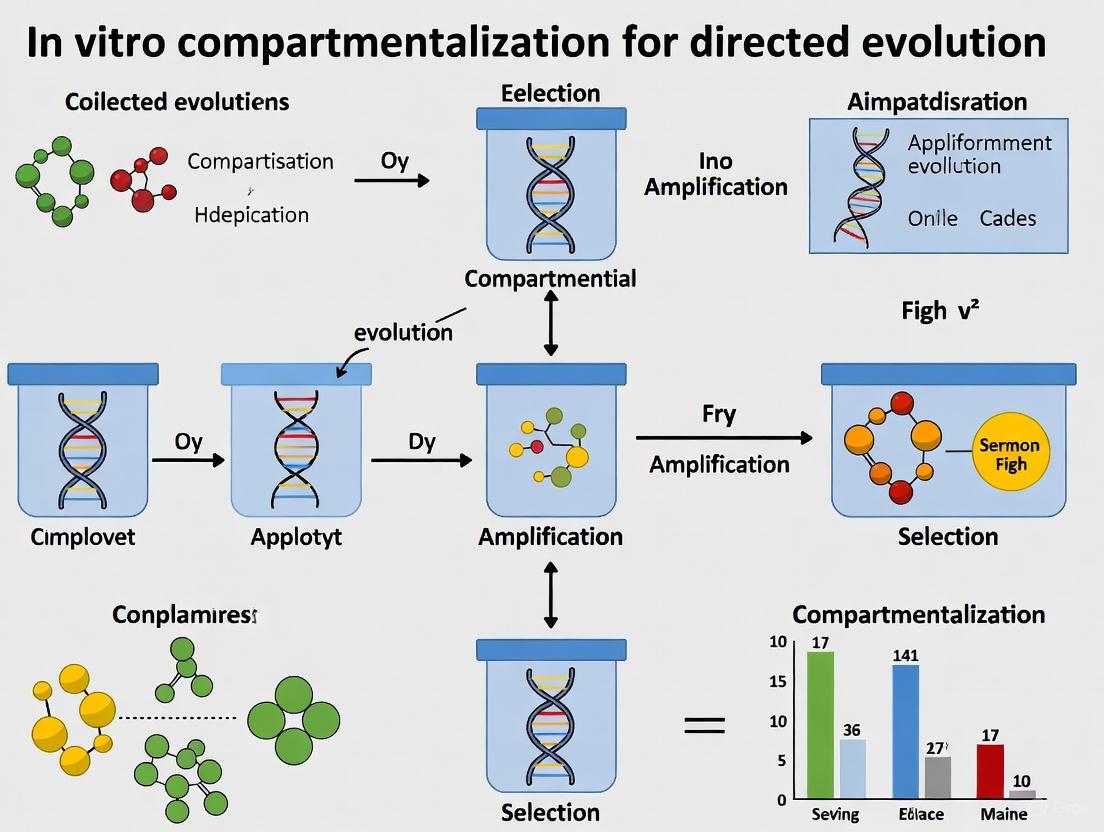
In vitro compartmentalization (IVC) is a transformative directed evolution technology that mimics natural selection by creating cell-like compartments in water-in-oil emulsions.
In Vitro Compartmentalization (IVC): A Powerful Directed Evolution Platform for Engineering Next-Generation Biocatalysts and Therapeutics
Abstract
In vitro compartmentalization (IVC) is a transformative directed evolution technology that mimics natural selection by creating cell-like compartments in water-in-oil emulsions. This method links genotype to phenotype by co-encapsulating genetic libraries with in vitro transcription-translation systems, enabling the screening of up to 10^12 protein variants for desired catalytic, binding, or regulatory functions. This article provides a comprehensive resource for researchers and drug development professionals, covering the foundational principles of IVC, advanced methodologies and applications across enzyme engineering and synthetic biology, critical troubleshooting and optimization strategies to enhance screening success, and rigorous validation through comparative analysis with other display technologies. We explore how IVC is accelerating the development of novel biocatalysts, therapeutic proteins, and research tools for biomedical and clinical applications.
The Foundations of In Vitro Compartmentalization: Principles and Advantages for Directed Evolution
In Darwinian evolution, selection acts on the phenotype (the observable characteristics), but for a selected trait to propagate, the underlying genotype (the genetic constitution) must be carried forward. In cellular life, the cell membrane acts as the fundamental compartment that provides this critical genotype-phenotype linkage [1].
In vitro compartmentalization (IVC) is a bioinspired methodology that mimics this cellular principle by creating artificial, cell-like compartments to link genes (genotype) with the proteins they encode (phenotype) outside of a living cell [1] [2]. This approach is a cornerstone of directed evolution experiments, enabling researchers to evolve functional proteins, such as therapeutic antibodies or industrial enzymes, with desired properties. By moving the process in vitro, IVC overcomes constraints of in vivo systems, including host cell toxicity, narrow dynamic range, and the inability to perform selections under non-physiological conditions [1].
Key Compartmentalization Strategies and Quantitative Comparison
Several experimental strategies have been developed to implement the core concept of genotype-phenotype linkage. The table below summarizes the key methodologies, their mechanisms, and representative applications.
Table 1: Comparison of In Vitro Compartmentalization Strategies
| Strategy Name | Compartment Type | Mechanism of Linkage | Key Application(s) | Typical Library Size |
|---|---|---|---|---|
| Emulsion-based IVC [2] | Water-in-oil (W/O) droplets | Physical confinement of a single gene and the proteins it encodes within a microscopic aqueous droplet. | Directed evolution of enzymes and binding proteins [1]. | Up to 1011 genes [2] |
| SNAP Display [1] | W/O droplets | Covalent tethering of the protein to its own mRNA via a SNAP-tag, within a droplet. | Selection of high-affinity protein binders [1]. | >106 [1] |
| Microbead Display [3] | Gel-shell beads / Microbeads | On-bead emulsion PCR creates beads displaying ~106 copies of a single gene; proteins are synthesized and retained on the bead. | Screening of protein libraries (e.g., GFP variants) via FACS [3]. | Not specified in search results |
Application Note: Selection of Green Fluorescent Proteins via Microbead-Display IVC
This application note details a specific protocol for screening a library of green fluorescent proteins (GFPs) using an advanced microbead-display IVC strategy. This method was developed to overcome key limitations of conventional IVC, namely low protein expression yields and difficulty in recovering DNA, by pre-amplifying genes on the surface of microbeads [3].
Experimental Workflow
The following diagram outlines the key stages of the microbead-display IVC protocol for selecting improved GFP variants.
Detailed Protocol
Objective: To isolate GFP variants with altered spectral characteristics from a library of genes with random mutations in the chromophore region [3].
Materials & Reagents:
- Template DNA: A library of GFPuv5 genes with random sequences at positions encoding amino acids 65-67 in the chromophore region [3].
- Microbeads: Streptavidin-coated beads for immobilization of biotinylated forward primers [3].
- Primers:
- PCR Reagents: PrimeSTAR HS DNA Polymerase [3].
- In Vitro Transcription-Translation (IVTT) System: A cell-free protein synthesis system [3].
Methodology:
On-Bead Emulsion PCR:
- Immobilize biotinylated forward primers onto streptavidin-coated microbeads.
- Prepare a PCR mixture containing the GFP gene library, immobilized primers, reverse primers, DNA polymerase, and dNTPs.
- Emulsify this aqueous PCR mixture in an oil-surfactant solution via vigorous stirring or vortexing to create water-in-oil (W/O) emulsions. This results in ~1010 aqueous droplets per mL, with most beads compartmentalized into separate droplets [2] [3].
- Perform thermal cycling to amplify the genes directly on the bead surface. Each bead typically ends up with ~106 copies of a single gene variant [3].
Bead Recovery and IVTT:
- Break the emulsion and recover the microbeads, which now display clonal populations of DNA.
- Use these DNA-displaying beads directly in an in vitro transcription-translation (IVTT) system to synthesize the GFP proteins. The high local gene concentration on the bead leads to increased protein synthesis compared to single-gene emulsion compartments [3].
Phenotype Screening and Genotype Recovery:
- Screen the library using Fluorescence-Activated Cell Sorting (FACS). Beads displaying GFP variants with the desired fluorescence properties (e.g., different excitation/emission spectra) are detected and sorted [3].
- Recover the sorted beads and extract the DNA from them.
- Amplify the selected genes by PCR for subsequent analysis (e.g., sequencing) or for further rounds of evolution.
The Scientist's Toolkit: Essential Research Reagent Solutions
The following table catalogs key reagents and materials essential for setting up and executing IVC experiments, particularly the microbead-display protocol.
Table 2: Essential Research Reagents for IVC Experiments
| Item | Function / Role in the Experiment | Specific Example / Note |
|---|---|---|
| Microbeads | Solid support for displaying multiple copies of a single gene, enabling high local concentration for efficient protein expression. | Streptavidin-coated beads for immobilizing biotinylated DNA primers [3]. |
| Cell-Free Protein Synthesis System | An in vitro transcription-translation (IVTT) system to express the protein from the DNA template without using living cells. | Commercially available systems (e.g., based on E. coli extracts) are typically used [1] [3]. |
| Emulsion Oil/ Surfactant | Forms the stable oil phase for water-in-oil emulsions, preventing coalescence of aqueous droplets and cross-contamination between genotypes. | Specific oil and surfactant combinations are required for generating stable monodisperse or polydisperse emulsions [1] [2]. |
| DNA Polymerase | Enzyme for amplifying gene libraries, both in bulk solution and within emulsion droplets (emulsion PCR). | Thermostable, high-fidelity enzymes such as PrimeSTAR HS DNA Polymerase [3]. |
| Fluorogenic/Luminescent Substrates | Report on the functional activity of enzymes or binding proteins expressed within the compartments. | Used in assays to detect catalytic activity or binding events inside droplets [1] [3]. |
In vitro compartmentalization (IVC) is an emulsion-based technology that generates cell-like compartments in vitro, designed to link a gene to the products it encodes [4]. These water-in-oil (w/o) emulsions create microscopic aqueous droplets where each compartment contains, in theory, no more than one gene. When the gene is transcribed and/or translated, its products (RNAs or proteins) are co-localized with the encoding gene, enabling the direct selection of phenotypes based on their function [4]. This critical linkage of genotype (DNA) to phenotype (RNA, protein, or catalytic function) allows for the powerful application of IVC in directed evolution experiments, facilitating the isolation of improved or novel biomolecules from vast libraries [5] [6] [4].
The fundamental advantage of IVC over other in vitro display technologies lies in its capacity to select for catalytic activities, including multiple-turnover reactions, under conditions that mimic cellular confinement [5] [4]. By controlling the reaction environment within the droplets, researchers can directly select for enzymes and ribozymes based on their ability to convert substrates to products, rather than just binding affinity [5] [6]. This methodology has been successfully applied to evolve a wide range of biomolecules, including phosphotriesterases, ribozymes, and bond-forming enzymes like sortase A [6] [4].
The standard IVC workflow involves a series of steps to partition a library of genetic variants, express them, screen for desired activity, and recover the hits for the next round of evolution. The following diagram summarizes this process.
Workflow Step 1: Library and Emulsion Preparation
The process begins with the creation of a diverse DNA library encoding the proteins or ribozymes to be evolved. This library is then mixed with an aqueous solution containing the components necessary for in vitro transcription and/or translation (IVTT) [4].
- Emulsion Formation: This aqueous mixture is added to an oil-surfactant blend and homogenized to form a stable water-in-oil emulsion. A typical emulsion uses a formulation such as light mineral oil with 4.5% Span 80, 0.4-0.5% Tween 80, and 0.05% Triton X-100 [4]. The homogenization speed controls droplet size; standard methods produce highly polydisperse droplets with a mean diameter of 2–3 μm and an average volume of ~5 femtoliters, yielding up to 10^10 droplets per milliliter of emulsion [4].
- Microfluidics as an Alternative: To overcome limitations of polydispersity and enable more precise operations, droplet-based microfluidics can be used. This technology generates highly monodisperse droplets (with a coefficient of variation ≤ 3%) at high frequencies (e.g., ~12,000 droplets per second) and allows for serial operations like picoinjection of reagents and fluorescence-activated droplet sorting [5].
- Library-to-Droplet Ratio: The DNA library is diluted such that the statistical average results in most droplets containing no more than one DNA molecule, ensuring genotype-phenotype linkage. For bead-display methods, beads can be overloaded with multiple DNA variants (up to 10^4 unique genes per bead) to screen libraries vastly larger than the number of compartments [6].
Workflow Step 2: In Vitro Transcription/Translation (IVTT)
Once compartmentalized, the genes within the droplets are expressed.
- IVTT Systems: Common extracts for IVTT include bacterial cell extracts, wheat germ extracts, and rabbit reticulocyte lysates (RRL). The emulsion formulation must be compatible with the chosen system; for instance, a specific formulation of 4% Abil EM 90 in light mineral oil was developed for use with RRL [4].
- Uncoupling Steps with Microfluidics: A key advancement with microfluidics is the ability to uncouple gene amplification, transcription, and the phenotypic assay into separate steps performed on different chips. For example, genes can first be compartmentalized and amplified via PCR in one set of droplets. These droplets can later be fused with a second set containing the IVTT system and substrates, providing greater flexibility and control over reaction conditions [5].
Workflow Step 3: Phenotypic Screening and Selection
This is the core step where functional variants are identified. The selection strategy is tailored to the desired phenotype.
- Selection for Catalysis: To select for enzymes, a substrate is included in the droplets. Active variants convert the substrate into a product, which is detected to identify the hosting compartment. For instance, a fluorogenic RNA substrate can be used to select for nuclease ribozymes [5], or a bead-displayed substrate can be ligated to the bead by an enzyme for bond-forming reactions [6].
- Selection for Binding: To select for aptamers, the target ligand can be labeled. Compartments containing binding RNAs or proteins are identified based on this label [7].
- Sorting Methods: For bulk emulsions, the emulsion is broken after incubation, and the genes from active variants are isolated using a method that captures the product (e.g., with an antibody or streptavidin-biotin interaction) [4]. With microfluidics, droplets can be analyzed and sorted in a fluorescence-activated manner at kilohertz rates based on the fluorescent signal of a product [5].
Workflow Step 4: Recovery and Amplification of Enriched Variants
After screening, the genetic material from the selected hits must be recovered.
- Breaking the Emulsion: The emulsion is broken using successive steps to remove the oil and surfactants, releasing the aqueous content containing the genes of interest [4].
- Genotype-Phenotype Coupling: In bulk emulsion screens, maintaining the genotype-phenotype link after breaking the emulsion is crucial. Methods include:
- STABLE Display: DNA is biotinylated and encodes a fusion protein containing streptavidin, which binds back to its own coding sequence [4].
- Covalent Linkage: Using fusion proteins like HaeIII DNA methyltransferase or VirD2, which covalently bind to specific DNA sequences [4].
- Bead Linkage: Beads displaying both the DNA and its encoded protein are used to maintain the link [6] [7].
- Amplification: The recovered DNA is amplified via PCR and may be subjected to further rounds of mutagenesis and selection to continue the evolutionary process [4].
Quantitative Data from IVC Evolution Campaigns
IVC has proven effective in significantly improving the functional properties of biomolecules. The table below summarizes key quantitative outcomes from documented evolution campaigns.
Table 1: Representative Performance Improvements Achieved via IVC
| Evolved Molecule | Selection Goal | Key Improved Parameter | Fold Improvement | Citation |
|---|---|---|---|---|
| X-motif Ribozyme | Multiple-turnover catalysis in trans | Turnover number (kcatss) | ~28-fold | [5] |
| Sortase A (SrtA) | Enhanced activity in cellular lysates | Catalytic efficiency (kcat/Km), Ca2+-independent | 114-fold | [6] |
| Phosphotriesterase | Not specified in results | Catalytic rate (kcat) | >100-fold * | [4] |
Note: * The >100-fold improvement for Phosphotriesterase is cited as an example of IVC's potential in [4].
Detailed Experimental Protocol: Evolving a Ribozyme using Microfluidic IVC
This protocol is adapted from a study that evolved the X-motif ribozyme for enhanced multiple-turnover activity [5].
Materials and Reagents
- DNA Library: A library of the X-motif ribozyme gene generated by error-prone PCR (aiming for ~1.6 mutations/gene).
- Microfluidic System: A setup comprising a droplet generator, a thermocycler for off-chip PCR, a picoinjector, and a fluorescence-activated droplet sorter.
- Oil Phase: Fluorinated oil supplemented with 3% (w/w) fluorosurfactant.
- Aqueous Phases:
- Aqueous Phase 1 (for encapsulation): PCR reagents, EvaGreen DNA intercalating dye, and the DNA library.
- Aqueous Phase 2 (for picoinjection): Contains the fluorogenic RNA substrate (e.g., labeled with Atto 488 fluorophore and BHQ1 quencher).
Procedure
- Droplet Generation and Gene Amplification:
- Compartmentalize the DNA library and PCR reagents into highly monodisperse droplets (~2.5 pL) using the droplet generator.
- Collect the emulsion off-chip and perform thermocycling to amplify the individual genes.
- Picoinjection of Transcription/Translation Mix and Substrate:
- Reinject the emulsion containing the amplified genes into the microfluidic system.
- Use the picoinjector module to merge the original droplets with a second stream of droplets containing the IVTT system and the fluorogenic RNA substrate. This critical step uncouples gene amplification from the activity assay.
- Incubation: Collect the emulsion and incubate off-chip to allow for gene transcription and ribozyme catalysis. Active ribozymes will cleave the substrate, separating the fluorophore from the quencher and generating a fluorescent signal within the droplet.
- Fluorescence-Activated Droplet Sorting:
- Reinject the incubated emulsion into the droplet sorter.
- Based on the fluorescence intensity, sort the droplets, selectively collecting those containing highly active ribozyme variants.
- Recovery and Analysis:
- Break the collected emulsion to recover the DNA.
- Amplify the DNA by PCR and sequence to identify the beneficial mutations.
- Clone the enriched genes into an appropriate plasmid for downstream validation and characterization.
The Scientist's Toolkit: Key Reagents for IVC
Table 2: Essential Reagent Solutions for IVC Experiments
| Reagent / Material | Function / Description | Example Formulation / Type |
|---|---|---|
| Surfactant Blend | Stabilizes the water-in-oil emulsion to prevent droplet coalescence. | 4.5% Span 80, 0.4% Tween 80, 0.05% Triton X-100 in light mineral oil [4]. |
| IVTT System | Provides the machinery for transcription and/or translation within droplets. | Bacterial extract, Wheat Germ extract, or Rabbit Reticulocyte Lysate [4]. |
| Fluorogenic Substrate | A molecule that yields a fluorescent signal upon enzymatic modification, enabling activity-based screening. | RNA oligonucleotide dual-labeled with a fluorophore (Atto 488) and a quencher (BHQ1) for nuclease ribozymes [5]. |
| Biotin-Streptavidin System | Used in bead-display and STABLE display to link the genotype (DNA) to the phenotype (protein). | Biotinylated DNA and streptavidin-fused proteins or streptavidin-coated beads [6] [4]. |
| Microfluidic Chips | Generate, manipulate, and sort monodisperse droplets for high-throughput, quantitative IVC. | Modules for droplet generation, picoinjection, incubation, and fluorescence-activated sorting [5]. |
The IVC workflow, from creating the emulsion to recovering enriched variants, provides a robust and versatile framework for directed evolution. By compartmentalizing genetic libraries, it enables the screening of vast numbers of variants for functional activities, especially catalysis, which is difficult with other display technologies. The integration of droplet-based microfluidics has further enhanced IVC by offering superior control, monodisperse compartments, and the ability to perform complex, multi-step workflows. As a result, IVC remains a powerful tool in the molecular biologist's arsenal for engineering novel enzymes, ribozymes, and aptamers for research and therapeutic applications.
Application Notes
In vitro compartmentalization (IVC) has emerged as a powerful experimental strategy in directed evolution, fundamentally enhancing the capability to engineer novel biocatalysts. Its core advantages lie in its capacity for ultra-high-throughput screening (uHTS) and its ability to bypass inherent cellular limitations, thereby accelerating the Design-Build-Test-Learn (DBTL) cycle for enzyme development [8] [9].
Achieving Ultra-High-Throughput Screening
IVC facilitates uHTS by partitioning vast genetic libraries into microscopic, physically separated reaction vessels. A standard water-in-oil (w/o) emulsion can create up to 10^10 aqueous droplets per milliliter, with the majority containing a single gene and all necessary machinery for its expression [8]. This setup genotypically links the phenotype, allowing for the screening of libraries encompassing 10^8 to 10^11 genes [8]. The integration of IVC with high-throughput detection devices, such as fluorescence-activated cell sorters (FACS) and microfluidic systems, enables the rapid processing of these immense libraries [9]. This approach necessitates the conversion of the desired phenotype, such as enzyme activity, into a detectable signal, most commonly fluorescence, for efficient sorting and identification of high-performing variants [9].
Bypassing Cellular Limitations for Enhanced Prototyping
Cell-free systems (CFS) leveraging IVC offer a "plug-and-play-like" environment for in vitro transcription and translation, which circumvents several critical bottlenecks associated with using living cells [9]. Key advantages include:
- Minimizing Unwanted Metabolic Interference: CFS eliminates complex genetic networks and signaling metabolites that can obscure the activity of the engineered enzyme in living hosts [9].
- Direct Reaction Monitoring and Control: Researchers gain precise control over reaction conditions and can directly supplement cofactors, substrates, and ions, enabling real-time modulation and monitoring of the reaction of interest [9].
- Handling Toxic or Challenging Pathways: IVC with CFS is particularly effective for prototyping metabolic pathways that produce toxic intermediates or hydrophobic biomolecules, which would compromise cellular integrity or viability in vivo [9].
- Accessing Difficult-to-Express Proteins: This platform is highly effective for the synthesis and screening of membrane proteins and other complex enzymes that are often difficult to express functionally in living cells [9].
Experimental Protocols
Protocol 1: Establishment of a High-Throughput Screening Protocol for Isomerase Activity
This protocol details the establishment of an HTS method for L-rhamnose isomerase (L-RI) activity using a colorimetric assay based on Seliwanoff's reaction, adapted from a 2025 study [10].
Workflow and Quantitative Data
The experimental workflow progresses from single-tube optimization to a validated 96-well plate HTS format. Key optimization steps included refining protein expression, cell lysis, and reaction conditions to minimize interference [10].
Table 1: Key Validation Metrics for the Established HTS Protocol [10]
| Metric | Result | Acceptance Criteria | Interpretation |
|---|---|---|---|
| Z'-factor | 0.449 | > 0.4 | Assay is statistically robust and reliable for HTS. |
| Signal Window (SW) | 5.288 | N/A | Indicates a strong, distinguishable signal between positive and negative controls. |
| Assay Variability Ratio (AVR) | 0.551 | N/A | Confirms acceptable variability for a high-quality assay. |
Research Reagent Solutions
Table 2: Essential Reagents for Isomerase HTS Protocol [10]
| Reagent / Material | Function in the Protocol |
|---|---|
| L-Rhamnose Isomerase (L-RI) Gene Library | The source of genetic diversity for directed evolution. |
| E. coli BL21(DE3) Competent Cells | Host for protein expression. |
| Bugbuster Master Mix | Agent for cell lysis and release of soluble enzyme. |
| Substrate Master Mix (D-allulose, Tris-HCl, MnCl₂) | Provides the target substrate and optimal buffer conditions for the enzymatic reaction. |
| Seliwanoff's Reagent (Resorcinol in 6N HCl) | Colorimetric developer; reacts with ketose (D-allulose) to generate a cherry-red chromophore for quantification. |
Methodology:
- Protein Expression and Lysis: In a 96-well plate, cultures are grown and protein expression is induced. Cells are harvested by centrifugation and lysed using Bugbuster Master Mix. The plate is centrifuged again to obtain a clear supernatant containing the enzyme solution [10].
- Enzyme Reaction: 40 µL of lysate supernatant is transferred to a 96-well PCR plate. The reaction is initiated by adding 160 µL of substrate master mix. The plate is incubated in a thermal cycler at 75°C for 4 hours, followed by heat denaturation at 95°C for 5 minutes [10].
- Seliwanoff's Reaction and Detection: After cooling, the denatured enzyme is removed by centrifugation. A portion of the supernatant (240 µL) is mixed with Seliwanoff's reagent (480 µL) in a new plate. The mixture is incubated at 60°C for 30 minutes to develop color, which is stabilized by cooling at room temperature before measurement [10].
Protocol 2: Directed Evolution by In Vitro Compartmentalization
This protocol outlines the general process for performing a directed evolution experiment using IVC, as established in foundational literature [8].
Methodology:
- Generation of w/o Emulsion: An aqueous solution containing the gene library and an in vitro transcription-translation system is emulsified into an oil-surfactant mixture. This creates a w/o emulsion with billions of microscopic aqueous compartments, each ideally containing no more than a single gene [8].
- Incubation and Expression: The emulsion is incubated under conditions that allow for gene expression and enzyme activity within the individual compartments. The products of catalytic activity remain confined to their droplet of origin, maintaining the genotype-phenotype link [8].
- Selection and Recovery: The emulsion can be used directly for selections based on the confined reaction products. For sorting with FACS, the w/o emulsion is often converted into a more stable water-in-oil-in-water (w/o/w) emulsion. Selected droplets are then broken, and the encapsulated genes are recovered using PCR for analysis or further rounds of evolution [8].
Visualizations
IVC-uHTS Workflow
Bypassing Cellular Limitations
In vitro compartmentalization (IVC) is a foundational methodology in directed evolution that creates an artificial genotype-phenotype linkage by confining individual genes and an in vitro transcription-translation system within microscopic, cell-like aqueous compartments, typically water-in-oil (W/O) emulsions [3] [11]. This approach provides a flexible platform for the selection and directed evolution of peptides, proteins, and RNAs with desired catalytic, binding, and regulatory activities, bypassing the limitations of in vivo systems such as cellular transformation efficiency [3] [12]. The concept was initially introduced in a landmark study by Tawfik and Griffiths, which established the core principle of using emulsions for compartmentalization [3]. For decades, directed evolution has served as a powerful tool for protein engineering, mimicking natural evolution on a shorter timescale to generate biomolecules tailored for specific industrial, therapeutic, and research applications [12].
The historical development of IVC has been characterized by successive innovations aimed at overcoming its primary technical challenges: low protein expression levels from single-copy genes and the subsequent difficulty in recovering encapsulated DNA [3]. Early implementations relied on polydisperse emulsions generated by mechanical agitation (e.g., stirring, vortexing), which made quantitative comparison of molecular activities difficult [3]. The field has since progressed through two major strategic shifts: the adoption of microfluidics for creating monodisperse droplets that enable precise quantification, and the development of pre-amplification strategies for genes within compartments to boost protein yield and simplify DNA recovery [3]. These advancements have propelled IVC from a novel concept to a widespread, robust methodology adopted for engineering a diverse range of biomolecules.
Table 1: Evolution of Key IVC Technologies and Their Impact
| Technological Phase | Key Innovation | Advantages | Limitations |
|---|---|---|---|
| Initial Concept | W/O emulsions via mechanical agitation [3] | Simple genotype-phenotype linkage; flexible assay design [11] | Polydisperse droplets; low protein yield; difficult DNA recovery [3] |
| Microfluidics Era | Monodisperse droplets via microchannels [3] | Quantitative activity comparison; high-throughput formation and sorting [3] [11] | Technical complexity and cost; not easily adapted to most biology labs [3] |
| Gene Preamplification | Isothermal gene amplification in droplets [3] | High protein yield; easy detection and DNA recovery | Technically challenging droplet fusion [3] |
| Microbead-display libraries (On-bead emulsion PCR) [3] | Increased protein synthesis; facile DNA recovery; compatible with flow cytometry | Potential steric hindrance; optimization of molecule immobilization required [3] |
Detailed Experimental Protocols
Protocol: IVC using Microbead-Display Libraries
This protocol describes an improved IVC method that uses microbeads to display multiple copies of a single gene, thereby increasing the yield of synthesized protein and facilitating the recovery of DNA encoding selected variants [3].
I. Preparation of Template DNA
- Amplify Gene of Interest: Perform PCR using a high-fidelity DNA polymerase (e.g., PrimeSTAR HS DNA Polymerase) to amplify the target gene fragment.
- Include Essential Sequences: Ensure the PCR product contains a T7 promoter, a ribosome-binding site, the gene coding sequence, and a T7 terminator [3].
- Purify Product: Clean the PCR product to remove enzymes, primers, and nucleotides.
II. On-Bead Emulsion PCR
- Prepare Beads: Use streptavidin-coated microbeads with forward primers attached to their surface [3].
- Create Emulsion: Vigorously mix the aqueous PCR reaction mixture (containing beads, template DNA, primers, dNTPs, and polymerase) with an oil-surfactant solution (e.g., 5% (w/w) ABIL EM 90 in mineral oil) to form a water-in-oil emulsion. The emulsion should be stirred continuously to prevent coalescence.
- Amplify: Run the PCR according to standard thermal cycling conditions to amplify the gene on the bead surface, resulting in each bead displaying thousands of copies of a single gene.
- Break Emulsion: Recover the microbeads by breaking the emulsion, typically by adding a solvent like perfluoro(1,3-dimethylcyclohexane) and centrifugation [3].
- Wash Beads: Wash the beads thoroughly to remove oil, surfactants, and excess reagents.
III. In Vitro Transcription-Translation (IVTT) in Microcompartments
- Form Compartments: Mix the DNA-displaying microbeads with an IVTT system (e.g., an E. coli cell-free protein synthesis system) and any necessary substrates or cofactors.
- Re-emulsify: Form a fresh W/O emulsion by vortexing the mixture with a fresh oil-surfactant solution.
- Incubate for Synthesis: Incubate the emulsion at a suitable temperature (e.g., 30°C for 2-3 hours) to allow for protein synthesis within the microcompartments.
IV. Screening and Sorting
- Screen for Activity: Analyze the microcompartments based on the desired activity. For fluorescent proteins, this can be done by monitoring fluorescence within the droplets [3]. For enzymes, a fluorogenic or chromogenic substrate can be included in the IVTT mix.
- Sort Compartments: Use a fluorescence-activated cell sorter (FACS) to sort microcompartments or microbeads based on the signal intensity corresponding to the desired property [3] [11].
V. DNA Recovery
- Break Emulsions: After sorting, break the emulsions of the selected fractions.
- Recover and Amplify DNA: Recover the microbeads and use the displayed DNA as a template for PCR amplification to recover the genes of interest for subsequent analysis or further rounds of evolution.
Protocol: Directed Evolution Workflow using IVC
This general protocol outlines a complete cycle for the directed evolution of a protein using IVC.
I. Library Generation
- Create Diversity: Generate a library of gene variants. This can be achieved through error-prone PCR for random mutagenesis or site-saturation mutagenesis for focused exploration of specific positions [12].
- Clone Library: Clone the library into an appropriate vector that facilitates in vitro transcription and translation.
II. Selection Cycle
- Compartmentalize: Dilute the gene library so that, on average, fewer than one gene is present per microcompartment when emulsified with the IVTT system.
- Express and Assay: Incubate the emulsion to allow protein expression. The activity is assayed based on the conversion of a substrate to a detectable product within the compartment.
- Sort: Sort the compartments based on the assay signal (e.g., fluorescence, absorbance) using FACS or other microdroplet sorting technologies [3] [11].
- Recover and Amplify: Break the sorted compartments, recover the encoding DNA, and amplify it by PCR for the next round of selection or for sequence analysis.
Table 2: Key Research Reagent Solutions for IVC
| Reagent / Material | Function / Explanation | Example Use Case |
|---|---|---|
| Streptavidin-coated Microbeads | Solid support for on-bead emulsion PCR; provides genotype-phenotype linkage by displaying multiple gene copies and their protein products [3]. | Basis for microbead-display IVC; enables efficient DNA recovery and increased protein yield. |
| Oil-Surfactant Mixture | Forms the continuous oil phase of the emulsion, preventing coalescence of aqueous compartments and ensuring genotype-phenotype linkage [3] [11]. | 5% (w/w) ABIL EM 90 in mineral oil is a common formulation for creating stable W/O emulsions. |
| Cell-Free Transcription-Translation System | Provides the necessary biochemical machinery (RNA polymerase, ribosomes, tRNAs, amino acids, energy sources) for protein synthesis from DNA templates inside compartments [3]. | E. coli-based IVTT systems are widely used for in vitro protein expression in IVC. |
| Fluorogenic/Chromogenic Substrate | Enzyme substrate that yields a fluorescent or colored product upon reaction; enables detection and sorting of active enzyme variants within compartments [3] [11]. | Essential for screening libraries for enzymatic activity; the product is trapped within the compartment of origin. |
Workflow and Signaling Pathway Visualizations
IVC Directed Evolution Workflow
Pain Signaling in a Nociceptor
Advanced IVC Methodologies and Applications in Enzyme and Protein Engineering
Within the framework of a broader thesis on in vitro compartmentalization (IVC) for directed evolution research, this document details the application notes and protocols for three key platform variations. Directed evolution mimics natural selection to engineer biomolecules with desired properties, a process contingent on a strong genotype-phenotype linkage [13] [12]. IVC establishes this link by compartmentalizing individual genes and the proteins they encode within microscopic, cell-like compartments [13]. This isolation allows for the high-throughput screening of vast genetic libraries based on protein function. The choice of compartment—microbead display, double emulsions, or liposome-based systems—profoundly impacts the efficiency, scope, and application of the directed evolution campaign. These platforms are instrumental for researchers and drug development professionals aiming to evolve novel biocatalysts, therapeutic proteins, and biosensors.
Platform Comparison and Selection Guide
The three platforms differ in their physical structure, mechanism of genotype-phenotype linkage, and their associated advantages and limitations. The table below provides a comparative summary to guide platform selection.
Table 1: Key Platform Variations in In Vitro Compartmentalization for Directed Evolution
| Feature | Microbead Display | Double Emulsions | Liposome-based IVC |
|---|---|---|---|
| Compartment Type | Solid microbeads displaying multiple gene copies [3] | Aqueous droplets in oil shell within an outer aqueous phase (W/O/W) [13] [14] | Phospholipid bilayer vesicles [13] [15] |
| Genotype-Phenotype Linkage | Gene is immobilized on bead; product may be captured on the same bead [3] | Colocalization of gene, IVTT system, and substrates within a single aqueous droplet [13] | Colocalization within a synthetic, biomimetic compartment [13] |
| Typical Size Range | Micrometer-scale beads | ~27 µm to >1 mm [14] | Small Unilamellar Vesicles (SUVs: <100 nm) to Giant Unilamellar Vesicles (GUVs: >1 µm) [15] [16] |
| Key Advantages | High local gene concentration boosts protein expression and simplifies DNA recovery [3] | Compatible with FACS sorting; mature microfluidic production for high monodispersity [13] [14] | Biomimetic environment suitable for membrane proteins; unilamellar structure ensures stringent linkage [13] |
| Primary Limitations | Potential difficulty in capturing diffusible products for enzymatic assays [3] | Risk of multiple compartments per droplet, breaking genotype-phenotype linkage [13] | Can be more complex to prepare and load with genetic material compared to emulsions [13] |
| Ideal for Evolving | Enzymes and binding proteins where products can be tethered [3] | Soluble enzymes, especially with high-throughput screening via FACS [13] | Membrane proteins, transporters, and pathways requiring a natural bilayer environment [13] |
Experimental Protocols
Microbead Display IVC
This protocol uses on-bead emulsion PCR to amplify a single gene copy on a bead surface, creating a high local concentration of DNA template to enhance in vitro protein synthesis and streamline DNA recovery [3].
Table 2: Key Research Reagents for Microbead Display
| Research Reagent | Function/Explanation |
|---|---|
| Streptavidin-coated Microbeads | Solid support for immobilizing biotinylated DNA primers, forming the foundation for the genotype-phenotype link. |
| Biotinylated Forward Primer | PCR primer that tethers the amplifying gene to the bead's surface via streptavidin-biotin interaction. |
| Emulsion PCR Reagents | Water-in-oil emulsion mixture, PCR components (polymerase, dNTPs, buffer) to amplify single genes on beads in compartmentalized reactions. |
| In Vitro Transcription-Translation (IVTT) System | Cell-free protein synthesis machinery (e.g., based on E. coli lysate or PURE system) to produce proteins from the bead-bound genes. |
| Fluorescence-Activated Cell Sorter (FACS) | High-throughput instrument to analyze and sort microbeads based on the fluorescent signal resulting from desired enzymatic activity. |
Workflow Diagram: Microbead Display
Step-by-Step Protocol:
- Bead Preparation: Incubate streptavidin-coated microbeads with biotinylated forward primers. Wash thoroughly to remove unbound primers.
- On-Bead Emulsion PCR:
- Create a water-in-oil (W/O) emulsion by vigorously vortexing the PCR reaction mix (containing beads, library DNA, primers, polymerase, dNTPs, and buffer) in oil.
- Thermocycle the emulsion to amplify the genes. Each bead capturing a single DNA molecule will produce multiple copies of that gene on its surface [3].
- Bead Recovery: Break the emulsion by centrifugation and/or addition of a destabilizing solvent. Wash the beads to remove oil, reagents, and untethered DNA.
- In Vitro Protein Synthesis: Resuspend the DNA-displaying beads in an appropriate IVTT system to express the encoded proteins. The high local gene concentration enhances protein yield [3].
- Activity Screening & Sorting:
- For enzymatic activity, include a fluorogenic substrate in the IVTT reaction or in a subsequent incubation. Active enzymes will generate a fluorescent product.
- Use FACS to sort beads based on fluorescence intensity, collecting hits for further analysis [3].
- DNA Recovery: Isolate the beads that were sorted for high fluorescence. The DNA can be amplified via PCR directly from the beads for sequencing or subsequent rounds of evolution.
Double Emulsion IVC
This protocol uses microfluidics to generate monodisperse water-in-oil-in-water (W/O/W) double emulsions, which act as compartments for in vitro expression and are directly compatible with FACS analysis [13] [14].
Workflow Diagram: Double Emulsion IVC
Step-by-Step Protocol:
- Phase Preparation:
- Inner Aqueous Phase: Contains the genetic library, IVTT system, and any necessary substrates (e.g., fluorogenic substrates).
- Middle Phase: Lipid-containing oil solution (e.g., a mineral oil and phospholipid mixture).
- Outer Aqueous Phase: A stabilizing solution, often containing surfactants like PVA [14].
- Double Emulsion Generation:
- Use a microfluidic device, such as a PDMS-glass capillary hybrid chip, to generate monodisperse double emulsions [14].
- The device uses flow focusing to first form water-in-oil (W/O) droplets, which are then encapsulated within larger oil-in-water (O/W) droplets to form the final W/O/W structure. The intrinsic hydrophobicity of PDMS and hydrophilicity of glass facilitate this process without complex surface treatments [14].
- Incubation: Collect the double emulsions and incubate at an appropriate temperature (e.g., 30-37°C) to allow for in vitro transcription and translation. The enzyme, if active, will turn over the substrate to produce a fluorescent signal within the compartment.
- Fluorescence Sorting: Analyze and sort the intact double emulsion droplets directly using a FACS instrument configured for large particles [13].
- DNA Recovery: Break the sorted double emulsion droplets (e.g., using organic solvents or detergents) to release the encapsulated DNA. Purify and amplify the DNA for analysis or further rounds of evolution.
Liposome-based IVC
This protocol describes the formation of cell-sized unilamellar liposomes that serve as biomimetic compartments for directed evolution, particularly advantageous for membrane protein engineering [13].
Workflow Diagram: Liposome-based IVC
Step-by-Step Protocol:
- Lipid Film Formation: Dissolve phospholipids (e.g., DMPC, EggPC) in an organic solvent like chloroform. Evaporate the solvent under a stream of inert gas to form a thin lipid film on the surface of a glass vial or on glass beads [17].
- Liposome Formation by Hydration:
- Glass Beads Method: Hydrate the lipid-film-coated glass beads with an aqueous solution containing the gene of interest (at single-copy concentration) and the PURE (Protein Synthesis Using Recombinant Elements) system [13] [17]. Vigorously agitate the mixture above the phase transition temperature of the lipids. This method can produce liposomes with high encapsulation efficiency [17].
- Microfluidic Method: As an alternative, use microfluidic hydrodynamic flow focusing to form monodisperse liposomes by mixing a lipid-alcohol stream with an aqueous buffer stream [16].
- Protein Expression: Incubate the liposome suspension to allow for in vitro protein synthesis from the encapsulated genes. The PURE system is often preferred for its defined composition and efficiency [13].
- Screening and Sorting: If the synthesized protein is an enzyme, its activity on an encapsulated fluorogenic substrate will generate a fluorescent signal. Analyze and sort the fluorescent liposomes using FACS [13].
- Gene Recovery: After sorting, lyse the liposomes (e.g., with detergent) to release the encapsulated DNA. Amplify the recovered DNA by PCR for sequence analysis and subsequent evolutionary rounds.
Technical Notes and Troubleshooting
- Maximizing Encapsulation Efficiency: For liposome and double emulsion platforms, Encapsulation Efficiency (EE) is critical. The glass beads method for liposomes and monodisperse double emulsion generation via microfluidics have been shown to achieve high EE [17] [14]. EE can be quantified using fluorometry or NMR without the need for a separation step [16].
- Ensuring Monodispersity: Microfluidic methods for double emulsion and liposome formation provide superior control over size distribution (low polydispersity index) compared to bulk methods, leading to more uniform reaction compartments and more reproducible screening data [16] [14].
- Optimizing Selection Stringency: In double emulsion systems, ensure the inner aqueous compartment contains, on average, less than one gene copy per droplet to maintain a strict genotype-phenotype linkage. For liposome-based IVC, the unilamellar structure naturally prevents the formation of multiple sub-compartments, ensuring stringent linkage [13].
- Platform-Specific Limitations: Bead display may require optimization to efficiently capture reaction products. Double emulsions are generally not suitable for evolving membrane proteins that require a lipid bilayer. Liposome-based systems can be more technically challenging to set up and operate at very high throughput [13] [3].
The directed evolution of bond-forming enzymes is a cornerstone of modern protein engineering, enabling the development of tailored biocatalysts for applications ranging from therapeutic drug development to synthetic biology. This process mimics natural evolution in a laboratory setting, involving the generation of diverse protein libraries followed by high-throughput screening or selection for desired catalytic activities [6]. Among the various technological platforms developed, in vitro compartmentalization (IVC) has emerged as a particularly powerful strategy. IVC creates artificial cell-like environments that maintain a critical linkage between a protein variant (phenotype) and its encoding genetic information (genotype), facilitating the screening of vast molecular libraries far exceeding the capacities of cellular systems [11].
This Application Note details the application of IVC and related display technologies for the directed evolution of bond-forming enzymes, using Staphylococcus aureus Sortase A as a primary case study. Sortase A is a transpeptidase that recognizes an LPXTG motif, cleaves between the Thr and Gly residues, and ligates the carboxyl group of Thr to the amino group of an oligoglycine nucleophile [18]. While it is a valuable tool for protein engineering and labeling, its native form suffers from poor kinetic properties (kcat/Km ~200 M⁻¹s⁻¹ for LPETG) and can be inhibited by cellular components [19] [6]. These limitations make it an ideal candidate for improvement via directed evolution. We provide validated protocols and comparative data to guide researchers in applying these methods to evolve sortase or other bond-forming enzymes with enhanced activity and stability.
Key Methodologies for Evolving Bond-Forming Enzymes
Two primary methodologies have been successfully employed for the directed evolution of Sortase A: Yeast Surface Display and In Vitro Compartmentalization-based Bead Display. The table below summarizes their core characteristics.
Table 1: Comparison of Directed Evolution Platforms for Bond-Forming Enzymes
| Feature | Yeast Surface Display | In Vitro Compartmentalization (IVC) Bead Display |
|---|---|---|
| Principle | Enzyme displayed on yeast cell surface via agglutinin fusion [19]. | Enzyme expressed in water-in-oil emulsion droplets containing a single gene and a bead [6] [11]. |
| Genotype-Phenotype Linkage | Physical connection via cell wall. | Compartmentalization within a microemulsion. |
| Typical Library Size | ~10⁷ – 10⁸ variants [19] [6]. | Up to 10¹² variants (by overloading beads) [6]. |
| Screening Method | Fluorescence-Activated Cell Sorting (FACS) [19]. | Fluorescence-Activated Cell Sorting (FACS) of beads [6]. |
| Key Advantage | Eukaryotic expression environment; multi-color FACS normalization. | Ultra-high library diversity; flexible reaction conditions. |
| Reported Outcome for Sortase A | 140-fold increase in LPETG-coupling activity [19] [20]. | 114-fold increase in kcat/Km; activity in mammalian cytoplasm [6]. |
Yeast Surface Display Protocol
This protocol integrates yeast display, enzyme-mediated bioconjugation, and FACS to isolate highly active sortase variants [19].
Reagent and Strain Preparation
- S. cerevisiae BJ5465 strain engineered to constitutively express Aga1p-S6 fusion protein.
- Yeast display vector encoding Sortase A library fused to Aga2p, with an N-terminal HA tag and a C-terminal TEV protease cleavage site.
- Substrate A-CoA conjugate: Coenzyme A functionalized with Substrate A (e.g., an LPETG-containing peptide) via a maleimide-thiol reaction.
- Sfp phosphopantetheinyl transferase from B. subtilis.
- Substrate B (e.g., an (Gly)₅ peptide) conjugated to an affinity handle like biotin.
- Staining reagents: Anti-HA antibody (for display level), Streptavidin-Phycoerythrin (Streptavidin-PE, for activity), and corresponding secondary antibodies if needed.
Experimental Workflow
- Library Transformation & Display: Transform the sortase A library into the engineered yeast strain. Induce expression so that variants are displayed on the yeast surface as Aga2p fusions.
- Substrate A Conjugation: Incubate the yeast library with Sfp transferase and the Substrate A-CoA conjugate. Sfp catalyzes the covalent attachment of Substrate A to the S6 peptide on the cell surface [19].
- Reaction with Substrate B: Add Substrate B-biotin to the conjugated yeast cells. Active sortase variants will catalyze the transpeptidation reaction, linking the biotinylated Substrate B to Substrate A on their own cell surface.
- TEV Protease Cleavage: Treat the cells with TEV protease. This step removes the sortase enzyme from the cell surface, eliminating false positives from enzymes that merely bind Substrate B without catalyzing the bond formation [19].
- FACS Staining and Sorting:
- Stain cells with anti-HA antibody and a fluorescent secondary antibody to quantify enzyme display level.
- Stain with Streptavidin-PE to detect biotinylation resulting from successful transpeptidation.
- Use FACS to isolate the double-positive population that shows high Streptavidin-PE signal (high activity) relative to the HA signal (high display). After sorting, recover cells for regrowth and subsequent rounds of evolution.
The following diagram illustrates the key steps of the yeast surface display workflow:
In Vitro Compartmentalization (IVC) Bead Display Protocol
This protocol uses microbeads and water-in-oil emulsions to screen for bond-forming activity, enabling the processing of exceptionally large libraries [6].
Reagent Preparation
- DNA Library: Sortase A mutant library, generated via error-prone PCR of the PAM-interacting and wedge domains for PAM-relaxation [21] or other target regions.
- Microbeads covalently coated with:
- The acceptor substrate (e.g., an LPETG-containing peptide).
- The DNA encoding the sortase variant.
- In Vitro Transcription/Translation (TnT) System: A cell-free protein expression system.
- Donor Substrate: e.g., a GGG-containing peptide conjugated to a small molecule like desthiobiotin.
- Staining Reagent: Fluorescently labeled streptavidin.
Experimental Workflow
- Form DNA-Bead Complexes: Immobilize the sortase A library DNA onto the microbeads, ensuring each bead is coated with multiple copies of a single DNA sequence along with the acceptor substrate peptide.
- Emulsification: Mix the loaded beads with the components of the TnT system and the donor substrate. Vigorously vortex this mixture with oil and surfactant to create a water-in-oil emulsion. Each droplet in the emulsion acts as a microreactor containing a single bead, which in turn carries one gene and the corresponding acceptor substrate [6] [11].
- In-Droplet Reaction:
- Within each droplet, the sortase gene is transcribed and translated.
- The expressed sortase variant catalyzes the ligation between the acceptor substrate on the bead and the donor substrate in the droplet.
- This reaction tags the bead with the product (e.g., desthiobiotin). The compartmentalization ensures that the product remains linked to the gene that encoded the enzyme responsible for its formation.
- Break Emulsion and Stain: Break the emulsion and recover the beads. Incubate the beads with fluorescently labeled streptavidin to stain beads that display active sortase variants (successful ligation product).
- FACS Sorting: Use FACS to isolate the highly fluorescent beads. The associated DNA is then recovered via PCR and used for subsequent rounds of evolution or analysis [6].
The compartmentalized workflow of IVC bead display is summarized below:
Results and Analysis from Sortase A Evolution
The application of these directed evolution strategies has yielded sortase A variants with significantly enhanced catalytic performance. The following table quantifies the improvements in key kinetic parameters for representative evolved variants.
Table 2: Kinetic Parameters of Wild-Type vs. Evolved Sortase A Variants
| Enzyme Variant | kcat (s⁻¹) | Km LPETG (mM) | kcat/Km (M⁻¹s⁻¹) | Fold Improvement | Source/Method |
|---|---|---|---|---|---|
| Wild-Type SrtA | 1.5 ± 0.2 | 7.6 ± 0.5 | 200 ± 30 | (Baseline) | [19] |
| P94S/D160N/D165A/K196T | 4.8 ± 0.8 | 0.17 ± 0.03 | 28,000 ± 7,000 | 140-fold | Yeast Display [19] |
| Evolved SrtA (IVC) | Not Specified | Not Specified | 22,800* | 114-fold | IVC Bead Display [6] |
*Calculated from reported 114-fold enhancement over wild-type (kcat/Km assumed to be ~200 M⁻¹s⁻¹).
Key Mutations and Functional Implications
The most active variant from yeast display (P94S/D160N/D165A/K196T) combines four mutations that collectively enhance catalysis, likely by improving substrate binding and stabilizing the active conformation [19]. Variants evolved via IVC were notably selected for improved folding and stability, as they gained the ability to function in the reducing environment of the mammalian cytoplasm, a feat wild-type sortase cannot accomplish [6]. This demonstrates how the selection pressure during IVC can be tuned to evolve enzymes for non-natural environments.
The Scientist's Toolkit: Essential Research Reagents
Successful execution of these protocols requires a suite of specialized reagents. The following table lists key materials and their functions.
Table 3: Essential Reagents for Directed Evolution of Bond-Forming Enzymes
| Reagent / Material | Function / Application |
|---|---|
| Sfp Phosphopantetheinyl Transferase | Enzyme that conjugates CoA-substrate A to the S6 peptide on the yeast surface [19]. |
| S6 Peptide Tag | A short 12-residue peptide substrate for Sfp, used as a handle for substrate attachment in yeast display [19]. |
| TEV Protease | Cleaves the linkage between the displayed enzyme and the yeast surface post-reaction to reduce background from substrate binding [19]. |
| Aga2p Display Vector | Yeast display vector for fusing the protein library to the Aga2p subunit for cell surface display [19]. |
| Cell-Free TnT System | Enables in vitro protein synthesis from DNA templates within emulsion droplets [6] [11]. |
| Streptavidin-Phycoerythrin (PE) | High-sensitivity fluorescent label for detecting biotinylated reaction products during FACS [19]. |
| Microbeads (e.g., Streptavidin-coated) | Solid support for co-immobilizing DNA and the acceptor substrate in IVC bead display [6]. |
| Emulsification Surfactants | Chemicals (e.g., Tween 80, Span 60) that stabilize water-in-oil emulsion droplets [11]. |
The directed evolution of Sortase A serves as a paradigm for the improvement of bond-forming enzymes. As detailed in this application note, both Yeast Surface Display and In Vitro Compartmentalization are highly effective platforms for this purpose. The choice of platform depends on the project's specific needs: yeast display offers a more biologically relevant eukaryotic environment and straightforward FACS, while IVC provides unparalleled library size and flexibility in reaction conditions. The evolved sortase variants, with over 100-fold enhancements in catalytic efficiency and new capabilities such as cytoplasmic activity, underscore the power of these methods. By applying these detailed protocols and leveraging the associated reagent toolkit, researchers can advance their efforts in engineering next-generation biocatalysts for therapeutic and industrial applications.
[FeFe] hydrogenases are complex metalloenzymes that catalyze the reversible formation and dissociation of molecular hydrogen with exceptional efficiency [22]. Their active site, known as the H-cluster, consists of a unique [2Fe-2S] subcluster coordinated by cyanide, carbon monoxide, and dithiolate ligands, connected to a canonical [4Fe-4S] cluster [23] [24]. This sophisticated prosthetic group enables some of the highest known catalytic rates for hydrogen production, making these enzymes highly promising candidates for biotechnological applications in green energy production [22]. However, a critical limitation hindering their practical application is their extreme sensitivity to oxygen, which rapidly inactivates the H-cluster [23] [24] [25].
Engineering oxygen-tolerant [FeFe] hydrogenases represents a substantial challenge in metalloprotein design. Traditional directed evolution approaches have been limited by the lack of screening platforms capable of the ultra-high throughput necessary to sample the extensive sequence space required for discovering synergistic mutations that could enhance oxygen stability [23]. This application note details an integrated methodology combining in vitro compartmentalization (IVC) with a specialized fluorescent assay to establish a directed evolution platform for [FeFe] hydrogenases, specifically targeting the development of oxygen-tolerant variants while maintaining high catalytic activity.
Core Methodology: In Vitro Compartmentalization Screen
The screening platform is based on in vitro compartmentalization (IVC), a technique that uses water-in-oil emulsion droplets to create discrete microreactors. Each droplet functions as an independent cell-free protein synthesis (CFPS) system, co-localizing a single mutant gene, the protein it encodes, and the products of its enzymatic activity [23] [24]. This compartmentalization maintains a critical genotype-phenotype linkage, enabling the screening of vast libraries. For [FeFe] hydrogenases, this approach required adaptation to accommodate the complex maturation process of the H-cluster, which depends on auxiliary maturase enzymes for proper assembly [23].
The complete workflow involves three successive emulsion phases: (1) Amplification of DNA libraries, (2) Expression and maturation of [FeFe] hydrogenase variants, and (3) Activity screening after oxygen exposure. A key innovation is the use of microbead display, where streptavidin-coated beads functionalized with biotinylated DNA templates and biotinylated anti-hemagglutinin (HA) tag antibodies are incorporated into the emulsion droplets. During CFPS, synthesized HA-tagged hydrogenase variants bind to the antibodies on the bead surface, creating a stable physical link between the gene and its encoded protein that persists after emulsion breakage [23] [24].
Figure 1: Comprehensive workflow for the IVC screen for oxygen-tolerant [FeFe] hydrogenases. The process involves bead preparation, emulsion-based cell-free protein synthesis, oxygen challenge, fluorescent activity detection, and sorting of improved variants.
Critical Experimental Protocols
Protocol 1: Emulsion Cell-Free Protein Synthesis and Hydrogenase Maturation
This protocol enables the expression and activation of [FeFe] hydrogenases within emulsion droplets [23] [24].
Step 1: Bead Preparation
- Incubate 5.6 µm streptavidin-coated polystyrene beads with biotinylated linear DNA templates (approximately 1000 molecules per bead) and biotinylated anti-HA antibodies for 1 hour at room temperature in phosphate-buffered saline (PBS).
- Wash beads twice with CFPS buffer to remove unbound DNA and antibodies.
Step 2: Emulsion Formation
- Resuspend prepared beads in CFPS reaction mixture composed of:
- E. coli BL21 DE3 cell extract
- Essential precursors (amino acids, nucleotides, energy sources)
- Three [FeFe] hydrogenase maturases (HydE, HydF, HydG) from Shewanella oneidensis
- Emulsify the aqueous reaction mixture in a continuous oil phase (e.g., mineral oil with 4-5% Span 60) by vigorous vortexing or extrusion.
- Incubate emulsions for 4-6 hours at 30°C to allow for protein synthesis and H-cluster maturation.
- Resuspend prepared beads in CFPS reaction mixture composed of:
Step 3: Bead Recovery
- Break emulsions by adding excess diethyl ether.
- Recover beads by centrifugation and wash thoroughly with assay buffer.
Troubleshooting Note: Confirm hydrogenase activity after eCFPS using a methyl viologen assay as described in Stapleton & Swartz [23] [24].
Protocol 2: Oxygen Challenge and Fluorescent Activity Detection
This protocol assesses the oxygen tolerance of hydrogenase variants by exposing them to oxygen before measuring remaining activity [23] [24].
Step 1: Oxygen Exposure
- Resuspend beads recovered from eCFPS in an oxygen-saturated buffer.
- Incubate for a predetermined time (e.g., 30-60 minutes) to allow oxygen-sensitive variants to be inactivated.
Step 2: Compartmentalized Activity Assay
- Resuspend oxygen-exposed beads in an assay solution containing 100 µM C12-resazurin in an anaerobic chamber.
- Re-emulsify the bead suspension in fresh oil-surfactant mixture.
- Incubate for 1-2 hours to allow active hydrogenase variants to reduce C12-resazurin to fluorescent C12-resorufin.
Step 3: Bead Analysis and Sorting
- Recover beads and analyze by fluorescence-activated cell sorting (FACS).
- Sort beads displaying high C12-resorufin fluorescence (indicating oxygen-tolerant hydrogenase activity).
- Recover genetic material from sorted beads by PCR for subsequent analysis or library iteration.
Key Optimization: The use of 5.6 µm beads (rather than 1 µm) significantly increases surface area for C12-resorufin adsorption, dramatically improving fluorescence signal resolution during FACS [24].
The Scientist's Toolkit: Essential Research Reagents
Table 1: Key reagents and materials for the IVC directed evolution platform
| Reagent/Material | Function/Role in Protocol | Key Specifications |
|---|---|---|
| C12-Resazurin | Fluorogenic substrate for hydrogenase activity | Modified resazurin with 12-carbon tail for improved retention in emulsion droplets; reduced to fluorescent C12-resorufin by hydrogenase [23] [24] |
| Streptavidin-coated Polystyrene Beads | Solid support for genotype-phenotype linkage | 5.6 µm diameter; provides surface for DNA/protein immobilization; larger size enhances fluorescence signal [24] |
| Biotinylated anti-HA Antibody | Capture agent for synthesized hydrogenases | Enables immobilization of HA-tagged hydrogenase on bead surface [23] [24] |
| HydE, HydF, HydG Maturases | Enzymatic maturation system | Required for synthesis and installation of the [FeFe] hydrogenase H-cluster prosthetic group [23] |
| E. coli BL21 DE3 Cell Extract | Cell-free protein synthesis system | Provides transcriptional/translational machinery for in vitro protein synthesis [23] [24] |
| Span 60 Emulsifier | Surfactant for emulsion stability | 4-5% in mineral oil; stabilizes water-in-oil emulsion compartments [23] |
Quantitative Framework: Performance Metrics and Validation
Table 2: Key quantitative parameters and performance outcomes for the IVC screening platform
| Parameter | Value/Outcome | Experimental Context |
|---|---|---|
| Throughput Capacity | Extremely high (theoretically >10^9 variants) | Enables screening of heavily mutated libraries [23] [24] |
| Bead DNA Loading | ~1000 molecules/bead | Optimal for single-genotype compartmentalization [24] |
| Fluorogenic Assay Signal Stability | Weeks (with minimal decay) | C12-resorufin adsorbs to polystyrene beads, enabling flexible sorting timelines [24] |
| Signal Resolution | Two distinct populations easily distinguished | FACS histogram clearly separates active from inactive hydrogenase-coated beads [24] |
| Functional Validation | Successful enrichment from mock library | Demonstration of system capability to isolate target beads [23] [25] |
| Enzyme Complexity | Most complex enzyme produced by eCFPS to date | [FeFe] hydrogenase contains multiple iron-sulfur clusters and complex H-cluster [24] [25] |
Technical Applications and Integration Strategies
The IVC platform detailed herein enables unprecedented screening capabilities for [FeFe] hydrogenase engineering. The methodology specifically addresses the challenge of multiple-turnover catalytic screening, which distinguishes it from other in vitro methods like ribosome or mRNA display that primarily select for binding [23]. The platform's capacity to handle extremely large libraries is crucial for discovering the multiple synergistic mutations likely needed to enhance oxygen tolerance without compromising catalytic efficiency [23] [24].
Integration of this platform with emerging technologies can further enhance its capabilities. Computational design tools, such as those using Rosetta molecular modeling, can provide informed library design by identifying key residues for mutagenesis [26] [27]. Additionally, incorporating unnatural amino acids via genetic code expansion could introduce novel functional groups to fine-tune oxygen exclusion or catalytic properties [27]. The continued discovery and characterization of naturally diverse [FeFe] hydrogenases, including those from extremophilic organisms with intrinsic tolerance mechanisms, can provide new structural templates and engineering insights [22].
Concluding Perspectives
The integration of in vitro compartmentalization with a robust fluorescent assay and microbead display creates a powerful directed evolution platform for engineering [FeFe] hydrogenases. This approach successfully addresses the critical bottleneck of screening throughput that has previously hindered efforts to improve the oxygen tolerance of these highly efficient biocatalysts. The methodologies and protocols described herein provide researchers with a detailed roadmap for implementing this technology, representing a significant advancement toward the development of practical biocatalysts for a sustainable biological hydrogen economy [23] [24] [25]. As the field progresses, combining this high-throughput experimental screening with computational design and natural diversity exploration will accelerate the creation of tailored [FeFe] hydrogenases for energy conversion applications.
Directed evolution has traditionally relied on selecting for improved catalytic activity. However, many modern biotechnology applications require proteins optimized for other properties, such as high-affinity binding for therapeutic antibodies or enhanced fluorescence for biosensors [28]. In vitro compartmentalization (IVC) provides a powerful framework for these endeavors, creating isolated reaction vessels that link genotype to phenotype. This application note details protocols for using IVC to select proteins based on binding affinity and fluorescent properties, moving beyond catalytic selection to expand the toolbox of protein engineers [28].
Key Research Reagent Solutions
The following reagents are essential for implementing the selection protocols described in this note.
Table 1: Essential Research Reagents for Binding and Fluorescence Selection
| Reagent | Function/Explanation |
|---|---|
| Water-in-Oil Emulsion Reagents | Creates microscopic aqueous compartments to encapsulate single genes and their expressed proteins, enabling phenotype-genotype linkage. |
| Streptavidin-Coated Magnetic Beads | Solid-phase support for biotinylated targets in binding selections; allows rapid partitioning via magnetic separation. |
| Biotinylated Target Molecule | The ligand of interest; biotin tag enables efficient capture on streptavidin-coated surfaces during affinity selection steps. |
| Fluorescence-Activated Cell Sorter (FACS) | Instrument used to analyze and sort compartments based on fluorescence intensity, enriching for improved fluorescent proteins. |
| Fluorogenic or Chromogenic Substrate | For coupled assays; enzyme activity produces a fluorescent or colored signal to identify binders indirectly. |
| IVC-Compatible Cell-Free Transcription/Translation System | Drives protein synthesis from DNA templates within compartments without the need for living cells. |
Quantitative Data for Selection Strategies
The choice of selection strategy depends on the target protein property and available infrastructure. The following table summarizes key metrics for the primary methods discussed.
Table 2: Comparison of Primary Selection Strategies
| Selection Strategy | Primary Readout | Theoretical Library Size | Key Equipment | Typical Enrichment/ Cycle |
|---|---|---|---|---|
| Direct Binding Selection | Physical binding to immobilized target | Limited by bead capacity (~1010 transformants) [28] | Magnetic separator, Microcentrifuge | 10- to 100-fold |
| Coupled Enzyme Assay | Fluorescence/Color from enzyme activity | Limited by transformation efficiency (~108–109) [28] | Flow cytometer, Fluorescence plate reader | 10- to 50-fold |
| FACS of Fluorescent Proteins | Intrinsic fluorescence intensity | Limited by FACS throughput (~108 cells/day) | FACS Instrument | 100- to 1000-fold |
Experimental Protocols
Protocol 1: Selection for Binding Affinity Using Solid-Phase Capture
This protocol describes a method for isolating protein variants with high binding affinity for a target molecule from a diverse library.
Materials:
- DNA library of protein variants
- IVC-compatible cell-free expression system
- Emulsion oil phase (e.g., mineral oil with surfactants)
- Streptavidin-coated magnetic beads
- Biotinylated target ligand
- Washing buffer (e.g., PBS with 0.1% Tween-20)
- Lysis buffer
- PCR reagents
Procedure:
- Emulsion Generation: Formulate the water phase containing the DNA library and the cell-free expression system. Mix vigorously with the oil phase to create a water-in-oil emulsion, generating approximately 1010 compartments per mL.
- Incubation: Incubate the emulsion for 2-4 hours at a controlled temperature (e.g., 30-37°C) to allow for protein expression within the compartments.
- Emulsion Breaking: Combine the emulsion with an emulsion-breaking solution (e.g., ethyl ether) and separate the aqueous phase containing the expressed proteins and their encoding DNA.
- Binding Reaction: Incubate the recovered aqueous fraction with streptavidin-coated magnetic beads that have been pre-saturated with the biotinylated target ligand.
- Washing: Apply a magnetic field to separate the beads from the solution. Wash the beads thoroughly with washing buffer to remove non-specific binders and unbound DNA.
- Elution: Elute the specifically bound protein-DNA complexes from the beads. This can often be achieved using a low-pH buffer or a solution containing free biotin to compete with the binding.
- DNA Recovery: Purify the DNA from the eluate. This enriched DNA pool serves as the input for the next round of selection or for cloning and analysis.
- Iteration: Repeat the process for 3-5 rounds, typically with increasing stringency (e.g., shorter binding times, more vigorous washing) to select for the highest-affinity clones.
Protocol 2: Selection for Enhanced Fluorescent Proteins via FACS
This protocol leverages fluorescence-activated cell sorting (FACS) to directly select for protein variants with increased fluorescence intensity or altered spectral properties.
Materials:
- DNA library of fluorescent protein variants (e.g., GFP, RFP)
- IVC-compatible cell-free expression system
- Emulsion oil phase
- Lysis buffer
- FACS collection tubes
Procedure:
- Emulsion Generation & Incubation: Follow Steps 1 and 2 from Protocol 1 to express the fluorescent protein library within the emulsion compartments.
- Dilution and Analysis: Break the emulsion and dilute the aqueous phase in an appropriate FACS buffer. The goal is to have a single microbead or DNA molecule per "event" as analyzed by the FACS.
- Gating and Sorting: Use the FACS to analyze the population. Set a sorting gate to select the top 0.1-1% of events based on fluorescence intensity at the relevant excitation/emission wavelengths.
- Collection: Sort the highly fluorescent events directly into collection tubes containing a suitable buffer for DNA recovery.
- DNA Recovery and Amplification: Recover the DNA from the sorted fraction. This DNA is enriched for sequences that code for brighter fluorescent proteins.
- Iteration: Use the recovered DNA as the input for the next round of selection. Repeat the process for 2-4 rounds, potentially increasing the stringency of the fluorescence gate in subsequent rounds.
Experimental Workflow and Pathway Diagrams
Figure 1: Core workflow for directed evolution using in vitro compartmentalization (IVC), showing parallel pathways for selecting binding affinity versus fluorescent properties.
Optimizing IVC Screens: Strategies to Overcome Challenges and Maximize Efficiency
Within directed evolution campaigns, in vitro compartmentalization (IVC) serves as a powerful platform for linking genotype to phenotype by confining individual genes and an in vitro transcription-translation (IVTT) system within water-in-oil emulsion droplets [3] [8]. Despite its potential, two persistent technical bottlenecks can severely compromise the success and efficiency of IVC-based experiments: low protein yield from single-gene compartments and inefficient recovery of genetic material for downstream sequencing and analysis.
This application note details established and novel methodologies designed to overcome these challenges. We present a consolidated guide featuring quantitative performance data and step-by-step protocols to enable researchers to implement these solutions directly into their IVC workflows for more effective directed evolution outcomes.
Solving the Protein Yield Problem in IVC
Conventional IVC requires the confinement of a gene library at the single-molecule level within each microcompartment. A significant drawback of this approach is the low level of protein expression, typically only 10-100 protein molecules per droplet, which often proves insufficient for robust functional assays [3]. Furthermore, the low abundance of the DNA template makes genetic recovery by PCR challenging.
Microbead-Display IVC: A Practical Solution
An effective strategy to amplify both protein yield and DNA template number is microbead-display IVC. This method replaces the single-gene compartment with a microbead displaying thousands of copies of a single gene, created via on-bead emulsion PCR [3].
Key Advantages:
- Enhanced Protein Synthesis: By providing multiple gene copies per compartment, this method significantly increases the levels of protein synthesized compared to conventional single-gene IVC [3].
- Facilitated DNA Recovery: The high local concentration of DNA on the bead surface simplifies the recovery of genetic material after screening or selection.
- Maintained Linkage: The genotype-phenotype linkage is preserved as the proteins and their activities remain associated with the bead displaying the corresponding gene.
Table 1: Comparison of Conventional IVC and Microbead-Display IVC
| Feature | Conventional IVC | Microbead-Display IVC |
|---|---|---|
| Gene Copy Number | Single molecule | Thousands of copies per bead |
| Protein Yield | Low (10-100 molecules) [3] | Significantly increased |
| DNA Recovery | Challenging, low template | Simplified, high local template concentration |
| Genotype-Phenotype Linkage | Based on compartmentalization | Based on attachment to microbead |
Experimental Protocol: Microbead-Display IVC Workflow
The following protocol is adapted from Tsuda et al. for the selection of fluorescent proteins [3].
Part A: Preparation of DNA-Displaying Microbeads
- Primer Functionalization: Covalently attach forward primers to the surface of streptavidin-coated magnetic microbeads.
- On-Bead Emulsion PCR: Perform a standard emulsion PCR reaction using the primer-functionalized beads and the gene library of interest. This amplifies the gene and tethers thousands of copies to each bead's surface.
- Bead Recovery & Washing: Break the emulsion and recover the beads displaying the amplified gene library. Wash thoroughly to remove contaminants and oil.
Part B: In Vitro Transcription-Translation in Compartments
- Emulsion Formation: Re-emulsify the DNA-displaying beads into a fresh water-in-oil emulsion together with an IVTT system (e.g., based on E. coli S30 extract) and any necessary substrates.
- Incubation: Incubate the emulsion to allow for protein synthesis from the gene copies on the beads.
- Analysis & Sorting: The compartments (droplets) can now be analyzed and sorted based on the desired activity (e.g., fluorescence) using a fluorescence-activated cell sorter (FACS). The genotype (the bead) remains linked to the phenotype (the synthesized protein and its products).
Diagram 1: Microbead-display IVC workflow for enhanced protein yield.
Solving the DNA Recovery Problem from Trace Samples
Efficiently recovering high-quality DNA from screened compartments or trace biological samples is critical for identifying hits and iterating the evolutionary cycle. Traditional nucleic acid extraction methods often destroy other valuable analytes, such as proteins, and can be inefficient for trace samples [29] [30].
A Multianalyte Recovery Method Using Protamine-Conjugated Beads
A novel method uses paramagnetic beads conjugated with salmon protamine for the simultaneous, coordinated recovery of DNA, RNA, and proteins from trace biological samples [29] [30]. This is particularly useful for forensic-style analysis of limited samples from IVC screens.
Key Advantages:
- Simultaneous Recovery: Enables co-extraction of DNA, RNA, and intact protein from a single, trace sample.
- High Efficiency for Trace Samples: Successfully demonstrated with samples as small as 1 µL of blood or semen, and 2 µL of saliva [29].
- Superior RNA Recovery: Yields significantly higher amounts of RNA compared to some commercial bead-based kits [29].
- Protein Compatibility: Uses a mild lysis step and buffer conditions that keep proteins intact for downstream analysis (e.g., LC-MS/MS) [29].
Table 2: Performance of Protamine-Bead Method vs. Commercial Kit (Prepfiler)
| Body Fluid (Sample Vol.) | Method | Average DNA Yield | RNA Recovery | Protein Recovery |
|---|---|---|---|---|
| Semen (1 µL) | Protamine-Bead | 65.2 ng (SE=11.1) | Significantly Higher | Yes (Intact) |
| Prepfiler Kit | 72.1 ng (SE=3.9) | Lower | No | |
| Saliva (2 µL) | Protamine-Bead | 6.4 ng (SE=1.27) | Significantly Higher | Yes (Intact) |
| Prepfiler Kit | 4.5 ng (SE=0.57) | Lower | No | |
| Blood (1 µL) | Protamine-Bead | Reduced (Sufficient) | Significantly Higher | Yes (Intact) |
| Prepfiler Kit | Higher | Lower | No |
Experimental Protocol: Simultaneous DNA, RNA, and Protein Recovery
This protocol is adapted from Davis et al. for forensic applications and can be tailored for recovering analytes from IVC-derived samples [29].
- Mild Lysis: Lyse the sample (e.g., pooled droplets or cell pellets) under mild, non-denaturing buffer conditions to preserve protein integrity.
- Nucleic Acid Binding: Add paramagnetic beads conjugated with salmon protamine to the lysate. Protamine, being arginine-rich, binds nucleic acids with high efficiency. Incubate with mixing.
- Protein Collection: Separate the beads using a magnet. The supernatant contains the unbound, intact proteins, which can be transferred to a new tube for downstream proteomic analysis.
- Bead Washing: Wash the beads with a suitable buffer to remove impurities.
- Nucleic Acid Elution: Elute the highly pure DNA and RNA from the beads separately using an elution buffer or nuclease-free water. The eluted nucleic acids are suitable for STR profiling, mRNA detection, and other assays [29].
Diagram 2: Multianalyte recovery workflow using protamine-conjugated beads.
The Scientist's Toolkit: Essential Research Reagents
Table 3: Key Reagents for Implementing the Described Protocols
| Reagent / Material | Function / Application | Key Features |
|---|---|---|
| Streptavidin-coated Magnetic Beads | Foundation for microbead-display IVC [3]. | Surface allows for covalent attachment of biotinylated primers for emulsion PCR. |
| Salmon Protamine Sulfate | Key conjugate for multianalyte extraction beads [29]. | Arginine-rich protein that binds nucleic acids with high efficiency under mild, protein-sparing conditions. |
| Paramagnetic Beads (Carboxylate-functionalized) | Solid support for protamine conjugation and nucleic acid binding [29]. | Enable magnetic separation and are amenable to automation. |
| In Vitro Transcription-Translation (IVTT) System | Cell-free protein synthesis within IVC droplets [3]. | (e.g., E. coli S30 extract) Provides machinery for transcription and translation in a test tube. |
| dNTP Mix (Unbalanced) | Used in error-prone PCR (epPCR) for random mutagenesis [31]. | Creating an imbalance of dNTPs reduces polymerase fidelity, increasing mutation rate. |
The bottlenecks of low protein yield and inefficient DNA recovery need not hinder progress in directed evolution using IVC. The microbead-display method directly tackles the issue of low expression by amplifying the gene template within each compartment, leading to higher protein yields and more reliable detection. For the critical step of hit identification and validation, the protamine-conjugated bead recovery method offers a powerful and efficient means to recover genetic material—as well as other molecular analytes—from precious, trace-quantity samples. By integrating these optimized protocols into their research pipelines, scientists can accelerate and enhance the effectiveness of their protein engineering campaigns.
Systematic Parameter Optimization Using Design of Experiments (DoE)
Design of Experiments (DoE) provides a systematic framework for planning and optimizing experiments to extract maximum information with minimal resources. In the context of in vitro compartmentalization (IVC) for directed evolution, DoE becomes crucial for efficiently navigating complex multivariable systems to optimize critical parameters. Directed evolution experiments involve numerous interacting factors—biological, chemical, and physical—that influence outcomes such as protein binding affinity, catalytic efficiency, and stability. Without a structured approach, researchers risk conducting suboptimal experiments that waste precious materials and time while providing incomplete understanding.
The fundamental principle of DoE is to deliberately vary multiple parameters simultaneously according to a predetermined experimental plan, enabling researchers to not only assess individual factor effects but also to uncover critical interactions between factors that would remain hidden in one-factor-at-a-time approaches. For IVC-based directed evolution, this methodology is particularly valuable given the compartmentalized nature of the experiments where water-in-oil emulsions create microscopic reactors linking genotype to phenotype [32]. Applying DoE in this context allows for methodical optimization of the numerous parameters governing the efficiency of protein evolution campaigns.
Theoretical Foundations of DoE
Core Statistical Principles
DoE operates on several key statistical concepts that form the basis for effective experimental planning. The first is factorial structuring, where factors are varied together in specific combinations rather than in isolation. This approach enables the detection of interaction effects between factors, which are often critical in biological systems where parameters rarely act independently. A second fundamental concept is randomization, which helps distribute the effects of unknown nuisance factors evenly across experimental conditions, while replication provides estimates of experimental error and improves precision.
The design efficiency of an experimental plan can be quantified mathematically to predict how well the resulting data will support parameter estimation or model selection. For parameter estimation problems, efficiency relates to minimizing the expected posterior variance of parameter estimates, formally expressed as minimizing the trace of the expected posterior covariance matrix [33]. For model selection contexts, efficiency can be measured through the expected model selection error rate or related metrics like the Laplace-Chernoff risk, which measures the statistical similarity of competing models' predictive densities [33].
DoE Optimization Approaches
Different optimization strategies can be employed depending on the experimental context and goals:
Offline Optimization: The experimental design is optimized prior to data collection based on expected parameter values and model predictions. This approach typically involves evaluating numerous candidate designs and selecting those with highest predicted efficiency [33].
Online Adaptive Designs: The experimental conditions are adjusted in real-time based on incoming data, allowing the design to focus on the most informative regions of the parameter space as understanding improves. This approach is particularly valuable for estimating individual sensory thresholds in psychophysics or optimizing conditions during multi-stage evolution campaigns [33].
Stochastic Model-Based DoE: For systems with significant inherent variability, this approach simultaneously identifies optimal operating conditions and sampling intervals by considering both the average and uncertainty of Fisher information [34].
Application to In Vitro Compartmentalization
Critical Parameters in IVC Systems
In vitro compartmentalization for directed evolution involves numerous parameters across biological, chemical, and physical domains that collectively determine selection efficiency. The table below summarizes key parameters requiring optimization:
Table 1: Key Parameters for IVC-based Directed Evolution Optimization
| Parameter Category | Specific Parameters | Impact on System Performance |
|---|---|---|
| Biological Components | DNA library diversity, IVTT system efficiency, enzyme specificity | Determines functional diversity and expression efficiency of protein variants |
| Emulsion Properties | Droplet size distribution, stability, composition (surfactant type) | Affects compartmentalization efficiency and cross-talk between compartments |
| Selection Conditions | Target concentration, incubation time, selection pressure | Influences stringency and efficiency of functional variant recovery |
| Molecular Biology | Amplification efficiency, tag recovery, template switching | Impacts library representation and mutation rate control |
DoE Implementation Strategy
Implementing DoE for IVC optimization follows a structured workflow:
- Parameter Screening: Initially identify which of many potential factors significantly affect outcomes using fractional factorial or Plackett-Burman designs.
- Response Surface Characterization: For significant factors, determine optimal levels and interactions using central composite or Box-Behnken designs.
- Robustness Testing: Verify performance under small variations in critical parameters using D-optimal designs.
- Adaptive Optimization: Refine conditions based on real-time selection outcomes using Bayesian optimization approaches.
The compartmentalized nature of IVC presents both challenges and opportunities for DoE implementation. The microscopic scale enables massive replication (10^9-10^10 compartments per mL) but also introduces additional parameters related to emulsion physics and compartment integrity that must be considered in the experimental design [32].
Figure 1: DoE Workflow for IVC Parameter Optimization
Experimental Protocols
Comprehensive DoE Optimization Protocol for IVC
Objective: Systematically optimize in vitro compartmentalization parameters for directed evolution of protein binding affinity.
Materials:
- DNA library encoding protein variants
- In vitro transcription-translation (IVTT) system
- Surfactant mixtures (Span 80, Tween 80, etc.)
- Mineral oil or fluorinated oil
- Target molecule for selection
- Emulsification equipment (vortex mixer, homogenizer)
- Recovery reagents (PCR components, extraction buffers)
Procedure:
Parameter Screening Phase (Days 1-3):
- Select 5-7 potentially critical parameters for initial screening
- Implement a fractional factorial design (Resolution IV or higher)
- Prepare emulsions according to design specifications
- Run binding selection under standardized conditions
- Quantify selection efficiency via qPCR or sequencing
- Identify 3-4 most significant parameters for further optimization
Response Surface Methodology Phase (Days 4-10):
- For significant parameters, establish appropriate level ranges
- Implement a central composite design with center points
- Execute experiments in randomized order to avoid bias
- Analyze results to build empirical model of the system
- Identify optimal parameter combinations from model
Confirmation and Validation (Days 11-14):
- Run confirmation experiments at predicted optimal conditions
- Compare with baseline performance metrics
- Validate robustness through replicate experiments
- Document final optimized parameters for future campaigns
Table 2: Example DoE Matrix for IVC Parameter Screening
| Experiment | DNA Concentration (nM) | Surfactant % (v/v) | Emulsion Time (min) | Selection Pressure (nM target) | Measured Efficiency |
|---|---|---|---|---|---|
| 1 | 10 | 2.0 | 2 | 1 | 0.15 |
| 2 | 50 | 2.0 | 5 | 10 | 0.38 |
| 3 | 10 | 4.0 | 5 | 1 | 0.22 |
| 4 | 50 | 4.0 | 2 | 10 | 0.45 |
| 5 (Center) | 30 | 3.0 | 3.5 | 5.5 | 0.31 |
Model-Based DoE for Stochastic Systems
Biological systems like IVC exhibit inherent stochasticity at multiple levels—emulsion heterogeneity, molecular diffusion variations, and expression noise. The following protocol adapts Stochastic Model-Based Design of Experiments (SMBDoE) specifically for IVC:
Protocol for SMBDoE in IVC:
Develop Stochastic Model:
- Formulate mathematical model describing IVC system dynamics
- Identify key uncertainty sources (biological, technical)
- Parameterize model using preliminary data or literature values
Compute Fisher Information Matrix:
- Calculate expected Fisher information for candidate designs
- Account for both average information content and its uncertainty
- Evaluate impact of different sampling strategies
Optimize Experimental Design:
- Define objective function (parameter precision or model discrimination)
- Identify optimal sampling intervals and experimental conditions
- Balance information gain against practical constraints
Implement and Iterate:
- Execute designed experiments
- Update parameter estimates and model structure
- Refine design for subsequent experimental rounds
This approach is particularly valuable for optimizing the temporal aspects of IVC experiments, such as incubation durations and sampling points, where stochastic effects significantly impact information content [34].
The Scientist's Toolkit
Table 3: Essential Research Reagent Solutions for IVC-Based Directed Evolution
| Reagent/Category | Function in IVC System | Example Specifications |
|---|---|---|
| In Vitro Transcription-Translation System | Protein expression within compartments | Commercial systems or custom preparations with high yield |
| Emulsion Stabilizers | Form stable, monodisperse water-in-oil compartments | Surfactant blends (2-4% in oil phase), fluorinated surfactants |
| Selection Reagents | Enable recovery of functional variants | Biotinylated targets, capture beads, fluorescent labels |
| Library Construction Materials | Generate genetic diversity for evolution | Mutagenic PCR reagents, DNA purification kits |
| Compartment Characterization Tools | Measure emulsion properties and stability | Microscopy, particle size analyzers, flow cytometry |
| Recovery and Amplification Kits | Regenerate genetic material from selected compartments | Lysis buffers, high-fidelity PCR kits, clean-up columns |
Advanced Applications and Integration
Multi-Objective Optimization
Directed evolution campaigns often balance competing objectives—improving binding affinity while maintaining stability, or enhancing catalytic efficiency without compromising expression. DoE methodologies can be extended to multi-objective optimization through several approaches:
- Pareto Optimization: Identifying experimental conditions that yield non-dominated solutions across multiple objectives
- Desirability Functions: Transforming multiple responses into a single metric for optimization
- Constraint-Based Optimization: Optimizing primary objectives while maintaining secondary parameters within acceptable ranges
These approaches enable researchers to explicitly address the trade-offs inherent in protein engineering and identify conditions that balance competing requirements.
Adaptive DoE for Iterative Evolution Rounds
Directed evolution is inherently iterative, with each round of selection providing information to guide subsequent rounds. Adaptive DoE strategies are particularly valuable in this context:
Figure 2: Adaptive DoE Across Evolution Rounds
The adaptive approach enables "learning while optimizing," where information from early rounds refines experimental designs for later rounds, progressively focusing on the most promising regions of the parameter space. This strategy maximizes the information gain per experimental effort across multi-round evolution campaigns.
Data Analysis and Interpretation
Statistical Analysis Methods
Proper analysis of DoE results requires specialized statistical approaches:
- Analysis of Variance (ANOVA): Decomposing variance contributions from different factors and their interactions
- Regression Modeling: Building empirical models relating parameters to responses
- Multiple Comparison Corrections: Adjusting significance thresholds when evaluating multiple factors
- Model Adequacy Checking: Verifying that statistical models adequately represent the underlying system
For IVC systems, mixed-effects models are particularly valuable as they can account for both fixed experimental factors and random batch effects or emulsion-to-emulsion variations.
Design Efficiency Evaluation
The VBA toolbox and similar computational resources provide quantitative metrics for evaluating design efficiency. For parameter estimation, efficiency can be calculated as the negative trace of the expected posterior covariance matrix, while for model selection, efficiency relates to the Laplace-Chernoff risk which measures the statistical distinguishability of competing models [33]. These quantitative metrics enable objective comparison of candidate experimental designs before committing resources to actual experimentation.
Systematic parameter optimization using Design of Experiments represents a powerful methodology for enhancing the efficiency and effectiveness of directed evolution campaigns using in vitro compartmentalization. By applying structured experimental designs rather than empirical approaches, researchers can simultaneously optimize multiple parameters while understanding their interactions and relative importance. The protocols and frameworks presented here provide practical guidance for implementing DoE in IVC systems, from initial screening to advanced model-based optimization. As directed evolution continues to advance as a protein engineering strategy, the integration of sophisticated DoE approaches will be increasingly essential for tackling complex optimization challenges and accelerating the development of novel biocatalysts and biotherapeutics.
In the field of directed evolution, the success of engineering proteins with novel or enhanced functions is often constrained by the size and quality of the mutant libraries that can be screened. In vitro compartmentalization (IVC) has emerged as a powerful methodology that surmounts this challenge by establishing a robust genotype-phenotype linkage, enabling the screening of vast libraries exceeding 10^11 variants [35]. This protocol details advanced strategies in bead overloading and compartment design, critical for maximizing library size and diversity in directed evolution campaigns. These techniques are particularly valuable for accessing novel sequence-function relationships without requiring prior structural knowledge, thereby accelerating the development of biocatalysts for therapeutic and industrial applications [12] [36].
The fundamental principle involves compartmentalizing individual genes or cells along with necessary reagents within water-in-oil (W/O) or water-in-oil-in-water (W/O/W) emulsion droplets, creating independent microreactors for protein expression and functional screening [37] [35]. This approach bypasses cellular transformation steps, which traditionally limit library size, and allows screening of functions that might be toxic or inaccessible in vivo [32]. By optimizing parameters for bead overloading and emulsion generation, researchers can dramatically enhance screening throughput and efficiency.
Theoretical Foundations
The Critical Role of Library Size in Directed Evolution
Directed evolution mimics natural selection on an accelerated timescale through iterative cycles of diversification and selection [31]. The probability of discovering significantly improved variants correlates directly with the diversity of the sequence space sampled. A comprehensive library provides a broader spectrum of genetic diversity, increasing the likelihood of accessing rare beneficial mutations and combinations thereof [36]. The complex, multi-peaked nature of protein fitness landscapes further necessitates screening large libraries to navigate beyond local maxima and identify globally optimal solutions [36].
Library generation methods each present distinct advantages and limitations for diversity creation. Error-prone PCR introduces random mutations across the entire gene sequence but exhibits mutational bias, sampling only 5-6 of 19 possible amino acids at each position due to genetic code degeneracy and polymerase preference for transitions over transversions [31]. DNA shuffling enables recombination of beneficial mutations from multiple parent genes but requires high sequence homology (70-75%) for efficient crossover [31]. Site-saturation mutagenesis exhaustively explores all possible amino acids at targeted positions, making it ideal for optimizing key residues identified through preliminary screening [12] [31].
Principles of In Vitro Compartmentalization
IVC establishes a physical linkage between a genetic element (DNA), the protein it encodes, and the products of its activity through encapsulation within discrete compartments [37] [32]. This critical genotype-phenotype coupling enables tracking from functional output back to the encoding gene, a necessity for effective selection [12]. Emulsion-based compartments act as artificial cells, each typically containing:
- A single gene variant from the library
- In vitro transcription-translation (IVTT) system
- Substrates for the enzymatic reaction
- Detection reagents (e.g., fluorogenic substrates) [37] [35]
Compartments must maintain integrity throughout protein synthesis and the initial screening reaction while permitting efficient recovery of encapsulated genetic material. Water-in-oil (W/O) emulsions are most common, though water-in-oil-in-water (W/O/W) double emulsions are essential for flow cytometry-based sorting applications [35].
Technical Strategies and Optimization
Bead Overloading Methodologies
Bead-based display systems provide an alternative platform for high-throughput screening, particularly when coupled with emulsion technologies. The strategy involves coupling genotype to a solid support (bead) within compartments, enabling efficient recovery of hits through fluorescence-activated cell sorting (FACS) or magnetic separation.
Table 1: Bead Overloading Parameters and Performance Characteristics
| Parameter | Standard Range | Optimized Conditions | Impact on Library Size |
|---|---|---|---|
| DNA:Bead Ratio | 10^3-10^4 copies/bead | 10^5 copies/bead | Increases variant representation |
| Compartment Size | 5-20 μm diameter | 2-5 μm diameter | Enables higher compartment density |
| Emulsion Stability | Hours to days | >1 week | Permits extended reaction times |
| Sorting Rate | 10^3-10^4 beads/sec | 10^4-10^5 beads/sec | Accelerates screening throughput |
Microbead Display Protocol:
- Bead Preparation: Incubate streptavidin-coated beads (0.5-5μm diameter) with biotinylated DNA library for 30 minutes at room temperature with gentle agitation [37].
- Emulsion Formation: Resuspend DNA-loaded beads in IVTT mix and emulsify using a two-step procedure with ABIL EM 90 (4% w/w) as surfactant in continuous oil phase [37].
- Protein Synthesis: Incubate emulsions at 30-37°C for 2-4 hours to enable cell-free transcription and translation.
- Functional Screening: Add fluorescent substrates or ligands directly to emulsion droplets; active variants generate detectable signals.
- Bead Recovery: Break emulsions using diethyl ether extraction; recover hit beads using FACS or magnetic separation [37].
Critical considerations for bead overloading include maximizing DNA loading capacity while maintaining efficient protein expression and ensuring the bead surface remains accessible for interactions with substrates or binding partners. The covalent DNA display method has shown particular utility for zinc finger DNA-binding proteins and other DNA-interacting proteins [37].
Advanced Compartment Design
Emulsion compartment design focuses on creating monodisperse droplets with optimal size distribution to maximize library capacity while maintaining functional assay sensitivity. Microfluidic approaches have revolutionized this field by enabling precise control over droplet generation.
Table 2: Compartment Design Configurations and Applications
| Compartment Type | Typical Size | Surfactant System | Throughput | Best Applications |
|---|---|---|---|---|
| Standard W/O | 5-20 μm | ABIL EM 90, Span 60 | 10^9-10^10/mL | In vitro transcription/translation |
| Double W/O/W | 10-30 μm | ABIL EM 90 + Tween 20 | 10^8-10^9/mL | FACS-compatible assays |
| Microfluidic | 5-50 μm (monodisperse) | Fluorinated surfactants | 10^3-10^4 droplets/sec | High uniformity required |
| Liposome-based | 1-5 μm | Phospholipid bilayers | 10^7-10^8/mL | Membrane protein studies |
High-Efficiency Emulsion Generation Protocol:
- Aqueous Phase Preparation: Combine DNA library, IVTT components, substrates, and reaction buffers in a final volume of 1-2 mL.
- Oil Phase Preparation: Combine mineral oil with 4-6% (w/w) ABIL EM 90 surfactant; add 0.5-1% (w/w) supplemental stabilizers like Span 60 for enhanced stability [37].
- Primary Emulsification: Mix aqueous and oil phases (1:4 ratio) using high-speed homogenization (10,000-15,000 rpm for 5-10 minutes) or membrane emulsification for more uniform droplets.
- Double Emulsion (for FACS): Re-emulsify primary W/O emulsion in external aqueous phase containing 1-2% Tween 20 or other hydrophilic surfactants using gentle stirring.
- Quality Assessment: Monitor droplet size distribution by microscopy; verify stability over intended assay duration.
For microfluidic approaches, flow-focusing devices generate highly uniform droplets with diameters precisely controlled by adjusting channel dimensions and flow rates [37]. These systems enable production of 10^4 droplets per second with minimal size variation, improving assay reproducibility and quantitative interpretation.
Diagram 1: Compartment Design and Screening Workflow. This flowchart illustrates the parallel pathways for different emulsion types and their corresponding screening methodologies.
Practical Implementation and Validation
Integrated Experimental Protocol
This section provides a comprehensive protocol for implementing bead overloading and compartment design in a directed evolution workflow, optimized for library sizes exceeding 10^10 variants.
Comprehensive IVC Workflow:
Day 1: Library and Bead Preparation
- DNA Library Construction: Generate variant library using error-prone PCR (targeting 1-5 mutations/kb) or DNA shuffling for recombination [31].
- Bead Functionalization: Incubate streptavidin-coated magnetic beads (1-3μm) with biotinylated library DNA at 10^5 molecules/bead for 1 hour in binding buffer.
- Wash and Resuspend: Separate using magnetic rack; wash twice; resuspend in IVTT mix compatible with emulsion system.
Day 2: Emulsion Generation and Incubation
- Prepare Emulsion Components:
- Aqueous phase: DNA-loaded beads in IVTT mix (200μL)
- Oil phase: 4.5% ABIL EM 90, 0.5% Span 60 in mineral oil (800μL)
- Generate Primary Emulsion: Mix phases with vigorous vortexing for 5 minutes or using microfluidic device.
- Incubate for Protein Expression: Distribute emulsion in aliquots; incubate at 30°C for 4-6 hours with gentle shaking.
Day 3: Functional Screening and Recovery
- Assay Implementation: Add fluorescent substrate directly to emulsion or break emulsion for bead-based assays.
- Sorting and Recovery: For FACS-based sorting, use W/O/W emulsions; sort at 10,000-30,000 events/second [35].
- DNA Recovery: Break emulsions with diethyl ether; extract DNA using phenol:chloroform; precipitate with ethanol.
- Analysis and Recursion: Amplify recovered DNA; sequence to identify mutations; use as input for subsequent evolution rounds.
Troubleshooting and Optimization
Common Challenges and Solutions:
- Low Emulsion Stability: Increase surfactant concentration (up to 6% total); supplement with co-surfactants like Span 60; avoid excessive shear during preparation.
- High Background Signal: Implement more stringent washing before sorting; optimize substrate concentration to maximize signal-to-noise ratio.
- Uneven Droplet Size: Use microfluidic devices for monodisperse generation; optimize homogenization speed and time.
- Poor Protein Expression: Verify IVTT component compatibility with emulsion system; include energy regeneration systems; optimize Mg^2+ concentration (typically 2-10mM) [36].
- Inefficient DNA Recovery: Minimize exposure to organic solvents; include carrier DNA during precipitation; use silica-based purification methods.
Parameter Optimization Framework: Recent advances recommend employing Design of Experiments (DoE) methodology to systematically optimize selection conditions using small pilot libraries before scaling [36]. Critical factors to optimize include:
- Mg^2+ and Mn^2+ concentrations (divalent cations affect polymerase fidelity and activity)
- Nucleotide concentrations and chemistry (especially for XNA polymerase engineering)
- Selection time (balances completeness against parasite growth)
- Emulsion composition and stability duration
Research Reagent Solutions
Table 3: Essential Reagents for Bead Overloading and Compartmentalization
| Reagent Category | Specific Examples | Function | Application Notes |
|---|---|---|---|
| Surfactants | ABIL EM 90, Span 60, Tween 20, Triton X-100 | Stabilize emulsion interfaces | ABIL EM 90 most effective for W/O emulsions [37] |
| Bead Matrices | Streptavidin-coated magnetic beads, Sepharose beads | Solid support for genotype display | 0.5-5μm diameter optimal for compartment loading |
| Polymerases | Pfu Turbo DNA polymerase, Taq polymerase | DNA amplification with varied fidelity | Choice affects mutation spectrum in library generation |
| Cell-Free Systems | EcoPro T7, PURE system | In vitro transcription/translation | PURE system offers defined components [38] |
| Fluorogenic Substrates | Resorufin derivatives, Fluorescein diacetate, C12-resazurin | Report enzymatic activity | Must be compatible with emulsion environment |
| Vectors | pIVEX series (e.g., pIVEX2.3d) | Template for protein expression | Optimized for cell-free systems [37] |
The strategies outlined in this protocol for bead overloading and compartment design significantly enhance the capacity and efficiency of directed evolution experiments. By implementing these methodologies, researchers can access unprecedented library diversity, accelerating the development of novel biocatalysts for pharmaceutical and industrial applications. The integrated approach of combining optimized emulsion technologies with bead-based display systems creates a powerful platform for navigating complex fitness landscapes and isolating rare functional variants that would be inaccessible through conventional screening methods. As these techniques continue to evolve alongside advances in microfluidics and cell-free systems, they will undoubtedly expand the frontiers of protein engineering and synthetic biology.
Diagram 2: Comprehensive Directed Evolution Workflow. This diagram illustrates the iterative nature of directed evolution and the multiple methodology options available at each stage, with bead overloading and compartmentalization serving as central enabling technologies.
Minimizing Background and Combating Selection Parasites
In the field of directed evolution, in vitro compartmentalization (IVC) serves as a powerful technique for engineering proteins by creating artificial cellular environments. This method spatially segregates large genetic libraries into water-in-oil emulsion droplets, enabling the linkage of genotype to phenotype and facilitating the screening of vast gene libraries ranging from 10^8 to 10^11 variants [39] [40]. A critical challenge in these high-throughput screenings is the presence of selection parasites—unwanted clones that are enriched through the selection process without possessing the desired functional activity. These artifacts consume resources, reduce screening efficiency, and can ultimately lead to the failure of directed evolution campaigns. This application note provides detailed methodologies and quantitative frameworks for minimizing background signal and combating selection parasites to ensure the success of IVC experiments.
Understanding Selection Parasites in IVC
Definitions and Impact
In the context of IVC, selection parasites (also referred to as background artifacts) are emulsion droplets that generate a false-positive signal during screening or selection. These droplets do not contain genes encoding proteins with the desired activity, yet they are recovered during selection, diluting the enrichment of truly functional variants. The primary sources of these parasites include:
- Non-compartmentalized reactions where gene expression occurs outside droplets, allowing genotype-phenotype linkage to be broken.
- Cross-talk between compartments due to emulsion instability, permitting the transfer of substrates or products.
- Non-functional binders that interact with selection components (e.g., streptavidin-coated beads) without performing the desired catalytic function.
- Expression of endogenous activities from the in vitro transcription-translation system that mimic the desired function.
Table 1: Common Selection Parasites and Their Characteristics in IVC
| Parasite Type | Origin | Impact on Selection | Frequency in Libraries |
|---|---|---|---|
| Empty Droplets | Aqueous compartments containing no DNA template | Background signal in fluorescence-activated cell sorting (FACS) | High (~37% under Poisson distribution) [11] |
| Non-Specific Binders | Proteins binding to selection matrices | False positive in affinity-based selections | Variable (1-5% in typical libraries) |
| Cross-Compartment Contaminants | Leaky emulsions or droplet fusion | Signal diffusion between genotypes | Dependent on emulsion stability |
| Endogenous Enzyme Activity | IVTT system components | Background in enzymatic assays | Method-dependent |
Experimental Protocols for Background Reduction
Optimized Emulsion Formulation Protocol
Stable compartmentalization is fundamental to preventing selection parasites. This protocol generates water-in-oil emulsions with minimal cross-talk between droplets.
Materials:
- Oil Phase: Mineral oil with 4.5% (v/v) ABIL EM 90 surfactant [11]
- Aqueous Phase: IVTT mixture (e.g., E. coli S30 extract), gene library DNA, and reaction components
- Emulsification Device: Vortex mixer, homogenizer, or microfluidic device
Procedure:
- Prepare Oil-Surfactant Mixture: Combine 2 mL mineral oil with 90 µL ABIL EM 90 surfactant in a 5 mL glass vial. Mix thoroughly by vortexing for 30 seconds.
- Dilute DNA Library: Dilute the gene library to approximately 5×10^9 molecules/µL in the aqueous IVTT mixture to achieve single-gene compartmentalization while minimizing empty droplets [11].
- Form Primary Emulsion: Combine 100 µL aqueous phase with 1 mL oil-surfactant mixture. Vortex at maximum speed for 5 minutes to form a water-in-oil emulsion with ~10^10 droplets/mL [39].
- Incubate for Expression: Incubate the emulsion at 30-37°C for 2-4 hours to allow for in vitro transcription and translation.
- Verify Compartmentalization: Examine droplet size distribution and integrity using microscopy. Optimal droplets should be 2-5 µm in diameter with uniform morphology.
Troubleshooting:
- Large droplet size variation: Increase homogenization speed or duration
- Emulsion instability: Adjust surfactant concentration (3-5% range)
- Low compartmentalization efficiency: Verify DNA concentration using quantitative PCR
Conversion to Water-in-Oil-in-Water Emulsions for FACS
For sorting with fluorescence-activated cell sorters, primary water-in-oil emulsions must be converted to water-in-oil-in-water (w/o/w) emulsions.
Procedure:
- Prepare Secondary Aqueous Phase: Create a solution containing 2% (v/v) ABIL EM 90 and 0.05% (v/v) Tween 20 in phosphate-buffered saline.
- Form Double Emulsion: Combine 100 µL primary w/o emulsion with 1 mL secondary aqueous phase. Gently mix by pipetting or slow vortexing.
- Stabilize Emulsion: Allow the double emulsion to settle for 10-15 minutes before sorting.
- FACS Parameters: Set sort gates using appropriate negative controls to exclude empty droplets and background fluorescence [39].
Table 2: Reagent Solutions for Background Reduction
| Reagent | Composition | Function | Optimization Tips |
|---|---|---|---|
| ABIL EM 90 Surfactant | 4.5% (v/v) in mineral oil | Stabilizes emulsion droplets preventing coalescence | Increase to 5% for longer incubations; decrease to 4% for better substrate diffusion |
| IVTT Supplement | 1-2 mM supplemental magnesium | Enhances protein expression in droplets | Titrate for each protein target (0.5-3 mM range) |
| Biotinylated Substrate | 0.1-1 µM in aqueous phase | Enzyme activity detection | Concentration depends on enzyme KM; include in initial emulsion formation |
| Streptavidin-Coated Beads | 1-5 µm diameter magnetic beads | Recovery of active clones | Use minimal bead concentration to reduce non-specific binding |
Strategic Approaches to Combat Selection Parasites
Pre-Selection Counter-Screening
Implementing negative selection steps before the primary screening dramatically reduces background parasites:
Depletion of Non-Specific Binders:
- Incubate the expressed library with selection matrices (e.g., streptavidin beads) without the target substrate
- Remove beads with bound non-specific clones before positive selection
- Repeat depletion 2-3 times for comprehensive cleaning
Subtractive Panning:
- For binding selections, use non-target proteins as competitors in initial rounds
- Employs the SNAP display system where DNA-protein fusions are created via O(6)-alkylguanine DNA alkyltransferase covalently linking to benzylguanine-substituted DNA [11]
Substrate Delivery Strategies
Controlled substrate access reduces background from endogenous activities and enables time-dependent selection pressure:
Substrate-Loaded Nanodroplets:
- Prepare separate emulsions containing substrate at optimal concentration
- Fuse with primary expression emulsions using electrocoagulation or controlled destabilization
- Allows temporal separation of expression and assay phases
Permeabilization-Triggered Delivery:
- Incorporate substrate in non-diffusible form (e.g., ester-protected fluorescent substrates)
- Add permeabilization agents (e.g., α-hemolysin) after expression period
- Initiate reaction at defined timepoints
Workflow Visualization
Diagram 1: IVC workflow with parasite combatting steps
Diagram 2: Selection parasite problems and targeted solutions
The Scientist's Toolkit: Essential Research Reagents
Table 3: Key Research Reagent Solutions for IVC Experiments
| Reagent/Category | Specific Examples | Function in IVC | Parasite Combatting Role |
|---|---|---|---|
| Surfactants | ABIL EM 90, Span 60, Tween 20 | Stabilize emulsion boundaries | Prevent droplet coalescence and cross-talk |
| Cell-Free Expression Systems | E. coli S30 extract, wheat germ extract | In vitro transcription/translation | Source of endogenous activity; requires optimization |
| Linkage Systems | SNAP-tag, Streptavidin-biotin, P2A | Genotype-phenotype coupling | Reduce non-functional binders through covalent linkage [11] |
| Detection Substrates | Fluorogenic esters, Biotinylated ligands | Activity reporting | Enable temporal control of assay initiation |
| Sorting Matrices | Magnetic beads, FACS | Clone isolation | Implement negative selection steps |
| Microfluidic Devices | Droplet generators, Sorters | High-throughput processing | Improve emulsion uniformity and sorting accuracy |
Validation and Quality Control Metrics
Implementing rigorous QC checkpoints throughout the IVC workflow is essential for monitoring and controlling selection parasites:
Background Signal Quantification:
- Always include negative controls (no DNA, non-functional mutants)
- Establish acceptable background thresholds (typically <0.1% of library)
- Track background levels across selection rounds
Emulsion Quality Assessment:
- Monitor droplet size distribution (coefficient of variation <15%)
- Verify compartmentalization efficiency using control fluorescent proteins
- Assess emulsion stability over full incubation period
Selection Stringency Calibration:
- Use known positive and negative control clones to establish sort gates
- Titrate selection pressure across rounds (increasing stringency)
- Monitor library diversity to prevent premature convergence
The strategic minimization of background and combatting of selection parasites is fundamental to successful directed evolution campaigns using in vitro compartmentalization. By implementing the optimized emulsion protocols, reagent systems, and workflow controls outlined in this application note, researchers can significantly enhance the signal-to-noise ratio in IVC selections. The integration of negative selection steps, controlled substrate delivery, and rigorous quality control metrics provides a comprehensive framework for suppressing parasitic clones while enriching true functional variants. These approaches enable the full exploitation of IVC's capacity to screen extraordinarily large libraries (10^8-10^11 genes), unlocking its potential for engineering novel proteins with enhanced activities for therapeutic and industrial applications.
Validating and Benchmarking IVC: Performance Against Alternative Directed Evolution Platforms
Within the field of directed evolution, the critical link between a protein's genotype (its DNA code) and its phenotype (its expressed function) is a foundational concept. This application note provides a direct comparison of four prominent technologies engineered to create this link: In Vitro Compartmentalization (IVC), Yeast Surface Display, Bacterial Surface Display, and Phage Display. Each method presents a unique set of advantages and trade-offs concerning library size, experimental throughput, and the biological relevance of the expressed proteins. Framed within a broader thesis on the utility of in vitro compartmentalization for directed evolution research, this document offers detailed protocols and data to guide researchers and drug development professionals in selecting the optimal platform for their specific protein engineering goals.
The following table provides a quantitative summary of the key characteristics of each display technology.
Table 1: Direct Comparison of Display Technologies for Directed Evolution
| Parameter | In Vitro Compartmentalization (IVC) | Yeast Surface Display | Bacterial Surface Display | Phage Display |
|---|---|---|---|---|
| Genotype-Phenotype Linkage | Physical co-confinement in microdroplets [41] [2] | Fusion to cell wall anchor protein (e.g., Aga2p) [42] [43] | Fusion to bacterial membrane or wall protein [44] | Fusion to phage coat protein (e.g., pIII, pVIII) [45] [46] |
| Typical Library Size | Up to 1011 [2] | 107 – 109 [42] | Varies; can be large [44] | Up to 1012 [46] |
| Throughput/Screening Method | FACS of droplets [2] [3] | Flow Cytometry (FACS) [42] [43] | FACS or Biopanning [41] [44] | Biopanning [45] [46] |
| Expression Environment | Completely in vitro (cell-free) [2] [3] | Eukaryotic secretory pathway [42] [47] | Prokaryotic secretory pathway [44] | Bacterial cytoplasm/periplasm [45] [46] |
| Key Advantage | Selection for enzymatic activities; no transformation needed [41] [2] | Eukaryotic folding & PTMs; quantitative FACS [42] [43] | Simple, fast, and low-cost growth [44] | Extremely large library sizes; high stability [45] [46] |
| Primary Limitation | Technically challenging microfluidics [3] | Limited library size due to transformation [42] | Improper folding of complex eukaryotic proteins [41] [46] | No eukaryotic PTMs; expression bias in bacteria [41] [46] |
| Ideal For | Enzymes, ribozymes, catalytic activity screens [2] [3] | Affinity maturation of antibodies & complex eukaryotic proteins [42] [43] | Peptide libraries, bacterial enzymes, and antigens [44] | High-diversity library screening with simple antibody fragments (scFv, Fab) [45] [46] |
The following workflow diagram illustrates the fundamental operational differences in the selection process for each of these four technologies.
Detailed Experimental Protocols
In Vitro Compartmentalization (IVC) Protocol
This protocol is adapted from Miller et al. (2006) and Tsuda et al. (2022) for the directed evolution of enzymes, such as a phosphotriesterase, using water-in-oil (W/O) emulsions [2] [3].
Key Reagents:
- Library DNA: Purified DNA library of the gene of interest.
- IVTT Mix: A commercial cell-free transcription/translation system (e.g., based on E. coli S30 extract).
- Substrate: A fluorogenic or chromogenic substrate for the enzyme (e.g., Coumaphos for phosphotriesterase).
- Emulsion Oil: Mineral oil with 4.5% (v/v) Span 80 and 0.5% (v/v) Tween 80.
- PCR Reagents: Taq polymerase, dNTPs, and gene-specific primers.
Procedure:
- Emulsion Formation: In a 2 mL microcentrifuge tube, combine 100 µL of the IVTT mix, 10 µL of the DNA library (1010 molecules), and 5 µL of the substrate. Add 1 mL of the pre-chilled emulsion oil to the aqueous mixture.
- Homogenization: Securely cap the tube and homogenize on ice for 10 minutes using a high-speed laboratory homogenizer. This creates a stable W/O emulsion with ~1010 aqueous droplets per mL, each acting as a microcompartment.
- Incubation: Incubate the emulsion for 2-4 hours at the desired temperature (e.g., 30°C or 37°C) to allow for in vitro transcription and translation, as well as enzymatic turnover of the substrate within the compartments.
- Droplet Sorting: For fluorescent products, analyze and sort the emulsion droplets using a Fluorescence-Activated Cell Sorter (FACS) equipped with a microdroplet sorting accessory. Set gates to isolate the most fluorescent ~1% of droplets, which contain the most active enzyme variants.
- DNA Recovery: Break the sorted emulsion by adding diethyl ether. Recover the aqueous phase and extract the DNA. Amplify the recovered genes using PCR with specific primers.
- Iteration: The amplified DNA can be used directly for the next round of selection or cloned and sequenced to analyze individual variants.
Yeast Surface Display Protocol
This protocol, based on the work of Boder and Wittrup (1997) and Chao et al. (2006), details the affinity maturation of an antibody fragment (scFv) [42] [43].
Key Reagents:
- Yeast Strain: Saccharomyces cerevisiae (e.g., strain EBY100).
- Display Vector: A plasmid with a galactose-inducible promoter, fusion to Aga2p, and epitope tags (HA and c-myc).
- Induction Media: SG-CAA media (with galactose) for induction of protein expression.
- Labeling Reagents:
- Primary antibodies: Mouse anti-HA tag antibody, biotinylated target antigen.
- Secondary reagents: Fluorescently labeled anti-mouse antibody, fluorescently labeled streptavidin.
Procedure:
- Library Transformation and Induction: Transform the scFv mutant library into competent yeast cells and plate on selective glucose media (SD-CAA). Inoculate a single colony or library pool into SD-CAA and grow overnight. The next day, dilute the culture into SG-CAA to induce expression and grow for 24-48 hours at 20-30°C.
- Equilibrium Binding Labeling: Harvest ~107 induced yeast cells. Wash and resuspend the cells in PBS+1% BSA. Incubate with a concentration of biotinylated antigen that is ~5-10x the expected KD of the parent scFv. Simultaneously, label with a mouse anti-HA antibody to quantify surface expression.
- Secondary Labeling: Wash the cells to remove unbound antigen and antibody. Incubate with a fluorescently labeled anti-mouse antibody (to detect HA expression) and a fluorescently labeled streptavidin (to detect antigen binding).
- FACS Analysis and Sorting: Analyze the double-labeled cells using a flow cytometer. Set a sorting gate to isolate cells that exhibit high antigen-binding signal for a given level of surface expression (see diagram below). This selects for variants with improved affinity, not just high expression.
- Regrowth and Analysis: Sort the selected population into rich media, regrow, and subject to additional rounds of mutagenesis and sorting for further maturation. After 2-4 rounds, isolate single clones and sequence the scFv genes to identify beneficial mutations.
The following diagram illustrates the critical gating strategy used in FACS to distinguish high-affinity clones based on normalized binding.
Phage Display Biopanning Protocol
This protocol describes the selection of antigen-binding clones from a phage antibody library using biopanning, a standard technique in the field [45] [46].
Key Reagents:
- Phage Library: A scFv or Fab library in a phagemid vector (e.g., pHEN, pComb3).
- E. coli Strains: Suppressor strain (e.g., TG1) for phage production, non-suppressor strain (e.g., HB2151) for soluble expression.
- Helper Phage: M13K07 or similar for superinfection.
- Target Antigen: Purified and biotinylated or immobilized on a solid surface (e.g., immunotube).
- Elution Buffer: 100 mM Triethylamine or 100 mM Glycine-HCl (pH 2.2).
Procedure:
- Phage Production: Grow the phage library in E. coli TG1 and infect with helper phage to rescue phage particles displaying the antibody fragments. Purify phage from the culture supernatant by PEG/NaCl precipitation.
- Biopanning (Solution Phase): Incubate the purified phage library with a biotinylated target antigen for 1-2 hours at room temperature to allow binding.
- Capture and Washing: Add streptavidin-coated magnetic beads to the phage-antigen mixture. Incubate briefly, then capture the beads with a magnet. Wash the beads extensively with PBST (PBS + 0.1% Tween 20) to remove non-specifically bound phage.
- Elution: Elute the specifically bound phage from the beads using either 100 mM Triethylamine (neutralize immediately with Tris-HCl) or by trypsin digestion (if a protease site is engineered between the antibody and the pIII protein).
- Amplification: Infect exponentially growing E. coli TG1 cells with the eluted phage. The infected cells can be used to produce phage for the next round of selection or plated for colony picking.
- Iteration and Screening: Typically, 3-4 rounds of panning are performed, with increasing stringency in washing, to enrich for high-affinity binders. Individual clones from later rounds are then screened for antigen binding, often via ELISA.
The Scientist's Toolkit: Essential Research Reagents
Table 2: Key Reagent Solutions for Display Technologies
| Reagent / Solution | Function / Application | Example Products / Components |
|---|---|---|
| Cell-Free Protein Synthesis System | Drives in vitro transcription and translation for IVC and ribosome display. | E. coli S30 extract, T7 RNA Polymerase, RNasin, amino acid mixture, energy regeneration system [2]. |
| Fluorogenic/Chemogenic Substrates | Enable detection of enzymatic activity within IVC droplets. | Fluorescein diphosphate, Coumaphos, fluorogenic peptide substrates [2] [3]. |
| Phagemid & Helper Phage | Genetic system for phage display; phagemid carries the gene of interest, helper phage provides structural proteins. | pHEN, pComb3 phagemids; M13K07 helper phage [45]. |
| Yeast Display Vector & Strain | Genetic system for yeast display; vector fuses gene to Aga2p, strain enables inducible expression. | pCTCON2 vector; Saccharomyces cerevisiae EBY100 [42] [43]. |
| Epitope Tag Antibodies | Quantify surface expression levels of displayed proteins, enabling affinity normalization. | Mouse anti-HA tag antibody, Mouse anti-c-myc tag antibody [42] [47]. |
| FACS Buffers | Maintain cell viability and reduce non-specific background during fluorescence-activated cell sorting. | PBS + 1% BSA (PBSA), PBS + 0.5% EDTA [42] [47]. |
| Magnetic Beads | Used for biopanning and MACS (Magnetic-Activated Cell Sorting) to deplete non-binders. | Streptavidin-coated MyOne Dynabeads, Protein A/G beads [45]. |
| Emulsification Reagents | Create stable water-in-oil emulsions for IVC. | Mineral oil, Span 80 (sorbitan monooleate), Tween 80 (polysorbate 80) [2]. |
Within directed evolution campaigns, quantifying the success of a selection round is paramount. Two of the most critical metrics for this evaluation are the Enrichment Factor and the Kinetic Enhancement of the evolved enzyme variants. This document outlines the application of these quantitative measures, framed within the context of a broader thesis on In Vitro Compartmentalization (IVC). IVC is a powerful tool that enables the screening of ultra-large libraries (up to 10^12 variants) by physically linking genotype and phenotype within water-in-oil emulsion droplets [6]. The protocols herein are designed for researchers and drug development professionals aiming to rigorously assess and iteratively improve enzyme function through directed evolution.
Core Quantitative Metrics
The success of a directed evolution experiment is measured by its ability to isolate variants with improved function from a large pool of candidates. The following metrics are essential for this evaluation.
Enrichment Factor (EF)
The Enrichment Factor quantifies the fold-increase in the frequency of functional variants in the output pool relative to the input library. A higher EF indicates a more successful selection step.
Calculation: EF = (Output Fraction of Functional Variants) / (Input Fraction of Functional Variants)
Kinetic Enhancement
Kinetic Enhancement measures the improvement in the catalytic efficiency of an evolved enzyme variant compared to the wild-type (WT) or parent enzyme. It is most authoritatively reported as the fold-increase in the specificity constant, k_cat/K_M [6].
Calculation: Kinetic Enhancement = (k_cat/K_M of Variant) / (k_cat/K_M of WT)
Table 1: Key Performance Indicators in Directed Evolution
| Metric | Description | Typical Target | Significance |
|---|---|---|---|
| Enrichment Factor (EF) | Fold-increase in functional variant concentration after a selection round. | >10 per round | Measures the efficiency and stringency of the selection process. |
| k_cat (Turnover Number) | Number of substrate molecules converted to product per enzyme molecule per second. | Maximize | Directly related to the speed of the reaction under saturating substrate conditions. |
| K_M (Michaelis Constant) | Substrate concentration at which the reaction rate is half of V_max. | Context-dependent (often minimize) | Affinity for the substrate; a lower K_M indicates higher affinity. |
| kcat/KM (Specificity Constant) | Measure of catalytic efficiency for a given substrate. | Maximize | The best single kinetic parameter to describe an enzyme's efficiency [6]. |
Application Note: IVC Bead Display for Evolving Bond-Forming Enzymes
This application note details a generalized IVC-based bead display strategy for the directed evolution of bond-forming enzymes, such as sortase A (SrtA) and biotin ligase (BirA). The method allows for the selection of variants based on multiple turnover events, leading to significant kinetic enhancements [6].
Experimental Workflow and Signaling
The workflow for selecting improved bond-forming enzymes using IVC bead display involves compartmentalization, translation, reaction, and sorting. The following diagram illustrates the key steps and their logical relationships.
Key Quantitative Outcomes
Using the described IVC bead display methodology, a variant of sortase A from Staphylococcus aureus was isolated with dramatically improved properties [6].
Table 2: Kinetic Enhancement of Evolved Sortase A Variant
| Enzyme | kcat / KM (Fold Enhancement) | Calcium Dependence | Intracellular Activity (Mammalian Cytoplasm) |
|---|---|---|---|
| Wild-type SrtA | 1x (Baseline) | Required | No |
| Evolved SrtA Variant | 114x | Not Required | Yes |
The 114-fold enhancement in k_cat/K_M in the absence of calcium demonstrates the power of this method to not only improve catalytic efficiency but also to alter fundamental biochemical properties, enabling new applications such as intracellular labeling [6].
Detailed Protocols
Protocol 1: IVC Bead Display Selection
This protocol is for performing a single round of selection using the IVC bead display method.
Materials: See Section 6 for the "Researcher's Toolkit" list. Procedure:
- Bead Preparation: Covalently couple the dsDNA library (e.g., SrtA mutants) and the acceptor substrate peptide to microbeads. Aim for a density of ~100,000 acceptor peptides and approximately 1 DNA molecule per bead. To screen ultra-large libraries, "overload" beads with a mixture of functional and non-functional genes at ratios up to 1:10,000 [6].
- Emulsification: Resuspend the beads in a reaction mixture containing an in vitro Transcription/Translation (TnT) system and the donor substrate. Create a stable water-in-oil emulsion by vigorous mixing. The goal is to form compartments containing, on average, one bead per droplet.
- Incubation & Reaction: Incubate the emulsion overnight at 30°C to allow for protein expression. Within each compartment, functional enzyme variants displayed on the bead will catalyze the bond-forming reaction between the donor and acceptor substrates, tagging the bead with the product.
- Breaking the Emulsion: Recover the beads by breaking the emulsion using standard methods (e.g., detergent addition and centrifugation).
- Fluorescent Labeling: Wash the beads and incubate with a fluorescently labeled reporter (e.g., streptavidin for a biotinylated product).
- FACS Sorting: Use Fluorescence-Activated Cell Sorting (FACS) to isolate the population of beads displaying high fluorescence, which corresponds to beads displaying functional enzyme variants.
- Gene Recovery: Recover the DNA from the sorted beads via PCR. This amplified DNA pool serves as the input for the next round of selection or for sequencing analysis.
Protocol 2: Quantifying Enrichment and Kinetics
Materials: Spectrophotometer or plate reader, purified enzyme variants. Procedure:
- Measuring Enrichment Factor:
- Input Fraction: From your DNA library, use deep sequencing or a functional assay to determine the frequency of functional clones before selection.
- Output Fraction: From the DNA recovered after FACS sorting (Protocol 1, Step 7), use the same method to determine the frequency of functional clones.
- Calculate EF: Divide the output fraction by the input fraction.
- Determining Kinetic Parameters:
- Express and purify the wild-type and evolved enzyme variants.
- Perform enzyme activity assays across a range of substrate concentrations (e.g., 0.5-5 x KM).
- Measure initial velocities (V0) and fit the data to the Michaelis-Menten equation using nonlinear regression.
- Extract the values for
k_catandK_Mand calculate the catalytic efficiency (k_cat/K_M) for each variant.
Data Visualization and Workflow Diagrams
Effective visualization of experimental workflows and data relationships is crucial. The following diagram outlines the core decision-making process in a directed evolution campaign, linking the quantitative metrics to experimental outcomes.
The Scientist's Toolkit: Essential Research Reagents
The following reagents are critical for implementing the IVC bead display protocol and subsequent analysis.
Table 3: Essential Reagents for IVC-Based Directed Evolution
| Reagent / Solution | Function / Role in the Experiment |
|---|---|
| Microbeads (e.g., streptavidin-coated) | Solid support for co-immobilizing the DNA library and the acceptor substrate, forming the link between genotype and phenotype. |
| dsDNA Library | The population of gene variants (e.g., SrtA mutants) to be screened. The source of genetic diversity. |
| Acceptor Substrate | One part of the enzyme's substrate pair, immobilized on the bead. The enzyme will ligate the donor to this molecule. |
| Donor Substrate | The second part of the enzyme's substrate pair, provided in the reaction solution within the emulsion droplet. |
| In Vitro TnT System | A cell-free system for transcription and translation, enabling protein synthesis from the DNA on the bead within the emulsion compartment. |
| Emulsion Oil/Detergent Mix | Used to create the water-in-oil emulsion (compartments) and to break the emulsion after the reaction is complete. |
| Fluorescent Reporter | (e.g., Fluorescently-labeled Streptavidin). Binds to the reaction product on successful beads, enabling detection and sorting by FACS. |
| PCR Reagents | For amplifying the DNA recovered from sorted beads, enabling analysis or progression to the next selection round. |
The field of directed evolution mimics natural selection to engineer proteins with enhanced properties, a capability critical for advancing therapeutic and diagnostic applications. In vitro compartmentalization (IVC) has emerged as a particularly powerful methodology, enabling the screening of exceptionally large libraries—up to 10^12 protein variants—by physically segreginating genes and their encoded proteins within water-in-oil emulsions [6]. This technique overcomes the library size limitations (typically 10^6–10^9) inherent to cellular systems like yeast or bacterial display [6] [19]. Within the realm of enzyme engineering, Sortase A (SrtA) from Staphylococcus aureus is a highly valuable tool for site-specific protein modification and conjugation. However, its widespread application is hampered by its intrinsically poor catalytic efficiency and calcium dependence [19] [48]. This case study details how a novel IVC-based bead display strategy was successfully employed to isolate a SrtA variant with a 114-fold enhancement in catalytic efficiency, a breakthrough with significant implications for intracellular labeling and synthetic biology [6].
Experimental Strategy and Workflow
The experimental approach centered on an IVC-based bead display system, which integrated the vast library screening capacity of emulsion technologies with the facile sorting capabilities of fluorescence-activated cell sorting (FACS). The core design involved genotyping through displayed DNA and phenotyping through an enzymatic product captured on the same bead [6].
The following diagram illustrates the logical flow and key components of the selection strategy:
Key Experimental Components
- Microbead Preparation: Individual microbeads were co-functionalized with two critical elements: a single gene (or a small pool of genes) from the mutant SrtA library and approximately 100,000 copies of the acceptor peptide substrate (e.g., an LPETG-containing peptide for SrtA) [6].
- Compartmentalization and Expression: The loaded beads were emulsified within a water-in-oil emulsion droplet, creating isolated reaction vessels. Each compartment also contained an in vitro transcription-translation (TnT) system and the donor substrate (e.g., an oligoglycine-linked molecule) [6].
- Phenotype-Genotype Coupling: Inside a droplet containing a bead with a functional SrtA variant, the enzyme is produced by the TnT system. It then catalyzes a transpeptidation reaction, covalently linking the donor substrate to the acceptor peptide that is co-localized on the same bead. This crucial step physically links the product of the catalytic reaction (the phenotype) directly to the genetic material (the genotype) that encoded it [6].
- Sorting and Recovery: After incubation, the emulsion was broken, and the beads were washed. Beads displaying the ligation product were selectively labeled with a fluorescent marker (e.g., fluorescent streptavidin for a biotinylated donor substrate) and isolated using FACS. The DNA from sorted beads was recovered via PCR for subsequent analysis or further rounds of evolution [6].
Key Experimental Protocols
Bead Display and IVC Selection for Bond-Forming Enzymes
This protocol is adapted from the methodology used to isolate the high-performance SrtA variant [6].
Objective: To identify evolved bond-forming enzyme variants from a large library using IVC and bead display.
Materials:
- Library DNA: dsDNA library of SrtA mutants.
- Microbeads: Streptavidin-coated beads.
- Biotinylated Acceptor Peptide: e.g., Biotin-LPETG-peptide for SrtA.
- Donor Substrate: e.g., GGG-conjugated molecule (can be biotinylated for detection).
- In Vitro TnT Kit: A commercial prokaryotic or eukaryotic cell-free protein synthesis system.
- Emulsion Oil: Mineral oil with suitable surfactants (e.g., 4.5% Span 80, 0.5% Tween 80).
- Ligation Buffer: Tris-buffered saline, pH ~7.5.
- Streptavidin-Phycoerythrin (SA-PE): For fluorescence detection.
- PCR Reagents: For gene recovery.
Procedure:
- Bead Loading: Incubate streptavidin-coated microbeads with a mixture of biotinylated acceptor peptide and biotinylated library dsDNA. The ratio of DNA to beads should be optimized to achieve a low average number of genes per bead (e.g., ≤1). Overloading beads with up to 10^4 genes can be used in early selection rounds to access larger library diversity [6].
- Emulsification: Resuspend the loaded beads in the in vitro TnT reaction mixture supplemented with the donor substrate. Dispense this aqueous suspension into the emulsion oil phase and mix vigorously to form a water-in-oil emulsion with droplets of ~5-10 µm in diameter [6].
- Reaction Incubation: Incubate the emulsion at 30°C for 4-16 hours to allow for protein expression and the enzymatic ligation reaction to proceed [6].
- Emulsion Breaking: Break the emulsion by adding an excess of an emulsion-destabilizing agent (e.g., perfluoro-1-octanol or ethyl ether), and recover the beads by centrifugation.
- Bead Washing: Wash the beads thoroughly with a suitable buffer (e.g., PBS with 0.1% Tween 20) to remove non-specifically adsorbed components.
- Fluorescent Labeling: Incubate the washed beads with a fluorescent detection reagent (e.g., SA-PE for a biotinylated product) to label beads that display the successful ligation product.
- FACS Sorting: Analyze and sort the beads using a fluorescence-activated cell sorter. Collect the most fluorescent population (typically the top 1-5%).
- Gene Recovery: Isolate the DNA from the sorted beads and amplify the recovered SrtA gene sequences using PCR. The amplified DNA can be sequenced or subjected to further rounds of directed evolution.
Kinetic Characterization of SrtA Variants
Objective: To determine the catalytic efficiency (k_cat/K_m) of wild-type and evolved SrtA variants [6] [19] [48].
Materials:
- Purified SrtA Variants: Wild-type and evolved enzymes.
- FRET Substrates or HPLC-Compatible Peptides: e.g., LPETG-containing peptide and GGG-containing peptide.
- Reaction Buffer: 50 mM Tris-HCl, 150 mM NaCl, 5-10 mM CaCl2 (for Ca2+-dependent variants), pH 7.5.
- HPLC System or Fluorescence Plate Reader.
Procedure:
- Initial Rate Measurements: For each variant, perform the ligation reaction with a fixed, saturating concentration of the nucleophile (GGG peptide) and varying concentrations of the LPETG substrate (e.g., 0.1 to 10 mM).
- Reaction Quenching: At designated time points, quench aliquots of the reaction mixture with a strong acid (e.g., 1% trifluoroacetic acid) or by heating.
- Product Quantification: Analyze the quenched samples by reverse-phase HPLC to separate and quantify the substrate and product peaks, or use a validated FRET-based assay to measure initial rates of product formation [48].
- Data Analysis: Plot the initial velocity (
V_0) against the substrate concentration ([S]). Fit the data to the Michaelis-Menten equation (V_0 = (V_max * [S]) / (K_m + [S])) to determineK_mandV_max. Thek_catis calculated fromV_maxand the total enzyme concentration ([E]_total). The catalytic efficiency is reported ask_cat/K_m.
Results and Data Analysis
Validation of the IVC Bead Display Platform
Control experiments using the biotin ligase BirA validated the sensitivity and robustness of the IVC bead display system. The system successfully detected activity from a single functional BirA gene on a bead, even when that bead was co-loaded with a vast excess of up to 10,000 non-functional genes. This demonstrated the platform's capability to screen theoretical library sizes as large as 10^12 members, far exceeding the practical limits of FACS-based sorting of beads alone [6].
Characterization of the Evolved Sortase A Variant
The application of the IVC bead display strategy to a SrtA mutant library led to the isolation of a significantly improved variant. Quantitative kinetic analysis revealed a dramatic enhancement in performance compared to the wild-type enzyme.
Table 1: Kinetic Parameters of Wild-type vs. Evolved SrtA Variant
| Enzyme Variant | k_cat (s⁻¹) |
K_m (mM) (for LPETG) |
k_cat/K_m (M⁻¹s⁻¹) |
Fold Improvement (k_cat/K_m) |
Calcium Dependence |
|---|---|---|---|---|---|
| Wild-type SrtA | 1.5 ± 0.2 | 7.6 ± 0.5 | 200 ± 30 | 1x | Yes [19] [49] |
| Evolved SrtA Variant | Not explicitly stated | Not explicitly stated | Not explicitly stated | 114-fold | Improved resistance to inhibition in cell lysates; functional in eukaryotic cytoplasm [6] |
Note: The specific kinetic values for the 114-fold improved variant were not fully detailed in the provided source. The wild-type values are provided for context from other studies [19].
Beyond the enhanced kinetic parameters, the evolved SrtA variant exhibited two critical functional improvements:
- Calcium Independence: The variant showed a 114-fold enhancement in
k_cat/K_mspecifically in the absence of calcium, and demonstrated improved resistance to the inhibitory effects of complex cell lysates [6]. - Intracellular Activity: Unlike the wild-type enzyme, the evolved variant was functional when expressed in the cytoplasm of eukaryotic cells, opening new avenues for intracellular protein labeling and synthetic biology applications [6].
The Scientist's Toolkit: Research Reagent Solutions
Table 2: Essential Reagents for IVC-based Directed Evolution
| Reagent / Material | Function in the Protocol | Key Considerations |
|---|---|---|
| Streptavidin-coated Microbeads | Solid support for co-immobilization of DNA (genotype) and acceptor peptide (substrate). | Bead size and binding capacity must be compatible with emulsion formation and FACS sorting. |
| Biotinylated Acceptor Peptide (e.g., LPETG) | One half of the enzyme substrate; immobilized on the bead to enable phenotype-genotype linkage. | Peptide purity and solubility are critical. The sequence must match the enzyme's recognition motif. |
| Cell-Free Transcription/Translation System | Converts displayed DNA into functional enzyme within the emulsion compartment. | Choice of system (e.g., E. coli lysate, wheat germ extract) can affect protein folding and activity. |
| Emulsification Reagents (Oil, Surfactants) | Creates microscopic aqueous compartments to isolate individual beads and reactions. | Surfactant blend is crucial for forming stable emulsions that do not coalesce during incubation. |
| Fluorescent Detection Probe (e.g., SA-PE) | Labels the enzymatic product on positive beads, enabling detection and sorting by FACS. | High specificity and brightness are required for clear signal-to-noise separation during sorting. |
This case study successfully demonstrates that IVC-based bead display is a powerful and generalizable strategy for the directed evolution of bond-forming enzymes. The methodology effectively addresses the dual challenges of screening immense genetic diversity and selecting for multiple-turnover catalytic activity, a limitation of previous selection schemes [6].
The isolation of a SrtA variant with 114-fold enhanced catalytic efficiency in the absence of calcium and newfound activity in the eukaryotic cytoplasm underscores the power of this approach. The ability to perform efficient sortase-mediated ligations inside living cells significantly expands the tool's utility in biological research, for example, in the real-time monitoring of protein interactions or the engineered assembly of metabolic pathways [6]. Furthermore, the principles outlined—from bead preparation and emulsification to FACS-based sorting—provide a robust template for evolving a wide range of enzymes beyond sortases, accelerating the development of novel biocatalysts for therapeutic and industrial applications.
Within the framework of in vitro compartmentalization (IVC) for directed evolution research, the functional validation of engineered proteins presents a unique set of challenges. IVC creates artificial cellular environments, allowing for the high-throughput screening of vast genetic libraries by linking genotype to phenotype within water-in-oil emulsion droplets [8]. However, many biotechnological and therapeutic applications require that engineered enzymes or binding proteins function not in isolation, but within the complex intracellular milieu of a host cell. This Application Note details robust methodologies for assessing protein activity within this complex environment, focusing on intracellular flow cytometry-based assays that can validate the function of engineered variants emerging from directed evolution pipelines.
The hyperactivation of signaling pathways, such as the PI3K-Akt-S6 pathway in Activated PI3Kδ Syndrome (APDS), serves as a prime example of how intracellular activity assays can confirm functional consequences of genetic variants [50]. Similarly, the functional analysis of engineered enzymes, such as xenobiotic nucleic acid (XNA) polymerases, must often be confirmed within cellular environments to ensure their activity persists under physiological conditions [51]. The protocols herein are designed to provide accurate, robust, and reproducible functional data that can bridge the gap between in vitro compartmentalization screens and ultimate therapeutic or biotechnological application.
The Scientist's Toolkit: Key Research Reagent Solutions
The following table details essential reagents and their specific functions in performing intracellular flow cytometry assays for functional validation.
Table 1: Essential Research Reagents for Intracellular Flow Cytometry Assays
| Reagent/Material | Function/Application |
|---|---|
| Lyse/Fix Buffer (BD Phosflow) | Simultaneously lyses red blood cells and fixes the cells, preserving phosphorylation states and cellular architecture [50]. |
| Permeabilization Buffer III (BD Phosflow) | Permeabilizes fixed cells, allowing intracellular access for phospho-specific antibodies [50]. |
| Anti-pAkt (Ser473) Alexa Fluor 488 | Phospho-specific antibody for detecting activated Akt via flow cytometry, a key node in the PI3K pathway [50]. |
| Anti-pS6 (S235/236) Alexa Fluor 488 | Phospho-specific antibody for detecting phosphorylated ribosomal protein S6, a downstream marker of mTOR pathway activity [50]. |
| F(ab)₂ Anti-human IgM | Stimulates the B-cell receptor (BCR) to activate proximal signaling pathways, used here to challenge the PI3K-Akt-S6 pathway [50]. |
| Cell Surface Antibodies (e.g., anti-CD19, anti-CD27) | Enable immunophenotyping and gating on specific lymphocyte subsets (e.g., naive vs. memory B cells) within a mixed population [50]. |
| Cryopreservation Medium (90% FCS, 10% DMSO) | Preserves patient and control peripheral blood mononuclear cells (PBMCs) for long-term storage and batch analysis [50]. |
Quantitative Data Analysis and Reference Ranges
A critical component of a functional intracellular assay is the establishment of reference ranges from healthy control cohorts, processed identically to patient samples, to account for biological and technical variability [50]. The following table summarizes key quantitative findings from the analysis of the PI3K-Akt-S6 pathway in B cells.
Table 2: Quantitative Phosphorylation Data in Healthy Controls vs. APDS Patients
| Cell Type / Condition | Parameter | Healthy Donor Range (Mean MFI ± SD) | APDS Patient Phenotype | Technical Notes |
|---|---|---|---|---|
| B Cells (Basal) | pAkt (Ser473) | Defined per-assay from control cohort | Significantly Elevated | High basal phosphorylation suggests constitutive pathway activation [50]. |
| B Cells (Basal) | pS6 (S235/236) | Defined per-assay from control cohort | Significantly Elevated | Indicates hyperactivation downstream of Akt and mTOR [50]. |
| B Cells (post-anti-IgM) | pAkt (Ser473) | Defined per-assay from control cohort | Enhanced/Exaggerated Response | Demonstrates dysregulated signaling upon BCR engagement [50]. |
| B Cells (post-anti-IgM) | pS6 (S235/236) | Defined per-assay from control cohort | Enhanced/Exaggerated Response | Confirms signal propagation through the entire pathway [50]. |
| Naive vs. Memory B Cells | pAkt & pS6 | Can be gated separately via CD27 staining | May show subset-specific dysregulation | Highlights the importance of multi-parameter immunophenotyping [50]. |
| Frozen PBMCs | pAkt & pS6 | Comparable to fresh, with defined acceptable loss | Retains dysregulation pattern | Enables batch testing; requires validation against fresh samples [50]. |
Experimental Protocol: Intracellular Flow Cytometry for PI3K Pathway Analysis
This protocol is adapted from a standardized procedure (Safe Creative 2408028964461, IMMUNE SIGNAL) for analyzing Akt and S6 phosphorylation in primary human B cells [50].
Sample Preparation and Stimulation
- Isolation of PBMCs: Collect peripheral blood in heparin or EDTA tubes. Isolate peripheral blood mononuclear cells (PBMCs) via density gradient centrifugation using Ficoll within a strict time frame (ideally <24 hours post-venipuncture) [50].
- Cell Aliquoting: Resuspend PBMCs at a concentration of 1x10^6 cells/mL in complete medium. Aliquot 500 µL (5x10^5 cells) into FACS tubes for each condition: unstimulated (basal) and stimulated, in triplicate.
- Resting and Surface Staining: Incubate cells at 37°C for 30 minutes. Simultaneously, stain with surface antibodies that are tolerant of subsequent fixation, such as anti-CD27 BV421 and anti-CD19 PE-Cy7 [50].
- B Cell Receptor Stimulation: For stimulated conditions, add F(ab)₂ anti-human IgM to a final concentration of 15 µg/mL. Vortex gently and incubate at 37°C for exactly 10 minutes [50].
- Fixation: Immediately following stimulation, add 500 µL of pre-warmed Lyse/Fix Buffer to each tube. Mix thoroughly and incubate at 37°C for 10 minutes.
- Permeabilization: Centrifuge cells, discard supernatant, and thoroughly resuspend the pellet in 1 mL of pre-chilled Permeabilization Buffer III. Incubate on ice for 30 minutes.
Intracellular Staining and Flow Cytometry Acquisition
- Intracellular Staining: Centrifuge permeabilized cells and resuspend in a master mix containing anti-IgD PE, anti-CD3 APC, and the phospho-specific antibodies (Alexa Fluor 488 anti-pAkt or anti-pS6). Include an isotype control for background determination. Incubate for 60 minutes at room temperature in the dark [50].
- Wash and Resuspend: Wash cells twice with staining buffer. Resuspend in a suitable volume for acquisition on a flow cytometer.
- Flow Cytometer Setup: Perform daily quality control using fluorospheres. Standardize the cytometer using target median fluorescence intensity values to ensure reproducibility over time. PMT voltages should be adjusted to match established target values, accepting a 5-10% variation [50].
- Data Acquisition: Acquire data on a flow cytometer, collecting a sufficient number of events for the B cell population (gated as CD19+, CD3-).
Data Analysis
- Gating Strategy: Identify lymphocytes based on FSC/SSC, then gate on CD19+ B cells. Subdivide B cells into naive (CD27-IgD+) and memory (CD27+) populations.
- Phosphorylation Analysis: Analyze the median fluorescence intensity of pAkt and pS6 in the gated populations. Compare the basal and stimulated levels in patient samples to the established healthy donor reference ranges.
Signaling Pathway and Workflow Visualization
PI3K-Akt-S6 Signaling Pathway
This diagram illustrates the core PI3K-Akt-S6 signaling pathway. Stimulation of the B-cell receptor activates PI3K, which phosphorylates Akt. Akt subsequently activates mTOR, leading to the phosphorylation of ribosomal protein S6, a key event promoting cell growth and proliferation [50]. Gain-of-function mutations in PI3KCD or loss-of-function mutations in PI3KR1 result in hyperactivation of this pathway, as seen in APDS.
Experimental Workflow for Intracellular Flow Cytometry
This workflow outlines the key steps in the intracellular phospho-flow protocol. The process begins with fresh whole blood, from which PBMCs are isolated. Cells are aliquoted, rested, and then stimulated to activate the pathway of interest. They are immediately fixed to preserve phosphorylation states, permeabilized to allow antibody entry, stained with fluorochrome-conjugated phospho-specific antibodies, and finally acquired on a flow cytometer for quantitative analysis [50].
Conclusion
In vitro compartmentalization has firmly established itself as a cornerstone technology in directed evolution, uniquely capable of screening vast genetic libraries that are inaccessible to cellular methods. By providing a flexible and powerful platform to link genotype and phenotype outside of living cells, IVC enables the engineering of proteins with novel functions, enhanced catalytic efficiency, and altered substrate specificity. The key takeaways from this exploration highlight its unparalleled throughput, methodological versatility with bead and droplet-based systems, and proven success in evolving challenging enzymes like sortases and hydrogenases. The future of IVC is tightly interwoven with advances in microfluidics, cell-free synthetic biology, and high-throughput sequencing. These integrations promise to further streamline the evolution of bespoke biocatalysts for green chemistry, diagnostic tools for point-of-care testing, and next-generation therapeutic modalities, including targeted protein degraders and allosteric drug regulators, solidifying its critical role in advancing biomedical research and clinical applications.
References
- 1. Bioinspired genotype–phenotype linkages: mimicking cellular ... [https://pmc.ncbi.nlm.nih.gov/articles/PMC4590426/]
- 2. Directed evolution by in vitro compartmentalization [https://cris.huji.ac.il/en/publications/directed-evolution-by-in-vitro-compartmentalization/]
- 3. Selection of green fluorescent proteins by in vitro ... [https://www.sciencedirect.com/science/article/abs/pii/S1369703X22002960]
- 4. In vitro compartmentalization [https://en.wikipedia.org/wiki/In_vitro_compartmentalization]
- 5. Using droplet-based microfluidics to improve the catalytic ... [https://pmc.ncbi.nlm.nih.gov/articles/PMC4338340/]
- 6. An in vitro compartmentalization based method for the ... [https://pmc.ncbi.nlm.nih.gov/articles/PMC4925268/]
- 7. Isolation of novel fluorogenic RNA aptamers via in vitro ... [https://www.sciencedirect.com/science/article/pii/S0039914024008671]
- 8. Directed evolution by in vitro compartmentalization [https://cris.huji.ac.il/en/publications/directed-evolution-by-in-vitro-compartmentalization]
- 9. A synthetic biology tool for rapid prototyping in metabolic ... [https://www.sciencedirect.com/science/article/abs/pii/S0734975025000084]
- 10. Establishment of High-Throughput Screening Protocol ... [https://pmc.ncbi.nlm.nih.gov/articles/PMC12409428/]
- 11. In Vitro Compartmentalization - an overview [https://www.sciencedirect.com/topics/medicine-and-dentistry/in-vitro-compartmentalization]
- 12. A primer to directed evolution: current methodologies and ... [https://pmc.ncbi.nlm.nih.gov/articles/PMC10074555/]
- 13. Directed Evolution of Proteins through In Vitro ... [https://pmc.ncbi.nlm.nih.gov/articles/PMC3431101/]
- 14. Facile and versatile PDMS-glass capillary double emulsion ... [https://www.nature.com/articles/s41378-024-00815-0]
- 15. Liposomes and polymersomes: a comparative review towards ... [https://pubs.rsc.org/en/content/articlehtml/2018/cs/c8cs00162f]
- 16. Lipid in Chips: A Brief Review of Liposomes Formation by ... [https://pmc.ncbi.nlm.nih.gov/articles/PMC8575451/]
- 17. In vitro characteristics of liposomes and double ... [https://www.sciencedirect.com/science/article/abs/pii/S0168365903001597]
- 18. Sortase A - an overview | ScienceDirect Topics [https://www.sciencedirect.com/topics/biochemistry-genetics-and-molecular-biology/sortase-a]
- 19. A general strategy for the evolution of bond-forming ... [https://pmc.ncbi.nlm.nih.gov/articles/PMC3136257/]
- 20. A general strategy for the evolution of bond-forming enzymes ... [https://pubmed.ncbi.nlm.nih.gov/21697512/]
- 21. Directed evolution expands CRISPR–Cas12a genome- ... [https://pmc.ncbi.nlm.nih.gov/articles/PMC12266133/]
- 22. Fantastic [FeFe]-Hydrogenases and Where to Find Them [https://pmc.ncbi.nlm.nih.gov/articles/PMC8924675/]
- 23. Development of an In Vitro Compartmentalization Screen for ... [https://journals.plos.org/plosone/article?id=10.1371/journal.pone.0015275]
- 24. Development of an In Vitro Compartmentalization Screen ... [https://pmc.ncbi.nlm.nih.gov/articles/PMC2997796/]
- 25. Development of an in vitro compartmentalization screen for ... [https://pubmed.ncbi.nlm.nih.gov/21151915/]
- 26. Computational design of a protein-based enzyme inhibitor [https://pmc.ncbi.nlm.nih.gov/articles/PMC3818146/]
- 27. Metalloenzyme Design and Engineering through Strategic ... [https://pmc.ncbi.nlm.nih.gov/articles/PMC4008701/]
- 28. Technologies of directed protein evolution in vivo - PMC [https://pmc.ncbi.nlm.nih.gov/articles/PMC11115086/]
- 29. A novel method for simultaneous recovery of DNA, RNA ... [https://www.sciencedirect.com/science/article/abs/pii/S0379073825003093]
- 30. A novel method for simultaneous recovery of DNA, RNA ... [https://pubmed.ncbi.nlm.nih.gov/40992255/]
- 31. A Technical Guide to Directed Evolution for Enhancing ... [https://www.ranomics.com/a-technical-guide-to-directed-evolution-for-enhancing-protein-stability-and-function]
- 32. Directed evolution of proteins in vitro using ... [https://pubmed.ncbi.nlm.nih.gov/19575478/]
- 33. Experimental design optimization [https://mbb-team.github.io/VBA-toolbox/wiki/Optimizing-the-experimental-design/]
- 34. An optimal experimental design strategy for improving ... [https://www.sciencedirect.com/science/article/pii/S0098135423000029]
- 35. High Throughput Screening and Selection Methods for ... [https://pmc.ncbi.nlm.nih.gov/articles/PMC4461044/]
- 36. Navigating directed evolution efficiently: optimizing selection ... [https://pmc.ncbi.nlm.nih.gov/articles/PMC11493728/]
- 37. Directed evolution by in vitro compartmentalization [https://www.nature.com/articles/nmeth897]
- 38. Directed Evolution of Proteins through In Vitro ... [https://pubmed.ncbi.nlm.nih.gov/22957209/]
- 39. Directed evolution by in vitro compartmentalization. [https://magdassi.huji.ac.il/publications/directed-evolution-vitro-compartmentalization]
- 40. Directed evolution by in vitro compartmentalization [https://research-portal.uu.nl/en/publications/directed-evolution-by-in-vitro-compartmentalization]
- 41. Advantages of mRNA display selections over other selection ... [https://pmc.ncbi.nlm.nih.gov/articles/PMC7103729/]
- 42. Applications of yeast surface display for protein engineering [https://pmc.ncbi.nlm.nih.gov/articles/PMC4544684/]
- 43. Yeast surface display for protein engineering and ... [https://pmc.ncbi.nlm.nih.gov/articles/PMC4038029/]
- 44. In vitro display technologies in antibody discovery and ... [https://pipebio.com/blog/antibody-display-technologies]
- 45. Problems of creating antibody phage libraries and their solutions [https://pmc.ncbi.nlm.nih.gov/articles/PMC11043502/]
- 46. The challenges of phage display for affinity maturation [https://fusionantibodies.com/expert-insights/the-challenges-of-phage-display-for-affinity-maturation/]
- 47. Evaluation of the yeast surface display system for screening of ... [https://amb-express.springeropen.com/articles/10.1186/s13568-020-00983-y]
- 48. Improved variants of SrtA for site-specific conjugation on ... [https://www.nature.com/articles/srep31899]
- 49. independent sortase A mutants with enhanced activity for ... [https://journals.plos.org/plosone/article?id=10.1371/journal.pone.0189068]
- 50. Technical challenges of intracellular flow cytometry-based ... [https://pmc.ncbi.nlm.nih.gov/articles/PMC11604744/]
- 51. Navigating directed evolution efficiently: optimizing ... [https://www.frontiersin.org/journals/molecular-biosciences/articles/10.3389/fmolb.2024.1439259/full]