Navigating Protein Fitness Landscapes: From Adaptive Walks to Clinical Applications
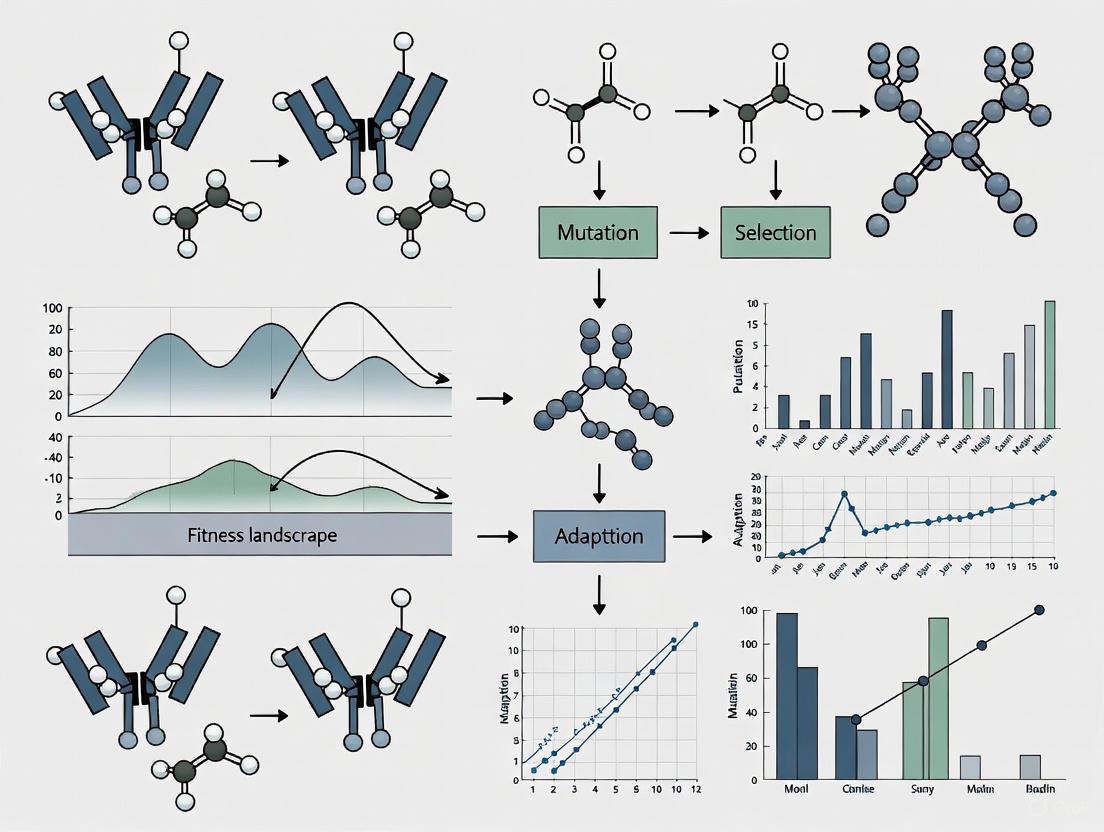
This article provides a comprehensive overview of protein fitness landscapes and the principles of adaptive walks, tailored for researchers and drug development professionals.
Navigating Protein Fitness Landscapes: From Adaptive Walks to Clinical Applications
Abstract
This article provides a comprehensive overview of protein fitness landscapes and the principles of adaptive walks, tailored for researchers and drug development professionals. It explores the foundational concepts of fitness landscapes and epistasis, details cutting-edge methodologies from deep mutational scanning to machine learning models, addresses key challenges like evolutionary traps and rugged landscapes, and validates approaches through comparative analysis of experimental and computational strategies. By synthesizing theoretical models with practical applications in protein engineering and viral evolution prediction, this resource aims to bridge fundamental evolutionary principles with biomedical innovation.
The Topography of Evolution: Mapping Protein Fitness Landscapes
The fitness landscape is a foundational concept in evolutionary biology, providing a powerful metaphor for understanding the relationship between genotype and fitness. First proposed by Sewall Wright in 1932, a fitness landscape is a mapping from a set of genotypes to fitness, where the genotypes are organized based on their mutational connectivity [1]. This framework allows researchers to conceptualize evolution as a navigational process across a topographic surface, where populations ascend fitness peaks through the combined actions of mutation and selection. While initially a theoretical construct, the fitness landscape concept has become an indispensable tool for interpreting empirical data on protein evolution [2] [3].
This whitepaper traces the conceptual development of fitness landscapes from Wright's original formulation to their modern applications in protein engineering and evolutionary analysis. We explore how theoretical frameworks have evolved to accommodate high-dimensional genotypic spaces and discuss state-of-the-art methodologies for visualizing and analyzing these complex landscapes. Within the context of ongoing research on protein fitness landscapes and adaptive walks, this review aims to equip researchers and drug development professionals with both the theoretical foundation and practical tools needed to leverage fitness landscape concepts in their work.
Historical Development and Theoretical Foundations
Wright's Original Formulation and Visualizations
Sewall Wright introduced the fitness landscape concept in 1932, proposing two distinct methods for its representation. For small genotypic spaces, he advocated plotting individual genotypes and connecting them with lines to denote possible mutational transitions [1]. The spatial arrangement in these diagrams was determined either by designating a wild-type reference and plotting other genotypes based on their mutational distance from it, or through ad-hoc arrangements designed to reveal qualitative features of the landscape.
For larger genotypic spaces, Wright proposed a topographical metaphor, suggesting that continuous surfaces could serve as heuristics for understanding evolutionary dynamics [1]. He created iconic diagrams depicting populations as localized on adaptive peaks, with selection driving populations upward and mutation enabling exploration of the fitness surface. Despite their profound influence on evolutionary thinking, these simplified representations were criticized for their lack of mathematical rigor, with Provine describing them as "unintelligible" and "meaningless in any precise sense" [1].
The Challenge of High-Dimensional Genotypic Spaces
A significant limitation of Wright's heuristic approach emerges when considering the actual dimensionality of genotypic spaces. While visualizations typically reduce landscapes to two or three dimensions, real biological systems operate in extremely high-dimensional spaces. For instance, even a modest protein with 100 amino acid positions represents a genotypic space of 20¹⁰⁰ possible sequences [1].
This high dimensionality fundamentally alters the structure of fitness landscapes. Gavrilets demonstrated that in high-dimensional spaces, each genotype has numerous mutational neighbors, creating extensive connected networks of high-fitness genotypes even when fitness is assigned randomly [1]. This contrasts sharply with the isolated fitness peaks that appear natural in low-dimensional visualizations. The implication is profound: while Wright's shifting balance theory emphasized the difficulty of traversing fitness valleys, high-dimensional landscapes typically feature interconnected ridges that facilitate evolutionary exploration without requiring passage through deep valleys [1].
Table: Evolution of Fitness Landscape Concepts
| Era | Key Concept | Representation Method | Limitations |
|---|---|---|---|
| Classical (1930s) | Isolated fitness peaks; adaptive valleys | Low-dimensional continuous surfaces; genotype networks | Heuristic, non-rigorous visualizations |
| Late 20th Century | Neutral networks; holey landscapes | Statistical descriptions; connectivity graphs | Difficulty of empirical validation |
| Modern (21st Century) | High-dimensional interconnected networks | Eigenvector projections; smoothed landscapes | Computational complexity; data scarcity |
Modern Frameworks for Fitness Landscape Visualization and Analysis
Random Walk-Based Dimensionality Reduction
Contemporary approaches address the visualization challenge through rigorous dimensionality reduction techniques. A particularly powerful method uses the eigenvectors of the transition matrix describing evolutionary dynamics under weak mutation [1]. In this framework, a population is modeled as taking a biased random walk on the fitness landscape, with natural selection influencing transition probabilities between genotypes.
The method creates a low-dimensional representation where genotypes are positioned based on their "evolutionary distance" rather than mere mutational proximity. This evolutionary distance is formalized as the "commute time" - the expected number of generations required for a population to evolve from genotype i to j and back again [1]. By plotting genotypes using coordinates derived from the eigenvectors of the transition matrix, this approach generates visualizations where Euclidean distance directly reflects evolutionary accessibility, with genotypes connected by neutral paths drawn close together despite potentially large mutational distances, and genotypes separated by fitness valleys positioned far apart despite minimal mutational separation [1].
Graph-Based Formulation of Fitness Landscapes
The mathematical foundation for modern landscape analysis treats the genotypic space as a graph G = (V, E), where:
- V represents the set of genotypes (vertices)
- E represents possible mutational transitions (edges)
- Each vertex v ∈ V has an associated fitness w(v)
This graph-based formulation enables the application of sophisticated analytical tools, including the graph Laplacian, which quantifies the smoothness of the fitness landscape when treated as a signal on the graph [3].
Diagram 1: Workflow for fitness landscape visualization showing the process from high-dimensional genotype space to interpretable evolutionary maps.
Fitness Landscapes in Protein Evolution Research
Empirical Protein Fitness Landscapes
Recent technological advances have enabled the empirical characterization of protein fitness landscapes, moving beyond theoretical models to data-driven analyses. Two landmark studies illustrate this progress:
1. E. coli Antitoxin Protein Landscape: This combinatorially complete landscape comprises fitness measurements for 7,882 antitoxin protein genotypes, with fitness quantified through microbial growth rates [2]. The comprehensive nature of this dataset enables rigorous analysis of mutational interactions and evolutionary trajectories.
2. Yeast tRNA Landscape: This landscape includes 4,176 transfer RNA genotypes in Saccharomyces cerevisiae, providing insights into RNA-protein interactions and their evolutionary constraints [2].
These empirical landscapes reveal several fundamental principles:
- Fitness landscapes contain extensive neutral networks that facilitate evolutionary exploration
- Epistatic interactions (where mutational effects depend on genetic background) are pervasive
- Certain regions of sequence space show enhanced evolutionary potential
Table: Characteristics of Empirical Fitness Landscapes
| Landscape Feature | E. coli Antitoxin Protein | Yeast tRNA |
|---|---|---|
| Number of Genotypes | 7,882 | 4,176 |
| Fitness Metric | Microbial growth rate | Functional competence |
| Combinatorial Completeness | Yes | Yes |
| Key Finding | Existence of evolvability-enhancing mutations | Connected neutral networks |
| Evolutionary Implications | Some mutations enhance potential for future adaptation | Structural constraints shape evolutionary paths |
Evolvability-Enhancing Mutations
A significant discovery from empirical landscape analysis is the existence of evolvability-enhancing mutations (EE mutations) - genetic changes that increase the likelihood that subsequent mutations will be adaptive [2]. Formally, a mutation from wild-type (wt) to mutant (m) is considered evolvability-enhancing if:
For neutral mutations (Δw = w(m) - w(wt) = 0):
- w̄(nₘ) - w̄(n_wt) > 0
For beneficial mutations (Δw > 0):
- w̄(nₘ) - w̄(n_wt) > Δw
Where w̄(nₘ) and w̄(n_wt) represent the mean fitness of one-mutant neighbors of the mutant and wild-type genotypes, respectively [2].
These EE mutations constitute a small fraction of all mutations but significantly shift the distribution of fitness effects of subsequent mutations toward less deleterious outcomes and increase the incidence of beneficial mutations [2]. Populations that encounter EE mutations during adaptation can evolve to significantly higher fitness levels, suggesting these mutations may serve as evolutionary stepping stones across fitness landscapes.
Computational Methods for Protein Optimization
Smoothed Fitness Landscapes for Protein Engineering
The practical application of fitness landscape concepts to protein engineering faces significant challenges, including the combinatorial vastness of sequence space, experimental noise in fitness measurements, and the prevalence of local optima [3]. To address these limitations, researchers have developed computational approaches that intentionally smooth fitness landscapes to facilitate optimization.
The Gibbs sampling with Graph-based Smoothing (GGS) method formulates protein sequences as graphs with fitness values as node attributes and applies Tikhonov regularization to smooth the fitness landscape using the graph Laplacian [3]. This smoothing process enforces the principle that similar sequences should have similar fitness values, creating a landscape more amenable to gradient-based optimization methods.
The mathematical formulation defines the smoothed fitness ỹ as:
- ỹ = argmin {||y - ŷ||² + λŷᵀLŷ}
Where y represents the original fitness values, ŷ represents the smoothed fitness values, λ is a regularization parameter controlling the degree of smoothing, and L is the graph Laplacian matrix that encodes sequence similarity [3].
Optimization in Smoothed Landscapes
Following landscape smoothing, the GGS method performs optimization using Gibbs sampling with Gradients (GWG), which constructs a discrete distribution based on the model's gradients where mutations with improved fitness receive higher probability [3]. This approach enables efficient exploration of sequence space while progressively guiding sampling toward higher-fitness regions.
Diagram 2: GGS protein optimization workflow showing the integration of graph-based smoothing with discrete sampling methods.
This approach has demonstrated remarkable efficacy, achieving 2.5-fold fitness improvements over starting training sets in silico and significantly outperforming traditional methods in benchmarks using Green Fluorescent Protein (GFP) and Adeno-Associated Virus (AAV) datasets [3].
Experimental Protocols and Research Applications
Key Methodologies for Fitness Landscape Characterization
Combinatorially Complete Landscape Construction:
- Sequence Selection: Identify a wild-type sequence and define a mutational space of interest (typically focusing on specific residues or limited regions due to combinatorial explosion)
- Library Generation: Synthesize all possible combinatorial variants within the defined sequence space
- Fitness Assay: Measure fitness for each genotype using appropriate functional assays (e.g., microbial growth rates, fluorescence intensity, catalytic activity)
- Data Curation: Organize fitness measurements into a structured database with genotype-fitness pairs
Invasion Analysis Framework: The adaptive dynamics framework provides a mathematical approach for analyzing mutation invasion in fitness landscapes [4]. The methodology involves:
- Population Genetic Modeling: Describe species distributed across habitats with distinct selective environments
- Thermodynamic Parameterization: Model protein stability using temperature-dependent enthalpy and entropy contributions
- Invasion Fitness Calculation: Determine whether mutant genotypes can invade wild-type populations
- Evolutionary Trajectory Simulation: Model successive mutations fixation events to understand long-term evolutionary dynamics
The Scientist's Toolkit: Essential Research Reagents and Materials
Table: Key Research Reagents for Fitness Landscape Studies
| Reagent/Material | Function/Application | Example Use Cases |
|---|---|---|
| Combinatorial DNA Libraries | Systematic exploration of mutational space | Constructing all possible variants at targeted residues |
| High-Throughput Sequencing Platforms | Genotype identification and frequency tracking | Monitoring evolutionary dynamics in experimental populations |
| Fluorescence-Activated Cell Sorting (FACS) | Isolation of functional protein variants | GFP fitness landscape characterization |
| Microbial Growth Assays | Fitness quantification via growth rates | Antitoxin protein fitness measurements |
| Thermodynamic Stability Assays | Measuring protein folding stability | Characterizing thermal adaptation in proteins |
| Graph Analysis Software | Implementing dimensionality reduction algorithms | Constructing evolutionary accessibility maps |
The concept of the fitness landscape has evolved dramatically from Wright's original heuristic visualizations to become a rigorous framework for understanding and engineering molecular evolution. Modern approaches recognize the high-dimensional nature of genotypic spaces and leverage sophisticated mathematical tools to create meaningful low-dimensional representations that reflect evolutionary accessibility rather than mere mutational proximity. Empirical characterization of protein fitness landscapes has revealed fundamental principles, including the existence of evolvability-enhancing mutations that increase evolutionary potential. Concurrently, computational methods that intentionally smooth fitness landscapes have demonstrated remarkable efficacy in protein engineering applications, enabling the design of novel variants with significantly enhanced properties. As these approaches continue to mature, fitness landscape analysis promises to play an increasingly central role in basic evolutionary research and applied biotechnology, including therapeutic protein development and enzyme engineering for industrial applications.
The concept of a fitness landscape, first introduced by Sewall Wright, provides a powerful framework for understanding protein evolution [5] [6]. In this conceptual model, each point in a high-dimensional sequence space represents a unique protein variant, with the landscape's height corresponding to its fitness or functional proficiency [5] [7]. Protein evolution can then be visualized as an adaptive walk across this landscape, where populations accumulate beneficial mutations through a process of mutation and natural selection, moving toward fitness peaks [8] [6]. Theoretical models of adaptive walks, such as the Orr-Gillespie model, predict a pattern of diminishing returns, whereby populations farther from their fitness optimum take larger adaptive steps than those closer to their optimal configuration [8] [6].
The GB1 domain of streptococcal protein G has emerged as a quintessential model system for empirically characterizing these theoretical concepts [9] [5]. This small 56-amino-acid domain binds to the Fc region of immunoglobulin G (IgG) and possesses a well-defined structure featuring an α-helix packed against a four-stranded β-sheet [10] [11]. Its modest size, combined with its extensive characterization through high-throughput experiments, makes GB1 an ideal subject for mapping sequence-function relationships and testing fundamental principles of protein evolution [9] [5].
Comprehensive Mapping of the GB1 Fitness Landscape
The Combinatorial Four-Site Landscape
A landmark in experimental fitness landscape characterization was the comprehensive analysis of all 160,000 (20⁴) possible amino acid combinations at four key positions (V39, D40, G41, and V54) in GB1 [5]. These sites were strategically chosen because they constitute an epistatic hotspot, containing 12 of the top 20 positively epistatic interactions among all pairwise interactions in GB1 [5]. This experimental design enabled researchers to move beyond traditional diallelic landscapes and explore the full complexity of a 20-dimensional sequence space at these positions.
Table 1: Key Findings from the GB1 Four-Site Fitness Landscape Study
| Aspect Characterized | Finding | Implication |
|---|---|---|
| Beneficial Mutants | 2.4% of the 160,000 variants showed fitness > wild-type | The landscape contains numerous fitness peaks, not just a single optimum |
| Epistasis Prevalence | Widespread sign epistasis and reciprocal sign epistasis observed | Constrains evolutionary paths through sequence space |
| Direct Path Analysis | Only 1-12 selectively accessible direct paths found among 29 subgraphs | Evolutionary accessibility varies significantly between genotypes |
| Indirect Paths | Identified paths involving gain and subsequent loss of mutations | Circumvents evolutionary traps created by reciprocal sign epistasis |
The research employed mRNA display coupled with Illumina sequencing to measure the fitness of all 160,000 variants in a single experiment [5]. The fitness metric incorporated both stability (the fraction of folded proteins) and function (binding affinity to IgG-Fc), providing a biologically relevant measure of protein performance [5]. This high-throughput approach revealed that while most mutants had reduced fitness compared to wild-type GB1, a significant proportion (2.4%) were beneficial, indicating multiple regions of high fitness in the localized landscape [5].
Experimental Methodology for High-Throughput Fitness Mapping
The mRNA display technique used in this comprehensive mapping involves several critical steps that enable accurate fitness quantification for thousands of variants in parallel:
Library Construction: A mutant library containing all possible amino acid combinations at the four target sites is generated through codon randomization, ensuring complete coverage of the sequence space [5].
In Vitro Selection: The protein variants are subjected to binding selection against IgG-Fc, during which functional binders are retained while non-functional variants are washed away [5].
Deep Sequencing: The relative frequency of each variant before and after selection is quantified using Illumina sequencing, allowing calculation of enrichment factors [5].
Fitness Calculation: The fitness of each variant is determined relative to wild-type GB1 by comparing the logarithmic ratios of sequence frequencies before and after selection, normalized to the wild-type sequence [5].
This methodology provides a robust quantitative fitness measure that captures the combined effects of mutations on protein folding, stability, and binding function—key determinants of biological fitness in evolutionary contexts.
Neural Network Extrapolation in GB1 Fitness Landscapes
Machine Learning-Guided Landscape Exploration
Recent advances have combined empirical fitness mapping with machine learning to explore regions of the GB1 fitness landscape beyond experimentally characterized territories [9]. Neural network models trained on local sequence-function information (approximately 500,000 single and double mutants) can infer the complete fitness landscape and guide the search for high-fitness sequences through in silico design [9]. This approach represents a powerful methodology for extrapolating beyond the training data to identify novel functional sequences.
Table 2: Performance Comparison of Neural Network Architectures on GB1 Fitness Prediction
| Model Architecture | Key Characteristics | Extrapolation Performance | Design Preferences |
|---|---|---|---|
| Linear Model (LR) | Assumes additive effects of mutations | Poor performance due to inability to capture epistasis | Limited to local exploration near training data |
| Fully Connected Network (FCN) | Captures nonlinearities and epistasis | Excels at local extrapolation for designing high-fitness proteins | Prefers smooth landscape regions with prominent peaks |
| Convolutional Neural Network (CNN) | Parameter sharing across sequence; detects patterns | Can design folded but non-functional proteins at high mutation distances | Captures fundamental biophysical properties |
| Graph Convolutional Network (GCN) | Incorporates structural context | Best recall for identifying high-fitness 4-mutants | Leverages structural information for prediction |
Researchers systematically evaluated different neural network architectures by training them on the GB1 double mutant data and then using simulated annealing to optimize each model over sequence space, designing thousands of GB1 variants sampling increasingly distant regions (5-50 mutations from wild-type) [9]. The designs were experimentally validated using a high-throughput yeast display assay that simultaneously assessed variant foldability and IgG binding [9]. This rigorous experimental framework enabled direct comparison of each architecture's capacity for extrapolative protein design.
Ensemble Methods for Robust Protein Design
A critical finding from this research was that individual neural networks exhibit significant prediction variance when extrapolating far from their training data, due to millions of parameters that remain unconstrained by the limited training examples [9]. To address this challenge, researchers implemented ensemble predictors (EnsM and EnsC) that combined predictions from 100 CNNs with different random initializations [9]. The ensemble approach returned either the median (EnsM) or the conservative lower 5th percentile (EnsC) prediction for each sequence, substantially improving the robustness of protein design compared to single models [9].
The experimental results demonstrated that while all model architectures could extrapolate to design functional proteins with 2.5-5× more mutations than present in the training data, performance decreased sharply with further extrapolation [9]. Simpler models like FCNs excelled at local extrapolation for designing high-fitness proteins, while more sophisticated CNNs could venture deeper into sequence space to design proteins that folded correctly but often lost function—suggesting these models captured fundamental biophysical properties related to protein folding even when functional details were inaccurate [9].
Visualization of Experimental and Computational Workflows
High-Throughput Fitness Landscape Characterization
High-Throughput Fitness Mapping Workflow
ML-Guided Protein Design and Validation
ML-Guided Design and Validation Pipeline
The Scientist's Toolkit: Essential Research Reagents and Methods
Table 3: Key Research Reagent Solutions for GB1 Fitness Landscape Studies
| Reagent/Method | Function/Application | Key Features |
|---|---|---|
| GB1 B1 Domain | Model protein for fitness landscape studies | 56-amino acids; IgG-binding; well-characterized structure [9] [11] |
| mRNA Display | High-throughput fitness quantification | Couples genotype to phenotype; enables deep sequencing readout [5] |
| Yeast Display | Experimental validation of designs | Simultaneously assesses protein folding and binding function [9] |
| Neural Network Ensembles | Robust fitness prediction | Combines multiple models to reduce prediction variance [9] |
| Simulated Annealing | In silico sequence optimization | Guided search through sequence space for high-fitness designs [9] |
The experimental characterization of GB1's high-dimensional fitness landscape has provided fundamental insights into the principles governing protein evolution. The discovery of indirect paths that circumvent evolutionary traps created by epistasis reveals how proteins can navigate complex fitness landscapes through sequences of mutations that include temporary reversions [5]. This explains how proteins can overcome rugged landscape topography that would otherwise constrain adaptation to only direct paths.
Furthermore, the integration of machine learning with empirical fitness mapping represents a paradigm shift in protein engineering [9] [12]. By demonstrating that neural networks can extrapolate from local fitness measurements to guide the design of novel functional sequences, this research establishes a framework for accelerated protein optimization that reduces experimental burden while expanding the explorable sequence space [9]. The finding that different neural network architectures capture distinct aspects of the fitness landscape suggests that hybrid approaches or carefully chosen ensembles may provide the most robust strategy for protein design applications.
The GB1 case study exemplifies how detailed empirical characterization of model systems can yield general principles that extend to broader protein engineering and evolutionary biology. As methods for fitness landscape mapping continue to advance, combining deeper mechanistic insights from biophysical studies with increasingly sophisticated computational models, our ability to predictively engineer proteins with novel functions will continue to improve, with significant implications for therapeutic development, enzyme engineering, and understanding the fundamental constraints on protein evolution.
Within the metaphorical fitness landscape, where genotype determines evolutionary fitness, epistasis—the interaction between mutations—plays a definitive role in sculpting the topography that guides adaptive evolution. This technical review focuses on two severe forms of epistasis, sign epistasis and reciprocal sign epistasis, which create evolutionary constraints by rendering mutational effects dependent on genetic background. We detail the mechanistic causes of these interactions, from signaling cascades to physical atomic interactions within proteins, and summarize quantitative evidence from experimental fitness landscapes. Furthermore, we provide protocols for measuring epistasis and discuss its profound implications for predicting evolutionary trajectories and combating antibiotic resistance. The evidence consolidated herein underscores that genetic interaction is not a peripheral phenomenon but a central architect of the rugged, multi-peaked fitness landscapes that define molecular evolution.
The concept of the fitness landscape, introduced by Sewall Wright, maps the relationship between genotype and evolutionary fitness, providing a powerful metaphor for visualizing adaptation as a "walk" across a topographic surface [8] [6]. Populations evolve by accumulating beneficial mutations, "walking" from low-fitness valleys towards higher-fitness peaks. A critical model describing this process is the adaptive walk model, which predicts a pattern of diminishing returns [8] [6]. According to this model, a population or gene starting far from its fitness optimum tends to fix mutations with large fitness effects initially. As it approaches a fitness peak, the fixed mutations have progressively smaller effects because fewer large-benefit mutations remain available [8] [6].
Strong evidence for this model comes from the study of gene age, which shows that younger genes, being further from their optimum, experience both a faster rate of adaptive evolution (ωa) and accumulate mutations with larger physicochemical effects compared to older genes [8] [6]. This walk, however, is not freeform. Its trajectory and ultimate destination are profoundly shaped by the topography of the landscape, a topography largely sculpted by epistasis.
Defining the Architects of Ruggedness: Sign and Reciprocal Sign Epistasis
Epistasis occurs when the effect of a mutation depends on its genetic background. The most severe forms create rugged landscapes with multiple peaks and valleys.
- Sign Epistasis: This occurs when a mutation is beneficial in one genetic background but deleterious in another. For example, Mutation A may be beneficial in the wild-type background but deleterious in a background that already contains Mutation B [13] [14].
- Reciprocal Sign Epistasis (RSE): This is a more extreme form where two mutations are individually beneficial, but their combination is deleterious. In this case, each mutation is deleterious in the background of the other [13] [14]. This specific interaction is a necessary condition for the existence of multiple local fitness peaks on a landscape, as it creates a fitness valley between two genotypes [13].
The table below categorizes the scenarios that lead to sign epistasis based on the effects of individual mutations.
Table 1: Categories of Sign Epistasis Based on Single Mutation Effects
| Single Mutation Effects | Condition for Sign Epistasis | Condition for Reciprocal Sign Epistasis (RSE) |
|---|---|---|
| Beneficial + Detrimental [14] | Double mutant (AB) is fitter than the single beneficial mutant (Ab) OR less fit than the single detrimental mutant (aB). | Not applicable for this combination. |
| Beneficial + Beneficial [14] | Double mutant (AB) is less fit than the better of the two single mutants. | Double mutant (AB) is less fit than both single mutants. |
| Detrimental + Detrimental [14] | Double mutant (AB) is fitter than one of the single detrimental mutants. | Double mutant (AB) is fitter than both single detrimental mutants. |
Mechanistic Causes of Epistasis
The manifestation of sign and reciprocal sign epistasis is not arbitrary; it arises from fundamental biological mechanisms.
Signaling Cascades and Gene Regulatory Networks
In hierarchical signaling cascades, mutations in upstream and downstream components can exhibit strong epistasis. A synthetic bacterial signaling cascade demonstrated that mutations affecting transcription factors' binding affinities can readily produce sign epistasis [14]. The network's architecture—whether a linear cascade or a system with feedback that produces a peaked response—predisposes it to these interactions. In one peaked-response network, over 50% of significant epistatic pairs showed sign epistasis, with beneficial mutation combinations frequently resulting in negative reciprocal sign epistasis [14].
Peaked Fitness Landscapes
Many biological systems exhibit non-monotonic, peaked relationships between a molecular trait (e.g., enzyme activity, gene expression level) and fitness [14]. Both insufficient and excessive activity can be detrimental. On such a landscape, two detrimental mutations that push the trait in opposite directions (one increasing, one decreasing activity) can, when combined, restore the trait to its optimal level. This results in sign epistasis, as individually detrimental mutations become beneficial in combination [14]. This phenomenon is common in metabolic pathways, such as the Arabinose utilization pathway [14].
Physical Atomic Interactions
Within proteins and protein complexes, direct physical interactions between atoms are a major source of specific, or idiosyncratic epistasis. A classic example is the interaction between the barnase enzyme and its inhibitor, barstar. Individually detrimental mutations E76R (in barstar) and R59E (in barnase) involve a charge swap that, in the double mutant, restores a stable complex through newly formed salt bridges [14]. Similarly, in SARS-CoV-2, the Q498R mutation weakly reduces binding affinity to the ACE2 receptor alone, but combined with the N501Y mutation, it enhances affinity by restoring salt bridges and creating new stabilizing interactions [14].
Quantitative Evidence from Experimental Fitness Landscapes
Empirical data from combinatorially complete fitness landscapes provides direct evidence for how epistasis shapes adaptation.
Antibody-Antigen Binding
A deep mutational scan of an antibody's binding affinity for fluorescein revealed that epistasis is a pervasive force. A simple additive model explained most of the variance in binding free energy, but a significant portion (25–35%) was attributable to epistatic interactions [15]. A large fraction of this epistasis was beneficial, and it served to both constrain and enlarge the set of evolutionary paths available during affinity maturation [15].
Table 2: Quantitative Analysis of Epistasis in an Antibody-Antigen System [15]
| Metric | CDR1H Domain | CDR3H Domain |
|---|---|---|
| Variance explained by additive (PWM) model | 62% | 58% |
| Approximate variance attributable to epistasis | 25–35% | 25–35% |
| Fraction of epistasis that is beneficial | Large fraction | Large fraction |
Experimental Evolution in Yeast
A rugged fitness landscape was empirically demonstrated during an evolution experiment with Saccharomyces cerevisiae. Adaptive mutations in the MTH1 and HXT6/HXT7 genes arose multiple times independently but remained mutually exclusive [13]. Fitness assays revealed this was due to reciprocal sign epistasis: the double mutant had lower fitness than both the wild-type and each single mutant [13]. This created a genuine fitness valley, forcing evolving lineages to choose one adaptive peak or the other and demonstrating how inter-genic interactions can create absolute barriers between adaptive solutions.
Table 3: Experimentally Evolved Mutations in Yeast Demonstrating RSE [13]
| Evolved Clone | Adaptive Mutations Identified | Fitness Effect of Single Mutation | Fitness Effect of Double Mutant (MTH1 + HXT6/7) |
|---|---|---|---|
| M1 | MTH1 | Beneficial | Lower than either single mutant and the wild-type (Reciprocal Sign Epistasis) |
| M4 | HXT6/HXT7 (amplification) | Beneficial | |
| M5 | HXT6/HXT7 (amplification), MTH1 | Beneficial |
Evolvability-Enhancing Mutations
While epistasis often constrains evolution, certain mutations can enhance evolvability. Evolvability-enhancing (EE) mutations are defined as mutations that increase the likelihood that subsequent mutations are adaptive [2]. In the fitness landscape of a bacterial antitoxin protein, a small fraction of beneficial mutations were found to be EE mutations. These mutations shift the distribution of fitness effects (DFE) of subsequent mutations, reducing the incidence of deleterious mutations and increasing the incidence of beneficial ones [2]. Populations that encounter EE mutations during their adaptive walk can achieve significantly higher fitness, demonstrating that the genetic background itself can be tuned to facilitate future adaptation.
Experimental Protocols for Characterizing Epistasis
Protocol: Measuring Epistasis in Protein-Binding Affinity Using Tite-Seq
Objective: To quantitatively map the fitness landscape of an antibody-antigen interaction and identify epistatic interactions between mutations.
Workflow Overview: The following diagram illustrates the key steps in this high-throughput protocol:
Key Steps:
- Library Generation: Create a mutant library targeting specific protein domains (e.g., CDR loops of an antibody). The library should include all single amino acid mutants and a large number of random double and triple mutants within the targeted stretches [15].
- Tite-Seq Assay:
- Display the variant library on the surface of yeast cells.
- Use fluorescence-activated cell sorting (FACS) to sort cells based on binding to a fluorescently tagged antigen across a range of concentrations.
- Use high-throughput sequencing to count the variants in each sorted fraction.
- Data Analysis:
- Calculate the dissociation constant (Kd) for each protein variant from the sequencing data and sort statistics [15].
- Transform Kd values into binding free energy (F = ln(Kd)) [15].
- Construct a Position Weight Matrix (PWM) model from the single mutant data. This model represents the additive expectation for the effect of any combination of mutations.
- Calculate epistasis as the difference between the measured free energy of a multiple mutant and the value predicted by the additive PWM model: ε = Fmeasured - FPWM [15].
- Use Z-scores to control for measurement noise and identify statistically significant epistasis.
Protocol: Identifying Reciprocal Sign Epistasis via Competitive Fitness Assays
Objective: To determine if two adaptive mutations exhibit reciprocal sign epistasis in a specific environment.
Workflow Overview: The logical process for constructing and testing genotypes is as follows:
Key Steps:
- Strain Construction: Using the ancestral (wild-type) genetic background, engineer four isogenic strains:
- Wild-type (aB)
- Strain with only Mutation A (Ab)
- Strain with only Mutation B (aB)
- Double mutant strain with both mutations (AB) [13].
- Competitive Fitness Assays: Co-culture each mutant strain with a differentially marked neutral reference strain (e.g., expressing a different fluorescent protein) in the environment of interest (e.g., glucose-limited chemostat) [13].
- Fitness Calculation: Track the ratio of the test strain to the reference strain over multiple generations. The relative fitness is calculated from the exponential growth rate difference between the competing strains [13].
- Analysis for RSE: Test for reciprocal sign epistasis by verifying the following fitness relationship: w(AB) < w(aB) and w(AB) < w(Ab). This confirms that the double mutant is less fit than each of the single mutants, creating a fitness valley [13].
The Scientist's Toolkit: Key Research Reagents
Table 4: Essential Reagents and Tools for Fitness Landscape and Epistasis Research
| Reagent / Tool | Function / Application | Specific Example |
|---|---|---|
| Tite-Seq [15] | High-throughput measurement of protein-binding affinities (Kd) for thousands of variants. | Used to map the affinity landscape of the 4-4-20 antibody against fluorescein [15]. |
| Yeast Surface Display [15] | A platform for displaying protein variants on the yeast cell surface, enabling sorting based on binding. | Coupled with Tite-Seq for affinity-based sorting of antibody variant libraries [15]. |
| Combinatorially Complete Libraries [2] | A set of genotypes that includes all possible combinations of a defined set of mutations. | Essential for comprehensively evaluating epistatic interactions, as used in studies of an E. coli antitoxin protein and a yeast tRNA [2]. |
| MacDonald-Kreitman (MK) Test Extensions [8] [6] | Population genetics method to estimate the rate of adaptive molecular evolution (ωa). | Used with software like Grapes to show higher adaptive rates in young genes in Drosophila and Arabidopsis [8] [6]. |
| Phylostratigraphy [8] [6] | A bioinformatics method to infer gene age based on phylogenetic distribution of homologs. | Used to categorize genes by age and test the adaptive walk model [8] [6]. |
Implications and Applications
Understanding sign and reciprocal sign epistasis is critical for applied fields. In drug development, particularly for antiviral and antibacterial therapies, epistasis can lead to resistance. A mutation that confers resistance to one drug may be deleterious on its own, but in combination with a second "permissive" mutation (a form of sign epistasis), resistance can emerge [14]. Predicting the evolution of drug resistance therefore requires knowledge of the epistatic interactions within the pathogen's genome. Furthermore, in protein engineering, efforts to improve function through iterative mutagenesis can be stymied by rugged landscapes. Identifying EE mutations or mapping epistatic networks can help design smarter mutagenesis strategies that avoid evolutionary dead ends and navigate toward optimal genotypes [2].
Adaptive Walks and the Diminishing Returns Pattern in Molecular Evolution
The concept of the fitness landscape, first introduced by Sewall Wright, provides a powerful framework for understanding evolutionary dynamics [8] [6]. In this metaphorical landscape, elevation corresponds to fitness, while the multidimensional horizontal axes represent the vast space of possible genetic sequences [16]. An adaptive walk describes the step-by-step process by which a population explores this landscape through the accumulation of beneficial mutations, moving toward fitness peaks [8] [6]. John Maynard Smith later adapted this concept specifically for protein evolution, visualizing it as a "walk" through the space of all possible amino acid sequences toward regions of higher function [6]. The modern synthesis of this model, particularly through Allen Orr's extension of Fisher's geometric model, predicts a characteristic pattern of diminishing returns during adaptation, where populations farther from their fitness optimum take larger steps than those closer to their optimal state [8] [6].
This whitepaper examines the theoretical foundations, experimental evidence, and practical implications of adaptive walks in molecular evolution, with particular focus on applications for drug development and protein engineering.
Theoretical Framework of Adaptive Walks
Fundamental Principles
Adaptive walk theory makes two key predictions about molecular evolution. First, sequences further from their fitness optimum (typically younger genes) should experience faster rates of adaptive evolution as they have more potential for improvement. Second, the evolutionary steps taken by these sub-optimal sequences should be larger, meaning mutations with stronger fitness effects are fixed early in the evolutionary process [8] [6]. This pattern arises because when a sequence is far from its optimum, many mutations of large effect are available and likely to be beneficial. As the sequence approaches its fitness peak, the remaining beneficial mutations tend to have progressively smaller effects—hence the diminishing returns [6].
Landscape Topology and Evolutionary Dynamics
The structure of the fitness landscape itself profoundly influences evolutionary trajectories. Landscapes range from smooth, single-peaked "Fujiyama" landscapes to highly rugged, multi-peaked "Badlands" landscapes [16]. The connectivity of the landscape, defined as the fraction of fitness levels accessible via a single mutation, plays a crucial role in determining whether populations can reach global fitness peaks or become trapped at local optima [17]. Computational studies have revealed a critical transition point in landscape connectivity—below a threshold value of approximately 1% of accessible fitness levels, populations almost always get trapped in local optima, while above this threshold, they reliably reach the global peak [17].
Table: Characteristics of Fitness Landscape Topologies
| Landscape Type | Epistasis | Accessible Paths | Probability of Reaching Global Peak | Typical Evolutionary Dynamics |
|---|---|---|---|---|
| Smooth (Fujiyama) | Minimal | Many | High | Predictable, gradual adaptation |
| Moderately Rugged | Moderate | Several | Moderate (depends on connectivity) | Variable with some historical contingency |
| Highly Rugged (Badlands) | Extensive | Few | Low | Predominantly stuck at local optima |
Quantitative Evidence for the Diminishing Returns Pattern
Genomic Studies Across Taxa
Strong evidence for the adaptive walk model comes from large-scale genomic analyses comparing genes of different evolutionary ages. Using population genomic datasets from Arabidopsis and Drosophila, researchers estimated rates of adaptive (ωa) and nonadaptive (ωna) nonsynonymous substitutions across genes from different phylostrata (evolutionary age categories) [8] [6]. After controlling for confounding factors like protein length, gene expression levels, intrinsic disorder, and protein function, these studies found that gene age significantly impacts molecular adaptation rates [8] [6].
Younger genes exhibited significantly higher rates of adaptive substitution (ωa) than older genes, supporting the prediction that sequences further from their optimum adapt faster [8] [6]. Additionally, substitutions in young genes tended to involve amino acids with larger physicochemical differences, indicating they represent "larger steps" in the fitness landscape [8] [6].
Table: Correlation Between Gene Age and Evolutionary Parameters in Arabidopsis and Drosophila
| Evolutionary Parameter | Arabidopsis Correlation | Drosophila Correlation | Combined Significance | Biological Interpretation |
|---|---|---|---|---|
| ω (dN/dS) | 0.962* | 0.727* | p < 0.001 | Younger genes evolve faster |
| ωa (adaptive) | 0.733* | 0.636 | p < 0.01 | Younger genes have more adaptive substitutions |
| ωna (nonadaptive) | 0.848* | 0.697 | p < 0.01 | Younger genes experience less purifying selection |
| Physicochemical Effect | Positive correlation | Positive correlation | p < 0.05 | Younger genes undergo larger effect mutations |
*p < 0.001, p < 0.01
Heterogeneity in Fitness Peak Topology
Recent high-throughput studies of orthologous green fluorescent proteins (GFPs) reveal substantial heterogeneity in fitness peak topography across related proteins [18]. While some GFP fitness peaks were sharp and epistatic, others were considerably flatter with minimal epistatic interactions [18]. This heterogeneity influences evolutionary potential—flat peaks correspond to mutationally robust proteins, while sharp peaks represent fragile genotypes with stronger epistatic constraints [18]. Interestingly, this variation in fitness peak architecture does not simply correlate with evolutionary distance, suggesting that the starting sequence significantly influences evolutionary trajectories and adaptive potential [18].
Experimental Methodologies for Studying Adaptive Walks
Laboratory Directed Evolution
Directed evolution applies iterative rounds of random mutation and artificial selection to explore protein fitness landscapes in the laboratory [16]. This approach has been successfully used to engineer proteins with novel functions, such as a recombinase that removes proviral HIV from host genomes, cytochrome P450 enzymes with new substrate specificities, and fluorescent proteins with enhanced properties [16].
A typical directed evolution workflow consists of:
- Library Generation: Creating genetic diversity through error-prone PCR or other mutagenesis methods
- Selection/Screening: Applying stringent conditions to identify improved variants
- Gene Recovery: Isulating beneficial mutations from selected variants
- Iteration: Repeating the process through multiple rounds [16] [19]
Figure 1: Directed Evolution Workflow for Exploring Adaptive Walks
Population Genomic Approaches
For studying natural evolutionary processes, researchers employ population genomic methods based on the McDonald-Kreitman (MK) framework [8] [6]. This approach uses polymorphism and divergence data to estimate the rate of adaptive molecular evolution (ωa) while accounting for slightly deleterious mutations by modeling the distribution of fitness effects (DFE) [8] [6].
Key steps in this methodology include:
- Phylostratigraphy: Determining gene age based on phylogenetic distribution using tools like BLAST [8] [6]
- Polymorphism Data Collection: Gathering within-species sequence variation [8] [6]
- Divergence Estimation: Calculating between-species sequence differences [8] [6]
- DFE Modeling: Using methods like Grapes to estimate adaptive and nonadaptive substitution rates [8] [6]
Figure 2: Population Genomic Analysis of Adaptive Walks
The Scientist's Toolkit: Key Research Reagents and Solutions
Table: Essential Research Tools for Studying Adaptive Walks
| Reagent/Resource | Function | Example Applications | Key Considerations |
|---|---|---|---|
| Error-prone PCR Kits | Generate random mutagenesis libraries | Creating diverse variant populations for directed evolution | Control mutation rate (typically 1-4 mutations/gene) |
| Grapes Software | Estimate adaptive substitution rates (ωa) from genomic data | Population genomic analysis of natural selection | Accounts for slightly deleterious mutations via DFE modeling |
| Phylostratigraphy Pipelines | Determine gene age based on phylogenetic distribution | Classifying genes as young or old for comparative studies | Uses BLAST-based homology searches across taxa |
| Deep Mutational Scanning Platforms | High-throughput characterization of mutation effects | Mapping fitness landscapes of specific proteins | Requires efficient library construction and phenotyping |
| MK Test Frameworks | Detect positive selection from polymorphism and divergence | Population genomic studies of adaptation | Multiple extensions available for different evolutionary scenarios |
Implications for Drug Development and Protein Engineering
Predicting Evolutionary Trajectories in Pathogens
Understanding adaptive walks provides valuable insights for anticipating drug resistance evolution in pathogens. The diminishing returns pattern suggests that previously adapted pathogens (those closer to their fitness optimum) may evolve resistance through mutations of smaller effect, potentially leading to more gradual resistance development. Conversely, naive pathogens encountering new drugs may initially develop resistance through large-effect mutations [8] [6]. This knowledge can inform combination therapy design by identifying evolutionary trajectories with higher genetic constraints.
Engineering Therapeutic Proteins
In protein therapeutic development, the adaptive walk framework guides engineering strategies. For stabilizing existing proteins, small-step adaptive walks may be optimal, while for creating novel functions, larger steps may be necessary [16] [19]. The heterogeneity of fitness peaks observed across orthologous proteins [18] suggests that choosing the right starting template is crucial—some natural variants provide better foundation for engineering than others due to their position in the fitness landscape.
Leveraging Epistatic Constraints
Epistasis (where the fitness effect of a mutation depends on genetic background) creates historical contingencies that shape adaptive walks [20] [21]. Understanding these constraints enables more predictive protein engineering by identifying evolutionary accessible paths through sequence space [19] [21]. Recent computational approaches can now infer fitness landscapes from laboratory evolution data, allowing in silico prediction of future evolutionary trajectories [19].
Future Directions and Methodological Advances
Emergent technologies are pushing the boundaries of adaptive walk research. High-resolution fitness landscape mapping through deep mutational scanning now allows comprehensive characterization of epistatic interactions [20] [18]. Statistical learning frameworks that model evolutionary processes can infer fitness landscapes from time-series laboratory evolution data [19]. Additionally, high-dimensional landscape models with distance-dependent statistics provide more realistic frameworks for understanding how epistasis shapes evolutionary trajectories over long timescales [21].
These advances are progressively transforming adaptive walk theory from a conceptual framework to a predictive science with significant applications in drug development, protein engineering, and evolutionary forecasting.
The structure of fitness landscapes critically governs adaptive protein evolution. While direct adaptive paths are often blocked by epistatic interactions, evolutionary trajectories can circumvent these roadblocks through indirect paths that involve temporary fitness reductions or reversions. This technical review synthesizes recent advances in empirical characterization and computational modeling of these alternative evolutionary routes, highlighting how high-dimensionality in sequence space facilitates adaptation despite landscape ruggedness. We present quantitative comparisons of path accessibility, detailed experimental protocols for landscape mapping, and emerging applications in proactive therapeutic design.
The concept of fitness landscapes, introduced by Sewall Wright, provides a powerful framework for understanding evolutionary dynamics [22]. In protein evolution, these landscapes map genetic sequences to reproductive success, visualized as mountainous terrain where height corresponds to fitness. Adaptive walks represent the stepwise process by which populations ascend these landscapes through beneficial mutations [21].
The high-dimensionality of protein sequence space (20L for a protein of length L) creates extraordinary complexity. While traditional studies focused on diallelic landscapes (2L), recent technological advances now enable exploration of more complex sequence spaces [23]. A critical finding across these studies is that evolution frequently navigates around fitness valleys via indirect paths rather than being constrained to direct uphill trajectories, fundamentally changing our understanding of evolutionary constraints and possibilities.
Theoretical Framework: Epistasis and Evolutionary Accessibility
Types of Epistasis and Their Evolutionary Consequences
Epistasis—the interaction between mutations—creates the rugged topography that makes evolutionary paths inaccessible. The three primary forms have distinct implications:
- Magnitude Epistasis: The fitness effect of a mutation changes in magnitude but not sign across genetic backgrounds. This creates sloping landscapes without local peaks [22].
- Sign Epistasis: A mutation that is beneficial in one background becomes deleterious in another. This creates local fitness peaks and constrains evolutionary ordering [22].
- Reciprocal Sign Epistasis: Two mutations are individually deleterious but beneficial in combination. This creates evolutionary "traps" that block all direct paths to higher fitness [23] [22].
Table: Classification and Consequences of Epistatic Interactions
| Epistasis Type | Definition | Impact on Accessibility | Landscape Analogy |
|---|---|---|---|
| Magnitude | Effect size changes without sign reversal | Mild constraint | Smooth incline |
| Sign | Beneficial mutation becomes deleterious in some backgrounds | Limits path number | Isolated peak |
| Reciprocal Sign | Mutations individually deleterious but beneficial together | Blocks all direct paths | Trapped valley |
Direct Versus Indirect Evolutionary Paths
Direct paths maintain a constant reduction in Hamming distance from the starting sequence to the destination, with fitness increasing monotonically at each step. In contrast, indirect paths may involve temporary increases in Hamming distance or transient fitness reductions while ultimately reaching superior fitness peaks [23].
The theoretical foundation for understanding these paths emerges from population genetics models showing that stochastic tunneling enables populations to cross fitness valleys without the intermediate genotype ever fixing [24]. This process becomes significant when 2Nμ ≥ 1, where N is the effective population size and μ is the mutation rate per gene.
Empirical Evidence: The GB1 Protein Model System
Experimental Characterization of a Four-Site Landscape
A landmark study systematically characterized the fitness landscape of four amino acid sites (V39, D40, G41, V54) in the GB1 immunoglobulin-binding domain, encompassing all 160,000 (204) possible variants [23]. The experimental workflow coupled saturation mutagenesis with mRNA display and deep sequencing to measure relative fitness through selection for IgG-Fc binding.
Table: Quantitative Analysis of Path Accessibility in GB1 Landscape
| Path Type | Number of Accessible Paths | Percentage of Total | Key Characteristics |
|---|---|---|---|
| Direct Paths | 1-12 (across 29 subgraphs) | 4-50% per subgraph | Monotonic fitness increase |
| Indirect Paths | Significantly expanded | Not quantified | Mutation gain/loss cycles |
| Blocked by Reciprocal Sign Epitasis | 0 in many cases | Up to 95% in extreme cases | All direct paths inaccessible |
The research revealed that while reciprocal sign epistasis blocked many direct adaptation paths, these evolutionary traps could be circumvented through indirect trajectories involving gain and subsequent loss of mutations [23]. This alleviates evolutionary constraints and demonstrates that high-dimensional sequence space provides alternative routes that are invisible in simplified diallelic models.
Experimental Protocol: Comprehensive Fitness Landscape Mapping
Materials and Reagents:
- Codon-randomized oligonucleotide library covering target sites
- In vitro transcription/translation system
- mRNA display components (puromycin linkage, reverse transcription reagents)
- Selection matrix (e.g., IgG-Fc for GB1 binding studies)
- High-throughput sequencing platform (Illumina)
Methodological Workflow:
- Library Construction: Generate mutant library using codon randomization at target sites
- In vitro Selection: Couple genotype to phenotype through mRNA display and apply selective pressure
- Deep Sequencing: Quantify variant frequencies before and after selection via Illumina sequencing
- Fitness Calculation: Compute relative fitness from enrichment ratios (fpost-selection/fpre-selection)
- Pathway Analysis: Identify accessible paths through combinatorial analysis of all variants
This high-throughput approach enables fitness measurement for thousands of variants in parallel, overcoming previous throughput limitations that restricted landscape analysis to small sequence subspaces [23].
Diagram: Direct vs. Indirect Evolutionary Paths. Direct paths maintain monotonic fitness increases but are often blocked by epistatic interactions. Indirect paths may involve temporary fitness reductions but circumvent evolutionary traps.
Computational Approaches for Mapping Evolutionary Paths
Protein Language Models and Fitness Prediction
Recent advances in protein language models (pLMs) like ESM-2 enable prediction of variant fitness from sequence alone. The CoVFit model, fine-tuned on SARS-CoV-2 spike protein variants, demonstrates how pLMs can capture epistatic effects and predict variant fitness with high accuracy (Spearman correlation: 0.990) [25].
These models leverage evolutionary information from multiple sequence alignments and structural constraints to infer fitness landscapes without exhaustive experimental characterization. The multitask learning framework combines genotype-fitness data with deep mutational scanning measurements of antibody escape, enhancing predictive power for viral evolution [25].
Machine Learning-Assisted Directed Evolution
Machine learning-assisted directed evolution (MLDE) strategies significantly enhance navigation of rugged fitness landscapes. Comparative studies across 16 diverse protein landscapes demonstrate that MLDE provides the greatest advantage on landscapes challenging for conventional directed evolution, particularly those with fewer active variants and more local optima [26].
Table: Machine Learning Approaches for Fitness Landscape Navigation
| Method | Mechanism | Best-Suited Landscape Properties | Performance Advantage |
|---|---|---|---|
| MLDE | Supervised learning on sequence-fitness data | Moderate epistasis, identifiable patterns | 2-5x efficiency gain |
| Active Learning DE | Iterative model refinement with new data | High ruggedness, complex epistasis | 3-8x efficiency gain |
| Focused Training MLDE | Zero-shot predictor enriched training sets | Sparse high-fitness regions | 5-10x efficiency gain |
Focused training using zero-shot predictors that leverage evolutionary, structural, and stability information consistently outperforms random sampling across diverse protein engineering tasks [26]. This approach is particularly valuable for navigating landscapes where beneficial combinations require specific mutations that are deleterious individually—precisely the scenario where indirect paths become essential.
Research Reagent Solutions Toolkit
Table: Essential Research Reagents for Fitness Landscape Studies
| Reagent/Category | Function | Example Applications |
|---|---|---|
| Codon-Randomized Libraries | Generation of comprehensive variant libraries | Saturation mutagenesis at target sites [23] |
| mRNA Display Systems | In vitro coupling of genotype to phenotype | High-throughput fitness screening [23] |
| Deep Mutational Scanning | Parallel fitness assessment of thousands variants | Epistasis mapping, path accessibility [25] |
| Potts Models/EVmutation | Statistical inference of epistatic interactions | Fitness prediction from sequence data [27] |
| Protein Language Models | Sequence-based fitness prediction | CoVFit for viral evolution prediction [25] |
| Stability Prediction Tools | Computational ΔΔG calculation | Biophysical fitness modeling [27] |
Applications in Viral Evolution and Therapeutic Design
Fitness Landscape Design for Viral Entrapment
The emerging field of fitness landscape design (FLD) aims to proactively shape evolutionary landscapes to constrain pathogen adaptation. For SARS-CoV-2, FLD algorithms can optimize antibody ensembles that force viral evolution into low-fitness trajectories, potentially enabling proactive vaccine design that preempts escape variants [27].
The biophysical model underlying this approach bridges fitness and binding affinities:
F(s) ≈ krep × No^{-1} × Nent × pb(s)
Where p_b(s) represents the binding probability to host receptors, modulated by antibody concentrations and binding free energies [27]. This quantitative framework allows computational optimization of antibody combinations that minimize viral fitness across potential escape variants.
Valley Crossing in Natural Evolution
Empirical studies of natural proteins reveal that fitness valley crossing occurs more frequently than classical models predict. Research on mammalian mitochondrial proteins indicates that genes encoding small protein motifs navigate fitness valleys of depth 2Ns ≳ 30 with probability P ≳ 0.1 on evolutionary timescales [24].
This surprising facility with valley crossing stems from the high-dimensionality of protein sequence space, which provides numerous alternative routes around evolutionary obstacles. The conventional picture of populations trapped on local fitness peaks requires revision in light of these findings about indirect path accessibility.
The dichotomy between direct and indirect evolutionary paths represents a fundamental principle in protein fitness landscape navigation. While epistatic interactions frequently block direct adaptive routes, evolutionary innovation proceeds through indirect paths that leverage the high-dimensional nature of sequence space. This understanding transforms our perspective on evolutionary constraints and opportunities, with significant implications for protein engineering, antiviral therapeutic design, and fundamental evolutionary biology.
Emerging methodologies in deep mutational scanning, protein language models, and fitness landscape design provide powerful tools for mapping these alternative routes and harnessing them for biomedical applications. The integration of computational prediction with experimental validation promises to unlock further insights into the topological features that govern evolutionary trajectories across diverse biological systems.
From Theory to Therapy: Methodological Advances in Landscape Navigation
The relationship between a protein's amino acid sequence and its function is one of the most fundamental questions in molecular biology and genetics. This relationship can be conceptualized as a protein fitness landscape, a high-dimensional map where each point in the space of all possible protein sequences is assigned a fitness value representing a measurable property such as catalytic activity, stability, or binding affinity [28]. In evolutionary theory, an adaptive walk describes the process by which a population evolves by "walking" through this fitness landscape towards sequences with higher fitness, characterized by a pattern of diminishing returns [8]. Populations further from their fitness optimum tend to take larger adaptive steps (mutations with stronger fitness effects), while those closer to optimum fix mutations with smaller effects [8] [6].
Deep Mutational Scanning (DMS) has emerged as a powerful experimental technique to empirically map these fitness landscapes at unprecedented resolution [29] [30]. By systematically quantifying the functional effects of tens of thousands of protein variants in a single experiment, DMS provides the high-throughput data necessary to visualize the structure of fitness landscapes and understand the constraints and potential trajectories of protein evolution [29] [19]. This whitepaper provides an in-depth technical guide to DMS methodology, its integration with computational approaches, and its applications in basic research and therapeutic development.
Technical Foundations of Deep Mutational Scanning
Core Principles and Workflow
Deep Mutational Scanning is a technique that combines high-diversity mutant library generation, functional selection, and next-generation sequencing to measure the functional consequences of thousands to millions of mutations in parallel [29] [30]. The core principle involves tracking the enrichment or depletion of individual variants before and after a functional selection pressure is applied.
A standard DMS experiment follows four key steps [30]:
- Library Generation: Creating a comprehensive library of genetic variants of the target protein.
- Functional Selection: Subjecting the library to a selection pressure that links genotype to phenotype.
- Deep Sequencing: Using next-generation sequencing (NGS) to count each variant in pre- and post-selection populations.
- Data Analysis & Fitness Scoring: Calculating enrichment scores to determine the functional effect of each mutation.
The following diagram illustrates this workflow and its position within the broader cycle of fitness landscape research:
Key Methodologies for Mutant Library Generation
The foundation of any DMS experiment is a high-quality, diverse mutant library. The choice of library generation method significantly impacts the type and quality of the resulting fitness landscape data.
Table 1: Comparison of Mutant Library Generation Methods in DMS
| Method | Principle | Advantages | Limitations | Best Suited For |
|---|---|---|---|---|
| Error-Prone PCR [29] | Uses low-fidelity DNA polymerases to incorporate random mutations during PCR amplification. | Relatively cheap and easy to perform; suitable for generating comprehensive nucleotide-level mutations [29]. | Mutations are not completely random due to polymerase biases; poorly suited for achieving all possible single amino acid substitutions [29]. | Directed evolution experiments; exploring random mutational space [29]. |
| Oligo Pools with NNN/S/K Codons [29] | Synthesizes oligonucleotides containing NNN (any base), NNS (G/C), or NNK (G/T) triplets at targeted codons. | Can generate a customized library with fewer biases; allows for all possible 19 amino acid substitutions per codon [29]. | More costly than error-prone PCR; requires careful design [29]. | Saturation mutagenesis for all single amino acid substitutions; user-defined variant libraries [29]. |
| Doped Oligo Synthesis [29] | Incorporates a defined percentage of mutations at each position during oligo synthesis. | Allows control over mutation rate and spectrum; can generate long mutant oligos (up to 300 nt) [29]. | Synthesis biases can occur; may still require sophisticated normalization [29]. | Focused libraries targeting specific regions with controlled diversity [29]. |
The Scientist's Toolkit: Essential Reagents and Materials
Table 2: Key Research Reagent Solutions for DMS Experiments
| Reagent/Material | Function in DMS Workflow | Key Considerations |
|---|---|---|
| Mutant DNA Library | Provides the genetic diversity for the experiment; the starting genotype pool. | Quality is paramount. Assess diversity and distribution via deep sequencing of the input library to quantify biases [30]. |
| Selection System | Links the genetic variant (genotype) to a functional output (phenotype). | Stringency must be optimized. Too strong a pressure selects only top variants; too weak fails to distinguish functional from non-functional [30]. |
| Next-Generation Sequencing Platform | Quantitatively counts the frequency of each variant before and after selection. | Requires sufficient sequencing depth to reliably quantify even rare variants. Error rates must be managed [30]. |
| Unique Molecular Identifiers (UMIs) | Short, random DNA sequences attached to each initial DNA molecule. | Critical for robust error correction. UMIs allow computational collapsing of reads to correct for PCR and sequencing errors [30]. |
| Expression Vector & Cloning System | Hosts the mutant library for expression in the destination cells. | Must be compatible with the selection system and allow efficient library cloning and propagation [29]. |
Advanced Applications and Integration with Computational Models
Key Research Applications
DMS has moved from a niche method to a central tool in biotechnology and biomedical research, enabling several high-impact applications:
- Mapping Viral Evolution and Immune Escape: DMS data on immune-escape mutants of various SARS-CoV-2 variants have been instrumental in guiding vaccine design by predicting mutations that allow viruses to evade neutralizing antibodies [29].
- Classifying Human Disease Variants: Many human disease-related genetic variants of unknown significance have been systematically classified as either benign or detrimental using DMS, advancing the interpretation of clinical genetic data [29].
- Protein Engineering and Optimization: DMS provides a complete roadmap for protein engineering, identifying mutations that enhance stability, activity, or binding affinity for enzymes and therapeutic proteins like antibodies [30] [28].
- Revealing Genetic Interactions and Epistasis: DMS has been used to uncover complex genetic interaction patterns both between genes and within the same gene, revealing the biophysical mechanisms underlying protein function and evolution [29].
- Multi-Environment Fitness Profiling: Performing DMS under different conditions (e.g., temperature) reveals how fitness landscapes shift with the environment, identifying condition-sensitive variants and challenging simplistic stability-activity trade-off assumptions [31].
Machine Learning and Fitness Landscape Modeling
The large-scale sequence-function data generated by DMS are ideal for training machine learning (ML) models to predict protein fitness, creating a powerful synergy between high-throughput experimentation and in silico design.
Supervised learning models, including deep neural networks like convolutional neural networks (CNNs) and transformers, learn the sequence-function mapping from DMS data [28]. These models can then extrapolate beyond the tested sequences to propose new, high-fitness variants through in silico optimization using search heuristics like hill climbing and genetic algorithms [28].
Active learning frameworks, such as Machine Learning-Assisted Directed Evolution (MLDE) and Bayesian Optimization (BO), implement an iterative design-test-learn cycle [28]. These approaches use an ML model to select the most informative sequences to test experimentally, dramatically reducing the screening burden required to find optimal proteins [28]. Recent advances, such as the μProtein framework, combine a deep learning model (μFormer) for mutational effect prediction with a reinforcement learning algorithm (μSearch) to navigate the fitness landscape efficiently, successfully designing high-functioning multi-point mutants for β-lactamase trained solely on single-mutation data [32].
The following diagram illustrates how these computational and experimental approaches integrate into a modern protein engineering workflow:
Deep Mutational Scanning has fundamentally transformed our ability to map protein fitness landscapes empirically, moving protein science from a paradigm of targeted, hypothesis-driven inquiry to one of comprehensive, data-rich exploration. By providing a high-throughput, quantitative readout of sequence-function relationships, DMS offers an unprecedented view of the adaptive walks that proteins can undertake. Its integration with machine learning creates a powerful, iterative feedback loop that accelerates the discovery and design of novel proteins with tailored functions. As DMS methodologies continue to mature—encompassing more complex multi-environment selections and more sophisticated library designs—their role in basic biological discovery, therapeutic antibody engineering, and enzyme optimization will only expand, solidifying DMS as an indispensable tool for modern biotechnology and evolutionary biology.
Machine Learning-Assisted Directed Evolution (MLDE) Strategies
The process of protein engineering is fundamentally a search for high-functioning sequences within a vast and complex fitness landscape. This landscape maps every possible protein sequence to a corresponding "fitness" value, representing a measurable property like catalytic activity, binding affinity, or thermostability [16] [28]. Directed Evolution (DE), a workhorse method in protein engineering, mimics natural selection by performing iterative cycles of mutagenesis and screening to identify improved variants. This process can be visualized as an adaptive walk across the fitness landscape, where each step moves towards a sequence of higher fitness [16].
However, the structure of the fitness landscape itself dictates the efficiency of this search. Landscapes can range from smooth, "Fujiyama"-like surfaces with a single peak to highly rugged, "Badlands"-like terrains rich in local optima and epistasis [16]. Epistasis—the non-additive, often unpredictable interaction between mutations—is a pervasive feature of these rugged landscapes and poses a significant challenge for traditional DE. A beneficial mutation in one sequence background may be neutral or even detrimental in another, causing simple greedy walks to become trapped on local fitness peaks [26] [16]. Machine Learning-Assisted Directed Evolution (MLDE) has emerged as a powerful strategy to overcome these limitations. By using ML models to learn the underlying sequence-function relationship, MLDE can navigate epistatic landscapes more efficiently, predicting high-fitness variants and drastically reducing the experimental screening burden [33] [28].
Core MLDE Methodologies and Workflow
At its core, MLDE uses supervised machine learning to build a model that maps protein sequence representations (inputs) to experimentally measured fitness values (outputs). This model is trained on a relatively small, initially screened subset of a combinatorial library. Once trained, the model can predict the fitness of all unscreened variants in the library, guiding researchers toward the most promising candidates for further experimental validation [34] [35].
The Standard MLDE Workflow
The following diagram illustrates the foundational, single-round MLDE workflow:
Advanced MLDE Strategy: Active Learning
A more sophisticated, iterative approach involves Active Learning (ALDE), which creates a closed-loop design-test-learn cycle to refine the model with strategically chosen new data [26] [28]. The following diagram illustrates this adaptive process:
Key MLDE Strategies and Performance Analysis
Recent systematic studies have evaluated multiple MLDE strategies across a diverse set of 16 protein fitness landscapes, encompassing both binding interactions and enzyme activities. The table below summarizes the core strategies and their performance characteristics [26].
Table 1: Summary of Core MLDE Strategies and Advantages
| Strategy | Core Principle | Key Advantage | Reported Performance Gain |
|---|---|---|---|
| Standard MLDE | Single-round training on random library subset, followed by in-silico prediction of the entire landscape. | Reduces screening burden compared to exhaustive screening; accounts for epistasis. | Up to 81-fold greater success rate in finding the global maximum compared to greedy DE on an epistatic landscape [34]. |
| Focused Training (ftMLDE) | Uses zero-shot predictors to pre-select a training set enriched with functional variants, minimizing "holes" (low-fitness variants). | Improves model accuracy by providing a more informative training set; highly effective on "hole-filled" landscapes. | Consistently outperforms random sampling; combined with ALDE, it offers the greatest advantage on challenging landscapes [26] [34]. |
| Active Learning (ALDE) | Iterative, closed-loop cycles where the ML model selects the most informative variants for the next round of screening. | Balances exploration and exploitation; efficiently navigates complex, rugged landscapes. | Provides significant advantage on landscapes with fewer active variants and more local optima [26] [28]. |
| Cluster Learning (CLADE) | Two-stage method combining unsupervised clustering to guide sampling, followed by supervised learning for final prediction. | Exploits fitness heterogeneity in the landscape; improves sampling efficiency and model robustness. | Achieved a 91% success rate in finding the global max for GB1, a significant improvement over random-sampling MLDE (18.6%) [36]. |
Quantitative Performance Across Landscapes
The performance of MLDE is not uniform but depends heavily on the specific attributes of the fitness landscape. A large-scale analysis quantified the advantage of MLDE over traditional DE across diverse landscapes [26].
Table 2: Impact of Landscape Attributes on MLDE Advantage
| Landscape Attribute | Impact on Traditional DE | Impact on MLDE | Relative MLDE Advantage |
|---|---|---|---|
| High Ruggedness (Many local optima, strong epistasis) | Severely traps greedy walks, preventing access to global optimum. | ML models capture epistatic interactions, enabling jumps across sequence space. | Greatest advantage is observed on these more challenging landscapes [26]. |
| Few Active Variants ("Hole-filled" landscape) | Random sampling has a low probability of finding functional sequences. | ftMLDE uses zero-shot predictors to focus screening on the functional subspace. | Critical advantage; focused training is essential for success [26] [34]. |
| Smooth, Additive Landscape | Greedy walks are effective and efficient. | MLDE performance matches or slightly exceeds DE, but the relative advantage is smaller. | Modest advantage, though MLDE still reduces the required screening effort [26]. |
Implementing a successful MLDE campaign requires a combination of computational tools and experimental components. The following table details key elements of the MLDE toolkit.
Table 3: Essential Research Reagents and Computational Tools for MLDE
| Tool / Reagent | Type | Function in MLDE Workflow | Examples & Notes |
|---|---|---|---|
| Combinatorial Library | Experimental Reagent | Defines the sequence space to be explored (e.g., via site-saturation mutagenesis at 3-4 residues). | A 4-site SSM library has ~160,000 (20^4) variants; careful position selection is critical [26] [36]. |
| Zero-Shot Predictors | Computational Tool | Predicts fitness from sequence without experimental data, used for focused training set design. | EVmutation, DeepSequence (evolutionary data); ESM, ProtTrans (masked token filling) [26] [34] [35]. |
| Sequence Encodings | Computational Tool | Represents protein sequences as numerical vectors for ML model ingestion. | One-hot, Georgiev; Learned embeddings from ResNet, UniRep, ESM, ProtBert [28] [35]. |
| Supervised ML Models | Computational Tool | Learns the mapping from sequence encodings to experimental fitness values. | Ensemble models (e.g., 22-model ensemble), CNNs, RNNs, Gaussian Processes, Transformers [33] [28] [35]. |
| MLDE Software Package | Computational Tool | Integrated codebase for executing the full MLDE pipeline, from encoding to prediction. | The fhalab/MLDE GitHub repository provides a complete implementation [35]. |
Experimental Protocol for Focused Training MLDE (ftMLDE)
The following is a detailed methodology for implementing an ftMLDE campaign, a highly effective strategy for navigating epistatic landscapes.
Protocol Steps
- Combinatorial Library Design: Select 3-4 target amino acid positions known to be critical for function (e.g., active site residues, binding interface). Define the complete combinatorial sequence space. For a 4-site library, this will consist of 160,000 (20^4) possible protein variants [34] [36].
- Generate Sequence Encodings: Compute a numerical representation for every variant in the library. For models leveraging evolutionary information, this step requires a deep Multiple Sequence Alignment (MSA) of the protein family [35].
- Zero-Shot Prediction and Training Set Selection: Use one or more zero-shot predictors (e.g., EVmutation, ESM) to predict the fitness of all library variants in silico. Instead of random sampling, select a training set of ~500-1000 variants from the top-ranked variants predicted by these methods. This "focuses" the training on sequences more likely to be functional [26] [34].
- Experimental Screening of Focused Training Set: Synthesize and experimentally screen the selected, focused training set to obtain fitness measurements.
- Model Training and Validation: Train an ensemble of supervised ML models on the sequence-fitness data from the focused training set. Use cross-validation to select the best-performing models and hyperparameters [35].
- In-Silico Prediction and Final Selection: Use the trained model ensemble to predict the fitness of every variant in the full, unscreened combinatorial library. Select the top 96-384 predicted variants for final experimental validation. The highest-fitness variant from this final set is the lead candidate [34] [36].
Logical Flow of an ftMLDE Campaign
The logical relationship between the core components of an ftMLDE strategy is summarized below:
Machine Learning-Assisted Directed Evolution represents a paradigm shift in protein engineering, transforming the search for improved proteins from a brute-force, local search to an intelligent, global navigation of sequence space. The key insight from recent research is that MLDE provides the greatest advantage on the most challenging fitness landscapes—those characterized by high epistasis, ruggedness, and sparse functional variants [26]. Strategies like focused training and active learning, powered by diverse zero-shot predictors, consistently enhance the efficiency and success rate of protein engineering campaigns [26] [34] [36]. As high-throughput data generation becomes more accessible and ML models continue to advance, MLDE is poised to become an indispensable tool for researchers and drug developers aiming to solve complex problems in biotechnology and medicine.
The concept of a fitness landscape provides a powerful framework for understanding protein evolution and engineering. Originally introduced in evolutionary biology, this concept visualises the relationship between protein sequence and functional fitness in a high-dimensional space [16]. In this conceptualization, each point in the landscape represents a unique protein sequence, and the height at that point corresponds to its "fitness"—a measure of its ability to perform its biological function effectively in a specific environment [16] [22].
Protein fitness landscapes are astronomically vast. For a small protein of just 100 amino acids, there are 20¹⁰⁰ (approximately 10¹³⁰) possible sequences, far exceeding the number of atoms in the universe [16]. Natural evolution has explored only an infinitesimal fraction of these possible proteins over billions of years [16]. The structure of these landscapes ranges from smooth, single-peaked "Fujiyama" landscapes to highly rugged, multi-peaked "Badlands" landscapes, with this ruggedness arising from epistasis—interactions between mutations where the effect of one mutation depends on the presence of other mutations [16] [22] [23].
Understanding the structure of fitness landscapes is critical for both explaining natural evolution and directing protein engineering efforts. Directed evolution, which applies iterative rounds of mutation and artificial selection in the laboratory, has been highly successful for optimizing proteins for various applications [16]. However, this experimental approach remains resource-intensive and time-consuming. Computational methods that can accurately predict fitness from sequence alone therefore offer tremendous value for accelerating protein design and understanding evolutionary processes.
Protein Language Models: From Sequence to Fitness
Protein language models (PLMs) represent a revolutionary approach for tackling the challenge of protein fitness prediction. Inspired by breakthroughs in natural language processing, these models treat protein sequences as "sentences" composed of amino acid "words" [37] [25]. By training on millions of diverse protein sequences, PLMs learn the underlying "grammar" and "syntax" of proteins, capturing complex statistical patterns that reflect evolutionary constraints and biophysical principles [25].
Core Architecture and Training
Most modern PLMs are based on the transformer architecture, which utilizes self-attention mechanisms to capture dependencies between all positions in a protein sequence [25]. During pre-training, models are typically trained using a masked language modeling objective, where random amino acids in sequences are masked, and the model must predict the missing residues based on their context [25]. This self-supervised approach allows the models to learn rich, contextual representations of protein sequences without requiring experimentally measured labels.
The training process involves several key stages, visualized in the following workflow:
Leveraging Evolutionary Information
Protein language models implicitly capture evolutionary information from the statistical patterns in their training data. Sequences that are functionally important and evolutionarily conserved will influence the model's parameters more strongly. This allows PLMs to estimate sequence likelihoods (p(sequence)) that reflect the evolutionary fitness landscape, making them particularly useful for predicting the effects of mutations without requiring explicit structural information or multiple sequence alignments [37].
The scaling behavior of PLMs—how their performance changes with model size—follows a complex relationship. Contrary to the general deep learning principle that larger models perform better across tasks, research has shown that for fitness prediction, performance can decline beyond a certain size [37]. This occurs because extremely large models may predict proteins with very high p(sequence) values that exceed the moderate range best matched to evolutionary patterns in homologs [37].
Benchmarking Performance on Fitness Prediction
Rigorous benchmarking is essential for evaluating and comparing the performance of different protein language models on fitness prediction tasks. ProteinGym has emerged as a leading large-scale benchmark specifically designed for this purpose, encompassing over 250 standardized deep mutational scanning (DMS) assays and millions of mutated sequences across more than 200 protein families [38].
Key Evaluation Metrics
The performance of fitness prediction models is typically assessed using several complementary metrics:
- Spearman's Rank Correlation: Measures the ability to correctly rank variants by their fitness; particularly important for identifying the most functional variants [25]
- NDCG (Normalized Discounted Cumulative Gain): Evaluates performance on protein design tasks by assessing the quality of top-ranked predictions [38]
- AUC (Area Under the Curve): Measures classification performance for distinguishing functional from non-functional variants [38]
Comparative Performance of Model Types
Table 1: Performance comparison of major protein fitness prediction approaches on ProteinGym benchmarks
| Model Category | Representative Examples | Key Input Data | Spearman Correlation Range | Key Applications |
|---|---|---|---|---|
| Alignment-Based | EVmutation, DeepSequence | Multiple Sequence Alignments | 0.20-0.40 | Mutation effect prediction, conserved residue identification |
| Protein Language Models | ESM-2, ESM-3 | Single Sequence or MSA | 0.30-0.50 | Zero-shot fitness prediction, variant effect annotation |
| Structure-Based | AlphaFold2, ESM-IF1 | 3D Protein Structure | 0.25-0.45 | Structure-function relationship analysis, stability prediction |
| Hybrid Models | CoVFit, ProteinGym baselines | Sequence + Structure + MSA | 0.40-0.60 | High-accuracy fitness prediction, protein engineering |
Protein language models generally demonstrate strong performance in zero-shot prediction settings, where models are applied to predict fitness without any task-specific training data [38] [39]. The ESM-2 model family, with parameters ranging from 8 million to 15 billion, has shown particularly impressive performance across various fitness prediction benchmarks [25].
Case Study: CoVFit for Viral Fitness Prediction
CoVFit provides a compelling real-world example of PLM application for fitness prediction [25]. This model, adapted from ESM-2, was specifically designed to predict SARS-CoV-2 variant fitness based solely on spike protein sequences. The model was trained using a multitask learning framework that incorporated both genotype-fitness data derived from viral genome surveillance and deep mutational scanning data on immune evasion capabilities [25].
Table 2: CoVFit model performance on SARS-CoV-2 variant fitness prediction
| Evaluation Metric | Performance Value | Assessment Context |
|---|---|---|
| Spearman Correlation | 0.990 | Fitness prediction on test data not requiring extrapolation |
| mAb Escape Prediction | 0.578-0.814 | Range across different epitope classes |
| Emerging Variant Ranking | High Accuracy | Successfully ranked variants with up to ~15 mutations |
| Fitness Elevation Events Identified | 959 | Throughout SARS-CoV-2 evolution until late 2023 |
The exceptional performance of CoVFit demonstrates that protein language models can capture complex genotype-fitness relationships, including epistatic interactions between multiple mutations [25]. This capability to predict the fitness of novel variants based solely on sequence information has powerful implications for anticipating viral evolution and guiding public health responses.
Experimental Methodologies and Protocols
Deep Mutational Scanning for Fitness Ground Truth
Generating high-quality fitness data for model training requires robust experimental methods. Deep Mutational Scanning (DMS) has emerged as a key technique for empirically characterizing fitness landscapes by coupling saturation mutagenesis with deep sequencing [38] [23].
A typical DMS experimental workflow for generating fitness data involves several key stages:
Protocol: Deep Mutational Scanning for Fitness Measurement
Library Construction:
- Design oligonucleotides to cover all possible single amino acid substitutions (or combinations thereof) in the target protein
- Use degenerate codons (NNK or NNN) to cover all possible amino acid changes at each targeted position
- Clone variant library into appropriate expression vector
Functional Selection:
- Express variant library in suitable host system (e.g., yeast, phage, or cell-free system)
- Apply selection pressure relevant to protein function (e.g., binding to target, enzymatic activity, thermal stability)
- For binding proteins, typically use fluorescence-activated cell sorting (FACS) or magnetic bead-based selection
- For enzymes, use growth-based selection or fluorescence-activated droplet sorting
Sequencing and Quantification:
- Amplify variant sequences from pre-selection and post-selection populations
- Perform high-throughput sequencing (Illumina platform typically used)
- Count occurrences of each variant in pre-selection and post-selection libraries
Fitness Calculation:
- Calculate enrichment ratio for each variant: E = (countpost / totalpost) / (countpre / totalpre)
- Normalize enrichment ratios to wild-type or reference variant
- Apply statistical filters to remove low-count variants
- Replicate experiments to ensure reproducibility
Model Training and Fine-tuning Protocols
Training protein language models for fitness prediction typically involves multiple stages:
Protocol: Transfer Learning for Fitness Prediction
Base Model Pre-training (typically already completed):
- Train on large corpus of diverse protein sequences (UniRef, BFD, or similar)
- Use masked language modeling objective
- Standard training duration: 500,000 - 1,000,000 steps with batch sizes of 1-4 million sequences
Domain Adaptation (optional but beneficial):
- Continue pre-training on domain-specific sequences (e.g., viral spike proteins for CoVFit)
- Use same masked language modeling objective but with domain-specific data
- Typically 50,000-200,000 additional steps
Task-Specific Fine-tuning:
- Use experimentally determined fitness values (e.g., from DMS studies)
- Add regression or classification head to base model
- Train with mean squared error or Spearman correlation loss function
- Apply multitask learning when additional relevant data available (e.g., antibody escape measurements)
Model Validation:
- Use strict temporal splitting (train on earlier variants, test on later variants)
- Implement k-fold cross-validation with appropriate grouping
- Evaluate on held-out protein families not seen during training
The Scientist's Toolkit: Essential Research Reagents
Table 3: Key research reagents and computational tools for protein fitness prediction
| Resource Category | Specific Tools/Datasets | Primary Function | Access Information |
|---|---|---|---|
| Benchmark Datasets | ProteinGym, MaveDB, TAPE | Standardized performance evaluation | Publicly available downloads |
| Pre-trained Models | ESM-2, ESM-3, ProtBERT | Base models for transfer learning | Hugging Face Model Hub |
| Experimental Libraries | Twist Bioscience gene fragments, NNK codon libraries | DMS library construction | Commercial providers |
| Selection Systems | Yeast display, phage display, mammalian cell surface display | High-throughput functional screening | Academic protocols + commercial reagents |
| Sequencing Platforms | Illumina NextSeq, NovaSeq | Deep sequencing of variant libraries | Core facilities or commercial services |
| Analysis Packages | ProteinGym evaluation suite, dms_tools2 | Data processing and model evaluation | Open-source Python packages |
Applications and Future Directions
Protein language models for fitness prediction have rapidly moved from theoretical concepts to practical tools with diverse applications across biotechnology and medicine.
Key Application Areas
- Viral Evolution Forecasting: Models like CoVFit can identify high-risk viral variants early in their emergence, providing valuable lead time for public health responses [25]
- Protein Engineering: PLMs guide the design of stabilized enzymes, therapeutic proteins, and novel biocatalysts by predicting the fitness of unseen sequences [38]
- Genetic Variant Interpretation: PLMs help classify human genetic variants of unknown significance by predicting their functional impact [38]
- Directed Evolution Guidance: Models can prioritize which regions of sequence space to explore experimentally, dramatically reducing screening costs [19]
Current Challenges and Limitations
Despite considerable progress, several important challenges remain in the field of fitness prediction using protein language models:
- Disordered Regions: PLMs struggle to accurately assess fitness landscapes within intrinsically disordered protein regions that lack fixed 3D structures [39]
- Structural Mismatch: Predictive performance can suffer when there's mismatch between protein structures used for training and the actual structural context of fitness assays [39]
- Context Dependency: Fitness is environment-dependent, and most models are trained on data from specific experimental conditions [23]
- Higher-Order Epistasis: Capturing complex interactions among more than two positions remains challenging [23]
- Data Sparsity: While DMS datasets are growing, they still cover only a tiny fraction of possible protein sequences [38]
Emerging Trends and Future Outlook
The field of protein fitness prediction is rapidly evolving, with several promising directions emerging:
- Multimodal Integration: Combining sequence information with structural data, biophysical properties, and chemical information [39]
- Geometric Deep Learning: Incorporating 3D structural information more explicitly through graph neural networks and geometric transformers
- Foundation Models: Extremely large-scale models (e.g., ESM-3 with 98B parameters) trained on billions of protein sequences
- Federated Learning: Approaches that enable model training across multiple institutions without sharing proprietary sequence data
- Active Learning: Iterative cycles of prediction and experimental testing to strategically expand training data in informative regions of sequence space
As these technologies mature, protein language models are poised to become indispensable tools for protein engineering, evolutionary analysis, and therapeutic development, ultimately enabling the design of novel proteins that address challenges in medicine, sustainability, and biotechnology.
The study of protein evolution and fitness landscapes is a cornerstone of molecular biology and bioengineering. Proteins evolve through mutations and selective pressures, resulting in a rich phylogenetic history and a complex fitness landscape—a mapping of sequence to functional adaptability. Latent space models have emerged as a powerful computational framework to decipher these relationships. By leveraging deep learning and statistical inference, these models project high-dimensional protein sequence data into a continuous, low-dimensional latent space, revealing intrinsic properties of evolution, fitness, and stability that are difficult to ascertain from sequence alone. This technical guide details the core principles, methodologies, and applications of latent space models, providing researchers with the tools to infer evolutionary relationships and fitness landscapes within the broader context of protein fitness landscapes and adaptive walks research.
Core Principles of Latent Space Models for Proteins
Latent space models address key limitations of traditional methods for analyzing protein families, such as phylogeny reconstruction and Direct Coupling Analysis (DCA). While phylogeny methods infer evolutionary trees but struggle with high-order epistasis and scalability, and DCA models pairwise couplings but cannot readily infer phylogenetic relationships or model higher-order interactions, latent space models offer a unifying framework [40].
- Generative Process: These models treat observed protein sequences as having been generated from an underlying probabilistic process governed by continuous latent variables. A sequence ( \mathbf{S} = (s1, s2, ..., sL) ) is first one-hot encoded into a binary matrix ( \mathbf{X} ). The model defines a joint distribution ( p{\boldsymbol{\theta}}(\mathbf{X}, \mathbf{Z}) = p{\boldsymbol{\theta}}(\mathbf{Z})p{\boldsymbol{\theta}}(\mathbf{X} | \mathbf{Z}) ), where ( \mathbf{Z} ) are the latent variables and ( \boldsymbol{\theta} ) are model parameters [40].
- Variational Inference: Learning the model parameters by directly maximizing the marginal likelihood ( p{\boldsymbol{\theta}}(\mathbf{X}) ) is intractable. Variational Autoencoders (VAEs) use variational inference to efficiently learn these parameters by approximating the true posterior ( p{\boldsymbol{\theta}}(\mathbf{Z} | \mathbf{X}) ) with a simpler distribution [40].
- Latent Space as an Informative Embedding: The low-dimensional representation ( \mathbf{Z} ) of a sequence, computed by the VAE's encoder, non-linearly captures complex statistical patterns in the Multiple Sequence Alignment (MSA). This embedding can encapsulate evolutionary relationships, ancestral states, and fitness-relevant information [40] [41].
Methodological Approaches and Comparative Analysis
Several specific latent space model architectures have been developed, each with distinct strengths for modeling protein families of different sizes and complexities.
Table 1: Key Latent Space Models for Protein Sequence Families
| Model Name | Core Architectural Principle | Key Advantages | Ideal Use Cases |
|---|---|---|---|
| VAE for Protein Evolution (PEVAE) [40] [41] | Variational Autoencoder with a continuous latent space and a decoder that reconstructs sequences. | Captures phylogenetic relationships and ancestral states; enables fitness landscape modeling with Gaussian Process regression. | Inferring evolutionary trajectories; learning fitness landscapes from experimental data. |
| GENERALIST [42] [43] | Gibbs-Boltzmann distribution with sequence-specific latent variables acting as "inverse temperatures." | Highly accurate for small MSAs; explicitly calculable partition function avoids MCMC; captures high-order statistics. | Modeling protein families with limited sequence data; generating conservative, stable sequences. |
| LatProtRL [44] | VAE for sequence representation combined with Reinforcement Learning (RL) for latent space optimization. | Effectively escapes local fitness optima; optimizes sequences from low-fitness starting points. | Protein engineering tasks requiring extensive traversal of the fitness landscape. |
Workflow for Inferring Evolution and Fitness
A standard pipeline for applying a VAE-based model like PEVAE involves several key stages, from data preparation to the inference of biological properties.
Diagram 1: VAE training and inference workflow.
- Data Preparation: A Multiple Sequence Alignment (MSA) of a protein family is processed into a binary one-hot encoded matrix ( \mathbf{X} ) where ( X_{ij} = 1 ) if the amino acid at position ( j ) is of type ( i ) [40].
- Model Training: The VAE is trained to minimize the reconstruction error of sequences while regularizing the latent space via the Kullback-Leibler (KL) divergence, forcing it into a structured, continuous prior distribution (e.g., a standard Gaussian) [40].
- Latent Projection: All sequences in the MSA are passed through the trained encoder to obtain their latent coordinates ( \mathbf{Z} ) [41].
- Property Inference:
- Evolution: The latent space is analyzed to visualize and cluster sequences. Studies show that Euclidean distance in the latent space correlates with evolutionary time, and ancestral relationships can be discerned from the positions of sequences in this space [40] [41].
- Fitness: With experimentally measured fitness data for a subset of sequences, a regression model (e.g., Gaussian Process regression) is trained to predict fitness from the latent coordinates ( \mathbf{Z} ). This defines a continuous fitness landscape over the latent space [40].
- Stability: The sequence probability ( p(\mathbf{X}) ) from the model, approximated by the Evidence Lower Bound (ELBO), can be used to predict mutational stability landscapes and quantify the role of stability in evolution [40].
Experimental Protocols and Applications
Protocol: Learning a VAE Model on a Protein Family MSA
This protocol is adapted from the PEVAE demonstration code [41].
Table 2: Research Reagent Solutions for a VAE Experiment
| Item | Function / Description | Example / Note |
|---|---|---|
| Multiple Sequence Alignment | Input data representing the evolutionary variation within a protein family. | Sourced from Pfam database (e.g., PF00041 for SH3 domain). |
| One-Hot Encoding Script | Converts amino acid sequences into a binary matrix for model ingestion. | Custom Python script (proc_msa.py) [41]. |
| VAE Software Package | Implements the neural network architecture, training, and inference. | PEVAE codebase (Python/PyTorch) [41]. |
| GPU Computing Resource | Accelerates the training of the deep learning model. | Training takes ~1 hour on GPU vs. several hours on CPU [41]. |
- Obtain MSA: Download the MSA for a protein family of interest from a database like Pfam.
- Preprocess Data: Run the preprocessing script (
proc_msa.py) to convert the MSA into the one-hot encoded binary file (msa_binary.pkl). - Train VAE Model: Execute the training script (
train.py). Key hyperparameters include the latent space dimension, the number of training epochs, and the weight decay for regularization. Training for 10,000 epochs is a typical starting point [41]. - Project Sequences: Use the inference script (
analyze_model.py) to load the trained model and compute the latent space coordinates ( \mathbf{Z} ) for every sequence in the MSA. - Analyze Results:
- Plot the latent space in 2D or 3D using a method like PCA, coloring points by known phylogenetic clades or experimental fitness values.
- Calculate correlation metrics between latent distance and evolutionary distance from a phylogenetic tree [41].
- If fitness data is available, fit a Gaussian Process regressor from the latent coordinates ( \mathbf{Z} ) to the fitness values.
Application: Robust Optimization with Reinforcement Learning
The LatProtRL framework demonstrates how latent space models can be used for active protein optimization, a form of adaptive walk [44].
Diagram 2: Latent space reinforcement learning for fitness optimization.
- State Representation: A starting protein sequence is encoded into the latent space using a VAE, forming the initial state.
- Action and Optimization: A reinforcement learning policy (e.g., a Markov Decision Process) learns to take actions defined as small perturbations in the latent space. The policy is trained to maximize the expected future fitness reward.
- Decoding and Evaluation: The perturbed latent vector is decoded back into a protein sequence, which is then evaluated by a fitness oracle (either an in silico predictor or an in vitro experiment).
- Iterative Improvement: The reward signal from the oracle is used to update the RL policy. A "frontier buffer" stores high-fitness latent points to guide subsequent exploration, enabling the algorithm to escape local optima and traverse fitness valleys [44].
Latent space models represent a paradigm shift in computational analysis of protein sequences. By providing a continuous, low-dimensional representation, they seamlessly unify the inference of evolutionary history with the learning of fitness and stability landscapes. Framed within the context of adaptive walks, these models offer a powerful in silico platform for generating testable hypotheses about evolutionary trajectories and for rationally designing optimized proteins. As these methods continue to evolve and integrate with other data modalities, they are poised to become an indispensable tool in the repertoire of protein scientists and drug development professionals.
The conceptual framework of a protein fitness landscape is fundamental to understanding and predicting viral evolution. In this high-dimensional model, each point represents a protein sequence, and its height corresponds to its "fitness" – a quantitative measure of its functional capability and, by extension, its evolutionary success [16]. For viruses like SARS-CoV-2, fitness directly correlates with traits such as transmissibility and immune evasion. Evolution can be visualized as an "adaptive walk" across this landscape, where populations accumulate beneficial mutations that move them toward fitness peaks through iterative rounds of mutation and selection [16]. The structure of these landscapes ranges from smooth, "Fujiyama"-like surfaces with single peaks to highly rugged, "Badlands"-like terrains with multiple local optima, which significantly influences the paths evolution can take [16].
Directed evolution experiments have demonstrated that proteins can rapidly adapt under strong selection pressures [16]. The entire "fossil record" of evolutionary intermediates available from these studies provides unprecedented insight into sequence-function relationships. Furthermore, research has shown that mutations which are functionally neutral can set the stage for further adaptation by increasing a protein's mutational robustness [16]. The CoVFit model represents a groundbreaking application of artificial intelligence to map and navigate the fitness landscape of SARS-CoV-2, specifically focusing on its spike protein, to predict the virus's evolutionary trajectory in real-time.
The CoVFit Framework: Architecture and Core Methodology
CoVFit is an AI-powered framework developed to predict the evolutionary fitness of SARS-CoV-2 variants based on their spike protein sequences. The model integrates molecular data with large-scale epidemiological data to generate a predictive fitness score that indicates a variant's potential for widespread transmission [45] [46].
Model Architecture and Training
The CoVFit model was developed through an innovative approach that combines:
- Spike Protein Mutation Data: The model focuses on mutations in the spike (S) protein, which directly affect the virus's ability to bind to host cells and escape immune protection from past infections or vaccinations [45].
- Population-Level Epidemiological Trends: This includes variant prevalence over time and across different geographical regions, providing real-world context for viral fitness [46].
- Protein Language Model Foundation: CoVFit utilizes advanced protein language model technology to interpret the functional implications of spike protein sequence variations [47].
The model was trained and tested to predict a variant's fitness score based solely on its spike protein sequence, enabling rapid assessment even when only a single sequence is available in databases [46].
Key Parameters and Implementation
Table 1: Core Components of the CoVFit Framework
| Component | Description | Function in Model |
|---|---|---|
| Spike Protein Sequence | Primary amino acid sequence of the SARS-CoV-2 spike protein | Input data for fitness prediction |
| Fitness Score | Quantitative measure of variant fitness (range: 0-1) | Output metric predicting transmission potential |
| Immune Escape Index (IEI) | Quantitative measure of immune evasion capability | Output metric predicting antibody resistance |
| Epidemiological Data | Variant prevalence across time and regions | Training and validation dataset |
| Protein Language Model | AI algorithm trained on protein sequences | Interprets functional impact of mutations |
Diagram 1: CoVFit framework architecture showing input, processing, and output components.
Experimental Protocols and Validation
Prospective Prediction Methodology
The CoVFit team developed a prospective approach to forecast viral evolution by systematically generating in silico mutant variants. The experimental workflow involved:
- Reference Strain Selection: A reference SARS-CoV-2 strain was selected as the baseline for mutation analysis.
- Saturation Mutagenesis In Silico: All possible single amino acid substitutions were introduced into the spike protein of the reference strain computationally.
- Fitness Prediction: CoVFit predicted the fitness score for each generated mutant variant.
- Variant Prioritization: Mutations with the highest predicted fitness enhancements were identified as high-likelihood candidates for emergence in future variants [45].
When this methodology was applied to the Omicron BA.2.86 lineage, CoVFit predicted that substitutions at spike protein positions S:346, S:455, and S:456 would significantly enhance viral fitness. Remarkably, these exact mutations were later observed in BA.2.86 descendant lineages – including JN.1, KP.2, and KP.3 – that subsequently spread globally [45] [46]. This successful prediction validated CoVFit's ability to anticipate evolutionary changes driven by single amino acid substitutions.
Large-Scale Retrospective Analysis
A comprehensive retrospective analysis applied CoVFit to 2,504,278 SARS-CoV-2 spike sequences, including 160,892 variants, tracking viral evolution from 2020 to May 2024 [47]. This study implemented the following protocol:
- Sequence Curation: Massive dataset collection from global SARS-CoV-2 sequencing efforts.
- Null Model Establishment: A neutral evolution model was created to establish a baseline for comparison.
- Fitness and Immune Escape Calculation: CoVFit computed Fitness and Immune Escape Index (IEI) values for all sequences.
- Statistical Analysis: Comparison of fitness and IEI distributions between real variants and randomly generated mutants using Kolmogorov-Smirnov tests.
The results demonstrated statistically significant differences between real and random mutants (real mutant Fitness: 0.3849 vs. random mutant: 0.2046, p < 0.001), indicating strong selective pressure driving SARS-CoV-2 evolution rather than neutral genetic drift [47].
Table 2: CoVFit Performance in Retrospective Analysis (2020-2024)
| Parameter | 2020 Values | 2024 Values | Statistical Significance |
|---|---|---|---|
| Mean Fitness (North America) | 0.227 | 0.930 | Significant increase |
| Mean IEI (North America) | 0.171 | 0.555 | Significant increase |
| Real Mutant Fitness (Global) | 0.3849 | - | p < 0.001 (KS test) |
| Random Mutant Fitness (Global) | 0.2046 | - | Reference value |
| Dominant Lineage (April 2024) | - | JN.1 (94%) | Evolutionary advantage confirmed |
Table 3: Key Research Reagent Solutions for Fitness Landscape Studies
| Reagent/Resource | Function/Application | Example in CoVFit Development |
|---|---|---|
| Protein Language Models | Predict functional impact of amino acid substitutions | Core AI engine for CoVFit fitness predictions |
| Whole Genome Sequencing | Determine complete genetic sequence of viral variants | Source data for spike protein sequences [48] |
| Variant Prevalence Data | Track geographical and temporal spread of variants | Epidemiological correlation for fitness validation [46] |
| Deep Mutational Scanning | Experimental mapping of mutation effects | Validation of predicted fitness effects [20] |
| Pseudovirus Systems | Safe testing of variant infectivity and neutralization | Functional validation of predicted high-fitness variants |
| Multiple Sequence Alignment | Identify evolutionary patterns across variants | Input processing for training protein language models [47] |
Data Integration and Analytical Workflow
The CoVFit framework operates through a sophisticated data integration pipeline that transforms raw sequence data into actionable fitness predictions.
Diagram 2: CoVFit analytical workflow showing the sequence from data input to variant prioritization.
The workflow demonstrates how CoVFit processes spike protein sequences through feature extraction and fitness prediction, then correlates these predictions with epidemiological data to ultimately identify high-risk variants for priority monitoring.
Discussion and Future Directions
The development of CoVFit represents a significant advancement in viral forecasting capabilities. By successfully integrating molecular data with population-level trends through AI, CoVFit provides a flexible, transparent, and timely approach to pandemic preparedness [46]. The model's proven ability to anticipate evolutionary changes driven by single amino acid substitutions, as demonstrated with the Omicron BA.2.86 descendant lineages, offers unprecedented opportunity for proactive public health response [45].
The retrospective analysis of SARS-CoV-2 evolution from 2020-2024 reveals a clear trend of increasing fitness and immune escape capabilities, with the JN.1 lineage dominating by April 2024 (94% of sequences) [47]. This persistent viral adaptation despite interventions underscores the need for continuous surveillance and adaptive strategies using tools like CoVFit. The statistically significant differences between real and random mutants confirm that SARS-CoV-2 evolution is driven by strong selective pressure rather than neutral genetic drift, highlighting the importance of predictive models that can account for these selective forces [47].
Future applications of CoVFit and similar models extend beyond SARS-CoV-2 to other rapidly evolving pathogens. The protein language model foundation provides a flexible framework that can be adapted to different viral families, potentially transforming our approach to pandemic preparedness for future viral threats. As these models continue to improve with additional training data and refinement of algorithms, they will play an increasingly critical role in guiding vaccine design and therapeutic development, enabling a more proactive rather than reactive approach to emerging viral variants.
Overcoming Evolutionary Roadblocks: Challenges in Rugged Landscapes
Epistatic Constraints and Evolutionary Traps in Protein Engineering
The concepts of fitness landscapes and adaptive walks provide a fundamental framework for understanding the process of protein evolution and engineering. Originally introduced by Sewall Wright, a fitness landscape is a multidimensional representation of the relationship between a protein's genotype (sequence) and its resulting fitness (biological function or activity) [49]. In this high-dimensional sequence space, each point represents a unique protein sequence, and adjacent points are sequences differing by a single mutation. The "height" at any point corresponds to the fitness of that sequence, with higher elevations representing more desirable proteins [16]. Protein evolution can thus be visualized as a walk through this landscape, where iterative rounds of mutation and selection guide proteins toward regions of higher fitness [16].
This evolutionary process is formally described as an adaptive walk [6]. According to this model, a protein population starting from a suboptimal genotype undergoes sequential fixation of beneficial mutations, each step increasing fitness. A key characteristic of adaptive walks is the pattern of diminishing returns, where populations further from their fitness optimum tend to fix mutations with larger effect sizes, while those closer to optimum fix smaller-effect mutations [6]. This pattern has been empirically validated in both natural and laboratory evolution studies across diverse organisms [6].
Directed evolution, a powerful protein engineering strategy, directly exploits this adaptive walk principle by applying iterative rounds of random mutation and artificial selection to generate proteins with enhanced or novel functions [16] [50]. By mimicking natural evolutionary processes in an accelerated timeframe, directed evolution has successfully created proteins with valuable properties, such as increased thermostability, altered substrate specificity, and novel catalytic activities [16]. However, the success of these engineering efforts is profoundly influenced by the underlying topography of the fitness landscape, particularly the presence of epistatic constraints that can create evolutionary traps [51].
The Fundamental Nature of Epistasis in Proteins
Defining Epistasis and Its Prevalence
Epistasis refers to the phenomenon where the functional effect of a mutation depends on the genetic background in which it occurs—the context-dependence of mutational effects [51]. In molecular terms, this occurs because a protein's biological functions emerge from complex physical and chemical interactions between its amino acid residues in three-dimensional space [51]. Formally, epistasis is identified when the combined effect of two or more mutations deviates from the additive effect predicted by summing their individual contributions [51].
Deep mutational scanning studies, which comprehensively characterize libraries of protein variants, reveal that epistasis is both widespread and varied in its effects. Research on the GB1 protein domain found that approximately 5% of mutation pairs exhibit strong epistasis (greater than 2-fold deviation from additivity), while about 30% show weaker but still detectable epistatic interactions [51]. This indicates that while strong epistasis affects a substantial minority of mutations, weaker epistatic interactions are remarkably common throughout protein sequence space.
Classifying Epistatic Interactions
Epistatic interactions in proteins can be broadly categorized into two mechanistic classes with distinct evolutionary implications:
Specific Epistasis: Arises from direct or indirect physical interactions between mutations that nonadditively change a protein's physical properties, such as conformation, stability, or ligand affinity [51]. This form of epistasis typically affects few other mutations and has stronger effects on evolutionary trajectories by imposing stricter constraints and more dramatically modulating evolutionary potential.
Nonspecific Epistasis: Results from a nonlinear relationship between physical properties and biological effects, where mutations behave additively with respect to physical properties but exhibit epistasis due to threshold effects in function or fitness [51]. For example, multiple stability-reducing mutations may have additive effects on stability but exhibit epistasis for function when stability falls below a critical threshold required for proper folding.
Additionally, epistasis can be classified based on its directional effects:
Table 1: Classification of Epistatic Interactions by Directional Effect
| Type | Definition | Prevalence | Evolutionary Impact |
|---|---|---|---|
| Negative Epistasis | Double mutant's phenotype is worse than expected | 3-20 times more common than positive epistasis [51] | Synergistically deleterious effects; restricts accessible evolutionary paths |
| Positive Epistasis | Double mutant's phenotype is better than expected | Less common than negative epistasis [51] | Can open new adaptive paths by combining neutral/deleterious mutations |
| Sign Epistasis | Mutation changes between beneficial and deleterious depending on background | Widespread; most deleterious mutations have interacting partners that make them beneficial/neutral [51] | Creates extreme path dependency and multiple local optima |
Higher-Order Epistasis
While pairwise epistasis has been extensively studied, recent evidence indicates that higher-order epistasis (interactions between three or more mutations) plays significant roles in protein sequence-function relationships [52]. Advanced machine learning approaches, such as transformer-based neural networks specifically designed to detect these complex interactions, reveal that higher-order epistasis can explain up to 60% of the epistatic variance in some protein systems [52]. This complexity presents substantial challenges for predicting evolutionary outcomes and engineering proteins, as the functional effects of mutations become increasingly difficult to anticipate in combinatorial sequence space.
Epistasis as a Constraint on Protein Evolution and Engineering
Rugged Fitness Landscapes and Evolutionary Paths
Epistasis directly shapes the topography of fitness landscapes, transforming smooth, single-peaked "Fujiyama" landscapes into rugged, multi-peaked "Badlands" landscapes [16]. This ruggedness profoundly influences evolutionary dynamics by creating:
- Local Optima: Functional peaks isolated by valleys of low-fitness sequences that cannot be traversed by single mutations [16] [49]
- Path Dependency: The specific historical sequence of mutations determines which functional optimum is ultimately accessible [51]
- Evolutionary Dead-Ends: Sequences from which potentially beneficial mutations are inaccessible without first acquiring neutral or slightly deleterious "permissive" mutations [51]
This ruggedness explains why attempts to engineer proteins through simple "hill-climbing" approaches often fail when faced with complex functional objectives. As mutations accumulate, the protein may become trapped on a local optimum, unable to access potentially superior functional states without temporarily decreasing fitness—a strategy that natural selection avoids and laboratory engineers rarely implement [16] [50].
Real-World Examples of Epistatic Constraints
Several directed evolution studies demonstrate how epistatic constraints shape engineering outcomes:
Cytochrome P450 Engineering: Converting a cytochrome P450 fatty acid hydroxylase into a propane hydroxylase required iterative rounds of mutagenesis and screening on progressively shorter-chain alkane substrates [50]. This stepwise approach circumvented epistatic barriers that would have prevented direct evolution of the new function, demonstrating how large functional challenges can be decomposed into smaller, epistatically-overcomable steps [50].
Green Fluorescent Protein (GFP) Evolution: The evolution of GFP variants with novel properties illustrates how epistatic interactions influence evolutionary trajectories. Studies of combinatorial mutagenesis in GFP orthologs revealed that higher-order epistasis significantly shapes the multi-peak fitness landscape, making certain functional combinations inaccessible through simple mutation accumulation [52].
These examples underscore a critical principle in protein engineering: the accessibility of functional sequences is often more constrained by the ruggedness of the fitness landscape than by the absolute existence of those sequences in protein space.
Experimental Analysis of Epistasis and Evolutionary Traps
Methodologies for Mapping Epistatic Interactions
Understanding epistatic constraints requires experimental methods that can comprehensively measure genetic interactions in proteins:
Figure 1: Experimental workflow for mapping epistatic interactions in proteins
Deep Mutational Scanning
Deep mutational scanning involves creating comprehensive libraries of protein variants and quantifying their functional effects through high-throughput screening or selection followed by next-generation sequencing [51] [52]. This approach typically involves:
- Library Design: Determining which positions and amino acid substitutions to include. Saturation mutagenesis at targeted positions or random mutagenesis across the entire gene can be employed.
- Library Construction: Using techniques such as error-prone PCR, oligonucleotide-directed mutagenesis, or gene synthesis to create the variant library.
- Functional Screening: Applying selection pressure or high-throughput assays to separate functional from non-functional variants. This may involve fluorescence-activated cell sorting, antibiotic resistance, or enzyme activity assays coupled to cell survival or fluorescence.
- Variant Quantification: Using deep sequencing to determine the prevalence of each variant before and after selection, enabling calculation of fitness effects.
- Epistasis Analysis: Comparing observed double-mutant effects to those predicted from single mutants to identify epistatic interactions.
Ancestral Sequence Reconstruction and Historical Analysis
This approach combines bioinformatics and experimental biochemistry to trace the historical evolution of epistatic interactions:
- Phylogenetic Analysis: Reconstructing ancestral protein sequences using maximum likelihood or Bayesian methods based on extant sequences.
- Resurrection and Characterization: Synthesizing and experimentally characterizing the biochemical properties of ancestral proteins.
- Historical Mutational Analysis: Introducing historical mutations into different ancestral backgrounds to determine how their effects changed over evolutionary time.
- Epistasis Mapping: Quantifying how genetic interactions evolved throughout the protein's history, revealing the historical contingency imposed by epistasis.
Quantitative Analysis of Epistatic Constraints
Experimental studies have yielded quantitative insights into the prevalence and strength of epistatic constraints:
Table 2: Experimentally Determined Epistasis Metrics from Deep Mutational Scanning
| Protein System | Strong Epistasis Prevalence | Weak Epistasis Prevalence | Positive Sign Epistasis | Key Findings |
|---|---|---|---|---|
| GB1 Domain | ~5% of mutation pairs [51] | ~30% of mutation pairs [51] | Most deleterious mutations have partners that make them beneficial/neutral [51] | Negative epistasis 3x more common than positive |
| Combinatorial Datasets (10 proteins) | Variable across systems | Variable across systems | Higher-order epistasis explains up to 60% of epistatic variance [52] | Higher-order interactions range from negligible to dominant |
| Cytochrome P450 | Critical for substrate specificity transitions [50] | Permissive mutations enable new functions [50] | Required for engineering novel alkane hydroxylation [50] | Stepwise adaptation circumvents epistatic barriers |
Research Reagent Solutions for Epistasis Studies
Table 3: Essential Research Reagents and Tools for Protein Epistasis Experiments
| Reagent/Tool | Function | Application in Epistasis Studies |
|---|---|---|
| Error-prone PCR Kit | Introduces random mutations throughout gene | Generating diverse mutant libraries for deep mutational scanning |
| DNA Shuffling Reagents | Recombines homologous genes | Studying how recombination interacts with epistasis |
| Site-Directed Mutagenesis Kit | Creates specific point mutations | Testing individual interactions in different genetic backgrounds |
| High-Throughput Screening Assay | Measures protein function in library format | Quantifying fitness effects of thousands of variants |
| Next-Generation Sequencing Platform | Deep sequencing of variant libraries | Determining variant frequencies before and after selection |
| CIMAGE2.0 Software | Quantitative analysis of activity-based protein profiling data [53] | Accurately quantifying protein activity and modification states |
| Epistatic Transformer Algorithms | Machine learning detection of higher-order interactions [52] | Modeling complex genetic interactions in full-length proteins |
Navigating Evolutionary Traps in Protein Engineering
Strategies for Overcoming Epistatic Constraints
Protein engineers have developed several strategic approaches to navigate around evolutionary traps imposed by epistasis:
Neutral Networks and Stability Buffering
Functionally neutral mutations can facilitate adaptation by providing access to new regions of sequence space. These neutral mutations operate through two primary mechanisms:
Stability Buffering: Neutral mutations that increase protein stability can counteract the destabilizing effects of subsequent functionally beneficial mutations, effectively expanding the neutral network and increasing accessibility to functional sequences [50]. This mechanism explains why thermostable proteins are often more evolvable, as their stability margin can absorb functionally beneficial but structurally destabilizing mutations.
Promiscuity Enhancement: Neutral mutations can enhance latent "promiscuous" functions that are not under direct selection but can serve as starting points for evolving entirely new functions when selection pressures change [50]. This form of pre-adaptation creates evolutionary bridges between distinct functions.
Stepwise Adaptation and Environmental Mediation
Breaking down a large functional challenge into a series of smaller, incremental steps can circumvent epistatic barriers that would be insurmountable in a single leap [50]. This approach:
- Reduces Ruggedness: By changing the selective environment gradually, each step requires fewer simultaneous mutations, making the adaptive path more accessible.
- Identifies Permissive Mutations: Intermediate stages can reveal mutations that are neutral in the current context but essential for future adaptations.
The successful engineering of cytochrome P450 propane hydroxylase exemplifies this strategy, where activity on progressively shorter alkane substrates was evolved stepwise, with each intermediate variant serving as the starting point for the next round of evolution [50].
Recombination and Sequence Space Exploration
DNA shuffling and related recombination techniques can rapidly explore sequence space by mixing mutations from different lineages [50]. This approach:
- Tests Multiple Mutations Simultaneously: Unlike stepwise mutation accumulation, recombination can bring together multiple mutations in a single step.
- Reveals Beneficial Combinations: Epistatically beneficial combinations that would be inaccessible through sequential mutation can be discovered through recombination.
- Accelerates Adaptation: By generating novel combinations of mostly neutral mutations, recombination can create new starting points for optimization [16].
Computational Framework for Predicting Epistatic Traps
Advanced computational methods are increasingly capable of predicting epistatic constraints before embarking on extensive experimental campaigns:
Figure 2: Computational pipeline for predicting epistatic constraints
Machine learning approaches, particularly the epistatic transformer architecture, enable researchers to model higher-order epistatic interactions in full-length proteins [52]. These models can predict how mutations will interact in different sequence backgrounds, identifying potential evolutionary traps before experimental investment. The key advantage of these methods is their ability to capture specific epistasis separately from global nonspecific epistasis, providing insights into the mechanistic basis of genetic interactions [52].
Epistatic constraints present significant challenges for protein engineering, creating evolutionary traps that limit access to optimal functional sequences. The rugged fitness landscapes shaped by these interactions mean that evolutionary outcomes become strongly path-dependent, with historical contingency playing a decisive role in determining which functional solutions are accessible [51]. However, our growing understanding of these constraints has led to sophisticated strategies for navigating protein fitness landscapes.
The most successful approaches acknowledge and work within the framework of epistatic constraints rather than attempting to overcome them through brute-force screening. Methods such as stability buffering, stepwise adaptation, and combinatorial recombination provide mechanisms for circumventing evolutionary traps by expanding neutral networks, decomposing complex challenges, and exploring sequence space more efficiently [50]. Meanwhile, advanced computational methods, particularly machine learning models capable of detecting higher-order epistasis, offer promising tools for predicting constraints and designing optimal engineering strategies [52].
Future advances in protein engineering will likely come from increasingly integrated approaches that combine deep mechanistic understanding of epistasis with powerful computational prediction and design. As we continue to decipher the complex relationship between protein sequence, structure, and function, our ability to anticipate and navigate epistatic constraints will undoubtedly improve, expanding the functional horizons of engineered proteins for therapeutic, industrial, and research applications.
Ruggedness as a Performance Determinant for Machine Learning Models
The concept of a fitness landscape was introduced to evolutionary biology as a powerful metaphor for understanding adaptive processes. In his influential 1970 paper, John Maynard Smith described protein evolution as a "walk" from one functional protein to another through the vast space of all possible sequences [16]. This high-dimensional fitness landscape arranges all protein sequences of length L such that sequences differing by single mutations are neighbors, with each position in the landscape assigned a fitness value representing evolutionary success [16]. These landscapes range from smooth, single-peaked "Fujiyama" landscapes offering many incremental paths to higher fitness, to highly rugged, multi-peaked "Badlands" landscapes filled with evolutionary traps and local optima [16].
In machine learning (ML), this biological metaphor finds direct parallel in loss landscapes and parameter spaces through which models navigate during training. The ruggedness of these optimization landscapes—quantified by the prevalence, distribution, and severity of local minima and barriers between them—profoundly impacts model trainability, convergence, and ultimate performance [54]. Just as natural selection guides proteins through fitness landscapes, optimization algorithms steer ML models through parameter spaces, with landscape topography critically determining achievable solutions.
Defining and Quantifying Ruggedness Across Disciplines
Ruggedness in Evolutionary Biology
In protein evolution, fitness landscape ruggedness determines the accessibility of evolutionary paths. Rugged landscapes with numerous fitness peaks separated by valleys represent evolutionary challenges where populations can become trapped at local optima, unable to reach higher fitness regions without traversing unfavorable intermediates [16]. The adaptive walk model predicts diminishing returns during adaptation, where populations further from their fitness optimum take larger steps with stronger fitness effects than those nearer optimal conditions [8]. Recent genomic evidence confirms that younger genes—presumably further from their fitness optima—evolve faster and accumulate mutations with larger physicochemical effects than older, more optimized genes [8] [6].
Ruggedness in Machine Learning
ML robustness is defined as a model's capacity to maintain stable predictive performance against variations and changes in input data [55]. The ruggedness of a model's loss landscape directly impacts this robustness by determining:
- Optimization difficulty: Highly rugged landscapes challenge gradient-based optimization
- Convergence stability: Local optima abundance leads to sensitivity to initial conditions
- Generalization performance: Basin flatness correlates with robustness to distribution shifts [54]
Modern ML research has developed frameworks to characterize roughness across multiple dimensions, as shown in Table 1.
Table 1: Categories of Ruggedness in Machine Learning
| Category | Description | Measurement Approaches |
|---|---|---|
| Statistical Roughness | Heavy-tailed weight distributions in neural networks | WeightWatcher analysis of layer weight matrices [54] |
| Geometric Roughness | Oscillatory patterns in loss landscapes | Novel roughness index quantifying loss surface variations [54] |
| Manifold Roughness | Local geometry combined with global parameter space complexity | Two-scale effective dimension incorporating Fisher-Rao metrics [54] |
| Topological Roughness | Structural complexity of learned functions | Persistence diagrams from topological data analysis [54] |
Quantitative Frameworks for Ruggedness Assessment
Landscape Ruggedness Metrics
The Terrain Ruggedness Index (TRI) developed by Riley et al. (1999) quantifies topographic heterogeneity by calculating "the sum change in elevation between a grid cell and its eight neighbor cells" [56]. Higher TRI values indicate areas with greater elevation differences, analogous to fitness landscapes with sharp fitness transitions. This approach has been adapted for ML landscape analysis through discrete sampling of loss functions around parameter points.
For evolutionary landscapes, genomic analyses enable quantification of adaptive ruggedness through population genetics statistics. Studies of Drosophila and Arabidopsis genomes have revealed how gene age impacts adaptive evolution, with younger genes showing significantly higher rates of both adaptive (ωa) and nonadaptive (ωna) nonsynonymous substitutions [8].
Table 2: Ruggedness Metrics Across Disciplines
| Metric | Domain | Calculation | Interpretation |
|---|---|---|---|
| Terrain Ruggedness Index (TRI) | Geography/ML | Sum of elevation changes between a cell and its neighbors [56] | Higher values = more rugged terrain |
| Adaptive Substitution Rate (ωa) | Evolutionary Biology | Rate of adaptive nonsynonymous substitutions relative to mutation rate [8] | Higher values = more active adaptive landscape |
| Two-Scale Effective Dimension | ML | Combines local Fisher information with global parameter space complexity [54] | Higher values = more complex optimization manifold |
| Roughness Index | ML | Quantifies oscillatory patterns in loss landscapes [54] | Higher values = more irregular loss surface |
Experimental Evidence from Biological Systems
Directed evolution experiments demonstrate how proteins navigate rugged fitness landscapes. Studies show that proteins can adapt to new functions or environments via simple adaptive walks involving small numbers of mutations [16]. These experiments reveal that mutations functionally neutral in one context can set the stage for further adaptation—a phenomenon directly relevant to understanding how ML models can accumulate seemingly minor parameter adjustments that enable major functional transitions [16].
Recent genomic analyses provide strong evidence for the adaptive walk model across evolutionary timescales. By comparing genes of different evolutionary ages while controlling for confounding factors (protein length, expression levels, structural disorder), researchers found that younger genes undergo faster adaptive evolution with larger physicochemical step sizes, consistent with Orr's adaptive walk model of diminishing returns [6].
Methodologies for Ruggedness Analysis in Machine Learning
Experimental Protocols for Landscape Characterization
Protocol 1: Loss Landscape Visualization
- Parameter Space Sampling: Select a random minibatch of training data and choose two random directions in parameter space (δ and η) with the same dimensions as the model parameters θ
- Grid Construction: Create a 2D grid around θ with coordinates (α, β) spanning a reasonable range (typically [-1, 1])
- Loss Evaluation: Compute loss values for all parameter combinations θ + αδ + βη while keeping the minibatch fixed
- Surface Plotting: Visualize the resulting loss surface using contour plots or 3D surface plots
- Ruggedness Quantification: Calculate the roughness index as the standard deviation of directional derivatives across the grid
Protocol 2: Fitness Landscape Reconstruction for Protein Models
- Sequence Selection: Identify a protein family of interest and obtain multiple sequence alignments from databases like UniRef
- Fitness Proxy Definition: Use experimental measurements (enzyme activity, thermal stability) or computational proxies (evolutionary conservation, folding energy) as fitness values
- Landscape Mapping: Apply statistical methods (direct coupling analysis, Gaussian processes) to infer fitness between observed sequences
- Path Analysis: Identify potential evolutionary paths between sequences and compute accessibility metrics
- Ruggedness Quantification: Calculate density of local optima, distribution of fitness differences between neighbors, and prevalence of inaccessible high-fitness sequences
Visualization of Ruggedness Concepts
The following diagram illustrates the key concepts of fitness landscapes and their impact on adaptive walks:
Diagram 1: Ruggedness impact on optimization (64 characters)
The Scientist's Toolkit: Research Reagents and Computational Tools
Table 3: Essential Research Tools for Ruggedness Analysis
| Tool/Reagent | Function | Application Context |
|---|---|---|
| WeightWatcher | Analyzes weight matrices without training data | Statistical roughness assessment [54] |
| GMTED2010 Dataset | Global elevation data at 7.5 arc-second resolution | Terrain Ruggedness Index calculation [56] |
| Grapes Software | Estimates adaptive and nonadaptive substitution rates | Molecular evolution analysis [8] |
| Phylostratigraphy Tools | Determines gene age from phyletic patterns | Evolutionary age correlation studies [6] |
| Persistent Homology | Computes topological features across scales | Topological roughness analysis [54] |
| Head/Tail Breaks | Classifies heavy-tailed distributions | Ruggedness scale categorization [56] |
Implications for Machine Learning Practice
Optimization Strategy Selection
Understanding landscape ruggedness informs optimization algorithm selection. For smoother landscapes, simple gradient-based methods suffice, while highly rugged landscapes require more sophisticated approaches:
- Smooth Landscapes: SGD, Momentum, Adam
- Moderately Rugged: Learning rate annealing, cyclical learning rates
- Highly Rugged: Genetic algorithms, simulated annealing, multi-start optimization
Regularization and Ruggedness Control
Regularization techniques directly impact loss landscape topography:
- L2 Regularization: Creates smoother landscapes by penalizing parameter magnitude
- Dropout: Reduces co-adaptation, creating more navigable landscapes
- Entropy Regularization: Encourages flatter minima with better generalization
- Adversarial Training: Specifically smooths landscapes in high-curvature regions [57]
Biological Insights for ML Architecture Design
Protein evolution suggests design principles for more navigable architectures:
- Modularity: Protein domains evolve semi-independently, suggesting modular neural architectures
- Robustness: Natural proteins exhibit mutational robustness, informing noise-resistant activation functions
- Neutral Networks: Extensive neutral spaces in sequence landscapes enable exploration without fitness loss, analogous to plateau navigation in ML
Experimental Workflow for Ruggedness-Informed Model Development
The following diagram outlines a comprehensive workflow for incorporating ruggedness analysis into ML development:
Diagram 2: ML ruggedness workflow (58 characters)
The study of ruggedness as a performance determinant reveals profound connections between biological evolution and artificial intelligence optimization. In both domains, landscape topography critically shapes achievable outcomes and optimal search strategies. Proteins navigating fitness landscapes and ML models traversing loss surfaces face fundamentally similar challenges: avoiding trapping in local optima, balancing exploration and exploitation, and adapting to changing environments.
The adaptive walk model from evolutionary biology—with its pattern of diminishing returns and age-dependent step sizes—provides a powerful framework for understanding ML optimization dynamics [8] [6]. Similarly, ML techniques for landscape smoothing and navigation offer insights into evolutionary mechanisms and constraints.
Future research should further develop quantitative ruggedness metrics applicable across disciplines, create optimization strategies explicitly designed for different ruggedness regimes, and establish clear relationships between landscape characteristics and functional performance. By embracing these interdisciplinary connections, researchers can accelerate progress in both machine learning and evolutionary biology, developing more robust, adaptable, and performant systems across domains.
Optimizing Training Strategies for Sparse Experimental Data
The study of protein fitness landscapes provides a foundational framework for understanding the relationship between protein sequence and function. A protein fitness landscape conceptualizes all possible amino acid sequences for a protein of a given length, with each sequence mapped to a corresponding fitness value, a measurable biophysical property such as thermostability, binding affinity, or fluorescence [58]. Navigating these landscapes via adaptive walks, where sequential mutations are accumulated to climb fitness peaks, is a central paradigm in protein engineering and evolutionary biology [2]. The topography of these landscapes, particularly their ruggedness, is a primary determinant of evolutionary dynamics and the predictability of mutational effects. Ruggedness refers to the prevalence of epistasis, where the fitness effect of a mutation depends on its genetic background [58]. In smooth, correlated landscapes, adjacent sequences have similar fitness, facilitating predictable adaptive walks. In contrast, rugged, uncorrelated landscapes feature sharp fitness changes between neighbors, creating many local maxima and making reliable prediction challenging [58]. The experimental characterization of fitness landscapes is almost always performed through sparse sampling due to the combinatorial explosion of sequence space. For example, a mere 6-amino-acid sequence using a reduced alphabet of 6 amino acids creates a landscape of over 46,000 possible sequences [58]. Consequently, a core challenge in modern protein research is optimizing machine learning (ML) training strategies to accurately reconstruct fitness landscapes and predict evolutionary paths from these sparse experimental datasets.
The Sparse Data Challenge in Protein Engineering
Sparse datasets, common in protein engineering due to the high cost and labor intensity of experiments, are defined by a high percentage of missing values relative to the total possible sequence space [59]. In practice, datasets originating from substrate scope explorations or early-stage high-throughput experimentation (HTE) often contain fewer than 50 to 1000 data points, falling into the "small" to "medium" category [60]. Working with such sparsity introduces several significant challenges that directly impact model performance and reliability.
- Loss of Insights and Information: The fundamental issue is a reduction in information, which can lead to an inability to capture the complex, non-linear relationships dictated by epistasis, resulting in a loss of meaningful mechanistic insights [59].
- Biased Model Outcomes: Missing data can cause models to become biased towards specific feature categories or sequence regions that are over-represented in the sampled data. This sampling bias can skew the model's understanding of the sequence-function relationship [59].
- Negative Impact on Model Accuracy: Sparse data can prevent models from learning the true underlying patterns. Many algorithms cannot train effectively with missing values, and those that do may learn incorrect patterns, leading to poor generalization and inaccurate predictions on new sequences [59].
- Increased Risk of Overfitting: With limited data, complex models are prone to overfitting, where they memorize the noise and specificities of the small training set rather than learning generalizable rules, severely limiting their predictive capacity on new data [60] [59].
The ruggedness of the underlying fitness landscape exacerbates these challenges. As landscape ruggedness increases, driven by higher degrees of epistasis, the performance of all ML models degrades for both interpolation (predicting within the mutational regimes of the training data) and extrapolation (predicting beyond them) [58].
A Framework for Evaluating Model Performance on Sparse Data
To rationally select and optimize ML models for sparse protein data, a structured evaluation framework is essential. This involves assessing model performance against key metrics that reflect real-world engineering goals. A principled approach involves stratifying the available sparse data into mutational regimes (all sequences differing by m mutations from a reference sequence) to systematically test different capabilities [58].
Table 1: Key Performance Metrics for Sparse Data Model Evaluation
| Metric | Description | Experimental Simulation |
|---|---|---|
| Interpolation Performance | Ability to predict fitness for sequences within the same mutational regimes present in the training data [58]. | Train on a subset of sequences from certain mutational regimes (e.g., 1- and 3-mutant neighbors); test on held-out sequences from those same regimes. |
| Extrapolation Performance | Ability to predict fitness for sequences in mutational regimes not present in the training data [58]. | Train on sequences from lower mutational regimes (e.g., 1- and 2-mutant neighbors); test on sequences from higher regimes (e.g., 3- and 4-mutant neighbors). |
| Robustness to Ruggedness | Model performance stability as the epistasis and ruggedness of the fitness landscape increase [58]. | Test models on a series of simulated landscapes (e.g., NK models) with a tunable ruggedness parameter (K). |
| Positional Extrapolation | Ability to generalize to new amino acids at sequence positions not seen in the training data [58]. | Train on data where specific sequence positions have limited amino acid variation; test on sequences with novel amino acids at those positions. |
| Robustness to Data Sparsity | Model performance as the volume of training data is systematically reduced [58]. | Conduct learning curve analyses by training models on randomly sampled subsets of the full dataset (e.g., 10%, 30%, 50%, 70%) and evaluating on a fixed test set. |
| Sensitivity to Sequence Length | Ability to maintain performance as the length of the protein sequence increases, which exponentially expands the sequence space [58]. | Train and test models on landscapes derived from proteins of varying lengths. |
Methodologies for Optimized Training with Sparse Data
Preprocessing and Data Handling Strategies
Effective preprocessing is critical to maximizing the informational value of every data point in a sparse dataset.
Data Cleaning and Imputation: The first step involves identifying and handling missing values. Simply deleting rows with missing data is often not feasible in already-sparse datasets. Imputation—replacing missing values with estimated ones—can be a superior strategy. For sparse biological data, sophisticated methods like k-Nearest Neighbors (KNN) imputation can be effective, as it estimates missing values based on the profiles of similar sequences or samples [59]. The choice of imputation method should be carefully validated, as it can introduce bias.
Feature Scaling and Normalization: Once missing values are handled, scaling (e.g., StandardScaler) and normalizing numerical features ensures that all descriptors contribute equally to the model training process, preventing features with larger inherent scales from dominating the objective function [59]. This is especially important for algorithms sensitive to feature magnitude, such as Support Vector Machines and linear models.
Feature Engineering and Dimensionality Reduction: In sparse, high-dimensional spaces, feature engineering and reduction are vital. Feature selection involves choosing the most informative descriptors (e.g., physicochemical properties of amino acids) for the task, reducing noise and computational cost. Feature extraction techniques, such as Principal Component Analysis (PCA), create new, lower-dimensional features that capture the maximum variance in the original data. For sequence data, leveraging embeddings from protein language models (e.g., ESM) is a powerful form of feature extraction that provides a rich, biophysically meaningful representation in a manageable dimensionality [58].
Figure 1: Data Preprocessing and Handling Workflow for Sparse Datasets
Algorithm Selection and Training Techniques
The choice of ML algorithm is nuanced and depends on the data size, representation, and modeling objective. For sparse datasets, the priority is algorithms less prone to overfitting.
Table 2: Machine Learning Algorithms for Sparse Protein Data
| Algorithm Category | Examples | Strengths for Sparse Data | Considerations |
|---|---|---|---|
| Linear Models | Ridge Regression, Lasso Regression | Simple, interpretable, less prone to overfitting due to regularization (L1/L2) [60]. | Assumes additive effects; struggles with high epistasis (rugged landscapes) [58]. |
| Decision Tree-Based Models | Random Forests, Gradient Boosted Trees (e.g., XGBoost) | Can capture non-linear relationships and interactions; robust to missing values and different data distributions [59]. | Can still overfit on very small datasets without careful hyperparameter tuning (e.g., limiting tree depth) [58]. |
| Support Vector Machines (SVM) | SVM with linear or RBF kernel | Effective in high-dimensional spaces; robust if regularized correctly [59]. | Performance is sensitive to the choice of kernel and hyperparameters. |
| Naive Bayes | Gaussian Naive Bayes | Based on feature independence; often performs well on sparse data and is computationally efficient [59]. | The feature independence assumption is often violated in protein sequences due to epistasis. |
| Sparse Linear Models | Lasso (L1 regularization) | Performs automatic feature selection by driving coefficients of uninformative features to zero, which is valuable for high-dimensional data [59]. | Like linear models, may fail to capture complex interactions. |
Beyond algorithm choice, specific training techniques enhance performance on sparse data:
- Class Weighting and Cost-Sensitive Learning: For classification tasks or highly skewed fitness data, adjusting class weights or applying misclassification costs during training forces the model to pay more attention to under-represented but important outcomes (e.g., high-fitness sequences) [59].
- Ensemble Methods: Combining predictions from multiple models (e.g., via bagging in Random Forests) reduces variance and improves generalization, mitigating the risk of overfitting on small datasets [59].
- Algorithm Selection and Validation: Given that no single algorithm is universally best, a critical practice is to empirically evaluate multiple algorithms using the framework in Section 3. Robust validation using nested cross-validation or a strict hold-out test set is essential to obtain unbiased performance estimates and select the best model for a given sparse dataset and prediction task [60].
Advanced Strategies: Leveraging NK Models and Experimental Design
The NK model is a powerful tool for optimizing training strategies. It provides a simulated fitness landscape with tunable ruggedness (via the parameter K, which controls the number of epistatic interactions) over a tractable, combinatorially complete sequence space [58]. Researchers can use NK landscapes to benchmark ML models against the performance metrics in Table 1 under controlled conditions, before applying them to costly experimental data. This allows for the rational identification of architectures robust to sparsity and ruggedness.
Furthermore, active learning and Bayesian optimization strategies can guide experimental design to make data collection more efficient. These techniques use the model's current state to suggest the next most informative experiments to perform, strategically reducing sparsity by focusing resources on regions of sequence space that maximize information gain or optimization potential [60].
The Scientist's Toolkit: Research Reagent Solutions
Table 3: Essential Research Reagents and Materials for Protein Fitness Landscape Studies
| Reagent/Material | Function and Utility in Sparse Data Context |
|---|---|
| Combinatorial DNA Libraries | Enable the high-throughput synthesis of vast variant libraries for deep mutational scanning experiments, providing the raw sequence-fitness data. [58] |
| High-Throughput Screening Assays | Methods like fluorescence-activated cell sorting (FACS) or microfluidic droplet screening are required to measure fitness (e.g., binding, activity) for thousands of variants in parallel. [58] |
| Protein Language Models (PLMs) | Pre-trained models (e.g., ESM) provide powerful, general-purpose feature representations (embeddings) for protein sequences, serving as informative inputs for models trained on sparse experimental data. [58] |
| NK Landscape Model | A computational reagent used to simulate protein fitness landscapes with tunable epistasis, enabling the benchmarking and development of ML strategies without experimental cost. [58] |
| Specialized Software Libraries | Libraries like SciPy (for sparse matrix operations), scikit-learn (for traditional ML), and PyTorch/TensorFlow (for deep learning) are essential for implementing the data handling and modeling pipelines. [61] [59] |
Figure 2: A Strategic Workflow for Model and Training Optimization
The Impact of Environmental Change Rates on Adaptive Outcomes
In evolutionary biology, understanding the dynamics of adaptation is crucial for fields ranging from microbiology to drug development. The concept of a fitness landscape, a mapping from genotype to fitness, provides a powerful framework for studying these dynamics [5]. Adaptive walks model the evolutionary trajectories of populations as they accumulate beneficial mutations to climb peaks in this landscape [21]. Traditionally, these landscapes were considered static; however, in reality, environments—and consequently the landscapes themselves—are dynamic, forming what is known as a fitness seascape [21]. This technical guide explores the critical impact of environmental change rates on adaptive outcomes, synthesizing recent theoretical, empirical, and computational advances relevant to research and therapeutic development.
Theoretical Foundations of Fitness Landscapes and Seascapes
The Structure of High-Dimensional Fitness Landscapes
In a fixed environment, the fitness landscape's topography fundamentally constrains adaptive possibilities. Key features include:
- Epistasis: Interactions between mutations where the effect of one mutation depends on the presence of others. Sign epistasis occurs when a mutation is beneficial in one background but deleterious in another, while reciprocal sign epistasis (where the sign of the interaction is reciprocal for two mutations) can create evolutionary traps and local fitness peaks that are difficult to escape [5].
- Ruggedness: A measure of the landscape's complexity, influenced by the prevalence of epistasis. Rugged landscapes contain many local peaks, potentially trapping populations on suboptimal genotypes [21].
- High-Dimensionality: Real genotype spaces are vast. For a protein of length L, the sequence space has 20L dimensions. This high dimensionality can provide indirect paths that circumvent evolutionary traps caused by epistasis in lower-dimensional projections [5].
From Landscapes to Seascapes: Modeling Environmental Change
A fitness seascape incorporates environmental change, causing the fitness associated with genotypes to shift over time [21]. The rate of environmental change is a critical parameter:
- Slowly Changing Environments: The landscape deforms gradually relative to the population's mutation rate and generation time. This allows for extended periods of adaptive refinement on a relatively stable landscape.
- Rapidly Changing Environments: The landscape transforms quickly, potentially rendering previously beneficial mutations deleterious before a population can reach a fitness peak. This can lead to a "red queen" effect, where a population must constantly adapt to maintain its fitness.
The dynamics of adaptive walks in these seascapes are highly conditional on past evolution. The statistical properties of epistasis and the distribution of fitness effects of new mutations are not static but depend on the current location in the high-dimensional sequence space and the history of environmental changes [21].
Quantitative Data on Adaptation in Dynamic Environments
Table 1: Key Metrics in Static vs. Dynamic Fitness Landscapes
| Metric | Static Landscape | Dynamic Seascape (Slow Change) | Dynamic Seascape (Rapid Change) |
|---|---|---|---|
| Accessible Adaptive Paths | Limited by sign epistasis; indirect paths can circumvent traps [5] | Conditioned by past evolution; new paths may open as the environment shifts [21] | Highly volatile; paths appear and disappear rapidly |
| Incidence of Beneficial Mutations | Can be low after adaptation to a peak [21] | May be replenished as the environment changes [21] | Can be persistently high but effects are transient |
| Long-Term Fitness Trajectory | Progressively smaller fitness gains (diminishing returns) [21] | Intermittent bursts of adaptation [21] | Continuous adaptation required to avoid fitness decline |
| Population Fitness at Equilibrium | Converges to a local peak | May enter a statistical steady state below the theoretical maximum [21] | Constantly fluctuating; mean fitness depends on change rate |
Table 2: Empirical Findings from Combinatorially Complete Landscapes
| Study System | Experimental Scale | Key Finding Relevant to Adaptation |
|---|---|---|
| Protein GB1 [5] | 160,000 variants (4 sites) | While reciprocal sign epistasis blocked many direct adaptive paths, these traps were circumvented by indirect paths involving gain and subsequent loss of mutations. |
| E. coli Antitoxin & Yeast tRNA [2] | 7,882 protein variants; 4,176 RNA variants | A small fraction of evolvability-enhancing mutations (EE mutations) exist. These increase the incidence of beneficial subsequent mutations, allowing populations to achieve higher fitness. |
Experimental and Computational Methodologies
High-Throughput Empirical Landscape Characterization
Detailed knowledge of fitness landscapes requires high-throughput methods to measure the fitness of a vast number of genotypes.
Protocol 1: Coupling Saturation Mutagenesis with Deep Sequencing This approach allows for the empirical characterization of fitness landscapes for specific protein domains or RNA molecules [5] [62].
- Library Construction: Generate a mutant library containing all possible amino acid combinations at target sites via codon-level randomization [5].
- Selection: Subject the library to a functional selection pressure. For protein GB1, this involved measuring fitness via stability and binding affinity using mRNA display and deep sequencing [5]. For nucleic acids, this could be an in vitro selection for a biochemical function like catalysis or binding [62].
- Fitness Quantification: Use high-throughput sequencing (e.g., Illumina) to count the frequency of each variant before and after selection. The fold-enrichment or depletion of a variant serves as a proxy for its fitness [5] [62].
- Data Analysis: Reconstruct the fitness landscape by calculating the relative fitness of each variant and analyze it for epistasis and accessible evolutionary paths [5].
Protocol 2: Inferring Pre-Selection Frequencies for Large Sequence Spaces For highly diverse pools (e.g., with >1010 unique sequences), direct sequencing cannot capture every variant. A computational method can be used:
- Model Synthesis: Create a semi-empirical model of oligonucleotide synthesis that accounts for chemical biases (e.g., differential coupling efficiencies based on the last two nucleotides of the growing chain and the incoming nucleotide). This model requires ~80 parameters [62].
- Parameter Estimation: Use maximum likelihood estimation on the observed pre-selection sequencing data to determine the model's parameters [62].
- Abundance Estimation: Apply the fitted model to calculate the estimated pre-selection abundance of any sequence in the vast space, enabling landscape mapping beyond the direct sequencing limit [62].
Computational Analysis of Adaptive Walks on Seascapes
Theoretical studies use computational models to explore dynamics intractable in laboratory experiments.
- Protocol: Simulating Adaptive Walks on Correlated Seascapes
- Landscape Generation: Define a high-dimensional random fitness landscape where the correlation between the fitness of two genotypes is a function of their genetic distance (Hamming distance) [21].
- Introduce Environmental Change: Model the seascape by having the fitness landscape undergo gradual, stochastic changes over time (e.g., each genotype's fitness undergoes a small random walk at each time step) [21].
- Evolve Populations: Initialize a population at a random genotype. At each generation, introduce beneficial mutations (uphill steps) based on the current state of the seascape. Track the population's genotype and fitness [21].
- Vary Parameters: Run simulations across a spectrum of environmental change rates, from static to very rapid.
- Analyze Dynamics: Quantify outcomes such as the long-term fitness trajectory, the distribution of fixed mutations, and the intermittency of adaptive bursts [21].
Diagram 1: Feedback dynamics in a fitness seascape. The environment shapes the fitness landscape, which determines which mutations are beneficial. The population's selection of mutations alters its position on the landscape, conditioning future evolution and potentially feeding back to alter the environment itself [21].
The Scientist's Toolkit: Key Research Reagents and Solutions
Table 3: Essential Materials for Fitness Landscape Research
| Reagent / Tool | Function in Experimental Research |
|---|---|
| Saturated Mutant Library | A DNA library designed to contain all possible mutations at targeted sites. Serves as the starting genotype pool for empirical landscape mapping [5]. |
| mRNA Display Platform | A high-throughput in vitro selection technique. Links genotype (mRNA) to phenotype (encoded protein) to measure fitness proxies like binding affinity for thousands of variants in parallel [5]. |
| High-Throughput Sequencer (Illumina) | Enables quantitative tracking of variant frequency before and after selection. Essential for calculating fitness from deep mutational scanning experiments [5] [62]. |
| Combinatorially Complete Landscape Dataset | Empirical fitness data for all possible combinations of mutations within a defined genetic system (e.g., 4-site protein GB1 landscape). Used for validating models and analyzing evolutionary accessibility [5] [2]. |
Implications for Drug Development and Therapeutic Resistance
The principles of adaptation on seascapes have direct implications for combating drug resistance and engineering proteins.
- Antibiotic and Antiviral Resistance: Pathogen evolution under drug pressure is a classic seascape. A treatment represents a drastic environmental shift. Understanding the rate at which a pathogen's landscape changes (e.g., due to drug pharmacokinetics or combination therapies) can help predict resistance paths and design drug cycling strategies to trap populations on low-fitness genotypes [21].
- Protein Engineering: When designing enzymes or therapeutic proteins in vitro, the "environment" (e.g., reaction conditions, desired function) is fixed. The goal is to find a high-fitness peak. Knowledge of landscape ruggedness informs library design and selection strategies. Employing "evolvability-enhancing mutations" could create genetic backgrounds more likely to yield improved variants in subsequent engineering rounds [2].
Diagram 2: Impact of change rate on adaptive outcomes. Under slow change, populations can execute sustained adaptive walks to high fitness peaks. Under rapid change, adaptation becomes intermittent, with populations existing in a statistical steady state of fluctuating fitness, unable to consolidate gains [21].
Focused Training and Active Learning for Improved MLDE Performance
In protein engineering, the relationship between an amino acid sequence and its functional property, or "fitness," can be conceptualized as a fitness landscape [16]. In this high-dimensional space, each point represents a unique protein sequence, and the elevation corresponds to its fitness for a desired function. Directed evolution (DE) is a widely adopted biological optimization process that mimics natural selection by performing iterative rounds of random mutation and artificial selection to discover useful proteins [16]. The process can be visualized as an adaptive walk in this landscape, where a population of sequences evolves toward regions of higher fitness [16] [8].
However, the vastness of sequence space presents a fundamental challenge. For a small protein of 100 amino acids, there are 20^100 (approximately 10^130) possible sequences [16]. Empirically testing even a minuscule fraction of these variants is impossible. This is where Machine Learning-assisted Directed Evolution (MLDE) becomes transformative. MLDE uses machine learning models as surrogate guides to predict protein fitness in silico, dramatically accelerating the search for optimal sequences [36]. The core challenge of MLDE is to find the global optimal sequence with minimal experimental screening, formulated as: x* = argmax f(x), where x is a sequence and f(x) is the unknown sequence-to-fitness map [36].
This whitepaper details how focused training set design and active learning strategies can be synergistically combined to optimize the MLDE process, making it more efficient and effective for researchers and drug development professionals.
Theoretical Foundation: Landscapes and Walks
The Adaptive Walk Model of Protein Evolution
The adaptive walk model, first introduced by Maynard Smith, describes protein evolution as a "walk" through the space of all possible amino acid sequences towards those with increasingly higher fitness [8] [6]. A key characteristic of this model is the pattern of diminishing returns. A population or sequence that is far from its fitness optimum tends to accumulate mutations with large fitness effects initially. As the sequence approaches its optimum, the fixed mutations tend to have progressively smaller effects [8] [6]. This model is supported by population genomic studies showing that younger genes, which are presumably further from their fitness optimum, undergo faster rates of adaptation and experience substitutions with larger physicochemical effects compared to older genes [8] [6].
Fitness Landscape Topology and Its Impact on Optimization
The structure of the fitness landscape critically determines the effectiveness of any search strategy [16]. Landscapes can range from smooth, single-peaked "Fujiyama" landscapes to highly rugged, multi-peaked "Badlands" landscapes [16]. Epistasis—where the effect of one mutation depends on the presence of other mutations—is a primary source of landscape ruggedness. It creates local optima that can trap greedy search algorithms [34]. The presence of numerous low-fitness variants, or "holes," in the landscape further complicates optimization, as randomly selected training data can be dominated by non-functional sequences, providing little information to the ML model [34].
Machine Learning-Assisted Directed Evolution (MLDE)
Traditional directed evolution methods, such as greedy walks, are often path-dependent and can become stuck in local optima [34]. MLDE addresses this by training a machine learning model to learn the sequence-to-fitness mapping, enabling the in-silico screening of vast combinatorial libraries that are impossible to test experimentally [36].
A typical MLDE workflow involves:
- Library Design: Creating a combinatorial mutant library for a target protein.
- Initial Training Set: Selecting and screening an initial, small set of variants from the library.
- Model Training: Using the screened data to train a supervised ML model.
- Model Prediction: Using the trained model to predict the fitness of all unscreened variants in the library.
- Validation: Experimentally screening the top-predicted variants to identify improved clones.
The performance of MLDE is heavily dependent on the quality and composition of the initial training set. A poorly chosen training set can lead to model failure, especially on epistatic and hole-filled landscapes [34].
Focused Training Set Design
Focused training set design aims to preemptively construct a training set that maximizes the information content for the ML model, thereby increasing the likelihood of a successful MLDE outcome.
The "Hole" Problem and Zero-Shot Predictors
A major pitfall in MLDE is the random selection of training variants, which can result in a set filled with low-fitness "holes." Training a model on such data is ineffective, as the model learns little about the features that confer high fitness [34]. Zero-shot predictors offer a powerful solution. These are unsupervised models, often based on evolutionary data or physicochemical principles, that can predict fitness without any experimental data from the target library [34]. By using these predictors to score the entire candidate library, researchers can bias the selection of the initial training set away from predicted holes and towards sequences that are predicted to be functional.
Clustering Sampling for Focused Exploration
Cluster Learning-Assisted Directed Evolution (CLADE) introduces a hierarchical unsupervised clustering step before any screening occurs [36]. The candidate sequence library is partitioned into clusters based on general biological information (e.g., using sequence embeddings or physicochemical descriptors). The key insight is that fitness heterogeneity exists across clusters—some clusters are enriched with high-fitness variants while others are not [36].
CLADE's sampling strategy exploits this heterogeneity:
- Stage 1 (Clustering Sampling): Variants for experimental screening are selectively picked from targeted clusters. Initially, exploration is broad, but over iterative batches, the sampling probability shifts towards clusters that have yielded higher average fitness variants [36].
- Stage 2 (Supervised Learning): The screened data from Stage 1 is used to train a supervised model, which then performs a greedy search to identify top candidates [36].
This two-stage process ensures the training set is diverse and enriched with functional variants, making the subsequent supervised learning phase far more effective.
Active Learning for Iterative Refinement
While focused training sets provide a strong starting point, active learning optimizes the process further through an iterative, closed-loop system. Active learning is an ML strategy that minimizes labeling costs by selectively querying the most informative data points from a pool of unlabeled data [63] [64].
The Active Learning Loop
The process operates through a cyclic feedback loop [63] [64] [65]:
- Initialization: A small, initial set of labeled data (screened variants) is used to train a model.
- Model Training: A machine learning model is trained on the current labeled set.
- Query Strategy: An acquisition function guides the selection of the most informative batch of unlabeled data points (variants) for labeling. Key strategies are detailed in Table 2.
- Human-in-the-Loop (Annotation): The selected variants are experimentally screened to obtain their fitness values.
- Model Update: The newly labeled data is added to the training set, and the model is retrained.
- Iteration: Steps 3-5 are repeated until a performance plateau or a budget constraint is met [63] [64].
Key Query Strategies in Active Learning
The query strategy is the intelligence engine of active learning, balancing exploration of uncertain regions and exploitation of promising ones. The following table summarizes the primary strategies.
Table 1: Key Active Learning Query Strategies and Their Application to MLDE
| Strategy | Description | Key Benefit for MLDE | Potential Drawback |
|---|---|---|---|
| Uncertainty Sampling [63] | Selects data points where the model's prediction is most uncertain (e.g., highest entropy). | Rapidly improves model accuracy around decision boundaries. | Can be myopic and miss broader landscape features. |
| Query-by-Committee [63] | Trains multiple models; selects points where the models disagree most. | Reduces model bias and identifies ambiguous regions. | Computationally expensive. |
| Diversity Sampling [64] | Selects a set of data points that are maximally dissimilar from each other. | Ensures broad exploration of the sequence space, improving model robustness. | May select many low-fitness variants if not combined with other strategies. |
| Expected Model Change [63] | Selects data points that are expected to cause the most significant change in the model. | Focuses on data with the highest potential impact on learning. | Computationally intensive to calculate. |
These strategies can be implemented in different operational frameworks. Pool-based sampling, where the model selects from a static pool of unlabeled variants, is the most common in MLDE [63] [64]. For continuous data streams, stream-based selective sampling can be used [64].
Integrated Workflow and Experimental Protocol
Combining focused training and active learning creates a powerful, multi-stage workflow for high-performance MLDE. The following diagram illustrates this integrated protocol and the logical relationships between its components.
Detailed Experimental Methodology
The workflow can be broken down into the following detailed, actionable steps:
- Construct Combinatorial Library: Expertly select a target protein and positions for mutagenesis. The library ( S ) contains all possible mutant sequences at these sites [36].
- Compute Zero-Shot Predictions & Sequence Encodings: Use an unsupervised model (e.g., ESM, Tranception) to score all variants in ( S ) based on evolutionary fitness [34]. In parallel, encode all sequences into a numerical format (e.g., one-hot, AAindex, transformer embeddings) for clustering and modeling [36].
- Perform Hierarchical Clustering & Initial Sampling: Use an algorithm like K-means to partition the encoded library into clusters. Employ the CLADE framework to selectively pick the first batch(es) of variants for screening from clusters, biasing selection based on zero-shot scores to avoid "holes" [36] [34].
- Screen the Focused Initial Training Set: Express and experimentally measure the fitness (e.g., binding affinity, enzymatic activity, thermostability) of the selected variants.
- Enter the Active Learning Loop: a. Train a Supervised Model: Use the accumulated screened data to train a model (e.g., Random Forest, Gaussian Process, Neural Network). b. Apply Query Strategy: Use the trained model and a chosen acquisition function (see Table 1) to select the next batch of ( n ) variants from the unscreened pool. A combination of uncertainty and diversity sampling is often effective. c. Screen the Query Set: Obtain fitness labels for the selected variants. d. Update and Check for Convergence: Add the new data to the training set. Retrain the model. Repeat until model performance and the fitness of discovered variants plateau or a screening budget is exhausted.
- Final Validation: Screen the top ( k ) variants predicted by the final model to identify the best-performing clones.
Performance Data and Comparison
The integrated approach of focused training and active learning delivers substantial performance gains over traditional methods. The quantitative results from benchmark studies are summarized below.
Table 2: Quantitative Performance of MLDE Strategies on Benchmark Datasets
| Dataset / Strategy | Key Implementation | Screening Budget (Sequences) | Global Max Hit Rate | Key Finding / Comparative Improvement |
|---|---|---|---|---|
| CLADE [36] | Hierarchical clustering + supervised learning. | 480 (in 5 batches) | 91.0% (GB1)34.0% (PhoQ) | Improved global max hit rate from 18.6% and 7.2% obtained by random-sampling-based MLDE. |
| Informed Training [34] | Zero-shot predictor to avoid "holes" in training data. | Not specified | Up to 81x more frequent than single-step greedy walk. | Achieved the global fitness maximum up to 81-fold more frequently than single-step greedy optimization on an epistatic landscape. |
| Standard MLDE [34] | Random or naive training set selection. | Not specified | Poor performance on epistatic landscapes. | Effectiveness is highly dependent on training set design; performance plummets when training sets contain many low-fitness variants. |
These results demonstrate that strategic initial data selection is paramount. CLADE's clustering approach and the use of zero-shot predictors to filter training data directly address the core challenges of rugged fitness landscapes, leading to a dramatic increase in the efficiency of finding optimal sequences.
The Scientist's Toolkit: Essential Research Reagents and Materials
Success in MLDE relies on a combination of computational and experimental tools. The following table details key resources for implementing the described workflows.
Table 3: Essential Research Reagents and Computational Tools for MLDE
| Item | Category | Function in MLDE | Example / Specification |
|---|---|---|---|
| Gene Fragments | Wet-lab Reagent | Synthesizes the designed combinatorial mutant library for screening. | Commercial oligo pools or synthetic gene libraries. |
| Expression System | Wet-lab System | Produces the mutant protein variants for functional testing. | E. coli, yeast, or cell-free expression systems. |
| High-Throughput Assay | Wet-lab Assay | Measures the fitness (e.g., activity, binding) of thousands of variants in parallel. | FACS, microplate readers, or coupled enzyme assays. |
| Zero-Shot Predictor | Computational Tool | Provides unsupervised fitness estimates to guide initial training set design and avoid "holes." | ESM, Tranception, or other unsupervised models [34]. |
| Sequence Encoder | Computational Tool | Converts amino acid sequences into numerical features for ML models. | One-hot encoding, AAindex physicochemical descriptors, or deep learning embeddings (e.g., from ESM) [36]. |
| Clustering Algorithm | Computational Tool | Partitions the sequence library into subspaces with similar properties for focused sampling. | K-means, hierarchical clustering [36]. |
| Supervised Regressor | Computational Model | Learns the sequence-to-fitness map from screened data and predicts the fitness of unscreened variants. | Random Forest, Gaussian Process, or Gradient Boosting models [36] [34]. |
Benchmarking Success: Validating Models and Comparative Frameworks
Experimental Evidence for Adaptive Walk Predictions Across Evolutionary Timescales
The concept of the fitness landscape, first introduced by Sewall Wright in 1932, provides a powerful metaphor for understanding evolutionary adaptation [8] [66]. In this model, genotypes are mapped to fitness values, creating a topographic surface where populations evolve by "walking" toward fitness peaks. The adaptive walk model, further developed by Orr, describes this process as a pattern of diminishing returns [8] [66]. Populations starting far from their fitness optimum take larger adaptive steps, while those closer to optimum take smaller, refinement-like steps. A key prediction of this model is that young genes, being further from their fitness peak, should adapt faster and accumulate mutations with larger fitness effects compared to older genes [8] [66].
This whitepaper synthesizes experimental evidence from molecular evolution studies and protein engineering that tests these predictions across diverse evolutionary timescales. We examine how empirical data from both natural variation and directed evolution experiments support the adaptive walk model and discuss methodological frameworks for quantifying these dynamics.
Evidence for Adaptive Walks Across Evolutionary Timescales
Gene Age and Rate of Molecular Adaptation
A direct test of the adaptive walk model comes from analyzing the molecular evolution of genes of different ages. Moutinho et al. (2022) used population genomic datasets from Arabidopsis thaliana and Drosophila melanogaster to estimate rates of adaptive (ωa) and nonadaptive (ωna) nonsynonymous substitutions across genes from different phylostrata [8].
Table 1: Correlation between Gene Age and Evolutionary Rates in Arabidopsis and Drosophila
| Species | Evolutionary Rate | Kendall's Correlation with Gene Age | Statistical Significance |
|---|---|---|---|
| Arabidopsis thaliana | ω (dN/dS) | 0.962 | p < 0.001 |
| ωna (nonadaptive) | 0.848 | p < 0.001 | |
| ωa (adaptive) | 0.733 | p < 0.001 | |
| Drosophila melanogaster | ω (dN/dS) | 0.727 | p < 0.001 |
| ωna (nonadaptive) | 0.697 | p < 0.01 | |
| ωa (adaptive) | 0.636 | p < 0.01 |
This study demonstrated that younger genes undergo faster adaptive evolution, with substitutions that have larger physicochemical effects, providing strong evidence that molecular evolution follows an adaptive walk model across large evolutionary timescales [8] [66]. The findings remained significant after controlling for confounding factors including protein length, gene expression level, intrinsic protein disorder, and relative solvent accessibility.
Peak Accessibility in Empirical Fitness Landscapes
Recent work has quantified the probability of reaching high peaks (PHP) in adaptive walks across empirical fitness landscapes. A study of the E. coli dihydrofolate reductase (DHFR) gene surprisingly found that 76.4% of adaptive walks reached the highest 14% of fitness peaks, suggesting high evolvability [67]. However, follow-up research revealed substantial variation in PHP across different protein landscapes.
Table 2: Probability of Reaching High Peaks in Empirical Fitness Landscapes
| Protein/System | Variable Sites | Total Peaks | P14% (Probability) | Landscape Ruggedness (σ) |
|---|---|---|---|---|
| E. coli DHFR (Sublandscape) | 9 nucleotide sites | 514 | 76.4% | 0.50 |
| E. coli DHFR (Full) | 9 nucleotide sites | 4,055 | 69.1% | 0.91 |
| E. coli Shine-Dalgarno | 9 nucleotide sites | 2,388 | 45.2% | 0.83 |
| Yeast tRNA | 10 nucleotide sites | 85 | 52.9% | 0.71 |
| SARS-CoV-2 Spike RBD | 15 nucleotide sites | 135 | 28.9% | 0.38 |
| Streptococcal GB1 | 4 amino acid sites | 182 | 33.3% | 0.32 |
The variation in PHP across landscapes indicates that evolvability depends on specific landscape properties, particularly ruggedness. While a positive correlation between peak fitness and basin size appears universal, this alone doesn't guarantee high PHP [67].
Machine Learning-Assisted Navigation of Rugged Landscapes
The ruggedness of fitness landscapes, characterized by widespread epistasis, presents significant challenges for directed evolution. Machine learning-assisted directed evolution (MLDE) strategies have shown superior performance in navigating complex landscapes compared to traditional directed evolution [26].
A comprehensive analysis across 16 diverse combinatorial protein fitness landscapes revealed that MLDE provides the greatest advantage on landscapes that are more challenging for conventional directed evolution, particularly those with fewer active variants and more local optima [26]. Focused training using zero-shot predictors that leverage evolutionary, structural, and stability knowledge consistently outperformed random sampling for both binding interactions and enzyme activities.
Machine Learning-Assisted Directed Evolution Workflow
Experimental Protocols and Methodologies
Phylostratigraphy and Population Genomic Analysis
The experimental protocol for testing adaptive walk predictions using gene age involves several key methodological components:
Phylostratigraphy Analysis:
- Homolog Identification: Use BLAST or similar tools to identify homologous genes across multiple species [8]
- Age Classification: Classify genes into phylostrata based on the deepest taxonomic level at which homologs are detected [8]
- Lineage-Specific Genes: Identify young genes as those with homologs only in closely related species [8]
Population Genomic Estimation:
- Polymorphism Data: Collect synonymous and nonsynonymous polymorphism data within species [8]
- Divergence Data: Obtain synonymous and nonsynonymous divergence data between species [8]
- DFE Modeling: Use Grapes software or similar methods to model the distribution of fitness effects and estimate ωa and ωna [8]
- Confounding Factor Control: Statistically control for protein length, gene expression, intrinsic disorder, and solvent accessibility [8]
Empirical Fitness Landscape Mapping
Comprehensive Genotype-Phenotype Characterization:
- Site Selection: Choose 3-15 amino acid or nucleotide sites for simultaneous mutagenesis [67] [26]
- Combinatorial Library Construction: Generate comprehensive variant libraries covering all possible combinations at selected sites [26]
- High-throughput Functional Assays: Quantitatively measure fitness proxies (enzyme activity, binding affinity, fluorescence) for all variants [67] [26]
- Peak Identification: Identify all local fitness peaks where no single mutation provides improvement [67]
Adaptive Walk Simulation:
- Random Starting Points: Select random genotypes as starting points for adaptive walks [67]
- Step-wise Ascent: At each step, move to a neighboring genotype (differing by one mutation) with higher fitness [67]
- Termination Criteria: Continue until reaching a fitness peak where all neighbors have lower fitness [67]
- Probability Calculation: Calculate PHP as the proportion of walks reaching specified high peaks [67]
Adaptive Walk on a Rugged Fitness Landscape
Table 3: Essential Research Reagents and Computational Tools for Adaptive Walk Studies
| Reagent/Tool | Type | Primary Function | Application Example |
|---|---|---|---|
| GRAPES | Software | Estimates adaptive and nonadaptive substitution rates from polymorphism data | Population genomic analysis of gene age effects [8] |
| BLAST | Algorithm | Identifies homologous genes across species | Phylostratigraphy and gene age classification [8] |
| Site-saturation Mutagenesis | Molecular Biology | Generates comprehensive variant libraries at targeted sites | Empirical fitness landscape mapping [26] |
| Zero-shot Predictors | Computational | Predicts variant fitness without experimental data using evolutionary, structural, or stability information | Focused training for MLDE [26] |
| EVmutation | Software | Statistical model that detects epistasis from evolutionary data | Zero-shot predictor for focused training [26] |
Experimental evidence from both natural variation and laboratory evolution strongly supports the predictions of the adaptive walk model across evolutionary timescales. Studies of gene age demonstrate that younger genes indeed adapt faster and accumulate mutations with larger effects, consistent with the diminishing returns pattern [8] [66]. Research on empirical fitness landscapes reveals substantial variation in peak accessibility, with machine learning approaches providing powerful methods for navigating rugged landscapes [67] [26]. These findings have significant implications for protein engineering and therapeutic development, where understanding adaptive walk dynamics can optimize directed evolution strategies for antibody humanization, enzyme engineering, and drug resistance management.
Systematic Evaluation of MLDE Across Diverse Protein Landscapes
Machine learning-assisted directed evolution (MLDE) has emerged as a powerful methodology for protein engineering, yet its performance across diverse protein systems remains incompletely characterized. This systematic evaluation analyzes multiple MLDE strategies across 16 distinct combinatorial protein fitness landscapes, encompassing both binding interactions and enzyme activities. Our findings demonstrate that MLDE consistently outperforms traditional directed evolution, with advantages magnified on landscapes challenging for conventional methods. We quantify landscape navigability through six key attributes and establish that focused training using zero-shot predictors combined with active learning provides the most robust performance improvement. These results offer practical guidelines for selecting optimal MLDE strategies based on landscape characteristics and available resources, providing a framework for efficient protein engineering campaigns.
Protein Fitness Landscapes and Directed Evolution
The concept of protein fitness landscapes provides a fundamental framework for understanding and engineering protein evolution. First introduced by John Maynard Smith, this conceptual model arranges all possible protein sequences in a high-dimensional space where each sequence is assigned a fitness value corresponding to its functional performance [16]. Evolution can then be visualized as an adaptive walk toward regions of higher fitness [16]. In laboratory settings, directed evolution (DE) mimics this natural process through iterative rounds of mutagenesis and screening to discover proteins with enhanced functions [16] [26].
The structure of fitness landscapes critically influences evolutionary outcomes. Landscapes range from smooth, single-peaked "Fujiyama" types to highly rugged, multi-peaked "Badlands" types [16]. Epistasis—non-additive interactions between mutations—creates landscape ruggedness that can trap traditional DE in local optima, hindering access to higher-fitness regions [26] [23]. This challenge is particularly pronounced at binding interfaces and enzyme active sites where residues interact directly with substrates and cofactors [26].
Machine Learning-Assisted Directed Evolution
Machine learning-assisted directed evolution (MLDE) represents a paradigm shift in protein engineering. By training supervised machine learning models on sequence-fitness data, MLDE captures epistatic effects and predicts high-fitness variants across combinatorial sequence space [68] [26]. This approach can explore a broader mutational scope than traditional DE, either through single-round prediction or iterative active learning (ALDE) where models are retrained with newly acquired data [26].
The performance of MLDE is heavily influenced by training set design. While random sampling of combinatorial space (MLDE) provides baseline performance, focused training (ftMLDE) selectively enriches training sets with informative variants using zero-shot (ZS) predictors [26]. These predictors leverage evolutionary, structural, or stability information to estimate fitness without experimental data, providing prior knowledge to guide training set construction [68] [26].
Results
Landscape Diversity and Characteristics
This study systematically evaluated MLDE strategies across 16 experimental combinatorial fitness landscapes spanning six protein systems and two function types (protein binding and enzyme activity) [26]. All landscapes featured mutations at binding interaction points, active sites, or positions previously shown to modulate fitness—regions commonly targeted in protein engineering campaigns [26]. The selected landscapes provide broad coverage of varying statistical attributes and epistatic complexity.
Table 1: Characteristics of the 16 Protein Fitness Landscapes Included in the Systematic Evaluation
| Protein System | Function Type | Number of Mutated Sites | Number of Variants | Key Landscape Attributes |
|---|---|---|---|---|
| GB1 (Protein G B1) | Binding | 4 | 160,000 [23] | High-order epistasis, multiple fitness peaks |
| Bacterial toxin-antitoxin (ParD-ParE) | Binding | 3 | Not specified | Pairwise epistasis, ruggedness |
| Dihydrofolate reductase (DHFR) | Enzyme activity | Not specified | Not specified | Metabolic function, stability constraints |
| Additional landscapes (13 systems) | Mixed (Binding & Enzyme) | 3-4 | Not specified | Varied navigability, epistatic complexity |
The GB1 landscape exemplifies the challenges of high-dimensional fitness landscapes. In this system, which contains 160,000 variants of four amino acid sites, only 2.4% of mutants showed beneficial effects (fitness >1), and reciprocal sign epistasis blocked many direct adaptive paths [23]. Such complexity necessitates sophisticated search strategies beyond traditional DE approaches.
Performance Comparison Across MLDE Strategies
We evaluated multiple MLDE strategies against traditional DE across all 16 landscapes. The strategies included: (1) standard MLDE with random training set sampling, (2) active learning DE (ALDE) with iterative model retraining, and (3) focused training MLDE (ftMLDE) using zero-shot predictors for training set design [26].
Table 2: Performance Comparison of MLDE Strategies Across Diverse Protein Landscapes
| Strategy | Average Fitness Improvement Over DE | Advantage on Challenging Landscapes | Key Requirements | Optimal Use Cases |
|---|---|---|---|---|
| Traditional DE | Baseline | Minimal | Low-throughput screening | Smooth landscapes with minimal epistasis |
| Standard MLDE | 1.4-2.1× | Moderate | Medium-sized training set (∼1% of landscape) | Landscapes with moderate epistasis |
| ALDE (Active Learning) | 1.8-2.7× | High | Multiple screening rounds | Landscapes with multiple local optima |
| ftMLDE (Focused Training) | 2.3-3.5× | Highest | High-quality zero-shot predictors | Rugged landscapes with high epistasis |
| ftMLDE + ALDE Combination | 2.9-4.1× | Maximum | Both predictors and iterative screening | Most complex landscapes with limited resources |
All MLDE strategies matched or exceeded DE performance across all 16 landscapes [26]. The advantage of MLDE became more pronounced as landscape difficulty increased, particularly on landscapes with fewer active variants and more local optima [68] [26]. The combination of focused training with active learning delivered the most robust performance, efficiently navigating epistatic barriers that constrained traditional DE [26].
Zero-Shot Predictors for Focused Training
We evaluated six distinct zero-shot predictors leveraging different knowledge sources: evolutionary information, structural constraints, and stability predictions [68] [26]. These predictors enabled informed training set design without prior experimental data on the target landscape.
Table 3: Zero-Shot Predictors for Focused Training in MLDE
| Predictor Type | Knowledge Source | Performance Improvement | Strengths | Limitations |
|---|---|---|---|---|
| Evolutionary models | Multiple sequence alignments | 1.8-2.2× | Captures functional constraints | Limited for novel functions |
| Structure-based predictors | Protein structural data | 2.1-2.6× | Physical basis for interactions | Requires accurate structures |
| Stability predictors | Thermodynamic calculations | 1.6-2.0× | Identifies folding-competent variants | May miss functional residues |
| Combined approaches | Multiple knowledge sources | 2.4-3.1× | Comprehensive landscape coverage | Computational complexity |
Focused training using zero-shot predictors consistently outperformed random sampling across both binding interactions and enzyme activities [26]. Predictors leveraging distinct knowledge sources complemented each other, with combined approaches delivering the most reliable performance across diverse landscape types [68].
Methods
Landscape Selection and Quantification
The 16 combinatorial fitness landscapes were selected based on experimental completeness and diversity of functional constraints [26]. All landscapes included simultaneous mutations at three or four residues, focusing on regions known to influence fitness through binding or catalysis [26]. We quantified six key landscape attributes to characterize navigability:
- Number of active variants: The count of variants with fitness above a defined threshold
- Fitness distribution properties: Mean, variance, and skewness of fitness values
- Pairwise epistasis: Prevalence of two-way mutational interactions
- Higher-order epistasis: Interactions among three or more mutations
- Local optima count: Number of sequences where all single mutations reduce fitness
- Ruggedness: Combined measure of epistatic complexity [26]
These metrics enabled systematic correlation between landscape features and MLDE performance, providing predictors for optimal strategy selection.
MLDE Workflow and Implementation
The standard MLDE workflow consists of four key phases: (1) training set design and experimental measurement, (2) model training and validation, (3) fitness prediction across sequence space, and (4) experimental verification of top predictions [26]. For active learning approaches, steps 2-4 are iterated with model retraining incorporating new data.
Diagram 1: MLDE workflow with active learning cycle. The process integrates experimental measurement with machine learning prediction, with optional iteration in active learning approaches.
Focused Training with Zero-Shot Predictors
For ftMLDE, we implemented a structured approach to training set design:
- Predictor selection: Choose zero-shot predictors based on available knowledge sources (evolutionary, structural, or stability)
- Variant prioritization: Rank all possible variants in the combinatorial space using zero-shot predictions
- Informed sampling: Select training sets enriched with variants predicted to be high-fitness or informative
- Diversity assurance: Include sequence diversity to maintain model generalizability
Training sets typically comprised 0.5-2% of the total combinatorial space, balancing experimental feasibility with model performance [26].
Evaluation Metrics
Performance was quantified using two primary metrics:
- Fitness recovery: The highest fitness value identified by each strategy for a fixed experimental budget
- Efficiency gain: Reduction in experimental screening required to achieve a target fitness threshold
These metrics were calculated relative to traditional DE with random screening to normalize performance across landscapes with different absolute fitness ranges.
Technical Implementation
Computational Infrastructure and Tools
Successful MLDE implementation requires specialized computational tools and infrastructure. The following table details essential components for establishing an MLDE pipeline:
Table 4: Research Reagent Solutions for MLDE Implementation
| Component | Function | Implementation Examples | Key Considerations |
|---|---|---|---|
| Zero-shot predictors | Prior fitness estimation | EVmutation, Tranception, DeepSequence | Compatibility with target protein |
| ML model architectures | Fitness prediction | Random forests, neural networks, Gaussian processes | Balance of expressivity and data efficiency |
| Active learning framework | Iterative model improvement | SSMuLA, ALDE implementations | Selection criteria for additional variants |
| Experimental interface | High-throughput screening | MAGE, CRISPR editing, FACS | Throughput matching combinatorial space |
| Data management | Storage and processing | Custom Python pipelines, SQL databases | Scalability for large combinatorial spaces |
Graph Visualization of Fitness Landscape Topology
Fitness landscape structure critically influences MLDE strategy effectiveness. The following diagram illustrates key landscape types and their impact on evolutionary navigation:
Diagram 2: Fitness landscape topology influences MLDE advantage. Rugged landscapes with high epistasis create challenges for traditional DE that MLDE effectively overcomes.
Discussion
Guidelines for MLDE Strategy Selection
Our systematic evaluation yields practical guidelines for selecting MLDE strategies based on landscape characteristics and available resources:
- For well-characterized proteins with stable structures: Implement ftMLDE with structure-based zero-shot predictors for maximum efficiency
- For novel proteins with limited structural data: Use evolution-based predictors combined with active learning for robust performance
- For landscapes with suspected high ruggedness: Prioritize the combined ftMLDE+ALDE approach to navigate epistatic barriers
- Under constrained experimental budgets: Focus on ftMLDE with diverse zero-shot predictors to maximize information from limited data
The optimal strategy also depends on the specific protein engineering goal. For binding affinity optimization, structure-based predictors typically excel, while enzyme activity engineering may benefit more from evolutionary information [26].
Future Directions
While MLDE demonstrates significant advantages across diverse landscapes, several frontiers merit exploration. Incorporating higher-order epistatic models could enhance prediction on the most rugged landscapes. Transfer learning approaches that leverage data from related protein systems may reduce experimental burden further. Additionally, integration with molecular dynamics could provide physical insights complementing data-driven predictions.
As high-throughput experimental methods continue to advance, the scope of empirically characterized fitness landscapes will expand, enabling more sophisticated MLDE implementations and potentially revealing universal principles governing protein sequence-function relationships.
This systematic evaluation establishes MLDE as a robust and efficient approach for protein engineering across diverse fitness landscapes. By quantifying relationships between landscape characteristics and MLDE performance, we provide a framework for strategic selection of protein engineering methods. Focused training with zero-shot predictors consistently enhances MLDE efficiency, particularly when combined with active learning cycles. These findings equip protein engineers with practical guidelines for leveraging machine learning to navigate sequence space more effectively, accelerating the development of novel proteins for therapeutic, industrial, and research applications.
Comparative Performance of Zero-Shot Predictors in Protein Engineering
Protein engineering relies on navigating fitness landscapes, which are multidimensional representations mapping protein sequences to their functional performance. The concept of adaptive walks describes an evolutionary process where a population accumulates beneficial mutations, climbing uphill in this landscape towards peaks of higher fitness [67]. Real fitness landscapes are often rugged, characterized by multiple peaks and valleys due to epistasis—non-additive interactions between mutations—which can trap evolutionary paths at local, suboptimal fitness peaks instead of the global maximum [67] [26].
The ruggedness of a landscape, measured by the prevalence of such epistatic interactions and the number of local optima, directly influences a population's evolvability—its capacity to generate adaptive variation. Notably, recent empirical evidence suggests that in some biological landscapes, such as that of E. coli dihydrofolate reductase (DHFR), higher fitness peaks can have larger basin sizes, making them more accessible to adaptive walks and thereby enhancing evolvability [67].
In protein engineering, directed evolution (DE) is an empirical hill-climbing process on this high-dimensional fitness landscape. However, its efficiency is limited by the vastness of sequence space and the resource-intensive nature of experimental screening [26]. Zero-shot predictors have emerged as powerful computational tools to overcome these limitations. These models predict the fitness effects of protein sequence variations without requiring experimental training data for the specific task, instead leveraging prior knowledge from evolution, biophysics, or structure. By helping to prioritize promising variants, these predictors guide the exploration of fitness landscapes more efficiently, acting as informed compasses for the adaptive walk [26].
Zero-shot predictors for protein fitness can be categorized based on the primary source of information they utilize. The table below summarizes the core methodologies, their underlying principles, and representative models.
Table 1: Core Methodologies in Zero-Shot Fitness Prediction
| Methodology | Underlying Principle | Representative Models | Key Strengths |
|---|---|---|---|
| Evolutionary Sequence-Based | Learns evolutionary constraints from patterns of conservation and co-evolution in multiple sequence alignments (MSAs) of protein families. | EVE, EVmutation, TranceptEVE [26] | Powerful for identifying functionally critical residues; strong performance when evolutionary data is abundant. |
| Protein Language Models (PLMs) | Trained on vast repositories of natural protein sequences to learn general statistical patterns of protein sequences using self-supervised objectives. | ESM-2, UniRep [69] | Does not require explicit MSA construction; learns context-aware representations; generalizable across proteins. |
| Structure-Based | Leverages 3D protein structures to assess the biophysical impact of mutations, often using energy functions or inverse folding models. | ESM-IF1, ProteinMPNN, SaProt, METL [39] [69] [70] | Incorporates physical mechanisms of stability and interactions; can predict effects for mutations with limited evolutionary history. |
| Biophysics-Based Simulation | Uses molecular modeling and force fields (e.g., Rosetta) to compute thermodynamic stability and other energetic attributes. | Rosetta (Total Score), RaSP, METL framework [69] [26] | Provides mechanistic insights; model interpretability; excels in predicting stability effects. |
| Multi-Modal & Ensembles | Combines two or more of the above paradigms to create a unified prediction, mitigating the weaknesses of individual approaches. | ProtSSN, TranceptEVE L, simple ensembles [70] [26] | Often achieves state-of-the-art performance by integrating complementary signals; more robust across diverse tasks. |
A key development is the rise of structure-based models fueled by accurate protein structure prediction tools like AlphaFold 2. These models, such as ESM-IF1, take a protein's backbone structure and a corrupted sequence to predict the likelihood of the original residue, a task linked to fitness [70]. The METL framework represents an advanced integration of biophysics and machine learning, pretraining transformer models on synthetic data from molecular simulations (e.g., Rosetta) to learn fundamental sequence-structure-energy relationships before fine-tuning on experimental data [69].
Quantitative Performance Benchmarking
Large-Scale Benchmarks on Diverse Assays
Systematic benchmarking efforts like ProteinGym and VenusMutHub provide comprehensive performance evaluations across a wide array of deep mutational scanning (DMS) assays. ProteinGym, for instance, aggregates hundreds of DMS assays covering diverse functions such as activity, binding, expression, organismal fitness, and stability [70].
On this benchmark, the performance of various zero-shot predictors is typically measured by the Spearman rank correlation between their predictions and experimental measurements across all variants in an assay. A recent analysis of structure-based models on ProteinGym revealed that using AlphaFold2-predicted structures often leads to higher correlation coefficients (( \rho )) than using experimental structures for many assays, particularly for both monomeric (74.5% of assays) and multimeric (80% of assays) proteins [70].
The following diagram illustrates the typical workflow for benchmarking these predictors.
Performance Across Protein Properties and Landscapes
Performance varies significantly across different protein properties and the specific landscape's topography.
Table 2: Predictor Performance Across Protein Properties and Landscape Types
| Predictor Category | Stability | Binding Affinity | Enzyme Activity | Rugged Landscapes | Data-Scarce Scenarios |
|---|---|---|---|---|---|
| Evolutionary (EVE) | Moderate | Strong | Strong | Struggles with high epistasis | Good if MSA is deep |
| PLMs (ESM-2) | Good | Good | Good | Moderate generalization | Strong, requires fine-tuning |
| Structure-Based (ESM-IF1) | Strong | Good | Moderate | Varies | Strong (zero-shot) |
| Biophysics (Rosetta) | Strong | Moderate | Moderate | Can be limited | Strong (zero-shot) |
| Multi-Modal (Ensembles) | Strongest | Strongest | Strongest | Most robust | Strongest |
For example, the VenusMutHub benchmark, which uses 905 small-scale experimental datasets with direct biochemical measurements, finds that structure-informed and evolutionary approaches often lead in predicting specific functions like stability and binding affinity [71]. Furthermore, a systematic study across 16 combinatorial protein fitness landscapes found that using zero-shot predictors for focused training of machine learning models consistently outperformed random sampling, especially on landscapes that were more challenging for traditional directed evolution due to factors like fewer active variants and more local optima [26].
Impact of Intrinsically Disordered Regions
A critical challenge for structure-based predictors is the presence of intrinsically disordered regions (IDRs), which lack a fixed 3D structure. Approximately 29% of DMS assays in ProteinGym involve proteins with annotated disordered regions [70]. Predictions for mutations within these regions are less accurate because standard structure-based models rely on a defined backbone. This issue is exacerbated when predicted structures from tools like AlphaFold 2 are used, as they may assign misleading, fixed conformations to disordered regions [70]. This effect is observed not only in pure structure-based models but also in multi-modal models that incorporate structural information [70].
Experimental Protocols for Evaluation
Benchmarking on the ProteinGym Substitution Benchmark
Objective: To evaluate the zero-shot predictive accuracy of a model across a wide variety of proteins and functions. Materials:
- ProteinGym Benchmark Assays: A collection of DMS substitution assays with quantitative fitness measurements [70].
- Model Predictions: Precomputed or newly generated fitness scores for all single-site variants in each assay.
- Evaluation Metric: Spearman's rank correlation coefficient (ρ).
Procedure:
- Data Retrieval: Download the ProteinGym benchmark suite, which includes assay data, reference sequences, and predefined training/validation/test splits.
- Generate Predictions: For each assay, run the zero-shot predictor on the wild-type sequence and all its single-point mutants covered in the test set.
- Compute Correlation: For each assay, calculate the Spearman's ρ between the model's predictions and the experimental fitness measurements for all variants in the test set.
- Aggregate Performance: Compute the average Spearman's ρ across all assays to rank the model against others on the public leaderboard. Performance can also be aggregated by protein function type (e.g., stability vs. binding) [70].
Assessing Performance in ML-Assisted Directed Evolution (MLDE)
Objective: To determine how effectively a zero-shot predictor can guide protein engineering when used to select variants for experimental testing. Materials:
- Combinatorial Fitness Landscape Data: A fully mapped experimental landscape (e.g., GB1, ParD-ParE) with fitness values for all variants at 3-4 mutated sites [26].
- Zero-Shot Predictors: Scores for all variants in the landscape from one or more models (e.g., EVE, Rosetta, ESM-IF1).
Procedure:
- Focused Training Set Design: Use the zero-shot predictor's scores to select a top-ranked set of variants (e.g., top 5%) to constitute a "focused training set," mimicking an initial screening round informed by the model.
- Model Training and Prediction: Train a supervised machine learning model (e.g., a Gaussian process or neural network) on this focused training set. Use the trained model to predict fitness for all unseen variants in the full landscape.
- Evaluate Engineering Outcome: Identify the top-5 predicted variants from the supervised model and compare their actual (experimentally measured) fitness to the global maximum in the landscape.
- Compare Strategies: Benchmark the performance (e.g., fraction of global maximum fitness achieved) against baseline strategies like random sampling or standard directed evolution. This protocol has shown that ftMLDE consistently outperforms random sampling, with the advantage being greatest on rugged landscapes with many local optima [26].
The Scientist's Toolkit: Research Reagents & Solutions
Table 3: Essential Resources for Zero-Shot Predictor Evaluation and Application
| Resource / Reagent | Function in Research | Key Features / Examples |
|---|---|---|
| ProteinGym Benchmark | Standardized benchmark for evaluating fitness prediction models on DMS data. | Contains 100+ assays; public leaderboard; covers multiple function types [70]. |
| VenusMutHub | Benchmark for evaluating predictors on small-scale, high-quality biochemical data. | 905 datasets across 527 proteins; direct measurements of stability, activity, and affinity [71]. |
| Combinatorial Landscape Datasets | Experimental data for testing ML-guided engineering in epistatic landscapes. | Fully mapped datasets for proteins like GB1, ParD-ParE, and DHFR [26]. |
| AlphaFold 2 | Protein structure prediction tool for generating inputs for structure-based models. | Provides high-accuracy predicted structures when experimental structures are unavailable [70]. |
| ESM-IF1 | An inverse folding model for structure-based fitness prediction. | Predicts amino acid likelihoods given a protein backbone; used in zero-shot fashion [70]. |
| METL | A biophysics-based protein language model framework. | Pretrained on Rosetta simulation data; excels in low-data and extrapolation tasks [69]. |
| Rosetta | Molecular modeling software suite for biophysical simulations. | Computes energetic terms (total score) used as a zero-shot stability predictor [69] [26]. |
Discussion and Practical Guidance
Synthesis of Performance Insights
The comparative performance of zero-shot predictors is not absolute but highly context-dependent. Key findings from recent research include:
- The Multi-Modal Advantage: Ensembles and models that integrate multiple data types (evolution, structure, biophysics) consistently achieve superior and more robust performance across diverse tasks and protein types [70] [26]. Simple ensembles of top-performing models can serve as strong, straightforward baselines.
- Trade-offs in Data Regimes: In low-data scenarios, biophysics-based models like METL-Local and evolutionary models like EVE show strong performance, as they leverage powerful prior knowledge [69] [72]. For generalization to unseen mutations or positions, structure-based and biophysics-based models pretrained on fundamental principles often excel at these extrapolation tasks [69].
- Navigating Epistatic Landscapes: On highly rugged and epistatic landscapes, which are challenging for traditional directed evolution, MLDE strategies that use zero-shot predictors for focused training (ftMLDE) provide a significant advantage, successfully identifying higher-fitness variants [26].
Recommendations for Practitioners
Choosing the right predictor depends on the specific protein engineering goal, available data, and protein characteristics. The following workflow provides a strategic guideline for selector.
Additional strategic considerations include:
- Validate on Assay-Relevant Structures: For structure-based models, ensure the input structure matches the functional state measured in the fitness assay. For example, using a monomeric structure for a protein that functions as a multimer can reduce predictive accuracy [70].
- Account for Disordered Regions: Be cautious when interpreting predictions for mutations in intrinsically disordered regions. The performance of most models, including structure-aware ones, degrades in these regions. Cross-referencing with disorder prediction tools is advisable [70].
- Leverage Predictors for Focused Libraries: In resource-constrained experimental campaigns, use the top-ranked variants from a consensus of high-performing zero-shot predictors to design small, focused screening libraries. This ftMLDE approach maximizes the chance of discovering high-fitness variants with minimal screening effort [26].
The field of zero-shot fitness prediction is advancing rapidly, driven by innovations in protein language modeling, accessible structural data, and the integration of biophysical principles. While no single predictor is universally superior, the strategic selection and combination of these tools, guided by systematic benchmarks and an understanding of the target fitness landscape, can dramatically accelerate the protein engineering cycle. As these models continue to evolve, their deepening integration with experimental design promises to enhance our ability to navigate the complex topography of protein fitness landscapes more intelligently and efficiently.
Validation Through Prediction of Emerging Viral Variants
The conceptual framework of protein fitness landscapes provides a powerful model for understanding and predicting viral evolution. In this model, each point in a high-dimensional space represents a unique protein sequence, and the height at that point corresponds to its fitness—a measure of the virus's reproductive success in a given host population environment [16]. Viral evolution can then be visualized as an adaptive walk across this landscape, where populations accumulate beneficial mutations that increase their fitness, moving toward peaks of high fitness while avoiding valleys of low fitness [16] [8].
The fitness of SARS-CoV-2 variants, for instance, is defined as the relative effective reproduction number (Rₑ) between variants, representing their spreading potential in hosts with varying immune backgrounds [73]. The spike (S) protein is a primary determinant of this fitness, as it mediates host cell entry via ACE2 receptor binding and is the main target for neutralizing antibodies [73]. Understanding the structure of fitness landscapes enables researchers to predict evolutionary trajectories, identify concerning mutations, and develop countermeasures before variants become widespread.
Computational Frameworks for Predicting Viral Fitness
Key Models and Approaches
Recent advances in machine learning have produced sophisticated computational frameworks that predict viral variant fitness from sequence data, each with distinct methodological approaches and applications.
Table 1: Computational Frameworks for Viral Fitness Prediction
| Model Name | Core Methodology | Key Input Data | Primary Application | Performance Highlights |
|---|---|---|---|---|
| CoVFit [73] | Protein language model (ESM-2) fine-tuned with multitask learning | Spike protein sequences; genotype-fitness data; deep mutational scanning (DMS) on antibody escape | SARS-CoV-2 variant fitness prediction | Successfully ranked future variants with ~15 mutations; Spearman's correlation: 0.990 on test data |
| VIRAL [74] | Bayesian active learning integrating protein language model, Gaussian process, and biophysical model | Protein sequences; biophysical constraints (ACE2 binding, antibody escape) | Few-shot identification of high-fitness variants | 5x faster identification of high-fitness variants vs. random sampling; predictive advantage up to 2 years |
| E2VD [75] | Unified evolution-driven deep learning framework inspired by viral evolutionary traits | Diverse DMS datasets across multiple viruses and tasks | Cross-species prediction of viral variation drivers | Effectively identifies rare beneficial mutations; generalizes across SARS-CoV-2 lineages and virus types |
| FLIGHTED [76] | Bayesian inference accounting for experimental noise in high-throughput data | Noisy high-throughput实验数据 (e.g., phage display, DHARMA) | Generating probabilistic fitness landscapes from noisy data | Significantly improves model performance, especially for CNN architectures |
Experimental Protocols for Model Training and Validation
CoVFit Model Development Protocol
The development of CoVFit demonstrates a comprehensive approach to building a predictive fitness model [73]:
Domain-Adapted Pretraining: Begin with the ESM-2 protein language model and perform additional pretraining on S protein sequences from 1,506 Coronaviridae viruses to create ESM-2
Coronaviridae. This domain adaptation enhances model performance on coronavirus-specific tasks.Multitask Fine-Tuning: Fine-tune the model using two parallel data streams:
- Genotype-fitness data: Assemble viral sequences from GISAID, classify by S protein genotype, and estimate relative Rₑ for each genotype in different countries using a multinomial logistic model on temporal frequency data.
- Deep mutational scanning (DMS) data: Incorporate in vitro measurements of mutation effects on neutralizing antibody escape for 2,096 RBD mutations against 1,548 monoclonal antibodies.
Cross-Validation: Implement a five-fold cross-validation scheme to generate multiple model instances (CoVFit
Nov23) for robust performance evaluation and uncertainty estimation.Performance Validation: Evaluate using Spearman's rank correlation as the primary metric, focusing on the model's ability to correctly rank variants by fitness rather than absolute value prediction.
VIRAL Active Learning Framework Protocol
The VIRAL framework addresses the challenge of identifying high-fitness variants with minimal experimental data [74]:
Initialization: Start with a small seed set of variants with experimentally characterized fitness.
Iterative Active Learning Cycle:
- Model Training: Train a Bayesian model that integrates protein language model embeddings with Gaussian process regression to estimate fitness and prediction uncertainty.
- Variant Selection: Use an acquisition function (e.g., upper confidence bound) to select the most informative variants for experimental testing, balancing exploration of uncertain regions and exploitation of promising candidates.
- Experimental Characterization: Test selected variants using high-throughput binding or neutralization assays.
- Model Update: Incorporate new experimental data to refine the fitness predictions.
Stopping Criterion: Continue until the target variant is identified or experimental resources are exhausted, typically requiring characterization of <1% of possible variants.
FLIGHTED Noise Modeling Protocol
FLIGHTED addresses experimental noise in high-throughput fitness measurements [76]:
Noise Model Specification: For a given experimental type (e.g., single-step selection), identify and mathematically model major sources of experimental noise, such as sampling noise during variant sequencing.
Calibration Dataset: Use a dedicated calibration dataset from the target experiment type, separate from any data used to approximate ground-truth fitness.
Stochastic Variational Inference: Employ Bayesian modeling to generate a probabilistic fitness landscape where each variant's fitness is represented as a distribution rather than a point estimate.
Guide Training: Train a FLIGHTED guide that maps noisy experimental results to probabilistic fitness estimates, minimizing the evidence lower bound (ELBO) loss between the guide-predicted fitness and the true fitness landscape.
Diagram 1: FLIGHTED Experimental Noise Modeling. The framework explicitly models experimental noise sources to infer a probabilistic fitness landscape from noisy high-throughput measurements.
Quantitative Performance of Predictive Models
Benchmarking Results Across Methods
Table 2: Quantitative Performance Metrics of Viral Fitness Prediction Models
| Model / Framework | Prediction Task | Performance Metric | Result | Data Requirements |
|---|---|---|---|---|
| CoVFit [73] | SARS-CoV-2 variant fitness ranking | Spearman's correlation | 0.990 (on test data without extrapolation) | 21,281 genotype-fitness data points across 17 countries |
| CoVFit [73] | Antibody escape prediction | Spearman's correlation (by epitope class) | 0.578 - 0.814 | 173,384 mutation-mAb data points |
| VIRAL [74] | High-fitness variant identification | Efficiency vs. random sampling | 5x improvement | <1% of possible variants experimentally characterized |
| VIRAL [74] | Mutation site prediction | Predictive advantage | Up to 2 years early warning | Pre-pandemic sequence data |
| Neural Network Ensemble [9] | GB1 protein design (4 mutations) | Spearman's correlation | ~0.4 (vs. ~0.8 for 1-2 mutations) | ~500k single/double mutant training variants |
| GCN Model [9] | Top-100 4-mutant identification | Recall at N=1000 | ~65% | ~500k single/double mutant training variants |
Extrapolation Capabilities and Limitations
A critical challenge in fitness prediction is model performance when extrapolating beyond the training data regime. As demonstrated in GB1 protein engineering, all neural network architectures show decreased predictive performance when extrapolating to higher-order mutants (3-4 mutations) compared to interpolation within the training regime (1-2 mutations) [9]. However, even in the extrapolation regime, Spearman's correlation remains significantly above zero, indicating retained utility for guiding protein design. The ability to extrapolate varies substantially by model architecture:
- Fully Connected Networks (FCN) excel in local extrapolation, designing high-fitness proteins within 2.5-5x the mutation distance of training data [9].
- Convolutional Neural Networks (CNN) can venture deeper into sequence space, designing folded but sometimes non-functional proteins with sequence identity as low as 10% from wild type [9].
- Graph Convolutional Networks (GCN) show superior recall in identifying top-performing variants from combinatorial libraries [9].
- Model Ensembles (e.g., taking median predictions from multiple CNNs) provide more robust and reliable designs than individual models [9].
Diagram 2: Model Extrapolation Capabilities. Different neural network architectures show distinct strengths in local versus deep extrapolation tasks on the protein fitness landscape.
Table 3: Key Research Reagents and Computational Resources for Fitness Prediction Studies
| Resource Category | Specific Examples | Function/Application | Key Characteristics |
|---|---|---|---|
| Protein Language Models | ESM-2 [73], ESM-2Coronaviridae [73] |
Convert protein sequences into numerical embeddings capturing evolutionary and structural constraints | Pretrained on millions of diverse protein sequences; captures context-aware representations |
| Experimental Fitness Assays | mRNA display [23] [9], Yeast display [9], Phage display [76] | High-throughput measurement of variant binding affinity or function | Enable parallel screening of thousands to millions of variants; generate quantitative fitness values |
| Deep Mutational Scanning (DMS) | RBD mutation libraries [73], GB1 variant libraries [23] | Comprehensive assessment of mutation effects on protein function | Systematically test nearly all single or combinatorial mutations; reveal epistatic interactions |
| Variant Surveillance Databases | GISAID [73] | Source of temporal genotype frequency data for fitness estimation | Global repository with standardized metadata; enables real-time tracking of variant emergence |
| Bayesian Inference Tools | Gaussian processes [74], Stochastic variational inference [76] | Model fitness landscapes with uncertainty quantification | Essential for active learning and managing experimental noise |
| Benchmark Datasets | GB1 binding data [9], SARS-CoV-2 DMS data [73] [75] | Model training and validation | Well-characterized experimental results with high reproducibility between labs |
The integration of protein language models with experimental fitness data has created powerful frameworks for predicting viral variant evolution. The CoVFit, VIRAL, E2VD, and FLIGHTED approaches demonstrate complementary strengths—from high-accuracy ranking of known variants to few-shot identification of novel high-fitness sequences. Critical to their success is the explicit handling of real-world challenges including experimental noise, epistatic interactions, and the need to extrapolate far beyond training data.
Future methodological development will likely focus on improved uncertainty quantification, integration of structural and biophysical constraints, and multi-task learning across diverse viral pathogens. As these models mature, they offer the promise of proactive pandemic response—identifying concerning variants before they achieve widespread circulation and accelerating the development of targeted countermeasures. The systematic validation of model predictions against experimental data and real-world epidemiological outcomes remains essential for translating these computational advances into effective public health tools.
NK Models as Theoretical Benchmarks for Method Validation
Within the study of protein fitness landscapes and adaptive walks, the NK model stands as a cornerstone theoretical framework for simulating evolution on rugged landscapes. It serves as an indispensable, controlled benchmark for developing and validating new computational methods in protein engineering and evolutionary analysis.
Introduced by Stuart Kauffman, the NK model is a mathematical construct that generates fitness landscapes of tunable ruggedness [77]. In this model, N represents the number of parts in a system—for example, the number of amino acids in a protein sequence or nucleotides in a genotype. The parameter K controls the number of epistatic interactions each part has with other parts in the system [78] [77]. The model's power lies in its ability to interpolate between two extremes:
- When K = 0, the landscape is perfectly smooth and "Fuji-like," with a single global fitness peak. Evolution can easily climb to this peak.
- As K increases, the landscape becomes increasingly rugged, dotted with multiple local peaks and valleys. This ruggedness reflects realistic epistatic constraints, where the fitness effect of a mutation at one site depends on the identity of other sites [79] [77].
This tunability makes the NK model an ideal test bed. Researchers can assess how a new method performs across a spectrum of landscape topographies, from smooth to highly rugged "badlands," providing insights into its robustness and limitations [77].
The NK Model as a Validation Benchmark
The primary utility of the NK model in modern research is its role as a theoretical benchmark for validating computational approaches. Its well-defined statistical properties provide a ground-truth environment for stress-testing algorithms.
Key Applications in Method Validation
- Machine Learning for Fitness Prediction: The NK model is used to generate synthetic sequence-fitness data for benchmarking machine learning (ML) architectures. Performance can be measured against key metrics like interpolation within a training domain, extrapolation beyond it, and robustness to increasing epistasis (
K) and sparse data [79]. - Analysis of Adaptive Walks: The model simulates molecular evolution as an adaptive walk, where a population moves point-by-point to genotypes of higher fitness. Under the Strong Selection Weak Mutation (SSWM) regime, walks easily stall on local peaks. The NK model allows researchers to study the dynamics and length of these walks and test mechanisms for escaping local optima [78] [80].
- Fitness Landscape Design (FLD): As an "inverse" problem to analysis, FLD aims to create landscapes that guide evolution toward desired outcomes. The principles of the NK model inform the design of such landscapes, for instance, in designing antibody ensembles to trap viral evolution in low-fitness states [27].
- Protein Optimization Algorithms: Rugged NK landscapes are used to evaluate protein optimization methods. Techniques like graph-based smoothing of the fitness landscape have been shown to improve optimization performance on NK-like landscapes by helping algorithms avoid local peaks [3].
Quantitative Landscape Characteristics
The table below summarizes how the key parameter K determines the structure of the fitness landscape and its evolutionary implications [77].
Table 1: The Impact of the K Parameter on NK Landscape Topography
| K Value | Landscape Ruggedness | Number of Local Peaks | Average Adaptive Walk Length | Implication for Evolution |
|---|---|---|---|---|
| K = 0 | Smooth (Fujiyama) | Very Few (One) | Long | Easy, predictable adaptation |
| Low K | Moderately Rugged | Moderate Number | Medium | Constrained, path-dependent adaptation |
| High K | Highly Rugged (Badlands) | Many | Short | Difficult, easily trapped adaptation |
Experimental Protocols for Validation
The following protocols detail how to employ the NK model to benchmark a new method, using ML for fitness prediction and analysis of inversion mutations as examples.
Protocol 1: Benchmarking an ML Model for Fitness Prediction
This protocol outlines the steps for using the NK model to evaluate a machine learning method's performance.
Workflow for ML Benchmarking
Step-by-Step Methodology:
- Initialize Landscape Parameters: Define the genotype length (
N) and the epistatic interaction parameter (K). To conduct a thorough test, perform a sweep across a range ofKvalues (e.g., fromK=0toK=N-1) [79] [77]. - Generate Fitness Landscapes: For each
(N, K)pair, instantiate multiple random NK landscapes. The fitnessF(s)of a genotypesis typically computed as the average of the fitness contributions of each locusi, which depends on the allele atiand the alleles at itsKinteracting loci [77]. - Sample Sequence-Fitness Data: Randomly sample a set of genotypes from the landscape and record their pre-computed fitness values to create a synthetic dataset.
- Partition Data: Split the dataset into training and testing sets. To test generalizability, ensure the test set contains sequences outside the mutational neighborhood of the training data [79].
- Train and Evaluate ML Model: Train the candidate ML model on the training set. Evaluate its performance on the test set using multiple metrics (see Table 2).
- Analyze Performance: Analyze how the model's performance changes as a function of
K. A robust model will maintain predictive accuracy as ruggedness increases.
Protocol 2: Modeling Adaptive Walks with Inversion Mutations
This protocol uses the NK model to test the effect of different mutation operators on the efficiency of adaptive walks.
Workflow for Adaptive Walks
Step-by-Step Methodology:
- Define Mutation Operators:
- Point Mutations: A single nucleotide/amino acid is changed at a time. The mutant space is defined by a Hamming distance of 1 [78].
- Inversion Mutations: A segment of the sequence is cut, inverted, and reinserted. This operator can access a larger and more diverse set of mutants, with Hamming distances ranging from 0 to N [78] [80].
- Initialize Adaptive Walk: Start from a random genotype on a fixed NK landscape.
- Iterate the Walk: For the current genotype, generate all accessible mutants using one of the defined mutation operators. Move to the mutant with the highest fitness. This is a greedy adaptive walk under the SSWM regime [78] [80].
- Terminate Walk: The walk terminates when a local fitness peak is reached (no fitter neighbors are accessible).
- Compare Operators: Repeat walks for both mutation operators and record the final fitness values. Studies show that inversion mutations consistently allow walks to escape local peaks and reach higher final fitness than point mutations alone [78] [80].
Performance Metrics and Data Analysis
Rigorous validation requires quantifying method performance against standardized metrics.
Table 2: Key Performance Metrics for Method Validation on NK Landscapes
| Metric Category | Specific Metric | Description | Interpretation |
|---|---|---|---|
| Predictive Accuracy | Mean Squared Error (MSE) | Average squared difference between predicted and true fitness. | Lower values indicate better predictive accuracy. |
| Accuracy at Top Variants | Method's ability to identify the true highest-fitness sequences. | Crucial for protein engineering tasks. | |
| Optimization Performance | Final Fitness Reached | The fitness value achieved at the end of an optimization run or adaptive walk. | Higher values indicate a more powerful optimization method. |
| Number of Steps to Peak | The number of mutations required to reach a local peak. | Shorter walks on rugged landscapes indicate higher K [77]. | |
| Generalization & Robustness | Extrapolation Error | Performance drop when predicting for sequences far from the training set. | Measures ability to explore novel sequence space [79]. |
| Sensitivity to Sparse Data | Performance with limited training data. | Essential for real-world applications where data is scarce [79]. | |
Robustness to K |
How performance degrades as landscape ruggedness (K) increases. | Tests method's resilience to epistasis [79]. |
The Scientist's Toolkit: Research Reagent Solutions
The following table details key computational "reagents" for working with the NK model.
Table 3: Essential Components for NK Model Experiments
| Item | Function/Description | Example & Notes |
|---|---|---|
| NK Model Algorithm | Core software to generate fitness landscapes from parameters N and K. | Can be implemented in Python, R, or C++. Key output is a function F(s) that returns fitness for genotype s. |
| Genotype Representation | The digital representation of a biological sequence. | Often a binary string {0,1}^N or an amino acid sequence of length N for protein landscapes [78] [3]. |
| Mutation Operators | Functions to generate new genotypes from a parent genotype. | Point Mutations: Change a single element. Inversion Mutations: Invert a subsequence, crucial for escaping local peaks [78] [80]. |
| Adaptive Walk Simulator | Code to perform hill-climbing evolution from a starting genotype. | Operates in the Strong Selection Weak Mutation (SSWM) regime, moving to a fitter neighbor until a local peak is found [78]. |
| Epistasis Mapping | The schema defining which loci interact. | A fixed or random mapping for each locus i to K other loci. Determines the structure of epistasis [77]. |
Conclusion
The integration of high-throughput experimental mapping with advanced computational models has transformed our understanding of protein fitness landscapes, providing unprecedented ability to predict and guide molecular evolution. Key insights reveal that indirect paths through sequence space enable evolution to circumvent epistatic barriers, while machine learning approaches significantly enhance our capacity to navigate rugged landscapes for protein engineering. The validation of adaptive walk models across evolutionary timescales and diverse proteins underscores their fundamental importance. Future directions point toward more sophisticated multi-task learning frameworks, improved handling of higher-order epistasis, and direct clinical applications in predicting pathogen evolution and engineering therapeutic proteins. These advances position fitness landscape modeling as a cornerstone of rational drug design and evolutionary forecasting in biomedical research.
References
- 1. Visualizing fitness landscapes - PMC [https://pmc.ncbi.nlm.nih.gov/articles/PMC3668694/]
- 2. Evolvability-enhancing mutations in the fitness landscapes ... [https://www.nature.com/articles/s41467-023-39321-8]
- 3. Improving protein optimization with smoothed fitness ... [https://arxiv.org/html/2307.00494v3]
- 4. Adaptation of protein stability to thermally heterogeneous ... [https://www.sciencedirect.com/science/article/pii/S0022519325002188]
- 5. Adaptation in protein fitness landscapes is facilitated by ... [https://pmc.ncbi.nlm.nih.gov/articles/PMC4985287/]
- 6. Strong evidence for the adaptive walk model of gene evolution ... [https://journals.plos.org/plosbiology/article?id=10.1371/journal.pbio.3001775]
- 7. Quantitative Description of a Protein Fitness Landscape ... [https://pmc.ncbi.nlm.nih.gov/articles/PMC4476158/]
- 8. Strong evidence for the adaptive walk model of gene evolution ... [https://pmc.ncbi.nlm.nih.gov/articles/PMC9470001/]
- 9. Neural network extrapolation to distant regions of the ... [https://www.nature.com/articles/s41467-024-50712-3]
- 10. Protein GB1 Folding and Assembly from Structural Elements [https://pmc.ncbi.nlm.nih.gov/articles/PMC2680633/]
- 11. Protein G [https://en.wikipedia.org/wiki/Protein_G]
- 12. Learning protein fitness landscapes with deep mutational ... [https://www.sciencedirect.com/science/article/pii/S2405471223002107]
- 13. Reciprocal Sign Epistasis between Frequently Experimentally ... [https://journals.plos.org/plosgenetics/article?id=10.1371/journal.pgen.1002056]
- 14. Mechanistic causes of sign epistasis and its applications - PMC [https://pmc.ncbi.nlm.nih.gov/articles/PMC10932960/]
- 15. Epistasis in a fitness landscape defined by antibody- ... [https://pmc.ncbi.nlm.nih.gov/articles/PMC6487650/]
- 16. Exploring protein fitness landscapes by directed evolution [https://pmc.ncbi.nlm.nih.gov/articles/PMC2997618/]
- 17. Mathematical modeling of movement on fitness landscapes [https://bmcsystbiol.biomedcentral.com/articles/10.1186/s12918-019-0704-0]
- 18. Heterogeneity of the GFP fitness landscape and data- ... [https://elifesciences.org/articles/75842]
- 19. Inferring protein fitness landscapes from laboratory evolution ... [https://journals.plos.org/ploscompbiol/article?id=10.1371/journal.pcbi.1010956]
- 20. Learning from protein fitness landscapes: a review of ... [https://www.sciencedirect.com/science/article/abs/pii/S2452310019300022]
- 21. Adaptive walks on high-dimensional fitness landscapes ... [https://www.sciencedirect.com/science/article/abs/pii/S0040580919301765]
- 22. Adaptive landscapes and protein evolution - PMC [https://pmc.ncbi.nlm.nih.gov/articles/PMC2868285/]
- 23. Adaptation in protein fitness landscapes is facilitated by ... [https://elifesciences.org/articles/16965]
- 24. How Often Do Protein Genes Navigate Valleys of Low ... [https://pmc.ncbi.nlm.nih.gov/articles/PMC6523826/]
- 25. A protein language model for exploring viral fitness ... [https://www.nature.com/articles/s41467-025-59422-w]
- 26. Evaluation of machine learning-assisted directed evolution ... [https://www.sciencedirect.com/science/article/abs/pii/S2405471225002200]
- 27. Biophysical fitness landscape design traps viral evolution [https://pmc.ncbi.nlm.nih.gov/articles/PMC11996392/]
- 28. Machine learning to navigate fitness landscapes for protein ... [https://pmc.ncbi.nlm.nih.gov/articles/PMC9177649/]
- 29. Deep mutational scanning: A versatile tool in systematically ... [https://pmc.ncbi.nlm.nih.gov/articles/PMC9878224/]
- 30. Deep Mutational Scanning: A High-Throughput Approach ... [https://www.ranomics.com/deep-mutational-scanning-a-high-throughput-approach-to-mapping-protein-fitness-landscapes]
- 31. Multi-environment deep mutational scanning reveals the ... [https://www.sciencedirect.com/science/article/pii/S2211124725012173]
- 32. Accelerating protein engineering with fitness landscape ... [https://www.nature.com/articles/s42256-025-01103-w]
- 33. Machine-learning-guided directed evolution for protein ... [https://www.nature.com/articles/s41592-019-0496-6]
- 34. Informed training set design enables efficient machine ... [https://www.sciencedirect.com/science/article/pii/S2405471221002866]
- 35. fhalab/MLDE: A machine-learning package for navigating ... [https://github.com/fhalab/MLDE]
- 36. Cluster learning-assisted directed evolution - PMC [https://pmc.ncbi.nlm.nih.gov/articles/PMC9267417/]
- 37. Understanding Language Model Scaling on Protein Fitness ... [https://pubmed.ncbi.nlm.nih.gov/40777237/]
- 38. ProteinGym: Large-Scale Benchmarks for Protein Design ... [https://pmc.ncbi.nlm.nih.gov/articles/PMC10723403/]
- 39. Exploring zero-shot structure-based protein fitness prediction [https://arxiv.org/abs/2504.16886]
- 40. Deciphering protein evolution and fitness landscapes with latent space models | Nature Communications [https://www.nature.com/articles/s41467-019-13633-0]
- 41. GitHub - BrooksResearchGroup-UM/PEVAE_Paper: Deciphering protein evolution and fitness landscapes with latent space models [https://github.com/BrooksResearchGroup-UM/PEVAE_Paper]
- 42. GENERALIST: A latent space based generative model for ... [https://pmc.ncbi.nlm.nih.gov/articles/PMC10703406/]
- 43. A latent space based generative model for protein sequence ... [https://journals.plos.org/ploscompbiol/article?id=10.1371/journal.pcbi.1011655]
- 44. Robust Optimization in Protein Fitness Landscapes Using Reinforcement Learning in Latent Space [https://arxiv.org/html/2405.18986v1]
- 45. CoVFit: An AI-Powered Framework to Predict the ... [https://www.ims.u-tokyo.ac.jp/imsut/en/about/press/page_00074.html]
- 46. CoVFit: an AI-powered framework to predict the ... [https://www.eurekalert.org/news-releases/1084776]
- 47. a retrospective analysis of SARS-CoV-2 spike protein ... [https://pubmed.ncbi.nlm.nih.gov/40607381/]
- 48. Adaptive evolution of SARS-CoV-2 during a persistent ... [https://www.nature.com/articles/s41525-025-00463-x]
- 49. Fitness Landscape - an overview [https://www.sciencedirect.com/topics/computer-science/fitness-landscape]
- 50. In the light of directed evolution: Pathways of adaptive ... [https://pmc.ncbi.nlm.nih.gov/articles/PMC2702793/]
- 51. Epistasis in protein evolution - PMC [https://pmc.ncbi.nlm.nih.gov/articles/PMC4918427/]
- 52. Importance of higher-order epistasis in protein sequence- ... [https://elifesciences.org/reviewed-preprints/108005]
- 53. CIMAGE2.0: An Expanded Tool for Quantitative Analysis of ... [https://pubmed.ncbi.nlm.nih.gov/34495668/]
- 54. Roughness-Informed Machine Learning – A Call for Fractal ... [https://www.sciencedirect.com/science/article/pii/S2949715925000460]
- 55. Chapter 0 Machine Learning Robustness: A Primer [https://arxiv.org/html/2404.00897v2]
- 56. Area and Road Ruggedness Scales - Documentation [http://www.ers.usda.gov/data-products/area-and-road-ruggedness-scales/documentation]
- 57. Model Robustness: Building Reliable AI Models [https://encord.com/blog/model-robustness-machine-learning-strategies/]
- 58. Investigating the determinants of performance in machine ... [https://pmc.ncbi.nlm.nih.gov/articles/PMC12278695/]
- 59. How to Deal with Sparse Datasets: A Comprehensive Guide [https://www.analyticsvidhya.com/blog/2023/07/how-to-deal-with-sparse-datasets/]
- 60. Applying statistical modeling strategies to sparse datasets ... [https://pmc.ncbi.nlm.nih.gov/articles/PMC11691635/]
- 61. Mastering Sparse Data Structures: Efficient Strategies for ... [https://configr.medium.com/mastering-sparse-data-structures-efficient-strategies-for-handling-zero-rich-datasets-at-scale-0333f2ce24e0]
- 62. Computational analysis of fitness landscapes and ... [https://pmc.ncbi.nlm.nih.gov/articles/PMC12054381/]
- 63. Accelerating ML Model Training with Active Learning ... [https://dagshub.com/blog/accelerating-ml-model-training-with-active-learning-techniques/]
- 64. Active Learning in Machine Learning Guide [Full Guide] [https://encord.com/blog/active-learning-machine-learning-guide/]
- 65. Active Learning in Machine Learning: What It Is and How ... [https://learn.g2.com/active-learning-in-machine-learning]
- 66. Young genes adapt faster than old ones [https://www.evolbio.mpg.de/3609323/news_publication_19215608_transferred]
- 67. On the Probability of Reaching High Peaks in Fitness ... [https://pmc.ncbi.nlm.nih.gov/articles/PMC11975533/]
- 68. Evaluation of machine learning-assisted directed evolution ... [https://pubmed.ncbi.nlm.nih.gov/40934912/]
- 69. Biophysics-based protein language models for ... [https://www.nature.com/articles/s41592-025-02776-2]
- 70. Exploring zero-shot structure-based protein fitness prediction [https://arxiv.org/html/2504.16886v1]
- 71. A systematic evaluation of protein mutation effect predictors ... [https://www.sciencedirect.com/science/article/pii/S2211383525001650]
- 72. Data-efficient protein mutational effect prediction with weak ... [https://pubmed.ncbi.nlm.nih.gov/41071611/]
- 73. A protein language model for exploring viral - PMC fitness landscapes [https://pmc.ncbi.nlm.nih.gov/articles/PMC12075601/]
- 74. Predicting high-fitness viral protein variants with Bayesian ... [https://pubmed.ncbi.nlm.nih.gov/40489612/]
- 75. A unified evolution-driven deep learning framework for virus ... variation [https://www.nature.com/articles/s42256-024-00966-9?error=cookies_not_supported&code=08db7f38-a201-428c-be8e-924416fb64b0]
- 76. FLIGHTED: Inferring Fitness Landscapes from Noisy High- ... [https://pmc.ncbi.nlm.nih.gov/articles/PMC10996587/]
- 77. The NK model of rugged fitness landscapes and its ... [https://www.sciencedirect.com/science/article/pii/S0022519389800190]
- 78. Getting higher on rugged landscapes: Inversion mutations ... [https://pmc.ncbi.nlm.nih.gov/articles/PMC9648849/]
- 79. Investigating the determinants of performance in machine ... [https://pubmed.ncbi.nlm.nih.gov/40689706/]
- 80. Inversion mutations open access to fitter adaptive peaks in NK ... [https://journals.plos.org/ploscompbiol/article?id=10.1371/journal.pcbi.1010647]