Navigating the Rugged Terrain: Modern Strategies to Overcome Epistasis in Protein Fitness Landscapes
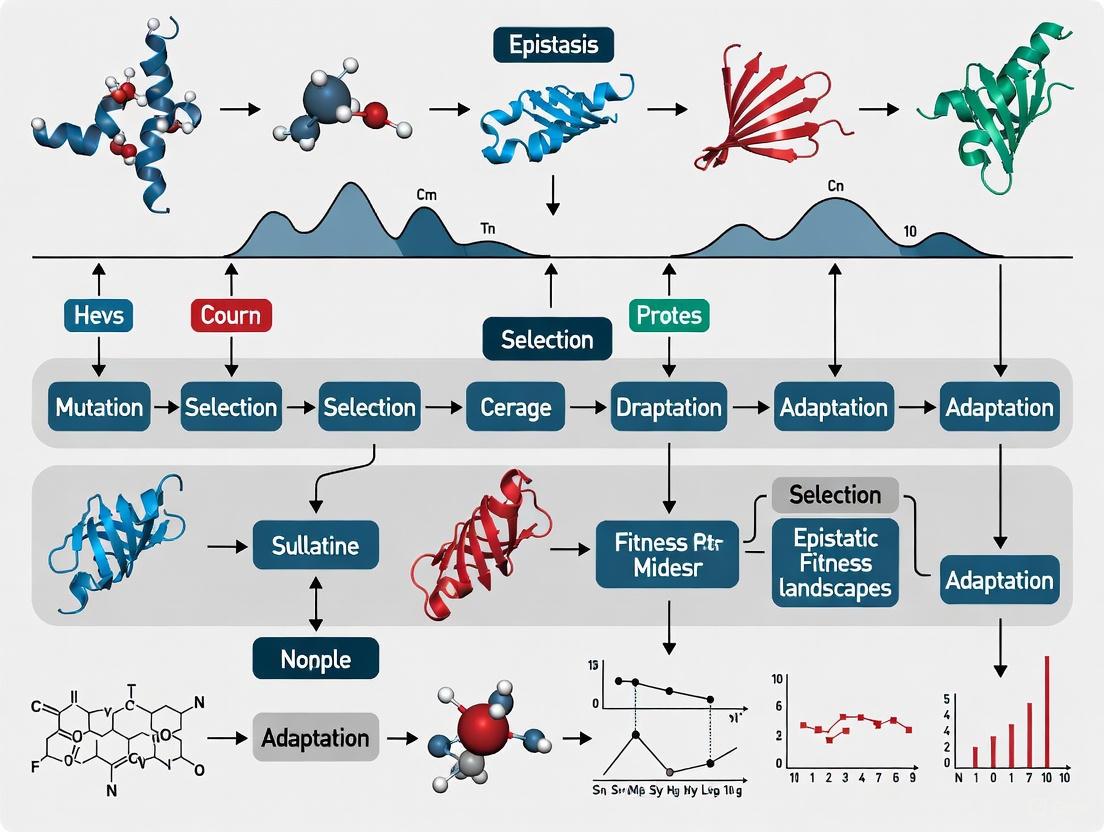
Epistasis—the context-dependent effect of mutations—creates rugged fitness landscapes that challenge predictable protein evolution and engineering.
Navigating the Rugged Terrain: Modern Strategies to Overcome Epistasis in Protein Fitness Landscapes
Abstract
Epistasis—the context-dependent effect of mutations—creates rugged fitness landscapes that challenge predictable protein evolution and engineering. This article synthesizes recent advances in understanding and overcoming epistasis, exploring its fluid and higher-order nature. We detail how machine learning models, including novel epistatic transformers and language models, are being deployed to predict mutational effects and guide directed evolution. The article provides a comparative analysis of methodological performance across diverse protein systems and offers practical troubleshooting strategies for navigating complex landscapes. Finally, we discuss validation frameworks and future directions, providing researchers and drug development professionals with a comprehensive toolkit for tackling epistasis in biomedical applications.
Understanding the Fundamental Challenge: The Fluid and Rugged Nature of Epistasis
Defining Epistasis and Fitness Landscape Ruggedness
Frequently Asked Questions (FAQs)
Fundamental Concepts
Q1: What is epistasis and why is it important in protein evolution? Epistasis is the phenomenon where the effect of a mutation on an organism's fitness depends on the genetic background in which it occurs [1]. In molecular terms, for proteins, this reflects physical interactions between residues that cause mutations to have non-additive effects on function [1] [2]. Epistasis is a major determinant in the emergence of novel protein function and shapes evolutionary trajectories by constraining or enlarging the set of possible evolutionary paths [1] [2].
Q2: What defines a "rugged" fitness landscape? A rugged fitness landscape is one characterized by many local fitness peaks and valleys, where adjacent sequences can have sharp, unpredictable changes in fitness [3]. This ruggedness arises primarily from epistatic interactions [3]. In contrast, smooth landscapes show gradual, predictable fitness changes between neighboring sequences, typically with fewer local optima [4] [5].
Q3: How do epistasis and ruggedness affect evolutionary predictability? High ruggedness makes evolutionary outcomes less predictable because populations can become trapped at suboptimal local fitness peaks, and evolutionary outcomes become strongly dependent on initial conditions and chance events [6]. Sign epistasis—where a mutation changes from beneficial to deleterious (or vice versa) depending on genetic background—creates particularly strong constraints on accessible evolutionary paths [6].
Experimental Challenges
Q4: Why is detecting epistasis so challenging in experimental studies? Epistasis detection faces a fundamental combinatorial explosion problem: the number of potential interactions increases exponentially with the number of genetic sites considered [7]. For example, searching for all possible 4-way interactions among thousands of genetic variants becomes computationally prohibitive. Additionally, measurement noise can be mistaken for epistasis if not properly controlled [1], and the apparent presence or magnitude of epistasis can depend on the chosen scale of measurement (e.g., additive on free energy versus additive on binding affinity) [1] [8].
Q5: How does landscape ruggedness impact machine learning predictions of fitness? Ruggedness dramatically reduces the predictive accuracy of machine learning models for sequence-fitness relationships [3] [9]. As landscape ruggedness increases, model performance decreases for both interpolation (predicting within training data regimes) and extrapolation (predicting beyond training data regimes) [3]. In highly rugged landscapes, even state-of-the-art models may fail completely at extrapolation tasks [3].
Table 1: Impact of Landscape Ruggedness on Machine Learning Prediction Performance
| Ruggedness Level (K value) | Interpolation R² | Extrapolation Capacity | Best-performing Model Type |
|---|---|---|---|
| Low (K=0) | ~0.9 | +3 mutational regimes | Gradient Boosted Trees |
| Moderate (K=2) | ~0.7 | +1 mutational regimes | Neural Networks |
| High (K=4) | ~0.3 | Limited | Linear Models |
| Maximum (K=5) | ~0.1 | None | All models fail |
Data adapted from systematic evaluation using NK landscape models [3]
Troubleshooting Guides
Problem: Inconsistent Epistatic Effects Across Genetic Backgrounds
Symptoms: The same pair of mutations shows different types of epistasis (positive, negative, or sign epistasis) when measured in different genetic backgrounds.
Explanation: This phenomenon, known as "fluid epistasis," occurs when higher-order interactions with the genetic background alter the relationship between two focal mutations [6]. For example, in the folA fitness landscape, a specific mutation pair (G→A at position 3 and T→C at position 7) exhibited positive epistasis in 12.7% of backgrounds, negative epistasis in 9.1%, and various forms of sign epistasis in 2.7% of backgrounds [6].
Solutions:
- Systematic Background Sampling: Measure epistatic effects across multiple defined genetic backgrounds rather than just the wildtype
- Control for Background Fitness: Analyze whether epistatic patterns correlate more with background fitness than specific genotypes
- Higher-order Modeling: Use models that explicitly account for three-way and higher interactions
Fluid Epistasis Relationships: Higher-order interactions modulate how the genetic background determines epistatic type between two mutations.
Problem: Inability to Detect Biologically Relevant Epistasis
Symptoms: Known functional interactions from biological systems are not detected by statistical epistasis scans, or detected interactions lack biological interpretability.
Explanation: Traditional approaches often assume specific forms of epistasis (e.g., only pairwise) or struggle with computational constraints that limit search depth [7]. Biological systems frequently involve higher-order interactions that are missed by these methods [7].
Solutions:
- Incorporate Biological Priors: Focus search on functionally relevant regions (e.g., protein binding pockets, catalytic sites) [2]
- Use Multi-modal Approaches: Combine statistical methods with machine learning and biophysical modeling
- Leverage Known Interactions: Start with biologically established interactions as seeds for expanded searches [7]
Table 2: Comparison of Epistasis Detection Methods
| Method Category | Examples | Strengths | Limitations | Best For |
|---|---|---|---|---|
| Statistical Models | GLM, Case-only, Mixed models | Formal hypothesis testing, interpretable parameters | Combinatorial explosion, limited to low-order interactions | Well-characterized systems with clear priors |
| Machine Learning | MDR, GMDR, RPM, DNNs | Can detect complex patterns, handle high-dimensional data | Black box, requires large datasets, computational intensity | Exploratory analysis of high-throughput data |
| Biophysical Approaches | Rosetta design, energy calculations | Mechanistic insights, physically interpretable | Dependent on structural data, computational cost | Protein engineering, binding specificity studies |
Based on analysis of methods from GAW16 and recent reviews [8] [7]
Problem: Machine Learning Models Failing on Rugged Landscapes
Symptoms: Models trained on limited mutational regimes perform poorly when predicting effects of multiple mutations or in novel sequence contexts.
Explanation: Rugged landscapes dominated by epistasis violate the smoothness assumptions implicit in many machine learning approaches [3]. As epistasis increases, the sequence-fitness mapping becomes increasingly discontinuous and context-dependent [3].
Solutions:
- Stratified Training: Explicitly train on data spanning multiple mutational regimes
- Architecture Selection: Use models with demonstrated robustness to ruggedness (e.g., certain neural architectures)
- Landscape-aware Regularization: Incorporate ruggedness metrics into model training
- Transfer Learning: Pre-train on evolutionarily related systems before fine-tuning
Key Experimental Protocols
Protocol 1: Systematic Epistasis Measurement Using Tite-Seq
Purpose: Quantify epistatic contributions to antibody-antigen binding affinity with controlled measurement error [1].
Workflow:
- Library Construction: Generate all single mutants and random double/triple mutants within target regions (e.g., CDR1H and CDR3H for antibodies)
- Tite-Seq Implementation: Use yeast display with high-throughput sequencing across multiple antigen concentration gradients
- Affinity Calculation: Extract dissociation constant (Kd) for each variant from binding curves
- Additive Model Fitting: Construct Position Weight Matrix (PWM) model from single mutant data: FPWM(s) = FWT + Σhi(si) where F = ln(Kd/c₀)
- Epistasis Quantification: Calculate epistasis as difference between measured and PWM-predicted binding free energies: ε = Fmeasured - FPWM
- Noise Control: Compute Z-scores using replicate measurements and synonymous variants to distinguish true epistasis from measurement noise
Tite-Seq Epistasis Workflow: Systematic approach from library construction to controlled epistasis quantification.
Protocol 2: Computational Design of Specificity Switches
Purpose: Engineer changes in ligand specificity while characterizing epistatic constraints [2].
Workflow:
- Binding Pocket Redesign: Use Rosetta or similar suite to redesign ligand-contacting residues for altered specificity
- Diverse Starting Poses: Generate multiple ligand docking orientations to account for binding mode uncertainty
- Variant Library Construction: Synthesize oligonucleotides encoding thousands of designed variants
- Pooled Functional Screening: Implement toggle screening (e.g., sort for DNA binding competence followed by induction response)
- Pathway Reconstruction: Synthesize all intermediate variants along evolutionary paths between start and end states
- Multi-parameter Fitness Mapping: Characterize fold induction, basal expression, maximum expression, and EC₅₀ for each variant
- Epistasis Classification: Identify specific vs. nonspecific epistasis based on physical proximity and functional effects
Research Reagent Solutions
Table 3: Essential Research Reagents and Computational Tools
| Reagent/Tool | Function | Application Examples | Key Features |
|---|---|---|---|
| Tite-Seq | High-throughput affinity measurement | Antibody-antigen binding [1] | Physical units (Kd), separates binding from expression |
| Rosetta Design Suite | Computational protein design | Ligand specificity switches [2] | Structure-based mutagenesis, energy-based scoring |
| NK Landscape Model | Tunable rugged landscape simulation | ML performance benchmarking [3] | Precisely controlled epistasis (K parameter) |
| Ancestral Sequence Reconstruction | Phylogenetic sampling of sequence space | LacI/GalR family analysis [4] | Evolutionary diverse sequences, historical trajectories |
| Deep Mutational Scanning | Comprehensive variant phenotyping | folA landscape mapping [6] | Nearly complete sequence-space coverage |
Advanced Diagnostic Approaches
Method: Epistasis Formalism and Mathematical Representation
The relationship between genotype and phenotype with epistasis can be formally represented as:
y = ΣβₐΠxᵢ^{aᵢ}
where y is the phenotype, xᵢ represents genetic variants, βₐ are epistatic parameters, and the summation is over all combinations of variants up to a certain order [7]. This formulation reveals the combinatorial challenge—the number of parameters grows exponentially with the number of genetic sites considered.
Method: Ruggedness Quantification Metrics
Dirichlet Energy: Measures the average squared fitness difference between neighboring sequences—higher values indicate more rugged landscapes [9].
Number of Local Maxima: Direct count of genotypes fitter than all their one-mutant neighbors [6] [3].
Autocorrelation: Measures fitness similarity between sequences at different mutational distances—faster decay indicates higher ruggedness [9].
Fourier Spectrum: Decomposes fitness landscape into additive components—more high-frequency components indicate higher epistasis and ruggedness [9].
Fluid Epistasis describes how the effect of a genetic mutation can change dramatically depending on the genetic background in which it occurs. This phenomenon, driven by higher-order genetic interactions, makes evolutionary outcomes difficult to predict and presents significant challenges in protein engineering and evolutionary studies [6].
Key Characteristics:
- Background Dependence: The fitness effect of a mutation is not constant but shifts across different genetic backgrounds [6]
- Higher-Order Interactions: Interactions among multiple mutations collectively reshape the effect of any single mutation [6]
- Binary Nature: A small subset of mutations exhibits strong global epistasis, while most do not [6]
- Statistical Predictability: Despite idiosyncratic individual interactions, reproducible global statistical patterns emerge [6] [10]
Frequently Asked Questions (FAQs)
Q1: Why do my mutational effect measurements produce inconsistent results across different strain backgrounds?
A: You are likely observing fluid epistasis in action. Approximately 24% of natural variants show strain-specific fitness effects due to epistatic interactions [11]. This background dependence means a mutation beneficial in one strain may be neutral or deleterious in another. To address this:
- Characterize the distribution of fitness effects (DFE) across multiple genetic backgrounds
- Identify whether mutations fall into the category exhibiting strong global epistasis (minority) or weak/no epistasis (majority) [6]
- Use statistical models that account for background fitness as a predictor of mutational effects [10]
Q2: How can I predict evolutionary trajectories when epistasis makes effects so unpredictable?
A: While individual mutational effects may be unpredictable due to epistasis, statistical regularities emerge at the distribution level. Implement these approaches:
- Phenotypic DFE Prediction: Use the fitness of a genetic background to predict its distribution of fitness effects rather than individual mutation effects [6]
- Global Epistasis Models: Apply models where mutations have additive effects on an unobserved trait that maps nonlinearly to the observed phenotype [10]
- Pattern Recognition: Look for diminishing-returns epistasis, where beneficial mutations become less beneficial in fitter backgrounds [10]
Q3: What experimental strategies can circumvent evolutionary traps created by reciprocal sign epistasis?
A: Reciprocal sign epistasis occurs when two mutations are deleterious individually but beneficial together, creating evolutionary traps. Overcoming this requires:
- Indirect Paths: Explore evolutionary paths involving gain and subsequent loss of mutations rather than direct paths [12]
- Higher-Dimensional Exploration: Utilize the full 20-amino acid diversity at sites rather than binary approaches to discover bypass routes [12]
- Evolvability-Enhancing Mutations: Identify mutations that increase the likelihood that subsequent mutations are adaptive [13]
Troubleshooting Guides
Problem: Navigating Rugged Fitness Landscapes with Multiple Peaks
Symptoms: Experimental evolution populations become trapped at suboptimal fitness peaks; inability to reach global optimum despite extensive mutagenesis.
Diagnosis and Resolution:
| Step | Procedure | Expected Outcome |
|---|---|---|
| 1 | Map local fitness landscape around trapped genotype | Identify surrounding fitness values and epistatic interactions |
| 2 | Introduce evolvability-enhancing mutations (EE mutations) | Shift DFE toward less deleterious mutations and increased beneficial mutations [13] |
| 3 | Explore indirect paths with temporary fitness losses | Circumvent evolutionary traps via mutations that are later reverted [12] |
| 4 | Implement phased selection regimes | Alternate selection pressures to escape fitness valleys |
Validation: Sequence evolved populations to confirm different mutational pathways; measure fitness gains compared to direct paths.
Problem: Unpredictable Mutation Effects Across Genetic Backgrounds
Symptoms: Same mutation shows different fitness effects in closely related strains; inability to generalize mutation effects from model strains to field isolates.
Diagnosis and Resolution:
| Step | Procedure | Expected Outcome |
|---|---|---|
| 1 | Quantify fluid epistasis for target mutations | Measure how epistasis between mutations changes across backgrounds [6] |
| 2 | Classify mutations as strong/weak epistatic | Identify which mutations show consistent vs. background-dependent effects [6] |
| 3 | Build statistical epistasis models | Predict DFE from background fitness rather than individual mutation effects [6] [10] |
| 4 | Validate with precision editing | Confirm predictions using genome editing in multiple backgrounds [11] |
Validation: High correlation between predicted and measured DFEs across diverse genetic backgrounds.
Table 1: Epistasis Patterns in Experimental Fitness Landscapes
| System | Landscape Size | Functional Variants | Epistatic Variants | Key Finding |
|---|---|---|---|---|
| E. coli folA gene | ~260,000 variants | ~7% | Fluid epistasis in most pairs | >96% of interactions show no epistasis in non-functional backgrounds [6] |
| Protein GB1 (4 sites) | 160,000 variants | 2.4% beneficial | Prevalent sign epistasis | Indirect paths circumvent evolutionary traps [12] |
| S. cerevisiae natural variants | 1,826 variants | 31% affect fitness | 24% of non-neutral variants | Beneficial variants more likely epistatic than deleterious [11] |
Table 2: Types of Epistasis and Their Evolutionary Consequences
| Epistasis Type | Definition | Evolutionary Impact | Detection Method |
|---|---|---|---|
| Diminishing-returns | Beneficial mutations less beneficial in fitter backgrounds | Declining adaptability in evolving populations [10] | Fitness effect vs. background fitness correlation |
| Sign epistasis | Mutation effect changes sign between backgrounds | Constrains accessible evolutionary paths [12] | Reciprocal fitness measurements |
| Fluid epistasis | Pairwise epistasis changes with genetic background | Limits predictability of evolution [6] | Multi-background interaction mapping |
| Global epistasis | Mutational effects predictable from few variables | Enables statistical prediction of evolution [10] | Pattern analysis in high-throughput data |
Experimental Protocols
Protocol 1: Measuring Fluid Epistasis in Protein Variants
Purpose: Quantify how genetic interactions change across backgrounds in a targeted protein region.
Materials:
- CRISPEY-BAR vector or similar precision editing system [11]
- Diverse genetic backgrounds (≥4 strains with sufficient divergence)
- Deep sequencing capability
- Fitness assay system (growth competition, binding affinity, etc.)
Procedure:
- Variant Selection: Identify target sites with suspected epistatic interactions
- Library Construction: Clone guide-donor oligomers with unique barcodes into editing vector
- Multi-Background Editing: Transform and edit variant library into each genetic background
- Competition Experiments: Compete edited pools for ~60 generations with periodic sampling
- Fitness Calculation: Estimate fitness effects from barcode frequency changes
- Epistasis Quantification: Calculate interaction coefficients across backgrounds
Data Analysis:
- Classify epistasis types (positive, negative, sign epistasis) for each pair
- Calculate fluidity as variance in epistasis type across backgrounds
- Identify mutations with strong global epistasis patterns
Protocol 2: Identifying Evolvability-Enhancing Mutations
Purpose: Discover mutations that increase potential for adaptive evolution.
Materials:
- Combinatorially complete or nearly complete fitness landscape data [13]
- Fitness measurements for all single mutants and their neighbors
- Computational resources for landscape analysis
Procedure:
- Landscape Characterization: Obtain fitness data for wild-type and all single mutants
- Neighbor Fitness Calculation: For each mutant m, compute mean fitness of all its 1-mutant neighbors
- EE Mutation Identification: Apply criteria for evolvability-enhancing mutations [13]:
- For beneficial mutations (Δw > 0): (\bar{w}({n}{m})-\bar{w}({n}{{wt}}) > \Delta w)
- For neutral mutations (Δw = 0): (\bar{w}({n}{m})-\bar{w}({n}{{wt}}) > 0)
- Validation: Confirm EE mutations shift DFE toward more adaptive mutations
Applications:
- Protein engineering starting point selection
- Adaptive evolution strain design
- Understanding evolutionary potential constraints
Research Reagent Solutions
Table 3: Essential Research Tools for Epistasis Studies
| Reagent/System | Function | Application Examples |
|---|---|---|
| CRISPEY-BAR precision editing | High-throughput genome editing with barcode tracking | Measuring fitness effects of 1,826 natural variants across 4 yeast strains [11] |
| Deep mutational scanning | Comprehensive variant fitness profiling | Characterizing ~260,000 folA gene variants [6] |
| Combinatorial complete landscapes | All possible combinations of target sites | 160,000 GB1 protein variants; 4^4=256 DHFR variants [12] |
| Transposon mutagenesis libraries | Genome-wide loss-of-function fitness effects | Tracking how DFEs change during 10,000 generations of evolution [10] |
Conceptual Diagrams
The Impact of Higher-Order Epistasis on Evolutionary Trajectories
FAQs: Understanding Higher-Order Epistasis in Experimental Evolution
Q1: What is higher-order epistasis and why does it matter for predicting evolutionary paths? Higher-order epistasis occurs when the effect of a mutation depends on interactions with two or more other mutations simultaneously. Unlike pairwise epistasis (interactions between two mutations), higher-order interactions make it impossible to predict evolutionary trajectories from the individual and paired effects of mutations alone. This creates profound unpredictability in evolution, as the effect of a mutation in an ancestral background cannot reliably predict its effect later in an evolutionary trajectory [14]. These interactions strongly shape which evolutionary paths are accessible and their probabilities, ultimately influencing evolutionary outcomes.
Q2: In practical terms, how prevalent is higher-order epistasis in empirical fitness landscapes? Higher-order epistasis is common across biological systems. Studies analyzing complete genotype-fitness maps find that statistically significant high-order epistasis appears in almost every published landscape [14] [15]. While its magnitude is generally smaller than additive and pairwise epistatic effects, it consistently makes detectable contributions to fitness variation. The contribution of epistasis to total fitness variation across different studied systems ranges from 6.0% to 32.2% [14].
Q3: What are the evolutionary consequences when higher-order epistasis is present? Higher-order epistasis profoundly influences evolutionary dynamics by:
- Altering trajectory accessibility: It can open and close evolutionary pathways, making some trajectories possible while blocking others [14].
- Creating historical contingency: The effect of a mutation depends on the specific previous substitutions in the genetic background [14].
- Generating evolutionary traps: Reciprocal sign epistasis can block direct adaptive paths, potentially requiring indirect paths with mutational reversions to circumvent these traps [16].
- Affecting drug resistance evolution: In pathogens, positive epistasis among resistance-associated mutations can alleviate fitness costs and create fitness valleys that prevent reversal of resistance, leading to persistent drug resistance even after drug withdrawal [17].
Q4: What experimental approaches can effectively detect and quantify higher-order epistasis? The most robust approach involves:
- Constructing complete genotype-fitness maps: Measuring fitness for all possible combinations of a set of mutations (e.g., all 32 combinations for 5 mutations) [14] [16].
- Statistical decomposition: Using Walsh polynomials or Fourier-Walsh transformation to decompose fitness variation into additive, pairwise, and higher-order components [14] [18].
- Scale linearization: Empirically determining a nonlinear scale for each map using power transforms before analysis to account for potential confounding effects [14]. This approach allows researchers to quantify the specific contribution of each order of epistasis to the total fitness variation.
Q5: How can researchers overcome evolutionary constraints imposed by epistasis? Experiments on protein fitness landscapes reveal that evolutionary traps created by epistasis can be circumvented through indirect paths in sequence space. These paths may involve gaining a mutation that paves the way for other beneficial mutations, followed by subsequent loss of the initial mutation once the epistatic constraint is overcome. The high dimensionality of protein sequence space (20L for a protein with L amino acid sites) provides many such alternative routes for adaptation that are not accessible through direct paths alone [16].
Troubleshooting Guides for Epistasis Experiments
Guide 1: Addressing Unpredictable Evolutionary Trajectories
Problem: Evolutionary trajectories in experiments deviate significantly from predictions based on individual mutation effects.
Explanation: This typically occurs when higher-order epistatic interactions influence mutational effects in different genetic backgrounds. The magnitude of epistasis, rather than its specific order, primarily predicts its effects on evolutionary trajectories [14].
Solution:
- Characterize complete genotype networks: Don't rely solely on individual mutations and pairs. Use experimental evolution to track trajectories across multiple genetic backgrounds [19].
- Account for nonlinear scales: Epistasis models assume mutational effects add, but they may combine multiplicatively or on other nonlinear scales. Empirically determine the proper scale for your system [14].
- Model higher-order terms: Incorporate third-order and higher epistatic coefficients in predictive models, as they can significantly alter evolutionary outcomes despite their smaller magnitude [14].
Guide 2: Managing Compensatory Evolution in Drug Resistance Studies
Problem: Drug resistance mutations persist despite fitness costs, contrary to expectations they would disappear when drug selection pressure is removed.
Explanation: Positive epistasis among resistance mutations can create fitness landscapes where resistance mutations are maintained through compensatory effects. This produces fitness barriers that prevent reversion to susceptibility [17].
Solution:
- Map collateral sensitivity: Identify drugs to which resistant strains become hypersensitive, creating alternative treatment strategies [19].
- Monitor evolutionary landscapes: Use experimental evolution with sequential regimens that maximize collateral sensitivity while minimizing cross-resistance [20].
- Profile fitness trade-offs: Quantify the fitness costs of resistance mutations across multiple genetic backgrounds to identify which combinations might persist [17].
Table 1: Contributions of Different Epistatic Orders to Fitness Variation Across Experimental Systems
| Dataset | Additive (%) | Pairwise Epistasis (%) | Third-Order (%) | Fourth-Order (%) | Fifth-Order (%) | Total Epistasis (%) |
|---|---|---|---|---|---|---|
| I | 94.0 | 3.8 | 1.2 | 0.9 | 0.1 | 6.0 |
| II | * | * | * | * | * | * |
| IV | * | * | * | * | * | * |
| V | * | * | * | * | * | * |
| VI | * | * | * | * | * | 32.2 |
Note: Exact values for some datasets are not fully specified in the search results. The pattern shows substantial variation between systems, with total epistasis contributions ranging from 6.0% to 32.2% [14].
Table 2: Experimental Evolution Approaches for Studying Epistasis
| Method | Key Features | Applications | Limitations |
|---|---|---|---|
| Serial Batch Transfer | Repeated growth and transfer in liquid medium; adjustable selective pressure | Studying resistance dynamics in Candida species [19] | Simplified environment lacking host factors |
| Chemostat Culture | Continuous growth in controlled conditions; steady-state population dynamics | Fundamental evolutionary studies [19] | Technical complexity; may select for adherence mutants |
| In Vivo Experimental Evolution | Evolution in animal models; includes host-pathogen interactions | Studying resistance in clinically relevant conditions [19] | Lower selective pressure; ethical and cost considerations |
| High-Throughput Fitness Profiling | Deep mutational scanning of mutant libraries; thousands of genotypes | Mapping genetic interactions in HIV-1 protease [17] | Requires specialized sequencing and computational resources |
Experimental Protocols
Protocol 1: Constructing Complete Genotype-Fitness Maps
Purpose: To empirically measure a complete fitness landscape for a set of mutations, enabling detection and quantification of higher-order epistasis.
Materials:
- Library of variants covering all combinations of target mutations
- Appropriate selection system (antibiotics, fluorescence sorting, etc.)
- High-throughput sequencing capability
- Facilities for competitive fitness assays
Procedure:
- Generate mutant library: Create all possible combinations of L target mutations (2L genotypes for biallelic sites) using codon randomization or synthetic DNA assembly [16].
- Measure fitness: For each genotype, determine fitness relative to a reference using either:
- Competitive growth assays: Mix genotypes and track frequency changes over time
- Direct fitness measurements: Measure growth rates or survival under selection
- Linearize the map: Empirically determine the proper power transformation to linearize the fitness scale and account for nonlinearity [14].
- Decompose epistasis: Apply Walsh transformation to partition fitness variance into additive, pairwise, third-order, fourth-order, and fifth-order components [14] [18].
- Validate significance: Use statistical testing to identify epistatic coefficients significantly different from zero, accounting for multiple comparisons.
Troubleshooting:
- If library coverage is incomplete, use imputation methods or focus on well-sampled regions
- If measurement noise obscures signals, increase biological replicates and implement error models
- If transformation doesn't linearize the map, consider alternative scale transformations
Protocol 2: Experimental Evolution to Track Trajectories
Purpose: To observe evolutionary trajectories in real-time and identify how epistasis influences path accessibility.
Materials:
- Ancestral strain(s)
- Selective conditions (drug gradient, specific nutrients, etc.)
- Serial transfer equipment
- Genotyping or sequencing capability
Procedure:
- Initiate parallel lineages: Start multiple replicate populations from the same ancestor.
- Apply selection: Expose populations to constant or fluctuating selective pressure.
- Sample regularly: At each transfer, archive samples for later analysis.
- Monitor genotypic changes: Sequence populations at multiple time points to reconstruct evolutionary trajectories.
- Measure fitness effects: Isolate evolved mutants and measure their fitness in different genetic backgrounds.
- Identify interactions: Look for mutations whose effects change depending on the presence of other mutations.
Analysis:
- Calculate the probability of each observed trajectory
- Compare observed trajectories to expectations without epistasis
- Identify instances of historical contingency where mutation effects change along trajectories
Visualizations
Diagram 1: Epistasis Blocks Direct Paths but Indirect Paths Enable Adaptation
Diagram 2: Experimental Evolution Workflow for Epistasis Studies
Research Reagent Solutions
Table 3: Essential Research Reagents and Resources for Epistasis Studies
| Reagent/Resource | Function | Application Examples |
|---|---|---|
| Codon-Randomized Mutant Libraries | Generation of all amino acid combinations at target sites | Studying 160,000 variants across 4 sites in protein GB1 [16] |
| Fluorescent Protein Markers (GFP, RFP) | Strain labeling for competitive fitness measurements | Tracking population dynamics in experimental evolution [19] |
| DNA Barcoding Systems | High-throughput quantification of subpopulation sizes | Multiplexed fitness measurements using next-generation sequencing [19] |
| Antifungal/Antibiotic Resistance Markers | Selection and differentiation of strains | Studying drug resistance evolution in pathogens [17] [19] |
| Walsh Transformation Software | Decomposition of fitness landscapes into epistatic coefficients | Quantifying contributions of different epistatic orders [14] [18] |
| Experimental Evolution Platforms | Controlled environments for evolutionary studies | Chemostats, serial batch culture for long-term evolution [19] |
Welcome to this technical support center, designed as a resource for researchers investigating epistatic interactions within fitness landscapes, using genes like folA (dihydrofolate reductase, DHFR) as a primary model. Epistasis—where the effect of one mutation depends on the presence of other mutations—is a fundamental challenge in genetics, protein engineering, and drug development [21]. This guide provides targeted troubleshooting advice and detailed protocols to help you navigate the complexities of detecting, quantifying, and interpreting these interactions, framed within the broader goal of overcoming epistasis in protein fitness landscape research.
Section 1: Fundamental Concepts & FAQs
FAQ 1.1: What is the core difference between statistical and biological epistasis?
- Answer: It is crucial to distinguish between these two concepts, as a signal in one does not guarantee a signal in the other.
- Biological (or Compositional) Epistasis: Refers to the physical interaction between biomolecules within networks and pathways. It is a functional property of the system [22] [21]. An example is one mutated protein in a pathway masking the effect of another.
- Statistical Epistasis: Defined as a deviation from additivity in a mathematical model for a phenotype (e.g., a regression model) [22] [21]. It is a population-level measure and may not directly correspond to a physical interaction.
FAQ 1.2: Why is thefolA/DHFR system a canonical model for studying epistasis?
- Answer: The DHFR enzyme, encoded by the
folAgene in bacteria, is a well-established model due to its role in antimalarial and antibiotic drug resistance. Key reasons include:- Proven Epistasis: Specific combinations of mutations in DHFR confer resistance to drugs like pyrimethamine, and the fitness effects of these mutations are highly dependent on genetic background and environmental conditions [23].
- Structural and Functional Knowledge: Its well-characterized structure and mechanism allow for biophysical interpretation of epistatic measurements.
- Evolutionary Relevance: Studying how mutations combine in DHFR helps predict paths of drug resistance evolution.
Section 2: Experimental Design & Troubleshooting
FAQ 2.1: Our genome-wide epistasis screen has a high false-positive rate. What are the key analysis parameters to check?
- Answer: High false-positive rates in screens like Genome-Wide Association Interaction Studies (GWAIS) often stem from inappropriate analytical choices. You must control for the following [22]:
- Effect Encoding: Using an additive encoding scheme for genotypes can elevate Type I error rates. Ensure your model is appropriate for the suspected interaction.
- Population Structure: Failure to correct for population stratification can create spurious association signals. Include principal components or a relatedness matrix as covariates.
- Linkage Disequilibrium (LD): High LD between distant SNPs may induce redundant epistasis signals. Apply appropriate LD pruning.
- Multiple Testing Correction: The dependencies between interaction test statistics affect standard correction methods (like Bonferroni). Use a permutation procedure or another method validated for epistasis screening.
FAQ 2.2: How can we improve the statistical power of our interaction screen?
- Answer: Consider implementing a multi-stage screening approach to reduce the multiple testing burden. An example protocol is summarized below [22]:
Protocol: Multi-Stage Epistasis Screening
- Stage 1 - Test H1 vs. Full Model: Test an intercept-only model (H1:
g(p) = α) against the full model (HA:g(p) = α + β1*SNP1 + β2*SNP2 + β12*SNP1*SNP2). - Stage 2 - Test H2 vs. Full Model: Test a main-effect model for SNP1 (H2:
g(p) = α + β1*SNP1) against the full model. - Stage 3 - Test H3 vs. Full Model: Test a main-effect model for SNP2 (H3:
g(p) = α + β2*SNP2) against the full model. - Stage 4 - Test H4 vs. Full Model: Test an additive model with both SNPs (H4:
g(p) = α + β1*SNP1 + β2*SNP2) against the full model.
- Corrective Method: Maintain Type I error control using a static (pre-estimated number of tests) or adaptive (actual number of tests per stage) Bonferroni correction. If the phenotype can be described by a simpler model at any stage, the SNP pair is excluded, reducing the number of tests in subsequent stages.
The following workflow diagram illustrates this multi-stage protocol and the related concept of global epistasis analysis:
FAQ 2.3: The fitness effects of our mutations change with drug concentration. Is this normal?
- Answer: Yes, this is a well-documented phenomenon known as environmental modulation of epistasis. The concentration of an antimicrobial drug is a powerful environmental variable that can reshape the fitness landscape [23]. For instance, a mutation might be neutral in a no-drug environment but beneficial at a high drug concentration. Furthermore, the very pattern of global epistasis (e.g., diminishing returns) can shift as the environment changes.
Section 3: Data Analysis & Interpretation
FAQ 3.1: How do we quantify the strength and global nature of epistasis for a specific mutation?
- Answer: You can map any mutation based on two key quantitative metrics. For a focal mutation
iand a set of genetic backgroundsB[23]:- Strength of Epistasis: Calculated as
Variance(Δfi) / Variance(f(B)).- High value: The mutation's effect is highly variable and dependent on the genetic background.
- Low value: The mutation's effect is relatively constant (additive).
- Degree of Global Epistasis: Calculated as the
R²of the regression of the mutation's fitness effect(Δfi)against the background fitness(f(B)).- High R²: Epistasis is largely "global" and can be predicted from background fitness.
- Low R²: Epistasis is "idiosyncratic" and specific to particular genetic interactions.
- Strength of Epistasis: Calculated as
The table below summarizes how to interpret these metrics:
Table: Interpreting Epistasis Metrics
| Strength of Epistasis (Variance Ratio) | Degree of Global Epistasis (R²) | Interpretation |
|---|---|---|
| Low (e.g., ~0) | High | Effects are mostly additive and predictable. |
| High (e.g., ~1 or above) | High | Strong, globally predictable epistasis (e.g., diminishing returns). |
| High (e.g., ~1 or above) | Low | Strong, idiosyncratic epistasis; difficult to predict from background fitness alone. |
FAQ 3.2: What is "global epistasis" and how can we model it?
- Answer: Global epistasis is a phenomenon where the fitness effect of a mutation correlates with the fitness of its genetic background, often following a simple linear relationship [23] [10]. The most common pattern is diminishing returns epistasis, where beneficial mutations have a smaller effect in fitter genetic backgrounds.
A typical workflow for analyzing global epistasis involves:
- Measuring the fitness
f(B)of all genetic backgrounds lacking the focal mutation. - Measuring the fitness effect
Δfiof adding the focal mutation to each background. - Plotting
Δfiagainstf(B)and fitting a regression model (e.g., linear) to quantify the relationship.
Section 4: Advanced Applications & Reagents
FAQ 4.1: Can we use machine learning to predict fitness landscapes with epistasis?
- Answer: Yes, machine learning (ML) is a powerful tool for this task. However, the performance of different ML architectures is highly dependent on the ruggedness of the fitness landscape, which is governed by epistasis [24]. When selecting or evaluating an ML model, you must assess its performance against key metrics, including:
- Robustness to increasing epistasis/ruggedness.
- Ability to interpolate within the training domain.
- Ability to extrapolate to new, unseen genotypes (positional extrapolation).
FAQ 4.2: What are the essential reagents and computational tools for studying epistasis in a gene likefolA?
- Answer: Below is a table of key solutions for constructing and analyzing epistatic interactions.
Table: Research Reagent Solutions for Epistasis Studies
| Item | Function/Description | Example/Application |
|---|---|---|
| Site-Directed Mutagenesis Kits | To systematically introduce specific point mutations into the gene of interest (e.g., folA). |
Creating all single and combination mutants for a deep mutational scan. |
| Deep Mutational Scanning (DMS) Library | A comprehensive library of gene variants for high-throughput functional screening under selective pressure (e.g., with an antifolate drug) [25]. | Empirically mapping the fitness of thousands of variants in a single experiment. |
| Antifolate Drugs (Pyrimethamine, Cycloguanil) | Selective agents used to apply pressure and reveal fitness differences between DHFR variants [23]. | Modulating the environment to study how epistasis changes with drug dose. |
| Protein Language Models (e.g., ESM-2) | Pre-trained deep learning models that can predict the functional effects of protein sequences by learning evolutionary patterns [25]. | Tools like CoVFit can be adapted to predict fitness of folA variants and identify epistatic interactions from sequence alone. |
| Thermodynamic Models | Biophysical models that predict how mutations affect protein folding and ligand-binding stability, providing a mechanistic basis for observed epistasis [26]. | Interpreting why certain mutations show synergistic or antagonistic interactions. |
Statistical Patterns and the 'Binary' Nature of Epistatic Mutations
FAQs: Understanding Epistasis in Experimental Research
What is epistasis and why does it matter for my protein engineering work? Epistasis occurs when the effect of one mutation depends on the presence or absence of other mutations in the genetic background [27]. This is critical because it determines whether adaptive evolutionary paths are possible and predictable. In protein fitness landscapes, epistasis can create evolutionary traps where certain beneficial combinations are inaccessible via direct mutational paths, requiring indirect routes that temporarily lose fitness before gaining it later [16].
I've heard epistasis is "binary" - what does this mean for my experiments? Recent research on the E. coli folA gene landscape revealed that mutations can be classified into two distinct groups: a small fraction exhibit extremely strong patterns of global epistasis, while most mutations do not [28]. This "binary" nature means that in your experiments, you should anticipate that only a few key mutations will drive most of the complex epistatic interactions, while many others will have more additive effects.
How does the "fluidity" of epistasis affect my experimental predictions? Epistasis is "fluid" - the interaction between any two mutations can change dramatically depending on the genetic background [28]. For example, a pair of mutations might show positive epistasis in 26% of backgrounds, negative epistasis in 34%, and no epistasis in 32% across different genotypes [28]. This means predictions from one genetic context may not transfer to others.
What are the practical implications of high-order epistasis? Studies of 13 mutation pathways in fluorescent proteins show extensive high-order epistasis (interactions among three or more mutations) [29]. This means you cannot accurately predict phenotypes from pairwise interactions alone - you must consider higher-order interactions, especially when working with more than 2-3 mutations.
How can I overcome evolutionary traps caused by reciprocal sign epistasis? Research on GB1 protein demonstrates that while reciprocal sign epistasis blocks direct adaptive paths, proteins can circumvent these traps via indirect paths that involve gaining and then losing mutations [16]. This suggests exploring sequences beyond immediate Hamming distance neighbors may reveal accessible evolutionary paths.
Key Experimental Data on Epistatic Patterns
Table 1: Quantitative Patterns of Epistasis Across Protein Systems
| Protein System | Number of Variants Tested | Key Finding on Epistasis | Epistasis Order Observed | Accessible Paths |
|---|---|---|---|---|
| GB1 Protein [16] | 160,000 (204) | Indirect paths circumvent evolutionary traps | Up to 4th order | 1-12 of 24 direct paths accessible; indirect paths provide alternatives |
| eqFP611 Fluorescent Protein [29] | 8,192 (213) | Extensive high-order epistasis detected | Up to 13th order | Color switch requires specific cooperative mutations |
| TtgR Transcription Factor [30] | ~3,500 designed variants | Specific epistasis shapes inducer specificity | 4 mutations in binding pocket | Computational design identified functional combinations |
| E. coli folA (DHFR) [28] | ~260,000 sequences | "Binary" pattern: few mutations show strong epistasis | Up to 9th order | Highly navigable despite 514 fitness peaks |
Table 2: Epistasis Fluidness in folA Gene (9-bp region)
| Epistasis Type | Frequency in High Fitness Backgrounds | Frequency in Low Fitness Backgrounds |
|---|---|---|
| Positive Epistasis | 41% (median) | 21% (median) |
| Negative Epistasis | 23% (median) | 22% (median) |
| No Epistasis | 16% (median) | 30% (median) |
| Sign Epistasis | Relatively rare | 13% median for "Other Sign Epistasis" |
| Reciprocal Sign Epistasis | 0.67% (example pair) | 7.65% (example pair) |
Experimental Protocols for Epistasis Mapping
High-Throughput Combinatorial Mutagenesis and Deep Sequencing
Purpose: To empirically characterize fitness landscapes and detect epistatic interactions across many variants [16] [29].
Procedure:
- Library Construction: Use codon randomization or iterative gene synthesis to generate all possible amino acid combinations at target sites. For the GB1 study, this created 160,000 (204) variants at four sites [16].
- Selection System: Couple protein variants to their encoding mRNA via mRNA display or express in cellular systems with selectable reporters [16] [29].
- Fitness Measurement: Apply selection pressure (e.g., binding affinity for GB1, fluorescence brightness for eqFP611) [16] [29].
- Deep Sequencing: Sequence library pre- and post-selection using Illumina sequencing to quantify variant frequencies [16].
- Fitness Calculation: Compute relative fitness from frequency changes: Fitness = (frequencypost-selection)/(frequencypre-selection) [16].
- Epistasis Analysis: Calculate epistatic coefficients using mathematical transforms that decompose phenotypes into additive and interaction terms [29].
Computational Design of Epistatic Regions
Purpose: To engineer proteins with novel specificities by targeting epistatic regions [30].
Procedure:
- Pose Generation: Dock target ligand into binding pocket in multiple orientations (16 poses used for TtgR-resveratrol) [30].
- Rosetta Design: Redesign ligand-contacting residues with constrained backbone flexibility, generating thousands of design variants (~19,000 for TtgR) [30].
- Variant Curation: Apply scoring metric cutoffs to select promising variants (~3,500 for TtgR) [30].
- Pooled Screening: Express variant library in cells with reporter system (GFP for TtgR) and sort based on activity [30].
- Toggle Screening: Sequential sorting for desired properties (e.g., DNA binding competence followed by induction response) [30].
- Isolation and Validation: Isitate top performers and characterize dose-response curves for multiple inducers [30].
Visualization of Key Concepts
Epistasis in Protein Evolution Paths
Experimental Workflow for Fitness Landscape Mapping
Binary Nature of Mutational Effects
Research Reagent Solutions
Table 3: Essential Research Tools for Epistasis Studies
| Reagent/Resource | Function in Epistasis Research | Example Application |
|---|---|---|
| Combinatorial Mutagenesis Libraries | Generates full sequence space coverage | GB1 (204 variants) [16]; eqFP611 (213 variants) [29] |
| mRNA Display Technology | Links genotype to phenotype for in vitro selection | GB1 fitness measurements [16] |
| Fluorescence-Activated Cell Sorting (FACS) | High-throughput phenotyping and screening | eqFP611 brightness selection [29]; TtgR reporter assays [30] |
| Illumina Deep Sequencing | Quantifies variant frequencies pre-/post-selection | Fitness calculation for thousands of variants [16] [29] |
| Rosetta Software Suite | Computational protein design predicting functional variants | TtgR binding pocket redesign [30] |
| Chip DNA Synthesis | Synthesis of large variant libraries | TtgR 3,500 variant library [30] |
Computational Arsenal: Machine Learning and Modeling Approaches for Epistatic Landscapes
Troubleshooting Guide
Q1: My model's predictions are inaccurate for protein variants that are distant from the training sequences. How can I improve generalization?
A: This is a common challenge when epistatic interactions in distant regions of sequence space are not captured by the model. The solution is to incorporate higher-order epistasis.
- Root Cause: Models limited to additive or pairwise (2nd-order) epistasis often fail to generalize to genotypes with higher mutational load (greater Hamming distance from training data) because they miss critical interactions among three or more amino acid sites [31].
- Solution: Increase the model's epistatic order. Use an epistatic transformer with 3 layers of multi-head attention (MHA) to model interactions among up to 8 sites. Research shows that for distant genotypes, the contribution of higher-order epistasis (3-way and 4-way interactions and above) can become the dominant factor, accounting for over 60% of the explained epistatic variance in some cases [31].
- Verification: After retraining your higher-order model, bin your test genotypes by their mean Hamming distance to the training set. You should observe that the performance gap (in R²) between your 8th-order model and an additive model widens with increasing distance, confirming the importance of higher-order terms for generalization [31].
Q2: How can I determine if my dataset has significant higher-order epistasis, and what order of interactions I should model?
A: Systematically fit and compare a series of models with increasing epistatic complexity.
- Diagnostic Procedure: Fit your data using the epistatic transformer framework with M=1, 2, and 3 layers (corresponding to pairwise, 4th-order, and 8th-order specific epistasis). For each model, calculate the R² on a held-out test set [32] [33].
- Interpretation: Calculate the "percent epistatic variance" for each order. The gain in R² from the additive to the pairwise model shows the importance of 2nd-order epistasis. The further gain from the pairwise to the 4th-order model shows the contribution of 3rd- and 4th-order interactions. In applied studies, the contribution of higher-order epistasis (within the epistatic component) has been found to range from negligible to over 60%, depending on the protein [32] [33].
- Decision Point: If the performance gain from adding another layer (e.g., from 4th-order to 8th-order) is marginal, your landscape may be sufficiently described by lower-order terms. However, for multi-peak landscapes or tasks requiring prediction far from the training data, defaulting to a higher-order model is recommended [31].
Q3: The training process is computationally expensive and slow. Are there ways to improve efficiency?
A: Yes, computational demands are a known challenge. Consider architectural optimizations and hyperparameter tuning.
- Hyperparameter Search: The epistatic transformer architecture was designed with efficiency in mind. Use the Optuna framework for an automatic hyperparameter search to efficiently find an optimal configuration, preventing wasteful cycles on suboptimal setups [31].
- Alternative Architectures: Explore newer, more efficient architectures inspired by the epistasis problem. For example, the Lyra architecture combines state space models (for global epistasis) and gated convolutions (for local epistasis), achieving state-of-the-art performance with orders-of-magnitude fewer parameters and faster inference than standard transformers [34].
- Distributed Training: For very large-scale datasets (e.g., genome-wide association studies), a distributed transformer framework that partitions the key matrix has been shown to be effective. This approach allows the model to be scaled across multiple AI accelerators, making high-order epistasis detection in large datasets feasible [35].
Q4: How can I validate that the higher-order interactions captured by the model are biologically real?
A: Validation requires combining computational checks with experimental evidence.
- Computational Validation on Simulated Data: First, test your entire pipeline on a simulated fitness landscape with known, predefined higher-order interactions. The epistatic transformer has been shown to accurately recapitulate true variance components in such settings [31].
- Experimental Cross-Validation: If available, use a multi-peak fitness landscape for validation. For instance, a study on four orthologous green fluorescent proteins (GFPs) showed that models with higher-order epistasis generalized better across the different wild-type peaks. Train your model on data from some GFP orthologs and test its prediction accuracy on the others. Superior performance of the higher-order model indicates it captures genuine, transferrable biological constraints [31].
- Statistical Checks: Analyze the model's latent space
ϕ(x). The structure of the inferred landscape should be consistent with population genetics principles and known biophysical properties of the protein [36].
Frequently Asked Questions (FAQs)
Q1: What is the fundamental difference between an epistatic transformer and a standard transformer?
A: The key difference is architectural modification to explicitly control the maximum order of specific epistasis. In a standard transformer, it's difficult to disentangle the orders of interaction. The epistatic transformer makes two critical changes [32] [33]:
- Bypassing with Raw Embeddings: In each MHA layer, the query (Q) and key (K) are generated from the previous layer's output, but the value (V) tensor is directly taken from the raw input embeddings (
Z0). This prevents the model from implicitly creating interactions of unlimited order within a single layer. - Simplified Layers: It removes components like LayerNorm and feedforward networks within the attention block. This streamlined design ensures that after
Mlayers, the output embeddings contain specific epistatic interactions exactly up to order2M.
Q2: Can this architecture be applied to genetic data beyond protein sequences (e.g., for GWAS)?
A: Yes, the transformer architecture is highly adaptable. A distributed transformer framework has been successfully applied to genome-wide association studies (GWAS) to detect high-order epistasis between Single Nucleotide Polymorphisms (SNPs). This method partitions the SNP data and uses a combination of attention scores and gradient calculations to identify interacting SNP combinations up to the 8th order, outperforming other deep learning models like MLPs and CNNs on several benchmark diseases [35].
Q3: How does the model distinguish between "specific epistasis" and "non-specific (global) epistasis"?
A: The model uses a compartmentalized structure defined by the equation f(x) = g(ϕ(x)) [32] [33].
ϕ(x): This is the latent phenotype, modeled by the core transformer blocks. It is an additive sum of independent amino acid effects and all specific epistatic interactions up to a chosen order (see Eq. 2 in [33]).g: This is a final, monotonic nonlinear activation function (e.g., a sigmoid) that maps the latent phenotypeϕ(x)to the actual measurement scale of the observed function. This single nonlinearity captures the global epistasis that applies uniformly across all sequences.
This clear separation allows researchers to directly attribute improvements in model performance to the specific epistatic interactions within ϕ(x).
Experimental Protocols & Workflows
Key Experiment: Quantifying Epistatic Order in a Protein Dataset
Objective: To systematically measure the contribution of pairwise and higher-order epistasis to the function of a protein using the epistatic transformer.
Detailed Methodology [31] [32] [33]:
- Data Preparation: Start with a combinatorial mutagenesis dataset (e.g., for protein GRB-1 or AAV2-Capsid). Randomly split the data, using 80% for training and 20% for testing. Perform multiple replicates (e.g., 3-5) with different random splits.
- Model Training Series:
- Train an additive model (a simplified version with no MHA layers).
- Train a pairwise epistasis model (M=1 MHA layer).
- Train a 4th-order epistasis model (M=2 MHA layers).
- Train an 8th-order epistasis model (M=3 MHA layers).
- All models should include a final nonlinear function
gto account for global epistasis.
- Model Evaluation & Analysis:
- Calculate the R² for each model on the held-out test set.
- Compute the percent epistatic variance for each order:
- Pairwise:
(R²_pairwise - R²_additive) / (1 - R²_additive) - 3rd & 4th-order:
(R²_4way - R²_pairwise) / (1 - R²_additive) - 5th to 8th-order:
(R²_8way - R²_4way) / (1 - R²_additive)
- Pairwise:
- The sum of these percentages indicates the total variance explained by specific epistasis.
The workflow for this key experiment is summarized in the following diagram:
Key Workflow: Generalization to Distant Genotypes
Objective: To evaluate the necessity of higher-order epistasis for predicting the function of protein variants that are far away in sequence space from the training data.
Detailed Methodology [31]:
- Data Preparation: Use a dataset with wide sequence diversity (e.g., AAV2-Capsid or cgreGFP). Sample a small fraction (e.g., 20%) of genotypes randomly for training. The remaining 80% will be the test pool.
- Binning by Distance: For each genotype in the test pool, calculate its mean Hamming distance to the entire training set. Bin the test genotypes into discrete distance classes based on this value.
- Model Training & Prediction: Train both an additive model and an 8th-order epistatic transformer model on the small training sample. Use these models to predict the phenotypes for all test genotypes.
- Performance Analysis:
- For each distance class, calculate the test R² for both the additive and the 8th-order model.
- Plot the R² values against the distance classes. The gap between the two curves represents the variance explained by all orders of specific epistasis for that distance.
- Furthermore, the "percent epistatic variance" attributable to pairwise vs. higher-order interactions can be decomposed at different distances.
Table 1: Performance Comparison of Epistatic Models on Protein Datasets
| Protein Dataset | Additive Model R² | Pairwise Model R² | 4th-order Model R² | 8th-order Model R² | % Epistatic Variance from Higher-Orders |
|---|---|---|---|---|---|
| GRB-1 | Data not provided in sources, but the analysis follows this pattern. The percent epistatic variance from higher-orders is calculated from the R² values. | ||||
| AAV2-Capsid | Data not provided in sources, but the analysis follows this pattern. The percent epistatic variance from higher-orders is calculated from the R² values. | ||||
| Simulated Landscape | High R² achievable, but model fails to recapitulate true higher-order variance components. | Good R², but only captures up to 2nd-order interactions. | Better R², captures up to 4th-order interactions. | Best R², aligns with ground-truth variance components. | Up to 100% of the epistatic variance in a simulated 8th-order landscape [31]. |
Table 2: Detection Power of Deep Learning Models for High-Order Epistasis (on Simulated Genetic Data) [35]
| Interaction Order | Proposed Framework (Attention + Gradients) | Transformer (Attention Only) | CNN (Saliency Maps) | MLP (Layerwise Relevance) |
|---|---|---|---|---|
| 2nd Order | ~99% (Additive Model) | ~90% | ~85% | ~75% |
| 5th Order | ~75% (Multiplicative Model) | ~44% | ~30% | <10% |
| 8th Order | Maintains significant detection power | Performance declines | Performance declines severely | Not reported |
The Scientist's Toolkit: Key Research Reagents & Solutions
Table 3: Essential Components for an Epistatic Transformer Study
| Item / Reagent | Function / Description | Example or Note |
|---|---|---|
| Combinatorial Mutagenesis Dataset | Provides the sequence-function data for training and testing the model. Must be large enough to support complex model fitting. | AAV2-Capsid, GRB-1, cgreGFP, and other datasets from 10 large-scale protein studies were used [31]. |
| Epistatic Transformer Software | The core machine learning architecture for modeling fixed-order epistasis. | Custom implementation based on a modified transformer. Key features: modified MHA and removal of LayerNorm/softmax [32] [33]. |
| Hyperparameter Optimization Framework | Automates the search for the best model configuration, saving time and computational resources. | Optuna was used in the original study [31]. |
| Multi-Peak Fitness Landscape Data | Serves as a rigorous benchmark for testing model generalization and transferability across distinct sequence regions. | Data from four orthologous green fluorescent proteins (avGFP, amacGFP, ppluGFP2, cgreGFP) [31]. |
| Distributed Computing Resources | Enables training on very large datasets (e.g., full genomes) by parallelizing computations. | A distributed transformer framework was scaled across AI accelerators for GWAS-scale data [35]. |
Protein Language Models (e.g., ESM-2, CoVFit) for Fitness Prediction
What are Protein Language Models (PLMs) and how are they relevant to fitness prediction?
Protein Language Models (PLMs), such as ESM-2 and CoVFit, are a class of artificial intelligence models that apply transformer architectures—similar to those powering large language models like ChatGPT—to the "language" of proteins. Instead of words, these models are trained on extensive datasets of protein sequences composed of the 20 amino acids. They learn the underlying patterns and "grammar" that govern protein structure and function, allowing them to predict protein properties directly from their amino acid sequence alone [37]. For fitness prediction, a PLM can be fine-tuned to estimate the relative reproductive success (fitness) of a protein variant, such as a viral spike protein, based solely on its sequence. This enables researchers to rapidly identify high-risk variants or design optimized proteins without requiring resource-intensive experimental measurements for every new sequence [25].
What is epistasis and why is it a central challenge?
Epistasis occurs when the effect of one mutation depends on the presence or absence of other mutations in the same protein [12]. This interaction makes the fitness landscape rugged, creating evolutionary traps where direct paths to higher fitness are blocked. A specific and powerful type is reciprocal sign epistasis, where two mutations are individually deleterious but become beneficial when combined. This phenomenon severely constrains the number of accessible evolutionary paths a protein can take to reach a high-fitness state [12]. Overcoming epistasis is therefore critical for accurately predicting fitness and understanding protein evolution.
Frequently Asked Questions (FAQs)
Q: How can PLMs like ESM-2 account for epistasis when previous statistical models could not? Traditional statistical models often represented fitness as a simple linear combination of individual mutation effects, completely ignoring interactions between mutations [25]. In contrast, PLMs like ESM-2 are context-aware. During training, they learn to understand how the identity of an amino acid at one position influences the role of amino acids at other positions. This allows the model to capture the complex, higher-order interactions that constitute epistasis, providing a more accurate prediction of a variant's overall fitness from its complete sequence [25].
Q: My model's fitness predictions are inaccurate for newly emerging variants. What could be wrong? This is a common issue when a model encounters sequences that are too divergent from those in its training set. Solutions include:
- Domain Adaptation: First, perform additional pre-training of a general-purpose PLM (like ESM-2) on a large corpus of sequences relevant to your specific problem. For example, the developers of CoVFit created ESM-2Coronaviridae by further training ESM-2 on spike protein sequences from 1,506 coronaviruses, which significantly improved its performance on SARS-CoV-2 variants [25].
- Multi-task Learning: Fine-tune your model not just on fitness data, but also on related functional data. CoVFit was simultaneously trained on both variant fitness data and deep mutational scanning (DMS) data measuring antibody escape, which informed the model about key functional constraints and improved generalization [25].
Q: What does an "evolvability-enhancing mutation" mean in the context of a fitness landscape? An evolvability-enhancing (EE) mutation is a mutation that, while often beneficial itself, also alters the genetic background in a way that increases the likelihood that subsequent mutations will be adaptive [13]. In other words, it "smooths" the local fitness landscape, making it easier for evolution to find further improvements. These mutations shift the distribution of fitness effects for future mutations, reducing the incidence of deleterious changes and increasing the incidence of beneficial ones [13]. Identifying such mutations with PLMs can help predict evolutionary trajectories.
Q: How can I validate that my PLM's predictions are capturing real biology and not just artifacts?
- Cross-validation: Use a rigorous k-fold cross-validation scheme (e.g., five-fold) on your experimental data to ensure the model is not overfitting [25].
- Benchmarking: Correlate your model's predictions with held-out experimental data. CoVFit, for instance, achieved a high Spearman's rank correlation (0.990) on test data, indicating it could accurately rank variant fitness [25].
- Experimental Follow-up: Perform targeted experiments on a subset of model-predicted high-fitness or low-fitness variants to confirm the predictions.
Troubleshooting Common Experimental and Computational Issues
Problem: Poor Generalization to Unseen Regions of Sequence Space
- Symptoms: The model performs well on variants similar to the training set but fails on highly mutated or newly emerged variants.
- Solutions:
- Implement Domain Adaptation: As done with ESM-2Coronaviridae, continue pre-training your base PLM on a broad, domain-specific sequence database before fine-tuning on your fitness data [25].
- Incorporate Diverse Data Types: Adopt a multi-task learning framework during fine-tuning. Leverage auxiliary data, such as DMS measurements on antibody escape or binding affinity, to provide the model with a richer understanding of functional constraints [25].
Problem: Model is a "Black Box" and Predictions are Unexplainable
- Symptoms: Difficulty understanding which features or mutations the model is using for its predictions, reducing trust in the results.
- Solutions:
- Use Interpretability Tools: Apply techniques like sparse autoencoders. These tools can decompose the model's internal representations into individual, human-interpretable features (or "neurons") that often correspond to specific biological concepts like protein function or family [38].
- Feature Analysis: Analyze the model's attention maps to see which amino acid positions it deems most important when making a prediction for a given sequence.
Problem: Handling of Indirect Evolutionary Paths and Epistatic Traps
- Symptoms: The model correctly identifies a high-fitness variant but cannot find a viable mutational path to it because all direct paths are blocked by deleterious intermediate steps.
- Solutions:
- Model the Full Landscape: Acknowledge that evolution can take indirect paths involving reversions or "gatekeeper" mutations. In the GB1 protein landscape, while direct paths were often blocked, many indirect paths that involved gaining and then losing a mutation allowed access to high-fitness peaks [12].
- In-Silico Directed Evolution: Use your trained PLM to simulate evolutionary walks, exploring not just single-step mutants but also multiple mutations and potential reversions to discover accessible paths [36].
Experimental Protocols & Workflows
Protocol 1: Building a Fitness Prediction Model with ESM-2
This protocol outlines the steps for fine-tuning a general-purpose ESM-2 model to predict protein fitness.
Data Preparation:
- Compile a dataset of protein sequences (e.g., spike protein variants) and their corresponding experimentally measured fitness values (e.g., relative effective reproduction number) or functional scores.
- Format sequences in FASTA format. Split data into training, validation, and test sets, ensuring no significant sequence similarity between splits.
Model Setup:
- Load a pre-trained ESM-2 model and its associated alphabet using the
torch.hubinterface or theesm.pretrainedmodule.
- Load a pre-trained ESM-2 model and its associated alphabet using the
Sequence Encoding and Fine-Tuning:
- Use the batch converter to tokenize sequences and convert them into model-ready inputs.
- Add a regression head (a linear layer) on top of the pre-trained model to predict a continuous fitness score.
- Fine-tune the entire model on your fitness dataset using a mean-squared error loss function.
Protocol 2: A Multi-Task Learning Framework for Enhanced Prediction (CoVFit Method)
This protocol describes the advanced methodology used to develop CoVFit, which combines fitness prediction with functional data.
Domain Adaptation (Optional but Recommended):
- Perform continued pre-training of ESM-2 on a large, curated dataset of protein sequences from your family of interest (e.g., Coronaviridae spike proteins) to create a domain-specialized model [25].
Multi-Task Learning Setup:
- Architecture: Use the domain-adapted model as a shared backbone. Attach two separate prediction heads:
- Head 1 (Fitness Prediction): A regression head for predicting variant fitness.
- Head 2 (Functional Prediction): A head for predicting auxiliary properties, such as antibody escape scores from DMS data [25].
- Training: Jointly train the model on both tasks. The loss function is a weighted sum of the fitness prediction loss and the functional prediction loss. This forces the model to learn representations that capture both overall fitness and key biophysical constraints.
- Architecture: Use the domain-adapted model as a shared backbone. Attach two separate prediction heads:
The workflow for this protocol is visualized below:
Workflow: Overcoming Epistatic Barriers in Evolution
This diagram illustrates how evolvability-enhancing mutations can enable access to high-fitness regions via indirect paths, circumventing evolutionary traps caused by epistasis.
Data Presentation
Table 1: Key Quantitative Results from Featured Studies
This table summarizes core performance metrics and findings from major PLM and fitness landscape studies.
| Study / Model | Key Metric | Result / Value | Biological Insight |
|---|---|---|---|
| CoVFit (2025) [25] | Spearman's Correlation (Fitness Prediction) | 0.990 | Demonstrates high accuracy in ranking variant fitness from sequence alone. |
| CoVFit (2025) [25] | Number of Fitness Elevation Events Identified | 959 | Applied to SARS-CoV-2 evolution until late 2023. |
| GB1 Protein Landscape (2016) [12] | Accessible Direct Paths to Peak (in one subgraph) | 1 out of 24 | Highlights the severe constraint imposed by reciprocal sign epistasis. |
| EE Mutations Study (2023) [13] | Incidence of Evolvability-Enhancing (EE) Mutations | Small fraction of all mutations | Suggests EE mutations are rare but can pivot evolutionary trajectories. |
A curated list of key software, models, and data resources for protein fitness prediction research.
| Resource Name | Type | Function / Application | Reference / Source |
|---|---|---|---|
| ESM-2 | Protein Language Model | General-purpose foundational model for sequence representation; base for fine-tuning. | Meta FAIR [39] |
| CoVFit | Specialized PLM | Predicts SARS-CoV-2 variant fitness from spike protein sequences. | TheSatoLab/GitHub [40] |
| Deep Mutational Scanning (DMS) Data | Experimental Dataset | Maps the functional effects of thousands of mutations; used for multi-task learning. | Cao et al., 2022 [25] |
| Sparse Autoencoders | Interpretability Tool | Decomposes PLM representations into human-understandable features to explain predictions. | Gujral et al., 2025 [38] |
| DHFR Laboratory Evolution Data | Experimental Dataset | A time-series dataset of protein sequences from directed evolution; used for inferring fitness landscapes. | D'Costa et al., 2023 [36] |
Machine Learning-Assisted Directed Evolution (MLDE) Workflows
Frequently Asked Questions (FAQs)
Q1: What is the main challenge epistasis presents for traditional directed evolution? Epistasis, where the effect of a mutation depends on its genetic background, creates rugged and complex fitness landscapes. This non-additivity makes evolutionary paths unpredictable and can cause traditional directed evolution to get stuck in local fitness peaks, hindering the discovery of optimally functional proteins [41] [2].
Q2: How can machine learning (ML) models help overcome epistasis in protein engineering? ML models learn the sequence-function relationship from experimental data. They can predict the effect of unexplored mutations, including those with strong epistatic interactions, and identify beneficial combinations of mutations that would be difficult to find through random screening alone. This allows researchers to navigate around epistatic roadblocks [42] [32].
Q3: My ML model performs well on the training data but fails to predict the function of distant sequences. Could epistasis be the cause? Yes. If your training data only samples a local region of sequence space, the model may not have encountered the specific higher-order epistatic interactions present in distant sequences. Incorporating higher-order epistasis into your model and expanding training data to cover more diverse sequences can improve generalization [32].
Q4: What are some advanced ML architectures specifically designed to capture epistasis? Beyond standard regression models, newer architectures like the "epistatic transformer" have been developed. This model uses a modified transformer architecture where the number of attention layers explicitly controls the maximum order of epistasis (e.g., pairwise, four-way, eight-way) the network can fit, allowing for systematic study of these complex interactions [32].
Q5: How can I control for avidity effects in yeast surface display to obtain accurate affinity measurements? Multivalency/avidity effects can lead to overestimation of binding affinity. Using a yeast-titratable display (YTD) system allows for tight transcriptional control over the number of proteins displayed on the yeast surface. By titrating down the display level, you can minimize avidity effects and obtain more accurate monovalent equilibrium dissociation constant (KD) measurements [43].
Troubleshooting Common Experimental Issues
Issue: Poor Model Performance and Generalization
Problem Description After training an ML model on a deep mutational scanning (DMS) dataset, the model's predictions do not correlate well with experimental measurements for validation sets, particularly for sequences with multiple mutations.
Possible Causes & Solutions
| Cause | Solution |
|---|---|
| Insufficient or biased training data. The dataset may not adequately cover the combinatorial sequence space, missing key epistatic interactions. | Prioritize training data generation using diverse sequence variants. If using a "training by committee" approach, ensure the initial library is designed to maximize sequence diversity rather than just single mutations [42]. |
| The model is capturing mostly additive effects and cannot account for important higher-order epistasis. | Employ ML models capable of capturing complex interactions. Models based on the epistatic transformer architecture allow you to fit specific epistatic interactions of fixed orders, which can be crucial for accurate predictions [32]. |
| Global (nonspecific) epistasis is confounding the analysis of specific residue-residue interactions. | Use a model framework that explicitly decomposes the sequence-function relationship into a nonspecific, global epistasis component and a specific epistasis component. This allows for a clearer interpretation of the underlying interactions [32]. |
Issue: Inaccurate Binding Affinity Measurements in Yeast Surface Display
Problem Description Measurements of equilibrium dissociation constant (KD) in yeast surface display are inconsistent or anomalously high, potentially due to ligand depletion or avidity effects.
Possible Causes & Solutions
| Cause | Solution |
|---|---|
| Ligand depletion artifact. High levels of protein display on the yeast surface can deplete the ligand concentration in solution, leading to an overestimation of the KD [43]. | Use a titratable display system (e.g., YTD) to downregulate the surface display level. This maintains assay conditions that avoid ligand depletion, especially in microtiter plate volumes [43]. |
| Multivalency/avidity effects. Multiple binding domains on the yeast cell surface can strengthen attachment, making monovalent affinity measurements inaccurate [43]. | Implement a yeast-titratable display (YTD) platform. By controlling display levels with anhydrotetracycline (aTc), you can titrate avidity and directly correlate the shear stress required to detach cells with the number of receptors displayed [43]. |
Issue: Screening Failures Due to Lack of Functional Variants
Problem Description A directed evolution screen, such as for a change in ligand specificity, fails to yield variants with the desired new function.
Possible Causes & Solutions
| Cause | Solution |
|---|---|
| Strong epistatic constraints. The required mutations for a functional switch may need to be introduced in a specific order; some pathways may be inaccessible due to negative epistasis [2]. | Reconstruct all possible evolutionary pathways. Characterize all intermediates between the starting point and your designed functional variant. This can reveal which mutation orders are functional and avoid evolutionary dead ends [2]. |
| Over-reliance on computational design. Computationally designed variants, while promising, may not always be optimal and can be lost during stringent screening [2]. | Use computation to guide, not define, your library. Combine computational design with experimental screening of a sufficiently large and diverse library. Be aware that your best final variant might not have been the top-ranked design in silico [2]. |
Experimental Protocols & Methodologies
Protocol: Characterizing Epistasis in an Allosteric Transcription Factor
This protocol is adapted from a study that integrated computational design and functional analysis to map the fitness landscape of a ligand specificity switch [2].
1. Computational Design of Mutants
- Objective: Switch the specificity of TtgR from naringenin to resveratrol.
- Tool: Use the Rosetta software suite for structure-based design.
- Method: Dock resveratrol conformers into the binding pocket to generate diverse starting poses. Redesign ligand-contacting residues, allowing for ligand and backbone flexibility. Generate and curate thousands of unique sequence variants for experimental testing [2].
2. Pooled Functional Screen in E. coli
- Reporter System: Use a GFP reporter system regulated by the TtgR operator.
- Key Metric: Fold induction (ratio of GFP expression with and without inducer), which captures the combined effects of ligand affinity, DNA affinity, and allostery.
- Screening Scheme: Employ a "toggled" screening strategy: a. First Sort: Enrich for variants that properly bind DNA (low GFP signal without inducer). b. Second Sort: Enrich for variants that activate upon induction (high GFP signal with resveratrol) [2].
- Characterization: Isolate top variants and characterize their dose-response curves to multiple inducers to quantify the specificity switch.
3. Reconstructing and Analyzing Evolutionary Pathways
- Method: Synthesize all possible intermediate genotypes between the wild-type and the final functional variant (e.g., a quadruple mutant).
- Analysis: Measure all functional parameters (fold change, basal expression, maximum expression, EC50) for every intermediate for all relevant inducers.
- Outcome: Identify viable evolutionary pathways and pinpoint which mutations exhibit strong epistasis, constraining or enabling the path to the new function [2].
Protocol: Implementing a Titratable Yeast Display System
This protocol outlines the use of a yeast-titratable display (YTD) platform to control avidity and improve binding measurements [43].
1. System Setup
- Strain: Use an engineered yeast strain where the genomic copy of
AGA1and the episomalAGA2-POI (Protein of Interest) construct are under the control of a tetracycline repressor (TetR) circuit. - Principle: TetR represses its own synthesis and the display system. Adding anhydrotetracycline (aTc) relieves repression, allowing for tunable protein display.
2. Titration and Induction
- Induce yeast cultures with a gradient of aTc concentrations (e.g., 0 to 200 ng ml⁻¹).
- Incubate for approximately 5 hours to reach maximum display levels.
- Confirm display levels via flow cytometry.
3. Functional Assays under Controlled Avidity
- For Enzyme Activity: Display enzyme variants at equivalent, titrated levels to enable a direct, quantitative comparison of catalytic activity without the confounding factor of copy number variation [43].
- For Affinity Measurement (KD): For high-affinity binders, use low aTc levels (1–5 ng ml⁻¹) to display a low copy number of the POI. This prevents ligand depletion in microtiter plate assays, yielding a more accurate KD [43].
- For Adhesion/Shear Stress Studies: Titrate display levels and subject cells to a shear gradient (e.g., on a spinning-disk apparatus). Quantify the relationship between display level and the shear stress required for detachment [43].
Key Data and Concepts
Table: Types and Impacts of Epistasis in Protein Fitness Landscapes
| Type of Epistasis | Functional Description | Impact on Directed Evolution |
|---|---|---|
| Diminishing Returns | The beneficial effect of a mutation becomes smaller when added to fitter genetic backgrounds [41]. | Makes continuous improvement difficult; later-stage optimization plateaus. |
| Increasing Returns | The beneficial effect of a mutation becomes larger when added to fitter genetic backgrounds [41]. | Can accelerate adaptation by making fitter variants even more fit. |
| Sign Epistasis | A mutation that is beneficial in one background is deleterious in another. | Creates rugged landscapes with local peaks; strongly constrains viable evolutionary pathways [2]. |
| Higher-Order Epistasis | Interactions between three or more mutations that cannot be explained by pairwise effects alone [32]. | Adds complexity, making predictions difficult but can be critical for generalizing models to new sequence regions. |
Table: Research Reagent Solutions for MLDE
| Reagent / Tool | Function in MLDE Workflow |
|---|---|
| Yeast Surface Display (YSD) | A high-throughput platform that links genotype to phenotype by displaying proteins on the yeast cell surface, enabling screening via FACS [43]. |
| Titratable Display System (YTD) | An engineered YSD system that allows precise control over protein copy number on the yeast surface, mitigating avidity effects and enabling accurate affinity measurements [43]. |
| Rosetta Software Suite | A computational protein design tool used to generate focused libraries of mutants by predicting sequences with improved stability or ligand affinity [2]. |
| Epistatic Transformer | A specialized machine learning architecture based on transformers that allows explicit control over the maximum order of epistatic interactions modeled, facilitating the study of higher-order epistasis [32]. |
| Fluorescence-Activated Cell Sorting (FACS) | A core screening technology that physically separates yeast or bacterial cells based on displayed protein function (e.g., binding affinity, enzymatic activity) [43] [44]. |
Workflow Diagrams
Standard MLDE Workflow
Troubleshooting Epistasis in MLDE
Focused Training Strategies and the Role of Zero-Shot Predictors
Protein engineers and researchers in drug development frequently encounter a fundamental challenge: epistasis. This phenomenon occurs when the functional effect of one mutation depends on the presence or absence of other mutations within the same protein [12]. In practical terms, epistasis creates rugged fitness landscapes where adaptive paths are constrained by evolutionary traps, making it difficult to predict which combinations of mutations will yield optimal protein function [12] [45].
The concept of a fitness landscape provides a framework for understanding this challenge. In this conceptual model, each point in a high-dimensional space represents a protein sequence, and the "height" corresponds to its fitness or functional efficiency [45]. While smooth, single-peaked "Fujiyama" landscapes are easy for directed evolution to navigate, rugged, multi-peaked "Badlands" landscapes with extensive epistasis create local optima that can trap evolutionary trajectories [45].
Focused training strategies combined with zero-shot predictors have emerged as powerful computational approaches to overcome these constraints. These methods leverage machine learning to map the complex sequence-function relationships in proteins, enabling researchers to navigate around epistatic barriers and identify optimal sequences more efficiently than traditional directed evolution alone [46] [47].
Core Concepts: Definitions and Mechanisms
What are Zero-Shot Predictors?
Zero-shot predictors are machine learning models that can predict the fitness effects of protein sequence changes without requiring any prior experimental data on the specific protein being engineered [48] [49]. These models are pre-trained on diverse datasets encompassing evolutionary, structural, and stability information from many proteins, allowing them to make fitness predictions for novel sequences.
Key types of zero-shot predictors include:
- Evolutionary-based models that leverage multiple sequence alignments and natural variation
- Structure-based models that incorporate 3D structural information
- Stability-based models that predict the impact of mutations on protein folding stability
What is Focused Training?
Focused training refers to a machine learning strategy where a general zero-shot predictor is fine-tuned using a limited amount of experimental data from the specific protein family of interest [46] [47]. This approach combines the broad knowledge of the pre-trained model with targeted information about the particular fitness landscape being explored.
The Relationship Between These Approaches and Epistasis
Focused training with zero-shot predictors directly addresses epistasis by learning the higher-order interactions between mutations [46] [50]. While traditional methods might model only pairwise interactions, advanced machine learning approaches can capture complex interdependencies among multiple residues, enabling them to predict how the effect of a mutation changes across different genetic backgrounds [50].
Technical FAQs: Implementing Focused Training Strategies
FAQ 1: How do I select the most appropriate zero-shot predictor for my specific protein system?
Choosing the right zero-shot predictor depends on your protein's characteristics and the type of fitness data you need to predict. Consider the following decision framework:
Table: Selection Guide for Zero-Shot Predictors
| Protein Characteristic | Recommended Predictor Type | Rationale |
|---|---|---|
| High-quality experimental structure available | Structure-based models [48] [49] | Leverages precise spatial relationships to assess mutational effects |
| Large natural sequence family (>1000 homologs) | Evolution-based models [50] | Utilizes rich evolutionary information from multiple sequence alignments |
| Limited natural sequence data | Multi-modal ensembles [48] [49] | Combines multiple information sources to compensate for data scarcity |
| Significant intrinsically disordered regions | Caution with structure-based models [48] [49] | Disordered regions lack fixed 3D structure, reducing prediction accuracy |
| Stability-constrained engineering goal | Stability-informed models [47] | Specifically optimized for predicting folding stability changes |
For proteins with intrinsically disordered regions, structure-based models may provide misleading predictions, as these regions lack a fixed 3D structure [48] [49]. In such cases, evolutionary-based models or multi-modal ensembles typically perform better.
FAQ 2: What are the minimum data requirements for effective focused training?
The data requirements for focused training vary based on the complexity of your target fitness landscape:
Table: Data Requirements for Focused Training
| Landscape Complexity | Minimum Variants for Training | Recommended Sampling Strategy |
|---|---|---|
| Minimal epistasis (smooth landscape) | 50-100 single mutants | Uniform coverage of single mutations at key positions |
| Moderate epistasis | 100-200 variants including doubles | Combinatorial coverage of putative interacting positions |
| Strong higher-order epistasis | 200-500 variants including higher-order mutants | Model-guided sampling based on zero-shot predictions |
For landscapes with substantial epistasis, ensure your training data includes double or higher-order mutants, particularly at positions suspected to interact based on structural or evolutionary data [46]. The GVP-MSA model demonstrated effective learning of fitness landscapes using multi-protein training schemes that leverage existing deep mutational scanning data from diverse proteins [46].
FAQ 3: How can I validate that my focused model has adequately captured epistatic interactions?
Use these validation strategies to assess epistasis modeling:
Hold-out testing: Reserve a portion of your higher-order mutants (double, triple mutants) that were not included in training and evaluate prediction accuracy specifically on these variants [46].
Epistasis quantification: Directly compare predicted versus measured epistatic coefficients for mutation pairs using the formula: ε = (F{AB} - FA - FB + F{WT}), where F represents fitness [12] [36].
Pathway prediction test: Evaluate whether the model can correctly predict accessible evolutionary paths between starting sequences and known high-fitness variants, avoiding evolutionary traps caused by reciprocal sign epistasis [12].
Recent studies have shown that models incorporating structural context and evolutionary information can successfully capture higher-order epistasis, with latent space models particularly effective at modeling these complex interactions [50].
FAQ 4: What are the most common failure modes when applying focused training to epistatic landscapes, and how can I troubleshoot them?
Table: Troubleshooting Focused Training Failures
| Failure Mode | Symptoms | Corrective Actions |
|---|---|---|
| Insufficient epistatic variants in training | Good single-mutant predictions, poor higher-order predictions | Actively sample double mutants at co-evolving positions identified from natural sequences |
| Mismatched structural contexts | Poor performance despite adequate training data | Ensure predicted or experimental structures match the fitness assay conditions [48] |
| Overfitting on limited data | Excellent training performance, poor validation performance | Use regularization, reduce model complexity, or increase training data diversity |
| Incorrect zero-shot prior | Systematic bias in predictions | Switch to a different zero-shot predictor better matched to your protein class |
When troubleshooting, first verify that your training data includes variants that span the putative epistatic interactions in your system. The GB1 study demonstrated that including even a small number of higher-order mutants (double, triple, quadruple) can dramatically improve model performance on epistatic landscapes [12].
Experimental Protocols
Protocol 1: Implementing Focused Training with GVP-MSA for Epistatic Landscapes
The GVP-MSA framework combines geometric vector perceptrons (structural information) with multiple sequence alignments (evolutionary information) in a multi-protein training scheme [46].
Materials Needed:
- Pre-trained GVP-MSA model
- Target protein sequence and (if available) structure
- Limited experimental fitness data (50-500 variants)
- Computing resources with GPU acceleration
Step-by-Step Methodology:
Data Preparation and Curation
- Collect existing deep mutational scanning data from diverse proteins for pre-training [46]
- Format your target protein fitness data to include variant sequences and corresponding fitness measurements
- Split data into training (80%), validation (10%), and test sets (10%), ensuring all mutation orders are represented in each split
Multi-Protein Transfer Learning
- Initialize model with weights pre-trained on diverse protein families
- Perform focused training on your target protein data using early stopping based on validation performance
- Employ gradient clipping and learning rate reduction to maintain stability during fine-tuning
Epistasis-Focused Regularization
- Implement custom loss functions that prioritize accurate prediction of variant pairs with suspected epistasis
- Use variational autoencoders to learn latent representations that capture higher-order interactions [50]
Model Validation and Selection
- Evaluate on held-out higher-order mutants to ensure epistasis capture
- Test prediction of evolutionary accessibility between sequences [12]
- Select final model based on comprehensive epistasis metrics rather than overall accuracy alone
This protocol was validated in studies showing that multi-protein training significantly improves fitness prediction for novel proteins, with particular advantages for capturing epistatic interactions [46].
Protocol 2: Laboratory Evolution Data Integration for Fitness Landscape Inference
This protocol leverages laboratory evolution time-series data to infer epistatic fitness landscapes, complementing focused training approaches.
Materials Needed:
- Protein sequences from multiple generations of laboratory evolution
- Fitness measurements or proxies for sequenced variants
- Population genetics modeling framework
Step-by-Step Methodology:
Time-Series Data Collection
- Perform iterative rounds of mutation and selection on your target protein [36]
- Sequence populations at multiple time points throughout evolution
- Quantify fitness for sequenced variants or use frequency as a proxy
Evolutionary Process Modeling
- Develop likelihood function based on population genetics principles
- Model how evolutionary trajectories connect sequences across generations
- Infer fitness landscape parameters that explain the observed evolutionary dynamics [36]
Epistasis Parameter Estimation
- Estimate pairwise and higher-order interaction terms from evolutionary paths
- Validate inferred epistasis against direct fitness measurements when available
- Use latent space models to continuously represent sequence-fitness relationships [50]
The DHFR laboratory evolution study demonstrated this approach, generating 15 rounds of evolution data and using it to infer landscape parameters that captured key functional residues and epistatic interactions [36].
Research Reagent Solutions
Table: Essential Research Reagents for Focused Training and Epistasis Studies
| Reagent / Resource | Function in Research | Implementation Notes |
|---|---|---|
| GVP-MSA Model [46] | Multi-protein fitness prediction | Combines structural and evolutionary information; enables transfer learning |
| Variational Autoencoders (VAE) [50] | Latent space landscape modeling | Learns continuous representations of fitness landscapes; captures higher-order epistasis |
| Deep Mutational Scanning Libraries | Training data generation | Provides variant fitness data for focused training; should include higher-order mutants |
| ProteinGym Benchmark [48] [49] | Model evaluation | Standardized assessment of fitness prediction performance across diverse proteins |
| Combinatorial Mutagenesis Platforms | Epistasis mapping | Systematically tests mutation interactions; essential for epistasis studies |
Workflow and Conceptual Diagrams
Diagram 1: Focused Training Workflow for Overcoming Epistasis
Diagram 2: Mechanisms of Epistasis and Navigation Strategies
Focused training strategies with zero-shot predictors represent a paradigm shift in how researchers approach epistasis in protein fitness landscapes. By leveraging multi-protein knowledge and targeted experimental data, these methods can successfully navigate around evolutionary traps and identify optimal sequences that would remain inaccessible through traditional directed evolution alone.
The key insight emerging from recent studies is that while epistasis constrains direct adaptive paths, higher-dimensional sequence spaces provide indirect routes that machine learning can discover [12] [46]. As these computational approaches continue to mature, integrating diverse data sources and explicitly modeling higher-order interactions, they promise to dramatically accelerate the engineering of proteins for therapeutic and industrial applications.
Frequently Asked Questions (FAQs)
Q1: What is the fundamental difference between global and specific epistasis?
A1: Global epistasis describes a consistent, predictable pattern where the fitness effect of a mutation depends primarily on the background fitness, often following a "diminishing returns" pattern [51]. In contrast, specific (or idiosyncratic) epistasis involves direct, context-dependent interactions between specific sets of mutations, where the effect of a mutation varies unpredictably based on the presence of other particular mutations [51] [52].
Q2: How does epistasis impact the predictability of protein evolution?
A2: Global epistasis enhances predictability. Studies in yeast have shown that despite stochasticity at the sequence level, fitness evolution follows a predictable trajectory because beneficial mutations have consistently smaller effects in fitter backgrounds [51]. Specific epistasis, however, can create historical contingency and make evolutionary paths more unpredictable and rugged [51].
Q3: What is the relative contribution of different orders of epistasis to function?
A3: Evidence from reanalysis of multiple experimental datasets suggests that sequence-function relationships are often simple. A reference-free method found that main (additive) effects and pairwise epistatic interactions explain a median of 96% of phenotypic variance, with higher-order epistasis playing only a tiny role [53]. Similar results were found in an ancient transcription factor, where pairwise interactions were the primary determinants of functional specificity [54] [55].
Q4: Can we design strategies to control evolutionary landscapes?
A4: Yes, the emerging field of Fitness Landscape Design (FLD) aims to solve this inverse problem. For example, computational protocols can design antibody ensembles that force a viral protein to evolve according to a user-defined target fitness landscape, potentially suppressing the fitness of escape variants [56].
Troubleshooting Guides
Problem 1: Inconsistent Mutational Effects Across Backgrounds
Symptoms: The measured effect of a beneficial mutation varies wildly between different genetic backgrounds, complicating prediction and engineering efforts.
Solution Guide:
- Diagnose Epistasis Type: Determine if the inconsistency follows a pattern (e.g., effects correlate with background fitness, suggesting global epistasis) or is highly idiosyncratic (suggesting specific epistasis) [51].
- Apply a Reference-Free Model: Use analysis methods like Reference-Free Analysis (RFA) or ordinal linear regression that characterize genetic architecture relative to the global average across sequence space, rather than a single wild-type sequence. This reduces the propagation of measurement noise into high-order epistatic terms [53] [55].
- Model Global Nonlinearity: Fit a model that accounts for a global nonlinear transformation (e.g., a sigmoid function due to assay limits) between an underlying additive trait and the measured phenotype. This "global epistasis" model can often capture much of the apparent interaction [57].
- Impute Missing Data: For incomplete combinatorial data, use methods like Minimum Epistasis Interpolation, which imputes missing phenotypic values to create the least epistatic sequence-function relationship compatible with the data, approaching additivity where data is sparse [57].
Problem 2: Difficulty in Predicting Fitness of Novel Genotypes
Symptoms: Models trained on existing variant data fail to accurately predict the fitness or function of new combinations of mutations, especially those not seen in the training set.
Solution Guide:
- Leverage Protein Language Models: For highly variable systems like viral proteins, fine-tune protein language models (e.g., ESM-2) on genotype-fitness data. These models can capture complex context-dependent effects and predict the fitness of entirely new sequences, such as emerging SARS-CoV-2 variants, based solely on their spike protein sequence [25].
- Focus on Pairwise Interactions: Prioritize quantifying pairwise interactions over higher-order terms. Research indicates that pairwise effects, along with main effects, are sufficient to explain the vast majority of functional variance and are key determinants of specificity [54] [53] [55].
- Validate with In Silico Evolution: Use the fitted model to run simulated evolution experiments. A model that captures the correct epistatic structure should generate mutational trajectories and fitness outcomes that match empirical observations [56].
Problem 3: Experimental Measurement Noise Obscures True Genetic Interactions
Symptoms: High technical variance in phenotypic measurements makes it difficult to distinguish true biological epistasis from experimental artifacts.
Solution Guide:
- Categorize Phenotypes: For deep mutational scanning data, transform continuous functional measurements into categorical classifications (e.g., null, weak, strong activator). This can drastically reduce the influence of technical noise compared to using raw continuous values [55].
- Use Robust Statistical Formalism: Employ a reference-free framework where genetic effects are defined as averages over sets of genotypes. This approach is inherently more robust to measurement noise, as the error in estimating epistatic terms becomes smaller than the noise in individual measurements [53].
- Conduct Routine Maintenance: Ensure research instrumentation undergoes routine maintenance, including calibration checks and software updates, to prevent unexpected failures and ensure data consistency [58].
Key Experimental Protocols & Data
Protocol 1: Hierarchical Evolution Experiment to Quantify Contingency
This protocol, adapted from [51], tests how initial genetic background influences future adaptation.
Workflow:
Key Materials:
- Organism: Saccharomyces cerevisiae (haploid) [51].
- Culture Environment: Rich media in 96-well microplates [51].
- Key Measurements:
- Competitive Fitness: Relative to a common reference ancestor.
- Whole-Genome Sequencing: To identify all acquired mutations.
Expected Outcomes & Data Analysis:
- Convergent Fitness: Variation in fitness between lines decreases over time, showing convergence [51].
- Declining Adaptability: Populations with lower initial fitness adapt more rapidly. The initial fitness of a Founder predicts ~50% of the variance in adaptation rate after 500 generations [51].
- Variance Partitioning: An ANOVA can partition variance in fitness increase into components due to measurement error, stochastic evolution, and Founder identity [51].
Protocol 2: Combinatorial Deep Mutational Scanning (DMS)
This protocol, based on [54] [55], maps the genetic architecture of protein function and specificity.
Workflow:
Key Materials:
- Protein: DNA-binding domain of an ancestral steroid hormone receptor [55].
- Library: All 160,000 combinations of 20 amino acids at 4 critical sites in the recognition helix [55].
- Reporter System: Yeast strains with GFP reporters driven by two different DNA response elements (ERE and SRE) [55].
- Instrumentation: FACS sorter for high-throughput phenotyping [55].
Expected Outcomes & Data Analysis:
- Sparse Genetic Architecture: A small fraction of amino acids and pairwise interactions will account for the majority of phenotypic variance [53].
- Facilitated Evolution: Pairwise epistasis enlarges the set of functional sequences and creates more opportunities for single mutations to switch specificity, thereby facilitating rather than constraining evolution [54] [55].
Table 1: Variance Explained by Different Components of Genetic Architecture
| Study System | Main Effects | Pairwise Epistasis | Higher-Order Epistasis | Key Finding | Source |
|---|---|---|---|---|---|
| Reanalysis of 20 DMS Datasets | Majority | Significant contribution | < 8% (Median) | Simplicity of sequence-function relationships | [53] |
| Ancestral Transcription Factor | Foundational | Primary determinant of specificity | Tiny role | Pairwise epistasis facilitates functional evolution | [54] [55] |
| Yeast Experimental Evolution | N/A | N/A | N/A | 50% of fitness variance due to founder fitness (global epistasis) | [51] |
Table 2: Classifying Epistatic Interactions (Haploid, Two-Locus Model)
| Interaction Type | Genotype Phenotypes (ab, Ab, aB, AB) | Mathematical Definition | Interpretation | Source |
|---|---|---|---|---|
| Additive (No Epistasis) | (0, 1, 1, 2) | AB = Ab + aB + ab | Effects are independent and summable. | [52] [57] |
| Positive Synergistic | (0, 1, 1, 3) | AB > Ab + aB + ab | Double mutant fitter than expected. | [52] |
| Negative Antagonistic | (0, 1, 1, 1) | AB < Ab + aB + ab | Double mutant less fit than expected ("Diminishing Returns"). | [51] [52] |
| Sign Epistasis | (0, 1, -1, 2) | Effect of a mutation changes sign (e.g., beneficial to deleterious) depending on background. | Creates rugged fitness landscapes. | [52] |
Research Reagent Solutions
Table 3: Essential Tools for Epistasis Research
| Reagent / Tool | Function / Application | Example Use Case |
|---|---|---|
| Reference-Free Analysis (RFA) | Statistical method to dissect genetic architecture relative to global sequence space average, minimizing spurious high-order terms. | Simplifying complex DMS data; robustly estimating main and pairwise effects [53]. |
| Minimum Epistasis Interpolation | Imputation algorithm to predict missing phenotypic values by assuming mutational effects change minimally across backgrounds. | Filling in gaps in combinatorial libraries; predicting double-mutant phenotypes from singles [57]. |
| Protein Language Models (e.g., ESM-2, CoVFit) | AI models trained on protein sequences to predict fitness and functional effects from sequence alone, capturing context. | Predicting fitness of viral variants (e.g., SARS-CoV-2) based on spike protein mutations [25]. |
| Ordinal Linear Regression | Modeling approach for categorical phenotypic data (e.g., null/weak/strong) to infer genetic architecture. | Analyzing deep mutational scans of transcription factor specificity [55]. |
| Fitness Landscape Design (FLD) | Computational framework for designing external constraints (e.g., antibody cocktails) to reshape evolutionary landscapes. | Suppressing the emergence of high-fitness viral escape variants [56]. |
Navigating Complexity: Strategies for Optimizing Performance on Rugged Landscapes
Frequently Asked Questions
1. How does landscape ruggedness fundamentally impact my machine learning experiments? Landscape ruggedness, characterized by numerous local fitness peaks and valleys created by epistatic interactions, directly influences how easily an optimization algorithm can find the global optimum. In highly rugged protein fitness landscapes, direct evolutionary paths are often blocked by reciprocal sign epistasis [12]. ML models that cannot navigate this complexity may become trapped in suboptimal solutions, leading to inaccurate predictions of viable protein variants.
2. My model is converging, but the predicted protein variants have low fitness. What is happening? This is a classic symptom of your model being trapped on a local fitness peak. Rugged landscapes contain many suboptimal solutions that can deceive algorithms. This is often due to higher-order epistasis (interactions among more than two sites), which your model may not be capturing [12]. Consider using algorithms designed to escape local optima or incorporating explorative strategies.
3. What is the single most important data quality issue for modeling rugged landscapes? The consistency and completeness of your fitness dataset is critical. Inconsistent data or limited sampling of the sequence space (e.g., only single and double mutants) fails to reveal the complex epistatic interactions that create ruggedness [59]. For reliable results, use combinatorially complete or nearly complete datasets where the fitness of all, or most, variants along evolutionary paths is known [12] [13].
4. Can a model be accurate but not useful for guiding protein engineering? Yes. A model might achieve high statistical accuracy on test data but lack interpretability. If researchers cannot understand why the model makes a certain prediction—for instance, which residues are involved in a critical epistatic interaction—they will be hesitant to trust it for costly experimental validation [59]. Employing Explainable AI (XAI) techniques is essential for bridging this gap.
Troubleshooting Guide
| Problem | Symptom | Likely Cause | Solution |
|---|---|---|---|
| Model Convergence Failure | Model performance does not improve or fluctuates wildly during training. | High ruggedness and complex epistasis causing gradient instability or deceptive signals [59]. | Switch to more robust algorithms (e.g., Random Forests, XGBoost). Implement learning rate scheduling or use optimizers like Adam that handle noisy gradients well. |
| Poor Generalization | High accuracy on training data, but low accuracy on new variant data. | Model is overfitting to the specific peaks in the training data and cannot extrapolate to unseen regions of the landscape [59]. | Apply regularization techniques (L1/L2). Use transfer learning from a related, larger dataset or employ data augmentation to create a more representative training set [59]. |
| Inaccessible High-Fitness Paths | Model identifies beneficial single mutations but fails to find combinations that lead to higher fitness. | Prevalence of sign epistasis and reciprocal sign epistasis blocking direct adaptive paths [12]. | Implement algorithms that explore indirect paths (including temporary fitness losses). Use multi-objective optimization or RL strategies that reward long-term progress. |
Quantitative Landscape Ruggedness Metrics
The following metrics, derived from empirical protein fitness landscapes, can be calculated from your data to guide model selection.
| Metric | Description | Value in a Rugged GB1 Landscape [12] | Model Implication |
|---|---|---|---|
| Accessible Direct Paths | Number of mutational paths from wild-type to a beneficial variant with monotonically increasing fitness. | Ranged from 1 to 12 out of 24 possible paths in diallelic subgraphs. | A low number signals high ruggedness. Models needing many direct paths will struggle. |
| Prevalence of Sign Epistasis | The fraction of mutation pairs where the fitness effect of one mutation changes sign depending on the genetic background. | Prevalent, constraining many adaptive paths. | Models must account for pairwise interactions as a minimum requirement. |
| Prevalence of Reciprocal Sign Epistasis | The fraction of mutation pairs where both mutations change sign depending on the background. | Prevalent, creating evolutionary "traps". | Indicates a highly rugged landscape. Requires models capable of complex, non-linear inference. |
Experimental Protocol: Mapping a Local Fitness Landscape
This protocol outlines how to generate data on epistatic interactions for a protein region of interest, based on methodologies used to characterize the GB1 landscape [12].
1. Library Construction
- Design: Select a protein region suspected of high epistasis (e.g., an active site or protein-protein interface). For a region of L sites, design a mutant library that includes all possible amino acid combinations at those sites (20^L variants).
- Synthesis: Use codon randomization to synthesize the DNA library, ensuring comprehensive coverage of the sequence space.
2. High-Throughput Fitness Assay
- Coupling: Link the genotype (DNA or mRNA) to its phenotype (protein) using a method like mRNA display [12].
- Selection: Subject the library to a functional selection pressure (e.g., binding affinity to a target immobilized on a bead).
- Sequencing: Use high-throughput Illumina sequencing to determine the relative frequency of each variant in the pre-selection and post-selection pools.
3. Data Processing
- Fitness Calculation: For each variant, compute the enrichment ratio from the sequencing counts. The fitness ( w ) is calculated as the relative frequency of a variant after selection divided by its relative frequency before selection, normalized to the wild-type protein.
- Normalization: Set the wild-type fitness to 1.0. Beneficial mutants will have w > 1, and deleterious mutants will have w < 1.
Visualizing Model Selection with Rugged Landscapes
The following diagram illustrates the decision process for selecting a machine learning algorithm based on the properties of the fitness landscape, guiding you to the most suitable approach.
The Scientist's Toolkit: Research Reagent Solutions
| Item | Function in Experiment |
|---|---|
| Combinatorially Complete Library | A DNA library containing all possible amino acid combinations at a set of targeted sites. Essential for revealing higher-order epistasis that defines landscape ruggedness [12] [13]. |
| mRNA Display Platform | A technology that physically links a protein (phenotype) to its encoding mRNA (genotype). This enables high-throughput, in vitro selection based on protein function (e.g., binding) and deep sequencing readout [12]. |
| High-Fidelity Fitness Data | Experimentally measured fitness values (e.g., growth rate, binding affinity) for a vast number of protein variants. This ground-truth data is the foundation for training and validating any machine learning model of the landscape [12] [59]. |
| Evolvability-Enhancing Mutations (EEs) | Mutations that, while potentially neutral or slightly beneficial themselves, create a genetic background that increases the likelihood of subsequent adaptive mutations. Identifying EEs can help algorithms find paths to higher fitness [13]. |
Troubleshooting Guides
Problem 1: Poor Model Generalization on New Protein Variants
Q: My trained model performs well on the training data but fails to predict the fitness of new, unseen protein sequences. What is causing this, and how can I fix it?
A: This is often caused by a training set that lacks diversity or does not adequately represent the complex epistatic interactions in the fitness landscape. Epistasis means the effect of a mutation is not independent but depends on the genetic background, making predictions difficult if these interactions are not captured in your data [2] [1].
Solutions:
- Hybrid Active Learning Strategy: Implement an Active Learning strategy that combines uncertainty sampling with diversity sampling. This approach selects data points that the model is most uncertain about and that are diverse from the existing labeled set. In materials science benchmarks, diversity-hybrid (RD-GS) and uncertainty-driven strategies (LCMD) have been shown to outperform random sampling, especially in early stages of data acquisition [60].
- Incorporate Fitness Landscape Structure: Analyze preliminary data to identify potential epistatic "ridges" or "pathways" in the fitness landscape. Intentionally bias your training set selection to include sequences along these hypothesized pathways, as viable evolutionary trajectories are often constrained by epistasis [2].
Q: My experimental budget for synthesizing and characterizing proteins is limited. How can I prioritize which sequences to test to maximize model improvement with the fewest experiments?
A: This is a core challenge that Active Learning (AL) is designed to solve. A passive, random selection of sequences for experimental validation is highly inefficient [60].
Solutions:
- Uncertainty-Driven Acquisition: Use your current model to screen a large pool of unlabeled sequence candidates. Select for experimental validation the sequences for which the model's prediction is most uncertain. Common metrics for regression tasks include predicting the standard deviation or using ensemble methods to estimate prediction variance [60] [61].
- Expected Model Change Maximization: Select the data points that, if labeled, would cause the most significant change to the current model. This strategy aims to find the most informative samples for accelerating model learning [60].
Problem 3: Model Performance Plateau Despite More Data
Q: After several rounds of active learning, adding new data no longer improves my model's accuracy. Why is this happening?
A: This indicates a point of diminishing returns, where the model has likely learned the major patterns from the current data distribution, and new samples are no longer providing novel information [60].
Solutions:
- Switch Sampling Strategy: If you started with an uncertainty-based method, transition to a diversity-based method (or a hybrid) to explore new regions of the sequence space that are currently underrepresented in your training set.
- Benchmark and Stop: Systematically evaluate the performance gain per acquired sample. Research shows that the performance gap between different AL strategies and random sampling often narrows and eventually disappears as the labeled set grows. Establishing a performance plateau as a stopping criterion can prevent wasteful data acquisition [60].
- Re-evaluate Model Capacity: The model itself might be a bottleneck. Consider using Automated Machine Learning (AutoML) to automatically search for a better model architecture or hyperparameters that can capture more complex, higher-order epistatic interactions from the data you have already collected [60].
Problem 4: Quantifying and Interpreting Epistatic Interactions
Q: I have affinity or fitness measurements for many variants, but how can I specifically extract and quantify the pairwise epistatic interactions from this data?
A: This requires comparing your measured data against a simplified additive model that assumes all mutations act independently.
Solution:
- Use a Position Weight Matrix (PWM) Additive Model: First, define your fitness metric appropriately. For binding affinity, the binding free energy, ( F = \ln(K_d) ), is often the most additive quantity [1].
- Calculate Epistasis: Build a PWM model using data from single mutants. This model predicts the fitness of a multiple mutant as the sum of the wild-type fitness and the individual effects of its mutations. Epistasis (( \epsilon )) is then calculated as the difference between the measured fitness and the PWM-predicted fitness: ( \epsilon = F{\text{measured}} - F{\text{PWM}} ) [1].
- Control for Noise: Account for measurement noise by calculating Z-scores to distinguish true epistatic signals from experimental variability [1].
Workflow for Quantifying Epistasis
Frequently Asked Questions (FAQs)
Q: What is the most critical first step in designing a training set to overcome epistasis? A: The most critical step is to move beyond random sequence selection. Begin with a strategic, diverse set of sequences that broadly covers the region of sequence space you are interested in. Incorporating even a small number of intelligently chosen double or triple mutants, guided by computational design tools like Rosetta, can provide initial clues about cooperative interactions between residues [2].
Q: Can Active Learning be integrated with automated machine learning (AutoML) pipelines? A: Yes, this is a powerful combination. AutoML can automatically optimize the model architecture and hyperparameters at each AL cycle. This is crucial because the ideal model may change as the training set grows and becomes more complex. Benchmark studies confirm that various AL strategies can effectively guide data acquisition within an AutoML framework for scientific regression tasks [60].
Q: How pervasive is epistasis in protein fitness landscapes? A: Epistasis is pervasive. In a deep mutational scan of an antibody's binding affinity, epistasis accounted for 25–35% of the variance in binding free energy, indicating it is a major factor that cannot be ignored when modeling sequence-function relationships [1].
Q: What is the practical impact of epistasis on directed evolution experiments? A: Epistasis profoundly shapes the fitness landscape, creating ridges and valleys. This means that evolutionary paths to high-fitness sequences are constrained. Some paths are accessible, while others are blocked by negative epistatic interactions. Understanding this can help in designing smarter library screening strategies that navigate around evolutionary dead ends [2] [1].
Performance of Active Learning Strategies in AutoML Benchmark
The following table summarizes findings from a benchmark study evaluating AL strategies for small-sample regression in scientific domains, relevant to protein property prediction [60].
| AL Strategy Type | Example Methods | Key Characteristic | Performance in Early Data Acquisition |
|---|---|---|---|
| Uncertainty-Driven | LCMD, Tree-based-R | Selects samples where model prediction is most uncertain. | Clearly outperforms random sampling. |
| Diversity-Hybrid | RD-GS | Balances uncertainty with diversity of selected samples. | Clearly outperforms random sampling. |
| Geometry-Only | GSx, EGAL | Selects samples based on data distribution geometry only. | Underperforms uncertainty and hybrid methods. |
| Random Sampling | (Baseline) | Selects samples randomly from the pool. | Serves as a baseline for comparison. |
Epistasis Contribution to Antibody Binding Affinity
Data from a Tite-Seq deep mutational scan of an antibody reveals the significant role of epistasis [1].
| Metric | CDR1H Domain | CDR3H Domain |
|---|---|---|
| Variance explained by additive (PWM) model | 62% | 58% |
| Estimated variance due to epistasis | 25–35% (combined for both domains) | |
| Improvement from optimal nonlinear transform | Marginal (to 65%) |
Experimental Protocols
Protocol 1: Deep Mutational Scanning with Tite-Seq for Affinity Measurement
This protocol is used to comprehensively map sequence to affinity, providing the data needed to quantify epistasis [1].
- Library Construction: Generate a mutant library targeting specific domains (e.g., CDR loops of an antibody). Include all single amino acid mutants and a large number of random double and triple mutants.
- Yeast Display: Express the protein variants on the surface of yeast cells.
- FACS Sorting: Use Fluorescence-Activated Cell Sorting (FACS) to sort cells based on binding to a fluorescently labeled antigen at a series of controlled concentrations.
- High-Throughput Sequencing: Sequence the sorted cell populations to count the frequency of each variant at each antigen concentration.
- Dissociation Constant (Kd) Calculation: For each variant, fit a binding curve to the data across concentrations to calculate its dissociation constant (Kd).
- Free Energy Calculation: Convert Kd values to binding free energy, ( F = \ln(K_d) ), for subsequent additive modeling and epistasis calculation.
Protocol 2: Computational Design of a Specificity Switch
This protocol outlines a computational approach to engineer a protein with novel ligand specificity, a process where epistasis plays a critical role [2].
- Pose Generation: Dock the target ligand (e.g., resveratrol) into the binding pocket of the wild-type protein (e.g., TtgR) in multiple diverse orientations and conformations.
- Rosetta Design: For each starting ligand pose, use the Rosetta software suite to redesign the ligand-contacting residues. Allow for constrained flexibility of the ligand and protein backbone.
- Variant Curation: Filter the thousands of designed variants using scoring function cutoffs (e.g., for stability, repulsion, hydrogen bonds, protein-ligand affinity) to select a manageable number for experimental testing.
- Pooled Screening: Synthesize the selected variants as a pool and use a high-throughput screen (e.g., with a GFP reporter system in cells) to sort for variants with the desired functional properties (e.g., high fold induction with a new ligand).
- Isolation and Validation: Isulate individual functional variants from the enriched population and characterize their specificity and affinity for different ligands.
Workflow for Computational Protein Design
The Scientist's Toolkit: Research Reagent Solutions
| Reagent / Tool | Function in Epistasis Research |
|---|---|
| Rosetta Software Suite | A platform for computational protein modeling and design. Used to predict mutations that alter ligand specificity by calculating interaction energies between protein and ligand [2]. |
| Tite-Seq | A high-throughput experimental method that combines yeast display, FACS, and sequencing to accurately measure the dissociation constant (Kd) for thousands of protein variants in parallel [1]. |
| Position Weight Matrix (PWM) | A simple additive model derived from single-mutant data. Serves as a baseline to quantify epistasis by comparing its predictions against measured multi-mutant fitness [1]. |
| Automated Machine Learning (AutoML) | Automates the process of selecting and optimizing machine learning models. Integrated with AL to ensure the surrogate model remains optimal as new data is acquired [60]. |
| Yeast Display System | A platform for expressing protein libraries on the surface of yeast cells, enabling screening and sorting based on binding properties using flow cytometry [1]. |
Improving Extrapolation to Distant Regions of Sequence Space
A fundamental challenge in computational protein engineering is the extrapolation problem: machine learning (ML) models trained on local sequence-function data must make accurate predictions about distant, unexplored regions of the fitness landscape to be useful for design [62]. This task is inherently difficult because the sequence space of a protein is astronomically large, and experimental methods can only characterize a minuscule fraction of it [62]. When models extrapolate beyond their training regime, their predictions often become unreliable, sometimes producing fitness values that are biologically implausible [62].
This challenge is compounded by epistasis—the phenomenon where the effect of a mutation depends on its genetic background. Epistatic interactions add substantial complexity to fitness landscapes, creating evolutionary traps and constraining adaptive paths [41] [16]. Understanding and overcoming epistasis is therefore critical for developing ML models that can reliably navigate the protein fitness landscape.
Frequently Asked Questions
Q1: Why do machine learning models struggle to predict the fitness of sequences distant from their training data? Model performance degrades with distance from the training data due to several factors. First, neural networks contain millions of parameters, many of which are not constrained by the training data and are influenced by random initialization; this leads to divergent predictions in distant sequence regions [62]. Second, epistatic interactions mean that mutation effects are not additive but depend on specific sequence contexts, creating complex, rugged landscapes that are difficult to model [41] [16].
Q2: How does epistasis specifically create "evolutionary traps" in protein engineering? Reciprocal sign epistasis occurs when two mutations are individually deleterious but beneficial when combined. This phenomenon blocks direct evolutionary paths to high-fitness sequences because both mutations must be present simultaneously to confer a benefit, creating a fitness valley that cannot be crossed by single mutational steps [16]. This traps adaptive walks on suboptimal fitness peaks.
Q3: What are the practical strategies for making protein engineering more robust to these challenges? Implementing simple ensemble methods can significantly improve robustness. Using an ensemble of convolutional neural networks (CNNs) with different initializations and taking the median prediction (EnsM) provides an average predictor, while using the lower 5th percentile (EnsC) provides a conservative predictor, making the design process more reliable [62]. Furthermore, exploring indirect paths through sequence space that involve gaining and subsequently losing mutations can circumvent evolutionary traps imposed by epistasis [16].
Troubleshooting Guide: Model-Guided Protein Design
Problem: Model Predictions Diverge in Distant Sequence Regions
- Symptoms: Drastically different fitness predictions for the same sequence when using models with different architectures or initializations; designed proteins fail to fold or function as expected.
- Diagnosis: This indicates high model variance and unconstrained parameters when extrapolating beyond the training regime [62].
- Solution:
- Implement Model Ensembles: Instead of relying on a single model, use an ensemble of 100 CNNs with the same architecture but different random initializations [62].
- Use Robust Predictors: For a given query sequence, run predictions across all models in the ensemble. Use the median prediction (EnsM) as your fitness estimate for a balanced view, or the 5th percentile prediction (EnsC) for a conservative, risk-averse design strategy [62].
- Validate Locally First: Before attempting deep exploration, verify that your ensemble model can accurately recapitulate held-out local fitness data (e.g., double or triple mutants) [62].
Problem: Epistasis Blocks Direct Paths to High-Fitness Variants
- Symptoms: Adaptive walks (a series of single mutations) get stuck at local fitness peaks; all single-step mutations from a given sequence lead to decreased fitness, despite the existence of higher-fitness peaks elsewhere in the landscape.
- * Diagnosis: This is a classic sign of *sign epistasis or reciprocal sign epistasis, which reduces the number of selectively accessible direct paths to the global optimum [16].
- Solution:
- Search for Indirect Paths: Do not restrict your search to direct paths that monotonically decrease the Hamming distance to the target. Allow the exploration algorithm to consider paths that temporarily increase distance or lose previously acquired mutations [16].
- Use Advanced Search Algorithms: Employ optimization techniques like simulated annealing (SA) or parallel tempering that can temporarily accept less fit variants to escape local fitness peaks [62].
- Expand Sequence Space Dimensionality: Consider a wider array of amino acid substitutions at each position. The extra dimensions in a 20^L sequence space (as opposed to a diallelic 2^L space) can provide alternative, accessible routes for adaptation [16].
Problem: Designed Proteins are Folded but Non-Functional
- Symptoms: Model-designed proteins with low sequence identity to the wild-type (<30%) express well and appear folded but have lost the desired function (e.g., binding affinity).
- Diagnosis: Sophisticated convolutional models, which share parameters across the sequence, may be primarily capturing biophysical properties related to protein folding stability rather than specific functional motifs [62].
- Solution:
- Leverage Architectural Strengths: Use simpler models like Fully Connected Networks (FCNs) for local extrapolation tasks where function is conserved. Reserve CNNs for designs that require venturing deep into sequence space, where foldability is a key constraint [62].
- Incorporate Functional Constraints: Integrate structure-based information (e.g., using Graph Convolutional Networks) or explicit functional residue contacts into the model to bias the search towards sequences that preserve functional sites [62].
Experimental Protocols for Systematic Evaluation
Protocol: Large-Scale Protein Design Pipeline for Landscape Exploration
This protocol uses simulated annealing to optimize a model over sequence space, providing a diverse sampling of high-fitness sequences at various distances from the wild-type [62].
- Objective: To generate a diverse panel of protein variants that test a model's extrapolation capacity at defined mutational distances.
- Materials: A trained ML model, computational resources for simulated annealing.
- Procedure:
- Define Extrapolation Distances: Choose specific Hamming distances from the wild-type sequence for design (e.g., 5, 10, 20, 30, 40, and 50 mutations).
- Run Simulated Annealing: For each model and distance combination, execute hundreds of independent simulated annealing runs to broadly search the landscape.
- Cluster Results: Group the final designs from all runs using a clustering algorithm (e.g., based on sequence similarity) to remove redundant solutions.
- Select Diverse Sequences: From each cluster, select the most fit sequence. The number of clusters can be adjusted to match the experimental budget for gene synthesis.
- Output: A list of diverse protein sequences predicted to have high fitness at various extrapolation distances, ready for experimental validation.
Protocol: Empirically Mapping a High-Dimensional Fitness Landscape
This protocol outlines the steps for creating a combinatorially complete fitness landscape, as done for four sites in protein GB1 [16].
- Objective: To experimentally measure the fitness of all 160,000 (20^4) variants of a defined protein region.
- Materials: Target protein (e.g., GB1), codon randomization reagents, high-throughput fitness assay (e.g., mRNA display coupled with Illumina sequencing [16] or yeast display [62]).
- Procedure:
- Site Selection: Choose a set of 3-4 epistatic sites critical for function.
- Library Generation: Create a mutant library containing all possible amino acid combinations at the selected sites via codon randomization.
- High-Throughput Selection: Subject the library to a selection pressure (e.g., for binding or stability).
- Deep Sequencing: Use deep sequencing (e.g., Illumina) to count the frequency of each variant before and after selection.
- Fitness Calculation: Compute the fitness of each variant as the enrichment of its frequency after selection relative to its frequency before selection.
The workflow for this high-dimensional empirical mapping is summarized in the diagram below.
Data Presentation: Model Performance and Landscape Topography
Table 1: Performance of Neural Network Architectures on Extrapolation Tasks
This table compares the performance and characteristics of different model architectures when extrapolating beyond their training data on GB1 IgG-binding data [62].
| Model Architecture | Key Inductive Bias | Strength in Extrapolation | Key Limitation in Design |
|---|---|---|---|
| Linear Model (LR) | Assumes additive effects; no epistasis. | Excels in local search where epistasis is minimal. | Fails to capture epistasis, leading to poor performance in rugged landscapes [62]. |
| Fully Connected Network (FCN) | Can capture nonlinearity and epistasis. | Best at local extrapolation for designing high-fitness, functional proteins [62]. | Infers a smoother landscape, potentially missing diverse solutions [62]. |
| Convolutional Neural Network (CNN) | Parameter sharing across sequence. | Can venture deep into sequence space to design folded proteins. | May design folded proteins that are non-functional; predictions vary with initialization [62]. |
| Graph Convolutional Network (GCN) | Incorporates 3D structural context. | High recall in identifying top fitness variants from a set of 4-mutants [62]. | Complex to implement; requires structural data. |
| CNN Ensemble (EnsM) | Mitigates initialization variance via median prediction. | Robust design of high-performing variants in the local landscape [62]. | Computationally more expensive than a single model. |
Table 2: Prevalence and Impact of Epistasis in a 4-Site GB1 Landscape
This table summarizes quantitative findings from an empirical fitness landscape of 160,000 GB1 variants, highlighting the constraints and solutions posed by epistasis [16].
| Metric | Finding | Implication for Protein Engineering |
|---|---|---|
| Prevalence of Beneficial Mutants | 2.4% of 160,000 variants had fitness >1 (beneficial) [16]. | The functional sequence space is sparse, requiring efficient search strategies. |
| Accessible Direct Paths | Number of accessible direct paths to a peak varied from 1 to 12 out of 24 possible in 2-amino-acid subgraphs [16]. | Reciprocal sign epistasis severely constrains the number of viable, monotonic adaptive paths. |
| Impact of Indirect Paths | Evolutionary traps imposed by epistasis can be circumvented by indirect paths involving mutation reversion [16]. | Allowing temporary fitness losses during the search process is critical for accessing global optima. |
The Scientist's Toolkit: Research Reagent Solutions
Table 3: Essential Research Reagents for Fitness Landscape Studies
This table lists key materials and their applications for conducting experiments in protein fitness landscape research, as featured in the cited studies [62] [2] [16].
| Research Reagent / Material | Function in Experimentation | Example Application |
|---|---|---|
| Protein G B1 Domain (GB1) | A small, well-characterized model protein used for high-resolution mapping of fitness landscapes. | Served as the model system for evaluating model extrapolation [62] and for mapping a 160,000-variant landscape [16]. |
| TtgR Transcription Factor | A microbial allosteric transcription factor used to study the evolution of new ligand specificities and the role of epistasis. | Used to engineer a resveratrol-specific variant and study how epistasis shapes the fitness landscape [2]. |
| Yeast Display System | A high-throughput platform for screening protein variants for foldability and binding function. | Used to experimentally test thousands of ML-designed GB1 variants for IgG binding and foldability [62]. |
| mRNA Display | An in vitro selection technique coupled with deep sequencing to measure the fitness (stability & function) of vast protein libraries. | Enabled the fitness measurement of all 160,000 variants in a 4-site GB1 landscape [16]. |
| Rosetta Software Suite | A comprehensive software suite for protein structure prediction and design, used for computational mutagenesis. | Used to generate thousands of designed TtgR variants by calculating interaction energies between protein and ligand [2]. |
Visualization of Key Concepts and Workflows
The Extrapolation Problem in Fitness Landscapes
The core challenge is that models trained on local data (like single and double mutants) must make accurate predictions about the fitness of distant sequences (high-order mutants). The diagram below illustrates this concept and a strategy to overcome associated pitfalls.
Navigating Epistatic Blockages with Indirect Paths
Direct paths to a fitness peak can be blocked by reciprocal sign epistasis. However, evolution and design can leverage indirect paths that temporarily accept less-fit mutations or revert previous ones to circumvent these traps, as shown below.
Benchmarking MLDE Performance Across Diverse Protein Systems and Functions
Frequently Asked Questions (FAQs)
Q1: What is Machine Learning-Assisted Directed Evolution (MLDE) and how does it address epistasis? A1: Machine Learning-Assisted Directed Evolution (MLDE) is a method that supplements traditional directed evolution with a sequence-function model to efficiently screen large regions of protein sequence space. It begins with a combinatorial library where a small number of variants are screened. This data trains a machine learning model to predict the function of all other variants in the combinatorial space. The top-performing variant's mutations are identified and fixed as the new parent for the next MLDE round. By repeating this process, MLDE efficiently traverses sequence space to find optimal proteins. This approach is particularly effective at accounting for epistasis—the phenomenon where the effect of a mutation depends on the genetic background in which it occurs—by using the learned model to predict the functional outcome of complex, interacting mutations that are not individually tested [63].
Q2: Why is benchmarking MLDE performance across diverse protein systems critical? A2: Benchmarking is essential because the performance of ML models can fluctuate significantly across different protein families and experimental assays. A model that excels on one protein system may perform poorly on another due to differences in the underlying fitness landscape, the depth of available homologous sequences, the nature of the protein's function, and the complexity of epistatic interactions. Large-scale benchmarks like ProteinGym, which encompasses over 250 deep mutational scanning (DMS) assays across more than 200 protein families, provide a standardized and holistic framework for a robust evaluation of MLDE methods. This ensures that a model's effectiveness is validated across a wide range of conditions, making the findings more reliable and generalizable for real-world protein engineering applications [64].
Q3: What are the key metrics for evaluating MLDE in a benchmarking study? A3: A comprehensive MLDE benchmark should employ a suite of metrics tailored to different aspects of performance.
- Fitness Prediction Accuracy: Metrics like Spearman's rank correlation measure how well the model's predictions of variant fitness correlate with the experimentally measured values.
- Protein Design Performance: Metrics like the Normalized Discounted Cumulative Gain (NDCG) evaluate the model's ability to rank truly functional sequences at the top of a candidate list, which is crucial for design success.
- Uncertainty Quantification: In probabilistic models, it is important to evaluate the quality of uncertainty estimates, distinguishing between aleatoric uncertainty (inherent noise in the data) and epistemic uncertainty (model uncertainty due to a lack of training data). Proper uncertainty quantification helps researchers gauge the reliability of predictions, especially for sequences far from the training data [64] [65].
Q4: How can I improve MLDE model performance when high-throughput data is limited? A4: Several strategies can enhance data efficiency:
- Use Informative Protein Representations: Instead of raw amino acid sequences, use representations pre-trained on large, unlabeled protein sequence databases (e.g., via UniRep, VAEs, or transformers). These representations distill biophysical and evolutionary information, enabling more accurate supervised learning with limited labeled data [63].
- Incorporate Active Learning: Implement iterative design-test-learn cycles, such as Bayesian optimization. These methods propose new sequences to test that are both predicted to be high-fitness and informative for the model, maximizing the information gained from each experimental round [63].
- Leverage Multi-Task Learning: Training models on data from multiple related protein families or functions can sometimes improve generalization and performance on a specific target, especially when its own data is sparse.
Troubleshooting Guides
Issue 1: Poor Model Generalization and Inaccurate Fitness Predictions
Problem: Your trained ML model performs well on the training data but fails to accurately predict the fitness of new variants, especially those with multiple mutations.
Solution:
- Diagnose the Cause:
- Overfitting: The model has learned noise or specific artifacts in your training set rather than the true sequence-function relationship.
- Insufficient Data: The training set is too small to capture the complexity of the fitness landscape, particularly epistatic interactions.
- Poor Data Splitting: The training and test sets are too similar, failing to test the model's ability to extrapolate.
- Resolution Steps:
- Apply Regularization: Use techniques like L1/L2 regularization or dropout in neural networks to reduce model complexity and prevent overfitting.
- Use Low-Dimensional Representations: Replace one-hot encoded sequences with pre-trained, low-dimensional embeddings (e.g., from UniRep or ESM models). This constrains the model to a more functionally relevant region of sequence space [63].
- Re-partition Data: Ensure your test set contains sequences that are sufficiently distant from those in the training set. Standardized benchmarks like ProteinGym often provide predefined splits to help with this [64].
- Ensemble Models: Use an ensemble of models (e.g., multiple neural networks with different architectures or initializations) instead of a single model. The ensemble's average prediction is often more robust, and the variance in predictions can be a useful measure of uncertainty [65].
Issue 2: Failure to Discover Improved Variants in Design Cycles
Problem: Despite several rounds of MLDE, the experimentally validated fitness of proposed variants shows little to no improvement.
Solution:
- Diagnose the Cause:
- Getting Stuck in Local Optima: The search heuristic is converging on a sub-optimal peak in the fitness landscape.
- Ignoring Epistasis: The model fails to account for strong, higher-order genetic interactions, leading to poor predictions for combinatorial mutations.
- Lack of Diversity: The proposed sequences are too similar, preventing exploration of new, potentially more fruitful regions of sequence space.
- Resolution Steps:
- Diversify Proposals: Modify your in-silico optimization strategy to maximize predicted fitness while also enforcing diversity among the top candidate sequences. This can be achieved through algorithms that maximize the distance between proposed sequences [63].
- Incorporate Epistasis-Aware Models: Choose or design model architectures that are explicitly built to capture interactions. Convolutional Neural Networks (CNNs) can learn local epistatic interactions, while Transformers can capture long-range interactions via attention mechanisms [63].
- Switch to Model-Based Active Learning: Move from a simple "predict-and-test" approach to Bayesian optimization. This strategy balances exploration (testing uncertain regions of sequence space) with exploitation (testing regions predicted to be high-fitness), which helps escape local optima [63].
Issue 3: High Experimental Noise Obscuring the Fitness Signal
Problem: Experimental measurements from high-throughput screens are noisy, making it difficult for the ML model to discern a clear sequence-function relationship.
Solution:
- Diagnose the Cause:
- Limitations of the Assay: The functional assay itself may have high technical variability or low sensitivity.
- Inadequate Replication: A lack of biological or technical replicates means noise is not averaged out.
- Resolution Steps:
- Model Uncertainty Explicitly: Use probabilistic models that can quantify aleatoric uncertainty (inherent data noise). This allows the model to learn which parts of the data are noisier and to temper its predictions accordingly [65].
- Increase Replication: If feasible, incorporate replicates into the screening process to obtain more reliable fitness estimates.
- Leverage Benchmarking Insights: Consult large-scale benchmarks like ProteinGym, which factor in known limitations of experimental methods. This can help you set realistic performance expectations for your specific protein system and assay type [64].
Experimental Protocols for Key MLDE Workflows
Protocol 1: Standard MLDE with a Supervised Model
Objective: To engineer an improved protein variant using a supervised learning model trained on initial screening data.
Materials:
- Parent protein gene sequence.
- Resources for creating a site-saturation mutagenesis library (e.g., oligonucleotides, PCR reagents).
- High-throughput functional assay system.
- Computing resources with ML libraries (e.g., PyTorch, TensorFlow, scikit-learn).
Methodology:
- Library Construction: Generate a combinatorial mutagenesis library targeting specific residues of interest.
- Initial Screening: Screen a subset (e.g., a few hundred to a few thousand variants) of the library using your functional assay to obtain sequence-fitness data.
- Model Training:
- Encode the protein sequences (e.g., one-hot encoding, or using a pre-trained embedding).
- Train a supervised ML model (e.g., CNN, RNN, or Random Forest) to map sequence encodings to the measured fitness values.
- In-silico Prediction: Use the trained model to predict the fitness of all remaining variants in the theoretical combinatorial space.
- Variant Selection: Select the top k predicted variants (e.g., with the highest predicted fitness) for experimental validation.
- Iteration: Use the best-performing validated variant as the new parent for the next round of MLDE, repeating steps 1-5 until fitness goals are met [63].
Protocol 2: Bayesian Optimization for Data-Efficient Protein Engineering
Objective: To optimize a protein function with a minimal number of experimental measurements using an iterative, model-guided approach.
Materials:
- Parent protein gene sequence.
- Method for synthesizing and testing individual gene variants (e.g., array-based oligo synthesis).
- Functional assay.
- Computing resources with Bayesian optimization libraries (e.g., GPyTorch, BoTorch).
Methodology:
- Initial Design of Experiments: Select a small, diverse set of initial sequences to test (e.g., using a space-filling design).
- Initial Testing: Experimentally measure the fitness of this initial set.
- Model Fitting: Fit a probabilistic model (e.g., a Gaussian Process or an ensemble of neural networks) to the collected data. This model provides a posterior distribution over the fitness landscape.
- Acquisition Function Optimization: Use an acquisition function (e.g., Expected Improvement) to propose the next sequence(s) to test. This function balances the predicted fitness (exploitation) and model uncertainty (exploration).
- Iterative Loop: Experimentally test the proposed sequence(s), add the new data to the training set, and update the model. Repeat steps 4 and 5 for a predefined number of cycles or until convergence [63]. This method has been shown to achieve significant fitness improvements (e.g., two-fold increases in enzyme activity) in fewer than 100 experimental measurements [63].
Workflow and Relationship Diagrams
MLDE and Epistasis Workflow
Epistasis Impact on Fitness Landscape
Research Reagent Solutions
Table 1: Essential Resources for Benchmarking MLDE
| Item | Function in MLDE Benchmarking | Example Sources/Platforms |
|---|---|---|
| Deep Mutational Scanning (DMS) Datasets | Provides large-scale, standardized experimental data linking protein sequences to fitness measurements; the foundation for training and benchmarking models. | ProteinGym [64], MaveDB [64] |
| Clinical Variant Datasets | Offers high-quality expert annotations on mutation effects in human genes; used for validating the clinical relevance of predictors. | ClinGen [64] |
| Pre-trained Protein Language Models | Provides powerful, low-dimensional representations of protein sequences that enhance model accuracy and data efficiency. | UniRep [63], ESM (Evolutionary Scale Modeling) |
| Benchmarking Platforms | Integrated frameworks that provide standardized datasets, evaluation metrics, and model comparisons to ensure robust and reproducible benchmarking. | ProteinGym [64], TAPE [64] |
| Uncertainty Quantification Tools | Software and methodologies for implementing probabilistic models that quantify prediction uncertainty, crucial for guiding experimental designs. | Gaussian Processes, Ensemble Neural Networks, Bayesian Neural Networks [65] |
The Critical Role of Incorporating Evolutionary, Structural, and Stability Knowledge
What is a protein fitness landscape?
A protein fitness landscape is a conceptual mapping from a protein's amino acid sequence to its function, visualized as a high-dimensional surface where elevation represents fitness or functional quality [36]. This landscape is shaped by complex protein conformations, dynamics, and biophysical mechanisms across an astronomically large sequence space—for a small 100-amino-acid protein, there are approximately 10^130 possible sequences [45]. Evolution navigates this landscape through iterative steps of mutation and selection, seeking peaks of optimal function while confronting challenges like epistasis, where the functional effect of one mutation depends on the presence of other mutations [36].
Why is epistasis a critical challenge in protein engineering?
Epistasis creates rugged, multi-peaked "Badlands" landscapes where local optima can trap evolutionary trajectories, making it difficult to predict the effects of combinatorial mutations [45]. This ruggedness means that adaptive walks often require specific mutation orders or multiple simultaneous changes to reach global fitness peaks. Understanding and overcoming epistasis is therefore essential for effective protein engineering, as it impacts our ability to design proteins with desired functions for therapeutics, biocatalysis, and biomedicine [36].
Fundamental Concepts & FAQs
How do directed evolution and laboratory evolution explore fitness landscapes?
Directed evolution applies iterative rounds of random mutation and artificial selection to discover new and useful proteins, effectively conducting "adaptive walks" across fitness landscapes [45]. In a typical laboratory evolution experiment, researchers:
- Generate diverse variant libraries through random mutagenesis (e.g., error-prone PCR)
- Apply stringent selection pressures for the desired function
- Isolate and sequence functional variants
- Use selected variants as templates for further rounds of mutagenesis and selection [36]
This process has been successfully used to engineer proteins with dramatically altered properties, such as a 40°C increase in lipase thermostability and a cytochrome P450 enzyme converted to efficiently hydroxylate propane [45].
What computational approaches help model these landscapes?
Computational methods have been developed to infer fitness landscapes from experimental data:
- Statistical Learning Frameworks: Model the evolutionary process from laboratory evolution data containing sequences sampled over multiple generations [36].
- Multi-protein Training Schemes (e.g., GVP-MSA): Leverage existing deep mutational scanning data from diverse proteins to understand the fitness landscape of a new target protein [46].
- Satisfiability Solving: Reformulates biological problems, such as computing genome rearrangement distances, into satisfiability problems that can be solved efficiently [66].
What key reagents and computational tools enable this research?
Table: Essential Research Reagents and Computational Tools
| Tool/Reagent | Type/Category | Primary Function |
|---|---|---|
| Error-prone PCR | Wet-lab reagent | Generates diverse mutant libraries for directed evolution [36] |
| Trimethoprim selection | Wet-lab reagent | Applies selection pressure for DHFR function in E. coli [36] |
| EquiRep | Computational tool | Identifies repeated patterns in error-prone sequencing data; important for studying disease-linked repeats [66] |
| Prokrustean Graph | Computational tool/Data structure | Enables rapid analysis of k-mers across all possible sizes for genomics applications [66] |
| GVP-MSA | Computational tool/ML model | Learns protein fitness landscapes by integrating mutational structural environment and evolutionary context [46] |
| Knowledge Graphs | Computational tool | Integrates vast biological data to reveal hidden relationships between genes, diseases, and treatments [66] |
Troubleshooting Common Experimental Challenges
How can I overcome evolutionary traps and local optima?
Local optima in rugged fitness landscapes can halt adaptive progress. To address this:
- Employ stability-enhancing mutations: Introducing structurally stabilizing mutations can increase a protein's "mutational robustness," creating new neutral paths that open routes for further adaptation [45].
- Utilize recombination: Recombining sequences from different lineages can generate novel combinations of mostly neutral mutations, providing new starting points for optimization and potentially escaping local peaks [45].
- Implement in silico extrapolation: Use statistical models trained on laboratory evolution data to run in silico evolution simulations, predicting beneficial mutations beyond your experimental trajectory [36].
My variant library shows limited diversity. How can I enhance exploration?
- Decompose large functional hurdles: Break down a major functional change into a series of smaller, selectable intermediate steps. This creates a smoother adaptive path across the fitness landscape [45].
- Exploit protein modularity: Target different protein domains or regions with focused mutagenesis strategies to explore functional sub-spaces more efficiently [45].
- Validate with k-mer analysis: Use tools like the Prokrustean graph to efficiently analyze sequence diversity across all possible k-mer sizes, ensuring you're adequately exploring sequence space [66].
How do I handle high-dimensional data from deep mutational scans?
- Apply multi-task learning: Use approaches like GVP-MSA that transfer fitness landscape knowledge from well-characterized proteins to your protein of interest, improving prediction accuracy, especially when data is limited [46].
- Establish strong baselines: When implementing machine learning-assisted directed evolution (MLDE), compare your model's performance against simple baseline models (e.g., linear regression on amino acid features) to avoid pitfalls and overestimation of performance [46].
Experimental Protocols
Protocol: Laboratory Evolution for Fitness Landscape Exploration
This protocol outlines the key steps for performing laboratory evolution on dihydrofolate reductase (DHFR), based on the experiment described by D'Costa et al. [36].
Materials:
- Gene of interest (e.g., murine DHFR) in an appropriate expression vector
- Error-prone PCR kit
- Competent E. coli cells
- Selection agent (e.g., trimethoprim for DHFR selection)
- Plasmid extraction kit
- Sequencing reagents or services
Procedure:
- Library Generation: Perform error-prone PCR on your target gene (e.g., mDHFR) with a target mutation rate of approximately 4 nucleotide substitutions per gene.
- Transformation: Clone the mutagenized library into an expression vector and transform into competent E. coli cells.
- Selection: Plate transformed cells on media containing the selection agent (e.g., trimethoprim for DHFR). This selects for variants that maintain functional activity.
- Population Recovery: After incubation, extract plasmid DNA from the entire population of surviving variants.
- Iterative Rounds: Use the recovered plasmid pool as the template for the next round of error-prone PCR. Repeat steps 1-4 for multiple rounds (e.g., 15 rounds).
- Sequencing and Analysis: Sample the population at multiple generations (e.g., generations 1-5 and 15). Sequence the sampled variants and analyze the data to map mutational trajectories and identify beneficial mutations.
Protocol: Inferring Fitness Landscapes from Evolution Data
This protocol describes a statistical learning framework to infer fitness landscape parameters from laboratory evolution time-series data [36].
Materials:
- Sampled protein sequences from multiple generations of laboratory evolution
- Computational resources (Linux workstation or cluster)
- Software code from repositories such as: https://github.com/RomeroLab/dhfrneutralevolution
Procedure:
- Data Preparation: Compile sequencing data from multiple time points along your evolution experiment into a standardized format.
- Model Specification: Develop a likelihood function that models the evolutionary process, connecting how sequence populations change from one generation to the next based on the underlying fitness landscape.
- Parameter Estimation: Use numerical optimization methods to estimate fitness landscape parameters that maximize the likelihood of observing your experimental sequence data.
- Model Validation: Validate the inferred landscape by testing its predictions against held-out data or by comparing identified key residues with known structural or functional information (e.g., active site residues).
- Landscape Analysis: Use the trained model to:
- Identify epistatic interactions between residues.
- Run in silico evolution simulations to understand global landscape structure.
- Design new variants by extrapolating beyond the experimental evolutionary trajectory.
Data Presentation & Analysis
Key quantitative findings from fitness landscape research
Table: Quantitative Insights from Protein Fitness Landscape Studies
| Study Focus | Key Metric/Result | Experimental System | Implication |
|---|---|---|---|
| Thermostability Engineering [45] | >40°C increase in thermostability (T₅₀) | Lipase A | Extends enzyme application to entirely new environments |
| Local vs. Global Optima [36] | All simulated trajectories converged to a single sequence | Dihydrofolate Reductase (DHFR) | Suggests a single global optimum exists despite local epistasis |
| Machine Learning for Landscapes [46] | Improved prediction of variant effects from multi-protein training | GVP-MSA Model | Knowledge transfer between proteins is feasible |
| Consensus Repeat Identification [66] | Effective detection of repeats with low copy numbers | EquiRep Tool | Robust to sequencing errors; useful for studying disease genomes |
| Satisfiability Solving [66] | Faster computation of genome rearrangement distances | Double-Cut-and-Join Model | Enables more efficient analysis of large-scale genomic changes |
Visualization of Concepts and Workflows
Directed Evolution Workflow
Fitness Landscape Types
Computational Analysis Pipeline
Measuring Success: Validation Frameworks and Comparative Analysis of Methodologies
Frequently Asked Questions (FAQs)
Q1: What are the key performance metrics I should use to evaluate a machine learning model for protein fitness prediction?
A comprehensive evaluation should include at least these six key metrics [24]:
- Interpolation within the training domain: The model's accuracy when predicting sequences similar to those it was trained on.
- Extrapolation outside the training domain: The model's ability to make accurate predictions for sequences that are distant from the training data, a crucial aspect for designing novel proteins [62].
- Robustness to increasing epistasis/ruggedness: How well the model performs as the fitness landscape becomes more complex and rugged due to stronger epistatic interactions between mutations [24].
- Ability to perform positional extrapolation: The model's performance on mutations at sequence positions not seen during training.
- Robustness to sparse training data: How the model's accuracy is affected by reductions in the amount of available training data.
- Sensitivity to sequence length: The impact of the protein's length on prediction performance.
Q2: My model performs well on interpolation but poorly on extrapolation. What could be the cause and how can I address this?
This is a common challenge, as models often struggle to generalize to distant regions of the protein fitness landscape [62]. The cause can be linked to the model's architectural biases.
- Cause: Different model architectures infer markedly different landscapes from the same training data. Simpler models like Fully Connected Networks (FCNs) may excel at local extrapolation, while more complex Convolutional Neural Networks (CNNs) might venture deeper into sequence space but sometimes produce folded yet non-functional proteins [62].
- Solution: Consider using a model ensemble. An ensemble that combines the predictions of multiple models (e.g., taking the median prediction from 100 CNNs) has been shown to enable more robust design of high-performing variants in both local and distant regions of the landscape [62].
Q3: How does epistasis and landscape ruggedness specifically impact model performance, and which models are more robust?
Epistasis leads to a rugged fitness landscape, which is a primary determinant of prediction accuracy [24].
- Impact: Rugged landscapes, characterized by many peaks and valleys, make it difficult for models to learn the underlying sequence-function mapping. Performance can degrade significantly as ruggedness increases [24].
- Robust Models: The optimal architecture can depend on the specific dataset and task. A rational strategy is to evaluate a range of architectures against the key performance metrics. Landscape ruggedness should be a central consideration during this model selection process [24].
Q4: In a real-world design scenario, how far can I expect a model to extrapolate beyond its training data?
Experimental evidence suggests that models can extrapolate to a degree, but performance decreases with distance.
- Evidence: One study found that models trained on single and double mutants of the GB1 protein could extrapolate to designs with 2.5-5 times more mutations than in the training data. However, design performance decreased sharply with further extrapolation [62].
- Practical Implication: When designing highly mutated sequences, it is critical to empirically validate the model's predictions, as accuracy is not guaranteed far from the training regime.
Performance Metrics and Experimental Data
The following table summarizes quantitative findings on how different machine learning models perform against core metrics, based on experimental studies.
Table 1: Model Performance Across Key Protein Fitness Prediction Metrics
| Model Architecture | Performance on Interpolation (within training domain) | Performance on Extrapolation (distant from training data) | Robustness to Rugged Landscapes (high epistasis) | Key Experimental Findings |
|---|---|---|---|---|
| Linear Model (LR) | Good for additive effects [62] | Poor; cannot capture complex epistasis needed for long-range extrapolation [62] | Low; assumes additive mutational effects [62] | Displays notably lower performance compared to nonlinear models when extrapolating [62]. |
| Fully Connected Network (FCN) | Good; can capture non-linear relationships [62] | Excels in local extrapolation for designing high-fitness proteins [62] | Moderate; can model epistasis but may infer smoother landscapes [62] | Designs tend to cluster in specific regions, suggesting inference of a landscape with a major prominent peak [62]. |
| Convolutional Neural Network (CNN) | Good; can capture long-range interactions [62] | Can venture deep into sequence space; may design folded but non-functional proteins [62] | High; parameter sharing helps generalize patterns [62] | Predictions can diverge significantly in distant sequence space. Ensembling multiple CNNs improves robustness [62]. |
| Graph Convolutional Network (GCN) | Good; incorporates structural context [62] | High recall for identifying high-fitness variants far from training data [62] | High; explicitly models residue interactions within a structure [62] | Showed the highest recall in identifying top fitness variants from a set of 121,174 4-mutants [62]. |
| GVP-MSA (Multi-protein model) | Good on trained proteins [46] | Capable of zero-shot fitness predictions for new proteins [46] | High; leverages evolutionary context from diverse proteins [46] | Proof-of-concept shows feasibility of transfer learning among different proteins to aid in fitness landscape understanding [46]. |
Detailed Experimental Protocols
Protocol 1: Benchmarking Model Performance on a Combinatorial Fitness Landscape
This protocol is based on the experimental methodology used to characterize a high-dimensional fitness landscape and evaluate model extrapolation [16] [62].
Objective: To empirically determine the fitness landscape of a multi-site protein variant and assess the extrapolation performance of machine learning models.
Materials:
- Protein System: A target protein, such as the GB1 domain (56 amino acids) [16] [62].
- Mutant Library: A combinatorially complete library of variants for a selected set of sites (e.g., 204 = 160,000 variants for four sites) generated via codon randomization [16].
- Fitness Assay: A high-throughput method to measure protein function, such as mRNA display coupled with deep sequencing to determine binding affinity and stability [16] [62].
- Computational Models: Pre-trained ML models (e.g., FCN, CNN, GCN) to be evaluated [62].
Procedure:
- Library Construction & Fitness Measurement:
- Generate the DNA library encoding all possible amino acid combinations at the selected sites.
- Express the protein variants and subject them to a functional selection (e.g., binding to IgG-Fc).
- Use deep sequencing to count the frequency of each variant before and after selection. Calculate the relative fitness of each variant compared to the wild type [16].
- Model Training & Testing Split:
- Train the ML models on a subset of the data containing only single and double mutants.
- Reserve the higher-order mutants (triple and quadruple) as a test set to specifically evaluate model extrapolation [62].
- Performance Evaluation:
- Task the models with predicting the fitness of all variants in the held-out test set.
- Calculate correlation coefficients (e.g., Spearman's rank) between predictions and experimental measurements for single, double, triple, and quadruple mutants separately to assess performance decay with increasing mutational distance [62].
- Evaluate the models' ability to identify top-performing variants by calculating the recall of the true top 100 fitness variants within the model's top N predictions [62].
Protocol 2: ML-Guided Protein Design with Simulated Annealing
This protocol describes a computational pipeline for using ML models to design novel protein sequences, as implemented in recent research [62].
Objective: To design a diverse panel of high-fitness protein variants by extrapolating into distant regions of the sequence-function landscape.
Materials:
- A trained ML model that predicts fitness from sequence.
- Computing cluster or cloud resources.
Procedure:
- In-silico Search:
- Use a search algorithm like Simulated Annealing (SA) to optimize the model's predicted fitness over the vast sequence space.
- Execute hundreds of independent SA runs to broadly explore the landscape and avoid local optima. Monitor convergence to ensure thorough exploration [62].
- Sequence Clustering and Selection:
- Collect all final designed sequences from the SA runs.
- Cluster these sequences based on sequence similarity to remove redundant or highly similar solutions.
- From each cluster, select the sequence with the highest predicted fitness. This yields a diverse set of candidate sequences for experimental testing [62].
- Experimental Validation:
- Synthesize the genes for the selected candidate sequences.
- Express the proteins and characterize their function and folding using appropriate assays (e.g., yeast display for binding and foldability) [62].
Experimental Workflow and Pathway Visualizations
Diagram 1: ML-Guided Protein Design and Validation Workflow
Diagram 2: Key Performance Metrics Evaluation Framework
The Scientist's Toolkit: Research Reagent Solutions
Table 2: Essential Materials and Reagents for Protein Fitness Landscape Research
| Item | Function / Application | Example Use-Case |
|---|---|---|
| ColabFold | A fast, accessible protein structure prediction tool based on AlphaFold2. | Generating 3D protein structures from amino acid sequences for structural analysis or as input for docking. [67] |
| AlphaFold2/3 | Deep learning systems for highly accurate protein structure prediction. AlphaFold3 extends capabilities to predict protein-ligand and other biomolecular interactions. [68] | Providing reliable protein folds for structure-based models (GCNs) and analyzing binding interfaces. [68] [62] |
| DiffDock | A state-of-the-art deep learning-based molecular docking model. | Predicting the binding conformation (pose) of a small molecule ligand to a protein target. [67] |
| FDA Framework | A Folding-Docking-Affinity computational pipeline. | Predicting protein-ligand binding affinities when crystallized structures are unavailable. [67] |
| Yeast Surface Display | A high-throughput experimental platform for screening protein libraries. | Assessing the foldability and binding function (fitness) of thousands of designed protein variants in parallel. [62] |
| mRNA Display | An in vitro selection technique for screening very large peptide/protein libraries. | Measuring the fitness (binding affinity) of hundreds of thousands of protein variants to build empirical fitness landscapes. [16] |
Technical Support Center
Core Concepts: The NK Model and Epistasis
FAQ: What is the NK model and why is it used in protein fitness landscape research?
The NK model is a computational framework for generating simulated fitness landscapes with tunable ruggedness [69]. It allows researchers to study evolutionary processes, including the role of epistasis, in a controlled environment. In this model, the N parameter represents the number of parts in a system (e.g., amino acids in a protein), while the K parameter dictates the number of other parts that influence the fitness contribution of each individual part [70]. As K increases, so does the complexity of epistatic interactions, leading to more rugged landscapes with more local fitness peaks, which makes evolutionary optimization more challenging [3]. This tunability makes the NK model an invaluable testbed for benchmarking machine learning (ML) models and evolutionary algorithms before applying them to complex, real-world protein fitness data, which is often characterized by pervasive and fluid epistasis [6] [71].
FAQ: What is "epistatic drift" and how can the NK model help overcome it?
Epistatic drift is a phenomenon in protein evolution where the substitutions that occur in a lineage change the functional effects of many potential future mutations at other, epistatically coupled sites [71]. Over time, this causes the constraints and adaptive opportunities for different homologs to diverge from their common ancestor, making evolutionary outcomes contingent on historical chance events [71]. The NK model provides a controlled setting to study this contingency. By generating multiple, distinct landscape replicates with known statistical properties, researchers can simulate different evolutionary histories and test the ability of ML models or experimental protocols to predict fitness outcomes despite the underlying epistatic drift.
Troubleshooting Guides & FAQs
FAQ: My machine learning model performs well on a smooth NK landscape (K=0) but fails on a rugged one (K=4). What is the issue?
This is a common problem directly linked to epistasis. In a smooth landscape (K=0), fitness effects are largely additive, making the sequence-fitness relationship simple for models to learn. As K (and therefore epistasis) increases, the landscape becomes more rugged, meaning the effect of a mutation depends heavily on its genetic background [3]. This context-dependence violates the additive assumption.
- Solution: Verify your model's architecture is capable of capturing nonlinear interactions. Consider switching to or incorporating models explicitly designed to detect interactions, such as certain kernel methods in Gaussian process regression or attention mechanisms in deep neural networks. Furthermore, ensure your training data is sampled from across multiple mutational regimes to give the model a chance to learn these complex patterns [3].
FAQ: How do I choose the right N and K parameters for my experiment?
The choice of N and K should be guided by the biological question and the computational scale of your study.
- Parameter
N: Determines the size of the sequence space (alphabet_size^N). Start with a tractableN(e.g., 6-12) for initial benchmarking [3]. - Parameter
K: Controls the level of epistasis and ruggedness.- For studies mimicking domains with weak interdependence, use a low
K(0 to 2). - To simulate highly cooperative domains where every site interacts with many others (akin to a protein core), use a high
K(e.g.,N-1 for maximal ruggedness) [70] [3]. - We recommend a sweep of
Kvalues (e.g., 0, 2, 4, ...) to systematically test your method's robustness to increasing epistasis [3].
- For studies mimicking domains with weak interdependence, use a low
FAQ: I am getting "not identified" errors during parameter estimation for my NK model. What does this mean?
This error, as seen in other complex nonlinear models, indicates an identification problem [72]. It means that the data you are using (or the model structure itself) does not contain sufficient information to uniquely estimate the parameter in question. In the context of an NK model, this could imply that your fitness data is not informative enough to distinguish between different levels of epistatic interaction.
- Solution:
- Check Your Data: Ensure your simulated fitness data spans a diverse and representative set of sequences in the landscape.
- Simplify the Model: Fix some parameters to their true values (if known) to see if others become identifiable.
- Re-specification: The model might be over-parameterized for the available data. Consider reducing the value of
KorN[72].
FAQ: My analysis reveals that pairwise epistasis is highly variable across genetic backgrounds. Is this expected?
Yes, this is a fundamental characteristic of high-dimensional fitness landscapes and is described as "fluid" epistasis [6]. Higher-order interactions (interactions involving three or more sites) mean that the relationship between any two given mutations can change dramatically—shifting from positive to negative epistasis or even changing sign—depending on the genetic background [6]. The NK model, with K > 1, inherently generates these higher-order interactions. Your observation validates that your synthetic landscape is capturing a key real-world complexity observed in experimental protein landscapes [6].
Experimental Protocols & Quantitative Benchmarks
The following protocol provides a standardized workflow for using NK landscapes to benchmark predictive models in protein research.
Diagram: NK Model Benchmarking Workflow
Standardized Protocol: Benchmarking ML Models on NK Landscapes
This protocol is adapted from methodologies used to evaluate sequence-fitness prediction algorithms [3].
1. Landscape Configuration:
- Setting N and K: Define your sequence length (
N) and epistasis parameter (K). A typical starting point isN=6with a reduced amino acid alphabet (e.g., 6 letters) to keep the sequence space tractable (6^6 = 46,656total sequences) [3]. - Landscape Replicates: Generate at least four independent landscape replicates for each
(N, K)parameter set to ensure statistical robustness [3].
2. Data Generation and Sampling:
- Complete Enumeration: For tractable
N, generate the fitness for every possible sequence in the landscape. This serves as the ground truth. - Stratified Sampling for Training: To test interpolation and extrapolation, sample sequences stratified by their mutational regime (number of mutations
mfrom a reference sequence, e.g., a wild-type). For example, your training set might include all sequences from mutational regimesm=1andm=2, while testing interpolation onm=2and extrapolation onm=3[3].
3. Model Training:
- Train your chosen ML models (e.g., Linear Regression, Gradient Boosted Trees, Neural Networks) on the sampled training data.
4. Performance Evaluation:
- Evaluate model predictions against the ground-truth fitness values across the key metrics defined in the table below.
Key Performance Metrics for Varying Ruggedness (K)
The following table summarizes how landscape ruggedness, controlled by K, impacts the performance of machine learning models. This data is derived from benchmarking studies on NK landscapes [3].
| Ruggedness (K value) | Landscape Character | Primary Challenge | Typical Model Performance (e.g., GBT) | Recommended Use-Case |
|---|---|---|---|---|
| K = 0 | Smooth / Fujiyama | Additive effects only | Excellent interpolation & extrapolation | Benchmarking additive models; positive control |
| K = 2 | Moderately Rugged | Moderate epistasis | Good interpolation; reasonable extrapolation to +3 mutational regimes | Simulating domains with limited interdependence |
| K = 4 | Highly Rugged | Strong epistasis & fluidity | Poor interpolation; fails at extrapolation beyond +1 regime | Testing model robustness to strong epistasis |
| K = N-1 | Maximally Rugged / Badlands | Uncorrelated, chaotic | Near-complete failure at all tasks | Stress-testing under worst-case scenarios |
Visualization & Analysis Tools
This diagram outlines the process for analyzing fluid epistasis, a key feature of rugged landscapes, using data derived from both NK models and experimental sources [6].
Diagram: Analyzing Fluid Epistasis
The Scientist's Toolkit: Research Reagent Solutions
The following table lists essential "reagents" for constructing and analyzing synthetic fitness landscapes.
| Research Reagent | Function & Explanation | Example Application |
|---|---|---|
| NK Model Algorithm | Core engine for generating tunable fitness landscapes. It assigns a fitness value to each sequence based on the specified N and K parameters [70] [3]. |
The fundamental substrate for all synthetic benchmarking experiments. |
| Exhaustive Sequence Library (Ground Truth) | A complete dataset of all possible sequences and their fitnesses in a defined landscape. Serves as the gold standard for model evaluation [3]. | Used to calculate the true error of model predictions and to define mutational regimes for sampling. |
| Stratified Sampling Regime | A method for selectively choosing sequences from different mutational distances (e.g., 1-mutant, 2-mutant neighbors) from a reference to create training and test sets [3]. | Enables controlled testing of a model's interpolation and extrapolation capabilities. |
| Epistasis Quantification Script | Computational tool to calculate and classify pairwise and higher-order epistasis from fitness data [6]. | Used to profile the "fluidity" of epistatic interactions and validate that an NK landscape exhibits desired complex interactions. |
| Experimental Fitness Landscape | Real-world data from a Deep Mutational Scanning (DMS) study, such as the one for the E. coli folA gene [6]. | Provides a empirical benchmark to validate findings from synthetic NK landscape studies and confirm their biological relevance. |
Comparative Analysis of MLDE Strategies Across 16 Empirical Fitness Landscapes
Frequently Asked Questions (FAQs)
FAQ 1: When does machine learning-assisted directed evolution (MLDE) provide the greatest advantage over traditional directed evolution (DE)?
MLDE provides the most significant advantage on fitness landscapes that are challenging for traditional DE. These challenges include landscapes with fewer active variants, more local optima, and higher levels of epistasis (non-additive effects of mutations). On such rugged landscapes, MLDE's ability to model complex sequence-function relationships allows it to navigate around evolutionary traps and identify high-fitness variants more efficiently than the greedy hill-climbing approach of traditional DE [73].
FAQ 2: What is "focused training" in MLDE and how does it improve performance?
Focused training (ftMLDE) enhances standard MLDE by selectively sampling training data to avoid low-fitness variants. The quality of the training set is enriched using zero-shot (ZS) predictors, which estimate protein fitness without experimental data by leveraging prior knowledge from evolutionary data, protein structure, or stability information. This approach results in more informative training sets and enables reaching high-fitness variants more effectively than random sampling [73].
FAQ 3: How does epistasis impact protein evolution and ML-guided design?
Epistasis creates rugged fitness landscapes that can block direct adaptive paths. While this was once thought to constrain protein evolution, research on the GB1 protein landscape revealed that proteins can circumvent these blocks via indirect paths involving gain and subsequent loss of mutations. This allows adaptation despite epistatic barriers. ML models capable of capturing these non-additive effects are particularly valuable for navigating such complex landscapes [12].
FAQ 4: What landscape features most significantly impact ML model performance?
Landscape ruggedness emerges as a primary determinant of sequence-fitness prediction accuracy across ML architectures. When evaluating models, consider these six key performance metrics: interpolation within training domain, extrapolation outside training domain, robustness to increasing epistasis/ruggedness, ability for positional extrapolation, robustness to sparse training data, and sensitivity to sequence length [24].
FAQ 5: How can I select the best ML strategy for my protein engineering project?
Strategy selection should be based on landscape attributes and available resources. For landscapes with high epistasis and many local optima, combine focused training with active learning. Use zero-shot predictors that leverage complementary knowledge sources (evolutionary, structural, stability). When resources are limited, prioritize active learning approaches that maximize information gain from fewer experimental measurements [73] [63].
Troubleshooting Guides
Issue 1: Poor ML Model Performance on Rugged Landscapes
Symptoms: Low prediction accuracy, failure to identify high-fitness variants, inconsistent model performance.
Solutions:
- Implement focused training: Augment your training data with variants selected by zero-shot predictors [73]
- Combine knowledge sources: Use multiple ZS predictors leveraging evolutionary, structural, and stability information simultaneously [73]
- Switch to ensemble methods: Use ensembles of deep learning models (CNNs, RNNs) instead of single models for better uncertainty estimation [63]
- Apply active learning: Implement iterative design-test-learn cycles to refine models with informative data points [63]
Issue 2: Navigating Landscapes with High Epistasis
Symptoms: Beneficial mutations in isolation not working in combination, evolutionary traps, inability to reach global fitness optimum.
Solutions:
- Leverage indirect paths: Explore sequences that may temporarily reduce fitness but enable access to higher-fitness regions [12]
- Increase sequence space coverage: Use ML models to predict variant effects beyond immediate neighbors of wild-type sequence [73]
- Account for higher-order interactions: Ensure your ML model architecture can capture interactions among multiple residues [12]
Issue 3: Limited Experimental Data for Training
Symptoms: Model overfitting, poor generalization, unreliable predictions.
Solutions:
- Use informative protein representations: Apply learned representations from unsupervised learning on large sequence databases (e.g., UniRep, ESM) to enable learning from smaller datasets [63]
- Implement transfer learning: Leverage models pre-trained on deep mutational scanning data from multiple proteins [46]
- Apply Bayesian optimization: Use Gaussian processes or ensemble methods that explicitly model uncertainty for data-efficient optimization [63]
MLDE Performance Across Diverse Landscapes
Table 1: Comparative Performance of MLDE Strategies Across Key Landscape Types
| Landscape Characteristic | Traditional DE Performance | Standard MLDE | MLDE + Focused Training | MLDE + Active Learning |
|---|---|---|---|---|
| Low epistasis (smooth) | Good | Moderate improvement (+10-20%) | Minor additional benefit (+5-10%) | Similar to standard MLDE |
| High epistasis (rugged) | Poor, gets trapped in local optima | Significant improvement (+30-50%) | Major improvement (+50-100%) | Best performance (+80-120%) |
| Few active variants | Poor, misses rare variants | Good variant discovery | Excellent variant discovery | Best for rare variant finding |
| Many local optima | Poor navigation | Moderate navigation | Good navigation | Excellent navigation |
| Binding function | Variable efficiency | Good improvement | Consistent outperformance | Best for challenging targets |
| Enzyme activity | Variable efficiency | Good improvement | Consistent outperformance | Best for challenging targets |
Table 2: Determinants of ML Model Performance on Fitness Landscapes
| Performance Metric | Description | Best Performing Architectures | Landscape Features Affecting Performance |
|---|---|---|---|
| Interpolation | Prediction within training domain | All models perform adequately | Less critical for model selection |
| Extrapolation | Prediction outside training domain | CNNs, Transformers with structural data | High ruggedness decreases performance |
| Positional extrapolation | Predicting effects at unseen positions | GVP-MSA, Models with multi-protein training | Requires models with transfer learning capability |
| Ruggedness robustness | Performance on landscapes with high epistasis | Ensemble methods, Models with structural awareness | Directly correlated with epistasis level |
| Sparse data performance | Learning from limited labeled examples | Models with pre-trained representations (e.g., UniRep) | More critical for small experimental budgets |
| Sequence length sensitivity | Handling variable-length sequences | Transformers, LSTMs | Important for multi-domain proteins |
Experimental Protocols
Protocol 1: Standard MLDE Workflow
Objective: Identify high-fitness protein variants using machine learning-assisted directed evolution.
Materials:
- Starting protein sequence
- High-throughput functional assay capability
- Computational resources for ML model training
Procedure:
- Library Design: Create combinatorial site-saturation mutagenesis library targeting key residues [73]
- Initial Screening: Screen a subset of variants (typically hundreds to thousands) for function of interest [63]
- Model Training: Train supervised ML model on sequence-function data using appropriate architecture (CNN, RNN, or transformer) [63]
- In Silico Prediction: Use trained model to predict fitness for all variants in combinatorial space [73]
- Variant Selection: Identify top predicted variants for experimental validation
- Iteration: Use best-performing variant as new parent for subsequent rounds [63]
Protocol 2: Focused Training MLDE (ftMLDE)
Objective: Enhance MLDE performance using zero-shot predictors for training set enrichment.
Materials:
- Same as standard MLDE plus:
- Zero-shot predictors (evolutionary, structural, or stability-based)
- Computational tools for sequence analysis
Procedure:
- ZS Predictor Application: Apply one or more zero-shot predictors to entire sequence space [73]
- Training Set Enrichment: Select training variants biased toward higher ZS-predicted fitness [73]
- Experimental Screening: Screen enriched training set for functional measurements
- Model Training: Train ML model on enriched training data
- Prediction & Validation: Predict high-fitness variants and validate experimentally [73]
Protocol 3: Active Learning with Bayesian Optimization
Objective: Engineer proteins with minimal experimental measurements using iterative design-test-learn cycles.
Materials:
- Protein expression and assay system
- Bayesian optimization software (e.g., with Gaussian processes or ensemble deep learning models)
Procedure:
- Initial Design: Select small, diverse set of variants for initial testing [63]
- Model Training: Train model on available data with uncertainty estimation [63]
- Acquisition Function: Use acquisition function (e.g., expected improvement) to select informative variants that balance exploration and exploitation [63]
- Experimental Testing: Screen selected variants
- Model Update: Refine model with new data
- Iteration: Repeat steps 3-5 for multiple rounds (typically 5-15 cycles) [63]
Landscape Analysis and Visualization
MLDE Strategy Selection Based on Landscape Properties
The Scientist's Toolkit
Table 3: Essential Research Reagents and Computational Tools
| Tool/Reagent | Type | Function | Example Applications |
|---|---|---|---|
| Combinatorial SSM Libraries | Experimental | Simultaneously mutate multiple target residues | Exploring epistatic regions, binding sites, active sites [73] |
| High-Throughput Functional Assays | Experimental | Measure fitness for thousands of variants | Deep mutational scanning, fitness landscape mapping [12] |
| Zero-Shot Predictors | Computational | Estimate fitness without experimental data | Training set enrichment in ftMLDE [73] |
| GraphFLA Framework | Computational | Analyze fitness landscape topography | Characterize ruggedness, navigability, epistasis [74] |
| Multi-Protein Training Models | Computational | Transfer learning across proteins | Improve predictions for new proteins with limited data [46] |
| Bayesian Optimization Platforms | Computational | Iterative design-test-learn cycles | Data-efficient protein engineering [63] |
Troubleshooting Guides
Guide 1: Addressing Epistatic Barriers in Adaptive Protein Evolution
Problem: Experimental evolution of a protein is stalled; populations cannot access beneficial mutations due to sign epistasis.
| Observed Symptom | Potential Root Cause | Recommended Solution | Key References |
|---|---|---|---|
| Adaptive walks repeatedly hit the same fitness peak, unable to reach higher-fitness genotypes. | Reciprocal sign epistasis is creating evolutionary "traps," making higher-fitness sequences inaccessible via direct mutational paths. | 1. Screen for evolvability-enhancing mutations (EE mutations) that alter the genetic background.2. Explore indirect paths involving mutation reversions. | [12] [13] |
| A beneficial mutation in one genetic background is deleterious in another, blocking adaptive paths. | Strong pairwise sign epistasis exists between sites, constraining the number of selectively accessible paths. | Reconstruct all possible intermediate genotypes between the start and target to map all possible direct and indirect paths. | [12] |
| A population adapts slower than predicted in a high-dimensional sequence space. | The experimental design only considers direct paths (each step reduces Hamming distance to the target). | Design experiments that account for and permit indirect paths, which can circumvent epistatic barriers. | [12] |
Experimental Protocol for Identifying Indirect Paths:
- Define Variant Space: Select an epistatic region of interest (e.g., 4 key amino acid sites in protein GB1) [12].
- Generate Combinatorially Complete Library: Create a mutant library containing all amino acid combinations at the selected sites (e.g., 204 = 160,000 variants) using codon randomization [12].
- High-Throughput Fitness Assay: Measure the fitness of all variants relative to the wild type using a method like mRNA display coupled with deep sequencing to determine folded fraction and binding affinity [12].
- Landscape Analysis: For any high-fitness target variant inaccessible by direct paths, analyze the complete genotype network to identify paths where a mutation is first gained and then subsequently lost, yet leads to a net fitness increase [12].
Guide 2: Disentangling Fitness Costs and Benefits of Antimicrobial Resistance
Problem: It is difficult to determine whether a observed change in the population dynamics of a resistant pathogen lineage is due to the fitness effect of resistance or confounding epidemiological factors.
| Observed Symptom | Potential Root Cause | Recommended Solution | Key References |
|---|---|---|---|
| The incidence of a resistant pathogen lineage is falling, but it is unclear if this is due to a fitness cost or reduced antibiotic use. | The fitness benefit of resistance (dependent on drug use) and the intrinsic fitness cost are conflated in observed data. | Use a multi-lineage SIS model with a sensitive lineage as an internal control to account for shared confounding factors (e.g., host behavior). | [75] |
| A resistance mutation persists in a population even after the antibiotic is withdrawn. | The bacterium may have acquired compensatory mutations that alleviate the initial fitness cost without losing resistance. | 1. Perform whole-genome sequencing of evolved, resistant isolates.2. Conduct head-to-head competition assays in vitro against the susceptible wild type to quantify the residual fitness cost. | [76] |
| Different bacterial lineages with the same resistance mechanism show different epidemic trajectories. | The fitness cost of resistance can vary by genomic background; some lineages may harbor compensatory mutations or other modifiers. | Estimate resistance fitness parameters (cost and benefit) separately for each lineage using phylodynamic data. | [75] |
Experimental Protocol for Estimating Fitness Cost/Benefit:
- Data Collection: Gather pathogen genomic data (from both susceptible and resistant lineages over time) and data on antimicrobial usage over the same period [75].
- Phylogenetic Reconstruction: Estimate a dated phylogeny from the sequenced isolates using tools like BEAST or BactDating [75].
- Model Fitting: Apply a multi-lineage Susceptible-Infected-Susceptible (SIS) transmission model within a Bayesian inference framework. The model should explicitly include parameters for the fitness cost (constant) and benefit (varies with drug use) [75].
- Parameter Estimation: Use the phylogenetic data and the model to disentangle and separately estimate the resistance cost and benefit parameters, leveraging the sensitive lineage as a control for shared epidemiological fluctuations [75].
Frequently Asked Questions (FAQs)
FAQ 1: What is the concrete evidence that epistasis is a major problem in protein engineering, and not just a theoretical concern?
Answer: Empirical studies on combinatorially complete fitness landscapes provide direct evidence. For example, in a study of the GB1 protein, an analysis of 160,000 variants at four sites revealed that reciprocal sign epistasis was prevalent. In one specific subgraph, this epistasis blocked all but one of the 24 possible direct mutational paths from the wild type to a beneficial quadruple mutant, demonstrating a severe constraint on adaptive evolution [12].
FAQ 2: We've observed that bacteria resistant to our lead drug compound sometimes grow slower in the lab. Can we exploit this fitness cost therapeutically?
Answer: Yes, this is a core strategy. If resistance carries a fitness cost, reducing or removing the antibiotic selective pressure should allow susceptible strains to outcompete resistant ones. The feasibility depends on accurately quantifying this cost. For instance, research on Pseudomonas aeruginosa shows that while many resistance mechanisms (e.g., efflux pump overexpression, target site mutations) do carry a cost, these are often variable. Some are severe, others are minimal, and some can even be compensated for by secondary mutations, allowing resistance to persist. A precise understanding of the cost for your specific pathogen and mechanism is essential for designing this strategy [76].
FAQ 3: Are there any proven strategies to overcome epistatic barriers in the lab?
Answer: Yes, research shows that indirect paths and evolvability-enhancing mutations (EE mutations) can overcome these barriers.
- Indirect Paths: In the GB1 protein landscape, while direct paths were blocked, evolution could proceed via "detours" where a mutation was temporarily acquired and then lost later, ultimately leading to a fitter genotype [12].
- EE Mutations: These are mutations that themselves may be beneficial or neutral but create a genetic background in which subsequent mutations are more likely to be adaptive. They shift the distribution of fitness effects of future mutations, increasing the incidence of beneficial changes and allowing populations to reach higher fitness peaks [13].
FAQ 4: Our phylodynamic models for antimicrobial resistance keep failing validation. What is a commonly overlooked aspect?
Answer: A systematic review of 170 AMR transmission models found that a general lack of model validation is a significant gap. Commonly neglected areas include:
- Implementation Verification: Testing and verification of the modeling software itself.
- Model Output Corroboration: Comparison of model outputs with external, independent data sets. Ensuring robust documentation and validation practices, such as those outlined in the TRACE framework, is critical for building reliable models [77].
Data Presentation
Table 1: Quantitative Parameters from an Empirical Fitness Landscape (Protein GB1)
This table summarizes key quantitative findings from the high-throughput study of 160,000 variants across four sites in protein GB1, illustrating the impact of epistasis [12].
| Parameter | Value | Context and Implication |
|---|---|---|
| Total Variants Assayed | 160,000 | Comprises all 204 amino acid combinations at sites V39, D40, G41, V54. |
| Fraction of Beneficial Mutants (Fitness >1) | 2.4% | The vast majority of mutations are deleterious, highlighting the challenge of finding adaptive combinations. |
| Number of Accessible Direct Paths | 1 to 12 (out of 24 possible) | Observed in 29 analyzed subgraphs; shows that epistasis drastically reduces the number of viable evolutionary paths. |
| Prevalence of Sign Epistasis | Prevalent | A common feature of the landscape, where the sign of a mutation's effect (beneficial/deleterious) depends on its genetic background. |
| Prevalence of Reciprocal Sign Epistasis | Prevalent | A more severe constraint, where two mutations are individually deleterious but beneficial in combination, creating evolutionary traps. |
Table 2: Fitness Cost and Benefit Estimates for Fluoroquinolone Resistance inNeisseria gonorrhoeae
This table summarizes the output of a phylodynamic model that disentangled the cost and benefit of resistance using US surveillance data [75].
| Parameter | Estimate and Finding | Public Health Implication |
|---|---|---|
| Fitness Benefit | Quantified as a function of fluoroquinolone usage. | The selective advantage provided by the antibiotic. |
| Fitness Cost | Estimated as a constant, lineage-specific parameter. | The inherent burden of the resistance mechanism in the absence of the drug. |
| Recommended Maximum Usage | ~10% of cases | The model predicted that fluoroquinolones could be reused for a minority of cases without causing resistance to spread again. |
Pathway and Workflow Visualizations
Diagram: Overcoming Epistatic Barriers via Indirect Paths
Diagram: Phylodynamic Workflow for AMR Fitness Estimation
The Scientist's Toolkit: Research Reagent Solutions
| Research Reagent / Tool | Function in Experiment | Key Application in the Field |
|---|---|---|
| Combinatorially Complete Library | A library of genetic variants (e.g., at 4 protein sites) containing all possible combinations of mutations (e.g., 160,000 variants). | Essential for empirically determining the full structure of a fitness landscape and identifying all possible evolutionary paths, including indirect ones [12]. |
| mRNA Display & Deep Sequencing | A high-throughput in vitro technique to link a protein phenotype (e.g., binding) directly to its mRNA genotype, enabling fitness measurement of vast libraries. | Allows for the simultaneous fitness assay of hundreds of thousands of protein variants, making the mapping of high-dimensional fitness landscapes feasible [12]. |
| Bayesian Phylodynamic Inference Software | Computational tools (e.g., BEAST, BEAST2) that combine phylogenetic tree estimation with epidemiological models to infer past population dynamics. | Used to estimate the effective population size of pathogen lineages through time and, with specialized models, to disentangle the fitness cost and benefit of resistance [75]. |
| Multi-lineage SIS Model | A compartmental mathematical model that tracks the transmission of multiple pathogen strains (e.g., drug-sensitive and drug-resistant) in a host population. | Serves as the core epidemiological model for simulating and fitting data on resistant and sensitive lineage spread, providing the framework to estimate fitness parameters [75]. |
Frequently Asked Questions (FAQs)
Q1: What does a "poor fit" of a theoretical landscape model typically indicate about my experimental system? A poor fit often signals that the model's assumptions are too simplistic for your protein's sequence-function relationship. Key limitations include:
- Unmodeled Epistasis: The model may account for additive effects but fail to capture specific pairwise or higher-order epistasis (interactions between three or more mutations), which can explain a significant portion of functional variance in some proteins [32].
- Incorrect Ruggedness Assumption: The model might assume a smooth, single-peaked "Fujiyama" landscape, while your experimental data suggests a more rugged, multi-peaked "Badlands" landscape where local optima trap evolutionary trajectories [45].
- Oversimplified Global Epistasis: The model may not properly account for global epistasis, where the fitness effect of a mutation correlates predictably with the background fitness. This can manifest as diminishing returns (beneficial mutations have smaller effects in fitter backgrounds) or, less commonly, increasing returns [41].
Q2: My model fits the training data well but fails to predict new variant functions. What are the primary causes? This is a classic sign of overfitting and/or a lack of generalizability, often due to:
- Locally Sampled Data: If your training data consists of genotypes clustered in a small region of sequence space, the model cannot learn the complex epistatic rules that govern distant regions. Higher-order epistasis is critical for accurate out-of-distribution predictions [32].
- Insufficient Model Complexity: Simple additive or pairwise models may fit a local region but lack the parameters to capture the complex interactions that emerge across the broader sequence space [32].
- Ignoring Allosteric Constraints: For allosteric proteins, a single mutation can have ripple effects on ligand affinity, DNA affinity, and the allosteric network itself. A fitness landscape based only on one parameter (e.g., fold induction) may not capture this multi-dimensional reality [2].
Q3: How can I quantify the specific types of epistasis affecting my model's performance? You can disentangle different epistatic contributions through a structured analytical approach:
- Compare Nested Models: Fit a series of models with increasing complexity (e.g., additive only, additive + pairwise, additive + pairwise + higher-order) and compare their explanatory power on a held-out test dataset [32].
- Analyze Functional Parameters Separately: Model key biophysical parameters like ligand binding affinity (EC50), basal expression, and maximum expression as separate fitness landscapes. Each can exhibit unique epistatic patterns that are conflated in a composite fitness score [2].
- Use Advanced Machine Learning Frameworks: Employ specialized, interpretable models like the epistatic transformer, which allows explicit control over the maximum order of epistasis being fitted, helping to isolate the contribution of higher-order interactions [32].
Q4: What experimental strategies can improve the generalizability of my fitness landscape models? To build more robust models, consider these experimental designs:
- Broad Sequence Sampling: Actively sample genotypes from diverse regions of sequence space rather than just local point mutants. This helps in learning the full spectrum of epistatic interactions [32].
- Measure Multiple Functional Readouts: For allosteric proteins, collect data on inducer sensitivity, basal activity, and maximal activity. This multi-parameter data provides a more complete picture for model training [2].
- Leverage Computational Design: Use tools like Rosetta to generate a diverse starting library of variants by targeting functionally important regions (e.g., ligand-binding pockets), ensuring you explore sequences with a high probability of functional novelty [2].
Troubleshooting Guide: Common Experimental Scenarios
| Scenario | Symptoms | Likely Cause | Recommended Action |
|---|---|---|---|
| Convergence to Local Optima | Adaptive walks stall; most mutations in fit backgrounds are deleterious. | Rugged Fitness Landscape with multiple peaks [45]. | Introduce recombination in experiments; use computational design to identify stabilizing mutations that increase robustness [45]. |
| Unpredictable Mutational Effects | The effect of a mutation changes wildly and unpredictably between backgrounds. | Prevalent Idiosyncratic Epistasis due to specific physical interactions [41] [2]. | Map the network of physical interactions (e.g., via DCA or structure analysis); reframe model to account for specific residue contacts [2]. |
| Systematic Diminishing Returns | Beneficial mutations consistently have smaller effects in fitter genetic backgrounds. | Global Epistasis is a dominant feature of the landscape [41]. | Incorporate a global epistasis term (e.g., a nonlinear function) into the model to correct for this predictable bias [41] [32]. |
| Poor Prediction for Designed Variants | Computationally designed high-fitness variants show low experimental fitness. | Inaccurate In Silico Fitness Function that misses key biophysical constraints. | Use latent space models (VAEs) trained on natural sequence families to infer a more evolutionarily informed fitness landscape [50]. |
Quantitative Data on Epistatic Contributions
Table 1: Contribution of Epistatic Orders to Function in Empirical Studies This table synthesizes findings on how much variance in protein function is explained by different types of effects, highlighting the need to model beyond additive terms.
| Protein / System | Additive Effects | Pairwise Epistasis | Higher-Order Epistasis (>2-way) | Key Finding | Source |
|---|---|---|---|---|---|
| General Observation | Explains majority of variance | Important, commonly observed | Ranges from negligible to >60% of epistatic component | The contribution of higher-order epistasis is highly variable but can be dominant in some proteins. | [32] |
| Allosteric Transcription Factor (TtgR) | Not explicitly quantified | Strong pairwise interactions observed | Distinct sets of higher-order interactions drive different specificity switches | Epistasis creates ridges in the fitness landscape, constraining viable evolutionary pathways. | [2] |
| Random House-of-Cards Landscape | N/A | N/A | N/A | A trivial, forced negative correlation between ΔF and FB emerges (slope = -1). | [41] |
Table 2: Interpreting Goodness-of-Fit Metrics for Landscape Models Use this table to diagnose potential issues based on quantitative model outputs.
| Metric | Value Indicating a Good Fit | Value Indicating a Potential Problem | Problem & Interpretation |
|---|---|---|---|
| R² (on training data) | High (e.g., >0.8) | Very high (e.g., >0.99) | Overfitting: The model has too many parameters and is memorizing noise. |
| R² (on held-out test data) | High and close to training R² | Significantly lower than training R² | Poor Generalizability: The model fails to capture the underlying biological rules. |
| Root Mean Square Error (RMSE) | Low | Low on training, high on test | Overfitting or Insufficient Model Complexity to generalize. |
| Mean Absolute Error (MAE) | Low | High for specific variant classes (e.g., multi-mutants) | Unmodeled Epistasis: The model is missing complex interactions between mutations. |
Detailed Experimental Protocols
Protocol 1: Mapping a Multi-Parameter Fitness Landscape for an Allosteric Protein
This protocol outlines how to measure the key biophysical parameters that constitute the fitness of an allosteric transcription factor (aTF), as performed in studies like the one on TtgR [2].
1. Library Construction & Selection
- Objective: Generate a diverse set of protein variants.
- Method:
- Use computational design (Rosetta) to focus mutations on residues that directly interact with the ligand [2].
- Synthesize a library of designed variants as a pool of exact DNA sequences.
- Clone the library into an appropriate expression vector that also contains a reporter gene (e.g., GFP) under the control of the aTF's operator.
2. High-Throughput Screening & Sorting
- Objective: Measure the activity of thousands of variants.
- Method:
- Use a "toggled screening" scheme:
- First Sort: Isolate variants with competent DNA binding (low GFP signal in the absence of inducer).
- Second Sort: From the DNA-competent pool, isolate variants that activate reporter expression (high GFP signal in the presence of the target inducer, e.g., resveratrol) [2].
- Use Fluorescence-Activated Cell Sorting (FACS) to perform these selections.
- Use a "toggled screening" scheme:
3. Deep Functional Characterization
- Objective: Quantify the multi-dimensional fitness of isolated hits.
- Method:
- For purified hits, conduct dose-response experiments with the inducer.
- Fit the data to a sigmoidal curve (e.g., Hill equation) to extract:
- EC₅₀: The inducer concentration that gives half-maximal activation (measures sensitivity/affinity).
- Basal Expression: Reporter output in the absence of inducer.
- Maximal Expression: Reporter output at saturating inducer concentration.
- Fold Induction: Maximal Expression / Basal Expression (a composite measure of allosteric function) [2].
4. Data Integration & Modeling
- Objective: Construct individual fitness landscapes for each parameter.
- Method:
- Treat EC₅₀, Basal Expression, Maximal Expression, and Fold Induction as separate phenotypic traits.
- Use the sequence-activity data for each trait to train individual landscape models and analyze patterns of epistasis specific to each functional parameter [2].
Protocol 2: Quantifying Higher-Order Epistasis Using an Epistatic Transformer
This protocol uses a specialized machine learning architecture to systematically assess the contribution of higher-order epistasis to protein function [32].
1. Data Preparation
- Objective: Format the sequence-function dataset for model training.
- Method:
- Represent each protein sequence of length L as a one-hot encoded matrix of size 21 x L (20 amino acids + 1 gap character).
- Split the data into training and held-out test sets. The test set should include sequences that are distant in sequence space from the training set to properly test generalizability.
2. Model Training and Comparison
- Objective: Fit a series of models with controlled epistatic complexity.
- Method:
- Use the epistatic transformer architecture.
- Train a series of models by varying the number of attention layers (M):
- M=1: Fits specific epistasis up to 2nd order (pairwise interactions).
- M=2: Fits specific epistasis up to 4th order.
- M=3: Fits specific epistasis up to 8th order [32].
- Ensure all models also account for global epistasis via a nonlinear output function.
3. Model Evaluation and Interpretation
- Objective: Determine the importance of higher-order epistasis.
- Method:
- Evaluate all models on the held-out test set. Calculate metrics like R² and RMSE.
- Key Analysis: If models with M=2 or M=3 show significantly better performance on the test set than the M=1 model, it indicates that higher-order epistasis is important for accurately modeling the sequence-function relationship in your system [32].
The Scientist's Toolkit: Key Research Reagents & Solutions
Table 3: Essential Materials for Fitness Landscape Modeling Experiments
| Item | Function / Application | Example / Specification |
|---|---|---|
| Rosetta Software Suite | Computational protein design; used to generate focused variant libraries by predicting sequences with improved ligand affinity or stability [2]. | Used to design TtgR ligand-binding pocket mutations [2]. |
| Chip-Synthesized DNA Libraries | High-throughput generation of precise oligonucleotide pools encoding thousands of designed protein variants for screening [2]. | Twist Bioscience Inc. [2] |
| Fluorescence-Activated Cell Sorter (FACS) | Enables high-throughput, pooled screening of variant libraries based on reporter protein fluorescence (e.g., GFP) [2]. | Used in "toggled screening" for allosteric transcription factors [2]. |
| Reporter System | Links protein function to a measurable output (e.g., fluorescence). Essential for high-throughput functional screening. | GFP reporter system for transcriptional activation [2]. |
| Variational Auto-Encoder (VAE) | A latent space model that infers evolutionary relationships and continuous fitness landscapes from multiple sequence alignments (MSAs) [50]. | Infers a low-dimensional representation of sequence space to model fitness and stability [50]. |
| Direct Coupling Analysis (DCA) | Statistical method to infer co-evolving residue pairs from MSAs; models second-order epistasis and predicts residue contacts [50]. | Useful for predicting protein residue contact maps and pairwise epistasis [50]. |
Conclusion
The challenge of epistasis in protein fitness landscapes is being systematically addressed by a powerful synergy of high-throughput experimental data and sophisticated computational models. The key takeaways are that epistasis is often fluid and dominated by a subset of mutations, but exhibits statistical regularities that machine learning can capture. Methodologically, epistatic transformers and protein language models now enable the quantification of higher-order interactions, while MLDE strategies consistently outperform traditional directed evolution, especially on rugged landscapes. Success hinges on selecting models and training strategies aligned with landscape-specific attributes like ruggedness. Looking forward, these advances promise to reshape protein engineering and drug development, offering more predictive control over protein evolution. This will accelerate the design of novel therapeutics, enzymes, and biomaterials, ultimately turning the evolutionary challenge of epistasis into a programmable design parameter.
References
- 1. Epistasis in a fitness landscape defined by antibody- ... [https://pmc.ncbi.nlm.nih.gov/articles/PMC6487650/]
- 2. Epistasis shapes the fitness landscape of an allosteric ... [https://www.nature.com/articles/s41467-021-25826-7]
- 3. Investigating the determinants of performance in machine ... [https://pmc.ncbi.nlm.nih.gov/articles/PMC12278695/]
- 4. Rugged fitness landscapes minimize promiscuity in the ... [https://pmc.ncbi.nlm.nih.gov/articles/PMC11299162/]
- 5. Rugged fitness landscapes minimize promiscuity in the ... [https://www.sciencedirect.com/science/article/pii/S2405471224000620]
- 6. Fluidity and Predictability of Epistasis on an Intragenic ... [https://elifesciences.org/reviewed-preprints/104848v2]
- 7. Considerations in the search for epistasis | Genome Biology [https://genomebiology.biomedcentral.com/articles/10.1186/s13059-024-03427-z]
- 8. The Challenge of Detecting Epistasis (G×G Interactions) [https://pmc.ncbi.nlm.nih.gov/articles/PMC3692280/]
- 9. The Ruggedness of Protein Fitness Landscapes [https://openresearch-repository.anu.edu.au/items/acc1d17f-4f0a-4717-95e2-ad93e4c4d74a]
- 10. Epistasis and evolution: recent advances and an outlook for ... [https://bmcbiol.biomedcentral.com/articles/10.1186/s12915-023-01585-3]
- 11. Widespread epistasis among beneficial genetic variants ... [https://pmc.ncbi.nlm.nih.gov/articles/PMC10112194/]
- 12. Adaptation in protein fitness landscapes is facilitated by ... [https://pmc.ncbi.nlm.nih.gov/articles/PMC4985287/]
- 13. Evolvability-enhancing mutations in the fitness landscapes ... [https://www.nature.com/articles/s41467-023-39321-8]
- 14. High-order epistasis shapes evolutionary trajectories [https://journals.plos.org/ploscompbiol/article?id=10.1371/journal.pcbi.1005541]
- 15. Should evolutionary geneticists worry about higher-order ... [https://www.sciencedirect.com/science/article/abs/pii/S0959437X13001421]
- 16. Adaptation in protein fitness landscapes is facilitated by ... [https://elifesciences.org/articles/16965]
- 17. Predominance of positive epistasis among drug resistance- ... [https://pmc.ncbi.nlm.nih.gov/articles/PMC7605711/]
- 18. The Influence of Higher-Order Epistasis on Biological ... [https://pmc.ncbi.nlm.nih.gov/articles/PMC5986866/]
- 19. Unlocking the potential of experimental evolution to study ... [https://www.nature.com/articles/s44259-024-00064-1]
- 20. Understanding and overcoming antibiotic resistance [https://journals.plos.org/plosbiology/article?id=10.1371/journal.pbio.2003775&rev=1]
- 21. Epistasis—the essential role of gene interactions in the ... [https://pmc.ncbi.nlm.nih.gov/articles/PMC2689140/]
- 22. How to increase our belief in discovered statistical interactions ... [https://pmc.ncbi.nlm.nih.gov/articles/PMC6483943/]
- 23. Environmental modulation of global epistasis in a drug ... [https://www.nature.com/articles/s41467-023-43806-x]
- 24. Investigating the determinants of performance in machine ... [https://pubmed.ncbi.nlm.nih.gov/40689706/]
- 25. A protein language model for exploring viral fitness ... [https://www.nature.com/articles/s41467-025-59422-w]
- 26. Dominance vs epistasis: the biophysical origins and ... [https://www.nature.com/articles/s41467-023-41188-8]
- 27. Q&A: Epistasis - PMC - PubMed Central [https://pmc.ncbi.nlm.nih.gov/articles/PMC2688915/]
- 28. Variations and predictability of epistasis on an intragenic ... [https://elifesciences.org/reviewed-preprints/104848v1]
- 29. Learning the pattern of epistasis linking genotype and ... [https://www.nature.com/articles/s41467-019-12130-8]
- 30. shapes the Epistasis of... | Nature Communications fitness landscape [https://www.nature.com/articles/s41467-021-25826-7?error=cookies_not_supported&code=77270de2-bfaa-41b0-ad2b-8079b489ecda]
- 31. Importance of higher-order epistasis in protein sequence- ... [https://elifesciences.org/reviewed-preprints/108005/figures]
- 32. Importance of higher-order epistasis in protein sequence- ... [https://elifesciences.org/reviewed-preprints/108005]
- 33. Importance of higher-order epistasis in protein sequence- ... [https://pmc.ncbi.nlm.nih.gov/articles/PMC11463489/]
- 34. Lyra: An Efficient and Expressive Subquadratic ... [https://arxiv.org/abs/2503.16351]
- 35. Distributed transformer for high order epistasis detection in ... [https://www.nature.com/articles/s41598-024-65317-5]
- 36. Inferring protein fitness landscapes from laboratory evolution ... [https://journals.plos.org/ploscompbiol/article?id=10.1371/journal.pcbi.1010956]
- 37. Getting started with Protein Language Models - Elisa G. de Lope [https://elisagdelope.rbind.io/post/plms/]
- 38. Researchers glimpse the inner workings of protein ... [https://news.mit.edu/2025/researchers-glimpse-inner-workings-protein-language-models-0818]
- 39. facebookresearch/esm: Evolutionary Scale Modeling (esm) [https://github.com/facebookresearch/esm]
- 40. TheSatoLab/CoVFit: A protein language model for ... [https://github.com/TheSatoLab/CoVFit]
- 41. Global epistasis on fitness landscapes - PMC - PubMed Central [https://pmc.ncbi.nlm.nih.gov/articles/PMC10067270/]
- 42. Machine-learning-guided directed evolution for protein ... [https://www.nature.com/articles/s41592-019-0496-6]
- 43. and Protein ‐ Engineering by Yeast... High Throughput Screening [https://pmc.ncbi.nlm.nih.gov/articles/PMC11271970/]
- 44. - High in Throughput : Recent... Screening Protein Engineering [https://research.rug.nl/en/publications/high-throughput-screening-in-protein-engineering-recent-advances-]
- 45. Exploring protein fitness landscapes by directed evolution [https://pmc.ncbi.nlm.nih.gov/articles/PMC2997618/]
- 46. Learning protein fitness landscapes with deep mutational ... [https://www.sciencedirect.com/science/article/pii/S2405471223002107]
- 47. Evaluation of machine learning-assisted directed evolution ... [https://pubmed.ncbi.nlm.nih.gov/40934912/]
- 48. Exploring zero-shot structure-based protein fitness prediction [https://arxiv.org/abs/2504.16886]
- 49. Exploring zero-shot structure-based protein fitness prediction [https://openreview.net/forum?id=DtpbhlaNdb]
- 50. Deciphering protein evolution and fitness landscapes with ... [https://www.nature.com/articles/s41467-019-13633-0]
- 51. Global Epistasis Makes Adaptation Predictable Despite ... [https://pmc.ncbi.nlm.nih.gov/articles/PMC4314286/]
- 52. Epistasis [https://en.wikipedia.org/wiki/Epistasis]
- 53. The simplicity of protein sequence-function relationships [https://pmc.ncbi.nlm.nih.gov/articles/PMC11390738/]
- 54. Epistasis facilitates functional evolution in an ancient ... [https://pmc.ncbi.nlm.nih.gov/articles/PMC11105156/]
- 55. Epistasis facilitates functional evolution in an ancient ... [https://elifesciences.org/reviewed-preprints/88737]
- 56. Biophysical fitness landscape design traps viral evolution [https://pmc.ncbi.nlm.nih.gov/articles/PMC11996392/]
- 57. Minimum epistasis interpolation for sequence-function ... [https://www.nature.com/articles/s41467-020-15512-5]
- 58. Common Research Instrumentation Problems and ... [https://merkel.co.il/research-instrumentation-troubleshooting/]
- 59. Algorithms going wild – A review of machine learning ... [https://www.sciencedirect.com/science/article/pii/S0304380025001498]
- 60. A comprehensive benchmark of active learning strategies ... [https://www.nature.com/articles/s41598-025-24613-4]
- 61. Active Learning Methods for Efficient Data Utilization and ... [https://arxiv.org/html/2504.16136v1]
- 62. Neural network extrapolation to distant regions of the ... [https://www.nature.com/articles/s41467-024-50712-3]
- 63. Machine learning to navigate fitness landscapes for protein ... [https://pmc.ncbi.nlm.nih.gov/articles/PMC9177649/]
- 64. ProteinGym: Large-Scale Benchmarks for Protein Design ... [https://pmc.ncbi.nlm.nih.gov/articles/PMC10723403/]
- 65. Benchmarking probabilistic machine learning in protein ... [https://openreview.net/forum?id=eJd8aliHai]
- 66. Q&A: How does computer science advance biology? [https://www.psu.edu/news/engineering/story/qa-how-does-computer-science-advance-biology]
- 67. A Folding-Docking-Affinity framework for protein-ligand ... [https://www.nature.com/articles/s42004-025-01506-1]
- 68. AlphaFold3: An Overview of Applications and Performance ... [https://pmc.ncbi.nlm.nih.gov/articles/PMC12027460/]
- 69. Balancing the perceptions of NK modelling with critical insights [https://innovation-entrepreneurship.springeropen.com/articles/10.1186/s13731-022-00212-9]
- 70. The NK model of rugged fitness landscapes and its ... [https://www.sciencedirect.com/science/article/pii/S0022519389800190]
- 71. Review Epistatic drift in protein evolution [https://www.sciencedirect.com/science/article/pii/S0959437X25001042]
- 72. Simplest NL NK Model Estimation [https://forum.dynare.org/t/simplest-nl-nk-model-estimation/5772]
- 73. Evaluation of machine learning-assisted directed evolution ... [https://www.sciencedirect.com/science/article/abs/pii/S2405471225002200]
- 74. Augmenting Biological Fitness Prediction Benchmarks with ... [https://chatpaper.com/paper/204668]
- 75. Estimating the fitness cost and benefit of antimicrobial ... [https://pmc.ncbi.nlm.nih.gov/articles/PMC10265023/]
- 76. The balance between antibiotic resistance and fitness ... [https://www.frontiersin.org/journals/microbiology/articles/10.3389/fmicb.2023.1270999/full]
- 77. The neglected model validation of antimicrobial resistance ... [https://aricjournal.biomedcentral.com/articles/10.1186/s13756-025-01574-x]