Navigating Viral Recombination: From Detection to Analysis in Genomic Surveillance
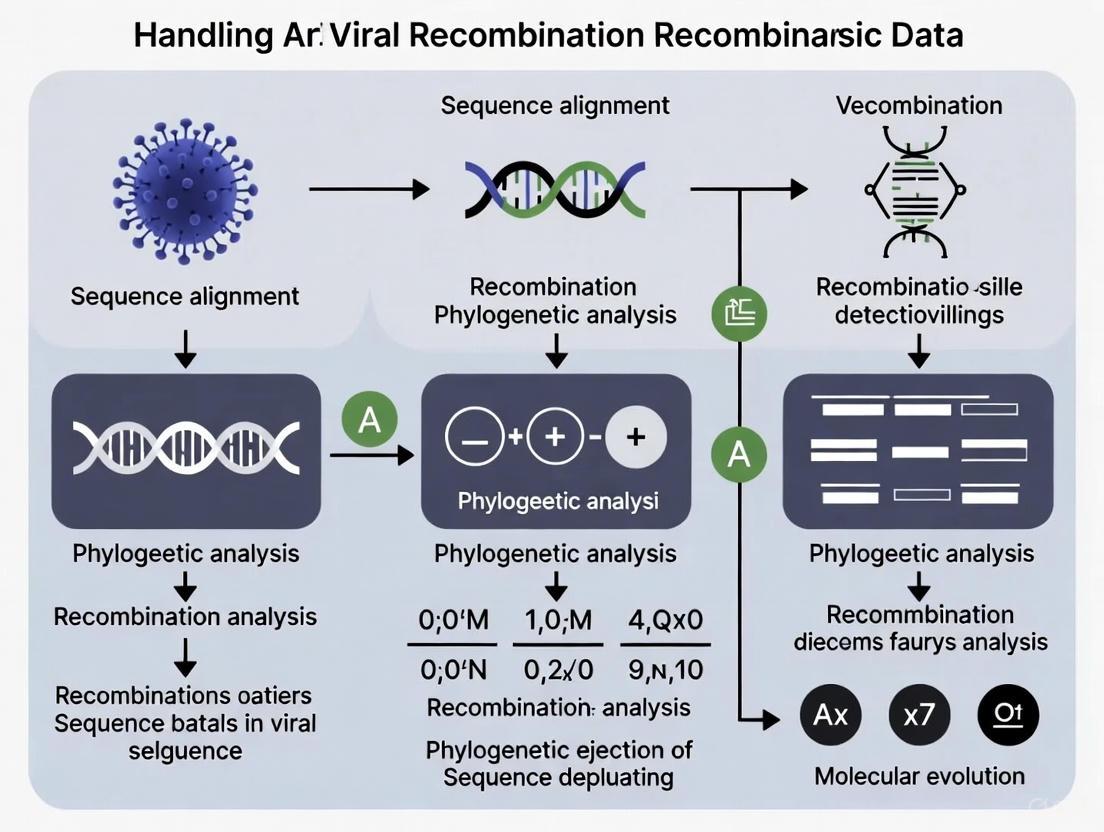
This article provides a comprehensive guide for researchers and drug development professionals on handling recombination in viral sequence data.
Navigating Viral Recombination: From Detection to Analysis in Genomic Surveillance
Abstract
This article provides a comprehensive guide for researchers and drug development professionals on handling recombination in viral sequence data. It covers the foundational importance of recombination in viral evolution and emergence, explores a suite of bioinformatic tools and methods for its detection, offers practical strategies for troubleshooting and optimizing analyses, and outlines frameworks for validating results. By synthesizing current methodologies and real-world applications from pathogens like SARS-CoV-2, PRRSV, and HIV, this resource aims to equip scientists with the knowledge to accurately identify and interpret recombination events, thereby strengthening genomic surveillance and the development of countermeasures.
Why Viral Recombination Matters: Mechanisms and Evolutionary Impact
Core Definitions and FAQs
What are the fundamental types of genetic recombination?
Genetic recombination encompasses several distinct mechanisms for the exchange of genetic material. The four primary types are [1]:
- General or Homologous Recombination: Occurs between DNA molecules of very similar sequence (e.g., homologous chromosomes). It is a common enzymatic pathway used for accurate DNA repair and generating diversity during meiosis.
- Illegitimate or Non-Homologous Recombination: Occurs between regions with no large-scale sequence similarity, often leading to translocations or deletions. Short regions of micro-homology may sometimes be present at the breakpoints.
- Site-Specific Recombination: Occurs between particular short DNA sequences (12-24 bp) on otherwise dissimilar molecules. It requires specialized enzymes, such as those used by bacteriophages for chromosomal integration.
- Replicative Recombination: Generates a new copy of a DNA segment, a mechanism often used by transposable elements to move to new genomic locations.
How does Homologous Recombination function in DNA repair?
Homologous recombination (HR) is a major pathway for accurately repairing DNA double-strand breaks (DSBs). It operates primarily during the S and G2 phases of the cell cycle when a sister chromatid is available as a repair template [2] [3]. The process involves [2] [4]:
- Resection: Nucleases cut back the 5' ends of the break, creating single-stranded 3' overhangs.
- Strand Invasion: A recombinase protein (e.g., Rad51 in eukaryotes) coats the single-stranded DNA, which then "invades" a homologous, unbroken DNA duplex, forming a D-loop.
- DNA Synthesis: The invading 3' end serves as a primer for DNA polymerase, which uses the homologous strand as a template to synthesize new DNA across the break. HR can proceed via different pathways, such as the double-strand break repair (DSBR) model or the synthesis-dependent strand annealing (SDSA) model, which primarily results in non-crossover products, effectively restoring the original DNA sequence [2].
What is the difference between reciprocal and nonreciprocal recombination?
- Reciprocal Recombination involves an equal exchange of genetic information between two homologous chromosomes. For example, a segment from one chromosome is swapped for the corresponding segment from its homologue, which can be observed as chromosomal crossover during meiosis [1].
- Nonreciprocal Recombination (or Gene Conversion) involves the unidirectional transfer of genetic information from a 'donor' sequence to a highly homologous 'acceptor' [3]. Unlike reciprocal crossover, the donor sequence remains unchanged while the acceptor is altered.
Why is recombination a critical consideration in viral research?
Recombination is a key molecular mechanism driving viral evolution. For RNA viruses, it can [5]:
- Boost genomic and phenotypic diversity.
- Alter viral host tropism and enhance virulence.
- Enable host immune evasion.
- Contribute to the development of antiviral resistance. The co-circulation and co-infection of different viral strains in a single host create opportunities for recombination, making its surveillance essential for public health. For instance, numerous recombinant lineages of SARS-CoV-2 have been identified and monitored throughout the COVID-19 pandemic [5].
Troubleshooting Common Experimental Issues
FAQ: My recombination frequency results are unexpectedly low or skewed. What could be the cause?
Several factors can distort the relationship between physical distance and measured recombination frequency. A documented cause is proximity to the centromere [6]. In Aspergillus nidulans, recombination frequencies were found to be deceptively low near the centromeres of chromosomes III and IV. In one case, 1 cM corresponded to 37.6 kb in a centromere-proximal interval, but to only 9.2 kb in a more distant interval [6]. Other influencing factors can include environmental conditions like nutritional state and specific genetic modifiers [6]. Troubleshooting Guide:
- Verify Chromosomal Context: Check if your region of interest is near a centromere or other known low-recombination region.
- Rule Out Structural Variants: Use techniques like Southern blotting or PCR fragment sizing to confirm the absence of chromosomal rearrangements (e.g., translocations) in your parental strains that could suppress recombination [6].
- Use Multiple Markers: Relying on a single interval for mapping can be misleading. Use several genetic markers to get a more accurate picture of the recombination landscape.
FAQ: My viral genome assembly suggests a recombinant, but how can I confirm this and identify the parental lineages?
The emergence of novel viral variants is often driven by recombination [7]. Confirming it requires specific bioinformatic analyses. Troubleshooting Guide:
- Perform Recombination Analysis: Use specialized software to scan your aligned genome sequences. Tools like the Recombination Detection Program (RDP) implement multiple methods (Rdp, Geneconv, Bootscan, Max χ², Chimaera, Siscan, 3Seq) to statistically identify recombination events and breakpoints. Events confirmed by multiple methods (e.g., p-value < 0.05 across at least four methods) are considered reliable [7].
- Conduct Phylogenetic Analysis: Reconstruct maximum likelihood phylogenetic trees for different regions of the genome (e.g., for the whole genome and for individual genes like ORF5). Genealogical discordance, where a sequence clusters with different parent lineages in different parts of the tree, is a strong indicator of recombination [7].
- Leverage Data-Driven Tools: For large datasets (e.g., during a pandemic), tools like RecombinHunt can automatically identify recombinant genomes by comparing the mutation profile of a target sequence against characteristic mutations of known lineages, efficiently pinpointing potential donor and acceptor parents [5].
FAQ: How can I ensure the quality of my viral sequence data before recombination analysis?
High-quality input data is crucial for accurate recombination detection. Common issues like sequencing errors or poor assembly can create false signals. Troubleshooting Guide:
- Assess Nucleic Acid Quality: For RNA viruses, use instruments like a Bioanalyzer to generate an RNA Integrity Number (RIN). A RIN near 10 indicates minimal degradation. Use qPCR to quantify RNA and check for residual DNA contamination [8].
- Verify Library Preparation: After fragmenting DNA/cDNA, use microfluidic electrophoresis to confirm the fragment size profile is within the expected range before sequencing [8].
- Implement Deep Sequencing: For mutation detection, use ultra-deep sequencing to achieve high coverage across the viral genome. This increases sensitivity for identifying low-frequency variants that might be involved in or result from recombination [8].
- Use Reference Materials: Validate your sequencing and analysis pipeline with well-characterized control samples that contain known mutations or recombinant sequences [8].
Standard Experimental Protocol: Detecting Recombination in Viral Genomes
This protocol outlines the steps for identifying recombination in viral samples, based on a study of the Porcine Reproductive and Respiratory Syndrome Virus (PRRSV) 1H.18 variant [7].
I. Sample Preparation and Sequencing
- RNA Extraction: Extract viral RNA from the sample (e.g., serum) using a commercial kit (e.g., EZ1 Virus Mini Kit v2.0 on an EZ1 Advanced XL instrument).
- Library Preparation: Prepare a sequencing library from the extracted RNA (e.g., using the SMARTer Stranded Total RNA-Seq Kit v2).
- High-Throughput Sequencing: Sequence the library on a platform such as Illumina MiSeq, generating 150bp paired-end reads.
II. Genome Assembly and Quality Control
- Quality Control of Raw Reads: Use
FastQCto assess read quality and adapter content. - Read Trimming and Filtering: Trim adapters and remove low-quality bases using a Phred score threshold (e.g., >30).
- De Novo Assembly: Assemble the cleaned reads into contigs using a genome assembler like
SPAdes. - Validation: Map the reads back to the assembled contigs using
Bowtie2. Generate BAM files usingSamtoolsand inspect the read alignment and coverage depth visually with a tool likeTablet. Aim for high coverage (e.g., >100x) across the entire coding region.
III. Recombination Analysis
- Dataset Curation:
- Retrieve related genome sequences from public databases (e.g., GenBank).
- To manage computational cost, subsample the dataset to maximize genetic diversity using a tool like
CD-HIT(e.g., with a 95% identity threshold). - Create a multiple sequence alignment using
MAFFT.
- Recombination Screening:
- Use the Recombination Detection Program (RDP5) to scan the alignment.
- Apply multiple detection methods embedded within RDP (e.g., RDP, Geneconv, Bootscan, Max χ2, Chimaera, Siscan, 3Seq).
- A recombination event is considered reliably detected if it is statistically supported by at least four different methods (p-value < 0.05).
- Phylogenetic Confirmation:
- Reconstruct Maximum Likelihood phylogenetic trees (e.g., using
IQ-TREE2) for the whole genome and for specific genomic regions. - Use model selection (e.g., ModelFinder in IQ-TREE) to identify the best-fit nucleotide substitution model (e.g., GTR+I+G4).
- Assess branch support with 1000 ultrafast bootstrap replicates.
- Visualize the trees (e.g., with
FigTree) to identify topological conflicts that indicate recombination.
- Reconstruct Maximum Likelihood phylogenetic trees (e.g., using
Key Signaling Pathways and Workflows
Diagram: Homologous Recombination Repair (HRR) of Double-Strand Breaks
Diagram: Workflow for Viral Recombination Analysis
Research Reagent Solutions
Table: Essential Tools for Viral Recombination Research
| Research Reagent / Tool | Primary Function | Example Use Case |
|---|---|---|
| RDP5 Software Suite [7] [5] | A comprehensive platform implementing multiple statistical methods (Rdp, Geneconv, Bootscan, etc.) for recombination detection in sequence alignments. | Statistically identifying recombination breakpoints and parent sequences; an event is considered reliable when supported by ≥4 methods (p < 0.05). |
| MAFFT Algorithm [7] | A multiple sequence alignment program for accurately aligning nucleotide or protein sequences. | Creating the input alignment from a curated dataset of viral genomes prior to recombination analysis. |
| IQ-TREE2 Software [7] | A software for maximum likelihood phylogenetic inference, incorporating model finding and fast bootstrapping. | Reconstructing phylogenetic trees to confirm genealogical discordance caused by recombination events. |
| SPAdes Genome Assembler [7] | A de novo assembly toolkit designed for assembling genomes from sequencing reads. | Reconstructing viral genomes from high-throughput sequencing reads (e.g., Illumina). |
| Bioanalyzer / TapeStation [8] | Microfluidic electrophoresis systems for assessing the integrity, size, and concentration of nucleic acids. | Quality control of extracted viral RNA (RIN number) and final library fragment size before sequencing. |
| RecombinHunt [5] | A data-driven computational method for identifying recombinant genomes from large sequence datasets. | Rapid screening of thousands of genomes (e.g., from GISAID) to flag potential recombinants and their candidate parental lineages. |
Molecular Mechanisms in RNA and DNA Viruses
FAQs: Viral Recombination Fundamentals
Q1: What are the primary molecular mechanisms behind RNA virus recombination? The dominant mechanism for RNA virus recombination is replicative template switching [9] [10]. During RNA synthesis, the viral RNA-dependent RNA polymerase (RdRp) detaches from one RNA template and resumes synthesis on a different template, creating a recombinant RNA molecule [11] [10]. This can be triggered by polymerase pausing caused by RNA secondary structures, nucleotide sequences, or damaged templates [11]. In retroviruses, which are RNA viruses that replicate through a DNA intermediate, recombination occurs during reverse transcription and is facilitated by the strand transfer mechanism [9].
Q2: Why do recombination rates vary so significantly among different RNA viruses? Recombination rates are strongly associated with viral genome structure and replication machinery, rather than being a selected form of sexual reproduction [12]. Key factors include:
- Genome Segmentation: Viruses with segmented genomes (e.g., Influenza virus) undergo reassortment, where entire genome segments are exchanged [12] [9].
- Genome Polarity: Positive-sense single-stranded RNA (+ssRNA) viruses (e.g., Picornaviruses, Coronaviruses) generally recombine more frequently than negative-sense RNA (-ssRNA) viruses. The tightly bound ribonucleoprotein complex in -ssRNA viruses restricts polymerase access, leading to lower recombination rates [12] [9].
- Polymerase Processivity: Viruses with less processive polymerases, which pause and dissociate more easily, exhibit higher rates of template switching [12] [10].
- Genome Copy Number: Retroviruses like HIV, which package two copies of their genome, have exceptionally high recombination rates due to frequent template switching between these copies [12] [9].
Q3: What are the major evolutionary and clinical consequences of viral recombination? Recombination is a powerful driver of viral evolution and public health concerns due to its ability to rapidly generate genetic diversity [9] [11].
- Emergence of New Pathogens: It can create new viral lineages. For example, the Western equine encephalitis virus (WEEV) is believed to be a recombinant between an Eastern equine encephalitis-like virus and a Sindbis-like virus [11].
- Altered Virulence and Host Tropism: Recombinants can exhibit new tissue tropisms or expanded host ranges. The SARS-CoV-2 receptor-binding domain's high similarity to Pangolin-CoV suggests a possible recombinant origin, potentially facilitating cross-species transmission [11].
- Immune and Antiviral Evasion: Recombination can combine genetic elements from different strains, allowing viruses to escape host immunity or develop resistance to antiviral therapies [9] [5]. This has been documented in HIV, where recombination contributes to antiretroviral resistance [12].
Q4: My viral plasmid vectors are recombining in bacterial culture. How can I prevent this? Recombination in plasmids, especially those with repetitive sequences like viral LTRs in lentiviral vectors, is a common issue [13]. Mitigation strategies include:
- Using Specialized Bacterial Strains: Employ recombinase-deficient E. coli strains such as Stbl2, Stbl3, or NEB Stable, which are engineered to reduce recombination [13] [14].
- Optimizing Growth Conditions: Grow bacteria at a lower temperature (e.g., 25-30°C instead of 37°C) to slow down growth and reduce recombination pressure. For large plasmids, use longer incubation times with lower antibiotic concentrations [13].
- Colony Selection: Pick smaller bacterial colonies for analysis, as bacteria carrying the intact, full-length plasmid often grow slower than those with recombined, smaller plasmids [13].
- Diagnostic Verification: Always verify the plasmid integrity using diagnostic restriction enzyme digests before proceeding with experiments [13].
Troubleshooting Guides
Table 1: Troubleshooting Common Recombination Workflow Issues
| Problem | Possible Cause | Recommended Solution |
|---|---|---|
| No or low yield of recombinant viral clones in Gateway cloning. | Incorrect att site sequences; inefficient Clonase reaction; incorrect antibiotic selection [15]. | Verify att site sequences; ensure fresh, functional Clonase enzyme; use correct antibiotic; extend incubation time up to 18 hours [15]. |
| High background in cloning reactions. | Incomplete digestion of vector; inefficient dephosphorylation; vector re-ligation [14]. | Perform rigorous controls to determine digestion efficiency; heat-inactivate or purify DNA after digestion to remove phosphatases [14]. |
| Unexpected mutations or deletions in recombinant viral sequences. | Intrinsic plasmid instability and recombination in standard E. coli strains [13] [14]. | Switch to a recombination-deficient strain (e.g., Stbl2, NEB 5-alpha) [13] [14]; use high-fidelity polymerases for PCR [14]. |
| Inconsistent results from recombination detection software. | Method not suited for the dataset's size or diversity; high false positive rate with certain methods [16]. | Use a scalable method (e.g., RecombinHunt, UCHIME) for large datasets; validate findings with multiple detection methods and manual inspection [16] [5]. |
Table 2: Selection Guide for Recombination Detection Methods (RDMs)
| Method | Key Principle | Best For | Scalability for Large Datasets |
|---|---|---|---|
| RecombinHunt [5] | Data-driven, likelihood-based comparison against pre-defined lineage mutations. | Accurate identification of known and novel recombinant lineages from large-scale surveillance data. | High (Assesses millions of sequences) |
| RDP / MaxChi / Chimaera [16] | Sliding window analysis of polymorphic sites to detect phylogenetic incongruence. | Detecting recombination and identifying breakpoints in smaller sequence alignments. | Low to Moderate |
| 3SEQ [16] [5] | Non-parametric algorithm using a ranked clustering statistic to locate breakpoints. | Analyzing sequence triplets to determine if one is a recombinant of the other two. | Low to Moderate |
| PhiPack [16] | Pairwise homoplasy index to test for presence/absence of recombination in an alignment. | Quickly determining whether an entire sequence alignment shows signals of recombination. | Moderate |
| UCHIME [16] | Alignment-free, uses a numerical score based on sequence differences. | Fast screening of large datasets for chimeric sequences. | High |
Experimental Protocols
Protocol 1: Detecting Recombination in Viral Sequence Data Using a Multi-Tool Approach
This protocol outlines a robust strategy for identifying recombination in a set of viral genomes by leveraging multiple bioinformatic tools to cross-validate results [16].
I. Materials
- Input Data: Aligned viral genome sequences in FASTA format.
- Software: Install at least two of the following RDMs: RDP4/5 [5], 3SEQ [16] [5], GeneConv [16], or RecombinHunt [5].
- Computing Resources: A standard desktop computer is sufficient for small datasets (<100 sequences). For pandemic-scale data (>1000 sequences), a high-performance computing cluster is recommended [16].
II. Procedure
- Data Preparation: Curate a high-quality multiple sequence alignment. Remove poorly sequenced or highly ambiguous genomes to prevent false positives [16].
- Primary Screening: Run the alignment through a fast, alignment-free RDM like UCHIME or a scalable method like RecombinHunt to quickly identify candidate recombinant sequences [16] [5].
- Breakpoint Identification: Analyze the candidate sequences using phylogeny-based methods.
- Use RDP4/5 or 3SEQ to perform a detailed analysis on the candidate sequences and their close relatives.
- Use the software's graphical interface to visually inspect the sliding window scan and identify potential breakpoint locations [16].
- Parental Identification: Within the RDP/3SEQ suite, the algorithms will suggest potential parental sequences for the recombinant. Manually verify these by checking phylogenetic consistency in the regions before and after the breakpoints [5].
- Validation: Confirm the recombination event by using a third, independent method (e.g., if you used RDP and 3SEQ, also run GeneConv). Consistent signals across multiple methods strengthen the evidence for recombination [16].
III. Data Interpretation and Visualization
- A significant p-value (typically < 0.05 after correction for multiple testing) for a specific sequence and identified breakpoints is evidence of recombination [16].
- Use tools like Simplot to generate similarity plots, which graphically display the regions of identity between a query sequence and potential parents, making the recombination event visually apparent [5].
Protocol 2: Preventing Recombination in Lentiviral Plasmid Propagation
This protocol provides steps to minimize unwanted intramolecular recombination in bacterial cultures when working with instability-prone viral plasmids [13].
I. Materials
- Bacterial Strain: Recombinase-deficient E. coli strain (e.g., Stbl2, Stbl3, or NEB Stable).
- Plasmid: Your lentiviral or other viral vector plasmid.
- Media: LB broth and agar plates with the appropriate selective antibiotic (e.g., Ampicillin).
II. Procedure
- Transformation:
- Transform the viral plasmid into the specialized Stbl2 or Stbl3 competent cells according to the manufacturer's protocol.
- Plating and Colony Selection:
- Plate the transformation mixture on selective LB agar plates.
- Incubate the plates at 30°C for 24-48 hours. The lower temperature slows bacterial growth, disfavoring faster-growing cells that have recombined plasmids [13].
- Visually inspect the colonies. Pick smaller colonies, as these are more likely to harbor the full-length, non-recombined plasmid. (Note: For Stbl3, full plasmids may be in flat, white colonies, while recombined backbones are in round, tan colonies) [13].
- Culture Growth:
- Inoculate a small culture (2-5 mL) of LB broth with antibiotic using a selected colony.
- Incubate the culture at 30°C with shaking. Avoid overgrowth.
- Plasmid Verification:
- Perform a plasmid mini-prep.
- Conduct a diagnostic restriction digest using enzymes that will produce distinct banding patterns for the full-length plasmid versus the recombined backbone.
- Analyze the digest on an agarose gel. If a mixture of plasmids is detected, gel-purify the correct, larger band [13].
- Only create glycerol stocks from colonies that have been verified to contain the correct, full-length plasmid.
Diagrams
Recombination Detection Workflow
Molecular Mechanism of RNA Recombination
The Scientist's Toolkit
| Item | Function/Benefit | Example Use Cases |
|---|---|---|
| Recombinase-Deficient E. coli | Genetically engineered to suppress RecA-mediated homologous recombination, stabilizing repetitive sequences [13] [14]. | Propagating lentiviral, gammaretroviral, or other viral vectors with LTRs; cloning large or unstable DNA fragments. |
| Gateway Cloning System | A highly efficient site-specific recombination system for rapid transfer of DNA sequences between vectors [15]. | High-throughput cloning of open reading frames (ORFs) for functional screening or protein expression. |
| High-Fidelity DNA Polymerases | DNA polymerases with proofreading activity to minimize introduction of point mutations during PCR [14]. | Amplifying viral genome fragments for sequencing or cloning without introducing errors. |
| Recombination Detection Software (RDP/3SEQ) | Suite of programs using statistical tests to identify recombination breakpoints and potential parents in sequence alignments [16] [5]. | Analyzing sequencing data from viral outbreaks to identify and characterize recombinant strains. |
| Scalable Recombination Detection Tools (RecombinHunt) | Data-driven methods designed to analyze millions of genome sequences, identifying recombinant lineages based on mutation profiles [5]. | Genomic surveillance of pandemic viruses (e.g., SARS-CoV-2) for real-time detection of emerging recombinants. |
Frequently Asked Questions (FAQs) and Troubleshooting
FAQ 1: What are the primary drivers of viral evolution that lead to immune escape?
Answer: Viral evolution is primarily driven by natural selection pressures from the host immune system and the virus's inherent characteristics. Key drivers include:
- High Mutation Rates: Especially in RNA viruses, due to error-prone RNA-dependent RNA polymerases that lack proofreading, leading to rapid "shape change" [17] [18].
- Immune Pressure: Neutralizing antibodies and T-cell responses select for viral variants with mutations in key antigenic sites (e.g., the spike protein's receptor-binding domain in SARS-CoV-2) that allow the virus to evade recognition, a process known as antigenic drift [19] [18] [20].
- Recombination: The exchange of genetic material between different viral strains co-infecting a single host can generate novel variants with combined traits, such as increased transmissibility or immune evasion. This is a key mechanism for the emergence of new lineages in viruses like SARS-CoV-2 and Porcine Reproductive and Respiratory Syndrome Virus (PRRSV) [5] [7].
Troubleshooting Guide: If your analysis of a viral sequence reveals an unexpected pattern of mutations or a sudden shift in phylogeny, investigate potential recombination events using tools like RDP5 or RecombinHunt before concluding a linear evolutionary path [5] [7].
FAQ 2: My recombination detection analysis yields inconsistent or low-confidence results. What could be the issue?
Answer: Inconsistent recombination signals can stem from several factors:
- Poor Sequence Quality or Misalignment: Ensure your input genome sequences are of high quality and the multiple sequence alignment is accurate. Errors here can create false signals of recombination [5] [7].
- Insufficient Sequence Diversity or Sampling Bias: The analysis may lack power if the dataset does not include a broad diversity of potential parent lineages or is skewed towards certain geographic or temporal groups [20] [7].
- Complex Recombination Events: Some variants may be the product of multiple recombination events across their genome, which can be difficult to deconvolute. Using a single method may not be sufficient [7].
Troubleshooting Guide:
- Data Curation: Re-check sequence quality, filter low-quality data, and ensure a representative dataset.
- Method Aggregation: Use at least four different recombination detection algorithms (e.g., RDP, Geneconv, Bootscan, 3Seq) and only consider events supported by multiple methods with high statistical confidence (p-value < 0.05) [7].
- Visual Inspection: Manually inspect the alignment and use phylogenetic methods in the suspect region to confirm the discordant evolutionary history.
FAQ 3: How can we forecast viral evolution to preemptively address emerging variants?
Answer: Forecasting viral evolution is an emerging field leveraging large-scale data and artificial intelligence. Key approaches include:
- Deep Mutational Scanning (DMS): This high-throughput experimental method systematically tests the functional impact of thousands of mutations in viral proteins (e.g., the spike protein) to identify which ones confer advantages in infectivity or immune evasion [20].
- Phylogenetic and Language Models (LMs): Computational models analyze the evolutionary paths of viruses and can identify patterns that predict future mutations. Protein language models, trained on the principles of protein evolution, can forecast mutations that are functionally permissible [20].
- Integrating Genomic and Epidemiological Data: Combining viral genome sequences with data on transmission dynamics and population immunity helps build models that predict which variants are likely to rise in frequency [20].
Key Experimental Protocols for Viral Evolution Research
Protocol for Detecting Recombination in Viral Genomes
Objective: To identify and characterize recombination events in a set of viral genome sequences.
Materials:
- Whole-genome sequences of the viral isolate(s) of interest.
- Reference dataset of related viral genomes (e.g., from public databases like GISAID or GenBank).
- Computational resources (High-performance computing cluster recommended).
- Software: MAFFT for multiple sequence alignment, RDP5 or RecombinHunt for recombination analysis, IQ-TREE for phylogeny.
- Data Collection and Curation: Assemble a dataset including the query sequence(s) and a diverse background set of potential parent lineages. Subsample the dataset using a tool like CD-HIT to reduce redundancy (e.g., 95% identity threshold).
- Multiple Sequence Alignment: Align all genomes using MAFFT or another robust aligner. Inspect the alignment visually for obvious misalignments.
- Recombination Screening: Input the alignment into the recombination detection software.
- In RDP5, run multiple detection methods (e.g., RDP, Geneconv, Bootscan, MaxChi, Chimaera, SiScan, 3Seq).
- In RecombinHunt, the data-driven approach will automatically compute likelihood scores to identify candidate donor and acceptor lineages.
- Validation of Events: Only accept recombination events that are identified by four or more independent methods with significant p-values (below 0.05). Manually check the putative recombination breakpoints.
- Phylogenetic Confirmation: Construct separate phylogenetic trees for genome regions upstream and downstream of the identified breakpoint. A confirmed recombination event will show the query sequence clustering with different parent lineages in the different trees.
Protocol for Mapping Antibody Escape Mutations
Objective: To identify viral mutations that allow escape from neutralizing antibodies.
Materials:
- Plasmid library encoding a viral surface protein (e.g., Spike RBD) with a comprehensive set of mutations.
- Antibodies of interest (therapeutic, vaccine-elicited, or convalescent serum).
- Cell lines expressing the viral receptor (e.g., Vero E6 cells for SARS-CoV-2).
- Next-generation sequencing platform.
Methodology (Deep Mutational Scanning) [19] [20]:
- Library Generation: Create a vast plasmid library where the gene for the target viral protein contains a wide spectrum of single-amino-acid variants.
- Viral Pseudotype Production: Use the plasmid library to generate viral pseudotypes (e.g., lentivirus-based) that display the mutant viral proteins.
- Antibody Selection: Incubate the pseudovirus library with a potent neutralizing antibody or serum. Viruses with escape mutations will remain infectious, while others will be neutralized.
- Infection and Recovery: Use the antibody-pseudovirus mixture to infect receptor-expressing cells. The genomic RNA from successfully infecting pseudoviruses is recovered.
- Sequencing and Analysis: Use NGS to sequence the gene of interest from the pre-selection library and the post-selection output. Enrichment or depletion of specific mutations in the output sample, calculated against the initial library, identifies escape mutations.
Data Presentation
Table 1: Common Viral Immune Evasion Strategies and Their Consequences
| Strategy | Mechanism | Example Viruses | Consequence for Pathogenesis |
|---|---|---|---|
| Speed & Shape Change [17] | Rapid replication and high mutation rate generate antigenic diversity, allowing variants to escape pre-existing immunity. | HIV, Influenza, SARS-CoV-2 (RNA viruses) | Requires constantly updated vaccines; enables persistence and endemic circulation. |
| Camouflage & Sabotage [17] | Encoding proteins that directly interfere with host immune pathways (e.g., antigen presentation, interferon response). | Cytomegalovirus (CMV), Herpesviruses (DNA viruses) | Establishes lifelong latent infection; complicates vaccine design. |
| Antibody Escape Mutations [19] [18] | Mutations in epitopes of surface proteins (e.g., Spike RBD) reduce binding affinity of neutralizing antibodies. | SARS-CoV-2 (variants like Omicron), HIV, Influenza | Reduces efficacy of therapeutic antibodies and vaccine-induced immunity; drives variant emergence. |
| Recombination [5] [7] | Exchange of genetic material between coinfecting strains creates novel chimeric viruses with hybrid properties. | SARS-CoV-2 (XBB lineage), PRRSV, Mpox | Can lead to sudden jumps in transmissibility, altered tissue tropism, or expanded host range. |
Table 2: Essential Viroinformatics Tools for Viral Evolution Research
| Tool Name | Primary Function | Application in Viral Evolution Research |
|---|---|---|
| RDP5 [7] | Recombination Detection | Detects and characterizes recombination breakpoints in viral genomes using multiple statistical methods. |
| RecombinHunt [5] | Recombinant Lineage Identification | Data-driven method for identifying recombinant SARS-CoV-2 (and other virus) genomes from large datasets. |
| GISAID [5] [21] | Genomic Data Repository | Primary source for sharing and accessing influenza and SARS-CoV-2 genome sequences and metadata. |
| Deep Mutational Scanning (DMS) [20] | Functional Mutation Analysis | Experimentally maps the effect of all possible mutations in a viral protein on functions like antibody binding. |
| IQ-TREE [7] | Phylogenetic Inference | Reconstructs robust maximum likelihood phylogenetic trees to visualize evolutionary relationships. |
Visualized Workflows and Pathways
Diagram 1: Workflow for Recombinant Virus Analysis
Diagram 2: Viral Immune Evasion Pathways
The Scientist's Toolkit: Research Reagent Solutions
Table 3: Key Research Reagents and Materials
| Item | Function in Viral Evolution Research |
|---|---|
| High-Fidelity Reverse Transcriptase | Essential for accurate cDNA synthesis from viral RNA templates prior to sequencing, minimizing introduction of errors during the initial step [22]. |
| Illumina/Nanopore Sequencing Kits | Provide the reagents for library preparation and sequencing to generate high-quality whole-genome data, the foundational data for all evolutionary analysis [23] [7]. |
| Viral Pseudotyping Systems | Allow for the safe study of high-consequence viruses by creating replication-incompetent viruses that display the viral glycoprotein of interest, used in DMS and neutralization assays [20]. |
| Monoclonal Antibody Panels | Well-characterized neutralizing antibodies are used as selective pressures in DMS experiments or to test the antigenic properties of newly emerged variants [19] [20]. |
| Reference Viral Genome Datasets | Curated collections of viral sequences (e.g., from GISAID, GenBank) are crucial as background for comparative genomics, phylogenetic placement, and recombination analysis [5] [21] [7]. |
FAQs: Troubleshooting Recombination Analysis in Viral Research
Q1: My phylogenetic analysis shows conflicting results between different genomic regions. What does this indicate and how should I proceed?
Conflicting phylogenetic placements between genomic regions are a strong indicator of recombination. This is a common finding, as demonstrated in a 2025 study where four out of seven PRRSV-2 isolates showed discordant phylogenetic placements between ORF5 and whole genomes [24]. To troubleshoot:
- Confirm with multiple tools: Use at least two recombination detection algorithms (e.g., RDP5 and SIMplot) to verify findings [24]
- Whole-genome validation: Move beyond single-gene analysis (like ORF5 for PRRSV) to comprehensive whole-genome sequencing [24]
- Reference-guided assembly: Assemble sequences against a curated set of reference genomes from different lineages [24]
Q2: How can I distinguish genuine co-infections from laboratory contamination in my sequencing data?
Distinguishing co-infections from contamination requires careful bioinformatic quality control:
- Machine learning classification: Implement quality control pipelines that use linear regression models trained on parameters like noise distribution, depth, and coverage to flag potential contaminants [25]
- Noise analysis: Calculate noise as the sum of ratios of all nucleotides minus the ratio of the most frequent nucleotide across the genome [25]
- Frequency thresholds: Establish thresholds for minor variant detection (e.g., >10% frequency for minor variants) [25]
- Experimental validation: Confirm findings with alternative sequencing methods where possible [26]
Q3: What are the critical database issues that can lead to false recombination detection, and how can I mitigate them?
Reference database quality significantly impacts recombination analysis:
- Taxonomic misannotation: Affects approximately 3.6% of prokaryotic genomes in GenBank and 1% in RefSeq [27]
- Sequence contamination: Millions of contaminated sequences exist in public databases (2,161,746 in GenBank; 114,035 in RefSeq) [27]
- Mitigation strategies:
Q4: During prolonged infections in immunocompromised patients, what intrahost evolutionary dynamics should I monitor for recombinant emergence?
Prolonged infections create ideal conditions for recombinant emergence:
- Enhanced viral diversity: Longitudinal studies show prolonged infections (>8 days) significantly enhance viral genomic diversity [28]
- Variant persistence: Monitor for co-occurring variants that maintain high frequency (>20%) and become dominant in virus populations [28]
- Selection pressure tracking: Identify point mutations under persistent positive selection, particularly around antigenic sites like spike NTD and RBD [29]
- Variant calling rigor: Apply strict thresholds (5-95% frequency, depth >200 reads, p<0.01) for reliable intrahost variant detection [28]
Experimental Protocols for Recombinant Virus Detection
Whole-Genome Sequencing and Assembly for PRRSV
Objective: Comprehensive detection of recombination events in PRRSV-2 through whole-genome sequencing [24].
Table: PRRSV-2 Whole-Genome Sequencing Components
| Component | Specification | Purpose |
|---|---|---|
| RNA Source | 200μL serum | Viral RNA extraction |
| Extraction Kit | NucleoMag Virus kit | High-quality RNA purification |
| Primer Design | Pooled primer mix + TSO Oligonucleotide | cDNA synthesis with template switching |
| cDNA Synthesis | First-strand: 42°C/90min; Second-strand: 30 cycles | Comprehensive genome coverage |
| Sequencing Platform | Oxford Nanopore GridION (R.10 flow cells) | Long-read sequencing |
| Basecalling | Dorado v0.9.1 high-accuracy model | Raw signal to nucleotide conversion |
| Assembly Method | Reference-guided (Minimap2) vs. PRRSV2 genomes | Consensus generation |
Protocol Details:
- RNA Extraction & Quality Control: Extract RNA from 200μL serum using magnetic bead-based purification [24]
- cDNA Synthesis:
- Perform first-strand synthesis with template switching buffer and TSO oligonucleotide
- Conduct second-strand synthesis with PrimeSTAR HS Polymerase (30 cycles) [24]
- Library Preparation: Use Rapid Barcoding Sequencing Kit for Nanopore sequencing [24]
- Bioinformatic Processing:
- Basecall and demultiplex with Dorado v0.9.1
- Assemble reads against reference genomes using Minimap2 with 'map-ont' preset
- Generate consensus sequences at 60% quality threshold [24]
- Recombination Detection: Apply RDP5 and SIMplot for breakpoint identification [24]
SARS-CoV-2 Recombinant Identification in Immunocompromised Patients
Objective: Detect and characterize SARS-CoV-2 recombinant variants in long-term infected patients [25].
Table: SARS-CoV-2 Recombinant Detection Workflow
| Step | Method | Key Parameters |
|---|---|---|
| Sample Processing | Swift Amplicon SARS-CoV-2 Panel | 247 amplicons targeting full genome |
| Sequencing | Illumina NovaSeq 2×250bp | High-depth coverage (>200×) |
| Variant Calling | iVar with minimum depth 10 | Consensus sequence generation |
| Noise Calculation | NoisExtractor tool | Position-specific nucleotide frequency |
| Coinfection Detection | Machine learning classifier | Linear regression on noise parameters |
| Recombinant Identification | PrecFinder (1D-CNN model) | Bayesian probability of lineage membership |
| Validation | sc2rf recombination detection | Independent algorithm confirmation |
Protocol Details:
- Sample Collection & Preparation:
- Collect nasopharyngeal swabs in appropriate transport media
- Extract RNA within 48 hours of collection [26]
- Library Preparation & Sequencing:
- Use amplicon-based approach (Illumina Respiratory Virus Oligo Panel)
- Sequence on Illumina platform with minimum 200× coverage [25]
- Bioinformatic Analysis:
- Generate consensus sequences with covid-seq pipeline
- Calculate noise metrics across genome positions
- Apply PrecFinder with 1D-convolutional neural network to identify recombination breakpoints [25]
- Experimental Validation:
- Confirm findings with orthogonal sequencing methods (Nanopore)
- Perform phylogenetic analysis of recombinant regions [26]
Viral Recombination Analysis Workflow
Quantitative Data Synthesis
Table: Documented Recombination Events in Viral Studies
| Virus | Study Period | Samples Analyzed | Recombinants Identified | Key Genomic Regions | Reference |
|---|---|---|---|---|---|
| PRRSV-2 | 2006-2024 | 7 isolates | 4/7 (57.1%) | ORF2-ORF7, NSP2, NSP10 | [24] [30] |
| SARS-CoV-2 | 2020-2022 | 9,336 genomes | Multiple lineages | Spike RBD, ORF1a, ORF1b | [26] |
| SARS-CoV-2 | 2023-2024 | 1 case study | 1 (Delta/Omicron) | Multiple breakpoints | [25] |
| PRRSV-2 (Korea) | 2018-2024 | 907 sequences | Lineage expansion | ORF5, NSP2 | [31] |
Table: Intrahost Variant Dynamics in Prolonged SARS-CoV-2 Infections
| Parameter | Acute Infection (<7 days) | Prolonged Infection (>8 days) | Statistical Significance |
|---|---|---|---|
| iSNV Count | Lower diversity | Significantly increased | p<0.05 [28] |
| Variant Frequency | Fluctuating | Stable high frequency (>20%) | Strong correlation [28] |
| Variant Type | Mostly synonymous | Increased nonsynonymous | Selection pressure [28] |
| Dominant Variants | Single lineage | Co-occurring variants | Heterogeneous dynamics [28] |
Research Reagent Solutions
Table: Essential Research Reagents for Viral Recombination Studies
| Reagent/Kit | Specific Application | Function | Example Use Case |
|---|---|---|---|
| NucleoMag Virus Kit | Viral RNA extraction | Magnetic bead-based nucleic acid purification | PRRSV-2 RNA from serum [24] |
| Swift Amplicon SARS-CoV-2 Panel | Library preparation | Target enrichment via amplicon sequencing | SARS-CoV-2 whole-genome sequencing [25] |
| Rapid Barcoding Kit (SQK-RBK114.24) | Nanopore sequencing | Direct RNA/cDNA barcoding | Long-read viral sequencing [24] |
| Illumina RNA Prep Enrichment Kit | RNA library preparation | cDNA synthesis and adapter ligation | SARS-CoV-2 intrahost variation [28] |
| Template Switching Oligonucleotide | cDNA synthesis | Full-length cDNA generation | PRRSV whole-genome amplification [24] |
| PrimeSTAR HS Polymerase | PCR amplification | High-fidelity DNA amplification | Second-strand cDNA synthesis [24] |
Viral Recombination Mechanism
Advanced Methodologies for Recombinant Characterization
Advanced Phylogenetic Analysis
Discordance Detection: Implement multi-region phylogenetic analysis to identify conflicting evolutionary relationships across genomic regions [24]. This approach revealed that 57% of PRRSV-2 isolates showed different lineage classifications when comparing ORF5 sequences to whole-genome analysis [24].
Breakpoint Mapping: Precisely identify recombination breakpoints using sliding window similarity analysis. Studies have successfully mapped breakpoints to specific regions like NSP2-NSP10 in PRRSV and the RBM region in SARS-CoV-2 spike protein [24] [32].
Intrahost Variant Analysis
Variant Calling Parameters: For reliable intrahost variant detection, implement strict thresholds including minimum depth (200 reads), variant frequency (5-95%), and strand balance filters [28]. These parameters minimize false positives while capturing genuine minority variants.
Longitudinal Tracking: Monitor variant frequency changes across multiple timepoints from the same patient. Research shows that prolonged infections (>8 days) significantly increase viral diversity and the probability of recombinant emergence [28].
This technical support framework provides researchers with comprehensive tools and methodologies for detecting, analyzing, and troubleshooting recombination events in viral sequence data, addressing key challenges through validated experimental and computational approaches.
The Bioinformatics Toolkit: Methods and Tools for Detecting Recombination
Frequently Asked Questions
1. What is the primary purpose of Recombination Detection Methods (RDMs) in viral research? RDMs are used to identify recombination events—where genetic material is exchanged between different viral genomes. Detecting recombination is a crucial prerequisite for most evolutionary analyses, as unaccounted-for recombination can distort phylogenetic trees, impact the accuracy of evolutionary rate estimations, and complicate the interpretation of results [16] [5].
2. My RDM analysis is running very slowly on a large dataset. What can I do? Scalability is a known challenge for many RDMs. For pandemic-scale datasets with thousands of sequences, consider using methods like PhiPack (Profile) or gmos, which were found to be more scalable in performance tests. Methods not designed for large datasets, such as 3SEQ, may be computationally prohibitive [16].
3. How can I validate the recombination events detected by an RDM? It is considered best practice to use multiple RDMs that employ different statistical algorithms to confirm findings. Furthermore, you can use a data-driven method like RecombinHunt, which compares the target sequence's mutations against a large database of lineage-characteristic mutations, providing a high level of validation concordant with manual expert analysis [16] [5].
4. What does a "FP" (False Positive) result mean in the context of RDMs? A false positive occurs when an RDM incorrectly identifies a sequence as recombinant. The rate of false positives can be influenced by factors like sequence diversity. Using a combination of methods and understanding the specific strengths of each RDM can help mitigate this risk [16].
5. Are there any special considerations for sequencing templates that might cause RDM errors? While not directly addressed for RDMs, general sequencing best practices apply. Poor template quality, contamination (leading to mixed sequences), or difficult secondary structures in the DNA can result in poor-quality sequence data. Ensuring high-quality, clean template DNA is essential for generating the reliable data required for recombination analysis [33].
Comparison of Recombination Detection Methods (RDMs)
The table below summarizes eight RDMs, their underlying algorithms, and key characteristics to help you select the appropriate tool [16].
| RDM | Statistical Test / Algorithm | Analysis Resolution | Output Resolution |
|---|---|---|---|
| PhiPack (Profile) | Pairwise homoplasy index (Profile function) | Alignment-wide windows | Alignment-wide breakpoints |
| 3SEQ | Non-parametric, Mann-Whitney U-test | All possible sequence triplets | Per-sequence breakpoints |
| GENECONV | BLAST-like statistic | All possible sequence pairs | Per-sequence breakpoints |
| RDP (OpenRDP) | Binomial distribution | All possible sequence triplets | Per-sequence breakpoints |
| MaxChi (OpenRDP) | X² distribution (Chi-square) | All possible sequence triplets | Per-sequence breakpoints |
| Chimaera (OpenRDP) | X² distribution (Chi-square) | All possible sequence triplets | Per-sequence breakpoints |
| UCHIME (VSEARCH) | Numerical score based on 'diffs' | All possible sequence triplets | Per-sequence only |
| gmos | BLAST-like | Query-subject sequence pairs | Per-sequence breakpoints |
Experimental Protocol: Detecting Recombination with RecombinHunt
Objective: To accurately identify recombinant viral genomes and their putative parent lineages from a large collection of sequence data.
Methodology: A data-driven approach that bypasses intensive phylogenetic tree-building and instead uses mutation profiles [5].
Data Collection and Curation:
- Collect a large number of viral genome sequences (e.g., from the GISAID database).
- Align genomes to a reference and call nucleotide mutations using a dedicated pipeline (e.g., HaploCoV).
- Filter and exclude sequences of low quality or with sequencing errors to minimize noise.
Define Characteristic Mutations for Lineages:
- For every lineage in a reference nomenclature (e.g., Pango lineages), calculate the frequency of each mutation.
- Designate mutations with a frequency above a set threshold (e.g., 75%) as the characteristic mutations for that lineage. This defines the "lineage mutations-space."
Input Target Sequence:
- The genome to be tested for recombination is provided as a list of nucleotide mutations (the target mutations-space).
Likelihood Ratio Calculation:
- For the target sequence and every known lineage, create an extended target space (the union of lineage and target mutations-space).
- At each position in this extended space, calculate a likelihood ratio score. This is the logarithmic ratio between the frequency of the mutation in the lineage and its frequency in the complete genome collection.
- Add the score if the mutation is present in both the target and the lineage.
- Subtract the score if the mutation is characteristic of the lineage but is absent in the target.
Identify Recombinants and Parents:
- Assign the lineage (L1) with the highest cumulative likelihood score as the candidate donor (covers the majority of the target's mutations).
- If the target's mutations differ from L1's characteristic mutations in more than two positions, a recombinant model is considered.
- The genome is then scanned to find a breakpoint. The segment before the breakpoint is assigned to L1 (donor), and the segment after is assigned to the lineage (L2) with the highest likelihood score in that region, designated as the acceptor [5].
Workflow Diagram: Recombination Detection and Analysis
The following diagram illustrates the logical workflow for a systematic approach to recombination detection in viral genomes, incorporating the use of RDMs and data-driven methods.
The Scientist's Toolkit: Essential Research Reagents & Software
This table lists key computational tools and resources used in the field of recombination detection.
| Item | Function / Application |
|---|---|
| OpenRDP Suite | A suite of tools (RDP, MaxChi, Chimaera) for detecting recombination from sequence alignments using various statistical tests [16]. |
| PhiPack | Implements the pairwise homoplasy test to detect the presence or absence of recombination within an entire sequence alignment [16]. |
| 3SEQ | A non-parametric algorithm that tests all sequence triplets to determine if one is a recombinant of the other two, identifying significant breakpoint regions [16]. |
| GENECONV | Detects gene conversion events by identifying significantly similar regions between aligned sequence pairs [16]. |
| RecombinHunt | A data-driven method for identifying recombinant genomes by comparing mutation profiles against a large database of characteristic lineage mutations [5]. |
| GISAID Database | A primary source for accessing a vast collection of viral genome sequences, essential for large-scale analyses and data-driven methods [5]. |
| HaploCoV Pipeline | Used for aligning SARS-CoV-2 genomes to a reference and identifying nucleotide mutations, a key step in preprocessing data for recombination analysis [5]. |
Recombination is a fundamental molecular mechanism in viral evolution, enabling the emergence of novel lineages through the exchange of genetic material between different viral genomes. For researchers and drug development professionals working with massive viral sequence datasets, detecting these events is crucial for accurate phylogenetic analysis, understanding viral adaptation, and identifying variants of concern. Traditional recombination detection methods often falter under the computational burden of pandemic-scale sequencing data. This technical support center provides essential guidance for two advanced data-driven tools—RecombinHunt and RIPPLES—designed specifically to address these challenges, offering detailed troubleshooting, FAQs, and experimental protocols to support your research on viral recombination.
Troubleshooting Guides
RecombinHunt: Common Issues and Solutions
RecombinHunt is a data-driven method that identifies recombinant genomes by analyzing mutations against a reference library of lineage-characteristic mutations [5]. Below are common issues and their solutions.
Problem: Low Specificity or Sensitivity in Results
- Potential Cause: Inappropriate threshold for characteristic mutations. RecombinHunt defines characteristic mutations for a lineage as those with a frequency above 75% in the reference nomenclature [5].
- Solution: Validate the mutation frequency threshold using a subset of manually curated sequences. Ensure your input data quality is high, as the method relies on accurate mutation calls [5].
Problem: Inability to Handle Large Input Datasets
- Potential Cause: The computational pipeline may be overwhelmed by the volume of sequence data.
- Solution: Pre-filter genomes to include only high-quality sequences. The original study utilized 5.26 million high-quality genomes from over 15 million downloaded from GISAID [5]. Use the provided quality control steps to exclude sequences of uncertain quality.
Problem: Failure to Detect Recombinants with More Than Two Breakpoints
- Potential Cause: RecombinHunt is specifically designed to detect recombinants with one or two breakpoints [5].
- Solution: For complex recombination events, consider supplementing with other methods or manual curation. The method is optimized for the most common scenarios to maintain high accuracy and reduced turn-around times [5].
RIPPLES: Common Issues and Solutions
RIPPLES detects recombination by identifying long branches in a mutation-annotated tree (MAT) and testing for parsimony improvement when sequences are split at potential breakpoints [34] [35].
Problem: Failure to Detect Recombination Events
- Potential Cause: The default parameters may be too strict for your dataset. The key parameters include
--branch-length(default=3),--parsimony-improvement(default=3), and--num-descendants(default=10) [35]. - Solution: Adjust the parameters based on your data's characteristics. For datasets with lower genetic diversity, consider reducing the
--branch-lengthand--parsimony-improvementthresholds. Always validate parameter changes on a known recombinant subset.
Problem: High Computational Demand
- Potential Cause: Analyzing large mutation-annotated trees (MATs) is inherently computationally intensive.
- Solution: Use the
--threadsoption to leverage multiple cores. Restrict the analysis to a subset of samples of interest using the--samples-filenameparameter [35]. Ensure your MAT file is optimally constructed.
Problem: Inaccurate Breakpoint Identification
- Potential Cause: The method may struggle with recombination between very genetically similar sequences or when breakpoints occur near the edges of the genome [34].
- Solution: Manually inspect the raw read data for mutations in the putative breakpoint regions to confirm their validity, as was done in the original study [34]. Consider the empirical false discovery rate (∼11%) when interpreting results [34].
Frequently Asked Questions (FAQs)
Q1: What are the primary differences between RecombinHunt and RIPPLES?
- RecombinHunt is a mutation-frequency-based, data-driven approach. It does not reconstruct phylogenies but instead computes the likelihood that a target sequence is a combination of pre-defined lineages based on its mutations [5]. It is highly accurate for one or two breakpoints.
- RIPPLES is a phylogenomic method. It operates on a mutation-annotated tree (MAT) to find long branches and uses maximum parsimony to find parental lineages and breakpoints, without a priori lineage definitions [34] [35].
Q2: How do I choose the right method for my dataset?
The choice depends on your data and research question. The following table summarizes key comparative metrics to guide your selection:
Table 1: Method Selection Guide
| Feature | RecombinHunt | RIPPLES |
|---|---|---|
| Core Principle | Data-driven, likelihood-based on mutation spaces [5] | Phylogenomic, parsimony-based on tree placement [35] |
| Optimal Use Case | Screening sequences against known lineages | Discovering novel recombinants in large phylogenies |
| Typical Input | List of nucleotide mutations for a target genome [5] | A mutation-annotated tree (MAT) file [35] |
| Breakpoint Detection | One or two breakpoints [5] | Up to two breakpoints [35] |
| Computational Speed | Faster; suitable for rapid screening [36] | More computationally intensive; requires tree building [36] |
Q3: What are the minimum sequence quality requirements?
Both methods require high-quality sequences. The original RecombinHunt study aligned sequences to a reference and excluded those of "uncertain/low quality" [5]. RIPPLES also applied conservative filters to remove spurious samples, including the exclusion of nodes with only a single descendant [34]. Always use standard sequence quality control measures (e.g., coverage, ambiguity bases) before analysis.
Q4: Can these methods be applied to viruses other than SARS-CoV-2?
Yes. RecombinHunt has been successfully applied to the monkeypox epidemic, showing high concordance with expert manual analyses [5]. The conceptual frameworks of both tools are generalizable to any epidemic/pandemic virus.
Q5: What is a common reason for a high false positive rate?
A major cause is the presence of sequencing or assembly errors, which can mimic the signal of recombination [34] [16]. Rigorous quality control of input sequences and manual validation of putative recombinants with raw read data are critical steps to mitigate this issue [34].
Experimental Protocols
Protocol for Recombination Detection with RecombinHunt
This protocol outlines the steps for identifying a recombinant viral genome from a consensus sequence using RecombinHunt.
1. Input Preparation
- Input Data: A target viral genome as a list of nucleotide mutations relative to a reference genome (e.g., Wuhan-Hu-1 for SARS-CoV-2) [5].
- Reference Data: A curated library of lineage-characteristic mutations. For SARS-CoV-2, this can be derived from the Pango lineage nomenclature.
2. Data Preprocessing
- Mutation Frequency Calculation: Calculate the frequency of every mutation across the entire collection of reference lineages.
- Define Characteristic Mutations: For each lineage in the reference nomenclature, select mutations with a frequency above the 75% threshold. This defines the "lineage mutations-space" [5].
3. Recombinant Identification Workflow The core workflow involves calculating likelihood scores and comparing mutation profiles, as illustrated below.
4. Output Interpretation
- The output will classify the target as non-recombinant or recombinant.
- For a recombinant, the report will specify the candidate donor and acceptor lineages and the inferred genomic breakpoint(s). The results are designed to be easily inspectable on visual reports [5].
Protocol for Recombination Detection with RIPPLES
This protocol describes how to detect recombination events in a large phylogenetic tree using RIPPLES.
1. Input Preparation
- Input Data: A mutation-annotated tree (MAT) file containing thousands to millions of viral sequences [35].
- Software Installation: Install RIPPLES as part of the UShER package [35].
2. Command Line Execution
- Basic Command: Run RIPPLES with the minimum required argument.
- Parameter Tuning: Adjust key parameters for your dataset. The most common parameters to consider are [35]:
--branch-length (-l): Minimum branch length (number of mutations) to consider. Default=3.--parsimony-improvement (-p): Minimum parsimony score improvement. Default=3.--num-descendants (-n): Minimum number of leaves a node must have. Default=10.--threads (-T): Number of computational threads to use.
3. Core Algorithm Workflow RIPPLES identifies recombination by finding placements that improve tree parsimony, as shown in the following workflow.
4. Output and Validation
- RIPPLES generates a list of recombinant nodes and their inferred donor and acceptor parents.
- Validation: Given an empirical false discovery rate of ~11% [34], it is crucial to validate significant findings. Manually check mutations in the recombinant branch and, if possible, confirm them against raw sequencing reads [34].
The Scientist's Toolkit
This section details key research reagents and computational resources essential for implementing the described recombination detection protocols.
Table 2: Essential Research Reagents and Resources
| Item Name | Type | Function/Application in Research |
|---|---|---|
| GISAID Database [5] [36] | Data Repository | Primary source for obtaining millions of viral genome sequences (e.g., SARS-CoV-2) for building reference mutation sets and testing hypotheses. |
| Pango Lineage Designations [5] | Reference Nomenclature | Provides a curated classification of viral lineages; essential for RecombinHunt to define lineage-characteristic mutations. |
| UShER & RIPPLES Software [35] | Software Tool | Used to build massive mutation-annotated trees and run the RIPPLES algorithm for phylogenomic recombination detection. |
| HaploCoV Pipeline [5] | Bioinformatics Tool | Used for aligning SARS-CoV-2 genomes to a reference and calling nucleotide mutations; a key preprocessing step. |
| High-Quality Sequence Set | Curated Data | A subset of genomes that pass stringent quality controls (e.g., coverage, lack of ambiguities); crucial for training models and reducing false positives. |
Within the broader scope of a thesis on handling recombination in viral sequence data, the ability to accurately detect and characterize recombinant viral nucleic acids is paramount. ViReMa (Virus Recombination Mapper) serves as a critical tool for this purpose, providing researchers with a versatile platform to identify a wide spectrum of recombination events in next-generation sequencing (NGS) data. This technical support center is designed to help researchers, scientists, and drug development professionals troubleshoot common issues and optimize their use of ViReMa to advance our understanding of viral evolution, pathogenesis, and therapeutic intervention.
Frequently Asked Questions (FAQs)
1. What types of recombination events can ViReMa detect? ViReMa is designed to agnostically report a diverse range of recombinant species found within virus populations. This includes simple deletions and duplications, as well as more complex events such as copy-back or snap-back RNAs, intervirus or intersegment recombination, and insertions of host nucleic acids [37]. Its ability to dynamically map read segments allows it to capture this diversity without prior assumptions about the recombination junction sites [38].
2. Which sequencing technologies and read lengths is ViReMa compatible with? ViReMa was originally developed for shorter Illumina reads but has been updated to accurately detect recombination in the longer reads (e.g., up to 300 bp) now routinely generated by Illumina platforms [37]. It can work with data from various sequencing technologies that produce either long or short reads [38].
3. Can ViReMa detect virus-to-host recombination? Yes. By using multiple reference genomes, ViReMa can detect recombination events between the virus and its host. It first attempts to map reads to the viral genome and then to the host genome, enabling the identification of virus-host chimeric sequences [37] [38].
4. What are the core software dependencies for running ViReMa?
ViReMa is a Python script that bootstraps short-read aligners. It requires Python and Bowtie or BWA. The Bowtie and Bowtie-Inspect executables must be in your system's $PATH. Indexes for reference genomes must be built with Bowtie-Build [39].
5. Is there a user-friendly way to run ViReMa? Yes. To improve accessibility, a Docker image is available, which packages all necessary dependencies for cross-platform use and simplifies setup [37] [39]. Additionally, ViReMa has been updated to include a simple GUI functionality [37].
Troubleshooting Guides
Issue 1: Failure to Detect Recombination Events at the Ends of the Viral Genome
- Problem: ViReMa fails to report recombination events that occur at the very edges of the viral genome.
- Solution:
- Cause: This is a known requirement of the algorithm. Without a terminal pad, ViReMa cannot detect recombination events at the genome edges [39].
- Action: Before creating the virus reference indexes with
Bowtie-Build, add a long string of 'A' nucleotides (or other artificial sequences) to the end of your reference genome sequence in the FASTA file. This pad must be longer than the length of the reads being aligned [37] [39].
Issue 2: Inaccurate Recombination Junction Detection in Long or Diverse Reads
- Problem: With longer sequencing reads or highly diverse viral populations, the assignment of recombination breakpoints is inaccurate.
- Solution:
- Cause: The original mismatch-counting method could be confused by the higher number of sequencing errors or genuine minority variants scattered across longer reads.
- Action: Utilize the updated "error density" function in the newer version of ViReMa. This function assigns recombination junction breakpoints once a threshold number of reference mismatches are encountered within a specific moving window, rather than simply counting the total number of mismatches, leading to more accurate breakpoint detection [37].
Issue 3: Poor Quality or No Output Data
- Problem: The ViReMa run produces poor results, low-quality alignments, or fails to generate the expected output files.
- Solution:
- Cause 1: Poor quality of input sequencing data. Raw NGS data often contains adapter sequences, low-quality bases, and other artifacts that can interfere with alignment [40] [41].
- Action: Perform rigorous quality control (QC) and preprocessing of your raw FASTQ files.
- Cause 2: Incorrect reference genome indexing. ViReMa relies on properly formatted reference indexes.
- Action: Ensure your viral reference genome is correctly formatted (including the terminal pad) and that the bowtie index has been built using
Bowtie-Build[39]. - Cause 3: Using default settings for non-standard data. Default parameters may not be optimal for all datasets.
- Action: Fine-tune alignment parameters. Avoid over-reliance on default settings; customize parameters like the seed length and mismatch tolerance to suit your specific data type and research question [40].
Issue 4: Challenges with Installation and Software Dependencies
- Problem: Difficulties installing ViReMa or its dependencies, or encountering version conflicts.
- Solution:
- Cause: Managing Python environments and aligner versions can be complex.
- Action: Use the provided Docker container. Docker handles the installation of all program dependencies and versioning, ensuring a consistent and reproducible environment across Windows, Mac, and Linux operating systems [39]. This is the recommended approach to avoid installation pitfalls.
Experimental Protocols & Workflows
Standard ViReMa Analysis Workflow
The following diagram illustrates the core logical workflow of the ViReMa algorithm for processing sequencing reads.
Protocol: Detecting Defective Viral Genomes (DVGs) in Influenza A Virus
This protocol is adapted from a recent study that used ViReMa to characterize DVGs in influenza A virus (IAV) [42].
1. Virus Propagation and RNA Extraction
- Propagate influenza A/Puerto Rico/8/1934 (H1N1) virus in embryonated chicken eggs.
- Harvest the allantoic fluid after 48 hours of incubation at 37°C.
- Clarify the fluid by centrifugation and extract viral RNA using a standard method like TRIzol Reagent [42].
2. Library Preparation and Sequencing
- Prepare Illumina sequencing libraries from the extracted RNA. The cited study used 150 nt paired-end reads on an Illumina NovaSeq platform [42].
- Note: Ensure that library preparation includes steps to remove adapter contamination and low-quality reads, as these can impact downstream analysis [40] [43].
3. Running ViReMa
- Input: The quality-filtered sequencing reads (in FASTQ format) and the IAV reference genome (a concatenated file of all eight segments with their NCBI accession numbers).
- Command: Run ViReMa using the IAV reference genome and the processed reads. The study used ViReMa v0.25 with default settings [42].
- Output: ViReMa will generate alignment files (SAM/BAM) and, if specified, reports of recombination junctions in BED or BEDPE format for visualization [37].
4. Downstream Analysis and Validation
- Compress and sort alignment files using
samtools. - Compute coverage and normalize read counts for comparative analysis of DVG frequency [42].
- For validation of novel or complex recombination events (e.g., multisegment DVGs), perform RT-PCR with specific primers across the predicted junction, followed by Sanger sequencing [42].
The Scientist's Toolkit: Research Reagent Solutions
The table below details key materials and computational tools essential for successful viral recombination analysis with ViReMa.
Table 1: Essential Research Reagents and Tools for ViReMa Analysis
| Item | Function/Description | Example/Note |
|---|---|---|
| Viral Reference Genome | A FASTA file of the viral genome(s) of interest. Used as the primary mapping target. | Must be modified by adding a long poly-A tail to the 3' end to detect edge recombinations [37] [39]. |
| Host Reference Genome | A prebuilt bowtie or BWA index of the host organism's genome. | Enables detection of virus-to-host recombination events [37]. |
| Bowtie Aligner | A short-read alignment program that ViReMa bootstraps to perform the iterative mapping. | Version 0.12.9 is specified for compatibility [39]. |
| ViReMa Docker Image | A containerized version of ViReMa with all dependencies pre-installed. | Simplifies setup and ensures a consistent, reproducible analysis environment [39]. |
| Quality Control Tools | Software for assessing and preprocessing raw NGS data. | FastQC for quality metrics; Trimmomatic or Cutadapt for trimming adapters and low-quality bases [40] [41]. |
| Visualization Software | Tools for visualizing ViReMa output and recombination junctions. | IGV or Tablet can load BED files; the online ViReMaShiny tool can generate interactive recombination plots [37]. |
Data Presentation: ViReMa Applications
The following table summarizes the demonstrated utility of ViReMa across different virus families and recombination types, as highlighted in the research literature.
Table 2: Demonstrated Applications of ViReMa in Viral Research
| Virus | Genome Type | Recombination Event Detected | Key Finding/Utility |
|---|---|---|---|
| Flock House Virus (FHV) [37] | +ssRNA | Deletion-type events | Used to map the distribution of recombination events and discover functional genomic motifs. |
| Influenza A Virus (IAV) [42] | -ssRNA, segmented | Deletions & multisegment recombination | Uncovered a novel class of DVGs where the polymerase switches templates between genomic segments. |
| Sendai Virus [37] | -ssRNA | Copy-back RNAs | Validated detection of nonhomologous recombinant species known as defective viral genomes (DVGs). |
| HIV [37] | Retrovirus | Short duplication events | Detected duplications near protease cleavage sites associated with antiretroviral drug resistance. |
| Sulfolobus turreted icosahedral virus (STIV) [37] | dsDNA (Archaeal) | Virus-to-host recombination | Demonstrated ViReMa's capability to detect recombination involving DNA viruses and their hosts. |
Workflow Visualization: End-to-End ViReMa Experiment
For a comprehensive thesis chapter, understanding the full experimental lifecycle from sample to discovery is crucial. The diagram below outlines this complete workflow.
Interactive Visualization and Analysis with ViReMaShiny
ViReMaShiny is an interactive, web-based application built using the R Shiny framework to visualize and analyze viral recombination data. It addresses a critical need in virology research by providing a standardized, point-and-click interface for exploring complex recombination events identified by computational pipelines like ViReMa (Viral Recombination Mapper), thereby making advanced bioinformatic analysis accessible to researchers with limited coding experience [44] [45].
Within the context of a thesis on handling recombination in viral sequence data, ViReMaShiny serves as a vital tool for bridging the gap between raw sequencing data and biological interpretation. Viral recombination is a powerful driver of virus evolution and adaptation, leading to new chimeric viruses, structural variants, sub-genomic RNAs, and defective viral genomes (DVGs) [45] [37]. The ability to intuitively visualize these events is crucial for understanding intrahost diversity, which has implications for viral pathogenesis, drug resistance, and vaccine design [37].
Key Features and Analytical Capabilities
ViReMaShiny is designed to process and visualize recombination events provided in the standardized BED file format, an output generated by ViReMa and other splice-aware mappers like HISAT2 and STAR [45]. Its core features include:
- Interactive Recombination Heatmaps: The central feature is a scatter plot where each point represents a unique recombination junction, with its donor site on the y-axis and acceptor site on the x-axis. This visualization quickly reveals favored recombination sites, hotspots, and the abundance of specific events within a dataset [45].
- Multi-Sample Comparison: When multiple BED files are uploaded, a color bar indicates the frequency of specific recombination junctions across different samples, facilitating comparative analysis [45].
- Data Filtering and Interrogation: Users can scrub the scatterplots to generate a filterable table or use R-syntax expressions to isolate events with specific features, such as small insertions/deletions (InDels) or highly abundant junctions [45].
- Circos Plots: The application generates circular plots to depict directional recombination events relative to user-provided genomic annotations, offering a genome-wide perspective of recombination activity [45].
- Nucleotide Analysis: If input data includes flanking sequences, ViReMaShiny can generate nucleotide plots showing enrichment or depletion of specific nucleotides near donor and acceptor sites (e.g., revealing U-rich tracks flanking recombination sites in SARS-CoV-2) [45].
- Summary Statistics: An "Overview" tab provides summary statistics, including the total and unique recombination events for each uploaded sample [45].
Troubleshooting Guides and FAQs
Q1: My BED file fails to upload or produces an error. What is the correct format? ViReMaShiny requires BED files that adhere to a specific structure. The following table outlines the mandatory and optional columns, as derived from the ViReMa output format [45]:
Table 1: Required BED File Format for ViReMaShiny
| Column Order | Column Name | Description | Required/Optional |
|---|---|---|---|
| 1 | chrom |
The reference genome name. | Required |
| 2 | chromStart |
The acceptor site coordinate of the recombination junction. | Required |
| 3 | chromEnd |
The donor site coordinate of the recombination junction. | Required |
| 4 | name |
An identifier for the recombination event. | Optional |
| 5 | score |
The number of reads supporting the recombination event. | Required (Use 0 if unknown) |
| 6 | strand |
The strand of the recombination event (e.g., "+", "-"). | Required |
| 7+ | Additional Columns | May include coverage and flanking sequence information. | Optional |
Troubleshooting Steps:
- Validate Format: Ensure your file is tab-delimited and the first three columns contain valid data.
- Check Coordinates: Confirm that
chromStartandchromEndare integers. - Verify Read Count: The
scorecolumn must contain a numerical value representing the abundance of the event.
Q2: The recombination heatmap is too dense to interpret. How can I focus on specific events? Use the application's built-in filtering capabilities.
- Text Filter: Locate the text box above the data table. You can enter R-based logical expressions to subset the data. Examples include:
score > 100to show only high-abundance events.abs(chromEnd - chromStart) < 100to isolate small InDels.
- Interactive Highlighting: Click on rows in the data table to highlight the corresponding points on the heatmap, or use the toggle button to link selections between the plot and the table [45].
Q3: How can I add genomic annotations (like gene boundaries) to the Circos plot? Genomic annotations can be added in two ways within ViReMaShiny [45]:
- Manual Entry: Use the editable table provided in the interface to manually input annotation names, start positions, and end positions.
- BED File Upload: Provide a separate BED file containing the genomic features you wish to visualize alongside your recombination events.
Q4: I have data from multiple experimental replicates. Can I analyze them together? Yes. ViReMaShiny allows you to upload multiple BED files simultaneously. The application will automatically integrate the data, and the recombination heatmap will use a color bar to indicate how many samples share each unique recombination event, enabling direct comparison of recombination landscapes across replicates or conditions [45].
Experimental Protocols: From NGS Data to Visualization
This section outlines a standard protocol for using ViReMa and ViReMaShiny, based on methodologies cited in the literature [45] [37].
Protocol 1: Mapping Recombination Events with ViReMa
Principle: The ViReMa algorithm bootstraps short-read aligners (bowtie or bwa) to iteratively map sequencing reads to a reference genome. When a read maps discontinuously, it is reported as a recombination event, allowing for the agnostic detection of a wide range of recombinant species [37].
Materials and Input Data:
- Input Files: Next-Generation Sequencing (NGS) data in FASTQ format from viral samples.
- Reference Genome: A FASTA file of the viral reference sequence(s). A host genome index may also be required for detecting virus-host recombination.
- Software: ViReMa (Python package) and a supported aligner (bowtie or bwa).
Methodology:
- Preprocessing: Quality trim and filter raw NGS reads using tools like Trimmomatic or Fastp.
- Build Reference Index: Generate a bowtie or bwa index from your viral reference FASTA file, if one does not already exist.
- Run ViReMa: Execute the ViReMa script with the necessary parameters, including:
--referenceor--virus-reference: Path to the reference genome.--reads: Path to the preprocessed reads file.--output: Designated path for the output file.--aligner: Choice of aligner (e.g.,bowtie).--Eor--error-density: A key parameter for longer reads that sets a threshold for mismatches within a sliding window to accurately determine breakpoints [37].
- Generate BED File: Configure ViReMa to output results in BED format, which is the required input for ViReMaShiny.
Protocol 2: Visualizing and Analyzing Results in ViReMaShiny
Principle: ViReMaShiny contextualizes the BED file data through interactive visualizations, allowing researchers to explore the frequency, distribution, and genomic context of recombination events without writing code [45].
Materials and Input Data:
- Input Files: BED file(s) generated from ViReMa.
- Software: A modern web browser.
Methodology:
- Access the Application: Navigate to the hosted ViReMaShiny application: https://routhlab.shinyapps.io/ViReMaShiny/ [44].
- Upload Data: Use the file upload interface to load your BED file(s).
- Generate Initial Plots: Upon upload, the interactive donor-acceptor heatmap and summary statistics will be automatically generated.
- Subset and Filter Data: Use the filtering functions described in the FAQ section to hone in on biologically relevant events.
- Configure Circos Plot: Add genomic annotations via the manual table or a BED file. Adjust visual options using the provided sliders.
- Export Results: Save high-fidelity figures (TIFF, PDF) and filtered data tables for further analysis or inclusion in publications and thesis documents [45].
Visual Workflows and Diagrams
The following diagram illustrates the integrated analytical workflow from raw sequencing data to final visualization and interpretation.
Integrated ViReMa and ViReMaShiny workflow for viral recombination analysis.
The following diagram details the core logic of the ViReMa algorithm for detecting diverse recombination events from sequencing reads.
ViReMa algorithm logic for recombination detection.
The Scientist's Toolkit: Research Reagent Solutions
Table 2: Essential Computational Tools and Resources for Viral Recombination Analysis
| Tool/Resource | Type | Primary Function in Analysis |
|---|---|---|
| ViReMa | Python Algorithm | Agnostic detection and mapping of diverse viral recombination events (deletions, duplications, DVGs, virus-host fusions) from NGS data [37]. |
| ViReMaShiny | R Shiny Web Application | Interactive visualization and exploration of ViReMa output data; generates heatmaps, Circos plots, and summary statistics [44] [45]. |
| bowtie / bwa | Short-Read Aligner | Core alignment engine used by the ViReMa algorithm to map sequencing reads to a reference genome [37]. |
| BED File | Data Format | Standardized file format used to report recombination junctions, including chromosome, start, end, and read count information [45]. |
| R / ggplot2 / circlize | Programming Language & Libraries | The underlying statistical and graphical environment used by ViReMaShiny to generate its visualizations [45]. |
| Illumina NGS Data | Primary Data | The raw input data (FASTQ files) derived from sequencing virus samples, which contain the recombinant species to be discovered [37]. |
In viral genomics, identifying the exact locations where genetic material has been exchanged—known as breakpoints—is fundamental to understanding viral evolution, immune evasion, and drug resistance. Recombination can create novel viral lineages with significant clinical implications, as observed during the COVID-19 pandemic when numerous recombinant SARS-CoV-2 lineages emerged [5]. A precise workflow from sequence alignment to breakpoint identification enables researchers to detect these events accurately, distinguish them from sequencing artifacts, and ultimately inform public health responses and therapeutic development.
This guide provides a comprehensive technical framework for researchers conducting recombination analysis in viral sequences, with specific troubleshooting protocols for common experimental challenges.
Core Workflow: From Raw Sequences to Validated Breakpoints
The following diagram illustrates the complete pathway for identifying recombination breakpoints, from initial quality control through final validation.
Table 1: Key computational tools and their applications in breakpoint analysis
| Tool Name | Primary Function | Input Requirements | Strengths | Limitations |
|---|---|---|---|---|
| DeBreak [46] | SV discovery with precise breakpoints | Long-read sequencing data (PacBio/Nanopore) | High breakpoint accuracy (59.81% exact); detects insertions >30kb | Requires long-read data; higher computational resources |
| RecombinHunt [5] | Data-driven recombinant genome identification | Viral genome mutations list; lineage characteristic mutations | High specificity/sensitivity for SARS-CoV-2; handles large datasets | Currently optimized for viral genomes |
| DeBBI [47] | Gene breakpoint detection in mitogenomes | Complete mitochondrial genome sequences | Handles high substitution rates; independent transposition/inversion analysis | Specialized for mitochondrial applications |
| 3SEQ [16] [48] | Recombination detection in sequence triplets | Multiple sequence alignment | Statistical robustness; identifies specific breakpoints | Limited to triplets; not for bulk data screening |
| SyRI [49] | Genomic rearrangements from whole-genome assemblies | Pairwise whole-genome assemblies | Identifies complex rearrangements; distinguishes syntenic/rearranged regions | Requires chromosome-level assemblies |
| PhiPack [16] | Recombination presence/absence testing | Multiple sequence alignment | Alignment-wide analysis; simple presence/absence output | No specific breakpoint identification |
Technical FAQs and Troubleshooting Guides
FAQ 1: What criteria should guide my choice of recombination detection method?
The optimal method depends on your data type, scale, and research question. Consider these key factors:
Data Scale: For pandemic-scale sequencing data (thousands of genomes), tools like RecombinHunt are specifically designed for high-throughput analysis [5]. For smaller datasets or specific sequence triplets, 3SEQ provides statistically robust results [16] [48].
Breakpoint Precision Requirements: If single-base-pair resolution is critical, DeBreak achieves 59.81% exact breakpoint identification and 81.33% within 1 bp accuracy through its partial order alignment (POA) approach [46].
Data Type: Long-read sequencing data (PacBio, Nanopore) requires methods like DeBreak or Sniffles, while short-read data may use different approaches [46]. For assembled genomes, SyRI provides comprehensive structural variant identification [49].
Sequence Diversity: Methods perform differently across sequence diversity levels. Evaluation studies show significant trade-offs in accuracy across diversity ranges [16].
FAQ 2: How can I distinguish true biological recombination from laboratory artifacts?
Laboratory contamination can generate false recombination signals. Implement these specific protocols to minimize artifacts:
Pre-amplification Controls: Use uracil-N-glycosylase-based methods to degrade potential contaminating amplicons from previous reactions [48].
Culture Practices: When working with viral isolates, sequence multiple biological clones generated by plaque purification or limiting dilution to ensure single-virus sequencing [48].
Workflow Separation: Maintain physical separation of laboratory areas for reagent preparation, nucleic acid extraction, and amplification to prevent cross-contamination [48].
Control Reactions: Include sufficient negative controls for both extraction and amplification steps to monitor potential contamination throughout the process [48].
FAQ 3: My sequence alignment fails or produces errors—what troubleshooting steps should I take?
Alignment failures commonly occur with long, highly divergent sequences. Implement this systematic approach:
Diagnose the Error: Determine if sequences exceed length limitations of your chosen algorithm or if they're incorrectly typed [50].
Algorithm Adjustment: For MUSCLE or Clustal Omega failures, switch to Mauve alignment or enable "Brenner's Alignment" which uses less memory at the cost of some accuracy [50].
Sequence Management: Break sequences into shorter segments using tools like DNASTAR SeqNinja for more manageable alignment [50].
Parameter Optimization: For tools like Gecko or CHROMEISTER, empirically determine similarity parameters rather than relying on defaults, as optimal settings vary by dataset [47].
FAQ 4: What statistical and phylogenetic evidence confirms a genuine recombination event?
A multi-faceted validation approach is essential for confirming recombination events:
Phylogenetic Incongruence: The gold-standard approach uses statistically incongruent phylogenetic trees where recombinant sequences cluster with different parent groups in different genomic regions [48]. Bootstrap support should strongly support (>70%) each regional clustering.
Mosaic Signal Significance: Tools like 3SEQ and Simplot provide P-values assessing the non-randomness of mosaic patterns, with statistical significance (P < 0.05) required for acceptance [48].
Breakpoint Consensus: Multiple independent methods should identify consistent breakpoint locations, increasing confidence in the prediction [16].
Biological Plausibility: Putative recombination must be evolutionarily plausible, considering the known ecology and co-circulation of potential parental strains [5] [48].
FAQ 5: How does breakpoint identification in viral genomes differ from mitochondrial or human genomic approaches?
Breakpoint identification strategies vary significantly by genomic context:
Table 2: Methodological considerations across genomic contexts
| Context | Characteristic Challenges | Specialized Methods | Key Considerations |
|---|---|---|---|
| Viral Genomes [5] [16] | High mutation rates; pandemic-scale data; clinical urgency | RecombinHunt, 3SEQ, RDP | Scalability for thousands of genomes; lineage-specific mutation profiles |
| Mitochondrial Genomes [47] | High gene order variation; sequence inconsistencies; small size | DeBBI | Handles high substitution rates; uses de Bruijn graph bulge structures |
| Human Genomes [46] [49] | Large size; complex rearrangements; repetitive elements | DeBreak, SyRI | Precise breakpoint resolution; distinction between SV types |
Advanced Technical Protocols
Protocol 1: Implementing Breakpoint Detection with DeBreak on Long-Read Data
For comprehensive structural variant detection with precise breakpoints:
Data Preparation: Align long reads (PacBio or Nanopore) to reference genome using minimap2 or similar aligner [46].
SV Calling: Run DeBreak with sequencing depth-adjusted parameters:
DeBreak --bam aligned_reads.bam --ref reference.fa --output output_variants.vcf[46].Breakpoint Refinement: DeBreak automatically implements partial order alignment (POA) to refine breakpoints to single-base-pair resolution, significantly improving accuracy over raw read clusters [46].
Result Filtering: Filter SV calls by read support and confidence metrics. DeBreak maintains high sensitivity even with increasing supporting read thresholds, outperforming other callers [46].
Large Insertion Handling: For insertions longer than read length, DeBreak's local de novo assembly module reconstructs sequences up to approximately twice the average read length [46].
Protocol 2: Data-Driven Recombinant Identification with RecombinHunt
For identifying recombinant viral genomes in large datasets:
Data Collection and Processing: Download and quality-filter viral genomes from databases like GISAID. Align to reference genome and identify nucleotide mutations using pipelines like HaploCoV [5].
Lineage Mutation-Space Definition: For each lineage in the reference nomenclature, identify characteristic mutations with frequency >75% across the complete collection of genomes [5].
Target Sequence Analysis: For each query sequence, compute likelihood ratio scores for all possible lineages by comparing mutation frequencies in the lineage versus the complete collection [5].
Donor and Acceptor Identification: Designate the lineage with the highest likelihood score as the candidate donor. Identify potential acceptor lineages through systematic comparison of mutation patterns [5].
Breakpoint Inference: Identify genomic positions where mutation patterns shift from donor-like to acceptor-like profiles, indicating potential recombination breakpoints [5].
Visualization and Interpretation of Results
The following diagram illustrates the decision pathway for validating putative recombination events, distinguishing true positives from potential artifacts.
Overcoming Computational and Analytical Challenges
In viral genomics, Recombination Detection Methods (RDMs) are essential bioinformatics tools for identifying recombination events—a key molecular mechanism that allows viruses to evolve, adapt, and potentially evade host immunity. For researchers and drug development professionals, selecting an appropriate RDM is a critical decision that directly impacts the validity of evolutionary analyses, the accuracy of genomic surveillance, and the efficacy of therapeutic and vaccine development. This guide focuses on the core challenge of this selection: balancing the method's sensitivity (ability to correctly identify recombinant sequences), specificity (ability to correctly identify non-recombinant sequences), and scalability (ability to handle the vast datasets of modern sequencing efforts) [5] [51].
RDM Performance Metrics & Selection Guide
The following table summarizes the performance characteristics of several established RDMs, based on independent evaluations, to guide your initial selection [51].
| Method | Analytical Approach | Best Suited For | Key Performance Considerations |
|---|---|---|---|
| 3SEQ | Phylogenetic/Triplet-based | Analysis of smaller datasets or for breakpoint identification [5] [51]. | Good accuracy on smaller datasets; may face computational challenges with large-scale data [51]. |
| RDP4/RDP5 | Phylogenetic/Triplet-based | General-purpose recombination detection with a suite of tools [5]. | Comprehensive suite; processing millions of sequences can be computationally intensive [5]. |
| GARD | Phylogenetic | Identifying recombination hotspots in viral ancestors [5]. | Useful for identifying recombination hotspots; may not be designed for pandemic-scale data [5]. |
| RecombinHunt | Data-driven/Mutation-profile | Large-scale genomic surveillance (e.g., millions of SARS-CoV-2 genomes) [5]. | High accuracy; designed for speed and scalability with large data volumes; confirms manual expert analyses [5]. |
| KwARG | Parsimony-based/Statistical | Reconstructing genealogical histories and disentangling recombination [5]. | Limited resolution for pinpointing exact donor/acceptor pairs at the lineage level [5]. |
| RIPPLES | Phylogenetic | Analyzing complete collections of genome sequences for recombination [5]. | Applied to large datasets; performance trade-offs in sensitivity and specificity may exist [51]. |
Understanding the Metrics: Sensitivity, Specificity, and Accuracy
When evaluating the performance of any classification tool, including RDMs, it is crucial to understand the core metrics. These are derived from the confusion matrix, which cross-tabulates the actual classes with the predicted classes [52].
- Sensitivity (or Recall): Measures the proportion of actual recombinant sequences that are correctly identified. A high sensitivity means the RDM misses few true recombination events [52].
- Specificity: Measures the proportion of actual non-recombinant sequences that are correctly identified. A high specificity means the RDM has a low false positive rate [52].
- Accuracy: Measures the overall proportion of correct predictions (both recombinant and non-recombinant). However, in imbalanced datasets where one class is rare, accuracy can be misleading [52].
There is often a trade-off between sensitivity and specificity. Adjusting the detection threshold of an algorithm can increase sensitivity but at the cost of lower specificity, and vice versa. The optimal balance depends on your research goal: for exploratory surveillance, higher sensitivity might be preferred, while for confirmatory analysis, higher specificity could be more critical [52].
RDM Selection Workflow
Frequently Asked Questions & Troubleshooting
How do I resolve low sensitivity (too many missed recombinants)?
- Problem: Your RDM is failing to identify recombinant sequences that manual analysis or other methods have detected.
- Solution:
- Check Input Data Quality: Ensure your multiple sequence alignment is accurate. High levels of missing data or sequencing errors can obscure recombination signals [5].
- Adjust Method Parameters: For methods like RecombinHunt, review the threshold for defining characteristic mutations of a lineage. A less stringent threshold may improve sensitivity [5].
- Validate with Known Positives: Test your pipeline against a small set of well-characterized recombinant sequences (e.g., known SARS-CoV-2 XBB lineage) to benchmark its performance [5].
- Consider a Different Algorithm: If using a triplet-based method (e.g., RDP, 3SEQ) on a large dataset, try switching to a more scalable, data-driven method like RecombinHunt, which was designed for this purpose and shows high sensitivity [5].
What can I do about low specificity (too many false positives)?
- Problem: Your RDM is flagging an unusually high number of sequences as recombinant, which may be due to convergent evolution or other evolutionary pressures rather than true recombination.
- Solution:
- Confirm Phylogenetic Signal: Use phylogenetic-based tools (e.g., RDP4) to visually inspect the support for recombination in the flagged sequences. A true recombinant should show clear evidence of having different phylogenetic histories in different parts of its genome [5] [51].
- Cross-Validate with Multiple Methods: Do not rely on a single RDM. Run your data through a second, algorithmically distinct method (e.g., combining a data-driven and a phylogenetic method). Consistent results across methods strengthen the evidence for recombination [51].
- Increase Stringency: Increase the p-value threshold or other statistical cut-offs in your RDM to reduce false positives. Be aware that this might also slightly reduce sensitivity [51].
My RDM analysis is too slow or cannot handle my dataset. How can I improve scalability?
- Problem: The analysis is taking an impractically long time or failing due to memory constraints with a large number of viral genomes.
- Solution:
- Choose a Scalable Tool: For datasets containing hundreds of thousands to millions of sequences (common for SARS-CoV-2), use methods specifically designed for this scale, such as RecombinHunt or RIPPLES [5].
- Optimize Data Pre-processing: Mitigate the impact of sequencing errors by performing rigorous quality control on your input sequences. Filter out low-quality or incomplete genomes before analysis to reduce noise and computational load [5].
- Leverage High-Performance Computing (HPC): If possible, run the analysis on a server or cluster with more CPUs and RAM. Many RDM tools can be parallelized to speed up computation [51].
How can I validate the recombination events detected by an automated tool?
- Problem: You need to confirm that the recombination events flagged by an RDM are genuine, especially when reporting a novel recombinant lineage.
- Solution:
- Manual Curation: The gold standard for validation, as used by experts for SARS-CoV-2 lineage designation, involves manual inspection of the sequence alignment and phylogenetic trees. Tools like Simplot can help visualize the mosaic structure [5].
- Independent Data: If available, validate findings using sequences derived from a different sequencing technology or platform.
- Follow Community Standards: For pathogens like SARS-CoV-2, report potential novel recombinants to community-driven platforms (e.g., the Pango designation GitHub repository) for peer review and discussion [5].
Essential Research Reagent Solutions
The following table lists key software and data resources essential for effective recombination detection analysis.
| Item Name | Function/Purpose | Use-Case in RDM Analysis |
|---|---|---|
| RecombinHunt | Data-driven method to identify recombinant genomes from large sequence datasets [5]. | Rapid screening of millions of sequences (e.g., from GISAID) for recombinant lineages [5]. |
| RDP5 Suite | Integrates multiple phylogenetic-based detection algorithms (RDP, MaxChi, Chimaera, etc.) [51]. | Detailed analysis of smaller datasets and visual confirmation of recombination breakpoints [51]. |
| GISAID Database | International repository for sharing influenza and coronavirus sequences [5]. | Primary source for obtaining genomic data for analysis, especially for SARS-CoV-2 [5]. |
| Pango Lineage | Dynamic nomenclature system for SARS-CoV-2 lineages [5]. | Provides the reference classification and characteristic mutations needed for methods like RecombinHunt [5]. |
| MedDRA | Medical Dictionary for Regulatory Activities, a standardized dictionary for adverse event terminology [53]. | Used in clinical data management for consistent medical coding in the context of drug development [53]. |
| CDISC Standards | Clinical Data Interchange Standards Consortium formats for regulatory submissions [54]. | Ensures clinical trial data, which may include viral sequence data, is compliant and reliable for FDA submissions [54]. |
Typical RDM Analysis Workflow
Addressing Sequencing Errors and Data Quality in NGS Data
Troubleshooting Guides
Guide 1: Diagnosing Poor Quality NGS Data
What are the primary indicators of poor NGS data quality in viral sequencing? Poor data quality often manifests as low read quality scores, high adapter contamination, an overrepresentation of specific sequences, or an abnormally high duplication rate [55]. For viral research, this can obscure genuine viral diversity and create artifacts that mimic recombination events.
How do I troubleshoot these issues? Follow this systematic diagnostic workflow to identify the root cause.
Diagram 1: A workflow for diagnosing poor NGS data quality.
Guide 2: Troubleshooting Library Preparation Failures
My sequencing library yield is low or shows adapter dimers. What went wrong? Library preparation is a common failure point. Sporadic issues often trace back to sample input quality or human error during manual protocols, while consistent failures may indicate problems with reagents or equipment [43].
What is the step-by-step diagnostic process? Trace the problem backwards through the preparation workflow, focusing on the areas below.
Diagram 2: Common library preparation failure categories and their signals.
Experimental Protocol: Corrective Action for Library Preparation If you identify an issue from the diagram above, follow this validated experimental protocol to rectify it.
- Re-purify Input Sample: Use clean columns or beads to remove inhibitors. Ensure wash buffers are fresh and target high purity (260/230 > 1.8, 260/280 ~1.8) [43].
- Re-quantify with Fluorometry: Use a fluorometric method (e.g., Qubit, PicoGreen) instead of UV absorbance for accurate template quantification [43].
- Optimize Fragmentation: Adjust fragmentation parameters (time, energy, enzyme concentration) and verify the fragment size distribution on an electropherogram before proceeding [43].
- Titrate Adapter Concentration: Test different adapter-to-insert molar ratios. Excess adapters promote dimer formation; too few reduce yield. Use fresh ligase and buffer [43].
- Adjust Bead Cleanup: Use the correct bead-to-sample volume ratio to exclude undesired small fragments without losing your target library. Avoid over-drying the bead pellet [43].
Frequently Asked Questions (FAQs)
Q1: What is the most critical step to ensure high-quality NGS data for sensitive applications like viral recombination studies? Performing thorough quality control (QC) before analysis is the most critical step [55]. Always verify file integrity, read quality, and check for adapter contamination using tools like FastQC. Poor quality data can generate false signals that are indistinguishable from true viral recombination events.
Q2: I've performed QC and trimming, but my alignment rates are still low. What should I check next? After ruling out data quality issues, the most common culprit is an incorrect or poorly indexed reference genome [55]. Ensure you are using the correct genome version (e.g., HG38 for human hosts) and that it has been properly indexed for your specific aligner (e.g., BWA, Bowtie2). A version mismatch can cause widespread misalignment.
Q3: How can I prevent the introduction of bias during library prep that might affect recombination site detection? Bias is often introduced through over-amplification during PCR [43]. To minimize this:
- Use the minimum number of PCR cycles necessary.
- Validate your library with an electropherogram to check for a smooth, normal size distribution and the absence of a sharp primer-dimer peak.
- Consider using PCR-free library preparation kits for the most bias-sensitive applications.
Q4: Are there emerging technologies that can help with these challenges? Yes, the integration of Artificial Intelligence (AI) and machine learning (ML) is revolutionizing NGS data analysis. AI-driven tools like DeepVariant use deep neural networks for more accurate variant calling, surpassing traditional methods [56]. These tools are particularly powerful for distinguishing true low-frequency viral variants from sequencing errors.
The Scientist's Toolkit: Essential Research Reagents & Materials
Table 1: Key reagents and materials for NGS library preparation and troubleshooting.
| Item Name | Function/Brief Explanation |
|---|---|
| Fluorometric Quantification Kits (Qubit) | Accurately measures concentration of double-stranded DNA or RNA, unlike UV absorbance which counts contaminants [43]. |
| Size Selection Beads (e.g., SPRI) | Magnetic beads used to purify and select for DNA fragments within a specific size range, crucial for removing adapter dimers [43]. |
| NGS Library Prep Kit | A commercial kit containing optimized enzymes (ligase, polymerase), buffers, and adapters for a streamlined, reproducible workflow. |
| Bioanalyzer/TapeStation | Microfluidics-based system that provides an electropherogram of your library, essential for assessing fragment size distribution and detecting contaminants [43]. |
| Trimmomatic/Cutadapt | Software tools used to remove adapter sequences and trim low-quality bases from raw sequencing reads, improving downstream analysis accuracy [55]. |
| FastQC | A quality control tool that provides an overview of sequencing data quality, including per-base quality, adapter content, and duplication levels [55]. |
| AI-Powered Variant Caller (e.g., DeepVariant) | Uses a deep neural network to call genetic variants from NGS data, offering higher accuracy than traditional methods, especially in complex regions [56]. |
Table 2: Summary of key quantitative benchmarks for NGS data quality control.
| Metric | Target/Threshold | Implication of Deviation |
|---|---|---|
| QC & Contrast | ||
| Minimum Contrast (Normal Text) | 4.5:1 (AA), 7:1 (AAA) [57] [58] | Text is difficult to read for users with low vision. |
| Minimum Contrast (Large Text) | 3:1 (AA), 4.5:1 (AAA) [57] [58] | Large text is difficult to read. |
| Library QC | ||
| DNA Purity (260/280) | ~1.8 [43] | Suggests protein or other contaminant inhibition. |
| DNA Purity (260/230) | >1.8 [43] | Suggests carryover of salts or organic compounds. |
| Sequencing | ||
| Per-Base Sequence Quality (Q-score) | Q30+ (99.9% accuracy) | Higher probability of base-calling errors. |
| Duplicate Rate | Varies; should be investigated if very high [55] | Indicates low library complexity or over-amplification [43]. |
Optimizing Parameters for Large-Scale Genomic Datasets
Troubleshooting Guides
FAQ 1: How do I choose a recombination detection method for thousands of viral genomes?
When working with large-scale viral genomic data, selecting an appropriate recombination detection method (RDM) is crucial. The key is to find a balance between computational efficiency, accuracy, and resolution suitable for your specific research application [16].
- Problem: Researchers often struggle with methods that are computationally intensive and cannot scale to analyze pandemic-scale sequencing data, which can include thousands of sequences [16].
- Solution: For an initial rapid scan of hundreds or thousands of genomes to detect recent recombination events between different evolutionary lineages, use a fast pre-filtering tool like T-RECs [59]. This Windows-based graphical tool uses pairwise alignment of sliding windows (BLASTN) to genotype new genomes and identify candidate recombination events quickly. For a more in-depth analysis involving a smaller set of sequences, you can use a suite of methods such as 3SEQ, GENECONV, or those in the OpenRDP package (e.g., RDP, MaxChi, Chimaera) [16].
- Protocol: Large-Scale Recombination Screening with T-RECs
- Input Data: Prepare a FASTA file of your query sequences and a separate FASTA file of annotated sequences with known genotypes for a BLASTN database [59].
- Genotype Assignment: Perform an initial genotyping of your query sequences against the database of known genotypes [59].
- Recombination Scan: The software will break each query sequence into fragments using a sliding window. Each fragment is blasted against the database. A potential recombination event is flagged when a fragment has a best BLAST hit to a sequence from a different genotype that is significantly better (default is 5% higher nucleotide identity) than the best hit from its own genotype [59].
- Visual Inspection: Use the integrated similarity plot in T-RECs to manually inspect and validate detected recombination events [59].
The table below summarizes the key characteristics of several RDMs to guide your selection.
Table 1: Comparison of Recombination Detection Methods (RDMs) for Viral Genomic Data
| Method | Statistical Test / Algorithm | Analysis Resolution | Key Consideration |
|---|---|---|---|
| T-RECs [59] | BLASTN heuristic, sliding windows | Per-sequence breakpoints | Designed for rapid, large-scale screening; suitable for recent recombination events. |
| 3SEQ [16] | Non-parametric (Mann-Whitney U-test) | Per-sequence breakpoints | Tests all possible sequence triplets; can be computationally intensive for very large datasets. |
| GENECONV [16] | BLAST-like statistic | Per-sequence breakpoints | Detects recombination between sequence pairs present in the dataset (inner) or with hypothetical absent sequences (outer). |
| PhiPack (Profile) [16] | Pairwise homoplasy index | Alignment-wide breakpoints | Uses a sliding window to identify recombination hotspots across an entire alignment. |
| RDP/MaxChi/Chimaera (OpenRDP) [16] | Various (Binomial, X² distribution) | Per-sequence breakpoints | Suite of methods; test recombination in polymorphic sites for each possible sequence triplet. |
FAQ 2: What computational strategies can optimize deep learning models for genomic sequence data?
Traditional deep learning models designed for images or text may not perform optimally on genomic data due to its unique characteristics. Automated optimization frameworks can design task-specific models that are both more accurate and efficient [60].
- Problem: Applying deep learning to genomics often leads to suboptimal performance because architecture design choices are based on trial and error or insights from other fields like computer vision [60].
- Solution: Use a specialized neural architecture search framework like GenomeNet-Architect. This framework uses model-based optimization (a type of Bayesian optimization) to automatically find the best model layout, hyperparameters, and training procedures for your specific genomic task [60].
- Protocol: Automated Architecture Search with GenomeNet-Architect
- Define Task: Provide the framework with your specific machine learning task on genome sequence data (e.g., viral classification) [60].
- Search Space: The framework explores a predefined search space inspired by successful genomic architectures. This typically includes convolutional layers, an embedding stage (using Global Average Pooling or Recurrent layers), and fully connected layers [60].
- Multi-Fidelity Optimization: The search begins by evaluating many model configurations with short training times for efficiency. The most promising configurations are then evaluated more thoroughly with longer training times [60].
- Result: The output is an optimized model architecture and set of hyperparameters tailored to your data. In one viral classification task, this approach reduced misclassification rates by 19% while also making the model faster and smaller [60].
FAQ 3: How can I prevent unwanted recombination when cloning viral sequences in the lab?
Unwanted intramolecular recombination of viral plasmids in bacterial cultures is a common practical issue that can ruin experiments by deleting your transgene [13].
- Problem: Repeating sequences in viral vectors, such as Long Terminal Repeats (LTRs) in lentiviral vectors, can recombine in bacteria, leading to the loss of the viral genome insert and the propagation of only the empty vector backbone [13].
- Solution: A multi-pronged approach involving specialized bacterial strains and optimized growth conditions [13].
- Protocol: Preventing Plasmid Recombination
- Choose the Right Strain: Use recombinase-deficient E. coli strains like Stbl2, Stbl3, or NEB Stable, which are engineered to reduce the rate of recombination [13].
- Optimize Growth Conditions: Avoid overgrowth and do not grow cultures at 37°C. Instead, use a lower temperature (e.g., 30°C) to slow down bacterial growth and reduce recombination risk. For large, low-copy-number plasmids, use protocols with longer growth periods, reduced antibiotic concentration, and richer media [13].
- Colony Selection: On your agar plates, pick small colonies for inoculation. Bacteria containing the recombined, smaller plasmid tend to grow faster and form larger colonies. Always test multiple colonies via diagnostic digest to confirm they contain the full-length, intact plasmid [13].
The Scientist's Toolkit
Table 2: Essential Research Reagents and Tools for Viral Recombination Studies
| Item / Tool Name | Function / Application |
|---|---|
| T-RECs Software [59] | A rapid pre-filtering tool for genotyping and detecting recent recombination events in large sets of viral genomes. |
| OpenRDP Suite [16] | A suite of programs (RDP, MaxChi, Chimaera) for detecting recombination breakpoints in sequence alignments. |
| Stbl2/Stbl3 E. coli Strains [13] | Recombinase-deficient bacterial strains engineered to minimize unwanted recombination of unstable inserts like viral LTRs during plasmid propagation. |
| GenomeNet-Architect Framework [60] | An automated framework for optimizing deep learning model architectures and hyperparameters specifically for genomic sequence data. |
| Tree-structured Parzen Estimator (TPE) [61] | An automatic hyperparameter optimization algorithm that can be integrated with machine learning models to improve genomic prediction accuracy. |
Workflow Diagrams
Large-Scale Viral Recombination Analysis Workflow
GenomeNet Deep Learning Optimization Process
Handling Technical Recombination in Cloning and Viral Vectors
Troubleshooting Guide: Frequent Cloning Issues
This guide addresses common challenges encountered when working with recombination-prone clones and viral vectors.
Problem: Few or no transformants
| Possible Cause | Solution |
|---|---|
| Cells are not viable | Check competency by transforming with 0.1 ng of an intact, supercoiled vector (e.g., pUC19). Expect at least 1 x 10⁶ transformants/µg DNA. Use commercially available high-efficiency competent cells if efficiency is low [62] [63]. |
| Toxic Insert | Use E. coli strains with tighter transcriptional control (e.g., NEB 5-alpha F´ Iq). Grow cells at a lower temperature (25–30°C) or use a low-copy-number plasmid [62] [63]. |
| Construct is too large | Use strains designed for large plasmids (e.g., NEB 10-beta, NEB Stable). Use electroporation for inserts >5 kb [62] [63]. |
| Inefficient Ligation | Ensure at least one DNA fragment has a 5´ phosphate. Vary insert:vector molar ratio from 1:1 to 1:10. Use fresh ligation buffer, as ATP degrades with freeze-thaw cycles [62]. |
| Restriction enzyme(s) didn’t cleave completely | Check for methylation sensitivity. Use the recommended buffer and clean up DNA to remove contaminants [62]. |
Problem: Colonies contain the wrong construct or show recombination
| Possible Cause | Solution |
|---|---|
| Plasmid Recombination | Use recA– strains (e.g., NEB 5-alpha, NEB 10-beta, NEB Stable, or Stbl2 and Stbl3 for viral vectors) to prevent recombination of repeats [62] [13]. |
| DNA fragment of interest is toxic | Use tightly regulated, inducible promoters. Grow cells at a lower temperature (e.g., 30°C) [63] [13]. |
| Mutations are present | Use a high-fidelity polymerase (e.g., Q5) for PCR amplification. Re-run sequencing reactions [62]. |
| Unstable Insert | For unstable DNA (e.g., direct repeats, retroviral sequences), use specifically designed competent cells (e.g., Stbl2) during transformation [63] [13]. |
Problem: Too much background (unwanted vector-only colonies)
| Possible Cause | Solution |
|---|---|
| Inefficient dephosphorylation | Heat-inactivate or remove restriction enzymes before dephosphorylation. Ensure alkaline phosphatase is completely inactivated or removed afterward [62] [63]. |
| Restriction enzyme(s) didn’t cleave completely | Gel-purify the digested vector to assess cleavage efficiency. Use a digested, unligated vector transformation as a control [62] [63]. |
| Antibiotic level is too low | Verify the correct antibiotic concentration. Use fresh plates, as some antibiotics are light-sensitive and degrade [62] [63]. |
| Satellite colonies | Do not overgrow plates (<16 hrs). Pick large, well-isolated colonies, not the smaller surrounding ones [62] [63]. |
Frequently Asked Questions (FAQs)
Q1: My viral vector plasmid, which has Long Terminal Repeats (LTRs), seems to recombine in standard cloning strains. What can I do?
This is a common issue. Intramolecular recombination between repeating sequences like LTRs is often mediated by bacterial recombinases.
- Primary Solution: Immediately switch to a recombinase-deficient E. coli strain such as Stbl2, Stbl3, or NEB Stable. These strains are engineered to reduce the rate of recombination in samples with direct repeats [13].
- Growth Optimization: Grow bacterial cultures at 30°C instead of 37°C. Slower growth reduces the risk of recombination. For large or low-copy-number plasmids, you may also need to extend the growth period (up to 24 hours) and reduce the antibiotic concentration [13].
- Colony Selection: When streaking, you may observe both large and small colonies. Bacteria containing the recombined (and smaller) plasmid tend to grow faster. Pick smaller colonies for further analysis, as they are more likely to carry the full-length plasmid [13].
Q2: My diagnostic digest shows a band for my expected plasmid and a smaller, unexpected band. What does this mean and how do I fix it?
The smaller band indicates that your DNA preparation contains a mixture of the full-length plasmid and a recombined vector backbone.
- Diagnosis: Perform a restriction enzyme digest that will give you different band patterns for the full-length plasmid versus the recombined backbone. An uncut plasmid may show three bands (nicked, linear, supercoiled) plus the smaller recombined plasmid [13].
- Solution: Re-streak your culture for single colonies and test multiple colonies via diagnostic digest to find a clone containing only the full-length plasmid. If the culture is a mixture, you can use gel extraction to isolate the full, intact plasmid from the agarose gel [13].
Q3: I am getting enough colonies, but none of them contain my insert. Why?
This typically indicates a high background of empty vector colonies.
- Check Vector Preparation: The most common cause is inefficient digestion of the vector or inefficient dephosphorylation. Always gel-purify your digested vector to separate it from uncut vector. Transform digested, unligated vector as a control to check the background from undigested plasmid [62] [63].
- Verify Ligation: Ensure your insert has 5' phosphate groups for ligation, especially if using a dephosphorylated vector. Purify the insert to remove contaminants like salts or EDTA that can inhibit ligation [62] [63].
Experimental Protocol: Diagnosing and Isulating a Full-Length Plasmid
The following workflow details the steps to confirm and isolate a full-length plasmid from a culture suspected of contamination with recombined plasmids.
Research Reagent Solutions
| Reagent / Material | Function / Application |
|---|---|
| recA– E. coli Strains (e.g., DH5-alpha) | General cloning strains that prevent general recombination [62] [13]. |
| Recombinase-Deficient Strains (e.g., Stbl2, Stbl3, NEB Stable) | Essential for propagating unstable sequences, such as viral vectors (lentiviral, retroviral) with LTRs or other long repeats, to minimize intramolecular recombination [63] [13]. |
| High-Fidelity DNA Polymerase (e.g., Q5) | Reduces the introduction of mutations during PCR amplification, ensuring sequence accuracy in the insert [62]. |
| Alkaline Phosphatase (e.g., CIP, SAP) | Removes 5' phosphate groups from linearized vectors to prevent self-ligation and reduce background [62] [63]. |
| T4 Polynucleotide Kinase | Adds 5' phosphate groups to DNA fragments (e.g., inserts), which is required for ligation when using a dephosphorylated vector [62]. |
| T4 DNA Ligase | Joins vector and insert DNA fragments by catalyzing the formation of phosphodiester bonds [62]. |
| Monarch Spin PCR & DNA Cleanup Kit | Purifies DNA to remove contaminants like salts, EDTA, enzymes, and PEG that can inhibit downstream reactions like ligation or transformation [62]. |
Ensuring Accuracy: Benchmarking Tools and Interpreting Results
Recombination is a key evolutionary driver in shaping novel viral populations and lineages. When unaccounted for, recombination can impact evolutionary estimations or complicate their interpretation. Identifying signals of recombination in sequencing data is therefore a key prerequisite to further analyses [51]. A repertoire of recombination detection methods (RDMs) has been developed, yet the prevalence of pandemic-scale viral sequencing data poses a significant computational challenge for existing tools [16]. This technical support center provides a comprehensive resource for researchers, scientists, and drug development professionals navigating the complexities of benchmarking RDMs, enabling robust evaluation of their performance on both simulated and empirical data within viral sequence research.
Performance Benchmarking Tables
The following tables summarize key quantitative findings from a comprehensive evaluation of eight RDMs, providing a clear comparison of their performance characteristics to guide method selection.
Table 1: Overview and Primary Application of Recombination Detection Methods (RDMs)
| Method | Version Used | Statistical Test | Analysis Resolution | Output Resolution |
|---|---|---|---|---|
| PhiPack (Profile) [16] | - | Pairwise homoplasy index [16] | Alignment-wide windows [16] | Alignment-wide breakpoints [16] |
| 3SEQ [16] | v1.7 [16] | Mann–Whitney U-test [16] | All possible sequence triplets [16] | Per-sequence breakpoints [16] |
| GENECONV [16] | v1.8.1 [16] | BLAST-like statistic [16] | All possible sequence pairs [16] | Per-sequence breakpoints [16] |
| RDP (OpenRDP) [16] | v0.1.0-rc2 [16] | Binomial distribution [16] | All possible sequence triplets [16] | Per-sequence breakpoints [16] |
| MaxChi (OpenRDP) [16] | v0.1.0-rc2 [16] | X² distribution [16] | All possible sequence triplets [16] | Per-sequence breakpoints [16] |
| Chimaera (OpenRDP) [16] | v0.1.0-rc2 [16] | X² distribution [16] | All possible sequence triplets [16] | Per-sequence breakpoints [16] |
| UCHIME (VSEARCH) [16] | v2.14.2 [16] | Numerical score ('diffs') [16] | All possible sequence triplets [16] | Per-sequence only [16] |
| gmos [16] | v1.0 [16] | BLAST-like [16] | Query-subject sequence pairs [16] | Per-sequence breakpoints [16] |
Table 2: Performance and Scalability Trade-offs of RDMs
| Method | Scalability for Large Datasets | Key Strengths | Key Limitations / Trade-offs |
|---|---|---|---|
| PhiPack (Profile) [16] | Moderate (Alignment-wide) | Identifies recombination hotspots across an alignment [16] | Does not identify specific recombinant sequences or parentage [16] |
| 3SEQ [16] | Lower (Triplet-based) | Non-parametric; identifies significant breakpoint regions and parents [16] | Computationally intensive with many sequences [16] |
| GENECONV [16] | Lower (Pairwise) | Can detect recombination with sequences absent from the dataset (outer) [16] | Computationally intensive with many sequences [16] |
| RDP, MaxChi, Chimaera [16] | Lower (Triplet-based) | Suite of tests; identifies specific recombinants and breakpoints [16] | Computationally intensive; not designed for thousands of sequences [16] |
| UCHIME (VSEARCH) [16] | Higher | Alignment-free; faster analysis [16] | May be less sensitive with certain data properties [16] |
| gmos [16] | Higher | Alignment-free; BLAST-based; scalable [16] | May be less sensitive with certain data properties [16] |
| RecombinHunt [5] | High (Data-driven) | Designed for pandemic-scale data (millions of sequences); high accuracy [5] | Relies on pre-defined lineage classifications [5] |
Experimental Protocols for Benchmarking RDMs
Protocol 1: Performance Evaluation Using Simulated Data
This protocol outlines the steps for assessing the sensitivity, specificity, and scalability of RDMs using controlled simulated data, as performed in recent studies [51] [16].
- Data Simulation: Generate simulated viral sequencing data that spans a range of sequence diversities and recombination frequencies. This controlled environment is crucial for understanding how these properties impact RDM performance.
- Parameter Variation: Systematically vary sample sizes (from hundreds to thousands of sequences) to test the computational scalability of each RDM.
- Method Execution: Run the selected RDMs (e.g., those listed in Table 1) on the simulated datasets using their recommended default parameters and settings.
- Result Validation: Compare the recombination events reported by each RDM against the known "ground truth" from the simulation. Quantify performance metrics such as:
- True Positives (TP): Correctly identified recombination events.
- False Positives (FP): Incorrectly identified recombination events.
- Sensitivity: TP / (TP + FN)
- Specificity: TN / (TN + FP)
- Analysis of Trade-offs: Document the observed trade-offs between scalability, analytical approach, and accuracy for each method based on the dataset's properties [16].
Protocol 2: Validation with Empirical Data
This protocol describes how to validate RDM performance using real-world empirical data, a critical step for confirming practical utility [51] [5].
- Data Curation and Quality Control:
- Source: Download a large corpus of viral genomes from a curated public database like GISAID [5].
- Alignment: Align genomes to a reference genome using a standardized pipeline (e.g., the HaploCoV pipeline for SARS-CoV-2) [5].
- Filtering: Mitigate the impact of sequencing errors by excluding genome sequences of uncertain or low quality. This step is essential for reliable results [5].
- Application of RDMs: Execute the RDMs on the curated high-quality empirical dataset.
- Benchmarking Against Expert Curation:
- Compare the automated results against manually curated analyses by experts, where available. For example, compare detected SARS-CoV-2 recombinants against those designated in the Pango lineage repository (denoted by the initial letter 'X') [5].
- Use this comparison to assess the accuracy and real-world reliability of the automated methods.
- Cross-Method Comparison: Compare results across different RDMs to identify consensus findings and resolve discrepancies, as no single method is universally superior [16].
Experimental Workflow and Method Selection
The following diagram illustrates the logical workflow for designing and executing a benchmarking study for Recombination Detection Methods, integrating both simulated and empirical data pathways.
The Scientist's Toolkit: Essential Research Reagents and Solutions
Table 3: Key Software and Data Resources for RDM Benchmarking
| Tool / Resource Name | Type | Primary Function in Benchmarking |
|---|---|---|
| OpenRDP Suite [16] | Software Package | Provides a suite of RDMs (RDP, MaxChi, Chimaera) for detecting recombination in sequence triplets. |
| 3SEQ [16] | Software Tool | A non-parametric algorithm for identifying recombination breakpoints and parent sequences in triplets. |
| PhiPack [16] | Software Tool | Uses the pairwise homoplasy index to test for the presence of recombination in an entire alignment. |
| UCHIME & gmos [16] | Software Tool | Alignment-free methods offering higher scalability for analyzing large sequence datasets. |
| RecombinHunt [5] | Software Tool | A data-driven method for identifying recombinant genomes in large-scale data (e.g., millions of sequences). |
| GISAID Database [5] | Data Resource | A curated repository of viral genome sequences (e.g., over 15 million SARS-CoV-2 sequences) used for empirical validation. |
| Simulated Viral Data [51] [16] | Data Resource | Custom-generated datasets with known recombination events, essential for calculating accuracy metrics. |
Frequently Asked Questions (FAQs)
Q1: My RDM analysis on a large dataset (10,000+ sequences) is taking an extremely long time or failing. What are my options? Some established RDMs are not designed for pandemic-scale sequencing data and face computational limitations [16]. For large-scale analyses, consider using more scalable methods such as UCHIME (VSEARCH), gmos, or RecombinHunt [16] [5]. These tools are better suited for handling thousands of sequences and can significantly reduce processing time.
Q2: How can I validate the results of an RDM when there is no manually curated "ground truth" for my specific dataset? It is a common and recommended practice to use multiple RDMs with different underlying algorithms [16]. Results confirmed by several independent methods are considered more reliable. Furthermore, you can generate and analyze simulated data with properties similar to your empirical data to first establish the performance benchmarks of your chosen RDMs under controlled conditions [51].
Q3: The recombination signals in my empirical data are weak or ambiguous. How should I proceed? Weak signals can arise from high sequence diversity, low recombination frequency, or data quality issues [16]. First, ensure rigorous quality control and filtering of your sequences to mitigate noise from sequencing errors [5]. Then, consult benchmarking studies to select an RDM known to perform well with your data's specific properties (e.g., level of diversity). Combining results from multiple methods is particularly important in such cases [16].
Q4: What are the critical factors to consider when selecting an RDM for a new project? Your choice should be guided by a trade-off between three main criteria [16]:
- Scalability: Is the method computationally feasible for your sample size?
- Analytical Approach: Does the method's resolution (e.g., alignment-wide vs. per-sequence) suit your research question?
- Accuracy: Is the method accurate for the specific properties of your dataset (e.g., sequence diversity and estimated recombination frequency)? Benchmarking against simulated data that mimics your expected data properties is the most robust way to inform this decision.
Q5: How does RecombinHunt differ from traditional triplet-based methods like RDP and 3SEQ? RecombinHunt uses a data-driven approach that does not perform exhaustive comparisons of all possible sequence triplets [5]. Instead, it abstracts known lineages into a "mutations-space" and computes the likelihood of a target sequence being a recombinant based on its similarity to these predefined groups. This makes it highly scalable for analyzing millions of genomes, but it relies on the existence of a good reference nomenclature of lineages [5].
The Power of Multi-Method Validation with RDP5 and Other Suites
Frequently Asked Questions
What is the primary advantage of using RDP5 over earlier versions? RDP5 introduces a significantly higher degree of automation, reducing the need for user-mediated verification. It runs up to five times faster than RDP4 and can handle much larger datasets, containing up to 5,000 sequences or 50 million sites. A key innovation is the implementation of statistical tests to flag potential false-positive signals that might be attributable to evolutionary processes other than recombination, such as sequence misalignment or mutation-rate variation [64].
My analysis is part of an automated pipeline. Can I use RDP5 non-interactively? Yes. For pipeline integration, RDP5 is distributed with RDP5CL, a separate command-line version. This allows for fully automated analysis without a graphical user interface, enabling the program to output recombination-free alignments and other results directly [64].
What defines a "recombination-free" dataset generated by RDP5? RDP5 can output several types of modified datasets from which recombination signals have been removed [64]:
- Recombinant Sequences Removed: The complete removal of any sequences identified as recombinant.
- Recombinant Fragments Removed: Only the specific genomic regions identified as being derived from recombination are excised.
- Sequences Split: Recombinant sequences are divided into their constituent parts based on the detected recombination breakpoints.
Besides exploratory analysis, does RDP5 offer other scanning modes? Yes. RDP5 includes a 'query vs reference' mode, which is useful for scenarios like analyzing co-infections with distinct viral variants. In this mode, you can define a set of query sequences to be tested for evidence of recombination against a user-defined set of reference sequences, streamlining a common analytical task [64].
How does RecombinHunt's approach differ from RDP5? RecombinHunt is a data-driven method designed specifically for analyzing large-scale genomic surveillance data, such as millions of SARS-CoV-2 genomes. Instead of analyzing sequence triplets, it leverages pre-defined lineage classifications (like Pango lineages) and their characteristic mutations. It calculates the likelihood of a target sequence being a recombinant of known lineages by comparing the target's mutations to the mutation-spaces of all candidate lineages [5].
Troubleshooting Common Problems
Problem: Inconsistent or conflicting recombination results between different software tools.
- Solution: This is expected, as different algorithms have unique strengths and limitations. The best practice is to use multi-method validation [16]. For instance, you can use a combination of:
Problem: The analysis is running very slowly or crashing with a large viral dataset.
- Solution: Optimize your computational approach and tool selection.
- Scale Appropriately: For pandemic-scale data (thousands to millions of sequences), RDP5 may not be suitable. Consider methods specifically designed for big data, such as RecombinHunt or RIPPLES [5].
- Check RDP5's Limits: RDP5 is productively used on datasets with up to 400 million nucleotides. For 100 sequences of 10 kb, it typically runs in under 5 minutes on a standard desktop computer. Ensure your computer meets the requirements (8-core processor, >4 GB RAM recommended) [64].
- Use the Command Line: For large jobs, use RDP5CL to avoid GUI overhead [64].
Problem: Suspected false-positive recombination signals.
- Solution: RDP5 has built-in tests to address this. Ensure you are using the latest version and paying attention to its warnings [64].
- Check for Misalignment: RDP5 automatically tests if signals could be attributable to sequence misalignment, a major source of false positives.
- Check for Other Evolutionary Processes: The program uses the PHI test and an adapted homoplasy test to flag signals that may stem from inter-site mutation-rate variation rather than true recombination [64].
- Manual Verification: Use RDP5's data visualization tools to manually inspect the evidence for each detected event, including similarity plots and phylogenetic trees [64] [65].
Problem: Difficulty in cloning viral plasmids in E. coli due to recombination.
- Solution: This is a common issue in the lab, distinct from bioinformatic detection. Preventive measures include [13] [66]:
- Use Specialized Strains: Use recombinase-deficient E. coli strains like Stbl2, Stbl3, or NEB Stable, which are engineered to reduce recombination of unstable inserts.
- Optimize Growth Conditions: Grow bacteria at a lower temperature (e.g., 30°C instead of 37°C) and do not overgrow the culture.
- Colony Selection: Pick small colonies for analysis, as bacteria with recombined (and often smaller) plasmids tend to grow faster and form larger colonies.
Experimental Protocols for Recombination Analysis
Protocol 1: Comprehensive Recombination Analysis Using RDP5
This protocol outlines a standard workflow for detecting and verifying recombination events in a set of aligned viral sequences [64].
- Input Preparation: Prepare a multiple sequence alignment (MSA) of your viral genomes in a standard format (e.g., FASTA, CLUSTAL).
- Automated Scan: Run an initial exploratory analysis in RDP5 using its default suite of detection methods (e.g., RDP, GENECONV, MaxChi, Chimaera, 3SEQ).
- Event Verification: Manually review all automatically detected events in the RDP5 interface. Examine the graphical evidence (similarity plots), statistical support from different methods, and any warning messages for potential false positives.
- Breakpoint Refinement: Use the program's tools to fine-tune the estimated locations of recombination breakpoints.
- Dataset Output: Once verified, use RDP5 to generate a "recombination-free" dataset appropriate for your downstream phylogenetic or molecular evolution analyses.
The following workflow visualizes the key steps and decision points in this protocol:
Protocol 2: Validating Findings with Multi-Method Approaches
This protocol is crucial for confirming putative recombination events, especially when they are of high scientific or public health importance [5] [16].
- Initial Detection: Perform an initial analysis with a primary tool like RDP5.
- Independent Confirmation: Take the sequences identified as recombinant and their putative parents, and analyze them with one or more independent methods. Suitable tools include:
- RecombinHunt: Effective for lineage-based analysis of large datasets.
- 3SEQ: A non-parametric algorithm that tests all combinations of sequence triplets.
- Concordance Check: Compare the breakpoints and parent sequences identified by the different methods. Events confirmed by multiple, statistically independent algorithms are considered highly reliable.
- Visual Inspection: Use tools like SimPlot to generate similarity plots for a visual representation of the recombination event [65].
Research Reagent Solutions
The table below lists key software tools and computational resources essential for recombination research.
| Item Name | Function/Brief Explanation | Key Application Context |
|---|---|---|
| RDP5 Suite [64] | Integrates multiple detection algorithms (RDP, MaxChi, 3SEQ, etc.) into a single platform for detailed event characterization and generation of recombination-free datasets. | General-purpose exploratory recombination analysis of viral, bacterial, or other nucleotide sequence datasets. |
| RecombinHunt [5] | A data-driven method that identifies recombinants by comparing a target sequence's mutations to the characteristic mutation-spaces of pre-defined lineages. | Rapid screening of recombinant lineages in large-scale genomic surveillance data (e.g., millions of SARS-CoV-2 genomes). |
| 3SEQ [16] | A non-parametric algorithm using a ranked clustering statistic to locate significant breakpoint regions by testing all possible sequence triplets. | Independent validation of recombination events and breakpoint identification. |
| SimPlot [65] | Generates similarity plots to visually identify recombination breakpoints based on pairwise comparisons between a query and reference sequences. | Visual confirmation and presentation of recombination events. |
| Stbl3 / NEB Stable E. coli [13] | Recombinase-deficient bacterial strains engineered to reduce intramolecular recombination of unstable DNA inserts, such as viral vectors with LTRs. | Stable cloning of recombination-prone viral plasmids for downstream experiments. |
Quantitative Data on Recombination Detection Methods
The table below summarizes the characteristics of several prominent recombination detection tools to aid in selection and comparison.
| Method / Software | Statistical Foundation / Algorithm | Analysis Resolution | Key Considerations |
|---|---|---|---|
| RDP5 [64] [16] | Multiple methods: Binomial (RDP), X² (MaxChi, Chimaera), Mann-Whitney U (3SEQ). | Per-sequence breakpoints, identifies specific recombinant and parents. | Highly versatile and widely used. Includes false-positive tests. GUI and command-line (RDP5CL) versions. |
| RecombinHunt [5] | Likelihood ratio score based on lineage-characteristic mutation frequencies. | Identifies recombinant lineages and candidate donor/acceptor parents. | Designed for big data; uses pre-defined lineage information. Not for de novo discovery without a lineage system. |
| 3SEQ [16] | Non-parametric; uses a ranked clustering statistic (Mann-Whitney U-test). | Per-sequence breakpoints from all possible triplets. | Considered highly accurate; often used for validation. Requires a pre-generated probability table. |
| PhiPack (Profile) [16] | Pairwise homoplasy index (PHI test). | Alignment-wide; indicates presence/absence of recombination. | Does not identify specific recombinant sequences or breakpoints. Useful as an initial test for recombination in an alignment. |
| GENECONV [16] | BLAST-like statistic to find significantly similar aligned regions. | Per-sequence breakpoints from sequence pairs. | Can detect recombination with sequences absent from the dataset ("outer" events). |
Cross-Validation with Long-Read and Short-Read Sequencing Technologies
In viral genomics, cross-validation is a critical statistical method for estimating the skill of machine learning models and analytical pipelines on unseen data, ensuring that findings are robust and generalizable [67] [68]. When combined with the distinct advantages of long-read and short-read sequencing technologies, cross-validation becomes a powerful tool for ensuring the accuracy of genomic analyses, particularly in challenging contexts like viral recombination and evolution.
The table below summarizes the core characteristics of these two sequencing approaches:
| Aspect | Long-Read Sequencing | Short-Read Sequencing |
|---|---|---|
| Read Length | Thousands to hundreds of thousands of base pairs [69] | 50–300 base pairs [69] |
| Primary Strengths | Resolving repetitive regions, detecting complex structural variants (SVs), and de novo genome assembly [69] | High per-base accuracy, cost-effectiveness, and high throughput for variant calling [69] |
| Typical Cross-Validation Use Cases | Validating structural variant calls, haplotype phasing, and full-length transcript assembly [70] [69] | Validating single nucleotide variant (SNV) and small insertion/deletion (indel) calls [70] |
| Common Platforms | PacBio (Sequel IIe), Oxford Nanopore Technologies (MinION) [69] | Illumina (NovaSeq 6000), Thermo Fisher Ion Torrent [69] |
Experimental Protocols for Cross-Validation
Protocol 1: Cross-Validating a Comprehensive Long-Read Sequencing Pipeline
This protocol is designed to create a unified diagnostic test capable of detecting a broad spectrum of genetic variations, a common need in viral research [70].
- Sample Preparation & Sequencing: Shear high-molecular-weight DNA to fragments between 8 kb and 48.5 kb. Prepare the library and sequence on an Oxford Nanopore PromethION platform [70].
- Bioinformatic Analysis: Employ a comprehensive pipeline that integrates eight different publicly available variant callers to accurately detect SNVs, indels, SVs, and repetitive alterations [70].
- Cross-Validation & Benchmarking:
- Reference Sample: Use a well-characterized, benchmarked sample (e.g., NA12878 from the National Institute of Standards and Technology, NIST).
- Concordance Analysis: Compare the variants detected by your pipeline against the known variants in the reference sample. This is done by intersecting VCF files and identifying exact matches at the chromosome, position, reference, and alternate allele columns.
- Calculation: Determine the pipeline's analytical sensitivity and specificity based on this concordance. In one study, this approach achieved a sensitivity of 98.87% and a specificity exceeding 99.99% [70].
The following workflow diagram outlines the key steps for validating a long-read sequencing pipeline:
Protocol 2: Metagenomic Viral Detection with Cross-Validation (TELEVIR)
The TELEVIR pipeline is designed for the identification of viral sequences in metagenomic data (using both Illumina and ONT data), with a strong emphasis on validating results and excluding false positives through cross-validation within a clinical virology context [71].
- Sequencing & Preprocessing: Begin with raw read data from your metagenomic sample. Optional steps include read quality improvement, host sequence depletion, and viral sequence enrichment [71].
- Viral Sequence Identification: Use a combination of classification algorithms and reference databases to identify candidate viral sequences from the reads and/or from contigs assembled de novo [71].
- Confirmatory Re-Mapping & Cross-Validation:
- For each candidate virus identified, select its representative genome sequence from a database.
- Re-map the original reads against this reference genome.
- Analyze diagnostic mapping metrics, including:
- Cov (%): Horizontal coverage of the reference sequence.
- Depth: Mean depth of coverage.
- Mapping Success: Indication of whether reads successfully mapped.
- Compare results with positive and negative controls included in the same sequencing run. Viral taxa detected in both test samples and negative controls should be interpreted as potential contamination [71].
The workflow for metagenomic viral detection and validation is illustrated below:
Frequently Asked Questions (FAQs)
Q1: My model performs excellently during cross-validation but fails on truly unseen data. What went wrong?
This is a classic sign of overfitting, often due to an improper cross-validation setup [68]. In genomics, standard random cross-validation (RCV) can create training and test sets that are too similar (e.g., containing biological replicates), giving an over-optimistic performance estimate [68].
- Solution: Use a cross-validation strategy that ensures the test set is distinct from the training data. For data from different experimental conditions, Clustering-based CV (CCV) can be used, where entire clusters of similar conditions form a CV fold. This tests the model's ability to generalize to entirely new regulatory contexts or viral strains [68].
Q2: How do I know if a viral hit in my metagenomic sample is a true positive?
The TELEVIR framework recommends focusing on several key mapping metrics after confirmatory re-mapping to exclude false positives [71]:
- Check Coverage (Cov %): A low coverage percentage (e.g., <5%) may indicate a false positive, as most of the viral genome is uncovered [71].
- Analyze Depth Distribution: Be wary of hits with high depth in a very small region but low overall depth. This "vestigial mapping" can be flagged by a high ratio of
DepthC(depth in covered regions) toDepth(mean depth overall) [71]. - Compare with Controls: Always run negative controls. Any viral taxon detected in your test sample that is also present in the negative control is likely contamination and should not be trusted [71].
Q3: When should I prioritize long-read over short-read sequencing for viral data analysis?
The choice depends on the primary research question, as summarized in the table below:
| Research Goal | Recommended Technology | Rationale |
|---|---|---|
| Detecting SNVs and small indels in a well-characterized virus | Short-Read Sequencing | Offers very high per-base accuracy and is cost-effective for this purpose [69]. |
| Resolving complex structural variations, recombination events, or repeat-rich regions | Long-Read Sequencing | Long reads can span repetitive and complex regions, providing phase and structural context that short reads cannot [72] [69]. |
| De novo assembly of a novel viral genome | Long-Read Sequencing | Essential for generating contiguous assemblies without a reference, especially for complex genomes [69]. |
The Scientist's Toolkit: Research Reagent Solutions
| Item | Function/Application | Example/Note |
|---|---|---|
| NIST Reference Materials | Provides a benchmarked genome for validating sequencing and variant calling accuracy. | The NA12878/HG001 sample is a gold standard for human genomics, but similar concepts apply to viral standards [70]. |
| Targeted Enrichment Panels | Cost-effectively enriches viral sequences from complex samples for deeper sequencing. | Used in Target Enrichment Sequencing (TES) to study viral integration [72]. |
| Multiple Variant Callers | Using several callers in combination increases the sensitivity and specificity of detecting different variant types. | A comprehensive long-read pipeline used eight different callers for a complete analysis [70]. |
| Cross-Validation Pipelines | Statistical frameworks like k-fold CV assess model generalizability and prevent overfitting. | Strategies like k-fold, stratified, and clustering-based CV are crucial for robust machine learning in genomics [67] [68]. |
Interpreting Statistical Support and Phylogenetic Evidence
Frequently Asked Questions
How can I troubleshoot low contrast in phylogenetic visualization labels?
Low contrast typically occurs when text and background colors have insufficient luminance difference. Calculate the contrast ratio using online tools or the prismatic::best_contrast() function in R to automatically select high-contrast text colors against your chosen background. Ensure foreground and background colors meet WCAG minimum contrast ratios of 4.5:1 for normal text [73] [74]. For filled nodes, explicitly set the fontcolor to contrast with the fillcolor rather than relying on default settings [75].
What does it mean when my phylogenetic tree shows inconsistent support values across software? Different phylogenetic programs use distinct algorithms and statistical methods to calculate branch support. Bayesian posterior probabilities (from MrBayes, BEAST) and bootstrap values (from RAxML, IQ-TREE) measure support differently, with posterior probabilities typically yielding higher values. Always report which method generated your support values and consider using transformation approaches when making cross-method comparisons [76].
Why do some clades collapse or display poorly in circular tree layouts?
Circular and fan layouts can compress small branches, making them visually indistinct. This often occurs when branch length variation is extreme or when using cladograms without branch lengths. Convert to phylogram layout, adjust the open.angle parameter in ggtree, or use the %<%= operator to rescale branches while preserving tree structure [77].
How should I handle missing statistical support at key nodes?
Nodes with missing support (e.g., NA values) typically result from computational limitations or algorithmic failures. In ggtree, use geom_nodelab(hjust=-0.1) to offset labels and manually annotate with alternative support measures. Consider re-running analyses with increased bootstrap replicates or MCMC generations, or report these nodes as having unresolved relationships [76].
What causes tip labels to overlap and how can I resolve this?
Tip label overlap occurs in dense trees or those with long labels. Implement geom_tiplab(align=TRUE, linesize=0.5) for better alignment, use the hexpand parameter to adjust horizontal space, or switch to circular layouts that naturally provide more label space. For extreme cases, consider interactive visualization with ggtree::tree_view() for exploration [77].
Troubleshooting Guides
Problem: Automated Coloring Produces Poor Label Contrast
Issue: When using automated color assignment for tree nodes or clades, text labels become difficult to read against certain background colors.
Solution:
- Manual override for critical labels: Use
geom_cladelab(geom='label', fill='lightblue')to create opaque backgrounds behind text [76]. - Implement automated contrast detection:
- Apply WCAG contrast standards: Ensure all visual elements meet minimum contrast ratios of 4.5:1 for normal text and 3:1 for large text (18pt+ or 14pt+bold) [74].
Prevention: Test color schemes using contrast checking tools before implementing in publications. Establish a palette that maintains accessibility across all expected visualization scenarios.
Problem: Inconsistent Node Support Values Between Analyses
Issue: The same phylogenetic dataset produces different statistical support values when analyzed with different software or parameters.
Diagnostic Steps:
- Verify algorithmic consistency: Ensure you're comparing equivalent measures (bootstrap vs. posterior probabilities).
- Check for convergence: For Bayesian analyses, examine ESS values >200 and trace plots.
- Assess model fit: Use model testing (e.g., ModelTest, bModelTest) to ensure appropriate substitution models.
Resolution Protocol:
- Document all parameters: Record software versions, models, and run parameters for reproducibility.
- Apply support value transformations: Use established conversion methods when comparing across inference types.
- Report with transparency: Clearly indicate which support measure each value represents in figures and tables.
Escalation Path: If inconsistencies persist after parameter standardization, consider whether biological factors (e.g., recombination, rate variation) might be causing genuine phylogenetic uncertainty that requires different modeling approaches.
Problem: Visualization Artifacts in Specialized Tree Layouts
Issue: Circular, unrooted, or fan tree layouts display rendering issues including overlapping elements, clipping, or misaligned labels.
Debugging Procedure:
- Layout-specific adjustments:
- Circular: Adjust
ggtree(tree, layout="circular") + geom_tiplab2()for better radial alignment [77] - Unrooted: Use
layout="daylight"instead of"equal_angle"for better space utilization - Fan: Modify
open.angleto control spread (e.g.,open.angle=120)
- Circular: Adjust
- Branch length considerations: Switch to cladogram (
branch.length='none') if phylogram creates visual compression artifacts [77] - Label management: Implement
geom_tiplab(offset=)to create space between tips and labels, or usegeom_tiplab(align=TRUE)for improved readability
Advanced Resolution: For complex trees with multiple annotation layers, build visualizations incrementally, adding one layer at a time to identify the source of rendering issues. Use the %<%= operator to apply visualization settings to updated trees without rebuilding entire figures [77].
Quantitative Support Value Standards
Table 1: Interpretation Guidelines for Phylogenetic Support Metrics
| Support Value | Bayesian Posterior Probability | Bootstrap Percentage | Interpretive Confidence |
|---|---|---|---|
| ≥95% | ≥0.95 | ≥95% | Strong evidence for clade |
| 90-94% | 0.90-0.94 | 90-94% | Moderate evidence |
| 80-89% | 0.80-0.89 | 80-89% | Weak evidence |
| ≤79% | ≤0.79 | ≤79% | Little or no evidence |
Table 2: WCAG Color Contrast Requirements for Phylogenetic Visualizations
| Text Type | Minimum Ratio | Enhanced Ratio | Example Applications |
|---|---|---|---|
| Normal text | 4.5:1 | 7:1 | Tip labels, scale text |
| Large text | 3:1 | 4.5:1 | Clade labels, titles |
| Incidental | Exempt | Exempt | Decorative elements |
Experimental Protocols
Protocol 1: Phylogenetic Tree Visualization with Statistical Support
Purpose: To create publication-quality phylogenetic trees with appropriate display of statistical support values.
Materials:
- Phylogenetic tree file (Newick, NEXUS, or BEAST format)
- R statistical environment with ggtree, phytools, and treeio packages
- Support value data (bootstrap, posterior probabilities)
Methodology:
- Data Import:
Basic Tree Visualization:
Support Value Annotation:
Visual Validation: Verify all support values are legible and color contrasts meet accessibility standards.
Troubleshooting Notes: For dense trees, use geom_tiplab(size=2, offset=0.01) to reduce label size and increase tip-label distance. For conflicting support values, implement dual annotation with geom_nodelab(aes(label=paste0("BP=",bootstrap,"/PP=",pp))).
Protocol 2: Automated Color Schema Generation with Accessibility Compliance
Purpose: To implement color-coding of phylogenetic clades while maintaining accessibility standards.
Materials:
- Grouped tree object (from
groupCladeorgroupOTU) - R packages: ggtree, ggplot2, prismatic
Methodology:
- Clade Identification and Grouping:
Accessible Color Assignment:
Contrast Validation:
Output Generation with Accessibility Report: Generate contrast ratio report for all color-text combinations using color contrast analyzers.
Validation Steps: Test visualization under grayscale conversion to ensure legibility without color differentiation. Verify contrast ratios meet WCAG 2.1 AA standards (4.5:1 minimum) [73] [74].
Workflow Visualization
Phylogenetic Visualization Workflow
Color Contrast Decision Tree
Research Reagent Solutions
Table 3: Essential Tools for Phylogenetic Analysis and Visualization
| Tool/Package | Primary Function | Application Context |
|---|---|---|
| ggtree (R) | Phylogenetic tree visualization | Creating publication-quality figures with diverse layouts and annotations [76] [77] |
| phytools (R) | Phylogenetic comparative methods | Ancestral state reconstruction, tree manipulation, and specialized visualizations [78] |
| treeio (R) | Phylogenetic data import/export | Handling diverse file formats from phylogenetic software (BEAST, RAxML, MrBayes) [77] |
| prismatic (R) | Color contrast verification | Automated text color selection for accessibility compliance [79] |
| ColorPhylo | Taxonomic relationship coloring | Automatic color coding that reflects taxonomic distances and relationships [80] |
| Adobe Color Contrast Analyzer | Accessibility validation | Testing color combinations against WCAG standards before publication [73] [74] |
Conclusion
Accurate detection and analysis of viral recombination are no longer niche pursuits but essential components of modern genomic surveillance and virology research. A robust approach requires a solid understanding of evolutionary mechanisms, careful selection from a diverse toolkit of methods, diligent troubleshooting of computational challenges, and rigorous multi-method validation. As sequencing technologies advance, the future of recombination analysis will involve integrating long-read sequencing for resolving complex rearrangements, developing even more scalable algorithms for real-time surveillance, and applying these insights to vaccine design and therapeutic development. Mastering these aspects is critical for anticipating the emergence of novel viral threats and developing effective biomedical countermeasures.
References
- 1. 8.1: Types and Examples of Recombination - Biology LibreTexts [https://bio.libretexts.org/Bookshelves/Genetics/Working_with_Molecular_Genetics_(Hardison)/Unit_II:_Replication_Maintenance_and_Alteration_of_the_Genetic_Material/8:_Recombination_of_DNA/8.01:_Types_and_Examples_of_Recombination]
- 2. Homologous recombination - Wikipedia [https://en.wikipedia.org/wiki/Homologous_recombination]
- 3. Homologous Recombination - an overview | ScienceDirect Topics [https://www.sciencedirect.com/topics/biochemistry-genetics-and-molecular-biology/homologous-recombination]
- 4. Molecular Biology 13: 'Homologous recombination and non-homologous end-joining' [https://www.cureffi.org/2014/10/06/molecular-biology-13/]
- 5. Data-driven recombination detection in viral genomes [https://www.nature.com/articles/s41467-024-47464-5]
- 6. Discrepancies Between Recombination Frequencies and ... [https://pmc.ncbi.nlm.nih.gov/articles/PMC1456791/]
- 7. Complete Genome and Recombination Analysis of a Novel ... [https://pmc.ncbi.nlm.nih.gov/articles/PMC12197318/]
- 8. to Quality Control for Guide - CD Genomics Viral Sequencing [https://www.cd-genomics.com/resource/quality-control-for-viral-sequencing.html]
- 9. Recombination in viruses: Mechanisms, methods of study, and ... [https://pmc.ncbi.nlm.nih.gov/articles/PMC7106159/]
- 10. RNA Recombination - an overview [https://www.sciencedirect.com/topics/immunology-and-microbiology/rna-recombination]
- 11. Recombination in Positive-Strand RNA Viruses [https://www.frontiersin.org/journals/microbiology/articles/10.3389/fmicb.2022.870759/full]
- 12. Why do RNA viruses recombine? [https://www.nature.com/articles/nrmicro2614]
- 13. Three Tips for Preventing Viral Plasmid Recombination in ... [https://blog.addgene.org/preventing-viral-plasmid-recombination]
- 14. Troubleshooting Guide for Cloning [https://www.neb.com/en-us/tools-and-resources/troubleshooting-guides/troubleshooting-guide-for-cloning?srsltid=AfmBOooKl8IycsxgbUFZ3iMzY4Twt4R6KDtFbGJaablSsJQhznKdOKXL]
- 15. Gateway Recombination and Seamless Cloning Support [https://www.thermofisher.com/us/en/home/technical-resources/technical-reference-library/cloning-technical-support-center/recombination-based-cloning/recombination-based-cloning-troubleshooting.html]
- 16. Evaluation of recombination detection methods for viral ... [https://pmc.ncbi.nlm.nih.gov/articles/PMC10734630/]
- 17. Viral escape mechanisms – escapology taught by viruses - PMC [https://pmc.ncbi.nlm.nih.gov/articles/PMC2517780/]
- 18. Immunological drivers of zoonotic virus emergence ... [https://www.sciencedirect.com/science/article/abs/pii/S1074761325001335]
- 19. Scientists Uncover How COVID-19 Variants Outsmart ... [https://www.mountsinai.org/about/newsroom/2025/scientists-uncover-how-covid-19-variants-outsmart-the-immune-system]
- 20. Predicting pathogen evolution and immune evasion in the age ... [https://pmc.ncbi.nlm.nih.gov/articles/PMC11999473/]
- 21. to select the best viroinformatics tools for a desired virus or ... [https://pmc.ncbi.nlm.nih.gov/articles/PMC11892104/]
- 22. Methods for Subtyping and Molecular Comparison of ... [https://pmc.ncbi.nlm.nih.gov/articles/PMC88927/]
- 23. Typing methods based on whole genome sequencing data [https://onehealthoutlook.biomedcentral.com/articles/10.1186/s42522-020-0010-1]
- 24. Recombinants Are the Key Drivers of Recent PRRSV-2 ... [https://pmc.ncbi.nlm.nih.gov/articles/PMC12389020/]
- 25. Recombinant SARS-CoV-2 Delta/Omicron BA.5 emerging ... [https://www.nature.com/articles/s41598-024-75241-3]
- 26. SARS-CoV-2 Recombination and Coinfection Events ... [https://pmc.ncbi.nlm.nih.gov/articles/PMC10458065/]
- 27. Ten common issues with reference sequence databases ... [https://www.frontiersin.org/journals/bioinformatics/articles/10.3389/fbinf.2024.1278228/full]
- 28. Rapid Emergence and Evolution of SARS-CoV-2 Intrahost ... [https://wwwnc.cdc.gov/eid/article/31/8/24-1419_article]
- 29. Molecular evolution and targeted recombination of SARS ... [https://www.sciencedirect.com/science/article/pii/S2589004223017662]
- 30. Molecular Epidemiology and Genetic Evolution Analysis of ... [https://www.mdpi.com/2306-7381/12/9/874]
- 31. Nationwide emergence and spread of highly virulent PRRSV ... [https://porcinehealthmanagement.biomedcentral.com/articles/10.1186/s40813-025-00470-5]
- 32. Emergence of SARS-CoV-2 through recombination and ... [https://pmc.ncbi.nlm.nih.gov/articles/PMC7458444/]
- 33. Sanger sequencing troubleshooting guide - Research at Yale [https://research.yale.edu/sanger-sequencing-troubleshooting-guide]
- 34. Pandemic-scale phylogenomics reveals the SARS-CoV-2 ... [https://www.nature.com/articles/s41586-022-05189-9]
- 35. RIPPLES — usher_wiki 0.0.2 documentation - UShER Wiki [https://usher-wiki.readthedocs.io/en/latest/ripples.html]
- 36. Comprehensive detection and dissection of interlineage ... [https://pmc.ncbi.nlm.nih.gov/articles/PMC11470760/]
- 37. ViReMa: a virus recombination mapper of next-generation ... [https://pmc.ncbi.nlm.nih.gov/articles/PMC10025937/]
- 38. Discovery of functional genomic motifs in viruses with ViReMa ... [https://pmc.ncbi.nlm.nih.gov/articles/PMC3902915/]
- 39. Routh-Lab/ViReMaDocker: Docker image for ViReMa ver ... [https://github.com/Routh-Lab/ViReMaDocker]
- 40. NGS Data Analysis: Best Practices and Common Pitfalls [https://dromicsedu.com/blog-details/ngs-data-analysis-best-practices-and-common-pitfalls]
- 41. Best Practices for Quality Control of NGS Data [https://www.basepairtech.com/blog/best-practices-for-quality-control-and-pre-processing-of-ngs-data-a-guide-for-academic-researchers/]
- 42. Intersegment Recombination During Influenza A Virus ... [https://pmc.ncbi.nlm.nih.gov/articles/PMC12197472/]
- 43. How to Troubleshoot Sequencing Preparation Errors (NGS ... [https://www.cd-genomics.com/resource-sequencing-preparation-troubleshooting.html]
- 44. ViReMaShiny: an interactive application for analysis of viral recombination data - PubMed [https://pubmed.ncbi.nlm.nih.gov/35904541/]
- 45. ViReMaShiny: an interactive application for analysis of viral recombination data - PMC [https://www.ncbi.nlm.nih.gov/pmc/articles/PMC9477530/]
- 46. Deciphering the exact breakpoints of structural variations ... [https://www.nature.com/articles/s41467-023-35996-1]
- 47. Detecting gene breakpoints in noisy genome sequences ... [https://pmc.ncbi.nlm.nih.gov/articles/PMC10243065/]
- 48. Guidelines for Identifying Homologous Recombination Events ... [https://journals.plos.org/plosone/article?id=10.1371/journal.pone.0010434]
- 49. SyRI: finding genomic rearrangements and local sequence ... [https://genomebiology.biomedcentral.com/articles/10.1186/s13059-019-1911-0]
- 50. Troubleshooting “wrong type” or “too long” errors [https://www.dnastar.com/manuals/MegAlignPro/18.0/en/topic/troubleshoot-multiple-alignments]
- 51. Evaluation of recombination detection methods for viral ... [https://pubmed.ncbi.nlm.nih.gov/38131005/]
- 52. Sensitivity ,Specificity, and Accuracy [https://www.analyticsvidhya.com/blog/2021/06/classification-problem-relation-between-sensitivity-specificity-and-accuracy/]
- 53. Data Management 101 for drug developers: A peek behind ... [https://pmc.ncbi.nlm.nih.gov/articles/PMC10499417/]
- 54. Real-World Evidence: Best Practices for Successful ... [https://acrpnet.org/2025/02/14/real-world-evidence-best-practices-for-successful-regulatory-engagements]
- 55. Troubleshooting Your First NGS Dataset [https://genomebeans.com/blog/troubleshooting-your-first-ngs-dataset-how-genomebeans-simplifies-it]
- 56. Integrating Artificial Intelligence in Next-Generation Sequencing [https://pmc.ncbi.nlm.nih.gov/articles/PMC12191491/]
- 57. Understanding WCAG 2 Contrast and Color Requirements [https://webaim.org/articles/contrast/]
- 58. Color Contrast Guidelines for Text & UI Accessibility [https://daily.dev/blog/color-contrast-guidelines-for-text-and-ui-accessibility]
- 59. T-RECs: rapid and large-scale detection of recombination ... [https://bmcbioinformatics.biomedcentral.com/articles/10.1186/s12859-016-1420-z]
- 60. Optimized model architectures for deep learning on ... [https://www.nature.com/articles/s42003-024-06161-1]
- 61. Improving Genomic Prediction with Machine Learning ... [https://pmc.ncbi.nlm.nih.gov/articles/PMC9688023/]
- 62. Troubleshooting Guide for Cloning [https://www.neb.com/en-us/tools-and-resources/troubleshooting-guides/troubleshooting-guide-for-cloning?srsltid=AfmBOopHGzUFNq2vzPcWpikKuSnbDlSiukyVgTuPaziqUdRW2v8pQAf0]
- 63. Cloning Troubleshooting Guide [https://www.thermofisher.com/us/en/home/life-science/cloning/cloning-learning-center/invitrogen-school-of-molecular-biology/molecular-cloning/cloning/cloning-troubleshooting-guide.html]
- 64. RDP5: a computer program for analyzing recombination in, ... [https://pmc.ncbi.nlm.nih.gov/articles/PMC8062008/]
- 65. Viral bioinformatics: Recombination [https://virology.ws/2010/09/08/viral-bioinformatics-recombination/]
- 66. Troubleshooting Guide for Cloning [https://www.neb.com/en-us/tools-and-resources/troubleshooting-guides/troubleshooting-guide-for-cloning?srsltid=AfmBOorwJ3tg9PmrNeBUpfx-TqTYniwX79j_ZgUvK4i29Qiu81AB2dSc]
- 67. A Gentle Introduction to k-fold Cross-Validation [https://www.machinelearningmastery.com/k-fold-cross-validation/]
- 68. A closer look at cross-validation for assessing the accuracy ... [https://pmc.ncbi.nlm.nih.gov/articles/PMC5920056/]
- 69. Long-Read vs Short-Read Sequencing [https://www.cd-genomics.com/longseq/resource-long-read-vs-short-read-sequencing.html]
- 70. Validation of a comprehensive long-read sequencing ... [https://www.frontiersin.org/journals/genetics/articles/10.3389/fgene.2025.1499456/full]
- 71. Metagenomics virus detection — INSaFLU 2.1.0 documentation [https://insaflu.readthedocs.io/en/latest/metagenomics_virus_detection.html]
- 72. Comparison and cross-validation of long-read and short ... [https://pubmed.ncbi.nlm.nih.gov/39506980/]
- 73. Text has enhanced contrast | ACT Rule | WAI | W3C [https://www.w3.org/WAI/standards-guidelines/act/rules/09o5cg/]
- 74. Text has minimum contrast | ACT Rule | WAI | W3C [https://www.w3.org/WAI/standards-guidelines/act/rules/afw4f7/]
- 75. tikzstyle default node text with fill color [https://tex.stackexchange.com/questions/48918/tikzstyle-default-node-text-with-fill-color]
- 76. Chapter 5 Phylogenetic Tree Annotation [https://yulab-smu.top/treedata-book/chapter5.html]
- 77. 4 Visualization and annotation of phylogenetic trees: ggtree [https://guangchuangyu.github.io/ggtree-book/chapter-ggtree.html]
- 78. Specifying node colors with phylomorphospace() [https://blog.phytools.org/2012/05/specifying-node-colors-with.html]
- 79. How can I set a text color to always contrast with the fill ... [https://stackoverflow.com/questions/62800823/how-can-i-set-a-text-color-to-always-contrast-with-the-fill-color-of-a-chart]
- 80. ColorPhylo: A Color Code to Accurately Display Taxonomic ... [https://pmc.ncbi.nlm.nih.gov/articles/PMC3255521/]