Optimizing Selection Conditions in Directed Evolution: A Strategic Guide for Biomedical Researchers
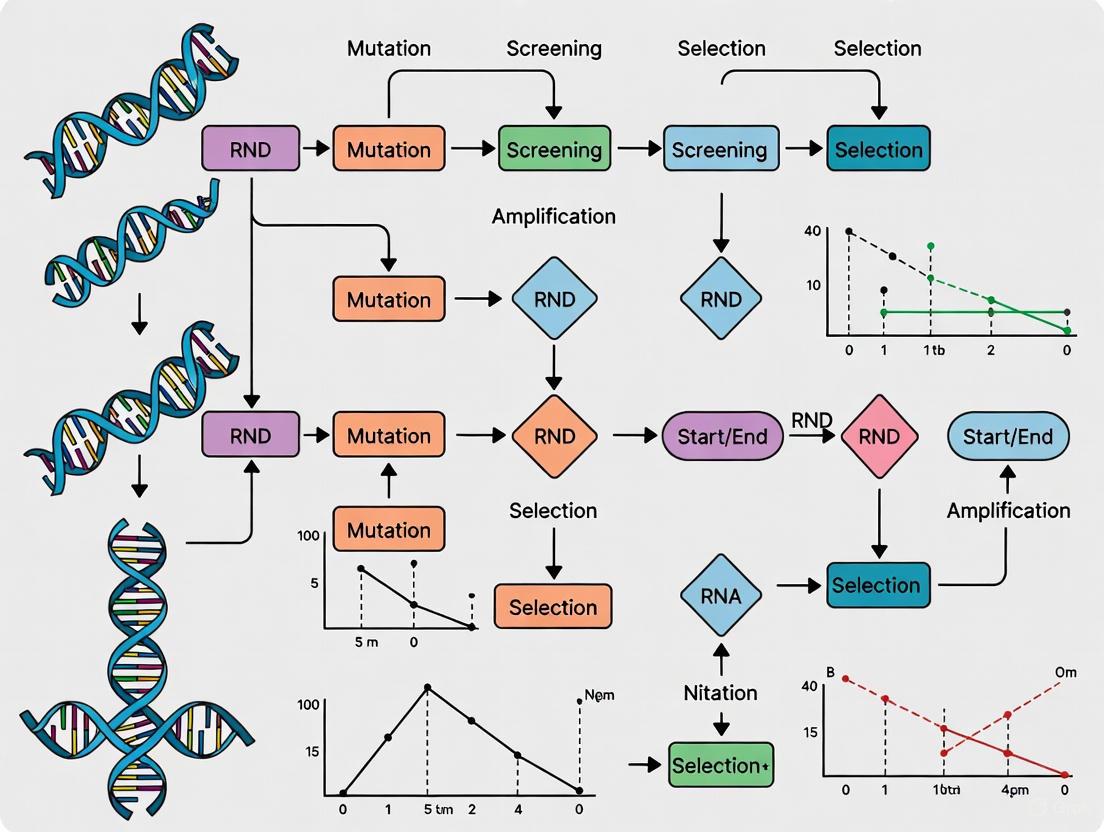
This article provides a comprehensive guide for researchers and drug development professionals on optimizing selection conditions in directed evolution.
Optimizing Selection Conditions in Directed Evolution: A Strategic Guide for Biomedical Researchers
Abstract
This article provides a comprehensive guide for researchers and drug development professionals on optimizing selection conditions in directed evolution. It covers the foundational principles of fitness landscapes and genotype-phenotype linkage, explores advanced methodological frameworks including machine learning-assisted and continuous evolution systems, and details strategies for troubleshooting common pitfalls like false positives and parasite variants. Through comparative analysis of empirical case studies across enzyme engineering and therapeutic protein development, we validate optimization techniques that enhance selection efficiency, improve functional outcomes, and accelerate the development of novel biologics and biotherapeutics.
The Foundation of Fitness: Understanding Landscapes and Selection Principles
FAQs: Navigating Fitness Landscapes in Directed Evolution
How does the relationship between genotype, phenotype, and fitness impact my directed evolution experiment?
The path from a protein's sequence (genotype) to its observable function, like catalytic activity (phenotype), and finally to its overall performance in your screen (fitness) is often non-linear [1]. Your genotype-phenotype landscape might be smooth, but if your selection pressure favors an intermediate level of phenotypic expression (e.g., not too much nor too little of an activity), it can create a rugged fitness landscape with multiple peaks [1]. This means that the protein variants you select based on fitness may not have the most extreme phenotypic values, but those that are "just right" for the selection conditions you set. The assumption that a higher measured phenotype always equals higher fitness can be misleading.
What are fitness "seascapes" and why are they important for directed evolution?
A fitness landscape is a static metaphor, while a seascape models how the adaptive topography changes over time or across different environments [2]. In practice, your selection conditions (like temperature, substrate concentration, or presence of an inhibitor) define the landscape. If you alter these conditions between rounds, you are effectively changing the seascape, which can help escape local fitness peaks and discover variants with more robust or novel functions [2]. This is crucial for engineering proteins that need to function in fluctuating environments, such as therapeutic enzymes.
How can I optimize my selection conditions to efficiently find improved variants?
Optimizing selection conditions is a critical, non-trivial task [3]. A systematic approach involves using Design of Experiments (DoE) to screen and benchmark key parameters, such as cofactor concentration (e.g., Mg²⁺), substrate concentration, and reaction time, using a small, focused protein library [3]. This allows you to identify parameter combinations that maximize the recovery of desired variants while minimizing the enrichment of "parasite" variants that thrive under non-optimal conditions without performing the desired function [3]. The goal is to shape the fitness landscape such that the highest peaks correspond to your truly desired protein functions.
My library is large, but I can only screen a fraction of it. How does this affect my search?
While generating large diversity is possible, the real bottleneck is often linking genotype to phenotype with a high-throughput screen or selection [4]. The power and throughput of your screening method must match the library size [4]. Selections, where survival or replication is tied to function, can handle immense libraries but may be prone to artifacts and provide less quantitative data [4]. Screening, where you individually assess each variant, gives rich data but has lower throughput. A robust strategy often combines both, using small-scale screening to inform the design of larger-scale selections. Furthermore, iterative deep learning approaches have shown that even limited screening of ~1,000 variants per round can guide evolution efficiently if the right "building blocks," like triple mutants, are used to explore a broader sequence space [5].
Experimental Protocols for Landscape Analysis
Protocol 1: Establishing a Baseline Genotype-Phenotype Map via Site-Saturation Mutagenesis
This protocol is used to deeply explore the functional contribution of specific amino acid positions, often identified as hotspots from prior random mutagenesis [4].
- Target Selection: Identify one or a few key residues based on structural knowledge or previous data.
- Library Construction: Perform site-saturation mutagenesis at the target codon(s) using degenerate primers to encode all 19 possible alternative amino acids [4]. This is typically done via inverse PCR on the plasmid containing the parent gene.
- Transformation: Transform the ligated library into a high-efficiency E. coli strain via electroporation to maximize library diversity.
- Phenotypic Screening: Culture individual clones and assay for the target phenotype (e.g., enzymatic activity) using a high-throughput method in 96- or 384-well plates with colorimetric or fluorometric substrates [4].
- Data Analysis: Sequence variants and plot phenotypic value against genotype to construct a local genotype-phenotype map for the targeted region.
Protocol 2: An Iterative Deep Learning-Guided Directed Evolution Workflow
This modern protocol, as exemplified by the DeepDE algorithm, uses machine learning to efficiently navigate the fitness landscape [5].
- Initial Library Creation: Generate a compact but diverse training library of approximately 1,000 protein variants. Using triple mutants as building blocks, instead of singles or doubles, allows for exploration of a much greater sequence space per round [5].
- Phenotyping and Training: Screen the entire library for the desired activity to obtain phenotypic data. Use this data to train a deep learning model to predict function from sequence.
- In Silico Prediction and Selection: The trained model predicts the fitness of a vast number of in silico variants. A new set of candidates is selected based on the model's predictions.
- Iterative Rounds: The newly selected variants are synthesized, tested experimentally, and the resulting data is used to re-train and refine the model for the next round. This cycle repeats until the performance target is met [5].
Research Reagent Solutions
The following table details key materials and their functions for directed evolution experiments focused on fitness landscape analysis.
| Item | Function in Experiment |
|---|---|
| Error-Prone PCR (epPCR) Kit | A modified PCR protocol that uses low-fidelity polymerases and manganese ions (Mn²⁺) to introduce random mutations across the gene of interest, creating diverse genotype libraries [4]. |
| High-Efficiency Competent Cells | Essential for achieving large library sizes after mutagenesis or gene shuffling, ensuring maximum sequence diversity is captured for screening [3]. |
| Colorimetric/Fluorometric Substrates | Enable high-throughput phenotypic screening by producing a detectable signal (color or fluorescence) proportional to enzyme activity in microtiter plate assays [4]. |
| Family Shuffling Templates | A set of homologous genes from different species. Used in recombination-based methods to access a broader, nature-approved region of sequence space by shuffling beneficial mutations [4]. |
| Saturation Mutagenesis Primers | Degenerate primers designed to randomize specific codons, allowing for the exhaustive exploration of all possible amino acids at a targeted position [4]. |
Workflow Diagram: Directed Evolution on a Fitness Landscape
The diagram below illustrates the iterative cycle of directed evolution, conceptualized as a walk on a dynamic fitness seascape.
The Critical Role of Genotype-Phenotype Linkage in Selection
Frequently Asked Questions (FAQs)
1. What is a genotype-phenotype linkage and why is it critical in directed evolution? The genotype is an organism's full hereditary information (its DNA), while the phenotype is its actual observed physical properties and functional traits, such as binding or catalytic activity [6] [7]. A genotype-phenotype linkage is a method that physically connects a protein (phenotype) to the gene that encodes it (genotype) [8]. This linkage is the fundamental practical consideration in directed evolution because it allows researchers to select a protein based on its desired function and then amplify the underlying DNA for subsequent rounds of mutation and selection, mimicking natural evolution in a laboratory setting [7].
2. What are the main methods for establishing this linkage? The primary methods can be classified into three categories [8]:
- Cell-based methods: These include techniques like phage display, where the protein is displayed on the surface of a virus (bacteriophage) that contains the gene for that protein [7].
- In vitro compartmentalization (IVC): This method uses water-in-oil emulsions to create microscopic compartments, effectively acting as artificial cells. Each compartment contains a single gene and the products it encodes, linking genotype and phenotype by physical isolation [7].
- Display technologies: Methods like ribosome display and mRNA display create a physical link between the protein and its mRNA or DNA gene in a test tube, without using cells [7].
3. When should I choose an in vitro method (like ribosome or mRNA display) over a cell-based method (like phage display)? In vitro methods offer several advantages, particularly when working with very large libraries (>10^12 members) or challenging proteins. The following table summarizes the key differences to guide your selection:
| Parameter | Cell-Based Methods (e.g., Phage Display) | In Vitro Methods (e.g., Ribosome/mRNA Display) |
|---|---|---|
| Typical Library Size | Typically limited to < 10^12 members due to transformation efficiency [7] | Can exceed 10^14 members, as no cellular transformation is needed [7] |
| Selection Conditions | Limited to physiological conditions compatible with cell survival [7] | Highly flexible; allows for non-physiological conditions (e.g., extreme pH, temperature, solvents) [7] |
| Protein Toxicity | Problematic; proteins toxic to the host cell cannot be efficiently displayed [7] | Not an issue, as no living cells are used [7] |
| Desired Activity | Well-suited for binding selections (panning) [7] | Best suited for binding selections; mRNA display can also be adapted for some catalytic functions [7] |
4. What are some common issues when working with ribosome display? A common challenge is the instability of the non-covalent ternary complex (mRNA-ribosome-protein). This can be mitigated by working at low temperatures (often 0-4°C), using high magnesium ion concentrations to stabilize the ribosome, and ensuring your mRNA template lacks a stop codon to prevent the ribosome from releasing the complex [7].
5. How can I improve my success with in vitro compartmentalization (IVC)? For IVC, the uniformity and stability of your emulsion are critical. Ensure you use a consistent and vigorous emulsification procedure. The droplet size should be small (around 2 μm diameter) to achieve a high degree of compartmentalization, ensuring that most droplets contain no more than one gene [7].
Troubleshooting Guides
Problem 1: Low Diversity in Selected Output
Potential Causes and Solutions:
- Cause: Inefficient linkage formation. The connection between the protein and its gene is broken during selection.
- Solution: For ribosome display, verify stabilization conditions (Mg²⁺ concentration, temperature). For mRNA display, check the efficiency of the puromycin linkage reaction [7].
- Cause: Incomplete removal of non-binders. High background noise can mask the selection of weak but desirable binders.
- Solution: Increase the number and stringency of wash steps. Include competitive elution (adding a known ligand to displace specific binders) in addition to non-specific elution (e.g., low pH) to isolate target-specific clones.
- Cause: Library bias. The initial genetic library may have limited diversity for the target.
- Solution: Use high-fidelity polymerases during library construction to avoid random mutations. Consider using different mutagenesis strategies (e.g., error-prone PCR, DNA shuffling) to create a more diverse starting pool.
Problem 2: No Output or Very Low Output After Selection
Potential Causes and Solutions:
- Cause: Low library quality or quantity. The initial DNA library may be too small or contain a high proportion of non-functional sequences.
- Solution: Quantify your DNA library accurately. Check the integrity of the library by agarose gel electrophoresis. For cell-based methods, ensure the transformation efficiency is sufficient.
- Cause: Harsh selection conditions. The conditions may be too stringent, inactivating the proteins or disrupting the genotype-phenotype link.
- Solution: Gradually increase selection stringency over multiple rounds. For the first round, use milder conditions (e.g., shorter incubation time, higher target concentration) to enrich for any binders.
- Cause: Failure in amplification step. After selection, the recovered DNA cannot be amplified for the next round.
- Solution: For cell-based methods, ensure your competent cells are highly efficient. For in vitro methods, use a robust PCR protocol, potentially adding DMSO (2-8%) to assist in amplifying GC-rich templates [9].
Problem 3: High Background of Non-Specific Binders
Potential Causes and Solutions:
- Cause: Non-specific binding to the solid support.
- Solution: Include a pre-clearing or negative selection step by incubating the library with the support material (e.g., the beads or plate) without the target present. Use a high concentration of a non-specific blocking agent (e.g., BSA, skim milk) during incubation and washing steps.
- Cause: "Sticky" proteins in the library.
- Solution: Incorporate counter-selection strategies. For example, if selecting against a specific protein, first remove binders to a closely related but undesired protein.
The Scientist's Toolkit: Key Research Reagent Solutions
The following table details essential materials and their functions for establishing robust genotype-phenotype linkages.
| Reagent / Material | Function in Experiment |
|---|---|
| In Vitro Transcription/Translation (IVT) System | A cell-free extract containing all necessary components (ribosomes, tRNAs, enzymes) to synthesize proteins from DNA or mRNA templates. Essential for all in vitro display technologies [7]. |
| Puromycin-Linker | A key reagent for mRNA display. This DNA oligonucleotide, covalently linked to puromycin, is hybridized to the mRNA. The puromycin molecule enters the ribosome and forms a covalent bond with the nascent protein, creating a stable mRNA-protein fusion [7]. |
| Magnetic Beads (Streptavidin) | Coated with streptavidin, these beads are used to immobilize biotinylated target molecules. They are the solid support of choice for many panning experiments due to easy and rapid separation using a magnet. |
| Emulsification Detergent (e.g., Abil WE 01) | A critical component for creating stable water-in-oil emulsions for In Vitro Compartmentalization (IVC). It stabilizes the microscopic aqueous droplets that act as artificial cells [7]. |
| DpnI Restriction Enzyme | Used in site-directed mutagenesis protocols to digest the methylated parental DNA template after PCR, enriching for the newly synthesized mutated DNA [9]. |
| High-Efficiency Competent Cells | Essential for transforming DNA libraries into bacterial hosts for cell-based methods like phage display. High efficiency is required to maintain library diversity [9]. |
Experimental Workflows for Key Linkage Technologies
The following diagrams illustrate the core workflows for two major in vitro genotype-phenotype linkage methods.
Diagram Title: Ribosome Display Workflow
Diagram Title: mRNA Display Workflow
In directed evolution, the selection step is where the evolutionary pressure is applied, determining which protein variants are enriched for subsequent rounds of evolution. The efficiency and success of an entire campaign hinge on the careful optimization of three key selection parameters: stringency, which defines the selective pressure; throughput, which determines the number of variants that can be assessed; and recovery, which ensures that improved variants are successfully captured. Balancing these interdependent parameters is a common challenge that requires a strategic approach. This guide provides troubleshooting advice and foundational methodologies to help researchers navigate these critical aspects of selection optimization.
Troubleshooting Common Selection Challenges
FAQ: How do I balance stringency and throughput in my selections?
- Challenge: Increasing selection stringency (e.g., higher antibiotic concentration, shorter induction time) often reduces the number of surviving clones, thereby reducing throughput and potentially losing valuable variants.
- Solution:
- Staggered Stringency: Perform parallel selections at low, medium, and high stringency. This approach captures a broad range of variant improvements without prematurely discarding moderately improved clones [10].
- Progressive Stringency: Use lower stringency in initial rounds to enrich for a larger pool of variants, then gradually increase stringency in subsequent rounds to isolate the top performers.
- Leverage FACS: When available, use Fluorescence-Activated Cell Sorting (FACS) to separate the stringency (gating on fluorescence intensity) from the throughput, as it can sort up to 10^8 variants per day [11].
FAQ: My selection yields very few colonies. What could be wrong?
- Challenge: Low recovery after a selection round, resulting in an insufficient number of variants to maintain library diversity.
- Solution:
- Troubleshoot the Cause:
- Excessive Stringency: The selection pressure may be too high. Titrate the selective agent (e.g., antibiotic, substrate concentration) to find a level that allows for adequate colony growth.
- Low Transformation Efficiency: If using an in vivo system, ensure high-quality competent cells and optimal transformation protocols. For viral systems like VLVs, confirm high transduction efficiency [12].
- Toxic Gene Expression: If the selected trait itself is toxic to the host, consider using a tightly regulated, inducible promoter to control expression only during the selection window.
- Optimize Recovery: Use larger culture volumes or multiple selection plates to increase the absolute number of cells recovered. Ensure that the growth conditions (media, temperature, aeration) are optimal for the host organism.
- Troubleshoot the Cause:
FAQ: How can I ensure my selection is enriching for the desired function and not for "cheaters"?
- Challenge: Variants that bypass the intended selection pressure (e.g., by downregulating the selection system, acquiring genomic mutations, or losing the genetic element) can dominate the pool, leading to false positives [12].
- Solution:
- Counter-Selection Systems: Implement strategies to actively eliminate unedited or non-functional cells. The SELECT method, for example, uses DNA damage-induced promoters to kill unedited cells, achieving up to 100% editing efficiency and reducing background noise [13].
- Genotype-Phenotype Linkage: Use systems that physically link the gene to its encoded protein product, such as phage display or yeast surface display, making it harder for cheaters to propagate without the functional gene [11].
- Validate Hits: Always sequence the genetic material of selected variants to confirm that the improved function is linked to mutations in the gene of interest and not to host genomic mutations.
Essential Experimental Protocols for Selection Optimization
Protocol 1: Method for Analyzing Selection Parameters Using Design of Experiments (DoE)
This protocol, adapted from current research, provides a systematic framework for understanding the impact of selection conditions [10].
- Define Key Variables: Identify the critical factors to test (e.g., antibiotic concentration, induction time, temperature, substrate concentration).
- Design the Experiment: Use a statistical DoE approach (e.g., a factorial design) to create a set of selection conditions that efficiently explores the interaction between these variables.
- Perform Selections: Subject a small, well-characterized library (e.g., a mock library with known ratios of active/inactive variants) to each set of conditions.
- Analyze Output with NGS: Sequence the output populations from each condition using Next-Generation Sequencing (NGS). The required sequencing coverage for accurate identification of enriched mutants is higher than for genome assembly [10].
- Evaluate Efficiency and Fidelity: Analyze the NGS data to determine:
- Enrichment Efficiency: How effectively were the known functional variants enriched?
- Library Diversity: Was a diverse set of functional sequences recovered, or did the selection collapse to a few clones?
- Fidelity: Did the selection enrich for variants with the desired function, or did other mutations (cheaters) dominate?
- Identify Optimal Conditions: Select the set of conditions that provides the best balance of high enrichment efficiency and high library diversity for your specific directed evolution goal.
Protocol 2: Bacterial Selection for PAM-Relaxed Cas12a Variants
This protocol outlines the directed evolution workflow used to generate Cas12a variants with relaxed PAM requirements, demonstrating a robust in vivo selection strategy [14].
- Library Generation: Create a library of LbCas12a variants with random mutations in the PAM-interacting (PI) and wedge (WED) domains using error-prone PCR. Aim for a mutation rate of 6–9 nucleotides per kilobase [14].
- Dual-Plasmid Selection System:
- Expression Plasmid: Clone the Cas12a variant library into a chloramphenicol-resistant (CAM⁺) vector under an inducible promoter.
- Selection Plasmid: Use an ampicillin-resistant (Amp⁺) plasmid encoding a lethal gene (e.g., ccdB) and a target sequence adjacent to a non-canonical PAM. The lethal gene should be under a tightly regulated, inducible promoter (e.g., pBAD with arabinose) [14].
- Transformation and Selection:
- Co-transform the library and selection plasmid into competent E. coli.
- Plate the transformed bacteria on agar plates containing chloramphenicol, arabinose (to induce the lethal gene), and the Cas12a inducer.
- Only cells expressing a functional Cas12a variant that cleaves the lethal gene target will survive.
- Isolation and Validation: Isolve plasmids from surviving colonies and sequence the LbCas12a gene to identify beneficial mutations. These hits can be subjected to further rounds of evolution or characterization in mammalian systems.
Key Signaling Pathways and Workflows in Selection Systems
The following diagrams illustrate the core logic and experimental workflows of advanced selection systems discussed in this guide.
Directed Evolution Workflow
SELECT Method Counter-Selection Logic
The Scientist's Toolkit: Key Research Reagent Solutions
Table 1: Essential reagents and their functions in directed evolution selection systems.
| Reagent / Tool | Function in Selection | Example Use Case |
|---|---|---|
| Error-Prone PCR | Generates random point mutations within a gene of interest to create genetic diversity [11]. | Creating initial library of LbCas12a variants to evolve new PAM specificity [14]. |
| DNA Shuffling | Recombines fragments from homologous genes to rapidly combine beneficial mutations [11]. | Accelerating the evolution of beta-lactamase resistance by recombining mutations from different lineages. |
| Phage/Yeast Display | Provides a physical link between a protein variant (phenotype) and its encoding gene (genotype), allowing for efficient library screening [11]. | Evolution of therapeutic antibodies with high affinity for a specific antigen. |
| Fluorescence-Activated Cell Sorting (FACS) | Enables high-throughput screening and sorting of millions of cells based on a fluorescent signal linked to protein function [11]. | Isolating enzyme variants with improved activity from a library of >10^7 clones. |
| Counter-Selection Markers (e.g., ccdB, sacB) | Genes that are lethal to the host under specific conditions; their disruption signifies successful editing or function [13]. | In the SELECT system, killing unedited cells to ensure high-fidelity editing efficiency [13]. |
| Chimeric Virus-like Vesicles (VLVs) | A stable mammalian directed evolution platform that links protein function to viral propagation, enabling evolution in mammalian cells [12]. | Evolving a tetracycline transactivator (tTA) for enhanced doxycycline responsiveness within a native mammalian environment [12]. |
Troubleshooting Guides & FAQs
Fluorescence-Activated Cell Sorting (FACS) Troubleshooting
FAQ: What are the most common issues encountered during FACS experiments and how can they be resolved?
FACS is a powerful technique for analyzing and isolating cell populations based on fluorescence and physical characteristics. The table below summarizes frequent problems, their causes, and solutions to help optimize your experiments [15] [16] [17].
Table 1: Common FACS Issues and Troubleshooting Guide
| Problem | Possible Causes | Recommended Solutions [16] |
|---|---|---|
| Weak or No Fluorescent Signal | Degraded antibodies, low antibody concentration, low antigen expression, antigen internalization, or incompatible laser/PMT settings. | Titrate antibodies; use bright fluorochromes (e.g., PE, APC) for low-expression targets; store antibodies properly in the dark; optimize staining conditions at 4°C; check instrument laser and PMT settings [16] [17]. |
| High Background/ Non-Specific Staining | Excess unbound antibodies, Fc receptor-mediated binding, high auto-fluorescence, or dead cells in the sample. | Include Fc receptor blocking; add viability dyes (e.g., PI, 7-AAD); wash cells thoroughly; use an unstained control to subtract auto-fluorescence; use fluorochromes that emit in the red channel [16] [17]. |
| High Fluorescence Intensity | Antibody concentration too high, high PMT voltage, or under-compensated signal. | Titrate antibodies to find optimal concentration; reduce PMT voltage; check and adjust compensation using MFI alignment [16]. |
| Abnormal Scatter Profiles | Lysed/damaged cells, bacterial contamination, incorrect instrument settings, or presence of dead cells/debris. | Optimize sample preparation to avoid cell lysis; use fresh, healthy cells to set FSC/SSC; sieve cells to remove debris; ensure proper sterile technique [16]. |
| Low Event Rate | Low cell count, sample clumping, or a clogged sample injection tube. | Ensure cell concentration is at least 1x10⁶/ml; sieve cells to remove clumps; unclog the system per manufacturer's protocol (e.g., running bleach and dH₂O) [16]. |
| High Event Rate | Overly concentrated sample or air in the flow cell. | Dilute the sample to the correct concentration; refer to the instrument manual to address air in the flow cell [16]. |
Experimental Protocol: Addressing High Background Staining
- Block Fc Receptors: Incubate cells with an Fc blocking agent, BSA, or FBS prior to antibody incubation [16].
- Include Controls: Use an unstained control to set baselines and an isotype control to identify non-specific Fc-mediated binding [16] [17].
- Wash Thoroughly: Include adequate wash steps after each antibody incubation, potentially with detergents like Tween or Triton X in the buffer to remove unbound antibodies [16].
- Viability Staining: Incorporate a viability dye to gate out dead cells during analysis, as they often bind antibodies non-specifically [16] [17].
FACS Troubleshooting Workflow
Growth Coupling in Directed Evolution Troubleshooting
FAQ: How can selection conditions be optimized to minimize parasites and false positives in growth-coupled directed evolution?
Growth coupling links a host cell's survival or growth to the activity of a desired enzyme, creating a powerful selection pressure. A key challenge is the emergence of "parasites" – variants that grow without performing the desired function – and false positives [3].
Experimental Protocol: Optimizing Selection Conditions using Design of Experiments (DoE)
This pipeline allows for systematic screening and benchmarking of selection parameters before committing large libraries [3].
- Define Factors and Ranges: Identify critical selection parameters (e.g., substrate concentration, cofactor concentration like Mg²⁺/Mn²⁺, selection time, additive concentration) and their experimental ranges [3].
- Employ a Small, Focused Library: Use a small, well-defined mutant library (e.g., a site-saturation mutagenesis library targeting active site residues) for initial screening. This makes the process efficient and cost-effective [3].
- Execute DoE and Analyze Outputs: Run the DoE and analyze selection outputs (responses). Key metrics include:
- Recovery Yield: The number of variants recovered.
- Variant Enrichment: The frequency of known active variants.
- Variant Fidelity: The balance between synthesis efficiency and accuracy, which can indicate a desired shift in polymerase/exonuclease equilibrium [3].
- Iterate and Scale: Use the optimized selection parameters for subsequent rounds of evolution with larger, more complex libraries [3].
Table 2: Addressing Common Growth Coupling Challenges
| Challenge | Impact on Selection | Mitigation Strategy |
|---|---|---|
| Selection Parasites | Variants recover by using alternative substrates (e.g., cellular dNTPs) or pathways, not the desired function. | Carefully control substrate and cofactor concentrations to favor the desired activity; use a DoE approach to find conditions that minimize background growth [3]. |
| Low Recovery Yield | Insufficient number of variants recovered for subsequent rounds. | Optimize factors like selection time and nutrient availability using the DoE pipeline to improve yield without increasing parasites [3]. |
| Poor Fidelity in Polymerase Selections | Active variants exhibit high error rates, which is undesirable for many applications. | Analyze the polymerase/exonuclease balance by measuring fidelity; adjust cofactors (e.g., Mg²⁺/Mn²⁺ ratio) to select for high-fidelity variants [3]. |
Display Technologies Troubleshooting
FAQ: What are the key technical considerations when choosing a display technology for a directed evolution campaign?
The choice of display technology (e.g., phage display, yeast display, ribosome display) is critical. While the search results do not provide direct troubleshooting for these systems, they emphasize that the underlying display component's performance is crucial for success [18].
Key Considerations for Display System Performance:
When setting up a display system, the physical display module (screen) can impact usability and detection. Consider these specs to ensure reliable interaction with your system for screening and sorting [18]:
- Outdoor Visibility/Readability: If your workflow involves ambient light, consider the display's performance in such conditions. Technologies like reflective LCD (RLCD) or E-paper perform well under high ambient light without consuming excess power [18].
- Power Draw: Battery life is critical for portable devices. Lower power draw extends operational time. E-paper and front-lit reflective LCDs (LCD 2.0) are top performers for low power consumption [18].
- Response Time (Refresh Rate): For applications requiring dynamic visual feedback, a fast response time is necessary to display high-quality video graphics without lag [18].
- Operating Temperature: Ensure the display technology can function within the temperature range of your lab or any specialized environmental chambers you use [18].
The Scientist's Toolkit: Research Reagent Solutions
Table 3: Essential Reagents for Selection Modalities
| Reagent / Material | Function in Experiment | Application Context |
|---|---|---|
| Viability Dyes (e.g., PI, 7-AAD) | Distinguishes live cells from dead cells during analysis, reducing background from non-specific binding [16] [17]. | FACS |
| Fc Receptor Blocking Reagent | Blocks non-specific antibody binding to Fc receptors on cells, reducing background staining and improving signal-to-noise ratio [16] [17]. | FACS |
| Bright Fluorochromes (e.g., PE, APC) | Provides strong signal amplification, ideal for detecting low-abundance antigens or when a signal needs to be distinguished from cellular auto-fluorescence [16]. | FACS |
| Brefeldin A | A Golgi transport blocker used in intracellular cytokine staining to prevent secretion and allow protein accumulation within the cell [16]. | FACS |
| 2′F-rNTPs (2′-deoxy-2′-α-fluoro nucleoside triphosphate) | Xenobiotic nucleic acid (XNA) substrates used to select for engineered polymerases with novel activity against non-natural substrates [3]. | Growth Coupling / Directed Evolution |
| Front-lit Reflective LCD (LCD 2.0) | A display technology that provides high resolution and quick refresh rate with ultra-low power consumption by using ambient light, ideal for portable or battery-operated screening devices [18]. | Display Technologies |
Advanced Selection Frameworks and Their Real-World Applications
Frequently Asked Questions (FAQs)
FAQ 1: What is the key advantage of using Active Learning-assisted Directed Evolution (ALDE) over traditional Directed Evolution (DE)?
ALDE more efficiently navigates complex protein fitness landscapes, especially when mutations exhibit non-additive, or epistatic, behavior. Traditional DE can be inefficient, often getting stuck at local optima. In contrast, ALDE uses an iterative machine learning workflow that leverages uncertainty quantification to explore the vast sequence space more deliberately. In a practical application, ALDE optimized an enzyme for a non-native cyclopropanation reaction, improving the product yield from 12% to 93% in just three rounds of experimentation, a scenario that was challenging for standard DE methods [19].
FAQ 2: My Bayesian Optimization (BO) performance is poor. What are the common pitfalls?
Three common pitfalls can cause poor BO performance [20]:
- Incorrect Prior Width: Using an inappropriate prior for your Gaussian Process surrogate model can misguide the search.
- Over-smoothing: This often results from a misspecified kernel lengthscale, causing the model to overlook important, sharp features of the objective function.
- Inadequate Acquisition Function Maximization: Failing to properly optimize the acquisition function itself can lead to suboptimal point selection.
FAQ 3: Why does Bayesian Optimization often perform poorly in high-dimensional problems (e.g., >20 dimensions)?
BO's performance challenges in high dimensions are primarily due to the curse of dimensionality [21]. The volume of the search space grows exponentially with the number of dimensions, making it extremely difficult to model the objective function accurately with a limited number of samples. The "20 dimensions" rule is a practical observation; performance degradation is gradual, not a strict threshold. Success in higher dimensions often requires making structural assumptions, such as that the problem has a lower intrinsic dimensionality or that only a sparse subset of dimensions is relevant [21].
FAQ 4: How can I identify and handle errors in my training data for ML-assisted directed evolution?
Unreliable model behavior is often traced to errors in training data, such as missing, incorrect, noisy, or biased values [22]. A holistic approach involves [22]:
- Identification: Use data attribution frameworks like influence functions or Shapley values to identify training points most responsible for model predictions and errors [22].
- Debugging: Understand how errors propagate through the different stages of your ML pipeline.
- Learning from Imperfection: Instead of attempting to repair all errors (which can be expensive and introduce new errors), use methods that reason about the model's reliability in the presence of this uncertainty [22].
FAQ 5: What is the role of the acquisition function in Bayesian Optimization?
The acquisition function is a heuristic that guides the BO algorithm by determining the next best point to evaluate. It uses the surrogate model's predictions and uncertainty to balance exploration (probing uncertain regions) and exploitation (concentrating on areas known to have high performance). Common acquisition functions include [20] [23]:
- Expected Improvement (EI): Selects the point with the highest expected improvement over the current best observation.
- Probability of Improvement (PI): Selects the point with the highest probability of improving upon the current best.
- Upper Confidence Bound (UCB): Selects the point based on a weighted sum of the predicted mean and uncertainty.
Troubleshooting Guides
Problem: BO is Not Finding Better Variants
Possible Causes and Solutions:
| Cause | Diagnostic Steps | Solution |
|---|---|---|
| Incorrect Prior Width [20] | Review the kernel amplitude and lengthscale of your Gaussian Process. Check if the model uncertainty is too low/high. | Adjust the GP prior to better reflect your knowledge of the protein fitness landscape. |
| Over-smoothing [20] | Check if the model is failing to capture the ruggedness of your fitness data. | Tune the kernel lengthscale to prevent the model from smoothing out important epistatic effects. |
| Poor Acquisition Maximization [20] | Verify if the internal optimization of the acquisition function is converging properly. | Use a more robust optimizer for the acquisition function and consider multiple restarts. |
| High-Dimensional Search Space [21] | Check the number of dimensions (mutations) you are optimizing. | Simplify the problem by focusing on a sparse subset of key residues or using a dimensionality reduction technique. |
Problem: My Model Performance is Unstable or Poor
Possible Causes and Solutions:
| Cause | Diagnostic Steps | Solution |
|---|---|---|
| Harmful Data Errors [22] | Use data valuation methods (e.g., Data Shapley, influence functions) to identify mislabeled or out-of-distribution data points in your training set. | Clean or remove the identified harmful data points, or use methods like confident learning to account for label noise [22]. |
| Inadequate Model for Epistasis | Analyze if your model architecture (e.g., linear model) can capture complex, non-linear interactions between mutations. | Switch to a more expressive model or use a protein language model-based representation that can better capture epistasis [19]. |
| Insufficient Initial Data | Evaluate model performance across different sizes of initial random libraries. | Ensure you start with a sufficiently large and diverse initial library to build a reasonable initial model. |
Experimental Protocols & Data
Table comparing recent experimental implementations and their outcomes.
| Method / Tool | Target System | Key Innovation | Experimental Rounds | Result / Fold Improvement | Citation |
|---|---|---|---|---|---|
| ALDE (Active Learning-assisted Directed Evolution) | ParPgb enzyme (5 epistatic residues) | Batch BO with wet-lab experimentation, leveraging uncertainty quantification. | 3 rounds | Yield improved from 12% to 93% for a cyclopropanation reaction [19]. | [19] |
| DeepDE (Iterative deep learning) | Green Fluorescent Protein (GFP) | Uses triple mutants as building blocks; trained on ~1,000 mutants per round. | 4 rounds | 74.3-fold increase in activity over baseline [5]. | [5] |
| MADGUI (Graphical User Interface) | General process optimization | User-friendly GUI for active learning and BO, requires no coding. | N/A | Provides an accessible platform for optimal experiment design [24]. | [24] |
Table 2: Comparison of Data Importance Quantification Methods
Based on "Navigating Data Errors in Machine Learning Pipelines" [22].
| Method | Core Principle | Scalability | Key Utility |
|---|---|---|---|
| Influence Functions | Traces model prediction back to training data to find the most responsible points. | Moderate (requires gradients/Hessians) | Understanding model behavior, debugging, detecting dataset errors [22]. |
| Data Shapley | Equitably values each training point based on its contribution to predictor performance. | Computationally expensive | More powerful than leave-one-out; identifies outliers and valuable data [22]. |
| Beta Shapley | A generalization of Data Shapley by relaxing the efficiency axiom. | Improved over standard Shapley | A unified and noise-reduced data valuation framework [22]. |
| Confident Learning | Estimates uncertainty in dataset labels by characterizing label errors. | Good | Identifies label errors in datasets; used to clean data prior to training [22]. |
Workflow Visualization
Diagram 1: Active Learning-Assisted Directed Evolution (ALDE) Workflow
Diagram 2: The Bayesian Optimization Cycle
The Scientist's Toolkit: Research Reagent Solutions
Table 3: Key Materials and Computational Tools
Essential resources for implementing ML-assisted directed evolution from the cited literature.
| Item / Resource | Function / Description | Example Use Case / Note |
|---|---|---|
| PROTEUS Platform [25] | A biotech platform for evolving molecules (proteins, antibodies) inside mammalian cells. | Enables faster evolution (years/decades faster) for applications like switching off genetic diseases [25]. |
| ALDE Codebase [19] | A computational package for running the Active Learning-assisted Directed Evolution workflow. | Available at https://github.com/jsunn-y/ALDE; integrates with wet-lab screening data [19]. |
| MADGUI [24] | A user-friendly Graphical User Interface (GUI) for active learning and Bayesian optimization. | Built for users with no programming knowledge; accelerates discovery of optimal solutions [24]. |
| ParPgb (Pyrobaculum arsenaticum) [19] | A protoglobin scaffold used as an engineering target for non-native carbene transfer reactions. | Chosen for its high thermostability and ability to perform novel chemistries [19]. |
| cleanlab [22] | An open-source Python library for confident learning and estimating label errors in datasets. | Used to find label errors and improve model accuracy by cleaning data prior to training [22]. |
Frequently Asked Questions (FAQs)
Q1: What are the fundamental differences between PACE and orthogonal replication systems?
A1: While both are continuous evolution platforms, they are architecturally and operationally distinct, as summarized in the table below.
| Feature | Phage-Assisted Continuous Evolution (PACE) | Orthogonal Replication Systems (e.g., OrthoRep) |
|---|---|---|
| Core Principle | Links protein function to the infectivity of the M13 bacteriophage. [26] | Uses an error-prone, dedicated DNA polymerase to replicate a separate plasmid independently of the host genome. [27] |
| Host Organism | Primarily Escherichia coli. [26] | Primarily Saccharomyces cerevisiae (yeast). [27] |
| Mutation Mechanism | Error-prone replication of the phage genome in a mutator host cell. [26] | Engineered, targeted mutagenesis by an orthogonal DNA polymerase (e.g., TP-DNAP1). [27] |
| Key Advantage | Extremely fast generational turnover (as short as 1-2 hours) with minimal researcher intervention. [26] | Stable, targeted mutagenesis of a specific plasmid without altering the host genome, enabling long-term evolution. [27] |
Q2: My PACE experiment is not producing any selection phage (SP). What could be wrong?
A2: A lack of SP output typically indicates a failure in the core selection circuit. The following checklist can help diagnose the issue.
- Check the Accessory Plasmid (AP): Ensure the AP is present and functional. It must supply the pIII protein only in response to the desired activity of your protein of interest (POI). Confirm that the selection circuit on the AP is correctly configured and that the inducer (if any) is working. [26]
- Verify the Selection Phage (SP) Construction: Confirm that the gene for the POI has correctly replaced the pIII gene (gIII) in the SP. If the SP still contains a functional gIII, it will propagate regardless of your POI's activity, invalidating the selection. [26]
- Troubleshoot the Lagoon Culture: The lagoon must maintain a high and constant density of host cells and a continuous flow of fresh SP. Check that the lagoon dilution rate is correctly calibrated to prevent washout and that the host cells are healthy and consistently producing the AP. [26]
Q3: How stable are orthogonal replication systems across different host strains, and what could cause instability?
A3: Systems like OrthoRep are generally highly stable across a wide range of yeast strains, including common lab strains (BY4741, W303–1A), industrial strains (CEN.PK2-1C), and diploids. [27] However, a primary historical source of instability was traced to a toxin/antitoxin (TA) system naturally encoded on the wild-type orthogonal plasmid. Critical Note: In any OrthoRep application, this TA system is replaced by your gene of interest. Therefore, if you are using a properly engineered OrthoRep plasmid, instability from this source should not occur, and the system should be broadly compatible. [27]
Q4: What are "parasite" variants in directed evolution, and how can I minimize their emergence?
A4: Selection parasites are variants that are enriched not by performing the desired function, but by exploiting an alternative, often easier, pathway to survive the selection pressure. [3] For example, a polymerase intended to incorporate xenobiotic nucleic acids (XNAs) might be selected for its ability to use low levels of endogenous dNTPs present in the system instead. [3] To minimize parasites, you must rigorously optimize your selection conditions (e.g., substrate concentration, cofactors, time) to strongly favor the desired activity and de-select the parasitic one. [3]
Troubleshooting Guides
PACE: Low Mutant Diversity or Stagnant Evolution
This issue arises when the population lacks sufficient genetic diversity to find a solution or becomes trapped on a local fitness peak.
- Problem: Evolution has stalled; the population seems homogeneous.
- Solution: Increase the mutation rate by using a mutator plasmid (MP) that expresses an error-prone DNA polymerase. Titrate the mutagenesis rate, as excessively high rates can lead to a population collapse. [26]
- Solution: Implement a "tunable" selection circuit. If the selection pressure is too strong too early, it can eliminate all but a few variants before beneficial mutations arise. Consider starting with a weaker selection and gradually increasing its stringency over time. [26]
Orthogonal Replication: Low Mutation Rate or No Evolution
When the orthogonal plasmid does not mutate at the expected rate, the evolution process grinds to a halt.
- Problem: The gene of interest (GOI) on the orthogonal plasmid is not accumulating mutations.
- Solution: Verify the expression of the error-prone orthogonal DNA polymerase. In OrthoRep, the mutagenic TP-DNAP1 must be expressed in trans from the host genome. Confirm that its gene is present and functional. [27]
- Solution: Confirm the replication status of the orthogonal plasmid. The system relies on the orthogonal polymerase being the sole replicator for the target plasmid. Ensure that host polymerases are not interfering with its replication, which would bypass the mutagenic process. [27]
- Solution: Measure the baseline mutation rate using a fluctuation assay with a reporter gene (e.g., leu2 reversion). Compare your measured rate to the expected rate for your specific orthogonal polymerase variant (e.g., ~10⁻⁹ substitutions per base for wild-type TP-DNAP1 vs. ~10⁻⁶ for an error-prone variant). [27]
General: Optimizing Selection Conditions to Reduce False Positives
This guide uses Design of Experiments (DoE) to systematically optimize selection parameters, a method applicable to various directed evolution platforms, including emulsion-based ones. [3]
- Step 1: Define Factors and Responses. Identify key adjustable factors (e.g., Mg²⁺/Mn²⁺ concentration, nucleotide chemistry and concentration, selection time). Define the measurable responses (e.g., recovery yield, enrichment of desired variants, variant fidelity). [3]
- Step 2: Screen with a Small Library. Use a small, focused mutant library to test a matrix of different factor combinations. This allows for efficient benchmarking of how selection parameters influence outcomes without the cost of running a full-scale evolution experiment. [3]
- Step 3: Analyze and Iterate. Analyze the selection outputs to identify the conditions that maximize your desired response (e.g., highest enrichment of true positives, lowest recovery of parasites). Use these optimized conditions for subsequent, larger-scale evolution rounds. [3]
Orthogonal Replication Mutation Rates Across Host Strains
The per-base substitution rates for the OrthoRep system are consistent across various S. cerevisiae strains, confirming its general applicability. [27]
| Host Strain | Orthogonal DNAP | Mutation Rate (subs/base) |
|---|---|---|
| BY4741 | Wild-type TP-DNAP1 | 1.23 × 10⁻⁹ |
| BY4741 | Error-prone TP-DNAP1-4-3 | 4.48 × 10⁻⁶ |
| CEN.PK2-1C | Wild-type TP-DNAP1 | 2.01 × 10⁻⁹ |
| CEN.PK2-1C | Error-prone TP-DNAP1-4-3 | 3.36 × 10⁻⁶ |
| W303-1A | Wild-type TP-DNAP1 | 1.73 × 10⁻⁹ |
| W303-1A | Error-prone TP-DNAP1-4-3 | 2.71 × 10⁻⁶ |
Key Selection Parameters for Polymerase Engineering
Based on a study optimizing selection conditions for DNA/XNA polymerase engineering, the following parameters are critical to monitor and control. [3]
| Parameter Category | Specific Factors | Impact on Selection |
|---|---|---|
| Cofactors | Mg²⁺ and/or Mn²⁺ concentration | Shapes polymerase activity and fidelity; influences cooperative interplay between polymerase and exonuclease domains. [3] |
| Substrates | Nucleotide chemistry (dNTPs vs. XNTPs) and concentration | Directly selects for enzymes that utilize desired substrates; low concentration can favor "parasite" variants. [3] |
| Reaction Conditions | Selection time, PCR additives | Alters stringency; longer time or specific additives can favor variants with higher processivity or stability. [3] |
The Scientist's Toolkit: Essential Research Reagents
This table details key reagents and materials required to establish and run continuous evolution systems.
| Reagent / Material | Function in Experiment | Example / Note |
|---|---|---|
| Mutator Plasmid (MP) | Expresses error-prone DNA polymerase in host to elevate mutation rate of the target gene in PACE. [26] | A plasmid expressing a mutagenic version of the T7 RNA polymerase for in vivo mutagenesis. |
| Accessory Plasmid (AP) | In PACE, encodes the essential pIII protein under the control of a selection circuit linked to the protein's activity. [26] | The AP is the "brain" of the selection, linking survival to function. |
| Selection Phage (SP) | The engineered M13 phage where the gene of interest replaces the pIII gene. Its propagation is dependent on the POI's function. [26] | The vehicle for the evolving gene. |
| Orthogonal DNA Polymerase | A dedicated polymerase that replicates only a specific plasmid, not the host genome. Error-prone versions drive targeted evolution. [27] | TP-DNAP1 in the yeast OrthoRep system. |
| Orthogonal Plasmid | The specialized plasmid that is replicated by the orthogonal DNA polymerase. It carries the gene(s) to be evolved. [27] | The p1 plasmid in the OrthoRep system. |
| Host Cells | The organism that houses the continuous evolution system. Must be compatible with all system components. | E. coli for PACE; S. cerevisiae for OrthoRep. [27] [26] |
Design of Experiments (DoE) for Systematic Selection Parameter Screening
Frequently Asked Questions (FAQs)
FAQ 1: What is the primary purpose of a Screening Design of Experiments (DOE) in directed evolution?
The primary purpose of a screening DOE is to efficiently identify the few significant factors—such as cofactor concentration, substrate concentration, or selection time—from a long list of potential variables that influence your selection output [3] [28] [29]. It is an economical experimental plan that focuses on determining the relative significance of main effects when you are dealing with many potential factors [29].
FAQ 2: When should I use a screening DOE in my directed evolution pipeline?
A screening DOE is particularly useful in several scenarios [28]:
- When you are dealing with a process that involves a large number of potential factors and running a full factorial DOE would be impractical.
- When your goal is to quickly identify the most significant variables affecting a fitness metric (e.g., enzymatic activity or yield) so you can focus resources on them.
- As a preparation for a subsequent optimization DOE, where you will find the optimal levels for the critical factors identified during screening.
FAQ 3: What are the main limitations of screening designs?
While efficient, screening DOEs have limitations [28]:
- They often confound interactions with main effects, meaning you might miss important information about how factors influence each other.
- They are generally not able to detect quadratic or higher-order effects.
- Their efficiency comes at the cost of reduced information compared to a full factorial design.
FAQ 4: How do I choose the right type of screening design?
The choice depends on the number of factors and the need to detect interactions [28]:
- 2-Level Fractional Factorial Designs: Common for screening; they estimate main effects while confounding interactions. The resolution of the design (e.g., Resolution III or IV) indicates the degree of this confounding [29].
- Plackett-Burman Designs: Useful for investigating a large number of factors with a very small number of runs, but they assume interactions are negligible [28].
- Definitive Screening Designs: A more advanced option that can estimate main effects, two-way interactions, and quadratic effects in a single experiment [28].
FAQ 5: What are the critical best practices for conducting a successful screening DOE?
Key practices include [28]:
- Eliminate Noise: Control for known sources of variation to prevent contamination of your results.
- Clear Objectives: Understand if you are only interested in main effects or if interactions are likely to be important.
- Sequential Experimentation: Be prepared to revisit and refine your screening DOE using techniques like "folding" to increase resolution if interactions are suspected.
Troubleshooting Guides
Problem 1: Inconclusive or No Significant Factors Identified
Potential Causes and Solutions:
- Cause: Factor levels set too close together. The high and low levels you chose for your factors may not be sufficiently different to produce a detectable effect on the response.
- Solution: In your next experiment, select more extreme (but still realistic) high and low levels for each factor based on process knowledge [30].
- Cause: Excessive background noise. Uncontrolled variables may be obscuring the signal from the factors you are testing.
- Cause: The selected factors genuinely do not impact the response.
- Solution: Re-evaluate your initial hypothesis and consider screening a different set of parameters.
Problem 2: Results Are Not Reproducible at Scale
Potential Causes and Solutions:
- Cause: Assembly or configuration errors during testing. This is a common issue where units are not built according to the specified experimental design [31].
- Solution: Maintain hyper-vigilance during the assembly of experimental units. Use visual aids and checklists to ensure each configuration is built correctly [31].
- Cause: Laboratory test conditions do not accurately reflect real-world performance.
- Solution: Validate your test conditions. Ensure that the selection pressures and screening environment used in the DOE are a meaningful simulation of the final application [31].
Problem 3: Suspected Factor Interactions Were Missed
Potential Causes and Solutions:
- Cause: Use of a low-resolution screening design. Resolution III designs confound main effects with two-factor interactions [28] [29].
Quantitative Data on Common Screening Designs
The table below summarizes key characteristics of different screening design types to aid in selection.
Table 1: Comparison of Common Screening Design of Experiments (DOE) Types
| Design Type | Primary Use | Typical Resolution | Key Advantage | Key Limitation |
|---|---|---|---|---|
| 2-Level Fractional Factorial [28] | Screening many factors | III, IV, or V [29] | Highly efficient; requires only a fraction of the full factorial runs. | Confounds (aliases) interactions with main effects or other interactions. |
| Plackett-Burman [28] | Screening a very large number of factors | III | Extremely low number of runs for the factors investigated. | Assumes all interactions are negligible; not suitable if interactions are present. |
| Definitive Screening [28] | Screening with potential for curvilinear effects | N/A | Can estimate main effects, interactions, and quadratic effects. | Requires more runs than a Plackett-Burman design. |
Experimental Workflow & Protocol
The following diagram illustrates a generalized workflow for executing a screening DOE in the context of directed evolution.
Figure 1: Screening DOE workflow for directed evolution.
Detailed Protocol for a 2-Factor Screening DOE
This protocol outlines the steps for a basic 2-factor, 2-level full factorial design, which is a foundational building block for more complex fractional factorial designs [30].
1. Define the Problem and Metrics:
- Objective: Understand the effect of Mg2+ concentration and nucleotide chemistry on the recovery yield of active polymerase variants in a compartmentalized self-replication (CSR) selection [3].
- Response Variable: Recovery yield (a quantitative measure).
2. Select Factors and Levels:
- Code the factors as
-1(low level) and+1(high level).- Factor A: Mg2+ Concentration:
-1= 2 mM,+1= 8 mM. - Factor B: Nucleotide Chemistry:
-1= dNTPs,+1= 2′F-rNTPs [3].
- Factor A: Mg2+ Concentration:
3. Create a Design Matrix:
- The matrix specifies the experimental conditions for each run.
Table 2: Design Matrix and Hypothetical Results for a 2-Factor Polymerase Selection DOE
| Experiment # | Mg2+ Conc. (Coded) | Nucleotide (Coded) | Mg2+ Conc. (Actual) | Nucleotide (Actual) | Recovery Yield (Response) |
|---|---|---|---|---|---|
| 1 | -1 | -1 | 2 mM | dNTPs | 21% |
| 2 | -1 | +1 | 2 mM | 2′F-rNTPs | 42% |
| 3 | +1 | -1 | 8 mM | dNTPs | 51% |
| 4 | +1 | +1 | 8 mM | 2′F-rNTPs | 57% |
4. Execute Experiments and Analyze Data:
- Run the experiments in a randomized order to avoid bias [30].
- Calculate the main effect of each factor [30]:
- Effect of Mg2+:
(Y3 + Y4)/2 - (Y1 + Y2)/2=(51 + 57)/2 - (21 + 42)/2= 22.5% - Effect of Nucleotide:
(Y2 + Y4)/2 - (Y1 + Y3)/2=(42 + 57)/2 - (21 + 51)/2= 13.5%
- Effect of Mg2+:
- This analysis shows that increasing Mg2+ concentration has a larger positive effect on recovery yield under these conditions.
Research Reagent Solutions
The table below lists key materials and their functions in establishing selection parameters for directed evolution, particularly for enzyme engineering.
Table 3: Essential Research Reagents for Selection Parameter Screening
| Reagent / Material | Function in Directed Evolution | Example Application |
|---|---|---|
| Metal Cofactors (e.g., Mg2+, Mn2+) | Essential for catalytic activity of many enzymes; concentration can dramatically influence activity and fidelity [3]. | Optimizing polymerase performance in CSR selections [3]. |
| Nucleotide Analogues (e.g., 2′F-rNTPs) | Unnatural substrates used to select for polymerases with novel or enhanced activities, such as XNA synthesis [3]. | Engineering XNA polymerases for biotechnological applications [3]. |
| PCR Additives | Chemical additives that can alter enzyme stability, processivity, or specificity during selection pressure [3]. | Fine-tuning selection stringency in emulsion-based screens [3]. |
| Emulsification Agents | Enable compartmentalization of individual variants in water-in-oil emulsions, creating a strong genotype-phenotype link [3]. | Implementing CSR and other ultra-high-throughput screening platforms [3]. |
This section provides a detailed guide to the Active Learning-assisted Directed Evolution (ALDE) workflow, from establishing your initial library to analyzing the final results. The diagram below illustrates the iterative, closed-loop nature of the process.
Workflow Diagram Title: ALDE Iterative Optimization Cycle
Step-by-Step Protocol
- Define the Combinatorial Design Space: The case study focused on five epistatic residues (W56, Y57, L59, Q60, F89) in the active site of the Pyrobaculum arsenaticum protoglobin (ParPgb) starting variant ParLQ (W59L Y60Q). This creates a theoretical design space of 20^5 (3.2 million) possible variants [19].
- Generate Initial Library: Synthesize an initial library of variants mutated at all five positions. Use sequential rounds of PCR-based mutagenesis with NNK degenerate codons to introduce diversity [19].
- Screen for Fitness: Express and screen the library variants using a relevant biochemical assay. The primary fitness objective for the cyclopropanation case study was defined as the difference between the yield of the desired cis-cyclopropane product (cis-2a) and the yield of the trans product (trans-2a) from the reaction of 4-vinylanisole and ethyl diazoacetate [19].
- Train the Machine Learning Model: Use the collected sequence-fitness data to train a supervised machine learning model. This model learns to map protein sequences to the fitness objective. Employ frequentist uncertainty quantification for robust performance [19].
- Rank and Select New Variants: Apply an acquisition function, such as the Upper Confidence Bound (UCB), to the trained model. This function ranks all sequences in the design space, balancing the exploration of uncertain regions with the exploitation of regions predicted to have high fitness [19] [32].
- Iterate the Process: The top-ranked variants from the acquisition function are synthesized and screened in the next wet-lab round (Round 2). The new data is then used to retrain the model, and the cycle repeats until a variant with satisfactory performance is identified [19].
Troubleshooting Common Experimental Issues
FAQ 1: My initial library screening shows no significant improvement over the parent sequence. Should I continue?
- Answer: Yes, you should continue. A lack of significantly improved single mutants is a classic signature of a rugged fitness landscape with strong epistasis, where the beneficial effect of a mutation depends on the genetic background. This is precisely the scenario where ALDE provides the most value over traditional methods. In the ParPgb case, single-site saturation mutagenesis (SSM) also showed no promising single mutants, and simple recombination of the "best" single mutants failed. However, after three rounds of ALDE, a high-performance variant was successfully identified [19].
FAQ 2: How do I choose an acquisition function, and what is the UCB parameter (β)?
- Answer: The Upper Confidence Bound (UCB) is a popular acquisition function. It is defined as ( \alpha(\mathfrak{p}) = \mu(\mathfrak{p}) + \sqrt{\beta}\sigma(\mathfrak{p}) ), where ( \mu ) is the predicted fitness and ( \sigma ) is the model's uncertainty [32].
- High β (>0): Prioritizes exploration (sampling uncertain regions). This helps the model learn about under-explored areas of the sequence space and can escape local optima.
- Low β (~0): Prioritizes exploitation (sampling from high-fitness predicted regions). This acts like a greedy search.
- Recommendation: Theory suggests a dynamically adjusted β, but a practical sweet spot often lies at a smaller, non-zero value (e.g., ( \beta=0.2\beta_t^* )). Start with a balanced approach and adjust based on experimental progress [32].
FAQ 3: Why is uncertainty quantification (UQ) critical in ALDE, and which method should I use?
- Answer: UQ is essential for balancing exploration and exploitation. Without a measure of uncertainty, the model can over-exploit its initial predictions and get stuck in a local optimum. The ALDE study found that frequentist UQ methods performed more consistently than typical Bayesian approaches in their experimental and computational tests. Always ensure your chosen ML model and sequence encoding can provide reliable uncertainty estimates [19].
FAQ 4: My model predictions and experimental results are inconsistent after the first ALDE round. What could be wrong?
- Answer: This is common when the initial dataset is too small for the model to learn the complex epistatic relationships. Ensure your initial library is sufficiently diverse and large enough to provide a meaningful signal. The ALDE workflow is designed to improve the model's accuracy iteratively as more data is collected. Proceed to the next round, as the model's performance typically improves with more data [19].
Key Reagents and Experimental Materials
Table 1: Essential Research Reagent Solutions for ALDE
| Reagent / Material | Function / Description | Application in ALDE Case Study |
|---|---|---|
| NNK Degenerate Codons | Allows for the incorporation of all 20 amino acids at a targeted position during mutagenesis. | Used to build the initial combinatorial library for the five active-site residues [19]. |
| PCR Mutagenesis Kit | A commercial kit for efficient site-directed or combinatorial mutagenesis. | Used for sequential rounds of PCR-based mutagenesis to generate variant libraries [19]. |
| ParPgb Parent Scaffold | The protoglobin (ParPgb) starting variant ParLQ (W59L Y60Q). | The protein scaffold to be engineered for improved cyclopropanation activity [19]. |
| Substrates: 4-Vinylanisole & Ethyl Diazoacetate (EDA) | The olefin and carbene precursor, respectively, for the non-native cyclopropanation reaction. | Used in the high-throughput screening assay to measure variant fitness [19]. |
| Gas Chromatography (GC) | An analytical technique for separating and quantifying chemical compounds in a mixture. | Used to screen variants for yield and diastereoselectivity of the cyclopropanation products [19]. |
The following table summarizes the quantitative outcomes from the ALDE case study, demonstrating its efficiency and effectiveness.
Table 2: Summary of Key Experimental Data and Results from the ALDE Case Study [19]
| Metric | Starting Point (ParLQ) | After 3 Rounds of ALDE | Notes |
|---|---|---|---|
| Total Yield of Product | ~40% | 93% (of a desired product) | The yield for a specific desired product increased from an initial 12% to 93% [19]. |
| Diastereomeric Ratio (cis:trans) | 1:3 (preferring trans) | 14:1 (preferring cis) | A dramatic reversal and improvement in stereoselectivity for the cis product [19]. |
| Fitness Objective | Low / Negative | Highly Optimized | The objective was defined as (cis yield - trans yield) [19]. |
| Sequence Space Explored | - | ~0.01% of the total 3.2M design space | Demonstrates high sample efficiency [19]. |
| Key Mutations Identified | W59L, Y60Q (parent) | Specific combination of mutations at W56, Y57, L59, Q60, F89 | The optimal combination was not predictable from single-mutant data, highlighting epistasis [19]. |
Precise replacement or repair of entire genes in human cells remains a significant challenge in modern genome editing. While technologies like CRISPR or base editors can change individual DNA letters with high precision, they are poorly suited for inserting long DNA fragments, such as full-length genes. These methods often create double-stranded DNA breaks, leading to unwanted mutations, low efficiency in certain cell types, or larger genomic rearrangements [33].
For many genetic diseases caused by numerous different mutations within the same gene, developing individual therapies for each variant is impractical. Bridge recombinases present a promising solution: these enzymes combine a recombinase protein with a bridge RNA (bRNA) molecule that guides precise recombination without breaking both DNA strands. This enables safer insertion of large DNA fragments [33]. This case study explores the application of the E.coli Orthogonal Replicon (EcORep) system, a novel directed evolution platform, to optimize bridge recombinases for therapeutic gene replacement, with a specific proof-of-concept focusing on Alpha-1 Antitrypsin Deficiency (A1ATD) caused by mutations in the SERPINA1 gene [33].
Key Concepts and Definitions
Bridge Recombinases: A class of genome editing enzymes that perform precise DNA exchange using a recombinase protein guided by a bridge RNA (bRNA), which binds both the genomic target and a donor DNA fragment [33].
Directed Evolution: A laboratory technique that mimics natural selection to engineer biomolecules with improved properties. It involves iterative cycles of creating genetic diversity and selecting variants with enhanced function [4].
EcORep (E.coli Orthogonal Replicon): A directed evolution system that uses a special DNA replicon inside E. coli with a high mutation rate, allowing for continuous mutagenesis and enrichment of protein variants with improved activity [33].
Fitness Landscape: A conceptual mapping of protein sequences (genotypes) to a quantitative measure of fitness, such as enzymatic activity or thermostability. Directed evolution is essentially a guided walk across this landscape [3].
Off-Target Effects: Unintended modifications at DNA locations other than the desired target site, a key safety concern for any gene editing therapeutic [34].
Technical FAQs and Troubleshooting Guide
FAQ 1: What is the core principle behind using EcORep for evolving bridge recombinases?
The EcORep system establishes a direct link between a bridge recombinase's function and its own replication. The gene encoding the bridge recombinase is placed on a special, high-mutation-rate replicon in E. coli. Variants with higher recombination activity are selectively enriched over time because their enhanced function allows the replicon to propagate more efficiently. This creates a self-sustaining cycle of continuous evolution where improved enzyme variants "survive" and dominate the population [33].
FAQ 2: Our bridge recombinase evolution campaign has stalled, with no fitness improvement after several rounds. What could be wrong?
Stalling in a directed evolution campaign often indicates that the experiment is trapped at a local fitness peak or is being hindered by epistasis (non-additive interactions between mutations). We recommend the following troubleshooting steps [3] [19]:
- Alter Selection Pressure: Gradually increase the stringency of your selection conditions. For example, if you are selecting for recombination efficiency, reduce the induction time for the donor DNA or the amount of the donor template.
- Diversify the Library: The initial library may be exhausted. Introduce a new round of diversity using a different mutagenesis method (e.g., switch from error-prone PCR to targeted saturation mutagenesis of identified hotspot residues) to escape the local optimum [4].
- Check for Parasitic Variants: Ensure that your selection logic is not enriching for "cheater" variants that propagate without performing the desired recombination function. Validate the functional output of enriched variants using a secondary, low-throughput assay [3].
FAQ 3: We are observing high background noise in our selection system. How can we optimize conditions to reduce it?
High background is a common issue that can mask the signal from genuinely improved variants. Systematic optimization of selection parameters is crucial. A robust strategy involves using Design of Experiments (DoE) to screen multiple factors simultaneously [3].
Table: Key Parameters to Optimize for Reducing Background in EcORep Selection
| Parameter | Effect on Background | Suggested Adjustment |
|---|---|---|
| Donor DNA Concentration | High concentrations can lead to non-specific recombination or increase survival of non-functional clones. | Titrate to find the minimum concentration that allows functional selection. |
| Induction Time & Strength | Overly long or strong induction can increase noise from leaky expression. | Shorten induction time or use weaker inducers. |
| Cofactor Concentration (e.g., Mg²⁺) | Can influence enzyme fidelity and cleavage/ligation equilibrium. | Optimize concentration to favor precise recombination over non-specific nicking [3]. |
| Host Cell Physiology | The health and metabolic state of the E. coli host can affect replication dynamics. | Use a well-defined growth medium and control cell density at induction. |
FAQ 4: What sequencing coverage is sufficient for accurately identifying enriched variants from an EcORep experiment?
While whole-genome sequencing often requires high coverage (e.g., 30x), directed evolution experiments using targeted sequencing have different requirements. Research indicates that precise and accurate identification of significantly enriched mutants is achievable even at relatively low coverages. A minimum of 50x coverage per variant is a good starting point, but for confident detection of rare (<1%) beneficial mutants in a complex library, aim for 100-200x coverage. This balances cost with the need to avoid false positives/negatives [3].
FAQ 5: How do we assess the safety of an evolved bridge recombinase for therapeutic applications?
Safety profiling is a multi-step process. A key component is comprehensive off-target analysis. The FDA recommends using multiple methods to measure off-target editing events, including genome-wide analysis [34].
- Biochemical Methods (e.g., CIRCLE-seq, CHANGE-seq): Use purified genomic DNA and the evolved recombinase in a test tube. These methods are highly sensitive and can reveal a broad spectrum of potential off-target sites, but may overestimate risk as they lack cellular context [34].
- Cellular Methods (e.g., GUIDE-seq, DISCOVER-seq): Performed in living cells, these techniques capture off-target effects in the context of native chromatin and DNA repair pathways, providing biologically relevant insights. They are essential for validating the clinical relevance of off-target sites identified by biochemical methods [34].
Experimental Protocols
Protocol: Establishing a Baseline EcORep Selection
This protocol outlines the steps to initiate a directed evolution campaign for a bridge recombinase using the EcORep system, based on the work of the iDEC 2025 team [33].
Objective: To establish a functional selection system in E. coli for enriching active bridge recombinase variants.
Materials:
- Plasmid: EcORep replicon vector carrying the gene for the parent bridge recombinase.
- Host Strain: Specified E. coli strain (e.g., 10-beta competent E. coli).
- Selection Cassette: A DNA construct containing the donor sequence and a reporter or selection marker flanked by the target sequences for the bridge recombinase.
- Growth Media: LB media supplemented with appropriate antibiotics.
Procedure:
- Transformation: Transform the EcORep plasmid encoding the bridge recombinase into the competent E. coli host strain.
- Culture Growth: Inoculate a primary culture and grow to mid-log phase.
- Selection Induction: Introduce the selection cassette (via transformation or induction) and provide conditions that induce the expression of the bridge recombinase and its bridge RNA.
- Outgrowth: Allow cells to recover and grow for a specified period (e.g., 4-16 hours) to enable replication of the EcORep plasmid in successful recombinants.
- Harvest and Analysis: Harvest the cells. Extract plasmids and subject the bridge recombinase gene to sequencing to monitor the emergence of new variants. The functional output can be validated by a secondary assay, such as PCR to check for cassette flipping [33].
Protocol: Validating Gene Replacement in Human Cells
After evolving a promising bridge recombinase variant, its function must be validated in a therapeutically relevant human cell model.
Objective: To confirm that an evolved bridge recombinase can precisely insert a healthy copy of the SERPINA1 gene into its natural genomic location in human cells.
Materials:
- Cell Line: Human hepatocyte line (e.g., HepG2).
- Editing Components: Lipid nanoparticles (LNPs) or viral vectors delivering the evolved bridge recombinase protein/mRNA and its specific bRNA.
- Donor Template: A DNA donor containing a healthy, full-length SERPINA1 gene.
- Assay Kits: qPCR kit, Western blot reagents, Alpha-1 Antitrypsin (A1AT) ELISA kit.
Procedure:
- Delivery: Co-deliver the bridge recombinase (as mRNA or protein) and its bRNA, along with the donor DNA template, into the human hepatocytes using LNPs. LNPs are preferred for their potential for re-dosing and lower immunogenicity compared to viral vectors [35] [36].
- Genomic DNA Analysis: After 48-72 hours, extract genomic DNA.
- PCR Screening: Use junction PCR with primers spanning the 5' and 3' integration sites to detect precise insertion.
- Off-Target Assessment: Employ an unbiased, genome-wide method like GUIDE-seq or CIRCLE-seq to profile potential off-target integration events [34].
- Functional Analysis:
- Protein Expression: Harvest cell culture supernatant and lysates at 5-7 days post-editing. Perform a Western blot or an A1AT-specific ELISA to detect and quantify the restored expression of the A1AT protein [33].
- Phenotypic Rescue: In a disease model, assess the functional correction, such as the ability of the secreted A1AT to inhibit neutrophil elastase.
The Scientist's Toolkit: Essential Research Reagents
Table: Key Reagents for Evolving Bridge Recombinases with EcORep
| Reagent / Solution | Function / Application | Technical Notes |
|---|---|---|
| EcORep Replicon Plasmid | High-mutation-rate vector for continuous in vivo evolution in E. coli. | The core of the system; ensures the gene of interest mutates rapidly [33]. |
| Bridge RNA (bRNA) Constructs | Guides the recombinase to the specific target and donor DNA sequences. | Design is critical for specificity; must be co-expressed or co-delivered with the recombinase [33]. |
| SERPINA1 Donor Template | A healthy copy of the gene for insertion into the genome. | Must contain homologous arms or specific attachment sites recognized by the bridge recombinase system [33]. |
| Lipid Nanoparticles (LNPs) | For in vivo delivery of editing components (e.g., recombinase mRNA, bRNA). | Preferred for liver-targeted therapies and potential re-dosing; avoid viral vector immunity issues [35] [36]. |
| NGS Library Prep Kits | For deep sequencing of evolved variant libraries from the EcORep system. | Essential for tracking mutation enrichment and identifying winning variants; target ~100-200x coverage [3]. |
| Off-Target Assay Kits (e.g., GUIDE-seq) | To identify and validate unintended editing events genome-wide. | A critical safety assessment; both biochemical (CIRCLE-seq) and cellular (GUIDE-seq) methods are recommended [34]. |
Workflow and Process Diagrams
EcORep Directed Evolution Workflow
EcORep Selection Logic
Navigating Selection Pitfalls and Enhancing Evolutionary Outcomes
Combating False Positives and Selection Parasites in Emulsion-Based Systems
Frequently Asked Questions (FAQs)
What are "selection parasites" in the context of directed evolution? A selection parasite is a variant recovered during directed evolution that does not perform the desired function but survives by exploiting an alternative, undesired phenotype or background processes. For instance, in Compartmentalized Self-Replication (CSR) for polymerase engineering, a parasite could be a DNA polymerase variant that uses low cellular concentrations of natural dNTPs present in the emulsion instead of the provided unnatural nucleotide analogues that are the target of the selection [3].
Why are false positives particularly problematic in emulsion-based systems? False positives can arise from random, non-specific processes (background) or from parasitic phenotypes. In emulsion-based systems, which rely on compartmentalizing individual reactions, these variants can be co-amplified and enriched over multiple selection rounds, ultimately leading to the failure of an engineering campaign by diverting resources away from the discovery of genuinely useful variants [3].
How can selection conditions be optimized to minimize parasites? Selection parameters such as nucleotide concentration, nucleotide chemistry (e.g., using 2′F-rNTPs instead of dNTPs), selection time, and divalent metal ion concentration (Mg²⁺ and/or Mn²⁺) play a crucial role. Systematically optimizing these conditions using methods like Design of Experiments (DoE) can bias the selection pressure towards the desired activity and away from the parasitic pathway [3].
What is the role of emulsion droplet size in managing experimental outcomes? While not directly studied in the context of polymerase selection parasites, droplet size is a critical parameter in single-cell emulsion experiments. Research on encapsulating Trypanosoma brucei has shown that larger droplets (e.g., 2 nL) support longer cell survival and higher total cell numbers compared to smaller droplets (0.2 nL), which can influence the growth dynamics and final outcome of an experiment [37]. Optimizing droplet size for your specific system may help control for unwanted population variabilities.
Troubleshooting Guide: Common Issues and Solutions
Problem: High background of variants using natural substrates.
- Potential Cause: The selection conditions are not stringent enough against the natural substrate (e.g., dNTPs are present in the emulsion at sufficient levels to support amplification).
- Solutions:
- Reduce natural substrate carryover: Improve cell lysis and washing protocols to minimize the release of endogenous cellular nucleotides [3].
- Adjust cofactor concentration: Systematically vary the concentration of metal cofactors (Mg²⁺, Mn²⁺) as they can influence polymerase fidelity and the balance between polymerase and exonuclease activities [3].
- Control substrate availability: Use modified or unnatural nucleotides (e.g., 2′F-rNTPs) as the primary substrate and ensure their concentration is optimized to outcompete any residual natural substrates [3].
Problem: Enrichment of non-functional variants after a selection round.
- Potential Cause: The genotype-phenotype linkage within emulsion droplets is failing, potentially due to droplet cross-talk, instability, or lysis.
- Solutions:
- Verify emulsion stability: Ensure the water-in-oil emulsion is stable by using appropriate surfactants and oil phases. Unstable emulsions can lead to coalescence of droplets and mixing of genotypes and phenotypes [38].
- Optimize encapsulation efficiency: Aim for a Poisson distribution of cells per droplet, with the majority of occupied droplets containing only a single cell. This minimizes cooperation between non-functional variants and prevents "cheating" [37].
- Implement negative controls: Always include a control with a known non-functional variant (e.g., a polymerase with a large deletion) to quantify the background recovery and validate the stringency of your selection [3].
Problem: Low recovery of desired variants, leading to poor library diversity.
- Potential Cause: The selection pressure is too stringent, or the sequencing coverage of the output library is insufficient to identify genuinely enriched, but rare, mutants.
- Solutions:
- Titrate selection stringency: Gradually increase the selection pressure over multiple rounds rather than applying maximum stringency in the first round [3] [38].
- Ensure adequate sequencing coverage: For directed evolution outputs, the sequencing coverage requirements differ from genomics. One study identified that cost-effective and accurate identification of significantly enriched mutants is possible even with relatively low coverage, but a specific threshold must be established for your system [3].
Key Experimental Parameters and Data
The following table summarizes critical parameters to optimize when designing an emulsion-based selection to combat false positives and parasites, based on research into polymerase engineering [3].
Table 1: Key Selection Parameters to Combat False Positives and Parasites
| Parameter | Impact on Selection | Optimization Strategy |
|---|---|---|
| Nucleotide Chemistry | Determines substrate specificity. Using unnatural nucleotides selects for desired activity. | Use target unnatural nucleotides (e.g., 2'F-rNTPs); minimize natural dNTP carryover. |
| Metal Cofactor (Mg²⁺/Mn²⁺) | Influences polymerase fidelity, activity, and exonuclease balance. | Systematically screen concentrations and ratios using DoE. |
| Selection Time | Affects the amount of product generated. Too short may not discriminate, too long increases background. | Perform time-course experiments to find the optimal window for differentiation. |
| PCR Additives | Can enhance specificity and efficiency or suppress parasites. | Test common additives (e.g., DMSO, betaine) in the selection mix. |
| Droplet Size/Volume | Impacts reactant availability and cell growth dynamics. | Based on single-cell studies, larger volumes (e.g., 2 nL) can support better outcomes for some cell types [37]. |
Optimized Workflow for Selection Setup
The diagram below outlines a robust workflow for setting up a directed evolution selection, incorporating checks to minimize false positives from the beginning.
Research Reagent Solutions
Table 2: Essential Reagents for Emulsion-Based Directed Evolution
| Reagent / Material | Function / Role | Technical Notes |
|---|---|---|
| Fluorinated Oil & Surfactants | Forms the stable, inert oil phase for water-in-oil emulsions. | Prevents droplet coalescence and maintains genotype-phenotype linkage [38]. |
| Unnatural Nucleotides (e.g., 2′F-rNTPs) | Target substrate for engineering novel polymerase specificity. | Using these selects against polymerases that only use natural dNTPs [3]. |
| High-Fidelity PCR Mix | For library construction and amplification steps outside of selection. | Minimizes introduction of random mutations during cloning, preserving library quality [3]. |
| Cell-Free Transcription/Translation System | An alternative to cell-based expression for in vitro selections. | Expresses protein variants directly within droplets, avoiding host cell fitness effects [38]. |
| Thermostable Polymerase | Core enzyme for CSR and CPR methodologies. | Enzymes like Taq or KOD DNAP are often the starting point for engineering campaigns [3] [38]. |
Frequently Asked Questions
Q: What is the primary limitation of "greedy" selection in directed evolution? A: Greedy selection, which always selects only the very best variants for the next round, functions like a simple hill-climbing algorithm. It is highly effective for smooth fitness landscapes but becomes inefficient on "rugged" landscapes where mutations exhibit epistasis (non-additive interactions). In these cases, greedy selection can cause the experiment to become trapped at a local fitness peak, unable to reach the global optimum because it cannot explore sequences that require temporarily accepting neutral or slightly deleterious mutations to find a better combination later [19].
Q: How can I tell if my experiment is stuck in a local optimum due to greedy selection? A: Key indicators include consecutive rounds of evolution that yield no further improvement despite library diversity, or the observation that beneficial single mutations do not combine favorably when recombined. If your data shows strong negative epistasis, where the fitness of a double mutant is worse than expected from the two single mutants, it suggests a rugged landscape where greedy strategies will struggle [19].
Q: What are the main strategies to improve exploration in directed evolution? A: The two dominant strategies are:
- Recombination-Based Methods: Techniques like DNA shuffling combine beneficial mutations from multiple parent genes, exploring new regions of sequence space by creating chimeric variants. This mimics natural sexual reproduction and can help escape local optima [4] [39].
- Machine Learning (ML)-Assisted Methods: Approaches like Active Learning-assisted Directed Evolution (ALDE) use algorithms to model the fitness landscape. They balance the exploitation of known high-fitness variants with the exploration of uncertain but promising regions of sequence space, efficiently guiding the experiment toward the global optimum [19].
Q: Does optimizing for exploration require sacrificing throughput? A: Not necessarily. While some advanced methods may have lower throughput than ultra-high-throughput selections, the key metric is efficiency. By testing fewer, smarter-chosen variants, methods like ALDE can find superior solutions faster and with fewer resources than traditional methods that screen large, random libraries. The goal is to maximize the information gained per experiment [19] [40].
Troubleshooting Guides
Problem 1: Experiment Progress Has Stalled After Initial Improvements
Issue: Your directed evolution campaign showed rapid improvement in the first few rounds but has now plateaued, with successive rounds failing to produce better variants.
| Diagnosis Step | Action |
|---|---|
| Check for Epistasis | Analyze your data from previous rounds. Recombine the top-performing mutations and test the resulting variants. If the combined variant performs worse than its individual parents, it indicates negative epistasis and a rugged landscape [19]. |
| Assess Library Diversity | Sequence a sample of variants from your current best pool. If the population has become genetically homogenous, you have likely exhausted the local sequence space accessible with your current diversification method. |
Solution: Introduce Recombination to Jump to New Peaks Instead of using only the single best variant as the template for the next round, use a pool of the top 5-10 performers as the starting material for a recombination-based diversification method like DNA Shuffling [4] [39].
Experimental Protocol: DNA Shuffling
- Template Preparation: PCR-amplify the genes encoding your top variants. These can be clones from a previous round or a set of homologous genes from different species (family shuffling) [4].
- Fragmentation: Digest the pooled PCR products randomly into small fragments (100-300 bp) using an enzyme like DNaseI [4] [39].
- Reassembly: Perform a primer-free PCR. During this process, fragments from different parent genes will prime each other based on sequence homology, resulting in crossovers and the assembly of full-length, chimeric genes [4].
- Amplification: Use standard PCR with outer primers to amplify the newly reassembled full-length genes.
- Clone and Screen: Clone the shuffled library into your expression vector and proceed with your screening or selection protocol.
Problem 2: Navigating a Rugged Fitness Landscape with Known Epistatic Hotspots
Issue: You are engineering a specific region of a protein (e.g., an active site) where you know residues interact strongly, and simple recombination has failed.
Solution: Implement a Machine Learning-Guided Workflow Active Learning-assisted Directed Evolution (ALDE) is specifically designed for this challenge. It uses a model to predict fitness and strategically explores the vast sequence space by quantifying uncertainty [19].
Experimental Protocol: Active Learning-assisted Directed Evolution (ALDE)
- Define Design Space: Select a small number of key residues (k) to mutate. This defines a combinatorial space of 20^k possible variants [19].
- Initial Library: Synthesize and screen an initial, diverse library of variants mutated at all k positions. This provides the first set of labeled data for the model [19].
- Model Training: Use the collected sequence-fitness data to train a machine learning model that can predict fitness from sequence.
- Variant Proposal: Use an acquisition function (e.g., one that balances prediction score and model uncertainty) to rank all sequences in the design space and select the next batch of N variants to test experimentally [19].
- Iterate: Repeat steps 3 and 4—screening the proposed variants and updating the model with the new data—until the fitness goal is achieved.
Problem 3: Optimizing Selection Conditions to Bias Exploration
Issue: Your selection system is recovering too many "parasite" variants that thrive under the selection conditions but do not perform the desired function, wasting screening effort.
Solution: Systematically Tune Selection Parameters Use a Design of Experiments (DoE) approach to find selection conditions that maximize the recovery of true positives and minimize parasites [3].
Experimental Protocol: Screening Selection Parameters via DoE
- Create a Small Library: Generate a small, focused mutagenesis library targeting a functionally important region of your protein [3].
- Select Factors: Choose key selection parameters to test (e.g., substrate concentration, cofactor identity/concentration like Mg²⁺ or Mn²⁺, time, temperature, PCR additives) [3].
- Run Mini-Selections: Subject the same small library to different selection conditions based on your experimental design (e.g., a factorial design).
- Analyze Outputs: For each condition, analyze the selection output based on responses like:
- Recovery Yield: Total number of variants recovered.
- Variant Enrichment: The frequency of known active variants in the output pool.
- Variant Fidelity: The functional accuracy of the enriched variants (e.g., for polymerases, the balance between synthesis efficiency and fidelity) [3].
- Scale Up: Apply the optimal selection conditions identified from this screening process to your larger, more complex libraries for the main evolution campaign.
Comparison of Selection Strategies
The table below summarizes the key characteristics of different selection strategies, helping you choose the right approach for your project.
| Strategy | Key Mechanism | Best For | Key Advantage | Key Limitation |
|---|---|---|---|---|
| Greedy Selection | Always selects the single fittest variant for the next round. | Smooth fitness landscapes with minimal epistasis; quick, initial optimization [19]. | Simple to implement and fast for early wins. | Prone to becoming trapped in local optima on rugged landscapes [19]. |
| Recombination (e.g., DNA Shuffling) | Recombines genetic material from multiple parents to create novel chimeras [4] [39]. | Escaping local optima; combining beneficial mutations from different lineages. | Can access large jumps in sequence space; mimics natural evolution. | Requires sequence homology; crossovers may not be uniform [4]. |
| Active Learning (ALDE) | Uses an ML model to balance testing high-scoring variants (exploit) and exploring uncertain regions (explore) [19]. | Complex, rugged landscapes with strong epistasis (e.g., enzyme active sites). | Extremely information-efficient; can find global optimum with very few variants tested. | Requires a definable sequence space; computational overhead. |
The Scientist's Toolkit: Essential Research Reagents
The following reagents are fundamental for implementing the advanced directed evolution methods discussed in this guide.
| Reagent / Solution | Function in Experimental Protocol |
|---|---|
| Error-Prone PCR (epPCR) Kit | Introduces random point mutations across a gene to create initial diversity for the first round of evolution or the initial ALDE library [4] [19]. |
| DNase I Enzyme | Randomly cleaves DNA to generate small fragments for recombination in DNA shuffling protocols [4] [39]. |
| High-Fidelity DNA Polymerase | Used for accurate amplification of genes and libraries without introducing unwanted extra mutations, crucial for steps like inverse PCR library construction [3]. |
| NNK Degenerate Codon Primers | For site-saturation mutagenesis, allowing for the incorporation of all 20 amino acids at a targeted residue while reducing stop codons [19]. |
| Vector for Library Cloning | A suitable expression plasmid that allows for high-throughput cloning and maintains a strong genotype-phenotype link (e.g., phage display vectors, in vitro expression vectors) [3]. |
| Electrocompetent E. coli Cells | Essential for achieving the high transformation efficiencies (>10^9) required to adequately capture the diversity of large libraries [41]. |
The Power of Population Splitting to Escape Local Optima
Frequently Asked Questions (FAQs)
1. What is population splitting, and why is it critical in directed evolution? Population splitting, or multi-population techniques, involve dividing a single large population of candidates (e.g., enzyme variants) into multiple smaller, independently evolving sub-populations. This is crucial in directed evolution because it helps maintain population diversity, preventing all candidates from becoming trapped in the same sub-optimal solution (local optimum). By exploring different regions of the solution space simultaneously, these sub-populations increase the probability of discovering highly fit variants that a single population might miss [42].
2. My evolution is stalling. How can I choose the right splitting strategy? Stalling often indicates convergence to a local optimum. The choice of strategy depends on your primary concern:
- For maximizing exploration and escaping local traps, the Self-Adaptive Multi-Population with Random Shuffling (SAMPR) is highly effective. It periodically combines and randomly re-divides all sub-populations, introducing fresh diversity [42].
- For preserving the best performers while still exploring, the (μ+λ)-ES strategy is preferable. It allows the best parents and children to compete for a place in the next generation, ensuring good solutions are not lost [43].
- For a more aggressive search that can rapidly explore new areas, the (μ,λ)-ES strategy is an option, where only the best children become the next parents, completely replacing the previous generation [43].
3. What is the difference between 'shuffling' and 'migration'? Both are methods for information exchange between sub-populations, but they operate differently:
- Shuffling: This involves periodically combining all sub-populations into one large pool and then randomly splitting them into new sub-groups. This thoroughly mixes genetic material and is a core component of the powerful SAMPR technique [42].
- Migration: This involves periodically moving or copying a few selected individuals from one sub-population to another based on a predefined policy. This allows successful traits from one group to be introduced to others without a full reset [42].
4. How do I balance diversity and convergence? Balancing this trade-off is key. Implement adaptive strategies that monitor population status. If diversity is low (e.g., solutions are very similar), prioritize mechanisms that increase it, such as shuffling or creating new random populations. Once diversity is adequate, shift the focus to convergence by allowing promising sub-populations to refine their solutions with less disruption [44]. Techniques like the Region-based Diversity Enhancement Strategy (DESCA) use a regional distribution index to assess and rank individual diversity, actively managing this balance [44].
Troubleshooting Guides
Problem: Population Has Converged Prematurely to a Local Optimum
Symptoms: A rapid initial increase in fitness stalls. The genetic diversity across your population of variants is very low.
Solutions:
- Implement Shuffling: If you are using a multi-population approach without shuffling, introduce it. Follow the SAMPR method: after a fixed number of generations, combine all sub-populations and then re-partition them randomly. This disrupts the convergence within isolated groups and fosters the discovery of new solution combinations [42].
- Introduce a Self-Adaptive Multi-Population (SAMP): Start with a single free population. Monitor its diversity; if it converges, add a new, randomly generated population. Always maintain at least one "free" population that is not heavily selected, ensuring a continuous source of novelty and preventing permanent trapping [42].
- Apply a Regional Mating Mechanism: If you are using a co-evolutionary framework with main and auxiliary populations, you can implement a regional mating mechanism. This generates offspring with a uniform distribution between the main (feasible) and auxiliary (unconstrained) populations, injecting diversity to help the main population escape local optima [44].
Problem: Inefficient Search or Slow Convergence
Symptoms: The algorithm is running but finding improvements very slowly. The search seems unfocused.
Solutions:
- Re-evaluate Your Population Partitioning Technique: The efficiency of your search is highly dependent on how you split the population. The table below summarizes key techniques and their impact [42].
- Incorporate Recombination: If you are using a basic Evolution Strategy ((μ,λ)-ES or (μ+λ)-ES) with only mutation, add a recombination step. Before mutation, create a new child by combining genes (parameters) from multiple randomly selected parents. This allows for the mixing of beneficial traits and can lead to faster discovery of high-fitness variants [43].
- Optimize Sub-Population Count: Using too many sub-populations wastes computational resources, while too few makes the technique ineffective. If possible, use an adaptive technique like SAMP that dynamically adds populations when needed, or test a range of fixed values (e.g., 3-10) on a simplified version of your problem to find a robust setting [42].
Problem: Algorithm Fails to Cover the Entire Pareto Front (Constrained Multi-Objective Problems)
Symptoms: In constrained multi-objective optimization, the final solutions cluster in one or a few discrete segments of the constrained Pareto front (CPF), failing to cover its full extent.
Solutions:
- Use a Dual-Population Approach: Implement a co-evolutionary algorithm like DESCA with two populations:
- A main population tasked with exploring the constrained Pareto front.
- An auxiliary population tasked with exploring the unconstrained Pareto front. The auxiliary population maintains global diversity and provides a source of novel genetic material for the main population [44].
- Employ a Diversity-First Selection Strategy: When the auxiliary population stagnates, switch to a selection strategy that prioritizes diversity. Use a regional distribution index to assess individual diversity and select parents based on this ranking, not just fitness. This enhances population distribution and helps explore disconnected feasible regions [44].
Comparative Data Tables
Table 1: Comparison of Core Population Splitting Techniques
| Technique | Core Principle | Key Advantage | Best For |
|---|---|---|---|
| Random Partitioning [42] | A single population is divided into smaller sub-populations randomly. | Simple to implement; provides a good baseline. | Initial experiments and problems with uniform solution landscapes. |
| Self-Adaptive Multi-Population (SAMP) [42] | Populations are added and deleted dynamically based on their convergence diversity. | Prevents permanent trapping in local optima by maintaining a "free" population. | Complex, multi-modal landscapes where local optima are a significant risk. |
| Self-Adaptive Multi-Population with Random Shuffling (SAMPR) [42] | A hybrid of SAMP where all populations are periodically combined and re-partitioned randomly. | Maximizes diversity refreshment; strongest performance in benchmark studies. | Escaping deep local optima and ensuring thorough exploration. |
| (μ,λ)-Evolution Strategy [43] | μ parents produce λ offspring; only the best μ offspring become the next parents. | A more aggressive search, can rapidly move through the solution space. | When a complete shift in the population is acceptable to find new regions. |
| (μ+λ)-Evolution Strategy [43] | μ parents and λ offspring are combined; the best μ from the combined pool are selected. | Elitist; preserves the best performers, leading to more stable convergence. | Refining promising solutions and when computational resources are limited. |
| Co-evolutionary (Dual-Population) [44] | Two populations co-evolve with different tasks (e.g., one for feasibility, one for objectives). | Effectively balances constraints and objectives in complex multi-objective problems. | Constrained multi-objective optimization problems (CMOPs). |
Table 2: Summary of Information Exchange Mechanisms
| Mechanism | Process | Impact on Diversity | Impact on Convergence |
|---|---|---|---|
| Migration [42] | Selectively moves individuals between existing sub-populations. | Moderate increase by introducing external traits. | Can accelerate convergence if high-fitness individuals migrate. |
| Shuffling [42] | Combines all sub-populations and randomly re-divides them. | High increase; thoroughly redistributes genetic material. | Temporarily disrupts convergence to enable broader exploration. |
| Regional Mating [44] | Generates offspring between two distinct populations (e.g., main and auxiliary). | High, targeted increase; introduces diversity from an unconstrained space. | Helps stalled populations escape local optima, aiding long-term convergence. |
Experimental Protocols & Workflows
Protocol 1: Implementing SAMPR for Directed Evolution
Objective: To escape local optima in a directed evolution campaign for enzyme thermostability using the SAMPR population splitting technique.
Materials:
- Library of gene variants.
- Appropriate host cells for protein expression.
- High-throughput screening assay for thermostability and activity.
Methodology:
- Initialization: Start with a single, randomly generated "free" population of enzyme variants.
- Evaluation: Express and screen the population for fitness (e.g., residual activity after heat shock).
- Check Convergence: Calculate the diversity (e.g., average genetic distance between variants). If diversity drops below a set threshold, the population is considered converged.
- Population Management:
- If all existing populations have converged, add a new, randomly generated "free" population.
- Every N generations, perform Shuffling: Combine all sub-populations into one large pool and then randomly re-partition them into new, smaller sub-populations.
- Selection & Propagation: Within each sub-population, select the best performers based on fitness to be parents for the next generation, using site-directed mutagenesis or recombination to create new offspring.
- Repeat: Return to Step 2 until a variant with the desired thermostability is found.
The workflow for this protocol is as follows:
Protocol 2: Co-evolutionary Algorithm with Diversity Enhancement (DESCA)
Objective: To solve a constrained multi-objective optimization problem in drug candidate selection (e.g., maximize potency while minimizing cytotoxicity and satisfying ADMET constraints).
Materials:
- A dataset or a model for predicting objective functions (potency, cytotoxicity) and constraint violations (ADMET properties).
Methodology:
- Population Initialization: Create two separate populations:
- Main Population (Pmain): Focused on finding feasible solutions that satisfy all constraints.
- Auxiliary Population (Paux): Focused on optimizing the objectives, ignoring constraints.
- Parallel Evaluation: Evaluate both populations for their objective values and constraint violations.
- State Monitoring: Dynamically monitor the convergence and diversity state of each population.
- Adaptive Operations:
- If Pmain stagnates, activate Regional Mating between Pmain and Paux to produce diverse, feasible offspring.
- If Paux stagnates, switch to a Diversity-First Selection strategy using the regional distribution index.
- Next Generation Selection: Select individuals for the next generation based on a combination of constraint satisfaction, objective fitness, and diversity ranking.
- Repeat until the combined population satisfactorily covers the constrained Pareto front.
The logical relationship of the DESCA algorithm is as follows:
The Scientist's Toolkit: Research Reagent Solutions
Table 3: Essential Materials for Population Splitting Experiments
| Item | Function in the Context of Population Splitting |
|---|---|
| High-Throughput Screening Assay | The "fitness function" for directed evolution. It must be robust and scalable to evaluate the performance (e.g., activity, specificity) of thousands of variants from multiple sub-populations in parallel [42]. |
| Gene Synthesis Services | Critical for generating the initial diverse library of gene variants and for synthesizing optimized sequences identified from different sub-populations for validation [45]. |
| Site-Directed Mutagenesis Kits | Used to introduce specific mutations or to create new variation within sub-populations during the propagation and recombination steps [9]. |
| Cloning and Assembly Kits | Essential for the construction of plasmid vectors that host the gene variants, enabling the expression and functional testing of proteins from different sub-populations [45]. |
| Computational Resource (HPC/Cloud) | Running multiple, independent sub-populations and analyzing high-dimensional data requires significant computational power for simulation and data analysis [42] [44]. |
Frequently Asked Questions (FAQs)
Q1: Why is it crucial to optimize cofactor concentrations in a directed evolution campaign? Optimizing cofactor concentrations is essential because they directly shape enzyme activity and fidelity. In a study aimed at engineering a DNA polymerase, researchers found that the type and concentration of metal cofactors (Mg²⁺ and Mn²⁺) were critical for maximizing the selection efficiency for desired variants. Improper concentrations can lead to the enrichment of "parasite" variants that utilize background cellular resources instead of the desired substrates, ultimately leading to the failure of the evolution experiment [3].
Q2: How does substrate concentration influence the selection stringency for enzyme variants? Substrate concentration is a powerful lever for controlling selection stringency. Lower substrate concentrations increase competition among enzyme variants, favoring those with higher catalytic efficiency (lower Kₘ). This setup is ideal for enriching mutants with improved activity. Conversely, higher substrate concentrations can help identify variants that might be limited by substrate accessibility or other factors, broadening the diversity of beneficial mutations captured during selection [3].
Q3: What is the impact of selection time on the outcome of a directed evolution experiment? Selection time directly affects the recovery yield and the diversity of enriched variants. Shorter selection times exert higher pressure for the most efficient catalysts, as only the fastest enzymes can convert sufficient substrate for detection or survival. Extending the selection time allows slower but potentially promising variants (e.g., those with other desirable properties like stability) to be recovered. Optimizing this parameter ensures a balance between stringency and the exploration of valuable sequence space [3].
Q4: Can these selection parameters interact with each other? Yes, selection parameters such as cofactor concentration, substrate chemistry, and time often exhibit significant interactions. This non-independence means that the optimal level of one factor can depend on the levels of others. For example, the ideal Mg²⁺ concentration for selecting a polymerase active on an unnatural nucleotide may differ from that for the natural nucleotide. Therefore, a systematic approach that screens multiple parameters simultaneously is recommended to find the global optimum for a selection system [3].
Troubleshooting Guides
Problem: Low Recovery Yield of Active Variants
Potential Causes and Solutions:
- Cause: Selection conditions are too stringent.
- Solution: Systematically relax key parameters. Consider increasing substrate concentration, extending the selection time, or adjusting cofactor concentrations to levels that support baseline activity [3].
- Cause: Inadequate cofactor concentration or identity.
- Solution: Screen a range of divalent metal cofactor types (e.g., Mg²⁺ vs. Mn²⁺) and concentrations. Mn²⁺ is sometimes used to relax the fidelity of polymerases, which can be beneficial for engineering new functions [3].
Problem: High Background or Enrichment of "Parasite" Variants
Potential Causes and Solutions:
- Cause: Selection conditions are too permissive.
- Solution: Increase stringency by reducing substrate concentration or shortening the selection time. This forces variants to compete more rigorously and reduces the chance that non-functional or off-target variants survive [3].
- Cause: Presence of endogenous competing substrates (e.g., cellular dNTPs in a polymerase selection).
- Solution: Use specialized selection strains or meticulously control the experimental environment to deplete or exclude these background resources [3].
Problem: Failure to Isolate Variants with Improved Desired Property
Potential Causes and Solutions:
- Cause: The selection pressure does not accurately reflect the desired biochemical property.
- Solution: Re-engineer the selection system to create a direct growth-coupled linkage between cell survival and the desired enzymatic activity. This ensures that improved performance directly translates to a fitness advantage [46].
- Cause: Rugged fitness landscape with significant epistasis (negative interactions between mutations).
- Solution: Instead of traditional directed evolution, employ machine learning-assisted methods like Active Learning-assisted Directed Evolution (ALDE). These approaches can model epistatic interactions and more efficiently propose combinations of mutations that lead to global fitness peaks [19].
Quantitative Data on Selection Parameters
Table 1: Summary of Key Selection Parameters and Their Optimization Ranges from Polymerase Engineering Studies
| Parameter | Impact on Selection | Typical Optimization Range | Experimental Consideration |
|---|---|---|---|
| Cofactor (Mg²⁺) | Influences polymerase fidelity and activity; essential for catalysis [3]. | 1 - 10 mM [3] | Optimal concentration is dependent on substrate chemistry. |
| Cofactor (Mn²⁺) | Can relax enzyme fidelity and permit novel activities (e.g., XNA synthesis) [3]. | 0 - 2 mM [3] | Often used in conjunction with or as a substitute for Mg²⁺. |
| Substrate Concentration | Determines selection stringency; lower concentrations favor high-affinity/efficiency variants [3]. | Variable (e.g., dNTPs/XNAs: µM to mM) [3] | Must be balanced against background from endogenous substrates. |
| Selection Time | Affects recovery yield and variant diversity; shorter times favor fastest catalysts [3]. | Minutes to hours [3] | Must be empirically determined for each new library and selection. |
Table 2: Essential Research Reagent Solutions for Selection Optimization
| Reagent / Material | Function / Application | Key Details |
|---|---|---|
| Error-Prone PCR (epPCR) Kits | Generation of random mutant libraries for diversity creation [47] [48]. | Offers a simple method with minimal prior knowledge requirements; be mindful of mutational bias. |
| NNK Degenerate Codons | For site-saturation mutagenesis; allows for all 20 amino acids at a targeted position [19]. | Creates "smart" libraries focused on specific residues (e.g., active site). |
| Microfluidic Droplet Generators | Ultra-high-throughput screening by compartmentalizing single cells/variants with substrates [46]. | Enables screening of libraries >10⁷ in size; requires a fluorescent or activatable readout. |
| Phage/Yeast Display Systems | Selection-based platform for evolving binding proteins or enzymes with altered specificity [47] [49] [50]. | Links genotype to phenotype; allows for iterative biopanning against a target. |
| Specialized E. coli Mutator Strains | In vivo continuous evolution by increasing the host's mutation rate [46] [47]. | Simplifies library generation but requires a tight growth-coupled selection to be effective. |
Experimental Protocols
Protocol: Systematic Optimization of Selection Parameters Using Design of Experiments (DoE)
Background: This protocol outlines a strategy for efficiently optimizing multiple, interacting selection parameters (e.g., [Mg²⁺], [Substrate], Time) using a DoE approach. This method is more efficient than "one-factor-at-a-time" experimentation and can reveal critical interactions between parameters [3].
Methodology:
- Define Factors and Ranges: Identify the key parameters (factors) to optimize and establish a realistic high and low value for each based on preliminary data or literature.
- Design Experimental Matrix: Use a statistical software package to generate a experimental design matrix (e.g., a fractional factorial or response surface design). This matrix specifies the exact combination of factor levels for each experimental run.
- Run Selections with Small Library: Perform the selection experiment according to the DoE matrix using a small, well-characterized mutant library. This library serves as a representative model for the larger, more complex libraries to be used later.
- Measure Responses: For each experimental condition, quantify key outcomes (responses) such as:
- Recovery Yield: Total number of variants recovered.
- Variant Enrichment: Abundance of known active variants measured via sequencing.
- Variant Fidelity/Function: Average performance of the output pool on the desired task [3].
- Statistical Analysis and Model Building: Analyze the response data to build a statistical model that predicts the selection outcomes based on the input parameters. Identify which factors and interactions have the most significant impact.
- Define Optimal Conditions: Use the model to predict the parameter settings that will maximize your desired outcome (e.g., highest enrichment of true positives). Validate these predicted conditions in a subsequent round of selection [3].
Protocol: Implementing a Growth-Coupled In Vivo Selection
Background: This protocol describes the general workflow for establishing a growth-coupled selection system, which is one of the most powerful methods for high-throughput, continuous directed evolution [46].
Methodology:
- Design Selection Strain: Genetically engineer a microbial host (e.g., E. coli) that is auxotrophic for a specific metabolite. This is typically achieved by deleting the gene(s) responsible for the biosynthesis of an essential compound (e.g., an amino acid or nucleotide).
- Couple Enzyme Activity to Fitness: Introduce the engineered enzyme or pathway such that its successful function complements the auxotrophy. For example, an enzyme that produces the essential metabolite from an external precursor will directly link its activity to cell survival and growth [46].
- Implement Hypermutation System (Optional): To enable continuous evolution, incorporate an in vivo hypermutator system (e.g., orthogonal DNA replication machinery with a high error rate) that targets the gene of interest. This allows for the continuous generation of diversity during the selection process [46].
- Apply Selection Pressure: Cultivate the engineered population under conditions where the essential metabolite is limited or absent from the growth medium. Only cells harboring enzyme variants with sufficient activity will proliferate.
- Iterate and Sequence: Passage the culture multiple times to enrich for the fittest variants. Finally, sequence the enriched population to identify the beneficial mutations [46].
Workflow and Pathway Diagrams
Optimization Workflow for Selection Conditions
Growth-Coupled Selection System Logic
Benchmarking Success: Validation, Metrics, and Comparative Analysis
Frequently Asked Questions (FAQs)
Q1: What are the most critical metrics for validating a successful round of directed evolution? The most critical validation metrics are Enrichment, Functional Gain, and Fidelity. Enrichment measures the increase in frequency of beneficial variants in your population after selection [3]. Functional Gain quantitatively assesses the improvement in your target property, such as enzymatic activity or thermostability [4]. Fidelity ensures that improved primary function does not come at the cost of undesirable off-target activities; for example, an engineered XNA polymerase should not retain significant DNA polymerase activity [3].
Q2: My selection yields high enrichment but low functional gain in subsequent screens. What could be wrong? This is a classic sign of selection parasites [3]. Your selection pressure may be enriching for variants that thrive in the experimental conditions without actually improving the target function. For instance, in Compartmentalized Self-Replication (CSR), a variant might be using low cellular concentrations of natural dNTPs instead of the provided unnatural analogues [3]. To troubleshoot, review your selection conditions (e.g., substrate concentration, cofactors) to ensure they are tightly coupled to your desired activity and run appropriate controls to detect background activity.
Q3: How much sequencing coverage is needed to reliably identify enriched mutants? While coverage requirements differ from genome assembly, cost-effective and accurate identification of significantly enriched mutants is possible even at low sequencing coverages [3]. Research indicates a specific coverage threshold exists for precise identification, allowing for the use of efficient and affordable NGS sequencing in directed evolution campaigns [3]. The exact threshold can depend on your library size and diversity.
Q4: What is a major pitfall in experimental design that can compromise my validation metrics? A major pitfall is pseudoreplication [51]. This occurs when experimental units are not independent, for example, by pooling replicates or not maintaining independent evolutionary lineages. This artificially inflates your sample size and can lead to false positives, making your enrichment and functional gain data unreliable [51]. Always ensure your replicates are biologically independent and randomly assigned to treatments.
Q5: How can I balance the exploration of vast sequence space with practical laboratory constraints? Employing semi-rational strategies is highly effective. Instead of relying solely on random mutagenesis, use focused libraries. Techniques like Site-Saturation Mutagenesis allow you to exhaustively explore key residues identified from prior rounds or structural models [4]. Furthermore, iterative deep learning models have shown that screening compact libraries of ~1,000 triple mutants can efficiently explore large sequence spaces and drive significant functional gains [5].
Troubleshooting Guides
Issue: Low Enrichment of Desired Variants
Problem: After a round of selection, the population shows little to no increase in the frequency of variants with the desired trait.
| Possible Cause | Diagnostic Steps | Solution |
|---|---|---|
| Insufficient selection pressure | Measure the recovery rate of a known positive control variant. | Systematically optimize selection conditions (e.g., substrate concentration, reaction time, cofactor levels) using a small model library and Design of Experiments (DoE) [3]. |
| Library quality is low | Sequence a sample of the pre-selection library to assess diversity and functional clones. | Use a combination of diversification methods (e.g., error-prone PCR followed by DNA shuffling) to reduce bias and increase functional diversity [4]. |
| Inefficient genotype-phenotype linkage | Test the efficiency of your compartmentalization (e.g., in emulsion-based screens). | For emulsion-based platforms like CSR, optimize emulsification protocols to ensure single variants per compartment and minimize cross-talk [3]. |
Issue: High Frequency of False Positives
Problem: Many variants survive the selection but show no functional improvement in validation assays.
| Possible Cause | Diagnostic Steps | Solution |
|---|---|---|
| Selection parasites [3] | Test selected variants in an assay with all selection components EXCEPT the critical substrate. | Remove contaminating substrates (e.g., ensure dNTPs are absent when selecting for XNA synthesis) and adjust cofactors like Mg2+/Mn2+ to disfavor the parasitic activity [3]. |
| Background signal is too high | Include a negative control (e.g., a knockout enzyme) in the selection to quantify background. | Increase wash stringency in display techniques or adjust the stringency of the essential gene circuit in continuous evolution platforms like PACE/PRANCE [52]. |
| Selection is not sufficiently coupled to function | Review the molecular design of your selection system. | Re-engineer the genetic circuit to create a tighter link between the desired protein function and host survival/replication [52]. |
Issue: Loss of Fidelity or Off-Target Activities
Problem: The evolved variant shows improvement in the target function but has acquired undesirable new activities or lost critical native functions.
| Possible Cause | Diagnostic Steps | Solution |
|---|---|---|
| Unintended relaxation of specificity | Assay the top variants against a panel of substrates, including the native one. | Incorporate counter-selection during screening. Apply selective pressure against the undesired activity (e.g., negative selection with the native substrate) [3]. |
| Accumulation of destabilizing mutations | Perform thermal shift assays to check protein stability. | Include thermostability as a secondary screening criterion in later rounds of evolution to purge destabilizing mutants [4]. |
| Inherent trade-off between activity and fidelity | Measure the kinetics (kcat/Km) and error rate (e.g., in polymerases) in parallel. | Optimize selection conditions to balance the polymerase/exonuclease equilibrium. Fine-tune parameters like metal cofactor concentration (Mg2+ vs. Mn2+) to find a window that favors both synthesis efficiency and fidelity [3]. |
Experimental Protocols for Key Validation assays
Protocol 1: Quantifying Enrichment via Next-Generation Sequencing (NGS)
Objective: To accurately measure the change in variant frequency before and after selection.
Materials:
- Pre-selection and post-selection library DNA
- NGS library preparation kit
- High-fidelity PCR mix
- NGS platform
Method:
- Amplify Library Regions: Design primers to amplify the mutated gene regions from both the pre- and post-selection libraries. Use a high-fidelity polymerase to avoid introducing new errors during amplification [3].
- Prepare NGS Libraries: Fragment the amplified DNA, ligate sequencing adapters, and perform a low-cycle PCR to index the samples.
- Sequence: Pool libraries and sequence on an NGS platform. The required coverage for accurate identification of enriched mutants is achievable with cost-effective, moderate-depth sequencing [3].
- Analyze Data:
- Map sequencing reads to the reference gene sequence.
- Count the frequency of each unique variant in the pre- and post-selection libraries.
- Calculate Enrichment as the fold-change in frequency for each variant (Post-selection frequency / Pre-selection frequency).
- Identify variants with a statistically significant increase in frequency.
Protocol 2: Measuring Functional Gain in a High-Throughput Screen
Objective: To quantitatively assess the improvement in a target function (e.g., enzyme activity) for isolated variants.
Materials:
- 96-well or 384-well microtiter plates
- Plate reader (capable of absorbance and/or fluorescence)
- Cell lysis reagent (if using whole cells)
- Relevant enzyme substrate
Method:
- Isolate Clones: Pick individual colonies from the post-selection population and inoculate culture broth in microtiter plates. Grow to saturation.
- Prepare Lysates: Either lyse cells chemically or induce protein expression and harvest. Centrifuge plates to remove debris if necessary.
- Assay Activity:
- Transfer a small aliquot of each lysate to a new assay plate.
- Add reaction buffer containing a substrate that generates a colorimetric or fluorometric signal upon conversion [4].
- Immediately place the plate in a plate reader and kinetically measure signal production over time.
- Calculate Functional Gain:
- Normalize the activity of each variant (e.g., slope of signal increase) to the protein concentration.
- Compare the normalized activity of each variant to the wild-type or parent sequence.
- Functional Gain is typically expressed as fold-improvement over the starting template.
Key Research Reagent Solutions
The following table details essential materials and their functions in establishing validation metrics for directed evolution.
| Reagent / Material | Function in Validation | Key Considerations |
|---|---|---|
| Error-Prone PCR (epPCR) Mix | Generates initial genetic diversity for creating mutant libraries. | Mutation rate is tuned using Mn2+ and dNTP imbalances; be aware of inherent biases towards transition mutations [4]. |
| NGS Library Prep Kit | Enables high-throughput sequencing of pre- and post-selection libraries to calculate enrichment [3]. | Select kits that minimize amplification bias. The coverage requirement for variant identification is lower than for de novo genome assembly [3]. |
| Microtiter Plates (384-well) | Platform for high-throughput functional screening of isolated variants for functional gain [4]. | Enables assay miniaturization, increasing throughput to ~10^4 variants per screen. Compatible with automated liquid handlers. |
| Fluorogenic/Chromogenic Substrate | Provides a detectable signal (fluorescence/color) coupled to enzyme activity during screening. | The signal must be specific, sensitive, and proportional to enzymatic activity for accurate quantification of improvement [4]. |
| Emulsion Formulation | Creates water-in-oil compartments for compartmentalized selection (e.g., CSR), linking genotype to phenotype [3]. | Critical for minimizing cross-talk and ensuring single genotype per compartment. Stability of emulsions is a key parameter. |
Workflow and Pathway Visualizations
Directed Evolution Validation Workflow
This diagram outlines the core iterative cycle of directed evolution and the key points for establishing validation metrics.
Selection Parameter Optimization Logic
This diagram illustrates the logical process of using Design of Experiments (DoE) to optimize selection conditions, a key strategy for improving validation metrics.
Targeted protein degradation (TPD) systems are powerful tools for determining gene function by enabling the rapid, inducible depletion of specific proteins. For researchers in directed evolution, these systems are invaluable for optimizing selection conditions, as they allow for the acute perturbation of protein levels to study dynamic biological processes and essential genes. Among the most prominent TPD systems are the auxin-inducible degron (AID), dTAG, and HaloPROTAC platforms. Each system operates on the principle of using a small molecule to induce the ubiquitination and subsequent proteasomal degradation of a target protein, but they differ in their molecular components, performance characteristics, and experimental applicability. This technical support center provides a comparative analysis of these systems, detailed troubleshooting guides, and FAQs to help you select and implement the optimal degron system for your directed evolution research.
Fundamental Concepts: Degrons and Targeted Protein Degradation
What is a Degron?
A degron is a specific portion of a protein—which can be a short amino acid sequence, a structural motif, or exposed amino acids—that is critical for regulating the protein's degradation rate [53]. Degrons serve as recognition determinants for E3 ubiquitin ligases, which are the enzymes that tag proteins for destruction by the proteasome [54]. They can be broadly classified as:
- Ubiquitin-dependent degrons: Necessary for the polyubiquitination process that targets a protein to the proteasome.
- Ubiquitin-independent degrons: Mediate degradation without being directly involved in the ubiquitination process [53].
How do Tag-Targeted Protein Degrader (tTPD) Systems Work?
Tag-Targeted Protein Degrader (tTPD) systems, such as dTAG, HaloPROTAC, and AID, are engineered approaches that harness cellular degradation machinery. They function through a core mechanism:
- A genetic tag is fused to the protein of interest (POI).
- A heterobifunctional small molecule (degrader) is added.
- This degrader acts as a bridge, simultaneously binding to the genetic tag on the POI and a specific E3 ubiquitin ligase.
- The formation of this ternary complex brings the POI into close proximity with the E3 ligase, leading to its polyubiquitination.
- The ubiquitin-tagged POI is then recognized and degraded by the 26S proteasome [55].
Comparative Analysis of dTAG, HaloPROTAC, and AID Systems
The choice of degron system can significantly impact the outcome and interpretation of your experiments. The table below summarizes the key characteristics of dTAG, HaloPROTAC, and AID systems for direct comparison.
Table 1: Comparative Overview of Major Tag-Targeted Protein Degradation Systems
| Feature | dTAG System | HaloPROTAC System | AID System |
|---|---|---|---|
| Targeted Tag | Engineered FKBP12F36V | HaloTag7 | AID tag (e.g., miniAID) |
| Degrader Molecule | dTAG (e.g., dTAG-13) [55] | HaloPROTAC [55] | Auxin (e.g., IAA) or analogs (e.g., 5-Ad-IAA) [56] |
| Recruited E3 Ligase | CRL4CRBN or CRL2VHL [55] | CRL2VHL [55] | SCFTIR1 (Plant-derived) [57] [56] |
| Degrader Mode of Action | Catalytic & reversible [55] | Non-catalytic & irreversible (covalent binder) [55] | Catalytic & reversible [57] |
| Tag Size | ~12 kDa (small) [55] | ~33 kDa (large) [55] | ~5 kDa (AID2.0/ssAID), very small [57] [56] |
| Key Advantages | - Superior degradation efficiency in benchmark studies [55]- High selectivity for mutant tag over endogenous FKBP12 [55] | - Covalent binding can ensure high occupancy [55] | - Very small tag minimizes protein disruption [57]- Rapid degradation kinetics [57] |
| Key Limitations | - Lower genomic insertion efficiency of the FKBP12F36V tag [55] | - Non-catalytic degrader requires stoichiometric occupancy [55]- Large tag may disrupt protein function | - Higher basal degradation in earlier versions (e.g., AID 2.0) [57]- Requires expression of plant TIR1 [56] |
| Optimal Use Cases | Studies requiring maximal degradation efficiency and reversibility [55] | Applications where covalent, irreversible target engagement is beneficial | Studies of essential genes and dynamic processes where a minimal tag is critical [57] |
Table 2: Quantitative Performance Metrics of Degron Systems
| System | Degradation Kinetics (Time to ~50% depletion) | Basal Degradation (Without Inducer) | Recovery Kinetics (After Washout) | Effective Degrader Concentration |
|---|---|---|---|---|
| dTAG | Rapid (minutes to ~1 hour) [55] | Minimal [55] | Rapid (hours) [55] | Low nanomolar (nM) range [55] |
| HaloPROTAC | Rapid (minutes to ~1 hour) [55] | Minimal [55] | Slow (due to covalent binding) [55] | Low nanomolar (nM) range [55] |
| AID (Classical) | Rapid (~30 minutes) [57] | Significant, a common issue [57] [56] | Slower recovery [57] | Micromolar (μM) range for IAA [56] |
| ssAID / AID 2.0 | Rapid (~20-30 minutes) [56] | Improved but can be present [57] | Slower recovery [57] | Picomolar to nanomolar (pM-nM) range for 5-Ad-IAA/5-Ph-IAA [56] |
| AID 3.0 (Novel) | Rapid and effective depletion [57] | Minimal (key improvement) [57] | Faster recovery (key improvement) [57] | Not specified |
Research Reagent Solutions
To successfully implement these degron systems, a core set of reagents is required. The following table lists essential materials and their functions.
Table 3: Essential Reagents for Implementing Tag-Targeted Protein Degradation
| Reagent Category | Specific Examples | Function in the System |
|---|---|---|
| Plasmids for Tag Expression | Vectors for FKBP12F36V, HaloTag7, AID/miniAID tags | Genetically encodes the degron tag for fusion to the protein of interest. |
| E3 Ligase Component | Plasmids for OsTIR1 (WT or mutant F74A/G) for AID; Endogenous CRL complexes for dTAG/HaloPROTAC | Provides the E3 ubiquitin ligase component of the degradation machinery. |
| Small Molecule Degraders | dTAG-13 (for FKBP12F36V), HaloPROTAC-E, Indole-3-acetic acid (IAA), 5-Adamantyl-IAA (5-Ad-IAA) | The bifunctional molecule that induces ternary complex formation and degradation. |
| Control Compounds | Inactive analogs (e.g., NC* for NanoTACs [55]), DMSO vehicle | Essential controls to confirm on-target degradation and rule off-target effects. |
| Proteasome Inhibitors | MG132, Bortezomib | Used to confirm proteasome-dependent degradation [56]. |
Experimental Workflows and Visualization
A successful degron experiment follows a structured workflow, from system selection to validation. The diagram below outlines the key decision points and experimental steps.
Diagram 1: Experimental workflow for selecting and implementing a degron system, from initial planning to validation.
The core mechanism of action for dTAG and HaloPROTAC systems involves heterobifunctional degraders, while AID systems function as molecular glues. This fundamental difference is illustrated below.
Diagram 2: Core mechanisms of dTAG/HaloPROTAC (heterobifunctional degraders) versus AID (molecular glue).
Frequently Asked Questions (FAQs) and Troubleshooting Guides
System Selection FAQs
Q1: Which degron system is best for my directed evolution project? The "best" system depends on your specific experimental goals. Use this decision guide:
- For maximal degradation efficiency and speed: The dTAG system has been shown to exhibit superior degradation in comparative benchmarks [55].
- When minimizing tag size is critical: The AID system (particularly AID 3.0 or ssAID) uses a very small tag (~5 kDa), reducing the risk of disrupting the native function, localization, or interactions of your protein of interest [57] [56].
- For studying essential genes with minimal background noise: The novel AID 3.0 system is engineered for minimal basal degradation, preventing premature protein loss and associated phenotypic complications [57].
- If you need to use a universal tag like GFP: The AlissAID system (a variant of AID) can degrade GFP or mCherry fusion proteins, allowing you to leverage existing cell lines or tags without cloning new degron fusions [56].
Q2: What are the latest improvements in AID technology? Recent directed evolution efforts have created significant improvements. AID 3.0 was developed by applying base-editing-mediated mutagenesis and iterative functional screening to discover novel OsTIR1 variants (e.g., S210A). This next-generation system addresses key limitations of previous versions by offering minimal basal degradation, rapid inducible depletion, and faster recovery of target proteins after inducer washout [57].
Common Experimental Issues and Troubleshooting
Table 4: Troubleshooting Guide for Degron Systems
| Problem | Potential Causes | Solutions and Debugging Steps |
|---|---|---|
| Incomplete Degradation | - Suboptimal degrader concentration- Low expression of E3 ligase component- Tag inaccessibility | - Perform a degrader dose-response curve (nM to μM) [55].- For AID, verify robust OsTIR1 expression [56].- Try tagging the opposite terminus of your protein. |
| High Basal Degradation (AID systems) | - Inherent limitation of classical AID and AID 2.0 systems- High OsTIR1 expression levels | - Switch to an improved system like AID 3.0 or ssAID [57] [56].- Titrate OsTIR1 expression to the minimum required for efficient induced degradation. |
| Slow Recovery after Washout | - Slow turnover of the degrader molecule- Covalent binding (HaloPROTAC) | - Use AID 3.0 for faster recovery profiles [57].- For HaloPROTAC, this is a system limitation; consider dTAG for reversible applications [55]. |
| Off-target Effects or Cytotoxicity | - Degrader toxicity- Degradation of endogenous proteins | - Include critical controls: inactive degrader analog and vehicle (e.g., DMSO) [55].- For dTAG, confirm the use of the F36V mutant to avoid engaging endogenous FKBP12 [55]. |
| No Degradation Observed | - Incorrect tag fusion- Non-functional E3 ligase complex- Inactive degrader | - Validate tag fusion by PCR, sequencing, and Western blot.- Use a positive control plasmid (e.g., a known degradable GFP-tagged protein).- Check degrader compound stability and prepare fresh stocks. |
Advanced Applications: Integrating Degrons with Other Technologies
CRISPR/Cas9-Degron Systems: For precise temporal control of genome editing, a Cas9-degron system has been developed. This platform uses a degron-tagged Cas9 (e.g., dTAG-based) coupled with a chemical degrader. Cas9 activity can be turned "OFF" by adding the degrader to prevent editing and "ON" by withdrawing the degrader to allow editing. This is particularly useful for in vivo models where controlling the timing of gene editing is critical to avoid developmental compensation or transplantation biases [58].
Light-Activatable Degradation: The precision of degron systems can be enhanced with optochemical control. For example, a caged version of 5-Ad-IAA has been developed for the ssAID system. This molecule remains inactive until exposed to 365-nm light, enabling precise spatial and temporal control over protein degradation within specific cells or subcellular regions [56].
Sequencing Coverage Requirements for Accurate Variant Identification
What are sequencing depth and coverage, and why are they critical for variant identification in directed evolution?
In directed evolution, the terms "sequencing depth" and "coverage" describe fundamental qualities of your Next-Generation Sequencing (NGS) data.
Sequencing Depth (or read depth) refers to the number of times a specific base in the genome is read during sequencing. It is expressed as a multiple, such as 30x, which means each base was sequenced, on average, 30 times [59] [60]. Depth is paramount for accuracy and confidence in variant calling. A higher depth means you have multiple reads supporting a base call, making it easier to distinguish a true, low-frequency variant from a random sequencing error [61] [62].
Sequencing Coverage refers to the percentage of your target genome or region that has been sequenced at least once [60] [63]. Coverage is about completeness. In directed evolution, high coverage ensures that variants in every part of your library, even those in hard-to-sequence regions, have a chance of being detected. Without sufficient coverage, your data will have gaps, and you may miss critical mutations [59].
For directed evolution, both metrics are vital. High coverage ensures you are surveying your entire mutant library, while high depth gives you the statistical power to identify even rare, beneficial variants present at low frequencies within a pooled population [64].
What are the recommended sequencing depths for different applications in directed evolution?
The optimal sequencing depth depends heavily on your specific application and the goals of your selection round. Deeper sequencing is required when you need to detect rare variants or have a complex, diverse library. The following table summarizes key recommendations.
| Application / Goal | Recommended Depth | Key Considerations for Directed Evolution |
|---|---|---|
| Rare Variant Detection (e.g., in a large, unselected library) | 500x - 1000x [62] [63] | Essential for the initial rounds to find rare beneficial mutants. High depth provides sensitivity for low Variant Allele Frequencies (VAF) [62]. |
| Whole Genome Sequencing (WGS) | 30x - 50x (Human) [61] [63] | Provides a baseline for genomic studies. In directed evolution, this may suffice for final validation of a few isolated clones. |
| Whole Exome Sequencing | 100x [61] | Useful if your protein engineering target is confined to exonic regions. |
| Targeted Gene Panels | Varies; often >100x | Allows for the deepest sequencing most cost-effectively. Ideal for focusing on your specific gene of interest in a directed evolution campaign. |
| RNA Sequencing | 10-50 million reads [63] | Used in directed evolution when selecting for changes in expression or functional transcript outputs. |
How can I calculate the necessary coverage for my directed evolution experiment?
A standard method for estimating the overall coverage needed for an experiment is the Lander/Waterman equation [61]:
C = (L × N) / G
Where:
- C = Coverage (or depth)
- L = Read length
- N = Number of reads
- G = Haploid genome length (or the size of your target region)
For directed evolution, your "genome" (G) is the total size of your pooled mutant library. If you are sequencing a complex pool of variants, you must ensure your total number of reads (N) is sufficient not just for the length of a single gene, but to cover the diversity of the entire library with adequate depth for each unique variant.
Furthermore, for diagnostic and clinical settings where identifying low-frequency variants is critical, a more rigorous statistical calculation is used. This approach uses the binomial distribution to determine the minimum coverage required to detect a variant at a specific Variant Allele Frequency (VAF) with a high degree of confidence, while minimizing false positives and false negatives [62]. One study recommended a minimum depth of 1,650x together with a threshold of at least 30 mutated reads to confidently call a variant at ≥3% VAF, based on sequencing error alone [62].
Workflow: Establishing Sequencing Parameters
The following diagram outlines the logical process for determining the sequencing parameters for a directed evolution experiment.
What are common NGS coverage problems and how can I troubleshoot them?
| Problem | Symptoms | Potential Causes & Troubleshooting Solutions |
|---|---|---|
| Low or Uneven Coverage | Gaps in sequence data; high variability in read depth across the target region [65]. | Causes: Poor DNA quality, inefficient library preparation (fragmentation, ligation), PCR amplification bias, or regions with high GC content [65]. Solutions: Re-purify input DNA; check 260/230 and 260/280 ratios; optimize fragmentation conditions; titrate adapter concentrations; use PCR additives or different polymerases for GC-rich regions [65]. |
| High Duplication Rate | A large proportion of reads are exact duplicates, reducing effective coverage [65]. | Causes: Often due to over-amplification during library prep or from a library with very low complexity [65]. Solutions: Reduce the number of PCR cycles; increase the amount of input DNA; use fluorometric quantification (Qubit) instead of UV absorbance to accurately measure input [65]. |
| Adapter Contamination | Presence of adapter sequences in your final sequence data, leading to poor-quality reads [65]. | Causes: Over-fragmentation of DNA, leading to short inserts; inefficient cleanup of adapter dimers after ligation [65]. Solutions: Optimize fragmentation time/energy; use bead-based size selection to remove short fragments; validate library profile on a BioAnalyzer or TapeStation [65]. |
| Failure to Detect Low-Frequency Variants | Inability to identify true, rare variants present in the library. | Causes: Insufficient sequencing depth; high overall sequencing error rate masking true variants [62]. Solutions: Increase sequencing depth significantly (e.g., to 1000x); employ unique molecular identifiers (UMIs) to correct for PCR and sequencing errors [62]. |
How does coverage uniformity impact my directed evolution results, and how is it measured?
Coverage uniformity tells you how evenly sequencing reads are distributed across your target genome or library [59]. It is critically important because two sequencing runs can have the same average depth (e.g., 50x), but very different scientific value.
- Poor Uniformity: Some regions are covered 200x, while others are covered only 2x or not at all. This means you are completely blind to mutations in the under-covered regions, creating a high risk of missing a beneficial variant [59].
- High Uniformity: Most regions are covered within a narrow range (e.g., 45x to 55x). This gives you consistent confidence in variant calling across the entire target [61] [59].
How to Measure Uniformity: A common metric is the Inter-Quartile Range (IQR) of coverage. The IQR represents the difference in sequencing coverage between the 75th and 25th percentiles of the data. A lower IQR indicates more uniform coverage, while a high IQR signals high variability and poor uniformity [61]. Coverage histograms are also used to visualize this distribution [61].
Experimental Protocol: Validating Coverage for a Directed Evolution Library
This protocol outlines key steps for preparing and sequencing a pooled library from a directed evolution round.
- Library Pooling and Quantification: After a selection round, pool the plasmid DNA from surviving clones. Precisely quantify the pooled DNA using a fluorometric method (e.g., Qubit). Do not rely on UV absorbance (NanoDrop) as it overestimates concentration in the presence of contaminants [65].
- NGS Library Preparation: Fragment the pooled DNA and perform NGS library preparation according to your platform's guidelines. If using a hybridization-based capture for a specific gene panel, follow the manufacturer's protocol. Include a bead-based cleanup and size selection step to remove adapter dimers and select the desired insert size [65] [66].
- Library QC: Analyze the final library using an instrument like an Agilent BioAnalyzer to confirm the correct size distribution and the absence of a primer/adapter dimer peak [65].
- Sequencing: Load the library onto your chosen NGS platform (e.g., Illumina, PacBio). Ensure the planned sequencing output (number of reads) will achieve the desired depth for your library's complexity.
- Data Analysis:
- Alignment: Align the raw reads to your reference sequence.
- Calculate Metrics: Determine the mean mapped read depth and coverage uniformity (IQR) [61].
- Variant Calling: Use a variant caller that is sensitive to low-frequency variants. Apply filters based on your validated depth and error rate thresholds [62].
The Scientist's Toolkit: Essential Reagents for NGS in Directed Evolution
| Item | Function in Directed Evolution NGS |
|---|---|
| High-Fidelity DNA Polymerase (e.g., Q5) | Used for amplifying the pooled plasmid library for sequencing with minimal introduction of new errors [64]. |
| Fluorometric DNA Quantification Kits (e.g., Qubit) | Accurately measures concentration of pooled dsDNA library, crucial for calculating molarity for NGS loading [65]. |
| Magnetic Beads for SPRI Cleanup | Used for post-fragmentation cleanup, size selection, and post-amplification purification to remove primers, dimers, and salts [65]. |
| NGS Library Prep Kit | Platform-specific kits (e.g., Illumina) provide enzymes and buffers for end-repair, adapter ligation, and indexing (barcoding) of samples [66]. |
| BioAnalyzer or TapeStation | Microfluidics/capillary electrophoresis systems used for quality control of the final NGS library, confirming size and purity [65]. |
| Unique Molecular Identifiers (UMIs) | Short random barcodes ligated to each original molecule before PCR. Allows bioinformatic correction of PCR and sequencing errors, improving accuracy for low-frequency variant detection [62]. |
What is the primary goal of applying directed evolution to β-glucosidases? The primary goal is to engineer β-glucosidase enzymes with enhanced properties, such as improved catalytic activity, altered substrate specificity, higher thermostability, and better pH tolerance, to optimize their performance for industrial applications. These applications include biofuel production, food and beverage processing, and the synthesis of pharmaceuticals. [67]
Why is β-glucosidase a significant industrial enzyme? β-glucosidase plays a key role in the final step of cellulose degradation, releasing glucose, which is crucial for biofuel production. It also enhances the aroma and flavor in wines and fruit juices by releasing volatile compounds from glycosylated precursors and can improve the nutritional value of foods by liberating bioactive aglycones. The global β-glucosidase market is currently estimated to be USD 40 billion, largely driven by demand in biofuel processing. [68] [67]
Performance Comparison: SEP/DDS vs. Traditional Directed Evolution
The table below summarizes a comparative analysis of key performance metrics between traditional directed evolution and the advanced Selection Condition Optimization with Design of Experiments (DoE) and Data-Driven Selection (SEP/DDS) strategy for engineering a β-glucosidase enzyme.
Table 1: Performance Comparison of Engineering Strategies
| Performance Metric | Traditional Directed Evolution | SEP/DDS Strategy |
|---|---|---|
| Engineering Goal | Improve overall activity and stability on model substrate. | Optimize five epistatic active-site residues for a non-native cyclopropanation reaction. [19] |
| Number of Rounds | Multiple, often more than three. [69] | Three. [19] |
| Improvement in Product Yield | Typically incremental improvements per round. | Increased yield of desired product from 12% to 93%. [19] |
| Diastereoselectivity | Can be difficult to address, especially with epistatic residues. | Achieved 14:1 selectivity for the desired diastereomer. [19] |
| Key Advancement | Simple hill-climbing; can get stuck at local optima. | Machine learning model with uncertainty quantification efficiently navigates rugged fitness landscapes with epistasis. [19] |
Troubleshooting Common Experimental Issues
FAQ 1: My directed evolution campaign seems to have stalled, with no improvement in fitness after several rounds. What could be wrong?
- Potential Cause: Local Optima. Traditional directed evolution can become trapped at a local fitness peak, especially when optimizing multiple, epistatic residues. [19]
- Solution: Consider integrating a machine learning-assisted approach like Active Learning-assisted Directed Evolution (ALDE). This method uses uncertainty quantification to balance the exploration of new sequence space with the exploitation of known high-fitness variants, helping to escape local optima. [19]
- Preventative Measure: Use a strategy that considers epistasis from the outset, rather than relying solely on the stepwise accumulation of single mutations. [19]
FAQ 2: I am observing high background or "parasitic" activity in my selection outputs, leading to false positives. How can I reduce this?
- Potential Cause: Sub-optimal Selection Conditions. Selection parameters, such as cofactor concentration (e.g., Mg²⁺), can significantly influence enzyme activity and may lead to the recovery of variants that utilize background substrates instead of the desired one. [3]
- Solution: Systematically screen and benchmark your selection parameters using a Design of Experiments (DoE) approach. By testing factors like metal ion concentration, substrate concentration, and reaction time with a small, focused library, you can identify conditions that maximize the recovery of truly desired variants and minimize background. [3]
FAQ 3: The β-glucosidase activity in my assays is lower than expected. What are some potential sources of error?
- Potential Cause: Enzyme Inhibition or Interference. The presence of other enzymes in crude homogenates, such as nitroreductase, can compete for or interfere with the assay components, leading to an underestimation of activity. [70]
- Solution: Add an excess of a substrate for the interfering enzyme (e.g., 3,4-dichloronitrobenzene for nitroreductase) to saturate it, thereby improving the detection of the target β-glycosidase activity. [70]
- General Practice: Always run appropriate controls, including a no-enzyme blank and a positive control with a known standard, to validate your assay results. [71]
Experimental Protocols
Protocol 1: Traditional Directed Evolution Workflow for β-Glucosidase
This protocol outlines the classic three-step cycle of directed evolution.
Library Generation (Diversity Creation):
- Method: Use error-prone PCR to introduce random mutations across the entire gene or site-saturation mutagenesis to target specific residues.
- Example: For a 5-residue active site library, generate mutants via sequential rounds of PCR-based mutagenesis with NNK degenerate codons. [19]
Screening/Selection:
- Screening: Clone and express the mutant library in a suitable host (e.g., E. coli). Assay individual colonies for β-glucosidase activity using a colorimetric or fluorogenic substrate.
- Selection: For more complex functions like non-native cyclopropanation, screen variants directly for the formation of the desired product using analytical methods like gas chromatography. [19]
Variant Characterization:
- Isolate the DNA of improved variants and sequence them to identify beneficial mutations.
- Use these improved variants as templates for the next round of evolution. [69]
Protocol 2: SEP/DDS Strategy with Active Learning
This protocol describes the iterative, machine learning-enhanced workflow.
Define Design Space & Collect Initial Data:
Machine Learning Model Training:
Iterative Learning and Experimentation:
- The top-ranked variants from the model are synthesized and assayed in the lab.
- This new sequence-fitness data is added to the training set, and the cycle (steps 2-3) is repeated until fitness is sufficiently optimized. [19]
Diagram 1: SEP/DDS Active Learning Workflow
The Scientist's Toolkit: Research Reagent Solutions
Table 2: Essential Reagents for Directed Evolution of β-Glucosidase
| Reagent / Kit | Function / Application |
|---|---|
| NNK Degenerate Codon Primers | Used in site-saturation mutagenesis to randomize specific codons, allowing for all 20 amino acids and one stop codon to be incorporated at a target position. [19] |
| β-Glucosidase Activity Assay Kits (e.g., from Megazyme) | Provide standardized, specific, and reliable methods for quantifying β-glucosidase enzyme activity, ensuring accuracy and repeatability in screening. [71] |
| Chromatography Systems (GC, HPLC) | Essential for screening enzymes for complex functions, such as non-native reactions, by quantifying product yield and stereoselectivity. [19] |
| Q5 High-Fidelity DNA Polymerase | Used for efficient and accurate library construction via inverse PCR, minimizing random errors during amplification. [3] |
| Design of Experiments (DoE) Software | Enables systematic screening and optimization of selection conditions (e.g., cofactor concentration, pH) to maximize selection efficiency. [3] |
Workflow Decision Diagram
Diagram 2: Strategy Selection Guide
Frequently Asked Questions (FAQs)
FAQ 1: What are the key factors that determine the success of a directed evolution campaign? Success hinges on three interconnected factors: the quality and diversity of your initial library, the throughput and accuracy of your screening or selection method, and the design of your iterative evolution rounds. The selection pressure must be effectively tuned to favor the desired phenotype, and the library size must be matched to the screening throughput to ensure beneficial variants are not lost [4] [47].
FAQ 2: How can I optimize selection conditions to minimize the recovery of false positives or "parasite" sequences? False positives can arise from background activity or alternative, non-desired phenotypes. Systematically optimizing selection parameters—such as cofactor concentration (e.g., Mg²⁺, Mn²⁺), substrate concentration, and reaction time—is critical. Using Design of Experiments (DoE) with a small, focused library can help benchmark and identify conditions that maximize the recovery of target variants while minimizing parasites [3].
FAQ 3: What sequencing coverage is required for accurately identifying enriched mutants after a selection round? While sequencing coverage requirements differ from other genomics approaches, cost-effective and precise identification of significantly enriched mutants is possible even at low coverages. A specific threshold should be determined for your experiment, but the principle is that you do not necessarily need the extreme depth required for de novo genome assembly [3].
Troubleshooting Common Experimental Issues
| Problem | Possible Cause | Recommended Solution |
|---|---|---|
| Low number of transformants | • Inefficient ligation• DNA fragment is toxic to cells• Construct is too large | • Vary vector:insert molar ratio (1:1 to 1:10).• Use tighter transcriptional control strains (e.g., NEB-5-alpha F´ Iq).• Use specialized strains for large constructs (e.g., NEB 10-beta) [72]. |
| High background in selections | • Incomplete restriction digest• Inefficient dephosphorylation• Weak selection pressure | • Clean up DNA pre-digestion to remove contaminants.• Heat-inactivate phosphatases and kinases post-treatment.• Optimize selection conditions (e.g., antibiotic concentration) to increase stringency [72] [3]. |
| Failure to improve variant function over rounds | • Library diversity is exhausted• Screening throughput is too low• Selection pressure is too high | • Introduce new diversity via error-prone PCR or DNA shuffling.• Switch to a higher-throughput method (e.g., FACS).• Slightly relax selection conditions to allow more variants to survive [4] [47]. |
| Beneficial mutations not identified in sequencing | • Insufficient sequencing coverage• Poor genotype-phenotype linkage | • Ensure sequencing coverage meets the threshold for your library size.• For emulsion-based platforms, verify stable compartment formation to prevent cross-talk [3]. |
Essential Methodologies and Workflows
Workflow for Optimizing Selection Conditions
The following diagram outlines a systematic pipeline for optimizing selection parameters to maximize the efficiency of directed evolution.
Detailed Protocol:
- Library Design: Start with a small, well-defined saturation mutagenesis library targeting a known functional region (e.g., 2-5 amino acid positions) [3].
- Parameter Screening (DoE): Use Design of Experiments to test multiple factors simultaneously. Key parameters often include:
- Output Analysis: For each condition, measure:
- Recovery yield (total output).
- Variant enrichment (diversity of output population).
- Variant fidelity (e.g., polymerase exonuclease activity balance) [3].
- Validation: Apply the optimal condition set identified from the small-library screen to a larger, more complex library for the full directed evolution campaign.
Core Directed Evolution Cycle
The foundational cycle of directed evolution is depicted below, showing the iterative process of creating diversity and selecting for improved function.
Detailed Protocol:
- Generate Diversity:
- Error-Prone PCR (epPCR): A standard method using low-fidelity polymerases (e.g., Taq), unbalanced dNTP concentrations, and Mn²⁺ to introduce random point mutations. Aim for 1-5 mutations/kb [4] [47].
- DNA Shuffling: Randomly fragment genes (from one or multiple parents) with DNaseI and reassemble them via primerless PCR to recombine beneficial mutations [4].
- Site-Saturation Mutagenesis: Create libraries where a specific codon is randomized to encode all 20 amino acids, allowing deep exploration of key positions [4] [47].
- Screen/Select:
- Microtiter Plate Screening: Individual clones are cultured in 96- or 384-well plates, and activity is assayed colorimetrically or fluorometrically. Throughput is typically 10³–10⁴ variants [4].
- Phage/MRNA Display: A selection technique where the protein variant is physically linked to its genetic code. Variants with high affinity for a target are isolated over panning rounds, enabling the screening of libraries larger than 10¹⁰ [47] [73].
- In Vivo Selection: Couple desired activity directly to host cell survival. An example is inserting an antibody fragment into an antibiotic resistance enzyme; stable, well-performing variants confer resistance, allowing growth on selective media [74].
Quantitative Data for Experimental Planning
Comparison of Library Generation Methods
| Method | Type of Diversity | Typical Library Size | Key Advantage | Key Limitation |
|---|---|---|---|---|
| Error-Prone PCR [4] [47] | Random point mutations | 10⁴ - 10⁶ | Easy to perform; no prior knowledge needed | Biased mutation spectrum (e.g., favors transitions) |
| DNA Shuffling [4] [47] | Recombination of multiple genes | 10⁶ - 10¹² | Combines beneficial mutations | Requires high sequence homology (>70-75%) |
| Site-Saturation Mutagenesis [4] [47] | Focused mutation at specific sites | 10² - 10³ (per position) | Exhaustively explores all amino acids at hot spots | Limited to a small number of positions |
Performance Metrics of Screening/Selection Platforms
| Method | Throughput (Variants) | Quantitative Output? | Typical Application |
|---|---|---|---|
| Microtiter Plate Assays [4] [47] | 10³ - 10⁴ | Yes | Enzyme activity, thermostability |
| Fluorescence-Activated Cell Sorting (FACS) [47] | >10⁸ per hour | Yes | Binding affinity, catalytic activity with fluorescent product |
| Phage/mRNA Display [47] [73] | >10¹⁰ | No (enrichment-based) | Protein-binding interactions, enzyme substrate specificity |
| In Vivo Survival Selection [74] | Limited by transformation efficiency | No (yes/no output) | Protein stability, aggregation resistance |
The Scientist's Toolkit: Key Research Reagents
| Reagent / Material | Function in Directed Evolution |
|---|---|
| Taq DNA Polymerase | Key enzyme for error-prone PCR due to its inherent low fidelity and lack of proofreading [4]. |
| Mn²⁺ (Manganese Ions) | Critical additive in error-prone PCR to reduce polymerase fidelity and increase mutation rate [4]. |
| DNaseI | Enzyme used to randomly fragment genes for DNA shuffling and family shuffling protocols [4]. |
| T4 DNA Ligase | Essential for reassembling gene fragments during DNA shuffling and for standard molecular cloning of libraries [72]. |
| Bacterial Strains (recA-) | Specialized competent cells (e.g., NEB 5-alpha, NEB 10-beta) that reduce recombination of plasmid DNA, maintaining library integrity [72]. |
| Antibiotic Selection Markers | Used in growth media to select for cells that have successfully taken up the plasmid library, and as a direct selection pressure in some platforms [74] [72]. |
Conclusion
Optimizing selection conditions is paramount for successful directed evolution campaigns, transforming it from a trial-and-error process into a strategic, data-driven endeavor. The integration of machine learning, exemplified by Active Learning-assisted Directed Evolution (ALDE), provides a powerful framework for navigating epistatic landscapes efficiently. Furthermore, systematic approaches like Design of Experiments (DoE) and innovative strategies such as population splitting demonstrably increase the probability of finding global fitness optima. The comparative success of novel methods like SEP/DDS for large proteins and continuous evolution systems for therapeutics underscores the need to move beyond standard greedy selection. These advancements, validated through rigorous benchmarking, promise to significantly accelerate the development of next-generation enzymes, targeted degradation systems, and gene therapies, pushing the boundaries of what is achievable in biomedical research and clinical application.
References
- 1. On the incongruence of genotype-phenotype and fitness ... [https://pmc.ncbi.nlm.nih.gov/articles/PMC9521842/]
- 2. Fitness landscape [https://en.wikipedia.org/wiki/Fitness_landscape]
- 3. Navigating directed evolution efficiently: optimizing ... [https://www.frontiersin.org/journals/molecular-biosciences/articles/10.3389/fmolb.2024.1439259/full]
- 4. A Technical Guide to Directed Evolution for Enhancing ... [https://www.ranomics.com/a-technical-guide-to-directed-evolution-for-enhancing-protein-stability-and-function]
- 5. An iterative deep learning-guided algorithm for directed ... [https://www.sciencedirect.com/science/article/pii/S2589004225015858]
- 6. Genotype–phenotype distinction [https://en.wikipedia.org/wiki/Genotype%E2%80%93phenotype_distinction]
- 7. New genotype–phenotype linkages for directed evolution ... [https://www.sciencedirect.com/science/article/abs/pii/S0959440X05001296]
- 8. Genotype-phenotype linkage for directed evolution and ... [https://pubmed.ncbi.nlm.nih.gov/11562254/]
- 9. Useful Site-Directed Mutagenesis Tips for Troubleshooting [https://bitesizebio.com/25580/troublesome-site-directed-mutagenesis-troubleshooting-your-experiment-for-stubborn-mutations/]
- 10. optimizing selection conditions and selection output analysis [https://pubmed.ncbi.nlm.nih.gov/39439528/]
- 11. Directed evolution [https://grokipedia.com/page/Directed_evolution]
- 12. A chimeric viral platform for directed evolution in ... [https://www.nature.com/articles/s41467-025-59438-2]
- 13. SELECT: high-precision genome editing strategy via ... [https://pmc.ncbi.nlm.nih.gov/articles/PMC12199148/]
- 14. Directed evolution expands CRISPR–Cas12a genome- ... [https://pmc.ncbi.nlm.nih.gov/articles/PMC12266133/]
- 15. Flow Cytometry Troubleshooting Guide [https://www.sigmaaldrich.com/TW/zh/technical-documents/technical-article/protein-biology/flow-cytometry/flow-cytometry-troubleshooting-guide?srsltid=AfmBOopeBDISIxol7CXH0q9tb3I4C--jUrKy9a_XFdhjUeougev-A44j]
- 16. Troubleshooting Flow Cytometry Issues [https://www.bosterbio.com/protocol-and-troubleshooting/flow-cytometry-troubleshooting?srsltid=AfmBOooiQq1zoCIEXCNxQoaxL4QPoJ89z5Whrxs2vgx34E1ppe-Yguqd]
- 17. Flow Cytometry Troubleshooting Guide [https://fluorofinder.com/flow-cytometry-troubleshooting/]
- 18. 9 Key Considerations When Choosing Your Display - Azumo [https://www.azumotech.com/resource-center/choosing-the-right-display-technology-part-2/]
- 19. Active learning-assisted directed evolution [https://www.nature.com/articles/s41467-025-55987-8]
- 20. Diagnosing and fixing common problems in Bayesian ... [https://arxiv.org/html/2406.07709v1]
- 21. Why does Bayesian Optimization perform poorly in more than ... [https://stats.stackexchange.com/questions/564528/why-does-bayesian-optimization-perform-poorly-in-more-than-20-dimensions]
- 22. Navigating Data Errors in Machine Learning Pipelines [https://navigating-data-errors.github.io/]
- 23. Exploring Bayesian Optimization [https://distill.pub/2020/bayesian-optimization]
- 24. MADGUI: Multi-Application Design Graphical User ... [https://www.sciencedirect.com/science/article/pii/S0169743925000085]
- 25. Directed evolution: We can now speed up ... [https://geneticliteracyproject.org/2025/08/05/directed-evolution-we-can-now-speed-up-evolution-inside-human-cells-by-decades/]
- 26. Phage-Assisted Continuous Evolution (PACE): A Guide Focused on Evolving Protein–DNA Interactions - PMC [https://pmc.ncbi.nlm.nih.gov/articles/PMC7593997/]
- 27. Genetic compatibility and extensibility of orthogonal - PMC replication [https://pmc.ncbi.nlm.nih.gov/articles/PMC6778527/]
- 28. Screening DOE: Efficient Factorial Designs for Identifying ... [https://www.6sigma.us/six-sigma-in-focus/screening-doe/]
- 29. 5.3.3.4.6. Screening designs [https://www.itl.nist.gov/div898/handbook/pri/section3/pri3346.htm]
- 30. What Is Design of Experiments (DOE)? [https://asq.org/quality-resources/design-of-experiments?srsltid=AfmBOor3h2mGoyJuvZaY_htwVqrikykA3MMcHGVKOh935a7imXJG3t_S]
- 31. Guide to DOEs (Design of Experiments) - Instrumental [https://instrumental.com/build-better-handbook/guide-to-does]
- 32. Protein Optimization 101: Insights from the literature [https://www.adaptyvbio.com/blog/po101/]
- 33. iDEC 2025 | Evolution Suisse 2025 [https://idec-teams.github.io/2025_Evolution_Suisse_2025/]
- 34. BLOG: Selecting the Right Gene Editing Off-Target Assay [https://seqwell.com/guide-to-selecting-right-gene-editing-off-target-assay/]
- 35. CRISPR Clinical Trials: A 2025 Update [https://innovativegenomics.org/news/crispr-clinical-trials-2025/]
- 36. Gene Editing - Gene & Cell Therapy Patient Education | ASGCT [https://patienteducation.asgct.org/understanding-cell-gene-therapy/types-of-cell-gene-therapy/gene-editing]
- 37. Confining Trypanosoma brucei in emulsion droplets ... [https://www.nature.com/articles/s41598-021-97356-7]
- 38. Compartmentalized partnered replication for the directed ... [https://pmc.ncbi.nlm.nih.gov/articles/PMC6053311/]
- 39. Directed Evolution: Past, Present and Future - PMC [https://pmc.ncbi.nlm.nih.gov/articles/PMC4344831/]
- 40. Engineering is evolution: a perspective on design ... [https://www.nature.com/articles/s41467-024-48000-1]
- 41. Directed Evolution Webinar Q&A [https://www.thermofisher.com/ca/en/home/life-science/cloning/synthetic-biology/synthetic-biology-webinars/directed-evolution-questions.html]
- 42. Study of population partitioning techniques on efficiency ... [https://www.sciencedirect.com/science/article/abs/pii/S2210650219305553]
- 43. algorithms: Population ... optimization Evolution Strategies [https://www.mql5.com/en/articles/13923]
- 44. Co-evolutionary algorithm with a region-based diversity ... [https://link.springer.com/article/10.1007/s40747-025-01819-7]
- 45. Gene Synthesis and Mutagenesis Support [https://www.thermofisher.com/us/en/home/technical-resources/technical-reference-library/cloning-technical-support-center/gene-syn-mut-cloning.html]
- 46. Automated in vivo enzyme engineering accelerates ... [https://www.nature.com/articles/s41467-024-46574-4]
- 47. A primer to directed evolution: current methodologies and ... [https://pmc.ncbi.nlm.nih.gov/articles/PMC10074555/]
- 48. Combing Directed Enzyme Evolution with Metabolic ... [https://pmc.ncbi.nlm.nih.gov/articles/PMC12400123/]
- 49. Discovery and optimization of a synthetic small protein ... [https://pmc.ncbi.nlm.nih.gov/articles/PMC12647017/]
- 50. Accelerating antibody discovery and optimization with high ... [https://jbiomedsci.biomedcentral.com/articles/10.1186/s12929-025-01141-x]
- 51. How thoughtful experimental design can empower ... [https://www.nature.com/articles/s41467-025-62616-x]
- 52. A Practical Guide to Phage- and Robotics-Assisted Near ... [https://www.jove.com/t/65974/a-practical-guide-to-phage-robotics-assisted-near-continuous]
- 53. Degron [https://en.wikipedia.org/wiki/Degron]
- 54. Degrons: defining the rules of protein degradation [https://www.nature.com/articles/s41580-025-00870-z]
- 55. Development of NanoLuc-targeting protein... | Nature Communications [https://www.nature.com/articles/s41467-022-29670-1?error=cookies_not_supported&code=f9091e33-4f75-4f5f-a1c2-66d1e9f49c40]
- 56. Inducible tag-free degradation of endogenous proteins with ... [https://www.nature.com/articles/s42003-025-08912-0]
- 57. and directed protein evolution yield an... Comparative analysis [https://pubmed.ncbi.nlm.nih.gov/39606491/]
- 58. Development of a CRISPR/Cas9-degron system that ... [https://www.sciencedirect.com/science/article/pii/S0006291X25017188]
- 59. Sequencing 101: Sequencing coverage [https://www.pacb.com/blog/sequencing-101-sequencing-coverage/]
- 60. Sequencing Depth vs. Coverage: Key Metrics in NGS ... [https://3billion.io/blog/sequencing-depth-vs-coverage]
- 61. Sequencing Coverage for NGS Experiments [https://www.illumina.com/science/technology/next-generation-sequencing/plan-experiments/coverage.html]
- 62. Standardization of Sequencing Coverage Depth in NGS [https://pmc.ncbi.nlm.nih.gov/articles/PMC6738196/]
- 63. Decoding Sequencing Depth and Coverage [https://www.cd-genomics.com/resource-sequencing-depth-and-coverage.html]
- 64. Navigating directed evolution efficiently: optimizing selection ... [https://pmc.ncbi.nlm.nih.gov/articles/PMC11493728/]
- 65. How to Troubleshoot Sequencing Preparation Errors (NGS ... [https://www.cd-genomics.com/resource-sequencing-preparation-troubleshooting.html]
- 66. ACMG clinical laboratory standards for next-generation ... [https://pmc.ncbi.nlm.nih.gov/articles/PMC4098820/]
- 67. β-Glucosidase: Progress from Basic Mechanism to Frontier ... [https://www.mdpi.com/2311-5637/11/10/588]
- 68. β-Glucosidase Activity of Lactiplantibacillus plantarum [https://pmc.ncbi.nlm.nih.gov/articles/PMC12072041/]
- 69. The Pocket Manual of Directed Evolution: Tips and Tricks [https://www.sciencedirect.com/science/chapter/edited-volume/abs/pii/B978012803725600008X]
- 70. Possible errors in assay for beta-glycosidase activity - PMC [https://pmc.ncbi.nlm.nih.gov/articles/PMC167344/]
- 71. FAQs || FAQs Assay Kits & Reagents (100) [https://support.megazyme.com/support/solutions/8000048781]
- 72. Troubleshooting Guide for Cloning [https://www.neb.com/en-us/tools-and-resources/troubleshooting-guides/troubleshooting-guide-for-cloning?srsltid=AfmBOoovbNqlZ0yardH0Hch4Yyg3-ga0DJEOwrNerIzHTuCrwMytgQ-T]
- 73. Directed Evolution of Drugs: RiPP Display | Mitchell Lab [https://lab.vanderbilt.edu/mitchell-lab/directed-evolution-of-drugs-ripp-display/]
- 74. 'Directing' evolution to identify potential drugs [https://www.leeds.ac.uk/news-science/news/article/4574/directing-evolution-to-identify-potential-drugs]