Optimizing Sequence Alignment Blocks for Accurate Gene Tree Inference: A Practical Guide for Biomedical Researchers
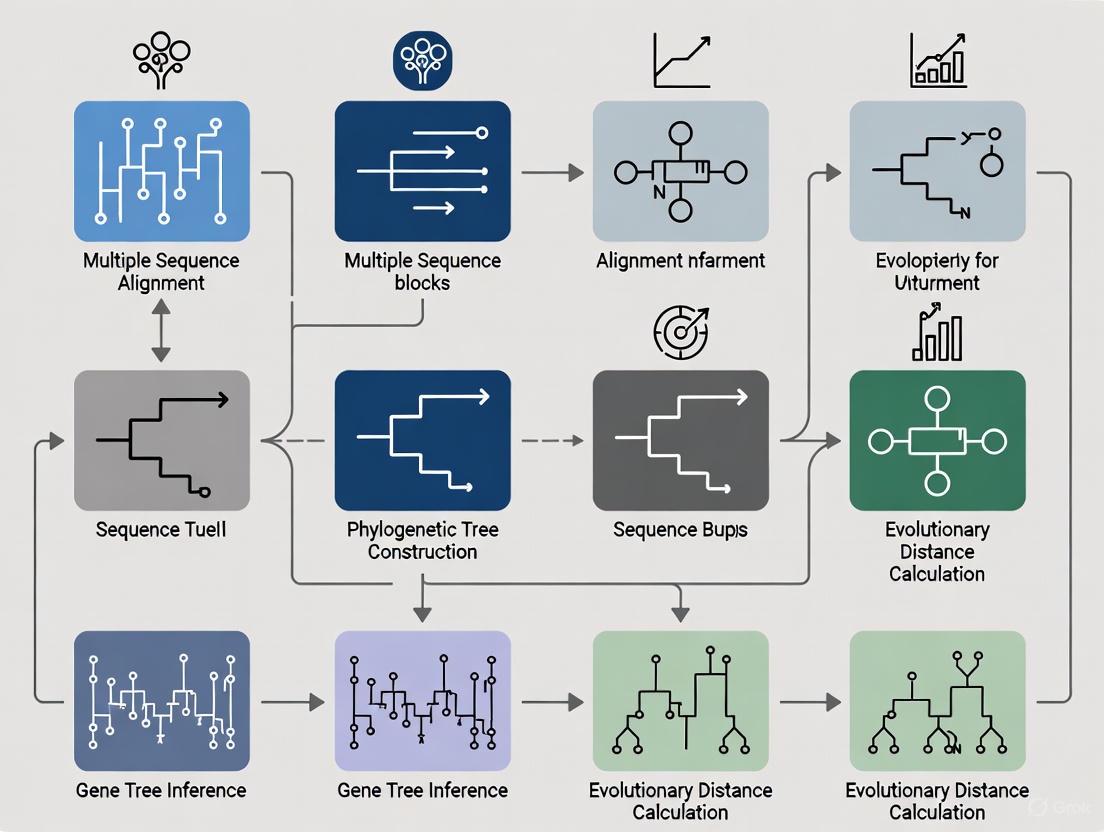
Accurate gene tree inference is foundational for evolutionary studies, drug target discovery, and understanding disease mechanisms, yet it is highly dependent on the quality of input sequence alignments.
Optimizing Sequence Alignment Blocks for Accurate Gene Tree Inference: A Practical Guide for Biomedical Researchers
Abstract
Accurate gene tree inference is foundational for evolutionary studies, drug target discovery, and understanding disease mechanisms, yet it is highly dependent on the quality of input sequence alignments. This article provides a comprehensive guide for researchers and drug development professionals on optimizing sequence alignment blocks to overcome common pitfalls and enhance phylogenetic accuracy. Covering foundational principles to advanced validation techniques, we explore the critical impact of gap placement and alignment algorithms on tree topology, introduce innovative methods like attention-based region selection and alignment-free pipelines, and offer practical troubleshooting strategies for handling missing data and recombination. Furthermore, we benchmark modern tools and methodologies, providing a clear framework for selecting and validating approaches that deliver the highest phylogenetic resolution and reliability for biomedical applications.
The Building Blocks of Accuracy: How Alignment Quality Directly Governs Gene Tree Inference
In molecular phylogenetics, an alignment block (or sequence block) is a curated segment of a multiple sequence alignment (MSA) used for phylogenetic inference. These blocks are extracted from larger genomic alignments and are selected for their high information content, minimal missing data, and low signals of recombination [1]. The quality and selection of these blocks are foundational to constructing reliable gene trees and, by extension, accurate species phylogenies [2] [3]. Properly optimized alignment blocks help mitigate errors arising from evolutionary complexities like incomplete lineage sorting, horizontal gene transfer, and hybridization [3].
Troubleshooting Guides and FAQs
FAQ: What are the most common issues that lead to unreliable phylogenies from alignment blocks? Common issues include:
- Alignment Errors: Incorrectly aligned homologous positions, which can be introduced during the multiple sequence alignment step [3].
- Within-Alignment Recombination: Recombination events within an alignment block can create conflicting phylogenetic signals [1].
- High Proportion of Missing Data: Alignment blocks with excessive gaps or missing sequences for certain taxa can lead to unstable and inaccurate trees [1].
- Model Inadequacy: Using an overly simplistic evolutionary model that does not reflect the actual processes, such as ignoring variations in substitution rates among sites [3].
FAQ: How can I select the best alignment blocks from a whole-genome alignment for phylogenetic analysis? Ideal alignment blocks for phylogenetic analysis should meet these criteria [1]:
- Completeness: Contain a sequence for every species in your analysis.
- Minimum Length: Be long enough to be informative (e.g., 1,000 bp is often a practical starting point).
- Low Missing Data: Have as few gaps and missing sequences as possible.
- High Information Content: Contain a sufficient number of polymorphic sites.
- No Recombination: Show minimal signals of within-block recombination breakpoints.
FAQ: My gene trees show conflicts with the expected species tree. What could be the cause? Conflicts between gene trees and the species tree are common and can be due to real biological phenomena or analytical issues.
- Biological Causes: Incomplete Lineage Sorting (ILS), horizontal gene transfer, hybridization, and introgression can cause gene histories to differ from the species history [3].
- Analytical Causes: Long-branch attraction, alignment errors, or model misspecification can produce misleading topological patterns [3]. Using methods like ASTRAL, which estimates a species tree from a set of gene trees, can be more robust to such conflicts [1].
FAQ: How can I assess the reliability of my phylogenetic tree?
- Statistical Support: Use bootstrapping to assign support values to the branches of your tree. A high bootstrap value (e.g., >95%) indicates that the branch is found in a high percentage of trees generated from resampled versions of your alignment [4].
- Taxonomic Congruence: Check if the inferred tree agrees with established taxonomic classifications [3].
- Concordance with Alternative Methods: Compare trees built using different methods (e.g., Maximum Likelihood vs. coalescent-based methods) to see if the major topological features are consistent [3].
Experimental Protocols and Data Presentation
Protocol 1: Extracting and Filtering Alignment Blocks from a Whole-Genome Alignment
This protocol is adapted from materials for tree-based introgression detection [1].
1. Obtain Whole-Genome Alignment:
- Start with a whole-genome alignment file, often in MAF (Multiple Alignment Format) converted from a reference-free HAL format using tools like
hal2maf[1].
2. Extract Initial Blocks:
- Use a custom Python script to scan the MAF file and extract alignment blocks of a fixed length (e.g., 1,000 bp) that contain sequences for all taxa in your study [1].
3. Filter Alignment Blocks:
- Filter for Completeness: Remove blocks with a high percentage of missing data (gaps or missing sequences).
- Filter for Recombination: Quantify signals of recombination per alignment (e.g., using phylogenetic methods) and remove blocks with the strongest signals.
- Filter for Information Content: Select blocks with a sufficient number of parsimony-informative or polymorphic sites.
4. Output Suitable Alignments:
- The final output is a set of high-quality, filtered alignment blocks in a standard phylogenetic format (e.g., FASTA, PHYLIP) ready for tree inference.
Protocol 2: Constructing a Phylogeny from a Set of Alignment Blocks
This protocol outlines a standard workflow for phylogenomics [1] [4].
1. Multiple Sequence Alignment:
- If not already done, perform a multiple sequence alignment for each gene or locus. For pre-extracted blocks, this step may involve refining the existing alignment.
2. Gene Tree Inference:
- For each filtered alignment block, infer a gene tree using a method such as Maximum Likelihood (e.g., with IQ-TREE) or Bayesian Inference.
- Model Selection: Use model testing tools integrated within programs like IQ-TREE to find the best-fit evolutionary model (e.g., LG or JTT for proteins) for each alignment [3].
3. Species Tree Inference:
- Coalescent-based Method: Use the set of gene trees as input to a coalescent-based species tree estimator (e.g., ASTRAL) to account for incomplete lineage sorting [1].
- Concatenation Method: Alternatively, concatenate all alignment blocks into a "supermatrix" and infer a species tree directly using Maximum Likelihood. Note that concatenation can be statistically inconsistent under some conditions [3].
4. Assess Tree Reliability:
- Perform bootstrapping (e.g., 100-1000 replicates) on each gene tree and the species tree to assign statistical support to branches [4].
- For the coalescent species tree, ASTRAL computes a local posterior probability for each branch.
Quantitative Data on Phylogenetic Congruence
The following table summarizes findings from a large-scale study on using universal single-copy orthologs (BUSCOs) for phylogenomics, highlighting how alignment block processing impacts tree quality [3].
Table 1: Impact of Evolutionary Rate and Alignment Construction on Phylogenetic Congruence
| Factor | Condition or Method | Outcome/Effect on Phylogeny | Key Finding |
|---|---|---|---|
| Site Evolutionary Rate | Use of faster-evolving sites | Higher Taxonomic Congruence | Produced up to 23.84% more taxonomically concordant phylogenies [3]. |
| Site Evolutionary Rate | Use of slower-evolving sites | Higher Terminal Variation | Produced at least 46.15% more variable terminal branches [3]. |
| Tree Inference Method | Concatenation (with fast sites) | High Congruence & Low Variation | Most congruent and least variable phylogenies [3]. |
| Tree Inference Method | Coalescent (ASTRAL) | Comparable Accuracy | Accuracy was comparable to the best concatenation results [3]. |
| Alignment Algorithm | Parameter settings | Significant Impact | Alignments for divergent taxa varied significantly based on parameters used [3]. |
Visualization of Workflows and Relationships
From Genomes to a Reliable Species Phylogeny
The diagram below outlines the core workflow for generating a species phylogeny from raw genomic data using alignment blocks.
The Scientist's Toolkit: Research Reagent Solutions
Table 2: Essential Software and Data Types for Alignment Block Phylogenetics
| Item Name | Type | Function/Brief Explanation |
|---|---|---|
| Progressive Cactus | Software | A reference-free whole-genome aligner used to create genome-wide alignments from multiple input assemblies [1]. |
| BUSCO Sets | Data/Software | Benchmarking Universal Single-Copy Orthologs; used to assess assembly completeness and provide a conserved set of genes for phylogenomics [3]. |
| IQ-TREE | Software | A modern software for maximum likelihood phylogenetic inference. It includes built-in model testing and is efficient for large datasets [1]. |
| ASTRAL | Software | A tool for accurate species tree estimation from a set of gene trees using the multi-species coalescent model, robust to incomplete lineage sorting [1]. |
| PAUP* | Software | A general-utility program for phylogenetic inference, supporting parsimony, likelihood, and distance methods [1]. |
| PhyloNet | Software | Infers species networks (rather than trees) to account for evolutionary processes like hybridization and introgression [1]. |
| MAF File | Data Format | Multiple Alignment Format; a human-readable, reference-based format for storing genome-wide multiple alignments [1]. |
Sequence alignment is a foundational step in most evolutionary and comparative genomics studies. While traditionally focused on matching homologous characters, emerging research demonstrates that the placement of gaps within these alignments carries substantial, and often neglected, phylogenetic signal. This technical guide addresses how to optimize sequence alignment blocks for gene tree inference by leveraging the information embedded in indels (insertions and deletions).
Frequently Asked Questions
Why is gap placement important for phylogenetic inference? Gaps in a sequence alignment are not merely absence of data; they are evolutionary events. Their patterns of insertion and deletion across different lineages carry historical information. Research shows that gaps carry substantial phylogenetic signal, but this signal is poorly exploited by most alignment and tree-building programs [5]. Excluding gaps and variable regions from your analysis is, therefore, detrimental to accuracy [5].
Should I exclude gappy regions from my alignment before tree inference? No. Even though it is a common practice, excluding gappy or variable regions is detrimental to phylogenetic inference because it discards valuable phylogenetic signal contained within these indels [5]. The key is to use alignment and tree-building methods that can properly model and utilize this signal.
How does the choice of alignment program affect gap placement and subsequent tree accuracy? Different alignment programs use distinct algorithms and cost functions to place gaps. However, a key finding is that disagreement among alignment programs says little about the accuracy of the resulting trees [5]. A visually different alignment does not necessarily lead to a different phylogenetic tree. The critical factor is choosing a method whose gap placement leads to more accurate trees, which can be evaluated using phylogeny-based tests [5].
What is the most accurate data type for alignment: nucleotides or amino acids? In general, trees from nucleotide alignments fared significantly worse than those from back-translated amino-acid alignments [5]. The alignment process for amino acids is more accurate. Therefore, for nucleotide sequences, the best results are often obtained by aligning the amino acid sequences and then back-translating them to nucleotides for tree inference [5].
Troubleshooting Guides
Problem: Poor Tree Resolution Despite High-Quality Sequences
Symptoms: Unstable tree topologies, low bootstrap support values, or trees that conflict with established species relationships.
Diagnosis and Solution:
- Investigate Gap Signal: The phylogenetic signal from your gaps may be contradicting or overwhelming the signal from the character substitutions. Use a tree-building method that models indel events.
- Check Alignment Method: Verify that you are not using an alignment program that places gaps in a phylogenetically misleading way. Consider testing multiple aligners.
- Validate with Phylogeny-Based Tests: Evaluate your alignment method using tree-based tests of alignment accuracy. These tests use large, representative samples of real biological data to assess the impact of gap placement on phylogenetic inference [5]. The principle is simple: the more accurate the resulting trees, the more accurate the alignments are assumed to be [5].
Problem: Handling Low-Coverage or Raw Sequencing Data
Symptoms: Difficulty generating reliable alignments and trees directly from raw sequencing reads, especially with low-coverage datasets.
Diagnosis and Solution:
- Bypass Assembly with Read2Tree: For a faster and often more accurate workflow, use tools like Read2Tree, which directly processes raw sequencing reads into groups of corresponding genes [6]. This method bypasses traditional, computationally intensive steps of genome assembly and annotation [6].
- Assess Coverage Impact: Be aware that Read2Tree can maintain high precision in sequence and tree reconstruction even with coverages as low as 0.2x, though recall (completeness) may be lower [6]. It performs well across DNA, RNA, and various sequencing technologies (Illumina, PacBio, ONT) [6].
Experimental Protocols & Data
Protocol: Phylogeny-Based Test for Alignment Accuracy (Species-Tree Discordance Test)
This protocol evaluates alignment accuracy by comparing gene trees inferred from alignments to a known species tree [5].
- Sequence Selection: Sample sets of orthologous genes from species whose phylogeny is well-resolved and undisputed [5].
- Alignment: Generate multiple sequence alignments (MSA) for each gene set using the alignment methods you wish to evaluate.
- Tree Inference: Reconstruct gene trees from each MSA using a consistent method (e.g., Maximum Likelihood with IQ-TREE).
- Comparison: For each resulting gene tree, check for congruence with the known species tree topology.
- Evaluation: The alignment method that produces gene trees most frequently congruent with the species phylogeny is likely the most accurate in terms of homology matching, including gap placement [5].
Protocol: Direct Phylogeny Inference from Raw Reads Using Read2Tree
This protocol outlines a streamlined workflow for inferring phylogenetic trees without genome assembly [6].
- Input: Provide raw sequencing reads (short or long reads) and a set of reference orthologous groups (OGs). Read2Tree uses OGs from the OMA resource by default [6].
- Read Mapping: Align raw reads to the nucleotide sequences of the reference OGs (using Mafft by default) [6].
- Sequence Reconstruction: Within each OG, reconstruct protein sequences from the aligned reads [6].
- Consensus Selection: Retain the best reference-guided reconstructed sequence, using the number of reconstructed nucleotide bases as the primary criterion [6].
- Multiple Sequence Alignment and Tree Inference: Add the selected consensus to the OG's MSA and proceed with conventional tree inference methods (IQ-TREE by default) [6].
Quantitative Comparison of Alignment Methods
The table below summarizes the performance of different alignment strategies based on tree-based tests of accuracy. "Tree-aware" methods like Prank explicitly consider evolutionary history during gap placement.
Table 1: Evaluation of Alignment Program Performance on Phylogenetic Inference [5]
| Alignment Strategy | Representative Programs | Relative Tree Accuracy | Computational Speed | Key Findings |
|---|---|---|---|---|
| Scoring Matrix-Based | Mafft FFT-NS-2, Muscle, ClustalW2 | Variable | Fast | As a class, did not underperform consistency-based methods; faster. |
| Consistency-Based | Mafft L-INS-i, T-Coffee, ProbCons | Variable | Up to 300x slower | Did not outperform scoring matrix-based methods as a class; performance uneven across datasets. |
| Tree-Aware Gap Placement | Prank | High | Intermediate | Consistently among the best-performing programs for amino-acid data [5]. |
| Nucleotide vs. Amino Acid | Various | Amino acids superior | N/A | Best nucleotide alignments are obtained by back-translating amino-acid alignments. |
Key Research Reagent Solutions
Table 2: Essential Computational Tools for Phylogenetic Analysis with Gaps
| Item | Function | Application Note |
|---|---|---|
| Read2Tree | Infers phylogenetic trees directly from raw sequencing reads, bypassing assembly. | Ideal for large datasets and low-coverage sequencing; highly versatile for DNA/RNA data [6]. |
| Prank | A multiple sequence alignment program that uses phylogenetic information to guide gap placement. | Classified as "tree-aware"; designed to place gaps in a more evolutionarily realistic manner [5]. |
| OMA (Orthologous Matrix) | Resource for identifying orthologous groups (OGs) of genes across species. | Provides the reference OGs used by the Read2Tree tool [6]. |
| IQ-TREE | Software for maximum likelihood phylogenetic inference. | Commonly used for the final tree-building step from alignments [6]. |
| Phylogeny-based Tests | Methods to assess alignment accuracy by using tree correctness as a surrogate. | Includes species-tree discordance and minimum duplication tests; use real biological data [5]. |
Workflow Visualization
Diagram 1: Integrating gap signal analysis into the standard phylogenetic workflow. The process involves optimizing alignment blocks based on the phylogenetic signal carried by gaps, creating a feedback loop that improves final tree accuracy.
Diagram 2: The Read2Tree workflow for direct phylogeny inference from raw reads, bypassing genome assembly and annotation [6].
Troubleshooting Common Alignment Issues
FAQ: My multiple sequence alignment fails with a "wrong type" or "too long" error. What should I do?
This commonly occurs when using algorithms like MUSCLE or Clustal Omega with sequences that exceed their length capacity or when multi-segment sequence groups are incorrectly ordered [7].
- Solution 1: Use an alternative algorithm. Switch to the Mauve aligner, which is better suited for long sequences [7].
- Solution 2: Use Brenner's Alignment method. This option uses less memory and enables alignment of long, divergent sequences, though with a potential loss of accuracy. It can be activated via alignment options in tools like MegAlign Pro [7].
- Solution 3: Segment your sequences. Break long sequences into shorter, more manageable lengths using tools like DNASTAR SeqNinja [7].
FAQ: How do I choose between a scoring matrix and a consistency-based method for my gene tree inference project?
The choice depends on your data characteristics and research goals. Scoring matrix methods are often faster and well-established, while consistency-based methods generally provide higher accuracy, especially for distantly related sequences [8] [9] [10].
Use Scoring Matrix-Based Methods (e.g., ClustalW) when:
- Working with closely related sequences (e.g., >30% identity).
- Computational speed and resources are a primary concern.
- Aligning nucleotide sequences where simple models (like Levenshtein distance) are sufficient [11].
Use Consistency-Based Methods (e.g., ProbCons, T-Coffee) when:
- Accuracy is the highest priority, particularly with distantly related sequences (<25-30% identity, the "twilight zone") [8] [10].
- Your downstream analysis (like phylogenetic tree construction) is highly sensitive to alignment errors [9].
- You are aligning protein sequences and can leverage information from intermediate sequences to improve pairwise alignments [8].
FAQ: My initial alignment is poor. Can I improve it without starting over?
Yes, post-processing methods can refine alignments without re-running the entire process [12].
- Meta-alignment: Tools like M-Coffee integrate multiple independent MSA results from different programs into a single, more accurate consensus alignment [12].
- Realignment: Tools like RASCAL directly optimize existing alignments by locally adjusting regions with potential errors, such as misplaced gaps [12].
Comparison of Alignment Methods and Scoring Parameters
Table 1: Characteristics of Alignment Approaches
| Feature | Scoring Matrix-Based Methods | Consistency-Based Methods |
|---|---|---|
| Core Principle | Quantifies similarity using a fixed substitution matrix (e.g., BLOSUM62) and gap penalties [11] [13]. | Uses a library of pairwise alignments to create a position-specific scoring scheme that is consistent across all sequences [8] [10]. |
| Typical Use Case | Standard global/local alignment of nucleotides or proteins; faster runs [11]. | Difficult alignments of distantly related sequences; high-accuracy requirements [8] [10]. |
| Key Advantage | Computationally efficient; intuitive parameters [11]. | Generally higher accuracy, especially in the "twilight zone" [8]. |
| Common Algorithms | Needleman-Wunsch (global), Smith-Waterman (local), ClustalW [14]. | ProbCons, T-Coffee, M-Coffee [8] [12]. |
Table 2: Selecting a Protein Scoring Matrix
Different substitution matrices are tuned for different evolutionary distances. This table guides the selection of common matrices based on the target percent identity [13].
| Scoring Matrix | Target % Identity | Typical Application |
|---|---|---|
| BLOSUM80 | ~32% | Closely related sequences [13]. |
| BLOSUM62 | ~28-30% | Standard database searching (BLAST default); a balance of sensitivity and accuracy [11] [13]. |
| BLOSUM50 | ~25% | Sensitive searches for distant relationships; requires longer alignments [13]. |
| PAM70 | ~34% | Alternative for closely related sequences [13]. |
| PAM30 | ~46% | Very closely related sequences [13]. |
Experimental Protocols for Method Comparison
Protocol 1: Evaluating Alignment Accuracy Using a Reference Dataset
This protocol allows researchers to benchmark the performance of different alignment algorithms on their specific data type.
- Obtain a Benchmark Dataset: Use a curated reference dataset with known alignments, such as BAliBASE for proteins [8] [9].
- Generate Alignments: Run your set of unaligned sequences through multiple algorithms (e.g., ClustalW for scoring matrix-based; ProbCons or T-Coffee for consistency-based).
- Compare to Reference: Calculate the accuracy of each generated alignment by comparing it to the reference alignment from the benchmark dataset. Common metrics include the number of correctly aligned columns or the sum-of-pairs score (SPS) [8] [12].
- Analyze Results: Determine which algorithm produces the most biologically accurate alignment for your data. Consistency-based methods often show statistically significant improvement on standard benchmarks [8].
Protocol 2: Integrating Multiple Alignments with M-Coffee
This protocol uses meta-alignment to create a consensus alignment that can be more accurate than any single method [12].
- Generate Input Alignments: Produce multiple independent MSAs of your sequence dataset using different tools and/or parameters (e.g., MUSCLE, MAFFT, ClustalOmega).
- Build Consistency Library: Input all initial alignments into M-Coffee. The tool constructs a library where each aligned residue pair is weighted by its consistency across the different input alignments [12].
- Compute Consensus Alignment: M-Coffee uses the T-Coffee algorithm to generate a final MSA that maximizes the global support from the consensus library [12].
- Validate: Assess the final alignment quality using a scoring function like NorMD, or use it for your downstream phylogenetic analysis [12].
Workflow Visualization
Algorithm Selection Workflow
The Scientist's Toolkit: Essential Research Reagents
Table 3: Key Software Tools for Sequence Alignment
This table lists essential software tools and libraries used in alignment experiments.
| Tool / Resource | Type | Function |
|---|---|---|
| SeqAn C++ Library [11] | Programming Library | Provides implementations of scoring schemes (simple, substitution matrices) and alignment algorithms (global, local) for custom application development [11]. |
| BLOSUM Matrices [13] | Scoring Matrix | A series of substitution matrices derived from blocks of conserved sequences. BLOSUM62 is the standard for protein BLAST searches [11] [13]. |
| ProbCons [8] | Alignment Algorithm | A progressive alignment tool that uses probabilistic consistency and maximum expected accuracy to achieve high alignment accuracy [8]. |
| T-Coffee / M-Coffee [12] | Alignment & Meta-Alignment Tool | Constructs multiple sequence alignments using consistency-based objective functions (T-Coffee) or by combining results from other aligners (M-Coffee) [12]. |
| MAFFT [12] | Alignment Algorithm | A multiple sequence alignment program known for its speed and accuracy, often used as a component in meta-aligners like AQUA [12]. |
Frequently Asked Questions (FAQs)
Q1: What is reference bias in sequence alignment, and how does it affect my variant calling results? Reference bias occurs when a linear reference genome used in standard analyses does not capture the full genomic diversity of a population. During read alignment, sample reads that differ significantly from the reference may map incorrectly or not at all. This leads to false negative or false positive variant calls, as the process is biased towards the reference allele. This is particularly problematic in highly diverse regions, such as HLA genes, and can impact the accuracy of genotyping and the discovery of structural variants in cancer genomes [15].
Q2: I am constructing gene trees. Should I filter my multiple sequence alignment (MSA) to remove unreliable regions? The decision to filter an MSA for phylogenetic inference requires careful consideration. Empirical studies on large datasets show that while light filtering (removing up to 20% of alignment positions) may have little impact on tree accuracy, aggressive filtering often decreases tree quality. Furthermore, automated filtering can increase the proportion of well-supported but incorrect branches. It is not generally recommended to rely on current automated filtering methods for phylogenetic inference, as the trees from filtered MSAs are on average worse than those from unfiltered ones [16].
Q3: What are some practical solutions to minimize reference bias in my genotyping workflow? Moving beyond a single linear reference genome is the most effective strategy. Two key solutions are:
- Using a graph genome: Representing known population variation as a sequence graph allows reads to map to paths that more closely match their actual sequence, significantly reducing bias [15].
- Using founder sequences: This approach represents known genetic variation with a small set of founder sequences. Reads are aligned to these founders, and the alignments are then projected back to a standard reference. Tools like PanVC 3 implement this method and have been shown to reduce reference bias and improve the precision of calling insertions and deletions (indels) [17].
Q4: How can I assess the accuracy of my multiple sequence alignment? Traditional MSA evaluation methods optimize heuristic scores. However, research indicates that machine-learned scores can correlate more strongly with true alignment accuracy than traditional metrics. These data-driven approaches, trained on simulations where the true alignment is known, offer a more reliable method for selecting among alternative MSAs [18].
Troubleshooting Guides
Problem: Suspected Reference Bias in Variant Calls
Symptoms: Underestimation of alternative alleles at heterozygous sites; consistent missing of variants in highly diverse genomic regions; discrepancies between sequencing and orthogonal validation methods (e.g., Sanger sequencing).
Step-by-Step Diagnostic Protocol:
- Simulate Reads: Use a read simulator like Mason to generate reads from a diploid genome with known heterozygous variants [17].
- Align Reads: Map the simulated reads to your standard linear reference genome using your standard aligner (e.g., Bowtie 2, BWA).
- Generate Pileup: At each known heterozygous variant site, generate a pileup from the alignments. Ensure the site is fully covered by reads.
- Calculate Allelic Ratio: For each site, count the reads supporting the reference allele (R) and the correct alternative allele (A).
- Quantify Bias: Calculate the ratio R/(R+A). In an ideal, unbiased scenario, this ratio should be close to 0.5. A consistent deviation towards 1 indicates significant reference bias [17].
Solution Implementation: Integrate a pangenome approach into your workflow. The following protocol uses the PanVC 3 toolset.
- Workflow Objective: Reduce reference bias by aligning reads to founder sequences.
- Essential Materials:
- A set of known variants (e.g., from a population database).
- The standard linear reference genome (e.g., GRCh37).
- Short-read sequencing data for your sample.
- Procedure:
- Founder Sequence Construction: Generate a small set of founder sequences from the known variants. These sequences minimize recombinations and represent the population diversity [17].
- Read Alignment to Founders: Align your sample's short reads to the set of founder sequences using a standard aligner like Bowtie 2 [17].
- Alignment Projection: Project the resulting alignments from the founder coordinate space back to the coordinate space of your standard reference genome. This step uses a multiple sequence alignment of the founders to the reference [17].
- Recalculate Mapping Qualities: After projection, recalculate mapping quality scores to account for the fact that a read may have aligned equally well to multiple, identical segments of different founder sequences [17].
- Variant Calling: Use the projected alignments and recalculated qualities as input to your standard variant calling pipeline [17].
Problem: Poor Gene Tree Accuracy from MSA
Symptoms: Unstable tree topologies upon resampling; low support values for key branches; trees that conflict with established species phylogenies.
Step-by-Step Diagnostic Protocol:
- Test for Alignment Uncertainty: Use a method like Guidance to assess the sensitivity of your MSA to the alignment guide tree. Identify columns with low confidence scores [16].
- Evaluate Impact of Filtering: If using alignment filtering, repeat your phylogenetic inference on both the unfiltered and filtered MSA. Compare the resulting tree topologies and support values. A significant decrease in support or a biologically implausible result after filtering suggests the filtering may be harmful [16].
- Assess Model Fit: Test whether your phylogenetic model (e.g., site independence) is adequate for your data, as model misspecification can lead to inaccurate trees [18].
Solution Implementation:
- Avoid Aggressive Filtering: If you must filter, do so lightly (e.g., <20% of sites). Prefer methods that account for phylogenetic information, such as Zorro or Guidance, over those based solely on gap content or entropy [16].
- Explore Machine Learning Support: For branch support, consider replacing traditional bootstrapping with machine learning models trained on simulated data. These can provide accurate support values with a clearer probabilistic interpretation and greater computational efficiency [18].
- Use a Disjoint Tree Merger (DTM): For very large datasets, improve accuracy and runtime by using a DTM approach. This involves:
- Dividing your sequence dataset into disjoint subsets.
- Constructing trees on each subset.
- Merging the subset trees into a full tree using a method like ASTRAL. This pipeline can be statistically consistent and improve results [18].
Experimental Data & Protocols
Quantitative Impact of Alignment Filtering on Phylogeny
The table below summarizes findings from a large-scale, systematic comparison of automated filtering methods, demonstrating their impact on single-gene phylogeny reconstruction [16].
| Filtering Method | Average Impact on Tree Topology Accuracy | Effect on Incorrect, Well-Supported Branches | Key Parameter Influencing Results |
|---|---|---|---|
| Gblocks (default) | Negative | Increases | Minimum block length; treatment of gap positions |
| Gblocks (relaxed) | Negative | Increases | Maximum contiguous nonconserved positions |
| TrimAl | Negative | Increases | Chosen heuristic (gappyout, strict, etc.) |
| Noisy | Negative | Increases | Requires ≥15 sequences for performance |
| Aliscore | Negative | Increases | Sliding window size and randomization test |
| No Filtering | Benchmark (Best) | Lowest | N/A |
Reference Bias Measurement Protocol
This protocol quantifies reference bias in a genotyping workflow, as implemented in a 2024 study [17].
- Objective: Measure the degree of bias towards the reference allele in a genotyping experiment.
- Experimental Input: Simulated reads from a diploid genome (e.g., NA12878 chromosome 1) where the true heterozygous variants are known.
- Procedure:
- Align the simulated reads using the workflow to be tested.
- For each known heterozygous variant site, generate a pileup if the site has a coverage of at least 20x and is fully enclosed by aligned reads.
- Count the number of reads supporting the reference allele (R) and the correct alternative allele (A).
- For each site, calculate the allelic ratio: R/(R+A).
- Data Analysis:
- The ideal allelic ratio for a heterozygous site is 0.5.
- Calculate the Mean Absolute Error (MAE) for all sites: MAE = (1/n) * Σ\|xi - 0.5|, where xi is the ratio for each site.
- A lower MAE indicates less reference bias. The study found that the PanVC 3 workflow achieved a lower MAE than alignment to a linear reference with Bowtie 2 or using other graph-based mappers like VG-MAP and Giraffe [17].
Workflow Diagrams
Diagram: Founder Sequence Alignment Workflow for Bias Reduction
Diagram: Gene Tree Inference with MSA Evaluation
Research Reagent Solutions
| Tool / Resource | Type | Primary Function in Context |
|---|---|---|
| PanVC 3 | Software Toolset | Reduces reference bias by aligning reads to founder sequences and projecting alignments to a linear reference for compatible downstream analysis [17]. |
| Graph Genome (VG/Giraffe) | Software & Data Structure | Captures population diversity in a graph for more accurate read alignment and variant calling, directly addressing reference bias [15]. |
| BWA / Bowtie 2 | Read Alignment Software | Standard tools for mapping short sequencing reads to a linear reference genome; can be used as part of the PanVC 3 workflow for the initial alignment to founders [17]. |
| Founder Sequences | Data Representation | A compact set of sequences that reconstruct known haplotypes with minimal recombinations, enabling scalable pangenome alignment [17]. |
| Machine Learning Models (for MSA/Branch Support) | Computational Method | Provides data-driven scores for evaluating multiple sequence alignments and estimating branch support in phylogenetic trees, potentially outperforming traditional metrics [18]. |
| Disjoint Tree Merger (DTM) | Phylogenetic Pipeline | A divide-and-conquer strategy for estimating large phylogenetic trees with strong statistical guarantees, improving accuracy and runtime [18]. |
From Theory to Practice: Modern Methods for Generating and Refining Alignment Blocks
Frequently Asked Questions (FAQs)
FAQ 1: What is the core principle behind using DNA language models for phylogenetics? DNA language models, such as DNABERT, are pretrained using self-supervised learning on massive datasets of biological sequences [19] [20]. They treat DNA sequences as a language, treating nucleotides or k-mers as "words" [20]. The built-in self-attention mechanisms in these Transformer-based models learn to weigh the importance of different nucleotide positions across a sequence [19] [20]. In phylogenetics, these attention scores are used to identify regions that are most informative for distinguishing taxonomic units and inferring evolutionary relationships, eliminating the need for manual marker selection [19].
FAQ 2: My high-attention regions lead to trees with slightly lower accuracy. Is this normal? Yes, this is an expected and documented trade-off. Research with PhyloTune has demonstrated that using automatically extracted high-attention regions can significantly accelerate phylogenetic updates, with only a modest reduction in topological accuracy compared to using full-length sequences [19]. The efficiency gains, which can reduce computational time by 14.3% to 30.3%, often justify this minor compromise, especially for large-scale or rapid analyses [19].
FAQ 3: How do I validate that the attention scores are highlighting biologically meaningful regions? While attention scores identify regions computationally important for taxonomic classification, biological validation is crucial. You should cross-reference the genomic coordinates of your high-attention regions with existing functional annotations. Additionally, you can compare the phylogenetic signal of these regions against traditional, trusted molecular markers or conserved single-copy orthologs (e.g., BUSCO genes) to assess their reliability [3].
FAQ 4: Can this method be applied to large, multi-genome datasets? The method is designed for scalability. For very large datasets, a recommended strategy is to first identify the smallest taxonomic unit (e.g., genus or family) for your new sequence using the fine-tuned language model [19]. Subsequently, you only need to reconstruct the phylogenetic subtree for that specific unit using the high-attention regions, bypassing the need to analyze the entire dataset from scratch and saving substantial computational resources [19].
Troubleshooting Guides
Issue 1: Poor Taxonomic Classification of Input Sequences
Problem: The DNA language model fails to correctly identify the smallest taxonomic unit (e.g., genus or family) for a newly sequenced organism, leading to incorrect subtree selection for the phylogenetic update.
Solution:
- Step 1: Verify Data Preprocessing. Ensure your input DNA sequence is clean, free of sequencing artifacts, and is of sufficient length and quality. The model's performance is highly dependent on the quality of the input data.
- Step 2: Check Model Fine-Tuning. The pretrained DNA model must be fine-tuned on a dataset that reflects the taxonomic hierarchy of your target phylogenetic tree [19]. Confirm that your fine-tuning dataset adequately represents the taxa you are working with.
- Step 3: Evaluate Classification Confidence. Implement a confidence threshold for the model's predictions. If the classification probability for all taxa is below a set threshold (e.g., 90%), flag the sequence for manual inspection rather than proceeding with an automatic update.
- Step 4: Manual Curation. For critical or ambiguous cases, use traditional methods like BLAST against a reference database to verify the taxonomic assignment before proceeding [19].
Issue 2: Suboptimal or Noisy Attention Scores
Problem: The attention scores are uniformly distributed across the sequence or highlight regions that are not phylogenetically informative, resulting in poor tree construction.
Solution:
- Step 1: Inspect Attention Weights. Visualize the attention weights from the last layer of the Transformer model across the sequence to check for unusual patterns [19].
- Step 2: Adjust Region Selection Parameters. The process involves dividing sequences into
Kregions and selecting the topMregions with the highest aggregate attention scores [19]. Experiment with different values forKandMto find the optimal balance between data reduction and signal retention for your specific dataset. - Step 3: Consensus Filtering. Use a voting method (e.g., a minority-majority approach) across multiple sequences in the subtree to identify high-attention regions that are consistently important, which helps filter out sequence-specific noise [19].
- Step 4: Cross-Reference with Evolutionary Rates. If possible, compare your high-attention regions with sites in your alignment known to evolve at higher rates, as these have been shown to produce more taxonomically congruent phylogenies in some empirical studies [3].
Issue 3: Integration with Downstream Phylogenetic Tools
Problem: After extracting high-attention sequence regions, the resulting multiple sequence alignment or subsequent tree inference with tools like RAxML or MAFFT produces errors or poor-quality trees.
Solution:
- Step 1: Validate Extracted Sequences. Ensure that the extraction of high-attention regions from the original genome or contig files has been performed correctly and that the resulting sub-sequences are in-frame if coding regions are involved.
- Step 2: Check Alignment Quality. Manually inspect the multiple sequence alignment generated from the high-attention regions. Poor alignments will lead to poor trees, regardless of the signal in the data. Adjust alignment parameters or use alternative algorithms if necessary.
- Step 3: Verify Tree Inference Parameters. Confirm that the evolutionary model and parameters used in maximum likelihood tools (e.g., RAxML-NG) are appropriate for your extracted data. Using an overly complex or simplistic model can affect results.
- Step 4: Assess Tree Support. Always perform bootstrapping or another support value analysis on your final tree. Low support values for key clades may indicate that the selected high-attention regions lack sufficient phylogenetic signal for your specific taxonomic question [4].
Experimental Protocols
Protocol 1: Fine-Tuning a DNA Language Model for Taxonomic Classification
This protocol adapts a pretrained DNA language model (e.g., DNABERT) to classify sequences within a specific phylogenetic framework [19].
Methodology:
- Data Curation: Compile a curated set of DNA sequences with known taxonomic labels that reflect the hierarchy of your target phylogenetic tree.
- Sequence Tokenization: Input sequences are tokenized into the model's expected format, typically as overlapping k-mers (e.g., 3-mer to 6-mer) [20].
- Model Setup: Start with a pretrained DNA model. Add a hierarchical linear probe (HLP) head for each taxonomic rank (e.g., phylum, class, order, family, genus) you wish to predict [19].
- Fine-Tuning: Train the model on your curated dataset. The self-supervised objective (like Masked Language Modeling) can be combined with supervised loss from the HLP to simultaneously learn general sequence representations and specific classification boundaries [19].
- Validation: Evaluate the model's classification accuracy on a held-out test set of sequences.
Protocol 2: Extracting High-Attention Regions for Subtree Construction
This protocol details the process of identifying and utilizing the most informative parts of sequences for phylogenetic inference [19].
Methodology:
- Sequence Division: For each sequence assigned to a target subtree, divide it into
Kconsecutive, non-overlapping regions of equal length. - Attention Scoring: Pass each sequence through the fine-tuned model. Extract the attention weights from the last Transformer layer. Calculate an aggregate attention score (e.g., mean or max) for each of the
Kregions. - Region Selection: Rank all regions by their aggregate attention score. Select the top
Mregions (whereM<K) from each sequence. To create a consistent alignment block, use a consensus approach (e.g., select regions where the majority of sequences show high attention) [19]. - Data Extraction: Extract the nucleotide sequences corresponding to the selected top
Mregions from all sequences in the subtree. - Phylogenetic Inference: Concatenate the extracted regions to form a new, shorter multiple sequence alignment. Use this alignment as input for standard phylogenetic pipelines (MAFFT for alignment, RAxML-NG for tree inference) to reconstruct the subtree [19].
Data Presentation
Table 1: Performance Comparison of Phylogenetic Update Strategies
This table summarizes a quantitative comparison of different tree-updating strategies, as demonstrated in PhyloTune experiments [19].
| Number of Sequences (n) | Update Strategy | Normalized RF Distance to Ground Truth | Computational Time (Arbitrary Units) |
|---|---|---|---|
| 40 | Full Tree (Full-Length) | 0.000 | ~100 |
| 40 | Subtree (High-Attention Regions) | 0.000 | ~12 |
| 100 | Full Tree (Full-Length) | 0.027 | ~10,000 |
| 100 | Subtree (Full-Length) | 0.031 | ~85 |
| 100 | Subtree (High-Attention Regions) | 0.031 | ~70 |
Table 2: Essential Research Reagent Solutions and Tools
This table lists key software and data resources essential for implementing the described methodology.
| Item Name | Type | Function / Explanation |
|---|---|---|
| DNABERT [19] [20] | Software / Pretrained Model | A foundational genomic language model based on the BERT architecture, pretrained on large-scale DNA sequences. It serves as the starting point for fine-tuning. |
| Hierarchical Linear Probe (HLP) [19] | Algorithm | A classification module added to the pretrained model to simultaneously perform novelty detection and taxonomic classification at multiple ranks. |
| MAFFT [19] | Software | A widely used tool for creating multiple sequence alignments from the extracted nucleotide sequences. |
| RAxML-NG [19] | Software | A tool for performing maximum likelihood-based phylogenetic inference on the created alignments. |
| BUSCO Datasets [3] | Data | Benchmarks of Universal Single-Copy Orthologs used for evaluating assembly completeness and as a source of conserved genes for phylogenetic validation. |
Workflow Visualization
Diagram 1: High-attention phylogenetic update workflow.
Diagram 2: High-attention region extraction process.
This guide provides technical support for researchers extracting sequence alignment blocks from whole-genome alignments (WGAs) for gene tree inference. Sourcing high-quality, recombination-free blocks is crucial for robust phylogenomic analyses and accurately inferring species relationships [1] [21].
FAQs and Troubleshooting Guides
FAQ 1: What defines a "suitable" alignment block for gene tree inference?
A suitable alignment block should meet specific criteria to minimize phylogenetic error:
- High Completeness: Contain sequences for all taxa in your analysis. Blocks with excessive missing data can lead to inaccurate tree topologies [1].
- Adequate Length: Be long enough to be phylogenetically informative (e.g., 1,000 bp as used in one protocol), but not so long that it likely contains multiple recombination breakpoints [1].
- High Information Content: Possess a sufficient number of polymorphic sites to provide resolving power [1].
- Low Recombination Signal: Show minimal evidence of within-alignment recombination, which can create conflicting phylogenetic signals [1] [21].
FAQ 2: My whole-genome alignment contains blocks with variable taxon representation. How should I filter them?
Filtering is a critical step to avoid bias. A practical workflow is:
- Initial Scan: Use command-line tools like
lessor scripts to survey your WGA file (e.g., in MAF format) and understand its structure [1]. - Extraction and Filtering: Employ a custom script to extract blocks of a fixed length while filtering based on:
FAQ 3: Why does my gene tree analysis show conflicting topologies, and how can recombination be the cause?
Conflicting gene trees are a hallmark of phylogenomics and often arise from two biological processes:
- Incomplete Lineage Sorting (ILS): The failure of ancestral gene lineages to coalesce in a population deeper than the most recent speciation event.
- Post-Speciation Introgression (Gene Flow): The transfer of genetic material between two partially isolated species or populations [21].
Recombination interacts with these processes by shuffling genomic regions with different histories. Regions of high recombination are more likely to contain introgressed ancestry, as foreign alleles can be unlinked from negatively selected genes. Conversely, regions of low recombination better preserve the signal of the species tree [21]. Therefore, failing to filter out high-recombination alignment blocks can result in a dataset dominated by conflicting introgression signals.
FAQ 4: How can I practically screen for and remove alignment blocks with high recombination?
After extracting alignment blocks based on completeness, perform a recombination screen:
- Quantify Recombination: Use a recombination detection tool to analyze each extracted alignment block and quantify the strength of recombination signals within it [1].
- Filter Out High-Recombination Blocks: Remove the alignments for which recombination signals are strongest from your dataset. This leaves you with a filtered set of blocks most suitable for inferring the underlying species tree [1].
Step-by-Step Experimental Protocol
Protocol: Extracting and Filtering Alignment Blocks from a Whole-Genome Alignment
This protocol outlines the process of generating a high-quality set of non-recombining alignment blocks from a chromosome-scale WGA for gene tree inference [1].
Objective
To extract multiple sequence alignment blocks of a fixed length from a WGA, then filter them for high completeness and low recombination to produce a final set of alignments for phylogenetic analysis.
Materials and Reagents
- Whole-Genome Alignment File: A reference-based Multiple Alignment Format (MAF) file, generated from a HAL file using a tool like
hal2maf[1]. - Computational Environment: A Unix-based command-line environment (e.g., Amazon AWS instance, Linux server, or local machine).
- Custom Extraction Script: A Python script designed to parse the MAF file, extract blocks, and perform initial filtering.
Workflow Procedure
The following diagram illustrates the complete workflow from the initial WGA to a curated set of gene trees:
Step 1: Familiarize with the WGA File
- Navigate to your directory:
cd ~/workshop_materials/27_tree_based_introgression_detection/data[1]. - Examine the MAF file structure using:
less -S cichlids_chr5.maf[1]. - Identify alignment blocks that contain sequences for all your target species. The initial blocks in the file may contain only one or two sequences and are not suitable [1].
Step 2: Extract Alignment Blocks of Fixed Length
- Run the custom Python script to parse the MAF file and extract alignment blocks of a specified length (e.g., 1,000 bp). This script will output each block as a separate sequence alignment file [1].
Step 3: Filter Alignment Blocks for Completeness and Information
- The extraction script should be configured to filter out alignment blocks that do not contain one sequence for every species in your analysis [1].
- Additionally, blocks should be filtered based on their proportion of missing data and the number of polymorphic sites to ensure they are informative [1].
Step 4: Screen for and Filter by Recombination Signal
- Using a recombination detection tool, analyze each extracted alignment block to quantify the frequency of recombination breakpoints or the strength of recombination signals [1].
- Remove the alignment blocks with the strongest recombination signals from your dataset. This step is crucial for retaining genomic regions that best represent the species tree history [1].
Step 5: Generate Gene Trees from Filtered Blocks
- Use the final, filtered set of alignment blocks as input for a phylogenetic inference tool like IQ-TREE to generate a set of gene trees [1].
- This set can then be used in species tree estimation tools like ASTRAL or for detecting introgression via topology frequency analysis [1].
The Scientist's Toolkit: Essential Research Reagents and Software
The following table details key software solutions required for executing the alignment block extraction and phylogenomic pipeline.
| Software / Tool | Primary Function | Key Application in the Protocol |
|---|---|---|
| Progressive Cactus | Reference-free whole-genome alignment | Generating the initial genome-wide comparative dataset [1]. |
| Custom Python Script | Parsing MAF format & block extraction | Automating the extraction of fixed-length alignment blocks from the WGA while applying initial filters [1]. |
| Recombination Detection Tool | Quantifying recombination signals | Identifying and allowing for the removal of alignment blocks with high rates of within-alignment recombination [1] [21]. |
| IQ-TREE | Maximum likelihood phylogenetic inference | Generating individual gene trees from each of the filtered, high-quality alignment blocks [1]. |
| ASTRAL | Species tree estimation from gene trees | Inferring the primary species phylogeny from the set of gene trees generated in the previous step [1]. |
The rapid expansion of genomic data has created an urgent need for automated, accurate, and scalable methods for phylogenetic inference. Traditional phylogenomic pipelines require multiple computationally intensive and error-prone steps, including genome assembly, gene annotation, and orthology detection. Tools like ROADIES and Read2Tree represent a paradigm shift by bypassing these traditional requirements, enabling researchers to infer evolutionary relationships directly from raw genomic data [6] [22] [23]. This technical support center addresses the practical implementation of these tools within research focused on optimizing sequence alignment blocks for gene tree inference.
ROADIES Pipeline Architecture
ROADIES (Reference-free Orthology-free Annotation-free DIscordance-aware Estimation of Species tree) is designed to work from raw genome assemblies to species tree estimation through several automated stages [24]:
- Random Sampling: Configurable numbers of subsequences (genes) are randomly sampled from input genomic assemblies.
- Pairwise Alignment: LASTZ aligns sampled subsequences to all input assemblies to find homologous regions.
- Alignment Filtering: Low-quality alignments are filtered to reduce redundant computation.
- Multiple Sequence Alignment: PASTA performs multiple sequence alignments for homologous regions across species.
- Gene Tree Estimation: RAxML-NG estimates gene trees from multiple sequence alignments.
- Species Tree Estimation: ASTRAL-Pro combines gene trees into a final species tree, accounting for discordance [24] [23].
ROADIES operates in three distinct modes, allowing users to balance accuracy and runtime [24]:
| Mode | Multiple Sequence Alignment | Gene Tree Estimation | Use Case |
|---|---|---|---|
| Accurate (Default) | PASTA | RAxML-NG | Accuracy-critical applications |
| Balanced | PASTA | FastTree | Optimal runtime vs. accuracy tradeoff |
| Fast | MashTree (skips MSA) | MashTree | Runtime-critical applications |
Read2Tree Operational Framework
Read2Tree processes raw sequencing reads directly into phylogenetic trees by leveraging reference orthologous groups (OGs) from databases like the Orthologous Matrix (OMA) [6] [25]. Its workflow involves:
- Read Mapping: Raw reads are aligned to nucleotide sequences of reference OGs using Minimap2 [25].
- Sequence Reconstruction: Protein sequences are reconstructed from aligned reads for each OG.
- Consensus Selection: The best reference-guided reconstructed sequence is selected based on the number of reconstructed nucleotide bases.
- Alignment and Tree Inference: Selected consensus sequences are added to OG multiple sequence alignments, and species trees are inferred using IQ-TREE by default [6] [25].
Table: Comparative Overview of ROADIES and Read2Tree
| Feature | ROADIES | Read2Tree |
|---|---|---|
| Primary Input | Raw genome assemblies | Raw sequencing reads (FASTQ) |
| Key Innovation | Random sampling of genomic segments; no reference or orthology needed | Direct mapping of reads to reference orthologous groups |
| Reference Dependency | Reference-free [24] [22] [23] | Requires reference orthologous groups [6] [25] |
| Handles Multi-copy Genes | Yes, via ASTRAL-Pro [24] [23] | Yes, includes paralogs in OGs [6] |
| Typical Applications | Species tree from assembled genomes | Species tree from sequencing reads; works with low-coverage data [6] |
Workflow Diagrams
ROADIES Iterative Species Tree Inference
Read2Tree Reference-Based Assembly-Free Pipeline
Performance and Benchmarking Data
Quantitative Performance Comparisons
Table: ROADIES Performance on Diverse Datasets Data from Guptaa et al. PNAS 2025 and pre-print [22] [23]
| Dataset | Number of Species | Accuracy (vs. Reference) | Speedup vs. Traditional |
|---|---|---|---|
| Placental Mammals | 240 | High agreement with established trees [23] | >176x faster [22] |
| Pomace Flies | 100 | High support for estimated relationships [22] | Significant speedup reported |
| Birds | 363 | High support for estimated relationships [22] | Significant speedup reported |
Table: Read2Tree Performance Under varying Conditions Data from Dylus et al. Nature Biotechnology 2024 [6]
| Condition | Precision (Sequence) | Recall (Sequence) | Tree Reconstruction |
|---|---|---|---|
| Low Coverage (0.2x) | 90-95% | Lower than high coverage | Maintained high precision |
| RNA-seq Data | Up to 98.5% at 0.2x | Good even at low coverage | Marginal impact from coverage variance |
| Distant Reference | High | Lower than close reference | Maintained high accuracy |
Experimental Protocols
Protocol 1: Running ROADIES in Accurate Mode
This protocol details using ROADIES for high-accuracy species tree inference from genome assemblies, suitable for benchmarking studies [24] [26].
Prerequisites and Input
Execution Command
Parameters:
Output Interpretation
Protocol 2: Constructing Trees with Read2Tree
This protocol describes using Read2Tree for phylogeny inference directly from sequencing reads, ideal when genome assembly is impractical [6] [25].
Prerequisites and Input
- Input Data: Raw sequencing reads in FASTQ format.
- Reference OGs: Obtain reference orthologous groups from the OMA browser. A suggested starting point is 200-400 marker genes [25].
- Software Setup: Install Read2Tree from source or via Conda, ensuring dependencies (Minimap2, MAFFT, IQTREE) are available [25].
Execution Command For a single sample:
For multiple samples, run the above command for each sample, then merge:
Parameters:
--standalone_path: Path to directory containing reference OGs.--output_path: Directory for output files.--read_type: Sequencing technology (e.g.,longfor long reads, or Minimap2 preset strings like-ax sr,-ax map-ont).--threads: Number of threads for parallel steps [25].
Output Interpretation
- Primary Output: Concatenated alignment (FASTA) and inferred species tree (with
--treeflag). - Troubleshooting: If runs fail, use the
--debugoption for more detailed logging [25].
- Primary Output: Concatenated alignment (FASTA) and inferred species tree (with
Troubleshooting Guides and FAQs
ROADIES Frequently Asked Questions
Q: What does the ROADIES convergence mechanism do, and when should I disable it?
A: The convergence mechanism performs multiple iterations, doubling the gene count each time, until branch support stabilizes (minimal percentage change in highly supported nodes). This ensures accuracy but increases runtime. Use --noconverge for faster results on well-established datasets or for initial exploratory analysis [24].
Q: Which operational mode should I choose for my project? A:
- Accurate Mode: For publication-grade results or when analyzing difficult deep phylogenies.
- Balanced Mode: For large-scale analyses where the optimal balance of speed and accuracy is needed.
- Fast Mode: For extremely large datasets or rapid prototyping where approximate trees are sufficient [24].
Read2Tree Frequently Asked Questions
Q: I get an error "[E::main] unknown preset 'sr'" when running with short reads. How do I fix this?
A: This error indicates an outdated version of Minimap2. Update Minimap2 to version 2.30 or newer to ensure support for the short-read preset (-ax sr) [25].
Q: The pipeline fails during tree inference with "[Errno 2] No such file or directory: '...tmp_output.treefile'". What is wrong?
A: This indicates that IQ-TREE did not produce a tree output file, causing a downstream script failure [27]. This can be due to issues with the multiple sequence alignment. Check that:
- The previous alignment steps completed successfully.
- There are no issues with the reference OG sequences.
- Your input reads are of sufficient quality and coverage. Rerunning with
--debugmay provide more specific error information [27] [25].
Research Reagent Solutions
Table: Essential Software Tools for Alignment-Free Phylogenomics
| Tool / Resource | Function in Pipeline | Key Configuration Notes |
|---|---|---|
| ROADIES | End-to-end species tree inference from assemblies | Select mode based on accuracy/runtime needs; configure gene length and count [24] |
| Read2Tree | End-to-end species tree inference from reads | Ensure reference OGs are appropriate for taxonomic scope; select correct --read_type [25] |
| ASTRAL-Pro | Discordance-aware species tree estimation from gene trees | Handles multi-copy genes; provides local posterior probability branch supports [24] [23] |
| OMA Database | Provides reference orthologous groups for Read2Tree | Curated database of orthologous genes; select number of markers (e.g., 200-400) during download [25] |
| LASTZ | Pairwise alignment for homologous region identification | Used within ROADIES; parameters can be tuned for divergent sequences [24] |
| PASTA | Multiple sequence alignment tool | Used in ROADIES Accurate and Balanced modes for scalable, accurate MSAs [24] |
| Minimap2 | Read mapping for Read2Tree | Must be v2.30+ for short-read presets; --read_type accepts any Minimap2 option string [25] |
Frequently Asked Questions (FAQs)
Q1: My BUSCO analysis shows high duplication rates in plants. Is this expected, and how should I handle it? Yes, this is an expected biological phenomenon. Recent research analyzing 11,098 eukaryotic genomes found that plant lineages naturally have a much higher mean BUSCO duplication rate (16.57%) compared to fungi (2.79%) and animals (2.21%). This is often due to ancestral whole genome duplication events [3] [28]. For phylogenetic inference, consider using tools like ASTRAL that are robust to paralogs, or employ tree-based decomposition approaches to extract orthologs from larger gene families [29].
Q2: What are the advantages of using curated BUSCO sets (CUSCOs) over standard BUSCO? Curated BUSCO sets (CUSCOs) provide up to 6.99% fewer false positives compared to standard BUSCO searches by accounting for pervasive ancestral gene loss events that lead to misrepresentations of assembly quality [3] [28]. CUSCOs attain higher specificity for 10 major eukaryotic lineages by filtering out genes with lineage-specific loss patterns.
Q3: How does missing data affect phylogenomic inferences with BUSCO genes? Systematic analysis reveals that representation of orthologs can vary significantly across taxa. Tools like TOAST enable visualization of missing data patterns and allow users to reassemble alignments based on user-defined acceptable missing data levels [30]. For reliable inference, establish thresholds that balance data inclusion with taxonomic representation.
Q4: Which substitution models perform best with BUSCO-derived phylogenies? For BUSCO concatenated alignments, variations of the LG (Le-Gascuel) and JTT (Jones-Taylor-Thornton) substitution models with different rate categories consistently show the highest likelihood scores across diverse lineages [3] [28]. Model selection should be validated using Bayesian Information Criterion (BIC) for your specific dataset.
Troubleshooting Guides
Unexpectedly Low BUSCO Completeness
Problem: BUSCO assessment reports unusually low completeness scores for otherwise high-quality assemblies.
Solution:
- Check lineage-specific patterns: Consult databases of BUSCO statistics across taxonomic groups; 215 groups significantly vary from their respective lineages in BUSCO completeness [3].
- Investigate gene loss: Use the phyca software toolkit to identify pervasive ancestral gene loss events that may cause false positives [3] [28].
- Consider CUSCOs: Switch to Curated BUSCO sets (CUSCOs) for your specific lineage to reduce false positives from lineage-specific gene loss [3].
Verification: Compare your results with the public database of BUSCO statistics for 11,098 eukaryotic genomes to determine if your scores align with taxonomic expectations [3].
Excessive Gene Duplication in BUSCO Output
Problem: BUSCO reports high duplication percentages, complicating ortholog identification.
Solution:
- Validate biological reality: 169 taxonomic groups display significantly elevated duplicated BUSCO complements, often from ancestral whole genome duplication events [3] [28].
- Use decomposition methods: Implement tree-based decomposition approaches (e.g., DISCO, LOFT) to extract orthologs from larger gene families rather than restricting to single-copy clusters [29].
- Consider all gene families: Recent research shows using all gene families vastly expands data available for phylogenetics while maintaining accuracy [29].
Verification: Check if duplication rates correlate with assembly ploidy or known whole genome duplication events in your study system.
Poor Phylogenetic Resolution or Incongruence
Problem: BUSCO-derived trees show poor resolution or conflict with established taxonomy.
Solution:
- Select optimal sites: Sites evolving at higher rates produce up to 23.84% more taxonomically concordant phylogenies with at least 46.15% less terminal variability [3] [28].
- Compare methods: Both concatenated and coalescent trees from BUSCO data have comparable accuracy, but higher-rate sites from concatenated alignments typically produce the most congruent phylogenies [3].
- Assemble appropriate datasets: For closely-related species, use syntenic BUSCO metrics that offer higher contrast and better resolution than standard BUSCO searches [3].
Verification: Test for taxonomic congruence by comparing with NCBI taxonomic classifications for 275 suitable families [3].
BUSCO Performance Metrics Across Major Lineages
Table 1: BUSCO Characteristics Across Major Eukaryotic Groups
| Lineage | Mean BUSCO Completeness | Mean Duplication Rate | Taxonomic Groups with Significant Variation |
|---|---|---|---|
| Plants | Near-complete in majority assemblies | 16.57% | 215 groups across all lineages show significant variation in completeness |
| Fungi | Near-complete in majority assemblies | 2.79% | Includes microsporidia with <25% BUSCO genes |
| Animals | Near-complete in majority assemblies | 2.21% | Elevated duplications in specific families (e.g., Backusellaceae: 12.18%) |
Table 2: Phylogenetic Performance of BUSCO Sites by Evolutionary Rate
| Site Category | Taxonomic Concordance | Terminal Variability | Recommended Use Cases |
|---|---|---|---|
| Higher-rate sites | Up to 23.84% more congruent | At least 46.15% less variable | Divergent taxa, deep phylogenies |
| Lower-rate sites | Less congruent | Higher terminal variability | Recently diverged lineages |
Experimental Protocols
Protocol 1: Assembling BUSCO Phylogenies with Optimal Site Selection
Purpose: Reconstruct taxonomically congruent phylogenies using BUSCO genes.
Materials: phyca software toolkit [3], genomic assemblies, appropriate BUSCO lineage dataset.
Procedure:
- Compile dataset: Obtain genomic assemblies for your target taxa.
- Run BUSCO analysis: Use BUSCO with lineage-specific datasets.
- Identify optimal sites: Select sites evolving at higher rates using phyca.
- Generate alignments: Create concatenated alignments focusing on higher-rate sites.
- Phylogenetic inference: Implement both concatenated (LG/JTT models) and coalescent approaches.
- Assess congruence: Test trees against taxonomic classifications.
Validation: Verify taxonomic congruence with established NCBI taxonomy [3].
Protocol 2: Implementing CUSCOs for Improved Assembly Assessment
Purpose: Reduce false positives in assembly quality assessment.
Materials: CUSCO gene sets for your lineage [3], phyca software.
Procedure:
- Download CUSCOs: Obtain curated BUSCO sets for your specific lineage.
- Replace standard BUSCO: Use CUSCOs in place of standard BUSCO analysis.
- Run assessment: Perform standard BUSCO workflow with CUSCO gene sets.
- Compare results: Note reduction in false positives (up to 6.99%).
- Implement syntenic metrics: For closely-related assemblies, use syntenic BUSCO metrics for higher resolution.
Validation: Compare results with standard BUSCO output to quantify improvement [3].
Research Reagent Solutions
Table 3: Essential Tools for BUSCO-Based Phylogenomics
| Tool/Resource | Function | Application Context |
|---|---|---|
| phyca software toolkit [3] | Reconstructs consistent phylogenies, precise assembly assessments | General BUSCO analysis, CUSCO implementation |
| TOAST R package [30] | Automates ortholog alignment assembly from transcriptomes | Transcriptomic data, missing data visualization |
| ASTRAL [29] | Species tree inference robust to paralogs | Analyzing datasets with gene duplication |
| Tree-based decomposition methods (DISCO, LOFT) [29] | Extract orthologs from larger gene families | Expanding beyond single-copy orthologs |
| BUSCO public database [3] | Reference BUSCO statistics across 11,098 genomes | Comparative assessment of results |
Workflow Visualization
BUSCO Phylogenomics Workflow
BUSCO Data Processing Pathway
Solving Common Pitfalls: Strategies for Optimizing Alignment Blocks Amidst Real-World Data Challenges
Frequently Asked Questions (FAQs)
FAQ 1: How does low-coverage sequencing truly impact my ability to find genuine genetic variants?
Low-coverage whole-genome sequencing (lcWGS), when combined with a robust imputation strategy, can recall true genetic variants (high precision and recall) almost as effectively as high-density SNP arrays, and in some cases, even surpass them. One study found that haplotype reconstructions from lcWGS were highly concordant with those from the GigaMUGA array, with over 90% of local expression quantitative trait loci (eQTLs) being recalled even at coverages as low as 0.1× [31]. The key is a high-quality reference panel for imputation, which can lead to imputation accuracies exceeding 0.98 [32].
FAQ 2: My sequencing coverage is uneven. Will this create biases in my phylogenomic analyses?
Yes, uneven coverage and the resulting missing data can significantly bias phylogenomic analyses. Variations in universal single-copy ortholog (BUSCO) completeness across taxonomic groups are a known issue. These variations, influenced by evolutionary history such as ancestral gene loss or whole-genome duplication events, can lead to misrepresentations of assembly quality and, consequently, confound phylogenetic inferences [3]. It is crucial to account for these biases in your analysis.
FAQ 3: What is a more cost-effective method for genotyping a large population: SNP arrays or low-coverage WGS?
For large-scale studies, low-coverage WGS is increasingly recognized as a cost-effective alternative to SNP arrays. While arrays are expensive and subject to ascertainment bias, lcWGS provides a less biased view of genetic variation and can capture novel variants. A study in pigs concluded that lcWGS is a cost-effective alternative, providing improved accuracy for genomic prediction and genome-wide association studies compared to chip data [32].
FAQ 4: When analyzing classification results from genomic data, should I use a ROC curve or a Precision-Recall curve?
The choice depends on the balance of your classes. ROC curves are appropriate when the observations are balanced between each class. They plot the True Positive Rate (Sensitivity) against the False Positive Rate. Precision-Recall curves are more appropriate for imbalanced datasets. They summarize the trade-off between the true positive rate and the positive predictive value for a model using different probability thresholds [33].
Troubleshooting Guides
Problem 1: Poor Recall of True Variants in Low-Coverage Sequencing Data
- Symptoms: An unusually high number of false negatives; known variants from validation datasets are not being called; low statistical power in association studies.
- Causes:
- Inadequate sequencing depth leading to a high rate of missing genotypes.
- Suboptimal imputation strategy or a poor-quality reference panel.
- Failure to filter or pre-process raw sequencing data effectively.
- Solutions:
- Optimize Imputation Strategy: Do not rely on self-imputation alone. Use a reference panel composed of key progenitors or founders from your population. One study found that using a reference panel of 30 key progenitors (
Ref_LGstrategy) yielded the highest imputation accuracy (0.9899) for pig lcWGS data, outperforming other strategies [32]. - Implement Rigorous QC: Before alignment and variant calling, always perform quality control on your raw FASTQ files. Use tools like FastQC to check for base quality, adapter contamination, and overrepresented sequences. Poor-quality reads should be trimmed using tools like Trimmomatic [34].
- Validate with a Subset: If resources allow, sequence a subset of your samples to high coverage (e.g., >15x) to create a population-specific reference panel, which can then be used to impute the remaining low-coverage samples [32].
- Optimize Imputation Strategy: Do not rely on self-imputation alone. Use a reference panel composed of key progenitors or founders from your population. One study found that using a reference panel of 30 key progenitors (
Problem 2: Low Precision and False Positive Variant Calls
- Symptoms: An excess of rare or novel variants that are difficult to validate; high rate of heterozygosity; variants clustering in specific genomic regions without biological rationale.
- Causes:
- Alignment errors, particularly in complex or repetitive regions of the genome.
- Inadequate base-calling accuracy or model.
- Contamination in the sample or library preparation.
- Solutions:
- Leverage Advanced Basecallers: If using nanopore sequencing, select the most accurate basecalling model available. The "super accuracy" (SUP) model is recommended for de novo assembly and low-frequency variant analysis, as raw read accuracy can now exceed 99.75% (Q26) with the latest chemistry and models [35].
- Use the Correct Reference Genome: Ensure you are using the correct version of the reference genome (e.g., GRCh38/hg38 for human) and that it has been properly indexed for your aligner. A mismatch can cause widespread misalignments [34].
- Check for Contamination: Use tools to check for cross-species or environmental contamination in your sequence data, which can manifest as an abnormal number of novel variants.
Problem 3: Inconsistent or Incorrect Phylogenetic Tree Topologies
- Symptoms: Poorly supported nodes; trees that conflict with established taxonomic classifications; high terminal variability.
- Causes:
- Missing data and uneven gene representation across taxa.
- Use of alignment sites with inappropriate evolutionary rates.
- Inadequate phylogenetic model selection.
- Solutions:
- Curate Your Ortholog Set: To mitigate false positives from undetected gene loss, use a curated set of universal orthologs (CUSCOs). One study showed this can provide up to 6.99% fewer false positives compared to a standard BUSCO search [3].
- Select Informative Sites: For broad phylogenies, sites evolving at higher rates have been shown to produce more taxonomically congruent phylogenies (up to 23.84% more) and significantly less terminal variability (at least 46.15% less) compared to slower-evolving sites [3].
- Choose the Right Model: The LG (Le-Gascuel) and JTT (Jones-Taylor-Thornton) substitution models with different rate categories were consistently found to have the highest likelihood across diverse lineages in a large-scale study [3].
Table 1: Comparison of Genotyping Methods and Their Performance
| Method | Key Advantage | Reported Imputation Accuracy | Impact on QTL/eQTL Recall | Reported Impact on Genomic Prediction (GP) Accuracy |
|---|---|---|---|---|
| Low-Coverage WGS (with reference panel) [32] | Less ascertainment bias, cost-effective for large samples | 0.9899 (Ref_LG strategy) | >90% of eQTLs recalled at 0.1x coverage [31] | +0.31% to +1.04% vs. SNP chip [32] |
| SNP Array (GigaMUGA) [31] | Standardized, streamlined for model organisms | 0.8522 (imputed to WGS) [32] | Baseline for comparison | Baseline |
| ddRADseq [31] | Lower cost, no prior polymorphism knowledge needed | Information not provided in search results | High concordance with GigaMUGA [31] | Information not provided in search results |
Table 2: Nanopore Sequencing Accuracy Profiles (as of 2025)
| Application | Chemistry/Model | Reported Accuracy | Recommended Use Case |
|---|---|---|---|
| Variant Calling (SNPs) | Q20+ Chemistry (R10.4.1) | >99% single-read accuracy [35] | GWAS, variant analysis |
| Raw Read (Simplex) | Dorado v5 SUP model | 99.75% (Q26) [35] | De novo assembly, somatic variation |
| DNA Modification (5mC in CpG) | SUP model with modification | 99.5% [35] | Epigenetics, haplotype-specific methylation |
| Consensus (Assembly) | Ultra-long Kit + Polishing | Q51 (T2T assembly) [35] | Gold-standard reference genomes |
Experimental Protocols
Protocol 1: Optimal Imputation of Low-Coverage WGS Data for Genomic Prediction
This protocol is adapted from imputation strategies tested in Large White pigs [32].
- Reference Panel Construction: Sequence key progenitors or founders of your population to high coverage (e.g., >15x). This panel should include individuals that capture the majority of the genetic diversity in the population.
- Population Sequencing: Sequence the entire target population at low coverage (e.g., 1-4x). The 1,423 pigs in the referenced study were sequenced at low coverage [32].
- Variant Calling: Jointly call variants on the high-coverage reference panel to establish a truth set of polymorphic sites.
- Imputation: Impute the low-coverage samples up to the sequence level using the high-coverage reference panel. The study found the "Ref_LG" strategy (using only the key progenitors as reference) to be optimal.
- Downstream Analysis: Use the imputed dataset for Genomic Prediction (GP) or Genome-Wide Association Studies (GWAS). The referenced study used the data to calculate Genomic Estimated Breeding Values (GEBVs) and to identify candidate genes for reproductive traits.
Protocol 2: Reconstructing Taxonomically Congruent Phylogenies with BUSCO Genes
This protocol is based on recommendations for improving phylogenomic consistency [3].
- Data Compilation: Gather a large set of genome assemblies for your taxa of interest from public databases like NCBI Genome.
- Ortholog Assessment: Assess gene content completeness and duplication using BUSCO with lineage-specific datasets against your compiled genomic data.
- Gene Alignment: Extract and align BUSCO gene sequences. Note that alignment parameters significantly impact results for divergent taxa.
- Site Rate Categorization: Analyze the aligned sites to identify their evolutionary rates. The study found that using sites evolving at higher rates produced more taxonomically congruent phylogenies.
- Phylogenetic Inference:
- Model Selection: Test models like LG and JTT with different rate categories, as these consistently showed high likelihoods.
- Tree Building: Reconstruct phylogenies using both concatenation and coalescent approaches. The study concluded that higher-rate sites from concatenated alignments produced the most congruent and least variable phylogenies.
Workflow and Strategy Diagrams
Diagram 1: Optimal lcWGS Imputation & Analysis Workflow
Diagram 2: Phylogeny with Curated Orthologs
The Scientist's Toolkit
Table 3: Essential Research Reagent Solutions for Sequence Reconstruction
| Tool / Resource | Function | Application Context |
|---|---|---|
| R/qtl2 [31] | Software for QTL mapping in experimental crosses. | Haplotype reconstruction and genetic analysis in Diversity Outbred (DO) mice and other complex crosses. |
| BUSCO Lineage Datasets [3] | Benchmarking Universal Single-Copy Orthologs; assesses genome completeness. | Phylogenomics and assembly quality evaluation by quantifying gene content completeness. |
| High-Coverage Reference Panel [32] | A set of deeply sequenced individuals from a population. | Critical for achieving high-accuracy imputation of low-coverage whole-genome sequencing data. |
| Dorado Basecaller (SUP model) [35] | Oxford Nanopore's super-accuracy basecalling software. | Generating highly accurate raw sequence reads from nanopore data for variant calling and assembly. |
| phyca Software Toolkit [3] | A novel toolkit for reconstructing consistent phylogenies. | Improving assembly evaluations and phylogenetic consistency by considering evolutionary histories. |
Detecting and Filtering Recombinant Alignment Blocks to Reduce Phylogenetic Noise
Frequently Asked Questions (FAQs)
Q1: Why is detecting recombination specifically important for gene tree inference? Recombination can create a mosaic of phylogenetic signals within a genome, where different regions tell different evolutionary stories. If untreated, the inferred tree may not represent the true species history but rather a misleading "majority vote" influenced by regions most affected by gene flow [36].
Q2: What are the primary biological signals that indicate recombinant sequences in my alignment? The main signals include inconsistent phylogenetic signals across the alignment and a correlation between topological discordance and local recombination rates. Studies show that regions of high recombination are often enriched for signatures of ancient gene flow, while phylogenetic signal is concentrated in low-recombination regions [36].
Q3: How does recombination rate interact with phylogenetic inference? High recombination rates increase the probability that genomic regions retain signatures of historical hybridization and gene flow. This can lead to significant distortion in divergence time estimates; for example, one phylogenomic analysis found that high-recombination sequences inflated crown-lineage divergence times by approximately 40% [36].
Q4: What are the practical consequences of ignoring recombination in my analysis? Ignoring recombination can lead to strongly supported but incorrect species trees. Standard phylogenomic approaches can be highly misleading when applied to taxa with complex speciation histories involving gene flow, as the predominant phylogenetic signal in the genome may not reflect the true evolutionary history [36].
Q5: Which genomic regions are most likely to retain the true species phylogeny? Regions of low recombination, particularly large X chromosome recombination cold spots, have been shown to be enriched for the true species tree signal. This is consistent with the "large X-effect" in speciation genetics [36].
Troubleshooting Guides
Diagnosis: Identifying Recombinant Sequences
| Observational Symptom | Underlying Cause | Recommended Diagnostic Tool |
|---|---|---|
| Strongly supported but conflicting topologies in different genomic regions | Recent or ancient hybridization (introgression) between lineages | Use maximum likelihood trees on non-overlapping genomic windows (e.g., 100 kb) to map topological variation [36] |
| Gene tree heterogeneity exceeds expectations from Incomplete Lineage Sorting (ILS) | Postspeciation gene flow | Apply the multispecies coalescent model with packages that account for gene flow (e.g., PhyloNet) |
| Distortion of divergence time estimates, making them appear older | Gene flow and recombination inflating branch lengths | Correlate local divergence time estimates with local recombination rate; divergence times are often inflated in high-recombination regions [36] |
| Specific genomic regions (e.g., high-recombination autosomes) show one history, while others (e.g., X chromosome) show another | Reticulate evolution and recombination rate variation | Partition the genome by recombination rate (e.g., using linkage maps) and infer phylogenies separately for each partition [36] |
Protocol: A Workflow for Recombination-Aware Phylogenomics
Step 1: Genome Partitioning
- Partition whole-genome sequence alignments into numerous non-overlapping windows (e.g., 50-100 kb) [36].
- Rationale: This allows for fine-scale mapping of phylogenetic signal and discordance across the genome.
Step 2: Recombination Rate Mapping
- Obtain a high-resolution recombination map for the study organisms. If one is unavailable, estimates can be derived from linkage disequilibrium patterns or high-density genetic maps [36].
- Categorize genomic windows into "low" and "high" recombination rate bins.
Step 3: Phylogenetic Tree Inference per Window
- Reconstruct a maximum likelihood (ML) tree for each genomic window [36].
- Note: This step is computationally intensive but crucial for capturing the full spectrum of phylogenetic variation.
Step 4: Topology Frequency and Divergence Time Analysis
- Calculate the frequency of different topologies across all windows.
- Compare the distribution of topologies and their associated divergence times between low- and high-recombination partitions [36].
- Expected Outcome: The most probable species tree signal will be concentrated in low-recombination regions.
Step 5: Filtering and Final Tree Inference
- Strategy 1 (Targeted Filtering): Use only alignment blocks from genomic windows in the low-recombination rate category for final species tree inference [36].
- Strategy 2 (Model-Based): Use a coalescent-based method that explicitly models the relationship between recombination rate and gene tree heterogeneity (methods in active development).
Diagram 1: A workflow for detecting and filtering recombinant alignment blocks.
Experimental Protocols
Detailed Methodology: Recombination-Aware Phylogenomic Analysis
This protocol is adapted from empirical research on felid phylogenomics [36].
I. Data Preparation and Genome Partitioning
- Input: Whole-genome sequence alignments for all study taxa.
- Alignment Processing: Use a reference genome to guide alignments. The cited study aligned sequences to 57% of the domestic cat reference assembly [36].
- Window Selection: Divide the autosomes and X chromosome into multiple non-overlapping windows. The standard window size is 100 kb, but a sensitivity analysis with 50 kb windows is recommended to ensure robustness [36].
- Exclusion Criteria: Remove windows with excessive gaps (>50% missing data) or low sequence complexity.
II. Recombination Rate Correlation Analysis
- Data Requirement: A high-resolution recombination map (e.g., from a linkage map) for the reference organism [36].
- Binning: Calculate the average recombination rate (e.g., in cM/Mb) for each 100 kb window.
- Classification: Classify windows into "low" and "high" recombination based on a defined threshold (e.g., the median recombination rate across the genome).
III. Phylogenetic Inference and Discordance Mapping
- Software: Use standard ML tree inference software (e.g., RAxML, IQ-TREE) for each window.
- Model Selection: Employ a model of nucleotide substitution selected for each window individually or use a general time-reversible (GTR) model.
- Output: For each window, save the inferred ML tree and its likelihood score.
IV. Quantitative Analysis of Phylogenetic Signal
- Topology Frequency: Tally the frequency of all distinct tree topologies recovered across the genomic windows.
- Stratified Analysis: Separate the tallies for low- and high-recombination window sets. The true species tree signal is expected to be the most frequent topology in the low-recombination set [36].
- Divergence Time Estimation: Estimate divergence times for key nodes from the branch lengths of trees in each partition. Compare mean estimates between low- and high-recombination partitions.
Research Reagent Solutions
| Essential Material / Resource | Function in the Context of Recombination Detection | Implementation Example |
|---|---|---|
| High-Resolution Recombination Map | Provides the baseline recombination rate variation across the genome, essential for correlating phylogenetic discordance with recombination. | Domestic cat linkage map used to assign recombination rates to 100 kb genomic windows [36]. |
| Whole-Genome Sequence Alignment | The fundamental input data for partitioning the genome and performing per-window phylogenetic inference. | An alignment of 27 felid species spanning 1.5 Gb of the reference genome [36]. |
| Maximum Likelihood Phylogenetic Software | Used to infer the evolutionary tree for each partitioned genomic window, capturing local phylogenetic signals. | Software like RAxML or IQ-TREE applied to thousands of 100 kb windows [36]. |
| Multispecies Coalescent Model Software | Provides a framework for understanding expected gene tree heterogeneity due to ILS, serving as a null model for detecting excess heterogeneity from recombination/gene flow. | Tools like ASTRAL or SVDquartets. |
| Genomic Partitioning Scripts (Custom) | Custom bioinformatics scripts (e.g., in Python, R) are necessary to split alignments, assign recombination rates, and summarize results across thousands of windows. | Scripts to generate 23,707 non-overlapping 100 kb windows and process the resulting phylogenetic trees [36]. |
Advanced Diagnostic & Filtering Strategies
Decision Matrix for Handling Recombinant Data
| Scenario Identified | Recommended Action | Potential Analytical Pitfall to Avoid |
|---|---|---|
| Specific genomic regions (e.g., some autosomes) show high discordance linked to high recombination. | Filtering: Remove high-recombination windows from the final species tree analysis. Use only low-recombination, high-signal blocks [36]. | Assuming the predominant phylogenetic signal in the genome is correct. In lineages with hybridization, the majority signal can be misleading [36]. |
| Evidence of ancient hybridization affecting a specific ancestral node. | Model-Based Approach: Use a phylogenetic network model (e.g., in PhyloNet) to explicitly infer the hybridization event. | Using a tree model when a network is more appropriate, which can lead to incorrect inference of relationships and divergence times. |
| Widespread gene tree heterogeneity with no clear link to recombination. | Robust Regression: If using phylogenies for comparative methods, employ robust regression techniques, which are less sensitive to tree misspecification [37]. | Assuming that more genomic data will automatically overcome model misspecification; it can sometimes exacerbate errors [37]. |
| The goal is to update an existing large tree with new sequences efficiently. | Targeted Subtree Construction: Use methods like PhyloTune to identify the taxonomic unit of a new sequence and update only the corresponding subtree, potentially using high-attention regions from DNA language models [19]. | Reconstructing the entire tree from scratch, which is computationally expensive and unnecessary if new taxa fit within existing clades. |
Logical Pathway for Diagnosis
Diagram 2: A logical pathway for diagnosing the causes of gene tree discordance.
Frequently Asked Questions
What are the primary challenges when working with highly divergent sequences? The main challenge is the degradation of traditional Multiple Sequence Alignments (MSAs), which become unreliable at low sequence identities (often below 20-30%) [38] [3]. This leads to poor performance for phylogeny estimation methods like maximum likelihood that depend on accurate MSAs. Highly divergent sequences in superfamilies can have identities as low as 15% [38], making it difficult to distinguish true homologous relationships from chance hits [39].
Which method should I use if traditional MSA fails? Distance-based methods, such as neighbor joining, are recommended as they can circumvent MSA degradation and are scalable for large datasets [38]. For highly divergent sequences, consider:
- Alignment-free methods like
Kr,Co-phylog, andandithat estimate distances without full alignment [40]. - Feature-based algorithms like Sequence Distance (SD) that use position-specific scoring matrices (PSSMs), predicted secondary structure, and solvent accessibility [38].
How can I improve phylogenetic resolution with divergent taxa? Focus on conserved genomic elements. Using universal single-copy orthologs (BUSCOs) and prioritizing sites evolving at higher rates within their alignments can produce more taxonomically congruent phylogenies with less terminal variation [3]. For very deep phylogenies, carefully filtered curated sets of orthologs provide greater specificity [3].
My sequence identity is very low (<15%). Will any sequence-based method work? The SD algorithm has been shown to effectively measure evolutionary distances for remote homologues even when sequence identity is as low as 10%, a level at which other sequence-based methods often fail [38]. Its effectiveness correlates well with protein structural similarity, which is more conserved than sequence.
Troubleshooting Guides
Problem: Poor Multiple Sequence Alignment (MSA) Quality
Symptoms: Unreliable phylogeny estimation, poor alignment visualization, low confidence scores.
Solution: Move to alignment-free or feature-based distance methods.
Detailed Protocol: Using the Sequence Distance (SD) Algorithm [38]
Input Feature Generation:
- Run PSI-BLAST on your sequence against the Uniref90 database (3 iterations, E-value threshold 0.001) to generate the Position-Specific Scoring Matrix (PSSM).
- Use SPIDER2 to predict secondary structure (values: H, E, C) and relative solvent accessibility (values: Buried, Exposed).
Feature Profile Construction:
- Transform the 20-dimensional PSSM into a 640-dimensional feature vector. This incorporates correlation information between adjacent sites by calculating the cross product of amino acid occurrence probabilities at site i and site i+1.
Pairwise Alignment and Scoring:
- Perform global pairwise alignment using a modified Needleman-Wunsch algorithm with the scoring function:
S(i,j) = M_L1(i) · M_L2(j) + ω1*SS(i,j) + ω2*rACC(i,j)whereM_L1andM_L2are the feature profiles,SSis the secondary structure matching score,rACCis the solvent accessibility matching score, andω1andω2are weight coefficients (typically between 1.0-2.0). - Use an affine gap penalty during alignment.
- Perform global pairwise alignment using a modified Needleman-Wunsch algorithm with the scoring function:
Evolutionary Distance Calculation:
- The evolutionary distance between two sequences is derived from the optimal alignment score obtained in the previous step.
Problem: Low Phylogenetic Resolution in Broad Phylogenies
Symptoms: Unstable tree topologies, low bootstrap support, incongruence with known taxonomy.
Solution: Use universal orthologs and select optimal evolutionary sites.
Detailed Protocol: Constructing Congruent Phylogenies with BUSCO Genes [3]
Dataset Curation:
- Identify and extract universal single-copy orthologs (e.g., BUSCO genes) from your genomic datasets.
- Filter out taxonomic groups with significant gene loss or elevated duplication events that could bias the analysis.
Alignment and Site Categorization:
- Create individual gene alignments for all selected BUSCOs.
- Categorize alignment sites by their evolutionary rate. Using tools like
phyca, filter for sites evolving at higher rates, which have been shown to produce more taxonomically congruent phylogenies.
Phylogeny Reconstruction:
- Reconstruct phylogenies using both concatenated and coalescent approaches.
- Apply substitution models like LG (Le-Gascuel) or JTT (Jones-Taylor-Thornton) with multiple rate categories, which often yield the highest likelihoods for these data.
- Compare the resulting trees for taxonomic congruence and terminal variability. Phylogenies based on higher-rate sites from concatenated alignments often perform best.
Experimental Protocols & Data
Quantitative Comparison of Evolutionary Distance Methods
The following table summarizes key methods for handling divergent sequences, based on recent research:
Table 1: Evolutionary Distance Estimation Methods for Divergent Sequences
| Method | Core Principle | Applicable Sequence Identity | Key Input/Features | Relative Speed |
|---|---|---|---|---|
| Sequence Distance (SD) [38] | Correlation between sites via feature profiles | <10% to 20% | PSSM, Secondary Structure, Solvent Accessibility | Very Fast (Single CPU) |
| BUSCO Phylogeny [3] | Conservation of universal single-copy orthologs | Varies by lineage | Genome Assemblies, BUSCO sets | Fast |
| Spaced Words (Alignment-free) [40] | Matches with wildcards, avoiding full alignment | Divergent DNA/Protein | DNA/Protein Sequences, Pattern Sets | Fast |
| Traditional MSA-based | Multiple sequence alignment | >20-30% | Sequence Set | Slow |
Research Reagent Solutions
Table 2: Essential Software and Databases for Divergent Taxon Analysis
| Item Name | Function/Brief Explanation | Use Case |
|---|---|---|
| Infernal Software [39] | Builds and searches with Covariance Models (CMs) for RNA alignment and family membership assessment. | Detecting remote homologues for structural RNA. |
| BUSCO Sets [3] | Benchmarking Universal Single-Copy Orthologs used to assess genome completeness and for phylogenomics. | Identifying conserved genes for phylogenetic analysis in eukaryotes. |
| SPIDER2 [38] | Predicts protein secondary structure and solvent accessibility from sequence. | Generating input features for the SD algorithm. |
| PSI-BLAST [38] | Creates Position-Specific Scoring Matrices (PSSMs) by searching sequence against a protein database. | Generating evolutionary information for feature profiles. |
| Phyca Toolkit [3] | Software for reconstructing consistent phylogenies and improving assembly assessments using curated orthologs. | Improving taxonomic congruence in broad phylogenies. |
Workflow Visualization
Diagram 1: SD Algorithm Workflow for Highly Divergent Proteins
Diagram 2: Phylogeny Pipeline Using Universal Orthologs
FAQs: Understanding Guide Trees and Alignment Issues
What is a guide tree and why is it critical for progressive alignment? A guide tree determines the order in which sequences are progressively aligned during Multiple Sequence Alignment (MSA), directly impacting accuracy. It is a hierarchical clustering of sequences, usually built from pairwise distances, that guides the alignment process by having the most similar sequences aligned first [41]. The guide tree's topology is crucial because most gaps are inserted in patterns that follow it; however, a significant fraction (30-80%) of these gaps may be placed at incorrect positions. This means errors in the guide tree can propagate and become locked into the final alignment [42] [43].
How can I tell if my alignment errors are caused by a poor guide tree? Suspect guide tree issues if you observe systematic gap patterns that conflict with known biology, or if different alignment tools (e.g., PRANK, MAFFT, ClustalW) produce strongly divergent results for the same dataset. PRANK has been found to be particularly sensitive to the guide tree [42]. You can diagnose this by creating alignments using a known, trusted species phylogeny as the guide tree. If this "ideal" guide tree produces a more biologically plausible alignment, your original guide tree was likely a source of error [43].
My sequences have low similarity (<25% identity). How does this affect guide tree choice? With sequences of very low similarity, it is inherently difficult to construct an accurate guide tree. In this regime, the guide tree construction method becomes critically important, and using a bad guide tree has a severe detrimental effect on alignment quality. For such challenging datasets, you might consider non-progressive alignment methods that do not rely on a guide tree, as they can sometimes yield better results [43].
What are the best strategies to improve my guide tree?
- For sequences with moderate similarity (25-40% identity): Using an adaptive guide tree construction method (like that in GLProbs) can significantly improve alignment accuracy. This approach can also be applied to other aligners like MSAProbs, Probalign, and T-Coffee [43].
- Iterative Co-estimation: Use tools like SATé II that co-estimate the alignment and the phylogeny iteratively. This approach helps correct initial guide tree errors [42].
- Exploit Sequence Characteristics: For highly similar sequences (>40% identity), the guide tree construction method is less critical, and many standard methods perform adequately [43].
Can I fix alignment errors without re-running the entire alignment? Yes, post-processing realigner methods can correct local misalignments. These tools work by horizontally partitioning an existing alignment (e.g., extracting a single sequence or a profile) and then realigning it back to the rest of the alignment. This iterative process can improve the alignment without starting from scratch [44].
Troubleshooting Guide: Common Problems and Solutions
| Problem Scenario | Underlying Cause | Recommended Solution |
|---|---|---|
| Poor alignment in low-similarity datasets | The initial pairwise distances are inaccurate, leading to a faulty guide tree. | Use an adaptive guide tree method [43] or a non-progressive aligner. Consider meta-alignment tools like M-Coffee to combine results [44]. |
| Suspected propagation of early alignment errors | The "once a gap, always a gap" heuristic in progressive alignment locks in early mistakes. | Use a realigner tool (e.g., RASCAL) for post-processing [44] or employ an iterative aligner like SATé II [42]. |
| Inconsistent results between aligners (e.g., PRANK vs. MAFFT) | Different algorithms (scoring-matrix-based, consistency-based, tree-aware) have varying sensitivities to the guide tree. | Test different algorithms and use the known biology of your sequences to evaluate outcomes. PRANK is more guide-tree-sensitive [42]. |
| Need for maximum speed with many sequences | Building an accurate guide tree via multiple pairwise alignments is computationally expensive. | Use fast k-mer based distance measures (like in MUSCLE or MAFFT) to build the guide tree [41] [45]. For MUSCLE, use -maxiters 1 -diags1 -sv for proteins [45]. |
Experimental Protocols for Guide Tree Evaluation
Protocol 1: Assessing Guide Tree Dependency
Objective: To quantify how much your final MSA result depends on the guide tree versus the sequence data itself.
- Input Data: A set of unaligned nucleotide or protein sequences.
- Generate Multiple Guide Trees:
- Tree A: Build a guide tree using your standard method (e.g., from CLUSTALW or MAFFT).
- Tree B: Build a guide tree using a different method/distance metric (e.g., UPGMA vs. Neighbor-Joining, or k-mer distances vs. alignment scores) [41].
- Tree C (If available): Use a trusted, independently derived species tree.
- Generate Alignments: Use the same MSA program (e.g., PRANK) to create multiple alignments, each forced to use one of the different guide trees (A, B, C).
- Analysis: Compare the resulting alignments using metrics like:
- Total Column (TC) Score: Measures the number of correctly aligned columns.
- Sum-of-Pairs (SP) Score: Measures the correctness of aligned residue pairs.
- Visual Inspection: Check for major differences in gap patterns and conserved regions. The degree of variation indicates guide tree dependency [43].
Protocol 2: Evaluating Alignment Accuracy with a Known Phylogeny
Objective: To benchmark the performance of different MSA and guide tree strategies when the true evolutionary history is known.
- Input Data: Use simulated sequence datasets where the true alignment and tree are known, such as those used in benchmarking studies [42].
- Alignment Strategies: Run several aligners (e.g., MAFFT, PRANK, T-Coffee, CLUSTALW) with their default settings.
- Accuracy Measurement:
- Sequence Level: Calculate precision (TP/TP+FP) and recall (TP/TP+FN) for gap placement by comparing inferred gaps to the true gaps from the simulation [42].
- Tree Level: Reconstruct phylogenetic trees from the MSAs and compute their normalized split-distance to the true tree. A longer distance indicates lower accuracy [42].
- Interpretation: This reveals which aligners, and by extension which guide tree strategies, are most accurate for your specific type of data.
Workflow Diagram: Strategies for Robust Alignment
The diagram below illustrates a workflow that incorporates multiple strategies to mitigate guide tree dependency.
The Scientist's Toolkit: Essential Research Reagents & Software
| Tool Name | Type (Category) | Primary Function in Guide Tree Context |
|---|---|---|
| MAFFT | Software (MSA) | Fast MSA tool with various guide tree construction options; can use k-mer distances for speed [42] [41]. |
| PRANK | Software (MSA) | A "tree-aware-gap-placing" aligner highly sensitive to the guide tree; useful for testing dependency [42]. |
| MUSCLE | Software (MSA) | Widely used MSA tool; its first stage is a fast clustering algorithm that produces a guide tree [45]. |
| SATé II | Software (Iterative Aligner) | Co-estimates the MSA and ML phylogenetic tree to break dependence on a single initial guide tree [42]. |
| M-Coffee | Software (Meta-aligner) | Combines multiple initial MSAs (from different guide trees/tools) into a consensus alignment [44]. |
| RASCAL | Software (Realigner) | Post-processing tool that refines an existing alignment by correcting local errors, including those from guide trees [44]. |
| Biotite (Python) | Library (Bioinformatics) | Provides functions for building guide trees (e.g., UPGMA, Neighbor-Joining) and performing progressive alignment [41]. |
| Simulated Datasets | Data (Benchmarking) | Datasets with known true alignments and trees are essential for validating guide tree and alignment methods [42]. |
Benchmarking for Success: Validating Alignment Blocks and Comparing Phylogenetic Inference Tools
In phylogenomic studies, the accuracy of multiple sequence alignments (MSAs) is paramount, as errors can directly lead to errors in estimated gene trees. Instead of relying on simulated data, phylogeny-based tests use empirical patterns in the resulting trees to assess alignment quality. Two primary surrogate measures for accuracy are species tree discordance and gene duplication events. These tests leverage the fact that a poor-quality alignment will often introduce incongruent phylogenetic signals or infer unrealistic biological events.
The core principle is that alignments of high quality should, when used for tree inference, produce gene trees that are largely congruent with a trusted species tree and should minimize the need to invoke non-biological explanations, such as high rates of gene duplication and loss, to explain the data [16].
Core Methodology: The Four Tests
Dessimoz and Gil (2010) introduced a framework of phylogeny-based tests, which was later expanded upon to systematically evaluate the impact of alignment filtering. The following table summarizes the four key tests used to assess alignment accuracy [16].
| Test Name | What It Measures | Underlying Rationale | Ideal Outcome |
|---|---|---|---|
| Species Discordance Test | The degree of disagreement between an inferred gene tree and a known species tree. | A poor alignment introduces noise, increasing the likelihood of inferring an incorrect tree topology that conflicts with the established species relationship. | Lower discordance (a gene tree more congruent with the species tree). |
| Minimum Duplication Test | The number of gene duplication events required to reconcile a gene tree with a species tree. | An erroneous alignment can create spurious sequences or obscure real homologies, forcing the reconciliation algorithm to propose extra duplication events to explain the data. | Fewer inferred gene duplication events. |
| Ensembl Pipeline | The proportion of aligned positions deemed reliable by the automated Ensembl gene build pipeline. | This pipeline uses various quality checks; a higher retention rate by this robust system indicates a more reliable alignment. | A higher percentage of alignment positions retained. |
| Simulation Test | The agreement between a tree inferred from a simulated alignment and the "true" tree used in the simulation. | This provides a known ground truth for validation in a controlled environment, though it may lack realism. | Higher agreement with the known, simulated tree. |
Experimental Protocols
Protocol: Species Discordance Test
This test quantifies how well a gene tree inferred from your alignment matches a trusted species phylogeny.
Step-by-Step Guide:
- Input: A multiple sequence alignment (MSA) for a single gene family and a trusted, high-confidence species tree for the corresponding taxa.
- Gene Tree Inference: Infer a phylogenetic tree from the MSA using your preferred method (e.g., Maximum Likelihood with IQ-TREE or Bayesian Inference with MrBayes).
- Tree Comparison: Calculate a metric of topological dissimilarity between the inferred gene tree and the trusted species tree. Common metrics include the Robinson-Foulds (RF) distance or the Frequency of Deep Coalescences (FDC).
- Interpretation: A lower RF distance or FDC indicates a gene tree that is more congruent with the species tree, suggesting the input alignment is of higher quality [16] [46].
Protocol: Minimum Duplication Test
This test uses a parsimony framework to determine the number of gene duplications needed to reconcile a gene tree with a species tree.
Step-by-Step Guide:
- Input: A gene tree (from your MSA) and the corresponding trusted species tree.
- Tree Reconciliation: Use a tree reconciliation algorithm (e.g., as implemented in tools like NOTUNG or GeneRax) to map the gene tree onto the species tree.
- Event Counting: The algorithm will infer the minimal number of gene duplication (and loss) events required to explain any incongruence between the two trees.
- Interpretation: An alignment that leads to a gene tree requiring fewer postulated duplication events is considered more accurate. An elevated number of duplications can be a sign of alignment errors creating artificial sequences that force the reconciliation model to infer non-existent duplication events [16].
Troubleshooting Common Issues
| Problem | Possible Cause | Solution & Diagnostic Steps |
|---|---|---|
| Persistent high discordance across many genes | - Widespread Incomplete Lineage Sorting (ILS) due to rapid radiation [47] [46].- Undetected paralogy (i.e., comparing non-orthologous genes).- Pervasive alignment errors. | - Investigate Biological Causes: Test for ILS using statistical methods like quartet concordance. Use more sophisticated orthology prediction tools that account for gene duplications [46].- Check Alignment Quality: Manually inspect alignments with high discordance. Try different alignment algorithms or parameters. |
| Unexpectedly high gene duplication counts | - Alignment errors creating chimeric or artificial sequences [16].- Incorrect or oversimplified species tree. | - Validate Alignment: Use alignment filtering tools (with caution) or recompute alignments. Verify that sequences in the alignment are true homologs.- Re-evaluate Species Tree: Ensure the species tree is robust and well-supported by multiple data sources. |
| Conflicting signals between tests | - Different tests may be sensitive to different types of errors (e.g., species discordance vs. duplication count).- The "trusted" species tree may itself be incorrect for some clades. | - Holistic Analysis: Do not rely on a single test. Consider the consensus from multiple tests. A high-quality alignment should perform well across most tests.- Re-examine Species Tree: Critically assess the evidence for the conflicting node in the species tree. |
| Low support values in inferred gene trees | - Insufficient phylogenetic signal in the alignment (too short or too conserved).- Alignment errors obscuring the true phylogenetic signal. | - Increase Data: Use longer alignments or more genes in a concatenated approach.- Check for MSA Errors: Use programs like Zorro or Guidance to identify and mask unreliable alignment regions [16]. |
Frequently Asked Questions (FAQs)
Q1: What is the main advantage of phylogeny-based tests over traditional scoring methods? Traditional methods often rely on heuristic scores of residue conservation or gap patterns. Phylogeny-based tests assess the alignment indirectly through its biological plausibility in a phylogenetic context, making them more robust and biologically meaningful surrogates for accuracy [16].
Q2: My species tree and gene trees are highly discordant. Does this always mean my alignments are bad? Not necessarily. While alignment error is one cause, pervasive incomplete lineage sorting (ILS) is a common biological explanation, especially in rapidly radiated groups like peatmosses (Sphagnum) or oaks (Fagaceae) [47] [46]. It is crucial to disentangle these causes using specialized methods.
Q3: How does alignment filtering impact phylogeny-based test outcomes? A systematic study found that automated filtering of alignment columns often does not improve tree accuracy and can sometimes make it worse by removing phylogenetically informative sites. Light filtering (e.g., removing less than 20% of positions) may be safe, but heavy filtering is generally not recommended based on current methods [16].
Q4: Can I use these tests with new technologies like Read2Tree that bypass genome assembly? Yes. Methods like Read2Tree, which infer trees directly from sequencing reads, still produce multiple sequence alignments and gene trees. Phylogeny-based tests are perfectly applicable to evaluate the quality of the alignments and trees generated by such pipelines [6].
Q5: What is the single most important thing to check when I get poor test results? The first step is to manually inspect the alignment. Visualize it in a tool like AliView. Look for obvious errors, such as misaligned conserved domains, an overabundance of gaps, or regions with a patchwork of sequences that don't look homologous. Often, the problem is immediately visible.
Research Reagent Solutions
The following table lists key computational tools and resources essential for implementing the phylogeny-based tests described in this guide.
| Tool / Resource | Function | Use-Case in Phylogeny-Based Tests |
|---|---|---|
| IQ-TREE | Phylogenetic tree inference using Maximum Likelihood. | Used to infer gene trees from your multiple sequence alignments for comparison in the species discordance and minimum duplication tests [46] [6]. |
| MrBayes | Bayesian phylogenetic tree inference. | An alternative method for inferring gene trees, providing posterior probabilities for branches [46]. |
| NOTUNG | Tool for reconciling gene and species trees. | Calculates the parsimonious number of duplication and loss events required for reconciliation, which is the core of the minimum duplication test. |
| ASTRAL | Coalescent-based species tree estimation from gene trees. | Infers the species tree from a set of gene trees, which can then be used as a reference tree in the species discordance test, especially in the presence of ILS. |
| Read2Tree | Phylogenetic tree inference directly from raw sequencing reads. | Bypasses genome assembly to quickly generate gene trees and alignments, which can subsequently be evaluated using the phylogeny-based tests described here [6]. |
| Zorro / Guidance | Alignment confidence scoring. | Identifies and masks unreliable alignment columns based on probabilistic models or guide tree sensitivity, helping to diagnose alignment-related issues [16]. |
Workflow Visualization
The following diagram illustrates the logical workflow for applying phylogeny-based tests to assess alignment quality, from data input to diagnosis and solution.
Within the context of gene tree inference research, selecting the optimal sequence comparison method is a critical step. While traditional multiple sequence alignment (MSA) has been a cornerstone, its computational intensity and declining accuracy for highly divergent or large-scale sequences have driven the adoption of alignment-free (AF) methods [48] [49]. These methods offer a powerful alternative, particularly for next-generation sequencing data analysis, as they do not rely on residue-to-residue correspondence and are resistant to sequence rearrangements [49]. This guide focuses on benchmarking two prominent categories of AF methods: k-mer-based approaches and micro-alignment-based techniques, providing troubleshooting and protocols to help you effectively integrate them into your research pipeline.
FAQs: Understanding Alignment-Free Methods
1. What are the main advantages of using alignment-free methods over traditional multiple sequence alignment for gene tree inference?
Alignment-free methods offer several key benefits:
- Computational Efficiency: AF methods typically have linear time complexity relative to sequence length, making them suitable for comparing entire genomes or very large datasets where MSA is prohibitively slow [49].
- Robustness to Genome Rearrangements: Since they do not assume collinearity (preserved linear order of homologous regions), AF methods are more reliable for sequences affected by recombination, horizontal gene transfer, or other large-scale structural variations [48] [49].
- Applicability in "Twilight Zones": MSA accuracy drops significantly when sequence identity falls below 20-35%. AF methods can often detect relationships in these low-similarity regimes where alignment-based techniques fail [49].
2. My sequences are only locally related, sharing homology in specific regions. Will k-mer-based methods still produce accurate distance estimates?
Standard k-mer count methods can struggle with locally related sequences, as the large non-homologous regions can overwhelm the signal [50]. However, advanced techniques like Slope-SpaM have been developed to address this. By analyzing the decay in the number of k-mer matches as the word length k increases, it can accurately estimate evolutionary distances even for sequences with only local homology [50]. For such scenarios, prioritizing methods specifically designed for local relatedness is recommended.
3. How do I choose the optimal k-mer length for my analysis?
The optimal k is not universal and depends on both the specific AF method and your data-analysis task [48].
- If k is too small, the k-mers become too frequent, making sequences appear similar by chance (high background noise).
- If k is too large, the k-mers become too specific, and homologous regions may no longer produce exact matches, causing you to miss true evolutionary signals.
- Best Practice: Consult the AFproject benchmark (http://afproject.org) for recommendations tailored to your data type (e.g., protein coding genes, regulatory elements) and analytical goal [48]. Empirical testing using a range of k-values and validating against known relationships is also advisable.
4. What is the difference between k-mer-based methods and micro-alignment-based methods?
- K-mer-based methods (e.g., Mash, Skmer) project sequences into a high-dimensional space of k-mer frequencies and then calculate distances between these vectors. They are generally faster but can be sensitive to k-mer choice and sequence composition [49].
- Micro-alignment-based methods (e.g., those used in Slope-SpaM) identify short, high-scoring local alignments or spaced-word matches between sequences. They are often more accurate for estimating phylogenetic distances because they more directly model the underlying substitution process [50].
Troubleshooting Common Experimental Issues
Problem: Inconsistent or biologically implausible gene trees inferred from AF distances.
- Potential Cause 1: Poor choice of AF method or its parameters for your specific data type.
- Solution: Refer to benchmarking studies. For instance, the AFproject resource evaluates 74 AF methods across applications like protein classification and gene tree inference, providing clear guidance on the best-performing tools for each scenario [48].
- Potential Cause 2: Inadequate handling of variable evolutionary rates or compositional bias in your sequences.
- Solution: Consider using methods that incorporate more sophisticated evolutionary models. For example, Slope-SpaM estimates the Jukes-Cantor distance directly from the decay of spaced-word matches, providing a model-aware distance estimate [50]. Alternatively, ensure the method includes corrections for sequence composition.
Problem: The AF analysis is too slow or memory-intensive for my dataset of thousands of genes.
- Solution: Leverage tools designed for scalability.
- Sketching: Use tools like Mash that employ MinHash sketching to reduce sequence data to small, representative sketches, drastically cutting down computational resources [50].
- Efficient Implementations: For orthology inference (a common step before gene tree construction), tools like FastOMA use k-mer-based clustering (OMAmer) to achieve linear scalability with the number of input genomes, processing thousands of proteomes within a day [51].
Problem: How can I validate the accuracy of my alignment-free gene tree?
- Solution: Employ a multi-faceted validation approach:
- Benchmark Against Known Phylogenies: If available, compare your tree topology to a well-established species tree or reference gene tree from a trusted database.
- Use Internal Quality Measures: Calculate statistical support for tree nodes (e.g., bootstrap values) if your inference pipeline allows it.
- Check for Concordance: Compare the tree obtained from your AF method with one generated from a high-quality MSA using the same set of sequences. Look for consistent, well-supported branches [52].
Benchmarking Data & Performance Comparison
The table below summarizes the performance of various AF methods as benchmarked by the AFproject initiative, which characterized 74 methods across different applications [48].
Table 1: Performance of Alignment-Free Methods Across Different Biological Applications
| Method Category | Example Tools | Protein Classification | Gene Tree Inference | Regulatory Element Detection | Genome Phylogeny | Performance under HGT/Recombination |
|---|---|---|---|---|---|---|
| K-mer counting | AFKS, jD2Stat variants | Variable | Good | Good | Good | Robust |
| Feature frequency profiles | FFP | Good | Good | Good | Good | Robust |
| Sketching (MinHash) | Mash | Good | Good | Fair | Good | Robust |
| Micro-alignments / Spaced words | Slope-SpaM | Good | High Accuracy [50] | Information Missing | High Accuracy [50] | Robust |
Experimental Protocols
Protocol 1: Estimating Evolutionary Distance using Slope-SpaM
This protocol is based on the Slope-SpaM method, which accurately estimates the Jukes-Cantor distance between two DNA sequences by analyzing the decay of spaced-word matches [50].
1. Research Reagent Solutions Table 2: Essential Materials and Software for Slope-SpaM Protocol
| Item Name | Function/Description |
|---|---|
| Slope-SpaM Software | The core program that calculates phylogenetic distances from sequence data. Available as a standalone tool. |
| FASTA Formatted Sequences | Input DNA sequences for which the evolutionary distance needs to be estimated. |
| Binary Pattern File | A user-defined file specifying the pattern of match and "don't care" positions for spaced words (e.g., "1101" where 1 is a match position and 0 is a "don't care" position). |
2. Workflow Diagram
3. Step-by-Step Methodology
- Step 1: Calculate Nk for kmin and kmax. Run Slope-SpaM to compute the number of spaced-word matches (Nk) between your two input sequences for two specific word lengths, kmin and kmax. These values are calculated based on the total sequence length to ensure they fall within the affine-linear range of the function F[kcitation:4].
- Step 2: Compute Function F(k). For each k (kmin and kmax), calculate the function ( F(k) = \ln(\frac{Nk - E[Rk]}{L - k + 1}) ), where ( E[R_k] ) is the expected number of random matches and L is the sequence length. This step filters out the background noise [50].
- Step 3: Estimate Slope of F(k). The slope of the function F between kmin and kmax is calculated using the formula ( S = \frac{F(k{max}) - F(k{min})}{k{max} - k{min}} ). This slope is directly related to the evolutionary distance [50].
- Step 4: Calculate Jukes-Cantor Distance d. Finally, estimate the number of substitutions per site (d) using the formula ( d = -\frac{3}{4} \ln(1 + \frac{4}{3}S) ), which is derived from the Jukes-Cantor model of evolution [50].
Protocol 2: Large-Scale Orthology Inference with FastOMA for Gene Tree Construction
This protocol uses FastOMA, a highly scalable tool for inferring orthologous genes, which are essential for accurate gene tree inference [51].
1. Workflow Diagram
2. Step-by-Step Methodology
- Step 1: Homology Clustering. Provide FastOMA with your proteome sets and a known species tree. FastOMA first uses OMAmer, a k-mer-based tool, to rapidly map input proteins onto reference hierarchical orthologous groups (HOGs). Proteins not placed by OMAmer are clustered using Linclust, a highly scalable clustering algorithm [51].
- Step 2: Form RootHOGs. The results from the homology clustering step are used to form query rootHOGs, which represent gene families at the root level of the tree. FastOMA may merge rootHOGs if there is evidence they belong to the same gene family [51].
- Step 3: Infer Nested HOGs. For each rootHOG, FastOMA infers the nested structure of orthology by performing a leaf-to-root traversal of the species tree. At each taxonomic level, it groups genes into HOGs that descended from a single gene in the ancestral species at that level. This step involves multiple sequence alignment and tree inference within each family to ensure high accuracy [51].
- Step 4: Extract Orthologs for Gene Tree Inference. The final output is a set of Hierarchical Orthologous Groups. For your gene tree research, you can extract one-to-one orthologs from a specific taxonomic level to build a clean, informative gene tree.
Troubleshooting Guides
Common Problems and Solutions
Problem: Filtered alignment leads to less accurate trees
- Symptoms: The phylogenetic tree inferred from your filtered multiple sequence alignment (MSA) has lower accuracy or an increased proportion of incorrect, yet well-supported branches.
- Cause: Aggressive filtering removes phylogenetically informative sites along with unreliable data. Many current automated filtering methods can inadvertently eliminate signal while attempting to remove noise [16].
- Solution:
- Consider using unfiltered alignments, as empirical studies show they often produce better trees than filtered ones [16].
- If filtering is necessary, apply "light filtering" (removing ≤20% of alignment positions) to minimize negative impacts on tree accuracy [16].
- Use alignment methods that account for phylogenetic structure, such as Guidance or Zorro, which show better performance than methods relying solely on gap content or variability [16].
Problem: Compositional heterogeneity causing systematic errors
- Symptoms: Biased tree topologies due to violation of the stationary evolutionary process assumption.
- Cause: Sequences with heterogeneous character state compositions (e.g., varying GC-content) can mislead phylogenetic inference methods [53].
- Solution:
- Use recoding strategies: Apply RY-coding for DNA sequences or convert amino acids to degenerated codons [53].
- Employ stationary-based trimming in BMGE software, which uses Stuart's χ2 test to identify and remove compositionally heterogeneous characters [53].
- Validate results with different recoding schemes to ensure robustness.
Problem: Method fails with small datasets
- Symptoms: Unreliable site detection or poor filtering performance with limited sequences.
- Cause: Some methods like Noisy require at least 15 sequences for adequate performance [16].
- Solution:
- Use alternative methods less dependent on sample size for smaller datasets.
- Consider manual curation instead of automated filtering for critical small alignments.
- Apply methods with built-in parameter adaptation like TrimAl's automated heuristics [16].
Technical Implementation Issues
Problem: Inconsistent results across computing environments
- Symptoms: Different outcomes when running identical analyses on various systems or with different software versions.
- Cause: Implementation variations in alignment programs and phylogenetic inference tools [16].
- Solution:
- Document and maintain consistent software versions across analyses.
- Use standardized benchmarking datasets to validate pipeline consistency.
- Report detailed method parameters and software versions in publications.
Frequently Asked Questions (FAQs)
Q1: Should I always filter my multiple sequence alignment before phylogenetic analysis? No. Contrary to widespread practice, empirical evidence suggests that filtered alignments often produce worse phylogenetic trees than unfiltered ones. Filtering can increase the proportion of incorrect yet well-supported branches. Light filtering (up to 20% of positions) may save computation time with little impact, but heavy filtering is generally not recommended [16].
Q2: How do evolutionary rates influence taxonomic congruence? Sites evolving at different rates contain distinct phylogenetic information. Faster-evolving sites may resolve recent divergences, while slower-evolving sites preserve deeper phylogenetic signals. Selecting appropriate evolutionary rate categories can improve taxonomic congruence by retaining sites most informative for specific phylogenetic depths [54].
Q3: What is the key difference between gradualism and punctuated equilibrium in sequence evolution? Gradualism proposes steady evolutionary change over long periods, resulting in smooth transitions. Punctuated equilibrium suggests evolution occurs in rapid bursts followed by long stability periods. Both patterns exist in molecular evolution, and the prevailing pattern influences how we interpret rate variation across sequences [54].
Q4: Which alignment filtering method performs best? No single method consistently outperforms others. Performance depends on your specific dataset and goals. BMGE shows advantages for distantly-related sequences, while TrimAl offers automated parameter selection. Guidance and Zorro, which account for phylogenetic structure, may provide better results than methods based solely on sequence patterns [16].
Q5: How can I assess whether filtering improved my alignment? Implement these validation strategies:
- Use phylogeny-based tests of alignment accuracy [16]
- Compare tree topologies with known species trees (species discordance test) [16]
- Apply minimum duplication tests [16]
- Use simulation studies with known evolutionary histories [16]
Experimental Protocols and Methodologies
Protocol 1: Entropy-Based Alignment Trimming Using BMGE
Purpose: Select phylogenetically informative regions from multiple sequence alignments by identifying and removing unreliable blocks [53].
Materials:
- Multiple sequence alignment in FASTA or PHYLIP format
- BMGE software (Java-based)
Procedure:
- Input Preparation: Prepare your MSA file. Specify sequence type (DNA, codon, or amino acid).
- Entropy Calculation: For each alignment column c, BMGE computes:
- Gap frequency g(c)
- Entropy-like score h(c) using weighted similarity matrices (BLOSUM or PAM)
- Formula: h(c) = -Σλₛ(c)logᵣλₛ(c) where λₛ(c) are eigenvalues of matrix μΠ(c)S [53]
- Score Smoothing: Apply sliding window (default w=1) to compute weighted average h̃(c), giving less weight to gappy regions [53].
- Threshold Application: Identify conserved characters where h̃(c) < threshold (default 0.5).
- Region Classification: Define contiguous conserved (C) and variable (V) regions.
- Output Generation: Export trimmed alignment in preferred format (FASTA, PHYLIP, NEXUS).
Expected Results: Removal of high-entropy regions expected to contain ambiguous alignment or mutational saturation.
Protocol 2: Phylogenetic Accuracy Assessment Framework
Purpose: Systematically evaluate impact of alignment filtering on tree reconstruction accuracy [16].
Materials:
- Reference species tree
- Multiple sequence alignments (filtered and unfiltered)
- Phylogenetic inference software (e.g., RAxML, MrBayes)
Procedure:
- Species Discordance Test: Compare gene trees from filtered/unfiltered alignments to established species tree [16].
- Minimum Duplication Test: Assess congruence with species tree using gene duplication events [16].
- Ensembl Pipeline: Apply standardized assessment pipeline used in large-scale genomic analyses [16].
- Simulation Studies: Validate with simulated datasets of known evolutionary history [16].
- Statistical Analysis: Quantify proportions of well-supported but incorrect branches.
Interpretation: Superior methods minimize discordance while preserving phylogenetic signal.
Comparative Analysis of Filtering Methods
Table 1: Automated Filtering Methods for Multiple Sequence Alignments
| Method | Type of Sites Filtered | Accounts for Tree Structure? | Uses Evolutionary Model? | Adaptive Parameters? |
|---|---|---|---|---|
| Gblocks | Gap-rich and variable sites | No | No | No [16] |
| TrimAl | Gap-rich and variable sites | No | Yes | Yes [16] |
| Noisy | Homoplastic sites | In part | No | No [16] |
| Aliscore | Random-like sites | No | Indirectly | No [16] |
| BMGE | High entropy sites | No | Yes | No [16] |
| Zorro | Sites with low posterior probability | Yes | Yes | No [16] |
| Guidance | Sites sensitive to alignment guide tree | Yes | Indirectly | No [16] |
Table 2: Performance Impact of Alignment Filtering on Phylogenetic Inference
| Filtering Approach | Impact on Tree Accuracy | Risk of Incorrect Supported Branches | Recommended Use Cases |
|---|---|---|---|
| Unfiltered | Better on average | Lower | General use, especially with reliable alignment methods [16] |
| Light Filtering (≤20%) | Little negative impact | Slight increase | Computation time reduction, low-quality regions [16] |
| Heavy Filtering (>20%) | Significantly worse | Substantial increase | Not generally recommended [16] |
| Tree-aware Methods | Variable | Moderate | Distantly-related sequences, problematic alignments [16] |
Workflow Visualization
The Scientist's Toolkit: Research Reagent Solutions
Table 3: Essential Bioinformatics Tools for Evolutionary Rate Analysis
| Tool/Resource | Function | Application Context | Key Features |
|---|---|---|---|
| BMGE | Entropy-based alignment trimming | Selecting phylogenetically informative regions | Uses similarity matrices, handles compositional heterogeneity [53] |
| TrimAl | Automated alignment trimming | Removing unreliable columns | Automated parameter selection, gap and similarity scoring [16] |
| Gblocks | Conservative alignment filtering | Identifying conserved blocks | Anchor-based approach, flanking by conserved positions [16] |
| Noisy | Homoplasy detection | Identifying phylogenetically uninformative sites | Character compatibility without assumed topology [16] |
| Guidance | Alignment uncertainty assessment | Evaluating position reliability | Accounts for guide tree sensitivity [16] |
| BLOSUM/PAM Matrices | Evolutionary distance estimation | Weighting biological variability in scoring | Amino acid substitution probabilities [53] |
Advanced Methodologies
Compositional Heterropy Correction
For sequences with heterogeneous character composition, BMGE implements specialized approaches [53]:
- RY-coding: Converts DNA to purine (R)/pyrimidine (Y) alphabet to reduce GC-content bias
- Degenerated codon conversion: Translates amino acids to nucleotide ambiguity codes
- Stationary-based trimming: Iterative character removal using Stuart's χ2 test until sequence pairs show homogeneous composition
Rate-Based Site Selection Optimization
The relationship between evolutionary rates and taxonomic congruence involves:
- Evolutionary rates variation: Different sites evolve at different rates due to functional constraints [54]
- Pattern diversity: Both gradualism (steady change) and punctuated equilibrium (bursts) occur [54]
- Adaptive radiations: Rapid diversification creates opportunities for studying rate effects [54]
- Environmental influences: Abiotic and biotic factors shape evolutionary rates and patterns [54]
OrthoFinder is a powerful platform for phylogenetic orthology inference that automates comparative genomics analyses. It takes proteome files as input and automatically infers orthogroups, orthologs, rooted gene trees, species trees, gene duplication events, and comprehensive comparative genomics statistics [55]. This technical support center addresses common challenges researchers face when implementing OrthoFinder in their phylogenetic analysis workflows, particularly within the context of optimizing sequence alignment blocks for gene tree inference research.
Frequently Asked Questions (FAQs)
Q1: What are the primary inputs OrthoFinder requires, and in what format? OrthoFinder requires protein sequence files in FASTA format (with extensions .fa, .faa, .fasta, .fas, or .pep), with one file per species. The tool can use these inputs to perform a complete analysis from scratch, including all-vs-all sequence searches and phylogenetic inference [56] [55].
Q2: My OrthoFinder run completed but did not generate gene trees. What could be wrong?
This issue often relates to input file problems. Ensure your protein FASTA files are properly formatted. Use tools like NormalizeFasta to clean headers, keeping only the identifier and removing everything after the first whitespace. Also, verify that all required dependencies are correctly installed and accessible in your path [57].
Q3: How can I run OrthoFinder if I already have BLAST results? Instead of using the "from fasta files" option, use OrthoFinder's "from blast results" option. You will need to provide the pre-computed BLAST results in the appropriate format, though specific procedures for generating these inputs were not detailed in the search results [57].
Q4: I'm getting path errors for dependencies like DIAMOND even though they are installed. How do I fix this?
This occurs when OrthoFinder cannot locate required dependencies like diamond makeblastdb or blastp, even if they are in your system PATH. This can happen with both source code and Bioconda installations. Ensure that the OrthoFinder executable, its accompanying config.json file, and bin/ directory are all located in the same directory, as OrthoFinder uses these local copies preferentially [56] [58].
Q5: What is the difference between the orthogroups in Orthogroups/Orthogroups.tsv and those in PhylogeneticHierarchicalOrthogroups/?
The Orthogroups/Orthogroups.tsv file is deprecated. The Phylogenetic_Hierarchical_Orthogroups/ directory contains more accurate orthogroups inferred from rooted gene trees, which are 12-20% more accurate according to Orthobench benchmarks. These hierarchical orthogroups (HOGs) are defined at each node of the species tree, providing a more phylogenetically aware grouping [56].
Troubleshooting Guides
Issue 1: Input File Preparation and Formatting Errors
Problem: Jobs fail with errors stating "list contained zero datasets" or tools cannot parse input files correctly [57].
Solution:
- FASTA Files: Ensure protein FASTA files are properly formatted. Use a tool like
NormalizeFastato clean sequence headers, leaving only the identifier (remove all information after the first whitespace) [57]. - Annotation Files (if used): When using annotation files (e.g., GFF3), ensure they are truly in GFF3 format, not GTF or a hybrid format. The file must contain the header
##gff-version 3at the very top. Remove other comment lines to avoid parsing issues [57]. - Identifier Consistency: Verify that all sequence identifiers in your FASTA files are present in the corresponding GFF3 annotation files. The tool matches identifiers between these files for annotation, and inconsistencies will cause failures [57].
- Collections for Paired Data: When supplying paired genome and annotation files, organize them into separate collections (e.g., one for FASTA files, another for GFF3 files) with the files in the same species order in both collections [57].
Workflow Diagram: Input File Validation
Issue 2: Missing Gene Trees in Output
Problem: OrthoFinder runs appear to complete, but output directories lack gene tree files [57].
Solution:
- This problem is frequently linked to improperly formatted input files. Follow the file preparation steps in Issue 1 meticulously.
- Run OrthoFinder using only the protein FASTA files initially (without GFF3 annotations) to isolate the problem. If gene trees are generated without annotation files, the issue lies specifically with the GFF3 files or their interaction with the FASTA files [57].
- Check the OrthoFinder log files for any error messages that might indicate at which stage the gene tree inference failed.
Issue 3: Dependency Path Errors
Problem: OrthoFinder reports errors that it cannot run diamond, makeblastdb, or blastp, asking to check the path, even when these tools are installed and accessible from the command line [58].
Solution:
- OrthoFinder bundles its own copies of dependencies. When you run the OrthoFinder executable, it prioritizes programs in its accompanying
bin/directory. - Ensure that the OrthoFinder executable, the
config.jsonfile, and thebin/directory are all located together in the same directory. Moving the executable without these accompanying files will cause path errors [56]. - If using Conda, ensure the environment is activated, as the Conda installation should manage paths correctly [56].
OrthoFinder Workflow and Statistical Outputs
OrthoFinder's algorithm provides a comprehensive phylogenetic analysis through several key stages, from sequence input to the inference of comparative genomics statistics [59]. The workflow can be conceptualized in the following diagram:
Key Comparative Genomics Statistics from OrthoFinder
OrthoFinder generates extensive comparative genomics statistics. The table below summarizes the primary quantitative outputs and their significance for phylogenetic analysis.
| Statistical Output | Description | Research Application |
|---|---|---|
| Orthogroups | Groups of genes descended from a single gene in the last common ancestor of all species analyzed [56]. | Core output for identifying gene families and understanding gene content evolution across species [56] [59]. |
| Hierarchical Orthogroups (HOGs) | More accurate orthogroups inferred from rooted gene trees, defined at each node of the species tree (12-20% more accurate than MCL-based groups) [56]. | Allows precise determination of orthogroups at specific phylogenetic levels, especially useful when including outgroup species [56]. |
| Orthologs | Pairwise relationships between genes in different species that originated via speciation [56]. | Foundational for comparative genomics studies, functional annotation transfer, and evolutionary analyses [59]. |
| Gene Duplication Events | All gene duplication events identified in the gene trees and mapped to their locations in both the gene trees and the species tree [56] [59]. | Crucial for understanding genome evolution, the impact of whole-genome duplications, and the origin of genetic novelty [59]. |
| Gene Trees vs. Species Tree Discordance | Analysis of incongruence between gene trees and the inferred species tree [59]. | Can indicate biological processes like incomplete lineage sorting (ILS), hybridization, or horizontal gene transfer, or highlight analytical errors [60] [59]. |
Optimizing for Gene Tree Inference Research
Within the context of gene tree inference, the accuracy of OrthoFinder's outputs, particularly the phylogenetic hierarchical orthogroups and orthologs, depends on the quality of the underlying gene trees and the species tree [56] [60].
- Ensuring a Accurate Species Tree: The accuracy of Hierarchical Orthogroups (HOGs) is maximized when the underlying species tree is correct. If you have a well-supported species tree from independent analyses, you can provide it to OrthoFinder using the
-soption. To reanalyze with a different tree, use-ft PREVIOUS_RESULTS_DIR -s SPECIES_TREE_FILEfor a quick rerun of the final analysis steps [56]. - Handling Incongruence: Incongruence between gene trees and the species tree can arise from biological factors (e.g., Incomplete Lineage Sorting, hybridization) or analytical errors (e.g., erroneous ortholog detection, model misspecification) [60]. OrthoFinder's results should be inspected for such patterns, as they can reveal important biological signals or potential issues in the input data or alignment.
- Using Outgroup Species: Including outgroup species in the analysis significantly improves the interpretation of rooted gene trees, which can increase the accuracy of orthogroup inference by up to 20% [56].
Research Reagent Solutions
The table below lists essential software tools and resources relevant to conducting and troubleshooting a phylogenetic analysis with OrthoFinder.
| Tool/Resource | Function | Relevance to OrthoFinder Analysis |
|---|---|---|
| OrthoFinder | Phylogenetic orthology inference from proteomes [56] [59]. | Primary tool for inferring orthogroups, orthologs, gene trees, species trees, and gene duplication events. |
| DIAMOND | Accelerated sequence similarity search tool [59]. | Default tool used by OrthoFinder for fast all-vs-all sequence searches. BLAST can also be used. |
| DendroBLAST | Algorithm for rapid gene tree inference [59]. | Default method used by OrthoFinder for inferring gene trees from orthogroups. |
| ASTRAL | Species tree estimation from gene trees [1]. | Used in advanced phylogenomic workflows; can be integrated separately. Required for OrthoFinder's --assign mode in v3.0 [56]. |
| NormalizeFasta | Utility to standardize FASTA file formatting [57]. | Critical for pre-processing input protein sequences to ensure OrthoFinder can parse them correctly. |
| BUSCO | Assessment of genome completeness using universal single-copy orthologs [3]. | Can be used prior to OrthoFinder to evaluate input proteome quality. |
| CUSCOs (Curated BUSCOs) | A filtered set of BUSCOs with reduced false positives [3]. | A potential source of high-quality, conserved genes for targeted phylogenetic analyses. |
Conclusion
Optimizing sequence alignment blocks is not a one-size-fits-all process but a critical, multi-faceted endeavor that directly determines the accuracy of downstream gene tree inference. By understanding the foundational impact of alignment algorithms and gap placement, applying modern methodological advances like attention-based region selection and automated pipelines, proactively troubleshooting issues like recombination and missing data, and rigorously validating results through phylogenetic benchmarks, researchers can achieve superior phylogenetic resolution. These optimized practices promise to enhance the reliability of evolutionary studies in biomedical research, from tracing the origins of pathogenic strains and understanding cancer progression to identifying conserved drug targets across diverse species. Future directions will likely involve greater integration of machine learning for alignment evaluation and the continued development of scalable, discordance-aware methods capable of handling the ever-growing volume of genomic data.
References
- 1. Introgression detection - Evolution and Genomics [https://evomics.org/learning/population-and-speciation-genomics/2025-population-and-speciation-genomics/introgression-detection/]
- 2. Block alignment: New representation and comparison ... [https://pubmed.ncbi.nlm.nih.gov/30445214/]
- 3. Universal orthologs infer deep phylogenies and improve ... [https://pmc.ncbi.nlm.nih.gov/articles/PMC12302877/]
- 4. Understanding Phylogenetics [https://www.geneious.com/guides/understanding-phylogenetics]
- 5. Phylogenetic assessment of alignments reveals neglected ... [https://pmc.ncbi.nlm.nih.gov/articles/PMC2884540/]
- 6. Inference of phylogenetic trees directly from raw ... [https://www.nature.com/articles/s41587-023-01753-4]
- 7. Troubleshooting “wrong type” or “too long” errors [https://www.dnastar.com/manuals/MegAlignPro/17.5/en/topic/troubleshoot-multiple-alignments]
- 8. ProbCons: Probabilistic consistency-based multiple ... [https://pmc.ncbi.nlm.nih.gov/articles/PMC546535/]
- 9. Upcoming challenges for multiple sequence alignment ... [https://pmc.ncbi.nlm.nih.gov/articles/PMC2752613/]
- 10. Improving the Alignment Quality of Consistency Based ... [https://pmc.ncbi.nlm.nih.gov/articles/PMC3229492/]
- 11. Scoring Schemes — SeqAn main documentation [https://seqan.readthedocs.io/en/main/Tutorial/DataStructures/Alignment/ScoringSchemes.html]
- 12. Advances in post-processing methods for multiple ... [https://www.frontiersin.org/journals/genetics/articles/10.3389/fgene.2025.1722317/full]
- 13. Selecting the Right Similarity-Scoring Matrix - PMC [https://pmc.ncbi.nlm.nih.gov/articles/PMC3848038/]
- 14. Chapter 3: Sequence Alignments – Applied Bioinformatics [https://open.oregonstate.education/appliedbioinformatics/chapter/chapter-3/]
- 15. Reference bias: Challenges and solutions [https://www.sevenbridges.com/reference-bias-challenges-and-solutions/]
- 16. Current Methods for Automated Filtering of Multiple Sequence ... [https://pmc.ncbi.nlm.nih.gov/articles/PMC4538881/]
- 17. Tackling reference bias in genotyping by using founder ... [https://pmc.ncbi.nlm.nih.gov/articles/PMC10924279/]
- 18. Contemporary Challenges in Large-Scale Sequence and... Alignments [https://www.imsi.institute/activities/contemporary-challenges-in-large-scale-sequence-alignments-and-phylogenies/]
- 19. PhyloTune: An efficient method to accelerate phylogenetic ... [https://www.nature.com/articles/s41467-025-61684-3]
- 20. Large language models for biological sequence analysis in ... [https://pmc.ncbi.nlm.nih.gov/articles/PMC12624538/]
- 21. Recombination-aware phylogenomics [https://www.sciencedirect.com/science/article/abs/pii/S016953472500179X]
- 22. : A New Tool for Genomic Analysis - Simple Science ROADIES [https://scisimple.com/en/articles/2025-09-24-roadies-a-new-tool-for-genomic-analysis--a3ln816]
- 23. Accurate, scalable, and fully automated inference of ... [https://pmc.ncbi.nlm.nih.gov/articles/PMC11160643/]
- 24. ROADIES [https://turakhia.ucsd.edu/ROADIES/]
- 25. DessimozLab/read2tree: a tool for inferring species tree ... [https://github.com/DessimozLab/read2tree]
- 26. : Reference-free Orthology-free Annotation-free DIscordance... ROADIES [https://hpc.nih.gov/apps/roadies.html]
- 27. No tree generated after running multiple species mode · Issue... [https://github.com/DessimozLab/read2tree/issues/8]
- 28. Universal orthologs infer deep phylogenies and improve ... [https://bmcbiol.biomedcentral.com/articles/10.1186/s12915-025-02328-2]
- 29. Using all Gene Families Vastly Expands Data Available for ... [https://pmc.ncbi.nlm.nih.gov/articles/PMC9178227/]
- 30. Transcriptome Ortholog Alignment Sequence Tools (TOAST ... [https://bmcecolevol.biomedcentral.com/articles/10.1186/s12862-020-01603-w]
- 31. Low-coverage whole-genome sequencing facilitates ... [https://pmc.ncbi.nlm.nih.gov/articles/PMC12365916/]
- 32. Imputation strategies for low-coverage whole-genome ... [https://www.sciencedirect.com/science/article/pii/S1751731124001897]
- 33. How to Use ROC Curves and Precision-Recall Curves for ... [https://www.machinelearningmastery.com/roc-curves-and-precision-recall-curves-for-classification-in-python/]
- 34. Troubleshooting Your First NGS Dataset [https://genomebeans.com/blog/troubleshooting-your-first-ngs-dataset-how-genomebeans-simplifies-it]
- 35. Nanopore sequencing accuracy [https://nanoporetech.com/platform/accuracy]
- 36. Recombination-Aware Phylogenomics Reveals the Structured ... [https://pmc.ncbi.nlm.nih.gov/articles/PMC6759079/]
- 37. Robust regression rescues poor phylogenetic decisions [https://bmcecolevol.biomedcentral.com/articles/10.1186/s12862-025-02451-2]
- 38. A sequence-based evolutionary distance method for ... [https://www.nature.com/articles/s41598-023-47496-9]
- 39. Frequently Asked Questions [https://docs.rfam.org/en/latest/faq.html]
- 40. Estimating evolutionary distances between genomic ... [https://pmc.ncbi.nlm.nih.gov/articles/PMC4327811/]
- 41. Guide trees and multiple sequence alignments [https://www.biotite-python.org/latest/tutorial/sequence/align_multiple.html]
- 42. Measuring guide-tree dependency of inferred gaps in ... [https://pmc.ncbi.nlm.nih.gov/articles/PMC3624810/]
- 43. Improving multiple sequence alignment by using better guide ... [https://pmc.ncbi.nlm.nih.gov/articles/PMC4402577/]
- 44. Advances in post-processing methods for multiple ... [https://pmc.ncbi.nlm.nih.gov/articles/PMC12640688/]
- 45. MUSCLE User Guide - drive5 [https://www.drive5.com/muscle/muscle.html]
- 46. Teasing apart the sources of phylogenetic tree discordance ... [https://bmcplantbiol.biomedcentral.com/articles/10.1186/s12870-025-06963-3]
- 47. Extensive Genome-Wide Phylogenetic Discordance Is Due to ... [https://pmc.ncbi.nlm.nih.gov/articles/PMC8233498/]
- 48. Benchmarking of alignment-free sequence comparison methods [https://genomebiology.biomedcentral.com/articles/10.1186/s13059-019-1755-7]
- 49. Alignment-free sequence comparison: benefits, applications ... [https://genomebiology.biomedcentral.com/articles/10.1186/s13059-017-1319-7]
- 50. The number of k-mer matches between two DNA ... [https://pmc.ncbi.nlm.nih.gov/articles/PMC7010260/]
- 51. Orthology inference at scale with FastOMA [https://www.nature.com/articles/s41592-024-02552-8]
- 52. A benchmark study of sequence alignment methods for ... [https://bmcbioinformatics.biomedcentral.com/articles/10.1186/s12859-018-2524-4]
- 53. BMGE (Block Mapping and Gathering with Entropy): a new ... [https://bmcecolevol.biomedcentral.com/articles/10.1186/1471-2148-10-210]
- 54. 12.3 Evolutionary Rates and Patterns - General Biology II [https://fiveable.me/general-biology-ii/unit-12/evolutionary-rates-patterns/study-guide/ai4IppOJ3tWUBWzz]
- 55. OrthoFinder | OrthoFinder Tutorials [https://davidemms.github.io/]
- 56. davidemms/OrthoFinder: Phylogenetic orthology inference ... [https://github.com/davidemms/OrthoFinder]
- 57. Difficulty in using OrthoFinder - troubleshooting - Galaxy Help [https://help.galaxyproject.org/t/difficulty-in-using-orthofinder/14300]
- 58. path troubles · Issue #318 · davidemms/OrthoFinder [https://github.com/davidemms/OrthoFinder/issues/318]
- 59. OrthoFinder: phylogenetic orthology inference for comparative ... [https://genomebiology.biomedcentral.com/articles/10.1186/s13059-019-1832-y]
- 60. Incongruence in the phylogenomics era - PubMed Central - NIH [https://pmc.ncbi.nlm.nih.gov/articles/PMC11499941/]