Overcoming PCR Inhibition in Environmental Antibiotic Resistance Gene Detection: Strategies for Robust Molecular Surveillance
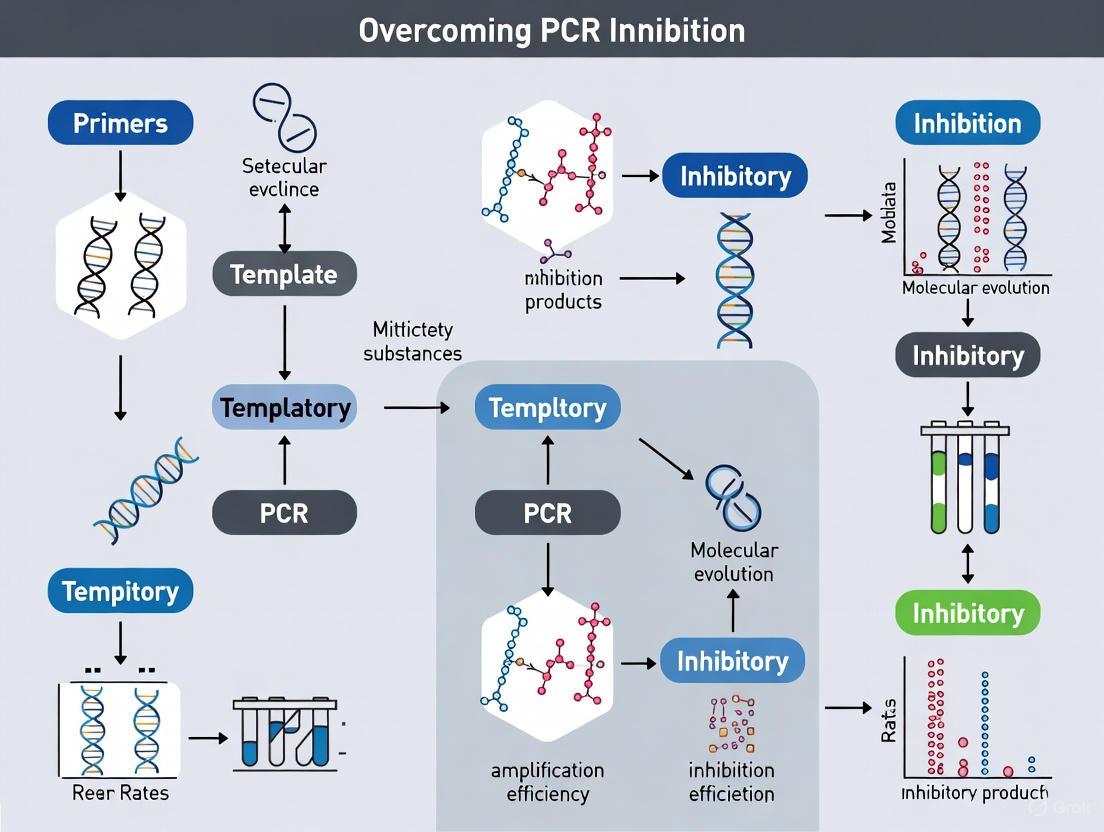
Accurate detection of antibiotic resistance genes (ARGs) in environmental samples via PCR is critical for One Health surveillance but is frequently compromised by potent PCR inhibitors.
Overcoming PCR Inhibition in Environmental Antibiotic Resistance Gene Detection: Strategies for Robust Molecular Surveillance
Abstract
Accurate detection of antibiotic resistance genes (ARGs) in environmental samples via PCR is critical for One Health surveillance but is frequently compromised by potent PCR inhibitors. This article provides a comprehensive guide for researchers and drug development professionals, exploring the fundamental sources of inhibition in complex matrices like wastewater and freshwater. We detail a suite of methodological countermeasures, from sample pre-treatment to reaction enhancers, and offer a systematic troubleshooting framework for assay optimization. Finally, we present advanced validation techniques and a comparative analysis of emerging technologies, including digital PCR and sequencing, to equip scientists with the knowledge to generate reliable, reproducible data for environmental AMR monitoring.
Understanding the Adversary: A Guide to Common PCR Inhibitors in Environmental Samples
Molecular detection of antibiotic resistance genes (ARGs) in environmental samples is crucial for public health research and environmental monitoring. However, the complex nature of environmental matrices like wastewater and freshwater presents significant challenges for polymerase chain reaction (PCR) analysis. These samples contain a diverse array of substances that inhibit enzymatic reactions, leading to reduced sensitivity, false negatives, and inaccurate quantification. This technical support guide addresses the specific challenges of PCR inhibition in environmental ARG detection research, providing troubleshooting guidance and methodological solutions to enhance experimental outcomes.
FAQ: Understanding PCR Inhibition in Environmental Samples
What are the most common PCR inhibitors found in wastewater and freshwater?
Environmental water samples contain numerous substances that interfere with PCR amplification through various mechanisms. The most prevalent inhibitors include:
- Humic and fulvic acids: Decomposition products from plant material that inhibit polymerase activity [1] [2].
- Complex polysaccharides: Interfere with primer binding to template DNA [3].
- Metal ions (e.g., calcium): Compete with magnesium ions that are essential for polymerase function [3].
- Urea: Can degrade DNA polymerases [2].
- Proteins and lipids: Form reversible complexes with DNA polymerase [3].
- Bile salts: Present in fecal contamination and inhibit amplification [2].
These inhibitors can interact with template DNA, degrade or sequester polymerase enzymes, chelate essential metal cofactors, or interfere with fluorescent signaling in real-time PCR [1] [3] [4].
How can I determine if my environmental sample contains PCR inhibitors?
Several approaches can identify inhibition in your samples:
- Dilution assays: Serial dilution of template nucleic acids; improved amplification with dilution indicates presence of inhibitors [1] [2].
- Spike-in controls: Addition of known quantities of control DNA or RNA to assess recovery rates; reduced recovery indicates inhibition [2].
- Internal amplification controls: Co-amplification of control sequences to monitor reaction efficiency [5].
- Standard curve deviation: In qPCR, inhibition may cause significant deviation from standard curves or increased Cq values [1] [5].
What are the most effective strategies to overcome PCR inhibition in environmental samples?
Multiple approaches can mitigate PCR inhibition, each with advantages and limitations:
Table: Comparison of PCR Inhibition Mitigation Strategies
| Strategy | Mechanism | Effectiveness | Limitations |
|---|---|---|---|
| Sample Dilution | Dilutes inhibitors below inhibitory concentration | Moderate to High [1] | Reduces target concentration, may affect sensitivity |
| T4 gp32 Protein | Binds to inhibitory substances like humic acids | High (0.2 μg/μl concentration) [1] | Cost may be prohibitive for high-throughput applications |
| Bovine Serum Albumin (BSA) | Binds inhibitors and stabilizes polymerase | Moderate to High [1] | May interfere with some downstream applications |
| Commercial Inhibitor Removal Kits | Column-based removal of polyphenolics, humics | High [1] [2] | Additional cost, potential sample loss |
| Inhibitor-Tolerant Polymerases | Engineered enzymes resistant to common inhibitors | Moderate [6] [3] | May have different fidelity or efficiency profiles |
| Digital PCR | Sample partitioning dilutes inhibitors in partitions | High [2] [7] | Higher cost, specialized equipment required |
How does digital PCR compare to quantitative PCR for environmental samples with inhibitors?
Digital PCR (dPCR) offers several advantages for analyzing inhibitor-rich environmental samples:
- Superior inhibitor tolerance: Partitioning the sample effectively dilutes inhibitors in each reaction, minimizing their impact [7].
- Absolute quantification: Does not require standard curves, providing more accurate quantification despite inhibition effects [2] [7].
- Enhanced sensitivity: Better detection of low-abundance targets in complex matrices [7].
- More reliable results: Quantification depends on binary positive/negative endpoint detection rather than amplification efficiency, making it less affected by inhibitors that delay amplification [7].
Research demonstrates that combining inhibitor removal with dPCR increased SARS-CoV-2 detection in wastewater by 26-fold compared to standard methods [2].
Experimental Protocols for Overcoming Inhibition
Protocol 1: Systematic Assessment of Inhibition via Dilution
Purpose: To identify and quantify the degree of PCR inhibition in environmental samples [1] [2].
Materials:
- Extracted nucleic acids from environmental samples
- Nuclease-free water
- PCR master mix with fluorescence detection capability
- Real-time PCR instrument
Procedure:
- Prepare a dilution series of extracted nucleic acids (e.g., undiluted, 1:2, 1:5, 1:10, 1:20) using nuclease-free water.
- Include a positive control with known copy number of target sequence.
- Amplify all dilutions using your standard PCR protocol.
- Analyze amplification curves and Cq values for each dilution.
- Calculate inhibition factor based on deviation from expected Cq values.
Interpretation: Significant improvement in amplification efficiency with dilution indicates presence of PCR inhibitors. The dilution factor that provides optimal amplification can be used for future analyses.
Protocol 2: PCR Enhancement with T4 gp32 Protein
Purpose: To improve PCR amplification in inhibitor-rich samples using T4 gene 32 protein [1].
Materials:
- T4 gene 32 protein (commercially available)
- Standard PCR reagents
- Inhibitor-containing environmental DNA samples
Procedure:
- Prepare PCR master mix according to manufacturer's instructions.
- Add T4 gp32 protein to a final concentration of 0.2 μg/μl.
- Include control reactions without gp32 protein for comparison.
- Amplify using standard thermal cycling conditions.
- Compare amplification efficiency and sensitivity between conditions.
Note: This approach eliminated false negative results in wastewater samples and significantly improved viral detection and recovery [1].
The Scientist's Toolkit: Essential Research Reagents
Table: Key Reagents for Overcoming PCR Inhibition in Environmental Samples
| Reagent/Category | Function | Example Applications |
|---|---|---|
| T4 Gene 32 Protein | Binds to humic acids and other inhibitory substances | Wastewater analysis, soil DNA extracts [1] |
| Bovine Serum Albumin (BSA) | Nonspecific inhibitor binding, polymerase stabilization | Fecal-contaminated water, sediment samples [1] |
| PCR Inhibitor Removal Kits | Column-based removal of inhibitory compounds | Complex environmental matrices [1] [2] |
| Inhibitor-Tolerant Polymerase Blends | Engineered enzymes resistant to common inhibitors | Direct amplification from crude extracts [6] [3] |
| Digital PCR Systems | Partitioning reduces inhibitor effects per reaction | Absolute quantification in complex samples [2] [7] |
| Additives (DMSO, Formamide) | Destabilize DNA secondary structures, reduce melting temperature | GC-rich targets, difficult amplicons [1] |
Workflow Diagram: Systematic Approach to Addressing PCR Inhibition in Environmental Samples
The following diagram illustrates a comprehensive workflow for identifying and mitigating PCR inhibition when analyzing environmental water samples:
This systematic workflow emphasizes initial inhibition assessment followed by appropriate mitigation strategies tailored to the specific sample characteristics and research objectives.
Frequently Asked Questions (FAQs) on PCR Inhibition
FAQ 1: My qPCR results show a delayed quantification cycle (Cq) but good end-point fluorescence. What is the most likely cause?
This is a classic sign of detection inhibition, specifically fluorescence quenching. Substances like humic acid can quench the fluorescence of common DNA-binding dyes (e.g., SYBR Green I, EvaGreen) without necessarily inhibiting the amplification reaction itself [8] [9]. The amplification occurs, but the fluorescence signal is suppressed, leading to an artificially high Cq value. In contrast, if both Cq delay and poor end-point fluorescence are observed, it suggests a combination of amplification and detection inhibition.
FAQ 2: Why is my digital PCR (dPCR) assay outperforming my qPCR assay when testing environmental DNA extracts?
dPCR is generally more tolerant of PCR inhibitors than qPCR for two main reasons. First, dPCR relies on end-point quantification, making it less susceptible to inhibitors that affect amplification kinetics, which skew qPCR's Cq-based quantification [8]. Second, the partitioning of the sample into thousands of individual reactions effectively dilutes inhibitor molecules, reducing their interaction with the DNA polymerase and template in any single reaction [8] [10].
FAQ 3: I am detecting amplification in my no-template control (NTC). Could this be related to inhibitors?
While not a direct effect of inhibitors, their presence can exacerbate nonspecific amplification. Inhibitors that reduce polymerase fidelity or interfere with primer annealing can lead to primer-dimer formation and false-positive signals in both samples and NTCs [11]. Optimizing your reaction to overcome inhibition (e.g., using inhibitor-tolerant polymerases or additives like BSA) can often improve specificity and reduce NTC amplification.
FAQ 4: After extracting DNA from soil, my PCR fails. What is the first step I should take?
The most common inhibitor in soil is humic substances [8]. The first troubleshooting step should be to assess your DNA extract purity by spectrophotometry (A260/A280 and A260/A230 ratios) and perform a sample dilution. Diluting the DNA template (e.g., 1:5 or 1:10) can reduce the concentration of co-purified inhibitors to a sub-inhibitory level. If dilution restores amplification, inhibitor presence is confirmed [12] [13].
FAQ 5: Which metal ions are the most potent PCR inhibitors, and from where do they originate?
Zinc, tin, iron, and copper are among the most inhibitory, with IC50 values significantly below 1 mM [14]. These metals can be encountered when analyzing DNA recovered from metal surfaces like bullets, cartridge casings, weapons, or wires [14]. Calcium from bone samples is also a common inhibitor that competitively binds to the polymerase's active site instead of magnesium [14].
Quantitative Data on Common Inhibitors
Table 1: Inhibitor Concentrations and Their Effects on PCR.
| Inhibitor Class | Example Substances | Inhibitory Concentration | Primary Mechanism of Action |
|---|---|---|---|
| Humic Substances | Humic Acid, Fulvic Acid | 500 ng of HA quenches nearly all EvaGreen fluorescence; 1000 ng inhibits amplification [9]. | Binds to DNA polymerase and template; quenches fluorescent dyes [8] [9]. |
| Polyphenols | Tannic Acid, Melanin | Varies by compound; often co-purifies with plant DNA. | Depletes magnesium via complexation; denatures enzymes [13]. |
| Metal Ions | Zn²⁺, Sn²⁺, Fe²⁺, Cu²⁺ | IC50 significantly below 1 mM for most inhibitory metals [14]. | Competes with Mg²⁺ for polymerase binding site; promotes DNA strand breakage [14]. |
| Complex Polysaccharides | Dextran Sulfate, Xylan | Varies by polymer; common in plant tissues. | Mimics DNA structure, interfering with enzyme processivity [13]. |
| Heme Compounds | Hemoglobin, Hematín | 0.004% (vol/vol) blood completely inhibits some Taq polymerases [13]. | Interferes with polymerase activity; may chelate cofactors [8] [13]. |
Table 2: Comparison of DNA Polymerase Tolerance to Common Inhibitors.
| DNA Polymerase / Enzyme Blend | Tolerance to Blood | Tolerance to Humic Acid | Notes and Examples |
|---|---|---|---|
| Standard Taq | Low (Complete inhibition at 0.004% blood) [13] | Low to Moderate | Commonly used but highly susceptible. |
| rTth / Tfl Polymerase | High (Efficient in 20% blood) [13] | Information Missing | Isolated from Thermus thermophilus and Thermus flavus. |
| KOD Polymerase | Information Missing | Information Missing | Found to be more resistant to metal ion inhibition than Taq and Q5 polymerases [14]. |
| Inhibitor-Tolerant Blends (e.g., Phusion Flash, GoTaq Endure) | High | High | Specially formulated blends or engineered enzymes for challenging samples [8] [12]. |
Detailed Experimental Protocols
Protocol 1: Assessing Inhibition via Spike-In Control
This protocol helps determine if a sample contains PCR inhibitors.
- Prepare the Test Sample: Set up your qPCR reaction using the suspected inhibitory DNA extract as usual.
- Prepare the Control Sample: Create a duplicate reaction that includes an additional, known quantity of a standardized control template (e.g., a plasmid with a non-target insert).
- Prepare the Standard Curve: Perform a separate qPCR run using a dilution series of the same standardized control template in a clean, inhibitor-free background (e.g., water).
- Amplify and Analyze: Run all reactions and compare the Cq values of the spike-in control between the test and standard reactions. A significant delay (e.g., ΔCq > 1) in the test sample indicates the presence of inhibitors [10].
Protocol 2: Overcoming Calcium Inhibition with EGTA
This method provides a simple and non-destructive way to reverse calcium-induced PCR inhibition [14].
- Prepare EGTA Stock Solution: Prepare a 100 mM aqueous solution of ethylene glycol-bis(2-aminoethylether)-N,N,N′,N′-tetraacetic acid (EGTA). Ensure the pH is adjusted to ~8.0 for effective chelation.
- Modify the PCR Master Mix: Add the EGTA stock solution directly to the PCR master mix to achieve a final concentration of 0.5 to 1.0 mM.
- Proceed with PCR: Add the template DNA and run the PCR under standard cycling conditions. The EGTA will chelate calcium ions, preventing them from competing with magnesium for the polymerase's active site.
Protocol 3: Basic PCR Setup with Enhancements for Inhibitor-Prone Samples
This is a standard PCR protocol with optional additions to mitigate inhibition [11] [13].
- Master Mix Composition (50 μL reaction):
- 5 μL of 10X PCR Buffer (with or without Mg²⁺)
- 1 μL of 10 mM dNTP mix (200 μM final)
- 1.5 μL of 25 mM MgCl₂ (1.5 mM final; adjust as needed)
- 1 μL each of forward and reverse primer (20 μM stock, 20-50 pmol final)
- 0.5-2.5 Units of DNA Polymerase
- Optional Enhancers:
- Bovine Serum Albumin (BSA): 10-100 μg/mL final.
- Betaine: 0.5 M to 2.5 M final.
- Dimethyl Sulfoxide (DMSO): 1-5% (v/v) final.
- DNA Template: 1-1000 ng.
- Nuclease-Free Water to 50 μL.
- Thermal Cycling:
- Initial Denaturation: 95°C for 2-5 minutes.
- Amplification (30-40 cycles):
- Denature: 95°C for 15-30 seconds.
- Anneal: 50-65°C for 15-60 seconds (optimize based on primer Tm).
- Extend: 72°C for 1 minute per kb.
- Final Extension: 72°C for 5-10 minutes.
Troubleshooting Workflow Diagram
The Scientist's Toolkit: Research Reagent Solutions
Table 3: Essential Reagents for Overcoming PCR Inhibition.
| Reagent / Material | Function / Purpose | Example Use Cases |
|---|---|---|
| Inhibitor-Tolerant DNA Polymerase | Engineered enzyme blends with high resistance to inhibitors from blood, soil, and plants. | Detection of ARGs in complex environmental samples (soil, manure, wastewater) [8] [12]. |
| Bovine Serum Albumin (BSA) | Binds to inhibitory compounds like phenolics, humic acids, and tannins, preventing their interaction with the polymerase. | Amplification from plant-derived DNA, forensic samples, and soil extracts [9] [13]. |
| Betaine | A biologically compatible solute that reduces the formation of secondary structures, equalizes the stability of AT- and GC-rich regions, and can enhance specificity. | Amplification of GC-rich targets or when inhibitor-induced nonspecificity is an issue [13]. |
| Dimethyl Sulfoxide (DMSO) | An organic solvent that influences the thermal stability of nucleic acids, helping to denature complex secondary structures in the template. | Improving amplification efficiency and specificity in inhibitor-prone samples [11] [13]. |
| Ethylene Glycol-bis(2-aminoethylether)-N,N,N′,N′-tetraacetic acid (EGTA) | A calcium-specific chelator. Reverses PCR inhibition caused by calcium ions without chelating essential Mg²⁺ ions. | Analysis of DNA extracted from bone samples or other high-calcium sources [14]. |
In the context of environmental Antibiotic Resistance Gene (ARG) detection research, achieving consistent and reliable Polymerase Chain Reaction results is paramount. A significant barrier to this goal is the presence of PCR inhibitors, which are substances that can interfere with the amplification reaction, leading to false-negative results or incorrect quantitative data [15] [16]. These inhibitors are particularly prevalent in complex environmental samples such as soil, wastewater, and feces, which are common sources for ARG studies [15] [17]. Understanding the mechanisms by which these inhibitors operate—degrading the nucleic acid template, inactivating the polymerase enzyme, or chelating essential cofactors—is the first critical step toward developing effective countermeasures and ensuring the accuracy of your research.
FAQ: Understanding PCR Inhibitors
What are PCR inhibitors and where do they come from? PCR inhibitors are a diverse group of organic or inorganic molecules that can significantly interfere with the enzymatic amplification of DNA [15] [16]. They are common in samples used for environmental ARG research. Their sources are varied:
- Environmental Samples: Soil, wastewater, and plant material often contain humic acids, fulvic acids, and tannins [15] [18].
- Biological Samples: Blood, tissues, and feces can introduce hemoglobin, hematin, lactoferrin, IgG, and bile salts [15] [18].
- Sample Processing: Substances like phenol, EDTA, SDS, and alcohols can be carried over from DNA extraction and purification protocols [6] [18].
How can I tell if my PCR reaction is inhibited? The most definitive method to check for inhibition is through sample dilution and re-amplification, particularly in qPCR [15] [16].
- In an uninhibited reaction, a diluted sample (e.g., 1:10) will show a higher Ct value than the undiluted sample because there is less starting template.
- In an inhibited reaction, the diluted sample will show an equal or lower Ct value than the undiluted sample. This is because the dilution reduces the inhibitor concentration more than it reduces the target DNA, thereby restoring amplification efficiency [15] [16]. A no-template control is essential to rule out contamination in these tests.
Why is PCR inhibition a critical concern in environmental ARG research? The primary risk in diagnostic and surveillance research is the false-negative result [15]. If inhibitors prevent the amplification of a target ARG, it may be incorrectly concluded that the gene is absent from the environmental sample. This can lead to a significant underestimation of the prevalence and abundance of antibiotic resistance in a given ecosystem, compromising the integrity of the study and any subsequent risk assessments.
Troubleshooting Guide: Overcoming PCR Inhibition
Table 1: Strategies for Removing and Overcoming PCR Inhibitors
| Approach | Method | Key Considerations |
|---|---|---|
| Physical Removal | Spin-column purification (e.g., DNA Clean & Concentrator kits) | Effective for salts, detergents [15]. |
| Specialized inhibitor removal kits (e.g., OneStep PCR Inhibitor Removal Kit) | Specifically removes polyphenolics (humic acids, tannins) in <5 minutes [15]. | |
| Phenol-chloroform extraction, ion-exchange chromatography | Traditional methods; can be time-consuming and involve hazardous chemicals [15]. | |
| Reaction Optimization | Increase DNA polymerase concentration | Can compensate for some level of enzyme inhibition [15]. |
| Optimize Mg2+ concentration (0.5-5.0 mM) | Critical if inhibitors chelate Mg2+ [6] [19]. | |
| Use of PCR additives | BSA (10-100 μg/μl) binds inhibitors; DMSO (1-10%) helps with secondary structures [20] [21] [19]. | |
| Sample & Protocol Adjustments | Sample dilution | Simple but reduces sensitivity; may not work for strong inhibitors [15] [18]. |
| Use of inhibitor-tolerant polymerases | Select polymerases engineered for high tolerance to impurities from soil, blood, etc. [6] [21]. |
Step-by-Step Protocol: Validating and Resolving PCR Inhibition
Objective: To confirm the presence of PCR inhibitors in a DNA extract and restore amplification through a column-based clean-up protocol.
Materials Needed:
- Inhibited DNA sample
- OneStep PCR Inhibitor Removal Kit (Zymo Research) or equivalent
- Microcentrifuge
- Standard PCR reagents
Procedure:
- Set Up Diagnostic qPCR: Perform two parallel qPCR reactions.
- Tube A: Use 2-5 μL of the original, untreated DNA sample.
- Tube B: Use 2-5 μL of a 1:10 dilution of the original DNA sample in sterile water.
- Analyze Ct Values:
- Clean Up DNA Sample:
- Transfer up to 50 μL of the DNA sample into a provided OneStep column.
- Centrifuge at full speed (≥12,000 x g) for 1-3 minutes.
- The cleaned DNA will be in the flow-through, ready for immediate use in PCR [15].
- Verify Success: Repeat the qPCR with the cleaned DNA. A successful clean-up should result in a detectable amplification product and a lower Ct value compared to the original, untreated sample.
The Scientist's Toolkit: Key Reagent Solutions
Table 2: Essential Reagents for Managing PCR Inhibition
| Reagent | Function in Overcoming Inhibition |
|---|---|
| BSA (Bovine Serum Albumin) | Binds to and neutralizes a range of organic inhibitors, particularly effective in samples like feces and soil [20] [19]. |
| DMSO (Dimethyl Sulfoxide) | Aids in denaturing DNA with high GC-content or complex secondary structures, making the template more accessible [21] [19]. |
| Betaine | Equalizes the contribution of GC and AT base pairs, facilitating the amplification of difficult, GC-rich templates [21] [19]. |
| Inhibitor-Tolerant Polymerases | Engineered DNA polymerases (e.g., Terra PCR Direct) with high processivity and resistance to common inhibitors found in crude samples [6] [18] [21]. |
| OneStep PCR Inhibitor Removal Kit | A specialized column that binds polyphenolic inhibitors (humic acids, tannins, melanin) without retaining DNA, providing a rapid clean-up [15]. |
| Hot-Start DNA Polymerases | Reduce non-specific amplification and primer-dimer formation by remaining inactive until a high-temperature activation step, improving assay robustness [6] [21]. |
Visualizing Inhibition Mechanisms and Workflows
Inhibition Mechanisms
Inhibitor Removal Workflow
Troubleshooting Guides
Guide 1: Addressing False Negatives in qPCR-based ARG Detection
Problem: False negatives occur when antibiotic resistance genes (ARGs) present in a sample are not detected, often due to PCR inhibition or low gene abundance.
Explanation: In quantitative real-time PCR (qPCR), inhibitory substances co-extracted from environmental samples (like soil or wastewater) can cause partial or complete inhibition of target DNA amplification. This leads to underestimated gene copy numbers or false negatives [22]. For genes with low copy numbers, dilution may further increase their susceptibility to inhibitors [22].
Solution: Implement a dilution series with an inhibition test to find the optimal dilution factor.
- Steps:
- Perform a serial dilution of DNA extracts (e.g., 10-fold, 200-fold).
- Spike a known quantity of an exogenous standard (e.g., an artificial target gene) into each dilution [22].
- Run qPCR and compare Cycle threshold (Ct) values to a control without inhibitors.
- Identify the dilution point where inhibition is minimized without excessively reducing target gene concentration below detection limits [22].
Prevention:
- Incorporate performance-enhancing additives like Bovine Serum Albumin (BSA) in qPCR reactions [22].
- Use high-fidelity DNA polymerases that are less susceptible to inhibitors [22].
- For low-abundance targets, consider emerging methods like CRISPR-enriched metagenomic sequencing, which can lower the detection limit of ARGs from 10⁻⁴ to 10⁻⁵ relative abundance and detect clinically important ARGs missed by regular next-generation sequencing (NGS) [23].
Guide 2: Correcting Underestimation of Gene Copy Numbers
Problem: Gene copy numbers are consistently underestimated in qPCR analyses, leading to inaccurate abundance quantification.
Explanation: Underestimation primarily results from insufficient dilution of co-extracted inhibitors. When a DNA sample is diluted, both inhibitory substances and target genes are co-diluted. Insufficient dilution leaves inhibitors active, while excessive dilution can cause overestimation by reducing the target concentration to a point where it becomes more variable [22].
Solution: Apply a structured dilution model to eliminate qPCR inhibition accurately [22].
- Steps:
- Extract DNA from your environmental sample.
- Prepare Dilutions: Create a dilution series of the DNA extract (e.g., 10-fold, 50-fold, 100-fold, 200-fold).
- Run qPCR for the target ARG on each dilution.
- Analyze Results: The correct dilution factor is indicated by the point where the calculated gene copy number stabilizes or peaks before decreasing again at higher dilutions. Avoid the "excessive dilution" zone [22].
Prevention:
- Always include an internal control or exogenous standard to monitor inhibition and extraction efficiency [22].
- Pre-test DNA extracts for inhibition to determine the appropriate dilution range before running target assays [22].
Guide 3: Resolving Data Inconsistencies in Genomic Databases
Problem: Inconsistent or erroneous metadata in public genome databases complicates downstream analysis and can lead to incorrect conclusions in ARG surveillance studies.
Explanation: Large genomic repositories may contain inconsistencies such as incorrect genome names, discontinued accession numbers, mislabeled archaea in bacteria folders, or missing sequence files. These errors can confound comparative genomics and metagenomic analyses [24].
Solution: Use automated curation tools like AutoCurE (Automated tool for bacterial genome database curation in Excel) to flag and correct common errors [24].
- Steps:
- Download Genomes: Obtain genome files and corresponding genome reports from NCBI.
- Run AutoCurE: The tool automatically generates flags for nine key metadata categories [24].
- Review Flags: Check for inconsistencies in genus/species names, archaea misclassification, accession number mismatches, and missing chromosome files [24].
- Correct Database: Manually verify flagged entries against current NCBI data and update your local database [24].
Prevention:
- Maintain a locally curated database for ARG surveillance projects.
- Always verify the most current genome status and metadata directly from the source database before commencing new analyses [24].
Frequently Asked Questions (FAQs)
FAQ 1: What are the main advantages of genotypic ARG detection methods over traditional phenotypic methods?
Genotypic methods (like PCR and NGS) offer faster results (hours instead of days), require a lower inoculum, and can detect specific resistance mechanisms directly from specimens without prior culture. However, they may overcall resistance if the detected gene is not expressed and cannot provide a Minimum Inhibitory Concentration (MIC) value [25].
FAQ 2: How can I improve the detection of low-abundance ARGs in complex samples like wastewater?
Traditional metagenomic sequencing often misses low-abundance ARGs. The CRISPR-Cas9-enriched NGS method significantly enhances detection by selectively targeting and amplifying ARGs during library preparation. This method can find hundreds more ARG families and lowers the detection limit, making it ideal for wastewater analysis [23].
FAQ 3: What factors influence the distribution and detection of ARGs in environmental reservoirs?
A global data-driven analysis shows that ARG abundance and classes vary significantly across continents and reservoirs. Key influencing factors include [26]:
- Physicochemical indicators: Organic carbon, antibiotics, and mobile genetic elements (MGEs).
- Reservoir characteristics: Size, catchment area, and surrounding human population density.
- Seasonal variation: Pollution hotspots differ between waters and sediments across seasons.
FAQ 4: What impact do errors in copy number variation (CNV) detection have on association studies?
High false negative and false positive rates in CNV calling algorithms noticeably decrease statistical power in association studies. When error rates are moderate to high, or when CNV sizes are small, using raw intensity measurements (like Log R Ratio - LRR) can be statistically more powerful than using called CNV states [27].
Experimental Protocols
Protocol 1: Evaluating and Overcoming PCR Inhibition via Dilution
Objective: To determine the optimal dilution factor for eliminating PCR inhibition in environmental DNA extracts for accurate ARG quantification [22].
Materials:
- DNA extracted from soil, wastewater, or other environmental samples.
- qPCR reagents, including a robust polymerase master mix.
- Primers and probes for target ARG(s).
- Exogenous standard (e.g., an artificial gene sequence not found in the sample).
- Standard lab equipment: microcentrifuge, thermal cycler, real-time PCR instrument.
Method:
- Prepare DNA Dilutions: Create a serial dilution of the DNA extract (e.g., 1:10, 1:50, 1:100, 1:200, 1:400) using nuclease-free water [22].
- Spike Standard: Add a fixed, known copy number of the exogenous standard to each dilution tube [22].
- Perform qPCR: Run quantitative PCR for both the target ARG and the exogenous standard across all dilution levels using appropriate cycling conditions.
- Calculate Inhibition: For each dilution, compare the Ct value of the spiked standard to the Ct value obtained from a control reaction (standard in water). A significant delay in the sample's Ct indicates inhibition [22].
- Determine Optimal Dilution: The optimal dilution is the most concentrated one where the exogenous standard's Ct value matches the control, indicating inhibition has been eliminated [22].
Protocol 2: CRISPR-Enriched Metagenomic Sequencing for ARG Detection
Objective: To enrich and detect low-abundance ARGs in wastewater samples using a CRISPR-Cas9-modified NGS library preparation method [23].
Materials:
- Fragmented genomic DNA from wastewater sample.
- CRISPR-Cas9 enzyme (e.g., Cas9 nuclease).
- Custom-designed sgRNAs targeting a panel of ARGs.
- NGS library preparation kit.
- AMPure XP beads or equivalent.
Method:
- Library Preparation: Fragment gDNA and perform end-repair and dA-tailing to prepare for adapter ligation, following standard NGS library prep protocols [23].
- Adapter Ligation: Ligate sequencing adapters to the DNA fragments.
- CRISPR Enrichment:
- Complex Formation: Incubate the library with a pool of sgRNAs designed to target specific ARG sequences and the Cas9 enzyme.
- Digestion: The Cas9 enzyme will cut non-targeted fragments, reducing their likelihood of being sequenced.
- Amplification: Perform PCR amplification to enrich the targeted, intact ARG fragments [23].
- Sequencing and Analysis: Purify the enriched library using AMPure XP beads and sequence on your preferred NGS platform. Analyze data for ARG presence and abundance [23].
Table 1: Impact of Dilution on qPCR Inhibition and Gene Copy Number Estimation
This table summarizes key findings from the re-evaluation of dilution as a method to eliminate PCR inhibition, showing the effects of insufficient, optimal, and excessive dilution [22].
| Dilution Factor | Inhibition Status | Effect on Quantified Gene Copy Numbers | Recommendation |
|---|---|---|---|
| No dilution or Low (e.g., 10-fold) | Significant to full inhibition | Underestimation | Avoid; fails to reduce inhibitors below critical level. |
| Moderate (Model-Determined Range) | Efficiently eliminated | Accurate estimation | Recommended. Use an inhibition test to find this range. |
| Excessive (e.g., 200- or 400-fold) | Eliminated | Risk of Overestimation | Avoid; target gene concentration becomes too low and variable. |
Table 2: Performance Comparison of ARG Detection Methods
This table compares the capabilities of conventional next-generation sequencing (NGS) and the novel CRISPR-enriched NGS method for detecting antibiotic resistance genes [23].
| Performance Metric | Conventional NGS Method | CRISPR-Enriched NGS Method |
|---|---|---|
| Detection Limit (Relative Abundance) | 10⁻⁴ | 10⁻⁵ |
| Additional ARGs Detected | Baseline | Up to 1189 more |
| Additional ARG Families Detected | Baseline | Up to 61 more |
| Detection of Clinically Important ARGs (e.g., KPC) | May be missed | Reliably detected |
| Required Sequencing Reads for Similar Detection | 100% | Only 2-20% |
Research Reagent Solutions
Table 3: Essential Reagents and Materials for ARG Detection Experiments
| Reagent/Material | Function/Application | Example Use Case |
|---|---|---|
| Bovine Serum Albumin (BSA) | Performance-enhancing additive that binds inhibitors in qPCR reactions [22]. | Reducing PCR inhibition in DNA extracts from soil or manure. |
| Exogenous Standard (Artificial Gene) | A non-native DNA sequence spiked into samples to quantify inhibition and extraction efficiency [22]. | Internal control in qPCR to determine the optimal dilution factor. |
| CRISPR-Cas9 Enzyme & sgRNAs | Molecular scissors and guide system for targeted enrichment of specific DNA sequences [23]. | Enriching low-abundance ARG targets in metagenomic libraries prior to NGS. |
| High-Fidelity DNA Polymerase | Thermostable enzyme resistant to co-extracted inhibitors for more robust PCR amplification [22]. | qPCR on complex environmental samples with high humic acid content. |
| Custom ARG Reference Database (e.g., for SEAR) | A curated set of known ARG sequences used for read clustering and annotation in bioinformatic pipelines [28]. | Identifying and quantifying ARGs directly from raw sequencing data. |
A Toolkit for Success: Sample Preparation and In-Reaction Strategies to Counteract Inhibition
FAQs: Understanding and Overcoming PCR Inhibition
What are PCR inhibitors and where do they come from?
PCR inhibitors are substances that interfere with the polymerase chain reaction, leading to reduced sensitivity, false-negative results, or complete amplification failure. They originate from various sources, particularly complex sample types like environmental samples.
Common PCR inhibitors include:
- Organic compounds: Humic and fulvic acids (from soil), polyphenols and tannins (from plants), melanin, collagen, and humic acids
- Biological substances: Hemoglobin (from blood), lactoferrin, IgG, polysaccharides, and urea
- Process-related chemicals: Phenol, EDTA, detergents (SDS), heparin, and salts [29] [30]
These inhibitors work through various mechanisms, including binding to DNA polymerase, interacting with template DNA, or chelating essential metal ions like Mg²⁺ that are crucial for polymerase activity [29] [30].
How can I detect the presence of PCR inhibitors in my samples?
Several methods can help you identify inhibition problems:
- Spike-in Assay: Add a known quantity of exogenous DNA (not present in your sample) to your DNA extract and run a PCR specific to this control. If the cycle threshold (Ct) values are significantly higher compared to the control DNA alone, inhibitors are likely present [30].
- Dilution Test: Perform a dilution series of your template DNA. If PCR efficiency improves with dilution, this indicates the presence of inhibitors that are being diluted below their effective concentration [29] [30].
- Internal Controls: Use an endogenous control present in all samples or spike in a plasmid or synthetic DNA with a corresponding assay [30].
- Quality Metrics: Assess DNA purity using A260/A280 ratios, though this may not detect all inhibitors [30].
What are the most effective strategies for removing PCR inhibitors?
A multi-pronged approach is often most successful for dealing with stubborn inhibition:
| Strategy | Mechanism | Best For |
|---|---|---|
| Specialized Extraction Kits | Proprietary resins/silica membranes designed to bind inhibitors | Soil, plant, stool samples with high inhibitor loads |
| Post-Extraction Cleanup Kits | Secondary purification of already extracted DNA | Samples with residual inhibition after initial extraction |
| Sample Dilution | Dilutes inhibitors below effective concentration | Samples with moderate inhibition and ample target DNA |
| PCR Enhancers | Binds inhibitors or stabilizes polymerase | All sample types, especially when combined with other methods |
| Inhibitor-Tolerant Polymerases | Engineered enzymes resistant to inhibition | Laboratories unable to modify extraction protocols |
Which commercial kits are available for inhibitor removal?
Several specialized kits effectively remove PCR inhibitors:
| Kit Name | Technology | Sample Input | Processing Time | Recovery Efficiency |
|---|---|---|---|---|
| OneStep PCR Inhibitor Removal Kit (Zymo Research) | Column-based matrix | 50-200 µl | Fast one-step procedure | 80-90% [31] |
| NucleoSpin Inhibitor Removal (Takara Bio) | Silica membrane | Up to 100 µl | 15 minutes for 6 preps | >75% [32] |
| E.Z.N.A. Soil DNA Kit (Omega Bio-tek) | HiBind Matrix with cHTR Reagent | Up to 1g soil | 60 min-2.5 hours | Dependent on sample [33] |
| InviMag Stool DNA Kit (invitek) | Magnetic beads with InviAdsorb tubes | 200 mg stool | 20-25 min after lysis | Up to 50 µg [34] |
What PCR enhancers can I add to my reactions to overcome inhibition?
Various enhancers can be added directly to PCR reactions to mitigate inhibition:
| Enhancer | Effective Concentration | Mechanism of Action |
|---|---|---|
| Bovine Serum Albumin (BSA) | 0.1-0.5 µg/µL | Binds to inhibitors like polyphenols and humic acids [1] |
| T4 Gene 32 Protein (gp32) | 0.2 µg/µL | Binds humic acids and prevents polymerase inhibition [1] |
| Skim Milk Powder | 0.1-1% | Binds PCR inhibitors in various sample types [30] |
| Dimethyl Sulfoxide (DMSO) | 1-10% | Lowers DNA melting temperature, helps denature GC-rich regions [1] |
| Tween-20 | 0.1-1% | Counteracts inhibitory effects on Taq DNA polymerase [1] |
A 2024 study evaluating PCR-enhancing approaches found that T4 gp32 provided the most significant improvement for inhibitor removal in wastewater samples, followed by BSA and sample dilution [1].
Experimental Protocols for Inhibitor Removal
Protocol 1: Post-Extraction Cleanup Using Spin Column Technology
Purpose: Remove residual PCR inhibitors from already extracted nucleic acids.
Materials:
- OneStep PCR Inhibitor Removal Kit or similar
- Microcentrifuge
- Collection tubes
Procedure:
- Transfer up to 200 µL of extracted DNA to a Zymo-Spin IV-IR HRC filter
- Centrifuge at 3,500 × g for 3-5 minutes
- Collect the flow-through containing purified DNA
- Use immediately or store at ≤ -20°C [31]
Note: For heavily inhibited samples, limit input volume to 50-100 µL [31].
Protocol 2: Two-Stage DNA Separation for Challenging Environmental Samples
Purpose: Extract inhibitor-free DNA from complex matrices like soil.
Materials:
- E.Z.N.A. Soil DNA Kit or equivalent
- Disruptor tubes with glass beads
- cHTR reagent
- Microcentrifuge
Procedure:
- Homogenize 200 mg soil sample in disruptor tubes with glass beads
- Add inhibitor removal reagent (cHTR) to bind humic substances
- Bind DNA to HiBind matrix column
- Wash with appropriate buffers
- Elute DNA in 50-100 µL elution buffer [33]
Protocol 3: PCR Setup with Enhancers for Inhibitor-Prone Samples
Purpose: Optimize PCR reactions to tolerate residual inhibitors.
Materials:
- Inhibitor-tolerant DNA polymerase
- PCR enhancers (BSA, gp32, etc.)
- Standard PCR reagents
Procedure:
- Prepare master mix according to manufacturer instructions
- Add selected enhancer at optimal concentration:
- BSA: 0.2-0.5 µg/µL final concentration
- T4 gp32: 0.2 µg/µL final concentration
- Add template DNA (consider 1:10 dilution if inhibition is suspected)
- Run PCR with appropriate cycling conditions [1]
The Scientist's Toolkit: Essential Reagent Solutions
| Reagent/Material | Function | Application Notes |
|---|---|---|
| Silica Membrane Columns | Binds nucleic acids while allowing inhibitors to pass through | Standard format in many commercial kits [32] |
| Magnetic Beads | Paramagnetic particles that bind DNA in presence of chaotropic salts | Suitable for automation; used in InviMag kits [34] |
| cHTR Reagent | Proprietary inhibitor removal technology specifically for humic acids | Found in E.Z.N.A. Soil DNA Kit; stable at room temperature [33] |
| Glass Beads | Mechanical disruption of tough sample matrices | Pre-filled in disruptor tubes for soil and stool samples [33] |
| Inhibitor-Tolerant Polymerases | Engineered enzymes with high tolerance to PCR inhibitors | Examples: Terra PCR Direct polymerase, Environmental Master Mix [29] [30] |
| PCR Enhancers | Chemical additives that neutralize inhibitors | BSA, gp32, skim milk, DMSO [1] |
Workflow Diagram for Troubleshooting PCR Inhibition
Systematic Approach to PCR Inhibition Troubleshooting
This workflow outlines a logical progression for addressing PCR inhibition, beginning with confirmation of the problem, moving through sample preparation and extraction improvements, and culminating in PCR enhancement strategies.
Key Considerations for Environmental ARG Detection Research
When working with environmental samples for antibiotic resistance gene (ARG) detection:
- Sample-Specific Challenges: Different environmental matrices (wastewater, soil, sediment) contain distinct inhibitor profiles that may require tailored approaches [1].
- Sensitivity Requirements: ARG targets may be present in low abundance, making extensive sample dilution impractical. Focus on efficient extraction and cleanup rather than dilution.
- Validation Methods: Include appropriate controls and validation steps to ensure inhibitor removal hasn't compromised detection sensitivity for your target ARGs.
- High-Throughput Needs: For surveillance studies, consider automated platforms like the KingFisher Flex system used with InviMag kits [34].
By implementing these strategies and utilizing the appropriate tools and protocols, researchers can effectively overcome PCR inhibition challenges in environmental ARG detection research.
Frequently Asked Questions
What is PCR inhibition and why is it a problem in environmental samples? PCR inhibition occurs when substances in a sample interfere with the DNA polymerization process or fluorescence detection, leading to false negative results or an underestimation of target molecules [35] [1]. Environmental samples like soil, manure, and wastewater are complex matrices that often contain inhibitory substances such as humic acid, fulvic acid, metals, and complex polysaccharides [35] [1]. These inhibitors can skew quantification in qPCR and hinder library preparation in Massively Parallel Sequencing (MPS) [35].
How does sample dilution help overcome PCR inhibition? Diluting a sample reduces the concentration of PCR inhibitors, which can restore amplification efficiency [1]. This is one of the most prevalent strategies to mitigate inhibition [1] [36]. However, it also dilutes the target DNA, which can lead to a loss of sensitivity and is not suitable for samples with low target concentrations [35] [1].
Are there alternatives to dilution that do not cause DNA loss? Yes, a more straightforward solution is to use inhibitor-tolerant DNA polymerase enzymes or to add PCR enhancers directly to the reaction mix [35]. Proteins such as Bovine Serum Albumin (BSA) and T4 gene 32 protein (gp32) can bind to inhibitory substances, preventing them from interfering with the reaction [1]. This approach avoids the DNA loss associated with purification or dilution [35].
Is digital PCR (dPCR) less affected by inhibitors than qPCR? Yes, digital PCR has been proven to be less affected by PCR inhibitors than qPCR [35]. This is partly because dPCR relies on end-point measurement rather than amplification kinetics, and the partitioning of the sample may reduce interactions between inhibitor molecules and the PCR reagents [35]. However, the choice of DNA polymerase remains crucial for inhibitor tolerance in dPCR [35].
Comparison of Inhibition Relief Strategies
The table below summarizes the performance of different strategies for relieving PCR inhibition, as evaluated in a study on wastewater samples [1].
| Strategy | Reported Effect on Inhibition | Key Considerations |
|---|---|---|
| 10-Fold Dilution | Eliminated false negative results [1]. | Reduces inhibitor concentration but also dilutes the target DNA, potentially causing loss of sensitivity [1]. |
| T4 gp32 Protein (0.2 μg/μl) | Most significant removal of inhibition; eliminated false negatives [1]. | Binds to inhibitory substances like humic acids; direct additive that does not dilute the sample [1]. |
| Bovine Serum Albumin (BSA) | Eliminated false negative results [1]. | Binds inhibitors; direct additive that does not dilute the sample [35] [1]. |
| Inhibitor Removal Kit | Eliminated false negative results [1]. | Actively removes inhibitors but involves an extra processing step and can lead to DNA loss [35] [1]. |
| DMSO, Formamide, Tween-20, Glycerol | Did not eliminate false negative results in the tested wastewater samples [1]. | Effectiveness is highly dependent on the sample matrix and the specific inhibitors present [1]. |
Experimental Protocol: Evaluating PCR Enhancers in Wastewater
This protocol is adapted from a study that directly compared multiple PCR-enhancing approaches for the detection of SARS-CoV-2 in wastewater [1]. It can be adapted for the detection of antimicrobial resistance genes (ARGs) in other environmental matrices.
1. Sample Preparation and DNA Extraction
- Collect wastewater samples (e.g., 24-hour composite raw wastewater).
- Concentrate viruses and other targets from the wastewater using an appropriate method (e.g., polyethylene glycol precipitation or ultrafiltration).
- Extract total nucleic acids using a commercial kit designed for complex environmental samples, such as the DNeasy PowerSoil kit [1].
2. Preparation of qPCR Reactions with Enhancers
- Prepare a master mix for SYBR Green-based qPCR. A sample reaction composition is below [1]:
Reagent Final Concentration Volume per Reaction 2X SYBR Green Master Mix 1X 5.0 μl Forward Primer (10 μM) 600 nM 0.6 μl Reverse Primer (10 μM) 600 nM 0.6 μl UltraPure Water - 1.3 μl Total Master Mix - 7.5 μl - Aliquot the master mix into separate tubes for each enhancement strategy to be tested.
- Add the chosen enhancer to the respective master mix aliquot. For example:
- Add 2.5 μl of the DNA template (or diluted template) to each reaction well for a final reaction volume of 10 μl.
- Run all reactions in triplicate.
3. qPCR Cycling and Data Analysis
- Use the following thermal cycling profile [1]:
- UDG Activation: 50°C for 2 minutes
- Polymerase Activation: 95°C for 2 minutes
- 45 Cycles of:
- Denaturation: 95°C for 10 seconds
- Annealing/Extension: 56–60°C for 30 seconds (optimize based on primer pair)
- After amplification, perform a melting curve analysis to verify reaction specificity.
- Compare the Cycle quantification (Cq) values and estimated copy numbers between the inhibited control (no enhancer) and the various enhancement strategies. A significant decrease in Cq and an increase in copy number indicate successful inhibition relief.
The Scientist's Toolkit: Research Reagent Solutions
| Reagent or Material | Function in Overcoming Inhibition |
|---|---|
| Inhibitor-Tolerant DNA Polymerase | Engineered enzymes or specialized polymerase blends are more resistant to a wide range of inhibitory substances present in environmental samples [35]. |
| T4 Gene 32 Protein (gp32) | A single-stranded DNA binding protein that can bind to inhibitory substances like humic acids, preventing them from interfering with the DNA polymerase [1] [36]. |
| Bovine Serum Albumin (BSA) | Binds to various PCR inhibitors, neutralizing their effects. It can also stabilize the DNA polymerase enzyme [1] [37]. |
| PowerUp SYBR Green Master Mix | A ready-to-use master mix optimized for performance with challenging samples, often containing proprietary enhancers [38]. |
| DNeasy PowerSoil Kit | A commercial DNA extraction kit specifically designed to remove potent PCR inhibitors like humic acids from difficult soil and environmental samples [38] [1]. |
Workflow for Troubleshooting PCR Inhibition
The diagram below outlines a logical, step-by-step process for diagnosing and addressing PCR inhibition in environmental ARG detection research.
The detection of antibiotic resistance genes (ARGs) in environmental samples using polymerase chain reaction (PCR) is a critical component of public health research. However, a significant challenge in this field is the widespread presence of PCR inhibitors in complex environmental matrices like soil and water. These inhibitors, such as humic and fulvic acids, co-extract with nucleic acids and interfere with the DNA polymerase enzyme, potentially leading to false-negative results and an underestimation of ARG abundance [39] [8]. To overcome this, chemical and polymeric adsorbents like Supelite DAX-8 and Polyvinylpyrrolidone (PVP) are employed to purify nucleic acid extracts. These substances work by binding to and removing inhibitory compounds, thereby facilitating accurate PCR amplification. This guide provides detailed troubleshooting and FAQs for researchers integrating these adsorbents into their workflows for environmental ARG detection.
Research Reagent Solutions
The following table outlines key reagents used for the removal of PCR inhibitors from environmental sample extracts.
Table 1: Key Reagents for PCR Inhibitor Removal
| Reagent | Function & Mechanism | Primary Use Case |
|---|---|---|
| Supelite DAX-8 | A hydrophobic polymeric adsorbent that permanently eliminates humic acids via adsorption, preventing their interference with the polymerase enzyme [39] [40]. | Effective clean-up of nucleic acids extracted from river water, wastewater, and soil samples [39]. |
| Polyvinylpyrrolidone (PVP) | Binds to polyphenolic compounds through hydrogen bonding, preventing their co-purification with nucleic acids [39]. | Removal of polyphenolic inhibitors commonly found in plant-based materials and soils [39]. |
| Bovine Serum Albumin (BSA) | A protein additive that counteracts various PCR inhibitors by binding them or stabilizing the polymerase enzyme, and is added directly to the PCR reaction mix [39]. | Mitigating the effects of a broad spectrum of residual inhibitors in the final PCR assay. |
| Dithiothreitol (DTT) | A reducing agent that can disrupt disulfide bonds in certain inhibitory proteins [39]. | Treatment of samples with inhibitory proteins or other compounds susceptible to reduction. |
| RNase Inhibitor | Protects RNA templates from degradation by ribonucleases, which is crucial for the detection of RNA viruses or RNA-based ARGs via RT-PCR [39]. | Ensuring the integrity of RNA targets during the analysis of RNA in complex samples. |
Experimental Protocols & Workflows
DAX-8 Treatment Protocol for Nucleic Acid Extracts
This protocol is adapted from methods used to successfully detect viruses in inhibitory river water samples [39].
- Sample Preparation: Begin with a concentrated nucleic acid extract obtained from your environmental sample (e.g., water, soil).
- Addition of DAX-8: Add Supelite DAX-8 resin to the extract at a concentration of 5% (w/v). For example, add 50 mg of DAX-8 to 1 mL of sample.
- Incubation: Mix the sample and resin thoroughly for 15 minutes at room temperature to allow for the adsorption of humic substances.
- Separation: Centrifuge the mixture at 8,000 rpm for 5 minutes at 4°C to pellet the insoluble DAX-8 polymer.
- Recovery: Carefully transfer the supernatant, which now contains the purified nucleic acids, to a fresh tube. The supernatant is ready for downstream PCR or RT-qPCR analysis.
Note on Viral/DNA Loss: A control experiment spiking Murine Norovirus (MNV) into pure water found no significant loss of viral RNA after DAX-8 treatment, suggesting minimal adsorption of the target to the resin [39]. However, verification with specific ARG targets is recommended.
PVP Treatment Protocol
- Stock Solution: Prepare a 10% (w/v) stock solution of PVP in pure water (e.g., ddH2O) and store at 4°C [39].
- Addition of PVP: Add the PVP stock solution to the concentrated environmental sample extract. The cited study used 250 µL of PVP stock per 1 mL of sample concentrate [39].
- Incubation and Separation: Mix thoroughly and incubate to allow PVP to bind inhibitors. The specific incubation time was not detailed, but separation via centrifugation is typically required. Parameters may require optimization for specific sample types.
The following workflow diagram illustrates the parallel paths for using DAX-8 and PVP in sample preparation.
Performance Data & Comparison
Evaluating the effectiveness of your clean-up method is crucial. The table below summarizes quantitative data from a study comparing different inhibitor removal approaches using Murine Norovirus (MNV) RT-qPCR as a model system [39].
Table 2: Comparative Performance of PCR Inhibitor Removal Methods
| Method | Key Findings & Performance | Consideration for ARG Detection |
|---|---|---|
| Sample Dilution | Maximum amplification was achieved by pre-diluting samples, diluting inhibitors. | Simple but reduces sensitivity by diluting the DNA template; suboptimal for low-abundance ARGs. |
| PCR Additives (BSA) | Improved amplification efficiency by counteracting inhibitors in the reaction. | Does not remove inhibitors; acts as a mitigant within the PCR itself. |
| Commercial Inhibitor Removal Kits | Found to be inadequate for removing all PCR inhibitors present in complex environmental samples. | May not be sufficient for highly inhibitory samples like soil or wastewater. |
| Polyvinylpyrrolidone (PVP) | Effectively removed a portion of PCR inhibitors, improving amplification. | Performance is dependent on the specific type of inhibitors present. |
| DAX-8 (5% w/v) | Led to the highest increase in MNV qPCR concentrations, effectively and permanently eliminating humic acids. | Appears to be the most effective method for samples rich in humic substances, a common inhibitor in environmental ARG detection. |
Troubleshooting Guide
Problem 1: Incomplete Inhibition Removal
- Symptoms: Continued PCR suppression (high Cq values, false negatives) after adsorbent treatment.
- Potential Cause: The adsorbent is overloaded, the contact time is insufficient, or the inhibitors are not effectively targeted by the chosen adsorbent.
- Solutions:
- Optimize Concentration: Increase the concentration of DAX-8 or PVP (e.g., from 5% to 6-7%) to enhance adsorption capacity [39].
- Combine Methods: Use a combination of adsorbent clean-up (e.g., DAX-8) and a PCR additive like BSA in the final reaction to tackle any residual inhibitors [39].
- Re-evaluate Adsorbent: If humic acids are the primary suspect, DAX-8 is highly effective. For other inhibitors, a different adsorbent or a commercial kit designed for broad-spectrum removal may be necessary.
Problem 2: Low Nucleic Acid Yield After Treatment
- Symptoms: Significant loss of DNA/RNA, leading to reduced sensitivity.
- Potential Cause: Nucleic acids may be adsorbing to the solid-phase adsorbent or being lost during the transfer of the supernatant.
- Solutions:
- Verify Protocol: Ensure you are not centrifuging through the pellet when collecting the supernatant.
- Conduct a Recovery Test: Spike a known quantity of a control DNA or an artificial gene into a non-inhibitory sample and process it through the DAX-8/PVP treatment to quantify recovery rates.
- Avoid Over-treatment: Use the minimum effective amount of adsorbent to achieve inhibition removal.
Problem 3: Inconsistent Results Between Replicates
- Symptoms: High variability in Cq values or detection rates across sample replicates.
- Potential Cause: Inconsistent mixing with the adsorbent, variable contact times, or clogged/dried cartridge beds if using column-based formats.
- Solutions:
- Standardize Mixing: Ensure vigorous and consistent mixing (e.g., vortexing) when adding the adsorbent to the sample.
- Control Time: Precisely time the incubation period for each sample.
- Check Cartridges: If using commercial columns with integrated adsorbents, ensure the bed does not dry out before use, and follow manufacturer conditioning instructions carefully [41].
Frequently Asked Questions (FAQs)
Q1: What are the main mechanisms by which PCR inhibitors like humic acids interfere with amplification? PCR inhibitors can operate through several mechanisms: 1) Binding to the DNA polymerase enzyme, directly inhibiting its activity; 2) Interacting with the nucleic acid template, preventing denaturation or primer annealing; and 3) Chelating essential co-factors like Mg²⁺ ions, which are critical for polymerase function [8] [42]. Humic substances are known to employ the first two mechanisms.
Q2: Why should I use DAX-8 over a simple dilution of my sample? While dilution is a straightforward way to reduce inhibitor concentration, it also dilutes your target ARGs. This can be detrimental when detecting low-abundance targets, leading to false negatives. DAX-8 actively removes inhibitors without proportionally diluting the nucleic acids, thereby preserving the assay's sensitivity and providing more accurate quantification [39].
Q3: Can I use DAX-8 and PVP together? The search results do not explicitly report on the combined use of DAX-8 and PVP in a single protocol. However, given their different primary mechanisms—DAX-8 being hydrophobic and ideal for humic acids, and PVP binding polyphenols—a sequential or combined approach could theoretically target a broader inhibitor spectrum. This would require empirical testing and optimization to ensure compatibility and effectiveness.
Q4: How do I know if my PCR reaction is inhibited? The most common method is to perform a sample dilution test. If a 1:10 dilution of your sample yields a lower Cq (indicating more template) than the undiluted sample, it suggests the presence of PCR inhibitors that are being diluted out [42]. Another method is to use an internal inhibition control, such as spiking a known quantity of a control template into the reaction.
Q5: Are there any safety or environmental concerns with using DAX-8? According to the cited research, Supelite DAX-8 resin is not classified as a dangerous substance under Regulation (EC) No. 1272/2008. At concentrations of 0.1% or greater, it is also not considered persistent, bioaccumulative, and toxic (PBT) [39]. Standard laboratory safety practices for handling fine powders should be followed.
In the field of environmental research, particularly in the detection of Antibiotic Resistance Genes (ARGs), Polymerase Chain Reaction (PCR) is an indispensable tool. However, the complex matrices of environmental samples such as wastewater, soil, and feces present a significant challenge to molecular diagnostics. These samples contain a variety of inhibitory substances—including humic acids, heavy metals, complex polysaccharides, and proteins—that can co-purify with nucleic acids and interfere with the PCR reaction [1] [42]. Such inhibitors often lead to false-negative results, reduced sensitivity, and an underestimation of target gene abundance, thereby compromising data accuracy in environmental surveillance [1]. To overcome these hurdles, researchers routinely employ PCR enhancers and additives. This article provides a technical guide on utilizing four common additives—BSA, DMSO, Tween-20, and Glycerol—to rescue amplification in inhibited reactions, with a specific focus on applications within environmental ARG detection research.
Understanding PCR Inhibitors and Their Mechanisms
PCR inhibitors disrupt amplification through several mechanisms. They may:
- Bind directly to the DNA polymerase, obstructing its active site or causing its degradation [42] [20].
- Interact with the nucleic acid template, preventing denaturation or primer annealing through cross-linking or sequestration [42].
- Chelate co-factors such as Mg²⁺ ions, which are essential for polymerase activity and primer binding [42] [43].
In environmental contexts, humic acids are among the most common inhibitors, functioning through multiple mechanisms including binding to polymerase and Mg²⁺ [44]. The diagram below illustrates how inhibitors affect the PCR process and where common enhancers act to mitigate this interference.
Guide to Common PCR Enhancers and Additives
The following table summarizes the four key additives discussed in this guide, their mechanisms of action, and their typical working concentrations.
Table 1: Essential PCR Enhancers for Troubleshooting Amplification
| Additive | Primary Mechanism of Action | Recommended Final Concentration | Common Use Cases |
|---|---|---|---|
| BSA | Binds to inhibitors (e.g., humic acids, phenolics) in the sample, preventing them from interacting with the polymerase or DNA [1] [45]. | 0.1 - 0.8 mg/mL [45] | Wastewater, soil, plant, and fecal DNA extracts; reactions inhibited by humic acids [1]. |
| DMSO | Disrupts DNA secondary structure by reducing its melting temperature (Tm), which is especially useful for GC-rich templates [1] [46]. | 1 - 10% (Commonly 3-5%) [1] [45] [47] | Amplification of GC-rich targets (>60% GC); prevents formation of secondary structures [46]. |
| Glycerol | Acts as a stabilizing agent for the polymerase and can help lower DNA melting temperature, aiding in denaturation of difficult templates [1] [46]. | 5 - 10% (v/v) [1] [47] | GC-rich amplicons; often used in combination with DMSO; improves enzyme stability [47]. |
| Tween-20 | A non-ionic detergent that can neutralize inhibitory effects of substances like SDS or lipids that may be carried over from DNA extraction [1] [45]. | 0.25 - 1% (v/v) [45] | Samples purified with detergent-based methods; can counteract inhibition on Taq DNA polymerase [1]. |
Experimental Protocol: Systematic Optimization of Additives in Wastewater DNA
This protocol is adapted from a study evaluating PCR-enhancing approaches for wastewater-based epidemiology, a key area in environmental ARG research [1].
Materials and Reagents
- DNA Template: Nucleic acids extracted from wastewater samples.
- PCR Master Mix: Contains buffer, MgCl₂, dNTPs, and a hot-start DNA polymerase.
- Primers: Specific to your target ARG or microbial gene.
- Additive Stock Solutions:
- BSA: 10 mg/mL aqueous solution
- DMSO: 100% (Molecular biology grade)
- Glycerol: 100% (Molecular biology grade)
- Tween-20: 10% (v/v) aqueous solution
- Nuclease-Free Water
Methodology
Preparation of Additive-Enhanced Reactions:
- Set up a series of 25 µL or 50 µL PCR reactions.
- To each reaction, add all standard components (master mix, primers, template DNA).
- Spike individual reactions with a single additive to the final concentrations outlined in Table 1. Include a positive control (no additive) and a no-template negative control.
- Example for a 50 µL reaction with BSA: Prepare a master mix for all samples. Aliquot the required volume, then add 1 µL of 10 mg/mL BSA stock to achieve a final concentration of 0.2 µg/µL (or 0.2 mg/mL) [1].
Thermal Cycling:
- Run the PCR using your standard cycling conditions for the target amplicon. It is generally not necessary to adjust thermal cycler parameters when first testing an additive.
Analysis:
- Analyze the PCR products using agarose gel electrophoresis.
- Compare the amplification yield and specificity of the additive-enhanced reactions to the positive control. Successful enhancement is indicated by the appearance of a strong, specific band in a reaction that showed weak or no amplification without the additive.
Troubleshooting and Further Optimization:
- If a single additive shows partial improvement, consider testing combinations of additives (e.g., DMSO and glycerol) [47].
- Titrate the concentration of the most effective additive around the recommended range to find the optimal concentration for your specific sample and target.
- If inhibition remains strong, consider a 10-fold dilution of the DNA template as a complementary strategy, though this will reduce sensitivity [1].
Frequently Asked Questions (FAQs)
Q1: My PCR from a soil DNA extract shows no amplification. Which additive should I try first? A: BSA is an excellent first choice for soil and other environmental samples known to contain humic acids and polyphenolic compounds. Its mechanism of binding these inhibitors makes it highly effective for such matrices. Start with a concentration of 0.2 mg/mL [1] [45].
Q2: Can I use multiple additives in a single PCR reaction? A: Yes, combining additives is a common and often necessary strategy for difficult samples. For example, research has shown that a mixture of 3% DMSO and 5% glycerol can form an effective base for amplifying challenging GC-rich templates, upon which other enhancers can be added [47]. However, systematically test combinations as some additives may negatively interact at high concentrations.
Q3: Why would I choose DMSO over glycerol for a GC-rich target? A: Both DMSO and glycerol aid in denaturing GC-rich secondary structures, but they are often used together for a synergistic effect [47]. DMSO is particularly known for increasing primer stringency and improving the specificity of amplification [46]. The choice may be empirical; testing both individually and in combination is recommended for optimal results.
Q4: After adding an enhancer, I now see non-specific products. What should I do? A: Some additives, like DMSO and glycerol, can lower the effective annealing temperature of the reaction [46]. To resolve non-specific amplification, increase the annealing temperature in increments of 1-2°C. Alternatively, titrate the additive to a slightly lower concentration to find a balance between overcoming inhibition and maintaining specificity [6] [43].
Q5: Are there any drawbacks to using PCR additives? A: The main drawback is the need for empirical optimization. An additive that works for one target or sample type may not work for another. Furthermore, some additives can inhibit the reaction if used at too high a concentration. Always include a positive control without the additive to benchmark performance [45].
The Scientist's Toolkit: Research Reagent Solutions
Table 2: Essential Materials for Overcoming PCR Inhibition
| Reagent / Kit | Function / Application | Reference / Example |
|---|---|---|
| Bovine Serum Albumin (BSA) | Protein-based additive that binds to inhibitors like humic acids. | A key enhancer for wastewater samples [1]. |
| T4 Gene 32 Protein (gp32) | A single-stranded DNA binding protein that can stabilize DNA and prevent inhibition, often showing superior performance. | Found to be the most effective enhancer for viral detection in wastewater [1]. |
| Inhibitor-Resistant Polymerases | Engineered DNA polymerases (e.g., OmniTaq, OneTaq) with high tolerance to common inhibitors. | Useful for direct amplification from crude samples [48] [46]. |
| OneStep PCR Inhibitor Removal Kit | Column-based purification to remove polyphenolic inhibitors (humic acids, tannins) from purified nucleic acids. | Zymo Research's technology for cleaning difficult samples [42]. |
| DMSO & Glycerol | Organic solvents that destabilize DNA secondary structures, crucial for GC-rich targets. | Often used in combination for GC-rich PCR [47]. |
| Hot-Start DNA Polymerases | Enzymes inactive at room temperature, preventing non-specific amplification and primer-dimer formation during reaction setup. | A standard choice to improve specificity, as recommended by Thermo Fisher and NEB [6] [43]. |
FAQs: Addressing Key Challenges in PCR for Environmental ARG Detection
1. What are the most common sources of PCR inhibition in environmental samples, and how do they work? PCR inhibitors are substances that interfere with in vitro DNA polymerization, and they are frequently encountered in environmental samples. Common inhibitors include:
- Humic Substances: These are degradation products from lignin, prevalent in soil and sediment samples. They are known to inhibit DNA polymerases. [8]
- Blood Components: Hemoglobin, immunoglobulin G (IgG), and lactoferrin from blood samples can inhibit PCR. [8]
- Laboratory Reagents: Substances like phenol, EDTA, heparin, and proteinase K, if not thoroughly removed during DNA purification, can carry over into the PCR. [6] These inhibitors interfere with PCR through various mechanisms, such as binding to the DNA polymerase, interacting with the nucleic acids to prevent denaturation or primer annealing, or even quenching the fluorescence signals used in qPCR and dPCR. [8]
2. How do inhibitor-tolerant DNA polymerases improve results with complex environmental samples? Inhibitor-tolerant DNA polymerases are engineered to maintain activity in the presence of common inhibitors. Their use provides a more straightforward solution than extensive sample purification, which often leads to DNA loss. [8] Their benefits include:
- Increased Resistance: They provide elevated resistance to PCR inhibitors found in samples like soil, wastewater, and blood, leading to a higher number of detected alleles or genes. [49]
- Reduced DNA Loss: By tolerating impurities, they enable the use of simpler purification protocols or even direct PCR, avoiding the significant DNA loss associated with extensive cleanup. [8]
- Improved Success Rates: Validation studies show that switching to a customized blend of inhibitor-tolerant polymerases significantly increased the number of complete DNA profiles obtained from inhibitory crime scene samples. [49]
3. What is the fundamental principle behind Hot-Start PCR, and what problems does it solve? The fundamental principle of Hot-Start PCR is to block DNA polymerase activity during reaction setup at room temperature. This prevents the enzyme from extending primers that have bound to non-specific sequences or to each other (forming primer-dimers) under these low-stringency conditions. [50] [51] It specifically addresses:
- Non-specific Amplification: By keeping the polymerase inactive until the first high-temperature denaturation step, it prevents the synthesis of off-target products. [50]
- Primer-Dimer Formation: Inhibiting activity at low temperatures prevents the extension of primer-artifacts, which can compete with the desired target for reaction components. [52] [50]
- Low Yield and Sensitivity: By eliminating non-specific amplification, more reagents (polymerase, dNTPs, primers) are available for the specific target, increasing the yield and sensitivity of the assay. [50] [51]
4. How do I choose between different types of Hot-Start technologies? The choice depends on your specific requirements for stringency, activation time, and downstream applications. The table below compares the most common methods:
Table: Comparison of Common Hot-Start DNA Polymerase Technologies
| Hot-Start Technology | Key Principle | Benefits | Considerations |
|---|---|---|---|
| Antibody-based [50] | An antibody binds the polymerase's active site. | Short activation time; full enzyme activity after initial denaturation. | May contain animal-origin components. |
| Chemical Modification [50] | Polymerase is covalently modified with a chemical group. | Highly stringent inhibition; animal-origin component free. | Requires longer initial activation time. |
| Affibody-based [50] | A small alpha-helical peptide binds the polymerase. | Short activation; less exogenous protein than antibodies. | May be less stringent than antibody-based methods. |
| Aptamer-based [50] [51] | An oligonucleotide binds to the polymerase. | Short activation time; animal-origin component free. | May be less stringent; reversible at lower temperatures. |
5. My qPCR assay for an ARG has low sensitivity. Could enzyme selection be the issue? Yes. For low-abundance targets like many ARGs in environmental samples, using a high-sensitivity, inhibitor-tolerant Hot-Start DNA polymerase is critical. Such enzymes minimize early non-specific amplification and primer-dimer formation, ensuring that more reaction resources are dedicated to amplifying the true, low-copy-number target. [52] [6] This increases the likelihood of detecting the ARG. Furthermore, an inhibitor-tolerant polymerase ensures that trace contaminants in your DNA extract do not reduce amplification efficiency, which is essential for accurate quantification in qPCR. [8]
6. Are there any drawbacks to using Hot-Start or inhibitor-tolerant DNA polymerases? While highly beneficial, there are some considerations:
- Cost: These specialized enzymes are often more expensive than standard polymerases.
- Activation Time: Chemically modified Hot-Start polymerases require a longer initial activation step (e.g., 2-5 minutes at 95°C), which can be a drawback for rapid protocols or for fragile templates. [50]
- Extended Heating: The longer activation and overall heating time may not be compatible with some procedures, such as one-tube reverse transcription-PCR. [51]
- Amplicon Length: Some chemically modified Hot-Start polymerases can be less effective at amplifying long targets (>3 kb). [50]
Troubleshooting Guides
Troubles Guide: "No Amplification or Weak Signal"
Table: Troubleshooting No or Weak PCR Amplification
| Observation | Possible Cause | Recommended Solution |
|---|---|---|
| No product or very faint band/signal | PCR Inhibitors in the DNA template from complex samples (e.g., soil, wastewater). | • Further purify the DNA template using alcohol precipitation or spin columns. [53] • Use an inhibitor-tolerant DNA polymerase blend. [49] [8] • Dilute the DNA extract to reduce inhibitor concentration (if DNA amount is sufficient). [49] |
| Suboptimal Mg²⁺ concentration. | Optimize Mg²⁺ concentration in 0.2–1 mM increments. [53] | |
| Poor primer design or low primer quality. | Verify primer specificity and design using appropriate software; order purified primers. [6] [54] | |
| Insufficient number of PCR cycles for low-copy targets. | Increase the number of cycles, generally to 35-40, for samples with low DNA input. [6] |
Troubleshooting Guide: "Non-Specific Amplification and High Background"
Table: Troubleshooting Non-Specific PCR Products
| Observation | Possible Cause | Recommended Solution |
|---|---|---|
| Multiple bands, smears, or high background on gel; high baseline in qPCR | Premature polymerase activity leading to primer-dimer and mis-priming. | • Use a Hot-Start DNA polymerase to prevent activity during setup. [50] [53] • Set up reactions on ice and use a pre-heated thermal cycler. [6] |
| Annealing temperature is too low. | Increase the annealing temperature stepwise in 1–2°C increments; use a gradient cycler. [6] [53] | |
| Excessive primer concentration. | Optimize primer concentration, typically between 0.1–1 μM. [6] | |
| Excess DNA polymerase or Mg²⁺. | Review and decrease the amount of polymerase or Mg²⁺ concentration as necessary. [6] |
Experimental Protocols
Protocol: Validating an Inhibitor-Tolerant Polymerase Blend for Forensic Samples
This protocol is adapted from a study that replaced AmpliTaq Gold with a custom blend of ExTaq Hot Start and PicoMaxx High Fidelity polymerases to improve profiling of inhibitory crime scene samples. [49]
1. Objective: To compare the performance of a standard DNA polymerase versus an inhibitor-tolerant polymerase blend in generating STR profiles from inhibited and normal crime scene samples.
2. Materials:
- DNA extracts from casework samples (e.g., blood, saliva stains).
- Standard PCR Master Mix (e.g., AmpFlSTR SGM Plus with AmpliTaq Gold).
- Modified PCR Master Mix (using a 1:1 blend of ExTaq Hot Start and PicoMaxx High Fidelity polymerases).
- Thermal cycler and appropriate STR analysis instrumentation.
3. Methodology:
- Sample Sets:
- Set A: 114 "normal" DNA extracts from various stains.
- Set B: 44 severely inhibitory DNA extracts (e.g., Chelex extracts of blood on denim).
- Amplification:
- Divide each sample and amplify with both the standard and modified master mixes.
- Use identical thermal cycling conditions and reagent concentrations apart from the polymerase.
- Analysis:
- Compare the number of complete, partial, and negative DNA profiles obtained from each method.
- For the inhibitory Set B, calculate the percentage of samples that changed from a partial to a full profile after using the polymerase blend.
4. Key Results from Original Study:
- Normal Samples (Set A): Standard chemistry produced 82 complete profiles, while the modified blend produced 105. [49]
- Inhibitory Samples (Set B): The results were more pronounced. For 25 inhibitory blood stains, 20 could not be interpreted with the standard polymerase, but 18 of these 20 yielded a full profile with the polymerase blend. [49]
Protocol: Utilizing Hot-Start Primers for High-Specificity qPCR
This methodology uses primers with thermolabile modifications to achieve Hot-Start activation at the primer level, improving specificity in applications like ARG detection. [52]
1. Objective: To employ 4-oxo-1-pentyl (OXP) modified primers in qPCR to reduce primer-dimer formation and mis-priming, thereby improving the efficiency and specificity of nucleic acid target amplification.
2. Materials:
- Unmodified and OXP-modified primers (with modifications at the 3'-terminal and/or 3'-penultimate nucleotides).
- DNA polymerase (e.g., standard Taq polymerase).
- qPCR instrument.
- SYBR Green I dye or TaqMan probes.
3. Methodology:
- Primer Design: Design primers as usual. For modification, introduce OXP phosphotriester groups during oligonucleotide synthesis. [52]
- Kinetics of Conversion: Characterize the modified primers by incubating them in PCR buffer at 95°C and analyzing by HPLC over time to confirm thermal conversion to the active, unmodified form. [52]
- qPCR Setup:
- Prepare two identical qPCR reactions, one with unmodified primers and one with OXP-modified primers.
- Use the same DNA template, polymerase, buffer, and cycling conditions.
- Standard qPCR cycling: Initial denaturation (95°C, 2 min); 40 cycles of denaturation (95°C, 15 sec), annealing (60°C, 30 sec), and extension (72°C, 30 sec).
- Analysis:
- Compare amplification curves and Cq values between the two reactions.
- Analyze melt curves or run the products on a gel to assess specificity and primer-dimer formation.
4. Key Findings from Original Study:
- The OXP modification impairs DNA polymerase primer extension at lower temperatures.
- At elevated temperatures, the OXP group is cleaved, producing the unmodified, functional primer.
- qPCR assays using OXP-modified primers showed significant improvement in specificity and efficiency compared to unmodified primers. [52]
Workflow Visualization
The Scientist's Toolkit: Key Research Reagent Solutions
Table: Essential Reagents for Overcoming PCR Inhibition in Environmental ARG Detection
| Reagent / Material | Function / Application | Key Considerations |
|---|---|---|
| Inhibitor-Tolerant DNA Polymerase Blends [49] [8] | Amplification of difficult samples (e.g., soil, wastewater) without extensive purification. | Blends of enzymes (e.g., ExTaq Hot Start + PicoMaxx High Fidelity) can provide broader resistance than single enzymes. |
| Hot-Start DNA Polymerases [50] [51] | Suppression of non-specific amplification and primer-dimer formation in sensitive assays like qPCR for low-abundance ARGs. | Choose type (antibody, chemical, aptamer) based on need for stringency, activation time, and amplicon length. |
| Chelex Resin [8] | Rapid, cost-effective DNA extraction method. | A quick method but may leave more inhibitors in the extract compared to silica-based columns. |
| Silica-Based/Magnetic Bead Kits [8] | Efficient purification of nucleic acids, removing many PCR inhibitors. | Ideal for highly inhibitory samples; though may involve some DNA loss. Automation-friendly. |
| Hot-Start Primers (OXP-modified) [52] | Primer-level Hot-Start method for superior specificity in endpoint and real-time PCR. | Thermolabile group blocks extension until high-temp activation. Requires custom synthesis. |
| GC Enhancer / PCR Additives [6] | Aids in denaturing GC-rich templates and sequences with secondary structures. | Essential for complex targets; use the specific additive recommended for your polymerase. |
| dNTPs with Balanced Concentrations [6] [53] | Ensures high fidelity and efficient amplification. | Unbalanced dNTP concentrations increase error rate and can reduce yield. |
Systematic Assay Optimization: A Step-by-Step Troubleshooting Protocol
Polymerase chain reaction (PCR) is a powerful tool in environmental research, particularly for detecting antibiotic resistance genes (ARGs). However, its accuracy is frequently compromised by PCR inhibitors—substances that co-extract with nucleic acids from environmental samples and interfere with amplification. These inhibitors can lead to false-negative results, reduced sensitivity, and inaccurate quantification, posing significant challenges for ARG monitoring [4] [55]. Common inhibitors encountered in environmental contexts include humic acids, fulvic acids, heavy metals, and complex polysaccharides, which can affect DNA polymerase activity or degrade nucleic acid templates [56]. This guide provides comprehensive troubleshooting strategies centered on two critical diagnostic approaches: implementing robust internal controls and meticulously analyzing amplification curves to ensure data reliability in environmental ARG detection.
Understanding and Implementing Internal Controls
The Role of Internal Controls in Diagnosing Inhibition
An Internal Control (IC), also known as an Internal Positive Control (IPC), is a critical component added to each PCR reaction to verify that amplification has occurred successfully. Its primary function is to distinguish a true negative result (target sequence is absent) from a false negative result (amplification has failed, often due to inhibition) [57]. When an IC is detected but the target ARG is not, it indicates successful amplification and suggests the target is genuinely absent or below detection limits. Conversely, failure to amplify the IC signals a problem with the reaction itself, most commonly the presence of PCR inhibitors, which is a frequent issue with complex environmental matrices like soil, sediment, or wastewater [57] [58].
Types of Internal Controls and Their Applications
Not all internal controls are equivalent. The choice of IC depends on the specific application, with each type offering distinct advantages and limitations, particularly for environmental research [57].
Table: Comparison of Internal Control Types for Environmental PCR
| Feature | Exogenous Homologous IC | Exogenous Heterologous IC | Endogenous IC |
|---|---|---|---|
| Universal use in multiple assays | No | Yes | No |
| Controls for purification procedure | Yes | Yes | Yes |
| Differentiates purification from amplification errors | Yes | Yes | No |
| Template quantities defined and consistent | Yes | Yes | No |
| Non-competitive internal control design | No | Yes | Yes |
Key Insights from the Table:
- Exogenous Heterologous ICs are often the most flexible and informative choice for environmental ARG detection. They use their own primer and probe sets, avoiding competition with the target and allowing for universal application across different assays [57].
- Exogenous Homologous ICs share primer binding sites with the target, which can lead to primer competition and impaired sensitivity for the actual ARG target.
- Endogenous ICs, such as a conserved host gene, occur naturally in the sample. However, their quantity can be highly variable in environmental samples and they do not control for the nucleic acid extraction efficiency of the target microbe [57].
Protocol: Implementing an Exogenous Heterologous Internal Control
The following protocol is adapted from methods used in commercial diagnostic tests and is ideal for monitoring ARGs [58].
Materials Needed:
- Synthetic IC DNA or RNA construct with a unique probe-binding region.
- Lysis buffer specific to your sample type (e.g., soil, water).
- Nucleic acid extraction kit (e.g., silica-based column).
- PCR master mix, including primers and probes for both the target ARG and the IC.
Method:
- IC Spiking: Introduce a low, defined copy number (e.g., 20–50 copies) of the exogenous heterologous IC into the environmental sample lysis buffer prior to nucleic acid extraction [58]. This ensures the IC monitors the entire process from extraction to amplification.
- Co-extraction and Co-amplification: Proceed with the standard nucleic acid extraction protocol. The IC will be co-extracted with the environmental DNA. During PCR setup, the master mix should contain primer-probe sets for both the target ARG and the IC.
- Detection and Interpretation: In the resulting qPCR data, the IC will generate a signal in a channel distinct from the ARG. A positive IC signal with a negative ARG signal validates the negative result. A negative IC signal indicates amplification failure, likely due to inhibition, and the sample requires further investigation.
Analyzing Amplification Curves to Diagnose Inhibition
Characteristics of an Optimal Amplification Curve
In quantitative PCR (qPCR), the amplification curve is a real-time plot of fluorescence versus cycle number. Understanding its morphology is key to diagnosing reaction quality [59]. An ideal curve has three distinct phases:
- Baseline Phase: The initial flat segment where fluorescence is background-dominated.
- Exponential Phase: The steep, upward-sloping segment where amplification is most efficient. The cycle threshold (Ct) value is derived here.
- Plateau Phase: The final flat segment where reaction components are depleted and amplification ceases [59].
A curve with a flat baseline, sharp exponential rise, and a smooth transition to the plateau indicates a robust, specific, and efficient reaction [59].
Identifying Inhibition Through Curve Analysis
PCR inhibitors directly impact amplification efficiency, which manifests in the qPCR curve. The table below summarizes how to interpret different curve anomalies.
Table: Troubleshooting qPCR Amplification Curves for Inhibition
| Observed Anomaly | Possible Cause | Corrective Actions |
|---|---|---|
| Delayed Ct (higher Ct value)IC and/or target amplifies later than expected. | Partial inhibition reducing reaction efficiency. | - Dilute the DNA template to dilute out inhibitors [56].- Further purify the DNA (see Section 4). |
| Complete Amplification FailureNo amplification for either target or IC. | Severe inhibition or reaction setup error. | - Check positive control to rule out reagent failure [60] [61].- Implement a more effective DNA cleanup protocol [56]. |
| Suppressed Plateau HeightCurve plateaus at a lower fluorescence level. | Inhibition affecting the final yield of amplicons. | - Often accompanies delayed Ct; treat as partial inhibition [59]. |
| Abnormal Curve ShapeBiphasic, sigmoidal, or noisy curves. | - Presence of PCR inhibitors.- Probe degradation (if using probe-based assays). | - Check no-template control for contamination [55].- Perform melt curve analysis to check for primer-dimer [59].- Re-purify template DNA. |
Key Insights from the Table:
- A delayed Ct value in a sample with a known quantity of target (or IC) is a classic sign of partial inhibition. The reaction is still occurring but less efficiently, requiring more cycles to reach the detection threshold [59].
- Complete failure of the IC is a red flag, invalidating any negative result for the target ARG and requiring immediate troubleshooting of the sample preparation [57] [61].
- The slope of the standard curve can also reveal inhibition. An amplification efficiency significantly above 100% may suggest the presence of inhibitors in the reaction system [59].
FAQs and Advanced Troubleshooting
Q1: My internal control is failing, confirming inhibition. What is the most effective way to remove inhibitors from my environmental DNA extracts?
A: A comparative study of four DNA cleanup methods found that dedicated commercial kits designed for inhibitor removal are highly effective.
- Highly Effective: The PowerClean DNA Clean-Up Kit and DNA IQ System were very effective at removing a wide range of common inhibitors, including humic acid, melanin, and hematin, allowing for the generation of complete genetic profiles [56].
- Less Effective: The Phenol-Chloroform extraction and Chelex-100 methods were only able to remove some of the tested inhibitors and were less effective overall [56].
- Practical Recommendation: For challenging environmental samples, using a cleanup kit like PowerClean or incorporating an inhibitor-resistant DNA polymerase is the most reliable strategy.
Q2: My no-template control (NTC) is showing amplification. What does this mean and how do I address it?
A: Amplification in the NTC indicates contamination of your PCR reagents, primers, or master mix with the target sequence or amplicon [57] [55]. This is a serious issue that can lead to false positives.
- Immediate Actions: Discard all suspect reagents, especially water and master mix. Decontaminate workspaces and equipment with a 10% sodium hypochlorite solution (bleach) or UV irradiation [55].
- Long-term Prevention: Maintain physical separation of pre- and post-PCR workspaces. Use dedicated equipment, aliquoted reagents, and wear gloves. Consider incorporating uracil-DNA-glycosylase (UNG) into your master mix to degrade carryover contamination from previous PCR products [55].
Q3: Besides internal controls, what other experimental controls are essential for reliable results?
A: A comprehensive control strategy is non-negotiable.
- No-Template Control (NTC): Detects reagent contamination [57] [61].
- Positive PCR Control: Confirms the PCR assay is functioning correctly [57] [61].
- Negative DNA Extraction Control: Performed by processing a blank sample through the entire extraction protocol, this control checks for cross-contamination during sample preparation [61].
The Scientist's Toolkit: Key Research Reagent Solutions
Table: Essential Reagents for Overcoming PCR Inhibition
| Reagent / Kit | Primary Function | Application Note |
|---|---|---|
| Inhibitor-Resistant DNA Polymerase | Amplification in the presence of common inhibitors | Choose polymerases with high processivity for complex templates like GC-rich regions [60] [6]. |
| PowerClean DNA Clean-Up Kit | Removal of potent PCR inhibitors (e.g., humic acid, melanin) | Validated as highly effective for inhibitor removal from forensic and environmental samples [56]. |
| Bovine Serum Albumin (BSA) | PCR enhancer; binds to and neutralizes certain inhibitors | Effective against phenolic compounds and other inhibitors; typical working concentration 200-400 ng/µL [55]. |
| Exogenous Heterologous Internal Control | Co-processed control to identify amplification failure | Can be a constructed plasmid or RNA transcript spiked into the sample at a defined copy number [57] [58]. |
| Hot-Start DNA Polymerase | Increases specificity by preventing non-specific amplification at low temperatures | Reduces primer-dimer formation and improves yield of the desired product in complex samples [55] [6]. |
| UNG (Uracil-DNA-Glycosylase) | Prevents carry-over contamination from previous PCR products | Incorporated into master mixes; degrades uracil-containing amplicons from prior runs [55]. |
Workflow Diagram for Diagnosing PCR Inhibition
The following diagram illustrates the logical decision-making process for diagnosing and addressing PCR inhibition using the tools discussed in this guide.
Diagram 1: A logical workflow for diagnosing PCR inhibition using internal controls.
Successful detection and quantification of antibiotic resistance genes in environmental samples hinge on the ability to identify and overcome PCR inhibition. A dual-pronged strategy—implementing a robust exogenous heterologous internal control in every reaction and developing expertise in interpreting the subtleties of qPCR amplification curves—forms the foundation of reliable data generation. By adhering to the protocols, troubleshooting guides, and workflow outlined in this technical support document, researchers can confidently validate their results, distinguish true negatives from inhibition-derived false negatives, and advance the accuracy of environmental ARG research.
Troubleshooting Guide: Optimizing Core PCR Components
This guide addresses common challenges in PCR optimization for the sensitive detection of Antibiotic Resistance Genes (ARGs) in complex environmental samples.
Magnesium Ion (Mg²⁺) Concentration
Mg²⁺ is an essential cofactor for DNA polymerase, and its concentration is critical for enzyme activity, specificity, and fidelity [6] [62].
Table 1: Troubleshooting Mg²⁺ Concentration
| Observed Problem | Potential Cause | Recommended Solution |
|---|---|---|
| No or low amplification yield | Mg²⁺ concentration too low; insufficient enzyme activity [6]. | Titrate Mg²⁺ concentration upward in 0.5 - 1 mM increments from a starting point of 1.5 mM [6] [62]. |
| Non-specific amplification (smearing or multiple bands) | Mg²⁺ concentration too high, reducing primer-binding stringency [6] [62]. | Titrate Mg²⁺ concentration downward. Use a hot-start DNA polymerase to minimize non-specific amplification [6]. |
| Low reaction fidelity (high error rate) | Excess Mg²⁺ concentration can reduce polymerase fidelity by promoting misincorporation of nucleotides [6] [62]. | Optimize and use the lowest sufficient Mg²⁺ concentration. Ensure balanced dNTP concentrations [6]. |
dNTP Concentration
Deoxyribonucleotide triphosphates (dNTPs) are the building blocks of DNA. Their concentration influences efficiency, specificity, and fidelity [63].
Table 2: Troubleshooting dNTP Concentration
| Observed Problem | Potential Cause | Recommended Solution |
|---|---|---|
| Non-specific amplification and primer-dimer formation | Excessively high dNTP concentration [63]. | Optimize dNTP concentration within the typical range of 0.2 - 0.4 mM for each dNTP [63]. |
| Poor amplification efficiency | dNTP concentration is too low, starving the polymerase [6]. | Increase dNTP concentration within the 0.2 - 0.4 mM range. For long amplicons or high-GC targets, higher concentrations may be needed [63]. |
| Low reaction fidelity | Unbalanced dNTP concentrations or excessive overall dNTP levels [6]. | Use equimolar concentrations of dATP, dCTP, dGTP, and dTTP. High-fidelity polymerases may require lower dNTP concentrations to reduce misincorporation [63]. |
Primer Concentration and Design
Primers are the foundation of reaction specificity. Their design, concentration, and annealing conditions are paramount [6] [62].
Table 3: Troubleshooting Primer-Related Issues
| Observed Problem | Potential Cause | Recommended Solution |
|---|---|---|
| Primer-dimer formation | Primer concentrations too high; primers with complementary sequences, especially at the 3' ends [6]. | Optimize primer concentration (typically 0.1 - 1.0 μM). Redesign primers to avoid 3' complementarity. Use a hot-start polymerase [6]. |
| Non-specific amplification | Low annealing temperature; problematic primer design with off-target homology [6] [62]. | Increase annealing temperature. Redesign primers to ensure specificity, using in silico tools and validating against genomic databases [54] [62]. |
| Low or no amplification yield | Poor primer design (e.g., secondary structures, low Tm); degraded primers; insufficient primer concentration [6]. | Redesign primers according to best practices: 18-24 bp, Tm of 55-65°C, GC content of 40-60%. Use fresh primer aliquots [62]. |
Frequently Asked Questions (FAQs)
Q1: What is the most critical first step if my PCR is completely inhibited, for example, by contaminants from soil or manure samples? The simplest and most effective first step is to dilute the template DNA. This reduces the concentration of co-purified inhibitors (e.g., humic acids, phenols) while often retaining sufficient target DNA for amplification [6] [62]. If dilution is ineffective, adding 0.4 - 4 mg/mL of Bovine Serum Albumin (BSA) to the reaction can relieve inhibition [64].
Q2: How do I systematically find the optimal annealing temperature (Ta) for my primer set? The most efficient method is to use a gradient PCR block. Set a temperature gradient that spans a range around the calculated Tm of your primers (e.g., from 3-5°C below to 3-5°C above the lower Tm). The optimal Ta is typically 3-5°C below the calculated Tm of the primers [62]. The condition that produces the highest yield of the specific product with the least background is the optimal Ta.
Q3: When should I consider using PCR additives like DMSO or betaine? Additives are particularly useful for amplifying complex templates:
- DMSO (2-10%) helps denature strong secondary structures in GC-rich templates (GC content >65%) [6] [62].
- Betaine (1-2 M) homogenizes the thermodynamic stability of DNA, which can improve the amplification of both GC-rich regions and long targets [62].
Q4: Why is in-silico validation of primers so important for ARG detection? ARGs often exist as multiple variants across different bacterial species. In-silico validation against comprehensive databases (like KEGG) ensures that your primer set covers the broadest possible biodiversity of the target gene, preventing underestimation of ARG abundance in environmental samples [54] [65]. This step is crucial for accurate monitoring.
Experimental Protocol: A Method for qPCR Assay Optimization and Validation
The following protocol, adapted from validated studies for ARG detection, ensures reliable and quantitative results [54].
Objective: To optimize and validate a qPCR assay for the detection and quantification of a specific antibiotic resistance gene from environmental DNA.
Materials:
- DNA extracted from environmental samples (e.g., using DNeasy PowerSoil kit [38])
- High-fidelity hot-start DNA polymerase (e.g., DreamTaq Hot Start [54])
- dNTP mix
- Optimized primer set for the target ARG
- qPCR instrument and optically clear plates
Procedure:
- Primer Design and Validation:
- Retrieve all known gene sequences for the target ARG from a reliable database (e.g., KEGG) [54].
- Perform a multiple sequence alignment and design primers in a conserved region using specialized software.
- Validate primer specificity in silico by performing a BLAST search against genomic databases.
Reaction Setup and Thermal Cycling:
- Prepare a master mix. A typical 25 μL reaction may contain [54]:
- 1X PCR Buffer
- 200 μM of each dNTP
- 0.15 μL of each primer (10 μM)
- 0.5 - 1.25 U of DNA Polymerase
- 2.5 - 5 μL of template DNA
- MgCl₂ (concentration to be determined via optimization; start at 1.5 mM)
- Use the following thermal profile as a starting point for optimization [38]:
- Initial Denaturation: 95°C for 2 min
- 45 Cycles of:
- Denaturation: 95°C for 10 s
- Annealing: Optimize temperature (e.g., 56-60°C) for 20 s
- Extension: 72°C for 30 s
- Prepare a master mix. A typical 25 μL reaction may contain [54]:
Assay Validation:
- Efficiency and Linearity: Create a standard curve using a known quantity of the target gene (e.g., a plasmid standard or quantified amplicon). A robust assay should have an amplification efficiency between 90-110% and a linear dynamic range with a correlation coefficient (R²) > 0.980 [54].
- Specificity: Perform melting curve analysis (for SYBR Green assays) or sequence the amplicons to confirm the product is the correct target [38].
The Scientist's Toolkit: Research Reagent Solutions
Table 4: Essential Reagents for PCR-based ARG Detection
| Reagent / Kit | Function / Application | Example Use Case |
|---|---|---|
| PowerSoil DNA Isolation Kit (Qiagen) | Efficiently extracts PCR-quality DNA from complex, inhibitor-rich environmental samples like soil and manure [38]. | Preparing template DNA from agricultural soil for ARG quantification [38]. |
| High-Fidelity Hot-Start Polymerase | Provides superior accuracy (low error rate) and prevents non-specific amplification during reaction setup, crucial for sensitive detection [6] [62]. | Amplifying target ARGs for downstream cloning or sequencing [62]. |
| Ultra-Pure dNTPs | Provide the foundational nucleotides for DNA synthesis; high purity (e.g., >99% by HPLC) ensures optimal amplification efficiency and reduces failure rates [63]. | All PCR and qPCR applications for reliable and reproducible results [63]. |
| SYBR Green Master Mix | Fluorescent dye for quantitative real-time PCR (qPCR); allows for detection and quantification of amplified DNA during the reaction [38]. | Monitoring the abundance of blaCTXM1-like and other ARGs in environmental samples [38]. |
| BSA (Bovine Serum Albumin) | Additive used to counteract PCR inhibition by binding to inhibitors commonly found in environmental samples [64]. | Added to reactions when amplifying DNA from wastewater or manure samples to improve yield [64]. |
Workflow and Troubleshooting Diagrams
The following diagram illustrates the systematic workflow for optimizing a PCR assay, from initial design to final validation, integrating the key components discussed.
PCR Optimization Workflow
This decision tree helps diagnose common PCR problems and directs you to the most likely solutions based on the symptoms observed in your results.
PCR Troubleshooting Guide
In environmental antimicrobial resistance gene (ARG) detection research, polymerase chain reaction (PCR) inhibition is a major hurdle. Inhibitory substances common in environmental samples (e.g., humic acids from soil, organic matter in wastewater) can significantly reduce amplification efficiency, leading to false negatives or inaccurate quantification [66] [1] [8]. Fine-tuning thermal cycler parameters, specifically annealing temperature and extension times, is a critical strategy to overcome this challenge and ensure reliable, reproducible results.
Troubleshooting Guides
FAQ: How does adjusting the annealing temperature help overcome PCR inhibition?
PCR inhibitors can interfere with primer binding, leading to non-specific amplification or failed reactions. Optimizing the annealing temperature enhances reaction specificity and efficiency, even in the presence of inhibitors [6] [67].
Problem: Non-specific amplification (multiple bands on a gel) or no product in samples spiked with inhibitors.
- Solution: Perform a gradient PCR to determine the optimal annealing temperature.
- Set up a single reaction mix with your environmental DNA sample.
- Program your thermal cycler with an annealing temperature gradient across the block (e.g., from 55°C to 65°C).
- Analyze the results by gel electrophoresis. The correct annealing temperature typically produces a single, bright band of the expected size.
- Underlying Principle: The optimal annealing temperature is usually 3–5°C below the true melting temperature (Tm) of the primers [6] [19]. A higher annealing temperature can prevent primers from binding weakly to non-target sequences, thereby reducing off-target amplification caused by interfering substances [67].
FAQ: When and why should I adjust PCR extension times?
The extension time must be sufficient for the DNA polymerase to fully synthesize the amplicon. Inhibitors can slow polymerase activity, and complex environmental samples may require longer extension times for robust amplification [6].
Problem: Faint bands or poor yield, especially for longer amplicons.
- Solution: Increase the extension time.
- A common starting point is 1 minute per 1000 base pairs [19].
- If amplification remains weak, incrementally increase the extension time. For reactions showing inhibition, a 10-20% increase is a good starting point for optimization.
- Underlying Principle: Inhibitors like humic acids can bind to DNA polymerase, reducing its processivity (the number of nucleotides added per binding event) [8]. A longer extension time compensates for this reduced enzymatic speed.
FAQ: What other thermal cycler conditions can be modified to combat inhibition?
Problem: General poor amplification efficiency in inhibited samples.
- Solution & Protocol:
- Increase Initial Denaturation Time: If the template is of low quality or purity, a longer initial denaturation (e.g., 5 minutes at 95°C) can help ensure the DNA is fully single-stranded [19].
- Use a Hot-Start DNA Polymerase: Always use a hot-start enzyme to prevent non-specific amplification and primer-dimer formation that can occur during reaction setup, which is crucial for complex samples [6] [67].
- Increase Cycle Number: For samples with very low target copy number, increasing the number of amplification cycles to 35-40 can help generate a detectable product [6].
Experimental Protocols
Protocol 1: Determining Optimal Annealing Temperature Using a Gradient PCR
This protocol is essential for establishing robust assays for environmental samples.
- Prepare Master Mix: Combine all PCR components (buffer, dNTPs, primers, DNA polymerase, and the environmental DNA template) [19].
- Set Thermal Cycler Program:
- Initial Denaturation: 95°C for 5 minutes.
- Amplification (35 cycles):
- Denaturation: 95°C for 30 seconds.
- Annealing: SET A GRADIENT (e.g., from 55°C to 65°C) for 30 seconds.
- Extension: 72°C for 1 minute per kb.
- Final Extension: 72°C for 5 minutes.
- Hold: 4°C.
- Analysis: Run the products on an agarose gel. The well with a single, intense band of the correct size indicates the optimal annealing temperature for future experiments.
Protocol 2: Evaluating the Effect of Inhibitors and Extension Time Optimization
This protocol tests the tolerance of your assay to inhibition.
- Sample Preparation: Spike a known positive control (a plasmid with the target ARG) into a clean buffer and into an extract from a control environmental sample (e.g., soil or wastewater known to be free of the ARG but containing background matrix).
- Setup Reactions: Run parallel PCR reactions with the two sample types using the previously determined optimal annealing temperature.
- Vary Extension Time: Use the standard extension time (e.g., 1 min/kb) and an increased time (e.g., 1.5 min/kb).
- Compare Cq Values (for qPCR) or Band Intensity (for endpoint PCR): A significant improvement in Cq value or band intensity in the environmental sample with the longer extension time indicates that inhibitor mitigation was successful.
Data Presentation
Table 1: Thermal Cycler Parameter Adjustments to Counter PCR Inhibition
| Parameter | Standard Value | Adjusted Value for Inhibition | Rationale |
|---|---|---|---|
| Annealing Temperature | 5°C below primer Tm | 3°C below primer Tm or higher via gradient | Increases stringency, reduces non-specific binding caused by inhibitors [6] [67]. |
| Annealing Time | 15-30 seconds | 30-60 seconds | Allows more time for primers to bind to partially obstructed templates. |
| Extension Time | 1 min/kb | 1.5-2 min/kb | Compensates for reduced polymerase processivity due to inhibitor binding [6]. |
| Initial Denaturation | 2-3 minutes | 5 minutes | Ensures complete separation of DNA strands in complex samples [19]. |
| Number of Cycles | 25-30 | 35-40 | Increases sensitivity for low-copy targets in inhibited samples [6]. |
Table 2: Comparison of Common PCR Enhancers for Environmental Samples
| Enhancer | Final Concentration | Function | Sample Type |
|---|---|---|---|
| Bovine Serum Albumin (BSA) | 400 ng/μL [19] | Binds to inhibitors like humic acids and organic extracts [1] [19]. | Fecal matter, soil, wastewater |
| T4 Gene 32 Protein (gp32) | 0.2 μg/μL [1] | Binds to single-stranded DNA, preventing secondary structures and inhibitor binding [1]. | Wastewater |
| Dimethyl Sulfoxide (DMSO) | 1-10% [19] | Destabilizes DNA secondary structures, beneficial for GC-rich templates [19]. | General |
| Tween-20 | 0.1-1% [19] | Non-ionic detergent that stabilizes DNA polymerases [19]. | General |
Workflow Visualization
The Scientist's Toolkit
Key Research Reagent Solutions
- Hot-Start DNA Polymerase: Essential for preventing non-specific amplification during reaction setup. Choose enzymes known for high processivity and inhibitor tolerance [6] [67].
- Magnesium Chloride (MgCl₂): An essential co-factor for DNA polymerases. Its concentration (typically 1.5-2.5 mM) can be optimized in 0.2-1 mM increments to improve yield and specificity in inhibited reactions [6] [67].
- PCR Enhancers (BSA, gp32): Critical additives for neutralizing inhibitors commonly found in environmental matrices like wastewater and soil [1] [19].
- Gradient Thermal Cycler: Instrumentation required for empirically determining the optimal annealing temperature for your specific primer-template combination [6].
Core Principles of Effective Primer Design
What are the fundamental specifications for designing a high-quality primer?
For a polymerase chain reaction (PCR) to be specific and efficient, the oligonucleotide primers must be carefully designed according to established biochemical principles. The following table summarizes the key parameters and their optimal ranges for standard PCR assays [68] [69].
| Parameter | Optimal Range/Guideline | Rationale |
|---|---|---|
| Primer Length | 20–30 nucleotides | Balances specificity with efficient binding; shorter primers bind more efficiently [68] [69]. |
| Melting Temperature (Tm) | 65–75°C; within 5°C for a primer pair | Ensures both primers anneal to the template at the same temperature [68]. |
| GC Content | 40–60% | Provides balanced binding strength; too high can promote non-specific binding, too low can cause weak binding [68] [69]. |
| GC Clamp | G or C base at the 3'-end | Strengthens the terminal binding due to stronger hydrogen bonding of G and C bases [68]. |
| Repetitive Sequences | Avoid runs of 4+ identical bases or dinucleotide repeats (e.g., ACCCC, ATATAT) | Prevents mispriming and slippage, which can lead to non-specific products [68] [69]. |
| Self-Complementarity | Avoid intra-primer homology (>3 bases) or inter-primer homology | Prevents formation of primer-dimers and hairpin structures [68] [70]. |
The following diagram illustrates the logical workflow for designing and optimizing primers, integrating these core principles:
FAQ & Troubleshooting Guide
FAQ 1: Why is my PCR reaction producing no detectable product?
Answer: A complete absence of product can stem from several issues related to primer design, reaction components, or cycling conditions.
Cause: Incorrect Annealing Temperature
Cause: Poor Primer Design or Specificity
- Solution: Verify that your primers are complementary to the correct target sequence. Ensure primers are not too short and do not have extensive secondary structures. Use tools like NCBI Primer-BLAST to check for primer specificity across your template (e.g., the entire genome) to ensure they are unique [70] [71].
Cause: Insufficient Template Quality or Quantity
FAQ 2: How can I prevent multiple bands or non-specific amplification?
Answer: Non-specific products occur when primers bind to unintended sites. The goal is to increase reaction stringency.
Cause: Annealing Temperature is Too Low
Cause: Excessive Primer Concentration
Cause: Mispriming Due to Suboptimal Design
- Solution: Review primer design. Avoid primers with GC-rich 3' ends and ensure they do not have complementary regions to other sequences in the template. Consider using "hot-start" DNA polymerases, which remain inactive until a high-temperature activation step, thereby preventing primer-dimer formation during reaction setup [6] [70].
FAQ 3: What steps can I take to minimize primer-dimer formation?
Answer: Primer dimers are short, artifactual products formed when primers anneal to each other. They consume reaction resources and are a major hindrance, especially in multiplex PCR and sensitive detection assays [72] [73].
Strategy: Careful Primer Design
- Solution: Systematically check for and avoid complementarity at the 3' ends of the forward and reverse primers. The use of self-avoiding molecular recognition systems (SAMRS) in primer synthesis has been shown to significantly reduce primer-primer interactions while maintaining efficient binding to the DNA template [73].
Strategy: Optimize Reaction Conditions
- Solution: Implement a hot-start PCR protocol and ensure the Mg²⁺ concentration is not in excess. You can also use specialized techniques like touchdown PCR, which starts with an annealing temperature above the estimated Tm and gradually reduces it, thereby favoring the accumulation of the specific target over less perfectly matched products [69] [72].
Application Note: Primer Design for Environmental ARG Detection
Detecting and quantifying antibiotic resistance genes (ARGs) in environmental samples (e.g., wastewater, soil) presents unique challenges, including complex sample matrices and typically low abundance of target genes [66] [74]. Robust primer design is critical for success.
Key Considerations:
- High Specificity is Non-Negotiable: Environmental samples contain vast and diverse microbial communities. Primers must be designed to target a specific ARG without cross-reacting with other gene sequences. Using NCBI Primer-BLAST is essential to check primer specificity against comprehensive databases like Refseq to ensure they are unique to the target ARG [71].
- Compatibility with Quantitative Methods: For monitoring ARG levels, quantitative PCR (qPCR) is a preferred method due to its sensitivity, specificity, and ability to provide quantitative data [66] [74]. For qPCR assays using intercalating dyes like SYBR Green, a single, specific amplicon is critical to avoid false-positive signals from primer-dimers or other non-specific products [68].
- Inhibition Management: Environmental samples often contain PCR inhibitors. While nucleic acid extraction protocols must be optimized to remove these inhibitors (e.g., by using specialized kits designed for complex samples like the DNeasy Blood and Tissue Kit or the AllPrep PowerViral DNA/RNA Kit) [75], well-designed primers with high specificity and appropriate Tm can help maintain amplification efficiency in the presence of residual inhibitors.
The Scientist's Toolkit: Research Reagent Solutions
The following table lists key reagents and tools that are essential for implementing these primer design best practices in a research setting, particularly for environmental ARG studies.
| Tool/Reagent | Function/Application | Example Use-Case |
|---|---|---|
| NCBI Primer-BLAST | Integrated tool for designing primers and checking their specificity against a selected database [71]. | Ensuring primers for the tetA ARG do not non-specifically bind to other tetracycline resistance genes or non-target genomic DNA in a wastewater sample. |
| Hot-Start DNA Polymerase | A modified enzyme inactive at room temperature, preventing non-specific amplification and primer-dimer formation during reaction setup [6] [70]. | Essential for sensitive multiplex qPCR assays for simultaneous detection of multiple ARGs (e.g., blaCTX-M, ermB), improving assay robustness and reproducibility. |
| DNeasy PowerWater Kit | DNA extraction kit optimized for removing PCR inhibitors from difficult water-based environmental samples [75]. | Isolating high-quality, inhibitor-free DNA from aircraft wastewater for reliable downstream qPCR quantification of low-abundance ARGs like qnrS. |
| Tm Calculator | Tool for accurately calculating the melting temperature of primers, often provided by reagent suppliers (e.g., NEB Tm Calculator). | Determining the precise annealing temperature for a new set of primers targeting the blaNDM-1 gene to achieve high amplification specificity. |
| Gradient Thermocycler | A PCR instrument that allows a single run to test a range of annealing temperatures. | Empirically determining the optimal annealing temperature for a new ARG primer set in a single experiment, saving time and resources. |
In environmental research focused on detecting antibiotic resistance genes (ARGs), the reliability of your results is paramount. Polymerase chain reaction (PCR) inhibition and laboratory contamination are significant challenges that can lead to false negatives or false positives, ultimately compromising data integrity. A foundational strategy to mitigate these risks is the physical separation of laboratory workflows into distinct pre- and post-PCR zones. This guide provides detailed troubleshooting and best practices for establishing and maintaining these critical areas to ensure the accuracy of your ARG detection experiments.
Troubleshooting Guides
Guide 1: Interpreting PCR Control Results
Unexpected results in your PCR runs often provide the first clue that something is amiss. The table below outlines common scenarios and the recommended corrective actions.
| Problem Description | Observed Control Results | Possible Causes | Corrective Actions |
|---|---|---|---|
| False Positives | Negative PCR control shows an amplicon (positive result). | Systemic contamination from reagents, equipment, or workspace [61]. | Decontaminate workspaces and equipment; use fresh, aliquoted reagents; review technique to prevent amplicon carryover [61] [76]. |
| PCR Failure | No amplicons in samples; Positive PCR control also shows no amplicon. | Failed PCR master mix, incorrect thermal cycler settings, or loss of enzyme activity [61]. | Troubleshoot PCR components: test fresh polymerase, verify reagent concentrations and thermal cycler program [61]. |
| Sample-Specific Inhibition | Samples show no amplicons; Positive PCR control is successful. | Inhibitors co-extracted with nucleic acids from environmental samples (e.g., humic acids, metals) [77]. | Dilute the nucleic acid extract; use inhibitor removal kits; add PCR facilitators like BSA or PVP [77]. |
| DNA Extraction Failure | No amplicons in samples; Positive PCR control is successful; Positive DNA extraction control fails. | Inefficient DNA extraction protocol or poor sample quality [61]. | Optimize DNA extraction protocol; incorporate a mechanical lysis step; use an internal control to monitor extraction efficiency [61]. |
Guide 2: Resolving Contamination in Pre-PCR Zones
Contamination in clean pre-PCR areas requires immediate and thorough action.
| Problem | Possible Sources | Solutions & Verification Methods |
|---|---|---|
| Reagent Contamination | Contaminated nuclease-free water or master mix components [61]. | Use aliquoted reagents; include negative control reactions with water to verify reagent purity [61]. |
| Amplicon Carryover | Introduction of PCR products from post-PCR areas into pre-PCR areas [76]. | Implement strict unidirectional workflow; use dedicated lab coats and equipment; utilize UV irradiation in hoods and on surfaces [76]. |
| Cross-Contamination | Contamination between samples during processing [78]. | Use aerosol-resistant pipette tips; clean surfaces with DNA-degrading solutions (e.g., 10% bleach); process one sample at a time when possible [78]. |
Frequently Asked Questions (FAQs)
Q1: Why is physical separation of pre- and post-PCR areas so critical? Physical separation is the most effective way to prevent amplicon carryover, which is a major source of contamination. PCR amplification generates a massive number of target DNA sequences (amplicons). If these amplicons are introduced into a new PCR setup, they will be amplified again, leading to false positives. Creating distinct "clean" (pre-PCR) and "dirty" (post-PCR) areas minimizes this risk [79] [76].
Q2: What is the minimum lab configuration if I have limited space? While separate rooms are ideal, you can create functional zones within a single room. Use separate, dedicated benches or compartments for reagent preparation, sample preparation, and the PCR amplification/analysis. It is crucial to maintain a unidirectional workflow from clean to dirty areas and never move equipment or reagents from the post-PCR zone back to the pre-PCR zone. If space is extremely limited, perform pre-PCR and post-PCR work at different times of the day, thoroughly decontaminating the space between workflows [76].
Q3: How should air pressure be managed between the different zones? The pre-PCR laboratory should be maintained at a slight positive air pressure. This prevents contaminated air from the surrounding areas (like hallways or post-PCR rooms) from flowing in. Conversely, the post-PCR laboratory should be under slight negative air pressure to contain amplicons and prevent their escape. The ventilation systems for these rooms should be independent, exhausting air to the outside from different locations [76].
Q4: What personal protective equipment (PPE) practices are essential? Dedicated lab coats, gloves, and safety glasses should be worn in each zone and never be moved between them. Personnel should be trained in proper gowning procedures and cleanroom behavior to minimize the introduction of contaminants from skin, hair, or clothing [78] [80]. If movement from a post-PCR to a pre-PCR area is absolutely necessary, PPE must be changed completely.
Q5: How can I detect and measure inhibition in my environmental samples? A common method is to use an internal amplification control (IAC). An IAC is a known, non-target DNA sequence added to each PCR reaction. If inhibition is present, both the target and the IAC will show suppressed or failed amplification. Another approach is to spike a sample with a known quantity of a standard nucleic acid control and observe the shift in its quantification cycle (Cq) compared to a clean control; a significant Cq shift indicates inhibition [77].
Essential Workflow Diagrams
Pre- and Post-PCR Laboratory Workflow
Contamination Control Strategy
The Scientist's Toolkit: Essential Research Reagents & Materials
The following table details key reagents and materials essential for establishing a robust contamination control system in ARG detection research.
| Item | Function & Application | Key Considerations |
|---|---|---|
| PCR-Grade Water | Used in negative control reactions and for preparing reagent mixes [61]. | Must be certified nuclease-free. Aliquot to prevent contamination. |
| Positive Control DNA | Genomic DNA known to contain the target ARG(s); verifies PCR is working [61]. | Select from a source not expected in your samples to aid in contamination tracking. |
| Internal Amplification Control (IAC) | Non-target DNA sequence co-amplified with sample; detects PCR inhibition [77]. | Must be optimized to not compete heavily with the target; reveals false negatives. |
| Inhibitor Removal Kits | Clean columns or resins to remove humic substances, salts, etc., from extracts [77]. | Critical for complex environmental samples like soil, sludge, or wastewater. |
| PCR Facilitators (BSA, PVP) | Additives that bind to inhibitory compounds, improving amplification [77]. | Concentration requires optimization; BSA is a common and effective choice. |
| DNA Decontamination Solution | Sodium hypochlorite (bleach) or commercial DNA degrading solutions for surface cleaning [78]. | More effective than ethanol alone for removing contaminating DNA. |
| UV Light Source | Installed in hoods or rooms to cross-link and destroy contaminating DNA on surfaces [76]. | Less effective on dry DNA; ensure no enzymes or dNTPs are exposed. |
| Dedicated Pipettes & Tips | Pipettes assigned exclusively to pre-PCR or post-PCR zones; use aerosol-resistant tips. | Prevents cross-contamination and amplicon carryover; a fundamental requirement [76]. |
By implementing these guidelines, your research team can significantly reduce the risk of contamination and inhibition, thereby enhancing the reliability and reproducibility of your environmental ARG detection data.
Beyond qPCR: Validating Results and Embracing Next-Generation Solutions
How does ddPCR achieve greater tolerance to PCR inhibitors compared to qPCR?
Droplet Digital PCR (ddPCR) exhibits superior tolerance to PCR inhibitors due to its fundamental working principle: sample partitioning. The reaction mix is divided into thousands of nanoliter-sized water-in-oil droplets, with each droplet functioning as an independent micro-reactor [81].
This architecture mitigates inhibition through two key mechanisms:
- Dilution of Inhibitors: Inhibitory substances present in the sample are randomly distributed across all droplets. This drastically reduces the effective concentration of the inhibitor within any single droplet, minimizing its impact on the polymerase enzyme [82] [81] [83].
- Endpoint Binary Reading: ddPCR is an endpoint measurement that counts droplets as positive or negative based on a fluorescence threshold after PCR completion. It does not rely on the kinetics or efficiency of the amplification curve, as qPCR does. Even if an inhibitor slightly delays amplification in a droplet, as long as the reaction reaches the fluorescence threshold, it is still counted as a positive event. In qPCR, the same delay would lead to a higher cycle threshold (Ct) value and result in inaccurate quantification [82] [81].
Experimental evidence confirms this tolerance. A study spiking inhibitors into Cytomegalovirus (CMV) PCR reactions found that ddPCR tolerated significantly higher concentrations of SDS and heparin than qPCR, with a greater than half-log increase in the half maximal inhibitory concentration (IC50) [82].
What is the experimental evidence for ddPCR's performance in complex environmental samples?
Multiple studies validating ddPCR for environmental pathogen and Antibiotic Resistance Gene (ARG) detection demonstrate its robustness in complex matrices like wastewater and biosolids.
The table below summarizes key findings from recent research:
| Sample Matrix | Target(s) | Key Finding | Reference |
|---|---|---|---|
| Wastewater | 9-plex viral panel (SARS-CoV-2, Influenza, RSV, etc.) | The assay demonstrated excellent sensitivity, specificity, and reproducibility with limits of detection between 1.4 and 2.9 copies/μL, successfully validating the method in a complex and heterogeneous matrix. [84] | |
| Treated Wastewater & Biosolids | ARGs (tet(A), blaCTX-M, qnrB, catI) | ddPCR demonstrated greater sensitivity than qPCR in wastewater samples. For biosolids, both methods performed similarly, though dilution was sometimes needed for optimal ddPCR performance. [85] | |
| Urban Wastewater & Seawater | ARGs (sul2, tetW) | dPCR was found to be more sensitive and accurate for absolute quantification of ARGs in sewage, and could even detect these genes in seawater near a wastewater discharge point. [86] | |
| Drinking Water Sources | ARGs (sul1, intI1) | sul1 and intI1 were detected in 91% of shallow well water samples, demonstrating the applicability of dPCR for monitoring ARGs in drinking water. [87] |
These studies consistently conclude that the absolute quantification provided by ddPCR, combined with its resilience to inhibitors, makes it a powerful validation and monitoring tool for environmental surveillance [86].
What is a detailed protocol for validating ddPCR for ARG detection in wastewater?
The following workflow, based on established methodologies, outlines the steps from sample collection to data analysis for detecting ARGs in wastewater using ddPCR [84] [85].
Experimental Workflow for ARG Detection in Wastewater
1. Sample Collection and Concentration
- Collection: Collect composite wastewater samples (e.g., 24-hour flow-proportional) in pre-cleaned bottles. Transport to the lab at 4°C and process immediately [84].
- Concentration: Choose a method suitable for your targets. Common approaches include:
- Filtration-Centrifugation (FC): Filter a defined volume (e.g., 200 mL) through a 0.45 µm membrane. The filter is then sonicated in a buffer, and the eluent is concentrated via centrifugation [85].
- Aluminum-based Precipitation (AP): Lower the sample pH to ~6.0 and add AlCl₃ to precipitate target particles. Centrifuge and resuspend the pellet in a small volume of buffer (e.g., PBS) [85]. Studies have shown that the AP method can yield higher ARG concentrations than FC in wastewater [85].
2. Nucleic Acid Extraction
- Use a commercial kit designed for complex environmental samples (e.g., Promega Maxwell RSC PureFood GMO kit or Enviro Wastewater TNA Kit) [84] [85].
- Include a negative control (nuclease-free water) during extraction to monitor for contamination.
- Elute the final DNA in 50-100 µL of nuclease-free water.
3. ddPCR Reaction Setup
- Use a One-step RT-ddPCR Advanced kit if detecting RNA targets, or a ddPCR Supermix for DNA.
- Reaction Mix (20 µL example):
- 5.0 µL of ddPCR Supermix
- 2.0 µL of Reverse Transcriptase (for RNA targets; omit for DNA)
- 1.0 µL of DTT (300 mM, for one-step RT)
- Primers/Probes at optimized final concentrations (see table below)
- 5.0 µL of DNA template
- Nuclease-free water to 20 µL [84]
- Primer/Probe Design: Use validated hydrolysis (TaqMan) assays. Probes should be labeled with different fluorophores (FAM, HEX, Cy5, etc.) and feature efficient quenchers (e.g., ZEN/Iowa Black FQ) [84].
4. Droplet Generation and Thermal Cycling
- Generate droplets using an automated droplet generator (e.g., Bio-Rad QX600) according to the manufacturer's instructions.
- Transfer the emulsified sample to a 96-well PCR plate, seal it, and perform PCR amplification.
- Example Thermal Cycling Profile:
- Reverse Transcription: 50°C for 60 minutes (for one-step RT)
- Enzyme Activation: 95°C for 10 minutes
- 40 Cycles:
- Denaturation: 94°C for 30 seconds
- Annealing/Extension: 55-61°C for 1 minute
- Enzyme Deactivation: 98°C for 10 minutes
- Hold: 4°C ∞ [84]
- Use a ramp rate of 2°C/second for all steps.
5. Droplet Reading and Data Analysis
- Read the plate using a droplet reader.
- Analyze the data with the manufacturer's software (e.g., QuantaSoft). The software applies a fluorescence amplitude threshold to classify droplets as positive or negative.
- Important: Wells with fewer than 10,000 total droplets should be excluded from analysis [84].
- The software uses Poisson statistics to calculate the absolute concentration of the target in copies/µL of the original reaction.
How should I troubleshoot a ddPCR experiment with low yield or no amplification?
Troubleshooting ddPCR follows principles similar to conventional PCR but with a focus on its unique digital nature.
| Problem | Potential Causes | Solutions |
|---|---|---|
| Low/No Amplification | Suboptimal primer/probe concentrations | Re-optimize concentrations; test a range (e.g., 100-900 nM for primers, 50-300 nM for probes) [84]. |
| Inhibitors in sample | Dilute the DNA template (1:5 or 1:10) to dilute inhibitors further [85]. Use additives like BSA (0.1-1.0%) in the reaction mix [20]. | |
| Low template quality/quantity | Re-assess DNA concentration and purity (A260/A280). Re-extract if necessary. Ensure sample is not highly degraded. | |
| Poor Droplet Resolution | Improper droplet generation | Ensure the droplet generator is clean and functioning correctly. Check that the sample-oil mixture is prepared correctly and is free of bubbles. |
| Low droplet count | Manually inspect the well for failed generation. Exclude wells with <10,000 droplets from analysis [84]. | |
| High Background or Unclear Cluster Separation | Non-specific amplification | Optimize the annealing temperature. Increase it in 1-2°C increments. Consider using a hot-start polymerase [20]. |
| Probe degradation | Prepare fresh probe dilutions and protect from light. | |
| Primer-dimer formation | Re-design primers to minimize 3' complementarity. Lower primer concentration [20]. |
Research Reagent Solutions for ddPCR Assay Validation
The table below lists essential reagents and their functions for establishing a robust ddPCR assay, particularly for environmental applications.
| Reagent / Material | Function / Application | Example & Notes |
|---|---|---|
| ddPCR Supermix | Provides optimized buffers, dNTPs, and polymerase for partition-based PCR. | Bio-Rad ddPCR Supermix for Probes (no dUTP). For RNA viruses, use the One-Step RT-ddPCR Advanced Kit for Probes [84]. |
| Primer & Probe Sets | Target-specific detection. Hydrolysis (TaqMan) probes are standard. | Design primers for conserved regions. Use dual-labeled probes with a reporter dye (FAM, HEX, Cy5) and a quencher (e.g., Iowa Black, ZEN) [84]. |
| Nucleic Acid Extraction Kit | Purification of DNA/RNA from complex matrices, removing inhibitors. | Promega Enviro Wastewater TNA Kit or Maxwell RSC Pure Food GMO Kit, validated for wastewater [84] [85]. |
| Inhibition-Reducing Additives | Mitigates the impact of residual PCR inhibitors. | Bovine Serum Albumin (BSA) at 0.1-1.0% can bind inhibitors and improve amplification efficiency [20]. |
| Synthetic DNA Standards | Analytical validation and positive control for the assay. | gBlocks Gene Fragments or other synthetic oligonucleotides containing the target sequence [84]. |
| Water-Oil Emulsion Oil | Creates the nanoliter-sized droplets for sample partitioning. | Bio-Rad Droplet Generation Oil for Probes, used in automated droplet generators. |
This technical support guide provides a direct comparison between Quantitative Real-Time PCR (qPCR) and Droplet Digital PCR (ddPCR) to assist researchers in selecting the optimal method for detecting antimicrobial resistance genes (ARGs) in environmental samples. These samples often contain PCR inhibitors that can compromise data quality. The following FAQs, troubleshooting guides, and comparative data are structured to help you overcome these specific experimental challenges.
Core Technology Comparison: qPCR vs. ddPCR
The following table summarizes the fundamental differences between the two technologies.
| Parameter | Quantitative PCR (qPCR) | Droplet Digital PCR (ddPCR) |
|---|---|---|
| Quantification Principle | Relative quantification against a standard curve [88] | Absolute quantification by counting positive/negative partitions; no standard curve needed [88] [89] |
| Data Analysis | Based on Cycle threshold (Cq) values [90] [88] | End-point detection using Poisson statistics [90] [88] |
| Sample Handling | Bulk reaction in a single tube [91] | Sample partitioned into thousands of nano-droplets [90] [88] |
| Dynamic Range | Broad [88] [89] | Wider dynamic range for low-abundance targets [88] |
| Tolerance to PCR Inhibitors | Lower tolerance; inhibitors affect Cq values and efficiency [91] [89] | Higher tolerance; partitioning dilutes inhibitors [91] [88] [89] |
| Typical Throughput | High (384-well plates) [88] | Moderate (up to 96 samples) [88] |
| Best Suited For | High-throughput screening, gene expression with large fold changes [88] | Detecting rare targets, small fold changes (<2-fold), absolute quantification, and inhibitor-rich samples [91] [88] |
Experimental Protocols for ARG Detection
Protocol for ARG Quantification Using qPCR
This methodology is adapted from validated protocols for environmental sample analysis [92].
- Primer Design: Perform an in silico design using aligned sequences of the target ARG (e.g., from the KEGG database). Check for specificity against full genomes to avoid non-specific annealing [92].
- Reaction Setup:
- Total Volume: 25 µL
- Reaction Mix: 2.5 µL of 10x buffer, 0.5 µL of dNTPs (8 mM), 0.15 µL of each primer (10 µM), 0.125 µL of Hot Start DNA Polymerase (5 U/µL), template DNA, and nuclease-free water [92].
- Thermocycling Profile (Example):
- Initial Denaturation: 95°C for 3 minutes
- 40 Cycles of:
- Denaturation: 95°C for 30 seconds
- Annealing: Optimize temperature (e.g., 60°C) for 30 seconds
- Extension: 72°C for 30 seconds
- Data Acquisition: Performed during the annealing or extension step of every cycle.
- Validation & Quantification: Generate a standard curve using a plasmid with the target ARG insert. The standard curve must demonstrate high amplification efficiency (>90%) and good linearity (R² > 0.980) [92].
Protocol for ARG Quantification Using ddPCR
This protocol leverages the partitioning nature of ddPCR for absolute quantification [90] [91].
- Reaction Setup: Prepare a standard PCR reaction mix similar to qPCR, using primers and probes validated for the target ARG.
- Droplet Generation: The reaction mix and oil are loaded into a droplet generator to partition the sample into ~20,000 nanoliter-sized droplets [88].
- Thermocycling: The entire droplet emulsion is subjected to a standard PCR thermal cycling protocol to endpoint amplification.
- Droplet Reading & Analysis: The cycled droplets are streamed through a reader that counts the number of fluorescence-positive and negative droplets. The absolute concentration of the target ARG, in copies per microliter, is calculated using Poisson distribution statistics [90] [88].
Technical Diagrams
PCR Workflow Comparison
Technology Selection Guide
Performance, Cost, and Time Analysis
Quantitative Performance Comparison
The table below synthesizes performance data from direct comparative studies.
| Metric | qPCR | ddPCR | Context & Notes |
|---|---|---|---|
| Sensitivity (LOD/LOQ) | Limit of Detection (LOD): ~4.0 Log10 CFU/g [93] | Lower Limit of Quantification (LOQ) than qPCR: 4.3 Log10 CFU/g [93] | In fecal samples; ddPCR offers superior quantification at low limits. |
| Precision & Reproducibility | Higher variability with low-abundance targets and inhibitors [91] | Better reproducibility, especially with inhibitors present [93] [91] | ddPCR's partitioning reduces the impact of variable contaminants. |
| Diagnostic Performance (AUC) | Area Under Curve (AUC): 0.94 [90] | Area Under Curve (AUC): 0.97 [90] | For tuberculosis detection; difference was statistically significant. |
| Cost per Reaction | Economical running costs [88] | ~3x higher cost per unit than qPCR [93] [88] | Higher startup and reagent costs for ddPCR [88]. |
| Hands-on Time | ~2.5 hours [93] | ~6.5 hours [93] | ddPCR workflow includes droplet generation and reading. |
The Scientist's Toolkit: Essential Research Reagent Solutions
| Item | Function | Application Notes |
|---|---|---|
| Hot Start DNA Polymerase | Reduces non-specific amplification during reaction setup by requiring heat activation. | Critical for both qPCR and ddPCR assays to improve specificity and sensitivity [92]. |
| Primers/Probes for ARGs | Specifically designed oligonucleotides to amplify and detect target antibiotic resistance genes. | Must be designed in silico for broad coverage of ARG biodiversity and validated for efficiency and specificity [92]. |
| Digital PCR Supermix | Optimized reaction buffer for droplet formation and stable PCR amplification in an oil-emulsion. | Essential for robust ddPCR assays. Formulations are specific to droplet-based systems. |
| Plasmid DNA Standards | Cloned target ARG sequences of known concentration. | Used to generate standard curves for qPCR quantification and validate new primer sets [92]. |
| Inhibitor-Resistant Buffers | Specialized reaction buffers designed to neutralize common PCR inhibitors found in complex samples. | Can be used with qPCR to improve performance in environmental samples, though ddPCR is inherently more tolerant [89]. |
Troubleshooting Guides & FAQs
Frequently Asked Questions
Q1: My environmental samples (e.g., wastewater, soil) often contain inhibitors. Which technology should I use? A1: Choose ddPCR. Its partitioning effect dilutes inhibitors across thousands of droplets, making the reaction more robust and less susceptible to artifacts that severely impact qPCR Cq values and efficiency [91] [88] [89].
Q2: I need to quantify a tiny change (1.5-fold) in ARG expression after a treatment. Can I use qPCR? A2: For detecting small fold changes (less than 2-fold), ddPCR is strongly recommended. It provides greater precision and reproducibility at low target concentrations, converting variable qPCR data into publication-quality results [91] [88].
Q3: Why would I choose qPCR if ddPCR is more robust? A3: qPCR remains the best choice for high-throughput screening due to its faster run times, lower per-reaction cost, and compatibility with 384-well plates. It is ideal for applications where sample concentration is well within the dynamic range and inhibitor levels are low or can be diluted out [88] [89].
Troubleshooting Common Problems
| Problem | Possible Cause | Solution for qPCR | Solution for ddPCR |
|---|---|---|---|
| Low or No Amplification | PCR inhibitors in sample. | Dilute the template DNA. Use inhibitor-removal kits or inhibitor-resistant buffers [89]. | ddPCR is more tolerant. Verify droplet generation quality. The problem may persist only with extremely high inhibitor loads. |
| Poor Reproducibility | Low abundance of target nucleic acid. | Increase the amount of template DNA. Ensure reaction efficiency is between 90-110% [91] [92]. | ddPCR is inherently more precise for low-abundance targets. Ensure consistent droplet generation [91]. |
| Non-specific Amplification | Poorly optimized primers or annealing temperature. | Re-design primers with in silico validation [92]. Perform a temperature gradient to optimize annealing [92]. | The same primer re-design and optimization is required. The endpoint fluorescence plot will show a cloud of intermediate droplets. |
The choice between qPCR and ddPCR is not a matter of one being universally superior, but rather which is the most appropriate tool for your specific experimental context within ARG detection research.
- For high-throughput, cost-effective screening of samples with known, manageable inhibitor levels, qPCR is the established and efficient workhorse.
- For applications demanding high precision, absolute quantification, superior sensitivity for rare targets, or robust performance in inhibitor-rich environmental samples, ddPCR provides a powerful and often necessary advantage.
By leveraging the comparison data, protocols, and troubleshooting guides provided, researchers can make an informed decision to successfully overcome the challenge of PCR inhibition and generate reliable, high-quality data.
Metagenomic sequencing has emerged as a powerful, culture-independent approach for comprehensive antimicrobial resistance (AMR) surveillance. Unlike targeted molecular methods like PCR, which require prior knowledge of resistance genes and can be hindered by primer mismatches or inhibition, metagenomics enables hypothesis-free detection of a broad array of antibiotic resistance genes (ARGs) directly from complex environmental, clinical, or agri-food samples [94] [95]. This guide addresses how this technology bypasses the limitations of PCR to provide a more unbiased view of the "resistome"—the complete collection of ARGs in a microbial community.
Troubleshooting Guides
Problem 1: Low Abundance ARGs Are Not Detected
Issue: Critical but low-abundance ARGs, such as the clinically important carbapenemase KPC or colistin resistance mcr genes, fall below the detection limit of standard metagenomic sequencing [94] [23].
Solutions:
- Implement Target Enrichment: Use a CRISPR-Cas9-based enrichment method (CRISPR-NGS) during library preparation. This technique can lower the detection limit of ARGs from a relative abundance of 10⁻⁴ to 10⁻⁵ and detect hundreds more ARG families compared to conventional metagenomics [23].
- Increase Sequencing Depth: Sequence the sample more deeply to achieve higher genome coverage. Reliable detection of ARGs typically requires at least 5X coverage of the source isolate's genome [94].
- Optimize Bioinformatic Parameters: Consider lowering the ARG-target coverage cutoff (e.g., to <80%) to improve sensitivity for low-coverage targets, but be aware that this may also identify more distantly related ARG alleles [94].
Problem 2: High Host DNA Contamination in Samples
Issue: Samples like wastewater, stool, or tissues contain large amounts of host (e.g., human, animal) DNA, which can dominate sequencing libraries and reduce the reads available for microbial and ARG analysis [95].
Solutions:
- Apply Host DNA Depletion Kits: Use commercial kits that selectively degrade methylated host DNA or physically separate microbial cells from host cells prior to DNA extraction [95].
- Use Differential Lysis: Employ an indirect DNA extraction method that first isolates microbial cells, which can yield DNA with higher purity, though it may cause some loss of microbial diversity [96].
Problem 3: Difficulty Linking ARGs to Their Bacterial Hosts
Issue: Standard short-read metagenomics makes it challenging to associate a detected ARG with the specific bacterial species or strain that carries it, especially when ARGs are on mobile genetic elements (MGEs) [97] [98].
Solutions:
- Adopt Long-Read Sequencing: Use long-read sequencing technologies (Oxford Nanopore Technologies or PacBio) to generate reads spanning thousands of bases. This allows for the assembly of longer contigs that can physically link an ARG to its host chromosome or a plasmid within a specific bacterial genome [97] [99].
- Perform Genome-Resolved Metagenomics: Assemble sequences into Metagenome-Assembled Genomes (MAGs). High-quality MAGs allow for the accurate identification of ARG carriers across complex environments like wastewater [100].
- Leverage DNA Methylation Profiling: With Oxford Nanopore Technologies sequencing of native DNA, you can detect DNA methylation patterns. Plasmids and their bacterial hosts often share common methylation signatures, providing a novel method for linking mobile ARGs to their host strains [97].
Problem 4: Inconsistent ARG Annotation Across Databases and Tools
Issue: Different bioinformatic pipelines and databases (e.g., CARD, ResFinder, SARG) may yield varying lists of detected ARGs due to differences in curation, naming conventions, and detection models [101].
Solutions:
- Use a Comprehensive, Updated Database: The Comprehensive Antibiotic Resistance Database (CARD) is one of the most well-maintained and comprehensive resources, incorporating an Antibiotic Resistance Ontology (ARO) for standardized classification [101].
- Select the Appropriate Bioinformatics Workflow: Understand the trade-offs between read-based and assembly-based approaches (see Table 2) and choose based on your research goals. For initial, fast profiling, use a read-based tool. For discovering novel ARGs and understanding genetic context, opt for an assembly-based approach [102] [101].
- Run Multiple Tools for Comparison: In critical analyses, using more than one tool (e.g., CARD-RGI, KMA, SRST2) can help cross-validate results and reduce false positives/negatives. Be aware that some tools like SRST2, which allow reads to map to multiple targets, may report distantly related ARGs [94].
Frequently Asked Questions (FAQs)
FAQ 1: Can metagenomic sequencing completely replace PCR for ARG detection? Metagenomic sequencing is a powerful complementary tool rather than a direct replacement. While PCR is superior for rapid, low-cost, and highly sensitive detection of a few predefined targets, metagenomics provides an unbiased, comprehensive profile of the entire resistome without prior knowledge of target sequences, enabling the discovery of novel ARGs [95] [96].
FAQ 2: What is the minimum relative abundance required to detect an ARG in a metagenomic sample? Detection limits vary, but studies suggest that reads from the ARG-encoding organism need to exceed approximately 5X isolate genome coverage, which corresponds to roughly 0.4% of a 40 million read metagenome [94]. However, with advanced enrichment techniques like CRISPR-NGS, detection limits can be improved to a relative abundance of 10⁻⁵ [23].
FAQ 3: Which sequencing technology is best for resistome profiling: short-read or long-read? Each has advantages. Short-read Illumina sequencing offers high accuracy and throughput at a lower cost, suitable for quantifying ARG abundance. Long-read sequencing (Oxford Nanopore Technologies or PacBio) generates reads that are better for assembling complete genes, resolving repetitive MGEs, linking ARGs to hosts, and detecting epigenetic markers, providing crucial context for AMR surveillance [97] [98] [99].
FAQ 4: How can I detect chromosomal point mutations that confer antibiotic resistance from metagenomic data? Reliably detecting point mutations in metagenomic data is challenging due to sequencing errors and strain mixture. Specialized tools like PointFinder can be used, but higher sequencing accuracy and depth are required. Novel bioinformatic methods for strain haplotyping (phasing) applied to long-read data are emerging to uncover these resistance-determining mutations directly in metagenomes [97] [101].
FAQ 5: What are the most common sources of false positives in metagenomic ARG analysis? False positives can arise from:
- Bioinformatic Tools: Tools that allow multi-mapping of reads (e.g., SRST2) may falsely report distantly related ARGs [94].
- Database Issues: Homology-based searches may misannotate housekeeping genes or non-resistant homologs as ARGs if using non-specific thresholds [101].
- Contamination: Cross-contamination during sample processing or from reagents can introduce false signals [95].
Data Presentation
Table 1: Performance Comparison of ARG Detection Methods
This table compares the key characteristics of different methodologies used in antimicrobial resistance gene detection.
| Method | Principle | Key Advantage | Key Limitation | Best Use Case |
|---|---|---|---|---|
| qPCR | Amplification of a specific DNA target using primers and probes. | High sensitivity, quantitative, low cost per target. | Limited to known targets; prone to PCR inhibition. | Targeted detection and quantification of a few priority ARGs. |
| Metagenomics (Shotgun) | Sequencing all DNA in a sample without targeting. | Hypothesis-free; detects novel & unexpected ARGs. | Higher cost; lower sensitivity for rare targets. | Comprehensive resistome profiling and discovery. |
| CRISPR-enriched Metagenomics | Cas9-mediated enrichment of target ARGs prior to sequencing. | Dramatically improved sensitivity for low-abundance targets [23]. | Requires design of guide RNAs; added complexity. | Detecting critical, rare ARGs (e.g., KPC, mcr) in complex samples. |
| Long-read Metagenomics | Sequencing long DNA fragments (≥1 kb). | Resolves ARG genetic context and links to hosts [97]. | Higher error rates (uncorrected) or higher DNA input requirements. | Tracking ARG mobility and host assignment in MGEs. |
Table 2: Comparison of Bioinformatics Approaches for ARG Detection
This table outlines the two primary computational workflows for identifying antibiotic resistance genes in metagenomic data.
| Characteristic | Assembly-Based Contig Analysis | Read-Based Analysis |
|---|---|---|
| Process | Assembles reads into longer contigs before annotating ARGs. | Aligns raw reads directly to an ARG reference database. |
| Computational Demand | High; requires significant time and resources [101]. | Low; faster and suitable for large datasets [101]. |
| Ability to Detect Novel ARGs | Yes; can identify genes with low similarity to references [101]. | Limited; dependent on the completeness of the reference database [101]. |
| Genetic Context Information | Excellent; allows investigation of nearby genes and MGEs [98] [101]. | None; loses information on gene background [101]. |
| Risk of False Positives | Lower, as contigs provide more sequence evidence. | Higher, due to potential for misalignment of short reads [101]. |
Experimental Protocols
Protocol 1: Long-Read Metagenomic Sequencing for Linking ARGs to Hosts and Plasmids
This protocol leverages Oxford Nanopore Technologies (ONT) to resolve the genomic context of ARGs [97].
1. Sample Collection and DNA Extraction:
- Collect samples (e.g., feces, water, soil) in a DNA/RNA stabilization solution.
- Extract high-molecular-weight DNA using a kit designed for long-read sequencing. The indirect extraction method is recommended for samples with high eukaryotic content to maximize DNA purity [96].
2. Library Preparation and Sequencing:
- Prepare a sequencing library from native (not amplified) DNA using the ONT ligation kit to preserve base modifications.
- Load the library onto a flow cell (e.g., R10.4.1) and sequence on a GridION or PromethION platform to generate long reads.
3. Bioinformatic Analysis:
- Basecalling and QC: Perform basecalling with Dorado to convert raw signals to nucleotide sequences, including methylation calls (5mC, 6mA). Filter reads by quality and length.
- Metagenomic Assembly: Assemble quality-filtered reads into contigs using a long-read assembler (e.g., metaFlye).
- Binning: Group contigs into Metagenome-Assembled Genomes (MAGs) based on sequence composition and coverage.
- ARG and Methylation Analysis:
- Annotate ARGs on contigs using a tool like CARD-RGI.
- Use a methylation analysis tool (e.g., Nanomotif) to identify methylation motifs and patterns.
- Host Linking: Bin contigs and plasmids together based on shared DNA methylation patterns, effectively linking an ARG-carrying plasmid to its host bacterial genome [97].
Protocol 2: CRISPR-Cas9 Enrichment for Sensitive Detection of Low-Abundance ARGs
This protocol enhances the detection of low-abundance ARGs in complex samples like wastewater [23].
1. Design and Synthesis of crRNAs:
- Identify target sequences for clinically relevant ARGs (e.g., from CARD).
- Design and synthesize CRISPR RNA (crRNA) guides complementary to these target ARG sequences.
2. Metagenomic Library Preparation and Enrichment:
- Extract total DNA from the sample and prepare a metagenomic sequencing library with Illumina-compatible adapters.
- Hybridization: Denature the library and hybridize it with the pool of crRNAs.
- Cas9 Cleavage: Incubate the mixture with Cas9 enzyme. The enzyme cleaves non-targeted DNA fragments.
- Purification: Use solid-phase reversible immobilization (SPRI) beads to clean up the reaction and remove the cleaved DNA fragments, enriching the library for ARG-targeted sequences.
3. Sequencing and Analysis:
- Sequence the enriched library on an Illumina platform.
- Analyze the data using a standard metagenomic read-based workflow (e.g., aligning reads to an ARG database with Bowtie2). The resulting data will show a significant increase in the sequencing depth of the targeted ARGs, allowing for their detection even at very low relative abundances (10⁻⁵) [23].
Workflow Visualization
Diagram 1: Metagenomic ARG Analysis Workflow
Metagenomic ARG Analysis Pathways
Diagram 2: CRISPR-Enrichment for ARG Detection
CRISPR-Enrichment ARG Detection Workflow
The Scientist's Toolkit
Essential Research Reagents and Materials
| Item | Function in the Workflow |
|---|---|
| DNA/RNA Shield Fecal Collection Tubes (Zymo Research) | Preserves microbial community integrity and nucleic acids during sample transport and storage [97]. |
| Host DNA Depletion Kit (e.g., NEBNext Microbiome DNA Enrichment Kit) | Selectively removes methylated host DNA, increasing the proportion of microbial sequences in the library [95]. |
| Oxford Nanopore Ligation Sequencing Kit | Prepares genomic DNA libraries for long-read sequencing while preserving native base modifications for methylation analysis [97]. |
| CRISPR-Cas9 Enrichment Reagents (crRNAs, Cas9 Enzyme) | Enables targeted capture of low-abundance ARG sequences from a metagenomic library prior to sequencing, drastically improving sensitivity [23]. |
| SPRIselect Beads (Beckman Coulter) | Used for size selection and clean-up of DNA fragments during library preparation and after CRISPR enrichment [23]. |
| Comprehensive Antibiotic Resistance Database (CARD) | A curated resource and ontology used with the Resistance Gene Identifier (RGI) tool for standardized annotation of ARGs [101]. |
Within the framework of research focused on overcoming PCR inhibition in environmental Antimicrobial Resistance Gene (ARG) detection, confirmatory analysis using bioinformatic tools and databases is a critical subsequent step. While optimized PCR and qPCR assays can detect the presence of ARGs in complex environmental samples like soil or wastewater, these methods are often constrained by primer specificity and cannot discover novel genes or provide the genomic context of the resistance determinant. This technical support center provides troubleshooting guides and FAQs for researchers using CARD, ResFinder, and AMRFinderPlus to validate and deepen their findings from wet-lab experiments.
FAQ: Core Tools and Databases
Q1: What are the primary functions of CARD, ResFinder, and AMRFinderPlus?
A: These tools serve complementary roles in the identification and characterization of antimicrobial resistance genes from sequence data.
- CARD (Comprehensive Antibiotic Resistance Database): A curated resource that provides information on resistance genes, their mechanisms, and associated antibiotics. It uses the Antibiotic Resistance Ontology (ARO) for classification and includes a Resistance Gene Identifier (RGI) tool for prediction [101] [103]. Its detailed ontological structure helps in understanding the mechanism and ontology of detected ARGs.
- ResFinder: A tool designed to detect acquired antimicrobial resistance genes in sequenced bacterial isolates. It can be used alongside PointFinder, which identifies chromosomal point mutations associated with resistance [101] [103].
- AMRFinderPlus (and the underlying NCBI AMRFinder tool): NCBI's tool that identifies ARGs using a curated reference database and a collection of hidden Markov models (HMMs). It is noted for its high accuracy in detecting both acquired resistance genes and chromosomal mutations [104] [103]. A 2019 validation study demonstrated 98.4% consistency between its genotypic predictions and phenotypic susceptibility tests on over 6,200 isolates [104].
Q2: My environmental qPCR assay was positive for an ARG, but ResFinder does not detect it in my sequenced isolates. Why?
A: This discrepancy is a common challenge in environmental research and can arise from several factors:
- Analysis of Unculturable Bacteria: Culture-dependent methods (isolating bacteria first) will only detect ARGs in bacteria that can be grown in the lab. The original qPCR signal could have come from viable-but-non-culturable (VBNC) cells or unculturable species [103]. For comprehensive analysis, culture-independent metagenomic sequencing of the sample is recommended.
- Sensitivity of Detection Tools: Different tools use different algorithms and databases. AMRFinder, for example, was shown to identify 216 loci that ResFinder missed in a comparative study [104]. Running your sequences through multiple tools (like AMRFinderPlus) is a good confirmatory practice.
- Primer Specificity vs. Database Completeness: Your qPCR primers may amplify a variant that has significant sequence divergence from the canonical sequences in the ResFinder database. Conversely, the primers might have amplified a non-target gene with slight homology (a false positive).
Q3: Should I use an assembly-based or read-based approach for analyzing my metagenomic data from environmental samples?
A: The choice depends on your research goals, computational resources, and the complexity of your microbial community [101].
- Assembly-Based Contig Analysis: This method involves assembling short sequencing reads into longer contiguous sequences (contigs) before annotation.
- Advantages: Can identify novel ARG variants with low similarity to reference databases; allows for the investigation of genetic context, such as nearby mobile genetic elements (plasmids, transposons) which is crucial for understanding ARG dissemination potential [101].
- Disadvantages: Computationally intensive and time-consuming; requires high genomic coverage for accurate assembly, which can be challenging in complex metagenomes [101].
- Read-Based Analysis: This method involves aligning raw sequencing reads directly to a reference ARG database.
For a typical confirmatory workflow, an assembly-based approach is preferred as it provides more insightful data about the ARGs' genomic context.
Troubleshooting Guide: Common Experimental and Bioinformatics Issues
Problem: Low Concordance Between Phenotypic Resistance and Genotypic Prediction
- Potential Cause 1: The resistance is conferred by a chromosomal point mutation not targeted by your database search.
- Potential Cause 2: The resistance mechanism is novel or involves gene overexpression/regulation not detectable by standard gene presence/absence analysis.
- Solution: A negative in-silico result does not rule out phenotypic resistance. Further mechanistic studies are required.
Problem: Inconsistent ARG Calls Between Different Bioinformatics Tools
- Potential Cause: Algorithmic differences and database composition. Tools use different core algorithms (BLAST, HMMs, k-mer alignment) and their databases are curated with different scopes and update frequencies [104] [101].
- Solution: This is expected. Use a consensus approach. Consider the results from a tool with a broad, well-curated database (like CARD or the NCBI AMRFinder database) as your primary source and use others for confirmation. Always note the database version used.
Experimental Protocol: Confirmatory Analysis Post-PCR/qPCR
This protocol outlines a methodology for using whole-genome sequencing (WGS) and annotation tools to confirm ARGs detected via PCR/qPCR in environmental samples, accounting for PCR inhibition challenges.
1. Sample Preparation and Nucleic Acid Extraction: * Use an extraction kit validated for your sample matrix (e.g., soil, water, feces) and include controls for PCR inhibition. Common inhibitors in environmental samples include humic acids, heavy metals, and polysaccharides. Dilution or use of inhibitor removal kits may be necessary.
2. Sequencing Library Preparation and Whole-Genome Sequencing: * For a comprehensive view, prepare both metagenomic sequencing libraries (for culture-independent analysis) and isolate genomes (for culture-dependent analysis). * Metagenomic DNA: Fragment the DNA and prepare libraries using a standard kit (e.g., Illumina Nextera). Sequence on an Illumina platform to obtain short reads. * Bacterial Isolates: Plate environmental samples on selective media containing antibiotics to isolate resistant bacteria. Extract genomic DNA from pure colonies and prepare sequencing libraries.
3. Bioinformatic Analysis: * Quality Control: Use FastQC to check read quality. Trim adapters and low-quality bases with Trimmomatic or a similar tool. * For Metagenomic Data (Assembly-Based): * De novo assemble quality-filtered reads using a metagenomic assembler like MEGAHIT or metaSPAdes [101]. * Identify open reading frames (ORFs) on the assembled contigs using a tool like Prodigal. * Annotate the predicted protein sequences against the CARD database using the RGI tool or against the NCBI AMRFinder database using the AMRFinder tool [104] [101] [103]. * For Isolate Data (Assembly-Based): * Assemble the genome using SPAdes or Unicycler. * Annotate the assembled genome using AMRFinderPlus (command line) or upload the assembly to the ResFinder web server [104] [103]. * For a Quick Screening (Read-Based): * Align raw reads directly to the SARG database or the CARD database using tools like ShortBRED or SRST2 [101] [103].
4. Data Interpretation and Contextualization: * Correlate the ARGs found in silico with the original qPCR results. * Use the assembled contigs from metagenomic data to check if the detected ARGs are located on contigs that also contain markers for mobile genetic elements (e.g., plasmid replicons, integrons, transposases). This is critical for assessing transmission risk.
Workflow Visualization
The following diagram illustrates the logical workflow for confirmatory analysis of ARGs in environmental samples, from wet-lab to in-silico confirmation.
Research Reagent Solutions
The following table details key materials and resources used in the described experimental workflow.
| Item | Function in Experiment |
|---|---|
| Inhibitor Removal Kits | Used during nucleic acid extraction to remove humic acids, phenolics, and other compounds from environmental samples that can inhibit PCR and downstream enzymatic reactions. |
| Selective Culture Media | Agar plates containing specific antibiotics to selectively grow and isolate antibiotic-resistant bacteria from the complex environmental community for culture-dependent WGS. |
| Metagenomic Assembly Software (e.g., MEGAHIT, metaSPAdes) | Assembles short sequencing reads from complex microbial communities into longer contigs, enabling the identification of ARGs and their genetic neighbors [101]. |
| CARD / NCBI AMRFinder Database | Curated reference databases of ARG sequences, HMMs, and associated metadata used as the target for bioinformatic annotation and confirmation of ARG presence [104] [101] [103]. |
Establishing a Standard Operating Procedure (SOP) for Reproducible Environmental ARG Detection
This technical support center provides targeted troubleshooting guides and FAQs to help researchers overcome common challenges in detecting Antibiotic Resistance Genes (ARGs) from complex environmental samples, framed within a thesis on overcoming PCR inhibition.
Frequently Asked Questions (FAQs)
Q1: Why is detecting ARGs from environmental samples like wastewater or soil particularly challenging? Environmental samples are complex mixtures containing humic acids, heavy metals, and other compounds that act as potent PCR inhibitors [105]. Furthermore, the high microbial diversity means ARGs are often present at low abundances amidst a vast background of non-target DNA, creating significant sensitivity and specificity challenges [106] [107].
Q2: My PCR results are inconsistent. What are the first parameters I should check? Begin by verifying the quality and concentration of your extracted DNA using fluorometry. Re-optimize the annealing temperature of your reaction using a gradient PCR and assess the concentration of MgCl₂ and primers in the reaction mix, as these are common points of failure [106].
Q3: What is the advantage of using high-throughput qPCR for ARG detection? HT-qPCR is comparatively fast, convenient, and allows for the simultaneous investigation of a large number of ARGs across many samples, making it a cost-effective tool for comprehensive resistome profiling [106].
Q4: When should I consider using sequencing instead of (or in addition to) PCR-based methods? PCR-based methods are ideal for targeting a predefined set of known ARGs. In contrast, metagenomic sequencing is a powerful discovery tool that provides comprehensive insights into the diversity and distribution of ARGs, including novel resistance genes, without prior sequence knowledge [107] [105].
Q5: How do I choose the right bioinformatics tool and database for ARG analysis? Tool selection depends on your goal. For identifying well-characterized, acquired resistance genes, homology-based tools like ResFinder are well-suited [107]. For predicting novel or divergent ARGs, machine learning-based tools like DeepARG or HMD-ARG show great promise [107] [108]. The Comprehensive Antibiotic Resistance Database (CARD) is a rigorously curated resource that uses the Resistance Gene Identifier (RGI) tool for analysis [107].
Troubleshooting Guides
Guide 1: Overcoming PCR Inhibition in Environmental DNA Extracts
PCR inhibition is a major hurdle in environmental ARG detection. The following workflow outlines a systematic approach to diagnose and resolve this issue.
Detailed Procedures:
Step 1: Assess DNA Purity
- Use spectrophotometry (NanoDrop) to check absorbance ratios. An A260/A280 ratio below 1.8 suggests protein contamination, while a low A260/A230 ratio indicates residual humic acids or salts [105].
- Confirm quantification with a fluorescence-based method (e.g., Qubit), which is less affected by contaminants.
Step 2: Perform an Inhibition Test
- Prepare a standard PCR reaction with a known, easy-to-amplify target (e.g., a 16S rRNA gene fragment) and a known amount of purified DNA.
- Spike the same DNA template into your purified environmental DNA extract and into a control (nuclease-free water).
- Run the PCR and compare the amplification (Ct values in qPCR or band intensity in conventional PCR). A significant delay or reduction in amplification in the sample with the environmental DNA indicates the presence of inhibitors.
Step 3: Re-purify DNA
- Silica-column Clean-up: This is the most effective method. Re-pass your DNA extract through a fresh clean-up column to remove most common inhibitors [105].
- Dilution: A simple 1:10 or 1:100 dilution of the DNA template can reduce inhibitor concentration to sub-critical levels. However, this also dilutes the target DNA and is not suitable for low-abundance ARGs.
Step 4: Add PCR Enhancers
- Bovine Serum Albumin (BSA): Add to a final concentration of 0.1-0.5 μg/μL. BSA can bind to inhibitors, preventing them from interfering with the polymerase.
- Betaine: Add to a final concentration of 0.5-1.0 M. Betaine can help reduce secondary structures in the DNA template and enhance specificity, which is particularly useful for GC-rich targets.
Guide 2: Optimizing Primer Specificity for Multiplex ARG Detection
Non-specific amplification and primer-dimer formation are common in multiplex assays targeting multiple ARGs simultaneously.
Detailed Procedures:
Check 1: Primer Design
- Use software (e.g., Primer-BLAST) to ensure primers have no significant self-complementarity (especially at the 3' ends) and a uniform melting temperature (Tm) between 55-65°C.
- Verify the specificity of your primer sequences in silico against genomic databases to avoid non-target binding.
Check 2: Optimize Annealing Temperature
- Perform a gradient PCR with annealing temperatures ranging from 2-3°C below to 2-3°C above the calculated Tm of your primers.
- Analyze the results by gel electrophoresis. The optimal temperature yields the strongest specific band with the least background.
Check 3: Adjust MgCl₂ Concentration
- Mg²⁺ is a cofactor for Taq polymerase and affects primer annealing. Its optimal concentration is typically between 1.5 and 2.5 mM, but this can vary.
- Set up a series of reactions with MgCl₂ concentrations from 1.0 mM to 3.5 mM in 0.5 mM increments to determine the ideal concentration for your specific assay.
Check 4: Use a Hot-Start Polymerase
- Hot-start polymerases remain inactive until a high-temperature activation step (usually 95°C). This prevents enzymatic activity during reaction setup at lower temperatures, thereby suppressing the formation of primer-dimers and non-specific products [106].
Research Reagent Solutions
The following table details essential materials and their functions for establishing a robust environmental ARG detection workflow.
| Item | Function/Application | Key Considerations |
|---|---|---|
| DNA Extraction Kits (e.g., DNeasy PowerSoil Pro Kit) | Efficiently lyse microbial cells and remove co-extracted PCR inhibitors (humic acids, phenols) common in soil, sediment, and wastewater [105]. | Critical for obtaining inhibitor-free DNA. Standard lab extraction protocols often fail with complex environmental matrices. |
| PCR Enhancers (BSA, Betaine) | Mitigate the effects of residual inhibitors in the DNA extract, improving amplification efficiency and reliability [106]. | BSA is effective against phenolics; betaine helps with GC-rich templates and can destabilize secondary structures. |
| High-Fidelity/Hot-Start Polymerase (e.g., Q5, Phusion) | Reduces primer-dimer formation and misincorporation errors, crucial for subsequent sequencing and cloning applications [106]. | Hot-start feature is essential for multiplex PCR. High fidelity is needed for accurate sequence data. |
| Validated Primers & Probes | Target-specific oligonucleotides for key ARGs (e.g., sul1, tetM, blaTEM), 16S rRNA genes for normalization, and internal amplification controls [106] [107]. | Ensure primers are designed from curated databases (e.g., CARD, ResFinder). An internal control is vital for identifying PCR failure/false negatives. |
| Bioinformatics Databases (CARD, ResFinder) | Reference databases for annotating and confirming identified ARG sequences from PCR products or sequencing data [107]. | CARD uses an ontology-driven framework; ResFinder excels at identifying acquired resistance genes. |
Standardized Experimental Workflow
This integrated workflow diagram summarizes the key steps for reproducible environmental ARG detection, from sample collection to data analysis.
Conclusion
Overcoming PCR inhibition is not a single-step fix but requires a holistic strategy integrating informed sample preparation, strategic use of reaction enhancers, and meticulous assay optimization. The foundational understanding of inhibitor mechanisms directly informs the selection of effective methodological countermeasures, such as BSA or polymeric adsorbents. A systematic troubleshooting approach is vital for diagnosing and resolving specific issues, ensuring assay robustness. Finally, validation through digital PCR or metagenomic sequencing provides critical confirmation and captures a more complete picture of the environmental resistome. Future directions point toward the development of standardized, universally applicable protocols and the increased integration of machine learning with genomic tools to predict and correct for inhibition, ultimately strengthening the reliability of environmental data used to combat the global AMR crisis.
References
- 1. Evaluation of PCR-enhancing approaches to reduce ... [https://www.sciencedirect.com/science/article/abs/pii/S0048969724069250]
- 2. Effective Inhibitor Removal from Wastewater Samples ... [https://www.mdpi.com/2076-2607/12/12/2475]
- 3. Troubleshooting your PCR [https://www.takarabio.com/learning-centers/pcr/faq/troubleshooting?srsltid=AfmBOoryXuT4-A5ho5HcBmZFBaxvZKgWQ1YQrXfS9U6QxSx2COreqBMU]
- 4. Overcoming inhibition in real-time diagnostic PCR [https://pubmed.ncbi.nlm.nih.gov/23104280/]
- 5. Performance of Two Quantitative PCR Methods for ... [https://pmc.ncbi.nlm.nih.gov/articles/PMC3457114/]
- 6. PCR Troubleshooting Guide | Thermo Fisher Scientific - US [https://www.thermofisher.com/us/en/home/life-science/cloning/cloning-learning-center/invitrogen-school-of-molecular-biology/pcr-education/pcr-reagents-enzymes/pcr-troubleshooting.html]
- 7. Digital PCR: The New Gold Standard for Quantifying ... [https://www.h2omolecular.com/2024/10/29/digital-pcr-the-new-gold-standard-for-quantifying-microbes-in-environmental-samples/]
- 8. PCR inhibition in qPCR, dPCR and MPS—mechanisms and ... [https://pmc.ncbi.nlm.nih.gov/articles/PMC7072044/]
- 9. Humic substances cause fluorescence inhibition in real- ... [https://www.sciencedirect.com/science/article/pii/S0003269715003401]
- 10. Polymerase chain reaction inhibitors [https://en.wikipedia.org/wiki/Polymerase_chain_reaction_inhibitors]
- 11. Polymerase Chain Reaction: Basic Protocol Plus ... [https://pmc.ncbi.nlm.nih.gov/articles/PMC4846334/]
- 12. Overcoming qPCR Inhibitors: Strategies for Reliable ... [https://www.promegaconnections.com/overcoming-qpcr-inhibitors-strategies-for-reliable-quantification/]
- 13. Inhibit inhibition: PCR inhibition and how to prevent it [https://www.bioecho.com/blog/inhibit-inhibition-pcr-inhibition-and-how-to-prevent-it]
- 14. Impact of metal ions on PCR inhibition and RT- ... [https://pmc.ncbi.nlm.nih.gov/articles/PMC7782418/]
- 15. What Are PCR ? - LubioScience Inhibitors [https://www.lubio.ch/blog/what-are-pcr-inhibitors]
- 16. What Are PCR ? | ZYMO RESEARCH Inhibitors [https://www.zymoresearch.com/blogs/blog/what-are-pcr-inhibitors]
- 17. Recent advances in environmental antibiotic resistance ... [https://www.sciencedirect.com/science/article/pii/S0160412024005750]
- 18. Troubleshooting your PCR [https://www.takarabio.com/learning-centers/pcr/faq/troubleshooting?srsltid=AfmBOoqHK7rwBnxMiELN8MqBXSQDcQ5bfyXYma7f6tbYlXwmwrVItMEg]
- 19. Optimizing PCR: Proven Tips and Troubleshooting Tricks [https://www.the-scientist.com/optimizing-pcr-proven-tips-and-troubleshooting-tricks-71660]
- 20. PCR Troubleshooting: Common Problems and Solutions [https://www.mybiosource.com/learn/pcr-troubleshooting-common-problems-and-solutions/]
- 21. Modified DNA polymerases for PCR troubleshooting - PMC [https://pmc.ncbi.nlm.nih.gov/articles/PMC5243913/]
- 22. A re-evaluation of dilution for eliminating PCR inhibition in ... [https://www.sciencedirect.com/science/article/abs/pii/S0038071716307763]
- 23. Enhanced detection for antibiotic resistance genes in ... [https://www.sciencedirect.com/science/article/pii/S0043135424019560]
- 24. Correcting Inconsistencies and Errors in Bacterial Genome ... [https://pmc.ncbi.nlm.nih.gov/articles/PMC4566056/]
- 25. Molecular diagnostics for genotypic detection of antibiotic ... [https://pmc.ncbi.nlm.nih.gov/articles/PMC9937039/]
- 26. Data-driven discoveries on widespread contamination of ... [https://www.sciencedirect.com/science/article/abs/pii/S0043135422014117]
- 27. The Impact of Errors in Copy Number Variation Detection ... [https://pmc.ncbi.nlm.nih.gov/articles/PMC3327691/]
- 28. Search Engine for Antimicrobial Resistance [https://pmc.ncbi.nlm.nih.gov/articles/PMC4510569/]
- 29. Troubleshooting your PCR [https://www.takarabio.com/learning-centers/pcr/faq/troubleshooting?srsltid=AfmBOooCwQnG1UqFbGd5KVGIKrLv8hwxiUpXCgZW1lQtXrVFcOoJc4SQ]
- 30. Tips for coping with PCR inhibitors [https://www.npdn.org/newsletter/2020/12/article/3]
- 31. OneStep PCR Inhibitor Removal Kit [https://www.zymoresearch.com/products/onestep-pcr-inhibitor-removal-new-kit?srsltid=AfmBOoqHDLk-qZTzUdzqnHm-DKlwJUSS8aGX39NNw9oKSy20mCvdR096]
- 32. NucleoSpin Inhibitor Removal [https://www.takarabio.com/products/nucleic-acid-purification/dna-cleanup-kits/nucleospin-inhibitor-removal?srsltid=AfmBOorSz9rWLqVkQA1j5Gxbq74xsWQgX7VvTmr9dLcbIhbi3ls6lZL1]
- 33. E.Z.N.A.® Soil DNA Kit [https://omegabiotek.com/product/soil-dna-extraction-kit-e-z-n-a-soil-dna-kit/]
- 34. InviMag® Stool DNA Kit/ KF96 [https://www.invitek.com/en/microbiome/pdp-invimag-stool-dna-kit-kf96]
- 35. PCR inhibition in qPCR, dPCR and MPS—mechanisms ... [https://link.springer.com/article/10.1007/s00216-020-02490-2]
- 36. Evaluation of PCR-enhancing approaches to reduce ... [https://pubmed.ncbi.nlm.nih.gov/39393702/]
- 37. PCR inhibition mechanisms in forensic DNA analysis [https://portal.research.lu.se/en/projects/pcr-inhibition-mechanisms-in-forensic-dna-analysis/]
- 38. Optimization of five qPCR protocols toward the detection ... [https://pmc.ncbi.nlm.nih.gov/articles/PMC8563462/]
- 39. Assessment of PCR Inhibitor Removal Methods to Monitor ... [https://link.springer.com/article/10.1007/s11270-023-06821-8]
- 40. Assessment of PCR Inhibitor Removal Methods to Monitor ... [https://ui.adsabs.harvard.edu/abs/2024WASP..235...20H/abstract]
- 41. Common Problems in Solid-Phase Extraction: A Practical ... [https://www.welch-us.com/blogs/knowleage-base/common-problems-in-solid-phase-extraction-a-practical-troubleshooting-guide]
- 42. What Are PCR Inhibitors? [https://www.zymoresearch.de/blogs/blog/what-are-pcr-inhibitors]
- 43. PCR Troubleshooting Guide [https://www.neb.com/en-us/tools-and-resources/troubleshooting-guides/pcr-troubleshooting-guide?srsltid=AfmBOopNoTcdZ_hnCKDD_HJbd1QKEkgeZeLkqESg5-wswM0XHT7JFSIx]
- 44. Overcoming Humic Acid Inhibition Using Combined STR & ... [https://pubmed.ncbi.nlm.nih.gov/41300777/]
- 45. PCR Problems? Try an Additive [https://bitesizebio.com/24/pcr-problems-try-an-additive/]
- 46. Four tips for PCR amplification of GC-rich sequences [https://www.neb.com/en-ca/nebinspired-blog/four-tips-for-pcr-amplification-of-gc-rich-sequences?srsltid=AfmBOoqaSqyVOlUJzYHL0pgAn6VDFV0AINoRNPjKTFcDN5pb6KqxFvOA]
- 47. Enhancement Effects and Mechanism Studies of Two ... [https://pmc.ncbi.nlm.nih.gov/articles/PMC10254864/]
- 48. Direct DNA Amplification from Crude Clinical Samples ... [https://pmc.ncbi.nlm.nih.gov/articles/PMC2871721/]
- 49. Applying a PCR inhibitor tolerant DNA polymerase blend in ... [https://www.sciencedirect.com/science/article/abs/pii/S1875176811001752]
- 50. How is Hot-Start Technology Beneficial For Your PCR [https://www.thermofisher.com/us/en/home/brands/thermo-scientific/molecular-biology/molecular-biology-learning-center/molecular-biology-resource-library/spotlight-articles/hot-start-technology-benefits-PCR.html]
- 51. Hot start PCR [https://en.wikipedia.org/wiki/Hot_start_PCR]
- 52. Hot Start PCR with heat-activatable primers [https://pmc.ncbi.nlm.nih.gov/articles/PMC2582603/]
- 53. PCR Troubleshooting Guide [https://www.neb.com/en-us/tools-and-resources/troubleshooting-guides/pcr-troubleshooting-guide?srsltid=AfmBOopuAFqUJuNQ8XLx2OZJ0rLkb7JcC8I1udNtBJca7Pe_yFfZkWBt]
- 54. Design and Validation of Primer Sets for the Detection ... [https://pmc.ncbi.nlm.nih.gov/articles/PMC11096201/]
- 55. False Positive and False Negative Preventing Results PCR [https://www.clinicallab.com/preventing-false-positive-and-false-negative-pcr-results-26261]
- 56. A comparison of four methods for PCR inhibitor removal [https://www.sciencedirect.com/science/article/abs/pii/S1872497314002762]
- 57. PCR controls [https://www.qiagen.com/us/knowledge-and-support/knowledge-hub/bench-guide/pcr/reference-genes-and-controls/pcr-controls]
- 58. An Internal Control for Routine Diagnostic PCR [https://pmc.ncbi.nlm.nih.gov/articles/PMC124832/]
- 59. Understanding Fluorescent Quantitative PCR (qPCR) Curves [https://www.cd-genomics.com/resource-understanding-fluorescent-quantitative-pcr-curves.html]
- 60. PCR Troubleshooting Guide [https://www.neb.com/en-us/tools-and-resources/troubleshooting-guides/pcr-troubleshooting-guide?srsltid=AfmBOoqTgzivDrHwMds0UH18vPNJnZfTKnNKD7mrRKuR2HyKdUKZb-NX]
- 61. Controls in PCR and PCR assays [https://bento.bio/resources/bento-lab-advice/controls-in-pcr-and-pcr-assays-with-bento-lab/]
- 62. Optimizing PCR Reaction Conditions for High Fidelity and ... [https://www.labx.com/resources/optimizing-pcr-reaction-conditions-for-high-fidelity-and-yield/5579]
- 63. Optimizing dNTP Concentration in PCR Reactions for Effi... [https://www.sbsgenetech.com/blog/dntp-concentration-in-pcr-reaction?srsltid=AfmBOoo2YToNtNj-siMHvTMkw5u9efKYt15BTmvk_04ys8LxkSrDoSyH]
- 64. What troubleshooting is recommended if the reaction is ... [https://pcrbio.com/resources/faqs/qpcrbio-probe-blue-mix/what-troubleshooting-is-recommended-if-the-reaction-is-being-inhibited-2/]
- 65. Development and validation of novel PCR primers for ... [https://www.sciencedirect.com/science/article/pii/S0304389421029058]
- 66. Antimicrobial Resistance Gene Detection Methods for Bacteria ... [https://pmc.ncbi.nlm.nih.gov/articles/PMC8146338/]
- 67. PCR Troubleshooting Guide [https://www.neb.com/en-us/tools-and-resources/troubleshooting-guides/pcr-troubleshooting-guide?srsltid=AfmBOoqIfu16l0tr8-AnuZvGLqC26-gh-EYdGjc5bZbFlFoIuyi7CRZD]
- 68. PCR Primer Design Tips - Behind the Bench [https://www.thermofisher.com/blog/behindthebench/pcr-primer-design-tips/]
- 69. Proven tips for PCR primer design [https://www.neb.com/en-us/nebinspired-blog/proven-tips-for-pcr-primer-design?srsltid=AfmBOoomMhKouwbouXXoXZTN0crnoK5fUVma9piTJOuBOrWM17zYFrxK]
- 70. PCR Troubleshooting Guide [https://www.neb.com/en-us/tools-and-resources/troubleshooting-guides/pcr-troubleshooting-guide?srsltid=AfmBOoqFgcAi0TISZxdGLqpaQTR6JHNPbrYYapIfEm7nyjGOeLiFsg-o]
- 71. Primer designing tool - NCBI - NIH [https://www.ncbi.nlm.nih.gov/tools/primer-blast/]
- 72. PCR Optimization: Strategies To Minimize Primer Dimer [https://genemod.net/blog/pcr-optimization]
- 73. Eliminating primer dimers and improving SNP detection ... [https://pmc.ncbi.nlm.nih.gov/articles/PMC7200914/]
- 74. Quantification of antibiotic resistance genes for ... [https://www.sciencedirect.com/science/article/abs/pii/S2468584420300131]
- 75. Assessment of nucleic acid extraction protocols for antibiotic ... [https://humgenomics.biomedcentral.com/articles/10.1186/s40246-024-00617-5]
- 76. How to Set Up a Molecular Pathology Lab [https://pmc.ncbi.nlm.nih.gov/articles/PMC10510618/]
- 77. Measuring and mitigating inhibition during quantitative real ... [https://www.sciencedirect.com/science/article/abs/pii/S0043135412002850]
- 78. Guidelines for preventing and reporting contamination in ... [https://www.nature.com/articles/s41564-025-02035-2]
- 79. Lab Setup for PCR Procedures [https://support-docs.illumina.com/IN/NextSeq10002000/Content/IN/SitePrep/NextSeq1k_2k/LabSetup_PCR.htm]
- 80. Contamination Control Strategy: A Guide to Creating an ... [https://zamann-pharma.com/2024/11/04/contamination-control-strategy/]
- 81. Droplet Digital PCR: Advantages and Applications in ... [https://www.labx.com/resources/droplet-digital-pcr-advantages-and-applications-in-molecular-diagnostics/5581]
- 82. Tolerance of droplet-digital PCR versus real-time ... [https://pmc.ncbi.nlm.nih.gov/articles/PMC4247175/]
- 83. What Are the Advantages of ddPCR Over Other PCR ... [https://mogene.com/what-are-the-advantages-of-ddpcr-over-other-pcr-variants/]
- 84. One Assay, Nine Targets: Advancing Viral Surveillance ... [https://pmc.ncbi.nlm.nih.gov/articles/PMC12529474/]
- 85. Comparative Analysis of Concentration and Quantification ... [https://pmc.ncbi.nlm.nih.gov/articles/PMC12566704/]
- 86. City-scale monitoring of antibiotic resistance genes by digital ... [https://environmentalmicrobiome.biomedcentral.com/articles/10.1186/s40793-024-00557-6]
- 87. Digital PCR-based assessment of pathogens in ... [https://www.sciencedirect.com/science/article/pii/S0301479725020961]
- 88. dPCR: Choosing the Right qPCR ... | Technology Networks vs PCR [https://www.technologynetworks.com/analysis/articles/qpcr-vs-dpcr-choosing-the-right-pcr-technology-to-suit-your-experimental-needs-386507]
- 89. When to Choose Digital PCR vs. Real-Time PCR? [https://www.thermofisher.com/blog/behindthebench/when-to-choose-digital-pcr-vs-real-time-pcr/]
- 90. Droplet digital PCR vs. quantitative real time ... [https://pmc.ncbi.nlm.nih.gov/articles/PMC10440704/]
- 91. Droplet Digital PCR versus qPCR for gene expression ... [https://www.nature.com/articles/s41598-017-02217-x]
- 92. Design and Validation of Primer Sets for the Detection ... [https://link.springer.com/article/10.1007/s00248-024-02385-0]
- 93. of Comparison Real-time Quantitative ... | ERA PCR [https://era.library.ualberta.ca/items/753f3276-afee-45ae-b4d9-1e0c190dfa6f]
- 94. Modeling the limits of detection for antimicrobial resistance ... [https://pmc.ncbi.nlm.nih.gov/articles/PMC10799530/]
- 95. Metagenomic Next-Generation Sequencing in Infectious ... [https://pmc.ncbi.nlm.nih.gov/articles/PMC12384723/]
- 96. Advances in Metagenomics and Its Application in ... [https://pmc.ncbi.nlm.nih.gov/articles/PMC8719654/]
- 97. Overcoming challenges in metagenomic AMR surveillance ... [https://pmc.ncbi.nlm.nih.gov/articles/PMC12342191/]
- 98. Evaluation of metagenomic assembly methods for the ... [https://www.sciencedirect.com/science/article/pii/S0167701223001495]
- 99. Microbiome + Metagenomics [https://www.pacb.com/products-and-services/applications/complex-populations/microbial/]
- 100. Genome-resolved metagenomics uncovers antimicrobial ... [https://www.sciencedirect.com/science/article/pii/S0048969725022478]
- 101. ARGs: Detection, Database, and Bioinformatics Tools [https://www.cd-genomics.com/microbioseq/resource-args-detection-database-bioinformatics-tools.html]
- 102. ARGem: a new metagenomics pipeline for antibiotic ... [https://pmc.ncbi.nlm.nih.gov/articles/PMC10558085/]
- 103. Sequencing-based methods and resources to study ... [https://pmc.ncbi.nlm.nih.gov/articles/PMC6525649/]
- 104. Validating the AMRFinder Tool and Resistance Gene ... [https://pmc.ncbi.nlm.nih.gov/articles/PMC6811410/]
- 105. Critical perspectives on advancing antibiotic resistant gene ... [https://www.sciencedirect.com/science/article/abs/pii/S0048969724079324]
- 106. Rapid Methods for Antimicrobial Resistance Diagnostics - PMC [https://pmc.ncbi.nlm.nih.gov/articles/PMC7924329/]
- 107. Identification of antibiotic resistance genes from whole ... [https://onehealthadv.biomedcentral.com/articles/10.1186/s44280-025-00079-x]
- 108. ProtAlign-ARG: antibiotic resistance gene characterization ... [https://www.nature.com/articles/s41598-025-14545-4]