Protein Engineering Strategies: A Comparative Analysis of Directed Evolution and Rational Design
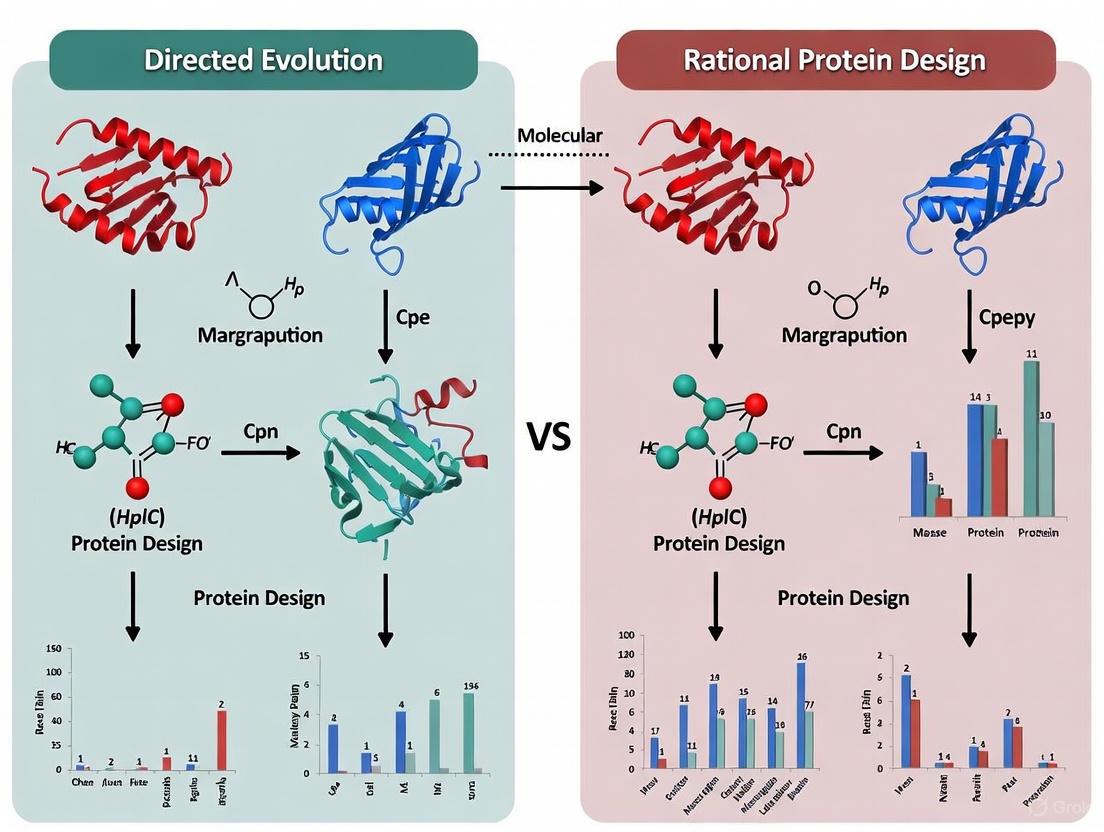
This article provides a comprehensive analysis of the two dominant protein engineering strategies—directed evolution and rational design—for researchers and drug development professionals.
Protein Engineering Strategies: A Comparative Analysis of Directed Evolution and Rational Design
Abstract
This article provides a comprehensive analysis of the two dominant protein engineering strategies—directed evolution and rational design—for researchers and drug development professionals. It explores their foundational principles, core methodologies, and practical applications in therapeutic and industrial contexts. The content details common experimental challenges and optimization techniques, including the rise of semi-rational and AI-hybrid approaches. A direct comparative analysis equips scientists to select the optimal strategy for their specific project goals, concluding with an examination of future directions driven by artificial intelligence and de novo design.
Core Principles of Protein Engineering: From Natural Evolution to Computational Blueprints
Protein engineering has emerged as a transformative discipline in modern biotechnology, enabling breakthroughs in therapeutics, industrial biocatalysis, and basic scientific research. This field rests on two fundamental methodological pillars: rational design and directed evolution. These approaches embody distinct philosophies for manipulating biomolecules. Rational design operates as a precision architect, leveraging detailed knowledge of protein structure and function to make calculated, targeted changes. In contrast, directed evolution functions as a Darwinian experiment, mimicking natural selection through iterative rounds of mutagenesis and screening to discover improved variants without requiring prior structural knowledge.
The profound impact of both methodologies was recognized by the Nobel Prize in Chemistry; Frances Arnold was honored in 2018 for pioneering directed evolution of enzymes, while the 2024 prize celebrated computational protein design advancements fundamental to rational approaches [1]. This technical guide provides an in-depth analysis of both paradigms, examining their underlying principles, methodological workflows, applications, and limitations within the context of contemporary protein engineering research and drug development.
Core Principles and Methodologies
Rational Design: The Precision Architect
The rational design approach is predicated on a deep understanding of the sequence-structure-function relationship in proteins. It requires detailed, high-resolution knowledge of the protein's three-dimensional structure, active site architecture, and catalytic mechanism to make informed decisions about which amino acid substitutions to introduce.
Key Methodological Components:
Structure-Based Design: This foundational element utilizes X-ray crystallography, NMR, or cryo-EM structures, along with computational homology modeling, to identify key residues for mutation. The growing number of protein structures in databases like the PDB has greatly empowered this approach [2]. Critical regions for modification often include active site residues, substrate access tunnels, and domain interfaces that influence stability or allostery [2].
Computational Predictive Algorithms: Modern rational design employs sophisticated computational tools including molecular dynamics (MD) simulations, quantum mechanics/molecular mechanics (QM/MM) calculations, and rotamer library analyses to predict the energetic impact of amino acid substitutions on protein structure and stability [2] [3]. These tools help evaluate conformational variations and model backbone reorganization.
Evolution-Guided Atomistic Design: This strategy combines structural information with evolutionary data from multiple sequence alignments (MSAs) of homologous proteins. By analyzing natural sequence diversity, researchers can identify evolutionarily conserved positions and permissible substitutions, filtering out mutations likely to cause misfolding or instability before proceeding to atomistic design calculations [3].
Experimental Protocol for Structure-Based Enzyme Redesign:
- Target Identification: Obtain high-resolution structure of target protein (e.g., from PDB) or generate via homology modeling.
- Functional Mapping: Identify catalytic residues, substrate-binding pockets, and allosteric networks through structural analysis and literature review.
- Computational Screening: Use protein design software (e.g., Rosetta) to perform in silico mutagenesis and calculate folding free energy changes (ΔΔG) for proposed mutations.
- Variant Selection: Select a limited set of promising mutations (typically 10-50 variants) based on computational predictions.
- Gene Synthesis: Construct selected variants via site-directed mutagenesis or gene synthesis.
- Experimental Validation: Express and purify variants for biochemical characterization of activity, stability, and specificity.
Directed Evolution: The Darwinian Experiment
Directed evolution harnesses the principles of natural evolution—genetic diversification followed by selection of improved variants—in an accelerated laboratory timeframe. This approach does not require detailed structural knowledge of the target protein, instead relying on high-throughput screening to identify beneficial mutations that would be difficult to predict computationally [4].
Key Methodological Components:
Random Mutagenesis: This involves introducing random mutations throughout the gene encoding the protein of interest. The most common method is error-prone PCR (epPCR), which utilizes reaction conditions that reduce polymerase fidelity—typically employing polymerases lacking proofreading activity, manganese ions (Mn²⁺), and unbalanced dNTP concentrations—to achieve mutation rates of 1-5 base substitutions per kilobase [5]. Alternative methods include mutator strains and orthogonal replication systems for in vivo mutagenesis [6].
Recombination-Based Methods: Techniques like DNA shuffling (also known as sexual PCR) mimic natural recombination by fragmenting homologous genes with DNase I and reassembling them through a primer-free PCR reaction, creating chimeric genes from parental sequences [4] [5]. Family shuffling extends this concept by recombining homologous genes from different species, accessing nature's standing variation for accelerated improvement [5].
Semi-Rational Approaches: Modern directed evolution often incorporates limited rational elements through semi-rational design. This involves creating focused libraries at specific "hotspot" residues identified from previous evolution rounds or structural analysis, enabling more efficient exploration of sequence space [2]. Site-saturation mutagenesis comprehensively explores all 19 possible amino acid substitutions at targeted positions, providing deeper interrogation than achievable with purely random methods [5].
Experimental Protocol for Directed Evolution:
- Library Construction: Generate genetic diversity via epPCR, DNA shuffling, or saturation mutagenesis.
- Expression System: Clone variant library into appropriate expression vector and transform into host cells (e.g., E. coli, yeast).
- Screening/Selection: Apply high-throughput screen or selection to identify improved variants:
- For screening: Use microtiter plate assays with colorimetric/fluorometric substrates
- For selection: Implement systems where desired function couples to host survival/replication
- Hit Identification: Isolate top-performing variants and sequence to identify mutations.
- Iterative Cycling: Use best hits as templates for subsequent rounds of diversification and screening.
- Characterization: Express and biochemically characterize final lead variants.
Table 1: Core Principles of Protein Engineering Paradigms
| Aspect | Rational Design | Directed Evolution |
|---|---|---|
| Philosophical Basis | Precision architecture based on first principles | Empirical Darwinian experiment |
| Knowledge Requirement | High (structure, mechanism, dynamics) | Low to moderate (sequence sufficient) |
| Mutation Strategy | Targeted, specific changes | Random or semi-random diversification |
| Primary Strength | Precise control over modifications; avoids large libraries | Discovers non-intuitive solutions; no structural knowledge needed |
| Key Limitation | Limited by accuracy of structure-function predictions | High-throughput screening bottleneck; can be resource-intensive |
| Theoretical Foundation | Inverse folding problem, thermodynamic hypothesis | Population genetics, natural selection |
Comparative Analysis: Advantages and Limitations
Strategic Advantages of Each Approach
Rational Design excels when detailed structural and mechanistic information is available, allowing for precise engineering of specific properties. Key advantages include:
- Precision Control: Enables targeted modifications of specific structural elements such as active sites, ligand-binding pockets, or protein-protein interfaces [1].
- Small Library Sizes: Typically requires testing of only tens to hundreds of variants, significantly reducing experimental burden compared to large-scale screening [2].
- Intellectual Framework: Provides mechanistic insights and testable hypotheses about structure-function relationships, contributing to fundamental scientific knowledge [2].
- De Novo Capabilities: Empowers creation of entirely new protein scaffolds and functions not found in nature, as demonstrated by computational design of novel protein folds and enzymes [7] [3].
Directed Evolution offers distinct advantages for optimizing complex phenotypes or when structural information is limited:
- Bypasses Knowledge Gaps: Does not require complete understanding of protein structure or mechanism, making it applicable to poorly characterized systems [5].
- Discovers Non-Intuitive Solutions: Can identify beneficial mutations that would not be predicted by current computational models, including long-range interactions and allosteric effects [5].
- Optimizes Complex Traits: Effective for improving multi-genic properties like thermostability, organic solvent tolerance, and altered substrate specificity that involve distributed mutations [6].
- Proven Industrial Track Record: Has generated numerous commercially successful enzymes and therapeutics, validating its practical utility [8].
Technical Limitations and Challenges
Rational Design faces several significant challenges:
- Structure-Function Prediction Gap: Accurately predicting the functional consequences of mutations remains difficult, particularly for conformational changes, dynamics, and allosteric regulation [3] [1].
- Limited by Available Structures: Requires high-quality structural data, which may be unavailable for many targets, especially membrane proteins and large complexes [1].
- Negative Design Problem: Ensuring the desired state has significantly lower energy than all possible misfolded or alternative states is computationally challenging [3].
- Restricted Exploration: Tends to explore conservative variations near known functional sites, potentially missing beneficial mutations in distal regions.
Directed Evolution confronts its own set of limitations:
- Screening Bottleneck: The requirement to test large variant libraries represents the primary bottleneck, especially for properties not amenable to high-throughput assays [5].
- Methodological Biases: Random mutagenesis methods like epPCR have inherent biases (e.g., favoring transitions over transversions) that constrain accessible sequence space [5].
- Combinatorial Explosion: The number of possible variants expands exponentially with each additional mutation site, making comprehensive sampling impossible for full proteins.
- Limited De Novo Potential: Generally requires a starting protein with at least basal level of the desired activity, unlike rational approaches that can design entirely new folds.
Table 2: Practical Implementation Considerations
| Consideration | Rational Design | Directed Evolution |
|---|---|---|
| Typical Library Size | 10-10³ variants [2] | 10⁴-10¹⁴ variants [6] |
| Time Investment | Weeks to months (primarily computational) | Months to years (multiple iterative cycles) |
| Equipment Needs | High-performance computing, structural biology | High-throughput screening robotics, FACS |
| Expertise Required | Computational biology, biophysics, structural biology | Molecular biology, microbiology, assay development |
| Success Rate | Variable; highly dependent on target and accuracy of predictions | More consistent; improves with library quality and screening power |
Emerging Synergies: Integrated Approaches
The historical distinction between rational design and directed evolution is increasingly blurring as researchers develop integrated strategies that leverage the strengths of both approaches [2]. These hybrid methodologies represent the cutting edge of modern protein engineering:
Semi-Rational Design and Smart Libraries
This approach uses computational and bioinformatic analyses to identify promising target sites for randomization, creating "smart libraries" that are smaller but enriched in functional variants [2] [1]. Key implementations include:
- Sequence-Based Redesign: Using multiple sequence alignments and phylogenetic analysis to identify evolutionarily variable positions that are more tolerant to mutation [2].
- Hotspot Identification: Computational tools like HotSpot Wizard analyze catalytic residues, tunnels, and gates to pinpoint residues critical for function [2].
- FRESCO Protocol: Framework combining computational prediction of stabilizing mutations with experimental testing of small numbers of variants [3].
Machine Learning-Enhanced Protein Engineering
The integration of machine learning represents a powerful convergence of both paradigms:
- AlphaFold2 and RFdiffusion: These AI-powered platforms have dramatically improved protein structure prediction, providing critical inputs for rational design [1] [8].
- Large Language Models (LLMs): Protein language models trained on evolutionary sequence data can predict functional sequences and guide library design [3].
- Autonomous Platforms: Systems like SAMPLE (Self-driving Autonomous Machines for Protein Landscape Exploration) combine AI-based protein design with automated robotic experimentation, creating closed-loop optimization systems [1].
Applications in Research and Therapeutics
Both rational design and directed evolution have demonstrated significant impact across biotechnology and pharmaceutical development:
Therapeutic Applications
- Antibody Engineering: Rational design has created bispecific antibodies, antibody-drug conjugates, and Fc-engineered antibodies with enhanced effector functions [8]. Directed evolution through phage display has generated high-affinity therapeutic antibodies like Humira and Keytruda [8].
- Enzyme Replacement Therapies: Both approaches have been used to engineer enzymes with improved catalytic activity, stability, and reduced immunogenicity for treating lysosomal storage disorders [8].
- Vaccine Development: Rational design of immunogens based on structural biology principles has produced stabilized prefusion viral proteins for vaccines against RSV and SARS-CoV-2 [3].
Industrial and Environmental Applications
- Biocatalyst Engineering: Directed evolution has created industrial enzymes operating under extreme conditions (high temperature, organic solvents) for biofuel production, food processing, and textile manufacturing [5] [8].
- Metabolic Pathway Engineering: Both approaches have been applied to optimize enzymes in biosynthetic pathways for pharmaceutical precursors, biofuels, and biodegradable plastics [4] [8].
Visualizing Methodological Workflows
Directed Evolution Workflow
Directed Evolution Workflow
Rational Design Workflow
Rational Design Workflow
The Scientist's Toolkit: Essential Research Reagents and Methods
Table 3: Key Research Reagents and Methods in Protein Engineering
| Tool Category | Specific Examples | Function in Protein Engineering |
|---|---|---|
| Mutagenesis Methods | Error-prone PCR, DNA shuffling, Site-saturation mutagenesis | Introduce genetic diversity for directed evolution or specific changes for rational design |
| Structural Biology Tools | X-ray crystallography, Cryo-EM, NMR spectroscopy | Provide high-resolution protein structures for rational design efforts |
| Computational Platforms | Rosetta, AlphaFold2, RFdiffusion, Molecular Dynamics | Predict protein structures, design novel sequences, and model protein dynamics |
| Screening Technologies | FACS, Microfluidic droplet sorting, Phage/yeast display | Enable high-throughput identification of improved variants from large libraries |
| Expression Systems | E. coli, P. pastoris, HEK293 cells, Cell-free systems | Produce protein variants for functional characterization and screening |
Rational design and directed evolution represent complementary rather than competing paradigms in protein engineering. Rational design offers precision and deep mechanistic insight but requires extensive structural knowledge and accurate computational models. Directed evolution provides a powerful empirical approach for optimizing complex traits without requiring complete structural understanding but faces challenges in screening throughput and methodological biases.
The future of protein engineering lies in integrated strategies that combine the predictive power of computational design with the exploratory strength of evolutionary methods. Advances in artificial intelligence, structural biology, and high-throughput screening continue to bridge the gap between these approaches, enabling more efficient engineering of proteins for therapeutic applications, industrial biocatalysis, and fundamental scientific research. As both methodologies continue to evolve and converge, they will undoubtedly drive further innovations in biotechnology and drug development.
Protein engineering has been fundamentally transformed by the development of directed evolution, a method that mimics natural selection in laboratory settings to steer proteins toward user-defined goals [9]. This approach stands in contrast to rational design, which relies on precise, knowledge-based structural modifications. The journey from early in vitro evolution experiments to Nobel Prize-winning methodologies represents a paradigm shift in how scientists engineer biocatalysts, antibodies, and therapeutic proteins [6]. This whitepaper traces the historical trajectory of directed evolution, examining its technical foundations, methodological evolution, and current convergence with computational approaches, all within the broader context of comparing its advantages and limitations against rational protein design.
Historical Foundations: From Preliminary Experiments to Methodological Establishment
The First In Vitro Evolution Experiments
The conceptual origins of directed evolution can be traced to Sol Spiegelman's pioneering work in 1967, which constituted the first documented Darwinian evolution experiment in a test tube [6]. Spiegelman and colleagues evolved RNA molecules through iterative rounds of replication using Qβ bacteriophage RNA polymerase, selecting for variants with increased replication efficiency [6] [9]. This groundbreaking "Spiegelman's Monster" experiment demonstrated that biomolecules could be evolved toward specific properties outside living organisms, establishing the core principle that would later underpin directed evolution methodologies.
Expansion to Application-Driven Approaches
Throughout the 1980s, directed evolution experiments shifted toward practical applications, most notably with the development of phage display by George P. Smith [6] [1]. This technology enabled the display of exogenous peptides on filamentous phage surfaces, allowing affinity-based selection of binding variants [9]. Gregory Winter later adapted phage display for antibody engineering, creating a powerful platform for developing therapeutic antibodies [1]. These early methodologies established the critical genotype-phenotype linkage essential for efficient directed evolution, where a protein's function (phenotype) could be directly traced back to its genetic code (genotype) [9].
Fundamental Principles and Methodological Framework
Directed evolution mimics natural evolution through an iterative cycle of three fundamental processes: diversification, selection, and amplification [9]. This section details the experimental protocols and methodologies that operationalize these principles.
Library Generation Methods
Random Mutagenesis Techniques
Error-Prone PCR (epPCR): This foundational method introduces random point mutations throughout the gene of interest by manipulating PCR conditions to reduce polymerase fidelity. Manganese ions are added to the reaction buffer, and nucleotide concentrations are skewed to promote misincorporation [6] [9]. The mutation rate can be controlled by adjusting template concentration, cycle number, and magnesium concentration [10]. A key limitation is biased mutagenesis distribution and a high frequency of deleterious mutations, especially in large genes [10].
Mutator Strains: These utilize engineered E. coli strains with defective DNA repair machinery (mutD, mutT, mutS) to achieve in vivo random mutagenesis [6]. While simple to implement, this approach lacks control over mutation rates and cannot target specific genes.
Orthogonal Replication Systems: Recent advancements employ engineered DNA polymerases (e.g., Pol I) or orthogonal replication systems (pGLK1/2, Ty1, T7RNAP) that can be coupled with CRISPR-Cas9 to restrict mutagenesis to target sequences, though mutation frequency remains relatively low [6].
Recombination-Based Methods
DNA Shuffling: Developed in the 1990s, this method mimics natural homologous recombination [9]. Parental genes are fragmented with DNase I, and fragments with sufficient homology reassemble via primerless PCR [6] [10]. This approach allows beneficial mutations from different parents to combine, potentially accelerating functional improvement.
Staggered Extension Process (StEP): A simplified recombination method where short annealing/extension cycles during PCR continually switch templates, generating recombined products [6].
RACHITT (Random Chimeragenesis on Transient Templates): This method increases crossover frequency compared to traditional DNA shuffling and removes parental sequences from the final library [6].
Advanced and Specialized Methods
Recent innovations address limitations in traditional approaches, particularly for large proteins:
Segmental Error-Prone PCR (SEP): Large genes are divided into smaller fragments that undergo independent epPCR before reassembly in Saccharomyces cerevisiae, ensuring more even mutation distribution [10].
Directed DNA Shuffling (DDS): Selectively amplifies mutated fragments from positive SEP variants for reassembly, cumulatively combining beneficial mutations [10].
ITCHY (Incremental Truncation for the Creation of Hybrid enzYmes) and SCRATCHY: Enable recombination of sequences with low homology by creating comprehensive libraries of N-terminal and C-terminal fragment fusions [6].
The following workflow summarizes the key methodological decision points in designing a directed evolution experiment:
Selection and Screening Methodologies
The success of directed evolution critically depends on effectively identifying improved variants from libraries:
In Vivo Selection: Directly couples protein function to host survival, such as by making enzyme activity necessary for antibiotic resistance or nutrient synthesis [9]. While offering extremely high throughput (limited only by transformation efficiency), developing such systems is challenging and prone to artifacts [9].
Phage Display: An in vitro selection technique where protein variants are displayed on phage surfaces, exposed to immobilized target molecules, and binders are isolated after washing [6] [9]. This method is particularly powerful for engineering binding proteins and antibodies.
Fluorescence-Activated Cell Sorting (FACS): Enables high-throughput screening of cell-surface displayed libraries using fluorescent labeling [6] [1]. Recent advancements include product entrapment strategies that expand application scope to enzymatic activities [6].
Microplate-Based Screening: Individual variants are expressed and assayed in multi-well plates, typically using colorimetric or fluorogenic substrates [6]. While lower in throughput, this approach provides detailed quantitative data on each variant.
The Nobel Prize Recognition and Methodological Maturation
The year 2018 marked a significant milestone for directed evolution, with the Nobel Prize in Chemistry awarding three pioneers in the field:
Frances H. Arnold received half the prize "for the directed evolution of enzymes" [1]. Her work demonstrated that iterative random mutagenesis and screening could rapidly improve enzyme properties such as stability, activity, and solvent tolerance, even without structural knowledge [6].
George P. Smith and Sir Gregory P. Winter shared the other half for "the phage display of peptides and antibodies" [1]. Their methodology enabled the evolution of antibody affinity and specificity, leading to breakthrough therapeutics like adalimumab, the first fully human antibody approved for clinical use [1].
This recognition cemented directed evolution as an essential protein engineering strategy and highlighted its complementary relationship with rational design approaches.
Quantitative Comparison of Directed Evolution Techniques
The table below summarizes the key methodologies, their advantages, limitations, and representative applications:
| Technique | Purpose | Advantages | Disadvantages | Application Examples |
|---|---|---|---|---|
| Error-prone PCR [6] [10] | Insertion of point mutations across whole sequence | Easy to perform; no prior knowledge needed | Biased mutagenesis; high frequency of deleterious mutations | Subtilisin E; Glycolyl-CoA carboxylase |
| DNA Shuffling [6] [10] | Random sequence recombination | Combines beneficial mutations from multiple parents | Requires high homology (>70%) between sequences | Thymidine kinase; Non-canonical esterase |
| SEP & DDS [10] | Evolution of large proteins | Even mutation distribution; reduces reverse mutations | Additional steps for fragment handling | β-glucosidase activity & organic acid tolerance |
| Site-Saturation Mutagenesis [6] | Focused mutagenesis of specific positions | In-depth exploration of chosen positions; smart library design | Limited to few positions; libraries can become very large | Widely applied to enzyme evolution |
| Orthogonal Systems [6] | In vivo random mutagenesis | Mutagenesis restricted to target sequence | Low mutation frequency; sequence size limitations | β-Lactamase; Dihydrofolate reductase |
| Phage Display [6] [9] | Selection of binding proteins | Extremely high throughput; well-established | Limited to binding functions; not directly applicable to enzymes | Antibodies; Fbs1 glycan-binding protein |
| FACS-Based Methods [6] | Screening of variants | High throughput (up to 10^9 variants/day) | Requires fluorescence coupling; specialized equipment | Sortase; Cre recombinase; β-galactosidase |
The Scientist's Toolkit: Essential Research Reagents and Materials
Successful directed evolution experiments require carefully selected biological reagents and materials:
| Reagent/Material | Function/Purpose | Examples/Notes |
|---|---|---|
| Gene of Interest | Template for diversification | Wild-type or parent variant with baseline activity [10] |
| Mutagenesis Polymerases | Introduce random mutations | Error-prone polymerases with reduced fidelity [6] |
| Host Organisms | Expression of variant libraries | E. coli (prokaryotic proteins), S. cerevisiae (eukaryotic proteins, high recombination) [10] |
| Selection Agents | Apply evolutionary pressure | Antibiotics, toxic metabolites, or nutrient limitations [9] |
| Fluorescent Substrates | Enable high-throughput screening | Colorimetric/fluorogenic proxies for actual activity [6] |
| Display Scaffolds | Genotype-phenotype linkage | M13 phage (phage display), yeast surface display [6] [9] |
| Microfluidic Devices | Ultra-high-throughput screening | Emulsion-based compartmentalization [9] |
Contemporary Advancements and Future Directions
Semi-Rational and Hybrid Approaches
The distinction between directed evolution and rational design has blurred with the emergence of semi-rational approaches that combine their strengths [2] [9]. These methods use evolutionary information, structural data, or computational predictions to create "smart libraries" focused on promising protein regions, dramatically reducing library size while increasing functional content [2]. Key strategies include:
Sequence-Based Design: Using multiple sequence alignments and phylogenetic analysis to identify evolutionarily variable positions likely to tolerate mutation [2].
Structure-Based Design: Targeting residues near active sites, domain interfaces, or hinge regions based on three-dimensional structural knowledge [2].
Hotspot Identification: Computational tools like HotSpot Wizard identify positions with high probability of functional improvement [2].
AI-Driven Protein Design
Recent years have witnessed a paradigm shift with the integration of artificial intelligence and machine learning:
Structure Prediction Tools: AlphaFold2 and RoseTTAFold provide accurate protein structure predictions, enabling better-informed library design [11] [3].
Generative Models: ProteinMPNN (for inverse folding) and RFDiffusion (for de novo backbone generation) allow computational creation of novel protein sequences and structures [11].
Unified Workflows: Systematic frameworks now connect database searching, structure prediction, function prediction, sequence/structure generation, and virtual screening into coherent protein engineering pipelines [11].
Continuous Directed Evolution
Novel platforms enable continuous evolution without discrete rounds of mutagenesis and selection [10]. These systems enhance mutation rates in vivo by engineering DNA replication and repair mechanisms, though challenges remain in controlling evolutionary trajectories and ensuring reproducibility [10].
Directed evolution has progressed remarkably from Spiegelman's initial in vitro RNA evolution to sophisticated Nobel Prize-winning methodologies that routinely engineer proteins for therapeutic, industrial, and research applications. While the core principles of diversification, selection, and amplification remain unchanged, methodological innovations have dramatically expanded capabilities. The field continues to evolve through integration with computational approaches, creating powerful hybrid methodologies that leverage the strengths of both directed evolution and rational design. As protein engineering advances, this historical trajectory suggests that the most productive future lies not in choosing between directed evolution and rational design, but in developing integrated strategies that combine their complementary advantages to address the growing challenges in biotechnology and medicine.
Rational protein design is a powerful biotechnological process that focuses on creating new enzymes or proteins and improving the functions of existing ones by deliberately manipulating their amino acid sequences based on a deep understanding of their structure-function relationships [1]. This approach stands in contrast to directed evolution, which mimics natural selection by generating random mutations and screening for desired traits without requiring prior structural knowledge [12]. The foundational principle of rational design is that proteins adopt specific three-dimensional structures determined by their amino acid sequences, and these structures directly dictate their biological functions [13] [14]. Scientists utilizing rational design act as protein architects, employing detailed structural knowledge to create specific, targeted changes in a protein's amino acid sequence to achieve predefined functional enhancements [12].
This methodology relies heavily on computational models and existing structural data to predict how precise modifications will impact protein performance, enabling targeted alterations that can enhance stability, specificity, or catalytic activity [12]. The precision of rational design is its greatest advantage, allowing researchers to move beyond random exploration to intentional engineering. However, this approach necessitates a comprehensive understanding of the protein in question, including its three-dimensional architecture and the mechanistic role of key residues, information that is not always available, especially for complex or poorly characterized proteins [12] [1].
The Sequence-Structure-Function Paradigm
The sequence-structure-function paradigm is a central tenet in structural biology, stating that a protein's amino acid sequence determines its folded three-dimensional structure, which in turn dictates its specific biological function [14]. This linear relationship provides the theoretical foundation for rational design. The function of a protein is strongly dependent on its structure, and during evolution, proteins acquire new functions through mutations that alter the amino-acid sequence [13].
Understanding the underlying relations between sequence, structure, and function has been an active research topic in molecular biology for decades [13]. With the advent of powerful structure prediction tools like AlphaFold2 and RoseTTAFold, the field is now better equipped to explore this relationship on a large scale [14]. These advances have revealed that the structural space is continuous and largely saturated, highlighting the need for a shift in focus from merely obtaining structures to putting them into functional context [14].
In rational design, this paradigm is leveraged in reverse: scientists start with a desired function, hypothesize a structural configuration that would enable that function, and then design a sequence predicted to fold into that target structure. This approach requires sophisticated computational models to accurately predict how specific amino acid substitutions will affect the protein's fold and, consequently, its functional capabilities.
Fundamental Mechanisms of Mutation Effects
Mutations introduced through rational design can affect protein function through several distinct structural mechanisms. The replacement of an amino acid in the sequence—a mutation—can have structural consequences on the resulting protein and thus has a potential effect on its function [13]. Understanding these mechanisms is crucial for designing effective mutations.
Position-Dependent Effects and Structural Sensitivity
Research has demonstrated that functional change due to mutation is strongly position-dependent, notwithstanding the chemical properties of mutant and mutated amino acids [13]. This indicates that structural properties of a given position are potentially responsible for the functional relevance of a mutation. Studies analyzing the relationship between structure and function using amino acid networks have found that:
- Structural sensitivity to mutations is position-dependent [13]
- Strong structural change correlates with functional loss [13]
- Positions with functional gain due to mutations tend to be structurally robust [13]
These findings suggest that not all positions in a protein are equally amenable to mutation. Some positions (structurally robust positions) can tolerate substitutions with minimal functional consequence, while others (structurally sensitive positions) are critical for maintaining structure and function.
Network-Based Analysis of Mutation Effects
Network science has been successfully used to model protein structure, where amino acids are represented by nodes connected if they are within a specific distance threshold [13]. This approach allows researchers to quantify the structural perturbation caused by a mutation by comparing the 3D structure of the original protein and its mutant. Key metrics for measuring structural change include:
- Perturbation network size: The number of amino acids affected by the mutation
- Edge changes: The number of structural contacts between amino acids that are altered
- Weighted sum: The number of atomic pairs that either moved closer or further apart from a chosen distance threshold [13]
This methodology enables researchers to measure structural change computationally and correlate it with experimentally observed functional changes, creating predictive models for determining which mutations will produce desired functional outcomes.
Methodological Framework for Rational Design
Implementing a successful rational design strategy requires a systematic approach that integrates structural analysis, computational modeling, and experimental validation. The following workflow outlines the key steps in this process.
Structural Analysis and Target Identification
The initial phase involves comprehensive structural analysis to identify promising targets for mutagenesis. This process includes:
- Obtaining high-resolution structural data through X-ray crystallography, NMR, or cryo-EM, or utilizing predicted structures from databases like AlphaFold or the Protein Data Bank [1]
- Identifying key functional regions such as active sites, binding pockets, allosteric sites, or protein-protein interaction interfaces [1]
- Analyzing evolutionary conservation to pinpoint residues critical for structure and function [13]
- Mapping stability determinants including hydrophobic cores, hydrogen bonding networks, and salt bridges that maintain structural integrity
Computational Modeling and In Silico Mutagenesis
Once target regions are identified, computational tools are employed to model the effects of potential mutations:
- Molecular dynamics simulations to assess structural flexibility and conformational changes
- Energy calculations to evaluate the thermodynamic stability of mutant proteins [13]
- Docking studies for predicting changes in substrate binding or protein-protein interactions
- Amino acid network analysis to predict perturbation effects of mutations [13]
Table 1: Correlation Between Structural Perturbation and Functional Change
| Perturbation Measure | Mean Spearman Correlation (ρ) with Functional Change | Statistical Significance (mean p-value) |
|---|---|---|
| Nodes (affected residues) | -0.56 ± 0.12 | 3.6 × 10⁻⁴ ± 6.2 × 10⁻³ |
| Edges (structural contacts) | -0.53 ± 0.1 | 3.6 × 10⁻⁴ ± 6.2 × 10⁻³ |
| Weighted sum | -0.51 ± 0.1 | 3.6 × 10⁻⁴ ± 6.2 × 10⁻³ |
| Diameter | -0.3 ± 0.11 | 1.6 × 10⁻² ± 5.3 × 10⁻² |
Data derived from network analysis of five proteins with deep mutational scanning data [13]
Experimental Validation and Iterative Optimization
After computational predictions, proposed mutations must be experimentally validated:
- Site-directed mutagenesis to introduce specific point mutations via insertions or deletions in the coding sequence [1]
- High-throughput screening of mutant libraries using methods like fluorescence-activated cell sorting (FACS) or phage display [1]
- Biophysical characterization to assess structural integrity, stability, and conformational changes
- Functional assays to quantify catalytic efficiency, binding affinity, or other relevant parameters
Diagram 1: Rational Protein Design Workflow
Key Techniques and Reagent Solutions
Rational protein design employs a diverse toolkit of experimental and computational methods. The table below outlines essential reagents and techniques used in typical rational design experiments.
Table 2: Research Reagent Solutions for Rational Protein Design
| Category | Specific Reagents/Methods | Function in Rational Design |
|---|---|---|
| Mutagenesis | Site-directed mutagenesis kits, synthetic genes | Introduces specific, targeted changes into protein coding sequences [1] |
| Structural Analysis | X-ray crystallography, NMR, cryo-EM, AlphaFold2 predictions | Provides 3D structural information essential for target identification [1] [14] |
| Computational Modeling | Rosetta, DMPfold, molecular dynamics software | Predicts effects of mutations on protein structure and stability [13] [14] |
| Expression Systems | Recombinant DNA vectors, bacterial/yeast/mammalian hosts | Produces mutant protein variants for experimental characterization [1] |
| Quantitative Assays | Fluorescence-based assays, mass spectrometry, calorimetry | Measures functional properties and binding affinities of designed variants [15] |
| Stability Assessment | Differential scanning calorimetry, circular dichroism | Evaluates thermodynamic stability of mutant proteins |
Applications and Case Studies
Rational design has been successfully applied to engineer proteins for diverse applications across biotechnology, medicine, and industrial processes. The precision of this approach makes it particularly valuable when specific, targeted alterations are required.
Industrial Enzyme Engineering
In industrial settings, enzymes often need to function under non-physiological conditions such as extreme temperatures, pH levels, or organic solvents. Rational design has been used to enhance important properties of industrially relevant enzymes:
- Thermostability: Engineering enhanced thermal stability in α-amylase for food processing applications through site-directed mutagenesis [1]
- Alkaline stability: Improving alkaline protease activity at high pH and low temperatures for detergent applications [1]
- Catalytic efficiency: Optimizing active site residues to enhance kinetic properties of enzymes like 5-enolpyruvylshikimate-3-phosphate synthase for agricultural applications [1]
Therapeutic Protein Engineering
Rational design has revolutionized the development of therapeutic proteins with enhanced properties:
- Insulin analogs: Creating fast-acting monomeric insulin through site-directed mutagenesis to improve diabetes treatment [1]
- Therapeutic antibodies: Engineering antibody affinity, specificity, and stability for improved therapeutic efficacy [12]
- Protein-based vaccines: Designing stabilized antigen constructs with improved immunogenicity [1]
Diagram 2: Structure-Function Relationship in Rational Design
Comparison with Directed Evolution
While this article focuses on rational design, understanding its relative strengths and limitations compared to directed evolution provides valuable context for researchers selecting protein engineering strategies.
Advantages of Rational Design
Rational design offers several distinct advantages for protein engineering:
- Precision: Allows for targeted alterations at specific positions known to influence particular functions [12]
- Efficiency: Can achieve desired outcomes with fewer variants compared to the large libraries required for directed evolution [1]
- Mechanistic insight: Provides deeper understanding of structure-function relationships that can inform future engineering efforts [13]
- Speed: When structural information is available, rational design can be more straightforward and less time-consuming than extensive screening processes [12]
Limitations and Challenges
Despite its advantages, rational design faces several significant challenges:
- Structural knowledge dependency: Requires detailed, high-quality structural information that may not be available for all proteins [12] [1]
- Prediction accuracy: The complex relationship between sequence, structure, and function makes it difficult to accurately predict all effects of mutations [13] [1]
- Conformational dynamics: Challenges in predicting protein conformational changes that occur during binding with other molecules [1]
- Epistatic effects: Difficulties in accounting for non-additive interactions between mutations [13]
Table 3: Performance Metrics for Predicting Functionally Sensitive Positions
| Prediction Metric | Performance Score | Interpretation |
|---|---|---|
| Mean Precision | 74.7% | Percentage of predicted sensitive positions that are truly functional |
| Mean Recall | 69.3% | Percentage of all true functional positions that are identified |
| Area Under ROC Curve | 0.83 ± 0.04 | Overall prediction accuracy (1.0 = perfect prediction) |
Performance of computational method predicting functionally sensitive positions using structural change across five proteins [13]
Future Directions and Emerging Technologies
The field of rational protein design continues to evolve with advances in computational methods, structural biology, and artificial intelligence. Several emerging technologies are poised to address current limitations and expand the capabilities of rational design.
Artificial Intelligence and Machine Learning
Machine learning approaches are dramatically enhancing rational design capabilities:
- Structure prediction: AI systems like AlphaFold2 and RoseTTAFold have revolutionized protein structure prediction, providing high-quality models for proteins without experimentally determined structures [1] [14]
- Function prediction: Tools like DeepFRI use graph convolutional networks to provide residue-specific functional annotations from structural data [14]
- Sequence design: Generative models and diffusion probabilistic models are being applied to design novel protein sequences that fold into target structures [1]
Hybrid and Semirational Approaches
Recognizing the complementary strengths of different protein engineering strategies, researchers are increasingly adopting hybrid approaches:
- Semirational design: Combining rational and directed evolution methods by using computational modeling to identify promising target regions for focused mutagenesis and screening [12] [1]
- Autonomous protein engineering: Platforms like SAMPLE (Self-driving Autonomous Machines for Protein Landscape Exploration) that combine AI-based design with fully automated robotic experimentation [1]
These integrated approaches leverage the precision of rational design with the explorative power of directed evolution, potentially overcoming the limitations of either method used in isolation. As these technologies mature, they promise to accelerate the design of novel proteins with tailored functions for diverse applications in medicine, industry, and biotechnology.
Directed evolution is a powerful protein engineering method that mimics the process of natural selection in a laboratory setting to steer proteins or nucleic acids toward a user-defined goal [9]. This approach fundamentally relies on an iterative cycle of creating genetic diversity (random mutagenesis) and identifying improved variants through high-throughput selection or screening [6] [16]. Since its early origins in the 1960s with Spiegelman's evolution of RNA molecules, directed evolution has transformed into a robust biotechnology platform, recognized by the 2018 Nobel Prize in Chemistry awarded to Frances Arnold for the directed evolution of enzymes and to George Smith and Gregory Winter for phage display [6] [9]. The method's principal advantage lies in its ability to improve protein properties—such as stability, catalytic activity, or substrate specificity—without requiring prior structural knowledge or mechanistic understanding of the target protein [9] [12]. This stands in contrast to rational design approaches that depend on comprehensive structural and functional information to make calculated mutations [12] [1]. By harnessing random mutagenesis and high-throughput selection, researchers can explore vast sequence spaces to discover beneficial mutations that might not be predictable through rational means alone [9].
Core Principles and Methodologies
The Directed Evolution Cycle
Directed evolution functions through an iterative Darwinian cycle comprising three essential stages: diversification, selection, and amplification [9]. The process begins with the introduction of random mutations into the gene of interest, creating a library of genetic variants. This library is then expressed, and the resulting protein variants are subjected to selection or screening pressures to identify individuals with improved functional properties. The genes encoding these improved variants are amplified to serve as templates for subsequent rounds of evolution, enabling stepwise enhancements through multiple iterations [6] [9]. The probability of success in directed evolution experiments correlates directly with total library size, as evaluating more mutants increases the likelihood of discovering variants with desired properties [9]. This fundamental framework has been successfully applied to engineer diverse protein properties, including enhanced thermostability for industrial applications, improved binding affinity for therapeutic antibodies, and altered substrate specificity for novel biocatalytic functions [9].
Random Mutagenesis Strategies
The generation of genetic diversity represents the foundational step in any directed evolution experiment. Multiple molecular biology techniques have been developed to create mutant libraries, each offering distinct advantages and limitations.
Table 1: Common Mutagenesis Methods in Directed Evolution
| Method | Principle | Advantages | Disadvantages | Application Examples |
|---|---|---|---|---|
| Error-prone PCR (epPCR) | Random point mutations through low-fidelity PCR amplification [6] | Easy to perform; no prior knowledge required [6] | Reduced sampling of mutagenesis space; mutagenesis bias [6] | Subtilisin E [6] |
| DNA Shuffling | In vitro recombination of homologous genes [9] | Recombines beneficial mutations from multiple parents [9] | Requires high sequence homology (>70%) [9] | Thymidine kinase [6] |
| RAISE | Random insertion and deletion of short sequences [6] | Enables random indels across sequence [6] | Introduces frameshifts; limited to few nucleotides [6] | β-Lactamase [6] |
| Mutator Strains | In vivo mutagenesis using engineered bacterial strains [6] | Simple system; continuous evolution possible [6] | Biased and uncontrolled mutagenesis spectrum; mutagenesis not restricted to target [6] | Vitamin K epoxide reductase [6] |
| Orthogonal Replication Systems | In vivo targeted mutagenesis using specialized polymerases [6] | Mutagenesis restricted to target sequence [6] | Relatively low mutation frequency; target size limitations [6] | β-Lactamase, Dihydrofolate reductase [6] |
Figure 1: The Iterative Directed Evolution Cycle. This workflow illustrates the repetitive process of diversification, selection, and amplification that enables stepwise protein improvement.
High-Throughput Selection and Screening Technologies
Selection Systems
Selection methodologies directly couple desired protein function to host organism survival or gene replication, enabling efficient screening of extremely large libraries (up to 10¹⁵ variants) [9]. Phage display represents a prominent selection technique where variant proteins are expressed on phage surfaces, exposed to immobilized target molecules, and non-binders are washed away while bound phages are collected and amplified [9]. Survival-based selection represents another powerful approach where enzyme activity is made essential for cell viability, either through production of vital metabolites or detoxification of harmful compounds [9]. While selection systems offer exceptional throughput and require fewer resources than screening approaches, they can be challenging to engineer and may not provide detailed information on the range of activities present in the library [9].
Screening Methodologies
Screening systems involve the individual assessment of each variant using quantitative assays, typically based on colorimetric, fluorogenic, or other detectable signals [6]. Although generally lower in throughput than selection methods, screening provides detailed functional characterization of each variant and enables the identification of intermediate improvements [9]. Fluorescence-activated cell sorting (FACS) has emerged as a particularly powerful screening technology, capable of analyzing up to 10⁸ cells per hour based on fluorescent signals [6]. Recent advances in biosensor development and microfluidic technologies have further enhanced screening capabilities, enabling continuous evolution systems and more sophisticated phenotypic selections [16].
Table 2: High-Throughput Selection and Screening Methods
| Method | Principle | Throughput | Advantages | Disadvantages |
|---|---|---|---|---|
| Phage Display | Binding selection with phenotype-genotype linkage [9] | Very High (10¹⁰-10¹¹) | Efficient for binding molecules; direct genotype-phenotype link [9] | Limited to binding functions; not directly applicable to catalysis [9] |
| FACS | Microfluidic droplet sorting based on fluorescence [6] | High (10⁸ cells/hour) | Quantitative; multi-parameter analysis possible [6] | Requires fluorescent reporter; instrument access needed [6] |
| In Vitro Compartmentalization | Water-in-oil emulsion droplets link gene and product [9] | Very High (10¹⁰) | Compartments function as artificial cells; protects library DNA [9] | Requires specialized expertise; not all enzymes compatible [9] |
| Microtiter Plate Screening | Individual culture assay in multi-well plates [6] | Medium (10³-10⁶) | Quantitative; adaptable to various assay types [6] | Labor-intensive; lower throughput than other methods [6] |
| mRNA Display | Covalent linkage between mRNA and encoded protein [9] | High (10¹³) | Larger libraries than cellular systems; direct physical linkage [9] | In vitro translation limitations; non-natural conditions [9] |
Figure 2: High-Throughput Screening Workflow. This diagram outlines the key stages in screening variant libraries, with associated detection platforms indicated.
Experimental Protocols for Directed Evolution
Standard Protocol for Error-Prone PCR and Screening
This foundational protocol describes a complete cycle of directed evolution using error-prone PCR for mutagenesis and microtiter plate screening for identification of improved variants [6].
Materials Required:
- Template DNA (gene of interest in expression vector)
- Error-prone PCR kit (commercial kits with optimized mutation rates)
- Expression host (typically E. coli strains suitable for protein production)
- Screening reagents (substrate-specific detection system)
Procedure:
- Library Generation: Perform error-prone PCR on target gene using conditions that yield 1-3 amino acid substitutions per gene copy. Use manganese ions and unequal dNTP concentrations to promote polymerase errors [6].
- Cloning and Transformation: Digest PCR product and vector with appropriate restriction enzymes. Ligate and transform into expression host, aiming for library size of 10⁴-10⁶ variants. Plate transformed cells and incubate overnight.
- Protein Expression: Inoculate individual colonies into deep-well plates containing growth medium. Induce protein expression at optimal conditions for host system.
- High-Throughput Screening: Transfer aliquots of cell culture or lysate to assay plates containing specific substrates. Incubate under desired reaction conditions and measure activity using plate reader appropriate for detection method (absorbance, fluorescence, etc.).
- Hit Identification: Rank variants by desired activity metric. Select top performers (typically 0.1-1% of library) for sequence analysis and validation.
- Iterative Rounds: Use best variant as template for subsequent rounds of mutagenesis and screening until desired improvement is achieved.
Advanced Protocol: Phage Display for Binding Affinity Maturation
This protocol specializes in improving binding affinity of protein scaffolds through phage display technology [9].
Materials Required:
- Phage display library (target gene fused to coat protein gene)
- Immobilized target molecule (on beads or plate surface)
- Elution buffers (varying pH or containing competitive ligand)
- E. coli host for phage propagation
Procedure:
- Library Preparation: Create phage library displaying protein variants through fusion to minor coat protein (pIII). Library diversity typically ranges from 10⁸-10¹¹ unique members.
- Panning Rounds: Incubate phage library with immobilized target. Wash extensively to remove non-specific binders. Elute bound phages using low pH buffer (0.1 M glycine-HCl, pH 2.2) or competitive ligand.
- Amplification: Infect log-phase E. coli with eluted phages to amplify selected variants for subsequent rounds.
- Characterization: After 3-5 rounds of selection, isolate individual clones for binding affinity measurement using ELISA, surface plasmon resonance, or similar techniques.
- Sequence Analysis: Identify consensus mutations and key residues contributing to improved binding.
The Scientist's Toolkit: Essential Research Reagents
Table 3: Key Research Reagent Solutions for Directed Evolution
| Reagent/Resource | Function | Application Context | Examples/Specifications |
|---|---|---|---|
| Error-Prone PCR Kits | Introduces random mutations during amplification [6] | Initial library generation for any gene target | Commercial kits with optimized mutation rates (e.g., 1-15 mutations/kb) |
| Mutator Strains | In vivo mutagenesis through defective DNA repair [6] | Continuous evolution without library construction | XL1-Red, Mutator S (Epicentre) |
| Phage Display Vectors | Links genotype to phenotype for selection [9] | Engineering binding proteins and antibodies | M13-based vectors (pIII or pVIII fusion) |
| Fluorescent Substrates | Enables FACS-based screening [6] | High-throughput activity screening | Fluorogenic esters (for esterases), coumarin derivatives |
| Microfluidic Devices | Compartmentalization for single-cell analysis [16] | Ultra-high-throughput screening | Water-in-oil emulsion systems; commercial droplet generators |
| Biosensor Systems | Reports on intracellular metabolite levels [16] | In vivo selection for metabolic engineering | Transcription factor-based reporters for specific metabolites |
Comparative Analysis: Directed Evolution vs. Rational Design
Directed evolution and rational design represent complementary approaches in the protein engineering toolkit, each with distinct advantages and limitations [12]. Directed evolution excels in situations where structural information is limited or the relationship between sequence and function is poorly understood [9]. By mimicking natural evolutionary processes, it can discover unexpected solutions and complex mutational synergies that would be difficult to predict computationally [12]. However, the method requires significant resources for library creation and screening, and success depends heavily on the availability of robust high-throughput assays [9]. Rational design, conversely, employs detailed structural knowledge and computational modeling to make specific, targeted mutations [17] [12]. This approach is more efficient when the structural basis of function is well-characterized but can be limited by gaps in our understanding of protein structure-function relationships [12]. Semi-rational approaches have emerged as powerful hybrids, using computational and bioinformatic analyses to identify promising regions for randomization, thereby creating smaller, higher-quality libraries that combine the benefits of both strategies [2] [18] [1].
Directed evolution has established itself as a cornerstone methodology in protein engineering, enabling remarkable advances in biocatalyst development, therapeutic protein optimization, and fundamental studies of protein function [6] [16]. The continuing development of more sophisticated mutagenesis methods, high-throughput screening technologies, and automated experimental platforms promises to further expand the capabilities of this powerful approach [1] [16]. Emerging trends include the integration of machine learning algorithms to analyze rich datasets generated by screening experiments, which can provide insights into sequence-function relationships and guide more intelligent library design [16] [19]. The recent development of fully autonomous protein engineering systems, such as the Self-driving Autonomous Machines for Protein Landscape Exploration (SAMPLE) platform, represents the cutting edge of this field, combining artificial intelligence with robotic experimentation to accelerate the protein design process [1]. As these technologies mature, directed evolution will continue to be an indispensable tool for harnessing the power of random mutagenesis and high-throughput selection to solve complex challenges in biotechnology, medicine, and basic science.
Protein engineering stands as a formidable frontier in modern biotechnology, aiming to create and optimize proteins for applications ranging from therapeutic development to industrial biocatalysis. The field is fundamentally governed by the relationship between a protein's amino acid sequence, its three-dimensional structure, and its resulting biological function. However, researchers face a central, overwhelming challenge: the unimaginable vastness of the protein sequence-function universe. For a mere 100-residue protein, the number of possible amino acid arrangements reaches 20^100 (approximately 1.27 × 10^130), a figure that exceeds the estimated number of atoms in the observable universe (~10^80) by more than fifty orders of magnitude [20]. Within this astronomically large sequence space, the subset of sequences that fold into stable, functional proteins is vanishingly small. This creates a proverbial "needle in a haystack" problem, where identifying or designing functional proteins through unguided exploration is profoundly inefficient and often impossible [20].
This challenge is further compounded by the constraints of natural evolution. Despite their functional richness, natural proteins are products of evolutionary pressures for biological fitness in specific niches, not optimized for human utility. This "evolutionary myopia" means that known natural proteins represent only a tiny fraction of the diversity that the protein functional universe can theoretically produce [20]. Furthermore, evidence suggests that the known natural fold space may be approaching saturation, with recent functional innovations arising predominantly from domain rearrangements rather than the emergence of genuinely novel folds [20]. Consequently, conventional protein engineering strategies, which often rely on modifying natural templates, are inherently limited in their ability to access the vast, uncharted regions of functional potential. Navigating this immense and complex landscape requires sophisticated strategies that combine computational power, biological insight, and high-throughput experimental validation.
Quantitative Dimensions of the Challenge
The scale of the protein sequence-structure-function landscape is difficult to comprehend. The theoretical "protein functional universe" encompasses all possible protein sequences, structures, and the biological activities they can perform [20]. Public databases, while massive, capture only an infinitesimal fraction of this theoretical space. For context, resources like the MGnify Protein Database (nearly 2.4 billion non-redundant sequences) and the AlphaFold Protein Structure Database (~214 million models) represent an exceptionally small and biased sample, shaped by evolutionary history and assayability rather than functional potential [20].
The table below quantifies the disparity between known biological data and the theoretical possibilities.
Table 1: The Scale of the Protein Sequence-Structure-Function Universe
| Aspect | Known Biological Data (Databases) | Theoretical Possibility | Implication for Protein Engineering |
|---|---|---|---|
| Sequence Space | ~2.4 billion sequences (MGnify DB) [20] | 20^100 for a 100-residue protein (~1.27x10^130) [20] | Unguided random screening is infeasible. |
| Structure Space | ~214 million models (AlphaFold DB) [20] | A near-infinite fold space beyond natural saturation [20] | New functions may require novel, non-natural scaffolds. |
| Functional Space | Functions optimized for natural fitness [20] | Vast potential for novel catalysts, binders, and materials [20] | Engineering must transcend natural evolutionary pathways. |
This quantitative disparity underscores a fundamental truth: systematic exploration of the protein functional universe demands a disruptive, more pioneering approach that moves beyond simple modification of existing biological templates [20].
Methodological Frameworks for Navigation
To overcome the challenge of scale, protein scientists have developed three primary methodological frameworks, each with distinct strategies for navigating the sequence-function landscape.
Directed Evolution: Harnessing Darwinian Principles
Directed evolution mimics natural selection in a laboratory setting. It involves iterative cycles of random mutagenesis and selection to improve a protein's function without requiring prior structural knowledge [12] [5]. Its strategic advantage is the ability to discover non-intuitive, highly effective solutions that computational models or human intuition might miss [5].
Experimental Protocol:
- Diversification: Create a library of gene variants. Common methods include:
- Error-Prone PCR (epPCR): A modified PCR protocol that uses low-fidelity polymerases and manganese ions to introduce random point mutations across the entire gene, typically at a rate of 1-5 mutations per kilobase [5].
- DNA Shuffling: Homologous genes from different species are fragmented with DNaseI and then reassembled in a primer-less PCR reaction. This "sexual PCR" recombines beneficial mutations from multiple parents, accelerating improvement [5].
- Screening/Selection: Identify improved variants from the library. This is often the major bottleneck.
- Screening: Individual variants are assayed for activity (e.g., using colorimetric or fluorometric substrates in microtiter plates). Throughput is typically limited to 10^3–10^4 variants [5].
- Selection: A system where the desired function is coupled to the host organism's survival or replication, allowing for the evaluation of much larger libraries (e.g., phage display) [1] [5].
- Amplification: The genes of the top-performing variants are isolated and used as the template for the next round of evolution, allowing beneficial mutations to accumulate [5].
Rational Design: The Computational Architect
In contrast, rational design operates like an architect. It uses detailed knowledge of protein structure and function to make specific, targeted changes to the amino acid sequence [12] [1]. This approach is precise but requires high-resolution structural data and a deep understanding of sequence-structure-function relationships.
Experimental Protocol:
- Structural Analysis: Obtain a high-resolution 3D structure of the target protein via X-ray crystallography or cryo-EM, or generate a reliable computational model (e.g., with AlphaFold) [1].
- Computational Modeling: Identify key residues for mutation (e.g., in the active site or a stability hotspot) using molecular dynamics simulations or energy calculations [1] [3].
- Site-Directed Mutagenesis: Implement specific point mutations, insertions, or deletions in the gene using precise molecular biology techniques like PCR-based mutagenesis [1].
- Validation: Express the purified mutant protein and characterize its biophysical and functional properties to confirm the predicted improvements [1].
Hybrid and Next-Generation Approaches
Recognizing the limitations of pure strategies, the field has increasingly moved towards hybrid and advanced computational methods.
- Semi-Rational Design: This approach combines the strengths of both directed evolution and rational design. Researchers use computational or bioinformatic modeling to identify promising target regions for mutation, then create focused, high-quality libraries that require screening of only a small number of variants (e.g., under 1000) [1] [2]. Techniques include Site-Saturation Mutagenesis, where a specific codon is randomized to encode all 19 possible alternative amino acids, thoroughly exploring a residue's functional role [5].
- AI-Driven De Novo Design: This represents a paradigm shift, using artificial intelligence to design entirely new proteins from scratch. Generative models, trained on vast biological datasets, learn the high-dimensional mappings between sequence, structure, and function [20]. These models can then create proteins with customized folds and functions that are not found in nature, fundamentally expanding the explorable protein universe [20] [3]. Fully autonomous platforms like SAMPLE (Self-driving Autonomous Machines for Protein Landscape Exploration) combine AI-based protein design with robotic systems to perform and analyze experiments in a closed loop, dramatically accelerating the discovery process [1].
The following diagram illustrates the logical workflow and decision process for selecting a protein engineering strategy:
Figure 1: Decision workflow for selecting a protein engineering methodology.
The Scientist's Toolkit: Essential Research Reagent Solutions
The experimental execution of protein engineering strategies relies on a suite of key reagents and tools. The following table details essential materials and their functions in a typical protein engineering workflow.
Table 2: Key Research Reagent Solutions for Protein Engineering
| Reagent / Material | Function in Protein Engineering |
|---|---|
| Error-Prone PCR Kit | A pre-mixed system containing low-fidelity polymerase (e.g., Taq), biased dNTP pools, and MnCl₂ for introducing random mutations during gene amplification [5]. |
| Phage Display Library | A collection of filamentous phage particles displaying a vast diversity of peptides or proteins on their coat, used for high-throughput selection of binders [1]. |
| Site-Directed Mutagenesis Kit | A optimized kit (often based on PCR or inverse PCR) with high-fidelity polymerase and DpnI enzyme for efficiently introducing specific point mutations into a plasmid [1]. |
| Fluorogenic/Chromogenic Substrate | A chemical compound that produces a fluorescent or colored signal upon enzymatic conversion, enabling high-throughput screening of enzyme activity in microtiter plates [5]. |
| Expression Vector & Host Cells | A plasmid (e.g., pET vector) and compatible microbial host (e.g., E. coli BL21) for the high-level expression and production of recombinant protein variants [5]. |
| Protein Purification Resin | Chromatography media (e.g., Ni-NTA for His-tagged proteins, immobilized metal affinity chromatography) for rapid purification of recombinant proteins from cell lysates [21]. |
The central challenge of navigating the vast protein sequence-function universe has driven the development of increasingly sophisticated engineering strategies. While directed evolution and rational design offer powerful, complementary paths forward, the future lies in integrated and autonomous approaches. The combination of semi-rational design, AI-driven de novo creation, and self-driving laboratories represents a transformative leap [1] [20] [3]. These paradigms fuse computational power with experimental validation, systematically unlocking the immense latent functional potential within the uncharted protein universe. This progress brings us closer to a future where bespoke proteins with tailored functionalities can be designed on demand to address pressing challenges in medicine, sustainability, and technology.
Methodologies in Action: Techniques and Real-World Applications for Drug Development and Biocatalysis
Directed evolution is a powerful, forward-engineering process that harnesses the principles of Darwinian evolution—iterative cycles of genetic diversification and selection—within a laboratory setting to tailor proteins for specific, human-defined applications [5]. Its profound impact was formally recognized with the 2018 Nobel Prize in Chemistry awarded to Frances H. Arnold for establishing it as a cornerstone of modern biotechnology [5]. The primary strategic advantage of directed evolution lies in its capacity to deliver robust solutions—such as enhanced stability, novel catalytic activity, or altered substrate specificity—without requiring detailed a priori knowledge of a protein's three-dimensional structure or its catalytic mechanism [5]. This capability allows it to bypass the inherent limitations of rational design, which relies on a predictive understanding of sequence-structure-function relationships that is often incomplete [5] [1].
This technical guide details the core directed evolution workflow, framing it within the broader context of protein engineering strategies. It provides researchers and drug development professionals with an in-depth analysis of the cycle's phases, supported by current methodologies, quantitative data, and emerging technologies that are reshaping this dynamic field.
The Core Iterative Cycle of Directed Evolution
At its heart, the directed evolution workflow functions as a two-part iterative engine, driving a population of protein variants toward a desired functional goal [5]. This process compresses geological timescales of natural evolution into weeks or months by intentionally accelerating the rate of mutation and applying an unambiguous, user-defined selection pressure [5]. The following diagram illustrates this continuous, iterative process.
Phase 1: Generating Genetic Diversity – The Library as the Search Space
The creation of a diverse library of gene variants is the foundational step that defines the boundaries of the explorable sequence space [5]. The quality, size, and nature of this diversity directly constrain the potential outcomes of the entire evolutionary campaign [5]. The table below summarizes the primary methods used for library generation.
| Method | Key Principle | Typical Library Size & Diversity | Key Advantages | Primary Limitations |
|---|---|---|---|---|
| Error-Prone PCR (epPCR) [5] | Reduced fidelity PCR introduces random point mutations. | 1-5 mutations/kb; explores ~5-6 of 19 possible amino acids per position [5]. | Simple, widely applicable; requires no structural data. | Mutational bias toward transitions; limited amino acid diversity accessed. |
| DNA Shuffling [5] | Fragmented genes reassembled via homologous recombination. | Varies; combines mutations from multiple parents. | Recombines beneficial mutations; mimics sexual evolution. | Requires high sequence homology (>70-75%) for efficient reassembly. |
| Site-Saturation Mutagenesis [5] [1] | Targeted codon randomization for all 20 amino acids. | Focused library of 20 variants per position. | Comprehensive exploration of a specific residue; high-quality, small library. | Requires prior knowledge to identify target sites. |
Phase 2: Selection and Amplification – Identifying the Fittest
Once a diverse library is created, the central challenge is identifying the rare improved variants—a process widely recognized as the primary bottleneck in directed evolution [5]. The success of a campaign is dictated by the axiom, "you get what you screen for" [5]. A key distinction exists between screening and selection [5]:
- Screening involves the individual evaluation of every library member for the desired property. While lower in throughput, it guarantees that every variant is tested and provides quantitative data on its performance. Examples include microtiter plate-based assays using colorimetric or fluorometric substrates [5].
- Selection establishes a system where the desired function is directly coupled to the survival or replication of the host organism, automatically eliminating non-functional variants. Selections can handle much larger libraries (e.g., >10^9 variants) but are often difficult to design and can be prone to artifacts [5].
The genes encoding the identified "winners" are isolated and serve as the template for the next round of diversification and selection, allowing beneficial mutations to accumulate over successive generations [5].
Advanced and Emerging Methodologies
Mammalian Cell Directed Evolution: The PROTEUS Platform
Traditional directed evolution platforms are primarily prokaryotic or yeast-based, but evolving proteins directly in mammalian cells can provide a more relevant physiological context. The PROTEUS platform addresses this need by using chimeric virus-like vesicles (VLVs) to enable extended mammalian directed evolution campaigns without loss of system integrity [22]. The workflow, detailed below, is designed to maintain a tight link between the activity of the evolved transgene and viral propagation fitness.
Key Experimental Protocol for PROTEUS [22]:
- Vector Construction: Clone the target transgene (e.g., tetracycline-controlled transactivator, tTA) into the pSFV-DE replicon vector, which encodes attenuated SFV non-structural proteins.
- VLV Production: Co-transfect BHK-21 host cells with the replicon vector and a pCMV_VSVG plasmid constitutively expressing the VSVG envelope protein to produce chimeric VLVs.
- Transduction and Selection: Transduce naive BHK-21 cells, which have been transfected to express VSVG under the control of a circuit responsive to the target transgene (e.g., a tetracycline-response element, TRE3G).
- Amplification and Iteration: Harvest VLVs from the supernatant after 48-72 hours. Use these to transduce a new batch of VSVG-expressing host cells for the next evolution round. The system's error-prone RNA-dependent RNA polymerase generates diversity, with an observed mutation rate of 2.6 mutations per 10^5 transduced cells in wildtype BHK-21 cells [22].
Machine Learning and Active Learning-Assisted Directed Evolution
Directed evolution can be inefficient when mutations exhibit non-additive, or epistatic, behavior [23]. Active Learning-assisted Directed Evolution (ALDE) is an iterative machine learning workflow that leverages uncertainty quantification to explore protein sequence space more efficiently [23].
ALDE Workflow [23]:
- Define Design Space: Select
kresidues to mutate, defining a combinatorial space of 20^k possible variants. - Initial Library Screening: Synthesize and screen an initial library of variants mutated at all
kpositions. - Model Training and Prediction: Use the collected sequence-fitness data to train a supervised machine learning model. The model, incorporating frequentist uncertainty quantification, predicts the fitness of all sequences in the design space.
- Batch Selection via Acquisition Function: An acquisition function (e.g., from Bayesian optimization) ranks all sequences, balancing exploration of uncertain regions with exploitation of predicted high-fitness variants.
- Iterative Rounds: The top N ranked variants are synthesized and assayed. This new data is added to the training set, and the cycle repeats.
In a recent application, ALDE was used to optimize five epistatic residues in the active site of a protoglobin for a non-native cyclopropanation reaction. In just three rounds, exploring only ~0.01% of the design space, the reaction yield for the desired product increased from 12% to 93% [23].
Chromosomal Gene Diversification Using CRISPR
Moving beyond ectopic expression on plasmids, CRISPR-assisted gene diversification allows for the direct introduction of mutations at the native chromosomal locus, recapitulating the endogenous regulatory environment [24].
A prominent method is CRISPR-stimulated Homology-Directed Repair (HDR) [24]:
- Principle: A CRISPR/Cas9-induced double-strand break boosts the efficiency of homologous recombination with a library of mutagenic donor DNA templates.
- Protocol (Saturation Genome Editing):
- Design a sgRNA to target a specific genomic exon.
- Synthesize a library of donor DNA templates containing saturated mutations within the target region, flanked by homologous arms (600-1000 nt in mammalian cells).
- Co-deliver the sgRNA, Cas9, and the donor library into the cells.
- Cells that successfully integrate the mutations via HDR are screened or selected based on the desired phenotype.
- Application: This method is powerfully applied to saturation editing for functional profiling of exonic regions in disease-associated genes like BRCA1, enabling high-throughput assessment of variant function [24].
The Scientist's Toolkit: Key Research Reagents
| Reagent / Solution | Function in Directed Evolution | Example & Technical Note |
|---|---|---|
| Error-Prone PCR Kit | Introduces random mutations throughout the gene of interest. | Commercial kits use Taq polymerase (low fidelity), Mn2+ ions, and unbalanced dNTPs to achieve a tunable mutation rate of 1-5 mutations/kb [5]. |
| NNK Degenerate Codon | Used in site-saturation mutagenesis to randomize a single amino acid position. | NNK (N=A/T/G/C; K=G/T) encodes all 20 amino acids and one stop codon, creating a library of 32 codons for comprehensive coverage [23]. |
| Virus-Like Vesicle (VLV) System | Enables stable directed evolution in mammalian cells by linking transgene fitness to viral propagation. | The PROTEUS system uses a capsid-deficient Semliki Forest Virus (SFV) replicon and the VSVG envelope protein to prevent cheater particle formation [22]. |
| Fluorescent Reporters & FACS | Enables ultra-high-throughput screening of cell-based libraries based on fluorescence intensity. | When combined with FACS (Fluorescence-Activated Cell Sorting), libraries of >10^8 variants can be screened in hours for properties like binding affinity or enzymatic activity [1]. |
| dCas9-Fusion Systems | Enables targeted gene diversification without double-strand breaks via base editing or prime editing. | Fusing nCas9 (nickase Cas9) to a deaminase (e.g., APOBEC1) creates a base editor that can directly convert C•G to T•A base pairs in the chromosome [24]. |
The directed evolution workflow—diversification, selection, and amplification—remains a supremely powerful algorithm for optimizing protein fitness. Its principal advantage over rational design is the ability to discover non-intuitive, highly effective solutions without requiring a complete mechanistic or structural understanding of the protein [5] [1]. However, the field is not static. The convergence of directed evolution with advanced computational models, such as active learning, and with precise genome editing technologies, like CRISPR, is creating a new paradigm. This synergy is leading to semi-rational approaches that leverage the strengths of both design and evolution, using computational insights to create smaller, smarter libraries for directed evolution to explore [1] [2]. As these methodologies continue to mature and integrate, they promise to unlock even greater potential, accelerating the development of novel therapeutics, enzymes for green chemistry, and advanced biomaterials.
In the evolving landscape of protein engineering, the debate between rational design and directed evolution remains central to methodological选择. Rational design represents a targeted approach where scientists function as architects, using detailed knowledge of protein structure and function to implement specific, pre-determined changes to an amino acid sequence [12]. This approach stands in contrast to directed evolution, which mimics natural selection through iterative rounds of random mutation and screening without requiring prior structural knowledge [5]. The precision of rational design allows for directed alterations that enhance stability, specificity, or activity, making it particularly valuable when detailed structural data exists and specific functional alterations are desired [12] [1].
The foundational principle of rational design is its dependence on a structure-function relationship paradigm. This method targets specific residues to perform desired mutations, with outcomes strongly dependent on the quality and quantity of available information about enzyme structure and chemical mechanism [25]. Furthermore, the identification of conserved residues or domains within enzyme families can provide additional data on evolutionarily advantageous features. While rational design offers increased possibility of beneficial alterations and is less time-consuming than methods requiring large library screening, its primary limitation remains the challenge of accurately predicting sequence-structure-function relationships, particularly at the single amino acid level [1]. The integration of powerful computational tools and artificial intelligence has substantially improved protein structure prediction from amino acid sequences, revitalizing rational design strategies and enabling more sophisticated engineering approaches [1].
Core Components of the Rational Design Toolbox
Site-Directed Mutagenesis
Site-directed mutagenesis (SDM) serves as the fundamental experimental technique for implementing rational design principles. This method enables precise, targeted modifications to a protein's genetic code, allowing researchers to test specific hypotheses about residue function [25]. SDM operates through the introduction of point mutations via insertions or deletions in the coding sequence based on structural and functional knowledge of the target protein, typically focusing on regions corresponding to protein activity [1].
The applications of SDM in rational design are diverse and impactful. In altering enzyme specificity, SDM has been successfully employed to modulate fatty acid selectivity in various lipases. For instance, research on a tunnel lipase from Rhizopus oryzae utilized SDM to introduce bulky residues that blocked the acyl-binding tunnel, resulting in variants with increased activity toward shorter-chain substrates [25]. Similarly, controlled modulation of chain length selectivity was demonstrated in Candida rugosa lipase 1 by substituting six different residues with phenylalanine along the binding tunnel [25]. Beyond specificity alterations, SDM proves invaluable for investigating catalytic mechanisms, as seen in studies of lipoxygenase (LOX) enzymes, where SDM helped identify a conserved residue in the active site that determines stereoselectivity [25].
Table 1: Representative Applications of Site-Directed Mutagenesis in Rational Protein Design
| Protein Target | Mutation Strategy | Functional Outcome | Reference |
|---|---|---|---|
| Lipase B from C. antarctica (CAL B) | A251E substitution | 2.5-fold higher thermostability | [25] |
| Lipase from Pseudomonas sp. | N219R and N219D substitutions | Augmented solvent stability | [25] |
| Candida rugosa lipase 1 | Six residue substitutions with phenylalanine | Controlled modulation of fatty acid chain length selectivity | [25] |
| P450-BM3 from B. megaterium | V78A/F87A/I263G and S72Y/V78A/F87A | Altered hydroxylation pattern for γ- and δ-hydroxy fatty acids | [25] |
Computational Modeling and Design
Computational protein design represents the intellectual framework of rational engineering, providing the predictive power necessary for informed mutagenesis. This approach starts with the coordinates of a protein main chain and uses force fields to identify sequences and geometries of amino acids that optimally stabilize the backbone structure [26]. The field has progressed remarkably from creating new proteins based on known natural sequences to designing entirely novel proteins that fold into specific structures or perform targeted functions [26].
Computational protein design programs typically incorporate two major components: (1) an energy or scoring function to evaluate how well a particular amino acid sequence fits a given scaffold, and (2) a search function that samples sequences as well as backbone and side chain conformations [26]. The development of powerful search algorithms to find optimal solutions has provided a major stimulus to the field [26]. Key computational strategies include:
De Novo Active-Site Design: This ambitious approach involves introducing amino acid residues in the form of active sites into existing scaffolds to create novel catalytic capabilities. Accurate modeling of crucial forces in the active site often requires quantum mechanical (QM) calculations [26]. The process involves identifying potential binding pockets capable of tightly binding the transition state within different protein scaffolds, optimizing the position of the transition state and catalytic side chains, and designing remaining residues for tight transition state binding [26].
Metalloprotein Design: Computational techniques have been successfully applied to design novel metal binding sites into proteins [26]. This approach has generated nascent metalloenzymes with diverse oxygen redox chemistries, often by leaving one primary coordination sphere of the metal unligated by the protein [26]. The diverse chemistry of metals makes metalloprotein design particularly promising for enzyme engineering applications.
Stability Optimization Algorithms: Computational methods like FoldX and RosettaDesign employ algorithms to predict protein folding and favorable substitutions to increase enzyme stability [25]. These tools can identify flexible regions (B-factor analysis) and suggest mutations that promote the folded form through added disulfide bonds, salt bridges, or replacement of easily oxidized residues [25].
Stability Optimization Techniques
Protein stability optimization represents a critical application of rational design, as many natural enzymes exhibit only marginal stability under industrial or therapeutic conditions. According to the Thermodynamic Hypothesis, the native-state energy must be significantly lower than all other states, including misfolded and unfolded ones, for a significant fraction of the protein to fold uniquely into the native state [3]. Rational approaches to stability enhancement employ multiple strategies to reinforce this energy differential.
A key insight in stability design is that increasing enzyme rigidity can be achieved by either stabilizing the folded state or destabilizing the unfolded conformation [25]. Strategies for promoting the folded form include adding disulfide bonds or salt bridges, replacing easily oxidized residues, and mutagenesis of the most flexible regions identified through B-factor analysis [25]. Conversely, destabilizing the unfolded state can be accomplished by reducing backbone flexibility through introduction of proline residues or strategic placement of glycine [25].
Successful applications of these principles are exemplified in engineering thermostability in lipase B from C. antarctica (CAL B). Researchers performed molecular dynamic simulations to identify flexible residues, then used the RosettaDesign algorithm to predict stabilizing substitutions [25]. The resulting variant A251E exhibited a 2.5-fold higher thermostability than the wild-type enzyme [25]. In a separate approach to improve stability toward organic solvents, researchers targeted polar and charged residues on the enzyme surface that were not involved in secondary structure formation but could improve formation of strong hydrogen bonds with water molecules [25]. This rational strategy identified three variants with up to 80% increased stability toward methanol compared to wild-type CAL B [25].
Table 2: Stability Optimization Strategies in Rational Protein Design
| Strategy | Mechanism | Representative Example |
|---|---|---|
| Promoting Folded State | Stabilizing the native conformation | Adding disulfide bonds, salt bridges [25] |
| Destabilizing Unfolded State | Reducing flexibility of denatured state | Introducing proline or glycine residues [25] |
| Surface Engineering | Enhancing surface hydrophobicity or hydrogen bonding | Substituting surface asparagine and aspartic acid residues in CAL B [25] |
| Evolution-Guided Design | Combining natural sequence analysis with atomistic calculations | Filtering mutations based on natural diversity [3] |
Experimental Protocols for Key Methodologies
Protocol for Rational Stability Enhancement
Implementing a rational approach to protein stability enhancement follows a systematic workflow that integrates computational prediction with experimental validation:
Identify Flexible Regions: Perform molecular dynamic simulations or analyze B-factors from crystal structures to identify the most flexible residues in the protein structure. These regions often represent potential sites for introducing stabilizing mutations [25].
Computational Mutation Screening: Use protein design algorithms such as RosettaDesign or FoldX to predict substitutions that would stabilize these flexible regions. These programs employ energy functions to evaluate how different amino acid substitutions would affect protein folding stability [25] [26].
Select Mutation Candidates: Prioritize mutations predicted to significantly improve stability without disrupting catalytic function or protein folding. Common strategies include substituting residues with those that introduce disulfide bonds, salt bridges, or improve hydrophobic packing [25].
Implement Mutations via Site-Directed Mutagenesis: Introduce selected mutations using molecular biology techniques such as PCR-based site-directed mutagenesis. This involves designing primers containing the desired mutations and amplifying the plasmid DNA [25] [1].
Express and Purify Variants: Express the mutant proteins in a suitable host system (e.g., E. coli) and purify using appropriate chromatography methods to obtain homogeneous protein for characterization [25].
Characterize Stability Enhancements: Evaluate thermostability by measuring residual activity after incubation at elevated temperatures or using differential scanning calorimetry to determine melting temperatures. Assess solvent stability by measuring activity retention after exposure to organic solvents [25].
Protocol for Altering Enzyme Specificity
Rational redesign of enzyme specificity requires careful analysis of the substrate binding site and strategic introduction of steric barriers or modifications to binding interactions:
Structural Analysis of Binding Site: Obtain three-dimensional structural information through X-ray crystallography or homology modeling. Characterize the architecture of the substrate binding site (e.g., crevice-like, funnel-like, or tunnel-like) [25].
Molecular Docking Studies: Perform computational docking of substrates or transition state analogs to identify residues involved in substrate binding and recognition. Molecular dynamics simulations can provide insights into substrate positioning and interactions [25].
Design Steric Hindrance or Space Creation: To discriminate against larger substrates, introduce bulky residues (e.g., tryptophan, phenylalanine) at strategic positions to create steric hindrance. Conversely, to accommodate larger substrates, replace bulky residues with smaller ones (e.g., alanine) to create more space in the binding pocket [25].
Implement and Validate Mutations: Use site-directed mutagenesis to create the designed variants. Express and purify the mutant enzymes for functional characterization [25].
Kinetic Characterization: Determine kinetic parameters (k~cat~, K~M~) for relevant substrates to quantify changes in specificity and catalytic efficiency. Compare the mutant enzymes to the wild-type protein to evaluate improvement [25].
Research Reagent Solutions for Rational Design
Successful implementation of rational protein design depends on access to specialized reagents and computational resources. The following table outlines essential materials and their applications in rational design workflows:
Table 3: Essential Research Reagents and Tools for Rational Protein Design
| Reagent/Tool Category | Specific Examples | Function in Rational Design |
|---|---|---|
| Computational Design Software | RosettaDesign, FoldX, DEZYMER, ORBIT | Predicts favorable amino acid substitutions for stability and function [25] [26] |
| Molecular Dynamics Software | GROMACS, AMBER, CHARMM | Simulates protein flexibility and identifies dynamic regions [25] |
| Quantum Mechanics Packages | Gaussian, ORCA | Models electronic properties for active site design [26] |
| Site-Directed Mutagenesis Kits | Commercial PCR-based mutagenesis kits | Implements designed mutations in plasmid DNA [25] [1] |
| Protein Expression Systems | E. coli, B. subtilis, yeast, mammalian cells | Produces mutant protein variants for characterization [25] |
| Structural Biology Resources | X-ray crystallography, NMR spectroscopy | Provides structural data for design decisions and validation [26] |
Rational design represents a powerful methodology in the protein engineering toolbox, distinct from yet complementary to directed evolution approaches. Its unique strength lies in the precise, targeted nature of interventions based on structural and mechanistic understanding [12]. The integration of sophisticated computational tools has dramatically enhanced the capability of rational design, enabling more accurate predictions and successful engineering outcomes [26] [3].
The continuing evolution of rational design points toward increasingly integrated approaches where computational predictions guide focused experimental efforts. Methods such as evolution-guided atomistic design, which combines analysis of natural sequence diversity with atomistic calculations, demonstrate how rational principles can be enhanced with evolutionary information [3]. Similarly, semi-rational strategies that marry rational design with directed evolution elements represent a promising middle ground that leverages the strengths of both approaches [27] [2].
As computational power increases and algorithms become more sophisticated, the scope and success rate of rational protein design will continue to expand. However, the fundamental requirement for structural knowledge and the challenge of predicting complex sequence-structure-function relationships ensure that rational design will remain one of several essential strategies in the protein engineer's repertoire, each with distinctive advantages and appropriate applications in the ongoing quest to tailor biological molecules for human needs.
The development of therapeutic monoclonal antibodies (mAbs) represents one of the most significant advancements in modern medicine, with over 50 recombinant mAbs approved by the FDA and more than 570 in clinical validation [28]. These biologic drugs offer unprecedented precision in treating cancers, autoimmune diseases, and infectious diseases by targeting specific antigens with high specificity. However, antibodies isolated directly from natural sources or initial screening processes often lack the binding strength required for therapeutic efficacy, necessitating engineering efforts to optimize their properties [29].
At the heart of therapeutic antibody optimization lies affinity maturation—the process of enhancing the binding strength between an antibody's paratope and its target epitope. This process mirrors natural immune system evolution, where B cells undergo somatic hypermutation and selection to produce antibodies with progressively higher affinity against pathogens [30]. In biotechnology, this natural process is recapitulated through protein engineering methodologies primarily falling into two philosophical and technical frameworks: rational design and directed evolution [12].
The strategic choice between these approaches represents a fundamental decision point in antibody engineering campaigns. Rational design employs computational modeling and structural knowledge to make precise, targeted mutations, functioning like an architect meticulously planning a building. In contrast, directed evolution mimics natural selection through iterative rounds of random mutagenesis and screening, exploring sequence space without requiring prior structural knowledge [12] [1]. This case study examines the application of these approaches through specific examples, technical protocols, and comparative analysis to illustrate their respective advantages, limitations, and appropriate implementation contexts.
Theoretical Framework: Rational Design vs. Directed Evolution
Fundamental Principles and Comparative Mechanics
Rational design relies on detailed knowledge of protein structure-function relationships to make informed decisions about specific mutations. This approach requires high-resolution structural data from X-ray crystallography, NMR, or cryo-EM, complemented by computational modeling to predict how modifications will impact antibody performance. The precision of rational design allows researchers to target key residues in the complementarity-determining regions (CDRs) that directly participate in antigen binding, with the goal of enhancing affinity, stability, or specificity [12] [1].
Directed evolution, conversely, operates without requiring comprehensive structural knowledge upfront. Instead, it harnessed random mutagenesis to create diverse antibody variant libraries, which then undergo stringent selection pressure to isolate improved binders. This empirical approach allows for the discovery of beneficial mutations that might not be predicted through rational methods, including long-range or allosteric effects that are difficult to model computationally [12] [6]. The success of directed evolution earned Frances H. Arnold the 2018 Nobel Prize in Chemistry for its application to enzyme engineering, with related phage display work by Smith and Winter also recognized [1].
Table 1: Fundamental Characteristics of Protein Engineering Approaches
| Characteristic | Rational Design | Directed Evolution |
|---|---|---|
| Basis | Structure-function knowledge & computational modeling | Random mutagenesis & phenotypic selection |
| Mutation Strategy | Targeted, specific changes | Random, library-based |
| Structural Knowledge Required | Extensive | Minimal to none |
| Theoretical Foundation | First principles & molecular modeling | Empirical selection & Darwinian evolution |
| Key Advantage | Precision & efficiency | Discovery of unpredictable solutions |
| Primary Limitation | Limited by current knowledge & modeling accuracy | Resource-intensive screening requirements |
| Optimal Application Context | Well-characterized systems with structural data | Complex systems with poorly understood structure-function relationships |
Conceptual Workflow and Integration Pathways
The following diagram illustrates the fundamental workflows and potential integration points between rational design and directed evolution approaches in antibody engineering:
Figure 1: Protein Engineering Workflow Comparison. The conceptual pathway illustrates the parallel approaches of rational design (green) and directed evolution (red), converging through screening and characterization to yield improved antibodies.
Case Study: Affinity Maturation of an Anti-ARG2 Antibody
Challenge and Initial Approaches
A compelling case study demonstrating the strategic application of directed evolution involves the affinity maturation of an inhibitory antibody specific to Arginase 2 (ARG2), a therapeutic target for neutralizing immunosuppressive effects in the tumor microenvironment [29]. The project began with an antibody candidate isolated from AstraZeneca's naïve phage display libraries that showed specific binding to human ARG2 and inhibitory activity in enzymatic assays. However, this parent antibody required significant affinity improvement to fulfill its therapeutic potential.
Initial efforts followed conventional affinity maturation approaches:
- CDR-targeted mutagenesis: Each of the six complementarity-determining regions (CDRs) were targeted for diversification and selected in parallel.
- Error-prone PCR: Random mutagenesis across the antibody sequence.
Surprisingly, both approaches yielded little improvement in antibody affinity or potency, suggesting this represented a particularly challenging antibody engineering problem [29].
Unbiased Recombination Strategy
The breakthrough came through an unbiased directed evolution approach inspired by natural somatic recombination processes. Researchers employed two key techniques to overcome previous limitations:
Antibody chain shuffling: Method involved fixing one antibody chain while pairing the other chain with randomized complementary chains to construct diverse mutant libraries [29] [31].
Staggered-extension process (StEP): This PCR-based method recombines mutations sampled from all six CDRs through repeated cycles of denaturation and abbreviated annealing/extension, creating fresh combinatorial diversity [29].
This recombination strategy created antibody variants with mutations spanning the entire antibody construct rather than focusing on small regions. The libraries were selected using ribosome display, a cell-free display technology capable of handling highly diverse library builds due to its enormous display capacity (10¹²-10¹³) compared to cellular systems like phage display (10⁸-10⁹) [29].
Results and Structural Insights
The directed evolution campaign produced remarkable improvements:
- Over 50-fold enhancement in both affinity and potency in the final lead candidates [29].
- Substantial mutations across several antibody regions enabled an epitope shift that increased interface area and shape complementarity to the antigen.
- The solution overcame significant negative cooperativity in the binding mode of the parent antibody to trimeric ARG2, which could not be resolved through small, focused changes [29].
Structural analysis revealed that mutations to CDRH3, which formed a key part of the hydrophobic cleft essential for the antibody's inhibitory mechanism, were not tolerated and rapidly eliminated during selection. This finding highlighted a critical insight: feasible regions for affinity maturation are often not involved in key contacts but lie in positions that provide indirect effects or establish fresh interactions [29].
Technical Methodologies and Experimental Protocols
Diversity Generation Techniques
Multiple molecular biology techniques enable the creation of sequence diversity essential for directed evolution campaigns:
Table 2: Mutagenesis Methods for Library Generation
| Method | Mechanism | Advantages | Limitations | Application Examples |
|---|---|---|---|---|
| Error-prone PCR | Random base misincorporation using low-fidelity polymerases or modified PCR conditions | Simple operation; cost-effective; introduces mutations throughout sequence | Biased mutation spectrum; limited sequence space sampling | Initial library generation; exploratory diversification [6] [31] |
| DNA Shuffling | Random gene fragmentation followed by recombination and PCR reassembly | Recombines beneficial mutations; mimics natural recombination | Requires sequence homology; complex protocol | Thymidine kinase evolution; non-canonical esterase engineering [6] [31] |
| Site-saturation Mutagenesis | Targeted substitution of specific positions with all possible amino acids | Comprehensive exploration of chosen sites; focused library design | Limited to predefined positions; large library sizes with multiple positions | Widely applied across enzyme and antibody engineering [6] |
| CRISPR-Cas9 Mediated Mutagenesis | Site-specific integration of antibody gene populations using gene editing | Precise genomic integration; compatible with mammalian cell display | Technical complexity; requires specialized expertise | PD1-blocking antibody maturation [29] |
Selection and Screening Platforms
The following experimental protocols detail key methodologies for selecting high-affinity antibody variants from diverse libraries:
Ribosome Display Selection Protocol
Ribosome display is particularly valuable for affinity maturation due to its massive library capacity and compatibility with diverse library builds [29].
Materials and Reagents:
- In vitro transcription/translation system (E. coli or wheat germ extract)
- Purified target antigen (biotinylated for capture applications)
- Streptavidin-coated magnetic beads
- RT-PCR reagents
- Washing buffers (varied stringency with additives like Tween-20)
Procedure:
- Library DNA Preparation: Generate diverse antibody fragment (scFv or Fab) libraries using chosen mutagenesis method.
- In vitro Transcription/Translation: Incubate DNA with cell-free translation system, allowing ribosomes to form stable complexes with nascent proteins and their encoding mRNA.
- Panning Selection:
- Incubate ribosome complexes with immobilized antigen (typically 1-2 hours at controlled temperature)
- Wash with increasing stringency to remove low-affinity binders (3-5 washes of 1-5 minutes each)
- Elute bound complexes by ribosome dissociation (EDTA addition) or competitive elution
- mRNA Recovery and Amplification:
- Reverse transcribe recovered mRNA to cDNA
- Amplify by PCR for subsequent rounds or cloning
- Iterative Rounds: Typically 3-5 selection rounds with increasing stringency [29].
Critical Considerations:
- Library size typically reaches 10¹²-10¹³ variants, vastly exceeding cellular display capabilities
- No cellular transformation required, enabling greater diversity
- Continuous amplification between rounds introduces additional spontaneous mutations
Yeast Surface Display Protocol
Yeast display offers eukaryotic expression environment and quantitative screening via flow cytometry [31].
Materials and Reagents:
- Yeast display vectors (e.g., pYD series)
- Electrocompetent Saccharomyces cerevisiae (e.g., EBY100 strain)
- Induction media (galactose-containing)
- Fluorescently-labeled antigen and detection antibodies (anti-epitope tags)
- Flow cytometer with sorting capability
Procedure:
- Library Transformation: Introduce antibody library into yeast cells via electroporation.
- Surface Expression Induction: Culture in galactose-containing media for 16-24 hours to induce surface display.
- Labeling and Sorting:
- Incubate yeast with fluorescent antigen (concentration varied for affinity determination)
- Counter-stain with anti-tag antibodies for display level normalization
- Sort using FACS for populations with high antigen binding relative to display level
- Plasmid Recovery and Amplification:
- Isolate plasmid DNA from sorted populations
- Amplify in E. coli for subsequent rounds or analysis
- Affinity Determination: Use quantitative FACS with varying antigen concentrations to calculate KD values of selected clones [31].
Critical Considerations:
- Typical library sizes of 10⁷-10⁹ variants due to transformation limitations
- Eukaryptic processing may improve folding of complex antibodies
- Enables quantitative screening and affinity measurement directly on cell surface
The Scientist's Toolkit: Key Research Reagents and Platforms
Table 3: Essential Research Reagents and Platforms for Antibody Affinity Maturation
| Reagent/Platform | Function | Application Context |
|---|---|---|
| Phage Display Systems | Surface display of antibody fragments on filamentous phage for selection | Library screening; initial antibody discovery; affinity maturation [31] |
| Yeast Display Vectors | Eukaryotic surface display system with flow cytometric screening | Fine specificity tuning; quantitative affinity measurement [31] |
| In vitro Transcription/Translation Kits | Cell-free protein synthesis for ribosome display | Generation of massive libraries without cellular transformation [29] |
| Next-Generation Sequencing Platforms | High-throughput sequence analysis of antibody libraries | Diversity assessment; clonal tracking; identification of enriched sequences [28] |
| Biolayer Interferometry (BLI) | Label-free real-time binding kinetics measurement | Affinity determination; kinetic parameter calculation (kon, koff, KD) [31] |
| Surface Plasmon Resonance (SPR) | Gold-standard label-free interaction analysis | Comprehensive kinetic and affinity characterization [31] |
| Crystallization Screening Kits | Structural determination of antibody-antigen complexes | Rational design input; epitope mapping; binding mode analysis [29] |
Emerging Technologies and Future Directions
Next-Generation Sequencing and Machine Learning Integration
The integration of next-generation sequencing (NGS) with directed evolution represents a paradigm shift in affinity maturation strategies. NGS enables comprehensive analysis of entire antibody libraries throughout selection campaigns, providing unprecedented insights into sequence-function relationships [28]. This approach allows researchers to:
- Track enriched sequences across selection rounds
- Identify consensus mutations among high-affinity clones
- Analyze library diversity and selection bottlenecks
- Discover synergistic mutation patterns through statistical analysis
When combined with machine learning algorithms, NGS data enables predictive modeling of antibody affinity from sequence information alone. These models can dramatically reduce experimental screening requirements by prioritizing variants most likely to exhibit improved characteristics [28].
Natural Inspiration and Novel Diversification Strategies
Recent research has revealed sophisticated regulation mechanisms in natural affinity maturation that inspire new engineering approaches. A 2025 Nature study demonstrated that natural B cells producing high-affinity antibodies shorten cell cycle phases and reduce mutation rates per division, safeguarding superior lineages from accumulating deleterious mutations [32]. This finding contradicts previous assumptions of constant mutation rates and suggests new strategies for artificial affinity maturation that dynamically modulate mutation frequency based on affinity thresholds.
Additional emerging strategies include:
- Insertion and deletion (InDel) mutagenesis: Creating loop length variations to expand structural diversity, particularly effective against challenging antigens like GPCRs [29].
- Mammalian cell display with hypermutation systems: Engineering mammalian cells to express activation-induced cytidine deaminase (AID) for continuous diversification during selection [29].
- Computational affinity maturation: Using physics-based modeling and machine learning to predict affinity-enhancing mutations, potentially reducing experimental workload [28] [3].
The following diagram illustrates the integration of these advanced technologies in modern antibody engineering workflows:
Figure 2: Integrated Modern Antibody Engineering. Next-generation sequencing, machine learning, and computational design form a feedback loop with experimental workflows to accelerate and enhance antibody affinity maturation.
Comparative Analysis and Strategic Implementation
Quantitative Comparison of Engineering Approaches
Table 4: Comprehensive Comparison of Antibody Engineering Methodologies
| Parameter | Rational Design | Directed Evolution | Hybrid Approaches |
|---|---|---|---|
| Development Timeline | Weeks to months (once structure available) | Months to years (multiple rounds) | Intermediate (2-6 months) |
| Library Size | Limited (10²-10⁴ variants) | Very large (10⁸-10¹³ variants) | Intermediate (10⁵-10⁸ variants) |
| Success Rate | Variable (highly target-dependent) | Consistent across targets | Improved through informed design |
| Resource Requirements | Computational infrastructure; structural biology | High-throughput screening capabilities | Combined infrastructure |
| Key Limitations | Limited by structural knowledge and modeling accuracy | Screening capacity; potential for epitope drift | Complexity of integration |
| Optimal Use Cases | Well-defined epitopes; affinity fine-tuning; humanization | Difficult targets; novel epitopes; significant improvement needed | Most real-world scenarios; balanced optimization goals |
| Representative Efficacy | 2-10 fold affinity improvements common | 10-100+ fold improvements demonstrated | 10-50 fold improvements achievable |
Strategic Implementation Framework
Based on the case study and methodological review, the following strategic framework emerges for selecting appropriate affinity maturation approaches:
Assessment Phase:
- Evaluate starting antibody affinity and improvement requirements
- Determine structural and bioinformatic data availability
- Define specificity and developability requirements
Approach Selection:
- Rational design preferred when:
- High-resolution structural data available for antibody-antigen complex
- Moderate affinity improvements (2-10 fold) sufficient
- Engineering goals include specific properties (reduced immunogenicity, improved stability)
- Directed evolution preferred when:
- Significant affinity enhancement required (>10 fold)
- Limited structural information available
- Previous rational approaches unsuccessful
- Exploration of novel binding solutions desired
- Hybrid approaches recommended for most therapeutic development programs:
- Use computational design to create focused libraries
- Employ directed evolution for broad exploration
- Implement NGS and machine learning for iterative optimization
- Rational design preferred when:
Technology Platform Selection:
- Ribosome display for maximum diversity and difficult engineering challenges
- Yeast display for quantitative screening and eukaryotic processing requirements
- Phage display for established workflows and initial library screening
- Mammalian cell display for full IgG format and human-like post-translational modifications
The anti-ARG2 antibody case study exemplifies this framework in practice, where initial focused approaches failed, necessitating a shift to comprehensive directed evolution with ribosome display to achieve the required >50-fold improvement [29].
The engineering of therapeutic antibodies through affinity maturation represents a sophisticated integration of biological principles and technological capabilities. The case study of anti-ARG2 antibody development demonstrates that while rational design offers precision and efficiency for well-characterized systems, directed evolution provides a powerful empirical approach for overcoming challenging engineering obstacles where structural insights alone are insufficient.
The most effective contemporary antibody engineering campaigns increasingly adopt integrated approaches that combine computational modeling with high-throughput experimental screening. Emerging technologies—particularly next-generation sequencing, machine learning, and advanced display platforms—are accelerating and enhancing the affinity maturation process. Furthermore, insights from natural immune processes, such as the recently discovered regulation of mutation rates in high-affinity B cells [32], continue to inspire novel engineering strategies.
As therapeutic antibodies expand into new disease areas and face increasingly challenging targets, the strategic selection and implementation of affinity maturation methodologies will remain critical to developing effective biologic drugs with optimal binding characteristics, safety profiles, and manufacturing properties.
The growing demand for environmentally responsible manufacturing has cemented the role of enzymes as powerful biocatalysts in modern industry [33]. Their high selectivity, efficiency, and ability to operate under mild conditions make them ideal green alternatives to conventional chemical catalysts in sectors such as pharmaceuticals, food processing, biofuels, and textiles [33]. However, native enzymes often lack the robustness required for harsh industrial processes, which can involve extreme temperatures, pH levels, organic solvents, and the need for prolonged storage [34]. This performance gap has driven the development of advanced protein engineering strategies to tailor enzymes for these challenging environments, with two primary philosophies dominating the field: rational design and directed evolution [12] [1]. This case study examines the application of these methodologies for optimizing enzyme stability and activity, framing the discussion within the broader context of their comparative advantages and limitations for industrial biocatalysis.
Core Protein Engineering Methodologies
The two predominant strategies for enzyme engineering—rational design and directed evolution—offer distinct pathways to the same goal: creating superior biocatalysts.
Rational Design: The Precision Approach
Rational design functions like an architect, leveraging detailed knowledge of protein structure-function relationships to make precise, targeted changes to the amino acid sequence [12] [1]. This approach requires a deep understanding of the enzyme's three-dimensional structure, active site mechanics, and the molecular determinants of stability. Common techniques include site-directed mutagenesis, where specific residues are altered based on structural insights, for instance, to introduce disulfide bonds for enhanced thermostability or to redesign the active site for altered substrate specificity [1]. The principal advantage of rational design is its precision and efficiency, as it avoids the need to generate and screen massive libraries of variants [12]. Its major limitation, however, is its dependency on high-quality structural and mechanistic data, which is not always available, particularly for complex enzymes or poorly characterized reactions [12] [1].
Directed Evolution: The Power of Artificial Selection
Directed evolution mimics natural evolution in a laboratory setting, employing an iterative process of random mutagenesis and high-throughput screening to discover improved enzyme variants [12] [1]. Key techniques include Error-Prone PCR (EP-PCR) to introduce random mutations throughout the gene and DNA shuffling to recombine beneficial mutations from different variants [1]. The strength of directed evolution lies in its ability to discover unanticipated solutions and improve enzymes without requiring any prior structural knowledge [12]. This makes it exceptionally powerful for optimizing complex traits or engineering enzymes for non-natural substrates and reactions [35]. The main drawbacks are its resource-intensive nature, requiring robust screening assays, and the potential for it to be a "needle in a haystack" endeavor [12].
The Emerging Hybrid: Semi-Rational Design
To leverage the strengths of both methods, researchers often employ a semi-rational design approach [1] [35]. This strategy uses computational and bioinformatic analyses to identify "hotspot" regions likely to impact function. By focusing random or saturated mutagenesis on these targeted areas, scientists create smaller, higher-quality libraries that are more likely to yield positive hits, thereby increasing screening efficiency and success rates [1].
Table 1: Comparison of Primary Protein Engineering Strategies
| Strategy | Key Methodology | Primary Advantage | Key Limitation | Ideal Use Case |
|---|---|---|---|---|
| Rational Design | Site-directed mutagenesis based on structural data [1] | Highly targeted and efficient; no large libraries needed [12] | Requires extensive prior structural and functional knowledge [12] | Introducing specific traits (e.g., a disulfide bond) when structure is known |
| Directed Evolution | Random mutagenesis (e.g., EP-PCR) & screening [1] | Requires no prior structural knowledge; can find unexpected solutions [12] | Can be time-consuming and resource-intensive [12] | Optimizing complex phenotypes or when structural data is unavailable |
| Semi-Rational Design | Saturation mutagenesis of computationally predicted hotspots [1] | Creates smaller, higher-quality libraries; balances efficiency and exploration [1] | Still requires some structural data or predictive modeling | Focusing efforts on substrate-binding pockets or flexible regions |
Experimental Workflows and Protocols
Translating strategy into practice requires well-defined experimental workflows. The following diagrams and protocols outline the core processes for directed evolution and rational design.
Directed Evolution Workflow
The following diagram illustrates the iterative cycle of diversity generation and screening that characterizes the directed evolution workflow.
Detailed Experimental Protocol for a Directed Evolution Cycle:
Diversity Generation via Error-Prone PCR (EP-PCR):
- Objective: To create a large library of random mutations in the gene encoding the target enzyme.
- Procedure: Set up a standard PCR reaction but under conditions that reduce the fidelity of the DNA polymerase. This is achieved by adding MnCl₂, using an imbalanced ratio of dNTPs, and increasing the concentration of MgCl₂ [1].
- Reagent Solution: Taq DNA polymerase, buffer, dNTPs (e.g., 0.2 mM each), forward and reverse primers (0.5 µM each), MgCl₂ (e.g., 7 mM), MnCl₂ (e.g., 0.5 mM), and template DNA (e.g., 10-100 ng) in a total reaction volume of 50 µL.
- Cycling Conditions: 30 cycles of: 95°C for 30s (denaturation), 50-55°C for 30s (annealing), 72°C for 1 min/kb (extension).
Library Construction and Expression:
- Objective: To clone the mutated genes into an expression vector and produce the variant proteins.
- Procedure: Ligate the EP-PCR product into a suitable plasmid vector and transform into a bacterial host (e.g., E. coli BL21) to create the mutant library. Induce protein expression in a multi-well format.
High-Throughput Screening for Thermostability:
- Objective: To identify variants with improved stability from the library.
- Procedure: Use a multi-step functional assay. For example, grow expression cultures in 96-well plates, lyse cells, and then subject the cell-free extracts to a heat challenge (e.g., 60°C for 30 minutes, a temperature that inactivates the wild-type enzyme). A control plate is not heated. Add the substrate to both heated and non-heated plates and measure residual activity spectrophotometrically. Variants that retain a higher percentage of activity post-heat challenge are selected as hits [34].
Iteration:
- The gene from the most improved variant is used as the template for the next round of EP-PCR, and the cycle repeats until the desired stability profile is achieved.
Rational Design Workflow
The following diagram outlines the computational and experimental steps involved in a structure-based rational design campaign.
Detailed Experimental Protocol for Rational Stabilization:
Structural Analysis:
- Objective: To identify structural elements that can be engineered for enhanced stability.
- Procedure: Obtain a high-resolution 3D structure from the Protein Data Bank or generate one using computational tools like AlphaFold2 [20] [3]. Analyze the structure for flexible regions, under-packed cavities, and sites where stabilizing interactions are suboptimal. Key targets include:
- N- and C-terminal: Often unstructured and can be stabilized.
- Surface loops: Replacing flexible loop residues with more rigid ones (e.g., glycine to proline if the phi/psi angles permit) can reduce entropy in the unfolded state.
- Surface charge: Introducing charged residues (e.g., Lys, Asp, Glu, Arg) to form new salt bridges or improve electrostatic complementarity.
Computational Design and In Silico Modeling:
- Objective: To predict the stabilizing effect of designed mutations before moving to the lab.
- Procedure: Use software like Rosetta [3] to model the mutation and calculate the change in folding free energy (ΔΔG). Positive ΔΔG values suggest destabilization, while negative values suggest stabilization. Molecular dynamics (MD) simulations can also be run to assess the structural rigidity of the variant.
Site-Directed Mutagenesis (SDM):
- Objective: To introduce the specific, designed mutation into the gene.
- Procedure: Use a commercially available SDM kit. The protocol typically involves:
- Primer Design: Design two complementary primers that contain the desired mutation in the middle.
- PCR: Perform a PCR using a high-fidelity polymerase (e.g., PfuUltra) with the plasmid template and the mutagenic primers.
- DpnI Digestion: Treat the PCR product with DpnI restriction enzyme to digest the methylated parental DNA template.
- Transformation: Transform the resulting circular, mutated DNA into competent E. coli cells for propagation.
Expression and Experimental Validation:
- Objective: To produce and test the designed variant.
- Procedure: Express and purify the wild-type and mutant enzyme. Compare their thermostability by measuring the melting temperature (Tm) using differential scanning calorimetry (DSC) or a fluorescence-based thermal shift assay. The half-life (t₁/₂) of activity at a target temperature (e.g., 50°C) is another key metric for industrial relevance [34].
The Scientist's Toolkit: Essential Research Reagents
Successful enzyme engineering relies on a suite of specialized reagents and computational tools, as detailed in the following table.
Table 2: Key Research Reagent Solutions for Enzyme Engineering
| Reagent / Tool | Function / Application | Example Use in Protocol |
|---|---|---|
| Error-Prone PCR Kit | Introduces random mutations into a gene sequence during amplification [1] | Creating genetic diversity for a directed evolution library in Section 3.1. |
| Site-Directed Mutagenesis Kit | Introduces a specific, pre-determined point mutation into a plasmid [1] | Generating a single designed variant (e.g., G197P) in Section 3.2. |
| AlphaFold2 / RoseTTAFold | AI-powered tools for highly accurate protein structure prediction from sequence [20] [3] | Generating a reliable 3D structural model for rational design when an experimental structure is unavailable. |
| Rosetta Software Suite | A comprehensive platform for computational protein modeling, design, and structure prediction [3] | Calculating the energy of a folded state and predicting the ΔΔG of a designed mutation in Section 3.2. |
| Thermofluor Dye (e.g., SYPRO Orange) | A fluorescent dye that binds to hydrophobic protein patches exposed upon denaturation [34] | High-throughput measurement of protein melting temperature (Tm) in a real-time PCR instrument. |
| Immobilization Resins (e.g., epoxy- or agarose-based) | Solid supports to which enzymes can be covalently or physically attached to enhance stability and reusability [33] | Testing the operational stability of an engineered enzyme under continuous flow conditions. |
The New Frontier: AI and de novo Design
The field of protein engineering is undergoing a paradigm shift with the integration of artificial intelligence (AI). AI-driven de novo protein design moves beyond modifying natural enzymes to computationally creating entirely new protein folds and functions from scratch [20]. Tools like RFdiffusion allow researchers to generate protein structures that fulfill specific functional criteria, such as a pre-defined binding pocket or catalytic site, opening the door to bespoke enzymes for non-natural chemical transformations [20]. Furthermore, machine learning models are being trained to predict the effects of mutations on stability and activity, dramatically accelerating the optimization loop and reducing reliance on costly experimental screening [36] [20] [3]. These approaches are beginning to overcome the fundamental constraints of natural evolutionary history, enabling the systematic exploration of the vast, uncharted "protein functional universe" for industrial applications [20].
Optimizing enzymes for industrial biocatalysis is a multifaceted challenge that strategically employs both directed evolution and rational design. Directed evolution excels where structural knowledge is limited and for optimizing complex traits through iterative artificial selection. In contrast, rational design offers a precise and efficient path forward when a high-resolution structure and mechanistic understanding are available. The emerging synergy of these approaches—semi-rational design—combined with the transformative power of AI and machine learning, represents the future of the field. This integrated methodology promises to deliver not just incrementally improved enzymes, but entirely novel biocatalysts designed for the rigorous demands of sustainable industrial processes, ultimately bridging the gap between biological function and industrial necessity.
Protein engineering represents a powerful frontier in biotechnology, focused on the creation of novel proteins or the enhancement of existing ones by manipulating their natural amino acid sequences [1]. This field has been fundamentally transformed by two dominant methodologies: rational design and directed evolution [12]. Rational design operates like architectural planning, utilizing detailed knowledge of protein structure and function to make specific, computed changes to amino acid sequences. In contrast, directed evolution mimics natural selection in a laboratory setting, employing iterative rounds of random mutation and high-throughput screening to evolve proteins with desired traits [12] [5]. The strategic choice between these approaches—or their combination in semi-rational methods—depends on the project's goals, the availability of structural data, and the complexity of the desired function [2].
This technical guide explores how these protein engineering strategies are driving innovation in three critical applications: vaccines, biosensors, and drug-delivery systems. The integration of computational tools, machine learning, and synthetic biology is pushing the boundaries of what is possible, enabling researchers to tackle global challenges in health, diagnostics, and therapeutics with unprecedented precision [3] [37].
Core Protein Engineering Methodologies
Rational Protein Design
Rational design is a knowledge-based approach that requires prior structural and functional understanding of the target protein. Scientists use computational models and existing data to predict how specific modifications, such as point mutations via site-directed mutagenesis, will alter protein performance [1]. Its greatest advantage is precision, allowing for targeted alterations that enhance stability, specificity, or activity [12]. For instance, it has been successfully used to engineer fast-acting monomeric insulin and thermostable α-amylase for industrial applications [1]. However, the method's major limitation is its dependence on high-quality structural data, which is not always available, especially for complex proteins [12] [3].
Directed Evolution
Directed evolution bypasses the need for comprehensive structural knowledge by harnessing random mutagenesis and selective pressure in an iterative laboratory process [5]. Frances H. Arnold's Nobel Prize-winning work established this as a cornerstone method for optimizing biocatalysts [1] [5]. The process involves creating vast libraries of protein variants through techniques like error-prone PCR (epPCR) or gene shuffling, followed by high-throughput screening or selection to identify improved variants [5]. This approach is powerful for discovering non-intuitive solutions and optimizing complex traits like enzyme stability under harsh conditions [5]. Its main drawbacks are being resource-intensive and the potential to get stuck in local optima within the fitness landscape [12].
Hybrid and Advanced Computational Methods
Semi-rational design merges the strengths of both rational and evolutionary methods. It uses computational and bioinformatic modeling to identify promising protein regions for diversification, resulting in small but high-quality libraries that require less screening [1] [2]. Furthermore, de novo protein design aims to create entirely new proteins from scratch with specific structural and functional properties [1] [3]. Advances in machine learning, such as RoseTTAFold and AlphaFold2, have dramatically improved the reliability of these computational methods, enabling the design of complex structures and therapeutically relevant activities that were previously unattainable [1] [3].
Table 1: Key Characteristics of Protein Engineering Methods
| Method | Key Principle | Requirements | Advantages | Limitations |
|---|---|---|---|---|
| Rational Design [12] [1] | Site-specific mutations based on structural knowledge | Detailed 3D structure; understanding of function | High precision; targeted alterations; less time-consuming if data available | Requires deep prior knowledge; limited to predictable changes |
| Directed Evolution [12] [5] | Random mutagenesis & iterative selection | No structural data needed; robust screening assay | Discovers non-intuitive solutions; no prior structural knowledge needed | Resource-intensive screening; can be slow; may require many rounds |
| Semi-Rational Design [1] [2] | Combines structural data with focused library creation | Some structural or evolutionary data | Higher-quality, smaller libraries; more efficient than purely random methods | Still requires some prior knowledge and screening |
| De Novo Design [1] [3] | Computational design of new proteins from scratch | Powerful computational models & algorithms | Creates entirely novel functions and structures | Technically challenging; limited to certain structural folds (e.g., α-helix bundles) |
Application 1: Protein-Based Vaccines
Engineering Antigens and Immunogens
The design of effective vaccine antigens heavily relies on protein engineering. A prime example is the focus on the SARS-CoV-2 spike (S) protein, which plays a pivotal role in viral infection [38]. Rational design was used to create stabilized pre-fusion versions of the spike protein to enhance its immunogenicity and efficacy as a vaccine antigen [3]. Furthermore, to address waning immunity and emerging variants, researchers have explored mixed-modality vaccination. One study demonstrated that priming with an RNA vaccine and boosting with an adjuvanted recombinant spike protein led to a significant improvement in the breadth and potency of the immune response against variants like Omicron [39].
The Role of Adjuvants and Delivery Systems
Adjuvants are molecules that augment the immune response to a vaccine antigen. Novel TLR4-agonist based adjuvants (e.g., EmT4, LiT4Q) have been developed and shown to enhance the magnitude and durability of antibody responses when combined with protein antigens [39]. Beyond adjuvants, advanced delivery platforms are crucial. Virus-like particles (VLPs) are self-assembling structures that mimic viruses but lack genetic material, making them highly immunogenic and safe [40]. Engineering these platforms often involves optimizing protein stability. For instance, a stability-optimized mutant of the malaria vaccine candidate RH5 enabled robust expression in E. coli and increased thermal resistance by nearly 15°C, a critical feature for vaccine distribution in the developing world [3].
Diagram 1: Protein Engineering Workflow for Vaccine Development.
Application 2: Biosensors and Diagnostic Tools
Engineering Proteins for Sensing
Biosensors utilize biological recognition elements, such as engineered proteins, to detect specific analytes with high sensitivity and specificity. While the provided search results focus more on therapeutics, the underlying principles of engineering protein-ligand interactions are directly applicable. For example, the precision of rational design can be used to modify the binding pocket of a protein to enhance its affinity for a specific diagnostic marker [1]. Conversely, directed evolution can be employed to develop binding proteins from scaffolds like fibronectin or protein A that recognize disease biomarkers, even in the absence of detailed structural information [5].
Autonomous and Programmable Systems
The future of diagnostic biosensors lies in increasingly sophisticated and autonomous systems. Fully autonomous protein engineering platforms, such as SAMPLE (Self-driving Autonomous Machines for Protein Landscape Exploration), integrate AI programs that design new proteins with robotic systems that conduct experiments and provide feedback, dramatically accelerating the design-test cycle [1]. Furthermore, the integration of advanced mathematical tools like Topological Data Analysis (TDA) and Persistent Laplacians allows researchers to analyze the complex fitness landscapes of proteins, predicting which variants are likely to possess superior binding and stability characteristics for sensing applications [37].
Application 3: Targeted Drug-Delivery Systems
The Challenge of Specificity
A primary goal in modern therapeutics is to deliver drugs specifically to diseased cells, thereby maximizing efficacy and minimizing off-target effects. Traditional targeted therapies often rely on a single biomarker, which is rarely unique to the target site. The emerging solution is to design systems that respond to a combination of biomarkers unique to the target tissue [41].
Logic-Gated Programmable Proteins
A groundbreaking advance in this area is the development of programmable proteins with autonomous decision-making capabilities. Researchers have designed proteins with "smart tails" that fold into preprogrammed shapes, enabling the protein to perform Boolean logic operations (e.g., AND, OR gates) in response to environmental cues [41]. For instance, a protein can be programmed to release its therapeutic cargo only if two specific enzymes (biomarker A AND biomarker B) are present at the target site. This multi-cue targeting dramatically improves specificity. These complex proteins can be produced cheaply and at scale using synthetic biology, where custom DNA blueprints are inserted into host cells that act as protein factories [41].
Table 2: Experimental Parameters for Logic-Gated Drug Delivery [41]
| Parameter | Description | Experimental Detail |
|---|---|---|
| Logical Gates | Boolean operations determining cargo release | AND gate: Requires 2 biomarkers; OR gate: Requires 1 of 2 biomarkers |
| Biomarker Cues | Environmental signals triggering activation | Enzymes, specific pH levels, small molecules |
| Carrier Materials | Scaffold for attaching programmable proteins | Hydrogels, microparticles, or even living cells |
| Production Method | Synthesis of complex protein circuits | Synthetic biology in bacterial/yeast hosts; weeks from design to product |
| Cargo Capacity | Number of distinct therapeutics deliverable | Demonstrated independent delivery of 3 different proteins from one carrier |
Diagram 2: Logic-Gated Control for Targeted Drug Delivery.
Essential Research Reagent Solutions
The execution of protein engineering experiments, from basic mutagenesis to advanced screening, relies on a suite of core reagents and methodologies.
Table 3: Key Research Reagent Solutions and Methods
| Reagent / Method | Function in Protein Engineering | Technical Notes |
|---|---|---|
| Error-Prone PCR (epPCR) [5] | Generates random mutations across a gene of interest. | Uses Mn2+ ions and imbalanced dNTPs to reduce polymerase fidelity; aims for 1-5 mutations/kb. |
| Site-Saturation Mutagenesis [5] | Systematically explores all 19 possible amino acids at a targeted residue. | Creates focused, high-quality libraries; often used on "hotspot" residues. |
| DNA Shuffling [5] | Recombines beneficial mutations from multiple parent genes. | Fragments genes with DNaseI; reassembles via primerless PCR to create chimeric libraries. |
| Fluorescence-Activated Cell Sorting (FACS) [1] | High-throughput screening of cell-surface displayed protein libraries. | Enables sorting of millions of variants based on binding affinity or stability. |
| Toll-like Receptor (TLR) Agonist Adjuvants [39] | Enhances immune response to protein vaccine antigens. | Formulations include liposomal (LiT4Q), emulsion (EmT4), and alum-adsorbed (AlT4). |
| Lipid Nanoparticles (LNPs) [40] | Delivery vehicle for mRNA vaccines and other nucleic acid-based therapeutics. | Protects mRNA and facilitates cellular uptake. |
| Self-Amplifying RNA (srRNA) [40] | Next-generation mRNA technology that amplifies intracellularly. | Allows for lower doses and may prolong antigen expression. |
The strategic application of rational design, directed evolution, and hybrid semi-rational methods provides a powerful toolkit for innovating in the realms of vaccines, biosensors, and drug delivery. Rational design offers precision for well-defined problems, such as stabilizing vaccine immunogens, while directed evolution excels at solving complex optimization challenges without a priori structural knowledge. The convergence of these techniques with synthetic biology and advanced computational tools like AI and topological data analysis is setting the stage for a new era of biomedical engineering. This progression promises not only more effective and stable proteins but also increasingly intelligent systems capable of complex decision-making, ultimately leading to more personalized and effective medical treatments.
Overcoming Experimental Hurdles: Strategic Optimization and Hybrid Approaches
Directed evolution stands as a powerful methodology in protein engineering, mimicking natural selection to optimize enzymes and biomolecules for industrial, therapeutic, and research applications. However, its efficacy is critically constrained by a central bottleneck: the capacity to identify improved variants through high-throughput screening (HTS) or selection. This whitepaper delineates this fundamental challenge, framing it within the broader context of directed evolution's advantages over rational design. We provide a technical analysis of contemporary solutions—encompassing growth-coupled selection, advanced display technologies, mass spectrometry, and machine learning—that are pushing the boundaries of throughput and efficiency. The discussion is supported by quantitative comparisons of methodological performance and detailed experimental protocols, offering a strategic framework for researchers to overcome this pervasive limitation in protein engineering campaigns.
Protein engineering endeavors to tailor biomolecules for specific, human-defined applications, primarily through two contrasting philosophies: rational design and directed evolution. Rational design operates like an architect, using detailed knowledge of protein structure and function to implement specific, computationally guided mutations [12]. While precise, this approach often falters due to an incomplete understanding of the complex sequence-structure-function relationship [6] [5]. In contrast, directed evolution (DE) mimics Darwinian evolution in the laboratory, functioning as a forward-engineering process that does not require a priori structural knowledge [5]. It involves iterative cycles of genetic diversification to create variant libraries, followed by the identification of variants with enhanced properties [6]. This methodology can uncover non-intuitive and highly effective solutions inaccessible to rational design, making it a cornerstone of modern biotechnology [5].
The canonical directed evolution cycle consists of two main steps, which are iterated until the desired performance is achieved:
- Genetic Diversification: Introducing mutations into a parent gene to create a vast library of protein variants.
- Variant Identification: Screening or selecting the library to isolate the rare variants exhibiting improvement in a desired trait [5].
While generating genetic diversity is relatively straightforward, the second step—linking a variant's genetic code (genotype) to its functional performance (phenotype)—is widely recognized as the primary bottleneck in the entire process [5] [42]. The power of a directed evolution campaign is dictated by the axiom, "you get what you screen for" [5]. The throughput and quality of the screening or selection platform must match the size and complexity of the library generated in the first step. This bottleneck becomes starkly evident when considering the statistics of sequence space. A modestly sized library can contain millions to billions of variants (~10^6 to 10^11), yet this represents only a minuscule fraction of the possible sequence space for an average protein [43] [23]. Within this vast search space, beneficial variants are exceedingly rare. Therefore, the inability to efficiently assay these immense libraries for the desired function constitutes the most significant impediment to the broader and more effective application of directed evolution.
The Throughput Landscape: Quantitative Comparison of Screening and Selection Methods
The methods for identifying improved variants fall into two broad categories: screening and selection. Screening involves the individual evaluation of each library member for the desired property, typically providing quantitative data on performance. In contrast, selection establishes a direct link between the desired function and the survival or replication of the host organism, automatically eliminating non-functional variants. Selections can handle vastly larger libraries but are often more difficult to design and can be prone to artifacts [5]. The table below summarizes the throughput, advantages, and limitations of key modern methods.
Table 1: Comparison of High-Throughput Screening and Selection Platforms
| Technique | Estimated Throughput (Variants) | Speed | Key Advantages | Major Limitations |
|---|---|---|---|---|
| Microtiter Plate Assays [5] [42] | 10^3 - 10^4 | ~8 seconds/sample [42] | Automated; quantitative data; robust | Low throughput; often requires chromogenic/fluorogenic substrates |
| Fluorescence-Activated Cell Sorting (FACS) [6] | >10^8 | High | Extremely high throughput; quantitative | Requires fluorescence signal; product entrapment strategies can be complex |
| Microfluidic Droplet Sorting [42] | >10^10 | ~3.6×10^-4 seconds/sample [42] | Highest throughput; compartmentalization | Requires fluorescent products; device customization needed |
| Mass Spectrometry (LDI-MS) [42] | 10^4 - 10^5 | 1-5 seconds/sample [42] | Label-free; broad applicability; sensitive | Ion suppression; requires specialized equipment |
| Growth-Coupled Selection [44] | >10^9 | Continuous | Fully automated; direct functional link; high throughput | Difficult to design; limited to certain functions |
| Phage Display (PANCS) [43] | >10^11 | 2 days for selection | Immense throughput for binders; high fidelity | Primarily for binding molecules; not for general enzymatic activity |
High-Throughput Assay Methodologies: Protocols and Workflows
Growth-Coupled Continuous Directed Evolution
This strategy directly links enzyme activity to microbial growth and survival, enabling real-time, automated selection of superior variants from extremely large populations [44].
- Core Principle: A host bacterial strain is engineered to lack the native activity of the target enzyme. This strain is cultivated in a defined medium where a substrate for the target enzyme is the sole source of an essential nutrient (e.g., a carbon source). Variants with higher enzymatic activity convert the substrate more efficiently, leading to faster growth and progressive enrichment in the population [44].
- Experimental Protocol (GCCDE for β-galactosidase Activity):
- Host Strain Preparation: Use an E. coli strain (e.g., Dual7) with deleted or inactivated lacZ gene (negligible native β-galactosidase activity) and integrated MutaT7 mutagenesis system [44].
- Library Construction: Clone the target gene (e.g., celB from Pyrococcus furiosus) into a plasmid under a regulated promoter (e.g., P_tetO). Pre-diversify the library using error-prone PCR to introduce initial mutations [44].
- Continuous Culture Evolution: Transform the library into the host strain and grow in a chemostat or serial batch culture with lactose as the sole carbon source. Induce mutagenesis (e.g., with lactose/IPTG for MutaT7). Apply selective pressure by modulating culture conditions (e.g., lowering temperature) [44].
- Variant Isolation: After enrichment, plate culture on indicator plates (e.g., X-gal) to pick dark-blue colonies. Confirm activity in liquid assays using chromogenic substrates like chlorophenol red-β-D-galactopyranoside (CPRG) [44].
Growth-Coupled Directed Evolution Workflow
Phage-Assisted Noncontinuous Selection (PANCS-Binders)
This platform leverages the M13 phage life cycle for the ultra-high-throughput discovery of protein binders, linking target binding directly to phage replication [43].
- Core Principle: A replication-deficient M13 phage library displays protein variants fused to one half of a split RNA polymerase (RNAP). Host E. coli cells express the target protein fused to the other RNAP half. Binding between the variant and target reconstitutes the RNAP, triggering expression of an essential phage gene and allowing replication of binding-capable phage [43].
- Experimental Protocol (PANCS-Binders):
- System Construction: Engineer the phage genome to lack a critical gene (e.g., gIII) and contain the gene for the protein variant library fused to RNAP N-terminal fragment (RNAPN). Engineer the host E. coli to express the target protein fused to the RNAP C-terminal fragment (RNAPC) and the missing essential phage gene under a promoter controlled by the reconstituted RNAP [43].
- Library Preparation: Create a phage library displaying the diversity of protein variants (e.g., affibodies, nanobodies) with a complexity of up to 10^10-10^11 [43].
- Selection Rounds: Incubate the phage library with the selection host cells for a prolonged period (e.g., 12 hours) to ensure comprehensive infection. Harvest the phage progeny and transfer a small fraction (e.g., 5%) to fresh selection cells for the next passage. Repeat for 3-4 passages over 2 days [43].
- Binder Identification: Sequence the enriched phage pool or individual clones from the final passage to identify the binding sequences. Binding affinity can be quantified using methods like ELISA or surface plasmon resonance (SPR) [43].
PANCS-Binders Selection Mechanism
Label-Free Mass Spectrometry-Based Screening
Mass spectrometry (MS) provides a versatile, label-free approach that does not require engineered substrates, making it suitable for a wide range of enzymatic activities, including those involving natural products [42].
- Core Principle: MS directly detects the mass-to-charge ratio (m/z) of substrates and products, allowing for the quantitative measurement of enzyme activity without the need for chromogenic or fluorogenic tags. Advances in instrumentation and sample introduction have significantly increased its throughput [42].
- Experimental Protocol (Direct Infusion ESI-MS for Enzyme Variants):
- Library Expression: Express the enzyme variant library in a microbial host (e.g., E. coli). Culture individual clones in 96- or 384-well plates.
- Reaction Setup: In the same plate, lyse cells (e.g., chemically or by heat) and initiate the enzymatic reaction by adding the native substrate directly to the cell lysate.
- High-Throughput MS Analysis: Use an automated liquid handler to directly infuse samples from the microtiter plate into an electrospray ionization mass spectrometer (ESI-MS). This bypasses slow chromatographic separation [42].
- Data Analysis: Automatically integrate the peak areas for the substrate and product in each spectrum. Calculate the substrate-to-product conversion ratio or turnover frequency for each variant. Rank variants based on this quantitative activity measure [42].
Machine Learning-Guided Directed Evolution
Machine learning (ML) models are increasingly used to break the screening bottleneck by predicting variant fitness, thereby reducing the number of variants that need to be experimentally tested [23] [45].
- Core Principle: An ML model is trained on a subset of experimentally measured sequence-fitness data. This model then predicts the fitness of all other possible variants in the design space, guiding the selection of a small, high-likelihood batch for the next round of screening. This active learning cycle iteratively refines the model and focuses experiments on promising regions of sequence space [23].
- Experimental Protocol (Active Learning-assisted DE - ALDE):
- Define Design Space: Select a limited number of residues (k) to mutate, defining a combinatorial space of 20^k possible variants [23].
- Initial Data Collection: Synthesize and screen an initial, diverse library of a few hundred to a thousand variants to gather initial sequence-fitness labels [23].
- Model Training and Prediction: Train a supervised ML model (e.g., a Bayesian neural network) on the collected data. Use the model with an acquisition function (e.g., upper confidence bound) to rank all sequences in the design space and select the top N (e.g., 100-200) predicted high-fitness variants [23].
- Iterative Rounds: Synthesize and screen the selected N variants. Add the new data to the training set and repeat steps 3-4 until a variant with satisfactory performance is isolated [23].
Active Learning-Guided Directed Evolution Cycle
The Scientist's Toolkit: Essential Reagents and Solutions
Successful implementation of high-throughput assays relies on specialized reagents and genetic tools. The following table details key components for the methodologies discussed.
Table 2: Key Research Reagent Solutions for High-Throughput Assays
| Reagent / Tool | Function | Example Application / Note |
|---|---|---|
| MutaT7 System [44] | In vivo mutagenesis | Fusion of T7 RNA polymerase to cytidine deaminase for targeted C-to-T mutations in living cells. |
| Error-Prone PCR Kit [5] | Random mutagenesis | Uses low-fidelity polymerase (e.g., Taq), Mn²⁺, and dNTP imbalances to introduce mutations during PCR. |
| NNK Degenerate Codon [23] | Saturation mutagenesis | Encodes all 20 amino acids and a stop codon (32 codons total) for comprehensive residue exploration. |
| Split RNA Polymerase [43] | Biosensor for PPIs | Reconstitutes upon target-variant binding to activate gene expression in PANCS and PACE. |
| Chlorophenol Red-β-D-Galactopyranoside (CPRG) [44] | Chromogenic substrate | Hydrolyzed by β-galactosidase to red product, measurable spectrophotometrically. |
| X-gal (5-Bromo-4-chloro-3-indolyl-β-D-galactopyranoside) [42] | Chromogenic substrate | Hydrolyzed by β-galactosidase to form a blue precipitate for colony-based screening. |
| Microfluidic Droplet Generator [42] | Compartmentalization | Encapsulates single cells/variants in picoliter droplets for ultra-high-throughput assays. |
| Specialized E. coli Strains [44] [43] | Selection host | Engineered with genomic deletions (e.g., ΔlacZ, Δung) and integrated mutagenesis or biosensor systems. |
The bottleneck in directed evolution, long imposed by the limitations of screening and selection throughput, is being decisively addressed by a new generation of technologies. Growth-coupled selection and advanced display methods like PANCS leverage cellular and viral machinery to analyze libraries of unprecedented size. Label-free analytical techniques, particularly mass spectrometry, are expanding the scope of activities that can be assayed without custom substrate design. Perhaps most transformatively, machine learning is introducing a paradigm of data-driven intelligence, using limited experimental data to guide the exploration of sequence space with remarkable efficiency. The strategic integration of these high-throughput assays is paramount for unlocking the full potential of directed evolution, enabling researchers to efficiently engineer novel biocatalysts, therapeutic proteins, and molecular tools that address pressing challenges across biotechnology and medicine.
In the competitive landscape of protein engineering, the debate between rational design and directed evolution represents a fundamental divide in methodological philosophy. Rational design, the practice of using detailed structural knowledge to make specific, planned alterations to a protein's amino acid sequence, promises precision and control [12]. However, this approach operates under a significant constraint: its success is intrinsically tied to the depth and accuracy of the researcher's understanding of protein structure-function relationships. When this knowledge is incomplete, rational design faces substantial challenges, often yielding unpredictable outcomes and limited success. This technical guide examines the core limitations of rational design, detailing how gaps in structural knowledge and an inability to fully account for protein dynamics restrict its application. Furthermore, we explore how alternative and hybrid methodologies are emerging to bridge these knowledge gaps, providing a more robust framework for protein engineering endeavors.
The Fundamental Challenge: Incomplete Structural and Mechanistic Knowledge
The foundational principle of rational design is that a protein's function can be predictively manipulated through targeted mutations based on its three-dimensional structure. This method's effectiveness is therefore directly proportional to the quality of structural and mechanistic data available.
> The Prerequisite of High-Quality Structural Data
Rational design relies almost exclusively on high-resolution structural data, typically obtained from X-ray crystallography or, less frequently, NMR spectroscopy [46] [1]. A critical limitation arises because these structures often represent a static, snapshot conformation of the protein, potentially missing the dynamic fluctuations essential for its function. Moreover, for a vast number of proteins, especially novel or membrane-associated targets, obtaining such high-resolution structures remains technically challenging and resource-intensive. The absence of a reliable structure effectively precludes the application of rational design, forcing researchers to seek alternative engineering strategies.
> The Complexity of Predicting Dynamic Effects
Proteins are inherently dynamic systems, and their functions often depend on concerted motions and conformational changes that are not captured in static structural models. Rational design struggles with this temporal dimension. As one source notes, "It is difficult to accurately predict the protein conformational changes that happen during the process of binding with other molecules. This information is vital to determine how designed proteins respond to the environment" [1]. The inability to reliably forecast how a point mutation will alter a protein's dynamic profile, allosteric networks, or long-range interactions represents a major blind spot, frequently leading to designs that fail to perform as predicted in experimental validation.
Table 1: Core Limitations of Rational Protein Design
| Limitation Category | Specific Challenge | Consequence for Protein Engineering |
|---|---|---|
| Structural Dependency | Requirement for high-resolution 3D structures [1] | Inapplicable to proteins with unknown or hard-to-determine structures |
| Static Modeling | Inability to capture essential protein dynamics and conformational flexibility [46] [1] | Designs may lack function that depends on motion or lead to unforeseen destabilization |
| Knowledge Gaps | Incomplete understanding of macromolecular catalysis principles [46] | Hinders the design of novel enzymes and catalysts for non-native reactions |
| Interface Design | Lack of a general solution for designing specific protein-protein interfaces [46] | Limits creation of complex biological systems and targeted molecular engagements |
| Predictive Shortfalls | Difficulty predicting the stability-activity trade-off from mutations [25] | Mutations for function can destabilize structure, and vice versa |
Practical Consequences in Protein Engineering
The theoretical limitations of rational design manifest as tangible obstacles in practical protein engineering projects, often resulting in suboptimal outcomes or outright failure.
> The Stability-Function Trade-Off
A recurring theme in enzyme engineering is the delicate balance between stability and activity. Rational design often disrupts this balance. For instance, introducing novel functional motifs or altering active sites can compromise the structural integrity of the protein scaffold. One source explains that functional motifs "have evolved under structural pressures aside from stability, the very functional regions that must be preserved by this method can also be among the most structurally compromising" [46]. This creates a paradox where mutations intended to enhance a specific function inadvertently destabilize the entire protein, negating any potential benefit.
> Limited Success in De Novo Enzyme Design
The "holy grail" of protein engineering—the creation of entirely novel enzymes from scratch—remains largely unsolved by purely rational approaches. The complex, delocalized nature of many active sites and our "incomplete understanding of macromolecular catalysis in general" present formidable barriers [46]. While rational design can assemble structures that appear correct in silico, these designs frequently lack the catalytic proficiency of naturally evolved enzymes, highlighting critical gaps in our knowledge of the physical principles governing enzyme efficiency.
Methodological Comparisons: How Other Approaches Overcome These Hurdles
The limitations of rational design have spurred the development and adoption of alternative methodologies that are less reliant on complete a priori knowledge.
> The Directed Evolution Approach
Directed evolution fundamentally bypasses the need for extensive structural knowledge. Instead of predicting beneficial mutations, it mimics natural evolution by generating vast libraries of random variants and applying high-throughput screening to isolate improved proteins [5]. Its key advantage is the ability to discover "non-intuitive and highly effective solutions that would not have been predicted by computational models or human intuition" [5]. This makes it exceptionally powerful for optimizing complex properties like thermostability or enantioselectivity, where the structural determinants are multifaceted and poorly understood.
> The Rise of Semi-Rational Design
To leverage the strengths of both worlds, researchers increasingly turn to semi-rational design [2] [18]. This hybrid approach uses available structural, sequence, or phylogenetic information to identify "hot spot" residues likely to influence a desired trait. These targeted regions are then randomized to create focused, high-quality libraries that are much smaller than those used in purely random directed evolution [2] [18]. Techniques like site-saturation mutagenesis allow researchers to comprehensively explore all 20 amino acids at a chosen position, efficiently probing function without requiring exhaustive knowledge of the entire protein [5]. This strategy dramatically increases the success rate while minimizing screening efforts.
> The Impact of Artificial Intelligence
Recent advances in AI and machine learning are beginning to bridge the knowledge gaps that hinder traditional rational design. Tools like AlphaFold for structure prediction and RFdiffusion for de novo protein design are revolutionizing the field [47] [48]. These models learn the fundamental principles of protein folding from vast datasets of known structures, enabling them to generate novel protein binders and scaffolds for targets that were previously considered "undruggable" [49] [48]. This represents a shift from a purely knowledge-based rationale to a data-driven, predictive approach, potentially overcoming the historical limitations of rational design.
Table 2: Comparison of Protein Engineering Methodologies
| Methodology | Knowledge Requirement | Library Size | Key Advantage | Primary Limitation |
|---|---|---|---|---|
| Rational Design | High (3D structure, mechanism) [1] | Very small (individual variants) | Precision; no screening required [12] | Success depends on complete/accurate knowledge [25] |
| Directed Evolution | Low (screening assay only) [5] | Very large (10^4 - 10^8 variants) | Discovers non-intuitive solutions [5] | High-throughput screening is a major bottleneck [5] |
| Semi-Rational Design | Medium (hot spots from structure or phylogeny) [2] [18] | Small to medium (10^2 - 10^4 variants) | Efficient exploration of promising sequence space [2] | Limited by the quality of hotspot identification [18] |
The Scientist's Toolkit: Essential Research Reagents and Solutions
The following table details key computational tools and experimental methods cited in modern protein engineering research, which are instrumental in addressing the challenges of rational design.
Table 3: Key Research Reagent Solutions in Protein Engineering
| Tool/Reagent | Type | Primary Function in Protein Design |
|---|---|---|
| Rosetta Software Suite [46] [18] | Computational Algorithm | Predicts protein folding, designs sequences for target structures, and calculates binding energies. |
| Error-Prone PCR (epPCR) [5] | Molecular Biology Technique | Introduces random mutations across a gene to create diverse variant libraries for directed evolution. |
| Site-Saturation Mutagenesis [5] [18] | Molecular Biology Technique | Systematically randomizes a specific codon to generate all 19 possible amino acid substitutions at a chosen site. |
| CAVER Software [18] | Computational Tool | Identifies and analyzes tunnels and channels in protein structures to find residues controlling substrate access. |
| Molecular Dynamics (MD) Simulations [18] | Computational Simulation | Models protein flexibility and dynamics over time, providing insights beyond static crystal structures. |
| AlphaFold2 / RoseTTAFold [47] [48] | AI-based Prediction Tool | Accurately predicts protein 3D structure from amino acid sequence, reducing dependency on experimental structures. |
| RFdiffusion [48] | Generative AI Model | Designs novel protein structures and binders from scratch based on simple molecular specifications. |
The limitations of rational design, centered on its dependency on complete structural knowledge and its struggle with protein dynamics, are significant. They restrict its application as a standalone method, particularly for novel protein functions or when high-resolution data is scarce. However, the field is not abandoning rationality; rather, it is augmenting it. The future of protein engineering lies in the synergistic integration of rational principles with the explorative power of directed evolution and the predictive capabilities of artificial intelligence. As these tools mature, they will collectively expand the scope of designable proteins, enabling researchers to tackle increasingly complex challenges in biomedicine and industrial biotechnology.
Protein engineering stands as a cornerstone of modern biotechnology, enabling the development of novel therapeutics, industrial enzymes, and research tools. For decades, the field has been dominated by two distinct philosophical approaches: rational design and directed evolution. Rational design operates like an architect's blueprint, using detailed knowledge of protein structure and function to make specific, predetermined changes to amino acid sequences [12]. This approach offers precision but requires extensive structural knowledge that is often unavailable for complex proteins [12]. In contrast, directed evolution mimics natural selection in laboratory settings, creating diverse libraries of protein variants through random mutagenesis and screening for improved properties [5]. While this method can discover non-intuitive solutions without requiring structural knowledge, it can be resource-intensive and often necessitates screening enormous libraries to find improved variants [12] [5].
Semi-rational design has emerged as a powerful hybrid methodology that strategically combines the strengths of both approaches [1]. This integrated framework uses computational and bioinformatic analysis to identify promising protein regions for modification, then creates focused, high-quality libraries for experimental screening [1]. By leveraging existing knowledge to guide library design, semi-rational design provides researchers with an increased opportunity to select biocatalysts with a wider substrate range, specificity, selectivity, and stability without compromising their catalytic efficiency [1]. The following table summarizes how semi-rational design bridges the gap between its parent methodologies.
Table 1: Comparison of Protein Engineering Approaches
| Feature | Rational Design | Directed Evolution | Semi-Rational Design |
|---|---|---|---|
| Knowledge Requirement | High (3D structure, mechanism) | Low | Moderate (sequence, homology, or partial structure) |
| Library Size | Small (often single variants) | Very large (10^4-10^10 variants) | Focused (10^2-10^4 variants) |
| Mutagenesis Strategy | Site-directed (targeted) | Random (whole gene) | Focused (targeted regions) |
| Key Advantage | Precision | No structural knowledge needed | Balanced efficiency & exploration |
| Primary Limitation | Limited by structural knowledge & predictive accuracy | Resource-intensive screening | Requires some prior knowledge for targeting |
| Best Suited For | Well-characterized systems, specific mutations | Exploring unknown sequence space, when high-throughput screening is available | Optimizing specific regions, multi-property engineering |
The Semi-Rational Design Workflow: A Methodological Framework
The semi-rational design process follows a systematic workflow that integrates computational analysis with experimental screening. This structured approach maximizes the probability of success while minimizing the experimental burden compared to purely random methods.
Figure 1: Semi-Rational Design Workflow
Knowledge-Based Target Identification
The initial phase of semi-rational design involves comprehensive bioinformatic analysis to identify promising regions for mutagenesis. This critical step leverages various computational tools and data sources to inform library design:
Evolutionary Conservation Analysis: Multiple sequence alignments of homologous proteins reveal evolutionarily conserved residues likely critical for function and variable regions that may tolerate mutagenesis [3]. This analysis helps identify positions where diversity is more likely to yield functional variants.
Structural Analysis: When available, protein structures identify residues in active sites, binding interfaces, or flexible regions that influence stability, activity, or specificity [1]. Even partial structural information can dramatically improve target selection.
Hotspot Identification: Previous mutagenesis studies or initial random mutagenesis screens can identify "hotspot" positions where mutations frequently lead to improved properties [5]. These positions become prime targets for focused diversity.
Computational Predictions: Emerging machine learning tools can predict sequence-function relationships from existing data, guiding target selection even without structural information [50].
Focused Library Design Strategies
Once target regions are identified, several specialized techniques enable the creation of focused libraries that explore sequence space efficiently:
Site-Saturation Mutagenesis (SSM) represents a cornerstone of semi-rational design, allowing comprehensive exploration of all 20 amino acid possibilities at targeted positions [5]. This method employs degenerenerate codons (e.g., NNK or NNN, where N = A/T/G/C, K = G/T) to create libraries where each targeted residue is mutated to all possible amino acids [5]. While SSM provides comprehensive coverage at single positions, library size expands exponentially with multiple targets. For example, saturating 3 positions creates 20^3 = 8,000 variants, still manageable for many screening platforms [5].
Combinatorial Active-Site Saturation Testing (CAST) extends this concept by targeting multiple residues in enzyme active sites simultaneously [5]. This approach is particularly valuable for altering substrate specificity or enantioselectivity, where substrate binding often involves multiple interacting residues.
ISM applies a more systematic approach to multi-site mutations, creating and evaluating all possible combinations of beneficial mutations identified in initial screens [5]. This strategy efficiently explores synergistic effects between mutations.
Experimental Screening and Validation
The focused libraries generated through semi-rational design require appropriate screening strategies tailored to the desired protein properties. While library sizes are smaller than in directed evolution, throughput requirements remain significant:
Microtiter Plate-Based Assays: 96- or 384-well formats enable medium-throughput screening of 10^3-10^4 variants using colorimetric, fluorometric, or spectrophotometric readouts [5].
Phage or Yeast Display: These platforms efficiently screen binding proteins or antibodies for improved affinity or specificity [1].
Selection Systems: When available, systems that directly link protein function to survival (e.g., antibiotic resistance) can screen library sizes up to 10^10 variants [5].
Robotic Automation: Automated liquid handling and screening systems increase throughput and reproducibility while reducing human error [1].
Research Reagent Solutions: Essential Tools for Implementation
Successful implementation of semi-rational design requires specialized reagents and tools. The following table details key solutions and their applications in the semi-rational design workflow.
Table 2: Essential Research Reagents for Semi-Rational Design
| Reagent/Tool | Function | Application in Semi-Rational Design |
|---|---|---|
| Site-Saturation Mutagenesis Kits | Introduce all amino acid variations at targeted positions | Comprehensive exploration of single residues; requires specialized primers and polymerases |
| Restriction Enzyme Cloning Systems | Efficient insertion of variant libraries into expression vectors | Rapid library construction; essential for handling multiple variants |
| High-Fidelity DNA Polymerases | Accurate amplification of DNA sequences without unwanted mutations | Library construction and amplification to maintain intended diversity |
| Competent E. coli Cells | High-efficiency transformation of DNA libraries | Essential for achieving sufficient library coverage and diversity |
| Fluorescent or Colorimetric Substrates | Detection of enzymatic activity in high-throughput screens | Enable rapid identification of improved variants from libraries |
| Protein Expression Systems | Production and purification of protein variants | Cell-free, bacterial, or eukaryotic systems matched to protein requirements |
| Chromatography Materials | Purification and analysis of engineered proteins | Affinity tags (His-tag, Strep-tag) streamline purification of multiple variants |
Applications and Impact: From Industrial Biotechnology to Therapeutics
Semi-rational design has demonstrated remarkable success across diverse applications, delivering engineered proteins with optimized properties that address real-world challenges.
Enzyme Engineering for Industrial Processes
Industrial enzymes often require enhanced stability, activity, or altered substrate specificity to function under process conditions. Semi-rational design has proven particularly valuable in this domain:
Thermostability Enhancement: By targeting residues identified through structural analysis or sequence comparisons, researchers have significantly improved the thermal resistance of enzymes such as subtilisin E and malaria vaccine candidate RH5 [3] [5]. These improvements enable industrial processes at higher temperatures and reduce refrigeration requirements for vaccines.
Solvent Tolerance: Engineering enzymes to function in organic solvents expands their utility in industrial biocatalysis. Semi-rational approaches have successfully modified active site residues to maintain activity in dimethylformamide and other non-aqueous environments [4].
Substrate Specificity Modulation: CASTing approaches have successfully altered enzyme substrate ranges and enantioselectivity for producing chiral pharmaceuticals and fine chemicals [5].
Therapeutic Protein Engineering
The pharmaceutical industry has embraced semi-rational design to develop improved protein therapeutics:
Monoclonal Antibody Optimization: As the largest segment of the protein engineering market, monoclonal antibodies have been optimized through semi-rational approaches to enhance their binding affinity, reduce immunogenicity, and improve stability [51] [52]. Techniques include humanization of non-human antibodies and affinity maturation through targeted mutagenesis of complementarity-determining regions [1].
Insulin Analog Development: Fast-acting and long-acting insulin variants have been created through targeted mutations that alter oligomerization states without disrupting receptor binding [1] [52].
Vaccine Antigen Design: Stability engineering through semi-rational design has improved the manufacturability and thermal stability of vaccine antigens, addressing critical challenges in global vaccine distribution [3].
Advanced Methodologies and Future Directions
The ongoing integration of computational advancements continues to expand the capabilities of semi-rational design, pushing the boundaries of what can be engineered.
Artificial Intelligence and Machine Learning Integration
AI and machine learning are revolutionizing semi-rational design by improving target selection and variant prediction:
Sequence-Function Models: Machine learning algorithms trained on experimental data can predict the functional consequences of mutations, guiding library design toward sequences with higher probabilities of success [50].
Natural Language Processing (NLP): Protein language models, inspired by NLP techniques, learn evolutionary patterns from sequence databases to suggest functional sequences [50].
Generative AI: Diffusion models and other generative approaches can create novel protein sequences that fulfill specified functional requirements [1] [50].
High-Throughput Experimental Characterization
Advances in experimental throughput provide the data needed to train increasingly accurate computational models:
Deep Mutational Scanning: Methods that systematically measure the effects of thousands of mutations in parallel provide rich datasets for understanding sequence-function relationships [3].
Autonomous Laboratory Systems: Robotic platforms like the Self-driving Autonomous Machines for Protein Landscape Exploration (SAMPLE) system automate the design-build-test cycle, accelerating protein optimization [1].
Market Growth and Commercial Impact
The economic impact of semi-rational design is reflected in the growing protein engineering market, which demonstrates significant expansion and technological adoption:
Table 3: Protein Engineering Market Outlook
| Market Segment | 2024/2025 Value (USD Billion) | Projected 2034 Value (USD Billion) | CAGR (%) | Notes |
|---|---|---|---|---|
| Global Protein Engineering Market | 4.35 (2024) [51] | 20.86 [51] | 16.97 [51] | Rational design segment held largest share in 2024 [51] |
| U.S. Protein Engineering Market | 1.25 (2024) [51] | 6.10 [51] | 17.18 [51] | North America dominated global market with 41% share [51] |
| Alternative Global Market Estimate | 3.17 (2023) [52] | 8.11 (2031) [52] | 12.6 [52] | Different methodology and forecast period |
| Monoclonal Antibodies Segment | Largest share (41.55%) in 2023 [52] | - | - | Critical application area for semi-rational design |
Semi-rational design represents a powerful synthesis of biological insight and experimental exploration, effectively bridging the historical divide between rational design and directed evolution. By leveraging computational analysis to create focused, intelligent libraries, this approach enables efficient navigation of protein sequence space while respecting the practical constraints of experimental screening. As computational methods continue to advance, particularly through artificial intelligence and machine learning, the precision and scope of semi-rational design will expand further. The integration of these technologies promises to accelerate the development of novel enzymes, therapeutics, and functional materials, solidifying protein engineering's role as a transformative discipline across biotechnology, medicine, and industrial manufacturing.
Protein engineering has long been dominated by two principal methodologies: rational design and directed evolution. Rational design operates as a precise architectural process, utilizing detailed knowledge of protein structure and function to implement specific amino acid changes through site-directed mutagenesis. While this approach enables targeted alterations that enhance stability, specificity, or activity, it requires extensive structural and mechanistic knowledge of the target protein, which is often unavailable for complex systems [1]. Conversely, directed evolution mimics natural selection in laboratory settings, generating random mutations through techniques like error-prone PCR and screening variants for desirable properties. This method, honored with the 2018 Nobel Prize in Chemistry, does not require prior structural knowledge and can uncover beneficial mutations that rational design might overlook. However, it remains resource-intensive, requiring extensive screening of large variant libraries, and typically explores only the immediate "functional neighborhood" of the parent scaffold [1] [20].
The integration of artificial intelligence (AI) and machine learning (ML) is now transcending these traditional boundaries, creating a powerful hybrid approach that leverages the strengths of both methods while overcoming their inherent limitations. AI-informed constraints for protein engineering (AiCE) represents a groundbreaking advancement in this integrated paradigm, utilizing generic protein inverse folding models to facilitate efficient protein evolution with reduced dependence on human heuristics and task-specific models [53]. This review examines the core methodology, experimental validation, and practical implementation of AiCE, demonstrating how predictive models are revolutionizing mutation design by combining structural intelligence with evolutionary exploration.
AiCE Methodology: Core Principles and Mechanisms
AiCE operates on a fundamental paradigm shift from conventional protein engineering by employing inverse folding models that predict sequences compatible with a given protein backbone structure. This approach effectively reverses the traditional structure prediction problem, instead generating optimal sequences for desired structural and functional outcomes [53].
The model's architecture integrates multiple constraint types to guide the mutation design process:
- Structural Constraints: AiCE incorporates physics-based structural information to ensure that designed mutations maintain protein fold stability and do not defy fundamental laws of chemistry and physics. This includes evaluating side-chain packing, steric clashes, and thermodynamic stability [53].
- Evolutionary Constraints: The system leverages evolutionary coupling data from multiple sequence alignments to identify co-evolved residues, preserving functionally important correlations within the protein family [53].
- Functional Constraints: For specific applications like enzyme engineering or binding optimization, AiCE incorporates functional descriptors that direct mutations toward enhanced performance metrics.
Table 1: AiCE Constraint Types and Their Roles in Mutation Design
| Constraint Type | Data Sources | Role in Mutation Design | Implementation in AiCE |
|---|---|---|---|
| Structural | Protein Data Bank, Molecular Dynamics Simulations | Maintain structural integrity and stability | Ensures mutations do not disrupt protein fold |
| Evolutionary | Multiple Sequence Alignments, Evolutionary Coupling | Preserve functionally important residue correlations | Identifies co-evolved positions to maintain |
| Functional | Biochemical Assays, Binding Affinity Data | Direct mutations toward enhanced performance | Optimizes for specific functional properties |
The workflow begins with sampling sequences from inverse folding models, which generate a diverse set of candidate sequences compatible with the target protein's backbone. The system then applies structural and evolutionary constraints to filter and prioritize mutations, identifying high-fitness single and multi-mutations through a scoring function that balances multiple objectives [53]. This constrained exploration enables AiCE to navigate the vast sequence space more efficiently than unguided methods, focusing computational resources on regions most likely to yield functional improvements.
Experimental Validation and Performance Metrics
AiCE has been rigorously validated across multiple protein engineering tasks, demonstrating exceptional versatility across proteins ranging from tens to thousands of residues. The methodology was applied to eight distinct protein engineering challenges, including deaminases, nuclear localization sequences, nucleases, and reverse transcriptases, achieving success rates ranging from 11% to 88% depending on the complexity of the engineering task [53].
In base editor optimization—a crucial application for precision medicine and agriculture—AiCE delivered transformative results:
- enABE8e: Achieved an expanded editing window of 5 base pairs
- enSdd6-CBE: Demonstrated 1.3-fold improved fidelity compared to predecessors
- enDdd1-DdCBE: Showced up to 14.3-fold enhanced mitochondrial editing activity [53]
These improvements highlight AiCE's capacity to optimize multiple performance metrics simultaneously, including activity, specificity, and subcellular localization efficiency. The system's ability to design both single and multi-mutations enables coordinated improvements that would be challenging to discover through sequential optimization.
Table 2: Quantitative Performance Metrics of AiCE-Designed Base Editors
| Base Editor | Key Enhancement | Performance Improvement | Application Context |
|---|---|---|---|
| enABE8e | Editing Window | 5-bp window | Precision medicine |
| enSdd6-CBE | Fidelity | 1.3-fold improvement | Therapeutic applications |
| enDdd1-DdCBE | Mitochondrial Activity | Up to 14.3-fold enhancement | Mitochondrial disease modeling |
The robustness of AiCE stems from its foundation in inverse folding models that effectively predict high-fitness mutations by learning from natural sequence-structure relationships. By integrating structural and evolutionary constraints, the method identifies mutations that not only improve immediate functional metrics but also maintain overall protein stability and fold integrity—a critical consideration often challenging to address with conventional directed evolution [53].
Comparative Analysis: AiCE in the Context of Broader AI Protein Design Tools
The field of AI-driven protein design has expanded dramatically, with several powerful platforms emerging alongside AiCE. MIT's BoltzGen represents another significant advancement as a generative AI model that creates novel protein binders from scratch, expanding AI's reach from understanding biology toward actively engineering it [49]. Unlike traditional models limited to specific protein types or easy targets, BoltzGen employs built-in physical constraints and rigorous evaluation on "undruggable" disease targets, demonstrating exceptional capability in generating functional proteins that address challenging therapeutic targets [49].
Meanwhile, RFdiffusion and ProteinMPNN have advanced de novo protein design, enabling researchers to create proteins with specific folds or binding capabilities not found in nature [54]. These tools employ diffusion models—similar to those used in image generation—to design protein structures that meet specified architectural constraints, then generate sequences compatible with these structures [1].
What distinguishes AiCE within this ecosystem is its specific focus on optimizing existing proteins through constrained evolutionary exploration rather than purely de novo design. This positions AiCE as a bridge between traditional directed evolution and rational design, incorporating elements of both while leveraging the predictive power of modern machine learning.
AiCE Workflow: From Structure to Optimized Protein
Practical Implementation: Protocol for AiCE-Guided Mutation Design
Implementing AiCE for protein engineering requires a systematic approach that integrates computational design with experimental validation. The following protocol outlines the key steps for applying AiCE to a typical protein optimization challenge:
Step 1: Input Structure Preparation
- Obtain a high-resolution structure of the target protein through experimental methods (X-ray crystallography, cryo-EM) or computational prediction (AlphaFold2, RoseTTAFold)
- For regions with structural flexibility or intrinsic disorder, consider using ensemble representations or molecular dynamics simulations to capture conformational diversity
- Verify structure quality and completeness, modeling any missing residues if necessary
Step 2: Inverse Folding Model Selection and Configuration
- Select appropriate inverse folding models based on target protein characteristics (size, structural class, functional class)
- Configure sampling parameters to balance exploration (diversity) and exploitation (quality)
- Define structural constraints based on physics-based principles and known stability determinants
- Incorporate evolutionary constraints from multiple sequence alignments of homologous proteins
Step 3: Mutation Sampling and Prioritization
- Generate candidate mutations through constrained sampling from the inverse folding models
- Apply filtering based on structural feasibility, evolutionary conservation, and functional relevance
- Rank candidates using multi-parameter scoring functions tailored to specific engineering goals
- Select top candidates for experimental validation, ensuring diversity in mutation positions and types
Step 4: Experimental Validation and Iterative Refinement
- Synthesize selected variants using appropriate molecular biology techniques (site-directed mutagenesis, gene synthesis)
- Express and purify protein variants using standardized protocols
- Characterize variants using functional assays relevant to the engineering objectives
- Incorporate experimental results as feedback for model refinement and subsequent design cycles
For researchers implementing AiCE, critical considerations include the quality of the input structure, the relevance of evolutionary constraints to the engineering objective, and the throughput of experimental validation methods. The iterative nature of the process—where experimental results inform subsequent computational designs—is essential for achieving optimal outcomes.
Successful implementation of AiCE and related methodologies requires access to specialized computational and experimental resources. The following table outlines key components of the modern protein engineer's toolkit:
Table 3: Essential Research Reagents and Resources for AI-Guided Protein Engineering
| Resource Category | Specific Tools/Platforms | Function in Workflow | Key Features |
|---|---|---|---|
| Structure Prediction | AlphaFold2/3, RoseTTAFold, Boltz-2 | Generate protein structural models from sequence | High-accuracy prediction, multi-chain complexes |
| Inverse Folding Models | AiCE, ProteinMPNN | Design sequences for given backbone structures | Structural and evolutionary constraints |
| Generative Design | RFdiffusion, BoltzGen | Create novel protein structures and binders | De novo design capability |
| Molecular Dynamics | GROMACS, AMBER, DEFMap | Simulate protein dynamics and flexibility | Physics-based sampling |
| Experimental Characterization | Phage Display, FACS, NGS | High-throughput screening of variants | Deep mutational scanning |
| Data Analysis | OmicScope, Perseus | Process proteomics and high-throughput data | Differential expression analysis |
Beyond these specialized tools, successful implementation requires robust computational infrastructure, including GPU acceleration for model inference and training, adequate storage for large biological databases, and automated laboratory equipment for high-throughput experimental validation.
AiCE represents a transformative approach to protein engineering that effectively bridges the historical divide between rational design and directed evolution. By leveraging inverse folding models informed by structural and evolutionary constraints, AiCE enables efficient navigation of protein sequence space, identifying high-fitness mutations that balance multiple optimization objectives simultaneously. The methodology's validation across diverse protein engineering tasks—from base editor optimization to enzyme engineering—demonstrates its versatility and robustness.
As AI methodologies continue to advance, several emerging trends promise to further enhance AiCE and related approaches. The integration of protein dynamics through methods like molecular dynamics simulations and cryo-EM analysis enables more realistic modeling of flexible systems [55] [56]. The development of autonomous protein engineering platforms, such as the Self-driving Autonomous Machines for Protein Landscape Exploration (SAMPLE), combines AI design with robotic experimentation to create fully automated optimization systems [1]. Additionally, emerging capabilities in designing intrinsically disordered proteins—which constitute nearly 30% of the human proteome but have been largely inaccessible to traditional design methods—are opening new frontiers for therapeutic intervention [56].
The ongoing maturation of AI-guided protein engineering methodologies like AiCE signals a fundamental shift in our approach to biomolecular design. Rather than choosing between the precision of rational design and the explorative power of directed evolution, researchers can now leverage integrated approaches that combine the strengths of both paradigms. This convergence promises to accelerate the development of novel biocatalysts, therapeutic proteins, and functional materials, ultimately expanding our ability to harness the vast functional potential of the protein universe.
In the ongoing discourse between directed evolution and rational design, the construction of mutant libraries represents a critical experimental bridge. Directed evolution mimics natural selection in a laboratory setting, harnessing the power of diversity generation and functional selection to optimize proteins without requiring extensive prior structural knowledge [12] [6]. In contrast, rational design operates like architectural planning, utilizing detailed understanding of protein structure-function relationships to implement specific, targeted mutations [12] [1]. The strategic value of any protein engineering campaign is fundamentally constrained by the quality, diversity, and size of the mutant library created at its outset. Library construction methodologies span a spectrum from purely random approaches to highly focused techniques, each with distinct advantages and limitations for exploring protein sequence space [6] [5]. This technical guide examines three foundational methods—error-prone PCR, DNA shuffling, and saturation mutagenesis—that enable researchers to navigate the fitness landscape of proteins with increasing sophistication. The choice among these methods dictates the balance between exploration of novel sequence space and exploitation of known functional regions, ultimately determining the efficiency of obtaining variants with desired properties such as enhanced stability, altered substrate specificity, or novel catalytic activity [57] [58].
Methodological Fundamentals: Three Core Library Construction Techniques
Error-Prone PCR: Random Diversity Generation
Error-prone PCR (epPCR) stands as the most widely utilized method for introducing random mutations throughout a gene sequence. This technique functions by reducing the fidelity of DNA polymerase during amplification, typically achieved through modified reaction conditions including manganese ions (Mn²⁺), unbalanced dNTP concentrations, and the use of polymerases lacking proofreading capability [5] [59]. The manganese ions are particularly crucial as they promote misincorporation of nucleotides by reducing polymerase discrimination [5]. Standard epPCR conditions typically yield mutation rates of 1-5 base substitutions per kilobase, resulting in an average of one or two amino acid changes per protein variant [5]. This method requires no prior structural knowledge of the target protein, making it particularly valuable for initial diversification of genes with uncharacterized structure-function relationships [6].
Despite its straightforward implementation, epPCR exhibits significant inherent biases. DNA polymerases demonstrate preferential incorporation of transition mutations (purine-to-purine or pyrimidine-to-pyrimidine) over transversions (purine-to-pyrimidine or vice versa) [5]. Combined with the degeneracy of the genetic code, this bias means that at any given amino acid position, epPCR can typically access only 5-6 of the 19 possible alternative amino acids, substantially constraining the explorable sequence space [5]. Additionally, the mutation frequency must be carefully optimized—excessive mutation rates generate predominantly non-functional proteins, while insufficient rates fail to produce meaningful diversity [59].
Table 1: Key Parameters for Error-Prone PCR Protocol Optimization
| Parameter | Standard PCR | Error-Prone PCR | Purpose |
|---|---|---|---|
| Polymerase | High-fidelity (e.g., Q5, Pfu) | Non-proofreading (e.g., Taq) | Reduces replication fidelity |
| Mn²⁺ Concentration | None | 0.1-0.5 mM | Promotes nucleotide misincorporation |
| dNTP Ratios | Balanced (equal concentrations) | Unbalanced (e.g., elevated [dATP]/[dTTP]) | Increases error rate |
| Mg²⁺ Concentration | 1.5-2.0 mM | 3.0-7.0 mM | Further reduces fidelity |
| Template Amount | Low (to prevent wild-type carryover) | Low (to prevent wild-type carryover) | Ensures mutant representation |
| Cycle Number | Minimal to avoid errors | 25-35 cycles | Accumulates mutations |
DNA Shuffling: Recombining Beneficial Mutations
DNA shuffling represents a powerful recombination-based methodology that mimics natural sexual evolution by recombining genetic elements from multiple parent sequences. Pioneered by Willem P. C. Stemmer, this technique involves randomly fragmenting one or more parent genes with DNaseI into small fragments (typically 100-300 bp), then reassembling them into full-length chimeric genes through a primerless PCR reaction [5] [60]. During the reassembly process, fragments from different parental templates anneal based on sequence homology and prime each other, resulting in crossovers that create novel combinations of mutations [60]. This approach allows researchers to combine beneficial mutations from different variants that might have arisen in separate lineages, potentially overcoming the limitations of point mutagenesis alone.
A significant advancement of this methodology is family shuffling, which applies the DNA shuffling protocol to sets of naturally occurring homologous genes from different species [5] [60]. By drawing from nature's pre-evaluated sequence variations, family shuffling provides access to a broader and functionally validated region of sequence space compared to mutating a single gene, often dramatically accelerating the rate of functional improvement [5]. The primary limitation of shuffling methods is their requirement for sequence homology—parental genes typically need at least 70-75% sequence identity for efficient reassembly [5]. Several alternative recombination methods have been developed to address this limitation, including random-priming in vitro recombination (RPR) and the staggered extension process (StEP) [60].
Saturation Mutagenesis: Targeted Exploration of Key Positions
Saturation mutagenesis represents a semi-rational approach that targets diversity to specific regions or residues within a protein. This method involves systematically replacing a single amino acid position with all 19 other possible amino acids, enabling comprehensive functional mapping of specific sites [6] [57]. The technique is particularly valuable for exploring "hotspot" positions identified from prior random mutagenesis or predicted from structural models to be functionally important [5]. When applied to multiple residues simultaneously, it becomes combinatorial saturation mutagenesis, which can explore interactions between neighboring positions in active sites or binding pockets [57].
A critical innovation in this domain is the Combinatorial Active-site Saturation Test (CAST) and its iterative implementation, Iterative Saturation Mutagenesis (ISM) [57]. CAST/ISM systematically targets residues lining the binding pocket to manipulate substrate specificity and stereoselectivity by methodically altering the pocket's shape and physicochemical properties [57]. The screening effort for a typical CAST library ranges between 1000-2000 transformants, significantly smaller than random approaches [57]. Library design has been refined through statistical tools that help select optimal codon degeneracies (e.g., NNK, where N=A/C/G/T and K=G/T) that reduce redundancy from 64 to 32 codons while maintaining coverage of all 20 canonical amino acids [61].
Table 2: Comparison of Library Construction Methods for Protein Engineering
| Method | Diversity Approach | Prior Knowledge Required | Typical Library Size | Key Advantages | Key Limitations |
|---|---|---|---|---|---|
| Error-Prone PCR | Random mutations throughout gene | None | 10⁴-10⁶ variants | Simple protocol; No structural knowledge needed | Mutational bias; Limited amino acid sampling |
| DNA Shuffling | Recombination of parent sequences | Multiple homologous sequences | 10⁵-10⁷ variants | Combines beneficial mutations; Mimics natural evolution | Requires sequence homology (≥70-75%) |
| Saturation Mutagenesis | Targeted randomization at specific sites | Structural/functional information | 10²-10⁴ variants per position | Focused screening; Comprehensive site exploration | Limited to known important regions |
Experimental Protocols: Technical Implementation
Error-Prone PCR Protocol
Materials Required:
- Template DNA (10-50 ng)
- Non-proofreading DNA polymerase (e.g., Taq polymerase)
- Forward and reverse primers flanking target gene
- 10× epPCR buffer: 100 mM Tris-HCl (pH 8.3), 500 mM KCl, 0.1% gelatin
- MnCl₂ stock solution (10 mM)
- Unbalanced dNTP mixture (e.g., 2 mM dATP, 2 mM dGTP, 10 mM dCTP, 10 mM dTTP)
- MgCl₂ stock solution (50 mM)
- Standard PCR purification kit
Procedure:
- Prepare 50 μL reaction mixture containing:
- 5 μL 10× epPCR buffer
- 1-2 μL MnCl₂ (10 mM stock, final concentration 0.1-0.5 mM)
- 2-5 μL MgCl₂ (50 mM stock, final concentration 3-7 mM)
- 5 μL unbalanced dNTP mixture
- 10-50 ng template DNA
- 10 pmol each primer
- 2.5 U Taq polymerase
- Nuclease-free water to 50 μL
Perform thermal cycling:
- Initial denaturation: 95°C for 3 minutes
- 25-35 cycles of:
- Denaturation: 95°C for 30 seconds
- Annealing: 50-60°C for 30 seconds
- Extension: 72°C for 1 minute/kb
- Final extension: 72°C for 5-10 minutes
Purify PCR product using standard kit.
- Clone into expression vector and transform into host cells for screening [5] [59].
Optimization Notes: Mutation frequency can be tuned by adjusting Mn²⁺ concentration, with higher concentrations (up to 0.5 mM) increasing mutation rates. However, excessive Mn²⁺ (>0.5 mM) can inhibit amplification. The optimal mutation rate is typically 1-5 mutations per kilobase, balancing diversity with protein functionality [5].
DNA Shuffling Protocol
Materials Required:
- Parental DNA templates (100-500 ng each)
- DNaseI (1 U/μL)
- DNaseI digestion buffer: 50 mM Tris-HCl (pH 7.4), 10 mM MnCl₂
- EDTA (0.5 M, pH 8.0)
- DNA purification kit
- Thermostable DNA polymerase with proofreading activity
- dNTP mixture (10 mM each)
- PCR purification kit
Procedure:
- Fragmentation:
- Combine 100-500 ng of each parental DNA template in 50 μL digestion buffer.
- Add 0.1-0.5 U DNaseI and incubate at 15-25°C for 5-15 minutes.
- Stop reaction by adding EDTA to 10 mM final concentration.
- Separate fragments by agarose gel electrophoresis and purify 50-300 bp fragments.
Reassembly PCR:
- Combine 100-500 ng purified fragments in 50 μL reaction containing:
- 5 μL 10× PCR buffer
- 200 μM each dNTP
- 1-2 mM MgCl₂
- 2.5 U DNA polymerase
- Perform primerless PCR:
- Initial denaturation: 95°C for 2 minutes
- 40-60 cycles of:
- Denaturation: 95°C for 30 seconds
- Annealing: 50-60°C for 30 seconds
- Extension: 72°C for 30 seconds
- Final extension: 72°C for 5-10 minutes
- Combine 100-500 ng purified fragments in 50 μL reaction containing:
Amplification:
Optimization Notes: Fragment size significantly impacts recombination efficiency—smaller fragments (50-100 bp) increase crossover frequency but may hinder reassembly. The relative concentration of parent templates can be adjusted to bias the library toward particular parents. Adding a small amount of point mutations during reassembly can introduce additional diversity [60].
Saturation Mutagenesis Protocol
Materials Required:
- Template DNA containing target gene
- High-fidelity DNA polymerase
- Phosphorylated primers containing degenerate codons (e.g., NNK)
- DpnI restriction enzyme
- T4 polynucleotide kinase
- T4 DNA ligase
- Competent E. coli cells
Procedure (Whole-Plasmid PCR Method):
- Primer Design:
- Design forward and reverse primers that anneal to the same region with overlapping ends.
- Incorporate degenerate codon (NNK) at target position.
- Include 15-20 bp homologous sequence on each side of mutation site.
PCR Amplification:
- Set up 50 μL reaction containing:
- 10-50 ng plasmid template
- 10 pmol each phosphorylated primer
- 200 μM dNTPs
- 1× high-fidelity PCR buffer
- 1-2 U high-fidelity DNA polymerase
- Thermal cycling:
- Initial denaturation: 98°C for 30 seconds
- 25 cycles:
- Denaturation: 98°C for 10 seconds
- Annealing: 55-65°C for 15 seconds
- Extension: 72°C for 2-5 minutes/kb of plasmid
- Set up 50 μL reaction containing:
Template Digestion:
- Add 1 μL DpnI directly to PCR reaction.
- Incubate at 37°C for 1-2 hours to digest methylated parent template.
Ligation and Transformation:
- Purify PCR product if necessary.
- Self-ligate 100-200 ng product with T4 DNA ligase.
- Transform into competent E. coli cells.
- Plate on selective media to obtain library for screening [61].
Optimization Notes: Using NNK degeneracy (N=A/C/G/T, K=G/T) reduces codon redundancy from 64 to 32 while maintaining all 20 amino acids and one stop codon. For multiple contiguous residues, consider trinucleotide phosphoramidites for precise codon-level control, though at higher cost [61]. Library coverage should be calculated to ensure >95% probability of containing all amino acid combinations.
Advanced Methodologies: Emerging Techniques
Deaminase-Driven Random Mutation (DRM)
Recent advances in mutagenesis techniques include deaminase-driven random mutation (DRM), which represents a significant improvement over traditional epPCR. This novel approach utilizes engineered cytidine deaminase (A3A-RL) and adenosine deaminase (ABE8e) to introduce a broad spectrum of mutations, including C-to-T, G-to-A, A-to-G, and T-to-C transitions in both DNA strands [59]. The DRM strategy demonstrates a 14.6-fold higher mutation frequency and produces 27.7-fold greater diversity of mutation types compared to conventional epPCR, enabling more comprehensive exploration of genetic landscape in a single round [59]. This enhanced mutagenic capability increases the probability of discovering novel and useful mutants while reducing the number of evolutionary rounds required.
Chip-Based Oligonucleotide Synthesis
High-throughput array-based DNA synthesis enables cost-effective and scalable production of diversified oligonucleotide pools for library construction [61]. This technology allows precise design of mutation profiles with uniform variant distribution, overcoming the biases inherent in PCR-based methods. In a recent demonstration, researchers constructed a full-length amber codon scanning mutagenesis library of the PSMD10 gene with 93.75% mutation coverage using chip-synthesized oligonucleotides [61]. Systematic evaluation of DNA polymerases revealed that KAPA HiFi HotStart, Platinum SuperFi II, and Hot-Start Pfu DNA Polymerase exhibited superior performance in both amplification efficiency and chimera formation rates for such applications [61].
Semi-Rational and Computational Design
The distinction between directed evolution and rational design has blurred with the emergence of sophisticated semi-rational approaches that leverage computational tools and structural biology data [57] [58]. These methods utilize protein structural information, mechanistic insights, phylogenetic analysis, and computational modeling including machine learning to create smaller, higher-quality libraries [58] [2]. The FRISM (Focused Rational Iterative Site-specific Mutagenesis) approach exemplifies this trend, combining rational design principles with iterative screening to efficiently navigate protein fitness landscapes [57]. Computational tools such as Rosetta, HotSpot Wizard, and machine learning algorithms now play increasingly important roles in predicting mutation effects and guiding library design decisions [58].
The Scientist's Toolkit: Essential Research Reagents
Table 3: Key Research Reagents for Library Construction Methods
| Reagent/Kit | Specific Example Products | Primary Function | Application Notes |
|---|---|---|---|
| Low-Fidelity Polymerase | Taq Polymerase, Mutazyme II | Introduces random mutations during PCR | Mn²⁺ concentration modulates error rate |
| High-Fidelity Polymerase | Q5, Pfu, KAPA HiFi HotStart | Accurate amplification with minimal errors | Essential for DNA shuffling reassembly |
| Degenerate Primers | NNK-codon primers, Trinucleotide phosphoramidites | Targeted saturation mutagenesis | NNK reduces redundancy while covering all 20 amino acids |
| DNase I | RNase-free DNase I | Random fragmentation of genes for shuffling | Concentration and time control fragment size |
| DNA Deaminases | A3A-RL (cytidine), ABE8e (adenosine) | Enzyme-driven mutation generation | DRM method shows higher diversity than epPCR |
| Restriction Enzymes | DpnI, Type IIS enzymes | Template removal and cloning | DpnI digests methylated parent template |
| Cloning Kit | Gibson Assembly, Golden Gate Assembly | Vector construction and library cloning | Gibson enables seamless assembly of fragments |
Workflow Visualization: Strategic Implementation
The following workflow diagrams illustrate the key methodological pathways and their relationships in strategic library construction for protein engineering:
Diagram 1: Library Construction Method Selection Workflow. This decision tree guides researchers in selecting appropriate library construction methods based on available structural knowledge and project goals.
Diagram 2: Technical Workflows for Library Construction Methods. Detailed experimental workflows for the three primary library construction approaches showing key steps and methodological differences.
Strategic library construction represents the foundational step in any successful protein engineering campaign, bridging the conceptual divide between directed evolution and rational design. Each method—error-prone PCR, DNA shuffling, and saturation mutagenesis—offers distinct advantages for particular experimental contexts. Error-prone PCR provides maximum exploration breadth when structural information is limited, DNA shuffling efficiently recombines beneficial mutations, and saturation mutagenesis enables targeted exploitation of known functional regions. The emerging trend toward semi-rational approaches and computational design demonstrates how integrating structural knowledge with diversity generation can create smaller, higher-quality libraries with significantly reduced screening burdens [58] [2]. Furthermore, novel techniques like deaminase-driven random mutation and chip-based oligonucleotide synthesis are expanding the technical toolbox available to protein engineers [61] [59]. The optimal strategy often involves sequential or parallel application of multiple methods, beginning with broad exploration and progressively focusing on promising regions of sequence space. As protein engineering continues to evolve, the strategic construction of mutant libraries will remain central to unlocking new therapeutic, industrial, and research applications of engineered proteins and enzymes.
Direct Strategy Comparison: Selecting the Right Tool for Your Protein Engineering Goal
1. Introduction Protein engineering enables the development of enzymes, therapeutics, and biocatalysts with tailored properties. The two primary strategies—rational design and directed evolution—differ fundamentally in approach, requirements, and outcomes [12]. Rational design relies on precise, knowledge-driven modifications, while directed evolution mimics natural selection through iterative random mutagenesis and screening [6]. This whitepaper provides a technical comparison of these strategies, highlighting their advantages, limitations, and experimental workflows to guide researchers in selecting appropriate methods for drug development and biocatalyst engineering.
2. Comparative Analysis: Rational Design vs. Directed Evolution The table below summarizes the core characteristics of each strategy:
Table 1: Comparative Overview of Rational Design and Directed Evolution
| Aspect | Rational Design | Directed Evolution |
|---|---|---|
| Core Principle | Structure-based, targeted mutations using computational models [12] | Laboratory-driven random mutagenesis and selection [6] |
| Knowledge Dependency | Requires detailed structural/functional data (e.g., X-ray crystallography, AlphaFold) [3] | No prior structural knowledge needed [12] |
| Methodology | Site-directed mutagenesis, computational scoring [2] | Error-prone PCR, DNA shuffling, FACS, phage display [6] |
| Library Size | Small, focused libraries [2] | Large, diverse libraries (millions of variants) [12] |
| Time Efficiency | Faster if structural data is available [1] | Time-intensive due to iterative screening [12] |
| Success Rate | High for stability/affinity optimization; low for complex functions [3] | Effective for optimizing complex functions (e.g., catalysis, binding) [6] |
| Key Advantages | Precision, avoids unnecessary mutations, ideal for stabilizing proteins [3] | Discovers unpredictable mutations, broad applicability [62] |
| Major Limitations | Limited by inaccurate structure-function predictions [3] | Resource-intensive screening, risk of missing optima [12] |
| Primary Applications | Therapeutic antibodies, enzyme thermostability, de novo design [3] [63] | Enzyme activity enhancement, novel biocatalysts, protein repurposing [6] [62] |
3. Experimental Protocols and Workflows 3.1 Rational Design Workflow Rational design employs computational tools to predict mutations that enhance stability or function. The protocol below outlines key steps for stability optimization:
- Structural Analysis: Obtain a high-resolution structure (e.g., via X-ray crystallography or AlphaFold prediction) [3].
- Target Identification: Select residues for mutation (e.g., solvent-exposed hydrophobic patches or flexible loops) [2].
- In Silico Design: Use software like Rosetta to model mutations and calculate free energy changes (ΔΔG) [3].
- Library Construction: Generate variants via site-directed mutagenesis.
- Screening: Express proteins and assay for stability (e.g., thermal shift assays) and function [1].
Example Protocol: Evolution-Guided Atomistic Design for Stability Optimization [3]:
- Step 1: Analyze natural sequence diversity to identify evolutionarily conserved residues.
- Step 2: Filter mutations to exclude non-conserved changes, reducing sequence space.
- Step 3: Perform atomistic calculations to stabilize the native state while destabilizing misfolded states.
- Step 4: Validate designs using heterologous expression in E. coli and measure thermal denaturation (Tm).
3.2 Directed Evolution Workflow Directed evolution involves iterative cycles of diversification and selection. The generalized workflow includes:
- Library Generation: Introduce random mutations via error-prone PCR or DNA shuffling [6].
- Selection/Screening: Use high-throughput methods (e.g., FACS, phage display) to isolate improved variants [6].
- Characterization: Sequence and assay top hits for desired traits (e.g., enzymatic activity, binding affinity).
- Iteration: Repeat cycles until performance metrics are met.
Example Protocol: Directed Evolution of De Novo Proteins for Ge–H Insertion [62]:
- Step 1: Generate a mutant library of a de novo heme-binding protein using error-prone PCR.
- Step 2: Screen variants in E. coli for germylation activity via HPLC or mass spectrometry.
- Step 3: Isolate hits with enhanced enantioselectivity and total turnover number (TTN).
- Step 4: Use molecular dynamics simulations to analyze mutations’ effects on active-site preorganization.
- Step 5: Iterate 3–4 rounds to achieve >70-fold activity improvement.
4. Visualization of Experimental Workflows The diagrams below illustrate the logical flow of each strategy.
Diagram 1: Rational Design Workflow
Diagram 2: Directed Evolution Workflow
5. The Scientist’s Toolkit: Key Reagents and Methods Table 2: Essential Research Reagents and Tools
| Reagent/Method | Function | Strategy |
|---|---|---|
| Error-Prone PCR | Generates random mutations across the gene [6] | Directed Evolution |
| Site-Directed Mutagenesis | Introduces precise point mutations [1] | Rational Design |
| Phage Display | Links genotype to phenotype for binding protein selection [6] | Directed Evolution |
| Rosetta Software | Models mutations and predicts stability changes [3] | Rational Design |
| FACS | High-throughput screening based on fluorescence [6] | Directed Evolution |
| AlphaFold2 | Predicts protein structures from sequence [63] | Rational Design |
| Thermal Shift Assay | Measures protein thermal stability (Tm) [3] | Both |
6. Emerging Trends and Hybrid Approaches Semi-rational design integrates both strategies by using computational data to create smart, focused libraries. For example, consensus design analyzes evolutionarily conserved residues to predict stabilizing mutations [2]. Machine learning (e.g., DeepDE) further accelerates directed evolution by predicting functional triple mutants, reducing screening burden [64]. The market for protein engineering is growing at a CAGR of ~15%, with rational design dominating due to its precision in antibody and enzyme engineering [65].
7. Conclusion Rational design offers precision and speed for well-characterized proteins, while directed evolution excels at optimizing complex functions without requiring structural data. The choice of strategy depends on project goals, available structural information, and resources. Combining both approaches through semi-rational design or machine learning represents the future of protein engineering, enabling rapid development of novel therapeutics and biocatalysts.
In the competitive landscape of protein engineering, a fundamental methodological divide separates two powerful approaches: rational design and directed evolution. While directed evolution mimics natural selection through random mutagenesis and high-throughput screening without requiring prior structural knowledge, rational design demands precise, detailed structural information as its foundational prerequisite [12] [1]. This technical guide examines the critical role of structural data in empowering rational protein design, framing this knowledge requirement within the broader context of selecting appropriate engineering strategies for therapeutic development.
Rational protein engineering operates on the principle that specific, planned modifications to a protein's amino acid sequence—informed by comprehensive structural understanding—can directly enhance or alter its function. This approach stands in stark contrast to the stochastic exploration of sequence space that characterizes directed evolution [12] [2]. The precision of rational design offers significant advantages, including targeted alterations that can enhance stability, specificity, or catalytic activity with potentially fewer iterative cycles than directed evolution requires [1]. However, this precision comes with a substantial knowledge prerequisite: extensive structural and functional characterization of the target protein is indispensable before meaningful design work can commence [1].
The following sections provide an in-depth analysis of the structural data requirements for rational design, present emerging methodologies that are expanding these knowledge boundaries, and offer practical experimental protocols for researchers. This guide aims to equip protein engineers and drug development professionals with the framework necessary to leverage structural information for creating novel biocatalysts, therapeutics, and diagnostic tools.
Structural Knowledge Prerequisites for Effective Rational Design
Successful rational design hinges on acquiring specific, high-resolution structural data that reveals the relationship between a protein's amino acid sequence, its three-dimensional architecture, and its biological function. Without this critical information, attempts at rational design become speculative rather than predictive.
Core Structural Data Requirements
The structural data essential for rational design spans multiple levels of molecular detail:
- Three-Dimensional Atomic Coordinates: High-resolution structures from X-ray crystallography (typically ≤2.0 Å), cryo-electron microscopy, or nuclear magnetic resonance spectroscopy provide the fundamental framework for design decisions [1]. These structures reveal the precise spatial relationships between amino acid residues, enabling identification of key positions for mutagenesis.
- Active Site Architecture: For enzymatic proteins, detailed structural information about the catalytic pocket—including substrate orientation, cofactor binding modes, and transition state stabilization—is indispensable for engineering altered substrate specificity or enhanced catalytic efficiency [1] [2].
- Protein Dynamics and Conformational Flexibility: Static structures provide limited insight; understanding flexible regions, allosteric networks, and conformational changes during function is increasingly recognized as crucial [54]. Techniques like molecular dynamics simulations and NMR relaxation studies can illuminate these dynamic properties.
- Interaction Interfaces: For proteins functioning in complexes, structural data must reveal intermolecular contact surfaces, including hydrogen bonding patterns, hydrophobic patches, and electrostatic complementarity [66]. This is particularly critical for engineering antibody-antigen complexes, signaling assemblies, and multi-enzyme complexes.
Knowledge Gaps and Limitations
The primary limitation of conventional rational design remains its absolute dependence on this structural information [1]. When protein targets lack high-resolution structures or contain intrinsically disordered regions, rational design becomes significantly more challenging. Additionally, even with excellent structural data, predicting the functional consequences of mutations—especially distant from active sites—remains non-trivial due to the complex, non-local nature of protein allostery and stability [1].
Table: Structural Data Requirements for Different Rational Design Applications
| Application | Essential Structural Data | Resolution Requirements | Complementary Data |
|---|---|---|---|
| Site-directed mutagenesis for stability | Global fold, residue contact map | Medium (≤3.0 Å) | Thermal denaturation profiles, phylogenetic conservation |
| Active site engineering | Catalytic residue geometry, substrate binding mode | High (≤2.0 Å) | Reaction mechanism studies, kinetic parameters |
| Protein-protein interface design | Interface structure, hydrogen bonding network | High (≤2.5 Å) | Cross-linking data, affinity measurements |
| Allosteric regulator design | Multiple conformational states, signaling pathways | Variable (multiple structures) | Hydrogen-deuterium exchange, molecular dynamics |
The Rising Impact of AI in Structural Prediction and Design
The field of rational design is undergoing a revolutionary transformation through the integration of artificial intelligence, which is rapidly lowering the knowledge barriers that have traditionally limited the approach.
Structure Prediction Tools
AI-based structure prediction tools have dramatically expanded the structural knowledge available for rational design:
- AlphaFold2 and AlphaFold3: These deep learning systems can predict protein structures with accuracy rivaling experimental methods in many cases [54]. AlphaFold3 extends this capability to biomolecular complexes, predicting interactions between proteins, DNA, RNA, and small molecules [54]. The ≥50% accuracy improvement on protein-ligand and protein-nucleic acid interactions compared to prior methods makes these tools invaluable for rational design projects lacking experimental structures [54].
- Boltz-2: This open-source "biomolecular foundation model" simultaneously predicts a protein's structure and how strongly a ligand will bind to it, achieving accuracy on par with gold-standard free-energy perturbation calculations while reducing computation time from hours to seconds [54]. This unified approach addresses a critical bottleneck in drug discovery by evaluating binding affinity alongside structure.
- DeepSCFold: Specialized for protein complex prediction, this pipeline uses sequence-based deep learning to predict protein-protein structural similarity and interaction probability [66]. Benchmark tests show it achieves an improvement of 11.6% and 10.3% in TM-score compared to AlphaFold-Multimer and AlphaFold3, respectively, particularly excelling at antibody-antigen interfaces [66].
AI-Driven De Novo Protein Design
Beyond predicting natural structures, AI now enables the de novo design of proteins with customized folds and functions, moving beyond nature's template [20]. This approach leverages generative models to create entirely novel protein sequences that fold into predetermined structures or perform specific functions:
- RFdiffusion and ProteinMPNN: These deep learning frameworks enable researchers to design proteins that fold in specific ways or bind to targets of interest [54]. RFdiffusion can generate novel protein backbones based on simple molecular specifications, while ProteinMPNN designs sequences that stabilize these folds [54].
- BoltzGen: Building on Boltz-2, BoltzGen represents a groundbreaking advancement as the first model capable of generating novel protein binders from scratch that are ready to enter the drug discovery pipeline [49]. Its unified architecture performs both structure prediction and protein design while maintaining state-of-the-art performance across tasks, with built-in constraints ensuring physical plausibility [49].
Table: AI Tools Expanding Rational Design Capabilities
| Tool | Primary Function | Key Advancement | Typical Workflow Integration |
|---|---|---|---|
| AlphaFold3 | Biomolecular complex structure prediction | Predicts entire biomolecular complexes, not just single proteins | Preliminary structure generation before experimental validation |
| Boltz-2 | Joint structure and binding affinity prediction | Unifies structure prediction with affinity estimation (~0.6 correlation with experimental data) | Virtual screening of binding candidates before synthesis |
| RFdiffusion | De novo protein backbone generation | Creates novel protein folds not found in nature | Generating custom protein scaffolds for specific functional sites |
| DeepSCFold | Protein complex modeling | Uses sequence-derived structure complementarity rather than just co-evolution | Modeling challenging complexes lacking clear co-evolutionary signals |
Experimental Protocols for Structure-Informed Rational Design
This section provides detailed methodologies for implementing rational design approaches informed by structural data, from computational analysis to experimental validation.
Structure-Based Site-Directed Mutagenesis Protocol
Objective: Introduce targeted mutations to enhance protein stability or alter function based on structural insights.
Materials and Reagents:
- High-resolution protein structure (experimental or predicted)
- Molecular biology reagents for mutagenesis (PCR system, primers, DpnI)
- Recombinant protein expression system
- Protein purification system (e.g., affinity chromatography)
- Functional assay reagents
Procedure:
- Structural Analysis Phase:
- Identify target residues using structural visualization software (e.g., PyMOL, ChimeraX)
- Analyze residue conservation across homologous proteins via multiple sequence alignment
- For stability engineering: Identify poorly packed regions, unsatisfied hydrogen bonds, or surface hydrophobic patches
- For functional engineering: Map active site residues, substrate contact points, or allosteric networks
Computational Design Phase:
- Model proposed mutations in silico using tools like Rosetta or FoldX
- Assess steric clashes, conformational strain, and energetic favorability
- Select 3-5 top variants for experimental testing based on computational predictions
Experimental Implementation Phase:
- Design mutagenic primers with 15-20 bp homology on each side of mutation site
- Perform site-directed mutagenesis PCR using high-fidelity DNA polymerase
- Digest template DNA with DpnI (37°C, 1-2 hours)
- Transform competent cells, plate on selective media, and sequence-verify clones
- Express and purify variant proteins using standardized protocols
- Characterize variants using functional assays and stability measurements
AI-Augmented Design Protocol for Challenging Targets
Objective: Engineer proteins when limited experimental structural data is available.
Materials and Reagents:
- Protein sequence(s) of interest
- Access to AI prediction tools (AlphaFold3, BoltzGen, etc.)
- Computational resources (GPU-enabled workstation or server access)
- Standard molecular biology and protein biochemistry reagents
Procedure:
- Structure Prediction Phase:
- Input protein sequence into AlphaFold3 or similar tool for structural modeling
- For complexes, use specialized tools like DeepSCFold which constructs deep paired multiple-sequence alignments to improve complex structure prediction [66]
- Generate multiple models to assess conformational diversity and confidence
Functional Site Identification:
- Use computational tools to predict active sites, binding interfaces, or allosteric sites
- For enzyme engineering, identify catalytic triads and substrate-binding pockets
- For protein-protein interaction engineering, identify interface residues with high shape complementarity
Generative Design Phase:
- For de novo design, use RFdiffusion to generate novel protein scaffolds meeting specific requirements
- Apply ProteinMPNN to design sequences compatible with target structures
- Use BoltzGen for binder design against specific targets, particularly for "undruggable" disease targets [49]
Experimental Validation:
- Synthesize and express top-designed variants
- Validate folding using circular dichroism, size exclusion chromatography, or thermal shift assays
- Assess function using target-specific activity assays
- For successful designs, consider determining experimental structures to validate computational predictions
Integrated Engineering Strategies: Bridging Rational and Evolution-Based Approaches
The distinction between rational design and directed evolution is increasingly blurred by hybrid approaches that leverage the strengths of both methodologies while minimizing their respective limitations.
Semi-Rational Design
Semi-rational design represents a powerful synthesis of both approaches, using structural and bioinformatic information to create focused, intelligent libraries [1] [2]. This strategy applies rational principles to select target regions for diversification, then employs directed evolution-like screening of these smaller, higher-quality libraries:
- Knowledge-Based Library Design: Utilizing information on protein sequence, structure, and function to preselect promising target sites and limited amino acid diversity [2]. This approach dramatically reduces library sizes while increasing functional content.
- Evolutionary Information Integration: Using multiple sequence alignments and phylogenetic analyses to identify evolutionarily variable positions that are more tolerant to mutation [2].
- Computational Predictive Algorithms: Employing machine learning and physical modeling to prioritize mutations likely to produce desired phenotypes before experimental testing [2].
Autonomous Protein Engineering Systems
The emergence of fully autonomous platforms represents the cutting edge of integrated protein engineering:
- Self-driving Laboratories: Systems like SAMPLE (Self-driving Autonomous Machines for Protein Landscape Exploration) combine AI programs that learn protein sequence-function relationships with fully automated robotic systems to design and test proteins iteratively [1].
- Closed-Loop Design-Build-Test Cycles: These systems use machine learning to model sequence-function relationships, design new variants, automatically conduct experiments, and incorporate results to refine subsequent design cycles [1].
Table: Research Reagent Solutions for Rational Protein Design
| Reagent/Tool | Function in Rational Design | Application Context |
|---|---|---|
| AlphaFold3 Server | Free platform for biomolecular structure prediction | Non-commercial structure determination for design projects |
| Site-Directed Mutagenesis Kits | Introduce specific codon changes in plasmid DNA | Creating targeted variants identified through structural analysis |
| Thermofluor Dyes | Monitor thermal stability through fluorescence | High-throughput assessment of variant stability |
| Surface Plasmon Resonance | Measure binding kinetics and affinity | Quantitative characterization of engineered protein-ligand interactions |
| Crystallization Screening Kits | Identify conditions for protein crystallization | Structural validation of designed variants |
| Phage Display Systems | Display protein variants on phage surface | Screening focused libraries for binding interactions |
The critical role of structural data in rational protein design continues to evolve alongside computational methodologies. While traditional rational design remains constrained by its structural knowledge requirements, the rapid advancement of AI-powered prediction and design tools is systematically lowering these barriers. The strategic integration of these computational approaches with experimental validation creates a powerful framework for protein engineering that transcends the historical limitations of both purely rational and purely evolutionary methods.
For research teams and drug development professionals, the decision between rational design, directed evolution, or hybrid approaches should be guided by a clear assessment of available structural information, computational resources, and project timelines. As AI models become more sophisticated and accessible, the balance is shifting toward approaches that can leverage predicted structural information to guide targeted engineering efforts. This paradigm shift is expanding the accessible regions of the protein functional universe, enabling the creation of bespoke biomolecules with tailored functionalities for therapeutic, industrial, and research applications [20].
The future of protein engineering lies not in choosing between rational design or directed evolution, but in strategically deploying both—informed by structural knowledge—to efficiently navigate the vast sequence-function landscape. This integrated approach promises to accelerate the development of novel proteins addressing some of humanity's most pressing challenges in medicine, sustainability, and technology.
The choice between directed evolution and rational design represents a fundamental strategic decision in protein engineering, with profound implications for project success, resource allocation, and laboratory workload. These methodologies represent divergent philosophies: one mimics natural evolutionary processes through iterative laboratory experimentation, while the other employs computational prediction to achieve targeted outcomes through precise design. As the field advances, a new generation of hybrid approaches and artificial intelligence-driven tools is beginning to transcend this traditional dichotomy, offering pathways to optimize both success rates and resource efficiency. This technical guide provides researchers and drug development professionals with a comprehensive framework for selecting and implementing protein engineering strategies based on empirical success metrics, resource constraints, and specific project goals.
The critical challenge in resource allocation stems from the inverse relationship between the information required for a method and the experimental workload it demands. Rational design requires extensive structural and mechanistic knowledge but minimizes experimental screening, while directed evolution requires minimal prior knowledge at the cost of extensive laboratory screening. Recent advances in AI-driven de novo protein design have achieved experimental success rates nearing 20%, dramatically improving the efficiency of computational approaches and reshaping traditional resource calculations [67]. This evolution in methodology necessitates a sophisticated understanding of how to balance in silico predictions with empirical validation across different stages of protein engineering campaigns.
Quantitative Comparison of Engineering Approaches
The strategic selection of a protein engineering approach requires careful consideration of quantitative performance metrics across multiple dimensions. The following table synthesizes empirical data on success rates, resource requirements, and optimal use cases for major methodologies.
Table 1: Comparative Analysis of Protein Engineering Methods
| Engineering Method | Reported Success Rate | Time Requirements | Cost & Resource Intensity | Typical Experimental Workload | Optimal Application Context |
|---|---|---|---|---|---|
| Rational Design | Limited by accuracy of structure-function predictions [3] | Shorter design cycles (weeks) [1] | Lower experimental costs, high computational costs [12] | Minimal library screening required [1] | When detailed structural data exists and specific alterations are desired [12] [1] |
| Directed Evolution (DE) | Varies significantly with screening quality and library diversity [5] | Multiple iterative rounds (months) [5] | High experimental costs due to extensive screening [12] [5] | Intensive; requires screening (10^3)-(10^4) variants [5] | When structural knowledge is limited or exploring novel functions [12] [5] |
| Machine Learning-Assisted DE (MLDE) | Outperforms conventional DE, especially on challenging landscapes [68] | Reduced rounds of experimentation [68] | High computational infrastructure, reduced experimental cycles [68] | Focused screening of computationally prioritized variants [68] | Epistatic fitness landscapes where models capture non-additive effects [68] |
| AI-Driven De Novo Design | ~20% experimental success rate for some state-of-the-art protocols [67] | Rapid in silico generation (days to weeks) [67] [20] | High computational requirements, minimal experimental validation [67] [20] | Limited to validation of top computational designs [67] | Creating novel folds and functions beyond natural evolutionary boundaries [67] [20] |
| Semi-Rational Design | Higher quality libraries than random approaches [1] [69] | Moderate; combines design and screening phases [1] | Balanced computational and experimental investment [69] | Targeted library screening ((10^2)-(10^3) variants) [1] | When structural insights can inform library design to reduce diversity [1] |
The data reveals several critical patterns for resource allocation decision-making. First, the advantage of MLDE over conventional DE becomes more pronounced on challenging fitness landscapes characterized by fewer active variants and more local optima [68]. Second, semi-rational approaches strategically balance resource allocation by using computational insights to create smaller, higher-quality libraries that require less experimental screening [1] [69]. Third, the emerging ~20% success rate of AI-driven de novo design represents a paradigm shift, potentially enabling unprecedented resource efficiency for applications requiring novel protein scaffolds [67].
Experimental Protocols and Workflows
Directed Evolution Implementation
The directed evolution workflow operates through iterative cycles of diversification and selection, systematically exploring sequence space to accumulate beneficial mutations. A typical campaign involves multiple rounds of increasing stringency, with the following protocol representing industry best practices:
Table 2: Core Directed Evolution Workflow
| Stage | Key Activities | Technical Considerations | Resource Allocation |
|---|---|---|---|
| 1. Library Creation | - Error-Prone PCR (epPCR): Implement using Taq polymerase, Mn2+ ions, and dNTP imbalances to achieve 1-5 mutations/kb [5].- DNA Shuffling: Fragment homologous genes with DNaseI, reassemble without primers via template switching [5].- Site-Saturation Mutagenesis: Target specific residues to generate all 19 possible amino acid substitutions [5]. | - epPCR biases toward transition mutations, accessing only 5-6 of 19 possible amino acids per position [5].- Family shuffling requires >70% sequence identity for efficient recombination [5].- Saturation mutagenesis is most effective when applied to previously identified "hotspot" positions [5]. | - Library size: (10^4)-(10^8) variants depending on method [5].- Time: 1-2 weeks per generation.- Personnel: Molecular biology expertise essential. |
| 2. Screening/Selection | - Plate-Based Screening: Culture variants in 96- or 384-well formats, assay using colorimetric/fluorometric substrates [5].- Selection Systems: Couple desired function to host survival/replication [5].- FACS: Implement for surface display technologies when possible [1]. | - Screening throughput typically limits capacity to (10^3)-(10^4) variants [5].- Selections handle larger libraries but may introduce artifacts and provide less quantitative data [5].- The axiom "you get what you screen for" emphasizes criticality of assay design [5]. | - Screening: 1-3 weeks per round.- Equipment: Plate readers, FACS, or selective growth facilities.- Reagents: Specialized substrates or selection media. |
| 3. Hit Analysis | - Sequence lead variants to identify beneficial mutations.- Characterize biophysical properties (expression, stability, activity).- Plan recombination of beneficial mutations for next round. | - Beneficial mutations in early rounds may exhibit epistasis when combined [68].- Consider structural clustering to select diverse variants for characterization. | - Sequencing: 1-2 weeks.- Biophysical analysis: 1-2 weeks.- Bioinformatics analysis essential. |
Directed Evolution Workflow: This iterative process continues until variants meet target specifications.
Rational Design Implementation
Rational protein design employs structure-based computational methods to engineer proteins with desired functions, dramatically reducing experimental workload compared to directed evolution:
Step 1: Structural Analysis and Target Identification
- Obtain high-resolution structure through X-ray crystallography, NMR, or high-confidence computational models (AlphaFold2, RoseTTAFold) [3] [1]
- Identify key residues involved in function, stability, or interactions through computational analysis and conservation mapping
- Define design objectives: substrate specificity, thermostability, binding affinity, or catalytic efficiency [3]
Step 2: Computational Design and In Silico Screening
- Implement site-directed mutagenesis predictions using molecular modeling software [1]
- For de novo designs, use fragment assembly and energy minimization approaches (Rosetta) or generative AI (RFdiffusion) [67] [20]
- Screen in silico library using physics-based scoring functions (force fields) and evolutionary constraints [3]
- Select top 10-50 designs for experimental validation based on computational stability metrics and functional predictions
Step 3: Experimental Validation
- Synthesize genes encoding designed variants (10-50 constructs)
- Express and purify proteins using standard systems (E. coli, yeast, mammalian)
- Characterize biophysical properties: thermal stability (CD, DSF), aggregation propensity (SEC), and folding (analytical ultracentrifugation)
- Assay function: enzymatic activity, binding affinity (SPR, ITC), or cellular activity
- Iterate based on experimental results to refine computational models
Rational Design Workflow: This structure-informed approach minimizes experimental screening.
Machine Learning-Assisted Workflows
Machine learning approaches are transforming both directed evolution and rational design through improved prediction capabilities:
Focused Training with Zero-Shot Predictors (ftMLDE)
- Curate initial training set using zero-shot predictors that leverage evolutionary, structural, or stability knowledge without experimental data [68]
- Apply supervised machine learning models (Gaussian processes, neural networks) to capture epistatic interactions within the fitness landscape [68]
- Implement active learning cycles where model predictions guide each round of experimental testing [68]
- This approach consistently outperforms random sampling, particularly for binding interactions and enzyme activities [68]
Generative AI for De Novo Design
- Train or fine-tune generative models (language models, diffusion processes) on known protein structures and sequences [67] [20]
- Generate novel protein sequences that fulfill specified structural or functional constraints [67]
- Filter designs using hierarchical scoring: sequence-based (fitness, novelty), structure-based (folding, stability), and function-based (pocket geometry) [67] [20]
- Experimental validation of top candidates (typically 20-100 designs) with success rates approaching 20% for some state-of-the-art systems [67]
The Scientist's Toolkit: Essential Research Reagents and Materials
Successful protein engineering requires specialized reagents and platforms tailored to each methodology. The following table details essential solutions for implementing the protocols described in this guide.
Table 3: Key Research Reagent Solutions for Protein Engineering
| Reagent/Category | Function in Workflow | Methodology | Technical Specifications |
|---|---|---|---|
| Error-Prone PCR Kits | Introduces random mutations during gene amplification [5] | Directed Evolution | Taq polymerase without proofreading, optimized Mn2+ concentrations, biased dNTP ratios [5] |
| Site-Saturation Mutagenesis Kits | Comprehensively explores all amino acid possibilities at targeted positions [5] | Semi-Rational Design | NNK or NNS codon degeneracy, efficient transformation efficiency >106 CFU/μg [5] |
| Phage/Yeast Display Systems | Links genotype to phenotype for efficient screening of binding proteins [1] | Directed Evolution | Commercial systems (e.g., BioFab, Thermo Fisher) with high transformation efficiency and display valency [1] |
| Cell-Free Protein Synthesis Systems | Rapidly produces protein variants without cellular constraints [69] | All Methodologies | High-yield expression (0.1-1 mg/mL), compatibility with non-natural amino acids, rapid production (<8 hours) [69] |
| Fluorescent Activity Substrates | Enables high-throughput screening in microtiter formats [5] | Directed Evolution | High signal-to-noise ratio, cell permeability when needed, specificity for target enzyme class [5] |
| Stabilization Screening Reagents | Identifies thermostable variants under denaturing conditions [3] | All Methodologies | Thermal shift dyes (SYPRO Orange), chemical denaturants, proteolytic resistance assays [3] |
| AI-Driven Design Platforms | Generates and prioritizes protein sequences in silico [67] [20] | De Novo/Rational Design | Cloud-based interfaces (RFdiffusion, Chroma), integration with structure prediction (AlphaFold2) [67] [20] |
Strategic Allocation Framework and Future Directions
Decision Framework for Method Selection
Choosing the optimal protein engineering strategy requires evaluating project constraints and objectives across multiple dimensions. The following decision framework provides a systematic approach:
1. Knowledge-Based Selection
- Choose rational design when: High-resolution structural data exists, mechanism is well-understood, and specific property enhancements are required (e.g., single residue changes for stability or specificity) [3] [1]
- Choose directed evolution when: Structural information is limited, complex multi-property optimization is needed, or exploring radically new functions [5]
- Choose semi-rational approaches when: Partial structural knowledge exists to inform library design, balancing discovery with resource constraints [1] [69]
2. Resource-Driven Selection
- For limited screening capacity: Prioritize rational design or MLDE with focused training to minimize experimental workload [68] [1]
- For limited computational resources: Implement directed evolution with quality-of-life improvements (e.g., staggered screening strategies) [5]
- For balanced resource allocation: Adopt semi-rational strategies or hybrid approaches that leverage both computational and empirical strengths [69]
3. Landscape-Dependent Selection
- For epistatic landscapes: Implement MLDE with zero-shot predictors to navigate challenging fitness terrain [68]
- For novel fold exploration: Utilize AI-driven de novo design to access regions of protein space beyond natural evolution [67] [20]
- For incremental improvement: Apply directed evolution to well-behaved proteins with established screening assays [5]
Emerging Trends and Future Outlook
The protein engineering landscape is rapidly evolving toward integrated, AI-driven platforms that transcend traditional methodological boundaries:
Convergence of Approaches
- Hybrid workflows that combine generative AI for design with MLDE for optimization are achieving unprecedented success rates [67] [68]
- Semi-rational methods now dominate industrial applications, representing 56.62% of 2024 revenue with projected growth at 18.52% CAGR [69]
- Autonomous protein engineering systems (e.g., SAMPLE platform) integrate AI design with robotic experimentation, creating self-driving laboratories [1]
Resource Optimization Through Innovation
- AI-driven in silico design platforms are compressing discovery timelines from years to months while reducing experimental costs [69]
- Cell-free protein synthesis enables rapid prototyping of designed proteins, bypassing time-consuming cellular expression optimization [69]
- High-throughput characterization technologies (NGS, mass spectrometry) provide rich datasets for training increasingly accurate ML models [68]
As these trends continue, the historical distinction between directed evolution and rational design will increasingly blur in favor of adaptive, data-driven engineering strategies that optimally balance computational and experimental resources based on specific project requirements and available infrastructure.
Protein engineering has long been characterized by two dominant yet separate methodologies: rational design and directed evolution. Rational design operates as a precise, knowledge-driven process, leveraging detailed structural information to make targeted amino acid changes [12]. In contrast, directed evolution mimics natural selection in laboratory settings, employing iterative cycles of random mutagenesis and screening to discover improved variants without requiring deep mechanistic understanding [5]. While both approaches have generated remarkable successes, they exhibit complementary limitations. Rational design requires extensive structural and mechanistic knowledge that often remains incomplete, while directed evolution demands massive experimental screening and can overlook optimal solutions due to sampling limitations [3] [12].
The emerging paradigm of hybrid models represents a fundamental shift in protein engineering strategy. By integrating the methodological strengths of both approaches while mitigating their individual limitations, these synergistic frameworks enable more efficient navigation of the vast protein sequence space. This whitepaper examines the theoretical foundations, methodological frameworks, and practical implementations of hybrid approaches, demonstrating how their strategic integration creates workflows that consistently outperform single-method strategies across diverse protein engineering applications.
Theoretical Foundations: Beyond the Single-Method Limitation
The Fundamental Challenges of Protein Sequence Space
The protein engineering challenge is fundamentally constrained by the astronomical size of possible sequence space. For a modest 100-residue protein, the theoretical sequence space encompasses approximately 10^130 possible amino acid arrangements—exceeding the number of atoms in the observable universe by more than fifty orders of magnitude [20]. Within this vast landscape, functional proteins occupy an infinitesimally small region, creating a "needle-in-a-haystack" discovery problem that neither rational design nor directed evolution can efficiently solve alone.
Rational design approaches, particularly de novo protein design, aim to circumvent this challenge through first-principles computation but face significant obstacles in accurately modeling the complex relationship between sequence, structure, and function. Despite advances in force fields and algorithms, purely physics-based design methods often produce proteins that misfold or fail to achieve intended functionality in vitro [20]. Directed evolution, meanwhile, explores sequence space empirically but remains constrained by practical limitations in library size and screening throughput. Even the most advanced high-throughput screens typically evaluate only 10^3–10^4 variants per round, representing a minuscule fraction of possible sequence combinations [5].
The Complementary Nature of Single-Method Limitations
The core rationale for hybrid approaches lies in the complementary nature of how rational design and directed evolution explore protein sequence space, and how each method fails in characteristically different ways.
Table 1: Complementary Limitations of Single-Method Approaches
| Rational Design Limitations | Directed Evolution Limitations |
|---|---|
| Requires detailed structural knowledge [12] | No structural knowledge required [5] |
| Limited by inaccuracies in energy calculations and force fields [20] | Limited by screening throughput and library size [5] |
| Struggles with predicting long-range interactions and conformational dynamics [70] | Efficiently explores local sequence space around starting template [20] |
| Often produces non-functional designs due to imperfect modeling [3] | Can access non-intuitive solutions through random mutagenesis [5] |
| Computational cost increases dramatically with protein size and complexity [20] | Resource-intensive screening processes [71] |
This complementary failure profile creates the theoretical foundation for synergy: rational design can guide directed evolution toward promising regions of sequence space, while directed evolution can empirically validate and optimize rational designs, compensating for computational modeling inaccuracies.
Methodological Frameworks: Implementing Hybrid Approaches
Evolution-Guided Atomistic Design
One powerful hybrid framework, termed "evolution-guided atomistic design," systematically integrates evolutionary information with physical modeling [3]. This approach analyzes natural sequence diversity from homologous proteins to identify evolutionarily tolerated mutations, effectively using natural selection as a preprocessing filter. Subsequent atomistic design calculations then optimize for desired properties within this evolutionarily constrained sequence space.
The methodological workflow proceeds through four defined stages:
- Multiple Sequence Alignment Collection: Compiling homologous sequences from diverse organisms
- Evolutionary Constraint Analysis: Identifying positions with high conservation and co-evolutionary patterns
- Structure-Based Computational Design: Applying physical modeling to optimize stability and function
- Experimental Validation and Iteration: Testing designs and refining models based on empirical results
This framework implements elements of both positive design (stabilizing the desired state through atomistic calculations) and negative design (excluding destabilizing mutations through evolutionary filtering) [3]. The approach has demonstrated remarkable success in stabilizing challenging proteins, including malaria vaccine candidate RH5, which saw a 15°C improvement in thermal resistance and enabled efficient expression in E. coli [3].
AI-Augmented Directed Evolution
Machine learning, particularly geometric deep learning (GDL), has enabled another category of hybrid approaches by creating predictive models that learn from directed evolution data to guide subsequent library design [70]. GDL operates on non-Euclidean domains, capturing spatial, topological, and physicochemical features essential to protein function that traditional machine learning models often overlook.
Table 2: Core Components of AI-Augmented Directed Evolution
| Component | Function | Implementation Example |
|---|---|---|
| Geometric Deep Learning | Captures 3D structural relationships and physicochemical properties [70] | Graph neural networks encoding residue spatial relationships |
| Library Design Optimization | Prioritizes mutagenesis to regions with higher probability of success | Combining epPCR with structure-guided saturation mutagenesis [5] |
| Fitness Prediction | Predicts variant performance from sequence and structural features | Training on previous evolution rounds to predict promising variants |
| Active Learning | Iteratively improves model using experimental data | Using each round of screening data to refine subsequent library design |
The ProDomino pipeline exemplifies this approach for domain insertion engineering, using protein language models (ESM-2) trained on naturally occurring intradomain insertion events to predict optimal insertion sites for creating functional protein switches [72]. This method achieved approximately 80% success rates in creating functional allosteric switches for biotechnologically relevant proteins, including CRISPR-Cas systems [72].
Quantitative Comparison: Hybrid Versus Single-Method Performance
Systematic analysis of protein engineering campaigns reveals consistent advantages for hybrid approaches across multiple performance metrics. The integration of computational guidance with empirical screening creates synergistic effects that transcend what either method can achieve independently.
Table 3: Performance Metrics Comparing Engineering Approaches
| Performance Metric | Rational Design | Directed Evolution | Hybrid Approaches |
|---|---|---|---|
| Success Rate | Variable; high for simple problems, low for complex functions [3] | Consistent but requires extensive screening [5] | Highest; 80% success in domain insertion engineering [72] |
| Library Size | Small, focused libraries | Very large libraries (10^6-10^12 variants) [5] | Optimized libraries (10^3-10^5 variants) [72] |
| Screening Throughput Requirement | Low | Very high (>10^6 variants) [71] | Moderate (10^3-10^4 variants) [72] |
| Computational Resource Requirement | High for de novo design [20] | Low | Moderate to high [70] |
| Ability to Discover Non-Obvious Solutions | Limited to designer intuition | High [5] | High with guided exploration |
| Development Timeline | Months for design and validation | 6-12 months for multiple evolution rounds [5] | 2-4 months with reduced iterations |
The performance advantages of hybrid approaches are particularly evident in complex engineering challenges such as:
- Enzyme Stabilization: Stability design methods have become sufficiently reliable to successfully stabilize dozens of different protein families, including ones resistant to experimental optimization strategies alone [3]
- Allosteric Switch Engineering: Hybrid methods enabled creation of light- and chemically-regulated CRISPR-Cas9 and Cas12a variants with approximately 80% success rates [72]
- Hydrocarbon Production: Enzyme engineering for biofuel production benefits from combining structural insights with functional screening to overcome challenges in detecting insoluble or gaseous products [71]
Experimental Protocols and Workflows
Integrated Stability Engineering Protocol
This protocol combines evolutionary analysis with structure-based calculation for enhancing protein stability and heterologous expression:
Evolutionary Analysis Phase
- Collect homologous sequences from public databases (UniRef, MGnify)
- Perform multiple sequence alignment and identify position-specific conservation
- Filter designed sequences to exclude non-conserved mutations that are statistically underrepresented in natural sequences [3]
Computational Design Phase
- Generate structural models (AlphaFold2 or Rosetta)
- Identify suboptimal residue interactions and packing defects
- Calculate stability changes for mutation combinations using force field calculations
- Select final designs that maximize stability while maintaining evolutionary plausibility
Experimental Validation Phase
- Construct focused libraries (10^2-10^3 variants) using site-directed mutagenesis
- Express variants in target expression system (E. coli, yeast, mammalian cells)
- Assess stability through thermal shift assays and expression levels via SDS-PAGE
- Characterize top performers for functional activity to ensure stability enhancements don't compromise function
Workflow Visualization: Hybrid Protein Engineering
Allosteric Switch Engineering Protocol
The ProDomino methodology for creating allosteric protein switches demonstrates the power of combining machine learning with experimental validation:
Computational Prediction Phase
- Input target protein sequence into ProDomino pipeline
- Generate ESM-2-derived protein sequence embeddings
- Predict domain insertion tolerance scores across sequence positions
- Select top candidate sites (typically 3-5 positions) with highest prediction scores [72]
Molecular Cloning Phase
- Amplify insert domains (light-sensitive or ligand-binding domains)
- Generate target protein variants with domain insertions at predicted sites
- Clone constructs into appropriate expression vectors
- Verify sequence integrity through sequencing
Functional Characterization Phase
- Express protein switches in relevant cellular systems (E. coli and human cells)
- Assess basal activity in uninduced state
- Measure induced activity upon stimulation (light or chemical inducer)
- Calculate dynamic range (fold induction) and absolute activity levels
- Optimize expression conditions and refine switch components as needed
Essential Research Reagents and Tools
Successful implementation of hybrid protein engineering requires specialized reagents and computational tools that enable seamless integration of computational design and experimental validation.
Table 4: Essential Research Reagent Solutions for Hybrid Protein Engineering
| Category | Specific Tools/Reagents | Function in Hybrid Workflows |
|---|---|---|
| Structure Prediction | AlphaFold2, ESMFold, Rosetta | Generate protein structural models for rational design [20] [71] |
| Sequence Analysis | ESM-2, Multiple Sequence Alignment tools | Identify evolutionary constraints and functional motifs [3] [72] |
| Library Construction | Error-prone PCR kits, DNA shuffling reagents, Site-directed mutagenesis kits | Create diverse variant libraries for experimental screening [73] [5] |
| Expression Systems | E. coli, yeast, mammalian cell lines | Produce and screen protein variants in relevant biological contexts [72] |
| Screening Platforms | Flow cytometry, microplate readers, colony pickers | Enable high-throughput functional assessment of variant libraries [5] [71] |
| Domain Resources | CATH-Gene3D, InterPro | Provide domain annotation data for recombination engineering [72] |
Hybrid models represent the forefront of protein engineering methodology, systematically addressing the fundamental limitations of single-method approaches through strategic integration. The synergistic combination of computational design, evolutionary guidance, and machine learning creates a positive feedback loop where each component informs and enhances the others. As these methodologies continue to mature, several emerging trends suggest even greater integration ahead: the rise of generative AI for de novo protein design [20], increased application of geometric deep learning to capture protein dynamics [70], and development of more sophisticated biosensors for challenging engineering targets like hydrocarbon-producing enzymes [71].
For researchers and drug development professionals, the practical implication is clear: hybrid approaches consistently deliver higher success rates, reduced development timelines, and access to more innovative protein solutions. The future of protein engineering lies not in choosing between rational design or directed evolution, but in strategically combining them to create workflows that are greater than the sum of their parts.
Protein engineering stands as a cornerstone of modern biotechnology, enabling the development of novel therapeutics, industrial enzymes, and diagnostic tools. The field is predominantly shaped by two powerful methodologies: rational design and directed evolution. Rational design operates like a precision architect, leveraging detailed knowledge of protein structure and function to make specific, computational-informed changes to amino acid sequences [12]. In contrast, directed evolution mimics natural selection in laboratory settings, employing iterative rounds of random mutagenesis and high-throughput screening to discover improved protein variants without requiring prior structural knowledge [12] [5].
The strategic choice between these approaches significantly impacts project timelines, resource allocation, and ultimate success. This framework provides a structured methodology for researchers to evaluate their specific project requirements against the strengths and limitations of each technique, facilitating data-driven decision-making for optimal protein engineering outcomes. By addressing the key questions outlined in this guide, scientific teams can navigate the complex protein engineering landscape with greater confidence and efficiency.
Core Methodology Comparison
Understanding the fundamental principles, advantages, and limitations of each approach is prerequisite to strategic selection. The table below provides a comparative analysis of rational design and directed evolution.
Table 1: Core Methodologies of Rational Design and Directed Evolution
| Aspect | Rational Design | Directed Evolution |
|---|---|---|
| Fundamental Principle | Structure-based, predictive engineering using computational models [12] | Laboratory mimicry of natural evolution through iterative mutation and selection [12] [5] |
| Knowledge Requirement | High: Requires detailed 3D structural data and mechanistic understanding [12] [1] | Low: No prior structural knowledge needed [12] [5] |
| Mutagenesis Approach | Targeted and specific (e.g., site-directed mutagenesis) [1] | Random and extensive (e.g., error-prone PCR, DNA shuffling) [74] [5] |
| Primary Strength | Precision in introducing specific alterations; avoids high-throughput screening [12] [1] | Ability to discover non-intuitive, beneficial mutations inaccessible to prediction [12] [5] |
| Primary Limitation | Limited by gaps in structure-function knowledge and computational accuracy [12] [3] | Resource-intensive, requiring extensive library creation and screening [12] |
| Best-Suited Outcome | Well-defined, single-property enhancements (e.g., stability, specific binding) [3] [1] | Complex, multi-property optimization or novel function discovery [12] [23] |
The Decision Framework: Key Strategic Questions
To determine the optimal engineering path for a specific project, teams should systematically address the following five critical questions.
What is the Scope and Definition of the Desired Function?
The nature of the engineering goal is often the most critical determinant.
- Choose Rational Design if: The goal is a precisely defined alteration of a single property, such as enhancing thermostability by introducing disulfide bonds [3] [1], optimizing a catalytic residue for altered substrate specificity [2], or improving stability via evolution-guided atomistic design that analyzes natural sequence diversity [3].
- Choose Directed Evolution if: The goal involves optimizing complex phenotypes or discovering entirely new functions. This includes improving total enzymatic yield and stereoselectivity simultaneously [23], or engineering proteins to catalyze non-native reactions, such as cyclopropanation [23].
How Much Structural and Mechanistic Knowledge is Available?
The quality and quantity of available information about the target protein directly constrain the choice of method.
- Choose Rational Design if: A high-resolution 3D structure is available (e.g., from X-ray crystallography or cryo-EM) and the catalytic or functional mechanism is well-elucidated [12] [3]. This provides the necessary foundation for predictive computational modeling.
- Choose Directed Evolution if: Structural data is incomplete, low-resolution, or absent, or if the structure-function relationships are poorly understood [12] [5]. Directed evolution can bypass this knowledge gap entirely.
What are Your Project's Throughput and Resource Constraints?
Project resources and timeline are pivotal practical considerations.
- Choose Rational Design if: Your team possesses strong computational expertise and access to appropriate software, but has limited capacity for high-throughput experimental screening [1]. Rational design avoids the need for massive library screening.
- Choose Directed Evolution if: The project has access to robust high-throughput screening or selection methods capable of processing thousands to millions of variants [5] [4], even if computational expertise is limited. The primary bottleneck becomes the screening throughput [5].
Are You Targeting a Local or Global Optimization?
The "distance" in sequence space between your starting protein and the desired goal influences the strategy.
- Choose Rational Design if: The objective is a local optimization, making a limited number of targeted changes within the existing protein scaffold [2]. This is akin to fine-tuning a known system.
- Choose Directed Evolution if: A global search is needed, potentially requiring many mutations or exploring distant regions of sequence space to achieve a dramatic functional shift [5] [4]. Techniques like DNA shuffling of homologous genes can efficiently explore this space [5] [4].
How Critical is the Exploration of Epistatic Effects?
Epistasis—where the effect of one mutation depends on the presence of others—can define the ruggedness of the fitness landscape.
- Choose Directed Evolution or Hybrid Methods if: The target is a complex, epistatic landscape, such as optimizing several clustered active-site residues where mutations have non-additive effects [23]. Modern ML-guided directed evolution (e.g., Active Learning-assisted Directed Evolution/ALDE) is particularly powerful in these scenarios [23].
- Choose Rational Design if: Mutational effects are expected to be largely additive, or if the goal is to test a specific hypothesis about a single residue with minimal epistatic interactions.
Emerging Hybrid and Advanced Approaches
The distinction between rational design and directed evolution is increasingly blurred by powerful hybrid methodologies and new technologies.
Semi-Rational Design
This approach leverages computational or bioinformatic analysis to identify promising target regions (e.g., active sites, flexible loops) and then creates focused, "smart" libraries for experimental screening [1] [2]. By concentrating diversity on key positions, library sizes are dramatically reduced from billions to thousands of variants, eliminating the need for ultra-high-throughput screening while maintaining high functional content [2]. Techniques include site-saturation mutagenesis, which explores all 20 amino acids at a chosen position [5].
Machine Learning and AI-Guided Evolution
Machine learning is revolutionizing both paradigms by learning the complex mapping between protein sequence and function from experimental data [64] [23] [20].
- Active Learning-assisted Directed Evolution (ALDE): This iterative workflow uses machine learning models, trained on experimental data, to propose which protein variants to screen in the next cycle. It uses uncertainty quantification to balance exploring new sequences and exploiting promising ones, efficiently navigating rugged, epistatic fitness landscapes [23].
- Deep Learning-Guided Algorithms: Tools like DeepDE use deep learning models trained on compact mutant libraries (~1,000 variants) to suggest triple mutants, enabling a broader exploration of sequence space and achieving remarkable performance improvements in fewer rounds [64].
AI-Driven De Novo Protein Design
Moving beyond engineering natural proteins, AI now enables de novo design of entirely new proteins with customized folds and functions [3] [20]. This approach uses generative models and structure prediction tools like AlphaFold2 and RoseTTAFold to create proteins from scratch that fulfill specific structural or functional objectives, fundamentally expanding the accessible protein universe beyond natural evolutionary constraints [1] [20].
Experimental Protocols and Workflows
A Generic Directed Evolution Workflow
The following diagram illustrates the iterative, two-step cycle that forms the core of most directed evolution campaigns.
Diagram 1: Directed Evolution Cycle
Step 1: Library Generation. Create genetic diversity. Common methods include:
- Error-Prone PCR (epPCR): A modified PCR protocol that reduces polymerase fidelity using Mn2+ ions and imbalanced dNTPs, introducing random point mutations at a tunable rate (typically 1-5 mutations/kb) [74] [5].
- DNA Shuffling: DNaseI fragments genes from homologous parents, and a primer-free PCR reassembles them into chimeric progeny genes, recombining beneficial mutations [5] [4].
Step 2: High-Throughput Screening (HTS). Identify improved variants.
- Microtiter Plate Assays: Individual clones are cultured in 96- or 384-well plates, and activity is measured via colorimetric or fluorometric signals using a plate reader [5].
- Phage Display: A selection (not screening) technique where variant proteins are expressed on phage surfaces. Binding to an immobilized target enriches for functional binders over multiple rounds [1] [4].
Step 3: Iteration. Genes from the top-performing variants are isolated and used as templates for subsequent rounds of diversification and screening until the desired fitness level is attained [5].
A Generalized Rational Design Workflow
The rational design process is a more linear, computationally driven pipeline, as shown below.
Diagram 2: Rational Design Workflow
Step 1: Structure Analysis. Obtain a high-resolution 3D structure of the target protein via X-ray crystallography or cryo-electron microscopy. Homology modeling can be used if an experimental structure is unavailable [3] [1].
Step 2: Computational Modeling and In Silico Design. Use software suites like Rosetta to model the protein's energy landscape and predict how sequence changes will affect stability and function [3] [20]. Evolution-guided design integrates natural sequence variation to filter out destabilizing mutations before atomistic design [3].
Step 3: Candidate Selection and Synthesis. Select a limited number of top-predicted sequences for gene synthesis.
Step 4: Experimental Characterization. Express and purify the designed protein variants, followed by detailed biochemical and biophysical characterization to validate the design [3].
The Scientist's Toolkit: Essential Research Reagents and Materials
Table 2: Key Reagents and Materials for Protein Engineering
| Reagent / Material | Function in Protein Engineering |
|---|---|
| Error-Prone PCR Kit | Introduces random mutations across a gene during amplification via low-fidelity polymerases and biased reaction conditions [74] [5]. |
| Non-Proofreading Polymerase (e.g., Taq) | Essential component of epPCR; lacks 3'→5' exonuclease activity, ensuring a higher error rate during DNA synthesis [5]. |
| NNK Degenerate Codon Primers | For site-saturation mutagenesis; NNK (N=A/T/G/C, K=G/T) encodes all 20 amino acids and one stop codon, allowing exhaustive exploration of a single position [23]. |
| DNase I | Used in DNA shuffling to randomly fragment a pool of parent genes into small segments for subsequent recombination [5] [4]. |
| Phage Display Vector | A cloning vector that allows the fusion of peptide or protein libraries to a phage coat protein gene, enabling physical linkage of genotype and phenotype for selection [4]. |
| Fluorogenic/Chromogenic Substrate | A compound that yields a measurable fluorescent or colored signal upon enzymatic conversion, enabling high-throughput activity screening in microtiter plates [5]. |
| Robotic Liquid Handling System | Automates the tedious process of pipetting during library creation and screening, increasing throughput, reproducibility, and efficiency [1]. |
Selecting the optimal path between rational design and directed evolution is not a binary choice but a strategic decision. This framework provides a scaffold for making that decision systematically. By rigorously evaluating the desired function, available knowledge, resource constraints, and the nature of the fitness landscape, research teams can align their methodology with their project goals. Furthermore, the growing power of semi-rational design and machine-learning-guided approaches offers sophisticated hybrid strategies that leverage the strengths of both traditional methods. As protein engineering continues to evolve, this structured decision-making process will remain essential for efficiently translating biological understanding into groundbreaking applications across medicine, industry, and sustainability.
Conclusion
The choice between directed evolution and rational design is not a binary one but a strategic spectrum. Directed evolution excels in exploring novel functions without requiring prior structural knowledge, while rational design offers precision for well-characterized systems. The future of protein engineering lies in sophisticated hybrid models that integrate the exploratory power of directed evolution with the predictive accuracy of rational design, increasingly powered by artificial intelligence. AI-driven tools for structure prediction and inverse folding are dramatically accelerating both approaches, enabling the de novo design of proteins with customized functions. This convergence promises to unlock new therapeutic modalities, such as precision base editors and highly stable vaccine immunogens, and will be fundamental to addressing complex challenges in biomedicine and green chemistry. Success will belong to those who can strategically blend these tools to navigate the vast functional protein universe.
References
- 1. Insights Into Protein Engineering: Methods and Applications [https://www.the-scientist.com/insights-into-protein-engineering-methods-and-applications-72286]
- 2. Beyond directed evolution—semi-rational protein ... [https://www.sciencedirect.com/science/article/abs/pii/S0958166910001540]
- 3. Opportunities and challenges in design and optimization of ... [https://pmc.ncbi.nlm.nih.gov/articles/PMC7616297/]
- 4. Directed Evolution: Past, Present and Future - PMC [https://pmc.ncbi.nlm.nih.gov/articles/PMC4344831/]
- 5. A Technical Guide to Directed Evolution for Enhancing ... [https://www.ranomics.com/a-technical-guide-to-directed-evolution-for-enhancing-protein-stability-and-function]
- 6. A primer to directed evolution: current methodologies and ... [https://pmc.ncbi.nlm.nih.gov/articles/PMC10074555/]
- 7. Beyond evolution: De novo designed protein toolkit ... [https://www.sciencedirect.com/science/article/pii/S2590053625001314]
- 8. Protein engineering as a driver of innovation in ... [https://link.springer.com/article/10.1007/s44371-025-00313-w]
- 9. Directed evolution [https://en.wikipedia.org/wiki/Directed_evolution]
- 10. A novel directed evolution approach for co-evolution of β- ... [https://www.sciencedirect.com/science/article/abs/pii/S0168165625000422]
- 11. Engineering Life: A New Roadmap for AI-Driven Protein ... [https://www.ailurus.bio/post/engineering-life-a-new-roadmap-for-ai-driven-protein-design]
- 12. Rational Design vs Directed Evolution [https://synapse.patsnap.com/article/protein-engineering-showdown-rational-design-vs-directed-evolution]
- 13. Linking protein structural and functional change to mutation ... [https://pmc.ncbi.nlm.nih.gov/articles/PMC8782487/]
- 14. Sequence-structure-function relationships in the microbial ... [https://www.nature.com/articles/s41467-023-37896-w]
- 15. Comparative Analysis of Quantitative Mass Spectrometric ... [https://pmc.ncbi.nlm.nih.gov/articles/PMC8063867/]
- 16. High-throughput directed evolution: a golden era for ... [https://www.sciencedirect.com/science/article/pii/S2589597422000648]
- 17. Protein design [https://en.wikipedia.org/wiki/Protein_design]
- 18. Rational and Semirational Protein Design - PMC [https://pmc.ncbi.nlm.nih.gov/articles/PMC5912912/]
- 19. Unified rational protein engineering with sequence-based ... [https://www.nature.com/articles/s41592-019-0598-1]
- 20. The Role of AI-Driven De Novo Protein Design in the ... [https://pmc.ncbi.nlm.nih.gov/articles/PMC12467925/]
- 21. Protein Market Analysis, Size, and Forecast 2025-2029 [https://www.technavio.com/report/protein-market-industry-analysis]
- 22. A chimeric viral platform for directed evolution in ... [https://www.nature.com/articles/s41467-025-59438-2]
- 23. Active learning-assisted directed evolution [https://www.nature.com/articles/s41467-025-55987-8]
- 24. Fueling chromosomal gene diversification and artificial ... [https://pmc.ncbi.nlm.nih.gov/articles/PMC12455791/]
- 25. Rational Design - an overview [https://www.sciencedirect.com/topics/agricultural-and-biological-sciences/rational-design]
- 26. Computational approaches for rational design of proteins with ... [https://pmc.ncbi.nlm.nih.gov/articles/PMC3962203/]
- 27. Enzyme Engineering: Performance Optimization, Novel ... [https://pmc.ncbi.nlm.nih.gov/articles/PMC11639928/]
- 28. Trends in therapeutic antibody affinity maturation [https://www.sciencedirect.com/science/article/abs/pii/S0165247819302706]
- 29. Affinity maturation: highlights in the application of in vitro ... [https://pmc.ncbi.nlm.nih.gov/articles/PMC8726058/]
- 30. Exploring the Future of Antibody Affinity Maturation - ISCA [https://www.iscaconsortium.org/from-car-t-to-the-lab-exploring-the-future-of-antibody-affinity-maturation/]
- 31. Antibody Affinity Maturation: Review, Strategies, and Process [https://www.sinobiological.com/resource/antibody-technical/antibody-affinity-maturation]
- 32. Regulated somatic hypermutation enhances antibody ... [https://www.nature.com/articles/s41586-025-08728-2]
- 33. Enzymes as Catalysts in Industrial Biocatalysis: Advances ... [https://www.mdpi.com/2073-4344/15/9/891]
- 34. Enhancing stability of enzymes for industrial applications [https://pubmed.ncbi.nlm.nih.gov/41060484/]
- 35. Enzyme engineering for biocatalysis [https://www.sciencedirect.com/science/article/pii/S2468823124000579]
- 36. Reflections from Biotrans 2025: Charting the Future of… [https://www.biocatalysts.com/media-resources/biotrans-biocatalysis-future-trends]
- 37. Mathematics-assisted Directed Evolution and Protein ... [https://www.siam.org/publications/siam-news/articles/mathematics-assisted-directed-evolution-and-protein-engineering/]
- 38. Coronavirus spike protein-based vaccines. ... [https://www.sciencedirect.com/science/article/pii/S259009862400023X]
- 39. Adjuvanted Protein Vaccines Boost RNA-Based ... [https://www.mdpi.com/2076-393X/13/8/797]
- 40. Advances in Biotechnology and the Development of Novel ... [https://pmc.ncbi.nlm.nih.gov/articles/PMC12474200/]
- 41. Programmable proteins use logic to improve targeted drug ... [https://www.washington.edu/news/2025/10/09/programmable-proteins-targeted-drug-delivery-synthetic-biology/]
- 42. 'Need for speed: high throughput' – mass spectrometry ... [https://pubs.rsc.org/en/content/articlehtml/2025/np/d4np00053f?page=search]
- 43. PANCS-Binders: a rapid, high-throughput binder discovery ... [https://www.nature.com/articles/s41592-025-02740-0]
- 44. Growth-coupled continuous directed evolution by MutaT7 ... [https://pmc.ncbi.nlm.nih.gov/articles/PMC12016552/]
- 45. Quantified Dynamics-Property Relationships: Data-Efficient ... [https://pmc.ncbi.nlm.nih.gov/articles/PMC12606628/]
- 46. Toward complete rational control over protein structure and ... [https://pmc.ncbi.nlm.nih.gov/articles/PMC7965241/]
- 47. New Danish research centre to make designed proteins ... [https://novonordiskfonden.dk/en/news/new-danish-research-centre-to-make-designed-proteins-with-vast-potential/]
- 48. Review Code to complex: AI-driven de novo binder design [https://www.sciencedirect.com/science/article/pii/S0969212625003119]
- 49. MIT scientists debut a generative AI model that could ... [https://news.mit.edu/2025/mit-scientists-debut-generative-ai-model-that-could-create-molecules-addressing-hard-to-treat-diseases-1125]
- 50. Protein Engineering: a New Paradigm Emerging at the ... [https://www.byfounders.vc/insights/protein-engineering-a-new-paradigm-emerging-at-the-intersection-of-ai-and-biotechnology]
- 51. Protein Engineering Market Size and Forecast 2025 to 2034 [https://www.precedenceresearch.com/protein-engineering-market]
- 52. Protein Engineering Market Size & Industry Share Report [https://www.consegicbusinessintelligence.com/protein-engineering-market]
- 53. Advancing protein evolution with inverse folding models ... [https://www.sciencedirect.com/science/article/abs/pii/S0092867425006804]
- 54. 2025 Guide to AI-Driven Protein Design & Machine Learning ... [https://nanohelix.ai/blog/ai-protein-design-guide-2025]
- 55. Quantitative analysis of protein dynamics using a deep ... [https://pmc.ncbi.nlm.nih.gov/articles/PMC10941960/]
- 56. Order from disordered proteins [https://seas.harvard.edu/news/2025/10/order-disordered-proteins]
- 57. Making Enzymes Suitable for Organic Chemistry by ... [https://pmc.ncbi.nlm.nih.gov/articles/PMC9401064/]
- 58. Rational and mechanistic approaches for improving ... [https://www.sciencedirect.com/science/article/pii/S2667109322005188]
- 59. Deaminase-driven random mutation enables efficient DNA ... [https://pubs.rsc.org/en/content/articlehtml/2025/sc/d5sc00861a]
- 60. DNA Shuffling - an overview [https://www.sciencedirect.com/topics/neuroscience/dna-shuffling]
- 61. A Rapid, High-Throughput Method for the Construction of ... [https://pmc.ncbi.nlm.nih.gov/articles/PMC12649946/]
- 62. De Novo Design, Directed Evolution and Computational Study ... [https://pmc.ncbi.nlm.nih.gov/articles/PMC12621988/]
- 63. Review Article Artificial intelligence in de novo protein design [https://www.sciencedirect.com/science/article/pii/S2590093525000177]
- 64. An iterative deep learning-guided algorithm for directed ... [https://www.sciencedirect.com/science/article/pii/S2589004225015858]
- 65. Protein Engineering Market Size, Share and Forecast (2035) [https://www.rootsanalysis.com/reports/protein-design-and-engineering-market.html]
- 66. High-accuracy protein complex structure modeling based ... [https://www.nature.com/articles/s41467-025-65090-7]
- 67. Generative artificial intelligence for de novo protein design [https://www.sciencedirect.com/science/article/pii/S0959440X24000216]
- 68. Evaluation of machine learning-assisted directed evolution ... [https://www.sciencedirect.com/science/article/abs/pii/S2405471225002200]
- 69. Protein Engineering Market Size, Trends, Share & Growth ... [https://www.mordorintelligence.com/industry-reports/global-protein-engineering-market-industry]
- 70. Geometric deep learning assists protein engineering. ... [https://arxiv.org/html/2506.16091v1]
- 71. Directed evolution of hydrocarbon-producing enzymes [https://biotechnologyforbiofuels.biomedcentral.com/articles/10.1186/s13068-025-02689-4]
- 72. Rational engineering of allosteric protein switches by in ... [https://www.nature.com/articles/s41592-025-02741-z]
- 73. Directed Evolution for the Discovery of Engineered ... [https://pubmed.ncbi.nlm.nih.gov/40660468/]
- 74. Review Directed Evolution for the Discovery of Engineered ... [https://www.sciencedirect.com/org/science/article/pii/S2161506325002414]