RAD-seq in Population Genomics: A Comprehensive Guide from Principles to Clinical Applications
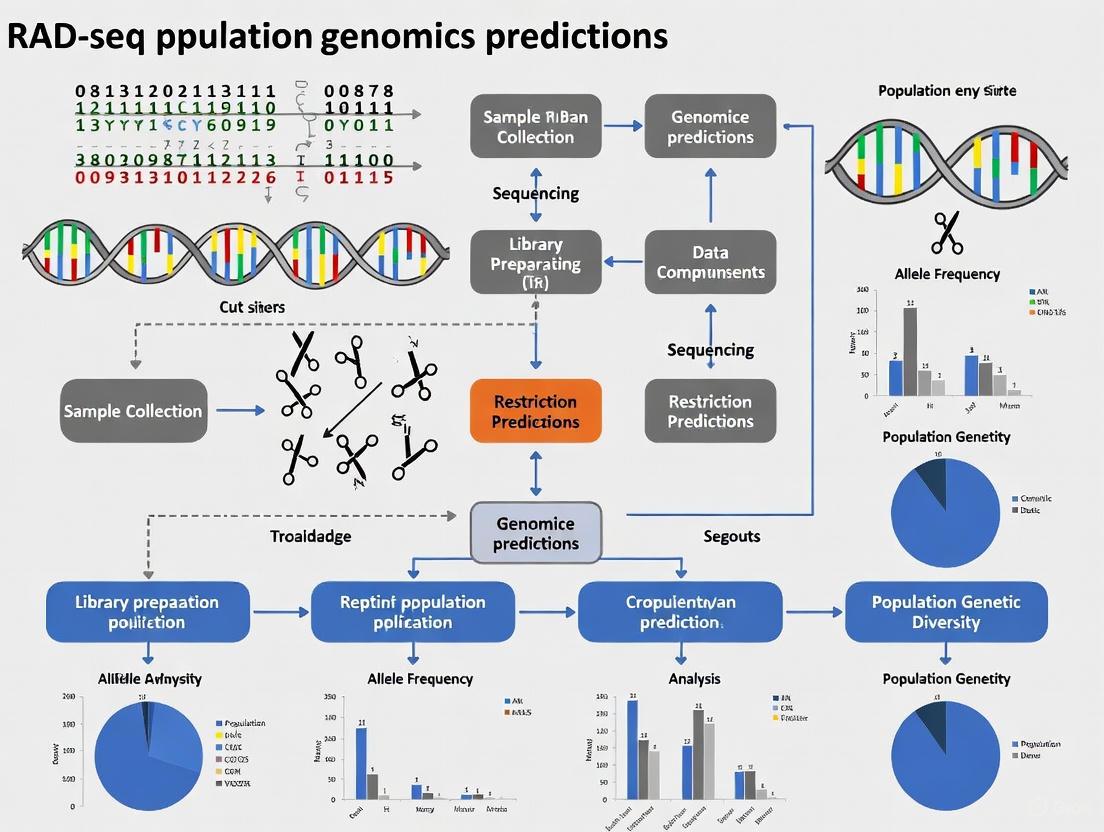
This article provides a comprehensive overview of Restriction-site Associated DNA Sequencing (RAD-seq) for population genomic predictions, tailored for researchers and drug development professionals.
RAD-seq in Population Genomics: A Comprehensive Guide from Principles to Clinical Applications
Abstract
This article provides a comprehensive overview of Restriction-site Associated DNA Sequencing (RAD-seq) for population genomic predictions, tailored for researchers and drug development professionals. It covers foundational principles of this reduced-representation sequencing approach that enables cost-effective genome-wide SNP discovery without requiring prior genomic resources. The content explores diverse methodological variants including sdRAD-seq, ddRAD-seq, and 2bRAD, with practical applications spanning genetic structure analysis, adaptive variation detection, and conservation genomics. Critical troubleshooting guidance addresses experimental design optimization, DNA quality considerations, and bioinformatic processing. The article also examines validation frameworks and comparative performance across RAD-seq platforms, highlighting emerging clinical implications for understanding genetic diversity in biomedical research contexts.
Demystifying RAD-seq: Core Principles and Evolutionary Significance in Genomic Studies
What is RAD-seq? Understanding Reduced-Representation Sequencing Fundamentals
Restriction-site Associated DNA sequencing (RAD-seq) is a high-throughput genomic technology that enables efficient discovery and genotyping of thousands of genetic markers across the genome without requiring prior genomic resources for the target species [1]. This method revolutionized population genetics by providing a cost-effective solution for generating genome-wide data for non-model organisms, making it particularly valuable for ecological and evolutionary studies [2]. The core innovation of RAD-seq lies in its ability to systematically reduce genome complexity by targeting specific regions for sequencing, thereby allowing researchers to focus sequencing efforts on a consistent set of loci across multiple individuals [3].
The fundamental principle underlying RAD-seq involves using restriction enzymes to digest genomic DNA at specific recognition sites, followed by sequencing of the DNA fragments adjacent to these cut sites [1]. This approach samples a reproducible subset of the genome, generating data from thousands of randomly distributed loci [3]. By focusing on these specific regions, RAD-seq achieves a significant reduction in genomic complexity while maintaining comprehensive genome coverage, enabling researchers to sequence hundreds of samples cost-effectively with sufficient depth for accurate genotyping [4]. This strategic reduction in representation makes RAD-seq especially powerful for organisms with large genomes where whole-genome sequencing remains prohibitively expensive for population-level studies [1].
The Family of RAD-seq Technologies
Since the original RAD-seq protocol was introduced, several refined methods have been developed to address specific research needs and technical challenges [3]. These variants primarily differ in their enzyme digestion strategies, fragment selection methods, and library construction processes [4]. The most widely used RAD-seq technologies include original RAD-seq, ddRAD-seq, GBS, 2b-RAD, and ezRAD, each with distinct advantages for particular applications [3].
Table: Comparison of Major RAD-seq Techniques
| Technique | Digestion Approach | Fragment Selection | Key Features | Best Applications |
|---|---|---|---|---|
| Original RAD-seq | Single enzyme | Random shearing, size selection | First developed method; reproducible loci | General population genetics; species with no reference genome |
| ddRAD-seq | Two enzymes | Precise size selection | Superior library uniformity; highly reproducible | Genetic diversity studies; QTL mapping in complex genomes |
| GBS | Single enzyme | PCR-based selection | Simplified workflow; lowest cost | Large-scale genetic diversity analysis; genome-wide association studies |
| 2b-RAD | Type IIB enzymes | Fixed fragment length | Uniform fragment length (33-36 bp); high precision | High-density SNP development; genetic mapping |
| ezRAD | Enzyme-free or multiple enzymes | Variable | Flexibility in fragmentation method; no enzyme bias | Projects with degraded DNA or moderate sample sizes |
The selection among these techniques involves important trade-offs. ddRAD-seq (double-digest RAD-seq) uses two restriction enzymes to generate fragments with defined terminal ends, followed by precise size selection, resulting in excellent library uniformity [3]. In contrast, GBS (Genotyping-by-Sequencing) employs a simplified protocol with a single restriction enzyme and no size selection step, significantly reducing laboratory workload and cost [3]. The 2b-RAD method utilizes type IIB restriction endonucleases that cut on both sides of their recognition sites, producing fragments of uniform length (typically 33-36 base pairs), which is particularly advantageous for high-density SNP genotyping [3]. Meanwhile, ezRAD offers flexibility by allowing physical fragmentation methods (e.g., ultrasonication) instead of enzymatic digestion, circumventing potential issues related to genomic methylation or enzyme specificity [3].
Step-by-Step RAD-seq Workflow
The RAD-seq protocol consists of several meticulously orchestrated wet laboratory procedures followed by sophisticated bioinformatic analysis. The process begins with the extraction of high-quality, high molecular weight genomic DNA, which is critical for successful restriction digestion and subsequent library preparation [4]. The quantity and quality of starting DNA significantly impact the final results, with most protocols requiring 50-100 ng of DNA per sample, though some implementations may need larger amounts [4].
Library Preparation Protocol
The initial step in RAD-seq library preparation involves digesting genomic DNA with one or more restriction enzymes [2]. The choice of enzyme significantly influences the number of resulting fragments and subsequent markers [2]. For example, rare-cutting enzymes (e.g., SbfI with a 8-bp recognition site) produce fewer fragments, while common-cutters (e.g., PstI with a 6-bp site) generate more fragments [2]. Following digestion, special adapters containing molecular identifiers (MID barcodes) are ligated to the restriction fragments [2]. These barcodes enable sample multiplexing by tagging each fragment with a unique sequence identifier, allowing multiple individuals to be sequenced together in a single library [2].
After adapter ligation, the samples are pooled and randomly sheared to reduce fragment sizes appropriate for sequencing (typically 300-700 bp) [3]. The sheared fragments then undergo size selection to isolate fragments within a specific range, which can be achieved through automated fragment recovery systems (e.g., Pippin Prep) or traditional agarose gel electrophoresis [3]. A second adapter (P2) is ligated to the sheared ends, followed by PCR amplification to enrich for fragments containing both adapters [2]. The final library is then sequenced on high-throughput platforms, most commonly Illumina instruments [1].
Bioinformatic Analysis Pipeline
Following sequencing, the resulting reads undergo sophisticated bioinformatic processing. For species without a reference genome, de novo assembly approaches cluster reads into orthologous loci using software like Stacks, which processes RAD-seq data through multiple modules [5]. The process_radtags module performs initial quality filtering and demultiplexing, separating sequences by their barcodes [5]. The ustacks component assembles reads into stacks (putative alleles) within individuals, while cstacks builds a catalog of loci across individuals [5]. Finally, the populations module exports genotype data for population genetic analysis [5].
When a reference genome is available, RAD-seq reads can be aligned directly using standard tools like BWA or Bowtie, followed by variant calling with software such as SAMtools or GATK [6]. This reference-based approach typically yields more accurate genotype calls and enables the identification of genomic contexts of RAD loci [6].
Essential Reagents and Research Solutions
Table: Key Research Reagents for RAD-seq Experiments
| Reagent/Category | Function in Protocol | Examples & Technical Considerations |
|---|---|---|
| Restriction Enzymes | Digest genomic DNA at specific recognition sites | SbfI (rare-cutter), PstI (common-cutter); choice affects marker density and genome coverage |
| Adapter Sequences | Ligate to digested fragments; contain barcodes for multiplexing | P1 adapter (with barcode and restriction site overhang); P2 adapter (for amplification) |
| DNA Polymerase | Amplify adapter-ligated fragments via PCR | High-fidelity polymerases recommended to minimize PCR errors during library amplification |
| Size Selection Tools | Isolate fragments within optimal size range for sequencing | Automated systems (e.g., Pippin Prep) or agarose gel electrophoresis; critical for library uniformity |
| Sequencing Platform | Generate sequence reads from library fragments | Illumina platforms most commonly used; read length (50-150 bp) affects amount of sequence per locus |
Successful RAD-seq experiments require careful selection of restriction enzymes based on the target species and research objectives [3]. The optimal enzyme choice depends on the genome size, GC content, and the desired marker density [2]. For example, in the Caenorhabditis elegans genome (100.2 Mb, 36% GC), SbfI produces approximately 323 fragments, while PstI generates about 13,548 fragments [2]. The adapter design is equally crucial, as it must include compatible overhangs matching the restriction enzyme cut sites, unique barcode sequences for sample multiplexing, and flow cell binding sites for sequencing [2].
Applications in Population Genomics
RAD-seq has enabled groundbreaking advances across various domains of population genomics, particularly for non-model organisms. One significant application is the resolution of fine-scale population structure in species with high dispersal potential. For example, a comprehensive RAD-seq study of European scallops (Pecten maximus) genotyped 219 samples at 82,439 SNP markers, clearly resolving an Atlantic group and a Norwegian group within the species, as well as fine-scale structure involving Mulroy Bay in Ireland where scallops are commercially cultured [7]. This level of resolution was previously unattainable with traditional markers like microsatellites.
The method has proven particularly powerful for investigating local adaptation through environmental association analyses. In the European scallop study, researchers identified 279 environmentally associated loci that showed contrasting phylogenetic patterns compared to neutral loci, providing evidence for ecologically mediated divergence [7]. Similarly, RAD-seq has been employed to study introgression between native and invasive species, with Hohenlohe et al. (2010) using 3,180 species-diagnostic SNPs to quantify admixture between native and invasive trout species [4].
RAD-seq also facilitates demographic history inference, as demonstrated by the scallop study that supported divergence between Atlantic and Norwegian groups during the last glacial maximum, followed by subsequent population expansion [7]. Beyond these applications, RAD-seq has been successfully used for genetic mapping of ecologically significant traits. In threespine stickleback, RAD-seq independently identified markers linked to lateral plate armor loss at the Eda locus and several other loci, confirming its utility for unraveling the genetic architecture of adaptive traits [2].
Critical Technical Considerations
While RAD-seq offers powerful capabilities for population genomics, researchers must address several technical considerations to ensure data quality and biological relevance. DNA quality is paramount, as RAD-seq protocols perform optimally with high molecular weight DNA and may yield suboptimal results with degraded samples [4]. This limitation is particularly relevant when working with historical specimens or suboptimal preservation methods.
Several sources of technical bias specific to RAD-seq require attention, including restriction fragment bias, restriction site heterozygosity, and PCR GC content bias [6]. The presence of PCR duplicates can also affect genotyping accuracy, though methods exist to identify and mitigate their impact [5]. Bioinformatic parameter selection significantly influences results, with key parameters in de novo assemblies (e.g., in Stacks) including the minimum stack depth (m), number of mismatches allowed between stacks (M), and number of mismatches allowed between catalog loci (n) [5]. Importantly, maximizing the number of recovered polymorphic loci does not necessarily improve population differentiation signals, and parameter optimization should consider the specific biological question [5].
The choice between single-end and paired-end sequencing involves important trade-offs. While single-end sequencing is more cost-effective for SNP discovery alone, paired-end sequencing enables the assembly of longer contigs (300-600 bp) that provide more genomic context for each locus, which is particularly valuable for species without reference genomes [6]. This approach facilitates the identification of gene content and synteny in otherwise unsequenced genomes [6].
RAD-seq represents a transformative methodology that has democratized access to genome-wide data for non-model organisms. By understanding its fundamental principles, technical variations, and analytical considerations, researchers can effectively harness this powerful approach to address diverse questions in population genomics, ecological adaptation, and evolutionary biology.
Restriction-site Associated DNA sequencing (RAD-seq) represents a pivotal methodological innovation in modern genomics, providing a cost-effective strategy for discovering thousands of genetic markers across the genome without requiring a reference genome. Since its initial development, RAD-seq has catalyzed research across diverse fields from ecology and evolution to breeding and conservation genetics. The core principle underlying RAD-seq techniques is the reduction of genomic complexity through restriction enzymes, which target specific DNA sequences for digestion, followed by high-throughput sequencing of the regions flanking these restriction sites. This approach enables researchers to generate dense genetic marker datasets—primarily Single Nucleotide Polymorphisms (SNPs)—for non-model organisms, which has been particularly transformative for population genomics predictions research. Over time, the original RAD-seq protocol has evolved into several distinct variants, each with unique advantages tailored to specific research contexts, including genomic architecture studies, population parameter estimations, and trait-associated marker discovery.
The Original RAD-seq Protocol and Its Core Principles
The original RAD-seq protocol, introduced by Baird et al. in 2008, established the fundamental workflow that subsequent variants would modify and refine. This method utilizes a single restriction enzyme to digest genomic DNA, followed by ligation of adapters containing sequencing primers and sample-specific barcodes. The ligated fragments are then randomly sheared, size-selected, and sequenced, focusing on the regions immediately adjacent to restriction sites across the genome [8].
The primary advantage of this original method lies in its ability to systematically sample consistent regions of the genome across multiple individuals, making it particularly suitable for genetic mapping and population genomic studies. However, this approach requires specialized equipment such as a sonicator for mechanical fragmentation and can present challenges in balancing marker density with sequencing coverage, especially for organisms with large genomes [8].
Table 1: Key Characteristics of Original RAD-seq
| Aspect | Specification |
|---|---|
| Enzyme Digestion | Single enzyme digestion |
| Fragmentation Method | Mechanical fragmentation (sonicator) |
| Number of Loci per 1Mb Genome | 30-500 |
| Specialized Equipment Needed | Yes (sonicator) |
| Suitability for Complex Genomes | Good |
| Suitability for De Novo Studies | Good |
The Evolution of RAD-seq Variants
Genotyping-by-Sequencing (GBS)
GBS represents a significant simplification of the original RAD-seq protocol, designed for even higher efficiency and lower costs. This approach employs common enzyme single digestion followed by PCR-based selective amplification of short DNA fragments for library construction [8]. The library preparation process is notably streamlined, requiring less time, technical expertise, and being more easily automated compared to original RAD-seq [9].
A key characteristic of GBS is its more extensive genome reduction, resulting in fewer loci per megabase of genome size (typically 5-40 loci/Mb) compared to original RAD [8]. This makes GBS particularly suitable for projects requiring high-sample multiplexing where budget constraints are significant, such as large-scale genetic diversity screening in crop breeding programs and population genetic surveys [9].
Double-Digest RAD (ddRAD)
The ddRAD protocol introduced a fundamental modification to the original method by implementing double enzyme digestion with adapter ligation matching one enzyme, combined with gel size selection for library construction [8]. This strategic innovation allows researchers to fine-tune the number of targeted loci by adjusting both the restriction enzyme combination and the size selection window, providing exceptional flexibility for experimental design [10].
Recent comparative studies have demonstrated that ddRAD often outperforms single-digest methods in terms of raw read count, alignment rate, depth and breadth of coverage, and SNP detection. For instance, in safflower genotyping, ddRAD with EcoRI_Msel enzyme combination proved superior for genome sampling and SNP genotyping, capturing more SNPs with fewer missing observations [10]. The method shows particular strength for complex genome analysis and has become a preferred choice for population genomics predictions requiring high-quality, reproducible markers.
Reference-Based RAD-seq
Reference-based RAD-seq represents an advanced application where sequencing reads are mapped to a reference genome, enabling more effective paralog filtering and providing genomic coordinates for functional annotation of discovered variants [11] [12]. This approach is particularly valuable for projects investigating the genetic architecture of adaptive traits or identifying genomic regions under selection.
In practice, reference-based RAD-seq has proven highly effective for challenging taxonomic questions. For example, in lichenized fungi, this method allowed for metagenomic filtering of symbiont sequences, yielding robust phylogenomic trees of closely related species and revealing previously hidden fungal diversity [11]. However, this methodology requires special care in data processing and is generally recommended for advanced users with access to reasonably complete reference genomes [12].
Comparative Analysis of RAD-seq Methodologies
Table 2: Technical Comparison of Major RAD-seq Variants
| Difference Aspects | Original RAD | GBS | ddRAD |
|---|---|---|---|
| Technical Principle | Single enzyme digestion + Mechanical fragmentation | Common enzyme single digestion + PCR selection | Double enzyme digestion + Size selection |
| Number of Loci per 1Mb | 30-500 | 5-40 | 0.3-200 |
| Cost per Barcoded Sample | Low | Low | Low |
| Technical Expertise Required | Medium | Low | Low |
| Specialized Equipment | Sonicator | None | Pippin Prep |
| Suitability for Complex Genomes | Good | Moderate | Good |
| De Novo Capability | Good | Moderate | Moderate |
| PCR Duplicate Identification | With paired-end sequencing | With degenerate barcodes | With degenerate barcodes |
The choice between RAD-seq variants involves significant trade-offs that must be aligned with research goals. GBS offers the simplest and most cost-effective approach for large-scale genotyping projects, particularly when working with limited budgets or when analyzing hundreds to thousands of samples. However, it may provide insufficient marker density for fine-scale population structure analysis. ddRAD provides superior tunability, allowing researchers to optimize marker density through enzyme selection and size fractionation, making it ideal for comparative phylogeography and association mapping. Original RAD-seq remains a robust choice for de novo studies without a reference genome, particularly when working with complex genomes where consistent coverage of restriction sites is paramount [8].
Recent research indicates that ddRAD-seq consistently outperforms sdRAD-seq in multiple performance metrics. In safflower studies, ddRAD demonstrated superior results in raw read count, alignment rate, depth and breadth of coverage, and SNP detection. Gene-level k-mer validation identified more core genes in ddRAD-seq data, and variant calling revealed substantial differences in SNP discovery rates between methods [10].
Methodological Guidelines and Best Practices
Experimental Design Considerations
When planning RAD-seq experiments, several factors require careful consideration. The presence of a reference genome, even a draft-quality one, significantly enhances variant detection accuracy by reducing errors from homologous or repetitive sequences [8]. For population genomics predictions, researchers must balance sequencing depth with sample numbers, typically opting for moderate coverage (10-20x) across many individuals rather than deep sequencing of few samples.
The selection of restriction enzymes should be guided by the research organism's genome characteristics. For species with large genomes, rare-cutting enzymes (e.g., PstI, EcoRI) paired with frequent-cutters (e.g., MseI) often provide optimal complexity reduction [10]. In silico digestion simulations using reference genomes can help predict the number and distribution of fragments before laboratory work begins [10].
Bioinformatics Processing and Quality Control
Bioinformatic processing of RAD-seq data demands careful parameter optimization, particularly the clust_threshold in assembly pipelines, which controls sequence similarity thresholds for clustering reads into loci. Misspecified values can lead to either over-lumping (inflating heterozygosity) or over-splitting (depressing heterozygosity) of loci [12].
A critical consideration is the handling of missing data. Rather than applying stringent filters that remove loci with any missing data, researchers should set permissive minimum sample parameters (minsampleslocus) and propagate uncertainty through downstream analyses [12]. This approach prevents bias against low-frequency variants and avoids overrepresentation of highly conserved genomic regions.
The Scientist's Toolkit: Essential Research Reagents and Materials
Table 3: Essential Research Reagents and Solutions for RAD-seq Experiments
| Reagent/Equipment | Function | Considerations |
|---|---|---|
| Restriction Enzymes | Digest genomic DNA at specific recognition sites | Choice depends on genome structure; common enzymes: EcoRI, MseI, ApeKI, NlaIII |
| T4 DNA Ligase | Ligate adapters to digested DNA fragments | Critical for library construction; requires overnight incubation |
| Magnetic Beads (SPRI) | Purify and size-select DNA fragments | Agencourt AMPure XP commonly used; 0.8X volume removes small fragments |
| DNA Polymerase | Amplify adapter-ligated fragments | High-fidelity enzymes preferred; typically 14 PCR cycles |
| Size Selection System | Isolate fragments of specific size range | Pippin Prep systems for ddRAD; agarose gel electrophoresis as alternative |
| Quality Control Instruments | Assess library quality and concentration | Agilent TapeStation, Qubit Fluorometer, Bioanalyzer |
| High-Throughput Sequencer | Generate sequence data from libraries | Illumina platforms most common; HiSeq X Ten for large projects |
Applications in Population Genomics and Evolutionary Biology
RAD-seq methodologies have enabled significant advances in population genomics predictions across diverse biological systems. In ecological and evolutionary genomics, these techniques have been harnessed to resolve complex speciation patterns and phylogenetic relationships. For neuropogonoid lichens, reference-based RAD-seq unraveled evolutionary relationships using over 20,000 loci from 126 specimens, revealing previously unrecognized diversity and leading to the description of new species [11]. Similarly, in medicinal plant authentication, RAD-seq successfully differentiated Scrophularia ningpoensis from adulterant species using 55,250 high-quality SNP sites, demonstrating its power for resolving difficult taxonomic distinctions [13].
The application of RAD-seq extends to genetic diversity assessment in crop species, where it facilitates breeding program optimization. In safflower, an important oilseed crop, ddRAD-seq with EcoRI_Msel enzymes proved most effective for capturing genetic variation, with principal component analysis explaining 30.29-33.98% of total genetic variation [10]. This capacity to efficiently characterize genetic diversity within crop germplasm is invaluable for predicting breeding potential and identifying valuable genetic resources.
Comparative studies have validated RAD-seq against established marker systems, demonstrating that it retrieves similar phylogeographic patterns to AFLP fingerprinting but with greater resolution and statistical support [14]. This confirmation is particularly important for population genomics predictions, where accurate inference of population structure and evolutionary relationships informs conservation decisions and management strategies.
Future Perspectives and Concluding Remarks
The evolution of RAD-seq from a single protocol to a diverse toolkit of related methods has fundamentally expanded our capacity for population genomics predictions. As these methodologies continue to mature, several emerging trends are likely to shape their future development. Integration with other data types, including gene expression and epigenetic markers, will provide more comprehensive understanding of the relationship between genetic variation and phenotypic expression. Methodological refinements addressing challenges in polyploid organisms and those with large genomes will further extend the applicability of RAD-seq approaches across the tree of life.
The ongoing democratization of sequencing technologies positions RAD-seq as a cornerstone method for population genomics in non-model organisms. Its cost-effectiveness and flexibility ensure that it will remain vital for addressing fundamental questions in evolutionary biology, conservation genetics, and breeding programs. As reference genomes continue to accumulate for diverse taxa, reference-based RAD-seq approaches will become increasingly powerful for connecting genetic variation to functional consequences, ultimately enhancing our ability to predict adaptive potential and evolutionary trajectories in natural and managed populations.
Restriction-site associated DNA sequencing (RAD-seq) represents a paradigm shift in ecological and evolutionary genomics by enabling genome-wide studies in non-model organisms without requiring a reference genome. This application note details how RAD-seq techniques overcome the historical bottleneck of genomic resource availability, allowing researchers to discover and genotype thousands of polymorphic markers across populations of any species. We present comprehensive methodologies, technical considerations, and experimental protocols that leverage this key advantage for population genomics predictions research, empowering investigations in previously genetically uncharacterized organisms.
The genomic revolution has historically bypassed non-model organisms due to their lack of reference genomes—a prerequisite for most conventional genomic analyses. RAD-seq eliminates this barrier by providing a reduced-representation genomic approach that samples homologous loci across individuals based on restriction enzyme cut sites, rather than alignment to a known genome [4]. This fundamental innovation has positioned RAD-seq as "among the most significant scientific breakthroughs within the last decade" for ecological and evolutionary genomics [4].
For researchers investigating wild populations, agricultural species, or little-studied organisms, RAD-seq offers a robust solution for generating genome-wide data without the substantial time and financial investments required for genome assembly [1]. The technique's independence from pre-existing genomic resources makes it particularly valuable for conservation genomics, where decisions often cannot await the development of comprehensive genomic tools [1].
Core Principle: Genome Complexity Reduction via Restriction Enzymes
RAD-seq techniques employ restriction enzymes to systematically sample loci throughout the genome of any species. The core principle involves digesting genomic DNA with one or more restriction enzymes, then sequencing the regions adjacent to these restriction sites [2] [4]. This process creates a reproducible set of fragments that can be compared across individuals without requiring a reference genome for alignment.
Locus Discovery and Genotyping Through Sequence Similarity
In the absence of a reference genome, RAD-seq data analysis relies on sequence similarity to group reads into putative loci. The process involves:
- Within-individual clustering: Identical or nearly identical reads from a single individual are grouped into "stacks" representing alleles at a particular locus [5].
- Cross-individual catalog building: Consensus sequences from each individual are merged into a catalog of loci across all samples based on sequence similarity [15] [5].
- Genotype calling: For each individual at each catalog locus, genotypes are determined by comparing sequence reads to the consensus [5].
This de novo analysis pipeline enables simultaneous discovery of genetic markers and genotyping of individuals in a single streamlined process [2].
Experimental Design and Protocol Selection
RAD-seq Method Variants
The core RAD-seq concept has spawned several technical variants optimized for different research goals. Selection of an appropriate method represents the first critical decision in experimental design.
Table 1: Comparison of Major RAD-seq Methodologies
| Method | Restriction Enzymes | Key Features | Best Applications |
|---|---|---|---|
| Original RAD [4] | Single enzyme | Mechanical shearing creates fragment size variance; most reproducible of restriction-based methods | Population genetics, phylogenetic studies |
| ddRAD [16] | Two enzymes (rare + frequent cutter) | Eliminates fragmentation step; precise size selection; highly reproducible | High-density genetic mapping, GWAS |
| 2bRAD [4] | Type IIB enzymes | Produces fragments of uniform length; simplified downstream processing | Species with small genomes, degraded DNA |
| GBS [4] | Single common-cutter | PCR preferentially amplifies short fragments; lower input DNA requirements | Large-scale genotyping studies |
Restriction Enzyme Selection Considerations
Choice of restriction enzyme(s) fundamentally determines the number and distribution of loci recovered. Key considerations include:
- Genome coverage: Enzymes with longer recognition sites (e.g., 8-base cutters) yield fewer fragments, while shorter recognition sequences (e.g., 6-base cutters) produce more fragments [2].
- Methylation sensitivity: Methylation-sensitive enzymes can selectively target hypomethylated, typically gene-rich regions [4].
- Cost and efficiency: Common-cutter enzymes generally cost less and demonstrate higher digestion efficiency [2].
Table 2: Expected Fragments Based on Restriction Enzyme Selection
| Enzyme Type | Recognition Sequence | Theoretical Fragments/Mb | Actual Fragments in C. elegans |
|---|---|---|---|
| Rare cutter (8-base) | GC^GGCCGC | 15 | 395 |
| Intermediate (6-base) | CTGCA^G | 244 | 13,548 |
| Common cutter (4-base) | ^GATC | 977 | 36,741 |
Detailed Experimental Workflow
Library Preparation Protocol
The following workflow outlines the core steps for RAD-seq library preparation, adapted from the widely-used original RAD protocol [2]:
Figure 1: RAD-seq library preparation workflow. The process begins with high-quality DNA, proceeds through restriction digestion and barcoding, and culminates in sequencing-ready libraries. MID: Molecular Identifier.
Critical Reagents and Quality Control Points
- Input DNA: High molecular weight genomic DNA (>50 ng/μL, total >3 μg) with OD 260/280 ratio of 1.8-2.0 and minimal degradation [16]. For non-model organisms, tissue samples should be freshly collected (animal tissues >50 mg, plant tissues >500 mg) and preserved appropriately [16].
- Restriction Enzymes: Selection based on desired fragment number and distribution. SbfI (CCTGCA^GG) provides moderate fragment numbers suitable for many applications [2].
- Adaptors with Barcodes: P1 adaptors contain sample-specific barcodes (6-12 bp) for multiplexing [2]. The Stacks
process_radtagssoftware requires barcode information in a specific tab-separated format matching p1 barcode, p2 barcode, and sample name [15]. - Size Selection: Fragments of 300-700 bp are typically selected to optimize Illumina sequencing [1].
The Scientist's Toolkit: Essential Research Reagents
Table 3: Key Research Reagent Solutions for RAD-seq Experiments
| Reagent/Category | Function | Technical Specifications | Considerations for Non-Model Organisms |
|---|---|---|---|
| Restriction Enzymes | Genome fragmentation at specific recognition sites | SbfI (8-cutter), PstI (6-cutter), EcoRI (6-cutter) | Enzyme choice determines number of loci; test multiple for optimal coverage |
| Barcoded Adapters | Sample multiplexing and sequencing platform compatibility | P1 adapter: restriction site overhang + MID + flow cell binding site | Unique barcode combinations required for each sample in pooled library |
| Size Selection Tools | Fragment isolation by size | Agarose gel extraction, automated gel systems, or magnetic beads | Size range affects number of loci sequenced; 300-700 bp standard for Illumina |
| PCR Enrichment Reagents | Library amplification | High-fidelity polymerase, minimal cycle number (varies by protocol) | Excess PCR cycles exacerbate GC bias and duplicate reads |
| Quality Control Assays | Verify input DNA and final library quality | Fluorometric quantification, fragment analyzers, bioanalyzers | Critical for non-model organisms with potential unknown contaminants |
Data Analysis: De Novo Locus Assembly and SNP Calling
Reference-Free Bioinformatics Pipeline
The Stacks software suite provides a comprehensive toolkit for de novo RAD-seq analysis [15] [5]. The workflow proceeds through several key stages:
Figure 2: De novo RAD-seq data analysis workflow using the Stacks pipeline. This reference-free approach groups sequences into loci based on similarity rather than alignment to a reference genome.
Critical Parameter Selection for De Novo Analysis
Parameter optimization is essential for accurate locus assembly and genotyping. Key parameters in the Stacks pipeline include [5]:
- m: Minimum number of identical reads required to form a stack (default 3)
- M: Maximum number of mismatches allowed between stacks within individuals (default 2)
- n: Maximum number of mismatches allowed between loci across individuals (default 1)
Empirical testing has demonstrated that parameter combinations significantly impact the number of polymorphic loci recovered and subsequent population genetic inferences [5]. Researchers should perform parameter optimization rather than relying on default values, as the "optimal parameter set is not universal and depends on the specific dataset" [5].
Applications in Population Genomics Research
The reference-genome independence of RAD-seq enables diverse applications in population genomics:
Population Structure and Phylogeography
RAD-seq has been successfully deployed to resolve fine-scale population structure in species including salmon, macaques, and butterflies [4]. The thousands of markers generated enable high-resolution inference of population boundaries and historical connectivity, even in recently diverged populations [4].
Genomic Scans for Selection and Local Adaptation
By surveying variation across thousands of loci, RAD-seq facilitates identification of genomic regions under selection. Studies have successfully detected divergent selection in parallel hybrid zones of butterflies and adaptive loci in trout populations [4].
Genetic Mapping in Natural Populations
RAD-seq enables construction of high-density genetic maps without prior genomic resources. This approach has been used for QTL mapping of ecologically relevant traits in stickleback fish and other non-model organisms [2].
Technical Considerations and Limitations
While the reference-free nature of RAD-seq provides tremendous advantages, researchers must consider several technical aspects:
- Sequence Coverage: Recommended sequencing depth varies by application: ≥1X for variation detection, 2-5X for parents in genetic mapping studies, and ≥1X for population evolution studies [16].
- PCR Duplicates: The presence of PCR duplicates can influence genotyping error rates and population differentiation inferences [5]. Tools like
clone_filterin Stacks can mitigate this issue [5]. - Allele Dropout: Restriction site polymorphisms can lead to systematic absence of loci in some individuals, potentially biasing population genetic inferences [6].
- Taxonomic Scope: RAD-seq performs best with relatively close evolutionary relationships, as distantly related taxa may share insufficient restriction sites for homologous locus recovery [1].
RAD-seq has fundamentally transformed population genomics by eliminating the dependency on reference genomes that previously constrained genetic studies of non-model organisms. Through strategic restriction enzyme-based genome reduction and sophisticated de novo bioinformatics pipelines, researchers can now generate genome-scale data for any species. This application note provides the experimental frameworks and technical details necessary to implement these powerful approaches, opening new frontiers in ecological, evolutionary, and conservation genomics.
The comprehensive assessment of genetic diversity is fundamental to understanding population history, adaptive potential, and evolutionary trajectories. Molecular markers provide a powerful toolkit for quantifying this diversity, offering insights that bridge the gap between phenotypic variation and underlying genomic architecture. The advent of Restriction Site-Associated DNA Sequencing (RAD-seq) has revolutionized population genomics, enabling cost-effective, genome-wide discovery of thousands of genetic markers even in non-model organisms without prior genomic resources [17] [18]. This approach facilitates reduced-representation sequencing, targeting specific genomic regions flanking restriction enzyme cut sites to generate reproducible datasets across multiple individuals [10] [19].
RAD-seq and related genotyping-by-sequencing (GBS) methods have largely superseded earlier marker systems like RFLPs (Restriction Fragment Length Polymorphisms) and RAPDs (Random Amplified Polymorphic DNA) due to their higher marker density, reproducibility, and genome-wide coverage [20]. These techniques are particularly valuable for resolving complex phylogenetic relationships, identifying signatures of selection, and informing conservation strategies by providing detailed snapshots of genetic variation within and among populations [17] [18]. This protocol outlines standardized methodologies for genetic diversity assessment using RAD-seq, connecting molecular marker data to broader evolutionary insights within a population genomics framework.
Molecular Marker Systems: From Classical to Genomics
Genetic markers have evolved significantly from morphological traits to DNA-based polymorphisms, enhancing the resolution and accuracy of diversity assessments.
Table 1: Classification and Characteristics of Major Genetic Marker Types
| Marker Type | Technical Basis | Polymorphism Level | Key Advantages | Primary Limitations |
|---|---|---|---|---|
| Morphological | Observable phenotypic traits | Low | Easy to score; No specialized equipment needed | Highly influenced by environment; Limited number |
| Biochemical (Allozymes) | Protein/ enzyme variability | Low to moderate | Inexpensive; Direct link to gene expression | Limited resolution; Affected by tissue type and development stage |
| RFLP | Restriction enzyme digestion & hybridization | Low | Co-dominant; Locus-specific | Low throughput; Requires high-quality DNA; Radioactive probes |
| SSR/ Microsatellite | PCR amplification of tandem repeats | High | Highly polymorphic; Co-dominant; Multi-allelic | Development intensive; Limited transferability between species |
| SNP (from RAD-seq) | Sequencing of restriction site-associated regions | Moderate to high | Genome-wide distribution; High throughput; Unlimited markers | Requires sequencing platform; Bioinformatics intensive |
The transition to DNA-based markers represented a paradigm shift in genetic diversity studies. Early DNA markers like RFLPs provided the first direct glimpse into DNA-level polymorphism but were hampered by low throughput and technical complexity [20]. The development of PCR-based markers including SSRs (Simple Sequence Repeats) and later SNPs (Single Nucleotide Polymorphisms) dramatically increased resolution and scalability [21] [19]. RAD-seq represents the current frontier, enabling simultaneous discovery and genotyping of thousands of SNPs across numerous individuals, making it particularly suitable for non-model organisms with limited genomic resources [17] [18].
RAD-seq Experimental Design and Optimization
Selection of RAD-seq Approach
Two primary RAD-seq methodologies are commonly employed, with selection dependent on research goals, genomic resources, and budgetary considerations:
- sdRAD-seq (Single-digest RAD-seq): Utilizes a single restriction enzyme (e.g., ApeKI) for genome complexity reduction. This approach provides simpler library construction but may yield less uniform genome coverage [10].
- ddRAD-seq (Double-digest RAD-seq): Employs two restriction enzymes (typically a rare and frequent cutter, e.g., EcoRIMsel or NlaIIIMsel) for fragmentation. This method produces more predictable fragment sizes and often demonstrates superior performance in terms of read count, alignment rates, and SNP detection [10].
Comparative studies in safflower (Carthamus tinctorius L.) demonstrated that ddRAD-seq outperformed sdRAD-seq across multiple metrics, including raw read count, alignment rate, depth and breadth of coverage, and ultimately, SNP detection efficiency [10].
Restriction Enzyme Selection
Choice of restriction enzymes significantly impacts genomic coverage and SNP genotyping. Enzyme selection should consider:
- Genome size and composition
- Methylation patterns of repetitive elements
- GC content
- Available genomic resources (reference genome availability)
Table 2: Performance Comparison of Common Restriction Enzyme Combinations in Safflower
| Enzyme Combination | Number of DNA Fragments (in silico) | SNPs Detected | Key Characteristics |
|---|---|---|---|
| ApeKI (sdRAD) | Moderate | 6,721 | Single enzyme approach; Simplified workflow |
| NlaIII_Msel (ddRAD) | Highest | 173,212 | High fragment number; Balanced performance |
| EcoRI_Msel (ddRAD) | Lower than NlaIII_Msel | 221,805 | Fewer missing observations; Superior SNP capture |
Empirical optimization in safflower identified ddRAD-seq with EcoRI_Msel as the most suitable approach, capturing more SNPs with fewer missing observations and explaining a greater proportion of genetic variation (33.98%) in principal component analysis [10].
Detailed RAD-seq Wet Laboratory Protocol
DNA Extraction and Quality Control
- Sample Requirements: 200 ng of high-quality genomic DNA per sample [10]
- Extraction Method: Commercial kits (e.g., DNeasy Plant Kit, Qiagen) typically yield DNA of sufficient quality [10]
- Quality Assessment: Evaluate via electrophoresis and fluorometric methods (e.g., Qubit dsDNA HS Assay Kit) [10]
- Quantity Standardization: Normalize all samples to consistent concentration (e.g., 10 ng/μL) to ensure uniform library preparation [19]
Library Preparation Protocol
The following protocol is adapted from safflower and pine studies with modifications for general applicability [10] [19]:
Restriction Digestion:
- Prepare reaction mixture: 200 ng DNA, 1X restriction enzyme buffer, 5-10 units of selected restriction enzyme(s)
- Incubate at enzyme-specific temperature (e.g., 37°C for EcoRI, 75°C for ApeKI) for 2-4 hours
- For ddRAD: Use enzyme pairs (e.g., EcoRI + Msel or NlaIII + Msel)
Adapter Ligation:
- Add P1 and P2 adapters containing barcode sequences and Illumina sequencing motifs
- Utilize T4 DNA ligase (New England BioLabs) for overnight incubation (>12 hours) at room temperature (approximately 21°C)
- Heat deactivate enzyme at 65°C for 10 minutes
Purification and Size Selection:
- Clean ligation products using 0.8X volume of SPRI magnetic beads (e.g., Agencourt AMPure XP) to remove unincorporated adapters and fragments <300 bp
- Perform size selection (300-700 bp range) using SPRI bead optimization or gel extraction
PCR Amplification:
- Conduct 14 PCR cycles with indexed primers to incorporate unique dual-indexed barcodes for sample multiplexing
- Pool equal volumes of indexed PCR products
Library Quality Control:
- Assess concentration using fluorometric methods (Qubit dsDNA HS Assay)
- Evaluate size distribution and quality via automated electrophoresis (e.g., Agilent D5000 ScreenTape System on 4150 TapeStation)
- Acceptance criteria: Broad peak between 300-1000 bp with average size ~400 bp; concentration >2 ng/μL [10]
Bioinformatics Analysis Workflow
Raw Data Processing and Quality Control
- Demultiplexing: Sort reads by sample-specific barcodes using
process_radtagsin Stacks pipeline [22] - Quality Control: Assess raw read quality with FastQC; trim adapters and low-quality bases using Trimmomatic [22]
- Read Filtering: Retain high-quality sequences based on quality scores (typically Phred score >20)
Read Alignment and SNP Calling
- Reference-based Alignment: Map reads to reference genome using BWA or Bowtie2 (when reference available) [18]
- De Novo Assembly: Use Stacks or similar pipelines for organisms without reference genomes [22] [18]
- Variant Calling: Identify SNPs and assign genotypes using Stacks
ref_map.plordenovo_map.plpipelines [22] - SNP Filtering: Apply quality filters including:
- Minimum depth of coverage (e.g., 10x)
- Minor allele frequency (e.g., MAF > 0.01)
- Maximum missing data per locus (e.g., <20%)
- Hardy-Weinberg equilibrium thresholds
Population Genetic Analysis
- Diversity Statistics: Calculate observed (H~o~) and expected (H~e~) heterozygosity, nucleotide diversity (π), and allelic richness [17]
- Inbreeding Coefficient: Estimate F~IS~ to assess heterozygote deficit/excess [17]
- Population Structure: Analyze using Principal Component Analysis (PCA), ADMIXTURE, or similar methods [10]
- Molecular Variance: Partition variation within and among populations via AMOVA [17] [23]
- Differentiation Measures: Calculate F~ST~ and related statistics to quantify population divergence
Key Research Reagents and Solutions
Table 3: Essential Research Reagents for RAD-seq Experiments
| Reagent/Kit | Function | Example Products | Application Notes |
|---|---|---|---|
| DNA Extraction Kit | High-quality genomic DNA isolation | DNeasy Plant Kit (Qiagen) | Ensure high molecular weight DNA; avoid degradation |
| Restriction Enzymes | Genome complexity reduction | ApeKI, EcoRI, NlaIII, Msel (NEB) | Select based on genome characteristics; optimize combinations |
| DNA Ligase | Adapter attachment to fragments | T4 DNA Ligase (NEB) | Critical for library construction; extended incubation recommended |
| SPRI Magnetic Beads | Size selection and purification | Agencourt AMPure XP (Beckman Coulter) | Ratios determine size selection stringency |
| PCR Master Mix | Library amplification | High-fidelity polymerase mixes | Limit cycle number to reduce duplicates |
| Quality Control Kits | Library quantification and sizing | Qubit dsDNA HS, Agilent D5000 ScreenTape | Essential for sequencing optimization |
| Sequencing Reagents | High-throughput sequencing | Illumina NovaSeq/SiSeq kits | Platform selection depends on scale and read length requirements |
Interpreting Genetic Diversity Metrics for Evolutionary Insights
Connecting Diversity Measures to Evolutionary Processes
Genetic diversity metrics provide windows into evolutionary history and future adaptive potential:
- Heterozygosity Values: Expected heterozygosity (H~e~) reflects long-term effective population size and evolutionary potential [21]. In Guadua angustifolia, H~o~ values ranging from 0.398 to 0.78 indicated substantial diversity, while negative F~IS~ values (-0.316 to -0.763) revealed heterozygote excess, suggesting outcrossing reproduction [17].
- Population Structure: Weak differentiation (e.g., F~ST~ < 0.05) often characterizes marine species with high dispersal, as observed in Mullus barbatus, while stronger structure (F~ST~ > 0.15) typically occurs in fragmented terrestrial populations [18] [23].
- AMOVA Results: Prevalence of within-population variation (e.g., 77-92%) indicates historical connectivity, whereas high among-population variation suggests isolation or local adaptation [17] [23].
Detection of Selection Signatures
Outlier analysis identifies loci under directional selection, connecting patterns to evolutionary processes:
- Environmental Adaptation: In Mullus barbatus, outlier loci linked to environmental variables revealed adaptive mechanisms despite panmictic population structure [18].
- Selective Sweeps: Reduced diversity around beneficial mutations indicates recent positive selection.
- Balancing Selection: Maintains diversity at specific loci, often related to immune function or heterozygote advantage.
Applications in Conservation and Evolutionary Biology
Case studies demonstrate how RAD-seq derived markers illuminate evolutionary patterns:
- Guadua angustifolia Bamboo: RAD-seq analysis of 48 individuals identified 224,996 high-quality SNPs, revealing two genetic clusters and patterns reflecting origin of planting material, informing conservation strategies for this economically important species [17].
- Red Mullet Fisheries Management: Genomic analysis revealed panmictic Mediterranean population with strong connectivity, informing sustainable fishery management despite minimal genome-wide differentiation [18].
- Pinus koraiensis Breeding: RAD-seq derived SSR markers enabled construction of improved production populations with 79.6% increased cone production while maintaining genetic diversity [19].
- Wild Rose Conservation: Chloroplast sequence analysis identified 19 haplotypes and revealed refugia locations, guiding protection strategies for endangered Rosa rugosa [23].
Troubleshooting and Technical Considerations
Common Challenges and Solutions
- Low SNP Yield: Optimize restriction enzyme choice through in silico simulation; adjust size selection parameters [10]
- High Missing Data: Standardize DNA quality across samples; optimize library quantification to prevent over/under-amplification [22]
- Batch Effects: Include control samples across library preparations; randomize sample processing [10]
- Reference Bias: Use de novo approaches when reference genomes are distant relatives; consider developing species-specific references [18]
Methodological Validation
- Technical Replication: Include replicate samples to assess genotyping consistency
- Marker Validation: Confirm subset of SNPs via alternative genotyping methods when possible
- Null Allele Detection: Examine patterns of heterozygote deficit across loci and populations
The integration of RAD-seq methodologies into population genomics has created unprecedented opportunities to connect molecular variation with evolutionary processes. The standardized protocols outlined here provide a framework for generating reproducible, high-resolution genetic diversity data capable of illuminating historical demographic patterns, contemporary adaptive processes, and future evolutionary potential across diverse taxonomic groups.
Restriction-site Associated DNA sequencing (RAD-seq) encompasses a family of reduced-representation sequencing techniques that leverage restriction enzymes to discover and genotype thousands of genome-wide single nucleotide polymorphisms (SNPs) across numerous individuals simultaneously [4]. This approach has revolutionized population genomics by providing a cost-effective method for non-model organisms without requiring prior genomic resources [4]. The power of RAD-seq lies in its ability to uncover fine-scale population structure—genetic differentiation that explains only a fraction of a percent of total genetic variance [24]. Such subtle structure becomes detectable with large SNP datasets, enabling researchers to resolve complex demographic histories, identify barriers to gene flow, and understand patterns of local adaptation [24] [7].
The application of RAD-seq to ecological and evolutionary questions represents a significant methodological breakthrough, allowing researchers to address fundamental questions about population connectivity, phylogenetic relationships, and adaptive divergence [4]. This protocol details the experimental and analytical framework for employing RAD-seq to resolve fine-scale genetic differentiation across diverse biological systems.
Key RAD-seq Methodologies and Selection Criteria
Various RAD-seq methods have been developed, each with specific advantages and considerations for experimental design (Table 1). These techniques primarily differ in their restriction enzyme strategies and fragment selection approaches [4].
Table 1: Comparison of Major RAD-seq Methodologies
| Method | Restriction Enzymes | Fragment Selection | Key Advantages | Optimal Applications |
|---|---|---|---|---|
| sdRAD-seq (Single-digest RAD) | Single common-cutter | Mechanical shearing or size selection | Simplicity; works with degraded DNA | Phylogenetics; population structure |
| ddRAD-seq (Double-digest RAD) | Two enzymes (rare + frequent cutter) | Direct size selection | Tunable locus number; high reproducibility | Fine-scale population structure; linkage mapping |
| 2bRAD | Type IIB enzymes | Uniform fragment length | Works with degraded DNA; highly consistent | Meta-analyses; historical samples |
| Genotyping by Sequencing (GBS) | Single common-cutter | PCR-based selection | Lowest cost; high multiplexing | Large-scale genotyping; breeding |
Method Selection Guidelines
Choosing the appropriate RAD-seq method requires careful consideration of biological and practical factors:
ddRAD-seq generally outperforms sdRAD-seq in raw read count, alignment rate, depth and breadth of coverage, and SNP detection [10]. In a comparative study of safflower, ddRAD-seq with EcoRI_Msel enzyme combination proved superior for genome sampling and SNP genotyping [10].
For studies requiring the highest consistency across samples (e.g., when comparing across different sequencing runs), ddRAD-seq provides more reproducible results due to its dual enzyme design and precise size selection [4].
When working with partially degraded DNA (e.g., from historical specimens), 2bRAD may be preferable due to its shorter sequence fragments [4].
Experimental Protocol for ddRAD-seq
DNA Extraction and Quality Control
Begin with high molecular weight genomic DNA, as RAD-seq protocols perform optimally with high-quality starting material [4].
- Extract DNA using a standardized protocol (e.g., DNeasy Plant Kit for plants [10] or similar for animals).
- Quantify DNA using fluorometric methods (e.g., Qubit fluorometer) to ensure accurate concentration measurements [25] [10].
- Assess quality via electrophoresis or Bioanalyzer to confirm high molecular weight and minimal degradation [25] [10].
- Adjust concentration to 50-100 ng/μL; the original RAD protocol may require up to 1 μg per sample [4].
Library Preparation Protocol
The following protocol adapts established ddRAD-seq methods for universal application [25] [10]:
Restriction Digest:
- Digest 200 ng of genomic DNA per sample with:
- A rare-cutting enzyme (e.g., EcoRI, NlaIII)
- A frequent-cutting enzyme (e.g., Msel)
- Incubate at appropriate temperature for 2 hours
- Common effective enzyme combinations include EcoRIMsel and NlaIIIMsel [10]
- Digest 200 ng of genomic DNA per sample with:
Adapter Ligation:
- Ligate P1 and P2 adapters containing barcode sequences to digested fragments using T4 DNA ligase
- Incubate overnight (>12 hours) at room temperature (approximately 21°C)
- Heat deactivate at 65°C for 10 minutes [10]
Purification and Size Selection:
- Purify ligation products using SPRI magnetic beads (0.8X volume) to remove unincorporated adapters and small fragments
- Select fragments between 300-500 bp using automated gel cutting or SPRI bead size selection [25]
PCR Amplification:
- Amplify with 14 PCR cycles using primers with unique dual-indexed barcodes
- Pool equal volumes of indexed PCR products
- Perform final size selection (300-700 bp) with SPRI beads [10]
Library Quality Control:
- Quantify library concentration using Qubit dsDNA HS Assay Kit
- Assess quality with Agilent TapeStation System (broad peak 300-1000 bp, average size ~400 bp) [10]
Sequencing Recommendations
Sequence libraries on an Illumina platform (e.g., NovaSeq 6000) with paired-end 150 bp strategy [25]. The number of reads per sample depends on genome size and complexity, but 1-5 million reads per sample typically provides sufficient coverage for SNP calling.
Bioinformatic Processing and Quality Control
Raw Data Processing
Process raw sequencing data through the following workflow:
- Demultiplexing: Use process_radtags module in Stacks to assign reads to individuals based on barcodes and remove low-quality reads [26] [25]
- Quality Filtering: Trim reads to consistent length (e.g., 90 bp) and discard reads where average Phred quality score drops below 10 in a sliding window (e.g., 9 bp) [26]
- Read Mapping: Map filtered reads to a reference genome using aligners such as GSNAP or bowtie2 [26] [25]
- Allow maximum of two indels in alignment
- Set maximum 8 mismatches
- Report only best alignments
SNP Calling and Filtering
Call SNPs using standardized pipelines:
- Variant Calling: Use samtools/bcftools pipeline or Stacks for SNP discovery [26] [25]
- Stringent Filtering: Apply multiple filters to ensure high-quality SNP dataset:
- Linkage Disequilibrium Pruning: For analyses assuming independent sites (e.g., admixture analysis), prune SNPs using plink, removing sites where pairwise linkage disequilibrium >0.4 within 100 kb window [26]
Table 2: Essential Bioinformatics Tools for RAD-seq Analysis
| Analysis Step | Software/Tool | Key Parameters | Function |
|---|---|---|---|
| Demultiplexing & QC | process_radtags (Stacks) | -q, -t, --filter_illumina | Demultiplex, quality filter |
| Read Mapping | GSNAP, bowtie2 | --max-indels, --format, --report-unaligned | Align to reference genome |
| Variant Calling | samtools/bcftools, Stacks | -Q, -q, -m, -F | Identify SNP positions |
| Variant Filtering | vcftools, plink | --max-missing, --maf, --minDP | Filter low-quality variants |
| Population Structure | STRUCTURE, ADMIXTURE | Burn-in: 10,000, MCMC: 20,000 | Ancestry coefficients |
Analyzing Population Structure
Principal Component Analysis (PCA)
Conduct PCA on allele frequencies to visualize major axes of genetic variation:
- Use glPca function in adegenet R package or similar implementation [26]
- PCA can reveal subtle population structure not apparent with fewer markers [24]
- Large datasets (many markers and individuals) enable detection of fine-scale structure [24]
Model-Based Clustering
Infer population structure and individual ancestry coefficients:
- Run STRUCTURE or similar software (ADMIXTURE, fastSTRUCTURE) for K values from 1 to a predefined maximum (e.g., 8) [26] [25]
- Use multiple iterations (e.g., 10 iterations per K) with burn-in of 10,000 steps followed by 20,000 MCMC steps [26]
- Determine optimal K using STRUCTURE HARVESTER or similar tools based on Evanno method [26] [25]
- Visualize results with DISTRUCT or similar plotting tools
Phylogenetic Analysis
Reconstruct relationships among individuals and populations:
- Calculate genetic distances between samples [25]
- Construct neighbor-joining trees using software such as TreeBest or MEGA [25]
- Assess support with bootstrap resampling (e.g., 1000 replicates)
Genetic Diversity Statistics
Calculate standard population genetic metrics:
- FST and FIS using Weir and Cockerham's method [25]
- Observed (Ho) and expected heterozygosity (He) [25]
- Nucleotide diversity (π) within groups [25]
- Number of effective alleles (Ne) [25]
Research Reagent Solutions
Table 3: Essential Research Reagents for RAD-seq Studies
| Reagent/Kit | Manufacturer | Function | Key Considerations |
|---|---|---|---|
| Restriction Enzymes | New England BioLabs | Genome reduction | Select based on genome size and composition |
| T4 DNA Ligase | New England BioLabs | Adapter ligation | Critical for library construction efficiency |
| NEBNext Ultra DNA Library Prep Kit | New England BioLabs | Library preparation | Standardized workflow |
| Agencourt AMPure XP SPRI Beads | Beckman Coulter | Size selection and purification | Reproducible fragment selection |
| Qubit dsDNA HS Assay Kit | Thermo Fisher Scientific | DNA quantification | Accurate concentration measurements |
| Agilent D5000 ScreenTape | Agilent Technologies | Library quality control | Assess fragment size distribution |
Application Case Studies
Resolving Fisheries Stock Structure
RAD-seq has proven invaluable for delineating fine-scale population structure in marine species. In European great scallops (Pecten maximus), RAD-seq of 219 samples at 82,439 SNPs clearly resolved an Atlantic group (from Spain to the Irish Sea) and a Norwegian group, with additional fine-scale structure detected within the Atlantic group [7]. This resolution surpassed previous studies using microsatellites or mitochondrial DNA, demonstrating RAD-seq's power for fisheries management and conservation [7].
Medicinal Plant Authentication
RAD-seq successfully differentiated the medicinal herb Scrophularia ningpoensis from its adulterants (S. buergeriana, S. kakudensis, and S. yoshimurae) using 55,250 high-quality SNP sites [27]. Genetic structure, principal component, and phylogenetic analyses confidently distinguished the four species, revealing that S. ningpoensis is more closely related to S. yoshimurae, while S. buergeriana shows closer relationship with S. kakudensis [27].
Ornamental Plant Breeding
In Bougainvillea, ddRAD-seq of 84 varieties using 756,078 SNPs categorized samples into six subpopulations with varying genetic diversity [25]. The study revealed significant gene flow among subpopulations and identified selected sites enriched in biosynthesis pathways related to sesquiterpenoids and triterpenoids, providing insights for association studies and targeted breeding [25].
Workflow and Data Analysis Diagrams
RAD-seq Experimental Workflow
Population Structure Analysis Pipeline
Troubleshooting and Technical Considerations
Common Challenges and Solutions
- Low SNP recovery: Optimize restriction enzyme choice based on in silico digestion of reference genome [10]
- High missing data rates: Increase sequencing depth per sample; optimize DNA quality and quantification [26]
- PCR duplicates: Reduce PCR cycle number; use unique molecular identifiers [4]
- Batch effects: Process all samples simultaneously with same reagent lots; include controls [4]
Data Interpretation Caveats
- Fine-scale structure detection requires large sample sizes and marker sets [24]
- FST values can vary across marker types (e.g., microsatellites vs. SNPs) [24]
- Environmental correlations may reflect selection but require validation [7]
This comprehensive protocol provides researchers with the necessary tools to design, execute, and interpret RAD-seq studies aimed at resolving fine-scale population structure across diverse organisms. The methodologies outlined here have proven effective in various biological systems from marine invertebrates to plants and offer a robust framework for addressing complex questions in population genomics.
RAD-seq in Action: Methodological Approaches and Real-World Applications
Restriction site-associated DNA sequencing (RAD-seq) represents a family of reduced-representation genomic approaches that leverage restriction enzymes to sample consistent portions of a genome across multiple individuals. Since its initial development in 2008, RAD-seq has revolutionized population genomics by enabling efficient discovery and genotyping of thousands of genetic markers without requiring prior genomic resources [3] [2]. These methods are particularly valuable for non-model organisms, ecological studies, and breeding programs where whole-genome sequencing remains cost-prohibitive [28]. The core principle shared across RAD-seq variants involves using restriction enzymes to reduce genomic complexity, followed by high-throughput sequencing of DNA fragments adjacent to restriction sites [3]. This article provides a comprehensive comparison of four prominent RAD-seq flavors—sdRAD-seq, ddRAD-seq, GBS, and 2bRAD—focusing on their technical specifications, applications, and practical implementation for population genomics predictions research.
Technical Comparison of RAD-seq Methods
The following table summarizes the key characteristics of the four main RAD-seq technologies, highlighting their differential advantages for specific research scenarios:
Table 1: Technical comparison of major RAD-seq methodologies
| Method | Enzyme Strategy | Typical Marker Density | Cost Efficiency | DNA Quality Requirements | Primary Applications |
|---|---|---|---|---|---|
| sdRAD-seq | Single restriction enzyme | Medium to High | Moderate | High | Genetic mapping, population genetics [3] |
| ddRAD-seq | Two restriction enzymes | High | Moderate | High | Population genetics, complex trait mapping, phylogenetics [3] [29] |
| GBS | Single enzyme (frequent cutter) | Variable (typically lower) | High | Moderate to High | Large-scale diversity screening, breeding applications [3] [30] |
| 2bRAD | Type IIB restriction enzymes | Very High | High for SNP density | High | High-density SNP development, precise genetic mapping [3] [31] |
Table 2: Performance characteristics and technical considerations
| Method | Library Complexity Control | Reference Genome Requirement | Reproducibility | Technical Challenges |
|---|---|---|---|---|
| sdRAD-seq | Random shearing and size selection | Not required, but beneficial | High | Protocol complexity, multiple purification steps [2] |
| ddRAD-seq | Enzyme combination and size selection | Not required, but beneficial | Very High | Optimization of enzyme pairs, precise size selection critical [3] [32] |
| GBS | PCR-based size selection | Not required | Moderate | Uneven coverage, potential for allele dropout [3] [30] |
| 2bRAD | Fixed fragment size (~33-36 bp) | Recommended due to short fragments | Very High | Specialized adapters, potential interference from repetitive sequences [3] [31] |
Methodological Principles and Workflows
sdRAD-seq (Single-digest RAD-seq)
The original RAD-seq method utilizes a single restriction enzyme to digest genomic DNA, followed by random fragmentation and adapter ligation [3]. The protocol begins with restriction enzyme digestion (e.g., SbfI, PstI) that creates sticky ends in the DNA. A P1 adapter containing a molecular identifier (MID) barcode is then ligated to these ends, enabling sample multiplexing. The fragments are randomly sheared, and a P2 adapter is ligated to the opposite ends. PCR amplification followed by size selection (typically 200-500 bp) completes library preparation [2]. This method provides robust genome-wide coverage but involves more handling steps compared to simplified variants.
ddRAD-seq (Double-digest RAD-seq)
ddRAD-seq enhances experimental control by employing two restriction enzymes with different cutting frequencies [3] [29]. The combination typically includes a rare cutter (e.g., SbfI) and a frequent cutter (e.g., MseI), which generates fragments with defined termini. After simultaneous digestion, P1 and P2 adapters are ligated to the respective restriction sites. Fragments within a specific size range (e.g., 300-500 bp) are selectively purified using automated systems or gel electrophoresis [3]. This dual-enzyme approach with precise size selection yields highly uniform library coverage and reduces computational challenges during allele calling, making it suitable for population genomic studies requiring consistent marker density across individuals [32] [29].
GBS (Genotyping-by-Sequencing)
GBS utilizes a streamlined protocol that significantly reduces laboratory steps [30]. A single frequent-cutting restriction enzyme (e.g., ApeKI for maize) digests genomic DNA, followed directly by ligation of barcoded adapters without intermediate purification. The ligated fragments are PCR-amplified with minimal cycles and sequenced without explicit size selection [3] [30]. This simplicity enables high-throughput processing and cost-effective genotyping of large sample sizes, though it may produce more variable coverage across loci. The methylation sensitivity of certain enzymes (like ApeKI) can be leveraged to target gene-rich regions by avoiding heavily methylated repetitive elements [30].
2bRAD
2bRAD employs type IIB restriction enzymes (e.g., BsaXI, AlfI, BaeI) that cut on both sides of their recognition sites, generating uniform fragments of fixed length (33-36 bp) [3] [31]. These fragments are ligated to specialized adapters and sequenced directly. The consistent fragment size eliminates the need for size selection and produces highly predictable data output. The ultra-short sequences (∼27 bp after adapter removal) are sufficient for unambiguous alignment to reference genomes but may present challenges for de novo assembly in non-model organisms without reference sequences [3] [31].
Experimental Design and Workflow Visualization
The following diagram illustrates the comparative workflows across the four RAD-seq methods, highlighting key decision points and methodological differences:
Figure 1: Comparative workflow of four RAD-seq methodologies highlighting key technical differences
Application Notes for Population Genomics
Context-Driven Method Selection
Selecting the appropriate RAD-seq method requires careful consideration of research objectives, biological materials, and computational resources [3] [28]:
Genetic Diversity and Population Structure: For large-scale diversity screening (hundreds to thousands of samples), GBS offers cost advantages despite potential uneven coverage [3] [30]. ddRAD-seq provides more consistent data for moderate-sized population studies (50-200 individuals) where uniform coverage is prioritized [32].
Genetic Mapping and Trait Localization: High-density genetic mapping and QTL studies benefit from 2bRAD's dense marker coverage or ddRAD-seq's reproducible fragment selection [3]. sdRAD-seq has proven effective for linkage mapping in both model and non-model organisms [2].
Phylogenetics and Divergence Studies: ddRAD-seq's tunable marker density through enzyme selection makes it suitable for phylogenetic inference across varying evolutionary timescales [3]. The method's reproducibility facilitates data integration across studies.
Genome-Wide Association Studies (GWAS): Methods providing higher marker densities (ddRAD-seq, 2bRAD) are preferred for GWAS, with choice dependent on linkage disequilibrium patterns in the target species [3].
Optimization Strategies
Successful RAD-seq implementation requires systematic optimization [28] [33]:
Restriction Enzyme Selection: Bioinformatic prediction of restriction sites using available genomic data helps optimize fragment numbers. For species lacking reference genomes, pilot studies with multiple enzymes are recommended [3] [28].
Size Selection Precision: Especially critical for ddRAD-seq, automated size selection systems (e.g., Pippin Prep) significantly improve library uniformity compared to manual gel extraction [3].
Coverage and Multiplexing Balance: Pilot sequencing informs optimal sample multiplexing by determining coverage distribution. Generally, 10-20× coverage per locus is targeted for confident genotype calling [28].
Batch Effects Mitigation: Technical artifacts are minimized by randomizing samples across library preparation batches and sequencing lanes [33]. Including control samples across batches facilitates normalization.
Essential Research Reagents and Materials
Table 3: Key research reagents and their applications in RAD-seq protocols
| Reagent Category | Specific Examples | Function in Protocol |
|---|---|---|
| Restriction Enzymes | SbfI, PstI, ApeKI, MseI, BsaXI | Genome fragmentation at specific recognition sites |
| Adapter Oligos | P1 adapter with barcodes, P2 adapter | Sample multiplexing and sequencing platform compatibility |
| Size Selection Systems | Pippin Prep, BluePippin | Precise fragment isolation for library uniformity |
| DNA Polymerases | High-fidelity PCR enzymes | Library amplification with minimal bias |
| Quantification Kits | PicoGreen, Qubit dsDNA HS | Accurate DNA quantification for stoichiometric reactions |
Protocol Implementation Guidelines
ddRAD-seq Laboratory Protocol
Based on established methodologies [3] [29], the core ddRAD-seq protocol involves:
DNA Quality Assessment: Verify DNA integrity (high molecular weight) and quantify using fluorometric methods (e.g., Qubit). Input of 100-500 ng genomic DNA is typically required.
Double Digestion: Simultaneously digest DNA with two restriction enzymes (e.g., SbfI and MseI) in appropriate buffer. Incubate 1-2 hours at enzymes' optimal temperatures.
Adapter Ligation: Ligate P1 and P2 adapters to respective restriction sites using T4 DNA ligase. P1 adapter contains sample-specific barcode sequences for multiplexing.
Size Selection: Purify fragments within target size range (300-500 bp) using automated systems (e.g., Pippin Prep) or manual gel extraction. This critical step determines library uniformity.
PCR Amplification: Amplify size-selected libraries with 12-18 cycles using high-fidelity polymerase. Incorporate complete Illumina adapter sequences.
Library QC and Pooling: Quantify final libraries, assess size distribution (e.g., Bioanalyzer), and equimolarly pool multiplexed samples for sequencing.
Bioinformatics Processing Pipeline
The computational workflow for RAD-seq data typically follows these stages [33]:
Demultiplexing: Sort sequences by barcodes and remove low-quality reads using tools like Process_radtags (Stacks) or similar modules in ipyrad/dDocent.
Reference-based Alignment: Map reads to reference genome using BWA, Bowtie2, or similar aligners. For non-model organisms, de novo locus assembly is performed.
Variant Calling: Identify SNPs and indels using variant callers like SAMtools/bcftools or pipeline-specific modules.
Filtering: Apply stringent filters for read depth, genotype quality, missing data, and Hardy-Weinberg equilibrium.
Data Export: Generate standard format files (VCF, Structure) for population genetic analyses.
The selection of RAD-seq methodology represents a critical decision point in population genomics study design. sdRAD-seq provides a robust established approach, while ddRAD-seq offers enhanced reproducibility through dual enzyme selection. GBS maximizes throughput and cost efficiency for large-scale genotyping, and 2bRAD delivers exceptional marker density for precise genetic mapping. Method choice should be guided by specific research questions, sample characteristics, and available resources rather than presumed superiority of any single approach. As RAD-seq technologies continue to evolve, their applications in predicting population genomic patterns, identifying adaptive variation, and informing conservation and breeding strategies will further expand, particularly for non-model organisms where genomic resources remain limited.
Restriction site-associated DNA sequencing (RAD-seq) and its variants have revolutionized population genomics by providing cost-effective, genome-wide SNP discovery and genotyping for non-model organisms [34] [2]. The core principle of RAD-seq involves using restriction enzymes to reduce genomic complexity by selectively sequencing regions adjacent to restriction sites [3]. The choice of restriction enzyme(s) fundamentally determines genome coverage, marker density, and the ultimate success of population genomics studies [10] [35]. Proper enzyme selection ensures sufficient polymorphic sites are captured while maintaining cost-effectiveness through appropriate reduced representation of the target genome. This protocol outlines systematic strategies for selecting restriction enzymes tailored to specific research goals in population genomics predictions.
Table 1: Key RAD-seq Methodologies and Their Characteristics
| Method | Enzyme Strategy | Key Features | Best Applications |
|---|---|---|---|
| sdRAD-seq | Single enzyme digestion | Simple workflow; random shearing; moderate marker density | Genetic mapping; phylogenetic studies [3] |
| ddRAD-seq | Two enzyme digestion | Defined fragment sizes; high library uniformity; flexible design | Population genetics; medium-density SNP studies [10] [3] |
| GBS | Single enzyme digestion | Simplified protocol; minimal fragmentation; lower cost | Large-scale genetic diversity screening [3] |
| 2b-RAD | Type IIB enzymes | Fixed fragment lengths (~33-36 bp); highly precise | High-density SNP development; precise genotyping [3] |
| iRAD-seq | Library-first then selection | Tn5 transposase fragmentation; inverse strategy; high-throughput | High-throughput genotyping; molecular breeding [36] |
RAD-seq Methodology Comparisons and Selection Framework
Enzyme Selection Based on Research Objectives
The optimal restriction enzyme strategy depends primarily on the research scope and genomic resources available. For genome-wide association studies (GWAS) requiring high-density markers, ddRAD-seq consistently outperforms sdRAD-seq in raw read count, alignment rate, depth of coverage, and SNP detection [10]. In safflower studies, ddRAD-seq with EcoRI_Msel captured 221,805 single nucleotide polymorphic sites compared to 6,721 with ApeKI in sdRAD-seq [10]. For projects requiring fewer markers, such as phylogenetic relationships or linkage analysis, GBS or 2b-RAD provide cost-effective alternatives with hundreds to thousands of markers sufficient for analysis [3].
Reference Genome Considerations
The availability of a reference genome significantly influences restriction enzyme selection strategy. When a reference genome is available, in silico digestion can precisely predict fragment numbers and distribution, enabling optimized enzyme selection [10] [3]. For species without reference genomes, ddRAD-seq is generally preferred as it enables local assembly of longer fragments (400-500bp), facilitating SSR marker development and primer design [3]. GBS can cluster reads to form consensus sequences and detect SNPs without a reference, while 2b-RAD with its short fragments is less suitable for non-reference genomes due to repeat sequence interference [3].
Table 2: Enzyme Performance Comparison Across Species
| Enzyme/Combination | Recognition Site | Safflower SNP Yield | Rice Genome Coverage* | Recommended Application |
|---|---|---|---|---|
| ApeKI | GCWGC | 6,721 SNPs | N/A | sdRAD-seq; non-model organisms [10] |
| EcoRI_Msel | G'AATTC / T'TAA | 221,805 SNPs | N/A | ddRAD-seq; high-density SNP discovery [10] |
| NlaIII_Msel | CATG' / T'TAA | 173,212 SNPs | N/A | ddRAD-seq; balanced coverage [10] |
| MseI + MspI | TTAA / CCGG | N/A | 33.1% (300bp) | iRAD-seq; balanced representation [36] |
| MseI + MspI + HindIII | TTAA / CCGG / A'AGCTT | N/A | 31.1% (300bp) | iRAD-seq; increased density [36] |
| SbfI | CCTGCA'GG | N/A | N/A | Original RAD-seq; stickleback studies [2] |
*Genome coverage for fragments >300bp in iRAD-seq [36]
Experimental Protocol: Restriction Enzyme Selection and Validation
Step-by-Step Enzyme Selection Procedure
Step 1: Define Marker Density Requirements
- GWAS studies: Target 10,000+ high-density markers [3]
- Population genetics: 100-1,000 medium-density markers sufficient [3]
- Phylogenetic studies: Hundreds of markers often adequate [3]
Step 2: In Silico Digestion Analysis
- Obtain reference genome sequence if available
- Use simulation tools (e.g., simRAD R package) to predict fragment counts [10]
- Select enzymes generating 50,000-200,000 fragments for most applications
- Analyze fragment distribution uniformity across genome using sliding window analysis [36]
Step 3: Enzyme Panel Design
- For sdRAD: Choose frequent cutters (ApeKI, PstI) for high marker density [10] [37]
- For ddRAD: Combine rare cutter (EcoRI, PstI) with frequent cutter (Msel) [10]
- Consider methylation sensitivity if targeting specific genomic regions
- Avoid enzymes with recognition sites affected by cytosine methylation
Step 4: Experimental Validation
- Perform small-scale pilot digestion with 8-12 individuals
- Verify fragment size distribution matches predictions
- Assess sequencing library complexity and uniformity
- Optimize size selection windows (typically 300-500bp) [10]
iRAD-seq: An Innovative Library-First Approach
The novel iRAD-seq method reverses traditional RAD-seq workflow by preparing libraries first then selecting fragments, significantly streamlining the process [36]. The protocol utilizes Tn5 transposase for simultaneous DNA fragmentation and adapter ligation, followed by pooled restriction digestion:
- Library Preparation: Prepare whole-genome resequencing libraries with unique dual-indexes using Tn5 transposase
- Pooling: Combine dual-indexed libraries from multiple samples
- Enzymatic Digestion: Digest pooled libraries with selected restriction enzyme panel
- Size Selection: Select fragments approximately 430-780bp (including adapters)
- Sequencing: Process selected fragments on Illumina platforms [36]
This approach demonstrates enhanced throughput and compatibility with liquid handling automation, with different enzyme panels (MseI+MspI, MseI+MspI+HindIII) providing tunable genome coverage from 15-33% [36].
Technical Considerations and Troubleshooting
Research Reagent Solutions
Table 3: Essential Research Reagents for RAD-seq Experiments
| Reagent Category | Specific Examples | Function | Considerations |
|---|---|---|---|
| Restriction Enzymes | ApeKI, EcoRI, Msel, PstI, SbfI | Genome reduction; complexity control | Select based on recognition site frequency and methylation sensitivity [10] [37] |
| Adapter Systems | P1 adapter with barcodes, P2 adapter, Biotinylated adapters | Sample multiplexing; sequencing compatibility | Design overhangs complementary to restriction sites; verify no site regeneration after ligation [2] [38] |
| Library Prep Enzymes | T4 DNA ligase, Tn5 transposase, DNA polymerases | Fragment processing; library amplification | Tn5 transposase enables simultaneous fragmentation and adapter ligation [36] |
| Size Selection Systems | Agencourt AMPure XP beads, Pippin Prep systems, Gel electrophoresis | Fragment size uniformity | Automated systems enhance reproducibility; manual gel extraction increases variability [10] [36] |
| Enzyme Panels | MseI+MspI, MseI+MspI+HindIII, EcoRI+Msel | Tunable genome coverage | Combined enzymes provide different degrees of genome simplification [36] |
Parameter Optimization and Quality Control
Critical parameters significantly impact SNP discovery and genotyping accuracy. The minimum stack depth (m) typically ranges 2-5, with higher values increasing stringency but potentially causing allele dropout [34] [5]. The number of mismatches allowed between stacks (M) directly affects locus assembly, with values of 2-4 commonly used [5]. PCR duplicate removal is essential, as clones can artificially inflate read counts and generate false genotypes [34] [5].
Quality control metrics should include: digestion efficiency assessment through fragment analysis, library concentration quantification via fluorometry, size distribution verification using tape station systems, and sequencing depth evaluation per sample [10]. For population genomics studies, ensure consistent coverage across individuals (minimum 10X recommended) and apply appropriate missing data thresholds during variant calling [34].
Restriction enzyme selection represents a fundamental methodological decision in RAD-seq experimental design that directly impacts marker density, genomic coverage, and ultimately, the power of population genomics predictions. No universal enzyme solution exists; rather, researchers must strategically select enzymes based on their specific research questions, genomic resources, and technical constraints [34] [5]. ddRAD-seq with enzyme combinations like EcoRI_Msel generally provides superior performance for high-density SNP discovery, while emerging methods like iRAD-seq offer promising high-throughput alternatives [10] [36]. Systematic parameter optimization and appropriate bioinformatic processing remain crucial for deriving biologically meaningful population differentiation signals from RAD-seq data [34] [5].
The silver carp (Hypophthalmichthys molitrix) represents one of the "Four Major Chinese Carps" and holds significant economic importance in Asian aquaculture, with global production exceeding 5.1 million metric tons annually [39]. As a filter-feeding species, it plays a crucial ecological role in controlling phytoplankton blooms and maintaining water quality. However, wild populations in the Yangtze River have experienced substantial declines in recent decades due to overfishing, habitat fragmentation from water conservancy projects, and environmental degradation, prompting the implementation of a 10-year fishing ban in 2020 [39].
Understanding the genetic diversity and population structure of silver carp is fundamental for developing effective conservation strategies and sustainable breeding programs. This case study details a comprehensive population genomic survey of silver carp across the Yangtze River system using restriction-site associated DNA sequencing (RAD-seq) technology. The application of this high-throughput genotyping approach provides unprecedented resolution for analyzing genetic diversity, population differentiation, and evolutionary dynamics within this ecologically and economically significant species [39].
Experimental Design and Sampling Strategy
Sampling Sites and Collection Methods
The study employed a strategic sampling approach across the Yangtze River basin to capture the species' distribution patterns and genetic diversity. Sampling sites were selected based on natural distribution patterns of silver carp, with particular attention to geographical and hydrological features that might influence population structure [39].
Table 1: Sampling Locations and Sample Sizes
| Population ID | Sampling Site | River System | Sample Size |
|---|---|---|---|
| LJjin | Jiangjin, Chongqing, China | Upper reach of the Yangtze River | 10 |
| LWZ | Wanzhou, Chongqing, China | Upper reach of the Yangtze River | 10 |
| LTPH | Taipingxi, Hubei, China | Upper reach of the Yangtze River | 10 |
| LJZ | Jingzhou, Hubei, China | Middle reach of the Yangtze River | 10 |
| LQXW | Qixingwan, Hubei, China | Middle reach of the Yangtze River | 10 |
| LJJ | Jiujiang, Jiangxi, China | Middle reach of the Yangtze River | 10 |
| LWH | Wuhu, Anhui, China | Lower reach of the Yangtze River | 10 |
| LYZ | Yangzhou, Jiangsu, China | Lower reach of the Yangtze River | 10 |
| LCS | Changsu, Jiangsu, China | Lower reach of the Yangtze River | 10 |
| LJHK | Dongting lake, Hunan, China | Major Yangtze-connected Lakes | 10 |
| LXZX | Poyang lake, Jiangxi, China | Major Yangtze-connected Lakes | 10 |
| LCH | Chaohu lake, Anhui, China | Major Yangtze-connected Lakes | 10 |
| LTH | Taihu lake, Jiangsu, China | Major Yangtze-connected Lakes | 10 |
| LYZYZ | Yangzhou Hatchery, Jiangsu, China | Broodstock of national hatchery | 10 |
| LRCYZ | Ruichang Hatchery, Jiangxi, China | Broodstock of national hatchery | 10 |
| LSSYZ | Shishou Hatchery, Hubei, China | Broodstock of national hatchery | 10 |
| SV | Marseilles Reach, Illinois River, USA | Mississippi River | 21 |
Adult silver carp (1-2 kg) were captured using nets and identified by distinct morphological characteristics, including head length exceeding 30% of total body length and the presence of an abdominal keel extending from the ventral fin to the anus. Caudal fin clips were collected from each specimen, preserved in 95% ethanol solution, and stored at -20°C until DNA extraction. Following tissue collection, all fish were released back into their natural habitats [39].
Ethical Considerations
All experimental procedures received approval from the Laboratory Animal Welfare and Ethical Review Committee of the Institute of Hydroecology, Ministry of Water Resources, and Chinese Academy of Sciences (Ethical Approval No.: IHEIACUC20170428_02, dated 28 April 2017) [39].
RAD-Seq Methodology and Genotyping Protocol
Library Preparation and Sequencing
The RAD-seq protocol implemented in this study follows established methodologies for reduced-representation genome sequencing, optimized for silver carp genomic DNA [39].
Step-by-Step Protocol:
DNA Extraction
- Isolate genomic DNA from silver carp caudal fin tissue using a commercial DNA extraction kit
- Quantify DNA concentration using fluorometric methods
- Assess DNA quality through agarose gel electrophoresis or microfluidic analysis
Library Preparation
- Digest genomic DNA (approximately 100-500 ng) with appropriate restriction enzymes
- Ligate platform-specific adapters containing barcode sequences to digested fragments
- Pool multiple barcoded samples for simultaneous processing
- Fragment size selection to optimize library diversity
Sequencing
- Perform high-throughput sequencing on Illumina platform
- Utilize paired-end sequencing for enhanced read mapping accuracy
- Distribute samples across multiple lanes to minimize batch effects
Bioinformatics and SNP Calling
The bioinformatics workflow processes raw sequencing data into high-quality SNP genotypes for population genomic analyses.
Key Findings and Data Analysis
Genetic Diversity and Population Structure
The RAD-seq analysis generated an extensive dataset of 759,453 high-quality single-nucleotide polymorphisms (SNPs) from 181 silver carp specimens. Analysis of molecular variance (AMOVA) revealed that the majority of genetic variation (78.05%) occurred within populations, while 21.94% was distributed among populations, indicating substantial gene flow along the river system with some degree of population differentiation [39].
Table 2: Genetic Differentiation and Diversity Metrics
| Genetic Parameter | Value | Biological Interpretation |
|---|---|---|
| Total SNPs Identified | 759,453 | High-resolution marker set for population genomics |
| Within-Population Variation | 78.05% | High genetic diversity maintained within local populations |
| Among-Population Variation | 21.94% | Moderate population differentiation |
| Average FST | <0.05 (most sites) | Low to moderate genetic differentiation |
| High FST Sites | >0.15 (LXZX, LWZ) | Significant genetic differentiation in specific populations |
| LD Decay | Rapid (LCH, LCS, LJZ) | Frequent recombination and moderate to large effective population sizes |
Genetic differentiation analysis using FST statistics revealed generally low values (<0.05) across most sampling sites, suggesting high admixture along the river continuum. However, a few sites exhibited elevated FST values (>0.15), indicating stronger genetic differentiation. Particularly, populations LXZX and LWZ showed significant genetic distinctness, warranting targeted conservation management [39].
Population structure analysis identified three genetic clusters aligned with the river's upper, middle, and lower reaches, reflecting the influence of geographic and ecological factors on genetic differentiation. Rapid linkage disequilibrium (LD) decay observed in LCH, LCS, and LJZ populations indicated frequent recombination and moderate to large effective population sizes, suggesting healthy population dynamics in these regions [39].
Comparative Genomics and QTL Mapping
Related genomic studies in silver carp have constructed high-density genetic linkage maps comprising 3,134 SNPs distributed across 24 linkage groups, spanning a total genetic length of 2,721.07 centiMorgans (cM) with an average marker interval of 0.86 cM [40]. These resources have enabled quantitative trait loci (QTL) mapping for growth-related traits, identifying one major and nineteen suggestive QTL for body length, body height, head length, and body weight at different developmental stages (6, 12, and 18 months post-hatch) [40].
Comparative genomic analysis revealed a high level of syntenic relationship between silver carp and zebrafish, facilitating the identification of potential candidate genes underlying economically important traits. Notably, hepcidin, identified from a QTL interval on linkage group 16, demonstrated significant association with growth traits in both phenotype-SNP association analyses and mRNA expression studies comparing small-size and large-size silver carp groups [40].
The Scientist's Toolkit: Research Reagent Solutions
Table 3: Essential Research Reagents and Materials for Silver Carp Genomics
| Reagent/Resource | Function/Application | Specifications |
|---|---|---|
| RAD-seq Library Kit | Reduced-representation genome sequencing | Includes restriction enzymes, adapters, and barcodes |
| Silver Carp Reference Genome | Read alignment and variant calling | 24 chromosomes; enables comparative mapping with zebrafish [40] |
| cGPS Technology | Liquid-phase SNP array development | Enables cost-effective, high-throughput genotyping [41] |
| Lianxin-I SNP Array | High-throughput genotyping | 20,909 SNPs distributed across 24 chromosomes [41] |
| 2b-RAD Technology | Simplified genotyping-by-sequencing | Even genome distribution with tunable coverage [40] |
| Ethanol Preservation | Tissue sample preservation | 95% solution for DNA stability at -20°C [39] |
Conservation Implications and Management Applications
The population genomic survey provides critical insights for developing science-based conservation strategies for silver carp in the Yangtze River system. The findings support management approaches that maintain genetic connectivity along the river continuum while protecting distinct genetic units. Populations exhibiting high genetic differentiation, particularly LXZX and LWZ, require targeted management to preserve unique genetic diversity [39].
The genomic resources generated through this study, including the extensive SNP dataset and population structure information, facilitate the identification of evolutionarily significant units and priority populations for conservation. Additionally, the development of cost-effective genotyping tools like the Lianxin-I 20K liquid SNP array enables large-scale monitoring of silver carp germplasm resources, supporting both conservation efforts and breeding programs [41].
The integration of RAD-seq technology with population genomic analyses establishes a powerful framework for understanding the genetic architecture of wild silver carp populations, informing both conservation management and selective breeding initiatives for this ecologically and economically vital species.
The field of marine ecology has been revolutionized by the advent of restriction site-associated DNA sequencing (RAD-Seq), which enables researchers to discover thousands of genetic markers across genomes of non-model organisms without requiring prior genomic resources. This approach is particularly valuable for studying marine species, where high dispersal potential and large population sizes often complicate the detection of population structure and local adaptation [42]. RAD-Seq and related reduced-representation sequencing (RRS) methods provide a cost-effective solution for generating genome-wide single nucleotide polymorphism (SNP) data from large sample sizes, making them ideal for investigating ecological and evolutionary processes in marine environments [43].
In marine species, detecting adaptive variation is crucial for understanding how populations may respond to environmental changes, including ocean acidification, warming temperatures, and fishing pressure. These genomic tools allow scientists to move beyond neutral genetic markers to identify loci under selection, providing insights into the genetic basis of adaptation to heterogeneous marine environments [44]. The ability to genotype numerous individuals across environmental gradients has revealed how natural selection shapes genomic variation in marine organisms, from commercially important fish species to invertebrates [7].
Key Principles of Detecting Adaptive Variation
Neutral versus Adaptive Genetic Variation
In population genomics, it is essential to distinguish between neutral and adaptive genetic variation. Neutral variation reflects demographic processes such as genetic drift, gene flow, and population history, while adaptive variation results from natural selection acting on loci associated with fitness-related traits. RAD-Seq facilitates this distinction by providing thousands of markers distributed across the genome, enabling researchers to separate the effects of neutral processes from selection [7].
Neutral markers typically show patterns of differentiation influenced primarily by gene flow and genetic drift, often correlating with geographic distance. In contrast, adaptive markers may exhibit exceptional differentiation that correlates with environmental variables, regardless of geographic distance. The statistical power to detect these adaptive loci depends on factors including the number of markers, sample size, strength of selection, and the spatial distribution of environmental gradients [44].
Environmental Association Analysis
Environmental association analysis (EAA) identifies genetic loci exhibiting correlations with environmental parameters, suggesting potential local adaptation. This approach is particularly powerful in marine systems where environmental gradients can be steep and multidimensional. By combining genome-wide SNP data with environmental data, researchers can detect candidate loci involved in adaptation to factors such as temperature, pH, salinity, and pollution [44].
Several statistical methods are available for EAA, including multivariate approaches like redundancy analysis (RDA), machine learning methods such as gradient forests, and outlier detection methods. Each approach has strengths and limitations, and using multiple complementary methods can provide more robust identification of candidate loci under selection [7].
Experimental Design and Protocols
Sample Collection Strategy
Proper sample collection is fundamental for successful detection of adaptive variation. The sampling design should encompass the environmental gradient of interest while accounting for potential neutral population structure.
- Spatial Coverage: Collect samples across the species' distribution range, ensuring representation of diverse environmental conditions. For instance, a study on Arbacia lixula collected 74 samples across a natural pH gradient, including a control site, to detect adaptation to ocean acidification [44].
- Sample Size: Aim for a minimum of 20-30 individuals per location to adequately capture genetic diversity. Larger sample sizes increase power to detect loci under selection.
- Tissue Preservation: Preserve tissues immediately in 100% ethanol or using specialized kits like RNAlater for RNA studies. Store at -20°C or -80°C until DNA extraction. Proper preservation prevents DNA degradation, which is crucial for RAD-Seq library preparation [42].
- Metadata Collection: Record precise geographic coordinates, depth, temperature, and other relevant environmental parameters for each sample. These data are essential for subsequent genotype-environment association analyses.
RAD-Seq Library Preparation Protocol
The following protocol outlines the key steps for RAD-Seq library preparation, adapted from studies on marine fishes and invertebrates:
DNA Extraction and Quality Control
- Extract high-quality genomic DNA using commercial kits such as Qiagen DNeasy Blood and Tissue Kit.
- Quantify DNA concentration using fluorometric methods (e.g., Qubit Fluorometer) to ensure minimum concentration of 25 ng/μL.
- Assess DNA quality via capillary electrophoresis (e.g., Fragment Analyzer) or agarose gel electrophoresis to confirm high molecular weight and absence of degradation [42] [43].
Library Preparation
- Digest genomic DNA with appropriate restriction enzymes (e.g., SbfI, as used in queen snapper studies [42]). Enzyme choice affects the number and distribution of loci.
- Ligate adapters containing unique barcodes to identify individual samples during multiplex sequencing.
- Pool barcoded samples and perform random shearing if required by the specific RAD protocol.
- Size-select fragments (typically 300-500 bp) using gel electrophoresis or magnetic beads.
- Amplify libraries via PCR with 10-12 cycles to enrich for properly ligated fragments.
- Validate library quality and quantity using Bioanalyzer or TapeStation and qPCR [42].
Sequencing
- Sequence libraries on an appropriate high-throughput sequencing platform (e.g., Illumina NovaSeq).
- Aim for sufficient coverage (typically 10-20x per locus) to ensure accurate genotype calling. The queen snapper study targeted approximately 3.7 million total reads per individual [42].
Bioinformatic Analysis Workflow
The bioinformatic processing of RAD-Seq data involves multiple steps to convert raw sequencing reads into reliable genotype datasets:
- Demultiplexing: Sort sequences by individual sample using the unique barcodes.
- Quality Filtering: Remove low-quality reads and adapter sequences using tools like Trimmomatic or Fastp.
- Variant Calling: Identify SNPs using either de novo or reference-based approaches:
- De novo assembly: Use STACKS or iPyRAD for species without reference genomes.
- Reference-based alignment: Align reads to a reference genome using BWA or Bowtie2, then call variants with GATK or SAMtools.
- SNP Filtering: Apply stringent filters to retain high-quality SNPs:
- Minimum genotyping rate (e.g., >70% of individuals)
- Minor allele frequency (e.g., MAF > 0.05)
- Hardy-Weinberg equilibrium
- Remove potentially linked loci
- Population Structure Analysis: Perform principal component analysis (PCA), ADMIXTURE, or fineRADstructure to identify neutral genetic clusters [7].
Table 1: Key Bioinformatics Tools for RAD-Seq Analysis
| Analysis Step | Tool Options | Key Parameters |
|---|---|---|
| Demultiplexing | process_radtags (STACKS) | Barcode sequence, quality threshold |
| Quality Control | FastQC, Trimmomatic | Quality score, adapter contamination |
| Assembly/Alignment | STACKS, BWA, Bowtie2 | Mismatch allowance, mapping quality |
| Variant Calling | STACKS, GATK, FreeBayes | Minimum coverage, quality score |
| SNP Filtering | VCFtools, PLINK | Missing data, MAF, HWE p-value |
Detecting Selection and Environmental Associations
Several analytical approaches can identify putative adaptive loci:
- Outlier Detection: Use FST-based methods (e.g., BayeScan, pcadapt) to identify loci with exceptionally high differentiation compared to the neutral background.
- Environmental Association Analysis: Apply RDA, gradient forests, or latent factor mixed models (LFMM) to detect correlations between allele frequencies and environmental variables while accounting for neutral population structure.
- Functional Annotation: Annotate candidate loci using BLAST against reference databases. For non-model species, de novo transcriptome assemblies can facilitate annotation [44].
Table 2: Statistical Methods for Detecting Adaptive Variation
| Method | Approach | Strengths | Limitations |
|---|---|---|---|
| BayeScan | FST-based outlier detection | Controls false positives, provides posterior probabilities | Assumes populations in Hardy-Weinberg equilibrium |
| RDA | Multivariate constrained ordination | Handles multiple environmental variables, visualizes relationships | Requires careful selection of constraints |
| Gradient Forests | Machine learning regression trees | Captures nonlinear relationships, robust to collinearity | Computationally intensive for large datasets |
| LFMM | Mixed models with latent factors | Accounts for population structure, handles missing data | Sensitive to number of latent factors specified |
Case Studies in Marine Species
Queen Snapper in Puerto Rico
A recent study on the deep-sea queen snapper (Etelis oculatus) in Puerto Rico used RAD-Seq to generate 16,188 SNP markers to assess population structure and genetic diversity. Despite expectations of fine-scale structure based on distance and ocean currents, the analysis revealed no significant population differentiation (FST = -0.001–0.025) and low genetic diversity (HO = 0.333–0.264). The absence of structure suggests high connectivity among populations, possibly due to an extended larval phase (up to 26 days) that facilitates dispersal. This finding has important implications for fisheries management, indicating that queen snapper in Puerto Rico may constitute a single stock [42].
Sea Urchin Adaptation to Ocean Acidification
Research on the sea urchin Arbacia lixula near natural CO2 vents in the Canary Islands demonstrated local adaptation to acidification despite the species' calcified structure. Using 2b-RADSeq (a variant of RAD-Seq), researchers genotyped 74 samples across a pH gradient (7.3-7.9) and identified 14,883 SNPs. Of these, 432 candidate SNPs showed signatures of selection related to pH variation. Seventeen of these loci were successfully annotated and linked to biological functions including growth and development. This study revealed genetic divergence and substructure in response to small-scale pH variation, highlighting the species' potential resilience to ocean acidification [44].
European Scallop Local Adaptation
A comprehensive study on the great scallop (Pecten maximus) and its sister species (P. jacobeus) used RAD sequencing to genotype 219 samples at 82,439 SNPs along a European latitudinal gradient. The analysis revealed clear genetic structure with Atlantic and Norwegian groups within P. maximus, as well as fine-scale structure including pronounced differences in Mulroy Bay, Ireland, where scallops are commercially cultured. The study identified 279 environmentally associated loci that showed contrasting phylogenetic patterns to neutral loci, consistent with ecologically mediated divergence. Demographic inference indicated that the two P. maximus groups diverged during the last glacial maximum and subsequently expanded [7].
Silver Pomfret in Chinese Waters
Research on Pampus minor along the coast of China used RAD-seq to analyze population structure and habitat adaptation. The study examined three putative populations and genotyped 2,388 SNPs (including 731 outlier SNPs). While no significant genetic differentiation was found among populations, annotation of candidate loci associated with adaptations revealed genes involved in ion exchange, osmotic pressure regulation, metabolism, and immune response. These genetic mechanisms likely enable the species to adapt to heterogeneous habitats despite high connectivity mediated by ocean currents and large population sizes [45].
Table 3: Summary of Case Studies Using RAD-Seq to Detect Adaptive Variation in Marine Species
| Species | SNPs Identified | Key Findings | Reference |
|---|---|---|---|
| Queen snapper (Etelis oculatus) | 16,188 | No population structure despite expectations; high connectivity | [42] |
| Sea urchin (Arbacia lixula) | 14,883 | 432 candidate SNPs under selection to pH variation; local adaptation to acidification | [44] |
| Great scallop (Pecten maximus) | 82,439 | 279 environmentally associated loci; divergence during LGM | [7] |
| Silver pomfret (Pampus minor) | 2,388 | Genes for ion exchange, osmotic regulation; no population structure | [45] |
| Red mullet (Mullus barbatus) | Not specified | Panmictic population structure; candidate loci for environmental adaptation | [43] |
The Scientist's Toolkit: Essential Research Reagents and Materials
Table 4: Essential Research Reagents and Materials for RAD-Seq Studies
| Item | Function | Examples/Alternatives |
|---|---|---|
| Tissue Preservation | Maintain DNA integrity for extraction | 100% ethanol, RNAlater, DNA/RNA Shield |
| DNA Extraction Kit | High-quality DNA extraction | Qiagen DNeasy Blood & Tissue Kit, Macherey-Nagel NucleoSpin |
| Restriction Enzymes | Genomic DNA digestion for library prep | SbfI, EcoRI, MseI (choice depends on genome size) |
| Adapter/Oligo Set | Barcoding and sequencing platform compatibility | Illumina-compatible adapters with barcodes |
| Size Selection Beads | Fragment size selection | SPRIselect beads, AMPure XP beads |
| PCR Master Mix | Library amplification | KAPA HiFi HotStart ReadyMix, NEB Next Ultra II |
| Quantification Kits | Pre-sequencing quality control | Qubit dsDNA HS Assay Kit, TapeStation D1000 |
| Sequencing Platform | High-throughput sequencing | Illumina NovaSeq, HiSeq, or MiSeq |
Workflow and Signaling Pathways
The following diagrams illustrate key workflows and biological relationships in RAD-Seq studies of adaptive variation in marine species.
RAD-Seq Wet Lab Workflow
RAD-Seq Laboratory Workflow: This diagram outlines the key steps in RAD-Seq library preparation, from sample collection to sequencing.
Bioinformatic Analysis Pipeline
Bioinformatic Analysis Pipeline: This workflow shows the computational steps from raw sequencing data to identification of adaptive variants.
Adaptive Variation Detection Concept
Adaptive Variation Detection Concept: This conceptual diagram illustrates the relationship between environmental gradients, selective pressure, and the genomic signatures of local adaptation detected through RAD-Seq.
RAD-Seq has proven to be a powerful approach for detecting adaptive variation in marine species, providing insights into how these organisms respond and adapt to environmental heterogeneity. The case studies presented demonstrate the versatility of this method across different marine taxa and ecological contexts. As genomic technologies continue to advance, several future directions are emerging in the field of marine adaptation genomics.
The development of chromosome-level reference genomes for marine species, as seen with the red mullet (Mullus barbatus), will enhance the resolution of RAD-Seq studies by improving SNP calling accuracy and facilitating the identification of genomic regions under selection [43]. Integration of genomic data with other data types, including transcriptomics, proteomics, and common garden experiments, will provide more comprehensive understanding of the molecular mechanisms underlying adaptation. Furthermore, as climate change and other anthropogenic pressures intensify, time-series genomic studies will become increasingly valuable for monitoring adaptive responses and informing conservation strategies.
The principles and protocols outlined in this application note provide a foundation for researchers investigating adaptive variation in marine species. By following these guidelines and leveraging the power of RAD-Seq, scientists can continue to unravel the genetic basis of adaptation in marine ecosystems, with important implications for conservation and management in a changing ocean.
Restriction-site Associated DNA sequencing (RAD-Seq) represents a transformative methodology in population genomics that enables high-resolution genetic studies without requiring prior genomic resources for the target organism. This technique efficiently reduces genome complexity by sampling at specific restriction enzyme cut sites, providing a cost-effective approach for discovering and genotyping thousands of genetic markers across numerous individuals [2]. The application of RAD-Seq has become particularly valuable for ecological population genomics, allowing researchers to investigate wild populations and non-traditional study species that lack extensive genomic resources [2].
The fundamental principle of RAD-Seq involves using restriction enzymes to cut genomic DNA into fragments, followed by sequencing the regions adjacent to these restriction sites across multiple individuals. This approach generates a genome-wide set of single nucleotide polymorphism (SNP) markers that can be used for diverse analyses including population structure assessment, demographic history reconstruction, and detection of signatures of selection [46] [2]. As genomic knowledge becomes increasingly recognized as crucial for biodiversity conservation and ecosystem service management, RAD-Seq offers a practical pathway to bridge the gap between genomic science and conservation application [47].
Application Scenarios of RAD-Seq
RAD-Seq technology has enabled diverse applications across evolutionary biology, conservation, and agricultural research. The table below summarizes key application scenarios and their implementations:
Table: Diverse Application Scenarios of RAD-Seq in Population Genomics
| Application Scenario | Specific Implementation | Key Findings/Outcomes |
|---|---|---|
| Marine Population Structure | Mediterranean-wide study of red mullet (Mullus barbatus) using reduced-representation genomic dataset [18]. | Panmictic population structure with strong genetic connectivity; outlier analysis identified candidate loci under directional selection linked to ontogeny and environmental adaptation [18]. |
| Ecological Adaptation | Threespine stickleback (Gasterosteus aculeatus) study on lateral plate armor inheritance [2]. | Identification of markers linked to plate loss at the Eda locus and other regions; demonstrated RAD-Seq's capability for ecological trait mapping [2]. |
| Conservation Unit Delineation | Great ape population studies using whole-genome SNP data [48]. | Inference of demographic history and conservation units; resolution of conflicting population structure findings from previous microsatellite studies [48]. |
| Agricultural Genomics | Crop domestication history analysis (e.g., rice, maize) [46]. | Identification of beneficial alleles for breeding; revealed adaptive introgression events from wild relatives that can be leveraged for modern crop improvement [46]. |
| Pathogen Evolution | Tracking SARS-CoV-2 spike protein variants [46]. | Identification of adaptive mutations through sequencing viral genomes across time and space; reconstruction of transmission chains [46]. |
The transition from traditional genetic markers to genomic approaches like RAD-Seq has resolved previously conflicting results in population structure studies. For example, in conservation contexts, genomic data have revealed deep speciation events in African elephants and provided refined understanding of subspecies status in chimpanzees when microsatellite data yielded conflicting patterns [48]. Similarly, RAD-Seq has enabled the identification of loci under selection in marine fishes, providing insights into how species adapt to environmental and anthropogenic pressures [18].
Experimental Protocols for RAD-Seq
Library Preparation Protocol
The RAD-Seq protocol involves several critical steps to ensure high-quality data generation:
DNA Quality Control: Assess DNA quality using capillary electrophoresis and fluorometric quantification to ensure high molecular weight DNA without degradation [18].
Restriction Digestion: Digest genomic DNA with selected restriction enzyme (e.g., SbfI, PstI, or other enzymes with 6-8bp recognition sites). The choice of enzyme determines the number of genomic fragments generated [2].
Adapter Ligation: Ligate P1 adapter containing molecular identifier (MID) barcodes to restriction fragments. Each individual receives a unique barcode for multiplexing [2].
Pooling and Fragmentation: Pool barcoded individuals and randomly shear DNA to fragments of 200-500bp [2].
P2 Adapter Ligation: Ligate Y-shaped P2 adapter to sheared fragments [2].
PCR Amplification: Amplify fragments using primers complementary to P1 and P2 adapters [2].
Size Selection and Quality Control: Perform size selection to target 200-500bp fragments and assess library quality using capillary electrophoresis [18].
Sequencing: Sequence libraries on appropriate Illumina platform to generate single-end or paired-end reads [2].
Bioinformatic Processing Workflow
Diagram: RAD-Seq Data Processing Workflow
The bioinformatic processing of RAD-Seq data involves two primary pathways depending on the availability of a reference genome. When a high-quality reference genome is available, sequence reads can be aligned using tools like BWA or Bowtie, followed by variant calling with SAMtools [2]. For non-model organisms without reference genomes, a de novo assembly approach clusters identical reads into unique sequences that are treated as candidate alleles, with SNPs and indels identified by clustering similar sequences [2]. The recent development of chromosome-level reference genomes for species like Mullus barbatus has significantly enhanced the accuracy of RAD-Seq data analysis by improving alignment and variant calling precision [18].
Downstream Analytical Applications
Diagram: Population Genomic Analysis Framework
Downstream analysis of RAD-Seq data encompasses multiple population genomic approaches. Population structure is typically investigated using principal component analysis (PCA) and ancestry estimation algorithms like ADMIXTURE or STRUCTURE [46]. Genetic diversity metrics including nucleotide diversity (π) and expected heterozygosity (He) provide insights into population health and variability [46]. Demographic history can be reconstructed using coalescent-based methods such as PSMC and MSMC that infer historical effective population size changes [46]. Selection scans employ statistical approaches like FST outlier analysis, Tajima's D, and integrated haplotype score (iHS) to identify genomic regions under directional selection [46].
The Scientist's Toolkit: Research Reagent Solutions
Table: Essential Research Reagents and Materials for RAD-Seq Studies
| Reagent/Material | Function | Specification Notes |
|---|---|---|
| Restriction Enzymes | Genome complexity reduction; defines genomic loci surveyed | Selection depends on desired marker density (e.g., SbfI: 8-cutter; PstI: 6-cutter) [2] |
| Molecular Identifiers (MIDs) | Sample multiplexing; tags individual sequences | Unique barcode sequences for each individual in pooled library [2] |
| P1 and P2 Adapters | Illumina sequencing compatibility; platform binding | P1 contains MID and restriction site overhang; P2 is Y-shaped [2] |
| High-Quality DNA | Starting material for library construction | Assessed by capillary electrophoresis and fluorometry; minimal degradation [18] |
| Size Selection Beads | Fragment size optimization | Target 200-500bp fragments for Illumina sequencing [2] |
| Reference Genome | Bioinformatic alignment and variant calling | Chromosome-level assembly enhances analysis accuracy [18] |
Successful implementation of RAD-Seq requires careful selection of restriction enzymes based on the target genome characteristics and desired marker density. Enzymes with longer recognition sites (e.g., 8bp cutters) generate fewer fragments than those with shorter recognition sites (6bp cutters), allowing researchers to tailor the approach to their specific genomic resources and research questions [2]. The availability of high-quality reference genomes significantly enhances RAD-Seq data analysis by improving alignment accuracy and enabling more precise variant calling [18]. For non-model organisms, de novo assembly approaches can be employed, though these typically yield fewer high-quality loci compared to reference-guided approaches [18].
Implementation Considerations and Best Practices
Experimental Design Considerations
Effective RAD-Seq studies require careful experimental design to ensure robust and interpretable results. Sample size should be sufficient to capture the genetic diversity of populations, with larger sample sizes needed for detecting subtle population structure or selection signatures [18]. The choice of restriction enzyme should be informed by the research question, with enzymes producing more fragments (e.g., 6-cutters) providing higher marker density but at increased sequencing cost [2]. Sequencing depth must be balanced across individuals to avoid biases in genotype calling, with greater depth required for heterozygous calls and for detecting rare variants [46].
Quality control measures should be implemented throughout the workflow, from DNA extraction to variant calling. Sample-level quality control should exclude samples with low DNA yield, contamination, or excessive degradation [46]. Data-level filtering should remove low-coverage regions and sites with excessive missing data across individuals [46]. For population genetic analyses, typical filtering thresholds include removing sites with >20% missing data and applying Hardy-Weinberg equilibrium deviations (p < 1×10⁻⁵) to identify potential technical artifacts [46].
Bridging the Genomics-Application Gap
The transition from genetic to genomic approaches in conservation and management has revealed a significant "application gap" between genomic research and practical implementation [47]. To bridge this gap, researchers should align genomic studies with specific management needs and develop standardized genomic workflows that can be adopted by management agencies [47]. Effective translation of genomic findings requires collaboration between scientists and resource managers at local, regional, and international levels [47].
Genomics-informed management actions may include population supplementation strategies, assisted migration to promote climate-adapted variants, control of invasive species, delimitation of conservation areas, and provenancing strategies for restoration efforts [47]. Such applications facilitate the implementation of broader biodiversity conservation policies such as the UN 2030 sustainable development goals and the EU Biodiversity strategy for 2030 [47]. As genomic technologies continue to advance, their integration into conservation and management frameworks will be essential for addressing ongoing challenges such as climate change adaptation and sustainable ecosystem service provision [47].
Optimizing RAD-seq Workflows: Troubleshooting Common Challenges and Maximizing Data Quality
Restriction site-associated DNA sequencing (RAD-seq) has become a cornerstone method in population genomics, enabling researchers to discover and genotype thousands of genetic markers across multiple individuals without requiring a reference genome. However, the power of RAD-seq hinges on meticulous experimental design, particularly during the critical library preparation phase. Errors introduced at this stage can propagate through downstream analyses, leading to biased results, inaccurate population parameter estimates, and ultimately, flawed scientific conclusions. This application note examines common experimental design pitfalls in RAD-seq library preparation and provides detailed protocols to avoid them, with a specific focus on applications in population genomics predictions research.
Critical Pitfalls in RAD-seq Library Preparation
Pitfall 1: Inadequate Consideration of DNA Quality and Contamination
Non-invasive sampling (gNIS) sources such as faecal mucus, hair, and degraded tissues present unique challenges for RAD-seq library preparation. These samples often contain degraded DNA and varying levels of non-endogenous contamination, which can significantly impact genotyping accuracy [49].
Impact: DNA degradation leads to increased missing data, allele dropout, fewer recovered loci, and erroneous allele frequency estimates. Contamination increases sequencing costs and reduces the percentage of usable reads [49].
Solution: Implement a pre-sequencing quality screening step using small-scale sequencing to assess endogenous DNA content. In a spotted hyena study utilizing faecal mucus samples, researchers successfully employed this strategy to identify and remove highly contaminated samples before large-scale sequencing [49]. For samples with moderate contamination, a weighted re-pooling strategy that considers endogenous DNA content can improve sequencing efficiency.
Table 1: Effects of DNA Quality and Contamination on RAD-seq Outcomes
| Sample Quality Metric | Impact on Library Preparation | Recommended Quality Threshold |
|---|---|---|
| DNA Degradation Level | Affects fragment size distribution and locus recovery | Visualize fragment length distribution via gel electrophoresis [49] |
| Endogenous DNA Content | Determines sequencing depth requirements and cost efficiency | Screen via small-scale sequencing; exclude samples with <1% endogenous content [49] |
| Contamination Level | Reduces usable reads and genotyping accuracy | Balance contaminated samples with high-quality ones in sequencing pool [49] |
Pitfall 2: Improper Restriction Enzyme Selection and Fragment Size Optimization
The choice of restriction enzymes and size selection parameters fundamentally determines the number and distribution of loci recovered, directly impacting population genomic inferences.
Impact: Suboptimal enzyme selection results in either too few loci (reducing analytical power) or too many loci (increasing sequencing costs per individual). Inconsistent fragment size ranges across libraries creates uneven coverage and missing data [49] [36].
Solution: Perform in silico digestion of available reference genomes to identify enzyme combinations that yield the desired number of loci (typically 10,000-50,000 for population studies). For the spotted hyena study, researchers used a Python script (RADdigestionv2.0.py) to simulate digestion with different restriction enzyme combinations, ultimately selecting EcoRI, XbaI, and NheI, which generated approximately 23,500 loci in the 380-460 bp size range [49]. The innovative iRAD-seq method takes an inverse approach by preparing libraries first before selecting fragments, offering greater flexibility in fragment recovery [36].
Pitfall 3: Insufficient Biological Replication and Pseudoreplication
A common misconception in RAD-seq studies is that high sequencing depth can compensate for inadequate biological replication. However, statistical power in population genomics derives primarily from the number of independently sampled individuals, not the depth of sequencing per individual [50].
Impact: Low sample size reduces power to detect population structure, identify selection signatures, and accurately estimate genetic diversity. Pseudoreplication (treating non-independent samples as true replicates) artificially inflates sample size and increases false positive rates [50].
Solution: Conduct power analysis before experimentation to determine appropriate sample sizes. For population studies, aim for a minimum of 15-30 individuals per population, depending on expected genetic diversity and effect sizes. Ensure that replicates are truly independent biological units rather than technical subsamples from the same individual [50].
Pitfall 4: Inadequate Control of PCR Duplicates and Library Complexity
PCR duplicates occur when random alleles at a given locus are amplified more than others, leading to spurious inflation of homozygosity and false confidence in variant calls [49].
Impact: PCR duplicates bias allele frequency estimates, potentially leading to incorrect inferences about population structure, selection, and demographic history.
Solution: Utilize modified RAD-seq protocols that incorporate unique molecular identifiers (UMIs). The 3RADseq method employs an iTru5-8N primer with 8 degenerate bases in the P5 adapter, enabling precise identification and removal of PCR duplicates during bioinformatic processing [49]. For standard protocols, carefully optimize PCR cycle numbers to minimize over-amplification while maintaining sufficient library complexity.
Pitfall 5: Failure to Standardize and Balance Library Pooling
Unequal representation of individuals in multiplexed sequencing runs creates uneven read depth across samples, increasing missing data and reducing genotyping accuracy, particularly for low-frequency variants [49] [51].
Impact: Samples with lower representation in the pool suffer from reduced sequencing depth, higher genotyping error rates, and potentially complete dropout from analyses if minimum coverage thresholds are not met.
Solution: Implement quantitative normalization before pooling based on fluorometric quantification (e.g., Qubit) rather than spectrophotometric methods (e.g., Nanodrop). For challenging samples with variable DNA quality, use the weighted re-pooling strategy that considers endogenous content, as demonstrated in the spotted hyena study [49]. In the black tiger shrimp genotyping assay, researchers optimized pooling ratios to achieve uniform coverage, significantly improving genotype call rates from 80.2% to 93.0% [51].
Detailed Protocols for Optimal RAD-seq Library Preparation
Protocol 1: 3RADseq for Challenging Samples
The 3RADseq method is particularly suited for degraded or contaminated samples common in wildlife population genomics studies [49].
Reagents and Equipment:
- Restriction enzymes: EcoRI, XbaI, NheI (or others selected through in silico digestion)
- iTru5-8N primers with degenerate molecular tags
- Standard molecular biology reagents: T4 DNA ligase, ATP, PCR components
- Size selection system (e.g., automated electrophoresis or bead-based)
- Qubit fluorometer or similar quantitative DNA measurement device
Procedure:
- DNA Quality Assessment: Run samples on agarose gel to visualize DNA degradation level. Quantify using fluorometric methods.
- Restriction Digest: Digest 20-70 ng genomic DNA with selected restriction enzyme combination.
- Adapter Ligation: Ligate iTru5-8N adapters containing sample barcodes and unique molecular identifiers.
- Pooling and Cleanup: Pool samples in proportions adjusted based on endogenous DNA content (determined through pilot sequencing).
- Size Selection: Perform strict size selection (e.g., 380-460 bp for spotted hyena study) to ensure consistent fragment length across libraries.
- Amplification: Conduct limited-cycle PCR (optimize cycle number to minimize duplicates).
- Quality Control: Assess library quality using Bioanalyzer or similar and quantify via qPCR.
- Sequencing: Sequence on appropriate Illumina platform with sufficient depth (typically 10-30x per locus).
Protocol 2: iRAD-seq for High-Throughput Applications
The innovative iRAD-seq method reverses traditional RAD-seq workflow, offering simplified library preparation and enhanced flexibility [36].
Reagents and Equipment:
- Tn5 transposase for simultaneous fragmentation and adapter ligation
- Restriction enzyme panel (e.g., MseI, MspI, AluI, DpnII, HindIII, HinP1I)
- Size selection beads (e.g., SPRIselect)
- Standard library preparation reagents
Procedure:
- Library Preparation First: Fragment genomic DNA and ligate adapters in a single step using Tn5 transposase following the AIO-seq protocol [36].
- Individual Barcoding: Index individual libraries with unique dual indices.
- Pooling: Pool hundreds of barcoded libraries together.
- Fragment Selection Second: Digest pooled libraries with selected restriction enzyme panel.
- Size Selection: Select fragments of desired length (e.g., 430-780 bp including adapters).
- Sequencing: Sequence on Illumina platform.
This "prepare library first, then select" strategy significantly streamlines RAD-seq library preparation, enhances throughput, and improves compatibility with liquid handling automation [36].
Visualizing RAD-seq Workflows
Traditional RAD-seq vs. iRAD-seq Methodology
Sample Quality Control and Pooling Strategy
Research Reagent Solutions
Table 2: Essential Reagents for RAD-seq Library Preparation
| Reagent Category | Specific Products/Examples | Function in Library Preparation |
|---|---|---|
| Restriction Enzymes | EcoRI, XbaI, NheI, MseI, MspI, AluI | Genomic DNA digestion at specific recognition sites to create reduced representation [49] [36] |
| Adapter Systems | iTru5-8N primers, Standard Illumina adapters | Ligate to digested fragments; contain barcodes for multiplexing and UMIs for duplicate removal [49] |
| Library Amplification | High-fidelity DNA polymerase (e.g., Q5, KAPA HiFi) | Limited-cycle PCR to amplify final libraries while maintaining complexity and minimizing duplicates [49] |
| Size Selection | SPRIselect beads, Pippin Prep system, Manual gel extraction | Isolate DNA fragments within optimal size range for sequencing [49] [36] |
| Quantification | Qubit dsDNA HS assay, qPCR library quantification kits | Accurate measurement of DNA concentration for normalized pooling [49] [51] |
| Transposase Systems | Tn5 transposase (for iRAD-seq) | Simultaneous fragmentation and adapter ligation in "library first" approaches [36] |
| Target Capture | MYbaits system (for RAD-capture) | Hybridization-based enrichment of specific RAD tags for increased coverage consistency [51] |
Well-designed RAD-seq library preparation is fundamental to successful population genomics research. By addressing common pitfalls—including inadequate DNA quality control, suboptimal restriction enzyme selection, insufficient biological replication, PCR duplicates, and uneven library pooling—researchers can significantly improve genotyping accuracy and analytical power. The protocols and strategies outlined here, particularly the 3RADseq method for challenging samples and the innovative iRAD-seq approach for high-throughput applications, provide robust frameworks for generating high-quality RAD-seq data. Implementation of these best practices in experimental design will enhance the reliability of population genomic predictions and support more confident biological conclusions.
In population genomics research utilizing Restriction-site Associated DNA sequencing (RAD-seq), the quality and quantity of the starting DNA material fundamentally determines the success of all downstream analyses. RAD-seq employs restriction enzymes to reduce genome complexity, enabling cost-effective genome-wide genotyping for numerous individuals, making it particularly valuable for non-model organisms [3]. This technique has become indispensable for genetic diversity analysis, genetic linkage mapping, and speciation studies [3]. However, the initial enzymatic digestion, adapter ligation, and amplification steps are highly sensitive to DNA integrity, concentration, and purity [3]. Suboptimal DNA can lead to incomplete digestion, biased representation, low sequencing coverage, and ultimately, unreliable single-nucleotide polymorphism (SNP) data. This application note provides detailed methodologies for ensuring optimal DNA starting material, framed within the context of a broader thesis on RAD-seq for population genomics predictions.
DNA Quantification and Quality Assessment Methods
Reliable measurement of DNA concentration and purity is a critical first step for any RAD-seq workflow. The three primary methods—spectrophotometry, fluorometry, and agarose gel electrophoresis—offer varying levels of sensitivity, specificity, and information content [52] [53] [54].
Spectrophotometry
Principle: Spectrophotometry measures the absorbance of ultraviolet light by nucleic acids at specific wavelengths. DNA absorbs most strongly at 260 nm (A260), and this absorbance is used for quantification [52] [53].
Protocol:
- Blank Instrument: Use the same buffer in which the DNA is dissolved (e.g., Tris-Cl, pH 7.5) for blanking [52].
- Measure Absorbance: Measure the absorbance of the DNA sample at 230 nm, 260 nm, 280 nm, and 320 nm. The A320 reading corrects for turbidity caused by light scattering [53].
- Calculate Concentration and Purity:
- Concentration (µg/ml) = (A260 reading – A320 reading) × dilution factor × 50 µg/ml [53] [54].
- Purity Ratios: Calculate the A260/A280 ratio for protein contamination (ideal range 1.7–1.9) and the A260/A230 ratio for salt or solvent contamination (ideal range >1.5) [53]. Lower pH can result in a lower A260/A280 ratio and reduced sensitivity to protein contamination [52].
Considerations for RAD-seq: Spectrophotometry is rapid and requires commonly available equipment. However, it cannot distinguish between DNA and RNA, potentially leading to overestimation of DNA concentration if RNA is present [52] [53]. It is best suited for pure, high-concentration DNA samples.
Fluorometry
Principle: Fluorometry uses fluorescent dyes that bind specifically to double-stranded DNA (dsDNA). The fluorescence intensity is measured and compared to a standard curve for highly specific quantification [52] [53] [54].
Protocol:
- Prepare Standards: Prepare a dilution series of dsDNA standards according to the assay kit instructions (e.g., using Qubit dsDNA HS Assay Kit, QuantiFluor dsDNA, or PicoGreen) [54] [10].
- Prepare Assay Working Solution: Mix the fluorescent dye with the provided assay buffer.
- Incubate: Add the working solution to standards and samples, incubate for a specified time (e.g., 2 minutes), and avoid introducing air bubbles [54].
- Measure Fluorescence: Read the samples in a fluorometer or microplate reader. The instrument typically generates a standard curve and calculates the sample concentration automatically [53].
Considerations for RAD-seq: Fluorometry is significantly more sensitive than spectrophotometry, detecting nanogram quantities, and is highly specific for dsDNA, making it unaffected by RNA contamination [52] [53]. This makes it the preferred method for accurately quantifying DNA prior to RAD-seq library construction, as it ensures that the quantified material is the actual amplifiable dsDNA template [10]. Its main disadvantages are higher cost and the need for specific assay kits [54].
Agarose Gel Electrophoresis
Principle: This technique separates DNA fragments by size in an agarose matrix under an electric field, allowing for visual assessment of DNA integrity and approximate quantification [54] [55].
Protocol:
- Prepare Gel: Cast a 0.8%-1% agarose gel in TAE or TBE buffer, incorporating a fluorescent intercalating dye like ethidium bromide or a safer alternative (e.g., SYBR Safe) [55].
- Load and Run: Mix DNA samples with a loading dye and load them alongside a DNA molecular weight marker. Run the gel at 1-5 V/cm until bands are sufficiently separated [55].
- Visualize and Analyze: Visualize the gel under UV light. High molecular weight genomic DNA should appear as a tight, high-molecular-weight band. A smear may indicate degradation, and a low molecular weight smear can indicate RNA contamination [52] [54].
Considerations for RAD-seq: Gel electrophoresis is crucial for qualitatively assessing DNA integrity, which is paramount for RAD-seq. It can detect degradation, RNA contamination, and the presence of other contaminants [52] [10]. Quantification is relative, achieved by comparing band intensity to a known standard [53] [54].
Table 1: Comparison of DNA Quantification Methods for RAD-seq
| Method | Principle | Sensitivity | DNA Specificity | Purity Assessment | Key Advantage for RAD-seq | Key Limitation for RAD-seq |
|---|---|---|---|---|---|---|
| Spectrophotometry | UV Absorbance at 260 nm | Microgram [52] | Low (measures total nucleic acid) [53] | Yes (A260/A280, A260/A230) [53] | Fast, inexpensive, provides purity ratios | Overestimates concentration if RNA present [52] |
| Fluorometry | Fluorescence of DNA-binding dyes | Nanogram [52] [53] | High (specific for dsDNA) [53] | No | Highly accurate for dsDNA; ideal for low-yield samples | Cannot assess purity; requires specific dyes [54] |
| Agarose Gel Electrophoresis | Size separation and staining | ~20 ng [53] | Moderate (visual identification) | Qualitative (assesses integrity/contaminants) [54] | Visual confirmation of DNA integrity and size | Semi-quantitative at best; time-consuming [53] |
DNA Requirements for RAD-seq Methodologies
Different RAD-seq methodologies have specific requirements for DNA input, which must be considered during sample preparation and qualification.
General Requirements: High-quality DNA is crucial for efficient enzyme digestion, adapter ligation, and amplification in any RAD-seq protocol [3]. The quality of the starting DNA directly impacts the efficiency of the restriction enzyme digestion, which is the foundational step in all RAD-seq variants [3] [10].
ddRAD-seq (Double-digest RAD-seq): A typical ddRAD-seq protocol, as used in a recent safflower study, starts with 200 ng of DNA per sample [10]. This method uses two restriction enzymes to digest the genomic DNA, and the success of this double digestion is highly dependent on DNA purity and the absence of contaminants that could inhibit enzyme activity.
iRAD-seq (Inverse RAD-seq): This novel method utilizes Tn5 transposase for simultaneous fragmentation and adapter ligation, streamlining library preparation. While specific input for iRAD-seq is not detailed, it emphasizes the need for high-quality DNA to ensure efficient tagmentation [36].
Impact of DNA Quality on Data Output: Empirical data shows that suboptimal DNA and poor experimental design can lead to substantial issues in RAD-seq data, such as adaptor contamination and read overlaps, which severely reduce sequencing efficiency [56]. For instance, one study reported that 74% of sequenced read pairs had overlaps, resulting in a 27% waste of sequenced bases due to inadequate size selection potentially stemming from issues with the initial DNA fragments [56].
Table 2: DNA Input and Quality Considerations for Different RAD-seq Methods
| RAD-seq Method | Typical DNA Input | Critical DNA Quality Parameters | Primary Risk from Suboptimal DNA |
|---|---|---|---|
| ddRAD-seq | 200 ng [10] | High molecular weight, purity (A260/A280 >1.8), absence of inhibitors | Incomplete digestion, low library complexity, biased fragment representation |
| GBS/sdRAD-seq | Not specified, but requires high-quality DNA [3] | Purity, integrity | Incomplete single-enzyme digestion, low SNP recovery |
| iRAD-seq | Not specified (relies on Tn5 efficiency) [36] | Integrity, absence of contaminants that inhibit Tn5 | Inefficient tagmentation, poor library yield |
| ezRAD | Not specified, flexible [3] | Integrity (especially if using physical shearing) | Unbiased genome coverage but potential issues with fragment size uniformity |
The Scientist's Toolkit: Essential Reagents and Equipment
Table 3: Research Reagent Solutions for DNA QC and RAD-seq Library Preparation
| Item | Function/Application | Example Products/Notes |
|---|---|---|
| Fluorometer & dsDNA HS Assay Kit | Highly specific quantification of dsDNA concentration. Essential for accurate normalization before RAD-seq. | Qubit Fluorometer with dsDNA HS Assay Kit [10], QuantiFluor dsDNA System [53] |
| Spectrophotometer / Microspectrophotometer | Rapid assessment of nucleic acid concentration and purity (ratios for protein, salt contamination). | NanoDrop, QIAxpert [52] |
| Agarose Gel Electrophoresis System | Qualitative assessment of DNA integrity and size distribution. Confirms high molecular weight and lack of degradation. | Standard horizontal gel system, power supply [54] [55] |
| Restriction Enzymes | Core reagents for digesting genomic DNA in RAD-seq to reduce complexity. | ApeKI (for GBS/sdRAD), EcoRI, MseI, NlaIII (for ddRAD) [3] [10] |
| Size Selection System | Critical for selecting a specific fragment size range after digestion to control the number of loci and avoid sequencing short, uninformative fragments. | Automated fragment recovery (e.g., Pippin Prep), Agarose Gel electrophoresis with manual excision, SPRI magnetic beads [3] [56] [10] |
| T4 DNA Ligase & Adapters | Ligates platform-specific adapters (often with barcodes) to digested fragments for sequencing. | Supplied with library prep kits or purchased separately (e.g., from New England BioLabs) [10] |
| Magnetic Beads | For post-ligation clean-up and size selection to remove unincorporated adapters and small fragments. | Agencourt AMPure XP SPRI beads [10] |
Integrated Workflow for DNA Quality Control in RAD-seq Studies
The following diagram summarizes the logical workflow for assessing DNA quality and quantity prior to proceeding with a RAD-seq experiment, incorporating decision points based on the results.
The reliability of population genomic predictions derived from RAD-seq data is inextricably linked to the quality and quantity of the input DNA. A rigorous quality control pipeline, incorporating fluorometric quantification for accuracy and gel electrophoresis for integrity assessment, is non-negotiable. By adhering to the detailed protocols and considerations outlined in this application note, researchers can significantly increase the probability of a successful RAD-seq experiment, ensuring the generation of high-quality, reproducible SNP data for robust population genomics inference.
Restriction site-associated DNA sequencing (RAD-seq) represents a powerful category of reduced-representation sequencing (RRS) methods that have revolutionized population genomics by enabling cost-effective, genome-wide single nucleotide polymorphism (SNP) discovery and genotyping. The core principle of RAD-seq involves using restriction enzymes (REs) to digest genomic DNA, thereby reducing genome complexity by selectively sequencing only the regions adjacent to restriction sites [3]. This approach is particularly valuable for non-model organisms and large-scale genetic studies where whole-genome sequencing remains prohibitively expensive.
The selection of appropriate restriction enzymes constitutes a critical experimental design decision that directly influences marker density, genome coverage, and ultimately, the power of downstream population genomics analyses. Enzyme selection determines which portions of the genome are sampled, affecting the balance between achieving sufficient marker density for robust genetic predictions and maintaining sequencing efficiency and cost-effectiveness [57] [10]. Optimizing this balance is essential for generating high-quality data that can reliably inform population structure analysis, genome-wide association studies (GWAS), and genomic selection in breeding programs.
Comparative Analysis of RAD-seq Methodologies
Fundamental RAD-seq Approaches
RAD-seq technologies have evolved into several distinct methodologies that differ primarily in their enzyme digestion strategies and library preparation workflows. The main variants include original RAD-seq (sdRAD-seq), double-digest RAD-seq (ddRAD-seq), genotyping-by-sequencing (GBS), 2b-RAD, and ezRAD [3]. Each method offers distinct advantages and limitations for specific research contexts.
sdRAD-seq (Original RAD-seq): Utilizes a single restriction enzyme to digest genomic DNA, followed by random fragmentation and size selection. This method provides flexibility in fragment selection but involves a more complex workflow [3].
ddRAD-seq: Employs two restriction enzymes (typically a rare-cutter and a frequent-cutter) to generate fragments with defined ends, followed by precise size selection. This approach yields more uniform libraries and reproducible coverage across individuals [57] [10].
GBS: Uses a single restriction enzyme with a simplified workflow that omits size selection, significantly reducing library preparation time and cost. However, this may result in less uniform coverage and lower marker density compared to other methods [3].
2b-RAD: Relies on type IIB restriction endonucleases that cut on both sides of their recognition sites, generating fragments of uniform length (typically 33-36 bp). This method is cost-effective for high-density SNP development but requires a reference genome for optimal performance [3].
ezRAD: Utilizes physical or chemical fragmentation methods instead of enzymatic digestion, circumventing potential issues with genomic methylation or enzyme specificity. This enhances experimental flexibility but may produce less uniform fragment sizes [3].
iRAD-seq: A novel "prepare library first, then select" strategy that uses Tn5 transposase for simultaneous DNA fragmentation and adapter ligation, followed by pooled restriction digestion. This streamlined approach significantly reduces labor and processing time while maintaining consistent genome-wide SNP distributions [58].
Performance Comparison of RAD-seq Methods
Table 1: Comparative Analysis of Major RAD-seq Technologies
| Method | Enzymes Used | Workflow Complexity | Marker Density | Uniformity | Best Application |
|---|---|---|---|---|---|
| sdRAD-seq | Single enzyme | High | Moderate | Variable | Phylogenetic studies |
| ddRAD-seq | Two enzymes | Medium | High | High | Population genetics, QTL mapping |
| GBS | Single enzyme | Low | Low to Moderate | Variable | Large-scale genetic diversity |
| 2b-RAD | Type IIB enzymes | Medium | High | High | High-precision genetic mapping |
| ezRAD | Enzyme-free | Low | Moderate | Variable | Non-model organisms |
| iRAD-seq | Multiple enzymes + Tn5 | Medium | High | High | High-throughput genotyping |
Table 2: Enzyme Selection Guidelines Based on Research Requirements
| Research Goal | Recommended Method | Enzyme Considerations | Expected SNP Yield |
|---|---|---|---|
| Genetic diversity analysis | ddRAD-seq, GBS | Frequent cutters for higher density | Hundreds to thousands |
| High-density QTL mapping | ddRAD-seq, 2b-RAD | Combination of rare and frequent cutters | Tens to hundreds of thousands |
| Phylogenetic studies | sdRAD-seq, ezRAD | Rare cutters for broader coverage | Hundreds to thousands |
| Genomic selection | ddRAD-seq, iRAD-seq | Balanced for uniformity and density | Thousands to hundreds of thousands |
Experimental Evidence: Enzyme Performance in Plant Genomics
Case Study in Safflower (Carthamus tinctorius L.)
A comprehensive 2025 study conducted a direct comparison of sdRAD-seq and ddRAD-seq approaches in safflower using three restriction enzyme combinations: ApeKI (for sdRAD-seq), and NlaIIIMsel and EcoRIMsel (for ddRAD-seq) [57] [10]. The research employed both in silico predictions and in vitro validation to assess performance metrics across 42 diverse safflower accessions.
In silico analysis revealed that NlaIIIMsel generated the largest number of DNA fragments, followed by ApeKI and EcoRIMsel. However, experimental results demonstrated that ddRAD-seq consistently outperformed sdRAD-seq across multiple parameters, including raw read count, alignment rate, depth and breadth of coverage, and SNP detection [57] [10].
Variant calling results provided clear evidence of enzyme-dependent performance:
- ApeKI (sdRAD-seq): 6,721 SNPs
- NlaIII_Msel (ddRAD-seq): 173,212 SNPs
- EcoRI_Msel (ddRAD-seq): 221,805 SNPs
The ddRAD-seq approach with EcoRIMsel not only captured more SNPs but also exhibited fewer missing observations across samples. Principal component analysis explained 30.29% and 33.98% of the total genetic variation for NlaIIIMsel and EcoRI_Msel, respectively, confirming the superior performance of ddRAD-seq for population genetic analyses [10].
Protocol: ddRAD-seq Library Preparation
Materials:
- DNA samples (200 ng/μL concentration recommended)
- Restriction enzymes (e.g., EcoRI, Msel, NlaIII)
- T4 DNA ligase with appropriate buffer
- P1 and P2 adapters with barcodes
- Agencourt AMPure XP SPRI magnetic beads
- Qubit dsDNA HS Assay Kit
- Agilent D5000 ScreenTape System
Procedure:
- Digestion: Digest 200 ng of genomic DNA per sample with selected restriction enzymes (e.g., EcoRI and Msel for ddRAD-seq) in 20 μL reaction volume. Incubate at 37°C for 30 minutes [57] [10].
Adapter Ligation: Add P1 and P2 adapters to digested fragments using T4 DNA ligase. Incubate overnight (>12 hours) at room temperature (approximately 21°C), followed by heat deactivation at 65°C for 10 minutes [10].
Purification: Purify ligation products using 0.8X volume of Agencourt AMPure XP SPRI magnetic beads to remove unincorporated adapters and fragments <300 bp [10].
Amplification: Amplify purified fragments using dual-indexed barcodes through 14 PCR cycles to enable sample multiplexing [57].
Size Selection: Pool indexed PCR products in equal volumes and select fragments between 300-700 bp using Agencourt AMPure XP SPRI magnetic beads [10].
Quality Control: Assess library concentration using Qubit fluorometer with dsDNA HS Assay Kit and evaluate quality via Agilent D5000 ScreenTape System. Libraries should show a broad peak between 300-1000 bp with an average size of 400 bp [10].
Innovative iRAD-seq Protocol
Materials:
- Tn5 transposase
- Unique dual-index adapters
- Restriction enzyme panel (e.g., MseI, MspI, AluI, DpnII, HindIII, HinP1I)
- Standard molecular biology reagents
Procedure:
- Library Preparation: Fragment genomic DNA and add dual-index adapters simultaneously using Tn5 transposase in a single reaction following the AIO-seq protocol [58].
Pooling: Combine dual-indexed libraries from multiple samples into a single pool.
Enzymatic Digestion: Digest the pooled libraries with a selected panel of restriction enzymes.
Size Selection: Select fragments ranging from approximately 430 bp to 780 bp (including adapters) for sequencing. Fragments containing restriction sites are cleaved and effectively filtered out during this process [58].
This inverse strategy significantly streamlines the workflow by processing hundreds of libraries simultaneously after pooling, dramatically reducing hands-on time compared to traditional RAD-seq methods while maintaining consistent genome-wide coverage [58].
Visualizing RAD-seq Workflows
Diagram 1: Comparative RAD-seq Workflow Strategies
The Scientist's Toolkit: Essential Research Reagents
Table 3: Key Research Reagents for RAD-seq Experiments
| Reagent/Category | Specific Examples | Function & Application Notes |
|---|---|---|
| Restriction Enzymes | ApeKI, EcoRI, Msel, NlaIII | Genome complexity reduction; selection depends on target marker density and genome characteristics |
| Library Prep Enzymes | T4 DNA Ligase, Tn5 Transposase | Adapter ligation; Tn5 enables simultaneous fragmentation and adapter addition |
| Selection Beads | Agencourt AMPure XP SPRI | Fragment size selection and purification |
| Quality Assessment | Qubit dsDNA HS Assay, Agilent D5000 ScreenTape | Library quantification and quality control |
| Adapter Systems | P1/P2 adapters with barcodes | Sample multiplexing and sequencing compatibility |
| Novel Technologies | AI-designed enzymes (Profluent Bio) | Next-generation enzymes with enhanced efficiency and precision [59] |
Implementation Framework for Population Genomics
Strategic Enzyme Selection Protocol
Define Research Objectives: Clearly establish marker density requirements based on intended analyses. Genome-wide association studies typically require tens of thousands of high-density markers, while phylogenetic or diversity studies may only need hundreds to thousands of markers [3].
Assess Genomic Resources: Evaluate available genomic information for the target species:
- If a reference genome exists: Conduct in silico digestion to predict fragment numbers and distribution
- Without a reference genome: Prioritize ddRAD-seq or GBS approaches that enable de novo SNP discovery [3]
Select Enzyme Combinations: Choose enzymes based on recognition site frequency:
Optimize for Species-Specific Considerations: Account for genome size, GC content, and methylation patterns when selecting enzymes. For plants, consider methylation-sensitive enzymes like ApeKI (sensitive to CpG methylation) to avoid repetitive regions [57] [10].
Integration with Genotype Imputation Strategies
For population genomics predictions, RAD-seq data can be effectively combined with genotype imputation to enhance genomic coverage and power. Recent research demonstrates that:
Imputation accuracy of approximately 95% can be achieved for 2b-RAD datasets using moderate or high-density reference panels with a genotype probability threshold of 0.95 [60].
Integration of imputation with RRS data generates denser marker sets, significantly enhancing GWAS power. One study reported an increase in significant trait-associated SNPs from 344 to 1021 after imputation [60].
This approach is particularly valuable for genomic selection in breeding programs, where imputed RRS data achieved genomic prediction accuracies of 0.52-0.57, comparable to high-coverage sequencing data [60].
Optimizing enzyme selection for RAD-seq experiments requires careful consideration of the trade-offs between marker density, sequencing efficiency, and research objectives. The evidence demonstrates that ddRAD-seq with enzyme combinations such as EcoRI_Msel generally outperforms sdRAD-seq in terms of SNP yield, coverage uniformity, and power for population genetic analyses. Emerging methods like iRAD-seq offer streamlined workflows for high-throughput genotyping applications.
For population genomics predictions, researchers should select enzymes that provide sufficient marker density to power downstream analyses while maintaining practical sequencing efficiency. The integration of RAD-seq with genotype imputation strategies further enhances the utility of these approaches for genomic selection and association mapping. By following the systematic selection framework and protocols outlined in this application note, researchers can design optimized RAD-seq experiments that effectively balance marker density and sequencing efficiency for their specific population genomics objectives.
In the realm of population genomics, Restriction-site Associated DNA sequencing (RAD-seq) and its variant, double-digest RAD sequencing (ddRADseq), have revolutionized genetic studies in non-model organisms by enabling cost-effective discovery and genotyping of thousands of genome-wide SNPs [4]. However, the successful implementation of these methods hinges on robust experimental design, particularly at the library preparation stage where inadequate size selection can lead to significant data quality issues, including adapter contamination and read overlaps that severely compromise sequencing efficiency [56].
Adapter contamination occurs when sequencing reads incorporate synthetic adapter sequences rather than genomic DNA, while read overlaps happen when paired-end reads sequence the same genomic region multiple times due to short fragment lengths. These issues collectively waste sequencing effort, reduce usable data output, increase costs, and can introduce errors in downstream population genetic analyses [56] [61]. This application note provides detailed strategies to optimize size selection protocols specifically for RAD-seq workflows, ensuring maximal data quality for population genomics predictions research.
Understanding the Problem: Consequences of Poor Size Selection
Adapter sequences are essential components of NGS libraries that enable cluster generation and sequencing on platforms like Illumina. However, these synthetic sequences become contaminants when they appear in the genomic data itself. This occurs almost exclusively at the 3' end of reads when the original DNA fragment is shorter than the read length configured for the sequencing run [62]. The consequences are profound: adapter sequences, being artificial, do not align to reference genomes, leading to increased rates of unaligned reads and alignment errors that systematically reduce assembly accuracy and contiguity [61].
In microbial genome databases, significant adapter contamination has been documented despite reported cleaning efforts, with one study finding 433 assemblies showing significant enrichment of adapter sequences at a p-value threshold of 1e-16, far exceeding the ~1.57e-12 assemblies expected by chance [61]. This contamination concentrates at the extremities of contigs, inhibiting proper merging during assembly and resulting in fragmented genomes with reduced N50 values [61].
Read Overlaps: Efficiency Loss in RAD-seq
Read overlaps represent another form of sequencing inefficiency particularly relevant to paired-end RAD-seq protocols. When DNA fragments are shorter than twice the read length (e.g., <300 bp for 2×150 bp sequencing), the ends of reads will overlap, effectively sequencing the same genomic region twice [56]. This represents a substantial waste of sequencing capacity, as the overlapping portions provide redundant information while consuming resources that could have sequenced additional genomic regions.
The magnitude of this problem can be dramatic. One ddRADseq study reported that 74% of sequenced read pairs had overlaps, resulting in 27% of sequenced bases being wasted - equivalent to a sequencing efficiency of only 73% [56]. For population genomics studies with limited budgets, such inefficiency can severely impact statistical power by reducing the number of samples that can be multiplexed or the coverage depth achieved.
Table 1: Quantitative Impacts of Suboptimal Size Selection in RAD-seq Studies
| Issue | Typical Frequency | Efficiency Loss | Downstream Effects |
|---|---|---|---|
| Adapter Contamination | 0.2-92% of reads [63] [62] | Varies by protocol; up to 35-92% of reads in problematic libraries [63] | Increased unaligned reads, assembly errors, reduced contiguity [61] |
| Read Overlap | Up to 74% of read pairs [56] | Up to 27% of sequenced bases wasted [56] | Reduced effective coverage, wasted sequencing resources |
| Combined Impact | Case-dependent | Up to 50%+ total efficiency loss in severe cases | Compromised population genetic inferences, reduced power for detection of selection |
Experimental Design: Proactive Size Selection Optimization
Enzyme Selection Strategy
The choice of restriction enzymes fundamentally determines the distribution of fragment sizes in RAD-seq libraries, making it a critical consideration for minimizing short fragments. In ddRADseq, a combination of rare-cutting and frequent-cutting enzymes is typically employed, where the rare cutter determines the number of fragments sequenced and the frequent cutter influences their average length [56].
While enzymes recognizing shorter sequences generally cut more frequently, GC content in the recognition sequence also significantly affects cutting frequency and should be considered alongside genome size and expected polymorphism rates [56]. Strategic enzyme selection can substantially reduce the proportion of fragments that fall below the optimal size range, thereby minimizing the risk of adapter contamination even before physical size selection occurs.
The web tool ddgRADer (http://ddgrader.haifa.ac.il/) provides valuable assistance in this planning phase by enabling in silico digestion of user-provided genomes with various enzyme combinations and predicting fragment size distributions, expected SNP numbers, multiplexing capacity, and potential sequencing efficiency [56].
Size Selection Methodologies
Physical size selection represents the primary experimental intervention for controlling fragment size distributions. Both bead-based and gel-based methods are commonly employed, each with distinct advantages and limitations:
Magnetic bead-based selection selectively binds DNA fragments typically between 200-500 bp, but offers limited flexibility in adjusting size thresholds and may incompletely exclude short fragments [56]. The bead-to-sample ratio can be adjusted to shift the minimum size threshold, but this provides limited control compared to gel-based methods.
Gel-based selection (including automated instruments like BluePippin) provides more precise size selection with user-defined cutoffs, enabling better exclusion of short fragments that lead to adapter contamination and read overlaps [56]. This method is particularly valuable when working with restriction enzymes that generate a broad fragment size distribution.
Table 2: Comparison of Size Selection Methods for RAD-seq Libraries
| Method | Size Range Typical Precision | Advantages | Limitations |
|---|---|---|---|
| Magnetic Beads | 200-500 bp, moderate | Rapid, high-throughput, low technical expertise required | Imprecise, limited exclusion of short fragments [56] |
| Manual Gel Extraction | User-defined, good | Cost-effective, highly customizable | Labor-intensive, potential for cross-contamination |
| Automated Gel Systems | User-defined, excellent | Highly reproducible, precise size selection [64] | Higher cost, specialized equipment required |
| Combined Approaches | Multiple fractions, excellent | Can target specific size ranges, remove multiple contaminant sizes | Additional steps, potential for sample loss |
Practical Protocols: Optimized Size Selection for RAD-seq
Two-Stage Size Selection Protocol for ddRADseq
This protocol combines bead-based and gel-based methods to maximize exclusion of short fragments while maintaining library complexity for population genomics studies.
Materials:
- Purified DNA after restriction digest and adapter ligation
- SPRIselect magnetic beads (or equivalent)
- BluePippin or Pippin Prep system with appropriate cassettes
- Size selection markers
- Qubit fluorometer and appropriate reagents
- Agilent Bioanalyzer or TapeStation reagents
Procedure:
Initial bead-based cleanup:
- Add 0.8X sample volume of SPRIselect beads to ligated DNA
- Incubate 5 minutes at room temperature
- Place on magnet stand until supernatant clears
- Discard supernatant containing short fragments
- Wash beads twice with 80% ethanol
- Elute DNA in nuclease-free water
Gel-based precise size selection:
- Prepare 2% agarose cassette for BluePippin system
- Load DNA sample alongside appropriate size markers
- Set collection window based on predicted fragment distribution from in silico digestion
- Run system according to manufacturer's protocols
- Recover size-selected DNA
Quality control:
- Quantify DNA using Qubit fluorometer
- Analyze size distribution using Bioanalyzer or TapeStation
- Verify absence of short fragments (<250 bp) that indicate potential adapter contamination
Troubleshooting Common Issues
- Low library yield after size selection: Increase input DNA amount or reduce number of PCR cycles during library amplification
- Persistent adapter contamination: Widen gap between lower size selection cutoff and read length (ensure minimum fragment length > read length + 50 bp)
- Limited fragment diversity: Narrow the size selection window to reduce locus dropout while maintaining exclusion of short fragments
- High sample loss: Incorporate carrier RNA during purification steps or switch to bead-based methods with enhanced recovery
Table 3: Key Research Reagent Solutions for RAD-seq Size Selection
| Reagent/Resource | Function | Application Notes |
|---|---|---|
| ddgRADer Webtool | In silico prediction of fragment sizes and optimization of enzyme combinations [56] | Critical for experimental design phase; predicts number of SNPs, multiplexing capacity, and sequencing efficiency |
| SPRIselect Magnetic Beads | Solid-phase reversible immobilization for size-selective purification | Rapid cleanup with approximate size selection; adjustable bead ratios modify size cutoffs |
| BluePippin System | Automated gel-based size selection instrument [64] | Provides highly reproducible size selection with precise user-defined windows |
| Agilent Bioanalyzer | Microfluidics-based analysis of DNA size distribution | Essential quality control pre- and post-size selection to verify fragment distribution |
| Methylation-Sensitive Enzymes | Restriction enzymes affected by DNA methylation patterns | Can reduce library complexity and modify fragment size distribution based on epigenetic status |
| PCR-Free Library Kits | Library preparation without amplification steps | Reduces PCR duplicates and biases, particularly important for accurate population frequency estimation |
Bioinformatic Mitigation: Post-Sequencing Solutions
Despite optimal wet-lab procedures, some degree of adapter contamination or read overlap may persist, particularly when working with challenging samples such as non-invasive or degraded DNA [63]. Several bioinformatic strategies can mitigate these issues:
Adapter Trimming Approaches
Adapter trimming remains an essential step in RAD-seq data processing, particularly for studies involving degraded DNA or non-invasive samples where fragment sizes may be suboptimal. Multiple tools are available for this purpose, with choice depending on sequencing platform and library preparation method [62].
For standard RAD-seq data, tools such as Cutadapt, Trimmomatic, or Skewer provide robust adapter removal. The necessity of adapter trimming varies by application - while essential for small RNA sequencing where fragments are consistently shorter than read length, it may be optional for standard genomic applications with appropriate size selection where only 0.2-2% of reads typically contain adapter sequences [62].
Overlap Detection and Processing
For paired-end RAD-seq data with fragment sizes shorter than twice the read length, specialized overlap-aware processing is required. Tools such as FLASH or PEAR can detect and merge overlapping read pairs, converting them to single longer reads while maintaining quality scores. This approach can rescue data from libraries with suboptimal size selection by generating consolidated sequences with higher quality in overlapping regions.
Effective size selection represents a critical optimization point in RAD-seq experimental design that directly impacts data quality and analytical outcomes in population genomics research. By combining strategic enzyme selection with appropriate physical size selection methods and complementary bioinformatic processing, researchers can significantly reduce adapter contamination and read overlap issues that otherwise compromise sequencing efficiency. The protocols and strategies outlined here provide a comprehensive framework for maximizing usable data output from valuable samples, particularly important for conservation genomics and studies of non-model organisms where sample availability may be limited. As RAD-seq methodologies continue to evolve, incorporating these size selection optimizations will remain essential for generating high-quality data capable of powering robust population genetic inferences.
Restriction-site associated DNA sequencing (RAD-seq) represents a powerful suite of genomic techniques that enable cost-effective discovery and genotyping of thousands of genetic markers across numerous individuals [2]. This family of methods, including original RAD-seq, double-digest RAD-seq (ddRAD), and genotyping-by-sequencing (GBS), leverages restriction enzymes to reduce genomic complexity, making it particularly valuable for non-model organisms lacking reference genomes [3]. The bioinformatic processing of RAD-seq data presents unique challenges and considerations that directly impact the quality and reliability of downstream population genomic analyses. Proper execution of quality control, demultiplexing, and single nucleotide polymorphism (SNP) calling is therefore critical for generating robust datasets that can support meaningful biological conclusions in population genomics, phylogenetics, and ecological studies [34] [28].
The flexibility of RAD-seq methods comes with the responsibility of carefully optimizing experimental and analytical parameters. As noted in recent methodological reviews, "the number of genomic fragments created through restriction enzyme digestion and the sequencing library setup must match to achieve sufficient sequencing coverage per locus" [28]. This protocol provides a comprehensive framework for processing RAD-seq data from raw sequences to validated SNPs, with particular emphasis on parameter optimization and error mitigation strategies essential for population genomic predictions.
Key Principles and Considerations
RAD-seq techniques function by sequencing DNA fragments adjacent to restriction enzyme cut sites, effectively subsampling the genome at thousands of predictable locations [2]. The fundamental approach involves digesting genomic DNA with restriction enzymes, ligating platform-specific adapters with sample barcodes, and performing high-throughput sequencing on the resulting fragments [3]. This process generates data from a reduced representation of the genome, significantly decreasing sequencing costs while providing sufficient marker density for many population genomic applications.
The choice among RAD-seq variants involves important trade-offs. Double-digest RAD-seq (ddRAD) uses two restriction enzymes with different cut frequencies, followed by precise size selection, resulting in superior library uniformity [3]. Genotyping-by-sequencing (GBS) employs a frequent-cutting restriction enzyme with PCR-based size selection, offering a simplified workflow but potentially lower marker density [3]. Original RAD-seq utilizes single-enzyme digestion with random fragmentation, while more specialized approaches like 2b-RAD use type IIB restriction enzymes to generate fragments of fixed lengths [3].
Experimental Design Implications for Bioinformatics
Bioinformatic processing decisions must account for experimental design factors, as these significantly impact data quality and analytical approaches. Sample type and DNA quality are particularly important; non-invasive samples often yield degraded DNA with potential contamination, requiring specialized processing steps [49]. The number of PCR cycles during library preparation affects duplicate rates, with higher cycles increasing the proportion of PCR duplicates that can inflate homozygosity estimates if not properly handled [34].
Batch effects represent another critical consideration. "Randomize samples across library prep batches and sequencing lanes," recommends one established protocol, noting that this practice allows researchers to "control for potential batch effects that are often observed with RAD data" [33]. Maintaining detailed metadata throughout sample collection and processing is essential for identifying and accounting for these technical artifacts during analysis.
Table 1: RAD-seq Variants and Their Characteristics
| Method | Digestion Approach | Fragment Selection | Key Applications | Marker Density |
|---|---|---|---|---|
| Original RAD-seq | Single enzyme | Random shearing | Genetic diversity, population structure | Medium |
| ddRAD-seq | Two enzymes | Size selection (e.g., gel, beads) | Population genetics, moderate-scale studies | Medium to High |
| GBS | Single enzyme (frequent cutter) | PCR amplification | Large-scale genetic diversity, GWAS | Low to Medium |
| 2b-RAD | Type IIB enzymes | Fixed fragment size | High-density SNP genotyping, genetic mapping | High |
| ezRAD | Physical or enzymatic | Variable | Projects with time/cost constraints | Medium |
Experimental Protocol
Quality Control of Raw Reads
Initial quality assessment of raw sequencing data represents the first critical step in RAD-seq analysis. This process begins with visual inspection of base quality scores, adapter contamination, and nucleotide composition across all sequencing reads [33]. The FastQC tool provides comprehensive quality metrics, while MultiQC efficiently aggregates results across multiple samples, facilitating rapid identification of problematic libraries [65].
Systematic quality evaluation should include:
- Per-base sequence quality: Check for significant degradation of quality scores toward read ends
- Adapter contamination: Identify presence of adapter sequences requiring removal
- GC content: Compare against expected distribution for your organism
- Sequence duplication levels: Assess potential PCR amplification biases
- Overrepresented sequences: Identify contaminants or overamplified fragments
As one protocol emphasizes, "Always look at your data with FastQC before starting an assembly. First, this is a good check to just make sure the sequencing worked" [33]. For already demultiplexed data, examining the beginning of reads confirms the presence of expected restriction site overhangs, validating proper library construction.
Demultiplexing with Process_radtags
Demultiplexing separates pooled sequencing data into individual samples using their unique barcode sequences. The processradtags tool from the STACKS pipeline is specifically designed for this task in RAD-seq data [66] [65]. Beyond simple barcode identification, processradtags leverages restriction site information to quality-filter reads, discarding those with missing or incorrect restriction sites that may result from technical artifacts [66].
A typical process_radtags command for single-end data includes:
Key parameters include:
-r: Rescue barcodes and restriction sites with minor mismatches-c: Remove reads with uncalled bases (N's)-q: Discard reads with low quality scores--score_limit: Set minimum quality score for retention--renz_1and--renz_2: Specify restriction enzymes for double-digest protocols
The rescue option (-r) is particularly valuable as it "will attempt to rescue restriction sites and barcodes if they have a minor mismatch with the expected sequence" [65]. In practical applications, demultiplexing typically retains 80-95% of reads, with losses primarily from ambiguous barcodes or missing restriction sites [66].
Table 2: Demultiplexing Results with Variable Quality Thresholds (Based on [66])
| Quality Filtering | Retained Reads | Low Quality | Ambiguous Barcodes | Ambiguous RAD-Tag | Total Reads |
|---|---|---|---|---|---|
| NoScoreLimit | 8,139,531 (91.5%) | 0 | 626,265 | 129,493 | 8,895,289 |
| ScoreLimit 10 | 7,373,160 (82.9%) | 766,371 | 626,265 | 129,493 | 8,895,289 |
| ScoreLimit 20 | 2,980,543 (33.5%) | 5,158,988 | 626,265 | 129,493 | 8,895,289 |
Additional Read Processing
Following demultiplexing, additional processing steps further refine data quality:
Adapter Trimming: While process_radtags performs basic filtering, tools like Trimmomatic provide more sophisticated adapter removal and quality trimming [65]. For RAD-seq data, conservative trimming is recommended, as "aggressive quality trimming can reduce read alignment to a reference genome" and de novo assembly "relies on uniform read lengths" [65].
PCR Duplicate Removal: The clone_filter tool (STACKS) identifies and removes PCR duplicates, which "can occur in reads and inflate coverage estimation" [65]. However, this approach requires that random oligo tags were incorporated during library preparation; without such molecular identifiers, "clones cannot be removed from ddRAD-seq" because legitimate reads from the same locus are naturally identical [65].
Quality Control Assessment: Post-processing quality verification includes k-mer based analyses using tools like Mash to estimate genetic distances between samples, helping "identify contamination and mislabeling" [65]. This approach computes pairwise distances between samples based on shared k-mers, with unexpectedly low distances indicating potential sample contamination or misidentification.
Reference-Based and De Novo Assembly
RAD-seq data analysis proceeds through one of two primary pathways depending on genomic resources available for the study species:
Reference-Based Alignment (when reference genome available):
- Align reads to reference using specialized aligners (BWA, Bowtie)
- Call SNPs and genotypes using tools like STACKS' ref_map.pl pipeline
- "Mapping to a reference genome automatically corrects for the low level of sequencing error in the reads" [2]
De Novo Assembly (without reference genome):
- Cluster reads into loci within individuals (ustacks)
- Build catalog of loci across populations (cstacks)
- Match individuals against catalog (tsv2bam, gstacks)
- "De novo assembly remains an error-prone task and therefore, as a general rule, reference-based SNP calling is preferred" [65]
The STACKS pipeline provides integrated tools for both approaches, with the populations module exporting SNP data in various formats for downstream population genomic analysis [66].
SNP Calling and Filtering
SNP calling identifies polymorphic sites across individuals, with parameter selection significantly impacting results. The STACKS pipeline involves several key steps with critical parameters:
Within Individuals (ustacks):
-m: Minimum stack depth (coverage) required to form a locus-M: Maximum number of mismatches allowed between stacks within an individual
Between Individuals (cstacks):
-n: Maximum number of mismatches allowed between loci from different individuals
As highlighted in parameter optimization studies, "setting too low or too high m values might result in an under or an over-merging of reads, respectively" [34]. The optimal parameter combination varies across datasets, requiring empirical testing rather than universal defaults.
Following initial SNP calling, filtering produces a final robust dataset for analysis:
Standard SNP Filters:
- Minimum minor allele frequency (MAF)
- Maximum missing data per SNP and per individual
- Minimum depth of coverage per genotype
- Hardy-Weinberg equilibrium deviations
These filters significantly impact downstream analyses, as "different SNP filtering strategies can strongly impact results, potentially creating false patterns and leading to incorrect biological interpretations" [49]. Studies demonstrate that "maximizing the number of obtained shared polymorphic loci in the dataset does not necessarily provide the strongest genetic differentiation signal" [34], emphasizing the importance of biological rather than purely statistical optimization.
The Scientist's Toolkit
Table 3: Essential Research Reagents and Computational Tools for RAD-seq Analysis
| Category | Item | Function | Example Tools/Products |
|---|---|---|---|
| Wet Lab | Restriction Enzymes | Digest genomic DNA at specific sites | SbfI, PstI, EcoRI, etc. |
| Molecular Barcodes | Index individual samples for multiplexing | Unique nucleotide sequences | |
| PCR Reagents | Amplify library fragments for sequencing | High-fidelity polymerase, dNTPs | |
| Bioinformatics | Quality Control | Assess raw read quality | FastQC, MultiQC [33] |
| Demultiplexing | Assign reads to samples by barcode | process_radtags (STACKS) [66] | |
| Sequence Alignment | Map reads to reference genome | BWA, Bowtie [2] | |
| De Novo Assembly | Cluster reads without reference | ustacks, cstacks (STACKS) [66] | |
| SNP Calling | Identify genetic variants | STACKS, FreeBayes | |
| Population Genetics | Analyze genetic structure | SNPRelate, PLINK [33] |
Workflow Visualization
The following diagram illustrates the complete RAD-seq bioinformatic processing workflow, integrating both reference-based and de novo approaches:
RAD-seq Bioinformatics Workflow: From raw data to population genomic analysis
Troubleshooting and Optimization
Parameter Optimization
Selecting appropriate parameters for SNP calling represents one of the most challenging aspects of RAD-seq analysis. Studies demonstrate that parameter choice significantly impacts population genetic inferences, with different optimal values across datasets [34]. Rather than maximizing locus count, researchers should prioritize biological validity, as "recovery of higher numbers of polymorphic loci is not necessarily associated with higher genetic differentiation" [34].
A systematic optimization approach involves:
- Testing a range of parameter values (m, M, n) on a representative sample subset
- Evaluating resulting SNP numbers and distributions
- Assessing impact on population structure inferences
- Selecting parameters that maximize biological signal rather than mere marker count
Common Issues and Solutions
Low SNP Recovery: Can result from overly stringent filtering, insufficient sequencing depth, or poor DNA quality. Solution: Verify DNA quality, increase sequencing depth, adjust filtering parameters.
Excessive Missing Data: Often caused by uneven coverage across samples. Solution: Balance sequencing depth across individuals, use less stringent missing data filters initially.
Batch Effects: Technical artifacts from processing samples in different batches. Solution: Randomize samples across library preparations, include control samples, and account for batch effects statistically.
PCR Duplicates: Artificial inflation of homozygosity from amplification biases. Solution: Incorporate unique molecular identifiers during library preparation, use clone_filter when appropriate [65].
Robust bioinformatic processing of RAD-seq data requires careful attention to each analytical step from quality control through SNP calling. The flexible nature of RAD-seq methods necessitates parameter optimization tailored to each study system, rather than applying universal defaults. By following structured protocols for demultiplexing, assembly, and variant calling while implementing appropriate quality filters, researchers can generate high-quality SNP datasets capable of supporting reliable population genomic inferences. The integration of wet-lab best practices with computational optimization represents the foundation for successful RAD-seq studies in evolutionary biology, ecology, and conservation genetics.
Validating RAD-seq Data: Performance Benchmarks and Comparative Analysis Across Platforms
Restriction site-associated DNA sequencing (RAD-seq) has revolutionized population genomics by providing a cost-effective method for discovering thousands of single nucleotide polymorphisms (SNPs) across numerous individuals. Among the various RAD-seq variants, single-digest RAD-seq (sdRAD-seq) and double-digest RAD-seq (ddRAD-seq) have emerged as prominent techniques for reduced-representation genome sequencing. Understanding their comparative performance is crucial for designing efficient genomic studies, particularly for non-model organisms lacking extensive genomic resources.
This application note provides a comprehensive comparison of sdRAD-seq and ddRAD-seq methodologies, focusing on their efficiency in SNP discovery and genetic diversity assessment. We present quantitative performance data, detailed experimental protocols, and practical recommendations to guide researchers in selecting the appropriate approach for their specific population genomics applications.
Performance Comparison and Key Findings
Quantitative Comparison of SNP Discovery Efficiency
Recent empirical studies directly comparing sdRAD-seq and ddRAD-seq reveal significant differences in their performance characteristics. The table below summarizes key findings from a comprehensive 2025 study conducted on safflower (Carthamus tinctorius L.), which systematically evaluated both methods using three restriction enzyme combinations [10].
Table 1: Comparative performance of sdRAD-seq and ddRAD-seq in SNP discovery based on empirical data from safflower (42 accessions)
| Performance Metric | sdRAD-seq (ApeKI) | ddRAD-seq (NlaIII_Msel) | ddRAD-seq (EcoRI_Msel) |
|---|---|---|---|
| Total SNPs Identified | 6,721 | 173,212 | 221,805 |
| Raw Read Count | Lower | Higher | Higher |
| Alignment Rate | Lower | Higher | Higher |
| Sequence Coverage Depth | Lower | Higher | Higher |
| Coverage Breadth | Lower | Higher | Higher |
| Missing Data Rate | Higher | Lower | Lowest |
| Genetic Variation Explained (PCA) | Not Reported | 30.29% | 33.98% |
The superior performance of ddRAD-seq is further corroborated by alignment-free analyses using k-mer counting, which confirmed its advantage in genetic distance estimation and core gene identification [10]. The ddRAD-seq approach, particularly with the EcoRI_Msel enzyme combination, demonstrated enhanced capability for capturing genetic variation with fewer missing observations, making it more suitable for genome-wide association studies and population genetic analyses.
Methodological Advantages and Limitations
Both sdRAD-seq and ddRAD-seq offer distinct advantages and present specific limitations that researchers must consider when designing genomic studies:
Library Complexity Control: ddRAD-seq provides superior control over library complexity through the use of two restriction enzymes coupled with precise size selection. This enables more consistent locus recovery across individuals and reduces repetitive element sequencing [67] [68].
Flexibility and Optimization: The double-enzyme system in ddRAD-seq allows researchers to fine-tune fragment numbers and distribution by pairing rare-cutting (6-8 bp recognition site) and frequent-cutting (4-5 bp recognition site) enzymes [56] [68]. This flexibility is more limited in sdRAD-seq, which relies on a single enzyme for fragmentation.
Protocol Simplicity: sdRAD-seq maintains an advantage in protocol simplicity with fewer processing steps, potentially reducing technical artifacts and hands-on time [10].
Sequencing Efficiency: ddRAD-seq generates more predictable fragment sizes, minimizing adapter contamination and read overlap issues that can waste sequencing effort. Empirical data shows that inappropriate size selection can result in up to 27% wasted sequencing bases due to these factors [56].
Applicability to Diverse Genomes: Both methods are suitable for non-model organisms, but ddRAD-seq's more balanced genomic sampling often provides better coverage uniformity across different genomic regions [67] [3].
Experimental Protocols
Workflow Comparison
The fundamental differences between sdRAD-seq and ddRAD-seq protocols lie in the initial fragmentation and size selection steps. The following diagram illustrates the comparative workflows:
Detailed Laboratory Protocols
sdRAD-seq Protocol (Based on ApeKI Digestion)
Step 1: DNA Digestion
- Digest 200 ng of high-quality genomic DNA with ApeKI restriction enzyme (5 U/μL) in 1× reaction buffer [10].
- Incubate at 75°C for 2 hours followed by enzyme inactivation at 65°C for 20 minutes.
Step 2: Adapter Ligation
- Ligate P1 and P2 adapters to digested fragments using T4 DNA ligase (400 U/μL) [10].
- Perform overnight incubation at room temperature (approximately 21°C) for >12 hours.
- Heat-inactivate the ligase at 65°C for 10 minutes.
Step 3: Purification and Size Selection
- Purify ligation products using 0.8× volume of Agencourt AMPure XP SPRI magnetic beads to remove unincorporated adapters and fragments <300 bp [10].
- Validate purification efficiency using Agilent D5000 ScreenTape System on a 4150 TapeStation.
Step 4: Library Preparation and Sequencing
- Amplify purified fragments using 14 PCR cycles with dual-indexed barcodes [10].
- Pool amplified products in equal volumes and perform final size selection (300-700 bp) using SPRI beads.
- Quantify library concentration with Qubit dsDNA HS Assay Kit and sequence on Illumina platform.
ddRAD-seq Protocol (Based on EcoRI_Msel Digestion)
Step 1: Double Digestion
- Digest 200 ng of genomic DNA simultaneously with EcoRI (rare cutter) and Msel (frequent cutter) in 1× reaction buffer [10].
- Incubate at 37°C for 2 hours followed by enzyme inactivation at 65°C for 20 minutes.
Step 2: Adapter Ligation and Purification
- Ligate barcoded P1 and P2 adapters compatible with EcoRI and Msel overhangs using T4 DNA ligase [10] [68].
- Perform ligation overnight at room temperature.
- Purify with AMPure XP SPRI beads (0.8× volume) to remove fragments <300 bp.
Step 3: Precise Size Selection
- Use automated fragment recovery systems (e.g., Pippin Prep from Sage Science) or agarose gel electrophoresis to select fragments within a narrow size range (typically 300-500 bp) [68].
- This critical step ensures uniform fragment distribution and minimizes adapter contamination.
Step 4: Library Preparation and Sequencing
- Amplify size-selected fragments with 14 PCR cycles using primers complementary to adapters [10].
- Validate library quality using Agilent TapeStation system, ensuring average size of 400 bp with broad peak between 300-1000 bp.
- Sequence on Illumina platform with paired-end reads (PE150 or PE250 recommended).
The Scientist's Toolkit
Essential Research Reagents and Materials
Table 2: Key research reagents and materials for RAD-seq experiments
| Reagent/Material | Function | Application Notes |
|---|---|---|
| Restriction Enzymes | Genome fragmentation | ApeKI for sdRAD-seq; EcoRIMsel or NlaIIIMsel for ddRAD-seq [10] |
| T4 DNA Ligase | Adapter ligation | 400 U/μL; enables efficient adapter binding to digested fragments [10] |
| Magnetic Beads | Purification | Agencourt AMPure XP SPRI beads for fragment cleanup and size selection [10] |
| Size Selection System | Fragment isolation | Pippin Prep or similar automated systems for precise size selection in ddRAD-seq [68] |
| DNA Quantification Kits | Quality control | Qubit dsDNA HS Assay Kit for accurate library quantification [10] |
| Library QC System | Quality assessment | Agilent D5000 ScreenTape System for fragment size distribution analysis [10] |
| Barcoded Adapters | Sample multiplexing | Dual-indexed adapters with sufficient edit distance to prevent misassignment [68] |
Bioinformatics Processing Tools
Table 3: Essential bioinformatics tools for RAD-seq data analysis
| Tool | Primary Function | Advantages |
|---|---|---|
| Stacks 2 | De novo locus assembly and SNP calling | Robust performance on paired-end RAD/ddRAD data; reliable genotype calls [68] [13] |
| ipyrad | Modular assembly and analysis | Flexible workflow with built-in downstream analyses (PCA, clustering) [68] |
| ddgRADer | Experimental design optimization | User-friendly webtool for enzyme selection and size-selection optimization [56] |
| VCFtools | Variant filtering | Comprehensive variant call format processing and filtering [13] |
| ADMIXTURE | Population structure | Maximum likelihood estimation of individual ancestries [13] |
Applications in Population Genomics
Case Studies and Validation Data
The comparative performance of sdRAD-seq and ddRAD-seq has been validated across diverse taxonomic groups, demonstrating the broad applicability of these findings:
Plant Genetic Studies: In safflower, ddRAD-seq with EcoRI_Msel identified 33-times more SNPs than sdRAD-seq with ApeKI (221,805 vs. 6,721 SNPs), providing substantially greater resolution for genetic diversity analysis [10]. Similar advantages were observed in Eucalyptus, where ddRAD-seq generated 8,011 informative SNPs suitable for population genetics and genomic selection [69].
Animal Population Genetics: Research on European scallops utilized ddRAD-seq to genotype 219 samples at 82,439 high-quality SNPs, successfully resolving fine-scale population structure and local adaptation patterns [7]. The method provided sufficient resolution to separate Atlantic and Norwegian groups and detect subtle differentiation within populations.
Species Delimitation: In wolf spiders, ddRAD-seq proved superior to traditional morphological approaches and DNA barcoding for delimiting closely related species, effectively resolving taxonomic uncertainties despite morphological homogeneity [70].
Medicinal Plant Authentication: ddRAD-seq successfully differentiated Scrophularia ningpoensis from adulterant species using 55,250 high-quality SNP markers, demonstrating its utility for authenticating medicinal plants where traditional methods fail [13].
Implementation Considerations for Population Genomics
When implementing RAD-seq approaches for population genomics predictions research, several practical considerations emerge from empirical studies:
Sample Size and Scaling: Both methods support multiplexing of hundreds of samples, but ddRAD-seq typically demonstrates more consistent performance across large sample sizes due to more controlled library complexity [67] [68].
Reference Genome Requirements: While both methods can be applied to non-model organisms without reference genomes, ddRAD-seq's more reproducible fragment selection often facilitates better de novo assembly of consensus loci [3].
Variant Quality Parameters: Optimal SNP filtering thresholds differ between methods, with ddRAD-seq typically yielding higher-quality variants with lower missing data rates (5-20% compared to 15-30% for sdRAD-seq) [10] [69].
Population Genetic Parameters: ddRAD-seq data generally provides more accurate estimates of key population genetic parameters including Fst, heterozygosity, and nucleotide diversity due to more uniform genome sampling and higher marker density [10] [13].
Based on comprehensive performance comparisons across multiple studies, ddRAD-seq demonstrates superior efficiency in SNP discovery, with higher marker density, better coverage uniformity, and lower missing data rates compared to sdRAD-seq. The double-digest approach provides greater experimental flexibility through enzyme pair selection and more controlled library complexity through precise size selection.
We recommend ddRAD-seq with EcoRI_Msel or similar enzyme combinations for most population genomics applications, particularly when studying genetic diversity, population structure, and local adaptation. sdRAD-seq remains a valuable option for projects with limited budget or technical resources, or when targeting specific genomic regions compatible with particular restriction enzymes.
For researchers implementing these methods, we emphasize the importance of preliminary in silico enzyme selection using tools like ddgRADer, careful optimization of size selection windows to minimize adapter contamination, and parameter optimization in bioinformatics pipelines to ensure robust, reproducible results for population genomics predictions research.
Within population genomics, the reliability of scientific conclusions is fundamentally dependent on the robustness of the underlying genotyping data. Technical validation is therefore a critical step, ensuring that the single nucleotide polymorphisms (SNPs) discovered and genotyped using Restriction-site Associated DNA Sequencing (RAD-seq) are accurate, reproducible, and fit for purpose [34]. For researchers employing this popular reduced-representation sequencing method, a rigorous assessment of genotyping accuracy and experimental reproducibility is not merely a best practice but a necessity to draw meaningful biological inferences about population structure, demography, and adaptation [71] [28].
This Application Note provides a structured framework for the technical validation of RAD-seq protocols, with a focus on methodologies that enhance reproducibility. It outlines specific experimental and bioinformatic procedures designed to quantify genotyping accuracy, enabling scientists to confidently utilize RAD-seq data for downstream population genomic analyses.
Critical Experimental Parameters Influencing Reproducibility
The journey to reproducible RAD-seq data begins during library preparation. Key laboratory steps introduce variability that must be controlled to ensure that observed genetic differences reflect biology rather than technical artifact.
Laboratory Workflow Considerations
- DNA Quality and Quantity: The initial quality of genomic DNA is paramount. High-quality, high-molecular-weight DNA is crucial for efficient restriction enzyme digestion, adapter ligation, and amplification. Degraded DNA, as was suspected in a bird study, can lead to dramatically reduced coverage and few polymorphic loci, compromising the entire experiment [28].
- Fragment Size Selection: The post-digestion step of isolating a specific size range of DNA fragments is critical for determining the set of loci that will be sequenced. Automated fragment recovery systems (e.g., Pippin Prep) offer superior precision and consistency compared to manual gel extraction, thereby reducing inter-sample variability and improving reproducibility [3] [72]. Implementing a double size-selection protocol, as in one optimized workflow, can further enhance library uniformity and control for undesirable sequence reads [72].
- PCR Amplification Cycle Number: The number of PCR cycles used to amplify the final library should be minimized. A higher number of cycles can increase the number of PCR duplicates—identical sequence fragments derived from the same original molecule—which can lead to false genotype calls if not properly identified and filtered [34] [5]. Studies have shown that the number of PCR cycles can vary between datasets (e.g., 13-18 cycles) and that filtering these duplicates affects the resulting population genetic statistics [5].
The Scientist's Toolkit: Key Research Reagent Solutions
Table 1: Essential reagents and materials for a reproducible RAD-seq workflow.
| Item | Function | Considerations for Reproducibility |
|---|---|---|
| Restriction Enzymes | Digest genomic DNA at specific recognition sites to initiate genome complexity reduction. | Select enzymes based on in-silico digestion of the reference genome (if available) to achieve desired marker density. Use high-fidelity enzymes for complete digestion. |
| Tn5 Transposase | (For iRAD-seq) Simultaneously fragments DNA and ligates adapters in a single step. | Simplifies the library preparation workflow, reducing labor time and potential handling errors, thereby enhancing throughput and reproducibility [36]. |
| Automated Size Selection System (e.g., Pippin Prep) | Precisely isolates DNA fragments within a narrow, user-defined size range. | Minimizes inter-sample variability in fragment recovery efficiency compared to manual gel extraction, a significant source of irreproducibility [3] [72]. |
| Unique Dual-Indexed Adapters | Ligate to digested fragments and provide sample-specific barcodes for multiplexing. | Allows for the pooling of hundreds of libraries without cross-talk, enabling robust demultiplexing and accurate sample assignment post-sequencing. |
| Library Quantification Kits (e.g., qPCR-based) | Precisely measure the concentration of sequencing-ready library fragments. | Ensures equitable representation of all samples within a pooled sequencing lane, preventing coverage bias driven by quantification inaccuracies. |
A Framework for Technical Validation
A comprehensive validation strategy incorporates both experimental checks and bioinformatic evaluations to assess the performance of the RAD-seq protocol.
Experimental Design for Validation
- Replication: Include technical replicates within sequencing runs. This involves taking a subset of biological samples through the entire library preparation and sequencing process multiple times, independently. Comparing the genotype calls from these replicates provides a direct measure of experimental reproducibility [34].
- Positive Controls: Where possible, utilize samples with known genotypes or well-characterized reference materials as positive controls. These samples serve as a benchmark for assessing genotyping accuracy across batches and sequencing runs.
- Pilot Studies: Before committing to a large-scale study, conduct a pilot experiment. This is an efficient way to test different restriction enzymes, size selection windows, and sequencing depths to identify an optimal and reproducible protocol for the specific species and research question [28].
Bioinformatic Assessment of Genotyping Accuracy
The following workflow diagram outlines the key stages in the bioinformatic processing of RAD-seq data for technical validation, highlighting critical decision points and parameters that influence accuracy.
Downstream population genetic analyses can be significantly affected by the parameter choices made during bioinformatic processing. Research has demonstrated that simply maximizing the number of recovered polymorphic loci does not necessarily lead to more accurate biological inferences, such as stronger genetic differentiation signals [34] [5]. Therefore, parameter selection should be guided by the goal of maximizing biologically meaningful signal.
Table 2: Key bioinformatic parameters and filtering thresholds for validating SNP accuracy.
| Analysis Stage | Parameter/Metric | Impact on Genotyping Accuracy & Reproducibility |
|---|---|---|
| Locus Assembly (ustacks) | m - Minimum stack depth |
Setting too low (e.g., m=2) increases false positives from sequencing errors; too high may discard real, low-coverage alleles. Typically m=3 is a robust starting point [5]. |
M - Mismatches between stacks within an individual |
Maximum number of nucleotide mismatches allowed to merge two stacks into a locus. A higher M (e.g., 4 vs 2) can over-merge paralogous loci, causing genotyping errors [34]. | |
| Catalog Construction (cstacks) | n - Mismatches between loci across individuals |
Maximum number of mismatches allowed when matching loci from different individuals to the catalog. Must be set in relation to M (e.g., n = M or n = M+1) to correctly group orthologs [5]. |
| Variant Filtering (populations) | Minimum Sample Coverage | Requiring a locus to be present in a high percentage of individuals (e.g., 75-80%) ensures data is shared across the population, improving downstream analyses [5]. |
| Minimum Read Depth per SNP | Filters out low-confidence genotypes. A depth of 10-20x is often recommended, though this depends on overall coverage distribution [51]. | |
| Minor Allele Frequency (MAF) | Filtering out very rare alleles (e.g., MAF < 0.05) can remove sequencing errors, but must be balanced against the loss of true, low-frequency variants [34]. | |
| Hardy-Weinberg Equilibrium (HWE) | Significant deviation from HWE can indicate genotyping errors, null alleles, or population structure. Filtering based on HWE p-value can remove erroneous markers [51]. |
Case Study: Validation in a Peach Breeding Program
A recent study on peach (Prunus persica) provides a robust example of a validated ddRAD-seq workflow for association mapping [73]. The researchers employed a multi-faceted strategy to ensure the reliability of their genotyping data:
- Robust SNP Calling: They used three independent variant callers (BCFtools, Freebayes, and GATK) and retained only the SNPs that were consistently identified by all three. This conservative approach significantly enhances confidence in the final SNP set.
- Enzyme Selection: The restriction enzymes PstI and MboI were selected after extensive in-silico and in-vitro testing of multiple enzyme combinations. This ensured an optimal number of fragments within the targeted 300-400 bp size range, maximizing genome coverage and marker density for the peach genome.
- Biological Validation: The resulting high-confidence SNPs were successfully used in a genome-wide association study (GWAS) to identify loci significantly associated with fruit-related traits like harvest date and firmness. The discovery of a marker with a pleiotropic effect on two traits demonstrates the power of a rigorously validated dataset to yield biologically meaningful and reliable results [73].
Technical validation is the cornerstone of any credible RAD-seq study. By implementing a structured framework that incorporates careful experimental design, controlled library preparation, and informed bioinformatic processing, researchers can significantly enhance the reproducibility and genotyping accuracy of their data. The procedures outlined in this note—including the use of technical replicates, pilot studies, systematic parameter optimization, and multi-tool SNP validation—provide a pathway to generating robust, high-quality datasets. Such rigorously validated data is indispensable for advancing population genomic research and for making reliable predictions in fields such as ecology, evolution, and molecular breeding.
Restriction-site associated DNA sequencing (RAD-Seq) enables high-throughput genotyping and has revolutionized population genomics by allowing researchers to discover and score thousands of genetic markers across many individuals cost-effectively [2]. However, the ultimate value of these genomic findings depends on rigorously connecting them to observable phenotypic outcomes. Biological validation forms the critical bridge between statistical associations in genomic data and biologically meaningful conclusions about the genetic architecture of traits. This process is particularly critical in applications with direct human impact, such as drug development, where understanding the functional consequences of genetic variation is essential [74].
The challenge of predicting phenotypes from genotypes arises from complex molecular and physiological interactions, environmental influences, incomplete penetrance, and epigenetic regulation [75]. RAD-Seq helps address this challenge by providing a reduced-representation genomic approach that balances comprehensive genome coverage with practical experimental costs [76]. This protocol details methods for validating genotype-phenotype connections discovered through RAD-Seq studies, enabling researchers to move beyond correlation to causation in population genomics research.
Computational Framework for Phenotype Prediction
Ontology-Based Validation Approach
Ontologies provide a powerful framework for validating the mutual consistency of gene function and phenotype annotations. By formally representing biological knowledge in computational logic, researchers can identify inconsistencies and improve annotation quality [75]. The Gene Ontology (GO) and phenotype ontologies such as the Mammalian Phenotype Ontology (MP) and Human Phenotype Ontology (HPO) enable computational reasoning about the relationship between molecular functions and observable traits.
Table 1: Ontology Resources for Biological Validation
| Ontology Type | Primary Resource | Application in Validation |
|---|---|---|
| Gene Function | Gene Ontology (GO) | Provides standardized terms for molecular functions, biological processes, and cellular components |
| Mammalian Phenotypes | Mammalian Phenotype Ontology (MP) | Enables consistent annotation of phenotypic traits in model organisms |
| Human Phenotypes | Human Phenotype Ontology (HPO) | Facilitates translation between model organism and human phenotypes |
| Integrated Ontology | PhenomeNET | Supports cross-species phenotype comparisons through logical reasoning |
The core principle underlying ontology-based validation is that loss of a gene function should produce predictable phenotypic consequences. For example, if a protein participates in positive regulation of a biological process, its loss of function should lead to decreased activity of that process [75]. Formalizing these relationships in computational logic allows for systematic validation of genomic findings.
Machine Learning for Phenotype Prediction
Machine learning approaches complement ontology-based methods by leveraging patterns in genomic data to predict phenotypic outcomes. Random Forest algorithms have proven particularly effective for predicting bacterial phenotypic traits from protein family inventories, achieving high confidence values when trained on high-quality, curated datasets [77]. These approaches can predict diverse traits including metabolic capabilities, environmental requirements, and antibiotic resistance.
The predictive performance heavily depends on data quality and quantity. Standardized datasets like BacDive provide reliable phenotypic data for training models, while Pfam protein family annotations serve as robust features for prediction [77]. This framework can be adapted to eukaryotic systems and integrated with RAD-Seq data to validate genotype-phenotype associations discovered in population genomic studies.
Experimental Protocols for Biological Validation
RAD-Seq Wet Laboratory Protocol
Improved RAD-Seq Library Preparation
Traditional RAD protocols often produce high PCR duplicate rates and can be inconsistent with low-quality DNA samples. The improved protocol uses biotinylated adapters to isolate RAD tags prior to library preparation, reducing clonality and improving performance [76].
Step-by-Step Protocol:
DNA Quality Assessment: Verify DNA quality using spectrophotometry (A260/A280 ratio ~1.8-2.0) and fluorometry. Use at least 100ng of high molecular weight DNA per sample.
Restriction Digestion: Digest DNA with selected restriction enzyme (e.g., SbfI for larger genomes, Sbfl for smaller genomes) in appropriate buffer. Incubate at enzyme-specific temperature for 2 hours.
Adapter Ligation: Ligate biotinylated P1 adapters containing molecular identifiers (MIDs) to restriction fragments.
Incubate at 22°C for 30 minutes.
RAD Tag Purification: Bind biotinylated fragments to streptavidin-coated magnetic beads. Wash twice with 100μL of fresh 80% ethanol. Elute in 20μL TE buffer.
Library Preparation: Use purified RAD tags as input for standard library preparation kits. Follow manufacturer's protocols for end repair, A-tailing, and adapter ligation.
Size Selection and PCR Amplification: Size select for 200-500bp fragments using bead-based cleanups. Amplify with 10-12 PCR cycles using primers complementary to P1 and P2 adapters.
Library Quality Control: Assess library quality using Bioanalyzer or TapeStation. Quantify by qPCR for accurate pooling.
Rapture (RAD Capture) Protocol
Rapture combines RAD-seq with sequence capture to target specific genomic regions of interest, providing flexibility in the number and location of analyzed loci [76].
RAD Library Preparation: Prepare RAD libraries as described in sections 3.1.1.
Capture Probe Design: Design biotinylated oligonucleotide probes complementary to RAD tags of interest. Probes should target regions flanking restriction sites associated with phenotypic traits.
In-Solution Capture: Hybridize RAD libraries to capture probes in solution. Use the following conditions:
Target Enrichment: Capture probe-bound fragments using streptavidin-coated beads. Wash stringently to remove non-specific binding.
Post-Capture Amplification: Amplify captured libraries with 12-14 PCR cycles to generate sufficient material for sequencing.
Sequencing: Sequence on Illumina platforms using 150bp paired-end reads for optimal coverage of RAD tags.
Table 2: Comparison of RAD-Seq Methods
| Parameter | Traditional RAD | Improved RAD | Rapture |
|---|---|---|---|
| PCR Duplicate Rate | High (>90%) | Moderate (varies) | Low |
| Unique Fragments Recovered | Lower | Higher (52.8% of sequenced fragments) | Highest |
| Locus Coverage (after clone removal) | 2.84X | 7.03X | 10-20X+ |
| Library Preparation Cost | Low | Low | Moderate |
| Flexibility in Loci Analyzed | Limited | Limited | High |
| Best Application | Standard population studies | Large-scale studies with variable DNA quality | Targeted validation studies |
Phenotypic Assay Protocols
High-Throughput Phenotyping for Validation
Connect genomic findings to phenotypic outcomes through systematic phenotyping. The International Mouse Phenotyping Consortium provides standardized protocols for comprehensive phenotyping that can be adapted to other organisms [75].
Core Phenotyping Assays:
Metabolic Profiling:
- Measure energy expenditure using indirect calorimetry
- Assess body composition by NMR or DEXA
- Conduct glucose and insulin tolerance tests
Cardiovascular Function:
- Measure blood pressure by tail cuff or telemetry
- Assess cardiac function by echocardiography
- Perform electrocardiography for arrhythmia detection
Neurological and Behavioral Assessment:
- Open field test for locomotor activity and anxiety-like behavior
- Rotarod test for motor coordination and balance
- Acoustic startle and prepulse inhibition for sensorimotor gating
Clinical Pathology:
- Complete blood count with differential
- Clinical chemistry panel (liver enzymes, renal function, electrolytes)
- Urinalysis for renal function assessment
Document all phenotypes using standardized ontologies (e.g., MPO, HPO) to enable computational validation and cross-study comparisons [75].
Integrated Analysis Workflow
From RAD-Seq to Validated Genotype-Phenotype Associations
The following workflow integrates RAD-Seq data generation with phenotypic validation:
Workflow Description:
Library Preparation and Sequencing: Generate RAD-Seq data using improved protocols to maximize unique fragment recovery [76].
Variant Calling and Quality Control: Identify SNPs and indels using reference-based alignment or de novo assembly approaches. For reference-based calling, use tools like Bowtie or BWA followed by SAMtools [2]. Apply stringent filters for genotype quality, read depth, and missing data.
Association Analysis: Conduct genome-wide association studies (GWAS) or population genomic scans (e.g., Fst outliers) to identify variants correlated with phenotypic variation.
Variant Prioritization: Prioritize candidate variants using functional annotation (e.g., proximity to genes, regulatory regions) and ontology-based reasoning [75].
Targeted Validation: Use Rapture to deeply sequence candidate regions in additional individuals. Design capture probes targeting significant RAD tags and associated flanking regions.
Phenotypic Confirmation: Perform focused phenotypic assays on individuals with specific genotypes to confirm functional effects.
Cross-Species Validation Framework
Translate findings between model organisms and humans using integrated phenotype ontologies:
This framework uses the PhenomeNET ontology to enable logical reasoning about phenotype similarity across species [75]. By annotating phenotypes consistently across studies, researchers can leverage data from model organisms to inform human biology and vice versa.
The Scientist's Toolkit: Essential Research Reagents
Table 3: Research Reagent Solutions for Biological Validation
| Reagent/Category | Specific Examples | Function in Validation Pipeline |
|---|---|---|
| Restriction Enzymes | SbfI (CCTGCA^GG), Sbfl (C^CTGCA^G) | Genome complexity reduction; choice affects number of loci analyzed |
| Adapter Systems | Biotinylated P1 Adapters with MIDs | Sample multiplexing and RAD tag isolation |
| Capture Probes | Biotinylated oligonucleotides | Targeted enrichment of specific RAD tags for deep sequencing |
| Library Prep Kits | Illumina DNA Prep | Conversion of RAD tags to sequencing-ready libraries |
| Ontology Resources | Gene Ontology, MPO, HPO | Standardized phenotype annotation and cross-species comparison |
| Analysis Tools | Bowtie, BWA, SAMtools | Sequence alignment and variant calling from RAD-Seq data |
| Validation Reagents | CRISPR-Cas9 systems | Functional validation of candidate genes through genome editing |
| Phenotyping Platforms | Metabolic cages, echocardiography | Quantitative assessment of phenotypic traits |
Data Integration and Interpretation
Semantic Similarity for Functional Validation
Compute semantic similarity between sets of phenotype annotations to prioritize candidate genes and validate genotype-phenotype associations. Resnik's pairwise similarity measure using the PhenomeNET ontology, combined with Best-Match-Average strategy, provides a robust approach for comparing phenotype profiles [75].
Implementation:
- Annotate genes or genetic variants with phenotype terms from relevant ontologies
- Compute similarity scores between phenotype profiles
- Use similarity networks to identify functionally related genes
- Prioritize candidates based on similarity to known disease phenotypes
Machine Learning Integration
Incorporate machine learning approaches to predict phenotypic traits from genomic data. Random Forest models trained on protein family annotations (Pfam) can predict diverse phenotypic traits with high confidence, providing orthogonal validation of genotype-phenotype relationships [77].
Workflow:
- Annotate genomes with Pfam protein family domains
- Train models on known genotype-phenotype relationships
- Predict phenotypes for uncharacterized variants
- Integrate predictions with RAD-Seq association results
Biological validation requires integrating robust laboratory protocols with sophisticated computational approaches. The methods described here provide a comprehensive framework for connecting RAD-Seq findings to phenotypic outcomes, moving beyond correlation to establish functional relationships. By combining improved wet-bench protocols with ontology-based reasoning and machine learning, researchers can dramatically improve the reliability and translational impact of population genomic studies.
The integrated approach outlined—from RAD-Seq library preparation through cross-species phenotypic validation—provides a roadmap for establishing causative relationships between genetic variation and phenotypic outcomes. This framework is particularly valuable for drug development, where understanding the functional consequences of genetic variation is essential for target identification and validation [74].
The selection of an appropriate sequencing method is a critical first step in the design of population genomics studies. Restriction-site Associated DNA sequencing (RAD-seq) and Whole Genome Sequencing (WGS) represent two fundamentally different approaches for uncovering genetic variation, each with distinct advantages and technical considerations [78] [4]. RAD-seq, a reduced-representation method, employs restriction enzymes to target and sequence specific loci throughout the genome, providing a cost-effective solution for genotyping numerous individuals [2] [3]. In contrast, WGS aims to sequence the entire genome, offering comprehensive coverage of both coding and non-coding regions [79]. Understanding the concordance between these methods is therefore essential for data interpretation, especially when integrating findings from different studies or planning multi-method approaches. This application note examines the technical performance, empirical concordance, and appropriate applications of RAD-seq and WGS within population genomics research, providing a framework for method selection based on specific research objectives.
Fundamental Principles of RAD-seq and WGS
RAD-seq encompasses a family of techniques that use restriction enzymes to reduce genomic complexity prior to sequencing. The core principle involves digesting genomic DNA with one or more restriction enzymes, followed by ligation of adapters and sequencing of the regions adjacent to the restriction cut sites [3] [4]. This targeted approach allows for the simultaneous genotyping of thousands of markers across many individuals without requiring a reference genome. Major RAD-seq variants include original RAD-seq, ddRAD (double-digest RAD), GBS (Genotyping-by-Sequencing), and 2b-RAD, which differ in their enzyme strategies and fragment selection methods [3].
Whole Genome Sequencing represents a non-targeted approach where genomic DNA is randomly fragmented and sequenced to achieve broad coverage across the entire genome [78] [79]. While shallow-coverage WGS spreads sequencing effort across the whole genome, deeper WGS provides more complete genomic information, including rare variants, structural variations, and non-coding regions that are typically not captured by reduced-representation methods.
Empirical Concordance in Population Genomic Inferences
Comparative studies have demonstrated that RAD-seq and WGS generally yield concordant results for large-scale population genetic parameters, though important differences exist in resolution and specificity.
Table 1: Empirical Concordance Between RAD-seq and WGS in Population Genomics
| Analysis Type | Concordance Level | Notable Differences | Key Supporting Evidence |
|---|---|---|---|
| Demographic History | High | Similar trajectories of effective population size (Nₑ) recovered | Both methods detected glacial-induced vicariance and low Nₑ in mountain goats [78] |
| Population Structure | Moderate to High | WGS provides finer-scale resolution | Both methods supported northern/southern lineages; WGS offered more detailed insights [78] |
| Environmental Adaptation | Moderate | WGS captures more adaptive signals | RADseq explained 21% vs WGS 36% of variance by climate/geography [78] |
| Genetic Diversity Estimates | Variable | WGS provides more comprehensive diversity assessment | WGS enables runs-of-homozygosity analysis; RAD-seq limited to targeted sites [78] |
A 2023 comparative study on North American mountain goats (Oreamnos americanus) provides compelling evidence for methodological concordance. The research applied RAD-seq to 254 individuals and WGS to 35 individuals across the species' range, finding that "the data sets were overall concordant in supporting a glacial induced vicariance and extremely low Nₑ in mountain goats" [78]. Both approaches successfully identified the major northern and southern refugial lineages previously identified through mitochondrial and microsatellite data.
Technical Trade-offs and Method Selection Criteria
The choice between RAD-seq and WGS involves balancing multiple technical and practical considerations that significantly impact research outcomes.
Table 2: Technical and Practical Comparisons Between RAD-seq and WGS
| Parameter | RAD-seq | Whole Genome Sequencing |
|---|---|---|
| Genomic Coverage | Reduced representation (0.1-5% of genome) | Comprehensive (entire genome) |
| Marker Density | Thousands of SNPs | Millions of SNPs |
| Sample Throughput | High (hundreds of individuals) | Lower (tens of individuals at similar cost) |
| Cost per Sample | Lower | Higher |
| Reference Genome Dependency | Optional | Required for most analyses |
| Variant Types Detected | Primarily SNPs near restriction sites | SNPs, indels, structural variants, CNVs |
| Adaptive Signal Detection | Limited to targeted regions | Comprehensive across genome |
| Data Output Volume | Moderate (GBs) | Large (TBs) |
| Bioinformatic Complexity | Moderate | High |
The mountain goat study noted that "WGS offers several advantages over RADseq, such as inferring adaptive processes and calculating runs-of-homozygosity estimates," highlighting the trade-off between sample size and analytical depth [78]. RAD-seq excels in applications requiring population structure analysis, genetic linkage mapping, and phylogeography where dense sampling is prioritized [4], while WGS is superior for detecting selective sweeps, identifying structural variants, and comprehensive characterization of genomic diversity.
Experimental Protocols
Detailed RAD-seq Protocol (ddRAD Variant)
The double-digest RAD (ddRAD) protocol provides a robust and flexible approach for population genomics applications, offering control over marker number and distribution through strategic enzyme selection.
Step 1: DNA Qualification and Quantification
- Starting Material: 100-500 ng of high molecular weight genomic DNA (minimum 20 ng/µL)
- Quality Assessment: Verify DNA integrity via agarose gel electrophoresis or Fragment Analyzer; samples should show high molecular weight band with minimal smearing [4]
- Quantification: Use fluorometric methods (Qubit) for accurate concentration measurement; adjust all samples to working concentration of 20 ng/µL in EB buffer or TE
Step 2: Restriction Enzyme Digestion
- Enzyme Selection: Choose enzyme pair based on desired fragment number:
- Rare-cutter (e.g., SbfI: CCTGCA˜GG) + Common-cutter (e.g., MspI: C˜CGG)
- Optimal fragment number: 30,000-100,000 for most applications [3]
- Reaction Setup:
- 13.5 µL genomic DNA (270 ng total)
- 1.5 µL 10X Restriction Enzyme Buffer
- 0.5 µL each restriction enzyme (10 U/µL)
- Incubate at 37°C for 2 hours, then 65°C for 20 minutes to inactivate enzymes
Step 3: Adapter Ligation
- Adapter Design: Use fork-shaped adapters with:
- Ligation Reaction:
- 15 µL digested DNA
- 2.5 µL P1 adapter (1 µM)
- 2.5 µL P2 adapter (1 µM)
- 2.5 µL 10X T4 DNA Ligase Buffer
- 0.5 µL T4 DNA Ligase (400 U/µL)
- 2 µL nuclease-free water
- Incubate at 22°C for 1 hour, then 65°C for 10 minutes
Step 4: Size Selection
- Pool barcoded samples in equimolar ratios (typically 48-96 samples per library)
- Size selection method options:
- Automated gel systems (e.g., Pippin Prep): Precisely select 300-500 bp fragments
- Manual gel extraction: Separate on 2% agarose gel, excise target region [3]
- Cleanup: Use silica membrane columns or SPRI beads to purify selected fragments
Step 5: Library Amplification and Qualification
- PCR Amplification:
- 12.5 µL size-selected DNA
- 2.5 µL Illumina PCR Forward Primer (10 µM)
- 2.5 µL Illumina PCR Reverse Primer (10 µM)
- 25 µL 2X KAPA HiFi HotStart ReadyMix
- 7.5 µL nuclease-free water
- Cycling: 98°C 45s; 12-18 cycles of (98°C 15s, 60°C 30s, 72°C 30s); 72°C 1 minute
- Library QC: Assess fragment size distribution (Bioanalyzer/Fragment Analyzer), quantify via qPCR, pool libraries at equimolar ratios for sequencing
Step 6: Sequencing
- Platform: Illumina HiSeq 2500/3000/4000 or NovaSeq
- Configuration: 150 bp paired-end recommended
- Coverage: Target 10-20X per locus per individual [78]
Whole Genome Sequencing Protocol for Population Genomics
Step 1: DNA Quality Control
- Starting Material: 100 ng - 1 µg genomic DNA
- Quality Requirements: DNA Integrity Number (DIN) >7.0 (Fragment Analyzer/ Bioanalyzer)
- Quantification: Fluorometric methods essential; ensure concentration >20 ng/µL
Step 2: Library Preparation (Nextera XT Protocol)
- Tagmentation:
- 10 µL genomic DNA (1 ng/µL)
- 10 µL Amplicon Tagment Mix
- 10 µL Tagment DNA Buffer
- Incubate at 55°C for 10 minutes
- Add 10 µL Neutralize Tagment Buffer, incubate at room temperature for 5 minutes
- Library Amplification:
- 5 µL tagmented DNA
- 2.5 µL Nextera i7 Index Primer (N5xx)
- 2.5 µL Nextera i5 Index Primer (S5xx)
- 15 µL NPM Mix
- 25 µL PCR Master Mix
- Cycling: 72°C 3m; 95°C 30s; 12 cycles of (95°C 10s, 55°C 30s, 72°C 30s); 72°C 5m
- Cleanup: SPRI bead cleanup (0.6X ratio), elute in 25 µL Resuspension Buffer
Step 3: Library Quality Control
- Fragment Analysis: Confirm average insert size of 300-500 bp
- Quantification: qPCR with library quantification kit for accurate molarity
- Pooling: Combine libraries in equimolar ratios
Step 4: Sequencing
- Coverage Requirements:
- Population studies: 10-15X per individual [78]
- Variant discovery: Minimum 30X for high-confidence calls
- Platform: Illumina NovaSeq (150 bp paired-end) for large populations
- Data Output: Target 90-100 Gb per individual for mammalian genomes
Visualization of Methodological Workflows
Research Reagent Solutions
Table 3: Essential Research Reagents for RAD-seq and WGS Studies
| Reagent Category | Specific Product Examples | Application Function | Technical Considerations |
|---|---|---|---|
| Restriction Enzymes | SbfI (CCTGCA˜GG), PstI (CTGCA˜G), MspI (C˜CGG), EcoRI (G˜AATTC) | Genome complexity reduction in RAD-seq | Select based on genome size and desired fragment number [3] |
| Whole Genome Amplification Kits | illustra GenomiPhi V2, REPLI-g Single Cell Kit | DNA amplification from limited samples | Multiple Displacement Amplification (MDA) preferred for uniformity [80] |
| Library Prep Kits | Illumina TruSeq DNA PCR-Free, Nextera XT DNA | Library construction for WGS | PCR-free reduces duplicates; Nextera for low input [79] |
| Size Selection Systems | Sage Science Pippin Prep, BluePippin | Fragment size selection in ddRAD | Critical for library uniformity and sequencing efficiency [3] |
| DNA Quantification Kits | Qubit dsDNA HS Assay, Quant-iT PicoGreen | Accurate DNA quantification | Fluorometric methods essential for library prep [81] |
| Cleanup Kits | AMPure XP Beads, MinElute PCR Purification | Reaction cleanup and size selection | SPRI bead ratios critical for size exclusion [81] |
RAD-seq and WGS demonstrate significant concordance for major population genomic inferences including demographic history and population structure, validating the use of either method for addressing core questions in evolutionary biology [78]. However, important distinctions in their capabilities make each method suitable for different research scenarios. RAD-seq provides a cost-effective solution for studies requiring large sample sizes, such as population structure analysis, genetic mapping, and phylogeography, while WGS offers superior resolution for detecting adaptive signals, characterizing genomic diversity, and identifying structural variants. The choice between methods should be guided by research objectives, genomic resources, and budgetary constraints, with the understanding that both approaches can provide robust answers to fundamental questions in population genomics when appropriately applied.
Best Practices for Data Interpretation and Analytical Framework Selection
Restriction site-associated DNA sequencing (RAD-seq) has revolutionized ecological, evolutionary, and conservation genomics by enabling cost-effective discovery and genotyping of thousands of genome-wide genetic markers in non-model organisms [4]. This family of techniques sequences DNA fragments adjacent to restriction enzyme cut sites, providing a reduced-representation view of the genome that balances marker density with sequencing costs [4]. RAD-seq has become a foundational tool for population genomics predictions research, facilitating studies of population structure, phylogenetic relationships, demographic history, and genomic signatures of adaptation [82] [4].
The power of RAD-seq data for prediction in population genomics stems from its ability to efficiently sample single nucleotide polymorphisms (SNPs) across many individuals. For instance, a recent study on Scrophularia medicinal herbs generated 55,250 high-quality SNPs from 27 individuals, enabling precise genetic differentiation between species [13]. Similarly, research on safflower crops demonstrated how different RAD-seq approaches can yield thousands to hundreds of thousands of SNP markers for genetic diversity assessment [83] [10]. However, responsible interpretation of these data requires careful consideration of analytical frameworks and their underlying assumptions.
RAD-seq Method Selection and Experimental Design
Comparative Performance of RAD-seq Approaches
Selecting an appropriate RAD-seq method is critical for generating high-quality data suited to specific research questions. Different approaches offer trade-offs in marker density, reproducibility, and technical complexity. Recent comparative studies provide quantitative assessments of these methods to guide experimental design.
Table 1: Comparison of RAD-seq Method Performance in Safflower (Carthamus tinctorius L.)
| Method | Enzyme Combination | Raw Read Count | Alignment Rate | SNPs Detected | Key Advantages |
|---|---|---|---|---|---|
| sdRAD-seq | ApeKI | Lower | Lower | 6,721 | Simplified protocol |
| ddRAD-seq | NlaIII_Msel | Higher | Higher | 173,212 | Balanced genomic sampling |
| ddRAD-seq | EcoRI_Msel | Highest | Highest | 221,805 | Fewer missing observations, superior for genetic diversity |
As evidenced in safflower research, ddRAD-seq with EcoRIMsel enzymes outperformed both sdRAD-seq and alternative enzyme combinations across multiple metrics, including raw read count, alignment rate, depth and breadth of coverage, and SNP discovery [83] [10]. This combination also captured more SNPs with fewer missing observations and explained greater proportions of genetic variation in principal component analysis (30.29% and 33.98% of total genetic variation for NlaIIIMsel and EcoRI_Msel, respectively) [10]. These quantitative comparisons highlight the importance of method selection for optimizing data quality and informational content.
Selection of Restriction Enzymes
Restriction enzyme choice fundamentally determines genomic coverage and marker density. Enzymes with longer recognition sites (rare-cutters) yield fewer fragments, while those with shorter sites (common-cutters) produce more fragments [4]. In silico digestion using reference genomes (when available) or close relatives helps predict fragment numbers and distributions. For safflower, in silico testing revealed that NlaIIIMsel generated the largest number of DNA fragments, followed by ApeKI and EcoRIMsel [10]. However, in vitro results demonstrated that EcoRI_Msel ultimately captured more high-quality SNPs with fewer missing observations, emphasizing that computational predictions require empirical validation [10].
Experimental Design Considerations
Successful RAD-seq studies incorporate several key design elements. First, researchers should utilize sufficient biological replication, with sample sizes determined by population genetic questions rather than convenience [4]. Second, incorporating technical controls helps identify batch effects and assess reproducibility. Third, selection of restriction enzymes should consider genome size, GC content, and methylation patterns [4]. Finally, sequencing depth must be sufficient for confident genotype calling, typically >10-20x coverage per locus per individual [82].
Bioinformatics Processing and Quality Control
Data Processing Workflows
Processing RAD-seq data involves multiple steps with critical parameter choices that significantly impact downstream interpretations. The Stacks software pipeline is widely used for processing RAD-seq data, particularly in non-model organisms without reference genomes [5] [13].
Figure 1: RAD-seq Data Processing Workflow Using Stacks Pipeline
Parameter Optimization Strategies
Critical parameters in Stacks significantly impact locus assembly and genotyping accuracy. Research demonstrates that maximizing the number of polymorphic loci recovered does not necessarily correspond with optimal population differentiation signals [5]. Parameter effects appear dataset-specific, complicating universal recommendations.
Table 2: Effects of Key Stacks Parameters on RAD-seq Data Analysis
| Parameter | Function | Trade-offs | Empirical Recommendations |
|---|---|---|---|
| m (Minimum stack depth) | Minimum identical reads to form a stack | Low m: false stacks from sequencing errorsHigh m: under-merging of real alleles | Test range 2-5; optimize per dataset [5] |
| M (Mismatches between alleles) | Maximum mismatches to merge stacks into locus | Low M: split alleles of same locusHigh M: merge paralogous loci | Typically 2-4; balance with n parameter [5] |
| n (Mismatches between individuals) | Maximum mismatches to merge loci across individuals | Low n: split orthologous lociHigh n: merge paralogous loci | Set equal to or slightly higher than M [5] |
| PCR Duplicate Filtering | Removes artificial duplicates from amplification | Reduces false heterozygote callsMay remove genuine rare fragments | Essential for accurate genotyping [5] |
Research examining parameter effects across three species (European green crab, Atlantic mackerel, and Atlantic deep-sea scallop) found that parameter optimization should be dataset-specific rather than relying on universal defaults [5]. The presence of PCR duplicates, selected loci assembly parameters, and SNP filtering parameters all affected both the number of recovered polymorphic loci and the degree of genetic differentiation detected [5].
Quality Control Metrics
Robust quality control ensures reliable SNP datasets. Recommended filters include:
- Individual missing data: Remove individuals with >20-30% missing data
- Locus missing data: Retain loci present in >70-80% of individuals [13]
- Minor allele frequency: Apply MAF filters (e.g., 0.05) to remove rare variants [13]
- Hardy-Weinberg equilibrium: Filter loci significantly deviating from HWE expectations (p < 1e-4) [13]
- Linkage disequilibrium: Prune strongly linked SNPs for certain analyses
Analytical Frameworks for Population Genomic Predictions
Population Structure and Genetic Differentiation
RAD-seq data enable precise characterization of population structure using various analytical approaches. The fineRADstructure package extends haplotype-based methods to RAD-seq data, providing enhanced resolution for detecting recent shared ancestry [84]. This approach calculates a co-ancestry matrix that counts how often individuals share the most similar allele at each RAD locus, then applies a Markov chain Monte Carlo (MCMC) clustering algorithm to infer population structure [84].
For genetic differentiation analysis, FST estimates based on RAD-seq data require careful interpretation due to the reduced representation nature of the data. Studies comparing RAD-seq with whole-genome sequencing have found consistent patterns of population structure, though absolute FST values may differ [82]. Principal component analysis (PCA) effectively visualizes genetic clustering, with the safflower study demonstrating 30.29-33.98% of variation explained by the first two principal components using optimized ddRAD-seq protocols [10].
Detecting Selection and Adaptive Variation
Detecting signatures of selection represents a powerful application of RAD-seq for prediction research. Outlier detection methods (e.g., BayeScan, pcadapt) identify loci with exceptional differentiation potentially under selection. However, reliable detection requires sufficient genome-wide marker density relative to linkage disequilibrium (LD) decay [71]. The proportion of the genome covered by RAD-tags depends on genome size, number of polymorphic markers, and LD structure [71].
Studies successfully identifying adaptive loci typically feature extended LD (e.g., >200kb in highly inbred Tasmanian devils) or reference genomes to interpret outlier loci in genomic context [71]. For non-model systems with unknown LD patterns, researchers should maximize polymorphic markers and acknowledge limitations in detecting selection, particularly for polygenic adaptation or soft sweeps [71]. Outlier loci should be treated as hypotheses requiring validation through complementary approaches like common garden experiments or functional studies [71].
Phylogenetic Inference and Species Delimitation
RAD-seq data have revolutionized phylogenetic studies at shallow-to-medium divergence levels, providing sufficient characters to resolve previously intractable relationships [4]. The medicinal plant study successfully differentiated Scrophularia ningpoensis from three adulterant species using 55,250 SNP markers, demonstrating the power of RAD-seq for species identification and phylogenetic reconstruction [13]. The resulting phylogeny indicated that S. ningpoensis is more closely related to S. yoshimurae, while S. buergeriana shows closer relationship with S. kakudensis [13].
Analysis packages like ipyrad and SNAPP facilitate phylogenetic inference from RAD-seq data. For species delimitation, model-based approaches like BPP integrate seamlessly with RAD-seq datasets to test species boundaries using multilocus SNP data.
Validation and Interpretation Frameworks
Responsible Interpretation of Genomic Data
Responsible interpretation of RAD-seq data requires acknowledging several important limitations. First, RAD-seq samples only 1-5% of the genome, potentially missing important adaptive variants [82]. Second, allele dropout due to mutations in restriction sites or preferential amplification can bias allele frequency estimates [4]. Third, the non-random distribution of restriction sites means certain genomic regions may be systematically underrepresented [4].
Researchers should explicitly report potential study limitations, including estimates of genome coverage relative to LD when possible [71]. If LD estimates are unavailable for the study species, maximizing polymorphic markers helps alleviate concerns about incomplete genomic sampling [71]. Results should be presented in the context of experimental characteristics and potential biases [71].
Integration with Complementary Approaches
RAD-seq represents one of several genomic approaches available for population genomic predictions. Whole-genome resequencing (WGS) provides the most comprehensive data but at higher cost [82]. For studies requiring individual genotypes, low-coverage WGS (<5x coverage) offers a cost-effective alternative that captures genome-wide variation while accommodating more individuals than high-coverage WGS [82]. Target capture methods provide more consistent locus recovery across samples but require prior genomic knowledge for probe design [82].
Table 3: Comparison of Genomic Approaches for Population Studies
| Method | Best Applications | Population Structure | Selection Studies | Demographic Inference | Relative Cost |
|---|---|---|---|---|---|
| RAD-seq | Non-model organisms, many samples | Excellent | Limited by genomic coverage | Good for SFS-based methods | Low |
| hcWGS | Comprehensive variant discovery | Excellent | Excellent | Excellent | High |
| lcWGS | Large sample sizes, population-level questions | Good with GL methods | Good | Good with imputation | Medium |
| Target Capture | Consistent loci across samples, candidate regions | Ascertainment bias concerns | Limited to targeted regions | Generally inappropriate | Medium-High |
RAD-seq serves as an excellent starting point for research programs on non-model species, providing data for initial population structure assessment while facilitating reference genome development for subsequent WGS studies [82].
Research Reagent Solutions
Essential Materials for RAD-seq Studies
Restriction Enzymes: Selection depends on genome characteristics. Common choices include:
- ApeKI: For sdRAD-seq protocols, recognition site: G^CWGC [10]
- EcoRI: Rare-cutter with recognition site: G^AATTC, often paired with frequent-cutters [10]
- NlaIII: Frequent-cutter with recognition site: CATG^, typically paired with rare-cutters [10]
- Msel: Frequent-cutter with recognition site: T^TAA, commonly used in enzyme combinations [10]
Library Preparation Kits: Commercial kits such as NuGEN Ovation Ultralow Library Systems provide optimized reagents for RAD-seq library prep [4].
Size Selection Tools: SPRI magnetic beads (e.g., Agencourt AMPure XP) enable precise size selection of digested fragments [10].
Quality Control Instruments:
Bioinformatics Tools and Pipelines
- Stacks: Comprehensive software pipeline for processing RAD-seq data, including de novo and reference-based approaches [5] [13]
- fineRADstructure: Specialized package for haplotype-based population structure analysis from RAD-seq data [84]
- ipyrad: Flexible toolkit for assembly and analysis of RAD-seq datasets
- VCFtools: Utilities for filtering and manipulating variant call files [13]
- PLINK: Toolset for genome-wide association studies and population genetics [13]
RAD-seq represents a powerful approach for population genomic predictions when implemented with careful consideration of methodological limitations and analytical best practices. Optimal data interpretation requires method selection matched to biological questions, parameter optimization specific to each dataset, and analytical frameworks that account for the reduced-representation nature of the data. By adopting the protocols and frameworks outlined here, researchers can maximize the predictive power of RAD-seq data while avoiding erroneous conclusions from technical artifacts. As genomic technologies continue evolving, RAD-seq maintains its relevance as a cost-effective method for generating genome-wide data across diverse organisms, particularly in non-model systems where it continues to provide fundamental insights into evolutionary processes and population dynamics.
Conclusion
RAD-seq has revolutionized population genomics by providing cost-effective access to genome-wide data, particularly for non-model organisms. The technology's versatility across various methodological implementations enables researchers to address diverse biological questions, from basic population structure to adaptive genetic variation. Successful application requires careful experimental design considering enzyme selection, size optimization, and appropriate bioinformatic processing. As validation frameworks mature and costs decrease, RAD-seq approaches show increasing potential for biomedical applications, including understanding genetic diversity in disease models, tracing pathogen evolution, and informing conservation strategies for medically relevant species. Future directions will likely focus on increasing throughput, improving integration with functional genomics, and expanding applications in clinical and pharmacological research contexts where population genetic insights can inform therapeutic development and personalized medicine approaches.
References
- 1. Restriction Site Associated DNA Sequencing - an overview [https://www.sciencedirect.com/topics/biochemistry-genetics-and-molecular-biology/restriction-site-associated-dna-sequencing]
- 2. RADSeq: next-generation population genetics - PMC [https://pmc.ncbi.nlm.nih.gov/articles/PMC3080771/]
- 3. A Guide to Different RAD-seq Sequencing Technologies [https://www.cd-genomics.com/agri/resource-rad-seq-technologies-applications-comparison.html]
- 4. Harnessing the power of RADseq for ecological and ... [https://pmc.ncbi.nlm.nih.gov/articles/PMC4823021/]
- 5. Selecting RAD-Seq Data Analysis Parameters for ... [https://www.frontiersin.org/journals/genetics/articles/10.3389/fgene.2019.00533/full]
- 6. Special features of RAD Sequencing data: implications for ... [https://pmc.ncbi.nlm.nih.gov/articles/PMC3712469/]
- 7. RAD sequencing sheds new light on the genetic structure ... [https://www.nature.com/articles/s41598-019-43939-4]
- 8. Comparison Of Three RAD-Seq Technologies And How To ... [https://www.cd-genomics.com/resource-comparison-rad-seq.html]
- 9. GBS vs. RAD-Seq: Principles, Applications, and ... [https://www.cd-genomics.com/resource-gbs-rad-seq-principles-discrepancy-challenges.html]
- 10. Comparative analysis of RAD-seq methods for SNP ... [https://www.nature.com/articles/s41598-025-06706-2]
- 11. Reference-Based RADseq Unravels the Evolutionary ... [https://pmc.ncbi.nlm.nih.gov/articles/PMC9865703/]
- 12. Guidelines for RADSeq Assemblies — ipyrad documentation [https://ipyrad.readthedocs.io/en/latest/assembly_guidelines.html]
- 13. Using RAD-seq to identify and differentiate the medicinal herb ... [https://bmcgenomics.biomedcentral.com/articles/10.1186/s12864-025-11304-7]
- 14. Performance comparison of two reduced-representation ... [https://www.nature.com/articles/s41598-020-79778-x]
- 15. Introduction to RAD-Seq - GitHub Pages [https://pearg.github.io/pearg_documentation/tutorials/intro-rad-seq/]
- 16. RAD-seq Service [https://www.cd-genomics.com/rad-seq-service.html]
- 17. Assessing Genetic Variation in Guadua angustifolia Through ... [https://pmc.ncbi.nlm.nih.gov/articles/PMC12192596/]
- 18. Genomic insights into the population structure and adaptive ... [https://bmcecolevol.biomedcentral.com/articles/10.1186/s12862-025-02443-2]
- 19. RAD-Seq-derived SSR markers: a new paradigm for genetic ... [https://bmcplantbiol.biomedcentral.com/articles/10.1186/s12870-025-06243-0]
- 20. Genetic marker: a genome mapping tool to decode genetic ... [https://pmc.ncbi.nlm.nih.gov/articles/PMC11524813/]
- 21. GenDivRange: A global dataset of geo-referenced ... [https://www.nature.com/articles/s41597-025-05303-2]
- 22. RAD-seq NGS Workflow [https://arraygen.com/RAD_Seq.php]
- 23. Analysis of the genetic diversity and molecular ... [https://www.sciencedirect.com/science/article/pii/S2351989421002031]
- 24. Recent advances in the study of fine-scale population ... [https://pmc.ncbi.nlm.nih.gov/articles/PMC5291306/]
- 25. ddRAD-seq data reveals the significant population ... [https://www.nature.com/articles/s41598-025-15668-4]
- 26. RAD-seq data processing, population structure and ... [https://bio-protocol.org/exchange/minidetail?id=6542915&type=30]
- 27. Using RAD-seq to identify and differentiate the medicinal ... [https://pubmed.ncbi.nlm.nih.gov/39905289/]
- 28. Facilitating population genomics of non-model organisms ... [https://bmcgenomics.biomedcentral.com/articles/10.1186/s12864-021-07917-3]
- 29. ddRADSeq [https://www.illumina.com/science/sequencing-method-explorer/kits-and-arrays/ddradseq.html]
- 30. A Robust, Simple Genotyping-by-Sequencing (GBS) ... [https://pmc.ncbi.nlm.nih.gov/articles/PMC3087801/]
- 31. a simple and flexible method for genome-wide genotyping [https://pubmed.ncbi.nlm.nih.gov/22609625/]
- 32. A pilot-scale comparison between single and double ... [https://pmc.ncbi.nlm.nih.gov/articles/PMC10237379/]
- 33. RADseq - MarineOmics [https://marineomics.github.io/RADseq.html]
- 34. Selecting RAD-Seq Data Analysis Parameters for ... [https://pmc.ncbi.nlm.nih.gov/articles/PMC6549478/]
- 35. Restriction site-associated DNA sequencing technologies as ... [https://bmcgenomics.biomedcentral.com/articles/10.1186/s12864-023-09321-5]
- 36. A novel method for effectively selecting fragments not ... [https://pmc.ncbi.nlm.nih.gov/articles/PMC12573827/]
- 37. A restriction enzyme reduced representation sequencing ... [https://journals.plos.org/plosone/article?id=10.1371/journal.pone.0219882]
- 38. Choice of restriction enzyme and adapter design [https://bio-protocol.org/exchange/minidetail?id=2526238&type=30]
- 39. Population Genomic Survey of Hypophthalmichthys molitrix in ... [https://pmc.ncbi.nlm.nih.gov/articles/PMC12524325/]
- 40. Construction of a high-density genetic linkage map and ... [https://www.nature.com/articles/s41598-019-53469-8]
- 41. Development and evaluation of a 20 K liquid SNP array for ... [https://www.sciencedirect.com/science/article/abs/pii/S0044848625013092]
- 42. RAD-Seq-derived SNPs reveal no local population ... [https://link.springer.com/article/10.1007/s42995-025-00289-7]
- 43. Genomic insights into the population structure and adaptive ... [https://pmc.ncbi.nlm.nih.gov/articles/PMC12506372/]
- 44. Genomic signals of adaptation to a natural CO 2 gradient ... [https://www.sciencedirect.com/science/article/pii/S0025326X24012025]
- 45. New perspective on the genetic structure and habitat ... [https://pubmed.ncbi.nlm.nih.gov/34167063/]
- 46. Population Evolution Analysis Service [https://www.cd-genomics.com/pop-genomics/bioinfo/population-evolution-analysis.html]
- 47. The application gap: Genomics for biodiversity and ... [https://www.sciencedirect.com/science/article/pii/S0006320722004360]
- 48. How and why should we implement genomics into ... [https://pmc.ncbi.nlm.nih.gov/articles/PMC4231591/]
- 49. Scaling‐up RADseq methods for large datasets of non ... - PMC [https://pmc.ncbi.nlm.nih.gov/articles/PMC12142721/]
- 50. How thoughtful experimental design can empower ... [https://www.nature.com/articles/s41467-025-62616-x]
- 51. Development and validation of a RAD-Seq target-capture ... [https://bmcgenomics.biomedcentral.com/articles/10.1186/s12864-020-06960-w]
- 52. Quantification of DNA [https://www.qiagen.com/us/knowledge-and-support/knowledge-hub/bench-guide/dna/analysing-dna/quantification-of-dna]
- 53. How do I determine the concentration, yield and purity of ... [https://www.promega.com/resources/pubhub/enotes/how-do-i-determine-the-concentration-yield-and-purity-of-a-dna-sample/]
- 54. DNA quantification methods - INTEGRA Biosciences [https://www.integra-biosciences.com/united-states/en/blog/article/dna-quantification]
- 55. Agarose Gel Electrophoresis for the Separation of DNA ... [https://pmc.ncbi.nlm.nih.gov/articles/PMC4846332/]
- 56. Optimizing ddRAD sequencing for population genomic ... [https://pmc.ncbi.nlm.nih.gov/articles/PMC12142716/]
- 57. Comparative analysis of RAD-seq methods for SNP ... [https://pmc.ncbi.nlm.nih.gov/articles/PMC12217066/]
- 58. A novel method for effectively selecting fragments not ... [https://bmcbiol.biomedcentral.com/articles/10.1186/s12915-025-02330-8]
- 59. AI-Driven Protein Design Partnership | IDT [https://www.idtdna.com/pages/about/news/2025/10/21/integrated-dna-technologies-and-profluent-collaborate-to-unlock-new-frontier-of-ai-driven-protein-design]
- 60. Optimizing genotype imputation strategies for low coverage ... [https://www.sciencedirect.com/science/article/abs/pii/S004484862500599X]
- 61. Removal of sequencing adapter contamination improves ... [https://bmcgenomics.biomedcentral.com/articles/10.1186/s12864-024-10956-1]
- 62. Trimming adapter sequences - is it necessary? [https://www.ecseq.com/support/ngs/trimming-adapter-sequences-is-it-necessary]
- 63. FecalSeq enrichment with RAD Sequencing from non- ... [https://www.nature.com/articles/s41598-024-67764-6]
- 64. Automated Size Selection: An Indispensable Tool for NGS [https://sagescience.com/library1/]
- 65. RAD analysis workflow [https://github.com/ascheben/RAD_analysis_workflow]
- 66. RAD-Seq Reference-based data analysis [https://training.galaxyproject.org/training-material/topics/ecology/tutorials/ref-based-rad-seq/tutorial.html]
- 67. ddRAD-seq Explained: Definition and Principle, Key ... [https://www.cd-genomics.com/agri/ddrad-seq-explained-definition-and-principle-key-applications-and-future-trends-in-agriculture.html]
- 68. ddRAD-Seq 101: Enzyme Choice & Size Selection [https://www.cd-genomics.com/pop-genomics/resources/ddrad-seq-size-selection.html]
- 69. Comparison of ddRADseq and EUChip60K SNP ... [https://www.frontiersin.org/journals/genetics/articles/10.3389/fgene.2024.1361418/full]
- 70. Relevance of ddRADseq method for species and ... [https://www.nature.com/articles/s41598-021-81788-2]
- 71. Striving for best practices in population genomic studies ... [https://pmc.ncbi.nlm.nih.gov/articles/PMC11066774/]
- 72. Double Pippin for Optimized RAD-seq [https://sagescience.com/blog/double-pippin-for-optimized-rad-seq/]
- 73. A reproducible ddRAD-seq protocol reveals novel genomic ... [https://plantmethods.biomedcentral.com/articles/10.1186/s13007-025-01415-3]
- 74. The role of genomics and proteomics in drug discovery and ... [https://link.springer.com/article/10.1007/s42452-025-07155-2]
- 75. Ontology-based validation and identification of regulatory ... [https://pmc.ncbi.nlm.nih.gov/articles/PMC6129279/]
- 76. RAD Capture (Rapture): Flexible and Efficient Sequence- ... [https://pmc.ncbi.nlm.nih.gov/articles/PMC4788223/]
- 77. Predicting bacterial phenotypic traits through improved ... [https://www.nature.com/articles/s42003-025-08313-3]
- 78. Contrasting whole-genome and reduced representation ... [https://pmc.ncbi.nlm.nih.gov/articles/PMC10539292/]
- 79. Next-Generation Sequencing Technology: Current Trends ... [https://pmc.ncbi.nlm.nih.gov/articles/PMC10376292/]
- 80. Pushing the limits of whole genome amplification - PMC - NIH [https://pmc.ncbi.nlm.nih.gov/articles/PMC6195110/]
- 81. NGS Data Analysis for Illumina Platform—Overview and ... [https://www.thermofisher.com/us/en/home/life-science/cloning/cloning-learning-center/invitrogen-school-of-molecular-biology/next-generation-sequencing/ngs-data-analysis-illumina.html]
- 82. Choosing a Population Genomics Approach - MarineOmics [https://marineomics.github.io/POP_01_choosing_population_genetics.html]
- 83. Comparative analysis of RAD-seq methods for SNP ... [https://pubmed.ncbi.nlm.nih.gov/40595120/]
- 84. WPSG 2025 - fineRADstructure - Evolution and Genomics [https://evomics.org/learning/population-and-speciation-genomics/2025-population-and-speciation-genomics/population-genomics-primer-ii/wpsg-2025-fineradstructure/]