Rethinking Evolution: The Hidden Energy Code in Our DNA
How molecular Darwinism and energy mapping are revolutionizing our understanding of genetic code evolution
Introduction: More Than Just a Blueprint
For over a century, Darwin's theory of evolution by natural selection has stood as biology's central explanation for life's incredible diversity. The concept of "survival of the fittest"—where organisms best adapted to their environment tend to be preserved—has powerfully shaped our understanding of the natural world. But what if this picture is incomplete? What if evolution operates not just on the level of organisms and their physical traits, but also on the fundamental molecular language of life itself?
Molecular Darwinism
Expands Darwin's theory to include thermodynamic forces acting directly on DNA sequences 4 .
The long-term survival of species' characteristics depends not only on adaptive advantages but also on the energy properties of the molecular DNA blueprints themselves 4 .
The Energy Code Theory: DNA as a Thermodynamic System
What is the "Energy Code"?
When we think of DNA, we typically picture the famous double helix and the sequence of chemical letters (A, T, C, G) that spell out our genetic instructions. The conventional view focuses on how these sequences encode proteins—the workhorse molecules that build and maintain our bodies. The energy code theory proposes something radically different: that these DNA sequences also function as energy landscapes that follow the universal laws of thermodynamics 1 4 .
DNA Energy Landscape
Visualization of how DNA sequences form energy landscapes with stable and unstable regions
Think of it this way: in the same way that water naturally flows downhill following gravity's pull, the evolution of the genetic code appears to have followed energy gradients, flowing toward increasingly stable configurations over billions of years. This energy mapping doesn't replace the informational function of DNA but rather complements it, providing a physical basis for why certain genetic codes have persisted while others disappeared.
Researchers investigating this phenomenon have found striking correlations between codon usage and codon free energy, suggesting a thermodynamic selection process influencing which genetic variants prosper 1 . Codons are three-letter DNA sequences that each specify a particular amino acid (the building blocks of proteins). The research indicates that what we consider "ancient" amino acids correlate with high codon free energy values, providing clues about the earliest stages of code evolution 1 .
How Molecular Darwinism Expands Evolutionary Theory
Molecular Darwinism represents an important extension of classical Darwinian evolution. Where traditional natural selection operates on physical traits that affect survival and reproduction, molecular Darwinism proposes that differential energy stability in DNA regions can influence which physical traits persist across generations 4 .
Classical Natural Selection
The "survival of the fittest" at the organism level based on adaptive advantages in specific environments.
Molecular Selection
The "survival of the most stable" at the DNA level based on thermodynamic properties of genetic sequences 4 .
This dual perspective helps explain some puzzling aspects of evolution. For instance, some physical characteristics persist not necessarily because they provide a direct adaptive advantage, but because the regions of DNA that code for them are unusually stable and resistant to degradation or mutation 4 .
This energy perspective may also explain what researchers call the "genetic code paradox"—the astonishing observation that approximately 99% of life maintains an identical 64-codon genetic code, despite laboratory experiments demonstrating that many alternative codes are perfectly viable 5 . The energy code theory suggests that the standard genetic code represents a particularly stable configuration that emerged from "an astronomical number of alternative possibilities" 4 .
Key Evidence: The Synthetic Biology Experiment That Rewrote the Code
If the genetic code truly represents an optimized energy system that evolved toward a nearly singular solution, then any significant changes to it should be catastrophic—or so scientists once believed. That assumption was dramatically overturned by a series of groundbreaking experiments that successfully rewrote fundamental sections of the genetic code.
The Syn61 Experiment: A Landmark Achievement
In one of the most ambitious synthetic biology projects ever undertaken, researchers at the MRC Laboratory of Molecular Biology created what they called Syn61—a strain of E. coli bacteria with a completely redesigned genetic code 5 . This monumental achievement required synthesizing the entire 4-million-base E. coli genome from scratch, systematically recoding over 18,000 individual codons throughout the genome.
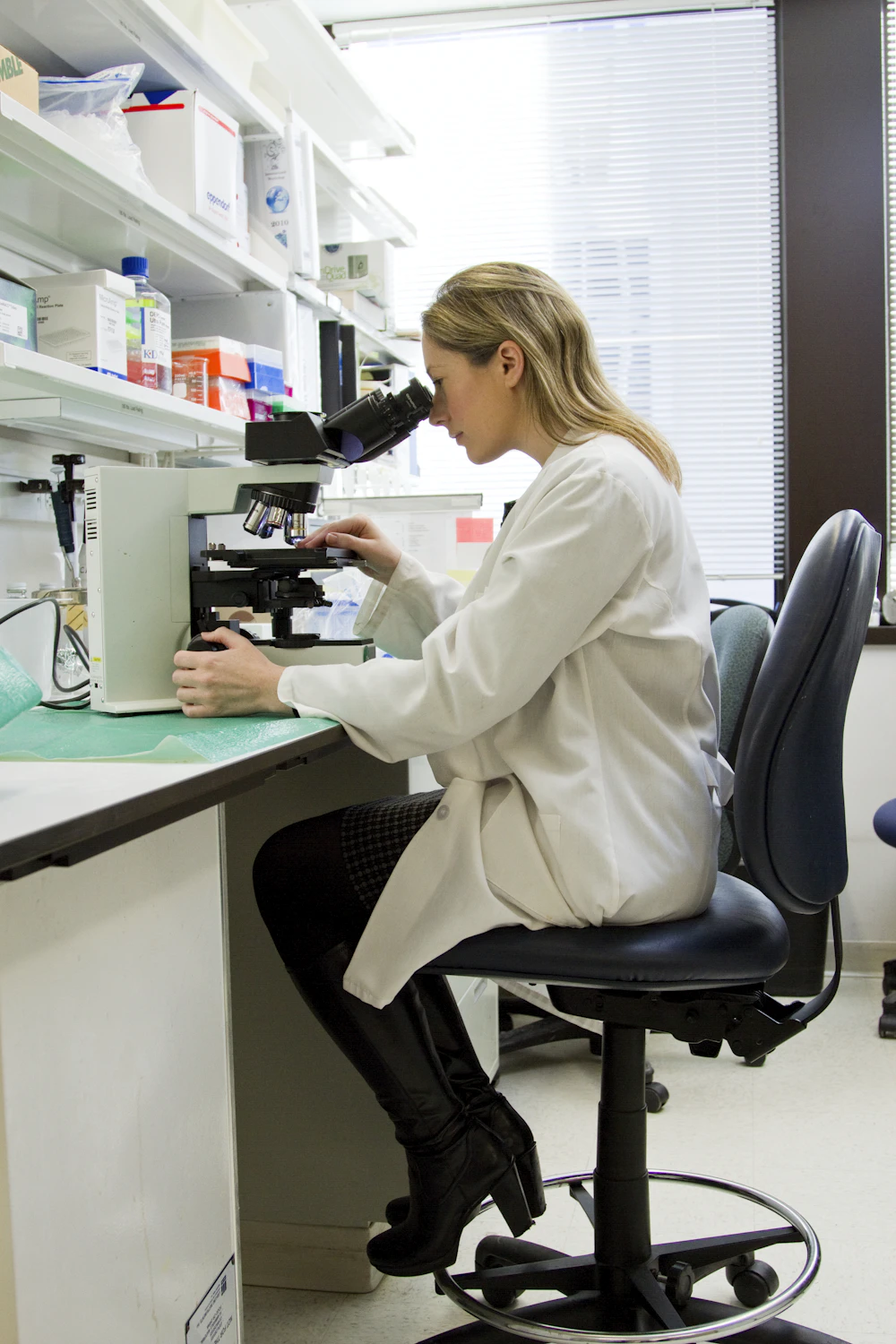
Synthetic biology laboratories enable the rewriting of genetic codes, challenging long-held assumptions about genetic code evolution.
The scientists aimed to determine whether life could survive with a simplified genetic code using only 61 codons instead of the natural 64. They eliminated three specific codons (UAG, UAA, and AGU) and replaced them with synonymous alternatives that code for the same amino acids. According to the "frozen accident" theory of genetic code evolution—which suggested the code became fixed early in evolution and couldn't be changed without lethal consequences—this modification should have been impossible. Yet despite these sweeping changes, the engineered organism lived, grew, and reproduced 5 .
Methodology: Step-by-Step Genome Recoding
Genome Design
Researchers identified every instance of the three target codons across all approximately 4,000 E. coli genes and designed synonymous replacements using alternative codons that specify the same amino acids.
DNA Synthesis
The entire recoded genome was divided into manageable segments and chemically synthesized piece by piece. This required advanced DNA synthesis technology and careful quality control to prevent errors.
Genome Assembly
The synthesized DNA fragments were systematically assembled into larger segments, eventually reconstructing the complete recoded genome.
Validation and Testing
The synthetic genome was introduced into E. coli cells that had their natural DNA removed. The viability and functionality of these cells were then rigorously tested.
Results and Analysis: Surprising Discoveries
The Syn61 strain demonstrated that the genetic code is far more flexible than previously imagined. However, the engineered bacteria did grow approximately 60% slower than wild-type E. coli, suggesting some fitness cost to the recoding 5 . Further investigation revealed a crucial insight: the performance costs stemmed primarily not from the codon reassignments themselves, but from pre-existing suppressor mutations and genetic interactions that became problematic in the new genetic context 5 .
Performance Comparison: Wild-Type vs. Syn61 E. coli
This finding fundamentally challenges our understanding of genetic code evolution. The act of changing the code—even dramatically, affecting thousands of genes simultaneously—is not inherently deleterious. Instead, the genetic code appears to be maintained not by intrinsic biochemical constraints but by the accumulation of historical contingencies that can, with sufficient effort, be overcome.
| Characteristic | Wild-Type E. coli | Syn61 Recoded E. coli |
|---|---|---|
| Number of codons used | 64 | 61 |
| Genome size | ~4.6 million bases | ~4 million bases |
| Growth rate | Normal | ~60% slower |
| Viability | Normal | Viable and reproducing |
| Primary fitness cost | N/A | Pre-existing genetic interactions |
Natural Variations: Evolution's Ongoing Experiments with the Code
While laboratory achievements demonstrate what's possible under controlled conditions, nature provides even more compelling evidence for genetic code flexibility. Comprehensive genomic surveys have revealed that genetic code variations are not rare curiosities but recurring evolutionary experiments 5 .
| Organism/Group | Standard Code | Variant Code | Molecular Mechanism |
|---|---|---|---|
| Vertebrate mitochondria | AGA, AGG = Arginine | AGA, AGG = Stop | tRNA modification |
| Many mitochondria | UGA = Stop | UGA = Tryptophan | Altered release factors |
| Candida yeast species | CTG = Leucine | CTG = Serine | tRNA sequence evolution |
| Ciliated protozoans | UAA, UAG = Stop | UAA, UAG = Glutamine | Translation machinery evolution |
| Mycoplasma bacteria | UGA = Stop | UGA = Tryptophan | Reduced genome size |
Distribution of Genetic Code Variations Across Life
These natural experiments demonstrate several crucial principles. First, genetic code changes can and do occur throughout evolutionary history—they're not confined to ancient evolutionary transitions but continue to arise and become fixed in modern lineages. Second, the same changes have evolved independently multiple times, suggesting that certain modifications may be particularly accessible or advantageous. Third, organisms with variant codes don't occupy marginal ecological niches—they include important pathogens, symbionts, and free-living species across diverse environments 5 .
The pattern of natural variations also reveals important constraints. Most changes affect codons that are rare in the organisms that reassign them, minimizing the number of genes that must be compatible with the new assignment. Stop codon reassignments are particularly common, perhaps because they affect fewer genes than sense codon changes 5 .
The Scientist's Toolkit: Key Research Tools and Methods
Research into the energy properties of the genetic code relies on sophisticated technologies that allow scientists to read, write, and edit DNA with increasing precision and scale. These tools have transformed our ability to test hypotheses about genetic code evolution.
| Tool/Method | Primary Function | Application in Code Research |
|---|---|---|
| Next-generation sequencing | High-throughput DNA reading | Comparing genomes across species to identify conservation patterns 6 |
| Whole-genome synthesis | Writing complete genomes from scratch | Creating recoded organisms like Syn61 5 |
| CRISPR-Cas systems | Precise genome editing | Testing effects of specific codon changes |
| Phage display | Studying protein-nucleic acid interactions | Exploring molecular recognition events 6 |
| Fluorescent in situ hybridization (FISH) | Physical mapping of genomes | Locating genes and features on chromosomes 3 |
| Restriction mapping | Identifying restriction enzyme cutting sites | Basic physical genome mapping 3 |
| Blue Pippin system | Automated DNA fragment size selection | Preparing libraries for sequencing 6 |
DNA Sequencing
ReadingTechnologies that determine the precise order of nucleotides within a DNA molecule, enabling comparative genomics and evolutionary studies.
Genome Editing
EditingPrecise modification of DNA sequences within living organisms, allowing direct testing of genetic code hypotheses.
Synthetic Biology
WritingDesign and construction of new biological parts, devices, and systems, including completely recoded genomes 5 .
Bioinformatics
AnalysisComputational analysis of biological data, including energy mapping of genetic sequences and evolutionary patterns.
These tools have enabled researchers to move from simply observing genetic codes to actively experimenting with them. The ability to synthesize entire genomes represents a particularly powerful approach, allowing scientists to test evolutionary hypotheses by constructing alternative genetic configurations and assessing their viability 5 6 .
Conclusion: Implications and Future Directions
The discovery that the genetic code functions as an energy code with optimized thermodynamic properties has profound implications for both basic science and practical applications. By expanding Darwin's theory to include "molecular Darwinism," we gain a more complete picture of the evolutionary forces that have shaped life on Earth 4 .
Resolving the Genetic Code Paradox
This research offers fresh insights into the paradox of why the genetic code remains so conserved despite its proven flexibility. The energy perspective suggests that the standard genetic code represents a particularly stable solution that emerged early in evolution and has been maintained both by the network effects of its deep integration into cellular machinery and by its favorable energy properties 1 5 .
The "Energy Genome"
Looking ahead, researchers plan to recast and map the human genome chemical sequence into an "energy genome," identifying DNA regions with different energy stabilities and correlating them with physical structures and biological functions 4 . This approach could revolutionize how we understand health and disease, potentially enabling better selection of DNA targets for molecular-based therapeutics.
"The origins of the evolution of the DNA genetic code and the evolution of all living species are embedded in the different energy profiles of their molecular DNA blueprints" 4 .
The energy code concept also bridges different scales of biological organization, connecting the molecular properties of DNA with organism-level evolution. This perspective highlights the elegant unity of natural processes, demonstrating how the universal laws of thermodynamics have guided evolution from the molecular level up.
As we continue to unravel the mysteries of the genetic code, each discovery reveals not just the complexity of life's mechanisms but also the beautiful simplicity of the physical principles that underlie them. The genetic code appears to be both a frozen accident and an optimized system—a paradox that makes perfect sense when we recognize that evolution has been operating as both an engineer and a physicist, crafting life's language through both historical contingency and the relentless optimization of energy.
Key Takeaway
The genetic code represents an optimized energy system that has been shaped by both historical contingencies and thermodynamic principles, expanding our understanding of evolution through the lens of molecular Darwinism.