Validating Evolutionary Predictions with Environmental DNA: From Theory to Clinical Applications
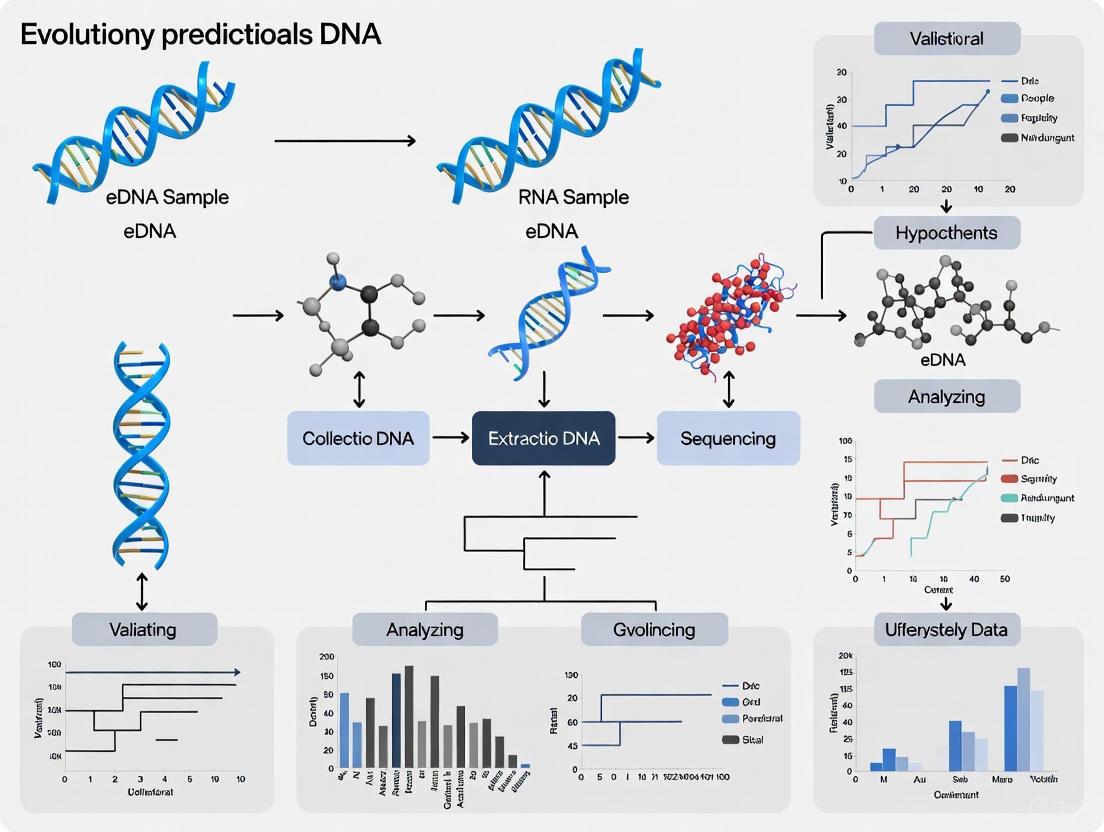
This article explores the transformative role of environmental DNA (eDNA) in validating and informing evolutionary predictions, a field rapidly moving from theoretical science to practical application.
Validating Evolutionary Predictions with Environmental DNA: From Theory to Clinical Applications
Abstract
This article explores the transformative role of environmental DNA (eDNA) in validating and informing evolutionary predictions, a field rapidly moving from theoretical science to practical application. We cover the foundational principles that make eDNA a powerful tool for forecasting evolutionary trajectories, such as pathogen adaptation and drug resistance. For researchers and drug development professionals, we detail cutting-edge methodological pipelines—from sample collection and metagenomic sequencing to bioinformatic analysis of biosynthetic gene clusters. The article critically addresses troubleshooting and optimization challenges, including contamination control and inhibitor removal. Finally, we present a rigorous validation framework, comparing eDNA efficacy against conventional methods across diverse use cases, from antibiotic discovery to conservation biology, synthesizing key takeaways for biomedical research and clinical innovation.
The New Science of Forecasting Evolution: eDNA as a Predictive Lens
Evolutionary science is undergoing a profound transformation, shifting from a historically descriptive discipline to a predictive one. For decades, predicting evolutionary processes was considered nearly impossible due to the inherent stochasticity of mutation, reproduction, and environmental change [1]. However, convergent advances across computational biology, molecular monitoring techniques, and theoretical frameworks have now made evolutionary forecasting an achievable reality with significant applications in public health, conservation, and biotechnology [1]. This paradigm shift is particularly crucial for addressing urgent challenges such as antimicrobial resistance, pathogen evolution, and biodiversity loss in fragile ecosystems.
The validation of these evolutionary predictions has been dramatically enhanced by the emergence of environmental DNA (eDNA) technologies. eDNA provides a non-invasive, highly sensitive method for detecting genetic traces left by organisms in their environment, enabling researchers to monitor evolutionary changes in real-time with minimal ecosystem disturbance [2] [3]. This technological advancement, combined with sophisticated modeling approaches, creates a powerful feedback loop where predictions can be tested and refined against empirical data collected from natural systems.
Theoretical Foundations of Evolutionary Forecasting
The Scientific Basis for Prediction
Evolutionary predictions share a common structure described by three key parameters: predictive scope (what aspect of evolution is being predicted), time scale (over what timeframe), and precision (the required accuracy) [1]. The scientific basis for these predictions rests on Darwin's theory of evolution by natural selection, extended by quantitative population genetics frameworks that account for forces such as random genetic drift, migration, recombination, and mutation [1].
Three primary factors now enable evolutionary forecasting where it was previously impossible:
Quantitative Models of Selection: Modern population genetics has developed precise mathematical frameworks, such as the breeder's equation and genomic selection models, that quantify how traits respond to selective pressures [1].
Computational Power: Advanced computing resources enable the simulation of complex evolutionary scenarios that incorporate multiple selective pressures, population structures, and eco-evolutionary feedback loops [1] [4].
Empirical Validation Methods: eDNA and other molecular tools provide high-resolution data for testing and refining predictions against real-world evolutionary changes [5] [2] [3].
The predictability of evolution depends largely on the strength of selection pressures and the roughness of the fitness landscape. Rougher fitness landscapes resulting from strong selection constraints can lead to greater predictability, as they limit the number of accessible evolutionary paths [4]. In contrast, neutral evolution, where all variants are equally likely, demonstrates minimal repeatability and remains challenging to forecast.
Methodological Approaches: From Traditional to Machine Learning
Forecasting methodologies span a continuum from traditional statistical approaches to advanced machine learning techniques, each with distinct advantages for different evolutionary questions:
Table 1: Comparison of Evolutionary Forecasting Methodologies
| Method Type | Key Techniques | Strengths | Ideal Applications |
|---|---|---|---|
| Traditional Statistical | Linear regression, ARIMA, Exponential smoothing, Holt-Winters filtering [6] [7] | High explainability, computationally efficient, transparent workflows [6] | Short-term predictions with limited variables, univariate time series data [6] |
| Machine Learning | Neural networks, random forest, support vector regression, Gaussian processes [6] | Handles complex multivariate datasets, identifies non-linear patterns, superior accuracy with large feature spaces [6] | Pathogen evolution, complex trait prediction, ecosystems with numerous interacting factors [6] |
| Mechanistic Models | Birth-death population models, structurally constrained substitution models [4] | Incorporates biological constraints, provides mechanistic insights, higher generality [4] | Protein evolution forecasting, antibiotic resistance development, evolutionary trajectories with structural constraints [4] |
In business applications, ML forecasting models have demonstrated superior performance compared to traditional methods, with one study showing ML achieving a mean absolute percentage error of 11.61% compared to 15.17% for traditional ARIMAX models [6]. Similar advantages are emerging in biological forecasting, particularly for complex evolutionary scenarios with multiple interacting factors.
Experimental Validation with Environmental DNA
eDNA Protocol for Monitoring Species of Conservation Concern
Environmental DNA protocols provide a powerful method for validating evolutionary predictions about species distribution and population changes. The following protocol was developed for monitoring endemic Asian spiny frogs in the Himalayan region but offers a adaptable framework for various taxa [3]:
Table 2: Key Steps in eDNA-Based Species Monitoring
| Protocol Step | Technical Specifications | Application in Evolutionary Studies |
|---|---|---|
| Primer Design & Validation | Target ~550 bp region of mitochondrial 16S rRNA gene; design multiple primer sets (5-14) per species; validate specificity against sympatric species [3] | Enables species-specific detection even in cryptic species complexes; provides data for phylogenetic predictions |
| Field Sampling | Collect water samples from targeted habitats; implement contamination controls; filter immediately or preserve with Longmire's solution [3] | Allows longitudinal monitoring to test predictions about range shifts and population changes |
| Laboratory Processing | Extract DNA using commercial kits; employ quantitative PCR with species-specific primers; include negative controls [3] | Provides presence/absence data with detection probabilities superior to visual surveys |
| Occupancy Modeling | Use multi-season occupancy models; incorporate environmental covariates; estimate detection probability and site occupancy [3] | Statistically robust framework for testing predictions about habitat use and population trends |
This protocol demonstrated significantly higher detection probabilities for both Hazara Torrent Frogs (Allopaa hazarensis) and Murree Hills Frogs (Nanorana vicina) compared to traditional visual encounter surveys [3]. For A. hazarensis, eDNA detection probability was substantially higher, highlighting the method's sensitivity for rare and elusive species where evolutionary changes might be most critical.
eDNA Metabarcoding for Community-Level Forecasting
For community-level evolutionary predictions, eDNA metabarcoding provides a comprehensive approach:
Figure 1: eDNA Metabarcoding Workflow for Community-Level Forecasting
This approach has demonstrated remarkable efficacy in marine ecosystems. A Black Sea study comparing eDNA metabarcoding with traditional trawling found that eDNA identified 23 fish species during autumn surveys compared to only 15 species detected by trawling [8]. Similarly, in summer expeditions, eDNA detected 12 species versus 9 species with trawling methods [8]. The enhanced sensitivity of eDNA is particularly valuable for detecting rare and migratory species that may be indicators of evolutionary responses to environmental change.
The integration of Bayesian regression and Generalized Additive Models (GAMs) with eDNA data allows for robust quantification of uncertainty in predictions—a critical component for evolutionary forecasting where stochastic processes play significant roles [8]. These statistical frameworks can capture nonlinear relationships between environmental DNA signals, environmental gradients, and population abundance, providing more accurate validation of evolutionary predictions.
Advanced Applications in Microbial and Molecular Evolution
Forecasting Protein Evolution
At the molecular level, forecasting protein evolution represents one of the most sophisticated applications of evolutionary prediction. A recently developed method integrates birth-death population models with structurally constrained substitution (SCS) models to predict protein evolutionary trajectories [4]:
Figure 2: Protein Evolution Forecasting Framework
This approach addresses a critical limitation of traditional population genetics methods, which simulate evolutionary history and molecular evolution as separate processes [4]. By integrating these components and incorporating structural constraints on protein folding stability, the method provides more biologically realistic forecasts of molecular evolution, particularly for viral proteins under strong selective pressures [4].
The implementation of this method in the ProteinEvolver framework (freely available at https://github.com/MiguelArenas/proteinevolver) enables researchers to forecast protein evolution under different selective scenarios, with applications in vaccine design and therapeutic development against rapidly evolving pathogens [4].
Predicting Microbial Evolutionary Dynamics
Microbial systems present unique opportunities for evolutionary forecasting due to their rapid generation times and large population sizes. The predictable aspects of microbial adaptation include:
- Faster fitness improvement in maladapted genotypes [1]
- Large beneficial mutation supply leading to competition between multiple beneficial mutations [1]
- High evolutionary convergence at the gene level in most environments [1]
- Selection for mutator phenotypes during adaptation [1]
These predictable patterns enable forecasts of microbial responses to antibiotics, environmental changes, and industrial biotechnology applications. Research initiatives such as the "Understanding and Predicting Microbial Evolutionary Dynamics 2025" conference highlight the growing importance of this field for addressing global challenges including antimicrobial resistance and ecosystem functioning [9].
The Scientist's Toolkit: Essential Research Reagent Solutions
Table 3: Key Research Reagents and Resources for Evolutionary Forecasting
| Resource Category | Specific Examples | Function in Evolutionary Forecasting |
|---|---|---|
| Laboratory Reagents | Longmire's solution (eDNA preservation), commercial DNA extraction kits, metabarcoding primers (e.g., MiFish-U for fish 12S), qPCR reagents [3] [8] | Enable high-quality sample preservation, DNA extraction, and species-specific detection for validation studies |
| Bioinformatics Tools | ProteinEvolver framework, occupancy modeling software, Bayesian regression packages, sequence alignment tools [3] [4] | Provide computational infrastructure for developing models and analyzing validation data |
| Reference Databases | MITOS database for mitochondrial genomes, protein structure databases, taxonomic reference libraries [5] [8] | Essential for taxonomic assignment and structural constraints in evolutionary models |
| Sequencing Platforms | Nanopore sequencing (e.g., for epigenetic clock development), Illumina platforms for metabarcoding, Sanger sequencing for validation [5] [3] | Generate molecular data for testing predictions across different biological scales |
The emerging discipline of evolutionary forecasting represents a paradigm shift in how we understand and interact with biological systems. By combining theoretical models from population genetics with advanced computational approaches and empirical validation through eDNA and other molecular tools, researchers can now make testable predictions about evolutionary trajectories across biological scales—from protein sequences to ecosystems.
The integration of prediction and validation creates a virtuous cycle where models inform monitoring efforts and empirical data refine predictive frameworks. This approach has profound implications for addressing pressing challenges in public health, conservation, and biotechnology, enabling proactive rather than reactive strategies for managing evolutionary processes.
As the field advances, key priorities will include improving the granularity of spatiotemporal predictions, better incorporating eco-evolutionary dynamics, and developing more accessible tools for researchers and practitioners. The continued refinement of evolutionary forecasting promises to transform our relationship with the biological world, moving from passive observation to active engagement with the processes that shape life on Earth.
Environmental DNA (eDNA) represents the genetic material continually shed by organisms into their surrounding environment through mechanisms including skin cells, scales, mucus, feces, and gametes [10]. This genetic material, once released into ecosystems ranging from aquatic to terrestrial environments, can persist in environmental substrates such as water, soil, and sediment for varying durations. The analysis of this eDNA provides a powerful lens through which to observe and validate evolutionary processes occurring across spatial and temporal scales. Unlike traditional genetic approaches that require direct observation or capture of organisms, eDNA sampling captures the genetic footprints of entire communities, thereby recording both ecological and evolutionary changes [11]. This allows researchers to access the raw material for evolution—the genetic variation within populations—without disruptive sampling methods, enabling studies of how populations adapt to environmental changes, how species interactions drive evolutionary dynamics, and how biodiversity responds to long-term pressures.
The application of eDNA to evolutionary studies is particularly valuable because it can provide continuous temporal data over long time periods, ranging from recent changes to millennial-scale shifts [11]. Sediment cores, for instance, can archive eDNA for thousands of years, creating a temporal record that allows scientists to hindcast evolutionary responses to historical environmental changes and validate models predicting future evolutionary trajectories [11]. By recovering genetic sequences from different time periods, researchers can directly observe genetic variation shifting in response to selection pressures, documenting evolution in action. Furthermore, eDNA enables the study of eco-evolutionary dynamics—the mutual feedback between evolutionary and ecological processes occurring on similar timescales [11]. As communities change in composition and as populations adapt to new conditions, they modify their environments, which in turn creates new selection pressures. Environmental DNA provides a means to track these interrelated processes across entire ecosystems.
Theoretical Framework: eDNA as the Raw Material for Evolutionary Studies
The genetic variation captured through eDNA sampling constitutes the fundamental substrate upon which evolutionary forces act. This variation, when distributed across populations and through time, provides the essential data needed to investigate evolutionary mechanisms including natural selection, genetic drift, gene flow, and mutation. Environmental DNA delivers temporal data that are unidirectional, meaning environmental changes must occur before their impacts become visible in genetic records, thus providing robust opportunities for identifying causal relationships in evolutionary dynamics [11]. This temporal dimension is crucial for distinguishing between short-term fluctuations and long-term evolutionary trends.
Environmental DNA archives, particularly those preserved in stable environments such as lake sediments, ice cores, and permafrost, can span hundreds to thousands of years, enabling researchers to reconstruct evolutionary timelines with unprecedented resolution [11]. These archives allow scientists to address fundamental evolutionary questions such as how populations genetically adapted to past climate shifts, how colonization events shaped genomic diversity, and how human activities have accelerated evolutionary changes in recent centuries. The ability to simultaneously track multiple taxa across these timeframes further enables community-level evolutionary studies, revealing how evolutionary processes interact across trophic levels and among interacting species.
Table: Key Evolutionary Questions Addressable with eDNA Time Series
| Evolutionary Process | eDNA Application | Temporal Scale |
|---|---|---|
| Natural Selection | Tracking allele frequency changes in response to documented environmental shifts | Decades to centuries |
| Adaptation | Identifying genetic variants associated with specific environmental conditions | Centuries to millennia |
| Speciation | Reconstructing colonization routes and subsequent genetic divergence | Millennia |
| Eco-evolutionary Dynamics | Correlating genetic changes with community-level shifts | Decades to centuries |
| Extinction | Dating population declines and identifying associated genetic bottlenecks | Centuries to millennia |
Methodological Principles: From Sampling to Data Interpretation
The process of capturing evolutionary raw material through eDNA involves a series of critical methodological steps, each requiring careful optimization to ensure the genetic data accurately represent the biological communities from which they originate.
Sample Collection and Filtration
The initial stage of any eDNA study involves collecting environmental samples and concentrating the genetic material through filtration. The choice of filter pore size represents a crucial decision that significantly impacts the taxonomic profile and subsequent evolutionary inferences. For studies targeting macroorganisms such as fish or mammals, larger pore size filters (e.g., 5 µm) are often more effective than smaller pores (e.g., 0.45 µm) because they selectively capture larger tissue fragments and cells shed by vertebrates while excluding much of the microbial DNA that would otherwise dominate the sample [12]. This enrichment for target DNA increases the ratio of amplifiable target DNA to total DNA, thereby enhancing detection probability for evolutionary studies focused on specific taxa.
The volume of water filtered similarly influences detection sensitivity. Larger volumes (e.g., 3 L versus 1 L) typically increase the absolute amount of target DNA recovered, thereby improving the probability of detecting rare species or genetic variants [12]. However, this relationship must be balanced against practical constraints including filter clogging, particularly in turbid waters, and the potential for increased co-concentration of PCR inhibitors. In estuarine and other challenging environments, glass fiber filters have demonstrated superior performance by filtering rapidly (2.32 ± 0.08 minutes) while maintaining high DNA yield percentages (0.00107 ± 0.00013) even in high-turbidity conditions [13].
DNA Extraction and Preservation
DNA extraction methods must be selected to maximize yield while preserving the integrity of the genetic material for evolutionary analyses. Commercial extraction kits typically provide a balance of efficiency, consistency, and inhibitor removal, though phenol-chloroform-isoamyl extractions may maximize total DNA recovery in some circumstances [12]. A critical consideration for evolutionary studies is that maximizing total DNA yield does not always correlate with improved target detection, as increased co-extraction of off-target DNA and inhibitors can sometimes reduce effective sensitivity for the taxa of interest.
The preservation method employed immediately after sample collection significantly impacts DNA quality for subsequent analyses. Common approaches include freezing at -20°C or using commercial preservatives such as Longmire's buffer. The optimal choice depends on field conditions, storage duration, and transportation requirements, with the overarching goal of minimizing DNA degradation that could bias evolutionary inferences.
Table: Optimized eDNA Protocol Parameters for Evolutionary Studies
| Protocol Step | Recommended Parameters for Macroorganisms | Effect on Evolutionary Data Quality |
|---|---|---|
| Filter Pore Size | 5 µm | Increases target-to-total DNA ratio for vertebrate DNA [12] |
| Water Volume | 3 L | Increases probability of detecting rare species/alleles [12] |
| Filter Material | Glass fiber | Resilient to turbidity; faster filtration times [13] |
| DNA Extraction | Commercial kits vs. phenol-chloroform | Balances yield, inhibitor removal, and practicality [12] |
| Inhibitor Removal | Context-dependent | May be necessary in humic-rich environments [13] |
Experimental Protocols for Evolutionary eDNA Studies
Protocol 1: Detecting Terrestrial Invasive Snakes
A recent study developing eDNA methods for detecting the invasive California kingsnake (Lampropeltis californiae) on the Canary Islands provides a robust protocol applicable to evolutionary studies of terrestrial species [14]. This protocol addresses the challenge of detecting elusive terrestrial snakes, which are typically characterized by exceptionally low detection rates using conventional methods.
Sample Collection:
- Deploy artificial cover objects (ACOs) made of different materials (e.g., metal, wood) in suitable habitats.
- Collect swab samples from underneath ACOs using sterile swabs.
- Collect soil samples from beneath ACOs and from random locations for comparative analysis.
- Include samples from researchers' boots to assess human-mediated dispersal.
DNA Extraction and Primer Design:
- Extract genomic DNA using commercial kits (e.g., E.Z.N.A. Tissue DNA Kit).
- Design species-specific primers targeting a short fragment (≈654 bp) of the cytochrome c oxidase I (COI) gene to maximize detection probability.
- Validate primer specificity against co-occurring endemic reptile species.
qPCR Amplification:
- Perform reactions using 300 nM of each primer and SYBR Green Supermix in 15 µL reaction volumes.
- Use thermal cycling conditions: initial denaturation at 95°C for 10 min, followed by 40 cycles of 95°C for 15 s, 57°C for 20 s, and 72°C for 30 s.
- Analyze melting curves to confirm amplification specificity.
This protocol successfully detected L. californiae eDNA in 9.31% of swab samples, 2.22% of soil samples under ACOs, and 2.56% of boot samples, demonstrating its utility for monitoring elusive species for evolutionary studies [14].
Protocol 2: Estuarine eDNA Optimization for Salmon
For aquatic environments, particularly challenging estuaries with high turbidity and PCR inhibitors, an optimized protocol for Chinook salmon (Oncorhynchus tshawytscha) detection provides a framework for evolutionary studies in these ecosystems [13].
Sample Processing:
- Filter 500 mL to 1 L of estuarine water through glass fiber filters to balance DNA capture with practical constraints.
- Apply a secondary inhibitor removal step when necessary to counteract PCR inhibition from humic substances.
DNA Extraction and Amplification:
- Extract DNA using methods compatible with inhibitor removal (e.g., magnetic bead-based systems).
- Use quantitative PCR (qPCR) with species-specific primers for sensitive detection.
- Include appropriate controls (field blanks, extraction blanks, positive controls) to validate results.
This protocol emphasizes the balance between time, cost, and DNA yield, prioritizing sensitivity for realistic scenarios while maintaining scalability for large-scale evolutionary studies [13].
Data Interpretation and Analysis Framework
Transforming eDNA data into evolutionary insights requires specialized analytical approaches that account for the unique characteristics of environmental genetic information.
Accounting for Technical and Biological Variation
A critical challenge in eDNA studies is distinguishing true biological variation from technical artifacts introduced during sampling and processing. Biological replicates (replicate water samples/filters from the same environment) capture inherent spatial and temporal heterogeneity in eDNA distribution, while technical replicates (replicate molecular analyses from the same sample) quantify methodological consistency [12]. Studies have shown that homogenizing source water before filtering removes much of the biological variation, allowing clearer attribution of observed differences to methodological variables rather than inherent heterogeneity [12].
For evolutionary studies seeking to track genetic changes over time, this distinction is paramount. False negatives (missing a species that is present) can lead to incorrect conclusions about local extinctions or population declines, while false positives (detecting a species that is absent) can suggest persistence or range expansions that haven't occurred [10]. Statistical models that explicitly incorporate both technical and biological variance components provide more robust estimates of population parameters essential for evolutionary inference.
Integrating Data from Different Methodological Approaches
Evolutionary studies often require combining data from multiple sampling efforts or adapting protocols over time as methodologies advance. A flexible statistical framework allows for the responsible integration of data collected using different approaches [12]. This can be achieved through linear modeling that accounts for protocol-specific effects, enabling researchers to extend datasets across methodological boundaries while maintaining analytical rigor.
The equation describing how each protocol step influences recovered eDNA can be expressed as:
Y ∼ Yf × Ye(f) - If × Ie × {0 if secondary inhibitor removal is used, 1 otherwise}
Where Y is the ratio of input eDNA amplified by qPCR, Yf is the ratio of input eDNA that binds to the filter, Ye(f) is the ratio of filter-bound eDNA isolated by the extraction method, If is filter inhibitor carryover, and Ie is extraction method inhibitor carryover [13]. This quantitative framework helps researchers understand how methodological choices impact downstream evolutionary inferences.
The Scientist's Toolkit: Essential Research Reagents and Materials
Table: Key Research Reagent Solutions for eDNA Evolutionary Studies
| Reagent/Material | Function | Application in Evolutionary Studies |
|---|---|---|
| Glass Fiber Filters | Captures eDNA from water samples while resisting clogging | Optimal for turbid environments; improves DNA yield for population genetics [13] |
| Species-Specific Primers | Amplifies target species DNA from complex mixtures | Enables tracking of specific populations for evolutionary monitoring [14] |
| Commercial DNA Extraction Kits | Isolates DNA from filters while removing inhibitors | Provides consistent yield for comparative analyses across temporal samples [12] |
| Inhibitor Removal Reagents | Reduces PCR inhibition from environmental compounds | Critical for accurate detection in inhibitor-rich environments like soils [14] |
| Artificial Cover Objects (ACOs) | Non-invasive sampling of terrestrial eDNA | Enables detection of elusive species for distribution studies [14] |
| qPCR Master Mixes | Quantitative amplification of target DNA | Provides sensitive detection for tracking population changes [14] |
Visualizing eDNA Workflows for Evolutionary Studies
eDNA to Evolutionary Inference Workflow
eDNA in Evolutionary Studies Logic Model
Application Note
Environmental DNA (eDNA) and environmental RNA (eRNA) methodologies have emerged as powerful tools for predicting and monitoring critical evolutionary and ecological processes. This application note details how these approaches, framed within a One Health perspective, can be leveraged to validate predictions concerning pathogen spread, the propagation of antibiotic resistance genes (ARGs), and species adaptation in a rapidly changing world. By detecting genetic traces shed by organisms into their environment, researchers can conduct non-invasive, broad-scale surveillance that provides early warning signals for emerging threats to public and ecosystem health [15]. The protocols below outline standardized methods for targeting these key predictive markers in aquatic and terrestrial environments.
Predictive Target 1: Pathogen Spread and Disease Ecology
Protocol 1.1: Aquatic Pathogen Surveillance via eDNA/eRNA Metabarcoding
Principle: Filter water samples to capture genetic material from waterborne pathogens and parasites. Subsequent genetic analysis identifies a broad spectrum of pathogenic organisms without the need for direct host sampling, which is often stressful, destructive, or inefficient [15].
Key Workflow Steps:
- Sample Collection: Collect water samples from the target aquatic environment (e.g., near wastewater discharge points, aquaculture facilities, or natural waterways).
- Filtration: Filter a defined volume of water (typically 1-2 liters) through sterile membrane filters (e.g., 0.22 µm pore size) to capture particulate matter and eDNA.
- Nucleic Acid Extraction: Extract total environmental DNA/RNA from the filters using commercial kits designed for environmental samples, incorporating steps to inhibit degradation.
- Metabarcoding PCR: Amplify target genetic regions using broad-range or group-specific primers. For eukaryotic parasites, the 18S rRNA gene is a common target [15].
- Sequencing and Bioinformatic Analysis: Perform high-throughput sequencing of the amplicons. Process the resulting sequences using bioinformatic pipelines (e.g., PR2 database for protists) to assign taxonomic identities and determine pathogen presence and diversity [15].
Visualization of the Pathogen eDNA/eRNA Continuum for Risk Assessment:
Predictive Target 2: Antibiotic Resistance Gene (ARG) Propagation
Protocol 2.1: Quantifying ARG Risk and Connectivity in Soil Resistomes
Principle: Use metagenomic sequencing of soil samples to track the abundance and mobility of high-risk ARGs, assessing their connectivity to human pathogens. This helps predict the environmental drivers of clinical antibiotic resistance [16].
Key Workflow Steps:
- Soil Sampling: Collect composite soil samples from various land-use types (agricultural, urban, pristine).
- Metagenomic Sequencing: Extract total genomic DNA and perform shotgun metagenomic sequencing to capture the entire genetic content, including ARGs.
- ARG Profiling and Risk Ranking: Annotate sequences against ARG databases (e.g., SARG database) using tools like ARGs-OAP. Categorize identified ARGs by risk; Rank I ARGs are defined as those with documented host pathogenicity, high gene mobility, and enrichment in human-associated environments [16].
- Source Tracking and Connectivity Analysis: Use computational tools like FEAST (Fast Expectation-maximization for Microbial Source Tracking) to attribute the origins of soil ARGs (e.g., human feces, livestock, wastewater) [16]. Calculate a "connectivity" metric based on sequence similarity and phylogenetic analysis to quantify gene flow between soil bacteria and clinical isolates (e.g., E. coli) [16].
Quantitative Data on Soil ARG Risk and Connectivity:
Table 1: Key Findings from Global Soil ARG Metagenomic Analysis [16]
| Metric | Finding | Temporal Trend (2008-2021) | Statistical Significance |
|---|---|---|---|
| Relative Abundance of Rank I ARGs | 1.5 copies per 1000 cells in soil | Significant increase (r = 0.89) | p < 0.001 |
| Source Attribution of Soil Rank I ARGs | Human feces (75.4%), Chicken feces (68.3%), WWTP effluent (59.1%) | Not Reported | N/A |
| Genetic Overlap with Clinical E. coli | Increased connectivity over time | Significant increase | p < 0.001 |
| Correlation with Clinical Resistance | R² = 0.40 – 0.89 with regional clinical AMR data | Not Reported | p < 0.001 |
Protocol 2.2: Single Plasmid Analysis of ARGs using CRISPR/Cas9 and Optical DNA Mapping
Principle: This method directly visualizes and identifies specific ARGs on individual plasmid molecules, providing rapid characterization of mobile genetic elements responsible for the horizontal spread of resistance [17].
Key Workflow Steps:
- Plasmid Extraction: Isolate intact plasmids from bacterial isolates.
- CRISPR/Cas9 Cleavage: Incubate plasmids with the wild-type Cas9 enzyme complexed with a guide RNA (gRNA) designed to be complementary to a specific ARG (e.g.,
blaCTX-M-15,blaNDM). This linearizes plasmids carrying the target gene at a specific site. - Optical DNA Mapping: Stain the DNA molecules with a fluorescent dye (YOYO-1) and the AT-binding molecule netropsin. This creates a sequence-dependent intensity barcode along the DNA.
- Nanofluidic Stretching and Imaging: Introduce the sample into a nanofluidic channel device to stretch the DNA molecules linearly. Image them using fluorescence microscopy to obtain their barcodes and lengths.
- Analysis: Molecules linearized by Cas9 will show a consistent break point at the same location on the barcode, confirming the presence of the target ARG on a plasmid of a specific size [17].
Visualization of Single Plasmid ARG Identification Workflow:
Predictive Target 3: Species Adaptation and Range Shifts
Protocol 3.1: Tracking Invasive Species with eDNA Metabarcoding
Principle: Detect the presence and range expansion of invasive species in vulnerable ecosystems (e.g., the warming Arctic) by identifying their unique eDNA signatures in water samples, providing an early warning before established populations are visually confirmed [18].
Key Workflow Steps:
- Strategic Water Sampling: Collect water samples from strategic locations, such as along shipping routes and in vulnerable ports, to maximize the chance of detecting nascent invasions.
- Filtration and eDNA Extraction: Filter water to capture genetic material and extract eDNA.
- Metabarcoding PCR: Amplify a standardized, taxonomically informative gene region (a "barcode") using primers that can detect a wide array of species.
- High-Throughput Sequencing and Analysis: Sequence the amplicons and compare the resulting sequences to reference databases (e.g., BOLD, GenBank) to identify the species present. This method confirmed the presence of the invasive bay barnacle (Amphibalanus improvisus) in the Canadian Arctic for the first time [18].
The Scientist's Toolkit: Research Reagent Solutions
Table 2: Essential Reagents and Kits for eDNA/eRNA-based Predictive Studies
| Reagent / Kit / Tool | Primary Function | Application Example |
|---|---|---|
| Sterile Membrane Filters (0.22 µm) | Capture of particulate matter and eDNA from water samples during filtration. | Pathogen surveillance in wastewater; invasive species detection in marine water [15] [18]. |
| Commercial eDNA/eRNA Extraction Kits | Isolation of high-quality, inhibitor-free nucleic acids from complex environmental matrices (soil, water, sediment). | All protocols requiring downstream molecular analysis (metabarcoding, metagenomics) [15]. |
| Broad-Range PCR Primers (e.g., 18S rRNA, COI) | Amplification of diagnostic gene regions from diverse taxonomic groups for metabarcoding. | Detection of eukaryotic pathogens and parasites; biodiversity assessment in water samples [15]. |
| SARG Database & ARGs-OAP Pipeline | Reference database and bioinformatic tool for annotating and risk-classifying ARGs from metagenomic data. | Profiling the soil antibiotic resistome and identifying high-risk Rank I ARGs [16]. |
| FEAST Source Tracking Tool | Computational tool for estimating the proportional contributions of source environments to a sink microbial community. | Attributing the origins of ARGs found in soil to human, livestock, or other environmental sources [16]. |
| Cas9 Nuclease & Custom gRNA | Programmable enzyme and guide RNA for targeted cleavage of DNA at sequences complementary to the gRNA. | Linearizing plasmids at the location of specific ARGs (e.g., blaCTX-M, blaKPC) for optical mapping [17]. |
| Nanofluidic Channel Device | Micro-fabricated device for linear stretching of single DNA molecules for microscopy. | Generating optical barcodes of plasmids for sizing and ARG localization [17]. |
The emerging paradigm of predictive evolutionary biology seeks to move beyond retrospective analysis to forecast biological change across measurable timeframes. This framework integrates theoretical models with empirical data—particularly from environmental DNA (eDNA)—to generate testable predictions about evolutionary trajectories. The predictive scope encompasses time scales from contemporary (ecological) to long-term (macroevolutionary) dynamics, with precision determined by the interplay of model selection, data quality, and variable specification. For evolutionary predictions to achieve scientific rigor and practical utility, researchers must clearly define three core components: the temporal domain over which predictions apply, the expected precision of quantitative forecasts, and the evolutionary variables targeted for prediction. This application note establishes protocols for defining this predictive scope within eDNA research, providing a standardized approach for validating evolutionary predictions across diverse biological systems.
Theoretical Foundations: Time Scales and Predictive Windows
Evolutionary forecasting operates across distinct temporal windows defined by detectability limits and parameter stability. Different analytical approaches are optimized for specific time horizons based on the stability of evolutionary parameters and the detectability of signal against background variation.
Table 1: Time Scales and Corresponding Predictive Frameworks in Evolutionary Forecasting
| Time Scale (Generations) | Predictive Framework | Key Evolutionary Variables | Primary Data Sources | Limitations & Considerations |
|---|---|---|---|---|
| Short-term (5-20) | Trait-based models | Phenotypic traits, polygenic scores | Common garden experiments, reciprocal transplants | Assumes stable G-matrix; measures correlated phenotypic responses [19] |
| Medium-term (20-100) | Allele-frequency models | Identifiable loci under selection | Genomic time-series, eDNA metabarcoding | Requires selection to outpace genetic drift and sampling error [19] |
| Long-term (100+) | Composite adaptation scores | Aggregate polygenic scores | Paleogenomics, ancient eDNA, phylogenetic comparison | Projects under novel environments; aggregates many small-effect loci [19] |
| Cross-scale | Macrogenetics | Genetic diversity indices, allele frequencies | Georeferenced genetic databases, eDNA | Links patterns to anthropogenic drivers; enables spatial predictions [20] |
The Ornstein-Uhlenbeck (OU) process provides a unifying quantitative framework for modeling evolutionary trajectories across these time scales. This stochastic process models change in a trait (e.g., gene expression level) across time as: dX_t = σdB_t + α(θ - X_t)dt, where σ represents the rate of drift (Brownian motion), α parameterizes the strength of selection pulling traits toward an optimal value θ, and dB_t denotes random fluctuations [21]. The OU process accurately captures the saturation of expression differences between mammalian species with increasing evolutionary time, reflecting the balance between drift and stabilizing selection [21].
Essential Variables and Quantitative Frameworks
Core Evolutionary Variables for Prediction
The predictive capacity of evolutionary models depends on selecting appropriate response variables that capture meaningful biological change:
- Genetic Diversity Metrics: Allelic richness, heterozygosity, and genetic differentiation (F~ST~) serve as essential indicators of evolutionary potential. The mutation-area relationship (MAR) provides a power-law framework for predicting genetic diversity loss with habitat reduction, analogous to species-area relationships [20].
- Allele Frequency Dynamics: Changes at specific loci under selection provide the most direct measurement of contemporary evolution. Studies in Mimulus guttatus demonstrate that allele frequency changes can be quantitatively predicted from fitness measurements, with male selection in one generation predicting allele frequency changes in the next [22].
- Gene Expression Profiles: Expression levels evolve under stabilizing and directional selection, with the OU model parameterizing the distribution of optimal expression levels [21]. Comparative expression data across species enables detection of deleterious expression in clinical samples and identification of lineage-specific adaptations.
- Effective Population Size (N~e~): Determines the relative strength of selection versus drift and directly influences the rate of adaptive evolution [20].
Precision Metrics and Validation Approaches
The precision of evolutionary predictions must be quantified using standardized metrics:
Table 2: Precision Metrics for Evolutionary Predictions
| Prediction Type | Validation Approach | Precision Metrics | Application Examples |
|---|---|---|---|
| Allele Frequency Change | Correlation between predicted and observed Δp | R², mean squared error, confidence interval coverage | Prediction of allele frequency changes in Mimulus guttatus populations (R² = 0.63 for male selection SNPs) [22] |
| Genetic Diversity Loss | Comparison of observed versus predicted heterozygosity | Absolute error, proportional deviation | Macrogenetic predictions of 6% genetic diversity loss since the Industrial Revolution [20] |
| Species Presence/Absence | eDNA detection versus traditional surveys | Sensitivity, specificity, F1 score | Marine NIS detection with fine mesh tow nets (92% detection rate) [23] |
| Expression Level Optimization | Comparison to clinical outcomes | ROC curves, likelihood ratios | Identification of deleterious expression levels in patient data using optimal distributions from OU models [21] |
Experimental Protocols for eDNA-Based Evolutionary Forecasting
Protocol: Aquatic eDNA Sampling for Biodiversity Monitoring
Purpose: Standardized collection of aquatic eDNA samples for biodiversity monitoring and temporal tracking of evolutionary relevant parameters.
Materials:
- Hollow-membrane filtration cartridges (e.g., RKS laboratories systems)
- Sterivex filters (as industry standard comparison)
- Programmable pump controller with flow meter
- Air pump and ozone generator for decontamination
- 8-filter manifold for parallel processing
- DNA preservation buffer (e.g., Longmire's buffer)
- Cold chain maintenance equipment (-20°C storage)
Procedure:
- Site Selection: Choose sampling locations representing habitats of interest (e.g., 12 locations across 4 geographic areas as in Irish coastal waters study [23]).
- Filtration Setup: Assemble filtration system with up to 8 hollow-membrane cartridges. These allow six-fold increase in filtration volume and three-fold increase in filtration speed compared to Sterivex filters [24].
- Water Processing: Filter 1L to 10L of water per sample, depending on turbidity. Record filtration volume and time precisely.
- Sample Preservation: Immediately after filtration, add DNA preservation buffer to cartridges and store at -20°C.
- Field Controls: Include field blanks (purified water processed identically to samples) to monitor contamination.
- Metadata Collection: Document GPS coordinates, temperature, salinity, UV exposure, and sediment composition, as these parameters influence eDNA recovery [23].
Validation: Conduct workshop with technical staff without prior eDNA knowledge to evaluate ease of deployment and success of independent sample collection [24].
Protocol: Temporal Sampling for Allele Frequency Tracking
Purpose: Direct measurement of allele frequency changes (Δp) across generations to validate evolutionary predictions.
Materials:
- Reduced-representation sequencing supplies (MSG-RADseq)
- 187 full genome sequences from reference panel [22]
- Low-coverage whole genome sequencing platform
- Haplotype matching computational pipeline
Procedure:
- Baseline Sampling: In Generation 1 (2013), sample flowering adults (n=1936) and genotyped using MSG-RADseq reduced representation sequencing [22].
- Progeny Sampling: Collect and genotype random progeny from each adult to infer male gamete allele frequencies.
- Next Generation Sampling: In Generation 2 (2014), sample three cohorts: (i) germinated but non-reproductive individuals, (ii) successfully flowering adults, and (iii) their progeny [22].
- Genotype Inference: Apply "haplotype matching" technique—aligning variants to 187 full genome sequences from the population—to derive genotype probabilities for SNPs within 15,360 genic regions [22].
- Selection Estimation: Use likelihood-based selection component models generalized to accommodate uncertain genotype calls to estimate male selection differentials.
- Prediction Validation: Test correlation between male selection in 2013 and observed allele frequency changes in 2014.
Validation: Method successfully predicted allele frequency changes at 587 SNPs with p < 10^-5 in Mimulus guttatus [22].
Visualization Frameworks
Predictive Workflow Integration
Time Scale Windows for Prediction
The Scientist's Toolkit: Research Reagent Solutions
Table 3: Essential Research Reagents and Platforms for Evolutionary Forecasting
| Reagent/Platform | Function | Application Example | Performance Metrics |
|---|---|---|---|
| Hollow-membrane filtration cartridges | eDNA concentration from aquatic environments | Modular water sampling systems for diverse environments | 6× increased filtration volume, 3× faster filtration vs. Sterivex [24] |
| MSG-RADseq reagents | Reduced-representation genome sequencing | Genotyping of 1936 experimental plants for allele frequency estimation [22] | Cost-effective genome-wide SNP discovery without full genome sequencing |
| Haplotype matching pipeline | Genotype inference from low-coverage sequencing | Alignment to 187 full genome references for improved prediction accuracy [22] | Essential for accurate Δp prediction in natural populations |
| Ornstein-Uhlenbeck model framework | Parameterization of expression evolution | Quantifying stabilizing selection on gene expression across 17 mammalian species [21] | Models both drift (σ) and selective strength (α) toward optimum (θ) |
| Fine mesh tow nets (60μm) | Marine organism collection for NIS detection | Biodiversity monitoring in Irish coastal waters [23] | Most cost-efficient for large-scale eDNA metabarcoding surveys |
| Genetic Essential Biodiversity Variables (EBVs) | Standardized genetic diversity metrics | Tracking progress toward Kunming-Montreal Global Biodiversity Framework targets [20] | Scalable metrics for global genetic diversity assessment |
The predictive scope in evolutionary biology is expanding from theoretical possibility to practical application through integrated approaches that define explicit time scales, precision expectations, and target variables. The protocols and frameworks presented here establish a foundation for validating evolutionary predictions using eDNA methodologies. Critical to this endeavor is the recognition that different predictive windows require distinct modeling approaches—from trait-based forecasts over 5-20 generations to allele-frequency projections across 20-100 generations and composite adaptation scores for century-scale predictions [19]. The integration of macrogenetic patterns with process-based models will enable more accurate forecasting of biodiversity responses to global change [20], while technological advances in eDNA sampling increase the spatial and temporal resolution of monitoring [24] [23]. As validation studies demonstrate increasingly accurate prediction of allele frequency changes [22] and expression evolution [21], evolutionary biology transitions from a historical science to a predictive one, with profound implications for conservation, medicine, and fundamental biological understanding.
Environmental DNA (eDNA) analysis has emerged as a transformative tool for ecological monitoring, yet its application as a rigorous instrument for validating evolutionary predictions remains an emerging frontier. This protocol details an integrated workflow from sample collection to bioinformatic analysis, specifically designed to generate high-quality data suitable for testing evolutionary hypotheses. By incorporating recent advances in sampling technology, inhibition removal, and high-fidelity amplification, we present a standardized methodology that enables researchers to move beyond biodiversity snapshots to capture the molecular signals of evolutionary processes in action.
The power of eDNA analysis extends far beyond species inventories. When applied within a temporal framework, eDNA becomes a potent tool for observing evolutionary dynamics directly, allowing researchers to test predictions about population adaptation to environmental change. Sediment cores containing preserved eDNA serve as natural archives, enabling the reconstruction of population genomic histories over extended timescales [25]. This paleogenomic approach provides unprecedented opportunity to identify adaptive mutations, trace allele frequency changes, and determine whether adaptive responses originate from new mutations or standing genetic variation—key predictions in evolutionary models [25]. The protocols detailed herein establish the technical foundation for these investigations, with particular emphasis on methods that maximize DNA yield, minimize contamination, and ensure data reproducibility for temporal comparisons.
Experimental Protocols & Workflows
Sample Collection and Filtration
Modular Water Sampling Systems: For marine and freshwater environments, employ modular sampling systems that utilize hollow-membrane (HM) filtration cartridges. These systems typically combine pumps, a programmable controller, and multiple filters for parallel processing [24].
- Procedure:
- Deploy the filtration system in the target aquatic environment (from creeks to open ocean)
- Filter water through HM filtration cartridges, which allow for a six-fold increase in filtration volume and threefold increase in filtration speed compared to standard Sterivex filters [24]
- In turbid waters, implement pre-filtration through polypropylene filters with pore sizes of 840, 200, 50, or 10 μm to prevent clogging and reduce PCR inhibitors [26]
- Preserve filters with appropriate preservation buffers (e.g., containing benzalkonium chloride) [26]
- Store filters at -20°C until DNA extraction
Temporal Sampling for Evolutionary Studies: For studies investigating evolutionary processes, incorporate sediment coring to access historical DNA archives. Date sediment layers using established methods such as 210Pb and 137Cs isotope analysis or 14C dating for older samples [25].
DNA Extraction and Inhibition Removal
Bead-Based Extraction Protocol:
- Extract DNA using automated magnetic bead-based systems (e.g., KingFisher system) for high-throughput processing [27]
- Process samples with inhibitor removal kits (e.g., Zymo OneStep PCR Inhibitor Removal Kit) when working with complex samples from turbid or humic-rich environments [27]
- Quantify DNA concentration using fluorometric methods, with expected yields typically ranging from 1.84 ng/μL to 25.8 ng/μL for estuarine samples [27]
Validation: Compare extraction efficiency between bead-based and silica-column-based methods (e.g., QIAGEN kits) to ensure consistent performance across sample types [27].
PCR Amplification and Target Enrichment
PCR Setup for Challenging Samples:
- Polymerase Selection: Use high-fidelity, inhibitor-resistant DNA polymerases (e.g., Platinum SuperFi II) for improved specificity and reduction of off-target amplification [27]
- Primer Selection: For fish communities, employ multiplexed MiFish primer sets (MiFish-U and MiFish-E) [27]. For fungal communities, carefully select ITS primers based on taxonomic focus, as different primers show biases toward specific taxonomic groups (e.g., ITS1-F biases toward basidiomycetes) [28]
- PCR Protocol: Implement touchdown programs and consider primer multiplexing to enhance specificity and coverage [27]
Mitigating PCR Biases: For fungal ITS amplification, analyze different primer combinations or multiple ITS subregions in parallel to account for taxonomic biases introduced by primer mismatches [28].
Sequencing and Data Analysis
Library Preparation and Sequencing:
- For metabarcoding approaches, utilize a two-step tailed PCR approach for library preparation [26]
- Incorporate dual-indexed sequences for sample multiplexing
- Sequence on appropriate platforms (e.g., MiSeq, Illumina for short fragments; nanopore sequencing for epigenetic modifications) [26] [5]
Age Estimation via Epigenetic Analysis: For age structure analysis—critical for evolutionary studies of population dynamics—leverage third-generation sequencing to detect DNA methylation patterns in eDNA:
- Perform amplification-free nanopore sequencing to detect various modification types (e.g., cytosine and adenosine methylation) across the genome [5]
- Develop species-specific epigenetic clocks using mitochondrial genome methylation patterns, which have demonstrated accuracy of 2.6 days (Median Absolute Error) in fish larvae [5]
Data Presentation
Quantitative Comparison of eDNA Filtration Methods
Table 1: Performance comparison of filtration methodologies for eDNA studies
| Filtration Method | Max Filtration Volume | Filtration Speed | Ideal Application | Limitations |
|---|---|---|---|---|
| Hollow-Membrane Cartridges | 6x Sterivex | 3x Sterivex | Large-volume marine sampling | Higher initial equipment cost |
| Sterivex Filters | 1x (baseline) | 1x (baseline) | Standard freshwater applications | Limited volume for clear water |
| Pre-filtration + Glass Microfiber | Varies with pre-filter | Reduced clogging | Turbid waters, high inhibitor environments | Additional processing step |
PCR Optimization Strategies for Complex Samples
Table 2: Approaches for overcoming PCR inhibition in environmental samples
| Method | Protocol | Effectiveness | Cost Consideration |
|---|---|---|---|
| Bead-based Inhibition Removal | Zymo OneStep PCR Inhibitor Removal Kit | High removal of humic substances | Moderate additional cost |
| Polymerase Selection | Platinum SuperFi II | Improved specificity, reduced off-target | Higher reagent cost |
| Pre-filtration | Polypropylene filters (10-840 μm) | Reduces turbidity and inhibitors | Low additional cost |
| Touchdown PCR | Progressive annealing temperature reduction | Enhanced specificity for mixed templates | No additional cost |
Evolutionary Analysis Applications
Table 3: Evolutionary insights from temporal eDNA analysis
| Analysis Type | Molecular Target | Evolutionary Insight | Technical Requirements |
|---|---|---|---|
| Paleogenomics | Whole mitochondrial genome | Historical demographic changes | Sediment cores, dating capabilities |
| Adaptive Trajectory Analysis | Nuclear SNPs under selection | Allele frequency changes over time | Whole genome sequencing, temporal samples |
| Epigenetic Aging | Methylation patterns | Population age structure | Nanopore sequencing, reference genomes |
| Community Shifts | Multi-taxa barcodes | Response to environmental change | Metabarcoding, reference databases |
Mandatory Visualization
Workflow Diagram: From eDNA Collection to Evolutionary Insight
PCR Optimization Decision Diagram
The Scientist's Toolkit: Research Reagent Solutions
Table 4: Essential reagents and materials for eDNA-based evolutionary studies
| Item | Function | Application Notes |
|---|---|---|
| Hollow-Membrane Filtration Cartridges | High-volume eDNA concentration | Enables 6x filtration volume of standard methods [24] |
| Magnetic Bead-Based Extraction Kits | High-throughput DNA purification | Compatible with robotic systems; reduces cross-contamination [27] |
| PCR Inhibitor Removal Kits | Removal of humic substances and inhibitors | Critical for turbid water and sediment samples [26] [27] |
| Platinum SuperFi II DNA Polymerase | High-fidelity amplification | Reduces off-target amplification in complex samples [27] |
| MiFish Primer Sets | Universal fish metabarcoding | Multiplex versions available for enhanced coverage [27] |
| ITS Primers (Various) | Fungal community analysis | Select based on taxonomic focus due to primer biases [28] |
| Zymo OneStep PCR Inhibitor Removal Kit | Column-based inhibition removal | Effective for estuarine samples with known inhibition [27] |
| DNeasy Blood and Tissue Kit | Standardized DNA extraction | Well-established protocol for eDNA filters [26] |
| Agencourt AMPure XP Beads | PCR purification | Cleanup prior to library preparation [26] |
The integrated workflow presented here provides a robust framework for employing eDNA analysis as a validated tool for testing evolutionary predictions. By addressing technical challenges from sample collection through data analysis, these protocols enable researchers to generate reproducible, high-quality data suitable for investigating microevolutionary processes across temporal scales. The convergence of improved sampling methodologies, sensitive molecular techniques, and temporal sampling designs positions eDNA analysis as a powerful approach for bridging the historical gap between theoretical predictions and empirical validation in evolutionary biology.
From Sample to Sequence: eDNA Methodologies for Evolutionary Analysis
Environmental DNA (eDNA) analysis has revolutionized our ability to validate evolutionary predictions by providing a non-invasive tool to monitor biodiversity, track species distributions, and reconstruct historical ecosystems. This genetic material, shed by organisms into their environment through skin cells, feces, mucus, and other biological debris, offers a powerful lens through which to test hypotheses about evolutionary relationships, adaptive radiation, and biogeographical patterns [2]. The reliability of these scientific inquiries, however, is fundamentally contingent upon the initial steps of field collection and preservation, which ensure the integrity and representativeness of the DNA obtained from various matrices. This document provides detailed application notes and protocols for the collection and preservation of eDNA from water, soil, air, and other unique matrices, framed within the context of a broader thesis on validating evolutionary predictions with environmental DNA research.
Water eDNA Collection and Preservation
Sampling Strategies and Filtration Optimization
The detection of aquatic taxa, including fish and amphibians, via eDNA is highly dependent on effective filtration strategies. The choice of filter pore size and sampling approach directly impacts the volume of water processed and the subsequent yield of target DNA, which is critical for robust evolutionary analyses.
Table 1: Comparison of eDNA Filtration Strategies for Aquatic Monitoring
| Filter Pore Size | Sample Volume | Target Organisms | Key Advantages | Key Limitations | Suitability for Evolutionary Studies |
|---|---|---|---|---|---|
| 0.22 µm [29] | Small volumes (e.g., ≤ 1L) | Microbes, general community DNA | Captures very small particles; standard for microbial studies. | Prone to clogging in turbid water; processes smaller volumes. | High for microbial evolution and paleogenomics. |
| 0.45 µm [12] | ~1L (common standard) | General community DNA, some macroorganisms | Widespread use allows for meta-study comparisons. | Can co-capture excessive microbial DNA, diluting macro-fauna target. | Moderate, but potential for off-target amplification. |
| 5 µm [12] [29] | Large volumes (e.g., 3L) | Macroorganisms (e.g., fish, amphibians) | Maximizes target-to-total DNA ratio for vertebrates; enables sample pooling. | May miss smaller DNA fragments or very small organisms. | High for vertebrate evolutionary studies (e.g., fish, frogs). |
| 64 µm [29] | Very large volumes (>3000 L) | Large macroorganisms, rare species | Can detect rare species by filtering immense volumes. | Specialized equipment required; not suitable for all environments. | Specific applications for detecting rare/elusive species. |
Research demonstrates that for vertebrate taxa like anurans (frogs and toads), using a 5 µm filter pore size significantly increases the likelihood of detection compared to smaller pore sizes (e.g., 0.22 µm) [29]. This is because larger pore sizes are less susceptible to clogging from suspended particulates, allowing for a greater volume of water to be filtered and thereby increasing the probability of capturing trace amounts of vertebrate eDNA. Furthermore, a larger pore size selectively captures the larger DNA particles typically associated with macroorganisms, thereby improving the target-to-total DNA ratio and reducing the co-extraction of overwhelming quantities of non-target microbial DNA [12]. This is particularly advantageous for evolutionary studies focusing on specific vertebrate lineages.
Detailed Protocol: Water eDNA Collection for Vertebrate Studies
Application: This protocol is optimized for detecting vertebrate species (e.g., fish, amphibians) in freshwater ecosystems such as wetlands, streams, and lakes to map biodiversity and test phylogeographic hypotheses [3] [29] [27].
Experimental Workflow:
Materials:
- Field Equipment: GPS unit, sterile sampling bottles, waterproof datasheets.
- Filtration System: Peristaltic pump or manual syringe system; 5 µm filter membranes (e.g., Smith-Root filter); filter housings.
- Preservation Supplies: Silica gel desiccant packets or Longmire's preservation buffer; sterile forceps; 2 mL cryovials.
- Personal Protective Equipment (PPE): Nitrile gloves, safety glasses.
Methodology:
- Site Selection & Replication: Based on the evolutionary hypothesis (e.g., testing for the presence of a predicted endemic lineage), select sampling sites. To account for eDNA heterogeneity, collect water from multiple locations (e.g., 5) within each site [29].
- Sample Collection: Don clean nitrile gloves. Collect water from just below the surface (< 20 cm). For a pooled strategy, combine sub-samples from the multiple locations into a single container.
- Filtration: Using a pump or syringe, pass the water sample (target volume: 3L) through a 5 µm filter membrane. Record the final volume filtered. Change gloves between sites to prevent cross-contamination.
- Preservation: Using sterile forceps, carefully remove the filter from the housing. Place the filter in a preservation tube containing either silica gel or Longmire's buffer. Ensure the tube is tightly sealed.
- Documentation & Transport: Label all samples with unique IDs, date, and location. Store samples in a cool, dark container for transport to the lab. For silica-preserved filters, freezing at -20°C is recommended for long-term storage.
Soil eDNA Collection and Preservation
Sampling Design and Contaminant Management
Soil is a complex matrix rich in microbial and invertebrate life, but it also contains PCR inhibitors like humic and fulvic acids that can compromise downstream genetic analyses [30] [31]. A structured sampling design is therefore critical for obtaining representative data.
Table 2: Soil eDNA Sampling Techniques for Biodiversity Studies
| Technique | Description | Spatial Coverage | Key Benefit | Application in Evolutionary Studies |
|---|---|---|---|---|
| Grid Sampling [30] | Divides area into uniform grids; samples collected at intersections. | High within a defined area. | Captures ~80% of spatial variability; ideal for fine-scale genetic structure. | Testing local adaptation and microevolution in soil fauna/microbiomes. |
| Transect Sampling [30] | Samples collected at intervals along a straight line. | Linear, good for gradients. | Detects ~15% more variation than random points; excellent for ecotones. | Studying genetic clines across environmental gradients (e.g., altitude, salinity). |
| Stratified Sampling [30] | Area divided into strata (e.g., by soil type); each stratum is sampled separately. | Targeted across distinct sub-areas. | Improves accuracy by ~20% in heterogeneous environments. | Comparing evolutionary histories of conspecific populations in different habitats. |
| Composite Sampling [30] | Combines 10-15 sub-samples from an area into one representative sample. | Broad, composite of an area. | Reduces analysis costs by 30% while maintaining ~90% accuracy. | Broad-scale biogeographical studies and metabarcoding for community phylogenetics. |
Detailed Protocol: Soil eDNA Collection for Metagenomic Studies
Application: This protocol is designed for extracting high-quality, inhibitor-free DNA from soil for metagenomic sequencing, enabling studies of microbial evolution, ancient sediment DNA, and soil food web interactions [31].
Experimental Workflow:
Materials:
- Soil Collection Tools: Metal soil corer or trowel (sterilizable), ruler, sterile Whirl-Pak bags or 50 mL conical tubes.
- Sterilization Supplies: 10% bleach solution, 70% ethanol, distilled water, field torch (for flaming).
- Documentation & Storage: GPS, field notebook, permanent marker, coolers with ice packs or dry ice, -20°C freezer.
Methodology:
- Site Stratification & Replication: Define the sampling area and strategy based on the research question. A minimum of 10-20 samples per 20 acres is recommended to capture 85% of variability [30].
- Equipment Sterilization: Clean all tools with 10% bleach, followed by 70% ethanol, and rinse with distilled water between each sample. Flaming with a field torch is also effective.
- Sample Collection: Using a sterilized corer, collect soil to a standardized depth (e.g., 0-6 cm for surface-dwelling organisms). Place the core into a sterile bag. Record GPS coordinates, depth, and habitat characteristics.
- Composite Sampling (if applicable): For a composite sample, combine soil from 10-15 randomly selected sub-samples within the defined area into a single sterile bag.
- Preservation & Transport: Soil samples should be immediately placed on ice or dry ice in the field and frozen at -20°C or -80°C upon return to the laboratory to halt microbial activity and DNA degradation.
Air and Unique Matrices
Air eDNA
Airborne eDNA is an emerging field with great potential for monitoring terrestrial biodiversity, including insects, birds, and mammals. While standardized protocols are still under development, the core principle involves filtering large volumes of air. Sampling often uses high-volume air pumps equipped with filters (e.g., 0.2-0.45 µm) to capture airborne particles. Preservation typically involves storing the filter in a sterile tube with a preservation buffer, similar to water eDNA protocols, followed by freezing.
Unique Matrices: Ancient Dental Calculus
Dental calculus (mineralized plaque) is a unique matrix that provides a long-term record of an individual's oral microbiome and dietary intake, offering profound insights into human and animal evolution, health, and migration [32].
Key Consideration: The choice of DNA extraction and library preparation methods significantly impacts the recovery of ancient DNA (aDNA) from calculus. No single protocol is universally best; optimization is required based on the preservation state of the sample [32].
- DNA Extraction: The two primary methods are the QG method (silica-based binding with guanidinium thiocyanate) and the PB method (sodium acetate/isopropanol/guanidinium hydrochloride), with the latter being more effective for recovering highly degraded DNA fragments shorter than 50 bp [32].
- Library Preparation: Both double-stranded (DSL) and single-stranded (SSL) library methods are used. SSL methods, despite being more costly and time-consuming, can provide higher yields of ultrashort DNA fragments, which are characteristic of aDNA [32].
The Scientist's Toolkit: Research Reagent Solutions
Table 3: Essential Reagents for eDNA Field Collection and Preservation
| Reagent / Kit | Matrix | Function | Rationale |
|---|---|---|---|
| Silica Gel Desiccant | Water, Air | Preserves DNA on filters by rapid dehydration. | Stabilizes DNA at ambient temperature for weeks, crucial for remote fieldwork. |
| Longmire's Buffer | Water, Air | Lysis and preservation buffer for filters. | Immediately lyses cells and stabilizes DNA, preventing degradation. |
| Sodium EDTA [31] | Soil | Pre-lysis washing agent. | Chelating agent that helps release microbial cells from the soil matrix, improving yield. |
| SDS (Sodium Dodecyl Sulfate) [31] | Soil | Lysis agent in DNA extraction. | Ionic detergent that disrupts cell membranes and nuclei, releasing DNA. |
| CaCl₂ (Calcium Chloride) [31] | Soil | Chemical flocculant. | Precipitates and removes humic acid contaminants (PCR inhibitors) during extraction. |
| Zymo OneStep PCR Inhibitor Removal Kit [27] | Water (Turbid) | Post-extraction clean-up. | Critical for removing PCR inhibitors (e.g., humic acids) common in turbid estuarine or soil samples. |
| Platinum SuperFi II DNA Polymerase [27] | All (challenging samples) | PCR amplification. | High-fidelity, inhibitor-tolerant enzyme that enhances specificity and reduces off-target amplification. |
| Phenol-Chloroform-Isoamyl Alcohol [12] | All | DNA extraction and purification. | Maximizes total DNA recovery but may co-extract inhibitors; decision to use depends on target. |
The rigorous collection and preservation of environmental DNA from diverse matrices form the foundational step in a robust research pipeline aimed at validating evolutionary predictions. The protocols outlined here—from optimizing filter pore size for aquatic vertebrates to implementing stratified soil sampling and handling ancient dental calculus—are designed to maximize the quality and interpretability of genetic data. By carefully selecting and applying these standardized methods, researchers can confidently generate the high-fidelity eDNA data required to test complex hypotheses about speciation, adaptation, and the historical dynamics of biodiversity on Earth.
In the pursuit of novel bioactive compounds, biosynthetic gene clusters (BGCs) represent a prime target for genomic exploration, especially within complex environmental samples. These clusters encode the machinery for producing diverse natural products with applications ranging from antibiotics to anticancer agents. The choice of sequencing technology—short-read, long-read, or a hybrid approach—directly influences the completeness and accuracy of BGC reconstruction, thereby impacting downstream discovery efforts. Each strategy presents distinct trade-offs between sequence accuracy, contiguity, and cost, making the selection process critical for researchers aiming to validate evolutionary predictions through environmental DNA research. This article provides a structured comparison of these technologies and offers practical protocols for their application in BGC assembly.
Technology Comparison: Performance Metrics and Trade-offs
Direct Performance Comparison of Sequencing Strategies
Extensive benchmarking reveals that no single sequencing strategy excels across all performance metrics. The optimal choice depends on the specific research goals, whether prioritizing the quantity of recovered genomes, their quality, or the completeness of specific genomic regions like BGCs.
Table 1: Comparative Performance of Sequencing Strategies for Metagenomic Assembly
| Performance Metric | Short-Read (Illumina) | Long-Read (PacBio HiFi) | Hybrid (Short-Read + Long-Read) |
|---|---|---|---|
| Contiguity (N50) | Lower (e.g., ~700 bp in soil) [33] | Highest (e.g., 37,986-47,542 bp in soil) [33] | Intermediate, but higher than short-read alone [33] |
| Number of Contigs | Highest | Lowest | Lower than short-read alone [34] |
| Assembly Accuracy | High | High (for HiFi) | High (after polishing) |
| BGC Reconstruction | Fragmented; struggles with repetitive regions [35] [36] | Excellent; long reads span repetitive BGCs [35] [37] | Longest assemblies; high mapping rate to bacterial genomes [34] |
| Quantity of Reconstructed Genomes (Bins) | Highest (e.g., with 40 Gbp data) [34] | Requires deeper sequencing for comparable quantity [34] | Cost-effective for high-quality bins [38] |
| Cost per Data Unit | Lowest | Higher | Intermediate (dependent on mix) |
Analysis of Trade-offs and Strategic Implications
The data from comparative studies indicate several key trade-offs. Short-read sequencing is highly cost-effective for recovering a large number of metagenome-assembled genomes (MAGs) and excels in base-level accuracy [34]. However, its fundamental limitation is fragmentation, particularly problematic for BGCs which are often lengthy and contain repetitive sequences [35] [36]. Consequently, short-read assemblies often yield BGCs that are incomplete or split across multiple contigs.
Conversely, long-read technologies like PacBio HiFi generate highly contiguous assemblies, producing the highest N50 statistics and lowest contig counts [34] [33]. This allows them to span entire repetitive regions, resolving complex BGCs that are intractable to short-read technologies [37]. The primary barriers have been higher cost and the deeper sequencing required to recover a number of MAGs comparable to short-read projects [34].
The hybrid approach seeks to balance these trade-offs. It leverages long reads to create a scaffold for contiguity and short reads to polish for accuracy. This strategy has been shown to yield the longest assemblies and the highest mapping rates to bacterial genomes [34], making it a powerful and often cost-efficient method for comprehensive BGC exploration [38].
Recommended Experimental Protocols
Protocol 1: Cost-Effective Hybrid Assembly for GC-Rich Actinobacteria
This protocol is optimized for sequencing GC-rich actinobacteria, prolific BGC producers, using a multiplexed Nanopore-Illumina workflow that reduces costs by over 50% compared to PacBio-based approaches [38].
Step 1: DNA Extraction
- Use standard phenol:chloroform library preparation methods [38]. High molecular weight DNA is critical for long-read sequencing.
Step 2: Multiplexed Library Preparation and Sequencing
- Oxford Nanopore Sequencing: Use the Rapid Barcoding Kit (SQK-RBK004) to multiplex up to 12 genomes on a single MinION flow cell.
- Illumina Sequencing: Use a multiplexing kit (e.g., plexWell 96) to prepare libraries for short-read sequencing. This ensures uniform coverage across samples with varying GC content.
Step 3: Hybrid Assembly and Polishing
- Perform initial assembly of Nanopore reads using a long-read assembler like Flye (v2.8).
- Polish the resulting assembly with the Illumina short reads. Use 4 rounds of polishing with tools like Pilon or NextPolish, as the most significant quality improvements are seen in the first few rounds before saturation occurs [38].
Step 4: BGC Identification
- Annotate the polished, high-quality genomes using BGC prediction platforms such as antiSMASH or PRISM [35] [39].
Protocol 2: Metagenomic Assembly from Complex Soil Samples
For highly complex samples like soil, a hybrid strategy combining PacBio and Illumina data maximizes gene pool coverage and assembly integrity [33].
Step 1: DNA Sequencing
- Sequence the same soil DNA extract using both PacBio RS II/Sequel IIe (for long reads) and Illumina NovaSeq (for short reads) platforms.
Step 2: Combined Data Assembly
- Assemble the metagenome using a hybrid assembler that can take both data types simultaneously (e.g., metaSPAdes with the
--pacbioflag). This approach generates more contigs than long-read-only and longer contigs than short-read-only assemblies [34] [33].
Step 3: Functional Analysis
- The resulting hybrid (PI) assembly significantly enlarges the accessible gene pool compared to either method alone, providing a more complete resource for BGC discovery and metabolic pathway analysis [33].
The Scientist's Toolkit: Essential Research Reagents
Table 2: Key Reagents and Tools for BGC-focused Genome Sequencing
| Reagent / Tool | Function / Application | Examples / Notes |
|---|---|---|
| DREX Protocol / Phenol:Chloroform | High-quality DNA extraction, crucial for long-read sequencing. | In-house developed method; standard commercial kits can be used [34] [38]. |
| PacBio SMRTbell Express Prep Kit 2.0 | Library preparation for PacBio HiFi long-read sequencing. | Generates high-fidelity (HiFi) reads ideal for BGC assembly [34]. |
| Oxford Nanopore Rapid Barcoding Kit | Multiplexed library prep for Nanopore sequencing. | Enables cost-effective sequencing of multiple samples (SQK-RBK004) [38]. |
| Illumina DNA Prep Kit | Library preparation for Illumina short-read sequencing. | Provides high-accuracy reads for polishing or standalone assembly. |
| metaSPAdes | Metagenomic assembler for short-read or hybrid data. | Used with --pacbio flag for hybrid assembly of Illumina and PacBio reads [34]. |
| hifiasm-meta / Flye | Long-read assemblers. | hifiasm-meta for PacBio HiFi data; Flye for Nanopore data [34] [38]. |
| antiSMASH | Bioinformatics platform for BGC identification and analysis. | The most commonly used tool for BGC mining in genomic and metagenomic data [35]. |
Workflow and Decision Pathways
The following diagram illustrates the logical decision process for selecting an appropriate sequencing strategy based on project goals, sample type, and budget.
Figure 1: Decision Workflow for Selecting a BGC Sequencing Strategy
The strategic selection of sequencing technologies is paramount for successful BGC assembly. Short-read Illumina sequencing remains a powerful tool for recovering a high volume of genomic content from complex environments. However, for the specific task of obtaining complete and accurate BGCs—particularly those with repetitive architectures—long-read technologies are transformative. The emerging consensus favors hybrid or long-read-first approaches, as they provide the contiguity necessary to resolve complex BGCs, with polishing steps ensuring base-level accuracy. By applying the detailed protocols and decision frameworks outlined here, researchers can effectively design sequencing projects that maximize the discovery of novel natural products from environmental DNA, directly supporting the validation of evolutionary predictions in microbial communities.
The diminishing pipeline of novel antibiotics poses a severe threat to global public health, necessitating innovative approaches for discovering new bioactive natural products [40]. Microbial secondary metabolites, encoded by biosynthetic gene clusters (BGCs), represent a rich resource for pharmaceutical development, yet the vast majority remain chemically uncharacterized [41] [42]. The integration of environmental DNA (eDNA) research with advanced bioinformatic pipelines has emerged as a powerful strategy to access this untapped chemical diversity, particularly from uncultured environmental microbes [41]. This application note details standardized protocols for employing two complementary genome mining platforms—antiSMASH and PRISM—to identify and characterize BGCs within the context of validating evolutionary predictions through environmental DNA research.
antiSMASH (Antibiotics & Secondary Metabolite Analysis Shell) is the most widely adopted platform for BGC detection, utilizing profile hidden Markov models (pHMMs) to identify known classes of secondary metabolite clusters across bacterial and fungal genomes [43] [44]. Through multiple iterations, antiSMASH has expanded its detection capabilities to over 100 different BGC types, including polyketide synthases (PKS), non-ribosomal peptide synthetases (NRPS), ribosomally synthesized and post-translationally modified peptides (RiPPs), terpenes, and various other specialized metabolite classes [43] [45] [44].
PRISM (Prediction Informatics for Secondary Metabolomes) differentiates itself by focusing not only on BGC detection but also on predicting the chemical structures of the encoded natural products [46] [42]. PRISM 4 employs a chemical graph-based algorithm that models natural product scaffolds as connectable subgraphs, enabling structure prediction for 16 different classes of secondary metabolites, including non-ribosomal peptides, type I and II polyketides, RiPPs, aminocoumarins, phosphonates, and clinically relevant classes like β-lactams and aminoglycosides [42].
Table 1: Comparative Features of antiSMASH and PRISM
| Feature | antiSMASH | PRISM |
|---|---|---|
| Primary Function | BGC detection and annotation | BGC detection and chemical structure prediction |
| Detection Method | Profile hidden Markov models (pHMMs) | Hidden Markov models and chemical graph-based algorithms |
| Key Outputs | Genomic location of BGCs, cluster type, core genes | Predicted chemical structures, potential bioactivity |
| Coverage | >100 BGC classes [45] | 16 major classes of secondary metabolites [42] |
| Strengths | Comprehensive detection, user-friendly web interface | Accurate structure prediction, bioactivity prediction |
| Limitations | Limited chemical structure prediction | Longer processing times for complex clusters |
Integrated Bioinformatics Pipeline for BGC Mining
The following workflow represents a standardized pipeline for comprehensive BGC mining from microbial genomes, particularly suited for environmental DNA datasets:
antiSMASH Protocol
Input Preparation: Gather genome sequences in FASTA, GenBank, or EMBL format. For metagenome-assembled genomes (MAGs), ensure contigs are properly assembled and annotated [41].
Analysis Execution:
- Access the antiSMASH web server at https://antismash.secondarymetabolites.org/ or install the standalone version [43].
- Upload sequence files or provide NCBI accession numbers.
- Select appropriate analysis parameters, including:
- Cluster detection strictness
- All secondary metabolite cluster types
- Additional features (ClusterBlast, Active Site Finder) [44]
Output Interpretation:
- Identify genomic coordinates of predicted BGCs
- Note cluster types (PKS, NRPS, hybrid clusters, etc.)
- Examine key signature genes and domains
- Utilize ClusterBlast results to identify similar known clusters [43]
PRISM Protocol
Input Preparation: Prepare genomic sequences as with antiSMASH. PRISM additionally supports direct protein sequence input for focused analysis [46].
Analysis Execution:
- Access PRISM 4 at http://prism.adapsyn.com/
- Submit genome sequences or specific protein sequences of interest
- Enable all prediction modules for comprehensive analysis
- For large datasets, utilize the 300-core server grid for efficient processing [46]
Output Interpretation:
- Review predicted chemical structures in graphical format
- Examine tailoring reactions and modifications
- Assess chemical similarity to known compounds via Tanimoto coefficients
- Evaluate predicted biological activities based on structural features [42]
Data Integration and Comparative Analysis
Integrate results from both platforms using the following procedure:
Cross-Reference Cluster Predictions: Identify BGCs detected by both platforms to prioritize high-confidence targets [40].
Comparative Genomics: Utilize platforms like EDGAR to identify BGCs unique to your strain of interest compared to non-producing relatives [40].
Novelty Assessment: Calculate the similarity of predicted BGCs to known clusters in reference databases (MIBiG). Clusters with <70% similarity to known clusters represent high-priority novel candidates [41].
Table 2: BGC Diversity in Environmental Microbial Populations from Mangrove Swamps [41]
| Phylum | Total BGCs Identified | NRPS Clusters | PKS Clusters | Novel Clusters (vs. MIBiG) |
|---|---|---|---|---|
| Desulfobacterota | 1,284 | 35.2% | 25.1% | 86% |
| Chloroflexota | 847 | 18.5% | 14.8% | 86% |
| Proteobacteria | 1,609 | 31.4% | 36.2% | 86% |
Experimental Validation Protocol
Computational predictions require experimental validation to confirm BGC function and compound activity:
Genetic Manipulation for Cluster Validation
Targeted Gene Inactivation:
Phenotypic Screening:
- Culture wild-type and mutant strains under identical conditions
- Extract secondary metabolites using organic solvents (ethyl acetate, methanol)
- Assess antimicrobial activity against indicator strains via agar diffusion assays [40]
- Compare metabolic profiles using LC-MS to identify absent compounds in mutants
Heterologous Expression
Cluster Capture:
- Isolate entire BGC using cosmids or BAC vectors
- Transfer to optimized heterologous hosts (Streptomyces coelicolor, Pseudomonas putida) [47]
Expression Analysis:
- Monitor BGC expression under various growth conditions
- Identify induced metabolites through comparative metabolomics [41]
The Scientist's Toolkit: Essential Research Reagents
Table 3: Key Reagents for BGC Mining and Validation
| Reagent/Resource | Function | Application Notes |
|---|---|---|
| antiSMASH 7.0 | BGC detection and annotation | Web server or standalone version; supports bacterial and fungal genomes [47] |
| PRISM 4 | Chemical structure prediction | Web application with structure-based bioactivity prediction [42] |
| MIBiG Database | Reference repository for BGCs | Essential for assessing novelty of discovered clusters [48] |
| EDGAR | Comparative genomics platform | Identifies unique genomic regions in producer strains [40] |
| λ-RED Recombinase System | Targeted gene inactivation | Enables precise gene knockouts in producer strains [40] |
| Conjugal Transfer Vectors | Genetic manipulation in Streptomyces | pKC1139-based vectors for gene deletion [47] |
Case Study: Integrated Approach for Novel Antibiotic Discovery
A recent study exemplifies the power of integrating antiSMASH and PRISM for BGC identification [40]. Researchers screened 116 Pantoea strains for antibiotic production, selecting P. agglomerans B025670 for genomic analysis. antiSMASH identified 24 candidate BGCs, while comparative genomics with EDGAR highlighted unique genomic regions. Cross-referencing both analyses revealed a 14-kb cluster containing 14 genes with predicted enzymatic, transport, and regulatory functions. Site-directed mutagenesis of this cluster resulted in significantly reduced antimicrobial activity, confirming its involvement in antibiotic production.
The integration of antiSMASH and PRISM provides a powerful bioinformatic pipeline for comprehensive BGC mining, particularly when framed within environmental DNA research. This integrated approach enables researchers to not only identify potential BGCs but also predict their chemical products and prioritize them for experimental validation. As genomic sequencing continues to reveal the vast biosynthetic potential of microbial dark matter, these bioinformatic tools will play an increasingly crucial role in translating genomic predictions into novel therapeutic compounds, ultimately helping to address the growing crisis of antimicrobial resistance.
The escalating crisis of antimicrobial resistance (AMR) poses a formidable challenge to global public health, with drug-resistant infections projected to cause approximately 10 million annual fatalities by 2050 in the absence of effective new therapeutics [49] [50]. This alarming trend has catalyzed an urgent search for novel antibacterial compounds, yet traditional discovery pipelines have yielded diminishing returns. The vast majority of environmental microorganisms—estimated to exceed 99% of microbial diversity—remain unculturable using conventional laboratory techniques, representing an immense untapped reservoir of genetic and metabolic novelty referred to as "microbial dark matter" [51]. This unexplored biological terrain represents a potential goldmine for antibiotic discovery, as uncultured microorganisms, particularly those inhabiting unique and extreme environments, are believed to harbor novel biosynthetic pathways capable of producing structurally diverse secondary metabolites with potent biological activities [51].
Metagenomics has emerged as a revolutionary approach to bypass the cultivation bottleneck, enabling researchers to directly access and analyze the genetic potential of entire microbial communities from environmental samples without the need for laboratory cultivation [51]. By extracting and sequencing the collective DNA from soil, marine sediments, wastewater, and other complex habitats, scientists can mine vast datasets for biosynthetic gene clusters (BGCs) that encode the production of novel antimicrobial compounds [49] [51]. The integration of artificial intelligence (AI) and machine learning with metagenomic data has further accelerated this discovery process, enabling the prediction of antimicrobial activity from genetic sequences and the identification of candidate molecules with unprecedented speed and scale [52] [50]. When framed within the context of validating evolutionary predictions through environmental DNA (eDNA) research, these approaches gain additional power, allowing researchers to resurrect ancient antimicrobial peptides from extinct organisms and trace the evolutionary trajectories of resistance mechanisms across temporal and spatial scales [50].
This application note provides a comprehensive technical framework for accessing metagenomic dark matter for antibiotic discovery, featuring standardized protocols, quantitative performance metrics, and validated reagent solutions to equip researchers with the practical tools needed to navigate this rapidly evolving field.
Quantitative Landscape of Metagenomic Discovery Approaches
The comparative efficacy of various metagenomic strategies for antibiotic discovery can be evaluated through multiple performance metrics, including gene recovery rates, novel compound identification, and computational accuracy. The tables below synthesize quantitative findings from recent studies to guide experimental design and methodology selection.
Table 1: Performance Metrics of Metagenomic Assembly Strategies for Antibiotic Resistance Gene Detection
| Assembly Approach | Genome Fraction (%) | Duplication Ratio | Mismatches per 100 kbp | Misassemblies (count) | Contigs ≥500 bp (count) |
|---|---|---|---|---|---|
| Co-assembly | 4.94 ± 2.64 | 1.09 ± 0.06 | 4379.82 ± 339.23 | 277.67 ± 107.15 | 762,369 |
| Individual Assembly | 4.83 ± 2.71 | 1.23 ± 0.20 | 4491.1 ± 344.46 | 410.67 ± 257.66 | 455,333 |
Table 2: AI-Driven Discovery Output from Large-Scale Metagenomic Mining
| Discovery Platform | Peptides Screened | Candidate Antimicrobial Peptides Identified | Novel Sequences (%) | Experimentally Validated | Key Source Organisms |
|---|---|---|---|---|---|
| Machine Learning [52] | 87,920 microbial genomes | 863,498 | >90% | 63/100 (effective against ≥1 pathogen) | Human saliva, pig guts, soil, corals |
| APEX Deep Learning [50] | 10,311,899 peptides | 37,176 (broad-spectrum) | 29.7% (not found in extant organisms) | 69 synthesized & confirmed | Woolly mammoth, giant sloth, ancient sea cow |
Table 3: Metagenomic Detection of Antimicrobial Resistance in Environmental Samples
| Sample Source | Metagenome-Assembled Genomes (MAGs) | MAGs Carrying ARGs (%) | Most Prevalent ARG Classes | Clinically Relevant ARGs in Microbial Dark Matter |
|---|---|---|---|---|
| Hospital & Municipal Wastewater [53] | 3,978 | 13.6% | Tetracycline, oxacillin resistance | Confirmed presence in yet-uncultivated genomes |
Experimental Protocols for Metagenomic Antibiotic Discovery
Protocol 1: Metagenomic Co-assembly for Enhanced Gene Recovery
Principle: Pooling sequencing reads from multiple environmental samples increases sequencing depth and improves the assembly of longer genomic fragments, enhancing the detection of low-abundance antibiotic resistance genes (ARGs) and biosynthetic gene clusters (BGCs) that would be missed in individual assemblies [54].
Procedure:
- Sample Collection and DNA Extraction: Collect environmental samples (e.g., soil, water, air) in biological replicates. For low-biomass samples like air, extend sampling duration to increase DNA yield while considering potential dilution of event-specific signatures [54]. Extract genomic DNA using commercial kits optimized for environmental samples, incorporating steps to remove inhibitors.
- Library Preparation and Sequencing: Prepare metagenomic libraries using Illumina-compatible protocols. Sequence on Illumina platforms to obtain an average depth of 4.29 ± 1.45 million paired-end reads per sample after quality control [54].
- Read Preprocessing: Quality trim raw reads using Trimmomatic or similar tools. Remove host and contaminant sequences by mapping to reference databases.
- Co-assembly Implementation: Group preprocessed reads from multiple samples based on taxonomic and functional characteristics. Perform co-assembly using metaSPAdes or Megahit with optimized k-mer ranges. For a typical dataset of 45 air samples, group into 6 distinct subgroups before assembly [54].
- Gene Prediction and Annotation: Predict open reading frames on contigs ≥500 bp using Prodigal. Animate predicted genes against specialized databases (e.g., CARD, MIBiG) for ARGs and BGCs using diamond BLASTp or HMMER.
Technical Notes: Co-assembly significantly outperforms individual assembly, producing 762,369 contigs ≥500 bp compared to 455,333 from individual assembly, with significantly fewer misassemblies (277.67 ± 107.15 vs. 410.67 ± 257.66) [54]. Genome fraction plateaus at sequencing depths of ~30 million reads, indicating a point of diminishing returns for further sequencing [54].
Protocol 2: AI-Guided Mining of Antimicrobial Peptides
Principle: Deep learning models predict antimicrobial activity from peptide sequences, enabling rapid screening of massive metagenomic datasets for potential antibiotic candidates before synthesis and validation [52] [50].
Procedure:
- Data Curation: Compile a training dataset of known antimicrobial peptides (AMPs) and inactive peptides (non-AMPs) from public databases (e.g., DBAASP). Include minimum inhibitory concentration (MIC) data where available.
- Model Training: Implement ensemble deep learning architecture (e.g., APEX) combining recurrent and attention neural networks. Train on 988 in-house peptides and 5,093 publicly available AMPs/5,500 non-AMPs. Use five-fold cross-validation for hyperparameter tuning [50].
- Metagenome Mining: Apply trained models to screen 10+ million peptide sequences from metagenomic assemblies. Prioritize candidates with predicted broad-spectrum activity and those not found in extant organisms [50].
- Peptide Synthesis and Validation: Chemically synthesize top candidate peptides (69 peptides as in [50]). Test against panels of clinically relevant pathogens (including ESKAPEE pathogens) using broth microdilution assays to determine MIC values.
- Mechanism of Action Studies: For confirmed active peptides, employ RNA sequencing, mutant selection, and membrane potential assays to elucidate mechanisms of action. As demonstrated, many novel peptides disrupt bacterial membranes through depolarization [50].
Technical Notes: The ensemble APEX model achieves high prediction accuracy (R² = 0.546, Pearson correlation = 0.728) for antimicrobial activity [50]. Experimental validation of 69 AI-predicted peptides from extinct organisms confirmed activity against bacterial pathogens, with lead compounds showing efficacy in mouse infection models [50].
Protocol 3: Targeted Cultivation of Uncultured Microorganisms
Principle: Innovative cultivation techniques mimic natural environmental conditions to recover previously unculturable microorganisms, enabling direct isolation of bioactive compounds [51].
Procedure:
- Sample Pre-treatment: Employ selective physical and chemical treatments (e.g., dilution, heat shock) to enrich for target microbial groups while reducing fast-growing competitors.
- Diffusion Chamber Cultivation: Utilize in situ cultivation devices like diffusion chambers or iChip to expose microorganisms to their native chemical environment while allowing controlled nutrient exchange [51].
- Nutrient Optimization: Supplement growth media with specific growth factors (zincmethylphyrins, coproporphyrins, short-chain fatty acids) identified through genomic analysis of microbial requirements [51].
- Co-cultivation Strategies: Cultivate microbial consortia to simulate natural symbiotic relationships that may be essential for growth of certain species [51].
- Bioactive Compound Screening: Extract secondary metabolites from cultivated isolates and screen for antimicrobial activity against resistant pathogens.
Technical Notes: These approaches have successfully recovered 66 previously uncultured and difficult-to-cultivate microorganisms from diverse environments since 2009, including novel taxa from extreme habitats [51]. For example, Candidatus Manganitrophus noduliformans—the first bacterium known to grow chemoautotrophically through manganese oxidation—was isolated using targeted enrichment strategies [51].
Visualization of Workflows and Signaling Pathways
Figure 1: Integrated Workflow for Antibiotic Discovery from Metagenomic Dark Matter
Figure 2: Mechanisms of Action for Novel Antibiotics from Metagenomic Mining
The Scientist's Toolkit: Essential Research Reagents and Materials
Table 4: Key Research Reagent Solutions for Metagenomic Antibiotic Discovery
| Reagent/Material | Specification | Application Function | Example Implementation |
|---|---|---|---|
| Diffusion Chambers/iChip | In situ cultivation devices | Enables growth of uncultured microbes in native environment | Recovery of Eleftheria terrae producing teixobactin [51] |
| Metagenomic DNA Extraction Kits | Commercial kits optimized for environmental samples | Maximizes DNA yield from low-biomass and complex samples | Critical for air microbiome studies where biomass is limited [54] |
| AMP Prediction Models | Deep learning ensembles (APEX) | Predicts antimicrobial activity from peptide sequences | Identified 37,176 broad-spectrum candidates from 10M+ peptides [50] |
| Structural Prediction AI (DiffDock) | Generative AI for molecular docking | Predicts drug-target interactions and mechanisms of action | Mapped enterololin binding to LolCDE complex in months vs. years [55] |
| Reference Databases | CARD, MIBiG, DBAASP | Annotates ARGs, BGCs, and antimicrobial peptides | Essential for functional annotation of metagenomic assemblies [50] |
| Specialized Growth Factors | Zincmethylphyrins, coproporphyrins, short-chain fatty acids | Enriches specific uncultivated microbial taxa | Enabled cultivation of 66 previously uncultured microorganisms [51] |
The integration of metagenomic approaches with advanced computational tools has fundamentally transformed the landscape of antibiotic discovery, providing unprecedented access to the vast chemical diversity encoded within microbial dark matter. By combining co-assembly strategies that enhance gene recovery with AI-powered mining of antimicrobial peptides and innovative cultivation techniques, researchers can now systematically explore previously inaccessible regions of microbial biosynthetic space. The experimental protocols and reagent solutions detailed in this application note provide a standardized framework for implementing these cutting-edge approaches, enabling the discovery of novel antibiotic candidates with activity against clinically relevant pathogens.
Looking forward, the field is poised to increasingly leverage generative AI models not only for compound identification but also for mechanistic elucidation, dramatically accelerating the transition from candidate discovery to target validation. Furthermore, the growing emphasis on narrow-spectrum antibiotics—exemplified by compounds like enterololin that selectively target specific bacterial groups while preserving the microbiome—represents a promising direction for addressing the dual challenges of antimicrobial resistance and treatment-associated dysbiosis [55]. As these technologies mature and reference databases expand, metagenomic mining of microbial dark matter will undoubtedly yield an increasingly rich harvest of therapeutic candidates, offering new hope in the ongoing battle against drug-resistant infections.
Environmental DNA (eDNA) analysis has transcended its microbiological origins to become a powerful tool for tracking vertebrate populations and their adaptive potential. This paradigm shift enables researchers to validate evolutionary predictions by providing a non-invasive method for monitoring biodiversity, population dynamics, and rapid evolutionary changes. By analyzing genetic material shed into various environmental media including water, soil, and air, scientists can now detect species presence, estimate abundance, and even assess epigenetic modifications that underlie phenotypic plasticity [56] [57]. This application note details standardized protocols and analytical frameworks for implementing eDNA methodologies in vertebrate population monitoring and epigenetic assessment, supporting critical conservation decisions in the face of accelerating environmental change.
Application Notes
Terrestrial Vertebrate Monitoring via Water eDNA
Traditional terrestrial biodiversity surveys face limitations in detecting elusive species, but water eDNA metabarcoding offers a transformative solution. Research in mountainous southwestern China demonstrates that water samples can transport and preserve terrestrial vertebrate eDNA over significant distances (10-15 km downstream), enabling comprehensive biodiversity assessment from strategic water sampling [56].
Key Advantages:
- High Complementarity with Traditional Methods: Integrated surveys combining eDNA and camera trapping detected 99 terrestrial vertebrate species (64 mammals, 27 birds, 1 reptile, 7 amphibians), with only 16 species detected by both methods, demonstrating method complementarity [56].
- Seasonal Optimization: Sampling during high-rainfall seasons significantly enhances detection efficacy and cost efficiency by facilitating eDNA transport into aquatic systems [56].
- Broad Taxonomic Detection: eDNA effectively detects species across ecological niches, from ground-dwelling to arboreal animals, often at lower cost than traditional methods [56].
Table 1: Comparison of eDNA and Camera Trap Detection Efficacy
| Metric | eDNA Sampling | Camera Trapping |
|---|---|---|
| Species Detected | Broad spectrum including arboreal and elusive species | Primarily ground-dwelling and visible species |
| Optimal Season | High-rainfall period | Varies by species behavior |
| Spatial Coverage | Integrated watershed (10-15 km transport) | Point locations |
| Cost Efficiency | Higher for multi-species detection | Lower for single-species focus |
| Detection Range | Up to 15 km from source | Limited to camera field of view |
Airborne eDNA for National-Scale Biodiversity Assessment
Airborne eDNA represents a groundbreaking advancement for large-scale terrestrial biodiversity monitoring. The first national-scale survey utilizing existing air quality monitoring networks in the UK demonstrated remarkable taxonomic breadth, identifying over 1,100 taxa across vertebrates, invertebrates, plants, fungi, and protists [57].
Critical Insights:
- Local Signal Retention: Airborne eDNA signals remain relatively local (<80 km), enabling precise spatial mapping of biodiversity, as larger particles deposit near their source [57].
- Multi-Marker Enhancement: Combining multiple DNA markers (12S and 16S for vertebrates) increased species detection to 98.5% coverage, significantly outperforming single-marker approaches [57].
- Citizen Science Complement: Airborne eDNA effectively maps less charismatic and difficult-to-spot taxa that are typically underrepresented in citizen science databases [57].
Table 2: Airborne eDNA Biodiversity Detection across Taxa
| Taxonomic Group | Genera Detected | Key Orders/Families | Notable Species |
|---|---|---|---|
| Vertebrates | 125 | 28 orders, 68 families | European hedgehog, pipistrelle bats, badgers |
| Invertebrates | 695 | 49 orders, 274 families | Mosquitoes, ticks, storage mites, springtails |
| Plants | 210 | 51 orders, 85 families | Native trees, crops, ornamental plants |
| Fungi | 189 | 54 orders, 115 families | Pathogenic fungi, lichen, yeasts |
| Protists | 1 | 4 orders, 1 family | Single-celled eukaryotes |
Novel Abundance Estimation through Genetic Diversity Metrics
Moving beyond presence-absence data, a novel framework for estimating species abundance leverages segregating sites (genetic variants) within eDNA samples rather than traditional DNA concentration metrics [58]. This approach demonstrates stronger correlation with actual abundance as it is less affected by individual shedding rate variations and environmental degradation.
Methodological Superiority:
- Reduced Bias: Segregating sites account for population genetic diversity, minimizing errors from differential DNA shedding among individuals [58].
- Experimental Validation: In silico, in vitro, and in situ mesocosm experiments consistently demonstrated stronger correlations between segregating sites and species abundance compared to eDNA concentration [58].
- Target Enhancement: Coupling this approach with target enrichment techniques improves detection of rare genetic variants in degraded eDNA, enhancing accuracy for larger populations [58].
Epigenetic Toolbox for Conservation Assessment
Epigenetic modifications, particularly DNA methylation, provide critical insights into phenotypic plasticity and rapid adaptation mechanisms with significant conservation implications [59]. These molecular tools capture environmentally induced changes that occur faster than DNA sequence evolution.
Conservation Applications:
- Health Status Biomarkers: Age-associated DNA methylation patterns serve as epigenetic clocks to determine individual health status in wild populations, while infection-specific epi-biomarkers reveal disease pressures [59].
- Adaptation Signatures: Whole epigenome analyses identify environmentally selected methylation patterns, facilitating estimation of population adaptive potential to changing conditions [59].
- Environmental Monitoring: epi-eDNA (epigenetic environmental DNA) enables non-invasive population assessment, capturing biological information beyond mere species presence [59].
Experimental Protocols
Water eDNA Protocol for Terrestrial Vertebrate Monitoring
Sample Collection:
- Collect water samples (1-2 L) from strategic points in watersheds, prioritizing confluences and downstream transport zones [56].
- Filter immediately through sterile membrane filters (0.22-0.45 μm pore size) using peristaltic pumps or vacuum manifolds.
- Preserve filters in Longmire's buffer or similar DNA-stabilizing solution at room temperature for transport.
DNA Extraction:
- Extract DNA using commercial kits optimized for inhibitor-rich environmental samples (e.g., DNeasy PowerWater Kit, Zymo Research Soil DNA kits).
- Include extraction negatives and positive controls to monitor contamination and extraction efficiency.
Metabarcoding Analysis:
- Amplify vertebrate-specific markers (12S, 16S, COI) using validated primer sets.
- Employ dual-indexing strategies to enable sample multiplexing while reducing index hopping.
- Sequence on Illumina platforms (MiSeq, NovaSeq) with sufficient depth (100,000-500,000 reads/sample).
- Process sequences through standardized bioinformatics pipelines (QIIME2, DADA2, OBITools) for denoising, chimera removal, and ASV formation.
- Assign taxonomy using curated reference databases (SILVA, BOLD, curated vertebrate sequences).
Airborne eDNA Collection from Monitoring Networks
Passive Sampling Protocol:
- Utilize existing air quality monitoring stations without operational modification [57].
- Collect particulate matter (PM10, PM2.5) from filters routinely replaced in monitoring networks.
- Subsample filters under sterile conditions using clean coring devices.
- Extract DNA from filter subsamples using high-yield environmental DNA kits.
Active Sampling Alternative:
- Deploy high-volume air samplers with sterile polycarbonate filters.
- Sample at standardized flow rates (10-20 L/min) for 24-72 hour periods.
- Preserve filters at -20°C until DNA extraction.
Metabarcoding Analysis:
- Implement multiple marker systems (12S, 16S, ITS, rbcL, COI) for comprehensive taxonomic coverage.
- Use negative controls throughout to monitor airborne contamination.
- Apply stringent bioinformatic filtering to remove potential contaminants.
- Cross-reference detections with known distributions to validate ecological plausibility.
Abundance Estimation via Segregating Sites
Target Enrichment Workflow:
- Design capture probes for target species' genomic regions with known polymorphism.
- Hybridize eDNA extracts with biotinylated probes targeting multiple independent loci.
- Capture probe-bound fragments using streptavidin-coated magnetic beads.
- Amplify enriched libraries for high-depth sequencing.
Segregating Site Analysis:
- Map sequence reads to reference genomes at high stringency.
- Call variants using population genetics tools (GATK, SAMtools).
- Filter variants by quality score (>Q30) and minimum frequency (>1%).
- Correlate segregating site number with abundance estimates from traditional methods for calibration.
DNA Methylation Analysis for Epigenetic Assessment
Sample Collection:
- Collect non-invasive samples (feathers, hair, feces, shed skin) from target vertebrates.
- Preserve immediately in DNA/RNA stabilizing solutions or desiccate with silica gel.
Laboratory Processing:
- Extract DNA using kits designed for bisulfite conversion compatibility.
- Treat DNA with bisulfite using commercial conversion kits (EZ DNA Methylation kits).
- Analyze using either:
- Reduced Representation Bisulfite Sequencing (RRBS) for cost-effective genome-wide coverage
- Whole Genome Bisulfite Sequencing (WGBS) for comprehensive methylation profiling
- Alternative: Utilize Oxford Nanopore sequencing for direct methylation detection without bisulfite conversion.
Bioinformatic Analysis:
- Align bisulfite-treated reads using specialized aligners (Bismark, BSMAP).
- Identify differentially methylated regions (DMRs) between sample groups.
- Associate DMRs with genomic features (promoters, gene bodies, CpG islands).
- Correlate methylation patterns with environmental variables or health status indicators.
Visualization Diagrams
Terrestrial Vertebrate eDNA Workflow
Epigenetic Analysis Pathway
Abundance Estimation Methods
The Scientist's Toolkit
Table 3: Essential Research Reagents and Solutions
| Reagent/Kit | Application | Function | Example Products |
|---|---|---|---|
| Membrane Filters | eDNA Capture | Trap DNA fragments from environmental samples | Sterivex filters, cellulose nitrate membranes |
| DNA Preservation Buffer | Sample Stabilization | Inhibit DNase activity during transport/ storage | Longmire's buffer, DNA/RNA Shield |
| Inhibition-Resistant DNA Polymerase | Metabarcoding PCR | Amplify target regions from inhibitor-rich samples | Phusion U, Q5 Hot Start, Taq HS |
| Bisulfite Conversion Kit | DNA Methylation Analysis | Convert unmethylated cytosines to uracil | EZ DNA Methylation kits, MethylEdge |
| Target Enrichment Probes | Segregating Site Analysis | Capture specific genomic regions from complex mixtures | MyBaits, xGen Lockdown Probes |
| Dual Index Adapters | Multiplex Sequencing | Barcode samples for pooled sequencing | Illumina TruSeq, IDT for Illumina |
| Negative Control Materials | Contamination Monitoring | Detect laboratory/sample cross-contamination | DNase-free water, extraction blanks |
| Positive Control Materials | Process Validation | Verify methodological efficiency | Synthetic DNA standards, control samples |
Navigating the Challenges: Optimizing eDNA Workflows for Reliable Predictions
The validation of evolutionary predictions through environmental DNA (eDNA) research represents a transformative approach in modern molecular ecology. However, the accuracy of these findings, particularly when working with low-biomass samples that approach the limits of detection, is critically dependent on robust contamination control. In low-biomass environments, contaminant DNA from external sources can constitute a substantial proportion of the recovered genetic material, potentially distorting ecological patterns and evolutionary signatures [60]. This application note provides detailed protocols and frameworks for implementing effective decontamination strategies and negative controls specifically within the context of eDNA research for evolutionary studies.
Contamination in eDNA studies can originate from multiple sources throughout the research workflow. Major contamination vectors include human operators, sampling equipment, laboratory reagents, cross-contamination between samples, and the laboratory environment itself [60]. The impact of such contamination is particularly pronounced in low-biomass eDNA research, where even minute amounts of exogenous DNA can disproportionately influence results and lead to spurious conclusions.
Recent investigations into virome studies reveal the pervasive nature of contamination, with one analysis finding that 61% of samples shared at least one identical viral strain with negative controls, indicating external contamination. While the median abundance of these contaminant strains was low (1%), it ranged as high as 99% in some samples, significantly impacting data interpretation [61]. This problem is further compounded by the fact that negative controls and biological samples cannot always be reliably distinguished using standard genomic and ecological features alone [61].
Comprehensive Decontamination Protocols
Pre-Sampling and Sampling Phase Decontamination
Effective contamination control begins prior to sample collection with careful planning and preparation:
- Equipment Decontamination: Use single-use, DNA-free collection vessels whenever possible. For reusable equipment, implement a two-step decontamination process: (1) application of 80% ethanol to eliminate contaminating organisms, followed by (2) treatment with a nucleic acid degrading solution (e.g., sodium hypochlorite, UV-C irradiation, hydrogen peroxide, or commercial DNA removal solutions) to remove residual DNA [60].
- Personal Protective Equipment (PPE): Researchers should wear appropriate PPE including gloves, goggles, coveralls or cleansuits, and shoe covers to minimize contamination from human skin, hair, aerosol droplets, and clothing [60].
- Environmental Controls: For sensitive eDNA applications, consider sampling in controlled environments or using physical barriers to shield samples from potential contamination sources.
Experimental Comparison of Decontamination Methods for Ancient DNA
A systematic comparison of decontamination protocols for ancient dental calculus, a challenging low-biomass substrate, provides valuable insights for eDNA research. The following table summarizes the efficacy of different treatments based on 16S rRNA gene amplicon and shotgun sequencing data [62]:
Table 1: Efficacy of Decontamination Protocols for Ancient DNA Analysis
| Decontamination Protocol | Treatment Description | Impact on Oral Taxa | Impact on Environmental Taxa | Overall Efficacy |
|---|---|---|---|---|
| Untreated Control | No pre-treatment | Baseline oral signal | Highest proportion of environmental taxa | Low - serves as baseline only |
| UV Irradiation Only | 30 minutes UV per side | Moderate increase | Moderate reduction | Moderate |
| 5% Sodium Hypochlorite Immersion | 3-minute immersion | Moderate increase | Moderate reduction | Moderate |
| EDTA Pre-digestion | 1-hour submersion in 0.5M EDTA | Significant increase | Significant reduction | High |
| UV + Sodium Hypochlorite Combination | UV and chemical treatment combined | Significant increase | Significant reduction | High |
The combined UV irradiation and sodium hypochlorite immersion protocol, as well as the EDTA pre-digestion treatment, proved most effective at reducing environmental contaminants while better preserving endogenous microbial signals [62].
Chemical Decontamination Solutions for Research Equipment
Surface decontamination of research equipment and containers is essential for preventing contamination. The following table compares chemical decontamination solutions evaluated for cleaning contaminated surfaces:
Table 2: Chemical Decontamination Solutions for Research Equipment
| Decontamination Solution | Active Components | Primary Applications | Efficacy Notes |
|---|---|---|---|
| Sodium Hypochlorite | 5% NaClO (bleach) | General surface decontamination, ancient sample pretreatment | Effective nucleic acid degradant; requires careful handling [62] |
| Hydrogen Peroxide-based Gels | 3% H₂O₂ + hydrogel polymer | Equipment surfaces, specialized applications | Effective cleaning with low cytotoxicity; requires safety validation [63] |
| EDTA Solution | 0.5 M EDTA | Calcium chelation for calcified samples | Effective for dental calculus; may preserve different signal than oxidizers [62] |
| Ethanol Solution | 80% Ethanol | Initial surface cleaning, pathogen inactivation | Kills microorganisms but does not remove DNA; often used as first step [60] |
| PrefGel | 24% EDTA + hydrogel | Commercial dental/implant cleaning | Limited efficacy in independent evaluation [63] |
| Perisolv | Sodium hypochlorite + hydrogel | Commercial dental/implant cleaning | Moderate efficacy in surface cleaning [63] |
Implementation and Monitoring of Negative Controls
Designing a Comprehensive Negative Control Strategy
Negative controls are essential for identifying contamination sources and determining the efficacy of decontamination protocols. A robust negative control strategy should include:
- Sampling Controls: Empty collection vessels, air exposure swabs, swabs of PPE, and aliquots of preservation solutions exposed during sampling [60].
- Extraction Controls: Reagent-only controls processed alongside samples during DNA extraction.
- Amplification Controls: No-template controls included in PCR or other amplification steps.
- Sequencing Controls: Monitoring for known contaminants such as phiX174, commonly used as a sequencing control [61].
Negative Control Analysis and Contaminant Identification
The collective analysis of negative controls across multiple studies creates a "negativeome" - a database of contaminant sequences that can be used for bioinformatic filtering. Research has shown that contamination is often study-specific, with limited overlap of contaminant sequences between independent studies [61]. This underscores the importance of study-specific negative controls rather than relying solely on published contaminant databases.
Table 3: Types and Applications of Negative Controls in eDNA Research
| Control Type | Implementation Method | Primary Purpose | Interpretation Guidance |
|---|---|---|---|
| Field Blank | Sterile container opened at sampling site | Identifies environmental contamination during sampling | Sequences represent airborne or handling contaminants |
| Equipment Blank | Swab of sampling equipment | Detects contamination from sampling tools | Critical when reusing field equipment between samples |
| Reagent Blank | DNA-free water processed through extraction | Identifies kit reagent contaminants | Common source of bacterial and human DNA contamination |
| Extraction Blank | No-sample control through entire extraction | Monitors laboratory procedure contamination | Essential for low-biomass studies; should be sequenced deeply |
| Amplification Blank | No-template control in PCR setup | Detects amplification reagent contaminants | Identifies contaminants that may amplify efficiently |
Integrated Workflow for Contamination Control
The following workflow diagrams illustrate comprehensive strategies for implementing decontamination protocols and negative controls throughout the eDNA research process.
Sample Collection and Processing Workflow
Laboratory Processing and Analysis Workflow
Research Reagent Solutions for Contamination Control
The following essential materials and reagents form the foundation of effective contamination control in eDNA research:
Table 4: Essential Research Reagents for Decontamination and Control
| Reagent/Category | Specific Examples | Primary Function | Application Notes |
|---|---|---|---|
| Nucleic Acid Degrading Solutions | Sodium hypochlorite (5%), Hydrogen peroxide, DNA-ExitusPlus | Degrades contaminating DNA and RNA on surfaces | Critical for equipment decontamination; sodium hypochlorite requires neutralization after use [60] |
| Surface Decontamination Gels | NuBoneClean (H₂O₂ + Pluronic gel), Perisolv (NaClO + hydrogel) | Controlled application of decontaminants to specific surfaces | Hydrogel formulations improve contact time and efficacy on complex surfaces [63] |
| Commercial DNA Extraction Kits | Various manufacturers | Standardized nucleic acid isolation | Different kits have unique contaminant profiles; consistent use within studies is recommended [60] |
| Preservation Solutions | DNA/RNA Shield, Ethanol-based buffers, Commercial stabilizers | Stabilizes eDNA from degradation between collection and processing | DNA-free formulations are essential to prevent adding contaminants during sampling [60] |
| Ultra-Pure Laboratory Water | Nuclease-free, PCR-grade water | Base for reagent preparation, negative controls | Essential for molecular biology reagents; standard distilled water may contain bacterial DNA [61] |
| Positive Control Materials | phiX174 DNA, synthetic sequences | Monitoring analytical sensitivity and procedure efficacy | Use non-native sequences to distinguish from experimental targets [61] |
Implementing rigorous decontamination protocols and comprehensive negative controls is not merely a technical consideration but a fundamental requirement for producing valid evolutionary inferences from eDNA research. The strategies outlined in this application note provide a framework for minimizing and monitoring contamination throughout the research workflow, from sample collection to data analysis. By adopting these practices, researchers can significantly enhance the reliability of their findings, particularly when working with the challenging but informative low-biomass samples that are common in environmental DNA studies. As eDNA methodologies continue to evolve and expand their applications in testing evolutionary predictions, maintaining the highest standards of contamination control will remain essential for generating robust, reproducible scientific knowledge.
Within the framework of validating evolutionary predictions using environmental DNA (eDNA), the extraction of high-quality DNA from complex environmental samples is a critical, yet often limiting, first step. Environmental samples, ranging from soil and water to processed materials like honey and wine, are notorious for containing substances that inhibit downstream molecular analyses such as polymerase chain reaction (PCR). These inhibitors, which can include polyphenols, polysaccharides, humic acids, and pigments, co-extract with nucleic acids and can interfere with enzymatic reactions, potentially leading to false-negative results and a misinterpretation of a habitat's true biodiversity [64] [65]. The efficacy of an eDNA study, particularly one aimed at detecting rare species or subtle genetic variations for evolutionary inference, is therefore fundamentally dependent on the DNA extraction protocol. This document provides detailed application notes and optimized protocols designed to overcome inhibition and recover pure, amplifiable DNA from some of the most challenging sample types, thereby ensuring the reliability of data used for evolutionary validation.
Key Challenges and Comparative Analysis of Extraction Methods
The diversity of environmental matrices necessitates a tailored approach to DNA extraction. A method that is effective for water samples may fail completely for a complex, processed substance like wine or honey. The table below summarizes the primary challenges associated with different sample types and compares the performance of various extraction approaches, highlighting their suitability for specific applications.
Table 1: Comparison of DNA Extraction Methods for Complex Environmental Samples
| Sample Type | Common Inhibitors | Extraction Method | Key Advantage | Reported Performance |
|---|---|---|---|---|
| Water & Sludge [65] | Humic substances, metals, organic matter | PowerViral (Commercial Kit) | Consistent detection across diverse water types (tap, wash, surface) | 83-100% detection for multiple pathogens |
| Water & Sludge [65] | Humic substances, metals, organic matter | UNEX Method | Effective for specific water types (tap, wash) | 56-100% detection; no detection in surface water |
| Wine [64] | Polyphenols, polysaccharides, pigments | Simplified Small-Scale (TECP-based) | Optimized for purity, removes PCR inhibitors | Qualitatively equivalent to DNA from leaf tissue |
| Honey (Processed & Unprocessed) [66] | Polysaccharides, pigments | Standardised In-House (Silica-based) | Includes pre-treatment for homogenization and pellet concentration | Successful amplification of mtDNA confirmed |
Analysis of Comparative Data
The data in Table 1 underscores that no single method is universally superior. The PowerViral method demonstrates robust, consistent performance across variable water matrices, making it a reliable choice for broader environmental water screening [65]. In contrast, the UNEX method shows variable efficacy, failing entirely in surface water, which illustrates how sample complexity can drastically impact a protocol's success [65]. For processed agricultural products, specialized methods are required. The simplified small-scale protocol for wine intentionally prioritizes the removal of co-purifying polyphenols and pigments, which are known PCR inhibitors, ensuring that the extracted DNA is of sufficient purity for amplification [64]. Similarly, the standardized protocol for honey incorporates a crucial pre-treatment phase designed to handle the high viscosity and sugar content, effectively concentrating the scarce eDNA into a pellet for subsequent purification [66]. This focus on sample-specific pre-treatment is a common thread in overcoming inhibition.
Optimized Experimental Protocol for Inhibitor-Rich Samples
The following protocol is adapted and generalized from methods proven effective for honey and wine [66] [64]. It emphasizes a pre-treatment phase to concentrate biomass and remove soluble inhibitors, followed by a rigorous silica-based purification.
The following diagram illustrates the complete DNA extraction workflow, from sample pre-treatment to purified eDNA.
Materials and Reagents
Table 2: Research Reagent Solutions for DNA Extraction
| Reagent / Solution | Function / Purpose |
|---|---|
| TNE Buffer (pH 7.5) [66] | Extraction buffer: lyses cells and chelates nucleases. |
| Guanidine Hydrochloride [66] | Chaotropic agent: denatures proteins and facilitates DNA binding to silica. |
| Proteinase K [66] | Enzymatic digestion: degrades nucleases and other proteins. |
| Sodium Iodide (NaI) [66] | Chaotropic salt: enables binding of DNA to silica matrix. |
| Silica Dioxide (SiO₂) [66] | Binding matrix: selectively adsorbs DNA in the presence of chaotropic salts. |
| Silica Wash Buffer [66] | Washing solution: removes salts and impurities while keeping DNA bound. |
| CTAB Buffer [64] | Alternative lysis buffer: effective for removing polysaccharides and polyphenols. |
| Sodium Acetate & Isopropanol [64] | Precipitation: concentrates and recovers nucleic acids from large volumes. |
Step-by-Step Procedure
Pre-Treatment Phase (Biomass Concentration)
- Homogenization: Weigh 50 g of sample (e.g., honey) and divide it into four 50 mL tubes. Add 40 mL of ultrapure water to each tube and vortex thoroughly until completely homogenized and no clumps remain [66].
- Incubation: Incubate the samples in a water bath at 40°C for 10 minutes to reduce viscosity [66].
- Primary Centrifugation: Centrifuge the tubes at 4,700 × g for 35 minutes. Carefully discard the supernatant, which removes soluble inhibitors [66].
- Pooling and Concentration: Resuspend each pellet in 5 mL of ultrapure water and pool the suspensions into a single 50 mL tube. Centrifuge again at 4,700 × g for 30 minutes. Discard the supernatant and resuspend the final pellet in 500 µL of ultrapure water [66].
- Bead Beating (optional for tough cells): Transfer the suspension to a 2 mL tube containing sterile glass beads. Vortex for 2 minutes to mechanically disrupt resilient cells or spores. Remove beads and centrifuge at 11,000 × g for 10 minutes. Discard the supernatant; the pellet is the starting material for DNA extraction [66].
Post-Treatment Phase (DNA Purification)
- Lysis: Resuspend the pellet in 860 µL of pre-heated (60°C) TNE buffer. Add 100 µL of 5M guanidine hydrochloride and 40 µL of proteinase K (20 mg/mL). Mix thoroughly [66].
- Digestion: Incubate the lysis mixture at 60°C for 3 hours with constant agitation (e.g., 900 RPM in a thermomixer) to ensure complete digestion [66].
- Clarification: Centrifuge at 17,000 × g for 15 minutes at 4°C. Transfer the supernatant to a new 5 mL tube [66].
- Silica Binding: Add 2 volumes of 6M sodium iodide (NaI) and 100 µL of 100 mg/mL silica dioxide to the supernatant. Mix gently by inversion or on a rocker for 30 minutes to allow DNA binding [66].
- Pellet Silica-DNA Complex: Centrifuge at 5,000 × g for 10 minutes at 4°C. Carefully discard the supernatant [66].
- Washing: Resuspend the silica pellet in 500 µL of silica wash buffer. Centrifuge at 4,700 × g for 1 minute and discard the supernatant. Repeat this wash step two more times for a total of three washes [66].
- Elution: Add 50 µL of 10 mM Tris-HCl elution buffer (pH 8) to the washed silica pellet. Incubate at 70°C for 5 minutes to dissociate the DNA. Centrifuge at 16,000 × g for 5 minutes and carefully pipette the supernatant (containing the purified eDNA) into a clean 1.5 mL tube [66].
- Storage: Store the extracted eDNA at -20°C [66].
Validation and Downstream Application
The success of extraction must be validated before use in downstream applications. Quantify the DNA concentration using a spectrophotometer (e.g., Nanodrop) [66]. More importantly, perform an endpoint PCR targeting a ubiquitous gene (e.g., mitochondrial DNA for eukaryotic samples or 16S rRNA for bacterial samples) [66]. Include both a positive control (known DNA) and a no-template control (nuclease-free water). Visualize the PCR products on an agarose gel to confirm successful amplification and the absence of inhibitors in the reaction [66]. For quantitative studies like real-time PCR (qPCR), the use of an exogenous internal control (IC) is highly recommended to distinguish between true target absence and PCR inhibition [64]. This validated, high-quality eDNA is then suitable for advanced applications such as metabarcoding for biodiversity assessment or sequencing to validate evolutionary predictions.
Environmental DNA (eDNA) metabarcoding has revolutionized the monitoring of biodiversity, allowing researchers to assess community composition from DNA fragments isolated from environmental samples such as water or soil. This non-invasive technique is particularly valuable for surveying elusive, rare, or poorly studied organisms, thereby playing a crucial role in validating evolutionary and ecological predictions [67]. The polymerase chain reaction (PCR) step is a foundational element of eDNA metabarcoding, wherein universal primers are used to amplify taxonomically informative gene regions from a complex mixture of DNA. However, the selection of these PCR primers is a significant source of technical bias that can skew diversity assessments. Primers with narrow taxonomic coverage, low affinity for certain taxa, or high sensitivity to intraspecific variation can lead to the under-representation or complete omission of species from the observed community profile [67] [68]. This application note details the sources of primer bias and provides standardized protocols for the evaluation and selection of PCR primers to ensure accurate and comprehensive biodiversity assessments in eDNA research.
Quantitative Comparison of Primer Performance
The performance of universal primers can be quantitatively evaluated based on several key metrics. The following tables summarize critical parameters for assessing primer suitability.
Table 1: Key Metrics for Primer Evaluation
| Metric | Description | Impact on Diversity Assessment |
|---|---|---|
| Taxonomic Coverage | The breadth of taxa (e.g., species, genera) within the target group that the primer pair can successfully amplify. | Low coverage fails to detect entire lineages, creating false absences and fundamentally distorting perceived community structure [67]. |
| Amplicon Length | The size (in base pairs) of the PCR-generated DNA fragment. | Longer amplicons contain more phylogenetic information but may amplify less efficiently from degraded eDNA. Shorter amplicons offer less taxonomic resolution [67]. |
| Primer Specificity | The degree to which primers bind exclusively to the target group versus non-target organisms. | Low specificity leads to amplification of non-target DNA, sequencing resource waste, and potential masking of rare target species [67]. |
| In Silico Mismatch Tolerance | The number and position of base-pair mismatches between the primer and target sequence that still allow amplification. | Mismatches, especially near the 3' end, can cause drastic reductions in amplification efficiency, leading to quantitative bias and under-detection of specific taxa [68]. |
| Resolution | The ability of the amplified gene region to distinguish between species or other taxonomic levels. | Low resolution prevents accurate taxonomic assignment, confounding diversity estimates and preventing species-level identification [67]. |
Table 2: Performance Comparison of Hypothetical Primer Pairs
This table illustrates how different primer pairs for the same taxonomic group can yield vastly different results.
| Primer Pair | Target Gene | Amplicon Length | Theoretical Coverage | Theoretical Resolution | Best Application |
|---|---|---|---|---|---|
| Cep16S_D [67] | Mitochondrial 16S rRNA | 264–324 bp | High for squids (Decapodiformes) | High (uses a highly variable region) | Specific detection of squid diversity in eDNA |
| Cep16S_O [67] | Mitochondrial 16S rRNA | ~290 bp | High for octopuses (Octopodiformes) | High (uses a highly variable region) | Specific detection of octopus diversity in eDNA |
| V4-V5 Primers [68] | Bacterial 16S rRNA | ~400 bp | Broad across bacteria | Moderate | Profiling general bacterial community structure |
| V6-V8 Primers [68] | Bacterial 16S rRNA | ~380 bp | Broad across bacteria | Moderate to High | Profiling bacterial communities with higher taxonomic resolution |
Experimental Protocols
Below are detailed protocols for the in silico and in vitro evaluation of universal PCR primers.
Protocol forIn SilicoEvaluation of Primers
Purpose: To pre-emptively assess the taxonomic coverage, specificity, and potential amplification efficiency of a primer pair using existing sequence databases.
Materials:
- Primer sequences in FASTA format.
- High-performance computing cluster or local server.
- Relevant sequence database (e.g., NCBI Nucleotide, SILVA for rRNA genes).
- Bioinformatics software: USEARCH, VSEARCH, or V-Xtractor.
- Programming environment: R or Python with
dplyr-like data manipulation libraries.
Procedure:
- Database Compilation: Download and curate a reference database containing sequences of the target gene region from the organisms of interest.
- In Silico PCR: Use a tool like V-Xtractor or a custom script to simulate PCR amplification. The script should:
- Identify sequences in the database that contain the primer binding sites.
- Allow for a user-defined number of mismatches (e.g., 0-3).
- Extract the virtual amplicon sequence located between the primers.
- Taxonomic Coverage Analysis: Tally the number and taxonomic identity of sequences that were successfully "amplified" in the simulation. Calculate the percentage of the target taxon that is covered.
- Mismatch Analysis: For each primer, record the number and position of mismatches for all sequences in the database. Correlate mismatch patterns with amplification success/failure to identify taxa likely to be underrepresented.
- Resolution Assessment: Perform a multiple sequence alignment of the virtual amplicons. Calculate the pairwise genetic distance within and between species to determine if the amplicon provides sufficient variation for species-level discrimination.
Protocol forIn VitroValidation with Mock Communities
Purpose: To empirically test primer performance using a defined mixture of DNA from known organisms, which serves as a ground-truth control.
Materials:
- DNA Extractor: Phenol-chloroform or commercial silica-column-based kits.
- Thermocycler: Standard PCR machine.
- qPCR Instrument: For quantitative analysis (optional but recommended).
- Sequencing Platform: Illumina MiSeq or similar.
- Bioinformatics Pipeline: QIIME 2, MOTHUR, or DADA2 for sequence processing.
Procedure:
- Mock Community Construction: Create a mock community by mixing genomic DNA from a known number of species (e.g., 10-20). The DNA should be quantified using a fluorometric method and mixed in both even proportions (to assess quantitative bias) and staggered proportions (to assess detection sensitivity).
- PCR Amplification: Amplify the mock community DNA using the candidate primer set. Include multiple PCR replicates.
- Reaction Mix: 1X PCR buffer, 2.5 mM MgCl₂, 0.2 mM dNTPs, 0.2 µM of each primer, 1 U of DNA polymerase, and ~10 ng of template DNA.
- Cycling Conditions: Initial denaturation at 95°C for 3 min; 35 cycles of 95°C for 1 min, [Primer-Specific Tm]°C for 1 min, 72°C for 70 s; final extension at 72°C for 5 min [67].
- Library Preparation and Sequencing: Purify the PCR products, attach sequencing adapters and sample-specific barcodes, and pool the libraries for sequencing on an Illumina platform.
- Bioinformatic Analysis: Process the raw sequence data:
- Demultiplex sequences by sample.
- Quality filter (trim) and denoise sequences.
- Cluster sequences into Operational Taxonomic Units (OTUs) or resolve Amplicon Sequence Variants (ASVs).
- Assign taxonomy using a curated reference database.
- Bias Quantification: Compare the observed composition (sequence counts per species) to the expected composition (known input DNA). Calculate metrics such as:
- Detection Rate: Percentage of expected species that were detected.
- Amplification Bias: Fold-change difference between observed and expected read abundance for each species.
Visualizing the Experimental Workflow
The following diagram illustrates the integrated workflow for assessing and addressing primer bias, from initial design to final application in eDNA studies.
The Scientist's Toolkit: Research Reagent Solutions
Table 3: Essential Reagents and Materials for eDNA Primer Evaluation
| Item | Function/Application |
|---|---|
| Thermostable DNA Polymerase | Enzyme that catalyzes the amplification of DNA during PCR. Critical for robustness across different cycling conditions [69]. |
| Mock Community Genomic DNA | A defined mixture of DNA from known organisms. Serves as a ground-truth standard for empirically testing primer bias and amplification efficiency [67]. |
| High-Fidelity PCR Kit | PCR kits designed to minimize replication errors. Important for generating accurate sequence data and reducing noise in downstream analysis. |
| NGS Library Prep Kit | Commercial kits containing optimized reagents for attaching sequencing adapters and barcodes to amplicons, preparing them for high-throughput sequencing. |
| Bioinformatics Pipelines (QIIME 2, DADA2) | Software packages for processing raw sequencing data into biological insights. They handle quality control, denoising, chimera removal, and taxonomic assignment [67]. |
| Curated Reference Database | A high-quality, taxonomically annotated collection of gene sequences. Essential for the accurate taxonomic classification of eDNA sequences [67]. |
The analysis of environmental DNA (eDNA) represents a revolutionary approach for biodiversity monitoring, yet the accurate detection of faint biological signals from low-biomass environments remains a formidable methodological challenge. Low-biomass conditions occur in numerous ecologically important contexts, including certain aquatic environments, atmospheric samples, deep subsurface habitats, and situations involving ecologically rare or endangered species [60]. In these scenarios, the target DNA signal approaches the limits of detection for standard molecular approaches, making results disproportionately vulnerable to contamination from external sources and cross-contamination between samples [60]. This technical limitation poses a particular problem for research aimed at validating evolutionary predictions, as inaccurate detection data can lead to incorrect conclusions about species presence, distribution, and population dynamics. Successful analysis requires meticulous strategies from sample collection through computational analysis to distinguish genuine biological signals from contamination. This Application Note outlines structured protocols and advanced methodologies to enhance detection sensitivity and reliability in low-biomass eDNA studies, with particular emphasis on experimental designs that support robust evolutionary inference.
Essential Concepts and Contamination Challenges
In low-biomass systems, the inevitable introduction of contaminating DNA from reagents, sampling equipment, laboratory environments, and personnel becomes critically problematic because the contaminant "noise" can overwhelm or distort the faint target "signal" [60]. This issue is compounded by cross-contamination between samples during processing, such as through well-to-well leakage in plate-based assays [60]. The proportional nature of sequence-based datasets means even minute amounts of contaminant DNA can drastically influence results and their interpretation. Consequently, standard practices suitable for higher-biomass samples (e.g., human stool or surface soil) often produce misleading results when applied to low-biomass contexts [60]. Researchers must therefore adopt a contamination-aware mindset throughout the entire experimental workflow, from initial sampling design to final data reporting.
Table 1: Common Contamination Sources in Low-Biomass eDNA Studies
| Contamination Source | Examples | Potential Impact |
|---|---|---|
| Sampling Equipment | Collection vessels, filters, tools | Introduction of non-target DNA at the point of collection |
| Human Operators | Skin cells, hair, respiratory droplets | Introduction of human DNA or associated microbiome sequences |
| Laboratory Reagents | DNA extraction kits, PCR master mixes | Kitome contaminants comprising bacterial DNA from manufacturing |
| Laboratory Environment | Airborne particles, bench surfaces | Background microbial community DNA contaminating samples |
| Cross-Contamination | Well-to-well leakage, contaminated equipment | Transfer of DNA between samples during processing |
Methodological Framework: Integrated Protocols for Enhanced Sensitivity
Contamination-Conscious Sampling Design
The sampling phase represents the first critical control point for preventing contamination. A rigorous protocol must be implemented before and during field collection.
Pre-Sampling Preparations:
- Decontamination of Equipment: All sampling equipment (vessels, filters, tools) should be single-use and DNA-free when possible. For re-usable equipment, implement a two-step decontamination: (1) treatment with 80% ethanol to kill contaminating organisms, followed by (2) a nucleic acid degrading solution (e.g., 10% bleach, commercial DNA removal solutions) to remove residual DNA [60]. Note that autoclaving alone removes viable cells but not persistent extracellular DNA.
- Personal Protective Equipment (PPE): Researchers should wear appropriate PPE—including gloves, goggles, coveralls or cleansuits, and masks—to limit sample exposure to human-associated contaminants [60]. Gloves should be decontaminated with ethanol and DNA removal solutions and changed frequently.
During Sampling:
- Minimal Handling: Samples should be handled as little as possible. Use physical barriers to protect samples from the surrounding environment during collection.
- Collection of Controls: The inclusion of several types of field controls is non-negotiable for low-biomass studies. These are essential for identifying contaminants during downstream analysis [60]. Recommended controls include:
- Field Blanks: An empty collection vessel or a volume of the DNA-free preservation solution exposed to the sampling environment.
- Equipment Blanks: Swabs of sampling equipment or filters processed through the same system without environmental sample.
- Environmental Blanks: Swabs of the air or surfaces in the sampling vicinity.
Advanced Molecular Detection Protocols
Moving beyond standard PCR and metabarcoding, emerging techniques offer superior sensitivity and specificity for detecting trace amounts of target eDNA.
Protocol 1: RPA-CRISPR/Cas12a-Based Detection
This protocol, adapted from fish eDNA detection studies, combines isothermal amplification with CRISPR-based detection for high sensitivity and specificity [70].
Sample Lysis and DNA Extraction:
- Filter water samples through sterile 0.22 μm membranes. Lyse filters using a commercial lysis buffer suitable for low-biomass samples.
- Extract DNA using a kit designed for minimal DNA retention and low elution volumes (e.g., 50-100 μL). Include extraction blank controls.
Recombinase Polymerase Amplification (RPA):
- Prepare a 50 μL RPA reaction containing:
- 29.4 μL of rehydration buffer
- 2.4 μL of forward primer (10 μM)
- 2.4 μL of reverse primer (10 μM)
- 11.2 μL of nuclease-free water
- 2 μL of the extracted DNA template
- 1 magnesium acetate pellet (provided in the kit)
- Incubate the reaction at 37-42°C for 15-20 minutes. RPA is an isothermal amplification, requiring no thermal cycler.
- Prepare a 50 μL RPA reaction containing:
CRISPR/Cas12a Detection:
- Prepare a 20 μL Cas12a reaction mix containing:
- 2 μL of Cas12a enzyme (100 nM)
- 2 μL of crRNA (120 nM) designed to target the amplified sequence
- 2 μL of single-stranded DNA (ssDNA) fluorescence reporter (500 nM)
- 4 μL of NEBuffer 2.1 (or compatible buffer)
- 5 μL of the RPA amplicon
- 5 μL of nuclease-free water
- Incubate at 37°C for 5-10 minutes. Monitor fluorescence in real-time on a plate reader or use a lateral flow dipstick for endpoint detection.
- Prepare a 20 μL Cas12a reaction mix containing:
Sensitivity Validation: This method has been shown to detect as little as 6.0 copies/μL of target eDNA within 35 minutes, outperforming qPCR and high-throughput sequencing in detecting low-abundance targets [70].
Protocol 2: Mitochondrial 12S Metabarcoding for Rare Species
This protocol uses a multi-model analytical approach to relate eDNA sequence counts to species abundance, even with sparse data [8].
Library Preparation:
- Amplify the 12S mitochondrial rRNA gene (e.g., using MiFish-U primers) via PCR. Use a high-fidelity, low-error-rate polymerase and a minimal number of PCR cycles to reduce chimera formation.
- Use dual-indexing barcodes to enable sample multiplexing and to identify and filter out index-hopping artifacts.
Sequencing and Bioinformatic Processing:
- Sequence on an Illumina MiSeq or similar platform to generate paired-end reads.
- Process raw sequences through a standardized pipeline (e.g., DADA2, QIIME2) for denoising, chimera removal, and Amplicon Sequence Variant (ASV) generation.
- Assign taxonomy by comparing ASVs to a curated, comprehensive reference database (e.g., MIDORI, custom database for target taxa).
Quantitative Analysis with Statistical Modeling:
- To infer abundance, model the relationship between eDNA read counts and trawl survey data (e.g., Catch Per Unit Effort, CPUE) using:
- Bayesian Regression: Provides robust uncertainty quantification with limited sample sizes.
- Generalized Additive Models (GAMs): Effectively captures nonlinear relationships between eDNA signal strength and environmental variables [8].
- To infer abundance, model the relationship between eDNA read counts and trawl survey data (e.g., Catch Per Unit Effort, CPUE) using:
Table 2: Comparison of eDNA Detection Method Performance in Low-Biomass Contexts
| Method | Limit of Detection | Time to Result | Key Advantage | Best Suited For |
|---|---|---|---|---|
| qPCR/ddPCR | ~10-100 copies/reaction | 2-4 hours | Absolute quantification of single species | Targeted detection of specific, known taxa |
| Metabarcoding (12S/16S) | Varies with biomass and primer | 1-3 days (post-seq) | Community-wide diversity assessment | Biodiversity inventories, community composition |
| RPA-CRISPR/Cas12a | ~6 copies/μL [70] | ~35 minutes post-extraction | Ultra-sensitive, equipment-light | Detection of specific, critically rare species |
| Nanopore Epigenetics | Not specified | Real-time sequencing | Age/stage information from eDNA [5] | Life history studies, population demography |
Visual Workflow for Low-Biomass eDNA Analysis
The following diagram illustrates the integrated experimental workflow, from contamination-conscious sampling to final sensitive detection, highlighting critical control points.
The Scientist's Toolkit: Essential Reagent Solutions
Successful low-biomass eDNA research requires carefully selected reagents and materials to minimize contamination and maximize recovery of target DNA.
Table 3: Essential Research Reagents and Materials for Low-Biomass eDNA Studies
| Reagent/Material | Function | Key Considerations for Low-Biomass |
|---|---|---|
| DNA-Free Collection Vessels | Sample containment | Pre-sterilized (autoclaved/UV-irradiated) and certified DNA-free to prevent initial contamination. |
| DNA Degradation Solutions | Surface decontamination | Sodium hypochlorite (bleach), hydrogen peroxide, or commercial DNA removal sprays for equipment. |
| Low-Biomass DNA Extraction Kits | Nucleic acid purification | Kits with minimal reagent-derived "kitome" bacterial DNA and high nucleic acid retention. |
| RPA Amplification Kits | Isothermal nucleic acid amplification | Enables sensitive pre-amplification at constant temperature, ideal for field deployment. |
| Cas12a Enzyme & crRNA | CRISPR-based target detection | Provides sequence-specific recognition and collateral cleavage for highly specific signal generation. |
| Dual-indexed Barcodes & Primers | Sample multiplexing for NGS | Allows pooling of samples while enabling bioinformatic identification of cross-contamination (index hopping). |
| Fluorescent ssDNA Reporters | Signal generation in CRISPR assays | The cleavage of these reporters by activated Cas12a produces a quantifiable fluorescent signal. |
| Mitochondrial 12S/16S Primers | Taxonomic barcoding | Primers like MiFish-U provide high taxonomic resolution for vertebrate eDNA, crucial for rare species [8]. |
The validation of evolutionary predictions using eDNA increasingly depends on our ability to accurately detect biological signals from low-biomass environments. This requires a fundamental shift from standard eDNA protocols to an integrated, contamination-aware approach. As detailed in these Application Notes, the combination of rigorous field practices (comprehensive decontamination and control sampling), advanced molecular techniques (such as RPA-CRISPR/Cas12a), and sophisticated statistical modeling provides a robust framework to overcome the sensitivity challenges inherent in low-biomass research. By adopting these detailed protocols, researchers can significantly improve the reliability of their data, thereby enabling stronger inferences about species presence, distribution, and population dynamics that are essential for testing core evolutionary hypotheses.
The application of environmental DNA (eDNA) research to evolutionary biology presents a paradigm shift for validating evolutionary predictions, allowing researchers to test hypotheses about species distribution, adaptation, and diversification without direct observation. However, a significant challenge in this rapidly advancing field involves ensuring data specificity and managing false positives, which can substantially compromise the validity of evolutionary inferences [71]. The sensitive nature of eDNA detection means that genetic signals can originate from multiple sources beyond the target organisms, including contamination from human activities, non-target species, or environmental transport of DNA from other locations [71] [72] [73]. This application note provides detailed protocols and analytical frameworks to enhance specificity and manage false positive rates in eDNA studies focused on evolutionary hypothesis testing, equipping researchers with robust methodologies to strengthen the evidentiary value of their findings.
Technical Challenges in eDNA Specificity
Environmental DNA analysis faces several inherent challenges that can generate false positives and reduce specificity. False positives typically result from contamination during sample handling, transportation from non-target locations, or procedural errors in laboratory analysis [72]. Conversely, false negatives often occur due to low target DNA abundance, rapid DNA degradation, inefficient extraction processes, or analytical sensitivity limitations, resulting in missed detections [72]. In human-influenced ecosystems, contamination derived from human activities such as treated wastewater release can lead to significant false positive errors [71]. The problem is particularly acute in urban and coastal environments where biodiversity provides essential ecosystem services [71].
Another fundamental challenge stems from the transport of genetic material through environmental matrices. In riverine ecosystems, for example, eDNA sampled at a specific site represents an integration of locally shed DNA and molecules transported from upstream sources, complicating the precise localization of species [73]. This spatial integration can lead to incorrect evolutionary inferences if not properly modeled and accounted for in the analytical framework.
Table 1: Common Sources of False Positives and Negatives in eDNA Studies
| Error Type | Primary Sources | Impact on Evolutionary Inference |
|---|---|---|
| False Positives | Laboratory contamination [72]Human activity-derived eDNA pollution [71]Inadequate assay specificity [74]Environmental transport of DNA [73] | Incorrect species presence dataInvalid distribution patternsFalse signals of adaptation or expansion |
| False Negatives | Low target DNA abundance [72]Rapid DNA degradation [72]Inefficient DNA extraction [72]Inhibition in PCR [75]Primer mismatch [75] | Incomplete species inventoriesUnderestimation of population rangesFailure to detect cryptic evolutionary lineages |
Experimental Protocols for Enhancing Specificity
Protocol 1: Interpretable Deep Learning for Species Identification
Purpose: To implement a transparent, prototype-based convolutional neural network (CNN) that surpasses traditional methods in classification accuracy while providing interpretable decision-making processes for validating species identifications [76].
Materials:
- DNA sequences from environmental samples
- Computational resources (GPU recommended)
- Python with PyTorch deep learning framework
- Reference database of known species sequences
Methodology:
- Data Preprocessing:
- Obtain 12S ribosomal fish DNA samples or other appropriate genetic markers
- Remove sequences from species with fewer than two representatives in the dataset to ensure robust training
- Reserve 70% of data for training and 30% for testing, stratified by species
- Perform data augmentation during training by:
- Inserting 0-2 random nucleotide bases at random positions
- Removing 0-2 random nucleotide bases
- Applying a 5% mutation rate to each base
- Truncate or pad sequences to consistent lengths for uniform input dimensions [76]
Model Architecture:
- Implement a ProtoPNet framework adapted for DNA sequences rather than images
- Add a novel skip connection that connects raw input directly to prototypes, reducing reliance on convolutional output and improving interpretability
- The prototype layer learns short, distinctive subsequences of DNA that characterize each species
- During training, the model learns to associate these prototypical DNA segments with specific species classifications [76]
Interpretation and Validation:
- Visualize the sequences of bases most distinctive for each species
- Compare learned prototypes with known genetic markers in reference databases
- Validate model predictions against held-out test datasets
- The model provides inherent interpretability by showing which specific DNA sequences drive classification decisions [76]
Protocol 2: Environmental RNA (eRNA) to Distinguish Living Communities
Purpose: To utilize eRNA as a complementary approach to eDNA for distinguishing living biological communities from environmental DNA signals that may include dormant or dead organisms, thereby reducing false positives in biodiversity assessments [71].
Materials:
- RNA-preserving collection buffers
- Sterile filtration equipment
- RNA extraction kits with DNase treatment
- Reverse transcription reagents
- Quantitative PCR system or sequencing platform
Methodology:
- Simultaneous eDNA/eRNA Collection:
- Collect water samples using sterile techniques to prevent contamination
- Process samples immediately for RNA preservation or use specialized preservatives
- Filter appropriate water volumes through sterile membranes
- Split filters for separate DNA and RNA extraction protocols [71]
Nucleic Acid Extraction and Processing:
- Extract DNA using standard commercial kits
- Extract RNA using RNA-specific methods with DNase treatment to remove contaminating DNA
- Convert RNA to cDNA using reverse transcriptase
- Perform metabarcoding PCR on both DNA and cDNA templates
- Use the same primer sets for both analyses to enable direct comparison [71]
Data Interpretation:
- Compare DNA and RNA signals across samples
- Prioritize detections with strong RNA signals as indicative of living organisms
- The faster degradation rate of RNA compared to DNA helps identify recent biological activity [71]
Protocol 3: Hydrological Modeling for Spatial Localization
Purpose: To apply the eDITH (eDNA Integrating Transport and Hydrology) modeling framework for reconstructing spatial distributions of taxa in riverine systems by accounting for eDNA transport and decay dynamics [73].
Materials:
- Water samples from multiple locations within a river network
- Hydrological data for the watershed (flow rates, network structure)
- Geographic Information System (GIS) software
- Computational resources for model implementation
Methodology:
- Study Design and Sampling:
- Select sampling sites across the river network to maximize spatial coverage
- Collect triplicate eDNA samples at each of 61 sites across a 740-km² basin
- Record precise geographic coordinates and hydrological conditions
- Process samples using metabarcoding of an appropriate gene region (e.g., COI for insects) [73]
Model Implementation:
- Couple a species distribution model relating taxa abundance to environmental covariates
- Incorporate dynamics of eDNA shedding from multiple sources
- Model eDNA advection and decay along the river network to sampling sites
- Apply a measurement error model that accounts for uncertainties in metabarcoding procedures
- Assume read numbers follow a geometric distribution with mean proportional to site-dependent eDNA concentration [73]
Model Fitting and Validation:
- Fit the eDITH model to read number data for different taxa
- Estimate characteristic decay times of eDNA (average approximately 1.5 hours for aquatic insects)
- Convert model outputs to detection probability maps
- Validate predictions against independent kicknet sampling data
- Achieve accuracy ranging between 57-100% across taxa when matching direct observations [73]
Data Presentation and Analysis
Quantitative Performance Metrics
Table 2: Performance Comparison of Specificity-Enhancing Methodologies
| Methodology | Reported Accuracy/ Efficacy | Key Advantages | Limitations |
|---|---|---|---|
| Interpretable Deep Learning [76] | Surpasses previous accuracy on challenging eDNA dataset; 150x faster than ObiTools | Visualizes distinctive DNA sequences; High classification speed; Reduced black-box limitations | Requires substantial computational resources; Dependent on training data quality |
| eRNA Complement [71] | Helps distinguish living from dead material; Reduces false positives from dormant stages | Identifies active biological communities; Faster degradation confirms recent presence | Technically challenging; RNA more labile than DNA; Requires specialized protocols |
| eDITH Hydrological Model [73] | 57-100% accuracy matching direct observations; Identifies overlooked biodiversity hotspots | Reconstructs taxa distribution patterns; Accounts for eDNA transport; High spatial resolution | Complex implementation; Requires hydrological data; Computationally intensive |
| eDNAssay Tool [74] | 96% accuracy in specificity predictions; Massive improvement over other approaches | Saves development time and costs; Enables large-scale assay development | Limited to assay specificity prediction; Does not address other error sources |
Workflow Visualization
The Scientist's Toolkit: Research Reagent Solutions
Table 3: Essential Research Reagents and Materials for eDNA Specificity Enhancement
| Item | Function | Application Notes |
|---|---|---|
| Sterivex Filter Units (0.45-μm) [77] | eDNA capture from water samples | Use with pre-filtration (80-595μm) to prevent clogging and increase processed water volume |
| Mobile Filtration System [77] | Field sampling with prefiltration | Battery-powered peristaltic pump enables processing of 125-1000ml in 20 minutes |
| Low-Cost Filtration System [75] | Standardized aquatic eDNA collection | Custom-built system (~$350) filters at >150 mL/min using 0.22/0.45 mm Sterivex filters |
| MiFish Universal Primers [8] | Amplification of fish 12S mitochondrial gene | High specificity and sensitivity; enables detection of rare and migratory species |
| ProtoPNet Framework [76] | Interpretable deep learning for sequence classification | Provides visualization of distinctive DNA sequences driving species identification |
| eDNAssay Tool [74] | Machine learning prediction of assay specificity | 96% accurate in predicting tissue test outcomes; avoids testing hundreds of non-target species |
| CRISPR-Cas Sensors [72] | Specific nucleic acid recognition | Coupled with isothermal amplification for field-deployable, specific detection |
| DNase Treatment Kits [71] | RNA purification free of DNA contamination | Essential for eRNA analysis to distinguish from eDNA signals |
Enhancing specificity and managing false positives in eDNA research requires a multi-faceted approach combining rigorous field sampling, advanced molecular techniques, sophisticated computational analyses, and spatial modeling. The protocols and methodologies presented in this application note provide researchers with a comprehensive toolkit for validating evolutionary predictions using environmental DNA while minimizing erroneous inferences. As eDNA technologies continue to evolve, integration of interpretable machine learning, eRNA analyses, and spatial modeling frameworks will further strengthen our ability to derive accurate evolutionary insights from environmental genetic data. Future methodological developments should focus on standardizing these approaches across diverse ecosystems and taxonomic groups to enable robust cross-study comparisons and meta-analyses addressing fundamental questions in evolutionary biology.
Proving the Paradigm: Validating eDNA Against Established Evolutionary Methods
Environmental DNA (eDNA) analysis has emerged as a powerful, non-invasive tool for biomonitoring, enabling the detection of species through genetic traces shed into their environment [2]. This approach is particularly valuable for assessing biodiversity in fragile ecosystems and for surveying cryptic or elusive species [2]. For amphibians, a vertebrate group experiencing widespread declines, effective monitoring is critical for conservation [78]. Traditional methods such as visual encounter, breeding call, and larval dipnet surveys have been the cornerstone of amphibian population assessments but present challenges including observer bias, species-specific detectability variations, and intrusion into sensitive habitats [78]. This application note compares the efficacy of eDNA metabarcoding against conventional survey techniques for monitoring amphibian communities, providing a structured analysis of quantitative performance data and detailed methodological protocols. The validation of eDNA against established methods provides a framework for testing evolutionary predictions regarding species distributions, community assembly, and ecological responses to environmental change.
Comparative Performance Data
The table below summarizes findings from recent studies that directly compare eDNA metabarcoding with conventional methods for amphibian community monitoring.
Table 1: Quantitative comparison of eDNA and conventional amphibian survey methods
| Study Context & Methods | Key Metric | eDNA Performance | Conventional Method Performance | Citation |
|---|---|---|---|---|
| Southern Ontario wetlands: eDNA (qPCR) vs. Visual, Call, and Dipnet Surveys for 9 anuran species. | Species Richness Detection | Comparable to Visual Surveys; detected the greatest species richness. | Visual surveys performed best among conventional methods; Call and Dipnet surveys detected fewer species. | [78] |
| German extraction site ponds: eDNA metabarcoding vs. Transect Walks (visual, acoustic, dipnet). | Species Detection Probability | Higher mean detection probabilities than conventional methods. | Lower detection probabilities compared to eDNA. | [79] |
| Same study in German ponds. | Cumulative Species Richness (Total of 11 species) | Detected 11 out of 11 species. | Detected 8 out of 11 species. | [79] |
| Southern Ontario wetlands. | Sampling Effort | Required the fewest sampling events to achieve detection. | Required more extensive sampling effort (multiple methods and visits). | [78] |
| Black Sea fish (as proxy for method reliability): eDNA metabarcoding vs. Trawling. | Species Detection Sensitivity | Detected more species (23 in autumn, 12 in summer) than trawling. | Detected fewer species (15 in autumn, 9 in summer). | [8] |
Experimental Protocols
Protocol A: Conventional Amphibian Community Surveys
Conventional monitoring relies on a multi-method approach to account for variations in amphibian behavior and life stage [78].
Visual Encounter Surveys (VES):
- Objective: To detect all life stages (adults, juveniles, larvae) present in the riparian and littoral zones.
- Procedure: Two-member crews survey wetlands by wading or walking the perimeter, following parallel transects spaced 2 meters apart. All moveable cover is overturned, and water, leaf matter, and vegetation are scanned for organisms. Surveys are typically limited to a fixed duration (e.g., 1 hour) per site per visit [78].
- Replication: Surveys are repeated multiple times throughout the breeding season (e.g., spring, early summer, late summer) to account for temporal activity patterns [78].
Breeding Call Surveys:
- Objective: To detect the presence of vocally active male anurans during the breeding season.
- Procedure: Conducted at night or during crepuscular hours when anuran calling activity peaks. Observers remain stationary at predetermined points and audibly record all species heard and estimate abundance over a set time period (e.g., 5 minutes per point) [78].
Larval Dipnet Surveys:
- Objective: To detect the presence of larval stages (tadpoles).
- Procedure: Using a standardized dip net, sweeps are made through aquatic vegetation and the water column. The contents of the net are examined, and captured tadpoles are identified to species before release. This method is typically deployed in early and late summer to coincide with larval development stages [78].
- Replication: Multiple sweeps are conducted (e.g., 15 per survey) across different microhabitats within a site [78].
Protocol B: eDNA Metabarcoding for Amphibian Detection
This protocol outlines the standard workflow for amphibian community detection via eDNA metabarcoding from water samples [78] [79] [80].
Step 1: Field Sampling and Filtration
- Objective: To collect and concentrate eDNA from the water column.
- Procedure:
- Site Selection: Identify sampling points within the waterbody.
- Water Collection: Collect surface water samples using sterile containers. To avoid contamination, wear gloves and use single-use equipment. Equipment should be decontaminated with a 10% bleach solution between sites [78].
- Filtration: Filter a defined volume of water (ranging from 0.5 to 2 liters, depending on water turbidity) through sterile membranes, commonly glass fiber or nitrocellulose filters with a pore size of 0.45 μm, to capture particulate matter and eDNA [81].
- Preservation: The filter is either stored in a sterile tube and frozen immediately, or placed in a preservative such as ethanol or commercial DNA stabilization buffer for transport to the laboratory [81].
Step 2: Laboratory Processing - DNA Extraction and Library Preparation
- Objective: To isolate total eDNA from the filter and prepare it for sequencing.
- Procedure:
- DNA Extraction: Extract DNA from the filter using commercial kits optimized for environmental samples (e.g., DNeasy PowerWater Kit, Qiagen). These kits are designed to handle large sample volumes and may include steps to remove PCR inhibitors common in water samples [81].
- Metabarcoding PCR: Amplify a standardized genetic "barcode" region using universal primers that target amphibian DNA. Common markers include mitochondrial genes like 12S rRNA and 16S rRNA, which offer high specificity and sensitivity for vertebrate detection [8] [80]. The use of a multi-marker approach can improve species recovery [82].
- Library Preparation: Attach sequencing adapters and sample-specific index barcodes to the amplified products to create a sequencing library. This allows multiple samples to be pooled and sequenced simultaneously [80].
Step 3: Sequencing and Bioinformatics
- Objective: To generate DNA sequence data and assign it to species.
- Procedure:
- Sequencing: Perform high-throughput sequencing on platforms such as Illumina MiSeq or NextSeq [80].
- Bioinformatics Processing:
- Demultiplexing: Assign sequences to the original samples based on their index barcodes.
- Quality Filtering & Clustering: Remove low-quality sequences and cluster high-quality sequences into Molecular Operational Taxonomic Units (MOTUs).
- Taxonomic Assignment: Compare MOTUs against a curated reference database (e.g., GenBank, BOLD) to assign species identities. The accuracy of this step is heavily dependent on the completeness of the reference database [2].
The following workflow diagram illustrates the core steps of this eDNA protocol.
The Scientist's Toolkit: Research Reagent Solutions
Successful eDNA analysis requires specific reagents and materials at each stage of the workflow. The following table details essential items and their functions.
Table 2: Key research reagents and materials for eDNA metabarcoding
| Item | Function/Application | Key Considerations |
|---|---|---|
| Sterile Water Sampling Kit | Collection of water samples without cross-contamination. | Includes sterile containers, gloves, and decontamination supplies (e.g., 10% bleach) [78]. |
| Filtration Apparatus & Membranes | Concentration of eDNA from large water volumes. | Glass fiber or nitrocellulose filters (0.45 μm pore size) are common. Turbidity dictates the filterable volume before clogging [81]. |
| DNA Preservation Buffer | Stabilization of eDNA post-sampling to prevent degradation. | Critical for maintaining DNA integrity during transport and storage. Ethanol or commercial buffers (e.g., Longmire's) are used [81]. |
| Environmental DNA Extraction Kit | Isolation of inhibitor-free DNA from complex environmental samples. | Kits (e.g., Qiagen DNeasy PowerWater) are optimized for filters and include steps to remove humic acids and other PCR inhibitors [81] [80]. |
| Metabarcoding PCR Primers | Amplification of taxonomically informative gene regions. | Primers must be specific and robust. Common choices for amphibians/fish: 12S (MiFish-U), 16S, or CO1 [8] [80]. |
| High-Fidelity DNA Polymerase | Accurate amplification of target barcode regions with low error rates. | Reduces incorporation of errors during PCR that can lead to false sequence variants. |
| Indexed Sequencing Adapters | Allows multiplexing of hundreds of samples in a single sequencing run. | Unique barcodes for each sample are ligated to PCR amplicons prior to pooling [80]. |
| Curated Reference Database | Taxonomic identification of sequenced eDNA fragments. | Completeness and accuracy are vital. Public databases (GenBank, BOLD) require careful curation to avoid misassignment [2]. |
Conceptual Framework for Evolutionary Validation
The integration of eDNA data into a framework for testing evolutionary predictions allows researchers to move beyond simple species inventories to address fundamental questions in ecology and evolution. The following diagram illustrates this integrative conceptual framework.
This framework demonstrates how raw eDNA data is transformed into datasets for testing specific evolutionary and ecological predictions. For instance:
- Prediction 1 tests whether environmental filtering leads to phylogenetically clustered communities.
- Prediction 2 uses spatial eDNA data to validate theories of metacommunity dynamics.
- Prediction 3 leverages the potential to obtain population-genetic data from eDNA [5] to assess the genetic health of populations in response to anthropogenic change.
This application note demonstrates that eDNA metabarcoding is a highly sensitive and efficient tool for amphibian community monitoring, consistently matching or exceeding the species detection capabilities of conventional surveys while often requiring less field effort. The methodological protocols provide a roadmap for researchers to implement this technique. Furthermore, the conceptual framework positions eDNA not merely as a monitoring tool but as a powerful dataset for validating evolutionary predictions concerning community assembly, biogeography, and population genetics. As reference databases and sequencing technologies continue to advance, eDNA is poised to become an indispensable component of the conservation and evolutionary biologist's toolkit.
The escalating crisis of antimicrobial resistance (AMR) demands innovative strategies for antibiotic discovery [83]. This application note details integrated protocols for validating novel antibiotic biosynthetic pathways, bridging evolutionary predictions with environmental DNA (eDNA) research. By combining in-silico predictions with functional validation through heterologous expression, we present a robust pipeline for resuscitating silenced metabolic pathways from diverse environments, including ancient biomolecules, to address the pressing need for new antimicrobials [84] [85].
This framework is situated within a broader thesis that uses evolutionary models to guide the targeted mining of environmental samples. The protocols below enable the systematic excavation and validation of predicted antibiotic pathways, transforming genetic potential into chemically diverse compounds with therapeutic potential.
Theoretical Foundations and Key Concepts
Evolutionary Predictions as a Guide for Discovery
Evolutionary predictions transition antibiotic discovery from a random screening process to a deliberate, data-driven endeavor [1]. These predictions can identify favorable molecular characteristics and forecast the potential emergence of resistance, allowing researchers to preemptively target specific pathways [1]. The concept extends to "molecular de-extinction," which leverages paleogenomics and paleoproteomics to resurrect ancient antimicrobial peptides from extinct organisms, providing access to a reservoir of antimicrobial diversity evolutionarily optimized for function but lost to time [85].
Environmental DNA as a Resource
eDNA metabarcoding allows for non-invasive, comprehensive biodiversity analysis and monitoring of microbial communities in various habitats [86]. Moving beyond simple taxonomic identification, a community phylogenetics approach applied to eDNA data can reveal evolutionary relationships and functional potential within microbial assemblages, highlighting promising biosynthetic gene clusters (BGCs) for experimental validation [86].
The Heterologous Expression Bridge
The heterologous expression of BGCs in genetically tractable hosts is a powerful strategy for awakening silent metabolic pathways [87]. This approach bypasses the limitations of cultivating environmental microbes and allows for the production of novel secondary metabolites (SMs) from cryptic BGCs identified via in-silico mining of eDNA sequences [84] [87].
Experimental Workflows and Protocols
The complete validation pipeline integrates computational predictions with laboratory experiments to discover and characterize novel antibiotics from environmental samples.
Diagram 1: Antibiotic discovery workflow.
Protocol 1: In-Silico Prediction of Target BGCs from eDNA
Purpose: To identify and prioritize biosynthetic gene clusters (BGCs) for experimental validation from metagenomic data [84] [87].
Procedure:
- Sequence Quality Control & Assembly: Process raw metagenomic reads (e.g., from Illumina, PacBio) using tools like FastQC and Trimmomatic. Perform assembly with MEGAHIT or metaSPAdes.
- BGC Identification: Use the antiSMASH software to scan assembled contigs for known BGC architectures (e.g., Polyketide Synthases (PKS), Non-Ribosomal Peptide Synthetases (NRPS)) [87].
- Evolutionary Analysis & Prioritization:
- Construct phylogenetic trees of identified BGCs (e.g., using PKS ketosynthase domains) to understand evolutionary relationships and identify novel clades [84] [86].
- For molecular de-extinction, use deep learning models (e.g., APEX, panCleave) to predict antimicrobial peptides from reconstructed archaic proteomes [85].
- Prioritize BGCs based on phylogenetic novelty, absence in databases of known compounds, and predicted functional domains.
Materials:
Protocol 2: BGC Capture and Vector Assembly
Purpose: To physically isolate the prioritized BGC and clone it into an expression vector [87].
Procedure:
- BGC Amplification/Capture:
- PCR-Based Methods: Design primers for TAR (Transformation-Associated Recombination) or Gibson assembly to capture the entire BGC from environmental DNA or a bacterial artificial chromosome (BAC) library.
- Direct Pathway Cloning (DiPaC): A method suitable for capturing large BGCs directly from genomic DNA with high efficiency [87].
- Vector Assembly: Ligate or recombine the captured BGC into a suitable expression vector (e.g., pCC1FOS, RSF1010-based vectors) containing necessary replication origins, selectable markers, and inducible promoters.
- Vector Verification: Confirm correct assembly and integrity of the cloned BGC via restriction digest, diagnostic PCR, and full-length sequencing.
Materials:
- Cloning Kits: CopyControl Fosmid Library Production Kit (for BAC libraries), Gibson Assembly Master Mix.
- Host Strain: E. coli EPI300 for fosmid/BAC propagation.
Protocol 3: Heterologous Expression and Metabolite Analysis
Purpose: To express the cloned BGC in a surrogate host and detect the produced secondary metabolites [87].
Procedure:
- Host Transformation & Cultivation:
- Introduce the constructed vector into a heterologous host (e.g., Streptomyces coelicolor, Pseudomonas putida, Aspergillus oryzae for fungal BGCs).
- Cultivate transformed hosts in appropriate production media, often inducing BGC expression with small molecule inducers (e.g., acyl-homoserine lactones) or by adding rare earth elements.
- Metabolite Extraction:
- Harvest cells by centrifugation after 24-168 hours of incubation.
- Extract metabolites from the supernatant and cell pellet separately using organic solvents like ethyl acetate or methanol.
- Compound Detection & Characterization:
- Analyze extracts using Liquid Chromatography-Mass Spectrometry (LC-MS) and compare chromatograms to those from control strains.
- Isulate novel compounds using preparative HPLC.
- Determine structure via Nuclear Magnetic Resonance (NMR) spectroscopy.
- Assess antibiotic activity using standard broth microdilution assays against target pathogens (e.g., A. baumannii, P. aeruginosa) [85].
Materials:
- Heterologous Hosts: Streptomyces coelicolor M1152/M1146, Pseudomonas putida KT2440.
- Media: R5 (for Streptomyces), LB (for Pseudomonas).
- Analytical Instruments: HPLC-MS, NMR spectrometer.
Data Presentation and Analysis
The heterologous expression strategy has proven highly effective for expanding microbial chemical diversity. The table below summarizes the yield of novel compounds achieved through this approach.
Table 1: Novel secondary metabolites produced via BGC heterologous expression.
| Metabolite Class | Number of Novel Compounds | Exemplar Bioactivities | Key Heterologous Hosts |
|---|---|---|---|
| Polyketides (PKs) | 140+ | Cytotoxic, Antimicrobial | S. coelicolor, A. oryzae |
| Non-Ribosomal Peptides (NRPs) | 110+ | Antibiotic, Immunosuppressive | S. albus, P. putida |
| PK-NRP Hybrids | 70+ | Antitumor, Antifungal | S. coelicolor |
| Ribosomally synthesized and post-translationally modified peptides (RiPPs) | 60+ | Antimicrobial (e.g., Lasso peptides) | E. coli, S. coelicolor |
| Terpenoids | 30+ | Anti-inflammatory | S. coelicolor |
| Total | 519 |
Data adapted from a comprehensive review by Liu et al. (2025) summarizing the output of BGC hetero-expression strategies [87].
Efficacy of Resurrected Ancient Antimicrobial Peptides
Molecular de-extinction has yielded functional peptides with potent activity against modern pathogens, demonstrating the practical value of evolutionary predictions.
Table 2: Experimental validation of resurrected ancient antimicrobial peptides.
| Peptide Name | Source Organism | Key Experimental Findings | In Vivo Model Efficacy |
|---|---|---|---|
| Mammuthusin-2 | Woolly Mammoth | Potent broad-spectrum activity | Effective in murine skin abscess model |
| Elephasin-2 | Ancient Elephant | Strong anti-infective activity | Comparable to polymyxin B in thigh infection model |
| Mylodonin-2 | Giant Ground Sloth | High efficacy against Gram-negative pathogens | Effective in murine skin abscess and thigh infection models |
| Equusin-1 & Equusin-3 | Ancient Horse | Strong synergistic interaction (FIC index: 0.38) | Not specified |
FIC, Fractional Inhibitory Concentration. Data sourced from CAS Insights on molecular de-extinction [85].
The Scientist's Toolkit: Essential Research Reagents
Table 3: Key reagents and solutions for validating antibiotic pathways.
| Reagent/Solution | Function/Application | Example Products/Details |
|---|---|---|
| Fosmid/BAC Vectors | Stable propagation of large DNA inserts (>30 kb) in E. coli. | pCC1FOS, pJAZZ-BAC; contain inducible copy number control. |
| Induction Agents | Activate silent or weakly expressed BGCs in heterologous hosts. | Acyl-homoserine lactones (AHLs), Rare earth salts (e.g., LaCl₃). |
| Specialized Heterologous Hosts | Provide a clean metabolic background and essential precursors for expression. | Streptomyces coelicolor M1152, Pseudomonas putida KT2440. |
| Gibson Assembly Master Mix | One-step, isothermal assembly of multiple DNA fragments. | New England Biolabs (NEB) HiFi Gibson Assembly Master Mix. |
| AntiSMASH Database | Genome mining platform for identifying BGCs in sequence data. | https://antismash.secondarymetabolites.org/ |
Visualizing the Heterologous Expression Workflow
The core experimental process for BGC heterologous expression involves a series of defined steps, from bioinformatic identification to chemical characterization.
Diagram 2: BGC hetero-expression steps.
The accurate detection and quantification of trace genetic material in environmental samples (eDNA) is fundamental to advancing ecological research, including the validation of evolutionary predictions. Two principal molecular techniques—species-specific quantitative PCR (qPCR) and shotgun metagenomic sequencing (MGS)—offer distinct pathways for eDNA analysis, each with unique strengths and limitations pertaining to sensitivity, specificity, and throughput. This application note provides a structured comparison of these methods, detailing protocols, benchmarking performance metrics against standardized controls, and offering a decision framework for method selection. The guidance herein is designed to enable researchers to rigorously test evolutionary hypotheses, such as those predicting species presence in cryptic habitats or the environmental spread of antimicrobial resistance genes (ARGs), with greater confidence and precision.
Environmental DNA (eDNA) analysis has revolutionized the capacity to monitor biodiversity and track specific genetic markers across ecosystems. For researchers testing evolutionary predictions—for instance, about the historical presence of lineages in inaccessible niches or the contemporary dynamics of adaptive genes—the choice of detection method is paramount. Species-specific qPCR (and its digital counterpart, ddPCR) uses targeted amplification to achieve high sensitivity for predefined taxa or genes. In contrast, metagenomic sequencing (MGS) offers a non-targeted, comprehensive survey of the total DNA in a sample, enabling the discovery of novel or unexpected sequences [88] [89]. The quantitative capabilities and detection limits of these methods vary significantly based on sample matrix, target abundance, and technical protocol. This document establishes standardized experimental and analytical procedures to benchmark these techniques, ensuring that data generated for evolutionary studies are both reliable and comparable.
Comparative Performance Benchmarking
The following tables summarize key performance characteristics of qPCR/ddPCR and metagenomic sequencing, as derived from controlled studies.
Table 1: Overall Method Comparison for eDNA Analysis
| Feature | Species-Specific qPCR/ddPCR | Metagenomic Sequencing (MGS) |
|---|---|---|
| Fundamental Principle | Targeted amplification using specific primers and probes [90] | Non-targeted, shotgun sequencing of total DNA [88] |
| Quantification Basis | qPCR: Cycle threshold (Ct) vs. standard curve [90].ddPCR: Poisson statistics of positive/negative droplets [90]. | Read counts normalized via internal DNA standards (e.g., sequins) [89] [91] |
| Theoretical Limit of Detection (LoD) | ddPCR: < 1 copy/μL reaction [90] | ~1 gene copy per μL DNA extract [89] |
| Theoretical Limit of Quantification (LoQ) | Varies with assay and sample; ddPCR shows superior precision at low concentrations [90] | ~1.3 x 10³ gene copies per μL DNA extract (with ~100 Gb sequencing depth) [89] |
| Key Advantage | High sensitivity and absolute quantification for known targets; superior for low-abundance targets [88] [90] | Comprehensive, untargeted profiling; discovers novel variants and genes without prior knowledge [88] [92] |
| Primary Limitation | Limited to pre-defined targets; primer bias affects specificity [91] [92] | Lower sensitivity for rare targets; quantification requires complex normalization [88] [89] |
Table 2: Empirical Detection Performance in Environmental Samples
| Sample Type / Target | Method | Detection Rate / Key Finding | Source |
|---|---|---|---|
| Wastewater (Oxidation Pond) | qPCR | Detected ermB, tetA, tetQ, tetW in more samples than MGS | [88] |
| Wastewater (Oxidation Pond) | MGS | Detected only sul1 and tetA; missed other genes | [88] |
| Critically Endangered Giant Barb | dPCR | Detected at 27 of 31 sites | [93] |
| Critically Endangered Giant Barb | qPCR | Detected at 14 of 31 sites | [93] |
| Aquaculture ARGs (31 targets) | HT-qPCR | 28 ARGs detected | [92] |
| Aquaculture ARGs (31 targets) | MGS | 18 of the 31 HT-qPCR targets detected | [92] |
Experimental Protocols
Protocol A: Species-Specific qPCR/ddPCR Assay
This protocol is designed for the sensitive detection and absolute quantification of a pre-defined DNA target (e.g., a specific species' mitochondrial gene or a known antibiotic resistance gene) from environmental DNA extracts.
1. Assay Design
- Primer/Probe Design: Design primers and a fluorescent probe (e.g., TaqMan) that are specific to a conserved region of your target gene. In silico validation against sequence databases is crucial to ensure specificity and minimize off-target binding [94]. The probe should have a 5' fluorescent dye (e.g., 6-FAM), an internal quencher (e.g., ZEN), and a 3' quencher.
- Validation: Test assay specificity using DNA from target and non-target species. Determine reaction efficiency (85–100%) and linear dynamic range (R² > 0.98) using a standard curve of synthetic DNA fragments (gBlocks) of known concentration [88] [94].
2. Sample Processing
- DNA Extraction: Extract total DNA from filtered environmental samples (e.g., using DNeasy PowerWater Sterivex or PowerSoilPro kits) [88] [90]. Include extraction blanks to monitor contamination.
- Purification: Purify DNA extracts using a clean-up kit (e.g., ZymoBIOMICS DNA Clean & Concentrator) to remove PCR inhibitors [89].
3. qPCR/ddPCR Setup
- qPCR Reaction: Prepare reactions with a master mix (e.g., Bio-Rad ddPCR Supermix), primers, probe, and 5 ng of template DNA. Run in quadruplicate technical replicates on a real-time PCR system (e.g., Bio-Rad CFX96) [88].
- Thermocycling: 95°C for 10 min, followed by 40–45 cycles of 95°C for 15 sec and 60°C for 60 sec.
- ddPCR Reaction: Prepare a similar reaction mix. Generate droplets using a droplet generator (e.g., Bio-Rad QX200). Transfer droplets to a PCR plate for amplification.
- Thermocycling: 95°C for 10 min, 40 cycles of 94°C for 30 sec and 60°C for 60 sec, followed by a 98°C hold for 10 min (ramp rate of 2°C/sec) [89].
4. Data Analysis
- qPCR Analysis: Determine the Cycle Threshold (Ct) for each sample. Calculate the target concentration from the standard curve. Normalize results to a reference gene (e.g., 16S rRNA) or sample volume/mass [88].
- ddPCR Analysis: Read the plate on a droplet reader (e.g., QX200). Use manufacturer's software to count positive and negative droplets and apply Poisson statistics to calculate the absolute concentration (copies/μL) in the original reaction [90] [89].
Protocol B: Quantitative Metagenomic Sequencing (MGS)
This protocol enables a broad-scale, non-targeted survey of the genetic material in a sample and provides a pathway to absolute quantification using internal standards.
1. Library Preparation with Internal Standards
- Spike-in Addition: Prior to library preparation, spike a known quantity of synthetic internal standard DNA (e.g., "meta sequins") into each purified environmental DNA extract. Meta sequins are synthetic DNA molecules with no homology to natural sequences, available at defined concentrations and varying lengths/GC content [89]. Spike-in should cover a range of concentrations (e.g., from 10⁶ to 10⁻³ m/m%) to create a ladder for normalization [89].
- Library Preparation: Use a high-fidelity library prep kit (e.g., Illumina TruSeq Nano DNA Library Prep Kit) to prepare sequencing libraries from the spiked DNA samples [88].
2. High-Throughput Sequencing
- Sequencing Platform: Sequence the pooled, barcoded libraries on an Illumina platform (e.g., NovaSeq6000) to achieve a deep sequencing depth. For complex environmental matrices like wastewater, a depth of ~100 Giga base pairs (Gb) per sample is recommended to maximize the detection of low-abundance targets [89].
- Sequencing Configuration: Use a 2 × 150 bp paired-end sequencing strategy to ensure sufficient read length for accurate gene assignment [88].
3. Bioinformatic Processing & Quantification
- Read Quality Control: Trim adapters and filter low-quality reads (e.g., using BBDuk, requiring Phred score > Q20) [88].
- Read Alignment and Gene Assignment: Align quality-filtered reads to relevant functional databases (e.g., ResFinder for ARGs, SILVA for 16S rRNA) using a read aligner like KMA [88]. Do not perform de novo assembly to avoid biases against low-abundance or plasmid-borne genes [91].
- Absolute Quantification Calculation:
- For each spike-in gene i in the meta sequin mix, calculate its length-normalized read count: ( z{s,i} / L{s,i} ) (where ( z ) is read count and ( L ) is gene length).
- Calculate the spike-in normalization factor (η), which is the average ratio of the known spike-in gene concentration to its length-normalized read count [91]: ( \eta = \frac{1}{n} \sum{i=1}^{n} \frac{c{s,i}}{z{s,i}/L{s,i}} )
- For a target gene t from the environmental sample, calculate its concentration in the DNA extract ( \hat{ct} ) by multiplying the normalization factor by the target's length-normalized read count [91]: ( \hat{ct} = \eta \times (zt / Lt) )
- Finally, convert this to copies per mass or volume of the original environmental sample: ( \frac{\text{copies}}{\text{sample mass}} = \frac{\hat{ct} \times V{\text{eluted}}}{\text{sample mass}} )
The following workflow diagram illustrates the core decision-making process for selecting and applying these methods.
The Scientist's Toolkit: Research Reagent Solutions
Table 3: Essential Reagents and Kits for eDNA Analysis
| Reagent / Kit | Function | Example Use Case |
|---|---|---|
| PowerSoil Pro DNA Kit (Qiagen) | Extracts high-quality DNA from complex environmental matrices like soil, sediment, and wastewater filters. | DNA extraction from wastewater filter samples for subsequent qPCR or MGS [88]. |
| DNeasy PowerWater Sterivex Kit (Qiagen) | Designed specifically for extracting DNA from large volumes of water filtered through Sterivex filters. | eDNA extraction from aquatic environmental samples [90]. |
| Meta Sequins (Garvan Institute) | Synthetic DNA internal standards with no natural homology, used for absolute quantification in metagenomics. | Spiked into DNA extracts before MGS library prep to generate a normalization factor [89]. |
| TruSeq Nano DNA Library Prep Kit (Illumina) | Prepares high-quality, multiplexed sequencing libraries from low-input DNA samples. | Library preparation for shotgun metagenomic sequencing on Illumina platforms [88]. |
| QX200 Droplet Digital PCR System (Bio-Rad) | Partitions samples into nanodroplets for absolute quantification of DNA targets without a standard curve. | Quantifying low-abundance ARGs or rare species eDNA with high precision [90] [89]. |
Integrated Analysis & Method Selection Workflow
The following diagram outlines a procedural workflow for conducting a benchmarking study to compare qPCR and MGS methods.
To ensure robust conclusions, a direct methodological benchmark should be performed where possible. The optimal strategy involves splitting a single DNA extract from a set of environmentally relevant samples for parallel analysis by both qPCR/ddPCR and quantitative MGS.
Procedure:
- Sample Collection & DNA Extraction: Collect representative environmental samples (e.g., water, sediment). Extract total DNA from a known mass or volume of sample using a standardized kit. Use the same DNA extraction for both downstream methods to control for extraction bias [88] [90].
- Split-Sample Analysis:
- For MGS: Aliquot a portion of the DNA extract and spike it with a known concentration of internal standards (e.g., meta sequins) before library preparation and deep sequencing (~100 Gb) [89].
- For qPCR/ddPCR: Use another aliquot of the same DNA extract to run targeted assays for genes of interest. Optimize dilution factors to minimize PCR inhibition [89].
- Data Integration & Benchmarking: Compare the results from both methods. Key comparisons include:
- Detection Sensitivity: Does one method consistently detect a target in samples where the other fails? (e.g., qPCR detecting tetW in pond water where MGS did not [88]).
- Quantitative Correlation: For targets detected by both, calculate the correlation between the absolute concentrations from ddPCR and the quantifications derived from the spiked MGS approach. Studies have shown statistical equivalence for several ARGs using this method [89].
- Limit of Detection (LoD): Empirically determine the LoD for each method by spiking a synthetic target into a blank matrix and performing serial dilutions.
The strategic selection and proper implementation of eDNA detection methods are critical for testing specific, hypothesis-driven evolutionary predictions. Species-specific qPCR (and its more sensitive variant, ddPCR) remains the method of choice for monitoring known, low-abundance targets where high sensitivity and absolute quantification are paramount. In contrast, quantitative metagenomic sequencing, particularly when employing robust internal standards, provides an unparalleled tool for exploratory discovery, community-level profiling, and detecting genetic elements not predefined by the researcher. By adopting the standardized protocols and benchmarking workflows outlined in this application note, researchers can generate quantitatively reliable and methodologically defensible data, thereby strengthening the inferential link between eDNA evidence and evolutionary theory.
The emerging field of environmental DNA (eDNA) science is revolutionizing ecological monitoring by providing powerful tools for detecting species and assessing biodiversity from water samples. Recent research has revealed an even more transformative frontier: the potential to extract epigenetic information from eDNA, specifically DNA methylation, to predict the age structure of fish populations. This application note details the protocols and experimental frameworks for using eDNA methylation as a non-lethal age prediction tool in fish, contextualized within a broader thesis validating evolutionary predictions through environmental DNA research.
DNA methylation, an epigenetic mechanism involving the addition of a methyl group to cytosine bases in CpG dinucleotides, undergoes predictable changes with age. These clock-like methylation patterns form the basis of "epigenetic clocks" that accurately estimate chronological age in various vertebrates, including fish [95]. While traditional age estimation in fisheries relies on lethal sampling of hard structures like otoliths, the analysis of methylation in DNA shed into the environment represents a paradigm shift toward non-invasive demographic monitoring [96] [95].
This protocol outlines how methylation signatures in eDNA can be exploited to determine the age distribution of target fish species, providing critical data for fisheries management and conservation biology without the need to capture or harm individuals.
Background and Scientific Basis
DNA Methylation as a Biomarker of Age
In vertebrates, aging correlates with systematic changes in DNA methylation patterns. While a background of global genomic hypomethylation occurs with age, specific CpG sites exhibit highly predictable "clock-like" methylation changes [95]. These age-associated sites remain stable despite environmental influences on other genomic regions, making them ideal biomarkers for chronological age estimation [97].
The stability of DNA methylation patterns in environmental samples has been experimentally demonstrated. In controlled tank experiments, eDNA methylation signatures remained unaffected by degradation and accurately reflected the methylation rates of genomic DNA from source tissues [96]. This stability is crucial for reliable age prediction from environmental samples.
Current Evidence for Piscine Epigenetic Clocks
Several studies have successfully developed epigenetic clocks for fish species:
- European seabass (Dicentrarchus labrax): A targeted bisulfite sequencing approach targeting 48 CpGs from four genes in muscle tissue achieved high accuracy (0.824 correlation) and precision (2.149 years MAE) [97].
- Zebrafish (Danio rerio): A multiplex PCR assay targeting 26 CpG sites in caudal fin tissue predicted age with an average median absolute error of 3.2 weeks across individuals aged 10.9-78.1 weeks [98].
- Broad applications: Epigenetic clocks have been developed for various fish species, demonstrating the universal nature of age-related methylation changes in fishes [95].
Table 1: Developed Epigenetic Clocks in Fish Species
| Species | Tissue | Technique | CpG Sites | Accuracy | Citation |
|---|---|---|---|---|---|
| European Seabass | Muscle | Targeted Bisulfite Sequencing | 48 | MAE: 2.149 years | [97] |
| Zebrafish | Caudal Fin | Multiplex PCR | 26 | MAE: 3.2 weeks | [98] |
| General Fish Model | Various | RRBS | Varies | Species-dependent | [95] |
Experimental Workflow for eDNA Methylation-Based Age Prediction
The following diagram illustrates the comprehensive workflow for age prediction in fish using eDNA methylation analysis, from sample collection to age estimation:
Detailed Protocols
Field Sampling and eDNA Collection
Objective: To collect water samples containing sufficient quality and quantity of eDNA for methylation analysis from aquatic environments.
Materials:
- Sterile water sampling bottles or automatic water samplers
- Peristaltic pump with sterile tubing (for large water bodies)
- Sterile filtration apparatus with 0.22μm pore size polyethersulfone (PES) membranes [99]
- Ethanol (100%) for preservation
- Cooler with ice packs or dry shipper for sample transport
- Personal protective equipment (gloves, protective clothing)
Procedure:
- Site Selection: Identify sampling locations based on target species habitat use and hydrological features.
- Sample Collection: Collect 1-2 liters of water per sample in sterile containers. For larger volumes, use in-situ filtration with a peristaltic pump.
- Filtration: Filter water through 0.22μm membranes within 6 hours of collection to capture eDNA particles.
- Preservation: Place filters in 2ml tubes containing 1ml of absolute ethanol or DNA preservation buffer. Store at -20°C during transport and long-term storage.
- Replication: Collect multiple samples (3-5 replicates) per site to account for spatial heterogeneity of eDNA distribution.
- Controls: Include field blanks (sterile water processed identically to samples) to monitor contamination.
Critical Considerations:
- Avoid sampling during or immediately after heavy rainfall, which can dilute eDNA concentrations.
- Process samples quickly to prevent DNA degradation; methylation patterns remain stable but overall DNA quality may decline [96].
- Document water temperature, pH, and turbidity, as these factors may influence eDNA persistence.
eDNA Extraction and Bisulfite Conversion
Objective: To extract high-quality eDNA and convert unmethylated cytosines to uracils while preserving methylated cytosines.
Materials:
- Commercial eDNA extraction kit (e.g., DNeasy PowerWater Kit)
- Bisulfite conversion kit (e.g., EZ DNA Methylation-Lightning Kit)
- Thermal cycler
- UV-equipped PCR workstation
- Agarose gel electrophoresis system
- Fluorometric DNA quantification system (e.g., Qubit)
Procedure:
- eDNA Extraction:
- Process filters according to manufacturer's instructions for the extraction kit.
- Include extraction blanks to monitor laboratory contamination.
- Quantify DNA yield using fluorometric methods; expect low concentrations (0.1-10ng/μL).
- Assess DNA quality via agarose gel electrophoresis if quantity permits.
- Bisulfite Conversion:
- Use 10-50ng of extracted eDNA for bisulfite treatment according to kit instructions.
- Program thermal cycler with conversion protocol: Denaturation at 98°C for 5 minutes, incubation at 64°C for 2.5-4 hours.
- Purify converted DNA and elute in 10-20μL of elution buffer.
- Store converted DNA at -80°C if not proceeding immediately to amplification.
Critical Considerations:
- Conduct pre- and post-PCR steps in separate dedicated spaces to prevent contamination.
- Conversion efficiency should be >99% as verified by control DNA included in conversion kits.
- Limited eDNA quantity may require whole genome amplification prior to bisulfite treatment, though this may introduce bias.
Target Enrichment and Sequencing
Objective: To amplify and sequence age-informative CpG sites from bisulfite-converted eDNA.
Two primary approaches are available, each with distinct advantages:
Option A: Multiplex PCR Target Enrichment [98] This method provides a cost-effective solution for processing many samples when target CpG sites are known.
Table 2: Comparison of Target Enrichment Approaches
| Parameter | Multiplex PCR | Reduced Representation Bisulfite Sequencing (RRBS) |
|---|---|---|
| Cost per Sample | Low | High |
| Throughput | High | Medium |
| Prior Knowledge Required | High (known CpG sites) | Low |
| CpG Coverage | Targeted (20-50 sites) | Genome-wide (thousands of sites) |
| Best Application | Routine monitoring of established clocks | Novel clock development |
Multiplex PCR Protocol:
- Primer Design: Design primers targeting 100-150bp regions encompassing known age-associated CpG sites. Primers should be bisulfite-converted sequence-specific.
- PCR Optimization: Optimize primer concentrations and annealing temperatures to ensure balanced amplification of all targets.
- Library Preparation: Amplify targets in multiplex reactions containing:
- 2-5μL bisulfite-converted DNA
- Multiplex primer mix (0.1-0.5μM each primer)
- Hot-start DNA polymerase with high fidelity
- Buffer with MgCl₂
- Cycling Conditions:
- Initial denaturation: 95°C for 5 minutes
- 35-40 cycles of: 95°C for 30s, 55-60°C for 30s, 72°C for 30s
- Final extension: 72°C for 5 minutes
- Sequencing: Pool amplified products and sequence on Illumina platforms (2x150bp).
Option B: Reduced Representation Bisulfite Sequencing (RRBS) [98] [95] This approach is ideal for discovering novel age-associated CpG sites or working with species without established epigenetic clocks.
RRBS Protocol:
- Restriction Digestion: Digest eDNA with MspI (cuts CCGG regardless of methylation status).
- Size Selection: Select 100-300bp fragments using solid-phase reversible immobilization beads.
- Library Construction: Perform end repair, A-tailing, and adapter ligation following standard Illumina protocols.
- Bisulfite Conversion: Convert library DNA as described in section 4.2.
- PCR Amplification: Amplify converted library with 8-12 cycles.
- Sequencing: Sequence on Illumina platform (2x150bp recommended).
Bioinformatic Analysis and Age Prediction
Objective: To process sequencing data, quantify methylation levels, and apply epigenetic clock models for age prediction.
Materials:
- High-performance computing cluster
- Bioinformatic tools: FastQC, TrimGalore, Bismark, Seqtk
- Statistical software: R with appropriate packages
Procedure:
- Quality Control:
- Assess read quality with FastQC
- Trim adapters and low-quality bases using TrimGalore with parameters:
--paired --quality 20 --length 50
Alignment and Methylation Calling:
- Align bisulfite-treated reads to reference genome using Bismark
- Extract methylation calls with
bismark_methylation_extractor - Calculate methylation ratios (% methylation) per CpG site
Age Prediction:
Data Analysis Script Example:
The Scientist's Toolkit: Essential Research Reagents and Materials
Table 3: Essential Research Reagents and Materials for eDNA Methylation Studies
| Category | Specific Product/Kit | Function | Critical Considerations |
|---|---|---|---|
| eDNA Collection | Sterivex filter units (0.22μm) | Capture eDNA from water samples | Pore size critical for efficiency [99] |
| eDNA Extraction | DNeasy PowerWater Kit | Isolate DNA from environmental samples | Optimized for inhibitor removal |
| Bisulfite Conversion | EZ DNA Methylation-Lightning Kit | Convert unmethylated cytosines | High conversion efficiency essential |
| Target Enrichment | Qiagen Multiplex PCR Plus Kit | Amplify target CpG regions | Provides balanced amplification [98] |
| Library Prep | Illumina DNA Prep Kit | Prepare sequencing libraries | Maintain representation of low-input DNA |
| Sequencing | Illumina MiSeq Reagent Kit v3 (150-cycle) | Generate methylation data | Sufficient depth for statistical power |
| Bioinformatic Tools | Bismark, MethylKit, Seqtk | Process and analyze data | Specialized for bisulfite sequencing |
Applications in Evolutionary Ecology and Fisheries Management
The integration of eDNA methylation analysis into ecological research provides unprecedented opportunities to test evolutionary predictions and advance conservation efforts.
Validating Evolutionary Predictions
eDNA methylation data enables testing of fundamental evolutionary hypotheses:
- Life history trade-offs: Assess how age-specific methylation patterns correlate with reproductive timing and effort across populations [95].
- Pace-of-life syndromes: Examine whether populations with different life history strategies show distinct epigenetic aging rates.
- Local adaptation: Test whether populations in different environments exhibit divergent epigenetic clock rates despite genetic similarity.
Fisheries Management Applications
Accurate age data is fundamental to fisheries science, enabling [95]:
- Growth rate calculations and population age-class structure assessments
- Mortality rate estimations for sustainable harvest modeling
- Spawning success evaluations through year-class strength monitoring
- Stock structure investigations by comparing age distributions across regions
Traditional age estimation methods using otoliths are often lethal and time-consuming [95]. The eDNA methylation approach offers a non-lethal alternative that can be applied more frequently and across wider geographic scales.
Method Validation and Quality Control
Robust validation is essential for implementing eDNA methylation-based age prediction:
Control Experiments
Positive Controls:
- Spiked samples with DNA of known methylation status
- Standard reference materials with characterized methylation patterns
Negative Controls:
- Field blanks (sterile water processed identically)
- Extraction blanks (no sample added during extraction)
- PCR blanks (no template added during amplification)
Cross-Validation Approaches
- Leave-one-out cross-validation: Assess model performance with limited samples
- Temporal validation: Test clock predictions on samples collected in different seasons
- Spatial validation: Apply models to populations from different geographic areas
Performance Metrics
- Median Absolute Error (MAE): Measure of prediction accuracy (e.g., 3.2 weeks in zebrafish) [98]
- Correlation coefficient: Relationship between predicted and known age (e.g., R=0.95 in zebrafish RRBS data) [98]
- Precision: Variance in repeated measurements of the same individual
The fusion of eDNA analysis with epigenetic age prediction represents a transformative approach for non-invasive demographic monitoring of aquatic populations. Current research demonstrates the feasibility of detecting stable methylation patterns in environmental DNA [96] and building accurate epigenetic clocks for fish species [97] [98].
Future developments should focus on:
- Creating multi-species epigenetic clocks applicable to diverse fish communities
- Establishing standardized protocols for eDNA methylation analysis across laboratories
- Developing automated processing methods to reduce costs and increase throughput [95]
- Investigating how environmental factors influence epigenetic clock rates in natural populations
As this methodology matures, it will enable researchers to address fundamental questions in evolutionary ecology while providing managers with robust tools for assessing fish population status and trends—all without removing individuals from their environment.
Environmental DNA (eDNA) analysis represents a paradigm shift in ecological monitoring, providing a powerful, non-invasive tool for biodiversity assessment. This approach, which involves collecting and analyzing genetic material shed by organisms into their environment, is increasingly validated as a robust method for testing evolutionary and ecological predictions [100]. The technique is particularly valuable for detecting elusive, endangered, or invasive species, and for conducting comprehensive biodiversity surveys across aquatic and terrestrial ecosystems [101] [100]. As a tool for validating evolutionary predictions, eDNA enables large-scale testing of hypotheses related to species distribution, community assembly, and biogeographical patterns with unprecedented granularity. This application note synthesizes empirical evidence to delineate the specific scenarios where eDNA methodologies outperform traditional surveys and where an integrated approach yields the most comprehensive ecological insights, with particular relevance for research and conservation planning.
Performance Comparison: eDNA vs. Traditional Survey Methods
A growing body of meta-analyses and direct comparative studies provides quantitative evidence for the performance of eDNA relative to conventional field methods.
Table 1: Quantitative Comparison of eDNA and Traditional Method Efficacy
| Metric | eDNA Performance | Traditional Methods Performance | Contextual Notes | Source |
|---|---|---|---|---|
| Overall Species Richness Detection | Detects more species in most direct comparisons [102] [103]. | Lower detected species richness [102]. | eDNA detected 34 species vs. 22 by traditional methods in a riverine study [103]. | |
| Detection Sensitivity | Higher sensitivity for many aquatic taxa [102]. | Variable sensitivity; can miss cryptic or low-abundance species [78]. | Particularly pronounced for amphibians [102]. | |
| Cost Efficiency (Professional Survey) | Less expensive for initial and follow-up surveys [104]. | More expensive (beach seining, scuba) [104]. | Assumes surveys are conducted by professional researchers, not students-only teams [104]. | |
| Sampling Effort | Fewer sampling events required to detect similar or greater richness [78]. | More sampling events and greater effort typically needed [78] [103]. | Electrofishing in large rivers requires extensive sampling length [103]. | |
| Amphibian Community Detection | Comparable or superior to visual encounter surveys; superior to call or dipnet surveys [78]. | Visual encounter is most effective traditional method; call and dipnet are less effective [78]. | Efficacy is species-specific; terrestrial anurans show lower eDNA detection [78]. | |
| Quantitative Assessment (Abundance/Biomass) | Positive correlation with biomass and abundance demonstrated, but applications are still developing [101]. | Provides direct count and size data [101]. | eDNA does not provide data on life stage, size, or health status [101]. |
The meta-analysis by Fediajevaite et al. (2021) concluded that, where direct comparisons exist, eDNA surveys are generally cheaper, more sensitive, and detect more species than traditional methods [102]. This superior performance, however, is taxon-dependent. For instance, amphibians show the highest potential for detection via eDNA surveys [102]. A specific comparative study in wetland anuran communities found that while visual encounter surveys and eDNA detected the greatest species richness, eDNA required the fewest sampling events to achieve this result [78].
Conversely, traditional methods retain advantages in certain contexts. A study in the Changqing Nature Reserve found that although eDNA detected a wider range of species (34 vs. 22), traditional sampling methods often yielded higher Shannon diversity index values, suggesting they might better capture community evenness in some systems [103]. Furthermore, β-diversity analyses in the same study revealed no significant statistical differences in biodiversity measurement between the two approaches, indicating that the patterns of species turnover across sites were congruent [103].
Experimental Protocols for Aquatic eDNA Analysis
The following protocol details a standardized methodology for capturing, extracting, and detecting fish eDNA from freshwater systems, synthesized from high-frequency practices in the literature [105].
Water Sampling and Filtration
- Sample Volume: Collect 1–2 L of water from the surface of the water body. This volume is the most commonly employed in fish eDNA studies and offers a practical balance between eDNA yield and filtration time [105].
- Replication: Collect at least three field sample replicates per site to enhance detection probability and account for spatial heterogeneity of eDNA in the environment [105] [78].
- Filtration: Filter the water sample through a 0.7-μm glass fiber (GF) filter using a portable peristaltic pump. Glass fiber filters are the most common material for fish eDNA capture [105]. For turbid waters, pre-filters or filters with a larger pore size (e.g., 0.45 μm) may be necessary to prevent clogging [105].
- On-site vs. Lab Filtration: On-site filtration is recommended to minimize eDNA degradation during transport, especially when sampling conditions (low turbidity, small number of samples) permit it [105]. For large sample numbers or turbid waters, water can be transported to the lab in sterile, dark bottles and filtered within 24 hours [105].
- Preservation: If immediate freezing is not possible, preserve the filter by submerging it in absolute ethanol or another appropriate preservative (e.g., Longmire's buffer) and store at room temperature for transport [105].
eDNA Extraction
- Extraction Kits: Two kits are widely used for obtaining high-quality eDNA from filters [105]:
- DNeasy Blood and Tissue Kit (Qiagen): A standard for silica-membrane-based extraction.
- PowerWater DNA Isolation Kit (Qiagen): Specifically designed for biofilm and water filter samples and effective at removing PCR inhibitors.
- Procedure: Follow the manufacturer's instructions for the selected kit. This typically involves lysing cells on the filter, binding DNA to a silica membrane, washing away contaminants, and eluting the purified DNA in a buffer.
eDNA Detection and Analysis
- Species-Specific Detection (qPCR/ddPCR):
- Method: Use quantitative PCR (qPCR) or digital droplet PCR (ddPCR) for targeting single species (e.g., invasive or endangered species) [105].
- Genetic Marker: Mitochondrial genes, particularly the cytochrome b gene, are commonly used due to their high copy number and species-discriminatory power [105].
- Community Metabarcoding:
- Method: Employ high-throughput sequencing (HTS) to assess entire fish communities from a single sample [105] [100].
- Genetic Markers: Mitochondrial 12S and 16S rRNA ribosomal RNA gene regions are effective metabarcoding markers for fish [105].
- Bioinformatics: Process raw sequencing data through a pipeline including quality filtering, denoising, merging of paired-end reads, and assignment of Amplicon Sequence Variants (ASVs) to species using reference databases (e.g., GenBank, BOLD).
The Scientist's Toolkit: Key Research Reagent Solutions
Table 2: Essential Materials for Aquatic eDNA Studies
| Item | Function | Example Products & Specifications |
|---|---|---|
| Water Sampling Bottle | To collect water samples from the environment without contamination. | 1 L Nalgene bottle (sterile) [104]. |
| Filter | To concentrate eDNA molecules from bulk water samples. | 0.7-μm Glass Fiber (GF) filter; 0.45-μm Merck Millipore filters are also common [105] [104]. |
| Filtration Apparatus | To drive water through the filter. | Portable peristaltic pump; enclosed capsule filters (e.g., Sterivex-GP unit) reduce contamination [105]. |
| DNA Extraction Kit | To purify DNA from the filter matrix while removing PCR inhibitors. | Qiagen DNeasy Blood and Tissue Kit; Qiagen PowerWater DNA Isolation Kit [105] [104]. |
| Preservation Solution | To stabilize eDNA on filters or in water samples during transport and storage. | Absolute ethanol; Longmire's buffer; commercial DNA stabilizers [105]. |
| PCR Reagents | To amplify target DNA sequences for detection. | Species-specific primers/probes (for qPCR); universal metabarcoding primers (for HTS); DNA polymerase master mix [105]. |
| Positive Control DNA | To confirm the PCR assay is functioning correctly. | Synthetic gBlock gene fragment or tissue-extracted DNA from the target species. |
| Negative Controls | To monitor for contamination at every stage. | Field blank (purified water brought to field), filtration blank, extraction blank, PCR blank [105]. |
Decision Framework: Outperformance, Complementarity, and Integration
The choice between eDNA, traditional methods, or a hybrid approach depends on the research question, target species, and resources. The following diagram outlines a decision pathway to guide method selection.
When eDNA Outperforms Traditional Methods
eDNA is the superior tool in several specific scenarios:
- Detecting Rare, Cryptic, or Invasive Species: eDNA's high sensitivity makes it ideal for species at low population densities or that are difficult to observe, as demonstrated in studies of rare sturgeon and invasive Asian carps [105] [101].
- Large-scale Biodiversity Screening: For initial, rapid assessments of species richness across extensive spatial scales, eDNA metabarcoding is more efficient and comprehensive than methods requiring intensive field effort [103] [100].
- Logistically Challenging Environments: eDNA is particularly advantageous in deep, turbid, or remote aquatic systems where traditional gear like nets or electrofishing is ineffective, dangerous, or prohibitively expensive [101] [103].
When an Integrated Approach is Essential
No single method is perfect. Combining eDNA with traditional surveys provides the most robust data for:
- Complete Biodiversity Inventories: As shown in the Changqing Nature Reserve, eDNA and traditional methods detected non-overlapping sets of species. Integration captured the most complete species list [103].
- Species with Specific Ecological Traits: For relatively terrestrial amphibians, eDNA detection rates can be low and seasonally variable. Supplementing eDNA with visual encounter surveys maximizes detection for complex communities [78].
- Ground-Truthing and Data Enrichment: Traditional surveys provide physical specimens for morphological validation, life-history data (age, size, reproductive status), and health assessments that eDNA cannot [101] [103]. This is crucial for validating the presence of species identified via eDNA, especially when reference databases are incomplete.
Environmental DNA analysis has matured into a powerful tool that frequently outperforms traditional survey methods in sensitivity, cost-efficiency, and especially in the detection of cryptic species and overall species richness. Its non-invasive nature and applicability to diverse ecosystems make it invaluable for testing evolutionary predictions across landscapes. However, its limitations in providing phenotypic data and its variable performance with certain taxa necessitate a nuanced approach. For the most comprehensive ecological insights and robust validation of biodiversity, an integrated strategy that leverages the complementary strengths of both eDNA and traditional methods is often the most scientifically sound path forward. The standardized protocols and decision framework provided here offer researchers a roadmap for effectively deploying these tools in future studies.
Conclusion
The integration of eDNA analysis marks a paradigm shift in evolutionary biology, transforming it from a historically descriptive science into a predictive and actionable discipline. The key takeaways underscore that eDNA provides unparalleled access to genetic diversity, enabling the forecasting of critical events like antibiotic resistance emergence and pathogen evolution. For biomedical and clinical research, the implications are profound: metagenomic mining of eDNA offers a robust pipeline for novel antibiotic discovery, tapping into the vast biosynthetic potential of uncultured microbes. Future directions must focus on standardizing methodologies to improve reproducibility, expanding long-read sequencing to fully capture complex gene clusters, and developing integrated models that combine eDNA data with ecological and evolutionary dynamics. Ultimately, the validated use of eDNA for evolutionary prediction and control promises to accelerate therapeutic development and strengthen our defenses against evolving public health threats.
References
- 1. Towards evolutionary predictions: Current promises and ... [https://pmc.ncbi.nlm.nih.gov/articles/PMC9850016/]
- 2. A systematic review on environmental DNA (eDNA) Science [https://www.sciencedirect.com/science/article/pii/S1470160X25003711]
- 3. Development and validation of an eDNA protocol for ... [https://www.nature.com/articles/s41598-022-09084-1]
- 4. Forecasting protein evolution by integrating birth-death ... [https://elifesciences.org/articles/106365]
- 5. Environmental DNA Epigenetics Accurately Predicts the ... [https://pubmed.ncbi.nlm.nih.gov/39944907/?utm_source=FeedFetcher&utm_medium=rss&utm_campaign=None&utm_content=1-SjSZJSoHBGsnEXcLDjZZ8F-vz5YagNLIUYugSQFZXvZle9Rx&fc=None&ff=20250213120750&v=2.18.0.post9+e462414]
- 6. The evolution of forecasting techniques: Traditional versus ... [https://www.genpact.com/insight/the-evolution-of-forecasting-techniques-traditional-versus-machine-learning-methods]
- 7. Evolution of Forecasting from the Stone Age to Artificial ... [https://medium.com/sciforce/evolution-of-forecasting-from-the-stone-age-to-artificial-intelligence-198e2b1457f5]
- 8. A study of feasibility and detection sensitivity ... [https://www.frontiersin.org/journals/marine-science/articles/10.3389/fmars.2025.1648741/full]
- 9. Understanding and predicting microbial evolutionary ... [https://microbiologysociety.org/event/society-events-and-meetings/understanding-and-predicting-microbial-evolutionary-dynamics-2025.html]
- 10. From Water to Data: A Roadmap for Using eDNA in Stock ... [https://www.fisheries.noaa.gov/feature-story/water-data-roadmap-using-edna-stock-assessments]
- 11. Environmental DNA Time Series in Ecology [https://www.sciencedirect.com/science/article/abs/pii/S0169534718302118]
- 12. Optimizing target-to-total DNA ratio in eDNA studies [https://pmc.ncbi.nlm.nih.gov/articles/PMC12579850/]
- 13. Optimizing an eDNA for estuarine protocol : Balancing... environments [https://pmc.ncbi.nlm.nih.gov/articles/PMC7241769/]
- 14. Validation of eDNA methods for managing the terrestrial ... [https://www.nature.com/articles/s41598-025-96387-8]
- 15. Environmental DNA/RNA for pathogen and parasite ... [https://www.sciencedirect.com/science/article/abs/pii/S1471492222003154]
- 16. Global soil antibiotic resistance genes are associated with ... [https://www.nature.com/articles/s41467-025-61606-3]
- 17. Direct identification of antibiotic resistance genes on single ... [https://www.nature.com/articles/srep37938]
- 18. discovering invasive species in the Arctic with eDNA [https://www.bas.ac.uk/media-post/cruising-for-clues-discovering-invasive-species-in-the-arctic-with-edna/]
- 19. Predictive Evolutionary Genomics: Principles, Validation, ... [https://ecoevorxiv.org/repository/view/9891/]
- 20. Future Projections of Biodiversity Under Global Change ... [https://pmc.ncbi.nlm.nih.gov/articles/PMC12379566/]
- 21. A quantitative framework for characterizing the evolutionary ... [https://pmc.ncbi.nlm.nih.gov/articles/PMC6314168/]
- 22. Predicting evolutionary change at the DNA level in a natural ... [https://pmc.ncbi.nlm.nih.gov/articles/PMC7837469/]
- 23. Environmental DNA sampling protocols for the surveillance ... [https://www.sciencedirect.com/science/article/abs/pii/S0025326X21009279]
- 24. eDNA Sampling Protocols [https://www.npafc.org/edna/]
- 25. The evolutionary time machine [https://pmc.ncbi.nlm.nih.gov/articles/PMC3640660/]
- 26. Water pre-filtration methods to improve environmental DNA detection... [https://pmc.ncbi.nlm.nih.gov/articles/PMC8104373/]
- 27. An optimized eDNA protocol for fish tracking in estuarine ... [https://www.nature.com/articles/s41598-025-85176-y]
- 28. ITS as an environmental DNA barcode for fungi: an in silico ... [https://bmcmicrobiol.biomedcentral.com/articles/10.1186/1471-2180-10-189]
- 29. A comparison of environmental DNA sampling strategies ... [https://link.springer.com/article/10.1007/s10750-025-05826-0]
- 30. Soil Testing and Collection Tips and Techniques for 2025 [https://alluvialsoillab.com/blogs/news/soil-testing-and-collection-tips-and-techniques-for-2025?srsltid=AfmBOor5jJ9RMp6X-ilv8YlT1UBo4nRo3J1B4A5dbh2zKoxtesyJAh7E]
- 31. Optimization of Soil DNA Extraction Protocol Using ... [https://hal.science/hal-05334293]
- 32. Wet Lab Protocols Matter: Choice of DNA Extraction and ... [https://pmc.ncbi.nlm.nih.gov/articles/PMC12550470/]
- 33. Combined assembly of long and short sequencing reads ... [https://bmcgenomics.biomedcentral.com/articles/10.1186/s12864-021-08260-3]
- 34. A comparison of short-read, HiFi long-read, and hybrid ... [https://pmc.ncbi.nlm.nih.gov/articles/PMC10986573/]
- 35. Present and Future Outlooks on Environmental DNA Based ... [https://pmc.ncbi.nlm.nih.gov/articles/PMC11076179/]
- 36. Comparative analysis of assembly algorithms to optimize ... [https://www.frontiersin.org/journals/marine-science/articles/10.3389/fmars.2022.914197/full]
- 37. Evaluation of strategies for the assembly of diverse bacterial ... [https://bmcgenomics.biomedcentral.com/articles/10.1186/s12864-018-5381-7]
- 38. Cost-effective hybrid long-short read assembly delineates ... [https://pmc.ncbi.nlm.nih.gov/articles/PMC10060144/]
- 39. Genome assembly, comparative genomics, and ... [https://www.nature.com/articles/s41598-024-66835-y]
- 40. Frontiers | The Integration of Genome Mining, Comparative Genomics, and Functional Genetics for Biosynthetic Gene Cluster Identification [https://www.frontiersin.org/journals/genetics/articles/10.3389/fgene.2020.600116/full]
- 41. Novel Gene Clusters for Natural Product Synthesis Are ... [https://pmc.ncbi.nlm.nih.gov/articles/PMC10304795/]
- 42. Comprehensive prediction of secondary metabolite ... [https://www.nature.com/articles/s41467-020-19986-1]
- 43. antiSMASH 2.0—a versatile platform for genome mining of secondary metabolite producers - PMC [https://pmc.ncbi.nlm.nih.gov/articles/PMC3692088/]
- 44. antiSMASH: rapid identification, annotation and analysis of secondary metabolite biosynthesis gene clusters in bacterial and fungal genome sequences - PMC [https://pmc.ncbi.nlm.nih.gov/articles/PMC3125804/]
- 45. RFBGCpred: A random forest based tool for prediction of ... [https://www.sciencedirect.com/science/article/abs/pii/S0304416525001047]
- 46. PRISM 3: expanded prediction of natural product chemical ... [https://pmc.ncbi.nlm.nih.gov/articles/PMC5570231/]
- 47. A guide to genome mining and genetic manipulation ... [https://www.jmicrobiol.or.kr/journal/view.php?number=2974]
- 48. Phylogenetic classification of natural product biosynthetic ... [https://pmc.ncbi.nlm.nih.gov/articles/PMC10663231/]
- 49. Strategies Used for the Discovery of New Microbial ... [https://pmc.ncbi.nlm.nih.gov/articles/PMC12251386/]
- 50. Deep-learning-enabled antibiotic discovery through ... [https://www.nature.com/articles/s41551-024-01201-x]
- 51. Mining Microbial Dark Matter: Advanced Cultivation ... [https://pmc.ncbi.nlm.nih.gov/articles/PMC12566907/]
- 52. Using AI to uncover potential cures in microbial dark matter [https://www.pennmedicine.org/news/penn-expert-uses-ai-to-uncover-potential-antibiotics-in-microbial-dark-matter]
- 53. Genome-resolved metagenomics uncovers antimicrobial ... [https://www.sciencedirect.com/science/article/pii/S0048969725022478]
- 54. Metagenomic co-assembly uncovers mobile antibiotic ... [https://www.nature.com/articles/s43247-025-02381-3]
- 55. AI maps how a new antibiotic targets gut bacteria [https://news.mit.edu/2025/ai-maps-how-new-antibiotic-targets-gut-bacteria-1003]
- 56. Insights from integrated camera-trap survey and water ... [https://www.sciencedirect.com/science/article/pii/S235198942500455X]
- 57. First national survey of terrestrial biodiversity using ... [https://www.nature.com/articles/s41598-025-03650-z]
- 58. Segregating Sites Enhance Accuracy of Species ... [https://pmc.ncbi.nlm.nih.gov/articles/PMC12225696/]
- 59. An epigenetic toolbox for conservation biologists - PMC [https://pmc.ncbi.nlm.nih.gov/articles/PMC11146150/]
- 60. Guidelines for preventing and reporting contamination in ... [https://www.nature.com/articles/s41564-025-02035-2]
- 61. Negativeome characterization and decontamination in ... [https://pmc.ncbi.nlm.nih.gov/articles/PMC12227732/]
- 62. Effectiveness of decontamination protocols when analyzing ... [https://www.nature.com/articles/s41598-021-86100-w]
- 63. A Comparative Investigation of Chemical Decontamination ... [https://pmc.ncbi.nlm.nih.gov/articles/PMC10455251/]
- 64. of a simplified small-scale Validation protocol from... DNA extraction [https://pmc.ncbi.nlm.nih.gov/articles/PMC11065827/]
- 65. Evaluation of nucleic acid extraction methods for recovery ... [https://pubmed.ncbi.nlm.nih.gov/40669565/]
- 66. A standardised protocol for extracting environmental DNA ... [https://www.protocols.io/view/a-standardised-protocol-for-extracting-environment-g5r7by59p.html]
- 67. Development of universal PCR primers for the ... [https://www.sciencedirect.com/science/article/abs/pii/S0141113625001515]
- 68. Effect of Primers Hybridizing to Different Evolutionarily ... [https://pmc.ncbi.nlm.nih.gov/articles/PMC93056/]
- 69. Revolutionizing Molecular Biology: The Evolution of PCR ... [https://newbioworld.org/HTMLPaper.aspx?Journal=NewBioWorld;PID=2020-2-1-3]
- 70. Ultra-sensitive detection of ecologically rare fish from ... [https://pmc.ncbi.nlm.nih.gov/articles/PMC10448165/]
- 71. a call to manage large-scale false positives in biodiversity ... [https://www.sciencedirect.com/science/article/pii/S2772735125000174]
- 72. Bioinformation and Monitoring Technology for Environmental ... [https://pmc.ncbi.nlm.nih.gov/articles/PMC12384077/]
- 73. Environmental DNA allows upscaling spatial patterns of ... [https://www.nature.com/articles/s41467-020-17337-8]
- 74. A new tool facilitates nationwide environmental DNA surveys [https://research.fs.usda.gov/rmrs/articles/new-tool-facilitates-nationwide-environmental-dna-surveys]
- 75. Advancing the environmental DNA and RNA toolkit for ... [https://peerj.com/articles/19119/]
- 76. Creating interpretable deep learning models to identify ... [https://www.nature.com/articles/s41598-025-09846-7]
- 77. Assessing the Performance of Environmental DNA ... [https://link.springer.com/article/10.1007/s12237-025-01613-1]
- 78. Comparative efficacy of eDNA and conventional methods ... [https://www.frontiersin.org/journals/ecology-and-evolution/articles/10.3389/fevo.2023.1179158/full]
- 79. Comparing eDNA and Transect Methods for Aquatic ... [https://pmc.ncbi.nlm.nih.gov/articles/PMC11887607/]
- 80. Environmental DNA Sequencing | Biomonitoring using eDNA [https://www.illumina.com/techniques/sequencing/dna-sequencing/targeted-resequencing/environmental-dna.html]
- 81. eDNA and RNA: Tools with Commercial Potential [https://www.ttp.com/insights/environmental-dna-and-rna]
- 82. A comparative analysis of eDNA metabarcoding and field ... [https://www.sciencedirect.com/science/article/pii/S0048969724063563]
- 83. Towards the sustainable discovery and development of ... [https://www.nature.com/articles/s41570-021-00313-1]
- 84. new breath of life for the novel antibiotic genetic pathways ... [https://pubmed.ncbi.nlm.nih.gov/24688489/]
- 85. Molecular de-extinction opens possibilities for new antibiotics [https://www.cas.org/resources/cas-insights/molecular-de-extinction]
- 86. Environmental DNA and biodiversity patterns: a call for a ... [https://www.sciencedirect.com/science/article/pii/S2530064424000063]
- 87. BGC heteroexpression strategy for production of novel ... [https://www.sciencedirect.com/science/article/abs/pii/S1096717625000540]
- 88. Comparative analysis of qPCR and metagenomics for ... [https://pmc.ncbi.nlm.nih.gov/articles/PMC11705827/]
- 89. Evaluating Quantitative Metagenomics for Environmental ... [https://pmc.ncbi.nlm.nih.gov/articles/PMC11966778/]
- 90. Quantifying the Detection Sensitivity and Precision of ... [https://pmc.ncbi.nlm.nih.gov/articles/PMC11634988/]
- 91. Metagenomic Quantification of Genes with Internal Standards [https://pmc.ncbi.nlm.nih.gov/articles/PMC7858063/]
- 92. Quantitative comparison of HT-qPCR/16S rRNA ... [https://www.sciencedirect.com/science/article/abs/pii/S0304389425028237]
- 93. Development of an eDNA-based qPCR and dPCR method ... [https://www.sciencedirect.com/science/article/pii/S235198942500112X]
- 94. Development and validation of an environmental DNA assay ... [https://journals.plos.org/plosone/article?id=10.1371/journal.pone.0288282]
- 95. Age estimation in fishes using epigenetic clocks [https://www.frontiersin.org/journals/marine-science/articles/10.3389/fmars.2023.1062151/full]
- 96. Stability of environmental DNA methylation and its utility in ... [https://pubmed.ncbi.nlm.nih.gov/39161213/]
- 97. A clockwork fish: Age prediction using DNA methylation ... [https://pubmed.ncbi.nlm.nih.gov/31674713/]
- 98. A DNA methylation age predictor for zebrafish [https://www.aging-us.com/article/202400/text]
- 99. Applications of environmental DNA (eDNA) to detect ... [https://www.sciencedirect.com/science/article/pii/S2666765723000303]
- 100. Past, present, and future perspectives of environmental ... [https://www.sciencedirect.com/science/article/pii/S2351989418303500]
- 101. eDNA Adoption: Weighing the Benefits and Challenges from ... [https://pmc.ncbi.nlm.nih.gov/articles/PMC12457547/]
- 102. Meta-analysis shows that environmental DNA outperforms ... [https://pubmed.ncbi.nlm.nih.gov/33976849/]
- 103. Bridging the gap: The integration of eDNA techniques and ... [https://www.frontiersin.org/journals/marine-science/articles/10.3389/fmars.2024.1289589/full]
- 104. Cost Efficiency of Environmental DNA as Compared to ... [https://www.pnnl.gov/publications/cost-efficiency-environmental-dna-compared-conventional-methods-biodiversity]
- 105. Standards for Methods Utilizing Environmental DNA ... [https://pmc.ncbi.nlm.nih.gov/articles/PMC7140814/]