Viral Mutation Accumulation Studies: From Evolutionary Dynamics to Antiviral Drug Development
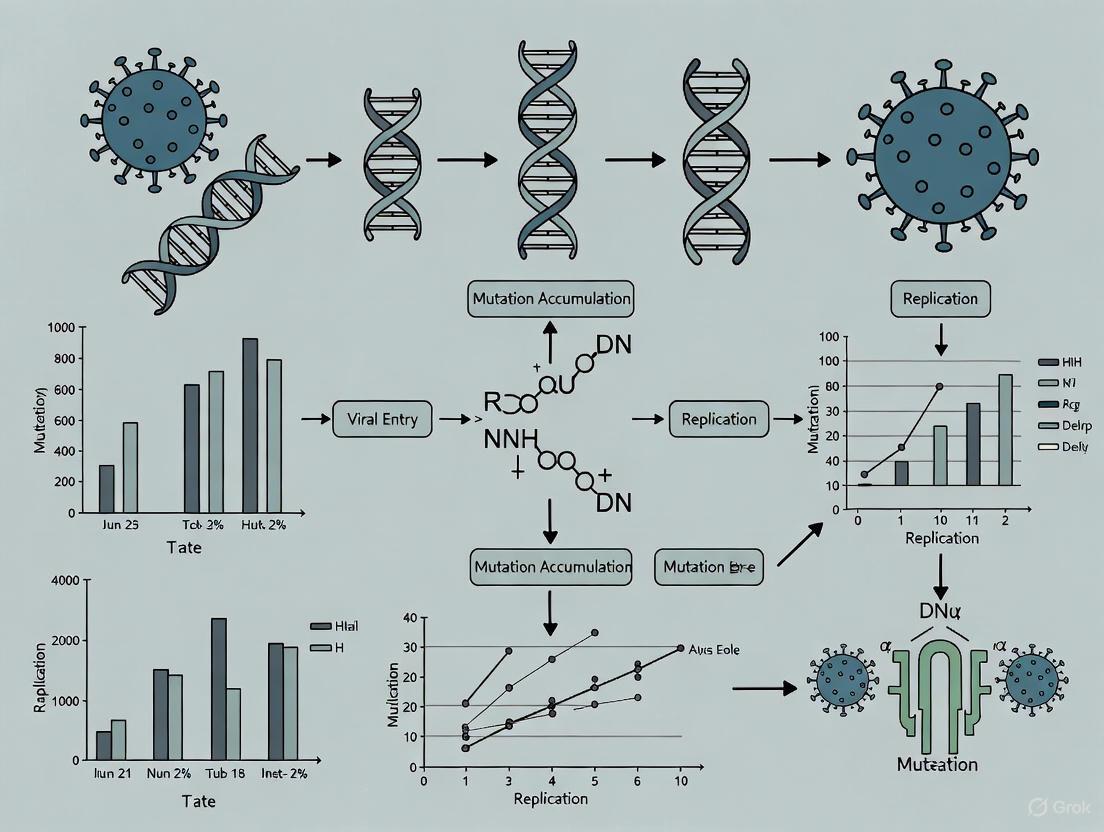
This article provides a comprehensive analysis of mutation accumulation studies in viruses, exploring the fundamental principles that govern viral evolution and their direct applications in biomedical research.
Viral Mutation Accumulation Studies: From Evolutionary Dynamics to Antiviral Drug Development
Abstract
This article provides a comprehensive analysis of mutation accumulation studies in viruses, exploring the fundamental principles that govern viral evolution and their direct applications in biomedical research. We examine the high mutation rates of RNA viruses, the quasispecies concept, and the error threshold that defines viral viability. The content details established and cutting-edge methodologies for quantifying viral mutations, including CirSeq and deep sequencing techniques. A significant focus is placed on the therapeutic strategy of lethal mutagenesis, utilizing drugs like molnupiravir and favipiravir to drive viral populations to extinction. Furthermore, we address the challenges of viral adaptation to mutagenic pressure and the emerging concepts of mutational robustness. This resource synthesizes foundational knowledge with recent advances to guide researchers and drug development professionals in exploiting viral mutation dynamics for therapeutic intervention and pandemic preparedness.
The Evolutionary Engine: Core Principles of Viral Mutation and Quasispecies Dynamics
Defining Mutation Rates vs. Substitution Rates in Viral Evolution
In viral evolution, accurately distinguishing between mutation rate and substitution rate is fundamental for experimental design, data interpretation, and developing antiviral strategies. These two parameters describe fundamentally different stages of the evolutionary process. The mutation rate is a biochemical parameter representing the probability that an error occurs during genome replication. It is defined as the frequency of new mutations in a single gene or nucleotide sequence over time and is typically reported as substitutions per nucleotide per cell infection (s/n/c) or per round of strand copying (s/n/r) [1] [2]. This rate quantifies the raw input of genetic variation into a viral population. In contrast, the substitution rate (also called the evolutionary rate) is a population genetics parameter describing the rate at which mutations become fixed in a population. It measures the output of the evolutionary process, representing the combined effects of mutation, natural selection, and random genetic drift [3] [4]. It is measured by comparing viral genomes isolated at different time points and is expressed as substitutions per site per year [4].
The relationship between these rates is governed by neutral theory, which posits that, in the absence of selection, the substitution rate equals the mutation rate for neutral changes [5]. However, most mutations are deleterious, a minority are neutral, and very few are beneficial [2]. Consequently, natural selection acts as a filter, removing unfavorable mutations and retaining favorable ones, meaning the observed substitution rate in a population is always lower than the underlying mutation rate [4].
Quantitative Comparison of Viral Mutation and Substitution Rates
Viral mutation rates vary immensely, primarily depending on genome composition and replication machinery. The data below summarize measured rates across major viral classes.
Table 1: Comparison of Mutation and Substitution Rates Across Virus Types
| Virus Class | Exemplar Virus | Mutation Rate (s/n/c) | Evolutionary Rate (sub/site/year) |
|---|---|---|---|
| Positive-strand RNA | Poliovirus 1 | 2.2 × 10⁻⁵ – 3.0 × 10⁻⁴ [5] | 1.17 × 10⁻² [4] |
| Negative-strand RNA | Influenza A virus | 7.1 × 10⁻⁶ – 3.9 × 10⁻⁵ [5] | 9.0 × 10⁻⁴ – 7.84 × 10⁻³ [4] |
| Retrovirus | Human Immunodeficiency Virus 1 (HIV-1) | 7.3 × 10⁻⁷ – 1.0 × 10⁻⁴ [4] | 1.13 × 10⁻³ – 1.08 × 10⁻² [4] |
| Single-stranded DNA | Bacteriophage φX174 | 1.0 × 10⁻⁶ – 1.3 × 10⁻⁶ [4] | Unknown |
| Double-stranded DNA | Herpes Simplex 1 | 5.9 × 10⁻⁸ [4] | 8.21 × 10⁻⁵ [4] |
Several key patterns emerge from this data. RNA viruses consistently exhibit high mutation rates, typically between 10⁻⁶ to 10⁻⁴ s/n/c, largely because their RNA-dependent RNA polymerases (RdRp) lack proofreading activity [5] [3]. DNA viruses have lower mutation rates, ranging from 10⁻⁸ to 10⁻⁶ s/n/c, as they often utilize DNA polymerases with proofreading and post-replicative repair capabilities [5] [3]. A strong correlation generally exists between a virus's mutation rate and its long-term substitution rate [4]. However, an upper limit exists; extremely high mutation rates can lead to the accumulation of too many deleterious mutations, causing population collapse through a process termed lethal mutagenesis—a potential antiviral strategy [1] [4].
Experimental Protocols for Mutation Rate Estimation
Accurate measurement of viral mutation rates is methodologically challenging. The following protocols detail two gold-standard approaches.
Protocol: Mutation Accumulation (MA) Lines
The MA lines method minimizes the effects of natural selection to allow for the unbiased accumulation of mutations [3] [4].
- Initial Clone Isolation: Begin with a genetically homogeneous viral stock derived from a single plaque or molecular clone to minimize pre-existing genetic diversity.
- Serial Bottlenecking: Propagate multiple independent lineages (e.g., 10-100) from this stock. At each passage, infect a cell culture at a low multiplicity of infection (MOI) and harvest the virus population after a single replication cycle.
- Plague-to-Plague Transfer: Randomly select a single viral plaque from each lineage to inoculate the next passage. This severe bottleneck (passing a single genome) minimizes competition between mutants and dramatically reduces the efficiency of natural selection, allowing even deleterious mutations to drift to fixation [3].
- Repeated Passaging: Continue this process for many generations (e.g., 50-100).
- Sequencing and Analysis: After the final passage, perform whole-genome sequencing on the progenitor and each endpoint MA line.
- Mutation Rate Calculation: The mutation rate per nucleotide per cell infection (μ) is calculated using the formula:
μ = (M / G) / cwhereMis the total number of mutations identified across all lines,Gis the total length of sequenced genome, andcis the number of cell infection cycles (passages) [1].
Key Considerations: While this method reduces selection bias, it cannot capture lethal mutations. Furthermore, if a lineage accumulates mutations that prevent plaque formation, it will be lost, potentially biasing the results. Fitness decline in RNA virus lines may occur over many passages [3].
Protocol: Fluctuation Test
The Luria-Delbrück fluctuation test estimates the rate at which mutations conferring a specific phenotype arise, providing a direct measure of the mutation rate per replication cycle [3] [4].
- Strain and Marker Selection: Engineer a recombinant virus containing a neutral reporter gene (e.g., for fluorescent protein or antibiotic resistance) where a specific, scorable point mutation (e.g., reversion or forward mutation) restores function.
- Parallel Cultures: Inoculate a large number of independent, parallel cell cultures (e.g., 50-100) with a small number of viruses to ensure all lineages start from a minimal number of genomes.
- Expansion: Allow each culture to expand through multiple rounds of viral replication without selection.
- Selection and Titration: Harvest the viruses and titer each culture under selective conditions (e.g., with an antibiotic) and non-selective conditions to determine the total virus yield.
- Data Analysis: The mutation rate (m) is calculated from the distribution of mutant frequencies across the parallel cultures using statistical models like the P₀ method (where P₀ is the proportion of cultures with no mutants) or the Ma-Sandri-Sarkar maximum likelihood method [1] [3].
Key Considerations: This method avoids sequencing errors and reverse transcription artifacts for RNA viruses. Its main limitation is that it provides a mutation rate for only a specific site or small genomic target, not the entire genome or its full mutational spectrum, unless multiple markers are probed simultaneously [3].
Workflow Visualization: From Mutation to Substitution
The following diagram illustrates the conceptual and experimental pathway linking the generation of a mutation to its potential fixation as a substitution.
The Scientist's Toolkit: Essential Research Reagents
Successful execution of mutation accumulation studies requires specific reagents and tools, each with a critical function.
Table 2: Essential Reagents for Viral Mutation Studies
| Research Reagent / Tool | Critical Function |
|---|---|
| Clonal Viral Seed Stock | Provides a genetically homogeneous starting population, essential for accurately counting new mutations that arise during the experiment. |
| Susceptible Cell Line | Supports robust viral replication; consistency in cell type across passages is critical to maintain stable selective pressures. |
| Plaque Assay Materials (Agar overlay, Staining dyes) | Enables visual isolation of individual viral clones (plaques) for serial bottlenecking in MA experiments. |
| Selective Agents (Antibiotics, Monoclonal Antibodies) | Used in fluctuation tests to apply selective pressure and identify rare mutants with specific phenotypic changes (e.g., drug resistance). |
| Next-Generation Sequencer | Provides high-throughput, deep sequencing capability to comprehensively identify and quantify mutations in viral populations or MA lines. |
| Reverse Transcriptase (High-Fidelity) | For RNA viruses, a high-fidelity RT enzyme is crucial during cDNA synthesis to minimize introduction of artifacts before sequencing. |
Application in Antiviral Drug Development
Understanding the distinction between mutation and substitution rates directly informs antiviral therapy. The high mutation rate of HIV-1, for example, means that every possible single-base substitution occurs daily within a patient. This knowledge demonstrated that monotherapies would inevitably fail due to rapid resistance emergence, leading to the successful strategy of combination therapy (e.g., HAART) to suppress the emergence of resistant variants [5] [1]. Furthermore, the concept of lethal mutagenesis has been explored as a therapeutic strategy. This involves using mutagens (e.g., ribavirin) to artificially elevate the viral mutation rate beyond a tolerable threshold, overwhelming the population with deleterious mutations and driving it to extinction [1] [4]. This approach has shown efficacy in cell culture and animal models against several RNA viruses, including HCV, and is thought to contribute to the effectiveness of ribavirin-interferon combination therapy [1].
Quasispecies theory represents a foundational framework for understanding the evolution of replicating entities under high mutation rates. Conceived in the 1970s by Manfred Eigen and Peter Schuster, the theory was originally developed to investigate the dynamics of biological information in early replicons and prebiotic evolution [6] [7]. The core principle defines a quasispecies not as a single genotype, but as a dynamic distribution of closely related mutant genomes—often described as a "cloud" or "swarm"—that collectively behave as a unit of selection [8] [7]. This theoretical framework has proven particularly relevant for understanding RNA virus evolution, where high mutation rates generated by error-prone polymerases create exactly the conditions for quasispecies formation [7] [9].
The paradigm shift introduced by quasispecies theory moved virology beyond the concept of a single "wild-type" sequence to recognize that viral populations exist as complex mutant spectra where the master sequence (the most frequent genotype) is surrounded by a diverse array of minority variants [10] [7]. This population structure has profound implications for viral pathogenesis, adaptability, and treatment strategies. The theory establishes a crucial link between Darwinian evolution and information theory, providing a deterministic approach to evolution that nonetheless accounts for the stochastic nature of mutation events [10] [6].
Theoretical Foundation and Mathematical Formulation
Core Mathematical Model
The original quasispecies model is described by a set of differential equations that capture the dynamics of competing sequences in a mutation-coupled system. For a population with n mutant sequences, the change in frequency of the i-th sequence (x_i) over time is given by:
Where:
- f_j represents the replication rate of the j-th mutant
- Q_ji is the probability that sequence j produces sequence i upon replication
- Φ(x) denotes the average fitness of the population (Σj fj · x_j), which serves as an outflow term keeping the total population constant [6]
This mathematical formulation describes a system where sequences replicate with mutation, competing for dominance based on their replication rates and the mutational connections between them. The model predicts that at equilibrium, the population reaches a stable mutant distribution where the removal of slowly replicating sequences is balanced by their constant replenishment through mutation from faster-replicating sequences [8].
Error Threshold and Evolutionary Stability
A pivotal concept emerging from quasispecies theory is the error threshold, which represents the maximum mutation rate compatible with the stable maintenance of genetic information. In a simplified two-population model (wild-type and average mutant), the error threshold (μ_c) can be calculated as:
Where f0 is the fitness of the wild-type sequence and f1 is the fitness of the average mutant [6]. Exceeding this critical mutation rate leads to the irreversible loss of the master sequence—a phenomenon termed "error catastrophe" that forms the basis for antiviral strategies using lethal mutagenesis [6] [7].
The error threshold relationship explains why RNA viruses, despite their high mutation rates, maintain genomic integrity. Their mutation rates typically operate just below the error threshold, maximizing adaptability while avoiding informational collapse [7]. This delicate balance has profound implications for viral evolution and therapeutic interventions.
Quasispecies Dynamics in Viral Populations
Mechanisms Generating Viral Diversity
Viral quasispecies emerge through several mechanisms that generate genetic diversity, with error-prone replication serving as the primary driver. RNA-dependent RNA polymerases (RdRps) and RNA-dependent DNA polymerases (reverse transcriptases) exhibit limited template-copying fidelity, with mutation rates of approximately 10⁻⁴ mutations per nucleotide copied [7] [9]. These enzymes typically lack proofreading capability (3' to 5' exonuclease domains present in cellular DNA polymerases), and post-replicative repair pathways are largely ineffective for RNA genomes [7].
Additional diversity generators include:
- Host enzyme editing: APOBEC (cytidine deaminase) and ADAR (adenosine deaminase) enzymes induce hypermutations as part of host defense mechanisms [9] [11]
- Recombination: Both replicative and non-replicative recombination shuffle genetic material between viral genomes [7]
- Reassortment: Segmented viruses exchange entire genome segments during co-infections [9]
These mechanisms collectively create the mutant spectra that enable rapid viral adaptation to changing environments, including host immune responses and antiviral therapies [7] [9].
Sequence Space and Fitness Landscapes
Quasispecies theory introduces the concept of sequence space—a multidimensional discrete space where each node represents a unique genotype connected to neighboring genotypes by single-point mutations [6]. For an RNA virus with genome length L, the sequence space consists of 4ᴸ possible genotypes, creating an enormous hypercube of potential sequences [6].
The fitness landscape represents how each genotype in this sequence space corresponds to reproductive success. Rather than occupying a single fitness peak, quasispecies distribute across regions of sequence space, with the population's behavior determined by the average fitness of the entire cloud rather than individual genotypes [6]. This distribution explains the counterintuitive phenomenon where a quasispecies located on a lower but broader fitness peak can outcompete a population on a higher but narrower peak—a principle termed "survival of the flattest" [7] [12].
Recent theoretical advances propose the ultracube concept, which extends traditional sequence space to account for genetic processes that alter genome length (deletions, insertions), providing a more realistic representation of viral quasispecies diversity [6].
Quantitative Analysis of Mutation Rates and Spectra
Experimental Measurement of Viral Mutation Rates
Table 1: Experimentally Determined Mutation Rates of Representative Viruses
| Virus | Mutation Rate (per base per replication) | Mutation Spectrum Bias | Primary Method | Reference |
|---|---|---|---|---|
| SARS-CoV-2 | ~1.5 × 10⁻⁶ | C→U transitions dominate | CirSeq | [13] |
| Poliovirus | ~1 × 10⁻⁵ | Not specified | CirSeq | [13] |
| Bacteriophage Qβ | ~1 × 10⁻⁴ | Not specified | Clonal sequencing | [7] |
| HIV-1 | ~3 × 10⁻⁵ | Not specified | Single-genome sequencing | [7] |
Advanced sequencing technologies have enabled precise quantification of viral mutation rates and spectra. Circular RNA Consensus Sequencing (CirSeq) has emerged as a particularly powerful approach, utilizing RNA circularization to generate tandem cDNA repeats that eliminate sequencing and reverse transcription errors through consensus building [13]. Application of CirSeq to six SARS-CoV-2 variants revealed a mutation rate of approximately 1.5 × 10⁻⁶ per base per viral passage, with a strong bias toward C→U transitions (27.4% of all mutations) [13] [11].
This C→U bias appears driven primarily by APOBEC enzyme-mediated cytidine deamination and has functional consequences beyond mere sequence variation. These mutations generally enhance viral peptide binding to human leukocyte antigen class I (HLA-I) molecules, producing immunogenic epitopes that trigger adaptive immune responses [11]. The mutation rate is significantly reduced in regions forming RNA secondary structures, indicating evolutionary constraints preserving functional genomic elements [13].
Quasispecies Quantification Metrics
Table 2: Metrics for Quantifying Quasispecies Dynamics and Evolution
| Metric | Formula/Definition | Interpretation | Application Context |
|---|---|---|---|
| Index of Commons (Cₘ) | Cₘ = Σ min(pᵢ, qᵢ) | Measures haplotype commonality between two quasispecies distributions | Tracking quasispecies relatedness over time |
| Overlap Index (Oᵥ) | Oᵥ = 1 - 0.5 × Σ⎪pᵢ - qᵢ⎪ | Quantifies similarity in haplotype frequencies | Assessing population stability during infection |
| Yue-Clayton Index (YC) | YC = Oᵥ / (1 + D) where D is a divergence measure | Combined measure of shared haplotypes and frequency similarity | Comprehensive evolution tracking |
| Genetic Distance (Dₐ) | Dₐ = Σ dᵢⱼ × pᵢ × qⱼ | Average nucleotide differences between quasispecies | Monitoring evolutionary divergence |
Analyzing quasispecies evolution requires specialized metrics that capture changes in haplotype distributions between time points. These indices treat viral molecules as individuals of competing species in an ecosystem, where the ecosystem is the quasispecies within a host [14]. The Index of Commons (Cₘ) measures what proportion of haplotypes are shared between two quasispecies, while the Overlap Index (Oᵥ) and Yue-Clayton Index (YC) additionally account for similarity in haplotype frequencies [14].
These complementary metrics allow researchers to track different aspects of quasispecies evolution: Cₘ indicates whether the same haplotypes are present (even at different frequencies), Oᵥ reveals whether the population structure remains stable, and YC provides a comprehensive measure of similarity. When applied to clinical samples, these indices can quantify viral evolution during infection and in response to therapeutic interventions [14].
Experimental Protocols for Quasispecies Analysis
Comprehensive NGS-Based Quasispecies Characterization
Protocol Objective: To comprehensively characterize viral quasispecies diversity and dynamics in clinical samples using next-generation sequencing (NGS).
Materials and Reagents:
- QIAamp UltraSens Virus Kit (Qiagen): For viral RNA/DNA extraction from serum/plasma
- Nextera DNA Sample Prep Kit (Illumina): Library preparation for NGS
- AMPure XP beads (Beckman Coulter): Size selection and purification
- Illumina MiSeq platform: Sequencing with PE 2×300 bp protocol
- Quasispecies Analysis Package (QAP) software: Automated processing of NGS data [15]
Procedure:
- Extract viral nucleic acids from 200 μL serum using optimized viral kits
- Amplify target regions (entire genome or specific regions like BCP/precore/core for HBV) using overlapping primers
- Prepare sequencing libraries using Nextera kit with dual-index barcoding
- Perform size selection (remove fragments <400 bp) using AMPure XP beads
- Quantify libraries using real-time PCR with NGS Library Quantification Kit
- Sequence on Illumina MiSeq platform following manufacturer's protocol
- Process raw data through QAP pipeline:
- Quality filtering (read length ≥250 bp, base quality ≥25)
- Map clean reads to reference genome
- Assemble read pairs to amplicon sequences
- Correct sequencing errors
- Generate viral haplotypes [15]
Critical Steps:
- Maintain low multiplicity of infection (MOI=0.1) in culture passages to minimize complementation effects
- Include appropriate controls for amplification artifacts
- Use biological clones (not subject to amplification uncertainties) to validate findings
- Apply multiple computational filters to distinguish genuine mutations from sequencing errors [13] [15]
Research Reagent Solutions for Quasispecies Studies
Table 3: Essential Research Reagents for Viral Quasispecies Analysis
| Reagent/Category | Specific Examples | Function in Quasispecies Analysis |
|---|---|---|
| Viral Nucleic Acid Extraction | QIAamp UltraSens Virus Kit, MagMAX Viral/Pathogen Kit | Isolate viral RNA/DNA from clinical samples with high sensitivity and minimal contamination |
| Target Amplification | SuperScript Reverse Transcriptase, Q5 High-Fidelity DNA Polymerase | Amplify viral sequences with high fidelity to minimize introduced errors |
| Library Preparation | Nextera DNA Sample Prep Kit, NEBNext Ultra II DNA Library Prep | Fragment DNA and add sequencing adapters with unique dual indexes |
| High-Throughput Sequencing | Illumina MiSeq, NovaSeq; PacBio Sequel; Oxford Nanopore | Generate massive sequence reads to detect minority variants |
| Data Analysis Software | Quasispecies Analysis Package (QAP), Geneious, CLC Genomics | Process NGS data, call variants, reconstruct haplotypes, and quantify diversity |
CirSeq for High-Accuracy Mutation Rate Determination
Protocol Objective: To determine precise mutation rates and spectra using Circular RNA Consensus Sequencing (CirSeq).
Workflow:
- Culture virus under defined conditions (e.g., VeroE6 cells for SARS-CoV-2) with serial passages at low MOI
- Extract viral RNA using high-purity isolation methods
- Fragment RNA and circularize fragments using RNA ligase
- Synthesize cDNA molecules with tandem repeats of circularized templates
- Sequence using Illumina platforms
- Generate consensus sequences from tandem repeats to eliminate sequencing errors
- Identify genuine mutations as variations present across multiple independent circular molecules [13]
Applications:
- Precisely quantify mutation rates using lethal mutations as internal standards
- Characterize mutation spectra and biases
- Identify RNA secondary structure effects on mutation rates
- Determine fitness impacts of specific mutations through competition assays [13]
Applications in Clinical Virology and Therapeutics
Diagnostic and Prognostic Applications
Quasispecies analysis has transitioned from theoretical concept to clinical application, particularly in managing chronic viral infections. In hepatitis B virus (HBV) infection, quasispecies characterization enables precise identification of the immune-tolerant (IT) phase, reducing the need for invasive liver biopsies [15]. Machine learning algorithms trained on viral quasispecies data can distinguish IT from chronic hepatitis B (CHB) patients with higher accuracy than conventional serological markers (HBsAg, APRI, FIB-4) [15].
Key clinical applications include:
- Phase classification: Quantitative quasispecies analysis of the BCP/precore/core region correlates with liver inflammation and fibrosis severity
- Treatment response prediction: Specific haplotype distributions predict sustained response to antiviral therapies
- Disease progression forecasting: High genetic divergence in HBV haplotypes across natural history phases informs prognosis [15]
The relative abundance of viral operational taxonomic units (OTUs) serves as a quantitative biomarker for disease severity and treatment urgency, enabling non-invasive patient stratification [15].
Therapeutic Implications and Antiviral Strategies
Quasispecies theory has inspired novel antiviral approaches that leverage viral population dynamics:
Lethal Mutagenesis: This therapeutic strategy deliberately increases viral mutation rates beyond the error threshold using mutagenic agents like ribavirin, causing population collapse through accumulation of lethal mutations [6] [7]. The approach has demonstrated efficacy against various RNA viruses, validating a direct prediction of quasispecies theory.
Combination Therapies: Recognizing that mutant spectra contain pre-existing drug-resistant variants, quasispecies theory supports using multidrug regimens to simultaneously target multiple viral vulnerabilities [10] [7]. This approach reduces the probability of resistant mutants emerging during treatment.
Vaccine Design: Quasispecies concepts inform the development of multivalent vaccines that account for viral diversity and adaptability, potentially providing broader protection against diverse variants [10].
The mutant swarm effect explains clinical observations where dominant variants in quasispecies do not necessarily determine disease outcomes, as minority variants can rapidly expand under selective pressures [10] [7]. This understanding has shifted therapeutic focus from targeting dominant sequences to managing the entire mutant spectrum.
Future Directions and Research Applications
Quasispecies theory continues to evolve, incorporating new computational and experimental approaches. Key emerging research directions include:
Ultracube Sequence Space Analysis: Moving beyond traditional hypercubes to model more complex genetic variations including deletions, insertions, and recombination events [6]
Within-Host Evolution Tracking: Using quantitative indices (Cₘ, Oᵥ, YC) to monitor real-time quasispecies dynamics during infection and treatment [14]
Machine Learning Integration: Combining deep sequencing with computational algorithms to predict clinical outcomes and treatment responses based on quasispecies features [15]
Cross-System Applications: Extending quasispecies principles to other evolving systems including cancer cells, bacterial populations, and prion conformations [6] [7]
The integration of quasispecies analysis into clinical virology represents a paradigm shift in understanding host-virus interactions, with implications for personalized medicine approaches to viral disease management. As sequencing technologies continue to advance, quasispecies-based diagnostics and therapeutics will likely play increasingly prominent roles in combating emerging viral threats and managing persistent infections.
Theoretical Foundation
Conceptual Framework and Definitions
Error catastrophe describes a theoretical threshold in evolutionary dynamics where excessive mutation rates lead to the irreversible loss of genetic information in a population of self-replicating entities [16] [17]. This concept, first articulated by Manfred Eigen in his quasispecies model, predicts that for any genetic system, there exists a maximum error rate per replication beyond which the population can no longer maintain its genetic integrity [17] [18]. The original quasispecies model demonstrated that when mutation rates exceed this critical threshold—the error threshold—the "master sequence" (the genotype with the highest fitness) disappears from the population, and genetic information becomes delocalized across the entire sequence space [16] [18].
Lethal mutagenesis represents the practical application of this theory as an antiviral strategy, wherein mutagenic drugs are employed to elevate viral mutation rates beyond the error threshold, driving viral populations to extinction [19] [20] [21]. While inspired by error catastrophe theory, lethal mutagenesis is now recognized as a distinct phenomenon—error catastrophe constitutes an evolutionary shift in genotype space, whereas lethal mutagenesis is fundamentally a demographic process leading to population extinction [19] [20].
Distinguishing Error Catastrophe from Lethal Mutagenesis
The key distinction between these concepts lies in their fundamental nature and outcomes. Error catastrophe describes a genetic transition where the master sequence is lost in a quasispecies, but the population may persist through a shift to mutationally robust genotypes in a phenomenon termed "survival of the flattest" [18]. In contrast, lethal mutagenesis represents population extinction, where the average number of viable progeny produced per infected cell falls below one, ensuring demographic collapse [19]. This extinction threshold incorporates both evolutionary components (mutation rate and fitness effects) and ecological components (reproductive capacity), meaning no universal mutation rate guarantees extinction for all viruses [19].
Table 1: Key Theoretical Concepts in Error Catastrophe and Lethal Mutagenesis
| Concept | Definition | Primary Outcome | Theoretical Basis |
|---|---|---|---|
| Error Catastrophe | Loss of genetic information beyond a critical mutation rate | Displacement of master sequence in quasispecies | Eigen's quasispecies theory |
| Error Threshold | Maximum mutation rate compatible with maintenance of genetic information | Transition point to error catastrophe | Mathematical models of replication with error |
| Lethal Mutagenesis | Extinction of viral population through elevated mutation rates | Demographic extinction | Population genetics and ecology |
| Extinction Threshold | Mutation rate beyond which population cannot sustain itself | Population collapse | Integration of mutation rate and reproductive capacity |
Quantitative Framework and Key Parameters
Mathematical Models of Error Thresholds
The basic mathematical model of error catastrophe considers a viral genome of length L, where each nucleotide has an error rate q during replication [17]. The condition for avoiding error catastrophe is approximately Lq < s, where s represents the selective advantage of the master sequence over the average mutant [17]. This simple relationship highlights that longer genomes require lower error rates to maintain genetic integrity. In more sophisticated models, the error threshold (qₑᵣᵣₒᵣ) can be calculated as:
qₑᵣᵣₒᵣ ≈ 1 - exp(-s/L) ≈ s/L
for small s and L [17] [18]. This relationship illustrates the fundamental trade-off between genome size and replication fidelity that constrains all replicating systems.
Mutation Rates and Error Thresholds Across Biological Systems
Different biological systems operate at varying distances from their theoretical error thresholds, reflecting their evolutionary adaptations to this fundamental constraint.
Table 2: Mutation Rates and Genome Parameters Across Biological Systems
| Organism/Virus | Genome Size (bp) | Mutation Rate (per base per replication) | Mutation Rate (per genome per replication) | Proximity to Error Threshold |
|---|---|---|---|---|
| Bacteriophage Qβ | ~3.5 × 10³ | 1.9 × 10⁻³ | 6.5 | Very Close |
| Poliovirus | ~7.5 × 10³ | 1.1 × 10⁻⁴ | 0.8 | Close |
| Vesicular stomatitis virus | ~1.1 × 10⁴ | 3.2 × 10⁻⁴ | 3.5 | Close |
| HIV-1 | 9.75 × 10³ | 2.1 × 10⁻⁵ | 0.2 | Moderate |
| Influenza A | 1.36 × 10⁴ | 7.4 × 10⁻⁵ | ~1.0 | Close |
| Escherichia coli | 4.6 × 10⁶ | 5.4 × 10⁻¹⁰ | 0.0025 | Distant |
| Homo sapiens | 3.2 × 10⁹ | 5.0 × 10⁻¹¹ | 0.16 | Very Distant |
Experimental Protocols for Lethal Mutagenesis Studies
Protocol: Induction of Lethal Mutagenesis in RNA Viruses
Principle: This protocol describes the methodology for extinguishing RNA virus populations through mutagenic compounds, based on established procedures with poliovirus and other RNA viruses [22].
Materials:
- Cell culture system permissive for target virus
- Viral stock with known titer
- Mutagenic compound (e.g., ribavirin, 5-fluorouracil, 5-hydroxy-2'-deoxycytidine)
- Appropriate solvent controls
- Tissue culture reagents and equipment
- Plaque assay or TCID₅₀ materials for viral quantification
- RNA extraction kit and RT-PCR reagents
- Sequencing reagents for mutation frequency analysis
Procedure:
- Cell Culture Preparation: Seed permissive cells in multi-well plates at appropriate density and incubate until 70-90% confluent.
- Viral Infection: Infect cell monolayers with virus at low multiplicity of infection (MOI = 0.1) to ensure multiple replication cycles.
- Mutagen Application: Prepare serial dilutions of mutagen in culture medium. Apply mutagen-containing medium to infected cells immediately post-infection. Include solvent-only controls.
- Incubation and Passaging: Incubate cultures at appropriate temperature. Harvest virus progeny at specified timepoints (typically 24-48 hours post-infection). Use a portion of harvested virus to infect fresh cells in the presence of the same mutagen concentration for serial passaging.
- Viral Titration: At each passage, determine viral titer by plaque assay or TCID₅₀. Plot viral titer versus passage number to monitor population decline.
- Mutation Frequency Analysis: At selected passages, extract viral RNA, perform RT-PCR amplification of target genomic regions, and sequence multiple clones. Calculate mutation frequency as mutations per base per replication.
- Extinction Confirmation: Continue passaging until no detectable virus remains in three consecutive passages. Confirm extinction by attempting to rescue virus in the absence of mutagen.
Key Parameters:
- Monitor cytotoxicity of mutagen concentrations on uninfected cells
- Include multiple replicates per condition
- Determine mutation frequency across multiple genomic regions
- Calculate mutagen concentration that reduces viral titer by 50% (EC₅₀) and 90% (EC₉₀)
Research Reagent Solutions for Lethal Mutagenesis Studies
Table 3: Essential Research Reagents for Lethal Mutagenesis Experiments
| Reagent/Category | Specific Examples | Function/Application | Key Considerations |
|---|---|---|---|
| Nucleoside Analogs | Ribavirin, 5-Fluorouracil, 5-Hydroxy-2'-deoxycytidine | Incorporated during replication, causing base mispairing | Virus-specific efficacy; host cell toxicity |
| Non-Nucleoside Mutagens | Nitrous acid, alkylating agents | Direct chemical modification of nucleobases | Less specific than nucleoside analogs |
| Cell Culture Systems | Permissive cell lines (virus-specific) | Provide cellular environment for viral replication | Must support complete viral life cycle |
| Viral Quantification | Plaque assay, TCID₅₀, qRT-PCR | Measure viral infectivity and load | Distinguish infectious versus defective particles |
| Mutation Analysis | RT-PCR, cloning, next-generation sequencing | Quantify mutation frequency and spectrum | Adequate sampling depth for statistical power |
| Fitness Assay | Competition experiments, growth curves | Measure replicative capacity | Conduct in absence of mutagen for accurate comparison |
Visualization of Core Concepts and Experimental Workflows
Theoretical Transitions in Quasispecies Dynamics
Theoretical Transitions in Quasispecies Dynamics
Experimental Workflow for Lethal Mutagenesis
Experimental Workflow for Lethal Mutagenesis
Critical Parameters and Threshold Determination
Factors Influencing Error and Extinction Thresholds
The transition to error catastrophe and achievement of lethal mutagenesis depend on multiple interconnected factors beyond simple mutation rates. The fitness landscape profoundly influences these thresholds—in a "single-peak" landscape where all mutants have equal reduced fitness, error thresholds appear sharply defined, whereas in more realistic multi-peak landscapes, transitions may be more gradual [16] [18]. The presence of lethal mutations significantly impacts these dynamics; as the proportion of lethal mutations increases, the effective superiority of the master sequence increases, paradoxically raising the error threshold while simultaneously lowering the extinction threshold [23].
The concept of mutational robustness—the insensitivity of phenotypes to mutations—introduces additional complexity through "survival of the flattest" phenomena, where populations with lower replication capacity but higher robustness can outcompete fitter but more brittle populations at high mutation rates [18]. This represents a potential resistance mechanism to lethal mutagenesis therapies, as viral populations may evolve toward more robust regions of sequence space rather than undergoing extinction [18].
Quantitative Framework for Extinction Threshold
The fundamental criterion for lethal mutagenesis can be expressed as:
R₀(1 - Uₐ) < 1
where R₀ represents the basic reproductive ratio (average number of secondary infections), and Uₐ is the average mutational load per genome that renders progeny non-viable [19]. This relationship highlights that extinction requires not just a high mutation rate, but specifically that the combination of mutation rate and mutational effects reduces the reproductive ratio below unity. Experimental measurements should therefore focus on determining both the genome-wide mutation rate (U) and the number of viable progeny per infected cell that go on to infect new cells [19].
Table 4: Key Parameters for Experimental Determination of Extinction Thresholds
| Parameter | Definition | Measurement Approach | Interpretation in Threshold |
|---|---|---|---|
| Genome-wide Mutation Rate (U) | Average number of mutations per genome per replication | Sequence multiple clones after single replication cycle | Determines input of deleterious mutations |
| Fraction of Lethal Mutations (ℓ) | Proportion of mutations that completely abolish replication | Comparison of mutation frequency to fitness effects | Impacts effective mutation load |
| Deleterious Effect (s) | Average fitness reduction per deleterious mutation | Competition assays between mutated and wild-type viruses | Influences rate of fitness decline |
| Basic Reproductive Ratio (R₀) | Average number of secondary infections from single infected cell | Growth curve analysis with low MOI | Determines demographic sustainability |
| Mutational Robustness | Insensitivity of phenotype to genotypic mutation | Variance in fitness effects of mutations | Affects survival potential at high mutation rates |
Applications and Research Implications
The conceptual framework of error catastrophe and lethal mutagenesis has significant practical implications for antiviral therapy development. Ribavirin, used against hepatitis C virus and other RNA viruses, exemplifies this approach through its mutagenic activity [22] [21]. When combined with interferon-alpha, ribavirin demonstrates enhanced efficacy, suggesting complementary mechanisms of action [21]. The extension of lethal mutagenesis concepts to DNA-based systems, particularly cancer therapeutics, represents an emerging application, exploiting the mutator phenotype of many cancer cells to push them beyond viable mutation loads [21].
Future research directions should focus on optimizing combination therapies that simultaneously increase mutation rates and reduce reproductive capacity, thereby exploiting both genetic and ecological components of extinction thresholds. Additionally, understanding viral escape mechanisms—particularly the evolution of mutational robustness through survival of the flattest—will be crucial for designing resistance-proof therapeutic regimens [18]. The development of accurate predictive models incorporating realistic fitness landscapes and mutation effects will further enhance our ability to design effective lethal mutagenesis protocols against diverse viral pathogens and potentially cancer cell populations.
Intrinsic Disorder and Mutational Robustness in Viral Proteins
Intrinsically disordered regions (IDRs) are protein segments that do not fold into a fixed three-dimensional structure under physiological conditions, yet remain functional. Their prevalence in viral proteomes is notably high, a trait believed to be a key factor in the remarkable adaptability and evolutionary success of RNA viruses [24] [25]. The structural flexibility of IDRs is associated with weaker constraints on their amino acid sequence. This has led to the hypothesis that these regions possess greater mutational robustness—the ability to accumulate mutations without drastic impairment of function—compared to structured, ordered regions (ORs) [24] [26]. For viruses, particularly those with RNA genomes, this robustness could be a critical mechanism for rapid adaptation to host immune responses and environmental stresses, thereby influencing pandemic potential [27] [28]. This Application Note frames the investigation of intrinsic disorder within the broader context of mutation accumulation studies, providing protocols and analytical frameworks for researchers exploring viral evolution, fitness, and therapeutic targeting.
Background and Key Evidence
The multifunctional nature of IDRs challenges the classical structure-function paradigm. In viruses, IDRs are involved in critical processes such as host cell invasion, replication, and assembly of new viral particles [25]. From an evolutionary standpoint, the low constraint on amino acid positions in IDRs suggests a greater propensity to tolerate non-synonymous mutations.
Table 1: Comparative Analysis of Mutational Robustness in IDRs vs. Ordered Regions
| Feature | Intrinsically Disordered Regions (IDRs) | Ordered Regions (ORs) |
|---|---|---|
| Structural Constraints | Low; structurally flexible [24] | High; requires stable folding [24] |
| Amino Acid Substitution Rate | Higher; accommodates more non-synonymous mutations [24] | Lower; constrained by structure conservation [24] |
| Physicochemical Property Conservation | Weak; substitutions are more random [24] | Strong; substitutions conserve properties [24] |
| Evolutionary Path | High mutational robustness; potential adaptive reservoir [24] | Lower mutational robustness; highly constrained evolution [24] |
| Experimental Robustness (Y2H) | VPg (IDR) significantly more robust to mutations [26] | eIF4E (Ordered) less robust to mutations [26] |
Evidence supporting this hypothesis comes from studies on potyviruses, a major genus of plant viruses. Analysis of both experimental evolution and natural diversity datasets revealed that the mutational robustness of IDRs is significantly higher than that of ORs [24]. This is quantified by a higher rate of non-synonymous mutations (dN) relative to synonymous mutations (dS) in IDRs. Furthermore, substitutions in ORs are heavily constrained by the need to conserve the physico-chemical properties of amino acids, a feature largely absent in IDRs where changes appear more random [24]. Direct experimental validation using yeast two-hybrid (Y2H) assays demonstrated that the intrinsically disordered potyviral protein VPg is significantly more robust to random mutagenesis than its structured partner, the eukaryotic translation initiation factor 4E (eIF4E) [26].
Experimental Protocol: Assessing Mutational Robustness via Yeast Two-Hybrid (Y2H)
This protocol details the methodology for empirically testing mutational robustness by analyzing the interaction between a disordered viral protein and its ordered host partner after random mutagenesis [26].
Reagents and Equipment
Table 2: Research Reagent Solutions
| Reagent / Material | Function / Explanation |
|---|---|
| Gateway Cloning System | High-efficiency recombination cloning to transfer mutant libraries between vectors without loss of complexity [26]. |
| GeneMorph II Random Mutagenesis Kit | Error-prone PCR (epPCR) to generate random mutant libraries with controlled mutation rates [26]. |
| pDEST-GADT7 & pDEST-GBKT7 Vectors | Y2H vectors for creating activation domain and DNA-binding domain fusion proteins, respectively [26]. |
| S. cerevisiae Strains AH109 & Y187 | Yeast strains containing reporter genes (e.g., HIS3, ADE2) for detecting protein-protein interactions [26]. |
| Dropout Media Supplements (-LW, -LWHA) | Selective media to screen for interactions (-LW lacks Leucine/Tryptophan; -LWHA lacks Leu/Trp/His/Adenine) [26]. |
Step-by-Step Procedure
Figure 1: Experimental workflow for testing mutational robustness using a yeast two-hybrid system.
Library Generation:
- Clone the gene of interest (e.g., VPg or eIF4E) into a pDONR201 entry vector using Gateway technology.
- Perform error-prone PCR (epPCR) on the entry clone using the GeneMorph II kit. Vary the amount of DNA template to produce libraries with low, medium, and high mutation rates. For highly mutated libraries, perform two successive rounds of epPCR.
- Purify the PCR products and perform a second Gateway LR recombination reaction to transfer the mutated genes into the appropriate Y2H destination vectors (e.g., pDEST-GADT7 for activation domain fusions and pDEST-GBKT7 for DNA-binding domain fusions).
- Transform the LR reaction products into high-efficiency E. coli (e.g., DH10B), plate on selective media, and harvest all colonies to create the plasmid mutant library. Sequence a subset of clones (e.g., 32 per library) to characterize the mutation spectrum (number of non-synonymous, synonymous, STOP, and INDEL mutations) [26].
Yeast Two-Hybrid Screening:
- Transform the purified mutant plasmid libraries into the appropriate yeast strains. For example, transform the activation domain (AD) fusion library into strain AH109 and the DNA-binding domain (BD) fusion library into strain Y187.
- For each screen, combine a culture of the mutant library strain (e.g., AD-mutant library) with a culture of the wild-type interacting partner strain (e.g., BD-wild type). Incubate to allow yeast mating to occur.
- Plate the mating mixture on synthetic dropout medium lacking leucine and tryptophan (-LW). The number of colonies on this plate represents the total population of diploid yeast variants and is used to calculate mating efficiency.
- Plate the same mating mixture on stringent selective medium lacking leucine, tryptophan, histidine, and adenine (-LWHA). The colonies that grow on this medium represent the subset of mutant variants that have retained the ability to interact with the wild-type partner.
- Count the colonies on the -LW and -LWHA plates for each library (low, medium, high mutation rate) from 3-5 independent plates [26].
Data Analysis:
- For each mutant library, calculate the functional variant ratio:
Functional Variant Ratio = (Number of colonies on -LWHA) / (Number of colonies on -LW) - Compare the functional variant ratio between the disordered protein (e.g., VPg) and the ordered protein (e.g., eIF4E) across libraries with similar mutation rates. A significantly higher ratio for the disordered protein indicates greater mutational robustness [26].
- For each mutant library, calculate the functional variant ratio:
Computational Protocol: Predicting Disorder and Analyzing Mutation Accumulation
Computational analysis is crucial for predicting intrinsic disorder and for analyzing the distribution and impact of mutations in viral genomes.
Predicting Intrinsic Disorder from Sequence
Multiple software tools are available for predicting IDRs. The choice of predictor can be based on speed, accuracy, and whether functional annotations are needed.
Table 3: Selection of Intrinsic Disorder Prediction Software
| Predictor | Year | Key Features | Uses MSA? | Free for Commercial Use? |
|---|---|---|---|---|
| PONDR | 1999-2010 | One of the first predictors; uses local amino acid composition, flexibility, hydropathy [29]. | No | No [29] |
| IUPred | 2005-2018 | Estimates energy from inter-residue interactions based on local amino acid composition [29] [30]. | No | No [29] |
| SPOT-Disorder2 | 2020 | High-accuracy; ensemble deep learning (LSTM & CNN) that uses multiple sequence alignments (MSA) [29]. | Yes | No [29] |
| flDPnn | 2021 | High accuracy & speed; predicts disorder and four functions (protein/DNA/RNA-binding, linkers) [31]. | Yes | Not Specified |
| DisoFLAG | 2024 | Uses a protein language model; predicts disorder and six functions (adds ion/lipid-binding) [32]. | Not Specified | Not Specified |
| RIDAO | 2022 | Web-based; very high efficiency for genome-scale analysis; integrates 6 predictors [30]. | No | Not Specified |
Protocol Steps:
- Sequence Input: Prepare your viral protein sequence(s) in FASTA format.
- Tool Selection and Execution:
- For rapid, high-throughput analysis of many proteins (e.g., an entire viral proteome), use RIDAO [30].
- For a balance of high accuracy and functional annotation on individual proteins, use flDPnn [31] or DisoFLAG [32].
- Submit the FASTA sequence to the chosen predictor's web server (e.g., http://biomine.cs.vcu.edu/servers/flDPnn/ for flDPnn).
- Output Interpretation: The tool will return a per-residue disorder propensity score (typically 0 to 1). Residues with scores above a defined cutoff (often 0.5) are predicted to be disordered. Use this to map IDRs and ORs along the protein sequence.
Analyzing Mutation Accumulation in IDRs vs. ORs
This protocol uses computational methods to compare the accumulation of mutations between predicted disordered and ordered regions.
Figure 2: Computational workflow for analyzing mutation accumulation in viral proteins.
- Data Collection: Gather a dataset of viral genome sequences. This can be from public repositories (for natural diversity) or from your own experimental evolution studies (e.g., passaging virus in host cells) [24] [27].
- Variant Calling: Align sequences to a reference genome and identify single nucleotide polymorphisms (SNPs) and corresponding amino acid substitutions.
- Disorder Prediction: Run the reference proteome through a disorder predictor as described in Section 4.1. Categorize each residue, and by extension each mutation, as belonging to an IDR or an OR.
- Metric Calculation:
- Mutation Count: Simply count the number of non-synonymous (NS) and synonymous (S) mutations in IDRs and ORs.
- dN/dS Ratio: Calculate the ratio of non-synonymous to synonymous substitution rates for IDRs and ORs separately. A higher dN/dS in IDRs indicates faster evolution and weaker purifying selection [24].
- BLOSUM Score: For each non-synonymous mutation, assign a BLOSUM62 score. This score reflects the similarity between the original and substituted amino acid. The distribution of scores in IDRs is expected to be more random (including radical changes), while ORs will be strongly skewed towards conservative substitutions (higher BLOSUM scores) [24].
- Statistical Comparison: Use statistical tests (e.g., Mann-Whitney U-test) to determine if the differences in dN/dS and BLOSUM score distributions between IDRs and ORs are significant [24].
- Simulation Control (Optional): To uncouple mutational robustness from the mutation introduction process itself, simulate random mutations in silico based on the virus's replicase error profile. Compare the distribution of simulated mutations in IDRs and ORs to the biological data to confirm that the observed bias is due to selection and not an artifact of the mutation process [24].
Application in Pandemic Preparedness
Understanding where mutations are likely to accumulate and be tolerated is critical for predicting viral evolution. Studies on SARS-CoV-2 and other pandemic ssRNA viruses (e.g., Influenza, Ebola) indicate that emerged mutations often demonstrate a high "genetic score," reflecting the similarity between the wild-type and mutant codons [27] [28]. This principle aligns with the high mutational robustness of IDRs. Integrating intrinsic disorder prediction into computational pipelines can help narrow down regions of the viral proteome that are more likely to accumulate mutations without loss of fitness, thereby identifying potential future variants of concern and informing the design of more robust therapeutics and vaccines that target constrained, ordered regions [27].
Comparative Mutation Rates Across RNA Viruses, DNA Viruses, and Retroviruses
The rate of spontaneous mutation is a fundamental parameter in virology, critically influencing viral evolution, pathogenesis, and the development of effective countermeasures such as antiviral drugs and vaccines [33] [1]. Mutation rates vary dramatically across different viral families, primarily due to differences in their genomic architecture and replication mechanisms. RNA viruses, which replicate using error-prone RNA-dependent RNA polymerases typically lacking proofreading activity, generally exhibit the highest mutation rates. Retroviruses, despite having RNA genomes, replicate through a DNA intermediate via reverse transcriptase, which also lacks proofreading capability, resulting in high mutation rates. In contrast, DNA viruses typically utilize more accurate DNA polymerases, often with proofreading functions, leading to lower mutation rates and greater genomic stability [1] [34] [35]. Understanding these differential mutation rates is essential for designing robust mutation accumulation studies and developing effective therapeutic strategies against viral pathogens.
Comparative Mutation Rate Data
The mutation rates for different virus classes, expressed as substitutions per nucleotide per cell infection (s/n/c), are summarized in Table 1. This compilation provides a quantitative framework for comparing evolutionary potential and genetic stability across viral types.
Table 1: Comparative Mutation Rates Across Viral Classes
| Virus Class | Representative Viruses | Mutation Rate (s/n/c) | Key Influencing Factors |
|---|---|---|---|
| RNA Viruses | Poliovirus, Vesicular Stomatitis Virus (VSV), Human Rhinovirus | 10⁻⁶ – 10⁻⁴ [1] | RNA-dependent RNA polymerase lacking proofreading; high error rate per replication cycle [34] [35]. |
| Retroviruses | Spleen Necrosis Virus (SNV), HIV-1, Murine Leukemia Virus (MLV) | ~2 × 10⁻⁵ (base sub.), ~1 × 10⁻⁷ (insertion) [36] | Error-prone reverse transcriptase lacking 3'→5' exonuclease activity; RNA→DNA conversion is a major source of errors [37]. |
| DNA Viruses | Various large DNA viruses (e.g., Alphabaculovirus) | 10⁻⁸ – 10⁻⁶ [1] | DNA-dependent DNA polymerases, often with proofreading activity; greater replication fidelity [38]. |
Beyond the broad classifications, specific studies provide precise quantitative estimates. For riboviruses (standard RNA viruses excluding retroviruses), the mutation rate per genome per replication (μg) has been calculated with a median value of approximately 0.76, meaning that on average, almost one mutation occurs every time the entire genome is replicated [33]. For retroviruses, a foundational study on Spleen Necrosis Virus determined a base-pair substitution rate of 2 × 10⁻⁵ and an insertion mutation rate of 10⁻⁷ per base pair per replication cycle [36]. Recent work on a large DNA virus, the Autographa californica multiple nucleopolyhedrovirus (Alphabaculovirus), estimated a mutation rate of 1 × 10⁻⁷ to 5 × 10⁻⁷ s/n/r (substitutions per nucleotide per strand copying) [38].
Key Experimental Protocols for Mutation Rate Determination
Accurately determining viral mutation rates requires carefully designed experiments to minimize the confounding effects of natural selection. Below are detailed protocols for two primary methodological approaches.
Fluctuation Test (Null-Class Method)
The Fluctuation Test, pioneered by Luria and Delbrück, is a classic genetic method used to estimate mutation rates by analyzing the distribution of mutants in multiple parallel cultures [33] [1].
Workflow:
- Preparation: Generate a clonal stock of the virus of interest to ensure a genetically homogeneous starting population.
- Inoculation: Inoculate a large number of parallel cell culture replicates (e.g., 50-100) with a very low viral inoculum (ideally, to ensure that any pre-existing mutants are unlikely to be transferred).
- Growth Phase: Allow the virus to replicate for a limited number of cycles in each culture until a sufficient final population size (N) is reached.
- Harvesting and Titration: Harvest each culture independently and determine the total virus titer (N) for each.
- Phenotypic Screening: Assay each culture for the presence or absence of a specific, scorable mutant phenotype (e.g., drug resistance, plaque morphology, reporter gene inactivation).
- Calculation: The mutation rate (μ) is calculated from the proportion (P₀) of cultures that contain no mutants, using the formula derived from the Poisson distribution: P₀ = e^(-Nμ). This solves to μ = -ln(P₀)/N [33] [1].
Diagram 1: Fluctuation test workflow for determining viral mutation rates.
Mutation Accumulation with Neutral Genetic Markers
This modern approach leverages high-throughput sequencing to directly measure mutations in a defined genomic region where selection is neutral, providing a less biased estimate [38].
Workflow:
- Engineer a Neutral Region: Insert a stable, non-essential, and non-functional genetic sequence (e.g., a pseudogene or a heterologous reporter gene) into the viral genome. This region serves as a neutral mutational target.
- Serial Passage: Propagate the engineered virus through multiple serial passages in a permissive host system. The size of the passaged population and the bottleneck at each transfer should be carefully controlled.
- High-Throughput Sequencing: After several passages, extract viral genomic material from the population and perform deep sequencing of the neutral target region.
- Variant Calling: Use bioinformatic pipelines to identify and quantify single-nucleotide variants (SNVs) and insertions/deletions (indels) that have accumulated in the neutral region, comparing them to the original sequence.
- Modeling and Rate Calculation: Apply population genetic models to the spectrum and frequency of observed mutations, accounting for population demography and bottlenecks, to estimate the underlying mutation rate per nucleotide per strand copying (s/n/r) [38].
Diagram 2: Mutation accumulation study using a neutral genetic marker and sequencing.
The Scientist's Toolkit: Essential Research Reagents
Successful execution of mutation rate studies depends on a suite of specialized reagents and tools, as detailed in Table 2.
Table 2: Essential Reagents for Viral Mutation Rate Studies
| Reagent / Tool | Function in Protocol | Specific Examples & Notes |
|---|---|---|
| Retroviral Vectors with Reporter Genes | Serves as a selectable or screenable marker for scoring mutation events in fluctuation tests or single-cycle replication assays. | lacZ (β-galactosidase), neo (G418 resistance), GFP (fluorescent protein). Inactivation mutations lead to loss of function, allowing for easy screening [37]. |
| Monoclonal Antibodies / Antiviral Compounds | Acts as a selective agent to isolate and quantify phenotypic mutants (e.g., escape mutants or drug-resistant variants). | Critical for fluctuation tests and plaque assays to determine the frequency of antibody-escape or drug-resistant mutants [33]. |
| High-Fidelity Polymerase for Amplicon Prep | Used to amplify viral genomic regions for sequencing with minimal introduction of errors during PCR, which could confound true viral mutation calls. | Essential for pre-sequencing amplification steps to ensure that observed variants are viral in origin and not artifacts of the molecular biology process [38]. |
| Cell Lines for Single-Cycle Replication | Enables the measurement of mutations that occur in a single, defined round of viral replication, simplifying the calculation of the mutation rate. | Packaging cell lines that produce viral particles which are competent for only one subsequent infection round are used for retroviruses and other viruses [37]. |
| Bioinformatic Pipelines for Variant Calling | To identify low-frequency mutations from deep sequencing data while distinguishing true viral mutations from sequencing errors. | Tools must be calibrated with appropriate controls. Stringency in mutation calling significantly impacts the final rate estimate [38]. |
The landscape of viral mutation rates is highly structured, with RNA viruses and retroviruses operating at the high end of the spectrum (10⁻⁶ to 10⁻⁴ s/n/c) due to their error-prone polymerases, while DNA viruses generally exhibit greater fidelity (10⁻⁸ to 10⁻⁶ s/n/c). This variation has profound implications for viral evolvability, pathogenesis, and control strategies. The choice of experimental protocol—whether the classical fluctuation test or a modern sequencing-based accumulation study using neutral markers—is critical and must be tailored to the specific virus and research question. Rigorous experimental design, including careful control of population bottlenecks and the application of appropriate statistical models, is paramount for generating accurate and meaningful mutation rate estimates. These estimates form the foundation for predicting viral adaptation, understanding the emergence of drug resistance, and informing the development of next-generation vaccines and antiviral therapies.
Measuring Mutational Landscapes: From Bench to Bedside Applications
The study of viral evolution relies fundamentally on accurate measurements of mutation rates, as these rates dictate the pace of genetic change, emergence of drug resistance, and adaptation to new hosts [39]. Among the classical methodologies developed for this purpose, the Luria-Delbrück fluctuation test stands as a landmark achievement, providing the first compelling evidence that mutations in microorganisms arise randomly and independently of selection [40] [41]. Originally developed for bacteria, this experimental paradigm has been successfully adapted to virology, where it continues to yield crucial insights into viral dynamics alongside complementary mutation accumulation studies. These approaches remain indispensable for investigating fundamental questions in viral evolution, including the assessment of mutational load, the evaluation of antiviral strategies like lethal mutagenesis, and the prediction of emergent variants [1] [42]. This application note details the implementation of these classical approaches within contemporary viral research, providing structured protocols, quantitative frameworks, and practical tools for researchers investigating viral mutagenesis.
Theoretical Foundation
The Luria-Delbrück Experiment: Core Principles
The Luria-Delbrück experiment, often called the fluctuation test, was designed to distinguish between two competing hypotheses for the origin of resistance in bacterial populations: directed adaptation versus random mutation [40] [41]. In the directed adaptation hypothesis (Lamarckian), the selective agent (e.g., a bacteriophage or antiviral) induces resistant mutations. Conversely, the random mutation hypothesis (Darwinian) posits that resistance arises from spontaneous mutations that occur prior to exposure to the selective agent, and the agent merely selects for these pre-existing mutants [43].
The key to distinguishing these hypotheses lies in analyzing the variance in the number of resistant cells across multiple parallel cultures [40] [43]. In the Darwinian model, a mutation occurring early in the growth of a culture will be passed to a large number of progeny, creating a "jackpot" culture with a very high number of resistant cells. Mutations occurring later will produce fewer resistant cells. This leads to a high variance—or fluctuation—in the counts of resistant cells across independent cultures [40]. In the Lamarckian model, resistance is induced by the selective agent at the end of the growth period, with a roughly equal probability in each cell. This results in a Poisson distribution of resistant cells, where the variance is approximately equal to the mean [41].
Luria and Delbrück's results demonstrated a high variance in the number of phage-resistant E. coli across small parallel cultures, supporting the random mutation hypothesis [40] [43]. This conclusion was of fundamental importance, establishing that Darwin's theory of natural selection acting on random mutations applies to microbes [41].
Adaptation for Viral Research
The fluctuation test framework has been powerfully adapted to virology to measure viral mutation rates. In a typical viral fluctuation test, a large number of parallel cell cultures are infected with a low multiplicity of infection (MOI) to ensure that each culture is initiated by a small number of viral particles [42]. The viruses are allowed to replicate for multiple cycles, and then a selective agent (e.g., a neutralizing antibody, antiviral drug, or a non-permissive host cell) is applied. The number of resistant viral mutants in each culture is then quantified [1] [42].
The high variance in mutant counts across cultures, characteristic of the Luria-Delbrück distribution, indicates that the resistant mutants pre-existed and were selected for, rather than being induced by the selective agent [42]. Modern adaptations use a variety of reporter systems, such as reversion to fluorescence in mutant green fluorescent proteins (GFP), to score mutations across all twelve possible nucleotide substitution types under conditions of neutral selection [42].
Table 1: Key Differences between Hypotheses Tested by the Fluctuation Assay
| Feature | Darwinian (Random Mutation) Hypothesis | Lamarckian (Directed Adaptation) Hypothesis |
|---|---|---|
| Origin of Mutation | Spontaneous, pre-existing selection | Induced by the selective agent |
| Dependence on Selective Agent | Independent | Dependent |
| Distribution of Resistant Mutants | High variance (Luria-Delbrück distribution); jackpot cultures present [40] [41] | Poisson distribution; variance ≈ mean [41] |
| Impact of Early Mutation | Large mutant clone ("Jackpot") [40] | No effect |
Figure 1: Logical framework of the Luria-Delbrück fluctuation test for distinguishing between the Darwinian and Lamarckian hypotheses of resistance origin.
Quantitative Data on Viral Mutation Rates
Viral mutation rates vary dramatically between DNA and RNA viruses, primarily due to differences in the fidelity of their replication machinery. RNA-dependent RNA polymerases (RdRps) and reverse transcriptases (RTs) generally lack proofreading activity, leading to higher error rates [4] [39].
Table 2: Representative Viral Mutation Rates Measured by Classical and Modern Methods
| Virus | Genome Type | Mutation Rate (s/n/r or s/n/c) | Experimental Method | Reference (Source) |
|---|---|---|---|---|
| Influenza A (H1N1) | RNA (-ssRNA) | ~1.8 × 10⁻⁴ s/n/r | Fluctuation Test (GFP-reversion) | [42] |
| Influenza A (H3N2) | RNA (-ssRNA) | ~2.5 × 10⁻⁴ s/n/r | Fluctuation Test (GFP-reversion) | [42] |
| SARS-CoV-2 | RNA (+ssRNA) | ~1.5 × 10⁻⁶ per viral passage | CirSeq (Lethal Mutation Focus) | [44] |
| Poliovirus 1 | RNA (+ssRNA) | 2.2 × 10⁻⁵ – 3 × 10⁻⁴ s/n/r | Various | [4] |
| HIV-1 | RNA (Retrovirus) | 7.3 × 10⁻⁷ – 1.0 × 10⁻⁴ s/n/r | Various | [4] |
| Herpes Simplex 1 | DNA (dsDNA) | ~5.9 × 10⁻⁸ s/n/r | Various | [4] |
It is critical to note the units of measurement. Rates can be expressed as substitutions per nucleotide per cell infection (s/n/c) or per strand copying (s/n/r). These can differ if a virus undergoes several rounds of genome copying per cell infection, as is common in DNA viruses [1]. The mutation spectrum is also informative; for example, SARS-CoV-2 has a spectrum dominated by C→U transitions, likely due to host cytidine deaminase activity [44].
Application Notes & Protocols
Protocol: GFP-Based Fluctuation Test for Influenza Virus
This protocol measures the neutral mutation rate of influenza virus by scoring reversions of a mutated, non-functional GFP gene to a fluorescent state [42] [45].
Day 1: Cell Seeding and Infection
- Seed cells: Seed a 96-well plate with 6,000 MDCK-HA cells per well. These cells express influenza hemagglutinin (HA) to support multi-cycle viral growth.
- Prepare virus inoculum: Thaw an aliquot of the engineered GFP-null influenza virus. Prepare a dilution at 4,000 TCID₅₀/mL in viral growth media. You will need 100 μL per well.
- Archive virus: Save a volume of this diluted virus equal to that used for infection, freeze at -80°C. This will be used later to determine the initial viral titer (Nᵢ).
- Infect: Wash the cells with PBS. Add 100 μL of the virus dilution (containing 400 TCID₅₀) to each well.
- Prepare imaging plate: Seed a black, clear-bottom 96-well imaging plate with 8,000 standard MDCK cells per well. This plate will be used to detect fluorescent revertants.
Day 2: Viral Transfer
- Prepare imaging plate: Wash the MDCK cells in the imaging plate with PBS. Add 50 μL of viral growth media containing a 2x concentration of TPCK-trypsin to each well.
- Transfer virus: Approximately 17-36 hours post-infection, transfer 100 μL of supernatant from the infection plate to the corresponding well of the imaging plate.
- Control for initial titer (Nᵢ): Using the archived diluted virus from Day 1, add 100 μL to at least 4 dedicated wells on the imaging plate. Do not transfer supernatant to these wells. This controls for any pre-existing fluorescent virus in the inoculum.
Day 3: Fixation, Staining, and Imaging
- Fix cells: ~14 hours after transfer, add 50 μL of 12% paraformaldehyde (PFA) directly to each well (final concentration ~4% PFA). Incubate for 20 minutes at room temperature to fix the cells.
- Permeabilize and block: Wash plates twice with PBS. Permeabilize cells with 0.1% Triton-X-100 for 8 minutes. Wash again. Block with 2% BSA in PBS with 0.1% Tween-20 for 1 hour.
- Stain: Incubate with a solution containing a primary antibody against GFP (conjugated to a fluorophore like AlexaFluor 647) and a nuclear stain (e.g., Hoechst) in blocking buffer for 1 hour. Protect from light.
- Image: Wash and image the plate using a high-content microscope. The nuclear stain identifies all cells, while the GFP signal identifies infected cells that harbor a revertant virus.
Data Analysis
- Count the number of GFP-positive cells (mutant events) in each test well and the Nᵢ control wells.
- The mutation rate can be calculated using statistical models derived from the Luria-Delbrück framework, such as the Ma-Sandri-Sarkar maximum likelihood estimator, which accounts for the differential growth rate between mutant and wild-type viruses if necessary [46] [42]. Publicly available software like SALVADOR or bz-rates can be used for these computations [41] [46].
Figure 2: Experimental workflow for a GFP-based fluctuation test to measure viral mutation rates.
Protocol: Mutation Accumulation Studies with Sequencing
Mutation accumulation (MA) studies involve serially passaging a virus through a severe genetic bottleneck (e.g., plaque-to-plaque passage) to minimize the action of natural selection [4] [44]. This allows for the accumulation of nearly all mutations, including deleterious ones, providing an unbiased estimate of the basal mutation rate.
Lineage Propagation
- Initial Clone: Isolate a single viral clone from a genetically homogeneous stock to be the progenitor of all MA lines.
- Serial Passage: Propagate multiple independent lineages from this progenitor. For each passage, infect cells at a very low MOI (e.g., 0.01-0.1) and harvest virus from a single plaque or a minimal volume of supernatant to enforce the bottleneck [44].
- Replication: Repeat this bottlenecking process for many generations (e.g., 10-100 passages).
Mutation Rate Calculation
- Sequencing: Use whole-genome sequencing of the progenitor and the endpoint MA lines. Ultra-accurate methods like Circular RNA Consensus Sequencing (CirSeq) or Primer-ID sequencing are preferred to distinguish real mutations from sequencing errors [42] [44].
- Identification: Identify all fixed mutations in each endpoint lineage relative to the progenitor.
- Calculation: The mutation rate (μ) is calculated as: μ = (Total number of accumulated mutations across all lineages) / (Total number of lineages × Genome size × Number of generations) This measures the rate of mutation per nucleotide per generation [4].
MA studies are powerful for determining the genome-wide mutation rate and the spectrum of mutational effects, but they require significant resources and time.
The Scientist's Toolkit
Table 3: Essential Research Reagents and Materials
| Item | Function/Application | Example/Notes |
|---|---|---|
| GFP-Null Reporter Virus | Engineered virus with a mutated, non-fluorescent GFP gene. Reversion mutations restore fluorescence, providing a scoreable phenotype for fluctuation tests [42] [45]. | Critical for neutral mutation measurement. |
| Selective Agents | To apply selective pressure in a fluctuation test. | Neutralizing antibodies, antiviral drugs (e.g., Favipiravir), non-permissive cell types [1] [42]. |
| Sensitive Cell Lines | Support multi-cycle viral replication necessary for mutation accumulation. | MDCK-HA for influenza [45]; VeroE6 [44] or Calu-3 for SARS-CoV-2. |
| Ultra-Accurate Sequencing Kits | For mutation accumulation studies, to distinguish real mutations from technical errors. | CirSeq [44] or Primer-ID [42] methodologies. |
| Statistical Software | To calculate mutation rates from fluctuation test data using Luria-Delbrück distributions. | SALVADOR [46], bz-rates [41], or custom algorithms implementing Ma-Sandri-Sarkar MLE [46]. |
Data Analysis and Mathematical Models
The analysis of fluctuation test data requires specialized statistical models to estimate the mutation rate (μ), which is defined as the probability of a mutation per nucleotide per replication cycle.
Key Equations and Models:
The Fundamental Parameter (m): The analysis often starts by estimating m, the expected number of mutation events per culture. The observed number of mutants (r) in a culture depends on m and, critically, when the mutation occurred during the culture's growth. An early mutation gives rise to a large number of progeny (a "jackpot"), while a late mutation yields few mutants [40] [41].
Lea-Coulson Method: A classic method for the equal growth case (mutants and wild-type have the same growth rate) uses the median number of mutants (r) to solve for m using the equation: r/m - ln(m) - 1.24 = 0 [41]. The mutation rate μ can then be calculated as μ = m / Nₜ, where Nₜ is the final population size.
Modern Maximum Likelihood Estimation (MLE): Current best practice uses MLE for greater accuracy and robustness. The Ma-Sandri-Sarkar MLE is considered a state-of-the-art method and can be applied even when mutant and wild-type growth rates differ (the differential growth case) [41] [46]. The likelihood function for observing a particular distribution of mutant counts is computed, and the value of m that maximizes this likelihood is found numerically.
Calculation from Frequency: For methods like mutation accumulation or sequencing, the mutation rate per cell infection (μ s/n/c) can be calculated as: μ s/n/c = (Observed mutation frequency) / (Mutational target size × Number of cell infection cycles) A correction factor (α) is often included to account for selection bias [1].
Figure 3: A decision workflow for analyzing fluctuation test data, highlighting the choice between statistical models based on the growth dynamics of mutant and wild-type viruses.
Next-Generation Sequencing and CirSeq for Ultra-Sensitive Mutation Detection
The study of viral evolution fundamentally relies on accurately detecting mutations that accumulate within viral populations. Next-generation sequencing (NGS) has revolutionized this field but faces a significant limitation: standard NGS platforms exhibit error rates ranging from 0.1% to 1% [47] [48] [49]. These errors severely obscure the detection of low-frequency mutations, which are critical for understanding early viral adaptation, emerging drug resistance, and the dynamics of subpopulations within a host. For RNA viruses like SARS-CoV-2, which mutate at a spontaneous rate of approximately 1.5 × 10⁻⁶ mutations per nucleotide per viral passage [44], distinguishing genuine low-frequency variants from sequencing artifacts is particularly challenging.
To address this limitation, advanced error-correction methodologies have been developed. Among these, Circular Sequencing (CirSeq) has emerged as a powerful approach for achieving ultra-sensitive mutation detection by significantly reducing background error rates. CirSeq and its derivatives enable the precise study of viral mutation accumulation, heterogeneity, and evolutionary trajectories by providing an accurate snapshot of the viral mutational landscape, even at very low frequencies [47] [44]. This technical note details the application and protocols of CirSeq technology within viral research contexts.
Principle and Evolution of CirSeq Technology
Core CirSeq Methodology
The foundational CirSeq technique leverages rolling circle amplification (RCA) to create multiple tandem repeats of an original circularized DNA fragment within a single molecule. This process generates a "read family" from a single original template, enabling the distinction of true mutations from random sequencing errors through consensus building.
The standard CirSeq workflow involves:
- Fragmentation and Circularization: Genomic DNA or cDNA is sheared into short fragments (typically 100-200 bp) and circularized using a single-strand DNA ligase.
- Rolling Circle Amplification: Circularized molecules are amplified via RCA, producing long concatemers containing multiple copies of the original template.
- Library Preparation and Sequencing: The amplified DNA is processed into an NGS library. In sequencing, a single paired-end read can cover the same original base position multiple times across different repeats within the concatemer.
- Consensus Calling: Sequences derived from the same original molecule are grouped, and a consensus sequence is generated, effectively filtering out polymerase and sequencing errors [47] [49].
Advanced CirSeq Derivatives
To overcome limitations such as RCA amplification bias, more advanced versions have been developed:
- Droplet-CirSeq: This method compartmentalizes the RCA reaction into millions of picoliter-sized droplets. This miniaturization creates a vast number of isolated reaction vessels, drastically reducing amplification bias and chimeric molecule formation. Droplet-CirSeq achieves an remarkably low error rate of 3 × 10⁻⁶ to 5 × 10⁻⁶ and demonstrates significant improvements in amplification uniformity, allowing for more accurate allele frequency determination and detection of genuine single nucleotide polymorphisms (SNPs) from extremely low input DNA (as low as 3 pg) [47] [50].
- o2n-seq: An alternative refinement that incorporates two independent copies of an original molecule into a single paired-end read, combining advantages of both barcoding and RCA-based methods. This approach reports an error rate of 10⁻⁵ to 10⁻⁸ and offers highly efficient data utilization, which is crucial for screening large genomes or genomic regions for low-frequency mutations [48].
Table 1: Comparison of Key Ultra-Sensitive NGS Methods
| Method | Core Principle | Reported Error Rate | Key Advantages | Primary Limitations |
|---|---|---|---|---|
| Cir-Seq [49] | Rolling circle amplification (RCA) | ~10⁻⁵ | Tag-free; effective error suppression | Amplification bias |
| Droplet-CirSeq [47] | RCA in picoliter droplets | 3×10⁻⁶ - 5×10⁻⁶ | Ultra-low bias; minimal input DNA | Complex droplet setup |
| o2n-seq [48] | Two independent copies per read | 10⁻⁵ - 10⁻⁸ | High data utilization efficiency; low library bias | --- |
| Barcode-based (e.g., Safe-SeqS) [48] | Unique molecular barcodes | ~10⁻⁵ | Well-established | Low data efficiency; read waste |
Application in Viral Mutation Accumulation Studies
CirSeq's ultra-low error rate makes it ideally suited for direct measurement of viral mutation rates and spectra, which is essential for understanding evolutionary dynamics. A landmark 2025 study utilized CirSeq to define the mutational landscape of six major SARS-CoV-2 variants (USA-WA1/2020, Alpha, Beta, Gamma, Delta, and Omicron) during in vitro culture [44].
Key findings from this application include:
- Mutation Rate Quantification: The study determined a baseline mutation rate of approximately ~1.5 × 10⁻⁶ per base per viral passage for SARS-CoV-2, a figure that would be impossible to measure accurately with standard NGS.
- Mutation Spectrum Analysis: The viral mutation spectrum was found to be dominated by C→U transitions, which occurred about four times more frequently than any other base substitution. This bias is consistent with cytidine deamination as a major mutational driver in coronaviruses.
- Fitness Impact Assessment: By tracking mutation frequencies across serial viral passages, the study could assign fitness costs to thousands of individual mutations, revealing that synonymous mutations affecting RNA secondary structure can be as detrimental as some non-synonymous changes.
- Structural Insights: Genomic regions involved in stable secondary structures displayed significantly reduced mutation rates, indicating an evolutionary link between genome structure, mutation rate, and viral fitness [44].
This application demonstrates how CirSeq provides unprecedented resolution for studying viral evolution, moving beyond consensus-level sequencing to probe the underlying mutational processes and their constraints.
Detailed Experimental Protocol: Droplet-CirSeq
The following protocol for Droplet-CirSeq is adapted for viral RNA genomes and is designed to achieve ultra-sensitive mutation detection [47].
Sample Preparation and Circularization
- Input Material: Begin with viral RNA extracted from culture supernatant or clinical samples. Convert to cDNA using reverse transcriptase.
- Critical Considerations*: For viral populations, avoid excessive amplification before CirSeq to maintain natural representation of variants.
- Fragmentation: Use a Covaris S220 or similar sonication device to shear 1-3 μg of cDNA (or DNA if using a DNA virus) into 100-200 bp fragments in a 100 μl volume.
- Conditions*: Duty Cycle: 10%, Intensity: 5, Cycles per Burst: 100, Time: 600 s.
- Purification and Phosphorylation: Purify sheared DNA using 1.8X Ampure XP beads. Phosphorylate the fragments using T4 Polynucleotide Kinase (10 U) in 1x T4 PNK buffer at 37°C for 30 minutes.
- Size Selection: Resolve the phosphorylated DNA on a 4% agarose gel. Excise and extract DNA in the 80-140 bp size range using a gel extraction kit (e.g., QIAGEN MinElute).
- Circularization:
- Denature 20 μL (approx. 100 ng) of size-selected DNA at 95°C for 3 min and immediately place on ice.
- Add 2.5 μL of 10x Circligase buffer, 1.25 μL of 50 mM MnCl₂, and 1.25 μL of Circligase (Epicentre CL9025K).
- Incubate at 60°C for 2 hours, followed by enzyme inactivation at 80°C for 10 min.
- Exonuclease Digestion: To remove linear DNA molecules (which represent unsuccessful circularization), add 0.5 μL each of Exonuclease I and Exonuclease III to the reaction. Incubate at 37°C for 1 hour, then inactivate at 80°C for 20 min.
- Purification: Purify the circularized single-stranded DNA using a nucleotide removal kit (e.g., QIAquick) and quantify with a ssDNA-specific assay kit.
Droplet-Based Rolling Circle Amplification
- RCA Master Mix Preparation: In a 0.2 mL tube, combine:
- 2.5 μL purified circular DNA
- 5.0 μL 10x phi29 DNA Polymerase Reaction Buffer
- 2.5 μL exonuclease-resistant hexamer primers (500 μM)
- 2.5 μL dNTP mix (10 mM each)
- 1.0 μL 100x BSA
- 27.0 μL nuclease-free ddH₂O
- Denature at 95°C for 3 min and immediately place on ice.
- Enzyme Addition: Add 1.0 μL UDG, 1.0 μL Fpg (to reduce oxidative damage artifacts), and 2.5 μL phi29 DNA Polymerase to the master mix.
- Droplet Generation: Combine the 45 μL RCA reaction mix with 5 μL stabilizer and load into a droplet generator chip (e.g., RainDance Technologies RainDrop Source chip). This typically produces 5-10 million uniform picoliter-sized droplets per 50 μL volume, encapsulating individual DNA molecules and RCA reactions.
- Amplification: Incubate the emulsion droplets at 30°C for 8-16 hours to allow RCA to proceed, followed by enzyme inactivation at 65°C for 10 min.
- Emulsion Breaking: Break the emulsion using perfluoro-octanol (PFO) or a similar agent to recover the amplified DNA.
Library Construction and Sequencing
- The amplified DNA is now suitable for standard Illumina NGS library construction (e.g., end-repair, dA-tailing, adapter ligation, and limited-cycle PCR).
- Sequence the final library on an Illumina platform using a paired-end strategy (e.g., 2x125 bp on HiSeq 2500/4000 or NovaSeq).
Bioinformatic Analysis Workflow for CirSeq Data
Processing CirSeq data requires specialized bioinformatic steps to leverage the consensus information for error correction.
- Demultiplexing and Preprocessing: Standard demultiplexing of sequencing reads. Trim low-quality bases and adapter sequences.
- Read Alignment: Map processed reads to the reference viral genome using a sensitive aligner (e.g., BWA-MEM or Bowtie2).
- Concatemer Parsing and Consensus Calling:
- Identify paired-end reads where the two reads overlap significantly.
- Within the overlapping region, identify tandem repeats corresponding to the original circular template.
- Align these repeats to each other to generate a high-quality consensus sequence for the original template molecule. This step is where the majority of random sequencing errors are eliminated.
- Variant Calling: Perform variant calling using the consensus sequences rather than the raw reads. This drastically reduces the false positive rate. Use standard variant callers (e.g., GATK) with stringent filters, or custom scripts designed for CirSeq data.
- Mutation Frequency and Spectrum Analysis: Calculate the frequency of each mutation by dividing the number of consensus sequences containing the mutation by the total depth of coverage at that position in the consensus data. Generate a mutation spectrum (the relative proportion of different base substitutions) from the high-confidence variant calls.
The Scientist's Toolkit: Essential Research Reagents
Table 2: Key Research Reagents for CirSeq Protocols
| Reagent / Tool | Function | Specific Example / Note |
|---|---|---|
| Circligase | Catalyzes the circularization of single-stranded DNA templates. | Epicentre CL9025K; essential for initial library construction [47]. |
| phi29 DNA Polymerase | High-fidelity polymerase with strand displacement activity for Rolling Circle Amplification. | Generates long tandem repeats from circular templates [47] [49]. |
| Droplet Generator | Partitions RCA reactions into millions of picoliter droplets to reduce bias. | RainDance Technologies RainDrop system; key for Droplet-CirSeq [47]. |
| Exonuclease I & III | Digests linear DNA molecules post-circularization, enriching for successful circles. | Critical purification step to reduce background [47]. |
| Functional Annotation Database (e.g., Pokay) | Curates known functional impacts of viral mutations. | Used in platforms like VIRUS-MVP to interpret identified mutations in contexts like immune evasion [51]. |
CirSeq represents a significant technological advancement for ultra-sensitive mutation detection in virology research. By effectively suppressing NGS errors through physical template redundancy and consensus building, it enables researchers to accurately quantify low-frequency mutations and define true mutation spectra. The application of Droplet-CirSeq and related methods to viral evolution studies, as exemplified by SARS-CoV-2 research, provides unprecedented insights into mutation rates, selective constraints, and the fundamental parameters guiding viral adaptation. These protocols empower scientists to dissect viral populations with high precision, offering a powerful tool for forecasting viral evolution and informing therapeutic and vaccine design strategies.
Lethal mutagenesis is an antiviral strategy that exploits the high mutation rates inherent to RNA viruses. It employs mutagenic nucleoside analogues to further increase viral mutation rates, pushing viral populations beyond an error threshold into error catastrophe. This results in the accumulation of deleterious mutations, loss of genetic integrity, and ultimately, viral extinction. This approach represents a paradigm shift from traditional antiviral mechanisms that inhibit viral enzymes, instead targeting the genetic fidelity of the entire viral population. This Application Note details the practical application, mechanisms, and experimental protocols for three prominent mutagenic antivirals: Ribavirin, Favipiravir, and Molnupiravir, providing a framework for researchers in viral mutagenesis studies.
Comparative Profiles of Mutagenic Antivirals
The following table summarizes the core characteristics and mutagenic profiles of Ribavirin, Favipiravir, and Molnupiravir, highlighting their distinct mechanisms and mutational signatures.
Table 1: Comparative Analysis of Mutagenic Antiviral Agents
| Feature | Ribavirin | Favipiravir | Molnupiravir |
|---|---|---|---|
| Primary Antiviral Mechanism | Multiple proposed: Lethal mutagenesis, IMP dehydrogenase inhibition, immunomodulation [52] [22] | Lethal mutagenesis [53] [54] [55] | Lethal mutagenesis [56] [57] [58] |
| Active Metabolite | Ribavirin 5'-triphosphate | Favipiravir-ribofuranosyl-5'-triphosphate (F-RTP) | β-D-N4-hydroxycytidine triphosphate (NHC-TP) |
| Primary Mutation Signature | G→A and C→U transitions [52] | G→A and C→U transitions; acts primarily as a guanine analogue, secondarily as an adenine analogue [53] | G→A and C→U transitions [56] [57] |
| Key Biochemical Insight | Incorporation templates for C and U, leading to mutated genomes [22] | Incorporates into RNA and is aberrantly copied as multiple bases [53] | NHC-TP is incorporated as a C or U analogue; when templating, directs incorporation of G or A, causing mutations [57] |
| Proofreading Evasion | Not fully elucidated for coronaviruses | Not fully elucidated for coronaviruses | Incorporated monophosphate does not block elongation; evades exonuclease proofreading [57] |
Quantitative Mutagenesis Data
The efficacy of lethal mutagenesis is quantifiable through specific experimental measures. The table below compiles key quantitative findings from research on these antivirals, demonstrating their impact on mutation rates and viral infectivity.
Table 2: Quantitative Measures of Antiviral Mutagenesis
| Antiviral & Context | Key Quantitative Finding | Experimental Measurement |
|---|---|---|
| Ribavirin (HCV Patients) | Significantly more genome positions with high G-to-A and C-to-U transition rates vs. placebo (0.0041 vs. 0.0021 trans./bp; P=0.049) [52]. | Ultradeep sequencing of HCV coding region (nt 330-9351) in patient serum [52]. |
| Favipiravir (Influenza Minigenome) | Mutation rate increased with drug concentration in a reconstituted polymerase system [53]. | NGS with Primer ID to sequence H3 HA mRNA and calculate mutations per 10,000 nt above baseline [53]. |
| Favipiravir (SARS-CoV-2 Hamster Model) | Dose-dependent reduction of infectious titers in lungs; highest dose (75 mg/day) reduced titers by 1.9-3.7 log₁₀ [54]. | In vivo infection; infectious titers (TCID₅₀) and viral RNA in clarified lung homogenates measured at 3 dpi [54]. |
| Favipiravir (Human Norovirus Patients) | Accumulation of favipiravir-induced mutations coincided with clinical improvement and loss of viral infectivity in zebrafish larvae model [55]. | Viral whole-genome sequencing from immunocompromised patients and infectivity testing in zebrafish larvae [55]. |
| Molnupiravir (SARS-CoV-2 RdRp Assay) | NHC-TP incorporation efficiency (Incorporation Efficiency) vs. natural nucleotides: GTP (12,841) > ATP (424) > UTP (171) > CTP (30) [56]. | Biochemical RNA elongation assays with purified SARS-CoV-2 RdRp and synthetic RNA templates [56]. |
| SARS-CoV-2 Baseline Mutation Rate | ~1.5 × 10⁻⁶ mutations per base per viral passage; spectrum dominated by C→U transitions [13]. | Circular RNA consensus sequencing (CirSeq) of six SARS-CoV-2 variants passaged in Vero E6 cells [13]. |
Experimental Workflows and Protocols
Workflow for Viral Mutagenesis Studies
The following diagram illustrates the generalized experimental workflow for studying antiviral mutagenesis, from in vitro biochemical assays to in vivo validation.
Protocol: Detecting Mutagenesis Using Deep Sequencing
This protocol is adapted from methods used to establish the mutagenic activity of ribavirin in HCV and favipiravir in influenza [52] [53].
1. Sample Preparation and RNA Extraction
- Viral RNA Isolation: Extract viral RNA from patient serum, cell culture supernatant, or organ homogenates using a commercial kit (e.g., QIAamp Viral RNA Mini Kit). Include replicates and negative controls [52].
- cDNA Synthesis: Perform reverse transcription using a high-fidelity reverse transcriptase (e.g., SuperScript III) with random hexamers or gene-specific primers. For ultra-accurate mutation counting, incorporate the Primer ID technique, where each cDNA molecule is labeled with a unique random barcode during reverse transcription to correct for PCR and sequencing errors [53].
2. Library Preparation and Deep Sequencing
- Targeted PCR Amplification: Amplify target viral genomic regions (e.g., entire coding region or specific genes) in overlapping amplicons using a high-fidelity PCR system (e.g., Expand High Fidelity Plus) [52].
- Library Construction: Purify amplicons, quantify fluorometrically, and pool equimolarly. Prepare sequencing libraries using platform-specific kits (e.g., Illumina Nextera, 454 GS FLX Titanium). Use multiplex identifiers (MIDs) to barcode samples for pooled sequencing [52].
- Sequencing: Perform deep sequencing on an appropriate platform (e.g., Illumina MiSeq/NextSeq, 454 GS FLX) to achieve high coverage (>10,000x per base) for reliable variant detection [52].
3. Bioinformatic Analysis
- Primary Analysis: Demultiplex reads and perform quality control (FastQC). Trim adapters and low-quality bases (Trimmomatic).
- Variant Calling: Map reads to a reference genome (BWA, Bowtie2). Identify variants using a low-frequency variant caller (LoFreq, VarScan2). For Primer ID data, group reads by unique barcode to generate a consensus sequence for each original RNA molecule before variant calling [53].
- Mutation Analysis: Calculate mutation frequencies (mutations per base pair). Determine the mutation spectrum (the relative proportion of each type of nucleotide substitution). Statistical comparison (e.g., Mann-Whitney U test) should be used to compare mutation rates and spectra between treatment and control groups [52].
Protocol: Biochemical RdRp Incorporation Assay
This protocol is based on studies that defined the molecular mechanism of molnupiravir [56] [57].
1. RdRp and RNA Scaffold Preparation
- Protein Purification: Purify recombinant SARS-CoV-2 RdRp complex (nsp7/nsp8/nsp12) from E. coli or insect cells.
- RNA Scaffold Design: Chemically synthesize two short, complementary RNA strands: a template strand and a primer strand with a 3' end that leaves one nucleotide of the template single-stranded for the incorporation assay. The template sequence at the +1 position dictates which nucleotide (or analogue) will be incorporated [57].
2. Elongation Assay
- Reaction Setup: In a buffer containing Mg2+, anneal the RNA primer/template scaffold. Incubate with purified RdRp to form a complex.
- Nucleotide Incorporation: Initiate the reaction by adding a mix of natural NTPs and the nucleoside analogue triphosphate (e.g., NHC-TP). Omit the natural nucleotide that competes with the analogue (e.g., omit CTP to force NHC-TP incorporation opposite G).
- Reaction Quenching: Stop the reaction at various time points (e.g., 15 sec to 30 min) with EDTA.
- Product Analysis: Resolve the elongated RNA products on denaturing polyacrylamide gels (e.g., 20% urea-PAGE). Visualize and quantify products using a fluorescent scanner if the primer is labeled [57]. Calculate incorporation efficiency (Incorporation Efficiency) by comparing the kinetics of analogue incorporation versus natural nucleotide incorporation [56].
The Scientist's Toolkit: Research Reagent Solutions
Table 3: Essential Reagents for Viral Mutagenesis Research
| Reagent / Solution | Function / Application | Example Products / Notes |
|---|---|---|
| High-Fidelity Reverse Transcriptase | Reduces errors during cDNA synthesis, crucial for accurate background mutation rate estimation. | SuperScript III, SuperScript IV |
| Primer ID Oligonucleotides | Unique barcoding of individual RNA molecules for NGS, enabling distinction of true mutations from PCR/sequencing errors [53]. | Custom synthesized oligonucleotides with random barcode regions. |
| High-Fidelity DNA Polymerase | Accurate amplification of viral sequences for NGS library prep to minimize polymerase-introduced errors. | Expand High Fidelity Plus PCR System, Q5 High-Fidelity DNA Polymerase |
| Defined RNA Scaffolds | Short, synthetic RNA primer/templates for controlled biochemical studies of nucleotide incorporation by purified RdRp [57]. | Custom synthetic RNA from companies like IDT, Dharmacon. |
| Nucleoside Analogue Triphosphates | Active forms of mutagens for direct use in in vitro polymerase assays to study incorporation kinetics [56] [57]. | NHC-TP (for Molnupiravir); available from specialty biochemical suppliers or synthesized in-house. |
| Circular RNA Consensus Sequencing (CirSeq) | Ultra-sensitive method for determining viral mutation rates by eliminating sequencing errors via circularization and consensus building [13]. | Custom protocol requiring specialized computational pipelines. |
Mechanism of Mutagenic Antivirals
The molecular mechanisms of ribavirin, favipiravir, and molnupiravir all converge on the viral RNA-dependent RNA polymerase (RdRp) but involve distinct biochemical interactions. The following diagram details the two-step mutagenesis process, particularly for molnupiravir.
Mechanistic Insights:
- Molnupiravir's Two-Step Mechanism: The active form, NHC-TP, is incorporated into nascent RNA by the RdRp in place of CTP or UTP. Once incorporated into the RNA template strand as NHC-monophosphate (M), it can base-pair with both GTP (acting like C) and ATP (acting like U) in subsequent replication cycles. This direct template ambiguity is the core of its mutagenic action, leading to G→A and C→U transitions in the progeny virus [57] [58].
- Favipiravir's Mutagenic Role: Favipiravir-ribofuranosyl-5'-triphosphate (F-RTP) is recognized by the viral RdRp and incorporated into viral RNA. Evidence indicates it primarily acts as a purine analogue, competing with both GTP and ATP for incorporation. Its ambiguous pairing properties lead to an accumulation of transition mutations in the viral genome [53].
- Ribavirin's Proposed Mechanisms: Ribavirin's mechanism is multifaceted. For lethal mutagenesis, its triphosphate form is incorporated by the RdRp, and it templates for incorporation of both C and U, leading to transition mutations [22]. This was demonstrated in HCV patients where ultradeep sequencing revealed enriched G→A and C→U transitions during ribavirin monotherapy [52].
Host-Targeted Antiviral Strategies and Genetic Feature Analysis
Host-targeted antivirals (HTAs) represent an alternative therapeutic strategy to direct-acting antivirals (DAAs) by focusing on host cellular factors essential for viral replication [59]. This approach offers a high barrier to resistance and the potential for broad-spectrum activity against related viruses. The development of HTAs has been promoted by the COVID-19 pandemic, with numerous candidates demonstrating efficacy against SARS-CoV-2 in preclinical studies, though few have progressed to advanced clinical trials [59]. Understanding viral genetic determinants of host tropism and the patterns of mutation accumulation in viruses is crucial for intelligently designing these strategies and anticipating viral adaptation. This application note integrates protocols for analyzing the genetic features of virus-host interactions and mutation accumulation, providing a framework for research in antiviral development.
Key Concepts and Rationale
The Basis of Host-Targeted Antiviral Strategies
Viruses are obligate intracellular parasites that rely on host cell surface receptors to initiate infection [60]. The identification of these receptor molecules is a critical first step in understanding viral tropism and pathogenesis. Variations in the expression, sequence, and cellular distribution of these receptors among individuals significantly determine host susceptibility and disease severity [60]. HTAs aim to exploit these host dependencies, targeting cellular pathways or immune responses to inhibit viral replication rather than targeting viral components directly [59]. Despite promising in vitro and in vivo results for SARS-CoV-2 HTAs, their translation to clinical practice has been limited, highlighting challenges in development and regulatory approval [59].
Mutation Accumulation in Viral Evolution
Spontaneous mutations arise from cellular processes that damage DNA or from errors made by DNA polymerases during replication or repair [61]. For RNA viruses, mutation rates are orders of magnitude higher than other pathogens, creating high population-level diversity and enabling rapid adaptation, including cross-species transmission [62]. The mutation rate (μ) is defined as the probability of a mutation per cell per division, distinct from the mutant frequency, which is the proportion of mutant cells in a population [61]. Accurate determination of mutation rates through fluctuation assays or mutant accumulation is fundamental to understanding these evolutionary processes.
Experimental Protocols
Protocol 1: Fluctuation Analysis for Determining Spontaneous Mutation Rates
Fluctuation analysis, pioneered by Luria and Delbrück, is a fundamental method for calculating spontaneous mutation rates in viral populations [61].
I. Experimental Design and Setup
- Inoculation: Begin by inoculating a small number of cells or viral particles into a large number (C) of parallel, independent cultures [61].
- Growth Phase: Allow the cultures to grow exponentially until they reach saturation. The final number of cells or viral particles (Nt) must be substantially larger than the initial number (N0) [61].
- Plating and Selection: Plate the entire contents of each culture onto a selective medium that allows only mutants to form colonies. Additionally, plate appropriate dilutions of a few cultures on non-selective medium to determine the total number of viable cells or particles (Nt) [61].
II. Data Collection and Terminology Record the following for each culture:
r: The observed number of mutants in a culture.p₀: The proportion of cultures with zero mutants.C: The total number of parallel cultures.N₀andNt: The initial and final number of cells/particles per culture [61].
III. Mutation Rate Calculation Methods The mean number of mutations per culture (m) is first determined and then divided by Nt to find the mutation rate, μ. Several methods exist for calculating m:
- p₀ Method: m = -ln(p₀), where p₀ is the proportion of cultures with no mutants. This method is valid if m is between 0.3 and 15 [61].
- Lea-Coulson Method: Uses the median number of mutants (r̃) and solves the equation: (r̃ / m) – ln(m) = 1.24. This method relies on the Luria-Delbrück distribution [61].
IV. Key Assumptions of the Lea-Coulson Model The model assumes: (1) exponential cell growth; (2) constant mutation probability per cell lifetime; (3) equal growth rates of mutants and non-mutants; (4) negligible cell death and reverse mutation; and (5) that all mutants are detected and no new mutants arise after selection is imposed [61].
The following workflow outlines the key steps of the fluctuation assay protocol:
Protocol 2: Mutation Accumulation Analysis in Batch Cultures
This method measures the rate of mutant accumulation in a continuously dividing population.
I. Generating a Baseline Population A large population with a low mutant fraction must be established. This can be achieved by:
- Screening multiple populations and selecting those with low mutant fractions.
- Using a counterselectable marker to purge pre-existing mutants (e.g., sensitivity to HAT medium in mammalian cells for the hprt locus) [61].
- Employing fluorescence-activated cell sorting (FACS) to eliminate mutants if the mutational target confers a fluorescence-based phenotype [61].
II. Tracking Mutant Accumulation
- At two time points (t₁ and t₂), measure the number of mutants (r₁ and r₂) and the total population size (N₁ and N₂).
- The mutant fractions are f₁ = r₁/N₁ and f₂ = r₂/N₂.
- The population must be sufficiently large to ensure mutations occur each generation (m >>1) [61].
III. Mutation Rate Calculation The mutation rate is calculated using the formula: μ = (f₂ - f₁) / (ln N₂ - ln N₁) [61]. For chemostats where cell number (N) is constant, the formula is adjusted to: μ = (1/(Nλ)) * ((r₂ - r₁)/(t₂ - t₁)), where λ is the growth rate [61].
Protocol 3: Genomic Analysis of Virus-Host Interactions
This protocol outlines a bioinformatics workflow for identifying host-specific genetic signatures in viral genomes.
I. Data Collection and Curation
- Viral Sequence Data: Collect viral genomic sequences from public databases such as GenBank, with clear annotations of host species [60] [62].
- Virus-Receptor Interaction Data: Integrate data on known virus-receptor pairs from specialized databases like ViralZone and viralReceptor [60].
II. Feature Selection and Host Classification
- Algorithm Application: Use feature selection algorithms, such as the Random Forest Algorithm (RFA), to identify a subset of genetic sites (e.g., single nucleotide polymorphisms or amino acid positions) that robustly predict host species [62].
- Classification Power: The selected features should enable clustering of viral sequences by their host species reservoir in analyses like Principal Component Analysis (PCA) [62].
III. Validation and Functional Analysis
- Functional Relevance: Assess whether the identified host-discriminant sites code for non-synonymous substitutions, especially those mapped to surface proteins (e.g., the SARS-CoV spike protein), which are more likely to be functionally relevant to host adaptation [62].
- Cross-Species Transition Analysis: Apply the classifier to sequences from zoonotic outbreaks to trace the origin of cross-species transmission and identify adaptive mutations that occurred during emergence [62].
The workflow for genomic analysis of host-specific determinants is as follows:
Data Presentation and Analysis
Quantitative Analysis of Virus Receptor Features
The multi-omics analysis of human virus receptors reveals distinct patterns compared to other membrane proteins. The following table summarizes key characteristics of virus receptors from the GateView platform analysis of known human virus receptors [60].
Table 1: Characteristics of Human Virus Receptors from Multi-Omics Analysis
| Feature | Observation | Implication for Viral Pathogenesis |
|---|---|---|
| Expression Level | Generally higher than other membrane proteins [60] | Facilitates efficient viral entry into target cells. |
| Sequence Conservation | Lower than other membrane proteins [60] | May allow for immune evasion and adaptation to population-level variation. |
| Tissue Distribution | Found in multiple tissues, with high levels in specific tissues/cell types [60] | Determines viral tropism and correlates with disease manifestations (e.g., ACE2 and multi-organ infection by SARS-CoV-2) [60]. |
| Age-Related Variation | Most receptors show noticeable expression changes with age in various tissues [60] | May underlie differences in disease susceptibility and severity across age groups. |
| Gender-Related Differences | Limited number of receptors show differences in specific tissues [60] | Could contribute to gender disparities in infection outcomes. |
| Dysregulation in Tumors | Significant dysregulation occurs in various cancers, especially dsRNA and retrovirus receptors [60] | Suggests a link between viral infection and oncogenesis; informs oncolytic virus mechanisms. |
Key Reagents and Research Tools
Table 2: Essential Research Reagent Solutions for HTA and Genetic Analysis
| Item | Function/Application | Example Sources/References |
|---|---|---|
| GateView Platform | A multi-omics platform for analyzing features of virus receptors in human normal and tumor tissues [60]. | https://rna.sysu.edu.cn/gateview/index.php [60] |
| Viral Sequence Databases | Source of annotated viral genomic sequences for feature selection and host classification analysis [62]. | GenBank, ViralZone, viralReceptor [60] |
| Random Forest Algorithm (RFA) | A machine learning algorithm for identifying host-discriminant genetic sites and classifying viral sequences by host species [62]. | [62] |
| Bulk-seq Transcriptome Data | Data on gene expression levels across normal human tissues, used to characterize receptor distribution (e.g., from GTEx) [60]. | GTEx Portal [60] |
| Single-Cell Transcriptome Data | High-resolution data for analyzing receptor expression at the cell-type level (e.g., from COVID-19 Cell Atlas, Human Cell Atlas) [60]. | COVID-19 Cell Atlas, Human Cell Atlas [60] |
| Selective Media | Used in fluctuation assays to select for and count viral or cellular mutants [61]. | Culture medium with antiviral or antibiotic agents [61] |
| Counterselectable Markers | Genetic markers (e.g., hprt in mammalian cells) that allow for the purging of pre-existing mutants before mutation accumulation studies [61]. | [61] |
Application in Antiviral Development
The integration of mutation accumulation studies and genetic feature analysis provides a powerful framework for HTA development. Understanding the evolutionary constraints and potential escape pathways of viruses informs the selection of optimal host targets. For instance, targeting host factors that are under strong purifying selection or for which mutation carries a high fitness cost may lead to more durable HTAs. The genetic signatures of host adaptation identified through feature selection can also serve as biomarkers for predicting the emergence potential of novel viruses and for monitoring the efficacy of HTAs in preventing viral escape. This approach moves beyond traditional genomic scans and leverages machine learning to map the complex genotype-to-phenotype relationships governing virus-host interactions [62].
In Vitro Evolution Experiments to Predict Viral Adaptation
In vitro evolution experiments are powerful tools for studying viral adaptation, allowing researchers to observe and quantify evolutionary processes like mutation accumulation and selection in a controlled laboratory setting. By subjecting viruses to serial passages under defined conditions—such as new host cell types or in the presence of neutralizing agents—scientists can forecast evolutionary trajectories, identify key adaptive mutations, and assess the risk of phenomena like host switching or immune escape. These experiments bridge the gap between theoretical models and real-world viral evolution, providing critical data for public health preparedness and therapeutic design [63] [64].
Quantitative Data on Viral Mutation and Adaptation
The tables below summarize key quantitative parameters essential for designing and interpreting in vitro evolution experiments.
Table 1: Experimentally Determined Mutation Rates and Spectra for Viruses
| Virus | Mutation Rate (per base per passage) | Dominant Mutation Type | Key Influencing Factor | Experimental Method | Source |
|---|---|---|---|---|---|
| SARS-CoV-2 (multiple variants) | ~1.5 × 10⁻⁶ | C > U transitions | RNA secondary structure reduces rate | Circular RNA Consensus Sequencing (CirSeq) | [13] |
| SARS-CoV-2 (in population data) | Not directly measured | C > U transitions (27.4% of unique mutations) | APOBEC3 enzyme-driven mutagenesis | Phylogenetic analysis of ~3389 balanced strains | [11] |
| General RNA Viruses | Varies by virus | Error-prone replication | Genome size; high rates constrain size | Stochastic modeling & population genetics | [63] |
Table 2: Key Parameters in a Stochastic Virus Evolution Model and Their Impact
| Parameter | Description | Impact on Adaptation Likelihood | |
|---|---|---|---|
| Bottleneck Size | Number of virions sampled to initiate the next passage. | Most sensitive; smaller bottlenecks increase genetic drift and can reduce adaptation. | |
| Host Cell Number | Number of uninfected target cells available. | Most sensitive; influences the strength of selection and population diversity. | |
| Mutation Rate (μ) | Probability of substitution per nucleotide per replication. | Higher rates increase genetic diversity but can load deleterious mutations. | |
| Passage Period (τ) | Time interval between successive passages. | Affects within-host population growth and diversity generation. | |
| Fitness Landscape | Mapping of genotype to replication rate (fitness). | Determines the accessibility and benefit of adaptive mutations. | |
| Required Mutational Steps | Number of amino acid mutations needed for adaptation. | Likelihood of adaptation becomes negligible for >2 amino acid changes for typical RNA viruses. | [63] |
Table 3: Performance of the EVEscape Framework in Predicting Viral Immune Escape
| Virus | Predictive Component | Performance / Key Finding | Data Source for Validation | |
|---|---|---|---|---|
| SARS-CoV-2 | Full EVEscape model | 50% of top RBD predictions were observed in the pandemic by May 2023. | GISAID sequences (post-2020) | |
| SARS-CoV-2 | Fitness (EVE) component alone | Better than full model at predicting low-frequency, functionally viable mutations. | GISAID sequences | |
| SARS-CoV-2 | Immune-specific components | Identified mutations in hydrophobic pockets of RBD/NTD with high escape potential. | Experimental structures & pandemic variants | |
| Influenza | Fitness (EVE) component | Spearman correlation (ρ) with viral replication assays: 0.53. | Deep mutational scans | |
| HIV | Fitness (EVE) component | Spearman correlation (ρ) with viral replication assays: 0.48. | Deep mutational scans | [64] |
Detailed Experimental Protocols
Protocol for Serial Passage Experiment with Viral Populations
This protocol is adapted from established methods for experimental virus evolution [63] [65] [13].
Principle: Subject a viral population to repeated cycles (passages) of infection and growth in a controlled environment (e.g., cell culture). Population bottlenecks at each transfer simulate founder effects and drive adaptation to the new host conditions.
Materials:
- Host cells (e.g., VeroE6, Calu-3, or primary human nasal epithelial cells for SARS-CoV-2).
- Growth medium appropriate for host cells.
- Founder viral stock (preferably clonal or well-characterized).
- Cell culture plates/flasks.
- Incubator maintaining optimal temperature and CO₂.
- Equipment for virus titering (e.g., plaque assay).
Method:
- Initial Inoculation: Seed host cells to reach a desired confluence (e.g., 70-80%). Infect cells with the founder virus stock at a low multiplicity of infection (MOI = 0.01 - 0.1) to minimize co-infection and complementation effects [13].
- Within-Host Growth: Allow the infection to proceed for a fixed passage period (τ), typically 24-72 hours. This period must be sufficient for multiple rounds of viral replication.
- Harvesting: Collect the culture supernatant containing progeny virions.
- Titration: Determine the virus titer in the harvested supernatant using a plaque assay or other suitable method.
- Bottleneck / Passage: Inoculate a new culture of fresh, uninfected host cells with a small, defined volume or dilution of the harvested supernatant. This constitutes the bottleneck size, critical for influencing evolutionary dynamics [63].
- Repetition: Repeat steps 2-5 for the desired number of passages (e.g., 10-30 passages or more) [65].
- Monitoring and Analysis:
- Phenotyping: Regularly assess viral fitness phenotypes, such as replication kinetics and host range, compared to the ancestral virus.
- Genotyping: Sequence viral populations at intermediate time points and at the end of the experiment to track mutation accumulation. Deep sequencing can reveal minority variants.
Protocol for Experimental Phage Evolution for Host Range Expansion
This protocol details the co-evolutionary training used to broaden bacteriophage host ranges [65].
Principle: Co-incubate phages with a bacterial host for an extended period with daily transfers, forcing an arms race that selects for phages with counter-defenses against bacterial resistance and/or reduced specificity.
Materials:
- Bacterial host strain(s) (e.g., clinical isolates of Klebsiella pneumoniae).
- Naïve bacteriophage stock.
- Appropriate broth and agar media (e.g., LB).
- Culture tubes and flasks.
- Shaking and static incubators.
Method:
- Initial Co-culture: Inoculate a liquid culture medium with the bacterial host and the ancestral phage.
- Serial Transfer: Incubate the co-culture for 24 hours. Each day, transfer a small aliquot (e.g., 1-5%) of the culture into fresh media containing new, uninfected bacterial cells. This daily transfer prevents nutrient depletion and maintains selective pressure.
- Long-term Evolution: Continue this process for an extended duration (e.g., 30 days) [65].
- Titer Monitoring: Periodically (e.g., every 3 days) titer the phage population to ensure viability and track population dynamics.
- Isolation and Characterization: After the evolution period, isolate phage clones.
- Host Range Assay: Test the lytic capacity of evolved phages against a panel of bacterial isolates (e.g., via spot titer tests) and compare to the ancestral phage.
- Growth Inhibition Assay: Evaluate the ability of evolved phages to suppress bacterial growth in liquid culture over 48-72 hours, a key metric for therapeutic potential [65].
Computational and Modeling Approaches
Stochastic Virus Evolution Model
A quantitative framework for simulating viral evolution during serial passages can be implemented using a stochastic approach like the Gillespie algorithm [63]. The model incorporates key biological events:
- Infection: ( U + Vn \xrightarrow{a} In ) (An uninfected cell ( U ) is infected by a virion of genotype ( n ) ( Vn ) at rate ( a ), becoming an infected cell ( In )).
- Replication and Mutation: ( In \xrightarrow{rn Q{mn}} In + Vm ) (An infected cell ( In ) produces a new virion of genotype ( m ) at replication rate ( rn ). ( Q{mn} ) is the mutation probability from genotype ( n ) to ( m )).
- Cell Death and Virion Clearance: ( In \xrightarrow{b} 0 ) and ( Vn \xrightarrow{b} 0 ) (Both occur at rate ( b )).
The mutation probability ( Q{mn} ) is defined as: ( Q{mn} = (1 - \mu)^{L - d{mn}} \times (\mu/3)^{d{mn}} ) where ( \mu ) is the mutation rate per nucleotide, ( L ) is the genome length, and ( d_{mn} ) is the Hamming distance (number of differing nucleotides) between genotypes ( n ) and ( m ) [63].
The EVEscape Framework for Predicting Immune Escape
EVEscape is a modular framework for predicting viral immune escape mutations prepandemic or early in an outbreak. It combines three key probabilities [64]:
- Fitness Term: Estimated by EVE, a deep generative model trained on vast sets of historical viral sequences. It learns the functional constraints of a protein, capturing epistatic interactions.
- Accessibility Term: Identifies antibody-accessible regions based on the residue's protrusion from the core structure and conformational flexibility, computed from 3D structures.
- Dissimilarity Term: Quantifies the potential of a mutation to disrupt antibody binding based on changes in amino acid hydrophobicity and charge.
The overall escape potential is proportional to the product of these three terms, allowing for the prioritization of mutations that maintain fitness, are surface-accessible, and disrupt antibody binding.
Visualizing Experimental Workflows and Models
Serial Passage Experimental Workflow
Stochastic Viral Evolution Dynamics
EVEscape Prediction Framework
The Scientist's Toolkit: Essential Research Reagents and Materials
Table 4: Key Research Reagent Solutions for In Vitro Viral Evolution
| Item | Function / Application in Evolution Studies |
|---|---|
| Permissive Cell Lines (e.g., VeroE6) | Support high viral replication and genetic diversity, useful for observing evolutionary dynamics [13]. |
| Human-Relevant Cell Models (e.g., Calu-3, Primary HNECs) | Provide a more physiologically relevant environment for studying human adaptation [13]. |
| Defined Viral Founder Stock | Essential for establishing a baseline genotype and interpreting evolutionary outcomes. |
| Deep Sequencing Reagents | Enable tracking of mutation accumulation and minority variant dynamics throughout the experiment. |
| CirSeq (Circular RNA Consensus Sequencing) | An ultra-sensitive method for accurately determining viral mutation rates and spectra by eliminating sequencing errors [13]. |
| Stochastic Simulation Software (e.g., Gillespie algorithm) | For quantitative modeling of viral population dynamics, incorporating mutation and selection [63]. |
| EVEscape Framework | A computational tool for predicting immune escape mutations using pre-pandemic data [64]. |
Navigating Challenges: Viral Escape, Resistance, and Technical Pitfalls
Mechanisms of Viral Escape from Mutational Meltdown
Mutational meltdown, or lethal mutagenesis, represents a promising therapeutic strategy that utilizes mutagenic drugs to elevate viral mutation rates beyond a sustainable threshold, forcing populations to accumulate deleterious mutations and ultimately driving them to extinction [66] [67]. This approach is particularly attractive for combating RNA viruses, which inherently exhibit high mutation rates [67]. However, viral populations can exploit evolutionary pathways to escape this fate. This Application Note delineates the mechanisms of viral escape from mutational meltdown and provides validated experimental and computational protocols to study these resistance pathways, supporting ongoing research and therapeutic development aimed at countering viral adaptation.
Theoretical Framework and Key Escape Mechanisms
The conceptual foundation of mutational meltdown is anchored in quasispecies theory, which describes the behavior of complex viral populations under high mutation rates [66]. The efficacy of mutagenic drugs hinges on the principle that most novel mutations are deleterious; thus, increasing the mutation rate accelerates the accumulation of a debilitating mutational load, reducing population fitness and leading to extinction [67]. Computational models, however, predict at least three distinct evolutionary pathways through which viruses can adapt to and escape from mutagenic drug pressure [67].
Table 1: Primary Theoretical Mechanisms of Viral Escape from Mutational Meltdown
| Escape Mechanism | Fundamental Principle | Evolutionary Concept | Key References |
|---|---|---|---|
| Beneficial Growth-Rate Mutations | Accumulation of mutations that directly increase replication rate or fitness, counteracting the load of deleterious mutations. | Natural selection for fitter variants; requires continual input to outpace load accumulation. | [67] |
| Mutation Rate Modifiers | Evolution of resistance via mutations that decrease the viral mutation rate (e.g., by altering polymerase fidelity or drug uptake). | Evolution of drug resistance; must emerge early to be effective. | [67] |
| DFE* Modifiers | Mutations that alter the effect of subsequent mutations, making them either less deleterious (tolerance) or more deleterious. | Evolution of drug tolerance; can involve dampening or exaggerating mutational effects. | [67] |
*Distribution of Fitness Effects
The following diagram illustrates the decision pathways a viral population may traverse when facing lethal mutagenesis, leading to the three potential escape outcomes.
Computational Prediction of Viral Escape
Computational models are vital for simulating viral population dynamics under mutagenic pressure and predicting potential escape routes. These models enable researchers to explore vast evolutionary landscapes in silico before embarking on costly laboratory experiments.
Protocol: Stochastic Quasispecies Simulation
This protocol outlines a Gillespie algorithm-based stochastic simulation to model the growth of a viral quasispecies from a single founder virus under immune or mutagenic selection pressure [66].
Application: Modeling early intra-host viral evolution and predicting the emergence of escape variants. Experimental Workflow:
Initialization:
- Define the initial wild-type (WT) nucleotide sequence.
- Set the basic replication rate (e.g.,
ri = 1/τfor WT). - Define the mutation rate (μ), representing the baseline or mutagen-elevated rate.
- Set the carrying capacity (K) to model spatial or resource constraints.
Population Dynamics:
- Replication: A virion of genotype
iis chosen for replication with a probability proportional to its fitnessri. - Mutation: During replication, the offspring genome acquires mutations. The probability of generating a specific mutant genotype
jfromiis given by the mutation matrixQji = (1 - μ)^(L-d(j,i)) * (μ/3)^(d(j,i)), whereLis the genome length andd(j,i)is the Hamming distance. - Selection: Incorporate selection pressure by linking the replication rate
rito the viral phenotype (e.g., amino acid sequence of epitopes). Simulate immune clearance by removing virions that match specific immune recognition patterns with a defined clearance ratep. - Population Update: Add the new offspring (which may be a mutant) to the population. If the total population exceeds
K, randomly cull the population back toK.
- Replication: A virion of genotype
Iteration and Data Collection:
- Repeat the replication-mutation-selection cycle for a predetermined number of generations or until population extinction.
- At each time point, track population genetics parameters: total population size, mutational load, fitness distribution, and the frequency of any potential escape mutants (e.g., mutation rate or DFE modifiers).
Key Parameters to Define:
N0: Initial population size (often 1 for founder virus).μ: Mutation rate per nucleotide per replication.K: Carrying capacity.ri: Genotype-dependent replication rate.p: Immune clearance rate (if modeling immune pressure).
Advanced Computational Tools
Beyond bespoke stochastic simulations, modular frameworks have been developed to predict viral escape, particularly from antibody-mediated neutralization, which shares conceptual parallels with escape from mutagenic drugs.
Table 2: Computational Frameworks for Predicting Viral Escape
| Tool / Framework | Primary Function | Underlying Data & Methodology | Application in Escape Prediction |
|---|---|---|---|
| EVEscape [64] | Predicts viral immune escape potential pre-pandemic. | Combines deep learning (EVE model) trained on historical viral sequences with biophysical/structural data (accessibility, dissimilarity). | Quantifies the escape potential of mutations across the entire antigenic protein, identifying key escape-prone residues (e.g., in SARS-CoV-2 RBD). |
| Genetic Score Pipeline [27] | Predicts emergent mutations in pandemic RNA viruses. | Computes a "genetic score" based on codon similarity between wild-type and mutant amino acids; analyzes effects on protein stability and protein-protein interfaces. | Serves as an early indicator for mutations likely to emerge, including those involved in immune escape, as validated on SARS-CoV-2, influenza, and Ebola. |
| Cladogram & Stochastic Sampling [68] | Forecasts the emergence of new viral macro-lineages. | Constructs cladogenetic trees of mutations and uses large-scale stochastic sampling of random spike protein mutation sites. | Predicts the dominance shifts between lineages (e.g., Delta to Omicron) based on the number and nature of randomly accumulated mutations. |
The workflow for a tool like EVEscape, which integrates multiple data sources, can be visualized as follows:
Experimental Validation and Profiling
Computational predictions must be rigorously tested using in vitro assays that recapitulate evolutionary pressure in a controlled environment.
Protocol:In VitroViral Escape Assay from Neutralizing Antibodies
This 56-day protocol is designed to study HIV-1 escape from broadly neutralizing antibodies (bNAbs) [69] and can be adapted for studying escape under mutagenic drug pressure.
Application: Mapping escape and compensatory mutations against single bNAbs or bNAb cocktails to inform therapeutic design. Reagents and Equipment:
- Virus Stock: Cloned or uncloned replication-competent HIV-1 virus stock.
- Cell Line: Permissive cell line (e.g., T-cell lines).
- Antibodies: Purified bNAbs or mutagenic compounds.
- Culture Vessels: Multi-well plates for high-throughput processing.
- Sequencing Platform: Next-generation sequencing (NGS) for viral genome profiling.
Experimental Workflow:
Assay Optimization:
- Determine the optimal Multiplicity of Infection (MOI). An MOI of 1 is often optimal to enhance viral replication and maximize mutation diversity.
- Titer the virus stock to ensure consistent infectivity.
Assay Setup and Passaging:
- Infect susceptible cells in multiple replicates with the virus at the chosen MOI.
- Include control wells without antibody/mutagen.
- Add a starting concentration of the bNAb (or sub-lethal dose of mutagenic drug) to the treatment wells.
- Incubate and allow viral replication to occur.
- Weekly Passaging: Every 7 days, collect culture supernatant, quantify viral load (e.g., by p24 ELISA for HIV-1), and use a fraction to infect fresh cells in the presence of the same selective agent.
- Escalating Pressure: Gradually increase the concentration of the bNAb/mutagen over the course of the assay (e.g., 2-4 fold increases weekly) to select for increasingly fit escape variants.
Variant Detection and Analysis:
- Sample Collection: At each passage, collect cell-free supernatant and cell pellets for subsequent analysis.
- Viral RNA Extraction and Sequencing: Extract viral RNA from supernatant, reverse transcribe to cDNA, and prepare libraries for NGS (e.g., whole-genome or target-amplicon sequencing).
- Data Analysis: Map NGS reads to a reference genome. Identify single nucleotide variants (SNVs) and insertions/deletions (indels) that increase in frequency over time. These are candidate escape or compensatory mutations.
- Phenotypic Validation: Clone identified mutations into a neutral virus backbone (e.g., using site-directed mutagenesis) and test for reduced susceptibility to the bNAb/mutagen in a replication assay.
The Scientist's Toolkit
Table 3: Essential Research Reagent Solutions for Viral Escape Studies
| Reagent / Material | Function & Application | Specific Examples / Properties |
|---|---|---|
| Mutagenic Drugs | Induces elevated mutation rates to study meltdown dynamics and escape. | Favipiravir, Molnupiravir (active forms act as nucleoside analogues) [67]. |
| Broadly Neutralizing Antibodies (bNAbs) | Exerts selective immune pressure to study antibody escape pathways; models one form of selective pressure. | HIV-1 bNAbs (VRC01), SARS-CoV-2 bNAbs (REGN10987) [70] [69]. |
| Permissive Cell Lines | Supports robust viral replication for in vitro evolution experiments. | T-cell lines (for HIV-1), Vero E6 (for SARS-CoV-2); must be highly susceptible. |
| NGS Library Prep Kits | Enables preparation of sequencing libraries from viral RNA/cDNA for tracking mutant frequencies. | Kits for amplicon-based or whole-genome sequencing of viral populations. |
| Cloning & Site-Directed Mutagenesis Kits | Validates the functional role of identified escape mutations by introducing them into a reference genome. | Kits for seamless assembly of viral genomes or precise point mutations. |
| HLA Tetramers | Detects and isolates T-cells specific for viral epitopes, including mutant epitopes, to study T-cell mediated escape. | HLA-C*12:02-PolIY11 tetramers for studying HIV-1 escape [71]. |
| Stochastic Simulation Software | Models viral quasispecies dynamics and predicts evolutionary trajectories under selection. | Custom Gillespie algorithm implementations [66]; population genetics software. |
The study of viral escape from mutational meltdown sits at the intersection of evolutionary theory, computational biology, and experimental virology. The frameworks and protocols detailed herein provide a roadmap for investigating how viruses evade extinction through beneficial mutations, mutation rate modifiers, and DFE modifiers. Future research must focus on integrating high-throughput experimental data with multi-scale models to improve predictive accuracy. Furthermore, understanding these escape mechanisms is critical for designing robust antiviral strategies that preempt resistance, such as using combination therapies with mutagenic drugs and direct-acting antivirals or bNAbs. This proactive approach, grounded in a deep understanding of viral evolutionary dynamics, is paramount for pandemic preparedness and the development of next-generation, resilience-focused antiviral therapeutics.
This application note details protocols for investigating how mutation rates influence the evolution of antimicrobial resistance, with a specific focus on viral systems. We summarize quantitative data on mutation rates and resistance outcomes, provide step-by-step experimental workflows for mutation accumulation studies, and visualize key signaling pathways and experimental designs. These methodologies support research aimed at predicting resistance evolution and developing anti-resistance strategies.
Quantitative Data on Mutation Rates and Resistance
Research demonstrates a complex, non-linear relationship between mutation rate and the speed of antimicrobial resistance adaptation. The following table summarizes key quantitative findings from recent studies.
Table 1: Quantitative Data on Mutation Rates and Resistance Evolution
| Experimental System | Mutation Rate Modifier | Key Quantitative Finding on Resistance | Citation |
|---|---|---|---|
| E. coli mutator strains | Knockouts of mutS, mutL, mutH, mutT, dnaQ genes | Adaptation rate generally increased with higher mutation rates, but declined significantly in the strain with the highest rate (LQ double knockout). [72] | |
| E. coli (QMS-seq) | Not Applicable (Method development) | Identified 812 resistance mutations across 251 genes and 49 regulatory regions; 37% of mutations were in intergenic regions. [73] | |
| S. cerevisiae (Yeast) | Lineage-tracking evolution in fluconazole | 774 evolved mutants grouped into at least 6 distinct classes based on unique fitness trade-off profiles across 12 environments. [74] | |
| General Virus Evolution | RNA vs. DNA genomes | RNA virus mutation rates: ~10⁻⁶ to 10⁻⁴ mutations/nt/cell infection. DNA virus mutation rates: ~10⁻⁸ to 10⁻⁶ mutations/nt/cell infection. [75] |
Key Experimental Protocols
Protocol: Engineering Mutator Strains and Measuring Resistance Adaptation
This protocol is adapted from experiments using E. coli to quantify the dependence of antibiotic resistance evolution on mutation rate [72].
I. Generation of Mutator Strains
- Selection of Genetic Targets: Choose genes involved in DNA replication fidelity and repair. Essential targets include:
- Mismatch Repair (MMR) system: mutS, mutL, mutH.
- Oxidative DNA damage prevention: mutT.
- DNA polymerase III proofreading subunit: dnaQ.
- Strain Construction: Generate single-gene knockout mutants in a wild-type (e.g., E. coli MDS42) background using standard techniques like lambda Red recombination.
- Create Combination Mutators: Construct multi-gene knockout strains (e.g., ΔmutLΔdnaQ, ΔmutSΔmutT) to achieve a spectrum of mutation rates.
II. Mutation Accumulation (MA) Experiment
- Propagation: For each mutator strain, establish multiple parallel lineages.
- Serial Passaging: Dilute and grow lineages daily for a predetermined number of generations to allow spontaneous mutations to accumulate. The number of MA rounds varies by strain stability (e.g., 23-66 rounds [72]).
- Whole-Genome Sequencing: Sequence the genome of each MA line endpoint. Compare to the ancestor to identify and count all accumulated base-pair substitutions and indels.
III. Evolution Experiment under Antibiotic Selection
- Antibiotic Challenge: Expose independent populations of each mutator strain to sub-inhibitory concentrations of selected antibiotics. Use drugs with different mechanisms of action (e.g., ciprofloxacin, cycloserine, nitrofurantoin [72] [73]).
- Monitoring Adaptation: Periodically measure the Minimum Inhibitory Concentration (MIC) of the antibiotic for each evolving population over serial passages.
- Calculate Adaptation Speed: The rate of MIC increase over time or passages serves as the metric for the speed of adaptation.
IV. Data Analysis
- Correlate the mutation rate (from MA experiments) with the speed of resistance adaptation (from evolution experiments) for each mutator strain.
- Model the population dynamics to understand the observed dependence of adaptation speed on mutation rate [72].
Protocol: High-Throughput Identification of Resistance Mutations (QMS-seq)
This protocol uses Quantitative Mutational Scan sequencing (QMS-seq) to comprehensively map resistance mutations [73].
I. Library Preparation
- Strain Selection: Use the pathogen of interest, optionally including isogenic strains with different pre-existing resistance mutations to study genetic background effects.
- Mutant Library Generation: Grow a genetically homogeneous population for ~24 hours in rich media under minimal selection. This allows a heterogeneous population of single-step mutants to arise.
II. Selection and Sequencing
- Antibiotic Selection: Plate the mutant library onto agar plates containing the MIC (1x) of the antibiotic. Incubate until resistant colonies form.
- Pooling and DNA Extraction: Pool all resistant colonies from all plates and extract genomic DNA.
- High-Throughput Sequencing: Sequence the pooled DNA with high coverage.
III. Bioinformatic Analysis
- Variant Calling: Use a specialized pipeline with high-sensitivity software (e.g.,
lofreqfor single-nucleotide variants/indels andbreseqfor larger insertions) to identify mutations. - Stringent Filtering: Apply conservative filters to ensure identified mutations are under strong positive selection. This excludes ~60% of initially called mutations to focus on genuine resistance drivers [73].
- Categorization: Classify mutations as Multi-Drug Resistance (MDR) or Antibiotic-Specific Resistance (ASR) based on their occurrence across different antibiotic conditions.
Visualizing Experimental Workflows and Relationships
Mutator Strain Resistance Evolution Workflow
Mutation Effects on Fitness and Resistance Trade-Offs
The Scientist's Toolkit: Research Reagent Solutions
Table 2: Essential Research Reagents and Materials
| Reagent/Material | Function/Description | Example Application |
|---|---|---|
| Mutator Strain Panels | Isogenic strains with knockout mutations in DNA repair genes (mutS, mutL, dnaQ, etc.) to provide a range of elevated mutation rates. | Quantifying the direct impact of mutation rate on the evolution of antibiotic resistance. [72] |
| Antibiotics with Diverse MoAs | Antibiotics from different classes (e.g., DNA synthesis inhibitors, cell wall synthesis inhibitors) to study specific vs. general resistance mechanisms. | Evolution experiments under selection pressure; defining selection conditions for QMS-seq. [72] [73] |
| QMS-seq Platform | A high-throughput sequencing method for quantitatively comparing mutations under antibiotic selection across genetic backgrounds. | Identifying the full spectrum of resistance mutations, including low-frequency and small-effect variants. [73] |
| Lineage Tracking Barcodes | Unique DNA barcodes used to track the fitness of individual lineages in a evolving population via deep sequencing. | Capturing a fuller spectrum of adaptive mutations beyond those that dominate the population. [74] |
Optimizing Passage Conditions and MOI to Minimize Complementation Effects
In viral mutation accumulation studies, a primary technical challenge is the distortion of the true mutation spectrum due to complementation effects. These effects occur when multiple viral genomes co-infect the same host cell, allowing defective mutants to be rescued by functional proteins from wild-type genomes. This process artificially reduces the observed fitness cost of deleterious mutations, leading to an inaccurate measurement of the mutational landscape [13] [4]. This Application Note provides detailed protocols for optimizing passage conditions and Multiplicity of Infection (MOI) to minimize these effects, ensuring the collection of robust and reliable data on viral mutation rates and fitness. The principles outlined are framed within the context of a broader thesis on viral evolution and are critical for studies aiming to accurately characterize mutational spectra and evolutionary trajectories.
Key Concepts and Definitions
The Role of MOI and Complementation in Viral Evolution
The Multiplicity of Infection (MOI) is defined as the average number of viral genomes of a given virus species that infect a single cell. This parameter is fundamental as it directly impacts the severity of within-host population bottlenecks and governs the intensity of genetic interactions, including complementation, competition, and genetic exchange among viral genotypes [76] [4]. Complementation, specifically, can mask the true fitness cost of mutations, such as premature stop codons or deleterious synonymous mutations that disrupt essential RNA secondary structures [13]. During serial passaging, a high MOI can allow these defective genomes to be propagated across passages through interaction with functional genomes, rather than being purged by selection. Therefore, controlling the MOI is not merely a technical detail but a central requirement for accurately measuring spontaneous mutation rates and the intrinsic fitness effects of those mutations.
Optimized Experimental Protocol
Serial Passaging with Low MOI to Limit Complementation
This protocol is designed for cell culture-based mutation accumulation studies and has been successfully applied to SARS-CoV-2 and other RNA viruses [13] [44].
Principle: Initiate each viral passage at a low MOI to ensure most cells are infected by a single virion. This strategy significantly reduces the probability of co-infection, thereby limiting the opportunity for complementation to rescue defective mutants [13].
- Step 1: Cell Seeding
- Seed an appropriate cell line (e.g., VeroE6 for SARS-CoV-2) into a culture vessel to reach 70-80% confluency at the time of infection.
- Step 2: Virus Inoculation
- Critical Parameter: Dilute the viral inoculum from the previous passage to achieve a low MOI of 0.01 to 0.1 [13] [77].
- Infect the cell monolayer with the diluted virus. Adsorb for a specified time (e.g., 1 hour) with gentle rocking every 15 minutes.
- Remove the inoculum and wash the monolayer with phosphate-buffered saline (PBS) to remove unabsorbed virions.
- Step 3: Viral Expansion and Harvest
- Add fresh maintenance medium and incubate the culture until a significant cytopathic effect (CPE) is observed, or for a predetermined period (e.g., 48-72 hours).
- Harvest the culture supernatant containing the progeny virus. Clarify by centrifugation to remove cell debris.
- Aliquot and titrate the harvested virus stock.
- Step 4: Serial Repetition
- Repeat Steps 1-3 for the desired number of serial passages (e.g., 7 passages or more for long-term evolution studies [13]), ensuring the MOI is kept low at the start of each new passage.
The following workflow diagrams the core experimental and analysis pipeline, highlighting the critical control points.
Workflow for Mutation Rate Quantification
After serial passaging, the following workflow is used to accurately quantify the mutation rate, leveraging mutations that cannot be complemented.
Quantitative Data and Parameters
The tables below summarize the key quantitative data and experimental parameters derived from foundational studies.
Table 1: Experimentally Determined Mutation Rates of SARS-CoV-2
| Virus | Cell Line | Passages | Mutation Rate (per base per passage) | Dominant Mutation Type | Citation |
|---|---|---|---|---|---|
| SARS-CoV-2 (multiple variants) | VeroE6 | 7 | ~1.5 × 10⁻⁶ | C → U transitions | [13] [44] |
| SARS-CoV-2 (Delta) | Calu-3 | 1 | ~1.5 × 10⁻⁶ | C → U transitions | [13] [44] |
| SARS-CoV-2 (Delta) | Primary HNEC (ALI) | 1 | ~1.5 × 10⁻⁶ | C → U transitions | [13] [44] |
Table 2: Optimized Experimental Parameters for Minimizing Complementation
| Parameter | Recommended Setting | Rationale |
|---|---|---|
| Starting MOI | 0.01 - 0.1 | Minimizes probability of co-infection, forcing genomes to rely on their own fitness [13] [77]. |
| Cell Line | VeroE6 (for SARS-CoV-2) | Permissive for viral replication and supports a high degree of genetic diversity [13] [44]. |
| Passaging Strategy | Serial passage with low MOI initiation | Consistently limits propagation of defective genomes that might be rescued transiently [13]. |
| Sequencing Method | CirSeq or other ultra-accurate consensus sequencing | Provides the high sensitivity required to detect mutations at very low frequencies (~10⁻⁶) [13] [44] [77]. |
The Scientist's Toolkit: Essential Research Reagents
Table 3: Key Research Reagent Solutions
| Reagent / Tool | Function in Protocol | Specific Example / Note |
|---|---|---|
| VeroE6 Cells | A highly permissive cell line for viral replication, facilitating the accumulation and observation of mutations. | Preferred for SARS-CoV-2 studies due to susceptibility and permissiveness to mutations [13]. |
| Calu-3 Cells | A human lung adenocarcinoma cell line used to validate findings in a more physiologically relevant human model. | Helps confirm that mutation rates measured in monkey kidney cells are not skewed by the unique biological environment [13] [44]. |
| Primary Human Nasal Epithelial Cells (HNEC) | Cultured at an air-liquid interface (ALI) to best mimic human respiratory tract infection conditions. | Considered the gold standard for in vitro models that closely mimic human infection [13]. |
| Circular RNA Consensus Sequencing (CirSeq) | An ultra-sensitive and highly accurate sequencing method that eliminates sequencing errors by generating consensus from tandem repeats. | Critical for determining the true mutation rate and spectrum, as it can detect mutations far below the threshold of conventional sequencing [13] [44] [77]. |
| Trans-Complementation System | A biosafety tool that produces single-round infectious virions, allowing for high-throughput testing at lower biosafety levels (BSL-2). | Useful for safely studying the fitness effects of specific mutations without generating a fully virulent wild-type virus [78]. |
Addressing Bottlenecks and Selection Bias in Experimental Design
In viral evolution studies, particularly those investigating mutation accumulation, experimental design is paramount. Two population-genetic factors—population bottlenecks and selection levels—fundamentally shape evolutionary paths but are often interconnected with selection bias [79]. Population bottlenecks, drastic reductions in population size, increase the influence of random genetic drift. This can alter the fixation probability of beneficial mutations and reduce overall genetic diversity. Varying selection levels, such as different drug concentrations, favor distinct adaptive variants. The interplay between bottleneck size and selection strength can reproducibly determine whether a pathogen evolves resistance and through which genetic pathways [79]. In a research context, selection bias can be introduced through non-representative sampling of viral populations, pre-existing differences in experimental groups, or inadequate adjustment for confounding variables, potentially leading to erroneous conclusions about mutation rates and fitness effects [80]. This document outlines protocols and considerations to address these challenges.
Key Quantitative Parameters from Foundational Studies
The following table summarizes key quantitative findings from relevant studies on bottlenecks and mutation rates, which should inform experimental design.
Table 1: Key Quantitative Parameters from Experimental Evolution and Sequencing Studies
| Parameter | Value / Description | Experimental Context | Source |
|---|---|---|---|
| Bottleneck Sizes | 50,000 (strong) vs. 5,000,000 (weak) cells | Serial dilution experiment with Pseudomonas aeruginosa [79]. | [79] |
| Selection Levels (IC) | IC0, IC20, IC80 (0%, 20%, 80% inhibitory concentration) | Evolution experiment with gentamicin and ciprofloxacin [79]. | [79] |
| SARS-CoV-2 Mutation Rate | ~1.5 × 10⁻⁶ per base per viral passage | Measured using CirSeq in VeroE6 cells; rate is lower in base-paired regions [13]. | [13] |
| Dominant Mutation Type | C → U transitions | Mutation spectrum of SARS-CoV-2 across six variants, suggesting cytidine deamination [13]. | [13] |
| High-Resistance Conditions | Favored under IC20-k50 (low selection, strong bottleneck) and IC80-M5 (high selection, weak bottleneck) | Evolutionary outcome highlighting interaction effect [79]. | [79] |
Core Experimental Protocols
Protocol for Controlled Serial Passage with Defined Bottlenecks
This protocol is adapted from methodologies used to investigate bottleneck effects in bacterial pathogens and can be applied to viral evolution studies [79].
1. Principle: To experimentally evolve viral populations under precisely controlled bottleneck sizes and defined selection pressures to quantify their individual and combined effects on mutation accumulation and fitness.
2. Applications:
- Mapping the genetic paths to antiviral resistance.
- Measuring the impact of genetic drift on viral fitness.
- Studying how transmission bottlenecks shape viral evolution.
3. Reagents and Equipment:
- Viral stock (e.g., SARS-CoV-2, other RNA viruses).
- Permissive cell line (e.g., VeroE6, Calu-3 for SARS-CoV-2).
- Cell culture media and reagents.
- Antiviral compound for selection.
- Laminar flow hood, CO₂ incubator.
- Equipment for cell counting and viral titer quantification (e.g., plaque assay, TCID₅₀).
4. Procedure:
- Step 1: Preparation. Grow host cells to a consistent, sub-confluent density. Determine the baseline inhibitory concentration (IC) of the antiviral agent.
- Step 2: Inoculation. Infect replicate cell cultures at a low multiplicity of infection (MOI=0.1 is recommended to minimize co-infection and complementation) [13].
- Step 3: Growth Cycle. Allow the virus to replicate for a fixed period or until a specific cytopathic effect is observed.
- Step 4: Bottleneck Application. Harvest the viral population. For each passage, initiate the next infection using a precise inoculum size to define the bottleneck.
- Strong Bottleneck: Use a small, defined number of infectious units (e.g., computationally derived from a dilution series).
- Weak Bottleneck: Use a large, defined number of infectious units.
- Step 5: Selection Application. Maintain replicate lineages at different selection levels (e.g., IC0, IC20, IC80) throughout the passages.
- Step 6: Serial Passage. Repeat steps 2-5 for the desired number of generations (e.g., >100 generations).
- Step 7: Monitoring and Analysis. Regularly monitor and record:
- Viral titer and growth kinetics.
- Phenotypic traits (e.g., resistance level via dose-response curves).
- Genetic evolution (e.g., via whole-genome sequencing at multiple time points).
Protocol for Ultra-Sensitive Mutation Rate Estimation (CirSeq)
This protocol describes the use of Circular RNA Consensus Sequencing for accurately determining viral mutation rates, which is critical for benchmarking mutation accumulation [13].
1. Principle: Circularize short RNA fragments to synthesize long cDNA molecules with tandem repeats. Sequencing these and generating a consensus sequence eliminates most reverse-transcription and sequencing errors, allowing detection of very low-frequency mutations [13].
2. Applications:
- Precisely measuring the in vitro mutation rate of a virus.
- Determining the mutation spectrum (types of mutations).
- Identifying genomic regions with high/low mutation rates (e.g., structured regions).
3. Reagents and Equipment:
- Purified viral RNA.
- CirSeq library preparation reagents [13].
- High-throughput sequencer.
- Computational pipeline for CirSeq data analysis.
4. Procedure:
- Step 1: RNA Fragmentation and Circularization. Fragment the purified viral genome into short pieces and ligate them into circular molecules.
- Step 2: Rolling-Circle Reverse Transcription. Generate cDNA molecules containing long tandem repeats of the original RNA template.
- Step 3: Library Preparation and Sequencing. Prepare a standard sequencing library from the cDNA and sequence on a high-throughput platform.
- Step 4: Consensus Generation and Mutation Calling. Computationally identify tandem repeats, generate a consensus sequence for each original RNA molecule, and call mutations by comparing the consensus to the reference genome.
- Step 5: Mutation Rate Calculation. Calculate the mutation frequency for a given position by dividing the number of observed mutations by the total number of molecules covering that position. Lethal or highly deleterious mutations can provide a direct estimate of the mutation rate, as they cannot be carried over between passages [13].
The Scientist's Toolkit: Essential Research Reagents and Materials
Table 2: Key Research Reagent Solutions for Viral Evolution Studies
| Reagent / Material | Function / Application | Example / Note |
|---|---|---|
| Permissive Cell Lines | Host cells for viral replication and propagation. | VeroE6 (African green monkey kidney), Calu-3 (human lung), Primary Human Nasal Epithelial Cells (HNEC) in ALI culture [13]. |
| Ultra-Sensitive Sequencing Kit | Library preparation for accurate mutation rate estimation. | CirSeq (Circular RNA Consensus Sequencing) kit or equivalent [13]. |
| Antiviral Compounds | Applying selective pressure to study resistance evolution. | Use clinically relevant inhibitors; determine IC values (IC20, IC80) for your system [79]. |
| CUPED (Controlled-experiment Using Pre-Existing Data) | A statistical technique to reduce variance in metrics by leveraging pre-experiment data. | Improves experiment sensitivity and precision; available in platforms like Statsig [80]. |
| Stratification & Regression Adjustment | Statistical methods to correct for pre-experiment differences and reduce bias/variance. | Ensures control and treatment groups are comparable, accounting for confounding factors [80]. |
Visualizing Experimental Concepts and Workflows
Conceptual Relationship: Bottlenecks, Selection, and Outcomes
Serial Passage Experimental Workflow
Bias and Variance Control Strategies
Overcoming Limitations of Sequencing Depth and Error Rates
Mutation accumulation studies are fundamental to understanding viral evolution, pathogenesis, and drug resistance. However, the utility of these studies is critically dependent on the quality of the underlying sequencing data. Sequencing depth (the average number of times a nucleotide is read) and sequencing evenness (the uniformity of coverage across the genome) significantly impact the detection of low-frequency variants, while error rates can masquerade as genuine mutations, complicating data interpretation [81]. In viral research, where populations exist as dynamic mutant swarms known as quasispecies, these limitations are particularly acute [6]. This application note details standardized protocols to overcome these challenges, enabling highly accurate characterization of viral mutant spectra for applications in basic virology, vaccine development, and therapeutic design.
Current Challenges and Technological Landscape
Viral mutation studies face a tripartite challenge: achieving sufficient depth to detect rare variants, ensuring uniform coverage to avoid blind spots, and distinguishing true mutations from sequencing errors. The quasispecies structure of viral populations means that clinically relevant variants often exist at low frequencies within a complex background of other mutants [6]. Furthermore, studies have shown significant natural variation in sequencing depth across different genomic regions, which can bias variant detection [81].
Recent technological advancements are directly addressing these limitations:
- Sequencing Accuracy: The field is moving beyond the Q30 standard (1 error in 1,000 bases) toward Q40 (1 error in 10,000 bases) and beyond. Platforms like Element Biosciences' AVITI and PacBio's Onso now routinely achieve Q40, representing an order of magnitude improvement in accuracy [82].
- Ultra-Low Error Technologies: Novel approaches like ppmSeq (parts-per-million sequencing) encode both strands of DNA molecules in a single read, enabling error rates as low as 8×10⁻⁸ for single-nucleotide variant (SNV) calling. This technology is particularly suited for detecting minimal residual disease (MRD) and, by extension, low-frequency viral variants [83].
- Long-Read Sequencing: Platforms from PacBio and Oxford Nanopore Technologies are improving the accuracy and throughput of long-read sequencing, which is invaluable for resolving complex genomic regions and linking mutations in cis [82].
Table 1: Comparison of Sequencing Performance Metrics
| Technology/Platform | Typical Error Rate | Key Strengths | Considerations for Viral Studies |
|---|---|---|---|
| Standard Short-Read (NGS) | ~10⁻³ (Q30) | High throughput, low cost per base | May miss structural variants; coverage gaps |
| Element AVITI / PacBio Onso | ~10⁻⁴ (Q40) | High accuracy for variant detection | Higher cost than standard NGS |
| Ultima ppmSeq | 8×10⁻⁸ to <10⁻⁶ | Ultra-sensitive SNV detection, minimal coverage required | Specialized workflow |
| Long-Read (PacBio, ONT) | Varies (Q20-Q40) | Resolves complex regions, phasing | Historically higher error rates, though improving |
Methodologies and Experimental Protocols
Protocol 1: Achieving Uniform Coverage for Comprehensive Variant Detection
Principle: Ensure even sequencing coverage across the entire viral genome to prevent biased undersampling of any genomic region, which is critical for an accurate representation of the mutant swarm [81].
Procedure:
- Input Material Preparation: Extract viral RNA/DNA using a high-fidelity kit that minimizes degradation. For RNA viruses, use reverse transcriptases with high processivity and fidelity.
- Library Preparation: Employ a PCR-free or low-PCR amplification protocol to avoid amplification bias. If amplification is necessary, use a high-fidelity polymerase and limit the number of cycles.
- Coverage Normalization (Optional but Recommended): For amplicon-based approaches, normalize the distribution of input sequence data before assembly. This can involve adjusting primer concentrations or using tiling amplicon schemes with overlap.
- Sequencing: Sequence on a platform that provides sufficient raw read depth. Aim for a minimum average depth of 10,000X for detecting variants at <1% frequency.
- Quality Control: Assess the evenness of coverage by calculating the standard deviation of normalized coverage across the genome or using an evenness score (E-score) [81]. A lower standard deviation indicates more uniform coverage.
Protocol 2: Ultra-Sensitive SNV Detection with ppmSeq Technology
Principle: Leverage a specialized sequencing workflow that encodes both strands of a DNA molecule in a single read to achieve part-per-million accuracy and dramatically reduce false-positive SNV calls [83].
Procedure:
- Sample Conversion: Convert viral RNA to double-stranded cDNA using a high-fidelity reverse transcriptase and DNA polymerase.
- Library Preparation for ppmSeq: Prepare libraries for the UG 100 platform using the ppmSeq kit, which is designed to tag and track both strands of the original DNA molecule.
- Sequencing: Run on the Ultima Genomics UG 100 platform. The unique flow-based sequencing architecture enables this ultra-low error detection.
- Data Analysis: Use the proprietary ppmSeq bioinformatics pipeline to identify true variants by requiring consensus between the two encoded strands. This effectively filters out errors introduced during sequencing or early library preparation steps.
- Variant Calling: Call SNVs with high confidence, with the technology demonstrating error rates as low as 8×10⁻⁸, enabling reliable detection of ultra-rare variants [83].
Figure 1: ppmSeq Ultra-Low Error Workflow. The process from sample to variant call, highlighting the key strand-encoding step.
Protocol 3: Validating Assembly Quality and IR Equality in DNA Viruses
Principle: For DNA viruses (e.g., herpesviruses, poxviruses) with repeated elements or inverted repeats (IRs), use the equality of these regions as an internal quality control metric. Misassemblies often manifest as inconsistencies between repeats [81].
Procedure:
- De Novo Assembly: Assemble the viral genome using multiple software tools optimized for viral genomes.
- IR Identification and Alignment: Identify the inverted repeat (IR) regions within the assembly. Perform a global alignment of the IRA and IRB sequences.
- Quality Metric Calculation: Calculate the percentage of identity and the number of mismatches/gaps per kilobase between the aligned IRs.
- Correlation with Coverage Evenness: Statistically correlate the IR equality metric with the calculated sequencing evenness. A significant correlation indicates that poor coverage evenness may be contributing to assembly errors [81].
- Validation: Use the assembled genome's sequence uncertainty (e.g., the number of ambiguous nucleotides per sequence) as a secondary measure of assembly quality.
The Scientist's Toolkit: Research Reagent Solutions
Table 2: Essential Reagents for High-Fidelity Viral Sequencing
| Reagent / Material | Function | Key Consideration |
|---|---|---|
| High-Fidelity Reverse Transcriptase (e.g., SuperScript IV) | Converts viral RNA to cDNA with minimal errors | High processivity and fidelity reduces introduction of artifactual mutations during the first step. |
| Ultra-Low Error Sequencing Kit (e.g., ppmSeq) | Enables strand-aware sequencing for error correction | Critical for achieving error rates below 10⁻⁷ for sensitive SNV detection [83]. |
| PCR-Free Library Prep Kit | Prepares sequencing libraries without amplification bias | Avoids skewing variant frequencies that can occur during PCR amplification. |
| Target Enrichment Probes (Pan-Viral) | Enriches for viral sequences from complex samples | Improves sequencing depth on target without requiring host depletion. |
| Synthetic Oligonucleotide Spike-Ins | Internal controls for quantifying error rates | Provides a known reference sequence to empirically measure the error rate of the entire workflow. |
Data Analysis and Interpretation
Accurate bioinformatics analysis is paramount. The analysis workflow must be tailored to the specific sequencing technology used.
Figure 2: Bioinformatic Analysis Pipeline for Viral Mutation Studies.
- For ppmSeq Data: The analysis must incorporate a strand consensus step, where only variants supported by both strands of the original DNA molecule are considered true, effectively filtering out the majority of technical errors [83].
- Interpreting Results in the Context of Quasispecies Theory: The final output is a spectrum of mutations and their frequencies. This should be interpreted using quasispecies theory, which models viral populations as complex mutant clouds existing in a vast sequence space [6]. The accuracy afforded by these protocols allows researchers to more accurately map the viral population within this space and understand the dynamics of the fitness landscape, which describes the relationship between genotype and reproductive success [6].
The limitations of sequencing depth and error rates are no longer insurmountable barriers in viral mutation research. By adopting the specialized protocols and technologies outlined here—such as coverage normalization strategies and ultra-low error sequencing methods like ppmSeq—researchers can achieve unprecedented accuracy in characterizing viral quasispecies. This capability is crucial for tracking the emergence of drug-resistant mutants, understanding immune evasion, and developing next-generation antiviral therapies. The future of viral genomics lies in the widespread adoption of these rigorous, standardized approaches to generate reliable, actionable data on viral evolution.
Validation and Impact: Case Studies and Cross-Viral Comparisons
The evolutionary trajectory of SARS-CoV-2 is fundamentally driven by its mutational capacity, making the precise quantification of its mutation rate a critical research objective in virology [44]. Understanding these parameters is essential for forecasting pandemic trajectory, informing therapeutic design, and validating SARS-CoV-2 as a model organism for viral evolution studies [44]. This application note synthesizes recent findings from controlled in vitro studies that have quantified the mutation rate across multiple SARS-CoV-2 variants and cultured cell lines, providing validated protocols and frameworks for researchers investigating viral mutation accumulation.
Quantitative Mutation Landscape
Advanced sequencing techniques have enabled precise measurement of SARS-CoV-2 mutation rates, revealing a complex landscape influenced by viral lineage and genomic context.
Table 1: Experimentally Determined SARS-CoV-2 Mutation Rates
| Variant (Pango Lineage) | Cell Line | Passages Tracked | Mutation Rate (per base per passage) | Dominant Mutation Type |
|---|---|---|---|---|
| Ancestral (A) [13] | Vero E6 | 7 | ~1.5 × 10⁻⁶ | C → U transitions |
| Alpha (B.1.1.7) [13] | Vero E6 | 7 | ~1.5 × 10⁻⁶ | C → U transitions |
| Delta (B.1.617.2) [13] | Vero E6 | 7 | ~1.5 × 10⁻⁶ (Highest of early VOCs) | C → U transitions |
| Delta (B.1.617.2) [44] [13] | Calu-3 | 1 | ~1.5 × 10⁻⁶ | C → U transitions |
| Delta (B.1.617.2) [44] [13] | Primary HNEC (ALI) | 1 | ~1.5 × 10⁻⁶ | C → U transitions |
| Multiple (A.2.2, P.1, etc.) [84] | Vero E6 | 33-100 | ~1.0 × 10⁻⁶ to 2.0 × 10⁻⁶ | Spectrum analyzed for convergence |
Table 2: SARS-CoV-2 Mutation Spectrum and Key Influencing Factors
| Parameter | Experimental Finding | Biological Implication |
|---|---|---|
| Overall Mutation Rate [44] | ~1.5 × 10⁻⁶ per base per viral passage | Confirms a typical betacoronavirus mutation rate, lower than many RNA viruses due to proofreading. |
| Most Frequent Substitution [44] [13] | C → U transitions, ~2 x 10⁻⁵ (~4x more common than other substitutions) | Suggests frequent cytidine deamination (e.g., by APOBEC enzymes) is a major mutagenic force. |
| Preferred Sequence Context [44] | 5′-UCG-3′ | Highlights the role of flanking nucleotides in influencing mutation susceptibility. |
| Genomic Region Variation [44] | Significantly reduced rate in regions with base-pairing interactions (RNA secondary structure) | Suggests evolutionary protection of structurally essential genomic regions. |
| Impact of Driver Mutations [85] | NSP4-T492I associated with elevated mutation rates and shifted spectra in evolve-and-resequence experiments | Suggests single mutations in replication complex can alter evolutionary trajectory and predisposition. |
Detailed Experimental Protocols
The accurate determination of viral mutation rates requires carefully controlled in vitro passage experiments coupled with ultra-sensitive sequencing methods. Below are detailed protocols for key methodologies.
Protocol 1: Viral Serial Passaging for Evolution Studies
This protocol is adapted from long-term serial passaging studies designed to observe mutation accumulation in a controlled cellular environment [84] [85].
- Principle: Subjecting a viral population to repeated cycles of infection and propagation allows for the observation of spontaneous mutations and the selection of adaptive variants without host immune pressure.
- Materials:
- Susceptible cell line (e.g., Vero E6, Calu-3)
- Growth medium (appropriate for the cell line)
- Viral seed stock (titered)
- Cell culture plates/flasks
- Incubator (37°C, 5% CO₂)
- Cryovials for viral stock storage at -80°C
- Procedure:
- Cell Preparation: Seed an appropriate cell line to reach 80-90% confluency at the time of infection.
- Viral Inoculation: Infect cells at a low multiplicity of infection (MOI of 0.1) to minimize co-infection and complementation effects, which can distort the observed fitness cost of deleterious mutations [44] [13]. Incubate for 1-2 hours with periodic gentle rocking.
- Virus Harvest: After observing significant cytopathic effect (CPE, typically 48-72 hours post-infection), collect the cell culture supernatant.
- Clarification: Centrifuge the supernatant at 2,000-3,000 × g for 10 minutes to remove cell debris. Aliquot and store the clarified viral supernatant at -80°C as a passage (P) stock.
- Serial Passage: Use a defined volume of the P1 stock to infect a fresh, confluent monolayer of cells, repeating steps 2-4. The process is typically repeated for numerous passages (e.g., 7 to over 100) [13] [84].
- Sample Collection: Retain samples from each passage for subsequent genomic analysis.
Protocol 2: Circular RNA Consensus Sequencing (CirSeq)
CirSeq is an ultra-sensitive method used to determine the true mutation rate and spectrum by eliminating sequencing and reverse transcription errors [44] [13].
- Principle: Viral RNA fragments are circularized, then used as templates for rolling-circle reverse transcription. This generates long cDNA molecules with tandem repeats of the original sequence. Consensus building from these repeats yields a highly accurate representation of the original RNA molecule.
- Materials:
- Purified viral RNA
- RNase inhibitor
- CirSeq library preparation kit or components (fragmentation, circularization, reverse transcription reagents)
- High-fidelity DNA polymerase for PCR
- Next-generation sequencing platform (e.g., Illumina)
- Procedure:
- RNA Fragmentation: Fragment the purified viral RNA to a defined size (e.g., 200-400 nucleotides).
- RNA Circularization: Treat the fragmented RNA with RNA ligase to form circular RNA molecules.
- Rolling-Circle Reverse Transcription: Perform reverse transcription using random primers. The polymerase circulates the template, producing a long single-stranded cDNA product with tandem repeats.
- Second-Strand Synthesis & Amplification: Convert the cDNA to double-stranded DNA and amplify using a high-fidelity PCR.
- Library Preparation and Sequencing: Prepare the sequencing library following standard protocols and sequence on a high-throughput platform.
- Data Analysis:
- Consensus Building: For each original RNA molecule, generate a consensus sequence from its tandem repeats to eliminate errors introduced during reverse transcription and sequencing.
- Mutation Calling: Align consensus sequences to a reference genome. Identify high-confidence mutations.
- Frequency Calculation: Calculate mutation frequency at each position by dividing the number of observed mutations by the total coverage at that position [44] [13]. Lethal or highly detrimental mutations (e.g., premature stop codons in essential genes like RdRP) provide a direct estimate of the baseline mutation rate, as they cannot be propagated between passages [44].
Protocol 3: Analysis of Key Mutations in the Spike Protein
Molecular dynamics (MD) simulations can be used to dissect the biophysical impact of specific mutations, particularly in the spike protein's receptor-binding domain (RBD) [86].
- Principle: In silico modeling of atomic-level interactions to predict how mutations affect protein structure, stability, and binding affinity to host receptors like ACE2.
- Materials:
- Structural coordinates (e.g., from PDB: 6M0J for Spike RBD, 1R42 for ACE2)
- Molecular modeling software (e.g., PyMOL, UCSF Chimera, GROMACS)
- High-performance computing cluster
- Procedure:
- Structure Preparation: Obtain and pre-process the wild-type protein structures.
- Introduce Mutations: Use modeling software to create mutant structures (e.g., T478K, E484K).
- Energy Minimization: Refine the mutant structures using molecular mechanics force fields (e.g., CHARMM36 in GROMACS) to relieve steric clashes.
- Molecular Dynamics Simulation: Solvate the protein structures in a water box, add ions, and run simulations to observe dynamic behavior over time.
- Analysis: Calculate binding free energies, analyze hydrogen bonds and salt bridges, and assess structural rigidity to quantify the effects of mutations on ACE2 binding and immune evasion [86].
The Scientist's Toolkit: Essential Research Reagents
Table 3: Key Reagents for SARS-CoV-2 Mutation Accumulation Studies
| Reagent / Material | Function / Application | Examples / Notes |
|---|---|---|
| Vero E6 Cells [44] [13] [84] | A highly susceptible monkey kidney cell line for viral culturing and passaging. | Permissive to mutations, supports high viral diversity. Lacks TMPRSS2, which can select for adaptive mutations in the spike protein's furin cleavage site [84]. |
| Calu-3 Cells [44] [85] | A human lung adenocarcinoma cell line. | Provides a model more relevant to human respiratory infection. Used in evolve-and-resequence experiments to study evolution in a human-derived system [85]. |
| Primary Human Nasal Epithelial Cells (HNEC) [44] [13] | Cultured at an air-liquid interface (ALI) to mimic the human airway epithelium. | Represents the most physiologically relevant in vitro model for studying viral fitness and mutation in the context of natural infection [44]. |
| CirSeq Protocol Components [44] [13] | Enables ultra-sensitive and accurate sequencing of viral populations by error correction. | Critical for measuring the true spontaneous mutation rate, as it eliminates sequencing and RT errors, allowing detection of very low-frequency variants. |
| Molecular Dynamics Software [86] | For in silico analysis of how mutations affect protein structure and function. | Tools like GROMACS and CHARMM36 force field are used to model the biophysical impact of RBD mutations on ACE2 binding and antibody evasion [86]. |
Visualizing Evolutionary Dynamics and Mutational Impacts
The following diagram synthesizes the core concepts of mutation-driven evolution in SARS-CoV-2, integrating the roles of different mutation types, genomic constraints, and their phenotypic consequences.
Within the context of viral evolution and mutation accumulation studies, accurately determining the fitness cost of mutations is fundamental to predicting viral adaptability, pathogenesis, and treatment outcomes. Historically, fitness effects were primarily attributed to nonsynonymous or nonsense mutations that alter or truncate proteins. However, a growing body of evidence compellingly demonstrates that synonymous mutations, once considered neutral, can exert profound effects on fitness through mechanisms such as altering transcription levels, mRNA stability, and translation efficiency [87] [88]. This application note provides a consolidated framework of protocols and quantitative data for assessing the fitness costs of various mutation types in viral and microbial systems.
The table below summarizes empirical data on the fitness effects of different mutation classes, illustrating their potential impact.
Table 1: Quantified Fitness Effects of Various Mutation Types
| Mutation Type | System/Organism | Measured Fitness Effect | Key Finding |
|---|---|---|---|
| Synonymous | Pseudomonas fluorescens (gtsB gene) | Range from deleterious to beneficial; similar distribution to nonsynonymous mutations [87] | Distribution of fitness effects (DFE) for synonymous and nonsynonymous mutations were statistically similar, with both having modes near neutrality but substantial variation [87]. |
| Synonymous | Salmonella enterica (proA* gene) | Specific mutations increased growth rate by 41% to 67%; one mutation doubled growth rate [88] | Effects were linked to changes in mRNA stability and translational efficiency, altering levels of a critical "weak-link" enzyme [88]. |
| Nonsynonymous (Resistance) | HIV-1 (Reverse Transcriptase) | Fitness cost varied over a 72-fold range (e.g., K65R: 29-fold cost; K70R: 0.4-fold cost) [89] | The fitness cost of a specific resistance mutation (e.g., M184V) can be modulated by other resistance mutations in the genome [89]. |
| Nonsynonymous (Adaptive) | Friend Virus Complex (in mice) | Serial passage led to a 156-fold average increase in viral fitness [90] | Pathogens can rapidly adapt to specific host genotypes, with MHC polymorphisms accounting for ~71% of observed fitness trade-offs in novel hosts [90]. |
| Nonsynonymous (Immune Escape) | Hepatitis C Virus (HCV) | Fitness dynamically decreases during initial immune pressure (first 90 days) and rebounds later via compensatory evolution [91] | Viral fitness landscapes are temporal and shaped by host immune pressure and epistatic interactions [91]. |
| Nonsynonymous (SARS-CoV-2) | SARS-CoV-2 (C>U mutations) | C>U mutations, which constitute 27.4% of unique mutations, generally enhance peptide binding to HLA-I molecules [11] | A common mutation bias often generates immunogenic epitopes, influencing T-cell immune responses across human populations [11]. |
| Nonsynonymous & Synonymous (SARS-CoV-2) | SARS-CoV-2 (CirSeq study) | Many mutations, including synonymous ones, are detrimental, especially if they disrupt RNA secondary structures [13] | The mutation rate is significantly reduced in regions of the genome that form base-pairing interactions, highlighting strong selective constraints [13]. |
| Nonsense | Pseudomonas fluorescens (gtsB gene) | Strongly deleterious effects, often producing truncated, non-functional proteins [87] | The presence of nonsense mutations was a key factor differentiating the DFE of nonsynonymous mutations from that of synonymous mutations [87]. |
Experimental Protocols for Fitness Cost Assessment
Protocol: Competitive Fitness Assay in Microbial Systems
This protocol is adapted from methods used to determine the distribution of fitness effects (DFE) for synonymous and nonsynonymous mutations in bacteria [87] [88].
1. Principle: Genetically distinct variants are grown in a mixed culture under a defined selective pressure (e.g., glucose limitation). Their change in relative proportion over multiple generations is used to calculate a precise fitness value.
2. Applications:
- Measuring the fitness effect of individual site-directed mutations [87].
- Experimental evolution to identify adaptive mutations [88].
3. Reagents and Equipment:
- Defined growth medium (e.g., M9/glucose) [88]
- Site-directed mutagenesis kit (e.g., QuikChange, Stratagene) [89]
- Fluorescence-activated cell sorter (FACS) or equipment for qPCR
- Yellow Fluorescent Protein (YFP) bioreporter construct [87]
4. Procedure: 1. Strain Engineering: Generate isogenic mutant strains, each carrying a single specific mutation (synonymous, nonsynonymous, or nonsense) via site-directed mutagenesis. A fluorescent reporter (e.g., YFP) can be incorporated for easy quantification [87]. 2. Competition Setup: Mix the mutant strain and the wild-type ancestor strain in a defined ratio (e.g., 50:50 or 75:25) in the selective medium [87] [89]. 3. Serial Passage: Dilute the culture into fresh medium at a predetermined time point or upon reaching a specific growth phase. Repeat for multiple cycles (e.g., 6-7 passages) to allow for sufficient competition [89]. 4. Frequency Monitoring: At each passage, measure the relative frequency of the mutant and wild-type strains using flow cytometry (if tagged) or by sequencing genomic DNA [87] [89]. 5. Fitness Calculation: The relative fitness (w) is calculated from the slope of the linear regression of the log ratio of mutant to wild-type frequencies over time (passages or generations). A slope of zero indicates neutrality, a negative slope indicates a fitness cost, and a positive slope indicates a fitness benefit [89].
5. Data Analysis: The distribution of fitness effects (DFE) for a set of mutations can be visualized and analyzed using statistical tests (e.g., bootstrapped Kolmogorov-Smirnov test) to compare different classes of mutations [87].
Figure 1: Workflow for competitive fitness assays in microbial systems.
Protocol: Viral Growth Competition Assay
This protocol is used for determining the fitness cost of mutations in viruses, such as HIV-1 and HCV [89] [91].
1. Principle: Similar to the microbial assay, two viral variants are used to co-infect a permissive cell culture. The change in the proportion of the mutant virus over several replication cycles indicates its relative fitness.
2. Applications:
- Quantifying the fitness cost of drug-resistance mutations [89].
- Tracking fitness dynamics during immune escape in a host [91].
3. Reagents and Equipment:
- Permissive cell line (e.g., MT-4 cells for HIV-1) [89]
- Site-directed mutagenesis kit for viral genome engineering
- Viral titer quantification assay (e.g., plaque assay, qRT-PCR)
- Next-Generation Sequencing (NGS) platform
4. Procedure: 1. Virus Generation: Engineer infectious viral clones (e.g., in HXB2 background for HIV-1) carrying the mutation of interest using site-directed mutagenesis [89]. 2. Co-infection: Infect target cells at a low multiplicity of infection (MOI ~0.001) with a known mixture of mutant and wild-type viruses. Using a low MOI minimizes co-infection and complementation effects [89] [13]. 3. Serial Passage: Harvest virus from the supernatant at set intervals (e.g., 4-6 days) and use it to infect fresh cells. Repeat for multiple passages (e.g., 6-7 passages) [89]. 4. Variant Frequency Tracking: At each passage, quantify the relative proportion of the mutant and wild-type virus in the population using deep sequencing (NGS) or specific quantitative assays [91]. 5. Fitness Calculation: The fitness difference is calculated from the slope of the vector generated by plotting the change in the relative proportion of the mutant variant over time/passages [89].
5. Data Analysis: Fitness costs can be analyzed in the context of epistatic interactions by testing the same mutation in different genetic backgrounds (e.g., alongside other resistance mutations) [89]. Complex fitness dynamics over time can be modeled to understand the interplay between immune pressure and viral adaptation [91].
The Scientist's Toolkit: Research Reagent Solutions
Table 2: Essential Reagents for Fitness Cost Experiments
| Reagent / Material | Function in Assay | Specific Example / Note |
|---|---|---|
| Site-Directed Mutagenesis Kits | Precisely introduces specific point mutations into a gene or viral genome of interest. | QuikChange Kit (Stratagene) was used to create point mutations in HIV-1's HXB2 backbone [89]. |
| Fluorescent Reporter Genes (YFP) | Serves as a proxy for protein abundance and transcription levels when fused to the gene of interest; enables tracking strain frequency. | A YFP bioreporter was inserted into the gtsB gene in P. fluorescens to measure changes in expression [87]. |
| Permissive Cell Lines | Supports viral replication for in vitro fitness competition assays. | MT-4 cells for HIV-1 [89]; VeroE6 and Calu-3 cells for SARS-CoV-2 [13]. |
| Defined Growth Media | Provides a controlled, selective environment where competition for limited resources (e.g., glucose) can occur. | M9/glucose medium was used to impose selective pressure on S. enterica and P. fluorescens [87] [88]. |
| Next-Generation Sequencing (NGS) | Enables high-resolution tracking of variant frequencies in a mixed population over time. | Used for deep sequencing of HCV quasispecies in patient samples and competition assays [91]. |
| Circular RNA Consensus Sequencing (CirSeq) | An ultra-sensitive method to accurately determine viral mutation rates and spectra by eliminating sequencing errors. | Used to profile the mutation landscape of multiple SARS-CoV-2 variants, revealing a bias toward C>U transitions [13]. |
The protocols and data summarized herein provide a robust toolkit for quantifying the fitness costs of mutations across biological scales. Key findings underscore that synonymous mutations are not neutral and can have dramatic fitness effects comparable to amino acid changes [87] [88], and that the fitness cost of any mutation is not absolute but is context-dependent, shaped by genetic background [89] and host immune pressure [91]. Integrating these assessment methods is crucial for advancing mutation accumulation studies, informing drug development strategies that exploit viral weaknesses [13], and predicting the evolutionary trajectories of pathogens.
Comparative Analysis of Mutational Robustness Across Virus Families
Mutational robustness, defined as the constancy of phenotype in the face of genetic mutations, is a fundamental determinant of viral evolvability and pathogenesis [92]. For RNA viruses, mutation rates typically range between 10⁻⁶ and 10⁻⁴ errors per nucleotide per replication cycle, approaching the maximum tolerable error threshold before population extinction [92]. This application note examines the comparative mutational robustness across major virus families, providing experimental frameworks and analytical protocols for quantifying robustness and its evolutionary implications. Understanding these mechanisms provides critical insights for rational vaccine design and therapeutic interventions, particularly in combating viral escape mutants and developing attenuation strategies [93] [94].
Theoretical Framework and Key Concepts
Defining Mutational Robustness
Mutational robustness represents the invariance of phenotypic expression despite genotypic changes, functioning as a buffer against deleterious mutations [92]. In virology, this manifests as viral populations maintaining replicative fitness despite accumulating mutations. The conceptual foundation lies in the quasispecies theory, where viral populations exist as dynamic mutant networks rather than defined genomic sequences [92]. Robustness emerges from both genetic and environmental factors, including epistatic interactions, population size effects, and complementation during co-infection [92].
The evolutionary trade-offs of robustness are significant. While robust viral populations can maintain functionality despite high mutation loads, this may come at the cost of reduced replicative efficiency in stable environments [95]. Conversely, fragile viruses occupying narrow fitness peaks may replicate efficiently but risk population collapse when mutation rates increase [92] [95].
Measurement Approaches
Robustness can be quantified through several experimental parameters:
- Mutational fitness effect: Average impact of random mutations on replicative capacity
- Neutral network connectivity: Proportion of mutations yielding neutral fitness effects
- Sensitivity to mutagens: Vulnerability to population collapse under chemical mutagens
- Fitness variance across clones: Heterogeneity in replicative capacity within populations [92] [95]
Comparative Analysis of Viral Robustness
Quantitative Comparison Across Virus Families
Table 1: Measured Mutation Rates and Robustness Indicators Across Virus Families
| Virus Family | Representative Members | Mutation Rate (per bp per replication) | Key Robustness Findings | Experimental Evidence |
|---|---|---|---|---|
| Rhabdoviridae | Vesicular stomatitis virus (VSV) | ~10⁻⁴ | "Survival of the flattest" observed; populations show different robustness levels under mutagenesis [95] | Competition assays with 5-FU and 5-AzC mutagens; fitness distribution analysis [95] |
| Coronaviridae | SARS-CoV-2 | 1.3×10⁻⁶ (in vitro estimate) [96] | Heterogeneous mutation accumulation across genome; spike protein shows 5× higher mutation rate [96] | Experimental evolution in Vero cells; whole-genome sequencing after 15 passages [96] |
| Cystoviridae | RNA phage ϕ6 | ~0.067 deleterious mutations per genome per generation [97] | Robustness evolves differently under high vs. low co-infection; high co-infection leads to reduced robustness [97] | Mutation accumulation experiments with bottlenecking; fitness assays [97] |
| Picornaviridae | Poliovirus | Not quantified in results | Attenuation achievable through codon pair bias manipulation; altered nucleotide sequences reduce replication while maintaining immunogenicity [93] | Synthetic biology approaches; recoding viral genomes [93] |
Table 2: Factors Influencing Mutational Robustness in Viral Populations
| Factor | Impact on Robustness | Mechanism | Experimental Support |
|---|---|---|---|
| Co-infection frequency | Reduces selection for robustness | Complementation masks deleterious mutations in co-infected cells [97] | ϕ6 evolved at high MOI showed greater fitness variance and lower robustness [97] |
| Population size | Increases robustness in large populations | More efficient purifying selection removes deleterious mutations [92] | Fitness distribution analysis in VSV and foot-and-mouth disease virus [92] |
| Genome architecture | Species-specific genomic signatures [94] | Oligonucleotide patterns, codon usage, and dinucleotide composition create structural constraints [94] | K-mer frequency analysis across 2,768 eukaryotic viral species [94] |
| Mutation rate | Selection for robustness increases with mutation rate | High mutation pressure favors genotypes with flatter fitness peaks [95] | "Survival of the flattest" demonstrated in VSV under chemical mutagenesis [95] |
Family-Specific Robustness Patterns
RNA Viruses generally exhibit high mutational robustness shaped by their error-prone replication. The Rhabdoviridae family (exemplified by VSV) demonstrates the "survival of the flattest" principle, where slower-replicating but more robust populations outcompete faster-replicating but less robust populations under high mutation pressure [95]. In Coronaviridae, despite RNA virus typical high mutation rates, SARS-CoV-2 demonstrates relatively lower mutation rates (1.3×10⁻⁶ per-base per-infection cycle) with heterogeneous mutation accumulation across its genome [96].
Bacteriophages such as ϕ6 (Cystoviridae) provide compelling evidence for evolvable robustness. Populations evolved under high co-infection frequencies developed reduced robustness due to complementation buffering deleterious mutations, while those evolved under low co-infection maintained higher robustness through genetic architecture [97].
DNA Viruses with larger genomes (≥50,000 nt) demonstrate highly species-specific genomic signatures, with 78% showing distinct signatures conserved at species level [94]. This suggests stronger structural constraints on genome architecture in DNA viruses, potentially contributing to mutational robustness through defined nucleotide compositional patterns.
Experimental Protocols
Deep Mutational Scanning for Robustness Assessment
Principle: Deep mutational scanning (DMS) enables high-throughput functional characterization of nearly all possible mutations within viral proteins, providing comprehensive fitness landscapes [93].
Procedure:
- Library Design and Construction
- Define target sequence (specific protein domains or full viral proteome)
- Specify mutational scope (single-nucleotide substitutions, indels, or codon substitutions)
- Generate mutant libraries using error-prone PCR or synthetic oligo pools [93]
Functional Screening
- Express mutant libraries in relevant systems (infectious virus systems, pseudoviruses, or display systems)
- Apply selection pressure (replication competence, receptor binding, antibody neutralization)
- For fitness assessment, rescue mutant viral genomes and measure replication efficiency in permissive cells [93]
Sequencing and Analysis
- Extract nucleic acids from pre- and post-selection populations
- Perform high-throughput sequencing (Illumina platforms recommended)
- Calculate enrichment/depletion scores for each variant
- Map fitness effects to protein structures using molecular modeling or AlphaFold [93]
Applications: DMS has been successfully applied to influenza A virus polymerase subunits, dengue virus NS5 protein, and SARS-CoV-2 spike protein, revealing functional constraints and epistatic interactions [93].
Mutation Accumulation Experiments
Principle: Serial bottlenecking allows nearly random fixation of mutations by minimizing selection pressure, enabling direct measurement of mutational effects [97].
Procedure:
- Lineage Establishment
- Randomly isolate clones from evolved viral populations
- Establish independent lineages (typically 10-30 per population)
Bottleneck Regime
- Propagate lineages through severe bottlenecks (single plaque passages)
- Continue for predetermined generations (≈100 generations typical)
- For ϕ6 phage, 20 bottleneck events fixed approximately 1.3 mutations per lineage [97]
Fitness Assay
- Measure competitive fitness of pre- and post-bottleneck clones
- Use common competitor virus in replication assays
- Calculate fitness change: Δlog₁₀W = log₁₀W(post-bottleneck) - log₁₀W(pre-bottleneck) [97]
Interpretation: Populations with higher robustness show smaller average fitness declines and reduced variance in fitness effects after mutation accumulation [97].
Competitive Fitness Assays Under Mutagenesis
Principle: Comparing viral population performance under increasing mutagen exposure directly tests mutational robustness and demonstrates "survival of the flattest" [95].
Procedure:
- Population Characterization
- Select viral populations with different evolutionary histories
- Pre-characterize genetic variability and fitness distributions
Competition Setup
- Mix populations at known ratios (typically 1:1)
- Apply mutagens at increasing concentrations (5-fluorouracil or 5-azacytidine for RNA viruses)
- Include no-mutagen controls
Monitoring and Analysis
- Passage competitions for multiple generations
- Track population proportions using genetic markers or antibody resistance
- Calculate relative fitness: log(WB/A) = log(ratioB/A final) - log(ratioB/A initial) [95]
Interpretation: Cross-points where less fit but more robust populations outcompete fitter but more fragile populations under mutagenesis provide direct evidence for selection of robustness [95].
Research Reagent Solutions
Table 3: Essential Research Reagents for Viral Robustness Studies
| Reagent/Category | Specific Examples | Application Purpose | Technical Considerations |
|---|---|---|---|
| Cell Lines | Vero E6 (African green monkey kidney) [96], BHK-21 (baby hamster kidney) [95] | Viral propagation and titration; provide replication environment | Species and tissue origin affects viral replication efficiency; check susceptibility to virus of interest |
| Mutagenic Agents | 5-Fluorouracil (5-FU) [95], 5-Azacytidine (5-AzC) [95], Ribavirin | Artificially increase mutation rates; test robustness under extreme mutation pressure | Concentration optimization required; cell toxicity must be monitored |
| Sequencing Platforms | Illumina NextSeq 550 [96], ARTIC protocol amplicon sequencing [96] | Whole genome sequencing of viral populations; detect mutation frequencies | Amplicon-based approaches enhance coverage; depth >1000x recommended for variant detection |
| Reverse Genetics Systems | cDNA clones (VSV [95], ϕ6 [97]) | Generate defined viral populations; engineer specific mutations | System availability varies by virus family; optimization required for rescue efficiency |
| Selection Assay Components | Neutralizing antibodies, Receptor-binding domains (e.g., ACE2 for SARS-CoV-2 [93]) | Functional screening of mutant libraries; assess phenotypic impacts | Specificity and concentration critically affect selection stringency |
Discussion and Research Applications
Implications for Viral Evolution and Pathogenesis
Mutational robustness represents a fundamental evolutionary strategy for viral persistence. The conservation of species-specific genomic signatures across diverse virus families [94] indicates strong selective pressures maintaining architectural features that potentially enhance robustness. This evolutionary adaptation enables viral populations to explore sequence space while maintaining functionality, particularly crucial for host switching and environmental adaptation [92] [94].
The balance between robustness and evolvability represents a key trade-off in viral evolution. While robust viral populations withstand mutational loads better, they may experience reduced adaptive potential in new environments due to accumulated neutral mutations that become deleterious in different selective contexts [98]. This explains the empirical observation that viruses with higher robustness can be outcompeted by more fragile counterparts in stable environments despite their advantage under mutation pressure [95].
Applications in Vaccine Design and Antiviral Therapy
Understanding mutational robustness provides innovative approaches for vaccine development. Attenuation strategies leveraging codon pair deoptimization or dinucleotide frequency manipulation effectively reduce viral fitness while maintaining immunogenicity, as demonstrated in poliovirus, influenza, and respiratory syncytial virus [93] [94]. These approaches intentionally reduce robustness by creating genomes more vulnerable to mutational load.
For antiviral therapy, lethal mutagenesis approaches face challenges from selectable robustness. The demonstration that VSV populations can evolve increased robustness under chemical mutagenesis [95] suggests potential resistance mechanisms against mutagen-based therapies. Combination therapies targeting both replication and robustness mechanisms may provide more durable treatment responses.
Future Research Directions
Key open questions remain regarding the molecular determinants of robustness across virus families. Research should focus on:
- Systematic mapping of robustness landscapes across diverse viral genomes
- Elucidating structural features conferring robustness in DNA versus RNA viruses
- Developing predictive models for robustness evolution during host adaptation
- Exploring host factor interactions that modulate viral mutational robustness
Advanced experimental evolution coupled with deep sequencing and structural biology approaches will be essential to address these questions and harness robustness principles for novel antiviral strategies.
The relentless evolution of viruses, driven by high mutation rates and selective pressures, presents a formidable challenge to antiviral drug development [99] [100]. The context of mutation accumulation studies is critical for understanding how viral populations evolve resistance and for validating drug targets that are more resilient to such evasion [13] [85]. This application note details the key genetic and evolutionary features of successful antiviral targets and provides standardized protocols for their experimental validation, with a focus on mitigating resistance emergence. By integrating quantitative metrics with advanced experimental designs, researchers can prioritize targets with a higher genetic barrier to resistance, thereby extending the therapeutic lifespan of antiviral interventions.
Core Features of Successful Antiviral Drug Targets
Analysis of successful antiviral drug targets, encompassing both direct-acting antivirals (DAAs) and host-targeted antivirals (HTAs), reveals distinct genetic and evolutionary characteristics. These features provide a framework for predicting target durability and resistance potential.
Table 1: Genetic and Evolutionary Features of Antiviral Drug Targets
| Feature Category | Feature Description | Implication for Drug Resistance | Exemplary Target/Drug |
|---|---|---|---|
| Genetic Barrier | Number of mutations required for resistance [100]. | Targets requiring multiple concurrent mutations have a high genetic barrier, slowing resistance emergence [100]. | HIV protease inhibitors (high barrier) vs. HCV early protease inhibitors (low barrier) [100]. |
| Mutation Type | Preference for transition vs. transversion mutations [100]. | Resistance via transition mutations (e.g., C→U) occurs more readily due to higher frequency [13] [100]. | SARS-CoV-2 mutation spectrum is dominated by C→U transitions [13]. |
| Evolutionary Conservation | Degree of sequence conservation across variants or family members [99]. | High conservation often indicates functional constraint, making mutations costly to viral fitness [99] [101]. | SARS-CoV-2 RdRp is conserved, making it a key target [99]. |
| Viral Fitness Cost | Impact of resistance mutation on viral replication capacity. | Mutations that confer high fitness costs are less likely to become prevalent [99]. | SARS-CoV-2 Nsp12:Phe480Leu reduces remdesivir susceptibility but impairs replication [99]. |
| Target Nature | Viral vs. Host protein [100] [101]. | Host targets offer a higher genetic barrier as they do not mutate rapidly, though safety is a concern [100] [101]. | CCR5 antagonist (Maraviroc) for HIV; Iminosugars for broad-spectrum use [100] [101]. |
Experimental Protocols for Target Validation
The following protocols are designed to quantify key parameters related to viral evolution and target vulnerability, providing a pathway for rigorous preclinical validation.
Protocol: Determination of Viral Mutation Rate and Spectrum
This protocol utilizes Circular RNA Consensus Sequencing (CirSeq) to achieve ultra-sensitive measurement of spontaneous mutation rates, a foundational parameter for forecasting evolutionary trajectories [13].
Virus Culture and Serial Passaging:
- Inoculate susceptible cell lines (e.g., Vero E6, Calu-3, or primary Human Nasal Epithelial Cells (HNEC)) with the viral strain of interest [13].
- Perform serial passages at a low multiplicity of infection (MOI = 0.1) to minimize co-infection and complementation effects. This ensures most mutations are carried forward independently [13].
- Collect viral supernatant at each passage for RNA extraction.
Library Preparation and CirSeq:
- Extract total RNA from viral particles.
- Fragment RNA and circularize the fragments using RNA ligase [13].
- Generate cDNA molecules with tandem repeats of the circular template via rolling-circle reverse transcription.
- Prepare sequencing libraries and perform high-throughput sequencing. The tandem repeats allow for the generation of a consensus sequence for each original RNA molecule, eliminating sequencing and reverse transcription errors [13].
Data Analysis:
- Mutation Calling: Align sequencing reads to a reference genome and identify mutations by comparing consensus sequences.
- Mutation Rate Calculation: Calculate the mutation rate using lethal or highly deleterious mutations (e.g., premature stop codons in essential genes like RdRp), as their frequency equals the mutation rate since they cannot be propagated [13]. The rate (μ) is calculated as: μ = (Number of lethal mutations observed) / (Total number of bases sequenced).
- Mutation Spectrum: Tabulate the frequency of all six base substitution types (C→U, U→C, G→U, etc.) to define the mutation spectrum [13].
Diagram 1: Workflow for viral mutation rate determination.
Protocol: Experimental Evolution and Resistance Selection
This protocol assesses the propensity for resistance development against a candidate antiviral and identifies emerging resistance mutations through evolve-and-resequence experiments [85].
In Vitro Evolution Setup:
- Prepare replicate cultures of infected cells (e.g., Calu-3 cells for SARS-CoV-2).
- Apply a sub-lethal concentration of the investigational antiviral to create selective pressure. Include a no-drug control arm.
- Propagate viruses serially for multiple passages (e.g., 30 passages), monitoring cytopathic effect and harvesting viral supernatant periodically [85].
Phenotypic and Genotypic Monitoring:
- Viral Load Quantification: Use RT-qPCR to track extracellular viral RNA levels over passages in both treatment and control arms [85].
- Infectivity Assay: Determine the plaque-forming units (PFU) or titer via TCID₅₀ to measure replicative fitness.
- Whole-Genome Sequencing: At defined passage points, perform whole-genome sequencing on viral populations to track the emergence and fixation of mutations.
Fitness Cost Assessment:
- Isolate evolved viral populations or specific mutant viruses.
- In head-to-head competition assays, co-culture the evolved virus with the ancestral wild-type virus in the absence of the drug.
- Quantify the relative proportion of each virus over multiple replication cycles using strain-specific PCR or sequencing. A decrease in the proportion of the evolved strain indicates a fitness cost associated with the resistance mutation(s) [99].
Diagram 2: Experimental evolution and resistance selection workflow.
The Scientist's Toolkit: Essential Research Reagents
Table 2: Key Research Reagent Solutions for Antiviral Target Validation
| Reagent / Solution | Function / Application | Example / Specification |
|---|---|---|
| Susceptible Cell Lines | Supports viral replication and propagation for in vitro studies. | Vero E6 (African green monkey kidney cells), Calu-3 (human lung adenocarcinoma) [13] [85]. |
| Primary Human Cells | Provides a physiologically relevant model for viral infection and evolution. | Primary Human Nasal Epithelial Cells (HNEC) cultured at Air-Liquid Interface (ALI) [13]. |
| CirSeq Kit | Enables ultra-sensitive detection of viral mutations by eliminating sequencing errors. | Protocol for RNA circularization, rolling-circle RT, and consensus sequencing [13]. |
| Antiviral Compounds | Creates selective pressure for resistance selection experiments. | Direct-acting antivirals (e.g., Remdesivir, Nirmatrelvir); Host-targeting compounds [99] [102]. |
| Fitness Assay Reagents | Quantifies the replicative cost of resistance mutations. | Components for plaque assays, RT-qPCR for viral load, and competition assay reagents [99] [85]. |
Integrating genetic and evolutionary principles into the antiviral drug discovery pipeline is paramount for developing durable therapeutics. The frameworks and protocols detailed herein—focusing on mutation rates, resistance selection, and fitness landscapes—provide a robust methodology for validating targets that pose a high genetic barrier to resistance. By employing these tools, researchers can better forecast viral evolution and contribute to the development of antivirals that remain effective in the face of relentless viral mutation.
Bridging In Silico Predictions with Experimental and Clinical Outcomes
The study of mutation accumulation in viruses is fundamental to understanding viral evolution, pathogenesis, and the development of effective countermeasures. In silico methodologies now provide powerful computational frameworks to predict mutation dynamics, viral adaptation, and the efficacy of therapeutic interventions. These predictions, however, must be rigorously validated through experimental and clinical studies to be of practical value. This document details protocols for integrating computational predictions with empirical validation, creating a closed-loop framework that refines models with real-world data. The focus is on applications within viral mutation research, addressing the high mutability of pathogens like influenza and HIV, which utilize error-prone replication machinery to generate genetically diverse quasispecies [103] [1].
Quantitative Data on Viral Mutation and Computational Analysis
The foundation of accurate in silico modeling relies on robust quantitative data regarding viral mutation rates and the performance of computational tools. The following tables summarize key metrics essential for parameterizing models and designing validation experiments.
Table 1: Viral Mutation Rates and Genomic Properties. This table compiles mutation rates across different virus types, highlighting the broad spectrum of evolutionary rates and their implications for model design and drug development. s/n/c: substitutions per nucleotide per cell infection; s/n/r: substitutions per nucleotide per strand copying [1].
| Virus | Genome Type | Mutation Rate (s/n/c) | Mutation Rate (s/n/r) | Relevant Computational Consideration |
|---|---|---|---|---|
| HIV-1 | RNA (Retrovirus) | 10⁻⁴ to 10⁻³ | - | High diversity necessitates quasispecies models; target for lethal mutagenesis [103] [1] |
| Poliovirus 1 | RNA (Picornavirus) | - | 1.2 × 10⁻⁴ (binary) to 1.4 × 10⁻⁵ (stamping machine) | Replication mode significantly impacts calculated rate [1] |
| Various DNA Viruses | DNA | 10⁻⁸ to 10⁻⁶ | - | Lower rates permit different modeling approaches than for RNA viruses [1] |
| Influenza A Virus | RNA | ~2 × 10⁻⁶ | - | Reassortment potential requires network and phylogenetic models [104] |
Table 2: Performance Metrics of Select In Silico Methodologies. This table outlines the capabilities and applications of various computational approaches used in drug and vaccine discovery, which can be adapted for antiviral research.
| Computational Method | Primary Application | Key Outputs | Considerations for Viral Research |
|---|---|---|---|
| Network-Based Analysis [105] | Identifying essential nodes/pathways; polygenic disease targets | Disease-specific networks; candidate drug targets | Identify host-pathogen interaction nodes; essential viral pathways [105] |
| Machine Learning (ML)/AI [106] [107] | Predicting drug-target interactions; ADMET properties | Efficacy/toxicity predictions; virtual patient responses | Predict antigenic drift; resistance mutations (e.g., H275Y in H5N1) [108] [107] |
| Physiologically Based Pharmacokinetic (PBPK) Modeling [106] [109] | Predicting drug disposition in specific populations | Simulated drug concentration in plasma/tissues | Model antiviral distribution in tissues affected by virus (e.g., lungs) [106] |
| Computer-Aided Drug Design (CADD) [107] | Virtual screening; optimization of drug-target interactions | Lead compounds with optimized binding and BBB penetration | Design inhibitors against viral polymerases or entry proteins [107] |
Experimental Protocols for Validation
Protocol: Measuring Viral Mutation Frequency and Calculating Mutation Rate
This protocol outlines a method for empirically determining viral mutation frequencies, which can be used to validate in silico predictions of mutation rates [1].
I. Materials and Reagents
- Cell line permissive for the virus of interest
- Virus inoculum (genetically homogeneous, e.g., plaque-purified)
- Cell culture equipment and media
- RNA/DNA extraction kit
- PCR reagents
- Sequencing reagents or facility access
- Software for sequence alignment and analysis (e.g., Geneious, CLC Bio)
II. Procedure
- Infect Cell Monolayer: Infect a confluent cell monolayer at a low multiplicity of infection (MOI ~0.1) to ensure a high probability of infection from a single virion.
- Harvest Viral Progeny: After a single replication cycle (determined empirically for the virus), harvest the virus from the supernatant and/or cell lysate.
- Titer Virus: Determine the virus titer (e.g., by plaque assay or TCID₅₀) to establish the final virus progeny count (N₁). The burst size (B, viral yield per cell) can be determined in a parallel assay.
- Isolate Viral Genomes: Extract viral RNA/DNA from the harvested progeny.
- Amplify and Sequence Target Region: a. Amplify a specific genomic region (length L) by PCR/RT-PCR. b. Generate molecular clones OR sequence amplified products directly via next-generation sequencing (NGS). Using NGS is superior as it avoids PCR bias and provides depth.
- Analyze Sequences: Align sequences to the inoculum reference sequence. Identify and count all mutations (both substitutions and indels).
III. Data Analysis and Calculation
- The number of cell infection cycles (c) can be calculated using the formula: c = log₂(N₁ / N₀) / log₂(B), where N₀ is the inoculum size.
- The observed mutation frequency for substitutions (f_s) is: f_s = (Total number of substitution mutations observed) / (Total number of nucleotides sequenced).
- The mutation rate to substitutions per nucleotide per cell infection (μs/n/c) is calculated as: μs/n/c = (fs × 3) / (Ts × c × α).
- Ts is the mutational target size. For sequencing, Ts = 3L (all possible substitutions).
- α is a statistical correction factor for selection bias, which can be derived from known distributions of mutational fitness effects [1].
Protocol: Validating Antiviral Resistance Predictions
This protocol describes a cell-based assay to test whether a computationally predicted resistance mutation (e.g., H275Y in influenza neuraminidase) confers resistance to an antiviral drug like oseltamivir [108].
I. Materials and Reagents
- Cell line for viral propagation (e.g., MDCK for influenza)
- Wild-type virus
- Method for introducing mutation (e.g., site-directed mutagenesis, reverse genetics)
- Antiviral drug (e.g., Oseltamivir carboxylate)
- Cell viability/Cytopathic Effect (CPE) assay kit or plaque assay reagents
II. Procedure
- Generate Viral Variants: Using reverse genetics, generate isogenic viruses: the wild-type and the variant harboring the predicted resistance mutation.
- Dose-Response Assay: a. Seed cells in a multi-well plate. b. Prepare a 2-fold serial dilution of the antiviral drug in culture medium. c. Infect cells with a standardized titer of either wild-type or mutant virus in the presence of the drug dilutions. Include a no-drug control. d. Incubate for a predetermined period (e.g., 48-72 hours).
- Quantify Viral Inhibition: Measure viral replication in each well. This can be done by: a. Plaque Reduction Assay: Count plaques to calculate the percentage of inhibition. b. CPE Assay: Measure cell viability after infection. c. qRT-PCR: Quantify viral RNA in the supernatant.
- Calculate EC₅₀: Determine the drug concentration that reduces viral replication by 50% (EC₅₀) for both the wild-type and mutant virus.
III. Data Analysis and Validation
- A statistically significant increase in the EC₅₀ value for the mutant virus compared to the wild-type confirms that the predicted mutation confers resistance.
- The Resistance Factor (RF) can be calculated as: RF = EC₅₀(mutant) / EC₅₀(wild-type). An RF > 3-5 is typically considered significant.
Workflow Visualization
The following diagram, generated using Graphviz DOT language, illustrates the integrated framework for bridging in silico predictions with experimental and clinical outcomes.
In Silico to Clinical Validation Workflow
The Scientist's Toolkit: Research Reagent Solutions
Table 3: Essential Research Reagents and Platforms for Viral Mutation and Antiviral Studies. This table lists key reagents, their functions, and application notes relevant to the protocols described.
| Reagent / Platform | Function | Application Notes |
|---|---|---|
| Reverse Genetics Systems | Engineer specific mutations into viral genomes. | Critical for testing the phenotypic effect of predicted resistance mutations (e.g., H275Y in H5N1) in an isogenic background [108]. |
| Next-Generation Sequencing (NGS) Platforms | High-throughput sequencing of viral populations. | Essential for accurately measuring mutation frequencies and characterizing quasispecies diversity without the cloning bias of Sanger sequencing [1]. |
| PBPK/QSP Modeling Software | Simulate drug pharmacokinetics and pharmacodynamics in virtual populations. | Platforms like GastroPlus or Simcyp can simulate antiviral drug exposure in human populations, including special groups, informing clinical trial design [106] [109]. |
| Network Analysis Tools (e.g., Cytoscape) | Visualize and analyze complex biological networks. | Used to integrate host-pathogen protein-protein interaction data to identify vulnerable nodes for broad-spectrum antiviral development [105]. |
| Antiviral Compounds (e.g., Oseltamivir, Baloxavir) | Selective pressure and phenotypic validation. | Used in cell-based assays to determine the EC₅₀ of viral variants and confirm in silico predictions of resistance [108]. |
Conclusion
Mutation accumulation studies provide an indispensable framework for understanding viral evolution and developing innovative antiviral strategies. The key takeaways underscore that RNA viruses operate near an error threshold, making them vulnerable to lethal mutagenesis, yet capable of evolving resistance through mutation rate modifiers and changes in fitness landscapes. Methodological advances, particularly ultra-sensitive sequencing, are revealing the full complexity of viral mutational landscapes and the fitness costs of individual mutations. Looking forward, the integration of evolutionary models with high-throughput genetic data will be crucial for predicting viral trajectories and pre-empting resistance. The future of antiviral drug discovery lies in leveraging these insights to develop combination therapies that target both viral and host factors, creating a high genetic barrier to resistance and paving the way for effective broad-spectrum antivirals to combat future pandemic threats.
References
- 1. Viral Mutation Rates - PMC [https://pmc.ncbi.nlm.nih.gov/articles/PMC2937809/]
- 2. Mutation rate - Wikipedia [https://en.wikipedia.org/wiki/Mutation_rate]
- 3. Complexities of Viral Mutation Rates - PMC [https://pmc.ncbi.nlm.nih.gov/articles/PMC6026756/]
- 4. Viral Evolution: It Is All About Mutations - PMC - PubMed Central [https://pmc.ncbi.nlm.nih.gov/articles/PMC7149360/]
- 5. Mechanisms of viral mutation - PMC - PubMed Central [https://pmc.ncbi.nlm.nih.gov/articles/PMC5075021/]
- 6. Quasispecies theory and emerging viruses: challenges ... [https://www.nature.com/articles/s44298-024-00066-w]
- 7. Viral quasispecies [https://en.wikipedia.org/wiki/Viral_quasispecies]
- 8. Quasispecies model [https://en.wikipedia.org/wiki/Quasispecies_model]
- 9. Quasispecies Nature of RNA Viruses: Lessons from the Past [https://www.mdpi.com/2076-393X/11/2/308]
- 10. Quasispecies Theory in Virology - PMC [https://pmc.ncbi.nlm.nih.gov/articles/PMC135734/]
- 11. C > U mutations generate immunogenic peptides in SARS- ... [https://www.nature.com/articles/s41467-025-65251-8]
- 12. Validating viral quasispecies with digital organisms: a re ... [https://bmcecolevol.biomedcentral.com/articles/10.1186/1471-2148-5-5]
- 13. The mutational landscape of SARS-CoV-2 provides new ... [https://pmc.ncbi.nlm.nih.gov/articles/PMC12254267/]
- 14. Quantifying In-Host Quasispecies Evolution [https://www.mdpi.com/1422-0067/24/2/1301]
- 15. Viral quasispecies quantitative analysis: a novel approach ... [https://pmc.ncbi.nlm.nih.gov/articles/PMC8812768/]
- 16. Examining The Theory of Error Catastrophe - PMC [https://pmc.ncbi.nlm.nih.gov/articles/PMC1317512/]
- 17. Error catastrophe [https://en.wikipedia.org/wiki/Error_catastrophe]
- 18. The relationship between the error catastrophe, survival of the ... [https://bmcecolevol.biomedcentral.com/articles/10.1186/1471-2148-11-2]
- 19. Theory of Lethal Mutagenesis for Viruses - PubMed Central [https://pmc.ncbi.nlm.nih.gov/articles/PMC1865999/]
- 20. Theories of Lethal Mutagenesis: From Error Catastrophe to ... [https://pubmed.ncbi.nlm.nih.gov/26210988/]
- 21. Lethal Mutagenesis: targeting the mutator phenotype in cancer [https://pmc.ncbi.nlm.nih.gov/articles/PMC3256989/]
- 22. lethal mutagenesis and the antiviral drug ribavirin [https://www.sciencedirect.com/science/article/pii/S1286457902000084]
- 23. Effect of lethality on the extinction and on the error ... [https://www.sciencedirect.com/science/article/abs/pii/S002251930900486X]
- 24. Analysis of the Contribution of Intrinsic Disorder in Shaping ... [https://pmc.ncbi.nlm.nih.gov/articles/PMC9504506/]
- 25. Vital for Viruses: Intrinsically Disordered Proteins [https://www.sciencedirect.com/science/article/abs/pii/S0022283622004806]
- 26. Comparative analysis of mutational robustness of the ... [https://pmc.ncbi.nlm.nih.gov/articles/PMC6375565/]
- 27. Computational Analysis of the Accumulation of Mutations in ... [https://www.sciencedirect.com/science/article/pii/S0022283624003255]
- 28. Computational Analysis of the Accumulation of Mutations in ... [https://pubmed.ncbi.nlm.nih.gov/39047897/]
- 29. List of disorder prediction software [https://en.wikipedia.org/wiki/List_of_disorder_prediction_software]
- 30. Rapid prediction and analysis of protein intrinsic disorder [https://pmc.ncbi.nlm.nih.gov/articles/PMC9679974/]
- 31. flDPnn: Accurate intrinsic disorder prediction with putative ... [https://www.nature.com/articles/s41467-021-24773-7]
- 32. DisoFLAG: accurate prediction of protein intrinsic disorder and ... [https://bmcbiol.biomedcentral.com/articles/10.1186/s12915-023-01803-y]
- 33. Mutation rates among RNA viruses - PMC [https://pmc.ncbi.nlm.nih.gov/articles/PMC24164/]
- 34. Mutation Rates, Mutation Frequencies, and Proofreading- ... [https://www.mdpi.com/1999-4915/13/9/1882]
- 35. An overview of viral mutagenesis and the impact on ... [https://www.frontiersin.org/journals/immunology/articles/10.3389/fimmu.2022.1034444/full]
- 36. Determination of the Rate of Base-Pair Substitution ... - PubMed [https://pubmed.ncbi.nlm.nih.gov/2839703/]
- 37. Mutation Rates and Intrinsic Fidelity of Retroviral Reverse ... [https://www.mdpi.com/1999-4915/1/3/1137]
- 38. Empirical estimates of the mutation rate for an alphabaculovirus [https://journals.plos.org/plosgenetics/article?id=10.1371/journal.pgen.1009806]
- 39. An overview of viral mutagenesis and the impact on ... [https://pmc.ncbi.nlm.nih.gov/articles/PMC9742215/]
- 40. Historical Highlight: The Luria-Delbrück Fluctuation Test [https://pmc.ncbi.nlm.nih.gov/articles/PMC11495157/]
- 41. Luria–Delbrück experiment [https://en.wikipedia.org/wiki/Luria%E2%80%93Delbr%C3%BCck_experiment]
- 42. A novel twelve class fluctuation test reveals higher than ... [https://elifesciences.org/articles/26437]
- 43. Luria & Delbruck Fluctuation Test [https://plantpath.ifas.ufl.edu/classes/pmcb5065/dglLuria&Delbr.htm]
- 44. The mutational landscape of SARS-CoV-2 provides new ... [https://www.nature.com/articles/s41467-025-61555-x]
- 45. GFP-based Luria-Delbrück fluctuation test [https://www.bio-protocol.org/exchange/preprintdetail?type=3&id=69]
- 46. New algorithms for Luria–Delbrück fluctuation analysis [https://www.sciencedirect.com/science/article/abs/pii/S0025556405000568]
- 47. -precise Ultra of detection by droplet-based amplification of... mutations [https://bmcgenomics.biomedcentral.com/articles/10.1186/s12864-016-2480-1]
- 48. Ultrasensitive and high-efficiency screen of de novo low- ... [https://pmc.ncbi.nlm.nih.gov/articles/PMC5458117/]
- 49. Using ultra-sensitive next generation sequencing to dissect ... [https://www.nature.com/articles/srep25310]
- 50. -precise Ultra of detection by droplet-based amplification of... mutations [https://pubmed.ncbi.nlm.nih.gov/26960407/]
- 51. VIRUS-MVP: a framework for comprehensive surveillance of ... [https://pmc.ncbi.nlm.nih.gov/articles/PMC12501772/]
- 52. Deep Sequencing Reveals Mutagenic Effects of Ribavirin ... [https://pmc.ncbi.nlm.nih.gov/articles/PMC3648094/]
- 53. Determining the Mutation Bias of Favipiravir in Influenza Virus ... [https://pmc.ncbi.nlm.nih.gov/articles/PMC6321902/]
- 54. Favipiravir antiviral efficacy against SARS-CoV-2 in a ... [https://www.nature.com/articles/s41467-021-21992-w]
- 55. Favipiravir induces HuNoV viral mutagenesis and ... [https://www.sciencedirect.com/science/article/pii/S1521661624000123]
- 56. Molnupiravir promotes SARS-CoV-2 mutagenesis via the RNA ... [https://pubmed.ncbi.nlm.nih.gov/33989635/]
- 57. Mechanism of molnupiravir-induced SARS-CoV-2 ... [https://www.nature.com/articles/s41594-021-00651-0]
- 58. Molnupiravir promotes SARS-CoV-2 mutagenesis via the ... [https://www.sciencedirect.com/science/article/pii/S0021925821005639]
- 59. Host-targeted antivirals against SARS-CoV-2 in clinical ... [https://pubmed.ncbi.nlm.nih.gov/39923941/]
- 60. A Multi-Omics Platform for Gene Feature Analysis of Virus ... [https://pmc.ncbi.nlm.nih.gov/articles/PMC11118183/]
- 61. Methods for Determining Spontaneous Mutation Rates - PMC [https://pmc.ncbi.nlm.nih.gov/articles/PMC2041832/]
- 62. Feature Selection Methods for Identifying Genetic ... [https://journals.plos.org/ploscompbiol/article?id=10.1371/journal.pcbi.1003254]
- 63. Quantitative Modeling of Virus Evolutionary Dynamics and ... [https://pmc.ncbi.nlm.nih.gov/articles/PMC3911671/]
- 64. Learning from prepandemic data to forecast viral escape [https://www.nature.com/articles/s41586-023-06617-0]
- 65. Experimental phage evolution results in expanded host ... [https://www.nature.com/articles/s41467-025-66062-7]
- 66. A quantitative quasispecies theory-based model of virus ... [https://pmc.ncbi.nlm.nih.gov/articles/PMC3420195/]
- 67. Evolutionary models predict potential mechanisms of ... [https://www.frontiersin.org/journals/virology/articles/10.3389/fviro.2022.886655/full]
- 68. Stochastic mutation as a mechanism for the emergence of ... [https://www.sciencedirect.com/science/article/pii/S0168170225001455]
- 69. Development of In Vitro Assay for Viral Escape from ... [https://www.sciencedirect.com/science/article/pii/S0166093425002022]
- 70. Neutralizing Antibodies vs. Viruses: Interacting Mechanisms ... [https://pmc.ncbi.nlm.nih.gov/articles/PMC12472874/]
- 71. Molecular basis for selection and inhibition of HIV-1 ... [https://www.nature.com/articles/s41467-025-64768-2]
- 72. Quantitative analysis of relationship between mutation rate ... [https://pmc.ncbi.nlm.nih.gov/articles/PMC11975134/]
- 73. High-throughput method characterizes hundreds of ... [https://www.nature.com/articles/s41467-025-56050-2]
- 74. Distinguishing mutants that resist drugs via different ... [https://elifesciences.org/articles/94144]
- 75. Virus Evolution and Genetics - PMC - PubMed Central - NIH [https://pmc.ncbi.nlm.nih.gov/articles/PMC7173474/]
- 76. The Multiplicity of Cellular Infection Changes Depending ... [https://pmc.ncbi.nlm.nih.gov/articles/PMC4542342/]
- 77. Adaptation to host cell environment during experimental ... [https://www.nature.com/articles/s42003-022-03902-y]
- 78. A trans-complementation system for SARS-CoV-2 ... [https://www.sciencedirect.com/science/article/pii/S0092867421002336]
- 79. Bottleneck size and selection level reproducibly impact ... [https://pmc.ncbi.nlm.nih.gov/articles/PMC8390372/]
- 80. Bias and variance: Accounting for human factors in ... [https://www.statsig.com/perspectives/bias-variance-human-factors]
- 81. Variation of and associations with the depth and evenness ... [https://www.nature.com/articles/s41598-025-11568-9]
- 82. The Latest Developments in Sequencing Technologies [https://frontlinegenomics.com/the-latest-developments-in-sequencing-technologies/]
- 83. Ultima Genomics' ppmSeq Technology Shows Ultra-Low ... [https://clpmag.com/diagnostic-technologies/molecular-diagnostics/sequencing-systems/ultima-genomics-ppmseq-technology-shows-ultra-low-error-rates-mrd-detection/]
- 84. Long-term serial passaging of SARS-CoV-2 reveals ... [https://pmc.ncbi.nlm.nih.gov/articles/PMC12282192/]
- 85. A single mutation may contribute to accelerated evolution ... [https://www.nature.com/articles/s41467-025-62300-0]
- 86. SARS-CoV-2 spike mutations alter structure and ... - Nature [https://www.nature.com/articles/s41598-025-15979-6]
- 87. The distribution of fitness effects among synonymous ... [https://pmc.ncbi.nlm.nih.gov/articles/PMC6692132/]
- 88. Synonymous mutations make dramatic contributions to fitness ... [https://journals.plos.org/plosgenetics/article?id=10.1371/journal.pgen.1007615]
- 89. The Fitness Cost of Mutations Associated with Human ... [https://pmc.ncbi.nlm.nih.gov/articles/PMC1865994/]
- 90. Experimental Viral Evolution Reveals MHC Polymorphisms as ... [https://pmc.ncbi.nlm.nih.gov/articles/PMC4517933/]
- 91. Temporal dynamics of viral fitness and the adaptive ... [https://elifesciences.org/reviewed-preprints/102232v1]
- 92. The role of mutational robustness in RNA virus evolution - PMC [https://pmc.ncbi.nlm.nih.gov/articles/PMC3981611/]
- 93. Deep mutational scanning and CRISPR-engineered viruses [https://pmc.ncbi.nlm.nih.gov/articles/PMC12108059/]
- 94. Evolution shapes and conserves genomic signatures in ... [https://www.nature.com/articles/s42003-024-07098-1]
- 95. Selection for Robustness in Mutagenized RNA Viruses - PMC [https://pmc.ncbi.nlm.nih.gov/articles/PMC1892351/]
- 96. Mutation rate of SARS-CoV-2 and emergence ... [https://pmc.ncbi.nlm.nih.gov/articles/PMC8996265/]
- 97. Evolution of Mutational Robustness in an RNA Virus [https://journals.plos.org/plosbiology/article?id=10.1371/journal.pbio.0030381]
- 98. Costs and Benefits of Mutational Robustness in RNA Viruses [https://www.sciencedirect.com/science/article/pii/S2211124714005786]
- 99. Evolution of Antiviral Drug Resistance in SARS-CoV-2 - PMC [https://pmc.ncbi.nlm.nih.gov/articles/PMC12115881/]
- 100. Strategies and efforts in circumventing the emergence of ... [https://www.nature.com/articles/s44259-025-00125-z]
- 101. Facilitating Antiviral Drug Discovery Using Genetic and ... [https://www.mdpi.com/1999-4915/13/11/2117]
- 102. Comparative Pharmacovigilance Analysis of Approved and ... [https://pmc.ncbi.nlm.nih.gov/articles/PMC12189552/]
- 103. sciencedirect.com/topics/biochemistry-genetics-and-molecular-biology... [https://www.sciencedirect.com/topics/biochemistry-genetics-and-molecular-biology/virus-mutation]
- 104. The state of H5N1 infections and research as 2025 approaches [https://cen.acs.org/biological-chemistry/infectious-disease/state-H5N1-infections-research-2025/102/web/2024/12]
- 105. Computational/in silico methods in drug target and lead ... [https://pmc.ncbi.nlm.nih.gov/articles/PMC7673338/]
- 106. Leveraging In Silico and Artificial Intelligence Models to ... [https://pmc.ncbi.nlm.nih.gov/articles/PMC12180087/]
- 107. Advances in bridging computational and clinical outcomes ... [https://www.sciencedirect.com/science/article/pii/S2949829525001044]
- 108. Worrying Signals Emerge As Bird Flu Gains Resistance Mutation [https://www.forbes.com/sites/johndrake/2025/03/27/worrying-signals-emerge-as-bird-flu-gains-resistance-mutation/]
- 109. How in silico trials are reshaping clinical development [https://www.zs.com/insights/in-silico-trials-clinical-research]