Research Articles
Validating Teleological Reasoning Assessment Tools: A Framework for Biomedical Research and Clinical Applications
Teleological reasoning—the cognitive bias to attribute purpose or intentional design to natural phenomena—presents a significant validation challenge in biomedical research, particularly where it can distort scientific understanding and clinical judgment.
Designing Effective Instruction for Natural Selection: Overcoming Cognitive Biases in Scientific Training
This article provides a comprehensive framework for designing instruction on natural selection concepts for researchers, scientists, and drug development professionals.
Overcoming Epistemological Obstacles: A Framework for Teaching Natural Selection to Biomedical Professionals
This article synthesizes contemporary research on the primary epistemological obstacles hindering the understanding of natural selection, with a specific focus on researchers, scientists, and drug development professionals.
Navigating Solvent Model Selection in Molecular Dynamics: A Guide for Biomedical Researchers
Selecting an appropriate solvent model is a critical, non-trivial step in molecular dynamics (MD) simulations that directly impacts the accuracy, computational cost, and biological relevance of results in drug discovery...
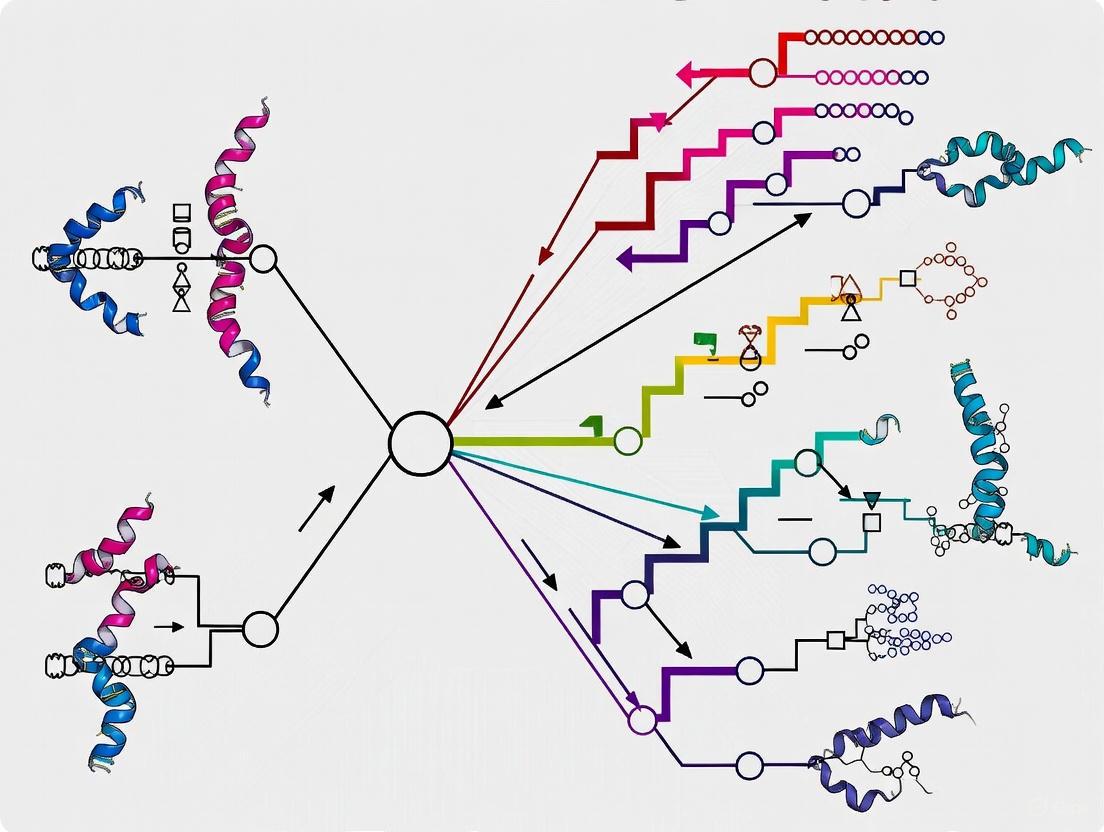
Assessing Phylogenetic Network Accuracy: A Comprehensive Guide for Introgression Characterization in Biomedical Research
This article provides a comprehensive examination of the accuracy and application of phylogenetic networks for characterizing introgression in evolutionary genomics.
Unraveling Genomic Introgression: A Hidden Markov Model Framework for Comparative Genomics
This article provides a comprehensive exploration of Hidden Markov Models (HMMs) and their transformative role in detecting and analyzing introgression in comparative genomic studies.

Navigating Gene Tree Estimation Error: A Practical Guide for Robust Introgression Detection in Genomic Studies
Accurate detection of introgression—the transfer of genetic material between species—is crucial for understanding evolutionary history, adaptation, and the genetic basis of traits with biomedical relevance.
Discrete Trait Analysis vs. Structured Birth-Death Models: A Comprehensive Guide for Biomedical Researchers
This article provides a comprehensive comparison of Discrete Trait Analysis (DTA) and Structured Birth-Death Models (SBDM), two foundational methods in phylogenetic inference for studying trait evolution and population dynamics.
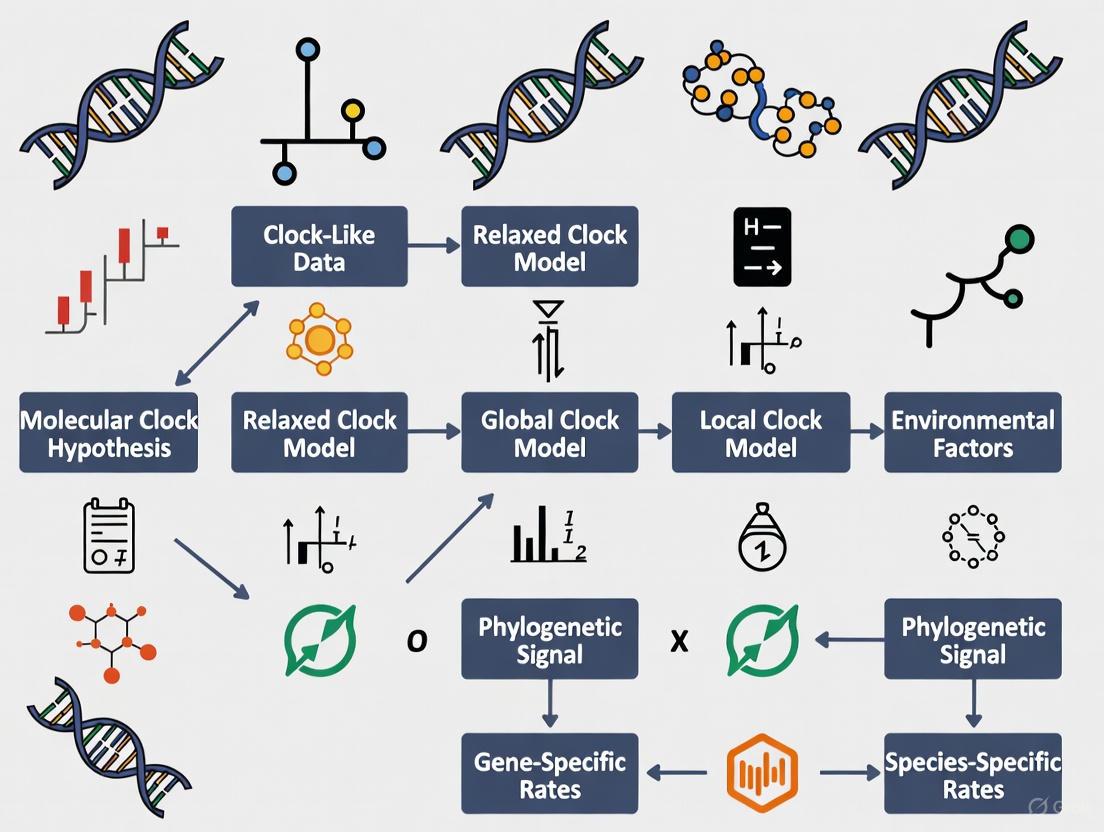
Troubleshooting Molecular Clock Model Selection: A Practical Guide for Biomedical Researchers
Selecting an appropriate molecular clock model is a critical, yet often challenging, step in Bayesian phylogenetic analysis for studying pathogen evolution, drug resistance, and disease origins.
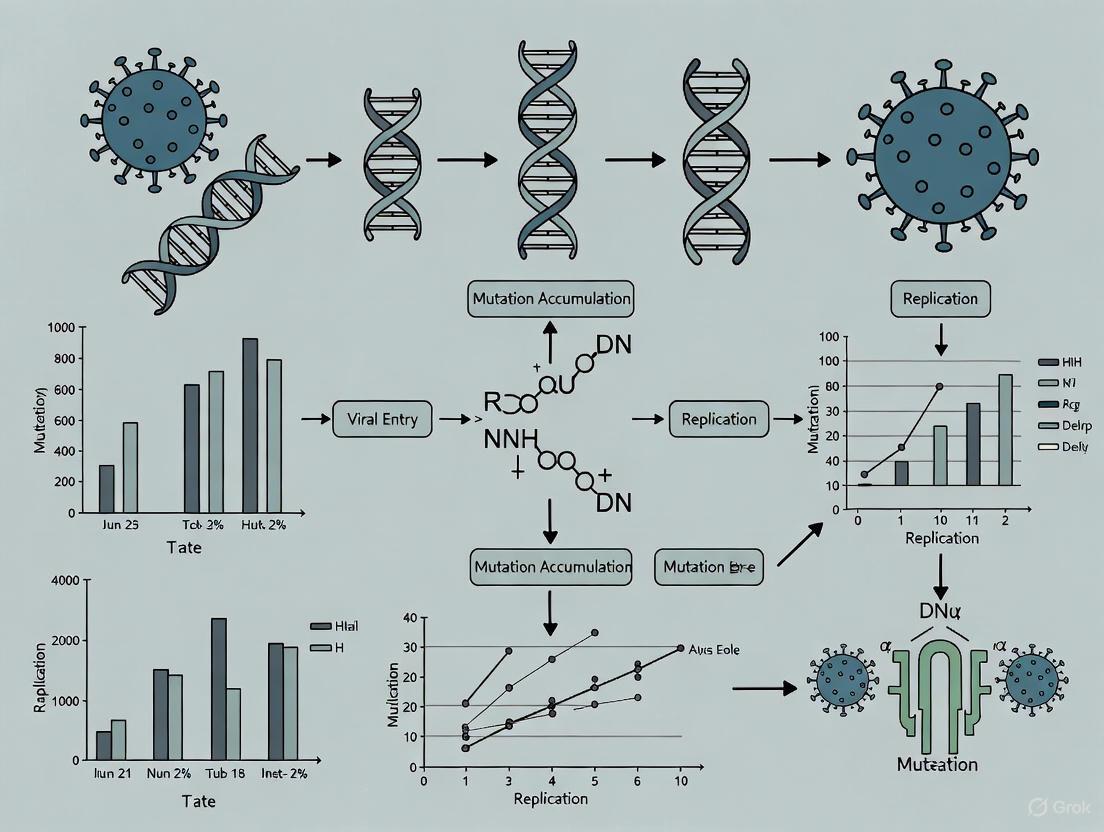
Viral Mutation Accumulation Studies: From Evolutionary Dynamics to Antiviral Drug Development
This article provides a comprehensive analysis of mutation accumulation studies in viruses, exploring the fundamental principles that govern viral evolution and their direct applications in biomedical research.