Research Articles
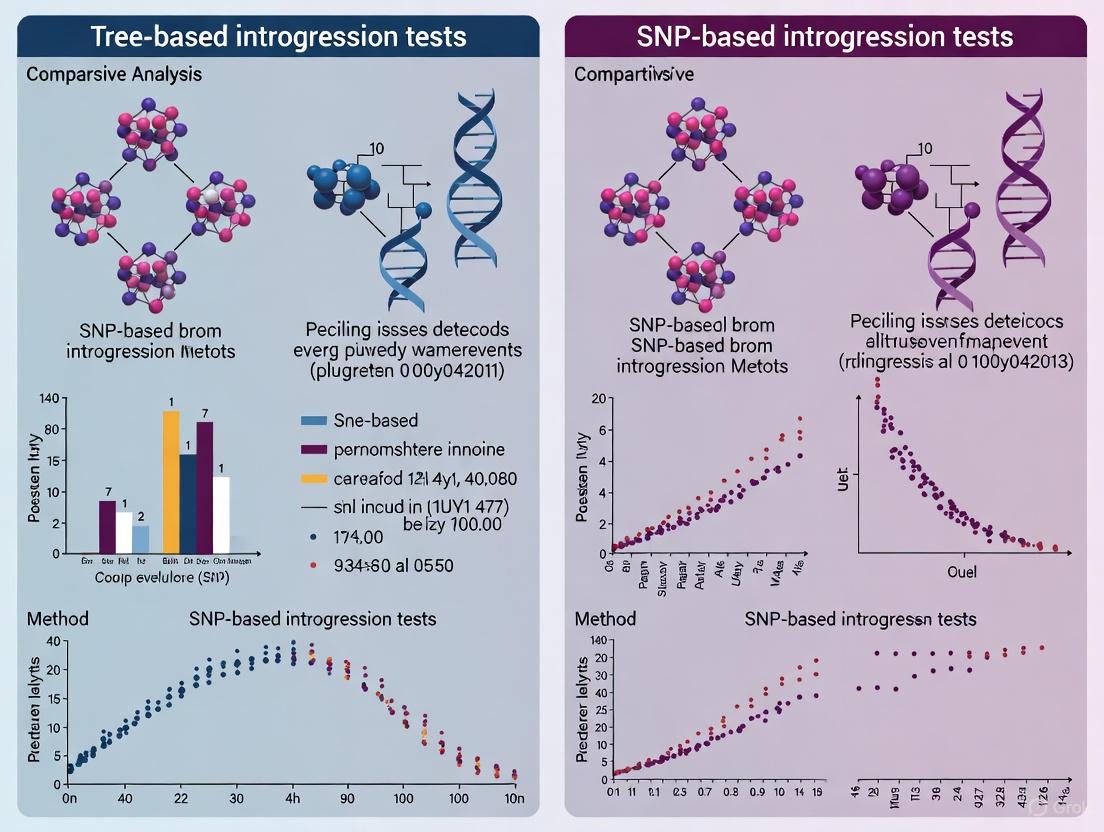
Tree-Based vs. SNP-Based Introgression Tests: A Comprehensive Performance Review for Genomic Research
This article provides a systematic comparison of tree-based and SNP-based methodologies for detecting introgression, a key evolutionary process with significant implications for adaptation and disease research.
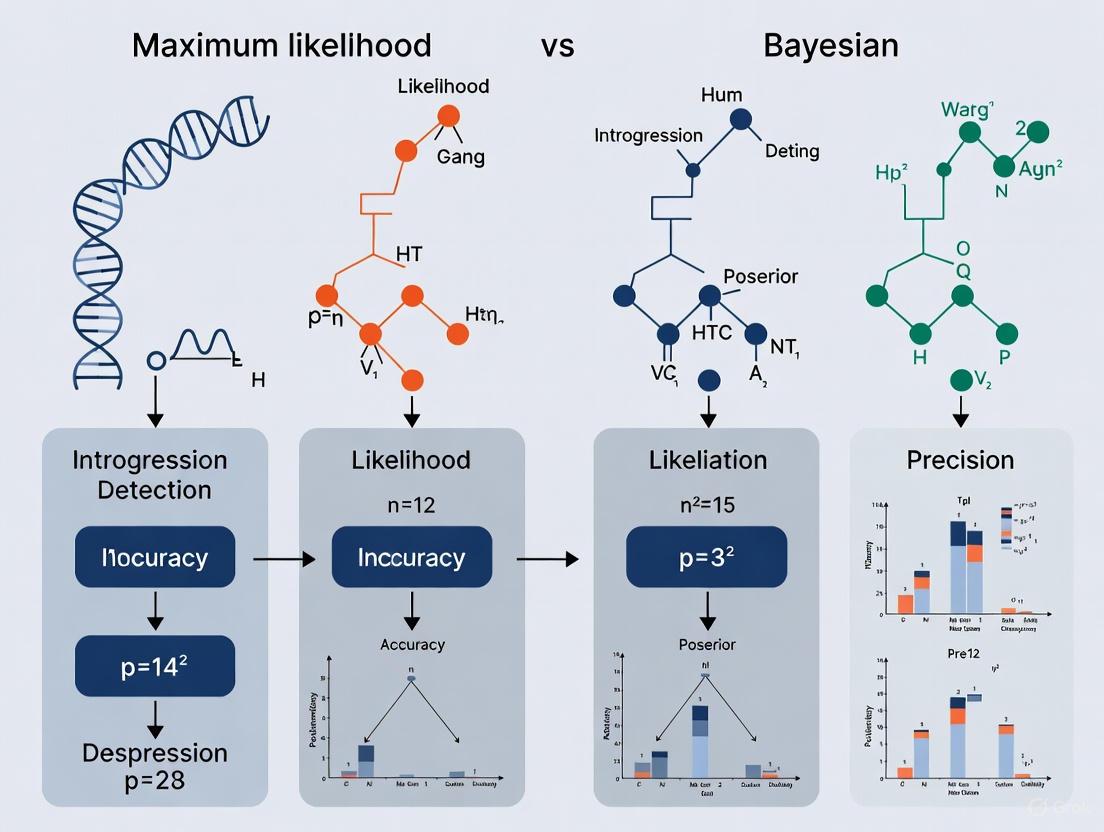
Maximum Likelihood vs. Bayesian Frameworks for Introgression Detection: A Guide for Genomic Researchers
This article provides a comprehensive comparison of Maximum Likelihood (ML) and Bayesian methods for detecting introgressed genomic regions, a critical task in evolutionary genomics and biomedical research.
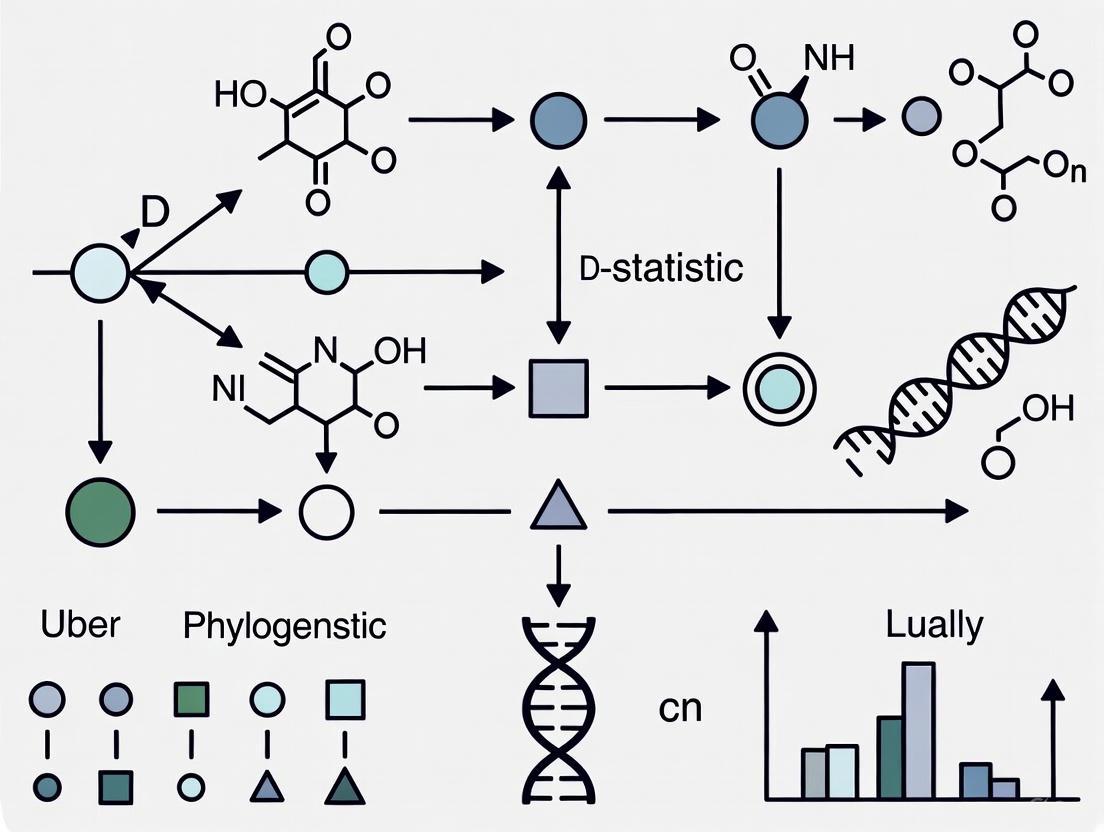
Beyond the D-Statistic: A Comparative Guide to Phylogenetic Networks for Detecting Reticulate Evolution
This article provides a comprehensive comparison for researchers and bioinformaticians between the widely used D-statistic (ABBA-BABA test) and modern phylogenetic network methods for detecting reticulate evolution.
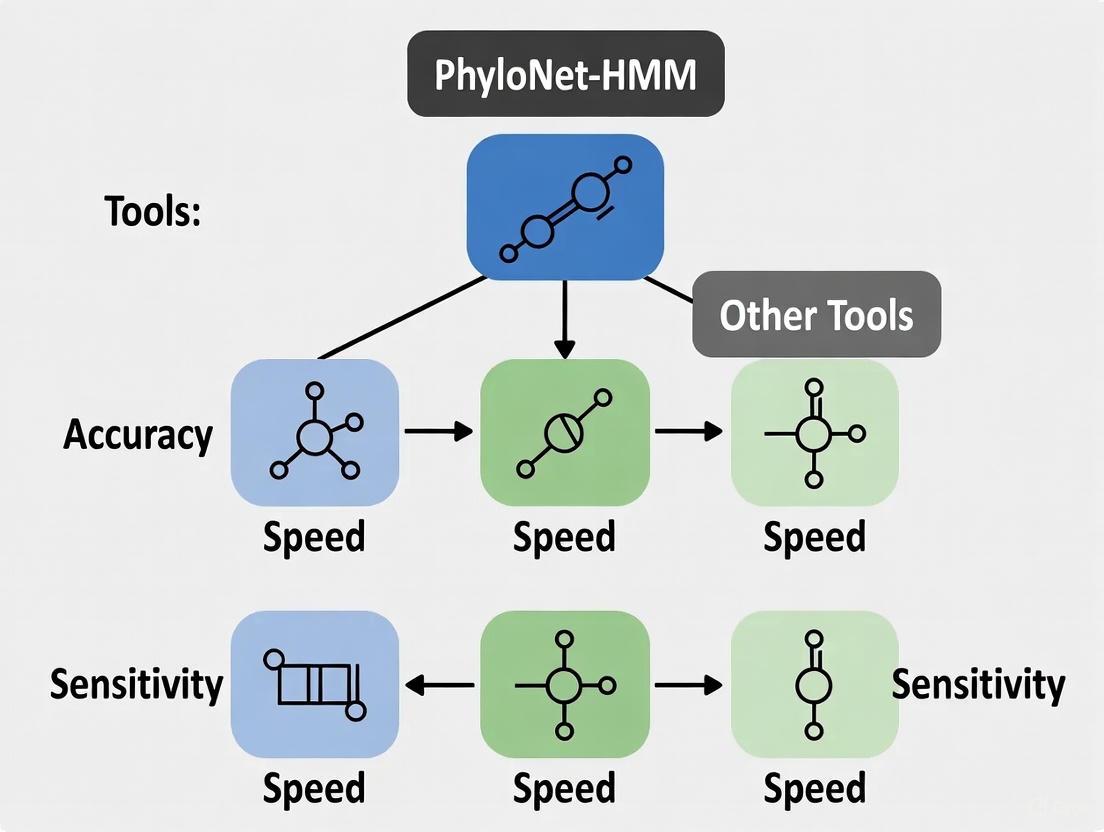
Benchmarking PhyloNet-HMM: A Comprehensive Evaluation of Introgression Detection Tools for Genomic Analysis
This article provides a systematic benchmark of PhyloNet-HMM against contemporary introgression detection methods, addressing critical needs for researchers and drug development professionals working with genomic data.
ASTRAL vs. SVDquartets: A Practical Guide for Species Tree Inference in Genomic Research
This article provides a comprehensive evaluation of two leading coalescent-based species tree estimation methods, ASTRAL and SVDquartets.

Addressing Rate Variation in Phylogenetic Introgression Tests: A Guide for Robust Analysis in Evolutionary and Biomedical Research
This article provides a comprehensive guide for researchers and drug development professionals on the critical issue of substitution rate variation in phylogenetic introgression testing.
Navigating the Gap: A Comprehensive Guide to Handling Missing Data in Phylogenomic Introgression Analysis
Phylogenomic introgression analysis is pivotal for understanding evolutionary histories, yet missing data remains a significant challenge that can bias species tree estimation and introgression detection.
Beyond the False Signal: Strategies to Mitigate Ancestral Polymorphism in Introgression Detection
Accurately identifying true introgression is critical for evolutionary studies and biomedical research, yet it is frequently confounded by false positives from ancestral polymorphism and selection.
Parameter Optimization for Phylogenetic Network Inference: Advanced Methods for Evolutionary Analysis and Biomedical Applications
This article explores cutting-edge parameter optimization techniques transforming phylogenetic network inference, addressing critical computational bottlenecks in analyzing evolutionary relationships.
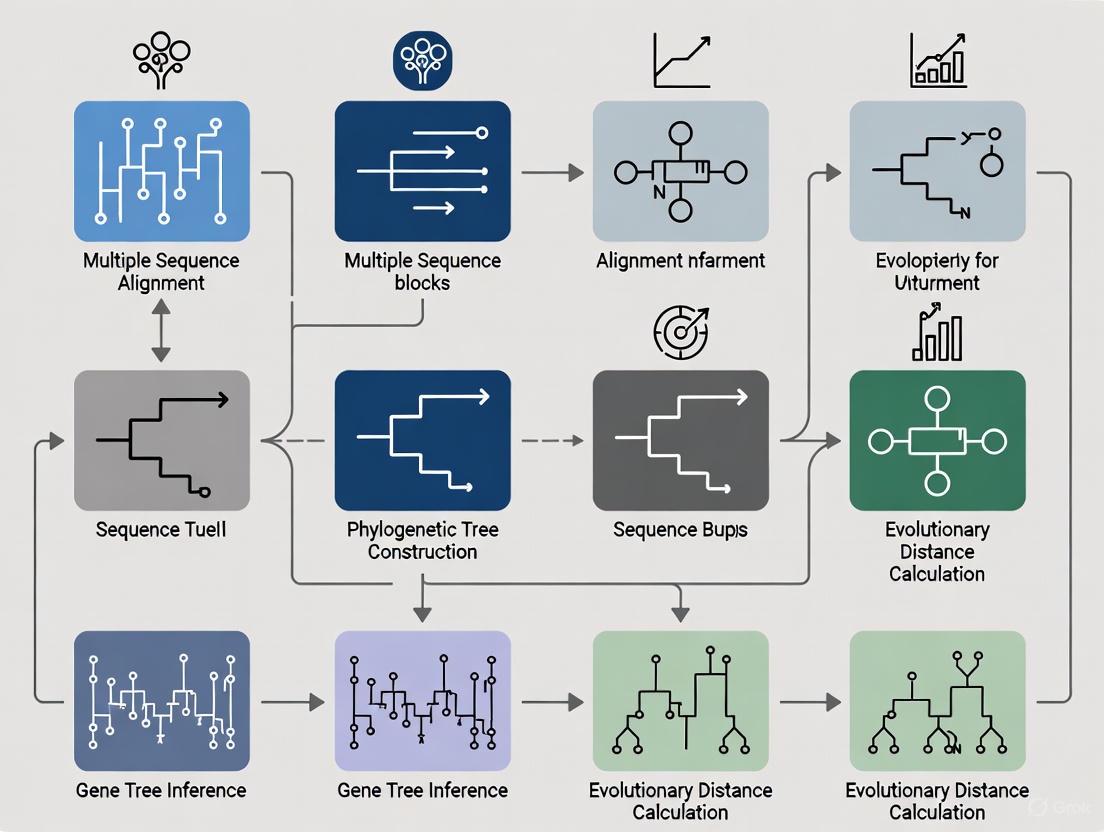
Optimizing Sequence Alignment Blocks for Accurate Gene Tree Inference: A Practical Guide for Biomedical Researchers
Accurate gene tree inference is foundational for evolutionary studies, drug target discovery, and understanding disease mechanisms, yet it is highly dependent on the quality of input sequence alignments.