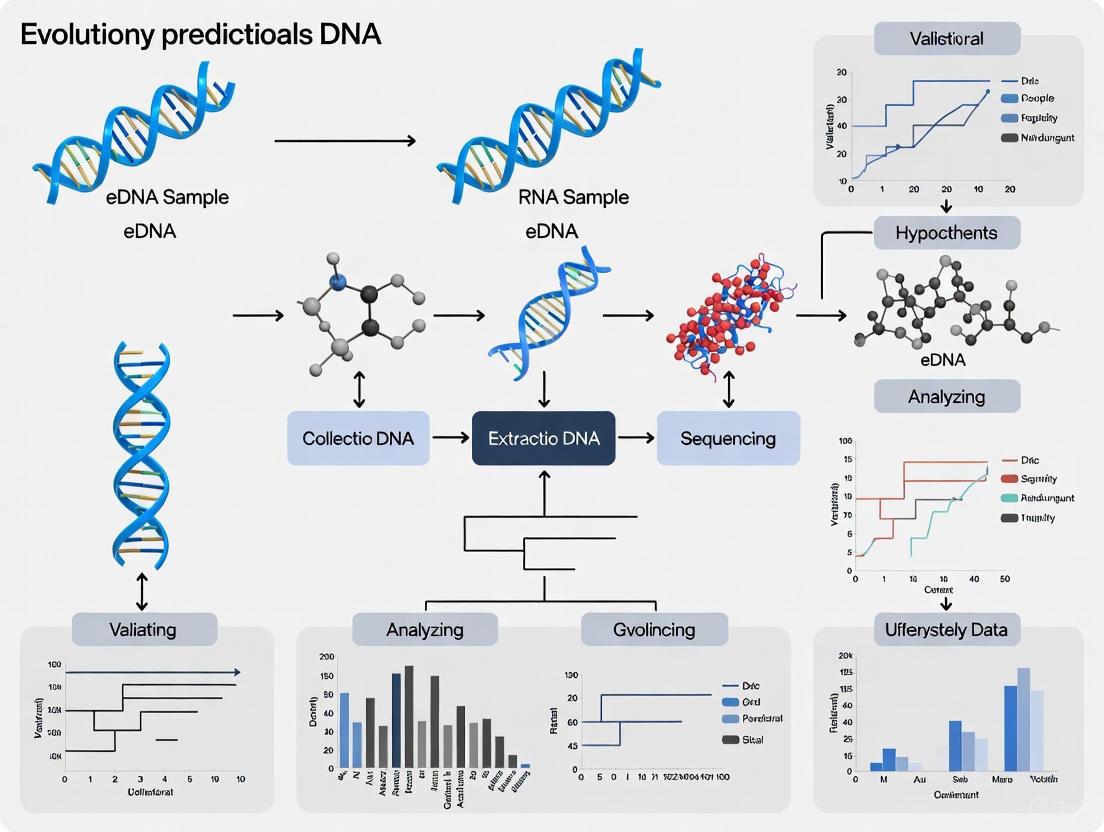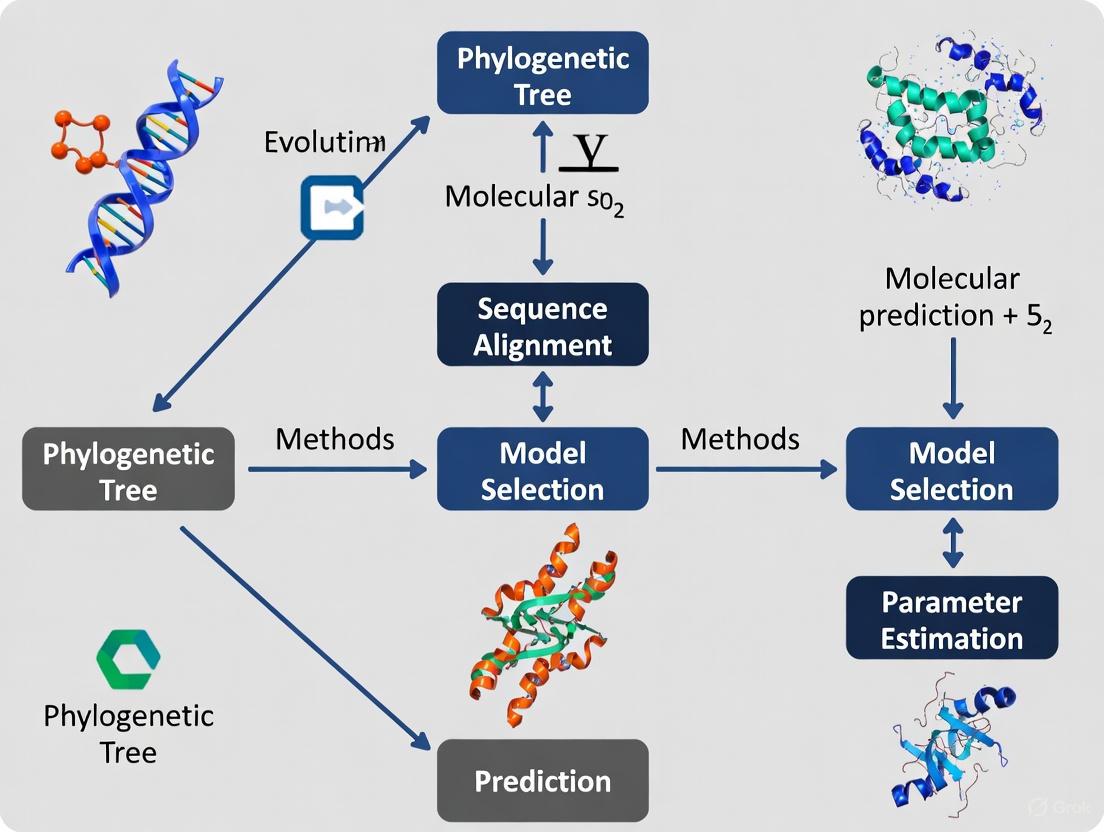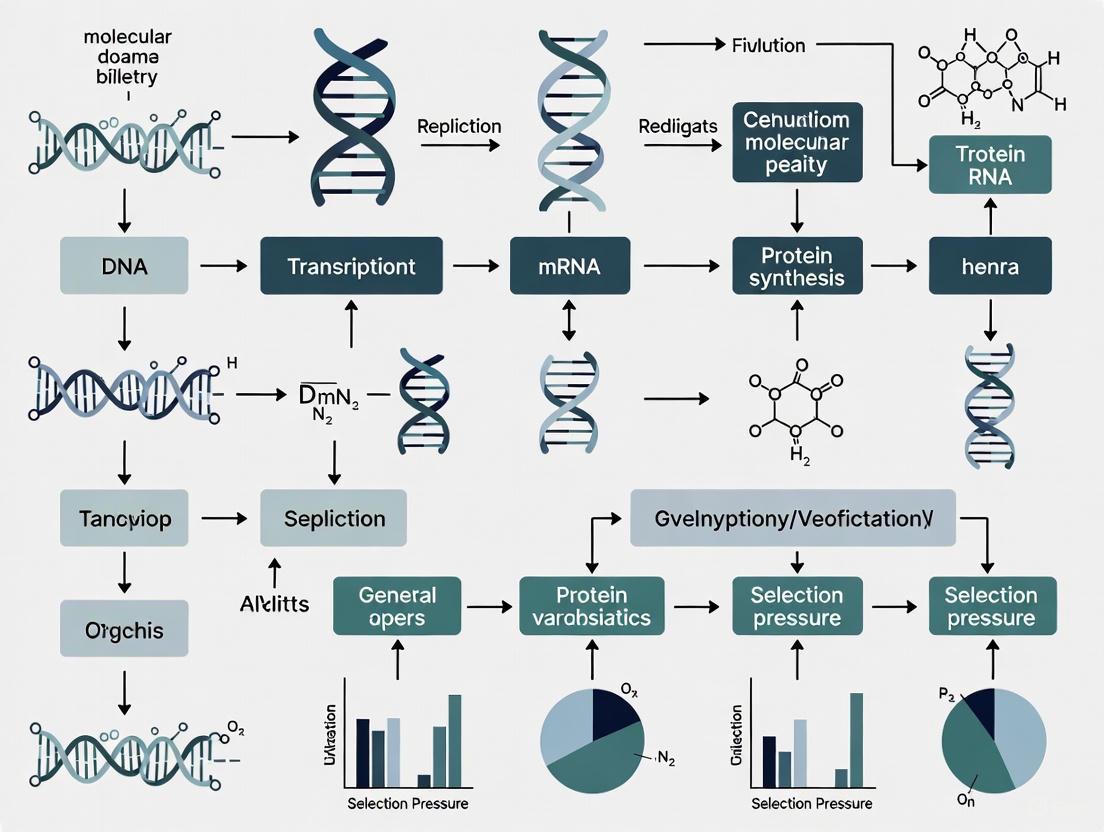
This article explores the RNA World hypothesis, the leading framework for understanding life's origins, and its profound implications for modern biomedical research.
This article provides a comprehensive framework for evaluating the predictive performance of tree-based models under varying class balance conditions, a critical challenge in biomedical and clinical research where datasets often exhibit severe imbalance. We explore the foundational principles of tree balance, methodological adaptations like hybrid sampling and ensemble techniques, and advanced optimization strategies to mitigate overfitting and bias. Through a comparative analysis of state-of-the-art models, including Elastic Net regression, Balanced Hoeffding Tree Forests, and optimized ensembles, this guide offers actionable insights for researchers and drug development professionals to build more accurate, robust, and interpretable predictive models for healthcare applications.
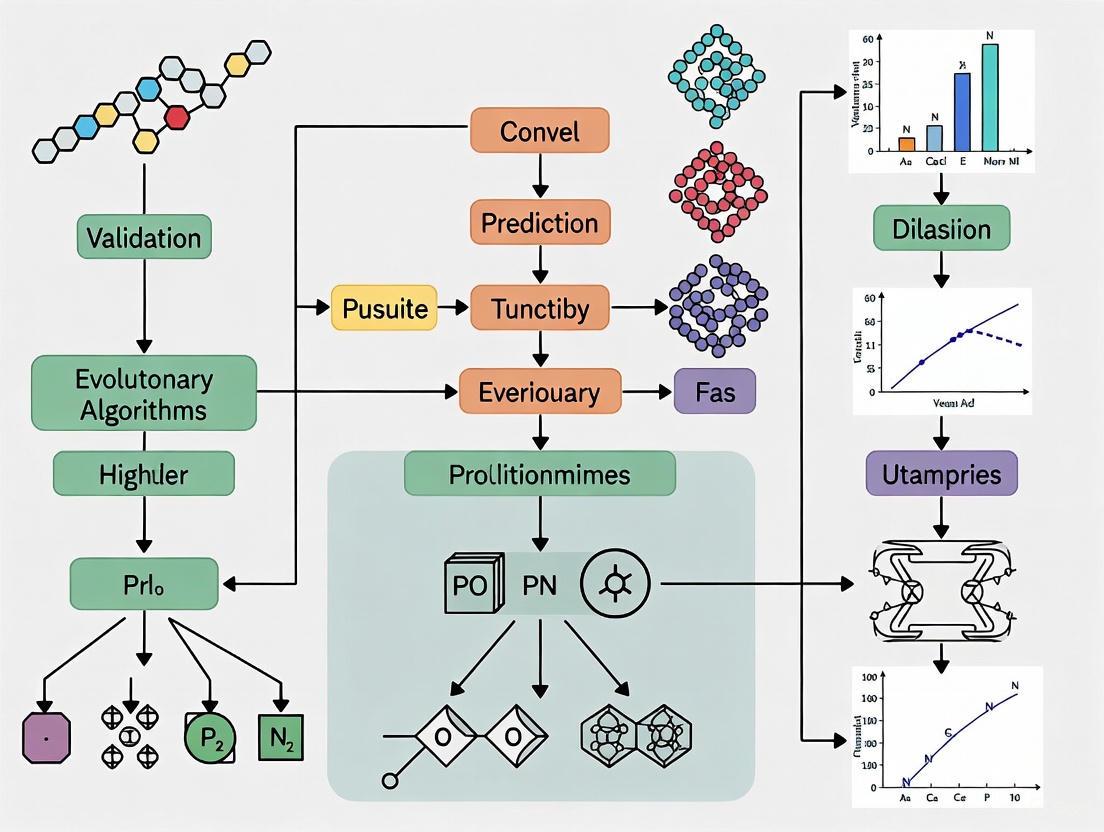
This article provides a comprehensive overview of the integration of evolutionary algorithms (EAs) with computational methods for validating protein function predictions, a critical task for researchers and drug development professionals. It explores the foundational principles of EAs and the challenges of protein function annotation, establishing a clear need for robust validation frameworks. The content details cutting-edge methodological approaches, including structure-based and sequence-based validation strategies, and examines specific EA implementations like REvoLd and PhiGnet for docking and function annotation. It further addresses common troubleshooting and optimization techniques to enhance algorithm performance and reliability. Finally, the article presents a comparative analysis of validation metrics and real-world success stories, synthesizing key takeaways and outlining future directions for applying these advanced computational techniques in biomedical and clinical research to accelerate therapeutic discovery.
This comprehensive review addresses the critical need for refined assessment methodologies for teleological reasoning—the cognitive tendency to attribute purpose or intentional design to natural phenomena and biological systems. Targeting researchers, scientists, and drug development professionals, we explore foundational psychological mechanisms, develop sophisticated assessment tools, address methodological challenges in biomedical contexts, and establish validation frameworks. By integrating recent research from cognitive psychology, educational assessment, and AI validation, this article provides practical frameworks for minimizing teleological bias in research design, clinical trial interpretation, and therapeutic development, ultimately enhancing scientific rigor in evidence-based medicine.
This article addresses the critical challenge of teleological thinking—the attribution of purpose or conscious design to natural phenomena—in the education of drug development professionals. It explores the foundational theories of teleological reasoning, presents evidence-based pedagogical methods to counteract these cognitive biases, and provides strategies for troubleshooting common learning obstacles. By comparing traditional and modern instructional approaches, the article offers a framework for cultivating the rigorous, evidence-based thinking essential for navigating the complexities of clinical pharmacology, new drug development, and patient safety.
This article provides a comprehensive, up-to-date comparison of the three leading molecular dynamics software packages—GROMACS, AMBER, and NAMD—tailored for researchers, scientists, and drug development professionals. It explores their foundational philosophies, licensing, and usability; details methodological applications and specialized use cases like membrane protein simulations; offers performance benchmarks and hardware optimization strategies for 2025; and critically examines validation protocols and reproducibility. By synthesizing performance data, best practices, and comparative insights, this guide empowers scientists to select the optimal software and hardware configuration to efficiently advance their computational research in biophysics, drug discovery, and materials science.
Accurate ligand parameterization is a critical, yet often error-prone, foundation for molecular dynamics (MD) simulations in drug discovery. This article provides a comprehensive analysis of the sources, impacts, and solutions for ligand parameterization errors. We explore the fundamental limitations of traditional force fields and the challenges of covering expansive chemical space. The discussion then progresses to modern methodological advances, including automated, data-driven, and machine learning-aided parameterization strategies. A practical troubleshooting guide addresses common optimization challenges, while a final section establishes robust validation and benchmarking protocols. By synthesizing foundational knowledge with cutting-edge applications and validation frameworks, this article serves as an essential resource for researchers aiming to enhance the predictive power and reliability of their MD-driven projects.
This article provides a comprehensive evaluation of coalescent models for inferring demographic history, tailored for researchers and professionals in biomedical and clinical research. It begins by establishing the foundational principles of coalescent theory, including its mathematical basis and key concepts like the Most Recent Common Ancestor (MRCA). The review then explores a spectrum of methodological approaches, from basic pairwise models to advanced structured and Bayesian frameworks, highlighting their applications in studying human evolution, disease mapping, and conservation genetics. Critical challenges such as model identifiability, computational constraints, and recombination handling are addressed, alongside practical optimization strategies. The article culminates in a comparative analysis of modern software implementations and validation techniques, synthesizing key takeaways to guide model selection and discuss future implications for understanding the demographic underpinnings of disease and tailoring therapeutic strategies.
Non-representative sampling is a critical, yet often overlooked, challenge that can compromise the validity of sequencing data in biomedical research and drug development. This article provides a comprehensive framework for managing this issue, covering foundational concepts, methodological solutions, troubleshooting protocols, and validation strategies. Drawing on current research, it equips scientists with the knowledge to design robust sampling plans, implement corrective techniques for biased data, and apply rigorous validation to ensure their genomic, transcriptomic, and proteomic findings are reliable and reproducible.
Next-generation sequencing (NGS) has revolutionized the tracking and analysis of viral mutation rates, becoming an indispensable tool for researchers and drug development professionals. This article provides a comprehensive exploration of how NGS technologies are applied to understand viral evolution, from fundamental principles to advanced clinical applications. We cover the critical methodological approaches for detecting mutations, including strategies for optimizing accuracy and sensitivity to identify low-frequency variants. The content further delves into troubleshooting common challenges, comparing sequencing platforms, and establishing robust validation frameworks. By synthesizing current methodologies and their practical implementations in monitoring antiviral resistance and guiding therapeutic development, this guide serves as an essential resource for advancing viral genomics research and precision medicine.