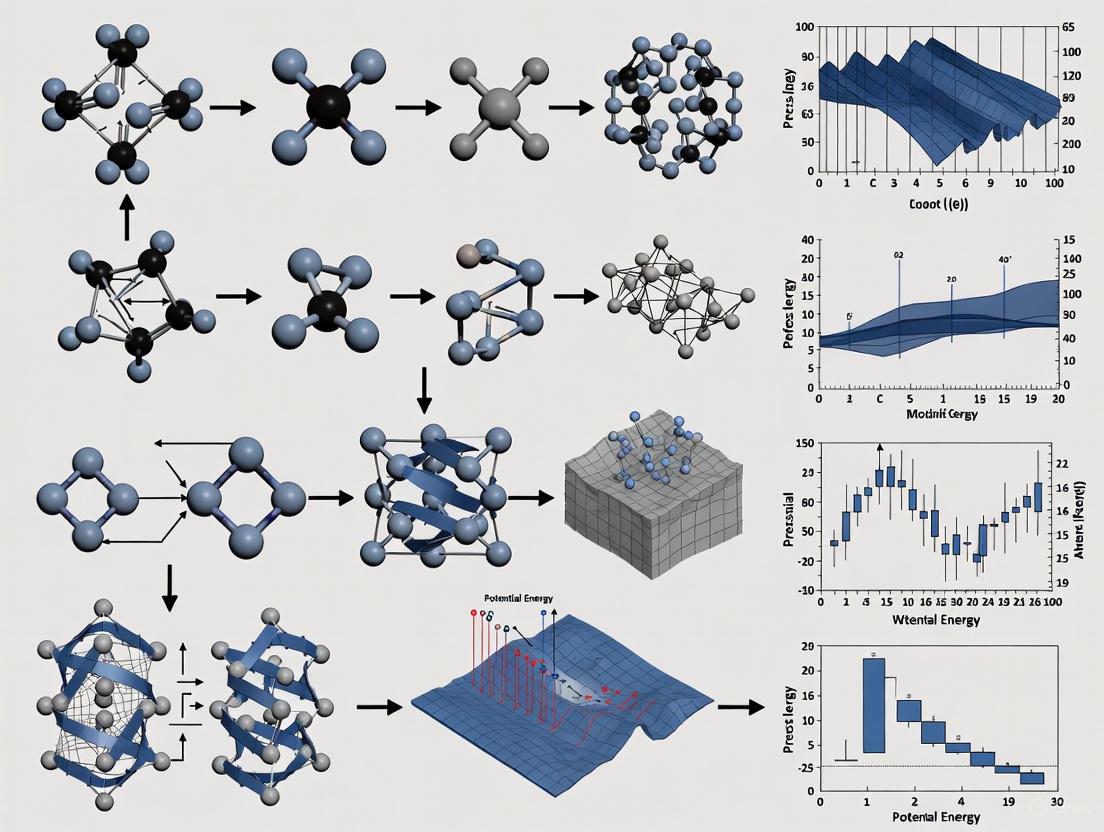
Accurate ligand parameterization is a critical, yet often error-prone, foundation for molecular dynamics (MD) simulations in drug discovery. This article provides a comprehensive analysis of the sources, impacts, and solutions for ligand parameterization errors. We explore the fundamental limitations of traditional force fields and the challenges of covering expansive chemical space. The discussion then progresses to modern methodological advances, including automated, data-driven, and machine learning-aided parameterization strategies. A practical troubleshooting guide addresses common optimization challenges, while a final section establishes robust validation and benchmarking protocols. By synthesizing foundational knowledge with cutting-edge applications and validation frameworks, this article serves as an essential resource for researchers aiming to enhance the predictive power and reliability of their MD-driven projects.
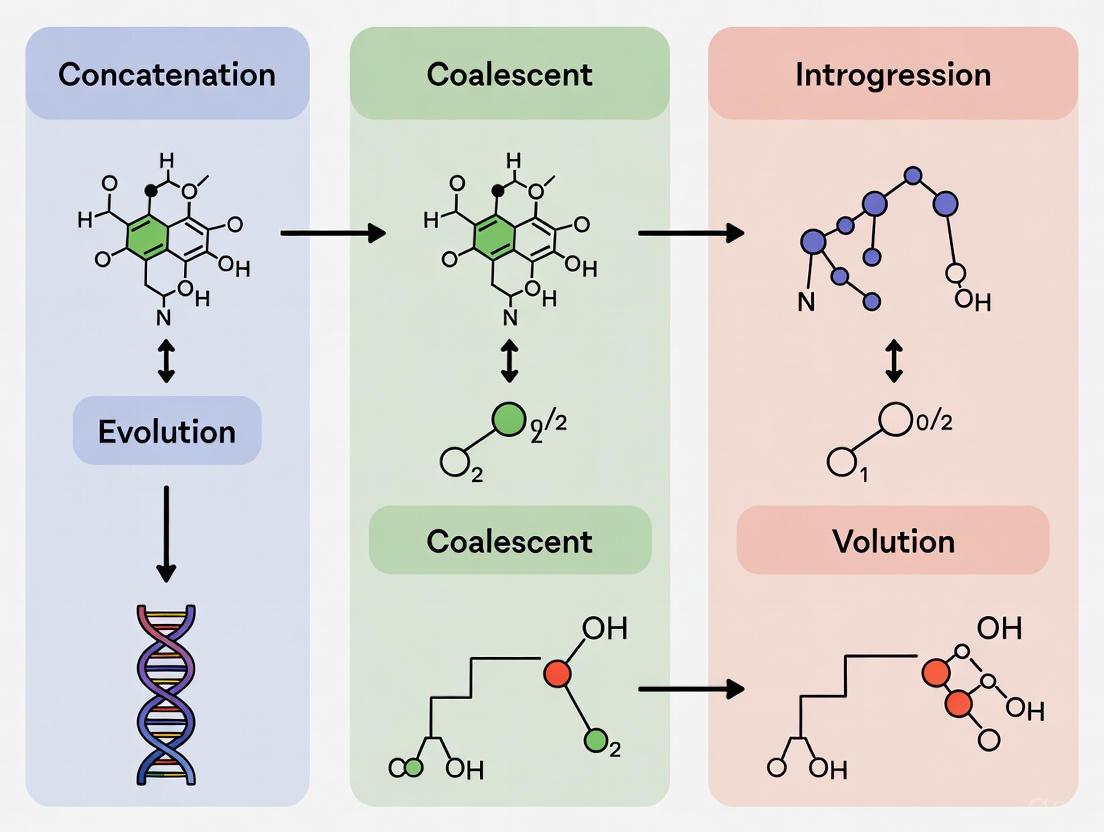
This article provides a comprehensive evaluation of coalescent models for inferring demographic history, tailored for researchers and professionals in biomedical and clinical research. It begins by establishing the foundational principles of coalescent theory, including its mathematical basis and key concepts like the Most Recent Common Ancestor (MRCA). The review then explores a spectrum of methodological approaches, from basic pairwise models to advanced structured and Bayesian frameworks, highlighting their applications in studying human evolution, disease mapping, and conservation genetics. Critical challenges such as model identifiability, computational constraints, and recombination handling are addressed, alongside practical optimization strategies. The article culminates in a comparative analysis of modern software implementations and validation techniques, synthesizing key takeaways to guide model selection and discuss future implications for understanding the demographic underpinnings of disease and tailoring therapeutic strategies.
Non-representative sampling is a critical, yet often overlooked, challenge that can compromise the validity of sequencing data in biomedical research and drug development. This article provides a comprehensive framework for managing this issue, covering foundational concepts, methodological solutions, troubleshooting protocols, and validation strategies. Drawing on current research, it equips scientists with the knowledge to design robust sampling plans, implement corrective techniques for biased data, and apply rigorous validation to ensure their genomic, transcriptomic, and proteomic findings are reliable and reproducible.
Next-generation sequencing (NGS) has revolutionized the tracking and analysis of viral mutation rates, becoming an indispensable tool for researchers and drug development professionals. This article provides a comprehensive exploration of how NGS technologies are applied to understand viral evolution, from fundamental principles to advanced clinical applications. We cover the critical methodological approaches for detecting mutations, including strategies for optimizing accuracy and sensitivity to identify low-frequency variants. The content further delves into troubleshooting common challenges, comparing sequencing platforms, and establishing robust validation frameworks. By synthesizing current methodologies and their practical implementations in monitoring antiviral resistance and guiding therapeutic development, this guide serves as an essential resource for advancing viral genomics research and precision medicine.
This article provides a comprehensive analysis of variant genetic codes, exploring their natural diversity, synthetic construction, and transformative applications in biomedical research. It examines the paradox of the genetic code's extreme conservation amidst its proven flexibility, detailing over 50 documented natural reassignments and groundbreaking synthetic organisms like Syn61 E. coli. For researchers and drug development professionals, the content covers advanced methodologies from rare variant meta-analysis to deep learning models for predicting regulatory effects. The analysis further investigates troubleshooting recoding challenges and validates the clinical impact of genetic evidence, which more than doubles the probability of drug development success. This synthesis bridges evolutionary biology, synthetic genomics, and therapeutic innovation, offering a roadmap for leveraging genetic code variations in targeted drug development and personalized medicine.
This article provides a comprehensive overview of modern methods for assessing uncertainty in phylogenetic inference, tailored for researchers and drug development professionals. It explores the foundational limitations of traditional techniques like Felsenstein's bootstrap when applied to massive genomic datasets and introduces powerful new paradigms such as SPRTA for pandemic-scale analysis. The content covers crucial methodological advances in Bayesian MCMC, troubleshooting for complex models, and validation through robust comparative approaches. By synthesizing cutting-edge research, this guide offers practical strategies for quantifying phylogenetic confidence to enhance the reliability of evolutionary analyses, genomic epidemiology, and model-informed drug development.
This article provides a comprehensive framework for researchers and drug development professionals to navigate computational constraints in code space analysis. It explores the foundational principles of static and dynamic analysis, presents methodological approaches for efficient resource utilization, details troubleshooting strategies for optimization, and establishes validation protocols for robust comparative assessment. By synthesizing techniques from computational optimization and constraint handling, this guide enables more reliable and scalable analysis of complex biological data and simulation models critical to biomedical innovation.
This article synthesizes current research on the effectiveness of diverse evolution teaching methodologies, addressing the critical need for robust scientific literacy among biomedical professionals. It explores foundational conceptual challenges, evaluates active and student-centered pedagogical applications, and provides strategies for overcoming significant cultural and religious barriers. By presenting a comparative analysis of assessment data and innovative frameworks like the Cosmos–Evidence–Ideas model, this review offers actionable insights for educators and institutions aiming to strengthen evolution comprehension, a foundational pillar for innovation in drug development and clinical research.
Explore how melanin, the biological pigment that colors skin, is pioneering advances in medicine and technology as a revolutionary supermaterial.
Exploring how local atomic environment and active site coordination of molecular catalysts impact electrochemical nitrate reduction to ammonia for sustainable nitrogen management.